EP2044938B1 - Radioprotectors - Google Patents
Radioprotectors Download PDFInfo
- Publication number
- EP2044938B1 EP2044938B1 EP09000547.1A EP09000547A EP2044938B1 EP 2044938 B1 EP2044938 B1 EP 2044938B1 EP 09000547 A EP09000547 A EP 09000547A EP 2044938 B1 EP2044938 B1 EP 2044938B1
- Authority
- EP
- European Patent Office
- Prior art keywords
- cells
- compound
- hoechst
- formula
- tumour
- Prior art date
- Legal status (The legal status is an assumption and is not a legal conclusion. Google has not performed a legal analysis and makes no representation as to the accuracy of the status listed.)
- Expired - Lifetime
Links
Images


Classifications
-
- A—HUMAN NECESSITIES
- A61—MEDICAL OR VETERINARY SCIENCE; HYGIENE
- A61K—PREPARATIONS FOR MEDICAL, DENTAL OR TOILETRY PURPOSES
- A61K31/00—Medicinal preparations containing organic active ingredients
- A61K31/33—Heterocyclic compounds
- A61K31/395—Heterocyclic compounds having nitrogen as a ring hetero atom, e.g. guanethidine or rifamycins
- A61K31/435—Heterocyclic compounds having nitrogen as a ring hetero atom, e.g. guanethidine or rifamycins having six-membered rings with one nitrogen as the only ring hetero atom
- A61K31/44—Non condensed pyridines; Hydrogenated derivatives thereof
-
- A—HUMAN NECESSITIES
- A61—MEDICAL OR VETERINARY SCIENCE; HYGIENE
- A61K—PREPARATIONS FOR MEDICAL, DENTAL OR TOILETRY PURPOSES
- A61K31/00—Medicinal preparations containing organic active ingredients
- A61K31/33—Heterocyclic compounds
- A61K31/395—Heterocyclic compounds having nitrogen as a ring hetero atom, e.g. guanethidine or rifamycins
- A61K31/435—Heterocyclic compounds having nitrogen as a ring hetero atom, e.g. guanethidine or rifamycins having six-membered rings with one nitrogen as the only ring hetero atom
- A61K31/44—Non condensed pyridines; Hydrogenated derivatives thereof
- A61K31/445—Non condensed piperidines, e.g. piperocaine
-
- A—HUMAN NECESSITIES
- A61—MEDICAL OR VETERINARY SCIENCE; HYGIENE
- A61K—PREPARATIONS FOR MEDICAL, DENTAL OR TOILETRY PURPOSES
- A61K31/00—Medicinal preparations containing organic active ingredients
- A61K31/33—Heterocyclic compounds
- A61K31/395—Heterocyclic compounds having nitrogen as a ring hetero atom, e.g. guanethidine or rifamycins
- A61K31/495—Heterocyclic compounds having nitrogen as a ring hetero atom, e.g. guanethidine or rifamycins having six-membered rings with two or more nitrogen atoms as the only ring heteroatoms, e.g. piperazine or tetrazines
-
- A—HUMAN NECESSITIES
- A61—MEDICAL OR VETERINARY SCIENCE; HYGIENE
- A61P—SPECIFIC THERAPEUTIC ACTIVITY OF CHEMICAL COMPOUNDS OR MEDICINAL PREPARATIONS
- A61P39/00—General protective or antinoxious agents
-
- C—CHEMISTRY; METALLURGY
- C07—ORGANIC CHEMISTRY
- C07D—HETEROCYCLIC COMPOUNDS
- C07D235/00—Heterocyclic compounds containing 1,3-diazole or hydrogenated 1,3-diazole rings, condensed with other rings
- C07D235/02—Heterocyclic compounds containing 1,3-diazole or hydrogenated 1,3-diazole rings, condensed with other rings condensed with carbocyclic rings or ring systems
- C07D235/04—Benzimidazoles; Hydrogenated benzimidazoles
- C07D235/20—Two benzimidazolyl-2 radicals linked together directly or via a hydrocarbon or substituted hydrocarbon radical
-
- C—CHEMISTRY; METALLURGY
- C07—ORGANIC CHEMISTRY
- C07D—HETEROCYCLIC COMPOUNDS
- C07D403/00—Heterocyclic compounds containing two or more hetero rings, having nitrogen atoms as the only ring hetero atoms, not provided for by group C07D401/00
- C07D403/02—Heterocyclic compounds containing two or more hetero rings, having nitrogen atoms as the only ring hetero atoms, not provided for by group C07D401/00 containing two hetero rings
- C07D403/04—Heterocyclic compounds containing two or more hetero rings, having nitrogen atoms as the only ring hetero atoms, not provided for by group C07D401/00 containing two hetero rings directly linked by a ring-member-to-ring-member bond
-
- C—CHEMISTRY; METALLURGY
- C07—ORGANIC CHEMISTRY
- C07D—HETEROCYCLIC COMPOUNDS
- C07D471/00—Heterocyclic compounds containing nitrogen atoms as the only ring hetero atoms in the condensed system, at least one ring being a six-membered ring with one nitrogen atom, not provided for by groups C07D451/00 - C07D463/00
- C07D471/02—Heterocyclic compounds containing nitrogen atoms as the only ring hetero atoms in the condensed system, at least one ring being a six-membered ring with one nitrogen atom, not provided for by groups C07D451/00 - C07D463/00 in which the condensed system contains two hetero rings
- C07D471/04—Ortho-condensed systems
-
- C—CHEMISTRY; METALLURGY
- C07—ORGANIC CHEMISTRY
- C07D—HETEROCYCLIC COMPOUNDS
- C07D471/00—Heterocyclic compounds containing nitrogen atoms as the only ring hetero atoms in the condensed system, at least one ring being a six-membered ring with one nitrogen atom, not provided for by groups C07D451/00 - C07D463/00
- C07D471/12—Heterocyclic compounds containing nitrogen atoms as the only ring hetero atoms in the condensed system, at least one ring being a six-membered ring with one nitrogen atom, not provided for by groups C07D451/00 - C07D463/00 in which the condensed system contains three hetero rings
- C07D471/14—Ortho-condensed systems
-
- C—CHEMISTRY; METALLURGY
- C07—ORGANIC CHEMISTRY
- C07D—HETEROCYCLIC COMPOUNDS
- C07D487/00—Heterocyclic compounds containing nitrogen atoms as the only ring hetero atoms in the condensed system, not provided for by groups C07D451/00 - C07D477/00
- C07D487/02—Heterocyclic compounds containing nitrogen atoms as the only ring hetero atoms in the condensed system, not provided for by groups C07D451/00 - C07D477/00 in which the condensed system contains two hetero rings
- C07D487/04—Ortho-condensed systems
Definitions
- the invention relates to radioprotectors, processes for their preparation and their use in therapy, particularly in cancer radiotherapy where they may be used to protect biological materials from radiation damage.
- DNA is the crucial target in the cytotoxic effects of ionising radiation.
- ds DNA doublestranded breaks are particularly important.
- the DNA damage results from both direct ionization in the DNA molecule (direct effect) and by indirect effects mediated by the radiolysis products of water. Carbon-centred radicals on the deoxyribose moiety of DNA are thought to be the precursors of strand breaks.
- cancer radiotherapy The treatment of tumours with ionising radiation (hereinafter referred to as "cancer radiotherapy") is used extensively in cancer therapy.
- the goal of such treatment is the destruction of tumour cells and inhibition of tumour cell growth presumably through DNA damage, while minimising damage to non-tumour cells and tissues. Damage to non-tumour cells often limits the effectiveness of radiotherapy of certain tumours, as exemplified by brain tumours and tumours in the abdominal cavity.
- Cancer radiotherapy is a very significant public health activity. Given the incidence of cancer in the population and the international assessment that more than 50% of cancer patients benefit from inclusion of radiotherapy in their treatment, more than 10% of the population are likely to experience cancer radiotherapy in their lifetime.
- curative external beam radiotherapy involves fractionation of the radiation dose.
- An example of a conventional schedule would be a total of 50 Grays given in twenty-five 2 Gray fractions. Since cells have the capacity to repair radiation damage between fractions, the fractionated treatment results in much less cell-kill than a single dose of 50 Gray. However, normal cells generally have a greater repair capacity than do tumour cells, so the "sparing" effect of fractionation is more marked for normal tissues. In short, fractionation improves the therapeutic ratio.
- Radioprotectors have received much less attention than radiosensitisers at the clinical level.
- the nuclear era spawned considerable effort in the development of radioprotectors with more than 4000 compounds being synthesised and tested at the Walter Reed Army Institute of Research in the United States of America in the 1960's.
- WR2727 none of the compounds have proved useful in either the military or industrial contexts (i.e., protection against total body irradiation) or for cancer radiotherapy.
- the concentration required for radioprotection must be non-toxic regardless of the potency of the radioprotector. If the radioprotector is delivered systemically, then this lack of toxicity requirement includes not just the cells and tissues to be protected from the radiation, but extends to the toxicity of the subject as a whole. In the case of Hoechst 33342, its toxicity limits the extent to which it is useful as a radioprotector.
- radioprotectors in cancer radiotherapy.
- WR2727 are relatively small, diffusible molecules which do not avidly bind to tissue components and can therefore penetrate effectively through cell layers, so that they can reach the tumour via the circulation.
- radioprotectors that have limited penetration through cell layers. Such a property enables radioprotectors to be applied locally or topically to critical radiosensitive normal tissues in the vicinity of the tumour. Limited penetration restricts the extent to which the radioprotector reaches the capillary bed and is taken up into the circulation thereby reaching the tumour by systemic delivery in sufficient concentrations to confer significant radioprotection to the tumour.
- radioprotectors having limited diffusion when administered intravenously, will be delivered more efficiently to critical radiosensitive cells in animal tissues, than to the subpopulation of cells in tumours (ie. hypoxic cells) which limit the effectiveness of radiotherapy generally.
- tumours ie. hypoxic cells
- the use of such radioprotectors enables higher radiation doses to be used, with increased probability of killing the hypoxic cells in the tumour.
- the potential of the combination these radiobiological features and the characteristics of DNA-binding radioprotectors can only be useful in cancer radiotherapy provided that an over-riding and necessary requirement of the radioprotectors exists, namely that the radioprotectors are sufficiently potent as to confer demonstrable radioprotection at non-toxic concentrations, when applied topically or systemically.
- a further practical requirement is that the extent of the limited penetration is sufficient to prevent significant systemic uptake following topical application, but not so pronounced so as to prevent sufficient concentrations from reaching the cells that determine the radiosensitivity of the tissue to be protected from the effects of ionising radiation, by topical or local application.
- radioprotectors which have a reduced cytotoxicity, increased radioprotective potency and a limited penetration through cell layers which can be used in cancer radiotherapy, in particular topically to protect tissues such as the skin, oral mucosa, oesophageal mucosa, rectal mucosa, vaginal mucosa and bladder epithelium and parenterally to protect organs such as the lung and brain.
- the present invention provides:
- electron donating group is used herein in its broadest sense and includes optionally substituted alkyl, optionally substituted alkenyl, NHR or NR 2 , and OR, wherein R is hydrogen or optionally substituted alkyl.
- R is hydrogen or optionally substituted alkyl.
- the electron donating group is NHR or NR 2 . It is postulated that the presence of at least one electron donating group increases the radioprotective activity.
- stereochemical hindering group is used herein in its broadest sense to include any bulky group which stereochemically restricts, for example, the rotation or the conformation of the compounds of the present invention.
- sterically hindering groups include those described above as electron donating groups which may be located, for example, adjacent to the single bonds linking the rings so as to restrict rotation.
- Other sterically hindering groups include optionally substituted rings which may contain heteroatoms. It is postulated that the stereochemical restriction also increases the radioprotection activity by increasing the extent of minor groove DNA-binding. This increase may be achieved by decreasing the extent of other forms of binding of the ligand to itself, to DNA (modes of binding other than minor groove binding) or to other cellular components. It is possible that some of these other forms of binding may be favoured by a coplanar conformation of the ring system of the radioprotector.
- the protection conferred by the compounds according to the invention is achieved by electron donation (reduction) by the radioprotector to transient radiation induced oxidizing species on the DNA. Since the radioprotectors may contain basic groups, protonation of these groups would be expected to substantially diminish this electron donating ability.
- a role of the sterically hindered group in some compounds, may be to hinder formation of the conjugate base structure where resonance stabilisation can be achieved by tautomers in which the ring systems are coplanar.
- alkyl denotes straight chain or branched C 1 to C 30 alkyl.
- straight chain and branched alkyl include methyl, ethyl, propyl, isopropyl, butyl, isobutyl, sec-butyl, tert-butyl, amyl, isoamyl, sec-amyl, 1,2-dimethylpropyl, 1,1-dimethylpropyl, hexyl, 4-methylpentyl, 1-methylpentyl, 2-methylpentyl, 3- methylpentyl, 1,1-dimethylbutyl, 2,2-dimethylbutyl, 3,3-dimethylbutyl, 1,2-dimethylbutyl, 1,3-dimethylbutyl, 1,2,2-trimethylpropyl, 1,1,2-trimethylpropyl, heptyl, 5-methylhexyl, 1-methylhexyl, 2,2-dimethylpentyl, 3,3-dimethylpentyl, 5-
- alkenyl denotes groups formed from straight chain, or branched alkenes, specifically C 2-30 alkenyl.
- alkenyl include vinyl, allyl, 1-methylvinyl, butenyl, iso-butenyl, 3-methyl-2-butenyl, 1-pentenyl, 1-hexenyl, 3-hexenyl, 1-heptenyl, 3-heptenyl, 1-octenyl, 1-nonenyl, 2-nonenyl, 3-nonenyl, 1-decenyl, 3-decenyl, 1,3-butadienyl, 1,4-pentadienyl, 1,3-hexadienyl, 1,4-hexadienyl.
- salts of the compounds of the present invention are preferably pharmaceutically acceptable, but it will be appreciated that non-pharmaceutically acceptable salts also fall within the scope of the present invention, since these are useful as intermediates in the preparation of pharmaceutically acceptable salts.
- pharmaceutically acceptable salts include salts of pharmaceutically acceptable cations such as sodium, potassium, lithium, calcium, magnesium, ammonium and alkylammonium; acid addition salts of pharmaceutically acceptable inorganic acids such as hydrochloric, orthophosphoric, sulphuric, phosphoric, nitric, carbonic, boric, sulfamic and hydrobromic acids; or salts of pharmaceutically acceptable organic acids such as acetic, propionic, butyric, tartaric, maleic, hydroxymaleic, fumaric, citric, lactic, mucic, gluconic, benzoic, succinic, oxalic, phenylacetic, methanesulphonic, trihalomethanesulphonic, toluenesulphonic, benz
- tautomer is used herein in its broadest sense to include compounds of formula (Ia) which are capable of existing in a state of equilibrium between two isomeric forms. Such compounds may differ in the bond connecting two atoms or groups and the position of these atoms or groups in the compound.
- the compounds of the invention may be electrically neutral or be polycations with associated anions for electrical neutrality.
- Suitable associated anions include sulphate, tartrate, citrate, chloride, nitrate, nitrite, phosphate, perchlorate, halosulfonate or trihalomethylsulfonate.
- a preferred compound is " ortho methyl para dimethylamino Hoechst".
- a process for the preparation of a compound of formula (Ia) in which Y and Z are N comprises either:
- a process for the preparation of a compound of formula (1a) in which one or both of Y and Z is/are C(R'), wherein R' is H, comprises
- the present invention relates to a radioprotector comprising ortho methyl para dimethylamino Hoechst.
- the present invention also relates to a method of protecting a subject from radiation damage which comprises administering an effective amount of ortho methyl para dimethylamino Hoechst to the subject.
- the present invention still further relates to a method of cancer radiotherapy which comprises administering to a subject in need of such therapy an effective amount of a ortho methyl para dimethylamino Hoechst and subjecting the locus of the tumour to a radiation source.
- the subject which is protected from radiation damage may be a human or an animal such as a domestic or wild animal, particularly an animal of economic importance.
- radiation source means a source of ionising radiation.
- the radiation damage results from exposure to ionising radiation.
- ionising radiation refers to photons having enough energy to ionise a bond, such as, a, P and ⁇ rays from radioactive nuclei and x-rays.
- tumour radiotherapy is used herein in its broadest sense and includes radiotherapy involving tumours which may be either benign or malignant.
- DMF Dose Modification Factor
- the present application also discloses to a radioprotective composition which comprises a compound of formula (Ia) as defined above in association with a pharmaceutically or veterinarily acceptable carrier.
- the compounds of the invention may be advantageously used in therapy in combination with other medicaments, such as, chemotherapeutic agents, for example, radiomimetic agents which are cytotoxic agents that damage DNA in such a way that the lesions produced in DNA are similar to those resulting from ionising radiation.
- chemotherapeutic agents for example, radiomimetic agents which are cytotoxic agents that damage DNA in such a way that the lesions produced in DNA are similar to those resulting from ionising radiation.
- radiomimetic agents which cause DNA strand breaks include bleomycin, doxorubicin, adriamycin, 5FU, neocarcinostatin, alkylating agents and other agents that produce DNA adducts. It is anticipated that the radioprotectors of the present invention will protect DNA from damage by some of these agents, in the same way as they protect against the effects of ionising radiation.
- the compounds of the invention may be conjugated to agents, for example, via the interactive group, which will specifically deliver them to a desired tumour site.
- Suitable agents may include antibodies or proteins, such as, growth factors, for example, haemopoietic growth factor which will enable preferential radioprotection of haemopoietic stem cells to occur in the context of total body irradiation and bone marrow transplantation.
- Bone marrow transplantation generally involves obtaining and storing bone marrow samples from a subject in anticipation of a deterioration of their condition. A rather drastic form of chemotherapy (i.e. a high dose) is then administered. This chemotherapy is such that it would normally be lethal due to the destruction of normal stem cells, but the subject is rescued by the administration of their own haemopoietic stem cells. The problem with this procedure is that the initial sample of stem cells is likely to be contaminated with tumour cells and various procedures are used therefore to purge the bone marrow preparations of the tumour cells.
- Radioprotectors conjugated to a haemopoietic growth factor could be used in this context by being added to a suspension of bone marrow cells. The suspension could then be irradiated in the expectation that the normal bone marrow cells, but not the tumour cells, would be preferentially protected from the cell-killing effects of the radiation.
- the compound of formula (Ia) hereinafter referred to as the "active ingredient” may be administered for therapy by any suitable route, including oral, rectal, nasal, topical (including buccal and sublingual), vaginal, intravesical and parenteral (including subcutaneous, intramuscular, intravenous, intrastemal and intradermal).
- administration will be by the rectal, topical, vaginal or parenteral route, however it will be appreciated that the preferred route will vary with the condition and age of the subject, the tissue/tumour being treated, its location within the subject and the judgement of the physician or veterinarian.
- the compound of formula (Ia) may be administered directly into tissues surrounding or proximal to tumours to be irradiated.
- compositions disclosed herein comprise at least one compound of formula (Ia), together with one or more pharmaceutically acceptable carriers, diluents adjuvants and/or excipients and optionally other medicaments.
- Each carrier, diluent, adjuvant and/or excipient must be pharmaceutically "acceptable” in the sense of being compatible with the other ingredients of the composition and not injurious to the subject.
- Compositions include those suitable for oral, rectal, nasal, topical (including buccal and sublingual), vaginal, intravesical or parenteral (including subcutaneous, intramuscular, intravenous and intradermal) administration.
- the compositions may conveniently be presented in unit dosage form and may be prepared by methods well known in the art of pharmacy.
- compositions are prepared by uniformly and intimately bringing into association the active ingredient with liquid carriers, diluents, adjuvants and/or excipients or finely divided solid carriers or both, and then if necessary shaping the product.
- compositions of the present invention suitable for oral administration may be presented as discrete units such as capsules, sachets or tablets each containing a predetermined amount of the active ingredient; as a powder or granules; as a solution or a suspension in an aqueous or non-aqueous liquid; or as an oil-in-water liquid emulsion or a water-in-oil liquid emulsion.
- the active ingredient may also be presented as a bolus, electuary or paste.
- a tablet may be made by compression or moulding, optionally with one or more accessory ingredients.
- Compressed tablets may be prepared by compressing in a suitable machine the active ingredient in a free-flowing form such as a powder or granules, optionally mixed with a binder (e.g inert diluent, preservative disintegrant (e.g. sodium starch glycollate, cross-linked povidone, cross-linked sodium carboxymethyl cellulose) surface-active or dispersing agent.
- a binder e.g inert diluent, preservative disintegrant (e.g. sodium starch glycollate, cross-linked povidone, cross-linked sodium carboxymethyl cellulose) surface-active or dispersing agent.
- Moulded tablets may be made by moulding in a suitable machine a mixture of the powdered compound moistened with an inert liquid diluent.
- the tablets may optionally be coated or scored and may be formulated so as to provide slow or controlled release of the active ingredient therein using, for example, hydroxypropylmethyl cellulose in varying proportions to provide the desired release profile. Tablets may optionally be provided with an enteric coating, to provide release in parts of the gut other than the stomach.
- compositions suitable for topical administration in the mouth include lozenges comprising the active ingredient in a flavoured basis, usually sucrose and acacia or tragacanth gum; pastilles comprising the active ingredient in an inert basis such as gelatin and glycerin, or sucrose and acacia gum; and mouthwashes or sprays comprising the active ingredient in a suitable liquid carrier.
- the active ingredient may be in the form of a cream, ointment, jelly, solution or suspension.
- the active ingredient may be in the form of a solution or suspension in a suitable sterile aqueous or non-aqueous vehicle.
- Additives for instance buffers, preservatives including bactericidal and fungicidal agents, such as phenyl mercuric acetate or nitrate, benzalkonium chloride or chlorohexidine and thickening agents such as hypromellose may also be included.
- compositions for rectal administration may be presented as a suppository with a suitable non-irritating excipient which is solid at ordinary temperatures but liquid at the rectal temperature and will therefore melt in the rectum to release the active ingredient.
- suitable non-irritating excipients include cocoa butter or a salicylate.
- Nasal compositions may be presented topically as nose drops or sprays or systemically in a form suitable for absorption through the nasal mucosa and/or the alveolar cells in the lungs.
- compositions suitable for vaginal administration may be presented as pessaries, tampons, creams, gels, pastes, foams or spray formulations containing in addition to the active ingredient such carriers as are known in the art to be appropriate.
- compositions suitable for parenteral administration include aqueous and non-aqueous isotonic sterile injection solutions which may contain anti-oxidants, buffers, bacteriostats and solutes which render the composition isotonic with the blood of the intended subject; and aqueous and non-aqueous sterile suspensions which may include suspending agents and thickening agents.
- the compositions may be presented in unit-dose or multi-dose sealed containers, for example, ampoules and vials, and may be stored in a freeze-dried (lyophilized) condition requiring only the addition of the sterile liquid carrier, for example water for injections, immediately prior to use.
- Extemporaneous injection solutions and suspensions may be prepared from sterile powders, granules and tablets of the kind previously described.
- Preferred unit dosage compositions are those containing a daily dose or unit, daily sub-dose, as hereinabove described, or an appropriate fraction thereof, of an active ingredient.
- the compound of formula (Ia) may also be presented for use in the form of veterinary compositions, which may be prepared, for example, by methods that are conventional in the art.
- veterinary compositions include those adapted for:
- compositions of this invention may include other agents conventional in the art having regard to the type of composition in question, for example, those suitable for oral administration may include such further agents as binders, sweeteners, thickeners, flavouring agents, disintegrating agents, coating agents, preservatives, lubricants and/or time delay agents.
- Suitable sweeteners include sucrose, lactose, glucose, aspartame or saccharin.
- Suitable disintegrating agents include corn starch, methylcellulose, polyvinylpyrrolidone, xanthan gum, bentonite, alginic acid or agar.
- Suitable flavouring agents include peppermint oil, oil of wintergreen, cherry, orange or raspberry flavouring.
- Suitable coating agents include polymers or copolymers of acrylic acid and/or methacrylic acid and/or their esters, waxes, fatty alcohols, zein, shellac or gluten.
- Suitable preservatives include sodium benzoate, vitamin E, alpha-tocopherol, ascorbic acid, methyl paraben, propyl paraben or sodium bisulphite.
- Suitable lubricants include magnesium stearate, steric acid, sodium oleate, sodium chloride or talc.
- Suitable time delay agents include glyceryl monostearate or glyce
- the primary application of the radioprotector of the present invention is in cancer radiotherapy.
- Many of the normal tissues which are a problem in radiotherapy such as the skin, oral mucosa, oesophageal mucosa, rectal mucosa, vaginal mucosa and bladder epithelium can be topically protected by the radioprotectors of the present invention.
- the pharmaco-distribution properties of the radioprotectors of the present invention offer other potential ways of achieving an improved therapeutic ratio. Examples include tumours in the brain and lung.
- endothelial cells are thought to be an important radiosensitive target in terms of the detrimental effects of radiation on normal brain tissue.
- the administration of the radioprotector of the present invention would protect the important endothelial cells in the normal brain.
- the corresponding cells in the tumour would also be protected, but these cells are well oxygenated and are therefore are the most radiosensitive cells in the tumour.
- the more distant cells in the tumour which are hypoxic would therefore be out of reach of the radioprotector.
- This radioprotection would then enable a higher dose of irradiation to be used which would increase the chance of killing the hypoxic cells in the tumour.
- the fact that the endothelial cells of both the tumour and normal tissue are effected equally has no impact on the therapeutic ratio. An increase in the therapeutic ratio occurs because of the increase in kill of hypoxic tumour cells, without any debt in terms of normal tissue damage.
- the radioprotector of the present invention would be delivered to alveolar cells.
- the endothelial cells of the lung tumour may also be protected, the more distant cells in the tumour would not.
- the circulation of some lung tumours is provided not by the pulmonary artery but from the bronchial circulation, which will not be accessed until the next pass of the radioprotector in the circulation and hence exposed to lower concentrations.
- the targeting of radioprotectors may also achieve improved therapeutic ratios in radiotherapy.
- a suitable example is the conjugation of the radioprotector of the present invention to haemopoietic growth factor to achieve preferential radioprotection of haemopoietic stem cells in the context of total body irradiation and bone marrow transplantation.
- the radioprotectors of the present invention could be used prophylactly in high risk radiation situations.
- the haemopoietic growth factor conjugate described above could be administered for this purpose.
- Reference Compound 1 was obtained via the procedure of Campaigne et al 5 .
- Phosphorous oxychloride (4.17 g, 27.22 mmol) was added cautiously to a cooled solution of DMF (7.24 g, 99 mmol).
- 3-Dimethylaminotoluene 2 (3.66 g, 27.22 mmol) in DMF was added dropwise and the mixture heated to 80-90°C for 2 hours.
- the solution was cooled, poured onto ice and neutralised to pH 6-8 with sodium acetate.
- the solid was filtered off, washed with water and dried to afford Reference Compound 4 as a light yellow solid (2.58 g, 58%) mp 66-68°C. 1 H n.m.r.
- Monolayers of V79 cells were maintained in 25cm 2 Falcon plastic flasks in alpha-MEM medium with 10% foetal calf serum (FCS).
- Log phase cultures were treated by adding the required amount of Hoechst 33258, Hoechst 33342 or para dimethylamino Hoechst (25-500 nmoles) dissolved in 50 ⁇ l 10 ⁇ M acetic acid in 50% methanol. The flasks were inverted immediately prior to adding the compound to ensure complete mixing of the compound with the medium, before contact with the monolayer.
- Nuclei were prepared by suspending the cells on cold nuclear buffer containing 1% Triton x100. The pelleted nuclei were resuspended in 1ml sonication buffer (20 ⁇ M KCI, 20 ⁇ M TRIS pH 7.4, 0.14 M NaCl), sonicated, (Branson Sonifier Cell Disruptor Model B 15; 10 sec, at output control setting of 3.5) and 40ml 20% SDS added. The ligand concentration was determined by spectrophotometry, using a lysed sonicate from untreated cells as the blank. Standards were prepared from control lysates, by addition of a known amount of the ligand.
- Hoechst 33258, Hoechst 33342 or para dimethylamino Hoechst was added to the media of monolayers of V79 cells, to the indicated final concentrations. Some cultures (lower curves) were irradiated 2 hours after drug addition; others were not irradiated (upper curves). All cultures were held for a further one hour prior to plating for clonogenic survival. The results are shown in Figure 1 .
- Figure 1 shows the effects of the added concentration of protector on cytotoxicity (upper portion), and on survival after a single dose of 12Gy ( 137 Cs- ⁇ ).
- the Hoechst 33342 clearly becomes cytotoxic at concentrations above 20-30 ⁇ M, whereas the dimethylamino Hoechst has no effect on survival at concentrations up to 100 ⁇ M.
- increasing concentrations of the ligands results in increasing radioprotection until cytotoxic concentrations are encountered.
- the survival curves in Figure 3 show the progressive improvement in radioprotector activity, in terms of the dose modification factors (DMFs), from:
- the first three columns show survival fraction relative to that for untreated control cells. Each row represents a separate experiment and the figures are the means of duplicates. The figures in square brackets is the mean of a number of the results of a number of experiments done over the relevant period. The protection factor is the ratio of survival fractions for irradiated cells, with and without protector.
- Table 2 also shows the radiosensitising activity of para nitro Hoechst. It follows from this result that the incorporation of electron-donating substituents such as dimethylamino groups increases the radioprotective activity and that conversely the incorporation of electron withdrawing substituents (such as a nitro group) will decrease the radioprotective activity.
- Irradiation of mouse lung results in fatal loss of lung function.
- the onset of damage is signalled by an increase in breathing rate.
- the dose response and kinetics of loss of lung function following irradiation of both lungs varies between different mouse strains.
- mice were anaesthetised and irradiated with 250 kV X-rays (single dose) using a jig that shielded all the body except for both lungs. A thin midline lead strip was used to shield spinal cord between the lungs. Some mice received an intravenous injection (tail vein) of Hoechst 33342 or ortho methyl para NNdimethylamino Hoechst (2ing/25g), 30 minutes prior to irradiation.
- the breathing rate was measured for each mouse.
- the mouse was held in a small chamber equipped with a microphone and the output analysed on a PC.
- the mean breathing rate was determined for each of 3 periods of 2 seconds and the average of these readings was recorded as the breathing rate.
- the recorded breathing rates for each group of mice were averaged and the standard error calculated.
- mice All mice were monitored daily for signs of respiratory distress (hunched appearance, raised hair), with particular attention being paid to those mice showing elevated breathing rate.
- the pig skin model is described by J.W. Hopewell 4 .
- the structural similarities between human and pig skin underlie the relevance of the model.
- a particularly convenient radiation source is discs containing ⁇ -emitting isotopes, typically 90 Sr.
- the sources can be held to the skin, or for higher doses, taped to the animal, for appropriate periods of time to deliver the required dose.
- the discs are typically about 2cm in diameter so that an array of different doses can be arranged on the flanks of a single animal.
- the "acute” reactions (3-9 weeks after irradiation) result from radiation damage to the basal cells of the epidermis, and are manifest as erythema, and dry and moist desquamation.
- the radioprotectors were formulated in a propylene glycol cream containing 10% DMSO. The extent and kinetics of penetration were followed by fluorescence microscopy of frozen skin sections, to enable optimization of delivery.
- Cetomacrogol emulsifying wax is melted with the paraffins at about 70°C.
- the chlorocresol and propylene glycol are dissolved in about 50 parts of the purified water warmed to about the same temperature.
- the components are then mixed, adjusted to weight, and stirred until cool.
- Irradiation of rodent brain results in the loss of a subset of brain endothelial cells within 24 hours after irradiation.
- Figure 6 shows the extent of the loss of endothelial cells of mouse brain, with increasing radiation dose (single dose), and compares irradiation-only controls ( ⁇ ) with the results for mice that were protected by intravenous inj ection of Hoechst 33342 (80mg/kg) 10 minutes prior to radiation ( ⁇ ).
- Endothelial cell numbers were scored as described by Lyubimova et al. Each point represents the mean for 3-4 mice; 3 sections were scored for each animal, a total of 30 fields were scored for each section, and the figure indicates the average number of cells per field. The error bars indicate standard errors.
Landscapes
- Chemical & Material Sciences (AREA)
- Organic Chemistry (AREA)
- Health & Medical Sciences (AREA)
- Public Health (AREA)
- Veterinary Medicine (AREA)
- Medicinal Chemistry (AREA)
- General Health & Medical Sciences (AREA)
- Animal Behavior & Ethology (AREA)
- Pharmacology & Pharmacy (AREA)
- Life Sciences & Earth Sciences (AREA)
- Epidemiology (AREA)
- Chemical Kinetics & Catalysis (AREA)
- Nuclear Medicine, Radiotherapy & Molecular Imaging (AREA)
- Toxicology (AREA)
- General Chemical & Material Sciences (AREA)
- Pharmaceuticals Containing Other Organic And Inorganic Compounds (AREA)
- Acyclic And Carbocyclic Compounds In Medicinal Compositions (AREA)
- Nitrogen And Oxygen Or Sulfur-Condensed Heterocyclic Ring Systems (AREA)
Description
- The invention relates to radioprotectors, processes for their preparation and their use in therapy, particularly in cancer radiotherapy where they may be used to protect biological materials from radiation damage.
- It is generally accepted that DNA is the crucial target in the cytotoxic effects of ionising radiation. There is considerable evidence to support the view that DNA doublestranded (ds) breaks are particularly important. The DNA damage results from both direct ionization in the DNA molecule (direct effect) and by indirect effects mediated by the radiolysis products of water. Carbon-centred radicals on the deoxyribose moiety of DNA are thought to be the precursors of strand breaks.
- The treatment of tumours with ionising radiation (hereinafter referred to as "cancer radiotherapy") is used extensively in cancer therapy. The goal of such treatment is the destruction of tumour cells and inhibition of tumour cell growth presumably through DNA damage, while minimising damage to non-tumour cells and tissues. Damage to non-tumour cells often limits the effectiveness of radiotherapy of certain tumours, as exemplified by brain tumours and tumours in the abdominal cavity.
- Cancer radiotherapy is a very significant public health activity. Given the incidence of cancer in the population and the international assessment that more than 50% of cancer patients benefit from inclusion of radiotherapy in their treatment, more than 10% of the population are likely to experience cancer radiotherapy in their lifetime.
- The dominant consideration in prescribing radiation doses for cancer radiotherapy is the assessment of tolerance of the most radiosensitive normal tissues/organs in the treatment field. This assessment, together with the expected radiation dose required to eradicate a tumour determines whether the treatment strategy is aimed at cure or palliation. In many cases, the maximum tolerable doses are insufficient to eradicate the tumour. This dilemma is embodied in the concept of therapeutic ratio, which represents the ratio of probabilities of tumour control versus normal tissue morbidity. Approaches to improving the therapeutic ratio include:
- (a) optimising the physical targeting of the radiation to the tumour,
- (b) fractionation of the radiation dose; and
- (c) the use of radiomodifiers.
- Improving the physical delivery of radiation has had a considerable impact on the practice of radiotherapy. For example, increasing the energy of x-ray photons from several hundred kilovolts to the present-day megavoltage beams enables the zone of maximum radiation dose to be set at depths of several centimetres, whereas with the older machines the maximum dose was near the skin surface. There are a number of more sophisticated approaches to "tailoring" treatment beams in various stages of development and implementation. Brachytherapy, the use of implanted radioactive sources rather than external beams, is a further approach to improving the physical dose distribution.
- Almost without exception, curative external beam radiotherapy involves fractionation of the radiation dose. An example of a conventional schedule would be a total of 50 Grays given in twenty-five 2 Gray fractions. Since cells have the capacity to repair radiation damage between fractions, the fractionated treatment results in much less cell-kill than a single dose of 50 Gray. However, normal cells generally have a greater repair capacity than do tumour cells, so the "sparing" effect of fractionation is more marked for normal tissues. In short, fractionation improves the therapeutic ratio.
- Exploration of radiomodifiers such as radioprotectors and radiosensitisers has focussed on hypoxic cell sensitisers such as metranidazole and misonidazole. Radioprotectors have received much less attention than radiosensitisers at the clinical level. The nuclear era spawned considerable effort in the development of radioprotectors with more than 4000 compounds being synthesised and tested at the Walter Reed Army Institute of Research in the United States of America in the 1960's. With the exception of a compound known as WR2727 none of the compounds have proved useful in either the military or industrial contexts (i.e., protection against total body irradiation) or for cancer radiotherapy.
- It is important to note the interplay between these three approaches to improving the therapeutic ratio. A combination of improved physical targeting, fractionation and radiomodifiers could transform the intent in some radiotherapy situations from palliative to curative. For curative schedules, successful application of radiomodifiers would relax the requirement for fractionation and hence reduce overall costs of treatment, which to a large extent is proportional to the number of treatment fractions per patient.
- A particularly important role for radioprotectors has emerged from the recent recognition that accelerated repopulation of tumour cells during radiotherapy can seriously compromise the effectiveness of treatment. The main consequences of this have been as follows:
- (i) The development of accelerated treatment schedules to reduce the overall time of radiotherapy treatment. In such accelerated schedules, acute reactions are a particular problem, for example, acute oral mucositis in head and neck cancer patients indicate a clear need for radioprotectors.
- (ii) The recognition that the interruption of radiotherapy treatment due to normal tissue reactions will reduce the probability of tumour control. Use of radioprotectors to prevent toxicity-induced treatment interruption would be clearly beneficial.
- The radioprotective properties of the minor groove binding DNA ligand Hoechst 33342 were first described by Smith, P.J. and Anderson, C.O.1, who used clonogenic survival assays of irradiated cultured cells. Young, S.D. and Hill, R.P.2 reported similar effects in cultured cells, but extended their studies to in vivo experiments. They concluded that the lack of radioprotection in their in vivo experiments was due to insufficient levels of Hoechst 33342 being delivered to target cells following intravenous injection. The findings of Hill and Young underline an important requirement for effective radioprotectors, namely potency. If the radioprotector is more potent, then it is more likely to achieve the required concentrations in an in vivo setting.
- There is another aspect to be considered apart from potency. The concentration required for radioprotection must be non-toxic regardless of the potency of the radioprotector. If the radioprotector is delivered systemically, then this lack of toxicity requirement includes not just the cells and tissues to be protected from the radiation, but extends to the toxicity of the subject as a whole. In the case of Hoechst 33342, its toxicity limits the extent to which it is useful as a radioprotector.
- There is also a substantial conceptual problem in using radioprotectors in cancer radiotherapy. In attempting to decrease the effect of radiation on normal tissues by application of radioprotectors, there is a fear that some of the radioprotector will reach the tumour, thereby compromising tumour cell kill. The existing radioprotectors, e.g. WR2727, are relatively small, diffusible molecules which do not avidly bind to tissue components and can therefore penetrate effectively through cell layers, so that they can reach the tumour via the circulation.
- There is a need for radioprotectors that have limited penetration through cell layers. Such a property enables radioprotectors to be applied locally or topically to critical radiosensitive normal tissues in the vicinity of the tumour. Limited penetration restricts the extent to which the radioprotector reaches the capillary bed and is taken up into the circulation thereby reaching the tumour by systemic delivery in sufficient concentrations to confer significant radioprotection to the tumour.
- The limited diffusion of DNA-binding ligands such as Hoechst 33342 through cell layers is known and has been exploited in mapping the location of cells in multi-cellular spheroids and in vivo. In addition to restricting access to the tumour by systemic uptake following local or topical application to normal tissues, there is a further potential advantage of limited penetration in the context of cancer radiotherapy. This advantage stems from the view that the vasculature, in particular the endothelial cells, are the critical targets that determine the damaging effects of radiation. Furthermore, most radioresistant cells in the tumour are those viable cells that are most distant from the capillaries. The radioresistance of these cells is due to their hypoxic state, which in turn reflects their remoteness from the capillaries.
- Consequently, radioprotectors having limited diffusion, when administered intravenously, will be delivered more efficiently to critical radiosensitive cells in animal tissues, than to the subpopulation of cells in tumours (ie. hypoxic cells) which limit the effectiveness of radiotherapy generally. Thus, the use of such radioprotectors enables higher radiation doses to be used, with increased probability of killing the hypoxic cells in the tumour.
- However, the potential of the combination these radiobiological features and the characteristics of DNA-binding radioprotectors can only be useful in cancer radiotherapy provided that an over-riding and necessary requirement of the radioprotectors exists, namely that the radioprotectors are sufficiently potent as to confer demonstrable radioprotection at non-toxic concentrations, when applied topically or systemically. A further practical requirement is that the extent of the limited penetration is sufficient to prevent significant systemic uptake following topical application, but not so pronounced so as to prevent sufficient concentrations from reaching the cells that determine the radiosensitivity of the tissue to be protected from the effects of ionising radiation, by topical or local application.
- A requirement accordingly exists for radioprotectors which have a reduced cytotoxicity, increased radioprotective potency and a limited penetration through cell layers which can be used in cancer radiotherapy, in particular topically to protect tissues such as the skin, oral mucosa, oesophageal mucosa, rectal mucosa, vaginal mucosa and bladder epithelium and parenterally to protect organs such as the lung and brain.
- The present invention provides:
- [1] Ortho methyl para NN dimethylamino Hoechst, having the formula:

- [2] A compound according to [1] for use in cancer radiotherapy to minimise damage to non-tumour cells and tissues, wherein the locus of a tumour is subject to a source of ionising radiation.
- [3] A compound according to [1] for use in protecting a human or animal subject from radiation damage resulting from exposure to ionising radiation.
- [4] A compound of formula (Ia):
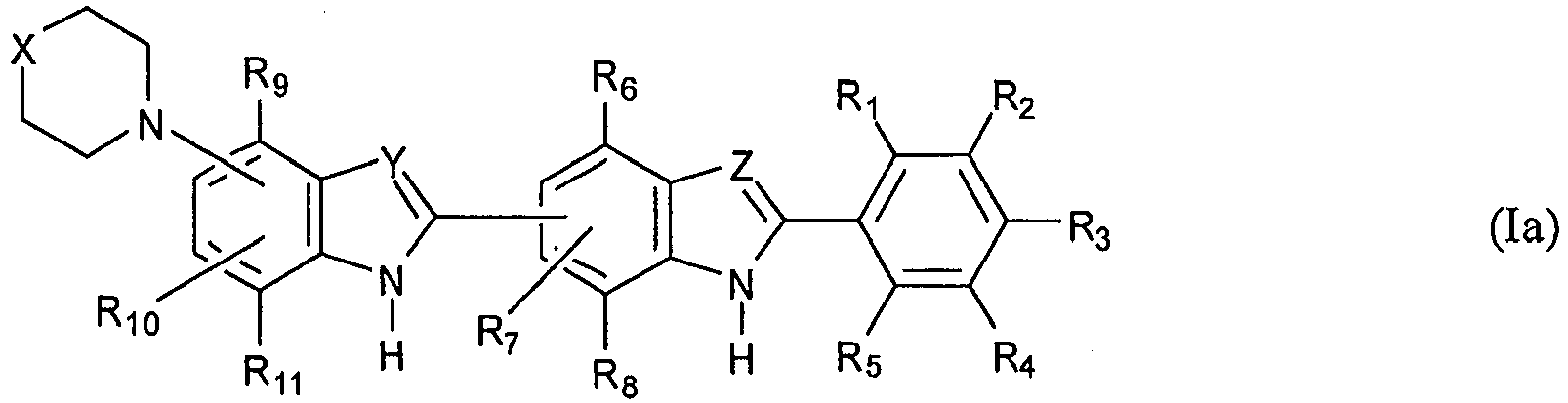
- X is NCH3;
- Y and Z are selected from N or CH;
- R3 is N(R)2 or NHR where R is C1 to C30 alkyl;
- R1 is C1 to C30 alkyl, C2 to C30 alkenyl or -OR, where R is C1 to C30 alkyl;
- R5, R7 and R10 are selected from hydrogen, C1 to C30 alkyl, C2 to C30 alkenyl and -OR where R is C1 to C30 alkyl; and
- R2, R4, R6, R8, R9 and R11 are hydrogen;
- or a salt and/or tautomer thereof.
- [5] A compound according to [4] for use in cancer radiotherapy to minimise damage to non-tumour cells and tissues, wherein the locus of a tumour is subject to a source of ionising radiation.
- [6] A compound according to [4] for use in protecting a human or animal subject from radiation damage resulting from exposure to ionising radiation.
- Throughout this specification, unless the context requires otherwise, the word "comprise", or variations such as "comprises" or "comprising", will be understood to imply the inclusion of a stated integer or group of integers but not the exclusion of any other integer or group of integers.
- The term "electron donating group" is used herein in its broadest sense and includes optionally substituted alkyl, optionally substituted alkenyl, NHR or NR2, and OR, wherein R is hydrogen or optionally substituted alkyl. Preferably the electron donating group is NHR or NR2. It is postulated that the presence of at least one electron donating group increases the radioprotective activity.
- The term "sterically hindering group" is used herein in its broadest sense to include any bulky group which stereochemically restricts, for example, the rotation or the conformation of the compounds of the present invention. Examples of sterically hindering groups include those described above as electron donating groups which may be located, for example, adjacent to the single bonds linking the rings so as to restrict rotation. Other sterically hindering groups include optionally substituted rings which may contain heteroatoms. It is postulated that the stereochemical restriction also increases the radioprotection activity by increasing the extent of minor groove DNA-binding. This increase may be achieved by decreasing the extent of other forms of binding of the ligand to itself, to DNA (modes of binding other than minor groove binding) or to other cellular components. It is possible that some of these other forms of binding may be favoured by a coplanar conformation of the ring system of the radioprotector.
- While not wishing to be limited by theory it is believed that the protection conferred by the compounds according to the invention is achieved by electron donation (reduction) by the radioprotector to transient radiation induced oxidizing species on the DNA. Since the radioprotectors may contain basic groups, protonation of these groups would be expected to substantially diminish this electron donating ability. In this context a role of the sterically hindered group, in some compounds, may be to hinder formation of the conjugate base structure where resonance stabilisation can be achieved by tautomers in which the ring systems are coplanar.
- The term "alkyl" denotes straight chain or branched C1 to C30 alkyl. Examples of straight chain and branched alkyl include methyl, ethyl, propyl, isopropyl, butyl, isobutyl, sec-butyl, tert-butyl, amyl, isoamyl, sec-amyl, 1,2-dimethylpropyl, 1,1-dimethylpropyl, hexyl, 4-methylpentyl, 1-methylpentyl, 2-methylpentyl, 3- methylpentyl, 1,1-dimethylbutyl, 2,2-dimethylbutyl, 3,3-dimethylbutyl, 1,2-dimethylbutyl, 1,3-dimethylbutyl, 1,2,2-trimethylpropyl, 1,1,2-trimethylpropyl, heptyl, 5-methylhexyl, 1-methylhexyl, 2,2-dimethylpentyl, 3,3-dimethylpentyl, 4,4-dimethylpentyl, 1,2-dimethylpentyl, 1,3-dimethylpentyl, 1,4-dimethylpentyl, 1,2,3-trimethylbutyl, 1,1,2-trimethylbutyl, 1,1,3-trimethylbutyl, octyl, 6-methylheptyl, 1-methylheptyl, 1,1,3,3-tetramethylbutyl, nonyl, 1-, 2-, 3-, 4-, 5-, 6- or 7-methylocyl, 1-, 2-, 3-, 4- or 5-ethylheptyl, 1-, 2- or 3-propylhexyl, decyl, 1-, 2-, 3-, 4-, 5-, 6-, 7- or 8-methylnonyl, 1-, 2-, 3-, 4-, 5- or 6-ethyloctyl, 1-, 2-, 3- or 4-propylheptyl, undecyl, 1-, 2-, 3-, 4-, 5-, 6-, 7-, 8- or 9-methyldecyl, 1-, 2-, 3-, 4-, 5-, 6- or 7-ethylnonyl, 1-, 2-, 3-, 4- or 5-propyloctyl, 1-, 2- or 3-butylheptyl, 1-pentylhexyl, dodecyl, 1-, 2-, 3-, 4-, 5-, 6-, 7-, 8-, 9- or 10-methylundecyl, 1-, 2-, 3-, 4-, 5-, 6-, 7- or 8-ethyldecyl, 1-, 2-, 3-, 4-, 5- or 6-propylnonyl, 1-, 2-, 3- or 4-butyloctyl, 1 - or 2- pentylheptyl.
- The term "alkenyl" denotes groups formed from straight chain, or branched alkenes, specifically C2-30 alkenyl. Examples of alkenyl include vinyl, allyl, 1-methylvinyl, butenyl, iso-butenyl, 3-methyl-2-butenyl, 1-pentenyl, 1-hexenyl, 3-hexenyl, 1-heptenyl, 3-heptenyl, 1-octenyl, 1-nonenyl, 2-nonenyl, 3-nonenyl, 1-decenyl, 3-decenyl, 1,3-butadienyl, 1,4-pentadienyl, 1,3-hexadienyl, 1,4-hexadienyl.
- The salts of the compounds of the present invention are preferably pharmaceutically acceptable, but it will be appreciated that non-pharmaceutically acceptable salts also fall within the scope of the present invention, since these are useful as intermediates in the preparation of pharmaceutically acceptable salts. Examples of pharmaceutically acceptable salts include salts of pharmaceutically acceptable cations such as sodium, potassium, lithium, calcium, magnesium, ammonium and alkylammonium; acid addition salts of pharmaceutically acceptable inorganic acids such as hydrochloric, orthophosphoric, sulphuric, phosphoric, nitric, carbonic, boric, sulfamic and hydrobromic acids; or salts of pharmaceutically acceptable organic acids such as acetic, propionic, butyric, tartaric, maleic, hydroxymaleic, fumaric, citric, lactic, mucic, gluconic, benzoic, succinic, oxalic, phenylacetic, methanesulphonic, trihalomethanesulphonic, toluenesulphonic, benzenesulphonic, salicyclic, sulphanilic, aspartic, glutamic, edetic, stearic, palmitic, lauric, pantothenic, tannic, ascorbic and valeric acids.
- The term "tautomer" is used herein in its broadest sense to include compounds of formula (Ia) which are capable of existing in a state of equilibrium between two isomeric forms. Such compounds may differ in the bond connecting two atoms or groups and the position of these atoms or groups in the compound.
- The compounds of the invention may be electrically neutral or be polycations with associated anions for electrical neutrality. Suitable associated anions include sulphate, tartrate, citrate, chloride, nitrate, nitrite, phosphate, perchlorate, halosulfonate or trihalomethylsulfonate.
- A preferred compound is "ortho methyl para dimethylamino Hoechst".
- A process for the preparation of a compound of formula (Ia) in which Y and Z are N comprises either:
- (A)
- (i) coupling a compound with formula (II):


- (ii) reducing the compound of formula (V) to form a compound of formula (VI):

- (iii) coupling the compound of formula (VI) with either a compound of formula (VII):


- (i) coupling a compound with formula (II):
- (B)
- (i) coupling a compound of formula (IX):
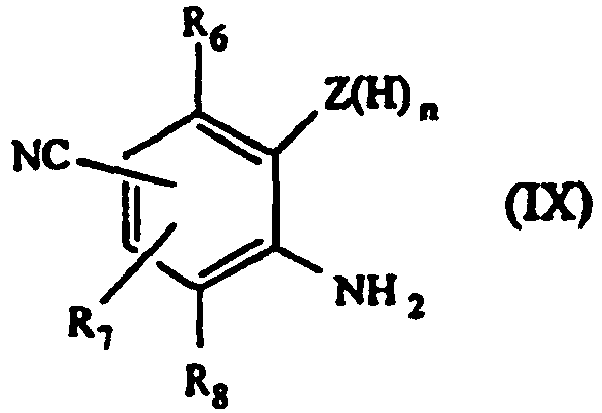
wherein R1, R2, R3, R4 and R5 are as defined above to form a compound of formula (X):
- (ii) converting the compound of formula (X) into a compound of formula (XI):

- (iii) coupling the compound of formula (XI) with a compound of formula (XIII)

- (i) coupling a compound of formula (IX):
- A process for the preparation of a compound of formula (1a) in which one or both of Y and Z is/are C(R'), wherein R' is H, comprises
- A
- (i) coupling a compound of formula (XIV):


- (ii) cyclising the compound of formula (XVI) to form a compound of formula (XVII):

- (iii) coupling the compound of formula (XVII) with a compound of formula (XVIII):

- or (iv) formylating the compound of formula (XVII) to form a compound of formula (XIX):

- (v) coupling the compound of formula (XIX) with a compound of formula (II) where Y is N to form a compound of formula (1a) where Y is N and Z is C(R');
- (i) coupling a compound of formula (XIV):
- or B(i) coupling a compound of formula (XVIII) with a compound of formula (XX):

- or C(i) coupling a compound of formula (XXI):

- The present invention relates to a radioprotector comprising ortho methyl para dimethylamino Hoechst.
- The present invention also relates to a method of protecting a subject from radiation damage which comprises administering an effective amount of ortho methyl para dimethylamino Hoechst to the subject.
- The present invention still further relates to a method of cancer radiotherapy which comprises administering to a subject in need of such therapy an effective amount of a ortho methyl para dimethylamino Hoechst and subjecting the locus of the tumour to a radiation source.
- The subject which is protected from radiation damage may be a human or an animal such as a domestic or wild animal, particularly an animal of economic importance.
- As used herein radiation source means a source of ionising radiation. The radiation damage results from exposure to ionising radiation. The term "ionising radiation" as used herein refers to photons having enough energy to ionise a bond, such as, a, P and γ rays from radioactive nuclei and x-rays.
- The term "cancer radiotherapy," is used herein in its broadest sense and includes radiotherapy involving tumours which may be either benign or malignant.
- The term "Dose Modification Factor" (DMF) as used herein refers to the ratio of the radiation dose required to produce a given effect in the presence of protector, to that requires to produce the equivalent effect in the absence of protector.
- The present application also discloses to a radioprotective composition which comprises a compound of formula (Ia) as defined above in association with a pharmaceutically or veterinarily acceptable carrier.
- The compounds of the invention may be advantageously used in therapy in combination with other medicaments, such as, chemotherapeutic agents, for example, radiomimetic agents which are cytotoxic agents that damage DNA in such a way that the lesions produced in DNA are similar to those resulting from ionising radiation. Examples of radiomimetic agents which cause DNA strand breaks include bleomycin, doxorubicin, adriamycin, 5FU, neocarcinostatin, alkylating agents and other agents that produce DNA adducts. It is anticipated that the radioprotectors of the present invention will protect DNA from damage by some of these agents, in the same way as they protect against the effects of ionising radiation. In clinical applications, it is unlikely that the radioprotector would be administered systemically together with the chemotherapeutic agent, since this could compromise the action of this agent on the tumour. However, there are circumstances where topical application to problem tissues could be advantageous. For example, oral mucositis is a problem side-effect for cytotoxic agents, such as, doxorubicin and administration of the present radioprotector as a mouth-wash before administration of the chemotherapeutic agent could ameliorate this side-effect without compromising the action of this agent on a tumour not located in the oral cavity. Similarly, the gastrointestinal tract could be protected by oral administration, the lungs by aerosol inhalation or the bladder by intravesical delivery, for example, via a catheter of the radioprotector. Hence a preferred method utilises the compound of formula (Ia) in conjunction with another medicament, such as, a radiomimetic agent.
- The compounds of the invention may be conjugated to agents, for example, via the interactive group, which will specifically deliver them to a desired tumour site. Suitable agents may include antibodies or proteins, such as, growth factors, for example, haemopoietic growth factor which will enable preferential radioprotection of haemopoietic stem cells to occur in the context of total body irradiation and bone marrow transplantation.
- There is also an ex vivo application of the conjugates of the compounds of the invention in the context of bone marrow transplantation. Bone marrow transplantation generally involves obtaining and storing bone marrow samples from a subject in anticipation of a deterioration of their condition. A rather drastic form of chemotherapy (i.e. a high dose) is then administered. This chemotherapy is such that it would normally be lethal due to the destruction of normal stem cells, but the subject is rescued by the administration of their own haemopoietic stem cells. The problem with this procedure is that the initial sample of stem cells is likely to be contaminated with tumour cells and various procedures are used therefore to purge the bone marrow preparations of the tumour cells. Radioprotectors conjugated to a haemopoietic growth factor could be used in this context by being added to a suspension of bone marrow cells. The suspension could then be irradiated in the expectation that the normal bone marrow cells, but not the tumour cells, would be preferentially protected from the cell-killing effects of the radiation.
- The compound of formula (Ia) hereinafter referred to as the "active ingredient" may be administered for therapy by any suitable route, including oral, rectal, nasal, topical (including buccal and sublingual), vaginal, intravesical and parenteral (including subcutaneous, intramuscular, intravenous, intrastemal and intradermal). Preferably, administration will be by the rectal, topical, vaginal or parenteral route, however it will be appreciated that the preferred route will vary with the condition and age of the subject, the tissue/tumour being treated, its location within the subject and the judgement of the physician or veterinarian. The compound of formula (Ia) may be administered directly into tissues surrounding or proximal to tumours to be irradiated.
- The compositions disclosed herein comprise at least one compound of formula (Ia), together with one or more pharmaceutically acceptable carriers, diluents adjuvants and/or excipients and optionally other medicaments. Each carrier, diluent, adjuvant and/or excipient must be pharmaceutically "acceptable" in the sense of being compatible with the other ingredients of the composition and not injurious to the subject. Compositions include those suitable for oral, rectal, nasal, topical (including buccal and sublingual), vaginal, intravesical or parenteral (including subcutaneous, intramuscular, intravenous and intradermal) administration. The compositions may conveniently be presented in unit dosage form and may be prepared by methods well known in the art of pharmacy. Such methods include the step of bringing into association the active ingredient with the carrier which constitutes one or more accessory ingredients. In general, the compositions are prepared by uniformly and intimately bringing into association the active ingredient with liquid carriers, diluents, adjuvants and/or excipients or finely divided solid carriers or both, and then if necessary shaping the product.
- Compositions of the present invention suitable for oral administration may be presented as discrete units such as capsules, sachets or tablets each containing a predetermined amount of the active ingredient; as a powder or granules; as a solution or a suspension in an aqueous or non-aqueous liquid; or as an oil-in-water liquid emulsion or a water-in-oil liquid emulsion. The active ingredient may also be presented as a bolus, electuary or paste.
- A tablet may be made by compression or moulding, optionally with one or more accessory ingredients. Compressed tablets may be prepared by compressing in a suitable machine the active ingredient in a free-flowing form such as a powder or granules, optionally mixed with a binder (e.g inert diluent, preservative disintegrant (e.g. sodium starch glycollate, cross-linked povidone, cross-linked sodium carboxymethyl cellulose) surface-active or dispersing agent. Moulded tablets may be made by moulding in a suitable machine a mixture of the powdered compound moistened with an inert liquid diluent. The tablets may optionally be coated or scored and may be formulated so as to provide slow or controlled release of the active ingredient therein using, for example, hydroxypropylmethyl cellulose in varying proportions to provide the desired release profile. Tablets may optionally be provided with an enteric coating, to provide release in parts of the gut other than the stomach.
- Compositions suitable for topical administration in the mouth include lozenges comprising the active ingredient in a flavoured basis, usually sucrose and acacia or tragacanth gum; pastilles comprising the active ingredient in an inert basis such as gelatin and glycerin, or sucrose and acacia gum; and mouthwashes or sprays comprising the active ingredient in a suitable liquid carrier.
- For topical application to the skin, the active ingredient may be in the form of a cream, ointment, jelly, solution or suspension.
- For topical application to the eye, the active ingredient may be in the form of a solution or suspension in a suitable sterile aqueous or non-aqueous vehicle. Additives, for instance buffers, preservatives including bactericidal and fungicidal agents, such as phenyl mercuric acetate or nitrate, benzalkonium chloride or chlorohexidine and thickening agents such as hypromellose may also be included.
- Compositions for rectal administration may be presented as a suppository with a suitable non-irritating excipient which is solid at ordinary temperatures but liquid at the rectal temperature and will therefore melt in the rectum to release the active ingredient. Such excipients include cocoa butter or a salicylate.
- Nasal compositions may be presented topically as nose drops or sprays or systemically in a form suitable for absorption through the nasal mucosa and/or the alveolar cells in the lungs.
- Compositions suitable for vaginal administration may be presented as pessaries, tampons, creams, gels, pastes, foams or spray formulations containing in addition to the active ingredient such carriers as are known in the art to be appropriate.
- Compositions suitable for parenteral administration include aqueous and non-aqueous isotonic sterile injection solutions which may contain anti-oxidants, buffers, bacteriostats and solutes which render the composition isotonic with the blood of the intended subject; and aqueous and non-aqueous sterile suspensions which may include suspending agents and thickening agents. The compositions may be presented in unit-dose or multi-dose sealed containers, for example, ampoules and vials, and may be stored in a freeze-dried (lyophilized) condition requiring only the addition of the sterile liquid carrier, for example water for injections, immediately prior to use. Extemporaneous injection solutions and suspensions may be prepared from sterile powders, granules and tablets of the kind previously described.
- Preferred unit dosage compositions are those containing a daily dose or unit, daily sub-dose, as hereinabove described, or an appropriate fraction thereof, of an active ingredient.
- The compound of formula (Ia) may also be presented for use in the form of veterinary compositions, which may be prepared, for example, by methods that are conventional in the art. Examples of such veterinary compositions include those adapted for:
- (a) oral administration, external application, for example drenches (e.g. aqueous or non-aqueous solutions or suspensions); tablets or boluses; powders, granules or pellets for admixture with feed stuffs; pastes for application to the tongue;
- (b) parenteral administration for example by subcutaneous, intramuscular or intravenous injection, e.g. as a sterile solution or suspension; or (when appropriate) by intramammary injection where a suspension or solution is introduced into the udder via the teat;
- (c) topical application, e.g. as a cream, ointment or spray applied to the skin; or
- (d) intravaginally, e.g. as a pessary, cream or foam.
- It should be understood that in addition to the ingredients particularly mentioned above, the compositions of this invention may include other agents conventional in the art having regard to the type of composition in question, for example, those suitable for oral administration may include such further agents as binders, sweeteners, thickeners, flavouring agents, disintegrating agents, coating agents, preservatives, lubricants and/or time delay agents.
- Suitable sweeteners include sucrose, lactose, glucose, aspartame or saccharin. Suitable disintegrating agents include corn starch, methylcellulose, polyvinylpyrrolidone, xanthan gum, bentonite, alginic acid or agar. Suitable flavouring agents include peppermint oil, oil of wintergreen, cherry, orange or raspberry flavouring. Suitable coating agents include polymers or copolymers of acrylic acid and/or methacrylic acid and/or their esters, waxes, fatty alcohols, zein, shellac or gluten. Suitable preservatives include sodium benzoate, vitamin E, alpha-tocopherol, ascorbic acid, methyl paraben, propyl paraben or sodium bisulphite. Suitable lubricants include magnesium stearate, steric acid, sodium oleate, sodium chloride or talc. Suitable time delay agents include glyceryl monostearate or glyceryl distearate.
- The primary application of the radioprotector of the present invention is in cancer radiotherapy. Many of the normal tissues which are a problem in radiotherapy such as the skin, oral mucosa, oesophageal mucosa, rectal mucosa, vaginal mucosa and bladder epithelium can be topically protected by the radioprotectors of the present invention.
- There are two distinct settings for such topical radioprotectors. Firstly, there is potential to decrease the distressing acute reactions that often occur in these tissues. Although these acute reactions can be transient, their amelioration would obviously be of benefit to a subject. A different setting is the situation where acute reactions limit the dose of radiation that can be delivered to the tumour. An example is in the accelerated fractionation regime, in which acute reactions can be dose-limiting. Thus, the application of radioprotectors, could enable the use of higher radiation doses, and hence increased prospects for cure.
- Aside from topical application, the pharmaco-distribution properties of the radioprotectors of the present invention offer other potential ways of achieving an improved therapeutic ratio. Examples include tumours in the brain and lung.
- In the case of the brain, endothelial cells are thought to be an important radiosensitive target in terms of the detrimental effects of radiation on normal brain tissue. The administration of the radioprotector of the present invention would protect the important endothelial cells in the normal brain. The corresponding cells in the tumour would also be protected, but these cells are well oxygenated and are therefore are the most radiosensitive cells in the tumour. The more distant cells in the tumour which are hypoxic would therefore be out of reach of the radioprotector. This means that the normal endothelial cells and oxic (radiosensitive) cells of the tumour would be protected equally. This radioprotection would then enable a higher dose of irradiation to be used which would increase the chance of killing the hypoxic cells in the tumour. The fact that the endothelial cells of both the tumour and normal tissue are effected equally has no impact on the therapeutic ratio. An increase in the therapeutic ratio occurs because of the increase in kill of hypoxic tumour cells, without any debt in terms of normal tissue damage.
- In the case of tumours in the lung, the radioprotector of the present invention would be delivered to alveolar cells. Although the endothelial cells of the lung tumour may also be protected, the more distant cells in the tumour would not. Moreover, the circulation of some lung tumours is provided not by the pulmonary artery but from the bronchial circulation, which will not be accessed until the next pass of the radioprotector in the circulation and hence exposed to lower concentrations.
- The targeting of radioprotectors may also achieve improved therapeutic ratios in radiotherapy. A suitable example is the conjugation of the radioprotector of the present invention to haemopoietic growth factor to achieve preferential radioprotection of haemopoietic stem cells in the context of total body irradiation and bone marrow transplantation.
- Outside the context of cancer radiotherapy, the radioprotectors of the present invention could be used prophylactly in high risk radiation situations. For example, the haemopoietic growth factor conjugate described above could be administered for this purpose.
- The invention will now be described with reference to the following Examples.
- In the Examples, reference will be made to the accompanying drawings in which:
-
Figure 1 is a graph showing the effect of Hoechst 33258 (◇), Hoechst 33342 (∇) and para dimethylamino Hoechst (O) concentration on survival of V79 cells either alone or in combination with 12Gy irradiation; -
Figure 2 is a graph showing the survival of V79 cells after treatment with Hoechst 33258 (◇), Hoechst 33342 (∇) and para dimethylamino Hoechst (O) with irradiation (12 Gy) and the effect of the nuclear concentration of the radioprotector; -
Figure 3 is a graph showing survival curves following treatment with Hoechst 33342 (21 µM - □), para NNdimethylamino Hoechst (84 µM - Δ), ortho methyl para NNdimethylamino Hoechst (30 µM - ●) and untreated controls (○); -
Figure 4 is a graph of radiation dose vs accumulated deaths after bilateral irradiation of mouse lungs for Hoechst 33342 (□), ortho methyl para dimethylamino Hoechst (▲) and untreated controls (■); -
Figure 5 is a graph of radiation dose vs maximum breathing rate for ortho methyl para dimethylamino Hoechst (●) and untreated controls (○); and -
Figure 6 is a graph of dose vs cell density (mouse brain endothelial cells) for Hoechst 33342 (○) and irradication only controls (□). - The following abbreviations are also used in the Examples:
- Hoechst 33258 - 4-hydroxy-1-{5'[5"'-(4"'-methylpiperazin-1"'-yl) benzimidazol-2"-yl]benzimidazol-2'-yl}benzene; and
- Hoechst 33342 - 4-ethoxy-1-{5'[5'''-(4"'-methylpiperazin-1"'-yl) benzimidazol-2"-yl]benzimidazol-2'-yl}benzene.
- The following compound was prepared in the Examples.

Compound No. Z R X 1 N 2-Me, 4-NMe2 NMe -
Reference Compound 1 was obtained via the procedure of Campaigne et al 5 . Phosphorous oxychloride (4.17 g, 27.22 mmol) was added cautiously to a cooled solution of DMF (7.24 g, 99 mmol). 3-Dimethylaminotoluene2 (3.66 g, 27.22 mmol) in DMF was added dropwise and the mixture heated to 80-90°C for 2 hours. The solution was cooled, poured onto ice and neutralised to pH 6-8 with sodium acetate. The solid was filtered off, washed with water and dried to afford Reference Compound 4 as a light yellow solid (2.58 g, 58%) mp 66-68°C. 1H n.m.r. (400 MHZ, CDCl3) δ 2.62, s, 3H; 3.06, s, 6H; 6.425, d, J 2.53 Hz, 1H; 6.56, dd, J 2.53, 8.67 Hz, 1H; 8.65, d, J 8.67 Hz, 1H; 9.97, s, 1H. -
- (a) An aromatic diamine bearing an N-methylpiperazine substituent was coupled to an imino ether to afford a benzimidazole nitro amine. Reduction of the benzimidazole nitro amine was carried out immediately prior to use by catalytic hydrogenation over palladium on carbon. A 30% methanol/ethyl acetate mixture proved to be the optimal solvent system for this reduction, since alcohol alone resulted in the formation of excessive amounts of oxidation/decomposition products, whereas use of ethyl acetate resulted in excessively long reaction times and poor solubility. The benzimidazole diamine was then coupled to
Reference Compound 1 to affordCompound 1. - (b) To freshly prepared 2-amino-4-[5'-(4"-methylpiperazin-1'-yl)benzimidazol-2 yl]aniline (915 mg, 2.84 mmol) in dry ethanol (13 mL) was added a solution of thiosulfate aldehyde complex (prepared by adding sodium thiosulfate (810 mg, 4.26 mmol) in ethanol/water (4.5:4.5 mL) to a refluxing solution of 4-N,N-dimethyl-2-methylbenzaldehyde (695 mg, 0.208 mmol) in ethanol (13.7 mL)). The resultant solution was heated at reflux for 24 hrs. The solution was cooled, basified with ammonium hydroxide and put in the freezer for several hours. The solution was filtered and the solid washed with water, diethyl ether and the product dried in vacuum. The crude material was subject to size exclusion chromatography (Sephadex LH-20, methanol/acetic acid, 98:2) to give the title compound as a yellow solid upon drying (1.05 mg, 79%) m.p. 198 °C (decomp.). 1H n.m.r. [400 MHZ, CD3OD+CF3CO2H] d 8.55, d, J 1.5 Hz, 1H, H4'; 8.245, dd, J 8.6, 1.65 Hz, 1H, H6'; 8.05, d, J 8.7 Hz, 1H, H7'; 7.765, d,
J 9 Hz, 1H, H7"; 7.715, d, J 8.6 Hz, 1H, H5; 7.45, dd, J 9.1, 2.2 Hz, 1H, H6"; 7.365, d, J 2.2 Hz, 1H, H4"; 6.835, dd, J 8.85, 2.45 Hz, 1H, H4; 6.805, d, J 2.2 Hz, 1H, H3; 3.975, br d, J 13.5 Hz, 2H; 3.685, br d,J 12 Hz, 2H; 3.345, br dt, J 12.25, 2.35 Hz, 2H; 3.21, br dt, J 12.775, 2.3 Hz, 2H; 3.12, s, 6H, N(CH3)2; 3.0, s, 3H, NCH3; 2.66, s, 3H, ArCH3. - Monolayers of V79 cells were maintained in 25cm2 Falcon plastic flasks in alpha-MEM medium with 10% foetal calf serum (FCS). Log phase cultures were treated by adding the required amount of Hoechst 33258, Hoechst 33342 or para dimethylamino Hoechst (25-500 nmoles) dissolved in 50
µl 10 µM acetic acid in 50% methanol. The flasks were inverted immediately prior to adding the compound to ensure complete mixing of the compound with the medium, before contact with the monolayer. - After 2 hours incubation at 37°C, the cells were harvested and assayed for clonogenic survival. The plating efficiency for control, untreated cells was 70-80%. All clonogenic survival results are expressed relative to the untreated controls.
- Cultures were irradiated in a 137Cs Gammacell-40 (Atomic Energy of Canada Ltd.) at a dose rate of 0.84 Gy/min. Ligand-treated cells were irradiated two hours after starting the exposure to the ligand. In all cases, the clonogenic survival was delayed until one hour after completion of irradiation.
- Two hours after addition of the ligand, monolayers were treated with pronase. The pronase treatment was terminated by dilution in ice-cold medium with 10% FCS, and the cells washed once with cold PBS/EDTA, and again with cold nuclear buffer (5 µM MgCl2, 10µM Tris buffer pH 7.4, 0.14M NaCl).
- Nuclei were prepared by suspending the cells on cold nuclear buffer containing 1% Triton x100. The pelleted nuclei were resuspended in 1ml sonication buffer (20µM KCI, 20µM TRIS pH 7.4, 0.14 M NaCl), sonicated, (Branson Sonifier Cell
Disruptor Model B 15; 10 sec, at output control setting of 3.5) and 40ml 20% SDS added. The ligand concentration was determined by spectrophotometry, using a lysed sonicate from untreated cells as the blank. Standards were prepared from control lysates, by addition of a known amount of the ligand. - Hoechst 33258, Hoechst 33342 or para dimethylamino Hoechst was added to the media of monolayers of V79 cells, to the indicated final concentrations. Some cultures (lower curves) were irradiated 2 hours after drug addition; others were not irradiated (upper curves). All cultures were held for a further one hour prior to plating for clonogenic survival. The results are shown in
Figure 1 . - Mono layer cultures of V79 cells were exposed to various concentrations of the three radioprotectors, as described in (a) above. After two hours, the cells were chilled and kept cold during the isolation of nuclei, using 0.08% w.v Triton X-100. After counting an aliquot of the nuclear suspension, the ligands were extracted and quantitated by spectrophotometry and the nuclear content calculated. The survival results shown in the lower part of
Figure 1 were replotted using the nuclear uptake data and the results are shown inFigure 2 . - Cultures of V79 cells that had been treated as described in (a) above with 21µM Hoechst 33342, 84 µM para dimethylamino Hoechst and 30 µM ortho methyl para dimethylamino Hoechst and untreated controls were irradiated at the indicated doses (137Cs-γ) and clonogenic survival was determined.
-
Figure 1 shows the effects of the added concentration of protector on cytotoxicity (upper portion), and on survival after a single dose of 12Gy (137Cs-γ). The Hoechst 33342 clearly becomes cytotoxic at concentrations above 20-30 µM, whereas the dimethylamino Hoechst has no effect on survival at concentrations up to 100 µM. For the cultures that were irradiated with 12Gy, increasing concentrations of the ligands results in increasing radioprotection until cytotoxic concentrations are encountered. - In order to compare the radioprotective potency of the ligands, an attempt has been made to measure the concentrations of the ligands in the nuclei of cells at the time of irradiation. Ligand treated cells were pronased and treated with in ice-cold detergent to prepare isolated nuclei. The ligands were extracted from the nuclei and assayed spectrophotometrically, and the results expressed in terms of uptake per 106 nuclei. This then allowed survival after 12Gy to be expressed in terms of nuclear content of the radioprotectors. The results are shown in
Figure 2 and suggest that para dimethylamino Hoechst is a more potent radioprotector. - The survival curves in
Figure 3 show the progressive improvement in radioprotector activity, in terms of the dose modification factors (DMFs), from: - Hoechst 33342 (DMF 1.3), to
- para NNdimethylamino Hoechst (DMF 1.7), to
- ortho methyl para NNdimethylamino Hoechst (DMF 2.1).
- In particular, the potency of the ortho methyl para NNdimethylamino Hoechst is highlighted by comparison with Hoechst 33342, given the similarity of the concentrations used (30µM and 21µM, respectively).
- This potency of the new radioprotectors compared to existing radioprotectors is demonstrated in Table 1.
Table 1 Cell line Radioprotector Concentration DMF HT29 Hoechst 33342 8.7µM 1.5 V79 Hoechst 33342 21µM 1.3 V79 para NN dimethylamino Hoechst 84µM 1.7 V79 ortho methyl para NN dimethylamino Hoechst 30µM 2.1 CHO WR1065 4mM 1.9 - The radioprotective activity of ortho methyl para dimethylamino Hoechst (Compound 1) was compared with Hoechst 33342 in a similar manner as described in Example 5 above. The results are shown in Table 2 below.
Table 2 Protector only (no irradiation) Irradiation only (12 Gy) Protector plus irradiation (12 Gy) Protection Factor Compound 1(20µM): 0.63 0.036 0.145 4.0 0.88 0.028 0.12 4.3 0.71 0.034 0.15 4.4 Hoechst 33342 (21µM): 0.80 [0.022] 0.05 2.3 0.87 [0.022] 0.06 2.7 0.76 [0.022] 0.051 2.3 para nitro Hoechst (20µM): 0.89 [0.022] 0.011 [0.5]* * A protection factor of <1 denotes sensitisation rather than protection. - The first three columns show survival fraction relative to that for untreated control cells. Each row represents a separate experiment and the figures are the means of duplicates. The figures in square brackets is the mean of a number of the results of a number of experiments done over the relevant period. The protection factor is the ratio of survival fractions for irradiated cells, with and without protector.
- The results in Table 2 demonstrate the increased radioprotective activity of the compound with rotation restricted by the ortho methyl group. This stereochemical restriction design feature, in addition to favouring the minor groove binding mode, also may have the advantage of reducing the binding of the protectors to non-DNA components of the cell, such as proteins and lipids.
- Table 2 also shows the radiosensitising activity of para nitro Hoechst. It follows from this result that the incorporation of electron-donating substituents such as dimethylamino groups increases the radioprotective activity and that conversely the incorporation of electron withdrawing substituents (such as a nitro group) will decrease the radioprotective activity.
- Irradiation of mouse lung, at appropriate doses, results in fatal loss of lung function. The onset of damage is signalled by an increase in breathing rate. The dose response and kinetics of loss of lung function following irradiation of both lungs varies between different mouse strains.
- The procedures for irradiation and measurement of breathing rate were essentially as described by Travis etal 3 . Groups of 5-6 male DBA/2J mice were anaesthetised and irradiated with 250 kV X-rays (single dose) using a jig that shielded all the body except for both lungs. A thin midline lead strip was used to shield spinal cord between the lungs. Some mice received an intravenous injection (tail vein) of Hoechst 33342 or ortho methyl para NNdimethylamino Hoechst (2ing/25g), 30 minutes prior to irradiation.
- At weekly intervals, from 4-6 weeks post-irradiation, the breathing rate was measured for each mouse. The mouse was held in a small chamber equipped with a microphone and the output analysed on a PC. The mean breathing rate was determined for each of 3 periods of 2 seconds and the average of these readings was recorded as the breathing rate. The recorded breathing rates for each group of mice were averaged and the standard error calculated.
- All mice were monitored daily for signs of respiratory distress (hunched appearance, raised hair), with particular attention being paid to those mice showing elevated breathing rate.
- In vivo radioprotective activity of Hoechst 33342 and ortho methyl para dimethylamino Hoechst has been shown in mouse lung model. This clearly demonstrates that a radioprotector can be delivered in sufficient concentrations to the critical cells in the lung (i.e. those cells which determine radiosensitising of lung function) via intravenous injection.
- The results obtained are summarised in
Figure 4 which shows accumulated deaths at 15 weeks after bilateral irradiation of mouse lungs. The radioprotector (2mg/25g mouse) was administered 30 minutes prior to the single irradiation dose. - This displacement (to the right) of the dose response curves for Hoechst 33342 treated mice is a clear demonstration of radioprotection. On the basis of comparison of ED50 values, the dose modifying factor is approximately 1.2. It is also clear that ortho methyl para NNdimethylamino Hoechst is even more effective (dose modification factor 1.35).
- The breathing rate results for a separate experiment are shown in
Figure 5 . For this experiment the maximum breathing rate recorded for each animal up to 24 weeks was used to calculate the mean for each group. This figure shows a DMF of 1.4 for the ortho methyl paraNN dimethylamino Hoechst. - The pig skin model is described by J.W. Hopewell4. The structural similarities between human and pig skin underlie the relevance of the model.
- Although some pig skin studies involve external beam irradiation, a particularly convenient radiation source is discs containing β-emitting isotopes, typically 90Sr. The sources can be held to the skin, or for higher doses, taped to the animal, for appropriate periods of time to deliver the required dose. The discs are typically about 2cm in diameter so that an array of different doses can be arranged on the flanks of a single animal.
- The "acute" reactions (3-9 weeks after irradiation) result from radiation damage to the basal cells of the epidermis, and are manifest as erythema, and dry and moist desquamation. The "late" reactions (10-16 weeks) results from radiation effects to the dermal vascular connective tissue, characterized by a dusky mauve erythema and necrosis. The scoring system is well described.
- The radioprotectors were formulated in a propylene glycol cream containing 10% DMSO. The extent and kinetics of penetration were followed by fluorescence microscopy of frozen skin sections, to enable optimization of delivery.
- Radiation dose response curves were constructed for radiation only fields. The results of fields with radioprotector creams are shown in Table 3 below, with the respective cream (vehicle) only controls. The decrease in extent of skin reaction for the test fields is evident.
Table 3 Dose (Gy) Cream* (0.15g/field) Active Ingredient Conc. (µg/g) Fields showing moist desquamation (10 weeks post-Irr.) # % 36 blank - 5/7 71% 36 Hoechst 33342 5000 3/7 43% 36 para dimethylamino Hoechst 5000 4/7 57% 40 blank - 7/7 100% 40 Hoechst 33342 500 4/6 83% 40 no cream - 7/8 88% 40 the methyl para dimethylamino Hoechst 5000 4/8 50% 44 " 5000 4/8 50% * The cream was prepared from the following ingredients as indicated: - Non-ionic Cream
Sorbolene CreamCetomacrogol Emulsifying Wax 15 Liquid Paraffin (by weight) 10 White Soft Paraffin 10 Chlorocresol 0.1 Propylene Glycol 5 Purified water, freshly boiled and cooled............. to 100 - Cetomacrogol emulsifying wax is melted with the paraffins at about 70°C. The chlorocresol and propylene glycol are dissolved in about 50 parts of the purified water warmed to about the same temperature. The components are then mixed, adjusted to weight, and stirred until cool.
- Irradiation of rodent brain results in the loss of a subset of brain endothelial cells within 24 hours after irradiation.
Figure 6 shows the extent of the loss of endothelial cells of mouse brain, with increasing radiation dose (single dose), and compares irradiation-only controls (□) with the results for mice that were protected by intravenous inj ection of Hoechst 33342 (80mg/kg) 10 minutes prior to radiation (○). - Endothelial cell numbers were scored as described by Lyubimova et al. Each point represents the mean for 3-4 mice; 3 sections were scored for each animal, a total of 30 fields were scored for each section, and the figure indicates the average number of cells per field. The error bars indicate standard errors.
- Given the rapidity of the loss of cells (within 24 hours), it is postulated that a particularly radiosensitive subset of endothelial cells undergoes apoptosis in response to irradiation, and that the radioprotector treatment substantially decreases the radiosensitivity of that subset.
-
- 1. Smith, P.J. and Anderson, C.O., Int. J. Radial. Biol., 46, 331 (1984).
- 2. Young, S.D. and Hill, R.P., Brit. J. Cancer, 60, 715-721 (1989).
- 3. Travis, E.L., Down I.D., Holmes S.J. and Hobson B., "Radiation pneumonitis and fibrosis in mouse lung assayed by respiratory frequency and histology", Radiat. Res. 84, 133-143 (1980).
- 4. van den Aardweg G.J.M.J., Hopewell J.W. and Simmonds R.H., Radiother. Oncol. 11,73-82 (1988).
- 5. Campaigne, E., Archer, W.L., Org. Synth. Coll., Vol. 4,331.
- 6. Vogel's Textbook of Practical Organic Chemistry, Longman Scientific and Technical, Fifth edition, 1989, 905.
- 7. Moyer, M.P., Shiurba, J.F., Rapoport, H., J. Org. Chem., 1986, 51, 5106.
- 8. Kosuge, T., Ishida, A., Inaba, A., Nukaya, H., Chem. Pharm. Bull., 1985, 33,1414.
- 9. Garcia, E.E., Fryer, R.I., J. Heterocyclic Chem., 1974, 11, 219.
- 10. Kelly, D.P., Bateman, S.A., Martin, R.F., Reum, M.E., Rose, M., Whittaker, A.R.D., Aust. J. Chem., 1994, 47, 247.
- 11. Withers HR and Elkind MM, "Microcolony survival assay for cells of the intestinal mucosa exposed to radiation".
- 12. Lyubimova N.V., M.K. Levitman, E.D. Plotnikova and L.K. Eidus, Brit. J. Radio. 64 934-40 (1991)].
Claims (4)
- A compound of formula (Ia):
 X is NCH3;Y and Z are selected from N or CH;R3 is N(R)2 or NHR where R is C1 to C30 alkyl;R1 is C1 to C30 alkyl, C2 to C30 alkenyl or -OR, where R is C1 to C30 alkyl;R5, R7 and R10 are selected from hydrogen, C1 to C30 alkyl, C2 to C30 alkenyl and -OR, where R is C1 to C30 alkyl; andR2, R4, R6, R8, R9 and R11 are hydrogen;or a salt and/or tautomer thereof.
 - A Compound according to claim 1 which is Ortho methyl para NN dimethylamino Hoechst, having the formula:

- A compound according to claims 1 or 2 for use in cancer radiotherapy to minimise damage to non-tumour cells and tissues, wherein the locus of a tumour is subject to a source of ionising radiation.
- A compound according to claims 1 or 2 for use in protecting a human or animal subject from radiation damage resulting from exposure to ionising radiation.
Applications Claiming Priority (2)
| Application Number | Priority Date | Filing Date | Title |
|---|---|---|---|
| AUPN4492A AUPN449295A0 (en) | 1995-07-28 | 1995-07-28 | Radioprotectors |
| EP96924709A EP0857067A4 (en) | 1995-07-28 | 1996-07-26 | radioprotective |
Related Parent Applications (1)
| Application Number | Title | Priority Date | Filing Date |
|---|---|---|---|
| EP96924709A Division EP0857067A4 (en) | 1995-07-28 | 1996-07-26 | radioprotective |
Publications (3)
| Publication Number | Publication Date |
|---|---|
| EP2044938A2 EP2044938A2 (en) | 2009-04-08 |
| EP2044938A3 EP2044938A3 (en) | 2009-07-15 |
| EP2044938B1 true EP2044938B1 (en) | 2015-02-18 |
Family
ID=3788827
Family Applications (2)
| Application Number | Title | Priority Date | Filing Date |
|---|---|---|---|
| EP96924709A Withdrawn EP0857067A4 (en) | 1995-07-28 | 1996-07-26 | radioprotective |
| EP09000547.1A Expired - Lifetime EP2044938B1 (en) | 1995-07-28 | 1996-07-26 | Radioprotectors |
Family Applications Before (1)
| Application Number | Title | Priority Date | Filing Date |
|---|---|---|---|
| EP96924709A Withdrawn EP0857067A4 (en) | 1995-07-28 | 1996-07-26 | radioprotective |
Country Status (9)
| Country | Link |
|---|---|
| US (2) | US6194414B1 (en) |
| EP (2) | EP0857067A4 (en) |
| JP (1) | JP4125369B2 (en) |
| AU (2) | AUPN449295A0 (en) |
| CA (1) | CA2228044C (en) |
| DK (1) | DK2044938T3 (en) |
| ES (1) | ES2537054T3 (en) |
| PT (1) | PT2044938E (en) |
| WO (1) | WO1997004776A1 (en) |
Cited By (1)
| Publication number | Priority date | Publication date | Assignee | Title |
|---|---|---|---|---|
| RU205631U1 (en) * | 2021-01-11 | 2021-07-23 | Общество с ограниченной ответственностью "Газпром добыча Уренгой" | DEVICE FOR VERIFICATION AND CALIBRATION OF LOW PRESSURE MEASUREMENTS |
Families Citing this family (35)
| Publication number | Priority date | Publication date | Assignee | Title |
|---|---|---|---|---|
| EP0777656B1 (en) * | 1994-08-26 | 2004-04-14 | Auckland Division Cancer Society Of New Zealand (Incorporated) | Novel dna-targeted alkylating agents |
| US6696473B2 (en) * | 2001-12-21 | 2004-02-24 | X-Ceptor Therapeutics, Inc. | Heterocyclic modulators of nuclear receptors |
| WO2004082605A2 (en) * | 2003-03-14 | 2004-09-30 | Merck & Co. Inc. | Bicyclic anilide spirohydantoin cgrp receptor antagonists |
| AU2004222378B2 (en) * | 2003-03-14 | 2008-08-14 | Merck Sharp & Dohme Corp. | Carboxamide spirohydantoin CGRP receptor antagonists |
| US8097238B2 (en) | 2004-02-27 | 2012-01-17 | Peter Maccallum Cancer Institute | Cell targeting conjugates |
| WO2006009734A1 (en) * | 2004-06-17 | 2006-01-26 | Wyeth | Gonadotropin releasing hormone receptor antagonists |
| WO2006009736A1 (en) * | 2004-06-17 | 2006-01-26 | Wyeth | Processes for preparing gonadotropin releasing hormone receptor antagonists |
| JP5149620B2 (en) | 2004-07-23 | 2013-02-20 | エンドサイト,インコーポレイテッド | Bivalent linker and conjugate thereof |
| JP2008512456A (en) * | 2004-09-09 | 2008-04-24 | メルク エンド カムパニー インコーポレーテッド | Tricyclic anilide spirolactam CGRP receptor antagonist |
| CN101048383A (en) * | 2004-11-23 | 2007-10-03 | 惠氏公司 | Gonadotropin releasing hormone receptor antagonists |
| US7538113B2 (en) * | 2005-02-18 | 2009-05-26 | Wyeth | 4-substituted imidazo[4,5-c]pyridine antagonists of gonadotropin releasing hormone receptor |
| US7534796B2 (en) * | 2005-02-18 | 2009-05-19 | Wyeth | Imidazo[4,5-b]pyridine antagonists of gonadotropin releasing hormone receptor |
| US7582634B2 (en) * | 2005-02-18 | 2009-09-01 | Wyeth | 7-substituted imidazo[4,5-c]pyridine antagonists of gonadotropin releasing hormone receptor |
| US20060189619A1 (en) * | 2005-02-24 | 2006-08-24 | Wyeth | 3-({4-[2-(4-Tert-butylphenyl)-1h-benzimidazol-4-yl]piperazin-1-yl}methyl)pyrido[2,3-b]]pyrazi ne compounds |
| DE102005019549A1 (en) * | 2005-04-25 | 2006-12-14 | Beiersdorf Ag | Cosmetic/dermatological preparation, useful to prevent and/or treat e.g. inflammatory skin conditions and/or skin protection by sensitive determination, symptoms of UV radiation damage on the skin, comprises a diaminobenzimidazol |
| US7531542B2 (en) | 2005-05-18 | 2009-05-12 | Wyeth | Benzooxazole and benzothiazole antagonists of gonadotropin releasing hormone receptor |
| US7582636B2 (en) * | 2005-05-26 | 2009-09-01 | Wyeth | Piperazinylimidazopyridine and piperazinyltriazolopyridine antagonists of Gonadotropin Releasing Hormone receptor |
| US8093401B2 (en) | 2005-08-04 | 2012-01-10 | Sirtris Pharmaceuticals, Inc. | Sirtuin modulating compounds |
| US8088928B2 (en) | 2005-08-04 | 2012-01-03 | Sirtris Pharmaceuticals, Inc. | Sirtuin modulating compounds |
| US7855289B2 (en) | 2005-08-04 | 2010-12-21 | Sirtris Pharmaceuticals, Inc. | Sirtuin modulating compounds |
| EP1909910A1 (en) | 2005-08-04 | 2008-04-16 | Sirtris Pharmaceuticals, Inc. | Benzimidazole derivatives as sirtuin modulators |
| WO2008073451A2 (en) * | 2006-12-11 | 2008-06-19 | Sirtris Pharmaceuticals, Inc. | Benzoimidazole derivatives as sirtuin (sir) modulating compounds |
| US8796277B2 (en) | 2006-12-21 | 2014-08-05 | Peter Maccallum Cancer Institute | Radioprotector compounds and related methods |
| NZ580132A (en) | 2007-03-14 | 2012-11-30 | Endocyte Inc | Binding ligand linked drug delivery conjugates of tubulysins to vitamins |
| CL2008001822A1 (en) | 2007-06-20 | 2009-03-13 | Sirtris Pharmaceuticals Inc | Compounds derived from thiazolo [5,4-b] pyridine; pharmaceutical composition comprising said compounds; and use of the compound in the treatment of insulin resistance, metabolic syndrome, diabetes, among others. |
| US9877965B2 (en) | 2007-06-25 | 2018-01-30 | Endocyte, Inc. | Vitamin receptor drug delivery conjugates for treating inflammation |
| CN104383553A (en) | 2007-06-25 | 2015-03-04 | 恩多塞特公司 | Conjugates containing hydrophilic spacer linkers |
| EA021424B1 (en) | 2008-12-19 | 2015-06-30 | Сертрис Фармасьютикалз, Инк. | Thiazolopyridine sirtuin modulating compounds |
| NZ602773A (en) | 2010-04-06 | 2015-05-29 | Peter Maccallum Cancer Inst | Radioprotector compounds and methods |
| US10080805B2 (en) | 2012-02-24 | 2018-09-25 | Purdue Research Foundation | Cholecystokinin B receptor targeting for imaging and therapy |
| US20140080175A1 (en) | 2012-03-29 | 2014-03-20 | Endocyte, Inc. | Processes for preparing tubulysin derivatives and conjugates thereof |
| JP2015536323A (en) | 2012-10-16 | 2015-12-21 | エンドサイト・インコーポレイテッドEndocyte, Inc. | Drug delivery conjugates comprising unnatural amino acids and methods of use |
| WO2016148674A1 (en) * | 2015-03-13 | 2016-09-22 | Endocyte, Inc. | Conjugates for treating diseases |
| GB201506658D0 (en) | 2015-04-20 | 2015-06-03 | Cellcentric Ltd | Pharmaceutical compounds |
| GB201506660D0 (en) | 2015-04-20 | 2015-06-03 | Cellcentric Ltd | Pharmaceutical compounds |
Family Cites Families (3)
| Publication number | Priority date | Publication date | Assignee | Title |
|---|---|---|---|---|
| DE1670684A1 (en) * | 1966-04-01 | 1970-12-03 | Hoechst Ag | Process for the preparation of basic substituted bis-benzimidazole derivatives |
| US5641764A (en) * | 1989-03-31 | 1997-06-24 | Peter Maccallum Institute | Halogenated DNA ligand radiosensitizers for cancer therapy |
| WO1990012321A1 (en) * | 1989-03-31 | 1990-10-18 | The Cancer Institute Board | Halogenated dna ligand radiosensitisers for cancer therapy |
-
1995
- 1995-07-28 AU AUPN4492A patent/AUPN449295A0/en not_active Abandoned
-
1996
- 1996-07-26 US US09/000,313 patent/US6194414B1/en not_active Expired - Lifetime
- 1996-07-26 CA CA002228044A patent/CA2228044C/en not_active Expired - Lifetime
- 1996-07-26 DK DK09000547.1T patent/DK2044938T3/en active
- 1996-07-26 PT PT90005471T patent/PT2044938E/en unknown
- 1996-07-26 EP EP96924709A patent/EP0857067A4/en not_active Withdrawn
- 1996-07-26 JP JP50700597A patent/JP4125369B2/en not_active Expired - Lifetime
- 1996-07-26 ES ES09000547.1T patent/ES2537054T3/en not_active Expired - Lifetime
- 1996-07-26 AU AU65096/96A patent/AU717249B2/en not_active Expired
- 1996-07-26 EP EP09000547.1A patent/EP2044938B1/en not_active Expired - Lifetime
- 1996-07-26 WO PCT/AU1996/000467 patent/WO1997004776A1/en not_active Ceased
-
2000
- 2000-08-14 US US09/637,903 patent/US6548505B1/en not_active Expired - Lifetime
Cited By (1)
| Publication number | Priority date | Publication date | Assignee | Title |
|---|---|---|---|---|
| RU205631U1 (en) * | 2021-01-11 | 2021-07-23 | Общество с ограниченной ответственностью "Газпром добыча Уренгой" | DEVICE FOR VERIFICATION AND CALIBRATION OF LOW PRESSURE MEASUREMENTS |
Also Published As
| Publication number | Publication date |
|---|---|
| AU6509696A (en) | 1997-02-26 |
| CA2228044C (en) | 2006-11-28 |
| US6548505B1 (en) | 2003-04-15 |
| PT2044938E (en) | 2015-06-09 |
| EP0857067A1 (en) | 1998-08-12 |
| EP2044938A3 (en) | 2009-07-15 |
| WO1997004776A1 (en) | 1997-02-13 |
| AUPN449295A0 (en) | 1995-08-24 |
| US6194414B1 (en) | 2001-02-27 |
| AU717249B2 (en) | 2000-03-23 |
| EP2044938A2 (en) | 2009-04-08 |
| EP0857067A4 (en) | 2005-01-19 |
| CA2228044A1 (en) | 1997-02-13 |
| JP4125369B2 (en) | 2008-07-30 |
| DK2044938T3 (en) | 2015-05-26 |
| JP2000501697A (en) | 2000-02-15 |
| ES2537054T3 (en) | 2015-06-02 |
Similar Documents
| Publication | Publication Date | Title |
|---|---|---|
| DK2044938T3 (en) | Radiation Protectors | |
| EP2556058B1 (en) | Radioprotector compounds and methods | |
| US11826430B2 (en) | Anti-cancer nuclear hormone receptor-targeting compounds | |
| US11787816B2 (en) | Chlorin compound, and preparation and use thereof | |
| AU2007335185B2 (en) | Radioprotector compounds and related methods | |
| AU2022099A (en) | Heterocyclic topoisomerase poisons | |
| KR102628246B1 (en) | Selective A2A receptor antagonist | |
| CN114478524A (en) | 1, 8-naphthyridine compound and application thereof | |
| Papadopoulou et al. | THNLA-1 as radio/chemosensitiser of EMT-6 tumours in mice | |
| CN106432011B (en) | One kind has noval chemical compound, preparation method and its medicinal application of Study On The Radioprotective | |
| WO2024030529A1 (en) | Prodrugs of myc inhibitors | |
| US20190290657A1 (en) | Method for treating conditions associated with hyperproliferating cells comprising combined administration of a cannabinoid receptor agonist and radiation therapy |
Legal Events
| Date | Code | Title | Description |
|---|---|---|---|
| PUAI | Public reference made under article 153(3) epc to a published international application that has entered the european phase |
Free format text: ORIGINAL CODE: 0009012 |
|
| AC | Divisional application: reference to earlier application |
Ref document number: 0857067 Country of ref document: EP Kind code of ref document: P |
|
| AK | Designated contracting states |
Kind code of ref document: A2 Designated state(s): AT BE CH DE DK ES FI FR GB GR IE IT LI LU MC NL PT SE |
|
| PUAL | Search report despatched |
Free format text: ORIGINAL CODE: 0009013 |
|
| AK | Designated contracting states |
Kind code of ref document: A3 Designated state(s): AT BE CH DE DK ES FI FR GB GR IE IT LI LU MC NL PT SE |
|
| RIN1 | Information on inventor provided before grant (corrected) |
Inventor name: WHITE, JONATHON, MICHAEL Inventor name: KELLY, DAVID, PATTERSON Inventor name: MARTIN, ROGER, FRANCIS |
|
| 17P | Request for examination filed |
Effective date: 20100115 |
|
| AKX | Designation fees paid |
Designated state(s): AT BE CH DE DK ES FI FR GB GR IE IT LI LU MC NL PT SE |
|
| 17Q | First examination report despatched |
Effective date: 20100517 |
|
| GRAP | Despatch of communication of intention to grant a patent |
Free format text: ORIGINAL CODE: EPIDOSNIGR1 |
|
| INTG | Intention to grant announced |
Effective date: 20140821 |
|
| GRAS | Grant fee paid |
Free format text: ORIGINAL CODE: EPIDOSNIGR3 |
|
| GRAA | (expected) grant |
Free format text: ORIGINAL CODE: 0009210 |
|
| AC | Divisional application: reference to earlier application |
Ref document number: 0857067 Country of ref document: EP Kind code of ref document: P |
|
| AK | Designated contracting states |
Kind code of ref document: B1 Designated state(s): AT BE CH DE DK ES FI FR GB GR IE IT LI LU MC NL PT SE |
|
| REG | Reference to a national code |
Ref country code: GB Ref legal event code: FG4D |
|
| REG | Reference to a national code |
Ref country code: CH Ref legal event code: EP |
|
| REG | Reference to a national code |
Ref country code: AT Ref legal event code: REF Ref document number: 710373 Country of ref document: AT Kind code of ref document: T Effective date: 20150315 |
|
| REG | Reference to a national code |
Ref country code: IE Ref legal event code: FG4D |
|
| REG | Reference to a national code |
Ref country code: DE Ref legal event code: R096 Ref document number: 69638684 Country of ref document: DE Effective date: 20150402 |
|
| REG | Reference to a national code |
Ref country code: DK Ref legal event code: T3 Effective date: 20150521 |
|
| REG | Reference to a national code |
Ref country code: ES Ref legal event code: FG2A Ref document number: 2537054 Country of ref document: ES Kind code of ref document: T3 Effective date: 20150602 |
|
| REG | Reference to a national code |
Ref country code: SE Ref legal event code: TRGR Ref country code: PT Ref legal event code: SC4A Free format text: AVAILABILITY OF NATIONAL TRANSLATION Effective date: 20150514 |
|
| REG | Reference to a national code |
Ref country code: NL Ref legal event code: T3 |
|
| REG | Reference to a national code |
Ref country code: FR Ref legal event code: PLFP Year of fee payment: 20 |
|
| REG | Reference to a national code |
Ref country code: GR Ref legal event code: EP Ref document number: 20150401028 Country of ref document: GR Effective date: 20150618 |
|
| PGFP | Annual fee paid to national office [announced via postgrant information from national office to epo] |
Ref country code: MC Payment date: 20150626 Year of fee payment: 20 Ref country code: DK Payment date: 20150514 Year of fee payment: 20 Ref country code: ES Payment date: 20150629 Year of fee payment: 20 |
|
| PGFP | Annual fee paid to national office [announced via postgrant information from national office to epo] |
Ref country code: GR Payment date: 20150629 Year of fee payment: 20 Ref country code: LU Payment date: 20150729 Year of fee payment: 20 |
|
| PGFP | Annual fee paid to national office [announced via postgrant information from national office to epo] |
Ref country code: NL Payment date: 20150709 Year of fee payment: 20 |
|
| PGFP | Annual fee paid to national office [announced via postgrant information from national office to epo] |
Ref country code: FI Payment date: 20150706 Year of fee payment: 20 Ref country code: DE Payment date: 20150720 Year of fee payment: 20 Ref country code: IE Payment date: 20150709 Year of fee payment: 20 Ref country code: CH Payment date: 20150713 Year of fee payment: 20 Ref country code: GB Payment date: 20150720 Year of fee payment: 20 Ref country code: PT Payment date: 20150720 Year of fee payment: 20 |
|
| REG | Reference to a national code |
Ref country code: DE Ref legal event code: R097 Ref document number: 69638684 Country of ref document: DE |
|
| PGFP | Annual fee paid to national office [announced via postgrant information from national office to epo] |
Ref country code: AT Payment date: 20150625 Year of fee payment: 20 Ref country code: SE Payment date: 20150713 Year of fee payment: 20 Ref country code: FR Payment date: 20150629 Year of fee payment: 20 Ref country code: BE Payment date: 20150713 Year of fee payment: 20 |
|
| PLBE | No opposition filed within time limit |
Free format text: ORIGINAL CODE: 0009261 |
|
| STAA | Information on the status of an ep patent application or granted ep patent |
Free format text: STATUS: NO OPPOSITION FILED WITHIN TIME LIMIT |
|
| PGFP | Annual fee paid to national office [announced via postgrant information from national office to epo] |
Ref country code: IT Payment date: 20150727 Year of fee payment: 20 |
|
| 26N | No opposition filed |
Effective date: 20151119 |
|
| REG | Reference to a national code |
Ref country code: AT Ref legal event code: UEP Ref document number: 710373 Country of ref document: AT Kind code of ref document: T Effective date: 20150218 |
|
| REG | Reference to a national code |
Ref country code: DE Ref legal event code: R071 Ref document number: 69638684 Country of ref document: DE |
|
| REG | Reference to a national code |
Ref country code: DK Ref legal event code: EUP Effective date: 20160726 |
|
| REG | Reference to a national code |
Ref country code: CH Ref legal event code: PL |
|
| REG | Reference to a national code |
Ref country code: GB Ref legal event code: PE20 Expiry date: 20160725 |
|
| REG | Reference to a national code |
Ref country code: IE Ref legal event code: MK9A |
|
| REG | Reference to a national code |
Ref country code: AT Ref legal event code: MK07 Ref document number: 710373 Country of ref document: AT Kind code of ref document: T Effective date: 20160726 |
|
| REG | Reference to a national code |
Ref country code: GR Ref legal event code: MA Ref document number: 20150401028 Country of ref document: GR Effective date: 20160727 |
|
| PG25 | Lapsed in a contracting state [announced via postgrant information from national office to epo] |
Ref country code: IE Free format text: LAPSE BECAUSE OF EXPIRATION OF PROTECTION Effective date: 20160726 Ref country code: GB Free format text: LAPSE BECAUSE OF EXPIRATION OF PROTECTION Effective date: 20160725 |
|
| REG | Reference to a national code |
Ref country code: ES Ref legal event code: FD2A Effective date: 20161103 |
|
| PG25 | Lapsed in a contracting state [announced via postgrant information from national office to epo] |
Ref country code: PT Free format text: LAPSE BECAUSE OF EXPIRATION OF PROTECTION Effective date: 20160803 |
|
| PG25 | Lapsed in a contracting state [announced via postgrant information from national office to epo] |
Ref country code: ES Free format text: LAPSE BECAUSE OF EXPIRATION OF PROTECTION Effective date: 20160727 |