EP2040745B1 - Expanding the t cell repertoire to include subdominant epitopes by vaccination with antigens delivered as protein fragments or peptide cocktails - Google Patents
Expanding the t cell repertoire to include subdominant epitopes by vaccination with antigens delivered as protein fragments or peptide cocktails Download PDFInfo
- Publication number
- EP2040745B1 EP2040745B1 EP07764444A EP07764444A EP2040745B1 EP 2040745 B1 EP2040745 B1 EP 2040745B1 EP 07764444 A EP07764444 A EP 07764444A EP 07764444 A EP07764444 A EP 07764444A EP 2040745 B1 EP2040745 B1 EP 2040745B1
- Authority
- EP
- European Patent Office
- Prior art keywords
- peptides
- protein
- peptide
- vaccine
- group
- Prior art date
- Legal status (The legal status is an assumption and is not a legal conclusion. Google has not performed a legal analysis and makes no representation as to the accuracy of the status listed.)
- Not-in-force
Links
- 108090000765 processed proteins & peptides Proteins 0.000 title claims description 156
- 102000004169 proteins and genes Human genes 0.000 title claims description 46
- 108090000623 proteins and genes Proteins 0.000 title claims description 46
- 238000002255 vaccination Methods 0.000 title description 36
- 102000036639 antigens Human genes 0.000 title description 21
- 108091007433 antigens Proteins 0.000 title description 21
- 239000000427 antigen Substances 0.000 title description 20
- 239000012634 fragment Substances 0.000 title description 11
- 102000004196 processed proteins & peptides Human genes 0.000 claims description 94
- 239000000203 mixture Substances 0.000 claims description 82
- 229960005486 vaccine Drugs 0.000 claims description 58
- 150000001413 amino acids Chemical class 0.000 claims description 32
- 239000002502 liposome Substances 0.000 claims description 31
- 239000002671 adjuvant Substances 0.000 claims description 24
- 238000000034 method Methods 0.000 claims description 24
- 208000017667 Chronic Disease Diseases 0.000 claims description 23
- 201000010099 disease Diseases 0.000 claims description 18
- 208000037265 diseases, disorders, signs and symptoms Diseases 0.000 claims description 18
- 241000894006 Bacteria Species 0.000 claims description 11
- 241001465754 Metazoa Species 0.000 claims description 11
- 201000011510 cancer Diseases 0.000 claims description 11
- 206010028980 Neoplasm Diseases 0.000 claims description 10
- 230000001684 chronic effect Effects 0.000 claims description 9
- 244000045947 parasite Species 0.000 claims description 9
- 201000008827 tuberculosis Diseases 0.000 claims description 9
- 241000700605 Viruses Species 0.000 claims description 8
- 230000006337 proteolytic cleavage Effects 0.000 claims description 7
- 108091005804 Peptidases Proteins 0.000 claims description 6
- 239000003795 chemical substances by application Substances 0.000 claims description 6
- 241000606153 Chlamydia trachomatis Species 0.000 claims description 5
- 229940038705 chlamydia trachomatis Drugs 0.000 claims description 5
- 208000006454 hepatitis Diseases 0.000 claims description 5
- 231100000283 hepatitis Toxicity 0.000 claims description 5
- 238000011321 prophylaxis Methods 0.000 claims description 5
- 238000011282 treatment Methods 0.000 claims description 5
- 108010051815 Glutamyl endopeptidase Proteins 0.000 claims description 4
- 208000030852 Parasitic disease Diseases 0.000 claims description 4
- 102000035195 Peptidases Human genes 0.000 claims description 4
- 239000000556 agonist Substances 0.000 claims description 4
- 125000002091 cationic group Chemical group 0.000 claims description 4
- 208000002672 hepatitis B Diseases 0.000 claims description 4
- 201000004792 malaria Diseases 0.000 claims description 4
- BXTVQNYQYUTQAZ-UHFFFAOYSA-N BNPS-skatole Chemical compound N=1C2=CC=CC=C2C(C)(Br)C=1SC1=CC=CC=C1[N+]([O-])=O BXTVQNYQYUTQAZ-UHFFFAOYSA-N 0.000 claims description 3
- 101100038180 Caenorhabditis briggsae rpb-1 gene Proteins 0.000 claims description 3
- 108090000317 Chymotrypsin Proteins 0.000 claims description 3
- 101710088335 Diacylglycerol acyltransferase/mycolyltransferase Ag85A Proteins 0.000 claims description 3
- 101710088334 Diacylglycerol acyltransferase/mycolyltransferase Ag85B Proteins 0.000 claims description 3
- 208000005176 Hepatitis C Diseases 0.000 claims description 3
- 241000222722 Leishmania <genus> Species 0.000 claims description 3
- 241000187479 Mycobacterium tuberculosis Species 0.000 claims description 3
- 241000223960 Plasmodium falciparum Species 0.000 claims description 3
- 108090000631 Trypsin Proteins 0.000 claims description 3
- 102000004142 Trypsin Human genes 0.000 claims description 3
- 239000013043 chemical agent Substances 0.000 claims description 3
- 229960002376 chymotrypsin Drugs 0.000 claims description 3
- 230000021615 conjugation Effects 0.000 claims description 3
- ATDGTVJJHBUTRL-UHFFFAOYSA-N cyanogen bromide Chemical compound BrC#N ATDGTVJJHBUTRL-UHFFFAOYSA-N 0.000 claims description 3
- NQGIJDNPUZEBRU-UHFFFAOYSA-N dodecanoyl chloride Chemical compound CCCCCCCCCCCC(Cl)=O NQGIJDNPUZEBRU-UHFFFAOYSA-N 0.000 claims description 3
- 238000004519 manufacturing process Methods 0.000 claims description 3
- 239000012588 trypsin Substances 0.000 claims description 3
- 241000606161 Chlamydia Species 0.000 claims description 2
- 241001467553 Mycobacterium africanum Species 0.000 claims description 2
- 241000186366 Mycobacterium bovis Species 0.000 claims description 2
- 241000186362 Mycobacterium leprae Species 0.000 claims description 2
- 241000224016 Plasmodium Species 0.000 claims description 2
- 206010012601 diabetes mellitus Diseases 0.000 claims description 2
- 239000003814 drug Substances 0.000 claims description 2
- 208000004554 Leishmaniasis Diseases 0.000 claims 1
- 125000003275 alpha amino acid group Chemical group 0.000 claims 1
- 235000018102 proteins Nutrition 0.000 description 40
- 230000004044 response Effects 0.000 description 40
- 241000699670 Mus sp. Species 0.000 description 38
- 101710166488 6 kDa early secretory antigenic target Proteins 0.000 description 23
- 210000004027 cell Anatomy 0.000 description 23
- 210000001744 T-lymphocyte Anatomy 0.000 description 21
- 208000015181 infectious disease Diseases 0.000 description 21
- 102100037850 Interferon gamma Human genes 0.000 description 20
- 108010074328 Interferon-gamma Proteins 0.000 description 20
- 230000028993 immune response Effects 0.000 description 20
- 235000001014 amino acid Nutrition 0.000 description 19
- 230000001580 bacterial effect Effects 0.000 description 18
- 108010008281 Recombinant Fusion Proteins Proteins 0.000 description 15
- 102000007056 Recombinant Fusion Proteins Human genes 0.000 description 15
- 229920001184 polypeptide Polymers 0.000 description 15
- 230000002163 immunogen Effects 0.000 description 12
- 238000002965 ELISA Methods 0.000 description 11
- 230000005867 T cell response Effects 0.000 description 11
- 125000000539 amino acid group Chemical group 0.000 description 10
- 150000002632 lipids Chemical class 0.000 description 9
- 210000004072 lung Anatomy 0.000 description 9
- 239000012071 phase Substances 0.000 description 9
- 210000004369 blood Anatomy 0.000 description 8
- 239000008280 blood Substances 0.000 description 8
- 238000000338 in vitro Methods 0.000 description 8
- 230000006698 induction Effects 0.000 description 8
- 108090000695 Cytokines Proteins 0.000 description 7
- 102000004127 Cytokines Human genes 0.000 description 7
- 230000028327 secretion Effects 0.000 description 7
- 230000003612 virological effect Effects 0.000 description 7
- 238000007792 addition Methods 0.000 description 6
- 230000001681 protective effect Effects 0.000 description 6
- 108020004414 DNA Proteins 0.000 description 5
- 239000000232 Lipid Bilayer Substances 0.000 description 5
- 239000000443 aerosol Substances 0.000 description 5
- 238000003776 cleavage reaction Methods 0.000 description 5
- 238000009472 formulation Methods 0.000 description 5
- 230000003053 immunization Effects 0.000 description 5
- 238000011534 incubation Methods 0.000 description 5
- 230000003993 interaction Effects 0.000 description 5
- 239000013612 plasmid Substances 0.000 description 5
- 238000002360 preparation method Methods 0.000 description 5
- 230000007017 scission Effects 0.000 description 5
- 208000035143 Bacterial infection Diseases 0.000 description 4
- 208000037581 Persistent Infection Diseases 0.000 description 4
- IQFYYKKMVGJFEH-XLPZGREQSA-N Thymidine Chemical compound O=C1NC(=O)C(C)=CN1[C@@H]1O[C@H](CO)[C@@H](O)C1 IQFYYKKMVGJFEH-XLPZGREQSA-N 0.000 description 4
- 239000004480 active ingredient Substances 0.000 description 4
- 208000022362 bacterial infectious disease Diseases 0.000 description 4
- 230000008901 benefit Effects 0.000 description 4
- 230000036755 cellular response Effects 0.000 description 4
- 230000036039 immunity Effects 0.000 description 4
- 238000002347 injection Methods 0.000 description 4
- 239000007924 injection Substances 0.000 description 4
- 230000000638 stimulation Effects 0.000 description 4
- 239000000126 substance Substances 0.000 description 4
- KZNICNPSHKQLFF-UHFFFAOYSA-N succinimide Chemical compound O=C1CCC(=O)N1 KZNICNPSHKQLFF-UHFFFAOYSA-N 0.000 description 4
- 239000000725 suspension Substances 0.000 description 4
- 239000003981 vehicle Substances 0.000 description 4
- 238000011238 DNA vaccination Methods 0.000 description 3
- FAPWRFPIFSIZLT-UHFFFAOYSA-M Sodium chloride Chemical compound [Na+].[Cl-] FAPWRFPIFSIZLT-UHFFFAOYSA-M 0.000 description 3
- 208000036142 Viral infection Diseases 0.000 description 3
- 238000010171 animal model Methods 0.000 description 3
- 230000005875 antibody response Effects 0.000 description 3
- 210000000601 blood cell Anatomy 0.000 description 3
- 239000000872 buffer Substances 0.000 description 3
- 230000008878 coupling Effects 0.000 description 3
- 238000010168 coupling process Methods 0.000 description 3
- 238000005859 coupling reaction Methods 0.000 description 3
- 238000012258 culturing Methods 0.000 description 3
- 230000029087 digestion Effects 0.000 description 3
- 230000000694 effects Effects 0.000 description 3
- 239000002158 endotoxin Substances 0.000 description 3
- 230000008348 humoral response Effects 0.000 description 3
- 230000002209 hydrophobic effect Effects 0.000 description 3
- 210000000987 immune system Anatomy 0.000 description 3
- 238000002649 immunization Methods 0.000 description 3
- 230000001939 inductive effect Effects 0.000 description 3
- 210000000056 organ Anatomy 0.000 description 3
- 244000052769 pathogen Species 0.000 description 3
- 230000001717 pathogenic effect Effects 0.000 description 3
- 230000003449 preventive effect Effects 0.000 description 3
- 230000037452 priming Effects 0.000 description 3
- 229940024999 proteolytic enzymes for treatment of wounds and ulcers Drugs 0.000 description 3
- 239000011780 sodium chloride Substances 0.000 description 3
- 238000006467 substitution reaction Methods 0.000 description 3
- 239000000829 suppository Substances 0.000 description 3
- 230000001225 therapeutic effect Effects 0.000 description 3
- 108010042708 Acetylmuramyl-Alanyl-Isoglutamine Proteins 0.000 description 2
- IJGRMHOSHXDMSA-UHFFFAOYSA-N Atomic nitrogen Chemical compound N#N IJGRMHOSHXDMSA-UHFFFAOYSA-N 0.000 description 2
- -1 BCG Chemical compound 0.000 description 2
- DWRXFEITVBNRMK-UHFFFAOYSA-N Beta-D-1-Arabinofuranosylthymine Natural products O=C1NC(=O)C(C)=CN1C1C(O)C(O)C(CO)O1 DWRXFEITVBNRMK-UHFFFAOYSA-N 0.000 description 2
- 102000004190 Enzymes Human genes 0.000 description 2
- 108090000790 Enzymes Proteins 0.000 description 2
- 241000588724 Escherichia coli Species 0.000 description 2
- 108010065805 Interleukin-12 Proteins 0.000 description 2
- 108010002350 Interleukin-2 Proteins 0.000 description 2
- 102000043129 MHC class I family Human genes 0.000 description 2
- 108091054437 MHC class I family Proteins 0.000 description 2
- 108091036414 Polyinosinic:polycytidylic acid Proteins 0.000 description 2
- 239000004365 Protease Substances 0.000 description 2
- 102100037486 Reverse transcriptase/ribonuclease H Human genes 0.000 description 2
- 238000010162 Tukey test Methods 0.000 description 2
- 230000001154 acute effect Effects 0.000 description 2
- 230000000240 adjuvant effect Effects 0.000 description 2
- 230000002776 aggregation Effects 0.000 description 2
- 238000004220 aggregation Methods 0.000 description 2
- WNROFYMDJYEPJX-UHFFFAOYSA-K aluminium hydroxide Chemical compound [OH-].[OH-].[OH-].[Al+3] WNROFYMDJYEPJX-UHFFFAOYSA-K 0.000 description 2
- 238000000540 analysis of variance Methods 0.000 description 2
- 210000000612 antigen-presenting cell Anatomy 0.000 description 2
- 239000008346 aqueous phase Substances 0.000 description 2
- 238000003556 assay Methods 0.000 description 2
- 239000011324 bead Substances 0.000 description 2
- IQFYYKKMVGJFEH-UHFFFAOYSA-N beta-L-thymidine Natural products O=C1NC(=O)C(C)=CN1C1OC(CO)C(O)C1 IQFYYKKMVGJFEH-UHFFFAOYSA-N 0.000 description 2
- 230000004663 cell proliferation Effects 0.000 description 2
- 238000004587 chromatography analysis Methods 0.000 description 2
- 238000012217 deletion Methods 0.000 description 2
- 230000037430 deletion Effects 0.000 description 2
- 238000001514 detection method Methods 0.000 description 2
- 238000011161 development Methods 0.000 description 2
- 230000018109 developmental process Effects 0.000 description 2
- 239000000839 emulsion Substances 0.000 description 2
- 229940088598 enzyme Drugs 0.000 description 2
- 238000003114 enzyme-linked immunosorbent spot assay Methods 0.000 description 2
- 208000000509 infertility Diseases 0.000 description 2
- 230000036512 infertility Effects 0.000 description 2
- 231100000535 infertility Toxicity 0.000 description 2
- 238000003780 insertion Methods 0.000 description 2
- 230000037431 insertion Effects 0.000 description 2
- 238000002372 labelling Methods 0.000 description 2
- 230000021633 leukocyte mediated immunity Effects 0.000 description 2
- 239000013554 lipid monolayer Substances 0.000 description 2
- 230000029226 lipidation Effects 0.000 description 2
- 239000007788 liquid Substances 0.000 description 2
- 210000004698 lymphocyte Anatomy 0.000 description 2
- HQKMJHAJHXVSDF-UHFFFAOYSA-L magnesium stearate Chemical compound [Mg+2].CCCCCCCCCCCCCCCCCC([O-])=O.CCCCCCCCCCCCCCCCCC([O-])=O HQKMJHAJHXVSDF-UHFFFAOYSA-L 0.000 description 2
- 230000001404 mediated effect Effects 0.000 description 2
- 239000012528 membrane Substances 0.000 description 2
- 238000012544 monitoring process Methods 0.000 description 2
- 229940035032 monophosphoryl lipid a Drugs 0.000 description 2
- BSOQXXWZTUDTEL-ZUYCGGNHSA-N muramyl dipeptide Chemical compound OC(=O)CC[C@H](C(N)=O)NC(=O)[C@H](C)NC(=O)[C@@H](C)O[C@H]1[C@H](O)[C@@H](CO)O[C@@H](O)[C@@H]1NC(C)=O BSOQXXWZTUDTEL-ZUYCGGNHSA-N 0.000 description 2
- 229940115272 polyinosinic:polycytidylic acid Drugs 0.000 description 2
- 230000035755 proliferation Effects 0.000 description 2
- 230000000306 recurrent effect Effects 0.000 description 2
- 239000000243 solution Substances 0.000 description 2
- 210000000952 spleen Anatomy 0.000 description 2
- 229960002317 succinimide Drugs 0.000 description 2
- 230000004083 survival effect Effects 0.000 description 2
- 238000012360 testing method Methods 0.000 description 2
- 229940021747 therapeutic vaccine Drugs 0.000 description 2
- 229940104230 thymidine Drugs 0.000 description 2
- 230000007704 transition Effects 0.000 description 2
- 239000002691 unilamellar liposome Substances 0.000 description 2
- XLYOFNOQVPJJNP-UHFFFAOYSA-N water Substances O XLYOFNOQVPJJNP-UHFFFAOYSA-N 0.000 description 2
- 230000004580 weight loss Effects 0.000 description 2
- 238000001262 western blot Methods 0.000 description 2
- HDTRYLNUVZCQOY-UHFFFAOYSA-N α-D-glucopyranosyl-α-D-glucopyranoside Natural products OC1C(O)C(O)C(CO)OC1OC1C(O)C(O)C(O)C(CO)O1 HDTRYLNUVZCQOY-UHFFFAOYSA-N 0.000 description 1
- MZOFCQQQCNRIBI-VMXHOPILSA-N (3s)-4-[[(2s)-1-[[(2s)-1-[[(1s)-1-carboxy-2-hydroxyethyl]amino]-4-methyl-1-oxopentan-2-yl]amino]-5-(diaminomethylideneamino)-1-oxopentan-2-yl]amino]-3-[[2-[[(2s)-2,6-diaminohexanoyl]amino]acetyl]amino]-4-oxobutanoic acid Chemical compound OC[C@@H](C(O)=O)NC(=O)[C@H](CC(C)C)NC(=O)[C@H](CCCN=C(N)N)NC(=O)[C@H](CC(O)=O)NC(=O)CNC(=O)[C@@H](N)CCCCN MZOFCQQQCNRIBI-VMXHOPILSA-N 0.000 description 1
- QZCJOXAIQXPLNS-UHFFFAOYSA-N 1,1,2,2,3,3,4,4,4a,5,5,6,6,7,7,8,8,8a-octadecafluoronaphthalene 4-(2-aminoethyl)benzene-1,2-diol Chemical compound NCCc1ccc(O)c(O)c1.FC1(F)C(F)(F)C(F)(F)C2(F)C(F)(F)C(F)(F)C(F)(F)C(F)(F)C2(F)C1(F)F QZCJOXAIQXPLNS-UHFFFAOYSA-N 0.000 description 1
- QRXMUCSWCMTJGU-UHFFFAOYSA-N 5-bromo-4-chloro-3-indolyl phosphate Chemical compound C1=C(Br)C(Cl)=C2C(OP(O)(=O)O)=CNC2=C1 QRXMUCSWCMTJGU-UHFFFAOYSA-N 0.000 description 1
- 102000009027 Albumins Human genes 0.000 description 1
- 108010088751 Albumins Proteins 0.000 description 1
- GUBGYTABKSRVRQ-XLOQQCSPSA-N Alpha-Lactose Chemical compound O[C@@H]1[C@@H](O)[C@@H](O)[C@@H](CO)O[C@H]1O[C@@H]1[C@@H](CO)O[C@H](O)[C@H](O)[C@H]1O GUBGYTABKSRVRQ-XLOQQCSPSA-N 0.000 description 1
- ATRRKUHOCOJYRX-UHFFFAOYSA-N Ammonium bicarbonate Chemical compound [NH4+].OC([O-])=O ATRRKUHOCOJYRX-UHFFFAOYSA-N 0.000 description 1
- 229910000013 Ammonium bicarbonate Inorganic materials 0.000 description 1
- OBMZMSLWNNWEJA-XNCRXQDQSA-N C1=CC=2C(C[C@@H]3NC(=O)[C@@H](NC(=O)[C@H](NC(=O)N(CC#CCN(CCCC[C@H](NC(=O)[C@@H](CC4=CC=CC=C4)NC3=O)C(=O)N)CC=C)NC(=O)[C@@H](N)C)CC3=CNC4=C3C=CC=C4)C)=CNC=2C=C1 Chemical compound C1=CC=2C(C[C@@H]3NC(=O)[C@@H](NC(=O)[C@H](NC(=O)N(CC#CCN(CCCC[C@H](NC(=O)[C@@H](CC4=CC=CC=C4)NC3=O)C(=O)N)CC=C)NC(=O)[C@@H](N)C)CC3=CNC4=C3C=CC=C4)C)=CNC=2C=C1 OBMZMSLWNNWEJA-XNCRXQDQSA-N 0.000 description 1
- 241000700198 Cavia Species 0.000 description 1
- 241000037164 Collema parvum Species 0.000 description 1
- 208000035473 Communicable disease Diseases 0.000 description 1
- FBPFZTCFMRRESA-KVTDHHQDSA-N D-Mannitol Chemical compound OC[C@@H](O)[C@@H](O)[C@H](O)[C@H](O)CO FBPFZTCFMRRESA-KVTDHHQDSA-N 0.000 description 1
- 108010041986 DNA Vaccines Proteins 0.000 description 1
- 229940021995 DNA vaccine Drugs 0.000 description 1
- WHUUTDBJXJRKMK-UHFFFAOYSA-N Glutamic acid Natural products OC(=O)C(N)CCC(O)=O WHUUTDBJXJRKMK-UHFFFAOYSA-N 0.000 description 1
- 102100036242 HLA class II histocompatibility antigen, DQ alpha 2 chain Human genes 0.000 description 1
- 101000930801 Homo sapiens HLA class II histocompatibility antigen, DQ alpha 2 chain Proteins 0.000 description 1
- 101000658138 Homo sapiens Thymosin beta-10 Proteins 0.000 description 1
- 102000009490 IgG Receptors Human genes 0.000 description 1
- 108010073807 IgG Receptors Proteins 0.000 description 1
- 102000008394 Immunoglobulin Fragments Human genes 0.000 description 1
- 108010021625 Immunoglobulin Fragments Proteins 0.000 description 1
- 108090000174 Interleukin-10 Proteins 0.000 description 1
- 108090000978 Interleukin-4 Proteins 0.000 description 1
- 108010002616 Interleukin-5 Proteins 0.000 description 1
- 108090001005 Interleukin-6 Proteins 0.000 description 1
- CKLJMWTZIZZHCS-REOHCLBHSA-N L-aspartic acid Chemical compound OC(=O)[C@@H](N)CC(O)=O CKLJMWTZIZZHCS-REOHCLBHSA-N 0.000 description 1
- GUBGYTABKSRVRQ-QKKXKWKRSA-N Lactose Natural products OC[C@H]1O[C@@H](O[C@H]2[C@H](O)[C@@H](O)C(O)O[C@@H]2CO)[C@H](O)[C@@H](O)[C@H]1O GUBGYTABKSRVRQ-QKKXKWKRSA-N 0.000 description 1
- 208000032420 Latent Infection Diseases 0.000 description 1
- 102000043131 MHC class II family Human genes 0.000 description 1
- 108091054438 MHC class II family Proteins 0.000 description 1
- 229930195725 Mannitol Natural products 0.000 description 1
- 239000000020 Nitrocellulose Substances 0.000 description 1
- 108091028043 Nucleic acid sequence Proteins 0.000 description 1
- 229910019142 PO4 Inorganic materials 0.000 description 1
- 102000057297 Pepsin A Human genes 0.000 description 1
- 108090000284 Pepsin A Proteins 0.000 description 1
- 101710176384 Peptide 1 Proteins 0.000 description 1
- 108010033276 Peptide Fragments Proteins 0.000 description 1
- 102000007079 Peptide Fragments Human genes 0.000 description 1
- 102000004160 Phosphoric Monoester Hydrolases Human genes 0.000 description 1
- 108090000608 Phosphoric Monoester Hydrolases Proteins 0.000 description 1
- 239000004793 Polystyrene Substances 0.000 description 1
- 241000288906 Primates Species 0.000 description 1
- 108010076504 Protein Sorting Signals Proteins 0.000 description 1
- 229920002125 Sokalan® Polymers 0.000 description 1
- 229920002472 Starch Polymers 0.000 description 1
- 108091008874 T cell receptors Proteins 0.000 description 1
- 102000016266 T-Cell Antigen Receptors Human genes 0.000 description 1
- 102100034998 Thymosin beta-10 Human genes 0.000 description 1
- 102000004887 Transforming Growth Factor beta Human genes 0.000 description 1
- 108090001012 Transforming Growth Factor beta Proteins 0.000 description 1
- HDTRYLNUVZCQOY-WSWWMNSNSA-N Trehalose Natural products O[C@@H]1[C@@H](O)[C@@H](O)[C@@H](CO)O[C@@H]1O[C@@H]1[C@H](O)[C@@H](O)[C@@H](O)[C@@H](CO)O1 HDTRYLNUVZCQOY-WSWWMNSNSA-N 0.000 description 1
- 108060008682 Tumor Necrosis Factor Proteins 0.000 description 1
- 102000000852 Tumor Necrosis Factor-alpha Human genes 0.000 description 1
- UZQJVUCHXGYFLQ-AYDHOLPZSA-N [(2s,3r,4s,5r,6r)-4-[(2s,3r,4s,5r,6r)-4-[(2r,3r,4s,5r,6r)-4-[(2s,3r,4s,5r,6r)-3,5-dihydroxy-6-(hydroxymethyl)-4-[(2s,3r,4s,5s,6r)-3,4,5-trihydroxy-6-(hydroxymethyl)oxan-2-yl]oxyoxan-2-yl]oxy-3,5-dihydroxy-6-(hydroxymethyl)oxan-2-yl]oxy-3,5-dihydroxy-6-(hy Chemical compound O([C@H]1[C@H](O)[C@@H](CO)O[C@H]([C@@H]1O)O[C@H]1[C@H](O)[C@@H](CO)O[C@H]([C@@H]1O)O[C@H]1CC[C@]2(C)[C@H]3CC=C4[C@@]([C@@]3(CC[C@H]2[C@@]1(C=O)C)C)(C)CC(O)[C@]1(CCC(CC14)(C)C)C(=O)O[C@H]1[C@@H]([C@@H](O[C@H]2[C@@H]([C@@H](O[C@H]3[C@@H]([C@@H](O[C@H]4[C@@H]([C@@H](O[C@H]5[C@@H]([C@@H](O)[C@H](O)[C@@H](CO)O5)O)[C@H](O)[C@@H](CO)O4)O)[C@H](O)[C@@H](CO)O3)O)[C@H](O)[C@@H](CO)O2)O)[C@H](O)[C@@H](CO)O1)O)[C@@H]1O[C@H](CO)[C@@H](O)[C@H](O)[C@H]1O UZQJVUCHXGYFLQ-AYDHOLPZSA-N 0.000 description 1
- HDTRYLNUVZCQOY-LIZSDCNHSA-N alpha,alpha-trehalose Chemical compound O[C@@H]1[C@@H](O)[C@H](O)[C@@H](CO)O[C@@H]1O[C@@H]1[C@H](O)[C@@H](O)[C@H](O)[C@@H](CO)O1 HDTRYLNUVZCQOY-LIZSDCNHSA-N 0.000 description 1
- 229940037003 alum Drugs 0.000 description 1
- 229910021502 aluminium hydroxide Inorganic materials 0.000 description 1
- 235000012538 ammonium bicarbonate Nutrition 0.000 description 1
- 239000001099 ammonium carbonate Substances 0.000 description 1
- 230000030741 antigen processing and presentation Effects 0.000 description 1
- 230000000890 antigenic effect Effects 0.000 description 1
- 235000003704 aspartic acid Nutrition 0.000 description 1
- 210000003719 b-lymphocyte Anatomy 0.000 description 1
- OQFSQFPPLPISGP-UHFFFAOYSA-N beta-carboxyaspartic acid Natural products OC(=O)C(N)C(C(O)=O)C(O)=O OQFSQFPPLPISGP-UHFFFAOYSA-N 0.000 description 1
- 239000003012 bilayer membrane Substances 0.000 description 1
- 239000011230 binding agent Substances 0.000 description 1
- 238000004166 bioassay Methods 0.000 description 1
- 239000002775 capsule Substances 0.000 description 1
- 125000003178 carboxy group Chemical group [H]OC(*)=O 0.000 description 1
- 239000000969 carrier Substances 0.000 description 1
- 239000001913 cellulose Substances 0.000 description 1
- 229920002678 cellulose Polymers 0.000 description 1
- 238000005119 centrifugation Methods 0.000 description 1
- 230000008859 change Effects 0.000 description 1
- 239000013522 chelant Substances 0.000 description 1
- 238000010382 chemical cross-linking Methods 0.000 description 1
- 238000004440 column chromatography Methods 0.000 description 1
- 150000001875 compounds Chemical class 0.000 description 1
- 238000010276 construction Methods 0.000 description 1
- 238000007796 conventional method Methods 0.000 description 1
- 229940028617 conventional vaccine Drugs 0.000 description 1
- XVOYSCVBGLVSOL-UHFFFAOYSA-N cysteic acid Chemical group OC(=O)C(N)CS(O)(=O)=O XVOYSCVBGLVSOL-UHFFFAOYSA-N 0.000 description 1
- 230000003247 decreasing effect Effects 0.000 description 1
- 238000013461 design Methods 0.000 description 1
- 239000003085 diluting agent Substances 0.000 description 1
- PSLWZOIUBRXAQW-UHFFFAOYSA-M dimethyl(dioctadecyl)azanium;bromide Chemical compound [Br-].CCCCCCCCCCCCCCCCCC[N+](C)(C)CCCCCCCCCCCCCCCCCC PSLWZOIUBRXAQW-UHFFFAOYSA-M 0.000 description 1
- 230000003292 diminished effect Effects 0.000 description 1
- 208000037771 disease arising from reactivation of latent virus Diseases 0.000 description 1
- 239000006185 dispersion Substances 0.000 description 1
- 238000002224 dissection Methods 0.000 description 1
- 230000017299 dormancy maintenance of symbiont in host Effects 0.000 description 1
- 239000003937 drug carrier Substances 0.000 description 1
- 239000012636 effector Substances 0.000 description 1
- 238000011013 endotoxin removal Methods 0.000 description 1
- 238000005516 engineering process Methods 0.000 description 1
- 238000011156 evaluation Methods 0.000 description 1
- 230000007717 exclusion Effects 0.000 description 1
- 238000002474 experimental method Methods 0.000 description 1
- 239000000284 extract Substances 0.000 description 1
- 239000000706 filtrate Substances 0.000 description 1
- 238000004108 freeze drying Methods 0.000 description 1
- 230000004927 fusion Effects 0.000 description 1
- 238000002523 gelfiltration Methods 0.000 description 1
- 235000013922 glutamic acid Nutrition 0.000 description 1
- 239000004220 glutamic acid Substances 0.000 description 1
- 150000002334 glycols Chemical class 0.000 description 1
- 238000010438 heat treatment Methods 0.000 description 1
- 210000002443 helper t lymphocyte Anatomy 0.000 description 1
- 230000005745 host immune response Effects 0.000 description 1
- 230000028996 humoral immune response Effects 0.000 description 1
- 230000004727 humoral immunity Effects 0.000 description 1
- 230000002519 immonomodulatory effect Effects 0.000 description 1
- 230000001900 immune effect Effects 0.000 description 1
- 230000008073 immune recognition Effects 0.000 description 1
- 230000005847 immunogenicity Effects 0.000 description 1
- 238000010324 immunological assay Methods 0.000 description 1
- 238000001727 in vivo Methods 0.000 description 1
- 239000000411 inducer Substances 0.000 description 1
- 230000002458 infectious effect Effects 0.000 description 1
- 230000002757 inflammatory effect Effects 0.000 description 1
- 230000004054 inflammatory process Effects 0.000 description 1
- 238000011081 inoculation Methods 0.000 description 1
- 239000008101 lactose Substances 0.000 description 1
- 239000010410 layer Substances 0.000 description 1
- 150000002634 lipophilic molecules Chemical class 0.000 description 1
- 229920006008 lipopolysaccharide Polymers 0.000 description 1
- 238000005567 liquid scintillation counting Methods 0.000 description 1
- 210000004185 liver Anatomy 0.000 description 1
- 230000004807 localization Effects 0.000 description 1
- 230000005923 long-lasting effect Effects 0.000 description 1
- 230000007774 longterm Effects 0.000 description 1
- 210000001165 lymph node Anatomy 0.000 description 1
- 210000002540 macrophage Anatomy 0.000 description 1
- ZLNQQNXFFQJAID-UHFFFAOYSA-L magnesium carbonate Chemical compound [Mg+2].[O-]C([O-])=O ZLNQQNXFFQJAID-UHFFFAOYSA-L 0.000 description 1
- 239000001095 magnesium carbonate Substances 0.000 description 1
- 229910000021 magnesium carbonate Inorganic materials 0.000 description 1
- 235000019359 magnesium stearate Nutrition 0.000 description 1
- 239000000594 mannitol Substances 0.000 description 1
- 235000010355 mannitol Nutrition 0.000 description 1
- 238000004949 mass spectrometry Methods 0.000 description 1
- 238000005259 measurement Methods 0.000 description 1
- 108020004999 messenger RNA Proteins 0.000 description 1
- 229910052751 metal Inorganic materials 0.000 description 1
- 239000002184 metal Substances 0.000 description 1
- 210000001616 monocyte Anatomy 0.000 description 1
- 229920001220 nitrocellulos Polymers 0.000 description 1
- 229910052757 nitrogen Inorganic materials 0.000 description 1
- 150000007523 nucleic acids Chemical group 0.000 description 1
- 239000003960 organic solvent Substances 0.000 description 1
- 210000003101 oviduct Anatomy 0.000 description 1
- 229940111202 pepsin Drugs 0.000 description 1
- 230000002085 persistent effect Effects 0.000 description 1
- 239000000546 pharmaceutical excipient Substances 0.000 description 1
- NBIIXXVUZAFLBC-UHFFFAOYSA-K phosphate Chemical compound [O-]P([O-])([O-])=O NBIIXXVUZAFLBC-UHFFFAOYSA-K 0.000 description 1
- 239000010452 phosphate Substances 0.000 description 1
- 239000006187 pill Substances 0.000 description 1
- 229920002223 polystyrene Polymers 0.000 description 1
- 239000000843 powder Substances 0.000 description 1
- 125000002924 primary amino group Chemical group [H]N([H])* 0.000 description 1
- 208000037920 primary disease Diseases 0.000 description 1
- 229940023867 prime-boost vaccine Drugs 0.000 description 1
- 230000002035 prolonged effect Effects 0.000 description 1
- 230000000069 prophylactic effect Effects 0.000 description 1
- 229940021993 prophylactic vaccine Drugs 0.000 description 1
- 229940023143 protein vaccine Drugs 0.000 description 1
- 230000002797 proteolythic effect Effects 0.000 description 1
- 238000000746 purification Methods 0.000 description 1
- 230000002285 radioactive effect Effects 0.000 description 1
- 230000007420 reactivation Effects 0.000 description 1
- 238000010188 recombinant method Methods 0.000 description 1
- 238000004007 reversed phase HPLC Methods 0.000 description 1
- CVHZOJJKTDOEJC-UHFFFAOYSA-N saccharin Chemical compound C1=CC=C2C(=O)NS(=O)(=O)C2=C1 CVHZOJJKTDOEJC-UHFFFAOYSA-N 0.000 description 1
- 230000037390 scarring Effects 0.000 description 1
- 210000002966 serum Anatomy 0.000 description 1
- 239000007787 solid Substances 0.000 description 1
- 239000007790 solid phase Substances 0.000 description 1
- 210000004989 spleen cell Anatomy 0.000 description 1
- 210000004988 splenocyte Anatomy 0.000 description 1
- 239000008107 starch Substances 0.000 description 1
- 235000019698 starch Nutrition 0.000 description 1
- 239000000758 substrate Substances 0.000 description 1
- 229940031626 subunit vaccine Drugs 0.000 description 1
- 235000000346 sugar Nutrition 0.000 description 1
- 150000008163 sugars Chemical class 0.000 description 1
- 239000000375 suspending agent Substances 0.000 description 1
- 238000013268 sustained release Methods 0.000 description 1
- 239000012730 sustained-release form Substances 0.000 description 1
- 208000024891 symptom Diseases 0.000 description 1
- 238000010189 synthetic method Methods 0.000 description 1
- 229920001059 synthetic polymer Polymers 0.000 description 1
- 239000003826 tablet Substances 0.000 description 1
- 230000008685 targeting Effects 0.000 description 1
- TXEYQDLBPFQVAA-UHFFFAOYSA-N tetrafluoromethane Chemical compound FC(F)(F)F TXEYQDLBPFQVAA-UHFFFAOYSA-N 0.000 description 1
- ZRKFYGHZFMAOKI-QMGMOQQFSA-N tgfbeta Chemical compound C([C@H](NC(=O)[C@H](C(C)C)NC(=O)CNC(=O)[C@H](CCC(O)=O)NC(=O)[C@H](CCCNC(N)=N)NC(=O)[C@H](CC(N)=O)NC(=O)[C@H](CC(C)C)NC(=O)[C@H]([C@@H](C)O)NC(=O)[C@H](CCC(O)=O)NC(=O)[C@H]([C@@H](C)O)NC(=O)[C@H](CC(C)C)NC(=O)CNC(=O)[C@H](C)NC(=O)[C@H](CO)NC(=O)[C@H](CCC(N)=O)NC(=O)[C@@H](NC(=O)[C@H](C)NC(=O)[C@H](C)NC(=O)[C@@H](NC(=O)[C@H](CC(C)C)NC(=O)[C@@H](N)CCSC)C(C)C)[C@@H](C)CC)C(=O)N[C@@H]([C@@H](C)O)C(=O)N[C@@H](C(C)C)C(=O)N[C@@H](CC=1C=CC=CC=1)C(=O)N[C@@H](C)C(=O)N1[C@@H](CCC1)C(=O)N[C@@H]([C@@H](C)O)C(=O)N[C@@H](CC(N)=O)C(=O)N[C@@H](CCC(O)=O)C(=O)N[C@@H](C)C(=O)N[C@@H](CC=1C=CC=CC=1)C(=O)N[C@@H](CCCNC(N)=N)C(=O)N[C@@H](C)C(=O)N[C@@H](CC(C)C)C(=O)N1[C@@H](CCC1)C(=O)N1[C@@H](CCC1)C(=O)N[C@@H](CCCNC(N)=N)C(=O)N[C@@H](CCC(O)=O)C(=O)N[C@@H](CCCNC(N)=N)C(=O)N[C@@H](CO)C(=O)N[C@@H](CCCNC(N)=N)C(=O)N[C@@H](CC(C)C)C(=O)N[C@@H](CC(C)C)C(O)=O)C1=CC=C(O)C=C1 ZRKFYGHZFMAOKI-QMGMOQQFSA-N 0.000 description 1
- 230000004797 therapeutic response Effects 0.000 description 1
- 150000003626 triacylglycerols Chemical class 0.000 description 1
- 239000013603 viral vector Substances 0.000 description 1
- 230000000007 visual effect Effects 0.000 description 1
- 238000005406 washing Methods 0.000 description 1
Images




Classifications
-
- A—HUMAN NECESSITIES
- A61—MEDICAL OR VETERINARY SCIENCE; HYGIENE
- A61K—PREPARATIONS FOR MEDICAL, DENTAL OR TOILETRY PURPOSES
- A61K39/00—Medicinal preparations containing antigens or antibodies
-
- A—HUMAN NECESSITIES
- A61—MEDICAL OR VETERINARY SCIENCE; HYGIENE
- A61K—PREPARATIONS FOR MEDICAL, DENTAL OR TOILETRY PURPOSES
- A61K39/00—Medicinal preparations containing antigens or antibodies
- A61K39/02—Bacterial antigens
- A61K39/04—Mycobacterium, e.g. Mycobacterium tuberculosis
-
- A—HUMAN NECESSITIES
- A61—MEDICAL OR VETERINARY SCIENCE; HYGIENE
- A61K—PREPARATIONS FOR MEDICAL, DENTAL OR TOILETRY PURPOSES
- A61K39/00—Medicinal preparations containing antigens or antibodies
- A61K39/12—Viral antigens
- A61K39/29—Hepatitis virus
-
- A—HUMAN NECESSITIES
- A61—MEDICAL OR VETERINARY SCIENCE; HYGIENE
- A61P—SPECIFIC THERAPEUTIC ACTIVITY OF CHEMICAL COMPOUNDS OR MEDICINAL PREPARATIONS
- A61P3/00—Drugs for disorders of the metabolism
- A61P3/08—Drugs for disorders of the metabolism for glucose homeostasis
- A61P3/10—Drugs for disorders of the metabolism for glucose homeostasis for hyperglycaemia, e.g. antidiabetics
-
- A—HUMAN NECESSITIES
- A61—MEDICAL OR VETERINARY SCIENCE; HYGIENE
- A61P—SPECIFIC THERAPEUTIC ACTIVITY OF CHEMICAL COMPOUNDS OR MEDICINAL PREPARATIONS
- A61P31/00—Antiinfectives, i.e. antibiotics, antiseptics, chemotherapeutics
- A61P31/04—Antibacterial agents
-
- A—HUMAN NECESSITIES
- A61—MEDICAL OR VETERINARY SCIENCE; HYGIENE
- A61P—SPECIFIC THERAPEUTIC ACTIVITY OF CHEMICAL COMPOUNDS OR MEDICINAL PREPARATIONS
- A61P31/00—Antiinfectives, i.e. antibiotics, antiseptics, chemotherapeutics
- A61P31/04—Antibacterial agents
- A61P31/06—Antibacterial agents for tuberculosis
-
- A—HUMAN NECESSITIES
- A61—MEDICAL OR VETERINARY SCIENCE; HYGIENE
- A61P—SPECIFIC THERAPEUTIC ACTIVITY OF CHEMICAL COMPOUNDS OR MEDICINAL PREPARATIONS
- A61P31/00—Antiinfectives, i.e. antibiotics, antiseptics, chemotherapeutics
- A61P31/12—Antivirals
-
- A—HUMAN NECESSITIES
- A61—MEDICAL OR VETERINARY SCIENCE; HYGIENE
- A61P—SPECIFIC THERAPEUTIC ACTIVITY OF CHEMICAL COMPOUNDS OR MEDICINAL PREPARATIONS
- A61P31/00—Antiinfectives, i.e. antibiotics, antiseptics, chemotherapeutics
- A61P31/12—Antivirals
- A61P31/14—Antivirals for RNA viruses
- A61P31/18—Antivirals for RNA viruses for HIV
-
- A—HUMAN NECESSITIES
- A61—MEDICAL OR VETERINARY SCIENCE; HYGIENE
- A61P—SPECIFIC THERAPEUTIC ACTIVITY OF CHEMICAL COMPOUNDS OR MEDICINAL PREPARATIONS
- A61P33/00—Antiparasitic agents
-
- A—HUMAN NECESSITIES
- A61—MEDICAL OR VETERINARY SCIENCE; HYGIENE
- A61P—SPECIFIC THERAPEUTIC ACTIVITY OF CHEMICAL COMPOUNDS OR MEDICINAL PREPARATIONS
- A61P33/00—Antiparasitic agents
- A61P33/02—Antiprotozoals, e.g. for leishmaniasis, trichomoniasis, toxoplasmosis
-
- A—HUMAN NECESSITIES
- A61—MEDICAL OR VETERINARY SCIENCE; HYGIENE
- A61P—SPECIFIC THERAPEUTIC ACTIVITY OF CHEMICAL COMPOUNDS OR MEDICINAL PREPARATIONS
- A61P33/00—Antiparasitic agents
- A61P33/02—Antiprotozoals, e.g. for leishmaniasis, trichomoniasis, toxoplasmosis
- A61P33/06—Antimalarials
-
- A—HUMAN NECESSITIES
- A61—MEDICAL OR VETERINARY SCIENCE; HYGIENE
- A61P—SPECIFIC THERAPEUTIC ACTIVITY OF CHEMICAL COMPOUNDS OR MEDICINAL PREPARATIONS
- A61P35/00—Antineoplastic agents
-
- A—HUMAN NECESSITIES
- A61—MEDICAL OR VETERINARY SCIENCE; HYGIENE
- A61P—SPECIFIC THERAPEUTIC ACTIVITY OF CHEMICAL COMPOUNDS OR MEDICINAL PREPARATIONS
- A61P37/00—Drugs for immunological or allergic disorders
- A61P37/02—Immunomodulators
- A61P37/04—Immunostimulants
-
- A—HUMAN NECESSITIES
- A61—MEDICAL OR VETERINARY SCIENCE; HYGIENE
- A61P—SPECIFIC THERAPEUTIC ACTIVITY OF CHEMICAL COMPOUNDS OR MEDICINAL PREPARATIONS
- A61P43/00—Drugs for specific purposes, not provided for in groups A61P1/00-A61P41/00
-
- A—HUMAN NECESSITIES
- A61—MEDICAL OR VETERINARY SCIENCE; HYGIENE
- A61K—PREPARATIONS FOR MEDICAL, DENTAL OR TOILETRY PURPOSES
- A61K39/00—Medicinal preparations containing antigens or antibodies
- A61K2039/555—Medicinal preparations containing antigens or antibodies characterised by a specific combination antigen/adjuvant
- A61K2039/55511—Organic adjuvants
-
- A—HUMAN NECESSITIES
- A61—MEDICAL OR VETERINARY SCIENCE; HYGIENE
- A61K—PREPARATIONS FOR MEDICAL, DENTAL OR TOILETRY PURPOSES
- A61K39/00—Medicinal preparations containing antigens or antibodies
- A61K2039/555—Medicinal preparations containing antigens or antibodies characterised by a specific combination antigen/adjuvant
- A61K2039/55511—Organic adjuvants
- A61K2039/5555—Muramyl dipeptides
-
- Y—GENERAL TAGGING OF NEW TECHNOLOGICAL DEVELOPMENTS; GENERAL TAGGING OF CROSS-SECTIONAL TECHNOLOGIES SPANNING OVER SEVERAL SECTIONS OF THE IPC; TECHNICAL SUBJECTS COVERED BY FORMER USPC CROSS-REFERENCE ART COLLECTIONS [XRACs] AND DIGESTS
- Y02—TECHNOLOGIES OR APPLICATIONS FOR MITIGATION OR ADAPTATION AGAINST CLIMATE CHANGE
- Y02A—TECHNOLOGIES FOR ADAPTATION TO CLIMATE CHANGE
- Y02A50/00—TECHNOLOGIES FOR ADAPTATION TO CLIMATE CHANGE in human health protection, e.g. against extreme weather
- Y02A50/30—Against vector-borne diseases, e.g. mosquito-borne, fly-borne, tick-borne or waterborne diseases whose impact is exacerbated by climate change
Definitions
- the present invention discloses a vaccine against chronic diseases such as a bacterial, viral or parasitic infection or cancer comprising a peptide mixture of overlapping peptides spanning the whole amino acid sequence of a protein that is expressed during the chronic phase of the disease such as a chronic infection caused by a bacteria, a persistent virus or parasite or from proteins expressed in malignant tumours, a method of making such vaccines and prophylaxis and treatment of chronic disease.
- chronic diseases such as a bacterial, viral or parasitic infection or cancer
- a peptide mixture of overlapping peptides spanning the whole amino acid sequence of a protein that is expressed during the chronic phase of the disease such as a chronic infection caused by a bacteria, a persistent virus or parasite or from proteins expressed in malignant tumours
- the bacteria proliferate in the organs, until the immune response increases to the point at which it can control the infection, whereupon the bacterial load peaks and starts declining.
- a chronic or latent phase is established where the bacterial load is kept stable at a low level.
- M. tuberculosis goes from active multiplication to a state of slow or non-replicating persistence which can last for many years.
- the infection can suddenly reactivate and overt disease will be the outcome. The factors that lead to this reactivation is largely unknown.
- Clamydia the infection may remain asymptomatic but the ongoing inflammatory process cause later clinical manifestations such as infertility.
- the immune response to many of these difficult diseases include both a humoral and a cell-mediated immune (CMI) response component.
- CMI cell-mediated immune
- the CMI response is directed to a hierachy of T cell antigens and epitopes from the pathogen.
- the epitopes are amino acid (aa) stretches of 7-9 aa (MHC I) and 12-15 aa (MHC II) (1).
- WO01016163 a vaccine against virus comprising a peptide mix consisting of peptides that activate T cells regardless of their HLA genotype is described.
- This application teaches the use of peptide mixes from Hepatitis B to enable a broad coverage when applied for the vaccination of a genetically diverse human population thereby circumventing the non-reponders found when immunizing with single peptides.
- This invention does not teach the peptide driven expansion of T cells directed against subdominant T cell epitopes relevant for the preventive and therapeutic vaccination against chronic diseases as teached in the present invention.
- a prime-boost vaccine is disclosed.
- priming is achieved by a DNA or viral vector encoding a string of epitopes.
- the epitopes are used individually, in separate constructs or carried on separate vehicles, to boost the response as opposed to being administered as a single poly-epitope DNA or viral construct.
- the present invention use stretches of amino acid sequences, spanning a whole protein, in a peptide mixture with an overlap of 6-20 amino acids for priming and optionally boosting with the whole protein as an adjuvanted subunit vaccine or expressed in viral delivery systems for maximal induction of humoral responses as well.
- WO2004/002415 and WO01/16163 disclose vaccines against chronic infections caused by a bacterial, viral or parasitic infection, or cancer comprising a peptide mixture of overlapping synthetic peptides spanning the sequence of an antigen.
- the vaccine may be administered together with an adjuvant and in a liposomal preparation.
- the vaccine is exemplified for a mixture of 18 peptides of HbcAg emulsified in Freund's complete adjuvant.
- WO2004/002415 and WO01/16163 do not disclose the use of cationic liposomes as an alternative adjuvant.
- the present invention discloses vaccines inducing a broad recognition of dominant and subdominant responses to any given antigen.
- the vaccine comprises overlapping fragments of the desired antigen in appropriate adjuvants.
- the T cell repertoire is thereby expanded to include not only the immunodominant epitope recognized when the Intact molecule is used for immunzation or induced by the chronic infection itself, but also to induce a much broader and balanced response to a number of the subdominant epitopes as well.
- the major advantage of the present Invention is that it requires no prior knowledge of the precise localization or identity of the subdominant epitopes and their recognition In a human population but expands the T-cell repertoire and thereby the total number of target specific T cells primed by vaccination from a few immunodominant epitopes to multiple epitopes.
- targeting chronic diseases with a broad range of responses to subdominant epitopes harness the immunity to these diseases dramatically.
- the present invention discloses a vaccine against a chronic disease comprising a peptide mixture consisting of adjacent overlapping peptides spanning the whole amino acid sequence of a protein that is expressed during the chronic phase of the disease, also comprising an adjuvant where the adjuvant is a cationic liposome.
- the peptides are 10 to 30 amino acids long, preferably 12-20 amino acids long where the overlap with the adjacent peptide is 6-20 amino adds, preferably 10-12 amino acids.
- the antigenic protein which the peptide mixture spans is chosen among proteins that are expressed during the chronic phase of a disease and induces a cell mediated immune response in the case of chronic disease.
- the protein is selected from a bacteria such as a virulent mycobacteria, e.g. by Mycobacterium tuberculosis, Mycobacterium africanum or Mycobacterium bovis, Mycobacterium leprae or Chlamydia trachomatis or a virus such as hepatitis B or C or a parasite such as Leishmania or the malaria causing parasite Plasmodium falciparum or from molecules expressed in malignant tumours.
- a bacteria such as a virulent mycobacteria, e.g. by Mycobacterium tuberculosis, Mycobacterium africanum or Mycobacterium bovis, Mycobacterium leprae or Chlamydia trachomatis or a virus such as hepatitis B or C or a parasite such as Leishmania or the malaria causing parasite Plasmodium falciparum or from molecules expressed in malignant tumours.
- the peptides are not restricted to but preferably from a protein selected from M. tuberculosis such as ESAT6, Ag85A, Ag85B or TB10.4 or from Chlamydia trachomatis such as CT184, CT521, CT443, CT520, CT521, CT375, CT583, CT603, CT610 or CT681 or from a hepatitis B or C or from Plasmodium falciparum such as Msp1, Msp2, Msp3, Ama1, GLURP, LSA1, LSA3 or CSP.
- M. tuberculosis such as ESAT6, Ag85A, Ag85B or TB10.4 or from Chlamydia trachomatis such as CT184, CT521, CT443, CT520, CT521, CT375, CT583, CT603, CT610 or CT681 or from a hepatitis B or C or from Plasmodium falciparum such as Msp1, Msp2, Msp3, Ama1, GLU
- the invention also discloses a method for preparing a peptide mixture according to the invention by proteolytic cleavage of the protein with two or more proteolytic cleavage agents such as proteolytic enzymes such a trypsin, V-8 protease, AspN or chymotrypsin or chemical agents such as CNBr or BNPS-skatole.
- proteolytic enzymes such as trypsin, V-8 protease, AspN or chymotrypsin or chemical agents such as CNBr or BNPS-skatole.
- the peptide mixture according to the invention can be used for preparing a vaccine against a chronic disease such as a bacterial, viral or parasitic infection or cancer.
- the vaccine comprises a delivery system such as an adjuvant
- the adjuvant is based on cationic liposomes such as dimethyldioctadecylammonium bromide /Trehalose dibehenate (DDA/TDB).
- DDA/TDB dimethyldioctadecylammonium bromide /Trehalose dibehenate
- the peptide mixture used for vaccination can be mixed with preformed liposomes or each peptide can be mixed with the preformed liposomes, the individual peptides formulated in the liposomes are then mixed before immunization.
- Each peptide in the peptide mixture can preferably be individually mixed with the liposome prior to making the peptide mixture for optimal Interaction with individual antigen presenting cells from the immune system thereby ensuring maximum responses to all possible epitopes in the molecule.
- the invention also discloses use of the vaccine in the manufacture of a medicament for prophylaxis or therapeutic treatment of a chronic disease in an animal, including a human being, comprising administering to the animal the vaccine of the invention.
- the prophylaxis or treatment is boosted by administering a second vaccine comprising the full size protein spanned by the peptide mixture in an adjuvant or expressed in a viral delivery systems or as a pure DNA vaccine for optimal boosting a CMI as well as a humoral response.
- the invention further discloses a vaccine in which the amino acid sequence is lipidated or conjugated directly to TLR agonist such as CPG so as to allow a self-adjuvanting effect of the polypeptide.
- the preferred embodiment of the invention is a vaccine comprising a peptide mixture of the invention preferably with an adjuvant as described above.
- a chronic disease is a long-lasting or recurring disease.
- the term chronic describes the course of the disease, or its rate of onset and development.
- a chronic course is distinguished from a recurrent course; recurrent diseases relapse repeatedly, with periods of remission in between.
- Chronic infections can be caused by bacteria e.g. Mycobacteria sp. or Chlamydia s.p among others, by virus e.g. Hepatitis or HIV, by a parasite e.g. a malaria causing parasite or Leishmania or by diseases such as cancer, diabetes etc.
- peptide in the present invention should have its usual meaning. That is an amino acid chain of any length being a part or fragment of a protein, wherein the amino acid residues are linked by covalent peptide bonds.
- the peptide may be chemically modified by being glycosylated, by being lipidated (e.g. by chemical lipidation with palmitoyloxy succinimide as described by (9), labeling with PAM3Cys (18) or with dodecanoyl chloride as described by (10)), by comprising prosthetic groups, or by containing additional amino acids such as e.g. a his-tag or a signal peptide or by direct conjugation to TLR agonist (e.g.as described by (11)).
- lipidated e.g. by chemical lipidation with palmitoyloxy succinimide as described by (9), labeling with PAM3Cys (18) or with dodecanoyl chloride as described by (10)
- prosthetic groups or by containing additional amino acids such as e.g. a his-tag or a signal peptide or by direct conjugation to TLR agonist (e.g.as described by (11)).
- Each peptide may thus be characterised by specific amino acids and be encoded by specific nucleic acid sequences. It will be understood that such sequences include analogues and variants produced by recombinant or synthetic methods wherein such polypeptide sequences have been modified by substitution, insertion, addition or deletion of one or more amino acid residues in the recombinant polypeptide and still be immunogenic in any of the biological assays described herein. Substitutions are preferably "conservative". These are defined according to the following table. Amino acids in the same block in the second column and preferably in the same line in the third column may be substituted for each other. The amino acids in the third column are indicated in one-letter code. ALIPHATIC Non-polar GAP ILV Polar-uncharged CSTM NQ Polar-charged DE KR AROMATIC HFWY
- a peptide mixture is liquid mixture of fragments of a protein.
- a preferred peptide mixture within the present invention is based on a protein from M. tuberculosis such as ESAT6, Ag85A, Ag85B or TB10.4 or from Chlamydia trachomatis such as CT184, CT521, CT443, CT520, CT521 or CT375 or from a hepatitis virus or from Plasmodium falciparuman such as momp, omp, msp1, msp3, ama1 or glurp. It may also be a peptide mixture or proteolytic digest based on a fusion molecule e.g. as previously described as a relevant vaccine constructs against TB in PCT/DK2006/000356 . In general all peptide mixtures of proteins inducing a CMI response which can be used in vaccines against chronic disease can be used to induce an increased prophylactic or therapeutic response as a vaccine
- the polypeptide fragment of the invention has a length of at least 7 amino acid residues, such as at least 8, at least 9, at least 10, at least 12, at least 14, at least 16, at least 18, at least 20, at least 22, at least 24, and at least 30 amino acid residues.
- the polypeptide fragment has a length of at most 50 amino acid residues, such as at most 40, 35, 30, 25, and 20 amino acid residues.
- the peptides having a length of between 10 and 20 amino acid residues will prove to be most efficient as MHC class II epitopes and therefore especially preferred lengths of the polypeptide fragment used in the inventive method are 18, such as 15, 14, 13, 12 and even 11 amino acid residues. It is expected that the peptides having a length of between 7 and 12 amino acid residues will prove to be most efficient as MHC class I epitopes and therefore especially preferred lengths of the polypeptide fragment used in the inventive method are 11, such as 10, 9, 8 and even 7 amino acid residues.
- T cell epitopes is understood a sequence of amino acids that is recognized by specific T cells through their T cell receptor after presentation by an antigen presenting cell in the context of either MHC classI or II.
- a dominant epitope is a sequence of amino acids that, when part of a protein, induce a high T cell response and often the majority of the response to an antigen is directed to a few T dominant T cell epitopes.
- a subdominant epitope is a sequence of amino acids that when part of a protein does not induce a strong T cell response, even though the epitopes are immunogenic and able to induce a significant T cell response when isolated from the protein.
- mixture of overlapping polypeptides or protein fragments is understood a mixture of 10 to 30 mers, with a 6-20 amino acid overlap, spanning an entire protein.
- polypeptides of the invention are their capability to induce an immunological response as illustrated in the examples. It is understood that a variant of a polypeptide of the invention produced by substitution, insertion, addition or deletion may also be immunogenic as determined by any of the assays described herein.
- An immune individual is defined as a person or an animal, which has cleared or controlled an infection.
- the immune response may be monitored by one of the following methods:
- antigens and DNA sequences encoding such antigens may be prepared using any one of a variety of procedures.
- the peptide mixture can be produced synthetically when the peptide fragment have fewer than about 100 amino acids, and generally fewer than 50 amino acids and may be generated using techniques well known to those ordinarily skilled in the art, such as commercially available solid-phase techniques where amino acids are sequentially added to a growing amino acid chain. ,
- Plasmid DNA can then be prepared from cultures of the host strain carrying the plasmid of interest, and purified using e.g. the Qiagen Giga -Plasmid column kit (Qiagen, Santa Clarita, CA, USA) including an endotoxin removal step. It is preferred that plasmid DNA used for DNA vaccination is endotoxin free.
- a set of overlapping peptides can be made by proteolytic cleavage of the intact protein which can be expressed as a recombinant tagged protein in e.g. E. coli followed by purification by column chromatography such as metal chelate chromatography. Two or more proteolytic cleavage agents can be selected that will generate different fragments and thereby overlapping peptide cocktail.
- proteolytic enzymes such as trypsin, V-8 protease, AspN or chymotrypsin can be used or chemical agents like CNBr or BNPS-skatole.
- the number of cleavage sites and the length of the fragments generated are determined by the amino acid sequence of the protein and the specific cleavage agent, e.g.
- Asp-N hydrolyzes proteins at the N-terminal side of aspartic acid and cysteic acid residues.
- the V-8 protease cleaves at the carboxyl side of glutamic acid in ammonium bicarbonate buffer at pH 7.8.
- the protease can be removed from the digestion mixture by chromatographic methods such as gel filtration or reversed-phase HPLC. After digestion of the protein, mass spectrometry analysis of the digest is performed to confirm that cleavage of the protein has taken place as predicted. Finally, the two digestion mixtures can be combined to form a mixture of overlapping peptides.
- a vaccination with a recombinant protein will induce a T cell response towards a limited number of dominant peptide epitopes within this protein.
- vaccinating with a mix of overlapping peptides, spanning the entire amino acid sequence of the protein will generate a T cell response against an increased number of epitopes being both dominant and sub-dominant peptide epitopes.
- the invention pertains to a vaccine composition
- a vaccine composition comprising a peptide mixture according to the invention.
- it is preferred that it comprises an immunologically and pharmaceutically acceptable carrier, vehicle or adjuvant.
- An effective vaccine wherein a peptide mixture of the invention is recognized by the animal, will in an animal model be able to decrease bacterial load in target organs, prolong survival times and/or diminish weight loss after challenge with an infectious organism, compared to non-vaccinated animals either when given as a preventive or therapeutic vaccine.
- Suitable vehicles are selected from the group consisting of a diluent and a suspending agent.
- the adjuvant is preferably selected from the group consisting of DDA, Quil A, poly I:C, aluminium hydroxide, Freund's incomplete adjuvant, IFN- ⁇ , IL-2, IL-12, monophosphoryl lipid A (MPL), Treholose Dimycolate (TDM), TDB and muramyl dipeptide (MDP).
- An adjuvant is defined as a substance that non-specifically enhances the immune response to an antigen. Depending on the nature of the adjuvant it can promote a cell-mediated immune response, a humoral immune response or a mixture of the two. Since the enhancement of the immune response is non-specific, it is well understood in the field that the same adjuvant can be used with different antigens to promote responses against different targets e.g. with an antigen from M. tuberculosis to promote immunity against M. tuberculosis or with an antigen derived from a tumor, to promote immunity against tumors of that specific kind.
- Liposomes are defined as closed vesicles structures made up of one or more lipid bilayers surrounding an aqueous core. Each lipid bilayer is composed of two lipid monolayers, each of which has a hydrophobic "tail” region and a hydrophilic "head” region. In the bilayer, the hydrophobic "tails” of the lipid monolayers orient toward the Inside of the bilayer, while the hydrophilic "heads” orient toward the outside of the bilayer. Liposomes can have a variety of physicochemical properties such as size, lipid composition, surface charge, fluidity and number of bilayer membranes.
- liposomes can be categorized as unilamellar vesicles (UV) comprising a single lipid bilayer or multilamellar vesicles (MLV) comprising two or more concentric bilayers each separated from the next by a layer of water.
- UV unilamellar vesicles
- MLV multilamellar vesicles
- Water soluble compounds are entrapped within the aqueous phases/core of the liposomes opposed to lipophilic compounds which are trapped in the core of the lipid bilayer membranes.
- the peptide mixture used for vaccination can be mixed with preformed liposomes as previously described ( WO2006002642 ) or each peptide can be mixed with the preformed liposomes in the same manner, the individual peptides formulated in the liposomes are then mixed before immunization.
- the standard preparation of liposomes is by dissolving the lipids in an organic solvent which is then evaporated to dryness leaving a thin lipid film on the inside of the test tube.
- the dry lipid film is then hydrated in an appropriate amount of aqueous phase and the mixture is heated to above the phase transition temperature of the lipids and allowed to "swell".
- the resulting liposomes which consist of multilamellar vesicles (MLV's) are dispersed by shaking the test tube.
- MLV's multilamellar vesicles
- peptides can be encapsulated in the liposomes by different methods.
- One method is to add the peptides directly into the lipid film followed by rehydration.
- Another method describes adding the peptides to the buffer used for rehydration of the liposomes from the lipid film.
- the peptides can be encapsulated by the dehydration-rehydration method (21) in which a peptide is encapsulated by freeze drying followed by rehydration of the lyophilized liposomes.
- the antigen is encapsulated using the freeze and thaw technique described by Pick (22) and by Bally et al. in U.S. Pat No. 4,976,282 .
- vesicles are mixed with the protein antigen and repeatedly snap frozen in liquid nitrogen and warmed to temperatures above the main phase transition temperature of the relevant lipids.
- the vesicles may be further processed to remove any non-entrapped antigen e.g. by washing and centrifuging.
- the peptide mixture can then be delivered by the liposomes in two ways.
- the peptides can either be mixed before the interaction with the liposomes or the peptides can be mixed after interaction of the individual peptides with the liposomes as described above.
- the peptides can also be encapsulated in the liposomes by adding the peptides to the buffer used for rehydration of the liposomes from a lipid film or on freeze dried form.
- the polypeptide may also be chemically modified by being glycosylated, by being lipidated (e.g. by chemical lipidation with palmitoyloxy succinimide as described by Mowat et al. 1991, labeling with PAM3Cys (18) or with dodecanoyl chloride as described by Lustig et al. 1976), by comprising prosthetic groups or by direct conjugation to TLR agonist (eg.as described by Seder 2006).
- lipidated e.g. by chemical lipidation with palmitoyloxy succinimide as described by Mowat et al. 1991, labeling with PAM3Cys (18) or with dodecanoyl chloride as described by Lustig et al. 1976
- prosthetic groups eg.as described by Seder 2006.
- agents such as aluminum hydroxide or phosphate (alum), synthetic polymers of sugars (Carbopol), aggregation of the protein in the vaccine by heat treatment, aggregation by reactivating with pepsin treated (Fab) antibodies to albumin, mixture with bacterial cells such as C. parvum or endotoxins or lipopolysaccharide components of gram-negative bacteria, emulsion in physiologically acceptable oil vehicles such as mannide mono-oteate (Aracel A) or emulsion with 20 percent solution of a perfluorocarbon (Fluosol-DA) used as a block substitute may also be employed.
- Other possibilities involve the use of immune modulating substances such as cytokines or synthetic IFN- ⁇ Inducers such as poly I:C In combination with the above-mentioned adjuvants.
- a relevant antigen such as an antigen of the present invention can be conjugated to an antibody (or antigen binding antibody fragment) against the Fc ⁇ receptors on monocytes/macrophages.
- the vaccines are administered In a manner compatible with the dosage formulation, and in such amount as will be therapeutically effective and immunogenic.
- the quantity to be administered depends on the subject to be treated, including, e.g., the capacity of the individual's immune system to mount an immune response, and the degree of protection desired.
- Suitable dosage ranges are of the order of several hundred micrograms active ingredient per vaccination with a preferred range from about 0.1 ⁇ g to 1000 ⁇ g, such as in the range from about 1 ⁇ g to 300 ⁇ g, and especially in the range from about 10 ⁇ g to 50 ⁇ g.
- Suitable regimens for Initial administration and booster shots are also variable but are typified by an initial administration followed by subsequent inoculations or other administrations.
- the manner of application may be varied widely. Any of the conventional methods for administration of a vaccine are applicable. These are believed to Include oral application on a solid physiologically acceptable base or in a physiologically acceptable dispersion, parenterally, by injection or the like.
- the dosage of the vaccine will depend on the route of administration and will vary according to the age of the person to be vaccinated and, to a lesser degree, the size of the person to be vaccinated.
- the vaccines are conventionally administered parenterally, by injection, for example, either subcutaneously or intramuscularly.
- Additional formulations which are suitable for other modes of administration include suppositories and, in some cases, oral formulations.
- suppositories traditional binders and carriers may include, for example, polyalkalene glycols or triglycerides; such suppositories may be formed from mixtures containing the active ingredient in the range of 0.5% to 10%, preferably 1-2%.
- Oral formulations include such normally employed excipients as, for example, pharmaceutical grades of mannitol, lactose, starch, magnesium stearate, sodium saccharine, cellulose, magnesium carbonate, and the like. These compositions take the form of solutions, suspensions, tablets, pills, capsules, sustained release formulations or powders and advantageously contain 10-95% of active ingredient, preferably 25-70%.
- vaccines can be administered to prevent an infection.
- the vaccine When administered to prevent an infection, the vaccine is given prophylactically, before definitive clinical signs or symptoms of an infection are present. Since the current vaccines e.g. BCG appears to induce an effective, but short-lived immune response, prophylactic vaccines may also be designed to be used as booster vaccines. Such vaccines are given to individuals who have previously received a vaccination, with the intention of prolonging the period of protection.
- the previous vaccination may have provided sufficient immunity to prevent primary disease, but as discussed previously, boosting this immune response will not help against the latent infection.
- the vaccine has a particular advantage as a therapeutic vaccine designed for efficacy against the latent stage of infection.
- the long term equilibrium between host and pathogen often results in immune responses focused towards a few immuno-dominant epitopes.
- Inducing a broad balanced response towards a range of epitopes within a given protein can not be achieved by immunizing with the recombinant protein, which would only lead to a response towards a limited number of dominant epitopes.
- the present invention teaches that vaccinating with a mix of overlapping peptides does induce a T cell immune response towards a range of epitopes, including subdominant epitopes, within a given protein.
- the present invention and the induction of responses to subdominant epitopes therefore has a particular advantage in these diseases because it can induce an immune response against protective epitopes that are not induced by the chronic disease itself, or by vaccinating with the given protein in a recombinant full lengh form.
- By conventional preventive vaccination or post-exposure in a therapeutic manner the application of the peptide mixture vaccine technology is superior and with much higher activity than conventional vaccines based on full size molecules against these chronic diseases.
- FIG 2 Immunogenicity of ESAT6 and ⁇ 15EAT6 in splenocytes
- Groups of F1 (Balb/cxC57BL/6) mice were subcutaneously vaccinated three times at two-week intervals with either saline, ESAT6 or ⁇ 15EAT6 in DDA/TDB.
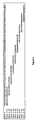
- spleen cells were analyzed by ELISA for IFN-gamma secretion following stimulation with 1 microgram/ml ESAT6, ⁇ 15ESAT6 or one of the 13 overlapping peptides covering the ESAT6 sequence (P1-P13 as indicated in the figure, also shown in figure 1 ).
- mice were subcutaneously vaccinated three times at two-week intervals with either saline, BCG, or DDA/TDB with ESAT6 or ⁇ 15ESAT6. Six weeks after the last vaccination the mice were challenged with virulent M.tb. Six weeks post-challenge, the mice were killed and the bacterial burden (CFU) was measured in the lung.
- CFU bacterial burden
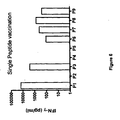
- FIG. 5 Vaccination with recombinant TB10 followed by in vitro stimulation with individual peptides P1-P9.
- FIG 7 Protective ability of TB10-4 peptides P1-P9.
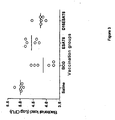
- Bacteria burden in vaccinated mice (expressed as log 10 in CFU protection) challenged by the aerosol route with virulent M.tb six weeks after the last vaccination. Six weeks post-challenge, the mice were killed and the bacterial burden (CFU) was measured in the lung. (*P ⁇ 0.05 compared to non-vaccinated mice, ANOVA and Tukey's test).
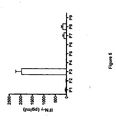
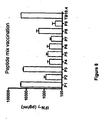
- Figure 8 Recognition of TB10-4 peptides P1-P9 after vaccinating with TB10-4 peptide mix. In vitro IFN- ⁇ responses of cells from mice vaccinated three times with DDA/TDB-TB10.4-peptide mix. Cells taken two weeks after final vaccination from blood and stimulated with 0.5ug/ml peptide or TB10.4 protein as indicated.
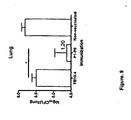
- FIG. 9 Bacterial burden in TB10.4 or TB10.4-peptide vaccinated mice infected with M.tb
- mice were vaccinated three times at 2-week intervals with a mix of all the ESAT-6 peptides (P1-P13), and the immune response as measured by secretion of IFN-gamma, was investigated by culturing blood cells with each of the individual ESAT-6 peptides P1-P13.
- mice were vaccinated three times at 2-week intervals with either ESAT-6 or ESAT-6-peptide mix (P1-P13). 6 weeks after the last vaccination, the mice were subjected to an aerosol challenge with virulent M.tb. 10 weeks after the challenge, the mice were killed and the bacterial numbers were determined in the lungs.
- mice were vaccinated with the recombinant protein ESAT-6 3 times at 2 weeks interval and cells taken two weeks after final vaccination from blood and stimulated with the indicated ESAT-6 peptides ( Fig. 1A ) where after secretion of IFN-gamma, as assessed by ELISA, was determined.
- the results showed an induction of IFN-gamma producing T cells specific for P1 and to a lesser degree P2. Removing the immunodominant epitope P1 from ESAT6 (giving the construct named " ⁇ 15-ESAT-6 in which the amino acids 1-15 have been deleted" ( Fig.
- mice were subcutaneously vaccinated three times at two-week intervals with either saline, BCG, or DDA/TDB with ESAT6 or ⁇ 15ESAT6. Six weeks after the last vaccination the mice were challenged with virulent M.tb. Six weeks post-challenge, the mice were killed and the bacterial burden (CFU) was measured in the lung.
- CFU bacterial burden
- mice vaccinated with the recombinant protein ESAT-6 were vaccinated three times at 2-week intervals with a mix of all the peptides, and the immune response was investigated by culturing blood cells with each of the individual ESAT-6 peptides P1-P13 ( Fig. 11 ).
- mice were vaccinated three times at 2-week intervals with either ESAT-6 or ESAT-6-peptide mix. 6 weeks after the last vaccination, the mice were subjected to an aerosol challenge with virulent M.tb. 10 weeks after the challenge, the mice were killed and the bacterial numbers were determined in the lungs.
- mice vaccinated with ESAT-6 peptide mix not only exhibited a broader recognition of ESAT-6, but were also significant more protected against infection with M.tb compared to mice vaccinated with the recombinant protein ESAT-6 ( Fig. 12 ).
- vaccinating with a mix of ESAT-6 peptides leads to a broader recognition of ESAT-6 epitopes which in turn induce a significant higher protection against infection with M.tb, compared to when vaccinating with the recombinant protein ESAT-6.
- mice were vaccinated 3 times at 2 weeks interval with recombinant TB10.4, and cells were taken two weeks after final vaccination from blood and stimulated with 0.5ug/ml of the indicated TB10.4 peptides .( Fig. 4 ) and secretion of IFN-gamma, as assessed by ELISA, was determined.
- the results showed that vaccinating with TB10.4 mainly induced P3 specific T cells ( Fig.5 ). P3 therefore constituted a dominant epitope.
- the subdominant peptides in particular P1, P7, P8, P9 all protected against infection with M.tb. ( Fig. 7 ). Vaccinating with the dominant peptide epitope P3 also induced significant protection.
- mice Having determined the existence of subdominant epitopes when vaccinating with the recombinant protein TB10.4 we next examined whether vaccination with a mix of all overlapping TB10.4 peptides would lead to a broader recognition of P1-P9 compared to mice vaccinated with the recombinant protein TB10.4. Mice were vaccinated three times at 2-week intervals with a mix of all the peptides, and the immune response was investigated by culturing blood cells with each of the individual TB10.4 peptides P1-P9 ( Fig. 8 ).
- mice were vaccinated three times at 2-week intervals with either TB10.4 or TB10.4-peptide mix. 6 weeks after the last vaccination, the mice were subjected to an aerosol challenge with virulent M.tb. 6 weeks after the challenge, the mice were killed and the bacterial numbers were determined in the lungs.
- mice vaccinated with TB10.4-peptide mix not only exhibited a broader recognition of TB10.4, but were also significant more protected against infection with M.tb compared to mice vaccinated with the recombinant protein TB10.4 ( Fig. 9 ).
- vaccinating with a mix of TB10.4 peptides leads to a broader recognition of TB10.4 epitopes which in turn induce a significant higher protection against infection with M.tb, compared to when vaccinating with the recombinant protein TB10.4.
- mice was vaccinated 3 times at 2 weeks interval with recombinant CT521 or a mix of CT521 overlapping peptides ( Fig. 10 ), and cells taken two weeks after final vaccination from blood was stimulated with 0.5ug/ml of each of the CT521 peptides.
- Secretion of IFN-gamma was determined to examine whether vaccinating with a mix of CT521 peptides leads to a broader recognition of CT521, compared to vaccinating with the recombinant CT521 protein.
Landscapes
- Health & Medical Sciences (AREA)
- Life Sciences & Earth Sciences (AREA)
- Veterinary Medicine (AREA)
- Animal Behavior & Ethology (AREA)
- Pharmacology & Pharmacy (AREA)
- Chemical & Material Sciences (AREA)
- Public Health (AREA)
- General Health & Medical Sciences (AREA)
- Medicinal Chemistry (AREA)
- General Chemical & Material Sciences (AREA)
- Organic Chemistry (AREA)
- Nuclear Medicine, Radiotherapy & Molecular Imaging (AREA)
- Chemical Kinetics & Catalysis (AREA)
- Immunology (AREA)
- Communicable Diseases (AREA)
- Microbiology (AREA)
- Mycology (AREA)
- Epidemiology (AREA)
- Tropical Medicine & Parasitology (AREA)
- Virology (AREA)
- Pulmonology (AREA)
- Oncology (AREA)
- Diabetes (AREA)
- Engineering & Computer Science (AREA)
- Bioinformatics & Cheminformatics (AREA)
- Emergency Medicine (AREA)
- Molecular Biology (AREA)
- AIDS & HIV (AREA)
- Endocrinology (AREA)
- Hematology (AREA)
- Obesity (AREA)
- Medicines Containing Antibodies Or Antigens For Use As Internal Diagnostic Agents (AREA)
- Peptides Or Proteins (AREA)
- Medicinal Preparation (AREA)
- Medicines That Contain Protein Lipid Enzymes And Other Medicines (AREA)
Description
- The present invention discloses a vaccine against chronic diseases such as a bacterial, viral or parasitic infection or cancer comprising a peptide mixture of overlapping peptides spanning the whole amino acid sequence of a protein that is expressed during the chronic phase of the disease such as a chronic infection caused by a bacteria, a persistent virus or parasite or from proteins expressed in malignant tumours, a method of making such vaccines and prophylaxis and treatment of chronic disease.
- Compared to the limited number of diseases where vaccines are currently available a very large number have so far escaped attempts to develop efficient vaccines. A common characteristica for many of these infectious diseases as well as cancer is that they develop slowly and manifest themselves as chronic diseases where the disease is maintained for years in the face of an existing host immune response. This often eventually results in immunopatothology that is some cases such as Clamydia thracomatis is the real cause of the human disease such as inflammatory scarring of the oviduct resulting in infertility. For some diseases such as M. tuberculosis infection (TB) a vaccine exist (BCG) but although the vaccine may prevent the acute manifestations of the disease the bacteria is not cleared and a chronic or latent disease therefore established. TB runs essentially through 3 phases. During the acute phase, the bacteria proliferate in the organs, until the immune response increases to the point at which it can control the infection, whereupon the bacterial load peaks and starts declining. After this, a chronic or latent phase is established where the bacterial load is kept stable at a low level. In this phase M. tuberculosis goes from active multiplication to a state of slow or non-replicating persistence which can last for many years. However in some TB cases, the infection can suddenly reactivate and overt disease will be the outcome. The factors that lead to this reactivation is largely unknown. In other cases such as Clamydia the infection may remain asymptomatic but the ongoing inflammatory process cause later clinical manifestations such as infertility.
- The immune response to many of these difficult diseases include both a humoral and a cell-mediated immune (CMI) response component. The CMI response is directed to a hierachy of T cell antigens and epitopes from the pathogen. The epitopes are amino acid (aa) stretches of 7-9 aa (MHC I) and 12-15 aa (MHC II) (1). In chronic viral and bacterial disease such as HIV, TB as well as in cancer, the hierachy of epitope responses changes over time to a few immunodominant epitopes which gradually constitute a large part of the total T cell response, whereas a large number of other epitopes that all have the potential to bind the MHC class I or II antigen presentation molecules are subdominant or even cryptic resulting in T cell responses at levels close to or below the detection level (2-6). If induced by vaccination (without the competition from dominant epitopes) responses to such subdominant epitopes have been reported to be protective eg. in TB (7), indicating that the epitopes are indeed expressed during the natural infection and can be recognized by effector cells on the invading pathogen. That such responses may have advantages compared to responses to immundominant epitopes have been suggested by studies in HIV where escape mutants lacking immunodominant epitopes, and therefore not seen by the immune system, is a major concern for current vaccine development (8).
- The utilization of subdominant T cell epitopes in the design of vaccines have so far been hampered by two major roadblocks; i) The need for a large panel of different epitopes to cover a diverse human population due to the variation of individual epitopes recognized by individuals with different HLA composition; ii) The need to identify subdominant epitopes to which only low level T cell responses close to or below the detection level of the immunological assays (eg ELISPOT) are found.
- Olsen et al (7) described that a vaccine based on one subdominant epitope of ESAT6 can protect against TB. However, a mix of overlapping peptides spanning the entire region of ESAT6 was not used in this study.
- In
WO01016163 - In
WO03011331 -
WO2004/002415 andWO01/16163 - In
WO2004/002415 , the vaccine may be administered together with an adjuvant and in a liposomal preparation. - In
WO01/16163 -
WO2004/002415 andWO01/16163 - It is generally observed that in chronic diseases the hierarchy of epitope responses change over time to constitute responses towards only a few dominant epitopes. However, as responses against subdominant epitopes have proven protective (7) and since a response against these epitopes are not promoted by the chronic disease itself, a chronic disease represents an obvious target for an invention that induce an immune response towards a broad range of epitopes, including both dominant and most importantly, subdominant epitopes:
- The present invention discloses vaccines inducing a broad recognition of dominant and subdominant responses to any given antigen. The vaccine comprises overlapping fragments of the desired antigen in appropriate adjuvants. The T cell repertoire is thereby expanded to include not only the immunodominant epitope recognized when the Intact molecule is used for immunzation or induced by the chronic infection itself, but also to induce a much broader and balanced response to a number of the subdominant epitopes as well. The major advantage of the present Invention is that it requires no prior knowledge of the precise localization or identity of the subdominant epitopes and their recognition In a human population but expands the T-cell repertoire and thereby the total number of target specific T cells primed by vaccination from a few immunodominant epitopes to multiple epitopes. As teached by the present invention targeting chronic diseases with a broad range of responses to subdominant epitopes harness the immunity to these diseases dramatically.
- The present invention discloses a vaccine against a chronic disease comprising a peptide mixture consisting of adjacent overlapping peptides spanning the whole amino acid sequence of a protein that is expressed during the chronic phase of the disease, also comprising an adjuvant where the adjuvant is a cationic liposome.
- The peptides are 10 to 30 amino acids long, preferably 12-20 amino acids long where the overlap with the adjacent peptide is 6-20 amino adds, preferably 10-12 amino acids.
- The antigenic protein which the peptide mixture spans is chosen among proteins that are expressed during the chronic phase of a disease and induces a cell mediated immune response in the case of chronic disease.
- Preferably the protein is selected from a bacteria such as a virulent mycobacteria, e.g. by Mycobacterium tuberculosis, Mycobacterium africanum or Mycobacterium bovis, Mycobacterium leprae or Chlamydia trachomatis or a virus such as hepatitis B or C or a parasite such as Leishmania or the malaria causing parasite Plasmodium falciparum or from molecules expressed in malignant tumours.
- The peptides are not restricted to but preferably from a protein selected from M. tuberculosis such as ESAT6, Ag85A, Ag85B or TB10.4 or from Chlamydia trachomatis such as CT184, CT521, CT443, CT520, CT521, CT375, CT583, CT603, CT610 or CT681 or from a hepatitis B or C or from Plasmodium falciparum such as Msp1, Msp2, Msp3, Ama1, GLURP, LSA1, LSA3 or CSP.
- The invention also discloses a method for preparing a peptide mixture according to the invention by proteolytic cleavage of the protein with two or more proteolytic cleavage agents such as proteolytic enzymes such a trypsin, V-8 protease, AspN or chymotrypsin or chemical agents such as CNBr or BNPS-skatole.
- The peptide mixture according to the invention can be used for preparing a vaccine against a chronic disease such as a bacterial, viral or parasitic infection or cancer. The vaccine comprises a delivery system such as an adjuvant The adjuvant is based on cationic liposomes such as dimethyldioctadecylammonium bromide /Trehalose dibehenate (DDA/TDB). The peptide mixture used for vaccination can be mixed with preformed liposomes or each peptide can be mixed with the preformed liposomes, the individual peptides formulated in the liposomes are then mixed before immunization.
- Each peptide in the peptide mixture can preferably be individually mixed with the liposome prior to making the peptide mixture for optimal Interaction with individual antigen presenting cells from the immune system thereby ensuring maximum responses to all possible epitopes in the molecule.
- The invention also discloses use of the vaccine in the manufacture of a medicament for prophylaxis or therapeutic treatment of a chronic disease in an animal, including a human being, comprising administering to the animal the vaccine of the invention. Optionally the prophylaxis or treatment is boosted by administering a second vaccine comprising the full size protein spanned by the peptide mixture in an adjuvant or expressed in a viral delivery systems or as a pure DNA vaccine for optimal boosting a CMI as well as a humoral response.
- The invention further discloses a vaccine in which the amino acid sequence is lipidated or conjugated directly to TLR agonist such as CPG so as to allow a self-adjuvanting effect of the polypeptide.
- The preferred embodiment of the invention is a vaccine comprising a peptide mixture of the invention preferably with an adjuvant as described above.
- A chronic disease is a long-lasting or recurring disease. The term chronic describes the course of the disease, or its rate of onset and development. A chronic course is distinguished from a recurrent course; recurrent diseases relapse repeatedly, with periods of remission in between. Chronic infections can be caused by bacteria e.g. Mycobacteria sp. or Chlamydia s.p among others, by virus e.g. Hepatitis or HIV, by a parasite e.g. a malaria causing parasite or Leishmania or by diseases such as cancer, diabetes etc.
- The word "peptide" in the present invention should have its usual meaning. That is an amino acid chain of any length being a part or fragment of a protein, wherein the amino acid residues are linked by covalent peptide bonds.
- The peptide may be chemically modified by being glycosylated, by being lipidated (e.g. by chemical lipidation with palmitoyloxy succinimide as described by (9), labeling with PAM3Cys (18) or with dodecanoyl chloride as described by (10)), by comprising prosthetic groups, or by containing additional amino acids such as e.g. a his-tag or a signal peptide or by direct conjugation to TLR agonist (e.g.as described by (11)).
- Each peptide may thus be characterised by specific amino acids and be encoded by specific nucleic acid sequences. It will be understood that such sequences include analogues and variants produced by recombinant or synthetic methods wherein such polypeptide sequences have been modified by substitution, insertion, addition or deletion of one or more amino acid residues in the recombinant polypeptide and still be immunogenic in any of the biological assays described herein. Substitutions are preferably "conservative". These are defined according to the following table. Amino acids in the same block in the second column and preferably in the same line in the third column may be substituted for each other. The amino acids in the third column are indicated in one-letter code.
ALIPHATIC Non-polar GAP ILV Polar-uncharged CSTM NQ Polar-charged DE KR AROMATIC HFWY - A peptide mixture is liquid mixture of fragments of a protein.
- A preferred peptide mixture within the present invention is based on a protein from M. tuberculosis such as ESAT6, Ag85A, Ag85B or TB10.4 or from Chlamydia trachomatis such as CT184, CT521, CT443, CT520, CT521 or CT375 or from a hepatitis virus or from Plasmodium falciparuman such as momp, omp, msp1, msp3, ama1 or glurp. It may also be a peptide mixture or proteolytic digest based on a fusion molecule e.g. as previously described as a relevant vaccine constructs against TB in
PCT/DK2006/000356 - Throughout this specification, unless the context requires otherwise, the word "comprise", or variations thereof such as "comprises" or "comprising", will be understood to imply the inclusion of a stated element or integer or group of elements or integers but not the exclusion of any other element or integer or group of elements or integers.
- Although the minimum length of a T-cell epitope has been shown to be at least 6 amino acids, it is normal that such epitopes are constituted of longer stretches of amino acids. Hence, it is preferred that the polypeptide fragment of the invention has a length of at least 7 amino acid residues, such as at least 8, at least 9, at least 10, at least 12, at least 14, at least 16, at least 18, at least 20, at least 22, at least 24, and at least 30 amino acid residues. Hence, in important embodiments of the inventive method, it is preferred that the polypeptide fragment has a length of at most 50 amino acid residues, such as at most 40, 35, 30, 25, and 20 amino acid residues. It is expected that the peptides having a length of between 10 and 20 amino acid residues will prove to be most efficient as MHC class II epitopes and therefore especially preferred lengths of the polypeptide fragment used in the inventive method are 18, such as 15, 14, 13, 12 and even 11 amino acid residues. It is expected that the peptides having a length of between 7 and 12 amino acid residues will prove to be most efficient as MHC class I epitopes and therefore especially preferred lengths of the polypeptide fragment used in the inventive method are 11, such as 10, 9, 8 and even 7 amino acid residues.
- By T cell epitopes is understood a sequence of amino acids that is recognized by specific T cells through their T cell receptor after presentation by an antigen presenting cell in the context of either MHC classI or II.
- A dominant epitope is a sequence of amino acids that, when part of a protein, induce a high T cell response and often the majority of the response to an antigen is directed to a few T dominant T cell epitopes.
- A subdominant epitope is a sequence of amino acids that when part of a protein does not induce a strong T cell response, even though the epitopes are immunogenic and able to induce a significant T cell response when isolated from the protein.
- By mixture of overlapping polypeptides or protein fragments is understood a mixture of 10 to 30 mers, with a 6-20 amino acid overlap, spanning an entire protein.
- A common feature of the polypeptides of the invention is their capability to induce an immunological response as illustrated in the examples. It is understood that a variant of a polypeptide of the invention produced by substitution, insertion, addition or deletion may also be immunogenic as determined by any of the assays described herein.
- An immune individual is defined as a person or an animal, which has cleared or controlled an infection.
- The immune response may be monitored by one of the following methods:
- An in vitro cellular response is determined by induction of the release of a relevant cytokine such as IFN-γ or the induction of proliferation in lymphocytes withdrawn from an animal or human being currently or previously infected with virulent mycobacteria or immunized with the relevant peptide mixture. The induction being performed by the addition of the peptide mixture or the immunogenic portion of the mixture to a suspension comprising from 2x10⁵ cells to 4x10⁵ cells per well. The cells being isolated from either the blood, the spleen, the lymph nodes, the liver or the lung and the addition of the polypeptide or the immunogenic portion resulting in a concentration of not more than 20 µg per ml suspension and the stimulation being performed from two to five days. For monitoring cell proliferation the cells are pulsed with radioactive labeled Thymidine and after 16-22 hours of incubation detecting the proliferation is measured by liquid scintillation counting. A positive response is defined as being a response more than background plus two standard deviations. The release of IFN-γ can be determined by the ELISA method, which is well known to a person skilled in the art. A positive response being a response more than background plus two standard deviations. Other cytokines than IFN-γ could be relevant when monitoring the immunological response to the polypeptide, such as IL-12, TNF-α, IL-4., IL-5, IL-10, IL-6, TGF-β. Another and more sensitive method for detecting the immune response is the ELISpot method, in which the frequency of IFN-γ producing cells is determined. In an ELIspot plate (MAHA, Millipore) precoated with anti-murine IFN-γ antibodies (PharMingen) graded numbers of cells isolated from either blood, spleen, or lung (typically between 1 to 4 x 10⁵ cells /well) are incubated for 24-32 hrs in the presence of the peptide mixture or the immunogenic portion resulting in a concentration of not more than 20 µg per ml. The plates are subsequently incubated with biotinylated anti-IFN-γ antibodies followed by a streptavidin-alkaline phosphatase incubation. The IFN-γ producing cells are identified by adding BCIP/NBT (Sigma), the relevant substrate giving rise to spots. These spots can be enumerated using a dissection microscope. It is also a possibility to determine the presence of mRNA coding for the relevant cytokine by the use of the PCR technique. Usually one or more cytokines will be measured utilizing for example PCR, ELISPOT or ELISA. It will be appreciated by a person skilled in the art that a significant increase or decrease in the amount of any of these cytokines induced by a specific peptide mixture can be used in evaluation of the immunological activity of the polypeptide.
- An in vitro cellular response may also be determined by the use of T cell lines derived from an immune individual or an infected person where the T cell lines have been driven with either live bacteria, extracts from the bacterial cell or culture filtrate for 10 to 20 days with the addition of IL-2. The induction being performed by addition of not more than 20 µg peptide mixture per ml suspension to the T cell lines containing from 1x10⁵ cells to 3x10⁵ cells per well and incubation being performed from two to six days. The induction of IFN-γ or release of another relevant cytokine is detected by ELISA. The stimulation of T cells can also be monitored by detecting cell proliferation using radioactively labeled Thymidine as described above. For both assays a positive response being a response more than background plus two standard deviations.
- An in vivo cellular response may be determined as a positive DTH response after intradermal injection or local application patch of at most 100 µg of the polypeptide or the immunogenic portion to an individual who is clinically or subclinically infected with a virulent bacterium, a positive response having a diameter of at least 5 mm 72-96 hours after the injection or application.
- An in vitro humoral response is determined by a specific antibody response in an immune or infected individual. The presence of antibodies may be determined by an ELISA technique or a Western blot where the peptide mixture or the immunogenic portion is absorbed to either a nitrocellulose membrane or a polystyrene surface. The serum is preferably diluted in PBS from 1:10 to 1:100 and added to the absorbed peptide mixture and the incubation being performed from 1 to 12 hours. By the use of labeled secondary antibodies the presence of specific antibodies can be determined by measuring the OD e.g. by ELISA where a positive response is a response of more than background plus two standard deviations or alternatively a visual response in a Western blot.
- Another relevant parameter is measurement of the protection in animal models induced after vaccination with the peptide mixture in an adjuvant or after DNA vaccination. Suitable animal models include primates, guinea pigs or mice, which are challenged with an infection. Readout for induced protection could be decrease of the bacterial load in target organs compared to non-vaccinated animals, prolonged survival times compared to non-vaccinated animals and diminished weight loss compared to non-vaccinated animals.
- In general, antigens and DNA sequences encoding such antigens, may be prepared using any one of a variety of procedures.
- The peptide mixture can be produced synthetically when the peptide fragment have fewer than about 100 amino acids, and generally fewer than 50 amino acids and may be generated using techniques well known to those ordinarily skilled in the art, such as commercially available solid-phase techniques where amino acids are sequentially added to a growing amino acid chain. ,
- In the construction and preparation of plasmid DNA encoding the peptide mixture as defined by the invention for DNA vaccination a host strain such as E. coli can be used. Plasmid DNA can then be prepared from cultures of the host strain carrying the plasmid of interest, and purified using e.g. the Qiagen Giga -Plasmid column kit (Qiagen, Santa Clarita, CA, USA) including an endotoxin removal step. It is preferred that plasmid DNA used for DNA vaccination is endotoxin free.
- A set of overlapping peptides can be made by proteolytic cleavage of the intact protein which can be expressed as a recombinant tagged protein in e.g. E. coli followed by purification by column chromatography such as metal chelate chromatography. Two or more proteolytic cleavage agents can be selected that will generate different fragments and thereby overlapping peptide cocktail. Proteolytic enzymes such as trypsin, V-8 protease, AspN or chymotrypsin can be used or chemical agents like CNBr or BNPS-skatole. The number of cleavage sites and the length of the fragments generated are determined by the amino acid sequence of the protein and the specific cleavage agent, e.g. Asp-N hydrolyzes proteins at the N-terminal side of aspartic acid and cysteic acid residues. The V-8 protease cleaves at the carboxyl side of glutamic acid in ammonium bicarbonate buffer at pH 7.8. For proteolytic enzymes coupling of the enzyme to beads before cleavage is possible (16), and this coupling will allow removal of the enzyme after completion of the cleavage by centrifugation of the beads. Alternatively, the protease can be removed from the digestion mixture by chromatographic methods such as gel filtration or reversed-phase HPLC. After digestion of the protein, mass spectrometry analysis of the digest is performed to confirm that cleavage of the protein has taken place as predicted. Finally, the two digestion mixtures can be combined to form a mixture of overlapping peptides.
- A vaccination with a recombinant protein will induce a T cell response towards a limited number of dominant peptide epitopes within this protein. In contrast, vaccinating with a mix of overlapping peptides, spanning the entire amino acid sequence of the protein, will generate a T cell response against an increased number of epitopes being both dominant and sub-dominant peptide epitopes.
- The invention pertains to a vaccine composition comprising a peptide mixture according to the invention. In order to ensure optimum performance of such a vaccine composition it is preferred that it comprises an immunologically and pharmaceutically acceptable carrier, vehicle or adjuvant.
- An effective vaccine, wherein a peptide mixture of the invention is recognized by the animal, will in an animal model be able to decrease bacterial load in target organs, prolong survival times and/or diminish weight loss after challenge with an infectious organism, compared to non-vaccinated animals either when given as a preventive or therapeutic vaccine.
- Suitable vehicles are selected from the group consisting of a diluent and a suspending agent. The adjuvant is preferably selected from the group consisting of DDA, Quil A, poly I:C, aluminium hydroxide, Freund's incomplete adjuvant, IFN-γ, IL-2, IL-12, monophosphoryl lipid A (MPL), Treholose Dimycolate (TDM), TDB and muramyl dipeptide (MDP).
- An adjuvant is defined as a substance that non-specifically enhances the immune response to an antigen. Depending on the nature of the adjuvant it can promote a cell-mediated immune response, a humoral immune response or a mixture of the two. Since the enhancement of the immune response is non-specific, it is well understood in the field that the same adjuvant can be used with different antigens to promote responses against different targets e.g. with an antigen from M. tuberculosis to promote immunity against M. tuberculosis or with an antigen derived from a tumor, to promote immunity against tumors of that specific kind.
- "Liposomes" are defined as closed vesicles structures made up of one or more lipid bilayers surrounding an aqueous core. Each lipid bilayer is composed of two lipid monolayers, each of which has a hydrophobic "tail" region and a hydrophilic "head" region. In the bilayer, the hydrophobic "tails" of the lipid monolayers orient toward the Inside of the bilayer, while the hydrophilic "heads" orient toward the outside of the bilayer. Liposomes can have a variety of physicochemical properties such as size, lipid composition, surface charge, fluidity and number of bilayer membranes. According to the number of lipid bilayers liposomes can be categorized as unilamellar vesicles (UV) comprising a single lipid bilayer or multilamellar vesicles (MLV) comprising two or more concentric bilayers each separated from the next by a layer of water. Water soluble compounds are entrapped within the aqueous phases/core of the liposomes opposed to lipophilic compounds which are trapped in the core of the lipid bilayer membranes.
- The peptide mixture used for vaccination can be mixed with preformed liposomes as previously described (
WO2006002642 ) or each peptide can be mixed with the preformed liposomes in the same manner, the individual peptides formulated in the liposomes are then mixed before immunization. - The standard preparation of liposomes is by dissolving the lipids in an organic solvent which is then evaporated to dryness leaving a thin lipid film on the inside of the test tube. The dry lipid film is then hydrated in an appropriate amount of aqueous phase and the mixture is heated to above the phase transition temperature of the lipids and allowed to "swell". The resulting liposomes which consist of multilamellar vesicles (MLV's) are dispersed by shaking the test tube.
- Different principles for Interaction of a peptide or peptide mixtures to liposomes exist. One method is surface association (by electrostatic or hydrophobic interactions) of the peptides with the liposomes by incubation of the peptides with reformed liposomes (19). It is also possible to to make a covalent coupling of peptides to the surface of the liposomes by chemical crosslinking (e.g. as described In reference 20). In addition, the peptides can be encapsulated in the liposomes by different methods. One method is to add the peptides directly into the lipid film followed by rehydration. Another method describes adding the peptides to the buffer used for rehydration of the liposomes from the lipid film. In addition, the peptides can be encapsulated by the dehydration-rehydration method (21) in which a peptide is encapsulated by freeze drying followed by rehydration of the lyophilized liposomes. Alternatively the antigen is encapsulated using the freeze and thaw technique described by Pick (22) and by
Bally et al. in U.S. Pat No. 4,976,282 . In this technique vesicles are mixed with the protein antigen and repeatedly snap frozen in liquid nitrogen and warmed to temperatures above the main phase transition temperature of the relevant lipids. The vesicles may be further processed to remove any non-entrapped antigen e.g. by washing and centrifuging. - Finally, the peptide mixture can then be delivered by the liposomes in two ways. The peptides can either be mixed before the interaction with the liposomes or the peptides can be mixed after interaction of the individual peptides with the liposomes as described above.
- The peptides can also be encapsulated in the liposomes by adding the peptides to the buffer used for rehydration of the liposomes from a lipid film or on freeze dried form.
- The polypeptide may also be chemically modified by being glycosylated, by being lipidated (e.g. by chemical lipidation with palmitoyloxy succinimide as described by Mowat et al. 1991, labeling with PAM3Cys (18) or with dodecanoyl chloride as described by Lustig et al. 1976), by comprising prosthetic groups or by direct conjugation to TLR agonist (eg.as described by Seder 2006).
- Preparation of vaccines which contain peptide sequences as active Ingredients is generally well understood In the art, as exemplified by
U.S. Patents 4,608,251 ;4,601,903 ;4,599,231 and4,599,230 . - Other methods of achieving adjuvant effect for the vaccine include use of agents such as aluminum hydroxide or phosphate (alum), synthetic polymers of sugars (Carbopol), aggregation of the protein in the vaccine by heat treatment, aggregation by reactivating with pepsin treated (Fab) antibodies to albumin, mixture with bacterial cells such as C. parvum or endotoxins or lipopolysaccharide components of gram-negative bacteria, emulsion in physiologically acceptable oil vehicles such as mannide mono-oteate (Aracel A) or emulsion with 20 percent solution of a perfluorocarbon (Fluosol-DA) used as a block substitute may also be employed. Other possibilities involve the use of immune modulating substances such as cytokines or synthetic IFN-γ Inducers such as poly I:C In combination with the above-mentioned adjuvants.
- Another interesting possibility for achieving adjuvant effect is to employ the technique described in (17). In brief, a relevant antigen such as an antigen of the present invention can be conjugated to an antibody (or antigen binding antibody fragment) against the Fcγ receptors on monocytes/macrophages.
- The vaccines are administered In a manner compatible with the dosage formulation, and in such amount as will be therapeutically effective and immunogenic. The quantity to be administered depends on the subject to be treated, including, e.g., the capacity of the individual's immune system to mount an immune response, and the degree of protection desired. Suitable dosage ranges are of the order of several hundred micrograms active ingredient per vaccination with a preferred range from about 0.1 µg to 1000 µg, such as in the range from about 1 µg to 300 µg, and especially in the range from about 10 µg to 50 µg. Suitable regimens for Initial administration and booster shots are also variable but are typified by an initial administration followed by subsequent inoculations or other administrations.
- The manner of application may be varied widely. Any of the conventional methods for administration of a vaccine are applicable. These are believed to Include oral application on a solid physiologically acceptable base or in a physiologically acceptable dispersion, parenterally, by injection or the like. The dosage of the vaccine will depend on the route of administration and will vary according to the age of the person to be vaccinated and, to a lesser degree, the size of the person to be vaccinated.
- The vaccines are conventionally administered parenterally, by injection, for example, either subcutaneously or intramuscularly. Additional formulations which are suitable for other modes of administration include suppositories and, in some cases, oral formulations. For suppositories, traditional binders and carriers may include, for example, polyalkalene glycols or triglycerides; such suppositories may be formed from mixtures containing the active ingredient in the range of 0.5% to 10%, preferably 1-2%. Oral formulations include such normally employed excipients as, for example, pharmaceutical grades of mannitol, lactose, starch, magnesium stearate, sodium saccharine, cellulose, magnesium carbonate, and the like. These compositions take the form of solutions, suspensions, tablets, pills, capsules, sustained release formulations or powders and advantageously contain 10-95% of active ingredient, preferably 25-70%.
- In many instances, it will be necessary to have multiple administrations of the vaccine. Especially, vaccines can be administered to prevent an infection. When administered to prevent an infection, the vaccine is given prophylactically, before definitive clinical signs or symptoms of an infection are present. Since the current vaccines e.g. BCG appears to induce an effective, but short-lived immune response, prophylactic vaccines may also be designed to be used as booster vaccines. Such vaccines are given to individuals who have previously received a vaccination, with the intention of prolonging the period of protection.
- In instances where the individual has already become infected or is suspected to have become infected, the previous vaccination may have provided sufficient immunity to prevent primary disease, but as discussed previously, boosting this immune response will not help against the latent infection. In such a situation, the vaccine has a particular advantage as a therapeutic vaccine designed for efficacy against the latent stage of infection.
- Importantly in chronic diseases such as TB, cancer, hepatitis and HIV, the long term equilibrium between host and pathogen often results in immune responses focused towards a few immuno-dominant epitopes. Inducing a broad balanced response towards a range of epitopes within a given protein can not be achieved by immunizing with the recombinant protein, which would only lead to a response towards a limited number of dominant epitopes. However in contrast, the present invention teaches that vaccinating with a mix of overlapping peptides does induce a T cell immune response towards a range of epitopes, including subdominant epitopes, within a given protein. The present invention and the induction of responses to subdominant epitopes therefore has a particular advantage in these diseases because it can induce an immune response against protective epitopes that are not induced by the chronic disease itself, or by vaccinating with the given protein in a recombinant full lengh form. By conventional preventive vaccination or post-exposure in a therapeutic manner the application of the peptide mixture vaccine technology is superior and with much higher activity than conventional vaccines based on full size molecules against these chronic diseases.
- Furthermore, for chronic diseases where humoral immunity is important it is possible to induce an optimal broad T cell response and a maximal B cell response towards the same protein. In this situation primary immunization is done with a mix of overlapping peptides (in an adjuvant) spanning the entire sequence of a given protein and the boosting is achieved with a second vaccine comprising the same protein in recombinant form in an adjuvant. In this way the broad T cell response against both dominant and subdominant epitopes will enable maximal T helper cell activity and thereby a very strong antibody response. The resulting response is a broad T cell and maximal antibody response towards the same antigen, with particular use against chronic diseases.
-
Figure 2 . Immunogenicity of ESAT6 and Δ15EAT6 in splenocytes Groups of F1 (Balb/cxC57BL/6) mice were subcutaneously vaccinated three times at two-week intervals with either saline, ESAT6 or Δ15EAT6 in DDA/TDB. Three weeks after the final vaccination, spleen cells were analyzed by ELISA for IFN-gamma secretion following stimulation with 1 microgram/ml ESAT6, Δ15ESAT6 or one of the 13 overlapping peptides covering the ESAT6 sequence (P1-P13 as indicated in the figure, also shown infigure 1 ). - Groups of F1 (Balb/cxC57BL/6) mice were subcutaneously vaccinated three times at two-week intervals with either saline, BCG, or DDA/TDB with ESAT6 or Δ15ESAT6. Six weeks after the last vaccination the mice were challenged with virulent M.tb. Six weeks post-challenge, the mice were killed and the bacterial burden (CFU) was measured in the lung.
-
Figure 5 . Vaccination with recombinant TB10 followed by in vitro stimulation with individual peptides P1-P9. In vitro IFN-γ responses of cells from mice vaccinated three times with DDA/TDB-TB10.4 in DDA/TDB. Cells taken two weeks after final vaccination from blood and stimulated with 0.5ug/ml of the indicated peptide. - In vitro IFN-γ responses of cells from mice vaccinated three times with individual TB10.4 peptides in DDA/TDB. Cells taken two weeks after final vaccination from blood and stimulated with 0.5ug/ml of the same peptide used for the vaccination and secretion of IFN-γ was determined by ELISA.
-
Figure 7 . Protective ability of TB10-4 peptides P1-P9. Bacteria burden in vaccinated mice (expressed as log10 in CFU protection) challenged by the aerosol route with virulent M.tb six weeks after the last vaccination. Six weeks post-challenge, the mice were killed and the bacterial burden (CFU) was measured in the lung. (*P<0.05 compared to non-vaccinated mice, ANOVA and Tukey's test). -
Figure 8 . Recognition of TB10-4 peptides P1-P9 after vaccinating with TB10-4 peptide mix. In vitro IFN-γ responses of cells from mice vaccinated three times with DDA/TDB-TB10.4-peptide mix. Cells taken two weeks after final vaccination from blood and stimulated with 0.5ug/ml peptide or TB10.4 protein as indicated. - Bacterial burden in vaccinated mice (expressed as log10 in CFU) compared to non-vaccinated controls challenged by the aerosol route with virulent M.tb ten weeks after the first vaccination. Six weeks post-challenge, the mice were killed and the bacterial burden (CFU) was measured in the lung. (*P<0.05, ANOVA and Tukey's test).
- Overview of the CT521 overlapping peptides.
- Mice were vaccinated three times at 2-week intervals with a mix of all the ESAT-6 peptides (P1-P13), and the immune response as measured by secretion of IFN-gamma, was investigated by culturing blood cells with each of the individual ESAT-6 peptides P1-P13.
- Mice were vaccinated three times at 2-week intervals with either ESAT-6 or ESAT-6-peptide mix (P1-P13). 6 weeks after the last vaccination, the mice were subjected to an aerosol challenge with virulent M.tb. 10 weeks after the challenge, the mice were killed and the bacterial numbers were determined in the lungs.
- To examine to which degree the Mycobacterium tuberculosis expressed antigen ESAT-6 contains dominant and subdominant epitopes mice were vaccinated with the recombinant protein ESAT-6 3 times at 2 weeks interval and cells taken two weeks after final vaccination from blood and stimulated with the indicated ESAT-6 peptides (
Fig. 1A ) where after secretion of IFN-gamma, as assessed by ELISA, was determined. The results showed an induction of IFN-gamma producing T cells specific for P1 and to a lesser degree P2. Removing the immunodominant epitope P1 from ESAT6 (giving the construct named "Δ15-ESAT-6 in which the amino acids 1-15 have been deleted" (Fig. 1B )) led to immune recognition of new epitopes, P2 and in particular P3 (Fig. 2 ). This demonstrated that P1 is a dominant epitope, and that P2 and P3 constitute subdominant (but immunogenic) epitopes. - We next examined whether the subdominant epitopes were able to confer protection against infection with M.tb. Mice were subcutaneously vaccinated three times at two-week intervals with either saline, BCG, or DDA/TDB with ESAT6 or Δ15ESAT6. Six weeks after the last vaccination the mice were challenged with virulent M.tb. Six weeks post-challenge, the mice were killed and the bacterial burden (CFU) was measured in the lung.
- Protection experiments showed that Δ15-ESAT-6 was more protective than ESAT-6 (
Fig. 3 ), indicating that the subdominant peptides (epitopes) P2 and P3 were indeed able to induce an immune response that mediated protection against infection with M.tb. - We next examined whether vaccination with a mix of all overlapping ESAT-6 peptides would lead to a broader recognition of P1-P13 compared to mice vaccinated with the recombinant protein ESAT-6. Mice were vaccinated three times at 2-week intervals with a mix of all the peptides, and the immune response was investigated by culturing blood cells with each of the individual ESAT-6 peptides P1-P13 (
Fig. 11 ). - The results showed that, in contrast to vaccinating with recombinant protein ESAT-6, vaccinating with a mix of ESAT-6 peptides (P1-P13) led to a broader recognition of the peptides (
Fig. 11 ). - To examine whether the broader response towards ESAT-6 was reflected in the protection against infection with M. tuberculosis, as compared to the protein induced by vaccination with the recombinant protein ESAT-6. mice were vaccinated three times at 2-week intervals with either ESAT-6 or ESAT-6-peptide mix. 6 weeks after the last vaccination, the mice were subjected to an aerosol challenge with virulent M.tb. 10 weeks after the challenge, the mice were killed and the bacterial numbers were determined in the lungs.
- The results showed that mice vaccinated with ESAT-6 peptide mix not only exhibited a broader recognition of ESAT-6, but were also significant more protected against infection with M.tb compared to mice vaccinated with the recombinant protein ESAT-6 (
Fig. 12 ). Thus, vaccinating with a mix of ESAT-6 peptides leads to a broader recognition of ESAT-6 epitopes which in turn induce a significant higher protection against infection with M.tb, compared to when vaccinating with the recombinant protein ESAT-6. - We next analyzed another protein, expressed by M.tb., TB10.4. Mice were vaccinated 3 times at 2 weeks interval with recombinant TB10.4, and cells were taken two weeks after final vaccination from blood and stimulated with 0.5ug/ml of the indicated TB10.4 peptides .(
Fig. 4 ) and secretion of IFN-gamma, as assessed by ELISA, was determined. The results showed that vaccinating with TB10.4 mainly induced P3 specific T cells (Fig.5 ). P3 therefore constituted a dominant epitope. - To analyze whether the lack of T cells responding to peptides P1, P2, P4, P5, P6, and P9 (and to some degree P7 and P8) was due to these peptide epitopes being subdominant or not immunogenic we next vaccinated with the individual TB10.4 peptides (P1-P9). Following vaccination purified lymphocytes were stimulated in vitro the same peptides used for vaccination and secretion of IFN-γ was determined by ELISA. The results showed that other, subdominant (when vaccinating with the recombinant protein TB10.4) peptides were also strongly immunogenic. In particular vaccinating with
peptide 1 or 3, or to a lesser degree P7, P8, or P9 induced a specific T cell response (Fig. 6 ). - In addition, the subdominant peptides, in particular P1, P7, P8, P9 all protected against infection with M.tb. (
Fig. 7 ). Vaccinating with the dominant peptide epitope P3 also induced significant protection. - Having determined the existence of subdominant epitopes when vaccinating with the recombinant protein TB10.4 we next examined whether vaccination with a mix of all overlapping TB10.4 peptides would lead to a broader recognition of P1-P9 compared to mice vaccinated with the recombinant protein TB10.4. Mice were vaccinated three times at 2-week intervals with a mix of all the peptides, and the immune response was investigated by culturing blood cells with each of the individual TB10.4 peptides P1-P9 (
Fig. 8 ). - The results showed that, in contrast to vaccinating with recombinant protein TB10.4, vaccinating with a mix of TB10.4 peptides (P1-P9) led to a much broader recognition of the peptides. In particular, P1, P3, and P8 were all strongly recognized (
Fig. 8 ). - To examine whether the broader response towards TB10.4 was reflected in the protection against infection with M. tuberculosis, as compared to the protein induced by vaccination with the recombinant protein TB10.4. mice were vaccinated three times at 2-week intervals with either TB10.4 or TB10.4-peptide mix. 6 weeks after the last vaccination, the mice were subjected to an aerosol challenge with virulent M.tb. 6 weeks after the challenge, the mice were killed and the bacterial numbers were determined in the lungs.
- The results showed that mice vaccinated with TB10.4-peptide mix not only exhibited a broader recognition of TB10.4, but were also significant more protected against infection with M.tb compared to mice vaccinated with the recombinant protein TB10.4 (
Fig. 9 ). Thus, vaccinating with a mix of TB10.4 peptides leads to a broader recognition of TB10.4 epitopes which in turn induce a significant higher protection against infection with M.tb, compared to when vaccinating with the recombinant protein TB10.4. - Mice was vaccinated 3 times at 2 weeks interval with recombinant CT521 or a mix of CT521 overlapping peptides (
Fig. 10 ), and cells taken two weeks after final vaccination from blood was stimulated with 0.5ug/ml of each of the CT521 peptides. Secretion of IFN-gamma, as assessed by ELISA, was determined to examine whether vaccinating with a mix of CT521 peptides leads to a broader recognition of CT521, compared to vaccinating with the recombinant CT521 protein. -
- 1. Paul, W. 1999. Fundamental Immunology, fourth edition, Lippincott-Raven.
- 2. Sette, A., and J. Fikes. 2003. Curr Opin lmmunol 15:469.
- 3. van der Most, R. G., K. Murali-Krishna, J. G. Lanier, E. J. When, M. T. Puglielli, J. N. Blattman, A. Sette, and R. Ahmed. 2003. Virology 315:93 .
- 4. Crowe, S. R., S. J. Turner, S. C. Miller, A. D. Roberts, R. A. Rappolo, P. C. Doherty, K. H. Ely, and D. L. Woodland. 2003. J Exp Med 198:399 .
- 5. Wherry, E. J., J. N. Blattman, K. Murali-Krishna, R. van der Most, and R. Ahmed. 2003. J Virol 77:4911 .
- 6. Kamath, A. B., J. Woodworth, X. Xiong, C. Taylor, Y. Weng, and S. M. Behar. 2004. J Exp Med 200:1479 .
- 7. Olsen, A. W., P. R. Hansen, A. Holm, and P. Andersen. 2000. Eur J Immunol 30:1724 .
- 8. McMichael, A. J., and R. E. Phillips. 1997.. Annu Rev Immuno! 15:271 .
- 9. Mowat et al 1991, Immunology 72(3):317-22
- 10. Lustig et al 1976, Cell lmmunol 24(1):164-7
- 11. Wille-Reece, U., C. Y. Wu, B. J. Flynn, R. M. Kedl, and R. A. Seder. 2005. J.Immunol. 174:7676.6
- 12. Thompson J., et al Nucleic Acids Res 1994 22:4673-4680
- 13. Ravn, P. et al 1999. J.lnfect.Dis. 179:637-645
- 14. Stryhn, A., et al 1996 Eur. J. lmmunol. 26:1911-1918
- 15. Harboe, M., et al 1998 Infect. Immun. 66:2; 717-723
- 16. Krogh, TN, Berg, T, & Hojrup, P. (1999). Anal. Biochem. 274, 153-162
- 17. Gosselin et al., 1992. J. lmmunol. 149: 3477-3481
- 18. Babu et al. 1995. Vaccine 13:1669-76.
- 19. Davidsen et al (2005). Biochim Biophys Acta. 1718: 22-31.
- 20. Munoz et al (2004). lnt J Pharm 269:177-84.
- 21. Kirby & Gregoriadis. 1984. 2 : 979-984.
- 22. Pick U. 1981. Arch. Biochem. Biophys. 212: 186-194.
Claims (14)
- A vaccine against a chronic disease comprising a peptide mixture consisting of adjacent overlapping peptides spanning the whole amino acid sequence of a protein that is expressed during the chronic phase of the disease, also comprising an adjuvant where the adjuvant is a cationic liposome.
- The vaccine according to claim 1, where the adjuvant is DDA/TDB.
- The vaccine according to claim 1-2, where one or more of the peptides are chemically modified by being glycosylated, lipidated, labelled with PAM3Cys or dodecanoyl chloride, or comprising prosthetic groups, or by containing additional amino acids, or by direct conjugation to TLR agonist.
- The vaccine according to claim 1-3, where the peptide mixture is incorporated into liposomes or each peptide is incorporated individually into liposomes prior to making the mixture.
- The vaccine according to claim 1-4, where the peptides are 10 to 30 amino acids long.
- The vaccine according to claim 1-5, where the overlap with the adjacent peptide is 6-20 amino acids.
- The vaccine according to claim 1-6, where the protein is expressed by bacteria, a virus, a parasite, and malignant tumours.
- The vaccine according to claim 1-7, wherein the bacteria is selected from the group consisting of Mycobacterium tuberculosis, Mycobacterium africanum or Mycobacterium bovis, Mycobacterium leprae or Chlamydia trachomatis, the virus is selected from the group consisting of a hepatitis B or C, and the parasite is selected from the group consisting of Leishmania species or the malaria causing parasite Plasmodium falciparum.
- The vaccine according to claim 7, where the peptides are from a protein from M. tuberculosis selected from the group consisting of ESAT6, Ag85A, Ag85B or TB10.4 or from Chlamydia trachomatis selected from the group consisting of CT184, CT521, CT443, CT520, CT521, CT375, CT583, CT603, CT610, or CT681 or from a hepatitis virus or from Plasmodium falciparuman selected from the group consisting of Msp1, Msp2, Msp3, Ama1, GLURP, LSA1, LSA3 or CSP.
- A method of preparing a vaccine according to claim 1-8, where the peptide mixture is prepared by proteolytic cleavage of the protein with two or more proteolytic cleavage agents.
- The method according to claim 10, wherein said proteolytic cleavage agent is a proteolytic enzyme selected from the group consisting of trypsin, V-8 protease, AspN or chymotrypsin or is a chemical agent selected from the group consisting of CNBr or BNPS-skatole.
- Use of the vaccine according to claim 1-9 in the manufacture of a medicament for prophylaxis or treatment of a chronic disease in an animal, including a human being, comprising administering to the animal.
- The use according to claim 12, where the prophylaxis or treatment is boosted by administering a second vaccine comprising the full size protein spanned by the peptide mixture in adjuvant or expressed in a live delivery system.
- The use according to claims 12-13, wherein the chronic disease is selected from the group consisting of Mycobacteria, Chlamydia, Hepatitis, HIV, malaria causing parasite, and Leishmania infection, cancer and diabetes.
Priority Applications (2)
| Application Number | Priority Date | Filing Date | Title |
|---|---|---|---|
| EP11182884A EP2402023A1 (en) | 2006-06-28 | 2007-06-26 | Expanding the t cell repertoire to include subdominant epitopes by vaccination with antigens delivered as protein fragments or peptide cocktails |
| EP11182885A EP2402024A1 (en) | 2006-06-28 | 2007-06-26 | Expanding the t cell repertoire to include subdominant epitopes by vaccination with antigens delivered as protein fragments or peptide cocktails |
Applications Claiming Priority (2)
| Application Number | Priority Date | Filing Date | Title |
|---|---|---|---|
| DKPA200600861 | 2006-06-28 | ||
| PCT/DK2007/000312 WO2008000261A2 (en) | 2006-06-28 | 2007-06-26 | Expanding the t cell repertoire to include subdominant epitopes by vaccination with antigens delivered as protein fragments or peptide cocktails |
Related Child Applications (2)
| Application Number | Title | Priority Date | Filing Date |
|---|---|---|---|
| EP11182884.4 Division-Into | 2011-09-27 | ||
| EP11182885.1 Division-Into | 2011-09-27 |
Publications (2)
| Publication Number | Publication Date |
|---|---|
| EP2040745A2 EP2040745A2 (en) | 2009-04-01 |
| EP2040745B1 true EP2040745B1 (en) | 2012-12-05 |
Family
ID=38845996
Family Applications (3)
| Application Number | Title | Priority Date | Filing Date |
|---|---|---|---|
| EP07764444A Not-in-force EP2040745B1 (en) | 2006-06-28 | 2007-06-26 | Expanding the t cell repertoire to include subdominant epitopes by vaccination with antigens delivered as protein fragments or peptide cocktails |
| EP11182885A Withdrawn EP2402024A1 (en) | 2006-06-28 | 2007-06-26 | Expanding the t cell repertoire to include subdominant epitopes by vaccination with antigens delivered as protein fragments or peptide cocktails |
| EP11182884A Withdrawn EP2402023A1 (en) | 2006-06-28 | 2007-06-26 | Expanding the t cell repertoire to include subdominant epitopes by vaccination with antigens delivered as protein fragments or peptide cocktails |
Family Applications After (2)
| Application Number | Title | Priority Date | Filing Date |
|---|---|---|---|
| EP11182885A Withdrawn EP2402024A1 (en) | 2006-06-28 | 2007-06-26 | Expanding the t cell repertoire to include subdominant epitopes by vaccination with antigens delivered as protein fragments or peptide cocktails |
| EP11182884A Withdrawn EP2402023A1 (en) | 2006-06-28 | 2007-06-26 | Expanding the t cell repertoire to include subdominant epitopes by vaccination with antigens delivered as protein fragments or peptide cocktails |
Country Status (11)
| Country | Link |
|---|---|
| US (2) | US8105614B2 (en) |
| EP (3) | EP2040745B1 (en) |
| JP (1) | JP5165681B2 (en) |
| KR (1) | KR20090024292A (en) |
| AU (1) | AU2007264205B2 (en) |
| BR (1) | BRPI0713978A2 (en) |
| CA (1) | CA2654271A1 (en) |
| DK (1) | DK2040745T3 (en) |
| ES (1) | ES2400531T3 (en) |
| RU (1) | RU2490024C2 (en) |
| WO (1) | WO2008000261A2 (en) |
Families Citing this family (15)
| Publication number | Priority date | Publication date | Assignee | Title |
|---|---|---|---|---|
| AU6480999A (en) | 1998-11-04 | 2000-05-22 | Isis Innovation Limited | Tuberculosis diagnostic test |
| EP1523331B1 (en) * | 2002-07-13 | 2013-02-27 | Statens Serum Institut | Therapeutic tb vaccine |
| WO2008145129A2 (en) * | 2007-05-31 | 2008-12-04 | Statens Serum Institut | Influenza vaccines |
| PL2167124T3 (en) * | 2007-06-29 | 2012-12-31 | Statens Seruminstitut | The use of monomycolyl glycerol (mmg) as an adjuvant |
| JP5731198B2 (en) | 2007-09-27 | 2015-06-10 | イムノバクシーン・テクノロジーズ・インコーポレイテッドImmunovaccine Technologies Inc. | Use of liposomes in carriers containing a continuous hydrophobic phase for delivery of polynucleotides in vivo |
| CN102056622B (en) * | 2008-06-05 | 2016-04-06 | 免疫疫苗技术有限公司 | Composition comprising liposome, antigen, polynucleotide and carrier comprising a continuous phase of hydrophobic substance |
| US20100015171A1 (en) | 2008-07-15 | 2010-01-21 | Statens Serum Institute | Vaccines comprising tb 10.4 |
| HUE030520T2 (en) * | 2008-11-28 | 2017-05-29 | Statens Seruminstitut | Optimized influenza vaccines |
| KR20170072366A (en) * | 2009-04-24 | 2017-06-26 | 스태튼스 세룸 인스티튜트 | A tuberculosis tb vaccine to prevent reactivation |
| CA2769996C (en) * | 2009-11-05 | 2018-06-12 | The United States Of America As Represented By The Secretary Of The Na | Plasmodium falciparum sporozoite and liver stage antigens |
| WO2011063133A1 (en) * | 2009-11-18 | 2011-05-26 | Auburn University | LOW ANTIGEN-DOSE IMMUNIZATION FOR MAXIMIZING T-HELPER CELL 1 (T h1) IMMUNITY AGAINST DISEASE |
| US20120244178A1 (en) * | 2011-03-25 | 2012-09-27 | Denise Doolan | Plasmodium falciparum antigens |
| DK3079716T3 (en) * | 2013-12-13 | 2019-08-19 | Us Health | MULTIEPITOP-TARP-PEPTID VACCINE AND APPLICATIONS THEREOF. |
| BR112016023778A2 (en) | 2014-04-24 | 2017-10-17 | Statens Seruminstitut | antigen fusion or cocktail protein, use of an antigen fusion or cocktail protein, vaccine, and method for immunizing an animal, including a human, against tuberculosis caused by virulent mycobacteria |
| CN117064854A (en) * | 2023-08-14 | 2023-11-17 | 广州谦毅生物医药有限公司 | Preparation technology of slips liposome |
Citations (1)
| Publication number | Priority date | Publication date | Assignee | Title |
|---|---|---|---|---|
| WO2006002642A2 (en) * | 2004-07-07 | 2006-01-12 | Statens Serum Institut | Compositions and methods for stabilizing lipid based adjuvant formulations using glycolipids |
Family Cites Families (20)
| Publication number | Priority date | Publication date | Assignee | Title |
|---|---|---|---|---|
| US4599230A (en) | 1984-03-09 | 1986-07-08 | Scripps Clinic And Research Foundation | Synthetic hepatitis B virus vaccine including both T cell and B cell determinants |
| US4599231A (en) | 1984-03-09 | 1986-07-08 | Scripps Clinic And Research Foundation | Synthetic hepatitis B virus vaccine including both T cell and B cell determinants |
| US4608251A (en) | 1984-11-09 | 1986-08-26 | Pitman-Moore, Inc. | LHRH analogues useful in stimulating anti-LHRH antibodies and vaccines containing such analogues |
| US4601903A (en) | 1985-05-01 | 1986-07-22 | The United States Of America As Represented By The Department Of Health And Human Services | Vaccine against Neisseria meningitidis Group B serotype 2 invasive disease |
| US4975282A (en) | 1985-06-26 | 1990-12-04 | The Liposome Company, Inc. | Multilamellar liposomes having improved trapping efficiencies |
| US6641814B1 (en) * | 1997-04-02 | 2003-11-04 | Statens Serum Institut | Nucleic acids fragments and polypeptide fragments derived from M. tuberculosis |
| PT992580E (en) * | 1993-11-04 | 2005-07-29 | Innogenetics Nv | EPITOPES FOR IMMUNODOMINANT HUMAN T-CELLS OF HEPATITIS C VIRUS |
| KR100797876B1 (en) * | 1998-04-07 | 2008-01-24 | 코릭사 코포레이션 | Fusion protein of Mycobacterium tuberculosis antigen and its use |
| US6649170B1 (en) | 1999-05-12 | 2003-11-18 | Statens Serum Institut | Adjuvant combinations for immunization composition and vaccines |
| SE9903031D0 (en) | 1999-08-27 | 1999-08-27 | Eurodiagnostica Ab | Peptide mixture and vaccine against a chronic viral infection |
| AU779978B2 (en) * | 1999-10-07 | 2005-02-24 | Corixa Corporation | Fusion proteins of mycobacterium tuberculosis |
| WO2001093905A1 (en) | 2000-06-08 | 2001-12-13 | Intercell Biomedizinische Forschungs- Und Entwicklungs Ag | Immunostimulatory oligodeoxynucleotides |
| AT410173B (en) | 2000-06-08 | 2003-02-25 | Cistem Biotechnologies Gmbh | ANTIQUE COMPOSITION |
| AT410635B (en) | 2000-10-18 | 2003-06-25 | Cistem Biotechnologies Gmbh | VACCINE COMPOSITION |
| GB0118532D0 (en) | 2001-07-30 | 2001-09-19 | Isis Innovation | Materials and methods relating to improved vaccination strategies |
| AU2003245729A1 (en) * | 2002-06-27 | 2004-01-19 | Dana-Farber Cancer Institute, Inc. | Compositions and methods for modulating a cytotoxic t lymphocyte immune response |
| US7749520B2 (en) | 2004-07-07 | 2010-07-06 | Statens Serum Institut | Compositions and methods for stabilizing lipid based adjuvant formulations using glycolipids |
| FR2873467A1 (en) | 2004-07-26 | 2006-01-27 | Proton World Internatinal Nv | RECORDING A KEY IN AN INTEGRATED CIRCUIT |
| ES2425576T3 (en) * | 2006-01-26 | 2013-10-16 | Zoetis P Llc | Innovative glycolipidic adjuvant compositions |
| GB0608368D0 (en) * | 2006-04-28 | 2006-06-07 | Isis Innovation | Process for making Oligopeptides |
-
2007
- 2007-06-26 EP EP07764444A patent/EP2040745B1/en not_active Not-in-force
- 2007-06-26 JP JP2009516901A patent/JP5165681B2/en not_active Expired - Fee Related
- 2007-06-26 BR BRPI0713978-0A patent/BRPI0713978A2/en not_active IP Right Cessation
- 2007-06-26 RU RU2009102389/15A patent/RU2490024C2/en not_active IP Right Cessation
- 2007-06-26 EP EP11182885A patent/EP2402024A1/en not_active Withdrawn
- 2007-06-26 CA CA002654271A patent/CA2654271A1/en not_active Abandoned
- 2007-06-26 AU AU2007264205A patent/AU2007264205B2/en not_active Expired - Fee Related
- 2007-06-26 WO PCT/DK2007/000312 patent/WO2008000261A2/en not_active Ceased
- 2007-06-26 DK DK07764444.1T patent/DK2040745T3/en active
- 2007-06-26 ES ES07764444T patent/ES2400531T3/en active Active
- 2007-06-26 EP EP11182884A patent/EP2402023A1/en not_active Withdrawn
- 2007-06-26 KR KR1020097001606A patent/KR20090024292A/en not_active Ceased
- 2007-06-27 US US11/823,402 patent/US8105614B2/en not_active Expired - Fee Related
-
2011
- 2011-12-16 US US13/328,319 patent/US20120156282A1/en not_active Abandoned
Patent Citations (1)
| Publication number | Priority date | Publication date | Assignee | Title |
|---|---|---|---|---|
| WO2006002642A2 (en) * | 2004-07-07 | 2006-01-12 | Statens Serum Institut | Compositions and methods for stabilizing lipid based adjuvant formulations using glycolipids |
Non-Patent Citations (1)
| Title |
|---|
| DAVIDSEN JESPER ET AL: "Characterization of cationic liposomes based on dimethyldioctadecylammonium and synthetic cord factor from M. tuberculosis (trehalose 6,6 '-dibehenate) - A novel adjuvant inducing both strong CMI and antibody responses", December 2005, BIOCHIMICA ET BIOPHYSICA ACTA, VOL. 1718, NR. 1-2, PAGE(S) 22-31, ISSN: 0005-2736 * |
Also Published As
| Publication number | Publication date |
|---|---|
| AU2007264205A1 (en) | 2008-01-03 |
| US20120156282A1 (en) | 2012-06-21 |
| JP5165681B2 (en) | 2013-03-21 |
| WO2008000261A2 (en) | 2008-01-03 |
| JP2009541373A (en) | 2009-11-26 |
| EP2402024A1 (en) | 2012-01-04 |
| AU2007264205B2 (en) | 2013-04-18 |
| EP2040745A2 (en) | 2009-04-01 |
| BRPI0713978A2 (en) | 2012-11-27 |
| DK2040745T3 (en) | 2013-03-18 |
| KR20090024292A (en) | 2009-03-06 |
| EP2402023A1 (en) | 2012-01-04 |
| CA2654271A1 (en) | 2008-01-03 |
| US8105614B2 (en) | 2012-01-31 |
| WO2008000261A3 (en) | 2008-03-20 |
| RU2490024C2 (en) | 2013-08-20 |
| US20080008724A1 (en) | 2008-01-10 |
| RU2009102389A (en) | 2010-08-10 |
| ES2400531T3 (en) | 2013-04-10 |
Similar Documents
| Publication | Publication Date | Title |
|---|---|---|
| AU2007264205B2 (en) | Expanding the T cell repertoire to include subdominant epitopes by vaccination with antigens delivered as protein fragments or peptide cocktails | |
| EP1523331B1 (en) | Therapeutic tb vaccine | |
| Edelman | Survey of human-use adjuvants | |
| US8241610B2 (en) | Adjuvant combinations of liposomes and mycobacterial lipids for immunization compositions and vaccines | |
| US10519202B2 (en) | Tuberculosis TB vaccine to prevent reactivation | |
| AU772617B2 (en) | Vaccine compositions | |
| WO2002004018A2 (en) | Mid-life vaccine and methods for boosting anti-mycobacterial immunity | |
| JP2016514713A (en) | Vaccine against Chlamydiasp. | |
| WO2005061534A2 (en) | Improved tuberculosis vaccines | |
| CN102488898B (en) | Carious tooth vaccine and preparation method | |
| EP1071452A1 (en) | Vaccine compositions comprising cd-1 antigens and t-cell stimulating compound and methods of use thereof | |
| WO2024216060A1 (en) | Mucosal vaccines against tuberculosis | |
| Guan | Development of liposomal antigen delivery system for synthetic muc1 peptides | |
| Baldwin | Novel vaccine approaches against aerogenic infection with Mycobacterium tuberculosis | |
| Alpar | Session 09: Vaccines in the post-genomic era |
Legal Events
| Date | Code | Title | Description |
|---|---|---|---|
| PUAI | Public reference made under article 153(3) epc to a published international application that has entered the european phase |
Free format text: ORIGINAL CODE: 0009012 |
|
| 17P | Request for examination filed |
Effective date: 20090116 |
|
| AK | Designated contracting states |
Kind code of ref document: A2 Designated state(s): AT BE BG CH CY CZ DE DK EE ES FI FR GB GR HU IE IS IT LI LT LU LV MC MT NL PL PT RO SE SI SK TR |
|
| AX | Request for extension of the european patent |
Extension state: AL BA HR MK RS |
|
| RIN1 | Information on inventor provided before grant (corrected) |
Inventor name: ANDERSEN, PETER Inventor name: DIETRICH, JES Inventor name: AAGAARD, CLAUS |
|
| DAX | Request for extension of the european patent (deleted) | ||
| 17Q | First examination report despatched |
Effective date: 20090924 |
|
| RAP1 | Party data changed (applicant data changed or rights of an application transferred) |
Owner name: STATENS SERUM INSTITUT |
|
| GRAP | Despatch of communication of intention to grant a patent |
Free format text: ORIGINAL CODE: EPIDOSNIGR1 |
|
| GRAS | Grant fee paid |
Free format text: ORIGINAL CODE: EPIDOSNIGR3 |
|
| GRAP | Despatch of communication of intention to grant a patent |
Free format text: ORIGINAL CODE: EPIDOSNIGR1 |
|
| RAP1 | Party data changed (applicant data changed or rights of an application transferred) |
Owner name: STATENS SERUM INSTITUT |
|
| GRAA | (expected) grant |
Free format text: ORIGINAL CODE: 0009210 |
|
| AK | Designated contracting states |
Kind code of ref document: B1 Designated state(s): AT BE BG CH CY CZ DE DK EE ES FI FR GB GR HU IE IS IT LI LT LU LV MC MT NL PL PT RO SE SI SK TR |
|
| REG | Reference to a national code |
Ref country code: GB Ref legal event code: FG4D |
|
| REG | Reference to a national code |
Ref country code: CH Ref legal event code: EP |
|
| REG | Reference to a national code |
Ref country code: AT Ref legal event code: REF Ref document number: 586894 Country of ref document: AT Kind code of ref document: T Effective date: 20121215 |
|
| REG | Reference to a national code |
Ref country code: IE Ref legal event code: FG4D |
|
| REG | Reference to a national code |
Ref country code: DE Ref legal event code: R096 Ref document number: 602007027161 Country of ref document: DE Effective date: 20130131 Ref country code: CH Ref legal event code: NV Representative=s name: FIAMMENGHI-FIAMMENGHI, CH |
|
| REG | Reference to a national code |
Ref country code: CH Ref legal event code: NV Representative=s name: FIAMMENGHI-FIAMMENGHI, CH |
|
| REG | Reference to a national code |
Ref country code: DK Ref legal event code: T3 |
|
| REG | Reference to a national code |
Ref country code: NL Ref legal event code: T3 Ref country code: ES Ref legal event code: FG2A Ref document number: 2400531 Country of ref document: ES Kind code of ref document: T3 Effective date: 20130410 |
|
| REG | Reference to a national code |
Ref country code: AT Ref legal event code: MK05 Ref document number: 586894 Country of ref document: AT Kind code of ref document: T Effective date: 20121205 |
|
| PG25 | Lapsed in a contracting state [announced via postgrant information from national office to epo] |
Ref country code: SE Free format text: LAPSE BECAUSE OF FAILURE TO SUBMIT A TRANSLATION OF THE DESCRIPTION OR TO PAY THE FEE WITHIN THE PRESCRIBED TIME-LIMIT Effective date: 20121205 Ref country code: LT Free format text: LAPSE BECAUSE OF FAILURE TO SUBMIT A TRANSLATION OF THE DESCRIPTION OR TO PAY THE FEE WITHIN THE PRESCRIBED TIME-LIMIT Effective date: 20121205 Ref country code: FI Free format text: LAPSE BECAUSE OF FAILURE TO SUBMIT A TRANSLATION OF THE DESCRIPTION OR TO PAY THE FEE WITHIN THE PRESCRIBED TIME-LIMIT Effective date: 20121205 |
|
| REG | Reference to a national code |
Ref country code: LT Ref legal event code: MG4D |
|
| PG25 | Lapsed in a contracting state [announced via postgrant information from national office to epo] |
Ref country code: LV Free format text: LAPSE BECAUSE OF FAILURE TO SUBMIT A TRANSLATION OF THE DESCRIPTION OR TO PAY THE FEE WITHIN THE PRESCRIBED TIME-LIMIT Effective date: 20121205 Ref country code: CY Free format text: LAPSE BECAUSE OF FAILURE TO SUBMIT A TRANSLATION OF THE DESCRIPTION OR TO PAY THE FEE WITHIN THE PRESCRIBED TIME-LIMIT Effective date: 20121205 Ref country code: SI Free format text: LAPSE BECAUSE OF FAILURE TO SUBMIT A TRANSLATION OF THE DESCRIPTION OR TO PAY THE FEE WITHIN THE PRESCRIBED TIME-LIMIT Effective date: 20121205 Ref country code: PL Free format text: LAPSE BECAUSE OF FAILURE TO SUBMIT A TRANSLATION OF THE DESCRIPTION OR TO PAY THE FEE WITHIN THE PRESCRIBED TIME-LIMIT Effective date: 20121205 Ref country code: GR Free format text: LAPSE BECAUSE OF FAILURE TO SUBMIT A TRANSLATION OF THE DESCRIPTION OR TO PAY THE FEE WITHIN THE PRESCRIBED TIME-LIMIT Effective date: 20130306 |
|
| PG25 | Lapsed in a contracting state [announced via postgrant information from national office to epo] |
Ref country code: AT Free format text: LAPSE BECAUSE OF FAILURE TO SUBMIT A TRANSLATION OF THE DESCRIPTION OR TO PAY THE FEE WITHIN THE PRESCRIBED TIME-LIMIT Effective date: 20121205 |
|
| PG25 | Lapsed in a contracting state [announced via postgrant information from national office to epo] |
Ref country code: SK Free format text: LAPSE BECAUSE OF FAILURE TO SUBMIT A TRANSLATION OF THE DESCRIPTION OR TO PAY THE FEE WITHIN THE PRESCRIBED TIME-LIMIT Effective date: 20121205 Ref country code: IS Free format text: LAPSE BECAUSE OF FAILURE TO SUBMIT A TRANSLATION OF THE DESCRIPTION OR TO PAY THE FEE WITHIN THE PRESCRIBED TIME-LIMIT Effective date: 20130405 Ref country code: BE Free format text: LAPSE BECAUSE OF FAILURE TO SUBMIT A TRANSLATION OF THE DESCRIPTION OR TO PAY THE FEE WITHIN THE PRESCRIBED TIME-LIMIT Effective date: 20121205 Ref country code: CZ Free format text: LAPSE BECAUSE OF FAILURE TO SUBMIT A TRANSLATION OF THE DESCRIPTION OR TO PAY THE FEE WITHIN THE PRESCRIBED TIME-LIMIT Effective date: 20121205 Ref country code: EE Free format text: LAPSE BECAUSE OF FAILURE TO SUBMIT A TRANSLATION OF THE DESCRIPTION OR TO PAY THE FEE WITHIN THE PRESCRIBED TIME-LIMIT Effective date: 20121205 Ref country code: BG Free format text: LAPSE BECAUSE OF FAILURE TO SUBMIT A TRANSLATION OF THE DESCRIPTION OR TO PAY THE FEE WITHIN THE PRESCRIBED TIME-LIMIT Effective date: 20130305 |
|
| PGFP | Annual fee paid to national office [announced via postgrant information from national office to epo] |
Ref country code: DE Payment date: 20130625 Year of fee payment: 7 Ref country code: GB Payment date: 20130626 Year of fee payment: 7 Ref country code: CH Payment date: 20130617 Year of fee payment: 7 Ref country code: DK Payment date: 20130628 Year of fee payment: 7 |
|
| PG25 | Lapsed in a contracting state [announced via postgrant information from national office to epo] |
Ref country code: RO Free format text: LAPSE BECAUSE OF FAILURE TO SUBMIT A TRANSLATION OF THE DESCRIPTION OR TO PAY THE FEE WITHIN THE PRESCRIBED TIME-LIMIT Effective date: 20121205 Ref country code: PT Free format text: LAPSE BECAUSE OF FAILURE TO SUBMIT A TRANSLATION OF THE DESCRIPTION OR TO PAY THE FEE WITHIN THE PRESCRIBED TIME-LIMIT Effective date: 20130405 |
|
| PLBE | No opposition filed within time limit |
Free format text: ORIGINAL CODE: 0009261 |
|
| STAA | Information on the status of an ep patent application or granted ep patent |
Free format text: STATUS: NO OPPOSITION FILED WITHIN TIME LIMIT |
|
| PGFP | Annual fee paid to national office [announced via postgrant information from national office to epo] |
Ref country code: NL Payment date: 20130624 Year of fee payment: 7 |
|
| 26N | No opposition filed |
Effective date: 20130906 |
|
| PGFP | Annual fee paid to national office [announced via postgrant information from national office to epo] |
Ref country code: FR Payment date: 20130726 Year of fee payment: 7 |
|
| PG25 | Lapsed in a contracting state [announced via postgrant information from national office to epo] |
Ref country code: IT Free format text: LAPSE BECAUSE OF FAILURE TO SUBMIT A TRANSLATION OF THE DESCRIPTION OR TO PAY THE FEE WITHIN THE PRESCRIBED TIME-LIMIT Effective date: 20121205 |
|
| REG | Reference to a national code |
Ref country code: DE Ref legal event code: R097 Ref document number: 602007027161 Country of ref document: DE Effective date: 20130906 |
|
| PG25 | Lapsed in a contracting state [announced via postgrant information from national office to epo] |
Ref country code: MC Free format text: LAPSE BECAUSE OF FAILURE TO SUBMIT A TRANSLATION OF THE DESCRIPTION OR TO PAY THE FEE WITHIN THE PRESCRIBED TIME-LIMIT Effective date: 20121205 |
|
| REG | Reference to a national code |
Ref country code: IE Ref legal event code: MM4A |
|
| PG25 | Lapsed in a contracting state [announced via postgrant information from national office to epo] |
Ref country code: IE Free format text: LAPSE BECAUSE OF NON-PAYMENT OF DUE FEES Effective date: 20130626 |
|
| REG | Reference to a national code |
Ref country code: DE Ref legal event code: R119 Ref document number: 602007027161 Country of ref document: DE |
|
| REG | Reference to a national code |
Ref country code: DK Ref legal event code: EBP Effective date: 20140630 |
|
| REG | Reference to a national code |
Ref country code: NL Ref legal event code: V1 Effective date: 20150101 |
|
| REG | Reference to a national code |
Ref country code: CH Ref legal event code: PL |
|
| GBPC | Gb: european patent ceased through non-payment of renewal fee |
Effective date: 20140626 |
|
| PG25 | Lapsed in a contracting state [announced via postgrant information from national office to epo] |
Ref country code: MT Free format text: LAPSE BECAUSE OF FAILURE TO SUBMIT A TRANSLATION OF THE DESCRIPTION OR TO PAY THE FEE WITHIN THE PRESCRIBED TIME-LIMIT Effective date: 20121205 |
|
| REG | Reference to a national code |
Ref country code: DE Ref legal event code: R119 Ref document number: 602007027161 Country of ref document: DE Effective date: 20150101 |
|
| REG | Reference to a national code |
Ref country code: FR Ref legal event code: ST Effective date: 20150227 |
|
| PG25 | Lapsed in a contracting state [announced via postgrant information from national office to epo] |
Ref country code: NL Free format text: LAPSE BECAUSE OF NON-PAYMENT OF DUE FEES Effective date: 20150101 |
|
| PG25 | Lapsed in a contracting state [announced via postgrant information from national office to epo] |
Ref country code: DE Free format text: LAPSE BECAUSE OF NON-PAYMENT OF DUE FEES Effective date: 20150101 Ref country code: CH Free format text: LAPSE BECAUSE OF NON-PAYMENT OF DUE FEES Effective date: 20140630 Ref country code: LI Free format text: LAPSE BECAUSE OF NON-PAYMENT OF DUE FEES Effective date: 20140630 |
|
| PG25 | Lapsed in a contracting state [announced via postgrant information from national office to epo] |
Ref country code: GB Free format text: LAPSE BECAUSE OF NON-PAYMENT OF DUE FEES Effective date: 20140626 Ref country code: FR Free format text: LAPSE BECAUSE OF NON-PAYMENT OF DUE FEES Effective date: 20140630 |
|
| PG25 | Lapsed in a contracting state [announced via postgrant information from national office to epo] |
Ref country code: TR Free format text: LAPSE BECAUSE OF FAILURE TO SUBMIT A TRANSLATION OF THE DESCRIPTION OR TO PAY THE FEE WITHIN THE PRESCRIBED TIME-LIMIT Effective date: 20121205 |
|
| PG25 | Lapsed in a contracting state [announced via postgrant information from national office to epo] |
Ref country code: HU Free format text: LAPSE BECAUSE OF FAILURE TO SUBMIT A TRANSLATION OF THE DESCRIPTION OR TO PAY THE FEE WITHIN THE PRESCRIBED TIME-LIMIT; INVALID AB INITIO Effective date: 20070626 Ref country code: LU Free format text: LAPSE BECAUSE OF NON-PAYMENT OF DUE FEES Effective date: 20130626 Ref country code: DK Free format text: LAPSE BECAUSE OF NON-PAYMENT OF DUE FEES Effective date: 20140630 |
|
| PG25 | Lapsed in a contracting state [announced via postgrant information from national office to epo] |
Ref country code: ES Free format text: LAPSE BECAUSE OF NON-PAYMENT OF DUE FEES Effective date: 20140627 |