EP2034749A2 - Method for chaining services in a telecommunication network and a service control point comprising means for implementing this method - Google Patents
Method for chaining services in a telecommunication network and a service control point comprising means for implementing this method Download PDFInfo
- Publication number
- EP2034749A2 EP2034749A2 EP08101372A EP08101372A EP2034749A2 EP 2034749 A2 EP2034749 A2 EP 2034749A2 EP 08101372 A EP08101372 A EP 08101372A EP 08101372 A EP08101372 A EP 08101372A EP 2034749 A2 EP2034749 A2 EP 2034749A2
- Authority
- EP
- European Patent Office
- Prior art keywords
- service
- services
- control point
- service control
- scp
- Prior art date
- Legal status (The legal status is an assumption and is not a legal conclusion. Google has not performed a legal analysis and makes no representation as to the accuracy of the status listed.)
- Withdrawn
Links
Images
Classifications
-
- G—PHYSICS
- G01—MEASURING; TESTING
- G01N—INVESTIGATING OR ANALYSING MATERIALS BY DETERMINING THEIR CHEMICAL OR PHYSICAL PROPERTIES
- G01N27/00—Investigating or analysing materials by the use of electric, electrochemical, or magnetic means
- G01N27/26—Investigating or analysing materials by the use of electric, electrochemical, or magnetic means by investigating electrochemical variables; by using electrolysis or electrophoresis
- G01N27/416—Systems
- G01N27/48—Systems using polarography, i.e. measuring changes in current under a slowly-varying voltage
-
- G—PHYSICS
- G01—MEASURING; TESTING
- G01N—INVESTIGATING OR ANALYSING MATERIALS BY DETERMINING THEIR CHEMICAL OR PHYSICAL PROPERTIES
- G01N33/00—Investigating or analysing materials by specific methods not covered by groups G01N1/00 - G01N31/00
- G01N33/18—Water
-
- H—ELECTRICITY
- H04—ELECTRIC COMMUNICATION TECHNIQUE
- H04Q—SELECTING
- H04Q3/00—Selecting arrangements
- H04Q3/0016—Arrangements providing connection between exchanges
- H04Q3/0029—Provisions for intelligent networking
- H04Q3/0037—Provisions for intelligent networking involving call modelling techniques, e.g. modifications to the basic call state model [BCSM]
-
- G—PHYSICS
- G01—MEASURING; TESTING
- G01N—INVESTIGATING OR ANALYSING MATERIALS BY DETERMINING THEIR CHEMICAL OR PHYSICAL PROPERTIES
- G01N27/00—Investigating or analysing materials by the use of electric, electrochemical, or magnetic means
- G01N27/26—Investigating or analysing materials by the use of electric, electrochemical, or magnetic means by investigating electrochemical variables; by using electrolysis or electrophoresis
- G01N27/28—Electrolytic cell components
- G01N27/30—Electrodes, e.g. test electrodes; Half-cells
- G01N27/38—Cleaning of electrodes
Definitions
- the present invention generally relates to a method of chaining services in a telecommunication network, to provide a optimized and cost effective solution and to avoid loop back between Service Switching Point (SSP) and Service Control point (SCP).
- SSP Service Switching Point
- SCP Service Control point
- a Service Switching Point SSP
- SCP Service Control point
- each service is requested by sending a signaling message from the SSP to the SCP, and the request is accepted or rejected by sending back a response message.
- the aim of the invention is to increase network efficiency by supporting service chaining with less numerous signaling messages between the SSP and a SCP and thus providing a cost effective and time saving solution.
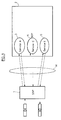
- Figure 1 shows one example of a classical telecommunication network comprising a Service Switching Point (SSP) 1 and a classical Service Control point (SCP) 2.
- SSP Service Switching Point
- SCP Service Control point
- Three services 3, 4, 5 are provided in the SCP 2 and each service is requested by sending a signaling message from the SSP 1 to the SCP 2, and the request for a service is accepted or rejected by sending back a response message.
- the SSP 1 For chaining these three services 3, 4, 5, the SSP 1 triggers SCP 2 three times before sending any Continue/Connect message to another party. For service chaining, currently loop back is done at SSP 1. This way implies exchanging a lot of signaling messages M, between the SSP 1 and the SCP 2, thus resulting in network traffic, time loss and also expense.
- the invention provides a method of chaining services in a telecommunication network comprising at least one service switching point and at least one service control point, this latter comprising means for providing a plurality of services ; characterized in that it further comprises means for providing a listener service which can trigger a plurality of chained services chosen among the services implemented in the service control point.
- each service can be triggered independently by network or can be chained within SCP. This will save signaling messages between SSP and SCP.
- a service control point comprising means for implementing this method .
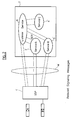
- FIG. 2 shows one example of a telecommunication network comprising a Service Switching Point (SSP) 1' and a Service Control point (SCP) 7 comprising means for implementing the method according to the invention.
- SSP Service Switching Point
- SCP Service Control point
- Three services 3', 4', 5' are provided in the SCP 7 and each service can be requested individually by sending a signaling message from the SSP 1' to the SCP 7, and the request for a service is accepted or rejected by sending back a response message.
- a fourth service 6 is provided in the SCP 7, the listener service 6 triggering a plurality of chained services chosen among the services 3', 4', 5' provided in the SCP 7.
- the SSP 1' requests that the three services 3', 4', 5' (for instance Black and White, Number Portability and Optimal Call Routing) be chained.
- the chaining order and choice of services to be chained are controlled by service key.
- the fourth service 6 is working as a listener service which listens to initial message from SSP 1' and sends Initial Detection Point (DP) with Transaction Capabilities Application Part (TCAP) header to rest of the services 3', 4', 5'.
- DP Initial Detection Point
- TCAP Transaction Capabilities Application Part
- a Detection Point indicates states in basic call and connection over F-Dpe processing where control may be transferred to the service.
- Transaction Capabilities Application Part enables the deployment of advanced intelligence in a network by supporting non circuit related information exchange between signaling points, using the SSCP (Signaling Connection Control Part) connectionless service.
- the method according to the invention has many advantages as follows: As different services are triggered at SCP itself, no signaling message is exchanged with SSP for service triggering. It results in reduced signaling messages, which in turn means reduced signaling link requirement and reduced signaling cards. It results a reduced cost of equipment.
- the inter service triggering message will be on a F-Dpe or a Gigabit local area network, in the SCP, which is obviously very fast as compared to a 64 kp/s signaling link.
- An advantage of the method according to the invention lies in the fact that, for each call, it can be configured which all services will be chained and in which particular sequence.
- the sequence of services to be chained can be configured at SSP either by keeping different service keys, each key referring to one particular sequence at SCP, or by provisioning different Service Switch Nodes.
- This method of service chaining can be implemented on any SCP supporting multiple services.
Landscapes
- Life Sciences & Earth Sciences (AREA)
- Chemical & Material Sciences (AREA)
- Health & Medical Sciences (AREA)
- General Physics & Mathematics (AREA)
- Immunology (AREA)
- Pathology (AREA)
- Engineering & Computer Science (AREA)
- General Health & Medical Sciences (AREA)
- Physics & Mathematics (AREA)
- Analytical Chemistry (AREA)
- Biochemistry (AREA)
- Electrochemistry (AREA)
- Chemical Kinetics & Catalysis (AREA)
- Molecular Biology (AREA)
- Computer Networks & Wireless Communication (AREA)
- Food Science & Technology (AREA)
- Medicinal Chemistry (AREA)
- Exchange Systems With Centralized Control (AREA)
- Telephonic Communication Services (AREA)
Abstract
Description
- The present invention generally relates to a method of chaining services in a telecommunication network, to provide a optimized and cost effective solution and to avoid loop back between Service Switching Point (SSP) and Service Control point (SCP).
- In a telecommunication network comprising a Service Switching Point (SSP) and a Service Control point (SCP), the services are provided in the Service Control point (SCP) and each service is requested by sending a signaling message from the SSP to the SCP, and the request is accepted or rejected by sending back a response message.
- Traditional way of service chaining is to do loop back between the SSP and the SCP, once for each service, so that for the same call at least another service can be triggered. This way implies exchanging a lot of signaling messages between the SSP and the SCP.
- The aim of the invention is to increase network efficiency by supporting service chaining with less numerous signaling messages between the SSP and a SCP and thus providing a cost effective and time saving solution.
-
Figure 1 shows one example of a classical telecommunication network comprising a Service Switching Point (SSP) 1 and a classical Service Control point (SCP) 2. Threeservices 3, 4, 5 are provided in the SCP 2 and each service is requested by sending a signaling message from the SSP 1 to the SCP 2, and the request for a service is accepted or rejected by sending back a response message. - For chaining these three
services 3, 4, 5, the SSP 1 triggers SCP 2 three times before sending any Continue/Connect message to another party. For service chaining, currently loop back is done at SSP 1. This way implies exchanging a lot of signaling messages M, between the SSP 1 and the SCP 2, thus resulting in network traffic, time loss and also expense. - The invention provides a method of chaining services in a telecommunication network comprising at least one service switching point and at least one service control point, this latter comprising means for providing a plurality of services ; characterized in that it further comprises means for providing a listener service which can trigger a plurality of chained services chosen among the services implemented in the service control point.
- According to this method, each service can be triggered independently by network or can be chained within SCP. This will save signaling messages between SSP and SCP.
- According to another aspect of the present invention, there is provided a service control point comprising means for implementing this method .
- Other features and advantages of the present invention will become more apparent from the following detailed description of an embodiment of the present invention, when taken in conjunction with the accompanying drawings.
- In order to illustrate in detail features and advantages of an embodiment of the present invention, the following will be with reference to the accompanying drawings. If possible, like or similar reference numerals designate the same or similar components throughout the figures thereof and description, in which :
-
Fig. 1 illustrates the prior art method, and has been described above. -
Fig. 2 illustrates the method according to the invention. -
Figure 2 shows one example of a telecommunication network comprising a Service Switching Point (SSP) 1' and a Service Control point (SCP) 7 comprising means for implementing the method according to the invention. Three services 3', 4', 5' are provided in the SCP 7 and each service can be requested individually by sending a signaling message from the SSP 1' to the SCP 7, and the request for a service is accepted or rejected by sending back a response message. - For chaining two or three of these three services 3', 4', 5', a fourth service 6 is provided in the SCP 7, the listener service 6 triggering a plurality of chained services chosen among the services 3', 4', 5' provided in the SCP 7.
- For instance, the SSP 1' requests that the three services 3', 4', 5' (for instance Black and White, Number Portability and Optimal Call Routing) be chained. The chaining order and choice of services to be chained are controlled by service key. The fourth service 6 is working as a listener service which listens to initial message from SSP 1' and sends Initial Detection Point (DP) with Transaction Capabilities Application Part (TCAP) header to rest of the services 3', 4', 5'. A Detection Point indicates states in basic call and connection over F-Dpe processing where control may be transferred to the service. Transaction Capabilities Application Part enables the deployment of advanced intelligence in a network by supporting non circuit related information exchange between signaling points, using the SSCP (Signaling Connection Control Part) connectionless service.
- There is no customization required for different chained services. These services can receive Initial message from network as well as from listener service.
- The method according to the invention has many advantages as follows: As different services are triggered at SCP itself, no signaling message is exchanged with SSP for service triggering. It results in reduced signaling messages, which in turn means reduced signaling link requirement and reduced signaling cards. It results a reduced cost of equipment.
- The inter service triggering message will be on a F-Dpe or a Gigabit local area network, in the SCP, which is obviously very fast as compared to a 64 kp/s signaling link.
- There is no customization required for different chained services. These services can receive Initial message from network as well as from listener service.
- An advantage of the method according to the invention lies in the fact that, for each call, it can be configured which all services will be chained and in which particular sequence. The sequence of services to be chained can be configured at SSP either by keeping different service keys, each key referring to one particular sequence at SCP, or by provisioning different Service Switch Nodes. This method of service chaining can be implemented on any SCP supporting multiple services.
Claims (2)
- A method of chaining services in a telecommunication network comprising at least one service switching point (1') and at least one service control point (2'), this latter comprising means for providing a plurality of services (3', 4', 5') ; characterized in that it further comprises means for providing a listener service (6) which can trigger a plurality of chained services chosen among the services (3', 4', 5') implemented in the service control point (2').
- A service control point (2') comprising means for implementing the method according to claim 1.
Applications Claiming Priority (1)
| Application Number | Priority Date | Filing Date | Title |
|---|---|---|---|
| IN2027CH2007 | 2007-09-10 |
Publications (2)
| Publication Number | Publication Date |
|---|---|
| EP2034749A2 true EP2034749A2 (en) | 2009-03-11 |
| EP2034749A3 EP2034749A3 (en) | 2010-07-28 |
Family
ID=40328933
Family Applications (1)
| Application Number | Title | Priority Date | Filing Date |
|---|---|---|---|
| EP08101372A Withdrawn EP2034749A3 (en) | 2007-09-10 | 2008-02-07 | Method for chaining services in a telecommunication network and a service control point comprising means for implementing this method |
Country Status (1)
| Country | Link |
|---|---|
| EP (1) | EP2034749A3 (en) |
Family Cites Families (4)
| Publication number | Priority date | Publication date | Assignee | Title |
|---|---|---|---|---|
| US5946383A (en) * | 1997-01-21 | 1999-08-31 | Ericsson Inc. | Dynamically associating service script logics to provide a subscriber feature within an advanced intelligent network |
| US5963630A (en) * | 1997-04-08 | 1999-10-05 | Ericsson Inc. | Mediation service control point within an intelligent network |
| ATE555611T1 (en) * | 2001-12-21 | 2012-05-15 | France Telecom | CALL PROCESSING IN MOBILE TELECOMMUNICATIONS NETWORKS |
| AU2003242558A1 (en) * | 2003-05-19 | 2004-12-03 | Siemens Aktiengesellschaft | Method and means for handling multiple services of an intelligent network within a mobile communication network |
-
2008
- 2008-02-07 EP EP08101372A patent/EP2034749A3/en not_active Withdrawn
Also Published As
| Publication number | Publication date |
|---|---|
| EP2034749A3 (en) | 2010-07-28 |
Similar Documents
| Publication | Publication Date | Title |
|---|---|---|
| RU2144271C1 (en) | System for control over telecommunication maintenance | |
| US5933486A (en) | Enhanced service control architecture of a telecommunications switching network | |
| US7039173B2 (en) | Management of performance of intelligent network services | |
| DE60036350T2 (en) | Mediation communication system | |
| US6760426B2 (en) | Method and system for handling operator calls in a communication network | |
| CA2255053A1 (en) | Call transfer in a cellular telephone network | |
| PL177926B1 (en) | Method of as well as system and apparatus for controlling operation telecommunication networks | |
| MD526Z (en) | Method for performing information telephone calls | |
| EP1080587B1 (en) | A method of managing a subscriber service by means of an intelligent network service | |
| EP1142349B1 (en) | Communication network | |
| EP1422914B1 (en) | Method and system for actively establishing a call by a Service Control Point in a mobile intelligent network | |
| EP2060128B1 (en) | System and method for providing high reliability network | |
| EP1036469B1 (en) | Service interaction in an intelligent network | |
| EP2034749A2 (en) | Method for chaining services in a telecommunication network and a service control point comprising means for implementing this method | |
| US20050100155A1 (en) | Call distribution in distributed call centers | |
| US20070140158A1 (en) | Method, apparatus and network arrangement for establishing calls in a communications network | |
| KR20030022467A (en) | Method for Packet Call Routing in IMT-2000 SGSN | |
| GB2431819A (en) | Method of realizing call connection in intelligent network system | |
| EP1156682B1 (en) | Signalling in an intelligent network | |
| FI106596B (en) | Interaction of services in a telecommunications network | |
| Rumsewicz | On the efficacy of using the transfer-controlled procedure during periods of STP processor overload in SS7 networks | |
| JP3682953B2 (en) | Intelligent network service control | |
| US8467516B2 (en) | Methods, systems, and computer program products for processing a nature of address indicator and/or calling party number to support telecommunication features | |
| KR100327042B1 (en) | Method for calling number mail service | |
| CN101753730B (en) | Telephone call processing method and system |
Legal Events
| Date | Code | Title | Description |
|---|---|---|---|
| PUAI | Public reference made under article 153(3) epc to a published international application that has entered the european phase |
Free format text: ORIGINAL CODE: 0009012 |
|
| AK | Designated contracting states |
Kind code of ref document: A2 Designated state(s): AT BE BG CH CY CZ DE DK EE ES FI FR GB GR HR HU IE IS IT LI LT LU LV MC MT NL NO PL PT RO SE SI SK TR |
|
| AX | Request for extension of the european patent |
Extension state: AL BA MK RS |
|
| PUAL | Search report despatched |
Free format text: ORIGINAL CODE: 0009013 |
|
| AK | Designated contracting states |
Kind code of ref document: A3 Designated state(s): AT BE BG CH CY CZ DE DK EE ES FI FR GB GR HR HU IE IS IT LI LT LU LV MC MT NL NO PL PT RO SE SI SK TR |
|
| AX | Request for extension of the european patent |
Extension state: AL BA MK RS |
|
| AKY | No designation fees paid | ||
| REG | Reference to a national code |
Ref country code: DE Ref legal event code: R108 Effective date: 20110309 Ref country code: DE Ref legal event code: 8566 |
|
| STAA | Information on the status of an ep patent application or granted ep patent |
Free format text: STATUS: THE APPLICATION IS DEEMED TO BE WITHDRAWN |
|
| 18D | Application deemed to be withdrawn |
Effective date: 20110129 |