EP2034124A2 - Window covering assembly with tension cords - Google Patents
Window covering assembly with tension cords Download PDFInfo
- Publication number
- EP2034124A2 EP2034124A2 EP08252872A EP08252872A EP2034124A2 EP 2034124 A2 EP2034124 A2 EP 2034124A2 EP 08252872 A EP08252872 A EP 08252872A EP 08252872 A EP08252872 A EP 08252872A EP 2034124 A2 EP2034124 A2 EP 2034124A2
- Authority
- EP
- European Patent Office
- Prior art keywords
- rail
- cord
- movable rail
- tension
- routed
- Prior art date
- Legal status (The legal status is an assumption and is not a legal conclusion. Google has not performed a legal analysis and makes no representation as to the accuracy of the status listed.)
- Granted
Links
Images



Classifications
-
- E—FIXED CONSTRUCTIONS
- E06—DOORS, WINDOWS, SHUTTERS, OR ROLLER BLINDS IN GENERAL; LADDERS
- E06B—FIXED OR MOVABLE CLOSURES FOR OPENINGS IN BUILDINGS, VEHICLES, FENCES OR LIKE ENCLOSURES IN GENERAL, e.g. DOORS, WINDOWS, BLINDS, GATES
- E06B9/00—Screening or protective devices for wall or similar openings, with or without operating or securing mechanisms; Closures of similar construction
- E06B9/24—Screens or other constructions affording protection against light, especially against sunshine; Similar screens for privacy or appearance; Slat blinds
- E06B9/26—Lamellar or like blinds, e.g. venetian blinds
- E06B9/262—Lamellar or like blinds, e.g. venetian blinds with flexibly-interconnected horizontal or vertical strips; Concertina blinds, i.e. upwardly folding flexible screens
-
- E—FIXED CONSTRUCTIONS
- E06—DOORS, WINDOWS, SHUTTERS, OR ROLLER BLINDS IN GENERAL; LADDERS
- E06B—FIXED OR MOVABLE CLOSURES FOR OPENINGS IN BUILDINGS, VEHICLES, FENCES OR LIKE ENCLOSURES IN GENERAL, e.g. DOORS, WINDOWS, BLINDS, GATES
- E06B9/00—Screening or protective devices for wall or similar openings, with or without operating or securing mechanisms; Closures of similar construction
- E06B9/24—Screens or other constructions affording protection against light, especially against sunshine; Similar screens for privacy or appearance; Slat blinds
- E06B9/26—Lamellar or like blinds, e.g. venetian blinds
- E06B9/28—Lamellar or like blinds, e.g. venetian blinds with horizontal lamellae, e.g. non-liftable
- E06B9/30—Lamellar or like blinds, e.g. venetian blinds with horizontal lamellae, e.g. non-liftable liftable
- E06B9/32—Operating, guiding, or securing devices therefor
- E06B9/322—Details of operating devices, e.g. pulleys, brakes, spring drums, drives
-
- E—FIXED CONSTRUCTIONS
- E06—DOORS, WINDOWS, SHUTTERS, OR ROLLER BLINDS IN GENERAL; LADDERS
- E06B—FIXED OR MOVABLE CLOSURES FOR OPENINGS IN BUILDINGS, VEHICLES, FENCES OR LIKE ENCLOSURES IN GENERAL, e.g. DOORS, WINDOWS, BLINDS, GATES
- E06B9/00—Screening or protective devices for wall or similar openings, with or without operating or securing mechanisms; Closures of similar construction
- E06B9/24—Screens or other constructions affording protection against light, especially against sunshine; Similar screens for privacy or appearance; Slat blinds
- E06B9/26—Lamellar or like blinds, e.g. venetian blinds
- E06B9/262—Lamellar or like blinds, e.g. venetian blinds with flexibly-interconnected horizontal or vertical strips; Concertina blinds, i.e. upwardly folding flexible screens
- E06B2009/2625—Pleated screens, e.g. concertina- or accordion-like
-
- E—FIXED CONSTRUCTIONS
- E06—DOORS, WINDOWS, SHUTTERS, OR ROLLER BLINDS IN GENERAL; LADDERS
- E06B—FIXED OR MOVABLE CLOSURES FOR OPENINGS IN BUILDINGS, VEHICLES, FENCES OR LIKE ENCLOSURES IN GENERAL, e.g. DOORS, WINDOWS, BLINDS, GATES
- E06B9/00—Screening or protective devices for wall or similar openings, with or without operating or securing mechanisms; Closures of similar construction
- E06B9/24—Screens or other constructions affording protection against light, especially against sunshine; Similar screens for privacy or appearance; Slat blinds
- E06B9/26—Lamellar or like blinds, e.g. venetian blinds
- E06B9/28—Lamellar or like blinds, e.g. venetian blinds with horizontal lamellae, e.g. non-liftable
- E06B9/30—Lamellar or like blinds, e.g. venetian blinds with horizontal lamellae, e.g. non-liftable liftable
- E06B9/32—Operating, guiding, or securing devices therefor
- E06B9/322—Details of operating devices, e.g. pulleys, brakes, spring drums, drives
- E06B2009/3222—Cordless, i.e. user interface without cords
Definitions
- This invention relates to a window covering assembly with tension cords guiding one or more movable rails and the covering material.
- window covering assemblies are known in the art and are typical pleated blinds or cellular blinds.
- the tension cords When such blind assemblies have a fixed rail and a movable rail, the tension cords will generally be routed from the fixed rail through the window covering material and to the movable rail, and from there to a position on a window sill or other fixed surface.
- One of the best known cord-routings is the so-called H-routing in which the tension cords cross-over from left to right, within the movable rail.
- window blind assemblies can have two movable rails or shuttle rails and provide the blind user with more choice in positioning the shading material in an architectural opening. He can for example leave open area's over both the top and the bottom rail. This is of course a desirable feature for window coverings.
- the tension cords in such cord tensioned blind assemblies provide the necessary friction to the or each movable rail to keep the rail from moving on its own accord, i.e. move downward under influence of its own weight.
- a user can manipulate a movable rail by hand to the desired position, release the rail and the tensioned cords will ensure that the rail remains in that position.
- springs are used to tension the cords to provide the desired amount of friction. The springs will also compensate for the variation in cord-length caused by stretch or crimp. It is usual for a cord tensioned blind to have a dedicated pair of cords that are tensioned specifically for holding a single shuttle rail in position.
- an extra pair of cords is added, or a loop is added to each tension cord which loop is routed through the other rail and about a spring in that rail.
- additional guide cords which are also tensioned by springs, are also routed through the covering, but serve mainly to guide the covering material.
- the tension on these additional cords is much less than for the main tension cords, and will be chosen to only compensate for the stretch and crimp of the cords.
- the cord routings can be chosen to allow the rails to be manipulated at any point on it's length without skewing, or a less complicated routing can be chosen when the rail can be hand operated at two spaced apart locations.
- window covering assemblies with two movable rails cannot be made in any size.
- the top rail tends to sag through the middle.
- a window covering assembly for an architectural opening such as a window
- said window covering assembly having a first or top movable rail having left and right longitudinal ends and a second or lower movable rail having left and right longitudinal ends, and blind material connected to the two rails and extendible and retractable between the two by moving one or both rails away from or toward each other, and a pair of first and second main tension cords being routed in mirror image one to another through and along the top movable rail, the blind material and the bottom movable rail and the first cord of the pair of the first and second main tension cords being routed to enter the top movable rail at a first entrance point which is adjacent one of the left or right longitudinal ends of the rail and spaced a first length measured from said end, and the first cord then being routed through or along the rail to exit the top movable rail at a first exit point which exit point is spaced at a second length from the same one of the left or right longitudinal rail ends as the first entrance point, and the first
- the window covering assembly comprises cord tensioning means in the top movable rail for tensioning the first and second main tension cords.
- the tensioning means are positioned beyond the first entrance point in the direction towards the opposite longitudinal end of the top movable rail, and the first main tension cord is routed from the first entrance points to the tension means, slidingly connected thereto and looped back past the first entrance points to the first exit point.
- the tensioning means comprises at least one tension spring.
- the tensioning means comprises a single spring in the longitudinal center of the top movable rail and wherein the first and second main tension cords are slidably connected to either end of the spring.
- the window covering assembly further comprises at least one auxiliary tension cord being routed to enter the top movable rail at the first entrance point adjacent one of the right or left longitudinal ends of the top movable rail and being spaced the first length measured from said end, the auxiliary tension cord then being routed through or along the rail to exit the top movable rail at a second exit point which exit point is spaced at a third length from the same one of the left or right longitudinal rail ends as the first entrance point, and the first tension cord then being routed through the blind material towards the lower movable rail and the third length exceeding the first length.
- the window covering assembly further comprises at least one auxiliary tension cord being routed to enter the top movable rail at a second entrance point coinciding with the right or left longitudinal end of the top movable rail, such that the first length is next to nothing , and the auxiliary tension cord then being routed through or along the rail to exit the top movabie rail at a second exit point which exit point is spaced at a third length from the left or right longitudinal rail end coinciding with the second entrance point.
- the window covering assembly further comprises means for attaching the tension cords to top and bottom fixed surfaces extending parallel to the top and bottom movable rails.
- connecting means comprise mounting blocks.
- Figure 1 shows a prior art cord guided blind 1, having a movable top rail 3 and a movable bottom rail 5 and blind material 7 extending between these two rails. Also shown are left and right tensioned guide cords 9, 11 which are tensioned by common central spring 13. The routing of these cords and the spring hold the top movable rail 3 in different vertical positions in the blind after it has been moved up or down along the cords.
- the first main or left tension cord 9 enters the top rail 3 at a first entrance point 27 a first distance L1 29 from the left end 3A of the top rail.
- the cord is routed via main tension spring 13 to a first exit point 31 at a second distance L2 33 measured from the left end 3A of the top rail 5.
- the first main tension cord 9 is then routed through the shade material 7, preferably through a first and preferably the left most column 15 of aligned openings 15A, to enter the bottom rail 5 at a bottom rail entry point 35 directly opposite to the top rail exit point 31.
- the first main tension cord 9 exits the bottom rail 5 at a right bottom exit point 37 at or adjacent its right end 5B.
- the left tension cord 9 further is depicted with top and bottom ends 9A, 9B, which ends can be connected to a fixed surface by any convenient means, such as mounting blocks.
- the second main or right tension cord 11 is routed in mirror image.
- the cord enters the top rail 3 at right entrance point 39 a first distance L'1 41 from the right end 3B of the top rail.
- the cord is routed via main tension spring 13 to a point of exit 43 at a second distance L' 2 45 measured from the right end 3B of the top rail 3.
- the cord is then routed through the shade material 7, preferably through a right-most column 17 of aligned openings 17A, to enter the bottom rail 5 at a bottom rail entrance point 47 directly opposite to top rail exit point 43 .
- the right tension cord 11 exits the bottom rail 5 at bottom rail left exit point 49 at or adjacent its left end 5A.
- the right tension cord 11 further is depicted with top and bottom ends 11A, 11B, which ends can be connected to a fixed surface by any convenient means.
- the first distances L1, L'1 of the entry points 27, 39 of the left and right cords 9, 11 measured from the respective left and right rail ends 3A, 3B are smaller than the second distances L2, L'2 of the exit points 31,43 for the same cords measured relative to the same rail ends.
- FIG. 1 Not shown in Figure 1 is a second pair of main left and right tension cords for the bottom movable rail 5 and the tension spring for these cords.
- the cord routing for the second pair is identical to the routing of the first pair, but starts from the bottom rail, where the spring is. Effectively by turning figure 1 over, the cord routing of the second pair is shown.
- auxiliary tension cords and springs for guiding the blind material.
- Such cords would run through intermediate columns 19,21,23 and 25 of aligned openings, the top and bottom rails are provided with suitable top rail exit points 19A, 21A, 23A and 25A and bottom entry points 19B, 21 B, 23B, 25B.
- top rail 3 of the prior art cord tensioned blind assembly as shown in Figure 1 and described above, tends to sag in the middle when the blind rail exceeds a certain length between the two longitudinal ends 3a,3b.
- the tension springs provide a force which acts through the tensioned cord onto the rail at each point of contact of the tension cord with the movable rail.
- the net force acting on the rail is built up from the tension spring force acting on the cord and the weight of the blind.
- the spring force acting on the main tension cords is significant. Contrary, for the auxiliary cords it is next to nothing.
- Figure 3 shows the solution to this problem in accordance with the invention. Basically by changing the routing of the main left and right tension cords for the top rail the problem of the 'wrong' torques has been solved.
- Figure 3 is a schematic view of a first embodiment of the invention in which like parts of figure 1 have the same numbers greater by 100.
- Figure 3 is a schematic representation of the cord guided blind 100 of the invention, having a movable top rail 103 and a movable bottom rail 105 and blind material 107 extending between these two rails. Also shown are main first and second (or left and right) tension cords 109, 111 for movable top rail 103 which cords are tensioned by common central spring 113.
- the left tension cord 109 enters the top rail 103 at first entrance point 127 a first distance L 101 129 from the left end 103A of the top rail.
- the cord is routed via main tension spring 113 to a first exit point 131 at a second distance L 102 133 measured from the left end 103A of the top rail 103:
- the right tension cord 111 enters the top rail 103 at right entrance point 139 a first distance L' 101 141 from the right end 103B of the top rail.
- the cord is routed via main tension spring 113 to a right exit point 143 at a second distance L' 102 141 measured from the left end 103B of the top rail 103.
- the first distances L101, L'101 exceed the second distances L102, L'102 (133, 145).
- the net distance between each pair of entrance and exit points (127, 131 and 139, 143) at either end 103A, 103B of the rail 103 which results in the desired Torques T3, T4 and prevents sagging is determined by a various variables. These variables include, the length of the top rail 103, it's longitudinal stiffness, the total weight of the blind 100, the chosen location of the left and right columns of cord openings 115, 117 for routing the main tension cords through the blind material (which determine the exit positions in the top movable rail), as well as the strength of the central spring tensioning the main cords in the top rail of the blind.
- Figure 5 shows a preferred embodiment of a cord tensioned shade with six parallel spaced apart tension cords running through the shade material. Like parts of figure 3 have the same referral numbers greater by 100.
- the blind assembly of Figure 5 is shown mounted into a window frame 269, the frame having a top and bottom frame member 271, 273 and a left and a right frame member 275, 276.
- the tension cords are connected to the top and bottom frame members by way of four mounting blocks, a pair of top left and right mounting blocks 279, 281 and a pair of bottom left and right mounting blocks 283, 285.
- Figure 5 shows all main tension cords 209, 211 and the main tension springs 213, 259, the four auxiliary tension cords 251, 253, 255, 257 and four auxiliary springs 261, 263, 265, 267 used in the blind assembly of this embodiment. Since the use of colors in the drawings is not allowed, cross-hatchings are used intended to help the reader to distinguish the different tension cords. For clarity Figure 5A is added showing cord sections with the cross-hatchings used in Figure 5 .
- the blind material is provided with additional columns of openings, besides the first and last columns of openings 215, 217 for the two main tension cords 209, 211. These additional columns are the second, third fourth and fifth columns 219, 221, 223, 225 in the blind material 207 and they are spaced apart between the first and last columns 215, 217.
- the top and bottom rails 203 and 205 comprise cord openings, preferably provided with suitable grommets, aligned at the top and bottom ends of each of these columns, thus top second, third, fourth and fifth openings 219A, 221A, 223A, , 225A, in the bottom second, third, fourth and fifth openings 219B, 221 B, 223B, 225B.
- the top opening in the top rail is indicated with ref. number 231 and the bottom opening is 215B
- the top opening is 243 and the bottom is 217B.
- the head rail 203 is provided with a first cord entrance 227 a first distance L201 measured from the left end 203A of the rail and first cord exit 231 at a second distance L202 measured from the left end 203A.
- a right cord entrance a first distance L'201 measured from the right end 203B of the rail and a right cord exit at a second distance L'202 measured from the right end 203B.
- the first distances L201 and L'201 are larger than the second distances L202 and L'202 respectively.
- the cord routing of the main tension cords 209, 211 with respect the top main spring 213, are identical to the routing shown and described in relation to Figure 3 , thus it will not be explained in relation to this Figure 5 .
- the main tension cords 209, 211 each have an extra leg to be routed to the bottom main spring 259 in order to act on the bottom movable rail 207.
- These routings are as follows.
- the extra leg of right main tension cord 211 starts at the top right mounting block 281 at top frame member 271, is routed through right top rail entrance 239 into rail 203 and out through left top rail exit 231, then through the first column of openings 215 and into the bottom bar 205 through left bottom bar entrance opening 215B, slidingly attached to the left end of the main bottom tension spring 259 looped back to exit the bottom bar through left bottom bar exit 249 to be attached to the bottom left mounting block 283.
- the auxiliary tension cords are routed as follows.
- the first auxiliary tension cord 251 starts from the top left cord tension block 279 at top frame member 271 of the window frame 269, is routed through left top rail entrance 227 into rail 203, is slidingly connected to the first auxiliary tension spring 261 in the top rail and back out through second left top rail exit 219A, then through the second column of openings 219 and into the bottom bar 205 through second bottom bar entrance opening 219B and exits the bottom bar through left bottom bar exit 249 to be attached to the bottom left mounting block 283.
- the second auxiliary tension cord 253 starts from the top right cord tension block 281 at top frame member 271 of the window frame 269, is routed through right top rail entrance 239 into rail 203 and back out through third top rail exit 221A, then through the third column of openings 221 and into the bottom bar 205 through third bottom bar entrance opening 221 B and is slidingly connected to the third auxiliary tension spring 265 in the bottom bar and exits the bottom bar through right bottom bar exit 237 to be attached to the bottom right mounting block 285.
- the third auxiliary tension cord 255 starts from the top left cord tension block 279 at top frame member 271 of the window frame 269, is routed through left top rail entrance 227 into rail 203, out through fourth top rail exit 223A, then through the fourth column of openings 223 and into the bottom bar 205 through fourth bottom bar entrance opening 223B is slidingly connected to the fourth auxiliary tension spring 267 in the bottom rail and exits the bottom bar through left bottom bar exit 249 to be attached to the bottom left mounting block 283.
- the fourth auxiliary tension cord 257 starts from the top right cord tension block 281 at top frame member 271 of the window frame 269, is routed through right top rail entrance 239 into rail 203, is slidingly connected to the second auxiliary tension spring 263 in the top bar and out through fifth top rail exit 225A, then through the fifth column of openings 225 and into the bottom bar 205 through fifth bottom bar entrance opening 225B and exits the bottom bar through right bottom bar exit 237 to be attached to the bottom right mounting block 285.
- Figure 6 is an alternative embodiment of the invention, in the description like parts are given the referral numbers of Figure 5 greater by 100.
- auxiliary tension cords 351,353,355,357 are routed in a different manner into and out of the top movable rail 303.
- the first and third auxiliary tension cords 351 and 355 start from a fifth mounting block 387 at the top frame member 371.
- the fifth mounting block 387 is fixed to the top frame member 371 in or adjacent the corner with left frame member 375.
- the first auxiliary tension cord 351 enters the top movable rail at or adjacent the left rail end 303A by a left auxiliary entrance point 391. As in the embodiment of Figure 5 , the first auxiliary tension cord then exits the top movable rail by exit point 319A.
- the third auxiliary tension cord 355 exits the top movable rail by exit point 323A.
- the second and fourth auxiliary tension cords 353 and 357 start from a sixth mounting block 389 at the top frame member 371.
- the sixth mounting block 389 is fixed to the top frame member 371 in or adjacent the corner with right frame member 377.
- the second auxiliary tension cord 353 enters the top movable rail at or adjacent right rail end 303B by a right auxiliary entrance point 393.
- the second auxiliary tension cord then exits the top movable rail by exit point 321A.
- the fourth auxiliary tension cord exits the top movable rail by exit point 325A.
- auxiliary tension cords enter the top rail at a auxiliary entrance points 391, 393 which are located closer to the respective rail ends 303A and 303B, than the exit points for these cords.
- the auxiliary entrance points 391, 393 can even even coincide with the rail ends 303A and 303B, which is actually shown in Figure 6 .
- auxiliary cords are drawn in Figure 6 to enter and exit the rails at the longitudinal ends, but these positions could have been adjacent the longitudinal ends as shown in Figure 1 .
- the effects are the same.
- This alternative routing for the auxiliary cords reduces the number of cords in sight over the top movable rail 303 by half, making is a desirable embodiment.
- cord means either a single cord with two ends, or a cord-section between two fixed points.
- each main tension cord could be provided with a dedicated spring.
- different number of auxiliary tension cords can be used and alternative routings for the auxiliary tension cords can be used without departing from the claimed invention.
- the terms in the foregoing description and the following claims, such as "left”, “right”, “front”, “rear”, “vertical”, “horizontal”, “lateral” and “longitudinal” have been used only as relative terms to describe the blind assembly of the invention.
Landscapes
- Engineering & Computer Science (AREA)
- Structural Engineering (AREA)
- Architecture (AREA)
- Civil Engineering (AREA)
- Blinds (AREA)
Abstract
Description
- This invention relates to a window covering assembly with tension cords guiding one or more movable rails and the covering material.
- Such window covering assemblies are known in the art and are typical pleated blinds or cellular blinds.
- When such blind assemblies have a fixed rail and a movable rail, the tension cords will generally be routed from the fixed rail through the window covering material and to the movable rail, and from there to a position on a window sill or other fixed surface. One of the best known cord-routings is the so-called H-routing in which the tension cords cross-over from left to right, within the movable rail.
- Other such window blind assemblies can have two movable rails or shuttle rails and provide the blind user with more choice in positioning the shading material in an architectural opening. He can for example leave open area's over both the top and the bottom rail. This is of course a desirable feature for window coverings.
- The tension cords in such cord tensioned blind assemblies provide the necessary friction to the or each movable rail to keep the rail from moving on its own accord, i.e. move downward under influence of its own weight. Thus a user can manipulate a movable rail by hand to the desired position, release the rail and the tensioned cords will ensure that the rail remains in that position. Generally springs are used to tension the cords to provide the desired amount of friction. The springs will also compensate for the variation in cord-length caused by stretch or crimp. It is usual for a cord tensioned blind to have a dedicated pair of cords that are tensioned specifically for holding a single shuttle rail in position. For an additional moving rails an extra pair of cords is added, or a loop is added to each tension cord which loop is routed through the other rail and about a spring in that rail. Depending on the width of the blind assembly there can be provided additional guide cords, which are also tensioned by springs, are also routed through the covering, but serve mainly to guide the covering material. In pleated or cellular blinds these additional cords are important tools to neatly stack the pleats or cells when the blind is retracted. The tension on these additional cords is much less than for the main tension cords, and will be chosen to only compensate for the stretch and crimp of the cords. The cord routings can be chosen to allow the rails to be manipulated at any point on it's length without skewing, or a less complicated routing can be chosen when the rail can be hand operated at two spaced apart locations.
- It has been found that window covering assemblies with two movable rails, as described above, cannot be made in any size. When the movable rails are over a certain length, the top rail tends to sag through the middle.
- Apart from using stronger (and thus heavier and bulkier) rails, a satisfactory technical solution to this problem was never found.
- It is therefore an object of the invention to provide a window blind assembly with tension cords which
- allows for big blinds to be made, i.e. with long (wide) head rails and
- prevents the head rail from such a blind from bending (sagging)
- According to one aspect of the invention, there is provided a window covering assembly for an architectural opening such as a window , said window covering assembly having a first or top movable rail having left and right longitudinal ends and a second or lower movable rail having left and right longitudinal ends, and blind material connected to the two rails and extendible and retractable between the two by moving one or both rails away from or toward each other, and
a pair of first and second main tension cords being routed in mirror image one to another through and along the top movable rail, the blind material and the bottom movable rail and the first cord of the pair of the first and second main tension cords being routed to enter the top movable rail at a first entrance point which is adjacent one of the left or right longitudinal ends of the rail and spaced a first length measured from said end, and the first cord then being routed through or along the rail to exit the top movable rail at a first exit point which exit point is spaced at a second length from the same one of the left or right longitudinal rail ends as the first entrance point,
and the first length exceeding the second length. - In a particular embodiment of the invention the window covering assembly comprises cord tensioning means in the top movable rail for tensioning the first and second main tension cords.
- Advantageously the tensioning means are positioned beyond the first entrance point in the direction towards the opposite longitudinal end of the top movable rail, and the first main tension cord is routed from the first entrance points to the tension means, slidingly connected thereto and looped back past the first entrance points to the first exit point.
- Further advantageously the tensioning means comprises at least one tension spring.
- In a further particular embodiment the tensioning means comprises a single spring in the longitudinal center of the top movable rail and wherein the first and second main tension cords are slidably connected to either end of the spring.
- According to a second aspect of the invention, the window covering assembly further comprises at least one auxiliary tension cord being routed to enter the top movable rail at the first entrance point adjacent one of the right or left longitudinal ends of the top movable rail and being spaced the first length measured from said end, the auxiliary tension cord then being routed through or along the rail to exit the top movable rail at a second exit point which exit point is spaced at a third length from the same one of the left or right longitudinal rail ends as the first entrance point, and the first tension cord then being routed through the blind material towards the lower movable rail and the third length exceeding the first length.
- According to a third aspect of the invention, the window covering assembly further comprises at least one auxiliary tension cord being routed to enter the top movable rail at a second entrance point coinciding with the right or left longitudinal end of the top movable rail, such that the first length is next to nothing , and the auxiliary tension cord then being routed through or along the rail to exit the top movabie rail at a second exit point which exit point is spaced at a third length from the left or right longitudinal rail end coinciding with the second entrance point.
- According to a further particular embodiment of the invention the window covering assembly further comprises means for attaching the tension cords to top and bottom fixed surfaces extending parallel to the top and bottom movable rails.
- Advantageously the connecting means comprise mounting blocks.
- Further aspects, embodiments and advantages of the invention will be apparent from the detailed description below of particular embodiments and the drawings thereof.
-
Figure 1 is a schematic perspective view of a prior art cord guided pleated blind with two movable rails and a first pair of tension cords dedicated for holding the top shuttle rail in position; -
Figure 2 is a schematic illustration of torques resulting from forces transmitted by the tension cords to the top movable rail when routed according toFigure 1 . -
Figure 3 is a schematic perspective view of the cord guided blind of the invention with two movable rails showing the inventive routing of the first pair of tension cords dedicated for holding the top shuttle rail in position; -
Figure 4 is a schematic illustration of torques resulting from forces transmitted by the tension cords to the top movable rail when routed according toFigure 3 . -
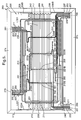
Figure 5 is the first embodiment of a blind assembly using the inventive cord routing, and showing six tension cords. -
Figure 5A is a representation of the cross-hatchings used inFigure 5 to distinguish the tension cords from one another -
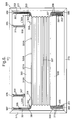
Figure 6 is a second embodiment of a blind assembly using the inventive cord routing. -
Figure 1 shows a prior art cord guided blind 1, having a movabletop rail 3 and amovable bottom rail 5 andblind material 7 extending between these two rails. Also shown are left and right tensionedguide cords central spring 13. The routing of these cords and the spring hold the topmovable rail 3 in different vertical positions in the blind after it has been moved up or down along the cords. - As can be seen in
Figure 1 , the first main orleft tension cord 9 enters thetop rail 3 at a first entrance point 27 afirst distance L1 29 from theleft end 3A of the top rail. The cord is routed viamain tension spring 13 to afirst exit point 31 at asecond distance L2 33 measured from theleft end 3A of thetop rail 5. The firstmain tension cord 9 is then routed through theshade material 7, preferably through a first and preferably the leftmost column 15 of aligned openings 15A, to enter thebottom rail 5 at a bottomrail entry point 35 directly opposite to the toprail exit point 31. The firstmain tension cord 9 exits thebottom rail 5 at a rightbottom exit point 37 at or adjacent itsright end 5B. Theleft tension cord 9 further is depicted with top andbottom ends - Similarly the second main or
right tension cord 11 is routed in mirror image. Thus it enters thetop rail 3 at right entrance point 39 afirst distance L'1 41 from theright end 3B of the top rail. The cord is routed viamain tension spring 13 to a point ofexit 43 at a second distance L'2 45 measured from theright end 3B of thetop rail 3. The cord is then routed through theshade material 7, preferably through aright-most column 17 of aligned openings 17A, to enter thebottom rail 5 at a bottomrail entrance point 47 directly opposite to toprail exit point 43 . Theright tension cord 11 exits thebottom rail 5 at bottom railleft exit point 49 at or adjacent itsleft end 5A. Theright tension cord 11 further is depicted with top andbottom ends - The first distances L1, L'1 of the
entry points right cords right rail ends exit points - This is a known way of routing the tension cords. The main left and right tension cords cross each other in the bottom movable rail, as shown in
Figure 1 . - Not shown in
Figure 1 is a second pair of main left and right tension cords for the bottommovable rail 5 and the tension spring for these cords. The cord routing for the second pair is identical to the routing of the first pair, but starts from the bottom rail, where the spring is. Effectively by turningfigure 1 over, the cord routing of the second pair is shown. - Also not shown in
Figure 1 are auxiliary tension cords and springs for guiding the blind material. Such cords would run throughintermediate columns rail exit points bottom entry points - The
top rail 3 of the prior art cord tensioned blind assembly as shown inFigure 1 and described above, tends to sag in the middle when the blind rail exceeds a certain length between the two longitudinal ends 3a,3b. - For keeping rails in a chosen position such that they don't move by their own weight and slide down along the cords, the tension springs provide a force which acts through the tensioned cord onto the rail at each point of contact of the tension cord with the movable rail. The net force acting on the rail is built up from the tension spring force acting on the cord and the weight of the blind. In order to keep the rails in position the spring force acting on the main tension cords is significant. Contrary, for the auxiliary cords it is next to nothing.
- It has been found that the traditional cord routing for the main tension cords, as shown in
Figure 1 , results in a pair of left and right torques that urge the opposite ends 3A, 3B of the movabletop rail 3 upwardly. This is schematically illustrated inFigure 2 , showing the points ofentry exit main tension cord -
Figure 3 shows the solution to this problem in accordance with the invention. Basically by changing the routing of the main left and right tension cords for the top rail the problem of the 'wrong' torques has been solved.Figure 3 is a schematic view of a first embodiment of the invention in which like parts offigure 1 have the same numbers greater by 100. - Thus
Figure 3 is a schematic representation of the cord guided blind 100 of the invention, having a movabletop rail 103 and amovable bottom rail 105 andblind material 107 extending between these two rails. Also shown are main first and second (or left and right)tension cords top rail 103 which cords are tensioned by common central spring 113. - The
left tension cord 109 enters thetop rail 103 at first entrance point 127 afirst distance L 101 129 from theleft end 103A of the top rail. The cord is routed via main tension spring 113 to afirst exit point 131 at asecond distance L 102 133 measured from theleft end 103A of the top rail 103: Similarly theright tension cord 111 enters thetop rail 103 at right entrance point 139 a first distance L'101 141 from theright end 103B of the top rail. The cord is routed via main tension spring 113 to aright exit point 143 at a second distance L'102 141 measured from theleft end 103B of thetop rail 103. - In accordance with the invention the first distances L101, L'101 (129, 141) exceed the second distances L102, L'102 (133, 145).
- By applying the cord routing of the invention for the
main tension cords Figure 4 , showing entrance points 127, 139 and exit points 131,143 for eachmain tension cords movable rail 103 mirrored relative to the routing offigure 1 and the resulting reversed torques as arrows T3, T4.
The left and right torques T3, T4 now urge the opposite ends 103A and 103B of themovable rail 103 down and thus prevent the middle of the rail from sagging. If the forces where high enough, and as indicated by the dotted arrow B, the rail would bulge upwardly. - The net distance between each pair of entrance and exit points (127, 131 and 139, 143) at either
end rail 103 which results in the desired Torques T3, T4 and prevents sagging is determined by a various variables. These variables include, the length of thetop rail 103, it's longitudinal stiffness, the total weight of the blind 100, the chosen location of the left and right columns ofcord openings -
Figure 5 shows a preferred embodiment of a cord tensioned shade with six parallel spaced apart tension cords running through the shade material. Like parts offigure 3 have the same referral numbers greater by 100. - The blind assembly of
Figure 5 is shown mounted into awindow frame 269, the frame having a top andbottom frame member right frame member 275, 276. The tension cords are connected to the top and bottom frame members by way of four mounting blocks, a pair of top left and right mountingblocks blocks -
Figure 5 shows allmain tension cords auxiliary tension cords auxiliary springs Figure 5A is added showing cord sections with the cross-hatchings used inFigure 5 . - For the auxiliary tension cords the blind material is provided with additional columns of openings, besides the first and last columns of
openings main tension cords fifth columns blind material 207 and they are spaced apart between the first andlast columns bottom rails fifth openings fifth openings first column 215 the top opening in the top rail is indicated with ref.number 231 and the bottom opening is 215B, for thesixth column 217 the top opening is 243 and the bottom is 217B. - Like in the embodiment of
Figure 3 , thehead rail 203 is provided with a first cord entrance 227 a first distance L201 measured from theleft end 203A of the rail andfirst cord exit 231 at a second distance L202 measured from theleft end 203A. And a right cord entrance a first distance L'201 measured from theright end 203B of the rail and a right cord exit at a second distance L'202 measured from theright end 203B. And of course the first distances L201 and L'201 are larger than the second distances L202 and L'202 respectively.
The cord routing of themain tension cords main spring 213, are identical to the routing shown and described in relation toFigure 3 , thus it will not be explained in relation to thisFigure 5 . - The
main tension cords main spring 259 in order to act on the bottommovable rail 207. These routings are as follows.
Leftmain tension cord 209, starting from the top leftcord tension block 279 attop frame member 271 of thewindow frame 269, is routed through left or firsttop rail entrance 227 intorail 203 and out through righttop rail exit 243, then through the sixth column ofopenings 217 and into thebottom bar 205 through right bottom bar entrance opening 217B slidingly attached to the right end of the mainbottom tension spring 259 looped back to exit the bottom bar through rightbottom bar exit 237 to be attached to the bottomright mounting block 285.
Similarly the extra leg of rightmain tension cord 211 starts at the topright mounting block 281 attop frame member 271, is routed through righttop rail entrance 239 intorail 203 and out through lefttop rail exit 231, then through the first column ofopenings 215 and into thebottom bar 205 through left bottom bar entrance opening 215B, slidingly attached to the left end of the mainbottom tension spring 259 looped back to exit the bottom bar through leftbottom bar exit 249 to be attached to the bottomleft mounting block 283. - The auxiliary tension cords are routed as follows.
The firstauxiliary tension cord 251 starts from the top leftcord tension block 279 attop frame member 271 of thewindow frame 269, is routed through lefttop rail entrance 227 intorail 203, is slidingly connected to the firstauxiliary tension spring 261 in the top rail and back out through second lefttop rail exit 219A, then through the second column ofopenings 219 and into thebottom bar 205 through second bottom bar entrance opening 219B and exits the bottom bar through leftbottom bar exit 249 to be attached to the bottomleft mounting block 283.
The secondauxiliary tension cord 253 starts from the top rightcord tension block 281 attop frame member 271 of thewindow frame 269, is routed through righttop rail entrance 239 intorail 203 and back out through thirdtop rail exit 221A, then through the third column ofopenings 221 and into thebottom bar 205 through third bottom bar entrance opening 221 B and is slidingly connected to the thirdauxiliary tension spring 265 in the bottom bar and exits the bottom bar through rightbottom bar exit 237 to be attached to the bottomright mounting block 285.
The thirdauxiliary tension cord 255 starts from the top leftcord tension block 279 attop frame member 271 of thewindow frame 269, is routed through lefttop rail entrance 227 intorail 203, out through fourthtop rail exit 223A, then through the fourth column ofopenings 223 and into thebottom bar 205 through fourth bottombar entrance opening 223B is slidingly connected to the fourthauxiliary tension spring 267 in the bottom rail and exits the bottom bar through leftbottom bar exit 249 to be attached to the bottomleft mounting block 283. The fourthauxiliary tension cord 257 starts from the top rightcord tension block 281 attop frame member 271 of thewindow frame 269, is routed through righttop rail entrance 239 intorail 203, is slidingly connected to the secondauxiliary tension spring 263 in the top bar and out through fifthtop rail exit 225A, then through the fifth column ofopenings 225 and into thebottom bar 205 through fifth bottom bar entrance opening 225B and exits the bottom bar through rightbottom bar exit 237 to be attached to the bottomright mounting block 285. - Thus these routings are similar to the prior art routing of
Figure 1 of themain tension cords movable rail 203 to theadjacent rail end movable rail 203 to the same rail end. However, since the tension springs tensioning these auxiliary cords 251,253,255,257 are not particularly strong and only serve to compensate for stretch or crimp of the cords, the adverse torques resulting from these spring forces are not enough to result in sagging of thetop rail 203. - By routing the auxiliary cords this way the top and bottom shuttle rails can be operated at any point along their length without skewing or exhibiting other problems. This feature is especially necessary for blind assemblies in high windows that cannot be reached by hand. Such as in conservatories.
- As can be seen from
figure 5 all tension cords are held by two top mounting blocks and two bottom mounting blocks. It is a fact that by this routing the cords above the top shuttle rail and up to the top frame member of the window frame are visible
The cord exiting the bottom rail can be hidden from view by suitable side covers. -
Figure 6 is an alternative embodiment of the invention, in the description like parts are given the referral numbers ofFigure 5 greater by 100. - In
figure 6 the main andauxiliary tension cords - In the embodiment of
Figure 6 , when compared to the embodiment ofFigure 5 , the auxiliary tension cords 351,353,355,357 are routed in a different manner into and out of the topmovable rail 303. - The first and third
auxiliary tension cords fifth mounting block 387 at thetop frame member 371. Thefifth mounting block 387 is fixed to thetop frame member 371 in or adjacent the corner withleft frame member 375. The firstauxiliary tension cord 351 enters the top movable rail at or adjacent the left rail end 303A by a leftauxiliary entrance point 391. As in the embodiment ofFigure 5 , the first auxiliary tension cord then exits the top movable rail byexit point 319A. The thirdauxiliary tension cord 355 exits the top movable rail byexit point 323A. - The second and fourth
auxiliary tension cords sixth mounting block 389 at thetop frame member 371. Thesixth mounting block 389 is fixed to thetop frame member 371 in or adjacent the corner withright frame member 377. The secondauxiliary tension cord 353 enters the top movable rail at or adjacent right rail end 303B by a rightauxiliary entrance point 393. As in the embodiment ofFigure 5 , the second auxiliary tension cord then exits the top movable rail byexit point 321A. The fourth auxiliary tension cord exits the top movable rail byexit point 325A. - The difference of the embodiment of
figure 6 with respect to that offigure 5 is thus that the auxiliary tension cords enter the top rail at a auxiliary entrance points 391, 393 which are located closer to the respective rail ends 303A and 303B, than the exit points for these cords. The auxiliary entrance points 391, 393 can even even coincide with the rail ends 303A and 303B, which is actually shown inFigure 6 . - The resulting negative torques will be bigger than those of
figure 5 , however they still to not cause the movable head rail to sag, since the springs used to tension the auxiliary cords are very weak and are only intended to compensate for cord stretch or cord crimp. - The auxiliary cords are drawn in
Figure 6 to enter and exit the rails at the longitudinal ends, but these positions could have been adjacent the longitudinal ends as shown inFigure 1 . The effects are the same. - This alternative routing for the auxiliary cords reduces the number of cords in sight over the top
movable rail 303 by half, making is a desirable embodiment. - In this application the word "cord" means either a single cord with two ends, or a cord-section between two fixed points.
- This invention is not limited to the specific above-described embodiments which may be modified without departing from the claimed invention or sacrificing all of its advantages. For example in stead of sharing a common main spring each main tension cord could be provided with a dedicated spring. Also different number of auxiliary tension cords can be used and alternative routings for the auxiliary tension cords can be used without departing from the claimed invention. Also in this regard, the terms in the foregoing description and the following claims, such as "left", "right", "front", "rear", "vertical", "horizontal", "lateral" and "longitudinal" have been used only as relative terms to describe the blind assembly of the invention.
Claims (9)
- A window covering assembly for an architectural opening such as a window , said window covering assembly comprising- a first or top movable rail having left and right longitudinal ends,- a second or lower movable rail having left and right longitudinal ends,- blind material connected to the two rails and extendible and retractable between the two by moving one or both rails away from or toward each other, and- a pair of first and second main tension cords routed in mirror image one to another through and along the top movable rail, the blind material and the bottom movable rail
wherein,
the first cord of the pair of the first and second main tension cords is routed to enter the top movable rail at a first entrance point which is adjacent one of the left or right longitudinal ends of the rail and spaced a first length measured from said end, and
the first cord is then routed through or along the rail to exit the top movable rail at a first exit point which exit point is spaced at a second length from the same one of the left or right longitudinal rail ends as the first entrance point,
and wherein the first length is exceeds the second length. - The window covering assembly of claim 1 wherein the blind assembly further comprises cord tensioning means in the top movable rail for tensioning the first and second main tension cords.
- The window covering assembly of claim 2 wherein the tensioning means are positioned beyond the first entrance point in the direction towards the opposite longitudinal end of the top movable rail, and wherein the first main tension cord is routed from the first entrance points to the tension means, slidingly connected thereto and looped back past the first entrance points to the first exit point.
- The window covering assembly of claim 2 or 3 wherein said tensioning means comprises at least one tension spring.
- The window covering assembly of claim 4 wherein said tensioning means comprises a single spring in the longitudinal center of the top movable rail and wherein the first and second tension cords are slidably connected to either end of the spring.
- The window covering assembly any of the claims 1-5 further comprising at least one auxiliary tension cord routed to enter the top movable rail at the first entrance point adjacent one of the right or left longitudinal ends of the top movable rail and spaced the first length measured from said end,
the auxiliary tension cord is then routed through or along the rail to exit the top movable rail at a second exit point which exit point is spaced at a third length from the same one of the left or right longitudinal rail ends as the first entrance point, and the first tension cord is then routed through the blind material towards the lower movable rail,
and wherein the third length exceeds the first length. - The window covering assembly of any of the claims 1-5 further comprising at least one auxiliary tension cord routed to enter the top movable rail at an auxiliary entrance point coinciding with the right or left longitudinal end of the top movable rail, such that the first length is next to nothing , and
the auxiliary tension cord is then routed through or along the rail to exit the top movable rail at a second exit point which exit point is spaced at a third length from the left or right longitudinal rail end coinciding with the second entrance point. - The window covering assembly of any of the preceding claims further comprising means for attaching the tension cords to top and bottom fixed surfaces extending parallel to the top and bottom movable rails.
- The window covering assembly of claim 8 wherein the connecting means comprise mounting blocks.
Priority Applications (1)
| Application Number | Priority Date | Filing Date | Title |
|---|---|---|---|
| EP08252872.0A EP2034124B1 (en) | 2007-09-05 | 2008-08-29 | Window covering assembly with tension cords |
Applications Claiming Priority (2)
| Application Number | Priority Date | Filing Date | Title |
|---|---|---|---|
| EP07017378 | 2007-09-05 | ||
| EP08252872.0A EP2034124B1 (en) | 2007-09-05 | 2008-08-29 | Window covering assembly with tension cords |
Publications (3)
| Publication Number | Publication Date |
|---|---|
| EP2034124A2 true EP2034124A2 (en) | 2009-03-11 |
| EP2034124A3 EP2034124A3 (en) | 2014-07-02 |
| EP2034124B1 EP2034124B1 (en) | 2018-01-31 |
Family
ID=39967586
Family Applications (1)
| Application Number | Title | Priority Date | Filing Date |
|---|---|---|---|
| EP08252872.0A Active EP2034124B1 (en) | 2007-09-05 | 2008-08-29 | Window covering assembly with tension cords |
Country Status (3)
| Country | Link |
|---|---|
| EP (1) | EP2034124B1 (en) |
| AU (1) | AU2008212013B2 (en) |
| DK (1) | DK2034124T3 (en) |
Cited By (1)
| Publication number | Priority date | Publication date | Assignee | Title |
|---|---|---|---|---|
| EP3748118A1 (en) * | 2016-11-10 | 2020-12-09 | Flexoma | Device for operating a system for concealing an opening and concealment facility implementing such a device |
Family Cites Families (6)
| Publication number | Priority date | Publication date | Assignee | Title |
|---|---|---|---|---|
| NL8502591A (en) * | 1985-09-20 | 1987-04-16 | Schoen Siegfried Joachim | FOLDING CURTAIN. |
| DE9401562U1 (en) * | 1993-08-18 | 1994-03-24 | Karl H. Blöcker GmbH & Co, 28217 Bremen | Folded curtain for polygonal surfaces |
| EP0674091B1 (en) * | 1994-03-08 | 1999-11-03 | Hunter Douglas Industries B.V. | A retractable blind or shade assembly |
| DE29702174U1 (en) * | 1997-02-08 | 1998-07-09 | Hüppe Form Sonnenschutzsysteme GmbH, 26133 Oldenburg | Pleated blind |
| TW547058U (en) * | 2002-07-23 | 2003-08-11 | Nien Made Entpr Co Ltd | Sectional curtain |
| CA2485724C (en) * | 2003-10-24 | 2012-02-07 | Hunter Douglas Industries B.V. | Cord tensioner |
-
2008
- 2008-08-29 DK DK08252872.0T patent/DK2034124T3/en active
- 2008-08-29 EP EP08252872.0A patent/EP2034124B1/en active Active
- 2008-09-04 AU AU2008212013A patent/AU2008212013B2/en not_active Ceased
Cited By (1)
| Publication number | Priority date | Publication date | Assignee | Title |
|---|---|---|---|---|
| EP3748118A1 (en) * | 2016-11-10 | 2020-12-09 | Flexoma | Device for operating a system for concealing an opening and concealment facility implementing such a device |
Also Published As
| Publication number | Publication date |
|---|---|
| EP2034124B1 (en) | 2018-01-31 |
| DK2034124T3 (en) | 2018-03-12 |
| AU2008212013B2 (en) | 2015-11-19 |
| EP2034124A3 (en) | 2014-07-02 |
| AU2008212013A1 (en) | 2009-03-19 |
Similar Documents
| Publication | Publication Date | Title |
|---|---|---|
| CA2485724C (en) | Cord tensioner | |
| US8082969B2 (en) | Screen device | |
| US4473101A (en) | Sun blind | |
| US8196638B2 (en) | Pleated screen apparatus | |
| US20090025888A1 (en) | Lift cord system for retractable covering | |
| EP2312113A1 (en) | Cable arrangement for actuating a horizontally sliding mosquito screen | |
| EP2034124B1 (en) | Window covering assembly with tension cords | |
| US20040020605A1 (en) | Vertical retractable blind | |
| US7984743B2 (en) | Shade construction | |
| US20210381308A1 (en) | Folding blind | |
| US4718354A (en) | Extensible table | |
| DE3225099C2 (en) | ||
| EP2216484B1 (en) | Tension cord routing for window covering | |
| KR101819863B1 (en) | Open-close type awning apparatus | |
| EP1676736B1 (en) | Sunshade for vehicle roofs having a transparent element | |
| IT201800011151A1 (en) | TENT WITH ROLLING CANVAS | |
| WO2013124695A1 (en) | Anti-mosquito net system with bilateral opening | |
| JP2005513308A (en) | Shutter device having guide path | |
| ATE332819T1 (en) | SLIDING TOP ROOF FOR A VEHICLE | |
| CN1936258A (en) | Control system for vertical covering for architectural openings | |
| GB2391251A (en) | Retractable blind with an inclined edge | |
| FI66673C (en) | AVBLAENDNINGSANORDNING FOER FOENSTER | |
| US20070023150A1 (en) | Convertible window covering | |
| CA2638209A1 (en) | Lift cord system for retractable covering | |
| ES2190296A1 (en) | Improved curtain |
Legal Events
| Date | Code | Title | Description |
|---|---|---|---|
| PUAI | Public reference made under article 153(3) epc to a published international application that has entered the european phase |
Free format text: ORIGINAL CODE: 0009012 |
|
| AK | Designated contracting states |
Kind code of ref document: A2 Designated state(s): AT BE BG CH CY CZ DE DK EE ES FI FR GB GR HR HU IE IS IT LI LT LU LV MC MT NL NO PL PT RO SE SI SK TR |
|
| AX | Request for extension of the european patent |
Extension state: AL BA MK RS |
|
| PUAL | Search report despatched |
Free format text: ORIGINAL CODE: 0009013 |
|
| AK | Designated contracting states |
Kind code of ref document: A3 Designated state(s): AT BE BG CH CY CZ DE DK EE ES FI FR GB GR HR HU IE IS IT LI LT LU LV MC MT NL NO PL PT RO SE SI SK TR |
|
| AX | Request for extension of the european patent |
Extension state: AL BA MK RS |
|
| RIC1 | Information provided on ipc code assigned before grant |
Ipc: E06B 9/262 20060101AFI20140528BHEP Ipc: E06B 9/322 20060101ALN20140528BHEP |
|
| 17P | Request for examination filed |
Effective date: 20150102 |
|
| RBV | Designated contracting states (corrected) |
Designated state(s): AT BE BG CH CY CZ DE DK EE ES FI FR GB GR HR HU IE IS IT LI LT LU LV MC MT NL NO PL PT RO SE SI SK TR |
|
| AKX | Designation fees paid |
Designated state(s): AT BE BG CH CY CZ DE DK EE ES FI FR GB GR HR HU IE IS IT LI LT LU LV MC MT NL NO PL PT RO SE SI SK TR |
|
| AXX | Extension fees paid |
Extension state: AL Extension state: BA Extension state: RS Extension state: MK |
|
| RIC1 | Information provided on ipc code assigned before grant |
Ipc: E06B 9/322 20060101ALN20170721BHEP Ipc: E06B 9/262 20060101AFI20170721BHEP |
|
| GRAP | Despatch of communication of intention to grant a patent |
Free format text: ORIGINAL CODE: EPIDOSNIGR1 |
|
| STAA | Information on the status of an ep patent application or granted ep patent |
Free format text: STATUS: GRANT OF PATENT IS INTENDED |
|
| RIC1 | Information provided on ipc code assigned before grant |
Ipc: E06B 9/322 20060101ALN20170801BHEP Ipc: E06B 9/262 20060101AFI20170801BHEP |
|
| INTG | Intention to grant announced |
Effective date: 20170829 |
|
| GRAS | Grant fee paid |
Free format text: ORIGINAL CODE: EPIDOSNIGR3 |
|
| GRAA | (expected) grant |
Free format text: ORIGINAL CODE: 0009210 |
|
| STAA | Information on the status of an ep patent application or granted ep patent |
Free format text: STATUS: THE PATENT HAS BEEN GRANTED |
|
| AK | Designated contracting states |
Kind code of ref document: B1 Designated state(s): AT BE BG CH CY CZ DE DK EE ES FI FR GB GR HR HU IE IS IT LI LT LU LV MC MT NL NO PL PT RO SE SI SK TR |
|
| REG | Reference to a national code |
Ref country code: GB Ref legal event code: FG4D Ref country code: CH Ref legal event code: EP |
|
| REG | Reference to a national code |
Ref country code: AT Ref legal event code: REF Ref document number: 967571 Country of ref document: AT Kind code of ref document: T Effective date: 20180215 |
|
| REG | Reference to a national code |
Ref country code: IE Ref legal event code: FG4D |
|
| REG | Reference to a national code |
Ref country code: DE Ref legal event code: R096 Ref document number: 602008053912 Country of ref document: DE |
|
| REG | Reference to a national code |
Ref country code: DK Ref legal event code: T3 Effective date: 20180305 |
|
| REG | Reference to a national code |
Ref country code: NL Ref legal event code: FP |
|
| REG | Reference to a national code |
Ref country code: LT Ref legal event code: MG4D |
|
| REG | Reference to a national code |
Ref country code: AT Ref legal event code: MK05 Ref document number: 967571 Country of ref document: AT Kind code of ref document: T Effective date: 20180131 |
|
| PG25 | Lapsed in a contracting state [announced via postgrant information from national office to epo] |
Ref country code: ES Free format text: LAPSE BECAUSE OF FAILURE TO SUBMIT A TRANSLATION OF THE DESCRIPTION OR TO PAY THE FEE WITHIN THE PRESCRIBED TIME-LIMIT Effective date: 20180131 Ref country code: LT Free format text: LAPSE BECAUSE OF FAILURE TO SUBMIT A TRANSLATION OF THE DESCRIPTION OR TO PAY THE FEE WITHIN THE PRESCRIBED TIME-LIMIT Effective date: 20180131 Ref country code: NO Free format text: LAPSE BECAUSE OF FAILURE TO SUBMIT A TRANSLATION OF THE DESCRIPTION OR TO PAY THE FEE WITHIN THE PRESCRIBED TIME-LIMIT Effective date: 20180430 Ref country code: HR Free format text: LAPSE BECAUSE OF FAILURE TO SUBMIT A TRANSLATION OF THE DESCRIPTION OR TO PAY THE FEE WITHIN THE PRESCRIBED TIME-LIMIT Effective date: 20180131 Ref country code: FI Free format text: LAPSE BECAUSE OF FAILURE TO SUBMIT A TRANSLATION OF THE DESCRIPTION OR TO PAY THE FEE WITHIN THE PRESCRIBED TIME-LIMIT Effective date: 20180131 |
|
| PG25 | Lapsed in a contracting state [announced via postgrant information from national office to epo] |
Ref country code: IS Free format text: LAPSE BECAUSE OF FAILURE TO SUBMIT A TRANSLATION OF THE DESCRIPTION OR TO PAY THE FEE WITHIN THE PRESCRIBED TIME-LIMIT Effective date: 20180531 Ref country code: SE Free format text: LAPSE BECAUSE OF FAILURE TO SUBMIT A TRANSLATION OF THE DESCRIPTION OR TO PAY THE FEE WITHIN THE PRESCRIBED TIME-LIMIT Effective date: 20180131 Ref country code: LV Free format text: LAPSE BECAUSE OF FAILURE TO SUBMIT A TRANSLATION OF THE DESCRIPTION OR TO PAY THE FEE WITHIN THE PRESCRIBED TIME-LIMIT Effective date: 20180131 Ref country code: BG Free format text: LAPSE BECAUSE OF FAILURE TO SUBMIT A TRANSLATION OF THE DESCRIPTION OR TO PAY THE FEE WITHIN THE PRESCRIBED TIME-LIMIT Effective date: 20180430 Ref country code: PL Free format text: LAPSE BECAUSE OF FAILURE TO SUBMIT A TRANSLATION OF THE DESCRIPTION OR TO PAY THE FEE WITHIN THE PRESCRIBED TIME-LIMIT Effective date: 20180131 Ref country code: AT Free format text: LAPSE BECAUSE OF FAILURE TO SUBMIT A TRANSLATION OF THE DESCRIPTION OR TO PAY THE FEE WITHIN THE PRESCRIBED TIME-LIMIT Effective date: 20180131 Ref country code: GR Free format text: LAPSE BECAUSE OF FAILURE TO SUBMIT A TRANSLATION OF THE DESCRIPTION OR TO PAY THE FEE WITHIN THE PRESCRIBED TIME-LIMIT Effective date: 20180501 |
|
| PG25 | Lapsed in a contracting state [announced via postgrant information from national office to epo] |
Ref country code: EE Free format text: LAPSE BECAUSE OF FAILURE TO SUBMIT A TRANSLATION OF THE DESCRIPTION OR TO PAY THE FEE WITHIN THE PRESCRIBED TIME-LIMIT Effective date: 20180131 Ref country code: RO Free format text: LAPSE BECAUSE OF FAILURE TO SUBMIT A TRANSLATION OF THE DESCRIPTION OR TO PAY THE FEE WITHIN THE PRESCRIBED TIME-LIMIT Effective date: 20180131 Ref country code: IT Free format text: LAPSE BECAUSE OF FAILURE TO SUBMIT A TRANSLATION OF THE DESCRIPTION OR TO PAY THE FEE WITHIN THE PRESCRIBED TIME-LIMIT Effective date: 20180131 |
|
| REG | Reference to a national code |
Ref country code: DE Ref legal event code: R097 Ref document number: 602008053912 Country of ref document: DE |
|
| PG25 | Lapsed in a contracting state [announced via postgrant information from national office to epo] |
Ref country code: SK Free format text: LAPSE BECAUSE OF FAILURE TO SUBMIT A TRANSLATION OF THE DESCRIPTION OR TO PAY THE FEE WITHIN THE PRESCRIBED TIME-LIMIT Effective date: 20180131 Ref country code: CZ Free format text: LAPSE BECAUSE OF FAILURE TO SUBMIT A TRANSLATION OF THE DESCRIPTION OR TO PAY THE FEE WITHIN THE PRESCRIBED TIME-LIMIT Effective date: 20180131 |
|
| PLBE | No opposition filed within time limit |
Free format text: ORIGINAL CODE: 0009261 |
|
| STAA | Information on the status of an ep patent application or granted ep patent |
Free format text: STATUS: NO OPPOSITION FILED WITHIN TIME LIMIT |
|
| 26N | No opposition filed |
Effective date: 20181102 |
|
| PG25 | Lapsed in a contracting state [announced via postgrant information from national office to epo] |
Ref country code: SI Free format text: LAPSE BECAUSE OF FAILURE TO SUBMIT A TRANSLATION OF THE DESCRIPTION OR TO PAY THE FEE WITHIN THE PRESCRIBED TIME-LIMIT Effective date: 20180131 |
|
| PG25 | Lapsed in a contracting state [announced via postgrant information from national office to epo] |
Ref country code: MC Free format text: LAPSE BECAUSE OF FAILURE TO SUBMIT A TRANSLATION OF THE DESCRIPTION OR TO PAY THE FEE WITHIN THE PRESCRIBED TIME-LIMIT Effective date: 20180131 |
|
| REG | Reference to a national code |
Ref country code: CH Ref legal event code: PL |
|
| GBPC | Gb: european patent ceased through non-payment of renewal fee |
Effective date: 20180829 |
|
| PG25 | Lapsed in a contracting state [announced via postgrant information from national office to epo] |
Ref country code: LU Free format text: LAPSE BECAUSE OF NON-PAYMENT OF DUE FEES Effective date: 20180829 Ref country code: LI Free format text: LAPSE BECAUSE OF NON-PAYMENT OF DUE FEES Effective date: 20180831 Ref country code: CH Free format text: LAPSE BECAUSE OF NON-PAYMENT OF DUE FEES Effective date: 20180831 |
|
| REG | Reference to a national code |
Ref country code: BE Ref legal event code: MM Effective date: 20180831 |
|
| PG25 | Lapsed in a contracting state [announced via postgrant information from national office to epo] |
Ref country code: FR Free format text: LAPSE BECAUSE OF NON-PAYMENT OF DUE FEES Effective date: 20180831 Ref country code: BE Free format text: LAPSE BECAUSE OF NON-PAYMENT OF DUE FEES Effective date: 20180831 |
|
| PG25 | Lapsed in a contracting state [announced via postgrant information from national office to epo] |
Ref country code: GB Free format text: LAPSE BECAUSE OF NON-PAYMENT OF DUE FEES Effective date: 20180829 |
|
| PG25 | Lapsed in a contracting state [announced via postgrant information from national office to epo] |
Ref country code: MT Free format text: LAPSE BECAUSE OF NON-PAYMENT OF DUE FEES Effective date: 20180829 |
|
| PG25 | Lapsed in a contracting state [announced via postgrant information from national office to epo] |
Ref country code: TR Free format text: LAPSE BECAUSE OF FAILURE TO SUBMIT A TRANSLATION OF THE DESCRIPTION OR TO PAY THE FEE WITHIN THE PRESCRIBED TIME-LIMIT Effective date: 20180131 |
|
| PG25 | Lapsed in a contracting state [announced via postgrant information from national office to epo] |
Ref country code: PT Free format text: LAPSE BECAUSE OF FAILURE TO SUBMIT A TRANSLATION OF THE DESCRIPTION OR TO PAY THE FEE WITHIN THE PRESCRIBED TIME-LIMIT Effective date: 20180131 Ref country code: HU Free format text: LAPSE BECAUSE OF FAILURE TO SUBMIT A TRANSLATION OF THE DESCRIPTION OR TO PAY THE FEE WITHIN THE PRESCRIBED TIME-LIMIT; INVALID AB INITIO Effective date: 20080829 |
|
| PG25 | Lapsed in a contracting state [announced via postgrant information from national office to epo] |
Ref country code: IE Free format text: LAPSE BECAUSE OF NON-PAYMENT OF DUE FEES Effective date: 20180829 Ref country code: CY Free format text: LAPSE BECAUSE OF FAILURE TO SUBMIT A TRANSLATION OF THE DESCRIPTION OR TO PAY THE FEE WITHIN THE PRESCRIBED TIME-LIMIT Effective date: 20180131 |
|
| P01 | Opt-out of the competence of the unified patent court (upc) registered |
Effective date: 20230331 |
|
| PGFP | Annual fee paid to national office [announced via postgrant information from national office to epo] |
Ref country code: NL Payment date: 20250825 Year of fee payment: 18 |
|
| PGFP | Annual fee paid to national office [announced via postgrant information from national office to epo] |
Ref country code: DK Payment date: 20250825 Year of fee payment: 18 Ref country code: DE Payment date: 20250827 Year of fee payment: 18 |