EP2033980A1 - Pdc-lactic acid copolyester and molded article thereof - Google Patents
Pdc-lactic acid copolyester and molded article thereof Download PDFInfo
- Publication number
- EP2033980A1 EP2033980A1 EP07742125A EP07742125A EP2033980A1 EP 2033980 A1 EP2033980 A1 EP 2033980A1 EP 07742125 A EP07742125 A EP 07742125A EP 07742125 A EP07742125 A EP 07742125A EP 2033980 A1 EP2033980 A1 EP 2033980A1
- Authority
- EP
- European Patent Office
- Prior art keywords
- pdc
- lactic acid
- molecular weight
- mmol
- copolyester
- Prior art date
- Legal status (The legal status is an assumption and is not a legal conclusion. Google has not performed a legal analysis and makes no representation as to the accuracy of the status listed.)
- Withdrawn
Links
- ABWMNRSEXSLWMO-UHFFFAOYSA-N C[NH+](C(C=C([NH+](C)[O-])O1)=CC1=O)[O-] Chemical compound C[NH+](C(C=C([NH+](C)[O-])O1)=CC1=O)[O-] ABWMNRSEXSLWMO-UHFFFAOYSA-N 0.000 description 1
Classifications
-
- C—CHEMISTRY; METALLURGY
- C08—ORGANIC MACROMOLECULAR COMPOUNDS; THEIR PREPARATION OR CHEMICAL WORKING-UP; COMPOSITIONS BASED THEREON
- C08G—MACROMOLECULAR COMPOUNDS OBTAINED OTHERWISE THAN BY REACTIONS ONLY INVOLVING UNSATURATED CARBON-TO-CARBON BONDS
- C08G63/00—Macromolecular compounds obtained by reactions forming a carboxylic ester link in the main chain of the macromolecule
- C08G63/02—Polyesters derived from hydroxycarboxylic acids or from polycarboxylic acids and polyhydroxy compounds
- C08G63/06—Polyesters derived from hydroxycarboxylic acids or from polycarboxylic acids and polyhydroxy compounds derived from hydroxycarboxylic acids
- C08G63/08—Lactones or lactides
-
- C—CHEMISTRY; METALLURGY
- C08—ORGANIC MACROMOLECULAR COMPOUNDS; THEIR PREPARATION OR CHEMICAL WORKING-UP; COMPOSITIONS BASED THEREON
- C08G—MACROMOLECULAR COMPOUNDS OBTAINED OTHERWISE THAN BY REACTIONS ONLY INVOLVING UNSATURATED CARBON-TO-CARBON BONDS
- C08G63/00—Macromolecular compounds obtained by reactions forming a carboxylic ester link in the main chain of the macromolecule
- C08G63/02—Polyesters derived from hydroxycarboxylic acids or from polycarboxylic acids and polyhydroxy compounds
- C08G63/60—Polyesters derived from hydroxycarboxylic acids or from polycarboxylic acids and polyhydroxy compounds derived from the reaction of a mixture of hydroxy carboxylic acids, polycarboxylic acids and polyhydroxy compounds
-
- C—CHEMISTRY; METALLURGY
- C08—ORGANIC MACROMOLECULAR COMPOUNDS; THEIR PREPARATION OR CHEMICAL WORKING-UP; COMPOSITIONS BASED THEREON
- C08J—WORKING-UP; GENERAL PROCESSES OF COMPOUNDING; AFTER-TREATMENT NOT COVERED BY SUBCLASSES C08B, C08C, C08F, C08G or C08H
- C08J5/00—Manufacture of articles or shaped materials containing macromolecular substances
- C08J5/18—Manufacture of films or sheets
-
- C—CHEMISTRY; METALLURGY
- C08—ORGANIC MACROMOLECULAR COMPOUNDS; THEIR PREPARATION OR CHEMICAL WORKING-UP; COMPOSITIONS BASED THEREON
- C08J—WORKING-UP; GENERAL PROCESSES OF COMPOUNDING; AFTER-TREATMENT NOT COVERED BY SUBCLASSES C08B, C08C, C08F, C08G or C08H
- C08J2367/00—Characterised by the use of polyesters obtained by reactions forming a carboxylic ester link in the main chain; Derivatives of such polymers
- C08J2367/02—Polyesters derived from dicarboxylic acids and dihydroxy compounds
Definitions
- the present invention relates to a melt-moldable PDC-lactic acid copolyester using a biomass-derived material and having biodegradability and a film/fiber forming ability, and a molded product containing the copolyester.
- PHA poly(hydroxyalkanoates)
- poly(lactic acid) see, for example, Japanese Unexamined Patent Publication (Kokai) No. 2004-204217
- poly(3-hydroxybutanoic acid) and poly(hydroxyvaleric acid) see, for example, Japanese Unexamined Patent Publication (Kokai) No. 2003-128768
- poly(tetramethylene succinate) see, for example, Japanese Unexamined Patent Publication (Kokai) No. 2003-128768 ) and the like are known, and these all are an aliphatic polyester.
- the poly(3-hydroxybutanoic acid) and poly(hydroxyvaleric acid) are questionable in terms of large-scale productivity.
- Other PHAs are insufficient in any one or more properties out of i) mechanical property, ii) easy mold processability into fiber or film, and iii) biodegradability, and therefore their use is limited.
- PHA with the number of carbons contained in the repeating unit being small is hard and brittle.
- a poly(lactic acid) as a single component in a material for a molded product the material can be hardly processed into a film, and its expansion into a clothing fiber or the like is difficult.
- the poly(lactic acid) crystallizes slowly and allows for no progress of orientated crystallization by stretching, because it has a methyl side chain that inhibits packing of a polymer chain. Therefore, a molded product having sufficiently high strength is difficult to obtain. Thus, the mechanical strength is insufficient as an industrial fiber, and biodegradability is greatly lacking as an agricultural fiber or film.
- a poly(hydroxyvaleric acid), PHA, with the number of carbons contained in the repeating unit being large, or a poly(tetramethylene succinate) are easy to process into a film because of their low glass transition temperature and are excellent also in the biodegradability.
- oriented crystallization of a polymer chain by stretching or the like scarcely proceeds, and therefore these polymers are not suitable for a fiber.
- PDC 2H-pyran-2-one-4,6-dicarboxylic acid
- an object to be solved by the present invention is to provide a polyester containing a biomass-derived material in a repeating unit structure and having all of sufficient mechanical strength, easy mold processability into a molded product such as fiber or film, and biodegradability, and a molded product thereof.
- a molded product having sufficient mechanical strength, easy mold processability into a molded product such as fiber or film, and biodegradability, as compared with conventional biomass-derived polyesters, can be produced.
- the copolyester of the present invention is represented by the following formula: -[R 1 -PDC] x -[OCH(CH 3 )CO] 1-x - (I)
- PDC is a dicarboxylic acid residue represented by the following formula (II):
- R 1 is selected from -O(CH 2 ) n O-, -O(CH 2 CH 2 O) m - and -O[CH(CH 3 )CH 2 O] m -, where n represents an integer of 3 to 6, and m represents an integer of 1 to 4.
- the content of the repeating unit -[R 1 -PDC]- needs to be limited to within the range of said "x".
- the content of the repeating unit is preferably as close as possible to the lower limit of x. If the content exceeds the range, the melting point of the copolyester becomes higher than 220°C that is the decomposition temperature of the 2H-pyranone ring of PDC, and therefore melt processing cannot be performed.
- the polyester of the present invention where the content of the repeating unit is within the range of x can be melt processed, and the melting point thereof is 220°C or less, preferably in a temperature range of about 100 to about 160°C.
- the copolyester of the present invention when formed into a molded product such as film or sheet maintains the elastic deformation state on the order of about 65 to 91 MPa by virtue of the polar interaction in an amorphous condition.
- the content of the repeating unit is preferably as close as possible to the upper limit of x and is preferably 0.1 or more.
- the copolyester of the present invention is obtained by adding B mol of L-lactic acid to an equimolar mixture composed of A mol of a diol selected from HO(CH 2 ) n OH, HO(CH 2 CH 2 O) m H and HO[CH(CH 3 )CH 2 O] m H (where n is an integer of 3 to 6, and m is an integer of 1 to 4) and A mol of PDC, and heating the mixture with stirring in the presence of an appropriate polymerization catalyst, thereby effecting solution polymerization.
- a method for producing PDC is not particularly limited, but this PDC can be obtained by the method described, for example, in Japanese Unexamined Patent Publication (Kokai) No. 2005-278549 , Japanese Unexamined Patent Publication (Kokai) No. 2000-32988 , etc.
- the number average molecular weight of the copolyester of the present invention is preferably from 50,000 to 100,000, because if the number average molecular weight is too high, solubility in a solvent is reduced, while if it is excessively low, the film formability is worsened.
- the polymerization catalyst includes an oxide of antimony, germanium, titanium, cobalt, tin, uranium, calcium, silver, zirconium or the like; and a sulfonic acid compound such as methylsulfonic acid, laurylsulfuric ester and hexadecylsulfuric acid ester.
- a mixture of two or more polymerization catalysts may be used.
- the amount of the polymerization initiator used is preferably from 1 ⁇ 10 -4 to 5 ⁇ 10 -4 mol per mol of the acid component constituting the polyester.
- the polymerization reaction is preferably performed in a solventless system for obtaining a copolyester having a high polymerization degree of 50,000 to 100,000.
- the reaction conditions of polymerization are not particularly limited, but in general, the reaction temperature is preferably from 165 to 180°C.
- the reaction time is preferably on the order of 3 to 48 hours, more preferably on the order of 3 to 18 hours, after reaching the polymerization temperature.
- the polymerization reaction may be performed under air, but in terms of molecular weight and yield, is preferably performed in an inert gas atmosphere such as argon, helium and nitrogen.
- the copolyester obtained by the reaction above can be separated from impurities such as unreacted monomer, oligomer and reaction residue thereof by dissolving the polymerization reaction solution, for example, in chloroform, removing by filtration insoluble components such as unreacted polymerization solvent, adding dropwise the solution to a poor solvent to precipitate the polymer, and then drying it under reduced pressure.
- the poor solvent is not particularly limited as long as it is a solvent in which the copolyester is not dissolved. Specific examples of the poor solvent include water; alcohols such as methanol and isopropanol; and saturated hydrocarbons such as hexane and heptane.
- the polyester of the present invention is excellent in the moldability, and therefore can be applied to various molded products containing the polyester, such as sheet, film, fiber, blow molded article, injection molded article and extrusion molded article.
- the polyester of Preparation Example 1 was formed into a 100 ⁇ m-thick film, and the film was measured for the tensile strength.
- the tensile strength at breakage was 68.4 MPa and the elongation before breakage was 3.9%.
- the time for 50% weight decrease as measured in accordance with ISO 14855 by a biodegradation test in an active compost at 56°C was from 15 to 17 days. The results are shown in Table 1.
- a poly(L-lactic acid) with a number average molecular weight of 182,000 and a molecular weight dispersion of 2.65 was formed into a 100 ⁇ m-thick film by a film-forming machine, and the film was measured for the tensile strength.
- the tensile strength at breakage was 61.3 MPa and the elongation before breakage was 5.2%.
- the time for 50% weight decrease as measured in accordance with ISO 14855 by a biodegradation test in an active compost at 56°C was from 18 to 20 days. The results are shown in Table 1.
- Example 1 Example Tensile Strength at Breakage (MPa) Elongation before Breakage (%) Time for 50% Weight Decrease (days)
- Example 1 68.4 3.9 15 to 17
- Example 2 69.2 3.9 14 to 15
- Example 3 75.4 1.5 13 to 14
- Example 4 90.6 0.8 11 to 13
- Example 5 80.1 2.2 13 to 14
- Example 6 70.7 4.1 14 to 15
- Example 9 65.3 6.8 11 to 13
- Example 10 74.5 1.9 13 to 14
- Example 11 68.8 2.4 13 to 14 Comparative Example 1 61.3 5.2 18 to 20
- the films of Examples 1 to 11 of the present invention were significantly improved in terms of the tensile strength at breakage and the biodegradability as compared with the film comprising a poly(L-lactic acid).
- a molded product having sufficient mechanical strength, easy mold processability into a molded product such as fiber or film, and biodegradability can be produced.
Landscapes
- Chemical & Material Sciences (AREA)
- Health & Medical Sciences (AREA)
- Chemical Kinetics & Catalysis (AREA)
- Medicinal Chemistry (AREA)
- Polymers & Plastics (AREA)
- Organic Chemistry (AREA)
- Engineering & Computer Science (AREA)
- Manufacturing & Machinery (AREA)
- Materials Engineering (AREA)
- Polyesters Or Polycarbonates (AREA)
- Biological Depolymerization Polymers (AREA)
Abstract
-[R1-PDC]x-[OCH(CH3)CO]1-x- (I)
[wherein PDC is a dicarboxylic acid residue represented by the following formula (II):
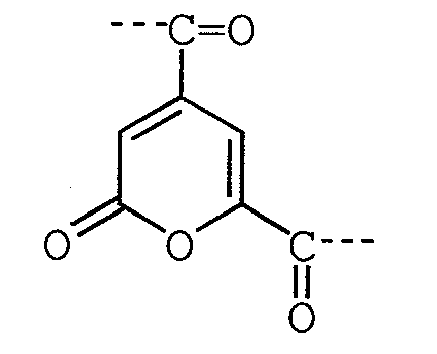
Description
- The present invention relates to a melt-moldable PDC-lactic acid copolyester using a biomass-derived material and having biodegradability and a film/fiber forming ability, and a molded product containing the copolyester.
- As for the biomass-derived polyester, PHA [poly(hydroxyalkanoates)] (see, for example, Japanese National Patent Publication (Kohyo) No.
2005-521718 2001-226566 2006-22325 2004-204217 2003-128768 - However, the poly(3-hydroxybutanoic acid) and poly(hydroxyvaleric acid) are questionable in terms of large-scale productivity. Other PHAs are insufficient in any one or more properties out of i) mechanical property, ii) easy mold processability into fiber or film, and iii) biodegradability, and therefore their use is limited. For example, PHA with the number of carbons contained in the repeating unit being small is hard and brittle. For example, if a poly(lactic acid) as a single component in a material for a molded product, the material can be hardly processed into a film, and its expansion into a clothing fiber or the like is difficult. Furthermore, the poly(lactic acid) crystallizes slowly and allows for no progress of orientated crystallization by stretching, because it has a methyl side chain that inhibits packing of a polymer chain. Therefore, a molded product having sufficiently high strength is difficult to obtain. Thus, the mechanical strength is insufficient as an industrial fiber, and biodegradability is greatly lacking as an agricultural fiber or film. On the other hand, a poly(hydroxyvaleric acid), PHA, with the number of carbons contained in the repeating unit being large, or a poly(tetramethylene succinate), are easy to process into a film because of their low glass transition temperature and are excellent also in the biodegradability. However, oriented crystallization of a polymer chain by stretching or the like scarcely proceeds, and therefore these polymers are not suitable for a fiber.
- On the other hand, in recent years, it is reported that 2H-pyran-2-one-4,6-dicarboxylic acid (hereinafter referred to as "PDC") that is a final intermediate in the biodegradation of a botanical aromatic component such as lignin can be produced in an industrial scale (see, for example, Japanese Unexamined Patent Publication (Kokai) No.
2005-278549 - Accordingly, an object to be solved by the present invention is to provide a polyester containing a biomass-derived material in a repeating unit structure and having all of sufficient mechanical strength, easy mold processability into a molded product such as fiber or film, and biodegradability, and a molded product thereof.
- As a result of intensive studies to solve those problems of conventional biomass-derived polyesters, the present inventors have found that a PDC-L-lactic acid copolyester containing PDC in a repeating unit structure, represented by the specified general formula, can provide a molded product having all of the properties above. The present invention has been accomplished based on this finding.
- That is,
- (1) the present invention provides a PDC-L-lactic acid copolyester represented by the following formula:
-[R1-PDC]x-[OCH(CH3)CO]1-x- (I)
[wherein:- PDC is a dicarboxylic acid residue represented by the following formula (II):

- R1 is selected from -O(CH2)nO-, -O(CH2CH2O)m- and -O[CH(CH3)CH2O]m-, where n represents an integer of 3 to 6, and m represents an integer of 1 to 4; and
- x is 0.005≤x≤0.2 when n≤4 or m≤2, and is 0.005≤x≤0.4 in other cases].
- PDC is a dicarboxylic acid residue represented by the following formula (II):
- (2) The present invention also provides the PDC-L-lactic acid copolyester according to (1), wherein the melting point is from 100 to 220°C.
- (3) The present invention also provides the PDC-L-lactic acid copolyester according to (1) or (2), wherein the number average molecular weight is from 50,000 to 100,000.
- (4) The present invention also provides a molded product containing the PDC-L-lactic acid copolyester according to any one of (1) to (3).
- (5) The present invention also provides the molded product according to (4), wherein the molded product is a film.
- According to the present invention, a molded product having sufficient mechanical strength, easy mold processability into a molded product such as fiber or film, and biodegradability, as compared with conventional biomass-derived polyesters, can be produced.
- The copolyester of the present invention is represented by the following formula:
-[R1-PDC]x-[OCH(CH3)CO]1-x- (I)
PDC is a dicarboxylic acid residue represented by the following formula (II):
- In the copolyester of the present invention, in light of maintaining the mold processability by the melting of the copolyester, the content of the repeating unit -[R1-PDC]- needs to be limited to within the range of said "x". The content of the repeating unit is preferably as close as possible to the lower limit of x. If the content exceeds the range, the melting point of the copolyester becomes higher than 220°C that is the decomposition temperature of the 2H-pyranone ring of PDC, and therefore melt processing cannot be performed. The polyester of the present invention where the content of the repeating unit is within the range of x can be melt processed, and the melting point thereof is 220°C or less, preferably in a temperature range of about 100 to about 160°C.
- On the other hand, if the content of the repeating unit -[R1-PDC]- is less than the range of x, the PDC content is too small and therefore the mechanical strength of the copolyester becomes insufficient. This is due to the introduction of a rigid structure into the main chain by pseudo-aromaticity of the 2H-pyranone ring, and the increase in the polar interaction between polymers due to strong bipolar moment of the 2H-pyranone ring. As described in Examples later, the copolyester of the present invention when formed into a molded product such as film or sheet maintains the elastic deformation state on the order of about 65 to 91 MPa by virtue of the polar interaction in an amorphous condition.
Furthermore, in the copolyester of the present invention, biodegradability increases as x is larger, because the copolyester of the present invention is not merely depolymerized by hydrolysis of only the ester bond moiety but is depolymerized also in the 2H-pyranone ring moiety. Accordingly, in terms of increasing the mechanical strength and imparting biodegradability, the content of the repeating unit is preferably as close as possible to the upper limit of x and is preferably 0.1 or more. - The copolyester of the present invention is obtained by adding B mol of L-lactic acid to an equimolar mixture composed of A mol of a diol selected from HO(CH2)nOH, HO(CH2CH2O)mH and HO[CH(CH3)CH2O]mH (where n is an integer of 3 to 6, and m is an integer of 1 to 4) and A mol of PDC, and heating the mixture with stirring in the presence of an appropriate polymerization catalyst, thereby effecting solution polymerization. A method for producing PDC is not particularly limited, but this PDC can be obtained by the method described, for example, in Japanese Unexamined Patent Publication (Kokai) No.
2005-278549 2000-32988 - The number average molecular weight of the copolyester of the present invention is preferably from 50,000 to 100,000, because if the number average molecular weight is too high, solubility in a solvent is reduced, while if it is excessively low, the film formability is worsened.
- The polymerization catalyst includes an oxide of antimony, germanium, titanium, cobalt, tin, uranium, calcium, silver, zirconium or the like; and a sulfonic acid compound such as methylsulfonic acid, laurylsulfuric ester and hexadecylsulfuric acid ester. A mixture of two or more polymerization catalysts may be used. In terms of polymerization rate and physical properties of the polyester obtained, the amount of the polymerization initiator used is preferably from 1×10⁻⁴ to 5×10⁻⁴ mol per mol of the acid component constituting the polyester.
- The polymerization reaction is preferably performed in a solventless system for obtaining a copolyester having a high polymerization degree of 50,000 to 100,000.
- The reaction conditions of polymerization are not particularly limited, but in general, the reaction temperature is preferably from 165 to 180°C. The reaction time is preferably on the order of 3 to 48 hours, more preferably on the order of 3 to 18 hours, after reaching the polymerization temperature. The polymerization reaction may be performed under air, but in terms of molecular weight and yield, is preferably performed in an inert gas atmosphere such as argon, helium and nitrogen.
- The copolyester obtained by the reaction above can be separated from impurities such as unreacted monomer, oligomer and reaction residue thereof by dissolving the polymerization reaction solution, for example, in chloroform, removing by filtration insoluble components such as unreacted polymerization solvent, adding dropwise the solution to a poor solvent to precipitate the polymer, and then drying it under reduced pressure. The poor solvent is not particularly limited as long as it is a solvent in which the copolyester is not dissolved. Specific examples of the poor solvent include water; alcohols such as methanol and isopropanol; and saturated hydrocarbons such as hexane and heptane.
- The polyester of the present invention is excellent in the moldability, and therefore can be applied to various molded products containing the polyester, such as sheet, film, fiber, blow molded article, injection molded article and extrusion molded article.
- The present invention is described in greater detail below by referring to Examples, but the present invention is not limited to these Examples by any means.
- Into a large test tube having a diameter of 5 cm and a length of 15 cm, 184 mg (1.00 mmol) of PDC, 62.1 mg (1.00 mmol) of ethylene glycol, 17.93 g (199 mmol) of L-lactic acid and 100 mg of Sb2O3 were charged in a nitrogen atmosphere, and the test tube was plugged with a rubber stopper into which an injection needle for removing the pressure was stuck. The temperature was raised to 180°C at a rate of 2°C/min with stirring, the reaction was allowed to proceed at the same temperature for 3 hours, the pressure was then gradually reduced with care not to cause bumping, and the reaction was performed finally at 0.5 torr or less for 18 hours. The reaction solution was cooled and then dissolved in about 80 ml of chloroform, a slight amount of insoluble components considered to be derived from the catalyst were removed by filtration, and the solution was poured in 2,000 ml of methanol with stirring. The obtained white precipitate was collected by filtration, washed with 100 ml of methanol and dried under reduced pressure at ordinary temperature. Yield: 14.3 g. Measurement of molecular weight by GPC (PSt standard): number average molecular weight = 68,400 and molecular weight dispersion = 2.75. 13C NMR spectrum (CDCl3, 400 MHz) δ ppm: for PDC ring carbon, 109, 124, 142, 149, 163; for PDC carbonyl carbon, 158, 160; for -CH2CH2-, 64, 68; and for lactic acid unit, 17 (methyl), 69 (methine), 171 (carbonyl). Copolymerization composition determined using, as a standard, the maximum absorption (λmax=320 nm, εmax=4.9×10⁻³ L/mol·cm) of the ultraviolet-visible absorption spectrum of PDC dimethyl ester: x=0.0053. Melting point: 138°C.
- Reaction was performed in the same manner as in Preparation Example 1 except for using 50 mg of CH3SO3H in place of 100 mg of Sb2O3. Yield: 14.9 g. Measurement of molecular weight by GPC (PSt standard): number average molecular weight = 107,000 and molecular weight dispersion = 2.65. 13C NMR spectrum (CDCl3, 400 MHz) δ ppm: the same as the data in Preparation Example 1. Copolymerization composition determined using, as a standard, the maximum absorption (λmax=320 nm, εmax=4.9×10⁻³ L/mol·cm) of the ultraviolet-visible absorption spectrum of PDC dimethyl ester: x=0.0051. Melting point: 142°C.
- After charging 1.84 g (10.0 mmol) of PDC, 621 mg (10.0 mmol) of ethylene glycol, 8.12 g (90 mmol) of L-lactic acid and 50 mg of Sb2O3 in a nitrogen atmosphere, the mixture was processed in the same manner as in Preparation Example 1. Yield: 9.73 g. Measurement of molecular weight by GPC (PSt standard): number average molecular weight = 76,300 and molecular weight dispersion = 2.81. 13C NMR spectrum (CDCl3, 400 MHz) δ ppm: for PDC ring carbon, 110, 124, 142, 149, 164; for PDC carbonyl carbon, 158, 160; for -CH2CH2-, 65, 68; and for lactic acid unit, 17 (methyl), 69 (methine), 171 (carbonyl). Copolymerization composition determined using, as a standard, the maximum absorption (λmax=320 nm, εmax=4.9×10⁻³ L/mol·cm) of the ultraviolet-visible absorption spectrum of PDC dimethyl ester: x=0.107. Melting point: 152°C.
- After charging 3.68 g (20.0 mmol) of PDC, 1.24 g (20.0 mmol) of ethylene glycol, 7.21 g (80 mmol) of L-lactic acid and 30 mg of CH3SO3H in a nitrogen atmosphere, the mixture was processed in the same manner as in Preparation Example 1. Yield: 11.23 g. Measurement of molecular weight by GPC (PSt standard): number average molecular weight = 94,600 and molecular weight dispersion = 2.84. 13C NMR spectrum (CDCl3, 400 MHz) δ ppm: for PDC ring carbon, 109, 124, 143, 149, 163; for PDC carbonyl carbon, 158, 160; for -CH2CH2-, 65, 69; and for lactic acid unit, 17 (methyl), 69 (methine), 172 (carbonyl). Copolymerization composition determined using, as a standard, the maximum absorption (λmax=320 nm, εmax=4.9×10⁻³ L/mol·cm) of the ultraviolet-visible absorption spectrum of PDC dimethyl ester: x=0.196. Melting point: 163°C.
- After charging 3.68 g (20.0 mmol) of PDC, 1.80 g (20.0 mmol) of tetramethylene glycol, 7.21 g (80 mmol) of L-lactic acid and 30 mg of CH3SO3H in a nitrogen atmosphere, the mixture was processed in the same manner as in Preparation Example 1 except for setting the reaction time under reduced pressure to be 24 hours. Yield: 11.66 g. Measurement of molecular weight by GPC (PSt standard): number average molecular weight = 92,200 and molecular weight dispersion = 2.73. 13C NMR spectrum (CDCl3, 400 MHz) δ ppm: for PDC ring carbon, 110, 124, 143, 149, 163; for PDC carbonyl carbon, 158, 160; for -(CH2)4-, 65 to 69; and for lactic acid unit, 17 (methyl), 68 (methine), 170 (carbonyl). Copolymerization composition determined using, as a standard, the maximum absorption (λmax=320 nm, εmax=4.9×10⁻³ L/mol·cm) of the ultraviolet-visible absorption spectrum of PDC dimethyl ester: x=0.192. Melting point: 131°C.
- After charging 3.68 g (20.0 mmol) of PDC, 2.36 g (20.0 mmol) of hexamethylene glycol, 7.21 g (80 mmol) of L-lactic acid and 30 mg of CH3SO3H in a nitrogen atmosphere, the mixture was processed in the same manner as in Preparation Example 1 except for setting the reaction time under reduced pressure to be 36 hours. Yield: 12.19 g. Measurement of molecular weight by GPC (PSt standard): number average molecular weight = 84,500 and molecular weight dispersion = 2.77. 13C NMR spectrum (CDCl3, 400 MHz) δ ppm: for PDC ring carbon, 109, 124, 142, 149, 162; for PDC carbonyl carbon, 158, 160; for -(CH2)6-, 64 to 69; and for lactic acid unit, 17 (methyl), 68 (methine), 170 (carbonyl). Copolymerization composition determined using, as a standard, the maximum absorption (λmas=320 nm, εmax=4.9×10⁻³ L/mol·cm) of the ultraviolet-visible absorption spectrum of PDC dimethyl ester: x=0.195. Melting point: 116°C.
- After charging 3.68 g (20.0 mmol) of PDC, 2.12 g (20.0 mmol) of diethylene glycol, 7.21 g (80 mmol) of L-lactic acid and 50 mg of CH3SO3H in a nitrogen atmosphere, the mixture was processed in the same manner as in Preparation Example 1 except for setting the reaction time under reduced pressure to be 36 hours. The reaction solution was cooled and then dissolved in about 100 ml of tetrahydrofuran, a slight amount of insoluble components were removed by filtration, and the solution was poured in 2,000 ml of methanol/water (mixing ratio: 2/1) with stirring. The obtained white precipitate was collected by filtration, washed with 100 ml of a methanol/water mixed solvent and dried under reduced pressure at ordinary temperature. Yield: 11.41 g. Measurement of molecular weight by GPC (PSt standard): number average molecular weight = 82,200 and molecular weight dispersion = 2.91. 13C NMR spectrum (CDCl3, 400 MHz) δ ppm: for PDC ring carbon, 109, 124, 141, 148, 160; for PDC carbonyl carbon, 157, 160; for -(CH2)2O(CH2)2-, 64, 65, 69, 70; and for lactic acid unit, 17 (methyl), 68 (methine), 171 (carbonyl). Copolymerization composition determined using, as a standard, the maximum absorption (λmax=320 nm, εmax=4.9×10⁻³ L/mol·cm) of the ultraviolet-visible absorption spectrum of PDC dimethyl ester: x=0.196. Melting point: 114°C.
- After charging 5.52 g (30.0 mmol) of PDC, 4.51 g (30.0 mmol) of triethylene glycol, 6.31 g (70 mmol) of L-lactic acid and 60 mg of CH3SO3H in a nitrogen atmosphere, the mixture was processed in the same manner as in Preparation Example 1 except for setting the reaction time under reduced pressure to be 36 hours. The reaction solution was cooled and then dissolved in about 80 ml of tetrahydrofuran, a slight amount of insoluble components were removed by filtration, and the solution was poured in 2,000 ml of methanol/water (mixing ratio: 2/1) with stirring. The obtained pale yellow precipitate was collected by filtration, washed with 100 ml of a methanol/water mixed solvent and dried under reduced pressure at ordinary temperature. Yield: 15.52 g. Measurement of molecular weight by GPC (PSt standard): number average molecular weight = 80,700 and molecular weight dispersion = 2.81. 13C NMR spectrum (CDCl3, 400 MHz) δ ppm: for PDC ring carbon, 109, 124, 141, 148, 160; for PDC carbonyl carbon, 157, 160; for -(CH2)2O(CH2)2O(CH2)2-, 64 to 70; and for lactic acid unit, 17 (methyl), 68 (methine), 171 (carbonyl). Copolymerization composition determined using, as a standard, the maximum absorption (λmax=320 nm, εmax=4.9×10⁻³ L/mol·cm) of the ultraviolet-visible absorption spectrum of PDC dimethyl ester: x=0.304. Melting point: 108°C.
- After charging 7.36 g (40.0 mmol) of PDC, 7.77 g (40.0 mmol) of triethylene glycol, 5.40 g (60 mmol) of L-lactic acid and 70 mg of CH3SO3H in a nitrogen atmosphere, the mixture was processed in the same manner as in Preparation Example 1 except for setting the reaction time under reduced pressure to be 36 hours. The reaction solution was cooled and then dissolved in about 60 ml of tetrahydrofuran, a slight amount of insoluble components were removed by filtration, and the solution was poured in 2,000 ml of isopropyl alcohol/water (mixing ratio: 3/2) with stirring. The obtained pale yellow precipitate was collected by filtration, washed with 100 ml of an isopropyl alcohol/water mixed solvent and dried under reduced pressure at ordinary temperature. Yield: 18.66 g. Measurement of molecular weight by GPC (PSt standard): number average molecular weight = 74,400 and molecular weight dispersion = 2.71. 13C NMR spectrum (CDCl3, 400 MHz) δ ppm: for PDC ring carbon, 110, 124, 141, 149, 162; for PDC carbonyl carbon, 157, 161; for -(CH2)2O(CH2)2O(CH2)2O(CH2)2-, 64 to 70; and for lactic acid unit, 17 (methyl), 68 (methine), 171 (carbonyl). Copolymerization composition determined using, as a standard, the maximum absorption (λmax=320 nm, εmax=4.9×10⁻³ L/mol·cm) of the ultraviolet-visible absorption spectrum of PDC dimethyl ester: x=0.395. Melting point: 102°C.
- After charging 3.68 g (20.0 mmol) of PDC, 1.52 g (20.0 mmol) of propylene glycol, 7.21 g (80 mmol) of L-lactic acid and 30 mg of CH3SO3H in a nitrogen atmosphere, the mixture was processed in the same manner as in Preparation Example 1. Yield: 11.47 g. Measurement of molecular weight by GPC (PSt standard): number average molecular weight = 91,200 and molecular weight dispersion = 2.88. 13C NMR spectrum (CDCl3, 400 MHz) δ ppm: for PDC ring carbon, 109, 124, 142, 149, 162; for PDC carbonyl carbon, 158, 160; for propylene glycol unit, 16 (methyl), 63, 64 (methylene), 68 (methine); and for lactic acid unit, 17 (methyl), 69 (methine), 172 (carbonyl). Copolymerization composition determined using, as a standard, the maximum absorption (λmax=320 nm, εmax=4.9×10⁻³ L/mol·cm) of the ultraviolet-visible absorption spectrum of PDC dimethyl ester: x=0.198. Melting point: 145°C.
- After charging 7.36 g (40.0 mmol) of PDC, 10.01 g (40.0 mmol) of tetrapropylene glycol, 5.40 g (60 mmol) of L-lactic acid and 80 mg of CH3SO3H in a nitrogen atmosphere, the mixture was processed in the same manner as in Preparation Example 1 except for setting the reaction time under reduced pressure to be 36 hours. The reaction solution was cooled and then dissolved in about 80 ml of tetrahydrofuran, a slight amount of insoluble components were removed by filtration, and the solution was poured in 2,000 ml of isopropyl alcohol/water (mixing ratio: 3/2) with stirring. The obtained pale yellow precipitate was collected by filtration, washed with 100 ml of an isopropyl alcohol/water mixed solvent and dried under reduced pressure at ordinary temperature. Yield: 20.59 g. Measurement of molecular weight by GPC (PSt standard): number average molecular weight = 65,500 and molecular weight dispersion = 2.78. 13C NMR spectrum (CDCl3, 400 MHz) δ ppm: for PDC ring carbon, 110, 124, 141, 149, 161; for PDC carbonyl carbon, 158, 160; for propylene glycol unit, 16 (methyl), 62, 63 (methylene), 68 (methine); and for lactic acid unit, 17 (methyl), 69 (methine), 172 (carbonyl). Copolymerization composition determined using, as a standard, the maximum absorption (λmax=320 nm, εmax=4.9×10⁻³ L/mol·cm) of the ultraviolet-visible absorption spectrum of PDC dimethyl ester: x=0.394. Melting point: 111°C.
- The polyester of Preparation Example 1 was formed into a 100 µm-thick film, and the film was measured for the tensile strength. The tensile strength at breakage was 68.4 MPa and the elongation before breakage was 3.9%. Also, the time for 50% weight decrease as measured in accordance with ISO 14855 by a biodegradation test in an active compost at 56°C was from 15 to 17 days. The results are shown in Table 1.
- Regarding the polyesters of Preparation Examples 2 to 11, a tensile test and a biodegradation test were performed in the same manner as in Example 1. The results are shown in Table 1.
- A poly(L-lactic acid) with a number average molecular weight of 182,000 and a molecular weight dispersion of 2.65 was formed into a 100 µm-thick film by a film-forming machine, and the film was measured for the tensile strength. The tensile strength at breakage was 61.3 MPa and the elongation before breakage was 5.2%. Also, the time for 50% weight decrease as measured in accordance with ISO 14855 by a biodegradation test in an active compost at 56°C was from 18 to 20 days. The results are shown in Table 1.
Table 1 Example Tensile Strength at Breakage (MPa) Elongation before Breakage (%) Time for 50% Weight Decrease (days) Example 1 68.4 3.9 15 to 17 Example 2 69.2 3.9 14 to 15 Example 3 75.4 1.5 13 to 14 Example 4 90.6 0.8 11 to 13 Example 5 80.1 2.2 13 to 14 Example 6 70.7 4.1 14 to 15 Example 7 67.6 5.1 11 to 13 Example 8 66.4 6.4 11 to 13 Example 9 65.3 6.8 11 to 13 Example 10 74.5 1.9 13 to 14 Example 11 68.8 2.4 13 to 14 Comparative Example 1 61.3 5.2 18 to 20 - As it is apparent from Table 1, the films of Examples 1 to 11 of the present invention were significantly improved in terms of the tensile strength at breakage and the biodegradability as compared with the film comprising a poly(L-lactic acid).
- A copolyester represented by the following formula:
-[O(CH2)nO-PDC]x-[O(CH2)nO-CO-C6H4-CO]1-x-
(wherein PDC is a dicarboxylic acid residue defined in formula (I)) was produced in the same manner as in Preparation Example 1, except for replacing the L-lactic acid with ethylene terephthalic acid and using the formulation shown in Table 2, and was formed into a 100 µm-thick film. The film was measured for the tensile strength and hydrolysis property in each solution at 60°C. The results are shown in Table 2.Table 2 n x Breaking Strength (MPa) 50% Hydrolysis Property (60°C) 0.01 mol/ L-NaOH 0.05 mol/ L-H2SO4 Distilled Water 2 1.0 not measured 5 days (100% in 10 days) 7 days (85% in 13 days) about 11 days (75% in 14 days) 2 0.4 68.1 - (7% in 21 days) not measured - (1% in 15 days) 2 0.3 65.9 - (3% in 21 days) not measured not measured 2 0.2 58.0 not measured not measured not measured 2 0.15 58.0 not measured not measured not measured 2 0.0 46.4 not measured not measured not measured *Note: "-" indicates that the film did not exhibit 50% hydrolysis. - According to the present invention, a molded product having sufficient mechanical strength, easy mold processability into a molded product such as fiber or film, and biodegradability, can be produced.
Claims (5)
- A PDC-L-lactic acid copolyester represented by the following formula:
-[R1-PDC]x-[OCH(CH3)CO]1-x- (I)
[wherein:PDC is a dicarboxylic acid residue represented by the following formula (II): R1 is selected from -O(CH2)nO-, -O(CH2CH2O)m- and -O[CH(CH3)CH2O]m-, where n represents an integer of 3 to 6, and m represents an integer of 1 to 4; andx is 0.005≤x≤0.2 when n≤4 or m≤2, and is 0.005≤x≤0.4 in other cases].
 - The PDC-L-lactic acid copolyester according to claim 1, wherein the melting point is from 100 to 220°C.
- The PDC-L-lactic acid copolyester according to claim 1 or 2, wherein the number average molecular weight is from 50,000 to 100,000.
- A molded product containing the PDC-L-lactic acid copolyester according to any one of claims 1 to 3.
- The molded product according to claim 4, wherein said molded product is a film.
Applications Claiming Priority (2)
| Application Number | Priority Date | Filing Date | Title |
|---|---|---|---|
| JP2006174069 | 2006-06-23 | ||
| PCT/JP2007/058690 WO2007148471A1 (en) | 2006-06-23 | 2007-04-17 | Pdc-lactic acid copolyester and molded article thereof |
Publications (2)
| Publication Number | Publication Date |
|---|---|
| EP2033980A1 true EP2033980A1 (en) | 2009-03-11 |
| EP2033980A4 EP2033980A4 (en) | 2012-08-22 |
Family
ID=38833214
Family Applications (1)
| Application Number | Title | Priority Date | Filing Date |
|---|---|---|---|
| EP07742125A Withdrawn EP2033980A4 (en) | 2006-06-23 | 2007-04-17 | PDC MILKY ACID COPOLYESTER AND FORM BODY THEREOF |
Country Status (4)
| Country | Link |
|---|---|
| US (1) | US20100048859A1 (en) |
| EP (1) | EP2033980A4 (en) |
| JP (1) | JPWO2007148471A1 (en) |
| WO (1) | WO2007148471A1 (en) |
Families Citing this family (3)
| Publication number | Priority date | Publication date | Assignee | Title |
|---|---|---|---|---|
| EP2192137A4 (en) * | 2007-09-19 | 2012-08-29 | Toyota Jidoshokki Kk | Polyurethane and polyurea, and method for producing the same |
| TWI677739B (en) * | 2017-11-02 | 2019-11-21 | 友達光電股份有限公司 | Block having phase change material and backlight module and display device using the same |
| US20250179294A1 (en) * | 2022-03-04 | 2025-06-05 | Cj Cheiljedang Corporation | Polylactic acid resin vaporization promoter and composition containing same |
Family Cites Families (12)
| Publication number | Priority date | Publication date | Assignee | Title |
|---|---|---|---|---|
| DE69132548T2 (en) | 1990-11-30 | 2001-06-28 | Eastman Chemical Co., Kingsport | Aliphatic-aromatic copolyesters |
| JP3482748B2 (en) * | 1995-09-11 | 2004-01-06 | 大日本インキ化学工業株式会社 | Method for producing lactic acid-based polyester |
| WO1999054376A1 (en) * | 1998-04-20 | 1999-10-28 | Cosmo Research Institute | Polyester and process for producing the same |
| US6340739B1 (en) * | 1998-04-20 | 2002-01-22 | Cosmo Research Institute | Polyamide and process for producing the same |
| JP3850557B2 (en) | 1998-07-17 | 2006-11-29 | 株式会社コスモ総合研究所 | Novel gene and transformed cell carrying the gene |
| JP2001226566A (en) | 2000-02-18 | 2001-08-21 | Canon Inc | Sugar chain polymer composition, method for producing the same, and molded article |
| CN1781897A (en) | 2002-03-25 | 2006-06-07 | 嘉吉有限公司 | Methods of manufacturing derivatives of beta-hydroxycarboxylic acids |
| CN101602847B (en) * | 2002-06-17 | 2013-03-20 | 日本电气株式会社 | Biodegradable resin, biodegradable resin composition, biodegradable molded object, and process for producing biodegradable resin |
| JP4979111B2 (en) | 2002-11-08 | 2012-07-18 | 東レ株式会社 | Polylactic acid resin composition, production method thereof, molded product, film, and sheet |
| JP4338176B2 (en) * | 2003-02-27 | 2009-10-07 | 淳孝 重原 | Plastic adhesive and bonding method using the same |
| JP4658244B2 (en) * | 2004-03-30 | 2011-03-23 | 義博 片山 | Gene for producing 2-pyrone-4,6-dicarboxylic acid by fermentation, plasmid containing said gene, transformant containing said plasmid, and method for producing 2-pyrone-4,6-dicarboxylic acid |
| JP4553374B2 (en) | 2004-06-11 | 2010-09-29 | キヤノン株式会社 | Polyhydroxyalkanoate having sulfonic acid group and method for producing the same |
-
2007
- 2007-04-17 WO PCT/JP2007/058690 patent/WO2007148471A1/en not_active Ceased
- 2007-04-17 EP EP07742125A patent/EP2033980A4/en not_active Withdrawn
- 2007-04-17 US US12/306,377 patent/US20100048859A1/en not_active Abandoned
- 2007-04-17 JP JP2008522330A patent/JPWO2007148471A1/en not_active Ceased
Also Published As
| Publication number | Publication date |
|---|---|
| US20100048859A1 (en) | 2010-02-25 |
| WO2007148471A1 (en) | 2007-12-27 |
| JPWO2007148471A1 (en) | 2009-11-12 |
| EP2033980A4 (en) | 2012-08-22 |
Similar Documents
| Publication | Publication Date | Title |
|---|---|---|
| Szymczyk | Structure and properties of new polyester elastomers composed of poly (trimethylene terephthalate) and poly (ethylene oxide) | |
| KR20140138099A (en) | Lactide copolymer, its preparation method and resin composition comprising thereof | |
| KR20150002624A (en) | Polymers, the process for the synthesis thereof and compositions comprising same | |
| JP5223347B2 (en) | Resin composition, method for producing the same, and copolymer | |
| KR20140071747A (en) | Biodegradble resin composition | |
| JP5794498B2 (en) | Polylactic acid resin composition | |
| TW202432694A (en) | Recycled bis(4-hydroxybutyl) terephthalate, preparation method thereof and polyester resin using same | |
| CN115322350B (en) | Degradable bio-based polyester and preparation method and application thereof | |
| EP0684270A2 (en) | Aliphatic polyester carbonate and process for producing the same | |
| US20100048859A1 (en) | Pdc-lactic acid copolyester and molded product thereof | |
| CN115028814B (en) | Citrate bio-based plasticizer and preparation method and application thereof | |
| EP3000847B1 (en) | Resin composition containing polyalkylene carbonate | |
| JPH09316181A (en) | Polyethylene oxalate, molded article thereof, and method for producing the same | |
| JP2006152196A (en) | Biodegradable resin composition | |
| US20250019493A1 (en) | Process for the production of polyester copolymers | |
| GARA et al. | Synthesis and characterization of aliphatic-aromatic copolyesters from pet waste and ε-caprolactone | |
| JP3339601B2 (en) | Polylactic acid based polyester block copolymer | |
| KR102350740B1 (en) | Acetylated lactide oligomer-based plasticizer and the method of manufacturing the same, pla resin composition comprising acetylated lactide oligomer-based plasticizer | |
| Gara et al. | Synthesis and characterization of aliphatic-aromatic copolyesters PET-PLA from PET waste and lactide | |
| CN118475633A (en) | Process for producing polyester (co) polymers | |
| KR101941123B1 (en) | Biodegradable resin composition and biodegradable film prepared therefrom | |
| JP3783948B2 (en) | Lactic acid polymer composition | |
| EP1814929B1 (en) | Polymerization of macrocyclic polyester oligomers at elevated temperature using rare earth element catalysts | |
| CN113549198A (en) | Method for preparing polylactic acid from lactic acid | |
| JP3732754B2 (en) | Method for producing biodegradable copolymer polyester |
Legal Events
| Date | Code | Title | Description |
|---|---|---|---|
| PUAI | Public reference made under article 153(3) epc to a published international application that has entered the european phase |
Free format text: ORIGINAL CODE: 0009012 |
|
| 17P | Request for examination filed |
Effective date: 20081222 |
|
| AK | Designated contracting states |
Kind code of ref document: A1 Designated state(s): AT BE BG CH CY CZ DE DK EE ES FI FR GB GR HU IE IS IT LI LT LU LV MC MT NL PL PT RO SE SI SK TR |
|
| AX | Request for extension of the european patent |
Extension state: AL BA HR MK RS |
|
| RIN1 | Information on inventor provided before grant (corrected) |
Inventor name: KATAYAMA, YOSHIHIROC/O NATIONAL UNIVERSITY CORPORA Inventor name: SHIGEHARA, KIYOTAKE Inventor name: OHARA, NAOKI Inventor name: SHIMO, TOSHIHISA Inventor name: MASE, KOHEI |
|
| RBV | Designated contracting states (corrected) |
Designated state(s): DE FR GB |
|
| DAX | Request for extension of the european patent (deleted) | ||
| A4 | Supplementary search report drawn up and despatched |
Effective date: 20120719 |
|
| RIC1 | Information provided on ipc code assigned before grant |
Ipc: C08G 63/60 20060101AFI20120713BHEP Ipc: C08G 63/08 20060101ALI20120713BHEP Ipc: C08L 101/16 20060101ALI20120713BHEP Ipc: C08J 5/18 20060101ALI20120713BHEP |
|
| STAA | Information on the status of an ep patent application or granted ep patent |
Free format text: STATUS: THE APPLICATION IS DEEMED TO BE WITHDRAWN |
|
| 18D | Application deemed to be withdrawn |
Effective date: 20121101 |