EP2030997A1 - Polyvinyl alcohol resin and use thereof - Google Patents
Polyvinyl alcohol resin and use thereof Download PDFInfo
- Publication number
- EP2030997A1 EP2030997A1 EP06745468A EP06745468A EP2030997A1 EP 2030997 A1 EP2030997 A1 EP 2030997A1 EP 06745468 A EP06745468 A EP 06745468A EP 06745468 A EP06745468 A EP 06745468A EP 2030997 A1 EP2030997 A1 EP 2030997A1
- Authority
- EP
- European Patent Office
- Prior art keywords
- based resin
- polyvinyl alcohol
- pva
- alkyl group
- resin according
- Prior art date
- Legal status (The legal status is an assumption and is not a legal conclusion. Google has not performed a legal analysis and makes no representation as to the accuracy of the status listed.)
- Granted
Links
- 229920005989 resin Polymers 0.000 title claims abstract description 129
- 239000011347 resin Substances 0.000 title claims abstract description 129
- 239000004372 Polyvinyl alcohol Substances 0.000 title claims abstract description 120
- 229920002451 polyvinyl alcohol Polymers 0.000 title claims abstract description 120
- 125000000217 alkyl group Chemical group 0.000 claims abstract description 39
- 125000003178 carboxy group Chemical group [H]OC(*)=O 0.000 claims abstract description 28
- 125000004435 hydrogen atom Chemical group [H]* 0.000 claims abstract description 24
- 229910052783 alkali metal Inorganic materials 0.000 claims abstract description 8
- 150000001340 alkali metals Chemical class 0.000 claims abstract description 7
- 238000007127 saponification reaction Methods 0.000 claims description 41
- 239000003795 chemical substances by application Substances 0.000 claims description 35
- 239000000123 paper Substances 0.000 claims description 27
- 229920001577 copolymer Polymers 0.000 claims description 18
- 239000000178 monomer Substances 0.000 claims description 17
- 239000011248 coating agent Substances 0.000 claims description 14
- 238000012545 processing Methods 0.000 claims description 13
- 239000000853 adhesive Substances 0.000 claims description 12
- 230000001070 adhesive effect Effects 0.000 claims description 12
- 239000000017 hydrogel Substances 0.000 claims description 10
- 229910052739 hydrogen Inorganic materials 0.000 claims description 10
- 239000001257 hydrogen Substances 0.000 claims description 10
- 239000003995 emulsifying agent Substances 0.000 claims description 8
- 229920001567 vinyl ester resin Polymers 0.000 claims description 7
- 239000000654 additive Substances 0.000 claims description 6
- 239000002519 antifouling agent Substances 0.000 claims description 5
- 239000000049 pigment Substances 0.000 claims description 5
- 238000004806 packaging method and process Methods 0.000 claims description 4
- 230000000996 additive effect Effects 0.000 claims description 3
- 239000003905 agrochemical Substances 0.000 claims description 3
- 239000000645 desinfectant Substances 0.000 claims description 3
- 239000003599 detergent Substances 0.000 claims description 3
- 239000004744 fabric Substances 0.000 claims description 3
- 239000000375 suspending agent Substances 0.000 claims description 3
- 238000005406 washing Methods 0.000 claims description 3
- UFHFLCQGNIYNRP-UHFFFAOYSA-N Hydrogen Chemical compound [H][H] UFHFLCQGNIYNRP-UHFFFAOYSA-N 0.000 claims 1
- 239000007864 aqueous solution Substances 0.000 abstract description 49
- XLYOFNOQVPJJNP-UHFFFAOYSA-N water Substances O XLYOFNOQVPJJNP-UHFFFAOYSA-N 0.000 abstract description 38
- 239000003431 cross linking reagent Substances 0.000 abstract description 11
- 230000009257 reactivity Effects 0.000 abstract description 7
- OKKJLVBELUTLKV-UHFFFAOYSA-N Methanol Chemical compound OC OKKJLVBELUTLKV-UHFFFAOYSA-N 0.000 description 93
- 238000006116 polymerization reaction Methods 0.000 description 45
- XTXRWKRVRITETP-UHFFFAOYSA-N Vinyl acetate Chemical compound CC(=O)OC=C XTXRWKRVRITETP-UHFFFAOYSA-N 0.000 description 38
- HEMHJVSKTPXQMS-UHFFFAOYSA-M Sodium hydroxide Chemical compound [OH-].[Na+] HEMHJVSKTPXQMS-UHFFFAOYSA-M 0.000 description 24
- -1 alkali metal salt Chemical class 0.000 description 22
- 239000000243 solution Substances 0.000 description 20
- OZAIFHULBGXAKX-UHFFFAOYSA-N 2-(2-cyanopropan-2-yldiazenyl)-2-methylpropanenitrile Chemical compound N#CC(C)(C)N=NC(C)(C)C#N OZAIFHULBGXAKX-UHFFFAOYSA-N 0.000 description 14
- 230000000052 comparative effect Effects 0.000 description 14
- 238000011156 evaluation Methods 0.000 description 14
- 125000000325 methylidene group Chemical group [H]C([H])=* 0.000 description 14
- 150000001875 compounds Chemical class 0.000 description 12
- 238000006243 chemical reaction Methods 0.000 description 11
- 238000007334 copolymerization reaction Methods 0.000 description 11
- 238000000034 method Methods 0.000 description 11
- 150000002894 organic compounds Chemical class 0.000 description 11
- LFQSCWFLJHTTHZ-UHFFFAOYSA-N Ethanol Chemical compound CCO LFQSCWFLJHTTHZ-UHFFFAOYSA-N 0.000 description 10
- 239000003513 alkali Substances 0.000 description 10
- 239000002904 solvent Substances 0.000 description 10
- 238000000576 coating method Methods 0.000 description 9
- 238000004090 dissolution Methods 0.000 description 9
- 239000000835 fiber Substances 0.000 description 9
- 239000000126 substance Substances 0.000 description 9
- IJGRMHOSHXDMSA-UHFFFAOYSA-N Atomic nitrogen Chemical compound N#N IJGRMHOSHXDMSA-UHFFFAOYSA-N 0.000 description 8
- CDBYLPFSWZWCQE-UHFFFAOYSA-L Sodium Carbonate Chemical compound [Na+].[Na+].[O-]C([O-])=O CDBYLPFSWZWCQE-UHFFFAOYSA-L 0.000 description 8
- 239000003054 catalyst Substances 0.000 description 8
- 230000007423 decrease Effects 0.000 description 8
- 229910052751 metal Inorganic materials 0.000 description 8
- 239000002184 metal Substances 0.000 description 8
- 230000002378 acidificating effect Effects 0.000 description 7
- 238000001914 filtration Methods 0.000 description 7
- 238000010438 heat treatment Methods 0.000 description 7
- FRPZMMHWLSIFAZ-UHFFFAOYSA-N 10-undecenoic acid Chemical compound OC(=O)CCCCCCCCC=C FRPZMMHWLSIFAZ-UHFFFAOYSA-N 0.000 description 6
- IAZDPXIOMUYVGZ-WFGJKAKNSA-N Dimethyl sulfoxide Chemical compound [2H]C([2H])([2H])S(=O)C([2H])([2H])[2H] IAZDPXIOMUYVGZ-WFGJKAKNSA-N 0.000 description 6
- KFZMGEQAYNKOFK-UHFFFAOYSA-N Isopropanol Chemical compound CC(C)O KFZMGEQAYNKOFK-UHFFFAOYSA-N 0.000 description 6
- BZHJMEDXRYGGRV-UHFFFAOYSA-N Vinyl chloride Chemical compound ClC=C BZHJMEDXRYGGRV-UHFFFAOYSA-N 0.000 description 6
- KHAVLLBUVKBTBG-UHFFFAOYSA-N caproleic acid Natural products OC(=O)CCCCCCCC=C KHAVLLBUVKBTBG-UHFFFAOYSA-N 0.000 description 6
- 239000000463 material Substances 0.000 description 6
- 229910021645 metal ion Inorganic materials 0.000 description 6
- 238000012856 packing Methods 0.000 description 6
- 150000003839 salts Chemical class 0.000 description 6
- 238000004513 sizing Methods 0.000 description 6
- 238000003756 stirring Methods 0.000 description 6
- 229960002703 undecylenic acid Drugs 0.000 description 6
- 238000005160 1H NMR spectroscopy Methods 0.000 description 5
- 229920003171 Poly (ethylene oxide) Polymers 0.000 description 5
- VYPSYNLAJGMNEJ-UHFFFAOYSA-N Silicium dioxide Chemical compound O=[Si]=O VYPSYNLAJGMNEJ-UHFFFAOYSA-N 0.000 description 5
- 239000011230 binding agent Substances 0.000 description 5
- 238000004040 coloring Methods 0.000 description 5
- 230000007062 hydrolysis Effects 0.000 description 5
- 238000006460 hydrolysis reaction Methods 0.000 description 5
- 125000002887 hydroxy group Chemical group [H]O* 0.000 description 5
- 238000002329 infrared spectrum Methods 0.000 description 5
- 239000002685 polymerization catalyst Substances 0.000 description 5
- 238000002360 preparation method Methods 0.000 description 5
- 239000011241 protective layer Substances 0.000 description 5
- 238000000425 proton nuclear magnetic resonance spectrum Methods 0.000 description 5
- 238000010992 reflux Methods 0.000 description 5
- 230000008719 thickening Effects 0.000 description 5
- VVJKKWFAADXIJK-UHFFFAOYSA-N Allylamine Chemical compound NCC=C VVJKKWFAADXIJK-UHFFFAOYSA-N 0.000 description 4
- VEXZGXHMUGYJMC-UHFFFAOYSA-N Hydrochloric acid Chemical compound Cl VEXZGXHMUGYJMC-UHFFFAOYSA-N 0.000 description 4
- 238000005481 NMR spectroscopy Methods 0.000 description 4
- 239000002253 acid Substances 0.000 description 4
- 238000007664 blowing Methods 0.000 description 4
- 239000013522 chelant Substances 0.000 description 4
- ZQMIGQNCOMNODD-UHFFFAOYSA-N diacetyl peroxide Chemical compound CC(=O)OOC(C)=O ZQMIGQNCOMNODD-UHFFFAOYSA-N 0.000 description 4
- 239000006185 dispersion Substances 0.000 description 4
- 150000002148 esters Chemical group 0.000 description 4
- 239000000706 filtrate Substances 0.000 description 4
- 239000000499 gel Substances 0.000 description 4
- 125000001165 hydrophobic group Chemical group 0.000 description 4
- 230000000977 initiatory effect Effects 0.000 description 4
- 239000007788 liquid Substances 0.000 description 4
- 238000005259 measurement Methods 0.000 description 4
- 230000004048 modification Effects 0.000 description 4
- 238000012986 modification Methods 0.000 description 4
- 229910052757 nitrogen Inorganic materials 0.000 description 4
- 239000003973 paint Substances 0.000 description 4
- 230000035699 permeability Effects 0.000 description 4
- 229920001451 polypropylene glycol Polymers 0.000 description 4
- 229910000029 sodium carbonate Inorganic materials 0.000 description 4
- 241000894007 species Species 0.000 description 4
- ZWEHNKRNPOVVGH-UHFFFAOYSA-N 2-Butanone Chemical compound CCC(C)=O ZWEHNKRNPOVVGH-UHFFFAOYSA-N 0.000 description 3
- NIXOWILDQLNWCW-UHFFFAOYSA-N 2-Propenoic acid Natural products OC(=O)C=C NIXOWILDQLNWCW-UHFFFAOYSA-N 0.000 description 3
- HRPVXLWXLXDGHG-UHFFFAOYSA-N Acrylamide Chemical compound NC(=O)C=C HRPVXLWXLXDGHG-UHFFFAOYSA-N 0.000 description 3
- UHOVQNZJYSORNB-UHFFFAOYSA-N Benzene Chemical compound C1=CC=CC=C1 UHOVQNZJYSORNB-UHFFFAOYSA-N 0.000 description 3
- YMWUJEATGCHHMB-UHFFFAOYSA-N Dichloromethane Chemical compound ClCCl YMWUJEATGCHHMB-UHFFFAOYSA-N 0.000 description 3
- KWYUFKZDYYNOTN-UHFFFAOYSA-M Potassium hydroxide Chemical compound [OH-].[K+] KWYUFKZDYYNOTN-UHFFFAOYSA-M 0.000 description 3
- YXFVVABEGXRONW-UHFFFAOYSA-N Toluene Chemical compound CC1=CC=CC=C1 YXFVVABEGXRONW-UHFFFAOYSA-N 0.000 description 3
- DIZPMCHEQGEION-UHFFFAOYSA-H aluminium sulfate (anhydrous) Chemical compound [Al+3].[Al+3].[O-]S([O-])(=O)=O.[O-]S([O-])(=O)=O.[O-]S([O-])(=O)=O DIZPMCHEQGEION-UHFFFAOYSA-H 0.000 description 3
- 238000009835 boiling Methods 0.000 description 3
- 230000002209 hydrophobic effect Effects 0.000 description 3
- 239000003112 inhibitor Substances 0.000 description 3
- 150000002596 lactones Chemical group 0.000 description 3
- 239000010410 layer Substances 0.000 description 3
- 230000014759 maintenance of location Effects 0.000 description 3
- 125000002496 methyl group Chemical group [H]C([H])([H])* 0.000 description 3
- 239000004014 plasticizer Substances 0.000 description 3
- NLKNQRATVPKPDG-UHFFFAOYSA-M potassium iodide Chemical compound [K+].[I-] NLKNQRATVPKPDG-UHFFFAOYSA-M 0.000 description 3
- BDERNNFJNOPAEC-UHFFFAOYSA-N propan-1-ol Chemical compound CCCO BDERNNFJNOPAEC-UHFFFAOYSA-N 0.000 description 3
- 239000004576 sand Substances 0.000 description 3
- 238000012360 testing method Methods 0.000 description 3
- CZDYPVPMEAXLPK-UHFFFAOYSA-N tetramethylsilane Chemical compound C[Si](C)(C)C CZDYPVPMEAXLPK-UHFFFAOYSA-N 0.000 description 3
- 229920002554 vinyl polymer Polymers 0.000 description 3
- 239000004711 α-olefin Substances 0.000 description 3
- CRSBERNSMYQZNG-UHFFFAOYSA-N 1-dodecene Chemical compound CCCCCCCCCCC=C CRSBERNSMYQZNG-UHFFFAOYSA-N 0.000 description 2
- KWKAKUADMBZCLK-UHFFFAOYSA-N 1-octene Chemical compound CCCCCCC=C KWKAKUADMBZCLK-UHFFFAOYSA-N 0.000 description 2
- HGUFODBRKLSHSI-UHFFFAOYSA-N 2,3,7,8-tetrachloro-dibenzo-p-dioxin Chemical compound O1C2=CC(Cl)=C(Cl)C=C2OC2=C1C=C(Cl)C(Cl)=C2 HGUFODBRKLSHSI-UHFFFAOYSA-N 0.000 description 2
- SMZOUWXMTYCWNB-UHFFFAOYSA-N 2-(2-methoxy-5-methylphenyl)ethanamine Chemical compound COC1=CC=C(C)C=C1CCN SMZOUWXMTYCWNB-UHFFFAOYSA-N 0.000 description 2
- JAHNSTQSQJOJLO-UHFFFAOYSA-N 2-(3-fluorophenyl)-1h-imidazole Chemical compound FC1=CC=CC(C=2NC=CN=2)=C1 JAHNSTQSQJOJLO-UHFFFAOYSA-N 0.000 description 2
- OEPOKWHJYJXUGD-UHFFFAOYSA-N 2-(3-phenylmethoxyphenyl)-1,3-thiazole-4-carbaldehyde Chemical compound O=CC1=CSC(C=2C=C(OCC=3C=CC=CC=3)C=CC=2)=N1 OEPOKWHJYJXUGD-UHFFFAOYSA-N 0.000 description 2
- ATVJXMYDOSMEPO-UHFFFAOYSA-N 3-prop-2-enoxyprop-1-ene Chemical compound C=CCOCC=C ATVJXMYDOSMEPO-UHFFFAOYSA-N 0.000 description 2
- CSCPPACGZOOCGX-UHFFFAOYSA-N Acetone Chemical compound CC(C)=O CSCPPACGZOOCGX-UHFFFAOYSA-N 0.000 description 2
- NIXOWILDQLNWCW-UHFFFAOYSA-M Acrylate Chemical compound [O-]C(=O)C=C NIXOWILDQLNWCW-UHFFFAOYSA-M 0.000 description 2
- VEXZGXHMUGYJMC-UHFFFAOYSA-M Chloride anion Chemical compound [Cl-] VEXZGXHMUGYJMC-UHFFFAOYSA-M 0.000 description 2
- BRLQWZUYTZBJKN-UHFFFAOYSA-N Epichlorohydrin Chemical compound ClCC1CO1 BRLQWZUYTZBJKN-UHFFFAOYSA-N 0.000 description 2
- 239000004593 Epoxy Substances 0.000 description 2
- LRHPLDYGYMQRHN-UHFFFAOYSA-N N-Butanol Chemical compound CCCCO LRHPLDYGYMQRHN-UHFFFAOYSA-N 0.000 description 2
- ZQPPMHVWECSIRJ-UHFFFAOYSA-N Oleic acid Natural products CCCCCCCCC=CCCCCCCCC(O)=O ZQPPMHVWECSIRJ-UHFFFAOYSA-N 0.000 description 2
- WCUXLLCKKVVCTQ-UHFFFAOYSA-M Potassium chloride Chemical compound [Cl-].[K+] WCUXLLCKKVVCTQ-UHFFFAOYSA-M 0.000 description 2
- OFOBLEOULBTSOW-UHFFFAOYSA-N Propanedioic acid Natural products OC(=O)CC(O)=O OFOBLEOULBTSOW-UHFFFAOYSA-N 0.000 description 2
- REFJWTPEDVJJIY-UHFFFAOYSA-N Quercetin Chemical compound C=1C(O)=CC(O)=C(C(C=2O)=O)C=1OC=2C1=CC=C(O)C(O)=C1 REFJWTPEDVJJIY-UHFFFAOYSA-N 0.000 description 2
- FAPWRFPIFSIZLT-UHFFFAOYSA-M Sodium chloride Chemical compound [Na+].[Cl-] FAPWRFPIFSIZLT-UHFFFAOYSA-M 0.000 description 2
- WQDUMFSSJAZKTM-UHFFFAOYSA-N Sodium methoxide Chemical compound [Na+].[O-]C WQDUMFSSJAZKTM-UHFFFAOYSA-N 0.000 description 2
- PPBRXRYQALVLMV-UHFFFAOYSA-N Styrene Chemical compound C=CC1=CC=CC=C1 PPBRXRYQALVLMV-UHFFFAOYSA-N 0.000 description 2
- QAOWNCQODCNURD-UHFFFAOYSA-N Sulfuric acid Chemical compound OS(O)(=O)=O QAOWNCQODCNURD-UHFFFAOYSA-N 0.000 description 2
- DKGAVHZHDRPRBM-UHFFFAOYSA-N Tert-Butanol Chemical compound CC(C)(C)O DKGAVHZHDRPRBM-UHFFFAOYSA-N 0.000 description 2
- XSTXAVWGXDQKEL-UHFFFAOYSA-N Trichloroethylene Chemical group ClC=C(Cl)Cl XSTXAVWGXDQKEL-UHFFFAOYSA-N 0.000 description 2
- 125000000218 acetic acid group Chemical group C(C)(=O)* 0.000 description 2
- 239000003377 acid catalyst Substances 0.000 description 2
- 150000007513 acids Chemical class 0.000 description 2
- 150000001252 acrylic acid derivatives Chemical class 0.000 description 2
- 238000007605 air drying Methods 0.000 description 2
- 150000001298 alcohols Chemical class 0.000 description 2
- RZJRJXONCZWCBN-UHFFFAOYSA-N alpha-octadecene Natural products CCCCCCCCCCCCCCCCCC RZJRJXONCZWCBN-UHFFFAOYSA-N 0.000 description 2
- VSCWAEJMTAWNJL-UHFFFAOYSA-K aluminium trichloride Chemical compound Cl[Al](Cl)Cl VSCWAEJMTAWNJL-UHFFFAOYSA-K 0.000 description 2
- 230000003373 anti-fouling effect Effects 0.000 description 2
- 239000003963 antioxidant agent Substances 0.000 description 2
- 230000003078 antioxidant effect Effects 0.000 description 2
- 235000006708 antioxidants Nutrition 0.000 description 2
- 239000002216 antistatic agent Substances 0.000 description 2
- 239000012298 atmosphere Substances 0.000 description 2
- 230000004888 barrier function Effects 0.000 description 2
- 125000002511 behenyl group Chemical group [H]C([*])([H])C([H])([H])C([H])([H])C([H])([H])C([H])([H])C([H])([H])C([H])([H])C([H])([H])C([H])([H])C([H])([H])C([H])([H])C([H])([H])C([H])([H])C([H])([H])C([H])([H])C([H])([H])C([H])([H])C([H])([H])C([H])([H])C([H])([H])C([H])([H])C([H])([H])[H] 0.000 description 2
- LWBPNIJBHRISSS-UHFFFAOYSA-L beryllium dichloride Chemical compound Cl[Be]Cl LWBPNIJBHRISSS-UHFFFAOYSA-L 0.000 description 2
- 230000015572 biosynthetic process Effects 0.000 description 2
- KGBXLFKZBHKPEV-UHFFFAOYSA-N boric acid Chemical compound OB(O)O KGBXLFKZBHKPEV-UHFFFAOYSA-N 0.000 description 2
- 239000004327 boric acid Substances 0.000 description 2
- ZCCIPPOKBCJFDN-UHFFFAOYSA-N calcium nitrate Chemical compound [Ca+2].[O-][N+]([O-])=O.[O-][N+]([O-])=O ZCCIPPOKBCJFDN-UHFFFAOYSA-N 0.000 description 2
- MVPPADPHJFYWMZ-UHFFFAOYSA-N chlorobenzene Chemical compound ClC1=CC=CC=C1 MVPPADPHJFYWMZ-UHFFFAOYSA-N 0.000 description 2
- 239000000701 coagulant Substances 0.000 description 2
- 230000003247 decreasing effect Effects 0.000 description 2
- 239000002270 dispersing agent Substances 0.000 description 2
- 238000001035 drying Methods 0.000 description 2
- ZQPPMHVWECSIRJ-MDZDMXLPSA-N elaidic acid Chemical compound CCCCCCCC\C=C\CCCCCCCC(O)=O ZQPPMHVWECSIRJ-MDZDMXLPSA-N 0.000 description 2
- 239000000839 emulsion Substances 0.000 description 2
- 238000007720 emulsion polymerization reaction Methods 0.000 description 2
- 125000001495 ethyl group Chemical group [H]C([H])([H])C([H])([H])* 0.000 description 2
- 238000010528 free radical solution polymerization reaction Methods 0.000 description 2
- 125000000524 functional group Chemical group 0.000 description 2
- 239000011521 glass Substances 0.000 description 2
- LEQAOMBKQFMDFZ-UHFFFAOYSA-N glyoxal Chemical compound O=CC=O LEQAOMBKQFMDFZ-UHFFFAOYSA-N 0.000 description 2
- NAQMVNRVTILPCV-UHFFFAOYSA-N hexane-1,6-diamine Chemical compound NCCCCCCN NAQMVNRVTILPCV-UHFFFAOYSA-N 0.000 description 2
- 238000007654 immersion Methods 0.000 description 2
- 230000006872 improvement Effects 0.000 description 2
- 125000000959 isobutyl group Chemical group [H]C([H])([H])C([H])(C([H])([H])[H])C([H])([H])* 0.000 description 2
- QXJSBBXBKPUZAA-UHFFFAOYSA-N isooleic acid Natural products CCCCCCCC=CCCCCCCCCC(O)=O QXJSBBXBKPUZAA-UHFFFAOYSA-N 0.000 description 2
- 125000001449 isopropyl group Chemical group [H]C([H])([H])C([H])(*)C([H])([H])[H] 0.000 description 2
- KWGKDLIKAYFUFQ-UHFFFAOYSA-M lithium chloride Chemical compound [Li+].[Cl-] KWGKDLIKAYFUFQ-UHFFFAOYSA-M 0.000 description 2
- YIXJRHPUWRPCBB-UHFFFAOYSA-N magnesium nitrate Chemical compound [Mg+2].[O-][N+]([O-])=O.[O-][N+]([O-])=O YIXJRHPUWRPCBB-UHFFFAOYSA-N 0.000 description 2
- VZCYOOQTPOCHFL-UPHRSURJSA-N maleic acid Chemical compound OC(=O)\C=C/C(O)=O VZCYOOQTPOCHFL-UPHRSURJSA-N 0.000 description 2
- 239000011976 maleic acid Substances 0.000 description 2
- 238000004519 manufacturing process Methods 0.000 description 2
- 125000001434 methanylylidene group Chemical group [H]C#[*] 0.000 description 2
- 229920000609 methyl cellulose Polymers 0.000 description 2
- 239000001923 methylcellulose Substances 0.000 description 2
- LVHBHZANLOWSRM-UHFFFAOYSA-N methylenebutanedioic acid Natural products OC(=O)CC(=C)C(O)=O LVHBHZANLOWSRM-UHFFFAOYSA-N 0.000 description 2
- 238000002156 mixing Methods 0.000 description 2
- 125000004108 n-butyl group Chemical group [H]C([H])([H])C([H])([H])C([H])([H])C([H])([H])* 0.000 description 2
- 125000004123 n-propyl group Chemical group [H]C([H])([H])C([H])([H])C([H])([H])* 0.000 description 2
- 239000004745 nonwoven fabric Substances 0.000 description 2
- CCCMONHAUSKTEQ-UHFFFAOYSA-N octadec-1-ene Chemical compound CCCCCCCCCCCCCCCCC=C CCCMONHAUSKTEQ-UHFFFAOYSA-N 0.000 description 2
- 125000002347 octyl group Chemical group [H]C([*])([H])C([H])([H])C([H])([H])C([H])([H])C([H])([H])C([H])([H])C([H])([H])C([H])([H])[H] 0.000 description 2
- 239000002245 particle Substances 0.000 description 2
- 229920000642 polymer Polymers 0.000 description 2
- 150000008442 polyphenolic compounds Chemical class 0.000 description 2
- 235000013824 polyphenols Nutrition 0.000 description 2
- 239000000843 powder Substances 0.000 description 2
- 238000007639 printing Methods 0.000 description 2
- 238000010526 radical polymerization reaction Methods 0.000 description 2
- 238000007789 sealing Methods 0.000 description 2
- 239000002002 slurry Substances 0.000 description 2
- 239000007787 solid Substances 0.000 description 2
- 238000001228 spectrum Methods 0.000 description 2
- 239000003381 stabilizer Substances 0.000 description 2
- 238000010557 suspension polymerization reaction Methods 0.000 description 2
- 125000000999 tert-butyl group Chemical group [H]C([H])([H])C(*)(C([H])([H])[H])C([H])([H])[H] 0.000 description 2
- 239000002562 thickening agent Substances 0.000 description 2
- VZCYOOQTPOCHFL-UHFFFAOYSA-N trans-butenedioic acid Natural products OC(=O)C=CC(O)=O VZCYOOQTPOCHFL-UHFFFAOYSA-N 0.000 description 2
- UBOXGVDOUJQMTN-UHFFFAOYSA-N trichloroethylene Natural products ClCC(Cl)Cl UBOXGVDOUJQMTN-UHFFFAOYSA-N 0.000 description 2
- 238000009463 water soluble packaging Methods 0.000 description 2
- 239000004846 water-soluble epoxy resin Substances 0.000 description 2
- SQTUYFKNCCBFRR-UHFFFAOYSA-N (2,4-dimethoxyphenyl)boronic acid Chemical compound COC1=CC=C(B(O)O)C(OC)=C1 SQTUYFKNCCBFRR-UHFFFAOYSA-N 0.000 description 1
- BNGXYYYYKUGPPF-UHFFFAOYSA-M (3-methylphenyl)methyl-triphenylphosphanium;chloride Chemical compound [Cl-].CC1=CC=CC(C[P+](C=2C=CC=CC=2)(C=2C=CC=CC=2)C=2C=CC=CC=2)=C1 BNGXYYYYKUGPPF-UHFFFAOYSA-M 0.000 description 1
- WRIDQFICGBMAFQ-UHFFFAOYSA-N (E)-8-Octadecenoic acid Natural products CCCCCCCCCC=CCCCCCCC(O)=O WRIDQFICGBMAFQ-UHFFFAOYSA-N 0.000 description 1
- OZVJKTHTULCNHB-UHFFFAOYSA-N 1,1,2-tribromoethene Chemical group BrC=C(Br)Br OZVJKTHTULCNHB-UHFFFAOYSA-N 0.000 description 1
- SCYULBFZEHDVBN-UHFFFAOYSA-N 1,1-Dichloroethane Chemical compound CC(Cl)Cl SCYULBFZEHDVBN-UHFFFAOYSA-N 0.000 description 1
- APQIUTYORBAGEZ-UHFFFAOYSA-N 1,1-dibromoethane Chemical compound CC(Br)Br APQIUTYORBAGEZ-UHFFFAOYSA-N 0.000 description 1
- NWUYHJFMYQTDRP-UHFFFAOYSA-N 1,2-bis(ethenyl)benzene;1-ethenyl-2-ethylbenzene;styrene Chemical compound C=CC1=CC=CC=C1.CCC1=CC=CC=C1C=C.C=CC1=CC=CC=C1C=C NWUYHJFMYQTDRP-UHFFFAOYSA-N 0.000 description 1
- VZXTWGWHSMCWGA-UHFFFAOYSA-N 1,3,5-triazine-2,4-diamine Chemical compound NC1=NC=NC(N)=N1 VZXTWGWHSMCWGA-UHFFFAOYSA-N 0.000 description 1
- ANLABNUUYWRCRP-UHFFFAOYSA-N 1-(4-nitrophenyl)cyclopentane-1-carbonitrile Chemical compound C1=CC([N+](=O)[O-])=CC=C1C1(C#N)CCCC1 ANLABNUUYWRCRP-UHFFFAOYSA-N 0.000 description 1
- LGJCFVYMIJLQJO-UHFFFAOYSA-N 1-dodecylperoxydodecane Chemical compound CCCCCCCCCCCCOOCCCCCCCCCCCC LGJCFVYMIJLQJO-UHFFFAOYSA-N 0.000 description 1
- TUYPUNQWRBMHBZ-UHFFFAOYSA-N 1-methoxyethenyl acetate Chemical compound COC(=C)OC(C)=O TUYPUNQWRBMHBZ-UHFFFAOYSA-N 0.000 description 1
- MWWXARALRVYLAE-UHFFFAOYSA-N 2-acetyloxybut-3-enyl acetate Chemical compound CC(=O)OCC(C=C)OC(C)=O MWWXARALRVYLAE-UHFFFAOYSA-N 0.000 description 1
- XEEYSDHEOQHCDA-UHFFFAOYSA-N 2-methylprop-2-ene-1-sulfonic acid Chemical compound CC(=C)CS(O)(=O)=O XEEYSDHEOQHCDA-UHFFFAOYSA-N 0.000 description 1
- IGDCJKDZZUALAO-UHFFFAOYSA-N 2-prop-2-enoxypropane-1,3-diol Chemical compound OCC(CO)OCC=C IGDCJKDZZUALAO-UHFFFAOYSA-N 0.000 description 1
- 125000003903 2-propenyl group Chemical group [H]C([*])([H])C([H])=C([H])[H] 0.000 description 1
- LQJBNNIYVWPHFW-UHFFFAOYSA-N 20:1omega9c fatty acid Natural products CCCCCCCCCCC=CCCCCCCCC(O)=O LQJBNNIYVWPHFW-UHFFFAOYSA-N 0.000 description 1
- WXNZTHHGJRFXKQ-UHFFFAOYSA-N 4-chlorophenol Chemical compound OC1=CC=C(Cl)C=C1 WXNZTHHGJRFXKQ-UHFFFAOYSA-N 0.000 description 1
- BJWMSGRKJIOCNR-UHFFFAOYSA-N 4-ethenyl-1,3-dioxolan-2-one Chemical compound C=CC1COC(=O)O1 BJWMSGRKJIOCNR-UHFFFAOYSA-N 0.000 description 1
- ZCYVEMRRCGMTRW-UHFFFAOYSA-N 7553-56-2 Chemical compound [I] ZCYVEMRRCGMTRW-UHFFFAOYSA-N 0.000 description 1
- QSBYPNXLFMSGKH-UHFFFAOYSA-N 9-Heptadecensaeure Natural products CCCCCCCC=CCCCCCCCC(O)=O QSBYPNXLFMSGKH-UHFFFAOYSA-N 0.000 description 1
- NLHHRLWOUZZQLW-UHFFFAOYSA-N Acrylonitrile Chemical compound C=CC#N NLHHRLWOUZZQLW-UHFFFAOYSA-N 0.000 description 1
- 239000005995 Aluminium silicate Substances 0.000 description 1
- 239000004342 Benzoyl peroxide Substances 0.000 description 1
- OMPJBNCRMGITSC-UHFFFAOYSA-N Benzoylperoxide Chemical compound C=1C=CC=CC=1C(=O)OOC(=O)C1=CC=CC=C1 OMPJBNCRMGITSC-UHFFFAOYSA-N 0.000 description 1
- 229930185605 Bisphenol Natural products 0.000 description 1
- 229920002799 BoPET Polymers 0.000 description 1
- DPUOLQHDNGRHBS-UHFFFAOYSA-N Brassidinsaeure Natural products CCCCCCCCC=CCCCCCCCCCCCC(O)=O DPUOLQHDNGRHBS-UHFFFAOYSA-N 0.000 description 1
- UXVMQQNJUSDDNG-UHFFFAOYSA-L Calcium chloride Chemical compound [Cl-].[Cl-].[Ca+2] UXVMQQNJUSDDNG-UHFFFAOYSA-L 0.000 description 1
- URXZXNYJPAJJOQ-UHFFFAOYSA-N Erucic acid Natural products CCCCCCC=CCCCCCCCCCCCC(O)=O URXZXNYJPAJJOQ-UHFFFAOYSA-N 0.000 description 1
- OTMSDBZUPAUEDD-UHFFFAOYSA-N Ethane Chemical compound CC OTMSDBZUPAUEDD-UHFFFAOYSA-N 0.000 description 1
- IMROMDMJAWUWLK-UHFFFAOYSA-N Ethenol Chemical compound OC=C IMROMDMJAWUWLK-UHFFFAOYSA-N 0.000 description 1
- PIICEJLVQHRZGT-UHFFFAOYSA-N Ethylenediamine Chemical compound NCCN PIICEJLVQHRZGT-UHFFFAOYSA-N 0.000 description 1
- 241000287227 Fringillidae Species 0.000 description 1
- SXRSQZLOMIGNAQ-UHFFFAOYSA-N Glutaraldehyde Chemical compound O=CCCCC=O SXRSQZLOMIGNAQ-UHFFFAOYSA-N 0.000 description 1
- DGAQECJNVWCQMB-PUAWFVPOSA-M Ilexoside XXIX Chemical compound C[C@@H]1CC[C@@]2(CC[C@@]3(C(=CC[C@H]4[C@]3(CC[C@@H]5[C@@]4(CC[C@@H](C5(C)C)OS(=O)(=O)[O-])C)C)[C@@H]2[C@]1(C)O)C)C(=O)O[C@H]6[C@@H]([C@H]([C@@H]([C@H](O6)CO)O)O)O.[Na+] DGAQECJNVWCQMB-PUAWFVPOSA-M 0.000 description 1
- DKNPRRRKHAEUMW-UHFFFAOYSA-N Iodine aqueous Chemical compound [K+].I[I-]I DKNPRRRKHAEUMW-UHFFFAOYSA-N 0.000 description 1
- HETCEOQFVDFGSY-UHFFFAOYSA-N Isopropenyl acetate Chemical compound CC(=C)OC(C)=O HETCEOQFVDFGSY-UHFFFAOYSA-N 0.000 description 1
- 229910021380 Manganese Chloride Inorganic materials 0.000 description 1
- GLFNIEUTAYBVOC-UHFFFAOYSA-L Manganese chloride Chemical compound Cl[Mn]Cl GLFNIEUTAYBVOC-UHFFFAOYSA-L 0.000 description 1
- 229920000877 Melamine resin Polymers 0.000 description 1
- CERQOIWHTDAKMF-UHFFFAOYSA-N Methacrylic acid Chemical compound CC(=C)C(O)=O CERQOIWHTDAKMF-UHFFFAOYSA-N 0.000 description 1
- GYCMBHHDWRMZGG-UHFFFAOYSA-N Methylacrylonitrile Chemical compound CC(=C)C#N GYCMBHHDWRMZGG-UHFFFAOYSA-N 0.000 description 1
- WHNWPMSKXPGLAX-UHFFFAOYSA-N N-Vinyl-2-pyrrolidone Chemical compound C=CN1CCCC1=O WHNWPMSKXPGLAX-UHFFFAOYSA-N 0.000 description 1
- 229910021586 Nickel(II) chloride Inorganic materials 0.000 description 1
- GRYLNZFGIOXLOG-UHFFFAOYSA-N Nitric acid Chemical compound O[N+]([O-])=O GRYLNZFGIOXLOG-UHFFFAOYSA-N 0.000 description 1
- CTQNGGLPUBDAKN-UHFFFAOYSA-N O-Xylene Chemical compound CC1=CC=CC=C1C CTQNGGLPUBDAKN-UHFFFAOYSA-N 0.000 description 1
- 239000005642 Oleic acid Substances 0.000 description 1
- 229920002873 Polyethylenimine Polymers 0.000 description 1
- ZLMJMSJWJFRBEC-UHFFFAOYSA-N Potassium Chemical compound [K] ZLMJMSJWJFRBEC-UHFFFAOYSA-N 0.000 description 1
- 239000004820 Pressure-sensitive adhesive Substances 0.000 description 1
- ZVOLCUVKHLEPEV-UHFFFAOYSA-N Quercetagetin Natural products C1=C(O)C(O)=CC=C1C1=C(O)C(=O)C2=C(O)C(O)=C(O)C=C2O1 ZVOLCUVKHLEPEV-UHFFFAOYSA-N 0.000 description 1
- HWTZYBCRDDUBJY-UHFFFAOYSA-N Rhynchosin Natural products C1=C(O)C(O)=CC=C1C1=C(O)C(=O)C2=CC(O)=C(O)C=C2O1 HWTZYBCRDDUBJY-UHFFFAOYSA-N 0.000 description 1
- KZTYYGOKRVBIMI-UHFFFAOYSA-N S-phenyl benzenesulfonothioate Natural products C=1C=CC=CC=1S(=O)(=O)C1=CC=CC=C1 KZTYYGOKRVBIMI-UHFFFAOYSA-N 0.000 description 1
- 229910021607 Silver chloride Inorganic materials 0.000 description 1
- 229920001807 Urea-formaldehyde Polymers 0.000 description 1
- 229910021536 Zeolite Inorganic materials 0.000 description 1
- MBHRHUJRKGNOKX-UHFFFAOYSA-N [(4,6-diamino-1,3,5-triazin-2-yl)amino]methanol Chemical compound NC1=NC(N)=NC(NCO)=N1 MBHRHUJRKGNOKX-UHFFFAOYSA-N 0.000 description 1
- VZUAUHWZIKOMFC-ONEGZZNKSA-N [(e)-4-acetyloxybut-2-enyl] acetate Chemical compound CC(=O)OC\C=C\COC(C)=O VZUAUHWZIKOMFC-ONEGZZNKSA-N 0.000 description 1
- LOPVAWVHGAWUPS-UHFFFAOYSA-M [2-hydroxy-3-(2-methylprop-2-enoyloxy)propyl]-trimethylazanium;chloride Chemical compound [Cl-].CC(=C)C(=O)OCC(O)C[N+](C)(C)C LOPVAWVHGAWUPS-UHFFFAOYSA-M 0.000 description 1
- FDLQZKYLHJJBHD-UHFFFAOYSA-N [3-(aminomethyl)phenyl]methanamine Chemical compound NCC1=CC=CC(CN)=C1 FDLQZKYLHJJBHD-UHFFFAOYSA-N 0.000 description 1
- 230000002159 abnormal effect Effects 0.000 description 1
- 238000010521 absorption reaction Methods 0.000 description 1
- 125000002339 acetoacetyl group Chemical group O=C([*])C([H])([H])C(=O)C([H])([H])[H] 0.000 description 1
- 150000008065 acid anhydrides Chemical class 0.000 description 1
- 150000003926 acrylamides Chemical class 0.000 description 1
- IBVAQQYNSHJXBV-UHFFFAOYSA-N adipic acid dihydrazide Chemical compound NNC(=O)CCCCC(=O)NN IBVAQQYNSHJXBV-UHFFFAOYSA-N 0.000 description 1
- 150000001299 aldehydes Chemical class 0.000 description 1
- 150000008044 alkali metal hydroxides Chemical class 0.000 description 1
- 125000003545 alkoxy group Chemical group 0.000 description 1
- 125000005907 alkyl ester group Chemical group 0.000 description 1
- AZDRQVAHHNSJOQ-UHFFFAOYSA-N alumane Chemical class [AlH3] AZDRQVAHHNSJOQ-UHFFFAOYSA-N 0.000 description 1
- 229910052782 aluminium Inorganic materials 0.000 description 1
- XAGFODPZIPBFFR-UHFFFAOYSA-N aluminium Chemical compound [Al] XAGFODPZIPBFFR-UHFFFAOYSA-N 0.000 description 1
- 235000012211 aluminium silicate Nutrition 0.000 description 1
- 150000001408 amides Chemical class 0.000 description 1
- 150000001412 amines Chemical class 0.000 description 1
- 229920003180 amino resin Polymers 0.000 description 1
- 238000004873 anchoring Methods 0.000 description 1
- 125000000129 anionic group Chemical group 0.000 description 1
- 150000001491 aromatic compounds Chemical class 0.000 description 1
- 239000010426 asphalt Substances 0.000 description 1
- 235000019400 benzoyl peroxide Nutrition 0.000 description 1
- 229910001627 beryllium chloride Inorganic materials 0.000 description 1
- 238000001815 biotherapy Methods 0.000 description 1
- IISBACLAFKSPIT-UHFFFAOYSA-N bisphenol A Chemical compound C=1C=C(O)C=CC=1C(C)(C)C1=CC=C(O)C=C1 IISBACLAFKSPIT-UHFFFAOYSA-N 0.000 description 1
- 230000000903 blocking effect Effects 0.000 description 1
- 229910021538 borax Inorganic materials 0.000 description 1
- 150000001642 boronic acid derivatives Chemical class 0.000 description 1
- 238000005282 brightening Methods 0.000 description 1
- 239000004566 building material Substances 0.000 description 1
- 238000012662 bulk polymerization Methods 0.000 description 1
- AIYUHDOJVYHVIT-UHFFFAOYSA-M caesium chloride Chemical compound [Cl-].[Cs+] AIYUHDOJVYHVIT-UHFFFAOYSA-M 0.000 description 1
- 239000001110 calcium chloride Substances 0.000 description 1
- 229910001628 calcium chloride Inorganic materials 0.000 description 1
- 125000004432 carbon atom Chemical group C* 0.000 description 1
- XEVRDFDBXJMZFG-UHFFFAOYSA-N carbonyl dihydrazine Chemical compound NNC(=O)NN XEVRDFDBXJMZFG-UHFFFAOYSA-N 0.000 description 1
- 150000001732 carboxylic acid derivatives Chemical class 0.000 description 1
- 125000002843 carboxylic acid group Chemical group 0.000 description 1
- 238000005266 casting Methods 0.000 description 1
- 239000003729 cation exchange resin Substances 0.000 description 1
- 125000002091 cationic group Chemical group 0.000 description 1
- 239000004568 cement Substances 0.000 description 1
- 230000008859 change Effects 0.000 description 1
- 239000003086 colorant Substances 0.000 description 1
- 239000002131 composite material Substances 0.000 description 1
- 239000000470 constituent Substances 0.000 description 1
- 238000001816 cooling Methods 0.000 description 1
- 230000007797 corrosion Effects 0.000 description 1
- 238000005260 corrosion Methods 0.000 description 1
- 238000004132 cross linking Methods 0.000 description 1
- LDHQCZJRKDOVOX-NSCUHMNNSA-N crotonic acid Chemical compound C\C=C\C(O)=O LDHQCZJRKDOVOX-NSCUHMNNSA-N 0.000 description 1
- GEQHKFFSPGPGLN-UHFFFAOYSA-N cyclohexane-1,3-diamine Chemical compound NC1CCCC(N)C1 GEQHKFFSPGPGLN-UHFFFAOYSA-N 0.000 description 1
- 239000008367 deionised water Substances 0.000 description 1
- 229910021641 deionized water Inorganic materials 0.000 description 1
- 230000006866 deterioration Effects 0.000 description 1
- 238000003745 diagnosis Methods 0.000 description 1
- 150000004985 diamines Chemical class 0.000 description 1
- FJBFPHVGVWTDIP-UHFFFAOYSA-N dibromomethane Chemical compound BrCBr FJBFPHVGVWTDIP-UHFFFAOYSA-N 0.000 description 1
- IOMDIVZAGXCCAC-UHFFFAOYSA-M diethyl-bis(prop-2-enyl)azanium;chloride Chemical compound [Cl-].C=CC[N+](CC)(CC)CC=C IOMDIVZAGXCCAC-UHFFFAOYSA-M 0.000 description 1
- GQOKIYDTHHZSCJ-UHFFFAOYSA-M dimethyl-bis(prop-2-enyl)azanium;chloride Chemical compound [Cl-].C=CC[N+](C)(C)CC=C GQOKIYDTHHZSCJ-UHFFFAOYSA-M 0.000 description 1
- HNPSIPDUKPIQMN-UHFFFAOYSA-N dioxosilane;oxo(oxoalumanyloxy)alumane Chemical compound O=[Si]=O.O=[Al]O[Al]=O HNPSIPDUKPIQMN-UHFFFAOYSA-N 0.000 description 1
- 238000012674 dispersion polymerization Methods 0.000 description 1
- SOPIXTZCYMNWJF-UHFFFAOYSA-N docosyl undec-10-enoate Chemical compound CCCCCCCCCCCCCCCCCCCCCCOC(=O)CCCCCCCCC=C SOPIXTZCYMNWJF-UHFFFAOYSA-N 0.000 description 1
- 230000000694 effects Effects 0.000 description 1
- 230000001804 emulsifying effect Effects 0.000 description 1
- 239000003822 epoxy resin Substances 0.000 description 1
- DPUOLQHDNGRHBS-KTKRTIGZSA-N erucic acid Chemical compound CCCCCCCC\C=C/CCCCCCCCCCCC(O)=O DPUOLQHDNGRHBS-KTKRTIGZSA-N 0.000 description 1
- 125000004185 ester group Chemical group 0.000 description 1
- YCUBDDIKWLELPD-UHFFFAOYSA-N ethenyl 2,2-dimethylpropanoate Chemical compound CC(C)(C)C(=O)OC=C YCUBDDIKWLELPD-UHFFFAOYSA-N 0.000 description 1
- WNMORWGTPVWAIB-UHFFFAOYSA-N ethenyl 2-methylpropanoate Chemical compound CC(C)C(=O)OC=C WNMORWGTPVWAIB-UHFFFAOYSA-N 0.000 description 1
- MEGHWIAOTJPCHQ-UHFFFAOYSA-N ethenyl butanoate Chemical compound CCCC(=O)OC=C MEGHWIAOTJPCHQ-UHFFFAOYSA-N 0.000 description 1
- CMDXMIHZUJPRHG-UHFFFAOYSA-N ethenyl decanoate Chemical compound CCCCCCCCCC(=O)OC=C CMDXMIHZUJPRHG-UHFFFAOYSA-N 0.000 description 1
- GLVVKKSPKXTQRB-UHFFFAOYSA-N ethenyl dodecanoate Chemical compound CCCCCCCCCCCC(=O)OC=C GLVVKKSPKXTQRB-UHFFFAOYSA-N 0.000 description 1
- GFJVXXWOPWLRNU-UHFFFAOYSA-N ethenyl formate Chemical compound C=COC=O GFJVXXWOPWLRNU-UHFFFAOYSA-N 0.000 description 1
- AFSIMBWBBOJPJG-UHFFFAOYSA-N ethenyl octadecanoate Chemical compound CCCCCCCCCCCCCCCCCC(=O)OC=C AFSIMBWBBOJPJG-UHFFFAOYSA-N 0.000 description 1
- BLZSRIYYOIZLJL-UHFFFAOYSA-N ethenyl pentanoate Chemical compound CCCCC(=O)OC=C BLZSRIYYOIZLJL-UHFFFAOYSA-N 0.000 description 1
- UIWXSTHGICQLQT-UHFFFAOYSA-N ethenyl propanoate Chemical compound CCC(=O)OC=C UIWXSTHGICQLQT-UHFFFAOYSA-N 0.000 description 1
- HNPDNOZNULJJDL-UHFFFAOYSA-N ethyl n-ethenylcarbamate Chemical compound CCOC(=O)NC=C HNPDNOZNULJJDL-UHFFFAOYSA-N 0.000 description 1
- 238000005562 fading Methods 0.000 description 1
- 239000011094 fiberboard Substances 0.000 description 1
- 239000012530 fluid Substances 0.000 description 1
- 238000005187 foaming Methods 0.000 description 1
- 239000011888 foil Substances 0.000 description 1
- NKHAVTQWNUWKEO-UHFFFAOYSA-N fumaric acid monomethyl ester Natural products COC(=O)C=CC(O)=O NKHAVTQWNUWKEO-UHFFFAOYSA-N 0.000 description 1
- 238000001879 gelation Methods 0.000 description 1
- 239000003349 gelling agent Substances 0.000 description 1
- 125000003055 glycidyl group Chemical group C(C1CO1)* 0.000 description 1
- 229940015043 glyoxal Drugs 0.000 description 1
- 238000005469 granulation Methods 0.000 description 1
- 230000003179 granulation Effects 0.000 description 1
- 239000010440 gypsum Substances 0.000 description 1
- 229910052602 gypsum Inorganic materials 0.000 description 1
- 125000005843 halogen group Chemical group 0.000 description 1
- LNEPOXFFQSENCJ-UHFFFAOYSA-N haloperidol Chemical compound C1CC(O)(C=2C=CC(Cl)=CC=2)CCN1CCCC(=O)C1=CC=C(F)C=C1 LNEPOXFFQSENCJ-UHFFFAOYSA-N 0.000 description 1
- 239000012943 hotmelt Substances 0.000 description 1
- 150000002429 hydrazines Chemical class 0.000 description 1
- 150000004679 hydroxides Chemical class 0.000 description 1
- 230000005764 inhibitory process Effects 0.000 description 1
- 238000011835 investigation Methods 0.000 description 1
- 229910052740 iodine Inorganic materials 0.000 description 1
- 239000011630 iodine Substances 0.000 description 1
- 239000003014 ion exchange membrane Substances 0.000 description 1
- 239000003456 ion exchange resin Substances 0.000 description 1
- 229920003303 ion-exchange polymer Polymers 0.000 description 1
- 239000012948 isocyanate Substances 0.000 description 1
- 150000002513 isocyanates Chemical class 0.000 description 1
- MWDZOUNAPSSOEL-UHFFFAOYSA-N kaempferol Natural products OC1=C(C(=O)c2cc(O)cc(O)c2O1)c3ccc(O)cc3 MWDZOUNAPSSOEL-UHFFFAOYSA-N 0.000 description 1
- NLYAJNPCOHFWQQ-UHFFFAOYSA-N kaolin Chemical compound O.O.O=[Al]O[Si](=O)O[Si](=O)O[Al]=O NLYAJNPCOHFWQQ-UHFFFAOYSA-N 0.000 description 1
- 150000002576 ketones Chemical class 0.000 description 1
- 239000010985 leather Substances 0.000 description 1
- JILPJDVXYVTZDQ-UHFFFAOYSA-N lithium methoxide Chemical compound [Li+].[O-]C JILPJDVXYVTZDQ-UHFFFAOYSA-N 0.000 description 1
- TWRXJAOTZQYOKJ-UHFFFAOYSA-L magnesium chloride Substances [Mg+2].[Cl-].[Cl-] TWRXJAOTZQYOKJ-UHFFFAOYSA-L 0.000 description 1
- 229910001629 magnesium chloride Inorganic materials 0.000 description 1
- FPYJFEHAWHCUMM-UHFFFAOYSA-N maleic anhydride Chemical compound O=C1OC(=O)C=C1 FPYJFEHAWHCUMM-UHFFFAOYSA-N 0.000 description 1
- 239000011565 manganese chloride Substances 0.000 description 1
- 235000002867 manganese chloride Nutrition 0.000 description 1
- 229940099607 manganese chloride Drugs 0.000 description 1
- JDSHMPZPIAZGSV-UHFFFAOYSA-N melamine Chemical compound NC1=NC(N)=NC(N)=N1 JDSHMPZPIAZGSV-UHFFFAOYSA-N 0.000 description 1
- 150000002739 metals Chemical class 0.000 description 1
- FQPSGWSUVKBHSU-UHFFFAOYSA-N methacrylamide Chemical compound CC(=C)C(N)=O FQPSGWSUVKBHSU-UHFFFAOYSA-N 0.000 description 1
- WSFSSNUMVMOOMR-NJFSPNSNSA-N methanone Chemical compound O=[14CH2] WSFSSNUMVMOOMR-NJFSPNSNSA-N 0.000 description 1
- NKHAVTQWNUWKEO-IHWYPQMZSA-N methyl hydrogen fumarate Chemical compound COC(=O)\C=C/C(O)=O NKHAVTQWNUWKEO-IHWYPQMZSA-N 0.000 description 1
- 239000000203 mixture Substances 0.000 description 1
- 239000004570 mortar (masonry) Substances 0.000 description 1
- OMNKZBIFPJNNIO-UHFFFAOYSA-N n-(2-methyl-4-oxopentan-2-yl)prop-2-enamide Chemical compound CC(=O)CC(C)(C)NC(=O)C=C OMNKZBIFPJNNIO-UHFFFAOYSA-N 0.000 description 1
- QMMRZOWCJAIUJA-UHFFFAOYSA-L nickel dichloride Chemical compound Cl[Ni]Cl QMMRZOWCJAIUJA-UHFFFAOYSA-L 0.000 description 1
- 229910017604 nitric acid Inorganic materials 0.000 description 1
- UJVRJBAUJYZFIX-UHFFFAOYSA-N nitric acid;oxozirconium Chemical compound [Zr]=O.O[N+]([O-])=O.O[N+]([O-])=O UJVRJBAUJYZFIX-UHFFFAOYSA-N 0.000 description 1
- 150000002825 nitriles Chemical class 0.000 description 1
- QJGQUHMNIGDVPM-UHFFFAOYSA-N nitrogen group Chemical group [N] QJGQUHMNIGDVPM-UHFFFAOYSA-N 0.000 description 1
- JFNLZVQOOSMTJK-KNVOCYPGSA-N norbornene Chemical compound C1[C@@H]2CC[C@H]1C=C2 JFNLZVQOOSMTJK-KNVOCYPGSA-N 0.000 description 1
- 150000002896 organic halogen compounds Chemical class 0.000 description 1
- 239000001254 oxidized starch Substances 0.000 description 1
- 235000013808 oxidized starch Nutrition 0.000 description 1
- MMCOUVMKNAHQOY-UHFFFAOYSA-L oxido carbonate Chemical compound [O-]OC([O-])=O MMCOUVMKNAHQOY-UHFFFAOYSA-L 0.000 description 1
- YOQYDNRCOCRHGK-UHFFFAOYSA-L oxozirconium(2+);chloride;hydroxide Chemical compound [OH-].[Cl-].[Zr+2]=O YOQYDNRCOCRHGK-UHFFFAOYSA-L 0.000 description 1
- ADGFKRMKSIAMAI-UHFFFAOYSA-L oxygen(2-);zirconium(4+);chloride;hydroxide Chemical compound [OH-].[O-2].[Cl-].[Zr+4] ADGFKRMKSIAMAI-UHFFFAOYSA-L 0.000 description 1
- 239000005022 packaging material Substances 0.000 description 1
- PIBWKRNGBLPSSY-UHFFFAOYSA-L palladium(II) chloride Chemical compound Cl[Pd]Cl PIBWKRNGBLPSSY-UHFFFAOYSA-L 0.000 description 1
- AZQWKYJCGOJGHM-UHFFFAOYSA-N para-benzoquinone Natural products O=C1C=CC(=O)C=C1 AZQWKYJCGOJGHM-UHFFFAOYSA-N 0.000 description 1
- 229940090668 parachlorophenol Drugs 0.000 description 1
- 150000008301 phosphite esters Chemical class 0.000 description 1
- 150000003018 phosphorus compounds Chemical class 0.000 description 1
- 229920003023 plastic Polymers 0.000 description 1
- 239000004033 plastic Substances 0.000 description 1
- 229920000768 polyamine Polymers 0.000 description 1
- 229920000867 polyelectrolyte Polymers 0.000 description 1
- 229920000647 polyepoxide Polymers 0.000 description 1
- 229920001225 polyester resin Polymers 0.000 description 1
- 239000004645 polyester resin Substances 0.000 description 1
- 229920001228 polyisocyanate Polymers 0.000 description 1
- 239000005056 polyisocyanate Substances 0.000 description 1
- 229920000098 polyolefin Polymers 0.000 description 1
- 229920000137 polyphosphoric acid Polymers 0.000 description 1
- 229920001296 polysiloxane Chemical class 0.000 description 1
- 239000001267 polyvinylpyrrolidone Substances 0.000 description 1
- 229920000036 polyvinylpyrrolidone Polymers 0.000 description 1
- 235000013855 polyvinylpyrrolidone Nutrition 0.000 description 1
- 229910052700 potassium Inorganic materials 0.000 description 1
- 239000011591 potassium Substances 0.000 description 1
- 239000001103 potassium chloride Substances 0.000 description 1
- 235000011164 potassium chloride Nutrition 0.000 description 1
- BDAWXSQJJCIFIK-UHFFFAOYSA-N potassium methoxide Chemical compound [K+].[O-]C BDAWXSQJJCIFIK-UHFFFAOYSA-N 0.000 description 1
- 239000000047 product Substances 0.000 description 1
- UIIIBRHUICCMAI-UHFFFAOYSA-N prop-2-ene-1-sulfonic acid Chemical compound OS(=O)(=O)CC=C UIIIBRHUICCMAI-UHFFFAOYSA-N 0.000 description 1
- 229960001285 quercetin Drugs 0.000 description 1
- 235000005875 quercetin Nutrition 0.000 description 1
- 239000002994 raw material Substances 0.000 description 1
- 238000001454 recorded image Methods 0.000 description 1
- 238000011084 recovery Methods 0.000 description 1
- 238000007363 ring formation reaction Methods 0.000 description 1
- 229920006395 saturated elastomer Polymers 0.000 description 1
- 239000000377 silicon dioxide Substances 0.000 description 1
- HKZLPVFGJNLROG-UHFFFAOYSA-M silver monochloride Chemical compound [Cl-].[Ag+] HKZLPVFGJNLROG-UHFFFAOYSA-M 0.000 description 1
- 229910052708 sodium Inorganic materials 0.000 description 1
- 239000011734 sodium Substances 0.000 description 1
- 239000011780 sodium chloride Substances 0.000 description 1
- JVBXVOWTABLYPX-UHFFFAOYSA-L sodium dithionite Chemical compound [Na+].[Na+].[O-]S(=O)S([O-])=O JVBXVOWTABLYPX-UHFFFAOYSA-L 0.000 description 1
- QDRKDTQENPPHOJ-UHFFFAOYSA-N sodium ethoxide Chemical compound [Na+].CC[O-] QDRKDTQENPPHOJ-UHFFFAOYSA-N 0.000 description 1
- 239000004328 sodium tetraborate Substances 0.000 description 1
- 235000010339 sodium tetraborate Nutrition 0.000 description 1
- 239000002689 soil Substances 0.000 description 1
- 239000007921 spray Substances 0.000 description 1
- 238000001694 spray drying Methods 0.000 description 1
- 229910001220 stainless steel Inorganic materials 0.000 description 1
- 239000010935 stainless steel Substances 0.000 description 1
- 229910001631 strontium chloride Inorganic materials 0.000 description 1
- AHBGXTDRMVNFER-UHFFFAOYSA-L strontium dichloride Chemical compound [Cl-].[Cl-].[Sr+2] AHBGXTDRMVNFER-UHFFFAOYSA-L 0.000 description 1
- 125000001424 substituent group Chemical group 0.000 description 1
- 125000000542 sulfonic acid group Chemical group 0.000 description 1
- NMOALOSNPWTWRH-UHFFFAOYSA-N tert-butyl 7,7-dimethyloctaneperoxoate Chemical compound CC(C)(C)CCCCCC(=O)OOC(C)(C)C NMOALOSNPWTWRH-UHFFFAOYSA-N 0.000 description 1
- 239000012085 test solution Substances 0.000 description 1
- 238000002560 therapeutic procedure Methods 0.000 description 1
- 150000003609 titanium compounds Chemical class 0.000 description 1
- LDHQCZJRKDOVOX-UHFFFAOYSA-N trans-crotonic acid Natural products CC=CC(O)=O LDHQCZJRKDOVOX-UHFFFAOYSA-N 0.000 description 1
- 238000012546 transfer Methods 0.000 description 1
- 238000002834 transmittance Methods 0.000 description 1
- TZYULTYGSBAILI-UHFFFAOYSA-M trimethyl(prop-2-enyl)azanium;chloride Chemical compound [Cl-].C[N+](C)(C)CC=C TZYULTYGSBAILI-UHFFFAOYSA-M 0.000 description 1
- ZQYKGADTDCTWSZ-UHFFFAOYSA-N trimethyl-[(prop-2-enoylamino)methyl]azanium;chloride Chemical compound [Cl-].C[N+](C)(C)CNC(=O)C=C ZQYKGADTDCTWSZ-UHFFFAOYSA-N 0.000 description 1
- RRHXZLALVWBDKH-UHFFFAOYSA-M trimethyl-[2-(2-methylprop-2-enoyloxy)ethyl]azanium;chloride Chemical compound [Cl-].CC(=C)C(=O)OCC[N+](C)(C)C RRHXZLALVWBDKH-UHFFFAOYSA-M 0.000 description 1
- CCVMLEHYQVSFOM-UHFFFAOYSA-N trimethyl-[2-(prop-2-enoylamino)ethyl]azanium;chloride Chemical compound [Cl-].C[N+](C)(C)CCNC(=O)C=C CCVMLEHYQVSFOM-UHFFFAOYSA-N 0.000 description 1
- OEIXGLMQZVLOQX-UHFFFAOYSA-N trimethyl-[3-(prop-2-enoylamino)propyl]azanium;chloride Chemical compound [Cl-].C[N+](C)(C)CCCNC(=O)C=C OEIXGLMQZVLOQX-UHFFFAOYSA-N 0.000 description 1
- 238000000870 ultraviolet spectroscopy Methods 0.000 description 1
- XPQPWPZFBULGKT-UHFFFAOYSA-N undecanoic acid methyl ester Natural products CCCCCCCCCCC(=O)OC XPQPWPZFBULGKT-UHFFFAOYSA-N 0.000 description 1
- KOZCZZVUFDCZGG-UHFFFAOYSA-N vinyl benzoate Chemical compound C=COC(=O)C1=CC=CC=C1 KOZCZZVUFDCZGG-UHFFFAOYSA-N 0.000 description 1
- 125000000391 vinyl group Chemical group [H]C([*])=C([H])[H] 0.000 description 1
- NLVXSWCKKBEXTG-UHFFFAOYSA-N vinylsulfonic acid Chemical compound OS(=O)(=O)C=C NLVXSWCKKBEXTG-UHFFFAOYSA-N 0.000 description 1
- 239000002023 wood Substances 0.000 description 1
- 239000008096 xylene Substances 0.000 description 1
- 239000010457 zeolite Substances 0.000 description 1
- XOOUIPVCVHRTMJ-UHFFFAOYSA-L zinc stearate Chemical compound [Zn+2].CCCCCCCCCCCCCCCCCC([O-])=O.CCCCCCCCCCCCCCCCCC([O-])=O XOOUIPVCVHRTMJ-UHFFFAOYSA-L 0.000 description 1
- 150000003755 zirconium compounds Chemical class 0.000 description 1
Images
Classifications
-
- D—TEXTILES; PAPER
- D21—PAPER-MAKING; PRODUCTION OF CELLULOSE
- D21H—PULP COMPOSITIONS; PREPARATION THEREOF NOT COVERED BY SUBCLASSES D21C OR D21D; IMPREGNATING OR COATING OF PAPER; TREATMENT OF FINISHED PAPER NOT COVERED BY CLASS B31 OR SUBCLASS D21G; PAPER NOT OTHERWISE PROVIDED FOR
- D21H17/00—Non-fibrous material added to the pulp, characterised by its constitution; Paper-impregnating material characterised by its constitution
- D21H17/20—Macromolecular organic compounds
- D21H17/33—Synthetic macromolecular compounds
- D21H17/34—Synthetic macromolecular compounds obtained by reactions only involving carbon-to-carbon unsaturated bonds
- D21H17/36—Polyalkenyalcohols; Polyalkenylethers; Polyalkenylesters
-
- C—CHEMISTRY; METALLURGY
- C09—DYES; PAINTS; POLISHES; NATURAL RESINS; ADHESIVES; COMPOSITIONS NOT OTHERWISE PROVIDED FOR; APPLICATIONS OF MATERIALS NOT OTHERWISE PROVIDED FOR
- C09D—COATING COMPOSITIONS, e.g. PAINTS, VARNISHES OR LACQUERS; FILLING PASTES; CHEMICAL PAINT OR INK REMOVERS; INKS; CORRECTING FLUIDS; WOODSTAINS; PASTES OR SOLIDS FOR COLOURING OR PRINTING; USE OF MATERIALS THEREFOR
- C09D129/00—Coating compositions based on homopolymers or copolymers of compounds having one or more unsaturated aliphatic radicals, each having only one carbon-to-carbon double bond, and at least one being terminated by an alcohol, ether, aldehydo, ketonic, acetal, or ketal radical; Coating compositions based on hydrolysed polymers of esters of unsaturated alcohols with saturated carboxylic acids; Coating compositions based on derivatives of such polymers
- C09D129/02—Homopolymers or copolymers of unsaturated alcohols
- C09D129/04—Polyvinyl alcohol; Partially hydrolysed homopolymers or copolymers of esters of unsaturated alcohols with saturated carboxylic acids
-
- C—CHEMISTRY; METALLURGY
- C09—DYES; PAINTS; POLISHES; NATURAL RESINS; ADHESIVES; COMPOSITIONS NOT OTHERWISE PROVIDED FOR; APPLICATIONS OF MATERIALS NOT OTHERWISE PROVIDED FOR
- C09J—ADHESIVES; NON-MECHANICAL ASPECTS OF ADHESIVE PROCESSES IN GENERAL; ADHESIVE PROCESSES NOT PROVIDED FOR ELSEWHERE; USE OF MATERIALS AS ADHESIVES
- C09J129/00—Adhesives based on homopolymers or copolymers of compounds having one or more unsaturated aliphatic radicals, each having only one carbon-to-carbon double bond, and at least one being terminated by an alcohol, ether, aldehydo, ketonic, acetal, or ketal radical; Adhesives based on hydrolysed polymers of esters of unsaturated alcohols with saturated carboxylic acids; Adhesives based on derivatives of such polymers
- C09J129/02—Homopolymers or copolymers of unsaturated alcohols
- C09J129/04—Polyvinyl alcohol; Partially hydrolysed homopolymers or copolymers of esters of unsaturated alcohols with saturated carboxylic acids
-
- D—TEXTILES; PAPER
- D21—PAPER-MAKING; PRODUCTION OF CELLULOSE
- D21H—PULP COMPOSITIONS; PREPARATION THEREOF NOT COVERED BY SUBCLASSES D21C OR D21D; IMPREGNATING OR COATING OF PAPER; TREATMENT OF FINISHED PAPER NOT COVERED BY CLASS B31 OR SUBCLASS D21G; PAPER NOT OTHERWISE PROVIDED FOR
- D21H19/00—Coated paper; Coating material
- D21H19/36—Coatings with pigments
- D21H19/44—Coatings with pigments characterised by the other ingredients, e.g. the binder or dispersing agent
- D21H19/56—Macromolecular organic compounds or oligomers thereof obtained by reactions only involving carbon-to-carbon unsaturated bonds
- D21H19/60—Polyalkenylalcohols; Polyalkenylethers; Polyalkenylesters
-
- D—TEXTILES; PAPER
- D21—PAPER-MAKING; PRODUCTION OF CELLULOSE
- D21H—PULP COMPOSITIONS; PREPARATION THEREOF NOT COVERED BY SUBCLASSES D21C OR D21D; IMPREGNATING OR COATING OF PAPER; TREATMENT OF FINISHED PAPER NOT COVERED BY CLASS B31 OR SUBCLASS D21G; PAPER NOT OTHERWISE PROVIDED FOR
- D21H21/00—Non-fibrous material added to the pulp, characterised by its function, form or properties; Paper-impregnating or coating material, characterised by its function, form or properties
- D21H21/14—Non-fibrous material added to the pulp, characterised by its function, form or properties; Paper-impregnating or coating material, characterised by its function, form or properties characterised by function or properties in or on the paper
- D21H21/16—Sizing or water-repelling agents
Definitions
- the present invention relates to a novel polyvinyl alcohol-based resin having a carboxyl group-containing long-chain alkyl group on a side chain and use thereof. More particularly, it relates to a polyvinyl alcohol-based resin excellent in viscosity stability of an aqueous solution, high-speed coatability, reactivity with a crosslinking agent and water solubility when formed into a film and further capable of controlling these characteristics by pH, and use thereof.
- Polyvinyl alcohol-based resins (polyvinyl alcohol is hereinafter referred to as PVA for brevity) have hitherto been widely used for a dispersant, sn emulsifier, a suspending agent, a fiber processing agent, s paper processing agent, a binder, sn adhesive, a film and the like by utilizing their excellent water solubility, interface characteristic, film characteristic (such as film forming property, strength and oil resistance) and the like.
- PVA-based resins modification according to their use purpose has been tried, and modified PVA in which various functional groups are introduced into a side chain by copolymerization have been placed on a market.
- modified PVA in which a carboxyl group is introduced into a side chains has been widely used as a fiber processing agent and paper processing agent.
- This carboxyl group-modified PVA is produced by copolymerizing an ethylenically unsaturated carboxylic acid such as acrylic acid, maleic acid or itaconic acid with a vinyl ester compound, followed by saponification, and is excellent, compared to unmodified PVA, in water solubility, viscosity stability of an aqueous solution, flow characteristic under high shear rate and chelate forming ability with a metal ion, (for example, see non-patent document 1).
- Non-Patent Document 1 POLYVINYL ALCOHOL-DEVELOPMENTS, edited by C. A. FINCH, p157, 1992
- the carboxyl group-modified PVA described in the above-mentioned non-patent document 1 is liable to form a lactone ring by a reaction with an adjacent hydroxyl group or an ester exchange reaction with a residual acetic acid group, so that a part of the carboxyl group introduced by the copolymerization become inactive.
- Such a PVA-based resin having a carboxyl group-containing long-chain alkyl group on a side chain is a PVA-based resin comprising a structural unit represented by the general formula (1): wherein R 1 , R 2 , R 4 , R 5 and R 6 each independently represents a hydrogen atom or an alkyl group, R 3 represents a hydrogen atom, an alkyl group, an allyl group or an alkali metal, and n represents a positive integer.
- the invention is most characterized in that a PVA-based resin in which a carboxyl group is bonded to a main chain through a long-chain alkyl group having a certain degree of length is used, and advantages specific to the invention have been obtained by using such a PVA-based resin.
- the PVA-based resin having a carboxyl group-containing long-chain alkyl group on a side chain of the invention is excellent in viscosity stability of an aqueous solution and high-speed coatability, and excellent in chelate forming ability with a metal ion by the carboxyl group and reactivity with various crosslinking agents, so that it is suitably used in a paper processing agent, a water-resistant coating agent (particularly, a protective layer resin for a heat-sensitive recording medium), an adhesives and the like.
- the PVA-based resin becomes a hydrogel by association between hydrophobic groups of the long-chain alkyl groups by making the aqueous solution acidic, particularly deceasing the pH to 4 or less.
- an organic compound which is present as a mixture in the aqueous solution is incorporated into the gel, so that it is also possible to use as a separating/recovering agent for various organic compounds.
- the PVA-based resin of the invention is effective for various applications, particularly for applications such as an adhesive, an emulsifier, a suspending agent and a fiber processing agent by utilizing its characteristics.
- the PVA-based resin of the invention is one having a carboxyl group-containing long-chain alkyl group on a side chain, and more particularly, it is a PVA-based resin comprising a structural unit represented by the following general formula (1):
- R 1 , R 2 , R 4 , R 5 and R 6 each independently represents a hydrogen atom or an alkyl group. It is most preferred that all are a hydrogen atom, but a part thereof may be an alkyl group.
- the alkyl group is not particularly limited, an alkyl group having 1 to 8 carbon atoms such as a methyl group, an ethyl group, an n-propyl group, an isopropyl group, an n-butyl group, an isobutyl group, a tert-butyl group and an octyl group is preferred.
- Such an alkyl group may have a substituent group such as a halogen group, a hydroxyl group, an ester group, a carboxylic acid group or a sulfonic acid group, as needed.
- R 3 represents a hydrogen atom, an alkyl group or an alkali metal, and usually, most thereof are converted to a hydrogen atom by going through a saponification step during a production process. However, a part thereof may remain as an alkyl ester, or may become an alkali metal salt caused by an alkali metal hydroxide used as a saponification catalyst.
- an alkyl group is not particularly limited, for example, a methyl group, an ethyl group, an n-propyl group, an isopropyl group, an n-butyl group, an isobutyl group, a tert-butyl group, an octyl group, a behenyl group or the like is preferred.
- the alkali metal sodium or potassium is preferred.
- n represents a positive integer, and is not particularly limited. However, it is preferred to be 4 or more (further from 6 to 15 and particularly from 8 to 15).
- the PVA-based resin of the invention is most characterized in that the carboxyl group is bonded to a main chain through the long-chain alkyl group, and the long-chain alkyl group is required to be long to some extent. Accordingly, when such n is too small, it becomes difficult to obtain the advantages of the invention. This is therefore unfavorable. On the other hand, when n is too large, hydrophobicity increases to cause a decrease in water solubility in some cases. This is therefore unfavorable.
- a content of the structural unit represented by the general formula (1) in the PVA-based resin of the invention is preferred to be from 0.1 to 20 mol%, further from 0.5 to 10 mol% and particularly from 1 to 5 mol%.
- a content of the structural unit represented by the general formula (1) in the PVA-based resin of the invention is preferred to be from 0.1 to 20 mol%, further from 0.5 to 10 mol% and particularly from 1 to 5 mol%.
- parts other than the structural unit represented by the general formula (1) of the PVA-based resin of the invention are largely a vinyl alcohol structural unit, similarly to an ordinary PVA-based resin, and a vinyl acetate structural unit partially remains depending on the degree of saponification thereof
- a method of saponifying a copolymer of a vinyl ester-based monomer and a compound represented by the following general formula (2) is preferably used, although not particularly limited.
- R 1 , R 2 , R 4 , R 5 , R 6 and n are the same as in the above-mentioned general formula (1).
- the compounds represented by the general formula (2) include undecylenic acid, oleic acid, elaidic acid, erucic acid and the like, and derivatives thereof such as an ester and a salt.
- an alkenoic acid with a terminal double bond wherein R 1 , R 2 , R 4 , R 5 and R 6 are hydrogen, is preferred in terms of its easy availability and good copolymerizability, and particularly, undecylenic acid wherein R 3 is hydrogen and n is 8 and a derivative thereof are preferred.
- the vinyl ester-based monomers include vinyl formate, vinyl acetate, vinyl propionate, vinyl valerate, vinyl butyrate, vinyl isobutyrate, vinyl pivalate, vinyl caprate, vinyl laurate, vinyl stearate, vinyl benzoate, vinyl versatate and the like. Above all, vinyl acetate is preferably used from an economical point of view.
- copolymerize other monomer in an amount of about 0.1 to 20 mol% within the range not impairing the object of the invention.
- examples thereof include ⁇ -olefins such as ethylene, propylene isobutylene, norbornene, ⁇ -octene, ⁇ -dodecene and ⁇ -octadecene, unsaturated acids such as acrylic acid, methacrylic acid, crotonic acid, maleic acid, maleic anhydride and itaconic acid, salts or mono or dialkyl esters thereof, nitriles such as acrylonitrile and methacrylonitrile, amides such as diacetoneacrylamide, acrylamide and methacrylamide, olefinsulfonic acids such as ethylenesulfonic acid, allylsulfonic acid and methallylsulfonic acid or salts thereof, alkyl vinyl vinyl sulfonic acid, allylsulfonic acid and methallylsulfonic
- the monomers also include cationic group-containing monomers such as N-acrylamidomethyltrimethylammonium chloride, N-acrylamidoethyltrimethylammonium chloride, N-acrylamidopropyltrimethylammonium chloride, 2-acryloxyethyltrimethylammonium chloride, 2-methacryloxyethyltrimethylammonium chloride, 2-hydroxy-3-methacryloyloxypropyltrimethylammonium chloride, allyltrimethylammonium chloride, methallyltrimethylammonium chloride, 3-butenetrimethylammonium chloride, dimethyldiallylammonium chloride and diethyldiallylammonium chloride, acetoacetyl group-containing monomers, 3,4-diacetoxy-1-butene, 1,4-diacetoxy-2-butene, vinylethylene carbonate, glycerin monoallyl ether, isopropenyl acetate, 1-methoxyvinyl a
- an ⁇ -olefin-vinyl alcohol copolymer obtained using an ⁇ -olefins such as ethylene, propylene isobutylene, ⁇ -octene, ⁇ -dodecene or ⁇ -octadecene as a copolymerization component is preferred in terms of improvement in emulsifying capacity and viscosity stability of an aqueous solution, and a content of such an ⁇ -olefin is preferably from 0.1 to 20 mol% (further from 2 to 10 mol%).
- Solvents used in such copolymerization usually include lower alcohols such as methanol, ethanol, isopropyl alcohol, n-propanol and butanol, ketones such as acetone and methyl ethyl ketone, and the like. Industrially, methanol or isopropyl alcohol is suitably used.
- a polymerization catalyst is used in the copolymerization, and such polymerization catalysts include, for example, known radical polymerization catalysts such as azobisisobutyronitrile, acetyl peroxide, benzoyl peroxide and lauryl peroxide, low-temperature active radical polymerization catalysts such as azobisdimethylvaleronitrile, azobismethoxydimethylvaleronitrile and t-butyl peroxyneodecanoate, and the like.
- known radical polymerization catalysts such as azobisisobutyronitrile, acetyl peroxide, benzoyl peroxide and lauryl peroxide
- low-temperature active radical polymerization catalysts such as azobisdimethylvaleronitrile, azobismethoxydimethylvaleronitrile and t-butyl peroxyneodecanoate, and the like.
- an amount of the polymerization catalyst to be used varies depending
- azoisobutylonitrile or acetyl peroxide when used, it is preferably from 0.01 to 0.2 mol%, and particularly preferably from 0.02 to 0.15 mol%, based on the vinyl ester-based monomer.
- the reaction is conducted at about 30°C to a boiling point depending on the catalyst and pressure to be used, and more particularly, conducted in the range of 35 to 150°C, preferably 40 to 75°C.
- a copolymerization ratio of the compound represented by the general formula (2) is not particularly limited, and the copolymerization ratio may be determined in accordance with the introduced amount of carboxyl group-containing long-chain alkyl groups described later.
- the resulting copolymer is then saponified.
- the copolymer obtained above is dissolved in an alcohol or a hydrous alcohol, and it is performed using an alkali catalyst or an acid catalyst.
- the alcohols include methanol, ethanol, propanol, tert-butanol and the like, and methanol is particularly preferably used.
- a concentration of the copolymer in the alcohol is appropriately selected depending on the viscosity of a system, it is usually selected from the range of 10 to 60% by weight.
- the catalysts to be used in the saponification include alkali catalysts such as hydroxides and alcoholates of alkali metals such as sodium hydroxide, potassium hydroxide, sodium methylate, sodium ethylate, potassium methylate and lithium methylate, and acid catalysts such as sulfuric acid, hydrochloric acid, nitric acid, methasulfonic acid, zeolite and a cation-exchange resin.
- alkali catalysts such as hydroxides and alcoholates of alkali metals such as sodium hydroxide, potassium hydroxide, sodium methylate, sodium ethylate, potassium methylate and lithium methylate
- acid catalysts such as sulfuric acid, hydrochloric acid, nitric acid, methasulfonic acid, zeolite and a cation-exchange resin.
- the amount of such a saponification catalyst used is appropriately selected according to the saponification method, the desired degree of saponification and the like.
- a ratio of 0.1 to 30 mmol, preferably 2 to 15 mmol, based on 1 mol of the total amount of the vinyl ester-based monomer and the compound represented by the general formula (2) is suitable.
- the reaction temperature of the saponification reaction is not particularly limited, it is preferred to be from 10 to 60°C (particularly from 20 to 50°C).
- a content of the carboxyl group-containing long-chain alkyl group present on a side chain of the PVA-based resin thus obtained is not particularly limited, it is preferred to be from 0.1 to 20 mol% (further 0.5 to 15 mol%, particularly from 1 to 10 mol% and more particularly from 1 to 6 mol%).
- the content of such a carboxyl group-containing long-chain alkyl group is too small, no advantages are observed in terms of viscosity stability of an aqueous solution and high-speed coatability, reactivity with a crosslinking agent is low, and it is difficult to obtain a phase change by pH. Thus, the effects and advantages of the invention are not sufficiently obtained.
- An average degree of polymerization (measured based on JIS K6726) of the PVA-based resin of the invention is appropriately selected according to its use purpose, and is not particularly limited. However, it is usually preferred to be from 300 to 4,000 (further from 300 to 2,600 and particularly from 500 to 2,200). When such average degree of polymerization is too small, the strength when formed into a coating unfavorably decreases. Further, when the carboxyl group-containing long-chain alkyl groups are introduced into the PVA-based resin in an amount sufficient to obtain the advantages of the invention, it is difficult to obtain PVA having an average degree of polymerization exceeding 4,000.
- the degree of saponification of such a PVA-based resin is not particularly limited, and is appropriately selected according to its use purpose. However, it is usually preferred to be 50 mol% or more (further 70 mol% or more and particularly 80 mol% or more). When such a degree of saponification is too low, water solubility unfavorably deteriorates.
- the thus-obtained PVA-based resin having the carboxyl group-containing long-chain alkyl group on a side chain has characteristics as a polyelectrolyte due to the carboxyl group.
- Such a carboxyl group is bonded to a main chain through the alkyl group, and intramolecular lactone ring formation is difficult to occur, so that the modification amount smaller than in the carboxyl group-modified PVA described in non-patent document 1 can provide the equivalent or more advantages.
- such a PVA-based resin is high in dissolution rate in water, also excellent in viscosity stability of an aqueous solution, and also excellent in chelate forming ability with a metal ion by a carboxyl group and reactivity with various crosslinking agents, compared to ordinary unmodified PVA-based resins.
- the aqueous solution of such a PVA-based resin has good coatability without the occurrence of abnormal flow even under high shear at the time of high-speed coating. Furthermore, it is excellent in solubility in water when formed into a formed article, particularly into a film.
- n 6 or more in the structural unit represented by the general formula (1).
- a paper processing agent surface sizing agent
- a coating solution comprising such a PVA-based resin is applied onto a paper surface, it efficiently remains on the paper surface by a reaction with aluminum sulfate in paper to show high barrier performance by use in a small amount.
- a PVA-based resin also shows good adhesiveness to surfaces of various metals, and utilization examples of its characteristics include an anti-fouling agent.
- an aqueous solution of such a PVA-based resin is applied to a can wall of a polymerization can for vinyl chloride and dried to form a coating, thereby making it possible to prevent a fouling from adhering to an inner wall of the can at the time of polymerization of vinyl chloride.
- a nitrogen-containing polymer compound such as polyethyleneimine, polyvinylpyrrolidone, polyvinylamine or an amine-modified PVA-based resin, an antioxidant such as a polyphenols, a quinone compound, quercetin (a kind of apple- or wine-derived polyphenol), sodium dithionite (an antioxidant) or the like.
- a content of the structural unit having the carboxyl group-containing long-chain alkyl group is preferably 1 mol% or more. When such content is too small, adhesiveness to a metal is unfavorably insufficient in some cases.
- such a PVA-based resin aqueous solution is repeatedly subjected to freeze-melt, or the pH of the aqueous solution is made acidic, thereby being able to obtain a hydrogel excellent in adhesiveness, water retention and low-temperature flexibility.
- a coexistence of various metal salts in the aqueous solution also makes it possible to obtain a hydrogel compounded with the metal ions, and such a hydrogel is useful as a hydrogel used in an ionic conductive tackifier for a biological electrode for biological investigation, biotherapy, biological diagnosis or the like, or in a hydrous adhesive preparation for a transdermal absorption film agent, cooling therapy or the like.
- Such metal salts include calcium nitrate, magnesium nitrate, calcium chloride, strontium chloride, palladium chloride, beryllium chloride magnesium chloride, manganese chloride, nickel chloride and the like rather than monovalent metal salts such as potassium chloride, silver chloride, cesium chloride, sodium chloride and lithium chloride.
- applications utilizing a gelling function gelation occurs at acidity and degelation at alkalinity
- a separating/recovering agent for an organic compound This is that the aqueous solution of such a PVA-based resin is allowed to be mixed with the organic compound in a dissolved or dispersed state in water to make the pH of a system acidic, thereby turning the PVA-based resin into the hydrogel and incorporating the organic compound therein.
- the organic compound-containing hydrogel formed is separated from the aqueous solution by a method such as filtration, which makes it possible to remove and recover such an organic compound.
- the organic compounds to which the organic compound-removing agent is directed include organic halogen compounds such as dioxin, trichloroethylene, dichloroethane, dichloromethane, tribromoethylene, dibromoethane, dibromomethane and dioxin, aromatic compounds such as benzene, chlorobenzene, toluene, xylene and parachlorophenol, and the like.
- organic halogen compounds such as dioxin, trichloroethylene, dichloroethane, dichloromethane, tribromoethylene, dibromoethane, dibromomethane and dioxin
- aromatic compounds such as benzene, chlorobenzene, toluene, xylene and parachlorophenol, and the like.
- examples utilizing high reactivity of the carboxyl group include a water-resistant film or coating by use in combination with various organic and inorganic crosslinking agents.
- organic crosslinking agents include aldehyde-based compounds (formaldehyde, glyoxal, glutardialdehyde and the like), amino resins (a urea resin, a guanamine resin, a melamine-based resin, methylolmelamine and the like), epoxy-based resins (a water-soluble epoxy resin, polyamidepolyamine epichlorohydrin and the like), amine-based resins (ethylenediamine, hexamethylenediamine, metaxylylenediamine, 1,3-bisaminocyclohexane, polyoxyalkylene type diamine or polyamine and the like), hydrazine compounds, hydrazide compounds (adipic acid dihydrazide, carbodihydrazide, polyhydrazide and the like), acid anhydrides, polyisocyan
- inorganic crosslinking agents include boric acid, borates (borax and the like), zirconium compounds (chlorohydroxyoxozirconium ("Zircosol ZC-2" manufactured by Daiichi Kigenso Kagaku Co., Ltd.) and zirconyl nitrate ("Zircosol ZN" manufactured by Daiichi Kigenso Kagaku Co., Ltd.)), titanium compounds (tetraalkoxytitanate and the like), aluminum compounds (aluminum sulfate, aluminum chloride, aluminum nitrate and the like), phosphorus compounds (a phosphite ester, bisphenol A-modified polyphosphoric acid and the like), silicone compounds having reactive functional groups such as alkoxy groups or glycidyl groups, and the like.
- crosslinking agents may be used either alone or as a combination of two or more thereof.
- epoxy-based resins such as a water-soluble epoxy resin and polyamidepolyamine epichlorohydrin are effective, and suitable as a crosslinking agent in using the PVA-based resin of the invention as a protective layer resin for a heat-sensitive recording medium.
- the PVA-based resin of the invention is useful as a raw material for water-soluble packaging materials for an agrochemical, a detergent, a cloth for washing, an additive for civil engineering, a disinfectant, a dye, a pigment and the like.
- the degree of saponification thereof is preferably from 65 to 100 mol%.
- the degree of saponification thereof is preferably from 98.1 to 100 mol%, and more preferably from 99 to 100 mol%. This is because when such a degree of saponification is less than 98.1 mol%, there is a fear that water solubility of films deteriorates with time in packaging and storing the acidic materials or the alkaline materials.
- the PVA-based resin of the invention can be used for various applications by utilizing its characteristics. Although some of applications have been described above, other specific examples include the following:
- Clear coating agents for paper pigment coating agents for paper, sizing agents for paper, overcoat agents for heat-sensitive paper, sizing agents for fiber products, weft sizing agents, fiber processing agents, leather finishing agents, paints, anticlouding agents, metal corrosion inhibitors, brightening agents for galvanization, antistatic agents, electrical conducting agents, ship bottom paints, anti-fouling agent, silica binder applications of ink jet paper and the like
- Emulsifiers for emulsion polymerization of ethylenically unsaturated compounds such as vinyl acetate, butadienic compounds and various acrylic-based monomers
- post emulsifiers for hydrophobic resins such as polyolefins and polyester resins, epoxy resins, paraffins, bitumen and the like
- emulsifiers for powder emulsions additives for blocking inhibition at the time of spray drying in the production, and the like
- Thickeners for various aqueous solutions and emulsions, gelling agents and the like Thickeners for various aqueous solutions and emulsions, gelling agents and the like
- the solution was diluted with methanol to adjust the concentration to 30%, and added into a kneader.
- a 2% methanol solution of sodium hydroxide was added in an amount of 8 mmol based on 1 mol unit of vinyl acetate in the copolymer to carry out saponification.
- saponified matter separated out and finally became granular in form.
- PVA produced was separated by filtration, washed with methanol well and dried in a hot air dryer to obtain a desired substance.
- the degree of saponification of the resulting PVA-based resin (I) was analyzed by an alkali consumption required for hydrolysis of residual vinyl acetate units. As a result, it was 99.2 mol%.
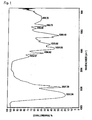
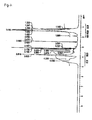
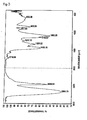
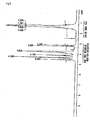
- the degree of polymerization was analyzed according to JIS K 6726. As a result, it was 860. Further, the viscosity of a 4% aqueous solution of the PVA-based resin (I) was measured with a Hoeppler viscometer. As a result, it was 8.94 mPa ⁇ s (20°C). The modified amount was calculated by NMR measurement. As a result, it was 3.8 mol%.
- a 10% aqueous solution of the PVA-based resin was flow cast on a hot roll of 60°C to prepare a cast film having a thickness of 30 ⁇ m.
- the film was cut to 40 mm ⁇ 40 mm. This was clipped with a slide mount and immersed in water stirred at 20°C. A time (seconds) required for complete dissolution of the film was measured, followed by evaluation according to the following standards:
- Sodium carbonate was packed in a bag of 100 mm ⁇ 100 mm prepared by heat sealing the above-mentioned film, and after standing under conditions of 40°C ⁇ 80% RH for half a year, a film piece of 40 mm ⁇ 40 mm was collected from the bag, and immersed in water stirred at 20°C. A time (seconds) required for complete dissolution of the film was measured, followed by evaluation according to the following standards:
- ETC trichloroethylene
- a 4% aqueous solution of the PVA-based resin was spray coated on an inner surface of a stainless steel polymerization tank having an inner volume of 1 liter equipped with a reflux condenser and a jacket, and dried.
- This polymerization tank was added with 0.14 g of PVA (degree of saponification: 80 mol%, degree of polymerization: 2,400), 0.08 g of di-2-ethylhexyl peroxycarbonate, 400 g of deionized water and 200 g of vinyl chloride monomer, and with stirring, hot water was allowed to pass through the jacket to elevate the temperature to 57°C, thereby initiating polymerization.
- the 4% aqueous solution of the PVA-based resin was adjusted to pH of 4 or pH of 7, and coated onto a metal test plate (SUS 316) so as to a coated amount after dried of 0.53 mg/cm 2 , followed by air drying overnight under an atmosphere of 23°C and 50% RH.
- This was immersed in boiled water of pH of 4 or pH of 7 for 1 hour, and then, immersed in a coloring solution of a 0.1 N iodine-potassium iodide aqueous solution.
- the remaining of a PVA coated film was confirmed by a colored situation.
- the coloring solution was prepared by dissolving 25 g of potassium iodide and 12.7 g of iodine in water so as to give a total amount of 1,000 ml and adding boric acid thereto up to a saturated state.
- the 4% aqueous solution of the PVA-based resin was coated to an acidic paper having a basis weight of 60 g/m 2 so as to have a resin solid content of 1.0 g/m 2 with a test size press (manufactured by Kumagai Riki Kogyo Co., Ltd., speed: 90 m/min, line pressure: 11 kg/cm), and dried with a cylindrical rotary drier under conditions of 105°C for 2 minutes. Then, both-sides finishing was further performed with a super calender (temperature: 80°C, line pressure: 40 kg/cm) to obtain a coating paper. For the resulting coating paper, evaluation of a degree of Stockigt size, an air permeability, an oil absorbency and a surface strength was performed in the following manners:
- Degree of stockigt size Measurement was performed based on JIS P-8122.
- Air Permeability Based on JIS P-8117, a test piece was fixed to an Oken type air permeability tester (manufactured by Asahi Seiko Co., Ltd.), and a time (seconds) required for 100 ml of air to pass therethrough was measured.
- Oil Absorbency Based on JIS P-8130, using an oil absorbency tester (manufactured by Kumagai Riki Kogyo Co., Ltd.), a time (seconds) required for oil to be absorbed from a surface of paper to an inside thereof was measured.
- Surface Paper Strength Using FINE INK TV-20 (manufactured by Dainippon Ink and Chemicals Inc.) as ink, measurement of IGT pick strength (cm/sec) was performed.
- a heat-sensitive recording medium was prepared in the following manner, and evaluation thereof was performed.
- Preparation of Liquid A Ten parts of 3-dimethylamino-6-methyl-7-phenylaminofluoran, 25 parts of 3-di(2-methylphenoxy)ethane, 5 parts of a 5% aqueous solution of methylcellulose and 50 parts of water were mixed, and pulverized with a sand mill up to an average particle size of 3 ⁇ m.
- Preparation of Liquid B Ten parts of 4-hydroxy-4-isopropoxy diphenylsulfone, 5 parts of a 5% aqueous solution of methylcellulose and 25 parts of water were mixed, and pulverized with a sand mill up to an average particle size of 3 ⁇ m.
- Preparation of Recording Layer Ninety parts of liquid A, 40 parts of liquid B, 50 parts of a 20% aqueous dispersion of oxidized starch and 10 parts of water were mixed and stirred, and then, coated and dried so as to give a coated amount after drying of 6 g/m 2 to obtain a heat-sensitive recording layer.
- Preparation of Protective Layer A coating solution obtained by mixing and stirring 200 parts of a 10% aqueous solution of the PVA-based resin, 70 parts of kaolin, 30 parts of a 30% aqueous dispersion of zinc stearate, 20 parts of a 5% aqueous solution of polyamideepichlorohydrin and 100 parts of water was coated and dried so as to give a coated amount after drying of 4 g/m 2 by a roll blade coating method, followed by calender treatment to obtain a heat-sensitive recording medium having a protective layer.
- the solution was diluted with methanol to adjust the concentration to 30%, and added into a kneader.
- a 2% methanol solution of sodium hydroxide was added in an amount of 8 mmol based on 1 mol unit of vinyl acetate in the copolymer to carry out saponification.
- saponified matter separated out and finally became granular in form.
- the PVA-based resin produced was separated by filtration, washed with methanol and dried in a hot air dryer to obtain a desired substance.
- the degree of saponification of the resulting PVA-based resin (II) was analyzed by an alkali consumption required for hydrolysis of residual vinyl acetate units. As a result, it was 99.6 mol%.
- the degree of polymerization was analyzed according to JIS K 6726. As a result, it was 1,300. Further, the viscosity of a 4% aqueous solution of the PVA-based resin (II) was measured with a Hoeppler viscometer. As a result, it was 12.4 mPa ⁇ s (20°C).
- the modified amount was calculated by 1 H-NMR measurement. As a result, it was 2.1 mol%.
- the temperature was elevated with stirring under a nitrogen stream to perform polymerization.
- the solution was diluted with methanol to adjust the concentration to 30%, and added into a kneader.
- a 2% methanol solution of sodium hydroxide was added in an amount of 9 mmol based on 1 mol unit of vinyl acetate in the copolymer to carry out saponification.
- saponified matter separated out and finally became granular in form.
- the PVA-based resin produced was separated by filtration, washed with methanol and dried in a hot air dryer to obtain a desired substance.
- the degree of saponification of the resulting PVA-based resin (III) was analyzed by an alkali consumption required for hydrolysis of residual vinyl acetate units. As a result, it was 99.4 mol%.
- the degree of polymerization was analyzed according to JIS K 6726. As a result, it was 2,100. Further, the viscosity of a 4% aqueous solution of the PVA-based resin was measured with a Hoeppler viscometer. As a result, it was 46.5 mPa ⁇ s (20°C).
- the modified amount was calculated by 1 H-NMR measurement. As a result, it was 0.3 mol%.
- the solution was diluted with methanol to adjust the concentration to 30%, and added into a kneader.
- a 2% methanol solution of sodium hydroxide was added in an amount of 9 mmol based on 1 mol unit of vinyl acetate in the copolymer to carry out saponification.
- saponified matter separated out and finally became granular in form.
- the PVA-based resin (IV) produced was separated by filtration, washed with methanol well and dried in a hot air dryer to obtain a desired substance.
- the degree of saponification of the resulting PVA-based resin (IV) was analyzed by an alkali consumption required for hydrolysis of residual vinyl acetate units. As a result, it was 99.4 mol%.
- the degree of polymerization was analyzed according to JIS K 6726. As a result, it was 1,000. Further, the viscosity of a 4% aqueous solution of the PVA-based resin was measured with a Hoeppler viscometer. As a result, it was 11.0 mPa ⁇ s (20°C). The modified amount was calculated by NMR measurement. As a result, it was 0.21 mol%.
- the degree of saponification of the resulting PVA-based resin (V) was analyzed by an alkali consumption required for hydrolysis of residual vinyl acetate units. As a result, it was 99.5 mol%.
- the degree of polymerization was analyzed according to JIS K 6726. As a result, it was 1,100.
- the viscosity of a 4% aqueous solution of the PVA-based resin (V) was measured with a Hoeppler viscometer. As a result, it was 13.1 mPa ⁇ s (20°C).
- the same evaluations as in Example 1 were performed. The results thereof are shown in Tables 1 to 5.
- the degree of saponification of the resulting PVA-based resin (VI) was 99.2 mol%, and the degree of polymerization was 1,100.
- the viscosity of a 4% aqueous solution of the PVA-based resin (VI) was measured with a Hoeppler viscometer. As a result, it was 13.0 mPa ⁇ s (20°C).
- the modified amount was calculated by NMR measurement. As a result, it was 2 mol%.
- the same evaluations as in Example 1 were performed. The results thereof are shown in Tables 1 to 5.
- a PVA-based resin (VII) (degree of saponification: 88 mol%, degree of polymerization: 860, modified amount: 3.8 mol%) was obtained in the same manner as in Example 1 with the exception that the added amount of sodium hydroxide used in the saponification was 5 mmol based on 1 mol unit of vinyl acetate in the copolymer.
- Such a PVA-based resin (VII) was made into a 4% aqueous solution, and the transparency thereof was determined as a light transmittance (%) of 430 nm at 25°C, using a spectrophotometer (manufactured by Nippon Bunko Co., Ltd., an ultraviolet-visible spectrophotometer V-560).
- a PVA-based resin (VIII) (degree of saponification: 80 mol%, degree of polymerization: 1,300, modified amount: 2.1 mol%) was obtained in the same manner as in Example 2 with the exception that the added amount of sodium hydroxide used in the saponification was 3 mmol based on 1 mol unit of vinyl acetate in the copolymer.
- the retention of transparency of the aqueous solution before and after the heat treatment was determined in the same manner as in Example 5. As a result, it was 93 %.
- a PVA-based resin (IX) (degree of saponification: 88 mol%, degree of polymerization: 1,100, modified amount: 2 mol%) was obtained in the same manner as in Comparative Example 2 with the exception that the added amount of sodium hydroxide used in the saponification was 5 mmol based on 1 mol unit of vinyl acetate in the copolymer.
- Such a PVA-based resin (IX) was evaluated in the same manner as in Example 5.
- the retention of transparency of the aqueous solution before and after the heat treatment was 72%. This is because the solubility in water 'decreases by the heat treatment, compared to the PVA-based resin of the invention.
- the PVA-based resin of the invention is excellent in viscosity stability of an aqueous solution and high-speed coatability, and excellent in chelating ability with a metal ion and reactivity with various crosslinking agents, so that it is effective for applications such as a paper processing agent, a water-resistant coating agent, an adhesive, packaging water-soluble films for various articles, a separating/recovering agent for various organic compounds, an adhesive, an emulsifier, a suspending material and a fiber processing agent.
Landscapes
- Chemical & Material Sciences (AREA)
- Organic Chemistry (AREA)
- Chemical Kinetics & Catalysis (AREA)
- Life Sciences & Earth Sciences (AREA)
- Engineering & Computer Science (AREA)
- Materials Engineering (AREA)
- Wood Science & Technology (AREA)
- Addition Polymer Or Copolymer, Post-Treatments, Or Chemical Modifications (AREA)
Abstract

Description
- The present invention relates to a novel polyvinyl alcohol-based resin having a carboxyl group-containing long-chain alkyl group on a side chain and use thereof. More particularly, it relates to a polyvinyl alcohol-based resin excellent in viscosity stability of an aqueous solution, high-speed coatability, reactivity with a crosslinking agent and water solubility when formed into a film and further capable of controlling these characteristics by pH, and use thereof.
- Polyvinyl alcohol-based resins (polyvinyl alcohol is hereinafter referred to as PVA for brevity) have hitherto been widely used for a dispersant, sn emulsifier, a suspending agent, a fiber processing agent, s paper processing agent, a binder, sn adhesive, a film and the like by utilizing their excellent water solubility, interface characteristic, film characteristic (such as film forming property, strength and oil resistance) and the like.
For such PVA-based resins, modification according to their use purpose has been tried, and modified PVA in which various functional groups are introduced into a side chain by copolymerization have been placed on a market. Above all, modified PVA in which a carboxyl group is introduced into a side chains has been widely used as a fiber processing agent and paper processing agent. This carboxyl group-modified PVA is produced by copolymerizing an ethylenically unsaturated carboxylic acid such as acrylic acid, maleic acid or itaconic acid with a vinyl ester compound, followed by saponification, and is excellent, compared to unmodified PVA, in water solubility, viscosity stability of an aqueous solution, flow characteristic under high shear rate and chelate forming ability with a metal ion, (for example, see non-patent document 1). It is known that when used as a paper processing agent, it efficiently remains on a surface by a reaction with aluminum sulfate in paper to obtain an excellent barrier property.
Non-Patent Document 1: POLYVINYL ALCOHOL-DEVELOPMENTS, edited by C. A. FINCH, p157, 1992 - However, in the carboxyl group-modified PVA described in the above-mentioned
non-patent document 1, the carboxyl group is liable to form a lactone ring by a reaction with an adjacent hydroxyl group or an ester exchange reaction with a residual acetic acid group, so that a part of the carboxyl group introduced by the copolymerization become inactive. Further, when a modification ratio is intended to be increased for improvement in its characteristics, there has been a fear of impairing water solubility which is an original characteristic of a PVA-based resin, because of a decrease in an amount of the hydroxyl groups similarly by forming the lactone ring, and of intermolecular crosslinking which is liable to occur particularly in the case of a low degree of saponification of a PVA-based resin. That is to say, it is a present situation that it has become impossible for such carboxyl group-modified PVA to respond to a request for increased surface strength or a decrease in the amount used, which has been demanded in paper processing use in recent years, and a modified PVA-based resin alternative to this has been required. Means for Solving the Problems - Thus, the present inventors have made intensive studies in view of such circumstances. As a result, it has been found that a PVA-based resin having a carboxyl group-containing long-chain alkyl group on a side chain conforms to the above-mentioned object, thereby completing the invention.
- Such a PVA-based resin having a carboxyl group-containing long-chain alkyl group on a side chain is a PVA-based resin comprising a structural unit represented by the general formula (1):

That is to say, the invention is most characterized in that a PVA-based resin in which a carboxyl group is bonded to a main chain through a long-chain alkyl group having a certain degree of length is used, and advantages specific to the invention have been obtained by using such a PVA-based resin. Advantages of the Invention - The PVA-based resin having a carboxyl group-containing long-chain alkyl group on a side chain of the invention is excellent in viscosity stability of an aqueous solution and high-speed coatability, and excellent in chelate forming ability with a metal ion by the carboxyl group and reactivity with various crosslinking agents, so that it is suitably used in a paper processing agent, a water-resistant coating agent (particularly, a protective layer resin for a heat-sensitive recording medium), an adhesives and the like. Further, it is excellent in solubility in water when formed into a formed article, particularly into a film, and is effective as a packaging water-soluble film for an agrochemical, a detergent, a cloth for washing, an additive for civil engineering, a disinfectant, a dye, a pigment and the like. Furthermore, the PVA-based resin becomes a hydrogel by association between hydrophobic groups of the long-chain alkyl groups by making the aqueous solution acidic, particularly deceasing the pH to 4 or less. In that case, an organic compound which is present as a mixture in the aqueous solution is incorporated into the gel, so that it is also possible to use as a separating/recovering agent for various organic compounds. In addition, the PVA-based resin of the invention is effective for various applications, particularly for applications such as an adhesive, an emulsifier, a suspending agent and a fiber processing agent by utilizing its characteristics.
-
- [
Fig. 1] Fig. 1 is an IR spectrum chart of PVA-based resin (I). - [
Fig. 2] Fig. 2 is a 1H-NMR spectrum chart of PVA-based resin (I). - [
Fig. 3] Fig. 3 is an IR spectrum chart of PVA-based resin (III). - [
Fig. 4] Fig. 4 is a 1H-NMR spectrum chart of PVA-based resin (III). - A description of the constituent elements described below is one example (a representative example) of embodiments of the invention, and the invention should not be specified to these contents.
The invention will be described in detail below.
The PVA-based resin of the invention is one having a carboxyl group-containing long-chain alkyl group on a side chain, and more particularly, it is a PVA-based resin comprising a structural unit represented by the following general formula (1): -

- Further, R3 represents a hydrogen atom, an alkyl group or an alkali metal, and usually, most thereof are converted to a hydrogen atom by going through a saponification step during a production process. However, a part thereof may remain as an alkyl ester, or may become an alkali metal salt caused by an alkali metal hydroxide used as a saponification catalyst. Although such an alkyl group is not particularly limited, for example, a methyl group, an ethyl group, an n-propyl group, an isopropyl group, an n-butyl group, an isobutyl group, a tert-butyl group, an octyl group, a behenyl group or the like is preferred. As the alkali metal, sodium or potassium is preferred.
- Further, n represents a positive integer, and is not particularly limited. However, it is preferred to be 4 or more (further from 6 to 15 and particularly from 8 to 15). The PVA-based resin of the invention is most characterized in that the carboxyl group is bonded to a main chain through the long-chain alkyl group, and the long-chain alkyl group is required to be long to some extent. Accordingly, when such n is too small, it becomes difficult to obtain the advantages of the invention. This is therefore unfavorable. On the other hand, when n is too large, hydrophobicity increases to cause a decrease in water solubility in some cases. This is therefore unfavorable.
- Further, a content of the structural unit represented by the general formula (1) in the PVA-based resin of the invention is preferred to be from 0.1 to 20 mol%, further from 0.5 to 10 mol% and particularly from 1 to 5 mol%. When such a content is too small or too large, the advantages of the invention are not obtained in some cases. This is therefore unfavorable. Incidentally, parts other than the structural unit represented by the general formula (1) of the PVA-based resin of the invention are largely a vinyl alcohol structural unit, similarly to an ordinary PVA-based resin, and a vinyl acetate structural unit partially remains depending on the degree of saponification thereof
- In obtaining such a PVA-based resin, a method of saponifying a copolymer of a vinyl ester-based monomer and a compound represented by the following general formula (2) is preferably used, although not particularly limited.


The compounds represented by the general formula (2) include undecylenic acid, oleic acid, elaidic acid, erucic acid and the like, and derivatives thereof such as an ester and a salt. Above all, an alkenoic acid with a terminal double bond, wherein R1, R2, R4, R5 and R6 are hydrogen, is preferred in terms of its easy availability and good copolymerizability, and particularly, undecylenic acid wherein R3 is hydrogen and n is 8 and a derivative thereof are preferred. - The vinyl ester-based monomers include vinyl formate, vinyl acetate, vinyl propionate, vinyl valerate, vinyl butyrate, vinyl isobutyrate, vinyl pivalate, vinyl caprate, vinyl laurate, vinyl stearate, vinyl benzoate, vinyl versatate and the like. Above all, vinyl acetate is preferably used from an economical point of view.
- Further, in the invention, besides the above-mentioned copolymerization components, it is also possible to copolymerize other monomer in an amount of about 0.1 to 20 mol% within the range not impairing the object of the invention. Examples thereof include α-olefins such as ethylene, propylene isobutylene, norbornene, α-octene, α-dodecene and α-octadecene, unsaturated acids such as acrylic acid, methacrylic acid, crotonic acid, maleic acid, maleic anhydride and itaconic acid, salts or mono or dialkyl esters thereof, nitriles such as acrylonitrile and methacrylonitrile, amides such as diacetoneacrylamide, acrylamide and methacrylamide, olefinsulfonic acids such as ethylenesulfonic acid, allylsulfonic acid and methallylsulfonic acid or salts thereof, alkyl vinyl ethers, dimethylallyl vinyl ketone, N-vinylpyrrolidone, vinyl chloride, vinylidene chloride, polyoxyalkylene (meth)allyl ethers such as polyoxyethylene (meth)allyl ether and polyoxypropylene (meth)allyl ether, polyoxyalkylene (meth)acrylates such as polyoxyethylene (meth)acrylate and polyoxypropylene (meth)acrylate, polyoxyalkylene (meth)acrylamides such as polyoxyethylene (meth) acrylamide and polyoxypropylene (meth)acrylamide, polyoxyethylene(1-(meth)acrylamide-1,1-dimethylpropyl)ester, polyoxyethylene vinyl ether, polyoxypropylene vinyl ether, polyoxyethylene allylamine, polyoxypropylene allylamine, polyoxyethylene vinylamine, polyoxypropylene vinylamine and the like.
Further, the monomers also include cationic group-containing monomers such as N-acrylamidomethyltrimethylammonium chloride, N-acrylamidoethyltrimethylammonium chloride, N-acrylamidopropyltrimethylammonium chloride, 2-acryloxyethyltrimethylammonium chloride, 2-methacryloxyethyltrimethylammonium chloride, 2-hydroxy-3-methacryloyloxypropyltrimethylammonium chloride, allyltrimethylammonium chloride, methallyltrimethylammonium chloride, 3-butenetrimethylammonium chloride, dimethyldiallylammonium chloride and diethyldiallylammonium chloride, acetoacetyl group-containing monomers, 3,4-diacetoxy-1-butene, 1,4-diacetoxy-2-butene, vinylethylene carbonate, glycerin monoallyl ether, isopropenyl acetate, 1-methoxyvinyl acetate and the like. - Above all, an α-olefin-vinyl alcohol copolymer obtained using an α-olefins such as ethylene, propylene isobutylene, α-octene, α-dodecene or α-octadecene as a copolymerization component is preferred in terms of improvement in emulsifying capacity and viscosity stability of an aqueous solution, and a content of such an α-olefin is preferably from 0.1 to 20 mol% (further from 2 to 10 mol%).
- There is no particular limitation on a method for copolymerizing the above-mentioned vinyl ester-based monomer and the compound represented by the general formula (2) (further, the other monomer), and known methods such as bulk polymerization, solution polymerization, suspension polymerization, dispersion polymerization or emulsion polymerization can be employed. However, usually, solution polymerization is performed.
An adding method of the monomer components at the time of copolymerization is not particularly limited, and an arbitrary method such as adding all at once, adding divisionally or adding continuously is employed.
Solvents used in such copolymerization usually include lower alcohols such as methanol, ethanol, isopropyl alcohol, n-propanol and butanol, ketones such as acetone and methyl ethyl ketone, and the like. Industrially, methanol or isopropyl alcohol is suitably used.
An amount of the solvent to be used may be appropriately selected considering a chain transfer constant of the solvent in accordance with the degree of polymerization of the desired copolymer. For example, when the solvent is methanol, it is selected from the range of S (solvent)/M (monomer) = 0.01 to 10 (weight ratio), preferably about 0.05 to 3 (weight ratio). - A polymerization catalyst is used in the copolymerization, and such polymerization catalysts include, for example, known radical polymerization catalysts such as azobisisobutyronitrile, acetyl peroxide, benzoyl peroxide and lauryl peroxide, low-temperature active radical polymerization catalysts such as azobisdimethylvaleronitrile, azobismethoxydimethylvaleronitrile and t-butyl peroxyneodecanoate, and the like. Although an amount of the polymerization catalyst to be used varies depending on the kind of catalyst and can not be indiscriminately determined, it is arbitrarily selected depending on the polymerization rate. For example, when azoisobutylonitrile or acetyl peroxide is used, it is preferably from 0.01 to 0.2 mol%, and particularly preferably from 0.02 to 0.15 mol%, based on the vinyl ester-based monomer.
Further, for a reaction temperature of the copolymerization reaction, the reaction is conducted at about 30°C to a boiling point depending on the catalyst and pressure to be used, and more particularly, conducted in the range of 35 to 150°C, preferably 40 to 75°C. - In the invention, a copolymerization ratio of the compound represented by the general formula (2) is not particularly limited, and the copolymerization ratio may be determined in accordance with the introduced amount of carboxyl group-containing long-chain alkyl groups described later.
- The resulting copolymer is then saponified. In such saponification, the copolymer obtained above is dissolved in an alcohol or a hydrous alcohol, and it is performed using an alkali catalyst or an acid catalyst. The alcohols include methanol, ethanol, propanol, tert-butanol and the like, and methanol is particularly preferably used. Although a concentration of the copolymer in the alcohol is appropriately selected depending on the viscosity of a system, it is usually selected from the range of 10 to 60% by weight. The catalysts to be used in the saponification include alkali catalysts such as hydroxides and alcoholates of alkali metals such as sodium hydroxide, potassium hydroxide, sodium methylate, sodium ethylate, potassium methylate and lithium methylate, and acid catalysts such as sulfuric acid, hydrochloric acid, nitric acid, methasulfonic acid, zeolite and a cation-exchange resin.
- The amount of such a saponification catalyst used is appropriately selected according to the saponification method, the desired degree of saponification and the like. When the alkali catalyst is used, a ratio of 0.1 to 30 mmol, preferably 2 to 15 mmol, based on 1 mol of the total amount of the vinyl ester-based monomer and the compound represented by the general formula (2) is suitable. Further, although the reaction temperature of the saponification reaction is not particularly limited, it is preferred to be from 10 to 60°C (particularly from 20 to 50°C).
- Although a content of the carboxyl group-containing long-chain alkyl group present on a side chain of the PVA-based resin thus obtained is not particularly limited, it is preferred to be from 0.1 to 20 mol% (further 0.5 to 15 mol%, particularly from 1 to 10 mol% and more particularly from 1 to 6 mol%). When the content of such a carboxyl group-containing long-chain alkyl group is too small, no advantages are observed in terms of viscosity stability of an aqueous solution and high-speed coatability, reactivity with a crosslinking agent is low, and it is difficult to obtain a phase change by pH. Thus, the effects and advantages of the invention are not sufficiently obtained. Conversely, when it is too much, foaming is remarkable in using the PVA-based resin as an aqueous solution, unfavorably resulting in deterioration of workability in industrial practice. Further, a polymerization rate at the time of copolymerization decreases, or the degree of polymerization of the resulting PVA-based resin decreases. As a result, when it is used as a paper surface sizing agent, sufficient surface paper strength is not obtained, or when it is used as a film or a coating agent, strength and water resistance become insufficient in some cases. This is therefore unfavorable.
- An average degree of polymerization (measured based on JIS K6726) of the PVA-based resin of the invention is appropriately selected according to its use purpose, and is not particularly limited. However, it is usually preferred to be from 300 to 4,000 (further from 300 to 2,600 and particularly from 500 to 2,200). When such average degree of polymerization is too small, the strength when formed into a coating unfavorably decreases. Further, when the carboxyl group-containing long-chain alkyl groups are introduced into the PVA-based resin in an amount sufficient to obtain the advantages of the invention, it is difficult to obtain PVA having an average degree of polymerization exceeding 4,000.
- Furthermore, the degree of saponification of such a PVA-based resin is not particularly limited, and is appropriately selected according to its use purpose. However, it is usually preferred to be 50 mol% or more (further 70 mol% or more and particularly 80 mol% or more). When such a degree of saponification is too low, water solubility unfavorably deteriorates.
- The thus-obtained PVA-based resin having the carboxyl group-containing long-chain alkyl group on a side chain has characteristics as a polyelectrolyte due to the carboxyl group. Such a carboxyl group is bonded to a main chain through the alkyl group, and intramolecular lactone ring formation is difficult to occur, so that the modification amount smaller than in the carboxyl group-modified PVA described in
non-patent document 1 can provide the equivalent or more advantages.
That is to say, such a PVA-based resin is high in dissolution rate in water, also excellent in viscosity stability of an aqueous solution, and also excellent in chelate forming ability with a metal ion by a carboxyl group and reactivity with various crosslinking agents, compared to ordinary unmodified PVA-based resins. Further, the aqueous solution of such a PVA-based resin has good coatability without the occurrence of abnormal flow even under high shear at the time of high-speed coating. Furthermore, it is excellent in solubility in water when formed into a formed article, particularly into a film. In addition, it has the carboxyl group at the long-chain alkyl group terminal on the side chain, whereby the aqueous solution of such a PVA-based resin turns into a gel by association between hydrophobic groups between the long-chain alkyl groups by making the pH acidic, particularly decreasing the pH to 4 or less. Accordingly, a hydrogel can be easily obtained.
Further, the gel is formed by association between hydrophobic groups, so that it is possible to reversibly control the behavior of gel formation and degelation by changes in pH. In order to allow association between hydrophobic groups to be expressed well, it is preferred that n is 6 or more in the structural unit represented by the general formula (1). - Applications utilizing chelate forming ability of such a PVA-based resin with a metal ion include a paper processing agent (surface sizing agent). This is that when a coating solution comprising such a PVA-based resin is applied onto a paper surface, it efficiently remains on the paper surface by a reaction with aluminum sulfate in paper to show high barrier performance by use in a small amount.
Similarly, such a PVA-based resin also shows good adhesiveness to surfaces of various metals, and utilization examples of its characteristics include an anti-fouling agent. This is that, for example, an aqueous solution of such a PVA-based resin is applied to a can wall of a polymerization can for vinyl chloride and dried to form a coating, thereby making it possible to prevent a fouling from adhering to an inner wall of the can at the time of polymerization of vinyl chloride. Further, in combination with such an anti-fouling agent, it is effective to use a nitrogen-containing polymer compound such as polyethyleneimine, polyvinylpyrrolidone, polyvinylamine or an amine-modified PVA-based resin, an antioxidant such as a polyphenols, a quinone compound, quercetin (a kind of apple- or wine-derived polyphenol), sodium dithionite (an antioxidant) or the like. When the PVA-based resin of the invention is used for use of such an anti-fouling agent, a content of the structural unit having the carboxyl group-containing long-chain alkyl group is preferably 1 mol% or more. When such content is too small, adhesiveness to a metal is unfavorably insufficient in some cases. - Further, such a PVA-based resin aqueous solution is repeatedly subjected to freeze-melt, or the pH of the aqueous solution is made acidic, thereby being able to obtain a hydrogel excellent in adhesiveness, water retention and low-temperature flexibility. In that case, a coexistence of various metal salts in the aqueous solution also makes it possible to obtain a hydrogel compounded with the metal ions, and such a hydrogel is useful as a hydrogel used in an ionic conductive tackifier for a biological electrode for biological investigation, biotherapy, biological diagnosis or the like, or in a hydrous adhesive preparation for a transdermal absorption film agent, cooling therapy or the like.
Such metal salts include calcium nitrate, magnesium nitrate, calcium chloride, strontium chloride, palladium chloride, beryllium chloride magnesium chloride, manganese chloride, nickel chloride and the like rather than monovalent metal salts such as potassium chloride, silver chloride, cesium chloride, sodium chloride and lithium chloride. - Further, applications utilizing a gelling function (gelation occurs at acidity and degelation at alkalinity) by changes in pH of such a PVA-based resin include a separating/recovering agent for an organic compound. This is that the aqueous solution of such a PVA-based resin is allowed to be mixed with the organic compound in a dissolved or dispersed state in water to make the pH of a system acidic, thereby turning the PVA-based resin into the hydrogel and incorporating the organic compound therein. The organic compound-containing hydrogel formed is separated from the aqueous solution by a method such as filtration, which makes it possible to remove and recover such an organic compound.
The organic compounds to which the organic compound-removing agent is directed include organic halogen compounds such as dioxin, trichloroethylene, dichloroethane, dichloromethane, tribromoethylene, dibromoethane, dibromomethane and dioxin, aromatic compounds such as benzene, chlorobenzene, toluene, xylene and parachlorophenol, and the like. - Further, examples utilizing high reactivity of the carboxyl group include a water-resistant film or coating by use in combination with various organic and inorganic crosslinking agents. Such organic crosslinking agents include aldehyde-based compounds (formaldehyde, glyoxal, glutardialdehyde and the like), amino resins (a urea resin, a guanamine resin, a melamine-based resin, methylolmelamine and the like), epoxy-based resins (a water-soluble epoxy resin, polyamidepolyamine epichlorohydrin and the like), amine-based resins (ethylenediamine, hexamethylenediamine, metaxylylenediamine, 1,3-bisaminocyclohexane, polyoxyalkylene type diamine or polyamine and the like), hydrazine compounds, hydrazide compounds (adipic acid dihydrazide, carbodihydrazide, polyhydrazide and the like), acid anhydrides, polyisocyanates, block isocyanates and the like. Further, inorganic crosslinking agents include boric acid, borates (borax and the like), zirconium compounds (chlorohydroxyoxozirconium ("Zircosol ZC-2" manufactured by Daiichi Kigenso Kagaku Co., Ltd.) and zirconyl nitrate ("Zircosol ZN" manufactured by Daiichi Kigenso Kagaku Co., Ltd.)), titanium compounds (tetraalkoxytitanate and the like), aluminum compounds (aluminum sulfate, aluminum chloride, aluminum nitrate and the like), phosphorus compounds (a phosphite ester, bisphenol A-modified polyphosphoric acid and the like), silicone compounds having reactive functional groups such as alkoxy groups or glycidyl groups, and the like. These crosslinking agents may be used either alone or as a combination of two or more thereof. Above all, epoxy-based resins such as a water-soluble epoxy resin and polyamidepolyamine epichlorohydrin are effective, and suitable as a crosslinking agent in using the PVA-based resin of the invention as a protective layer resin for a heat-sensitive recording medium.
- Further, the PVA-based resin of the invention is useful as a raw material for water-soluble packaging materials for an agrochemical, a detergent, a cloth for washing, an additive for civil engineering, a disinfectant, a dye, a pigment and the like. When the PVA-based resin is used for such water-soluble packaging use, the degree of saponification thereof is preferably from 65 to 100 mol%. In particular, when acidic materials or alkaline materials are packaged, the degree of saponification thereof is preferably from 98.1 to 100 mol%, and more preferably from 99 to 100 mol%. This is because when such a degree of saponification is less than 98.1 mol%, there is a fear that water solubility of films deteriorates with time in packaging and storing the acidic materials or the alkaline materials.
- Furthermore, the PVA-based resin of the invention can be used for various applications by utilizing its characteristics. Although some of applications have been described above, other specific examples include the following:
- Adhesives for wood, paper, aluminum foil, plastics and the like, tackifiers, remoistening agents, binders for non-woven fabrics, binders for various building materials such as gypsum boards and fiber boards, binders for granulation of various powders, additives for cement and mortar, hot melt type adhesive force, pressure-sensitive adhesives, anchoring agents for anionic paints, honeymoon adhesives, PVA for aqueous vinylurethane and the like
- Fibers, films, pipes, tubes, sheets, sealing films, temporary films, chemical race applications, water-soluble fibers, non-woven fabrics and the like
- Clear coating agents for paper, pigment coating agents for paper, sizing agents for paper, overcoat agents for heat-sensitive paper, sizing agents for fiber products, weft sizing agents, fiber processing agents, leather finishing agents, paints, anticlouding agents, metal corrosion inhibitors, brightening agents for galvanization, antistatic agents, electrical conducting agents, ship bottom paints, anti-fouling agent, silica binder applications of ink jet paper and the like
- Emulsifiers for emulsion polymerization of ethylenically unsaturated compounds such as vinyl acetate, butadienic compounds and various acrylic-based monomers, post emulsifiers for hydrophobic resins such as polyolefins and polyester resins, epoxy resins, paraffins, bitumen and the like, emulsifiers for powder emulsions, additives for blocking inhibition at the time of spray drying in the production, and the like
- Pigment dispersion stabilizers for paints, black writing fluid, water colors, adhesives and the like, dispersion stabilizers for suspension polymerization of various vinyl compound such as vinyl chloride, vinylidene chloride, styrene, (meth)acrylates, vinyl acetate, and the like
- Antistatic agents and hydrophilicity-imparting agents for hydrophobic resins, additives for composite fibers, films and other formed articles, and the like
- Coagulating agents for suspended solids in water and dissolved matter, pulp, water filtering properties of slurries, and the like
- Thickeners for various aqueous solutions and emulsions, gelling agents and the like
- Of the above, the usefulness is particularly expected in the applications of (1) to (9).
- The invention will be described with reference to examples below, but the invention is not limited to the description of the examples as long as it does not depart from the gist of the invention.
Incidentally, "parts" and "%" in the examples are on the weight basis, unless otherwise indicated. - A reaction can equipped with a reflux condenser, a dropping funnel and a stirrer was added with 1,200 g of vinyl acetate, 60 g of methanol and 102.6 g (4 mol%) of undecylenic acid (R1, R2, R4, R5 and R6 are hydrogen, R3 is hydrogen and n=8), and 0.04 mol% (based on the added vinyl acetate monomer) of azobisisobutyronitrile was put therein. The temperature was elevated with stirring under a nitrogen stream to perform polymerization. Two hours after the initiation of polymerization, 0.04 mol% (based on the initial added vinyl acetate monomer) of azobisisobutyronitrile was further added, followed by continuation of further polymerization. Then, at the time when the ratio of polymerization of vinyl acetate reached 75.2%, a polymerization inhibitor was added thereto to terminate polymerization. Subsequently, unreacted vinyl acetate monomer was removed to an outside of the system by a method of blowing a methanol vapor to obtain a methanol solution of a copolymer.
- Then, the solution was diluted with methanol to adjust the concentration to 30%, and added into a kneader. While maintaining the solution temperature at 40°C, a 2% methanol solution of sodium hydroxide was added in an amount of 8 mmol based on 1 mol unit of vinyl acetate in the copolymer to carry out saponification. With a progress of saponification, saponified matter separated out and finally became granular in form. PVA produced was separated by filtration, washed with methanol well and dried in a hot air dryer to obtain a desired substance.
- The degree of saponification of the resulting PVA-based resin (I) was analyzed by an alkali consumption required for hydrolysis of residual vinyl acetate units. As a result, it was 99.2 mol%. The degree of polymerization was analyzed according to JIS K 6726. As a result, it was 860. Further, the viscosity of a 4% aqueous solution of the PVA-based resin (I) was measured with a Hoeppler viscometer. As a result, it was 8.94 mPa·s (20°C). The modified amount was calculated by NMR measurement. As a result, it was 3.8 mol%.
- The assignment of IR spectrum and 1H-NMR spectrum (internal standard substance: tetramethylsilane, solvent: DMSO-d6) of the resulting PVA-based resin (I) was as follows. An IR chart is shown in
Fig. 1 , and a NMR chart is shown inFig. 2 . - [IR] (see
Fig. 1 )
3330 cm-1: OH (strong)
2940, 2910 cm-1: methylene (strong)
1650 cm-1: -COOH (medium broad)
1560 cm-1: -COO-Na+ (medium)
1430 cm-1: methylene (strong)
1240 cm-1: methine (weak)
1100 cm-1: C-O (medium)
850 cm-1: methylene (medium)
670 cm-1: OH (medium broad) - [1H-NMR] (see
Fig. 2 )
1.21 to 1.23 ppm: methylene proton (caused by modified species)
1.35 to 1.58 ppm: methylene proton
1.86 to 1.92 ppm: methylene proton (caused by modified species)
3.81 to 3.85 ppm: methylene proton
4.13 to 4.78 ppm: hydroxyl group - The following evaluations were performed for the resulting PVA-based resin (I). The results are shown in Tables 1 to 5.
- An 8% aqueous solution of the PVA-based resin was placed in a glass container, and the temperature of the aqueous solution was adjusted to 20°C. Then, the glass container was allowed to stand in a constant temperature water bath of 5°C, and the viscosity after standing for 1 hour and 24 hours was measured. The thickening magnification was determined, followed by evaluation in the following manner:
- A ··· Thickening magnification is less than 2.5 times.
- B ··· Thickening magnification is 2.5 times or more.
- An increase in viscosity of a 10% aqueous solution of the PVA-based resin at 30°C under high shear rate was measured, followed by evaluation in the following manner. Incidentally, a flow tester CFT-500C manufactured by Shimadzu Corporation was used as a measuring device.
- A ··· Case that shear rate is 6×10⁶/s or more and increase in viscosity shows a maximum value
- B ··· Case that shear rate is less than 6×10⁶/s and increase in viscosity shows a maximum value
- A 10% aqueous solution of the PVA-based resin was flow cast on a hot roll of 60°C to prepare a cast film having a thickness of 30 µm. The film was cut to 40 mm × 40 mm. This was clipped with a slide mount and immersed in water stirred at 20°C. A time (seconds) required for complete dissolution of the film was measured, followed by evaluation according to the following standards:
- A ··· Less than 40 seconds
- B ··· From 40 to 70 seconds
- C ··· 70 seconds or more
- Sodium carbonate was packed in a bag of 100 mm × 100 mm prepared by heat sealing the above-mentioned film, and after standing under conditions of 40°C × 80% RH for half a year, a film piece of 40 mm × 40 mm was collected from the bag, and immersed in water stirred at 20°C. A time (seconds) required for complete dissolution of the film was measured, followed by evaluation according to the following standards:
- A ··· (Complete dissolution time after packing of sodium carbonate)/(Complete dissolution time before packing) is less than 1.3.
- B ··· (Complete dissolution time after packing of sodium carbonate)/(Complete dissolution time before packing) is 1.3 or more and less than 1.5.
- C ··· (Complete dissolution time after packing of sodium carbonate)/(Complete dissolution time before packing) is 1.5 or more.
- Twenty grams of trichloroethylene (ETC) was added into 100 g of a 4% aqueous solution of the PVA-based resin, and after shaking, the pH of the aqueous solution was adjusted to 4.0 or less by using 1 N hydrochloric acid. Then, after a hydrogel formed was separated by filtration with filter paper, a filtrate was allowed to still stand at 60°C for 1 hour. Thereafter, recovery of a separated water/ETC layer was carried out, followed by evaluation according to the following standards:
- A ··· ETC amount in filtrate is less than 5 g.
- B ··· ETC amount in filtrate is 5 g or more and less than 10 g.
- C ··· ETC amount in filtrate is 10 g or more.
- A 4% aqueous solution of the PVA-based resin was spray coated on an inner surface of a stainless steel polymerization tank having an inner volume of 1 liter equipped with a reflux condenser and a jacket, and dried.
This polymerization tank was added with 0.14 g of PVA (degree of saponification: 80 mol%, degree of polymerization: 2,400), 0.08 g of di-2-ethylhexyl peroxycarbonate, 400 g of deionized water and 200 g of vinyl chloride monomer, and with stirring, hot water was allowed to pass through the jacket to elevate the temperature to 57°C, thereby initiating polymerization. When a pressure in the polymerization tank which was about 7.0 kg/cm2G at the time of initiating the polymerization decreased to 6.0 kg/cm2G, an unreacted monomer was recovered, and a polymer slurry was taken out of the system. Fouling after polymerization adhered to a wall of the polymerization tank was scraped with a scraper, and the amount of fouling adhered was measured, followed by evaluation according to the following standards: - A ··· Amount of fouling adhered is less than 10 mg.
- B ··· Amount of fouling adhered is 10 mg or more and less than 50 mg.
- C ··· Amount of fouling adhered is 50 mg or more.
- The 4% aqueous solution of the PVA-based resin was adjusted to pH of 4 or pH of 7, and coated onto a metal test plate (SUS 316) so as to a coated amount after dried of 0.53 mg/cm2, followed by air drying overnight under an atmosphere of 23°C and 50% RH. This was immersed in boiled water of pH of 4 or pH of 7 for 1 hour, and then, immersed in a coloring solution of a 0.1 N iodine-potassium iodide aqueous solution. The remaining of a PVA coated film was confirmed by a colored situation.
Incidentally, the coloring solution was prepared by dissolving 25 g of potassium iodide and 12.7 g of iodine in water so as to give a total amount of 1,000 ml and adding boric acid thereto up to a saturated state. - A ··· Coloring is observed on whole surface.
- B ··· Coloring is partially observed.
- C ··· No coloring is observed.
- Five parts by weight of polyamideepichlorohydrin was added to and mixed with 2,500 parts by weight of a 4% aqueous solution of the PVA-based resin, followed by flow casting on a PET film. After air drying under an atmosphere of 23°C and 50% RH for 3 days, heat treatment was conducted at 70°C for 5 minutes to obtain a crosslinked PVA-based resin film having a thickness of about 80 µm. Such a film was immersed in boiling water for 1 hour to measure a residual ratio (%) of the film. Incidentally, in the calculation of the residual ratio (%), a dry weight of the film before the immersion in boiling water (X1) and a dry weight of the film after the immersion (X2) (g in both) were determined, and the residual ratio (%) was calculated by the following equation:

- The 4% aqueous solution of the PVA-based resin was coated to an acidic paper having a basis weight of 60 g/m2 so as to have a resin solid content of 1.0 g/m2 with a test size press (manufactured by Kumagai Riki Kogyo Co., Ltd., speed: 90 m/min, line pressure: 11 kg/cm), and dried with a cylindrical rotary drier under conditions of 105°C for 2 minutes. Then, both-sides finishing was further performed with a super calender (temperature: 80°C, line pressure: 40 kg/cm) to obtain a coating paper.
For the resulting coating paper, evaluation of a degree of Stockigt size, an air permeability, an oil absorbency and a surface strength was performed in the following manners: - Degree of stockigt size: Measurement was performed based on JIS P-8122.
Air Permeability: Based on JIS P-8117, a test piece was fixed to an Oken type air permeability tester (manufactured by Asahi Seiko Co., Ltd.), and a time (seconds) required for 100 ml of air to pass therethrough was measured.
Oil Absorbency: Based on JIS P-8130, using an oil absorbency tester (manufactured by Kumagai Riki Kogyo Co., Ltd.), a time (seconds) required for oil to be absorbed from a surface of paper to an inside thereof was measured. Surface Paper Strength: Using FINE INK TV-20 (manufactured by Dainippon Ink and Chemicals Inc.) as ink, measurement of IGT pick strength (cm/sec) was performed. - A heat-sensitive recording medium was prepared in the following manner, and evaluation thereof was performed. Preparation of Liquid A: Ten parts of 3-dimethylamino-6-methyl-7-phenylaminofluoran, 25 parts of 3-di(2-methylphenoxy)ethane, 5 parts of a 5% aqueous solution of methylcellulose and 50 parts of water were mixed, and pulverized with a sand mill up to an average particle size of 3 µm.
Preparation of Liquid B: Ten parts of 4-hydroxy-4-isopropoxy diphenylsulfone, 5 parts of a 5% aqueous solution of methylcellulose and 25 parts of water were mixed, and pulverized with a sand mill up to an average particle size of 3 µm.
Preparation of Recording Layer: Ninety parts of liquid A, 40 parts of liquid B, 50 parts of a 20% aqueous dispersion of oxidized starch and 10 parts of water were mixed and stirred, and then, coated and dried so as to give a coated amount after drying of 6 g/m2 to obtain a heat-sensitive recording layer.
Preparation of Protective Layer: A coating solution obtained by mixing and stirring 200 parts of a 10% aqueous solution of the PVA-based resin, 70 parts of kaolin, 30 parts of a 30% aqueous dispersion of zinc stearate, 20 parts of a 5% aqueous solution of polyamideepichlorohydrin and 100 parts of water was coated and dried so as to give a coated amount after drying of 4 g/m2 by a roll blade coating method, followed by calender treatment to obtain a heat-sensitive recording medium having a protective layer. - Recording Density: A density of a recorded image obtained by a heat-sensitive simulator (manufactured by Okura Denki Co., Ltd., TH-PMID) was measured with a Macbeth densitometer (manufactured by Macbeth Co., Ltd., RD-100 Type).
Solvent Resistance: A drop of ethanol was dropped on a recorded surface, and the state of bronzing was visually observed. - A: Practically, there is no problem at all.
- B: Practically, there is scarcely a problem.
- C: Practically, there is somewhat a problem.
- D: Practically, there is a problem.
- A: Practically, there is no problem at all.
- B: Practically, there is scarcely a problem.
- C: Practically, there is somewhat a problem.
- D: Practically, there is a problem.
- A: Practically, there is no problem at all.
- B: Practically, there is scarcely a problem.
- C: Practically, there is somewhat a problem.
- D: Practically, there is a problem.
- A reaction can equipped with a reflux condenser, a dropping funnel and a stirrer was added with 1,600 g of vinyl acetate, 320 g of methanol and 68.4 g (2 mol%) of undecylenic acid (R1, R2, R4, R5 and R6 are hydrogen, R3 is hydrogen and n=8), and 0.04 mol% (based on the added vinyl acetate monomer) of azobisisobutyronitrile was put therein. The temperature was elevated with stirring under a nitrogen stream to perform polymerization. Two hours after the initiation of polymerization, 0.04 mol% (based on the initial added vinyl acetate monomer) of azobisisobutyronitrile was further added, followed by continuation of further polymerization. Then, at the time when the ratio of polymerization of vinyl acetate reached 73.1%, a polymerization inhibitor was added thereto to terminate polymerization. Subsequently, an unreacted vinyl acetate monomer was removed to an outside of the system by a method of blowing a methanol vapor to obtain a methanol solution of a copolymer.
- Then, the solution was diluted with methanol to adjust the concentration to 30%, and added into a kneader. While maintaining the solution temperature at 40°C, a 2% methanol solution of sodium hydroxide was added in an amount of 8 mmol based on 1 mol unit of vinyl acetate in the copolymer to carry out saponification. With a progress of saponification, saponified matter separated out and finally became granular in form. The PVA-based resin produced was separated by filtration, washed with methanol and dried in a hot air dryer to obtain a desired substance.
- The degree of saponification of the resulting PVA-based resin (II) was analyzed by an alkali consumption required for hydrolysis of residual vinyl acetate units. As a result, it was 99.6 mol%. The degree of polymerization was analyzed according to JIS K 6726. As a result, it was 1,300. Further, the viscosity of a 4% aqueous solution of the PVA-based resin (II) was measured with a Hoeppler viscometer. As a result, it was 12.4 mPa·s (20°C). The modified amount was calculated by 1H-NMR measurement. As a result, it was 2.1 mol%.
- For the resulting PVA-based resin (II), the same evaluations as in Example 1 were performed. The results thereof are shown in Tables 1 to 5.
- A reaction can equipped with a reflux condenser, a dropping funnel and a stirrer was added with 1,600 g of vinyl acetate, 320 g of methanol and 45.8 g (0.5 mol%) of behenyl undecylenate (R1, R2, R4, R5 and R6 are hydrogen, R3 is a behenyl group (-C22H45) and n=8), and 0.06 mol% (based on the added vinyl acetate monomer) of azobisisobutyronitrile was added thereto. The temperature was elevated with stirring under a nitrogen stream to perform polymerization. At the time when the degree of polymerization of vinyl acetate reached 81.2%, the polymerization was terminated, and subsequently, an unreacted vinyl acetate monomer was removed to the outside of the system by a method of blowing a methanol vapor to obtain a methanol solution of a copolymer.
- Then, the solution was diluted with methanol to adjust the concentration to 30%, and added into a kneader. While maintaining the solution temperature at 40°C, a 2% methanol solution of sodium hydroxide was added in an amount of 9 mmol based on 1 mol unit of vinyl acetate in the copolymer to carry out saponification. With a progress of saponification, saponified matter separated out and finally became granular in form.
The PVA-based resin produced was separated by filtration, washed with methanol and dried in a hot air dryer to obtain a desired substance. - The degree of saponification of the resulting PVA-based resin (III) was analyzed by an alkali consumption required for hydrolysis of residual vinyl acetate units. As a result, it was 99.4 mol%. The degree of polymerization was analyzed according to JIS K 6726. As a result, it was 2,100. Further, the viscosity of a 4% aqueous solution of the PVA-based resin was measured with a Hoeppler viscometer. As a result, it was 46.5 mPa·s (20°C). The modified amount was calculated by 1H-NMR measurement. As a result, it was 0.3 mol%.
- The assignment of IR spectrum and 1H-NMR spectrum (internal standard substance: tetramethylsilane, solvent: DMSO-d6) of the resulting PVA-based resin (III) was as follows:
- [IR] (see
Fig. 3 )
3330 cm-1: OH (strong)
2940, 2910 cm-1: methylene (strong)
1720 cm-1: -COO-R
1650 cm-1: -COOH (medium broad)
1560 cm-1: -COO-Na+ (medium)
1430 cm-1: methylene (strong)
1240 cm-1: methine (weak)
1100 cm-1: C-O (medium)
850 cm-1: methylene (medium)
670 cm-1: OH (medium broad) - [1H-NMR] (see
Fig. 4 )
1.21 to 1.23 ppm: methylene proton (caused by modified species)
1.35 to 1.58 ppm: methylene proton
1.86 to 1.92 ppm: methylene proton (caused by modified species)
3.81 to 3.85 ppm: methylene proton
4.13 to 4.78 ppm: hydroxyl group - For the resulting PVA-based resin (III), the same evaluations as in Example 1 were performed. The results thereof are shown in Tables 1 to 5.
- A reaction can equipped with a reflux condenser, a dropping funnel and a stirrer was added with 1,800 g of vinyl acetate, 1,260 g of methanol and 8.28 g (0.2 mol%) of methyl undecylenate (R1, R2, R4, R5 and R6 are hydrogen, R3 is a methyl group and n=8), and 0.06 mol% (based on the added vinyl acetate monomer) of azobisisobutyronitrile was put therein. The temperature was elevated with stirring under a nitrogen stream to perform polymerization. At the time when the degree of polymerization of vinyl acetate reached 80.1%, the polymerization was terminated, and subsequently, an unreacted vinyl acetate monomer was removed to the outside of the system by a method of blowing a methanol vapor to obtain a methanol solution of a copolymer.
- Then, the solution was diluted with methanol to adjust the concentration to 30%, and added into a kneader. While maintaining the solution temperature at 40°C, a 2% methanol solution of sodium hydroxide was added in an amount of 9 mmol based on 1 mol unit of vinyl acetate in the copolymer to carry out saponification. With a progress of saponification, saponified matter separated out and finally became granular in form.
The PVA-based resin (IV) produced was separated by filtration, washed with methanol well and dried in a hot air dryer to obtain a desired substance. - The degree of saponification of the resulting PVA-based resin (IV) was analyzed by an alkali consumption required for hydrolysis of residual vinyl acetate units. As a result, it was 99.4 mol%. The degree of polymerization was analyzed according to JIS K 6726. As a result, it was 1,000. Further, the viscosity of a 4% aqueous solution of the PVA-based resin was measured with a Hoeppler viscometer. As a result, it was 11.0 mPa·s (20°C). The modified amount was calculated by NMR measurement. As a result, it was 0.21 mol%.
- The assignment of IR spectrum and 1H-NMR spectrum (internal standard substance: tetramethylsilane, solvent: DMSO-d6) of the resulting PVA-based resin (IV) was as follows:
- [IR] The same spectrum as
Fig. 3 in Example 3 was obtained. [1H-NMR] The same spectrum asFig. 4 in Example 3 was obtained.
For the resulting PVA-based resin (IV), the same evaluations as in Example 1 were performed. The results thereof are shown in Tables 1 to 5. - A PVA-based resin (V) was obtained in the same manner as in Example 1 with the exception that only vinyl acetate was polymerized (S/M=0.5, S: methanol, M: vinyl acetate) without adding undecylenic acid, followed by saponification.
The degree of saponification of the resulting PVA-based resin (V) was analyzed by an alkali consumption required for hydrolysis of residual vinyl acetate units. As a result, it was 99.5 mol%. The degree of polymerization was analyzed according to JIS K 6726. As a result, it was 1,100. Further, the viscosity of a 4% aqueous solution of the PVA-based resin (V) was measured with a Hoeppler viscometer. As a result, it was 13.1 mPa·s (20°C).
For the resulting PVA-based resin (V), the same evaluations as in Example 1 were performed. The results thereof are shown in Tables 1 to 5. - A PVA-based resin (VI) was obtained in the same manner as in Example 1 with the exception that monomethyl maleate (2 mol%) was added in place of undecylenic acid, followed by polymerization (S/M=0.5, S: methanol, M: vinyl acetate) and saponification.
The degree of saponification of the resulting PVA-based resin (VI) was 99.2 mol%, and the degree of polymerization was 1,100. Further, the viscosity of a 4% aqueous solution of the PVA-based resin (VI) was measured with a Hoeppler viscometer. As a result, it was 13.0 mPa·s (20°C). The modified amount was calculated by NMR measurement. As a result, it was 2 mol%.
For the resulting PVA-based resin (VI), the same evaluations as in Example 1 were performed. The results thereof are shown in Tables 1 to 5. -
[Table 1] Viscosity Stability of Aqueous Solution High-Speed Coatability Water Solubility of Film Alkali Resistance of Film Example 1 A A A A Example 2 A A A A Example 3 A A A A Example 4 A A A A Comparative Example 1 B B Only swelled Only swelled Comparative Example 2 A A A A -
[Table 2] Separating/Recovering Property of Organic Compound Anti-fouling Property Crosslink Water Resistance Example 1 A A A Example 2 A A A Example 3 B B B Example 4 B B B Comparative Example 1 C C D Comparative Example 2 C C D -
[Table 3] Adhesiveness to Metal Plate PVA Aqueous Solution pH 4 pH 4pH 7 pH 7 Test Solution pH 4 pH 7 pH 4pH 7 Example 1 A A A A Example 2 A A A B Comparative Example 1 C C C C Comparative Example 2 C C C C -
[Table 4] Degree of Stockigt Size (sec) Air Permeability (sec) Oil Absorbency (sec) IGT Pick Strength (cm/sec) Example 1 40 1200 800 190 Example 2 32 1000 720 170 Example 3 34 1300 850 200 Example 4 30 850 550 180 Comparative Example 1 12 30 30 130 Comparative Example 2 20 40 30 155 -
[Table 5] Recording Density Solvent Resistance Plasticizer Resistance Printing Property Example 1 1.45 A A A Example 2 1.41 A A A Example 3 1.33 B B B Example 4 1.33 B B B Comparative Example 1 1.27 D D D Comparative Example 2 1.40 C C D - A PVA-based resin (VII) (degree of saponification: 88 mol%, degree of polymerization: 860, modified amount: 3.8 mol%) was obtained in the same manner as in Example 1 with the exception that the added amount of sodium hydroxide used in the saponification was 5 mmol based on 1 mol unit of vinyl acetate in the copolymer.
Such a PVA-based resin (VII) was made into a 4% aqueous solution, and the transparency thereof was determined as a light transmittance (%) of 430 nm at 25°C, using a spectrophotometer (manufactured by Nippon Bunko Co., Ltd., an ultraviolet-visible spectrophotometer V-560). Further, such a PVA-based resin (VII) was heat treated in a hot air dryer of 105°C for 4 hours, and the transparency of a 4% aqueous solution was similarly measured to determine a retention of transparency before and after the heat treatment. As a result, it was 95%.
Usually, in carboxyl group-modified PVA, when the degree of saponification decreases, a carboxyl group and an acetic acid group are reacted and crosslinked by heat treatment, thereby water-insoluble matter is formed. Accordingly, the transparency of the aqueous solution deteriorates. However, it is apparent that the formation of the water-insoluble matter by the heat treatment is inhibited in the PVA-based resin of the invention. - A PVA-based resin (VIII) (degree of saponification: 80 mol%, degree of polymerization: 1,300, modified amount: 2.1 mol%) was obtained in the same manner as in Example 2 with the exception that the added amount of sodium hydroxide used in the saponification was 3 mmol based on 1 mol unit of vinyl acetate in the copolymer.
For such a PVA-based resin (VIII), the retention of transparency of the aqueous solution before and after the heat treatment was determined in the same manner as in Example 5. As a result, it was 93 %. - A PVA-based resin (IX) (degree of saponification: 88 mol%, degree of polymerization: 1,100, modified amount: 2 mol%) was obtained in the same manner as in Comparative Example 2 with the exception that the added amount of sodium hydroxide used in the saponification was 5 mmol based on 1 mol unit of vinyl acetate in the copolymer.
Such a PVA-based resin (IX) was evaluated in the same manner as in Example 5. As a result, the retention of transparency of the aqueous solution before and after the heat treatment was 72%. This is because the solubility in water 'decreases by the heat treatment, compared to the PVA-based resin of the invention. - While the invention has been described in details and with reference to specific embodiments thereof, it will be obvious to one skilled in the art that various changes and modifications may be made without departing from the spirit and scope of the invention.
The present application is based on Japanese Patent Application No.2004-348630 filed on December 1, 2004 - The PVA-based resin of the invention is excellent in viscosity stability of an aqueous solution and high-speed coatability, and excellent in chelating ability with a metal ion and reactivity with various crosslinking agents, so that it is effective for applications such as a paper processing agent, a water-resistant coating agent, an adhesive, packaging water-soluble films for various articles, a separating/recovering agent for various organic compounds, an adhesive, an emulsifier, a suspending material and a fiber processing agent.

Claims (17)
- A polyvinyl alcohol-based resin comprising a structural unit having a carboxyl group-containing long-chain alkyl group on a side chain, which is represented by the general formula (1):

- The polyvinyl alcohol-based resin according to claim 1, wherein R1, R2, R4, R5 and R6 are all hydrogen in the general formula (1).
- The polyvinyl alcohol-based resin according to claim 1 or 2, wherein R3 is hydrogen in the general formula (1).
- The polyvinyl alcohol-based resin according to any one of claims 1 to 3, wherein n is from 6 to 15 in the general formula (1).
- The polyvinyl alcohol-based resin according to any one of claims 1 to 4, wherein a content of the structural unit represented by the general formula (1) is from 0.1 to 20 mol%.
- The polyvinyl alcohol-based resin according to any one of claims 1 to 5, which is obtained by saponifying a copolymer of a vinyl ester-based monomer and an unsaturated monomer having a carboxyl group-containing long-chain alkyl group which is represented by the general formula (2):

- A paper processing agent using the polyvinyl alcohol-based resin according to any one of claims 1 to 6.
- An adhesive using the polyvinyl alcohol-based resin according to any one of claims 1 to 6.
- A hydrogel using the polyvinyl alcohol-based resin according to any one of claims 1 to 6.
- An organic compound-removing agent using the polyvinyl alcohol-based resin according to any one of claims 1 to 6.
- A formed article using the polyvinyl alcohol-based resin according to any one of claims 1 to 6.
- The formed article according to claim 11, which is a packaging water-soluble film for an article selected from the group consisting of an agrochemical, a detergent, a cloth for washing, an additive for civil engineering, a disinfectant, a dye and a pigment.
- The formed article according to claim 11 or 12, wherein a degree of saponification of the polyvinyl alcohol-based resin is 98.1 mo% or more.
- A coating agent using the polyvinyl alcohol-based resin according to any one of claims 1 to 6.
- An anti-fouling agent using the polyvinyl alcohol-based resin according to any one of claims 1 to 6.
- An emulsifier using the polyvinyl alcohol-based resin according to any one of claims 1 to 6.
- A suspending agent using the polyvinyl alcohol-based resin according to any one of claims 1 to 6.
Applications Claiming Priority (1)
| Application Number | Priority Date | Filing Date | Title |
|---|---|---|---|
| PCT/JP2006/308236 WO2007122706A1 (en) | 2006-04-19 | 2006-04-19 | Polyvinyl alcohol resin and use thereof |
Publications (3)
| Publication Number | Publication Date |
|---|---|
| EP2030997A1 true EP2030997A1 (en) | 2009-03-04 |
| EP2030997A4 EP2030997A4 (en) | 2009-12-16 |
| EP2030997B1 EP2030997B1 (en) | 2013-10-30 |
Family
ID=38624638
Family Applications (1)
| Application Number | Title | Priority Date | Filing Date |
|---|---|---|---|
| EP06745468.6A Expired - Lifetime EP2030997B1 (en) | 2006-04-19 | 2006-04-19 | Polyvinyl alcohol resin and use thereof |
Country Status (4)
| Country | Link |
|---|---|
| US (1) | US20090149599A1 (en) |
| EP (1) | EP2030997B1 (en) |
| CN (1) | CN101421321B (en) |
| WO (1) | WO2007122706A1 (en) |
Families Citing this family (15)
| Publication number | Priority date | Publication date | Assignee | Title |
|---|---|---|---|---|
| SG184049A1 (en) * | 2010-03-18 | 2012-10-30 | Denki Kagaku Kogyo Kk | Production method and production device for polyvinyl alcohol |
| CN104204049B (en) * | 2012-03-26 | 2016-09-07 | 三菱树脂株式会社 | Coated film |
| JP6201324B2 (en) * | 2013-01-28 | 2017-09-27 | 日油株式会社 | Fouling inhibitor composition for porous filtration membrane, porous filtration membrane and method for producing the same |
| US20160009884A1 (en) * | 2013-04-06 | 2016-01-14 | Mitsubishi Plastics, Inc. | Coated film |
| CN104593779B (en) * | 2015-01-21 | 2018-02-16 | 北京科技大学 | A kind of preparation method of the intelligent corrosion inhibiter of low pH controlled releases |
| WO2017043506A1 (en) * | 2015-09-11 | 2017-03-16 | 日本合成化学工業株式会社 | Water-soluble film, and chemical package |
| WO2017043514A1 (en) * | 2015-09-11 | 2017-03-16 | 日本合成化学工業株式会社 | Film roll and chemical agent package |
| WO2017043505A1 (en) * | 2015-09-11 | 2017-03-16 | 日本合成化学工業株式会社 | Water-soluble film, and chemical package |
| CN105368347A (en) * | 2015-11-23 | 2016-03-02 | 苏州盖德精细材料有限公司 | Polyvinyl alcohol instant glue and preparation method thereof |
| WO2018003627A1 (en) * | 2016-06-30 | 2018-01-04 | 日本合成化学工業株式会社 | Agricultural composition, granules and sustained release granules |
| CN106283874B (en) * | 2016-08-31 | 2019-02-15 | 金华市兴良科技有限公司 | A kind of starch crosslinking agent composition and preparation method thereof |
| AR111216A1 (en) * | 2017-02-23 | 2019-06-19 | Japan Vam & Poval Co Ltd | CELLULAR OR TISSULAR INTEGRATION DEVICE |
| WO2020137466A1 (en) * | 2018-12-27 | 2020-07-02 | 株式会社クラレ | Bundled yarn, hydraulic composition and molded body |
| CA3149376A1 (en) * | 2019-08-07 | 2021-02-11 | Bayer Cropscience Lp | Improving plant health with in situ formed water absorbing hydrogels |
| CN114426752B (en) * | 2020-10-14 | 2024-02-09 | 中国石油化工股份有限公司 | Polyvinyl alcohol resin composition and film |
Family Cites Families (11)
| Publication number | Priority date | Publication date | Assignee | Title |
|---|---|---|---|---|
| US2184288A (en) * | 1937-06-14 | 1939-12-26 | Du Pont | Photographic and printing media |
| US2468923A (en) * | 1946-01-16 | 1949-05-03 | Du Pont | Vinyl acetate polymerization process |
| US2541126A (en) * | 1948-09-10 | 1951-02-13 | Swern Daniel | Unsaturated esters of 10-hendecenoic acid |
| DE946848C (en) * | 1954-11-27 | 1956-08-09 | Hoechst Ag | Process for the production of highly viscous-soluble polyvinyl alcohols |
| US4256864A (en) * | 1979-08-13 | 1981-03-17 | The B. F. Goodrich Company | Polymerization reactors coated with polymer-inhibitor complexes |
| JP2787813B2 (en) * | 1989-02-27 | 1998-08-20 | 日本合成化学工業株式会社 | Fine polyvinyl alcohol resin |
| US5684074A (en) * | 1994-10-25 | 1997-11-04 | Central Glass Company, Limited | Fluorine-containing coating composition |
| JPH11236417A (en) * | 1998-02-23 | 1999-08-31 | Kuraray Co Ltd | Fine polyvinyl alcohol resin |
| JP4128310B2 (en) * | 1999-07-09 | 2008-07-30 | 株式会社クラレ | Vinyl alcohol polymer |
| JP2004348630A (en) | 2003-05-26 | 2004-12-09 | Matsushita Electric Ind Co Ltd | Printer driver, color printing device, and print data processing method |
| ATE396210T1 (en) * | 2004-01-07 | 2008-06-15 | Kuraray Co | ANTI-ROT PREVENTIVE AGENT AND PRODUCTION THEREOF |
-
2006
- 2006-04-19 CN CN2006800542494A patent/CN101421321B/en not_active Expired - Fee Related
- 2006-04-19 WO PCT/JP2006/308236 patent/WO2007122706A1/en not_active Ceased
- 2006-04-19 US US12/226,368 patent/US20090149599A1/en not_active Abandoned
- 2006-04-19 EP EP06745468.6A patent/EP2030997B1/en not_active Expired - Lifetime
Non-Patent Citations (3)
| Title |
|---|
| "Polymeric materials encyclopedia" 1996, CRC Press , Boca Raton , XP002553002 ISBN: 084932470X vol. 9, , pages 6991-7013 * the whole document * * |
| Mark,Bikales,Overberger, Menges: "Encyclopedia of polymer science and engineering" 1989, John Wiley & Sons , New York , XP002553003 ISBN: 0471811815 vol. 17, , pages 181-186 * the whole document * * |
| See also references of WO2007122706A1 * |
Also Published As
| Publication number | Publication date |
|---|---|
| CN101421321A (en) | 2009-04-29 |
| US20090149599A1 (en) | 2009-06-11 |
| WO2007122706A1 (en) | 2007-11-01 |
| EP2030997A4 (en) | 2009-12-16 |
| CN101421321B (en) | 2012-07-11 |
| EP2030997B1 (en) | 2013-10-30 |
Similar Documents
| Publication | Publication Date | Title |
|---|---|---|
| EP2030997B1 (en) | Polyvinyl alcohol resin and use thereof | |
| JP5813635B2 (en) | Alkyl-modified vinyl alcohol polymer, composition containing the same, thickener, paper coating agent, coated paper, adhesive and film | |
| JP4079806B2 (en) | Polyvinyl alcohol resin having 1,2-glycol bond in side chain and method for producing the same | |
| EP1930352B1 (en) | Acetoacetic-ester-group containing polyvinyl alcohol resin, resin composition and use thereof | |
| KR101420221B1 (en) | Resin composition and use thereof | |
| JP5036251B2 (en) | Acetoacetate group-containing polyvinyl alcohol resin, resin composition and use thereof | |
| WO2006018870A1 (en) | Polyvinyl alcohol having 1,2-glycol bond in side chain and process for producing the same | |
| EP3045480A1 (en) | Vinyl alcohol polymer, thickener, stabilizer for emulsion polymerization, stabilizer for suspension polymerization, coating agent, coating, sizing agent for fibers, and method for producing sized yarn and textile | |
| JP5561894B2 (en) | Resin composition and use thereof | |
| JP5191096B2 (en) | Resin composition, aqueous coating solution using the same, and multilayer structure | |
| JP4531538B2 (en) | Polyvinyl alcohol resin and use thereof | |
| JP6282059B2 (en) | Polyvinyl alcohol resin composition | |
| JP5795111B2 (en) | Cross-linking agent, cross-linked polymer | |
| JP2005120115A (en) | Polyvinyl alcohol resin composition | |
| JP5078268B2 (en) | Resin composition and use thereof | |
| JP4885054B2 (en) | Paper processing agent | |
| JP2004143309A (en) | Polyvinyl alcohol resin composition and ink jet recording medium using the same | |
| JP4531553B2 (en) | Polyvinyl alcohol resin and use thereof | |
| JP6418930B2 (en) | Polyvinyl alcohol resin composition | |
| KR20080112309A (en) | Polyvinyl Alcohol Resin and Uses thereof | |
| JP2957663B2 (en) | Coating agent for paper | |
| JPH08269288A (en) | Polyvinyl alcohol resin composition and paper coating agent composed mainly of the same |
Legal Events
| Date | Code | Title | Description |
|---|---|---|---|
| PUAI | Public reference made under article 153(3) epc to a published international application that has entered the european phase |
Free format text: ORIGINAL CODE: 0009012 |
|
| 17P | Request for examination filed |
Effective date: 20081119 |
|
| AK | Designated contracting states |
Kind code of ref document: A1 Designated state(s): AT BE BG CH CY CZ DE DK EE ES FI FR GB GR HU IE IS IT LI LT LU LV MC NL PL PT RO SE SI SK TR |
|
| AX | Request for extension of the european patent |
Extension state: AL BA HR MK YU |
|
| A4 | Supplementary search report drawn up and despatched |
Effective date: 20091113 |
|
| 17Q | First examination report despatched |
Effective date: 20100729 |
|
| RAP1 | Party data changed (applicant data changed or rights of an application transferred) |
Owner name: THE NIPPON SYNTHETIC CHEMICAL INDUSTRY CO., LTD. |
|
| DAX | Request for extension of the european patent (deleted) | ||
| GRAP | Despatch of communication of intention to grant a patent |
Free format text: ORIGINAL CODE: EPIDOSNIGR1 |
|
| INTG | Intention to grant announced |
Effective date: 20130523 |
|
| RIN1 | Information on inventor provided before grant (corrected) |
Inventor name: YUNO, SHINJI Inventor name: SHIBUTANI, MITSUO |
|
| GRAS | Grant fee paid |
Free format text: ORIGINAL CODE: EPIDOSNIGR3 |
|
| GRAA | (expected) grant |
Free format text: ORIGINAL CODE: 0009210 |
|
| AK | Designated contracting states |
Kind code of ref document: B1 Designated state(s): AT BE BG CH CY CZ DE DK EE ES FI FR GB GR HU IE IS IT LI LT LU LV MC NL PL PT RO SE SI SK TR |
|
| REG | Reference to a national code |
Ref country code: GB Ref legal event code: FG4D |
|
| RIN1 | Information on inventor provided before grant (corrected) |
Inventor name: SHIBUTANI, MITSUO Inventor name: YUNO, SHINJI |
|
| REG | Reference to a national code |
Ref country code: CH Ref legal event code: EP |
|
| REG | Reference to a national code |
Ref country code: AT Ref legal event code: REF Ref document number: 638464 Country of ref document: AT Kind code of ref document: T Effective date: 20131115 |
|
| REG | Reference to a national code |
Ref country code: IE Ref legal event code: FG4D |
|
| REG | Reference to a national code |
Ref country code: DE Ref legal event code: R096 Ref document number: 602006039043 Country of ref document: DE Effective date: 20131224 |
|
| REG | Reference to a national code |
Ref country code: NL Ref legal event code: VDEP Effective date: 20131030 |
|
| REG | Reference to a national code |
Ref country code: AT Ref legal event code: MK05 Ref document number: 638464 Country of ref document: AT Kind code of ref document: T Effective date: 20131030 |
|
| REG | Reference to a national code |
Ref country code: LT Ref legal event code: MG4D |
|
| PG25 | Lapsed in a contracting state [announced via postgrant information from national office to epo] |
Ref country code: FI Free format text: LAPSE BECAUSE OF FAILURE TO SUBMIT A TRANSLATION OF THE DESCRIPTION OR TO PAY THE FEE WITHIN THE PRESCRIBED TIME-LIMIT Effective date: 20131030 Ref country code: BE Free format text: LAPSE BECAUSE OF FAILURE TO SUBMIT A TRANSLATION OF THE DESCRIPTION OR TO PAY THE FEE WITHIN THE PRESCRIBED TIME-LIMIT Effective date: 20131030 Ref country code: SE Free format text: LAPSE BECAUSE OF FAILURE TO SUBMIT A TRANSLATION OF THE DESCRIPTION OR TO PAY THE FEE WITHIN THE PRESCRIBED TIME-LIMIT Effective date: 20131030 Ref country code: LT Free format text: LAPSE BECAUSE OF FAILURE TO SUBMIT A TRANSLATION OF THE DESCRIPTION OR TO PAY THE FEE WITHIN THE PRESCRIBED TIME-LIMIT Effective date: 20131030 Ref country code: NL Free format text: LAPSE BECAUSE OF FAILURE TO SUBMIT A TRANSLATION OF THE DESCRIPTION OR TO PAY THE FEE WITHIN THE PRESCRIBED TIME-LIMIT Effective date: 20131030 Ref country code: IS Free format text: LAPSE BECAUSE OF FAILURE TO SUBMIT A TRANSLATION OF THE DESCRIPTION OR TO PAY THE FEE WITHIN THE PRESCRIBED TIME-LIMIT Effective date: 20140228 |
|
| PG25 | Lapsed in a contracting state [announced via postgrant information from national office to epo] |
Ref country code: ES Free format text: LAPSE BECAUSE OF FAILURE TO SUBMIT A TRANSLATION OF THE DESCRIPTION OR TO PAY THE FEE WITHIN THE PRESCRIBED TIME-LIMIT Effective date: 20131030 Ref country code: CY Free format text: LAPSE BECAUSE OF FAILURE TO SUBMIT A TRANSLATION OF THE DESCRIPTION OR TO PAY THE FEE WITHIN THE PRESCRIBED TIME-LIMIT Effective date: 20131030 Ref country code: AT Free format text: LAPSE BECAUSE OF FAILURE TO SUBMIT A TRANSLATION OF THE DESCRIPTION OR TO PAY THE FEE WITHIN THE PRESCRIBED TIME-LIMIT Effective date: 20131030 Ref country code: LV Free format text: LAPSE BECAUSE OF FAILURE TO SUBMIT A TRANSLATION OF THE DESCRIPTION OR TO PAY THE FEE WITHIN THE PRESCRIBED TIME-LIMIT Effective date: 20131030 |
|
| PG25 | Lapsed in a contracting state [announced via postgrant information from national office to epo] |
Ref country code: PT Free format text: LAPSE BECAUSE OF FAILURE TO SUBMIT A TRANSLATION OF THE DESCRIPTION OR TO PAY THE FEE WITHIN THE PRESCRIBED TIME-LIMIT Effective date: 20140228 |
|
| PG25 | Lapsed in a contracting state [announced via postgrant information from national office to epo] |
Ref country code: EE Free format text: LAPSE BECAUSE OF FAILURE TO SUBMIT A TRANSLATION OF THE DESCRIPTION OR TO PAY THE FEE WITHIN THE PRESCRIBED TIME-LIMIT Effective date: 20131030 |
|
| REG | Reference to a national code |
Ref country code: DE Ref legal event code: R097 Ref document number: 602006039043 Country of ref document: DE |
|
| PG25 | Lapsed in a contracting state [announced via postgrant information from national office to epo] |
Ref country code: IT Free format text: LAPSE BECAUSE OF FAILURE TO SUBMIT A TRANSLATION OF THE DESCRIPTION OR TO PAY THE FEE WITHIN THE PRESCRIBED TIME-LIMIT Effective date: 20131030 Ref country code: SK Free format text: LAPSE BECAUSE OF FAILURE TO SUBMIT A TRANSLATION OF THE DESCRIPTION OR TO PAY THE FEE WITHIN THE PRESCRIBED TIME-LIMIT Effective date: 20131030 Ref country code: RO Free format text: LAPSE BECAUSE OF FAILURE TO SUBMIT A TRANSLATION OF THE DESCRIPTION OR TO PAY THE FEE WITHIN THE PRESCRIBED TIME-LIMIT Effective date: 20131030 Ref country code: PL Free format text: LAPSE BECAUSE OF FAILURE TO SUBMIT A TRANSLATION OF THE DESCRIPTION OR TO PAY THE FEE WITHIN THE PRESCRIBED TIME-LIMIT Effective date: 20131030 Ref country code: CZ Free format text: LAPSE BECAUSE OF FAILURE TO SUBMIT A TRANSLATION OF THE DESCRIPTION OR TO PAY THE FEE WITHIN THE PRESCRIBED TIME-LIMIT Effective date: 20131030 |
|
| PLBE | No opposition filed within time limit |
Free format text: ORIGINAL CODE: 0009261 |
|
| STAA | Information on the status of an ep patent application or granted ep patent |
Free format text: STATUS: NO OPPOSITION FILED WITHIN TIME LIMIT |
|
| PG25 | Lapsed in a contracting state [announced via postgrant information from national office to epo] |
Ref country code: DK Free format text: LAPSE BECAUSE OF FAILURE TO SUBMIT A TRANSLATION OF THE DESCRIPTION OR TO PAY THE FEE WITHIN THE PRESCRIBED TIME-LIMIT Effective date: 20131030 |
|
| 26N | No opposition filed |
Effective date: 20140731 |
|
| REG | Reference to a national code |
Ref country code: DE Ref legal event code: R097 Ref document number: 602006039043 Country of ref document: DE Effective date: 20140731 |
|
| PG25 | Lapsed in a contracting state [announced via postgrant information from national office to epo] |
Ref country code: LU Free format text: LAPSE BECAUSE OF FAILURE TO SUBMIT A TRANSLATION OF THE DESCRIPTION OR TO PAY THE FEE WITHIN THE PRESCRIBED TIME-LIMIT Effective date: 20140419 Ref country code: MC Free format text: LAPSE BECAUSE OF FAILURE TO SUBMIT A TRANSLATION OF THE DESCRIPTION OR TO PAY THE FEE WITHIN THE PRESCRIBED TIME-LIMIT Effective date: 20131030 |
|
| REG | Reference to a national code |
Ref country code: CH Ref legal event code: PL |
|
| GBPC | Gb: european patent ceased through non-payment of renewal fee |
Effective date: 20140419 |
|
| REG | Reference to a national code |
Ref country code: FR Ref legal event code: ST Effective date: 20141231 |
|
| REG | Reference to a national code |
Ref country code: IE Ref legal event code: MM4A |
|
| PG25 | Lapsed in a contracting state [announced via postgrant information from national office to epo] |
Ref country code: GB Free format text: LAPSE BECAUSE OF NON-PAYMENT OF DUE FEES Effective date: 20140419 Ref country code: LI Free format text: LAPSE BECAUSE OF NON-PAYMENT OF DUE FEES Effective date: 20140430 Ref country code: CH Free format text: LAPSE BECAUSE OF NON-PAYMENT OF DUE FEES Effective date: 20140430 |
|
| PG25 | Lapsed in a contracting state [announced via postgrant information from national office to epo] |
Ref country code: SI Free format text: LAPSE BECAUSE OF FAILURE TO SUBMIT A TRANSLATION OF THE DESCRIPTION OR TO PAY THE FEE WITHIN THE PRESCRIBED TIME-LIMIT Effective date: 20131030 Ref country code: FR Free format text: LAPSE BECAUSE OF NON-PAYMENT OF DUE FEES Effective date: 20140430 |
|
| PG25 | Lapsed in a contracting state [announced via postgrant information from national office to epo] |
Ref country code: IE Free format text: LAPSE BECAUSE OF NON-PAYMENT OF DUE FEES Effective date: 20140419 |
|
| PG25 | Lapsed in a contracting state [announced via postgrant information from national office to epo] |
Ref country code: BG Free format text: LAPSE BECAUSE OF FAILURE TO SUBMIT A TRANSLATION OF THE DESCRIPTION OR TO PAY THE FEE WITHIN THE PRESCRIBED TIME-LIMIT Effective date: 20131030 |
|
| PG25 | Lapsed in a contracting state [announced via postgrant information from national office to epo] |
Ref country code: GR Free format text: LAPSE BECAUSE OF FAILURE TO SUBMIT A TRANSLATION OF THE DESCRIPTION OR TO PAY THE FEE WITHIN THE PRESCRIBED TIME-LIMIT Effective date: 20140131 |
|
| PG25 | Lapsed in a contracting state [announced via postgrant information from national office to epo] |
Ref country code: TR Free format text: LAPSE BECAUSE OF FAILURE TO SUBMIT A TRANSLATION OF THE DESCRIPTION OR TO PAY THE FEE WITHIN THE PRESCRIBED TIME-LIMIT Effective date: 20131030 Ref country code: HU Free format text: LAPSE BECAUSE OF FAILURE TO SUBMIT A TRANSLATION OF THE DESCRIPTION OR TO PAY THE FEE WITHIN THE PRESCRIBED TIME-LIMIT; INVALID AB INITIO Effective date: 20060419 |
|
| PGFP | Annual fee paid to national office [announced via postgrant information from national office to epo] |
Ref country code: DE Payment date: 20170411 Year of fee payment: 12 |
|
| REG | Reference to a national code |
Ref country code: DE Ref legal event code: R119 Ref document number: 602006039043 Country of ref document: DE |
|
| PG25 | Lapsed in a contracting state [announced via postgrant information from national office to epo] |
Ref country code: DE Free format text: LAPSE BECAUSE OF NON-PAYMENT OF DUE FEES Effective date: 20181101 |