EP2026135A2 - Image forming apparatus and method thereof - Google Patents
Image forming apparatus and method thereof Download PDFInfo
- Publication number
- EP2026135A2 EP2026135A2 EP08102155A EP08102155A EP2026135A2 EP 2026135 A2 EP2026135 A2 EP 2026135A2 EP 08102155 A EP08102155 A EP 08102155A EP 08102155 A EP08102155 A EP 08102155A EP 2026135 A2 EP2026135 A2 EP 2026135A2
- Authority
- EP
- European Patent Office
- Prior art keywords
- edge
- gray value
- hairline
- line width
- image
- Prior art date
- Legal status (The legal status is an assumption and is not a legal conclusion. Google has not performed a legal analysis and makes no representation as to the accuracy of the status listed.)
- Granted
Links
Images


Classifications
-
- G—PHYSICS
- G03—PHOTOGRAPHY; CINEMATOGRAPHY; ANALOGOUS TECHNIQUES USING WAVES OTHER THAN OPTICAL WAVES; ELECTROGRAPHY; HOLOGRAPHY
- G03G—ELECTROGRAPHY; ELECTROPHOTOGRAPHY; MAGNETOGRAPHY
- G03G15/00—Apparatus for electrographic processes using a charge pattern
- G03G15/01—Apparatus for electrographic processes using a charge pattern for producing multicoloured copies
- G03G15/0105—Details of unit
- G03G15/011—Details of unit for exposing
- G03G15/0115—Details of unit for exposing and forming a half-tone image
-
- H—ELECTRICITY
- H04—ELECTRIC COMMUNICATION TECHNIQUE
- H04N—PICTORIAL COMMUNICATION, e.g. TELEVISION
- H04N1/00—Scanning, transmission or reproduction of documents or the like, e.g. facsimile transmission; Details thereof
- H04N1/40—Picture signal circuits
- H04N1/409—Edge or detail enhancement; Noise or error suppression
-
- G—PHYSICS
- G03—PHOTOGRAPHY; CINEMATOGRAPHY; ANALOGOUS TECHNIQUES USING WAVES OTHER THAN OPTICAL WAVES; ELECTROGRAPHY; HOLOGRAPHY
- G03G—ELECTROGRAPHY; ELECTROPHOTOGRAPHY; MAGNETOGRAPHY
- G03G15/00—Apparatus for electrographic processes using a charge pattern
- G03G15/50—Machine control of apparatus for electrographic processes using a charge pattern, e.g. regulating differents parts of the machine, multimode copiers, microprocessor control
- G03G15/5062—Machine control of apparatus for electrographic processes using a charge pattern, e.g. regulating differents parts of the machine, multimode copiers, microprocessor control by measuring the characteristics of an image on the copy material
-
- H—ELECTRICITY
- H04—ELECTRIC COMMUNICATION TECHNIQUE
- H04N—PICTORIAL COMMUNICATION, e.g. TELEVISION
- H04N1/00—Scanning, transmission or reproduction of documents or the like, e.g. facsimile transmission; Details thereof
- H04N1/40—Picture signal circuits
- H04N1/409—Edge or detail enhancement; Noise or error suppression
- H04N1/4092—Edge or detail enhancement
Definitions
- the present invention relates to an image forming apparatus and method thereof.
- an image forming apparatus such as a laser printer, performs a halftone process for each pixel representing an image when displaying a gray scale image in monochrome.
- the halftone process is a method for representing a gray scale image, by adjusting the number of dots constituting the pixels. For example, if the number of black dots is from 0 to 255, an image can be produced having 256 different gray values.
- edges of the image can be blurred.
- An 'edge' is a boundary area between pixels of an image, for example, a discontinuous line of a gray level pattern.
- an edge is detected after applying a binary system to an input image, and an edge map is drawn.
- a gray value of an area in which an edge exists is changed using the edge map.
- a diffused gray value is compensated by changing the gray value.
- a line width is increased when the brightness of a line of an input image exceeds a threshold value, and when the line width is less than a threshold value.
- edges are detected after applying a binary system to an image
- edges exceeding a certain brightness may not be detected, because a compensating position and/or a gray value of the undetected edge may differ from a detection position of the input image.
- the gray value and the shape of the edge are changed between input and output of the image.
- an edge is not compensated when a negative hairline of an image is exclusively considered. Accordingly, these methods may not improve resolution of an image.
- aspects of the present invention relate to an image forming apparatus to improve a resolution of an image, and a method thereof.
- an image forming apparatus comprising an image processing device to compensate at least one of a gray value and a line width of an edge according to the edge type forming an input image.
- the image processing device may comprise a detection unit to detect an edge of an input image; a categorization unit to categorize the edge into an edge type, according to a gray value and a line width associated with the edge; and a compensation unit to compensate at least one of the gray value and the line width according to the categorized edge type.
- the image may comprise text and/or a hairline.
- the image may be formed of pixels, and the detection unit may sequentially set each of the pixels as a center pixel, and determine whether the center pixel is included in an edge by comparing a sum of gray value differences between the center pixel and adjacent ones of the pixels with a predetermined gray threshold value.
- the categorization unit may categorize the edge as a rising edge, and if the sum is negative, the categorization unit may categorize the edge as a falling edge.
- the categorization unit may categorize the rising edge as a negative hairline, and if the line width of the falling edge is less than the predetermined line width threshold value, the categorization unit may categorize the falling edge as a positive hairline.
- the compensation unit may increase a gray value of the rising edge; if the edge is a falling edge, the compensation unit may decrease a gray value of the falling edge; if the edge is a positive hairline, the compensation unit may decrease a gray value of the positive hairline; and if the edge is a negative hairline, the compensation unit may increase a gray value and a line width of the negative hairline.
- the compensation unit may compensate the edge based on a lookup table comprising gray value compensation amounts corresponding to the categorized edge type.
- the detection unit may comprise a high-pass filter to filter an area of the image.
- the high-pass filter may comprise a Canny filter or a Sobel filter.
- the detection unit may comprise a high-pass filter to filter an area of the image, multiply a weighting factor of the high-pass filter by the gray value differences, and add the multiplied differences to produce the sum.
- the compensation unit may increase a gray value of one of the pixels that is adjacent to one of the pixels associated with the negative hairline, to compensate the line width of the edge.
- the compensation unit may increase a difference in gray values of adjacent ones of the pixels associated with the edge, to compensate the gray value of the edge.
- an image forming method comprising: detecting an edge of an input image; categorizing the edge into an edge type, according to a gray value and a line width of the edge; and compensating at least one of the gray value and the line width of the edge according to the categorized edge type.
- the image may comprise text and/or a hairline.
- the image may be formed of pixels, and the detecting of the edge may sequentially comprise setting each of the pixels as a center pixel; and comparing a sum of gray value differences between the center pixel and adjacent ones of the pixels with a predetermined gray threshold value.
- the categorizing of the edge may comprise categorizing the edge as a rising edge, if the sum is positive; and categorizing the edge as a falling edge, if the sum is negative.
- the categorizing of the edge may comprise categorizing the rising edge as a negative hairline, if the line width of the rising edge is less than a predetermined line width threshold value; and categorizing the falling edge as a positive hairline, if the line width of the falling edge is less than the predetermined line width threshold value.
- the compensating may increase a gray value of the rising edge. If the edge is a falling edge, the compensating may decrease a gray value of the falling edge. If the edge is a positive hairline, the compensating may decrease a gray value of the positive hairline. If the edge is a negative hairline, the compensating may increase a gray value and a line width of the negative hairline.
- the compensating may comprise compensating the gray value based on a lookup table comprising gray value compensation amounts corresponding to the categorized edge type.
- the detecting may comprise filtering an area of the image.
- the compensating may comprise increasing a difference in gray values of adjacent ones of the pixels associated with the edge.
- the compensating may comprise increasing a gray value of one of the pixels that is adjacent to one of the pixels associated with the negative hairline, to compensate the line width of the edge.
- the compensating may further comprise increases a difference in gray values of adjacent ones of the pixels associated with the negative hair line, to compensate the gray value of the edge.
- the detecting may further comprise multiplying a weighting factor of a high-pass filter by the gray value differences, and adding the multiplied differences to produce the sum.
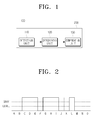
- FIG. 1 is a block diagram illustrating a structure of an image forming apparatus 100, according to an exemplary embodiment of the present invention.
- the image forming apparatus 100 comprises a detection unit 110, a categorization unit 120, and a compensation unit 130.
- the detection unit 110, categorization unit 120, and compensation unit 130 may be embodied in a single image processing device 200.
- the image forming apparatus 100 may enhance an image, for example, by increasing a resolution of an image.
- the image can include a picture, text, and/or a hairline, also referred to as an outline.
- the image forming apparatus can highlight an edge of an image such as a picture.
- the image forming apparatus 100 is applicable to a host device, such as, a personal computer, a notebook computer, or an image forming apparatus, such as, a printer, a multi-functional unit, or a scanner.
- a host device such as, a personal computer, a notebook computer, or an image forming apparatus, such as, a printer, a multi-functional unit, or a scanner.
- the detection unit 110 detects an edge of an input gray scale image.
- an edge is an area in the image where a discontinuity of a gray value exists, i.e., an area comprising two areas having substantially different gray values. More particularly, an edge can include two or more adjacent pixels having different gray values.
- An edge is detected by computing a difference of gray values between adjacent pixels surrounding a certain selected pixel (center pixel). Gray values can be measured in terms of pixel luminance and chrominance.
- the detection unit 110 calculates a sum of maximum/minimum gray value differences in horizontal and vertical directions from a center pixel of the input grayscale image, and compares the sum with a gray threshold value (TH_EDGE), to detect the edge.
- TH_EDGE gray threshold value
- gray values can be computed in any suitable direction, for example, between the center pixel and diagonally adjacent pixels.
- the gray threshold value may be set to, for example, 128, which is a central value of gray values ranging from 0 ⁇ 255.
- the gray threshold value may be set to 64, for example.
- the gray threshold value may be modified, according to a particular application, and it is not limited to the above examples.
- the detection unit 110 filters an area of an input image using a high-pass filter, and a pixel having a maximum filtering value may be determined to be an edge.
- the high-pass filter may be a Canny filter, or a Sobel filter. That is, the detection unit 110 multiplies a weighting factor related to a size of a block of pixels filtered by a high-pass filter, for example, a 3X3 block, or a 5X5 block, by a pixel-related value of the input image. For example, the detection unit 110 multiplies the weighting factor of the high-pass filter, by the gray value differences between adjacent pixels of image data, and sums the multiplied values.
- the detection unit 110 computes an absolute value of the multiplied values. These computations are repeated after moving by one pixel in an X direction and/or one pixel in a Y direction. An edge is detected by observing a change of the absolute value. For example, an area in which the absolute value rapidly increases is an edge.
- the categorization unit 120 categorizes the detected edges, according to a gray value and a line width. That is, the categorization unit 120 may categorize the edges as rising edges or as falling edges, according to whether a sum of the differences of the gray values of the pixels of the detected edge is positive or negative. For example, if the sum of the differences of the gray values of the edge (diff_sum) is positive, the edge is classified as a rising edge. If the sum of the differences of the gray values of the edge (diff_sum) is negative, the edge is classified as a falling edge.
- diff_sum dx ⁇ 1 + dx ⁇ 2 + dy ⁇ 1 + dy ⁇ 2
- 'sum' refers to the sum of differences of gray values in the horizontal and vertical directions.
- the categorization unit 120 may categorize the falling edges and the rising edges as positive hairlines or as negative hairlines, respectively, according to a comparison with a threshold value (TH_WIDTH) of a predetermined line width, which is described in detail below, with reference to FIG. 2 .
- TH_WIDTH a threshold value of a predetermined line width
- FIG. 2 is a schematic diagram illustrating the categorization of edge types, according to an exemplary embodiment of the present invention.
- the edge types are determined according to an assumption that the threshold value (TH_WIDTH) of the predetermined line width is 1.
- the vertical axis indicates a gray value (image intensity) and the horizontal axis indicates pixel IDs for pixels A-O.
- Pixel B has a lower gray value than pixel C and the same gray value as pixel A, indicating a rising edge between pixel B and pixel C.
- Pixel C has the same gray value as pixel D
- pixel B has the same gray value as pixel A, indicating that pixels B and C do not make up a hairline.
- Pixel J has a lower gray value than pixel I and the same gray value as pixel K, indicating a falling edge between pixel I and pixel J.
- Pixel J has the same gray value as pixel K, and pixel I has the same gray value as pixel H, indicating that pixels I and J do not make up a hairline.
- Pixel F has a lower gray value than adjacent pixels E and G indicating pixel F is part of a positive hairline.
- a positive hairline is a darker, thin line on a lighter background.
- Pixel L has a higher gray value than adjacent pixels K and M, indicating pixel L is part of a negative hairline.
- a negative hairline is a lighter thin line on a darker background.
- a line width of a positive hairline may be increased by a dot gain effect.
- a line width of a negative hairline may be decreased by the dot gain effect.
- the compensation unit 130 compensates the gray value of one or more pixels included in an edge, according to the categorized type of edge. That is, the compensation unit 130 may increase or decrease the gray value of one or more pixels, according to a type of edge formed by the pixels.
- the compensation unit 130 can alternately adjust the gray values of adjacent pixels included in an edge, to further define an edge. For example, the compensation unit can increase a difference in gray values between adjacent pixels of an edge.
- the compensation unit 130 increases the gray value of the edge. If the categorized edge is a falling edge, the compensation unit 130 decreases the gray value of the edge. If the categorized edge is a positive hairline, the compensation unit 130 decreases the gray value of the pixel. If the categorized edge is a negative hairline, the compensation unit 130 increases the gray value of the pixel, and increases the gray value of an adjacent pixel, to thereby increase the line width of the negative hairline.
- the compensation unit 130 may compensate a pixel forming an edge, based on a lookup table.
- the lookup table can include different gray value compensation amounts according to the categorized edges. This will be explained below in detail with reference to FIG. 3 .
- FIG. 3 is a graph illustrating gray values of a lookup table of compensation values to be applied according to types of edges, according to an exemplary embodiment of the present invention.
- the compensation values can be used to adjust the relative gray levels of one or more pixels of an edge. Referring to FIG. 3 , if the categorized edge is a rising edge, a compensation value is determined using line 220 (LUT 2), to brighten the image by increasing the gray value. If the categorized edge is a falling edge, a compensation value is determined using line 240 (LUT 3), to darken the image by decreasing the gray value. If the categorized edge is a positive hairline, a compensation value is determined using line 230 (LUT 4) to decrease the gray value of a pixel. If the categorized edge is a negative hairline, the gray value of a pixel is increased according to a compensation value from line 210 (LUT 1).
- the line width of the negative hairline may be increased.
- the lookup tables may be provided corresponding to the edge types, and the gray value recorded in the lookup table may be modified according to a plan of a designer. Accordingly, the number lines, and the gray values are not limited thereto.
- FIG. 4 is a graph illustrating pixels A-O of FIG. 2 , after the gray values of various pixels A-O, which make up edges or hairlines are compensated, according to an exemplary embodiment of the present invention.
- a rising edge between pixels B and C has been compensated for, by decreasing the gray value of pixel B by two gray value units (shown as blocks) and by increasing the gray value of pixel C by two units.
- the gray value of pixel F which represents a positive hairline, has been compensated by decreasing the gray value of pixel F by one gray value unit.
- adjacent pixels are generally not compensated.
- the gray values of pixels E and G, which are adjacent to pixel F are not compensated.
- the gray value of pixel L which is included in a negative hairline, is increased by one unit.
- the width of the negative hairline is compensated by increasing the gray value of pixel M to match the gray value of pixel L, thereby increasing the width of the negative hairline.
- FIG. 5A illustrates images before performing an image enhancement
- FIG. 5B illustrates the images after applying to an image enhancement process, according to an exemplary embodiment of the present invention.
- outline of the text in the images is unclear.
- edges of the text in the images are categorized, and gray values of the pixels making up the edges are compensated by varying amounts, according to the categorized edge types. The compensation results in increased contrast at the edges of the text. Accordingly, the text may be represented in high resolution.
- FIG. 6 is a flowchart illustrating an image forming method, according to an exemplary embodiment of the present invention.
- the detection unit 110 compares a sum of differences between maximum/minimum gray values of a selected pixel (center pixel) and adjacent pixels, with a predetermined gray threshold value (TH_EDGE), to determine whether the selected pixel is included in an edge.
- the adjacent pixels can be, for example, horizontally adjacent, vertically adjacent, or diagonally adjacent to the selected pixel.
- the determination as to whether a pixel is included in an edge can also be performed using other known techniques.
- a detected edge is categorized according to a gray value and line width of the detected edge (S420). For example, if a sum of the differences of gray values of the detected edge (diff_sum) is positive, the edge is categorized as a rising edge, and if a sum of the differences of gray values of the detected edge (diff_sum) is negative, the edge is categorized as a falling edge. If a line width of the detected edge is less than the predetermined line width threshold value (TH_EDGE), the edge may be categorized as a positive hairline or a negative hairline.
- TH_EDGE predetermined line width threshold value
- At least one of a gray value and a line width of a categorized edge is compensated, according to the categorized edge type (S430). For example, if the categorized edge is a rising edge, a gray value of a pixel included in the edge is increased, and if the categorized edge is a falling edge, a gray value of a pixel included in the edge is decreased. If the categorized edge is a positive hairline, a gray value of a pixel included in the edge is decreased. If the categorized edge is a negative hairline, a gray value of a pixel included in the hairline is increased and a line width of the edge is increased by increasing the gray value of an adjacent pixel.
- an edge is a positive hairline
- a gray value of pixels adjacent to the pixel included in the positive hairline may not be compensated.
- the balance of an image having the positive hairline may be degraded by overcompensation.
- an image may be represented in high resolution.
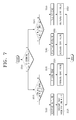
- FIG. 7 is a flowchart illustrating an exemplary embodiment of the method of FIG. 6 .
- an edge of a gray scale image is detected, and a determination is made as to whether a sum of the differences of gray values of the detected edge is positive (S510:Y). If the sum is positive, a determination is made as to whether or not a line width of the edge is less than a predetermined line width threshold value (S515). If the line width of the edge is less than the predetermined line width threshold value (S515:Y), the edge is categorized as a negative hairline (S520). The gray value and line width of the negative hairline are then increased, by increasing the gray value of a pixel included in the hairline and the gray value of an adjacent pixel (S525).
- the edge is categorized as a rising edge (S530). A gray value of the rising edge is then increased (S535).
- a line width of the edge is less than the predetermined line width threshold value (S540). If the line width of the edge is less than the predetermined line width threshold value (S540:Y), the edge is categorized as a positive hairline (S545). The gray value of the positive hairline, is increased, by increasing the gray value of a pixel included in the positive hairline (S550). If a line width of the edge exceeds a predetermined line width threshold value (S545:N), the edge is categorized as a rising edge (S555). A gray value of the rising edge is then increased (S560).
- An uneven outline of an image is sharpened and smoothed, such that an image may be represented in high resolution. Additionally, a hairline not represented due to a dot gain effect, may be clearly represented.
- resolution of an image is improved.
- An uneven outline of an image for example text, is sharpened and smoothed, such that the resolution of the image is increased and the image can be represented in high resolution. Additionally, a hairline not represented due to dot gain effect may be clearly represented.
Landscapes
- Engineering & Computer Science (AREA)
- Physics & Mathematics (AREA)
- General Physics & Mathematics (AREA)
- Multimedia (AREA)
- Signal Processing (AREA)
- Microelectronics & Electronic Packaging (AREA)
- Image Processing (AREA)
- Facsimile Image Signal Circuits (AREA)
- Image Analysis (AREA)
Abstract
Description
- The present invention relates to an image forming apparatus and method thereof.
- Generally, an image forming apparatus, such as a laser printer, performs a halftone process for each pixel representing an image when displaying a gray scale image in monochrome. The halftone process is a method for representing a gray scale image, by adjusting the number of dots constituting the pixels. For example, if the number of black dots is from 0 to 255, an image can be produced having 256 different gray values.
- If an image forming apparatus enhances the quality or characteristics of the halftone-processed image, edges of the image can be blurred. An 'edge' is a boundary area between pixels of an image, for example, a discontinuous line of a gray level pattern.
- There are methods to correct blurring edges. In one such method, for example, an edge is detected after applying a binary system to an input image, and an edge map is drawn. A gray value of an area in which an edge exists, is changed using the edge map. A diffused gray value is compensated by changing the gray value.
- Alternatively, a line width is increased when the brightness of a line of an input image exceeds a threshold value, and when the line width is less than a threshold value.
- However, the above methods have various problems. For example, when edges are detected after applying a binary system to an image, edges exceeding a certain brightness may not be detected, because a compensating position and/or a gray value of the undetected edge may differ from a detection position of the input image. In addition, the gray value and the shape of the edge are changed between input and output of the image. Furthermore, an edge is not compensated when a negative hairline of an image is exclusively considered. Accordingly, these methods may not improve resolution of an image.
- Aspects of the present invention relate to an image forming apparatus to improve a resolution of an image, and a method thereof.
- Additional aspects and/or advantages of the invention will be set forth in part in the description which follows, and in part, will be obvious from the description, or may be learned by practice of the invention.
- According to aspects of the present invention, there is provided an image forming apparatus comprising an image processing device to compensate at least one of a gray value and a line width of an edge according to the edge type forming an input image.
- The image processing device may comprise a detection unit to detect an edge of an input image; a categorization unit to categorize the edge into an edge type, according to a gray value and a line width associated with the edge; and a compensation unit to compensate at least one of the gray value and the line width according to the categorized edge type.
- The image may comprise text and/or a hairline.
- The image may be formed of pixels, and the detection unit may sequentially set each of the pixels as a center pixel, and determine whether the center pixel is included in an edge by comparing a sum of gray value differences between the center pixel and adjacent ones of the pixels with a predetermined gray threshold value.
- If the sum is positive, the categorization unit may categorize the edge as a rising edge, and if the sum is negative, the categorization unit may categorize the edge as a falling edge.
- If the line width of the rising edge is less than a predetermined line width threshold value, the categorization unit may categorize the rising edge as a negative hairline, and if the line width of the falling edge is less than the predetermined line width threshold value, the categorization unit may categorize the falling edge as a positive hairline.
- If the edge is a rising edge, the compensation unit may increase a gray value of the rising edge; if the edge is a falling edge, the compensation unit may decrease a gray value of the falling edge; if the edge is a positive hairline, the compensation unit may decrease a gray value of the positive hairline; and if the edge is a negative hairline, the compensation unit may increase a gray value and a line width of the negative hairline.
- The compensation unit may compensate the edge based on a lookup table comprising gray value compensation amounts corresponding to the categorized edge type.
- The detection unit may comprise a high-pass filter to filter an area of the image. The high-pass filter may comprise a Canny filter or a Sobel filter.
- The detection unit may comprise a high-pass filter to filter an area of the image, multiply a weighting factor of the high-pass filter by the gray value differences, and add the multiplied differences to produce the sum.
- The compensation unit may increase a gray value of one of the pixels that is adjacent to one of the pixels associated with the negative hairline, to compensate the line width of the edge.
- The compensation unit may increase a difference in gray values of adjacent ones of the pixels associated with the edge, to compensate the gray value of the edge.
- According to aspects of the present invention, there is provided an image forming method, comprising: detecting an edge of an input image; categorizing the edge into an edge type, according to a gray value and a line width of the edge; and compensating at least one of the gray value and the line width of the edge according to the categorized edge type.
- The image may comprise text and/or a hairline.
- The image may be formed of pixels, and the detecting of the edge may sequentially comprise setting each of the pixels as a center pixel; and comparing a sum of gray value differences between the center pixel and adjacent ones of the pixels with a predetermined gray threshold value.
- The categorizing of the edge may comprise categorizing the edge as a rising edge, if the sum is positive; and categorizing the edge as a falling edge, if the sum is negative.
- The categorizing of the edge may comprise categorizing the rising edge as a negative hairline, if the line width of the rising edge is less than a predetermined line width threshold value; and categorizing the falling edge as a positive hairline, if the line width of the falling edge is less than the predetermined line width threshold value.
- If the edge is a rising edge, the compensating may increase a gray value of the rising edge. If the edge is a falling edge, the compensating may decrease a gray value of the falling edge. If the edge is a positive hairline, the compensating may decrease a gray value of the positive hairline. If the edge is a negative hairline, the compensating may increase a gray value and a line width of the negative hairline.
- The compensating may comprise compensating the gray value based on a lookup table comprising gray value compensation amounts corresponding to the categorized edge type.
- The detecting may comprise filtering an area of the image.
- The compensating may comprise increasing a difference in gray values of adjacent ones of the pixels associated with the edge.
- The compensating may comprise increasing a gray value of one of the pixels that is adjacent to one of the pixels associated with the negative hairline, to compensate the line width of the edge.
- The compensating may further comprise increases a difference in gray values of adjacent ones of the pixels associated with the negative hair line, to compensate the gray value of the edge.
- The detecting may further comprise multiplying a weighting factor of a high-pass filter by the gray value differences, and adding the multiplied differences to produce the sum.
- Additional aspects and/or advantages of the invention will be set forth in part in the description which follows and, in part, will be obvious from the description, or may be learned by practice of the invention.
- These and/or other aspects and advantages of the invention will become apparent and more readily appreciated from the following description of the embodiments, taken in conjunction with the accompanying drawings of which:
-
FIG. 1 is a block diagram illustrating structure of an image forming apparatus, according to an exemplary embodiment of the present invention; -
FIG. 2 is a schematic diagram illustrating edge types categorized according to an exemplary embodiment of the present invention; -
FIG. 3 is a graph illustrating a gray-value lookup table according to edge type, according to an exemplary embodiment of the present invention; -
FIG. 4 is a graph illustrating gray values compensated according to edge type, according to an exemplary embodiment of the present invention; -
FIGS. 5A and5B are schematic diagrams illustrating a compensated image, according to an exemplary embodiment of the present invention; -
FIG. 6 is a flowchart illustrating an image forming method, according to an exemplary embodiment of the present invention; and -
FIG. 7 is a flowchart illustrating an edge categorizing method and a compensating method, according to exemplary embodiments of the present invention - Reference will now be made in detail to the exemplary embodiments of the present invention, examples of which are illustrated in the accompanying drawings, wherein like reference numerals refer to the like elements throughout. The embodiments are described below, in order to explain the present invention by referring to the figures.
-
FIG. 1 is a block diagram illustrating a structure of animage forming apparatus 100, according to an exemplary embodiment of the present invention. Referring toFIG. 1 , theimage forming apparatus 100 comprises adetection unit 110, acategorization unit 120, and acompensation unit 130. Thedetection unit 110,categorization unit 120, andcompensation unit 130 may be embodied in a singleimage processing device 200. Theimage forming apparatus 100 may enhance an image, for example, by increasing a resolution of an image. The image can include a picture, text, and/or a hairline, also referred to as an outline. The image forming apparatus can highlight an edge of an image such as a picture. - The
image forming apparatus 100 is applicable to a host device, such as, a personal computer, a notebook computer, or an image forming apparatus, such as, a printer, a multi-functional unit, or a scanner. - The
detection unit 110 detects an edge of an input gray scale image. As referred to herein, an edge is an area in the image where a discontinuity of a gray value exists, i.e., an area comprising two areas having substantially different gray values. More particularly, an edge can include two or more adjacent pixels having different gray values. An edge is detected by computing a difference of gray values between adjacent pixels surrounding a certain selected pixel (center pixel). Gray values can be measured in terms of pixel luminance and chrominance. Thedetection unit 110 calculates a sum of maximum/minimum gray value differences in horizontal and vertical directions from a center pixel of the input grayscale image, and compares the sum with a gray threshold value (TH_EDGE), to detect the edge. The gray values of the horizontal and vertical directions are generally computed in four directions, on the basis of the central pixel (m, n), by Formula 1:
- In
Formula 1, "x" represents an X direction (vertical direction), and "y" represents a Y direction (horizontal direction). The gray values can be computed in any suitable direction, for example, between the center pixel and diagonally adjacent pixels. - The gray threshold value (TH_EDGE) may be set to, for example, 128, which is a central value of gray values ranging from 0~255. The gray threshold value may be set to 64, for example. The gray threshold value may be modified, according to a particular application, and it is not limited to the above examples.
- The
detection unit 110 filters an area of an input image using a high-pass filter, and a pixel having a maximum filtering value may be determined to be an edge. The high-pass filter may be a Canny filter, or a Sobel filter. That is, thedetection unit 110 multiplies a weighting factor related to a size of a block of pixels filtered by a high-pass filter, for example, a 3X3 block, or a 5X5 block, by a pixel-related value of the input image. For example, thedetection unit 110 multiplies the weighting factor of the high-pass filter, by the gray value differences between adjacent pixels of image data, and sums the multiplied values. - The
detection unit 110 computes an absolute value of the multiplied values. These computations are repeated after moving by one pixel in an X direction and/or one pixel in a Y direction. An edge is detected by observing a change of the absolute value. For example, an area in which the absolute value rapidly increases is an edge. - The
categorization unit 120 categorizes the detected edges, according to a gray value and a line width. That is, thecategorization unit 120 may categorize the edges as rising edges or as falling edges, according to whether a sum of the differences of the gray values of the pixels of the detected edge is positive or negative. For example, if the sum of the differences of the gray values of the edge (diff_sum) is positive, the edge is classified as a rising edge. If the sum of the differences of the gray values of the edge (diff_sum) is negative, the edge is classified as a falling edge. - The sum of the differences of the gray values of the edge (diff_sum) is computed using the following equation:

- The term 'sum' refers to the sum of differences of gray values in the horizontal and vertical directions.
- The
categorization unit 120 may categorize the falling edges and the rising edges as positive hairlines or as negative hairlines, respectively, according to a comparison with a threshold value (TH_WIDTH) of a predetermined line width, which is described in detail below, with reference toFIG. 2 . -
FIG. 2 is a schematic diagram illustrating the categorization of edge types, according to an exemplary embodiment of the present invention. Referring toFIG. 2 , the edge types are determined according to an assumption that the threshold value (TH_WIDTH) of the predetermined line width is 1. The vertical axis indicates a gray value (image intensity) and the horizontal axis indicates pixel IDs for pixels A-O. - Pixel B has a lower gray value than pixel C and the same gray value as pixel A, indicating a rising edge between pixel B and pixel C. Pixel C has the same gray value as pixel D, and pixel B has the same gray value as pixel A, indicating that pixels B and C do not make up a hairline. Pixel J has a lower gray value than pixel I and the same gray value as pixel K, indicating a falling edge between pixel I and pixel J. Pixel J has the same gray value as pixel K, and pixel I has the same gray value as pixel H, indicating that pixels I and J do not make up a hairline.
- Pixel F has a lower gray value than adjacent pixels E and G indicating pixel F is part of a positive hairline. A positive hairline is a darker, thin line on a lighter background. Pixel L has a higher gray value than adjacent pixels K and M, indicating pixel L is part of a negative hairline. A negative hairline is a lighter thin line on a darker background. A line width of a positive hairline may be increased by a dot gain effect. A line width of a negative hairline may be decreased by the dot gain effect.
- Referring to
FIG. 1 , thecompensation unit 130 compensates the gray value of one or more pixels included in an edge, according to the categorized type of edge. That is, thecompensation unit 130 may increase or decrease the gray value of one or more pixels, according to a type of edge formed by the pixels. Thecompensation unit 130 can alternately adjust the gray values of adjacent pixels included in an edge, to further define an edge. For example, the compensation unit can increase a difference in gray values between adjacent pixels of an edge. - If the categorized edge is a rising edge, the
compensation unit 130 increases the gray value of the edge. If the categorized edge is a falling edge, thecompensation unit 130 decreases the gray value of the edge. If the categorized edge is a positive hairline, thecompensation unit 130 decreases the gray value of the pixel. If the categorized edge is a negative hairline, thecompensation unit 130 increases the gray value of the pixel, and increases the gray value of an adjacent pixel, to thereby increase the line width of the negative hairline. - The
compensation unit 130 may compensate a pixel forming an edge, based on a lookup table. The lookup table can include different gray value compensation amounts according to the categorized edges. This will be explained below in detail with reference toFIG. 3 . -
FIG. 3 is a graph illustrating gray values of a lookup table of compensation values to be applied according to types of edges, according to an exemplary embodiment of the present invention. The compensation values can be used to adjust the relative gray levels of one or more pixels of an edge. Referring toFIG. 3 , if the categorized edge is a rising edge, a compensation value is determined using line 220 (LUT 2), to brighten the image by increasing the gray value. If the categorized edge is a falling edge, a compensation value is determined using line 240 (LUT 3), to darken the image by decreasing the gray value. If the categorized edge is a positive hairline, a compensation value is determined using line 230 (LUT 4) to decrease the gray value of a pixel. If the categorized edge is a negative hairline, the gray value of a pixel is increased according to a compensation value from line 210 (LUT 1). - If the edge is a negative hairline, in consideration of the dot gain effect, the line width of the negative hairline may be increased. The lookup tables may be provided corresponding to the edge types, and the gray value recorded in the lookup table may be modified according to a plan of a designer. Accordingly, the number lines, and the gray values are not limited thereto.
-
FIG. 4 is a graph illustrating pixels A-O ofFIG. 2 , after the gray values of various pixels A-O, which make up edges or hairlines are compensated, according to an exemplary embodiment of the present invention. Referring toFIG. 4 , a rising edge between pixels B and C has been compensated for, by decreasing the gray value of pixel B by two gray value units (shown as blocks) and by increasing the gray value of pixel C by two units. - The gray value of pixel F, which represents a positive hairline, has been compensated by decreasing the gray value of pixel F by one gray value unit. When compensating pixels of a positive hairline, adjacent pixels are generally not compensated. For example, the gray values of pixels E and G, which are adjacent to pixel F, are not compensated.
- The gray value of pixel L, which is included in a negative hairline, is increased by one unit. The width of the negative hairline is compensated by increasing the gray value of pixel M to match the gray value of pixel L, thereby increasing the width of the negative hairline.
-
FIG. 5A illustrates images before performing an image enhancement, andFIG. 5B illustrates the images after applying to an image enhancement process, according to an exemplary embodiment of the present invention. Referring toFIG. 5A , outline of the text in the images is unclear. Referring toFIG. 5B , edges of the text in the images are categorized, and gray values of the pixels making up the edges are compensated by varying amounts, according to the categorized edge types. The compensation results in increased contrast at the edges of the text. Accordingly, the text may be represented in high resolution. -
FIG. 6 is a flowchart illustrating an image forming method, according to an exemplary embodiment of the present invention. Referring toFIG. 6 , if a gray scale image is input, an edge of the input gray scale image is detected (S410). That is, thedetection unit 110 compares a sum of differences between maximum/minimum gray values of a selected pixel (center pixel) and adjacent pixels, with a predetermined gray threshold value (TH_EDGE), to determine whether the selected pixel is included in an edge. The adjacent pixels can be, for example, horizontally adjacent, vertically adjacent, or diagonally adjacent to the selected pixel. The determination as to whether a pixel is included in an edge can also be performed using other known techniques. - A detected edge is categorized according to a gray value and line width of the detected edge (S420). For example, if a sum of the differences of gray values of the detected edge (diff_sum) is positive, the edge is categorized as a rising edge, and if a sum of the differences of gray values of the detected edge (diff_sum) is negative, the edge is categorized as a falling edge. If a line width of the detected edge is less than the predetermined line width threshold value (TH_EDGE), the edge may be categorized as a positive hairline or a negative hairline.
- At least one of a gray value and a line width of a categorized edge is compensated, according to the categorized edge type (S430). For example, if the categorized edge is a rising edge, a gray value of a pixel included in the edge is increased, and if the categorized edge is a falling edge, a gray value of a pixel included in the edge is decreased. If the categorized edge is a positive hairline, a gray value of a pixel included in the edge is decreased. If the categorized edge is a negative hairline, a gray value of a pixel included in the hairline is increased and a line width of the edge is increased by increasing the gray value of an adjacent pixel.
- If an edge is a positive hairline, a gray value of pixels adjacent to the pixel included in the positive hairline may not be compensated. In this case, the balance of an image having the positive hairline may be degraded by overcompensation. As a result, an image may be represented in high resolution.
-
FIG. 7 is a flowchart illustrating an exemplary embodiment of the method ofFIG. 6 . Referring toFIG. 7 , an edge of a gray scale image is detected, and a determination is made as to whether a sum of the differences of gray values of the detected edge is positive (S510:Y). If the sum is positive, a determination is made as to whether or not a line width of the edge is less than a predetermined line width threshold value (S515). If the line width of the edge is less than the predetermined line width threshold value (S515:Y), the edge is categorized as a negative hairline (S520). The gray value and line width of the negative hairline are then increased, by increasing the gray value of a pixel included in the hairline and the gray value of an adjacent pixel (S525). - If the line width of the edge is determined to exceed a predetermined line width threshold value (S515:N), the edge is categorized as a rising edge (S530). A gray value of the rising edge is then increased (S535).
- If the sum of the differences in the gray values of the detected edge is negative (S510:N), whether or not a line width of the edge is less than the predetermined line width threshold value is determined (S540). If the line width of the edge is less than the predetermined line width threshold value (S540:Y), the edge is categorized as a positive hairline (S545). The gray value of the positive hairline, is increased, by increasing the gray value of a pixel included in the positive hairline (S550).
If a line width of the edge exceeds a predetermined line width threshold value (S545:N), the edge is categorized as a rising edge (S555). A gray value of the rising edge is then increased (S560). - An uneven outline of an image is sharpened and smoothed, such that an image may be represented in high resolution. Additionally, a hairline not represented due to a dot gain effect, may be clearly represented.
- As described above, according to the exemplary embodiments of the present invention, resolution of an image is improved. An uneven outline of an image, for example text, is sharpened and smoothed, such that the resolution of the image is increased and the image can be represented in high resolution. Additionally, a hairline not represented due to dot gain effect may be clearly represented.
- Although a few embodiments of the present invention have been shown and described, it would be appreciated by those skilled in the art that changes may be made in this embodiment without departing from the principles of the invention, the scope of which is defined in the claims.
Claims (26)
- An image forming apparatus comprising:an image processing device for compensating at least one of a gray value and a line width of an edge according to an edge type of an input image.
- The image processing device according to claim 1, wherein the image processing device comprises:a detection unit for detecting an edge of an input image;a categorization unit for categorizing the edge into an edge type, according to a gray value and a line width associated with the edge; anda compensation unit for compensating at least one of the gray value and the line width according to the categorized edge type.
- The apparatus according to claim 2, wherein the image comprises text and/or a hairline.
- The apparatus according to claim 2 or 3, wherein the image is formed of pixels, and the detection unit is arranged to sequentially set each of the pixels as a center pixel, and to determine whether the center pixel is included in an edge by comparing a sum of gray value differences between the center pixel and adjacent ones of the pixels with a predetermined gray threshold value.
- The apparatus according to claim 4, wherein if the sum is positive, the categorization unit is arranged to categorize the edge as a rising edge, and if the sum is negative, the categorization unit is arranged to categorize the edge as a falling edge.
- The apparatus according to claim 5, wherein if the line width of the rising edge is less than a predetermined line width threshold value, the categorization unit is arranged to categorize the rising edge as a negative hairline, and if the line width of the falling edge is less than the predetermined line width threshold value, the categorization unit is arranged to categorize the falling edge as a positive hairline.
- The apparatus according to claim 6, wherein:if the edge is a rising edge, the compensation unit is arranged to increase a gray value of the rising edge;if the edge is a falling edge, the compensation unit is arranged to decrease a gray value of the falling edge;if the edge is a positive hairline, the compensation unit is arranged to decrease a gray value of the positive hairline; andif the edge is a negative hairline, the compensation unit is arranged to increase a gray value and a line width of the negative hairline.
- The apparatus according to any one of claims 2 to 7, wherein the compensation unit is arranged to compensate the edge based on a lookup table comprising gray value compensation amounts corresponding to the categorized edge type.
- The apparatus according to any one of claims 2 to 8, wherein the detection unit comprises a high-pass filter for filtering an area of the image.
- The apparatus according to claim 9, wherein the high-pass filter comprises a Canny filter or a Sobel filter.
- The apparatus according to any one of claims 4 to 7, wherein the detection unit comprises a high-pass filter for filtering an area of the image, and is arranged to multiply a weighting factor of the high-pass filter by the gray value differences, and to add the multiplied differences to produce the sum.
- The apparatus according to claim 6 or 7, wherein the compensation unit is arranged to increase a gray value of one of the pixels that is adjacent to one of the pixels associated with the negative hairline, to compensate the line width of the edge.
- The apparatus according to any one of claims 2 to 7, wherein the compensation unit is arranged to increases a difference in gray values of adjacent ones of the pixels associated with the edge, to compensate the gray value of the edge.
- An image forming method comprising:compensating at least one of a gray value and a line width of an edge according to an edge type of an input image.
- The method according to claim 14, comprising:detecting an edge of the input image;categorizing the edge into an edge type, according to a gray value and a line width of the edge; andcompensating at least one of the gray value and the line width of the edge according to the categorized edge type.
- The method according to claim 15, wherein the image comprises text and/or a hairline.
- The method according to claim 15 or 16, wherein the image is formed of pixels, and the detecting of the edge comprises:sequentially setting each of the pixels as a center pixel; andcomparing a sum of gray value differences between the center pixel and adjacent ones of the pixels with a predetermined gray threshold value.
- The method according to claim 17, wherein the categorizing of the edge comprises:categorizing the edge as a rising edge, if the sum is positive; andcategorizing the edge as a falling edge, if the sum is negative.
- The method according to claim 18, wherein the categorizing of the edge comprises:categorizing the rising edge as a negative hairline, if the line width of the rising edge is less than a predetermined line width threshold value; andcategorizing the falling edge as a positive hairline, if the line width of the falling edge is less than the predetermined line width threshold value.
- The method according to 19, wherein the compensating comprises:if the edge is a rising edge, increasing a gray value of the rising edge;if the edge is a falling edge, decreasing a gray value of the falling edge;if the edge is a positive hairline, decreasing a gray value of the positive hairline; andif the edge is a negative hairline, increasing a gray value and a line width of the negative hairline.
- The method according to any one of claims 15 to 20, wherein the compensating comprises compensating the gray value based on a lookup table comprising gray value compensation amounts corresponding to the categorized edge type.
- The method according to any one of claims 15 to 20, wherein the detecting comprises filtering an area of the image.
- The method according to any one of claims 15 to 20, wherein the compensating comprises increasing a difference in gray values of adjacent ones of the pixels associated with the edge.
- The method according to 19, wherein the compensating comprises increasing a gray value of one of the pixels that is adjacent to one of the pixels associated with the negative hairline, to compensate the line width of the edge.
- The method according to claim 24, wherein the compensating further comprises increases a difference in gray values of adjacent ones of the pixels associated with the negative hair line, to compensate the gray value of the edge.
- The method according to claim 17, wherein the detecting further comprises multiplying a weighting factor of a high-pass filter by the gray value differences, and adding the multiplied differences to produce the sum.
Applications Claiming Priority (1)
| Application Number | Priority Date | Filing Date | Title |
|---|---|---|---|
| KR20070046145 | 2007-05-11 |
Publications (3)
| Publication Number | Publication Date |
|---|---|
| EP2026135A2 true EP2026135A2 (en) | 2009-02-18 |
| EP2026135A3 EP2026135A3 (en) | 2015-11-25 |
| EP2026135B1 EP2026135B1 (en) | 2019-05-08 |
Family
ID=39969247
Family Applications (1)
| Application Number | Title | Priority Date | Filing Date |
|---|---|---|---|
| EP08102155.2A Not-in-force EP2026135B1 (en) | 2007-05-11 | 2008-02-29 | Image forming apparatus and method thereof |
Country Status (3)
| Country | Link |
|---|---|
| US (1) | US8248662B2 (en) |
| EP (1) | EP2026135B1 (en) |
| KR (1) | KR101180059B1 (en) |
Cited By (1)
| Publication number | Priority date | Publication date | Assignee | Title |
|---|---|---|---|---|
| CN109523483A (en) * | 2018-11-14 | 2019-03-26 | 北京奇艺世纪科技有限公司 | A kind of image defogging method and device |
Families Citing this family (8)
| Publication number | Priority date | Publication date | Assignee | Title |
|---|---|---|---|---|
| TWI494824B (en) * | 2010-08-24 | 2015-08-01 | Quanta Comp Inc | Optical touch system and method |
| CN102402342B (en) * | 2010-09-08 | 2015-04-22 | 广达电脑股份有限公司 | Optical touch system and method |
| JP6489763B2 (en) * | 2014-06-18 | 2019-03-27 | キヤノン株式会社 | Image processing apparatus, image processing method, and program |
| KR101665977B1 (en) | 2014-09-23 | 2016-10-24 | 주식회사 신도리코 | Apparatus and method for image correction |
| JP6701687B2 (en) * | 2015-11-20 | 2020-05-27 | セイコーエプソン株式会社 | Image processing apparatus, image processing method, and image processing program |
| KR102773390B1 (en) | 2016-09-23 | 2025-02-28 | 삼성전자주식회사 | Method for measuring pattern and method for manufacturing semiconductor device including the same |
| TWI601122B (en) * | 2016-11-15 | 2017-10-01 | 晨星半導體股份有限公司 | Image compensation method applied to display and associated control circuit |
| CN110491797B (en) * | 2019-09-29 | 2021-10-22 | 云谷(固安)科技有限公司 | Line width measurement method and equipment |
Family Cites Families (13)
| Publication number | Priority date | Publication date | Assignee | Title |
|---|---|---|---|---|
| US6535307B1 (en) * | 1997-02-13 | 2003-03-18 | Agfa Corporation | Method and apparatus for display of imaging parameters |
| US6285801B1 (en) * | 1998-05-29 | 2001-09-04 | Stmicroelectronics, Inc. | Non-linear adaptive image filter for filtering noise such as blocking artifacts |
| JP2000101871A (en) | 1998-09-25 | 2000-04-07 | Nippon Hoso Kyokai <Nhk> | Edge enhancement processing circuit |
| JP2001008037A (en) | 1999-06-23 | 2001-01-12 | Nec Corp | Pixel interpolation method and circuit |
| AU2001273326A1 (en) * | 2000-07-11 | 2002-01-21 | Mediaflow, Llc | System and method for calculating an optimum display size for a visual object |
| JP3855800B2 (en) * | 2002-02-27 | 2006-12-13 | ブラザー工業株式会社 | Image processing apparatus and image processing method |
| US7764839B2 (en) * | 2003-08-14 | 2010-07-27 | Fujifilm Corporation | Edge detecting apparatus and method, and image size enlarging and reducing apparatus and method |
| US7391920B2 (en) * | 2003-11-04 | 2008-06-24 | Fujifilm Corporation | Image processing method, apparatus, and program |
| KR100683060B1 (en) | 2004-12-08 | 2007-02-15 | 한국전자통신연구원 | Apparatus and method for removing blocking of image frames |
| TWI272853B (en) * | 2005-09-21 | 2007-02-01 | Quanta Comp Inc | Image edge enhancement apparatus and method thereof |
| US7518618B2 (en) * | 2005-12-23 | 2009-04-14 | Xerox Corporation | Anti-aliased tagging using look-up table edge pixel identification |
| US20070236707A1 (en) * | 2006-04-06 | 2007-10-11 | Kabushiki Kaisha Toshiba | Image processing apparatus, image processing method and image processing program |
| JP4270266B2 (en) * | 2006-11-29 | 2009-05-27 | コニカミノルタビジネステクノロジーズ株式会社 | Image forming apparatus, line width control method, and line width control program |
-
2007
- 2007-11-12 KR KR1020070115107A patent/KR101180059B1/en not_active Expired - Fee Related
- 2007-11-20 US US11/942,906 patent/US8248662B2/en not_active Expired - Fee Related
-
2008
- 2008-02-29 EP EP08102155.2A patent/EP2026135B1/en not_active Not-in-force
Cited By (1)
| Publication number | Priority date | Publication date | Assignee | Title |
|---|---|---|---|---|
| CN109523483A (en) * | 2018-11-14 | 2019-03-26 | 北京奇艺世纪科技有限公司 | A kind of image defogging method and device |
Also Published As
| Publication number | Publication date |
|---|---|
| KR20080100116A (en) | 2008-11-14 |
| KR101180059B1 (en) | 2012-09-04 |
| EP2026135B1 (en) | 2019-05-08 |
| US20080278762A1 (en) | 2008-11-13 |
| US8248662B2 (en) | 2012-08-21 |
| EP2026135A3 (en) | 2015-11-25 |
Similar Documents
| Publication | Publication Date | Title |
|---|---|---|
| EP2026135B1 (en) | Image forming apparatus and method thereof | |
| JP5895734B2 (en) | Image processing apparatus and image processing method | |
| EP1857975B1 (en) | Histogram adjustment for high dynamic range image mapping | |
| JP4423298B2 (en) | Text-like edge enhancement in digital images | |
| EP1857976B1 (en) | Histogram adjustment for high dynamic range image mapping | |
| US7912280B2 (en) | Image processing apparatus, image processing method, and image processing program | |
| US7792384B2 (en) | Image processing apparatus, image processing method, program, and recording medium therefor | |
| US8433153B2 (en) | Image correction apparatus and image correction method | |
| US20110285871A1 (en) | Image processing apparatus, image processing method, and computer-readable medium | |
| KR102318488B1 (en) | Image processing apparatus and image processing method | |
| JPH05225332A (en) | Method and apparatus for variable-space wave filtering | |
| US8200038B2 (en) | Image processing apparatus and image processing method | |
| JP4264051B2 (en) | Image processing device | |
| US8958636B1 (en) | Configurable color trapping | |
| US20040169872A1 (en) | Blind inverse halftoning | |
| US9760980B1 (en) | Correcting moiré pattern effects | |
| KR101024818B1 (en) | Image Processing Device Using Error Diffusion Method | |
| US20070086059A1 (en) | Image sharpness device and method | |
| JP4005243B2 (en) | Image processing device | |
| JP3977112B2 (en) | Color image processing method and color image processing apparatus | |
| Gratton | Backward Diffusion Methods for Digital Halftoning | |
| JP2006331163A (en) | Image processing device | |
| CN110853589A (en) | Method for adjusting display device with double-panel | |
| JP2002271617A (en) | Image processing unit |
Legal Events
| Date | Code | Title | Description |
|---|---|---|---|
| PUAI | Public reference made under article 153(3) epc to a published international application that has entered the european phase |
Free format text: ORIGINAL CODE: 0009012 |
|
| AK | Designated contracting states |
Kind code of ref document: A2 Designated state(s): AT BE BG CH CY CZ DE DK EE ES FI FR GB GR HR HU IE IS IT LI LT LU LV MC MT NL NO PL PT RO SE SI SK TR |
|
| AX | Request for extension of the european patent |
Extension state: AL BA MK RS |
|
| RAP1 | Party data changed (applicant data changed or rights of an application transferred) |
Owner name: SAMSUNG ELECTRONICS CO., LTD. |
|
| PUAL | Search report despatched |
Free format text: ORIGINAL CODE: 0009013 |
|
| AK | Designated contracting states |
Kind code of ref document: A3 Designated state(s): AT BE BG CH CY CZ DE DK EE ES FI FR GB GR HR HU IE IS IT LI LT LU LV MC MT NL NO PL PT RO SE SI SK TR |
|
| AX | Request for extension of the european patent |
Extension state: AL BA MK RS |
|
| RIC1 | Information provided on ipc code assigned before grant |
Ipc: G03G 15/00 20060101AFI20151020BHEP |
|
| 17P | Request for examination filed |
Effective date: 20160525 |
|
| RBV | Designated contracting states (corrected) |
Designated state(s): AT BE BG CH CY CZ DE DK EE ES FI FR GB GR HR HU IE IS IT LI LT LU LV MC MT NL NO PL PT RO SE SI SK TR |
|
| AKX | Designation fees paid |
Designated state(s): DE FR GB NL |
|
| STAA | Information on the status of an ep patent application or granted ep patent |
Free format text: STATUS: REQUEST FOR EXAMINATION WAS MADE |
|
| R17P | Request for examination filed (corrected) |
Effective date: 20160525 |
|
| RAP1 | Party data changed (applicant data changed or rights of an application transferred) |
Owner name: S-PRINTING SOLUTION CO., LTD. |
|
| RAP1 | Party data changed (applicant data changed or rights of an application transferred) |
Owner name: HP PRINTING KOREA CO., LTD. |
|
| STAA | Information on the status of an ep patent application or granted ep patent |
Free format text: STATUS: EXAMINATION IS IN PROGRESS |
|
| 17Q | First examination report despatched |
Effective date: 20180927 |
|
| GRAP | Despatch of communication of intention to grant a patent |
Free format text: ORIGINAL CODE: EPIDOSNIGR1 |
|
| STAA | Information on the status of an ep patent application or granted ep patent |
Free format text: STATUS: GRANT OF PATENT IS INTENDED |
|
| INTG | Intention to grant announced |
Effective date: 20190201 |
|
| GRAS | Grant fee paid |
Free format text: ORIGINAL CODE: EPIDOSNIGR3 |
|
| GRAA | (expected) grant |
Free format text: ORIGINAL CODE: 0009210 |
|
| STAA | Information on the status of an ep patent application or granted ep patent |
Free format text: STATUS: THE PATENT HAS BEEN GRANTED |
|
| AK | Designated contracting states |
Kind code of ref document: B1 Designated state(s): DE FR GB NL |
|
| REG | Reference to a national code |
Ref country code: GB Ref legal event code: FG4D |
|
| REG | Reference to a national code |
Ref country code: DE Ref legal event code: R096 Ref document number: 602008059981 Country of ref document: DE |
|
| REG | Reference to a national code |
Ref country code: NL Ref legal event code: MP Effective date: 20190508 |
|
| PG25 | Lapsed in a contracting state [announced via postgrant information from national office to epo] |
Ref country code: NL Free format text: LAPSE BECAUSE OF FAILURE TO SUBMIT A TRANSLATION OF THE DESCRIPTION OR TO PAY THE FEE WITHIN THE PRESCRIBED TIME-LIMIT Effective date: 20190508 |
|
| REG | Reference to a national code |
Ref country code: DE Ref legal event code: R082 Ref document number: 602008059981 Country of ref document: DE Representative=s name: SCHOPPE, ZIMMERMANN, STOECKELER, ZINKLER, SCHE, DE Ref country code: DE Ref legal event code: R081 Ref document number: 602008059981 Country of ref document: DE Owner name: HEWLETT-PACKARD DEVELOPMENT COMPANY, L.P., SPR, US Free format text: FORMER OWNER: HP PRINTING KOREA CO., LTD., SUWON-SI, GYEONGGI-DO, KR |
|
| REG | Reference to a national code |
Ref country code: DE Ref legal event code: R097 Ref document number: 602008059981 Country of ref document: DE |
|
| PLBE | No opposition filed within time limit |
Free format text: ORIGINAL CODE: 0009261 |
|
| STAA | Information on the status of an ep patent application or granted ep patent |
Free format text: STATUS: NO OPPOSITION FILED WITHIN TIME LIMIT |
|
| 26N | No opposition filed |
Effective date: 20200211 |
|
| GBPC | Gb: european patent ceased through non-payment of renewal fee |
Effective date: 20200229 |
|
| PG25 | Lapsed in a contracting state [announced via postgrant information from national office to epo] |
Ref country code: GB Free format text: LAPSE BECAUSE OF NON-PAYMENT OF DUE FEES Effective date: 20200229 Ref country code: FR Free format text: LAPSE BECAUSE OF NON-PAYMENT OF DUE FEES Effective date: 20200229 |
|
| PGFP | Annual fee paid to national office [announced via postgrant information from national office to epo] |
Ref country code: DE Payment date: 20210528 Year of fee payment: 15 |
|
| REG | Reference to a national code |
Ref country code: DE Ref legal event code: R119 Ref document number: 602008059981 Country of ref document: DE |
|
| PG25 | Lapsed in a contracting state [announced via postgrant information from national office to epo] |
Ref country code: DE Free format text: LAPSE BECAUSE OF NON-PAYMENT OF DUE FEES Effective date: 20230901 |