EP2025435B1 - Ultra low-emissivity (Ultra Low E) silver coating - Google Patents
Ultra low-emissivity (Ultra Low E) silver coating Download PDFInfo
- Publication number
- EP2025435B1 EP2025435B1 EP08153356.4A EP08153356A EP2025435B1 EP 2025435 B1 EP2025435 B1 EP 2025435B1 EP 08153356 A EP08153356 A EP 08153356A EP 2025435 B1 EP2025435 B1 EP 2025435B1
- Authority
- EP
- European Patent Office
- Prior art keywords
- composition
- silver
- glass
- paste
- tap density
- Prior art date
- Legal status (The legal status is an assumption and is not a legal conclusion. Google has not performed a legal analysis and makes no representation as to the accuracy of the status listed.)
- Active
Links
Images


Classifications
-
- B—PERFORMING OPERATIONS; TRANSPORTING
- B22—CASTING; POWDER METALLURGY
- B22F—WORKING METALLIC POWDER; MANUFACTURE OF ARTICLES FROM METALLIC POWDER; MAKING METALLIC POWDER; APPARATUS OR DEVICES SPECIALLY ADAPTED FOR METALLIC POWDER
- B22F7/00—Manufacture of composite layers, workpieces, or articles, comprising metallic powder, by sintering the powder, with or without compacting wherein at least one part is obtained by sintering or compression
- B22F7/02—Manufacture of composite layers, workpieces, or articles, comprising metallic powder, by sintering the powder, with or without compacting wherein at least one part is obtained by sintering or compression of composite layers
- B22F7/04—Manufacture of composite layers, workpieces, or articles, comprising metallic powder, by sintering the powder, with or without compacting wherein at least one part is obtained by sintering or compression of composite layers with one or more layers not made from powder, e.g. made from solid metal
-
- B—PERFORMING OPERATIONS; TRANSPORTING
- B22—CASTING; POWDER METALLURGY
- B22F—WORKING METALLIC POWDER; MANUFACTURE OF ARTICLES FROM METALLIC POWDER; MAKING METALLIC POWDER; APPARATUS OR DEVICES SPECIALLY ADAPTED FOR METALLIC POWDER
- B22F1/00—Metallic powder; Treatment of metallic powder, e.g. to facilitate working or to improve properties
-
- B—PERFORMING OPERATIONS; TRANSPORTING
- B22—CASTING; POWDER METALLURGY
- B22F—WORKING METALLIC POWDER; MANUFACTURE OF ARTICLES FROM METALLIC POWDER; MAKING METALLIC POWDER; APPARATUS OR DEVICES SPECIALLY ADAPTED FOR METALLIC POWDER
- B22F1/00—Metallic powder; Treatment of metallic powder, e.g. to facilitate working or to improve properties
- B22F1/10—Metallic powder containing lubricating or binding agents; Metallic powder containing organic material
-
- C—CHEMISTRY; METALLURGY
- C03—GLASS; MINERAL OR SLAG WOOL
- C03C—CHEMICAL COMPOSITION OF GLASSES, GLAZES OR VITREOUS ENAMELS; SURFACE TREATMENT OF GLASS; SURFACE TREATMENT OF FIBRES OR FILAMENTS MADE FROM GLASS, MINERALS OR SLAGS; JOINING GLASS TO GLASS OR OTHER MATERIALS
- C03C17/00—Surface treatment of glass, not in the form of fibres or filaments, by coating
- C03C17/006—Surface treatment of glass, not in the form of fibres or filaments, by coating with materials of composite character
- C03C17/008—Surface treatment of glass, not in the form of fibres or filaments, by coating with materials of composite character comprising a mixture of materials covered by two or more of the groups C03C17/02, C03C17/06, C03C17/22 and C03C17/28
-
- C—CHEMISTRY; METALLURGY
- C03—GLASS; MINERAL OR SLAG WOOL
- C03C—CHEMICAL COMPOSITION OF GLASSES, GLAZES OR VITREOUS ENAMELS; SURFACE TREATMENT OF GLASS; SURFACE TREATMENT OF FIBRES OR FILAMENTS MADE FROM GLASS, MINERALS OR SLAGS; JOINING GLASS TO GLASS OR OTHER MATERIALS
- C03C17/00—Surface treatment of glass, not in the form of fibres or filaments, by coating
- C03C17/34—Surface treatment of glass, not in the form of fibres or filaments, by coating with at least two coatings having different compositions
- C03C17/36—Surface treatment of glass, not in the form of fibres or filaments, by coating with at least two coatings having different compositions at least one coating being a metal
- C03C17/3602—Surface treatment of glass, not in the form of fibres or filaments, by coating with at least two coatings having different compositions at least one coating being a metal the metal being present as a layer
- C03C17/3657—Surface treatment of glass, not in the form of fibres or filaments, by coating with at least two coatings having different compositions at least one coating being a metal the metal being present as a layer the multilayer coating having optical properties
- C03C17/366—Low-emissivity or solar control coatings
-
- C—CHEMISTRY; METALLURGY
- C03—GLASS; MINERAL OR SLAG WOOL
- C03C—CHEMICAL COMPOSITION OF GLASSES, GLAZES OR VITREOUS ENAMELS; SURFACE TREATMENT OF GLASS; SURFACE TREATMENT OF FIBRES OR FILAMENTS MADE FROM GLASS, MINERALS OR SLAGS; JOINING GLASS TO GLASS OR OTHER MATERIALS
- C03C3/00—Glass compositions
- C03C3/04—Glass compositions containing silica
- C03C3/062—Glass compositions containing silica with less than 40% silica by weight
- C03C3/064—Glass compositions containing silica with less than 40% silica by weight containing boron
- C03C3/066—Glass compositions containing silica with less than 40% silica by weight containing boron containing zinc
-
- C—CHEMISTRY; METALLURGY
- C03—GLASS; MINERAL OR SLAG WOOL
- C03C—CHEMICAL COMPOSITION OF GLASSES, GLAZES OR VITREOUS ENAMELS; SURFACE TREATMENT OF GLASS; SURFACE TREATMENT OF FIBRES OR FILAMENTS MADE FROM GLASS, MINERALS OR SLAGS; JOINING GLASS TO GLASS OR OTHER MATERIALS
- C03C3/00—Glass compositions
- C03C3/04—Glass compositions containing silica
- C03C3/062—Glass compositions containing silica with less than 40% silica by weight
- C03C3/07—Glass compositions containing silica with less than 40% silica by weight containing lead
- C03C3/072—Glass compositions containing silica with less than 40% silica by weight containing lead containing boron
- C03C3/074—Glass compositions containing silica with less than 40% silica by weight containing lead containing boron containing zinc
- C03C3/0745—Glass compositions containing silica with less than 40% silica by weight containing lead containing boron containing zinc containing more than 50% lead oxide, by weight
-
- C—CHEMISTRY; METALLURGY
- C03—GLASS; MINERAL OR SLAG WOOL
- C03C—CHEMICAL COMPOSITION OF GLASSES, GLAZES OR VITREOUS ENAMELS; SURFACE TREATMENT OF GLASS; SURFACE TREATMENT OF FIBRES OR FILAMENTS MADE FROM GLASS, MINERALS OR SLAGS; JOINING GLASS TO GLASS OR OTHER MATERIALS
- C03C8/00—Enamels; Glazes; Fusion seal compositions being frit compositions having non-frit additions
- C03C8/14—Glass frit mixtures having non-frit additions, e.g. opacifiers, colorants, mill-additions
- C03C8/18—Glass frit mixtures having non-frit additions, e.g. opacifiers, colorants, mill-additions containing free metals
-
- C—CHEMISTRY; METALLURGY
- C03—GLASS; MINERAL OR SLAG WOOL
- C03C—CHEMICAL COMPOSITION OF GLASSES, GLAZES OR VITREOUS ENAMELS; SURFACE TREATMENT OF GLASS; SURFACE TREATMENT OF FIBRES OR FILAMENTS MADE FROM GLASS, MINERALS OR SLAGS; JOINING GLASS TO GLASS OR OTHER MATERIALS
- C03C8/00—Enamels; Glazes; Fusion seal compositions being frit compositions having non-frit additions
- C03C8/22—Enamels; Glazes; Fusion seal compositions being frit compositions having non-frit additions containing two or more distinct frits having different compositions
-
- C—CHEMISTRY; METALLURGY
- C03—GLASS; MINERAL OR SLAG WOOL
- C03C—CHEMICAL COMPOSITION OF GLASSES, GLAZES OR VITREOUS ENAMELS; SURFACE TREATMENT OF GLASS; SURFACE TREATMENT OF FIBRES OR FILAMENTS MADE FROM GLASS, MINERALS OR SLAGS; JOINING GLASS TO GLASS OR OTHER MATERIALS
- C03C2217/00—Coatings on glass
- C03C2217/20—Materials for coating a single layer on glass
- C03C2217/21—Oxides
- C03C2217/219—CrOx, MoOx, WOx
-
- C—CHEMISTRY; METALLURGY
- C03—GLASS; MINERAL OR SLAG WOOL
- C03C—CHEMICAL COMPOSITION OF GLASSES, GLAZES OR VITREOUS ENAMELS; SURFACE TREATMENT OF GLASS; SURFACE TREATMENT OF FIBRES OR FILAMENTS MADE FROM GLASS, MINERALS OR SLAGS; JOINING GLASS TO GLASS OR OTHER MATERIALS
- C03C2217/00—Coatings on glass
- C03C2217/20—Materials for coating a single layer on glass
- C03C2217/25—Metals
- C03C2217/251—Al, Cu, Mg or noble metals
-
- C—CHEMISTRY; METALLURGY
- C03—GLASS; MINERAL OR SLAG WOOL
- C03C—CHEMICAL COMPOSITION OF GLASSES, GLAZES OR VITREOUS ENAMELS; SURFACE TREATMENT OF GLASS; SURFACE TREATMENT OF FIBRES OR FILAMENTS MADE FROM GLASS, MINERALS OR SLAGS; JOINING GLASS TO GLASS OR OTHER MATERIALS
- C03C2217/00—Coatings on glass
- C03C2217/20—Materials for coating a single layer on glass
- C03C2217/25—Metals
- C03C2217/263—Metals other than noble metals, Cu or Hg
-
- C—CHEMISTRY; METALLURGY
- C03—GLASS; MINERAL OR SLAG WOOL
- C03C—CHEMICAL COMPOSITION OF GLASSES, GLAZES OR VITREOUS ENAMELS; SURFACE TREATMENT OF GLASS; SURFACE TREATMENT OF FIBRES OR FILAMENTS MADE FROM GLASS, MINERALS OR SLAGS; JOINING GLASS TO GLASS OR OTHER MATERIALS
- C03C2217/00—Coatings on glass
- C03C2217/20—Materials for coating a single layer on glass
- C03C2217/25—Metals
- C03C2217/268—Other specific metals
-
- C—CHEMISTRY; METALLURGY
- C03—GLASS; MINERAL OR SLAG WOOL
- C03C—CHEMICAL COMPOSITION OF GLASSES, GLAZES OR VITREOUS ENAMELS; SURFACE TREATMENT OF GLASS; SURFACE TREATMENT OF FIBRES OR FILAMENTS MADE FROM GLASS, MINERALS OR SLAGS; JOINING GLASS TO GLASS OR OTHER MATERIALS
- C03C2217/00—Coatings on glass
- C03C2217/20—Materials for coating a single layer on glass
- C03C2217/28—Other inorganic materials
-
- C—CHEMISTRY; METALLURGY
- C03—GLASS; MINERAL OR SLAG WOOL
- C03C—CHEMICAL COMPOSITION OF GLASSES, GLAZES OR VITREOUS ENAMELS; SURFACE TREATMENT OF GLASS; SURFACE TREATMENT OF FIBRES OR FILAMENTS MADE FROM GLASS, MINERALS OR SLAGS; JOINING GLASS TO GLASS OR OTHER MATERIALS
- C03C2217/00—Coatings on glass
- C03C2217/20—Materials for coating a single layer on glass
- C03C2217/29—Mixtures
-
- C—CHEMISTRY; METALLURGY
- C03—GLASS; MINERAL OR SLAG WOOL
- C03C—CHEMICAL COMPOSITION OF GLASSES, GLAZES OR VITREOUS ENAMELS; SURFACE TREATMENT OF GLASS; SURFACE TREATMENT OF FIBRES OR FILAMENTS MADE FROM GLASS, MINERALS OR SLAGS; JOINING GLASS TO GLASS OR OTHER MATERIALS
- C03C2218/00—Methods for coating glass
- C03C2218/10—Deposition methods
- C03C2218/11—Deposition methods from solutions or suspensions
- C03C2218/119—Deposition methods from solutions or suspensions by printing
-
- Y—GENERAL TAGGING OF NEW TECHNOLOGICAL DEVELOPMENTS; GENERAL TAGGING OF CROSS-SECTIONAL TECHNOLOGIES SPANNING OVER SEVERAL SECTIONS OF THE IPC; TECHNICAL SUBJECTS COVERED BY FORMER USPC CROSS-REFERENCE ART COLLECTIONS [XRACs] AND DIGESTS
- Y10—TECHNICAL SUBJECTS COVERED BY FORMER USPC
- Y10T—TECHNICAL SUBJECTS COVERED BY FORMER US CLASSIFICATION
- Y10T428/00—Stock material or miscellaneous articles
- Y10T428/31504—Composite [nonstructural laminate]
- Y10T428/31678—Of metal
Definitions
- This invention relates to a conductive silver coating which, when during the thermal fusing (firing) of the coating to a glass, silicon, ceramic or ceramic glass enamel substrate, provides infra-red absorption properties over an extended temperature range, thus reducing thermal stress differences from developing between the coating and aforementioned substrates, that would otherwise occur.
- the present invention relates to a conductive silver coating that includes combining silver metal, lead, zinc and/or bismuth borosilicate glass frit(s), a co-ground blend of selenium and/or bismuth metal powder and lead, zinc and/or bismuth borosilicate glass frit composition or combination thereof; carbon black, black inorganic pigment, a staining compound which, when firing the coating to a glass, silicon, ceramic or ceramic glass enamel substrate, provide infra-red absorption properties over an extended temperature range, thus reducing thermal stress differences from developing between the coating and the aforementioned substrates, that would otherwise occur, especially if the firing cycle time is shortened.
- Conventional conductive silver coatings are comprised primarily of silver metal and a glass frit. As users of such coatings push to increase product output with faster firing cycle times, insufficient sintering of the coating may occur. Additionally, insufficient sintering of the coating impedes adequate adhesion of the coating to the substrates. As a remedy to the foregoing problem, carbon black has been conventionally used to absorb infrared energy, thus offsetting the inherent reflective properties of the silver metal during firing. Additionally, lower melting glass frit compositions, having melt points below about 593 °C (1100 °F), were substituted for higher melting glass frits to improve the sintering and adhesion properties of the coating.
- Prior art document US 5346651 discloses coatings prepared from compositions comprising silver particulate material, a low firing lead-free glass frit and a liquid organic vehicle.
- Prior art document US 4929493 discloses a coating which does not reduce the strength of a glass pane and consists of an aluminum phosphate binder in combination with a flake or platelet inorganic pigment is screen-printed on the glass and burned into the latter.
- Prior art document US 4369063 discloses conductive coating compositions comprising particulate silver metal, a glass frit system, a selenium component, a vehicle for said composition and various optional ingredients, said conductive compositions being applicable for use as heating elements, printed circuits, and the like.
- Prior art document US 2006/289055 discloses formulations and methods of making solar cells are disclosed.
- the invention presents a solar cell contact made from a mixture wherein the mixture comprises a solids portion and an organics portion, wherein the solids portion comprises from about 85 to about 99 wt % of a metal component, and from about 1 to about 15 wt % of a lead-free glass component. Both front contacts and back contacts are disclosed.
- the current art lacks a conductive silver coating that can adequately fuse while minimizing the thermal differences between the silver coating and the substrates of interest (glass, silicon, ceramic, or ceramic enamel) during short firing cycles and firing cycles requiring increased firing temperatures, i.e., above about 593 °C (1100 °F).
- the invention permits conductive coatings to be made with a wider range of frits, including those based on the borosilicates of lead, zinc, bismuth, and combinations thereof, and hence allows a wider firing range.
- the silver coatings of the invention allow firing over wide temperature ranges while ensuring good adhesion to the substrates, without subjecting the assembly to increased thermal stresses.
- the fusion temperature range of the glass frit and melting temperatures of inorganic pigments and compounds set the upper limit of the firing temperatures needed to adequately fuse the silver metal and other inorganic materials together, and subsequently to the substrate, without inducing further thermal stress.
- Thermal stress is defined herein as the mechanical stress caused by the temperature difference over a small area.
- those portions of the substrate bearing a conventional silver coating will have a lower temperature than portions of the substrate not bearing such a coating.
- the temperature difference creates thermal stress.
- the compositions of the invention allow relatively consistent infrared absorption over an extended firing temperature range, thus more closely matching the thermal absorption of the coating to the thermal absorption rate of the substrate, such as a high-IR absorbing black ceramic enamel, resulting in closer thermal equilibrium between the conductive silver coating and the substrate.
- thermal stress during the formation of such conductive coatings on substrates such as glass, enamel, ceramic, and ceramic-enamel is reduced.
- the ultra low-emissivity conductive coatings of the invention permit firing temperatures of about 510°C (950 °F) up to about 760 °C (1400 °F). Carbon black provides infrared absorption until its decomposition temperature of 590 °C (1094 °F), while the other ingredients in the coating maintain a similar or higher level of infrared absorption beyond 590 °C (1094 °F), up to about 760 °C (1400 °F). This permits increased firing temperatures, and hence speeds (i.e., decreases) firing cycle times, without inducing additional thermal stress.
- the invention relates to an infrared-absorbing composition, the dry portion of which comprises, prior to firing: 65 to 93 wt% of a silver component comprising silver powder having a tap density of 0.4 to 4.3 g/cc; 0.1 to 5 wt% of a borosilicate glass frit comprising an oxide of a metal selected from the group consisting of lead, zinc, bismuth, and combinations thereof; 5 to 10 wt% of a co-ground blend of a glass frit comprising an oxide of a metal selected from the group consisting of lead, zinc, bismuth and combinations thereof and a metal powder selected from the group consisting of selenium and bismuth, and combinations thereof; 1 to 10 wt% of carbon black; 0.1 to 5 wt% of inorganic black pigment; and 0.1 to 5 wt% of a staining compound.
- the staining compound comprises preferably Ag 3 PO 4 , MoO 3 , and FeCr 2 O 4 .
- the composition preferably absorbs at least 65% of incident infrared radiation from about 700 nm to about 2500 nm, comprising, prior to firing: 65 to 93 wt% of a silver component comprising a silver powder having a tap density of 0.4 to 4.3 g/cc and a specific surface area of 0.25 to 1.5 m 2 /g; 0.5 to 5 wt% of a borosilicate glass frit comprising an oxide of a metal selected from the group consisting of lead, zinc, bismuth, and combinations thereof; 5 to 10 wt% of a co-ground blend, having a particle D 50 of less than 5 microns, including a metal powder selected from the group consisting of selenium, bismuth, and combinations thereof and a glass frit selected from the group consisting of glass A, glass B and glass C, and combinations thereof: wt% Glass A Glass B Glass C PbO 50-60 Bi 2 O 3 50-60 SiO 2 20-30 20-30 20-30 20-30 ZnO 5-15 50-60
- the present invention is an infrared reflective composition including silver metal as powder.
- the composition further includes selenium and/or bismuth metal powder and borosilicate glass frit comprising at least one of lead, zinc and/or bismuth frit.
- the selenium and/or bismuth metal powder is co-ground with one or more of the aforementioned glass frit(s).
- An additional, separate, portion of glass frit(s) is included.
- Carbon black, one or more inorganic black pigments, and a staining compound comprising a mixture of silver phosphate/molybdic oxide/iron chromate are also included.
- a paste may be formed by blending the co-ground aforementioned frit(s) composition and selenium and/or bismuth metal powder mixture with one or two silver metal morphologies, carbon black, inorganic black pigments and the staining compound with one or more organic solvents and surfactants systems mentioned and dispersed, by way of mixing and/or high shear milling, to a desired viscosity.
- a first embodiment of the invention is an infrared-absorbing composition, the dry portion of which comprises, prior to firing: 65 to 93 wt% of a silver component comprising silver powder having a tap density of 0.40 to 4.3 g/cc; 0.1 to 5 wt% of a borosilicate glass frit comprising an oxide of lead, zinc, bismuth, and combinations thereof; 5 to 10 wt% of a co-ground blend of a glass frit comprising an oxide of lead, zinc, bismuth and combinations thereof and a metal powder selected from the group consisting of selenium and bismuth, and combinations thereof; 1 to 10 wt% of carbon black; 0.1 to 5 wt% of inorganic black pigment; and 0.1 to 5 wt% of a staining compound comprising Ag 3 PO 4 , MoO 3 , and FeCr 2 O 4 .
- the Ultra Low Emissivity formulations when dispersed in an organic solvent and surfactant system, can be applied by various methods; including, but not limited to, ink-jet printing, screen printing, doctor blading, or spraying onto a glass, silicon, ceramic or ceramic glass enamel substrate such as automotive or architectural glass sheets, silicon based solar panels, glass panels for refrigerated units, and the like.
- the composition could be applied to residential and commercial glass sheets for windows and doors.
- Applications in home appliances could include ceramic cook-top panels, and glass panels used in commercial refrigeration units, microwave ovens, conventional ovens, and the like.
- the compositions can also be printed over ceramic glass enamel, which had previously been applied to the glass sheet or ceramic substrate.
- the applied coating Prior to the high temperature firing, the applied coating can be dried by ambient air, infrared heating or conventional heating, or fired wet directly with no pre-drying. Improvements in both the process firing of silicon-based solar cells and other glass and ceramic substrates, as well as in the properties of the products produced, can thereby be realized.
- the major constituents in the products and processes of the invention are detailed herein below.
- Silver Powders and Silver Flakes are commercially available from Ferro Corporation, South Plainfield, N.J. and sold under product names. Products referenced in this invention are described as follows: Product Description Ferro Products Tap Density Surface Area Ag Powders SPQ-ED, SFC20-ED 2 - 4 g/cc 0.5 -1.5 m 2 /g Ag Powders SPG, SPC 0.4 - 2 g/cc 0.25 - 1.5 m 2 /g Ag Flakes SFW 3 - 5.8 g/cc 0.3 - 1.4 m 2 /g
- Tap Density is a measure of the volume that a given weight of material will occupy after undergoing a certain amount of prescribed compaction as known in the art; reported as g/cc.
- Surface Area is determined by at least one of two techniques: permeametry by a Fisher Sub Sieve Sizer (FSSS); and gas absorption (Brunauer-Emmett-Teller method (BET)) by Quantachrome.
- FSSS Fisher Sub Sieve Sizer
- BET Brunauer-Emmett-Teller method
- the invention includes a silver component, which may comprise silver powders and/or silver flakes, or a combination of the two.
- the compositions herein comprise 44 to 93 wt%, preferably 65 to 93 wt% of a silver component.
- the silver component comprises at least one silver powder.
- silver metal flakes having tap densities from 3.0 to 5.8 g/cc, can be proportionally substituted for the silver metal powders.
- the inventive compositions and methods involve using one or more silver powder(s) having tap densities from 0.40 to 4.3 g/cc; and specific surface area from 0.25 to 1.5 m 2 /g. Separate portions of silver powders having densities of 0.4 up to 2.0 g/cc and powders having tap densities of 2.0 to 4.3 g/cc may be used.
- compositions herein may include silver flakes, typically having tap densities of 3 to 5.8 g/cc, and specific surface area of 0.3 to 1.4 m 2 /g.
- Such silver flakes can be proportionally substituted by weight for the silver metal powders at levels of 5 to 85 wt% of the silver component, preferably 10 to 75 wt%, more preferably 20 to 50 wt%, in situations where, differences in the substrate or other processing differences, or greater requirements for solder adhesion and/or solder wet through resistance are required of the coating.
- silver flakes herein may have a specific surface area of 0.5 to 1.25 m 2 /g.
- the silver component can comprise up to 100 wt% silver powder having a tap density of 0.40 to 4.3 g/cc.
- the silver component comprises 75 to 99 wt% of silver powder having a tap density of more than 2 to 4.3 g/cc, and 1 to 25 wt% of silver powder having a tap density of 0.4 to 2 g/cc.
- the silver component comprises 50 to 85 wt% of silver powder having a tap density of 0.4 to 4.3 g/cc; and 15 to 50 wt% of silver flake having a tap density of 3 to 5.8 g/cc.
- the silver component comprises: 35 to 65 wt% of silver powder having a tap density of more than 2 to 4.3 g/cc; 2 to 15 wt% of silver powder having a tap density of 0.4 to 2 g/cc; and 5 to 25 wt% of silver flake having a tap density of 3 to 5.8 g/cc.
- the silver powder may have a specific surface area of 0.25 to 1.5 m 2 /g.
- the glass frits useful herein are not particularly limited. However, preferred frits include oxides of at least one of lead, zinc, and bismuth; combinations of the foregoing are also suitable. Further frit compositions may be found in Tables 1-3. Table 1. Oxide frit ingredients for bismuth-based glasses in mole percent.
- Glass Composition I II III Ingredient Bi 2 O 3 5-85 10-75 12-50 B 2 O 3 + SiO 2 5-75 15-75 34-71 Li 2 O + Na 2 O + K 2 O 0-40 5-30 10-30 20 trivalent oxides 0-25 0-20 3-10 ZnO 0-55 0-20 0-12 Sb 2 O 5 + Nb 2 O 5 0-40 0-30 0-20 TiO 2 + ZrO 2 0-20 0-10 1-6 Table 2.
- Glass Composition IV V VI Ingredient Li 2 O + Na 2 O + K 2 O 5-55 15-50 30-40 TiO 2 2-26 10-26 15-22 B 2 O 3 + SiO 2 5-75 25-70 30-52 V 2 O 5 + Sb 2 O 5 + P 2 O 5 0-30 0.25-25 5-25 MgO + CaO + BaO + SrO 0-20 0-15 0-10 F 0-20 0-15 5-13 Table 3. Oxide frit ingredients for lead based glasses in mole percent.
- the entry "20 trivalent oxides” means one or more trivalent oxides of an element selected from the group consisting of oxides of rare earth metals of the Lanthanum series (atomic numbers 57 to 71) plus Al, Ga, In, Sc, and Y.
- the glass component comprises: 12 to 50 mole% Bi 2 O 3 ; 25 to 65 mole% SiO 2 ; 5 to 15 mole% B 2 O 3 ; 4 to 26 mole% K 2 O; TiO 2 , wherein the content of TiO 2 does not exceed 10 mole%; and an oxide of an element selected from the group Li, Na, K, Sb and combinations thereof, provided the combined total of such oxides does not exceed 40 mol%, preferably at least 1 mol% of the combination.
- the glass component comprises 1 to 15 mole% Li 2 O, 8 to 25 mole% Na 2 O, 3 to 25 mole% K 2 O, 8 to 22 mole% TiO 2 , 25 to 50 mole% SiO 2 , 2 to 18 mole% V 2 O 5 , and 0.25 to 5 mole% P 2 O 5 , and may further comprise fluoride, not to exceed 20 mol%.
- the composition may comprise one or more of the following, so long as the content of the following oxides does not exceed the indicated amount in mol% Li 2 O (15%), Na 2 O (25%), K 2 O (25%), TiO 2 (22%), SiO 2 (60%), V 2 O 5 (18%), the sum of (Sb 2 O 5 +V 2 O 5 +P 2 O 5 ) (25%), and F (15%).
- an embodiment of the invention includes a glass frit completely devoid of intentionally added lead and cadmium, in any form.
- an embodiment of the invention advantageously includes a glass frit comprising, prior to firing, lead oxide.
- a further embodiment of the invention is where the entire infrared-absorbing composition disclosed herein is completely devoid of intentionally added lead and cadmium in any form.
- lead-containing embodiments include one or more of the following, so long as the content of the following oxides does not exceed the indicated amount in mol% PbO (65%), SiO 2 (30%), B 2 O 3 (30%), ZnO (25%), and oxides of elements selected from the group consisting of Al, Ga, In, Sc, Y, La (25%), and (TiO 2 +ZrO 2 ) (5%), provided that the total of (B 2 O 3 +SiO 2 ) does not exceed 45%.
- the lead-containing glass components may further comprise 0.1 to 8 mol% Al 2 O 3 .
- the glass frit comprises, prior to firing: 50-60 wt% Bi 2 O 3 ; 20-30 wt% SiO 2 ; 5-15 wt% ZnO; 5-15 wt% B 2 O 3 ; 0.1-5 wt% TiO 2 ; 0.1-5 wt% ZrO 2 ; 0.1-5 wt% Al 2 O 3 ; 2-10 wt% Li 2 O + Na 2 O + K 2 O; and 0.1-2 wt% F.
- Selenium Metal and/ or Bismuth Metal Powdered selenium metal is used in the low-emissivity coating. However, bismuth metal powder is also useful.
- the metal powders have an average particle size (D 50 ) of 0.5 to 20 microns, preferably 1 to 15 microns, and more preferably 3-12 microns. The particle size values are given for particles prior to any mixing, blending, grinding steps are undertaken. Selenium and bismuth metal powders are widely commercially available.
- Co-Grind Blend Details of the glass frits and metal powders are presented hereinabove. Surprisingly, the inventors have discovered a distinct advantage when at least a portion of the glass frit is co-ground (i.e., ground together) with metal powder (selenium and/or bismuth) prior to formulation of the overall dry composition (i.e., the paste without the organic medium, and surfactants).
- the co-ground blend of the lead, zinc and/or bismuth borosilicate glass frit and selenium/bismuth metal powders have a D 50 particle of less than 5 microns, preferably 2 to less than 5 microns, after co-grinding and prior to firing.
- the co-ground blend is a mixture comprising a lead, zinc and/or bismuth borosilicate glass frit and selenium and/or bismuth metal powder, having a D 50 of 0.5 to 20 microns, the glass frit being selected from the group consisting of glass A, glass B and glass C: wt% Glass A Glass B Glass C PbO 50-60 Bi 2 O 3 50-60 SiO 2 20-30 20-30 20-30 ZnO 5-15 50-60 5-15 B 2 O 3 5-15 5-15 5-15 TiO 2 0.1-5 0.1-5 0.1-5 ZrO 2 0.1-5 0.1-5 0.1-5 Al 2 O 3 0.1-5 0.1-5 0.1-5 Li 2 O+Na 2 O+K 2 O 2-10 2-10 2-10 F 0.1-2 0.1-2 0.1-2 wherein the particle D 50 of said co-ground blend (after grinding) is less than 5 microns.
- the co-grind blend is comprised of 20 wt% to 40 wt% of a borosilicate glass frit comprising an oxide selected from the group consisting of lead, zinc, and bismuth, and 20 wt% to 40 wt% of selenium and/or bismuth metal powder.
- the dry blend is added to a ceramic ball mill along with the addition of 35 wt% to about 55 wt% of water. Grinding time is typically about 6 to about 14 hours, preferably about 8 to about 12 hours, more preferably about 9 to about 11 hours, in order to reach an average particle size of about 3 to about 4 microns, measured using a Horiba particle size analyzer or similar equipment.
- the slurry is passed through a 325 mesh screen to remove any over-sized particles and/or agglomerates, onto trays for drying at 650°F until the water content is below 0.1 wt%. Dry powder is then pulverized and passed through a 0.020-inch mesh stainless steel screen.
- compositions herein include carbon black for its ability to absorb infrared (and other) energy absorption.
- compositions of the invention include 0.5 to 10 wt% of carbon black, preferably 1 to 8 wt%, more preferably 2 to 6 wt% and most preferably 4 to 5 wt%.
- Carbon black having a D 50 particle size of 30 to 80 nm, preferably 40 to 70 nm, more preferably 50 to 60 nm are useful herein.
- the specific surface is typically 25 to 85 m 2 /g, preferably 30 to 80 m 2 /g, more preferably 40 to 70 m 2 /g.
- Carbon black absorbs infrared energy up to a firing temperature of 1094°C, when it decomposes into carbon monoxide and carbon dioxide.
- carbon black is an amorphous form of carbon, produced by subjecting heavy residual oil (hydrocarbon) feedstock to extremely high temperatures in a carefully controlled combustion process (thermal or oxidative decomposition).
- hydrocarbon heavy residual oil
- Myriad commercial grades of varying size and structure are known, each produced through minute adjustments in different reactors.
- Carbon blacks provide pigmentation, conductivity and UV protection for a number of coating applications including marine, aerospace and industrial.
- the compositions of the invention further include one or more inorganic black pigments (separately from carbon black, noted above).
- Suitable pigments herein include CuCr 2 O4 and (Co,Fe)(Fe,Cr) 2 O 4 and the like. Examples include pigments available from Ferro Glass and Color Corporation, Washington Pennsylvania, such as 2991 pigment (copper chromite black), 2980 pigment (cobalt chromium iron black), 2987 pigment (nickel manganese iron chromium black), and O-1776 pigment (copper chromate black). Pigments free from Co, Cu, Cr, Ni as 10201 black (bismuth manganate) are also be suitable.
- the inorganic black pigment is copper chromite spinel, available from Ferro Corporation as V-7702 or V-7709.
- compositions of the invention comprise 0.05 to 10 wt% of a staining compound, preferably 0.1 to 5 wt%, and more preferably 1 to 3 wt%.
- the staining compound herein includes 30-50 wt% Ag 3 PO 4 , 30-50% wt% MoO 3 , and 15 to 25 wt% FeCr 2 O 4 .
- the D 50 particle size of the constituent oxides is less than 74 microns, preferably less than 60 microns, and more preferably less than 50 microns.
- a paste herein may comprise a mixture of 50 to 90 wt% of any of the dry infrared-absorbing compositions disclosed herein; 9 to 49.5 wt% of an organic medium, and 0.5 to 1 wt% of a surfactant.
- the mixture is dispersed, for example, by manual or preferably mechanical blending or mixing, followed by additional dispersion and breakdown of agglomerates through a high shear process (such as, for example, a three-roll mill) to obtain a desired paste viscosity suitable for application onto the substrate of interest.
- This dispersed mixture can then be applied, by the user, onto a glass, silicon, ceramic or ceramic glass enamel substrate and fired to sinter the metals and densify the glass frits to the substrate.
- the organic medium comprises a binder and a solvent, which are selected based on the intended application. It is essential that the medium adequately suspend the particulates (i.e., metal powders, frit, pigment, etc) and burn off completely upon firing.
- the organic medium may include petroleum/pine oil based solvents, ester alcohol based solvents, tridecyl alcohol based solvents, thermoplastic wax based binders, water miscible glycol based solvents. Simple aqueous solvents also may be used.
- binders including methyl cellulose, ethyl cellulose, and hydroxypropyl cellulose, and combinations thereof, may be used.
- Suitable solvents include glycols such as ethylene glycol, propylene glycol and hexylene glycol; higher boiling alcohols such as Dowanol® (diethylene glycol monoethyl ether); butyl Carbitol® (diethylene glycol monobutyl ether); dibutyl Carbitol® (diethylene glycol dibutyl ether); butyl Carbitol® acetate (diethylene glycol monobutyl ether acetate); Texanol® (2,2,4-trimethyl-1,3-pentanediol monoisobutyrate), as well as other alcohol esters, kerosene, and dibutyl phthalate, diethylene glycol butyl ether; alpha-terpineol; beta-terpineol; gamma terpineol; tri
- a dispersing surfactant assists in pigment wetting, when an insoluble particulate inorganic pigment is used.
- a dispersing surfactant typically contains a block copolymer with pigment affinic groups.
- surfactants sold under the Disperbyk® and Byk® trademarks by Byk Chemie of Wesel, Germany such as Disperbyk 110, 140, and 163, which are solutions of high molecular weight block copolymers with pigment affinic groups, and a blend of solvents.
- Disperbyk 110 is a 1:1 blend of methoxypropylacetate and alkylbenzenes.
- Disperbyk 140 is a solution of alkyl-ammonium salt of an acidic polymer in a methoxypropylacetate solvent.
- Disperbyk 163 has the solvents xylene, butylacetate and methoxypropylacetate in a 4/2/5 ratio.
- a rheological modifier is used to adjust the viscosity of the green pigment package composition.
- a variety of rheological modifiers may be used, including those sold under the Byk®, Disperplast®, and Viscobyk® trademarks, available from Byk Chemie. They include, for example, the BYK 400 series, such as BYK 411 and BYK 420, (modified urea solutions); the BYK W-900 series, (pigment wetting and dispersing additives); the Disperplast series, (pigment wetting and dispersing additives for plastisols and organosols); and the Viscobyk series, (viscosity depressants for plastisols and organosols).
- the invention also includes an automotive glass, a solar cell, and a home appliance including a coating comprising any paste disclosed elsewhere herein.
- the ultra low-emissivity coatings of the invention reduce the temperature differential between the coating itself and the substrate to which it is being applied during the firing process. Such a reduction in the temperature differential, during firing, may have either or both of the following effects: to improve the development of a ceramic enamel undercoat beneath the ultra low-emissivity coating (prevalent in automotive glass application) and/or to reduce the stresses on the glass, silicon, ceramic or ceramic glass enamel substrate caused by having a sharp temperature gradient between the coating and the aforementioned substrates.
- the ingredients in Table 4 are combined as follows.
- the co-grind additive (frit and selenium metal) and the staining compound were added to a ball mill and ground for about 10 hours.
- the particles were ground down to 3-4 microns.
- the particles are screened through a 325 mesh screen (3.6 microns).
- the particles are dried at 343 °C (650 °F) and hammer milled until they pass through a 0.020 screen.
- the staining compound ingredients are ball milled with water for one hour, dried and screened through a 200 mesh screen.
- a separate portion of a lead, zinc and/or bismuth frit is ground to a D 50 particle size of 2.5-4.5 microns.
- Carbon black having an ash content of 0.3 wt%, a density of 450 grams/liter and average particle size 56 nanometers, was used.
- the carbon black was added to organic medium C7, the C7 being commercially available from Ferro Glass and Color Corporation, in a mixing bowl and mixed for 10 minutes.
- the glass frit, co-ground blend, inorganic black pigment and staining compound (disclosed elsewhere herein comprising Ag 3 PO 4 , MoO 3 , and FeCr 2 O 4 ) are added and mixed another 10 minutes.
- the glass frit is part number RD-2139, commercially available from Ferro Glass and Color Corporation.
- Silver powder and flake, with the indicated tap densities (TD), are added, and mixed for 5 minutes.
- the entire mixture is subjected to a high shear dispersion process on a three-roll mill at least two times, and the viscosity is adjusted with solvent, and the paste thus formed is ready for use, i.e., application to a substrate.
- Applying the viscosity adjusted paste mixture to a substrate can be normally achieved by the following methods, i.e. screen printing, spraying, ink-jet printing, or other application methods whereby a uniform coating having a controlled thickness can be deposited onto the glass, silicon, ceramic or glass- ceramic substrate.
- Screen printing is the most common and presently preferred method of applying the pastes.
- the application method and parameters include the following:
- a quantity of the paste mixture is applied onto a screen, either a mono-filament polyester fabric or stainless steel fabric, having a mesh size of 43 to 142 openings per cm (110 to 360 openings per inch), preferably 55 to 118 openings per cm (140 to 300 openings per inch).
- the "screen” refers to a fabric attached to a metal frame, glued and tightened to a desirable tension which will allow consistent flex and recovery of the screen fabric after each print stroke.
- thermoplastic wax based binders are used as the organic medium base
- the use of a stainless steel fabric and subsequent insulator apparatus is used to electrically heat the fabric to a temperature of about 54°C (130°F) to about 77 °C (170 °F), which is needed to melt the paste to a screen-printable viscosity.
- normal room temperature is sufficient to transfer the paste through the screen onto the substrate.
- the method of transferring the paste mixture through the screen mesh is done using a hard rubber squeegee (preferably with a hardness of between 60 - 75 durameter, which is attached to a fixed metal holder, and mechanically or manually drawn across the screen during the printing cycle.
- the amount of paste that is passed through the screen and deposited onto the substrate is primarily influenced by the mesh size (openings per inch), viscosity of the paste mixture, and amount of pressure applied by the squeegee against the screen fabric during the printing cycle.
- the paste can either enter the firing furnace wet or be pre-cured by first drying the paste.
- the drying process allows some portion of the solvents in the paste to be evaporated out so that handling of the material is possible without marring or otherwise disturbing the screen printed image.
- the substrate containing the deposited paste mixture is fired in a furnace at a temperatures of about 510 °C (940 °F) to about 760 °C (1400 °F).
- the firing parameters are determined by the size, thickness, and composition of the substrate, as well as the desired mechanical and physical properties of the final substrate fired together with the low-E coating.
- the carbon black and all organic components of the silver paste mixture are burned away or consumed, leaving only the inorganic components, such as silver metal, glass frit, black pigment, staining compound, and any other inorganic material that might be formulated into the paste mixture.
- solder composition used to obtain solder pull data was 62% Pb, 25% Sn, 10% Bi, and 3% Ag.
- the coating was screen printed using a 200 mesh polyester fabric onto a ceramic glass enamel coating prior to firing.
Landscapes
- Chemical & Material Sciences (AREA)
- Materials Engineering (AREA)
- Engineering & Computer Science (AREA)
- Geochemistry & Mineralogy (AREA)
- Life Sciences & Earth Sciences (AREA)
- Chemical Kinetics & Catalysis (AREA)
- General Chemical & Material Sciences (AREA)
- Organic Chemistry (AREA)
- Composite Materials (AREA)
- Manufacturing & Machinery (AREA)
- Mechanical Engineering (AREA)
- Glass Compositions (AREA)
- Surface Treatment Of Glass (AREA)
Description
- This invention relates to a conductive silver coating which, when during the thermal fusing (firing) of the coating to a glass, silicon, ceramic or ceramic glass enamel substrate, provides infra-red absorption properties over an extended temperature range, thus reducing thermal stress differences from developing between the coating and aforementioned substrates, that would otherwise occur.
- In particular, the present invention relates to a conductive silver coating that includes combining silver metal, lead, zinc and/or bismuth borosilicate glass frit(s), a co-ground blend of selenium and/or bismuth metal powder and lead, zinc and/or bismuth borosilicate glass frit composition or combination thereof; carbon black, black inorganic pigment, a staining compound which, when firing the coating to a glass, silicon, ceramic or ceramic glass enamel substrate, provide infra-red absorption properties over an extended temperature range, thus reducing thermal stress differences from developing between the coating and the aforementioned substrates, that would otherwise occur, especially if the firing cycle time is shortened.
- Conventional conductive silver coatings are comprised primarily of silver metal and a glass frit. As users of such coatings push to increase product output with faster firing cycle times, insufficient sintering of the coating may occur. Additionally, insufficient sintering of the coating impedes adequate adhesion of the coating to the substrates. As a remedy to the foregoing problem, carbon black has been conventionally used to absorb infrared energy, thus offsetting the inherent reflective properties of the silver metal during firing. Additionally, lower melting glass frit compositions, having melt points below about 593 °C (1100 °F), were substituted for higher melting glass frits to improve the sintering and adhesion properties of the coating. However, because carbon black has a limited absorption range (it decomposes at 590 °C or 1094 °F), coatings exposed to firing temperatures above 593 °C (1100 °F) do not benefit from the use of carbon black, thus subjecting the substrate to greater thermal stresses between the substrate and the overlaying silver coating. Such conventional coatings were typically limited to a firing range of about 510 °C (950 °F) to about 593 °C (1100 °F). Induced stress is also exaggerated by the shorter cycle time and higher thermal temperatures used during the "firing" process. Hence, there is room for improvement in the art.
- Prior art document
US 5346651 discloses coatings prepared from compositions comprising silver particulate material, a low firing lead-free glass frit and a liquid organic vehicle. - Prior art document
US 4929493 discloses a coating which does not reduce the strength of a glass pane and consists of an aluminum phosphate binder in combination with a flake or platelet inorganic pigment is screen-printed on the glass and burned into the latter. - Prior art document
US 4369063 discloses conductive coating compositions comprising particulate silver metal, a glass frit system, a selenium component, a vehicle for said composition and various optional ingredients, said conductive compositions being applicable for use as heating elements, printed circuits, and the like. - Prior art document
US 2006/289055 discloses formulations and methods of making solar cells are disclosed. In general, the invention presents a solar cell contact made from a mixture wherein the mixture comprises a solids portion and an organics portion, wherein the solids portion comprises from about 85 to about 99 wt % of a metal component, and from about 1 to about 15 wt % of a lead-free glass component. Both front contacts and back contacts are disclosed. - Based on the foregoing, the current art lacks a conductive silver coating that can adequately fuse while minimizing the thermal differences between the silver coating and the substrates of interest (glass, silicon, ceramic, or ceramic enamel) during short firing cycles and firing cycles requiring increased firing temperatures, i.e., above about 593 °C (1100 °F). The invention permits conductive coatings to be made with a wider range of frits, including those based on the borosilicates of lead, zinc, bismuth, and combinations thereof, and hence allows a wider firing range. The silver coatings of the invention allow firing over wide temperature ranges while ensuring good adhesion to the substrates, without subjecting the assembly to increased thermal stresses. The fusion temperature range of the glass frit and melting temperatures of inorganic pigments and compounds set the upper limit of the firing temperatures needed to adequately fuse the silver metal and other inorganic materials together, and subsequently to the substrate, without inducing further thermal stress.
- Thermal stress is defined herein as the mechanical stress caused by the temperature difference over a small area. In particular, as the substrate and conductive silver coating are heated, those portions of the substrate bearing a conventional silver coating will have a lower temperature than portions of the substrate not bearing such a coating. The temperature difference creates thermal stress. The compositions of the invention allow relatively consistent infrared absorption over an extended firing temperature range, thus more closely matching the thermal absorption of the coating to the thermal absorption rate of the substrate, such as a high-IR absorbing black ceramic enamel, resulting in closer thermal equilibrium between the conductive silver coating and the substrate. Hence, thermal stress during the formation of such conductive coatings on substrates such as glass, enamel, ceramic, and ceramic-enamel is reduced.
- The ultra low-emissivity conductive coatings of the invention permit firing temperatures of about 510°C (950 °F) up to about 760 °C (1400 °F). Carbon black provides infrared absorption until its decomposition temperature of 590 °C (1094 °F), while the other ingredients in the coating maintain a similar or higher level of infrared absorption beyond 590 °C (1094 °F), up to about 760 °C (1400 °F). This permits increased firing temperatures, and hence speeds (i.e., decreases) firing cycle times, without inducing additional thermal stress.
- The invention relates to an infrared-absorbing composition, the dry portion of which comprises, prior to firing: 65 to 93 wt% of a silver component comprising silver powder having a tap density of 0.4 to 4.3 g/cc; 0.1 to 5 wt% of a borosilicate glass frit comprising an oxide of a metal selected from the group consisting of lead, zinc, bismuth, and combinations thereof; 5 to 10 wt% of a co-ground blend of a glass frit comprising an oxide of a metal selected from the group consisting of lead, zinc, bismuth and combinations thereof and a metal powder selected from the group consisting of selenium and bismuth, and combinations thereof; 1 to 10 wt% of carbon black; 0.1 to 5 wt% of inorganic black pigment; and 0.1 to 5 wt% of a staining compound. The staining compound comprises preferably Ag3PO4, MoO3, and FeCr2O4.
- The composition preferably absorbs at least 65% of incident infrared radiation from about 700 nm to about 2500 nm, comprising, prior to firing: 65 to 93 wt% of a silver component comprising a silver powder having a tap density of 0.4 to 4.3 g/cc and a specific surface area of 0.25 to 1.5 m2/g; 0.5 to 5 wt% of a borosilicate glass frit comprising an oxide of a metal selected from the group consisting of lead, zinc, bismuth, and combinations thereof; 5 to 10 wt% of a co-ground blend, having a particle D50 of less than 5 microns, including a metal powder selected from the group consisting of selenium, bismuth, and combinations thereof and a glass frit selected from the group consisting of glass A, glass B and glass C, and combinations thereof:
wt% Glass A Glass B Glass C PbO 50-60 Bi2O3 50-60 SiO2 20-30 20-30 20-30 ZnO 5-15 50-60 5-15 B2O3 5-15 5-15 5-15 TiO2 0.1-5 0.1-5 0.1-5 ZrO2 0.1-5 0.1-5 0.1-5 Al2O3 0.1-5 0.1-5 0.1-5 Li2O+Na2O+K2O 2-10 2-10 2-10 F 0.1-2 0.1-2 0.1-2 - The foregoing and other features of the invention are hereinafter more fully described and particularly pointed out in the claims, the following description setting forth in detail certain illustrative embodiments of the invention, these being indicative, however, of a few of the various ways in which the principles of the present invention may be employed.
-
-
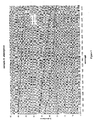
FIG. 1 is an infrared absorption spectrum of sample A from 700 to 2500 nm wavelength. -
FIG. 2 is an infrared absorption spectrum of sample B from 700 to 2500 nm wavelength. -
FIG. 3 is an infrared absorption spectrum of a prior art silver coating from 700 to 2500 nm wavelength. - The present invention is an infrared reflective composition including silver metal as powder. The composition further includes selenium and/or bismuth metal powder and borosilicate glass frit comprising at least one of lead, zinc and/or bismuth frit. The selenium and/or bismuth metal powder is co-ground with one or more of the aforementioned glass frit(s). An additional, separate, portion of glass frit(s) is included. Carbon black, one or more inorganic black pigments, and a staining compound comprising a mixture of silver phosphate/molybdic oxide/iron chromate are also included. A paste may be formed by blending the co-ground aforementioned frit(s) composition and selenium and/or bismuth metal powder mixture with one or two silver metal morphologies, carbon black, inorganic black pigments and the staining compound with one or more organic solvents and surfactants systems mentioned and dispersed, by way of mixing and/or high shear milling, to a desired viscosity.
- In particular, a first embodiment of the invention is an infrared-absorbing composition, the dry portion of which comprises, prior to firing: 65 to 93 wt% of a silver component comprising silver powder having a tap density of 0.40 to 4.3 g/cc; 0.1 to 5 wt% of a borosilicate glass frit comprising an oxide of lead, zinc, bismuth, and combinations thereof; 5 to 10 wt% of a co-ground blend of a glass frit comprising an oxide of lead, zinc, bismuth and combinations thereof and a metal powder selected from the group consisting of selenium and bismuth, and combinations thereof; 1 to 10 wt% of carbon black; 0.1 to 5 wt% of inorganic black pigment; and 0.1 to 5 wt% of a staining compound comprising Ag3PO4, MoO3, and FeCr2O4.
- The Ultra Low Emissivity formulations, when dispersed in an organic solvent and surfactant system, can be applied by various methods; including, but not limited to, ink-jet printing, screen printing, doctor blading, or spraying onto a glass, silicon, ceramic or ceramic glass enamel substrate such as automotive or architectural glass sheets, silicon based solar panels, glass panels for refrigerated units, and the like. In the construction industry, the composition could be applied to residential and commercial glass sheets for windows and doors. Applications in home appliances could include ceramic cook-top panels, and glass panels used in commercial refrigeration units, microwave ovens, conventional ovens, and the like. The compositions can also be printed over ceramic glass enamel, which had previously been applied to the glass sheet or ceramic substrate. Prior to the high temperature firing, the applied coating can be dried by ambient air, infrared heating or conventional heating, or fired wet directly with no pre-drying. Improvements in both the process firing of silicon-based solar cells and other glass and ceramic substrates, as well as in the properties of the products produced, can thereby be realized. Each of the major constituents in the products and processes of the invention are detailed herein below.
- A wide variety of Silver Powders and Silver Flakes are commercially available from Ferro Corporation, South Plainfield, N.J. and sold under product names. Products referenced in this invention are described as follows:
Product Description Ferro Products Tap Density Surface Area Ag Powders SPQ-ED, SFC20-ED 2 - 4 g/cc 0.5 -1.5 m2/g Ag Powders SPG, SPC 0.4 - 2 g/cc 0.25 - 1.5 m2/g Ag Flakes SFW 3 - 5.8 g/cc 0.3 - 1.4 m2/g - Ferro Corporation also sells other appropriate silver metal powders and silver metal flakes. Tap Density is a measure of the volume that a given weight of material will occupy after undergoing a certain amount of prescribed compaction as known in the art; reported as g/cc. Surface Area is determined by at least one of two techniques: permeametry by a Fisher Sub Sieve Sizer (FSSS); and gas absorption (Brunauer-Emmett-Teller method (BET)) by Quantachrome.
- Silver Component. The invention includes a silver component, which may comprise silver powders and/or silver flakes, or a combination of the two. The compositions herein comprise 44 to 93 wt%, preferably 65 to 93 wt% of a silver component. Typically the silver component comprises at least one silver powder. Depending upon substrate and other processing differences, or where increases in solder adhesion and/or solder wet through resistance is required of the coating, silver metal flakes, having tap densities from 3.0 to 5.8 g/cc, can be proportionally substituted for the silver metal powders.
- Silver Powder. The inventive compositions and methods involve using one or more silver powder(s) having tap densities from 0.40 to 4.3 g/cc; and specific surface area from 0.25 to 1.5 m2/g. Separate portions of silver powders having densities of 0.4 up to 2.0 g/cc and powders having tap densities of 2.0 to 4.3 g/cc may be used.
- Silver Flake. The compositions herein may include silver flakes, typically having tap densities of 3 to 5.8 g/cc, and specific surface area of 0.3 to 1.4 m2/g. Such silver flakes can be proportionally substituted by weight for the silver metal powders at levels of 5 to 85 wt% of the silver component, preferably 10 to 75 wt%, more preferably 20 to 50 wt%, in situations where, differences in the substrate or other processing differences, or greater requirements for solder adhesion and/or solder wet through resistance are required of the coating. Alternatively, silver flakes herein may have a specific surface area of 0.5 to 1.25 m2/g.
- The silver component can comprise up to 100 wt% silver powder having a tap density of 0.40 to 4.3 g/cc. In a preferred embodiment, the silver component comprises 75 to 99 wt% of silver powder having a tap density of more than 2 to 4.3 g/cc, and 1 to 25 wt% of silver powder having a tap density of 0.4 to 2 g/cc.
- In another embodiment, the silver component comprises 50 to 85 wt% of silver powder having a tap density of 0.4 to 4.3 g/cc; and 15 to 50 wt% of silver flake having a tap density of 3 to 5.8 g/cc. In yet another embodiment, the silver component comprises: 35 to 65 wt% of silver powder having a tap density of more than 2 to 4.3 g/cc; 2 to 15 wt% of silver powder having a tap density of 0.4 to 2 g/cc; and 5 to 25 wt% of silver flake having a tap density of 3 to 5.8 g/cc.
- In any embodiment, the silver powder may have a specific surface area of 0.25 to 1.5 m2/g.
- Glass Frit. The glass frits useful herein are not particularly limited. However, preferred frits include oxides of at least one of lead, zinc, and bismuth; combinations of the foregoing are also suitable. Further frit compositions may be found in Tables 1-3.
Table 1. Oxide frit ingredients for bismuth-based glasses in mole percent. Glass Composition I II III Ingredient Bi2O3 5-85 10-75 12-50 B2O3 + SiO2 5-75 15-75 34-71 Li2O + Na2O + K2O 0-40 5-30 10-30 20 trivalent oxides 0-25 0-20 3-10 ZnO 0-55 0-20 0-12 Sb2O5 + Nb2O5 0-40 0-30 0-20 TiO2 + ZrO2 0-20 0-10 1-6 Table 2. Oxide frit ingredients for alkali-titanium-silicate glasses in mole percent. Glass Composition IV V VI Ingredient Li2O + Na2O + K2O 5-55 15-50 30-40 TiO2 2-26 10-26 15-22 B2O3 + SiO2 5-75 25-70 30-52 V2O5 + Sb2O5 + P2O5 0-30 0.25-25 5-25 MgO + CaO + BaO + SrO 0-20 0-15 0-10 F 0-20 0-15 5-13 Table 3. Oxide frit ingredients for lead based glasses in mole percent. Glass Composition VII VIII IX Ingredient PbO 15-75 25-66 50-65 B2O3 + SiO2 5-75 20-55 24-45 ZnO 0-55 0.1-35 0.1-25 Li2O + Na2O + K2O 0-40 0-30 0-10 TiO2+ZrO2 0-20 0-10 0.1-5 20 trivalent oxides 0-25 0.1-20 1-10 - The entry "20 trivalent oxides" means one or more trivalent oxides of an element selected from the group consisting of oxides of rare earth metals of the Lanthanum series (atomic numbers 57 to 71) plus Al, Ga, In, Sc, and Y.
- In another embodiment, the glass component comprises: 12 to 50 mole% Bi2O3; 25 to 65 mole% SiO2; 5 to 15 mole% B2O3; 4 to 26 mole% K2O; TiO2, wherein the content of TiO2 does not exceed 10 mole%; and an oxide of an element selected from the group Li, Na, K, Sb and combinations thereof, provided the combined total of such oxides does not exceed 40 mol%, preferably at least 1 mol% of the combination. In an embodiment containing alkali oxides the glass component comprises 1 to 15 mole% Li2O, 8 to 25 mole% Na2O, 3 to 25 mole% K2O, 8 to 22 mole% TiO2, 25 to 50 mole% SiO2, 2 to 18 mole% V2O5, and 0.25 to 5 mole% P2O5, and may further comprise fluoride, not to exceed 20 mol%.
- In another embodiment, the composition may comprise one or more of the following, so long as the content of the following oxides does not exceed the indicated amount in mol% Li2O (15%), Na2O (25%), K2O (25%), TiO2 (22%), SiO2 (60%), V2O5 (18%), the sum of (Sb2O5+V2O5+P2O5) (25%), and F (15%).
- Increasingly stringent environmental regulations often force manufacturers to find alternative products devoid of lead and cadmium. Hence, an embodiment of the invention includes a glass frit completely devoid of intentionally added lead and cadmium, in any form. However, when the properties of leaded glasses cannot be duplicated, an embodiment of the invention advantageously includes a glass frit comprising, prior to firing, lead oxide. A further embodiment of the invention is where the entire infrared-absorbing composition disclosed herein is completely devoid of intentionally added lead and cadmium in any form.
- Other lead-containing embodiments include one or more of the following, so long as the content of the following oxides does not exceed the indicated amount in mol% PbO (65%), SiO2 (30%), B2O3 (30%), ZnO (25%), and oxides of elements selected from the group consisting of Al, Ga, In, Sc, Y, La (25%), and (TiO2+ZrO2) (5%), provided that the total of (B2O3+SiO2) does not exceed 45%. The lead-containing glass components may further comprise 0.1 to 8 mol% Al2O3.
- In the presently most preferred embodiment, the glass frit comprises, prior to firing: 50-60 wt% Bi2O3; 20-30 wt% SiO2; 5-15 wt% ZnO; 5-15 wt% B2O3; 0.1-5 wt% TiO2; 0.1-5 wt% ZrO2; 0.1-5 wt% Al2O3; 2-10 wt% Li2O + Na2O + K2O; and 0.1-2 wt% F.
- Selenium Metal and/ or Bismuth Metal. Powdered selenium metal is used in the low-emissivity coating. However, bismuth metal powder is also useful. The metal powders have an average particle size (D50) of 0.5 to 20 microns, preferably 1 to 15 microns, and more preferably 3-12 microns. The particle size values are given for particles prior to any mixing, blending, grinding steps are undertaken. Selenium and bismuth metal powders are widely commercially available.
- Co-Grind Blend. Details of the glass frits and metal powders are presented hereinabove. Surprisingly, the inventors have discovered a distinct advantage when at least a portion of the glass frit is co-ground (i.e., ground together) with metal powder (selenium and/or bismuth) prior to formulation of the overall dry composition (i.e., the paste without the organic medium, and surfactants). The co-ground blend of the lead, zinc and/or bismuth borosilicate glass frit and selenium/bismuth metal powders have a D50 particle of less than 5 microns, preferably 2 to less than 5 microns, after co-grinding and prior to firing. The advantage of co-grinding is believed to be greater color uniformity, whereas a non-co-ground blend results in non-uniformity as seen with undispersed particles of the selenium and/or bismuth causing blotching and spotting of the coating after thermal firing. The co-ground blend is a mixture comprising a lead, zinc and/or bismuth borosilicate glass frit and selenium and/or bismuth metal powder, having a D50 of 0.5 to 20 microns, the glass frit being selected from the group consisting of glass A, glass B and glass C:
wt% Glass A Glass B Glass C PbO 50-60 Bi2O3 50-60 SiO2 20-30 20-30 20-30 ZnO 5-15 50-60 5-15 B2O3 5-15 5-15 5-15 TiO2 0.1-5 0.1-5 0.1-5 ZrO2 0.1-5 0.1-5 0.1-5 Al2O3 0.1-5 0.1-5 0.1-5 Li2O+Na2O+K2O 2-10 2-10 2-10 F 0.1-2 0.1-2 0.1-2 - Carbon black. The compositions herein include carbon black for its ability to absorb infrared (and other) energy absorption. In particular, compositions of the invention include 0.5 to 10 wt% of carbon black, preferably 1 to 8 wt%, more preferably 2 to 6 wt% and most preferably 4 to 5 wt%. Carbon black having a D50 particle size of 30 to 80 nm, preferably 40 to 70 nm, more preferably 50 to 60 nm are useful herein. The specific surface is typically 25 to 85 m2/g, preferably 30 to 80 m2/g, more preferably 40 to 70 m2/g. Carbon black absorbs infrared energy up to a firing temperature of 1094°C, when it decomposes into carbon monoxide and carbon dioxide.
- An intensely black powder, carbon black is an amorphous form of carbon, produced by subjecting heavy residual oil (hydrocarbon) feedstock to extremely high temperatures in a carefully controlled combustion process (thermal or oxidative decomposition). Myriad commercial grades of varying size and structure are known, each produced through minute adjustments in different reactors. Carbon blacks provide pigmentation, conductivity and UV protection for a number of coating applications including marine, aerospace and industrial.
- Inorganic Black Pigment. The compositions of the invention further include one or more inorganic black pigments (separately from carbon black, noted above). Suitable pigments herein include CuCr2O4 and (Co,Fe)(Fe,Cr)2O4 and the like. Examples include pigments available from Ferro Glass and Color Corporation, Washington Pennsylvania, such as 2991 pigment (copper chromite black), 2980 pigment (cobalt chromium iron black), 2987 pigment (nickel manganese iron chromium black), and O-1776 pigment (copper chromate black). Pigments free from Co, Cu, Cr, Ni as 10201 black (bismuth manganate) are also be suitable. In the presently most preferred embodiment of the invention, the inorganic black pigment is copper chromite spinel, available from Ferro Corporation as V-7702 or V-7709.
- Staining Compound. The compositions of the invention comprise 0.05 to 10 wt% of a staining compound, preferably 0.1 to 5 wt%, and more preferably 1 to 3 wt%. The staining compound herein includes 30-50 wt% Ag3PO4, 30-50% wt% MoO3, and 15 to 25 wt% FeCr2O4. Typically the D50 particle size of the constituent oxides is less than 74 microns, preferably less than 60 microns, and more preferably less than 50 microns.
- Paste. The dry ingredients (silver powders; glass frit; co-ground blend of glass frit and metal; carbon black; inorganic pigment; staining compound) are blended with an organic medium to form a paste. Additionally, surfactants and/or flow aids may be used. A paste herein may comprise a mixture of 50 to 90 wt% of any of the dry infrared-absorbing compositions disclosed herein; 9 to 49.5 wt% of an organic medium, and 0.5 to 1 wt% of a surfactant. The mixture is dispersed, for example, by manual or preferably mechanical blending or mixing, followed by additional dispersion and breakdown of agglomerates through a high shear process (such as, for example, a three-roll mill) to obtain a desired paste viscosity suitable for application onto the substrate of interest. This dispersed mixture can then be applied, by the user, onto a glass, silicon, ceramic or ceramic glass enamel substrate and fired to sinter the metals and densify the glass frits to the substrate.
- Organic Medium. The organic medium comprises a binder and a solvent, which are selected based on the intended application. It is essential that the medium adequately suspend the particulates (i.e., metal powders, frit, pigment, etc) and burn off completely upon firing. Broadly, the organic medium may include petroleum/pine oil based solvents, ester alcohol based solvents, tridecyl alcohol based solvents, thermoplastic wax based binders, water miscible glycol based solvents. Simple aqueous solvents also may be used.
- In particular, binders including methyl cellulose, ethyl cellulose, and hydroxypropyl cellulose, and combinations thereof, may be used. Suitable solvents include glycols such as ethylene glycol, propylene glycol and hexylene glycol; higher boiling alcohols such as Dowanol® (diethylene glycol monoethyl ether); butyl Carbitol® (diethylene glycol monobutyl ether); dibutyl Carbitol® (diethylene glycol dibutyl ether); butyl Carbitol® acetate (diethylene glycol monobutyl ether acetate); Texanol® (2,2,4-trimethyl-1,3-pentanediol monoisobutyrate), as well as other alcohol esters, kerosene, and dibutyl phthalate, diethylene glycol butyl ether; alpha-terpineol; beta-terpineol; gamma terpineol; tridecyl alcohol; diethylene glycol ethyl ether (Carbitol™), diethylene glycol butyl ether (Butyl Carbitol™); pine oils, vegetable oils, mineral oils, low molecular weight petroleum fractions, tridecyl alcohols, and synthetic or natural resins and blends thereof. Products sold under the Texanol® trademark are available from Eastman Chemical Company, Kingsport, TN; those sold under the Dowanol® and Carbitol® trademarks are available from Dow Chemical Co., Midland, MI. Surfactants and/or other film forming modifiers can also be included.
- Dispersing Surfactant. A dispersing surfactant assists in pigment wetting, when an insoluble particulate inorganic pigment is used. A dispersing surfactant typically contains a block copolymer with pigment affinic groups. For example, surfactants sold under the Disperbyk® and Byk® trademarks by Byk Chemie of Wesel, Germany, such as Disperbyk 110, 140, and 163, which are solutions of high molecular weight block copolymers with pigment affinic groups, and a blend of solvents. Disperbyk 110 is a 1:1 blend of methoxypropylacetate and alkylbenzenes. Disperbyk 140 is a solution of alkyl-ammonium salt of an acidic polymer in a methoxypropylacetate solvent. Disperbyk 163 has the solvents xylene, butylacetate and methoxypropylacetate in a 4/2/5 ratio.
- Rheological Modifier. A rheological modifier is used to adjust the viscosity of the green pigment package composition. A variety of rheological modifiers may be used, including those sold under the Byk®, Disperplast®, and Viscobyk® trademarks, available from Byk Chemie. They include, for example, the BYK 400 series, such as BYK 411 and BYK 420, (modified urea solutions); the BYK W-900 series, (pigment wetting and dispersing additives); the Disperplast series, (pigment wetting and dispersing additives for plastisols and organosols); and the Viscobyk series, (viscosity depressants for plastisols and organosols).
- The invention also includes an automotive glass, a solar cell, and a home appliance including a coating comprising any paste disclosed elsewhere herein.
- While not being bound by theory, it is believed that the ultra low-emissivity coatings of the invention reduce the temperature differential between the coating itself and the substrate to which it is being applied during the firing process. Such a reduction in the temperature differential, during firing, may have either or both of the following effects: to improve the development of a ceramic enamel undercoat beneath the ultra low-emissivity coating (prevalent in automotive glass application) and/or to reduce the stresses on the glass, silicon, ceramic or ceramic glass enamel substrate caused by having a sharp temperature gradient between the coating and the aforementioned substrates.
- EXAMPLES. The following examples are provided to illustrate preferred aspects of the invention and are not intended to limit the scope of the invention.
- The ingredients in Table 4 are combined as follows. The co-grind additive (frit and selenium metal) and the staining compound were added to a ball mill and ground for about 10 hours. The particles were ground down to 3-4 microns. The particles are screened through a 325 mesh screen (3.6 microns). The particles are dried at 343 °C (650 °F) and hammer milled until they pass through a 0.020 screen.
- The staining compound ingredients are ball milled with water for one hour, dried and screened through a 200 mesh screen.
- A separate portion of a lead, zinc and/or bismuth frit is ground to a D50 particle size of 2.5-4.5 microns.
- Carbon black, having an ash content of 0.3 wt%, a density of 450 grams/liter and average particle size 56 nanometers, was used. The carbon black was added to organic medium C7, the C7 being commercially available from Ferro Glass and Color Corporation, in a mixing bowl and mixed for 10 minutes. The glass frit, co-ground blend, inorganic black pigment and staining compound (disclosed elsewhere herein comprising Ag3PO4, MoO3, and FeCr2O4) are added and mixed another 10 minutes. The glass frit is part number RD-2139, commercially available from Ferro Glass and Color Corporation. Silver powder and flake, with the indicated tap densities (TD), are added, and mixed for 5 minutes. The entire mixture is subjected to a high shear dispersion process on a three-roll mill at least two times, and the viscosity is adjusted with solvent, and the paste thus formed is ready for use, i.e., application to a substrate.
- Applying the viscosity adjusted paste mixture to a substrate can be normally achieved by the following methods, i.e. screen printing, spraying, ink-jet printing, or other application methods whereby a uniform coating having a controlled thickness can be deposited onto the glass, silicon, ceramic or glass- ceramic substrate. Screen printing is the most common and presently preferred method of applying the pastes. The application method and parameters include the following:
- A quantity of the paste mixture is applied onto a screen, either a mono-filament polyester fabric or stainless steel fabric, having a mesh size of 43 to 142 openings per cm (110 to 360 openings per inch), preferably 55 to 118 openings per cm (140 to 300 openings per inch). The "screen" refers to a fabric attached to a metal frame, glued and tightened to a desirable tension which will allow consistent flex and recovery of the screen fabric after each print stroke. Where thermoplastic wax based binders are used as the organic medium base, the use of a stainless steel fabric and subsequent insulator apparatus is used to electrically heat the fabric to a temperature of about 54°C (130°F) to about 77 °C (170 °F), which is needed to melt the paste to a screen-printable viscosity. In other cases where the paste mixture is using a organic medium, normal room temperature is sufficient to transfer the paste through the screen onto the substrate.
- The method of transferring the paste mixture through the screen mesh is done using a hard rubber squeegee (preferably with a hardness of between 60 - 75 durameter, which is attached to a fixed metal holder, and mechanically or manually drawn across the screen during the printing cycle. The amount of paste that is passed through the screen and deposited onto the substrate (typically less than 50 microns) is primarily influenced by the mesh size (openings per inch), viscosity of the paste mixture, and amount of pressure applied by the squeegee against the screen fabric during the printing cycle.
- Once the paste has been deposited onto the substrate, the paste can either enter the firing furnace wet or be pre-cured by first drying the paste. The drying process allows some portion of the solvents in the paste to be evaporated out so that handling of the material is possible without marring or otherwise disturbing the screen printed image.
- After screen printing (and drying if desired), the substrate containing the deposited paste mixture is fired in a furnace at a temperatures of about 510 °C (940 °F) to about 760 °C (1400 °F). Normally, the firing parameters (firing temperature and soak time) are determined by the size, thickness, and composition of the substrate, as well as the desired mechanical and physical properties of the final substrate fired together with the low-E coating. Once the firing cycle is complete, the conductive silver coating is thermally fused to the substrate, at which point the coating provides the intended mechanical and physical properties.
- During the firing process, the carbon black and all organic components of the silver paste mixture are burned away or consumed, leaving only the inorganic components, such as silver metal, glass frit, black pigment, staining compound, and any other inorganic material that might be formulated into the paste mixture.
- Electrical and physical data of the coatings are given in Table 5. As can be seen fron
FIGS. 1 and2 , the absorbance of Samples A and B, are each far superior to the absorbance of the prior art silver coating (FIG. 3 ) at a given wavelength.Table 4. Compositions of Samples A and B Ingredient (wt%) Sample A Sample B Ag powder 2.4-3.1 g/ cc 50% 50% Ag powder 5.1 g/cc 12% 17% Ag powder 1.2-2.3 g/cc 9% 8% Se/glass frit (co-ground) 10% 9% Glass frit --- 0.5% Carbon Black 4.5% 4% V-7702 CuCr pigment 1% 0.5% staining compound 1.5% 0.5% organic vehicle 12% 10.5% Disperbyk 110 5 drops 5 drops Table 5. Electrical and Physical Data of Samples A and B, and prior art sample. Property CCL-14005 (Prior art) Sample A (invention) Sample B (invention) Resistance. (Based on screen printing through 200 mesh screen and fired at 1250° F (677 °C) / 3 min 1.21 ohms/foot (0.369 ohms/m) 1.76 ohms/foot (0.563 ohms/m) 1.30 ohms/foot (0.396 ohms/m) Avg. Solder Pull Data Fired at 1250° F (677 °C) / 3 min 46.2 lbs (21.0 kg) 44.1 lbs (20.0 kg) 41.9 lbs (19.0 kg) Fired at 1300 ° F (704 °C) / 3 min 64.2 lbs (29.1 kg) 64.2 lbs (29.1 kg) 73.7 lbs (33.4 kg) - The solder composition used to obtain solder pull data was 62% Pb, 25% Sn, 10% Bi, and 3% Ag. The coating was screen printed using a 200 mesh polyester fabric onto a ceramic glass enamel coating prior to firing.
Claims (14)
- An infrared-absorbing composition, the dry portion of which comprises, prior to firing:a. 65 to 93 wt% of a silver component comprising silver powder having a tap density of 0.4 to 4.3 g/cc;b. 0.1 to 5 wt% of a borosilicate glass frit comprising an oxide of a metal selected from the group consisting of lead, zinc, bismuth, and combinations thereof;c. 5 to 10 wt% of a co-ground blend ofi. a glass frit comprising an oxide of a metal selected from the group consisting of lead, zinc, bismuth and combinations thereof andii. a metal powder selected from the group consisting of selenium and bismuth, and combinations thereof;d. 1 to 10 wt% of carbon black;e. 0.1 to 5 wt% of inorganic black pigment; andf. 0.1 to 5 wt% of a staining compound.
- The composition of claim 1, wherein the staining compound comprises Ag3PO4, MoO3, and FeCr2O4.
- The composition of claim 2, wherein the staining compound comprises:a. 30 wt% to 50 wt% of Ag3PO4;b. 30 wt% to 50 wt% MoO3; andc. 15 wt% to 25 wt% FeCr2O4.
- The composition of claim 1, wherein the co-ground blend further comprises a metal selected from the group consisting of Ni, Cu, Co, Te, Al, Ru, Sn, an oxide of a metal selected from the group consisting of metals having atomic numbers of 23 to 29, 49 to 51, FeO, and combinations thereof, wherein the total co-ground blend of such metals and oxides constitutes no greater than 10 wt% of the dry portion.
- The composition of claim 1, wherein 100 wt% of the silver component comprises:a. 75 to 99 wt% of silver powder having a tap density of more than 2 to 4.3 g/cc, andb. 1 to 25 wt% of silver powder having a tap density of 0.4 to 2 g/cc.
- The composition of claim 1, wherein 100 wt% of the silver component comprises:a. 50 to 85 wt% of silver powder having a tap density of 0.4 to 4.3 g/cc; andb. 15 to 50 wt% of silver flake having a tap density of 3 to 5.8 g/cc.
- The composition of claim 1, wherein 100 wt% of the silver component comprises:a. 35 to 65 wt% of silver powder having a tap density of more than 2 to 4.3 g/cc;b. 2 to 15 wt% of silver powder having a tap density of 0.4 to 2 g/cc; andc. 5 to 25 wt% of silver flake having a tap density of 3 to 5.8 g/cc.
- The composition of claim 1, wherein the composition is free of intentionally added lead and cadmium, in any form.
- A paste composition comprising:a. 50 to 90 wt% of the composition of claim 1;b. 9 to 49.5 wt% of an organic medium andc. 0.5 to 1 wt% of a surfactant.
- A paste composition comprising:a. 50 to 90 wt% of the composition of claim 5;b. 9 to 49.5 wt% of an organic medium andc. 0.5 to 1 wt% of a surfactant.
- An automotive glass including a coating comprising the fired paste of claim 9.
- An automotive glass including a coating comprising the fired paste of claim 10.
- A solar cell including a coating comprising the fired paste of claim 9.
- A method for reducing thermal stress during the formation of a conductive coating on a glass, ceramic, or enamel substrate, comprising:a. applying the paste of claim 9 to a glass, ceramic, or enamel substrate; andb. firing the paste and substrate for a time and at a temperature sufficient to sinter the metals and densify the glasses in the paste.
Priority Applications (1)
| Application Number | Priority Date | Filing Date | Title |
|---|---|---|---|
| PL08153356T PL2025435T3 (en) | 2007-07-24 | 2008-03-27 | Ultra Low Emissivity Silver Coating (Ultra Low E) |
Applications Claiming Priority (1)
| Application Number | Priority Date | Filing Date | Title |
|---|---|---|---|
| US11/781,982 US7833439B2 (en) | 2007-07-24 | 2007-07-24 | Ultra low-emissivity (ultra low E) silver coating |
Publications (3)
| Publication Number | Publication Date |
|---|---|
| EP2025435A2 EP2025435A2 (en) | 2009-02-18 |
| EP2025435A3 EP2025435A3 (en) | 2017-08-09 |
| EP2025435B1 true EP2025435B1 (en) | 2020-02-19 |
Family
ID=40042659
Family Applications (1)
| Application Number | Title | Priority Date | Filing Date |
|---|---|---|---|
| EP08153356.4A Active EP2025435B1 (en) | 2007-07-24 | 2008-03-27 | Ultra low-emissivity (Ultra Low E) silver coating |
Country Status (5)
| Country | Link |
|---|---|
| US (2) | US7833439B2 (en) |
| EP (1) | EP2025435B1 (en) |
| CN (1) | CN101353230B (en) |
| ES (1) | ES2775824T3 (en) |
| PL (1) | PL2025435T3 (en) |
Families Citing this family (36)
| Publication number | Priority date | Publication date | Assignee | Title |
|---|---|---|---|---|
| CN102057443A (en) * | 2008-06-04 | 2011-05-11 | Lg化学株式会社 | Metallic paste composition for formation of an electrode, and Ag-C composite electrodes and silicon solar cells using the same |
| EP2415056A1 (en) * | 2009-03-30 | 2012-02-08 | E. I. du Pont de Nemours and Company | Metal pastes and use thereof in the production of silicon solar cells |
| WO2010117773A1 (en) * | 2009-03-30 | 2010-10-14 | E. I. Du Pont De Nemours And Company | Metal pastes and use thereof in the production of silicon solar cells |
| KR20120036867A (en) * | 2009-05-20 | 2012-04-18 | 이 아이 듀폰 디 네모아 앤드 캄파니 | Phase change ink composition |
| US20110126897A1 (en) * | 2009-05-20 | 2011-06-02 | E. I. Du Pont De Nemours And Company | Composition for extruding fibers |
| WO2011005631A2 (en) | 2009-07-07 | 2011-01-13 | Basf Se | Potassium cesium tungsten bronze particles |
| KR101683882B1 (en) * | 2009-12-24 | 2016-12-21 | 엘지이노텍 주식회사 | Paste composition for front electrode of high-efficiency silicon solar cell and Silicon solar cell comprising the same |
| CN101814551B (en) * | 2010-01-15 | 2015-08-12 | 宁波晶鑫电子材料有限公司 | The preparation method of back silver paste of solar cell |
| TWI509631B (en) * | 2011-02-25 | 2015-11-21 | 漢高智慧財產控股公司 | Sinterable silver flake adhesive for electronic devices |
| CN103165214B (en) * | 2011-12-14 | 2015-12-02 | 比亚迪股份有限公司 | A kind of aluminum conductive electric slurry used for solar batteries and preparation method thereof |
| KR101350960B1 (en) * | 2012-01-13 | 2014-01-16 | 한화케미칼 주식회사 | Glass frits, conductive paste composition comprising the same and solar cell |
| JP6246135B2 (en) * | 2012-01-18 | 2017-12-13 | ヘレウス プレシャス メタルズ ノース アメリカ コンショホーケン エルエルシー | Metallization of solar cells containing organozinc compounds |
| US9441117B2 (en) * | 2012-03-20 | 2016-09-13 | Basf Se | Mixtures, methods and compositions pertaining to conductive materials |
| JP5304932B1 (en) * | 2012-07-18 | 2013-10-02 | 横浜ゴム株式会社 | Conductive composition and solar battery cell |
| US10000670B2 (en) | 2012-07-30 | 2018-06-19 | Henkel IP & Holding GmbH | Silver sintering compositions with fluxing or reducing agents for metal adhesion |
| KR101434167B1 (en) | 2012-10-25 | 2014-08-27 | 대주전자재료 주식회사 | Silver paste composition used in the preparation of an electrode for a solar cell |
| JP6184731B2 (en) | 2013-04-25 | 2017-08-23 | Dowaエレクトロニクス株式会社 | Silver-bismuth powder, conductive paste and conductive film |
| US20150075597A1 (en) * | 2013-09-16 | 2015-03-19 | Heraeus Precious Metals North America Conshohocken Llc | Electroconductive paste with adhension promoting glass |
| CN105492548A (en) * | 2013-09-16 | 2016-04-13 | 贺利氏贵金属北美康舍霍肯有限责任公司 | Electroconductive paste with adhesion promoting glass |
| EP2848657A1 (en) * | 2013-09-16 | 2015-03-18 | Heraeus Precious Metals North America Conshohocken LLC | Electroconductive paste with adhesion promoting glass |
| EP2913139B1 (en) | 2014-02-26 | 2019-04-03 | Heraeus Precious Metals North America Conshohocken LLC | A glass comprising molybdenum and lead in a solar cell paste |
| CN106133845B (en) * | 2014-04-02 | 2018-11-23 | 费罗公司 | Conductive paste with improved glass strength properties |
| CN104030570B (en) * | 2014-06-06 | 2016-05-18 | 中国人民解放军空军工程大学 | A kind of nickel-base alloy superhigh temperature enamel coating and preparation method thereof |
| DE102014212685A1 (en) * | 2014-07-01 | 2016-01-07 | Heraeus Deutschland GmbH & Co. KG | Production of cermets with selected binders |
| ES2579131B2 (en) * | 2015-02-05 | 2017-02-09 | Kerafrit, S.A. | Ceramic radiation attenuating paste |
| CN104744008A (en) * | 2015-03-30 | 2015-07-01 | 佛山市新战略知识产权文化有限公司 | Coating for glass and preparation method of coating |
| JP7519752B2 (en) | 2015-05-08 | 2024-07-22 | ヘンケル・アクチェンゲゼルシャフト・ウント・コムパニー・コマンディットゲゼルシャフト・アウフ・アクチェン | Sinterable films and pastes and methods of use thereof |
| WO2017091782A1 (en) * | 2015-11-24 | 2017-06-01 | Plant Pv, Inc | Fired multilayer stacks for use in integrated circuits and solar cells |
| US9741878B2 (en) * | 2015-11-24 | 2017-08-22 | PLANT PV, Inc. | Solar cells and modules with fired multilayer stacks |
| CN106649929A (en) * | 2016-09-26 | 2017-05-10 | 渤海大学 | Modeling method for metal-ceramic solar selective adsorbing coating emissivity model |
| CN107163657B (en) * | 2017-06-01 | 2020-03-27 | 中山市丽莎涂料有限公司 | Radiation-proof composition, paint auxiliary agent and radiation-proof paint |
| CN107555806A (en) * | 2017-09-12 | 2018-01-09 | 成都新柯力化工科技有限公司 | A kind of heat-insulated Low E glass of individual layer durability building heat preservation and preparation method |
| CN109785991B (en) * | 2017-11-10 | 2020-07-31 | 上海宝银电子材料有限公司 | Antioxidant silver paste for front windshield of passenger car and preparation method thereof |
| CN110465671B (en) * | 2019-08-08 | 2022-03-25 | 湖南诺尔得材料科技有限公司 | Preparation method of flaky silver powder |
| EP4590770A1 (en) | 2022-09-22 | 2025-07-30 | Sun Chemical B.V. | Fast dispersing pigment brown 29 |
| CN118039219B (en) * | 2024-02-29 | 2024-11-08 | 佛山市中科兴新材料有限公司 | Conductive agent, preparation method thereof and electronic element using conductive agent |
Family Cites Families (20)
| Publication number | Priority date | Publication date | Assignee | Title |
|---|---|---|---|---|
| BE551558A (en) | 1955-10-28 | |||
| BE759862A (en) | 1969-12-11 | 1971-06-04 | Asahi Glass Co Ltd | NEW NEUTRAL GRAY GLASS |
| US4369063A (en) | 1981-11-12 | 1983-01-18 | Ciba-Geigy Corporation | Silver containing conductive coatings |
| US4554258A (en) * | 1984-06-28 | 1985-11-19 | Owens-Illinois, Inc. | Chemical resistant lead-free glass frit compositions |
| DE3724013A1 (en) * | 1987-07-21 | 1989-02-02 | Flachglas Ag | METHOD OF APPLYING A COLORED COATING ON A SURFACE OF A GLASS PAN |
| US5698451A (en) * | 1988-06-10 | 1997-12-16 | Mobil Solar Energy Corporation | Method of fabricating contacts for solar cells |
| US5346651A (en) | 1993-08-31 | 1994-09-13 | Cerdec Corporation | Silver containing conductive coatings |
| JP3211641B2 (en) * | 1995-09-22 | 2001-09-25 | 株式会社村田製作所 | Conductive composition |
| US5932502A (en) | 1996-04-19 | 1999-08-03 | Guardian Industries Corp. | Low transmittance glass |
| US6238847B1 (en) | 1997-10-16 | 2001-05-29 | Dmc Degussa Metals Catalysts Cerdec Ag | Laser marking method and apparatus |
| DE19804109A1 (en) | 1998-02-03 | 1999-08-12 | Cerdec Ag | Red-brown color bodies burning out, process for their production and their use |
| US20020136905A1 (en) | 1999-11-24 | 2002-09-26 | Medwick Paul A. | Low shading coefficient and low emissivity coatings and coated articles |
| US6887575B2 (en) | 2001-10-17 | 2005-05-03 | Guardian Industries Corp. | Heat treatable coated article with zinc oxide inclusive contact layer(s) |
| US6869644B2 (en) | 2000-10-24 | 2005-03-22 | Ppg Industries Ohio, Inc. | Method of making coated articles and coated articles made thereby |
| DE10116653A1 (en) * | 2001-04-04 | 2002-10-10 | Dmc2 Degussa Metals Catalysts Cerdec Ag | Conductivity paste, articles thus produced with a conductive coating on glass, ceramic and enamelled steel and process for their production |
| US6814795B2 (en) * | 2001-11-27 | 2004-11-09 | Ferro Corporation | Hot melt conductor paste composition |
| US6997018B2 (en) | 2003-06-02 | 2006-02-14 | Ferro Corporation | Method of micro and nano texturing glass |
| US8093491B2 (en) * | 2005-06-03 | 2012-01-10 | Ferro Corporation | Lead free solar cell contacts |
| US7265069B2 (en) | 2005-08-24 | 2007-09-04 | Ferro Corporation | Forehearth concentrate and method for opalization of glass |
| US8822025B2 (en) * | 2007-02-05 | 2014-09-02 | Ppg Industries Ohio, Inc. | Coating system exhibiting cool dark color |
-
2007
- 2007-07-24 US US11/781,982 patent/US7833439B2/en active Active
-
2008
- 2008-03-27 ES ES08153356T patent/ES2775824T3/en active Active
- 2008-03-27 EP EP08153356.4A patent/EP2025435B1/en active Active
- 2008-03-27 PL PL08153356T patent/PL2025435T3/en unknown
- 2008-07-03 CN CN2008101281261A patent/CN101353230B/en active Active
-
2010
- 2010-10-21 US US12/908,927 patent/US8691332B2/en active Active
Non-Patent Citations (2)
| Title |
|---|
| BOWEN P: "Particle Size Distribution Measurement from Millimeters to Nanometers and from Rods to Platelets", JOURNAL OF DISPERSION SCIENCE AND TECHNOL, TAYLOR AND FRANCIS GROUP, NEW YORK, NY, US, vol. 23, no. 5, 1 January 2002 (2002-01-01), pages 631 - 662, XP009102859, ISSN: 0193-2691, DOI: 10.1081/DIS-120015368 * |
| NATALIA MARIEL ALDERETE ET AL: "Particle size distribution and specific surface area of SCM's compared through experimental techniques", 61 INTERNATIONAL RILEM CONFERENCE ON MATERIALS, 1 January 2016 (2016-01-01), XP055572934, Retrieved from the Internet <URL:https://biblio.ugent.be/publication/8531144/file/8531145.pdf> [retrieved on 20190321] * |
Also Published As
| Publication number | Publication date |
|---|---|
| PL2025435T3 (en) | 2020-06-29 |
| US7833439B2 (en) | 2010-11-16 |
| ES2775824T3 (en) | 2020-07-28 |
| CN101353230B (en) | 2012-06-13 |
| EP2025435A3 (en) | 2017-08-09 |
| US20110039018A1 (en) | 2011-02-17 |
| US8691332B2 (en) | 2014-04-08 |
| EP2025435A2 (en) | 2009-02-18 |
| US20090029057A1 (en) | 2009-01-29 |
| CN101353230A (en) | 2009-01-28 |
Similar Documents
| Publication | Publication Date | Title |
|---|---|---|
| US7833439B2 (en) | Ultra low-emissivity (ultra low E) silver coating | |
| EP2584566A1 (en) | Thick film silver paste and its use in the manufacture of semiconductor devices | |
| CN101495306B (en) | Method of making multilayer glass structures | |
| US8257618B2 (en) | Conductor composition V | |
| CN103443025A (en) | Thick film pastes comprising bismuth-tellurium-oxide and their use in the manufacture of semiconductor devices | |
| CN111564234B (en) | Titanate-based lead-free silver electrode slurry and preparation and use methods thereof | |
| CN103563010A (en) | Thick film paste containing bismuth-based oxide and its use in the manufacture of semiconductor devices | |
| JPS6036350A (en) | Borosilicate glass composition | |
| US20110140055A1 (en) | Conductive compositions and the use thereof | |
| JP2013239695A (en) | Thick-film composition containing antimony oxide and its use in manufacture of semiconductor devices | |
| CN114190087B (en) | Colored frits for automotive applications and related methods | |
| US7935168B2 (en) | Use of conductor compositions in electronic circuits | |
| JP6339225B2 (en) | Conductive paste with improved glass strength | |
| CN106517795A (en) | Low-melting-point glass sizing agent and preparation method thereof | |
| CN103582917A (en) | Thick film paste containing bismuth-based oxide and its use in the manufacture of semiconductor devices | |
| US20040099848A1 (en) | Use of conductor compositions in electronic circuits | |
| US6787068B1 (en) | Conductor composition | |
| EP0201362B1 (en) | Base metal resistive paints | |
| US4698265A (en) | Base metal resistor | |
| EP1377985A1 (en) | Conductor compositions and the use thereof | |
| JP2009078955A (en) | Lead-free ceramic color composition |
Legal Events
| Date | Code | Title | Description |
|---|---|---|---|
| PUAI | Public reference made under article 153(3) epc to a published international application that has entered the european phase |
Free format text: ORIGINAL CODE: 0009012 |
|
| AK | Designated contracting states |
Kind code of ref document: A2 Designated state(s): AT BE BG CH CY CZ DE DK EE ES FI FR GB GR HR HU IE IS IT LI LT LU LV MC MT NL NO PL PT RO SE SI SK TR |
|
| AX | Request for extension of the european patent |
Extension state: AL BA MK RS |
|
| RAP1 | Party data changed (applicant data changed or rights of an application transferred) |
Owner name: FERRO CORPORATION |
|
| PUAL | Search report despatched |
Free format text: ORIGINAL CODE: 0009013 |
|
| AK | Designated contracting states |
Kind code of ref document: A3 Designated state(s): AT BE BG CH CY CZ DE DK EE ES FI FR GB GR HR HU IE IS IT LI LT LU LV MC MT NL NO PL PT RO SE SI SK TR |
|
| AX | Request for extension of the european patent |
Extension state: AL BA MK RS |
|
| RIC1 | Information provided on ipc code assigned before grant |
Ipc: C03C 8/22 20060101ALI20170706BHEP Ipc: B22F 7/04 20060101ALI20170706BHEP Ipc: C03C 8/18 20060101ALI20170706BHEP Ipc: C22C 32/00 20060101ALI20170706BHEP Ipc: C03C 3/066 20060101ALI20170706BHEP Ipc: C03C 17/10 20060101ALI20170706BHEP Ipc: B22F 1/00 20060101AFI20170706BHEP Ipc: C03C 17/00 20060101ALI20170706BHEP Ipc: C03C 3/074 20060101ALI20170706BHEP Ipc: C03C 17/36 20060101ALI20170706BHEP |
|
| STAA | Information on the status of an ep patent application or granted ep patent |
Free format text: STATUS: REQUEST FOR EXAMINATION WAS MADE |
|
| 17P | Request for examination filed |
Effective date: 20180209 |
|
| RBV | Designated contracting states (corrected) |
Designated state(s): AT BE BG CH CY CZ DE DK EE ES FI FR GB GR HR HU IE IS IT LI LT LU LV MC MT NL NO PL PT RO SE SI SK TR |
|
| AKX | Designation fees paid |
Designated state(s): AT BE BG CH CY CZ DE DK EE ES FI FR GB GR HR HU IE IS IT LI LT LU LV MC MT NL NO PL PT RO SE SI SK TR |
|
| AXX | Extension fees paid |
Extension state: RS Extension state: BA Extension state: MK Extension state: AL |
|
| STAA | Information on the status of an ep patent application or granted ep patent |
Free format text: STATUS: EXAMINATION IS IN PROGRESS |
|
| 17Q | First examination report despatched |
Effective date: 20190328 |
|
| GRAP | Despatch of communication of intention to grant a patent |
Free format text: ORIGINAL CODE: EPIDOSNIGR1 |
|
| STAA | Information on the status of an ep patent application or granted ep patent |
Free format text: STATUS: GRANT OF PATENT IS INTENDED |
|
| INTG | Intention to grant announced |
Effective date: 20190925 |
|
| GRAS | Grant fee paid |
Free format text: ORIGINAL CODE: EPIDOSNIGR3 |
|
| GRAA | (expected) grant |
Free format text: ORIGINAL CODE: 0009210 |
|
| STAA | Information on the status of an ep patent application or granted ep patent |
Free format text: STATUS: THE PATENT HAS BEEN GRANTED |
|
| AK | Designated contracting states |
Kind code of ref document: B1 Designated state(s): AT BE BG CH CY CZ DE DK EE ES FI FR GB GR HR HU IE IS IT LI LT LU LV MC MT NL NO PL PT RO SE SI SK TR |
|
| REG | Reference to a national code |
Ref country code: GB Ref legal event code: FG4D |
|
| REG | Reference to a national code |
Ref country code: CH Ref legal event code: EP |
|
| REG | Reference to a national code |
Ref country code: DE Ref legal event code: R096 Ref document number: 602008062149 Country of ref document: DE |
|
| REG | Reference to a national code |
Ref country code: AT Ref legal event code: REF Ref document number: 1234357 Country of ref document: AT Kind code of ref document: T Effective date: 20200315 |
|
| REG | Reference to a national code |
Ref country code: IE Ref legal event code: FG4D |
|
| REG | Reference to a national code |
Ref country code: NL Ref legal event code: FP |
|
| REG | Reference to a national code |
Ref country code: ES Ref legal event code: FG2A Ref document number: 2775824 Country of ref document: ES Kind code of ref document: T3 Effective date: 20200728 |
|
| PG25 | Lapsed in a contracting state [announced via postgrant information from national office to epo] |
Ref country code: FI Free format text: LAPSE BECAUSE OF FAILURE TO SUBMIT A TRANSLATION OF THE DESCRIPTION OR TO PAY THE FEE WITHIN THE PRESCRIBED TIME-LIMIT Effective date: 20200219 Ref country code: NO Free format text: LAPSE BECAUSE OF FAILURE TO SUBMIT A TRANSLATION OF THE DESCRIPTION OR TO PAY THE FEE WITHIN THE PRESCRIBED TIME-LIMIT Effective date: 20200519 |
|
| REG | Reference to a national code |
Ref country code: LT Ref legal event code: MG4D |
|
| PG25 | Lapsed in a contracting state [announced via postgrant information from national office to epo] |
Ref country code: GR Free format text: LAPSE BECAUSE OF FAILURE TO SUBMIT A TRANSLATION OF THE DESCRIPTION OR TO PAY THE FEE WITHIN THE PRESCRIBED TIME-LIMIT Effective date: 20200520 Ref country code: SE Free format text: LAPSE BECAUSE OF FAILURE TO SUBMIT A TRANSLATION OF THE DESCRIPTION OR TO PAY THE FEE WITHIN THE PRESCRIBED TIME-LIMIT Effective date: 20200219 Ref country code: LV Free format text: LAPSE BECAUSE OF FAILURE TO SUBMIT A TRANSLATION OF THE DESCRIPTION OR TO PAY THE FEE WITHIN THE PRESCRIBED TIME-LIMIT Effective date: 20200219 Ref country code: IS Free format text: LAPSE BECAUSE OF FAILURE TO SUBMIT A TRANSLATION OF THE DESCRIPTION OR TO PAY THE FEE WITHIN THE PRESCRIBED TIME-LIMIT Effective date: 20200619 Ref country code: BG Free format text: LAPSE BECAUSE OF FAILURE TO SUBMIT A TRANSLATION OF THE DESCRIPTION OR TO PAY THE FEE WITHIN THE PRESCRIBED TIME-LIMIT Effective date: 20200519 Ref country code: HR Free format text: LAPSE BECAUSE OF FAILURE TO SUBMIT A TRANSLATION OF THE DESCRIPTION OR TO PAY THE FEE WITHIN THE PRESCRIBED TIME-LIMIT Effective date: 20200219 |
|
| PG25 | Lapsed in a contracting state [announced via postgrant information from national office to epo] |
Ref country code: PT Free format text: LAPSE BECAUSE OF FAILURE TO SUBMIT A TRANSLATION OF THE DESCRIPTION OR TO PAY THE FEE WITHIN THE PRESCRIBED TIME-LIMIT Effective date: 20200712 Ref country code: LT Free format text: LAPSE BECAUSE OF FAILURE TO SUBMIT A TRANSLATION OF THE DESCRIPTION OR TO PAY THE FEE WITHIN THE PRESCRIBED TIME-LIMIT Effective date: 20200219 Ref country code: SK Free format text: LAPSE BECAUSE OF FAILURE TO SUBMIT A TRANSLATION OF THE DESCRIPTION OR TO PAY THE FEE WITHIN THE PRESCRIBED TIME-LIMIT Effective date: 20200219 Ref country code: DK Free format text: LAPSE BECAUSE OF FAILURE TO SUBMIT A TRANSLATION OF THE DESCRIPTION OR TO PAY THE FEE WITHIN THE PRESCRIBED TIME-LIMIT Effective date: 20200219 Ref country code: RO Free format text: LAPSE BECAUSE OF FAILURE TO SUBMIT A TRANSLATION OF THE DESCRIPTION OR TO PAY THE FEE WITHIN THE PRESCRIBED TIME-LIMIT Effective date: 20200219 Ref country code: CZ Free format text: LAPSE BECAUSE OF FAILURE TO SUBMIT A TRANSLATION OF THE DESCRIPTION OR TO PAY THE FEE WITHIN THE PRESCRIBED TIME-LIMIT Effective date: 20200219 Ref country code: EE Free format text: LAPSE BECAUSE OF FAILURE TO SUBMIT A TRANSLATION OF THE DESCRIPTION OR TO PAY THE FEE WITHIN THE PRESCRIBED TIME-LIMIT Effective date: 20200219 |
|
| REG | Reference to a national code |
Ref country code: CH Ref legal event code: PL |
|
| REG | Reference to a national code |
Ref country code: AT Ref legal event code: MK05 Ref document number: 1234357 Country of ref document: AT Kind code of ref document: T Effective date: 20200219 |
|
| REG | Reference to a national code |
Ref country code: DE Ref legal event code: R097 Ref document number: 602008062149 Country of ref document: DE |
|
| PG25 | Lapsed in a contracting state [announced via postgrant information from national office to epo] |
Ref country code: MC Free format text: LAPSE BECAUSE OF FAILURE TO SUBMIT A TRANSLATION OF THE DESCRIPTION OR TO PAY THE FEE WITHIN THE PRESCRIBED TIME-LIMIT Effective date: 20200219 |
|
| REG | Reference to a national code |
Ref country code: BE Ref legal event code: MM Effective date: 20200331 |
|
| PLBE | No opposition filed within time limit |
Free format text: ORIGINAL CODE: 0009261 |
|
| STAA | Information on the status of an ep patent application or granted ep patent |
Free format text: STATUS: NO OPPOSITION FILED WITHIN TIME LIMIT |
|
| PG25 | Lapsed in a contracting state [announced via postgrant information from national office to epo] |
Ref country code: LU Free format text: LAPSE BECAUSE OF NON-PAYMENT OF DUE FEES Effective date: 20200327 |
|
| 26N | No opposition filed |
Effective date: 20201120 |
|
| PG25 | Lapsed in a contracting state [announced via postgrant information from national office to epo] |
Ref country code: CH Free format text: LAPSE BECAUSE OF NON-PAYMENT OF DUE FEES Effective date: 20200331 Ref country code: LI Free format text: LAPSE BECAUSE OF NON-PAYMENT OF DUE FEES Effective date: 20200331 Ref country code: IE Free format text: LAPSE BECAUSE OF NON-PAYMENT OF DUE FEES Effective date: 20200327 Ref country code: AT Free format text: LAPSE BECAUSE OF FAILURE TO SUBMIT A TRANSLATION OF THE DESCRIPTION OR TO PAY THE FEE WITHIN THE PRESCRIBED TIME-LIMIT Effective date: 20200219 |
|
| PG25 | Lapsed in a contracting state [announced via postgrant information from national office to epo] |
Ref country code: BE Free format text: LAPSE BECAUSE OF NON-PAYMENT OF DUE FEES Effective date: 20200331 Ref country code: SI Free format text: LAPSE BECAUSE OF FAILURE TO SUBMIT A TRANSLATION OF THE DESCRIPTION OR TO PAY THE FEE WITHIN THE PRESCRIBED TIME-LIMIT Effective date: 20200219 |
|
| PG25 | Lapsed in a contracting state [announced via postgrant information from national office to epo] |
Ref country code: TR Free format text: LAPSE BECAUSE OF FAILURE TO SUBMIT A TRANSLATION OF THE DESCRIPTION OR TO PAY THE FEE WITHIN THE PRESCRIBED TIME-LIMIT Effective date: 20200219 Ref country code: MT Free format text: LAPSE BECAUSE OF FAILURE TO SUBMIT A TRANSLATION OF THE DESCRIPTION OR TO PAY THE FEE WITHIN THE PRESCRIBED TIME-LIMIT Effective date: 20200219 Ref country code: CY Free format text: LAPSE BECAUSE OF FAILURE TO SUBMIT A TRANSLATION OF THE DESCRIPTION OR TO PAY THE FEE WITHIN THE PRESCRIBED TIME-LIMIT Effective date: 20200219 |
|
| PGFP | Annual fee paid to national office [announced via postgrant information from national office to epo] |
Ref country code: GB Payment date: 20260327 Year of fee payment: 19 |
|
| PGFP | Annual fee paid to national office [announced via postgrant information from national office to epo] |
Ref country code: DE Payment date: 20260327 Year of fee payment: 19 |
|
| PGFP | Annual fee paid to national office [announced via postgrant information from national office to epo] |
Ref country code: IT Payment date: 20260319 Year of fee payment: 19 |
|
| PGFP | Annual fee paid to national office [announced via postgrant information from national office to epo] |
Ref country code: NL Payment date: 20260326 Year of fee payment: 19 |
|
| PGFP | Annual fee paid to national office [announced via postgrant information from national office to epo] |
Ref country code: FR Payment date: 20260325 Year of fee payment: 19 |
|
| PGFP | Annual fee paid to national office [announced via postgrant information from national office to epo] |
Ref country code: PL Payment date: 20260303 Year of fee payment: 19 |
|
| PGFP | Annual fee paid to national office [announced via postgrant information from national office to epo] |
Ref country code: ES Payment date: 20260401 Year of fee payment: 19 |