EP2021908B1 - Wireless architecture for a traditional wire-based protocol - Google Patents
Wireless architecture for a traditional wire-based protocol Download PDFInfo
- Publication number
- EP2021908B1 EP2021908B1 EP07797807.0A EP07797807A EP2021908B1 EP 2021908 B1 EP2021908 B1 EP 2021908B1 EP 07797807 A EP07797807 A EP 07797807A EP 2021908 B1 EP2021908 B1 EP 2021908B1
- Authority
- EP
- European Patent Office
- Prior art keywords
- packet
- communication
- wireless
- receiver
- protocol
- Prior art date
- Legal status (The legal status is an assumption and is not a legal conclusion. Google has not performed a legal analysis and makes no representation as to the accuracy of the status listed.)
- Not-in-force
Links
- 238000004891 communication Methods 0.000 claims description 120
- 238000000034 method Methods 0.000 claims description 78
- 230000004044 response Effects 0.000 claims description 70
- 230000008859 change Effects 0.000 claims description 11
- 230000003139 buffering effect Effects 0.000 claims 4
- 238000010494 dissociation reaction Methods 0.000 description 30
- 230000005593 dissociations Effects 0.000 description 30
- 230000015654 memory Effects 0.000 description 24
- 238000012546 transfer Methods 0.000 description 15
- 230000005540 biological transmission Effects 0.000 description 14
- 238000010968 computed tomography angiography Methods 0.000 description 12
- 238000005538 encapsulation Methods 0.000 description 9
- 230000006870 function Effects 0.000 description 9
- 230000008569 process Effects 0.000 description 9
- 238000005259 measurement Methods 0.000 description 8
- 238000010586 diagram Methods 0.000 description 6
- 238000012545 processing Methods 0.000 description 6
- 239000000945 filler Substances 0.000 description 5
- OFMQLVRLOGHAJI-FGHAYEPSSA-N (4r,7s,10s,13r,16s,19r)-n-[(2s,3r)-1-amino-3-hydroxy-1-oxobutan-2-yl]-19-[[(2r)-2-amino-3-phenylpropanoyl]amino]-10-[3-(diaminomethylideneamino)propyl]-7-[(1r)-1-hydroxyethyl]-16-[(4-hydroxyphenyl)methyl]-13-(1h-indol-3-ylmethyl)-3,3-dimethyl-6,9,12,15,18 Chemical compound C([C@H]1C(=O)N[C@H](CC=2C3=CC=CC=C3NC=2)C(=O)N[C@@H](CCCNC(N)=N)C(=O)N[C@H](C(=O)N[C@@H](C(SSC[C@@H](C(=O)N1)NC(=O)[C@H](N)CC=1C=CC=CC=1)(C)C)C(=O)N[C@@H]([C@H](O)C)C(N)=O)[C@@H](C)O)C1=CC=C(O)C=C1 OFMQLVRLOGHAJI-FGHAYEPSSA-N 0.000 description 3
- 230000001413 cellular effect Effects 0.000 description 3
- 238000004458 analytical method Methods 0.000 description 2
- 230000000977 initiatory effect Effects 0.000 description 2
- 238000004519 manufacturing process Methods 0.000 description 2
- 230000001360 synchronised effect Effects 0.000 description 2
- 108700026140 MAC combination Proteins 0.000 description 1
- 230000009471 action Effects 0.000 description 1
- 230000004075 alteration Effects 0.000 description 1
- 238000013459 approach Methods 0.000 description 1
- 230000006399 behavior Effects 0.000 description 1
- 230000008901 benefit Effects 0.000 description 1
- 239000003795 chemical substances by application Substances 0.000 description 1
- 238000004590 computer program Methods 0.000 description 1
- 238000012937 correction Methods 0.000 description 1
- 230000007812 deficiency Effects 0.000 description 1
- 230000001419 dependent effect Effects 0.000 description 1
- 238000013461 design Methods 0.000 description 1
- 239000012634 fragment Substances 0.000 description 1
- 230000007246 mechanism Effects 0.000 description 1
- 238000010295 mobile communication Methods 0.000 description 1
- 238000012986 modification Methods 0.000 description 1
- 230000004048 modification Effects 0.000 description 1
- 230000006855 networking Effects 0.000 description 1
- 230000003287 optical effect Effects 0.000 description 1
- 238000001228 spectrum Methods 0.000 description 1
Images








Classifications
-
- H—ELECTRICITY
- H04—ELECTRIC COMMUNICATION TECHNIQUE
- H04W—WIRELESS COMMUNICATION NETWORKS
- H04W28/00—Network traffic management; Network resource management
- H04W28/16—Central resource management; Negotiation of resources or communication parameters, e.g. negotiating bandwidth or QoS [Quality of Service]
- H04W28/18—Negotiating wireless communication parameters
- H04W28/22—Negotiating communication rate
-
- H—ELECTRICITY
- H04—ELECTRIC COMMUNICATION TECHNIQUE
- H04B—TRANSMISSION
- H04B1/00—Details of transmission systems, not covered by a single one of groups H04B3/00 - H04B13/00; Details of transmission systems not characterised by the medium used for transmission
- H04B1/38—Transceivers, i.e. devices in which transmitter and receiver form a structural unit and in which at least one part is used for functions of transmitting and receiving
- H04B1/40—Circuits
- H04B1/403—Circuits using the same oscillator for generating both the transmitter frequency and the receiver local oscillator frequency
- H04B1/406—Circuits using the same oscillator for generating both the transmitter frequency and the receiver local oscillator frequency with more than one transmission mode, e.g. analog and digital modes
-
- H—ELECTRICITY
- H04—ELECTRIC COMMUNICATION TECHNIQUE
- H04L—TRANSMISSION OF DIGITAL INFORMATION, e.g. TELEGRAPHIC COMMUNICATION
- H04L12/00—Data switching networks
- H04L12/28—Data switching networks characterised by path configuration, e.g. LAN [Local Area Networks] or WAN [Wide Area Networks]
- H04L12/46—Interconnection of networks
-
- H—ELECTRICITY
- H04—ELECTRIC COMMUNICATION TECHNIQUE
- H04W—WIRELESS COMMUNICATION NETWORKS
- H04W28/00—Network traffic management; Network resource management
- H04W28/02—Traffic management, e.g. flow control or congestion control
- H04W28/06—Optimizing the usage of the radio link, e.g. header compression, information sizing, discarding information
-
- H—ELECTRICITY
- H04—ELECTRIC COMMUNICATION TECHNIQUE
- H04W—WIRELESS COMMUNICATION NETWORKS
- H04W72/00—Local resource management
- H04W72/04—Wireless resource allocation
- H04W72/044—Wireless resource allocation based on the type of the allocated resource
- H04W72/0446—Resources in time domain, e.g. slots or frames
-
- H—ELECTRICITY
- H04—ELECTRIC COMMUNICATION TECHNIQUE
- H04W—WIRELESS COMMUNICATION NETWORKS
- H04W88/00—Devices specially adapted for wireless communication networks, e.g. terminals, base stations or access point devices
- H04W88/02—Terminal devices
- H04W88/06—Terminal devices adapted for operation in multiple networks or having at least two operational modes, e.g. multi-mode terminals
Definitions
- the following description relates generally to communication systems and more particularly to enabling traditional wire-based devices to communicate over a wireless link and/or a wired link and communicating digital data at a high rate.
- Wireless networking systems are utilized by many to communicate wherever the user may be located at a particular time (e.g., home, office, traveling, ).
- Wireless communication devices have become smaller and more powerful (e.g., increased functionality and/or applications, larger memory capacity) to meet user needs while improving portability and convenience.
- Users have found many uses for wireless communication devices including cellular telephones, personal digital assistants (PDAs) and the like.
- wireless communication devices can include functionality to capture and process images (e.g., still images, moving images, video gaming, and the like).
- Some devices have traditionally only operated in a wired capacity, such as, for example, a Mobile Display Digital Interface (MDDI).
- MDDI Mobile Display Digital Interface
- a user having such a device may not be able to communicate while mobile and may need to expend further costs to obtain a wireless device, which may not always be feasible.
- a user may decide to operate two devices, one with wired capacity and one with wireless capacity to achieve the benefits of both devices.
- the costs associated with two devices, as well as keeping track of both devices might impose an undue burden on a user.
- a technique for allowing a traditionally wired-based protocol to communicate over either the wired architecture or a wireless architecture provides such flexibility with minimal changes to the wired architecture.
- the interface provides a cost-effective, low power, bi-directional, high-speed data transfer mechanism over a short-range "serial" type data link, which lends itself to implementation with miniature connectors and thin flexible cables which are especially useful in connecting display elements such as wearable micro-displays to portable computers and wireless communication devices.
- a component may be, but is not limited to being, a process running on a processor, a processor, an object, an executable, a thread of execution, a program, and/or a computer.
- an application running on a computing device and the computing device can be a component.
- One or more components can reside within a process and/or thread of execution and a component may be localized on one computer and/or distributed between two or more computers.
- these components can execute from various computer readable media having various data structures stored thereon.
- the components may communicate by way of local and/or remote processes such as in accordance with a signal having one or more data packets (e.g., data from one component interacting with another component in a local system, distributed system, and/or across a network such as the Internet with other systems by way of the signal).
- a signal having one or more data packets (e.g., data from one component interacting with another component in a local system, distributed system, and/or across a network such as the Internet with other systems by way of the signal).
- a user device can also be called a system, a subscriber unit, subscriber station, mobile station, mobile device, remote station, access point, base station, remote terminal, access terminal, handset, user terminal, terminal, user agent, or user equipment.
- a user device can be a cellular telephone, a cordless telephone, a Session Initiation Protocol (SIP) phone, a wireless local loop (WLL) station, a PDA, a handheld device having wireless connection capability, or other processing device(s) connected to a wireless modem.
- SIP Session Initiation Protocol
- WLL wireless local loop
- various aspects or features described herein may be implemented as a method, apparatus, or article of manufacture using standard programming and/or engineering techniques.
- article of manufacture as used herein is intended to encompass a computer program accessible from any computer-readable device, carrier, or media.
- computer readable media can include but are not limited to magnetic storage devices (e.g., hard disk, floppy disk, magnetic strips%), optical disks (e.g., compact disk (CD), digital versatile disk (DVD)%), smart cards, and flash memory devices (e.g ., card, stick, key drive).
- MDDI Mobile Display Digital Interface
- IEEE 802.15.3 medium access control
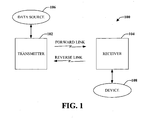
- Fig. 1 illustrates a block diagram of a system 100 for enabling a traditional wire-based device to communicate wirelessly.
- System 100 includes a transmitter 102 in wired and/or wireless communication with a receiver 104.
- Transmitter 102 and receiver 104 can be components that traditionally communicate over a wire-based protocol.
- a number of transmitter(s) 102 and receiver(s) 104 can be included in system 100, as will be appreciated, a single transmitter 102 that transmits communication data signals to a single receiver 104 is illustrated for purposes of simplicity.
- Transmitter 102 may be connected to a data source 106 (e.g ., storage, memory, and the like) and receiver 104 may be connected to an interface device 108, such as a display.
- a data source 106 e.g ., storage, memory, and the like
- receiver 104 may be connected to an interface device 108, such as a display.
- System 100 can operate in at least two modes of operation, namely, a low overhead mode and/or a low latency mode.
- Low overhead mode optimizes a packet sent over the air (e.g. , wirelessly) by requesting channel allocation time(s), which is the time for data to be sent from either direction (from sender to receiver or from receiver to sender).
- channel allocation time(s) can be determined based on knowledge of the data included in both the forward link and the reverse link.
- Transmitter 102 can be configured to ascertain a forward link rate and reverse link rate based on various criteria (e.g. , round trip delay measurements). Transmitter 102 can send at least one reverse link encapsulation packet every frame. The reverse link encapsulation packet can be used to accommodate the transfer of reverse packets over the transfer link, creating the reverse link.
- Receiver 104 can be configured to receive and/or send data communication through a wired functionality and/or a wireless functionality.
- the determination of which functionality to utilize can be based on various criteria including type of data (e.g ., voice, text, image, ...), the traditional method of communicating the data (e.g. , wired link or wireless link), the size of the file or packet being transmitted, as well as other criteria relating to the data, the sender, and/or the receiver.
- Transmitter 102 can communicate the data without knowledge of how receiver 104 is receiving the data (e.g ., wired or wireless).
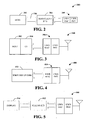
- Fig. 2 illustrates a wireless sender 200 in accordance with the one or more disclosed embodiments.
- Wireless sender 200 can be configured to communicate high rate data, such as digital data.
- the various wireless systems described herein can include a wireless sender and a wireless receiver.
- Wireless sender 200 can include a host 202 and a special client (C1) 204, which can be connected to one or more displays or devices.
- Host 202 and Client (C1) 204 can be connected by a traditional high data rate link (e.g., MDDI) 206.
- MDDI traditional high data rate link
- the module containing Client (C1) 204 and a wireless modem 208 can be operatively connected into an existing wired link, such as an MDDI link or a link configured to support high rate data.
- a wireless modem 208 such as an ultra wide band modem that includes an UWB MAC and an UWB PHY
- the host 202 may need upgrading to handle wireless functionalities, which will be described in further detail below.
- Fig. 3 illustrates another wireless sender 300 with a co-located host 302 and client 304. Also included is a wireless modem 306.
- Another example of a wireless sender 400 is illustrated in Fig. 4 , wherein the host and C1 are consolidated onto a single hardware/software entity 402.
- a wireless modem 404 is included to facilitate wireless communication.
- Wireless receiver 500 includes a client (C2) 502, which can be connected to several device(s) and display(s) 504 (only one display is shown for purposes of simplicity).
- Client (C2) 502 can be configured to process and generate high rate digital data packets.
- client (C2) 502 does not have a physical layer of an MDDI stack.
- a single sender can be connected to several receivers in accordance with the disclosed embodiments.
- Fig. 6 illustrates a system 600 for extending the capabilities of a traditionally wired configuration to allow communication over a wireless link.
- System 600 includes a transmitter 602 that communicates with a receiver 604 over a forward link.
- Receiver 604 communicates with the transmitter 602 over a reverse link.
- Transmitter 602 and receiver 604 can be devices that generally communicate over a wired protocol, however, system 600 allows such devices to communicate over the wired protocol and/or over a wireless protocol, such as over a high-speed wireless link.
- a number of transmitter(s) 602 and receiver(s) 604 can be included in system 600, as will be appreciated, a single transmitter 602 that transmits communication data signals to a single receiver 604 is illustrated for purposes of simplicity.
- Transmitter 602 can include a host 606, a portion of a client (C1) 608, and a communication component 610.
- Host 606 can be an MDDI host, for example.
- host 606 can be a component separate from transmitter 602 and connected to transmitter 602 through a wired link.
- a portion of client (C1) 608 is kept on or in communication with host 606 for clock synchronization.
- Client (C1) 608 can be connected to host 606 through a traditional wired link (e.g ., MDDI link), for example.
- Host 606 can be configured to send or communicate packets of data to client (C1) 608.
- These packets can be communicated to receiver 604 through communication component 610, which can include a modem, such as an ultra wide band (UWB) modem.
- Some packets e.g ., MDDI round-trip delay measurement packet
- client (C1) 608 are processed by client (C1) 608 and communicated to receiver 604.
- Other packets e.g. , filler packets
- a filler packet for example, maintains timing between transmitter 602 and receiver 604.
- Such packets can be generated by either transmitter 602 or receiver 604 through respective client portions.
- Receiver 604 can include an interface device 612 (e.g. , display), a portion of client (C2) 614, and a communication component 616.
- the device 612 can be a component separate from the receiver 604 and connected to the receiver 604 through, for example, a wired link.
- Client (C2) 614 can be connected to device 612 through a wired link.
- Client (C2) 614 can be configured to process a packet received from transmitter 602.
- Receiver 604 can receive the communication from transmitter 602 through communication component 616 that can include, for example, an UWB modem.
- System 600 can be configured to operate in one of two modes of operation. These modes include a low overhead mode and a low latency mode.
- client (C1) 608 places the data to be sent, excluding for example, fill packets and round trip delay packets, in a buffer that can be included on the communication component 610 (e.g ., UWB modem).
- the communication component 610 through a UWB MAC, for example, can periodically request unidirectional channel time allocations (CTA) from transmitter 602 to receiver 604 based on the size of the buffer.
- CTA channel time allocations
- client (C2) 614 can place the reverse link data that it wants to send, excluding filler packets, for example, in a buffer associated with communication component 616 (e.g ., UWB modem).
- the communication component 616 can request reverse-direction CTAs.
- communication component 610 e.g., UWB modem
- UWB modem can request a CTA for m msec in the forward direction and a CTA for n msec in the reverse direction.
- the expected ratio of traffic in the forward and reverse directions is m : n and m sec is the duration corresponding to a forward link transfer rate of R f-mddi .
- T is a superframe duration, which is determined by the latency constraints of the application where: m + n ⁇ T CTAP ⁇ T
- System 700 includes a transmitter 702 and a receiver 704 that communicate over a forward link (from transmitter 702) and/or a reverse link (from receiver 704).
- the communication over the forward link and/or reverse link can be over a wired protocol and/or over a wireless protocol depending on the particular situation ( e.g ., data to be transmitted, data rates, quality of communication link, status of each device, ).
- a number of transmitter(s) 702 and receiver(s) 704 can be included in system 700, as will be appreciated, a single transmitter 702 that transmits communication data signals to a single receiver 706 is illustrated for purposes of simplicity.
- Transmitter 702 can include a host component 706 connected to a client (C1) component 708 and a communication component 710.
- Receiver 704 can include a device 712 connected to a client (C2) component 714 and a communication component 716.
- Client (C1) component 708 and client (C2) component 714 are respective portions of a client.
- transmitter 702 and/or receiver 704 can include additional components.
- transmitter 702 can include an encoder component (not shown) that can modulate and/or encode signals in accordance with a suitable wireless communication protocol which signals can then be transmitted to receiver 704.
- encoder component can be a voice coder (vocoder) that utilizes a speech analyzer to convert analog waveforms into digital signals or another type of encoder.
- vocoder voice coder
- Suitable wireless communication protocols can include, but are not limited to, Orthogonal Frequency Division Multiplexing (OFDM), Orthogonal Frequency Division Multiplexing Access (OFDMA), Code Division Multiple Access (CDMA), Time Division Multiple Access (TDMA), Global System for Mobile Communications (GSM), High-Speed Downlink Packet Access (HSDPA), and the like.
- OFDM Orthogonal Frequency Division Multiplexing
- OFDMA Orthogonal Frequency Division Multiplexing Access
- CDMA Code Division Multiple Access
- TDMA Time Division Multiple Access
- GSM Global System for Mobile Communications
- HSDPA High-Speed Downlink Packet Access
- Receiver 704 can include a decoder component (not shown) that can decode a received signal and/or data packet therein for processing.
- a decoder component (not shown) that can decode a received signal and/or data packet therein for processing.
- an acknowledgment component (not shown) can generate an acknowledgment that indicates successful decode of the data packet, which can be sent to transmitter 702 to inform transmitter 702 that the data packet was received and decoded, and therefore need not be retransmitted.
- Host component 706 can include a query module 718 and a measurement module 720.
- Query module 718 can be configured to query a host medium access control (MAC) for an application data rate that the MAC provides.
- the operation rate may depend upon the rate of the wireless link.
- Measurement module 720 can be configured to determine the forward link rate and the reverse link rate based on, for example, a round trip delay measurement, which may be specified in the wireless protocol.
- the wireless operation rate can be determined by the minimum of the two rates (forward link rate and reverse link rate), the maximum capacity of host 706, and the maximum capacity of client (C1) 708. There should be a minimum allowable rate R min .
- the operation rate can be adjusted by transmitter 702 and/or receiver 704 through respective components (e.g ., communication components 710 and/or 716).
- Transmitter 702 can notify receiver 704 the rate at which the communication will be processed.
- Client (C2) component 714 can include a notifier module 722 that can be configured to notify transmitter 702 the application data rate that the MAC provides. Such notification can be based on a query received from transmitter 702 ( e.g ., a query sent by query module 718). For reverse link packets, notifier module 722 can specify the number of bytes needed by receiver 704 to send on the reverse link in the current frame.
- Client (C2) component can also include an assigner module 724 that can be configured to assign a communication to a wired protocol or a wireless protocol depending on various parameters associated with a communication (e.g ., communication type, rate of communication, sender, receiver, and the like).
- Communication component 716 can include a wired module 726 and a wireless module 728.
- the wired module 726 can be configured to provide wired functionality and the wireless module 728 can be configured to provide wireless functionality.
- a determination can be made whether to communicate wirelessly utilizing the wireless module 728 or to communicate utilizing the wired module 726. Such a determination can be based on a variety of factors including the operation rate, the type of data being transmitted ( e.g ., voice, text, image, ...), the size of the data or files being transmitted, if the data is typically communicated over a wired link or a wireless link, etc .
- Wired module 726 and/or wireless module 728 can include a buffer for storing content so that if a change is made during a communication from one module to the other module (e.g ., wireless to wired, wired to wireless) communication is not lost due to switchover issues.
- Transmitter 702 performs its functions in substantially the same way regardless of the communication method (wired or wireless).
- transmitter 702 can include a component configured to fragment a sub-frame (not shown) and receiver 704 can include a component configured to reassemble the sub-frame (not shown).
- the maximum length of a MDDI sub-frame for example, can be about 65,536 bytes, although it is generally smaller.
- the maximum size of an 802.15.3 MAC frame can be approximately 4,096 or around 8,192 bytes, if the underlying rate is about 480 Mbps.
- the size can be around 2,048 bytes if the underlying physical layer rate is approximately 200 Mbps.
- the sub-frame may need to be fragmented on the transmitter 702 side and reassembled on the receiver 704 side to accommodate the size of the frame.
- Such fragmenting and reassembly can be performed by respective communication components 710 and 716 and/or other components associated with transmitter 702 and receiver 704.
- Fig. 8 illustrates another embodiment of a system 800 for extending traditionally wired configurations to allow communication over a wireless link.
- System 800 can include a transmitter 802 that includes a host 806, a portion of a client (C1) 808, and a communication component 810.
- System 800 can also include a receiver 804 that includes a device 812, a portion of a client (C2) 814, and a communication component 816.
- Transmitter 802 communicates to receiver 804 over a forward link and receiver 804 communicates to transmitter 802 over a reverse link.
- a number of transmitter(s) 802 and receiver(s) 804 can be included in system 800, a single transmitter 802 that transmits communication data signals to a single receiver 804 is illustrated for purposes of simplicity.
- System 800 can include a memory 818 operatively coupled to receiver 804.
- Memory 818 can store information related to a data rate for a packet and/or a packet type (e.g ., application data rate provided by MAC, operation rate of the wireless link, ...), mode of operation for a packet and/or packet type, and/or other parameters associated with transmitting data over a wireless protocol, over a wired protocol, or a combination of these protocols.
- a wired protocol can be used for a communication and a decision can be made to switch to a wireless protocol during the communication, or vice versa, without interruption or termination.
- a processor 820 can be operatively connected to receiver 804 (and/or memory 818) to facilitate analysis of information related to ascertaining whether a particular communication should be sent over a wired protocol or a wireless protocol.
- Processor 820 can be a processor dedicated to analyzing and/or generating information communicated to receiver 804, a processor that controls one or more components of system 800, and/or a processor that both analyzes and generates information received by receiver 804 and controls one or more components of system 800.
- Memory 818 can store protocols associated with data communication rates, operation rates, taking action to control communication between receiver 804 and transmitter 802, etc., such that system 800 can employ stored protocols and/or algorithms to achieve improved communication in a wireless network as described herein.
- the data store (e.g., memories) components described herein can be either volatile memory or nonvolatile memory, or can include both volatile and nonvolatile memory.
- nonvolatile memory can include read only memory (ROM), programmable ROM (PROM), electrically programmable ROM (EPROM), electrically erasable ROM (EEPROM), or flash memory.
- Volatile memory can include random access memory (RAM), which acts as external cache memory.
- RAM is available in many forms such as synchronous RAM (DRAM), dynamic RAM (DRAM), synchronous DRAM (SDRAM), double data rate SDRAM (DDR SDRAM), enhanced SDRAM (ESDRAM), Synchlink DRAM (SLDRAM), and direct Rambus RAM (DRRAM).
- DRAM synchronous RAM
- DRAM dynamic RAM
- SDRAM synchronous DRAM
- DDR SDRAM double data rate SDRAM
- ESDRAM enhanced SDRAM
- SLDRAM Synchlink DRAM
- DRRAM direct Rambus RAM
- Memory 818 of the disclosed embodiments are intended to comprise, without being limited to, these and other suitable types of memory.
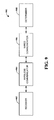
- Fig. 9 illustrates a system 900 for communicating over a wired link or a wireless link with a traditional wired device.
- System 900 is represented as functional blocks, which can be functional blocks that represent functions implemented by a processor, software or combination thereof (e.g. , firmware).
- System 900 includes a receiver 902 that can be configured to receive an operation rate for a communication. This operation rate can be received from, for example, a sender or a sender host. The operation rate can set up or establish the rate of communication in both a forward direction and a reverse direction.
- System 900 also includes a wireless communicator 904 that can be configured to send and/or receive a communication over a wireless protocol.
- a wired communicator 906 can be configured to send and/or receive a communication over a wired protocol.
- a forward and/or a reverse direction there may be packet extensions and/or new packets.
- MDDI sender information can be added to a packet.
- This packet extension can provide an MDDI client on the receiver end with MDDI sender side information. This information can include the rate at which the MDDI host and client should operate on the sender side.
- extensions to a client capability packet can include about four bytes for MDDI receiver MAC information and around two bytes for MDDI receiver client information, however other extensions are also possible.
- a determiner that can selectively determine whether to utilize the wireless communicator to communicate over the wireless protocol or whether to utilize the wired communicator to communicate over the wired protocol. Such a determination can be selectively made based on various parameters, such as the communication operation rate. Other parameters can also be analyzed to make the determination. For example, the determination can be made based on how the particular communication has been traditionally sent and/or received ( e.g., historical analysis), the type of communication (e.g ., voice, image, text, ...), as well as other parameters relating to the communication, the sender, and/or the receiver.
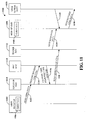
- Fig. 10 illustrates an exemplary forward link MDDI data transfer 1000 in low-overhead mode in accordance with the various embodiments presented herein.
- One type of mode for an MDDI sender 1002 to send data to an MDDI receiver 1004 can be a low overhead mode. In this mode, a packet sent wirelessly is optimized for channel allocation time, which is the time it takes for data to be sent from either direction ( e.g ., forward or reverse).
- MDDI sender 1002 can include a portion of a client (C1) 1006 and MDDI receiver 1004 can include a portion of the client processing (C2) 1008.
- An MDDI client (C1) 1006 can place the data to be sent in a buffer, such as on a UWB modem.
- the data to be sent should exclude unnecessary packets, such as fill packets and round trip delay packets, for example.
- the MDDI data is sent to a sender MAC 1010, as illustrated at 1012.
- Sender MAC 1010 (or UWB MAC) may periodically or continuously request at least one CTA from MDDI sender 1002 to MDDI receiver 1004 based on, for example, the size of the buffer.
- Sender MAC 1010 can request, at 1014, forward link CTAs (e.g. , periodically or continuously) from a piconet controller (PNC) MAC 1016.
- PNC MAC 1016 can respond to sender MAC 1010 with a channel time response code at 1018. This response code can indicate whether the data has been communicated successfully.
- sender MAC 1010 can send the MDDI data to a receiver MAC 1020, as indicated at 1022.
- Fig. 11 illustrates an exemplary reverse link MDDI data transfer 1100 in low-overhead mode in accordance with the various embodiments presented herein.
- An MDDI receiver 1102 can initiate, over a reverse link, communication intended for an MDDI sender 1104.
- MDDI receiver 1102 can include a portion of client (C2) 1106 and MDDI sender 1104 can include a portion of client (C1) 1108.
- MDDI receiver 1102 can send MDDI data to a receiver MAC 1110, as indicated at 1112.
- Receiver MAC 1110 can request from a PNC MAC 1114 reverse link CTAs, at 1116. The request can correspond to the data that should be sent in the reverse direction.
- PNC MAC 1114 can respond, at 1118, with a channel time response code.
- Receiver MAC 1110 can, at 1120, send MDDI data in CTAs to sender MAC 1122.
- sender MAC 1122 may have sent or given MDDI data to client (C1) 1108, at 1124, at some time before or at substantially the same time as receiving the MDDI data from receiver MAC 1110.
- a MDDI sender host 1126 can send and/or receive at least one reverse link encapsulation every frame, as indicated at 1128 and 1130.
- the reverse link data can be sent proactively, without waiting for a data request.
- the client can specify the number of bytes it needs to send on the reverse link in the current frame.
- the host 1126 can correspondingly allocate the request in the reverse link encapsulation packet.
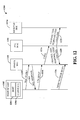
- Fig. 12 illustrates a low-latency mode MDDI connection setup 1200 in accordance with the various embodiments presented herein.
- channel allocation time can be ascertained based on an inference derived from data contained in packets in both the forward direction and the reverse direction.
- a MDDI sender 1202 can include a host 1204 and a portion of a client (C1) 1206.
- C1 1206 a client
- a UWB modem on the sender 1202 can send a MAC query, at 1210, to a sender MAC 1208.
- a MAC query is a query sent to find out the rate supported by the MAC and retransmission statistics.
- Sender MAC 1208 can respond to the query at 1212. This response can be a MAC response that indicates the rate supported by the MAC retransmission statistics.
- a MAC Query Packet is sent by the host to query MAC information on the sender/receiver side.
- a Packet Length field is two bytes that contain a 16 bit unsigned integer that specifies the total number of bytes in the packet not including the packet length field.
- a Packet Type field is two 2 bytes that contain a 16 bit unsigned integer.
- a packet type of 151 identifies the packet as a MAC query packet.
- a ClientID is bytes that contain a 16 bit unsigned integer reserved for ID of the destination client (C2).
- the MAC Query Parameters field is two bytes and a CRC field is two bytes that contain a 16 bit CRC of all bytes in the packet including the Packet Length.
- Sender 1202 requests a CTA setup 1214 for m msec in the forward direction and a CTA for n msec in the reverse direction.
- the expected ratio of traffic in the forward and reverse directions should be m : n.
- CTRq channel time request
- a channel time response code can be sent in the reverse direction, shown at 1220, and in the forward direction, shown at 1222 and sent to a receiver MAC 1224.
- MDDI sender 1202 can begin an MDDI transfer, as illustrated at 1226.
- the duration corresponding to the MDDI forward link transfer rate of R f-mddi is m sec, and when T is the super-frame duration determined by the latency constraints of the application, the following formula applies: m + n ⁇ T CTAP ⁇ T
- the reverse link data can be sent during the CTAs reserved in the reverse direction.
- N is the size of the reverse link packet that should be sent and n is the reverse link CTA duration in each super frame.
- R 1 is the physical layer transmission rate of the MDDI data (MAC payload).
- R 2 is the physical layer transmission rate of the PHY, MAC headers and the preamble.
- T fl The latency of the forward link packets, T fl , can be determined accordingly. Given the application latency constraints in forward and reverse links, the time duration of the MAC frame can be derived accordingly. For example, various algorithms, methods, and/or techniques can be employed to derive the time duration of the MAC frame and/or the latency of the forward link packets.
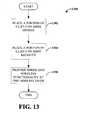
- a methodology 1300 for configuring a traditionally wired device to communicate through a wired protocol and/or a wireless protocol is placed on an MDDI sender.
- the MDDI sender can be wireless and can be connected to a data source.
- the MDDI sender can also include an MDDI host connected or interfaced to the client portion by, for example, a traditional wired MDDI link.
- a second portion of the client is placed on an MDDI receiver, which can be a wireless MDDI receiver.
- the MDDI receiver can be connected to a device, which can be, for example, a display.
- the portion of the client placed on the MDDI sender and the portion of the client placed on the MDDI receiver are distinct portions of the same client. It should be noted that the respective portions of the client can be portions implemented by a processor, software or combination thereof ( e.g. , firmware).
- Both a wired functionality and a wireless functionality are provided, at 1306.
- This functionality is included on the MDDI receiver, enabling the MDDI receiver to communicate through the wired functionality, the wireless functionality, or both functionalities.
- an MDDI receiver can be a mobile device that may receive a communication, such as a movie that is displayed on a CRT screen or display.
- the mobile device may also be connected to a wall-mounted display, allowing the movie to be displayed on the wall so that others can view the imagery.
- the mobile device is multi-functional, it can broadcast the movie on the display and can at substantially the same time receive or send a voice communication, different from the voice communication associated with the movie.
- a user of the mobile device may conduct a communication separate from the movie.
- An example where this might be utilized is when a user's children are watching a movie and the user wants to answer the phone and walk away.
- the movie can be displayed through a wired functionality and at substantially the same time the user can communicate through the wireless functionality.
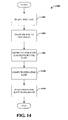
- Fig. 14 illustrates a methodology 1400 for determining an operation rate according to the one or more disclosed embodiments.
- the MDDI operation rate depends, in part, on the rate of the wireless link.
- the method 1400 for determining an operation rate begins, at 1402, where a host MAC is queried for an available application data rate (e.g. , the application data rate that the MAC provides).
- the query can be requested by an MDDI host, for example.
- a round trip delay is measured.
- the round trip delay measurement can be utilized, at 1406, to determine or ascertain a forward link rate and a reverse link rate.
- the round trip delay measurement can be specified in a wired MDDI protocol that should be used.
- An operation rate is computed at 1408.
- the operation rate can be computed based in part by comparing the forward link rate and the reverse link rate and determining which is the minimum of the two rates.
- the minimum of these two rates can be designated as the operation rate.
- the minimum of these two rates forward link rate and reverse link rate
- the operation rate is communicated or sent to a receiver (e.g., MDDI receiver) to notify the receiver the rate at which the communication will proceed.
- a receiver e.g., MDDI receiver
- a transmitter can query the host MAC through a query module.
- the transmitter can further measure the round trip delay, ascertain forward and reverse link rate, and compute the operation rate utilizing a measurement module.
- the transmitter can also send the operation rate to the receiver utilizing a communication component.
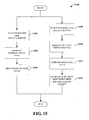
- Fig. 15 illustrated is a methodology 1500 for communicating in low overhead mode according to the various embodiments presented herein.
- the forward link is shown on the left side of the figure and the reverse link is shown on the right side of the figure.
- forward link data is placed in a buffer. Excluded from the data placed in the buffer can be unnecessary data such as fill packets and/or round trip delay packets.
- This data can be placed in the buffer by an MDDI client (C1) on an MDDI sender, for example.
- C1 MDDI client
- unidirectional CTAs are requested (e.g., periodically or continuously).
- An UWB MAC can request this information from the MDDI sender to a receiver based on, for example, the size of the buffer.
- the forward link data can be sent, at 1506.
- a host sends at least one reverse link encapsulation packet every frame.
- a client e.g. , receiver
- the host can specify the number of bytes that should be sent on the reverse link in the current frame.
- the host e.g., sender
- reverse link data that should be sent is placed in a buffer by, for example, an MDDI client (C2).
- the buffer can be located on a UWB modem of an MDDI receiver.
- a request for reverse direction CTAs is sent, at 1510, by, for example, an UWB modem on the MDDI receiver side. The request can be for those CTAs in the reverse direction corresponding to the data that should be sent in the reverse direction.
- An MDDI client on the receiver (C2) can send reverse link data to the client on the sender (C1) proactively, at 1512. As illustrated, at 1514, an MDDI client on the sender (C1) sends the data it has to the MDDI host in the reverse encapsulation packet.
- Fig. 16 illustrates a methodology 1600 for communicating in low latency mode according to the various embodiments presented herein.
- the forward link is shown on the left side of the figure and the reverse link is shown on the right side of the figure.
- a UWB modem on the sender for example, requests, at 1602, a CTA for m msec in the forward direction.
- a CTA request for n msec is sent in the reverse direction.
- a comparison of the forward and reverse CTAs received in response to the requests is made, at 1606.
- the expected ratio of traffic in the forward and reverse directions is m : n.
- m msec is the duration corresponding to the MDDI forward link transfer rate of R f- mddi and: m + n ⁇ T CTAP ⁇ T where T is the super-frame duration, which can be determined by the latency constraints of the application.
- the reverse link data is sent, at 1608, during the CTAs reserved in the reverse direction.
- a time duration of the MAC frame can be derived from the application latency constraints in the forward and reverse links.
- k is the average number of retransmissions experienced by a MAC frame.
- N is the size of the reverse link packet that should be sent and n is the reverse link CTA duration in each super frame.
- R 1 is the physical layer transmission rate of the MDDI data (MAC payload).
- R 2 is the physical layer transmission rate of the PHY, MAC headers and the preamble.
- H is the size of the MAC and the size of PHY header and the size of the preamble.
- T fl ceil ⁇ k * N / R 1 + RIFS + H / R 2 + SIFS + T ACK / n * T
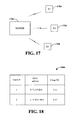
- Fig. 17 illustrates a single wireless sender associating with multiple wireless receivers in accordance with the disclosed embodiments.
- various wired packets and their behavior in the wireless techniques will now be described. Filler packets are not generated in wireless communication of high rate data because filler packets were designed to maintain synchronization on the wired link and are, therefore, unnecessary with a wireless link.
- a Client Capability Packet informs the host of the capabilities of the client.
- the client should send this packet after forward link synchronization.
- the client can also send the client capability packet when requested by the host through reverse link flags in a reverse link encapsulation packet.
- the client capability packet can contain fields that pertain to the link such as pre-calibration data rate capability, interface type capability, post-calibration data rate capability, and the like.
- This packet can also contain fields pertaining to external devices, such as a display device attached to the client. Such fields can include the number of alternate displays, a bitmap width, a bitmap height, display window width, display window height, color map size, and so forth.
- the receiver can send the Client Capability Packet as a response to an Association Response Packet sent by the wireless sender.
- the wireless receiver (C2) can also send an alternate display capability packet if it is associated with any alternate displays.
- the wireless receiver (C2) can send a Client Capability Packet to the sender when there is a change in statue of the external devices (e.g., a new device being added, an existing device being removed, change of parameters of an existing device, and so on).
- the client capability packet can be sent periodically to assist in reliability of client capability packets.
- a client request and status packet can be used to send information from a client to a host to allow the host to configure the host-to-client link in an optimum fashion.
- the client can send this packet to the host as a first packet in a reverse link packet.
- the client can, alternatively or additionally, send this packet to the host when the host requests it explicitly through a reverse link flags in a reverse link encapsulation packet.
- the wireless receiver may periodically send a Client Request and Status Packet to the wireless sender to indicate its CRC Error Count and also when there is a change in status of the external devices.
- the wireless receiver may also send a Client Request and Status Packet to the wireless sender requests it through the C2 flags field of a new C2 request packet.
- each wireless sender 1702 can associate or communicate with multiple wireless receivers, illustrates as receiver 1 (R1) 1704, receiver 2 (R2) 1706, and receiver 3 (R3) 1708.
- the sender 1702 and receivers 1704, 1706, 1708 can be MDDI sender(s) and/or MDDI receivers or other senders and receivers that can communicate high rate digital data wirelessly.
- Each receiver 1704, 1706, 1708 can have multiple displays (not shown) and devices (not shown). For example, each receiver can have sixteen displays, although more or less than sixteen can be associated with a single receiver.
- wireless devices such as a wireless display, wireless mouse, wireless keyboard, and so forth, can have a wireless receiver, and each wireless device can be identified as a separate client. From the perspective of a host ( e.g. , sender 1702), each of these clients can be identified by an unique client identification (Client ID). Therefore, Client C1 can have a Client ID of "0".
- Wireless receiver such as receiver (R2) 1706, can send a client capability packet to the wireless (C2) sender 1702 when there is a change in the capabilities of the external devices connected to receiver (R2) 1706. Additionally or alternatively, each receiver can send a client capability packet periodically to ensure reliability.
- Sender 1702 should maintain a device association table, such as table 1800 shown in Fig. 18 .
- Table 1800 illustrates an association of a single wireless sender with multiple wireless receivers (e.g ., client). The packets intended for a different receiver clients can be forwarded to the respective devices based on the table.
- Table 1800 illustrates two clients (1 and 2). Associated with Client #1 is the MAC address X:Y:Z:P:Q:R, and a Client ID "C21". Associated with Client #2 is the MAC address U:V:W:L:M:N and the Client ID "C22". In such a manner, the sender can communicate with the appropriate receiver by accessing the look-up table 1800.
- a sender In order for a sender to communicate with a receiver, there should be device association. Either device (sender or receiver) can initiate the association process. For example, if a wireless sender is a phone and a wireless receiver is a projector/display, the phone (e.g ., sender) would typically initiate the communication. However, there are situations where a receiver would initiate the communication. Thus, there can be receiver initiated association or sender initiated association.
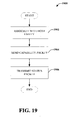
- Fig. 19 illustrates a method 1900 for wirelessly communicating digital data at a high rate, which can be initiated by a receiver.
- the method 1900 can facilitate wireless communication between a host entity (e.g ., sender) and one or more remote user interface client devices (e.g. , receivers).
- the wireless communication can include user interface data or other data.
- a wireless sender e.g., host entity
- a wireless sender e.g., host entity
- the host entity can communicate wirelessly with more than one remote user interface client device at substantially the same time.
- a capability packet is sent to the host entity, at 1904.
- the capability packet can include one or more capabilities of the remote user interface client device.
- a status packet is sent to the host entity.
- the status packet can include link quality information.
- a request is received from the host entity for an updated status packet.
- the status packet can be updated and sent to the host entity in reply to the request.
- the updated status packet can be automatically sent either periodically or when a status change is detected.
- the association between one or more remote user interface client devices and the host entity may be broken due to a communication failure, the devices moving out of range, or based on other factors. It may be determined that an association is broken if a host entity status packet is not received within a predetermined period. For example, at substantially the same time as a host entity status packet is requested, a timer can be started. The timer can be set up to track an interval from the time the request is sent. The interval can be predetermined and should be long enough to allow the request to be received at the host entity and for the host entity to respond. If the timer expires (e.g., the response is not received within the predetermined interval), the one or more remote user interface client devices can be disassociated from the host entity.
- Disassociation from the host entity can also occur if a communication between the devices should be stopped. If so, the one or more remote user interface client devices can disassociate from the host entity and enter a disassociation state. Disassociation can include sending a dissociation request to the host entity and receiving a dissociation response from the host entity. In accordance with some aspects, the dissociation response might not be received from the host entity, such as when there is a communication failure or if a link or association between the devices has been broken.
- Fig. 20 illustrates a method 2000 for communicating high rate digital data wirelessly.
- Method 2000 can start with a receiver-initiated association.
- an Association Request Packet is sent, at 2002.
- the Association Request Packet can be sent for an association request by C2 when it desires to associate with the sender after power up of the device.
- the Association Request Packet can include a Packet Length, Packet Type, Device Parameters, Sender MAC Address, Receiver MAC Address and CRC fields.
- the packet length can be two bytes that contains a 16 bit unsigned integer that specifies the total number of bytes in the packet not including the packet length field.
- the Packet Type can be two bytes in length and contain a 16 bit unsigned integer.
- a packet type of 154 identifies the packet as an association request packet.
- Device parameters can be two bytes for device specific parameters.
- the sender MAC Address can be a six byte-MAC Address of the w-MDDI sender and the Receiver MAC Address - 6 bytes-MAC Address of the w-MDDI receiver.
- the CRC can be two bytes that contain a 16 bit CRC of all bytes in the packet including the Packet Length.
- the device can enter a "Sent Association Request” state and an association timer can be started, at 2004.
- the wireless sender should acknowledge the Association Request Packet and reply with an Association Response Packet before the association timer reaches a predetermined interval (e.g. , times out, expires).
- the Association Response Packet can include a Client ID that identifies the wireless receiver.
- a status packet or Client Capability Packet can be transmitted, at 2012.
- the Client Capability Packet can be sent when the wireless receiver receives an Association Response from a wireless sender. After sending the Client Capability Packet, the wireless receiver can enter an Associated state and the associated wireless receiver can enter an Associated state. In such a manner there is a three-way handshake association established.
- Association Request packet, Association Response Packet and/or Client Capability Packets are lost, they can be retransmitted if the wireless link is stable. Otherwise, the wireless sender and wireless receiver do not become associated ( e.g ., they remaining a dissociated state).
- Fig. 21 illustrates a method 2100 for receiver initiated dissociation between a user device (e.g ., receiver) and a host entity (e.g ., sender).
- the method 2100 starts, at 2102, with associating the user device with a host entity.
- a capability packet is sent, at 2104.
- the capability packet can include one or more capabilities of the user device.
- a status packet can be transmitted, at 2106. Such transmission of the status packet can be based on a request for the packet from the host entity, periodically, or when a status changes.
- a determination may be made that the association is broken and/or, at 2110, it may be decided to stop communication with the host entity. For example, the determination can be made if the wireless receiver does not receive a Sender MAC Response Packet from the wireless sender in a predetermined amount of time.
- a MAC Response Packet provides MAC statistics on the wireless receiver MAC, such as average number of retransmissions, packet error rate, and so forth.
- the packet contents can include a packet length, packet type, Client ID, average number of transmissions, frame error rate, physical layer rate, CRC.
- the MAC Response Packet can be two bytes in length that contains a sixteen bit unsigned integer that specifies the total number of bytes in the packet, not including the packet length field.
- the packet type is two bytes that contains a sixteen bit unsigned integer.
- a packet type of 150 identifies the packet as a MAC Response Packet.
- the client ID is two bytes that contains a sixteen bit unsigned integer. This is the Client ID of C1/C2 depending on which client is the originator of the packet.
- the average number of retransmissions can be two bytes and for each MAC frame transmitted in the reverse direction.
- the frame error rate can be two bytes and is the packet error rate seen in the forward direction.
- a physical layer rate can be two bytes and is the transmission rate on the physical layer.
- the CRC is two bytes that contains a sixteen bit CRC of all bytes in the packet including the packet length.
- the Sender MAC Response Packet provides the MAC statistics on the wireless sender MAC like average number of re-transmissions, packet error rate and so forth to the wireless receiver.
- This packet is sent by the wireless sender acknowledging the MAC response Packet sent by the wireless receiver.
- the packet contains a Packet Length field of two bytes that contain a 16 bit unsigned integer that specifies the total number of bytes in the packet not including the packet length field. Also included is a Packet Type field of two bytes that contain a 16 bit unsigned integer.
- a packet type of 159 identifies the packet as a Sender MAC Response Packet.
- a Client ID is two bytes that contain a 16 bit unsigned integer. This is the Client ID of C2, the destination client.
- the Average number of retransmissions is the average number of retransmissions for every MAC frame transmitted on the reverse direction.
- a Frame Error Rate is the packet error rate seen in the forward direction.
- a Physical Layer Rate is the transmission rate on the physical layer.
- a CRC that is two bytes in length that contain a 16 bit CRC of all bytes in the packet including the Packet Length.
- the user device should be dissociated from the host entity.
- Such dissociation can include, sending an explicit Dissociation Request Packet, at 2112, to the wireless sender. If there is still a communication link between the host entity and the user device ( e.g ., all communication has been lost), a Dissociation Response Packet is received from the wireless sender, at 2114. At substantially the same time as the dissociation response is received, the user device enters a dissociation state, at 2116.
- the Dissociation Request Packet can be sent by C2 when it wants to dissociate with the wireless sender and to make a graceful exit.
- a Packet Length field two 2 bytes in length that contain a 16 bit unsigned integer that specifies the total number of bytes in the packet not including the packet length field.
- a Packet Type field is two bytes that contain a 16 bit unsigned integer.
- a packet type of 156 identifies the packet as a dissociation request packet.
- a Client ID field is two bytes allocated for client ID of C2.
- the CRC field is two 2 bytes that contain a 16 bit CRC of all bytes in the packet including the Packet Length.
- the Dissociation Response Packet is sent in response to the dissociation request packet. It has a Packet Length of 2 bytes that contain a 16 bit unsigned integer that specifies the total number of bytes in the packet not including the packet length field.
- a Packet Type is two 2 bytes that contain a 16 bit unsigned integer.
- a packet type of 157 identifies the packet as a dissociation response packet.
- a Client ID is two bytes allocated for client ID of C2 and a CRC field is two bytes that contain a 16 bit CRC of all bytes in the packet including the Packet Length.
- a method 2200 for high rate wireless digital data communication between a sender at one or more remote receivers for user interface data The sender initiates the association when it desires to associate with a particular wireless receiver. For example, if the wireless sender is a phone and the wireless receiver is a projector, the phone (e.g. , wireless sender) would typically start the association process. Sender initiated association is similar to receiver initiated association.
- Method 2200 can start, at 2202, when a sender is associated with one or more remote user interface devices through a sender initiated association.
- Such association can include sending a request to the receiver that an association be established between the devices.
- the receiver can respond to the request, indicating that the association is possible ( e.g ., that the receiver is not associated with another sender).
- a packet that includes capability information is received, at 2204, from the remote user interface device and, at 2206, link quality information is received, such as on a reverse link.
- the information can be sent in response to a C2 Request Packet that can be sent by the wireless sender to the receiver requesting the receiver to send the client capability packet.
- the C2 can include Packet Length, Packet Type , C2 Client ID and C2 flags fields.
- the Packet Length field is two bytes that contain a 16 bit unsigned integer that specifies the total number of bytes in the packet not including the packet length field.
- the Packet Type is two bytes that contain a 16 bit unsigned integer.
- a packet type of 149 identifies the packet as a C2 request packet.
- the C2 Client ID field is two bytes that contain a 16 bit unsigned integer reserved for ID of C2.
- the C2 flags field is one 1 byte that contains an 8 bit unsigned integer that contains a set of flags to request information from C2. For example, if a bit is set to 1, then C1 requests the specified information from the client.
- C1 does not need the information from C2.
- Bit 0 indicates C1 needs the client capability packet from C2.
- Bit 1 indicates C1 needs "Client Request and Status Packet" from C2.
- the CRC field is two bytes that contain a 16 bit CRC of all bytes in the packet including the Packet Length.
- an Association Denial Packet can be sent by Client (C2) as a reply to an association request when it does not want to associate with the w-MDDI Sender (after power up).
- the Association Denial Packet contains various fields including Packet Length, Packet Type, Sender MAC Address, Receiver MAC Address, and CRC.
- the Packet Length can be two bytes that contain a 16 bit unsigned integer that specifies the total number of bytes in the packet not including the packet length field.
- the Packet Type can be two bytes that contain a 16 bit unsigned integer.
- a packet type of 154 identifies the packet as an association request packet.
- the Sender Mac Address can be a six byte MAC Address of the W-MDDI Sender and the Receiver MAC Address can be a six byte MAC Address of the W-MDDI Receiver.
- the CRC is two bytes that contain a 16 bit CRC of all bytes in the packet including the Packet Length.
- MAC CTA Setup Packet is used by the host to setup CTAs in the forward and reverse directions. This can be used in the low-latency mode of operation of w-MDDI with IEEE 802.15.3 MAC. If the MAC protocol allows the sender MAC to set up CTAs in the reverse direction, then this packet will be dropped at the sender. Else, it will be forwarded to the receiver.
- the MAC CTA Setup Packet contents include a Packet Length field that is two bytes that contain a 16 bit unsigned integer that specifies the total number of bytes in the packet not including the packet length field.
- a Packet Type field is two bytes that contain a 16 bit unsigned integer.
- a packet type of 152 identifies the packet as a CTA setup packet.
- C1ClientID field is two bytes that contain a 16 bit unsigned integer reserved for ID of the host -- 0.
- a C2ClientID field is two bytes that contain a 16 bit unsigned integer reserved for ID of C2.
- Forward CTA parameters are CTA parameters for data transfer in the forward direction and Reverse CTA parameters -- CTA parameters for data transfer in the reverse direction.
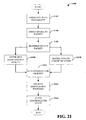
- Fig. 23 illustrates a method 2300 for high rate wireless data communication between a sender and a remote receiver.
- Method 2300 illustrates a sender initiated association and starts, at 2302, with transmission of a Sender Association Request Packet to a remote receiver.
- the Sender Association Request Packet is sent for association request by the sender when it wants to associate with a particular MDDI Receiver (after power up).
- the Sender Association Request Packet include a Packet Length of two bytes that contain a 16 bit unsigned integer that specifies the total number of bytes in the packet not including the packet length field and a Packet Type of two bytes that contain a 16 bit unsigned integer.
- a packet type of 158 identifies the packet as an association request packet.
- Receiver MAC Address that is six bytes and includes the receiver MAC address and a Sender MAC Address that is bytes of the sender MAC address.
- a CRC field is two bytes that contain a 16 bit CRC of all bytes in the packet including the Packet Length.
- the sender enters a "Sent Sender Association Request” state and a timer (e.g ., Association timer) or other tracking means can be initiated, at 2304.
- a timer e.g ., Association timer
- Any number of subsequent Sender Association Request packets can be sent up to a maximum number (e.g., max_sender_association_retry) number of times. If the timer has not expired ("NO"), a determination is made, at 2308, whether a Association Request Packet is received.
- a maximum number e.g., max_sender_association_retry
- the method 2300 continues, at 2306, until either the timer expires or the Association Request Packet is received. If the Association Request Packet has been received (“YES”), an Association Response Packet can be sent that provides a Client ID to the remote device.
- the Association Response Packet is sent in response to the Association Request Packet sent by C1.
- This packet provides C2 the Client ID and Display/device ID. This is part of the three-way handshake association.
- the Association Response Packet contains a Packet Length, a Packet Type, a Client ID, and a CRC.
- the Packet Length is two bytes that contain a 16 bit unsigned integer that specifies the total number of bytes in the packet not including the packet length field.
- the Packet Type is two bytes that contain a 16 bit unsigned integer.
- a packet type of 155 identifies the packet as an association response packet.
- the Client ID is two bytes allocated for client ID of C2 and the CRC is two bytes that contain a 16 bit CRC of all bytes in the packet including the Packet Length.
- the sender may also start a timer, such as an Association Response timer, at substantially the same time as sending the Association Response Packet.
- the receiver should reply with a Client Capability Packet and/or link quality information, at 2310, on a reverse link. If the Association-Response timer expires, the wireless sender resends the Association Response packet a maximum (e.g ., association_retry) number of times.
- the Sender Association Request, Association Request, Association Response and Client Capability can constitute a four-way handshake procedure. Alternate display information may also be received from the remote device
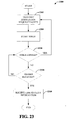
- Fig. 24 illustrates a method 2400 for selective disassociation between a sender and a remote receiver.
- an association between a sender and a remote receiver can be established.
- a packet that includes capability of the remote receiver can be received, at 2404, and link quality information can be received, at 2406.
- link quality information can be received, at 2406.
- a MAC address of the sender and an identification of the remote receiver can be included in a device association table associated with the sender.
- a MAC Response Packet from a receiver in a predetermined interval (e.g., mac_response_fail_time ) msec.
- a reply to the dissociation request e.g ., Dissociation Request
- a dissociation completion acknowledgment e.
- a dissociation request can be explicitly received, at 2416, from a remote receiver.
- a dissociation response acknowledgement e.g., Dissociation Response
- an identification of the dissociated device is removed from an association table.
- the Sender Dissociation Request Packet is sent by the wireless sender initiating the Dissociation. It includes a Packet Length field of two bytes that contain a 16 bit unsigned integer that specifies the total number of bytes in the packet not including the packet length field. A Packet Type field of two bytes that contain a 16 bit unsigned integer. A packet type of 157 identifies the packet as a dissociation response packet.
- a Client ID is two 2 bytes allocated for client ID of C2.
- a CRC field is two bytes that contain a 16 bit CRC of all bytes in the packet including the Packet Length.
- Fig. 25 illustrates an apparatus 2500 that initiates device association in accordance with the various embodiments.
- Apparatus 2500 can be a receiver configured to communicate high rate digital data and which desires to associate with a wireless sender or remote host device 2502.
- Apparatus 2500 can include a memory 2504 that can be configured to store information. Such stored information can include a MAC address associated with the apparatus 2500 and/or a Client ID (as received in an Association Response Packet).
- the wireless receiver can store the MAC address of the sender or remote host device 2502 with which the apparatus 2500 is associated.
- apparatus 2500 can be a processor 2506 that can be configured to analyze information stored in memory 2504. Processor 2506 can further selectively associate the apparatus 2500 with the remote host device 2502. In accordance with some aspects, processor 2506 can associate apparatus 2502 with remote host device 2502 at substantially the same time as receipt of an associated request packet from remote host device 2502. However, if a response packet is not received from the remote host device 2502 after a predetermined interval and a maximum number of sent association requests have been exceed, the processor 2506 does not associated the apparatus 2500 with the remote host device 2502.
- Apparatus 2500 can further include a communication data component 2508 that can be configured to update a MAC Response Packet with apparatus MAC statistics for transmission to the remote host device 2502.
- the wireless receiver can periodically, such as each mac_response_time msec, send a MAC Response Packet.
- the host device 2502 can respond with a packet that acknowledges reception of the MAC Response Packet sent by apparatus 2500. If apparatus 2500 does not receive a response after a predetermined interval of time (e.g ., mac_response_fail_time msec duration), apparatus 2500 might infer that it has been dissociated from the host device 2502 and stops sending the MAC Response Packet.
- the apparatus 2500 and host device 2502 may become dissociated, as described above.
- apparatus 2500 can send a MAC Response Packet when specifically requested to do so by the host device 2502.
- the apparatus 2500 and the remote host device 2502 may become disassociated, either intentionally or unintentionally. For example, a communication link may be lost between the apparatus 2500 and the remote user device 2502 due to a communication failure, the devices moving out of range of each other or for other reasons. For example, if a dissociation request packet is received from the remote host device 2502, the processor dissociates the apparatus 2500 from the host device 2502 at substantially the same time as receipt of the request. In another example, if a status packet is not received from the remote host device 2502 in response to the transmitted updated MAC response packet, the processor 2508 will selectively dissociate based on inference that the apparatus 2500 and the host device 2502 are no longer to be associated.
- apparatus 2500 can include a display component 2510 that can be configured to compile one or more alternate display information.
- the alternate display information can be associated with the apparatus 2500.
- the display component 2510 can further be configured to convey the one or more alternate display information to the remote host device 2502. For example, if there are alternate displays associated with the wireless receiver, an Alternate Display Capability Packet can be sent to the remote host device 2502.
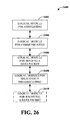
- Fig. 26 illustrates an apparatus 2600 for wirelessly communicating high rate user interface data with a remote sender.
- Apparatus 2600 can include a logical module for associating at least one receiver with a remote sender 2602. Also included in apparatus can be a logical module for communicating 2604 at least one capability information of the at least one receiver wirelessly to the remote sender.
- Apparatus 2600 can further include a logical module for selectively disassociating with the remote sender 2606.
- apparatus 2600 can further includes a logical module for receiving a data packet 2608.
- the data packet can be a link quality data packet that is received from the remote sender in response to the one or more link quality data packets.
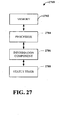
- the apparatus 2700 can include a memory 2702 that can be configured to store information related to an identification of a remote user interface device, such as a Client ID assigned to the remote device.
- a processor 2704 can be configured to selectively associate with one or more remote user interface devices based in part on the information stored in memory 2702.
- Apparatus 2700 can also include an information component 2706 that can be configured to analyze at least one capability of the one or more remote user interface devices. The capability can be received in a client capability packet.
- Information component 2706 can further be configured to analyze a link quality information data received in a status update packet.
- apparatus 2700 can include a status timer 2708 that can be configured to determine if a response to the sender association request is received within a predefined interval. If the response is not received within the predefined interval, a subsequent sender association request can be sent by processor 2704.
- processor 2704 can selectively dissociate the remote device. For example, processor 2704 may selectively dissociate if link quality information data indicates that the quality of a communication link has fallen below a predetermined threshold.
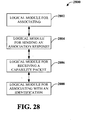
- Apparatus 2800 for wirelessly communicating user interface data at a high rate.
- Apparatus 2800 includes a logical module for associating 2802 with another device, such as one or more remote user interface devices. Such association can be selective.
- apparatus 2800 Also included in apparatus 2800 is a logical module for sending an association response 2804.
- the association response can contain a client identification for each respective remote user interface device.
- a logical module for receiving a capability packet 2806 is included in apparatus.
- apparatus 2800 can include a logical module for determining if the capability packet is received within a predefined interval (not shown) and a logical module for sending a second request for the capability packet (not shown). The second request can be sent if the capability packet was not received within the predefined interval.
- apparatus 2800 can include a logical module for determining if an association with one or more remote user ® interface devices should be stopped. Also included in such embodiments, can be a logical module for selectively dissociating the one or more remote user interface device if the association should be stopped.
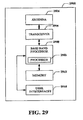
- FIG. 29 illustrated is a conceptual block diagram of a possible configuration of a terminal 2900.
- Processor 2902 can implement the systems and methods disclosed herein.
- Terminal 2900 can be implemented with a front-end transceiver 2904 coupled to an antenna 2906.
- a base band processor 2908 can be coupled to the transceiver 2904.
- the base band processor 2908 can be implemented with a software based architecture, or other type of architectures.
- a microprocessor can be utilized as a platform to run software programs that, among other functions, provide control and overall system management function.
- a digital signal processor (DSP) can be implemented with an embedded communications software layer, which runs application specific algorithms to reduce the processing demands on the microprocessor.
- the DSP can be utilized to provide various signal processing functions such as pilot signal acquisition, time synchronization, frequency tracking, spread-spectrum processing, modulation and demodulation functions, and forward error correction.
- Terminal 2900 can also include various user interfaces 2910 coupled to the base band processor 2908.
- User interfaces 2910 can include a keypad, mouse, touch screen, display, ringer, vibrator, audio speaker, microphone, camera and/or other input/output devices.
- the base band processor 2908 comprises a processor 2902.
- the processor 2902 may be a software program running on a microprocessor.
- the processor 2902 is not limited to this embodiment, and may be implemented by any means known in the art, including any hardware configuration, software configuration, or combination thereof, which is capable of performing the various functions described herein.
- the processor 2902 can be coupled to memory 2912 for the storage of data.
- the embodiments described herein may be implemented by hardware, software, firmware, middleware, microcode, or any combination thereof.
- the systems and/or methods When the systems and/or methods are implemented in software, firmware, middleware or microcode, program code or code segments, they may be stored in a machine-readable medium, such as a storage component.
- a code segment may represent a procedure, a function, a subprogram, a program, a routine, a subroutine, a module, a software package, a class, or any combination of instructions, data structures, or program statements.
- a code segment may be coupled to another code segment or a hardware circuit by passing and/or receiving information, data, arguments, parameters, or memory contents. Information, arguments, parameters, data, etc. may be passed, forwarded, or transmitted using any suitable means including memory sharing, message passing, token passing, network transmission, etc.
Landscapes
- Engineering & Computer Science (AREA)
- Computer Networks & Wireless Communication (AREA)
- Signal Processing (AREA)
- Quality & Reliability (AREA)
- Mobile Radio Communication Systems (AREA)
- Communication Control (AREA)
- Telephonic Communication Services (AREA)
- Detection And Prevention Of Errors In Transmission (AREA)
Description
- The following description relates generally to communication systems and more particularly to enabling traditional wire-based devices to communicate over a wireless link and/or a wired link and communicating digital data at a high rate.
- Wireless networking systems are utilized by many to communicate wherever the user may be located at a particular time (e.g., home, office, traveling, ...). Wireless communication devices have become smaller and more powerful (e.g., increased functionality and/or applications, larger memory capacity) to meet user needs while improving portability and convenience. Users have found many uses for wireless communication devices including cellular telephones, personal digital assistants (PDAs) and the like. For example, wireless communication devices can include functionality to capture and process images (e.g., still images, moving images, video gaming, and the like).
- Applications and/or functionalities that operate utilizing very high data rates can have substantial power requirements and/or high current levels. Such power requirements and/or current levels are readily available for devices that communicate utilizing a wired protocol. However, wireless communication systems may not have the capability to operate utilizing the high data rates. Thus, the communication a user desires to send and/or receive can be limited in some situations.
- Some devices have traditionally only operated in a wired capacity, such as, for example, a Mobile Display Digital Interface (MDDI). Thus, a user having such a device may not be able to communicate while mobile and may need to expend further costs to obtain a wireless device, which may not always be feasible. In some situations, a user may decide to operate two devices, one with wired capacity and one with wireless capacity to achieve the benefits of both devices. However, the costs associated with two devices, as well as keeping track of both devices, might impose an undue burden on a user.
- To overcome the aforementioned as well as other deficiencies, provided is a technique for allowing a traditionally wired-based protocol to communicate over either the wired architecture or a wireless architecture. The disclosed techniques provide such flexibility with minimal changes to the wired architecture.
- Further attention is drawn to the document
US-A-2003033417 , which discloses a data Interface for transferring digital data between a host and a client over a communication path using packet structures linked together to form a communication protocol for communicating a pre-selected set of digital control and presentation data. The signal protocol is used by link controllers configured to generate, transmit, and receive packets forming the communications protocol, and to form digital data into one or more types of data packets, with at least one residing in the host device and being coupled to the client through the communications path. The interface provides a cost-effective, low power, bi-directional, high-speed data transfer mechanism over a short-range "serial" type data link, which lends itself to implementation with miniature connectors and thin flexible cables which are especially useful in connecting display elements such as wearable micro-displays to portable computers and wireless communication devices. - In accordance with the present invention a method for communicating digital data, as set forth in
claim 1, an apparatus, as set forth in claims 7 and 9, a computer-readable medium, as set forth in claim 10, and a method, as set forth in claim 8, are provided. Embodiments of the claims are defined in the dependent claims. -
-
Fig. 1 illustrates a block diagram of a system for enabling a traditional wire-based device to communicate wirelessly. -
Fig. 2 illustrates a wireless sender in accordance with the one or more disclosed embodiments. -
Fig. 3 illustrates another wireless sender with a co-located host and client. -
Fig. 4 illustrates another example of a wireless sender wherein the host and C1 are consolidated onto a single hardware/software entity. -
Fig. 5 illustrates a wireless receiver in accordance with the disclosed embodiments. -
Fig. 6 illustrates a system for extending the capabilities of a traditionally wired configuration to allow communication over a wireless link. -
Fig. 7 illustrates a system for communicating through wired and/or wireless architectures. -
Fig. 8 illustrates another embodiment of a system for extending traditionally wired configurations to allow communication over a wireless link. -
Fig. 9 illustrates a system for communicating over a wired link or a wireless link with a traditionally wired device. -
Fig. 10 illustrates an exemplary forward link MDDI data transfer in low-overhead mode in accordance with the various embodiments presented herein. -
Fig. 11 illustrates an exemplary reverse link MDDI data transfer in low-overhead mode in accordance with the various embodiments presented herein. -
Fig. 12 illustrates a low-latency mode MDDI connection setup in accordance with the various embodiments presented herein. -
Fig. 13 illustrates a methodology for configuring a traditionally wired device to communicate through a wired protocol and/or a wireless protocol. -
Fig. 14 illustrates a methodology for determining an operation rate according to the one or more disclosed embodiments. -
Fig. 15 illustrates a methodology for communicating in low overhead mode according to the various embodiments presented herein. -
Fig. 16 illustrates a methodology for communicating in low latency mode according to the various embodiments presented herein. -
Fig. 17 illustrates a single wireless sender associating with multiple wireless receivers in accordance with the disclosed embodiments -
Fig. 18 is a device association table that illustrates an association of a single wireless sender with multiple wireless receivers. -
Fig. 19 illustrates a method for wirelessly communicating digital data at a high rate. -
Fig. 20 illustrates a method for communicating high rate digital data wirelessly. -
Fig. 21 illustrates a method for receiver-initiated dissociation between a user device and a host entity. -
Fig. 22 illustrates a method for high rate wireless digital data communication between a sender at one or more remote receivers for user interface data. -
Fig. 23 illustrates a method for high rate wireless data communication between a sender and a remote receiver. -
Fig. 24 illustrates a method for selective disassociation between a sender and a remote receiver. -
Fig. 25 illustrates an apparatus that can be configured to communicate high rate digital data wirelessly with a remote host device. -
Fig. 26 illustrates an apparatus for wirelessly communicating high rate user interface data with a remote sender. -
Fig. 27 illustrates an apparatus that can be configured to wirelessly communicate high rate user interface data. -
Fig. 28 illustrates an apparatus for wirelessly communicating user interface data at a high rate. -
Fig. 29 illustrates a conceptual block diagram of a possible configuration of a terminal. - Various embodiments are now described with reference to the drawings. In the following description, for purposes of explanation, numerous specific details are set forth in order to provide a thorough understanding of one or more aspects. It may be evident, however, that such embodiment(s) may be practiced without these specific details. In other instances, well-known structures and devices are shown in block diagram form in order to facilitate describing these embodiments.
- As used in this application, the terms "component," "module," "system," and the like are intended to refer to a computer-related entity, either hardware, firmware, a combination of hardware and software, software, or software in execution. For example, a component may be, but is not limited to being, a process running on a processor, a processor, an object, an executable, a thread of execution, a program, and/or a computer. By way of illustration, both an application running on a computing device and the computing device can be a component. One or more components can reside within a process and/or thread of execution and a component may be localized on one computer and/or distributed between two or more computers. In addition, these components can execute from various computer readable media having various data structures stored thereon. The components may communicate by way of local and/or remote processes such as in accordance with a signal having one or more data packets (e.g., data from one component interacting with another component in a local system, distributed system, and/or across a network such as the Internet with other systems by way of the signal).
- Furthermore, various embodiments are described herein in connection with a user device. A user device can also be called a system, a subscriber unit, subscriber station, mobile station, mobile device, remote station, access point, base station, remote terminal, access terminal, handset, user terminal, terminal, user agent, or user equipment. A user device can be a cellular telephone, a cordless telephone, a Session Initiation Protocol (SIP) phone, a wireless local loop (WLL) station, a PDA, a handheld device having wireless connection capability, or other processing device(s) connected to a wireless modem.
- Moreover, various aspects or features described herein may be implemented as a method, apparatus, or article of manufacture using standard programming and/or engineering techniques. The term "article of manufacture" as used herein is intended to encompass a computer program accessible from any computer-readable device, carrier, or media. For example, computer readable media can include but are not limited to magnetic storage devices (e.g., hard disk, floppy disk, magnetic strips...), optical disks (e.g., compact disk (CD), digital versatile disk (DVD)...), smart cards, and flash memory devices (e.g., card, stick, key drive...).
- In the following detailed description, various aspects and embodiments may be described in the context of a Mobile Display Digital Interface (MDDI) and/or Institute of Electrical and Electronics Engineers (IEEE) 802.15.3 medium access control (MAC) layer. While these inventive aspects may be well suited for use with the disclosed embodiments, those skilled in the art will readily appreciate that these inventive aspects are likewise applicable for use in various other traditionally wire based protocols. Accordingly, any reference to an MDDI and/or IEEE 802.15.3 MAC is intended only to illustrate the inventive aspects, with the understanding that such inventive aspects have a wide range of applications.
- Various embodiments will be presented in terms of systems that may include a number of components, modules, and the like. It is to be understood and appreciated that the various systems may include additional components, modules, etc. and/or may not include all of the components, modules, etc. discussed in connection with the figures. A combination of these approaches may also be used. In addition, the various systems can be implemented in a plurality of mobile devices (e.g., cellular phones, smart phones, laptops, handheld communication devices, handheld computing devices, satellite radios, global positioning systems, PDAs, and/or other suitable devices).
- With reference now to the drawings,
Fig. 1 illustrates a block diagram of asystem 100 for enabling a traditional wire-based device to communicate wirelessly.System 100 includes atransmitter 102 in wired and/or wireless communication with areceiver 104.Transmitter 102 andreceiver 104 can be components that traditionally communicate over a wire-based protocol. Although a number of transmitter(s) 102 and receiver(s) 104 can be included insystem 100, as will be appreciated, asingle transmitter 102 that transmits communication data signals to asingle receiver 104 is illustrated for purposes of simplicity. - The communication sent from
transmitter 102 toreceiver 104 is referred to as the forward link and the communication sent fromreceiver 104 totransmitter 102 is referred to as the reverse link.Transmitter 102 may be connected to a data source 106 (e.g., storage, memory, and the like) andreceiver 104 may be connected to aninterface device 108, such as a display. -
System 100 can operate in at least two modes of operation, namely, a low overhead mode and/or a low latency mode. Low overhead mode optimizes a packet sent over the air (e.g., wirelessly) by requesting channel allocation time(s), which is the time for data to be sent from either direction (from sender to receiver or from receiver to sender). In low latency mode, the channel allocation time(s) can be determined based on knowledge of the data included in both the forward link and the reverse link. -
Transmitter 102 can be configured to ascertain a forward link rate and reverse link rate based on various criteria (e.g., round trip delay measurements).Transmitter 102 can send at least one reverse link encapsulation packet every frame. The reverse link encapsulation packet can be used to accommodate the transfer of reverse packets over the transfer link, creating the reverse link. -
Receiver 104 can be configured to receive and/or send data communication through a wired functionality and/or a wireless functionality. The determination of which functionality to utilize can be based on various criteria including type of data (e.g., voice, text, image, ...), the traditional method of communicating the data (e.g., wired link or wireless link), the size of the file or packet being transmitted, as well as other criteria relating to the data, the sender, and/or the receiver.Transmitter 102 can communicate the data without knowledge of howreceiver 104 is receiving the data (e.g., wired or wireless). -
Fig. 2 illustrates awireless sender 200 in accordance with the one or more disclosed embodiments.Wireless sender 200 can be configured to communicate high rate data, such as digital data. The various wireless systems described herein can include a wireless sender and a wireless receiver.Wireless sender 200 can include ahost 202 and a special client (C1) 204, which can be connected to one or more displays or devices. Host 202 and Client (C1) 204 can be connected by a traditional high data rate link (e.g., MDDI) 206. The module containing Client (C1) 204 and awireless modem 208, such as an ultra wide band modem that includes an UWB MAC and an UWB PHY, can be operatively connected into an existing wired link, such as an MDDI link or a link configured to support high rate data. In some embodiments, if Client (C1) 204 and themodem 208 are connected to a wired link, thehost 202 may need upgrading to handle wireless functionalities, which will be described in further detail below.Fig. 3 illustrates anotherwireless sender 300 with aco-located host 302 andclient 304. Also included is awireless modem 306. Another example of awireless sender 400 is illustrated inFig. 4 , wherein the host and C1 are consolidated onto a single hardware/software entity 402. Awireless modem 404 is included to facilitate wireless communication. - With reference now to
Fig. 5 , illustrated is awireless receiver 500 in accordance with the disclosed embodiments.Wireless receiver 500 includes a client (C2) 502, which can be connected to several device(s) and display(s) 504 (only one display is shown for purposes of simplicity). Client (C2) 502 can be configured to process and generate high rate digital data packets. In some embodiments, client (C2) 502 does not have a physical layer of an MDDI stack. A single sender can be connected to several receivers in accordance with the disclosed embodiments. -
Fig. 6 illustrates asystem 600 for extending the capabilities of a traditionally wired configuration to allow communication over a wireless link.System 600 includes atransmitter 602 that communicates with areceiver 604 over a forward link.Receiver 604 communicates with thetransmitter 602 over a reverse link.Transmitter 602 andreceiver 604 can be devices that generally communicate over a wired protocol, however,system 600 allows such devices to communicate over the wired protocol and/or over a wireless protocol, such as over a high-speed wireless link. Although a number of transmitter(s) 602 and receiver(s) 604 can be included insystem 600, as will be appreciated, asingle transmitter 602 that transmits communication data signals to asingle receiver 604 is illustrated for purposes of simplicity. -
Transmitter 602 can include ahost 606, a portion of a client (C1) 608, and acommunication component 610. Host 606 can be an MDDI host, for example. In some embodiments, host 606 can be a component separate fromtransmitter 602 and connected totransmitter 602 through a wired link. A portion of client (C1) 608 is kept on or in communication withhost 606 for clock synchronization. Client (C1) 608 can be connected to host 606 through a traditional wired link (e.g., MDDI link), for example. Host 606 can be configured to send or communicate packets of data to client (C1) 608. These packets can be communicated toreceiver 604 throughcommunication component 610, which can include a modem, such as an ultra wide band (UWB) modem. Some packets (e.g., MDDI round-trip delay measurement packet) are processed by client (C1) 608 and communicated toreceiver 604. Other packets (e.g., filler packets) should be dropped by client (C1) 608 and not communicated toreceiver 604. That is to say, some packets should not be transmitted on either the forward wireless link or the reverse wireless link. A filler packet, for example, maintains timing betweentransmitter 602 andreceiver 604. Such packets can be generated by eithertransmitter 602 orreceiver 604 through respective client portions. -
Receiver 604 can include an interface device 612 (e.g., display), a portion of client (C2) 614, and acommunication component 616. In some embodiments, thedevice 612 can be a component separate from thereceiver 604 and connected to thereceiver 604 through, for example, a wired link. Client (C2) 614 can be connected todevice 612 through a wired link. Client (C2) 614 can be configured to process a packet received fromtransmitter 602.Receiver 604 can receive the communication fromtransmitter 602 throughcommunication component 616 that can include, for example, an UWB modem. -
System 600 can be configured to operate in one of two modes of operation. These modes include a low overhead mode and a low latency mode. In low overhead mode, client (C1) 608 places the data to be sent, excluding for example, fill packets and round trip delay packets, in a buffer that can be included on the communication component 610 (e.g., UWB modem). Thecommunication component 610, through a UWB MAC, for example, can periodically request unidirectional channel time allocations (CTA) fromtransmitter 602 toreceiver 604 based on the size of the buffer. In a reverse direction (e.g., reverse link), client (C2) 614 can place the reverse link data that it wants to send, excluding filler packets, for example, in a buffer associated with communication component 616 (e.g., UWB modem). In the reverse direction, thecommunication component 616 can request reverse-direction CTAs. - For low latency mode, during an initialization phase, communication component 610 (e.g., UWB modem) can request a CTA for m msec in the forward direction and a CTA for n msec in the reverse direction. The expected ratio of traffic in the forward and reverse directions is m : n and m sec is the duration corresponding to a forward link transfer rate of Rf-mddi. T is a superframe duration, which is determined by the latency constraints of the application where:

- With reference now to
Fig. 7 , illustrated is asystem 700 for communicating through wired and/or wireless architectures.System 700 includes atransmitter 702 and areceiver 704 that communicate over a forward link (from transmitter 702) and/or a reverse link (from receiver 704). The communication over the forward link and/or reverse link can be over a wired protocol and/or over a wireless protocol depending on the particular situation (e.g., data to be transmitted, data rates, quality of communication link, status of each device, ...). Although a number of transmitter(s) 702 and receiver(s) 704 can be included insystem 700, as will be appreciated, asingle transmitter 702 that transmits communication data signals to asingle receiver 706 is illustrated for purposes of simplicity. -
Transmitter 702 can include ahost component 706 connected to a client (C1)component 708 and acommunication component 710.Receiver 704 can include adevice 712 connected to a client (C2)component 714 and acommunication component 716. Client (C1)component 708 and client (C2)component 714 are respective portions of a client. - It will be understood by persons having ordinary skill in the art that
transmitter 702 and/orreceiver 704 can include additional components. For example,transmitter 702 can include an encoder component (not shown) that can modulate and/or encode signals in accordance with a suitable wireless communication protocol which signals can then be transmitted toreceiver 704. In some embodiments, encoder component can be a voice coder (vocoder) that utilizes a speech analyzer to convert analog waveforms into digital signals or another type of encoder. Suitable wireless communication protocols can include, but are not limited to, Orthogonal Frequency Division Multiplexing (OFDM), Orthogonal Frequency Division Multiplexing Access (OFDMA), Code Division Multiple Access (CDMA), Time Division Multiple Access (TDMA), Global System for Mobile Communications (GSM), High-Speed Downlink Packet Access (HSDPA), and the like. -
Receiver 704 can include a decoder component (not shown) that can decode a received signal and/or data packet therein for processing. Upon successful decode of a data packet, an acknowledgment component (not shown) can generate an acknowledgment that indicates successful decode of the data packet, which can be sent totransmitter 702 to informtransmitter 702 that the data packet was received and decoded, and therefore need not be retransmitted. -
Host component 706 can include aquery module 718 and ameasurement module 720.Query module 718 can be configured to query a host medium access control (MAC) for an application data rate that the MAC provides. For wireless communication, the operation rate may depend upon the rate of the wireless link.Measurement module 720 can be configured to determine the forward link rate and the reverse link rate based on, for example, a round trip delay measurement, which may be specified in the wireless protocol. In some embodiments, the wireless operation rate can be determined by the minimum of the two rates (forward link rate and reverse link rate), the maximum capacity ofhost 706, and the maximum capacity of client (C1) 708. There should be a minimum allowable rate Rmin. If the measured operation rate is below this minimum allowable rate, the operation rate can be adjusted bytransmitter 702 and/orreceiver 704 through respective components (e.g.,communication components 710 and/or 716).Transmitter 702 can notifyreceiver 704 the rate at which the communication will be processed. - Client (C2)
component 714 can include anotifier module 722 that can be configured to notifytransmitter 702 the application data rate that the MAC provides. Such notification can be based on a query received from transmitter 702 (e.g., a query sent by query module 718). For reverse link packets,notifier module 722 can specify the number of bytes needed byreceiver 704 to send on the reverse link in the current frame. Client (C2) component can also include anassigner module 724 that can be configured to assign a communication to a wired protocol or a wireless protocol depending on various parameters associated with a communication (e.g., communication type, rate of communication, sender, receiver, and the like). -
Communication component 716 can include awired module 726 and awireless module 728. Thewired module 726 can be configured to provide wired functionality and thewireless module 728 can be configured to provide wireless functionality. A determination can be made whether to communicate wirelessly utilizing thewireless module 728 or to communicate utilizing thewired module 726. Such a determination can be based on a variety of factors including the operation rate, the type of data being transmitted (e.g., voice, text, image, ...), the size of the data or files being transmitted, if the data is typically communicated over a wired link or a wireless link, etc.Wired module 726 and/orwireless module 728 can include a buffer for storing content so that if a change is made during a communication from one module to the other module (e.g., wireless to wired, wired to wireless) communication is not lost due to switchover issues. - Information about whether the
receiver 704 is communicating over a wired link or wireless link does not need to be communicated totransmitter 702.Transmitter 702 performs its functions in substantially the same way regardless of the communication method (wired or wireless). - According to some embodiments,
transmitter 702 can include a component configured to fragment a sub-frame (not shown) andreceiver 704 can include a component configured to reassemble the sub-frame (not shown). The maximum length of a MDDI sub-frame, for example, can be about 65,536 bytes, although it is generally smaller. The maximum size of an 802.15.3 MAC frame can be approximately 4,096 or around 8,192 bytes, if the underlying rate is about 480 Mbps. The size can be around 2,048 bytes if the underlying physical layer rate is approximately 200 Mbps. Thus, the sub-frame may need to be fragmented on thetransmitter 702 side and reassembled on thereceiver 704 side to accommodate the size of the frame. Such fragmenting and reassembly can be performed byrespective communication components transmitter 702 andreceiver 704. -
Fig. 8 illustrates another embodiment of asystem 800 for extending traditionally wired configurations to allow communication over a wireless link.System 800 can include atransmitter 802 that includes ahost 806, a portion of a client (C1) 808, and acommunication component 810.System 800 can also include areceiver 804 that includes adevice 812, a portion of a client (C2) 814, and acommunication component 816.Transmitter 802 communicates toreceiver 804 over a forward link andreceiver 804 communicates totransmitter 802 over a reverse link. As noted previously with regard to the above figures, although a number of transmitter(s) 802 and receiver(s) 804 can be included insystem 800, asingle transmitter 802 that transmits communication data signals to asingle receiver 804 is illustrated for purposes of simplicity. -
System 800 can include amemory 818 operatively coupled toreceiver 804.Memory 818 can store information related to a data rate for a packet and/or a packet type (e.g., application data rate provided by MAC, operation rate of the wireless link, ...), mode of operation for a packet and/or packet type, and/or other parameters associated with transmitting data over a wireless protocol, over a wired protocol, or a combination of these protocols. For example, a wired protocol can be used for a communication and a decision can be made to switch to a wireless protocol during the communication, or vice versa, without interruption or termination. - A
processor 820 can be operatively connected to receiver 804 (and/or memory 818) to facilitate analysis of information related to ascertaining whether a particular communication should be sent over a wired protocol or a wireless protocol.Processor 820 can be a processor dedicated to analyzing and/or generating information communicated toreceiver 804, a processor that controls one or more components ofsystem 800, and/or a processor that both analyzes and generates information received byreceiver 804 and controls one or more components ofsystem 800. -
Memory 818 can store protocols associated with data communication rates, operation rates, taking action to control communication betweenreceiver 804 andtransmitter 802, etc., such thatsystem 800 can employ stored protocols and/or algorithms to achieve improved communication in a wireless network as described herein. It should be appreciated that the data store (e.g., memories) components described herein can be either volatile memory or nonvolatile memory, or can include both volatile and nonvolatile memory. By way of example and not limitation, nonvolatile memory can include read only memory (ROM), programmable ROM (PROM), electrically programmable ROM (EPROM), electrically erasable ROM (EEPROM), or flash memory. Volatile memory can include random access memory (RAM), which acts as external cache memory. By way of example and not limitation, RAM is available in many forms such as synchronous RAM (DRAM), dynamic RAM (DRAM), synchronous DRAM (SDRAM), double data rate SDRAM (DDR SDRAM), enhanced SDRAM (ESDRAM), Synchlink DRAM (SLDRAM), and direct Rambus RAM (DRRAM).Memory 818 of the disclosed embodiments are intended to comprise, without being limited to, these and other suitable types of memory. -
Fig. 9 illustrates asystem 900 for communicating over a wired link or a wireless link with a traditional wired device.System 900 is represented as functional blocks, which can be functional blocks that represent functions implemented by a processor, software or combination thereof (e.g., firmware).System 900 includes areceiver 902 that can be configured to receive an operation rate for a communication. This operation rate can be received from, for example, a sender or a sender host. The operation rate can set up or establish the rate of communication in both a forward direction and a reverse direction.System 900 also includes awireless communicator 904 that can be configured to send and/or receive a communication over a wireless protocol. Awired communicator 906 can be configured to send and/or receive a communication over a wired protocol. - It should be noted that in a forward and/or a reverse direction there may be packet extensions and/or new packets. For example, in a forward direction MDDI sender information can be added to a packet. This packet extension can provide an MDDI client on the receiver end with MDDI sender side information. This information can include the rate at which the MDDI host and client should operate on the sender side. In the reverse direction, extensions to a client capability packet can include about four bytes for MDDI receiver MAC information and around two bytes for MDDI receiver client information, however other extensions are also possible.
- Also included in
system 900 is a determiner that can selectively determine whether to utilize the wireless communicator to communicate over the wireless protocol or whether to utilize the wired communicator to communicate over the wired protocol. Such a determination can be selectively made based on various parameters, such as the communication operation rate. Other parameters can also be analyzed to make the determination. For example, the determination can be made based on how the particular communication has been traditionally sent and/or received (e.g., historical analysis), the type of communication (e.g., voice, image, text, ...), as well as other parameters relating to the communication, the sender, and/or the receiver. -
Fig. 10 illustrates an exemplary forward link MDDI data transfer 1000 in low-overhead mode in accordance with the various embodiments presented herein. One type of mode for anMDDI sender 1002 to send data to anMDDI receiver 1004 can be a low overhead mode. In this mode, a packet sent wirelessly is optimized for channel allocation time, which is the time it takes for data to be sent from either direction (e.g., forward or reverse).MDDI sender 1002 can include a portion of a client (C1) 1006 andMDDI receiver 1004 can include a portion of the client processing (C2) 1008. - An MDDI client (C1) 1006 can place the data to be sent in a buffer, such as on a UWB modem. The data to be sent should exclude unnecessary packets, such as fill packets and round trip delay packets, for example. The MDDI data is sent to a
sender MAC 1010, as illustrated at 1012. Sender MAC 1010 (or UWB MAC) may periodically or continuously request at least one CTA fromMDDI sender 1002 toMDDI receiver 1004 based on, for example, the size of the buffer. -
Sender MAC 1010 can request, at 1014, forward link CTAs (e.g., periodically or continuously) from a piconet controller (PNC)MAC 1016.PNC MAC 1016 can respond tosender MAC 1010 with a channel time response code at 1018. This response code can indicate whether the data has been communicated successfully. After a successful channel time response code is received,sender MAC 1010 can send the MDDI data to areceiver MAC 1020, as indicated at 1022. -
Fig. 11 illustrates an exemplary reverse link MDDI data transfer 1100 in low-overhead mode in accordance with the various embodiments presented herein. AnMDDI receiver 1102 can initiate, over a reverse link, communication intended for anMDDI sender 1104.MDDI receiver 1102 can include a portion of client (C2) 1106 andMDDI sender 1104 can include a portion of client (C1) 1108. -
MDDI receiver 1102 can send MDDI data to areceiver MAC 1110, as indicated at 1112.Receiver MAC 1110 can request from aPNC MAC 1114 reverse link CTAs, at 1116. The request can correspond to the data that should be sent in the reverse direction.PNC MAC 1114 can respond, at 1118, with a channel time response code.Receiver MAC 1110 can, at 1120, send MDDI data in CTAs tosender MAC 1122. As indicated at 1124,sender MAC 1122 may have sent or given MDDI data to client (C1) 1108, at 1124, at some time before or at substantially the same time as receiving the MDDI data fromreceiver MAC 1110. AMDDI sender host 1126 can send and/or receive at least one reverse link encapsulation every frame, as indicated at 1128 and 1130. The reverse link data can be sent proactively, without waiting for a data request. The client can specify the number of bytes it needs to send on the reverse link in the current frame. Thehost 1126 can correspondingly allocate the request in the reverse link encapsulation packet. -
Fig. 12 illustrates a low-latency modeMDDI connection setup 1200 in accordance with the various embodiments presented herein. In low-latency mode, channel allocation time can be ascertained based on an inference derived from data contained in packets in both the forward direction and the reverse direction. AMDDI sender 1202 can include ahost 1204 and a portion of a client (C1) 1206. During an initialization phase, a UWB modem on thesender 1202 can send a MAC query, at 1210, to asender MAC 1208. A MAC query is a query sent to find out the rate supported by the MAC and retransmission statistics.Sender MAC 1208 can respond to the query at 1212. This response can be a MAC response that indicates the rate supported by the MAC retransmission statistics. - A MAC Query Packet is sent by the host to query MAC information on the sender/receiver side. A Packet Length field is two bytes that contain a 16 bit unsigned integer that specifies the total number of bytes in the packet not including the packet length field. A Packet Type field is two 2 bytes that contain a 16 bit unsigned integer. A packet type of 151 identifies the packet as a MAC query packet. A ClientID is bytes that contain a 16 bit unsigned integer reserved for ID of the destination client (C2). The MAC Query Parameters field is two bytes and a CRC field is two bytes that contain a 16 bit CRC of all bytes in the packet including the Packet Length.
-
Sender 1202 requests aCTA setup 1214 for m msec in the forward direction and a CTA for n msec in the reverse direction. The expected ratio of traffic in the forward and reverse directions should be m : n. At 1216, a channel time request (CTRq) is sent to aPNC Mac 1218. A channel time response code can be sent in the reverse direction, shown at 1220, and in the forward direction, shown at 1222 and sent to areceiver MAC 1224.MDDI sender 1202 can begin an MDDI transfer, as illustrated at 1226. - The duration corresponding to the MDDI forward link transfer rate of Rf-mddi is m sec, and when T is the super-frame duration determined by the latency constraints of the application, the following formula applies:

- In the low latency mode, the reverse link data can be sent during the CTAs reserved in the reverse direction. Depending on the time of arrival of reverse link data in relation to the MAC super frame, the transfer can have a maximum latency expressed as:

where k is the average number of retransmissions experienced by a MAC frame. N is the size of the reverse link packet that should be sent and n is the reverse link CTA duration in each super frame. R1 is the physical layer transmission rate of the MDDI data (MAC payload). R2 is the physical layer transmission rate of the PHY, MAC headers and the preamble. H is the size of the MAC plus the size of PHY header plus the size of preamble. SIFS is the short inter-frame spacing duration. RIFS is the retransmission inter-frame spacing duration. TACK is the duration of transmission of the ACK. T is the super-frame duration. For explanation purposes, it is assumed that the ACK policy is Imm-ACK. The latency of the forward link packets, Tfl, can be determined accordingly. Given the application latency constraints in forward and reverse links, the time duration of the MAC frame can be derived accordingly. For example, various algorithms, methods, and/or techniques can be employed to derive the time duration of the MAC frame and/or the latency of the forward link packets. - In view of the exemplary systems shown and described, methodologies, which may be implemented in accordance with one or more embodiments are provided. While, for purposes of simplicity of explanation, the methodologies are shown and described as a series of acts (or function blocks), it is to be understood and appreciated that the methodologies are not limited by the order of acts, as some acts may, in accordance with these methodologies, occur in different orders and/or concurrently with other acts from that shown and described herein. Moreover, not all illustrated acts may be required to implement the following methodologies. It is to be appreciated that the various acts may be implemented by software, hardware, a combination thereof or any other suitable means (e.g. device, system, process, component) for carrying out the functionality associated with the acts. It is also to be appreciated that the acts are merely to illustrate certain aspects presented herein in a simplified form and that these aspects may be illustrated by a lesser and/or greater number of acts. Those skilled in the art will understand and appreciate that a methodology could alternatively be represented as a series of interrelated states or events, such as in a state diagram.
- With reference now to
Fig. 13 , illustrated is amethodology 1300 for configuring a traditionally wired device to communicate through a wired protocol and/or a wireless protocol. At 1302, a first portion of a client is placed on an MDDI sender. The MDDI sender can be wireless and can be connected to a data source. The MDDI sender can also include an MDDI host connected or interfaced to the client portion by, for example, a traditional wired MDDI link. - At 1304, a second portion of the client is placed on an MDDI receiver, which can be a wireless MDDI receiver. The MDDI receiver can be connected to a device, which can be, for example, a display. The portion of the client placed on the MDDI sender and the portion of the client placed on the MDDI receiver are distinct portions of the same client. It should be noted that the respective portions of the client can be portions implemented by a processor, software or combination thereof (e.g., firmware).
- Both a wired functionality and a wireless functionality are provided, at 1306. This functionality is included on the MDDI receiver, enabling the MDDI receiver to communicate through the wired functionality, the wireless functionality, or both functionalities.
- By way of example and not limitation, an MDDI receiver can be a mobile device that may receive a communication, such as a movie that is displayed on a CRT screen or display. The mobile device may also be connected to a wall-mounted display, allowing the movie to be displayed on the wall so that others can view the imagery. If the mobile device is multi-functional, it can broadcast the movie on the display and can at substantially the same time receive or send a voice communication, different from the voice communication associated with the movie. Thus, a user of the mobile device may conduct a communication separate from the movie. An example where this might be utilized is when a user's children are watching a movie and the user wants to answer the phone and walk away. Thus, the movie can be displayed through a wired functionality and at substantially the same time the user can communicate through the wireless functionality.
-
Fig. 14 illustrates amethodology 1400 for determining an operation rate according to the one or more disclosed embodiments. In a wireless MDDI, for example, the MDDI operation rate depends, in part, on the rate of the wireless link. Themethod 1400 for determining an operation rate begins, at 1402, where a host MAC is queried for an available application data rate (e.g., the application data rate that the MAC provides). The query can be requested by an MDDI host, for example. - At 1404, a round trip delay is measured. The round trip delay measurement can be utilized, at 1406, to determine or ascertain a forward link rate and a reverse link rate. According to some embodiments, the round trip delay measurement can be specified in a wired MDDI protocol that should be used.
- An operation rate is computed at 1408. The operation rate can be computed based in part by comparing the forward link rate and the reverse link rate and determining which is the minimum of the two rates. The minimum of these two rates can be designated as the operation rate. In some embodiments, the minimum of these two rates (forward link rate and reverse link rate) can further be compared to both the maximum capacity of an MDDI host and the maximum capacity of an MDDI client (C1). The minimum or lowest rate based on this comparison is assigned as the operation rate.
- There should be a minimum allowable rate Rmin, which can be established or predetermined based on communication parameters. If the computed operation rate is lower than the minimum allowable rate, adjustments can be made to increase the rate. At 1410, the operation rate is communicated or sent to a receiver (e.g., MDDI receiver) to notify the receiver the rate at which the communication will proceed.
- In the
above methodology 1400, for example, a transmitter can query the host MAC through a query module. The transmitter can further measure the round trip delay, ascertain forward and reverse link rate, and compute the operation rate utilizing a measurement module. The transmitter can also send the operation rate to the receiver utilizing a communication component. It should be understood that the above are for example purposes only and other components can be utilized in connection with the one or more embodiments presented herein. - Referring now to
Fig. 15 , illustrated is amethodology 1500 for communicating in low overhead mode according to the various embodiments presented herein. The forward link is shown on the left side of the figure and the reverse link is shown on the right side of the figure. - At 1502, forward link data is placed in a buffer. Excluded from the data placed in the buffer can be unnecessary data such as fill packets and/or round trip delay packets. This data can be placed in the buffer by an MDDI client (C1) on an MDDI sender, for example. At 1504, unidirectional CTAs are requested (e.g., periodically or continuously). An UWB MAC can request this information from the MDDI sender to a receiver based on, for example, the size of the buffer. The forward link data can be sent, at 1506.
- In the reverse direction, a host sends at least one reverse link encapsulation packet every frame. A client (e.g., receiver) can specify the number of bytes that should be sent on the reverse link in the current frame. The host (e.g., sender) can allocate the request in a reverse link encapsulation packet. At 1508, reverse link data that should be sent is placed in a buffer by, for example, an MDDI client (C2). The buffer can be located on a UWB modem of an MDDI receiver. A request for reverse direction CTAs is sent, at 1510, by, for example, an UWB modem on the MDDI receiver side. The request can be for those CTAs in the reverse direction corresponding to the data that should be sent in the reverse direction.
- An MDDI client on the receiver (C2) can send reverse link data to the client on the sender (C1) proactively, at 1512. As illustrated, at 1514, an MDDI client on the sender (C1) sends the data it has to the MDDI host in the reverse encapsulation packet.
-
Fig. 16 illustrates amethodology 1600 for communicating in low latency mode according to the various embodiments presented herein. The forward link is shown on the left side of the figure and the reverse link is shown on the right side of the figure. During an initialization phase in low latency mode, a UWB modem on the sender, for example, requests, at 1602, a CTA for m msec in the forward direction. At 1604, a CTA request for n msec is sent in the reverse direction. A comparison of the forward and reverse CTAs received in response to the requests is made, at 1606. The expected ratio of traffic in the forward and reverse directions is m : n. It should be noted that m msec is the duration corresponding to the MDDI forward link transfer rate of Rf- mddi and: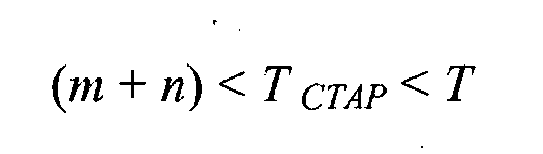
where T is the super-frame duration, which can be determined by the latency constraints of the application. - In the reverse direction during a low latency mode, the reverse link data is sent, at 1608, during the CTAs reserved in the reverse direction. At 1610, a time duration of the MAC frame can be derived from the application latency constraints in the forward and reverse links. In the following equation, k is the average number of retransmissions experienced by a MAC frame. N is the size of the reverse link packet that should be sent and n is the reverse link CTA duration in each super frame. R1 is the physical layer transmission rate of the MDDI data (MAC payload). R2 is the physical layer transmission rate of the PHY, MAC headers and the preamble. H is the size of the MAC and the size of PHY header and the size of the preamble. SIFS is the short inter-frame spacing duration. RIFS is the retransmission inter-frame spacing duration. TACK is the duration of transmission of the ACK and T is the super-frame duration. For explanation purposes, it is assumed that the ACK policy is Imm-ACK. The latency of the forward link packets, Tfl, can be determined accordingly utilizing various algorithms, methods, and/or techniques. Depending on the time of arrival of reverse link data in relation to the MAC super frame, the transfer can have a maximum latency expressed as:

-
Fig. 17 illustrates a single wireless sender associating with multiple wireless receivers in accordance with the disclosed embodiments. To fully appreciate the disclosed embodiments, various wired packets and their behavior in the wireless techniques will now be described. Filler packets are not generated in wireless communication of high rate data because filler packets were designed to maintain synchronization on the wired link and are, therefore, unnecessary with a wireless link. - A Client Capability Packet informs the host of the capabilities of the client. In a wired link, the client should send this packet after forward link synchronization. The client can also send the client capability packet when requested by the host through reverse link flags in a reverse link encapsulation packet. The client capability packet can contain fields that pertain to the link such as pre-calibration data rate capability, interface type capability, post-calibration data rate capability, and the like. This packet can also contain fields pertaining to external devices, such as a display device attached to the client. Such fields can include the number of alternate displays, a bitmap width, a bitmap height, display window width, display window height, color map size, and so forth.
- During an association procedure in wireless communication, the receiver can send the Client Capability Packet as a response to an Association Response Packet sent by the wireless sender. The wireless receiver (C2) can also send an alternate display capability packet if it is associated with any alternate displays. The wireless receiver (C2) can send a Client Capability Packet to the sender when there is a change in statue of the external devices (e.g., a new device being added, an existing device being removed, change of parameters of an existing device, and so on). Alternatively or additionally, the client capability packet can be sent periodically to assist in reliability of client capability packets.
- A client request and status packet can be used to send information from a client to a host to allow the host to configure the host-to-client link in an optimum fashion. In a wired configuration, the client can send this packet to the host as a first packet in a reverse link packet. The client can, alternatively or additionally, send this packet to the host when the host requests it explicitly through a reverse link flags in a reverse link encapsulation packet.
- In a wireless configuration, the wireless receiver may periodically send a Client Request and Status Packet to the wireless sender to indicate its CRC Error Count and also when there is a change in status of the external devices. The wireless receiver may also send a Client Request and Status Packet to the wireless sender requests it through the C2 flags field of a new C2 request packet.
- With reference again to
Fig. 17 , each wireless sender 1702 (of which only one is illustrated) can associate or communicate with multiple wireless receivers, illustrates as receiver 1 (R1) 1704, receiver 2 (R2) 1706, and receiver 3 (R3) 1708. Thesender 1702 andreceivers receiver - For example, wireless devices, such as a wireless display, wireless mouse, wireless keyboard, and so forth, can have a wireless receiver, and each wireless device can be identified as a separate client. From the perspective of a host (e.g., sender 1702), each of these clients can be identified by an unique client identification (Client ID). Therefore, Client C1 can have a Client ID of "0". Wireless receiver, such as receiver (R2) 1706, can send a client capability packet to the wireless (C2)
sender 1702 when there is a change in the capabilities of the external devices connected to receiver (R2) 1706. Additionally or alternatively, each receiver can send a client capability packet periodically to ensure reliability. -
Sender 1702 should maintain a device association table, such as table 1800 shown inFig. 18 . Table 1800 illustrates an association of a single wireless sender with multiple wireless receivers (e.g., client). The packets intended for a different receiver clients can be forwarded to the respective devices based on the table. Table 1800 illustrates two clients (1 and 2). Associated withClient # 1 is the MAC address X:Y:Z:P:Q:R, and a Client ID "C21". Associated withClient # 2 is the MAC address U:V:W:L:M:N and the Client ID "C22". In such a manner, the sender can communicate with the appropriate receiver by accessing the look-up table 1800. - In order for a sender to communicate with a receiver, there should be device association. Either device (sender or receiver) can initiate the association process. For example, if a wireless sender is a phone and a wireless receiver is a projector/display, the phone (e.g., sender) would typically initiate the communication. However, there are situations where a receiver would initiate the communication. Thus, there can be receiver initiated association or sender initiated association.
- With reference now to the drawings,
Fig. 19 illustrates amethod 1900 for wirelessly communicating digital data at a high rate, which can be initiated by a receiver. Themethod 1900 can facilitate wireless communication between a host entity (e.g., sender) and one or more remote user interface client devices (e.g., receivers). The wireless communication can include user interface data or other data. - When one or more remote user interface client devices (e.g., wireless receiver) wishes to associate with a wireless sender (e.g., host entity)
method 1900 starts, at 1902, by associating with the host entity. Such association can include sending a packet requesting the association. The host entity can communicate wirelessly with more than one remote user interface client device at substantially the same time. Once association is established with the host entity, a capability packet is sent to the host entity, at 1904. The capability packet can include one or more capabilities of the remote user interface client device. At 1906, a status packet is sent to the host entity. The status packet can include link quality information. - In accordance with some aspects, a request is received from the host entity for an updated status packet. At substantially the same time as the response is received, the status packet can be updated and sent to the host entity in reply to the request. In other aspects, the updated status packet can be automatically sent either periodically or when a status change is detected.
- The association between one or more remote user interface client devices and the host entity may be broken due to a communication failure, the devices moving out of range, or based on other factors. It may be determined that an association is broken if a host entity status packet is not received within a predetermined period. For example, at substantially the same time as a host entity status packet is requested, a timer can be started. The timer can be set up to track an interval from the time the request is sent. The interval can be predetermined and should be long enough to allow the request to be received at the host entity and for the host entity to respond. If the timer expires (e.g., the response is not received within the predetermined interval), the one or more remote user interface client devices can be disassociated from the host entity.
- Disassociation from the host entity can also occur if a communication between the devices should be stopped. If so, the one or more remote user interface client devices can disassociate from the host entity and enter a disassociation state. Disassociation can include sending a dissociation request to the host entity and receiving a dissociation response from the host entity. In accordance with some aspects, the dissociation response might not be received from the host entity, such as when there is a communication failure or if a link or association between the devices has been broken.
-
Fig. 20 illustrates amethod 2000 for communicating high rate digital data wirelessly.Method 2000 can start with a receiver-initiated association. To associate the device (e.g., receiver) with the host entity, an Association Request Packet is sent, at 2002. The Association Request Packet can be sent for an association request by C2 when it desires to associate with the sender after power up of the device. The Association Request Packet can include a Packet Length, Packet Type, Device Parameters, Sender MAC Address, Receiver MAC Address and CRC fields. The packet length can be two bytes that contains a 16 bit unsigned integer that specifies the total number of bytes in the packet not including the packet length field. The Packet Type can be two bytes in length and contain a 16 bit unsigned integer. A packet type of 154 identifies the packet as an association request packet. Device parameters can be two bytes for device specific parameters. The sender MAC Address can be a six byte-MAC Address of the w-MDDI sender and the Receiver MAC Address - 6 bytes-MAC Address of the w-MDDI receiver. The CRC can be two bytes that contain a 16 bit CRC of all bytes in the packet including the Packet Length. - At substantially the same time as the association request packet is sent, the device can enter a "Sent Association Request" state and an association timer can be started, at 2004. The wireless sender should acknowledge the Association Request Packet and reply with an Association Response Packet before the association timer reaches a predetermined interval (e.g., times out, expires). The Association Response Packet can include a Client ID that identifies the wireless receiver.
- A determination is made, at 2006, whether the timer has expired. Since the underlying wireless medium may be unreliable, it is possible that the Association Response Packet or other packets can be lost. Therefore, if the Association Response Packet has not been received ("NO") before expiration of the timer,
method 2000 continues, at 2006, with a determination whether the timer has expired. If, at 2006, it was determined that the timer had expired,method 2000 continues, at 2002 with a subsequent association request packet being resent. This can be recursive wherein a number of subsequent Association Request Packets can be sent up to a maximum number of times. - If the timer has not expired ("NO"), a determination is made, at 2008, whether the Association Response Packet has been received. If the determination, at 2008, is that the Association Response Packet has been received ("YES"),
method 2000 continues, at 2010, and a Client Capability Packet is sent to the wireless sender acknowledging the Association Request Packet. A status packet or Client Capability Packet can be transmitted, at 2012. The Client Capability Packet can be sent when the wireless receiver receives an Association Response from a wireless sender. After sending the Client Capability Packet, the wireless receiver can enter an Associated state and the associated wireless receiver can enter an Associated state. In such a manner there is a three-way handshake association established. If the Association Request packet, Association Response Packet and/or Client Capability Packets are lost, they can be retransmitted if the wireless link is stable. Otherwise, the wireless sender and wireless receiver do not become associated (e.g., they remaining a dissociated state). -
Fig. 21 illustrates amethod 2100 for receiver initiated dissociation between a user device (e.g., receiver) and a host entity (e.g., sender). Themethod 2100 starts, at 2102, with associating the user device with a host entity. At substantially the same time as association with the host entity is established, a capability packet is sent, at 2104. The capability packet can include one or more capabilities of the user device. A status packet can be transmitted, at 2106. Such transmission of the status packet can be based on a request for the packet from the host entity, periodically, or when a status changes. - At 2108, a determination may be made that the association is broken and/or, at 2110, it may be decided to stop communication with the host entity. For example, the determination can be made if the wireless receiver does not receive a Sender MAC Response Packet from the wireless sender in a predetermined amount of time. A MAC Response Packet provides MAC statistics on the wireless receiver MAC, such as average number of retransmissions, packet error rate, and so forth. The packet contents can include a packet length, packet type, Client ID, average number of transmissions, frame error rate, physical layer rate, CRC. The MAC Response Packet can be two bytes in length that contains a sixteen bit unsigned integer that specifies the total number of bytes in the packet, not including the packet length field. The packet type is two bytes that contains a sixteen bit unsigned integer. A packet type of 150 identifies the packet as a MAC Response Packet. The client ID is two bytes that contains a sixteen bit unsigned integer. This is the Client ID of C1/C2 depending on which client is the originator of the packet. The average number of retransmissions can be two bytes and for each MAC frame transmitted in the reverse direction. The frame error rate can be two bytes and is the packet error rate seen in the forward direction. A physical layer rate can be two bytes and is the transmission rate on the physical layer. The CRC is two bytes that contains a sixteen bit CRC of all bytes in the packet including the packet length.
- The Sender MAC Response Packet provides the MAC statistics on the wireless sender MAC like average number of re-transmissions, packet error rate and so forth to the wireless receiver. This packet is sent by the wireless sender acknowledging the MAC response Packet sent by the wireless receiver. The packet contains a Packet Length field of two bytes that contain a 16 bit unsigned integer that specifies the total number of bytes in the packet not including the packet length field. Also included is a Packet Type field of two bytes that contain a 16 bit unsigned integer. A packet type of 159 identifies the packet as a Sender MAC Response Packet. A Client ID is two bytes that contain a 16 bit unsigned integer. This is the Client ID of C2, the destination client. The Average number of retransmissions is the average number of retransmissions for every MAC frame transmitted on the reverse direction. A Frame Error Rate is the packet error rate seen in the forward direction. A Physical Layer Rate is the transmission rate on the physical layer. Also included in the packet is a CRC that is two bytes in length that contain a 16 bit CRC of all bytes in the packet including the Packet Length.
- If either or both the association is broken or communication should be stopped, the user device should be dissociated from the host entity. Such dissociation can include, sending an explicit Dissociation Request Packet, at 2112, to the wireless sender. If there is still a communication link between the host entity and the user device (e.g., all communication has been lost), a Dissociation Response Packet is received from the wireless sender, at 2114. At substantially the same time as the dissociation response is received, the user device enters a dissociation state, at 2116.
- The Dissociation Request Packet can be sent by C2 when it wants to dissociate with the wireless sender and to make a graceful exit. Included in the Dissociation Request Packet is a Packet Length field two 2 bytes in length that contain a 16 bit unsigned integer that specifies the total number of bytes in the packet not including the packet length field. A Packet Type field is two bytes that contain a 16 bit unsigned integer. A packet type of 156 identifies the packet as a dissociation request packet. A Client ID field is two bytes allocated for client ID of C2. The CRC field is two 2 bytes that contain a 16 bit CRC of all bytes in the packet including the Packet Length.
- The Dissociation Response Packet is sent in response to the dissociation request packet. It has a Packet Length of 2 bytes that contain a 16 bit unsigned integer that specifies the total number of bytes in the packet not including the packet length field. A Packet Type is two 2 bytes that contain a 16 bit unsigned integer. A packet type of 157 identifies the packet as a dissociation response packet. A Client ID is two bytes allocated for client ID of C2 and a CRC field is two bytes that contain a 16 bit CRC of all bytes in the packet including the Packet Length.
- Referring now to
Fig. 22 , illustrated is amethod 2200 for high rate wireless digital data communication between a sender at one or more remote receivers for user interface data. The sender initiates the association when it desires to associate with a particular wireless receiver. For example, if the wireless sender is a phone and the wireless receiver is a projector, the phone (e.g., wireless sender) would typically start the association process. Sender initiated association is similar to receiver initiated association. -
Method 2200 can start, at 2202, when a sender is associated with one or more remote user interface devices through a sender initiated association. Such association can include sending a request to the receiver that an association be established between the devices. The receiver can respond to the request, indicating that the association is possible (e.g., that the receiver is not associated with another sender). At substantially the same time as the devices are associated, a packet that includes capability information is received, at 2204, from the remote user interface device and, at 2206, link quality information is received, such as on a reverse link. The information can be sent in response to a C2 Request Packet that can be sent by the wireless sender to the receiver requesting the receiver to send the client capability packet. The C2 can include Packet Length, Packet Type , C2 Client ID and C2 flags fields. The Packet Length field is two bytes that contain a 16 bit unsigned integer that specifies the total number of bytes in the packet not including the packet length field. The Packet Type is two bytes that contain a 16 bit unsigned integer. A packet type of 149 identifies the packet as a C2 request packet. The C2 Client ID field is two bytes that contain a 16 bit unsigned integer reserved for ID of C2. The C2 flags field is one 1 byte that contains an 8 bit unsigned integer that contains a set of flags to request information from C2. For example, if a bit is set to 1, then C1 requests the specified information from the client. If the bit is set to 0, then C1 does not need the information from C2. Bit 0 indicates C1 needs the client capability packet from C2.Bit 1 indicates C1 needs "Client Request and Status Packet" from C2. The CRC field is two bytes that contain a 16 bit CRC of all bytes in the packet including the Packet Length. - In some situations, the sender may initiate an association but the receiver may already be associated with a difference receiver or may not desire to associate with this sender. In this situation, an Association Denial Packet can be sent by Client (C2) as a reply to an association request when it does not want to associate with the w-MDDI Sender (after power up). The Association Denial Packet contains various fields including Packet Length, Packet Type, Sender MAC Address, Receiver MAC Address, and CRC. The Packet Length can be two bytes that contain a 16 bit unsigned integer that specifies the total number of bytes in the packet not including the packet length field. The Packet Type can be two bytes that contain a 16 bit unsigned integer. A packet type of 154 identifies the packet as an association request packet. The Sender Mac Address can be a six byte MAC Address of the W-MDDI Sender and the Receiver MAC Address can be a six byte MAC Address of the W-MDDI Receiver. The CRC is two bytes that contain a 16 bit CRC of all bytes in the packet including the Packet Length.
- Another packet that can is sent is a MAC CTA Setup Packet is used by the host to setup CTAs in the forward and reverse directions. This can be used in the low-latency mode of operation of w-MDDI with IEEE 802.15.3 MAC. If the MAC protocol allows the sender MAC to set up CTAs in the reverse direction, then this packet will be dropped at the sender. Else, it will be forwarded to the receiver. The MAC CTA Setup Packet contents include a Packet Length field that is two bytes that contain a 16 bit unsigned integer that specifies the total number of bytes in the packet not including the packet length field. A Packet Type field is two bytes that contain a 16 bit unsigned integer. A packet type of 152 identifies the packet as a CTA setup packet. C1ClientID field is two bytes that contain a 16 bit unsigned integer reserved for ID of the host -- 0. A C2ClientID field is two bytes that contain a 16 bit unsigned integer reserved for ID of C2. Forward CTA parameters are CTA parameters for data transfer in the forward direction and Reverse CTA parameters -- CTA parameters for data transfer in the reverse direction.
-
Fig. 23 illustrates amethod 2300 for high rate wireless data communication between a sender and a remote receiver.Method 2300 illustrates a sender initiated association and starts, at 2302, with transmission of a Sender Association Request Packet to a remote receiver. The Sender Association Request Packet is sent for association request by the sender when it wants to associate with a particular MDDI Receiver (after power up). The Sender Association Request Packet include a Packet Length of two bytes that contain a 16 bit unsigned integer that specifies the total number of bytes in the packet not including the packet length field and a Packet Type of two bytes that contain a 16 bit unsigned integer. A packet type of 158 identifies the packet as an association request packet. Also included is a Receiver MAC Address that is six bytes and includes the receiver MAC address and a Sender MAC Address that is bytes of the sender MAC address. A CRC field is two bytes that contain a 16 bit CRC of all bytes in the packet including the Packet Length. - At substantially the same time as the first association request packet is sent, the sender enters a "Sent Sender Association Request" state and a timer (e.g., Association timer) or other tracking means can be initiated, at 2304. The interval of time between the transmission of the first association request packet and receipt of a response from the remote receiver, such as an Association Request Packet, is tracked and, at 2306, a determination is made whether a predefined interval of time has been exceeded (e.g., the timer has expired). If the timer has expired ("YES"), it indicates that the Association Request Packet was not received from the remote sender and
method 2300 continues, at 2302, where a subsequent association request packet is sent. Any number of subsequent Sender Association Request packets can be sent up to a maximum number (e.g., max_sender_association_retry) number of times. If the timer has not expired ("NO"), a determination is made, at 2308, whether a Association Request Packet is received. - If the determination, at 2308, is that the Association Request Packet has not been received ("NO"), the
method 2300 continues, at 2306, until either the timer expires or the Association Request Packet is received. If the Association Request Packet has been received ("YES"), an Association Response Packet can be sent that provides a Client ID to the remote device. - The Association Response Packet is sent in response to the Association Request Packet sent by C1. This packet provides C2 the Client ID and Display/device ID. This is part of the three-way handshake association. The Association Response Packet contains a Packet Length, a Packet Type, a Client ID, and a CRC. The Packet Length is two bytes that contain a 16 bit unsigned integer that specifies the total number of bytes in the packet not including the packet length field. The Packet Type is two bytes that contain a 16 bit unsigned integer. A packet type of 155 identifies the packet as an association response packet. The Client ID is two bytes allocated for client ID of C2 and the CRC is two bytes that contain a 16 bit CRC of all bytes in the packet including the Packet Length.
- The sender may also start a timer, such as an Association Response timer, at substantially the same time as sending the Association Response Packet. The receiver should reply with a Client Capability Packet and/or link quality information, at 2310, on a reverse link. If the Association-Response timer expires, the wireless sender resends the Association Response packet a maximum (e.g., association_retry) number of times. The Sender Association Request, Association Request, Association Response and Client Capability can constitute a four-way handshake procedure. Alternate display information may also be received from the remote device
-
Fig. 24 illustrates amethod 2400 for selective disassociation between a sender and a remote receiver. At 2402, an association between a sender and a remote receiver can be established. A packet that includes capability of the remote receiver can be received, at 2404, and link quality information can be received, at 2406. In addition, a MAC address of the sender and an identification of the remote receiver can be included in a device association table associated with the sender. - In some situations, it might be necessary to discontinue the association between the remote receiver and the sender and a determination can be made, at 2408, that the communication between the sender and the remote receiver should be disabled. For example, if a wireless sender does not receive a MAC Response Packet from a receiver in a predetermined interval (e.g., mac_response_fail_time) msec, it can declare the receiver as dissociated and at 2410, a Sender Dissociation Request Packet is sent to the receiver. A reply to the dissociation request (e.g., Dissociation Request) is received from the receiver, at 2412. A dissociation completion acknowledgment (e.g., Dissociation Response) can be sent, at 2414, to complete the dissociation procedure.
- In some aspects, a dissociation request can be explicitly received, at 2416, from a remote receiver. At 2418, a dissociation response acknowledgement e.g., Dissociation Response) is sent. At 2420, an identification of the dissociated device is removed from an association table.
- The Sender Dissociation Request Packet is sent by the wireless sender initiating the Dissociation. It includes a Packet Length field of two bytes that contain a 16 bit unsigned integer that specifies the total number of bytes in the packet not including the packet length field. A Packet Type field of two bytes that contain a 16 bit unsigned integer. A packet type of 157 identifies the packet as a dissociation response packet. A Client ID is two 2 bytes allocated for client ID of C2. A CRC field is two bytes that contain a 16 bit CRC of all bytes in the packet including the Packet Length.
-
Fig. 25 illustrates anapparatus 2500 that initiates device association in accordance with the various embodiments.Apparatus 2500 can be a receiver configured to communicate high rate digital data and which desires to associate with a wireless sender orremote host device 2502.Apparatus 2500 can include amemory 2504 that can be configured to store information. Such stored information can include a MAC address associated with theapparatus 2500 and/or a Client ID (as received in an Association Response Packet). For example, at substantially the same time as being associated with a particular wireless sender, the wireless receiver can store the MAC address of the sender orremote host device 2502 with which theapparatus 2500 is associated. - Also included in
apparatus 2500 can be aprocessor 2506 that can be configured to analyze information stored inmemory 2504.Processor 2506 can further selectively associate theapparatus 2500 with theremote host device 2502. In accordance with some aspects,processor 2506 can associateapparatus 2502 withremote host device 2502 at substantially the same time as receipt of an associated request packet fromremote host device 2502. However, if a response packet is not received from theremote host device 2502 after a predetermined interval and a maximum number of sent association requests have been exceed, theprocessor 2506 does not associated theapparatus 2500 with theremote host device 2502. -
Apparatus 2500 can further include acommunication data component 2508 that can be configured to update a MAC Response Packet with apparatus MAC statistics for transmission to theremote host device 2502. After entering an associated state, the wireless receiver can periodically, such as each mac_response_time msec, send a MAC Response Packet. Thehost device 2502 can respond with a packet that acknowledges reception of the MAC Response Packet sent byapparatus 2500. Ifapparatus 2500 does not receive a response after a predetermined interval of time (e.g., mac_response_fail_time msec duration),apparatus 2500 might infer that it has been dissociated from thehost device 2502 and stops sending the MAC Response Packet. Theapparatus 2500 andhost device 2502 may become dissociated, as described above. In some embodiments,apparatus 2500 can send a MAC Response Packet when specifically requested to do so by thehost device 2502. - The
apparatus 2500 and theremote host device 2502 may become disassociated, either intentionally or unintentionally. For example, a communication link may be lost between theapparatus 2500 and theremote user device 2502 due to a communication failure, the devices moving out of range of each other or for other reasons. For example, if a dissociation request packet is received from theremote host device 2502, the processor dissociates theapparatus 2500 from thehost device 2502 at substantially the same time as receipt of the request. In another example, if a status packet is not received from theremote host device 2502 in response to the transmitted updated MAC response packet, theprocessor 2508 will selectively dissociate based on inference that theapparatus 2500 and thehost device 2502 are no longer to be associated. - In accordance with some aspects,
apparatus 2500 can include adisplay component 2510 that can be configured to compile one or more alternate display information. The alternate display information can be associated with theapparatus 2500. Thedisplay component 2510 can further be configured to convey the one or more alternate display information to theremote host device 2502. For example, if there are alternate displays associated with the wireless receiver, an Alternate Display Capability Packet can be sent to theremote host device 2502. -
Fig. 26 illustrates anapparatus 2600 for wirelessly communicating high rate user interface data with a remote sender.Apparatus 2600 can include a logical module for associating at least one receiver with aremote sender 2602. Also included in apparatus can be a logical module for communicating 2604 at least one capability information of the at least one receiver wirelessly to the remote sender.Apparatus 2600 can further include a logical module for selectively disassociating with theremote sender 2606. In accordance with some aspects,apparatus 2600 can further includes a logical module for receiving adata packet 2608. The data packet can be a link quality data packet that is received from the remote sender in response to the one or more link quality data packets. - With reference now to
Fig. 27 , illustrated is anapparatus 2700 that can be configured to wirelessly communicate high rate user interface data. Theapparatus 2700 can include amemory 2702 that can be configured to store information related to an identification of a remote user interface device, such as a Client ID assigned to the remote device. Aprocessor 2704 can be configured to selectively associate with one or more remote user interface devices based in part on the information stored inmemory 2702.Apparatus 2700 can also include an information component 2706 that can be configured to analyze at least one capability of the one or more remote user interface devices. The capability can be received in a client capability packet. Information component 2706 can further be configured to analyze a link quality information data received in a status update packet. - In accordance with some aspects,
apparatus 2700 can include astatus timer 2708 that can be configured to determine if a response to the sender association request is received within a predefined interval. If the response is not received within the predefined interval, a subsequent sender association request can be sent byprocessor 2704. - If dissociation from the remote user interface device is desired,
processor 2704 can selectively dissociate the remote device. For example,processor 2704 may selectively dissociate if link quality information data indicates that the quality of a communication link has fallen below a predetermined threshold. - Referring now to
Fig. 28 , illustrated is anapparatus 2800 for wirelessly communicating user interface data at a high rate.Apparatus 2800 includes a logical module for associating 2802 with another device, such as one or more remote user interface devices. Such association can be selective. - Also included in
apparatus 2800 is a logical module for sending anassociation response 2804. The association response can contain a client identification for each respective remote user interface device. A logical module for receiving acapability packet 2806 is included in apparatus. Also included is a logical module for associating with anidentification 2808. Such association can be based partially on a capability included in the first capability packet. - In accordance with some aspects,
apparatus 2800 can include a logical module for determining if the capability packet is received within a predefined interval (not shown) and a logical module for sending a second request for the capability packet (not shown). The second request can be sent if the capability packet was not received within the predefined interval. - In accordance with other aspects,
apparatus 2800 can include a logical module for determining if an association with one or more remote user® interface devices should be stopped. Also included in such embodiments, can be a logical module for selectively dissociating the one or more remote user interface device if the association should be stopped. - With reference now to
Fig. 29 , illustrated is a conceptual block diagram of a possible configuration of aterminal 2900. As those skilled in the art will appreciate, the precise configuration of the terminal 2900 may vary depending on the specific application and the overall design constraints.Processor 2902 can implement the systems and methods disclosed herein. - Terminal 2900 can be implemented with a front-
end transceiver 2904 coupled to anantenna 2906. Abase band processor 2908 can be coupled to thetransceiver 2904. Thebase band processor 2908 can be implemented with a software based architecture, or other type of architectures. A microprocessor can be utilized as a platform to run software programs that, among other functions, provide control and overall system management function. A digital signal processor (DSP) can be implemented with an embedded communications software layer, which runs application specific algorithms to reduce the processing demands on the microprocessor. The DSP can be utilized to provide various signal processing functions such as pilot signal acquisition, time synchronization, frequency tracking, spread-spectrum processing, modulation and demodulation functions, and forward error correction. - Terminal 2900 can also include
various user interfaces 2910 coupled to thebase band processor 2908.User interfaces 2910 can include a keypad, mouse, touch screen, display, ringer, vibrator, audio speaker, microphone, camera and/or other input/output devices. - The
base band processor 2908 comprises aprocessor 2902. In a software-based implementation of thebase band processor 2908, theprocessor 2902 may be a software program running on a microprocessor. However, as those skilled in the art will readily appreciate, theprocessor 2902 is not limited to this embodiment, and may be implemented by any means known in the art, including any hardware configuration, software configuration, or combination thereof, which is capable of performing the various functions described herein. Theprocessor 2902 can be coupled tomemory 2912 for the storage of data. - It is to be understood that the embodiments described herein may be implemented by hardware, software, firmware, middleware, microcode, or any combination thereof. When the systems and/or methods are implemented in software, firmware, middleware or microcode, program code or code segments, they may be stored in a machine-readable medium, such as a storage component. A code segment may represent a procedure, a function, a subprogram, a program, a routine, a subroutine, a module, a software package, a class, or any combination of instructions, data structures, or program statements. A code segment may be coupled to another code segment or a hardware circuit by passing and/or receiving information, data, arguments, parameters, or memory contents. Information, arguments, parameters, data, etc. may be passed, forwarded, or transmitted using any suitable means including memory sharing, message passing, token passing, network transmission, etc.
- What has been described above includes examples of one or more embodiments. It is, of course, not possible to describe every conceivable combination of components or methodologies for purposes of describing these embodiments, but one of ordinary skill in the art may recognize that many further combinations and permutations of such embodiments are possible. Accordingly, the embodiments described herein are intended to embrace all such alterations, modifications, and variations that fall within the scope of the appended claims. Furthermore, to the extent that the term "includes" is used in either the detailed description or the claims, such term is intended to be inclusive in a manner similar to the term "comprising" as "comprising" is interpreted when employed as a transitional word in a claim.
Claims (10)
- A method (1900, 2000, 2100, 2300) for configuring a traditionally wired device to communicate either through a wired protocol or through a wireless protocol, said communicating comprising communicating digital data between a host entity (202) and at least one remote interface device (500) for user interface data, said method comprising:associating (1902) the at least one remote interface device (500) with the host entity (202);determining if a communication should be sent to the host entity using said wired protocol or said wireless protocol, based on the communication's data type;sending (1904) a capability packet to the host entity (202) that includes at least one capability of the at least one remote interface device (500);transmitting (1906) a status packet to the host entity (500) that includes at least one link quality information, wherein the remote interface device (500) is selectively disassociated if the determined protocol is the wireless protocol and if the quality of the communication link has fallen below a threshold; andbuffering said digital data in a buffer so that if a change is made from said one protocol to the other during the communication no interruption occurs.
- The method (1900, 2000, 2100, 2300) of claim 1, further comprising:receiving a request from the host entity (202) for an updated status packet;updating the status packet; andsending the updated status packet to the host entity (202) in response to the received request.
- The method (1900, 2000, 2100, 2300) of claim 2, further comprising:determining (2108) an association between the at least one remote interface device and the host entity is broken when a host entity status packet is not received within a period; anddisassociating (2112) the at least one remote interface device from the host entity.
- The method (1900, 2000, 2100, 2300) of claim 1, wherein the associating the remote interface device with the host entity comprises:sending (2302) an association request packet to the host entity; andresending the association request packet if an association timer expires before an association response packet is received from the host entity (202) in response to the sent association request packet.
- The method (1900, 2000, 2100) of claim 1, further comprising sending an updated status packet periodically or when a status change is detected.
- The method (1900, 2000, 2100) of claim 1, further comprising:determining (2110) if a communication between the at least one remote interface device (500) and the host entity (202) should be stopped;disassociating (2112) with the host entity (202) if the communication should be stopped; andentering (2116) a disassociated state.
- An apparatus for configuring a traditionally wired device to communicate either through a wired protocol or through a wireless protocol, said communicating comprising communicating digital data between a host entity (202) and at least one remote interface device (500) for user interface data, comprising:means for associating said at least one remote interface device (500) with said host entity (202);means for determining if a communication should be sent to the remote sender using said wired protocol or said wireless protocol, based on the communication's data type;means for communicating at least one capability information of the at least one remote interface device wirelessly to the host entity;means for sending at least one link quality data packet periodically to the host entity;means for selectively disassociating with the host entity (202), if the determined protocol is the wireless protocol and if the quality of the communication link has fallen below a threshold; andmeans for buffering said digital data so that if a change is made from said one protocol to the other during the communication no interruption occurs.
- A method (2400) for configuring a traditionally wired device to communicate either through a wired protocol or through a wireless protocol, said communicating comprising digital data communication between a sender and at least one remote receiver for user interface data, comprising:associating (2402) with the at least one remote interface device (500);determining if a communication should be sent to the at least one remote receiver using said wired protocol or said wireless protocol, based on the communication's data type;receiving (2404) a packet that includes at least one capability of the at least one remote interface device;receiving (2406) a link quality information packet on a reverse link from the at least one remote interface device (500), wherein the remote interface device (500) is selectively disassociated if the determined protocol is the wireless protocol and if the quality of the communication link has fallen below a threshold; andbuffering said digital data so that if a change is made from said one protocol to the other during the communication no interruption occurs.
- An apparatus for configuring a traditionally wired device to communicate either through a wired protocol or through a wireless protocol, said communicating comprising digital data communication between a sender and at least one remote interface device (500) for user interface data, said apparatus comprising:means for selectively associating with said at least one remote interface device (500);means for sending an association response to the at least one remote interface device (500), wherein the association response contains a client identification for the at least one remote interface device;means for receiving a capability packet;means for associating the at least one remote interface device (500) with an identification based in part on at least one capability included in the capability packet; andmeans for determining if a communication should be sent to the at least one remote client device using said wired protocol or said wireless protocol, based on the communication's data type,means for receiving a link quality information packet on a reverse link from the at least one remote interface device (500), wherein the remote interface device (500) is selectively disassociated if the determined protocol is the wireless protocol and if the quality of the communication link has fallen below a threshold; andmeans for buffering said digital data so that if a change is made from said one protocol to the other during the communication no interruption occurs.
- A computer-readable medium embodying instructions for carrying out a method for transmitting high rate user interface data when executed on a processor, the method comprising the steps of any of claims 1 to 6 or 8.
Applications Claiming Priority (2)
| Application Number | Priority Date | Filing Date | Title |
|---|---|---|---|
| US80906806P | 2006-05-26 | 2006-05-26 | |
| PCT/US2007/069815 WO2007140344A2 (en) | 2006-05-26 | 2007-05-25 | Wireless architecture for a traditional wire-based protocol |
Publications (2)
| Publication Number | Publication Date |
|---|---|
| EP2021908A2 EP2021908A2 (en) | 2009-02-11 |
| EP2021908B1 true EP2021908B1 (en) | 2014-10-29 |
Family
ID=38624360
Family Applications (2)
| Application Number | Title | Priority Date | Filing Date |
|---|---|---|---|
| EP07797807.0A Not-in-force EP2021908B1 (en) | 2006-05-26 | 2007-05-25 | Wireless architecture for a traditional wire-based protocol |
| EP07797805A Withdrawn EP2021907A2 (en) | 2006-05-26 | 2007-05-25 | Wireless architecture for a traditional wire-based protocol |
Family Applications After (1)
| Application Number | Title | Priority Date | Filing Date |
|---|---|---|---|
| EP07797805A Withdrawn EP2021907A2 (en) | 2006-05-26 | 2007-05-25 | Wireless architecture for a traditional wire-based protocol |
Country Status (5)
| Country | Link |
|---|---|
| EP (2) | EP2021908B1 (en) |
| JP (4) | JP4944194B2 (en) |
| KR (3) | KR101068425B1 (en) |
| CN (5) | CN101965023A (en) |
| WO (2) | WO2007140344A2 (en) |
Families Citing this family (22)
| Publication number | Priority date | Publication date | Assignee | Title |
|---|---|---|---|---|
| US8667144B2 (en) * | 2007-07-25 | 2014-03-04 | Qualcomm Incorporated | Wireless architecture for traditional wire based protocol |
| CN101431519B (en) * | 2008-12-09 | 2011-06-01 | 西安西电捷通无线网络通信股份有限公司 | Three-way handshake protocol method |
| US9264248B2 (en) | 2009-07-02 | 2016-02-16 | Qualcomm Incorporated | System and method for avoiding and resolving conflicts in a wireless mobile display digital interface multicast environment |
| US9582238B2 (en) | 2009-12-14 | 2017-02-28 | Qualcomm Incorporated | Decomposed multi-stream (DMS) techniques for video display systems |
| US9413803B2 (en) | 2011-01-21 | 2016-08-09 | Qualcomm Incorporated | User input back channel for wireless displays |
| US9787725B2 (en) | 2011-01-21 | 2017-10-10 | Qualcomm Incorporated | User input back channel for wireless displays |
| US10135900B2 (en) | 2011-01-21 | 2018-11-20 | Qualcomm Incorporated | User input back channel for wireless displays |
| US9065876B2 (en) | 2011-01-21 | 2015-06-23 | Qualcomm Incorporated | User input back channel from a wireless sink device to a wireless source device for multi-touch gesture wireless displays |
| US8964783B2 (en) | 2011-01-21 | 2015-02-24 | Qualcomm Incorporated | User input back channel for wireless displays |
| US20130013318A1 (en) | 2011-01-21 | 2013-01-10 | Qualcomm Incorporated | User input back channel for wireless displays |
| US9503771B2 (en) | 2011-02-04 | 2016-11-22 | Qualcomm Incorporated | Low latency wireless display for graphics |
| US10108386B2 (en) | 2011-02-04 | 2018-10-23 | Qualcomm Incorporated | Content provisioning for wireless back channel |
| US8674957B2 (en) | 2011-02-04 | 2014-03-18 | Qualcomm Incorporated | User input device for wireless back channel |
| US20170188302A1 (en) * | 2011-08-11 | 2017-06-29 | Emily H. Qi | Systems, methods, and apparatus for a short beacon in low rate wi-fi communications |
| US9525998B2 (en) | 2012-01-06 | 2016-12-20 | Qualcomm Incorporated | Wireless display with multiscreen service |
| CN107888234B (en) * | 2012-09-14 | 2021-11-30 | 凯萨股份有限公司 | Method for providing application support for a first device host system and first device |
| US20150188831A1 (en) * | 2014-01-02 | 2015-07-02 | Futurewei Technologies, Inc. | System and Method for Traffic Engineering Using Link Buffer Status |
| US9743449B2 (en) * | 2014-01-14 | 2017-08-22 | Qualcomm Incorporated | Bluetooth low energy secondary data channel with multi-rate streaming |
| EP3185509B1 (en) * | 2015-12-22 | 2022-11-02 | Sennheiser Electronic GmbH & Co. KG | Authentication of base station and headset |
| CN107066410B (en) * | 2017-03-31 | 2020-04-28 | 深圳市金印达科技有限公司 | Communication speed correction and communication protocol selection device and method |
| JP6954639B2 (en) * | 2018-11-13 | 2021-10-27 | Necプラットフォームズ株式会社 | Communication equipment and its control method, program |
| CN113708893B (en) * | 2021-08-27 | 2022-07-01 | 深圳市奥闻科技有限公司 | Adaptive communication data processing system and method based on Internet of things |
Family Cites Families (24)
| Publication number | Priority date | Publication date | Assignee | Title |
|---|---|---|---|---|
| JP2000278320A (en) * | 1999-03-25 | 2000-10-06 | Toshiba Corp | Communication system, communication terminal device, information server device, relay device, and communication method |
| JP4387502B2 (en) * | 1999-07-14 | 2009-12-16 | 株式会社東芝 | Image transfer system, camera device, and host device |
| US6763195B1 (en) * | 2000-01-13 | 2004-07-13 | Lightpointe Communications, Inc. | Hybrid wireless optical and radio frequency communication link |
| US6714793B1 (en) * | 2000-03-06 | 2004-03-30 | America Online, Inc. | Method and system for instant messaging across cellular networks and a public data network |
| US6971063B1 (en) * | 2000-07-28 | 2005-11-29 | Wireless Valley Communications Inc. | System, method, and apparatus for portable design, deployment, test, and optimization of a communication network |
| US20020194361A1 (en) * | 2000-09-22 | 2002-12-19 | Tomoaki Itoh | Data transmitting/receiving method, transmitting device, receiving device, transmiting/receiving system, and program |
| JP2002111686A (en) * | 2000-10-04 | 2002-04-12 | Sony Corp | Communication method and communication device |
| US6760772B2 (en) | 2000-12-15 | 2004-07-06 | Qualcomm, Inc. | Generating and implementing a communication protocol and interface for high data rate signal transfer |
| EP1342352A2 (en) * | 2000-12-15 | 2003-09-10 | QUALCOMM Incorporated | Generating and implementing a communication protocol and interface for high data rate signal transfer |
| US6784855B2 (en) * | 2001-02-15 | 2004-08-31 | Microsoft Corporation | Methods and systems for a portable, interactive display device for use with a computer |
| JP2002262341A (en) * | 2001-02-28 | 2002-09-13 | Ntt Docomo Inc | Wireless data communication system, master station used for wireless data communication system, wireless data communication method, and wireless data communication control program |
| JP2002319947A (en) * | 2001-04-23 | 2002-10-31 | Toshiba Corp | Communication system and home communication network |
| JP2003078560A (en) * | 2001-09-05 | 2003-03-14 | Oki Electric Ind Co Ltd | Flow control system in transport layer protocol |
| JP2003143237A (en) * | 2001-11-06 | 2003-05-16 | Mitsubishi Electric Corp | Network device and mobile terminal information system |
| US7411974B2 (en) * | 2002-11-14 | 2008-08-12 | Qualcomm Incorporated | Wireless communication rate shaping |
| JP3779683B2 (en) * | 2003-01-16 | 2006-05-31 | 株式会社東芝 | Information processing apparatus and communication control method |
| DE60330713D1 (en) * | 2003-03-17 | 2010-02-04 | Ericsson Telefon Ab L M | REGULATION OF RECEIVER PROPERTY |
| US20050096086A1 (en) * | 2003-10-31 | 2005-05-05 | Jaalaa, Inc. | Computer interface with both wired and wireless links |
| US7868890B2 (en) * | 2004-02-24 | 2011-01-11 | Qualcomm Incorporated | Display processor for a wireless device |
| ATE513391T1 (en) * | 2004-05-05 | 2011-07-15 | Ericsson Telefon Ab L M | HSDPA FLOW CONTROL, CONTROL FRAME RTT MEASUREMENT |
| AU2005253592B2 (en) * | 2004-06-04 | 2009-02-05 | Qualcomm Incorporated | High data rate interface apparatus and method |
| JP2006121562A (en) * | 2004-10-25 | 2006-05-11 | Matsushita Electric Ind Co Ltd | Wireless communication device |
| KR100619949B1 (en) * | 2004-10-29 | 2006-09-13 | 엘지전자 주식회사 | TPC flow control method in high speed mobile communication network |
| US7590075B2 (en) * | 2005-04-15 | 2009-09-15 | Dell Products L.P. | Systems and methods for managing wireless communication |
-
2007
- 2007-05-25 EP EP07797807.0A patent/EP2021908B1/en not_active Not-in-force
- 2007-05-25 JP JP2009513405A patent/JP4944194B2/en not_active Expired - Fee Related
- 2007-05-25 CN CN2010105188409A patent/CN101965023A/en active Pending
- 2007-05-25 KR KR1020087029501A patent/KR101068425B1/en not_active Expired - Fee Related
- 2007-05-25 CN CN201310316746.9A patent/CN103442396B/en not_active Expired - Fee Related
- 2007-05-25 WO PCT/US2007/069815 patent/WO2007140344A2/en not_active Ceased
- 2007-05-25 EP EP07797805A patent/EP2021907A2/en not_active Withdrawn
- 2007-05-25 CN CN201610182639.5A patent/CN105682152B/en not_active Expired - Fee Related
- 2007-05-25 KR KR1020107007931A patent/KR101181690B1/en not_active Expired - Fee Related
- 2007-05-25 KR KR1020087028800A patent/KR101033782B1/en not_active Expired - Fee Related
- 2007-05-25 CN CN2007800146020A patent/CN101427211B/en not_active Expired - Fee Related
- 2007-05-25 CN CN200780015006.4A patent/CN101432683B/en not_active Expired - Fee Related
- 2007-05-25 JP JP2009513404A patent/JP2009539330A/en not_active Withdrawn
- 2007-05-25 WO PCT/US2007/069813 patent/WO2007140342A2/en not_active Ceased
-
2012
- 2012-10-19 JP JP2012231819A patent/JP5675748B2/en not_active Expired - Fee Related
-
2014
- 2014-12-24 JP JP2014260531A patent/JP6022532B2/en not_active Expired - Fee Related
Also Published As
| Publication number | Publication date |
|---|---|
| WO2007140342A3 (en) | 2008-03-06 |
| WO2007140344A3 (en) | 2008-03-27 |
| KR20100046069A (en) | 2010-05-04 |
| CN103442396A (en) | 2013-12-11 |
| JP2009539331A (en) | 2009-11-12 |
| CN101427211B (en) | 2012-06-20 |
| WO2007140344A2 (en) | 2007-12-06 |
| JP4944194B2 (en) | 2012-05-30 |
| EP2021907A2 (en) | 2009-02-11 |
| CN105682152B (en) | 2019-04-02 |
| CN101432683A (en) | 2009-05-13 |
| CN101432683B (en) | 2013-08-28 |
| KR101033782B1 (en) | 2011-05-13 |
| JP2013062820A (en) | 2013-04-04 |
| EP2021908A2 (en) | 2009-02-11 |
| CN101965023A (en) | 2011-02-02 |
| HK1220856A1 (en) | 2017-05-12 |
| WO2007140342A2 (en) | 2007-12-06 |
| JP2009539330A (en) | 2009-11-12 |
| CN103442396B (en) | 2017-04-12 |
| CN105682152A (en) | 2016-06-15 |
| KR101181690B1 (en) | 2012-09-19 |
| KR20080110936A (en) | 2008-12-19 |
| KR101068425B1 (en) | 2011-09-28 |
| CN101427211A (en) | 2009-05-06 |
| JP6022532B2 (en) | 2016-11-09 |
| KR20080113131A (en) | 2008-12-26 |
| JP2015111842A (en) | 2015-06-18 |
| JP5675748B2 (en) | 2015-02-25 |
Similar Documents
| Publication | Publication Date | Title |
|---|---|---|
| EP2021908B1 (en) | Wireless architecture for a traditional wire-based protocol | |
| US20080045149A1 (en) | Wireless architecture for a traditional wire-based protocol | |
| US9198084B2 (en) | Wireless architecture for a traditional wire-based protocol | |
| EP1161822B1 (en) | Enhanced wireless-specific interfaces | |
| US8155695B2 (en) | Apparatus and method to improve WLAN performance in a dual WLAN modality environment | |
| US9686049B2 (en) | Method and system for Bluetooth (BT) delayed acknowledgement (ACK) | |
| US9219569B2 (en) | Method and apparatus for optimizing rate control based on packet aggregation considerations | |
| CN102292937A (en) | Method for reducing interference between two communication systems operating in adjacent frequency bands | |
| WO2012040659A2 (en) | Display update for a wireless display device | |
| WO2006065008A1 (en) | Apparatus for arq controlling in wireless portable internet system and method thereof | |
| KR20220003609A (en) | Transmission method, apparatus and storage medium of hybrid automatic retransmission request feedback | |
| US20210250225A1 (en) | Dynamic link recovery | |
| KR20070103660A (en) | UOS guarantee method and device | |
| HK1189744A (en) | Wireless architecture for a traditional wire-based protocol | |
| HK1189744B (en) | Wireless architecture for a traditional wire-based protocol | |
| WO2021184272A1 (en) | Data transmission method and apparatus, communication device, and storage medium | |
| HK1220856B (en) | Apparatus for wirelessly communicating user interface data at a high rate | |
| GB2461517A (en) | Method of managing a transmission mode of a wireless device | |
| CN120998212A (en) | Wireless audio data transmission methods, devices, storage media and electronic devices | |
| TW200810473A (en) | Wireless architecture for a traditional wire-based protocol | |
| TW200901719A (en) | Wireless architecture for a traditional wire-based protocol | |
| HK1082627B (en) | Improved feedback system using dynamic decoding |
Legal Events
| Date | Code | Title | Description |
|---|---|---|---|
| PUAI | Public reference made under article 153(3) epc to a published international application that has entered the european phase |
Free format text: ORIGINAL CODE: 0009012 |
|
| 17P | Request for examination filed |
Effective date: 20081124 |
|
| AK | Designated contracting states |
Kind code of ref document: A2 Designated state(s): AT BE BG CH CY CZ DE DK EE ES FI FR GB GR HU IE IS IT LI LT LU LV MC MT NL PL PT RO SE SI SK TR |
|
| AX | Request for extension of the european patent |
Extension state: AL BA HR MK RS |
|
| RIN1 | Information on inventor provided before grant (corrected) |
Inventor name: DHARMARAJU, DINESH C/O QUALCOMM INCORPORATED Inventor name: LEUNG, LAUREN Inventor name: KRISHNAMOORTHI, RAGHURAMAN |
|
| 17Q | First examination report despatched |
Effective date: 20090416 |
|
| DAX | Request for extension of the european patent (deleted) | ||
| RIC1 | Information provided on ipc code assigned before grant |
Ipc: G06F 3/14 20060101AFI20140403BHEP Ipc: H04W 28/22 20090101ALI20140403BHEP |
|
| GRAP | Despatch of communication of intention to grant a patent |
Free format text: ORIGINAL CODE: EPIDOSNIGR1 |
|
| RAP1 | Party data changed (applicant data changed or rights of an application transferred) |
Owner name: QUALCOMM INCORPORATED |
|
| RIN1 | Information on inventor provided before grant (corrected) |
Inventor name: DHARMARAJU, DINESH Inventor name: KRISHNAMOORTHI, RAGHURAMAN Inventor name: LEUNG, LAUREN |
|
| INTG | Intention to grant announced |
Effective date: 20140513 |
|
| GRAS | Grant fee paid |
Free format text: ORIGINAL CODE: EPIDOSNIGR3 |
|
| GRAA | (expected) grant |
Free format text: ORIGINAL CODE: 0009210 |
|
| AK | Designated contracting states |
Kind code of ref document: B1 Designated state(s): AT BE BG CH CY CZ DE DK EE ES FI FR GB GR HU IE IS IT LI LT LU LV MC MT NL PL PT RO SE SI SK TR |
|
| REG | Reference to a national code |
Ref country code: GB Ref legal event code: FG4D |
|
| REG | Reference to a national code |
Ref country code: CH Ref legal event code: EP |
|
| REG | Reference to a national code |
Ref country code: AT Ref legal event code: REF Ref document number: 693882 Country of ref document: AT Kind code of ref document: T Effective date: 20141115 |
|
| REG | Reference to a national code |
Ref country code: IE Ref legal event code: FG4D |
|
| REG | Reference to a national code |
Ref country code: DE Ref legal event code: R096 Ref document number: 602007039056 Country of ref document: DE Effective date: 20141204 |
|
| REG | Reference to a national code |
Ref country code: AT Ref legal event code: MK05 Ref document number: 693882 Country of ref document: AT Kind code of ref document: T Effective date: 20141029 |
|
| REG | Reference to a national code |
Ref country code: NL Ref legal event code: VDEP Effective date: 20141029 |
|
| REG | Reference to a national code |
Ref country code: LT Ref legal event code: MG4D |
|
| PG25 | Lapsed in a contracting state [announced via postgrant information from national office to epo] |
Ref country code: PT Free format text: LAPSE BECAUSE OF FAILURE TO SUBMIT A TRANSLATION OF THE DESCRIPTION OR TO PAY THE FEE WITHIN THE PRESCRIBED TIME-LIMIT Effective date: 20150302 Ref country code: FI Free format text: LAPSE BECAUSE OF FAILURE TO SUBMIT A TRANSLATION OF THE DESCRIPTION OR TO PAY THE FEE WITHIN THE PRESCRIBED TIME-LIMIT Effective date: 20141029 Ref country code: ES Free format text: LAPSE BECAUSE OF FAILURE TO SUBMIT A TRANSLATION OF THE DESCRIPTION OR TO PAY THE FEE WITHIN THE PRESCRIBED TIME-LIMIT Effective date: 20141029 Ref country code: IS Free format text: LAPSE BECAUSE OF FAILURE TO SUBMIT A TRANSLATION OF THE DESCRIPTION OR TO PAY THE FEE WITHIN THE PRESCRIBED TIME-LIMIT Effective date: 20150228 Ref country code: LT Free format text: LAPSE BECAUSE OF FAILURE TO SUBMIT A TRANSLATION OF THE DESCRIPTION OR TO PAY THE FEE WITHIN THE PRESCRIBED TIME-LIMIT Effective date: 20141029 Ref country code: NL Free format text: LAPSE BECAUSE OF FAILURE TO SUBMIT A TRANSLATION OF THE DESCRIPTION OR TO PAY THE FEE WITHIN THE PRESCRIBED TIME-LIMIT Effective date: 20141029 |
|
| PG25 | Lapsed in a contracting state [announced via postgrant information from national office to epo] |
Ref country code: CY Free format text: LAPSE BECAUSE OF FAILURE TO SUBMIT A TRANSLATION OF THE DESCRIPTION OR TO PAY THE FEE WITHIN THE PRESCRIBED TIME-LIMIT Effective date: 20141029 Ref country code: PL Free format text: LAPSE BECAUSE OF FAILURE TO SUBMIT A TRANSLATION OF THE DESCRIPTION OR TO PAY THE FEE WITHIN THE PRESCRIBED TIME-LIMIT Effective date: 20141029 Ref country code: AT Free format text: LAPSE BECAUSE OF FAILURE TO SUBMIT A TRANSLATION OF THE DESCRIPTION OR TO PAY THE FEE WITHIN THE PRESCRIBED TIME-LIMIT Effective date: 20141029 Ref country code: SE Free format text: LAPSE BECAUSE OF FAILURE TO SUBMIT A TRANSLATION OF THE DESCRIPTION OR TO PAY THE FEE WITHIN THE PRESCRIBED TIME-LIMIT Effective date: 20141029 Ref country code: LV Free format text: LAPSE BECAUSE OF FAILURE TO SUBMIT A TRANSLATION OF THE DESCRIPTION OR TO PAY THE FEE WITHIN THE PRESCRIBED TIME-LIMIT Effective date: 20141029 Ref country code: GR Free format text: LAPSE BECAUSE OF FAILURE TO SUBMIT A TRANSLATION OF THE DESCRIPTION OR TO PAY THE FEE WITHIN THE PRESCRIBED TIME-LIMIT Effective date: 20150130 |
|
| REG | Reference to a national code |
Ref country code: DE Ref legal event code: R097 Ref document number: 602007039056 Country of ref document: DE |
|
| PG25 | Lapsed in a contracting state [announced via postgrant information from national office to epo] |
Ref country code: SK Free format text: LAPSE BECAUSE OF FAILURE TO SUBMIT A TRANSLATION OF THE DESCRIPTION OR TO PAY THE FEE WITHIN THE PRESCRIBED TIME-LIMIT Effective date: 20141029 Ref country code: CZ Free format text: LAPSE BECAUSE OF FAILURE TO SUBMIT A TRANSLATION OF THE DESCRIPTION OR TO PAY THE FEE WITHIN THE PRESCRIBED TIME-LIMIT Effective date: 20141029 Ref country code: RO Free format text: LAPSE BECAUSE OF FAILURE TO SUBMIT A TRANSLATION OF THE DESCRIPTION OR TO PAY THE FEE WITHIN THE PRESCRIBED TIME-LIMIT Effective date: 20141029 Ref country code: DK Free format text: LAPSE BECAUSE OF FAILURE TO SUBMIT A TRANSLATION OF THE DESCRIPTION OR TO PAY THE FEE WITHIN THE PRESCRIBED TIME-LIMIT Effective date: 20141029 Ref country code: EE Free format text: LAPSE BECAUSE OF FAILURE TO SUBMIT A TRANSLATION OF THE DESCRIPTION OR TO PAY THE FEE WITHIN THE PRESCRIBED TIME-LIMIT Effective date: 20141029 |
|
| PG25 | Lapsed in a contracting state [announced via postgrant information from national office to epo] |
Ref country code: IT Free format text: LAPSE BECAUSE OF FAILURE TO SUBMIT A TRANSLATION OF THE DESCRIPTION OR TO PAY THE FEE WITHIN THE PRESCRIBED TIME-LIMIT Effective date: 20141029 |
|
| PLBE | No opposition filed within time limit |
Free format text: ORIGINAL CODE: 0009261 |
|
| STAA | Information on the status of an ep patent application or granted ep patent |
Free format text: STATUS: NO OPPOSITION FILED WITHIN TIME LIMIT |
|
| 26N | No opposition filed |
Effective date: 20150730 |
|
| REG | Reference to a national code |
Ref country code: CH Ref legal event code: PL |
|
| PG25 | Lapsed in a contracting state [announced via postgrant information from national office to epo] |
Ref country code: MC Free format text: LAPSE BECAUSE OF FAILURE TO SUBMIT A TRANSLATION OF THE DESCRIPTION OR TO PAY THE FEE WITHIN THE PRESCRIBED TIME-LIMIT Effective date: 20141029 Ref country code: CH Free format text: LAPSE BECAUSE OF NON-PAYMENT OF DUE FEES Effective date: 20150531 Ref country code: LU Free format text: LAPSE BECAUSE OF FAILURE TO SUBMIT A TRANSLATION OF THE DESCRIPTION OR TO PAY THE FEE WITHIN THE PRESCRIBED TIME-LIMIT Effective date: 20150525 Ref country code: LI Free format text: LAPSE BECAUSE OF NON-PAYMENT OF DUE FEES Effective date: 20150531 |
|
| REG | Reference to a national code |
Ref country code: IE Ref legal event code: MM4A |
|
| REG | Reference to a national code |
Ref country code: FR Ref legal event code: ST Effective date: 20160129 |
|
| PG25 | Lapsed in a contracting state [announced via postgrant information from national office to epo] |
Ref country code: SI Free format text: LAPSE BECAUSE OF FAILURE TO SUBMIT A TRANSLATION OF THE DESCRIPTION OR TO PAY THE FEE WITHIN THE PRESCRIBED TIME-LIMIT Effective date: 20141029 |
|
| PG25 | Lapsed in a contracting state [announced via postgrant information from national office to epo] |
Ref country code: IE Free format text: LAPSE BECAUSE OF NON-PAYMENT OF DUE FEES Effective date: 20150525 |
|
| PG25 | Lapsed in a contracting state [announced via postgrant information from national office to epo] |
Ref country code: FR Free format text: LAPSE BECAUSE OF NON-PAYMENT OF DUE FEES Effective date: 20150601 |
|
| PG25 | Lapsed in a contracting state [announced via postgrant information from national office to epo] |
Ref country code: MT Free format text: LAPSE BECAUSE OF FAILURE TO SUBMIT A TRANSLATION OF THE DESCRIPTION OR TO PAY THE FEE WITHIN THE PRESCRIBED TIME-LIMIT Effective date: 20141029 |
|
| PG25 | Lapsed in a contracting state [announced via postgrant information from national office to epo] |
Ref country code: BG Free format text: LAPSE BECAUSE OF FAILURE TO SUBMIT A TRANSLATION OF THE DESCRIPTION OR TO PAY THE FEE WITHIN THE PRESCRIBED TIME-LIMIT Effective date: 20141029 Ref country code: HU Free format text: LAPSE BECAUSE OF FAILURE TO SUBMIT A TRANSLATION OF THE DESCRIPTION OR TO PAY THE FEE WITHIN THE PRESCRIBED TIME-LIMIT; INVALID AB INITIO Effective date: 20070525 |
|
| PGFP | Annual fee paid to national office [announced via postgrant information from national office to epo] |
Ref country code: DE Payment date: 20170531 Year of fee payment: 11 |
|
| PG25 | Lapsed in a contracting state [announced via postgrant information from national office to epo] |
Ref country code: TR Free format text: LAPSE BECAUSE OF FAILURE TO SUBMIT A TRANSLATION OF THE DESCRIPTION OR TO PAY THE FEE WITHIN THE PRESCRIBED TIME-LIMIT Effective date: 20141029 |
|
| PG25 | Lapsed in a contracting state [announced via postgrant information from national office to epo] |
Ref country code: BE Free format text: LAPSE BECAUSE OF FAILURE TO SUBMIT A TRANSLATION OF THE DESCRIPTION OR TO PAY THE FEE WITHIN THE PRESCRIBED TIME-LIMIT Effective date: 20141029 |
|
| PGFP | Annual fee paid to national office [announced via postgrant information from national office to epo] |
Ref country code: GB Payment date: 20180328 Year of fee payment: 12 |
|
| REG | Reference to a national code |
Ref country code: DE Ref legal event code: R119 Ref document number: 602007039056 Country of ref document: DE |
|
| PG25 | Lapsed in a contracting state [announced via postgrant information from national office to epo] |
Ref country code: DE Free format text: LAPSE BECAUSE OF NON-PAYMENT OF DUE FEES Effective date: 20181201 |
|
| GBPC | Gb: european patent ceased through non-payment of renewal fee |
Effective date: 20190525 |
|
| PG25 | Lapsed in a contracting state [announced via postgrant information from national office to epo] |
Ref country code: GB Free format text: LAPSE BECAUSE OF NON-PAYMENT OF DUE FEES Effective date: 20190525 |