EP2021032B1 - Peg-modified arginine/lysine oxidoreductase - Google Patents
Peg-modified arginine/lysine oxidoreductase Download PDFInfo
- Publication number
- EP2021032B1 EP2021032B1 EP07725487.8A EP07725487A EP2021032B1 EP 2021032 B1 EP2021032 B1 EP 2021032B1 EP 07725487 A EP07725487 A EP 07725487A EP 2021032 B1 EP2021032 B1 EP 2021032B1
- Authority
- EP
- European Patent Office
- Prior art keywords
- arginine
- lysine
- apit
- conjugate
- polyethylene glycol
- Prior art date
- Legal status (The legal status is an assumption and is not a legal conclusion. Google has not performed a legal analysis and makes no representation as to the accuracy of the status listed.)
- Not-in-force
Links
Images


Classifications
-
- C—CHEMISTRY; METALLURGY
- C12—BIOCHEMISTRY; BEER; SPIRITS; WINE; VINEGAR; MICROBIOLOGY; ENZYMOLOGY; MUTATION OR GENETIC ENGINEERING
- C12N—MICROORGANISMS OR ENZYMES; COMPOSITIONS THEREOF; PROPAGATING, PRESERVING, OR MAINTAINING MICROORGANISMS; MUTATION OR GENETIC ENGINEERING; CULTURE MEDIA
- C12N9/00—Enzymes; Proenzymes; Compositions thereof; Processes for preparing, activating, inhibiting, separating or purifying enzymes
- C12N9/0004—Oxidoreductases (1.)
- C12N9/0012—Oxidoreductases (1.) acting on nitrogen containing compounds as donors (1.4, 1.5, 1.6, 1.7)
- C12N9/0014—Oxidoreductases (1.) acting on nitrogen containing compounds as donors (1.4, 1.5, 1.6, 1.7) acting on the CH-NH2 group of donors (1.4)
- C12N9/0022—Oxidoreductases (1.) acting on nitrogen containing compounds as donors (1.4, 1.5, 1.6, 1.7) acting on the CH-NH2 group of donors (1.4) with oxygen as acceptor (1.4.3)
-
- A—HUMAN NECESSITIES
- A61—MEDICAL OR VETERINARY SCIENCE; HYGIENE
- A61K—PREPARATIONS FOR MEDICAL, DENTAL OR TOILETRY PURPOSES
- A61K47/00—Medicinal preparations characterised by the non-active ingredients used, e.g. carriers or inert additives; Targeting or modifying agents chemically bound to the active ingredient
- A61K47/50—Medicinal preparations characterised by the non-active ingredients used, e.g. carriers or inert additives; Targeting or modifying agents chemically bound to the active ingredient the non-active ingredient being chemically bound to the active ingredient, e.g. polymer-drug conjugates
- A61K47/51—Medicinal preparations characterised by the non-active ingredients used, e.g. carriers or inert additives; Targeting or modifying agents chemically bound to the active ingredient the non-active ingredient being chemically bound to the active ingredient, e.g. polymer-drug conjugates the non-active ingredient being a modifying agent
- A61K47/56—Medicinal preparations characterised by the non-active ingredients used, e.g. carriers or inert additives; Targeting or modifying agents chemically bound to the active ingredient the non-active ingredient being chemically bound to the active ingredient, e.g. polymer-drug conjugates the non-active ingredient being a modifying agent the modifying agent being an organic macromolecular compound, e.g. an oligomeric, polymeric or dendrimeric molecule
- A61K47/59—Medicinal preparations characterised by the non-active ingredients used, e.g. carriers or inert additives; Targeting or modifying agents chemically bound to the active ingredient the non-active ingredient being chemically bound to the active ingredient, e.g. polymer-drug conjugates the non-active ingredient being a modifying agent the modifying agent being an organic macromolecular compound, e.g. an oligomeric, polymeric or dendrimeric molecule obtained otherwise than by reactions only involving carbon-to-carbon unsaturated bonds, e.g. polyureas or polyurethanes
- A61K47/60—Medicinal preparations characterised by the non-active ingredients used, e.g. carriers or inert additives; Targeting or modifying agents chemically bound to the active ingredient the non-active ingredient being chemically bound to the active ingredient, e.g. polymer-drug conjugates the non-active ingredient being a modifying agent the modifying agent being an organic macromolecular compound, e.g. an oligomeric, polymeric or dendrimeric molecule obtained otherwise than by reactions only involving carbon-to-carbon unsaturated bonds, e.g. polyureas or polyurethanes the organic macromolecular compound being a polyoxyalkylene oligomer, polymer or dendrimer, e.g. PEG, PPG, PEO or polyglycerol
-
- A—HUMAN NECESSITIES
- A61—MEDICAL OR VETERINARY SCIENCE; HYGIENE
- A61P—SPECIFIC THERAPEUTIC ACTIVITY OF CHEMICAL COMPOUNDS OR MEDICINAL PREPARATIONS
- A61P31/00—Antiinfectives, i.e. antibiotics, antiseptics, chemotherapeutics
- A61P31/04—Antibacterial agents
-
- A—HUMAN NECESSITIES
- A61—MEDICAL OR VETERINARY SCIENCE; HYGIENE
- A61P—SPECIFIC THERAPEUTIC ACTIVITY OF CHEMICAL COMPOUNDS OR MEDICINAL PREPARATIONS
- A61P31/00—Antiinfectives, i.e. antibiotics, antiseptics, chemotherapeutics
- A61P31/12—Antivirals
-
- A—HUMAN NECESSITIES
- A61—MEDICAL OR VETERINARY SCIENCE; HYGIENE
- A61P—SPECIFIC THERAPEUTIC ACTIVITY OF CHEMICAL COMPOUNDS OR MEDICINAL PREPARATIONS
- A61P35/00—Antineoplastic agents
-
- A—HUMAN NECESSITIES
- A61—MEDICAL OR VETERINARY SCIENCE; HYGIENE
- A61P—SPECIFIC THERAPEUTIC ACTIVITY OF CHEMICAL COMPOUNDS OR MEDICINAL PREPARATIONS
- A61P43/00—Drugs for specific purposes, not provided for in groups A61P1/00-A61P41/00
-
- C—CHEMISTRY; METALLURGY
- C12—BIOCHEMISTRY; BEER; SPIRITS; WINE; VINEGAR; MICROBIOLOGY; ENZYMOLOGY; MUTATION OR GENETIC ENGINEERING
- C12N—MICROORGANISMS OR ENZYMES; COMPOSITIONS THEREOF; PROPAGATING, PRESERVING, OR MAINTAINING MICROORGANISMS; MUTATION OR GENETIC ENGINEERING; CULTURE MEDIA
- C12N9/00—Enzymes; Proenzymes; Compositions thereof; Processes for preparing, activating, inhibiting, separating or purifying enzymes
- C12N9/96—Stabilising an enzyme by forming an adduct or a composition; Forming enzyme conjugates
Definitions
- LAAOs L-amino acid oxidases
- sv-LAAOs Snake venom L-amino acid oxidases
- a fish capsule LAAO termed AIP Apoptosis-Inducing Protein
- AIP Apoptosis-Inducing Protein
- Achacin a mucus LAAO from the African snail Achatina fulica, metabolizes a very broad range of substrates, including hydrophobic amino acids along with L-lysine, L-arginine, L-cysteine, L-asparagine and L-tyrosine (Ehara et al., 2002).
- the present invention is based on the surprising discovery that arginine/lysine oxidoreductases modified with polyethylene glycol are circulating in the plasma of mice for more than 48 h and retain their enzymatic activity. In contrast, unmodified arginine/lysine oxidoreductases are active in circulation for only about 3 h at equivalent activity-based dose.
- a conjugate of the present invention comprising a polypeptide of SEQ ID NO: 8 may comprise up to 23 polyethylene glycol moieties, preferably up to about 10 polyethylene glycol moieties coupled via a lysine residue.
- the at least one polyethylene glycol moiety is coupled via a lysine residue to the arginine/lysine oxidoreductase.
- Coupling to lysine can be performed by applying a succinimide linker group. Coupling may also performed to other amino acid side chains carrying a functional group such as a carboxylase group, amino group, thiol group or/and hydroxy group, such as aspartate or glutamate.
- Yet another aspect of the present invention is a pharmaceutical composition
- a pharmaceutical composition comprising a conjugate of the present invention optionally together with pharmaceutically acceptable carriers, adjuvants, diluents or/and additives.
- the pharmaceutical composition of the present invention is suitable for the treatment of solid tumors and leukemias in general including apoptosis resistant and multi drug resistant cancer forms.
- kits comprising the conjugate of the present invention or/and the pharmaceutical composition of the present invention.
- a PEG group in particular a PEG group as described herein, may be used for protecting an arginine/lysine oxidoreductase, in particular an arginine/lysine oxidoreductase as defined herein against inactivation in body fluids such as blood plasma, in particular by antibodies.
- APIT-containing sample is desalted using a size exclusion chromatography (Sephadex G25).
- the purification occurs with D-PBS.
- the eluted product is collected in fractions.
- Figure 2 shows that the PEG-5000-APIT had an apparent molecular weight ranging from 60 kda to >212 kDa. All PEG-5000-APIT variants were enzymatically active in comparison to unconjugated APIT. The relative enzymatic activities of PEG-5000-APIT (10eq), PEG-5000-APIT (20eq), PEG-5000-APIT (40eq), PEG-5000-APIT (50eq) ranged from 58 % to 72 %.
- heparin plasma samples 25 ⁇ L heparin plasma samples were mixed with 4 ⁇ L precipitation-buffer containing sulfosalicyl acid. Then, 6 ⁇ L sample dilution buffer containing the internal standard norleucine (Nle, c: 1 nmol/ ⁇ L) was added and samples were filled up to a final volume of 60 ⁇ L with sample dilution buffer. Thereafter, samples were mixed (Vortex) and centrifuged. The supernatants were passed through a centrifuge filter by centrifugation. The centrifugate was transferred into a sample vial and analyzed with the amino acid analyzer A200 using a physiologic program.
- Figures 6 and 7 show a direct comparison of the effect of unconjugated APIT and PEG-5000-APIT at a single intravenous dose of 250 U/kg. While unconjugated APIT mediates depletion of lysine ( Figure 6 ) and arginine ( Figure 7 ) only for 3h post-dose, PEG-5000-APIT depletes both amino acids for at least 48h post-dose.
- Lysine and arginine plasma levels after single intravenous administration of different doses of PEG-5000-APIT to mice are shown in Figure 8 and Figure 9 , respectively.
Landscapes
- Health & Medical Sciences (AREA)
- Life Sciences & Earth Sciences (AREA)
- Chemical & Material Sciences (AREA)
- Organic Chemistry (AREA)
- Bioinformatics & Cheminformatics (AREA)
- Engineering & Computer Science (AREA)
- Medicinal Chemistry (AREA)
- General Health & Medical Sciences (AREA)
- Genetics & Genomics (AREA)
- Wood Science & Technology (AREA)
- Zoology (AREA)
- Public Health (AREA)
- Veterinary Medicine (AREA)
- Animal Behavior & Ethology (AREA)
- Pharmacology & Pharmacy (AREA)
- Biotechnology (AREA)
- General Engineering & Computer Science (AREA)
- Biochemistry (AREA)
- Microbiology (AREA)
- Biomedical Technology (AREA)
- Molecular Biology (AREA)
- Chemical Kinetics & Catalysis (AREA)
- General Chemical & Material Sciences (AREA)
- Nuclear Medicine, Radiotherapy & Molecular Imaging (AREA)
- Communicable Diseases (AREA)
- Oncology (AREA)
- Epidemiology (AREA)
- Virology (AREA)
- Medicinal Preparation (AREA)
- Enzymes And Modification Thereof (AREA)
- Peptides Or Proteins (AREA)
- Medicines That Contain Protein Lipid Enzymes And Other Medicines (AREA)
Description
- The present invention is directed to an arginine/lysine oxidoreductase modified with polyethylene glycol.
- Since decades, tremendous efforts are made to collect pharmacologically active substances from natural organisms and to test their effects in various disease areas.
- The sea hare Aplysia punctata produces a purple ink to protect itself from predation. This ink was shown to contain an anti-tumor activity (Butzke et al., 2004). Subsequently, studies were conducted to isolate the factor from crude ink, resulting in the discovery of APIT, the Aplysia Punctata Ink Toxin. Recently, the factor was cloned and characterized to be a weakly glycosylated FAD-binding L-amino acid oxidase that catalyzes the oxidative deamination of L-lysine and L-arginine and thereby produces hydrogen peroxide (H2O2), ammonium (NH4 +) and the corresponding alpha-keto acids (Butzke et al., 2005).
- L-amino acid oxidases (LAAOs, EC 1.4.3.2), can be found in secretions and venoms. Members of this family of flavoenzymes catalyze the stereospecific oxidative deamination of L-amino acids and thereby produce H2O2, ammonium and the corresponding alpha-keto acids (Du et al., 2002). The individual LAAOs differ in their substrate specificity: Snake venom L-amino acid oxidases (sv-LAAOs) which constitute up to 30 % (by weight) of the crude venom (Ponnudurai et al., 1994), possess a clear preference for hydrophobic amino acids. A fish capsule LAAO termed AIP (Apoptosis-Inducing Protein) which is induced by larval nematode infection of Scomber japonicus is highly specific for L-lysine (Jung et al., 2000). Achacin, a mucus LAAO from the African snail Achatina fulica, metabolizes a very broad range of substrates, including hydrophobic amino acids along with L-lysine, L-arginine, L-cysteine, L-asparagine and L-tyrosine (Ehara et al., 2002).
- L-amino acid oxidases have not been investigated for their half-life after administration to mammalian at any routes. With respect to drug development, this is however an important issue and a prerequisite to efficiently exert a therapeutic effect. Data in this respect are only available for a D-amino acid oxidase employing D-proline as substrate (Fang et al., 2002). After intravenous injection, native D-amino acid oxidase was, however, rapidly cleared from the circulation. A pegylated derivative did not exhibit a significantly increased circulation half-life time which was well below 1 h. A product with such a short circulation half life time cannot be expected to have a substantial therapeutic benefit for therapy, e.g. for cancer therapy. Thus, according to the teaching of the prior art it would have been expected that pegylated amino acid oxidases would lack therapeutically efficacy.
-
JP 2003 292457 A - Sawa et al. (Cancer Research 2000; 60(3): 666-671) describes a xanthineoxidase-polymer conjugate that generates oxygen-free radicals in tumor tissue.
-
EP0898968 A1 decribes an antitumor agent comprising a complex of an oxidoreductase and a polymer and a substrate of the enzyme, which has tumor selective cytotoxic activity. - Lukasheva et al. (Biochemistry 2002; 67(10): 1394-1402) discloses the physicochemical and biological properties of L-lysine alpha-oxidase, an enzyme obtained form the extract of the wheat bran fungal culture of Trichoderma viride.
- An object of the present invention was to increase the therapeutic efficacy of L-amino acid oxidoreductases in order to provide a therapeutic product with improved characteristics.
- The present invention addresses for the first time an arginine/lysine oxidoreductase modified with at least one polyethylene glycol moiety and pharmaceutical compositions comprising said modified arginine/lysine oxidoreductase, a production method thereof and methods to treating diseases responsive to modulation of plasma amino acid levels or/and responsive to reactive oxygen species or/and ammonium, for example proliferative diseases.
- In a preferred embodiment, an arginine/lysine oxidoreductase termed Aplysia punctata ink toxin (APIT) is modified with at least one polyethylene glycol moiety having a weight average molecular weight of from about 1,000 to about 10,000.
- An additional embodiment of the invention describes methods of production of a pegylated arginine/lysine oxidoreductase.
- A further embodiment describes a method of enhancing the enzymatic activity and circulation time of an arginine/lysine oxidoreductase comprising pegylation of an arginine/lysine oxidoreductase.
- An additional embodiment refers to a method of protecting an arginine/lysine oxidoreductase against inactivation by body fluids comprising pegylation of an arginine/lysine oxidoreductase.
- In a further aspect, the present invention refers to a method for depleting the amino acids lysine or/and arginine in a liquid, comprising adding an arginine/lysine oxidoreductase to the liquid.
- Yet another embodiment refers to a kit comprising an arginine/lysine oxidoreductase of the present invention.
- The object of the present invention is achieved by covalently modifying arginine/lysine oxidoreductases, particularly a conjugate comprising a recombinant L-arginine/L-lysine oxidoreductase and at least one polyethylene glycol moiety wherein the amino acid sequence of the L-arginine/L-lysine oxidoreductase is SEQ ID NO: 8, and wherein the at least one polyethylene glycol moiety has a weight average molecular weight of 1,000 Dalton to 10,000 Dalton. The present invention is based on the surprising discovery that arginine/lysine oxidoreductases modified with polyethylene glycol are circulating in the plasma of mice for more than 48 h and retain their enzymatic activity. In contrast, unmodified arginine/lysine oxidoreductases are active in circulation for only about 3 h at equivalent activity-based dose.
- Furthermore, it was surprisingly found that dosing of a PEG modified arginine/lysine oxidoreductase can be significantly reduced compared with the unmodified arginine/lysine oxidoreductase.
- Moreover, it was surprisingly found that PEG modified arginine/lysine oxidoreductase has a smaller IC50 value for inhibition of lung cancer cells than unmodified arginine/lysine oxidoreductase.
- Furthermore, arginine/lysine oxidoreductases modified with polyethylene glycol provide a unique means in lowering amino acid levels lysine and arginine thereby producing reactive oxygen species and ammonium. All these effects or parts thereof are sufficient to treat certain types of disorders. When compared to a native arginine/lysine oxidoreductase, a pegylated arginine/lysine oxidoreductase retains most of its enzymatic activity, is able to deplete lysine and arginine in mammalians for 48 h and more, and is much more efficacious in the treatment of diseases responsive to a modification of amino acid levels and/or reactive oxygen species or ammonium. Moreover, the pegylated arginine/lysine oxidoreductase is active even in the presence of specific antibodies directed to the unmodified arginine/lysine oxidoreductase.
- "Conjugate" as used herein refers to a compound which comprises a polypeptide portion preferably including a coenzyme such as FAD to which at least one polyethylene glycol moiety has been coupled by a covalent linkage.
- The conjugate of the present invention may comprise the L-arginine/lysine oxidoreductase, which catalyzes the conversion of L-arginine or/and L-lysine into the respective alpha imino acid. In this step, the enzyme produces H2O2 in stoichiometric amounts. In a second step, the alpha imino acid is converted into an alpha keto acid under release of ammonium. The second step is not dependent upon the arginine/lysine oxidoreductase activity. Details of the reaction catalyzed by arginine/lysine oxidoreductase are described in
WO 2004/065415 . - According to the present invention, the conjugate comprises an arginine/lysine oxidoreductase which is an L-arginine/L-lysine oxidoreductase.
- In a preferred embodiment, the conjugate comprises an arginine/lysine oxidoreductase which is specific for arginine or/and lysine. In particular, the enzymatic activity for the processing of lysine or/and arginine, in particular L-lysine or/and L-arginine, is at least a factor of about 3 or about 4 larger than the enzymatic activity for the processing of other amino acids, in particular of alpha-L-amino acids naturally present in organisms.
- An arginine/lysine oxidoreductase may be obtained from an Aplysia species, in particular from Aplysia punctata. For example, the Aplysia Punctata Ink Toxin (APIT), which is an arginine/lysine oxidoreductase of the present invention, can be found in the ink of the sea hare Aplysia punctata. This enzyme and its manufacture is described in
WO 2004/065415 . - Further, a L-lysine α-oxidase is described in Lukasheva EV, Berezov TT. L-Lysine alpha-oxidase: physiochemical and biological properties. Biochemistry (Mosc.) 2002 Oct;67(10):1152-8.
- The L-arginine/L-lysine oxidoreductase is specifically a recombinant molecule obtained from a recombinant, e.g. non-naturally ocurring source. The conjugate comprises a recombinant L-arginine/L-lysine oxidoreductase.
- SEQ ID NO: 2, 4, 6, and 8 differ in several amino acid positions. SEQ ID NO: 8 describes a preferred arginine/lysine oxidoreductase isolated from Aplysia punctata (see examples of the present invention). SEQ ID NO: 2, 4, and 6 describe further arginine/lysine oxidoreductases isolated from Aplysia punctata. SEQ ID NO: 2, 4, and 6 are described in
WO 2004/065415 . - The conjugate of the present invention is preferably active in the circulation for at least 6 h, i.e. the conjugate has preferably a circulation time of at least 6 h. In the context of the present invention, "circulation time" refers to the time the conjugate of the present invention retains its activity, in particular its enzymatic activity, during circulation in a subject. In the present invention, the term "circulation time" is also applied to other compounds for comparative purposes. For instance, "circulation time" is applied to unmodified APIT. The circulation time may also be expressed by the circulation half life time.
- The conjugate of the present invention is more preferably active in the circulation for at least 12 h, even more preferably at least 24 h, most preferably at least 48 h.
- It was surprisingly found that the dose of the conjugate of the present invention can significantly be reduced compared with the corresponding unmodified arginine/lysine oxidoreductase. For instance, an amount of 0,6 Units/kg PEG-5000-APIT is capable of depleting lysine and arginine levels in blood plasma in mice for 6 h. Unmodified APIT requires 1000 Units/kg to achieve the same effect. Thus the dose of PEG-5000-APIT can be reduced by a factor of about 1667 compared with unpegylated APIT. In other words, the activity of PEG-5000-APIT is a factor of about 1667 larger than the activity of unmodified APIT.
- Therefore, in a preferred embodiment, the activity of the conjugate of the present invention is a factor of at least 30, preferably at least 100, more preferably at least 300, even more preferably at least 1000, most preferably at least 1500 larger than the activity of the arginine/lysine oxidoreductase not carrying a polyethylene glycol moiety. The activity is in particular the enzymatic activity. More particularly the activity is the enzymatic activity in the blood plasma after administration to a subject, for instance a mammal such as a rodent or a human. The enzymatic activity may be determined by determination of the dose required to deplete arginine or/and lysine in a liquid, for instance a body fluid such as blood plasma, for a predetermined length of time. The length of time may be selected from ranges of about 3 to about 48 h, about 6 to about 24 h, or about 12 to about 18 h, or may preferably be about 3 h, about 6 h, about 12 h, about 24 h, or about 48 h. Arginine or/and lysine may be depleted to a predetermined level, for
instance 0 µM. The predetermined level may be selected from a range of 0 µM to about 10 µM, 0 µM to 20 µM, or 0 µM to about 100 µM. - The factor of activity improvement can for instance be calculated by dividing the dose of the unpegylated arginine/lysine oxidoreductase by the dose of the conjugate of the present invention, which doses are required for depletion of arginine or/and lysine for a predetermined length of time.
- The conjugate of the present invention comprises at least one polyethylene glycol moiety having a weight average molecular weight of about 1,000 Dalton to about 10,000 Dalton, preferably of about 3,000 Dalton to about 8,000 Dalton, more preferably of about 4,000 Dalton to about 6,000 Dalton, even more preferably about 4,500 Dalton to about 5,500 Dalton, most preferably about 5,000 Dalton.
- The polyethylene glycol moiety as employed herein includes unmodified and modified polyethylene glycol moieties suitable for coupling to polypeptides. The modified polyethylene glycol moieties preferably include terminally modified polyethylene glycol moieties, wherein the terminal OH group has been modified, e.g. by alkylation, acylation and/or oxidation. More preferably, the polyethylene glycol moieties have terminal OH groups or modified terminal groups selected from O-C1-3 alkyl groups and acyl groups or combinations thereof.
- In yet another preferred embodiment, the conjugate comprises at least one polyethylene glycol moiety which is covalently coupled to the arginine/lysine oxidoreductase via a linking group. The linking group may be a succinimide group, preferably a succinimidyl succinate group.
- In yet another preferred embodiment, the conjugate of the present invention comprises from 1 to about 30 polyethylene glycol moieties, preferably from 1 to about 20 polyethylene glycol moieties, more preferably from 1 to about 10 polyethylene glycol moieties.
- In the conjugate of the present invention, the at least one polyethylene glycol group may be coupled to any amino acid with a side chain carrying a reactive functional group, such as a carboxylate group, amino group, thiol group and/or hydroxy group, for example an amino acid selected from aspartate, glutamate or/and lysine. A preferred embodiment refers to a conjugate wherein the at least one polyethylene glycol moiety is coupled via a lysine residue to the arginine/lysine oxidoreductase. Since SEQ ID NO: 8 comprises 23 lysine residues, a conjugate of the present invention comprising a polypeptide of SEQ ID NO: 8 may comprise up to 23 polyethylene glycol moieties, preferably up to about 10 polyethylene glycol moieties coupled via a lysine residue.
- It is more preferred that in the conjugate of the present invention, the at least one polyethylene group is coupled to lysine via a linker group, e.g. a succinimide linker group or any other suitable linker group for coupling to amino groups. It is even more preferred that in the conjugate of the present invention, the at least one polyethylene group has a weight average molecular weight of about 4,500 to about 5,500 Dalton and is coupled to lysine by via a linker group, e.g. a succinimide linker group.
- Most preferred is a conjugate comprising an L-arginine/L-lysine oxireductase comprising SEQ ID NO: 8 and at least one polyethylene glycol group having a weight average molecular weight of about 4,500 to 5,500 Dalton.
- Yet another aspect is a method of producing the conjugate of the present invention, comprising the steps
- (a) recombinantly expressing an L-arginine/L-lysine oxidoreductase,
- (b) coupling the at least one polyethylene glycol moiety to the arginine/lysine oxidoreductase of (a).
- Alternative natural sources of an arginine/lysine oxidoreductase which may be employed in step (a) are as described above.
- Step (a) preferably comprises a recombinant expression of a nucleic acid comprising
- the sequence SEQ to NO: 7.
- SEQ ID NO: 7 is a nucleic acid sequence encoding a polypeptide comprising the amino acid sequences SEQ ID NO: 8. SEQ ID NO: 1, 3, 5, and 7 differ in several nucleotide positions. SEQ ID NO: 7 describes the nucleotide sequence encoding an arginine/lysine oxidoreductase isolated from Aplysia punctata (see examples of the present invention). SEQ ID NO:1, 3, and 5 describe further nucleotide sequences encoding arginine/lysine oxidoreductases isolated from Aplysia punctata. SEQ ID NO:1, 3, and 5 are described in
WO 2004/065415 . - The person skilled in the art knows methods for recombinant expression of a protein, isolation, refolding and introduction of prosthetic groups such as FAD. In the examples of the present invention the recombinant expressing of SEQ ID NO: 7 is described in order to obtain a polypeptide comprising SEQ ID NO: 8. Preferred host cells for recombinant expression are prokaryotic or eukaryotic host cells, e.g. yeast cells or bacterial cells, particularly Gram-negative bacterial cells, such as E. coli.
- The method for the preparation of the conjugate of the present invention may further comprise the introduction of a coenzyme such as FAD into the arginine/lysine oxidoreductase.
- Step (b) of the method for the preparation of the conjugate of the present invention refers to coupling of at least one polyethylene glycol moiety to the arginine/lysine oxidoreductase obtained in step (a). Pegylation in step (b) may be performed by standard procedures known by a person skilled in the art.
- In step (b), a polyethylene glycol may be employed having a weight average molecular weight of about 1,000 Dalton to about 10,000 Dalton, preferably of about 3,000 Dalton to about 8,000 Dalton, more preferably of about 4,000 Dalton to about 6,000 Dalton, even more preferably about 4,500 Dalton to about 5,500 Dalton, most preferably about 5,000 Dalton.
- The polyethylene glycol moiety may be covalently bound via a linking group, which may be a succinimide group, preferably a succinimidyl succinate. Other linking groups may also be employed. The person skilled in the art knows suitable linking groups.
- It is preferred that the at least one polyethylene glycol moiety is coupled via a lysine residue to the arginine/lysine oxidoreductase. Coupling to lysine can be performed by applying a succinimide linker group. Coupling may also performed to other amino acid side chains carrying a functional group such as a carboxylase group, amino group, thiol group or/and hydroxy group, such as aspartate or glutamate.
- In order to provide a conjugate of the present invention comprising from 1 to about 30 polyethylene glycol moieties, preferably from 1 to about 20 polyethylene glycol moieties, more preferably from 1 to about 10 polyethylene glycol moieties, an excess of polyethylene glycol may be employed in step (b). The polyethylene glycol may be provided in an amount of from about 10 to about 500 equivalents, preferably from about 10 to about 50 equivalents with respect to the number of free residues available for coupling, for instance the number of free lysine residues. In particular, about 10, about 20, about 30, about 40, about 50, about 200, or about 500 equivalents polyethylene glycol may be employed. An excess of 50 equivalents may result in coupling of about 10 PEG molecules per molecule arginine/lysine oxidoreductase.
- Yet another aspect of the present invention is a pharmaceutical composition comprising a conjugate of the present invention optionally together with pharmaceutically acceptable carriers, adjuvants, diluents or/and additives.
- The pharmaceutical composition of the present invention may be suitable for the prevention, alleviation or/and treatment of a disease responsive to reactive oxygen species or/and ammonium, or/and responsive to modulation of plasma amino acid levels, in particular of plasma lysine or/and arginine levels. The pharmaceutical composition of the present invention may also be suitable for the prevention, alleviation or/and treatment of a proliferative diseases such as cancer.
- The pharmaceutical composition of the present invention is suitable for the treatment of solid tumors and leukemias in general including apoptosis resistant and multi drug resistant cancer forms.
- The proliferative disease to be treated with the pharmaceutical composition of the present invention may be lung cancer, MDR lung cancer, head and neck cancer, breast cancer, prostate cancer, colon cancer, cervix cancer, uterus cancer, larynx cancer, gastric cancer, liver cancer, Ewings sarkoma, acute lymphoid leukemia, acute and chronic myeloid leukemia, apoptosis resistant leukemia, pancreas cancer, kidney cancer, gliomas, melanomas, chronic lympoid leukemia, or/and lymphoma.
- Yet another aspect is a method for the prevention, alleviation or/and treatment of a disease responsive to reactive oxygen species, ammonium or/and responsive to modulation of amino acid levels in body fluids, in particular of plasma lysine or/and arginine levels, which method comprises administering an effective amount of the conjugate of the of the present invention or/and a pharmaceutical composition of the present invention to a subject in need thereof. The disease to be treated by the method is in particular a proliferative disease as defined above.
- Yet another aspect of the present invention is a kit comprising the conjugate of the present invention or/and the pharmaceutical composition of the present invention.
- A further aspect refers to a method for enhancing the enzymatic activity or/and circulation time of an arginine/lysine oxidoreductase, which method comprises coupling at least one polyethylene glycol moiety to the arginine/lysine oxidoreductase. In this method, the arginine/lysine oxidoreductase may in particular be the arginine/lysine oxidoreductase as defined herein. The polyethylene glycol moiety may be as defined herein.
- Yet a further aspect is a method for protecting an arginine/lysine oxidoreductase against inactivation in body fluids such as blood plasma comprising coupling at least one polyethylene glycol moiety to the arginine/lysine oxidoreductases. In this method, the arginine/lysine oxidoreductase may in particular be the arginine/lysine oxidoreductase as defined herein. The polyethylene glycol moiety may be as defined herein. In particular, inactivation in body fluids may be inactivation by antibodies.
- A PEG group, in particular a PEG group as described herein, may be used for enhancing the enzymatic activity or/and circulation time of an arginine/lysine oxidoreductase, in particular of an arginine/lysine oxidoreductase as defined herein.
- A PEG group, in particular a PEG group as described herein, may be used for protecting an arginine/lysine oxidoreductase, in particular an arginine/lysine oxidoreductase as defined herein against inactivation in body fluids such as blood plasma, in particular by antibodies.
- The conjugate of the present invention as defined herein or/and the pharmaceutical composition of the present invention as defined herein may be used for the depletion of lysine or/and arginine in a liquid or/and for the production of hydrogen peroxide, ammonium or/and metabolites of lysine or/and arginine in a liquid. The liquid may in particular be a body fluid of a mammal.
- The invention is further demonstrated in the following examples and figures, which are for purposes of illustration, and are not intended to limit the scope of the present invention.
-
-
Figure 1 : Primary amino acid sequence of arginine/lysine oxidoreductase, APIT (SEQ ID NO: 8) and a nucleotide sequence coding therefor (SEQ ID NO:7). -
Figure 2 : Pegylation of arginine/lysine oxidoreductase, APIT with PEG-5000. -
Figure 3 : Activity of PEG-5000-APIT in the presence of anit-APIT polyclonal antibodies. -
Figure 4 : Effect of single intravenous dose of APIT (250U/kg) and APIT (1000 U/kg) on plasma lysine levels in mice. -
Figure 5 : Effect of single intravenous dose of APIT (250U/kg) and APIT (1000 U/kg) on plasma arginine levels in mice. -
Figure 6 : Comparison of single intravenous dose of APIT (250U/kg) and PEG-5000-APIT at an equivalent dose of 250 U/kg on plasma lysine levels in mice. -
Figure 7 : Comparison of single intravenous dose of APIT (250U/kg) and PEG-5000-APIT at an equivalent dose of 250 U/kg on plasma arginine levels in mice. -
Figure 8 : Dose-dependent depletion of plasma lysine levels after single intravenous administration of PEG-5000-APIT to mice. -
Figure 9 : Dose-dependent depletion of plasma arginine levels after single intravenous administration of PEG-5000-APIT to mice. -
Figure 10 : Antitumor efficacy of PEG-5000-APIT. -
Figure 11 : Nucleotide sequences of cDNA encoding arginine/lysine oxidoreductases isolated from ink of Aplysia punctata (SEQ ID NO: 1, 3 and 5) and the derived amino acid sequences (SEQ ID NO: 2, 4, and 6). The dinucleotide binding fold (28 amino acid residues) and the GG motif (8 amino acid residues) are indicated by boxes. - A B-Braun Biostat B10 Fermenter with 5000 ml medium is inoculated with a working cell starter culture containing the APIT-cDNA comprising SEQ ID NO: 7 under control of a suitable promoter (e.g. T7). Cells are grown up to an optical density of 6-8 (at 600 nm) at 37±0,5°C. Subsequently the cells are induced through the addition of IPTG and further fermented for additional 3 h at 37±0.5°C. Thereafter, cells are harvested through centrifugation and stored at s -60°C. The resuspended cells are disrupted using a French press and the inclusion bodies are separated from the supernatant by centrifugation. The inclusion bodies are stored up to further processing at s -60°C. APIT is isolated with urea from the inclusion bodies of the E. coli biomass. The solubilized protein is then refolded, concentrated and desalted by TFF (Tangential Crossflow Filtration). Subsequently, APIT is purified by anion exchange chromatography and size exclusion chromatography (SEC).
- The pellet is resuspended two times in succession in washing-buffer, then NaCl-Washing-buffer and Urea-washing-buffer. The suspension is centrifuged following each resuspension-step, while the remaining supernatant is discarded. Thereafter, the pellet is resuspended in Resuspensions-Buffer following a final centrifugation step. The supernatant is filtrated through 0,2 µm and the (APIT-containing) solution is stored frozen at < -15°C.
- This process step is carried out at room temperature (22-25 °C). 200 mL of the isolated APIT from E.coli (in Resuspension-Buffer) are mixed with 200 mL Guanidine-HCl. This mixture is then injected into 20 L refolding buffer containing L-arginine and FAD, using a pump. The mixing/dilution step is supported by a (maximal active) magnet stirrer. Die dilution is realized via 4 Injection sites.
- The RF-mixture is filtered using a TFF (0,2 µm) to separate unfolded protein. Thereafter, the system is rinsed with 1,6 L Tris-Buffer. APIT is concentrated using a 10kDa-Membrane. Thereafter, the RF-Buffer is dialyzed against the Tris-Buffer. During this step, the conductivity of the RF-mixture and Tris-buffered mixture is measured. The 10kDa-Membrane is maintained to change the buffer and to continue the concentration step. The level of conductivity decrease in the concentrated APIT solution indicates the duration of the procedure.
- The APIT containing sample is further purified by anion-exchange chromatography (SOURCE 30Q-column). The elution of the product from the column is done using a salt-gradient (0-500 mM NaCl) at
pH - The APIT-containing sample is desalted using a size exclusion chromatography (Sephadex G25). The purification occurs with D-PBS. The eluted product is collected in fractions.
- The filling of the bulk product is in sterile PE-containers at a volume of 1.000 µl and stored at 2-8°C. The primary amino acid sequence of recombinant APIT is shown in
Figure 1 . - Purified arginine/lysine oxidoreductase, APIT from Example 1 was desalted with HiPrep Desalting 26/10 column and brought into a pegylation reaction buffer containing 50 mM sodiumbicarbonat, pH 9.5. The pegylation reactions were carried by adding a linear polydisperse polyethylene-glycol succinimidylester,
MW 5000 Da (PEG-5000-SS) at varying ratios of PEG-5000-SS to arginine/lysine oxidoreductase (based on free lysine residues in APIT) from 10 to 50 equivalents (eq) and stirring for 1 hour at 800 rpm and 25 °C. The PEG-conjugated arginine/lysine oxidoreductase variants, PEG-5000-APIT (10eq), PEG-5000-APIT (20eq), PEG-5000-APIT (40eq), PEG-5000-APIT (50eq) were individually purified by gelfiltration from reaction-products and unconjugated PEG-reagent and the buffer was exchanged to sodium phosphate buffered saline PH 7). The final products were analyzed on SDS-page and for enzymatic activity (Figure 2 ). An excess of 50eq PEG resulted in coupling of about 10 molecules PEG to one molecule APIT. -
Figure 2 shows that the PEG-5000-APIT had an apparent molecular weight ranging from 60 kda to >212 kDa. All PEG-5000-APIT variants were enzymatically active in comparison to unconjugated APIT. The relative enzymatic activities of PEG-5000-APIT (10eq), PEG-5000-APIT (20eq), PEG-5000-APIT (40eq), PEG-5000-APIT (50eq) ranged from 58 % to 72 %. - A high titer (> 1:200,000) polyclonal antibody serum against APIT was raised in rabbits. In order to investigate if PEG-5000-APIT is inactivated by antibodies against APIT, pre-immune rabbit serum and anti-APIT rabbit immune serum was incubated with PEG-5000-APIT for 1h at 37 °C following analysis of amino acid levels for lysine and arginine.
Figure 3 shows that lysine and arginine levels in rabbit pre-immune rabbit serum and anti-APIT rabbit immune serum were normal (lysine: 238 µM and 265 µM respectively; arginine 207 µM and 179 µM respectively). Incubation with PEG-5000-APIT resulted in levels of lysine and arginine of 0 µM in both, pre-immune rabbit serum and anti-APIT rabbit immune serum demonstrating that PEG-5000-APIT is enzymatically active in the presence of anti-APIT polyclonal antibodies and allows for complete depletion of lysine and arginine in liquids. - Mice received a single intravenous administration (tail vein) of unconjugated APIT (250 U/kg or 1000 U/kg) or PEG-5000-APIT (250 U/kg, 79 U/kg, 11 U/kg, 2 U/kg, 0,6 U/kg) or D-PBS (vehicle control) respectively. Serial blood samples were collected from each animal via orbital sinus under etherization at -1h pre-dose and at the indicated time-points post-dose and transferred into tubes containing anticoagulant (heparin). Each blood sample was centrifuged at 4°C to prepare plasma for analysis of plasma amino acid levels.
- For the amino acid analysis, 25 µL heparin plasma samples were mixed with 4 µL precipitation-buffer containing sulfosalicyl acid. Then, 6 µL sample dilution buffer containing the internal standard norleucine (Nle, c: 1 nmol/µL) was added and samples were filled up to a final volume of 60 µL with sample dilution buffer. Thereafter, samples were mixed (Vortex) and centrifuged. The supernatants were passed through a centrifuge filter by centrifugation. The centrifugate was transferred into a sample vial and analyzed with the amino acid analyzer A200 using a physiologic program.
-
Figure 4 andFigure 5 show the effect of APIT at a single intravenous dose of 250 U/kg and 1000 U/kg to mice on plasma arginine or plasma lysine levels, respectively. A 4-fold increase of the APIT dose from 250 U/kg to 1000 U/kg results in an elongation of depletion of lysine or arginine from 3h to 6 h post-dose. -
Figures 6 and7 show a direct comparison of the effect of unconjugated APIT and PEG-5000-APIT at a single intravenous dose of 250 U/kg. While unconjugated APIT mediates depletion of lysine (Figure 6 ) and arginine (Figure 7 ) only for 3h post-dose, PEG-5000-APIT depletes both amino acids for at least 48h post-dose. - Lysine and arginine plasma levels after single intravenous administration of different doses of PEG-5000-APIT to mice are shown in
Figure 8 andFigure 9 , respectively. -
Figure 8 demonstrates that a single intravenous dose of 11 Units/kg or 25 U/kg or 79 U/kg PEG-5000-APIT completely depletes plasma lysine levels in mice. A dose of 0.6 U/kg or 2 U/kg still mediates a complete depletion of Lysine in mice for 6 h, which is the effect of 1000 U/kg unconjugated APIT.Figure 9 demonstrates that a single intravenous dose of 79 Units/kg PEG-5000-APIT completely depletes plasma arginine levels in mice. A dose of 25 U/kg or 11 U/kg mediates a complete depletion of arginine in mice for 24 h. A dose of 0.6 U/kg or 2 U/kg still mediates a complete depletion of arginine in mice for 6 h, which is the effect of 1000 U/kg unconjugated APIT. - Taken together, this unexpected findings demonstrated in
Figures 8 and9 mean that less than 0.1 % PEG-5000-APIT relating to unconjugated APIT dose mediates equivalent effects on lysine and arginine levels in mammalians. - The antitumor efficacy of PEG-5000-APIT was assessed in comparison to unconjugated APIT on A549 lung cancer cells by the MTT assay. The MTT assay is based upon the cleavage of the yellow tetrazolium salt MTT [3-(4,5-dimethylthiazol-2-yl)-2,5-diphenyl tetrazolium bromide] to purple formazan crystals by metabolically active cells. The tumor cells were seeded into 96-well culture plates and maintained in culture for 24 hours before adding the APIT or PEG-5000-APIT for another 96 h. After treatment, 20 µl of MTT labeling reagent were added to each well and plates were incubated at 37°C for 4 h. Following MTT incubation, the cultures were incubated with DMSO and the spectrophotometric absorbance of the samples was detected by using a microtiter plate reader at a wavelength of 550 nm. The result was then plotted against the test substance concentration to obtain a dose-response curve. The test substance concentration that leads to 50 % inhibition (IC50) of the metabolic activity was graphically determined and is shown for unconjugated APIT or PEG-5000-APIT in
Figure 10 . Unexpectedly, theIC 50 of PEG-5000-APIT was lower (633 µU/mL) than the IC50 with unconjugated APIT (717 µU/mL) on A549 cells, indicating a higher antitumor effect of PEG-5000-APIT compared to that of unconjugated APIT. -
- Butzke, D., Machuy,N., Thiede,B., Hurwitz,R., Goedert,S., & Rudel, T. (2004) Hydrogen peroxide produced by Aplysia ink toxin kills tumor cells independent of apoptosis via peroxiredoxin I sensitive pathways. Cell Death. Differ., 11, 608-617.
- Butzke, D. Hurwitz,R., Thiede,B., Goedert,S., and Rudel, T. (2005) Cloning and biochemical characterization of APIT, a new L-amino acid oxidase from Aplysia punctata. Toxicon, 46, 479-489.
- Du,X.Y. & Clemetson,K.J. (2002) Snake venom L-amino acid oxidases. Toxicon, 40, 659-665.
- Ponnudurai,G., Chung,M.C., & Tan,N.H. (1994) Purification and properties of the L-amino acid oxidase from Malayan pit viper (Calloselasma rhodostoma) venom. Arch. Biochem. Biophys., 313, 373-378.
- Jung,S.K., Mai,A., Iwamoto,M., Arizono,N., Fujimoto,D., Sakamaki,K., & Yonehara,S.(2000) Purification and cloning of an apoptosis-inducing protein derived from fish infected with Anisakis simplex, a causative nematode of human anisakiasis. J. Immunol., 165, 1491-1497.
- Ehara,T., Kitajima,S., Kanzawa,N., Tamiya,T., & Tsuchiya,T. (2002) Antimicrobial action of achacin is mediated by L-amino acid oxidase activity. FEBS Lett., 531, 509-512.
- Fang J, Sawa T, Akaike T, Maeda H. Tumor-targeted delivery of polyethylene glycol-conjugated D-amino acid oxidase for antitumor therapy via enzymatic generation of hydrogen peroxide. Cancer Res. 2002 .
-
- <110> APIT Laboratories GmbH
- <120> PEG-modified arginine/lysine oxidoreductase
- <130> 38057P EP
- <160> 8
- <170> PatentIn version 3.3
- <210> 1
<211> 1608
<212> DNA
<213> Aplysia punctata - <220>
<221> CDS
<222> (1)..(1608) - <400> 1
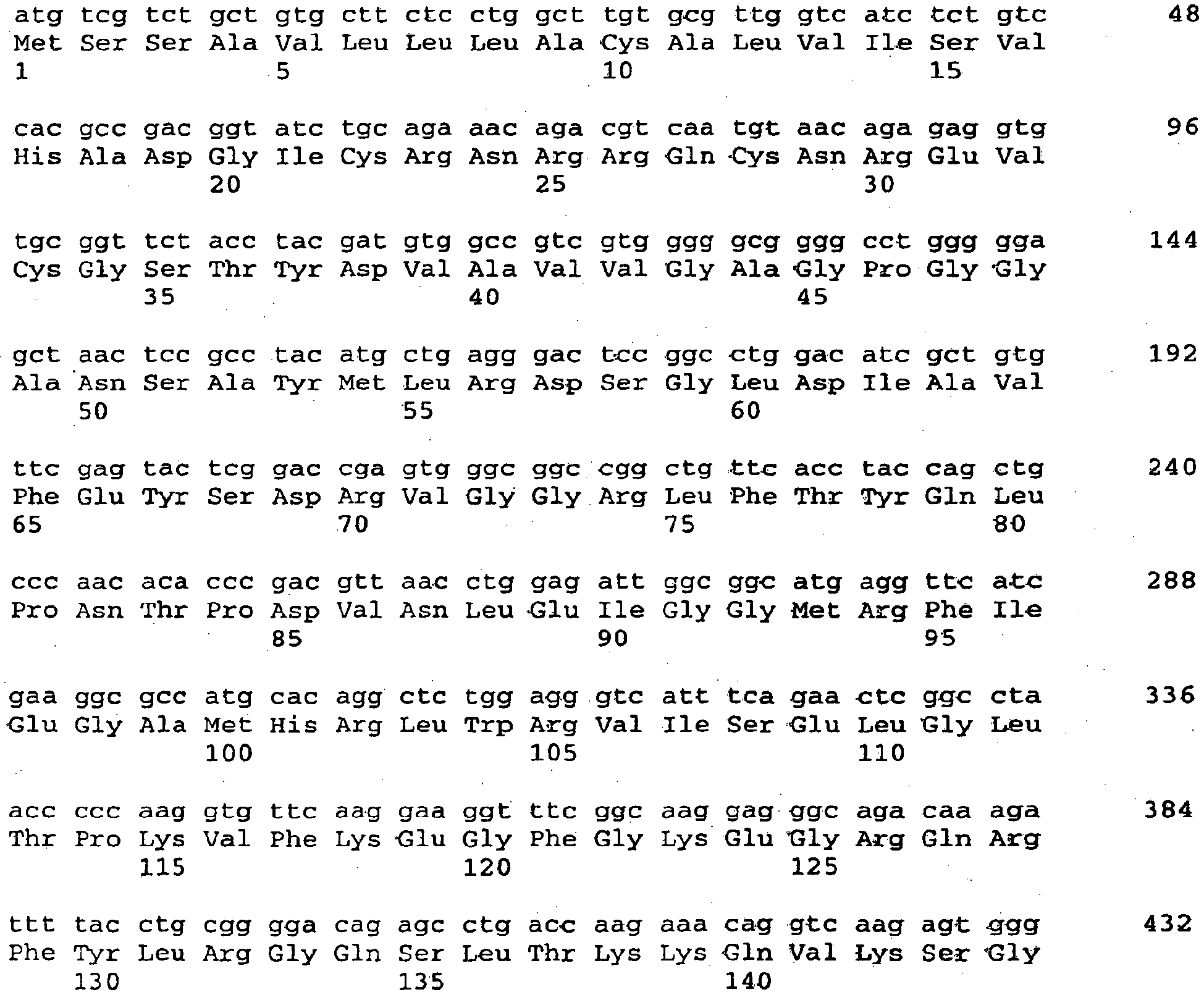


- <210> 2
<211> 535
<212> PRT
<213> Aplysia punctata - <400> 2


- <210> 3
<211> 1605
<212> DNA
<213> Aplysia punctata - <220>
<221> CDS
<222> (1)..(1605) - <400> 3


- <210> 4
<211> 534
<212> PRT
<213> Aplysia punctata - <400> 4


- <210> 5
<211> 1554
<212> DNA
<213> Aplysia punctata - <220>
<221> CDS
<222> (1)..(1554) - <400> 5


- <210> 6
<211> 517
<212> PRT
<213> Aplysia punctata - <400> 6


- <210> 7
<211> 1554
<212> DNA
<213> Aplysia punctata - <220>
<221> CDS
<222> (1)..(1554) - <400> 7


- <210> 8
<211> 518
<212> PRT
<213> Aplysia punctata - <400> 8


Claims (9)
- A conjugate comprising a recombinant L-arginine/L-lysine oxidoreductase and at least one polyethylene glycol moiety wherein the amino acid sequence of the L-arginine/L-lysine oxidoreductase is SEQ ID NO: 8, and wherein the at least one polyethylene glycol moiety has a weight average molecular weight of 1,000 Dalton to 10,000 Dalton.
- The conjugate of claim 1, wherein the at least one polyethylene glycol moiety is covalently coupled to the L-arginine/L-lysine oxidoreductase via a linking group, preferably a succinimide group.
- The conjugate of claim 1 or claim 2 comprising from 1 to 30, preferably from 1 to 10 polyethylene glycol moieties.
- Pharmaceutical composition comprising a conjugate of any of the claims 1 to 3 optionally together with pharmaceutically acceptable carriers, adjuvants, diluents or/and additives.
- A method of producing the conjugate of any of the claims 1 to 3 comprising the steps(a) recombinantly expressing the L-arginine/L-lysine oxidoreductase,(b) coupling at least one polyethylene glycol moiety to the L-arginine/L-lysine oxidoreductase of (a), wherein the at least one polyethylene glycol moiety has a weight average molecular weight of 1,000 Dalton to 10,000 Dalton.
- The method of claim 5, wherein step (a) comprises a recombinant expression of a nucleic acid, wherein the nucleic acid sequence is SEQ ID NO: 7.
- A kit comprising the conjugate of any of the claims 1 to 3 or/and the pharmaceutical composition of claim 4.
- The method according to claim 5 or 6, wherein the conjugate is characterized by an enhanced enzymatic activity or/and circulation time of the L-arginine/L-lysine oxidoreductase.
- Pharmaceutical composition of claim 4 for use in the prevention, alleviation or/and treatment of a proliferative diseases such as cancer.
Priority Applications (1)
| Application Number | Priority Date | Filing Date | Title |
|---|---|---|---|
| EP07725487.8A EP2021032B1 (en) | 2006-05-26 | 2007-05-23 | Peg-modified arginine/lysine oxidoreductase |
Applications Claiming Priority (3)
| Application Number | Priority Date | Filing Date | Title |
|---|---|---|---|
| EP06010824A EP1859810A1 (en) | 2006-05-26 | 2006-05-26 | Peg-modified arginine/lysineoxidoreductase |
| EP07725487.8A EP2021032B1 (en) | 2006-05-26 | 2007-05-23 | Peg-modified arginine/lysine oxidoreductase |
| PCT/EP2007/004587 WO2007137755A1 (en) | 2006-05-26 | 2007-05-23 | Peg-modified arginine/lysine oxidoreductase |
Publications (2)
| Publication Number | Publication Date |
|---|---|
| EP2021032A1 EP2021032A1 (en) | 2009-02-11 |
| EP2021032B1 true EP2021032B1 (en) | 2014-04-23 |
Family
ID=37198773
Family Applications (2)
| Application Number | Title | Priority Date | Filing Date |
|---|---|---|---|
| EP06010824A Withdrawn EP1859810A1 (en) | 2006-05-26 | 2006-05-26 | Peg-modified arginine/lysineoxidoreductase |
| EP07725487.8A Not-in-force EP2021032B1 (en) | 2006-05-26 | 2007-05-23 | Peg-modified arginine/lysine oxidoreductase |
Family Applications Before (1)
| Application Number | Title | Priority Date | Filing Date |
|---|---|---|---|
| EP06010824A Withdrawn EP1859810A1 (en) | 2006-05-26 | 2006-05-26 | Peg-modified arginine/lysineoxidoreductase |
Country Status (6)
| Country | Link |
|---|---|
| US (2) | US20100254963A1 (en) |
| EP (2) | EP1859810A1 (en) |
| JP (1) | JP2009538150A (en) |
| CA (1) | CA2653365A1 (en) |
| ES (1) | ES2478216T3 (en) |
| WO (1) | WO2007137755A1 (en) |
Families Citing this family (4)
| Publication number | Priority date | Publication date | Assignee | Title |
|---|---|---|---|---|
| US8815232B2 (en) | 2008-08-26 | 2014-08-26 | Kyon Biotech Ag | Compositions and methods for treating cancer |
| CN106076280B (en) * | 2015-04-30 | 2019-09-24 | 北京中科国通环保工程技术股份有限公司 | The preparation method of the compound filter aid of hydrochloric acid waste residue |
| CN112522225B (en) * | 2019-09-17 | 2025-03-18 | 鲁南制药集团股份有限公司 | A method for modifying uricase with polyethylene glycol |
| EP4385518A1 (en) | 2022-12-16 | 2024-06-19 | Julius-Maximilians-Universität Würzburg | Kit for combination therapy of tumor diseases and/or infections |
Family Cites Families (3)
| Publication number | Priority date | Publication date | Assignee | Title |
|---|---|---|---|---|
| JPH1160499A (en) * | 1997-08-22 | 1999-03-02 | Hiroshi Maeda | Antitumor agent |
| JP2003292457A (en) * | 2002-04-03 | 2003-10-15 | Hiroshi Maeda | Antitumor agent |
| US7407784B2 (en) * | 2003-01-20 | 2008-08-05 | Max-Planck-Gesellschaft Zur Foerderung Der Wissenschaften E.V. | L-amino acid oxidase with cytotoxic activity from Aplysia punctata |
-
2006
- 2006-05-26 EP EP06010824A patent/EP1859810A1/en not_active Withdrawn
-
2007
- 2007-05-23 ES ES07725487.8T patent/ES2478216T3/en active Active
- 2007-05-23 JP JP2009512464A patent/JP2009538150A/en not_active Withdrawn
- 2007-05-23 US US12/667,920 patent/US20100254963A1/en not_active Abandoned
- 2007-05-23 CA CA002653365A patent/CA2653365A1/en not_active Abandoned
- 2007-05-23 EP EP07725487.8A patent/EP2021032B1/en not_active Not-in-force
- 2007-05-23 WO PCT/EP2007/004587 patent/WO2007137755A1/en not_active Ceased
-
2013
- 2013-09-09 US US14/021,492 patent/US8759060B2/en not_active Expired - Fee Related
Also Published As
| Publication number | Publication date |
|---|---|
| JP2009538150A (en) | 2009-11-05 |
| US8759060B2 (en) | 2014-06-24 |
| EP2021032A1 (en) | 2009-02-11 |
| US20100254963A1 (en) | 2010-10-07 |
| ES2478216T3 (en) | 2014-07-21 |
| WO2007137755A1 (en) | 2007-12-06 |
| EP1859810A1 (en) | 2007-11-28 |
| CA2653365A1 (en) | 2007-12-06 |
| US20130344052A1 (en) | 2013-12-26 |
Similar Documents
| Publication | Publication Date | Title |
|---|---|---|
| EP2531597B1 (en) | Engineered enzymes with methionine-gamma-lyase enzymes and pharmacological preparations therof | |
| US6132713A (en) | Arginine deiminase derived from mycoplasma arthritidis and polymer conjugates containing the same | |
| KR102076364B1 (en) | Human arginase and pegylated human arginase and the use thereof | |
| JP4709465B2 (en) | A novel mutant of arginine deiminase | |
| CN101812438B (en) | Arginine deiminase mutant and preparation and application thereof | |
| AU752370B2 (en) | Utilization of wolinella succinogenes asparaginase to treat diseases associated with asparagine dependence | |
| CN106554948A (en) | Saltant type uricase, the saltant type uricase of PEG modifications and its application | |
| EP0172577B1 (en) | A superoxide dismutase, its production and pharmaceutical compositions containing it | |
| US8759060B2 (en) | PEG-modified arginine/lysine oxidoreductase | |
| JP3469247B2 (en) | Recombinant ribonuclease protein | |
| FI90353B (en) | Plasmid for expression of human manganese superoxide dismutase in bacteria and method for producing and recovering enzymatically active human manganese superoxide dismutase | |
| KR20110008075A (en) | Conjugates of cholinesterase moieties and polymers | |
| EP0045222B1 (en) | Mn-superoxide dismutase, its production and use | |
| WO2006133276A2 (en) | Methods for dissolving cystine stones and reducing cystine in urine | |
| MC2072A1 (en) | PROCESS FOR THE PREPARATION OF A HYBRID PROTEIN | |
| Nakamura et al. | Preparation of enzymatically highly active pegylated-D-amino acid oxidase and its application to antitumor therapy | |
| US6869604B1 (en) | Recombinant anti-tumor RNAse | |
| CN1034589C (en) | Antitumor antibiotic kedarciden | |
| CN1536079A (en) | modified arginine deiminase | |
| EP1068332B1 (en) | Recombinant anti-tumor rnase | |
| WO2006015512A1 (en) | A modified arginine deiminase | |
| Tsui | The development of human recombinant arginase as a novel agent in the treatment of human cancer | |
| Kumar et al. | Asian Journal of Biochemical and Pharmaceutical Research |
Legal Events
| Date | Code | Title | Description |
|---|---|---|---|
| PUAI | Public reference made under article 153(3) epc to a published international application that has entered the european phase |
Free format text: ORIGINAL CODE: 0009012 |
|
| 17P | Request for examination filed |
Effective date: 20081124 |
|
| AK | Designated contracting states |
Kind code of ref document: A1 Designated state(s): AT BE BG CH CY CZ DE DK EE ES FI FR GB GR HU IE IS IT LI LT LU LV MC MT NL PL PT RO SE SI SK TR |
|
| AX | Request for extension of the european patent |
Extension state: AL BA HR MK RS |
|
| 17Q | First examination report despatched |
Effective date: 20090317 |
|
| RIN1 | Information on inventor provided before grant (corrected) |
Inventor name: HOFMANN, CHRISTIAN, J. Inventor name: LINDEMANN, MICHAEL |
|
| RIN1 | Information on inventor provided before grant (corrected) |
Inventor name: LINDEMANN, MICHAEL Inventor name: HOFMANN, CHRISTIAN, J. |
|
| DAX | Request for extension of the european patent (deleted) | ||
| RAP1 | Party data changed (applicant data changed or rights of an application transferred) |
Owner name: RUDEL, THOMAS |
|
| GRAP | Despatch of communication of intention to grant a patent |
Free format text: ORIGINAL CODE: EPIDOSNIGR1 |
|
| INTG | Intention to grant announced |
Effective date: 20131119 |
|
| RIC1 | Information provided on ipc code assigned before grant |
Ipc: A61P 35/00 20060101ALI20131108BHEP Ipc: A61K 47/48 20060101AFI20131108BHEP |
|
| GRAS | Grant fee paid |
Free format text: ORIGINAL CODE: EPIDOSNIGR3 |
|
| GRAA | (expected) grant |
Free format text: ORIGINAL CODE: 0009210 |
|
| AK | Designated contracting states |
Kind code of ref document: B1 Designated state(s): AT BE BG CH CY CZ DE DK EE ES FI FR GB GR HU IE IS IT LI LT LU LV MC MT NL PL PT RO SE SI SK TR |
|
| RAP1 | Party data changed (applicant data changed or rights of an application transferred) |
Owner name: RUDEL, THOMAS |
|
| REG | Reference to a national code |
Ref country code: GB Ref legal event code: FG4D |
|
| REG | Reference to a national code |
Ref country code: CH Ref legal event code: EP |
|
| REG | Reference to a national code |
Ref country code: AT Ref legal event code: REF Ref document number: 663388 Country of ref document: AT Kind code of ref document: T Effective date: 20140515 |
|
| REG | Reference to a national code |
Ref country code: IE Ref legal event code: FG4D |
|
| REG | Reference to a national code |
Ref country code: DE Ref legal event code: R096 Ref document number: 602007036235 Country of ref document: DE Effective date: 20140605 |
|
| REG | Reference to a national code |
Ref country code: CH Ref legal event code: NV Representative=s name: LATSCHA SCHOELLHORN PARTNER AG, CH |
|
| REG | Reference to a national code |
Ref country code: SE Ref legal event code: TRGR |
|
| REG | Reference to a national code |
Ref country code: NL Ref legal event code: T3 |
|
| REG | Reference to a national code |
Ref country code: ES Ref legal event code: FG2A Ref document number: 2478216 Country of ref document: ES Kind code of ref document: T3 Effective date: 20140721 |
|
| REG | Reference to a national code |
Ref country code: CH Ref legal event code: PCAR Free format text: NEW ADDRESS: AUSTRASSE 24, 4051 BASEL (CH) |
|
| REG | Reference to a national code |
Ref country code: AT Ref legal event code: MK05 Ref document number: 663388 Country of ref document: AT Kind code of ref document: T Effective date: 20140423 |
|
| REG | Reference to a national code |
Ref country code: LT Ref legal event code: MG4D |
|
| PG25 | Lapsed in a contracting state [announced via postgrant information from national office to epo] |
Ref country code: GR Free format text: LAPSE BECAUSE OF FAILURE TO SUBMIT A TRANSLATION OF THE DESCRIPTION OR TO PAY THE FEE WITHIN THE PRESCRIBED TIME-LIMIT Effective date: 20140724 Ref country code: BG Free format text: LAPSE BECAUSE OF FAILURE TO SUBMIT A TRANSLATION OF THE DESCRIPTION OR TO PAY THE FEE WITHIN THE PRESCRIBED TIME-LIMIT Effective date: 20140723 Ref country code: FI Free format text: LAPSE BECAUSE OF FAILURE TO SUBMIT A TRANSLATION OF THE DESCRIPTION OR TO PAY THE FEE WITHIN THE PRESCRIBED TIME-LIMIT Effective date: 20140423 Ref country code: LT Free format text: LAPSE BECAUSE OF FAILURE TO SUBMIT A TRANSLATION OF THE DESCRIPTION OR TO PAY THE FEE WITHIN THE PRESCRIBED TIME-LIMIT Effective date: 20140423 Ref country code: IS Free format text: LAPSE BECAUSE OF FAILURE TO SUBMIT A TRANSLATION OF THE DESCRIPTION OR TO PAY THE FEE WITHIN THE PRESCRIBED TIME-LIMIT Effective date: 20140823 Ref country code: CY Free format text: LAPSE BECAUSE OF FAILURE TO SUBMIT A TRANSLATION OF THE DESCRIPTION OR TO PAY THE FEE WITHIN THE PRESCRIBED TIME-LIMIT Effective date: 20140423 |
|
| PG25 | Lapsed in a contracting state [announced via postgrant information from national office to epo] |
Ref country code: PL Free format text: LAPSE BECAUSE OF FAILURE TO SUBMIT A TRANSLATION OF THE DESCRIPTION OR TO PAY THE FEE WITHIN THE PRESCRIBED TIME-LIMIT Effective date: 20140423 Ref country code: LV Free format text: LAPSE BECAUSE OF FAILURE TO SUBMIT A TRANSLATION OF THE DESCRIPTION OR TO PAY THE FEE WITHIN THE PRESCRIBED TIME-LIMIT Effective date: 20140423 Ref country code: AT Free format text: LAPSE BECAUSE OF FAILURE TO SUBMIT A TRANSLATION OF THE DESCRIPTION OR TO PAY THE FEE WITHIN THE PRESCRIBED TIME-LIMIT Effective date: 20140423 |
|
| PG25 | Lapsed in a contracting state [announced via postgrant information from national office to epo] |
Ref country code: PT Free format text: LAPSE BECAUSE OF FAILURE TO SUBMIT A TRANSLATION OF THE DESCRIPTION OR TO PAY THE FEE WITHIN THE PRESCRIBED TIME-LIMIT Effective date: 20140825 |
|
| REG | Reference to a national code |
Ref country code: DE Ref legal event code: R097 Ref document number: 602007036235 Country of ref document: DE |
|
| PG25 | Lapsed in a contracting state [announced via postgrant information from national office to epo] |
Ref country code: DK Free format text: LAPSE BECAUSE OF FAILURE TO SUBMIT A TRANSLATION OF THE DESCRIPTION OR TO PAY THE FEE WITHIN THE PRESCRIBED TIME-LIMIT Effective date: 20140423 Ref country code: SK Free format text: LAPSE BECAUSE OF FAILURE TO SUBMIT A TRANSLATION OF THE DESCRIPTION OR TO PAY THE FEE WITHIN THE PRESCRIBED TIME-LIMIT Effective date: 20140423 Ref country code: EE Free format text: LAPSE BECAUSE OF FAILURE TO SUBMIT A TRANSLATION OF THE DESCRIPTION OR TO PAY THE FEE WITHIN THE PRESCRIBED TIME-LIMIT Effective date: 20140423 Ref country code: BE Free format text: LAPSE BECAUSE OF FAILURE TO SUBMIT A TRANSLATION OF THE DESCRIPTION OR TO PAY THE FEE WITHIN THE PRESCRIBED TIME-LIMIT Effective date: 20140423 Ref country code: RO Free format text: LAPSE BECAUSE OF FAILURE TO SUBMIT A TRANSLATION OF THE DESCRIPTION OR TO PAY THE FEE WITHIN THE PRESCRIBED TIME-LIMIT Effective date: 20140423 Ref country code: CZ Free format text: LAPSE BECAUSE OF FAILURE TO SUBMIT A TRANSLATION OF THE DESCRIPTION OR TO PAY THE FEE WITHIN THE PRESCRIBED TIME-LIMIT Effective date: 20140423 Ref country code: MC Free format text: LAPSE BECAUSE OF FAILURE TO SUBMIT A TRANSLATION OF THE DESCRIPTION OR TO PAY THE FEE WITHIN THE PRESCRIBED TIME-LIMIT Effective date: 20140423 |
|
| REG | Reference to a national code |
Ref country code: IE Ref legal event code: MM4A |
|
| PLBE | No opposition filed within time limit |
Free format text: ORIGINAL CODE: 0009261 |
|
| STAA | Information on the status of an ep patent application or granted ep patent |
Free format text: STATUS: NO OPPOSITION FILED WITHIN TIME LIMIT |
|
| 26N | No opposition filed |
Effective date: 20150126 |
|
| PG25 | Lapsed in a contracting state [announced via postgrant information from national office to epo] |
Ref country code: IE Free format text: LAPSE BECAUSE OF NON-PAYMENT OF DUE FEES Effective date: 20140523 |
|
| REG | Reference to a national code |
Ref country code: DE Ref legal event code: R097 Ref document number: 602007036235 Country of ref document: DE Effective date: 20150126 |
|
| PG25 | Lapsed in a contracting state [announced via postgrant information from national office to epo] |
Ref country code: SI Free format text: LAPSE BECAUSE OF FAILURE TO SUBMIT A TRANSLATION OF THE DESCRIPTION OR TO PAY THE FEE WITHIN THE PRESCRIBED TIME-LIMIT Effective date: 20140423 |
|
| PG25 | Lapsed in a contracting state [announced via postgrant information from national office to epo] |
Ref country code: MT Free format text: LAPSE BECAUSE OF FAILURE TO SUBMIT A TRANSLATION OF THE DESCRIPTION OR TO PAY THE FEE WITHIN THE PRESCRIBED TIME-LIMIT Effective date: 20140423 |
|
| REG | Reference to a national code |
Ref country code: FR Ref legal event code: PLFP Year of fee payment: 10 |
|
| PGFP | Annual fee paid to national office [announced via postgrant information from national office to epo] |
Ref country code: NL Payment date: 20160530 Year of fee payment: 10 |
|
| PG25 | Lapsed in a contracting state [announced via postgrant information from national office to epo] |
Ref country code: LU Free format text: LAPSE BECAUSE OF NON-PAYMENT OF DUE FEES Effective date: 20140523 Ref country code: HU Free format text: LAPSE BECAUSE OF FAILURE TO SUBMIT A TRANSLATION OF THE DESCRIPTION OR TO PAY THE FEE WITHIN THE PRESCRIBED TIME-LIMIT; INVALID AB INITIO Effective date: 20070523 Ref country code: TR Free format text: LAPSE BECAUSE OF FAILURE TO SUBMIT A TRANSLATION OF THE DESCRIPTION OR TO PAY THE FEE WITHIN THE PRESCRIBED TIME-LIMIT Effective date: 20140423 |
|
| PGFP | Annual fee paid to national office [announced via postgrant information from national office to epo] |
Ref country code: ES Payment date: 20160614 Year of fee payment: 10 Ref country code: GB Payment date: 20160531 Year of fee payment: 10 Ref country code: DE Payment date: 20160530 Year of fee payment: 10 Ref country code: CH Payment date: 20160620 Year of fee payment: 10 |
|
| PGFP | Annual fee paid to national office [announced via postgrant information from national office to epo] |
Ref country code: IT Payment date: 20160530 Year of fee payment: 10 Ref country code: FR Payment date: 20160530 Year of fee payment: 10 Ref country code: SE Payment date: 20160530 Year of fee payment: 10 |
|
| REG | Reference to a national code |
Ref country code: DE Ref legal event code: R079 Ref document number: 602007036235 Country of ref document: DE Free format text: PREVIOUS MAIN CLASS: A61K0047480000 Ipc: A61K0047500000 |
|
| REG | Reference to a national code |
Ref country code: DE Ref legal event code: R119 Ref document number: 602007036235 Country of ref document: DE |
|
| REG | Reference to a national code |
Ref country code: CH Ref legal event code: PL |
|
| REG | Reference to a national code |
Ref country code: SE Ref legal event code: EUG |
|
| REG | Reference to a national code |
Ref country code: NL Ref legal event code: MM Effective date: 20170601 |
|
| GBPC | Gb: european patent ceased through non-payment of renewal fee |
Effective date: 20170523 |
|
| PG25 | Lapsed in a contracting state [announced via postgrant information from national office to epo] |
Ref country code: SE Free format text: LAPSE BECAUSE OF NON-PAYMENT OF DUE FEES Effective date: 20170524 Ref country code: LI Free format text: LAPSE BECAUSE OF NON-PAYMENT OF DUE FEES Effective date: 20170531 Ref country code: CH Free format text: LAPSE BECAUSE OF NON-PAYMENT OF DUE FEES Effective date: 20170531 |
|
| REG | Reference to a national code |
Ref country code: FR Ref legal event code: ST Effective date: 20180131 |
|
| PG25 | Lapsed in a contracting state [announced via postgrant information from national office to epo] |
Ref country code: NL Free format text: LAPSE BECAUSE OF NON-PAYMENT OF DUE FEES Effective date: 20170601 |
|
| PG25 | Lapsed in a contracting state [announced via postgrant information from national office to epo] |
Ref country code: DE Free format text: LAPSE BECAUSE OF NON-PAYMENT OF DUE FEES Effective date: 20171201 Ref country code: GB Free format text: LAPSE BECAUSE OF NON-PAYMENT OF DUE FEES Effective date: 20170523 |
|
| PG25 | Lapsed in a contracting state [announced via postgrant information from national office to epo] |
Ref country code: FR Free format text: LAPSE BECAUSE OF NON-PAYMENT OF DUE FEES Effective date: 20170531 Ref country code: IT Free format text: LAPSE BECAUSE OF NON-PAYMENT OF DUE FEES Effective date: 20170523 |
|
| REG | Reference to a national code |
Ref country code: ES Ref legal event code: FD2A Effective date: 20180706 |
|
| PG25 | Lapsed in a contracting state [announced via postgrant information from national office to epo] |
Ref country code: ES Free format text: LAPSE BECAUSE OF NON-PAYMENT OF DUE FEES Effective date: 20170524 |