EP2018988A1 - Sealing gasket for automobiles - Google Patents
Sealing gasket for automobiles Download PDFInfo
- Publication number
- EP2018988A1 EP2018988A1 EP08380159A EP08380159A EP2018988A1 EP 2018988 A1 EP2018988 A1 EP 2018988A1 EP 08380159 A EP08380159 A EP 08380159A EP 08380159 A EP08380159 A EP 08380159A EP 2018988 A1 EP2018988 A1 EP 2018988A1
- Authority
- EP
- European Patent Office
- Prior art keywords
- tubular body
- gasket
- partition
- sealing
- flanges
- Prior art date
- Legal status (The legal status is an assumption and is not a legal conclusion. Google has not performed a legal analysis and makes no representation as to the accuracy of the status listed.)
- Withdrawn
Links
- 238000007789 sealing Methods 0.000 title claims abstract description 24
- 238000005192 partition Methods 0.000 claims abstract description 24
- 239000000463 material Substances 0.000 description 12
- 239000000126 substance Substances 0.000 description 4
- 239000000853 adhesive Substances 0.000 description 3
- 230000001070 adhesive effect Effects 0.000 description 3
- 230000007812 deficiency Effects 0.000 description 3
- 230000015556 catabolic process Effects 0.000 description 1
- 238000006731 degradation reaction Methods 0.000 description 1
- 230000000694 effects Effects 0.000 description 1
- 238000000926 separation method Methods 0.000 description 1
- 239000007787 solid Substances 0.000 description 1
Images

Classifications
-
- B—PERFORMING OPERATIONS; TRANSPORTING
- B60—VEHICLES IN GENERAL
- B60J—WINDOWS, WINDSCREENS, NON-FIXED ROOFS, DOORS, OR SIMILAR DEVICES FOR VEHICLES; REMOVABLE EXTERNAL PROTECTIVE COVERINGS SPECIALLY ADAPTED FOR VEHICLES
- B60J10/00—Sealing arrangements
- B60J10/20—Sealing arrangements characterised by the shape
- B60J10/24—Sealing arrangements characterised by the shape having tubular parts
-
- B—PERFORMING OPERATIONS; TRANSPORTING
- B60—VEHICLES IN GENERAL
- B60J—WINDOWS, WINDSCREENS, NON-FIXED ROOFS, DOORS, OR SIMILAR DEVICES FOR VEHICLES; REMOVABLE EXTERNAL PROTECTIVE COVERINGS SPECIALLY ADAPTED FOR VEHICLES
- B60J10/00—Sealing arrangements
- B60J10/30—Sealing arrangements characterised by the fastening means
-
- B—PERFORMING OPERATIONS; TRANSPORTING
- B60—VEHICLES IN GENERAL
- B60J—WINDOWS, WINDSCREENS, NON-FIXED ROOFS, DOORS, OR SIMILAR DEVICES FOR VEHICLES; REMOVABLE EXTERNAL PROTECTIVE COVERINGS SPECIALLY ADAPTED FOR VEHICLES
- B60J10/00—Sealing arrangements
- B60J10/80—Sealing arrangements specially adapted for opening panels, e.g. doors
Definitions
- the present invention relates to a sealing gasket for automobiles, especially applicable as a sealing gasket for automobile doors.
- the sealing gaskets arranged inside vehicle door panels currently do not offer a complete sealing of the interior. These gaskets are fixed to the panel by means of an adhesive type chemical attachment which does not always behave optimally and they have deficiencies in their operation, which can lead to intrusions of external elements into the interior.
- Another problem which this type of attachment involves is the deficiency of the attachment itself, which is not always correctly fixed in its position or which loses its effectiveness over time. This deficiency in the behavior of the attachment causes sealing losses and possible intrusions into the interior.
- Another problem of the gaskets fixed by chemical attachment is the difficulty for clipping the rear window with the rest of the assembly since the gasket must be adapted to the radii of the rear window.
- the object of the present invention is to eliminate the problems set forth by means of a gasket allowing an optimal sealing of the interior and furthermore using a mechanical fixing provided by the actual elements of the gasket for its assembly.
- the sealing gasket is formed by an elastically deformable tubular body and by a planar outer partition running radially along the entire body.
- the tubular body can have a circular, oval section, etc. and is the part of the gasket providing the sealing function to the assembly.
- the outer partition can be made of the same material as the tubular body or of another different material, but forming a single part therewith. Flanges inclined towards the body project from this partition on both sides thereof. The partition with these flanges forms the means for fixing the sealing gasket to the position made in the door panel.
- the tubular body can be manufactured in a plastic material allowing certain elastic flexibility of the gasket for a correct positioning of the system and optimal impermeability. Furthermore, this body can optionally have one or several supplementary lips increasing the sealing factor of the assembly upon sticking to the surface for positioning the gasket.
- the outer partition can be made of a material that is more rigid than the tubular body, in order to facilitate the fixing of the assembly, although it is also possible that it is manufactured from the same plastic material as the tubular body.
- the partition can include a single flange or two flanges on each side and as has been indicated, they will useful for facilitating the fixing of the assembly to the position intended for it in the vehicle door panel.
- This mechanical fixing allows a quick and accurate positioning of the gasket in the gap made in the door panel.
- the problem of clipping the rear window is solved with this type of fixing, since the depth of the groove in which the gasket is positioned can be varied and the stylization of the tubular body can thus be prevented from making the correct fitting of the assembly difficult.
- the tubular body of the gasket can be provided with a roughness on its inner surface, which roughness does not allow the opposite parts of the gasket to be able to adhere to one another.
- the gasket of the invention further allows a great versatility in the design since the grooves in which the gasket is fitted can be adapted in order to be adapted to any type of curvature radius without this affecting the sealing parameter. Multiple designs for the gasket are also allowed depending on the required degree of sealing, adding or removing pairs of lips to or from the assembly for the purpose of obtaining an optimal sealing in any situation.
- Figure 1 shows a sealing gasket for automobiles formed according to the invention, comprising an elastically deformable tubular body 1 and a longitudinal outer partition 2 projecting radially from the body 1 and having a planar configuration.
- Flanges 3, two on each side in the case of Figure 1 which are inclined and curved towards the tubular body 1, project from this partition 2 on both sides and all along such partition.
- tubular body 1 is shown with a circular section, it could also have an oval section or a section with other outlines.
- the tubular body 1 will be formed based on a plastic material which is elastically deformable and the partition 2 can be made of the same material or of another more rigid material, a separation line 4 then being between both but in any case forming a single part.
- the inner surface of the tubular body 1 can have a ribbing 5, forming a roughness preventing opposite areas of said body from being able to adhere upon being deformed.
- the number of flanges 3 can vary, as shown in Figure 3 , in which a single flange 3 projects on each side of the partition 2.
- the tubular body 1 will form the element for sealing the gasket, whereas the partition 2 with the flanges 3 forms the means for fixing or locking the gasket upon being tightly introduced into the groove 7 of the door panel 8 with the deformation of the flanges 3.
- Figure 7 also shows how a greater sealing is achieved upon supporting the lips 6 of the tubular body 1 on the panel 8.
- the flanges 3 of the partition 2 are bent to their correct position upon inserting the sealing gasket into the groove 7, at which time they can recover their original shape due to the effect of the elasticity of the material itself.
- a flange 3 projects from the partition 2 on each side and two lips 6 project from the tubular body 1.
- the assembly can be manufactured in a single material or in two different materials, one more flexible for the tubular body 1 and the other one more rigid for the partition 2.
- the inner roughness 5 can occupy only an area near the outer partition 2 and can furthermore be achieved by different reliefs to the ribbing 5.
Landscapes
- Engineering & Computer Science (AREA)
- Mechanical Engineering (AREA)
- Gasket Seals (AREA)
- Specific Sealing Or Ventilating Devices For Doors And Windows (AREA)
Abstract
The invention relates to a sealing gasket for automobiles comprising an elastically deformable tubular body 1 and a planar outer partition 2 running radially along the entire body 1; from the partition 2 of which there project, on both sides thereof, flanges 3 inclined towards the tubular body.
Description
- The present invention relates to a sealing gasket for automobiles, especially applicable as a sealing gasket for automobile doors.
- The sealing gaskets arranged inside vehicle door panels currently do not offer a complete sealing of the interior. These gaskets are fixed to the panel by means of an adhesive type chemical attachment which does not always behave optimally and they have deficiencies in their operation, which can lead to intrusions of external elements into the interior.
- Current sealing gaskets arranged in the automobile door panel, especially in the rear window of the door, are fixed in their position by means of an adhesive type chemical attachment. These types of attachments have several drawbacks, such as the difficulty for placing the gasket in its position. This causes the effectiveness of the sealing gasket assembly to be reduced, since the correct positioning is essential for a good seal of the different parts forming the assembly.
- Another problem which this type of attachment involves is the deficiency of the attachment itself, which is not always correctly fixed in its position or which loses its effectiveness over time. This deficiency in the behavior of the attachment causes sealing losses and possible intrusions into the interior. Another problem of the gaskets fixed by chemical attachment is the difficulty for clipping the rear window with the rest of the assembly since the gasket must be adapted to the radii of the rear window.
- The object of the present invention is to eliminate the problems set forth by means of a gasket allowing an optimal sealing of the interior and furthermore using a mechanical fixing provided by the actual elements of the gasket for its assembly.
- According to the present invention, the sealing gasket is formed by an elastically deformable tubular body and by a planar outer partition running radially along the entire body.
- The tubular body can have a circular, oval section, etc. and is the part of the gasket providing the sealing function to the assembly.
- The outer partition can be made of the same material as the tubular body or of another different material, but forming a single part therewith. Flanges inclined towards the body project from this partition on both sides thereof. The partition with these flanges forms the means for fixing the sealing gasket to the position made in the door panel.
- The tubular body can be manufactured in a plastic material allowing certain elastic flexibility of the gasket for a correct positioning of the system and optimal impermeability. Furthermore, this body can optionally have one or several supplementary lips increasing the sealing factor of the assembly upon sticking to the surface for positioning the gasket.
- As has already been indicated, the outer partition can be made of a material that is more rigid than the tubular body, in order to facilitate the fixing of the assembly, although it is also possible that it is manufactured from the same plastic material as the tubular body.
- The partition can include a single flange or two flanges on each side and as has been indicated, they will useful for facilitating the fixing of the assembly to the position intended for it in the vehicle door panel. This mechanical fixing allows a quick and accurate positioning of the gasket in the gap made in the door panel. The problem of clipping the rear window is solved with this type of fixing, since the depth of the groove in which the gasket is positioned can be varied and the stylization of the tubular body can thus be prevented from making the correct fitting of the assembly difficult.
- During the normal movement of the vehicle vibrations deforming the tubular body of the gasket occur, normally causing noise which is annoying for the comfort of the users. In order to prevent this noise, the tubular body can be provided with a roughness on its inner surface, which roughness does not allow the opposite parts of the gasket to be able to adhere to one another.
- With this type of gasket an optimal sealing of the interior is achieved and in turn an easier and therefore quicker assembly. Upon eliminating the chemical fixing the possible difficulties for correctly positioning the gasket are prevented, as well as the subsequent degradation of the adhesive or the lack of adhesion between the different elements of the assembly. As a result of the mechanical fixing of the gasket, an attachment which is solid, non-degradable and compatible with all types of materials is achieved.
- The gasket of the invention further allows a great versatility in the design since the grooves in which the gasket is fitted can be adapted in order to be adapted to any type of curvature radius without this affecting the sealing parameter. Multiple designs for the gasket are also allowed depending on the required degree of sealing, adding or removing pairs of lips to or from the assembly for the purpose of obtaining an optimal sealing in any situation.
- A non-limiting embodiment is shown in the attached drawings, with the aid of which the advantages and features of the gasket of the invention can be better understood.
- In the drawings:
-
Figure 1 is a perspective view of a section of a gasket formed according to the invention. -
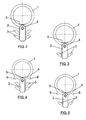
Figure 2 is a front elevational view of the gasket ofFigure 1 . -
Figures 3 to 5 are views similar toFigure 2 , showing as many other implementation variants. -
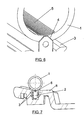
Figure 6 shows in detail, on a larger scale, the inner part of the tubular body of the gasket ofFigure 1 . -
Figure 7 shows a sectional view of the position of the gasket inside the groove of the door panel. -
Figure 1 shows a sealing gasket for automobiles formed according to the invention, comprising an elastically deformabletubular body 1 and a longitudinalouter partition 2 projecting radially from thebody 1 and having a planar configuration.Flanges 3, two on each side in the case ofFigure 1 , which are inclined and curved towards thetubular body 1, project from thispartition 2 on both sides and all along such partition. - Although the
tubular body 1 is shown with a circular section, it could also have an oval section or a section with other outlines. - The
tubular body 1 will be formed based on a plastic material which is elastically deformable and thepartition 2 can be made of the same material or of another more rigid material, aseparation line 4 then being between both but in any case forming a single part. - The inner surface of the
tubular body 1 can have a ribbing 5, forming a roughness preventing opposite areas of said body from being able to adhere upon being deformed. - The number of
flanges 3 can vary, as shown inFigure 3 , in which asingle flange 3 projects on each side of thepartition 2. - In the case of
Figure 4 , twoflanges 3 project from thepartition 2 on each side and twolips 6 project from thetubular body 1, which lips will increase the sealing factor of the assembly upon sticking to the surface for positioning the gasket, as shown inFigure 7 . - The
tubular body 1 will form the element for sealing the gasket, whereas thepartition 2 with theflanges 3 forms the means for fixing or locking the gasket upon being tightly introduced into thegroove 7 of the door panel 8 with the deformation of theflanges 3. -
Figure 7 also shows how a greater sealing is achieved upon supporting thelips 6 of thetubular body 1 on the panel 8. - The
flanges 3 of thepartition 2 are bent to their correct position upon inserting the sealing gasket into thegroove 7, at which time they can recover their original shape due to the effect of the elasticity of the material itself. - In the example of
Figure 5 aflange 3 projects from thepartition 2 on each side and twolips 6 project from thetubular body 1. - As has already been indicated, the assembly can be manufactured in a single material or in two different materials, one more flexible for the
tubular body 1 and the other one more rigid for thepartition 2. - The
inner roughness 5 can occupy only an area near theouter partition 2 and can furthermore be achieved by different reliefs to theribbing 5.
Claims (4)
- A sealing gasket for automobiles comprising an elastically deformable tubular body 1 and a planar outer partition 2 running radially along the entire body 1; from the partition 2 of which there project, on both sides thereof, flanges 3 inclined towards the tubular body.
- A gasket according to claim 1, characterized in that the tubular body has longitudinal lips 6 near the outer partition 2.
- A gasket according to claim 1, characterized in that the inner surface 5 of the tubular body 1 is rough, at least in the area adjacent to the outer partition 2.
- A gasket according to claim 1, characterized in that the flanges 3 of the outer partition have a curved cross-section, with the concavity directed towards the tubular body 1.
Applications Claiming Priority (1)
| Application Number | Priority Date | Filing Date | Title |
|---|---|---|---|
| ES200701249U ES1065795Y (en) | 2007-06-11 | 2007-06-11 | SEALING SEAL FOR CARS |
Publications (1)
| Publication Number | Publication Date |
|---|---|
| EP2018988A1 true EP2018988A1 (en) | 2009-01-28 |
Family
ID=38651194
Family Applications (1)
| Application Number | Title | Priority Date | Filing Date |
|---|---|---|---|
| EP08380159A Withdrawn EP2018988A1 (en) | 2007-06-11 | 2008-05-20 | Sealing gasket for automobiles |
Country Status (2)
| Country | Link |
|---|---|
| EP (1) | EP2018988A1 (en) |
| ES (1) | ES1065795Y (en) |
Cited By (1)
| Publication number | Priority date | Publication date | Assignee | Title |
|---|---|---|---|---|
| JP2019077385A (en) * | 2017-10-26 | 2019-05-23 | 西川ゴム工業株式会社 | Weather stip and weather stip attachment structure |
Citations (9)
| Publication number | Priority date | Publication date | Assignee | Title |
|---|---|---|---|---|
| DE3140807C1 (en) * | 1981-10-14 | 1983-03-10 | Audi Nsu Auto Union Ag, 7107 Neckarsulm | Seal for a joint between two components forming the outer skin of a vehicle |
| EP0201223A1 (en) * | 1985-04-17 | 1986-11-12 | Ford Motor Company Limited | Weatherstrip |
| FR2593445A1 (en) * | 1986-01-27 | 1987-07-31 | Peugeot | Profiles to be clip-mounted |
| EP0395485A1 (en) * | 1989-04-27 | 1990-10-31 | HUTCHINSON S.A. une SociÀ©té Anonyme dotée d'un Conseil de Surveillance et d'un Directoire | Weather strip, in particularly for a motor vehicle door |
| FR2690404A1 (en) * | 1992-04-28 | 1993-10-29 | Renault | Motor vehicle body structure. |
| EP0814229A1 (en) * | 1996-06-18 | 1997-12-29 | Draftex Industries Limited | Fixing arrangements and systems for flexible strips |
| DE10043136A1 (en) * | 2000-08-31 | 2002-04-04 | Webasto Vehicle Sys Int Gmbh | Sealing profile, in particular, for sliding roof element comprises elastic sealing section incorporating thickened zone which offers greater resistance to deformation |
| DE10358418B3 (en) * | 2003-12-13 | 2005-07-28 | Audi Ag | Seal unit for sealing vehicle component to fixed bodywork has holding rail made of elastic material and with slots in both sides |
| DE102004004909A1 (en) * | 2004-01-30 | 2005-08-18 | Audi Ag | Sealing arrangement between a moving door and a stationary body of a motor vehicle comprises a sealing band with a foot region, a lip region, and a tubular region with opposite-lying shoulders |
-
2007
- 2007-06-11 ES ES200701249U patent/ES1065795Y/en not_active Expired - Fee Related
-
2008
- 2008-05-20 EP EP08380159A patent/EP2018988A1/en not_active Withdrawn
Patent Citations (9)
| Publication number | Priority date | Publication date | Assignee | Title |
|---|---|---|---|---|
| DE3140807C1 (en) * | 1981-10-14 | 1983-03-10 | Audi Nsu Auto Union Ag, 7107 Neckarsulm | Seal for a joint between two components forming the outer skin of a vehicle |
| EP0201223A1 (en) * | 1985-04-17 | 1986-11-12 | Ford Motor Company Limited | Weatherstrip |
| FR2593445A1 (en) * | 1986-01-27 | 1987-07-31 | Peugeot | Profiles to be clip-mounted |
| EP0395485A1 (en) * | 1989-04-27 | 1990-10-31 | HUTCHINSON S.A. une SociÀ©té Anonyme dotée d'un Conseil de Surveillance et d'un Directoire | Weather strip, in particularly for a motor vehicle door |
| FR2690404A1 (en) * | 1992-04-28 | 1993-10-29 | Renault | Motor vehicle body structure. |
| EP0814229A1 (en) * | 1996-06-18 | 1997-12-29 | Draftex Industries Limited | Fixing arrangements and systems for flexible strips |
| DE10043136A1 (en) * | 2000-08-31 | 2002-04-04 | Webasto Vehicle Sys Int Gmbh | Sealing profile, in particular, for sliding roof element comprises elastic sealing section incorporating thickened zone which offers greater resistance to deformation |
| DE10358418B3 (en) * | 2003-12-13 | 2005-07-28 | Audi Ag | Seal unit for sealing vehicle component to fixed bodywork has holding rail made of elastic material and with slots in both sides |
| DE102004004909A1 (en) * | 2004-01-30 | 2005-08-18 | Audi Ag | Sealing arrangement between a moving door and a stationary body of a motor vehicle comprises a sealing band with a foot region, a lip region, and a tubular region with opposite-lying shoulders |
Cited By (1)
| Publication number | Priority date | Publication date | Assignee | Title |
|---|---|---|---|---|
| JP2019077385A (en) * | 2017-10-26 | 2019-05-23 | 西川ゴム工業株式会社 | Weather stip and weather stip attachment structure |
Also Published As
| Publication number | Publication date |
|---|---|
| ES1065795U (en) | 2007-11-01 |
| ES1065795Y (en) | 2008-02-01 |
Similar Documents
| Publication | Publication Date | Title |
|---|---|---|
| JP5229694B2 (en) | Weather strip | |
| EP1232887B1 (en) | Door frame structure of motor vehicle | |
| EP2213519B1 (en) | Joint structure of door edge member | |
| EP1944182A1 (en) | Fastening strip for use with a seal to seal a window in a vehicle door | |
| JP5932461B2 (en) | Vehicle trim | |
| JPH078636B2 (en) | Seal strip | |
| JP2009542509A (en) | Seal structure material | |
| CN113665331B (en) | Seals for car doors | |
| JP5994646B2 (en) | Mounting structure for vehicle interior parts | |
| JP2010254270A (en) | Weather strip | |
| CN111959250B (en) | Vehicle outer waist seal assembly | |
| EP2018988A1 (en) | Sealing gasket for automobiles | |
| US9975413B2 (en) | Weatherstrip fixing structure | |
| US8667740B1 (en) | Weather strip | |
| JP5660828B2 (en) | Weather strip mounting structure | |
| EP0747265B1 (en) | Retaining, sealing or finishing strips | |
| JP5316790B2 (en) | Door weather strip assembly structure and method | |
| JP6098204B2 (en) | Opening trim weather strip for automobiles | |
| JP6032434B2 (en) | Weather strip | |
| EP1922221A1 (en) | Window sealing and guiding arrangements for vehicle doors and windows | |
| US4377056A (en) | Door edge guard liner and liner assembly | |
| EP3353003B1 (en) | Window trim for use with a fixed window of a vehicle | |
| EP1798113A2 (en) | Vehicle molding clip mounting structure | |
| JP4347516B2 (en) | Weather strip | |
| EP0572916A1 (en) | Frame Cover for motor vehicle sunroof |
Legal Events
| Date | Code | Title | Description |
|---|---|---|---|
| PUAI | Public reference made under article 153(3) epc to a published international application that has entered the european phase |
Free format text: ORIGINAL CODE: 0009012 |
|
| AK | Designated contracting states |
Kind code of ref document: A1 Designated state(s): AT BE BG CH CY CZ DE DK EE ES FI FR GB GR HR HU IE IS IT LI LT LU LV MC MT NL NO PL PT RO SE SI SK TR |
|
| AX | Request for extension of the european patent |
Extension state: AL BA MK RS |
|
| AKX | Designation fees paid | ||
| REG | Reference to a national code |
Ref country code: DE Ref legal event code: 8566 |
|
| STAA | Information on the status of an ep patent application or granted ep patent |
Free format text: STATUS: THE APPLICATION IS DEEMED TO BE WITHDRAWN |
|
| 18D | Application deemed to be withdrawn |
Effective date: 20090729 |