EP2018024B1 - Call processing system and method - Google Patents
Call processing system and method Download PDFInfo
- Publication number
- EP2018024B1 EP2018024B1 EP08275031A EP08275031A EP2018024B1 EP 2018024 B1 EP2018024 B1 EP 2018024B1 EP 08275031 A EP08275031 A EP 08275031A EP 08275031 A EP08275031 A EP 08275031A EP 2018024 B1 EP2018024 B1 EP 2018024B1
- Authority
- EP
- European Patent Office
- Prior art keywords
- node
- processing system
- call processing
- predetermined period
- connection status
- Prior art date
- Legal status (The legal status is an assumption and is not a legal conclusion. Google has not performed a legal analysis and makes no representation as to the accuracy of the status listed.)
- Ceased
Links
- 238000012545 processing Methods 0.000 title claims description 61
- 238000000034 method Methods 0.000 title claims description 15
- 238000004891 communication Methods 0.000 claims description 38
- 238000012544 monitoring process Methods 0.000 claims description 13
- 238000004590 computer program Methods 0.000 claims description 7
- 230000007423 decrease Effects 0.000 claims description 2
- 238000010586 diagram Methods 0.000 description 2
- 230000000977 initiatory effect Effects 0.000 description 2
- 101150012579 ADSL gene Proteins 0.000 description 1
- 102100020775 Adenylosuccinate lyase Human genes 0.000 description 1
- 108700040193 Adenylosuccinate lyases Proteins 0.000 description 1
- 238000005516 engineering process Methods 0.000 description 1
- 238000012423 maintenance Methods 0.000 description 1
Images
Classifications
-
- H—ELECTRICITY
- H04—ELECTRIC COMMUNICATION TECHNIQUE
- H04L—TRANSMISSION OF DIGITAL INFORMATION, e.g. TELEGRAPHIC COMMUNICATION
- H04L65/00—Network arrangements, protocols or services for supporting real-time applications in data packet communication
- H04L65/1066—Session management
- H04L65/1069—Session establishment or de-establishment
-
- H—ELECTRICITY
- H04—ELECTRIC COMMUNICATION TECHNIQUE
- H04L—TRANSMISSION OF DIGITAL INFORMATION, e.g. TELEGRAPHIC COMMUNICATION
- H04L69/00—Network arrangements, protocols or services independent of the application payload and not provided for in the other groups of this subclass
- H04L69/40—Network arrangements, protocols or services independent of the application payload and not provided for in the other groups of this subclass for recovering from a failure of a protocol instance or entity, e.g. service redundancy protocols, protocol state redundancy or protocol service redirection
-
- H—ELECTRICITY
- H04—ELECTRIC COMMUNICATION TECHNIQUE
- H04Q—SELECTING
- H04Q3/00—Selecting arrangements
- H04Q3/0016—Arrangements providing connection between exchanges
- H04Q3/0029—Provisions for intelligent networking
- H04Q3/0045—Provisions for intelligent networking involving hybrid, i.e. a mixture of public and private, or multi-vendor systems
-
- H—ELECTRICITY
- H04—ELECTRIC COMMUNICATION TECHNIQUE
- H04W—WIRELESS COMMUNICATION NETWORKS
- H04W80/00—Wireless network protocols or protocol adaptations to wireless operation
- H04W80/04—Network layer protocols, e.g. mobile IP [Internet Protocol]
Definitions
- the present invention relates to a call processing system and method that is particularly suitable for use in data communication networks where clients may have unreliable connectivity.
- an intermediate switching node or system is typically responsible for managing the connection between a calling node and a receiving node. This management typically includes receiving and initial call set up request from the calling node and establishing a connection to the receiving node.
- call set up and call maintenance can be difficult as a node that is connected to a network at one moment may not be connected the next.
- IP voice over IP
- ADSL voice over IP
- connections can be lost and re-established.
- Other issues such as assignment of a new ip address, NAT gateway timeout, firewall reset, changing in routing, reset of an intermediate switch/router all can cause loss and subsequent re-establishment of a connection.
- IP Internet protocol
- the system is preferably arranged to receive the call connection request from a calling party for a connection to the node, the system being arranged to trigger establishment of a connection between the calling party and the node if the node is connected to the data communications network.
- the system is arranged to decline the connection request.
- the call processing system is arranged to trigger establishment of the connection if the node is detected connecting to the data communications network during the second predetermined period.
- the call processing system is connected to the data communications network and is remote of the node.
- the call processing system may be arranged to record connection status data on the node in a database and is arranged to determine connection status of the node in dependence on the database contents.
- the call processing system may be arranged to record historic connection status data on the node in the database.
- the call processing system may be arranged to determine the duration of the second predetermined period in dependence on the historic connection status data in the database.
- the call processing system may be arranged to determine the duration of the first predetermined period in dependence on the historic connection status data in the database.
- the call processing system may be arranged to determine the duration of the second predetermined period in dependence on statistical and/or heuristic analysis of the historic connection status data in the database.
- the call processing system may be arranged to determine the duration of the second predetermined period in dependence on statistical and/or heuristic analysis of the historic connection status data in the database.
- the system may further comprise a monitoring agent and a processing agent, wherein the monitoring agent is remote of the processing agent, the monitoring agent being arranged to perform said monitoring of said connection status of said node and report status data to the processing agent, the processing agent being arranged to process call connection requests for the node in dependence on the status data.
- the data communications network preferably comprises an Internet Protocol network.
- the method may further comprise recording connection status data on the node in a database; and, determining connection status of the node in dependence on contents of the database.
- the method may further comprise recording historic connection status data on the node in the database.
- the method may further comprise determining the duration of the second predetermined period in dependence on the historic connection status data in the database.
- the method may further comprise determining the duration of the first predetermined period in dependence on the historic connection status data in the database.
- a computer readable carrier encoding a computer program, the computer program comprising:
- Embodiments of the present invention seek to provide a system and method in which non-reliable network connections can be accommodated during call set up. If a call set up request arrives at a conventional call set up system, call set up is only performed if the called node can be identified as being available. In embodiments of the present invention, connectivity of the called node is monitored such that if they were disconnected immediately prior to receipt of the call set up request or within a predetermined time frame then the call processing system is arranged to provide a predetermined period of time for the called node to re-connect before continuing with the call setup.
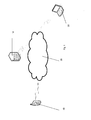
- Figure 1 is a schematic diagram of a call processing system according to an embodiment of the present invention.
- a call processing system 10 is connected to a data communication network 20.
- Client nodes 30, 40 are also connected to the data communications network 20.
- the call processing system 10 is arranged to monitor connectivity status of the client nodes 30, 40 to the data communications network 20.
- a client node When a client node wishes to establish a communication session with another client node, it issues a call set up request to the call processing system 10. For example, if the first client node 30 wishes to communicate with the second client node 40, it issues a call set up request to the call processing system 10 over the data communications network 20 identifying itself and the second client node 40 as intended participants of the call.
- the call processing system 10 Upon receipt of a call set up request, the call processing system 10 cross references the intended call receiving party (in this case the second client node 40) to identify whether or not it is currently connected to the data communications network 20. Assuming the node is currently connected then the call processing system 10 proceeds to set up the call.
- the intended call receiving party in this case the second client node 40
- the call processing system 10 checks to see whether or not the node has been connected within a predetermined time frame. For example, the time frame may be anything from 1 second to 2 minutes or more. If the receiving node 40 has been connected within the time frame then the call processing system 10 waits for a predetermined period of time. After the predetermined period of time has expired, the call processing system 10 again checks the connection status of the intended receiving node. If the receiving node reconnects to the data communications network 20 within the predetermined period of time then the call processing system 10 proceeds to set up the call. If the intended receiving node 40 did not connect then the call processing system reports to the calling node 30 that the intended receiving node 40 is unavailable. Optionally, the call processing system may route the calling node to a voicemail system or the like.
- the call processing system 10 reports the node is unavailable in the normal manner.
- the call processing system may wait for, for example, 5 seconds, before checking to see whether reconnection has happened.
- the call processing system may perform other types of statistical or heuristic analysis of connection status of the various nodes. For example, the call processing system 10 may identify patterns in terms of connection status based on past history and use these to determine whether or not reconnection can be expected.
- connection monitoring could be a distributed task performed by switching nodes or the like that sit at the boundaries to networks and obtain the connections on behalf of the respective nodes.
Landscapes
- Engineering & Computer Science (AREA)
- Computer Networks & Wireless Communication (AREA)
- Signal Processing (AREA)
- Computer Security & Cryptography (AREA)
- Business, Economics & Management (AREA)
- General Business, Economics & Management (AREA)
- Multimedia (AREA)
- Telephonic Communication Services (AREA)
- Data Exchanges In Wide-Area Networks (AREA)
Description
- The present invention relates to a call processing system and method that is particularly suitable for use in data communication networks where clients may have unreliable connectivity.
- In data communications networks, an intermediate switching node or system is typically responsible for managing the connection between a calling node and a receiving node. This management typically includes receiving and initial call set up request from the calling node and establishing a connection to the receiving node.
- Particularly in data communication networks that operate on a mobile network or indeed other data communication networks where connectivity between a node and the network is not guaranteed, call set up and call maintenance can be difficult as a node that is connected to a network at one moment may not be connected the next.
- This problem has become particularly noticeable in voice over IP (VOIP) communications which typically use the Internet and other data communication backgrounds. This problem is further exacerbated by technology such as ADSL which are known to have difficulties maintaining connections when a large number of users are contenting for the same bandwidth. The very nature of IP based networks means connections can be lost and re-established. Other issues such as assignment of a new ip address, NAT gateway timeout, firewall reset, changing in routing, reset of an intermediate switch/router all can cause loss and subsequent re-establishment of a connection.
- Particularly in the case of node connected to Internet protocol (IP) based networks, it is quite common for the node to lose and immediately re-establish a connection. Not only can this happen during occasions when a node loses communication with its controlling network/switch or the like, it also happens that scheduled times when the nodes IP addressed is refreshed by its DHCP server. In most cases, the underlying network infrastructure and applications in use are programmed or configured to accommodate these situations. However, it is much more difficult to accommodate such situations in real-time protocols and applications as the recipient is typically expecting a immediate answer/acknowledgement. The document "SIP: Session Initiation Protocol" by Handley et al, XP000863906 discusses the session initiation protocol.
- According to an aspect of the present invention there is provided a call processing system according to claim 1.
- The system is preferably arranged to receive the call connection request from a calling party for a connection to the node, the system being arranged to trigger establishment of a connection between the calling party and the node if the node is connected to the data communications network.
- If the node is not connected to the data communications network and has not disconnected from the data communications network within the first predetermined period of time, the system is arranged to decline the connection request.
- Preferably, the call processing system is arranged to trigger establishment of the connection if the node is detected connecting to the data communications network during the second predetermined period.
- Preferably, the call processing system is connected to the data communications network and is remote of the node.
- The call processing system may be arranged to record connection status data on the node in a database and is arranged to determine connection status of the node in dependence on the database contents.
- The call processing system may be arranged to record historic connection status data on the node in the database.
- The call processing system may be arranged to determine the duration of the second predetermined period in dependence on the historic connection status data in the database.
- The call processing system may be arranged to determine the duration of the first predetermined period in dependence on the historic connection status data in the database.
- The call processing system may be arranged to determine the duration of the second predetermined period in dependence on statistical and/or heuristic analysis of the historic connection status data in the database.
- The call processing system may be arranged to determine the duration of the second predetermined period in dependence on statistical and/or heuristic analysis of the historic connection status data in the database.
- The system may further comprise a monitoring agent and a processing agent, wherein the monitoring agent is remote of the processing agent, the monitoring agent being arranged to perform said monitoring of said connection status of said node and report status data to the processing agent, the processing agent being arranged to process call connection requests for the node in dependence on the status data.
- The data communications network preferably comprises an Internet Protocol network.
- According to another aspect of the present invention, there is provided a method of processing according to claim 14.
- The method may further comprise recording connection status data on the node in a database; and,
determining connection status of the node in dependence on contents of the database. - The method may further comprise recording historic connection status data on the node in the database.
- The method may further comprise determining the duration of the second predetermined period in dependence on the historic connection status data in the database.
- The method may further comprise determining the duration of the first predetermined period in dependence on the historic connection status data in the database.
- According to another aspect of the present invention, there is provided a computer readable carrier encoding a computer program, the computer program comprising:
- computer program code for monitoring the connection status between a node and a data communications network, the node being arranged to receive calls over the data communications network;
- computer program code for determining if a call connection request is received for the node within a first predetermined period of time of the node having disconnected from the data communications network; and,
- computer program code for, upon reaching said determination, waiting a second predetermined period of time before indicating non-availability of the node.
- Embodiments of the present invention seek to provide a system and method in which non-reliable network connections can be accommodated during call set up. If a call set up request arrives at a conventional call set up system, call set up is only performed if the called node can be identified as being available. In embodiments of the present invention, connectivity of the called node is monitored such that if they were disconnected immediately prior to receipt of the call set up request or within a predetermined time frame then the call processing system is arranged to provide a predetermined period of time for the called node to re-connect before continuing with the call setup.
- Obviously this will not help where connection has been deliberately dropped (such as when a terminal is shut down after use) but will assist where disconnection is unintentional and the called node immediately re-connects as is the case in many network related faults.
- An embodiment of the present invention will now be described in detail, by way of example only, with reference to the accompanying drawings in which:
-
Figure 1 is a schematic diagram of a call processing system according to an embodiment of the present invention. -
Figure 1 is a schematic diagram of a call processing system according to an embodiment of the present invention. - A
call processing system 10 is connected to adata communication network 20.Client nodes data communications network 20. Thecall processing system 10 is arranged to monitor connectivity status of theclient nodes data communications network 20. - When a client node wishes to establish a communication session with another client node, it issues a call set up request to the
call processing system 10. For example, if thefirst client node 30 wishes to communicate with thesecond client node 40, it issues a call set up request to thecall processing system 10 over thedata communications network 20 identifying itself and thesecond client node 40 as intended participants of the call. - Upon receipt of a call set up request, the
call processing system 10 cross references the intended call receiving party (in this case the second client node 40) to identify whether or not it is currently connected to thedata communications network 20. Assuming the node is currently connected then thecall processing system 10 proceeds to set up the call. - If the receiving node is not currently connected to the
data communications network 20 then thecall processing system 10 checks to see whether or not the node has been connected within a predetermined time frame. For example, the time frame may be anything from 1 second to 2 minutes or more. If thereceiving node 40 has been connected within the time frame then thecall processing system 10 waits for a predetermined period of time. After the predetermined period of time has expired, thecall processing system 10 again checks the connection status of the intended receiving node. If the receiving node reconnects to thedata communications network 20 within the predetermined period of time then thecall processing system 10 proceeds to set up the call. If the intended receivingnode 40 did not connect then the call processing system reports to thecalling node 30 that the intended receivingnode 40 is unavailable. Optionally, the call processing system may route the calling node to a voicemail system or the like. - If, when a calling node requests connection to a desired receiving node that has not been connected to the
data communications network 20 within the predetermined time frame, thecall processing system 10 reports the node is unavailable in the normal manner. - For example, the call processing system may wait for, for example, 5 seconds, before checking to see whether reconnection has happened.
- In addition to basic connection status monitoring, the call processing system may perform other types of statistical or heuristic analysis of connection status of the various nodes. For example, the
call processing system 10 may identify patterns in terms of connection status based on past history and use these to determine whether or not reconnection can be expected. - It will be appreciated that it need not be a single node that performs both call set up and connection monitoring. Indeed, connection monitoring could be a distributed task performed by switching nodes or the like that sit at the boundaries to networks and obtain the connections on behalf of the respective nodes.
Claims (18)
- A call processing system (10) arranged to monitor the connection status between a node (40) and a data communications network (20), the node (40) being arranged to receive calls over the data communications network (20), characterized in that if a call connection request is received for the node (40) within a first predetermined period of time of the node having disconnected from the data communications network (20), the call processing system (10) being arranged to wait a second predetermined period of time before indicating non-availability of the node (40), whereinto the call processing system (10) is arranged to set up the call if the node (40) reconnects to the data communications network (20) within the second predetermined period of time.
- A call processing system (10) according to claim 1 arranged to receive the call connection request from a calling party (30) for a connection to the node (40), the system being arranged to trigger establishment of a connection between the calling party (30) and the node (40) if the node (40) is connected to the data communications network (20).
- A call processing system (10) according to claim 2, wherein if the node (40) is not connected to the data communications network (20) and has not disconnected from the data communications (20) network within the first predetermined period of time, the system (10) is arranged to decline the connection request.
- A call processing system according to any preceding claim, wherein the call processing system (10) is connected to the data communications network (20) and is remote of the node (40).
- A call processing system (10) according to any preceding claim, wherein the call processing system (10) is arranged to record connection status data on the node (40) in a database and is arranged to determine connection status of the node (40) in dependence on the database contents.
- A call processing system (10) according to claim 5, wherein the call processing system (10) is arranged to record historic connection status data on the node (40) in the database.
- A call processing system (10) according to claim 6, wherein the call processing system (10) is arranged to determine the duration of the second predetermined period in dependence on the historic connection status data in the database.
- A call processing system (10) according to claim 6 or 7, wherein the call processing system (10) is arranged to determine the duration of the first predetermined period in dependence on the historic connection status data in the database.
- A call processing system (10) according to claim 7, wherein the call processing system (10) is arranged to determine the duration of the second predetermined period in dependence on statistical and/or heuristic analysis of the historic connection status data in the database.
- A call processing system (10) according to claim 8, wherein the call processing system (10) is arranged to determine the duration of the first predetermined period in dependence on statistical and/or heuristic analysis of the historic connection status data in the database.
- A call processing system (10) according to any preceding claim, further comprising a monitoring agent and a processing agent, wherein the monitoring agent is remote of the processing agent, the monitoring agent being arranged to perform said monitoring of said connection status of said node (40) and report status data to the processing agent, the processing agent being arranged to process call connection requests for the node (40) in dependence on the status data.
- A call processing system (10) according to any preceding claim, wherein the data communications network comprises an Internet Protocol network.
- A method of processing calls comprising:monitoring the connection status between a node (40) and a data communications network (20), the node (40) being arranged to receive calls over the data communications network (20); characterized in thatif a call connection request is received for the node (40) within a first predetermined period of time of the node (40) having disconnected from the data communications network (20), waiting a second predetermined period of time before indicating non-availability of the node (40); and,setting up the call if the node (40) reconnects to the data communications network (20) within the second predetermined period of time.
- A method according to claim 13, further comprising:recording connection status data on the node (40) in a database; and,determining connection status of the node (40) in dependence on contents of the database.
- A method according to claim 14, further comprising recording historic connection status data on the node (40) in the database.
- A method according to claim 14 or 15 further comprising determining the duration of the second predetermined period in dependence on the historic connection status data in the database.
- A method according to claim 14, 15 or 16 further comprising determining the duration of the first predetermined period in dependence on the historic connection status data in the database.
- A computer program comprising computer program code means for performing all of the steps of any of claims 13 to 17 when said program is run on a computer.
Applications Claiming Priority (1)
| Application Number | Priority Date | Filing Date | Title |
|---|---|---|---|
| GBGB0713786.2A GB0713786D0 (en) | 2007-07-16 | 2007-07-16 | Call processing system |
Publications (2)
| Publication Number | Publication Date |
|---|---|
| EP2018024A1 EP2018024A1 (en) | 2009-01-21 |
| EP2018024B1 true EP2018024B1 (en) | 2011-11-23 |
Family
ID=38461658
Family Applications (1)
| Application Number | Title | Priority Date | Filing Date |
|---|---|---|---|
| EP08275031A Ceased EP2018024B1 (en) | 2007-07-16 | 2008-07-16 | Call processing system and method |
Country Status (4)
| Country | Link |
|---|---|
| US (1) | US7908367B2 (en) |
| EP (1) | EP2018024B1 (en) |
| GB (1) | GB0713786D0 (en) |
| WO (1) | WO2009010747A1 (en) |
Families Citing this family (6)
| Publication number | Priority date | Publication date | Assignee | Title |
|---|---|---|---|---|
| DE10029028A1 (en) * | 2000-06-13 | 2001-12-20 | Basf Ag | Particulate, linear, flat or three-dimensional structures, useful for modification of surface properties of solid materials, preferably e.g. nappies, comprise hydrophilic effective quantity of an at least partially acylated polyamine |
| JP5998383B2 (en) * | 2010-07-28 | 2016-09-28 | 株式会社リコー | Transmission management system, transmission system, transmission management method, and program |
| US11570075B2 (en) | 2021-02-08 | 2023-01-31 | Sap Se | Reverse health checks |
| US11265236B1 (en) * | 2021-02-08 | 2022-03-01 | Sap Se | On-demand outages notification in a cloud environment |
| US11570074B2 (en) | 2021-02-08 | 2023-01-31 | Sap Se | Detecting outages in a multiple availability zone cloud environment |
| US11595280B2 (en) | 2021-02-08 | 2023-02-28 | Sap Se | Detecting outages in a cloud environment |
Family Cites Families (5)
| Publication number | Priority date | Publication date | Assignee | Title |
|---|---|---|---|---|
| EP0631454B1 (en) * | 1993-06-25 | 1999-08-25 | Siemens Aktiengesellschaft | Method for establishing virtual connections in packet switching networks |
| EP1021757A1 (en) * | 1997-07-25 | 2000-07-26 | Starvox, Inc. | Apparatus and method for integrated voice gateway |
| US6249674B1 (en) * | 1998-12-16 | 2001-06-19 | Nortel Networks Limited | Emergency disablement of termination restrictions |
| DK1777930T3 (en) * | 2000-01-31 | 2009-12-07 | Grape Technology Group Inc | Communication assistance system and approach |
| US6788783B1 (en) * | 2000-07-24 | 2004-09-07 | Lucent Technologies Inc. | Digital loop carrier system with enhanced call handling and method |
-
2007
- 2007-07-16 GB GBGB0713786.2A patent/GB0713786D0/en not_active Ceased
-
2008
- 2008-07-16 EP EP08275031A patent/EP2018024B1/en not_active Ceased
- 2008-07-16 US US12/174,021 patent/US7908367B2/en not_active Expired - Fee Related
- 2008-07-16 WO PCT/GB2008/002432 patent/WO2009010747A1/en not_active Ceased
Also Published As
| Publication number | Publication date |
|---|---|
| US20090077230A1 (en) | 2009-03-19 |
| US7908367B2 (en) | 2011-03-15 |
| EP2018024A1 (en) | 2009-01-21 |
| WO2009010747A1 (en) | 2009-01-22 |
| GB0713786D0 (en) | 2007-08-22 |
Similar Documents
| Publication | Publication Date | Title |
|---|---|---|
| US10649866B2 (en) | Method and apparatus for indirectly assessing a status of an active entity | |
| US7315617B2 (en) | Method and system for managing calls of an automatic call distributor | |
| US8442208B2 (en) | Method and system for transferring an automatic call distributor call | |
| EP1483888B1 (en) | Apparatus and method for computer telephone integration in packet switched telephone networks | |
| EP1047241A2 (en) | System and method for restarting of signaling entities in H.323-based realtime communication networks | |
| US7908367B2 (en) | Call processing system and method | |
| CN105516640A (en) | Method and system for detecting abnormality of video communication conversation | |
| EP1989834B1 (en) | Method and system for providing communication protocol interoperability | |
| US20080056239A1 (en) | VOIP Service Over a Regular Phone | |
| CN102263775B (en) | Method and device for controlling local session initiation protocol (SIP) calling | |
| JP2004509482A (en) | Method and system for dynamic gateway selection in an IP telephone network | |
| US8218528B2 (en) | Gateway providing third party call control | |
| US11102349B2 (en) | Method for automatic start up of a communication terminal configured for voice communication on a communication terminal configured for text communication | |
| CN100514940C (en) | Method for reorienting network communication port and network communication system | |
| CN100589488C (en) | Network-level backup method and device for session initiation protocol application system | |
| US8102991B2 (en) | Method and system for automatic call distribution | |
| US20160191573A1 (en) | Systems and methods for modifying a state of a software client | |
| KR101080383B1 (en) | VIP call setup method and VIP communication system performing the same | |
| US8630163B1 (en) | Server driven endpoint re-homing | |
| JP5343551B2 (en) | Mobile network system and guidance message providing method | |
| US20060227949A1 (en) | Method and system for providing a camp-on service | |
| JP2007266737A (en) | Call control system and method, and server | |
| US9521096B2 (en) | Computer telephony integration with connection of the computer via a presence-server | |
| JP4477554B2 (en) | Network termination device and communication processing method thereof | |
| KR100798189B1 (en) | Terminal Status Checking Method in Heterogeneous Protocol Environment |
Legal Events
| Date | Code | Title | Description |
|---|---|---|---|
| PUAI | Public reference made under article 153(3) epc to a published international application that has entered the european phase |
Free format text: ORIGINAL CODE: 0009012 |
|
| AK | Designated contracting states |
Kind code of ref document: A1 Designated state(s): AT BE BG CH CY CZ DE DK EE ES FI FR GB GR HR HU IE IS IT LI LT LU LV MC MT NL NO PL PT RO SE SI SK TR |
|
| AX | Request for extension of the european patent |
Extension state: AL BA MK RS |
|
| 17P | Request for examination filed |
Effective date: 20090720 |
|
| AKX | Designation fees paid |
Designated state(s): DE FR GB |
|
| 17Q | First examination report despatched |
Effective date: 20100326 |
|
| GRAP | Despatch of communication of intention to grant a patent |
Free format text: ORIGINAL CODE: EPIDOSNIGR1 |
|
| GRAS | Grant fee paid |
Free format text: ORIGINAL CODE: EPIDOSNIGR3 |
|
| GRAA | (expected) grant |
Free format text: ORIGINAL CODE: 0009210 |
|
| RAP1 | Party data changed (applicant data changed or rights of an application transferred) |
Owner name: CELLCRYPT LIMITED |
|
| AK | Designated contracting states |
Kind code of ref document: B1 Designated state(s): DE FR GB |
|
| REG | Reference to a national code |
Ref country code: GB Ref legal event code: FG4D |
|
| REG | Reference to a national code |
Ref country code: DE Ref legal event code: R096 Ref document number: 602008011536 Country of ref document: DE Effective date: 20120119 |
|
| PLBE | No opposition filed within time limit |
Free format text: ORIGINAL CODE: 0009261 |
|
| STAA | Information on the status of an ep patent application or granted ep patent |
Free format text: STATUS: NO OPPOSITION FILED WITHIN TIME LIMIT |
|
| 26N | No opposition filed |
Effective date: 20120824 |
|
| REG | Reference to a national code |
Ref country code: DE Ref legal event code: R097 Ref document number: 602008011536 Country of ref document: DE Effective date: 20120824 |
|
| REG | Reference to a national code |
Ref country code: FR Ref legal event code: PLFP Year of fee payment: 9 |
|
| REG | Reference to a national code |
Ref country code: FR Ref legal event code: PLFP Year of fee payment: 10 |
|
| PGFP | Annual fee paid to national office [announced via postgrant information from national office to epo] |
Ref country code: DE Payment date: 20171026 Year of fee payment: 10 |
|
| REG | Reference to a national code |
Ref country code: DE Ref legal event code: R119 Ref document number: 602008011536 Country of ref document: DE |
|
| PG25 | Lapsed in a contracting state [announced via postgrant information from national office to epo] |
Ref country code: DE Free format text: LAPSE BECAUSE OF NON-PAYMENT OF DUE FEES Effective date: 20190201 |
|
| PGFP | Annual fee paid to national office [announced via postgrant information from national office to epo] |
Ref country code: FR Payment date: 20210730 Year of fee payment: 14 |
|
| PGFP | Annual fee paid to national office [announced via postgrant information from national office to epo] |
Ref country code: GB Payment date: 20210720 Year of fee payment: 14 |
|
| GBPC | Gb: european patent ceased through non-payment of renewal fee |
Effective date: 20220716 |
|
| PG25 | Lapsed in a contracting state [announced via postgrant information from national office to epo] |
Ref country code: FR Free format text: LAPSE BECAUSE OF NON-PAYMENT OF DUE FEES Effective date: 20220731 |
|
| PG25 | Lapsed in a contracting state [announced via postgrant information from national office to epo] |
Ref country code: GB Free format text: LAPSE BECAUSE OF NON-PAYMENT OF DUE FEES Effective date: 20220716 |