EP2017115A1 - Power takeoff for motor vehicles - Google Patents
Power takeoff for motor vehicles Download PDFInfo
- Publication number
- EP2017115A1 EP2017115A1 EP08160184A EP08160184A EP2017115A1 EP 2017115 A1 EP2017115 A1 EP 2017115A1 EP 08160184 A EP08160184 A EP 08160184A EP 08160184 A EP08160184 A EP 08160184A EP 2017115 A1 EP2017115 A1 EP 2017115A1
- Authority
- EP
- European Patent Office
- Prior art keywords
- shaft
- power takeoff
- actuation
- gearwheel
- angular speed
- Prior art date
- Legal status (The legal status is an assumption and is not a legal conclusion. Google has not performed a legal analysis and makes no representation as to the accuracy of the status listed.)
- Withdrawn
Links
- 230000008878 coupling Effects 0.000 claims description 9
- 238000010168 coupling process Methods 0.000 claims description 9
- 238000005859 coupling reaction Methods 0.000 claims description 9
- 230000005540 biological transmission Effects 0.000 description 7
- 230000000694 effects Effects 0.000 description 1
- 230000001681 protective effect Effects 0.000 description 1
- 230000000087 stabilizing effect Effects 0.000 description 1
Images



Classifications
-
- B—PERFORMING OPERATIONS; TRANSPORTING
- B60—VEHICLES IN GENERAL
- B60K—ARRANGEMENT OR MOUNTING OF PROPULSION UNITS OR OF TRANSMISSIONS IN VEHICLES; ARRANGEMENT OR MOUNTING OF PLURAL DIVERSE PRIME-MOVERS IN VEHICLES; AUXILIARY DRIVES FOR VEHICLES; INSTRUMENTATION OR DASHBOARDS FOR VEHICLES; ARRANGEMENTS IN CONNECTION WITH COOLING, AIR INTAKE, GAS EXHAUST OR FUEL SUPPLY OF PROPULSION UNITS IN VEHICLES
- B60K17/00—Arrangement or mounting of transmissions in vehicles
- B60K17/28—Arrangement or mounting of transmissions in vehicles characterised by arrangement, location, or type of power take-off
-
- B—PERFORMING OPERATIONS; TRANSPORTING
- B60—VEHICLES IN GENERAL
- B60K—ARRANGEMENT OR MOUNTING OF PROPULSION UNITS OR OF TRANSMISSIONS IN VEHICLES; ARRANGEMENT OR MOUNTING OF PLURAL DIVERSE PRIME-MOVERS IN VEHICLES; AUXILIARY DRIVES FOR VEHICLES; INSTRUMENTATION OR DASHBOARDS FOR VEHICLES; ARRANGEMENTS IN CONNECTION WITH COOLING, AIR INTAKE, GAS EXHAUST OR FUEL SUPPLY OF PROPULSION UNITS IN VEHICLES
- B60K25/00—Auxiliary drives
- B60K25/06—Auxiliary drives from the transmission power take-off
Definitions
- the present invention relates to the technical field of power takeoffs mounted on motors of motor vehicles for industrial applications.
- power takeoffs are mechanical devices generally mounted on lorries or the like (for example: packer trucks, concrete mixers, dumpers etc%), which take an aliquot of the mechanical power supplied by the transmission shaft to activate actuator means, such as hydraulic pumps and compressors, in different industrial applications; each power takeoff substantially comprises: gears transmitting motion from an inlet, in which by means of a removable coupling (for example operated by a mechanical or pneumatic control) power is taken from the transmission shaft of the motor vehicle, to one or two outlets according to different gear ratios, where are provided torques to operate actuator means; and a mechanical or pneumatic device to control engaging and disengaging of the power takeoff from the transmission shaft.
- a removable coupling for example operated by a mechanical or pneumatic control
- a power takeoff of known kind is provided with the inlet on the frontal side while on the rear one it is provided with one or at the most two outlets; the first one being characterized by a gear ratio PTO/motor tending to one to move for example hydraulic pumps, the second one (so called "fast outlet”), if any, having a gear ratio greater than one to actuate for example compressors.
- Motor vehicles which generally provide the coupling to a power takeoff in the gearcase, can have the corresponding connecting shaft (for example the transmission shaft) rotating in one direction or in the other; therefore, at the outlets of the power takeoff are provided corresponding mechanical torques acting according to the rotation direction of the connecting shaft.
- Some actuator means require an actuation torque acting in a determined rotation direction, therefore during the mounting phase, it is needed to have two different kinds of power takeoff at one's disposal, according to the kind of the gearbox on which these have to be mounted; this problem particularly arises when it is needed to connect the fast outlet of the power takeoff to a compressor, which can be exactly actuated only in one determined rotation direction.
- an object of the present invention is to provide a power takeoff which is new and easily conceived and can be mounted on any kind of motor of motor vehicles and which is able to supply actuator means requiring an actuation torque acting in a rotation direction or in the other, satisfactorily obviating to the above-described disadvantages pertaining to the known solutions.
- Another object of the present invention is to provide a power takeoff for motor vehicles which is little dimensioned, reliable, functional, and whose costs are relatively reduced with respect to the advantages intended to pursue.
- a power takeoff for motor vehicles comprising a shaft at an inlet for receiving at least a portion of the mechanical power generated by the driving shaft of a mentioned motor vehicle and at least an outlet for transmitting a respective torque to actuate an actuator means, characterized in that it comprises: a gearwheel moved by said shaft, the gearwheel receiving said at least one portion of said mechanical power; a first gearwheel rotationally dragged by said gearwheel for transmitting a first actuation torque to a first actuation shaft at a first outlet; a second gearwheel rotationally dragged by said first gearwheel for transmitting a second actuation torque to a second actuation shaft at a second outlet, the gear ratio defined by the ratio between the angular speed of said first actuation shaft and the angular speed of said driving shaft and the gear ratio defined by the ratio between the angular speed of said second actuation shaft and the angular speed of said driving shaft being both greater than one, so as to define said first and second outlet as corresponding first
- the reference number 1 generally indicates a power takeoff according to the invention, which, at its frontal side A is provided with an inlet 2 for receiving a portion of the mechanical power generated by the motor (not shown as not pertaining to the invention) of a motor vehicle, such as a lorry, for example by means of its transmission shaft 3; while at the rear side P it is provided with a first and second "fast" outlet 4, 5 having a limited distance between axles, as well as a third outlet 6.
- the power takeoff 1 particularly comprises: a casing 7; a gearwheel 8 keyed on a sleeve 9 engaging the transmission shaft 3; a first gearwheel 10 meshing with the gearwheel 8, keyed on a first actuation shaft 11 arranged at the first outlet 4; a second gearwheel 12 meshing in turn with the first gearwheel 10 and identical to this one, keyed on a second actuation shaft 13 arranged at the second outlet 5; and a third gearwheel 14 meshing with the gearwheel 8, keyed on a third actuation shaft 15 arranged in turn at the third outlet 6.
- the gear ratio defined by the ratio between the angular speed of the first actuation shaft 11 (at the first outlet 4) and the angular speed of the driving shaft (at the inlet 2) and the gear ratio defined by the ratio between the angular speed of the second actuation shaft 13 (at the second outlet 5) and the angular speed of the driving shaft are the same and greater than one (for example between 1,1 and 2,1); while the gear ratio defined by the ratio between the angular speed of the third actuation shaft 15 (at the third outlet 6) and the angular speed of the driving shaft tends for example to one.
- the first and the second actuation shaft 11, 13 are provided with: an axial threaded hole 16, 17; a shaft spline 18, 19 extending in circumpherential sense and of determined longitudinal extension; and more internally with respect to the shaft spline, the shafts 11, 13 form together a conical centering element 20, 21.
- the conical centering element 20, 21 advantageously allows to reduce the longitudinal extension of the shaft spline 18, 19, however assuring the stable coupling for example of the power takeoff 1 to the flange 22 of a not shown actuator means (see figures 3A , 3B ); therefore the centering conical element 20, 21 has a stabilizing and centering effect for the coupling. So, at the same time between said flange 22 and the first or second actuation shaft 11, 13 will be provided a threaded, conical and grooved coupling.
- the inventive power takeoff 1 is for example subjected to a pneumatic or mechanical control in a known way concerning its engaging and disengaging to and from the transmission shaft (not shown as previously stated).
- the reference number 26 indicates a support structure provided with a disengaging assembly 25, of known kind, which couples to the first or second actuation shaft 11, 13 of the first or second outlet 4, 5 of the power takeoff 1 to provide the functional connection of the latter to an actuator means.
- the support structure 26 is designed to removably couple to the casing 7, for example by means of screws 27, in order to guarantee the stable coupling of the disengaging assembly 25 to the first or second actuation shaft 11, 13; said support structure 26 is moreover designed to close the unused fast outlet of the power takeoff 1 (see figures 4A , 4B ).
- the support structure 26 has advantageously been designed to facilitate its uncoupling and coupling to the casing 7, when it is needed to connect the disengaging assembly 25 from the first to the second actuation shaft 11, 13 or vice versa: in this case, in fact, it suffices to unscrew the screws 27, to arrange the support structure 26-disengaging assembly 25 unit at the desired fast outlet, to rotate it of 180° degrees with respect to the axis of the same disengaging assembly 25 and then to screw the screws 27 inside the threaded seats 28 suitably provided in the casing 7 to clamp the unit to the casing 7.
- the support structure 26 and the disengaging assembly 25 form an interface for the functional connection of the power takeoff 1 to an actuator means.
- Taper roller bearings 23 supporting the mechanical moving parts and the suitable spatial arrangement of the elements making up the inventive power takeoff 1 allow to significantly contain dimensions and to define a particularly limited distance between axles between the first and second outlet 4, 5, in addition to every resulting advantageous functional aspect; in this case, the reduced distance between axles and the presence of the fast outlets on the same side of the power takeoff help the operator (installer or user) to connect actuator means to one or the other of these outlets 4, 5, or, once the functional connection of an actuator means to for example the first fast outlet 4 has been provided, to modify such connection taking it on the second fast outlet 5 and vice versa.
- the actuation shafts 11, 13 of the two fast outlets 4, 5 are counter-rotating, are close to each other and accessible from the same rear side P; this is particularly advantageous because to the one or the other of such shafts 11, 13, regardless of the kind of motor on which the power takeoff 1 is mounted, it is possible to couple those actuator means which require a determined rotation direction of the same actuation shaft 11, 13, to be actuated; referring by way of example to figures 3A , 3B , it is in fact possible to easily couple the flange 22, for example constrained to the dragging shaft (not shown) of a compressor, to the first and the second actuation shaft 11, 13, respectively, of the first and second outlet 4, 5, according to the rotation direction that they take, once the power takeoff 1 has been mounted on the gearbox of the motor vehicle.
- the cover 24, shown in the figures 3A , 3B is from time to time removably fixed to the casing 7 in order to close the unused fast outlet 4, 5.
- the advantage of the present invention is to provide a new power takeoff for motor vehicles, which brilliantly solves the disadvantages pertaining to the known solutions and which fully satisfies the prefixed objects; the presence of a slow outlet and of two fast outlets on the same rear side, these two outlets having counter-rotating shaft with limited distance between axles, allows to mount the inventive power takeoff on any motor-gearbox unit and to couple it also to actuator means, such compressors requiring a specific rotation direction of the shaft to be actuated; therefore, it is possible to satisfactorily meet any application need of the field, advantageously by means of a single power takeoff according to the invention.
- Another advantage of the present invention is to provide a limited dimensioned power takeoff for motor vehicles, even considering the presence of two fast outlets and of a slow one; the power takeoff being reliable, functional and such that it can be easily coupled to actuators also by means of ordinary means and by not skilled personnel, for example by the user too.
- Another advantage of the invention is to provide a power takeoff, whose costs are relatively contained with respect to the advantages attained.
- inventive power take off can be provided without the third outlet 6, providing therefore only the two fast outlets 4,5.
- the first gearwheel 10 can also be different from the second gearwheel 12, whereby the gear ratio defined by the ratio between the angular speed of the first actuation shaft 11 and the angular speed of the driving shaft can be different from the gear ratio defined by the ratio between the angular speed of the second actuation shaft 13 and the angular speed of the driving shaft.
Landscapes
- Engineering & Computer Science (AREA)
- Chemical & Material Sciences (AREA)
- Combustion & Propulsion (AREA)
- Transportation (AREA)
- Mechanical Engineering (AREA)
- Motor Or Generator Cooling System (AREA)
- Electrical Discharge Machining, Electrochemical Machining, And Combined Machining (AREA)
- Arrangement And Driving Of Transmission Devices (AREA)
Abstract
Description
- The present invention relates to the technical field of power takeoffs mounted on motors of motor vehicles for industrial applications.
- As it is known, power takeoffs are mechanical devices generally mounted on lorries or the like (for example: packer trucks, concrete mixers, dumpers etc...), which take an aliquot of the mechanical power supplied by the transmission shaft to activate actuator means, such as hydraulic pumps and compressors, in different industrial applications; each power takeoff substantially comprises: gears transmitting motion from an inlet, in which by means of a removable coupling (for example operated by a mechanical or pneumatic control) power is taken from the transmission shaft of the motor vehicle, to one or two outlets according to different gear ratios, where are provided torques to operate actuator means; and a mechanical or pneumatic device to control engaging and disengaging of the power takeoff from the transmission shaft.
- A power takeoff of known kind is provided with the inlet on the frontal side while on the rear one it is provided with one or at the most two outlets; the first one being characterized by a gear ratio PTO/motor tending to one to move for example hydraulic pumps, the second one (so called "fast outlet"), if any, having a gear ratio greater than one to actuate for example compressors.
- Motor vehicles, which generally provide the coupling to a power takeoff in the gearcase, can have the corresponding connecting shaft (for example the transmission shaft) rotating in one direction or in the other; therefore, at the outlets of the power takeoff are provided corresponding mechanical torques acting according to the rotation direction of the connecting shaft. Some actuator means require an actuation torque acting in a determined rotation direction, therefore during the mounting phase, it is needed to have two different kinds of power takeoff at one's disposal, according to the kind of the gearbox on which these have to be mounted; this problem particularly arises when it is needed to connect the fast outlet of the power takeoff to a compressor, which can be exactly actuated only in one determined rotation direction.
- In some kinds of power takeoffs, those skilled in the art have tried to solve this problem by making the fast outlet, yet provided on the rear side, accessible also on the frontal side (where the inlet is provided), taking into account every resulting problem for providing the mechanical connection of such an outlet to the actuator means to actuate.
- Therefore, an object of the present invention is to provide a power takeoff which is new and easily conceived and can be mounted on any kind of motor of motor vehicles and which is able to supply actuator means requiring an actuation torque acting in a rotation direction or in the other, satisfactorily obviating to the above-described disadvantages pertaining to the known solutions.
- Another object of the present invention is to provide a power takeoff for motor vehicles which is little dimensioned, reliable, functional, and whose costs are relatively reduced with respect to the advantages intended to pursue.
- Said objects are attained by means of a power takeoff for motor vehicles comprising a shaft at an inlet for receiving at least a portion of the mechanical power generated by the driving shaft of a mentioned motor vehicle and at least an outlet for transmitting a respective torque to actuate an actuator means, characterized in that it comprises: a gearwheel moved by said shaft, the gearwheel receiving said at least one portion of said mechanical power; a first gearwheel rotationally dragged by said gearwheel for transmitting a first actuation torque to a first actuation shaft at a first outlet; a second gearwheel rotationally dragged by said first gearwheel for transmitting a second actuation torque to a second actuation shaft at a second outlet, the gear ratio defined by the ratio between the angular speed of said first actuation shaft and the angular speed of said driving shaft and the gear ratio defined by the ratio between the angular speed of said second actuation shaft and the angular speed of said driving shaft being both greater than one, so as to define said first and second outlet as corresponding first fast outlet and second fast outlet.
- The features of the invention, not emerging from the preceding description, will be better highlighted in the following, according to the claims and by means of the appended drawings, in which:
-
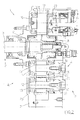
figure 1 is a frontal view of a power takeoff for motor vehicles according to the present invention; -
figure 2 shows the view according to section A-A offig. 1 , in enlarged scale; -
figures 3A ,3B show an enlarged detail of the previous figure, a flange, associated to a not shown actuator, being coupled to the two fast outlets of the power takeoff, respectively; -
figures 4A ,4B show an enlarged detail offigure 2 , in two cases wherein a disengaging assembly, associated to a not shown actuator means, is coupled to the two fast outlets of the power takeoff, respectively. - Referring to the appended drawings, the
reference number 1 generally indicates a power takeoff according to the invention, which, at its frontal side A is provided with aninlet 2 for receiving a portion of the mechanical power generated by the motor (not shown as not pertaining to the invention) of a motor vehicle, such as a lorry, for example by means of itstransmission shaft 3; while at the rear side P it is provided with a first and second "fast"outlet 4, 5 having a limited distance between axles, as well as athird outlet 6. - The
power takeoff 1 particularly comprises: acasing 7; agearwheel 8 keyed on a sleeve 9 engaging thetransmission shaft 3; afirst gearwheel 10 meshing with thegearwheel 8, keyed on afirst actuation shaft 11 arranged at the first outlet 4; asecond gearwheel 12 meshing in turn with thefirst gearwheel 10 and identical to this one, keyed on asecond actuation shaft 13 arranged at thesecond outlet 5; and athird gearwheel 14 meshing with thegearwheel 8, keyed on athird actuation shaft 15 arranged in turn at thethird outlet 6. - The gear ratio defined by the ratio between the angular speed of the first actuation shaft 11 (at the first outlet 4) and the angular speed of the driving shaft (at the inlet 2) and the gear ratio defined by the ratio between the angular speed of the second actuation shaft 13 (at the second outlet 5) and the angular speed of the driving shaft are the same and greater than one (for example between 1,1 and 2,1); while the gear ratio defined by the ratio between the angular speed of the third actuation shaft 15 (at the third outlet 6) and the angular speed of the driving shaft tends for example to one.
- On their respective free end (at the first and
second outlet 4, 5, respectively), the first and thesecond actuation shaft hole shaft spline shafts conical centering element conical centering element shaft spline power takeoff 1 to theflange 22 of a not shown actuator means (seefigures 3A ,3B ); therefore the centeringconical element flange 22 and the first orsecond actuation shaft - The
inventive power takeoff 1 is for example subjected to a pneumatic or mechanical control in a known way concerning its engaging and disengaging to and from the transmission shaft (not shown as previously stated). - The
reference number 26 indicates a support structure provided with adisengaging assembly 25, of known kind, which couples to the first orsecond actuation shaft second outlet 4, 5 of thepower takeoff 1 to provide the functional connection of the latter to an actuator means. Thesupport structure 26 is designed to removably couple to thecasing 7, for example by means ofscrews 27, in order to guarantee the stable coupling of thedisengaging assembly 25 to the first orsecond actuation shaft support structure 26 is moreover designed to close the unused fast outlet of the power takeoff 1 (seefigures 4A ,4B ). - The
support structure 26 has advantageously been designed to facilitate its uncoupling and coupling to thecasing 7, when it is needed to connect thedisengaging assembly 25 from the first to thesecond actuation shaft screws 27, to arrange the support structure 26-disengaging assembly 25 unit at the desired fast outlet, to rotate it of 180° degrees with respect to the axis of thesame disengaging assembly 25 and then to screw thescrews 27 inside the threadedseats 28 suitably provided in thecasing 7 to clamp the unit to thecasing 7. - According to what is claimed, the
support structure 26 and the disengagingassembly 25 form an interface for the functional connection of thepower takeoff 1 to an actuator means. -
Taper roller bearings 23 supporting the mechanical moving parts and the suitable spatial arrangement of the elements making up theinventive power takeoff 1 allow to significantly contain dimensions and to define a particularly limited distance between axles between the first andsecond outlet 4, 5, in addition to every resulting advantageous functional aspect; in this case, the reduced distance between axles and the presence of the fast outlets on the same side of the power takeoff help the operator (installer or user) to connect actuator means to one or the other of theseoutlets 4, 5, or, once the functional connection of an actuator means to for example the first fast outlet 4 has been provided, to modify such connection taking it on the secondfast outlet 5 and vice versa. - The
actuation shafts fast outlets 4, 5 are counter-rotating, are close to each other and accessible from the same rear side P; this is particularly advantageous because to the one or the other ofsuch shafts power takeoff 1 is mounted, it is possible to couple those actuator means which require a determined rotation direction of thesame actuation shaft figures 3A ,3B , it is in fact possible to easily couple theflange 22, for example constrained to the dragging shaft (not shown) of a compressor, to the first and thesecond actuation shaft second outlet 4, 5, according to the rotation direction that they take, once thepower takeoff 1 has been mounted on the gearbox of the motor vehicle. Thecover 24, shown in thefigures 3A ,3B , is from time to time removably fixed to thecasing 7 in order to close the unusedfast outlet 4, 5. - According to the preceding description, the advantage of the present invention is to provide a new power takeoff for motor vehicles, which brilliantly solves the disadvantages pertaining to the known solutions and which fully satisfies the prefixed objects; the presence of a slow outlet and of two fast outlets on the same rear side, these two outlets having counter-rotating shaft with limited distance between axles, allows to mount the inventive power takeoff on any motor-gearbox unit and to couple it also to actuator means, such compressors requiring a specific rotation direction of the shaft to be actuated; therefore, it is possible to satisfactorily meet any application need of the field, advantageously by means of a single power takeoff according to the invention.
- Another advantage of the present invention is to provide a limited dimensioned power takeoff for motor vehicles, even considering the presence of two fast outlets and of a slow one; the power takeoff being reliable, functional and such that it can be easily coupled to actuators also by means of ordinary means and by not skilled personnel, for example by the user too.
- Another advantage of the invention is to provide a power takeoff, whose costs are relatively contained with respect to the advantages attained.
- It is to be precised that alternatively the inventive power take off can be provided without the
third outlet 6, providing therefore only the twofast outlets 4,5. - Moreover, it is to be précised that the
first gearwheel 10 can also be different from thesecond gearwheel 12, whereby the gear ratio defined by the ratio between the angular speed of thefirst actuation shaft 11 and the angular speed of the driving shaft can be different from the gear ratio defined by the ratio between the angular speed of thesecond actuation shaft 13 and the angular speed of the driving shaft. - It is intended that the preceding description is purely exemplary and not limiting, therefore possible practical variations are intended to fall in the protective scope of the invention, as defined by the preceding description and by the following claims.
Claims (9)
- Power takeoff for motor vehicles comprising a shaft (3) at an inlet (2) for receiving at least a portion of the mechanical power generated by the driving shaft of a mentioned motor vehicle and at least an outlet (4, 5) for transmitting a respective torque to actuate an actuator means, characterized in that it comprises: a gearwheel (8) moved by said shaft (3), the gearwheel receiving said at least one portion of said mechanical power; a first gearwheel (10) rotationally dragged by said gearwheel (8) for transmitting a first actuation torque to a first actuation shaft (11) at a first outlet (4); a second gearwheel (12) rotationally dragged by said first gearwheel (10) for transmitting a second actuation torque to a second actuation shaft (13) at a second outlet (5), the gear ratio defined by the ratio between the angular speed of said first actuation shaft (11) and the angular speed of said driving shaft and the gear ratio defined by the ratio between the angular speed of said second actuation shaft (13) and the angular speed of said driving shaft being both greater than one, so as to define said first and second outlet (4, 5) as corresponding first fast outlet (4) and second fast outlet (5).
- Power takeoff according to claim 1, characterized in that said gear ratios defined by the ratio between the angular speed of said first actuation shaft (11) and the angular speed of said driving shaft and by the ratio between the angular speed of said second actuation shaft (13) and the angular speed of said driving shaft are between 1,1 and 2,1.
- Power takeoff according to claim 1 or 2, characterized in that said gear ratios defined by the ratio between the angular speed of said first actuation shaft (11) and the angular speed of said driving shaft and by the ratio between the angular speed of said second actuation shaft (13) and the angular speed of said driving shaft are the same.
- Power takeoff according to claim 1, characterized in that said inlet (2) is provided at a side (A) of said power takeoff (1), while said first and second outlets (4, 5) are both provided at the opposing side (P) of the same power takeoff (1).
- Power takeoff according to claim 1, characterized in that it comprises a third gearwheel (14) rotationally dragged by said gearwheel (8) for transmitting a third actuation torque to a third actuation shaft (15) at a third outlet (6), the gear ratio defined by the ratio between the angular speed of said third actuation shaft (15) and the angular speed of said driving shaft tending at the most to one.
- Power takeoff according to claim 1, characterized in that it comprises a third gearwheel (14) rotationally dragged by said gearwheel (8) for transmitting a third actuation torque to a third actuation shaft (15) arranged at a third outlet (6), the gear ratio defined by the angular speeds of said third actuation shaft (15) and inlet shaft (9) tending at the most to one, and in that said third outlet (6) is provided at a side (P) of said power takeoff (1), opposing to the side (A) in which said inlet (2) is provided.
- Power takeoff according to claim 1, characterized in that said first and second gearwheel (10, 12) are respectively keyed on said first and second actuation shafts (11, 13), and in that at the free end facing said respective outlet (4, 5), each said actuation shaft (11, 13) is provided with: an axial threaded hole (16, 17); many grooves (18, 19) extending in circumpherential direction and of determined longitudinal extension; and, internally to said grooves (18, 19), a conical centering profile (20, 21), in order to couple the same actuation shaft (11, 13) to a said actuator means by means of a threaded, grooved and conical coupling.
- Power takeoff according to claim 1, wherein an interface is provided for the functional connection of said first and second outlets (4, 5) to an actuator means, characterized in that said interface comprises: a disengaging assembly (25) which couples to said first or second actuation shaft (11, 13); and a support structure (26) which carries said disengaging assembly (25), the support structure being intended to removably couple to the casing (7) of said power takeoff (1) to stabilize the coupling of said disengaging assembly (25) to said first or second actuation shaft (11, 13).
- Power takeoff according to claim 8, characterized in that said support structure (26) is intended to removably couple to the casing (7) by means of screws (27).
Applications Claiming Priority (1)
| Application Number | Priority Date | Filing Date | Title |
|---|---|---|---|
| IT000498A ITBO20070498A1 (en) | 2007-07-19 | 2007-07-19 | POWER TANK FOR MOTOR VEHICLES |
Publications (1)
| Publication Number | Publication Date |
|---|---|
| EP2017115A1 true EP2017115A1 (en) | 2009-01-21 |
Family
ID=39951619
Family Applications (1)
| Application Number | Title | Priority Date | Filing Date |
|---|---|---|---|
| EP08160184A Withdrawn EP2017115A1 (en) | 2007-07-19 | 2008-07-11 | Power takeoff for motor vehicles |
Country Status (2)
| Country | Link |
|---|---|
| EP (1) | EP2017115A1 (en) |
| IT (1) | ITBO20070498A1 (en) |
Citations (8)
| Publication number | Priority date | Publication date | Assignee | Title |
|---|---|---|---|---|
| US1876561A (en) * | 1932-09-13 | brown | ||
| DE1053945B (en) * | 1958-03-24 | 1959-03-26 | August Bruecher | Gear drive for trailer vehicles and devices that can be driven by a power take-off shaft of a tractor |
| GB1070096A (en) * | 1965-03-03 | 1967-05-24 | Northrop Tractors Ltd | Improvements in or relating to four wheel drive vehicles |
| DE1655950A1 (en) * | 1968-02-10 | 1971-09-09 | Hermann Ziegler | Additional gear for tractor with PTO shaft |
| SU1294649A1 (en) * | 1985-05-30 | 1987-03-07 | Белорусский Политехнический Институт | Drive of vehicle power take-off shaft |
| DE3612418A1 (en) * | 1986-04-12 | 1987-10-15 | Kloeckner Humboldt Deutz Ag | PTO SHAFT FOR A TRACTOR |
| DE4244321A1 (en) * | 1992-12-28 | 1994-06-30 | Kloeckner Humboldt Deutz Ag | Tractor PTO with adjustable speeds |
| US6393944B1 (en) * | 2000-04-05 | 2002-05-28 | Omsi Trasmissioni S.P.A. | Intermediate total power takeoff for trucks and self-propelled machines for various operations |
-
2007
- 2007-07-19 IT IT000498A patent/ITBO20070498A1/en unknown
-
2008
- 2008-07-11 EP EP08160184A patent/EP2017115A1/en not_active Withdrawn
Patent Citations (8)
| Publication number | Priority date | Publication date | Assignee | Title |
|---|---|---|---|---|
| US1876561A (en) * | 1932-09-13 | brown | ||
| DE1053945B (en) * | 1958-03-24 | 1959-03-26 | August Bruecher | Gear drive for trailer vehicles and devices that can be driven by a power take-off shaft of a tractor |
| GB1070096A (en) * | 1965-03-03 | 1967-05-24 | Northrop Tractors Ltd | Improvements in or relating to four wheel drive vehicles |
| DE1655950A1 (en) * | 1968-02-10 | 1971-09-09 | Hermann Ziegler | Additional gear for tractor with PTO shaft |
| SU1294649A1 (en) * | 1985-05-30 | 1987-03-07 | Белорусский Политехнический Институт | Drive of vehicle power take-off shaft |
| DE3612418A1 (en) * | 1986-04-12 | 1987-10-15 | Kloeckner Humboldt Deutz Ag | PTO SHAFT FOR A TRACTOR |
| DE4244321A1 (en) * | 1992-12-28 | 1994-06-30 | Kloeckner Humboldt Deutz Ag | Tractor PTO with adjustable speeds |
| US6393944B1 (en) * | 2000-04-05 | 2002-05-28 | Omsi Trasmissioni S.P.A. | Intermediate total power takeoff for trucks and self-propelled machines for various operations |
Also Published As
| Publication number | Publication date |
|---|---|
| ITBO20070498A1 (en) | 2009-01-20 |
Similar Documents
| Publication | Publication Date | Title |
|---|---|---|
| US8028596B2 (en) | Transmission device having at least one shift element which can be actuated by means of an actuator arrangement which has at least one electrical component | |
| US9994102B2 (en) | Transmission having power take-off | |
| CN101239694A (en) | Winching device | |
| CN101396965A (en) | Automatic transmission incorporating power take off | |
| CN104976308B (en) | Speed changer with integrated transmission pump and accessory drive | |
| US20030196505A1 (en) | Multi-speed worm gear reduction assembly | |
| CN108223757A (en) | Bolt clamp device | |
| US20050099885A1 (en) | Drive mechanism for a rear engine power takeoff | |
| EP2699822B1 (en) | Gear box | |
| CN102632802A (en) | Double-drive device of vehicle compressor | |
| EP1878945B1 (en) | Transmission unit with stepped change of gear ratio | |
| CA1058911A (en) | Multiple power path concentric speed reducer | |
| US11261941B2 (en) | Shiftable transmission in rolling mill technology | |
| JPH08224768A (en) | Power transmission used for double screw extruder | |
| CN210218576U (en) | PTOs, Transmissions and Vehicles | |
| US6487923B1 (en) | Boat transmission | |
| EP3849835B1 (en) | A wheel hub drive system | |
| JP5871643B2 (en) | Series of linear actuators | |
| CN202746500U (en) | Simple, compact and easily-controlled power distribution box | |
| CN111439119A (en) | Coaxial two-gear planetary row electric drive axle for automobile | |
| EP2118518B1 (en) | Irreversible transmission device | |
| CN102900832A (en) | Double-power speed reducer | |
| CN213575368U (en) | Double-output rotating platform speed reducer | |
| EP2199139B1 (en) | A power take-off for compressors | |
| EP2458247B1 (en) | Basic gearbox and range gearbox for motor vehicle |
Legal Events
| Date | Code | Title | Description |
|---|---|---|---|
| PUAI | Public reference made under article 153(3) epc to a published international application that has entered the european phase |
Free format text: ORIGINAL CODE: 0009012 |
|
| AK | Designated contracting states |
Kind code of ref document: A1 Designated state(s): AT BE BG CH CY CZ DE DK EE ES FI FR GB GR HR HU IE IS IT LI LT LU LV MC MT NL NO PL PT RO SE SI SK TR |
|
| AX | Request for extension of the european patent |
Extension state: AL BA MK RS |
|
| 17P | Request for examination filed |
Effective date: 20090717 |
|
| 17Q | First examination report despatched |
Effective date: 20090814 |
|
| AKX | Designation fees paid |
Designated state(s): AT BE BG CH CY CZ DE DK EE ES FI FR GB GR HR HU IE IS IT LI LT LU LV MC MT NL NO PL PT RO SE SI SK TR |
|
| STAA | Information on the status of an ep patent application or granted ep patent |
Free format text: STATUS: THE APPLICATION IS DEEMED TO BE WITHDRAWN |
|
| 18D | Application deemed to be withdrawn |
Effective date: 20110930 |