EP2016796B1 - Systeme und verfahren zur ressourcenverwaltung während der übergabe in kommunikationssystemen mit verschiedenen stufen von dienstgütekenntnis - Google Patents
Systeme und verfahren zur ressourcenverwaltung während der übergabe in kommunikationssystemen mit verschiedenen stufen von dienstgütekenntnis Download PDFInfo
- Publication number
- EP2016796B1 EP2016796B1 EP07759304.4A EP07759304A EP2016796B1 EP 2016796 B1 EP2016796 B1 EP 2016796B1 EP 07759304 A EP07759304 A EP 07759304A EP 2016796 B1 EP2016796 B1 EP 2016796B1
- Authority
- EP
- European Patent Office
- Prior art keywords
- qos
- access terminal
- resources
- aware system
- allocated
- Prior art date
- Legal status (The legal status is an assumption and is not a legal conclusion. Google has not performed a legal analysis and makes no representation as to the accuracy of the status listed.)
- Not-in-force
Links
Images






Classifications
-
- H—ELECTRICITY
- H04—ELECTRIC COMMUNICATION TECHNIQUE
- H04W—WIRELESS COMMUNICATION NETWORKS
- H04W28/00—Network traffic management; Network resource management
- H04W28/16—Central resource management; Negotiation of resources or communication parameters, e.g. negotiating bandwidth or QoS [Quality of Service]
- H04W28/24—Negotiating SLA [Service Level Agreement]; Negotiating QoS [Quality of Service]
-
- H—ELECTRICITY
- H04—ELECTRIC COMMUNICATION TECHNIQUE
- H04W—WIRELESS COMMUNICATION NETWORKS
- H04W28/00—Network traffic management; Network resource management
- H04W28/02—Traffic management, e.g. flow control or congestion control
- H04W28/0231—Traffic management, e.g. flow control or congestion control based on communication conditions
- H04W28/0236—Traffic management, e.g. flow control or congestion control based on communication conditions radio quality, e.g. interference, losses or delay
-
- H—ELECTRICITY
- H04—ELECTRIC COMMUNICATION TECHNIQUE
- H04W—WIRELESS COMMUNICATION NETWORKS
- H04W36/00—Hand-off or reselection arrangements
- H04W36/0005—Control or signalling for completing the hand-off
- H04W36/0011—Control or signalling for completing the hand-off for data sessions of end-to-end connection
-
- H—ELECTRICITY
- H04—ELECTRIC COMMUNICATION TECHNIQUE
- H04W—WIRELESS COMMUNICATION NETWORKS
- H04W36/00—Hand-off or reselection arrangements
- H04W36/14—Reselecting a network or an air interface
- H04W36/144—Reselecting a network or an air interface over a different radio air interface technology
-
- H—ELECTRICITY
- H04—ELECTRIC COMMUNICATION TECHNIQUE
- H04W—WIRELESS COMMUNICATION NETWORKS
- H04W72/00—Local resource management
- H04W72/50—Allocation or scheduling criteria for wireless resources
- H04W72/54—Allocation or scheduling criteria for wireless resources based on quality criteria
-
- H—ELECTRICITY
- H04—ELECTRIC COMMUNICATION TECHNIQUE
- H04W—WIRELESS COMMUNICATION NETWORKS
- H04W76/00—Connection management
- H04W76/20—Manipulation of established connections
- H04W76/22—Manipulation of transport tunnels
Definitions
- the present disclosure relates generally to wireless communication systems. More specifically, the present disclosure relates to systems and methods for managing resources during handoff across communication systems having different grades of quality of service awareness.
- Wireless communication systems are widely deployed to provide various communication services to wireless communication devices.
- a wireless communication device that receives services from a wireless communication system is sometimes referred to as an access terminal.
- Some examples of access terminals include cellular phones, wireless phones, laptop computers, wireless communication personal computer (PC) cards, personal digital assistants (PDAs), etc.
- a wireless communication system is typically configured for electronic communication with an access terminal within a certain geographic area, which may be referred to as a coverage area of the wireless communication system.
- a coverage area of the wireless communication system When the access terminal is located within the coverage area that is provided by a wireless communication system, a radio session may be established between the access terminal and the wireless communication system.
- the access terminal While a radio session is ongoing between an access terminal and a wireless communication system, the access terminal may move outside of the coverage area that is provided by that wireless communication system (the source system) and into the coverage area that is provided by another wireless communication system (the target system). When this occurs, the radio session that exists between the access terminal and the source system may be transferred to the target system. This process may be referred to as "handoff.”
- An access terminal may be utilized to obtain various communication services. Each service may be satisfactorily provided to the user by ensuring that a specified quality of service (QoS) is achieved for that service.
- QoS may be directed to bandwidth of the traffic channel, the scheduling of packet data, the scheduling of transmission packets over-the-air, delay sensitivity of the contents, or other factors that may be deemed relevant by a network carrier or service provider.
- QoS may be quantified by different parameters for different services. For example, a voice service may require a relatively stringent low delay and a certain minimum guaranteed data rate, whereas a packet data service may require a certain target packet error rate.
- a wireless communication system that is capable of providing services at a specified QoS may be referred to as a QoS aware system.
- Different QoS aware communication systems may have different levels of support for QoS.
- a wireless communication system that is not capable of providing services at a specified QoS may be referred to as a QoS unaware system.
- the present disclosure relates to techniques for managing QoS resources when handoff occurs across communication systems having different grades of quality of service awareness (e.g., from a QoS aware system to/from a QoS unaware system, between two QoS aware systems having different levels of support for QoS, etc.).
- US 2004/0228304 A1 discloses a method of QoS-aware handover procedure for dynamic mobile ad hoc network scenarios.
- the flow traffic is redirected to the path having the best available QoS capabilities.
- the QoS-aware handover procedure comprises the steps of handover candidates selection, handover initiation, QoS metrics probing and resource pre-allocation (soft reservation), QoS metrics collection, handover decision, handover confirmation (hard reservation), and reservation release.
- US 2001/27490 A1 discloses a solution for resource reservation protocol (RSVP) support and interworking in a 3GPP UMTS QoS architecture to provide end-to-end quality of service (QoS).
- End-to-end QoS may be accomplished by mapping corresponding parameters between the IP protocol and the radio network protocols in order to achieve the desired delay and bandwidth requirements.
- Various events in the state machines of the protocols may also be used to trigger interworking functions.
- the 3GPP UMTS QoS architecture makes use of traffic flow templates (TFTs).
- TFT is a packet filter or a set of filters that associates packets to the correct PDP context, ensuring that packets are forwarded in the appropriate GPRS tunneling protocol (GTP) tunnel.
- GTP GPRS tunneling protocol
- a method for managing quality of service (QoS) resources during handoff across communication systems having different grades of QoS awareness is disclosed.
- the method may be implemented by an access terminal.
- the method determines whether there are any allocated, unrequested QoS resources that are allocated to an application on the access terminal by a QoS aware system but that are not requested by the application. If one or more allocated, unrequested QoS resources are identified, the method requests that the QoS aware system release the one or more allocated, unrequested QoS resources.
- the method also determines whether there are any requested, unallocated QoS resources that are requested by the application but that are not allocated by the QoS aware system. If one or more requested, unallocated QoS resources are identified, the method requests that the QoS aware system allocate the one or more requested, unallocated QoS resources to the application.
- identifying the allocated, unrequested QoS resources and identifying the requested, unallocated QoS resources comprise comparing requested QoS resources information with allocated QoS resources information.
- the requested QoS resources information identifies requested QoS resources that are requested by an application on the access terminal.
- the allocated QoS resources information identifies allocated QoS resources that are allocated for the application.
- the requested QoS resources information and the allocated QoS resources information may be stored at the access terminal.
- Requested QoS resources information may be updated in response to determining that the application has released requested QoS resources.
- Allocated QoS resources information may be updated in response to determining that the QoS aware system has released allocated QoS resources.
- requesting that the QoS aware system release the one or more allocated, unrequested QoS resources involves sending a traffic filter template (TFT) delete message to a packet data serving node in the QoS aware system.
- TFT refers to filter settings at the packet data serving node (PDSN).
- the filter settings include source/target IP address and port number and could also be based on DiffServ markings also.
- the IP packets arriving at the PDSN are filtered based on the priority ordered listing of the forward link (FL) filters in the TFT and the packets forwarded over the associated A10 connections to the radio access network (RAN).
- the A10 connection is associated with a radio link protocol (RLP) instance which gets the appropriate QoS treatment for over the air transmission to the mobile.
- RLP radio link protocol
- the reverse link (RL) filters can be used change the DiffServ marking of the packets before they are sent over the Internet and may be used for billing purposes, e.g., measuring bytes sent, etc.
- Requesting that the QoS aware system allocate the one or more requested, unallocated QoS resources may involve sending a TFT create message to a packet data serving node in the QoS aware system.
- the TFT create message is sent to the packet data serving node only if it is determined that a point-to-point protocol (PPP) re-sync has not occurred since the access terminal was previously connected to any QoS aware system.
- PPP point-to-point protocol
- the application may be notified that QoS operations may be resumed.
- all QoS flows may be suspended.
- the access terminal that is configured for managing quality of service (QoS) resources during handoff across communication systems having different grades of QoS awareness is also disclosed.
- the access terminal includes a transmitter for communicating with a QoS aware system and a QoS unaware system.
- the access terminal also includes a processor and memory in electronic communication with the processor. Instructions are stored in the memory. The instructions are executable to determine whether there are any allocated, unrequested QoS resources that are allocated to an application on the access terminal by the QoS aware system but that are not requested by the application. If one or more allocated, unrequested QoS resources are identified, the instructions are also executable to request that the QoS aware system release the one or more allocated, unrequested QoS resources.
- QoS quality of service
- the instructions are also executable to determine whether there are any requested, unallocated QoS resources that are requested by the application but that are not allocated by the QoS aware system. If one or more requested, unallocated QoS resources are identified, the instructions are also executable to request that the QoS aware system allocate the one or more requested, unallocated QoS resources to the application.
- a quality of service (QoS) aware system that is configured to facilitate management of QoS resources by an access terminal during handoff across communication systems having different grades of QoS awareness is also disclosed.
- the QoS aware system includes a transmitter for communicating with an access terminal.
- the QoS aware system also includes a processor and memory in electronic communication with the processor. Instructions are stored in the memory. The instructions are executable to receive a release request from the access terminal to release allocated, unrequested QoS resources that are allocated by the QoS aware system for an application on the access terminal but that are not requested by the application.
- the release request is sent by the access terminal in response to handoff occurring from a QoS unaware system to the QoS aware system.
- the instructions are also executable to release the allocated, unrequested QoS resources in response to receiving the release request.
- the instructions are also executable to receive an allocation request from the access terminal to allocate requested, unallocated QoS resources that are requested by the application on the access terminal but that are not allocated by the QoS aware system.
- the allocation request is sent by the access terminal in response to handoff occurring from the QoS unaware system to the QoS aware system.
- the instructions are also executable to allocate the requested, unallocated QoS resources to the application in response to receiving the allocation request.
- Such software may include any type of computer instruction or computer executable code located within a memory device and/or transmitted as electronic signals over a system bus or network.
- Software that implements the functionality associated with components described herein may comprise a single instruction, or many instructions, and may be distributed over several different code segments, among different programs, and across several memory devices.
- an embodiment means “one or more (but not necessarily all) embodiments of the disclosed disclosure(s),” unless expressly specified otherwise.
- determining (and grammatical variants thereof) is used in an extremely broad sense.
- the term “determining” encompasses a wide variety of actions and therefore “determining” can include calculating, computing, processing, deriving, investigating, looking up (e.g., looking up in a table, a database or another data structure), ascertaining and the like.
- determining can include receiving (e.g., receiving information), accessing (e.g., accessing data in a memory) and the like.
- determining can include resolving, selecting, choosing, establishing, and the like.
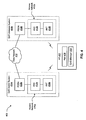
- FIG. 1 illustrates a system 100 in which embodiments may be practiced.
- the system 100 includes an access terminal 102.
- the access terminal 102 may be a cellular phone, a wireless phone, a wired phone, a laptop computer, a wireless communication personal computer (PC) card, a personal digital assistant (PDA), an external or internal modem, etc.
- Other names for the access terminal 102 include an access unit, a subscriber unit, a mobile station, a mobile device, a mobile unit, a mobile phone, a remote station, a remote terminal, a remote unit, a user device, user equipment, a handheld device, etc.
- a radio session may be established between the access terminal 102 and the QoS aware system 104a.
- the access terminal 102 may move outside of the coverage area that is provided by the QoS aware system 104a and into the coverage area that is provided by a QoS unaware system 104b.
- the radio session that exists between the access terminal 102 and the QoS aware system 104a may be transferred to the QoS unaware system 104b.
- this process may be referred to as handoff from the QoS aware system 104a to the QoS unaware system 104b. Handoff may also occur from the QoS unaware system 104b to the QoS aware system 104a.
- Embodiments disclosed herein relate generally to managing QoS resources when handoff occurs across QoS aware and QoS unaware communication systems.
- One aspect of managing QoS resources relates to facilitating the release of QoS resources that have been allocated by a QoS aware system 104a while the access terminal 102 is receiving service from a QoS unaware system 104b.
- an application 106 on the access terminal 102 may request certain QoS resources from the QoS aware system 104a, and the QoS aware system 104a may allocate the requested QoS resources to the application 106.
- handoff of the radio session may occur from the QoS aware system 104a to the QoS unaware system 104b. While the access terminal 102 is receiving service from the QoS unaware system 104b, it may be desirable for the application 106 to be able to release all of the QoS resources that have been allocated to it by the QoS aware system 104a.
- Figure 2 illustrates a method 200 for facilitating release of QoS resources while receiving service from a QoS unaware system 104b in accordance with an embodiment.
- the method 200 may be implemented by the various components in the system 100 shown in Figure 1 .
- the application 106 requests 202 one or more QoS resources from the QoS aware system 104a.
- the resources that are requested by the application 106 will be referred to as requested QoS resources.
- the QoS aware system 104a allocates 204 the requested QoS resources to the application 106.
- the resources that are allocated by the QoS aware system 104a will be referred to as allocated QoS resources.
- a QoS management component 108 on the access terminal 102 (which may be referred to simply as a QoS manager 108) stores 206 information at the access terminal 102 which identifies the requested QoS resources (i.e., the QoS resources that are requested by the application 106). This information will be referred to as requested QoS resources information.
- the QoS manager 108 also stores 208 information at the access terminal 102 which identifies the allocated QoS resources (i.e., the QoS resources that are allocated by the QoS aware system 104a). This information will be referred to as allocated QoS resources information.
- handoff occurs 210 from the QoS aware system 104a to the QoS unaware system 104b.
- the application 106 may release (i.e., stop requesting) some or all of the requested QoS resources.
- the application 106 may release requested QoS resources in response to the user of the access terminal 102 shutting down the application 106. If the application 106 does release 212 the requested QoS resources, the QoS manager 108 updates 214 the requested QoS resources information at the access terminal 102 to reflect the fact that the requested QoS resources have been released by the application 106.
- the QoS aware system 104a may not release the allocated QoS resources even though the application 106 has released the requested QoS resources.
- handoff may occur 216 from the QoS unaware system 104b back to the QoS aware system 104a (or, alternatively, to a different QoS aware system).
- the QoS manager 108 compares the requested QoS resources information that is stored at the access terminal 102 with the allocated QoS resources information that is stored at the access terminal 102. As a result of making this comparison, the QoS manager 108 identifies 218 QoS resources that are allocated by the QoS aware system 104a but that are not requested by the application 106 (because they were previously released by the application 106 when the access terminal 102 was receiving service from the QoS unaware system 104b).
- QoS resources will be referred to as allocated, unrequested QoS resources.
- the QoS manager 108 requests 220 that the QoS aware system 104a release the allocated, unrequested QoS resources.
- the QoS aware system 104a releases 222 the allocated, unrequested QoS resources.
- Another aspect of managing QoS resources relates to automatic restoration of QoS resources when handoff occurs from a QoS unaware system 104b to a QoS aware system 104a.
- the QoS aware system 104a may release some or all of the allocated QoS resources (i.e., QoS resources that have been allocated to the application 106).
- handoff may occur from the QoS unaware system 104b back to the QoS aware system 104a (or, alternatively, to a different QoS aware system).
- Figure 3 illustrates a method 300 for facilitating automatic restoration of QoS resources in accordance with an embodiment.
- the method 300 may be implemented by the various components in the system 100 shown in Figure 1 .
- Some of the steps 302, 304, 306, 308 in the method 300 of Figure 3 are similar to some of the steps 202, 204, 206, 208 in the method 200 of Figure 2 .
- the application 106 requests 302 one or more QoS resources from the QoS aware system 104a.
- the resources that are requested by the application 106 will be referred to as requested QoS resources.
- the QoS aware system 104a allocates 304 the requested QoS resources to the application 106.
- the resources that are allocated by the QoS aware system 104a will be referred to as allocated QoS resources.
- the QoS manager 108 stores 306 information at the access terminal 102 which identifies the requested QoS resources (i.e., the QoS resources that are requested by the application 106). This information will be referred to as requested QoS resources information.
- the QoS manager 108 also stores 308 information at the access terminal 102 which identifies the allocated QoS resources (i.e., the QoS resources that are allocated by the QoS aware system 104a). This information will be referred to as allocated QoS resources information.
- handoff occurs 310 from the QoS aware system 104a to the QoS unaware system 104b.
- the QoS aware system 104a may release (i.e., stop allocating) the allocated QoS resources. If the QoS aware system 104a does release 312 the allocated QoS resources, the QoS manager 108 updates 314 the allocated QoS resources information at the access terminal 102 to reflect the fact that the allocated QoS resources have been released by the QoS aware system 104a.
- handoff may occur 316 from the QoS unaware system 104b back to the QoS aware system 104a (or, alternatively, to a different QoS aware system).
- the QoS manager 108 compares the requested QoS resources information that is stored at the access terminal 102 with the allocated QoS resources information that is stored at the access terminal 102. As a result of making this comparison, the QoS manager 108 identifies 318 QoS resources that are requested by the application 106 but that are not allocated by the QoS aware system 104a. These QoS resources will be referred to as requested, unallocated QoS resources.
- the QoS manager 108 In response to identifying 318 requested, unallocated QoS resources, the QoS manager 108 requests 320 that the QoS aware system 104a allocate the requested, unallocated QoS resources to the application 106. In response to receiving such a request from the QoS manager 108, the QoS aware system 104a allocates 322 the requested, unallocated QoS resources to the application 106.
- the methods 200, 300 may be implemented by a QoS manager 108, which may be separate from the application 106. Consequently, the application 106 is shielded from the details of allocating/releasing QoS resources when moving across QoS aware and QoS unaware systems 104a, 104b.
- FIG. 4 illustrates another system 400 in which embodiments may be practiced.
- the system 400 includes an access terminal 402.
- An application 406 is running on the access terminal 402.
- a QoS manager 408 is running on the access terminal 402.
- a radio session may be established between the access terminal 402 and the QoS aware system 404a.
- Handoff may occur from the QoS aware system 404a to a QoS unaware system 404b. Handoff may also occur from the QoS unaware system 404b to the QoS aware system 404a.
- the QoS aware system 404a includes an access network 410a, which includes an access network controller 412a and an access network transceiver 414a.
- the access network controller 412a interfaces with a data network 416 (e.g., a packet data network) via a packet data serving node (PDSN) 418a.
- the access network controller 412a may be configured to route data packets between the access terminal 402 and the data network 416.
- the access network controller 412a may be configured to perform various radio access and link maintenance functions (such as handoff), control radio transmitters and receivers (e.g., the access network transceiver 414a), and so on.
- the access network controller 412a may alternatively be referred to as a base station controller.
- the access network transceiver 414a may alternatively be referred to as a base-station transceiver system, an access point, a modem pool transceiver, a Node B (e.g., in a W-CDMA type system), etc.
- the QoS unaware system 404b also includes an access network 410b, which includes an access network controller 412b and an access network transceiver 414b.
- the access network controller 412b interfaces with the data network 416 via a PDSN 418b.
- These components 410b, 412b, 414b, 418b function similarly to the corresponding components 410a, 412a, 414a, 418a in the QoS aware system 404a.
- a QoS configuration for the QoS aware system 404a shown in Figure 4 may consist of two entities: air link QoS and filter specifications.
- the air link QoS refers to a link between the access terminal 402 and the access network transceiver 414a. It is a last hop or last mile of end-to-end communication. However, the air link QoS only commits physical resources for incoming data. It does not tag which data has what kind of QoS requirements. This tagging of data is achieved through filter specifications.
- the filter specifications at the PDSN 418a are used to tag the incoming data traffic with appropriate QoS treatment characteristics. Hence, when a stream of data arrives at the PDSN 418a, it is tagged with appropriate QoS guarantees.
- This tagging happens by mapping the stream of data onto one of the established A10/A11 links between the PDSN 418a and the access network 410a.
- the stream of data is then sent to the access network transceiver 414a by queuing it on an appropriate radio link protocol (RLP) instance.
- RLP radio link protocol
- Other RLP instances are associated with QoS profiles (i.e., appropriate QoS treatment characteristics negotiated between the access terminal 402 and the access network 410a).
- the access terminal 402 moves from the QoS aware system 404a to the QoS unaware system 404b, there are two possible scenarios.
- the PPP link between the access terminal 402 and the PDSN 418 is re-synced (i.e. reestablished). This may happen if the two serving PDSNs 418a, 418b are different (as shown in Figure 4 ).
- the PDSN 418 would delete all filter specifications. If the PDSN 418 deletes these filter specifications, one of the links for guaranteeing QoS treatment is deleted.
- the access terminal 402 moves back to the QoS aware system 404a, it re-installs these filters to provide seamless privileged connectivity to the end-users.
- this may be achieved by maintaining the view of the PDSN's 418 state across the QoS aware and QoS unaware systems 404a, 404b and taking appropriate action by looking at the disparity between the user's QoS request, the PDSN's 418 state, and the current capabilities of the cellular network.
- the PPP link between the access terminal 402 and the PDSN 418 is not re-synced. This may happen if the same PDSN 418 serves the access network transceiver 414a in the QoS aware system 404a and the access network transceiver 414b in the QoS aware system 404b (this is not the case in Figure 4 ).
- the QoS resources at the access network 410a are, among other things, mapping from flow labels to QoS profiles.
- the QoS resources at the PDSN 418a are filter specifications and mapping between these filters to the A10/A11 physical links.
- Figure 5 illustrates another method 500 for managing quality of service (QoS) resources across QoS aware and QoS unaware communication systems in accordance with an embodiment.
- the method 500 may be implemented by the QoS manager 408 on the access terminal 402 in the system 400 that is shown in Figure 4 .
- handoff may occur from the QoS aware system 404a to the QoS unaware system 404b.
- the QoS manager 408 determines 502 that handoff has occurred from the QoS aware system 404a to the QoS unaware system 404b, the QoS manager 408 suspends 504 all QoS flows (reservations) and notifies 506 the application 406 that the QoS flows are suspended.
- the QoS manager 408 does not allow the application 406 to perform any QoS related operations (except to release the QoS) while receiving service from the QoS unaware system 404b.
- the QoS manager 408 may reject QoS requests and expect the application 408 to retry when the access terminal 402 is in a QoS aware system 404a.
- the QoS manager 408 may archive QoS requests from the application 408 and place the QoS requests when the access terminal 402 enters a QoS aware system 404a.
- handoff may occur from the QoS unaware system 404b to the QoS aware system 404a.
- the QoS manager 408 determines 508 that handoff has occurred from the QoS unaware system 404b to the QoS aware system 404a, the QoS manager 408 notifies 510 the application 406 that QoS operations may be resumed.
- the QoS manager 408 also sends 512 a TFT delete message to the PDSN 418a in the QoS aware system 404a.
- the TFT delete message contains flows for which QoS was released while the access terminal 402 was receiving service from the QoS unaware system 404b.
- the QoS manager 408 also determines 514 whether a PPP re-sync has occurred since the access terminal 402 was previously connected to any QoS aware system (either the QoS aware system 404a that is involved in the handoff or a different QoS aware system). If the QoS manager 408 determines 514 that a PPP re-sync has occurred, this means that there are no filter specifications installed at the PDSN 418a for the valid flows for which QoS is still established. Consequently, the QoS manager 408 sends 516 a TFT create message to the PDSN 418a in the QoS aware system 404a. The TFT create message contains all the valid flows for which QoS is still established.
- the QoS manager 408 determines 514 that a PPP re-sync has not occurred, then it is not necessary for the filter specifications to be re-installed at the PDSN 418a. Consequently, the QoS manager 408 does not send a TFT create message to the PDSN 418a in the QoS aware system 404a. Instead, it is simply assumed that the PDSN 418a will automatically start filtering packets based on the filter specifications that are already installed at the PDSN 418a.
- the method 500 of Figure 5 illustrates how some aspects of the methods 200, 300 that are shown in Figures 2-3 may be implemented.
- the QoS manager 108 in response to identifying 218 allocated, unrequested QoS resources, requests 220 that the QoS aware system 104a release the allocated, unrequested QoS resources.
- the step of requesting 220 that the QoS aware system 104a release the allocated, unrequested QoS resources is implemented in the method 500 of Figure 5 by sending 512 a TFT delete message to the PDSN 418a in the QoS aware system 104a.
- the TFT delete message contains flows for which QoS was released while the access terminal 402 was receiving service from the QoS unaware system 404b.
- the QoS manager 108 in response to identifying 318 requested, unallocated QoS resources, requests 320 that the QoS aware system 104a allocate the requested, unallocated QoS resources to the application 106.
- the step of requesting 320 that the QoS aware system 104a allocate the requested, unallocated QoS resources to the application 106 is implemented in the method 500 of Figure 5 by sending 516 a TFT create message to the PDSN 418a in the QoS aware system 404a.
- the TFT create message contains all the valid flows for which QoS is still established.
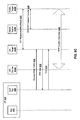
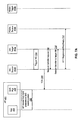
- Figures 6A-6C illustrate operation of the access terminal 402 (including the application 406 and the QoS manager 408), the access network 410a and the PDSN 418a in the QoS aware system 404a, and the access network 410b and the PDSN 418b in the QoS unaware system 404b during handoff from the QoS aware system 404a to the QoS unaware system 404b in accordance with an embodiment.
- the access network 410a in the QoS aware system 404a (the source access network 410a) and the access network 410b in the QoS unaware system 404b (the target access network 410b) trigger 604 a handoff.
- the access terminal 402 sends 608 the AttributeUpdateAccept.
- the source access network 410a closes 610 the connection by sending ConnectionClose to the QoS manager 408.
- the source access network 410a also bundles the TrafficChannelAssignment message allocating the traffic channels in the target access network 410b.
- the QoS manager 408 sends 612 ConnectionClose to the source access network 410a and proceeds to acquire the target access network 410b.
- both the source access network 410a and the access terminal 402 put 614a, 614b the reservations in a closed state as the personality change occurs on a connection release. Note that for the source access network 410a, it is only a recommendation so that the states at the access terminal 402 and the source access network 410a remain consistent as the access terminal 402 moves from the QoS aware system 404a to the QoS unaware system 404b.
- the QoS unaware notification is provided 616 to the application 406 by the QoS manager 406.
- the suspend notification is provided 618 to the application 406 by the QoS manager 406 for reservations to be transitioned to the closed state. Note that calling the QoS flow activation request after this will return an error.
- the target access network 410b requests 620 the transfer of the session from the source access network 410a.
- the source access network 410a provides 622 the access terminal's 402 session information to the target access network 410b.
- the source access network 410a releases 624 the A10 connection from the source PDSN 418a.
- the target access network 410b establishes 626 the A10 connection with the target PDSN 418b. If the PPP/TFT/Filter context can be transferred, the source PDSN 418a performs 628 this context transfer to the target PDSN 418b.
- the access terminal 402 transmits 630 the pilot and DRC over the reverse link. Note that steps 620, 622, 624, 626, 628, 630 may happen in parallel with step 610.
- the target access network 410b acquires the access terminal 402 and transmits 632 the RTC Ack.
- the access terminal 402 sends 634 the TrafficChannelComplete completing the connection setup with the target access network 410b. If the PPP context cannot be transferred, the PPP re-sync is initiated 636 by the target PDSN 418b. In the depicted method the access terminal 402 does not create a TFT or install any filters at the target PDSN 418b in response to the PPP re-sync, since the target system 404b is not capable of providing a different QoS for different flows.
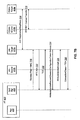
- Figures 7A-7D illustrate operation of the access terminal 402 (including the application 406 and the QoS manager 408), the access network 410b and the PDSN 418b in the QoS unaware system 404b, and the access network 410a and the PDSN 418a in the QoS aware system 404a during handoff from the QoS unaware system 404b to the QoS aware system 404a in accordance with an embodiment.
- the access terminal 402 moves 702 from the QoS unaware system 404b to the QoS aware system 404a
- the access network 410b in the QoS unaware system 404b (the source access network 410b)
- the access network 410a in the QoS aware system 404a (the target access network 410a) trigger 704 a handoff.
- the source access network 410b sends 706 the TrafficChannelAssignment to the access terminal 402.
- the access terminal 402 is transferred to the target access network 410a with the current personality.
- the target access network 410a requests 708 transfer of the session from the source access network 410b.
- the source access network 410b provides 710 the access terminal's 402 session information to the target access network 410a.
- the source access network 410b releases 712 the A10 connection from the source PDSN 418b.
- the target access network 410a establishes 714 the A10 connection with the target PDSN 418a.
- the PPP/TFT/Filter context is acquired 716 at the target PDSN 418a.
- the access terminal 402 transmits 718 the pilot and DRC over the reverse link.
- the target access network 410a acquires the reverse link and transmits 720 the RTC Ack. Note that the access terminal 402 is still operating with the Rev 0 personality.
- the access terminal 402 sends 722 the TrafficChannelComplete completing the connection setup with the target access network 410a.
- the target access network 410a sends 724 the AttributeUpdateRequest switching the session configuration token to 0x1xxx.
- the access terminal 402 sends 726 the AttributeUpdateAccept.
- the target access network 410a sends 728 a ConnectionClose and a TrafficChannelAssignment to facilitate switching of personalities.
- both the access terminal 402 and the target access network 410a restore 730a, 730b the reservations to the state they were when the access terminal 402 last transitioned out of the QoS aware system 404a. Note that all the reservations are put in the closed state when the access terminal 402 transitions out of the QoS aware system 404a.
- a QoS aware notification is provided 732 to the application 406 by the QoS manager 408.
- the access terminal 402 transmits 734 the pilot and DRC over the reverse link.
- the access terminal 402 is now in a Rev-A personality.
- the target access network 410a acquires the reverse link and transmits 736 the RTC Ack.
- the access terminal 402 sends 738 the TrafficChannelComplete completing the connection setup with the target access network 410a.
- the PPP re-sync if required, is initiated 740 by the target PDSN 418a. If QoS applications were closed while in the QoS unaware system 404b, the QoS manager 408 releases 742 these reservations after it re-enters the QoS aware system 404a. The QoS manager 408 retains the information and releases the QoS profiles after entering the QoS aware system 404a.
- the access terminal 402 determines if a PPP re-sync had occurred while on the QoS unaware system 404b. If a PPP re-sync had occurred, the access terminal 402 creates 744 the TFT and updates the filters at the target PDSN 418a.
- the access terminal 402 does not need to re-install filters at the target PDSN 418a, and will not send a TFT create message. It is assumed that the target PDSN 418a will automatically start filtering packets based on an existing TFT after the handoff back to the QoS aware system 404a.
- the access terminal 402 deletes any flows for which QoS has been released while on the QoS unaware system 404b.
- the access terminal 402 sends a TFT create message including only the filters to be retained.
- the access terminal 402 may maintain the context of the QoS and suspend the information while in a QoS unaware system 404b.
- the access terminal 402 may reactivate the context when the access terminal 402 reenters a QoS aware system 404a.
- the transition to 1x may be treated as a transition to a QoS unaware region.
- QoS awareness may be provided, each depending on the type of QoS support provided. Each of these may be addressed through independent access terminal 402 personalities.
- the QoS capability at the access terminal 402 may depend on the current personality that the access network 410 activates.
- the appropriate notifications (QoS aware to the right applications 406, allowing the reservations to be turned on for those applications 406) may be provided to the applications 406.
- one benefit may be instantaneous restoration of service since message exchange is avoided in common scenarios.
- Another benefit may be that applications 406 are unaware about all the messaging, and are therefore provided with seamless access to QoS resources.
- Another benefit may be that the air interface messaging may be optimized since under some circumstances the sending of potentially large TFTs to the PDSN 418 may be avoided.
- Another benefit may be that interruption of service is minimized unless on an unaware radio access network (RAN).
- RAN radio access network
- Another benefit may be that a PDSN 418 may be shared across QoS aware/unaware RANs.
- FIG 8 illustrates various components that may be utilized in an access terminal 802 in accordance with an embodiment.
- the access terminal 802 includes a processor 803 which controls operation of the access terminal 802.
- the processor 803 may also be referred to as a CPU.
- Memory 804 which may include both read-only memory (ROM) and random access memory (RAM), provides instructions and data to the processor 803.
- a portion of the memory 804 may also include non-volatile random access memory (NVRAM).
- NVRAM non-volatile random access memory
- the access terminal 802 may also include a housing 807 that contains a transmitter 808 and a receiver 810 to allow transmission and reception of data between the access terminal 802 and a remote location.
- the transmitter 808 and receiver 810 may be combined into a transceiver 812.
- An antenna 814 is attached to the housing 807 and electrically coupled to the transceiver 812.
- the access terminal 802 also includes a signal detector 816 used to detect and quantify the level of signals received by the transceiver 812.
- the signal detector 816 detects such signals as total energy, pilot energy per pseudonoise (PN) chips, power spectral density, and other signals, as is known in the art.
- PN pseudonoise
- a state changer 826 of the access terminal 802 controls the state of the access terminal 802 based on a current state and additional signals received by the transceiver 812 and detected by the signal detector 816.
- the access terminal 802 is capable of operating in any one of a number of states.
- the access terminal 802 also includes a system determinator 828 used to control the access terminal 802 and determine which service provider system the access terminal 802 should transfer to when it determines the current service provider system is inadequate.
- the various components of the access terminal 802 are coupled together by a bus system 830 which may include a power bus, a control signal bus, and a status signal bus in addition to a data bus. However, for the sake of clarity, the various busses are illustrated in Figure 8 as the bus system 830.
- the access terminal 802 may also include a digital signal processor (DSP) 809 for use in processing signals.
- DSP digital signal processor
- Information and signals may be represented using any of a variety of different technologies and techniques.
- data, instructions, commands, information, signals, bits, symbols, and chips that may be referenced throughout the above description may be represented by voltages, currents, electromagnetic waves, magnetic fields or particles, optical fields or particles, or any combination thereof.
- DSP digital signal processor
- ASIC application specific integrated circuit
- FPGA field programmable gate array signal
- a general purpose processor may be a microprocessor, but in the alternative, the processor may be any conventional processor, controller, microcontroller, or state machine.
- a processor may also be implemented as a combination of computing
- a software module may reside in RAM memory, flash memory, ROM memory, EPROM memory, EEPROM memory, registers, hard disk, a removable disk, a CD-ROM, or any other form of storage medium known in the art.
- a storage medium is coupled to the processor such that the processor can read information from, and write information to, the storage medium.
- the storage medium may be integral to the processor.
- the processor and the storage medium may reside in an ASIC.
- the ASIC may reside in a user terminal.
- the processor and the storage medium may reside as discrete components in a user terminal.
- the methods disclosed herein comprise one or more steps or actions for achieving the described method.
- the method steps and/or actions may be interchanged with one another without departing from the scope of the present disclosure.
- the order and/or use of specific steps and/or actions may be modified without departing from the scope of the present disclosure.
Landscapes
- Engineering & Computer Science (AREA)
- Computer Networks & Wireless Communication (AREA)
- Signal Processing (AREA)
- Quality & Reliability (AREA)
- Mobile Radio Communication Systems (AREA)
Claims (13)
- Verfahren zum Managen von Servicequalitäts, QoS-Ressourcen während einer Übergabe von einem QoS-unbewussten System (404b) an ein QoS-bewusstes System (404a), wobei das Verfahren durch ein Zugangs-Endgerät implementiert ist, wobei das Zugangs-Endgerät vormals mit dem QoS-bewussten System (404a) verbunden war, wobei das Verfahren umfasst:Bestimmen (218), ob es irgendwelche zugeteilte, nicht-angeforderte QoS-Ressourcen gibt, welche einer Anwendung (406) auf dem Zugangs-Endgerät (402) durch das QoS-bewusste System zugeteilt sind, jedoch gegenwärtig nicht durch die Anwendung (406) angefordert werden;wenn eine oder mehrere zugeteilte, nicht-angeforderte QoS-Ressourcen identifiziert werden, Anfordern (220), dass das QoS-bewusste System (404a) die einen oder mehreren zugeteilten, nicht-angeforderten QoS-Ressourcen freigebe;Bestimmen (318, 514) ob es eine oder mehrere angeforderte, nicht-zugeteilte QoS-Ressourcen gibt, welche von der Anwendung (406) angefordert sind, welche jedoch nicht durch das QoS-bewusste System (404a) zugeteilt sind, und ob eine Point-to-Point Protokoll-Resynchronisation stattgefunden hat, seitdem das Zugangs-Endgerät vormals mit dem QoS-bewussten System (404a) verbunden war; undwenn eine oder mehrere angeforderte, nicht-zugeteilte Ressourcen identifiziert sind und eine Point-to-Point Protokoll-Resynchronisation stattgefunden hat, seitdem das Zugangs-Endgerät vormals mit dem QoS-bewussten System (404a) verbunden war, Anfordern (320) dass das QoS-bewusste System die eine oder mehreren angeforderten, nicht-zugeteilten Ressourcen zu der Anwendung zuteile.
- Verfahren gemäß Anspruch 1, wobei das Identifizieren der zugeteilten, nicht-nachgefragten QoS-Ressourcen und das Identifizieren der nachgefragten, nicht-zugeteilten QoS-Ressourcen ein Vergleichen der angeforderten QoS-Ressourceninformation mit zugeteilter QoS-Ressourceninformation umfasst.
- Verfahren gemäß Anspruch 1, weiterhin umfassend Aktualisieren der angeforderten QoS-Ressourceninformation in Antwort auf ein Bestimmen, dass die Anwendung angeforderte QoS-Ressourcen freigegeben hat.
- Verfahren gemäß Anspruch 1, weiterhin umfassend Aktualisieren (314) zugeteilter QoS-Ressourceninformation in Antwort auf ein Bestimmen, dass das QoS-bewusste System zugeteilte QoS-Ressourcen freigegeben hat.
- Verfahren gemäß Anspruch 1, wobei das Anfordern (220), dass das QoS-bewusste System (404a) die eine oder mehreren zugeteilten, nicht-nachgefragten QoS-Ressourcen freigebe, das Senden einer Verkehrsfilter-Vorlagen, TFT-Löschungs-Nachricht an einen Packet Data Serving Node in dem QoS-bewussten System umfasst.
- Verfahren gemäß Anspruch 1, weiterhin umfassend Unterrichten der Anwendung, dass QoS-Operationen fortgesetzt werden können, in Antwort auf ein Bestimmen, dass eine Übergabe von einem QoS-unbewussten System (404b) an das QoS-bewusste System (404a) stattgefunden hat.
- Zugangs-Endgerät (102, 402), umfassend:einen Sender, der dazu eingerichtet ist, mit einem Servicequalitäts, QoS-bewussten System (404a) und einem QoS-unbewussten System (404b) zu kommunizieren;einen Prozessor;Speicher, der in elektronischer Kommunikation mit dem Prozessor ist; undAnweisungen, die in dem Speicher gespeichert sind, wobei die Anweisungen während einer Übergabe von einem QoS-unbewussten System (404b) an ein QoS-bewusstes System (404a) ausführbar sind, wobei das Zugangs-Endgerät (102, 402) vormals mit dem QoS-bewussten System (404a) verbunden war, zum:Bestimmen (218), ob es irgendwelche zugeteilte, nicht-angeforderte QoS-Ressourcen gibt, welche einer Anwendung (406) auf dem Zugangs-Endgerät (402) durch das QoS-bewusste System (404a) zugeteilt sind, jedoch gegenwärtig nicht durch die Anwendung (406) angefordert werden;wenn eine oder mehrere zugeteilte, nicht-angeforderte QoS-Ressourcen identifiziert werden, Anfordern (220), dass das QoS-bewusste System (404a) die einen oder mehreren zugeteilten, nicht-angeforderten QoS-Ressourcen freigebe;Bestimmen (318, 514) ob es eine oder mehrere angeforderte, nicht-zugeteilte QoS-Ressourcen gibt, welche von der Anwendung (406) angefordert sind, welche jedoch nicht durch das QoS-bewusste System (404a) zugeteilt sind, und ob eine Point-to-Point Protokoll-Resynchronisation stattgefunden hat, seitdem das Zugangs-Endgerät vormals mit dem QoS-bewussten System (404a) verbunden war; undwenn eine oder mehrere angeforderte, nicht-zugeteilte Ressourcen identifiziert sind und eine Point-to-Point Protokoll-Resynchronisation stattgefunden hat, seitdem das Zugangs-Endgerät vormals mit dem QoS-bewussten System (404a) verbunden war, Anfordern (320) dass das QoS-bewusste System die eine oder mehrere angeforderten, nicht-zugeteilten Ressourcen der Anwendung zuteile.
- Zugangs-Endgerät (102, 402) gemäß Anspruch 7, wobei das Anfordern (220), dass das QoS-bewusste System (404a) die eine oder mehreren zugeteilten, nicht-nachgefragten QoS-Ressourcen freigebe, das Senden einer Verkehrsfilter-Vorlagen, TFT-Löschungs-Nachricht an einen Packet Data Serving Node in dem QoS-bewussten System umfasst.
- Zugangs-Endgerät (102, 402) gemäß Anspruch 7, wobei das Anfordern (320), dass das QoS-bewusste System (404a) die eine oder mehreren angeforderten, nicht-zugeteilten QoS-Ressourcen zuteile, ein senden (516) einer TFT-Erzeugungs-Nachricht an einen Packet Data Serving Node in dem QoS-bewussten System umfasst.
- Zugangs-Endgerät (102, 402) gemäß Anspruch 7, wobei die Anweisungen weiterhin ausführbar sind, um die Anwendung davon zu unterrichten, dass QoS-Operationen fortgesetzt werden können, in Antwort auf ein Bestimmen, dass eine Übergabe von dem QoS-unbewussten System (404b) an das QoS-bewusste System (404a) stattgefunden hat.
- Zugangs-Endgerät (102, 402) gemäß Anspruch 7, wobei die Anweisungen weiterhin ausführbar sind, um alle QoS-Flows auszusetzen in Antwort auf ein Bestimmen, dass eine Übergabe von dem QoS-bewussten System (404a) zu dem QoS-unbewussten System (404b) stattgefunden hat.
- Servicequalitäts, QoS-bewusstes System (404a), umfassend:einen Sender zum Kommunizieren mit einem Zugangs-Endgerät (402);einen Prozessor;Speicher in elektronischer Kommunikation mit dem Prozessor; und Anweisungen, die in dem Speicher gespeichert sind, wobei die Anweisungen während einer Übergabe von einem QoS-unbewussten System (404b) an ein QoS-bewusstes System (404a) ausführbar sind, wobei das QoS-bewusste System (404a) vormals mit einem Zugangs-Endgerät (402) verbunden war, und eine Point-to-Point Protokoll, PPP-Resynchronisation stattgefunden hat, seitdem das QoS-bewusste System (404a) vormals mit dem Zugangs-Endgerät (402) verbunden war, zum:Empfangen einer Löschungsanforderung von dem Zugangs-Endgerät (402) zum Löschen von zugeteilten, nicht-angeforderten QoS-Ressourcen, die durch das QoS-bewusste System (404a) einer Anwendung (406) auf dem Zugangs-Endgerät (402) zugeteilt sind, jedoch gegenwärtig nicht durch die Anwendung (406) angefordert werden, wobei die Löschungsanforderung von dem Zugangs-Endgerät (402) gesendet wurde;Initiieren des Löschens der zugeteilten, nicht-angeforderten QoS-Ressourcen in Antwort auf das Empfangen der Löschungsanforderung;Empfangen einer Zuteilungsanforderung von dem Zugangs-Endgerät (402), um eine oder mehrere angeforderte, nicht-zugeteilte QoS-Ressourcen zuzuteilen, welche durch die Anwendung (406) auf dem Zugangs-Endgerät (402) angefordert sind, welche jedoch nicht durch das QoS-bewusste System (404a) zugeteilt sind;Initiieren der Zuteilung der einen oder mehreren angeforderten, nicht-zugeteilten QoS-Ressourcen zu der Anwendung (406) in Antwort auf ein Empfangen der Zuteilungsanforderung.
- QoS-bewusstes System (404a) gemäß Anspruch 12, weiterhin umfassend:ein Zugangsnetzwerk (410a), welches einen Zugangsnetzwerk-Sender-Empfänger (414a) in elektronischer Kommunikation mit einem Zugangsnetzwerk-Controller (412a) umfasst, undeinen Packet Data Serving Node (418a) in elektronischer Kommunikation mit dem Zugangsnetzwerk (410a);wobei die Löschungsanforderung eine TFT-Löschungsnachricht umfasst, welche an den Packet Data Serving Node (418a) gesendet wurde, und wobei die Zuteilungsnachricht eine TFT-Erzeugungsnachricht umfasst, welche an den Packet Data Serving Node (418a) gesendet wurde.
Applications Claiming Priority (3)
| Application Number | Priority Date | Filing Date | Title |
|---|---|---|---|
| US78568506P | 2006-03-24 | 2006-03-24 | |
| US11/501,452 US8289861B2 (en) | 2006-03-24 | 2006-08-08 | Systems and methods for managing resources during handoff across communication systems having different grades of quality of service awareness |
| PCT/US2007/064847 WO2007112325A1 (en) | 2006-03-24 | 2007-03-23 | Systems and methods for managing resources during handoff across communication systems having different grades of quality of service awareness |
Publications (2)
| Publication Number | Publication Date |
|---|---|
| EP2016796A1 EP2016796A1 (de) | 2009-01-21 |
| EP2016796B1 true EP2016796B1 (de) | 2015-07-15 |
Family
ID=38268800
Family Applications (1)
| Application Number | Title | Priority Date | Filing Date |
|---|---|---|---|
| EP07759304.4A Not-in-force EP2016796B1 (de) | 2006-03-24 | 2007-03-23 | Systeme und verfahren zur ressourcenverwaltung während der übergabe in kommunikationssystemen mit verschiedenen stufen von dienstgütekenntnis |
Country Status (6)
| Country | Link |
|---|---|
| US (1) | US8289861B2 (de) |
| EP (1) | EP2016796B1 (de) |
| JP (1) | JP4902731B2 (de) |
| KR (1) | KR101068427B1 (de) |
| CN (1) | CN101406089B (de) |
| WO (1) | WO2007112325A1 (de) |
Families Citing this family (17)
| Publication number | Priority date | Publication date | Assignee | Title |
|---|---|---|---|---|
| JP4733093B2 (ja) * | 2007-09-28 | 2011-07-27 | 株式会社エヌ・ティ・ティ・ドコモ | 無線通信システム及び無線通信方法 |
| US9445312B2 (en) * | 2007-12-31 | 2016-09-13 | United States Cellular Corporation | Enhanced configuration and handoff scheme for Femto systems |
| KR100941847B1 (ko) * | 2008-05-08 | 2010-02-11 | 주식회사 팬택 | 이동통신망에서의 QoS 자원 해제 시스템 및 방법 |
| KR101394084B1 (ko) | 2008-05-30 | 2014-05-26 | 한국과학기술원 | 무선 네트워크 상에서 신호 전송 장치와 협력 통신을수행하기 위한 단말기의 동작 방법 및 상기 단말기 |
| US9014137B2 (en) * | 2008-06-13 | 2015-04-21 | Qualcomm Incorporated | Apparatus and method for personality modification during handoff |
| US8891380B2 (en) * | 2010-02-26 | 2014-11-18 | Qualcomm Incorporated | Systems and methods for synchronizing filter records |
| US8638752B2 (en) * | 2010-04-20 | 2014-01-28 | Blackberry Limited | Method and system for handling QOS flows when moving between systems |
| GB2481659A (en) * | 2010-07-02 | 2012-01-04 | Vodafone Ip Licensing Ltd | An application aware scheduling system for mobile network resources |
| CN101945406B (zh) * | 2010-10-07 | 2013-01-23 | 西安电子科技大学 | 认知网络资源的矢量空间模型构建方法 |
| US20120102200A1 (en) * | 2010-10-26 | 2012-04-26 | Qualcomm Incorporated | Application specific resource management |
| CN102075944A (zh) * | 2010-12-07 | 2011-05-25 | 南京邮电大学 | 认知网络中基于多Agent协作的可用资源管理系统及方法 |
| KR20120083033A (ko) * | 2011-01-17 | 2012-07-25 | 삼성전자주식회사 | 무선통신시스템에서 응용 프로그램의 서비스 품질 서비스를 지원하기 위한 시스템 및 방법 |
| US20120198081A1 (en) * | 2011-01-27 | 2012-08-02 | Qualcomm Incorporated | Coexistence of user equipment initiated and network initiated quality of service flows |
| US9179381B2 (en) | 2011-09-29 | 2015-11-03 | Qualcomm Incorporated | Reducing network-initiated QoS interruption time when radio and core networks are out of synchronization due to different underlying technologies |
| WO2013187660A1 (ko) * | 2012-06-14 | 2013-12-19 | 주식회사 아이디어웨어 | 과부하 지역의 네트워크 부하 저감 정책 운영 방법 및 시스템과 기록매체 |
| US9807664B1 (en) | 2014-06-06 | 2017-10-31 | Sprint Communications Company L.P. | Wireless communication system to optimize device performance across wireless communication networks |
| US10908966B1 (en) | 2016-09-07 | 2021-02-02 | Pure Storage, Inc. | Adapting target service times in a storage system |
Family Cites Families (18)
| Publication number | Priority date | Publication date | Assignee | Title |
|---|---|---|---|---|
| EP1850505A3 (de) * | 1997-04-24 | 2014-06-18 | Ntt Mobile Communications Network Inc. | Verfahren und System zur mobilen Kommunikation |
| EP1045600A1 (de) | 1999-04-16 | 2000-10-18 | Robert Bosch Gmbh | Mobilstation und Speicherkarte für dieselbe |
| US20010027490A1 (en) * | 2000-01-25 | 2001-10-04 | Gabor Fodor | RSVP handling in 3G networks |
| GB0011913D0 (en) * | 2000-05-17 | 2000-07-05 | Nokia Networks Oy | Connections in a communication system |
| SE0004178D0 (sv) * | 2000-11-14 | 2000-11-14 | Ericsson Telefon Ab L M | Network requested packet data protocol context activation |
| US7308263B2 (en) * | 2001-02-26 | 2007-12-11 | Kineto Wireless, Inc. | Apparatus for supporting the handover of a telecommunication session between a licensed wireless system and an unlicensed wireless system |
| US7200154B1 (en) * | 2001-05-23 | 2007-04-03 | Nortel Networks Limited | QoS link protocol (QLP) |
| WO2003007544A2 (en) * | 2001-07-10 | 2003-01-23 | Telefonaktiebolaget Lm Ericsson (Publ) | Traffic flow template for managing packet data flows |
| JP3857148B2 (ja) * | 2001-12-12 | 2006-12-13 | 株式会社エヌ・ティ・ティ・ドコモ | QoS保証パスの移動追従システム、このシステムに用いるルータ装置、移動通信端末、ルータ装置を制御するための制御プログラム |
| DE60140471D1 (de) * | 2001-12-13 | 2009-12-24 | Sony Deutschland Gmbh | Adaptive Dienstqualitätsreservierung mit vorheriger Ressourcenzuweisung für Mobilfunksysteme |
| US7330448B2 (en) * | 2002-08-21 | 2008-02-12 | Thomson Licensing | Technique for managing quality of services levels when interworking a wireless local area network with a wireless telephony network |
| US10476619B2 (en) * | 2003-04-23 | 2019-11-12 | Apple Inc. | Routing quality-of-service traffic in a wireless system |
| EP1458148A1 (de) * | 2003-03-10 | 2004-09-15 | Sony International (Europe) GmbH | Servicequalitätsbewusstes Weiterreichungsverfahren für Ad-Hoc-Netzwerke |
| EP1649715B1 (de) | 2003-08-01 | 2007-10-31 | NTT DoCoMo INC. | Weiterreichung zwischen domänen |
| GB2406022A (en) | 2003-09-15 | 2005-03-16 | Matsushita Electric Industrial Co Ltd | Method for releasing resources at SIP handover |
| JP2005142766A (ja) * | 2003-11-05 | 2005-06-02 | Matsushita Electric Ind Co Ltd | 基地局装置及び基地局装置におけるリソースの割り当て方法 |
| US7558283B2 (en) | 2004-03-12 | 2009-07-07 | Nokia Corporation | Method, apparatus and computer program product providing quality of service support in a wireless communications system |
| US7821974B2 (en) * | 2005-03-29 | 2010-10-26 | Microsoft Corporation | UMTS RIL extension |
-
2006
- 2006-08-08 US US11/501,452 patent/US8289861B2/en not_active Expired - Fee Related
-
2007
- 2007-03-23 JP JP2009503187A patent/JP4902731B2/ja not_active Expired - Fee Related
- 2007-03-23 EP EP07759304.4A patent/EP2016796B1/de not_active Not-in-force
- 2007-03-23 CN CN2007800095550A patent/CN101406089B/zh not_active Expired - Fee Related
- 2007-03-23 WO PCT/US2007/064847 patent/WO2007112325A1/en not_active Ceased
- 2007-03-23 KR KR1020087026123A patent/KR101068427B1/ko not_active Expired - Fee Related
Also Published As
| Publication number | Publication date |
|---|---|
| JP2009531988A (ja) | 2009-09-03 |
| WO2007112325A1 (en) | 2007-10-04 |
| EP2016796A1 (de) | 2009-01-21 |
| JP4902731B2 (ja) | 2012-03-21 |
| CN101406089B (zh) | 2013-08-21 |
| KR20090005059A (ko) | 2009-01-12 |
| US8289861B2 (en) | 2012-10-16 |
| CN101406089A (zh) | 2009-04-08 |
| US20070223421A1 (en) | 2007-09-27 |
| KR101068427B1 (ko) | 2011-09-28 |
Similar Documents
| Publication | Publication Date | Title |
|---|---|---|
| WO2007112325A1 (en) | Systems and methods for managing resources during handoff across communication systems having different grades of quality of service awareness | |
| US12302228B2 (en) | Network entity, user equipment and method for the control and use of network slices | |
| ES2964564T3 (es) | Métodos, aparatos y sistema para desactivación de sesiones de PDU | |
| EP1776644B1 (de) | Verfahren, vorrichtung und computerprogrammprodukt zur bereitstellung von dienstqualitätunterstützung in einem drahtlosen kommunikationssystem | |
| US7558588B2 (en) | Resource allocation in a radio access network | |
| CN101438612B (zh) | 对于不同的业务或服务分类的无活动监控 | |
| CN110351899B (zh) | 释放用户面功能网元的方法和设备 | |
| CN112806052B (zh) | 通信系统中的通知控制 | |
| US8194698B2 (en) | Quality of service update procedure | |
| CN105122928B (zh) | 多rab呼叫中的越区切换优先化 | |
| WO2019029581A1 (zh) | 一种业务质量流的控制方法及相关设备 | |
| CN110149603A (zh) | 一种策略控制方法、设备及系统 | |
| US20250106680A1 (en) | Systems and methods for l4s-enablement in wireless networks | |
| CN101203034A (zh) | 下行双载/多载传输技术下分组交换的切换方法系统及设备 | |
| US7403782B2 (en) | Data transmission in a telecommunications network | |
| US20250219950A1 (en) | Method and Apparatus for Establishing QOS Rule | |
| RU2785330C2 (ru) | Устройство, система и способ мониторинга качества обслуживания | |
| KR20110049909A (ko) | 핸드오버 프로세스 동안 또는 핸드오버 프로세스의 준비중에 서비스 품질 메커니즘을 지원하는 방법 | |
| CN1984483A (zh) | 业务抢占的处理方法 | |
| WO2016029673A1 (zh) | 接入网拥塞状态上报、拥塞信息的更新处理方法及装置 | |
| CN118488487A (zh) | 用户体验的测量方法、装置、设备和存储介质 |
Legal Events
| Date | Code | Title | Description |
|---|---|---|---|
| PUAI | Public reference made under article 153(3) epc to a published international application that has entered the european phase |
Free format text: ORIGINAL CODE: 0009012 |
|
| 17P | Request for examination filed |
Effective date: 20081020 |
|
| AK | Designated contracting states |
Kind code of ref document: A1 Designated state(s): AT BE BG CH CY CZ DE DK EE ES FI FR GB GR HU IE IS IT LI LT LU LV MC MT NL PL PT RO SE SI SK TR |
|
| AX | Request for extension of the european patent |
Extension state: AL BA HR MK RS |
|
| RIN1 | Information on inventor provided before grant (corrected) |
Inventor name: KHATRI, SHRAWAN Inventor name: MUDIREDDY, SRINIVAS REDDY Inventor name: NOOKALA, SRIRAM NAGESH Inventor name: ZAFER, ALI ASGHAR Inventor name: SALI, VIPIN A. Inventor name: BALASUBRAMANIAN, SRINIVASAN Inventor name: RAMAMURTHY, VENUGOPAL Inventor name: NAMBURI, PAVANC/O QUALCOMM INC. |
|
| RIN1 | Information on inventor provided before grant (corrected) |
Inventor name: BALASUBRAMANIAN, SRINIVASAN Inventor name: KHATRI, SHRAWAN Inventor name: ZAFER, ALI ASGHAR Inventor name: SALI, VIPIN A.C/O QUALCOMM INCORPORATED Inventor name: RAMAMURTHY, VENUGOPAL Inventor name: NOOKALA, SRIRAM NAGESH Inventor name: NAMBURI, PAVANC/O QUALCOMM INC. Inventor name: MUDIREDDY, SRINIVAS REDDY |
|
| 17Q | First examination report despatched |
Effective date: 20111024 |
|
| DAX | Request for extension of the european patent (deleted) | ||
| REG | Reference to a national code |
Ref country code: DE Ref legal event code: R079 Ref document number: 602007042165 Country of ref document: DE Free format text: PREVIOUS MAIN CLASS: H04Q0007380000 Ipc: H04W0028240000 |
|
| GRAP | Despatch of communication of intention to grant a patent |
Free format text: ORIGINAL CODE: EPIDOSNIGR1 |
|
| RIC1 | Information provided on ipc code assigned before grant |
Ipc: H04W 28/24 20090101AFI20141216BHEP |
|
| INTG | Intention to grant announced |
Effective date: 20150119 |
|
| GRAS | Grant fee paid |
Free format text: ORIGINAL CODE: EPIDOSNIGR3 |
|
| GRAA | (expected) grant |
Free format text: ORIGINAL CODE: 0009210 |
|
| AK | Designated contracting states |
Kind code of ref document: B1 Designated state(s): AT BE BG CH CY CZ DE DK EE ES FI FR GB GR HU IE IS IT LI LT LU LV MC MT NL PL PT RO SE SI SK TR |
|
| REG | Reference to a national code |
Ref country code: CH Ref legal event code: EP Ref country code: GB Ref legal event code: FG4D |
|
| REG | Reference to a national code |
Ref country code: IE Ref legal event code: FG4D |
|
| REG | Reference to a national code |
Ref country code: AT Ref legal event code: REF Ref document number: 737304 Country of ref document: AT Kind code of ref document: T Effective date: 20150815 |
|
| REG | Reference to a national code |
Ref country code: DE Ref legal event code: R096 Ref document number: 602007042165 Country of ref document: DE |
|
| REG | Reference to a national code |
Ref country code: AT Ref legal event code: MK05 Ref document number: 737304 Country of ref document: AT Kind code of ref document: T Effective date: 20150715 |
|
| REG | Reference to a national code |
Ref country code: NL Ref legal event code: MP Effective date: 20150715 |
|
| REG | Reference to a national code |
Ref country code: LT Ref legal event code: MG4D |
|
| PG25 | Lapsed in a contracting state [announced via postgrant information from national office to epo] |
Ref country code: LV Free format text: LAPSE BECAUSE OF FAILURE TO SUBMIT A TRANSLATION OF THE DESCRIPTION OR TO PAY THE FEE WITHIN THE PRESCRIBED TIME-LIMIT Effective date: 20150715 Ref country code: FI Free format text: LAPSE BECAUSE OF FAILURE TO SUBMIT A TRANSLATION OF THE DESCRIPTION OR TO PAY THE FEE WITHIN THE PRESCRIBED TIME-LIMIT Effective date: 20150715 Ref country code: LT Free format text: LAPSE BECAUSE OF FAILURE TO SUBMIT A TRANSLATION OF THE DESCRIPTION OR TO PAY THE FEE WITHIN THE PRESCRIBED TIME-LIMIT Effective date: 20150715 Ref country code: GR Free format text: LAPSE BECAUSE OF FAILURE TO SUBMIT A TRANSLATION OF THE DESCRIPTION OR TO PAY THE FEE WITHIN THE PRESCRIBED TIME-LIMIT Effective date: 20151016 |
|
| PG25 | Lapsed in a contracting state [announced via postgrant information from national office to epo] |
Ref country code: PT Free format text: LAPSE BECAUSE OF FAILURE TO SUBMIT A TRANSLATION OF THE DESCRIPTION OR TO PAY THE FEE WITHIN THE PRESCRIBED TIME-LIMIT Effective date: 20151116 Ref country code: SE Free format text: LAPSE BECAUSE OF FAILURE TO SUBMIT A TRANSLATION OF THE DESCRIPTION OR TO PAY THE FEE WITHIN THE PRESCRIBED TIME-LIMIT Effective date: 20150715 Ref country code: AT Free format text: LAPSE BECAUSE OF FAILURE TO SUBMIT A TRANSLATION OF THE DESCRIPTION OR TO PAY THE FEE WITHIN THE PRESCRIBED TIME-LIMIT Effective date: 20150715 Ref country code: ES Free format text: LAPSE BECAUSE OF FAILURE TO SUBMIT A TRANSLATION OF THE DESCRIPTION OR TO PAY THE FEE WITHIN THE PRESCRIBED TIME-LIMIT Effective date: 20150715 Ref country code: PL Free format text: LAPSE BECAUSE OF FAILURE TO SUBMIT A TRANSLATION OF THE DESCRIPTION OR TO PAY THE FEE WITHIN THE PRESCRIBED TIME-LIMIT Effective date: 20150715 |
|
| REG | Reference to a national code |
Ref country code: DE Ref legal event code: R097 Ref document number: 602007042165 Country of ref document: DE |
|
| PG25 | Lapsed in a contracting state [announced via postgrant information from national office to epo] |
Ref country code: IT Free format text: LAPSE BECAUSE OF FAILURE TO SUBMIT A TRANSLATION OF THE DESCRIPTION OR TO PAY THE FEE WITHIN THE PRESCRIBED TIME-LIMIT Effective date: 20150715 Ref country code: CZ Free format text: LAPSE BECAUSE OF FAILURE TO SUBMIT A TRANSLATION OF THE DESCRIPTION OR TO PAY THE FEE WITHIN THE PRESCRIBED TIME-LIMIT Effective date: 20150715 Ref country code: EE Free format text: LAPSE BECAUSE OF FAILURE TO SUBMIT A TRANSLATION OF THE DESCRIPTION OR TO PAY THE FEE WITHIN THE PRESCRIBED TIME-LIMIT Effective date: 20150715 Ref country code: SK Free format text: LAPSE BECAUSE OF FAILURE TO SUBMIT A TRANSLATION OF THE DESCRIPTION OR TO PAY THE FEE WITHIN THE PRESCRIBED TIME-LIMIT Effective date: 20150715 Ref country code: DK Free format text: LAPSE BECAUSE OF FAILURE TO SUBMIT A TRANSLATION OF THE DESCRIPTION OR TO PAY THE FEE WITHIN THE PRESCRIBED TIME-LIMIT Effective date: 20150715 |
|
| PLBE | No opposition filed within time limit |
Free format text: ORIGINAL CODE: 0009261 |
|
| STAA | Information on the status of an ep patent application or granted ep patent |
Free format text: STATUS: NO OPPOSITION FILED WITHIN TIME LIMIT |
|
| PG25 | Lapsed in a contracting state [announced via postgrant information from national office to epo] |
Ref country code: RO Free format text: LAPSE BECAUSE OF FAILURE TO SUBMIT A TRANSLATION OF THE DESCRIPTION OR TO PAY THE FEE WITHIN THE PRESCRIBED TIME-LIMIT Effective date: 20150715 |
|
| 26N | No opposition filed |
Effective date: 20160418 |
|
| PG25 | Lapsed in a contracting state [announced via postgrant information from national office to epo] |
Ref country code: IS Free format text: LAPSE BECAUSE OF FAILURE TO SUBMIT A TRANSLATION OF THE DESCRIPTION OR TO PAY THE FEE WITHIN THE PRESCRIBED TIME-LIMIT Effective date: 20150715 |
|
| PG25 | Lapsed in a contracting state [announced via postgrant information from national office to epo] |
Ref country code: SI Free format text: LAPSE BECAUSE OF FAILURE TO SUBMIT A TRANSLATION OF THE DESCRIPTION OR TO PAY THE FEE WITHIN THE PRESCRIBED TIME-LIMIT Effective date: 20150715 Ref country code: BE Free format text: LAPSE BECAUSE OF NON-PAYMENT OF DUE FEES Effective date: 20160331 |
|
| PG25 | Lapsed in a contracting state [announced via postgrant information from national office to epo] |
Ref country code: LU Free format text: LAPSE BECAUSE OF FAILURE TO SUBMIT A TRANSLATION OF THE DESCRIPTION OR TO PAY THE FEE WITHIN THE PRESCRIBED TIME-LIMIT Effective date: 20160323 Ref country code: MC Free format text: LAPSE BECAUSE OF FAILURE TO SUBMIT A TRANSLATION OF THE DESCRIPTION OR TO PAY THE FEE WITHIN THE PRESCRIBED TIME-LIMIT Effective date: 20150715 |
|
| REG | Reference to a national code |
Ref country code: CH Ref legal event code: PL |
|
| REG | Reference to a national code |
Ref country code: IE Ref legal event code: MM4A |
|
| PG25 | Lapsed in a contracting state [announced via postgrant information from national office to epo] |
Ref country code: BE Free format text: LAPSE BECAUSE OF FAILURE TO SUBMIT A TRANSLATION OF THE DESCRIPTION OR TO PAY THE FEE WITHIN THE PRESCRIBED TIME-LIMIT Effective date: 20150715 |
|
| REG | Reference to a national code |
Ref country code: FR Ref legal event code: ST Effective date: 20161130 |
|
| PG25 | Lapsed in a contracting state [announced via postgrant information from national office to epo] |
Ref country code: LI Free format text: LAPSE BECAUSE OF NON-PAYMENT OF DUE FEES Effective date: 20160331 Ref country code: FR Free format text: LAPSE BECAUSE OF NON-PAYMENT OF DUE FEES Effective date: 20160331 Ref country code: CH Free format text: LAPSE BECAUSE OF NON-PAYMENT OF DUE FEES Effective date: 20160331 Ref country code: IE Free format text: LAPSE BECAUSE OF NON-PAYMENT OF DUE FEES Effective date: 20160323 |
|
| PGFP | Annual fee paid to national office [announced via postgrant information from national office to epo] |
Ref country code: GB Payment date: 20170223 Year of fee payment: 11 |
|
| PG25 | Lapsed in a contracting state [announced via postgrant information from national office to epo] |
Ref country code: NL Free format text: LAPSE BECAUSE OF FAILURE TO SUBMIT A TRANSLATION OF THE DESCRIPTION OR TO PAY THE FEE WITHIN THE PRESCRIBED TIME-LIMIT Effective date: 20150715 |
|
| PGFP | Annual fee paid to national office [announced via postgrant information from national office to epo] |
Ref country code: DE Payment date: 20170331 Year of fee payment: 11 |
|
| PG25 | Lapsed in a contracting state [announced via postgrant information from national office to epo] |
Ref country code: MT Free format text: LAPSE BECAUSE OF FAILURE TO SUBMIT A TRANSLATION OF THE DESCRIPTION OR TO PAY THE FEE WITHIN THE PRESCRIBED TIME-LIMIT Effective date: 20150715 |
|
| PG25 | Lapsed in a contracting state [announced via postgrant information from national office to epo] |
Ref country code: HU Free format text: LAPSE BECAUSE OF FAILURE TO SUBMIT A TRANSLATION OF THE DESCRIPTION OR TO PAY THE FEE WITHIN THE PRESCRIBED TIME-LIMIT; INVALID AB INITIO Effective date: 20070323 Ref country code: CY Free format text: LAPSE BECAUSE OF FAILURE TO SUBMIT A TRANSLATION OF THE DESCRIPTION OR TO PAY THE FEE WITHIN THE PRESCRIBED TIME-LIMIT Effective date: 20150715 |
|
| PG25 | Lapsed in a contracting state [announced via postgrant information from national office to epo] |
Ref country code: TR Free format text: LAPSE BECAUSE OF FAILURE TO SUBMIT A TRANSLATION OF THE DESCRIPTION OR TO PAY THE FEE WITHIN THE PRESCRIBED TIME-LIMIT Effective date: 20150715 Ref country code: MT Free format text: LAPSE BECAUSE OF FAILURE TO SUBMIT A TRANSLATION OF THE DESCRIPTION OR TO PAY THE FEE WITHIN THE PRESCRIBED TIME-LIMIT Effective date: 20160331 |
|
| PG25 | Lapsed in a contracting state [announced via postgrant information from national office to epo] |
Ref country code: BG Free format text: LAPSE BECAUSE OF FAILURE TO SUBMIT A TRANSLATION OF THE DESCRIPTION OR TO PAY THE FEE WITHIN THE PRESCRIBED TIME-LIMIT Effective date: 20150715 |
|
| REG | Reference to a national code |
Ref country code: DE Ref legal event code: R119 Ref document number: 602007042165 Country of ref document: DE |
|
| GBPC | Gb: european patent ceased through non-payment of renewal fee |
Effective date: 20180323 |
|
| PG25 | Lapsed in a contracting state [announced via postgrant information from national office to epo] |
Ref country code: DE Free format text: LAPSE BECAUSE OF NON-PAYMENT OF DUE FEES Effective date: 20181002 |
|
| PG25 | Lapsed in a contracting state [announced via postgrant information from national office to epo] |
Ref country code: GB Free format text: LAPSE BECAUSE OF NON-PAYMENT OF DUE FEES Effective date: 20180323 |