EP2012482B1 - Übertragung und Empfang von Ressourcenplanungsinformationen und Ressourcenplanung - Google Patents
Übertragung und Empfang von Ressourcenplanungsinformationen und Ressourcenplanung Download PDFInfo
- Publication number
- EP2012482B1 EP2012482B1 EP08159105.9A EP08159105A EP2012482B1 EP 2012482 B1 EP2012482 B1 EP 2012482B1 EP 08159105 A EP08159105 A EP 08159105A EP 2012482 B1 EP2012482 B1 EP 2012482B1
- Authority
- EP
- European Patent Office
- Prior art keywords
- information
- mbms
- repetition period
- cell
- neighboring
- Prior art date
- Legal status (The legal status is an assumption and is not a legal conclusion. Google has not performed a legal analysis and makes no representation as to the accuracy of the status listed.)
- Active
Links
Images


Classifications
-
- H—ELECTRICITY
- H04—ELECTRIC COMMUNICATION TECHNIQUE
- H04L—TRANSMISSION OF DIGITAL INFORMATION, e.g. TELEGRAPHIC COMMUNICATION
- H04L12/00—Data switching networks
- H04L12/02—Details
- H04L12/16—Arrangements for providing special services to substations
- H04L12/18—Arrangements for providing special services to substations for broadcast or conference, e.g. multicast
- H04L12/189—Arrangements for providing special services to substations for broadcast or conference, e.g. multicast in combination with wireless systems
-
- H—ELECTRICITY
- H04—ELECTRIC COMMUNICATION TECHNIQUE
- H04L—TRANSMISSION OF DIGITAL INFORMATION, e.g. TELEGRAPHIC COMMUNICATION
- H04L51/00—User-to-user messaging in packet-switching networks, transmitted according to store-and-forward or real-time protocols, e.g. e-mail
- H04L51/58—Message adaptation for wireless communication
-
- H—ELECTRICITY
- H04—ELECTRIC COMMUNICATION TECHNIQUE
- H04W—WIRELESS COMMUNICATION NETWORKS
- H04W72/00—Local resource management
- H04W72/30—Resource management for broadcast services
-
- H—ELECTRICITY
- H04—ELECTRIC COMMUNICATION TECHNIQUE
- H04B—TRANSMISSION
- H04B2201/00—Indexing scheme relating to details of transmission systems not covered by a single group of H04B3/00 - H04B13/00
- H04B2201/69—Orthogonal indexing scheme relating to spread spectrum techniques in general
- H04B2201/707—Orthogonal indexing scheme relating to spread spectrum techniques in general relating to direct sequence modulation
- H04B2201/70718—Particular systems or standards
- H04B2201/70724—UMTS
-
- H—ELECTRICITY
- H04—ELECTRIC COMMUNICATION TECHNIQUE
- H04L—TRANSMISSION OF DIGITAL INFORMATION, e.g. TELEGRAPHIC COMMUNICATION
- H04L12/00—Data switching networks
- H04L12/02—Details
- H04L12/16—Arrangements for providing special services to substations
- H04L12/18—Arrangements for providing special services to substations for broadcast or conference, e.g. multicast
- H04L12/1863—Arrangements for providing special services to substations for broadcast or conference, e.g. multicast comprising mechanisms for improved reliability, e.g. status reports
- H04L12/1877—Measures taken prior to transmission
-
- H—ELECTRICITY
- H04—ELECTRIC COMMUNICATION TECHNIQUE
- H04W—WIRELESS COMMUNICATION NETWORKS
- H04W4/00—Services specially adapted for wireless communication networks; Facilities therefor
- H04W4/06—Selective distribution of broadcast services, e.g. multimedia broadcast multicast service [MBMS]; Services to user groups; One-way selective calling services
Definitions
- the present invention relates to a method and system for resource scheduling, in particular relates to a method and system for resource scheduling based on MBMS services; the present invention also relates to methods for transmitting and receiving resource scheduling information based on MBMS services, and relates to a base station controller and a terminal based on resource scheduling of MBMS services.
- the Multimedia Broadcast/Multicast Service Single Frequency Network (MBSFN) technology is an enhanced version of the Multimedia Broadcast/Multicast Service (MBMS) technology.
- MBSFN Multimedia Broadcast/Multicast Service
- a terminal can treat signals that came from different base stations as multi-path signals, and performs over-the-air signal combining on these multi-path signals in order to increase receive gain of signals, thus improving the receiving effect of signals.
- a universal terrestrial radio access network transmits signals for some MBMS service, e.g. a television channel, using the MBSFN mode
- a special scrambling code for said service.
- the scrambling code is related to the service, i.e. different cells need to use the same scrambling code when transmitting identical television channel signals, so as to ensure that the terminal can perform combining on these signals.
- the UTRAN needs to plan for service-related scrambling codes, and ensures that these service-related scrambling codes are different from cell scrambling codes, thus bringing forward new requirements of network planning/optimization to the service provider, increasing design difficulty and cost requirement.
- chip combining is often utilized for MBMS service. Specifically, when different cells are transmitting identical television channel signals, these cells still use their respective scrambling code to scramble the television channel signals.
- the user equipment uses the chip combining mode, i.e. the multi-cell joint detection method, to perform chip-level combining on the received television channels of different cells so as to increase the receive gain of the signals, thus improving the signal receiving effect.
- Each neighboring cell has a unique neighboring cell identifier, and contains multiple S-CCPCH channels.
- an MBMS service When an MBMS service needs to perform chip combining, it designates the chip combining mode to the multiple S-CCPCH channels that are carrying this MBMS service; a terminal receives this message, then for each MBMS service of its interest, the terminal receives the configuration information of the S-CCPCHs that are carrying this MBMS service in the local cell as well as in neighboring cells that support said MBMS service, and performs continuous chip combining.
- the terminal continuously performs chip combining with neighboring cells in this period of time, based on the scheduling information of the S-CCPCHs that carry the MBMS service in the local cell and the neighboring cells.
- the service carrying status may have changed before the above described message is transmitted again.
- the scheduling cycle of this MBMS service can be very short in the shopping mall (i.e. the local cell), since the mobile users in the shopping mall will not be put off by the frequent receiving of the shopping information; however, in the cells close to the shopping mall (i.e. the neighboring cells) the scheduling cycle of the MBMS service should be relatively long, otherwise the frequent receiving of advertisement-based shopping information may cause offence to the mobile users in these cells.
- the chip combining technology in the prior art requires that, for the same MBMS service, different cells must have consistent service carrying status during the time period from the end of the last transmission of the control information to the beginning of the next transmission of the control information, while the terminal continuously performs chip combining on these different cells.
- Said technology lacks the mechanism for discontinuously scheduling the S-CCPCHs (which is used for chip combining) of neighboring cells, thus cannot adapt to the situation where the same MBMS service is discontinuously scheduled in different cells.
- An U.S. application No.: US 2004/0202140 A1 relates to a cell reselection method by a user equipment (UE) receiving an MBMS service in a serving cell of a mobile communication system.
- the UE receives control data of the serving cell, including configuration information necessary for accessing MBMS control channels (MCCHs) of neighbor cells and control information necessary for accessing an MBMS data transport channel (MTCH) of the serving cell, over an MCCH of the serving cell, and stores the received control data, while the MBMS service is provided in the serving cell.
- MCCHs MBMS control channels
- MTCH MBMS data transport channel
- An U.S. application No.: US 2006/0146745 A1 relates to a communication system provides, via a single, serving Node B, scheduling information required by a user equipment (UE) to determine a start time for each Node B of multiple Node Bs with respect to a multicast, by each Node B of the multiple Node Bs, of soft combinable MBMS data.
- the UE may then use the scheduling information to synchronize a soft combining of the MBMS data received by the UE via each of the multiple Node Bs, even when the multicasts via the multiple Node Bs are not synchronized.
- the communication system further provides for a synchronization by a network controller of the multicasts of the soft combinable MBMS data by the multiple Node Bs.
- the first aspect of the present invention is to provide a resource scheduling information transmission method based on MBMS services, in order to enable a terminal to accurately and promptly perform chip combining every time MBMS information is received.
- the method includes the steps of:
- the second aspect of the present invention is to provide a base station controller, which is used to determine and transmit to a terminal of the local cell the identifiers of the local cell and neighboring cells, as well as the resource scheduling information of the repetition period information corresponding to each cell.
- the base station controller includes: a determining module adapted to, before MBMS information is transmitted by a base station, determine repetition period information with which a local cell of a terminal transmits the MBMS information, wherein the MBMS information is information on an MBMS service in S-CCPCHs that are carrying the MBMS service; and
- the terminal is enabled to preliminarily analyze the status of MBMS information transmission of the local cell and neighboring cells before receiving MBMS information; the terminal is also enabled to easily and swiftly perform chip combining while receiving MBMS information.
- the above effects are achieved by determining and transmitting the identifiers of the local cell and neighboring cells, as well as the repetition period information corresponding to each cell, to the terminal of the local cell, before transmitting the MBMS information to the terminal of the local cell.
- the third aspect of the present invention is to provide a resource scheduling information receiving method based on MBMS services, in order to enable the terminal to perform chip combining with the MBMS information of the corresponding neighboring cells during the corresponding time periods, while based on the received resource scheduling information.
- the method includes the steps of:
- the fourth aspect of the present invention provides a terminal, which is used to perform chip combining on the MBMS information of the corresponding neighboring cells during the corresponding time periods, based on the received resource scheduling information.
- the terminal includes:
- the terminal through the analysis of the received resource scheduling information, the terminal is able to preliminarily analyze the status of MBMS information scheduling in the local cell and neighboring cells, so as to decide whether to use continuous combining (when the MBMS information repetition periods of all of the cells have the same length of 1) or divided-time period combining (when the MBMS information repetition periods of some of the cells have lengths that are greater than 1).
- chip combining can be performed easily and swiftly while receiving MBMS information.
- the fifth aspect of the present invention provides a resource scheduling method based on MBMS services, in order to adapt to the chip combining where a same MBMS service is discontinuously scheduled in different cells.
- the method includes the steps of methods provided by the first and third aspect of the present invention.
- the sixth aspect of the present invention provides a resource scheduling system based on MBMS services, in order to adapt to the chip combining where a same MBMS service is discontinuously scheduled in different cells.
- the resource scheduling system includes a base station controller provided by the second aspect of the present invention, and a terminal provided by the fourth aspect of the present invention.
- the base station controller determines and transmits the identifiers of the local cell and neighboring cells as well as the repetition period information corresponding to each cell to a terminal of local cell, before transmitting MBMS information to the terminal of the local cell.
- the terminal to perform preliminary analysis on MBMS information transmission status of the local cell and neighboring cells before receiving the MBMS information, so as to decide whether to use continuous combining (when the MBMS information repetition periods of all of the cells have the same length of 1) or divided-time period combining (when the MBMS information repetition periods of some of the cells have lengths that are greater than 1).
- MBMS information chip combining can be performed accurately, easily and swiftly while receiving the MBMS information.
- the technical scheme of the present invention uses the example of adding the resource scheduling information, which include the local and neighboring cell identifiers and the repetition period information of each cell transmitting MBMS information, into a resource scheduling list for transmission. While the following embodiments all use the above example for their description, the technical scheme of the present invention certainly can use other methods beside the resource scheduling list to downlink transmit cell identifiers and repetition period information.
- the other methods include, for example, encapsulating the local and neighboring cell identifiers and the repetition period information of each cell transmitting MBMS information directly into either standard protocol messages or proprietary protocol messages for downlink transmission, i.e. the technical scheme of the present invention has multiple methods for downlink transmitting information.
- the embodiment of the present invention provides a resource scheduling method based on MBMS services, as shown in Figure 1 , the method comprising the steps of:
- This embodiment by introducing the repetition period information of the local cell and neighboring cells transmitting the same MBMS information, transmits the resource scheduling list that carries the identifiers of the local and neighboring cells, as well as the repetition period information corresponding to each cell, to a terminal of the local cell; then the terminal performs chip combining on the MBMS information of the corresponding neighboring cells during the corresponding time periods, based on the resource scheduling list.
- this embodiment extended the situation in the prior art that only continuous chip combining is supported, hence adapted to the chip combining operation when the same MBMS service is scheduled either continuously (when the MBMS information repetition periods of all of the cells have the same length of 1) or discontinuously (when the MBMS information repetition periods of some of the cells have lengths that are greater than 1) in different cells.
- Said step 3 as shown in Figure 2 , further comprising the steps of:
- the MBMS information is the shopping information of a shopping mall; Cell 1 represents the local cell, in which the shopping mall is located; Cell 2 represents a neighboring cell near the shopping mall; Cell 3 represents another neighboring cell near the shopping mall; Cell 4 represents a cell located far away from the shopping mall.
- the carrying status may have changed for different neighboring cells before the message is transmitted again.
- the repetition period length i.e.
- the scheduling cycle of said MBMS information can be very short, since mobile users in the shopping mall will not be put off by frequently receiving the shopping information; However in the cells close to the shopping mall and cells that are far away, the repetition period length (i.e. scheduling cycle) of said MBMS information should be set longer, otherwise mobile users in these cells will be irritated by the frequent receiving of such advertisement-based shopping information.
- Repetition period information includes repetition period length.
- Cells 1 to 4 are used as examples to describe the process of performing chip combining in divided time periods when the cycle lengths are different.
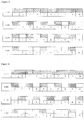
- the resource scheduling list in this figure contains cell identifiers and the repetition period length corresponds to each cell, where the shaded parts represents the time periods of MBMS information transmission:
- the repetition period length reflects the frequency of MBMS information being scheduled, where Cell 1 has the highest scheduling frequency, Cell 2 and Cell 3 have lower scheduling frequencies, and Cell 4 has the lowest scheduling frequency.
- the terminal in Cell 1 analyzes the resource scheduling list shown in Figure 3 , then determines the time periods during which to perform chip combining on the MBMS information with Cell 1, and also determines the neighboring cell identifiers corresponding to said time periods.
- the detailed process of the terminal analyzing the resource scheduling list is as follows:
- the offset of individual cycles reflects the position of MBMS services in a repetition period length (i.e. scheduling cycle).
- the individual cycle offset will affect the result of chip combining, with the value range of [0, (repetition period length - 1)].
- the repetition period lengths of the Cells 2 and 3 are the same (both equal to 2), but the MBMS service is placed at different positions in these repetition period lengths.
- the resource scheduling list reflected in this figure includes cell identifiers, repetition period lengths corresponding to each cell, and offset of individual cycles.
- the above embodiments of resource scheduling method based on MBMS services by introducing the repetition period information of the local cell and neighboring cells transmitting the same MBMS information, transmit the resource scheduling list that carries the identifiers of the local and neighboring cells, as well as the repetition period information corresponding to each cell, to a terminal of the local cell; then the terminal performs chip combining on the MBMS information of the corresponding neighboring cells during the corresponding time periods, based on the resource scheduling list.
- this embodiment extended the situation in the prior art that only continuous chip combining is supported, hence adapted to the chip combining operation when the same MBMS service is scheduled either continuously (when the MBMS information repetition periods of all of the cells have the same length of 1) or discontinuously (when the MBMS information repetition periods of some of the cells have lengths that are greater than 1) in different cells.
- the multiple neighboring cells that carry the same MBMS service do not need to continuously transmit the MBMS service, other services can be transmitted in the transmission interval, thus increasing the utilization rate of resources.
- the embodiments of the present invention provide a base station controller; said base station controller can obtain the resource scheduling information of cells that are near the base station, i.e. the neighboring cells.
- the base station controller comprising: A determining module, which is used, before transmitting the MBMS information, to determine the repetition period information of the local cell transmitting the MBMS information, and determine the repetition period information of the neighboring cells that carry the MBMS information transmitting said MBMS information; a downlink transmission module, which is connected to the determining module, and is used to transmit to a terminal of the local cell the identifiers of the local cell and neighboring cells, as well as the repetition period information of each cell transmitting the MBMS information, whereas said repetition period information is determined by the determining module.
- the determining module specifically comprising: an adding unit, which is used to add the identifiers of the local cell and neighboring cells, as well as the repetition period information of each cell transmitting the MBMS information that determined by the determining module, into the resource scheduling list; a downlink transmitting unit, which is used to transmit said resource scheduling list to a terminal of the local cell.
- the base station controller of the present invention uses a radio network controller (RNC) as an example to describe the process of a base station controller of the local cell transmitting the resource scheduling information of neighboring cells to a terminal of the local cell.
- RNC adds the resource scheduling information of each neighboring cell, i.e. the repetition period information, into an "MBMS Neighbouring Cell p-t-m rb Information" message transmitted on the MCCH channel.
- the repetition period information contains the repetition period length of transmitting MBMS information, and can also contain offset of individual cycles.
- this is achieved by adding or extending fields in the TDD field of the "MBMS Neighbouring Cell p-t-m rb Information" message, with a "Repetition period” field representing the repetition period length, and an “offset” field representing the individual cycle offset.
- the extended fields are shown as in the following table: >>CHOICE mode MP >>>TDD >>>>offset MP Integer (0...Repetition Period -1) Indicating the starting position in an individual cycle, the default value is 0, the range of value is [0, (repetition period -1)] >>>>Repetition period MD default, required Integer(1, 2,4,8,16,32,64) Default value is 1, indicating continuous allocation
- the embodiments of the present invention provide a terminal, said terminal comprising: A receiving module, which is used to receive the repetition period information of the local cell transmitting the MBMS information, the identifiers of neighboring cells, and the repetition period information of said neighboring cells transmitting the MBMS information, before receiving the MBMS information; a determining module, which is used to determine the time periods for performing chip combining with the MBMS transmitted by the local cell, based on the receiving-module-received repetition period information of the local cell transmitting the MBMS information; a cell identifier obtaining module, which is used for obtaining the identifiers of neighboring cells that can run chip combining with the local-cell-transmitted MBMS information during the time periods determined by the determining module, based on the neighboring cell identifiers and the repetition period information of said neighboring cells transmitting the MBMS information, whereas said neighboring cell identifiers and said repetition period information are received by the receiving module; a chip combining module, which is used for: during
- the terminal of the local cell After the terminal of the local cell received the resource scheduling information, i.e. the resource scheduling list, of the chip combining of an MBMS service, the terminal performs continuous or discontinuous chip combining on said MBMS service.
- the terminal receives the "MBMS Neighbouring Cell p-t-m rb Information" message on the MCCH channel; if the terminal is interested in an MBMS service, then during assigned time periods the terminal will perform chip combining with the S-CCPCHs that carry said MBMS service, according to the scheduling information of said S-CCPCHs configured in the local cell and multiple neighboring cells, thus implementing the chip combining of MBMS services during assigned time periods.
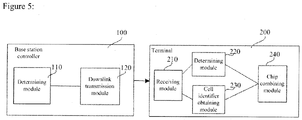
- the embodiment of the present invention also provides an MBMS service-based resource scheduling system, as shown in Figure 5 , comprising base station controller 100 and terminal 200, where the base station controller 100 comprising: a determining module 110, which is used, before transmitting the MBMS information, to determine the repetition period information of the local cell transmitting the MBMS information, and determine the repetition period information of the neighboring cells that carry the MBMS information transmitting said MBMS information; a downlink transmission module 120, which is connected to the determining module 110, and is used to transmit to a terminal of the local cell the identifiers of the local cell and neighboring cells, as well as the repetition period information of each cell transmitting the MBMS information, whereas said repetition period information is determined by the determining module 110.
- a determining module 110 which is used, before transmitting the MBMS information, to determine the repetition period information of the local cell transmitting the MBMS information, and determine the repetition period information of the neighboring cells that carry the MBMS information transmitting said MBMS information
- the terminal 200 comprising: A receiving module 210, which is used to receive the repetition period information of the local cell transmitting the MBMS information, the identifiers of neighboring cells, and the repetition period information of said neighboring cells transmitting the MBMS information, before receiving the MBMS information; a determining module 220, which is used to determine the time periods for performing chip combining with the MBMS transmitted by the local cell, based on the repetition period information of the local cell transmitting the MBMS information, received by the receiving module 210; a cell identifier obtaining module 230, which is used for obtaining the identifiers of neighboring cells that can run chip combining with the local-cell-transmitted MBMS information during the time periods determined by the determining module 220, based on the neighboring cell identifiers and the repetition period information of said neighboring cells transmitting the MBMS information, whereas said neighboring cell identifiers and said repetition period information are received by the receiving module 210; a chip combining module 240, which is used for: during
- the embodiments of the present invention implemented the resource scheduling of different cells during MBMS chip combining, where the chip combining technology requires the terminal to support the joint detection function.
- the chip combining technology described in the embodiments of the present invention should not be limited to the TD-SCDMA system; the technical personnel in this area should understand that, when the WCDMA system subsequently introduces the joint detection technology, the chip combining technology described in the embodiments of the present invention is also applicable accordingly to the applications in corresponding scenarios of the WCDMA system.
Landscapes
- Engineering & Computer Science (AREA)
- Computer Networks & Wireless Communication (AREA)
- Signal Processing (AREA)
- Multimedia (AREA)
- Mobile Radio Communication Systems (AREA)
Claims (9)
- Ein Multimedia-Broadcast-/Multicast-Service-, MBMS, -Service-basiertes Verfahren zum Übertragen von Ressourcenplanungsinformation, dadurch gekennzeichnet, dass das Verfahren die folgenden Schritte umfasst:bevor eine Basisstation MBMS-Information überträgt, Bestimmen, durch eine Basisstationssteuerung, von Wiederholungsperiodeninformation, mit der eine lokale Zelle eines Terminals die MBMS-Information überträgt, wobei die MBMS-Information Information über den MBMS-Service in sekundären gemeinsamen physischen Steuerungskanälen, S-CCPCHs, die den MBMS-Service führen, ist; undBestimmen, durch die Basisstationssteuerung, von Wiederholungsperiodeninformation, mit der jeweilige benachbarte Zellen des Terminals die MBMS-Information (1) übertragen, wobei die benachbarten Zellen den MBMS-Service unterstützen; wobei die Wiederholungsperiodeninformation umfasst: eine Wiederholungsperiodenlänge und einen individuellen Zyklusversatz, wobei die Wiederholungsperiodenlänge eine Frequenz der in einem Funkrahmen geplanten MBMS-Information reflektiert und zu einer Dauer in einer Einheit von einer oder mehreren Zeitperioden des Funkrahmens korrespondiert, und der individuelle Zyklusversatz eine Position des MBMS-Services in der Wiederholungsperiodenlänge reflektiert; wobei Wiederholungsperiodenlängen der lokalen Zelle und der benachbarten Zellen alle einen Wert von 1 haben; oder es eine Zelle gibt, unter der lokalen Zelle und den benachbarten Zellen, deren Wiederholungsperiodenlänge einen Wert größer als 1 hat, und andere Zellen, unter der lokalen Zelle und den benachbarten Zellen, alle Wiederholungsperiodenlängen mit einem Wert von 1 haben;Übertragen, durch die Basisstationssteuerung, einer Kennung der lokalen Zelle und von Kennungen der benachbarten Zellen, sowie der bestimmten Wiederholungsperiodeninformation, mit der jede Zelle die MBMS-Information überträgt, an das Terminal der lokalen Zelle (2);Verwenden einer MBMS-Benachbarte-Zelle-Punkt-zu-Mehrpunkt-Funkträger-Nachricht, die auf einem MBMS-Steuerkanal- MCCH, -Kanal übertragen wird, um die Kennungen der benachbarten Zellen und die Wiederholungsperiodeninformation, mit der die jeweiligen benachbarten Zellen die MBMS-Information übertragen, zu führen, und Übertragen der MBMS-Benachbarte-Zelle-Punkt-zu-Mehrpunkt-Funkträger-Nachricht an das Terminal der lokalen Zelle.
- Das Verfahren nach Anspruch 1, dadurch gekennzeichnet, dass die Übertragung der Kennung der lokalen Zelle und der Kennungen der benachbarten Zellen, sowie der bestimmten Wiederholungsperiodeninformation, mit der jede Zelle die MBMS-Information überträgt, an das Terminal der lokalen Zelle (2), umfasst:Hinzufügen der Kennung der lokalen Zelle und der Kennungen der benachbarten Zellen, sowie der bestimmten Wiederholungsperiodeninformation, mit der jede Zelle die MBMS-Information überträgt, zu einer Ressourcenplanungsliste; undÜbertragen der Ressourcenplanungsliste an das Terminal der lokalen Zelle.
- Eine Basisstationssteuerung (100), dadurch gekennzeichnet, dass die Basisstationssteuerung (100) umfasst:ein Bestimmungsmodul (110), das angepasst ist zum, bevor Multimedia-Broadcast-/Multicast-Service-, MBMS, -Information durch eine Basisstation übertragen wird, Bestimmen von Wiederholungsperiodeninformation, mit der eine lokale Zelle eines Terminals die MBMS-Information überträgt, wobei die MBMS-Information Information über einen MBMS-Service in sekundären gemeinsamen physischen Steuerungskanälen, S-CCPCHs, die den MBMS-Service führen, ist; undzum Bestimmen von Wiederholungsperiodeninformation, mit der jeweilige benachbarte Zellen des Terminals die MBMS-Information übertragen, wobei die benachbarten Zellen den MBMS-Service unterstützen; wobei die Wiederholungsperiodeninformation umfasst: eine Wiederholungsperiodenlänge und einen individuellen Zyklusversatz, wobei die Wiederholungsperiodenlänge eine Frequenz der in einem Funkrahmen geplanten MBMS-Information reflektiert und zu einer Dauer in einer Einheit von einer oder mehreren Zeitperioden des Funkrahmens korrespondiert, und der individuelle Zyklusversatz eine Position des MBMS-Service in der Wiederholungsperiodenlänge reflektiert; wobei Wiederholungsperiodenlängen der lokalen Zelle und der benachbarten Zellen alle einen Wert von 1 haben; oder es eine Zelle gibt, unter der lokalen Zelle und den benachbarten Zellen, deren Wiederholungsperiodenlänge einen Wert größer als 1 hat, und andere Zellen, unter der lokalen Zelle und den benachbarten Zellen, alle Wiederholungsperiodenlängen mit einem Wert von 1 haben;ein Downlink-Übertragungsmodul (120), das mit dem Bestimmungsmodul (110) verbunden ist, und das angepasst ist zum Übertragen von Kennungen der lokalen Zelle und der benachbarten Zellen, sowie der von dem Bestimmungsmodul bestimmten Wiederholungsperiodeninformation, mit der jede Zelle die MBMS-Information überträgt, an das Terminal der lokalen Zelle;wobei das Downlink-Übertragungsmodul (120) angepasst ist zum Verwenden einer MBMS-Benachbarte-Zelle-Punkt-zu-Mehrpunkt-Funkträger-Nachricht, die auf einem MBMS-Steuerkanal- MCCH, -Kanal übertragen wird, um die Kennungen der benachbarten Zellen und die Wiederholungsperiodeninformation, mit der die jeweiligen benachbarten Zellen die MBMS-Information übertragen, zu führen, und zum Übertragen der MBMS-Benachbarte-Zelle-Punkt-zu-Mehrpunkt-Funkträger-Nachricht an das Terminal der lokalen Zelle.
- Die Basisstationssteuerung (100) nach Anspruch 3, dadurch gekennzeichnet, dass das Downlink-Übertragungsmodul (120) umfasst:eine Hinzufügeeinheit, die angepasst ist zum Hinzufügen der Kennungen der lokalen Zelle und der benachbarten Zellen, sowie der von dem Bestimmungsmodul bestimmten Wiederholungsperiodeninformation, mit der jede Zelle die MBMS-Information überträgt, zu einer Ressourcenplanungsliste;eine Downlink-Übertragungseinheit, die angepasst ist zum Übertragen der Ressourcenplanungsliste an das Terminal der lokalen Zelle.
- Ein Multimedia-Broadcast-/Multicast-Service-, MBMS, -Service-basiertes Verfahren zum Empfangen von Ressourcenplanungsinformation, dadurch gekennzeichnet, dass das Verfahren die folgenden Schritte umfasst:vor dem Empfangen von MBMS-Information, Bestimmen, durch ein Terminal, von Zeitperioden in einem Funkrahmen, während derer ein Chip-Kombinieren mit der MBMS-Information, die durch eine lokale Zelle übertragen wird, durchgeführt werden soll, basierend auf Wiederholungsperiodeninformation, mit der die lokale Zelle die MBMS-Information überträgt, wobei die Wiederholungsperiodeninformation mit der die lokale Zelle die MBMS-Information überträgt von einer Basisstationssteuerung empfangen wird, und die MBMS-Information Information über den MBMS-Service in sekundären gemeinsamen physischen Steuerungskanälen, S-CCPCHs, die den MBMS-Service führen, ist;Erhalten, durch das Terminal, von Kennungen benachbarter Zellen, mit denen das Terminal ein Chip-Kombinieren mit der durch die lokale Zelle übertragenen MBMS-Information während jeder bestimmten Zeitperiode in dem Funkrahmen durchführen wird, basierend auf Kennungen der benachbarten Zellen und Wiederholungsperiodeninformation, mit der die jeweiligen benachbarten Zellen die MBMS-Information (31) übertragen, wobei die Kennungen der benachbarten Zellen und die Wiederholungsperiodeninformation, mit der die jeweiligen benachbarten Zellen die MBMS übertragen, von der Basisstationssteuerung empfangen werden; undwobei die Wiederholungsperiodeninformation umfasst: eine Wiederholungsperiodenlänge und einen individuellen Zyklusversatz, wobei die Wiederholungsperiodenlänge eine Frequenz der in einem Funkrahmen geplanten MBMS-Information reflektiert und zu einer Dauer in einer Einheit von einer oder mehreren Zeitperioden des Funkrahmens korrespondiert, und der individuelle Zyklusversatz eine Position des MBMS-Service in der Wiederholungsperiodenlänge reflektiert; wobei Wiederholungsperiodenlängen der lokalen Zelle und der benachbarten Zellen alle einen Wert von 1 haben; oder es eine Zelle gibt, unter der lokalen Zelle und den benachbarten Zellen, deren Wiederholungsperiodenlänge einen Wert größer als 1 hat, und andere Zellen, unter der lokalen Zelle und den benachbarten Zellen, alle Wiederholungsperiodenlängen mit einem Wert von 1 haben; undKennungen benachbarter Zellen und die Wiederholungsperiodeninformation, mit der die jeweiligen benachbarten Zellen die MBMS-Information übertragen, aus einer MBMS-Benachbarte-Zelle-Punkt-zu-Mehrpunkt-Funkträger-Nachricht, die von der Basisstationssteuerung empfangen wird, erhalten werden, wobei die MBMS-Benachbarte-Zelle-Punkt-zu-Mehrpunkt-Funkträger-Nachricht auf einem MBMS-Steuerkanal- MCCH, -Kanal übertragen wird;während jeder bestimmten Zeitperiode in dem Funkrahmen, Durchführen, durch das Terminal, eines Chip-Kombinierens zwischen der von der lokalen Zelle übertragenen MBMS-Information und der von den benachbarten Zellen, die zu den erhaltenen Kennungen benachbarter Zellen (32) korrespondieren, übertragenen MBMS-Information;wobei unterschiedliche Zellen unterschiedliche Verschlüsselungscodes verwenden, wenn sie die MBMS-Information an das Terminal übertragen; undDurchführen eines diskontinuierlichen Chip-Kombinierens, wenn jeweilige Zellen die MBMS-Information mit unterschiedlicher Wiederholungsperiodeninformation übertragen.
- Das Verfahren nach Anspruch 5, dadurch gekennzeichnet, dass die Wiederholungsperiodeninformation, mit der die lokale Zelle die MBMS-Information, die Kennungen der benachbarten Zellen und die Wiederholungsperiodeninformation, mit der die jeweiligen benachbarten Zellen die MBMS-Information übertragen, überträgt, in einer Ressourcenplanungsliste geführt werden.
- Ein Terminal (200), dadurch gekennzeichnet, dass das Terminal (200) umfasst:ein Empfangsmodul (210), das angepasst ist zum Empfangen von Wiederholungsperiodeninformation, mit der eine lokale Zelle Multimedia-Broadcast/Multicast-Service-, MBMS, -Information, Kennungen benachbarter Zellen und Wiederholungsperiodeninformation, mit der die jeweiligen benachbarten Zellen die MBMS-Information von einer Basisstationssteuerung übertragen, überträgt, bevor es die MBMS-Information empfängt;wobei die MBMS-Information Information über den MBMS-Service in sekundären gemeinsamen physischen Steuerungskanälen, S-CCPCHs, die den MBMS-Service führen, ist;wobei die Wiederholungsperiodeninformation umfasst: eine Wiederholungsperiodenlänge und einen individuellen Zyklusversatz, wobei die Wiederholungsperiodenlänge eine Frequenz der in einem Funkrahmen geplanten MBMS-Information reflektiert und zu einer Dauer in einer Einheit von einer oder mehreren Zeitperioden des Funkrahmens korrespondiert, und der individuelle Zyklusversatz eine Position des MBMS-Service in der Wiederholungsperiodenlänge reflektiert; wobei Wiederholungsperiodenlängen der lokalen Zelle und der benachbarten Zellen alle einen Wert von 1 haben; oder es eine Zelle gibt, unter der lokalen Zelle und den benachbarten Zellen, deren Wiederholungsperiodenlänge einen Wert größer als 1 hat, und andere Zellen, unter der lokalen Zelle und den benachbarten Zellen, alle Wiederholungsperiodenlängen mit einem Wert von 1 haben; undKennungen der benachbarten Zellen und die Wiederholungsperiodeninformation, mit der die jeweiligen benachbarten Zellen die MBMS-Information übertragen, aus einer MBMS-Benachbarte-Zelle-Punkt-zu-Mehrpunkt-Funkträger-Nachricht, die von der Basisstationssteuerung empfangen wird, erhalten werden, wobei die MBMS-Benachbarte-Zelle-Punkt-zu-Mehrpunkt-Funkträger-Nachricht auf einem MBMS-Steuerkanal- MCCH, -Kanal übertragen wird;ein Bestimmungsmodul (220), das angepasst ist zum Bestimmen von Zeitperioden in dem Funkrahmen, um ein Chip-Kombinieren mit der MBMS-Information durchzuführen, die durch die lokale Zelle übertragen wurde, basierend auf der durch das Empfangsmodul empfangenen Wiederholungsperiodeninformationen, mit der die lokale Zelle die MBMS-Information überträgt;ein Zellenkennungs-Erhaltemodul (230), das angepasst ist zum Erhalten von Kennungen benachbarter Zellen, mit denen das Terminal ein Chip-Kombinieren mit der durch die lokale Zelle übertragenen MBMS-Information während jeder Periode in dem durch das Bestimmungsmodul (220) bestimmten Funkrahmen ausführen kann, basierend auf den Kennungen der benachbarten Zellen und der Wiederholungsperiodeninformation, mit der die jeweiligen benachbarten Zellen die MBMS-Information übertragen, wobei die Kennungen der benachbarten Zellen und die Wiederholungsperiodeinformationen durch das Empfangsmodul (210) empfangen werden;ein Chip-Kombiniermodul (240), das angepasst ist zum, während jeder durch das Bestimmungsmodul (220) bestimmten Zeitperiode in dem Funkrahmen, Ausführen eines Chip-Kombinierens zwischen der durch die lokale Zelle übertragenen MBMS-Information und der durch die von den benachbarten Zellen, die zu den Kennungen der benachbarten Zellen, die durch das Zellenkennungs-Erhaltemodul (230) erhalten wurden, korrespondieren, übertragenen MBMS-Information;wobei unterschiedliche Zellen unterschiedliche Verschlüsselungscodes verwenden, wenn sie die MBMS-Information an das Terminal übertragen; unddas Chip-Kombiniermodul (240) des Weiteren angepasst ist zum Durchführen eines diskontinuierlichen Chip-Kombinierens wenn entsprechende Zellen die MBMS-Information mit unterschiedlicher Wiederholungsperiodeninformation übertragen.
- Ein Multimedia-Broadcast-/Multicast-Service-, MBMS, -Service-basiertes Ressourcenplanungsverfahren, dadurch gekennzeichnet, dass das Verfahren die Schritte der Verfahren nach den Ansprüchen 1 und 5 umfasst.
- Ein Multimedia-Broadcast-/Multicast-Service-, MBMS, -Service-basiertes Ressourcenplanungssystem, dadurch gekennzeichnet, dass das System eine Basisstationssteuerung (100) nach Anspruch 3 und ein Terminal (200) nach Anspruch 7 umfasst.
Applications Claiming Priority (1)
| Application Number | Priority Date | Filing Date | Title |
|---|---|---|---|
| CN2007101184248A CN101340618B (zh) | 2007-07-05 | 2007-07-05 | 资源调度方法、基站控制器、终端及资源调度系统 |
Publications (3)
| Publication Number | Publication Date |
|---|---|
| EP2012482A2 EP2012482A2 (de) | 2009-01-07 |
| EP2012482A3 EP2012482A3 (de) | 2011-05-18 |
| EP2012482B1 true EP2012482B1 (de) | 2019-02-20 |
Family
ID=39831821
Family Applications (1)
| Application Number | Title | Priority Date | Filing Date |
|---|---|---|---|
| EP08159105.9A Active EP2012482B1 (de) | 2007-07-05 | 2008-06-26 | Übertragung und Empfang von Ressourcenplanungsinformationen und Ressourcenplanung |
Country Status (5)
| Country | Link |
|---|---|
| US (1) | US8064942B2 (de) |
| EP (1) | EP2012482B1 (de) |
| JP (1) | JP4688906B2 (de) |
| KR (1) | KR100995796B1 (de) |
| CN (1) | CN101340618B (de) |
Families Citing this family (11)
| Publication number | Priority date | Publication date | Assignee | Title |
|---|---|---|---|---|
| CN102301751B (zh) | 2009-04-28 | 2014-03-12 | 上海贝尔股份有限公司 | 无线网络中的广播和/或组播的通信方法及其装置 |
| CN101909244B (zh) * | 2009-06-04 | 2014-03-19 | 电信科学技术研究院 | 一种mbms调度周期的配置方法、设备和系统 |
| KR101337093B1 (ko) | 2009-06-15 | 2013-12-06 | 후지쯔 가부시끼가이샤 | 무선 통신 시스템, 기지국 장치, 단말기 장치, 및 무선 통신 시스템에서의 무선 통신 방법 |
| PH12012500559A1 (en) | 2009-10-01 | 2015-10-16 | Nokia Solutions & Networks Oy | A method and apparatus to control scheduling |
| CN102158807B (zh) | 2010-02-11 | 2015-01-28 | 中兴通讯股份有限公司 | Mcch通知信息的监听方法及装置、用户设备 |
| CN102158808B (zh) * | 2010-02-11 | 2016-03-30 | 中兴通讯股份有限公司 | Mcch信息的接收方法及装置、用户设备 |
| US8717887B2 (en) * | 2011-08-08 | 2014-05-06 | Telefonaktiebolaget Lm Ericsson (Publ) | Scrambling code planning device and method for using same in wireless communication network |
| CN104350770B (zh) | 2013-05-17 | 2019-04-16 | 华为技术有限公司 | 业务数据加扰方法、业务数据解扰方法、装置及系统 |
| JP2018526870A (ja) * | 2015-07-10 | 2018-09-13 | 富士通株式会社 | 重複送信に基づくマルチユーザ重畳伝送方法、装置及びシステム |
| EP3461185A4 (de) * | 2016-06-30 | 2019-04-17 | Huawei Technologies Co., Ltd. | Netzwerkvorrichtung, endgerätevorrichtung, konfigurationsverfahren für multicast-dienst und empfangsverfahren |
| JP7475458B2 (ja) * | 2020-08-03 | 2024-04-26 | 京セラ株式会社 | 通信制御方法、基地局、及びユーザ装置 |
Family Cites Families (11)
| Publication number | Priority date | Publication date | Assignee | Title |
|---|---|---|---|---|
| EP1467586B1 (de) * | 2003-04-09 | 2010-05-19 | Samsung Electronics Co., Ltd. | Verfahren zur Zellenwiederwahl in einem MBMS Mobilkommunikationssystem |
| KR100784418B1 (ko) * | 2003-08-21 | 2007-12-11 | 가부시키가이샤 엔.티.티.도코모 | 이동 통신 시스템, 이동국 및 무선 제어 장치 |
| KR20050101006A (ko) * | 2004-04-16 | 2005-10-20 | 삼성전자주식회사 | 멀티캐스트 멀티미디어 방송 서비스를 지원하는 이동통신시스템에서 제어 정보를 효율적으로 전송하는 방법 |
| RU2340118C1 (ru) * | 2004-09-30 | 2008-11-27 | Самсунг Электроникс Ко., Лтд. | Способ и устройство частичного комбинирования для услуги мультимедийной широковещательной/групповой передачи |
| CN1297109C (zh) * | 2004-11-11 | 2007-01-24 | 华为技术有限公司 | 一种读取多媒体广播/组播服务接入信息的方法 |
| US20060146745A1 (en) * | 2005-01-05 | 2006-07-06 | Zhijun Cai | Method and apparatus for scheduling and synchronizing a multimedia broadcast/multicast service |
| EP1708413A1 (de) * | 2005-03-29 | 2006-10-04 | Lg Electronics Inc. | Zell-Rekonfiguration für den Multimedialen Broadcast/Multicast-Dienst (MBMS) |
| CN100450280C (zh) * | 2005-03-30 | 2009-01-07 | 华为技术有限公司 | 用户设备释放点到多点无线承载的方法 |
| TWI463894B (zh) * | 2006-10-27 | 2014-12-01 | 內數位科技公司 | 無線系統中增強不連續接收方法及裝置 |
| JP4369958B2 (ja) * | 2007-01-15 | 2009-11-25 | 株式会社エヌ・ティ・ティ・ドコモ | 通信システム、マルチキャスト交換装置、通信方法 |
| US20080287127A1 (en) * | 2007-05-15 | 2008-11-20 | Motorola, Inc. | Forward access channel measurement occasion scheduling device |
-
2007
- 2007-07-05 CN CN2007101184248A patent/CN101340618B/zh active Active
-
2008
- 2008-06-26 EP EP08159105.9A patent/EP2012482B1/de active Active
- 2008-07-02 JP JP2008173053A patent/JP4688906B2/ja active Active
- 2008-07-02 US US12/166,808 patent/US8064942B2/en active Active
- 2008-07-03 KR KR1020080064206A patent/KR100995796B1/ko active Active
Non-Patent Citations (1)
| Title |
|---|
| None * |
Also Published As
| Publication number | Publication date |
|---|---|
| CN101340618A (zh) | 2009-01-07 |
| CN101340618B (zh) | 2012-06-20 |
| JP4688906B2 (ja) | 2011-05-25 |
| EP2012482A2 (de) | 2009-01-07 |
| KR100995796B1 (ko) | 2010-11-23 |
| US8064942B2 (en) | 2011-11-22 |
| EP2012482A3 (de) | 2011-05-18 |
| JP2009017555A (ja) | 2009-01-22 |
| US20090011698A1 (en) | 2009-01-08 |
| KR20090004702A (ko) | 2009-01-12 |
Similar Documents
| Publication | Publication Date | Title |
|---|---|---|
| EP2012482B1 (de) | Übertragung und Empfang von Ressourcenplanungsinformationen und Ressourcenplanung | |
| US8472364B2 (en) | Evolved multimedia broadcast/multicast service base station, user equipment and methods thereof | |
| US9008701B2 (en) | Multimedia broadcast and multicast service notification in long term evolution | |
| CN101222751B (zh) | 一种用户终端、基站及单独下行载波配置信息传输方法及系统 | |
| RU2370894C2 (ru) | Передача управляющей информации в беспроводной системе связи | |
| EP2050209B1 (de) | Punkt-zu-punkt-funkträger für einen ausstrahlungsdienst | |
| EP1585351B1 (de) | Verfahren zur bereitstellung eines multicast/broadcast, mbms, dienstes in einem mobilen telekommunikationsnetzwerk | |
| US7499435B2 (en) | Partial combining method and apparatus for multimedia broadcast/multicast service | |
| US8605704B2 (en) | Method and device for paging and media services on a single carrier frequency | |
| CN101296410B (zh) | 专用载波配置方法与装置及多媒体广播组播业务传输方法 | |
| CN101159902B (zh) | 一种多媒体广播组播系统专用载波小区的时隙配置方法 | |
| CN101400017A (zh) | 支持进化的广播组播业务数据连续接收的方法 | |
| EP2621199B1 (de) | Zählverfahren und -system für einen multimedia-rundfunk- und multicast-dienst | |
| MX2007008186A (es) | Administracion de informacion de configuracion de canal en un sistema de comunicacion inalambrico. | |
| KR100996051B1 (ko) | 멀티미디어 방송 서비스를 지원하는 이동통신시스템에서 제어 정보를 송수신하는 방법 | |
| EP2101510B1 (de) | Verfahren, system und basisstation zum senden von ausstrahlungsdienstedaten über ein einfrequenznetz | |
| US20160013977A1 (en) | Service Processing Method for New Carrier Type Cell, Apparatus, and Communications System | |
| CN100473182C (zh) | Td-scdma中采用单时隙网收发mbms的方法 | |
| CN100562149C (zh) | Td-scdma中采用单时隙网收发mbms的系统 | |
| US8050210B2 (en) | Method and apparatus for transmitting and receiving the configuration mode of service carrier frequency time slots | |
| CN101312588B (zh) | 无线通信方法 | |
| CN101478721B (zh) | 多媒体广播组播系统专用载波小区的前导码配置方法 | |
| CN114615631B (zh) | 一种时钟同步方法、装置、系统和计算机可读存储介质 | |
| WO2009009946A1 (en) | Method for realizing improving multimedia broadcast multicast service in multi-carrier cell | |
| CN101296413B (zh) | 一种双接收机终端实现多媒体广播组播业务的方法 |
Legal Events
| Date | Code | Title | Description |
|---|---|---|---|
| PUAI | Public reference made under article 153(3) epc to a published international application that has entered the european phase |
Free format text: ORIGINAL CODE: 0009012 |
|
| AK | Designated contracting states |
Kind code of ref document: A2 Designated state(s): AT BE BG CH CY CZ DE DK EE ES FI FR GB GR HR HU IE IS IT LI LT LU LV MC MT NL NO PL PT RO SE SI SK TR |
|
| AX | Request for extension of the european patent |
Extension state: AL BA MK RS |
|
| PUAL | Search report despatched |
Free format text: ORIGINAL CODE: 0009013 |
|
| REG | Reference to a national code |
Ref country code: DE Ref legal event code: R079 Free format text: PREVIOUS MAIN CLASS: H04L0012560000 Ipc: H04W0004060000 |
|
| AK | Designated contracting states |
Kind code of ref document: A3 Designated state(s): AT BE BG CH CY CZ DE DK EE ES FI FR GB GR HR HU IE IS IT LI LT LU LV MC MT NL NO PL PT RO SE SI SK TR |
|
| AX | Request for extension of the european patent |
Extension state: AL BA MK RS |
|
| RIC1 | Information provided on ipc code assigned before grant |
Ipc: H04W 4/06 20090101AFI20110413BHEP |
|
| 17P | Request for examination filed |
Effective date: 20111116 |
|
| AKX | Designation fees paid |
Designated state(s): AT BE BG CH CY CZ DE DK EE ES FI FR GB GR HR HU IE IS IT LI LT LU LV MC MT NL NO PL PT RO SE SI SK TR |
|
| 17Q | First examination report despatched |
Effective date: 20131127 |
|
| STAA | Information on the status of an ep patent application or granted ep patent |
Free format text: STATUS: EXAMINATION IS IN PROGRESS |
|
| GRAP | Despatch of communication of intention to grant a patent |
Free format text: ORIGINAL CODE: EPIDOSNIGR1 |
|
| STAA | Information on the status of an ep patent application or granted ep patent |
Free format text: STATUS: GRANT OF PATENT IS INTENDED |
|
| RIC1 | Information provided on ipc code assigned before grant |
Ipc: H04W 4/06 20090101AFI20180829BHEP Ipc: H04W 72/00 20090101ALI20180829BHEP |
|
| INTG | Intention to grant announced |
Effective date: 20180925 |
|
| GRAS | Grant fee paid |
Free format text: ORIGINAL CODE: EPIDOSNIGR3 |
|
| GRAA | (expected) grant |
Free format text: ORIGINAL CODE: 0009210 |
|
| STAA | Information on the status of an ep patent application or granted ep patent |
Free format text: STATUS: THE PATENT HAS BEEN GRANTED |
|
| AK | Designated contracting states |
Kind code of ref document: B1 Designated state(s): AT BE BG CH CY CZ DE DK EE ES FI FR GB GR HR HU IE IS IT LI LT LU LV MC MT NL NO PL PT RO SE SI SK TR |
|
| REG | Reference to a national code |
Ref country code: GB Ref legal event code: FG4D |
|
| REG | Reference to a national code |
Ref country code: CH Ref legal event code: EP |
|
| REG | Reference to a national code |
Ref country code: DE Ref legal event code: R096 Ref document number: 602008059019 Country of ref document: DE |
|
| REG | Reference to a national code |
Ref country code: AT Ref legal event code: REF Ref document number: 1099819 Country of ref document: AT Kind code of ref document: T Effective date: 20190315 |
|
| REG | Reference to a national code |
Ref country code: IE Ref legal event code: FG4D |
|
| REG | Reference to a national code |
Ref country code: LT Ref legal event code: MG4D |
|
| REG | Reference to a national code |
Ref country code: NL Ref legal event code: MP Effective date: 20190220 |
|
| PG25 | Lapsed in a contracting state [announced via postgrant information from national office to epo] |
Ref country code: PT Free format text: LAPSE BECAUSE OF FAILURE TO SUBMIT A TRANSLATION OF THE DESCRIPTION OR TO PAY THE FEE WITHIN THE PRESCRIBED TIME-LIMIT Effective date: 20190620 Ref country code: NO Free format text: LAPSE BECAUSE OF FAILURE TO SUBMIT A TRANSLATION OF THE DESCRIPTION OR TO PAY THE FEE WITHIN THE PRESCRIBED TIME-LIMIT Effective date: 20190520 Ref country code: LT Free format text: LAPSE BECAUSE OF FAILURE TO SUBMIT A TRANSLATION OF THE DESCRIPTION OR TO PAY THE FEE WITHIN THE PRESCRIBED TIME-LIMIT Effective date: 20190220 Ref country code: SE Free format text: LAPSE BECAUSE OF FAILURE TO SUBMIT A TRANSLATION OF THE DESCRIPTION OR TO PAY THE FEE WITHIN THE PRESCRIBED TIME-LIMIT Effective date: 20190220 Ref country code: FI Free format text: LAPSE BECAUSE OF FAILURE TO SUBMIT A TRANSLATION OF THE DESCRIPTION OR TO PAY THE FEE WITHIN THE PRESCRIBED TIME-LIMIT Effective date: 20190220 |
|
| PG25 | Lapsed in a contracting state [announced via postgrant information from national office to epo] |
Ref country code: HR Free format text: LAPSE BECAUSE OF FAILURE TO SUBMIT A TRANSLATION OF THE DESCRIPTION OR TO PAY THE FEE WITHIN THE PRESCRIBED TIME-LIMIT Effective date: 20190220 Ref country code: NL Free format text: LAPSE BECAUSE OF FAILURE TO SUBMIT A TRANSLATION OF THE DESCRIPTION OR TO PAY THE FEE WITHIN THE PRESCRIBED TIME-LIMIT Effective date: 20190220 Ref country code: LV Free format text: LAPSE BECAUSE OF FAILURE TO SUBMIT A TRANSLATION OF THE DESCRIPTION OR TO PAY THE FEE WITHIN THE PRESCRIBED TIME-LIMIT Effective date: 20190220 Ref country code: BG Free format text: LAPSE BECAUSE OF FAILURE TO SUBMIT A TRANSLATION OF THE DESCRIPTION OR TO PAY THE FEE WITHIN THE PRESCRIBED TIME-LIMIT Effective date: 20190520 Ref country code: IS Free format text: LAPSE BECAUSE OF FAILURE TO SUBMIT A TRANSLATION OF THE DESCRIPTION OR TO PAY THE FEE WITHIN THE PRESCRIBED TIME-LIMIT Effective date: 20190620 Ref country code: GR Free format text: LAPSE BECAUSE OF FAILURE TO SUBMIT A TRANSLATION OF THE DESCRIPTION OR TO PAY THE FEE WITHIN THE PRESCRIBED TIME-LIMIT Effective date: 20190521 |
|
| REG | Reference to a national code |
Ref country code: AT Ref legal event code: MK05 Ref document number: 1099819 Country of ref document: AT Kind code of ref document: T Effective date: 20190220 |
|
| PG25 | Lapsed in a contracting state [announced via postgrant information from national office to epo] |
Ref country code: EE Free format text: LAPSE BECAUSE OF FAILURE TO SUBMIT A TRANSLATION OF THE DESCRIPTION OR TO PAY THE FEE WITHIN THE PRESCRIBED TIME-LIMIT Effective date: 20190220 Ref country code: DK Free format text: LAPSE BECAUSE OF FAILURE TO SUBMIT A TRANSLATION OF THE DESCRIPTION OR TO PAY THE FEE WITHIN THE PRESCRIBED TIME-LIMIT Effective date: 20190220 Ref country code: SK Free format text: LAPSE BECAUSE OF FAILURE TO SUBMIT A TRANSLATION OF THE DESCRIPTION OR TO PAY THE FEE WITHIN THE PRESCRIBED TIME-LIMIT Effective date: 20190220 Ref country code: ES Free format text: LAPSE BECAUSE OF FAILURE TO SUBMIT A TRANSLATION OF THE DESCRIPTION OR TO PAY THE FEE WITHIN THE PRESCRIBED TIME-LIMIT Effective date: 20190220 Ref country code: IT Free format text: LAPSE BECAUSE OF FAILURE TO SUBMIT A TRANSLATION OF THE DESCRIPTION OR TO PAY THE FEE WITHIN THE PRESCRIBED TIME-LIMIT Effective date: 20190220 Ref country code: CZ Free format text: LAPSE BECAUSE OF FAILURE TO SUBMIT A TRANSLATION OF THE DESCRIPTION OR TO PAY THE FEE WITHIN THE PRESCRIBED TIME-LIMIT Effective date: 20190220 Ref country code: RO Free format text: LAPSE BECAUSE OF FAILURE TO SUBMIT A TRANSLATION OF THE DESCRIPTION OR TO PAY THE FEE WITHIN THE PRESCRIBED TIME-LIMIT Effective date: 20190220 |
|
| REG | Reference to a national code |
Ref country code: DE Ref legal event code: R097 Ref document number: 602008059019 Country of ref document: DE |
|
| PG25 | Lapsed in a contracting state [announced via postgrant information from national office to epo] |
Ref country code: PL Free format text: LAPSE BECAUSE OF FAILURE TO SUBMIT A TRANSLATION OF THE DESCRIPTION OR TO PAY THE FEE WITHIN THE PRESCRIBED TIME-LIMIT Effective date: 20190220 |
|
| PLBE | No opposition filed within time limit |
Free format text: ORIGINAL CODE: 0009261 |
|
| STAA | Information on the status of an ep patent application or granted ep patent |
Free format text: STATUS: NO OPPOSITION FILED WITHIN TIME LIMIT |
|
| PG25 | Lapsed in a contracting state [announced via postgrant information from national office to epo] |
Ref country code: AT Free format text: LAPSE BECAUSE OF FAILURE TO SUBMIT A TRANSLATION OF THE DESCRIPTION OR TO PAY THE FEE WITHIN THE PRESCRIBED TIME-LIMIT Effective date: 20190220 |
|
| 26N | No opposition filed |
Effective date: 20191121 |
|
| PG25 | Lapsed in a contracting state [announced via postgrant information from national office to epo] |
Ref country code: MC Free format text: LAPSE BECAUSE OF FAILURE TO SUBMIT A TRANSLATION OF THE DESCRIPTION OR TO PAY THE FEE WITHIN THE PRESCRIBED TIME-LIMIT Effective date: 20190220 |
|
| REG | Reference to a national code |
Ref country code: CH Ref legal event code: PL |
|
| PG25 | Lapsed in a contracting state [announced via postgrant information from national office to epo] |
Ref country code: SI Free format text: LAPSE BECAUSE OF FAILURE TO SUBMIT A TRANSLATION OF THE DESCRIPTION OR TO PAY THE FEE WITHIN THE PRESCRIBED TIME-LIMIT Effective date: 20190220 |
|
| REG | Reference to a national code |
Ref country code: BE Ref legal event code: MM Effective date: 20190630 |
|
| PG25 | Lapsed in a contracting state [announced via postgrant information from national office to epo] |
Ref country code: TR Free format text: LAPSE BECAUSE OF FAILURE TO SUBMIT A TRANSLATION OF THE DESCRIPTION OR TO PAY THE FEE WITHIN THE PRESCRIBED TIME-LIMIT Effective date: 20190220 |
|
| PG25 | Lapsed in a contracting state [announced via postgrant information from national office to epo] |
Ref country code: IE Free format text: LAPSE BECAUSE OF NON-PAYMENT OF DUE FEES Effective date: 20190626 |
|
| PG25 | Lapsed in a contracting state [announced via postgrant information from national office to epo] |
Ref country code: LI Free format text: LAPSE BECAUSE OF NON-PAYMENT OF DUE FEES Effective date: 20190630 Ref country code: CH Free format text: LAPSE BECAUSE OF NON-PAYMENT OF DUE FEES Effective date: 20190630 Ref country code: LU Free format text: LAPSE BECAUSE OF NON-PAYMENT OF DUE FEES Effective date: 20190626 Ref country code: BE Free format text: LAPSE BECAUSE OF NON-PAYMENT OF DUE FEES Effective date: 20190630 |
|
| PG25 | Lapsed in a contracting state [announced via postgrant information from national office to epo] |
Ref country code: CY Free format text: LAPSE BECAUSE OF FAILURE TO SUBMIT A TRANSLATION OF THE DESCRIPTION OR TO PAY THE FEE WITHIN THE PRESCRIBED TIME-LIMIT Effective date: 20190220 |
|
| PG25 | Lapsed in a contracting state [announced via postgrant information from national office to epo] |
Ref country code: HU Free format text: LAPSE BECAUSE OF FAILURE TO SUBMIT A TRANSLATION OF THE DESCRIPTION OR TO PAY THE FEE WITHIN THE PRESCRIBED TIME-LIMIT; INVALID AB INITIO Effective date: 20080626 Ref country code: MT Free format text: LAPSE BECAUSE OF FAILURE TO SUBMIT A TRANSLATION OF THE DESCRIPTION OR TO PAY THE FEE WITHIN THE PRESCRIBED TIME-LIMIT Effective date: 20190220 |
|
| PGFP | Annual fee paid to national office [announced via postgrant information from national office to epo] |
Ref country code: FR Payment date: 20250324 Year of fee payment: 18 |
|
| PGFP | Annual fee paid to national office [announced via postgrant information from national office to epo] |
Ref country code: DE Payment date: 20250325 Year of fee payment: 18 |
|
| PGFP | Annual fee paid to national office [announced via postgrant information from national office to epo] |
Ref country code: GB Payment date: 20250403 Year of fee payment: 18 |