EP2012218A2 - Method for influencing the interpretation of multimodal input - Google Patents
Method for influencing the interpretation of multimodal input Download PDFInfo
- Publication number
- EP2012218A2 EP2012218A2 EP08103835A EP08103835A EP2012218A2 EP 2012218 A2 EP2012218 A2 EP 2012218A2 EP 08103835 A EP08103835 A EP 08103835A EP 08103835 A EP08103835 A EP 08103835A EP 2012218 A2 EP2012218 A2 EP 2012218A2
- Authority
- EP
- European Patent Office
- Prior art keywords
- input
- model
- alternative
- models
- meaning
- Prior art date
- Legal status (The legal status is an assumption and is not a legal conclusion. Google has not performed a legal analysis and makes no representation as to the accuracy of the status listed.)
- Granted
Links
Images

Classifications
-
- G—PHYSICS
- G06—COMPUTING OR CALCULATING; COUNTING
- G06F—ELECTRIC DIGITAL DATA PROCESSING
- G06F3/00—Input arrangements for transferring data to be processed into a form capable of being handled by the computer; Output arrangements for transferring data from processing unit to output unit, e.g. interface arrangements
- G06F3/01—Input arrangements or combined input and output arrangements for interaction between user and computer
- G06F3/03—Arrangements for converting the position or the displacement of a member into a coded form
- G06F3/033—Pointing devices displaced or positioned by the user, e.g. mice, trackballs, pens or joysticks; Accessories therefor
- G06F3/038—Control and interface arrangements therefor, e.g. drivers or device-embedded control circuitry
-
- G—PHYSICS
- G06—COMPUTING OR CALCULATING; COUNTING
- G06F—ELECTRIC DIGITAL DATA PROCESSING
- G06F3/00—Input arrangements for transferring data to be processed into a form capable of being handled by the computer; Output arrangements for transferring data from processing unit to output unit, e.g. interface arrangements
- G06F3/01—Input arrangements or combined input and output arrangements for interaction between user and computer
- G06F3/017—Gesture based interaction, e.g. based on a set of recognized hand gestures
-
- G—PHYSICS
- G10—MUSICAL INSTRUMENTS; ACOUSTICS
- G10L—SPEECH ANALYSIS TECHNIQUES OR SPEECH SYNTHESIS; SPEECH RECOGNITION; SPEECH OR VOICE PROCESSING TECHNIQUES; SPEECH OR AUDIO CODING OR DECODING
- G10L15/00—Speech recognition
- G10L15/08—Speech classification or search
- G10L15/18—Speech classification or search using natural language modelling
- G10L15/183—Speech classification or search using natural language modelling using context dependencies, e.g. language models
-
- G—PHYSICS
- G10—MUSICAL INSTRUMENTS; ACOUSTICS
- G10L—SPEECH ANALYSIS TECHNIQUES OR SPEECH SYNTHESIS; SPEECH RECOGNITION; SPEECH OR VOICE PROCESSING TECHNIQUES; SPEECH OR AUDIO CODING OR DECODING
- G10L15/00—Speech recognition
- G10L15/22—Procedures used during a speech recognition process, e.g. man-machine dialogue
-
- G—PHYSICS
- G10—MUSICAL INSTRUMENTS; ACOUSTICS
- G10L—SPEECH ANALYSIS TECHNIQUES OR SPEECH SYNTHESIS; SPEECH RECOGNITION; SPEECH OR VOICE PROCESSING TECHNIQUES; SPEECH OR AUDIO CODING OR DECODING
- G10L17/00—Speaker identification or verification techniques
- G10L17/22—Interactive procedures; Man-machine interfaces
-
- G—PHYSICS
- G06—COMPUTING OR CALCULATING; COUNTING
- G06F—ELECTRIC DIGITAL DATA PROCESSING
- G06F2203/00—Indexing scheme relating to G06F3/00 - G06F3/048
- G06F2203/038—Indexing scheme relating to G06F3/038
- G06F2203/0381—Multimodal input, i.e. interface arrangements enabling the user to issue commands by simultaneous use of input devices of different nature, e.g. voice plus gesture on digitizer
-
- H—ELECTRICITY
- H04—ELECTRIC COMMUNICATION TECHNIQUE
- H04M—TELEPHONIC COMMUNICATION
- H04M2250/00—Details of telephonic subscriber devices
- H04M2250/74—Details of telephonic subscriber devices with voice recognition means
-
- H—ELECTRICITY
- H04—ELECTRIC COMMUNICATION TECHNIQUE
- H04M—TELEPHONIC COMMUNICATION
- H04M3/00—Automatic or semi-automatic exchanges
- H04M3/42—Systems providing special services or facilities to subscribers
- H04M3/487—Arrangements for providing information services, e.g. recorded voice services or time announcements
- H04M3/493—Interactive information services, e.g. directory enquiries ; Arrangements therefor, e.g. interactive voice response [IVR] systems or voice portals
- H04M3/4938—Interactive information services, e.g. directory enquiries ; Arrangements therefor, e.g. interactive voice response [IVR] systems or voice portals comprising a voice browser which renders and interprets, e.g. VoiceXML
Definitions
- the invention relates to a method and a device which make it possible to define the semantic interpretation of the inputs in individual and / or combined modes for a multimodal dialog system by the user of a telecommunication terminal.
- Multimodal dialog systems are known (see http://www.w3.org/TR/mmi-framework/) for a variety of multimodal input options, such as language, keyboard, stylus, touch screen, GPS are provided.
- the meanings of the user inputs are to be defined in such a system.
- Identical inputs can have the same as well as different meanings for different applications.
- similar for different applications are z.
- input concepts for approval or rejection to a system output are defined.
- a task therefore consists in finding possibilities in a multimodal dialogue system to either adapt existing input models (eg movement models) describing average reactions to the user-specific interpretation or to define user-defined new input models for intended user actions without a large number of user-defined input models
- User responses eg, device movements and / or combinations thereof with responses in other modes
- dialog systems which serve the linguistic and analogous multimodal interaction with at least one user (see also http://www.w3.org/TR/2000/WD-voice-intro- 20001204 /).
- dictation systems Specially for speaker-dependent speech recognition systems (eg dictation systems), methods for training the acoustic models for individual words and / or word sequences are known in which the user of the system receives the words, word sequences and / or texts provided for the training on a screen and this, possibly several times, has to be repeated via a microphone, ie the language models to be recognized later are trained by inputs via the same medium (language), whereby the meaning of the utterance to be trained is predetermined and optionally displayed on the screen or output via a voice output system.
- terminals are also known, which are equipped with sensors for determining the position or orientation and with motion sensors, which, for. B.
- the object of the present invention is to provide a method and corresponding device which allow the semantic interpretation of the inputs in individual and / or combined modes for a multimodal dialog system to be defined by the user of a telecommunication terminal.
- a multimodal dialog system is additionally equipped with means that allow meaningful and user-defined input models to generate models for other media, the meaning of which is defined by input models already defined, possibly administratively and / or application developers to be discribed.
- This can be z. B. by using at least one additional application or a part of another dialog application, which feedback after recognition of a particular movement pattern, the user to define the meaning of this movement pattern via another input mode (eg., Speech and / or stylus and / or keyboard and / or touchscreen and / or camera (gesture) and / or motion) for which the meanings of certain input models are already defined.
- another input mode eg., Speech and / or stylus and / or keyboard and / or touchscreen and / or camera (gesture) and / or motion
- different meanings can be assigned to an input model or a combination of input models for the same user reaction as a function of the respective target application and / or context.
- a method for user-individual definition of the interpretation of input into a multimodal, multiple input devices comprehensive, dialogue system of a telecommunications terminal This may preferably be a PDA, a mobile phone or a smartphone.
- the input devices include contexts connoisseurs, which can determine eg with the help of a positioning system the local context or eg via certain movement patterns the environment situation (eg vibrations in the vehicle); Stylus, touchscreen, keyboard, keyboard input; Movement, inclination, position detection; Speaker recognition; Spokesman classification; Voice recognition. Since the connoisseur can logically also be interpreted interpretatively by evaluating other inputs, it can also be considered as part of an evaluation and interpretation module.
- an assignment attempt of the input to one or more input models is attempted in accordance with the input device and the input model assigned to it.
- the meaning of the input in relation to the application is now determined and passed to an interaction / application manager. This now passes on the input to the application. If, on the other hand, no input model is found or a sufficiently secure assignment to an input model can not be made, then the method switches to an alternative input method or input device whose input model is sufficiently defined and then prompts the user for re-input via the alternative input method or the alternative input device on.
- Selection of the alternative input method or alternative output device also refers to the input model present for the alternative input relative to the currently running application. So it can be that many things Input device is more appropriate for one application than another because the input model is defined differently in relation to the applications. It may also happen that the same input has a different meaning in different applications.
- the re-entry via the alternative input method or the input device replaces the original input and thus the meaning of the input is determined by its input model.
- the meaning thus determined is passed to the application, the original input being buffered being assigned the meaning thus determined, and then stored in the input model.
- an interactive dialog is used to query whether the input should actually be stored in the input model.
- Such training is called interactive training. This ensures that only intentional training results are incorporated into the model.
- the dialogue can be used to avoid storing an undesired result.
- there is an explicit training in which the user is preferably asked several times to make the input to an example given in the language model meaning a voice input, the confirmation by an alternative input method or input device whose input model is sufficiently defined, takes place.
- the input sequences are synchronized by vector definitions.
- the input sequences are preferably time-discrete.
- the use of modes with existing meaning definitions of the inputs in corresponding input models can thus be used to define the meaning of inputs for which no meaning definitions are yet available.
- Forming combined input models and / or determining the input type increases the likelihood of successful evaluation of multimodal user input.
- the implicit training during guided dialogues in the primary mode, with the formation of combined input models, provides the basis for a transition to free dialogues of the user with the system.
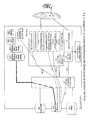
- the terminal 1 serves over a network 2 for data, voice and / or transmission of multimodal inputs and outputs.
- a dialogue system 2 comprises an input recognition 3 comprising further submodules, such as speech recognition, for recognition of DTMF tones 3a, language identification (language detection) 3b, speech classification (speech-based classification) 3c, speaker recognition (speaker verification and / or speaker identification) 3d , Emotion recognition 3e, determination of the connection / terminal identification 3f, detection of other multimodal inputs (stylus, keyboard, camera, touch screen, ...) 3g
- An evaluation / interpretation module 4 serves for the combined interpretation of the inputs using the input models or grammars 7. Here, the meaning of individual or combined multimodal inputs is ultimately determined and passed on with their help.
- An information output module 5 serves to output recorded speech, speech synthesis, display indications, audio signals, device vibration, etc.
- the output scheduler 6 defines the order and type of modes for outputting information contents based on rules set in output models (8).
- the input models 7 store the grammar and the context of the individual models of the input modules.
- Output grammar, output model 8 determines the behavior of the devices and applications to an input.
- the interaction / application management 9 finally executes the application in accordance with the specifications of the application data (16). It provides an intermediate layer between input devices and applications that link the grammars or input models 7 together.
- the application data 15 are used by the dialog applications 16 and thus influence the execution of the applications.
- the training application 17 is also the interpretable by the application manager description of an application that trains special input models.
- the FIG. 2 shows a form of training.
- the information input (eg, confirmation) system for an input made by the user with the terminal in at least one of several possible modes (eg, a movement / gesture) no defined input model (e.g. Movement model) are found in Fig. 7e (1) or if the similarity between the input and an existing movement pattern falls below a predetermined limit, then by a corresponding active dialog application for the training 17 and / or part of another dialog application in Fig. 16 the user 1 causes the meaning of the movement to be defined via language 3a and / or via any other medium (eg 3f) (2), (9-6).
- the user is prompted by corresponding outputs of the training application 17 (9-6) to execute the respective movements for the expected meanings of the possible entries in the current dialog step.
- the individual movement pattern is assigned the meaning proposed to the user on the basis of the language model (eg rejection / approval).
- the user is given in a separate training application all the meanings of possible inputs contained in other input models for one or more applications for which he is requested to perform corresponding movements with the terminal. Implied training is a bit different.
- the system now recognizes a linguistic utterance for the original system output (eg "yes"), which is assigned the meaning "consent” for the given example, the same meaning is also assigned to the input motion pattern in the input model 7e, whereby the user can receive an indication via the information output that its meaning has been assigned to its last movement.
- a linguistic utterance for the original system output eg "yes”
- the same meaning is also assigned to the input motion pattern in the input model 7e, whereby the user can receive an indication via the information output that its meaning has been assigned to its last movement.
- each defined input sequence is assigned a meaning separately in an input model, ie for each input mode, a corresponding meaning can be assigned independently of other input modes separately on the basis of an operator action defined in the corresponding input model.
- a user reaction can only be regarded as secure if suitably set threshold values for recognizing the user reactions of at least two input media have been exceeded and the interpreted meanings (eg approval or rejection) match.
- a possible synchronous execution of specific input sequences in different modes has only a minor significance.
- Another possibility for further improving the security of the recognition of the meaning of input sequences of a user is the synchronous evaluation of combined feature vectors and / or input models of different input modes.
- resulting time-discrete vector sequences can be supplemented time-discretely by the data of the additionally trained mode on the basis of the vector sequences for the operating action of an input mode.
- common vector sequences and corresponding reference patterns can be evaluated for detecting the meaning of synchronous operator actions for at least two defined input modes.
- training combined reference patterns the assignment of a meaning to a reference pattern is considered with simultaneous inputs in several modes.
- the dialog sequence for supplementing an existing language model with the meaning "consent” is considered by at least one synchronous operation in which the movement of a terminal by the user is evaluated via acceleration and / or inclination sensors and / or camera signals.
- the training-enhanced, combined multimodal reference model provides greater reliability in detecting the importance of operator actions. If an approval of the user for a system output in addition to the speech input with a user-selected and trained movement of the terminal is underlined, then the result can be assigned a higher reliability than when input solely via speech. In the following it is assumed for the speech input that the meanings of the speech inputs described in the language models have already been defined administratively or via a previous training.
- a primary input mode For the implicit training of combined multimodal input models, it is also assumed that for a primary input mode the meanings of specific operator actions are defined in the corresponding input model.
- voice input is considered the primary input mode.
- a primary input modes with predefined models are also movement, keyboard, stylus input, inputs using a camera and other modes conceivable with the aid of z. B. then the meanings of voice inputs can be defined.
- a different primary mode can also be defined for different dialog steps in an application.
- existing applications can be operated in primary mode.
- the voice input is again used as the primary mode and the detection of terminal device movements as the secondary mode.
- the inclination and movement paths of the terminal are simultaneously recorded in the background and added to the multimodal input models described under explicit training.
- the moving parts of the reference pattern receive a greater weight in the evaluation of the inputs.
- the multimodal input model can also be trained on movement inputs in secondary mode and constantly adapted.
- the determination of the meaning of inputs alone is only a partial aspect of the interpretation of motion inputs.
- User input during a discourse or dialogue with a system does not just contain content information that can be interpreted semantically according to the defined meaning, but also information of a pragmatic nature on the type of inputs, such.
- the detection of the type of input can also be done via the movement of the mobile terminal. Since, after a successful dialog step in a guided dialog, when inputting user information via the primary mode, the type of input may be assumed to be known, the recorded motion may contain meaningful as well as pragmatic information reflecting the type of input. In this case, it may be administratively determined whether content information for a particular input type of input or part of an input is possible and / or permitted for a secondary mode (eg inputs about the movement of the terminal), so that in the negative case only it is possible to determine the input type via the secondary mode.
- a secondary mode eg inputs about the movement of the terminal
Landscapes
- Engineering & Computer Science (AREA)
- Human Computer Interaction (AREA)
- Physics & Mathematics (AREA)
- General Engineering & Computer Science (AREA)
- Theoretical Computer Science (AREA)
- Audiology, Speech & Language Pathology (AREA)
- Health & Medical Sciences (AREA)
- Acoustics & Sound (AREA)
- Multimedia (AREA)
- Computational Linguistics (AREA)
- General Physics & Mathematics (AREA)
- Artificial Intelligence (AREA)
- User Interface Of Digital Computer (AREA)
- Input From Keyboards Or The Like (AREA)
Abstract
Description
Die Erfindung betrifft ein Verfahren und eine Vorrichtung, die es ermöglichen, die semantische Interpretation der Eingaben in einzelnen und/oder kombinierten Modi für ein multimodales Dialogsystem durch den Nutzer eines Telekommunikationsendgerätes zu definieren.The invention relates to a method and a device which make it possible to define the semantic interpretation of the inputs in individual and / or combined modes for a multimodal dialog system by the user of a telecommunication terminal.
Bekannt sind multimodale Dialogsysteme (siehe http://www.w3.org/TR/mmi-framework/) für die eine Vielzahl von multimodalen Eingabemöglichkeiten, wie Sprache, Tastatur, Griffel, Touchscreen, GPS vorgesehen sind. Für jeden dieser Eingabemodi, sind in einem derartigen System die Bedeutungen der Nutzereingaben zu definieren. Gleiche Eingaben können dabei für unterschiedliche Anwendungen sowohl gleiche, als auch unterschiedliche Bedeutungen haben. Im Allgemeinen ähnlich für unterschiedliche Anwendungen sind z. B. für die Eingabemodi Sprache und/oder Tastatur/Maus/Griffel Eingabekonzepte für Zustimmung oder Ablehnung zu einer Systemausgabe definiert. Für die Sprache sind das in der deutschen Sprache z. B. die Wörter "Ja" bzw. "Nein" oder entsprechende Synonyme oder komplexere z. B. in einer Spracherkennungsgrammatik zu definierende Ausdrucksweisen. Sollen jedoch die Bedeutung z. B. von Bewegungen des Endgerätes durch den Nutzer oder Eingaben interpretiert werden, die verschiedene Modi kombiniert anwenden, so existieren dazu kaum allgemein anerkannte Muster (z. B. Bewegungsmuster) für unterschiedliche Eingabekonzepte. Selbst, wenn Nutzer z. B. durch entsprechende Bildschirmausgaben zu bestimmten Bewegungen mit dem Endgerät für entsprechend zugeordnete Eingabekonzepte aufgefordert werden, können aufgrund unterschiedlicher, individueller Interpretationen der Aufforderungen durch die Nutzer individuelle Abweichungen in der Gestik entstehen. Eine Aufgabe besteht also darin, im Rahmen eines multimodalen Dialogsystems Möglichkeiten zu finden, entweder vorhandene, durchschnittliche Reaktionen beschreibende administrativ eingestellte Eingabemodelle (z. B. Bewegungsmodelle) der nutzerindividuellen Interpretation anzupassen oder nutzerindividuelle neue Eingabemodelle für vorgesehene Nutzeraktionen zu definieren, ohne dass eine Vielzahl von Nutzerreaktionen (z. B. Endgerätebewegungen und/oder deren Kombinationen mit Reaktionen in anderen Modi) und entsprechende Modelle durch den System- und/oder Anwendungsentwickler vorhergesehen werden können. Aus dem Stand der Technik sind im Allgemeinen bekannt der Aufbau von Dialogsystemen, die der sprachlichen und analog der multimodalen Interaktion mit mindestens einem Nutzer dienen (siehe auch http://www.w3.org/TR/2000/WD-voice-intro-20001204/). Auch wird international versucht, Dialogsysteme an bekannte Eigenschaften einzelner Nutzer zu adaptieren (siehe
Speziell für sprecherabhängige Spracherkennungssysteme (z. B. Diktiersysteme) sind zum Training der akustischen Modelle für einzelne Wörter und/oder Wortfolgen Methoden bekannt, bei denen der Nutzer des Systems die für das Training vorgesehenen Wörter, Wortfolgen und/oder Texte auf einem Bildschirm angezeigt bekommt und diese, ggf. mehrfach, über ein Mikrophon nachsprechen muss, d.h. die später zu erkennenden Sprachmodelle werden dabei durch Eingaben über das gleiche Medium (Sprache) trainiert, wobei die Bedeutung der zu trainierenden Äußerung vorgegeben ist und ggf. über den Bildschirm zur Anzeige gebracht oder über ein Sprachausgabesystem ausgegeben wird.
Inzwischen sind ebenfalls Endgeräte bekannt, welche mit Sensoren zur Bestimmung der Lage bzw. Orientierung und mit Bewegungssensoren ausgestattet sind, welche z. B. die Eingabe von Informationen durch den Nutzer über Bewegungen ermöglichen (siehe
Die Erfassung von Endgerätebewegungen ist damit zwar möglich, jedoch wird die Zuweisung der Bedeutung bestimmter Bewegungen meist anwendungsbezogen fest vorgegeben, was der automatischen Interpretation einer natürlichen, individuell ausgeprägten Gestik enge Grenzen setzt.Multimodal dialog systems are known (see http://www.w3.org/TR/mmi-framework/) for a variety of multimodal input options, such as language, keyboard, stylus, touch screen, GPS are provided. For each of these input modes, the meanings of the user inputs are to be defined in such a system. Identical inputs can have the same as well as different meanings for different applications. In general, similar for different applications are z. For example, for the input modes language and / or keyboard / mouse / stylus, input concepts for approval or rejection to a system output are defined. For the language that are in the German language z. For example, the words "yes" or "no" or corresponding synonyms or more complex z. B. expressions to be defined in a speech recognition grammar. However, if the meaning z. If, for example, movements of the terminal are interpreted by the user or inputs that combine different modes, then there are hardly any generally accepted patterns (eg, motion patterns) for different input concepts. Even if users z. B. prompted by appropriate screen outputs to certain movements with the terminal for correspondingly assigned input concepts may arise due to different, individual interpretations of the requests by the user individual deviations in the gesture. A task therefore consists in finding possibilities in a multimodal dialogue system to either adapt existing input models (eg movement models) describing average reactions to the user-specific interpretation or to define user-defined new input models for intended user actions without a large number of user-defined input models User responses (eg, device movements and / or combinations thereof with responses in other modes) and corresponding models may be anticipated by the system and / or application developer. It is generally known from the state of the art to construct dialog systems which serve the linguistic and analogous multimodal interaction with at least one user (see also http://www.w3.org/TR/2000/WD-voice-intro- 20001204 /). There is also an international attempt to adapt dialog systems to familiar properties of individual users (see
Specially for speaker-dependent speech recognition systems (eg dictation systems), methods for training the acoustic models for individual words and / or word sequences are known in which the user of the system receives the words, word sequences and / or texts provided for the training on a screen and this, possibly several times, has to be repeated via a microphone, ie the language models to be recognized later are trained by inputs via the same medium (language), whereby the meaning of the utterance to be trained is predetermined and optionally displayed on the screen or output via a voice output system.
Meanwhile, terminals are also known, which are equipped with sensors for determining the position or orientation and with motion sensors, which, for. B. allow the user to enter information via movements (see
The detection of device movements is thus possible, but the assignment of the meaning of certain movements is usually fixed application-related, which sets the automatic interpretation of a natural, individually pronounced gestures narrow limits.
Die Aufgabe der vorliegenden Erfindung ist es, ein Verfahren und entsprechende Vorrichtung bereitzustellen, die es erlauben, dass die semantische Interpretation der Eingaben in einzelnen und/oder kombinierten Modi für ein multimodales Dialogsystem durch den Nutzer eines Telekommunikationsendgerätes definierbar ist.The object of the present invention is to provide a method and corresponding device which allow the semantic interpretation of the inputs in individual and / or combined modes for a multimodal dialog system to be defined by the user of a telecommunication terminal.
Gelöst wird diese Aufgabe durch ein Verfahren und eine Vorrichtung mit den Merkmalen der unabhängigen Ansprüche.This object is achieved by a method and an apparatus having the features of the independent claims.
Zur Realisierung der Aufgabenstellung wird ein multimodales Dialogsystem zusätzlich mit Mitteln ausgestattet, die es erlauben, dass aus bedeutungstragenden und in den Eingabemodellen schon definierten Nutzerreaktionen Modelle für andere Medien generiert werden, deren Bedeutung durch die schon definierten, ggf. administrativ und/oder Anwendungsentwickler generierten Eingabemodelle beschrieben werden. Dies kann z. B. durch Einsatz von mindestens einer Zusatzanwendung oder einen Teil einer anderen Dialoganwendung geschehen, welche rückkoppelnd nach Erkennung eines bestimmten Bewegungsmusters den Nutzer zur Definition der Bedeutung dieses Bewegungsmusters über einen anderen Eingabemodus (z. B. Sprache und/oder Griffel und/oder Tastatur und/oder Touchscreen und/oder Kamera(Gestik) und/oder Bewegung) auffordert, für den die Bedeutungen bestimmter Eingabemodelle schon definiert sind. Dabei können einem Eingabemodell oder einer Kombination von Eingabemodellen zur gleichen Nutzerreaktion in Abhängigkeit von der jeweiligen Zielanwendung und/oder Kontext unterschiedliche Bedeutungen zugewiesen werden.To realize the task, a multimodal dialog system is additionally equipped with means that allow meaningful and user-defined input models to generate models for other media, the meaning of which is defined by input models already defined, possibly administratively and / or application developers to be discribed. This can be z. B. by using at least one additional application or a part of another dialog application, which feedback after recognition of a particular movement pattern, the user to define the meaning of this movement pattern via another input mode (eg., Speech and / or stylus and / or keyboard and / or touchscreen and / or camera (gesture) and / or motion) for which the meanings of certain input models are already defined. In this case, different meanings can be assigned to an input model or a combination of input models for the same user reaction as a function of the respective target application and / or context.
Im Einzelnen handelt es sich um ein Verfahren zur Benutzer-individuellen Definition der Interpretation von Eingaben in ein multimodales, mehrere Eingabegeräte umfassendes, Dialogsystem eines Telekommunikationsendgerätes. Hierbei kann es sich vorzugsweise um einen PDA, ein mobiles Telefon oder ein Smartphone handeln.Specifically, it is a method for user-individual definition of the interpretation of input into a multimodal, multiple input devices comprehensive, dialogue system of a telecommunications terminal. This may preferably be a PDA, a mobile phone or a smartphone.
Dieses weist einen Speicherbereich auf, der eine Datenbank verwaltet, in der Eingabemodelle für ein Eingabegeräte oder Eingabemodelle für eine Kombination von Eingabegeräten abgelegt sind. Die Eingabegeräte umfassen Kontexterkenner, welcher z.B. mit Hilfe eines Positionierungssystems den örtlichen Kontext oder z.B. über bestimmte Bewegungsmuster die Umgebungssituation (z.B. Erschütterungen im Fahrzeug) bestimmen kann; Griffel,-Touchscreen-, Tasten-, Tastatureingabe; Bewegungs-, Neigungs-, Lageerkennung; Sprechererkennung; Sprecherklassifizierung; Spracherkennung. Da der Kontexterkenner sinnvollerweise auch interpretativ durch Auswertung anderer Eingaben wirksam werden kann, kann er ebenfalls auch als Bestandteil eines Auswertungs- und Interpretationsmoduls betrachtet werden.
Falls nun eine Eingabe von einer Anwendung erwartet wird, die einem Telekommunikationsendgerät zugeordnet ist, wird entsprechend des Eingabegerätes und dem ihm zugeordneten Eingabemodell ein Zuordnungsversuch der Eingabe zu einem oder mehreren Eingabemodellen versucht. Für den Fall, das die Eingabe einem Eingabemodell zugeordnet werden kann, wird nun die Bedeutung der Eingabe in Bezug zu der Anwendung ermittelt und einem Interaktions-/Applikations- Manager übergeben. Dieser reicht nun die Eingabe an die Applikation weiter.
Falls hingegen kein Eingabemodell gefunden wird oder eine ausreichend sichere Zuordnung zu einem Eingabemodell nicht erfolgen kann, so schaltet das Verfahren um auf ein alternatives Eingabeverfahren oder Eingabegerät dessen Eingabemodell ausreichend definiert ist und fordert danach den Benutzer zur erneuten Eingabe über das alternative Eingabeverfahren oder das alternative Eingabegerät auf. Die Auswahl des alternativen Eingabeverfahrens oder alternativen Ausgabegerätes, bezieht sich auch auf das Eingabemodell, das für die alternative Eingabe in Bezug zu der gerade laufenden Anwendung vorhanden ist. So kann es sein, dass manches Eingabegerät für eine Anwendung besser geeignet ist als ein anderes, da das Eingabemodell in Bezug zu den Anwendungen unterschiedlich definiert ist. So kann es ebenfalls vorkommen, dass die gleiche Eingabe bei unterschiedlichen Anwendungen eine unterschiedliche Bedeutung hat.This has a memory area that manages a database in which input models for input devices or input models for a combination of input devices are stored. The input devices include contexts connoisseurs, which can determine eg with the help of a positioning system the local context or eg via certain movement patterns the environment situation (eg vibrations in the vehicle); Stylus, touchscreen, keyboard, keyboard input; Movement, inclination, position detection; Speaker recognition; Spokesman classification; Voice recognition. Since the connoisseur can logically also be interpreted interpretatively by evaluating other inputs, it can also be considered as part of an evaluation and interpretation module.
If an input is now expected from an application which is assigned to a telecommunication terminal, an assignment attempt of the input to one or more input models is attempted in accordance with the input device and the input model assigned to it. In the event that the input can be assigned to an input model, the meaning of the input in relation to the application is now determined and passed to an interaction / application manager. This now passes on the input to the application.
If, on the other hand, no input model is found or a sufficiently secure assignment to an input model can not be made, then the method switches to an alternative input method or input device whose input model is sufficiently defined and then prompts the user for re-input via the alternative input method or the alternative input device on. Selection of the alternative input method or alternative output device also refers to the input model present for the alternative input relative to the currently running application. So it can be that many things Input device is more appropriate for one application than another because the input model is defined differently in relation to the applications. It may also happen that the same input has a different meaning in different applications.
Die erneute Eingabe über das alternative Eingabeverfahren oder das Eingabegerät ersetzt die ursprüngliche Eingabe und es wird so die Bedeutung der Eingabe anhand dessen Eingabemodells bestimmt. Die so bestimmte Bedeutung wird an die Anwendung weitergeleitet, wobei der ursprünglichen Eingabe, die gepuffert wurde, die so bestimmte Bedeutung zugeordnet wird, um diese dann im Eingabemodell zu speichern. In einer bevorzugten Ausführungsform erfolgt in einem interaktiven Dialog eine Abfrage, ob die Eingabe auch tatsächlich im Eingabemodell gespeichert werden soll. Ein solches Training wird interaktives Training genannt. Hierbei wird sichergestellt, dass lediglich gewollte Trainingsergebnisse in das Modell übernommen werden. Durch den Dialog kann vermieden werden, dass ein nicht gewünschtes Ergebnis gespeichert wird.
Im Gegensatz dazu gibt es ein explizites Training, bei dem der Benutzer vorzugsweise mehrfach aufgefordert wird, die Eingabe zu einer z.B. im Sprachmodell vorgegebenen Bedeutung einer Spracheingabe vorzunehmen, wobei die Bestätigung durch ein alternatives Eingabeverfahren oder Eingabegerät, dessen Eingabemodell ausreichend definiert ist, erfolgt.The re-entry via the alternative input method or the input device replaces the original input and thus the meaning of the input is determined by its input model. The meaning thus determined is passed to the application, the original input being buffered being assigned the meaning thus determined, and then stored in the input model. In a preferred embodiment, an interactive dialog is used to query whether the input should actually be stored in the input model. Such training is called interactive training. This ensures that only intentional training results are incorporated into the model. The dialogue can be used to avoid storing an undesired result.
In contrast, there is an explicit training in which the user is preferably asked several times to make the input to an example given in the language model meaning a voice input, the confirmation by an alternative input method or input device whose input model is sufficiently defined, takes place.
In einer bevorzugten Ausführungsform kann es vorkommen, das bestimmte Eingabemodelle Kombinationen von Eingaben auf unterschiedlichen Geräten zugelassen. So können sowohl parallele Eingaben als auch Eingabefolgen zulässig sind.In a preferred embodiment, it may happen that certain input models allow combinations of inputs on different devices. So both parallel inputs and input sequences are allowed.
Die Eingabefolgen werden durch Vektordefinitionen synchronisiert. Hierbei sind die Eingabefolgen vorzugsweise zeitdiskret.
Die Nutzung von Modi mit vorhandenen Bedeutungsdefinitionen der Eingaben in entsprechenden Eingabemodellen kann damit zur Definition der Bedeutung von Eingaben genutzt werden, für die noch keine Bedeutungsdefinitionen vorliegen. Durch die Bildung kombinierter Eingabemodelle und/oder die Ermittlung des Eingabetyps wird die Wahrscheinlichkeit einer erfolgreichen Auswertung multimodaler Nutzereingaben erhöht.
Das implizite Training während geführter Dialoge im Primärmodus schafft mit der Bildung kombinierter Eingabemodelle die Grundlage für einen Übergang zu freien Dialogen des Nutzers mit dem System.The input sequences are synchronized by vector definitions. In this case, the input sequences are preferably time-discrete.
The use of modes with existing meaning definitions of the inputs in corresponding input models can thus be used to define the meaning of inputs for which no meaning definitions are yet available. Forming combined input models and / or determining the input type increases the likelihood of successful evaluation of multimodal user input.
The implicit training during guided dialogues in the primary mode, with the formation of combined input models, provides the basis for a transition to free dialogues of the user with the system.
Im Folgenden werden die Figuren kurz beschrieben. Sie dienen zum besseren Verständnis der Erfindung und der Ausführungsformen.
-
Fig. 1 zeigt die Struktur eines Dialogsystems, mit multimodaler Beeinflussung der Bedeutungsinterpretation der Modi, -
Fig. 2 zeigt ein Beispiel für unimodale Beeinflussung der Bedeutungsinterpretation der Modi.
-
Fig. 1 shows the structure of a dialogue system, with multimodal influence on the meaning interpretation of the modes, -
Fig. 2 shows an example of unimodal influence on the meaning interpretation of the modes.
Aus der
Ein Dialogsystem 2 umfasst eine Eingabeerkennung 3, die weitere Untermodule aufweist, wie Spracherkennung, zur Erkennung von DTMF-Tönen 3a, Sprachenerkennung (language identification, language detection) 3b, Sprachklassifizierung (Sprachbasierte Klassifizierung) 3c, Sprechererkennung (Sprecherverifizierung und/oder Sprecheridentifizierung) 3d, Emotionserkennung 3e, Ermittlung der Anschluss-/Endgerätekennung 3f, Erkennung anderer multimodaler Eingaben (Griffel, Tastatur, Kamera, Touchscreen, ...)3g
Ein Auswertungs-/Interpretationsmodul 4 dient zur kombinierten Interpretation der Eingaben unter Nutzung der Eingabemodelle bzw. Grammatiken 7. Hier wird mit deren Hilfe letztlich die Bedeutung einzelner oder kombinierter multimodaler Eingaben ermittelt und weitergereicht.
Ein Informationsausgabemodul 5 dient zur Ausgabe von aufgezeichnete Sprache, Sprachsynthese, Displayanzeigen, Audiosignale, Gerätevibration etc.
Die Ausgabeplanung 6 definiert anhand von Regeln, die in Ausgabemodellen (8) festgelegt sind, die Reihenfolge und die Art der Modi zur Ausgabe von Informationsinhalten.
Die Eingabemodelle 7 speichern, die Grammatik und den Kontext der einzelnen Modelle der Eingabemodule.
Ausgabegrammatik, Ausgabemodell 8 bestimmt das Verhalten der Geräte und Anwendungen auf eine Eingabe.
Das Interaktions-/Applikationsmanagement 9 führt letzlich die Applikation gemäß der Vorgaben der Applikationsdaten (16) aus. Es stellt eine Zwischenschicht zwischen Eingabegeräten und Anwendungen dar, die die Grammatiken bzw. die Eingabemodelle 7 miteinander verknüpfen.
Die Anwendungsdaten 15 werden von den Dialoganwendungen 16 genutzt und haben somit Einfluss auf die Ausführung der Anwendungen.A
An evaluation /
An information output module 5 serves to output recorded speech, speech synthesis, display indications, audio signals, device vibration, etc.
The output scheduler 6 defines the order and type of modes for outputting information contents based on rules set in output models (8).
The
Output grammar,
The interaction /
The
Die Trainingsanwendung 17 ist ebenfalls die durch den Applikationsmanager interpretierbare Beschreibung einer Applikation, die spezielle Eingabemodelle trainiert.The
Die
Bei einer anderen Form des expliziten Trainings werden dem Nutzer in einer separaten Trainingsapplikation sämtliche in anderen Eingabemodellen enthaltene Bedeutungen möglicher Eingaben für eine oder mehrere Anwendungen ausgegeben, für die er aufgefordert wird, mit dem Endgerät entsprechende Bewegungen auszuführen.
Beim implizierten Training ist der Ablauf etwas anders. Kann während der Bereitschaft des Systems zur Informationseingabe (z. B. zur Bestätigung) für eine durch den Nutzer mit dem Endgerät durchgeführte Bewegung kein definiertes Bewegungsmodell in 7e gefunden werden (1.) oder unterschreitet die Ähnlichkeit zwischen dem eingegebenen und einem vorhandenen Bewegungsmuster einen vorgegebenen Grenzwert, so wird durch eine entsprechend aktive Dialoganwendung für das Training 17 und/oder ein Teil einer anderen Dialoganwendung in 16 der Nutzer 1 aufgefordert, über Sprache 3a und/oder über einen beliebiges anderes Medium (z. B. 3f) für das in entsprechenden Eingabemodellen schon Bedeutungen zugeordnet worden waren, die Antwort einzugeben (2.), (9-6). Erkennt das System nun eine sprachliche Äußerung zur ursprünglichen Systemausgabe (z. B. "Ja"), der für das gegebene Beispiel die Bedeutung "Zustimmung" zugeordnet ist, so wird auch im Eingabemodell 7e dem eingegebenen Bewegungsmuster die gleiche Bedeutung zugeordnet, wobei der Nutzer über die Informationsausgabe einen Hinweis erhalten kann, dass seiner letzten Bewegung die genannte Bedeutung zugeordnet worden ist.The
In another form of explicit training, the user is given in a separate training application all the meanings of possible inputs contained in other input models for one or more applications for which he is requested to perform corresponding movements with the terminal.
Implied training is a bit different. During the standby of the system for information input (eg confirmation) for a movement performed by the user with the terminal, no defined 7e are found (1.) or if the similarity between the input and an existing movement pattern falls below a predetermined limit value, the user 1 is prompted by a correspondingly active dialog application for the
Bei den beiden oben aufgeführten Lösungen wird jeweils jeder definierten Eingabefolge in einem Eingabemodell separat eine Bedeutung zugewiesen, d.h. für jeden Eingabemodus kann separat anhand einer im entsprechenden Eingabemodell definierten Bedienhandlung unabhängig von anderen Eingabemodi eine entsprechende Bedeutung zugewiesen werden. Nun kann zur Erhöhung der Erkennungssicherheit eine Nutzerreaktion erst als sicher erkannt gewertet werden, wenn entsprechend gesetzte Schwellwerte für die Erkennung der Nutzerreaktionen von mindestens zwei Eingabemedien überschritten worden sind und die interpretierten Bedeutungen (z. B. Zustimmung oder Ablehnung) übereinstimmen.
Bei Verfahren, in denen die Bedeutungen der Eingabefolgen in den einzelnen Eingabemodi unabhängig voneinander ermittelt werden, hat ein möglicher synchroner Ablauf bestimmter Eingabefolgen in unterschiedlichen Modi nur eine untergeordnete Bedeutung.In the case of the two solutions listed above, each defined input sequence is assigned a meaning separately in an input model, ie for each input mode, a corresponding meaning can be assigned independently of other input modes separately on the basis of an operator action defined in the corresponding input model. Now, to increase the reliability of recognition, a user reaction can only be regarded as secure if suitably set threshold values for recognizing the user reactions of at least two input media have been exceeded and the interpreted meanings (eg approval or rejection) match.
In the case of methods in which the meanings of the input sequences in the individual input modes are determined independently of one another, a possible synchronous execution of specific input sequences in different modes has only a minor significance.
Eine andere Möglichkeit zur weiteren Verbesserung der Sicherheit der Erkennung der Bedeutung von Eingabefolgen eines Nutzers besteht in der synchronen Auswertung kombinierter Merkmalsvektoren und/oder Eingabemodelle verschiedener Eingabemodi.
Beim Training kombinierter Merkmalsvektoren und/oder Eingabemodelle können resultierende zeitdiskrete Vektorfolgen auf der Grundlage der Vektorfolgen für die Bedienhandlung eines Eingabemodus zeitdiskret durch die Daten des zusätzlich trainierten Modus ergänzt werden. Dementsprechend können zur Erkennung der Bedeutung synchroner Bedienhandlungen für mindestens zwei definierte Eingabemodi gemeinsame Vektorfolgen und entsprechende Referenzmuster zur Auswertung gelangen.
Beim Training kombinierter Referenzmuster wird die Zuweisung einer Bedeutung zu einem Referenzmuster bei gleichzeitigen Eingaben in mehreren Modi betrachtet.
Als Beispiel wird im folgenden der Dialogablauf zur Ergänzung eines vorhandenen Sprachmodells mit der Bedeutung "Zustimmung" durch mindestens eine synchrone Bedienhandlung betrachtet bei der über Beschleunigungs- und/oder Neigungssensoren und/oder Kamerasignalen die Bewegung eines Endgerätes durch den Nutzer ausgewertet wird. Das durch das Training ergänzte, kombinierte multimodale Referenzmodell erlaubt eine höhere Zuverlässigkeit bei der Erkennung der Bedeutung von Bedienhandlungen. Wird nun eine Zustimmung des Nutzers zu einer Systemausgabe zusätzlich zur Spracheingabe mit einer durch den Nutzer gewählten und trainierten Bewegung des Endgerätes unterstrichen, so kann dem Ergebnis eine höhere Zuverlässigkeit zugewiesen werden, als bei Eingabe allein über Sprache. Im Folgenden wird für die Spracheingabe davon ausgegangen, dass die Bedeutungen der in den Sprachmodellen beschriebenen Spracheingaben schon administrativ oder über ein vorheriges Training definiert worden sind. Dabei können gleichen Eingaben anhängig vom Anwendungskontext auch unterschiedliche Bedeutungen zugewiesen werden.
Beim expliziten Training ist hier der Verfahrensablauf wie folgt. Ähnlich wie oben beschrieben, wird der Nutzer in einer speziellen Trainingsapplikation ggf. jeweils mehrfach aufgefordert für jede in seiner Bedeutung im initialen Sprachmodell definierte Eingabefolge, diese Äußerungen unter gleichzeitiger Durchführung der entsprechenden unterstützende Bewegungen einzugeben.
Aus den erfassten Bewegungsmustern wird dabei nicht, wie oben beschrieben, ein separates Bewegungsmodell abgeleitet, welches für sich allein bei kombinierter Eingabe einen zweiten Bedeutungswert generiert, sondern aus existierendem Sprachmodell und der erfassten digitalisierten Bewegungsfolge im Speicher ein gemeinsames Eingabemodell ermittelt. Dazu können z. B. auf unterer Ebene akustische Modelle um erfasste Bewegungsmerkmale oder auf höheren Ebene Sprachmodelle mit der erfassten Neigungs- und Bewegungsbahn ergänzt werden. Diese Vorgänge können für einzelne Bedeutungen auch wiederholt werden, um statistisch relevante Modelle zu berechnen.Another possibility for further improving the security of the recognition of the meaning of input sequences of a user is the synchronous evaluation of combined feature vectors and / or input models of different input modes.
When training combined feature vectors and / or input models, resulting time-discrete vector sequences can be supplemented time-discretely by the data of the additionally trained mode on the basis of the vector sequences for the operating action of an input mode. Accordingly, common vector sequences and corresponding reference patterns can be evaluated for detecting the meaning of synchronous operator actions for at least two defined input modes.
When training combined reference patterns, the assignment of a meaning to a reference pattern is considered with simultaneous inputs in several modes.
As an example, the dialog sequence for supplementing an existing language model with the meaning "consent" is considered by at least one synchronous operation in which the movement of a terminal by the user is evaluated via acceleration and / or inclination sensors and / or camera signals. The training-enhanced, combined multimodal reference model provides greater reliability in detecting the importance of operator actions. If an approval of the user for a system output in addition to the speech input with a user-selected and trained movement of the terminal is underlined, then the result can be assigned a higher reliability than when input solely via speech. In the following it is assumed for the speech input that the meanings of the speech inputs described in the language models have already been defined administratively or via a previous training. The same entries can be pending from Application context can also be assigned different meanings.
In explicit training, the procedure here is as follows. Similarly as described above, the user in a special training application, if necessary, in each case repeatedly requested for each defined in its meaning in the initial language model input sequence to enter these utterances while performing the corresponding supporting movements.
As described above, a separate movement model is derived from the detected movement patterns, which alone generates a second meaning value when the input is combined, but determines a common input model from the existing language model and the acquired digitized motion sequence in the memory. These can z. B. on the lower level acoustic models to detected motion characteristics or higher level language models are complemented with the detected tilt and trajectory. These operations can also be repeated for individual meanings to calculate statistically relevant models.
Nach erfolgreichem Training liegt ein kombiniertes multimodales Eingabemodell mit der entsprechend zugeordneten Bedeutung vor. Eine hohe Zuverlässigkeit für die Bedeutung einer erkannten Eingabe wird nun erreicht, wenn sowohl Spracheingabe als auch Bewegung mit dem im multimodalen Eingabemodell definierten Eingaben näherungsweise übereinstimmen. Eine unimodale Eingabe mit der vom Nutzer gewünschten Bedeutung bedeutet dabei nicht zwangsläufig eine Fehleingabe, sondern kann dem System auch die gewünschte Bedeutung allerdings mit einem geringeren Zuverlässigkeitswert liefern.After successful training, there is a combined multimodal input model with the correspondingly assigned meaning. High reliability for the significance of a recognized input is now achieved when both speech input and motion approximate the input defined in the multimodal input model. A unimodal input with the meaning desired by the user does not necessarily mean an incorrect input, but can also provide the system with the desired meaning with a lower reliability value.
Für das implizite Training kombinierter multimodaler Eingabemodelle wird ebenfalls vorausgesetzt, dass für einen primären Eingabemodus die Bedeutungen bestimmter Bedienhandlungen im entsprechenden Eingabemodell definiert sind. Im folgenden Beispiel wird die Spracheingabe als primärer Eingabemodus betrachtet. Als primäre Eingabemodi mit vordefinierten Modellen sind ebenfalls Bewegungs-, Tastatur-, Griffeleingabe, Eingaben unter Nutzung einer Kamera und andere Modi vorstellbar, mit deren Hilfe z. B. dann die Bedeutungen von Spracheingaben definiert werden können. Dabei kann in einer Applikation je nach vorhandener Bedeutungsdefinition von Eingaben im Eingabemodell für verschiedene Dialogschritte auch ein unterschiedlicher Primärmodus definiert sein.
Für das implizite Training kombinierter Eingabemodelle können vorhandene Applikationen im Primärmodus bedient werden. Im folgenden Beispiel dient wieder die Spracheingabe als Primärmodus und die Erfassung von Endgerätebewegungen als Sekundärmodus.
Bedient der Nutzer eine vorhandene Applikation über den Primärmodus Sprache, so werden gleichzeitig im Hintergrund Neigungs- und Bewegungsbahnen des Endgerätes erfasst und den unter explizitem Training beschrieben multimodalen Eingabemodellen hinzugefügt. Mit größerer Häufigkeit der Nutzung einer bestimmten Applikation und häufiger Übereinstimmung der Eingabemuster der Bewegungen (Sekundärmodus) für gleiche Bedeutungseingaben erhalten die Bewegungsteile der Referenzmuster bei der Auswertung der Eingaben ein größeres Gewicht. Auf diese Weise kann das multimodale Eingabemodell auch auf Bewegungseingaben im Sekundärmodus trainiert und laufend adaptiert werden.
Die Bestimmung der Bedeutung von Eingaben allein ist nur ein Teilaspekt der Interpretation von Bewegungseingaben. Nutzereingaben während eines Diskurses oder Dialoges mit einem System enthalten nicht nur inhaltliche Informationen, die gemäß der definierten Bedeutung semantisch interpretiert werden können, sondern auch Informationen pragmatischer Art über den Typ der Eingaben, wie z. B. ob der Nutzer eine Frage zur Klärung stellt, oder einfach nur einen Ausgabeprompt beantwortet. Die Erfassung der Art der Eingabe kann zusätzlich über die Bewegung des mobilen Endgerätes erfolgen.
Da nach einem erfolgreichen Dialogschritt in einem geführten Dialog bei Eingabe einer Information des Nutzers über den Primärmodus der Typ der Eingabe als bekannt vorausgesetzt werden kann, kann die aufgezeichnete Bewegung neben bedeutungstragenden auch pragmatische Informationen enthalten, die den Typ der Eingabe widerspiegeln. Hierbei kann administrativ festgelegt worden sein, ob für einen bestimmten Eingabetyp einer Eingabe oder eines Teils einer Eingabe überhaupt inhaltliche Informationen für einen Sekundärmodus (z. B. Eingaben über die Bewegung des Endgerätes) möglich und/oder zugelassen sind, so dass im negativen Fall einzig die Ermittlung des Eingabetyps über den Sekundärmodus möglich ist. Durch Hinzufügen des ermittelten Eingabetyps in Kombination mit dem ermittelten Eingabemodell für den Sekundärmodus zum Gesamteingabemodell nach einer erfolgreichen Eingabe im Primärmodus während des impliziten Trainings liegen danach im Eingabemodell zusätzliche Informationen vor, die die Einbeziehung des Eingabetyps in die Auswahl von Teilmodellen und/oder Teilgrammatiken für den Primärmodus begünstigen. In Fällen, in denen die Auswahl des passenden Teilmodells bzw. Teilgrammatik bei entsprechenden Nutzereingaben während des Diskurses/Dialoges mit dem System unsicher ist, stellt die Auswertung des Eingabetyps über einen Sekundärmodus (z. B. Bewegungseingaben) somit ein zusätzliches Kriterium dar, welches die automatische Erkennung von Eingaben im Primärmodus (z. B. Spracheingaben) erleichtert.
Die bevorzugten Ausführungsformen dienen nicht der Beschränkung der vorliegenden Erfindung. Sie haben lediglich den Zweck des besseren Verständnisses. Der Schutzumfang bemisst sich maßgeblich durch die folgenden Ansprüche.For the implicit training of combined multimodal input models, it is also assumed that for a primary input mode the meanings of specific operator actions are defined in the corresponding input model. In the following example, voice input is considered the primary input mode. As a primary input modes with predefined models are also movement, keyboard, stylus input, inputs using a camera and other modes conceivable with the aid of z. B. then the meanings of voice inputs can be defined. Depending on the existing meaning definition of inputs in the input model, a different primary mode can also be defined for different dialog steps in an application.
For the implicit training of combined input models, existing applications can be operated in primary mode. In the following example, the voice input is again used as the primary mode and the detection of terminal device movements as the secondary mode.
If the user operates an existing application via the primary language mode, the inclination and movement paths of the terminal are simultaneously recorded in the background and added to the multimodal input models described under explicit training. With greater frequency of use of a particular application and frequent agreement of the input pattern of the movements (secondary mode) for the same meaning inputs, the moving parts of the reference pattern receive a greater weight in the evaluation of the inputs. In this way, the multimodal input model can also be trained on movement inputs in secondary mode and constantly adapted.
The determination of the meaning of inputs alone is only a partial aspect of the interpretation of motion inputs. User input during a discourse or dialogue with a system does not just contain content information that can be interpreted semantically according to the defined meaning, but also information of a pragmatic nature on the type of inputs, such. For example, if the user asks a question for clarification, or just answers a prompt prompt. The detection of the type of input can also be done via the movement of the mobile terminal.
Since, after a successful dialog step in a guided dialog, when inputting user information via the primary mode, the type of input may be assumed to be known, the recorded motion may contain meaningful as well as pragmatic information reflecting the type of input. In this case, it may be administratively determined whether content information for a particular input type of input or part of an input is possible and / or permitted for a secondary mode (eg inputs about the movement of the terminal), so that in the negative case only it is possible to determine the input type via the secondary mode. By adding the determined input type in combination with the determined input model for the secondary mode to the total input model after a successful input in the primary mode during the implicit training, additional information is present in the input model, which includes the inclusion of the input type in the selection of partial models and / or partial grammars for the input model Favor primary mode. In cases in which the selection of the appropriate partial model or partial grammar is uncertain for corresponding user inputs during the discourse / dialog with the system, the evaluation of the input type via a secondary mode (eg movement inputs) thus constitutes an additional criterion which the automatic recognition of input in primary mode (eg voice input).
The preferred embodiments are not intended to limit the present invention. They only have the purpose of better understanding. The scope of protection is determined by the following claims.
- 11
- Endgerätterminal
- 2a2a
- Daten-, Sprach- und/oder Übertragungsnetz für multimodale Ein- und AusgabenData, voice and / or transmission network for multimodal inputs and outputs
- 22
- Dialogsystemdialog system
- 33
- Eingabeerkennunginput recognition
- 3a3a
- Spracherkennung, Erkennung von DTMF-TönenSpeech recognition, recognition of DTMF tones
- 3b3b
- Sprachenerkennung (language identification, language detection)Language identification (language identification, language detection)
- 3c3c
- Sprachklassifizierung (Sprachbasierte Klassifizierung)Voice classification (voice-based classification)
- 3d3d
- Sprechererkennung (Sprecherverifizierung und/oder Sprecheridentifizierung)Speaker recognition (speaker verification and / or speaker identification)
- 3e3e
- Emotionserkennungemotion recognition
- 3f3f
- Ermittlung der Anschluss-/EndgerätekennungDetermination of the connection / terminal identification
- 3g3g
- Erkennung anderer multimodaler Eingaben (Griffel, Tastatur, Kamera, Touchscreen, ...)Recognition of other multimodal inputs (stylus, keyboard, camera, touchscreen, ...)
- 44
- Auswertungs-/InterpretationsmodulEvaluation / interpretation module
- 55
- Informationsausgabe (aufgezeichnete Sprache, Sprachsynthese, Displayanzeigen, Audiosignale, Gerätevibration)Information output (recorded speech, speech synthesis, displays, audio signals, device vibration)
- 66
- Ausgabeplanungexpenditure planning
- 77
- Eingabemodelleinput models
- 88th
- Ausgabegrammatik, AusgabemodellOutput grammar, output model
- 99
- Interaktions-/ApplikationsmanagementInteraction / application management
- 1515
- Anwendungsdatenapp data
- 1616
- Dialoganwendung (ggf. inkl. Trainingsapplikation und/oder Teilen davon)Dialog application (possibly including training application and / or parts thereof)
- 1717
- Trainingsapplikationtraining application
- CLICLI
- Calling Line IdentificationCalling Line Identification
- Grammatikgrammar
- Strukturierte Beschreibung möglicher auszuwertender Eingaben durch den Nutzer (z. B. gesprochene Sprache, Texteingaben, Griffel, Gesichtsmimik usw.) und/oder das System (z. B. Textzeichenfolgen in Dokumenten, aufgezeichnete Sprache, Multimediadateien); Form eines Eingabemodells/MedienmodellsStructured description of possible inputs to be evaluated by the user (eg spoken language, text input, stylus, facial expression, etc.) and / or the system (eg text strings in documents, recorded language, multimedia files); Form of an input model / media model
- HLRHLR
- Home Location RegisterHome Location Register
- Kontextcontext
- Umgebungsdaten für eine oder mehrere Anwendungen, wie z. B. Ort, Zeit, Nutzerpräferenzen, Gesundheitszustand, Terminkalender, Temperatur, Luftfeuchtigkeit, Endgeräteeigenschaften, nahe Endgeräte anderer Nutzer u.a.Environment data for one or more applications, such as Location, time, user preferences, health status, diary, temperature, humidity, terminal device properties, nearby end user devices, etc.
- Eingabemodell, MedienmodellInput model, media model
- Beschreibt die Reihenfolge, in der Eingaben (z. B. Wörter, Bewegungsmuster) vom Medienerkenner (z. B. Spracherkenner, Lage-/Bewegungserkenner) erwartet werden (z. B. Sprachmodell, Bewegungsmodell).Describes the order in which inputs (eg words, motion patterns) are expected by the media recognizer (eg speech recognizer, position / motion recognizer) (eg, language model, motion model).
- Unimodale InteraktionUnimodal interaction
- Kommunikation mit einem System über einen Modus (z.B. nur Sprache, nur Tastatur, nur Maus usw.)Communicating with a system via a mode (e.g., only speech, keyboard only, mouse only, etc.)
- Multimodale InteraktionMultimodal interaction
- Kommunikation mit einem System über mehrere Modi (z.B. Sprache und Griffel)Communicating with a system across multiple modes (e.g., language and stylus)
- Initialgrammatik NutzungshäufigkeitInitial grammar frequency of use
- Erster, nicht adaptierter Entwurf einer Grammatik Anzahl von Nutzungsvorgängen innerhalb eines bestimmten Zeitraumes, im allg. gleich einer Zählgeschwindigkeit, falls nicht gemittelt.First, non-adapted design of a grammar Number of usage operations within a certain period of time, generally equal to a count rate, if not averaged.
- (sprach-) Prompt(speech) prompt
- Sprachausgabe von InformationenSpeech output of information
- Sprachelanguage
- Kommunikationssystem, das der Verständigung mittels eines Systems von Symbolen dientCommunication system that serves the understanding by means of a system of symbols
- Sprecherklassifizierungspokesman classification
- Bestimmung der Zugehörigkeit mindestens eines Sprechers zu einer größeren Sprechergruppe anhand von Merkmalen der Stimme.Determining the affiliation of at least one speaker to a larger speaker group based on characteristics of the vote.
- Sprechererkennungspeaker recognition
- Authentifizierung oder Identifizierung eines Sprechers anhand von Merkmalen der StimmeAuthentication or identification of a speaker based on characteristics of the voice
- Zuverlässigkeitswert, ScoreReliability value, score
- Zahlenwert, der die Sicherheit bzw. Zuverlässigkeit von Ergebnisdaten widerspiegeltNumerical value that reflects the security or reliability of results data
Claims (15)
Applications Claiming Priority (1)
| Application Number | Priority Date | Filing Date | Title |
|---|---|---|---|
| DE102007024110A DE102007024110A1 (en) | 2007-05-22 | 2007-05-22 | Method for influencing the interpretation of multimodal inputs |
Publications (3)
| Publication Number | Publication Date |
|---|---|
| EP2012218A2 true EP2012218A2 (en) | 2009-01-07 |
| EP2012218A3 EP2012218A3 (en) | 2013-03-06 |
| EP2012218B1 EP2012218B1 (en) | 2017-10-11 |
Family
ID=39760940
Family Applications (1)
| Application Number | Title | Priority Date | Filing Date |
|---|---|---|---|
| EP08103835.8A Not-in-force EP2012218B1 (en) | 2007-05-22 | 2008-05-06 | Method for influencing the interpretation of multimodal inputs |
Country Status (2)
| Country | Link |
|---|---|
| EP (1) | EP2012218B1 (en) |
| DE (1) | DE102007024110A1 (en) |
Cited By (3)
| Publication number | Priority date | Publication date | Assignee | Title |
|---|---|---|---|---|
| CN103456298A (en) * | 2012-06-04 | 2013-12-18 | 三星电子株式会社 | Method of providing voice recognition service and electronic device therefore |
| CN104536677A (en) * | 2015-01-20 | 2015-04-22 | 湖南化身科技有限公司 | Three-dimensional digital portrait with intelligent voice interaction function |
| CN118468957A (en) * | 2023-05-09 | 2024-08-09 | 京东城市(北京)数字科技有限公司 | Training method and device for multi-modal sensitive information recognition model and electronic equipment |
Citations (4)
| Publication number | Priority date | Publication date | Assignee | Title |
|---|---|---|---|---|
| JP2001272413A (en) | 2000-03-27 | 2001-10-05 | Microstone Corp | Mobile phone with motion sensor |
| JP2002169645A (en) | 2000-12-01 | 2002-06-14 | Toshiba Corp | Mobile communication terminal |
| JP2003111142A (en) | 2001-09-28 | 2003-04-11 | Yamaha Corp | Mobile phone device and control method thereof |
| EP1617629A1 (en) | 2003-10-16 | 2006-01-18 | Vodafone K.K. | External device for mobile communication terminal, mobile communication terminal, and external display system for mobile communication terminal |
Family Cites Families (9)
| Publication number | Priority date | Publication date | Assignee | Title |
|---|---|---|---|---|
| US5664058A (en) * | 1993-05-12 | 1997-09-02 | Nynex Science & Technology | Method of training a speaker-dependent speech recognizer with automated supervision of training sufficiency |
| JP3267047B2 (en) * | 1994-04-25 | 2002-03-18 | 株式会社日立製作所 | Information processing device by voice |
| EP1102241A1 (en) * | 1999-11-19 | 2001-05-23 | Medical Development & Technology Information Division B.V. | Adaptive voice-controlled dialogue system |
| US7143043B1 (en) * | 2000-04-26 | 2006-11-28 | Openwave Systems Inc. | Constrained keyboard disambiguation using voice recognition |
| US6791529B2 (en) * | 2001-12-13 | 2004-09-14 | Koninklijke Philips Electronics N.V. | UI with graphics-assisted voice control system |
| US7890324B2 (en) * | 2002-12-19 | 2011-02-15 | At&T Intellectual Property Ii, L.P. | Context-sensitive interface widgets for multi-modal dialog systems |
| EP1705554A3 (en) * | 2005-03-25 | 2008-12-03 | AT&T Corp. | System and method for dynamically adapting performance of interactive dialog system basd on multi-modal confirmation |
| EP1761015B1 (en) * | 2005-09-02 | 2017-11-08 | Swisscom AG | Self-adaptive user interface for dialogue systems |
| US20070124507A1 (en) * | 2005-11-28 | 2007-05-31 | Sap Ag | Systems and methods of processing annotations and multimodal user inputs |
-
2007
- 2007-05-22 DE DE102007024110A patent/DE102007024110A1/en not_active Withdrawn
-
2008
- 2008-05-06 EP EP08103835.8A patent/EP2012218B1/en not_active Not-in-force
Patent Citations (4)
| Publication number | Priority date | Publication date | Assignee | Title |
|---|---|---|---|---|
| JP2001272413A (en) | 2000-03-27 | 2001-10-05 | Microstone Corp | Mobile phone with motion sensor |
| JP2002169645A (en) | 2000-12-01 | 2002-06-14 | Toshiba Corp | Mobile communication terminal |
| JP2003111142A (en) | 2001-09-28 | 2003-04-11 | Yamaha Corp | Mobile phone device and control method thereof |
| EP1617629A1 (en) | 2003-10-16 | 2006-01-18 | Vodafone K.K. | External device for mobile communication terminal, mobile communication terminal, and external display system for mobile communication terminal |
Non-Patent Citations (2)
| Title |
|---|
| HJALMARSSON, A.: "Adaptive Spoken Dialogue Systems", CENTRE FOR SPEECH TECHNOLOGY, KTH, January 2005 (2005-01-01) |
| QUEK, F. ET AL.: "Multimodal Human Discourse: Gesture and Speech", ACM TRANSACTIONS ON COMPUTER-HUMAN INTERACTION, vol. 9, no. 3, September 2002 (2002-09-01), XP001125795, DOI: doi:10.1145/568513.568514 |
Cited By (3)
| Publication number | Priority date | Publication date | Assignee | Title |
|---|---|---|---|---|
| CN103456298A (en) * | 2012-06-04 | 2013-12-18 | 三星电子株式会社 | Method of providing voice recognition service and electronic device therefore |
| CN104536677A (en) * | 2015-01-20 | 2015-04-22 | 湖南化身科技有限公司 | Three-dimensional digital portrait with intelligent voice interaction function |
| CN118468957A (en) * | 2023-05-09 | 2024-08-09 | 京东城市(北京)数字科技有限公司 | Training method and device for multi-modal sensitive information recognition model and electronic equipment |
Also Published As
| Publication number | Publication date |
|---|---|
| EP2012218B1 (en) | 2017-10-11 |
| EP2012218A3 (en) | 2013-03-06 |
| DE102007024110A1 (en) | 2008-12-11 |
Similar Documents
| Publication | Publication Date | Title |
|---|---|---|
| EP1927980B1 (en) | Method for classifying spoken language in spoken dialogue systems | |
| DE60215272T2 (en) | Method and apparatus for inputting linguistic data under unfavorable conditions | |
| DE60026637T2 (en) | Method for expanding the vocabulary of a speech recognition system | |
| DE10220524B4 (en) | Method and system for processing voice data and recognizing a language | |
| DE112018002857T5 (en) | Speaker identification with ultra-short speech segments for far and near field speech support applications | |
| DE102019217751B4 (en) | Method for operating a speech dialogue system and speech dialogue system | |
| DE60128372T2 (en) | METHOD AND SYSTEM FOR IMPROVING ACCURACY IN A LANGUAGE IDENTIFICATION SYSTEM | |
| DE60214850T2 (en) | FOR A USER GROUP, SPECIFIC PATTERN PROCESSING SYSTEM | |
| EP3224831A1 (en) | Motor vehicle operating device with a correction strategy for voice recognition | |
| EP3989218A1 (en) | User-friendly virtual speech assistant | |
| EP1249016B1 (en) | Method for the voice-operated identification of the user of a telecommunication line in a telecommunications network during an interactive communication using a voice-operated conversational system | |
| EP2012218B1 (en) | Method for influencing the interpretation of multimodal inputs | |
| EP1097447A1 (en) | Method and device for recognizing predetermined key words in spoken language | |
| EP1282897B1 (en) | Method for creating a speech database for a target vocabulary in order to train a speech recognition system | |
| DE102016204315A1 (en) | Means of transport, system and method for adjusting a length of a permitted speech break in the context of a voice input | |
| DE60014583T2 (en) | METHOD AND DEVICE FOR INTEGRITY TESTING OF USER INTERFACES OF VOICE CONTROLLED EQUIPMENT | |
| WO2001067435A9 (en) | Method for the voice-controlled initiation of actions by means of a limited circle of users, whereby said actions can be carried out in an appliance | |
| WO2014131763A2 (en) | Wording-based speech analysis and speech analysis device | |
| DE19851287A1 (en) | Data processing system or communication terminal with a device for recognizing spoken language and method for recognizing certain acoustic objects | |
| DE102005018174A1 (en) | Method for the targeted determination of a complete input data record in a speech dialogue 11 | |
| EP3115886B1 (en) | Method for operating a voice controlled system and voice controlled system | |
| WO2015044097A1 (en) | Method and system for creating or augmenting a user-specific speech model in a local data memory that can be connected to a terminal | |
| EP1224661B1 (en) | Method and arrangement for verifying a speaker with a computer | |
| EP1457966A1 (en) | Method for determining the risk of confusability of vocabulary entries for phoneme-based speech recognition | |
| DE69814442T2 (en) | STRUCTURE DETECTION |
Legal Events
| Date | Code | Title | Description |
|---|---|---|---|
| PUAI | Public reference made under article 153(3) epc to a published international application that has entered the european phase |
Free format text: ORIGINAL CODE: 0009012 |
|
| AK | Designated contracting states |
Kind code of ref document: A2 Designated state(s): AT BE BG CH CY CZ DE DK EE ES FI FR GB GR HR HU IE IS IT LI LT LU LV MC MT NL NO PL PT RO SE SI SK TR |
|
| AX | Request for extension of the european patent |
Extension state: AL BA MK RS |
|
| RTI1 | Title (correction) |
Free format text: METHOD FOR INFLUENCING THE INTERPRETATION OF MULTIMODAL INPUTS |
|
| PUAL | Search report despatched |
Free format text: ORIGINAL CODE: 0009013 |
|
| AK | Designated contracting states |
Kind code of ref document: A3 Designated state(s): AT BE BG CH CY CZ DE DK EE ES FI FR GB GR HR HU IE IS IT LI LT LU LV MC MT NL NO PL PT RO SE SI SK TR |
|
| AX | Request for extension of the european patent |
Extension state: AL BA MK RS |
|
| RIC1 | Information provided on ipc code assigned before grant |
Ipc: H04M 3/493 20060101ALI20130125BHEP Ipc: G06F 3/01 20060101AFI20130125BHEP Ipc: G10L 15/22 20060101ALI20130125BHEP Ipc: G06F 3/038 20130101ALI20130125BHEP |
|
| 17P | Request for examination filed |
Effective date: 20130829 |
|
| RBV | Designated contracting states (corrected) |
Designated state(s): AT BE BG CH CY CZ DE DK EE ES FI FR GB GR HR HU IE IS IT LI LT LU LV MC MT NL NO PL PT RO SE SI SK TR |
|
| RBV | Designated contracting states (corrected) |
Designated state(s): AT BE BG CH CY CZ DE DK EE ES FI FR GB GR HR HU IE IS IT LI LT LU LV MC MT NL NO PL PT RO SE SI SK TR |
|
| 17Q | First examination report despatched |
Effective date: 20160729 |
|
| STAA | Information on the status of an ep patent application or granted ep patent |
Free format text: STATUS: EXAMINATION IS IN PROGRESS |
|
| REG | Reference to a national code |
Ref country code: DE Ref legal event code: R079 Ref document number: 502008015667 Country of ref document: DE Free format text: PREVIOUS MAIN CLASS: G06F0003010000 Ipc: G06F0003038000 |
|
| GRAP | Despatch of communication of intention to grant a patent |
Free format text: ORIGINAL CODE: EPIDOSNIGR1 |
|
| STAA | Information on the status of an ep patent application or granted ep patent |
Free format text: STATUS: GRANT OF PATENT IS INTENDED |
|
| RIC1 | Information provided on ipc code assigned before grant |
Ipc: G06F 3/01 20060101ALI20170328BHEP Ipc: G10L 15/183 20130101ALI20170328BHEP Ipc: G06F 3/038 20130101AFI20170328BHEP Ipc: G10L 15/22 20060101ALI20170328BHEP Ipc: H04M 3/493 20060101ALI20170328BHEP Ipc: G10L 17/22 20130101ALI20170328BHEP |
|
| INTG | Intention to grant announced |
Effective date: 20170413 |
|
| GRAS | Grant fee paid |
Free format text: ORIGINAL CODE: EPIDOSNIGR3 |
|
| GRAA | (expected) grant |
Free format text: ORIGINAL CODE: 0009210 |
|
| STAA | Information on the status of an ep patent application or granted ep patent |
Free format text: STATUS: THE PATENT HAS BEEN GRANTED |
|
| AK | Designated contracting states |
Kind code of ref document: B1 Designated state(s): AT BE BG CH CY CZ DE DK EE ES FI FR GB GR HR HU IE IS IT LI LT LU LV MC MT NL NO PL PT RO SE SI SK TR |
|
| REG | Reference to a national code |
Ref country code: GB Ref legal event code: FG4D Free format text: NOT ENGLISH |
|
| REG | Reference to a national code |
Ref country code: CH Ref legal event code: EP |
|
| REG | Reference to a national code |
Ref country code: IE Ref legal event code: FG4D Free format text: LANGUAGE OF EP DOCUMENT: GERMAN |
|
| REG | Reference to a national code |
Ref country code: AT Ref legal event code: REF Ref document number: 936598 Country of ref document: AT Kind code of ref document: T Effective date: 20171115 |
|
| REG | Reference to a national code |
Ref country code: DE Ref legal event code: R096 Ref document number: 502008015667 Country of ref document: DE |
|
| REG | Reference to a national code |
Ref country code: NL Ref legal event code: MP Effective date: 20171011 |
|
| REG | Reference to a national code |
Ref country code: LT Ref legal event code: MG4D |
|
| PG25 | Lapsed in a contracting state [announced via postgrant information from national office to epo] |
Ref country code: NL Free format text: LAPSE BECAUSE OF FAILURE TO SUBMIT A TRANSLATION OF THE DESCRIPTION OR TO PAY THE FEE WITHIN THE PRESCRIBED TIME-LIMIT Effective date: 20171011 |
|
| PG25 | Lapsed in a contracting state [announced via postgrant information from national office to epo] |
Ref country code: LT Free format text: LAPSE BECAUSE OF FAILURE TO SUBMIT A TRANSLATION OF THE DESCRIPTION OR TO PAY THE FEE WITHIN THE PRESCRIBED TIME-LIMIT Effective date: 20171011 Ref country code: SE Free format text: LAPSE BECAUSE OF FAILURE TO SUBMIT A TRANSLATION OF THE DESCRIPTION OR TO PAY THE FEE WITHIN THE PRESCRIBED TIME-LIMIT Effective date: 20171011 Ref country code: NO Free format text: LAPSE BECAUSE OF FAILURE TO SUBMIT A TRANSLATION OF THE DESCRIPTION OR TO PAY THE FEE WITHIN THE PRESCRIBED TIME-LIMIT Effective date: 20180111 Ref country code: FI Free format text: LAPSE BECAUSE OF FAILURE TO SUBMIT A TRANSLATION OF THE DESCRIPTION OR TO PAY THE FEE WITHIN THE PRESCRIBED TIME-LIMIT Effective date: 20171011 Ref country code: ES Free format text: LAPSE BECAUSE OF FAILURE TO SUBMIT A TRANSLATION OF THE DESCRIPTION OR TO PAY THE FEE WITHIN THE PRESCRIBED TIME-LIMIT Effective date: 20171011 |
|
| REG | Reference to a national code |
Ref country code: FR Ref legal event code: PLFP Year of fee payment: 11 |
|
| PG25 | Lapsed in a contracting state [announced via postgrant information from national office to epo] |
Ref country code: LV Free format text: LAPSE BECAUSE OF FAILURE TO SUBMIT A TRANSLATION OF THE DESCRIPTION OR TO PAY THE FEE WITHIN THE PRESCRIBED TIME-LIMIT Effective date: 20171011 Ref country code: IS Free format text: LAPSE BECAUSE OF FAILURE TO SUBMIT A TRANSLATION OF THE DESCRIPTION OR TO PAY THE FEE WITHIN THE PRESCRIBED TIME-LIMIT Effective date: 20180211 Ref country code: BG Free format text: LAPSE BECAUSE OF FAILURE TO SUBMIT A TRANSLATION OF THE DESCRIPTION OR TO PAY THE FEE WITHIN THE PRESCRIBED TIME-LIMIT Effective date: 20180111 Ref country code: HR Free format text: LAPSE BECAUSE OF FAILURE TO SUBMIT A TRANSLATION OF THE DESCRIPTION OR TO PAY THE FEE WITHIN THE PRESCRIBED TIME-LIMIT Effective date: 20171011 Ref country code: GR Free format text: LAPSE BECAUSE OF FAILURE TO SUBMIT A TRANSLATION OF THE DESCRIPTION OR TO PAY THE FEE WITHIN THE PRESCRIBED TIME-LIMIT Effective date: 20180112 |
|
| REG | Reference to a national code |
Ref country code: DE Ref legal event code: R097 Ref document number: 502008015667 Country of ref document: DE |
|
| PG25 | Lapsed in a contracting state [announced via postgrant information from national office to epo] |
Ref country code: SK Free format text: LAPSE BECAUSE OF FAILURE TO SUBMIT A TRANSLATION OF THE DESCRIPTION OR TO PAY THE FEE WITHIN THE PRESCRIBED TIME-LIMIT Effective date: 20171011 Ref country code: CZ Free format text: LAPSE BECAUSE OF FAILURE TO SUBMIT A TRANSLATION OF THE DESCRIPTION OR TO PAY THE FEE WITHIN THE PRESCRIBED TIME-LIMIT Effective date: 20171011 Ref country code: EE Free format text: LAPSE BECAUSE OF FAILURE TO SUBMIT A TRANSLATION OF THE DESCRIPTION OR TO PAY THE FEE WITHIN THE PRESCRIBED TIME-LIMIT Effective date: 20171011 Ref country code: DK Free format text: LAPSE BECAUSE OF FAILURE TO SUBMIT A TRANSLATION OF THE DESCRIPTION OR TO PAY THE FEE WITHIN THE PRESCRIBED TIME-LIMIT Effective date: 20171011 |
|
| PLBE | No opposition filed within time limit |
Free format text: ORIGINAL CODE: 0009261 |
|
| STAA | Information on the status of an ep patent application or granted ep patent |
Free format text: STATUS: NO OPPOSITION FILED WITHIN TIME LIMIT |
|
| PG25 | Lapsed in a contracting state [announced via postgrant information from national office to epo] |
Ref country code: RO Free format text: LAPSE BECAUSE OF FAILURE TO SUBMIT A TRANSLATION OF THE DESCRIPTION OR TO PAY THE FEE WITHIN THE PRESCRIBED TIME-LIMIT Effective date: 20171011 Ref country code: IT Free format text: LAPSE BECAUSE OF FAILURE TO SUBMIT A TRANSLATION OF THE DESCRIPTION OR TO PAY THE FEE WITHIN THE PRESCRIBED TIME-LIMIT Effective date: 20171011 Ref country code: PL Free format text: LAPSE BECAUSE OF FAILURE TO SUBMIT A TRANSLATION OF THE DESCRIPTION OR TO PAY THE FEE WITHIN THE PRESCRIBED TIME-LIMIT Effective date: 20171011 |
|
| 26N | No opposition filed |
Effective date: 20180712 |
|
| PG25 | Lapsed in a contracting state [announced via postgrant information from national office to epo] |
Ref country code: MT Free format text: LAPSE BECAUSE OF FAILURE TO SUBMIT A TRANSLATION OF THE DESCRIPTION OR TO PAY THE FEE WITHIN THE PRESCRIBED TIME-LIMIT Effective date: 20171011 |
|
| PG25 | Lapsed in a contracting state [announced via postgrant information from national office to epo] |
Ref country code: SI Free format text: LAPSE BECAUSE OF FAILURE TO SUBMIT A TRANSLATION OF THE DESCRIPTION OR TO PAY THE FEE WITHIN THE PRESCRIBED TIME-LIMIT Effective date: 20171011 |
|
| REG | Reference to a national code |
Ref country code: CH Ref legal event code: PL |
|
| REG | Reference to a national code |
Ref country code: BE Ref legal event code: MM Effective date: 20180531 |
|
| PG25 | Lapsed in a contracting state [announced via postgrant information from national office to epo] |
Ref country code: MC Free format text: LAPSE BECAUSE OF FAILURE TO SUBMIT A TRANSLATION OF THE DESCRIPTION OR TO PAY THE FEE WITHIN THE PRESCRIBED TIME-LIMIT Effective date: 20171011 |
|
| REG | Reference to a national code |
Ref country code: IE Ref legal event code: MM4A |
|
| PG25 | Lapsed in a contracting state [announced via postgrant information from national office to epo] |
Ref country code: LI Free format text: LAPSE BECAUSE OF NON-PAYMENT OF DUE FEES Effective date: 20180531 Ref country code: CH Free format text: LAPSE BECAUSE OF NON-PAYMENT OF DUE FEES Effective date: 20180531 |
|
| PG25 | Lapsed in a contracting state [announced via postgrant information from national office to epo] |
Ref country code: LU Free format text: LAPSE BECAUSE OF NON-PAYMENT OF DUE FEES Effective date: 20180506 |
|
| PG25 | Lapsed in a contracting state [announced via postgrant information from national office to epo] |
Ref country code: IE Free format text: LAPSE BECAUSE OF NON-PAYMENT OF DUE FEES Effective date: 20180506 |
|
| PG25 | Lapsed in a contracting state [announced via postgrant information from national office to epo] |
Ref country code: BE Free format text: LAPSE BECAUSE OF NON-PAYMENT OF DUE FEES Effective date: 20180531 |
|
| REG | Reference to a national code |
Ref country code: AT Ref legal event code: MM01 Ref document number: 936598 Country of ref document: AT Kind code of ref document: T Effective date: 20180506 |
|
| PG25 | Lapsed in a contracting state [announced via postgrant information from national office to epo] |
Ref country code: AT Free format text: LAPSE BECAUSE OF NON-PAYMENT OF DUE FEES Effective date: 20180506 |
|
| PG25 | Lapsed in a contracting state [announced via postgrant information from national office to epo] |
Ref country code: TR Free format text: LAPSE BECAUSE OF FAILURE TO SUBMIT A TRANSLATION OF THE DESCRIPTION OR TO PAY THE FEE WITHIN THE PRESCRIBED TIME-LIMIT Effective date: 20171011 |
|
| PG25 | Lapsed in a contracting state [announced via postgrant information from national office to epo] |
Ref country code: PT Free format text: LAPSE BECAUSE OF FAILURE TO SUBMIT A TRANSLATION OF THE DESCRIPTION OR TO PAY THE FEE WITHIN THE PRESCRIBED TIME-LIMIT Effective date: 20171011 Ref country code: HU Free format text: LAPSE BECAUSE OF FAILURE TO SUBMIT A TRANSLATION OF THE DESCRIPTION OR TO PAY THE FEE WITHIN THE PRESCRIBED TIME-LIMIT; INVALID AB INITIO Effective date: 20080506 |
|
| PG25 | Lapsed in a contracting state [announced via postgrant information from national office to epo] |
Ref country code: CY Free format text: LAPSE BECAUSE OF FAILURE TO SUBMIT A TRANSLATION OF THE DESCRIPTION OR TO PAY THE FEE WITHIN THE PRESCRIBED TIME-LIMIT Effective date: 20171011 |
|
| PGFP | Annual fee paid to national office [announced via postgrant information from national office to epo] |
Ref country code: GB Payment date: 20220523 Year of fee payment: 15 Ref country code: FR Payment date: 20220523 Year of fee payment: 15 Ref country code: DE Payment date: 20220519 Year of fee payment: 15 |
|
| REG | Reference to a national code |
Ref country code: DE Ref legal event code: R119 Ref document number: 502008015667 Country of ref document: DE |
|
| GBPC | Gb: european patent ceased through non-payment of renewal fee |
Effective date: 20230506 |
|
| PG25 | Lapsed in a contracting state [announced via postgrant information from national office to epo] |
Ref country code: DE Free format text: LAPSE BECAUSE OF NON-PAYMENT OF DUE FEES Effective date: 20231201 Ref country code: GB Free format text: LAPSE BECAUSE OF NON-PAYMENT OF DUE FEES Effective date: 20230506 |
|
| PG25 | Lapsed in a contracting state [announced via postgrant information from national office to epo] |
Ref country code: FR Free format text: LAPSE BECAUSE OF NON-PAYMENT OF DUE FEES Effective date: 20230531 |