EP2003809B1 - Method and apparatus for improving hybrid automatic repeat request operation in a wireless communications system - Google Patents
Method and apparatus for improving hybrid automatic repeat request operation in a wireless communications system Download PDFInfo
- Publication number
- EP2003809B1 EP2003809B1 EP08010729.5A EP08010729A EP2003809B1 EP 2003809 B1 EP2003809 B1 EP 2003809B1 EP 08010729 A EP08010729 A EP 08010729A EP 2003809 B1 EP2003809 B1 EP 2003809B1
- Authority
- EP
- European Patent Office
- Prior art keywords
- mimo
- harq
- radio resource
- physical channel
- resource control
- Prior art date
- Legal status (The legal status is an assumption and is not a legal conclusion. Google has not performed a legal analysis and makes no representation as to the accuracy of the status listed.)
- Active
Links
Images



Classifications
-
- H—ELECTRICITY
- H04—ELECTRIC COMMUNICATION TECHNIQUE
- H04L—TRANSMISSION OF DIGITAL INFORMATION, e.g. TELEGRAPHIC COMMUNICATION
- H04L1/00—Arrangements for detecting or preventing errors in the information received
- H04L1/12—Arrangements for detecting or preventing errors in the information received by using return channel
- H04L1/16—Arrangements for detecting or preventing errors in the information received by using return channel in which the return channel carries supervisory signals, e.g. repetition request signals
- H04L1/18—Automatic repetition systems, e.g. Van Duuren systems
-
- H—ELECTRICITY
- H04—ELECTRIC COMMUNICATION TECHNIQUE
- H04L—TRANSMISSION OF DIGITAL INFORMATION, e.g. TELEGRAPHIC COMMUNICATION
- H04L1/00—Arrangements for detecting or preventing errors in the information received
- H04L1/12—Arrangements for detecting or preventing errors in the information received by using return channel
- H04L1/16—Arrangements for detecting or preventing errors in the information received by using return channel in which the return channel carries supervisory signals, e.g. repetition request signals
- H04L1/18—Automatic repetition systems, e.g. Van Duuren systems
- H04L1/1812—Hybrid protocols; Hybrid automatic repeat request [HARQ]
-
- H—ELECTRICITY
- H04—ELECTRIC COMMUNICATION TECHNIQUE
- H04L—TRANSMISSION OF DIGITAL INFORMATION, e.g. TELEGRAPHIC COMMUNICATION
- H04L1/00—Arrangements for detecting or preventing errors in the information received
- H04L1/0078—Avoidance of errors by organising the transmitted data in a format specifically designed to deal with errors, e.g. location
- H04L1/0079—Formats for control data
-
- H—ELECTRICITY
- H04—ELECTRIC COMMUNICATION TECHNIQUE
- H04L—TRANSMISSION OF DIGITAL INFORMATION, e.g. TELEGRAPHIC COMMUNICATION
- H04L1/00—Arrangements for detecting or preventing errors in the information received
- H04L1/02—Arrangements for detecting or preventing errors in the information received by diversity reception
- H04L1/06—Arrangements for detecting or preventing errors in the information received by diversity reception using space diversity
-
- H—ELECTRICITY
- H04—ELECTRIC COMMUNICATION TECHNIQUE
- H04L—TRANSMISSION OF DIGITAL INFORMATION, e.g. TELEGRAPHIC COMMUNICATION
- H04L1/00—Arrangements for detecting or preventing errors in the information received
- H04L1/12—Arrangements for detecting or preventing errors in the information received by using return channel
- H04L1/16—Arrangements for detecting or preventing errors in the information received by using return channel in which the return channel carries supervisory signals, e.g. repetition request signals
- H04L1/18—Automatic repetition systems, e.g. Van Duuren systems
- H04L1/1822—Automatic repetition systems, e.g. Van Duuren systems involving configuration of automatic repeat request [ARQ] with parallel processes
-
- H—ELECTRICITY
- H04—ELECTRIC COMMUNICATION TECHNIQUE
- H04L—TRANSMISSION OF DIGITAL INFORMATION, e.g. TELEGRAPHIC COMMUNICATION
- H04L1/00—Arrangements for detecting or preventing errors in the information received
- H04L1/0001—Systems modifying transmission characteristics according to link quality, e.g. power backoff
- H04L1/0006—Systems modifying transmission characteristics according to link quality, e.g. power backoff by adapting the transmission format
Definitions
- the present invention relates to a method and related apparatus for improving Hybrid Automatic Repeat Request (HARQ) operation for a network in a wireless communications system according to claims 1 and 5.
- HARQ Hybrid Automatic Repeat Request
- UMTS Universal Mobile Telecommunications System
- RRC Radio Resource Control
- Protocol specification 3GPP TS 25.331 version 7.5.0 Release 7
- the third generation (3G) mobile telecommunications system has adopted a Wideband Code Division Multiple Access (WCDMA) wireless air interface access method for a cellular network.
- WCDMA Wideband Code Division Multiple Access
- the WCDMA method also meets all kinds of QoS (Quality of Service) requirements simultaneously, providing diverse, flexible, two-way transmission services and better communication quality to reduce transmission interruption rates.
- QoS Quality of Service
- a user can utilize a wireless communications device, such as a mobile phone, to realize real-time video communications, conference calls, real-time games, online music broadcasts, and email sending/receiving.
- these functions rely on fast, instantaneous transmission.
- High Speed Package Access technology, which includes High Speed Downlink Package Access (HSDPA) and High Speed Uplink Package Access (HSUPA), to increase bandwidth utility rate and package data processing efficiency to improve uplink/downlink transmission rate.
- HSPA High Speed Package Access
- HSDPA High Speed Downlink Package Access
- HSUPA High Speed Uplink Package Access
- HSDPA and HSUPA adopt Hybrid Automatic Repeat Request (HARQ) technology to enhance retransmission rate and reduce transmission delay.
- HARQ is a technology combining Feed-forward Error Correction (FEC) and ARQ methods, which makes a Universal Terrestrial Radio Access Network (UTRAN) trigger retransmission according to positive/negative acknowledgement signals (ACK/NACK) transmitted from a user equipment (UE), and the UE stores useful information about the last failed transmission for later use.
- FEC Feed-forward Error Correction
- ACK/NACK positive/negative acknowledgement signals
- UE user equipment
- 3GPP introduces a Multi-Input Multi-Output (MIMO) technology, with which a UE and a base station, known as a Node-B, utilize multiple antennas to transmit/receive radio signals.
- MIMO Multi-Input Multi-Output
- the MIMO technology can be further integrated with spatial multiplexing, beam forming and spatial diversity technologies to reduce signal interference and increase channel capacity.
- HS-PDSCH High Speed Physical Downlink Shared Channel
- TTI Transmission Time Interval
- the UE includes 8 HARQ processes at most.
- the UE when the UE is configured in the MIMO operation, the UE receives two transport blocks on the HS-PDSCH in each TTI, and the number of HARQ processes is restricted to 12,14 or 16.
- the UTRAN can set configuration of the MIMO operation in radio resource control (RRC) messages with information elements (IEs) in a RRC protocol layer, and send the RRC messages to the UE through corresponding RRC procedures.
- RRC radio resource control
- the UE is configured to the HARQ operation according to an IE "HARQ Info”.
- An IE "Number of Processes” included in the IE "HARQ Info” is used for setting the number of HARQ processes used by the UE.
- the UE is configured to the MIMO operation by receiving an IE "MIMO parameters" included in the RRC message.
- the IE “MIMO parameters” includes an IE “MIMO operation”, an IE “MIMO N_cqi_typeA/M_cqi ratio” and an IE “MIMO pilot configuration”.
- the IE “MIMO operation” is used to indicate the UE to activate or continue the MIMO operation, and correspondingly includes two parameter values, which represent "start” and “continue", respectively.
- the IE “MIMO N_cqi_typeA/M_cqi ratio” includes information about the antenna numbers of the UE and the Node-B.
- the IE “MIMO pilot configuration” includes information about diversity, channelization code, etc. Note that, when the IE "MIMO parameters" is not included in the received RRC message, the UE shall stop the MIMO operation.
- the UE stores the value of the IE "MIMO N_cqi_typeA/M_cqi ratio" and the value of the IE "MIMO pilot configuration" in a MIMO_PARAMS variable and sets the value of a MIMO_STATUS variable. After specific conditions are all satisfied, the UE sets the MIMO_STATUS variable to TRUE and is configured to the MIMO operation.
- the specific conditions are as follows:
- HARQ combining is not permitted during transition between MIMO mode and non-MIMO mode.
- the UE regards the first transmission after the transition as a new transmission, for avoiding incorrect HARQ combining.
- the number of HARQ processes in MIMO mode is restricted to 12,14 or 16. If the UE does not change HARQ configuration accordingly when the UE performs the mode transition of the MIMO operation, the number of HARQ processes may be incorrect. It means that the IE "HARQ Info" has to be carried in the RRC message which triggers the mode transition of the MIMO operation. In other words, the IE "HARQ Info" and the IE "MIMO parameters" should be both included in the same RRC message.
- the IE "HARQ Info" and the IE “MIMO parameters" are both included in a CELL UPDATE CONFIRM message.
- the UE can perform the mode transition of MIMO operation and change HARQ configuration according to the CELL UPDATE CONFIRM message so that the number of HARQ processes is changed to the correct number.
- a PHYSICAL CHANNEL RECONFIGURATION message is used by the UTRAN to assign, replace or release a physical channel used by the UE.
- the PHYSICAL CHANNEL RECONFIGURATION message comprises the IE "MIMO parameters" but does not comprise the IE "HARQ Info".
- the UE cannot be configured to the MIMO operation because the number of HARQ processes is not changed according to the PHYSICAL CHANNEL RECONFIGURATION message. As a result, the UE may receive an incorrect number of HARQ processes, and unknown behavior occurs.
- the present invention aims at providing a method and related apparatus for modifying a radio resource control message for improving HARQ operation.
- the claimed method for improving Hybrid Automatic Repeat Request includes adding a HARQ information information element, abbreviated to IE, and a Multi-Input Multi-Output, known as MIMO, parameters IE into a radio resource control message, wherein the radio resource control message is used by the network to assign, replace or release a physical channel used by a user equipment, and transmitting the radio resource control message to the user equipment.
- IE HARQ information information element
- MIMO Multi-Input Multi-Output
- Fig. 6 is a schematic diagram of a wireless communications system 600.
- the wireless communications system 600 is preferably a High Speed Package Access (HSPA) system, and is briefly composed of a network and a plurality of user equipments (UEs).
- HSPA High Speed Package Access
- UEs user equipments
- the network and the UEs are simply utilized for illustrating the structure of the wireless communications system 600.
- the network may comprise a plurality of base stations (or Node B), radio network controllers and so on according to actual demands, and the UEs can be devices such as mobile phones, computer systems, etc.
- Fig. 1 is a functional block diagram of a communications device 100.
- the communications device 100 can be used for implementing the network and the UE shown in Fig. 6 .
- Fig. 1 only shows an input device 102, an output device 104, a control circuit 106, a central processing unit (CPU) 108, a memory 110, a program code 112, and a transceiver 114 of the communications device 100.
- the control circuit 106 executes the program code 112 in the memory 110 through the CPU 108, thereby controlling an operation of the communications device 100.
- the communications device 100 can receive signals input by a user through the input device 102, such as a keyboard, and can output images and sounds through the output device 104, such as a monitor or speakers.
- the transceiver 114 is used to receive and transmit wireless signals, deliver received signals to the control circuit 106, and output signals generated by the control circuit 106 wirelessly. From a perspective of a communications protocol framework, the transceiver 114 can be seen as a portion of Layer 1, and the control circuit 106 can be utilized to realize functions of Layer 2 and Layer 3.
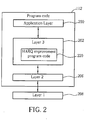
- Fig. 2 is a diagram of the program code 112 shown in Fig. 1 .
- the program code 112 includes an application layer 200, a Layer 3 202, and a Layer 2 206, and is coupled to a Layer 1 208.
- the Layer 3 202 is for performing radio resource control (RRC).
- the Layer 2 206 is for performing link control, and the Layer 1 208 is a physical layer.
- a PHYSICAL CHANNEL RECONFIGURATION message comprises the IE "MIMO parameters" but does not comprise the IE "HARQ Info”. Even if the UE receives the PHYSICAL CHANNEL RECONFIGURATION message and triggers the mode transition of the MIMO operation according to the IE "MIMO parameters" in the PHYSICAL CHANNEL RECONFIGURATION message, the UE may not be configured to the MIMO operation because the UE cannot change the number of HARQ processes according to the IE "HARQ Info". As a result, the UE may receive incorrect number of HARQ processes and unknown behavior occurs.
- the embodiment of the present invention provides a HARQ improvement program code 220 for the program code 112 in the Layer 3 202, for improving the HARQ operation.
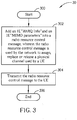
- Fig. 3 is a flowchart of a process 30 according to an embodiment of the present invention.
- the process 30 is utilized for improving HARQ operation for a network in the wireless communications system 600.
- the process 30 can be compiled into the HARQ improvement program code 220.
- the process 30 includes the following steps:
- the radio resource control message is the PHYSICAL CHANNEL RECONFIGURATION message, which is used by the network to assign, replace or release a physical channel used by a UE.
- the IE "HARQ Info” is utilized for changing the number of HARQ processes and corresponding soft buffers.
- the IE “MIMO parameters” is utilized for starting or stopping a MIMO operation. According to the process 30, the network not only adds the IE "MIMO parameters” but also adds the IE "HARQ Info" into the PHYSICAL CHANNEL RECONFIGURATION message, and transmits the PHYSICAL CHANNEL RECONFIGURATION message to the UE.
- the UE performs the mode transition of the MIMO operation according to the IE "MIMO parameters" in the PHYSICAL CHANNEL RECONFIGURATION message.
- the UE changes the number of HARQ processes to 1 to 8 HARQ processes for the requirement of non-MIMO mode according to the IE "HARQ Info" in the PHYSICAL CHANNEL RECONFIGURATION message, or changes the number of HARQ processes to 12, 14 or 16 HARQ processes for the requirement of MIMO mode.
- the UE cannot change the number of HARQ processes according to the prior art PHYSICAL CHANNEL RECONFIGURATION message which comprises the IE "MIMO parameters" but does not comprise the IE "HARQ Info". As a result, the UE may receive incorrect number of HARQ processes and unknown behavior occurs.
- the embodiment of the present invention adds the IE "HARQ Info" to the PHYSICAL CHANNEL RECONFIGURATION message, and thereby the UE performs the mode transition of the MIMO operation properly according to the PHYSICAL CHANNEL RECONFIGURATION message.
- the number of HARQ processes is changed to a correct number for the requirement of MIMO mode or non-MIMO mode.
- Fig. 4 is a flowchart of a process 40 useful for understanding the present invention.
- the process 40 is utilized for improving HARQ operation for a UE in the wireless communications system 600.
- the process 40 can be compiled into the HARQ improvement program code 220.
- the process 40 includes the following steps:
- the radio resource control message is the PHYSICAL CHANNEL RECONFIGURATION message, which is described previously.
- the UE controls the PHYSICAL CHANNEL RECONFIGURATION message to be unallowed to change the status of the MIMO operation, that is, the UE is not allowed to trigger the mode transition of the MIMO operation.
- the UE controls the PHYSICAL CHANNEL RECONFIGURATION message to be allowed to affect only the stored variables related to MIMO operation in the UE. In other words, the UE does not change the status of the MIMO operation anymore and only affects the stored variables related to the MIMO operation according to the PHYSICAL CHANNEL RECONFIGURATION message including the IE "MIMO parameters".
- the prior art PHYSICAL CHANNEL RECONFIGURATION message comprises the IE "MIMO parameters" but does not comprise the IE "HARQ Info".
- the IE "MIMO parameters” is utilized for starting or stopping a MIMO operation and the UE shall stop the MIMO operation when the IE "MIMO parameters" is not included in the received radio resource control message.
- the embodiment of the present invention controls the PHYSICAL CHANNEL RECONFIGURATION message to be unallowed to change the status of the MIMO operation, and thereby the unknown behavior is avoided.
- the process 30 changes the IEs in the PHYSICAL CHANNEL RECONFIGURATION message in the network and the process 40 changes the effect of the PHYSICAL CHANNEL RECONFIGURATION message in the UE, so that the embodiments of the present invention can avoid unknown behavior from incorrect number of HARQ processes.
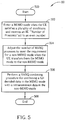
- Fig. 5 is a flowchart of a process 50 useful for understanding the present invention.
- the process 50 is utilized for improving HARQ operation for a UE in the wireless communications system 600.
- the process 50 can be compiled into the HARQ improvement program code 220.
- the process 50 includes the following steps:
- the UE sets the MIMO_STATUS variable to TRUE and is configured to the MIMO operation after specific conditions are all satisfied.
- the specific conditions are as follows:
- the UE does not only have to satisfy the conditions as above but confirms that the received IE "Number of Processes" is set to an even number, for entering the MIMO mode. That is, the UE sets the MIMO_STATUS variable to TRUE only when the UE satisfies the conditions and the received IE "Number of Processes" is set to an even number. Therefore, the number of HARQ processes is correct for MIMO mode and is used to receive two transport blocks on HS-PDSCH in each TTI, so that the transmission efficiency of the MIMO operation is enhanced.
- the UE adjusts the number of HARQ processes to meet the requirement of the non-MIMO mode when transferring from the MIMO mode to the non-MIMO mode.
- the number of HARQ processes is restricted to 1 to 8 at most.
- the UE uses 12 HARQ processes in the MIMO mode and automatically releases a half of HARQ processes to meet the requirement of the non-MIMO mode when transferring to the non-MIMO mode. That is, the UE then uses 6 HARQ processes in the non-MIMO mode. Or, the UE automatically releases a predefined number of HARQ processes to meet the requirement of the non-MIMO mode. Therefore, the UE changes the number of HARQ processes without IE "HARQ Info".
- the UE performs a HARQ combining procedure according to the correct number of HARQ processes for combining the fail decoded data in the MIMO mode with the retransmission data in the non-MIMO mode for enhancing the probability of successful decoding.
- the HARQ combining procedure is not permitted due to incorrect HARQ combining occurring during the mode transition of the MIMO operation.
- the UE can only change the number of HARQ processes according to the IE "HARQ Info".
- the UE enters the MIMO mode after confirming that the number of HARQ processes is an even number. Therefore, the number of HARQ processes can be used to receive two transport blocks on HS-PDSCH in each TTI so that the transmission efficiency of the MIMO operation is enhanced.
- the UE automatically adjusts the number of HARQ processes without the IE "HARQ Info" to meet the requirement of MIMO mode during the mode transition of the MIMO operation, and thereby the UE performs the HARQ combining procedure according to the correct number of HARQ processes, for enhancing the probability of successful decoding.
- the embodiment of the present invention changes the IEs included in the PHYSICAL CHANNEL RECONFIGURATION message for avoiding unknown behavior from incorrect number of HARQ processes received when the mode transition of the MIMO operation.
- the embodiment of the present invention changes the criteria for entering the MIMO mode. Therefore, the transmission efficiency of the HARQ operation and the MIMO operation is enhanced.
Landscapes
- Engineering & Computer Science (AREA)
- Computer Networks & Wireless Communication (AREA)
- Signal Processing (AREA)
- Mobile Radio Communication Systems (AREA)
- Detection And Prevention Of Errors In Transmission (AREA)
- Radio Transmission System (AREA)
Description
- The present invention relates to a method and related apparatus for improving Hybrid Automatic Repeat Request (HARQ) operation for a network in a wireless communications system according to
claims 1 and 5. - A known HARQ method is disclosed in "Universal Mobile Telecommunications System (UMTS); Radio Resource Control (RRC); Protocol specification (3GPP TS 25.331 version 7.5.0 Release 7)".
- The third generation (3G) mobile telecommunications system has adopted a Wideband Code Division Multiple Access (WCDMA) wireless air interface access method for a cellular network. WCDMA provides high frequency spectrum utilization, universal coverage, and high quality, high-speed multimedia data transmission. The WCDMA method also meets all kinds of QoS (Quality of Service) requirements simultaneously, providing diverse, flexible, two-way transmission services and better communication quality to reduce transmission interruption rates. Through the 3G mobile telecommunications system, a user can utilize a wireless communications device, such as a mobile phone, to realize real-time video communications, conference calls, real-time games, online music broadcasts, and email sending/receiving. However, these functions rely on fast, instantaneous transmission. Thus, targeting the third generation mobile telecommunication technology, the prior art provides High Speed Package Access (HSPA) technology, which includes High Speed Downlink Package Access (HSDPA) and High Speed Uplink Package Access (HSUPA), to increase bandwidth utility rate and package data processing efficiency to improve uplink/downlink transmission rate.
- HSDPA and HSUPA adopt Hybrid Automatic Repeat Request (HARQ) technology to enhance retransmission rate and reduce transmission delay. HARQ is a technology combining Feed-forward Error Correction (FEC) and ARQ methods, which makes a Universal Terrestrial Radio Access Network (UTRAN) trigger retransmission according to positive/negative acknowledgement signals (ACK/NACK) transmitted from a user equipment (UE), and the UE stores useful information about the last failed transmission for later use. Simply, when a previous data is unsuccessfully decoded, the UE shall combine the received data with the previous data and perform a decoding procedure on the combined data, for enhancing the probability of successful decoding. The procedure of combing the received data with the previous data is called HARQ combining.
- To further increase the downlink data rate, 3GPP introduces a Multi-Input Multi-Output (MIMO) technology, with which a UE and a base station, known as a Node-B, utilize multiple antennas to transmit/receive radio signals. The MIMO technology can be further integrated with spatial multiplexing, beam forming and spatial diversity technologies to reduce signal interference and increase channel capacity. When the UE is not configured in the MIMO operation, the UE can only receive one transport block on a High Speed Physical Downlink Shared Channel (HS-PDSCH) in each Transmission Time Interval (TTI), and the UE includes 8 HARQ processes at most. On the other hand, when the UE is configured in the MIMO operation, the UE receives two transport blocks on the HS-PDSCH in each TTI, and the number of HARQ processes is restricted to 12,14 or 16.
- To control the HARQ operation and the MIMO operation of the UE, the UTRAN can set configuration of the MIMO operation in radio resource control (RRC) messages with information elements (IEs) in a RRC protocol layer, and send the RRC messages to the UE through corresponding RRC procedures. For the HARQ operation, the UE is configured to the HARQ operation according to an IE "HARQ Info". An IE "Number of Processes" included in the IE "HARQ Info" is used for setting the number of HARQ processes used by the UE. For the MIMO operation, the UE is configured to the MIMO operation by receiving an IE "MIMO parameters" included in the RRC message. The IE "MIMO parameters" includes an IE "MIMO operation", an IE "MIMO N_cqi_typeA/M_cqi ratio" and an IE "MIMO pilot configuration". The IE "MIMO operation" is used to indicate the UE to activate or continue the MIMO operation, and correspondingly includes two parameter values, which represent "start" and "continue", respectively. The IE "MIMO N_cqi_typeA/M_cqi ratio" includes information about the antenna numbers of the UE and the Node-B. The IE "MIMO pilot configuration" includes information about diversity, channelization code, etc. Note that, when the IE "MIMO parameters" is not included in the received RRC message, the UE shall stop the MIMO operation.
- On the other hand, when the IE "MIMO parameters" is included in the received RRC message, the UE stores the value of the IE "MIMO N_cqi_typeA/M_cqi ratio" and the value of the IE "MIMO pilot configuration" in a MIMO_PARAMS variable and sets the value of a MIMO_STATUS variable. After specific conditions are all satisfied, the UE sets the MIMO_STATUS variable to TRUE and is configured to the MIMO operation. The specific conditions are as follows:
- 1. The UE is in a CELL_DCH state.
- 2. The IE "MIMO N_cqi_typeA/M_cqi ratio" is included in the MIMO_PARAMS variable.
- 3. The IE "MIMO pilot configuration" is included in the MIMO_PARAMS variable.
- Note that, HARQ combining is not permitted during transition between MIMO mode and non-MIMO mode. The UE regards the first transmission after the transition as a new transmission, for avoiding incorrect HARQ combining. As mentioned previously, the number of HARQ processes in MIMO mode is restricted to 12,14 or 16. If the UE does not change HARQ configuration accordingly when the UE performs the mode transition of the MIMO operation, the number of HARQ processes may be incorrect. It means that the IE "HARQ Info" has to be carried in the RRC message which triggers the mode transition of the MIMO operation. In other words, the IE "HARQ Info" and the IE "MIMO parameters" should be both included in the same RRC message. For example, the IE "HARQ Info" and the IE "MIMO parameters" are both included in a CELL UPDATE CONFIRM message. When the UE receives the CELL UPDATE CONFIRM message, the UE can perform the mode transition of MIMO operation and change HARQ configuration according to the CELL UPDATE CONFIRM message so that the number of HARQ processes is changed to the correct number.
- In many RRC messages that the UTRAN sends to the UE, a PHYSICAL CHANNEL RECONFIGURATION message is used by the UTRAN to assign, replace or release a physical channel used by the UE. The PHYSICAL CHANNEL RECONFIGURATION message comprises the IE "MIMO parameters" but does not comprise the IE "HARQ Info". In other words, even if the UE can trigger the mode transition of MIMO operation according to the PHYSICAL CHANNEL RECONFIGURATION message, the UE cannot be configured to the MIMO operation because the number of HARQ processes is not changed according to the PHYSICAL CHANNEL RECONFIGURATION message. As a result, the UE may receive an incorrect number of HARQ processes, and unknown behavior occurs.
- This in mind, the present invention aims at providing a method and related apparatus for modifying a radio resource control message for improving HARQ operation.
- This is achieved by a method and apparatus of improving Hybrid Automatic Repeat Request, known as HARQ, operation for a network and a user equipment in a wireless communications system according to
claims 1 and 5. The dependent claims pertain to corresponding further developments and improvements. - As will be seen more clearly from the detailed description following below, the claimed method for improving Hybrid Automatic Repeat Request, known as HARQ, operation for a network in a wireless communications system is disclosed. The method includes adding a HARQ information information element, abbreviated to IE, and a Multi-Input Multi-Output, known as MIMO, parameters IE into a radio resource control message, wherein the radio resource control message is used by the network to assign, replace or release a physical channel used by a user equipment, and transmitting the radio resource control message to the user equipment.
- In the following, the invention is further illustrated by way of example, taking reference to the accompanying drawings. Thereof
-
Fig. 1 is a functional block diagram of a communications device. -
Fig. 2 is a diagram of the program code shown inFig. 1 . -
Fig. 3 to Fig. 5 are flowcharts of a process according to an embodiment of the present invention and of processes useful for understanding the invention. -
Fig. 6 is a schematic diagram of a communications system. - Please refer to
Fig. 6 , which is a schematic diagram of awireless communications system 600. Thewireless communications system 600 is preferably a High Speed Package Access (HSPA) system, and is briefly composed of a network and a plurality of user equipments (UEs). InFig. 6 , the network and the UEs are simply utilized for illustrating the structure of thewireless communications system 600. Practically, the network may comprise a plurality of base stations (or Node B), radio network controllers and so on according to actual demands, and the UEs can be devices such as mobile phones, computer systems, etc. - Please refer to
Fig. 1 , which is a functional block diagram of acommunications device 100. Thecommunications device 100 can be used for implementing the network and the UE shown inFig. 6 . For the sake of brevity,Fig. 1 only shows aninput device 102, anoutput device 104, a control circuit 106, a central processing unit (CPU) 108, amemory 110, aprogram code 112, and atransceiver 114 of thecommunications device 100. In thecommunications device 100, the control circuit 106 executes theprogram code 112 in thememory 110 through theCPU 108, thereby controlling an operation of thecommunications device 100. Thecommunications device 100 can receive signals input by a user through theinput device 102, such as a keyboard, and can output images and sounds through theoutput device 104, such as a monitor or speakers. Thetransceiver 114 is used to receive and transmit wireless signals, deliver received signals to the control circuit 106, and output signals generated by the control circuit 106 wirelessly. From a perspective of a communications protocol framework, thetransceiver 114 can be seen as a portion ofLayer 1, and the control circuit 106 can be utilized to realize functions ofLayer 2 andLayer 3. - Please continue to refer to
Fig. 2. Fig. 2 is a diagram of theprogram code 112 shown inFig. 1 . Theprogram code 112 includes anapplication layer 200, aLayer 3 202, and aLayer 2 206, and is coupled to aLayer 1 208. TheLayer 3 202 is for performing radio resource control (RRC). TheLayer 2 206 is for performing link control, and theLayer 1 208 is a physical layer. - As mentioned previously, a PHYSICAL CHANNEL RECONFIGURATION message comprises the IE "MIMO parameters" but does not comprise the IE "HARQ Info". Even if the UE receives the PHYSICAL CHANNEL RECONFIGURATION message and triggers the mode transition of the MIMO operation according to the IE "MIMO parameters" in the PHYSICAL CHANNEL RECONFIGURATION message, the UE may not be configured to the MIMO operation because the UE cannot change the number of HARQ processes according to the IE "HARQ Info". As a result, the UE may receive incorrect number of HARQ processes and unknown behavior occurs.
- In this situation, the embodiment of the present invention provides a HARQ
improvement program code 220 for theprogram code 112 in theLayer 3 202, for improving the HARQ operation. Please refer toFig. 3 , which is a flowchart of aprocess 30 according to an embodiment of the present invention. Theprocess 30 is utilized for improving HARQ operation for a network in thewireless communications system 600. Theprocess 30 can be compiled into the HARQimprovement program code 220. Theprocess 30 includes the following steps: - Step 300: Start.
- Step 302: Add an IE "HARQ Info" and an IE "MIMO parameters" into a radio resource control message, wherein the radio resource control message is used by the network to assign, replace or release a physical channel used by a UE.
- Step 304: Transmit the radio resource control message to the UE.
- Step 306: End.
- In the
process 30, the radio resource control message is the PHYSICAL CHANNEL RECONFIGURATION message, which is used by the network to assign, replace or release a physical channel used by a UE. The IE "HARQ Info" is utilized for changing the number of HARQ processes and corresponding soft buffers. The IE "MIMO parameters" is utilized for starting or stopping a MIMO operation. According to theprocess 30, the network not only adds the IE "MIMO parameters" but also adds the IE "HARQ Info" into the PHYSICAL CHANNEL RECONFIGURATION message, and transmits the PHYSICAL CHANNEL RECONFIGURATION message to the UE. Therefore, the UE performs the mode transition of the MIMO operation according to the IE "MIMO parameters" in the PHYSICAL CHANNEL RECONFIGURATION message. On the other hand, when the UE performs the mode transition of the MIMO operation, the UE changes the number of HARQ processes to 1 to 8 HARQ processes for the requirement of non-MIMO mode according to the IE "HARQ Info" in the PHYSICAL CHANNEL RECONFIGURATION message, or changes the number of HARQ processes to 12, 14 or 16 HARQ processes for the requirement of MIMO mode. - The UE cannot change the number of HARQ processes according to the prior art PHYSICAL CHANNEL RECONFIGURATION message which comprises the IE "MIMO parameters" but does not comprise the IE "HARQ Info". As a result, the UE may receive incorrect number of HARQ processes and unknown behavior occurs. Compared with the prior art, the embodiment of the present invention adds the IE "HARQ Info" to the PHYSICAL CHANNEL RECONFIGURATION message, and thereby the UE performs the mode transition of the MIMO operation properly according to the PHYSICAL CHANNEL RECONFIGURATION message. Moreover, the number of HARQ processes is changed to a correct number for the requirement of MIMO mode or non-MIMO mode.
- In addition, please refer to
Fig. 4 , which is a flowchart of aprocess 40 useful for understanding the present invention. Theprocess 40 is utilized for improving HARQ operation for a UE in thewireless communications system 600. Theprocess 40 can be compiled into the HARQimprovement program code 220. Theprocess 40 includes the following steps: - Step 400: Start.
- Step 402: Receive a radio resource control message.
- Step 404: Control the radio resource control message to be unallowed to change a status of the MIMO operation of the UE, wherein the radio resource control message is used by a network of the wireless communications system to assign, replace or release a physical channel used by the UE.
- Step 406: End.
- In the
process 40, the radio resource control message is the PHYSICAL CHANNEL RECONFIGURATION message, which is described previously. According to theprocess 40, after receiving the PHYSICAL CHANNEL RECONFIGURATION message, the UE controls the PHYSICAL CHANNEL RECONFIGURATION message to be unallowed to change the status of the MIMO operation, that is, the UE is not allowed to trigger the mode transition of the MIMO operation. Furthermore, the UE controls the PHYSICAL CHANNEL RECONFIGURATION message to be allowed to affect only the stored variables related to MIMO operation in the UE. In other words, the UE does not change the status of the MIMO operation anymore and only affects the stored variables related to the MIMO operation according to the PHYSICAL CHANNEL RECONFIGURATION message including the IE "MIMO parameters". - The prior art PHYSICAL CHANNEL RECONFIGURATION message comprises the IE "MIMO parameters" but does not comprise the IE "HARQ Info". The IE "MIMO parameters" is utilized for starting or stopping a MIMO operation and the UE shall stop the MIMO operation when the IE "MIMO parameters" is not included in the received radio resource control message. When the number of HARQ processes is not changed accordingly when the UE performs the mode transition of MIMO operation, unknown behavior may occur. Compared with the prior art, the embodiment of the present invention controls the PHYSICAL CHANNEL RECONFIGURATION message to be unallowed to change the status of the MIMO operation, and thereby the unknown behavior is avoided.
- From the above, the
process 30 changes the IEs in the PHYSICAL CHANNEL RECONFIGURATION message in the network and theprocess 40 changes the effect of the PHYSICAL CHANNEL RECONFIGURATION message in the UE, so that the embodiments of the present invention can avoid unknown behavior from incorrect number of HARQ processes. - On the other hand, when the related configurations of the MIMO operation and the HARQ operation are transmitted to the UE by different radio resource control messages respectively, the UE should take into consideration configurations of the MIMO operation and the HARQ operation at the same time for avoiding unknown behavior. Please refer to
Fig. 5 , which is a flowchart of aprocess 50 useful for understanding the present invention. Theprocess 50 is utilized for improving HARQ operation for a UE in thewireless communications system 600. Theprocess 50 can be compiled into the HARQimprovement program code 220. Theprocess 50 includes the following steps: - Step 500: Start.
- Step 502: Enter a MIMO mode when the UE satisfies a plurality of conditions and receives an IE "Number of Processes" set to an even number.
- Step 504: Adjust the number of HARQ processes to meet the requirement for a non-MIMO mode when the UE transfers from the MIMO mode to the non-MIMO mode.
- Step 506: Perform a HARQ combining procedure for combining a fail decoded data in the MIMO mode with a retransmission data in the non-MIMO mode.
- Step 508: End.
- In the prior art, the UE sets the MIMO_STATUS variable to TRUE and is configured to the MIMO operation after specific conditions are all satisfied. The specific conditions are as follows:
- 1. The UE is in a CELL_DCH state.
- 2. The IE "MIMO N_cqi_typeA/M_cqi ratio" is included in the MIMO_PARAMS variable.
- 3. The IE "MIMO pilot configuration" is included in the MIMO_PARAMS variable.
- In the
process 50, the UE does not only have to satisfy the conditions as above but confirms that the received IE "Number of Processes" is set to an even number, for entering the MIMO mode. That is, the UE sets the MIMO_STATUS variable to TRUE only when the UE satisfies the conditions and the received IE "Number of Processes" is set to an even number. Therefore, the number of HARQ processes is correct for MIMO mode and is used to receive two transport blocks on HS-PDSCH in each TTI, so that the transmission efficiency of the MIMO operation is enhanced. - Moreover, the UE adjusts the number of HARQ processes to meet the requirement of the non-MIMO mode when transferring from the MIMO mode to the non-MIMO mode. The number of HARQ processes is restricted to 1 to 8 at most. For example, the UE uses 12 HARQ processes in the MIMO mode and automatically releases a half of HARQ processes to meet the requirement of the non-MIMO mode when transferring to the non-MIMO mode. That is, the UE then uses 6 HARQ processes in the non-MIMO mode. Or, the UE automatically releases a predefined number of HARQ processes to meet the requirement of the non-MIMO mode. Therefore, the UE changes the number of HARQ processes without IE "HARQ Info". Moreover, the UE performs a HARQ combining procedure according to the correct number of HARQ processes for combining the fail decoded data in the MIMO mode with the retransmission data in the non-MIMO mode for enhancing the probability of successful decoding.
- In the prior art, the HARQ combining procedure is not permitted due to incorrect HARQ combining occurring during the mode transition of the MIMO operation. The UE can only change the number of HARQ processes according to the IE "HARQ Info". Compared with the prior art, according to the
process 50, the UE enters the MIMO mode after confirming that the number of HARQ processes is an even number. Therefore, the number of HARQ processes can be used to receive two transport blocks on HS-PDSCH in each TTI so that the transmission efficiency of the MIMO operation is enhanced. In addition, the UE automatically adjusts the number of HARQ processes without the IE "HARQ Info" to meet the requirement of MIMO mode during the mode transition of the MIMO operation, and thereby the UE performs the HARQ combining procedure according to the correct number of HARQ processes, for enhancing the probability of successful decoding. - In conclusion, the embodiment of the present invention changes the IEs included in the PHYSICAL CHANNEL RECONFIGURATION message for avoiding unknown behavior from incorrect number of HARQ processes received when the mode transition of the MIMO operation. On the other hand, the embodiment of the present invention changes the criteria for entering the MIMO mode. Therefore, the transmission efficiency of the HARQ operation and the MIMO operation is enhanced.
Claims (4)
- A method of improving Hybrid Automatic Repeat Request, named HARQ hereinafter, operation for a network in a wireless communications system, the method comprising:transmitting a radio resource control message to a user equipment (304), wherein the radio resource control message is a PHYSICAL CHANNEL RECONFIGURATION message and used by the network to assign, replace or release a physical channel used by a user equipment; andadding a HARQ information information element, named IE hereinafter, which is used for setting the number of HARQ processes used by the user equipment, and a Multi-Input Multi-Output, named MIMO hereinafter, parameters IE, which is used to indicate to activate or continue the MIMO operation, into the radio resource control message before transmission (302).
- The method of claim 1, wherein the HARQ information IE is utilized for changing the number of HARQ processes and corresponding soft buffers, and the MIMO parameters IE is utilized for starting or stopping a MIMO operation.
- A communications device (100) used in a wireless communications system for improving Hybrid Automatic Repeat Request, named HARQ hereinafter, operation, the communications device (100) comprising:a control circuit (106) for realizing functions of the communications device (100);a central processing unit (108) installed in the control circuit (106) for executing a program code (112) to operate the control circuit (106); anda memory (110) coupled to the central processing unit (108) for storing the program code (112);wherein the program code (112) comprises:transmitting a radio resource control message to a user equipment (304), wherein the radio resource control message is a PHYSICAL CHANNEL RECONFIGURATION message and used by the network to assign, replace or release a physical channel used by a user equipment; andadding a HARQ information information element, named IE hereinafter, which is used for setting the number of HARQ processes used by the user equipment, and a Multi-Input Multi-Output, named MIMO hereinafter, parameters IE, which is used to indicate to activate or continue the MIMO operation, into the radio resource control message before transmission (302).
- The communications device (100) of claim 3, wherein the HARQ information IE is utilized for changing the number of HARQ processes and corresponding soft buffers, and the MIMO parameters IE is utilized for starting or stopping a MIMO operation.
Applications Claiming Priority (2)
| Application Number | Priority Date | Filing Date | Title |
|---|---|---|---|
| US94356107P | 2007-06-13 | 2007-06-13 | |
| US95010607P | 2007-07-16 | 2007-07-16 |
Publications (3)
| Publication Number | Publication Date |
|---|---|
| EP2003809A2 EP2003809A2 (en) | 2008-12-17 |
| EP2003809A3 EP2003809A3 (en) | 2010-05-12 |
| EP2003809B1 true EP2003809B1 (en) | 2019-04-17 |
Family
ID=39595721
Family Applications (1)
| Application Number | Title | Priority Date | Filing Date |
|---|---|---|---|
| EP08010729.5A Active EP2003809B1 (en) | 2007-06-13 | 2008-06-12 | Method and apparatus for improving hybrid automatic repeat request operation in a wireless communications system |
Country Status (6)
| Country | Link |
|---|---|
| US (1) | US8127194B2 (en) |
| EP (1) | EP2003809B1 (en) |
| JP (1) | JP4783402B2 (en) |
| KR (1) | KR101018434B1 (en) |
| ES (1) | ES2736173T3 (en) |
| TW (1) | TWI380622B (en) |
Families Citing this family (13)
| Publication number | Priority date | Publication date | Assignee | Title |
|---|---|---|---|---|
| KR100954820B1 (en) * | 2007-01-22 | 2010-04-28 | 이노베이티브 소닉 리미티드 | Method and apparatus for improving multi-input multi-output (MIO) process in wireless communication system |
| KR100957213B1 (en) * | 2007-12-11 | 2010-05-11 | 한국전자통신연구원 | Propagation resource reuse system and method |
| US20100202302A1 (en) * | 2008-09-21 | 2010-08-12 | Research In Motion Limited | System and method for reserving and signaling hybrid automatic repeat request identifiers |
| US8687619B2 (en) * | 2008-11-04 | 2014-04-01 | Telefonaktiebolaget Lm Ericsson (Publ) | System and method of downlinking data to an unsynchronized user equipment in a telecommunications network |
| US8345614B2 (en) * | 2009-03-17 | 2013-01-01 | Qualcomm Incorporated | Single channelization code HARQ feedback for DC-HSDPA +MIMO |
| KR101334774B1 (en) * | 2009-06-24 | 2013-12-02 | 블랙베리 리미티드 | Method for performing antenna management in lte-a communication systems and corresponding apparatus |
| KR101623182B1 (en) | 2009-08-28 | 2016-05-23 | 한국전자통신연구원 | Method of low-duty mode operation in femtocell base station |
| CN102340387B (en) * | 2010-07-22 | 2014-04-30 | 中兴通讯股份有限公司 | Hybrid automatic repeat request (HARQ) signed data merging apparatus and method thereof |
| CN102136897B (en) * | 2011-03-04 | 2015-12-16 | 深圳市中兴微电子技术有限公司 | Adopt the method and system of HARQ mode transmitting time advance command |
| CN102104469B (en) * | 2011-03-07 | 2015-01-28 | 中兴通讯股份有限公司 | Terminal uplink/downlink HARQ (Hybrid Automatic Repeat Request) feedback information dispatching method and device |
| CN106411489A (en) * | 2011-08-12 | 2017-02-15 | 交互数字专利控股公司 | WTRU and the method for the WTRU |
| US9614606B2 (en) | 2011-12-28 | 2017-04-04 | Qualcomm Incorporated | Method and apparatus for power aware receive diversity control |
| US9531519B2 (en) * | 2012-02-09 | 2016-12-27 | Lg Electronics Inc. | Method for transceiving signals and apparatus for same |
Family Cites Families (22)
| Publication number | Priority date | Publication date | Assignee | Title |
|---|---|---|---|---|
| US6741581B1 (en) | 1998-09-22 | 2004-05-25 | Hughes Electronics Corporation | System and method for transmitting data in frame format using an R-Rake retransmission technique with blind identification of data frames |
| KR20020019334A (en) | 2000-09-05 | 2002-03-12 | 박종섭 | Method of application hybrid ARQ type Ⅱ/Ⅲ and error handling method for improvement in performence on asynchronous wireless telecommunication system |
| US7206280B1 (en) | 2000-09-12 | 2007-04-17 | Lucent Technologies Inc. | Method and apparatus for asynchronous incremental redundancy reception in a communication system |
| JP3490425B2 (en) | 2002-03-14 | 2004-01-26 | 松下電器産業株式会社 | Receiving device and receiving method |
| EP1527540B1 (en) | 2002-05-10 | 2009-04-29 | Interdigital Technology Corporation | Node b and method for prioritization of retransmission of protocol data units to assist radio-link-control retransmission |
| US6901063B2 (en) | 2002-05-13 | 2005-05-31 | Qualcomm, Incorporated | Data delivery in conjunction with a hybrid automatic retransmission mechanism in CDMA communication systems |
| US7116664B2 (en) * | 2002-05-13 | 2006-10-03 | International Business Machines Corporation | Lookups by collisionless direct tables and CAMs |
| CN100539482C (en) | 2003-07-08 | 2009-09-09 | 上海贝尔阿尔卡特股份有限公司 | The merging method and the receiver that mix automatic repeat requests in the ofdm system |
| US7406314B2 (en) | 2003-07-11 | 2008-07-29 | Interdigital Technology Corporation | Wireless transmit receive unit having a transition state for transitioning from monitoring to duplex connected states and method |
| KR100754658B1 (en) | 2004-03-12 | 2007-09-03 | 삼성전자주식회사 | Operation Method of Complex Retransmission in Communication System |
| KR20060016292A (en) | 2004-08-17 | 2006-02-22 | 삼성전자주식회사 | Efficiently transmitting radio resource connection request message in mobile communication system providing multimedia broadcast / multicast service |
| EP1638239A1 (en) | 2004-09-20 | 2006-03-22 | Alcatel | Extended repeat request scheme for mobile communication networks |
| WO2006071831A2 (en) * | 2004-12-22 | 2006-07-06 | Qualcomm Incorporated | Efficient ack to nack error detection |
| US9014192B2 (en) | 2005-03-21 | 2015-04-21 | Qualcomm Incorporated | Method and apparatus for improving data transmission reliability in a wireless communications system |
| TWI301381B (en) | 2005-03-24 | 2008-09-21 | Nokia Corp | Method for controlling transmission over a wireless communication link, and mobile station and network node for a wireless communication network |
| EP2566239B1 (en) | 2005-06-15 | 2015-12-30 | Intellectual Ventures I LLC | RRC Signalling for Fast HS-DSCH Serving Cell Change |
| US7969948B2 (en) * | 2005-08-19 | 2011-06-28 | Zte Corporation | Method for implementing HSDPA for TD-SCDMA |
| KR20070024302A (en) | 2005-08-26 | 2007-03-02 | 한국전자통신연구원 | Sleep mode control device and control method of cellular system |
| CN101300770A (en) | 2005-11-01 | 2008-11-05 | 株式会社Ntt都科摩 | Retransmission control method and receiver device |
| KR100648067B1 (en) | 2005-12-10 | 2006-11-23 | 한국전자통신연구원 | Adaptive Discontinuous Receive Method Based on Extended Call Indicator for Improving Power Saving Performance of Asynchronous Broadband Code Division Multiple Access |
| US7668188B2 (en) * | 2006-02-14 | 2010-02-23 | Broadcom Corporation | Method and system for HSDPA bit level processor engine |
| KR100972405B1 (en) * | 2007-03-14 | 2010-07-26 | 이노베이티브 소닉 리미티드 | Method and apparatus for improving MIC function |
-
2008
- 2008-06-09 JP JP2008151123A patent/JP4783402B2/en active Active
- 2008-06-10 US US12/136,066 patent/US8127194B2/en active Active
- 2008-06-12 ES ES08010729T patent/ES2736173T3/en active Active
- 2008-06-12 EP EP08010729.5A patent/EP2003809B1/en active Active
- 2008-06-13 TW TW097122190A patent/TWI380622B/en active
- 2008-06-13 KR KR1020080055831A patent/KR101018434B1/en active Active
Non-Patent Citations (1)
| Title |
|---|
| "3rd Generation Partnership Project; Technical Specification Group Radio Access Network; Radio Resource Control (RRC); Protocol Specification (Release 7)", 3GPP STANDARD; 3GPP TS 25.331, 3RD GENERATION PARTNERSHIP PROJECT (3GPP), MOBILE COMPETENCE CENTRE ; 650, ROUTE DES LUCIOLES ; F-06921 SOPHIA-ANTIPOLIS CEDEX ; FRANCE, no. V7.4.0, 1 March 2007 (2007-03-01), pages 1 - 1344, XP050368006 * |
Also Published As
| Publication number | Publication date |
|---|---|
| EP2003809A2 (en) | 2008-12-17 |
| TW200849884A (en) | 2008-12-16 |
| US8127194B2 (en) | 2012-02-28 |
| JP2008312206A (en) | 2008-12-25 |
| ES2736173T3 (en) | 2019-12-26 |
| EP2003809A3 (en) | 2010-05-12 |
| KR20080109678A (en) | 2008-12-17 |
| TWI380622B (en) | 2012-12-21 |
| JP4783402B2 (en) | 2011-09-28 |
| US20080313519A1 (en) | 2008-12-18 |
| KR101018434B1 (en) | 2011-02-28 |
Similar Documents
| Publication | Publication Date | Title |
|---|---|---|
| EP2003809B1 (en) | Method and apparatus for improving hybrid automatic repeat request operation in a wireless communications system | |
| EP1971067B1 (en) | Method and apparatus for improving MIMO operation in a wireless communications system | |
| US11706681B2 (en) | Supporting uplink transmissions | |
| US8031738B2 (en) | Method of enhancing continuous packet connectivity in a wireless communications system and related apparatus | |
| US8457066B2 (en) | Method and apparatus of feedback signaling | |
| US8271843B2 (en) | Method and apparatus for improving hybrid automatic repeat request operation in a wireless communications system | |
| CN101325477B (en) | Method and apparatus for improving drx operation in a wireless communications system | |
| EP2148460B1 (en) | Method and apparatus for improving HARQ operation | |
| US20070230398A1 (en) | Method and apparatus for handling uplink transmission start in a wireless communications system | |
| JP2007243956A (en) | Method and apparatus for activating scheduling information retransmission in a wireless communication system | |
| US8873583B2 (en) | Method and apparatus for improving reset of evolved media access control protocol entity in a wireless communications system | |
| EP1947888B1 (en) | Method and related apparatus for improving mimo procedure in a wireless communications system | |
| JP4504393B2 (en) | Method and apparatus for stopping HARQ process in wireless communication system | |
| US20080192848A1 (en) | Method and related apparatus for stopping multi-input multi-output operation in a wireless communications system | |
| GB2640899A (en) | Repetitions of partitions of data block |
Legal Events
| Date | Code | Title | Description |
|---|---|---|---|
| PUAI | Public reference made under article 153(3) epc to a published international application that has entered the european phase |
Free format text: ORIGINAL CODE: 0009012 |
|
| 17P | Request for examination filed |
Effective date: 20080612 |
|
| AK | Designated contracting states |
Kind code of ref document: A2 Designated state(s): AT BE BG CH CY CZ DE DK EE ES FI FR GB GR HR HU IE IS IT LI LT LU LV MC MT NL NO PL PT RO SE SI SK TR |
|
| AX | Request for extension of the european patent |
Extension state: AL BA MK RS |
|
| PUAL | Search report despatched |
Free format text: ORIGINAL CODE: 0009013 |
|
| AK | Designated contracting states |
Kind code of ref document: A3 Designated state(s): AT BE BG CH CY CZ DE DK EE ES FI FR GB GR HR HU IE IS IT LI LT LU LV MC MT NL NO PL PT RO SE SI SK TR |
|
| AX | Request for extension of the european patent |
Extension state: AL BA MK RS |
|
| AKX | Designation fees paid |
Designated state(s): AT BE BG CH CY CZ DE DK EE ES FI FR GB GR HR HU IE IS IT LI LT LU LV MC MT NL NO PL PT RO SE SI SK TR |
|
| 17Q | First examination report despatched |
Effective date: 20130809 |
|
| RAP1 | Party data changed (applicant data changed or rights of an application transferred) |
Owner name: INNOVATIVE SONIC LIMITED |
|
| STAA | Information on the status of an ep patent application or granted ep patent |
Free format text: STATUS: EXAMINATION IS IN PROGRESS |
|
| GRAP | Despatch of communication of intention to grant a patent |
Free format text: ORIGINAL CODE: EPIDOSNIGR1 |
|
| STAA | Information on the status of an ep patent application or granted ep patent |
Free format text: STATUS: GRANT OF PATENT IS INTENDED |
|
| RIC1 | Information provided on ipc code assigned before grant |
Ipc: H04L 1/06 20060101ALN20181003BHEP Ipc: H04L 1/18 20060101AFI20181003BHEP Ipc: H04L 1/00 20060101ALN20181003BHEP |
|
| RIC1 | Information provided on ipc code assigned before grant |
Ipc: H04L 1/06 20060101ALN20181008BHEP Ipc: H04L 1/00 20060101ALN20181008BHEP Ipc: H04L 1/18 20060101AFI20181008BHEP |
|
| INTG | Intention to grant announced |
Effective date: 20181025 |
|
| RIC1 | Information provided on ipc code assigned before grant |
Ipc: H04L 1/00 20060101ALN20181012BHEP Ipc: H04L 1/06 20060101ALN20181012BHEP Ipc: H04L 1/18 20060101AFI20181012BHEP |
|
| GRAS | Grant fee paid |
Free format text: ORIGINAL CODE: EPIDOSNIGR3 |
|
| GRAJ | Information related to disapproval of communication of intention to grant by the applicant or resumption of examination proceedings by the epo deleted |
Free format text: ORIGINAL CODE: EPIDOSDIGR1 |
|
| GRAL | Information related to payment of fee for publishing/printing deleted |
Free format text: ORIGINAL CODE: EPIDOSDIGR3 |
|
| STAA | Information on the status of an ep patent application or granted ep patent |
Free format text: STATUS: EXAMINATION IS IN PROGRESS |
|
| GRAR | Information related to intention to grant a patent recorded |
Free format text: ORIGINAL CODE: EPIDOSNIGR71 |
|
| STAA | Information on the status of an ep patent application or granted ep patent |
Free format text: STATUS: GRANT OF PATENT IS INTENDED |
|
| GRAA | (expected) grant |
Free format text: ORIGINAL CODE: 0009210 |
|
| STAA | Information on the status of an ep patent application or granted ep patent |
Free format text: STATUS: THE PATENT HAS BEEN GRANTED |
|
| INTC | Intention to grant announced (deleted) | ||
| INTG | Intention to grant announced |
Effective date: 20190307 |
|
| RIC1 | Information provided on ipc code assigned before grant |
Ipc: H04L 1/06 20060101ALN20190304BHEP Ipc: H04L 1/18 20060101AFI20190304BHEP Ipc: H04L 1/00 20060101ALN20190304BHEP |
|
| AK | Designated contracting states |
Kind code of ref document: B1 Designated state(s): AT BE BG CH CY CZ DE DK EE ES FI FR GB GR HR HU IE IS IT LI LT LU LV MC MT NL NO PL PT RO SE SI SK TR |
|
| REG | Reference to a national code |
Ref country code: GB Ref legal event code: FG4D |
|
| REG | Reference to a national code |
Ref country code: CH Ref legal event code: EP |
|
| REG | Reference to a national code |
Ref country code: DE Ref legal event code: R096 Ref document number: 602008059746 Country of ref document: DE |
|
| REG | Reference to a national code |
Ref country code: AT Ref legal event code: REF Ref document number: 1122723 Country of ref document: AT Kind code of ref document: T Effective date: 20190515 Ref country code: IE Ref legal event code: FG4D |
|
| REG | Reference to a national code |
Ref country code: NL Ref legal event code: MP Effective date: 20190417 |
|
| REG | Reference to a national code |
Ref country code: LT Ref legal event code: MG4D |
|
| PG25 | Lapsed in a contracting state [announced via postgrant information from national office to epo] |
Ref country code: NL Free format text: LAPSE BECAUSE OF FAILURE TO SUBMIT A TRANSLATION OF THE DESCRIPTION OR TO PAY THE FEE WITHIN THE PRESCRIBED TIME-LIMIT Effective date: 20190417 |
|
| PG25 | Lapsed in a contracting state [announced via postgrant information from national office to epo] |
Ref country code: LT Free format text: LAPSE BECAUSE OF FAILURE TO SUBMIT A TRANSLATION OF THE DESCRIPTION OR TO PAY THE FEE WITHIN THE PRESCRIBED TIME-LIMIT Effective date: 20190417 Ref country code: HR Free format text: LAPSE BECAUSE OF FAILURE TO SUBMIT A TRANSLATION OF THE DESCRIPTION OR TO PAY THE FEE WITHIN THE PRESCRIBED TIME-LIMIT Effective date: 20190417 Ref country code: PT Free format text: LAPSE BECAUSE OF FAILURE TO SUBMIT A TRANSLATION OF THE DESCRIPTION OR TO PAY THE FEE WITHIN THE PRESCRIBED TIME-LIMIT Effective date: 20190819 Ref country code: SE Free format text: LAPSE BECAUSE OF FAILURE TO SUBMIT A TRANSLATION OF THE DESCRIPTION OR TO PAY THE FEE WITHIN THE PRESCRIBED TIME-LIMIT Effective date: 20190417 Ref country code: NO Free format text: LAPSE BECAUSE OF FAILURE TO SUBMIT A TRANSLATION OF THE DESCRIPTION OR TO PAY THE FEE WITHIN THE PRESCRIBED TIME-LIMIT Effective date: 20190717 Ref country code: FI Free format text: LAPSE BECAUSE OF FAILURE TO SUBMIT A TRANSLATION OF THE DESCRIPTION OR TO PAY THE FEE WITHIN THE PRESCRIBED TIME-LIMIT Effective date: 20190417 |
|
| PG25 | Lapsed in a contracting state [announced via postgrant information from national office to epo] |
Ref country code: BG Free format text: LAPSE BECAUSE OF FAILURE TO SUBMIT A TRANSLATION OF THE DESCRIPTION OR TO PAY THE FEE WITHIN THE PRESCRIBED TIME-LIMIT Effective date: 20190717 Ref country code: PL Free format text: LAPSE BECAUSE OF FAILURE TO SUBMIT A TRANSLATION OF THE DESCRIPTION OR TO PAY THE FEE WITHIN THE PRESCRIBED TIME-LIMIT Effective date: 20190417 Ref country code: GR Free format text: LAPSE BECAUSE OF FAILURE TO SUBMIT A TRANSLATION OF THE DESCRIPTION OR TO PAY THE FEE WITHIN THE PRESCRIBED TIME-LIMIT Effective date: 20190718 Ref country code: LV Free format text: LAPSE BECAUSE OF FAILURE TO SUBMIT A TRANSLATION OF THE DESCRIPTION OR TO PAY THE FEE WITHIN THE PRESCRIBED TIME-LIMIT Effective date: 20190417 |
|
| REG | Reference to a national code |
Ref country code: AT Ref legal event code: MK05 Ref document number: 1122723 Country of ref document: AT Kind code of ref document: T Effective date: 20190417 |
|
| PG25 | Lapsed in a contracting state [announced via postgrant information from national office to epo] |
Ref country code: IS Free format text: LAPSE BECAUSE OF FAILURE TO SUBMIT A TRANSLATION OF THE DESCRIPTION OR TO PAY THE FEE WITHIN THE PRESCRIBED TIME-LIMIT Effective date: 20190817 |
|
| REG | Reference to a national code |
Ref country code: DE Ref legal event code: R097 Ref document number: 602008059746 Country of ref document: DE |
|
| PG25 | Lapsed in a contracting state [announced via postgrant information from national office to epo] |
Ref country code: SK Free format text: LAPSE BECAUSE OF FAILURE TO SUBMIT A TRANSLATION OF THE DESCRIPTION OR TO PAY THE FEE WITHIN THE PRESCRIBED TIME-LIMIT Effective date: 20190417 Ref country code: MC Free format text: LAPSE BECAUSE OF FAILURE TO SUBMIT A TRANSLATION OF THE DESCRIPTION OR TO PAY THE FEE WITHIN THE PRESCRIBED TIME-LIMIT Effective date: 20190417 Ref country code: CZ Free format text: LAPSE BECAUSE OF FAILURE TO SUBMIT A TRANSLATION OF THE DESCRIPTION OR TO PAY THE FEE WITHIN THE PRESCRIBED TIME-LIMIT Effective date: 20190417 Ref country code: RO Free format text: LAPSE BECAUSE OF FAILURE TO SUBMIT A TRANSLATION OF THE DESCRIPTION OR TO PAY THE FEE WITHIN THE PRESCRIBED TIME-LIMIT Effective date: 20190417 Ref country code: DK Free format text: LAPSE BECAUSE OF FAILURE TO SUBMIT A TRANSLATION OF THE DESCRIPTION OR TO PAY THE FEE WITHIN THE PRESCRIBED TIME-LIMIT Effective date: 20190417 Ref country code: EE Free format text: LAPSE BECAUSE OF FAILURE TO SUBMIT A TRANSLATION OF THE DESCRIPTION OR TO PAY THE FEE WITHIN THE PRESCRIBED TIME-LIMIT Effective date: 20190417 Ref country code: AT Free format text: LAPSE BECAUSE OF FAILURE TO SUBMIT A TRANSLATION OF THE DESCRIPTION OR TO PAY THE FEE WITHIN THE PRESCRIBED TIME-LIMIT Effective date: 20190417 |
|
| REG | Reference to a national code |
Ref country code: CH Ref legal event code: PL |
|
| PLBE | No opposition filed within time limit |
Free format text: ORIGINAL CODE: 0009261 |
|
| STAA | Information on the status of an ep patent application or granted ep patent |
Free format text: STATUS: NO OPPOSITION FILED WITHIN TIME LIMIT |
|
| 26N | No opposition filed |
Effective date: 20200120 |
|
| REG | Reference to a national code |
Ref country code: BE Ref legal event code: MM Effective date: 20190630 |
|
| PG25 | Lapsed in a contracting state [announced via postgrant information from national office to epo] |
Ref country code: TR Free format text: LAPSE BECAUSE OF FAILURE TO SUBMIT A TRANSLATION OF THE DESCRIPTION OR TO PAY THE FEE WITHIN THE PRESCRIBED TIME-LIMIT Effective date: 20190417 |
|
| PG25 | Lapsed in a contracting state [announced via postgrant information from national office to epo] |
Ref country code: IE Free format text: LAPSE BECAUSE OF NON-PAYMENT OF DUE FEES Effective date: 20190612 |
|
| PG25 | Lapsed in a contracting state [announced via postgrant information from national office to epo] |
Ref country code: BE Free format text: LAPSE BECAUSE OF NON-PAYMENT OF DUE FEES Effective date: 20190630 Ref country code: CH Free format text: LAPSE BECAUSE OF NON-PAYMENT OF DUE FEES Effective date: 20190630 Ref country code: LI Free format text: LAPSE BECAUSE OF NON-PAYMENT OF DUE FEES Effective date: 20190630 Ref country code: SI Free format text: LAPSE BECAUSE OF FAILURE TO SUBMIT A TRANSLATION OF THE DESCRIPTION OR TO PAY THE FEE WITHIN THE PRESCRIBED TIME-LIMIT Effective date: 20190417 Ref country code: LU Free format text: LAPSE BECAUSE OF NON-PAYMENT OF DUE FEES Effective date: 20190612 |
|
| PG25 | Lapsed in a contracting state [announced via postgrant information from national office to epo] |
Ref country code: CY Free format text: LAPSE BECAUSE OF FAILURE TO SUBMIT A TRANSLATION OF THE DESCRIPTION OR TO PAY THE FEE WITHIN THE PRESCRIBED TIME-LIMIT Effective date: 20190417 |
|
| PG25 | Lapsed in a contracting state [announced via postgrant information from national office to epo] |
Ref country code: MT Free format text: LAPSE BECAUSE OF FAILURE TO SUBMIT A TRANSLATION OF THE DESCRIPTION OR TO PAY THE FEE WITHIN THE PRESCRIBED TIME-LIMIT Effective date: 20190417 Ref country code: HU Free format text: LAPSE BECAUSE OF FAILURE TO SUBMIT A TRANSLATION OF THE DESCRIPTION OR TO PAY THE FEE WITHIN THE PRESCRIBED TIME-LIMIT; INVALID AB INITIO Effective date: 20080612 |
|
| P01 | Opt-out of the competence of the unified patent court (upc) registered |
Effective date: 20230508 |
|
| PGFP | Annual fee paid to national office [announced via postgrant information from national office to epo] |
Ref country code: DE Payment date: 20250515 Year of fee payment: 18 |
|
| PGFP | Annual fee paid to national office [announced via postgrant information from national office to epo] |
Ref country code: GB Payment date: 20250520 Year of fee payment: 18 |
|
| PGFP | Annual fee paid to national office [announced via postgrant information from national office to epo] |
Ref country code: FR Payment date: 20250520 Year of fee payment: 18 |
|
| PGFP | Annual fee paid to national office [announced via postgrant information from national office to epo] |
Ref country code: ES Payment date: 20250710 Year of fee payment: 18 |
|
| PGFP | Annual fee paid to national office [announced via postgrant information from national office to epo] |
Ref country code: IT Payment date: 20250623 Year of fee payment: 18 |