EP2003042A2 - Steering device - Google Patents
Steering device Download PDFInfo
- Publication number
- EP2003042A2 EP2003042A2 EP08425241A EP08425241A EP2003042A2 EP 2003042 A2 EP2003042 A2 EP 2003042A2 EP 08425241 A EP08425241 A EP 08425241A EP 08425241 A EP08425241 A EP 08425241A EP 2003042 A2 EP2003042 A2 EP 2003042A2
- Authority
- EP
- European Patent Office
- Prior art keywords
- sleeve
- steering device
- shaft
- alleviation
- piece
- Prior art date
- Legal status (The legal status is an assumption and is not a legal conclusion. Google has not performed a legal analysis and makes no representation as to the accuracy of the status listed.)
- Withdrawn
Links
Images


Classifications
-
- B—PERFORMING OPERATIONS; TRANSPORTING
- B62—LAND VEHICLES FOR TRAVELLING OTHERWISE THAN ON RAILS
- B62D—MOTOR VEHICLES; TRAILERS
- B62D7/00—Steering linkage; Stub axles or their mountings
- B62D7/18—Steering knuckles; King pins
-
- B—PERFORMING OPERATIONS; TRANSPORTING
- B60—VEHICLES IN GENERAL
- B60G—VEHICLE SUSPENSION ARRANGEMENTS
- B60G9/00—Resilient suspensions of a rigid axle or axle housing for two or more wheels
-
- B—PERFORMING OPERATIONS; TRANSPORTING
- B60—VEHICLES IN GENERAL
- B60G—VEHICLE SUSPENSION ARRANGEMENTS
- B60G2200/00—Indexing codes relating to suspension types
- B60G2200/40—Indexing codes relating to the wheels in the suspensions
- B60G2200/44—Indexing codes relating to the wheels in the suspensions steerable
Definitions
- This invention refers to a steering device according to the preamble of the main claim.
- the steering device of a vehicle includes an axle suitable for supporting the weight of a vehicle located on top of it. At each of both ends of the axle, at least one wheel is located.
- the vehicle may be connected to the axle by means of a crown gear.
- the entire axle is able to turn around for steering as referred to the vehicle.
- the axle is fixed as to the vehicle, and for steering the hub, on which each of the wheels is located, rotates around a vertical axis.
- the wheels are therefore able to steer in an independent manner although they are co-ordinated as to their movements so to steer the whole vehicle.
- the axle has a sleeve at its end, and the hub of the wheel is linked by means of a coupling element and a supporting element to a shaft, which enters into the inside of the sleeve and is constrained to the sleeve in a rotary manner.
- the wheel hub is firmly linked to a shaft which enters into the sleeve of the axle, and the connection between the axle and the wheel passes only through the rotary fit between the shaft and the sleeve, which is normally realised by using taper roller bearings.
- the wheels can be steered in an independent manner and the axle is fixed, the bending moment determined by the weight of the vehicle which lies on the axle and by the reaction of the ground on the wheel, causes a deflection of the wheel due to deformation of the elements with which it is connected to the axle (coupling element, supporting element, shaft).
- This deformation may be such either to prevent steering or to enable it only with considerable difficulties and to submit the entire steering device to a stress by which it may be subject to quick wear.
- the purpose of this invention therefore is to realise a steering device that allows the overcoming of the aforesaid troubles; especially a purpose is to realise a steering device that also with heavy loads limits the deflection of the wheels, thus allowing a better operation of the steering system and reduced wear.
- this supporting element 9 In a conventional steering device, this supporting element 9 must be particularly sturdy as the vehicle weight is alleviated by means of shaft 2 on this supporting element 9 by submitting it to a considerable bending moment.
- the figure shows the steering device according to the invention as a modification of a conventional steering device, for which reason the supporting element 9 proves to be very sturdy and to consist of three overlaid parts.
- the steering device according to the invention comprises furthermore an alleviation element 10, which is firmly connected to the coupling element 6 and constrained in a rotary manner directly to the upper mouth-piece 4 of the sleeve 3 by means of the first radial bearing 11.
- the alleviation element 10 is suitable to transmit the bending moment generated by the coupling element 6 directly to the sleeve 3.
- the supporting element 9, the coupling element 6 and the alleviation element 10, mutually united, substantially form a "C" shape, where the lower arm of the "C” (supporting element 9) is firmly connected to the shaft 2, which is constrained in a rotary manner by the second set of taper bearings 12 and 15 to the sleeve 3.
- the upper arm of the "C” (alleviation element 10) is on the other hand constrained in a rotary manner directly to the upper mouth-piece 4 of the sleeve 3.
- the alleviation element 10 as it cannot alleviate the bending moment to the shaft 2, but is connected in a manner to alleviate it to the sleeve 3, which is decisively more sturdy than the shaft 2, prevents or at least reduces considerably the bending of the supporting element 9 and of the wheel 8.
- the supporting element 9, the coupling element 6 and the alleviation element 10 are connected by two lock-screws 14 (the prospective in fig. 3 shows only one) which cross the coupling element 6 that is located between the supporting element 9 and the alleviation element 10.
- the supporting element 9 includes the locking means to the shaft 2.
- the steering device has a safety element 13 that includes a bolt 16 and a washer 17.
- the bolt 16 is located along the axis of shaft 2 and is screwed on the end of shaft 2 next to the upper mouth-piece 4 of the sleeve 3.
- the washer 17 lies on the alleviation element 10.
- This safety element 13 substantially is not able to transmit bending moments and its purpose is to avoid that an unforeseen jolting of the vehicle, for example due to a hump or an irregularity on the roadway when travelling at high speed, may displace the first radial bearing 11 located between the alleviation element 10 and the upper mouth-piece 4 of the sleeve 3.
- the bolt 16 does not push the washer 17 downwards, but together with the washer 17 acts only as a safety device against any lifting of the alleviation element and of the first bearing 11.
- the alleviation element 10 co-acts together with the supporting element 9 in the reaction to the bending moment generated by the parallel forces directed to the opposite side acting along the axis of the shaft 2 and along the coupling element 6.
- the bending action on shaft 2 which represents a moment of inertia of the cross-section being considerably lower than that of sleeve 3, proves to be very low, and consequently also its deformation is lower.
- the wheel 8 therefore can turn around the vertical axis S with a minimum deflection although it is subject to high loads.
Landscapes
- Engineering & Computer Science (AREA)
- Mechanical Engineering (AREA)
- Chemical & Material Sciences (AREA)
- Combustion & Propulsion (AREA)
- Transportation (AREA)
- Steering-Linkage Mechanisms And Four-Wheel Steering (AREA)
- Power Steering Mechanism (AREA)
- Eye Examination Apparatus (AREA)
- Steering Controls (AREA)
Abstract
Description
- This invention refers to a steering device according to the preamble of the main claim.
- At the state of art, the steering device of a vehicle includes an axle suitable for supporting the weight of a vehicle located on top of it. At each of both ends of the axle, at least one wheel is located. The vehicle may be connected to the axle by means of a crown gear. In this case, the entire axle is able to turn around for steering as referred to the vehicle. Alternatively, the axle is fixed as to the vehicle, and for steering the hub, on which each of the wheels is located, rotates around a vertical axis. The wheels are therefore able to steer in an independent manner although they are co-ordinated as to their movements so to steer the whole vehicle. In this second case, the axle has a sleeve at its end, and the hub of the wheel is linked by means of a coupling element and a supporting element to a shaft, which enters into the inside of the sleeve and is constrained to the sleeve in a rotary manner. There may be different forms of realisation, but in all cases the wheel hub is firmly linked to a shaft which enters into the sleeve of the axle, and the connection between the axle and the wheel passes only through the rotary fit between the shaft and the sleeve, which is normally realised by using taper roller bearings.
- If the weight of the vehicle is considerable and the steering is obtained by a crown gear, this gear must be quite sturdy and therefore costly in order to support in a rotary manner the part of the weight of the vehicle which is burdened on it.
- If the wheels can be steered in an independent manner and the axle is fixed, the bending moment determined by the weight of the vehicle which lies on the axle and by the reaction of the ground on the wheel, causes a deflection of the wheel due to deformation of the elements with which it is connected to the axle (coupling element, supporting element, shaft). This deformation may be such either to prevent steering or to enable it only with considerable difficulties and to submit the entire steering device to a stress by which it may be subject to quick wear.
- The purpose of this invention therefore is to realise a steering device that allows the overcoming of the aforesaid troubles; especially a purpose is to realise a steering device that also with heavy loads limits the deflection of the wheels, thus allowing a better operation of the steering system and reduced wear.
- These purposes are reached by a steering device, whose invention features are put into evidence in the claims.
- The invention can be better understood by the details of the following description, which is given only as an example, but not limited to the execution form which is shown in the enclosed drawings, where:
-
fig. 1 shows a view from the top of a steering device according to the invention; -
fig. 2 shows a front view, partially in cross-section, of the steering device according to the invention; -
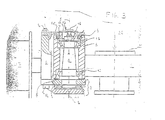
fig. 3 shows an enlargement of the cross-section of the steering device. - With reference to
figure 2 , it is apparent from this that thewheel 8 is in contact with theroadway 30. The weight of the vehicle is burdened on theaxle 1 at the supportingpoints 25, as shown by arrows 26. The bending moment - generated by the vehicle weight which acts on theaxle 1 and the reaction of the roadway, which is developed by the supporting point of thewheel 8 on the roadway 30 - tends to cause a deflection of the wheel, as shown byarrow 27. Obviously the steering device is symmetric to the vertical axis passing through the centre of theaxle 1. - With reference to
figure 3 , it is apparent from this that at each end of thisaxle 1 there is a sleeve 3 which has an upper mouth-piece 4 and a lower mouth-piece 5. Thecoupling element 6 of thehub 7 ofwheel 8 is located on the outside of this sleeve 3. A shaft 2, coupled in a rotary manner inside of the sleeve 3, by means of twotaper roller bearings 12 and 15 is firmly connected to thiscoupling element 6 by means of a supporting element 9 which connects to thecoupling element 6 the end of shaft 2 that protrudes from the lower mouth-piece 5 of sleeve 3. In a conventional steering device, this supporting element 9 must be particularly sturdy as the vehicle weight is alleviated by means of shaft 2 on this supporting element 9 by submitting it to a considerable bending moment. The figure shows the steering device according to the invention as a modification of a conventional steering device, for which reason the supporting element 9 proves to be very sturdy and to consist of three overlaid parts. The steering device according to the invention comprises furthermore analleviation element 10, which is firmly connected to thecoupling element 6 and constrained in a rotary manner directly to the upper mouth-piece 4 of the sleeve 3 by means of the first radial bearing 11. Thealleviation element 10 is suitable to transmit the bending moment generated by thecoupling element 6 directly to the sleeve 3. In this manner the supporting element 9, thecoupling element 6 and thealleviation element 10, mutually united, substantially form a "C" shape, where the lower arm of the "C" (supporting element 9) is firmly connected to the shaft 2, which is constrained in a rotary manner by the second set oftaper bearings 12 and 15 to the sleeve 3. The upper arm of the "C" (alleviation element 10) is on the other hand constrained in a rotary manner directly to the upper mouth-piece 4 of the sleeve 3. Thealleviation element 10, as it cannot alleviate the bending moment to the shaft 2, but is connected in a manner to alleviate it to the sleeve 3, which is decisively more sturdy than the shaft 2, prevents or at least reduces considerably the bending of the supporting element 9 and of thewheel 8. - In order to facilitate disassembling of the steering device, the supporting element 9, the
coupling element 6 and thealleviation element 10 are connected by two lock-screws 14 (the prospective infig. 3 shows only one) which cross thecoupling element 6 that is located between the supporting element 9 and thealleviation element 10. In order to always facilitate disassembling of the steering device, the supporting element 9 includes the locking means to the shaft 2. - The steering device has a safety element 13 that includes a
bolt 16 and awasher 17. Thebolt 16 is located along the axis of shaft 2 and is screwed on the end of shaft 2 next to the upper mouth-piece 4 of the sleeve 3. Thewasher 17 lies on thealleviation element 10. This safety element 13 substantially is not able to transmit bending moments and its purpose is to avoid that an unforeseen jolting of the vehicle, for example due to a hump or an irregularity on the roadway when travelling at high speed, may displace the first radial bearing 11 located between thealleviation element 10 and the upper mouth-piece 4 of the sleeve 3. Thebolt 16 does not push thewasher 17 downwards, but together with thewasher 17 acts only as a safety device against any lifting of the alleviation element and of the first bearing 11. - By lying directly on the mouth-piece of the sleeve 3, the
alleviation element 10 co-acts together with the supporting element 9 in the reaction to the bending moment generated by the parallel forces directed to the opposite side acting along the axis of the shaft 2 and along thecoupling element 6. In this manner the bending action on shaft 2, which represents a moment of inertia of the cross-section being considerably lower than that of sleeve 3, proves to be very low, and consequently also its deformation is lower. - On the contrary, the moment of inertia of the cross section formed by the supporting element 9 and the
alleviation element 10 proves to be considerable even if the cross sections of both elements are small, as these cross sections are quite distant one from the other. - This allows a more efficient reaction to the bending moment with a smaller deformation. The
wheel 8 therefore can turn around the vertical axis S with a minimum deflection although it is subject to high loads. - This allows not only a better operation of the steering system and minor wear at high loads, but also saving of money as the dimensions of the supporting element 9 can be reduced.
Claims (10)
- Steering device comprising an axle (1) suitable for supporting the weight of a vehicle located on top of it, a sleeve (3) firmly connected to one end of this axle (1), where this sleeve (3) has an upper mouth-piece (4) and a lower mouth-piece (5), a coupling element (6) for the hub (7) of a wheel (8) located at the outside of this sleeve (3), a shaft (2) fitted in a rotary manner inside of the sleeve (3) and firmly connected to this coupling element (6) by means of a supporting element (9), which connects firmly to the coupling element (6) the end of shaft (2) which protrudes from the lower mouth-piece (5) of the sleeve (3), wherein it includes an alleviation element (10) firmly connected to the coupling element (6) and constrained in a rotary manner directly to the upper mouth-piece (4) of the sleeve (3), so to enable transmitting of the bending moment from the alleviation element (10) directly to the sleeve (3).
- Steering device according to claim 1, wherein it includes at least a first bearing (11) located between the alleviation element (10) and the upper mouth-piece (4) of the sleeve (3).
- Steering device according to the previous claim, wherein this first bearing (11) is of the radial type.
- Steering device according to claim 1, wherein it includes at least a second bearing (12) located between the shaft (2) and the sleeve (3) for their mutual rotary fitting.
- Steering device according to the previous claim, wherein this second bearing (12) is of the taper roller type.
- Steering device according to the previous claim, wherein it includes two taper roller bearings (12, 15) located between the shaft (2) and the sleeve (3).
- Steering device according to claim 1, wherein it includes a safety element (13) located between the end of the shaft (2) next to the upper mouth-piece (4) of the sleeve (3) and the alleviation element (10), where this safety element (13) is substantially not able to transmit any bending moments.
- Steering device according to claim 7, wherein this safety element (13) includes a bolt (16) located along the axis of shaft (2) and a washer (17) which lies on the alleviation element (10).
- Steering device according to claim 1, wherein the supporting element (9), the coupling element (6) and the alleviation element (10), mutually united, substantially form a "C" shape and are connected by at least one lock-screw (14) which crosses the coupling element (6).
- Steering device according to claim 1, wherein this supporting element (9) includes the locking means of the shaft (2).
Applications Claiming Priority (1)
| Application Number | Priority Date | Filing Date | Title |
|---|---|---|---|
| ITMI20070765 ITMI20070765A1 (en) | 2007-04-16 | 2007-04-16 | STEERING DEVICE |
Publications (2)
| Publication Number | Publication Date |
|---|---|
| EP2003042A2 true EP2003042A2 (en) | 2008-12-17 |
| EP2003042A3 EP2003042A3 (en) | 2009-11-25 |
Family
ID=39731754
Family Applications (1)
| Application Number | Title | Priority Date | Filing Date |
|---|---|---|---|
| EP08425241A Withdrawn EP2003042A3 (en) | 2007-04-16 | 2008-04-10 | Steering device |
Country Status (2)
| Country | Link |
|---|---|
| EP (1) | EP2003042A3 (en) |
| IT (1) | ITMI20070765A1 (en) |
Family Cites Families (2)
| Publication number | Priority date | Publication date | Assignee | Title |
|---|---|---|---|---|
| SE510895C2 (en) * | 1995-10-11 | 1999-07-05 | Volvo Ab | Spindle |
| US6827359B2 (en) * | 2002-06-03 | 2004-12-07 | Arvinmeritor Technology, Llc. | Non-drive front axle steering knuckle |
-
2007
- 2007-04-16 IT ITMI20070765 patent/ITMI20070765A1/en unknown
-
2008
- 2008-04-10 EP EP08425241A patent/EP2003042A3/en not_active Withdrawn
Also Published As
| Publication number | Publication date |
|---|---|
| EP2003042A3 (en) | 2009-11-25 |
| ITMI20070765A1 (en) | 2008-10-17 |
Similar Documents
| Publication | Publication Date | Title |
|---|---|---|
| EP2977306B1 (en) | Motorcycle | |
| CN101693438B (en) | Heavy-load type oil-gas spring independent suspension steering drive axle | |
| JP6754630B2 (en) | Axle device | |
| CN102431586A (en) | Integrated steering and suspension system | |
| US11745793B2 (en) | Bus steering system | |
| CN103707717A (en) | Steering drive axle used in rough terrain wheeled crane | |
| CN109383664B (en) | A heavy-duty electric-driven steering wheel with differential steering | |
| CN105270561A (en) | Chainless bicycle, wheel fork and frame | |
| CN104191925A (en) | Non-driven independent suspension axle and all-terrain crane | |
| CN102700607B (en) | A kind of rear axle wheel reductor tyre revolution is to driving assembly | |
| CN203681150U (en) | Steering drive axle applied to rough terrain wheeled crane | |
| CN105346668A (en) | Non-chain bicycle and rear axle assembly thereof | |
| EP2003042A2 (en) | Steering device | |
| US20150343842A1 (en) | Axle assembly for a work vehicle | |
| US4271685A (en) | Double-ring universal joint | |
| CN211032048U (en) | Double-motor rear drive axle of kart | |
| CN205186463U (en) | Conical gear - transfer line kind of drive's two wheeler and rear axle subassembly thereof | |
| CN214524051U (en) | Three-fulcrum electric forklift steering axle | |
| CN205087876U (en) | Articulated formula narrow roadway fork truck turns to device | |
| CN103010284A (en) | Steering system, vehicle chassis and engineering vehicle | |
| CN110723201B (en) | In-wheel steering structure based on distributed wheel hub drive | |
| CN110949565A (en) | All-terrain six-wheel mobile mechanism | |
| CN211364154U (en) | Trackless translation car steering axle and trackless translation car | |
| US9981680B2 (en) | Energy absorption member for a vehicle | |
| JP4302033B2 (en) | Power steering and bar handle vehicle in bar handle vehicle |
Legal Events
| Date | Code | Title | Description |
|---|---|---|---|
| PUAI | Public reference made under article 153(3) epc to a published international application that has entered the european phase |
Free format text: ORIGINAL CODE: 0009012 |
|
| AK | Designated contracting states |
Kind code of ref document: A2 Designated state(s): AT BE BG CH CY CZ DE DK EE ES FI FR GB GR HR HU IE IS IT LI LT LU LV MC MT NL NO PL PT RO SE SI SK TR |
|
| AX | Request for extension of the european patent |
Extension state: AL BA MK RS |
|
| PUAL | Search report despatched |
Free format text: ORIGINAL CODE: 0009013 |
|
| AK | Designated contracting states |
Kind code of ref document: A3 Designated state(s): AT BE BG CH CY CZ DE DK EE ES FI FR GB GR HR HU IE IS IT LI LT LU LV MC MT NL NO PL PT RO SE SI SK TR |
|
| AX | Request for extension of the european patent |
Extension state: AL BA MK RS |
|
| AKX | Designation fees paid | ||
| REG | Reference to a national code |
Ref country code: DE Ref legal event code: 8566 |
|
| STAA | Information on the status of an ep patent application or granted ep patent |
Free format text: STATUS: THE APPLICATION IS DEEMED TO BE WITHDRAWN |
|
| 18D | Application deemed to be withdrawn |
Effective date: 20100527 |