EP1998575B1 - Drahtlose Endgerätvorrichtung und Verfahren zum Schützen der Systemressourcen - Google Patents
Drahtlose Endgerätvorrichtung und Verfahren zum Schützen der Systemressourcen Download PDFInfo
- Publication number
- EP1998575B1 EP1998575B1 EP08153295.4A EP08153295A EP1998575B1 EP 1998575 B1 EP1998575 B1 EP 1998575B1 EP 08153295 A EP08153295 A EP 08153295A EP 1998575 B1 EP1998575 B1 EP 1998575B1
- Authority
- EP
- European Patent Office
- Prior art keywords
- domain
- terminal apparatus
- wireless terminal
- data information
- encryption
- Prior art date
- Legal status (The legal status is an assumption and is not a legal conclusion. Google has not performed a legal analysis and makes no representation as to the accuracy of the status listed.)
- Not-in-force
Links
Images


Classifications
-
- H—ELECTRICITY
- H04—ELECTRIC COMMUNICATION TECHNIQUE
- H04W—WIRELESS COMMUNICATION NETWORKS
- H04W12/00—Security arrangements; Authentication; Protecting privacy or anonymity
- H04W12/12—Detection or prevention of fraud
-
- G—PHYSICS
- G06—COMPUTING OR CALCULATING; COUNTING
- G06F—ELECTRIC DIGITAL DATA PROCESSING
- G06F1/00—Details not covered by groups G06F3/00 - G06F13/00 and G06F21/00
- G06F1/26—Power supply means, e.g. regulation thereof
- G06F1/32—Means for saving power
- G06F1/3203—Power management, i.e. event-based initiation of a power-saving mode
-
- G—PHYSICS
- G06—COMPUTING OR CALCULATING; COUNTING
- G06F—ELECTRIC DIGITAL DATA PROCESSING
- G06F1/00—Details not covered by groups G06F3/00 - G06F13/00 and G06F21/00
- G06F1/26—Power supply means, e.g. regulation thereof
- G06F1/32—Means for saving power
- G06F1/3203—Power management, i.e. event-based initiation of a power-saving mode
- G06F1/3234—Power saving characterised by the action undertaken
- G06F1/3287—Power saving characterised by the action undertaken by switching off individual functional units in the computer system
-
- G—PHYSICS
- G06—COMPUTING OR CALCULATING; COUNTING
- G06F—ELECTRIC DIGITAL DATA PROCESSING
- G06F21/00—Security arrangements for protecting computers, components thereof, programs or data against unauthorised activity
- G06F21/50—Monitoring users, programs or devices to maintain the integrity of platforms, e.g. of processors, firmware or operating systems
- G06F21/52—Monitoring users, programs or devices to maintain the integrity of platforms, e.g. of processors, firmware or operating systems during program execution, e.g. stack integrity ; Preventing unwanted data erasure; Buffer overflow
- G06F21/53—Monitoring users, programs or devices to maintain the integrity of platforms, e.g. of processors, firmware or operating systems during program execution, e.g. stack integrity ; Preventing unwanted data erasure; Buffer overflow by executing in a restricted environment, e.g. sandbox or secure virtual machine
-
- G—PHYSICS
- G06—COMPUTING OR CALCULATING; COUNTING
- G06F—ELECTRIC DIGITAL DATA PROCESSING
- G06F21/00—Security arrangements for protecting computers, components thereof, programs or data against unauthorised activity
- G06F21/70—Protecting specific internal or peripheral components, in which the protection of a component leads to protection of the entire computer
- G06F21/81—Protecting specific internal or peripheral components, in which the protection of a component leads to protection of the entire computer by operating on the power supply, e.g. enabling or disabling power-on, sleep or resume operations
-
- H—ELECTRICITY
- H04—ELECTRIC COMMUNICATION TECHNIQUE
- H04L—TRANSMISSION OF DIGITAL INFORMATION, e.g. TELEGRAPHIC COMMUNICATION
- H04L63/00—Network architectures or network communication protocols for network security
- H04L63/14—Network architectures or network communication protocols for network security for detecting or protecting against malicious traffic
- H04L63/1441—Countermeasures against malicious traffic
- H04L63/145—Countermeasures against malicious traffic the attack involving the propagation of malware through the network, e.g. viruses, trojans or worms
-
- H—ELECTRICITY
- H04—ELECTRIC COMMUNICATION TECHNIQUE
- H04W—WIRELESS COMMUNICATION NETWORKS
- H04W12/00—Security arrangements; Authentication; Protecting privacy or anonymity
- H04W12/08—Access security
- H04W12/086—Access security using security domains
-
- H—ELECTRICITY
- H04—ELECTRIC COMMUNICATION TECHNIQUE
- H04W—WIRELESS COMMUNICATION NETWORKS
- H04W12/00—Security arrangements; Authentication; Protecting privacy or anonymity
- H04W12/12—Detection or prevention of fraud
- H04W12/125—Protection against power exhaustion attacks
-
- H—ELECTRICITY
- H04—ELECTRIC COMMUNICATION TECHNIQUE
- H04W—WIRELESS COMMUNICATION NETWORKS
- H04W12/00—Security arrangements; Authentication; Protecting privacy or anonymity
- H04W12/12—Detection or prevention of fraud
- H04W12/128—Anti-malware arrangements, e.g. protection against SMS fraud or mobile malware
-
- H—ELECTRICITY
- H04—ELECTRIC COMMUNICATION TECHNIQUE
- H04W—WIRELESS COMMUNICATION NETWORKS
- H04W88/00—Devices specially adapted for wireless communication networks, e.g. terminals, base stations or access point devices
- H04W88/02—Terminal devices
-
- Y—GENERAL TAGGING OF NEW TECHNOLOGICAL DEVELOPMENTS; GENERAL TAGGING OF CROSS-SECTIONAL TECHNOLOGIES SPANNING OVER SEVERAL SECTIONS OF THE IPC; TECHNICAL SUBJECTS COVERED BY FORMER USPC CROSS-REFERENCE ART COLLECTIONS [XRACs] AND DIGESTS
- Y02—TECHNOLOGIES OR APPLICATIONS FOR MITIGATION OR ADAPTATION AGAINST CLIMATE CHANGE
- Y02D—CLIMATE CHANGE MITIGATION TECHNOLOGIES IN INFORMATION AND COMMUNICATION TECHNOLOGIES [ICT], I.E. INFORMATION AND COMMUNICATION TECHNOLOGIES AIMING AT THE REDUCTION OF THEIR OWN ENERGY USE
- Y02D10/00—Energy efficient computing, e.g. low power processors, power management or thermal management
-
- Y—GENERAL TAGGING OF NEW TECHNOLOGICAL DEVELOPMENTS; GENERAL TAGGING OF CROSS-SECTIONAL TECHNOLOGIES SPANNING OVER SEVERAL SECTIONS OF THE IPC; TECHNICAL SUBJECTS COVERED BY FORMER USPC CROSS-REFERENCE ART COLLECTIONS [XRACs] AND DIGESTS
- Y02—TECHNOLOGIES OR APPLICATIONS FOR MITIGATION OR ADAPTATION AGAINST CLIMATE CHANGE
- Y02D—CLIMATE CHANGE MITIGATION TECHNOLOGIES IN INFORMATION AND COMMUNICATION TECHNOLOGIES [ICT], I.E. INFORMATION AND COMMUNICATION TECHNOLOGIES AIMING AT THE REDUCTION OF THEIR OWN ENERGY USE
- Y02D30/00—Reducing energy consumption in communication networks
- Y02D30/70—Reducing energy consumption in communication networks in wireless communication networks
Definitions
- the present invention relates to a wireless terminal apparatus such as a mobile phone, and more particularly to a wireless terminal apparatus and a method of protecting system resources of the wireless terminal apparatus from malicious software ("malware") attack to guarantee safe security services in a wireless environment.
- malware malicious software
- a wireless terminal apparatus such as a mobile phone, provides diverse information services in a wireless environment.
- FIG. 1 is a block diagram illustrating the construction of a related art wireless terminal apparatus.
- the related art terminal apparatus includes a domain unit 10 provided with one operating system (OS) 11 and applications 12, and a system resource unit 20 provided with a ROM, a central processing unit (CPU), a memory, a battery, an input/output (I/O) device, and so forth.
- applications 12 including voice call, banking, trading, digital rights management (DRM), and so forth, are driven by one operating system 11.
- all applications 12 are operated by one operating system 11 irrespective of the degree of security, and thus, if malicious software is installed in the wireless terminal apparatus without the user's knowledge in a wireless environment, wireless data information and system resources of the wireless terminal apparatus cannot be protected from malware attack, and safe security services cannot be guaranteed.
- the malware consumes battery power of the wireless terminal apparatus to make important services unusable. Also, when a received message, such as a Short Message Service (SMS)/Multimedia Messaging Service (MMS) message that includes malware, is executed, the whole system is damaged, hindering the availability of the wireless terminal apparatus.
- SMS Short Message Service
- MMS Multimedia Messaging Service
- the malware can monitor the contents of the memory before the performance of the encryption or decryption, and thus the user's secret data may flow out.
- Exemplary embodiments of the present invention overcome the above disadvantages and other disadvantages not described above. Also, the present invention is not required to overcome the disadvantages described above, and an exemplary embodiment of the present invention may not overcome any of the problems described above.
- An aspect of the present invention provides a wireless terminal apparatus, which includes a domain unit having a first domain driving a first application that is very safe and a second domain separated from the first domain and driving a second application that is weak in safety; a system resource unit composed of hardware of the wireless terminal apparatus; and a control unit controlling an operation of the domain unit that accesses the system resource unit.
- Another aspect of the present invention provides a method of protecting system resources for a wireless terminal apparatus, which includes (a) calculating a current amount of battery power used for a second domain, which is separated from a first domain driving an application that requires safety and drives a general application that is weak in safety, and a current remaining amount of battery power of the wireless terminal apparatus; (b) interrupting the driving of the second domain if the current remaining amount of battery power of the wireless terminal apparatus calculated at the step (a) is below a minimum reference value for stably driving an important service; and (c) gradually reducing an amount of CPU usage of the second domain if the current remaining amount of battery power of the wireless terminal apparatus is above the minimum reference value and the current amount of battery power used for the second domain is above a maximum reference value.
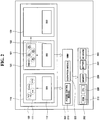
- FIG. 2 is a block diagram illustrating the construction of a wireless terminal apparatus according to an exemplary embodiment of the present invention.
- the wireless terminal apparatus includes a domain unit 100, a system resource unit 200, a control unit 300, and so forth.
- the domain unit 100 is an environment in which applications are operated by corresponding operating systems (OS).
- the domain unit 100 includes first, second, and third domains 110, 120, and 130.
- the first domain 110 downloads a first application 111 that requires safety from an authenticated wireless internet server, and installs the downloaded first application 111.
- the first operating system (OS1) 112 executes the first application 111.
- the first application 111 includes applications for providing services such as voice call, banking, trading, digital rights management (DRM), and so forth.
- the second domain 120 is separated from the first domain 110, and downloads a second application 121, which is somewhat weak in safety and may be attacked by malware, from a general wireless internet server to install the downloaded second application 121.
- the second operating system (OS2) 122 executes the second application 121.
- the second application 121 includes applications for providing services such as SMS/MMS, user APP, and so forth.
- the third domain 130 is separated from the first and second domains 110 and 120, and makes a backup of important data information of the second domain 120 in order to prevent the important data information from being deleted or changed due to the execution of malware included in the second application 121.
- the third domain 130 only performs the data backup without executing the backup data information.
- the system resource unit 200 is composed of hardware of the wireless terminal apparatus.
- the system resource unit 200 includes a ROM 210, a CPU 220, a memory 230, a battery 240, an input/output (I/O) device 250, and so forth.
- the ROM 210 is a storage region that cannot be illegally changed by a user or system.
- the memory 230 is a storage device in which wireless data information is stored, and includes a nonvolatile memory, for example, a flash memory.
- the memory has a plurality of storage regions in which diverse kinds of wireless data information are dividedly stored according to their kinds and security. Important data information may be encrypted and the encrypted information may be stored in a specified storage region among the storage regions.
- the control unit 300 controls the operation of the domain unit 100 using a virtual machine monitor (VMM) so that the domain unit 100 can access the system resource unit 200.
- VMM virtual machine monitor
- the control unit 300 is provided with an access control module 310 and an encryption module 320.
- the access control module 310 controls the operation of the second domain 120 that accesses the system resource unit 200 in order to react to the malware attack against the system resource unit 200. For example, in the event that the malware included in the second application 121 of the second domain 120 attacks the battery 240 in the system resource unit 200, the access control module 310 interrupts the driving of the second domain 120 if the current remaining amount of battery power of the wireless terminal apparatus is below a minimum reference value for stably driving an important service. On the other hand, the access control module 310 gradually reduces the amount of CPU usage of the second domain 120 if the current remaining amount of battery power of the wireless terminal apparatus is above the minimum reference value and the current amount of battery power used for the second domain 120 is above a maximum reference value.
- the minimum reference value and the maximum reference value are reference values predefined during the setting of the wireless terminal apparatus.
- the encryption module 320 performs encryption and decryption of the important data information being input from the first and second domains 110 and 120 to the system resource unit 200. For example, the encryption module 320 performs encryption, decryption, and electronic signature of the important data information using VMM in the case where the wireless terminal apparatus does not support a hardwired encryption function.
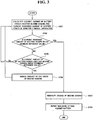
- FIG. 3 is a flowchart explaining a method of processing malware attack against a battery in a wireless terminal apparatus according to an exemplary embodiment of the present invention.
- the wireless terminal apparatus guarantees the availability of the battery 240 by managing the corresponding domain.
- the malware included in the second application 121 of the second domain 120 attacks the battery 240 of the system resource unit 200
- the current amount of battery power used for the second domain 12 and the current remaining amount of battery power of the wireless terminal apparatus are calculated S101. Then, if the current remaining amount of battery power of the wireless terminal apparatus is below the minimum reference value for stably driving the important service S102, the driving of the second domain 120 is interrupted S103, and the malware attack against the battery 240 is reported to the user S104.
- the amount of CPU usage of the second domain 120 is kept within the maximum reference value S106 by gradually reducing the amount of CPU usage of the second domain 120.
- the battery consumption is in close relation to the amount of CPU usage.
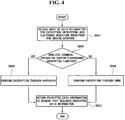
- FIG. 4 is a flowchart explaining a method of performing at least one of encryption and decryption in a wireless terminal apparatus according to an exemplary embodiment of the present invention.
- encryption/decryption of the important data information which is input from the first and second domains 110 and 120 to the system resource unit 200 that is composed of hardware of the wireless terminal apparatus, is performed, and thus, security is improved.
- data information for encryption, decryption, and electronic signature is input from the first and second domains 110 and 120 S201. Then, it is confirmed whether the wireless terminal apparatus supports hardwired encryption operation of the input data information S202. If the wireless terminal apparatus supports the hardwired encryption operation, the encryption operation is performed through high-speed hardware S203, while if not, a software encryption operation is performed through the control unit 300 using VMM S204. Then, the encrypted data information is returned to the respective domains 110 and 120 requesting the encrypted data information S205.
- FIG. 5 is a flowchart explaining a method of performing SMS/MMS data backup in a wireless terminal apparatus according to an exemplary embodiment of the present invention.
- the SMS/MMS message is stored as a backup in the third domain 130 that is separated from the first and second domains 110 and 120 in order to prevent the SMS/MMS message from being deleted or changed due to the execution of the malware included in the SMS/MMS message.
- the second domain 120 receives and executes the SMS/MMS message S301, and then transmits the received. SMS/MMS message to the third domain 130, so that the third domain 130 stores the transmitted SMS/MMS message S302.
- the third domain 130 in order to minimize the damage of the system when the SMS/MMS including the malware is executed and to perform data restoration, the third domain 130 only stores the backup data information without executing the backup data information.
- the wireless terminal apparatus and the method of protecting system resources according to the exemplary embodiments of the present invention have one or more effects as follows.
- the security of the wireless terminal apparatus may be improved.
- the availability of the wireless terminal apparatus may be increased.
- the important data information is prevented from being deleted or changed due to the execution of malware included in the general applications.
Landscapes
- Engineering & Computer Science (AREA)
- Computer Security & Cryptography (AREA)
- Theoretical Computer Science (AREA)
- General Engineering & Computer Science (AREA)
- Computer Hardware Design (AREA)
- Computer Networks & Wireless Communication (AREA)
- Signal Processing (AREA)
- General Physics & Mathematics (AREA)
- Physics & Mathematics (AREA)
- Software Systems (AREA)
- Computing Systems (AREA)
- Health & Medical Sciences (AREA)
- General Health & Medical Sciences (AREA)
- Virology (AREA)
- Telephone Function (AREA)
- Mobile Radio Communication Systems (AREA)
- Telephonic Communication Services (AREA)
Claims (14)
- Drahtlose Endgerätevorrichtung, die umfasst:eine Domaineinheit (100), die umfasst: eine erste Domain (110), die dazu konfiguriert ist eine erste Anwendung (111), welche Sicherheit erfordert, anzutreiben, sowie eine zweite Domain (120), die von der ersten Domain (110) getrennt ist und die eine zweite Anwendung (121) mit niedriger Sicherheit antreibt;eine Systemressourceneinheit (200); undeine Steuerungseinheit (300), die dazu konfiguriert ist, eine Zugriffsoperation der Domaineinheit (100), die auf die Systemressourceneinheit (200) zugreift, zu steuern,wobei die Steuerungseinheit (300) ein Modul (310) zur Zugriffssteuerung umfasst, welches dazu konfiguriert ist, eine Operation der zweiten Domain (120), die auf die Systemressourceneinheit (200) zugreift, zu steuern, um auf einen Malware-Angriff gegen die Systemressourceneinheit (200) zu reagieren;dadurch gekennzeichnet, dassdas Modul (310) zur Zugriffssteuerung dazu konfiguriert ist, den Antrieb der zweiten Domain (120) zu unterbrechen, wenn eine aktuell verbleibende Menge an Batterieladung der drahtlosen Endgerätevorrichtung unterhalb eines minimalen Referenzwerts zum stabilen Antreiben eines Dienstes liegt, wobei das Modul (310) zur Zugriffssteuerung dazu konfiguriert ist, eine Menge des Verbrauchs der Zentraleinheit (Central Processing Unit, CPU) der zweiten Domain (120) nach und nach zu verringern, wenn die aktuell verbleibende Menge an Batterieladung der drahtlosen Endgerätevorrichtung oberhalb des minimalen Referenzwerts liegt und eine aktuelle Menge an Batterieladung, die für die zweite Domain (120) verbraucht wird, oberhalb eines minimalen Referenzwerts liegt.
- Drahtlose Endgerätevorrichtung gemäß Anspruch 1, wobei die erste Anwendung (111) eine Anwendung umfasst, die die folgenden Dienste zur Verfügung stellt: Sprachanruf, Banking, Handel und/oder digitale Rechteverwaltung (Digital Rights Management, DRM).
- Drahtlose Endgerätevorrichtung gemäß Anspruch 1 oder 2, wobei die zweite Anwendung (121) eine Anwendung umfasst, die einen Kurznachrichtendienst (Short Message Service, SMS) oder einen Multimedianachrichtendienst (Multimedia Messaging Service, MMS) zur Verfügung stellt.
- Drahtlose Endgerätevorrichtung gemäß Anspruch 1, 2 oder 3, wobei die Systemressourceneinheit (200) einen Speicher, eine Batterie und/oder eine Zentraleinheit (CPU) umfasst.
- Drahtlose Endgerätevorrichtung gemäß einem der vorangegangenen Ansprüche, wobei die Steuerungseinheit (300) dazu konfiguriert ist, die Zugriffsoperation der Domaineinheit (100) mit Hilfe eines Hypervisors (Virtual Machine Monitor, VMM) zu steuern.
- Drahtlose Endgerätevorrichtung gemäß einem der vorangegangenen Ansprüche, wobei die Steuerungseinheit (300) ein Verschlüsselungsmodul (320) umfasst, welches dazu konfiguriert ist, Dateninformationen, die in die Systemressourceneinheit (200) eingegeben wurden, zu verschlüsseln und/oder zu entschlüsseln.
- Drahtlose Endgerätevorrichtung gemäß Anspruch 6, wobei das Verschlüsselungsmodul (320) dazu konfiguriert ist, eine Verschlüsselung, eine Entschlüsselung und eine elektronische Signatur der Dateninformationen mit Hilfe eines Hypervisors (VMM) durchzuführen, wenn die drahtlose Endgerätevorrichtung keine fest verdrahtete Verschlüsselungsfunktion unterstützt.
- Drahtlose Endgerätevorrichtung gemäß einem der vorangegangenen Ansprüche, weiterhin umfassend eine dritte Domain (130), die dazu konfiguriert ist, eine Sicherung von Dateninformationen von der zweiten Domain (120) durchzuführen, um zu verhindern, dass die Dateninformationen gelöscht oder geändert werden wegen einer Ausführung von Malware, die in der zweiten Anwendung (121) enthalten war.
- Drahtlose Endgerätevorrichtung gemäß Anspruch 8, wobei die dritte Domain (130) dazu konfiguriert ist, die Sicherangsdateninformationen nur zu speichern, ohne die Sicherungsdateninformationen auszuführen.
- Verfahren zum Schutz von Systemressourcen für eine drahtlose Endgerätevorrichtung, wobei das Verfahren umfasst:(a) Berechnen einer aktuellen Menge an Batterieladung, die für eine zweite Domain (120) verbraucht wird, wobei die zweite Domain von einer ersten Domain (110), die eine erste Anwendung (111), die Sicherheit erfordert, antreibt, getrennt ist und eine zweite Anwendung (121) mit niedriger Sicherheit antreibt, und Berechnen einer aktuell verbleibende Menge an Batterieladung der drahtlosen Endgerätevorrichtung;
gekennzeichnet durch(b) Unterbrechen des Antriebs der zweiten Domain (120), wenn die aktuell verbleibende Menge an Batterieladung der drahtlosen Endgerätevorrichtung, welche in Operation (a) berechnet wurde, unterhalb eines minimalen Referenzwerts zum stabilen Antreiben eines Dienstes liegt; und(c) Nach und nach Reduzieren einer Menge des Verbrauchs der Zentraleinheit (CPU) der zweiten Domain (120), wenn die aktuell verbleibende Menge an Batterieladung der drahtlosen Endgerätevorrichtung oberhalb des minimalen Referenzwerts liegt und die aktuell verbleibende Menge an Batterieladung, die für die zweite Domain (120) verbraucht wird, oberhalb eines minimalen Referenzwerts liegt. - Verfahren gemäß Anspruch 10, weiterhin umfassend (d) das Durchführen einer Verschlüsselung und/oder Entschlüsselung von Dateninformationen, die von der ersten und von der zweiten Domain (110, 120) in eine Systemressourceneinheit (200) der drahtlosen Endgerätevorrichtung eingegeben wurden.
- Verfahren gemäß Anspruch 11, wobei die Operation (d) umfasst:(d1) Empfangen einer Eingabe von Dateninformationen zur Verschlüsselung, zur Entschlüsselung und zur elektronischen Signatur von der ersten und von der zweiten Domain (110, 120);(d2) Durchführen einer Verschlüsselungsoperation an den Dateninformationen, die in Operation (d1) eingegeben wurden, wenn die drahtlose Endgerätevorrichtung eine fest verdrahtete Verschlüsselungsfunktion unterstützt, während die Steuerungseinheit (300) mit Hilfe eines Hypervisors (VMM) eine Softwareverschlüsselungsoperation durchführt, wenn die drahtlose Endgerätevorrichtung keine fest verdrahtete Verschlüsselungsfunktion unterstützt; und(d3) Zurückgeben der in Operation (d2) verschlüsselten Dateninformationen an die Domain, welche die verschlüsselten Dateninformationen angefordert hat.
- Verfahren gemäß Anspruch 11 oder 12, weiterhin umfassend, dass (e) die zweite Domain (120) einen Kurznachrichtendienst (SMS) oder einen Multimedianachrichtendienst (MMS) als Sicherung in einer dritten Domain (130), die von der ersten und von der zweiten Domain (110, 120) getrennt ist, speichert, um zu verhindern, dass die SMS- oder MMS-Nachricht gelöscht oder geändert wird wegen einer Ausführung von Malware, die in der SMS oder MMS enthalten war.
- Verfahren gemäß Anspruch 13, wobei die Operation (e) umfasst:(e1) dass die zweite Domain (120) die SMS- oder MMS-Nachricht empfängt und ausführt; und(e2) die SMS- oder MMS-Nachricht an die dritte Domain (130) überträgt, um die SMS- oder MMS-Nachricht in der dritten Domain (130) zu speichern.
Applications Claiming Priority (2)
| Application Number | Priority Date | Filing Date | Title |
|---|---|---|---|
| US90741907P | 2007-04-02 | 2007-04-02 | |
| KR1020070107421A KR101506254B1 (ko) | 2007-04-02 | 2007-10-24 | 무선 단말 장치 및 시스템 보호 방법 |
Publications (3)
| Publication Number | Publication Date |
|---|---|
| EP1998575A2 EP1998575A2 (de) | 2008-12-03 |
| EP1998575A3 EP1998575A3 (de) | 2010-11-24 |
| EP1998575B1 true EP1998575B1 (de) | 2016-05-25 |
Family
ID=39855205
Family Applications (1)
| Application Number | Title | Priority Date | Filing Date |
|---|---|---|---|
| EP08153295.4A Not-in-force EP1998575B1 (de) | 2007-04-02 | 2008-03-26 | Drahtlose Endgerätvorrichtung und Verfahren zum Schützen der Systemressourcen |
Country Status (3)
| Country | Link |
|---|---|
| US (1) | US20080276299A1 (de) |
| EP (1) | EP1998575B1 (de) |
| JP (1) | JP2008257715A (de) |
Families Citing this family (5)
| Publication number | Priority date | Publication date | Assignee | Title |
|---|---|---|---|---|
| US10353722B2 (en) * | 2010-07-21 | 2019-07-16 | Nec Corporation | System and method of offloading cryptography processing from a virtual machine to a management module |
| EP2458501A1 (de) * | 2010-11-30 | 2012-05-30 | France Telecom | Verfahren zum Betreiben einer Kommunikationsvorrichtung und zugehörige Kommunikationsvorrichtung |
| US20130097203A1 (en) * | 2011-10-12 | 2013-04-18 | Mcafee, Inc. | System and method for providing threshold levels on privileged resource usage in a mobile network environment |
| US8990534B2 (en) | 2012-05-31 | 2015-03-24 | Apple Inc. | Adaptive resource management of a data processing system |
| US9690685B2 (en) * | 2014-05-30 | 2017-06-27 | Apple Inc. | Performance management based on resource consumption |
Family Cites Families (18)
| Publication number | Priority date | Publication date | Assignee | Title |
|---|---|---|---|---|
| US7225441B2 (en) * | 2000-12-27 | 2007-05-29 | Intel Corporation | Mechanism for providing power management through virtualization |
| US6697013B2 (en) * | 2001-12-06 | 2004-02-24 | Atheros Communications, Inc. | Radar detection and dynamic frequency selection for wireless local area networks |
| GB2366891B (en) * | 2001-12-06 | 2002-11-20 | Appsense Ltd | Improvements in and relating to computer apparatus terminal server apparatus & performance management methods therefor |
| US7093086B1 (en) * | 2002-03-28 | 2006-08-15 | Veritas Operating Corporation | Disaster recovery and backup using virtual machines |
| US8549166B2 (en) * | 2004-03-01 | 2013-10-01 | Qualcomm Incorporated | Execution of unverified programs in a wireless, device operating environment |
| US7401230B2 (en) * | 2004-03-31 | 2008-07-15 | Intel Corporation | Secure virtual machine monitor to tear down a secure execution environment |
| US7543166B2 (en) * | 2004-05-12 | 2009-06-02 | Intel Corporation | System for managing power states of a virtual machine based on global power management policy and power management command sent by the virtual machine |
| JP2006066885A (ja) * | 2004-07-29 | 2006-03-09 | Denso Corp | 燃料噴射弁 |
| US8640194B2 (en) * | 2004-08-25 | 2014-01-28 | Nec Corporation | Information communication device and program execution environment control method |
| US7877621B2 (en) * | 2004-09-03 | 2011-01-25 | Virginia Tech Intellectual Properties, Inc. | Detecting software attacks by monitoring electric power consumption patterns |
| US8266438B2 (en) * | 2004-10-25 | 2012-09-11 | Security First Corp. | Secure data parser method and system |
| US7440751B2 (en) * | 2005-06-30 | 2008-10-21 | Nokia Corporation | System and method for controlling energy usage in mobile applications |
| US8856473B2 (en) * | 2005-07-01 | 2014-10-07 | Red Hat, Inc. | Computer system protection based on virtualization |
| US7784098B1 (en) * | 2005-07-14 | 2010-08-24 | Trend Micro, Inc. | Snapshot and restore technique for computer system recovery |
| US7565567B2 (en) * | 2005-11-18 | 2009-07-21 | Intel Corporation | Highly available computing platform |
| US20070192641A1 (en) * | 2006-02-10 | 2007-08-16 | Intel Corporation | Method and apparatus to manage power consumption in a computer |
| US20070208918A1 (en) * | 2006-03-01 | 2007-09-06 | Kenneth Harbin | Method and apparatus for providing virtual machine backup |
| US8146079B2 (en) * | 2006-07-26 | 2012-03-27 | Hewlett-Packard Development Company, L.P. | Systems and methods for controlling resource usage by a driver domain on behalf of a virtual machine |
-
2008
- 2008-02-21 US US12/034,923 patent/US20080276299A1/en not_active Abandoned
- 2008-03-26 EP EP08153295.4A patent/EP1998575B1/de not_active Not-in-force
- 2008-03-27 JP JP2008084011A patent/JP2008257715A/ja active Pending
Also Published As
| Publication number | Publication date |
|---|---|
| EP1998575A3 (de) | 2010-11-24 |
| US20080276299A1 (en) | 2008-11-06 |
| JP2008257715A (ja) | 2008-10-23 |
| EP1998575A2 (de) | 2008-12-03 |
Similar Documents
| Publication | Publication Date | Title |
|---|---|---|
| KR100692348B1 (ko) | 휴면 보호 | |
| EP2795829B1 (de) | Kryptografisches system und methodologie zur sicherung von software-kryptografie | |
| US7313705B2 (en) | Implementation of a secure computing environment by using a secure bootloader, shadow memory, and protected memory | |
| US10176095B2 (en) | Secure management of operations on protected virtual machines | |
| US20130081124A1 (en) | Trusting an unverified code image in a computing device | |
| EP3270318B1 (de) | Dynamische sicherheitsmodulendgerätevorrichtung und verfahren zum betrieb davon | |
| EP3663958B1 (de) | Vertrauenswürdiger angriffsverhinderungsdatenprozessor auf kernel-basis | |
| JP2009520293A (ja) | コンピュータにおける悪意のあるソフトウェアの検出 | |
| US20170168902A1 (en) | Processor state integrity protection using hash verification | |
| TW201627908A (zh) | 快速佈署可信任執行環境應用的系統與方法 | |
| JP5575950B2 (ja) | 無線端末装置およびシステム保護方法 | |
| EP1998575A2 (de) | Drahtlose Endgerätvorrichtung und Verfahren zum Schützen der Systemressourcen | |
| CN105229658B (zh) | 数据处理系统的安全装置和安全方法 | |
| KR101953444B1 (ko) | 하드웨어 수준 보안을 보장하는 가상화 기반 소프트웨어 보안 방법 및 이를 이용하는 장치 | |
| KR101604892B1 (ko) | 안드로이드 기반 어플리케이션의 부정사용 방지 방법 및 장치 | |
| US10762208B2 (en) | System and method for regaining operational control of compromised remote servers | |
| WO2020207292A1 (zh) | 数据安全处理系统、方法、存储介质、处理器及硬件安全卡 | |
| EP2750068B1 (de) | System und Verfahren zum Schutz von Computerressourcen vor unbefugtem Zugriff mittels isolierter Umgebung | |
| CN113312629A (zh) | 一种基于安卓操作系统的安全操作系统 | |
| KR20140106313A (ko) | 외부 장치로의 프로그램 저장을 통한 데이터 보호 방법 | |
| WO2010067346A1 (en) | Method and apparatus for protecting content in a storage device | |
| Burmester | Trusted clouds |
Legal Events
| Date | Code | Title | Description |
|---|---|---|---|
| PUAI | Public reference made under article 153(3) epc to a published international application that has entered the european phase |
Free format text: ORIGINAL CODE: 0009012 |
|
| AK | Designated contracting states |
Kind code of ref document: A2 Designated state(s): AT BE BG CH CY CZ DE DK EE ES FI FR GB GR HR HU IE IS IT LI LT LU LV MC MT NL NO PL PT RO SE SI SK TR |
|
| AX | Request for extension of the european patent |
Extension state: AL BA MK RS |
|
| PUAL | Search report despatched |
Free format text: ORIGINAL CODE: 0009013 |
|
| AK | Designated contracting states |
Kind code of ref document: A3 Designated state(s): AT BE BG CH CY CZ DE DK EE ES FI FR GB GR HR HU IE IS IT LI LT LU LV MC MT NL NO PL PT RO SE SI SK TR |
|
| AX | Request for extension of the european patent |
Extension state: AL BA MK RS |
|
| 17P | Request for examination filed |
Effective date: 20110520 |
|
| AKX | Designation fees paid |
Designated state(s): DE FR GB |
|
| 17Q | First examination report despatched |
Effective date: 20120105 |
|
| RAP1 | Party data changed (applicant data changed or rights of an application transferred) |
Owner name: SAMSUNG ELECTRONICS CO., LTD. |
|
| REG | Reference to a national code |
Ref country code: DE Ref legal event code: R079 Ref document number: 602008044392 Country of ref document: DE Free format text: PREVIOUS MAIN CLASS: H04Q0007000000 Ipc: H04W0012120000 |
|
| GRAP | Despatch of communication of intention to grant a patent |
Free format text: ORIGINAL CODE: EPIDOSNIGR1 |
|
| INTG | Intention to grant announced |
Effective date: 20151216 |
|
| RIC1 | Information provided on ipc code assigned before grant |
Ipc: G06F 9/455 20060101ALN20151207BHEP Ipc: H04L 29/06 20060101ALI20151207BHEP Ipc: G06F 21/81 20130101ALI20151207BHEP Ipc: H04W 88/02 20090101ALI20151207BHEP Ipc: H04W 12/12 20090101AFI20151207BHEP Ipc: G06F 21/53 20130101ALI20151207BHEP Ipc: G06F 1/32 20060101ALI20151207BHEP |
|
| GRAS | Grant fee paid |
Free format text: ORIGINAL CODE: EPIDOSNIGR3 |
|
| GRAA | (expected) grant |
Free format text: ORIGINAL CODE: 0009210 |
|
| AK | Designated contracting states |
Kind code of ref document: B1 Designated state(s): DE FR GB |
|
| REG | Reference to a national code |
Ref country code: GB Ref legal event code: FG4D |
|
| REG | Reference to a national code |
Ref country code: DE Ref legal event code: R096 Ref document number: 602008044392 Country of ref document: DE |
|
| REG | Reference to a national code |
Ref country code: DE Ref legal event code: R097 Ref document number: 602008044392 Country of ref document: DE |
|
| PLBE | No opposition filed within time limit |
Free format text: ORIGINAL CODE: 0009261 |
|
| STAA | Information on the status of an ep patent application or granted ep patent |
Free format text: STATUS: NO OPPOSITION FILED WITHIN TIME LIMIT |
|
| 26N | No opposition filed |
Effective date: 20170228 |
|
| REG | Reference to a national code |
Ref country code: FR Ref legal event code: ST Effective date: 20171130 |
|
| PG25 | Lapsed in a contracting state [announced via postgrant information from national office to epo] |
Ref country code: FR Free format text: LAPSE BECAUSE OF NON-PAYMENT OF DUE FEES Effective date: 20170331 |
|
| PGFP | Annual fee paid to national office [announced via postgrant information from national office to epo] |
Ref country code: GB Payment date: 20200225 Year of fee payment: 13 Ref country code: DE Payment date: 20200220 Year of fee payment: 13 |
|
| REG | Reference to a national code |
Ref country code: DE Ref legal event code: R119 Ref document number: 602008044392 Country of ref document: DE |
|
| GBPC | Gb: european patent ceased through non-payment of renewal fee |
Effective date: 20210326 |
|
| PG25 | Lapsed in a contracting state [announced via postgrant information from national office to epo] |
Ref country code: GB Free format text: LAPSE BECAUSE OF NON-PAYMENT OF DUE FEES Effective date: 20210326 Ref country code: DE Free format text: LAPSE BECAUSE OF NON-PAYMENT OF DUE FEES Effective date: 20211001 |