EP1997811B1 - Indazole, benzoxazole and pyrazolopyridine derivatives as P38 kinase inhibitors - Google Patents
Indazole, benzoxazole and pyrazolopyridine derivatives as P38 kinase inhibitors Download PDFInfo
- Publication number
- EP1997811B1 EP1997811B1 EP08164861.0A EP08164861A EP1997811B1 EP 1997811 B1 EP1997811 B1 EP 1997811B1 EP 08164861 A EP08164861 A EP 08164861A EP 1997811 B1 EP1997811 B1 EP 1997811B1
- Authority
- EP
- European Patent Office
- Prior art keywords
- cycloalkyl
- heterocycloalkyl
- alkyl
- mmol
- heteroalkyl
- Prior art date
- Legal status (The legal status is an assumption and is not a legal conclusion. Google has not performed a legal analysis and makes no representation as to the accuracy of the status listed.)
- Expired - Lifetime
Links
- 0 CN(C(C1)=O)c2cc(OC(C(C3)C#N)=CC[C@@]3F)cc3*2[n]1nc3 Chemical compound CN(C(C1)=O)c2cc(OC(C(C3)C#N)=CC[C@@]3F)cc3*2[n]1nc3 0.000 description 2
- BQPCLAPVHWWJHL-UHFFFAOYSA-N CN(C)C(CNc(cc1)c(C=N)cc1Oc(c(CN)c1)ccc1F)=O Chemical compound CN(C)C(CNc(cc1)c(C=N)cc1Oc(c(CN)c1)ccc1F)=O BQPCLAPVHWWJHL-UHFFFAOYSA-N 0.000 description 1
- FWKZOHHDHDCHPJ-UHFFFAOYSA-N N#Cc(cc(cc1)F)c1Oc(cc1)cc2c1[nH]nc2 Chemical compound N#Cc(cc(cc1)F)c1Oc(cc1)cc2c1[nH]nc2 FWKZOHHDHDCHPJ-UHFFFAOYSA-N 0.000 description 1
Images


Classifications
-
- C—CHEMISTRY; METALLURGY
- C07—ORGANIC CHEMISTRY
- C07D—HETEROCYCLIC COMPOUNDS
- C07D401/00—Heterocyclic compounds containing two or more hetero rings, having nitrogen atoms as the only ring hetero atoms, at least one ring being a six-membered ring with only one nitrogen atom
- C07D401/14—Heterocyclic compounds containing two or more hetero rings, having nitrogen atoms as the only ring hetero atoms, at least one ring being a six-membered ring with only one nitrogen atom containing three or more hetero rings
-
- A—HUMAN NECESSITIES
- A61—MEDICAL OR VETERINARY SCIENCE; HYGIENE
- A61K—PREPARATIONS FOR MEDICAL, DENTAL OR TOILETRY PURPOSES
- A61K31/00—Medicinal preparations containing organic active ingredients
- A61K31/33—Heterocyclic compounds
- A61K31/395—Heterocyclic compounds having nitrogen as a ring hetero atom, e.g. guanethidine or rifamycins
- A61K31/435—Heterocyclic compounds having nitrogen as a ring hetero atom, e.g. guanethidine or rifamycins having six-membered rings with one nitrogen as the only ring hetero atom
- A61K31/4353—Heterocyclic compounds having nitrogen as a ring hetero atom, e.g. guanethidine or rifamycins having six-membered rings with one nitrogen as the only ring hetero atom ortho- or peri-condensed with heterocyclic ring systems
- A61K31/437—Heterocyclic compounds having nitrogen as a ring hetero atom, e.g. guanethidine or rifamycins having six-membered rings with one nitrogen as the only ring hetero atom ortho- or peri-condensed with heterocyclic ring systems the heterocyclic ring system containing a five-membered ring having nitrogen as a ring hetero atom, e.g. indolizine, beta-carboline
-
- A—HUMAN NECESSITIES
- A61—MEDICAL OR VETERINARY SCIENCE; HYGIENE
- A61P—SPECIFIC THERAPEUTIC ACTIVITY OF CHEMICAL COMPOUNDS OR MEDICINAL PREPARATIONS
- A61P1/00—Drugs for disorders of the alimentary tract or the digestive system
- A61P1/04—Drugs for disorders of the alimentary tract or the digestive system for ulcers, gastritis or reflux esophagitis, e.g. antacids, inhibitors of acid secretion, mucosal protectants
-
- A—HUMAN NECESSITIES
- A61—MEDICAL OR VETERINARY SCIENCE; HYGIENE
- A61P—SPECIFIC THERAPEUTIC ACTIVITY OF CHEMICAL COMPOUNDS OR MEDICINAL PREPARATIONS
- A61P17/00—Drugs for dermatological disorders
- A61P17/06—Antipsoriatics
-
- A—HUMAN NECESSITIES
- A61—MEDICAL OR VETERINARY SCIENCE; HYGIENE
- A61P—SPECIFIC THERAPEUTIC ACTIVITY OF CHEMICAL COMPOUNDS OR MEDICINAL PREPARATIONS
- A61P19/00—Drugs for skeletal disorders
-
- A—HUMAN NECESSITIES
- A61—MEDICAL OR VETERINARY SCIENCE; HYGIENE
- A61P—SPECIFIC THERAPEUTIC ACTIVITY OF CHEMICAL COMPOUNDS OR MEDICINAL PREPARATIONS
- A61P19/00—Drugs for skeletal disorders
- A61P19/02—Drugs for skeletal disorders for joint disorders, e.g. arthritis, arthrosis
-
- A—HUMAN NECESSITIES
- A61—MEDICAL OR VETERINARY SCIENCE; HYGIENE
- A61P—SPECIFIC THERAPEUTIC ACTIVITY OF CHEMICAL COMPOUNDS OR MEDICINAL PREPARATIONS
- A61P19/00—Drugs for skeletal disorders
- A61P19/08—Drugs for skeletal disorders for bone diseases, e.g. rachitism, Paget's disease
-
- A—HUMAN NECESSITIES
- A61—MEDICAL OR VETERINARY SCIENCE; HYGIENE
- A61P—SPECIFIC THERAPEUTIC ACTIVITY OF CHEMICAL COMPOUNDS OR MEDICINAL PREPARATIONS
- A61P19/00—Drugs for skeletal disorders
- A61P19/08—Drugs for skeletal disorders for bone diseases, e.g. rachitism, Paget's disease
- A61P19/10—Drugs for skeletal disorders for bone diseases, e.g. rachitism, Paget's disease for osteoporosis
-
- A—HUMAN NECESSITIES
- A61—MEDICAL OR VETERINARY SCIENCE; HYGIENE
- A61P—SPECIFIC THERAPEUTIC ACTIVITY OF CHEMICAL COMPOUNDS OR MEDICINAL PREPARATIONS
- A61P25/00—Drugs for disorders of the nervous system
-
- A—HUMAN NECESSITIES
- A61—MEDICAL OR VETERINARY SCIENCE; HYGIENE
- A61P—SPECIFIC THERAPEUTIC ACTIVITY OF CHEMICAL COMPOUNDS OR MEDICINAL PREPARATIONS
- A61P25/00—Drugs for disorders of the nervous system
- A61P25/04—Centrally acting analgesics, e.g. opioids
-
- A—HUMAN NECESSITIES
- A61—MEDICAL OR VETERINARY SCIENCE; HYGIENE
- A61P—SPECIFIC THERAPEUTIC ACTIVITY OF CHEMICAL COMPOUNDS OR MEDICINAL PREPARATIONS
- A61P25/00—Drugs for disorders of the nervous system
- A61P25/18—Antipsychotics, i.e. neuroleptics; Drugs for mania or schizophrenia
-
- A—HUMAN NECESSITIES
- A61—MEDICAL OR VETERINARY SCIENCE; HYGIENE
- A61P—SPECIFIC THERAPEUTIC ACTIVITY OF CHEMICAL COMPOUNDS OR MEDICINAL PREPARATIONS
- A61P25/00—Drugs for disorders of the nervous system
- A61P25/28—Drugs for disorders of the nervous system for treating neurodegenerative disorders of the central nervous system, e.g. nootropic agents, cognition enhancers, drugs for treating Alzheimer's disease or other forms of dementia
-
- A—HUMAN NECESSITIES
- A61—MEDICAL OR VETERINARY SCIENCE; HYGIENE
- A61P—SPECIFIC THERAPEUTIC ACTIVITY OF CHEMICAL COMPOUNDS OR MEDICINAL PREPARATIONS
- A61P29/00—Non-central analgesic, antipyretic or antiinflammatory agents, e.g. antirheumatic agents; Non-steroidal antiinflammatory drugs [NSAID]
-
- A—HUMAN NECESSITIES
- A61—MEDICAL OR VETERINARY SCIENCE; HYGIENE
- A61P—SPECIFIC THERAPEUTIC ACTIVITY OF CHEMICAL COMPOUNDS OR MEDICINAL PREPARATIONS
- A61P31/00—Antiinfectives, i.e. antibiotics, antiseptics, chemotherapeutics
-
- A—HUMAN NECESSITIES
- A61—MEDICAL OR VETERINARY SCIENCE; HYGIENE
- A61P—SPECIFIC THERAPEUTIC ACTIVITY OF CHEMICAL COMPOUNDS OR MEDICINAL PREPARATIONS
- A61P31/00—Antiinfectives, i.e. antibiotics, antiseptics, chemotherapeutics
- A61P31/04—Antibacterial agents
-
- A—HUMAN NECESSITIES
- A61—MEDICAL OR VETERINARY SCIENCE; HYGIENE
- A61P—SPECIFIC THERAPEUTIC ACTIVITY OF CHEMICAL COMPOUNDS OR MEDICINAL PREPARATIONS
- A61P31/00—Antiinfectives, i.e. antibiotics, antiseptics, chemotherapeutics
- A61P31/12—Antivirals
-
- A—HUMAN NECESSITIES
- A61—MEDICAL OR VETERINARY SCIENCE; HYGIENE
- A61P—SPECIFIC THERAPEUTIC ACTIVITY OF CHEMICAL COMPOUNDS OR MEDICINAL PREPARATIONS
- A61P35/00—Antineoplastic agents
-
- A—HUMAN NECESSITIES
- A61—MEDICAL OR VETERINARY SCIENCE; HYGIENE
- A61P—SPECIFIC THERAPEUTIC ACTIVITY OF CHEMICAL COMPOUNDS OR MEDICINAL PREPARATIONS
- A61P37/00—Drugs for immunological or allergic disorders
-
- A—HUMAN NECESSITIES
- A61—MEDICAL OR VETERINARY SCIENCE; HYGIENE
- A61P—SPECIFIC THERAPEUTIC ACTIVITY OF CHEMICAL COMPOUNDS OR MEDICINAL PREPARATIONS
- A61P37/00—Drugs for immunological or allergic disorders
- A61P37/02—Immunomodulators
-
- A—HUMAN NECESSITIES
- A61—MEDICAL OR VETERINARY SCIENCE; HYGIENE
- A61P—SPECIFIC THERAPEUTIC ACTIVITY OF CHEMICAL COMPOUNDS OR MEDICINAL PREPARATIONS
- A61P37/00—Drugs for immunological or allergic disorders
- A61P37/02—Immunomodulators
- A61P37/06—Immunosuppressants, e.g. drugs for graft rejection
-
- A—HUMAN NECESSITIES
- A61—MEDICAL OR VETERINARY SCIENCE; HYGIENE
- A61P—SPECIFIC THERAPEUTIC ACTIVITY OF CHEMICAL COMPOUNDS OR MEDICINAL PREPARATIONS
- A61P43/00—Drugs for specific purposes, not provided for in groups A61P1/00-A61P41/00
-
- A—HUMAN NECESSITIES
- A61—MEDICAL OR VETERINARY SCIENCE; HYGIENE
- A61P—SPECIFIC THERAPEUTIC ACTIVITY OF CHEMICAL COMPOUNDS OR MEDICINAL PREPARATIONS
- A61P9/00—Drugs for disorders of the cardiovascular system
-
- C—CHEMISTRY; METALLURGY
- C07—ORGANIC CHEMISTRY
- C07D—HETEROCYCLIC COMPOUNDS
- C07D231/00—Heterocyclic compounds containing 1,2-diazole or hydrogenated 1,2-diazole rings
- C07D231/54—Heterocyclic compounds containing 1,2-diazole or hydrogenated 1,2-diazole rings condensed with carbocyclic rings or ring systems
- C07D231/56—Benzopyrazoles; Hydrogenated benzopyrazoles
-
- C—CHEMISTRY; METALLURGY
- C07—ORGANIC CHEMISTRY
- C07D—HETEROCYCLIC COMPOUNDS
- C07D261/00—Heterocyclic compounds containing 1,2-oxazole or hydrogenated 1,2-oxazole rings
- C07D261/20—Heterocyclic compounds containing 1,2-oxazole or hydrogenated 1,2-oxazole rings condensed with carbocyclic rings or ring systems
-
- C—CHEMISTRY; METALLURGY
- C07—ORGANIC CHEMISTRY
- C07D—HETEROCYCLIC COMPOUNDS
- C07D401/00—Heterocyclic compounds containing two or more hetero rings, having nitrogen atoms as the only ring hetero atoms, at least one ring being a six-membered ring with only one nitrogen atom
- C07D401/02—Heterocyclic compounds containing two or more hetero rings, having nitrogen atoms as the only ring hetero atoms, at least one ring being a six-membered ring with only one nitrogen atom containing two hetero rings
- C07D401/04—Heterocyclic compounds containing two or more hetero rings, having nitrogen atoms as the only ring hetero atoms, at least one ring being a six-membered ring with only one nitrogen atom containing two hetero rings directly linked by a ring-member-to-ring-member bond
-
- C—CHEMISTRY; METALLURGY
- C07—ORGANIC CHEMISTRY
- C07D—HETEROCYCLIC COMPOUNDS
- C07D403/00—Heterocyclic compounds containing two or more hetero rings, having nitrogen atoms as the only ring hetero atoms, not provided for by group C07D401/00
- C07D403/02—Heterocyclic compounds containing two or more hetero rings, having nitrogen atoms as the only ring hetero atoms, not provided for by group C07D401/00 containing two hetero rings
- C07D403/04—Heterocyclic compounds containing two or more hetero rings, having nitrogen atoms as the only ring hetero atoms, not provided for by group C07D401/00 containing two hetero rings directly linked by a ring-member-to-ring-member bond
-
- C—CHEMISTRY; METALLURGY
- C07—ORGANIC CHEMISTRY
- C07D—HETEROCYCLIC COMPOUNDS
- C07D403/00—Heterocyclic compounds containing two or more hetero rings, having nitrogen atoms as the only ring hetero atoms, not provided for by group C07D401/00
- C07D403/02—Heterocyclic compounds containing two or more hetero rings, having nitrogen atoms as the only ring hetero atoms, not provided for by group C07D401/00 containing two hetero rings
- C07D403/12—Heterocyclic compounds containing two or more hetero rings, having nitrogen atoms as the only ring hetero atoms, not provided for by group C07D401/00 containing two hetero rings linked by a chain containing hetero atoms as chain links
-
- C—CHEMISTRY; METALLURGY
- C07—ORGANIC CHEMISTRY
- C07D—HETEROCYCLIC COMPOUNDS
- C07D405/00—Heterocyclic compounds containing both one or more hetero rings having oxygen atoms as the only ring hetero atoms, and one or more rings having nitrogen as the only ring hetero atom
- C07D405/02—Heterocyclic compounds containing both one or more hetero rings having oxygen atoms as the only ring hetero atoms, and one or more rings having nitrogen as the only ring hetero atom containing two hetero rings
- C07D405/12—Heterocyclic compounds containing both one or more hetero rings having oxygen atoms as the only ring hetero atoms, and one or more rings having nitrogen as the only ring hetero atom containing two hetero rings linked by a chain containing hetero atoms as chain links
-
- C—CHEMISTRY; METALLURGY
- C07—ORGANIC CHEMISTRY
- C07D—HETEROCYCLIC COMPOUNDS
- C07D413/00—Heterocyclic compounds containing two or more hetero rings, at least one ring having nitrogen and oxygen atoms as the only ring hetero atoms
- C07D413/02—Heterocyclic compounds containing two or more hetero rings, at least one ring having nitrogen and oxygen atoms as the only ring hetero atoms containing two hetero rings
- C07D413/12—Heterocyclic compounds containing two or more hetero rings, at least one ring having nitrogen and oxygen atoms as the only ring hetero atoms containing two hetero rings linked by a chain containing hetero atoms as chain links
-
- C—CHEMISTRY; METALLURGY
- C07—ORGANIC CHEMISTRY
- C07D—HETEROCYCLIC COMPOUNDS
- C07D471/00—Heterocyclic compounds containing nitrogen atoms as the only ring hetero atoms in the condensed system, at least one ring being a six-membered ring with one nitrogen atom, not provided for by groups C07D451/00 - C07D463/00
- C07D471/02—Heterocyclic compounds containing nitrogen atoms as the only ring hetero atoms in the condensed system, at least one ring being a six-membered ring with one nitrogen atom, not provided for by groups C07D451/00 - C07D463/00 in which the condensed system contains two hetero rings
- C07D471/04—Ortho-condensed systems
Definitions
- This invention relates to novel inhibitors of p38 MAP kinase and related kinases, pharmaceutical compositions containing the inhibitors, and methods for preparing these inhibitors. They are useful for the treatment of inflammation, osteoarthritis, rheumatoid arthritis, psoriasis, Crohn's disease, inflammatory bowel disease, cancer, autoimmune diseases, and for the treatment of other cytokine-mediated diseases.
- cytokines include tumor necrosis factor alpha (TNF- ⁇ ), interleukin 1 beta (IL-1 ⁇ ), interleukin 8 (IL-8) and interleukin 6 (IL-6).
- TNF- ⁇ tumor necrosis factor alpha
- IL-1 ⁇ interleukin 1 beta
- IL-8 interleukin 8
- IL-6 interleukin 6
- RA Rheumatoid Arthritis
- etanercept soluble TNF- ⁇ receptor
- IL-1 receptor antagonist anakinra
- P38 (also CSBP or RK) is a serine/threonine mitogen-activated proteinkinase (MAPK) that has been shown to regulate pro-inflammatory cytokines.
- MAPK mitogen-activated proteinkinase
- p38 MAPK was the molecular target of a series of pyridinylimidazole compounds that inhibited the production of TNF from LPS-challenged human monocytes, Lee, J., et al., Nature, 372: 739-746 . This was a key discovery and has led to the development of a number of selective inhibitors of p38 MAPK and the elucidation of its role in cytokine signaling.
- PBMCs Peripheral blood monocytes
- LPS lipopolysaccharide
- Inhibitors of p38 are active in a variety of widely recognized disease models and show positive effects in a number of standard animal models of inflammation including rat collagen-induced arthritis, Jackson, J.R., et al., J. Pharmacol. Exp. Ther., 284: 687-692 (1998 ); rat adjuvant-induced arthritis, Badger, A. M., et al., Arthritis Rheum., 43: 175-183 (2000 ); Badger, A. M., et al., J. Pharmacol. Exp. Ther., 279: 1453-1461 (1996 ); and carrageenan-induced paw edema in the mouse, Nishikori, T., et al., Eur. J.
- p38 inhibitor would provide a means to treat debilitating diseases that can be regulated by modulation of p38 signaling like, but not limited to, RA.
- P38 inhibitors are well known to those skilled in the art. Reviews of early inhibitors have helped establish the structure activity relationships important for enhanced activity both in vitro and in vivo. See, Salituro, E. G., et al., Current Medicinal Chemistry, 6: 807-823 (1999 ) and Foster, M. L., et al., Drug News Perspect., 13: 488-497 (2000 ). More contemporary reviews have focused on the structural diversity of new inhibitors being explored as p38 inhibitors Boehm, J. D. and Adams, J. L., Exp. Opin. Ther. Patents, 10: 25-37 (2000 ). Document WO 02100833A describes heterobicyclic compounds which are rho kinase inhibitors.
- This invention describes a novel series of substituted 2-aza-[4.3.0]-bicyclic hereroaromatic compounds as p38 inhibitors that are useful for the treatment of inflammation, osteoarthritis, rheumatoid arthritis, cancer, auto-immune diseases, and for the treatment of other cytokine mediated diseases.
- This document describes compounds, methods to produce these compounds, and pharmaceutical compositions containing them that inhibit p38 alpha and the associated p38 mediated events such as the inhibition of cytokine production.
- Such compounds generally referred to as 2-aza-[4.3.0] bicyclic heteroaromatic rings, have utility as therapeutic agents for diseases that can be treated by the inhibition of the p38 signaling pathway.
- the present document describes p38 inhibitors of the general Formula I: wherein Y is C, N;
- the present document also describes pharmaceutically acceptable prodrugs, pharmaceutically active metabolites, and pharmaceutically acceptable salts of the compound of Formula I . Methods of making the compounds of Formula I are also described.
- this document describes compounds of the general Formula II : where A, B, X and Ar 1 are as defined above.
- the present document describes compounds of the general Formula V: where A, X, E and Ar 1 are
- the present document describes compounds of the general Formula XV : where A, B, X, and Ar 1 are defined as above, and R 12 and R 13 are independently alkyl, allyl, alkenyl, alkynyl, cycloalkyl, heterocycloalkyl, aryl ,or heteroaryl, wherein said alkyl, allyl, alkenyl, alkynyl, cycloalkyl, heterocycloalkyl, aryl ,or heteroaryl may be substituted or unsubstituted.
- the invention provides compounds of the general Formula XVII:
- the present document describes a method of inhibiting the production of cytokines such as TNF- ⁇ , IL-1, IL-6 and IL-8 which comprises administering to a warm-blooded animal an effective amount of a compound of Formula I-XVII, or a pharmaceutically acceptable salt or in vivo cleavable prodrug thereof.
- the present document describes a method of providing a p38 kinase inhibitory effect comprising administering to a warm-blooded animal an effective amount of a compound of Formula I-XVII, or a pharmaceutically-acceptable salt or in vivo cleavable prodrug thereof.
- the present document describes treating or preventing a p38-mediated condition, comprising administering an amount of a compound effective to treat or prevent said p38-mediated condition or a pharmaceutical composition comprising said compound, to a human or animal in need thereof, wherein said compound is a compound of Formula I-XVII, or a pharmaceutically-acceptable salt or in vivo cleavable prodrug thereof.
- the p38-mediated condition that can be treated according to the methods of this invention includes inflammatory disease, autoimmune disease, destructive bone disorder, proliferative disorder, infectious disease, viral disease, or neurodegenerative disease
- the compounds described are also useful in methods for preventing cell death and hyperplasia and therefore may be used to treat or prevent reperfusion/ischemia in stroke, heart attacks, and organ hypoxia.
- the compounds of this invention are also useful in methods for preventing thrombin-induced platelet aggregation.
- inventive compounds of formula XVII may be used advantageously in combination with other known therapeutic agents.
- the invention also relates to pharmaceutical compositions comprising an effective amount of an agent selected from compounds of Formulas XVII or a resolved enantiomer, disatereoisomer, solvate, or pharmaceutically acceptable salt thereof.
- the present invention relates to the compounds according to formula XVII, or resolved enantiomer, diastereoisomer, solvate, or a pharmaceutically acceptable salt thereof for use in therapy.
- the present invention relates to the compounds according to formula XVII, or resolved enantiomer, diastereoisomer, solvate, or a pharmaceutically acceptable salt thereof for use in treating or preventing p-38 mediated condition.
- the present invention relates to the compounds according to formula XVII, or resolved enantiomer, diastereoisomer, solvate, or a pharmaceutically acceptable salt thereof for use in treating or preventing inflammatory disease, autoimmune disease, destructive bone disorder, proliferative bone disorder, infectious disease, viral disease, or neurodegenerative disease.
- the invention provides compounds of formula XVII which are selected from the group constituted by:
- the present document describes compounds of the Formulas I-XVI (not included within the scope of the invention) and of Formula XVII (according to the invention) which are useful for inhibiting p38 alpha and associated p38 mediated events such as cytokine production. Such compounds have utility as therapeutic agents for diseases that can be treated by the inhibition of the p38 signaling pathway.
- the present document describes compounds of the general Formula I:
- alkyl refers to a saturated linear or branched-chain monovalent hydrocarbon radical of one to twelve carbon atoms, wherein the alkyl radical may be optionally substituted independently with one or more substituents described below.
- alkyl groups include, but are not limited to, methyl, ethyl, n-propyl, isopropyl, butyl, isobutyl, sec-butyl, tert-butyl, pentyl, isopentyl, tert-pentyl, hexyl, isohexyl, and the like.
- Alkylene means a linear or branched saturated divalent hydrocarbon radical of one to twelve carbon atoms, e.g., methylene, ethylene, propylene, 2-methylpropylene, pentylene, and the like.
- alkenyl refers to linear or branched-chain monovalent hydrocarbon radical of two to twelve carbon atoms, containing at least one double bond, e.g., ethenyl, propenyl, and the like, wherein the alkenyl radical may be optionally substituted independently with one or more substituents described herein, and includes radicals having "cis” and “trans” orientations, or alternatively, "E” and "Z” orientations.
- alkenylene refers to a linear or branched divalent hydrocarbon radical of two to twelve carbons containing at least one double bond, wherein the alkenylene radical may be optionally substituted independently with one or more substituents described herein. Examples include, but are not limited to, ethenylene, propenylene, and the like.
- alkynyl refers to a linear or branched monovalent hydrocarbon radical of two to twelve carbon atoms containing at least one triple bond. Examples include, but are not limited to, ethynyl, propynyl, and the like, wherein the alkynyl radical may be optionally substituted independently with one or more substituents described herein.
- alkynylene to a linear or branched divalent hydrocarbon radical of two to twelve carbons containing at least one triple bond, wherein the alkynylene radical may be optionally substituted independently with one or more substituents described herein.
- cycloalkyl refers to saturated or partially unsaturated cyclic hydrocarbon radical having from three to twelve carbon atoms, wherein the cycloalkyl may be optionally substituted independently with one or more substituents described herein.
- cycloalkyl further includes bicyclic and tricyclic cycloalkyl structures, wherein the bicyclic and tricyclic structures may include a saturated or partially unsaturated cycloalkyl fused to a saturated or partially unsaturated cycloalkyl or heterocycloalkyl ring or an aryl or heteroaryl ring.
- Examples of cycloalkyl groups include, but are not limited to, cyclopropyl, cyclobutyl, cyclopentyl, cyclohexyl, cycloheptyl, and the like.
- heteroalkyl refers to saturated linear or branched-chain monovalent hydrocarbon radical of one to twelve carbon atoms, wherein at least one of the carbon atoms is replaced with a heteroatom selected from N, O, or S, and wherein the radical may be a carbon radical or heteroatom radical (i.e., the heteroatom may appear in the middle or at the end of the radical).
- the heteroalkyl radical may be optionally substituted independently with one or more substituents described herein.
- heteroalkyl encompasses alkoxy and heteroalkoxy radicals.
- heterocycloalkyl refers to a saturated or partially unsaturated cyclic radical of 3 to 8 ring atoms in which at least one ring atom is a heteroatom selected from nitrogen, oxygen and sulfur, the remaining ring atoms being C where one or more ring atoms may be optionally substituted independently with one or more substituent described below and wherein the heterocycloalkyl ring can be saturated or partially unsaturated.
- the radical may be a carbon radical or heteroatom radical.
- Heterocycloalkyl also includes radicals where heterocycle radicals are fused with aromatic or heteroaromatic rings.
- heterocycloalkyl rings include, but are not limited to, pyrrolidine, piperidine, piperazine, tetrahydropyranyl, morpholine, thiomorpholine, homopiperazine, phthalimide, and derivatives thereof.
- heteroalkenyl refers to linear or branched-chain monovalent hydrocarbon radical of two to twelve carbon atoms, containing at least one double bond, e.g., ethenyl, propenyl, and the like, wherein at least one of the carbon atoms is replaced with a heteroatom selected from N, O, or S, and wherein the radical may be a carbon radical or heteroatom radical (i.e., the heteroatom may appear in the middle or at the end of the radical).
- the heteroalkenyl radical may be optionally substituted independently with one or more substituents described herein, and includes radicals having "cis” and “trans” orientations, or alternatively, "E” and "Z” orientations.
- heteroalkynyl refers to a linear or branched monovalent hydrocarbon radical of two to twelve carbon atoms containing at least one triple bond. Examples include, but are not limited to, ethynyl, propynyl, and the like, wherein at least one of the carbon atoms is replaced with a heteroatom selected from N, O, or S, and wherein the radical may be a carbon radical or heteroatom radical (i.e., the heteroatom may appear in the middle or at the end of the radical).
- the heteroalkynyl radical may be optionally substituted independently with one or more substituents described herein.
- the heteroallyl may be optionally substituted independently with one or more substituents described herein.
- Aryl means a monovalent aromatic hydrocarbon monocyclic radical of 6 to 10 ring atoms or a polycyclic aromatic hydrocarbon, optionally substituted independently with one or more substituents described herein. More specifically the term aryl includes, but is not limited to, phenyl, 1-naphthyl, 2-naphthyl, and derivatives thereof.
- Heteroaryl means a monovalent monocyclic aromatic radical of 5 to 10 ring atoms or a polycyclic aromatic radical, containing one or more ring heteroatoms selected from N, O, or S, the remaining ring atoms being C.
- the aromatic radical is optionally substituted independently with one or more substituents described herein. Examples include, but are not limited to, furyl, thienyl, pyrrolyl, pyridyl, pyrazolyl, pyrimidinyl, imidazolyl, pyrazinyl, indolyl, thiophen-2-yl, quinolyl, benzopyranyl, thiazolyl, and derivatives thereof.
- halo represents fluoro, chloro, bromo or iodo.
- Amino protecting groups refers to those organic groups intended to protect nitrogen atoms against undesirable reactions during synthetic procedures and include, but are not limited to, benzyl, benzyloxycarbonyl (CBZ), tert-butoxycarbonyl (Boc), trifluoroacetyl, and the like.
- Alcohol protecting groups refers to those organic groups intended to protect alcohol groups or substituents against undesirable reactions during synthetic procedures and include, but are not limited to, (trimethylsilyl)ethoxymethyl (SEM), tert-butyl, methoxymethyl (MOM), and the like.
- Sulfur protecting groups refers to those organic groups intended to protect sulfur groups or substituents against undesirable reactions during synthetic procedures and include, but are not limited to, benzyl, (trimethylsilyl)ethoxymethyl (SEM), tert-butyl, , trityl and the like.
- Acid protecting groups refers to those organic groups intended to protect acid groups or substituents against undesirable reactions during synthetic procedures and include, but are not limited to, benzyl, (trimethylsilyl)-ethoxymethyl (SEM), methylethyl and tert-butyl esters, and the like.
- the compounds described may possess one or more asymmetric centers; such compounds can therefore be produced as individual (R)- or (S)-stereoisomers or as mixtures thereof.
- the description or naming of a particular compound in the specification and claims is intended to include both individual enantiomers and mixtures, racemic or otherwise, thereof. Accordingly, the present document describes racemates and resolved enantiomers, and diastereomers compounds of the Formulas I-XVII.
- the methods for the determination of stereochemistry and the separation of stereoisomers are well known in the art (see discussion in Chapter 4 of "Advanced Organic Chemistry", 4th edition J. March, John Wiley and Sons, New York, 1992 ).
- solvates refers to an aggregate of a molecule with one or more solvent molecules.
- pharmaceutically acceptable prodrug is a compound that may be converted under physiological conditions or by solvolysis to the specified compound or to a pharmaceutically acceptable salt of such compound (not included within the scope of the invention).
- a "pharmaceutically active metabolite” is a pharmacologically active product produced through metabolism in the body of a specified compound or salt thereof. Metabolites of a compound may be identified using routine techniques known in the art and their activities determined using tests such as those described herein (not included within the scope of the invention).
- Prodrugs and active metabolites of a compound may be identified using routine techniques known in the art.
- Various forms of prodrugs are known in the art.
- prodrug derivatives see, for example, a) Design of Prodrugs, edited by H. Bundgaard, (Elsevier, 1985 ) and Methods in Enzymology, Vol. 42, p. 309-396, edited by K. Widder, et al. (Academic Press, 1985 ); b) A Textbook of Drug Design and Development, edited by Krogsgaard-Larsen and H. Bundgaard, Chapter 5 "Design and Application of Prodrugs", by H. Bundgaard p. 113-191 (1991 ); c) H.
- a “pharmaceutically acceptable salt” is a salt that retains the biological effectiveness of the free acids and bases of the specified compound and that is not biologically or otherwise undesirable.
- a compound of the invention may possess a sufficiently acidic, a sufficiently basic, or both functional groups, and accordingly react with any of a number of inorganic or organic bases, and inorganic and organic acids, to form a pharmaceutically acceptable sale.
- Examples of pharmaceutically acceptable salts include those salts prepared by reaction of the compounds of the present invention with a mineral or organic acid or an inorganic base, such salts including sulfates, pyrosulfates, bisulfates, sulfites, bisulfites, phosphates, monohydrogenphosphates, dihydrogenphosphates, metaphosphates, pyrophosphates, chlorides, bromides, iodides, acetates, propionates, decanoates, caprylates, acrylates, formates, iso-butyrates, caproates, heptanoates, propiolates, oxalates, malonates, succinates, suberates, sebacates, fumarates, maleates, butyn-1,4-dioates, hexyne-1,6-dioates, benzoates, chlorobenzoates, methylbenzoates, dinitro-menzoates, hydroxybenzoates, methoxybenzoates
- the desired pharmaceutically acceptable salt may be prepared by any suitable method available in the art, for example, treatment of the free base with an inorganic acid, such as hydrochloric acid, hydrobromic acid, sulfuric acid, nitric acid, phosphoric acid and the like, or with an organic acid, such as acetic acid, maleic acid, succinic acid, mandelic acid, fumaric acid, malonic acid, pyruvic acid, oxalic acid, glycolic acid, salicylic acid, a pyranosidyl acid, such as glucuronic acid or galacturonic acid, an alphahydroxy acid, such as citric acid or tartaric acid, an amino acid, such as aspartic acid or glutamic acid, an aromatic acid, such as benzoic acid or cinnamic acid, a sulfonic acid, such as p-toluenesulfonic acid or ethanesulfonic acid, or the like.
- an inorganic acid such as hydrochloric acid,
- the desired pharmaceutically acceptable salt may be prepared by any suitable method, for example, treatment of the free acid with an inorganic or organic base, such as an amine (primary, secondary or tertiary), an alkali metal hydroxide or alkaline earth metal hydroxide, or the like.
- suitable salts include, but are not limited to, organic salts derived from amino acids, such as glycine and arginine, ammonia, primary, secondary, and tertiary amines, and cyclic amines, such as piperidine, morpholine and piperazine, and inorganic salts derived from sodium, calcium, potassium, magnesium, manganese, iron, copper, zinc, aluminum and lithium.
- the compounds may be prepared using the reaction routes and synthesis schemes as described below, employing the techniques available in the art using starting materials that are readily available.
- This present invention provides compounds of the general Formula XVII:
- Figures 1-11 show examples of the synthesis of specific compounds having the general Formula XVII.
- Therapeutically effective amounts of the compounds of the invention may be used to treat diseases mediated by modulation or regulation of protein kinases.
- An "effective amount" is intended to mean that amount of compound that, when administered to a mammal in need of such treatment, is sufficient to effect treatment for a disease mediated by the activity of one or more protein kinases, such as that p38 alpha and the associated p38 mediated events such as cytokine production.
- a therapeutically effective amount of a compound of Formula XVII or a salt, active metabolite or prodrug thereof is a quantity sufficient to modulate, regulate, or inhibit the activity of one or more protein kinases such that a disease condition which is mediated by that activity is reduced or alleviated.
- the amount of a given agent that will correspond to such an amount will vary depending upon factors such as the particular compound, disease condition and its severity, the identity (e.g., weight) of the mammal in need of treatment, but can nevertheless be routinely determined by one skilled in the art.
- Treating is intended to mean at least the mitigation of a disease condition in a mammal, such as a human, that is affected, at least in part, by the activity of one or more protein kinases, such as p38, and includes, but is not limited to, preventing the disease condition from occurring in a mammal, particularly when the mammal is found to be predisposed to having the disease condition but has not yet been diagnosed as having it; modulating and/or inhibiting the disease condition; and/or alleviating the disease condition.
- a compound of the Formula XVII, or a pharmaceutically acceptable salt for the therapeutic treatment (including prophylactic treatment) of mammals including humans, it is normally formulated in accordance with standard pharmaceutical practice as a pharmaceutical composition.
- a pharmaceutical composition that comprises a compound of the Formula XVII, or a pharmaceutically acceptable salt, as defined hereinbefore in association with a pharmaceutically acceptable diluent or carrier.
- compositions of the invention may be in a form suitable for oral use (for example as tablets, lozenges, hard or soft capsules, aqueous or oily suspensions, emulsions, dispersible powders or granules, syrups or elixirs), for topical use (for example as creams, ointments, gels, or aqueous or oily solutions or suspensions), for administration by inhalation (for example as a finely divided powder or a liquid aerosol), for administration by insufflation (for example as a finely divided powder) or for parenteral administration (for example as a sterile aqueous or oily solution for intravenous, subcutaneous, or intramuscular dosing or as a suppository for rectal dosing).
- compositions intended for oral use may contain, for example, one or more coloring, sweetening, flavoring and/or preservative agents.
- Suitable pharmaceutically-acceptable excipients for a tablet formulation include, for example, inert diluents such as lactose, sodium carbonate, calcium phosphate or calcium carbonate, granulating and disintegrating agents such as corn starch or algenic acid; binding agents such as starch; lubricating agents such as magnesium stearate, stearic acid or talc; preservative agents such as ethyl or propyl p-hydroxybenzoate, and anti-oxidants, such as ascorbic acid. Tablet formulations may be uncoated or coated either to modify their disintegration and the subsequent absorption of the active ingredient within the gastrointestinal tract, or to improve their stability and/or appearance, in either case, using conventional coating agents and procedures well known in the art.
- inert diluents such as lactose, sodium carbonate, calcium phosphate or calcium carbonate
- granulating and disintegrating agents such as corn starch or algenic acid
- binding agents such as starch
- Compositions for oral use may be in the form of hard gelatin capsules in which the active ingredient is mixed with an inert solid diluent, for example, calcium carbonate, calcium phosphate or kaolin, or as soft gelatin capsules in which the active ingredient is mixed with water or an oil such as peanut oil, liquid paraffin, or olive oil.
- an inert solid diluent for example, calcium carbonate, calcium phosphate or kaolin
- water or an oil such as peanut oil, liquid paraffin, or olive oil.
- Aqueous suspensions generally contain the active ingredient in finely powdered form together with one or more suspending agents, such as sodium carboxymethylcellulose, methylcellulose, hydroxypropylmethylcellulose, sodium alginate, polyvinyl-pyrrolidone, gum tragacanth and gum acacia; dispersing or wetting agents such as lecithin or condensation products of an alkylene oxide with fatty acids (for example polyoxethylene stearate), or condensation products of ethylene oxide with long chain aliphatic alcohols, for example heptadecaethyleneoxycetanol, or condensation products of ethylene oxide with partial esters derived from fatty acids and a hexitol such as polyoxyethylene sorbitol monooleate, or condensation products of ethylene oxide with partial esters derived from fatty acids and hexitol anhydrides, for example polyethylene sorbitan monooleate.
- suspending agents such as sodium carboxymethylcellulose, methylcellulose, hydroxypropylmethylcellulose, sodium al
- the aqueous suspensions may also contain one or more preservatives (such as ethyl or propyl p-hydroxybenzoate, anti-oxidants (such as ascorbic acid), coloring agents, flavoring agents, and/or sweetening agents (such as sucrose, saccharine or aspartame).
- preservatives such as ethyl or propyl p-hydroxybenzoate, anti-oxidants (such as ascorbic acid), coloring agents, flavoring agents, and/or sweetening agents (such as sucrose, saccharine or aspartame).
- Oily suspensions may be formulated by suspending the active ingredient in a vegetable oil (such as arachis oil, olive oil, sesame oil or coconut oil) or in a mineral oil (such as liquid paraffin).
- the oily suspensions may also contain a thickening agent such as beeswax, hard paraffin or cetyl alcohol. Sweetening agents such as those set out above, and flavoring agents may be added to provide a palatable oral preparation. These compositions may be preserved by the addition of an anti-oxidant such as ascorbic acid.
- Dispersible powders and granules suitable for preparation of an aqueous suspension by the addition of water generally contain the active ingredient together with a dispersing or wetting agent, suspending agent and one or more preservatives. Suitable dispersing or wetting agents and suspending agents are exemplified by those already mentioned above. Additional excipients such as sweetening, flavoring and coloring agents, may also be present.
- the pharmaceutical compositions of the invention may also be in the form of oil-in-water emulsions.
- the oily phase may be a vegetable oil, such as olive oil or arachis oil, or a mineral oil, such as for example liquid paraffin or a mixture of any of these.
- Suitable emulsifying agents may be, for example, naturally-occurring gums such as gum acacia or gum tragacanth, naturally-occurring phosphatides such as soya bean, lecithin, an esters or partial esters derived from fatty acids and hexitol anhydrides (for example sorbitan monooleate) and condensation products of the said partial esters with ethylene oxide such as polyoxyethylene sorbitan monooleate.
- the emulsions may also contain sweetening, flavoring and preservative agents.
- Syrups and elixirs may be formulated with sweetening agents such as glycerol, propylene glycol, sorbitol, aspartame or sucrose, and may also contain a demulcent, preservative, flavoring and/or coloring agent.
- sweetening agents such as glycerol, propylene glycol, sorbitol, aspartame or sucrose, and may also contain a demulcent, preservative, flavoring and/or coloring agent.
- compositions may also be in the form of a sterile injectable aqueous or oily suspension, which may be formulated according to known procedures using one or more of the appropriate dispersing or wetting agents and suspending agents, which have been mentioned above.
- a sterile injectable preparation may also be a sterile injectable solution or suspension in a non-toxic parenterally-acceptable diluent or solvent, for example a solution in 1,3-butanediol.
- Suppository formulations may be prepared by mixing the active ingredient with a suitable non-irritating excipient which is solid at ordinary temperatures but liquid at the rectal temperature and will therefore melt in the rectum to release the drug.
- suitable excipients include, for example, cocoa butter and polyethylene glycols.
- Topical formulations such as creams, ointments, gels and aqueous or oily solutions or suspensions, may generally be obtained by formulating an active ingredient with a conventional, topically acceptable, vehicle or diluent using conventional procedures well known in the art.
- compositions for administration by insufflation may be in the form of a finely divided powder containing particles of average diameter of, for example, 30 ⁇ m or much less, the powder itself comprising either active ingredient alone or diluted with one or more physiologically acceptable carriers such as lactose.
- the powder for insufflation is then conveniently retained in a capsule containing, for example, 1 to 50 mg of active ingredient for use with a turbo-inhaler device, such as is used for insufflation of the known agent sodium cromoglycate.
- Compositions for administration by inhalation may be in the form of a conventional pressurized aerosol arranged to dispense the active ingredient either as an aerosol containing finely divided solid or liquid droplets.
- Conventional aerosol propellants such as volatile fluorinated hydrocarbons or hydrocarbons may be used and the aerosol device is conveniently arranged to dispense a metered quantity of active ingredient.
- a formulation intended for oral administration to humans will all may contain, for example, from 0.5 mg to 2 g of active agent compounded with an appropriate and convenient amount of excipients which may vary from about 5 to about 98 percent by weight of the total composition.
- Dosage unit forms will generally contain about 1 mg to about 500 mg of an active ingredient.
- the size of the dose for therapeutic or prophylactic purposes of a compound of Formula XVII will naturally vary according to the nature and severity of the conditions, the age and sex of the animal or patient and the route of administration, according to well known principles of medicine.
- the compounds of this invention or pharmaceutical salts thereof may be formulated into pharmaceutical compositions for administration to animals or humans to treat or prevent a p38-mediated condition.
- p38-mediated condition means any disease or other deleterious condition in which p38 is known to play a role. This includes conditions which are known to be caused by IL-1, TNF, IL-6 or IL-8 overproduction. Such conditions include, without limitation, inflammatory diseases, autoimmune diseases, destructive bone disorders, proliferative disorders, infectious diseases, viral disease, and neurodegenerative diseases.
- Inflammatory diseases which may be treated or prevented include, but are not limited to, acute pancreatitis, chronic pancreatitis, asthma, allergies, and adult respiratory distress syndrome.
- Autoimmune diseases which may be treated or prevented include, but are not limited to, glomeralonephritis, rheumatoid arthritis, systemic lupus erythematosus, scleroderma, chronic thyroiditis, Graves' disease, autoimmune gastritis, insulin-dependent diabetes mellitus (Type I), autoimmune hemolytic anemia, autoimmune neutropenia, thrombocytopenia, atopic dermatitis, chronic active hepatitis, myasthenia gravis, multiple sclerosis, inflammatory bowel disease, ulcerative colitis, Crohn's disease, psoriasis, or graft vs. host disease.
- glomeralonephritis rheumatoid arthritis
- systemic lupus erythematosus systemic lupus erythematosus
- scleroderma chronic thyroiditis
- Graves' disease autoimmune gastritis
- Destructive bone disorders which may be treated or prevented include, but are not limited to, osteoporosis, osteoarthritis and multiple myeloma-related bone disorder.
- Proliferative diseases which may be treated or prevented include, but are not limited to, acute myelogenous leukemia, chronic myelogenous leukemia, metastatic melanoma, Kaposi's sarcoma, and multiple myeloma.
- Infectious diseases which may be treated or prevented include, but are not limited to, sepsis, septic shock, and Shigellosis.
- Viral diseases which may be treated or prevented include, but are not limited to, acute hepatitis infection (including hepatitis A, hepatitis B and hepatitis C), HIV infection and CMV retinitis.
- Degenerative conditions or diseases which may be treated or prevented by the compounds of this invention include, but are not limited to, Alzheimer's disease, Parkinson's disease, cerebral ischemia and other neurodegenerative diseases.
- p38-mediated conditions also include ischemia/reperfusion in stroke, heart attacks, myocardial ischemia, organ hypoxia, vascular hyperplasia, cardiac hypertrophy and thrombin-induced platelet aggregation.
- p38 inhibitors of this invention are also capable of inhibiting the expression of inducible pro-inflammatory proteins such as prostaglandin endoperoxide synthase-2 (PGHS-2), also referred to as cyclooxygenase-2 (COX-2). Therefore, other "p38-mediated conditions" are edema, analgesia, fever and pain, such as neuromuscular pain, headache, cancer pain, dental pain and arthritis pain.
- PGHS-2 prostaglandin endoperoxide synthase-2
- COX-2 cyclooxygenase-2
- the conditions and diseases that may be treated or prevented by the p38 inhibitors of this invention may also be conveniently grouped by the cytokine (e.g., IL-1, TNF, IL-6, IL-8) that is believed to be responsible for the disease.
- cytokine e.g., IL-1, TNF, IL-6, IL-8
- an IL-1-mediated disease or condition includes rheumatoid arthritis, osteoarthritis, stroke, endotoxemia and/or toxic shock syndrome, inflammatory reaction induced by endotoxin, inflammatory bowel disease, tuberculosis, atherosclerosis, muscle degeneration, cachexia, psoriatic arthritis, Reiter's syndrome, gout, traumatic arthritis, rubella arthritis, acute synovitis, diabetes, pancreatic ß-cell disease and Alzheimer's disease.
- a TNF-mediated disease or condition includes rheumatoid arthritis, rheumatoid spondylitis, osteoarthritis, gouty arthritis and other arthritic conditions, sepsis, septic shock, endotoxic shock, gram negative sepsis, toxic shock syndrome, adult respiratory distress syndrome, cerebral malaria, chronic pulmonary inflammatory disease, silicosis, pulmonary sarcoisosis, bone resorption diseases, reperfusion injury, graft vs. host reaction, allograft rejections, fever and myalgias due to infection, cachexia secondary to infection, AIDS, ARC or malignancy, keloid formation, scar tissue formation, Crohn's disease, ulcerative colitis or pyresis.
- TNF-mediated diseases also include viral infections, such as HIV, CMV, influenza and herpes; and veterinary viral infections, such as lentivirus infections, including, but not limited to equine infectious anaemia virus, caprine arthritis virus, visna virus or maedi virus; or retrovirus infections, including feline immunodeficiency virus, bovine immunodeficiency virus, or canine immunodeficiency virus.
- viral infections such as HIV, CMV, influenza and herpes
- veterinary viral infections such as lentivirus infections, including, but not limited to equine infectious anaemia virus, caprine arthritis virus, visna virus or maedi virus
- retrovirus infections including feline immunodeficiency virus, bovine immunodeficiency virus, or canine immunodeficiency virus.
- IL-8 mediated disease or condition includes diseases characterized by massive neutrophil infiltration, such as psoriasis, inflammatory bowel disease, asthma, cardiac and renal reperfusion injury, adult respiratory distress syndrome, thrombosis and glomerulonephritis.
- the compounds of this infection may be used topically to treat or prevent conditions caused or exacerbated by IL-1 or TNF.
- Such conditions include inflamed joints, eczema, psoriasis, inflammatory skin conditions such as sunburn, inflammatory eye conditions such as conjunctivitis, pyresis, pain and other conditions associated with inflammation.
- the compounds of this invention may be used in combination with other drugs and therapies used in the treatment of disease states which would benefit from the inhibition of cytokines, in particular IL-1, TNF, IL-6 or IL-8.
- the compounds of Formula XVII are of value in the treatment of certain inflammatory and non-inflammatory diseases which are currently treated with a cyclooxygenase-inhibitory non-steroidal anti-inflammatory drug (NSAID) such as indomethacin ketorolac, acetylsalicylic acid, ibuprofen, sulindac, tolmetin and piroxicam.
- NSAID cyclooxygenase-inhibitory non-steroidal anti-inflammatory drug
- Co-administration of a compound of the Formula XVII with a NSAID can result in a reduction of the quantity of the latter agent needed to produce a therapeutic effect, and thus the likelihood of adverse side-effects from the NSAID such as gastrointestinal effects are reduced.
- a pharmaceutical composition which comprises a compound of Formula XVII , or a pharmaceutically-acceptable salt or in vivo cleavable ester thereof, in conjunction or admixture with a cyclooxygenase inhibitory non-steroidal anti-inflammatory agent, and a pharmaceutically-acceptable diluent or carrier.
- the compounds of Formula XVII may also be used in the treatment of conditions such as rheumatoid arthritis in combination with antiarthritic agents such as gold, methotrexate, steroids and penicillinamine, and in conditions such as osteoarthritis in combination with steroids.
- antiarthritic agents such as gold, methotrexate, steroids and penicillinamine
- the compounds of the present invention may also be administered in degradative diseases, for example osteoarthritis, with chondroprotective, anti-degradative and/or reparative agents such as Diacerhein, hyaluronic acid formulations such as Hyalan, Rumalon, Arteparon and glucosamine salts such as Antril.
- degradative diseases for example osteoarthritis
- chondroprotective, anti-degradative and/or reparative agents such as Diacerhein, hyaluronic acid formulations such as Hyalan, Rumalon, Arteparon and glucosamine salts such as Antril.
- the compounds of Formula XVII may also be used in the treatment of asthma in combination with antiasthmatic agents such as bronchodilators and leukotriene antagonists.
- the compounds of Formula XVII are primarily of value as therapeutic agents for use in warm-blooded animals (including man), they are also useful whenever it is required to inhibit the effects of cytokines. Thus, they are useful as pharmacological standards for use in the development of new biological tests and in the search for new pharmacological agents.
- the activity of the compounds of this invention may be assayed for p38 inhibition in vitro, in vivo, or in a cell line.
- In vitro assays include assays that determine inhibition of either the kinase activity or ATPase activity of activated p38. Alternate in vitro assays quantitate the ability of the inhibitor to bind to p38 and may be measured either by radiolabelling the inhibitor prior to binding, isolating the inhibitor/p38 complex and determining the amount of radiolabel bound, or by running a competition experiment where new inhibitors are incubated with p38 bound to known radioligands. These and other useful in vitro and cell culture assays are well known to those of skill in the art.
- Cell culture assays of the inhibitory effect of the compounds of this invention may be used to determine the amounts of TNF- ⁇ , IL-1, IL-6 or IL-8 produced in whole blood or cell fractions thereof in cells treated with inhibitor as compared to cells treated with negative controls. Level of these cytokines may be determined through the use of commercially available ELISAs or as described in the Biological Examples section below.
- P38 activity was assayed at room temperature in a 100 ⁇ l reaction containing 5 nM activated p38 ⁇ enzyme and 1 uM ATF-2 (Activating Transcription Factor 2 fusion protein) as the substrate in 25mM HEPES (pH 7.4), 100 ⁇ M Vanadate, 1 mM DTT, 10 mM MgCl 2 and 10 ⁇ M [- 33 P]-ATP ( ⁇ 0.1 ⁇ Ci P 33 /reaction). The reaction was terminated after 30-40 minutes by adding 25% TCA, let stand for 5 minutes and then transferred directly to a GF-B membrane filter plate. The filter was washed twice for 30 seconds with 0.5% phosphoric acid using a Tomtec Mach III Automated Harvestor. After washing, the vacuum was continued for 30 seconds to dry the filter. Approximately 30 ⁇ l of scintillant was added per well to the filter plate and then read in a Liquid Scintillation Counter (Packard TopCount HTS).
- ATF-2 Activating Transcription Fact
- PBMC peripheral blood mononuclear cells
- Compound test solutions were made by making 5 fold serial dilutions in DMSO, which dilutions were then diluted to 5x stocks by diluting with MEM, 2% heat inactivated fetal bovine serum ("FBS"), 20 mM HEPES, 2mM L-glutamine, and 1% penicillin/streptomycin.
- FBS heat inactivated fetal bovine serum
- PBMC's were isolated from human blood as follows. Whole blood samples were collected from human volunteers into VacutainerTM CPT from Becton Dickinson. Tubes were mixed and centrifuged at room temperature (18 - 25°C) in a horizontal rotor for a minimum of 15 minutes at 1500 -1800 RCF (relative centrifugal force). For each donor, the buffy coat layers were pooled into a single tube and washed twice with phosphate buffered saline (“PBS"). The cell pellet was resuspended in MEM, 2% heat inactivated fetal bovine serum ("FBS”), 20 mM HEPES, 2mM L-glutamine, and 1% penicillin/streptomycin. Total cell number was determined using a hemocytometer and the cell suspension was adjusted to 2 X 10⁶ cells/mL.
- PBS phosphate buffered saline
- 0.1 mL of cell suspension was added to each well of a 96-well cell culture plate.
- 30 ⁇ L of a compound test solution was added, and the cells were incubated in a 37°C/5% CO2 incubator for 1 hour.
- 20 ⁇ L of 7.5 ng/mL lipopolysaccharide (LPS E. Coli K-235) was then added to each well, and the cells were returned to the 37°C/5% CO 2 incubator for 16-20 hours.
- the cells were centrifuged for 15 minutes at 1100 RCF. Approximately 0.12 mL of the supernatant was transferred into a clean 96 well polypropylene plate.
- the samples were either assayed immediately or were stored at -80°C until ready for assay.
- TNF- ⁇ levels were determined in each sample using a human TNF- ⁇ ELISA assay such as that described below.
- TNF- ⁇ levels were determined using the following assay.
- TNF-alpha antibody coated plates were prepared by adding 150 ⁇ L of 2 ⁇ g/mL anti-TNF- ⁇ purified mouse monoclonal IgG in Carbonate-Bicarbonate buffer (BupHTM Carbonate-Bicarbonate Buffer Pack) to wells of a 96-well Immulon 4 plate (Immulon 4 ELISA Flat Bottom Plate; Dynex, catalog number 011-010-3855) and incubated overnight at 2 - 8 °C. Coating solution was removed and 200 ⁇ L of "blocking buffer" (20 mM HEPES pH 7.4, 150 mM NaCl, 2% BSA) was added and plates were stored 2 - 8 °C until ready to use.
- blocking buffer 20 mM HEPES pH 7.4, 150 mM NaCl, 2% BSA
- a ten-point recombinant human TNF- ⁇ standard curve was prepared by a 1:2 serial dilution in "sample diluent" (20 mM HEPES, pH 7.4, 150 mM NaCl, 2 mM MgCl 2 , 1 % BSA) with a top concentration of 6000 pg/mL.
- Blocking solution was removed from TNF- ⁇ ELISA plates by washing five times with 300 ⁇ L of "wash buffer” (20 mM HEPES, pH 7.4, 150 mM NaCl, 2 mM MgCl 2 , 0.02% Tween-20). 50 ⁇ L of "sample diluent" was added to all wells, and then either 50 ⁇ L of a TNF- ⁇ standard curve solution or test compound supernatant was added to all wells. The plate was incubated at room temperature for one hour with shaking (300 rpm). The plate was washed wash five times with 300 ⁇ L "wash buffer”.
- wash buffer 20 mM HEPES, pH 7.4, 150 mM NaCl, 2 mM MgCl 2 , 0.02% Tween-20.
- the plate was washed wash five times with 300 ⁇ L wash buffer per well. 200 ⁇ L of 1 mg/mL pNPP (p-nitrophenyl phosphate) in diethanolamine buffer with 0.5 mM MgCl 2 was added per well, and the plate was incubated for 30 to 45 minutes at room temperature with shaking (300 rpm). Reaction progress was monitored by determining optical density: when the top standard reached an OD between 2.0 and 3.0, 50 ⁇ L of 2N NaOH was added per well. The optical density of each well was determined within 30 minutes, using a microtiter plate reader set to 405 nm. The data was analyzed in XL fit using 4-parameter curve fitting.
- pNPP p-nitrophenyl phosphate
- Dulbecco's Phosphate Buffered Saline without Calcium or Magnesium (Gibco Catalog No. 14190); Minimum essential medium Eagle (MEM; Gibco Catalog No. 11090); penicillin-streptomycin (Gibco Catalog No. 15140); L-glutamine, 200 mM (Gibco Catalog No. 25030); HEPES, 1 M (Gibco Catalog No. 15630); fetal bovine serum ("FBS "; HyClone Catalog No. SH30070.03); lipopolysaccharides from Escherichia coli K-235 (“LPS"; Sigma Catalog No.
- Table 3 shows the results of p38 inhibition and inhibition of LPS-induced TNF- ⁇ secretion from human peripheral blood mononuclear cells ("PBMC").
- An "active” compound is defined as a compound having an IC 50 below 500 nM.
- TABLE 3 Compound p38 Inhibition PBMC IC 50 (nM) IC 50 (nM) 28t active - 9q-2 active - 7t-1 active - 6n active - 16p active -
- TNF- ⁇ was induced in male DBA-2J mice (from Jackson Laboratories) by tail vein injection with 2 mg/kg lipopolysaccharide (from Sigma, St. Louis). Ninety minutes later isoflurane anaesthetized mice were bled by cardiac puncture. The blood samples were then allowed to clot for two hours at 4°C and centrifuged. Serum was separated into eppendorf tubes for later TNF- ⁇ analysis. TNF- ⁇ analysis was performed using an ELISA kit (Quantikine, MN) and was performed according to the instructions that accompanied the kit.
- Compound AR-00112190 (not included within the scope of the invention) was prepared with 10% DMSO plus 90% of 20% 2-hydroxyl- ⁇ -cyclodextrin (HPCD). The compound was then serially diluted with vehicle (10% DMSO, 90% 20% HPCD) to prepare concentrations required for the lower dose levels. The compound went into solution with the addition of DMSO, but then came out of solution on addition of 20% HPCD. Therefore, compounds were dosed as suspensions. Seven groups of male DBA-2J mice (seven/group) were dosed orally with AR-00112190 (10, 30 and 100 mg/kg) 30 minutes prior to LPS injection.
- HPCD 2-hydroxyl- ⁇ -cyclodextrin
- AR-00112190 Treatment with compound AR-00112190 (10, 30 and 100 mg/kg) also significantly decreased TNF- ⁇ levels. AR-00112190 showed a similar inhibition (42%) seen with the 100 mg/kg dose (Table 4).
- reaction flasks were typically fitted with rubber septa for the introduction of substrates and reagents via syringe. Glassware was oven dried and/or heat dried.
- 1 H-NMR spectra were recorded on a Bruker instrument operating at 300 MHz or on a Varian instrument operating at 400 MHz. 1 H-NMR spectra were obtained as CDCl 3 solutions (reported in ppm), using chloroform as the reference standard (7.25 ppm). Other NMR solvents were used as needed. When peak multiplicities are reported, the following abbreviations are used: s (singlet), d (doublet), t (triplet), m (multiplet), br (broadened), dd (doublet of doublets), dt (doublet of triplets). Coupling constants, when given, are reported in Hertz (Hz).
- Examples 1-23 describe the synthesis of aniline compounds of the general Formula XVII.
- Step A 2-(1-Methyl-1H-indazol-5-yloxy)-nicotinonitrile (3n): 1-Methyl-1 H-indazol-5-ol (1 n) (synthesized as described in Example 7) (0.10 g, 0.68 mmol) and 2-chloro-nicotinonitrile (2n) (0.11 g, 0.81 mmol) were suspended in DMSO (2 mL). The reaction mixture was heated to 110 °C for 18 hours. The reaction mixture was diluted with water and extracted into EtOAc. The combined organics were dried, Na 2 SO 4 and concentrated under reduced pressure to afford the crude product.
- Step B C-[2-(1-Methyl-1H-indazol-5-yloxy)-pyridin-3-yl]-methylamine (4n): 2-(1-Methyl-1H-indazol-5-yloxy)-nicotinonitrile (3n) (0.132 g, 0.528 mmol) was suspended in MeOH (6 mL). Pd(OH) 2 (0.060 mg, 0.427 mmol) was added under a nitrogen atmosphere followed by concentrated aqueous HCl (0.6 mL). The system was purged with H 2 gas and the reaction stirred at room temperature for 3 hours under an H 2 (g) atmosphere. The reaction mixture was filtered through a pad of celite, washed through with MeOH.
- Step C 1-(5-tert-Butyl-2-p-tolyl-2H-pyrazol-3-yl)-3-[2-(1-methyl-1H-indazol-5-yloxy)-pyridin-3-ylmethyl]-urea
- 6n C-[2-(1-Methyl-1H-indazol-5-yloxy)-pyridin-3-yl]-methylamine (4n) (0.017 g, 0.067 mmol) and (5- tert- butyl-2-p-tolyl-2H-pyrazol-3-yl)-carbamic acid 2,2,2-trichloro-ethyl ester (5n) (0.035 g, 0.087 mmol) were placed in a 10 mL reactor vial and dissolved in DMF (5 mL).
- Step B 2-Allyl-4-fluorophenol (4p): Intermediate (3p) (14.7 g, 96.6 mmol) was heated to 210 °C for 7 hours, cooled to room temperature and allowed to stand overnight. The reaction was checked by thin-layer chromatography. One new spot observed on TLC (Rf: -0.65 in hexane/ethyl acetate, 7:3). HPLC of crude mixture gave a major peak at retention time of 2.07 min and a minor peak at 2.36 min. The major product, crude (4p) was confirmed as desired product and carried on to the next step directly without purification.
- Step C Acetic acid 2-allyl-4-fluorophenyl ester (5p): To crude (4p), acetic anhydride (36.5 mL, 386.4 mmol) and pyridine (37.5 mL, 463.7 mmol) were added. The resulting mixture was stirred at room temperature for 18 hours, checked by HPLC the next day (reaction appeared mostly complete). The mixture was then poured onto cold H 2 O/Et 2 O, the aqueous layer was extracted with Et 2 O (2x), the combined organic layers were washed sequentially with 10% HCl (3x), saturated NaHCO 3 (2x), H 2 O (2x) and brine, and then dried over anhydrous Na 2 SO 4 .
- Step D (2-Acetoxy-5-fluorophenyl)-acetic acid (6p-2): To a solution of (5p) (10 g, 51.5 mmol) in 100 mL of CCl 4 / acetonitrile (1:1), a solution of sodium metaperiodate (NalO 4 , 33.6 g, 154.5 mmol) in 500 mL of H 2 O was added. After stirring for several minutes, ruthenium trichloride hydrate (0.93 g, 4.12 mmol) was added. The dark mixture was stirred at room temperature for 2 hours and DCM (600 mL) was added.
- (5p) (10 g, 51.5 mmol) in 100 mL of CCl 4 / acetonitrile (1:1)
- Na metaperiodate Na metaperiodate
- ruthenium trichloride hydrate (0.93 g, 4.12 mmol
- Step E (2-Acetoxy-5-fluoro-phenyl)-acetic acid (7p): A solution of sodium chlorite (52.16 g, 576.7 mmol) and sodium dihydrogen phosphate (44.5g, 371 mmol) in 225 mL of H 2 O was added to a solution of acid (6p-2) and aldehyde (6p-1) in 100 mL of i -PrOH at 0 °C. The resulting solution was stirred at 0 °C for 3 hours, diluted with ether and then the layers were separated. The organic phase was washed with H 2 O, 10% sodium thiosulfate (2x), H 2 O and brine and dried over Na 2 SO 4 .
- Step F (5-Fluoro-2-hydroxyphenyl)-acetic acid (8p): Compound (7p) (3.5 g, 16.5 mmol) was dissolved in 65 mL of MeOH, and 7 mL of ammonium hydroxide (49.5 mmol) was added. The mixture was stirred at room temperature overnight and then checked by TLC (DCM/MeOH/AcOH (9:1:0.15)), HPLC and MS. No starting material was observed. The material was concentrated to dryness to give the desired product (8p) which was carried onto the next step directly. MS (APCI-) m / z 168.9 (M-H), 338.7 (2M-H) was detected.
- Step G [2-(1-Cyclobutylmethyl-1H-indazol-5-yloxy)-5-fluorophenyl]-acetic acid (10p): Cesium carbonate (24.2 g, 74.24 mmol) was added to a solution of (8p) (2.8 g, 16.5 mmol) in 6 mL of NMP, and the reaction mixture solidified. An additional 12 mL of NMP and cesium carbonate (6.29 g, 19.3 mmol) were added and the reaction mixture was purged with nitrogen.
- Step H 2-(4- ⁇ 2-[2-(1-Cyclobutylmethyl-1H-indazol-5-yloxy)-5-fluorophenyl]-acetyl ⁇ -piperazin-1-yl)-N-isopropylacetamide (12p): Compound (10p) (0.087 g, 0.247 mmol) was dissolved in CHCl 3 (1.6 mL), mixed with EDCI (0.072 g, 0.372 mmol) and stirred at room temperature for 30 minutes. N -Isopropyl-2-piperazin-1-yl-acetamide (12p) (0.069 g, 0.372 mmol) was added followed by an additional 0.8 mL of CHCl 3 .
- Step A 5-Bromo-1-isobutyl-1H-indazole (14p): K 2 CO 3 was added to a solution of 5-bromoindazole and in DMF. The mixture was heated to 105 °C. After disappearance of 5-bromoindazole the reaction mixture was poured onto DCM/brine. The two layers were separated and the aqueous layer was extracted with DCM (2x) and checked by TLC. The combined organics were washed with H 2 O (2x) and brine and dried over Na 2 SO 4 . After filtration, the filtrate was concentrated and the resulting residue was purified by chromatography with 9.5:0.5 hexane/EtOAc to provide desired product (14p).
- Step B [2-(1-Isobutyl-1H-indazol-5-yloxy)-phenyl]-acetic acid
- 2-hydroxybenzoic acid 2.4 g, 15.8 mmol
- Cs 2 CO 3 7.72 g, 23.7 mmol
- NMP 13 mL
- 2,2,6,6-tetramethylheptane-3,5-dione 0.41 mL, 1.97 mmol
- compound 14p 2.0 g, 7.90 mmol
- the resulting mixture was degassed again with nitrogen and then CuCl (0.39 g, 3.95 mmol) was added and reaction again degassed.
- the mixture was heated to 140-150 °C. After mixing for 22 hours, the reaction mixture was poured into ether/H 2 O. The two layers were separated and the aqueous layer (pH ⁇ 11) was washed with ether. The aqueous layer was acidified to pH 7 and extracted with ether (4x) and the combined organic layers were dried over anhydrous Na 2 SO 4 . The solvent was removed under reduced pressure. The precipitate was formed gradually in a small volume of a mixed solvent of ether/hexane/DCM and collected through filtration to obtain the desired compound (15p) (0.93 g, 36% isolation yield).
- Step C 2-[2-(1-Isobutyl-1H-indazol-5-yloxy)-phenyl]-N-(4-morpholin-4-yl-phenyl)-acetamide (16p): To a solution of (15p) (0.04 g, 0.123 mmol), PyBOP (0.135 g, 0.26 mmol) and DIEA (0.02 mL, 0.12 mmol) in CHCl 3 (2ml), 4-morpholin-4-yl-phenylamine (0.044 g, 0.247 mmol) were added.
- Step A 2-Azido-5-fluorobenzonitrile (1q): A mixture of NaN 3 (1.17 g, 1.8 mmol) and difluorobenzonitrile (0.5 g, 3.6 mmol) in DMA (60 mL) was heated at 100 °C for 30 minutes. The mixture was next diluted with water (300 mL) and ether (300 mL). The organic layer was washed three times with water and brine. The organic layer was dried (MgSO 4 ) and concentrated. The crude product was purified by flash column chromatography using ether:hexane (1:5) as eluent to give the desired product (1 q) as white crystals (0.3 g, 53% isolated yield).
- 1 H NMR 400 MHz, CDCl 3 ) ⁇ 7.38-7.31 (m, 2H), 7.27-7.18 (m, 1H).
- Step B 2-Amino-5-fluorobenzonitrile (2q): To a solution of CoBr 2 (15 mg, 0.068 mmol) in ethanol (3 mL) was added 2,2'-dipyridyl (10 mg, 0.068 mmol) at room temperature followed by addition of NaBH 4 (40 mg, 1.02 mmol). The reaction mixture was cooled to -10 °C and then intermediate (2q) was added (0.22 g, 1.36 mmol) in ethanol (1 mL) dropwise over 10 minutes. The reaction mixture stirred for 15 minutes and was then quenched with acetic acid and methanol at -10 °C.
- Step C (2-Cyano-4-fluorophenyl)-bis(carbamic acid tert-butyl ester) (3q): To a solution of (2q) (33 mg, 0.24 mmol) in THF (3 mL) was added Boc 2 O (200 mg, 0.72 mmol) and DMAP (5.9 mg, 0.048 mmol) at room temperature. The reaction mixture refluxed for 2.5 hours and was then cooled to room temperature and the solvent evaporated at reduced pressure. The crude product was purified by flash column chromatography using ether: hexane (1:3) as eluent to give the product (3q) as white crystals (0.08 g, 98% isolated yield). 1 H NMR (400 MHz, CDCl 3 ) ⁇ 7.4-7.26 (m, 3H), 1.45 (s, 18H).
- Step D (2-Aminomethyl-4-fluorophenyl)-bis(carbamic acid tert-butyl ester) (4q): To a solution of (3q) (1 g, 2.97 mmol) in ethanol (30 mL) was added CoBr 2 (27 mg, 0.12 mmol), 2,2'-dipyridyl (57 mg, 0.36 mmol) at room temperature followed by addition of NaBH 4 (350 mg, 9.2 mmol). The reaction mixture stirred at room temperature for 30 minutes and was quenched with acetic acid and methanol at 0 °C.
- Step E 2-Aminomethyl-4-fluorophenylamine HCl salt (5q): Crude intermediate (4q) (0.95 g, 2.8 mmol) was dissolved in MeOH/DCM (15 mL). Next, 4N HCl (10.5 mL, 42.0 mmol) in dioxane was added and stirred at room temperature for 1 hour. Solvent was removed under reduced pressure and the residue (5q) was carried on to next step without further purification or characterization.
- Step F (2-Amino-5-fluorobenzyl)-carbamic acid tert -butyl ester (6q): A solution of Boc anhydride (0.49 g, 2.5 mmol) in dioxane (5 mL) was added dropwise to an ice bath cooled solution of (5q) (2.8 mmol, 1 eq.) in 5.7 mL of 1 M NaHCO 3 (5.63 mmol) and dioxane (11.2 mL) (1:2). The reaction mixture was allowed to warm to room temperature and continued stirring at room temperature for 18 hours. The next day, the mixture was diluted with Et 2 O and washed with brine. The layers were separated.
- Step G [5-Fluoro-2-(1-cyclobutylmethyl-1 H -indazol-5-ylamino)-benzyl]-carbamic acid tert -butyl ester (7q-2): To a flask containing boronic acid (0.175 g, 0.76 mmol), amine (6q) (0.22 g, 0.915 mmol), Cu(OAc) 2 (0.135 g, 0.76 mmol) and 4 ⁇ sieves (0.2 g) in DCM, Et 3 N (0.52 mL, 3.7 mmol) was slowly added. The mixture was stirred at room temperature for 3 days. DCM was added to the reaction mixture and filtered.
- boronic acid 0.175 g, 0.76 mmol
- amine (6q) (0.22 g, 0.915 mmol
- Cu(OAc) 2 0.135 g, 0.76 mmol
- Et 3 N 0.52 mL, 3.7 mmol
- Step H (2-Aminomethyl-4-fluoro-phenyl)-(1-cyclobutylmethyl-1H-indazol-5-yl)-amine (8q-2): Intermediate (7q-2) (0.076 g, 0.18 mmol) was dissolved in DCM/i-PrOH (5 mL, 1:1), 0.5 mL of HCl (1.97 mmol) in dioxane were added and the reaction mixture was stirred for 3 days. The solvent was evaporated to give the product (8q-2) which was carried on to the next step. LC-MS (ESI+) m / z 308 (M- NH 2 ) was detected. Both (7q-1) and (8q-1) were carried forth to the final step using the protocol for analogues 7q-2 and 8q-2.
- Step I 1-[5-Cyclopropyl-2-(4-trifluoromethylphenyl)-2 H -pyrazol-3yl]-3-[5-fluoro-2-(1-methyl-1 H -indazol-5-ylamino)-benzyl]-urea (9q-1): A solution of (8q-1) (0.15 g, 0.54 mmol) in DMF (4.5 mL) was treated with carbamate 10q (0.26 g, 0.6 mmol) followed by DIEA (0.35 mL, 2.0 mmol) at room temperature. The mixture was heated at 80 °C for 18 hours and then the solvent was evaporated under reduced pressure. The residue was taken up in DCM and washed with 1 N HCl.
- Step J 1-(5-tert-Butyl-2-p-tolyl-2H-pyrazol-3-yl)-3-[2-(1-cyclobutylmethyl-1H-indazol-5-ylamino)-5-fluorobenzyl]-urea (9q-2): Compound (8q-2) (0.18 mmol) was dissolved in DMF (2.5 mL), carbamate 10q (0.08 g, 0.20 mmol) was added followed by DIEA (0.1 mL, 0.57 mmol). The reaction mixture was heated to 80 °C for 18 hours. The solvent was evaporated under reduced pressure and the residue was taken up in DCM and washed with 1 N HCl.
- Step A 5-Bromo-1H-indazole (1r): 4-bromo-2-methyl aniline (20 g, 107 mmol), ammonium tetrafluoroborate (23 g, 215 mmol) and concentrated HCl (45 mL, 537 mmol) were added to AcOH/H 2 O (350 mL, 2:1) and sonicated. Next, NaNO 2 (8.9 g, 129 mmol) was added slowly and the reaction mixture was sonicated for 10 additional minutes (reaction turned brown and a precipitate formed immediately). The reaction was allowed to stir overnight. No starting material was observed the next day.
- Step B 5-Bromo-1-methyl-1H-indazole (2r): 5-Bromo-1H-indazole (1 r) (10 g, 51 mmol) in THF was added slowly to a cold solution of NaH (2.2 g, 60% wt in oil, 56 mmol) in THF under nitrogen. After 15 minutes, iodomethane (10.8 g, 76 mmol) was added to the dark solution at 0 °C. After 2 hours, the mixture was poured into 1 N HCl (30 mL) and extracted with EtOAc (2 x 50 mL), and the combined extracts were washed with brine (50 mL), dried over Na 2 SO 4 , filtered, and concentrated.
- Step C 5-(Triisopropylsilylsulfanyl)-1-methyl-1 H -indazole (3r): KH (1.3 g, 30% wt, 9.8 mmol) was washed with THF and then suspended in THF (10 mL) at 5 °C. Triisopropylsilylthiol (1.8 g, 9.3 mmol) was added over 15 minutes with vigorous evolution of hydrogen gas. The mixture was stirred at 5 °C for an hour and then at 25 °C for 1 hour.
- Step D 2-(1-methyl-1 H -indazol-5-ylsulfanyl)-5-fluorobenzonitrile (4r): Compound (3r) (0.65 g, 2 mmol), potassium carbonate (0.34 g, 2.4 mmol), CsF (0.46 g, 3 mmol), 2,5-difluorobenzonitrile (0.56 g, 4.1 mmol) and DMF (5 mL) were placed in a 60 mL reaction vial and the vial was sealed. The mixture was heated to 100 °C for 16 hours. Excess DMF was removed under reduced pressure. This material was taken up in DCM (50 mL) and washed with water (20 mL).
- Step E 2-(1-Methyl-1H-indazol-5-ylsulfanyl)-5-fluorobenzylamine (5r): A solution of compound (4r), (0.43 g, 1.5 mmol) in MeOH (30 mL) was purged with nitrogen and treated with Pd(OH) 2 /C catalyst (15% wt, 280 mg, 0.3 mmol) followed by concentrated HCl (0.38 mL, 4.6 mmol). After purging more with nitrogen, a hydrogen-filled balloon was placed on top of the flask. After stirring at room temperature for 18 hours, the LC showed no more starting material. Next, K 2 CO 3 (0.5 g) was added.
- Step F 1-(5-Cyclopropyl-2-p-chlorophenyl-2 H -pyrazol-3-yl)-3-[2-(1-methyl-1 H -indazo-5-ylsulfanyl)-5-fluorobenzyl]-urea (6r-1): A solution of compound (5r), (70 mg, 0.21 mmol) in DMF (1 mL) was treated with the corresponding carbamate (97 mg, 0.24 mmol) followed by DIEA (70 ⁇ L, 0.54 mmol). The mixture was heated at 80 °C for 18 hours under nitrogen atmosphere.
- Step G 1-(5- tert -Butyl-2-p-chlorophenyl-2 H -pyrazol-3-yl)-3-[2-(1-methyl-1 H -indazo-5-ylsulfanyl)-5-fluorobenzyl]-urea (6r-2): A solution of amine (5r), (70 mg, 0.21 mmol) in DMF (1 mL) was treated with the corresponding carbamate (100 mg, 0.24 mmol) followed by DIEA (70 ⁇ L, 0.54 mmol). The mixture was heated at 80 °C for 18 hours under nitrogen atmosphere.
- Step A 1-Allyl-5-bromo-1H-indazole (1s): 5-Bromoindazole ( Bioorg. Med. Chem. Lett., 11 :1153-1156 (2001)) (3.94 g, 20.0 mmol), allyl bromide (2.6 mL, 30 mmol) and potassium carbonate (4.15 g, 30.0 mmol) were heated in DMF (25 mL) at 100 °C for 18 hours. The reaction was cooled, filtered through celite, and the solids were washed with EtOAc. The solution was concentrated to near dryness and then partitioned between EtOAc and water.
- Step B 3-(5-Bromoindazol-1-yl)-propan-1-ol (2s): 1-Allyl-5-bromo-1 H -indazole (1 s) (0.50 g, 2.1 mmol) was dissolved in 2 mL THF and cooled to 0 °C. A solution of 9-BBN in THF (0.5 M solution, 8.9 mL, 4.4 mmol) was then added slowly via syringe under nitrogen and stirring. The reaction was warmed to room temperature over 6.5 hours. Then, a solution of aqueous H 2 O 2 (30% wt. solution; 1.4 mL) in 1 N NaOH (14 mL, 14 mmol) was added slowly to the solution.
- the reaction was stirred at room temperature overnight, resulting in the formation of a white precipitate.
- the reaction was diluted with H 2 O and Et 2 O. The layers were separated and the organic phase was washed with brine. The aqueous phases were extracted once with Et 2 O. The organic phases were combined, dried (MgSO 4 ), filtered, and concentrated in vacuo. The crude material (2s) was carried on to the next step without characterization.
- Step C 5-Bromo-1-[3-(tert-butyl-diphenyl-silanyloxy)-propyl]-1 H-indazole (3s): Crude 3-(5-Bromoindazol-1-yl)-propan-1-ol (2s) (2.1 mmol) and imidzaole (0.22 g, 3.2 mmol) were dissolved in 10 mL CH 2 Cl 2 . tert- Butyldiphenylsilyl chloride (0.58 g, 2.1 mmol) was added to the solution and the reaction was stirred at room temperature for 4 hours.
- Step D 1-[3-(tert-Butyl-diphenylsilanyloxy)-propyl]-1H-indazole-5-boronic acid (4s): 5-Bromo-1-[3-(tert-butyl-diphenylsilanyloxy)-propyl]-1H-indazole (3s) (200 mg, 0.41 mmol) was dissolved in 4.0 mL THF and cooled to -78 °C. A solution of n -butyl lithium in hexanes (2.5M, 0.17 mL) was added slowly. The yellow solution was stirred for 30 minutes.
- Trimethyl borate 130 mg, 1.2 mmol was added and the reaction was warmed to room temperature and stirred for 30 min. The reaction was quenched with 10 mL of a 0.3% aqueous HCl solution and the resulting mixture was stirred for 30 min. The reaction was diluted with Et 2 O and the layers were separated. The organic phase was washed with brine. The aqueous phases were extracted once with Et 2 O. The organic phases were combined, dried (MgSO 4 ), filtered, and concentrated in vacuo. The crude product was partially purified on silica gel with 3% MeOH/CH 2 Cl 2 to afford (4s) (97 mg, 52%). MS (ESI+) m / z 459 (M+H) + . HPLC (5 to 95%) 3.74 min. This mixture was carried on to the next step without further purification.
- Step E 1-(2-Aminobenzyl)-3-(5-tert-butyl-2-methyl-2H-pyrazol-3-yl)-urea (5s): 5-tert-Butyl-2-methyl-2H-pyrazol-3-ylamine (10s) (4.8 g, 31 mmol) and carbonyl diimidazole (4.6 g, 32 mmol) were partially dissolved in DCE (100 mL) and heated at 70 °C for 2 hours. The reaction was cooled and 2-aminomethyl-phenylamine (9s) (4.2 g, 34 mmol) was added and the reaction was stirred 14 hours. The reaction was concentrated to remove the solvent and then partitioned between EtOAc and 0.5N HCl (60 mL).
- Step F 1-(2- ⁇ 1-[3-(tert-Butyldiphenylsilanyloxy)-propyl]-1H-indazol-5-ylamino ⁇ -benzyl)-3-(5-tert-butyl-2-methyl-2H-pyrazol-3-yl)-urea (6s): Boronic acid 4 (240 mg, 0.52 mmol), 1-(2-amino-benzyl)-3-(5-tert-butyl-2-methyl-2H-pyrazol-3-yl)-urea (5s) (170 mg, 0.58 mmol), copper (II) acetate (90 mg, 0.52 mmol), and 240 mg of 4 angstrom molecular sieves were suspended in 10 mL CH 2 Cl 2 .
- Step G 1-(5-tert-Butyl-2-methyl-2H-pyrazol-3-yl)-3- ⁇ 2-[1-(3-hydroxy-propyl)-1H-indazol-5-ylamino]-benzyl ⁇ -urea (7s): 1-(2- ⁇ 1-[3-(tert-Butyldiphenyl-silanyloxy)-propyl]-1H-indazol-5-ylamino ⁇ -benzyl)-3-(5-tert-butyl-2-methyl-2H-pyrazol-3-yl)-urea (6s) (40 mg, 0.056 mmol) was dissolved in 0.5 mL THF and treated with TBAF (1.0 M solution in THF, 0.11 mL, 0.11 mmol).
- the reaction was stirred at room temperature for 1 hour. Additional TBAF was added (0.3 mL, 0.3 mmol) and the reaction was stirred an additional 2 hours.
- the reaction was diluted with CH 2 Cl 2 and washed with H 2 O.
- the aqueous phase was extracted once with CH 2 Cl 2 .
- the organic phases were combined, dried (MgSO 4 ), filtered, and concentrated in vacuo.
- the product was purified on silica gel with 5% MeOH/CH 2 Cl 2 to afford the desired compound (7s) (8 mg, 30%, ⁇ 90% pure by 1 H NMR and HPLC).
- Step H 1-(5-tert-Butyl-2-methyl-2H-pyrazol-3-yl)-3- ⁇ 2-[1-(3-dimethylamino-propyl)-1H-indazol-5-ylamino]-benzyl ⁇ -urea (8s-1): Methanesulfonic anhydride (12 mg, 0.070 mmol) was added to a solution of alcohol (7s) (24 mg, 0.050 mmol) and diisopropylethylamine (20 mg, 0.15 mmol) at room temperature. The solution was stirred for 1 hour. Dimethylamine (2.0 M in THF, 0.25 mL, 0.50 mmol) was added and the reaction was stirred overnight.
- Methanesulfonic anhydride (12 mg, 0.070 mmol) was added to a solution of alcohol (7s) (24 mg, 0.050 mmol) and diisopropylethylamine (20 mg, 0.15 mmol) at room temperature. The solution was stirred
- Step I 1-(5-tert-Butyl-2-methyl-2H-pyrazol-3-yl)-3- ⁇ 2-[1-(3-isopropylaminopropyl)-1H-indazol-5-ylamino]-benzyl ⁇ -urea (8s-2): Methanesulfonic anhydride (18 mg, 0.11 mmol) was added to a solution of alcohol (7s) (36 mg, 0.076 mmol) and diisopropylethylamine (29 mg, 0.23 mmol) at room temperature. The solution was stirred for 1 hour. Isopropylamine (0.13 mL, 1.50 mmol) was added and the reaction was stirred at room temperature for 60 hours.
- Step A 5-Methoxy-1-methyl-1 H -indazole (2t): A solution of 6-methoxy indazole (1t) (5 g, 33.75 mmol; see TetLett ., 43 (15): 2695 (2002)) in DMF (200 mL) was treated with potassium carbonate (6.06 g, 43.87 mmol) at room temperature. After stirring at for 15 minutes, methyl iodide (2.33 mL, 37.12 mmol) was added. The resulting mixture was heated at 110 °C for 18 hours. LC showed minor starting material left. Additional methyl iodide was added (2.33 mL) and stirring continued for an additional 18 hours.
- Step B 1-Methyl-1 H -indazol-5-ol (3t): To a solution of (2t) (0.99 g, 6.1 mmol) in toluene (30 mL) was added AlCl 3 (2.44 g, 18.3 mmol) at room temperature, upon which a purple colored mixture formed. After refluxing for 20 minutes, an olive colored mixture formed. The mixture was refluxed for 2 hours, allowed to cool to room temperature and poured into an ice-water bath. The insoluble solids were collected by filtration (398 mg).
- Step C 5-Fluoro-2-(1-methyl-1 H -indazol-5-yloxy)-benzonitrile (4t): A solution of (3t) (0.70 g, 4.74 mmol) in DMF (50 mL) was cooled to 0 °C and treated with 60% by weight sodium hydride (0.28 g, 7.11 mmol). After stirring at this temperature for 20 minutes, the aryl fluoride (0.79 g, 5.69 mmol) was added at 0 °C. The reaction mixture was warmed to room temperature and stirred for 1 hour.
- Step D 5-Fluoro-2-(1-methyl-1 H -indazol-5-yloxy)-benzylamine hydrochloride (5t): A solution of (4t) (0.32 g, 1.22 mmol) in MeOH (20 mL) was purged with nitrogen and treated with 20% Pd(OH) 2 /C catalyst (15% wt, 180 mg) followed by concentrated HCl (0.3 mL, 3.6 mmol). After purging further with nitrogen, a balloon containing hydrogen was placed on top of the flask. After stirring at room temperature for 18 hours, the LC indicated no more starting material was present. The catalyst was filtered through a plug of silica gel/celite/sand and washed with MeOH.
- Step E 1-(5-tert-Butyl-2-p-tolyl-2H-pyrazol-3-yl)-3-[5-fluoro-2-(1-methyl-1 H -indazol-5-yloxy)-benzyl]urea (7t-1): A solution of (5t) (70 mg, 0.23 mmol) in DMF (1 mL) was treated with the corresponding carbamate (6t-1) (100 mg, 0.25 mmol) followed by DIEA (99 ⁇ L, 0.57 mmol). The mixture was heated at 80°C for 18 hours under nitrogen purge. The solvent was evaporated in vacuo and the residue taken up in DCM and washed with 1 N HCl.
- Step F 1-[5- tert -Butyl-2-(4-chloro-phenyl)-2 H -pyrazol-3-yl]-3-[5-fluoro-2-(1-methyl-1 H -indazol-5-yloxy)-benzyl]urea (7t-2): A solution of (5t) (74 mg, 0.57 mmol) in DMF (1 mL) was treated with the corresponding carbamate (6t-2) (110 mg, 0.25 mmol) followed by DIEA (99 mL, 0.57 mmol). The mixture was heated at 80 °C for 18 hours, under nitrogen purge. The solvent was evaporated in vacuo and the residue taken up in DCM and washed with 1 N HCl.
- Step A 5-fluoro-2-(1-methyl-1H-indazol-5-yloxy)-benzylamine hydrochloride (5t): Intermediate (4t) (1.13 g, 4.23 mmol; prepared as in Example 7, Steps A-C) was dissolved in methanol (50 mL) and 20% palladium hydroxide on activated carbon (0.50 g, 0.71 mmol) was added to the solution under nitrogen atmosphere. After the addition of concentrated HCl (12 N, 5.0 mL, 60 mmol), the mixture was stirred under hydrogen atmosphere overnight (18 hours). The mixture was filtered and palladium hydroxide was washed with MeOH.
- Step B [5-Fluoro-2-(1-methyl-1H-indazol-5-yloxy)-benzyl]-carbamic acid tert-butyl ester (26t): Intermediate (5t) (134 mg, 0.43 mmol) was dissolved in CH 2 Cl 2 (5 mL) and diisopropylethylamine (151 ⁇ L, 112 mg, 0.87 mmol) and di- tert -butyldi carbonate (94.7 mg, 0.43 mmol) were added to the solution.
- reaction mixture was diluted with ethyl acetate (100 mL), washed with 0.2N HCl (5 mL), saturated NaHCO 3 (5 mL) and brine, dried over MgSO 4 and concentrated under reduced pressure to obtain an yellow crude oil, which was purified on silica gel with EtOAc/hexane (1:2) to obtain the product (26t) as a colorless oil (150 mg, 93% yield).
- Step C [5-Fluoro-2-(1-methyl-1H-indazol-5-yloxy)-benzyl]-methylcarbamic acid tert-butyl ester (27t): Intermediate (26t) (50 mg, 0.135 mmol) was dissolved in DMF (2 mL) and cooled to 0 °C. Sodium hydride (60%, 8.1 mg, 0.20 mmol) and methyl iodide (42 ⁇ L, 95.5 mg, 0.67 mmol) were added to the solution at 0 °C and then the mixture was allowed to warm to room temperature. After 1 hour of stirring, the mixture was poured into saturated NH 4 Cl solution and extracted 3 times with 30 mL of ether.
- Step D 3-(5-tert-Butyl-2-p-tolyl-2H-pyrazol-3-yl)-1-[5-fluoro-2-(1-methyl-1H-indazol-5-yloxy)-benzyl]-1-methyl-urea (28t):
- Intermediate (27t) 52 mg, 0.135 mmol was dissolved in CH 2 Cl 2 (2 mL) and TFA (1 mL) was added to the solution at room temperature. After 1 hour of stirring, the reaction solution was evaporated under reduced pressure. The residue was diluted with EtOAc (50 mL) and neutralized with saturated NaHCO 3 , washed with brine, dried over MgSO 4 and evaporated under reduced pressure.
- Step A [5-Fluoro-2-(1-methyl-1H-indazol-5-yloxy)-benzyl]-(4-methoxybenzyl)-amine (29t): Intermediate (5t) (136 mg, 0.442 mmol; prepared as in Example 7, Step D) was dissolved in EtOAc (100 mL) and neutralized with saturated NaHCO 3 then washed with brine, dried over MgSO 4 and evaporated under reduced pressure to obtain the free amine. The free amine was dissolved in 1,2-dichloroethane (5 mL) and p -anisaldehyde was added to the solution at room temperature. After 2 hours of stirring, the solution was evaporated under reduced pressure.
- Step B 3-(5-tert-Butyl-2-p-tolyl-2H-pyrazol-3-yl)-1-[5-fluoro-2-(1-methyl-1H-indazol-5-yloxy)-benzyl]-1-(4-methoxybenzyl)-urea
- Intermediate (29t) (135 mg, 0.354 mmol), trichloroethylcarbamate (6t-1) (154 mg, 0.379 mmol) and diisopropylamine (120 ⁇ L, 89mg, 0.69 mmol) were dissolved in DMA (5 mL) and heated to 80 °C.
- Step C 1-(5-tert-Butyl-2-p-tolyl-2H-pyrazol-3-yl)-3-[5-fluoro-2-(1-methyl-1H-indazol-5-yloxy)-benzyl]-3-(4-methoxybenzyl)-1-methyl-urea (31t) : Intermediate (30t) (150 mg, 0.23 mmol) was dissolved in DMF (2 mL) and cooled to 0 °C.
- Step D 1-(5-tert-Butyl-2-p-tolyl-2H-pyrazol-3-yl)-3-[5-fluoro-2-(1-methyl-1H-indazol-5-yloxy)-benzyl]-1-methylurea (32t): Intermediate (31 t) (85 mg, 0.131 mmol) was dissolved in 5 mL of solution of 2 % (v/v) anisole in trifluoroacetic acid and stirred at room temperature for 1.5 hour. After evaporation the crude residue was dissolved in EtOAc (80 mL) and neutralized with saturated NaHCO 3 , washed with brine, dried over MgSO 4 , filtered and evaporated under reduced pressure.
- EtOAc 80 mL
- Step A 5-Fluoro-2-hydroxybenzonitrile (23t): 2,5-Difluorobenzonitrile (14.9 g, 107 mmol) and benzyl alcohol (11.1 mL, 11.6 g, 107 mmol) were dissolved in DMF (330 mL) and cooled to 0 °C. Sodium hydride (60% in oil, 6.40 g, 161 mmol) was added to the solution at 0 °C and the reaction mixture was allowed to warm to room temperature. After stirring for 1 hour at room temperature, the reaction solution was cooled to 0 °C and water (330 mL) was gradually added to the solution.
- Step B 5-Fluoro-2-(4-methyl-5-nitro-pyridin-2-yloxy)-benzonitrile (1u): Intermediate (23t) (1.78 g, 13.0 mmol), 2-chloro-4-methyl-5-nitropyridine (2.31 g, 13.0 mmol) and potassium carbonate (1.80 g, 13.0 mmol) were dissolved in DMF (120 mL). When the mixture was warmed to 60 °C, the colorless solution turned blue in 10 minutes. After 16 hours of stirring at 60 °C, the reaction mixture was allowed to cool down to room temperature and then diluted with 100 mL of Et 2 O. The inorganic precipitate was removed by filtration and washed with Et 2 O.
- the combined organic solution (600 mL total) was transferred to a separatory funnel and washed with 60 mL of water three times and with brine one time. The solution was dried over MgSO 4 and then concentrated under reduced pressure to obtain crude brown solid.
- the crude solid was dissolved in MeOH (240 mL).
- MeOH 240 mL
- To the solution was added 10% palladium on activated carbon under nitrogen atmosphere. Replacing nitrogen gas with hydrogen gas, the reaction mixture was stirred at room temperature (if the reaction did not proceed in 30 minutes, filtrated the Pd/C was filtered off and the reaction was set up again. After 1.5 hours of stirring, palladium on carbon was filtered off and washed with MeOH. The solution was concentrated under reduced pressure to obtain a pale yellow solid.
- Step C 5-Fluoro-2-(1H-pyrazolo[3,4-c]pyridin-5-yloxy)-benzonitrile (2u): Intermediate (1 u) (0.25 g, 1.03 mmol) and NH 4 BF 4 (0.22 g, 2.06 mmol) were dissolved in 10 mL of mixed solvent of AcOH/water (2:1) and cooled to 0 °C, and followed by addition of concentrated HCl (0.43 mL, 5.16 mmol) and NaNO 2 (0.078 g, 1.13 mmol) to the solution at 0 °C. The color of the solution immediately turned into yellow as sodium nitrate was added. The reaction mixture was then allowed to warm to room temperature.
- Step D 5-Fluoro-2-(1-methyl-1H-pyrazolo[3,4-c]pyridin-5-yloxy)-benzonitrile (3u):
- the intermediate (2u) (0.23 g) was dissolved in DMF (9 mL) and cooled to 0 °C.
- Sodium hydride (60% in oil, 0.054 g, 1.36 mmol) and methyl iodide (0.28 mL, 642 mg, 4.52 mmol) were added to the solution at 0 °C and then the reaction mixture was stirred for an hour at 0 °C.
- the mixture was quenched with 10 mL of water and extracted three times with 30 mL of ether.
- Step E 1-(5-tert-Butyl-2-p-tolyl-2H-pyrazol-3-yi)-3-[5-fluoro-2-(1-methyl-1H-pyrazolo[3,4-c]pyridin-5-yloxy)-benzyl]-urea (4u):
- the intermediate (3u) was dissolved in 10 mL of MeOH, and then concentrated HCl (12N, 1.0 mL, 12 mmol) and 10% palladium on activated carbon were added to the solution. The mixture was stirred under hydrogen atmosphere. After 24 hours stirring, the palladium on activated carbon was filtered off and the filtrate was concentrated under reduced pressure.
- the obtained residue was azeotroped with a mixture of toluene and ethanol a couple of times to dryness to afford the crude hydrochloride salt of the amine.
- the crude salt was dissolved in 5 mL of DMF.
- Diisoproylethylamine and trichloroethylcarbamate were added to the solution and heated to 80 °C. After 16 hours of stirring, DMF was evaporated off under reduced pressure and the residue was diluted with 50 mL of EtOAc and washed with saturated NaHCO 3 and brine, dried over MgSO 4 , filtered and concentrated under reduced pressure.
- Step A 2-[5-(2-Cyano-4-fluorophenoxy)-indazol-1-yl]-N,N-dimethylacetamide (45d): To a solution of 5-fluoro-2-(1H-indazol-5-yloxy)-benzonitrile (44d) (0.200 g, 0.790 mmol) in DMF (6 mL) was added 2-chloro-N,N-dimethylacetamide (0.115 g, 0.948 mmol) and tetrabutyl ammonium iodide (0.088 g, 0.237 mmol), followed by K 2 CO 3 (0.164 g, 1.19 mmol).
- Step B 2-[5-(2-Aminomethyl-4-fluorophenoxy)-indazol-1-yl]-N,N-dimethylacetamide (46d): To a solution of 2-[5-(2-cyano-4-fluorophenoxy)-indazol-1-yl]-N,N-dimethylacetamide (0.090 g, 0.266 mmol) in EtOH (0.5 mL) was added CoBr 2 (27 ⁇ L, 0.005 mmol) followed by [2,2']bipyridinyl (81 ⁇ L, 0.015 mmol). NaBH 4 (0.030 g, 0.798 mmol) was added to the mixture and it was stirred at room temperature for 18 hours.
- Step C 5-tert-Butyl-2-p-tolyl-2H-pyrazol-3-ylamine: A solution of p-tolyl-hydrazine hydrochloride (15.86 g, 100 mmol) and pivaloylacetonitrile (17.9 g, 143 mmol) dissolved in MeOH (65 mL) was heated to reflux for 18 hours under N 2 atmosphere. The mixture was cooled to room temperature and concentrated under reduced pressure. The residue was triturated with ether and collected by filtration. The solid was dried under high vacuum to provide 26.6 g of white solid (99% yield).
- Step D (5-tert-Butyl-2-p-tolyl-2H-pyrazol-3-yl)-carbamic acid 2,2,2-trichloroethyl ester: A cooled (0oC) biphasic solution of 5-tert-butyl-2-p-tolyl-2H-pyrazol-3-ylamine (26.6 g, 100 mmol) in water (80 mL) and ethyl acetate (180 mL) was treated with NaOH (10 g, 250 mmol) followed by trichloroethylchloroformate (29.7 g, 140 mmol). The reaction mixture was warmed to room temperature and stirred for 1 hour. The layers were separated and the organic layer was washed with brine (100 mL), dried over MgSO 4 , filtered through Celite, and concentrated under reduced pressure to provide 40.3 g of pale yellow solid (99% yield).
- Step E 2-(5- ⁇ 2-[3-(5-tert-Butyl-2-p-tolyl-2H-pyrazol-3-yl)-ureidomethyl]-4-fluorophenoxy ⁇ -indazol-1-yl)-N,N-dimethylacetamide (47d): To a solution of 2-[5-(2-aminomethyl-4-fluoro-phenoxy)-indazol-1-yl]-N,N-dimethylacetamide (46d) (0.010 g, 0.029 mmol) and (5-tert-butyl-2-p-tolyl-2H-pyrazol-3-yl)-carbamic acid 2,2,2-trichloroethyl ester (0.013 g, 0.032 mmol) in DMF (1 mL) was added DIEA (0.01 mL, 0.058 mmol).
- Step B 1-Isobutyl-1H-indazol-5-ol: To a cooled (-78oC) solution of 1-isobutyl-5-methoxy-1 H-indazole (2.57 g, 12.6 mmol) in dichloromethane (100 mL) was added BBr 3 (25 mL of 1 M solution in dichloromethane). The mixture was stirred at -78oC for 2 hours and then warmed to room temperature and stirred for 18 hours. The reaction mixture was poured into ice water and extracted with dichloromethane. The organic extract was filtered and concentrated under reduced pressure to afford 2.3 g of solid (96% yield).
- Step C 5-Fluoro-2-(1-isobutyl-1H-indazol-5-yloxy)-benzonitrile: To a solution of 1-isobutyl-1H-indazol-5-ol (2.33 g, 12.2 mmol) and K 2 CO 3 (2.03 g, 14.7 mmol) in DMF (75 mL) was added 2,5-difluorobenzonitrile (1.87 g. 13.5 mmol). The mixture was heated to 110oC for 18 hours under N 2 atmosphere. The reaction mixture was concentrated under reduced pressure and the residue was dissolved in dichloromethane. The solution was washed with 1 N HCl, filtered, and concentrated under reduced pressure. The residue was chromatographed on Biotage eluting with hexanes/ether (5:2) to afford 3.05 g of pale yellow oil (81 % yield).
- Step D 5-Fluoro-2-(1-isobutyl-1H-indazol-5-yloxy)-benzylamine: To a solution of 5-fluoro-2-(1-isobutyl-1H-indazol-5-yloxy)-benzonitrile (3.05 g, 9.86 mmol) purged with N 2 in MeOH (50 mL) was added concentrated HCl (1.6 mL) and Pd(OH) 2 /C (15% wt, 0.457 g). The mixture was stirred at room temperature for 18 hours under H 2 atmosphere. The catalyst was removed by filtration and the solution was concentrated under reduced pressure to afford 3.32 g of pale yellow foam (96% yield).
- Step E 1-(5-tert-Butyl-isoxazol-3-yl)-3-[5-fluoro-2-(1-isobutyl-1H-indazol-5-yloxy)-benzyl]-urea: To a cooled (0oC) solution of 5-fluoro-2-(1-isobutyl-1H-indazol-5-yloxy)-benzylamine (0.364 g, 1.04 mmol) and DIEA (0.5 mL, 2.08 mmol) in dichloromethane (10 mL) was added triphosgene (0.131 g, 0.374 mmol).
- Step A 2-[1-(2,2-Dimethoxyethyl)-1H-indazol-5-yloxy]-5-fluorobenzonitrile: To a cooled (0oC) solution of 5-fluoro-2-(1H-indazol-5-yloxy)-benzonitrile (0.100 g, 0.395 mmol) and 2-bromo-1,1-dimethoxyethane (0.114 g, 0.671 mmol) in DMF (4 mL) was added NaH (0.024 g of 60%, 0.59 mmol). The reaction mixture was warmed to room temperature and stirred for 1 hour.
- Tetrabutyl ammonium iodide (0.029 g, 0.079 mmol) was added to the mixture and it was heated to 60oC for 3 hours. The mixture was cooled to room temperature, diluted with water (4 mL), and extracted with ether (3 X 30 mL). The combined extracts were washed with water (2 X 5 mL) and brine, dried over MgSO 4 , and concentrated under reduced pressure. The residue was chromatographed eluting with ethyl acetate/hexanes (1:2) to afford 0.066 g of product (49% yield).
- Step B 5-Fluoro-2-[1-(2-oxoethyl)-1H-indazol-5-yloxy]-benzonitrile: To a solution of 2-[1-(2,2-dimethoxyethyl)-1H-indazol-5-yloxy]-5-fluorobenzonitrile (1.42 g, 4.16 mmol) in dichloromethane (62 mL) was added iodotrimethylsilane (3.33 g, 16.64 mmol) portion-wise over 3 hours. The mixture was stirred at room temperature for 2 hours. Aqueous NaHCO 3 (60 mL) was added to the mixture and it was extracted with ethyl acetate (2 X 50 mL). The combined extracts were washed with Na 2 S 2 O 4 , brine, dried over MgSO 4 , and concentrated under reduced pressure. The crude product was used in the next reaction without further purification.
- Step C 4- ⁇ 2-[5-(2-Cyano-4-fluorophenoxy)-indazol-1-yl]-ethyl ⁇ -piperazine-1-carboxylic acid tert-butyl ester: To a solution of 5-fluoro-2-[1-(2-oxo-ethyl)-1H-indazol-5-yloxy]-benzonitrile (0.307 g, 1.04 mmol) and triacetoxyborohydride (0.66 g, 3.1 mmol) in dichloroethane (10 mL) was added piperazine-1-carboxylic acid tert-butyl ester (0.65 g, 3.49 mmol). The mixture was stirred at room temperature for 2 hours.
- reaction mixture was quenched with MeOH (2 mL) and diluted with ethyl acetate (100 mL). The solution was washed with aqueous NaHCO 3 , brine, dried over MgSO 4 , and concentrated under reduced pressure. The residue was chromatographed eluting with ethyl acetate/hexanes (2:3, with 1% triethylamine) to afford 0.29 g of product (60% yield).
- Step D 4- ⁇ 2-[5-(2-Aminomethyl-4-fluorophenoxy)-indazol-1-yl]-ethyl ⁇ -piperazine-1-carboxylic acid tert-butyl ester: To a solution of 4- ⁇ 2-[5-(2-cyano-4-fluorophenoxy)-indazol-1-yl]-ethyl ⁇ -piperazine-1-carboxylic acid tert-butyl ester (0.160 g, 0.344 mmol), CoBr 2 (0.008 g, 0.034 mmol), [2,2']bipyridinyl (0.016 g, 0.010 mmol) in EtOH (6 mL) was added NaBH 4 (0.039 g, 1.0 mmol).
- Step E (3-tert-Butyl-isoxazol-5-yl)-carbamic acid 4-nitrophenyl ester: A solution of 3-tert-butyl-isoxazol-5-ylamine (2.50 g, 17.83 mmol) in dichloromethane was treated with pyridine (2 mL, 26.7 mmol) followed by p-nitrophenyl chloroformate (3.77 g, 18.73 mmol). The mixture was stirred at room temperature for 2 hours. The reaction mixture was washed with 1 N HCl, filtered, and concentrated under reduced pressure. The residue was triturated with ether and collected by filtration to afford 2.2 g of product (41 % yield).
- Step F 4-[2-(5- ⁇ 2-[3-(3-tert-Butyl-isoxazol-5-yl)-ureidomethyl]-4-fluorophenoxy ⁇ -indazol-1-yl)-ethyl]-piperazine-1-carboxylic acid tert-butyl ester: A solution of 4- ⁇ 2-[5-(2-aminomethyl-4-fluorophenoxy)-indazol-1-yl]-ethyl ⁇ -piperazine-1-carboxylic acid tert-butyl ester (0.050 g, 0.107 mmol) dissolved in dichloromethane (2 mL) was treated with (3-tert-butyl-isoxazol-5-yl)-carbamic acid 4-nitrophenyl ester (0.081 g, 0.266 mmol) and stirred at room temperature for 24 hours.
- Step G 1-(3-tert-Butyl-isoxazol-5-yl)-3- ⁇ 5-fluoro-2-[1-(2-piperazin-1-yl-ethyl)-1H-indazol-5-yloxy]-benzyl ⁇ -urea: 4-[2-(5- ⁇ 2-[3-(3-tert-Butyl-isoxazol-5-yl)-ureidomethyl]-4-fluorophenoxy ⁇ -indazol-1-yl)-ethyl]-piperazine-1-carboxylic acid tert-butyl ester (0.056 g, 0.088 mmol) was treated with TFA/ CH 2 Cl 2 (1:1, 2 mL) and stirred at room temperature for 1 hour.
- Step A 2-[1-(2-Dimethylaminoethyl)-1H-indazol-5-yloxy]-5-fluorobenzonitrile: A solution of 5-fluoro-2-[1-(2-oxoethyl)-1H-indazol-5-yloxy]-benzonitrile (0.110 g, 0.372 mmol) (prepared according to the procedure in Example 21, Steps A-B) and sodium triacetoxyborohydride (0.39 g, 1.9 mmol) in dichloroethane (3 mL) was treated with dimethylamine (0.17 g, 3.7 mmol) and stirred at room temperature for 3 hours.
- Step B ⁇ 2-[5-(2-Aminomethyl-4-fluorophenoxy)-indazol-1-yl]-ethyl ⁇ -dimethylamine: To a cooled (0oC) solution of 2-[1-(2-dimethylaminoethyl)-1H-indazol-5-yloxy]-5-fluorobenzonitrile (0.115 g, 0.303 mmol) in THF (3 mL) was added LAH (0.61 mL of 1 M in THF). The mixture was warmed to room temperature and stirred for 1.5 hours. The mixture was quenched with water (23 ⁇ L), 3N NaOH (23 ⁇ L) and water (69 ⁇ L). The salts were removed by filtration and the filtrate was concentrated under reduced pressure to afford 0.113 g of product (97% yield).
- Step C 1-(3-tert-Butyl-isoxazol-5-yi)-3- ⁇ 2-[1-(2-dimethylamino-ethyl)-1H-indazol-5-yloxy]-5-fluoro-benzyl ⁇ -urea: A solution of ⁇ 2-[5-(2-Aminomethyl-4-fluorophenoxy)-indazol-1-yl]-ethyl ⁇ -dimethylamine (0.020 g, 0.061 mmol) in DMF (1 mL) was treated with (3-tert-buylisoxazol-5-yl)-carbamic acid 4-nitrophenyl ester (0.020 g, 0.067 mmol) (prepared according to Example 21, Step E).
- Step A 5-Fluoro-2-[1-(2-hydroxy-2-methylpropyl)-1H-indazol-5-yloxy]-benzonitrile: A solution of 5-fluoro-2-(1H-indazol-5-yloxy)-benzonitrile (0.100 g, 0.395 mmol) in DMF (4 mL) was treated with NaH (0.022 g, 60%, 056 mmol) and stirred for 5 minutes. 2,2-Dimethyloxirane (0.035 g, 0.48 mmol) was added and the solution was stirred at room temperature for 1 hour. The reaction mixture was then heated to 80oC. for 1.5 hours.
- Step B 2- ⁇ 1-[2-(tert-Butyl-dimethylsilanyloxy)-2-methyl-propyl]- 1 H-indazol-5-yloxy ⁇ -5-fluorobenzonitrile: To a cooled (0oC) solution of 5-Fluoro-2-[1-(2-hydroxy-2-methylpropyl)-1H-indazol-5-yloxy]-benzonitrile (0.070 g, 0.215 mmol) and 2,6-lutidine (0.030 g, 0.284 mmol) in dichloromethane (2 mL) was added TBSOTf (0.063 g, 0.240 mmol). The reaction mixture was warmed to room temperature and stirred for 1 hour.
- Step C 2- ⁇ 1-[2-(tert-Butyldimethylsilanyloxy)-2-methylpropyl]-1H-indazol-5-yloxy ⁇ -5-fluorobenzylamine: To a cooled (0oC) solution of 2- ⁇ 1-[2-(tert-butyldimethylsilanyloxy)-2-methyl-propyl]-1H-indazol-5-yloxy ⁇ -5-fluorobenzonitrile (0.071 g, 0.162 mmol) in THF (2 mL) was added LAH (0.32 mL of 1M in THF). The solution was warmed to room temperature and stirred for 1 hour.
- reaction mixture was cooled to 0oC and quenched with water (12 ⁇ L), 3N NaOH (12 ⁇ L) and water (36 ⁇ L).
- the salts were removed by filtration and the filtrate was concentrated under reduced pressure and used in the next reaction without further purification.
- Step D (5-tert-Butyl-2-methyl-2H-pyrazol-3-yl)-carbamic acid 2,2,2-trichloroethyl ester: To a cooled (10oC) solution of 5-tert-butyl-2-methyl-2H-pyrazol-3-ylamine (3.75 g, 24.5 mmol) and NaOH (1.5 g in 20 mL water) in ethyl acetate (45 mL) was added 2,2,2-trichloroethyl chloroformate (7.52 g, 35.5 mmol) over 5 minutes. The reaction mixture was warmed to room temperature and stirred for 2 hours. The mixture was diluted with ethyl acetate and the layers separated.
- Step E 1-(2- ⁇ 1-[2-(tert-Butyldimethylsilanyloxy)-2-methyl-propyl]-1H-indazol-5-yloxy ⁇ -5-fluorobenzyl)-3-(5-tert-butyl-2-methyl-2H-pyrazol-3-yl)-urea: A mixture of 2- ⁇ 1-[2-(tert-butyldimethylsilanyloxy)-2-methyl-propyl]-1H-indazol-5-yloxy ⁇ -5-fluorobenzylamine (0.072 g, 0.162 mmol), (5-tert-butyl-2-methyl-2H-pyrazol-3-yl)-carbamic acid 2,2,2-trichloroethyl ester (0.080 g, 0.24 mmol) and DIEA (0.06 mL, 0.324 mmol) in DMA (3 mL) was heated to 80oC for 16 hours.
- Step F 1-(5-tert-Butyl-2-methyl-2H-pyrazol-3-yl)-3- ⁇ 5-fluoro-2-[1-(2-hydroxy-2-methylpropyl)-1H-indazol-5-yloxy]-benzyl ⁇ -urea: To a solution of -(2- ⁇ 1-[2-(tert-butyldimethylsilanyloxy)-2-methyl-propyl]-1H-indazol-5-yloxy ⁇ -5-fluorobenzyl)-3-(5-tert-butyl-2-methyl-2H-pyrazol-3-yl)-urea (0.084 g, 0.135 mmol) in dichloromethane (3 mL) was added TBAF (0.70 mL of 1 M in THF).
Landscapes
- Chemical & Material Sciences (AREA)
- Organic Chemistry (AREA)
- Health & Medical Sciences (AREA)
- Life Sciences & Earth Sciences (AREA)
- Veterinary Medicine (AREA)
- Medicinal Chemistry (AREA)
- Pharmacology & Pharmacy (AREA)
- Animal Behavior & Ethology (AREA)
- General Health & Medical Sciences (AREA)
- Public Health (AREA)
- General Chemical & Material Sciences (AREA)
- Nuclear Medicine, Radiotherapy & Molecular Imaging (AREA)
- Chemical Kinetics & Catalysis (AREA)
- Engineering & Computer Science (AREA)
- Bioinformatics & Cheminformatics (AREA)
- Immunology (AREA)
- Physical Education & Sports Medicine (AREA)
- Biomedical Technology (AREA)
- Rheumatology (AREA)
- Neurosurgery (AREA)
- Neurology (AREA)
- Orthopedic Medicine & Surgery (AREA)
- Communicable Diseases (AREA)
- Oncology (AREA)
- Pain & Pain Management (AREA)
- Psychiatry (AREA)
- Transplantation (AREA)
- Cardiology (AREA)
- Hospice & Palliative Care (AREA)
- Heart & Thoracic Surgery (AREA)
- Virology (AREA)
- Dermatology (AREA)
- Epidemiology (AREA)
- Pharmaceuticals Containing Other Organic And Inorganic Compounds (AREA)
- Nitrogen Condensed Heterocyclic Rings (AREA)
- Heterocyclic Carbon Compounds Containing A Hetero Ring Having Nitrogen And Oxygen As The Only Ring Hetero Atoms (AREA)
- Plural Heterocyclic Compounds (AREA)
- Nitrogen And Oxygen Or Sulfur-Condensed Heterocyclic Ring Systems (AREA)
- Medicines That Contain Protein Lipid Enzymes And Other Medicines (AREA)
- Hydrogenated Pyridines (AREA)
Description
- This invention relates to novel inhibitors of p38 MAP kinase and related kinases, pharmaceutical compositions containing the inhibitors, and methods for preparing these inhibitors. They are useful for the treatment of inflammation, osteoarthritis, rheumatoid arthritis, psoriasis, Crohn's disease, inflammatory bowel disease, cancer, autoimmune diseases, and for the treatment of other cytokine-mediated diseases.
- A number of chronic and acute inflammatory conditions have been associated with the overproduction of pro-inflammatory cytokines. Such cytokines include but are not limited to tumor necrosis factor alpha (TNF-α),
interleukin 1 beta (IL-1β), interleukin 8 (IL-8) and interleukin 6 (IL-6). Rheumatoid Arthritis (RA) is a chronic disease where TNF-α and IL-1β are implicated in the onset of the diseases and in the progression of the bone and joint destruction seen with this debilitating condition. Recently approved therapeutic treatments for RA have included soluble TNF-α receptor (etanercept) and IL-1 receptor antagonist (anakinra). These treatments work by blocking the ability of their respective cytokines to bind to their natural receptors. Alternative methods to treat cytokine-mediated diseases are currently under investigation. One such method involves inhibition of the signaling pathway that regulates the synthesis and production of pro-inflammatory cytokines like p38. - P38 (also CSBP or RK) is a serine/threonine mitogen-activated proteinkinase (MAPK) that has been shown to regulate pro-inflammatory cytokines. P38 was first identified as a kinase which became tyrosine phosphorylated in mouse monocytes following treatment with lipopolysaccharide (LPS). A link between p38 and the response of cells to cytokines was first established by Saklatvala J., et al., Cell, 78: 1039-1049 (1994), who showed that IL-1 activates a protein kinase cascade that results in the phosphorylation of the small heat shock protein, Hsp27, probably by mitogen-activated protein activated protein kinase 2 (MAPKAP kinase-2). Analysis of peptide sequences derived from the purified kinase indicated that it was related to the p38 MAPK activated by LPS in mouse monocytes, Han, J., et al., Science, 265: 808-811 (1994). At the same time it was shown that p38 MAPK was itself activated by an upstream kinase in response to a variety of cellular stresses, including exposure to UV radiation and osmotic shock, and the identity of the kinase that directly phosphorylates Hsp27 was confirmed as MAPKAP kinase-2, Rouse, J., et al., Cell, 78: 1027-1037 (1994). Subsequently, workers at SmithKline Beecham showed that p38 MAPK was the molecular target of a series of pyridinylimidazole compounds that inhibited the production of TNF from LPS-challenged human monocytes, Lee, J., et al., Nature, 372: 739-746. This was a key discovery and has led to the development of a number of selective inhibitors of p38 MAPK and the elucidation of its role in cytokine signaling.
- It is now known that multiple forms of p38 MAPK (α, β, γ, δ), each encoded by a separate gene, form part of a kinase cascade involved in the response of cells to a variety of stimuli, including osmotic stress, UV light and cytokine mediated events. These four isoforms of p38 are thought to regulate different aspects of intracellular signaling. Its activation is part of a cascade of signaling events that lead to the synthesis and production of pro-inflammatory cytokines like TNF-α. P38 functions by phosphorylating downstream substrates that include other kinases and transcription factors. Agents that inhibit p38 kinase have been shown to block the production of cytokines including but not limited to TNF-α, IL-6, IL-8 and IL-1β in vitro and in vivo models Adams, J. L., et al., Progress in Medicinal Chemistry, 38: 1-60 (2001).
- Peripheral blood monocytes (PBMCs) have been shown to express and secrete pro-inflammatory cytokines when stimulated with lipopolysaccharide (LPS) in vitro. P38 inhibitors efficiently block this effect when PBMCs are pretreated with such compounds prior to stimulation with LPS. Lee, J.C., et al., Int. J. Immunopharmacol., 10: 835-843 (1988). The efficacy of p38 inhibitors in animal models of inflammatory disease has prompted an investigation of the underlying mechanism(s) which could account for the effect of these inhibitors. The role of p38 in the response of cells to IL-1 and TNF has been investigated in a number of cells systems relevant to the inflammatory response using a pyridinyl imidazole inhibitor: endothelial cells and IL-8, Hashimoto, S., et al., J. Pharmacol. Exp. Ther., 293: 370-375 (2001), fibroblasts and IL-6/GM-CSF/PGE2 Beyaert, R., et al., EMBO J., 15: 1914-1923 (1996), neutrophils and IL-8 Albanyan, E. A., et al., Infect. Immun., 68: 2053-2060 (2000) macrophages and IL-1 Caivano, M. and Cohen, P., J. Immunol., 164: 3018-3025 (2000), and smooth muscle cells and RANTES Maruoka, S., et al., Am. J. Respir. Crit. Care Med., 161: 659-668 (1999). The destructive effects of many disease states are caused by the over production of pro-inflammatory cytokines. The ability of p38 inhibitors to regulate this overproduction makes them excellent candidates for disease modifying agents.
- Inhibitors of p38 are active in a variety of widely recognized disease models and show positive effects in a number of standard animal models of inflammation including rat collagen-induced arthritis, Jackson, J.R., et al., J. Pharmacol. Exp. Ther., 284: 687-692 (1998); rat adjuvant-induced arthritis, Badger, A. M., et al., Arthritis Rheum., 43: 175-183 (2000); Badger, A. M., et al., J. Pharmacol. Exp. Ther., 279: 1453-1461 (1996); and carrageenan-induced paw edema in the mouse, Nishikori, T., et al., Eur. J. Pharm., 451: 327-333 (2002). Molecules that block p38's function have been shown to be effective in inhibiting bone resorption, inflammation, and other immune and inflammation-based pathologies in these animal models. Thus, a safe and effective p38 inhibitor would provide a means to treat debilitating diseases that can be regulated by modulation of p38 signaling like, but not limited to, RA.
- P38 inhibitors are well known to those skilled in the art. Reviews of early inhibitors have helped establish the structure activity relationships important for enhanced activity both in vitro and in vivo. See, Salituro, E. G., et al., Current Medicinal Chemistry, 6: 807-823 (1999) and Foster, M. L., et al., Drug News Perspect., 13: 488-497 (2000). More contemporary reviews have focused on the structural diversity of new inhibitors being explored as p38 inhibitors Boehm, J. D. and Adams, J. L., Exp. Opin. Ther. Patents, 10: 25-37 (2000). Document
WO 02100833A - This document describes compounds, methods to produce these compounds, and pharmaceutical compositions containing them that inhibit p38 alpha and the associated p38 mediated events such as the inhibition of cytokine production. Such compounds, generally referred to as 2-aza-[4.3.0] bicyclic heteroaromatic rings, have utility as therapeutic agents for diseases that can be treated by the inhibition of the p38 signaling pathway. In general, the present document describes p38 inhibitors of the general Formula I:
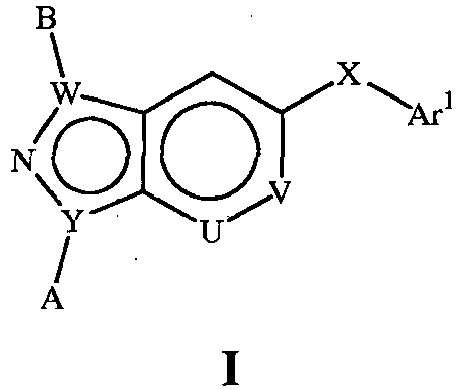
- W is C, N, S, or O, provided that W is N, S, or O when Y is C, and W is C or N when Y is N;
- U is CH or N; V is C-E or N;
- X is O, S, SO, SO2, NR7, C=O, CHR7, -C=NOR1, -C=CHR1, or CHOR1;
- R1 is H, PO3H2 SO3H2 alkyl, allyl, alkenyl, alkynyl, heteroalkyl, heteroallyl, heteroalkenyl, heteroalkynyl, alkoxy, heteroalkoxy, Zn-cycloalkyl, Zn-heterocycloalkyl, or Zn-Ar1, wherein said alkyl, allyl, alkenyl, alkynyl, heteroalkyl, heteroallyl, heteroalkenyl, heteroalkynyl, alkoxy, heteroalkoxy, Zn-cycloalkyl, Zn-heterocycloalkyl, or Zn-Ar1 may be substituted or unsubstituted;
- Z is alkylene having from 1 to 4 carbons, or alkenylene or alkynylene each having from 2 to 4 carbons, wherein said alkylene, alkenylene, or alkynylene may be substituted or unsubstituted;
- R7 is H or substituted or unsubstituted methyl;
- Ar1 is substituted or unsubstituted aryl or heteroaryl;
- A is H, OH, an amine protecting group, Zn-NR2R3, Zn -NR2(C=O)R2, Zn -SO2R2, Zn-SOR2, Zn-SR2, Zn-OR2, Zn-(C=O)R2, Zn-(C=O)OR2, Zn-O-(C=O)R2, alkyl, allyl, alkenyl, alkynyl, heteroalkyl, heteroallyl, heteroalkenyl, heteroalkynyl, alkoxy, heteroalkoxy, Zn-cycloalkyl, Zn-heterocycloalkyl, or Zn-Ar1, wherein said alkyl, allyl, alkenyl, alkynyl, heteroalkyl, heteroallyl, heteroalkenyl, heteroalkynyl, alkoxy, heteroalkoxy, Zn-cycloalkyl, Zn-heterocycloalkyl, or Zn-Ar1 may be substituted or unsubstituted;
- R2 and R3 are independently H, OH, an amine protecting group, an alcohol protecting group, an acid protecting group, a thio protecting group, alkyl, allyl, alkenyl, alkynyl, heteroalkyl, heteroallyl, heteroalkenyl, heteroalkynyl, alkoxy, heteroalkoxy, Zn-cycloalkyl, Zn-heterocycloalkyl, or Zn-Ar1, wherein said alkyl, allyl, alkenyl, alkynyl, heteroalkyl, heteroallyl, heteroalkenyl, heteroalkynyl, alkoxy, heteroalkoxy, Zn-cycloalkyl, Zn-heterocycloalkyl, or Zn-Ar1 may be substituted or unsubstituted, or R2 together with R3 and N forms a saturated or partially unsaturated heterocycle having 1 or more heteroatoms, wherein said heterocycle may be substituted or unsubstituted and wherein said heterocycle may be fused to an aromatic ring;
- B is H, NH2, or substituted or unsubstituted methyl;
- E is H, Zn-NR2R3, Zn-(C=O)R 4, Zn-(C=O)R5, Zn-NR5(C=O)R5, Zn-O(C=O)R5, Zn-OR5, Zn-SO2R5, Zn -SOR5, Zn-SR5, Zn-NH(C=O)NHR5, or R5;
- R4 is a substituted or unsubstituted natural or unnatural amino acid, a protected natural or unnatural amino acid, NH(CHR6)(CH2)mOR5 where m is an integer from 1 to 4, or NR2R3;
- R5 is H, OH, an amine protecting group, an alcohol protecting group, an acid protecting group, a thio protecting group, alkyl, allyl, alkenyl, alkynyl, heteroalkyl, heteroallyl, heteroalkenyl, heteroalkynyl, alkoxy, heteroalkoxy, Zn-cycloalkyl, Zn-heterocycloalkyl, or Zn-Ar1, wherein said alkyl, allyl, alkenyl, alkynyl, heteroalkyl, heteroallyl, heteroalkenyl, heteroalkynyl, alkoxy, heteroalkoxy, Zn-cycloalkyl, Zn-heterocycloalkyl, or Zn-Ar1 may be substituted or unsubstituted;
- R6 is a natural amino acid side chain, Zn-NR2R3, Zn-OR5, Zn-SO2R5, Zn-SOR5, or Zn-SR5; and
- n is 0 or 1,
- provided that when B is H and A is CH=CH-R8 where R8 is a substituted or unsubstituted alkyl, alkenyl, cycloalkyl, heterocycloalkyl, aryl, or heteroaryl, then X-Ar1 is a substituent where Ar1 is other than substituted or unsubstituted aryl, heteroaryl, NH-alkyl, NH-cycloalkyl, NH-heterocycloalkyl, NH-aryl, NH-heteroaryl, NH-alkoxy, or NH-dialkylamide when X is O, S, C=O, S=O, C=CH2, CO2, NH, or N(C1-C8-alkyl).
- The present document also describes pharmaceutically acceptable prodrugs, pharmaceutically active metabolites, and pharmaceutically acceptable salts of the compound of Formula I. Methods of making the compounds of Formula I are also described.
- In another embodiment, this document describes compounds of the general Formula II:


- The present document describes compounds of the general Formula III:

- The present document describes compounds of the general Formula IV:

The present document describes compounds of the general Formula V:
- The present document describes compounds of the general Formula VI:

- The present document describes compounds of the general Formula VII:

- The present document describes compounds of the general Formula VIII:
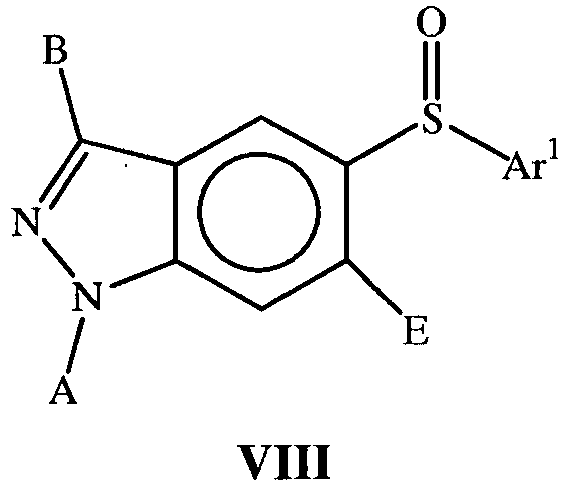
- The present document describes compounds of the general Formula IX:
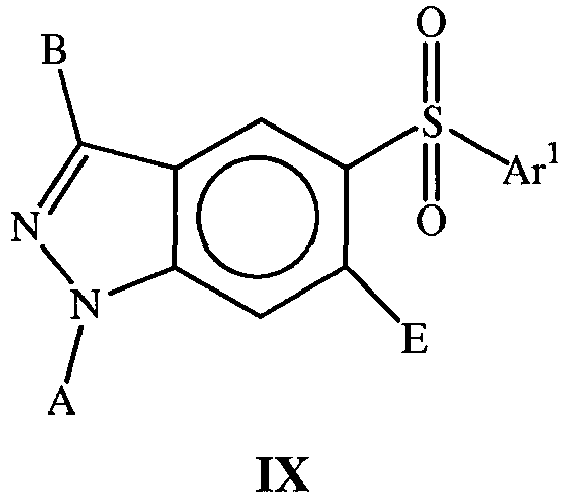
- The present document describes compounds of the general Formula X:
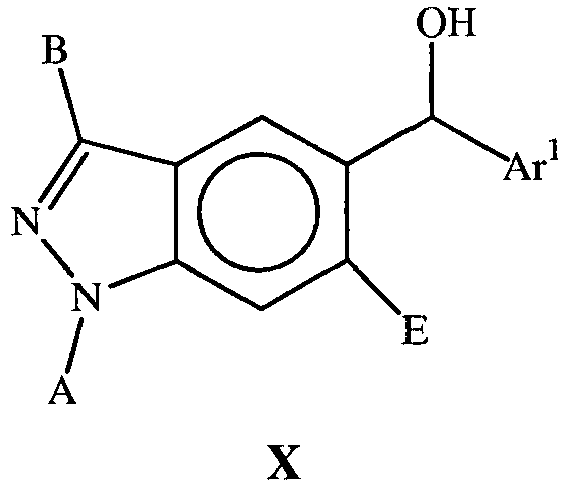
- The present document describes compounds of the general Formula XI:

- The present document describes compounds of the general Formula XII:

- The present document describes compounds of the general Formula XIII:

- The present document describes ether compounds of the general Formula XIV:
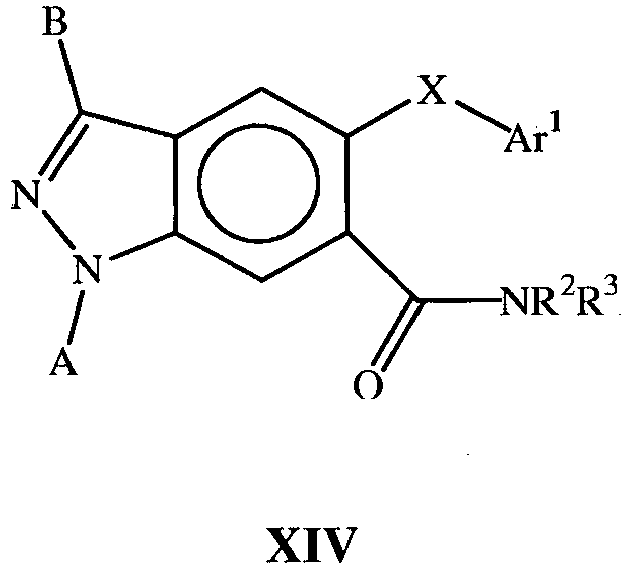
- The present document describes compounds of the general Formula XV:

- The present document describes compounds of the general Formula XVI:
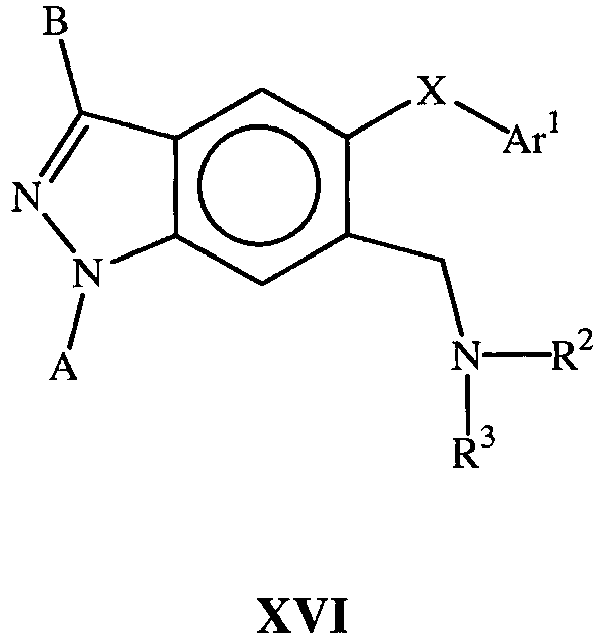
- The invention provides compounds of the general Formula XVII:

- where Y is O, or NR2;
- W is CR3;
- R3 is H, NH2, F, Cl, methyl or substituted methyl;
- R2 is H, OH, an amine protecting group, Zn-NRaRb, Zn-NRa(C=O)Rb, Zn-SO2Ra, Zn-SORa, Zn-SRa, Zn-ORa, Zn-(C=O)Ra, Zn-(C=O)ORa, Zn-O-(C=O)Ra, alkyl, allyl, alkenyl, alkynyl, heteroalkyl, heteroallyl, heteroalkenyl, heteroalkynyl, alkoxy, heteroalkoxy, Zn-cycloalkyl wherein said cycloalkyl is saturated or partially unsaturated, Zn-heterocycloalkyl wherein said heterocycloalkyl is saturated or partially unsaturated, or Zn-Ar1, wherein said alkyl, allyl, alkenyl, alkynyl, heteroalkyl, heteroallyl, heteroalkenyl, heteroalkynyl, alkoxy, heteroalkoxy, Zn-cycloalkyl, Zn-heterocycloalkyl, and Zn-Ar1 may be substituted or unsubstituted;
- Ar1 is aryl or heteroaryl, each of which may be substituted or unsubstituted;
- Ra and Rb are independently H, OH, an amine protecting group, an alcohol protecting group, an acid protecting group, a sulfur protecting group, alkyl, allyl, alkenyl, alkynyl, heteroalkyl, heteroallyl, heteroalkenyl, heteroalkynyl, alkoxy, heteroalkoxy, Zn-cycloalkyl wherein said cycloalkyl is saturated or partially unsaturated, Zn-heterocycloalkyl wherein said heterocycloalkyl is saturated or partially unsaturated, or Zn-Ar1, wherein said alkyl, allyl, alkenyl, alkynyl, heteroalkyl, heteroallyl, heteroalkenyl, heteroalkynyl, alkoxy, heteroalkoxy, Zn-cycloalkyl, Zn-heterocycloalkyl, and Zn-Ar1 may be substituted or unsubstituted,
- or Ra and Rb together with the atoms to which they are both attached form a saturated or partially unsaturated heterocycle ring having 1 or more heteroatoms in said ring, wherein said heterocycle may be substituted or unsubstituted and wherein said heterocycle may be fused to an aromatic ring;
- Z is alkylene having from 1 to 4 carbons, or alkenylene or alkynylene each having from 2 to 4 carbons, wherein said alkylene, alkenylene, or alkynylene may be substituted or unsubstituted;
- n is 0 or 1;
- U is CRc or N;
- V is CRc or N;
- Rc is H, F, Cl, methyl or substituted methyl;
- X is O, S, SO, SO2, NR5, C=O, CH2, CH2Zn-OH, or C=NORd;
- R5 is H, methyl, or substituted methyl;
- Rd is H, PO3H2 SO3H2 alkyl, allyl, alkenyl, alkynyl, heteroalkyl, heteroallyl, heteroalkenyl, heteroalkynyl, alkoxy, heteroalkoxy, Zn-cycloalkyl wherein said cycloalkyl is saturated or partially unsaturated, Zn-heterocycloalkyl wherein said heterocycloalkyl is saturated or partially unsaturated, or Zn-Ar1, said alkyl, allyl, alkenyl, alkynyl, heteroalkyl, heteroallyl, heteroalkenyl, heteroalkynyl, alkoxy, heteroalkoxy, Zn-cycloalkyl, Zn-heterocycloalkyl and Zn-Ar1 may be substituted or unsubstituted;
- G, H, J, and T independently are N or CRz, provided that when any of said G, H, J, and T are N the total number of G, H, J, or T that is N does not exceed 2;
- Rz is H, F, Cl, Br, CF3, OR6, SR6, lower alkyl (C1-C4), CN, or NR6R7;
- R6 and R7 are independently H, CF3, lower alkyl (C1-C4) or lower heteroalkyl (C1-C4);
- Q is -NR8CONH-, -NHCO-, -NR8SO2NH-, -NHSO2-, -CONR11- ;
- R8 is H or lower (C1-C4) alkyl;
- R11 is H or lower (C1-C4) alkyl;
- Rx is -(CR9R10)m-, -O(CR9R10)m- , NH(CR9R10)m-, or -S(CR9R10)m-provided that Q is -CONR11- when Rx is -O(CR9R10)m-, -NH(CR9R10)m-, or - S(CR9R10)m-;
- R9 and R10 are independently H, or lower alkyl, or R9 and R10 together with the atoms to which they are both attached form a cycloalkyl ring which may be saturated or partially unsaturated;
- m is 1-3;
- Ry is H, PO3H an amine protecting group, an oxygen protecting group, alkyl, allyl, alkenyl, alkynyl, heteroalkyl, heteroallyl, heteroalkenyl, heteroalkynyl, alkoxy, heteroalkoxy, Zn-cycloalkyl wherein said cycloalkyl is saturated or partially unsaturated, Zn-heterocycloalkyl wherein said heterocycloalkyl is saturated or partially unsaturated, or Zn-Ar2, wherein said alkyl, allyl, alkenyl, alkynyl, heteroalkyl, heteroallyl, heteroalkenyl, heteroalkynyl, alkoxy, heteroalkoxy, Zn-cycloalkyl, Zn-Ar2 and Zn-heterocycloalkyl may be substituted or unsubstituted;
- Ar2 is aryl or heteroaryl, each of which may be substituted or unsubstituted, wherein said substitution can be 1-3 substituents independently selected from F, Cl, Br, CF3, CN, alkyl, allyl, alkenyl, alkynyl, heteroalkyl, heteroallyl, heteroalkenyl, heteroalkynyl, -OR12, -SR12, -SO2R12, -SO2NR13R12, NR13SO2R12, Zn-cycloalkyl wherein said cycloalkyl is saturated or partially unsaturated, Zn-heterocycloalkyl wherein said heterocycloalkyl is saturated or partially unsaturated, or Zn-Ar1, wherein said alkyl, allyl, alkenyl, alkynyl, heteroalkyl, heteroallyl, heteroalkenyl, heteroalkynyl, alkoxy, heteroalkoxy, Zn-cycloalkyl, Zn-heterocycloalkyl and Zn-Ar1 may be substituted or unsubstituted;
- R12 and R13 are independently H, alkyl, allyl, alkenyl, alkynyl, heteroalkyl, heteroallyl, heteroalkenyl, heteroalkynyl, Zn-cycloalkyl wherein said cycloalkyl is saturated or partially unsaturated, Zn-heterocycloalkyl wherein said heterocycloalkyl is saturated or partially unsaturated, or Zn-Ar1, wherein said alkyl, allyl, alkenyl, alkynyl, heteroalkyl, heteroallyl, heteroalkenyl, heteroalkynyl, alkoxy, heteroalkoxy, Zn-cycloalkyl, Zn-heterocycloalkyl and Zn-Ar1 may be substituted or unsubstituted;
- wherein when Ar2 is substituted with -SO2NR13R12, R12 and R13 can form a cycloalkyl ring or heterocycloalkyl ring that may be substituted or unsubstituted wherein said substitution can be substituents selected from alkyl, allyl, alkenyl, alkynyl, heteroalkyl, heteroallyl, heteroalkenyl, heteroalkynyl, alkoxy, heteroalkoxy, Zn-cycloalkyl wherein said cycloalkyl is saturated or partially unsaturated, -COR12, -SO2R12, Zn-heterocycloalkyl wherein said heterocycloalkyl is saturated or partially unsaturated, or Zn-Ar1, wherein said alkyl, allyl, alkenyl, alkynyl, heteroalkyl, heteroallyl, heteroalkenyl, heteroalkynyl, alkoxy, heteroalkoxy, Zn-cycloalkyl, Zn-heterocycloalkyl and Zn-Ar1 may be substituted or unsubstituted;
- wherein when Q is -CONR11, Ry in combination with R11 is additionally cycloalkyl ring or heterocycloalkyl ring that may be substituted or unsubstituted with groups selected from alkyl, allyl, alkenyl, alkynyl, heteroalkyl, heteroallyl, heteroalkenyl, heteroalkynyl, alkoxy, heteroalkoxy, Zn-cycloalkyl wherein said cycloalkyl is saturated or partially unsaturated, Zn-heterocycloalkyl wherein said heterocycloalkyl is saturated or partially unsaturated, Zn-Ar1, -COR14, or -SO2R14, wherein said alkyl, allyl, alkenyl, alkynyl, heteroalkyl, heteroallyl, heteroalkenyl, heteroalkynyl, alkoxy, heteroalkoxy, Zn-cycloalkyl, Zn-heterocycloalkyl, Zn-Ar1, -COR14, and -SO2R14 may be substituted or unsubstituted; and
- R14 is alkyl, allyl, alkenyl, alkynyl, heteroalkyl, heteroallyl, heteroalkenyl, heteroalkynyl, Zn-cycloalkyl wherein said cycloalkyl is saturated or partially unsaturated, Zn-heterocycloalkyl wherein said heterocycloalkyl is saturated or partially unsaturated, or Zn-Ar1, wherein said alkyl, allyl, alkenyl, alkynyl, heteroalkyl, heteroallyl, heteroalkenyl, heteroalkynyl, alkoxy, heteroalkoxy, Zn-cycloalkyl, Zn-heterocycloalkyl, and Zn-Ar1 may be substituted or unsubstituted
- Z is alkylene having from 1 to 4 carbons, or alkenylene or alkynylene each having from 2 to 4 carbons,
- n is zero or 1,
- R, R' and R" are alkyl, allyl, alkenyl, alkynyl, heteroalkyl, heteroallyl, heteroalkenyl, heteroalkynyl, alkoxy, heteroalkoxy, Zn-cycloalkyl or Zn-heterocycloalkyl, and
- Ar is aryl or heteroaryl,
- the resolved enantiomers, diastereoisomers, solvates and pharmaceutically acceptable salts thereof.
- In a further aspect the present invention provides compounds that inhibit the production of cytokines such as TNF-α, IL-1, IL-6 and IL-8 comprising compounds of Formulas XVII.
- The present document describes a method of treating diseases or medical conditions mediated by cytokines which comprises administering to a warm-blooded animal an effective amount of a compound of Formula I-XVII, or a pharmaceutically acceptable salt or in vivo cleavable prodrug thereof.
- The present document describes a method of inhibiting the production of cytokines such as TNF-α, IL-1, IL-6 and IL-8 which comprises administering to a warm-blooded animal an effective amount of a compound of Formula I-XVII, or a pharmaceutically acceptable salt or in vivo cleavable prodrug thereof.
- The present document describes a method of providing a p38 kinase inhibitory effect comprising administering to a warm-blooded animal an effective amount of a compound of Formula I-XVII, or a pharmaceutically-acceptable salt or in vivo cleavable prodrug thereof.
- The present document describes treating or preventing a p38-mediated condition, comprising administering an amount of a compound effective to treat or prevent said p38-mediated condition or a pharmaceutical composition comprising said compound, to a human or animal in need thereof, wherein said compound is a compound of Formula I-XVII, or a pharmaceutically-acceptable salt or in vivo cleavable prodrug thereof. The p38-mediated condition that can be treated according to the methods of this invention includes inflammatory disease, autoimmune disease, destructive bone disorder, proliferative disorder, infectious disease, viral disease, or neurodegenerative disease
- The compounds described are also useful in methods for preventing cell death and hyperplasia and therefore may be used to treat or prevent reperfusion/ischemia in stroke, heart attacks, and organ hypoxia. The compounds of this invention are also useful in methods for preventing thrombin-induced platelet aggregation.
- The inventive compounds of formula XVII may be used advantageously in combination with other known therapeutic agents.
- The invention also relates to pharmaceutical compositions comprising an effective amount of an agent selected from compounds of Formulas XVII or a resolved enantiomer, disatereoisomer, solvate, or pharmaceutically acceptable salt thereof.
- The present invention relates to the compounds according to formula XVII, or resolved enantiomer, diastereoisomer, solvate, or a pharmaceutically acceptable salt thereof for use in therapy.
- The present invention relates to the compounds according to formula XVII, or resolved enantiomer, diastereoisomer, solvate, or a pharmaceutically acceptable salt thereof for use in treating or preventing p-38 mediated condition.
- The present invention relates to the compounds according to formula XVII, or resolved enantiomer, diastereoisomer, solvate, or a pharmaceutically acceptable salt thereof for use in treating or preventing inflammatory disease, autoimmune disease, destructive bone disorder, proliferative bone disorder, infectious disease, viral disease, or neurodegenerative disease.
- The invention provides compounds of formula XVII which are selected from the group constituted by:
- 1-(5-tert-butyl-2-p-tolyl-2H-pyrazol-3-yl)-3-[2-(1-methyl-1 H-indazol-5-yloxy)-pyridin-3-ylmethyl]-urea,
- 1-[5-cyclopropyl-2-(4-trifluoromethylphenyl)-2H-pyrazol-3yl]-3-[5-fluoro-2-(1-methyl-1H-indazol-5-ylamino)-benzyl]-urea,
- 1-(5-tert-butyl-2-p-tolyl-2H-pyrazol-3-yl)-3-[2-(1-cyclobutylmethyl-1 H-indazol-5-ylamino)-5-fluorobenzyl]-urea,
- 1-(5-tert-butyl-2-p-chlorophenyl-2H-pyrazol-3-yl)-3-[2-(1-methyl-1H-indazo-5-ylsulfanyl)-5-fluorobenzyl]-urea,
- 1-(5-tert-butyl-2-methyl-2H-pyrazol-3-yl)-3-{2-[1-(3-isopropylamino-propyl)-1H-indazol-5-ylamino]-benzyl}-urea,
- 1-(5-tert-butyl-2-p-tolyl-2H-pyrazol-3-yl)-3-[5-fluoro-2-(1-methyl-1H-indazol-5-yloxy)-benzyl]urea,
- 1-[5-tert-butyl-2-(4-chloro-phenyl)-2H-pyrazol-3-yl]-3-[5-fluoro-2-(1-methyl-1H-indazol-5-yloxy)-benzyl]urea,
- 3-(5-tert-butyl-2-p-tolyl-2H-pyrazol-3-yl)-1-[5-fluoro-2-(1-methyl-1H-indazol-5-yloxy)-benzyl]-1-methylurea,
- 1-(5-tert-butyl-2-p-tolyl-2H-pyrazol-3-yl)-3-[5-fluoro-2-(1-methyl-1H-indazol-5-yloxy)-benzyl]-1-methylurea,
- 1-(5-tert-butyl-2-p-tolyl-2H-pyrazol-3-yl)-3-[5-fluoro-2-(1-methyl-1H-pyrazolo[3,4-c]pyridin-5-yloxy)-benzyl]-urea,
- 2-(5-{2-[3-(5-tert-butyl-2-p-tolyl-2H-pyrazol-3-yl)-ureidomethyl]-4-fluorophenoxy}-indazol-1-yl)-N,N-di methylacetamide,
- 1-(5-tert-butyl-isoxazol-3-yl)-3-[5-fluoro-2-(1-isobutyl-1H-indazol-5-yloxy)-benzyl]-urea,
- 1-(3-tert-butyl-isoxazol-5-yl)-3-{5-fluoro-2-[1-(2-piperazin-1-yl-ethyl)-1H-indazol-5-yloxy]-benzyl}-urea,
- 1-(3-tert-butyl-isoxazol-5-yl)-3-{2-[1-(2-dimethylaminoethyl)-1H-indazol-5-yloxy]-5-fluoro-benzyl}-urea,
- 1-(5-tert-butyl-2-methyl-2H-pyrazol-3-yl)-3-{5-fluoro-2-[1-(2-hydroxy-2-methylpropyl)-1H-indazol-5-yloxy]-benzyl}-urea,
- The accompanying drawings, which are incorporated herein and form a part of the specification, illustrate embodiments of the present invention, and together with the description, serve to explain the principles of the invention. In the figures,
-
Figure 1 shows a reaction scheme for the synthesis ofcompound 6n; -
Figure 2 shows a reaction scheme for the synthesis ofcompound 13p; -
Figure 3 shows a reaction scheme for the synthesis ofcompound 16p; -
Figures 4A-B show a reaction scheme for the synthesis of compounds 9q-1 and 9q-2; -
Figure 5 shows a reaction scheme for the synthesis of compound 6r-2; -
Figures 6A-B show a reaction scheme for the synthesis ofcompound 8s-2; -
Figure 7 shows a reaction scheme for the synthesis ofcompound 7t-2; -
Figure 8 shows a reaction scheme for the synthesis of compound 28t; -
Figure 9 shows a reaction scheme for the synthesis ofcompound 32t; -
Figure 10 shows a reaction scheme for the synthesis ofcompound 4u; -
Figure 11 shows a reaction scheme for the synthesis ofcompound 47d. - The present document describes compounds of the Formulas I-XVI (not included within the scope of the invention) and of Formula XVII (according to the invention) which are useful for inhibiting p38 alpha and associated p38 mediated events such as cytokine production. Such compounds have utility as therapeutic agents for diseases that can be treated by the inhibition of the p38 signaling pathway. In general, the present document describes compounds of the general Formula I:
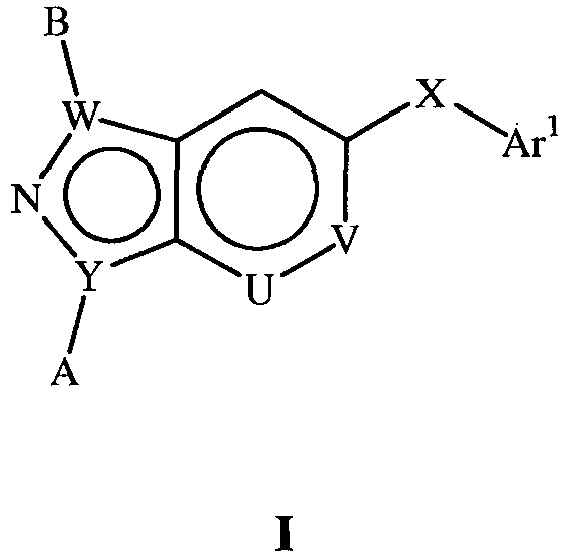
- wherein Y is C, N
- W is C, N, S, or O, provided that W is N, S, or O when Y is C, and W is C or N when Y is N;
- U is CH or N;
- V is C-E or N;
- X is O, S, SO, SO2, NR7, C=O, CHR7, -C=NOR1, -C=CHR1, or CHOR1;
- R1 is H, PO3H2 SO3H2, alkyl, allyl, alkenyl, alkynyl, heteroalkyl, heteroallyl, heteroalkenyl, heteroalkynyl, alkoxy, heteroalkoxy, Zn-cycloalkyl, Zn-heterocycloalkyl, or Zn-Ar1, wherein said alkyl, allyl, alkenyl, alkynyl, heteroalkyl, heteroallyl, heteroalkenyl, heteroalkynyl, alkoxy, heteroalkoxy, Zn-cycloalkyl, Zn-heterocycloalkyl, or Zn-Ar1 may be substituted or unsubstituted;
- Z is alkylene having from 1 to 4 carbons, or alkenylene or alkynylene each having from 2 to 4 carbons, wherein said alkylene, alkenylene, or alkynylene may be substituted or unsubstituted;
- R7 is H or substituted or unsubstituted methyl;
- Ar1 is substituted or unsubstituted aryl or heteroaryl;
- A is H, OH, an amine protecting group, Zn-NR2R3, Zn -NR2(C=O)R2, Zn -SO2R2, Zn-SOR2, Zn-SR2, Zn-OR2, Zn-(C=O)R2, Zn-(C=O)OR2, Zn-O-(C=O)R2, alkyl, allyl, alkenyl, alkynyl, heteroalkyl, heteroallyl, heteroalkenyl, heteroalkynyl, alkoxy, heteroalkoxy, Zn-cycloalkyl, Zn-heterocycloalkyl, or Zn-Ar1, wherein said alkyl, allyl, alkenyl, alkynyl, heteroalkyl, heteroallyl, heteroalkenyl, heteroalkynyl, alkoxy, heteroalkoxy, Zn-cycloalkyl, Zn-heterocycloalkyl, or Zn-Ar1 may be substituted or unsubstituted;
- R2 and R3 are independently H, OH, an amine protecting group, an alcohol protecting group, an acid protecting group, a thio protecting group, alkyl, allyl, alkenyl, alkynyl, heteroalkyl, heteroallyl, heteroalkenyl, heteroalkynyl, alkoxy, heteroalkoxy, Zncycloalkyl, Zn-heterocycloalkyl, or Zn-Ar1, wherein said alkyl, allyl, alkenyl, alkynyl, heteroalkyl, heteroallyl, heteroalkenyl, heteroalkynyl, alkoxy, heteroalkoxy, Zn-cycloalkyl, Zn-heterocycloalkyl, or Zn-Ar1 may be substituted or unsubstituted, or R2 together with R3 and N forms a saturated or partially unsaturated heterocycle having 1 or more heteroatoms, wherein said heterocycle may be substituted or unsubstituted and wherein said heterocycle may be fused to an aromatic ring;
- B is H, NH2, or substituted or unsubstituted methyl;
- E is H, Zn-NR2R3, Zn-(C=O)R4, Zn-(C=O)R5, Zn-NR5(C=O)R5, Zn-O(C=O)R5, Zn-OR5, Zn-SO2R5, Zn-SOR5, Zn-SR5, Zn-NH(C=O)NHR5, or R5;
- R4 is a substituted or unsubstituted natural or unnatural amino acid, a protected natural or unnatural amino acid, NH(CHR6) (CH2)mOR5 where m is an integer from 1 to 4, or NR2R3;
- R5 is H, OH, an amine protecting group, an alcohol protecting group, an acid protecting group, a thio protecting group, alkyl, allyl, alkenyl, alkynyl, heteroalkyl, heteroallyl, heteroalkenyl, heteroalkynyl, alkoxy, heteroalkoxy, Zn-cycloalkyl, Zn-heterocycloalkyl, or Zn-Ar1, wherein said alkyl, allyl, alkenyl, alkynyl, heteroalkyl, heteroallyl, heteroalkenyl, heteroalkynyl, alkoxy, heteroalkoxy, Zn-cycloalkyl, Zn-heterocycloalkyl, or Zn-Ar1 may be substituted or unsubstituted;
- R6 is a natural amino acid side chain, Zn-NR2R3, Zn-OR5, Zn-SO2R5, Zn-SOR5, or Zn-SR5; and
- n is 0 or 1,
- provided that when B is H and A is CH=CH-R8 where R8 is a substituted or unsubstituted alkyl, alkenyl, cycloalkyl, heterocycloalkyl, aryl, or heteroaryl, then X-Ar1 is a substituent where Ar1 is other than substituted or unsubstituted aryl, heteroaryl, NH-alkyl, NH-cycloalkyl, NH-heterocycloalkyl, NH-aryl, NH-heteroaryl, NH-alkoxy, or NH-dialkylamide when X is O, S, C=O, S=O, C=CH2, CO2, NH, or N(C1-C8-alkyl).
- The term "alkyl" as used herein refers to a saturated linear or branched-chain monovalent hydrocarbon radical of one to twelve carbon atoms, wherein the alkyl radical may be optionally substituted independently with one or more substituents described below. Examples of alkyl groups include, but are not limited to, methyl, ethyl, n-propyl, isopropyl, butyl, isobutyl, sec-butyl, tert-butyl, pentyl, isopentyl, tert-pentyl, hexyl, isohexyl, and the like.
- "Alkylene" means a linear or branched saturated divalent hydrocarbon radical of one to twelve carbon atoms, e.g., methylene, ethylene, propylene, 2-methylpropylene, pentylene, and the like.
- The term "alkenyl" refers to linear or branched-chain monovalent hydrocarbon radical of two to twelve carbon atoms, containing at least one double bond, e.g., ethenyl, propenyl, and the like, wherein the alkenyl radical may be optionally substituted independently with one or more substituents described herein, and includes radicals having "cis" and "trans" orientations, or alternatively, "E" and "Z" orientations.
- The term "alkenylene" refers to a linear or branched divalent hydrocarbon radical of two to twelve carbons containing at least one double bond, wherein the alkenylene radical may be optionally substituted independently with one or more substituents described herein. Examples include, but are not limited to, ethenylene, propenylene, and the like.
- The term "alkynyl" refers to a linear or branched monovalent hydrocarbon radical of two to twelve carbon atoms containing at least one triple bond. Examples include, but are not limited to, ethynyl, propynyl, and the like, wherein the alkynyl radical may be optionally substituted independently with one or more substituents described herein.
- The term "alkynylene" to a linear or branched divalent hydrocarbon radical of two to twelve carbons containing at least one triple bond, wherein the alkynylene radical may be optionally substituted independently with one or more substituents described herein.
- The term "allyl" refers to a radical having the formula RC=CHCHR, wherein R is alkyl, alkenyl, alkynyl, cycloalkyl, heterocycloalkyl, aryl, heteroaryl, or any substituent as defined herein, wherein the allyl may be optionally substituted independently with one or more substituents described herein.
- The term "cycloalkyl" refers to saturated or partially unsaturated cyclic hydrocarbon radical having from three to twelve carbon atoms, wherein the cycloalkyl may be optionally substituted independently with one or more substituents described herein. The term "cycloalkyl" further includes bicyclic and tricyclic cycloalkyl structures, wherein the bicyclic and tricyclic structures may include a saturated or partially unsaturated cycloalkyl fused to a saturated or partially unsaturated cycloalkyl or heterocycloalkyl ring or an aryl or heteroaryl ring. Examples of cycloalkyl groups include, but are not limited to, cyclopropyl, cyclobutyl, cyclopentyl, cyclohexyl, cycloheptyl, and the like.
- The term "heteroalkyl" refers to saturated linear or branched-chain monovalent hydrocarbon radical of one to twelve carbon atoms, wherein at least one of the carbon atoms is replaced with a heteroatom selected from N, O, or S, and wherein the radical may be a carbon radical or heteroatom radical (i.e., the heteroatom may appear in the middle or at the end of the radical). The heteroalkyl radical may be optionally substituted independently with one or more substituents described herein. The term "heteroalkyl" encompasses alkoxy and heteroalkoxy radicals.
- The term "heterocycloalkyl" refers to a saturated or partially unsaturated cyclic radical of 3 to 8 ring atoms in which at least one ring atom is a heteroatom selected from nitrogen, oxygen and sulfur, the remaining ring atoms being C where one or more ring atoms may be optionally substituted independently with one or more substituent described below and wherein the heterocycloalkyl ring can be saturated or partially unsaturated. The radical may be a carbon radical or heteroatom radical. "Heterocycloalkyl" also includes radicals where heterocycle radicals are fused with aromatic or heteroaromatic rings. Examples of heterocycloalkyl rings include, but are not limited to, pyrrolidine, piperidine, piperazine, tetrahydropyranyl, morpholine, thiomorpholine, homopiperazine, phthalimide, and derivatives thereof.
- The term "heteroalkenyl" refers to linear or branched-chain monovalent hydrocarbon radical of two to twelve carbon atoms, containing at least one double bond, e.g., ethenyl, propenyl, and the like, wherein at least one of the carbon atoms is replaced with a heteroatom selected from N, O, or S, and wherein the radical may be a carbon radical or heteroatom radical (i.e., the heteroatom may appear in the middle or at the end of the radical). The heteroalkenyl radical may be optionally substituted independently with one or more substituents described herein, and includes radicals having "cis" and "trans" orientations, or alternatively, "E" and "Z" orientations.
- The term "heteroalkynyl" refers to a linear or branched monovalent hydrocarbon radical of two to twelve carbon atoms containing at least one triple bond. Examples include, but are not limited to, ethynyl, propynyl, and the like, wherein at least one of the carbon atoms is replaced with a heteroatom selected from N, O, or S, and wherein the radical may be a carbon radical or heteroatom radical (i.e., the heteroatom may appear in the middle or at the end of the radical). The heteroalkynyl radical may be optionally substituted independently with one or more substituents described herein.
- The term "heteroallyl" refers to radicals having the formula RC=CHCHR, wherein R is alkyl, alkenyl, alkynyl, cycloalkyl, heterocycloalkyl, aryl, heteroaryl, or any substituent as defined herein, wherein at least one of the carbon atoms is replaced with a heteroatom selected from N, O, or S, and wherein the radical may be a carbon radical or heteroatom radical (i.e., the heteroatom may appear in the middle or at the end of the radical). The heteroallyl may be optionally substituted independently with one or more substituents described herein.
- "Aryl" means a monovalent aromatic hydrocarbon monocyclic radical of 6 to 10 ring atoms or a polycyclic aromatic hydrocarbon, optionally substituted independently with one or more substituents described herein. More specifically the term aryl includes, but is not limited to, phenyl, 1-naphthyl, 2-naphthyl, and derivatives thereof.
- "Heteroaryl" means a monovalent monocyclic aromatic radical of 5 to 10 ring atoms or a polycyclic aromatic radical, containing one or more ring heteroatoms selected from N, O, or S, the remaining ring atoms being C. The aromatic radical is optionally substituted independently with one or more substituents described herein. Examples include, but are not limited to, furyl, thienyl, pyrrolyl, pyridyl, pyrazolyl, pyrimidinyl, imidazolyl, pyrazinyl, indolyl, thiophen-2-yl, quinolyl, benzopyranyl, thiazolyl, and derivatives thereof.
- The term "halo" represents fluoro, chloro, bromo or iodo.
- "Amino protecting groups" refers to those organic groups intended to protect nitrogen atoms against undesirable reactions during synthetic procedures and include, but are not limited to, benzyl, benzyloxycarbonyl (CBZ), tert-butoxycarbonyl (Boc), trifluoroacetyl, and the like.
- "Alcohol protecting groups" refers to those organic groups intended to protect alcohol groups or substituents against undesirable reactions during synthetic procedures and include, but are not limited to, (trimethylsilyl)ethoxymethyl (SEM), tert-butyl, methoxymethyl (MOM), and the like.
- "Sulfur protecting groups" refers to those organic groups intended to protect sulfur groups or substituents against undesirable reactions during synthetic procedures and include, but are not limited to, benzyl, (trimethylsilyl)ethoxymethyl (SEM), tert-butyl, , trityl and the like.
- "Acid protecting groups" refers to those organic groups intended to protect acid groups or substituents against undesirable reactions during synthetic procedures and include, but are not limited to, benzyl, (trimethylsilyl)-ethoxymethyl (SEM), methylethyl and tert-butyl esters, and the like.
- In general, the various moieties or functional groups of the compounds of Formulas I-XVII described may be optionally substituted by one or more substituents. Examples of substituents suitable for purposes of this invention include, but are not limited to, halo, alkyl, allyl, alkenyl, alkynyl, heteroalkyl, heteroallyl, heteroalkenyl, heteroalkynyl, alkoxy, heteroalkoxy, Zn-cycloalkyl, Zn heterocycloalkyl, Zn-OR, Zn-NO2, Zn-CN, Zn-CO2R, Zn -(C=O)R, Zn-O(C=O)R, Zn-O-alkyl, Zn-OAr, Zn-SH, Zn-SR, Zn-SOR, Zn-SOsR, Zn-S-Ar Zn-SOAr, Zn -SO2Ar, aryl, heteroaryl, Zn-Ar, Zn-(C=O)NR2R3, Zn-NR2R3, Zn-NR(C=O)R, Zn-SO2NR2R3, PO3H2, SO3H2, amine protecting groups, alcohol protecting groups, sulfur protecting groups, or acid protecting groups, where:
- Z is alkylene having from 1 to 4 carbons, or alkenylene or alkynylene each having from 2 to 4 carbons, wherein said alkylene, alkenylene, or alkynylene may be substituted or unsubstituted;
- n is zero or 1,
- R1, R2, and R3 are alkyl, allyl, alkenyl, alkynyl, heteroalkyl, heteroallyl, heteroalkenyl, heteroalkynyl, alkoxy, heteroalkoxy, Zn-cycloalkyl, or Zn-heterocycloalkyl, and
- Ar is aryl or heteroaryl, wherein said alkyl, allyl, alkenyl, alkynyl, heteroalkyl, heteroallyl, heteroalkenyl, heteroalkynyl, alkoxy, heteroalkoxy, Zn-cycloalkyl, Zn-heterocycloalkyl, Ar, R1, R2, and R3 may be further substituted or unsubstituted.
- The compounds described may possess one or more asymmetric centers; such compounds can therefore be produced as individual (R)- or (S)-stereoisomers or as mixtures thereof. Unless indicated otherwise, the description or naming of a particular compound in the specification and claims is intended to include both individual enantiomers and mixtures, racemic or otherwise, thereof. Accordingly, the present document describes racemates and resolved enantiomers, and diastereomers compounds of the Formulas I-XVII. The methods for the determination of stereochemistry and the separation of stereoisomers are well known in the art (see discussion in Chapter 4 of "Advanced Organic Chemistry", 4th edition J. March, John Wiley and Sons, New York, 1992).
- In addition to compounds of the Formulas I-XVII, the present document also describes solvates, pharmaceutically acceptable prodrugs, pharmaceutically active metabolites, and pharmaceutically acceptable salts of such compounds. The term "solvate" refers to an aggregate of a molecule with one or more solvent molecules. A "pharmaceutically acceptable prodrug" is a compound that may be converted under physiological conditions or by solvolysis to the specified compound or to a pharmaceutically acceptable salt of such compound (not included within the scope of the invention).
- A "pharmaceutically active metabolite" is a pharmacologically active product produced through metabolism in the body of a specified compound or salt thereof. Metabolites of a compound may be identified using routine techniques known in the art and their activities determined using tests such as those described herein (not included within the scope of the invention).
- Prodrugs and active metabolites of a compound may be identified using routine techniques known in the art. Various forms of prodrugs are known in the art. For examples of such prodrug derivatives, see, for example, a) Design of Prodrugs, edited by H. Bundgaard, (Elsevier, 1985) and Methods in Enzymology, Vol. 42, p. 309-396, edited by K. Widder, et al. (Academic Press, 1985); b) A Textbook of Drug Design and Development, edited by Krogsgaard-Larsen and H. Bundgaard, ); c) H. Bundgaard, Advanced Drug Delivery Reviews, 8, 1-38 (1992); d) H. Bundgaard, et al., Journal of Pharmaceutical Sciences, 77:285 (1988); and e) N. Kakeya, et al., Chem. Pharm. Bull., 32: 692 (1984).
- A "pharmaceutically acceptable salt" is a salt that retains the biological effectiveness of the free acids and bases of the specified compound and that is not biologically or otherwise undesirable. A compound of the invention may possess a sufficiently acidic, a sufficiently basic, or both functional groups, and accordingly react with any of a number of inorganic or organic bases, and inorganic and organic acids, to form a pharmaceutically acceptable sale. Examples of pharmaceutically acceptable salts include those salts prepared by reaction of the compounds of the present invention with a mineral or organic acid or an inorganic base, such salts including sulfates, pyrosulfates, bisulfates, sulfites, bisulfites, phosphates, monohydrogenphosphates, dihydrogenphosphates, metaphosphates, pyrophosphates, chlorides, bromides, iodides, acetates, propionates, decanoates, caprylates, acrylates, formates, iso-butyrates, caproates, heptanoates, propiolates, oxalates, malonates, succinates, suberates, sebacates, fumarates, maleates, butyn-1,4-dioates, hexyne-1,6-dioates, benzoates, chlorobenzoates, methylbenzoates, dinitro-menzoates, hydroxybenzoates, methoxybenzoates, phthalates, sulfonates, xylenesulfonates, pheylacetates, phenylpropionates, phenylbutyrates, citrates, lactates, γ-hydroxybutyrates, glycollates, tartrates, methanesulfonates, propanesulfonates, naphthalene-1-sulfonates, naphthalene-2-sulfonates, and mandelates.
- If the compound is a base, the desired pharmaceutically acceptable salt may be prepared by any suitable method available in the art, for example, treatment of the free base with an inorganic acid, such as hydrochloric acid, hydrobromic acid, sulfuric acid, nitric acid, phosphoric acid and the like, or with an organic acid, such as acetic acid, maleic acid, succinic acid, mandelic acid, fumaric acid, malonic acid, pyruvic acid, oxalic acid, glycolic acid, salicylic acid, a pyranosidyl acid, such as glucuronic acid or galacturonic acid, an alphahydroxy acid, such as citric acid or tartaric acid, an amino acid, such as aspartic acid or glutamic acid, an aromatic acid, such as benzoic acid or cinnamic acid, a sulfonic acid, such as p-toluenesulfonic acid or ethanesulfonic acid, or the like.
- If the compound is an acid, the desired pharmaceutically acceptable salt may be prepared by any suitable method, for example, treatment of the free acid with an inorganic or organic base, such as an amine (primary, secondary or tertiary), an alkali metal hydroxide or alkaline earth metal hydroxide, or the like. Illustrative examples of suitable salts include, but are not limited to, organic salts derived from amino acids, such as glycine and arginine, ammonia, primary, secondary, and tertiary amines, and cyclic amines, such as piperidine, morpholine and piperazine, and inorganic salts derived from sodium, calcium, potassium, magnesium, manganese, iron, copper, zinc, aluminum and lithium.
- The compounds may be prepared using the reaction routes and synthesis schemes as described below, employing the techniques available in the art using starting materials that are readily available.
- This present invention provides compounds of the general Formula XVII:

- where Y is O or NR2;
- W is CR3;
- R3 is H, NH2, F, Cl, methyl or substituted methyl;
- R2 is H, OH, an amine protecting group, Zn-NRaRb, Zn-NRa(C=O)Rb, Zn-SO2Ra, Zn-SORa, Zn-SRa, Zn-ORa, Zn-(C=O)Ra, Zn-(C=O)ORa, Zn-O-(C=O)Ra, alkyl, allyl, alkenyl, alkynyl, heteroalkyl, heteroallyl, heteroalkenyl, heteroalkynyl, alkoxy, heteroalkoxy, Zn-cycloalkyl wherein said cycloalkyl is saturated or partially unsaturated, Zn-heterocycloalkyl wherein said heterocycloalkyl is saturated or partially unsaturated, or Zn-Ar1, wherein said alkyl, allyl, alkenyl, alkynyl, heteroalkyl, heteroallyl, heteroalkenyl, heteroalkynyl, alkoxy, heteroalkoxy, Zn-cycloalkyl, Zn-heterocycloalkyl, and Zn-Ar1 may be substituted or unsubstituted;
- Ar1 is aryl or heteroaryl, each of which may be substituted or unsubstituted;
- Ra and Rb are independently H, OH, an amine protecting group, an alcohol protecting group, an acid protecting group, a sulfur protecting group, alkyl, allyl, alkenyl, alkynyl, heteroalkyl, heteroallyl, heteroalkenyl, heteroalkynyl, alkoxy, heteroalkoxy, Zn-cycloalkyl wherein said cycloalkyl is saturated or partially unsaturated, Zn-heterocycloalkyl wherein said heterocycloalkyl is saturated or partially unsaturated, or Zn-Ar1, wherein said alkyl, allyl, alkenyl, alkynyl, heteroalkyl, heteroallyl, heteroalkenyl, heteroalkynyl, alkoxy, heteroalkoxy, Zn-cycloalkyl, Zn-heterocycloalkyl, and Zn-Ar1 may be substituted or unsubstituted,
- or Ra and Rb together with the atoms to which they are both attached form a saturated or partially unsaturated heterocycle ring having 1 or more heteroatoms in said ring, wherein said heterocycle may be substituted or unsubstituted and wherein said heterocycle may be fused to an aromatic ring;
- Z is alkylene having from 1 to 4 carbons, or alkenylene or alkynylene each having from 2 to 4 carbons, wherein said alkylene, alkenylene, or alkynylene may be substituted or unsubstituted;
- n is 0 or 1;
- U is CRc or N;
- V is CRc or N;
- Rc is H, F, Cl, methyl or substituted methyl;
- X is O, S, SO, SO2, NR5, C=O, CH2, CH2Zn-OH, or C=NORd;
- R5 is H, methyl, or substituted methyl;
- Rd is H, PO3H2, SO3H2, alkyl, allyl, alkenyl, alkynyl, heteroalkyl, heteroallyl, heteroalkenyl, heteroalkynyl, alkoxy, heteroalkoxy, Zn-cycloalkyl wherein said cycloalkyl is saturated or partially unsaturated, Zn-heterocycloalkyl wherein said heterocycloalkyl is saturated or partially unsaturated, or Zn-Ar1, said alkyl, allyl, alkenyl, alkynyl, heteroalkyl, heteroallyl, heteroalkenyl, heteroalkynyl, alkoxy, heteroalkoxy, Zn-cycloalkyl, Zn-heterocycloalkyl and Zn-Ar1 may be substituted or unsubstituted;
- G, H, J, and T independently are N or CRz, provided that when any of said G, H, J, and T are N the total number of G, H, J, or T that is N does not exceed 2;
- Rz is H, F, Cl, Br, CF3, OR6, SR6, lower alkyl (C1-C4), CN, or NR6R7;
- R6 and R7 are independently H, CF3, lower alkyl (C1-C4) or lower heteroalkyl (C1-C4);
- Q is -NR8CONH-, -NHCO- , -NR8SO2NH-, -NHSO2-, -CONR11- ;
- R8 is H or lower (C1-C4) alkyl;
- R11 is H or lower (C1-C4) alkyl;
- Rx is -(CR9R10)m-, -O(CR9R10)m-, NH(CR9R10)m-, or -S(CR9R10)m- provided that Q is -CONR11- when Rx is -O(CR9R10)m-, -NH(CR9R10)m-, or - S(CR9R10)m-;
- R9 and R10 are independently H, or lower alkyl, or R9 and R10 together with the atoms to which they are both attached form a cycloalkyl ring which may be saturated or partially unsaturated;
- m is 1-3;
- Ry is H, PO3H, an amine protecting group, an oxygen protecting group, alkyl, allyl, alkenyl, alkynyl, heteroalkyl, heteroallyl, heteroalkenyl, heteroalkynyl, alkoxy, heteroalkoxy, Zn-cycloalkyl wherein said cycloalkyl is saturated or partially unsaturated, Zn-heterocycloalkyl wherein said heterocycloalkyl is saturated or partially unsaturated, or Zn-Ar2, wherein said alkyl, allyl, alkenyl, alkynyl, heteroalkyl, heteroallyl, heteroalkenyl, heteroalkynyl, alkoxy, heteroalkoxy, Zn-cycloalkyl, Zn-Ar2 and Zn-heterocycloalkyl may be substituted or unsubstituted;
- Ar2 is aryl or heteroaryl, each of which may be substituted or unsubstituted, wherein said substitution can be 1-3 substituents independently selected from F, Cl, Br, CF3, CN, alkyl, allyl, alkenyl, alkynyl, heteroalkyl, heteroallyl, heteroalkenyl, heteroalkynyl, -OR12, -SR12, -SO2R12, -SO2NR13R12, NR13SO2R12, Zn-cycloalkyl wherein said cycloalkyl is saturated or partially unsaturated, Zn-heterocycloalkyl wherein said heterocycloalkyl is saturated or partially unsaturated, or Zn-Ar1, wherein said alkyl, allyl, alkenyl, alkynyl, heteroalkyl, heteroallyl, heteroalkenyl, heteroalkynyl, alkoxy, heteroalkoxy, Zn-cycloalkyl, Zn-heterocycloalkyl and Zn-Ar1 may be substituted or unsubstituted;
- R12 and R13 are independently H, alkyl, allyl, alkenyl, alkynyl, heteroalkyl, heteroallyl, heteroalkenyl, heteroalkynyl, Zn-cycloalkyl wherein said cycloalkyl is saturated or partially unsaturated, Zn-heterocycloalkyl wherein said heterocycloalkyl is saturated or partially unsaturated, or Zn-Ar1, wherein said alkyl, allyl, alkenyl, alkynyl, heteroalkyl, heteroallyl, heteroalkenyl, heteroalkynyl, alkoxy, heteroalkoxy, Zn-cycloalkyl, Zn-heterocycloalkyl and Zn-Ar1 may be substituted or unsubstituted;
- wherein when Ar2 is substituted with -SO2NR13R12, R12 and R13 can form a cycloalkyl ring or heterocycloalkyl ring that may be substituted or unsubstituted wherein said substitution can be substituents selected from alkyl, allyl, alkenyl, alkynyl, heteroalkyl, heteroallyl, heteroalkenyl, heteroalkynyl, alkoxy, heteroalkoxy, Zn-cycloalkyl wherein said cycloalkyl is saturated or partially unsaturated, -COR12, -SO2R12, Zn-heterocycloalkyl wherein said heterocycloalkyl is saturated or partially unsaturated, or Zn-Ar1, wherein said alkyl, allyl, alkenyl, alkynyl, heteroalkyl, heteroallyl, heteroalkenyl, heteroalkynyl, alkoxy, heteroalkoxy, Zn-cycloalkyl, Zn-heterocycloalkyl and Zn-Ar1 may be substituted or unsubstituted;
- wherein when Q is -CONR11, Ry in combination with R11 is additionally cycloalkyl ring or heterocycloalkyl ring that may be substituted or unsubstituted with groups selected from alkyl, allyl, alkenyl, alkynyl, heteroalkyl, heteroallyl, heteroalkenyl, heteroalkynyl, alkoxy, heteroalkoxy, Zn-cycloalkyl wherein said cycloalkyl is saturated or partially unsaturated, Zn-heterocycloalkyl wherein said heterocycloalkyl is saturated or partially unsaturated, Zn-Ar1, -COR14, or -SO2R14, wherein said alkyl, allyl, alkenyl, alkynyl, heteroalkyl, heteroallyl, heteroalkenyl, heteroalkynyl, alkoxy, heteroalkoxy, Zn-cycloalkyl, Zn-heterocycloalkyl, Zn-Ar1, -COR14, and -SO2R14 may be substituted or unsubstituted; and
- R14 is alkyl, allyl, alkenyl, alkynyl, heteroalkyl, heteroallyl, heteroalkenyl, heteroalkynyl, Zn-cycloalkyl wherein said cycloalkyl is saturated or partially unsaturated, Zn-heterocycloalkyl wherein said heterocycloalkyl is saturated or partially unsaturated, or Zn-Ar1, wherein said alkyl, allyl, alkenyl, alkynyl, heteroalkyl, heteroallyl, heteroalkenyl, heteroalkynyl, alkoxy, heteroalkoxy, Zn-cycloalkyl, Zn-heterocycloalkyl, and Zn-Ar1 may be substituted or unsubstituted
- and wherein the substituent(s) of each group is/are selected among: halo, alkyl, allyl, alkenyl, alkynyl, heteroalkyl, heteroallyl, heteroalkenyl, heteroalkynyl, alkoxy, heteroalkoxy, Zn-cycloalkyl, Zn-heterocycloalkyl, Zn-OR, Zn-NO2, Zn-CN, Zn-CO2R, Zn-(C=O)R, Zn-O(C=O)R, Zn-O-alkyl, Zn-OAr, Zn-SH, Zn-SR, Zn-SOR, Zn-SO2R, Zn-S-Ar, Zn-SOAr, Zn-SO2Ar, aryl, heteroaryl, Zn-Ar, Zn-(C=O)NR'R", Zn-NR'R", Zn-NR(C=O)R, Zn-SO2NR'R", PO3H2, SO3H2, amine protecting groups, alcohol protecting groups, sulfur protecting groups, or acid protecting groups, where:
- Z is alkylene having from 1 to 4 carbons, or alkenylene or alkynylene each having from 2 to 4 carbons,
- n is zero or 1,
- R, R' and R' are alkyl, allyl, alkenyl, alkynyl, heteroalkyl, heteroallyl, heteroalkenyl, heteroalkynyl, alkoxy, heteroalkoxy, Zn-cycloalkyl or Zn-heterocycloalkyl, and
- Ar is aryl or heteroaryl.
-
Figures 1-11 show examples of the synthesis of specific compounds having the general Formula XVII. - Therapeutically effective amounts of the compounds of the invention may be used to treat diseases mediated by modulation or regulation of protein kinases. An "effective amount" is intended to mean that amount of compound that, when administered to a mammal in need of such treatment, is sufficient to effect treatment for a disease mediated by the activity of one or more protein kinases, such as that p38 alpha and the associated p38 mediated events such as cytokine production. Thus, for example, a therapeutically effective amount of a compound of Formula XVII or a salt, active metabolite or prodrug thereof, is a quantity sufficient to modulate, regulate, or inhibit the activity of one or more protein kinases such that a disease condition which is mediated by that activity is reduced or alleviated.
- The amount of a given agent that will correspond to such an amount will vary depending upon factors such as the particular compound, disease condition and its severity, the identity (e.g., weight) of the mammal in need of treatment, but can nevertheless be routinely determined by one skilled in the art. "Treating" is intended to mean at least the mitigation of a disease condition in a mammal, such as a human, that is affected, at least in part, by the activity of one or more protein kinases, such as p38, and includes, but is not limited to, preventing the disease condition from occurring in a mammal, particularly when the mammal is found to be predisposed to having the disease condition but has not yet been diagnosed as having it; modulating and/or inhibiting the disease condition; and/or alleviating the disease condition.
- In order to use a compound of the Formula XVII, or a pharmaceutically acceptable salt, for the therapeutic treatment (including prophylactic treatment) of mammals including humans, it is normally formulated in accordance with standard pharmaceutical practice as a pharmaceutical composition. According to this aspect of the invention there is provided a pharmaceutical composition that comprises a compound of the Formula XVII, or a pharmaceutically acceptable salt, as defined hereinbefore in association with a pharmaceutically acceptable diluent or carrier.
- The compositions of the invention may be in a form suitable for oral use (for example as tablets, lozenges, hard or soft capsules, aqueous or oily suspensions, emulsions, dispersible powders or granules, syrups or elixirs), for topical use (for example as creams, ointments, gels, or aqueous or oily solutions or suspensions), for administration by inhalation (for example as a finely divided powder or a liquid aerosol), for administration by insufflation (for example as a finely divided powder) or for parenteral administration (for example as a sterile aqueous or oily solution for intravenous, subcutaneous, or intramuscular dosing or as a suppository for rectal dosing). For example, compositions intended for oral use may contain, for example, one or more coloring, sweetening, flavoring and/or preservative agents.
- Suitable pharmaceutically-acceptable excipients for a tablet formulation include, for example, inert diluents such as lactose, sodium carbonate, calcium phosphate or calcium carbonate, granulating and disintegrating agents such as corn starch or algenic acid; binding agents such as starch; lubricating agents such as magnesium stearate, stearic acid or talc; preservative agents such as ethyl or propyl p-hydroxybenzoate, and anti-oxidants, such as ascorbic acid. Tablet formulations may be uncoated or coated either to modify their disintegration and the subsequent absorption of the active ingredient within the gastrointestinal tract, or to improve their stability and/or appearance, in either case, using conventional coating agents and procedures well known in the art.
- Compositions for oral use may be in the form of hard gelatin capsules in which the active ingredient is mixed with an inert solid diluent, for example, calcium carbonate, calcium phosphate or kaolin, or as soft gelatin capsules in which the active ingredient is mixed with water or an oil such as peanut oil, liquid paraffin, or olive oil.
- Aqueous suspensions generally contain the active ingredient in finely powdered form together with one or more suspending agents, such as sodium carboxymethylcellulose, methylcellulose, hydroxypropylmethylcellulose, sodium alginate, polyvinyl-pyrrolidone, gum tragacanth and gum acacia; dispersing or wetting agents such as lecithin or condensation products of an alkylene oxide with fatty acids (for example polyoxethylene stearate), or condensation products of ethylene oxide with long chain aliphatic alcohols, for example heptadecaethyleneoxycetanol, or condensation products of ethylene oxide with partial esters derived from fatty acids and a hexitol such as polyoxyethylene sorbitol monooleate, or condensation products of ethylene oxide with partial esters derived from fatty acids and hexitol anhydrides, for example polyethylene sorbitan monooleate. The aqueous suspensions may also contain one or more preservatives (such as ethyl or propyl p-hydroxybenzoate, anti-oxidants (such as ascorbic acid), coloring agents, flavoring agents, and/or sweetening agents (such as sucrose, saccharine or aspartame).
- Oily suspensions may be formulated by suspending the active ingredient in a vegetable oil (such as arachis oil, olive oil, sesame oil or coconut oil) or in a mineral oil (such as liquid paraffin). The oily suspensions may also contain a thickening agent such as beeswax, hard paraffin or cetyl alcohol. Sweetening agents such as those set out above, and flavoring agents may be added to provide a palatable oral preparation. These compositions may be preserved by the addition of an anti-oxidant such as ascorbic acid.
- Dispersible powders and granules suitable for preparation of an aqueous suspension by the addition of water generally contain the active ingredient together with a dispersing or wetting agent, suspending agent and one or more preservatives. Suitable dispersing or wetting agents and suspending agents are exemplified by those already mentioned above. Additional excipients such as sweetening, flavoring and coloring agents, may also be present.
- The pharmaceutical compositions of the invention may also be in the form of oil-in-water emulsions. The oily phase may be a vegetable oil, such as olive oil or arachis oil, or a mineral oil, such as for example liquid paraffin or a mixture of any of these. Suitable emulsifying agents may be, for example, naturally-occurring gums such as gum acacia or gum tragacanth, naturally-occurring phosphatides such as soya bean, lecithin, an esters or partial esters derived from fatty acids and hexitol anhydrides (for example sorbitan monooleate) and condensation products of the said partial esters with ethylene oxide such as polyoxyethylene sorbitan monooleate. The emulsions may also contain sweetening, flavoring and preservative agents.
- Syrups and elixirs may be formulated with sweetening agents such as glycerol, propylene glycol, sorbitol, aspartame or sucrose, and may also contain a demulcent, preservative, flavoring and/or coloring agent.
- The pharmaceutical compositions may also be in the form of a sterile injectable aqueous or oily suspension, which may be formulated according to known procedures using one or more of the appropriate dispersing or wetting agents and suspending agents, which have been mentioned above. A sterile injectable preparation may also be a sterile injectable solution or suspension in a non-toxic parenterally-acceptable diluent or solvent, for example a solution in 1,3-butanediol.
- Suppository formulations may be prepared by mixing the active ingredient with a suitable non-irritating excipient which is solid at ordinary temperatures but liquid at the rectal temperature and will therefore melt in the rectum to release the drug. Suitable excipients include, for example, cocoa butter and polyethylene glycols.
- Topical formulations, such as creams, ointments, gels and aqueous or oily solutions or suspensions, may generally be obtained by formulating an active ingredient with a conventional, topically acceptable, vehicle or diluent using conventional procedures well known in the art.
- Compositions for administration by insufflation may be in the form of a finely divided powder containing particles of average diameter of, for example, 30 µm or much less, the powder itself comprising either active ingredient alone or diluted with one or more physiologically acceptable carriers such as lactose. The powder for insufflation is then conveniently retained in a capsule containing, for example, 1 to 50 mg of active ingredient for use with a turbo-inhaler device, such as is used for insufflation of the known agent sodium cromoglycate.
- Compositions for administration by inhalation may be in the form of a conventional pressurized aerosol arranged to dispense the active ingredient either as an aerosol containing finely divided solid or liquid droplets. Conventional aerosol propellants such as volatile fluorinated hydrocarbons or hydrocarbons may be used and the aerosol device is conveniently arranged to dispense a metered quantity of active ingredient.
- For further information on formulations, see Chapter 25.2 in .
- The amount of a compound of this invention that is combined with one or more excipients to produce a single dosage form will necessarily vary depending upon the host treated and the particular route of administration. For example, a formulation intended for oral administration to humans will all may contain, for example, from 0.5 mg to 2 g of active agent compounded with an appropriate and convenient amount of excipients which may vary from about 5 to about 98 percent by weight of the total composition. Dosage unit forms will generally contain about 1 mg to about 500 mg of an active ingredient. For further information on routes of administration and dosage regimes, see Chapter 25.3 in .
- The size of the dose for therapeutic or prophylactic purposes of a compound of Formula XVII will naturally vary according to the nature and severity of the conditions, the age and sex of the animal or patient and the route of administration, according to well known principles of medicine.
- In one aspect of this invention, the compounds of this invention or pharmaceutical salts thereof may be formulated into pharmaceutical compositions for administration to animals or humans to treat or prevent a p38-mediated condition. The term "p38-mediated condition" as used herein means any disease or other deleterious condition in which p38 is known to play a role. This includes conditions which are known to be caused by IL-1, TNF, IL-6 or IL-8 overproduction. Such conditions include, without limitation, inflammatory diseases, autoimmune diseases, destructive bone disorders, proliferative disorders, infectious diseases, viral disease, and neurodegenerative diseases.
- Inflammatory diseases which may be treated or prevented include, but are not limited to, acute pancreatitis, chronic pancreatitis, asthma, allergies, and adult respiratory distress syndrome.
- Autoimmune diseases which may be treated or prevented include, but are not limited to, glomeralonephritis, rheumatoid arthritis, systemic lupus erythematosus, scleroderma, chronic thyroiditis, Graves' disease, autoimmune gastritis, insulin-dependent diabetes mellitus (Type I), autoimmune hemolytic anemia, autoimmune neutropenia, thrombocytopenia, atopic dermatitis, chronic active hepatitis, myasthenia gravis, multiple sclerosis, inflammatory bowel disease, ulcerative colitis, Crohn's disease, psoriasis, or graft vs. host disease.
- Destructive bone disorders which may be treated or prevented include, but are not limited to, osteoporosis, osteoarthritis and multiple myeloma-related bone disorder.
- Proliferative diseases which may be treated or prevented include, but are not limited to, acute myelogenous leukemia, chronic myelogenous leukemia, metastatic melanoma, Kaposi's sarcoma, and multiple myeloma.
- Infectious diseases which may be treated or prevented include, but are not limited to, sepsis, septic shock, and Shigellosis.
- Viral diseases which may be treated or prevented include, but are not limited to, acute hepatitis infection (including hepatitis A, hepatitis B and hepatitis C), HIV infection and CMV retinitis.
- Degenerative conditions or diseases which may be treated or prevented by the compounds of this invention include, but are not limited to, Alzheimer's disease, Parkinson's disease, cerebral ischemia and other neurodegenerative diseases.
- "p38-mediated conditions" also include ischemia/reperfusion in stroke, heart attacks, myocardial ischemia, organ hypoxia, vascular hyperplasia, cardiac hypertrophy and thrombin-induced platelet aggregation.
- In addition, the p38 inhibitors of this invention are also capable of inhibiting the expression of inducible pro-inflammatory proteins such as prostaglandin endoperoxide synthase-2 (PGHS-2), also referred to as cyclooxygenase-2 (COX-2). Therefore, other "p38-mediated conditions" are edema, analgesia, fever and pain, such as neuromuscular pain, headache, cancer pain, dental pain and arthritis pain.
- The conditions and diseases that may be treated or prevented by the p38 inhibitors of this invention may also be conveniently grouped by the cytokine (e.g., IL-1, TNF, IL-6, IL-8) that is believed to be responsible for the disease.
- Thus, an IL-1-mediated disease or condition includes rheumatoid arthritis, osteoarthritis, stroke, endotoxemia and/or toxic shock syndrome, inflammatory reaction induced by endotoxin, inflammatory bowel disease, tuberculosis, atherosclerosis, muscle degeneration, cachexia, psoriatic arthritis, Reiter's syndrome, gout, traumatic arthritis, rubella arthritis, acute synovitis, diabetes, pancreatic ß-cell disease and Alzheimer's disease.
- A TNF-mediated disease or condition includes rheumatoid arthritis, rheumatoid spondylitis, osteoarthritis, gouty arthritis and other arthritic conditions, sepsis, septic shock, endotoxic shock, gram negative sepsis, toxic shock syndrome, adult respiratory distress syndrome, cerebral malaria, chronic pulmonary inflammatory disease, silicosis, pulmonary sarcoisosis, bone resorption diseases, reperfusion injury, graft vs. host reaction, allograft rejections, fever and myalgias due to infection, cachexia secondary to infection, AIDS, ARC or malignancy, keloid formation, scar tissue formation, Crohn's disease, ulcerative colitis or pyresis. TNF-mediated diseases also include viral infections, such as HIV, CMV, influenza and herpes; and veterinary viral infections, such as lentivirus infections, including, but not limited to equine infectious anaemia virus, caprine arthritis virus, visna virus or maedi virus; or retrovirus infections, including feline immunodeficiency virus, bovine immunodeficiency virus, or canine immunodeficiency virus.
- IL-8 mediated disease or condition includes diseases characterized by massive neutrophil infiltration, such as psoriasis, inflammatory bowel disease, asthma, cardiac and renal reperfusion injury, adult respiratory distress syndrome, thrombosis and glomerulonephritis.
- In addition, the compounds of this infection may be used topically to treat or prevent conditions caused or exacerbated by IL-1 or TNF. Such conditions include inflamed joints, eczema, psoriasis, inflammatory skin conditions such as sunburn, inflammatory eye conditions such as conjunctivitis, pyresis, pain and other conditions associated with inflammation.
- The compounds of this invention may be used in combination with other drugs and therapies used in the treatment of disease states which would benefit from the inhibition of cytokines, in particular IL-1, TNF, IL-6 or IL-8.
- For example, by virtue of their ability to inhibit cytokines, the compounds of Formula XVII are of value in the treatment of certain inflammatory and non-inflammatory diseases which are currently treated with a cyclooxygenase-inhibitory non-steroidal anti-inflammatory drug (NSAID) such as indomethacin ketorolac, acetylsalicylic acid, ibuprofen, sulindac, tolmetin and piroxicam. Co-administration of a compound of the Formula XVII with a NSAID can result in a reduction of the quantity of the latter agent needed to produce a therapeutic effect, and thus the likelihood of adverse side-effects from the NSAID such as gastrointestinal effects are reduced. Thus according to a further feature of the invention there is provided a pharmaceutical composition which comprises a compound of Formula XVII, or a pharmaceutically-acceptable salt or in vivo cleavable ester thereof, in conjunction or admixture with a cyclooxygenase inhibitory non-steroidal anti-inflammatory agent, and a pharmaceutically-acceptable diluent or carrier.
- The compounds of Formula XVII may also be used in the treatment of conditions such as rheumatoid arthritis in combination with antiarthritic agents such as gold, methotrexate, steroids and penicillinamine, and in conditions such as osteoarthritis in combination with steroids.
- The compounds of the present invention may also be administered in degradative diseases, for example osteoarthritis, with chondroprotective, anti-degradative and/or reparative agents such as Diacerhein, hyaluronic acid formulations such as Hyalan, Rumalon, Arteparon and glucosamine salts such as Antril.
- The compounds of Formula XVII may also be used in the treatment of asthma in combination with antiasthmatic agents such as bronchodilators and leukotriene antagonists.
- Although the compounds of Formula XVII are primarily of value as therapeutic agents for use in warm-blooded animals (including man), they are also useful whenever it is required to inhibit the effects of cytokines. Thus, they are useful as pharmacological standards for use in the development of new biological tests and in the search for new pharmacological agents.
- The activity of the compounds of this invention may be assayed for p38 inhibition in vitro, in vivo, or in a cell line. In vitro assays include assays that determine inhibition of either the kinase activity or ATPase activity of activated p38. Alternate in vitro assays quantitate the ability of the inhibitor to bind to p38 and may be measured either by radiolabelling the inhibitor prior to binding, isolating the inhibitor/p38 complex and determining the amount of radiolabel bound, or by running a competition experiment where new inhibitors are incubated with p38 bound to known radioligands. These and other useful in vitro and cell culture assays are well known to those of skill in the art.
- Cell culture assays of the inhibitory effect of the compounds of this invention may be used to determine the amounts of TNF-α, IL-1, IL-6 or IL-8 produced in whole blood or cell fractions thereof in cells treated with inhibitor as compared to cells treated with negative controls. Level of these cytokines may be determined through the use of commercially available ELISAs or as described in the Biological Examples section below.
- The biological activities of the compounds of the invention were demonstrated by the following in vitro assays.
- P38 activity was assayed at room temperature in a 100 µl reaction containing 5 nM activated p38α enzyme and 1 uM ATF-2 (Activating
Transcription Factor 2 fusion protein) as the substrate in 25mM HEPES (pH 7.4), 100 µM Vanadate, 1 mM DTT, 10 mM MgCl2 and 10 µM [-33P]-ATP (∼0.1 µCi P33/reaction). The reaction was terminated after 30-40 minutes by adding 25% TCA, let stand for 5 minutes and then transferred directly to a GF-B membrane filter plate. The filter was washed twice for 30 seconds with 0.5% phosphoric acid using a Tomtec Mach III Automated Harvestor. After washing, the vacuum was continued for 30 seconds to dry the filter. Approximately 30 µl of scintillant was added per well to the filter plate and then read in a Liquid Scintillation Counter (Packard TopCount HTS). - The ability of compounds of this invention to inhibit TNF-α production was assessed by using human peripheral blood mononuclear cells ("PBMC") which synthesize and secrete TNF-α when stimulated with lipopolysaccharide.
- Compound test solutions were made by making 5 fold serial dilutions in DMSO, which dilutions were then diluted to 5x stocks by diluting with MEM, 2% heat inactivated fetal bovine serum ("FBS"), 20 mM HEPES, 2mM L-glutamine, and 1% penicillin/streptomycin.
- PBMC's were isolated from human blood as follows. Whole blood samples were collected from human volunteers into Vacutainer™ CPT from Becton Dickinson. Tubes were mixed and centrifuged at room temperature (18 - 25°C) in a horizontal rotor for a minimum of 15 minutes at 1500 -1800 RCF (relative centrifugal force). For each donor, the buffy coat layers were pooled into a single tube and washed twice with phosphate buffered saline ("PBS"). The cell pellet was resuspended in MEM, 2% heat inactivated fetal bovine serum ("FBS"), 20 mM HEPES, 2mM L-glutamine, and 1% penicillin/streptomycin. Total cell number was determined using a hemocytometer and the cell suspension was adjusted to 2 X 10⁶ cells/mL.
- 0.1 mL of cell suspension was added to each well of a 96-well cell culture plate. 30 µL of a compound test solution was added, and the cells were incubated in a 37°C/5% CO2 incubator for 1 hour. 20 µL of 7.5 ng/mL lipopolysaccharide (LPS E. Coli K-235) was then added to each well, and the cells were returned to the 37°C/5% CO2 incubator for 16-20 hours. The cells were centrifuged for 15 minutes at 1100 RCF. Approximately 0.12 mL of the supernatant was transferred into a clean 96 well polypropylene plate. The samples were either assayed immediately or were stored at -80°C until ready for assay. TNF-α levels were determined in each sample using a human TNF-α ELISA assay such as that described below.
- TNF-α levels were determined using the following assay. TNF-alpha antibody coated plates were prepared by adding 150 µL of 2 µg/mL anti-TNF-α purified mouse monoclonal IgG in Carbonate-Bicarbonate buffer (BupH™ Carbonate-Bicarbonate Buffer Pack) to wells of a 96-well Immulon 4 plate (Immulon 4 ELISA Flat Bottom Plate; Dynex, catalog number 011-010-3855) and incubated overnight at 2 - 8 °C. Coating solution was removed and 200 µL of "blocking buffer" (20 mM HEPES pH 7.4, 150 mM NaCl, 2% BSA) was added and plates were stored 2 - 8 °C until ready to use. A ten-point recombinant human TNF-α standard curve was prepared by a 1:2 serial dilution in "sample diluent" (20 mM HEPES, pH 7.4, 150 mM NaCl, 2 mM MgCl2, 1 % BSA) with a top concentration of 6000 pg/mL.
- Blocking solution was removed from TNF-α ELISA plates by washing five times with 300 µL of "wash buffer" (20 mM HEPES, pH 7.4, 150 mM NaCl, 2 mM MgCl2, 0.02% Tween-20). 50 µL of "sample diluent" was added to all wells, and then either 50 µL of a TNF-α standard curve solution or test compound supernatant was added to all wells. The plate was incubated at room temperature for one hour with shaking (300 rpm). The plate was washed wash five times with 300 µL "wash buffer". 100 µL of 0.2 µg/mL biotinylated goat anti-human TNF-α in "antibody diluent" (20 mM HEPES, pH 7.4, 150 mM NaCl, 2 mM MgCl2, 1 % BSA, 0.02% Tween-20) was added per well, and the plate was incubated at room temperature for one hour with shaking (300 rpm). The plate was washed wash five times with 300 µL "wash buffer" per well. 100 µL of 0.02 µg/mL streptavidin alkaline phosphatase in "antibody diluent" was added per well, and the plate was incubated at room temperature for one hour with shaking (300 rpm). The plate was washed wash five times with 300 µL wash buffer per well. 200 µL of 1 mg/mL pNPP (p-nitrophenyl phosphate) in diethanolamine buffer with 0.5 mM MgCl2 was added per well, and the plate was incubated for 30 to 45 minutes at room temperature with shaking (300 rpm). Reaction progress was monitored by determining optical density: when the top standard reached an OD between 2.0 and 3.0, 50 µL of 2N NaOH was added per well. The optical density of each well was determined within 30 minutes, using a microtiter plate reader set to 405 nm. The data was analyzed in XL fit using 4-parameter curve fitting.
- The following reagents were used in the above-described assays. Dulbecco's Phosphate Buffered Saline without Calcium or Magnesium (Gibco Catalog No. 14190); Minimum essential medium Eagle (MEM; Gibco Catalog No. 11090); penicillin-streptomycin (Gibco Catalog No. 15140); L-glutamine, 200 mM (Gibco Catalog No. 25030); HEPES, 1 M (Gibco Catalog No. 15630); fetal bovine serum ("FBS "; HyClone Catalog No. SH30070.03); lipopolysaccharides from Escherichia coli K-235 ("LPS"; Sigma Catalog No. L2018); anti-TNF-α, Purified Mouse Monoclonal IgG (R&D Systems Catalog No. MAB21 0); BupH™ Carbonate-Bicarbonate Buffer Pack (Pierce Catalog No. 28382); HEPES (FW 238.3; Sigma Catalog No. H3575); NaCl (Sigma Catalog No. S7653); bovine serum albumin ("BSA"; Jackson ImmunoReseach Catalog No. 001-000-162); polyoxyethylene 20 sorbitan monolaurate (Sigma Catalog No. P2287); magnesium chloride, hexahydrate (Sigma Catalog No. M2670); recombinant human TNF-α (R&D Systems Catalog No. 210TA010); biotinylated TNF-α affinity purified goat IgG (R&D Systems Catalog No. BAF210); streptavidin alkaline phosphatase (Jackson ImmunoResearch Catalog No. 016-050-084); diethanolamine Substrate Buffer (Pierce Catalog No. 34064); p-nitrophenyl phosphate (Sigma Catalog No. N2765).
- Table 3 shows the results of p38 inhibition and inhibition of LPS-induced TNF-α secretion from human peripheral blood mononuclear cells ("PBMC"). An "active" compound is defined as a compound having an IC50 below 500 nM.
TABLE 3 Compound p38 Inhibition PBMC IC50 (nM) IC50 (nM) 28t active - 9q-2 active - 7t-1 active - 6n active - 16p active - - TNF-α was induced in male DBA-2J mice (from Jackson Laboratories) by tail vein injection with 2 mg/kg lipopolysaccharide (from Sigma, St. Louis). Ninety minutes later isoflurane anaesthetized mice were bled by cardiac puncture. The blood samples were then allowed to clot for two hours at 4°C and centrifuged. Serum was separated into eppendorf tubes for later TNF-α analysis. TNF-α analysis was performed using an ELISA kit (Quantikine, MN) and was performed according to the instructions that accompanied the kit.
- Compound AR-00112190 (not included within the scope of the invention) was prepared with 10% DMSO plus 90% of 20% 2-hydroxyl-β-cyclodextrin (HPCD). The compound was then serially diluted with vehicle (10% DMSO, 90% 20% HPCD) to prepare concentrations required for the lower dose levels. The compound went into solution with the addition of DMSO, but then came out of solution on addition of 20% HPCD. Therefore, compounds were dosed as suspensions. Seven groups of male DBA-2J mice (seven/group) were dosed orally with AR-00112190 (10, 30 and 100 mg/kg) 30 minutes prior to LPS injection.
- Treatment with compound AR-00112190 (10, 30 and 100 mg/kg) also significantly decreased TNF-α levels. AR-00112190 showed a similar inhibition (42%) seen with the 100 mg/kg dose (Table 4).
- Results of this study demonstrated significant beneficial effects with 10, 30 and 100 mg/kg of AR-00112190 (29%, 44% and 42%).
TABLE 4 Group Treatment Animal TNF Level pg/ml Mean SE % inhibition I 1 3290 3825 390 0 2 3545 3 3212 LPS + Vehicle 4 5604 5 4978 6 2947 7 3196 II 1 3373 2706 206 29 2 2047 3 2782 LPS + AR- 4 2080 00112190 5 2365 10 mg/kg 6 3298 7 2967 III 1 2815 2126 292 44 2 1826 3 LPS + AR- 4 1464 00112190 5 3135 30 mg/kg 6 1393 7 2124 IV 1 2074 2216 224 42 2 1783 3 1832 LPS + AR- 4 2333 00112190 5 3257 100 mg/kg 6 1553 7 1683 - In order to illustrate the invention, the following examples are included.
- In the examples described below, unless otherwise indicated all temperatures are set forth in degrees Celsius. Reagents were purchased from commercial suppliers such as Aldrich Chemical Company, Lancaster, TCI or Maybridge, and were used without further purification unless otherwise indicated. Tetrahydrofuran (THF), N,N-dimethylformamide (DMF), dichloromethane (DCM), toluene, dioxane and 1,2-difluoroethane were purchased from Aldrich in Sure seal bottles and used as received.
- The reactions set forth below were done generally under a positive pressure of nitrogen or argon or with a drying tube (unless otherwise stated) in anhydrous solvents, and the reaction flasks were typically fitted with rubber septa for the introduction of substrates and reagents via syringe. Glassware was oven dried and/or heat dried.
- Column chromatography was done on a Biotage system (Manufacturer: Dyax Corporation) having a silica gel column or on a silica SepPak cartridge (Waters).
- 1 H-NMR spectra were recorded on a Bruker instrument operating at 300 MHz or on a Varian instrument operating at 400 MHz. 1H-NMR spectra were obtained as CDCl3 solutions (reported in ppm), using chloroform as the reference standard (7.25 ppm). Other NMR solvents were used as needed. When peak multiplicities are reported, the following abbreviations are used: s (singlet), d (doublet), t (triplet), m (multiplet), br (broadened), dd (doublet of doublets), dt (doublet of triplets). Coupling constants, when given, are reported in Hertz (Hz).
- Examples 1-23 describe the synthesis of aniline compounds of the general Formula XVII.
- The reaction scheme for the synthesis of
compound 6n is shown inFigure 1 . - Step A: 2-(1-Methyl-1H-indazol-5-yloxy)-nicotinonitrile (3n): 1-Methyl-1 H-indazol-5-ol (1 n) (synthesized as described in Example 7) (0.10 g, 0.68 mmol) and 2-chloro-nicotinonitrile (2n) (0.11 g, 0.81 mmol) were suspended in DMSO (2 mL). The reaction mixture was heated to 110 °C for 18 hours. The reaction mixture was diluted with water and extracted into EtOAc. The combined organics were dried, Na2SO4 and concentrated under reduced pressure to afford the crude product. Purification by flash column chromatography (20 - 100% EtOAc/Hexanes) furnished the desired product (3n), (0.152 g, 90% yield). 1H NMR (400 mHz, CD3OD) δ 8.27-8.25 (m, 1 H), 8.23-8.20 (m, 1H), 8.01 (s, 1 H), 7.62 (d, J = 8.6 Hz, 1 H), 7.57 (d, J = 2.3 Hz, 1H), 7.28-7.26 (m, 1H), 7.23-7.20 (m, 1H), 4.10 (s, 3H); MS (ESI+) m/z 251 (M+H) detected.
- Step B: C-[2-(1-Methyl-1H-indazol-5-yloxy)-pyridin-3-yl]-methylamine (4n): 2-(1-Methyl-1H-indazol-5-yloxy)-nicotinonitrile (3n) (0.132 g, 0.528 mmol) was suspended in MeOH (6 mL). Pd(OH)2 (0.060 mg, 0.427 mmol) was added under a nitrogen atmosphere followed by concentrated aqueous HCl (0.6 mL). The system was purged with H2 gas and the reaction stirred at room temperature for 3 hours under an H2(g) atmosphere. The reaction mixture was filtered through a pad of celite, washed through with MeOH. The organics were concentrated under reduced pressure to afford the crude product, which was purified by flash column chromatography (MeOH/Et3N/EtOAc) to provide the desired product (4n) (0.047 g, 35% yield). 1H NMR (400 mHz, CD3OD) δ 7.96 (s, 1H), 7.90 (d, J = 4.7 Hz, 1H), 7.82 (d, J = 7.0 Hz, 1 H), 7.56 (d, J = 9.4 Hz, 1 H), 7.46 (d, J = 2.3 Hz, 1 H), 7.23-7.21 (m, 1 H), 7.09-7.06 (m, 1H), 4.07 (s, 3H), 3.95 (s, 2H).
- Step C: 1-(5-tert-Butyl-2-p-tolyl-2H-pyrazol-3-yl)-3-[2-(1-methyl-1H-indazol-5-yloxy)-pyridin-3-ylmethyl]-urea (6n): C-[2-(1-Methyl-1H-indazol-5-yloxy)-pyridin-3-yl]-methylamine (4n) (0.017 g, 0.067 mmol) and (5-tert-butyl-2-p-tolyl-2H-pyrazol-3-yl)-
carbamic acid - The reaction scheme for the synthesis of
compound 13p is shown inFigure 2 . - Step A: 1-Allyloxy-4-fluorobenzene (3p): To a solution of 4-fluorophenol (1 p) (30 g, 268.0 mmol) in acetone (250 mL), anhydrous K2CO3 (65 g, 468.3 mmol) was added followed by 3-bromo-propene (2p) (28 mL, 321.1 mmol). The resulting mixture was refluxed for 16 hours, cooled to room temperature and then poured onto ice water (500 mL). The aqueous layer was extracted with ether (3 x 250 mL) and the combined organic layers were washed with 2 M NaOH (2 x 150 mL) and dried over a mixture of anhydrous K2CO3 and Na2SO4. The solvent was removed under vacuum to afford the desired product (3p) (40.4 g, 99%) as light yellow oil. 1HNMR (400 MHz, CDCl3) δ7.01 - 6.92 (m, 2H), 6.89 - 6.82 (m, 2H), 6.10 - 6.82 (m, 1 H), 5.44 - 5.41 (m, 1 H), 5.39 - 5.37 (m, 1 H), 4.51 - 4.448 (m, 2H).
- Step B: 2-Allyl-4-fluorophenol (4p): Intermediate (3p) (14.7 g, 96.6 mmol) was heated to 210 °C for 7 hours, cooled to room temperature and allowed to stand overnight. The reaction was checked by thin-layer chromatography. One new spot observed on TLC (Rf: -0.65 in hexane/ethyl acetate, 7:3). HPLC of crude mixture gave a major peak at retention time of 2.07 min and a minor peak at 2.36 min. The major product, crude (4p) was confirmed as desired product and carried on to the next step directly without purification. 1HNMR (400 MHz, CDCl3) δ 6.88 - 6.78 (m, 2H), 6.78 - 6.72 (m, 1 H), 6.05 -5.93 (m, 1 H), 5.21 -5.13 (m, 2H), 4.8 (br s, OH), 3.38 (d, J = 6.26 Hz, 2H).
- Step C: Acetic acid 2-allyl-4-fluorophenyl ester (5p): To crude (4p), acetic anhydride (36.5 mL, 386.4 mmol) and pyridine (37.5 mL, 463.7 mmol) were added. The resulting mixture was stirred at room temperature for 18 hours, checked by HPLC the next day (reaction appeared mostly complete). The mixture was then poured onto cold H2O/Et2O, the aqueous layer was extracted with Et2O (2x), the combined organic layers were washed sequentially with 10% HCl (3x), saturated NaHCO3 (2x), H2O (2x) and brine, and then dried over anhydrous Na2SO4. After concentration, crude product purity was checked by thin-layer chromatography (hexane/ethyl acetate, 7:3) and HPLC. No mass ion was observed. The crude product (5p) was carried on to next step directly without subsequent purification. 1HNMR (400 MHz, CDCl3) δ 7.04 - 6.91 (m, 3H), 6.09 - 5.65 (m, 1 H), 5.19 - 5.06 (m, 2H), 3.27 (d, J = 6.26 Hz, 2H), 2.30 (s, CH3).
- Step D: (2-Acetoxy-5-fluorophenyl)-acetic acid (6p-2): To a solution of (5p) (10 g, 51.5 mmol) in 100 mL of CCl4/ acetonitrile (1:1), a solution of sodium metaperiodate (NalO4, 33.6 g, 154.5 mmol) in 500 mL of H2O was added. After stirring for several minutes, ruthenium trichloride hydrate (0.93 g, 4.12 mmol) was added. The dark mixture was stirred at room temperature for 2 hours and DCM (600 mL) was added. The layers were separated, the aqueous phase was extracted with DCM (3x) and combined organic layers were washed with H2O and dried over Na2SO4. Filtration through Celite 545 and evaporation gave a mixture of an aldehyde (6p-1) and an acid (6p-2) (9.1 g, 83%) as a brown oil that was carried onto the next step without purification.
- Step E: (2-Acetoxy-5-fluoro-phenyl)-acetic acid (7p): A solution of sodium chlorite (52.16 g, 576.7 mmol) and sodium dihydrogen phosphate (44.5g, 371 mmol) in 225 mL of H2O was added to a solution of acid (6p-2) and aldehyde (6p-1) in 100 mL of i-PrOH at 0 °C. The resulting solution was stirred at 0 °C for 3 hours, diluted with ether and then the layers were separated. The organic phase was washed with H2O, 10% sodium thiosulfate (2x), H2O and brine and dried over Na2SO4. After evaporation to a small volume, a few drops of hexane were added. Crystals formed gradually and were collected by filtration and washed with cold ether/hexane to give the desired compound (7p) (3.95 g, 36% isolated yield). 1HNMR (400 MHz, CDCl3) δ 7.12 - 6.98 (m, 3H), 3.57 (s, 2H), 2.29 (s, CH3); MS (APCI-) m/z 422.7 (2M-H) was detected.
- Step F: (5-Fluoro-2-hydroxyphenyl)-acetic acid (8p): Compound (7p) (3.5 g, 16.5 mmol) was dissolved in 65 mL of MeOH, and 7 mL of ammonium hydroxide (49.5 mmol) was added. The mixture was stirred at room temperature overnight and then checked by TLC (DCM/MeOH/AcOH (9:1:0.15)), HPLC and MS. No starting material was observed. The material was concentrated to dryness to give the desired product (8p) which was carried onto the next step directly. MS (APCI-) m/z 168.9 (M-H), 338.7 (2M-H) was detected.
- Step G: [2-(1-Cyclobutylmethyl-1H-indazol-5-yloxy)-5-fluorophenyl]-acetic acid (10p): Cesium carbonate (24.2 g, 74.24 mmol) was added to a solution of (8p) (2.8 g, 16.5 mmol) in 6 mL of NMP, and the reaction mixture solidified. An additional 12 mL of NMP and cesium carbonate (6.29 g, 19.3 mmol) were added and the reaction mixture was purged with nitrogen. After vigorous stirring, compound (9p) (5.25 g, 19.8 mmol) and 2,2,6,6-tetramethylheptane-3.5-dione 90.86 mL, 4.12 mmol) were added. The reaction mixture was degassed and purged with nitrogen. Copper (I) chloride (0.82 g, 8.24 mmol) was added and the reaction mixture was degassed, purged with nitrogen and heated to 140 °C. After stirring for 18 hours, the reaction mixture was cooled to room temperature (about 23°C), diluted with Et2O and filtered. The collected solids were washed several times with ether, dissolved in H2O, acidified with 6 N HCl, and extracted with DCM (4x). The combined organic layers were washed with H2O and brine and dried over Na2SO4. After concentration, the residue was purified by normal phase chromatography using hexane/EtOAc/AcOH (9:1:0.15) to give the desired product (10p) (1.01 g, 17% isolated yield). 1HNMR (400 MHz, CDCl3) δ 7.84 (s, 1 H), 7.36 (d, J = 8.62 Hz, 1 H), 7.14 (d, J = 2.35 Hz, 1H), 7.11 (dd, J = 8.61, 2.35 Hz, 1 H), 7.05 (dd, J = 8.61, 3.13 Hz, 1 H), 6.92 (ddd, J = 8.61, 8.61, 3.13 Hz, 1 H), 6.79 (dd, J = 8.61, 4.70 Hz, 1 H), 4.35 (d, J = 7.04 Hz, 2H), 3.73 (s, 2H), 2.93 - 2.82 (m, 1 H), 2.06 - 1.97 (m, 2H), 1.94 - 1.76 (m, 4H); MS (ESI+) m/z 355 (M+H) was detected.
- Step H: 2-(4-{2-[2-(1-Cyclobutylmethyl-1H-indazol-5-yloxy)-5-fluorophenyl]-acetyl}-piperazin-1-yl)-N-isopropylacetamide (12p): Compound (10p) (0.087 g, 0.247 mmol) was dissolved in CHCl3 (1.6 mL), mixed with EDCI (0.072 g, 0.372 mmol) and stirred at room temperature for 30 minutes. N-Isopropyl-2-piperazin-1-yl-acetamide (12p) (0.069 g, 0.372 mmol) was added followed by an additional 0.8 mL of CHCl3. The resulting solution was stirred at room temperature for 18 hours. PS-isocyanate (0.850 g, 1.6mmol/g) was added and the reaction mixture was shaken for 1 hour. After filtration, the filtrate was washed with H2O (2x) and dried over Na2SO4, and concentrated. The residue was purified with by chromatography (Sep-Pak, 10 g) (DCM, EtOAc) to give the desired product (12p) (0.1 g, 77%). 1HNMR (400 MHz, CDCl3) δ 7.87 (s, 1 H), 7.40 (d, J = 8.61 Hz, 1 H), 7.13 - 7.06 (m, 3H), 6.91 (ddd, J = 8.61, 8.61, 3.13 Hz, 1H), 6.83 - 6.72 (m, 2H), 4.38 (d, J = 7.04 Hz, 2H), 4.15 - 4.02 (m, 1 H), 3.74 (s, 2H), 3.67 - 3.60 (m, 2H), 3.55 - 3.49 (m, 2H), 2.99 - 2.87 (m, 1 H), 2.91 (s, 2H), 2.44 - 2.33 (m, 4H), 2.10 - 2.00 (m, 2H), 1.97 - 1.79 (m, 4H), 1.16 (s, CH3), 1.15 (s, CH3); MS (APCI+) m/z 522.2 (M+H) was detected.
- The reaction scheme for the synthesis of
compound 16p is shown inFigure 3 . - Step A: 5-Bromo-1-isobutyl-1H-indazole (14p): K2CO3 was added to a solution of 5-bromoindazole and in DMF. The mixture was heated to 105 °C. After disappearance of 5-bromoindazole the reaction mixture was poured onto DCM/brine. The two layers were separated and the aqueous layer was extracted with DCM (2x) and checked by TLC. The combined organics were washed with H2O (2x) and brine and dried over Na2SO4. After filtration, the filtrate was concentrated and the resulting residue was purified by chromatography with 9.5:0.5 hexane/EtOAc to provide desired product (14p).
- Step B: [2-(1-Isobutyl-1H-indazol-5-yloxy)-phenyl]-acetic acid (15p): To a degassed suspension of 2-hydroxybenzoic acid (2.4 g, 15.8 mmol) and Cs2CO3 (7.72 g, 23.7 mmol) in NMP (13 mL), 2,2,6,6-tetramethylheptane-3,5-dione (0.41 mL, 1.97 mmol) and
compound 14p (2.0 g, 7.90 mmol) was added followed by small amount of NMP for rinsing. The resulting mixture was degassed again with nitrogen and then CuCl (0.39 g, 3.95 mmol) was added and reaction again degassed. The mixture was heated to 140-150 °C. After mixing for 22 hours, the reaction mixture was poured into ether/H2O. The two layers were separated and the aqueous layer (pH ∼11) was washed with ether. The aqueous layer was acidified to pH 7 and extracted with ether (4x) and the combined organic layers were dried over anhydrous Na2SO4. The solvent was removed under reduced pressure. The precipitate was formed gradually in a small volume of a mixed solvent of ether/hexane/DCM and collected through filtration to obtain the desired compound (15p) (0.93 g, 36% isolation yield). 1H NMR (400 MHz, CDCl3) δ 7.87 (br s, 1 H), 7.38 -7.28 (m, 2H), 7.25 - 7.17 (m, 2H), 7.13 (d, J = 9.39Hz, 1 H), 7.10 - 7.03 (m, 1 H), 6.79 (d, J = 8.61 Hz, 1 H), 4.15 (br s, 2H), 3.79 (s, 2H), 2.40 - 2.27 (m, 1 H), 0.93 (s, 3H), 0.92 (s, 3H); MS (APCI+) m/z 325 (M+H), MS (APCI-) m/z 322.8 (M-H) and 646.8 (2M-H) detected. - Step C: 2-[2-(1-Isobutyl-1H-indazol-5-yloxy)-phenyl]-N-(4-morpholin-4-yl-phenyl)-acetamide (16p): To a solution of (15p) (0.04 g, 0.123 mmol), PyBOP (0.135 g, 0.26 mmol) and DIEA (0.02 mL, 0.12 mmol) in CHCl3 (2ml), 4-morpholin-4-yl-phenylamine (0.044 g, 0.247 mmol) were added. The mixture was stirred at room temperature for 16 hours, treated with AP-trisamine resin (0.25 g, 2.49 mmol/g), and finally the solvent was removed under reduced pressure after filtration from the resin. The resulting residual was purified by chromatography (Sep-Pak, 10 g) with ether to provide the desired product (16p) (0.024 g, 40%). 1H NMR (400 MHz, CDCl3) δ 7.90 (s, 1 H), 7.50 (br s, 1 H), 7.45 (dd, J = 7.83, 1.57 Hz, 1 H), 7.39 (d, J = 9.39 Hz, 2H), 7.31 - 7.26 (m, 3H), 7.23 (dd, J = 7.83, 1.57 Hz, 1 H), 7.15 - 7.09 (m, 2H), 6.86 - 6.79 (m, 3H), 4.17 (d, J = 7.04 Hz, 2H), 3.86 -3.82 (m, 4H), 3.80 (s, 2H), 3.11 - 3.06 (m, 4H), 2.41 - 2.29 (m, 1 H), 0.95 (s, CH3), 0.94 (s, CH3); MS (APCI+) m/z 485.2 (M+H) was detected.
- The reaction scheme for the synthesis of compounds 9q-1 and 9q-2 is shown in
Figures 4A andB . - Step A: 2-Azido-5-fluorobenzonitrile (1q): A mixture of NaN3 (1.17 g, 1.8 mmol) and difluorobenzonitrile (0.5 g, 3.6 mmol) in DMA (60 mL) was heated at 100 °C for 30 minutes. The mixture was next diluted with water (300 mL) and ether (300 mL). The organic layer was washed three times with water and brine. The organic layer was dried (MgSO4) and concentrated. The crude product was purified by flash column chromatography using ether:hexane (1:5) as eluent to give the desired product (1 q) as white crystals (0.3 g, 53% isolated yield). 1H NMR (400 MHz, CDCl3) δ 7.38-7.31 (m, 2H), 7.27-7.18 (m, 1H).
- Step B: 2-Amino-5-fluorobenzonitrile (2q): To a solution of CoBr2 (15 mg, 0.068 mmol) in ethanol (3 mL) was added 2,2'-dipyridyl (10 mg, 0.068 mmol) at room temperature followed by addition of NaBH4 (40 mg, 1.02 mmol). The reaction mixture was cooled to -10 °C and then intermediate (2q) was added (0.22 g, 1.36 mmol) in ethanol (1 mL) dropwise over 10 minutes. The reaction mixture stirred for 15 minutes and was then quenched with acetic acid and methanol at -10 °C. The residue was then dissolved in ethyl acetate and washed with saturated sodium bicarbonate, brine and dried (MgSO4) and solvents were removed under reduced pressure. The crude product was purified by flash column chromatography using ether: hexane (1:2) as eluent to give compound (2q) as white crystals (0.16 g, 87% isolated yield). 1H NMR (400 MHz, CDCl3) δ 7.12-7.08 (m, 2H), 6.7 (dd, J = 10.4, 4.8 Hz, 1 H), 4.3 (br s, 2H).
- Step C: (2-Cyano-4-fluorophenyl)-bis(carbamic acid tert-butyl ester) (3q): To a solution of (2q) (33 mg, 0.24 mmol) in THF (3 mL) was added Boc2O (200 mg, 0.72 mmol) and DMAP (5.9 mg, 0.048 mmol) at room temperature. The reaction mixture refluxed for 2.5 hours and was then cooled to room temperature and the solvent evaporated at reduced pressure. The crude product was purified by flash column chromatography using ether: hexane (1:3) as eluent to give the product (3q) as white crystals (0.08 g, 98% isolated yield). 1H NMR (400 MHz, CDCl3) δ 7.4-7.26 (m, 3H), 1.45 (s, 18H).
- Step D: (2-Aminomethyl-4-fluorophenyl)-bis(carbamic acid tert-butyl ester) (4q): To a solution of (3q) (1 g, 2.97 mmol) in ethanol (30 mL) was added CoBr2 (27 mg, 0.12 mmol), 2,2'-dipyridyl (57 mg, 0.36 mmol) at room temperature followed by addition of NaBH4 (350 mg, 9.2 mmol). The reaction mixture stirred at room temperature for 30 minutes and was quenched with acetic acid and methanol at 0 °C. The residue was then dissolved in ethyl acetate and washed with saturated sodium bicarbonate, brine and dried (MgSO4) and solvents were removed under reduced pressure. The crude product (4q) was used directly in the next step (1 g, 100% isolated crude yield).
- Step E: 2-Aminomethyl-4-fluorophenylamine HCl salt (5q): Crude intermediate (4q) (0.95 g, 2.8 mmol) was dissolved in MeOH/DCM (15 mL). Next, 4N HCl (10.5 mL, 42.0 mmol) in dioxane was added and stirred at room temperature for 1 hour. Solvent was removed under reduced pressure and the residue (5q) was carried on to next step without further purification or characterization.
- Step F: (2-Amino-5-fluorobenzyl)-carbamic acid tert-butyl ester (6q): A solution of Boc anhydride (0.49 g, 2.5 mmol) in dioxane (5 mL) was added dropwise to an ice bath cooled solution of (5q) (2.8 mmol, 1 eq.) in 5.7 mL of 1 M NaHCO3 (5.63 mmol) and dioxane (11.2 mL) (1:2). The reaction mixture was allowed to warm to room temperature and continued stirring at room temperature for 18 hours. The next day, the mixture was diluted with Et2O and washed with brine. The layers were separated. The aqueous layer (brine) was extracted with Et2O (3x) and the combined organic layers were extracted with 10% KHSO4 (3x), and washed with H2O and brine and dried over Na2SO4. After concentration, the obtained crude product was purified by chromatography (Sep-Pak) with hexane, hexane/EtOAc (9:1) to give the product (6q) (0.34 g, 50% isolated yield). 1H NMR (400 MHz, CD3OD) δ 6.85-6.75 (m, 2H), 6.6 (dd, J = 7.8, 4.7 Hz, 1 H), 4.82 (br s, NH), 4.21 (d, J = 6.2 Hz, 2H), 4.06 (br s, NH2), 1.45 (s, 9H). LC-MS (ESI+) m/z 241 (M+H) was detected.
- Step G: [5-Fluoro-2-(1-cyclobutylmethyl-1H-indazol-5-ylamino)-benzyl]-carbamic acid tert-butyl ester (7q-2): To a flask containing boronic acid (0.175 g, 0.76 mmol), amine (6q) (0.22 g, 0.915 mmol), Cu(OAc)2 (0.135 g, 0.76 mmol) and 4 Å sieves (0.2 g) in DCM, Et3N (0.52 mL, 3.7 mmol) was slowly added. The mixture was stirred at room temperature for 3 days. DCM was added to the reaction mixture and filtered. The filtrate was washed with H2O (2x), brine and dried over Na2SO4. After concentration, the residue was purified by chromatography (Sep-Pak; 10 g) with hexane/Et2O (3:1). The fractions containing the product were combined to afford (7q-2) (0.12 g, 37% yield). 1HNMR (400 MHz, CDCl3) δ 7.82 (s, 1 H), 7.34 (d, J = 8.6Hz, 1 H), 7.24 (br s, 1 H), 7.13 (d, J = 8.6Hz, 1 H), 6.94 - 6.84 (m, 3H), 5.02 (br s, NH), 4.35 (d, J = 7.8 Hz, 2H), 4.29 (d, J = 6.2 Hz, 2H), 2.98 - 2.85 (m, 1H), 2.10-1.98 (m, 2H), 1.95-1.79 (m, 4H), 1.44 (s, 9H); MS (APCI+) m/z 425 (M+H) was detected.
- Step H: (2-Aminomethyl-4-fluoro-phenyl)-(1-cyclobutylmethyl-1H-indazol-5-yl)-amine (8q-2): Intermediate (7q-2) (0.076 g, 0.18 mmol) was dissolved in DCM/i-PrOH (5 mL, 1:1), 0.5 mL of HCl (1.97 mmol) in dioxane were added and the reaction mixture was stirred for 3 days. The solvent was evaporated to give the product (8q-2) which was carried on to the next step. LC-MS (ESI+) m/z 308 (M- NH2) was detected. Both (7q-1) and (8q-1) were carried forth to the final step using the protocol for analogues 7q-2 and 8q-2.
- Step I: 1-[5-Cyclopropyl-2-(4-trifluoromethylphenyl)-2H-pyrazol-3yl]-3-[5-fluoro-2-(1-methyl-1H-indazol-5-ylamino)-benzyl]-urea (9q-1): A solution of (8q-1) (0.15 g, 0.54 mmol) in DMF (4.5 mL) was treated with carbamate 10q (0.26 g, 0.6 mmol) followed by DIEA (0.35 mL, 2.0 mmol) at room temperature. The mixture was heated at 80 °C for 18 hours and then the solvent was evaporated under reduced pressure. The residue was taken up in DCM and washed with 1 N HCl. The organic layer was filtered through 1 PS paper and evaporated to dryness. The crude product was then purified by HPLC to provide the product (9q-1) (0.027 g, 9 % isolated yield). 1HNMR (500 MHz, CDCl3) δ 7.88 (s, 1H), 7.59 (d, J = 7.96 Hz, 2H), 7.54 (d, J = 7.43 Hz, 2H), 7.57 (br s, NH), 7.37 (d, J = 8.49 Hz, 1 H), 7.22 - 7.16 (m, 2H), 7.15 (s, 1 H), 6.99 -6.91 (m, 2H), 6.21 (s, 1 H), 4.34 (s, 2H), 4.07 (s, 3H), 2.01 - 1.93 (m, 1H), 1.14 -0.98 (m, 2H), 0.90 - 0.83 (m, 2H); MS (APCI+) m/z 564 (M+H) was detected.
- Step J: 1-(5-tert-Butyl-2-p-tolyl-2H-pyrazol-3-yl)-3-[2-(1-cyclobutylmethyl-1H-indazol-5-ylamino)-5-fluorobenzyl]-urea (9q-2): Compound (8q-2) (0.18 mmol) was dissolved in DMF (2.5 mL), carbamate 10q (0.08 g, 0.20 mmol) was added followed by DIEA (0.1 mL, 0.57 mmol). The reaction mixture was heated to 80 °C for 18 hours. The solvent was evaporated under reduced pressure and the residue was taken up in DCM and washed with 1 N HCl. The organic layer was filtered through 1 PS paper and evaporated under reduce pressure to an oil. The crude product was then purified by HPLC to provide the product (9q-2) (0.045 g, 44 % isolated yield). 1HNMR (400 MHz, CDCl3) δ 7.81 (s, 1 H), 7.7 (br s, NH), 7.32 (d, J = 9.39 Hz, 1 H), 7.18 - 7.06 (m, 7H), 6.94 - 6.85 (m, 2H), 6.50 (s, 1 H), 4.37 - 4.30 (m, 6H), 2.96 - 2.81 (m, 1 H), 2.27 (s, 3H), 2.09 - 1.96 (m, 2H), 1.94 - 1.76 (m, 4H), 1.34 (s, 9H); MS (APCI+) m/z 580 (M+H) was detected.
- The reaction scheme for the synthesis of compound 6r-2 is shown in
Figure 5 . - Step A: 5-Bromo-1H-indazole (1r): 4-bromo-2-methyl aniline (20 g, 107 mmol), ammonium tetrafluoroborate (23 g, 215 mmol) and concentrated HCl (45 mL, 537 mmol) were added to AcOH/H2O (350 mL, 2:1) and sonicated. Next, NaNO2 (8.9 g, 129 mmol) was added slowly and the reaction mixture was sonicated for 10 additional minutes (reaction turned brown and a precipitate formed immediately). The reaction was allowed to stir overnight. No starting material was observed the next day. The mixture was evaporated on a speed vacuum at 65 °C, then azeotroped with toluene to dryness. The material was taken directly onto the next step without further purification. The above crude material, potassium acetate (42 g, 428 mmol) and 18-crown-6 (2.8 g, 11 mmol) were added to chloroform (300 mL) and sonicated for 10 minutes The reaction was stirred overnight at room temperature. The material was passed through a filter funnel with silica gel/celite/sand and washed through repeatedly with CHCl3 (material not collected). Next, the column was washed with EtOAc, providing an orange material that was collected, pooled and evaporated to give about 16 g of material. The crude product was then flash chromatographed with silica gel using DCM:MeOH (5%) as eluent and dried on a high vacuum overnight to give the desired product (1 r) (8 g, 50% yield). 1H NMR (400 MHz, CDCl3) δ 11.9 (br s, 1 H), 8.05 (s, 1 H), 7.9 (s, 1 H), 7.46 (d, J = 8.8 Hz, 1 H), 7.39 (d, J = 8.8 Hz, 1 H); MS (ESI) m/z 197.1 (M+H) +.
- Step B: 5-Bromo-1-methyl-1H-indazole (2r): 5-Bromo-1H-indazole (1 r) (10 g, 51 mmol) in THF was added slowly to a cold solution of NaH (2.2 g, 60% wt in oil, 56 mmol) in THF under nitrogen. After 15 minutes, iodomethane (10.8 g, 76 mmol) was added to the dark solution at 0 °C. After 2 hours, the mixture was poured into 1 N HCl (30 mL) and extracted with EtOAc (2 x 50 mL), and the combined extracts were washed with brine (50 mL), dried over Na2SO4, filtered, and concentrated. Column chromatography (silica gel): hexane:EtOAc (10-40%) resulted in 8.2 g of final product (2r). 1H NMR (400 MHz, CDCl3) δ 7.9 (s, 1 H), 7.84 (s, 1 H), 7.43 (d, J = 8.8 Hz, 1 H), 7.24 (d, J = 8.8 Hz, 1 H), 4.04 (s, 3H); MS (ESI) m/z 213 (M+H) +.
- Step C: 5-(Triisopropylsilylsulfanyl)-1-methyl-1H-indazole (3r): KH (1.3 g, 30% wt, 9.8 mmol) was washed with THF and then suspended in THF (10 mL) at 5 °C. Triisopropylsilylthiol (1.8 g, 9.3 mmol) was added over 15 minutes with vigorous evolution of hydrogen gas. The mixture was stirred at 5 °C for an hour and then at 25 °C for 1 hour. This solution was added to a solution of 1-methyl-5-bromoindazole (2r) (2 g, 9.5 mmol) and (Ph3P)4Pd (1.1 g, 0.93 mmol) in THF (15 mL). The yellow suspension was stirred for 1 hour at 70 °C. After cooling, ether was added and the solution was washed with brine, dried (Na2SO2) and concentrated. The residue was chromatographed (silica gel, 3 % EtOAc in hexane) to give 5-(triisopropylsulfanyl)-1-methyl-1H-indazole (3r) (1.8 g, 59 %). 1H NMR (400 MHz, CDCl3) δ 7.89 (s, 1 H), 7.86 (s, 1H), 7.48 (d, J = 8.8 Hz, 1H), 7.25 (d, J= 8.4 Hz, 1H), 4.05 (s, 3H), 1.28-1.19 (m, 3H), 1.08 (d, J = 7.6 Hz, 18H).
- Step D: 2-(1-methyl-1H-indazol-5-ylsulfanyl)-5-fluorobenzonitrile (4r): Compound (3r) (0.65 g, 2 mmol), potassium carbonate (0.34 g, 2.4 mmol), CsF (0.46 g, 3 mmol), 2,5-difluorobenzonitrile (0.56 g, 4.1 mmol) and DMF (5 mL) were placed in a 60 mL reaction vial and the vial was sealed. The mixture was heated to 100 °C for 16 hours. Excess DMF was removed under reduced pressure. This material was taken up in DCM (50 mL) and washed with water (20 mL). The aqueous layer was extracted with DCM (3x). The combined organic layers were washed with brine (2x) and dried over MgSO4, filtered through a plug of celite/silica gel and concentrated under reduced pressure. The residue was purified by silica gel chromatography with hexane/EtOAc (20 %) to give the final product as a viscous liquid (4r) (0.43 g, 75% isolated yield). 1H NMR (400 MHz, CDCl3) δ 7.99 (s, 1H), 7.97 (s, 1H), 7.46 (dd, J = 16.8, 8.8 Hz, 2H), 7.35-7.32 (m, 1 H), 7.14-7.07 (m, 1H), 7.05-7.01 (m, 1H), 4.1 (s, 3H); MS (ESI) m/z 284.2 (M+H)+.
- Step E: 2-(1-Methyl-1H-indazol-5-ylsulfanyl)-5-fluorobenzylamine (5r): A solution of compound (4r), (0.43 g, 1.5 mmol) in MeOH (30 mL) was purged with nitrogen and treated with Pd(OH)2/C catalyst (15% wt, 280 mg, 0.3 mmol) followed by concentrated HCl (0.38 mL, 4.6 mmol). After purging more with nitrogen, a hydrogen-filled balloon was placed on top of the flask. After stirring at room temperature for 18 hours, the LC showed no more starting material. Next, K2CO3 (0.5 g) was added. The catalyst was filtered through a plug of silicagel/celite/sand and washed with CHCl3/Et3N and the solvent was removed under reduced pressure. The resulting pale yellow foam (5r), (0.43 g, 87 % isolated yield) was stored under a nitrogen atmosphere. MS (ESI) m/z 287.9 (M+H)+.
- Step F: 1-(5-Cyclopropyl-2-p-chlorophenyl-2H-pyrazol-3-yl)-3-[2-(1-methyl-1H-indazo-5-ylsulfanyl)-5-fluorobenzyl]-urea (6r-1): A solution of compound (5r), (70 mg, 0.21 mmol) in DMF (1 mL) was treated with the corresponding carbamate (97 mg, 0.24 mmol) followed by DIEA (70 µL, 0.54 mmol). The mixture was heated at 80 °C for 18 hours under nitrogen atmosphere. The crude product was then purified by preparative thin layer chromatography using hexane/EtOAc (1:1) as eluent (Rf = 0.6) to give the final product (6r-1) (80 mg, 68% isolated yield). 1H NMR (400 MHz, CDCl3) δ 7.85 (s, 1H), 7.57 (s, 1 H), 7.34-7.26 (m, 5H), 7.2-7.14 (m, 2H), 6.97 (dd, J = 9.2, 2.8 Hz, 1H), 6.92-6.84 (m, 2H), 5.99 (s, 1 H), 5.7 (t, J = 6.0 Hz, 1 H), 4.4 (d, J = 5.6 Hz, 2H), 1.89 (m, 1H), 0.95-0.9 (m, 2H), 0.75-0.71 (m, 2H); MS (ESI) m/z 547.1 (M+H)+.
- Step G: 1-(5-tert-Butyl-2-p-chlorophenyl-2H-pyrazol-3-yl)-3-[2-(1-methyl-1H-indazo-5-ylsulfanyl)-5-fluorobenzyl]-urea (6r-2): A solution of amine (5r), (70 mg, 0.21 mmol) in DMF (1 mL) was treated with the corresponding carbamate (100 mg, 0.24 mmol) followed by DIEA (70 µL, 0.54 mmol). The mixture was heated at 80 °C for 18 hours under nitrogen atmosphere. The crude product was then purified by preparative thin layer chromatography using hexane/EtOAc (1:1) as eluent (Rf = 0.6) to give the final product (6r-2) (80 mg, 66% isolated yield). 1H NMR (400 MHz, CDCl3) δ 7.86 (s, 1 H), 7.58 (s, 1 H), 7.39-7.26 (m, 5H) 7.21-7.14 (m, 2H), 6.98 (dd, J = 9.2, 2.4 Hz, 1H), 6.88 (d(t), J = 8.4, 2.4 Hz, 1H), 6.68 (s, 1H), 6.24 (s, 1H), 5.64 (t, J = 6.0 Hz, 1 H), 4.42(d, J = 6.4 Hz, 2H), 4.02 (s, 3H), 1.3 (s, 9H); MS (ESI) m/z 563.1 (M+H)+.
- The reaction scheme for the synthesis of
compound 8s-2 is shown inFigures 6A-B . - Step A: 1-Allyl-5-bromo-1H-indazole (1s): 5-Bromoindazole (Bioorg. Med. Chem. Lett., 11:1153-1156 (2001)) (3.94 g, 20.0 mmol), allyl bromide (2.6 mL, 30 mmol) and potassium carbonate (4.15 g, 30.0 mmol) were heated in DMF (25 mL) at 100 °C for 18 hours. The reaction was cooled, filtered through celite, and the solids were washed with EtOAc. The solution was concentrated to near dryness and then partitioned between EtOAc and water. The organic phase was washed with NaHCO3, dried (MgSO4), concentrated, and purified by column chromatography (silica gel, 7% EtOAc/hexanes) to provide the N1 isomer (faster eluting) 1-allyl-5-bromo-1H-indazole (1 s) (1.7 g, 36% yield). 1H NMR (400 MHz, CDCl3) δ 7.95 (s, 1 H), 7.88 (d, J = 2.3 Hz, 1 H), 7.44 (dd, J = 8.6, 1.6 Hz, 1 H), 7.29 (d, J = 8.6 Hz, 1 H), 6.06-5.97 (m, 1H), 5.24 (dd, J = 10.2, 1.6 Hz, 1H), 5.12 (d, J = 16.4 Hz, 1H), 5.01-5.00 (m, 2H); MS (ESI+) m/z 237, 239 (M+H, Br pattern) detected; HPLC (5 to 95%) 2.98 min.
- Step B: 3-(5-Bromoindazol-1-yl)-propan-1-ol (2s): 1-Allyl-5-bromo-1H-indazole (1 s) (0.50 g, 2.1 mmol) was dissolved in 2 mL THF and cooled to 0 °C. A solution of 9-BBN in THF (0.5 M solution, 8.9 mL, 4.4 mmol) was then added slowly via syringe under nitrogen and stirring. The reaction was warmed to room temperature over 6.5 hours. Then, a solution of aqueous H2O2 (30% wt. solution; 1.4 mL) in 1 N NaOH (14 mL, 14 mmol) was added slowly to the solution. The reaction was stirred at room temperature overnight, resulting in the formation of a white precipitate. The reaction was diluted with H2O and Et2O. The layers were separated and the organic phase was washed with brine. The aqueous phases were extracted once with Et2O. The organic phases were combined, dried (MgSO4), filtered, and concentrated in vacuo. The crude material (2s) was carried on to the next step without characterization.
- Step C: 5-Bromo-1-[3-(tert-butyl-diphenyl-silanyloxy)-propyl]-1 H-indazole (3s): Crude 3-(5-Bromoindazol-1-yl)-propan-1-ol (2s) (2.1 mmol) and imidzaole (0.22 g, 3.2 mmol) were dissolved in 10 mL CH2Cl2. tert-Butyldiphenylsilyl chloride (0.58 g, 2.1 mmol) was added to the solution and the reaction was stirred at room temperature for 4 hours. Additional amounts of imidazole (0.07 g, 1.0 mmol) and tert-butyldiphenylsilyl chloride (0.16 g, 0.63 mmol) were added and the reaction was stirred at room temperature overnight. The mixture was diluted with Et2O and washed sequentially with an aqueous 3% HCl solution and brine. The aqueous phases were extracted once with Et2O. The organic phases were combined, dried (MgSO4), filtered, and concentrated in vacuo. The crude product was purified on silica gel with 1:6 Et2O/hexane to afford (3s) (1.0 g, 96% over two steps) as a colorless oil. 1H NMR (400 MHz, CDCl3) δ 7.92 (s, 1H), 7.86 (s, 1H), 7.61 (d, J = 7.8 Hz, 4H), 7.44-7.42 (m, 3H), 7.36-7.33 (m, 5H), 4.53 (t, J = 10.2 Hz, 2H), 3.63 (t, J = 9.0 Hz, 2H), 2.16-10 (m, 2H), 1.08 (s, 9H); HPLC (5 to 95%) 4.72 min.
- Step D: 1-[3-(tert-Butyl-diphenylsilanyloxy)-propyl]-1H-indazole-5-boronic acid (4s): 5-Bromo-1-[3-(tert-butyl-diphenylsilanyloxy)-propyl]-1H-indazole (3s) (200 mg, 0.41 mmol) was dissolved in 4.0 mL THF and cooled to -78 °C. A solution of n-butyl lithium in hexanes (2.5M, 0.17 mL) was added slowly. The yellow solution was stirred for 30 minutes. Trimethyl borate (130 mg, 1.2 mmol) was added and the reaction was warmed to room temperature and stirred for 30 min. The reaction was quenched with 10 mL of a 0.3% aqueous HCl solution and the resulting mixture was stirred for 30 min. The reaction was diluted with Et2O and the layers were separated. The organic phase was washed with brine. The aqueous phases were extracted once with Et2O. The organic phases were combined, dried (MgSO4), filtered, and concentrated in vacuo. The crude product was partially purified on silica gel with 3% MeOH/CH2Cl2 to afford (4s) (97 mg, 52%). MS (ESI+) m/z 459 (M+H) +. HPLC (5 to 95%) 3.74 min. This mixture was carried on to the next step without further purification.
- Step E: 1-(2-Aminobenzyl)-3-(5-tert-butyl-2-methyl-2H-pyrazol-3-yl)-urea (5s): 5-tert-Butyl-2-methyl-2H-pyrazol-3-ylamine (10s) (4.8 g, 31 mmol) and carbonyl diimidazole (4.6 g, 32 mmol) were partially dissolved in DCE (100 mL) and heated at 70 °C for 2 hours. The reaction was cooled and 2-aminomethyl-phenylamine (9s) (4.2 g, 34 mmol) was added and the reaction was stirred 14 hours. The reaction was concentrated to remove the solvent and then partitioned between EtOAc and 0.5N HCl (60 mL). The organic phase was washed with NH4Cl and water and dried (MgSO4). The solution was concentrated and recrystallized from EtOAc (200 mL) to provide the desired product (5s) (4.6 g, 49% yield). 1H NMR (400 MHz, DMSO-d6) δ 8.31 (s, 1 H), 6.98 (d, J = 1.6 Hz, 1 H), 6.96 (dt, J = 7.8, 1.6 Hz, 1 H), 6.63 (t, J = 6.3 Hz, 1 H), 6.59 (d, J = 7.0 Hz, 1 H), 6.48 (t, J = 6.3 Hz, 1 H), 5.93 (s, 1 H), 5.07 (s, 2H), 4.12 (d, J = 6.3 Hz, 2H), 3.51 (s, 3H), 1.16 (s, 9H).
- Step F: 1-(2-{1-[3-(tert-Butyldiphenylsilanyloxy)-propyl]-1H-indazol-5-ylamino}-benzyl)-3-(5-tert-butyl-2-methyl-2H-pyrazol-3-yl)-urea (6s): Boronic acid 4 (240 mg, 0.52 mmol), 1-(2-amino-benzyl)-3-(5-tert-butyl-2-methyl-2H-pyrazol-3-yl)-urea (5s) (170 mg, 0.58 mmol), copper (II) acetate (90 mg, 0.52 mmol), and 240 mg of 4 angstrom molecular sieves were suspended in 10 mL CH2Cl2. Triethylamine (0.36 mL, 2.6 mmol) was added and the mixture was stirred at room temperature overnight while exposed to air. An additional 3 mL of CH2Cl2 was added and the mixture was filtered through Celite and the volatiles were removed in vacuo. The crude product was purified on silica gel with 2-4% MeOH/CH2Cl2 to afford (6s) (170 mg, 45% yield) as a brown tar. MS (ESI+) mlz 714 (M+H)+; HPLC (5 to 95%) 4.32 min.
- Step G: 1-(5-tert-Butyl-2-methyl-2H-pyrazol-3-yl)-3-{2-[1-(3-hydroxy-propyl)-1H-indazol-5-ylamino]-benzyl}-urea (7s): 1-(2-{1-[3-(tert-Butyldiphenyl-silanyloxy)-propyl]-1H-indazol-5-ylamino}-benzyl)-3-(5-tert-butyl-2-methyl-2H-pyrazol-3-yl)-urea (6s) (40 mg, 0.056 mmol) was dissolved in 0.5 mL THF and treated with TBAF (1.0 M solution in THF, 0.11 mL, 0.11 mmol). The reaction was stirred at room temperature for 1 hour. Additional TBAF was added (0.3 mL, 0.3 mmol) and the reaction was stirred an additional 2 hours. The reaction was diluted with CH2Cl2 and washed with H2O. The aqueous phase was extracted once with CH2Cl2. The organic phases were combined, dried (MgSO4), filtered, and concentrated in vacuo. The product was purified on silica gel with 5% MeOH/CH2Cl2 to afford the desired compound (7s) (8 mg, 30%, ∼90% pure by 1H NMR and HPLC). 1H NMR (400 MHz, CDCl3) δ 7.81 (s, 1 H), 7.36-7.31 (m, 2H), 7.21-7.12 (m, 4H), 6.85 (s, 1 H), 6.81 (t, J = 10.6 Hz, 1 H), 5.93 (s, 1 H), 5.41-5.38 (m, 1 H), 4.49 (t, J = 9.0 Hz, 2H), 4.43 (d, J = 6.3 Hz, 2H), 3.57 (t, J = 8.2 Hz, 3H), 3.52 (s, 3H), 2.13- 2.07 (m, 2H), 1.25 (s, 9H); MS (APCI) mlz 476 (M+H)+; HPLC (5 to 95%) 2.79 min.
- Step H: 1-(5-tert-Butyl-2-methyl-2H-pyrazol-3-yl)-3-{2-[1-(3-dimethylamino-propyl)-1H-indazol-5-ylamino]-benzyl}-urea (8s-1): Methanesulfonic anhydride (12 mg, 0.070 mmol) was added to a solution of alcohol (7s) (24 mg, 0.050 mmol) and diisopropylethylamine (20 mg, 0.15 mmol) at room temperature. The solution was stirred for 1 hour. Dimethylamine (2.0 M in THF, 0.25 mL, 0.50 mmol) was added and the reaction was stirred overnight. Additional dimethylamine was added (2.0 M in THF, 0.25 mL, 0.50 mmol) and the reaction was stirred an additional 2 days. The mixture was then partitioned between CHCl3 and water. The aqueous phase was extracted once with CHCl3. The organic phases were combined, dried (MgSO4), filtered, and concentrated in vacuo. The crude product was purified on silica gel with 5% MeOH/CH2Cl2 containing 1 % Et3N to provide the desired compound (8s-1) (11 mg, 43% yield) as a dark foam. 1H NMR (400 MHz, CDCl3) δ 7.81 (s, 1 H), 7.42 (s, 1 H), 7.35-7.33 (m, 2H), 7.19-7.11 (m, 4H), 6.80-6.75 (m, 2H), 5.94 (s, 1 H), 5.55 (m, 1 H), 4.43 (d, J = 6.6 Hz, 2H), 4.38 (t, J = 10.5 Hz, 2H), 3.57 (s, 3H), 2.24 (t, J = 10.5 Hz, 2H), 2.19 (s, 6H), 2.08-2.01 (m, 2H), 1.24 (s, 9H); MS (ESI+) mlz 503 (M+H) +; HPLC (5 to 95%) 2.59 min.
- Step I: 1-(5-tert-Butyl-2-methyl-2H-pyrazol-3-yl)-3-{2-[1-(3-isopropylaminopropyl)-1H-indazol-5-ylamino]-benzyl}-urea (8s-2): Methanesulfonic anhydride (18 mg, 0.11 mmol) was added to a solution of alcohol (7s) (36 mg, 0.076 mmol) and diisopropylethylamine (29 mg, 0.23 mmol) at room temperature. The solution was stirred for 1 hour. Isopropylamine (0.13 mL, 1.50 mmol) was added and the reaction was stirred at room temperature for 60 hours. The volatiles were removed in vacuo. The crude product was purified on silica gel with 5% MeOH/CH2Cl2 containing 1% Et3N and then on C18 silica with CH3CN/H2O to afford the desired compound (8s-2) (8 mg, 20% yield). 1H NMR (400 MHz, MeOD) δ 7.88 (s, 1 H), 7.51 (d, J = 8.6 Hz, 1H), 7.31-7.24 (m, 3H), 7.17-7.16 (m, 2H), 6.93-6.89 (m, 1H), 6.05 (s, 1 H), 4.52 (t, J = 10.2 Hz, 2H), 4.41 (s, 2H), 3.57 (s, 3H), 3.35-3.30 (m, 1 H), 3.03 (t, J = 11.7 Hz, 2H), 2.29-2.22 (m, 2H), 1.29 (d, J = 6.3 Hz, 6H), 1.26 (s, 9H); MS (ESI+) m/z 517 (M+H) +; HPLC (5 to 95%) 2.61 min.
- The reaction scheme for the synthesis of
compound 7t-2 is shown inFigure 7 . - Step A: 5-Methoxy-1-methyl-1H-indazole (2t): A solution of 6-methoxy indazole (1t) (5 g, 33.75 mmol; see TetLett., 43(15): 2695 (2002)) in DMF (200 mL) was treated with potassium carbonate (6.06 g, 43.87 mmol) at room temperature. After stirring at for 15 minutes, methyl iodide (2.33 mL, 37.12 mmol) was added. The resulting mixture was heated at 110 °C for 18 hours. LC showed minor starting material left. Additional methyl iodide was added (2.33 mL) and stirring continued for an additional 18 hours. LC showed a 2:1 mixture of the N1 to N2 alkylated isomers. The solvent was evaporated in vacuo and the residue taken up in DCM and washed with 1 N HCl. The organic layer was filtered through 1 PS paper, evaporated in vacuo and purified on the Biotage eluting with 4:3, 3:1 hexane/Et2O. The desired combined fractions (N1 isomer) were evaporated in vacuo to provide the desired product (2t) as a yellow oil (2.57 g; 47%). 1H NMR (400 MHz, CDCl3) δ 7.38 (d, J = 7.8 Hz, 1H), 7.17 (dd, J = 7.8, 1.6 Hz, 1H), 7.13 (d, J = 1.6 Hz, 1 H), 5.19-5.18 (m, 1 H), 4.51-4.44 (m, 1 H), 4.43-4.36 (m, 1 H), 2.53-2.45 (m, 1 H), 2.36-2.30 (m, 1H); MS (ESI+) m/z 163 (M+H) detected.
- Step B: 1-Methyl-1H-indazol-5-ol (3t): To a solution of (2t) (0.99 g, 6.1 mmol) in toluene (30 mL) was added AlCl3 (2.44 g, 18.3 mmol) at room temperature, upon which a purple colored mixture formed. After refluxing for 20 minutes, an olive colored mixture formed. The mixture was refluxed for 2 hours, allowed to cool to room temperature and poured into an ice-water bath. The insoluble solids were collected by filtration (398 mg). The filtrate was extracted with DCM, filtered through 1 PS paper, evaporated in vacuo and purified on the Biotage eluting with (1:9) then (3:7) Et2O/DCM and finally (1:1) DCM/Et2O. The product fractions were evaporated in vacuo affording compound (3t) as a brown foam (122 mg). Total combined yield, 520 mg (58%). 1H NMR (400 MHz, CDCl3) δ 7.38 (d, J = 7.8 Hz, 1H), 7.17 (dd, J = 7.8, 1.6 Hz, 1 H), 7.13 (d, J = 1.6 Hz, 1H), 5.19-5.18 (m, 1H), 4.51-4.44 (m, 1H), 4.43-4.36 (m, 1H), 2.53-2.45 (m, 1H), 2.36-2.30 (m, 1H); MS (ESI+) m/z 149 (M+H) detected.
- Step C: 5-Fluoro-2-(1-methyl-1H-indazol-5-yloxy)-benzonitrile (4t): A solution of (3t) (0.70 g, 4.74 mmol) in DMF (50 mL) was cooled to 0 °C and treated with 60% by weight sodium hydride (0.28 g, 7.11 mmol). After stirring at this temperature for 20 minutes, the aryl fluoride (0.79 g, 5.69 mmol) was added at 0 °C. The reaction mixture was warmed to room temperature and stirred for 1 hour. The mixture was then cooled to 0 °C and treated with water (50 mL), extracted with Et2O (3 x 150 mL) and the combined organic layers were washed with water (2 x 20 mL), brine (2 x 20 mL), dried over MgSO4 and evaporated in vacuo to an oil. This material was purified by flash column chromatography (EtOAc/hexane = 2:3; loaded in warm toluene and DMF mixture). The desired fractions were evaporated in vacuo and azeotroped with toluene. The compound (4t) was obtained as white crystals, 1.09 g (86% isolated yield). 1H NMR (400 MHz, CDCl3) δ 7.38 (d, J = 7.8 Hz, 1H), 7.17 (dd, J = 7.8, 1.6 Hz, 1 H), 7.13 (d, J = 1.6 Hz, 1 H), 5.19-5.18 (m, 1 H), 4.51-4.44 (m, 1 H), 4.43-4.36 (m, 1H), 2.53-2.45 (m, 1H), 2.36-2.30 (m, 1H); MS (ESI+) m/z 268 (M+H) detected.
- Step D: 5-Fluoro-2-(1-methyl-1H-indazol-5-yloxy)-benzylamine hydrochloride (5t): A solution of (4t) (0.32 g, 1.22 mmol) in MeOH (20 mL) was purged with nitrogen and treated with 20% Pd(OH)2/C catalyst (15% wt, 180 mg) followed by concentrated HCl (0.3 mL, 3.6 mmol). After purging further with nitrogen, a balloon containing hydrogen was placed on top of the flask. After stirring at room temperature for 18 hours, the LC indicated no more starting material was present. The catalyst was filtered through a plug of silica gel/celite/sand and washed with MeOH. The solvent was evaporated in vacuo and the residue co-evaporated from ether. The resulting pale yellow foam (5t) was stored under N2, 0.34 g (91 % isolated yield). 1H NMR (400 MHz, CDCl3) δ 7.38 (d, J = 7.8 Hz, 1H), 7.17 (dd, J = 7.8, 1.6 Hz, 1H), 7.13 (d, J = 1.6Hz, 1 H), 5.19-5.18 (m, 1H), 4.51-4.44 (m, 1 H), 4.43-4.36 (m, 1H), 2.53-2.45 (m, 1H), 2.36-2.30 (m, 1H); MS (ESI+) m/z 272 (M+H) detected.
- Step E: 1-(5-tert-Butyl-2-p-tolyl-2H-pyrazol-3-yl)-3-[5-fluoro-2-(1-methyl-1H-indazol-5-yloxy)-benzyl]urea (7t-1): A solution of (5t) (70 mg, 0.23 mmol) in DMF (1 mL) was treated with the corresponding carbamate (6t-1) (100 mg, 0.25 mmol) followed by DIEA (99 µL, 0.57 mmol). The mixture was heated at 80°C for 18 hours under nitrogen purge. The solvent was evaporated in vacuo and the residue taken up in DCM and washed with 1 N HCl. The organic layer was filtered through 1 PS paper and evaporated in vacuo to an oil that was purified on a silica gel SepPak cartridge eluting with 10:1 DCM/Et2O. The desired fractions were evaporated in vacuo to provide the desired compound (7t-1) as a pale yellow oil (80 mg; 67% isolated yield). 1H NMR (400 MHz, CDCl3) δ 7.38 (d, J = 7.8 Hz, 1H), 7.17 (dd, J = 7.8, 1.6 Hz, 1 H), 7.13 (d, J = 1.6 Hz, 1 H), 5.19-5.18 (m, 1 H), 4.51-4.44 (m, 1 H), 4.43-4.36 (m, 1H), 2.53-2.45 (m, 1H), 2.36-2.30 (m, 1H); MS (ESI+) m/z 527 (M+H) detected.
- Step F: 1-[5-tert-Butyl-2-(4-chloro-phenyl)-2H-pyrazol-3-yl]-3-[5-fluoro-2-(1-methyl-1H-indazol-5-yloxy)-benzyl]urea (7t-2): A solution of (5t) (74 mg, 0.57 mmol) in DMF (1 mL) was treated with the corresponding carbamate (6t-2) (110 mg, 0.25 mmol) followed by DIEA (99 mL, 0.57 mmol). The mixture was heated at 80 °C for 18 hours, under nitrogen purge. The solvent was evaporated in vacuo and the residue taken up in DCM and washed with 1 N HCl. The organic layer was filtered through 1 PS paper and evaporated in vacuo to an oil that was purified on a silica gel SepPak cartridge eluting with (10:1) DCM/Et2O. Desired fractions were evaporated in vacuo to provide the desired compound (7t-2) as a pale yellow oil (80 mg; 64% isolated yield). 1H NMR (400 MHz, CDCl3) δ 7.38 (d, J = 7.8 Hz, 1 H), 7.17 (dd, J = 7.8,1.6 Hz, 1H), 7.13 (d, J = 1.6 Hz, 1H), 5.19-5.18 (m, 1H), 4.51-4.44 (m, 1H), 4.43-4.36 (m, 1H), 2.53-2.45 (m, 1H), 2.36-2.30 (m, 1 H); MS (ESI+) m/z 547 (M+H) detected.
- In a similar manner the following compounds were synthesized.
-
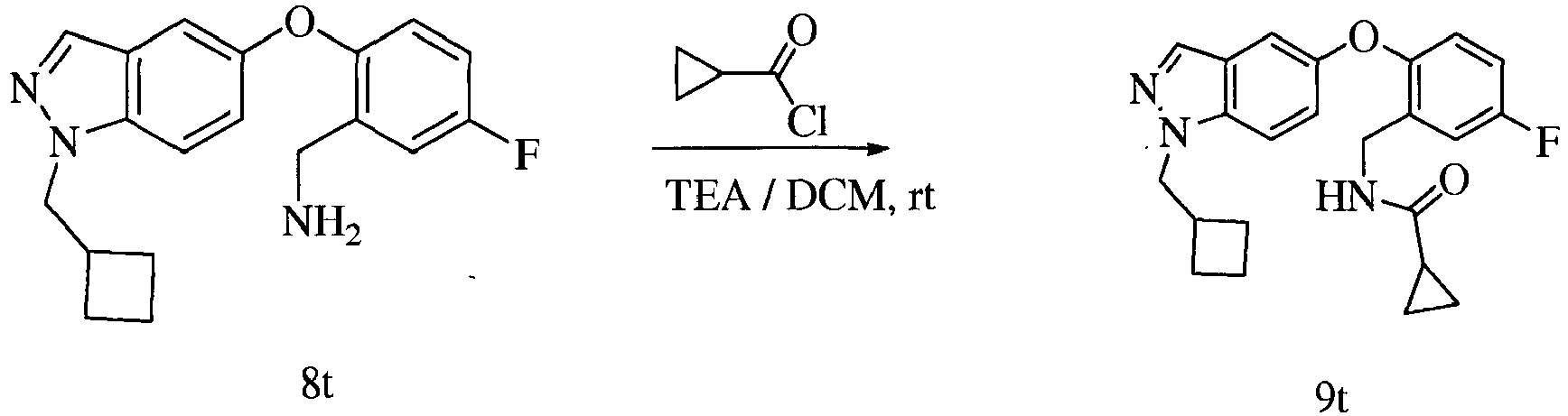
- A solution of (8t) (20 mg, 0.06 mmol; prepared as in Example 7, Steps A-E) in DCM (0.5 mL) was treated with base (13 µL, 0.09 mmol) followed by cyclopropanecarbonyl chloride (6 µL, 0.07 mmol) at room temperature, under nitrogen purge. The mixture was stirred at room temperature for 18 hours and then purified on a silica gel SepPak cartridge eluting with (10:1) DCM-Et2O. The desired fractions were evaporated in vacuo to afford the product (9t) as a pale yellow oil, 10.2 mg (42% isolated yield). MS (ESI+) m/z 394 (M+H) detected.
-

- A solution of compound (10t) (14 mg, 0.05 mmol; prepared as in Example 7, Steps A-E) in DCM (0.5 mL) was treated with base (11 µL, 0.06 mmol) followed by 3-trifluoromethylbenzoyl chloride (12 mg, 0.075 mmol) at room temperature, under nitrogen purge. The mixture was stirred at room temperature for 18 hours and then purified on a silica gel SepPak cartridge eluting with (10:1) DCM-Et2O. The desired fractions were evaporated in vacuo to afford the product (11t) as a yellow oil, 16.6 mg (53 % isolated yield 1H NMR (400 MHz, CDCl3) δ 7.38 (d, J = 7.8 Hz, 1H), 7.17 (dd, J = 7.8, 1.6 Hz, 1H), 7.13 (d, J = 1.6 Hz, 1H), 5.19-5.18 (m, 1H), 4.51-4.44 (m, 1H), 4.43-4.36 (m, 1H), 2.53-2.45 (m, 1H), 2.36-2.30 (m, 1H); MS (ESI+) m/z 468 (M+H) detected.
-
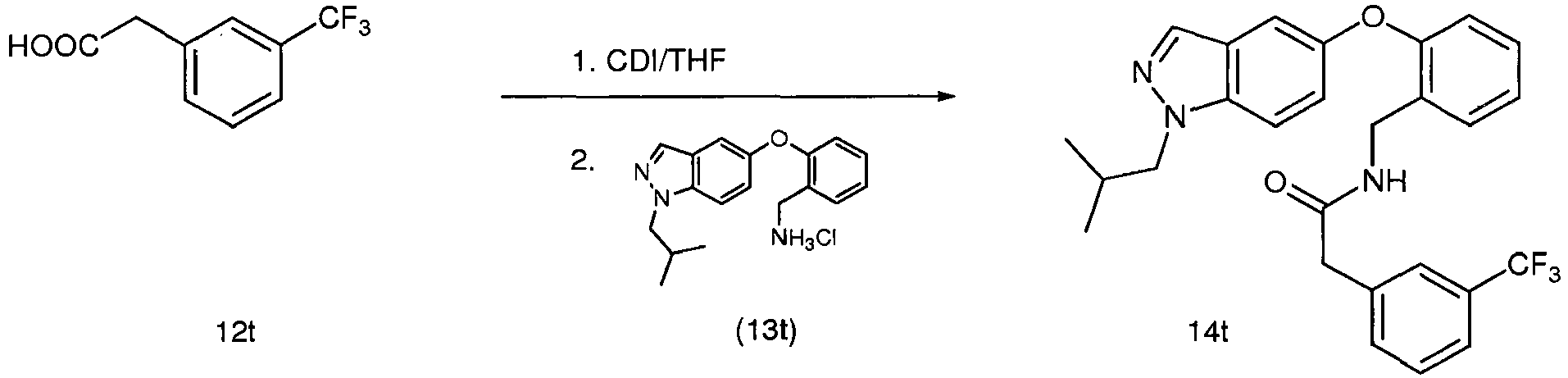
- A solution of (3-trifluoromethylphenyl) acetic acid (12t) (10 mg, 0.051 mmol) in THF (0.5 mL) was treated with 1,1-carbonyldiimidazole (CDI, 9 mg, 0.055 mmol) at room temperature. After stirring at room temperature for 18 hours, under nitrogen purge, the benzylamine (13t) (17 mg, 0.05 mmol; prepared as in Example 7, Steps A-E) was added at room temperature. Stirring was continued for an additional 18 hours. The solvent was evaporated in vacuo and the residue taken up in DCM and purified on a silica gel SepPak cartridge eluting with (10:1) DCM-Et2O. Desired fractions were evaporated in vacuo to afford the product (14t) as a pale yellow oil (10 mg; 42% isolated yield). MS (ESI+) m/z 482 (M+H) detected.
-
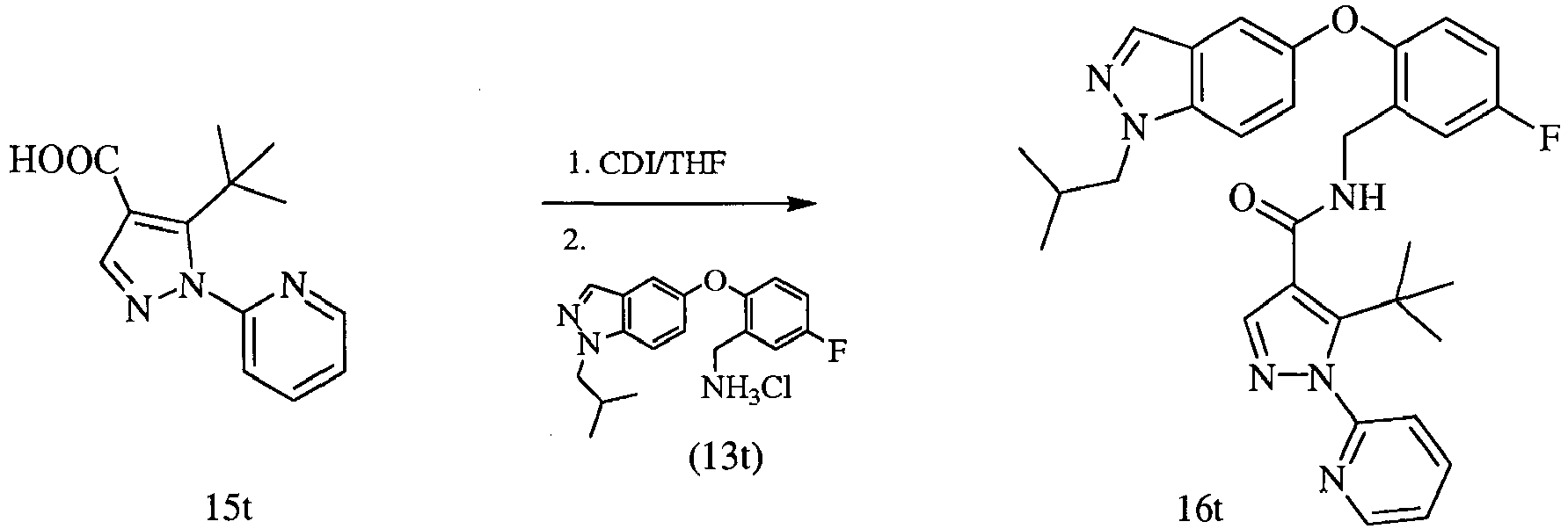
- A solution of 5-tert-butyl-1-pyridin-2-yl-1H-pyrazole-4-carboxylic acid (15t) (12 mg, 0.05 mmol) in THF (0.5 mL) was treated with 1,1-carbonyldiimidazole (CDI, 9 mg, 0.05 mmol) at room temperature. After stirring at room temperature for 18 hours, under nitrogen purge, benzylamine (13t) (15 mg, 0.05 mmol; prepared as in Example 7, Steps A-E) was added at room temperature. Stirring was continued for an additional 18 hours. The solvent was evaporated in vacuo and the residue taken up in DCM and purified on a silica gel SepPak cartridge eluting with 2-10% MeOH in DCM. The desired fractions were evaporated in vacuo to afford the product (16t) as a yellow oil, 5.2 mg (23% isolated yield). MS (ESI+) m/z 541 (M+H) detected.
-

- A solution of compound (13t) (15 mg, 0.05 mmol; prepared as in Example 7, Steps A-E) in DCM (0.5 mL) was added to the corresponding TFP acid (17t) (1 mmol/g) at room temperature. The mixture was shaken for 18 hours. The resin was washed with DCM. The combined filtrates were concentrated in vacuo and purified on a silica gel SepPak cartridge eluting with (10:1) DCM-Et2O. The desired fractions were evaporated in vacuo to afford the product (18t) as a yellow oil (12.6 mg; 66% isolated yield). MS (ESI+) m/z 400 (M+H) detected.
-

- A solution of (13t) (15 mg, 0.05 mmol; prepared as in Example 7, Steps A-E) in DCM (0.5 mL) was added to the corresponding TFP acid (19t) (1 mmol/g) at room temperature. The mixture was shaken for 18 hours. The resin was washed with DCM. The combined filtrates were concentrated in vacuo and purified on a silica gel SepPak cartridge eluting with (10:1) DCM-Et2O. The desired fractions were evaporated in vacuo to provide the product (20t) as a yellow oil (14.4 mg; 66% isolated yield). MS (ESI+) m/z 452 (M+H) detected.
-

- A solution of compound (13t) (15 mg, 0.04 mmol; prepared as in Example 7, Steps A-E) in pyridine (0.5 mL) was treated with 4-trifluoromethylbenzenesulfonyl chloride (13 mg, 0.05 mmol) at room temperature under nitrogen purge. The mixture was stirred at room temperature for 18 hours. The solvent was evaporated in vacuo, taken up in DCM and washed with 1 N HCl. The organic layer was filtered through 1 PS paper, concentrated in vacuo and purified on a silica gel SepPak cartridge eluting with (10:1) DCM-Et2O. The desired fractions were evaporated in vacuo to provide the product (21 t) as a yellow oil, 15.6 mg (70% isolated yield). MS (ESI+) m/z 522 (M+H) detected.
-

- A solution of compound (13t) (15 mg, 0.043 mmol; prepared as in Example 7, Steps A-E) in pyridine (0.5 mL) was treated with methanenesulfonyl chloride (4 µL, 0.05 mmol) at room temperature, under nitrogen purge. The mixture was stirred at room temperature for 18 hours. The solvent was evaporated in vacuo, taken up in DCM and washed with 1 N HCl. The organic layer was filtered through 1 PS paper, concentrated in vacuo and purified on a silica gel SepPak cartridge eluting with (10:1) DCM-Et2O. The desired fractions were evaporated in vacuo to a yellow oil (22t), 13.1 mg (78% isolated yield). MS (ESI+) m/z 392 (M+H) detected.
- The reaction scheme for the synthesis of compound 28t is shown in
Figure 8 . - Step A: 5-fluoro-2-(1-methyl-1H-indazol-5-yloxy)-benzylamine hydrochloride (5t): Intermediate (4t) (1.13 g, 4.23 mmol; prepared as in Example 7, Steps A-C) was dissolved in methanol (50 mL) and 20% palladium hydroxide on activated carbon (0.50 g, 0.71 mmol) was added to the solution under nitrogen atmosphere. After the addition of concentrated HCl (12 N, 5.0 mL, 60 mmol), the mixture was stirred under hydrogen atmosphere overnight (18 hours). The mixture was filtered and palladium hydroxide was washed with MeOH. After evaporation, the crude residue was azeotroped with a mixture of toluene and EtOH to dryness to compound (5t) as a white powder (1.29 g, 99 % yield) 1HNMR (400 MHz, CDCl3) δ 8.72 (br, 3H), 8.01 (s, 1 H), 7.73 (d, J = 8.6 Hz, 1 H), 7.57 (dd, J = 9.4, 2.3 Hz, 1 H), 7.38 (s, 1 H), 7.19 (d, J = 3.1 Hz, 1 H), 7.04 (td, J = 74.8, 3.1 Hz, 1 H), 7.02 (dd, J = 195.1, 4.7 Hz, 1 H), 4.07 (s, 3H) ppm.
- Step B: [5-Fluoro-2-(1-methyl-1H-indazol-5-yloxy)-benzyl]-carbamic acid tert-butyl ester (26t): Intermediate (5t) (134 mg, 0.43 mmol) was dissolved in CH2Cl2 (5 mL) and diisopropylethylamine (151 µL, 112 mg, 0.87 mmol) and di-tert-butyldi carbonate (94.7 mg, 0.43 mmol) were added to the solution. After overnight stirring (12 hours), the reaction mixture was diluted with ethyl acetate (100 mL), washed with 0.2N HCl (5 mL), saturated NaHCO3 (5 mL) and brine, dried over MgSO4 and concentrated under reduced pressure to obtain an yellow crude oil, which was purified on silica gel with EtOAc/hexane (1:2) to obtain the product (26t) as a colorless oil (150 mg, 93% yield). 1HNMR (400 MHz, CDCl3) δ 7.85 (s, 1 H), 7.35 (d, J = 9.4 Hz, 1 H), 7.15-7.08 (m, 3H), 6.87 (t, J = 9.4 Hz, 1 H), 6.75 (dd, J = 8.7, 4.7 Hz, 1 H), 5.09 (br, 1 H), 4.35 (d, J = 6.3 Hz, 2H), 4.06 (s, 3H), 1.42 (s, 9H) ppm.
- Step C: [5-Fluoro-2-(1-methyl-1H-indazol-5-yloxy)-benzyl]-methylcarbamic acid tert-butyl ester (27t): Intermediate (26t) (50 mg, 0.135 mmol) was dissolved in DMF (2 mL) and cooled to 0 °C. Sodium hydride (60%, 8.1 mg, 0.20 mmol) and methyl iodide (42 µL, 95.5 mg, 0.67 mmol) were added to the solution at 0 °C and then the mixture was allowed to warm to room temperature. After 1 hour of stirring, the mixture was poured into saturated NH4Cl solution and extracted 3 times with 30 mL of ether. The combined organic layer was washed with 5 mL of water twice and brine one, dried over MgSO4 and evaporated under reduced pressure. The pale yellow residue was purified on silica gel with EtOAc/hexane (1:2) to obtain compound (27t) as a colorless oil (52 mg, quantitative). 1HNMR (400 MHz, CDCl3) δ 7.83 (s, 1H), 7.35 (s, 0.4H), 7.33 (s, 0.6H), 7.11 (s, 0.6H), 7.08 (s, 1.4H), 6.98 (d, J = 8.6 Hz, 1 H), 6.92-6.81 (m, 1), 6.81-6.73 (m, 1 H), 4.49 (s, 0.8H), 4.45 (s, 1.2H), 4.04 (s, 3H), 2.89 (s, 1.8H), 2.85 (s, 1.2H), 1.45 (s, 3.6H), 1.41 (s, 5.4H) ppm.
- Step D: 3-(5-tert-Butyl-2-p-tolyl-2H-pyrazol-3-yl)-1-[5-fluoro-2-(1-methyl-1H-indazol-5-yloxy)-benzyl]-1-methyl-urea (28t): Intermediate (27t) (52 mg, 0.135 mmol) was dissolved in CH2Cl2 (2 mL) and TFA (1 mL) was added to the solution at room temperature. After 1 hour of stirring, the reaction solution was evaporated under reduced pressure. The residue was diluted with EtOAc (50 mL) and neutralized with saturated NaHCO3, washed with brine, dried over MgSO4 and evaporated under reduced pressure. The crude pale yellow oil was dissolved in DMA (2 mL). The carbamate (6t-1) and diisopropylethyl amine were added to the solution and heated to 80 °C in a sealed tube. After 16 hours of stirring, reaction mixture was diluted with Et2O (50 mL) and washed with 5 mL of water three times and brine once, dried over MgSO4 and evaporated under the reduced pressure. The crude oil was purified by flash column chromatography (ethyl acetate/hexane 1:1) to obtain compound (28t) as a white foam (63.8 mg, 87% yield over 2 steps). 1HNMR (400 MHz, CDCl3) δ 7.83 (s, 1 H), 7.32 (d, J = 9.4 Hz, 1 H), 7.22 (d, J = 7.8 Hz, 2H), 7.13 (d, J = 7.8 Hz, 2H), 7.02 (s, 1 H), 6.98 (d, J = 8.6 Hz, 1 H), 6.89 (t, J = 8.6 Hz, 1 H), 6.72 (dd, J = 7.7, 4.7 Hz, 1 H), 6.62 (s, 1 H), 6.39 (s, 1 H), 4.51 (s, 2H), 4.05 (s, 3H), 2.94 (s, 2H), 2.32 (s, 3H), 1.30 (s, 9H) ppm.
- The reaction scheme for the synthesis of
compound 32t is shown inFigure 9 . - Step A: [5-Fluoro-2-(1-methyl-1H-indazol-5-yloxy)-benzyl]-(4-methoxybenzyl)-amine (29t): Intermediate (5t) (136 mg, 0.442 mmol; prepared as in Example 7, Step D) was dissolved in EtOAc (100 mL) and neutralized with saturated NaHCO3 then washed with brine, dried over MgSO4 and evaporated under reduced pressure to obtain the free amine. The free amine was dissolved in 1,2-dichloroethane (5 mL) and p-anisaldehyde was added to the solution at room temperature. After 2 hours of stirring, the solution was evaporated under reduced pressure. The residue was dissolved in MeOH (5 mL) and cooled to 0 °C. Sodium borohydride was added to the solution at 0 °C. After 40 minutes of stirring at 0 °C, the reaction mixture was quenched with several drops of acetic acid at 0 °C, then the reaction mixture was evaporated under reduced pressure. The residue was diluted with EtOAc (50 mL) and neutralized with saturated NaHCO3 and washed with brine, dried over MgSO4 and evaporated to obtain a crude oil, which was purified on silica gel with EtOAc/hexane (1:1) with 1 % Et3N to afford compound (29t) as a color less oil (139 mg, 80% yield). 1HNMR (400 MHz, CDCl3) δ 7.85 (s, 1H), 7.34 (d, J = 9.4 Hz, 1H), 7.28 (d, J = 7.0 Hz, 1H), 7.23-7.15 (m, 2H), 7.13-7.06 (m, 2H), 6.92-6.85 (m, 2H), 6.84-6.78 (m, 2H), 4.61 (s, 1 H), 4.06 (s, 3H), 3.82 (s, 2H), 3.77 (s, 3H), 3.72 (s, 2H) ppm.
- Step B: 3-(5-tert-Butyl-2-p-tolyl-2H-pyrazol-3-yl)-1-[5-fluoro-2-(1-methyl-1H-indazol-5-yloxy)-benzyl]-1-(4-methoxybenzyl)-urea (30t): Intermediate (29t) (135 mg, 0.354 mmol), trichloroethylcarbamate (6t-1) (154 mg, 0.379 mmol) and diisopropylamine (120 µL, 89mg, 0.69 mmol) were dissolved in DMA (5 mL) and heated to 80 °C. After 12 hours of stirring at 80 °C, the reaction mixture was cooled down to room temperature, diluted with ether (50 mL) and washed with 5 mL of water there times and with brine once, dried over MgSO4, filtered and concentrated under reduced pressure. The obtained crude oil was purified on silica gel with EtOAc/hexane (2:3) to afford compound (30t) as a colorless oil (180 mg, 83% yield). 1HNMR (400 MHz, CDCl3) δ 7.82 (s, 1 H), 7.07-6.95 (m, 8H), 6.94-6.89 (m, 1H), 6.89-6.84 (m, 1 H), 7.29 (d, J = 9.0 Hz, 1 H), 6.75 (d, J = 8.6 Hz, 2H), 6.69 (dd, J = 8.9, 4.7 Hz, 1H), 6.60 (s, 1 H), 6.41 (s, 1H), 4.57 (s, 2H), 4.44 (s, 2H), 4.04 (s, 3H), 3.78 (s, 1 H), 3.77 (s, 3H), 2.31 (s, 3H), 1.30 (s, 9H) ppm.
- Step C: 1-(5-tert-Butyl-2-p-tolyl-2H-pyrazol-3-yl)-3-[5-fluoro-2-(1-methyl-1H-indazol-5-yloxy)-benzyl]-3-(4-methoxybenzyl)-1-methyl-urea (31t) : Intermediate (30t) (150 mg, 0.23 mmol) was dissolved in DMF (2 mL) and cooled to 0 °C. Sodium hydride (60% in oil, 14 mg, 0.36 mmol) and methyl iodide (73.8 µL, 168 mg, 1.19 mmol) were added to the solution at 0 °C and the reaction mixture was stirred at 0 °C for 1 hour. The reaction mixture was quenched by addition of 5 mL of water at 0 °C, and then extracted three times with 50 mL of Et2O. The combined organic layer was washed with 5 mL of water twice and with brine once, dried over MgSO4, filtered and evaporated under reduced pressure. The residue was purified on silica gel with EtOAc/hexane (1:2) to obtain compound (31 t) as a pale yellow amorphous (134 mg, 87% yield). 1HNMR (400 MHz, CDCl3) δ 7.82 (s, 1 H), 7.37 (d, J = 8.6 Hz, 2H), 7.28 (d, J = 9.4 Hz, 1H), 7.15-7.02 (m, 2H), 7.00-6.81 (m, 6H), 6.80-6.60 (m, 3H), 5.85 (s, 1H), 4.21 (s, 2H), 4.20 (s, 2H), 4.05 (s, 3H), 3.76 (s, 3H), 2.98 (s, 3H), 2.29 (s, 3H), 1.23 (s, 9H) ppm.
- Step D: 1-(5-tert-Butyl-2-p-tolyl-2H-pyrazol-3-yl)-3-[5-fluoro-2-(1-methyl-1H-indazol-5-yloxy)-benzyl]-1-methylurea (32t): Intermediate (31 t) (85 mg, 0.131 mmol) was dissolved in 5 mL of solution of 2 % (v/v) anisole in trifluoroacetic acid and stirred at room temperature for 1.5 hour. After evaporation the crude residue was dissolved in EtOAc (80 mL) and neutralized with saturated NaHCO3, washed with brine, dried over MgSO4, filtered and evaporated under reduced pressure. The obtained crude oil was purified on silica gel with EtOAc/hexane (2:3) to obtain compound (32t) as a white amorphous (68.6 mg, 99% yield). 1HNMR (400 MHz, CDCl3) δ 7.84 (s, 1H), 7.32 (d, J = 9.4 Hz, 1H), 7.25 (d, J = 7.8 Hz, 2H), 7.13 (d, J = 7.8 Hz, 2H), 7.07 (t, J = 10.2 Hz, 1 H), 7.20-6.96 (m, 1 H), 6.93 (td, J = 8.6, 3.1 Hz, 1 H), 6.85 (td, J = 8.6, 3.1 Hz, 1 H), 6.68 (dd, J = 8.6, 4.7 Hz, 1 H), 6.11 (s, 1 H), 5.31 (t, J=6.3 Hz, 0.8 H), 5.17 (t, J=6.3 Hz, 0.2H), 4.48-4.26 (m, 2H), 4.05 (s, 3H), 3.00 (s, 3H), 2.33 (s, 2.4H), 2.32 (s, 0.6H), 1.36 (s, 1.8H), 1.29 (s, 7.2H) ppm.
- The reaction scheme for the synthesis of
compound 4u is shown inFigure 10 . - Step A: 5-Fluoro-2-hydroxybenzonitrile (23t): 2,5-Difluorobenzonitrile (14.9 g, 107 mmol) and benzyl alcohol (11.1 mL, 11.6 g, 107 mmol) were dissolved in DMF (330 mL) and cooled to 0 °C. Sodium hydride (60% in oil, 6.40 g, 161 mmol) was added to the solution at 0 °C and the reaction mixture was allowed to warm to room temperature. After stirring for 1 hour at room temperature, the reaction solution was cooled to 0 °C and water (330 mL) was gradually added to the solution. The mixture was transferred to a separatory funnel and extracted three times with 500 mL of Et2O. The combined organic layer was washed twice with 100 mL of water, brine once, then dried over MgSO4. After filtration, the solution was concentrated under reduced pressure to obtain a crude pale yellow solid. The crude solid was dissolved in MeOH (500 mL). To the solution was added 10% palladium on activated carbon under a nitrogen atmosphere. Replacing nitrogen gas with hydrogen gas, reaction mixture was stirred at room temperature (if the reaction did not proceed in 30 minutes, the Pd/C was filtered off and the reaction was set up again). After 2 hours of stirring, the palladium on carbon was filtrated off and washed with MeOH. The solution was concentrated under reduced pressure to obtain a pale yellow solid. The solid was recrystallized from hot toluene (100 mL) by addition of hexane (10 mL) followed by cooling to 0 °C. The obtained white needles were washed with 1:1 mixture of toluene and hexane (7.23 g, 49 % yield). Mother liquor was concentrated and purified on silica gel with Et2O/hexane (2:3-1:1) to afford the desired compound (23t) (6.94 g, 47% yield). Total 14.2 g (96% yield) over 2 steps. 1HNMR (400 MHz, d 6-DMSO) δ 11.09 (s, 1 H), 7.58 (dd, J= 8.4, 3.2 Hz, 1H), 7.40 (td, J=8.6, 3.2 Hz, 1H), 7.03 (dd, J=9.2, 4.4 Hz, 1H) ppm.
- Step B: 5-Fluoro-2-(4-methyl-5-nitro-pyridin-2-yloxy)-benzonitrile (1u): Intermediate (23t) (1.78 g, 13.0 mmol), 2-chloro-4-methyl-5-nitropyridine (2.31 g, 13.0 mmol) and potassium carbonate (1.80 g, 13.0 mmol) were dissolved in DMF (120 mL). When the mixture was warmed to 60 °C, the colorless solution turned blue in 10 minutes. After 16 hours of stirring at 60 °C, the reaction mixture was allowed to cool down to room temperature and then diluted with 100 mL of Et2O. The inorganic precipitate was removed by filtration and washed with Et2O. The combined organic solution (600 mL total) was transferred to a separatory funnel and washed with 60 mL of water three times and with brine one time. The solution was dried over MgSO4 and then concentrated under reduced pressure to obtain crude brown solid. The crude solid was dissolved in MeOH (240 mL). To the solution was added 10% palladium on activated carbon under nitrogen atmosphere. Replacing nitrogen gas with hydrogen gas, the reaction mixture was stirred at room temperature (if the reaction did not proceed in 30 minutes, filtrated the Pd/C was filtered off and the reaction was set up again. After 1.5 hours of stirring, palladium on carbon was filtered off and washed with MeOH. The solution was concentrated under reduced pressure to obtain a pale yellow solid. The crude compound was purified on silica gel with EtOAc/hexane (1/1-3/2) to afford (1 u) as a white solid (2.21 g, 70% yield over 2 steps). 1HNMR (400 MHz, CDCl3) δ 7.57 (s, 1 H), 7.33 (ddd, J = 7.8, 3.1, 1.6 Hz, 1 H), 7.29-7.22 (m, 1 H), 7.23 (s, 0H), 7.15 (ddd, J = 9.3, 4.7, 1.6 Hz, 1 H), 6.82 (s, 1 H), 2.22 (s, 3H) ppm.
- Step C: 5-Fluoro-2-(1H-pyrazolo[3,4-c]pyridin-5-yloxy)-benzonitrile (2u): Intermediate (1 u) (0.25 g, 1.03 mmol) and NH4BF4 (0.22 g, 2.06 mmol) were dissolved in 10 mL of mixed solvent of AcOH/water (2:1) and cooled to 0 °C, and followed by addition of concentrated HCl (0.43 mL, 5.16 mmol) and NaNO2 (0.078 g, 1.13 mmol) to the solution at 0 °C. The color of the solution immediately turned into yellow as sodium nitrate was added. The reaction mixture was then allowed to warm to room temperature. After stirring 2 hours, the solvent was removed under reduced pressure and azeotroped with toluene three times to removed the water, to give a pale yellow crude solid. The solid was dissolved in 10 mL of EtOAc and KOAc was added to the solution. The color of suspension turned into deep orange in 30 minutes and then stirred an additional hour. The white inorganic salt was removed by filtration and washed with EtOAc. The combined filtrate was diluted with EtOAc to 100 mL of total volume and transferred to a separatory funnel, washed with sat. NaHCO3 (10 mL) and brine, dried over MgSO4, filtered and evaporated to obtain a deep orange colored solid. The crude solid was purified on silica gel with EtOAc/hexane (2:3) to afford an orange yellow colored solid (2u) (0.23 g, 88% yield over 2 steps). 1HNMR (400 MHz, CDCl3) δ 8.65 (s, 1H), 8.15 (s, 1H), 7.30-7.34 (m, 2H), 7.32-7.22 (m, 2H), 7.12 (dd, J = 9.4, 4.7 Hz, 1 H) ppm.
- Step D: 5-Fluoro-2-(1-methyl-1H-pyrazolo[3,4-c]pyridin-5-yloxy)-benzonitrile (3u): The intermediate (2u) (0.23 g) was dissolved in DMF (9 mL) and cooled to 0 °C. Sodium hydride (60% in oil, 0.054 g, 1.36 mmol) and methyl iodide (0.28 mL, 642 mg, 4.52 mmol) were added to the solution at 0 °C and then the reaction mixture was stirred for an hour at 0 °C. The mixture was quenched with 10 mL of water and extracted three times with 30 mL of ether. The combined organic layer was washed with 5 mL of water twice and brine once, dried over MgSO4, filtered, and concentrated under reduced pressure. The crude oil residue was purified on silica gel with EtOAc/hexane (1:1) to afford colorless oil (3u) (0.124 g, 51% yield). 1HNMR (400 MHz, CDCl3) δ 8.56 (s, 1H), 8.02 (s, 1 H), 7.40-7.32 (m, 2H), 7.31-7.23 (m, 2H), 7.11-7.05 (m, 1H, 4.17 (s, 3H) ppm.
- Step E: 1-(5-tert-Butyl-2-p-tolyl-2H-pyrazol-3-yi)-3-[5-fluoro-2-(1-methyl-1H-pyrazolo[3,4-c]pyridin-5-yloxy)-benzyl]-urea (4u): The intermediate (3u) was dissolved in 10 mL of MeOH, and then concentrated HCl (12N, 1.0 mL, 12 mmol) and 10% palladium on activated carbon were added to the solution. The mixture was stirred under hydrogen atmosphere. After 24 hours stirring, the palladium on activated carbon was filtered off and the filtrate was concentrated under reduced pressure. The obtained residue was azeotroped with a mixture of toluene and ethanol a couple of times to dryness to afford the crude hydrochloride salt of the amine. The crude salt was dissolved in 5 mL of DMF. Diisoproylethylamine and trichloroethylcarbamate were added to the solution and heated to 80 °C. After 16 hours of stirring, DMF was evaporated off under reduced pressure and the residue was diluted with 50 mL of EtOAc and washed with saturated NaHCO3 and brine, dried over MgSO4, filtered and concentrated under reduced pressure. The obtained crude oil was purified by preparative TLC with EtOAc/hexane (2:1) and then 100% of CH2Cl2 to afford a colorless oil (4u) (9.0 mg, 4 % yield). 1HNMR (400 MHz, CDCl3) δ 8.23 (s, 1 H), 7.90 (s, 1 H), 7.24 (s, 1 H), 7.20 (d, J = 8.2 Hz, 2H), 7.08 (d, J = 8.6 Hz, 2H), 7.06-7.00 (m, 2H), 6.91 (td, J = 8.3, 3.1 Hz, 1 H), 6.82 (dd, J = 8.9, 4.7 Hz, 1 H), 6.46 (br, 1H), 6.18 (s, 1 H), 5.84 (t, J = 8.6 Hz, 1 H), 4.36 (s, 1 H), 4.34 (s, 2H), 4.05 (s, 3H), 2.28 (s, 3H), 1.28 (s, 9H) ppm.
- The reaction scheme for the synthesis of
compound 47d according to this invention is shown inFigure 11 . - Step A: 2-[5-(2-Cyano-4-fluorophenoxy)-indazol-1-yl]-N,N-dimethylacetamide (45d): To a solution of 5-fluoro-2-(1H-indazol-5-yloxy)-benzonitrile (44d) (0.200 g, 0.790 mmol) in DMF (6 mL) was added 2-chloro-N,N-dimethylacetamide (0.115 g, 0.948 mmol) and tetrabutyl ammonium iodide (0.088 g, 0.237 mmol), followed by K2CO3 (0.164 g, 1.19 mmol). The mixture was heated to 110ºC for 48 hours under N2 atmosphere. The reaction mixture was concentrated under reduced pressure and dissolved in dichloromethane. The solution was washed with 1N HCl, filtered, and chromatographed on Biotage eluting with 5% MeOH in dichloromethane to afford 0.032 g of the product (12% yield).
- Step B: 2-[5-(2-Aminomethyl-4-fluorophenoxy)-indazol-1-yl]-N,N-dimethylacetamide (46d): To a solution of 2-[5-(2-cyano-4-fluorophenoxy)-indazol-1-yl]-N,N-dimethylacetamide (0.090 g, 0.266 mmol) in EtOH (0.5 mL) was added CoBr2 (27 µL, 0.005 mmol) followed by [2,2']bipyridinyl (81µL, 0.015 mmol). NaBH4 (0.030 g, 0.798 mmol) was added to the mixture and it was stirred at room temperature for 18 hours. The mixture was treated with another portion each of CoBr2, [2,2']bipyridinyl, and NaBH4 and stirred for another 18 hours. The mixture was quenched with MeOH, followed by acetic acid and then concentrated under reduced pressure. The white residue was partitioned between saturated NaHCO3 and ethyl acetate. The organic layer was filtered and concentrated under reduced pressure to afford 10 mg of white solid (11% yield).
- Step C: 5-tert-Butyl-2-p-tolyl-2H-pyrazol-3-ylamine: A solution of p-tolyl-hydrazine hydrochloride (15.86 g, 100 mmol) and pivaloylacetonitrile (17.9 g, 143 mmol) dissolved in MeOH (65 mL) was heated to reflux for 18 hours under N2 atmosphere. The mixture was cooled to room temperature and concentrated under reduced pressure. The residue was triturated with ether and collected by filtration. The solid was dried under high vacuum to provide 26.6 g of white solid (99% yield).
- Step D: (5-tert-Butyl-2-p-tolyl-2H-pyrazol-3-yl)-
carbamic acid - Step E: 2-(5-{2-[3-(5-tert-Butyl-2-p-tolyl-2H-pyrazol-3-yl)-ureidomethyl]-4-fluorophenoxy}-indazol-1-yl)-N,N-dimethylacetamide (47d): To a solution of 2-[5-(2-aminomethyl-4-fluoro-phenoxy)-indazol-1-yl]-N,N-dimethylacetamide (46d) (0.010 g, 0.029 mmol) and (5-tert-butyl-2-p-tolyl-2H-pyrazol-3-yl)-
carbamic acid - Step A: 1-Isobutyl-5-methoxy-1H-indazole: A solution of 5-methoxy-1H-indazole (5.00 g, 33.7 mmol) in DMF (100 mL) was treated with K2CO3 (5.83 g, 42.2 mmol) and stirred at room temperature for 15 minutes. To this solution was added 1-bromo-2-methylpropane (5.09 g, 37.1 mmol) and the .resulting mixture was heated to 110°C for 18 hours. Another equivalent of 1-bromo-2-methyl-propane was added and the mixture continued to heat for 48 hours more. The mixture was concentrated under reduced pressure and dissolved in dichloromethane. The solution was washed with 1 N HCl, filtered, and concentrated under reduced pressure. The residue was chromatographed on Biotage eluting with hexanes/ether (5:1) to afford 2.51 g of orange oil (36% yield).
- Step B: 1-Isobutyl-1H-indazol-5-ol: To a cooled (-78ºC) solution of 1-isobutyl-5-methoxy-1 H-indazole (2.57 g, 12.6 mmol) in dichloromethane (100 mL) was added BBr3 (25 mL of 1 M solution in dichloromethane). The mixture was stirred at -78ºC for 2 hours and then warmed to room temperature and stirred for 18 hours. The reaction mixture was poured into ice water and extracted with dichloromethane. The organic extract was filtered and concentrated under reduced pressure to afford 2.3 g of solid (96% yield).
- Step C: 5-Fluoro-2-(1-isobutyl-1H-indazol-5-yloxy)-benzonitrile: To a solution of 1-isobutyl-1H-indazol-5-ol (2.33 g, 12.2 mmol) and K2CO3 (2.03 g, 14.7 mmol) in DMF (75 mL) was added 2,5-difluorobenzonitrile (1.87 g. 13.5 mmol). The mixture was heated to 110ºC for 18 hours under N2 atmosphere. The reaction mixture was concentrated under reduced pressure and the residue was dissolved in dichloromethane. The solution was washed with 1 N HCl, filtered, and concentrated under reduced pressure. The residue was chromatographed on Biotage eluting with hexanes/ether (5:2) to afford 3.05 g of pale yellow oil (81 % yield).
- Step D: 5-Fluoro-2-(1-isobutyl-1H-indazol-5-yloxy)-benzylamine: To a solution of 5-fluoro-2-(1-isobutyl-1H-indazol-5-yloxy)-benzonitrile (3.05 g, 9.86 mmol) purged with N2 in MeOH (50 mL) was added concentrated HCl (1.6 mL) and Pd(OH)2/C (15% wt, 0.457 g). The mixture was stirred at room temperature for 18 hours under H2 atmosphere. The catalyst was removed by filtration and the solution was concentrated under reduced pressure to afford 3.32 g of pale yellow foam (96% yield).
- Step E: 1-(5-tert-Butyl-isoxazol-3-yl)-3-[5-fluoro-2-(1-isobutyl-1H-indazol-5-yloxy)-benzyl]-urea: To a cooled (0ºC) solution of 5-fluoro-2-(1-isobutyl-1H-indazol-5-yloxy)-benzylamine (0.364 g, 1.04 mmol) and DIEA (0.5 mL, 2.08 mmol) in dichloromethane (10 mL) was added triphosgene (0.131 g, 0.374 mmol). The mixture was stirred at 0ºC for 1 hour and then stirred at room temperature for 18 hours under N2 atmosphere. The reaction mixture was concentrated under reduced pressure and suspended in dichloromethane (10 mL) making a 0.123 M solution. 0.4 mL of this solution (0.015 g, 0.048 mmol) was treated with 5-tert-butyl-isoxazol-3-ylamine (0.008 g, 0.053 mmol). The product was obtained in 44% yield. MS (APCI +) m/z 480 (M+1) detected.
- Step A: 2-[1-(2,2-Dimethoxyethyl)-1H-indazol-5-yloxy]-5-fluorobenzonitrile: To a cooled (0ºC) solution of 5-fluoro-2-(1H-indazol-5-yloxy)-benzonitrile (0.100 g, 0.395 mmol) and 2-bromo-1,1-dimethoxyethane (0.114 g, 0.671 mmol) in DMF (4 mL) was added NaH (0.024 g of 60%, 0.59 mmol). The reaction mixture was warmed to room temperature and stirred for 1 hour. Tetrabutyl ammonium iodide (0.029 g, 0.079 mmol) was added to the mixture and it was heated to 60ºC for 3 hours. The mixture was cooled to room temperature, diluted with water (4 mL), and extracted with ether (3 X 30 mL). The combined extracts were washed with water (2
X 5 mL) and brine, dried over MgSO4, and concentrated under reduced pressure. The residue was chromatographed eluting with ethyl acetate/hexanes (1:2) to afford 0.066 g of product (49% yield). - Step B: 5-Fluoro-2-[1-(2-oxoethyl)-1H-indazol-5-yloxy]-benzonitrile: To a solution of 2-[1-(2,2-dimethoxyethyl)-1H-indazol-5-yloxy]-5-fluorobenzonitrile (1.42 g, 4.16 mmol) in dichloromethane (62 mL) was added iodotrimethylsilane (3.33 g, 16.64 mmol) portion-wise over 3 hours. The mixture was stirred at room temperature for 2 hours. Aqueous NaHCO3 (60 mL) was added to the mixture and it was extracted with ethyl acetate (2 X 50 mL). The combined extracts were washed with Na2S2O4, brine, dried over MgSO4, and concentrated under reduced pressure. The crude product was used in the next reaction without further purification.
- Step C: 4-{2-[5-(2-Cyano-4-fluorophenoxy)-indazol-1-yl]-ethyl}-piperazine-1-carboxylic acid tert-butyl ester: To a solution of 5-fluoro-2-[1-(2-oxo-ethyl)-1H-indazol-5-yloxy]-benzonitrile (0.307 g, 1.04 mmol) and triacetoxyborohydride (0.66 g, 3.1 mmol) in dichloroethane (10 mL) was added piperazine-1-carboxylic acid tert-butyl ester (0.65 g, 3.49 mmol). The mixture was stirred at room temperature for 2 hours. The reaction mixture was quenched with MeOH (2 mL) and diluted with ethyl acetate (100 mL). The solution was washed with aqueous NaHCO3, brine, dried over MgSO4, and concentrated under reduced pressure. The residue was chromatographed eluting with ethyl acetate/hexanes (2:3, with 1% triethylamine) to afford 0.29 g of product (60% yield).
- Step D: 4-{2-[5-(2-Aminomethyl-4-fluorophenoxy)-indazol-1-yl]-ethyl}-piperazine-1-carboxylic acid tert-butyl ester: To a solution of 4-{2-[5-(2-cyano-4-fluorophenoxy)-indazol-1-yl]-ethyl}-piperazine-1-carboxylic acid tert-butyl ester (0.160 g, 0.344 mmol), CoBr2 (0.008 g, 0.034 mmol), [2,2']bipyridinyl (0.016 g, 0.010 mmol) in EtOH (6 mL) was added NaBH4 (0.039 g, 1.0 mmol). The mixture was stirred for 3 hours at room temperature. The reaction was quenched with MeOH (3 mL) and acetic acid (10 drops). The solution was concentrated under reduced pressure and diluted with ethyl acetate. The mixture was washed with aqueous NaHCO3, brine, dried over MgSO4, and concentrated under reduced pressure. The crude oil was chromatographed eluting with 1% triethylamine in ethyl acetate, MeOH/ CH2Cl2/hexanes (1:15:15, 1 % triethylamine), then MeOH/CH2Cl2/hexanes (1:10:10, 1 % triethylamine). The pure product was obtained in 86% yield.
- Step E: (3-tert-Butyl-isoxazol-5-yl)-carbamic acid 4-nitrophenyl ester: A solution of 3-tert-butyl-isoxazol-5-ylamine (2.50 g, 17.83 mmol) in dichloromethane was treated with pyridine (2 mL, 26.7 mmol) followed by p-nitrophenyl chloroformate (3.77 g, 18.73 mmol). The mixture was stirred at room temperature for 2 hours. The reaction mixture was washed with 1 N HCl, filtered, and concentrated under reduced pressure. The residue was triturated with ether and collected by filtration to afford 2.2 g of product (41 % yield).
- Step F: 4-[2-(5-{2-[3-(3-tert-Butyl-isoxazol-5-yl)-ureidomethyl]-4-fluorophenoxy}-indazol-1-yl)-ethyl]-piperazine-1-carboxylic acid tert-butyl ester: A solution of 4-{2-[5-(2-aminomethyl-4-fluorophenoxy)-indazol-1-yl]-ethyl}-piperazine-1-carboxylic acid tert-butyl ester (0.050 g, 0.107 mmol) dissolved in dichloromethane (2 mL) was treated with (3-tert-butyl-isoxazol-5-yl)-carbamic acid 4-nitrophenyl ester (0.081 g, 0.266 mmol) and stirred at room temperature for 24 hours. The mixture was diluted with ethyl acetate (60 mL), washed with 1 N NaOH (5 mL), water (2 X 10 mL), brine, dried over MgSO4, and concentrated under reduced pressure. The residue was chromatographed eluting with acetone/hexanes (2:3, then 1:1) to afford 0.056 g of product (83% yield).
- Step G: 1-(3-tert-Butyl-isoxazol-5-yl)-3-{5-fluoro-2-[1-(2-piperazin-1-yl-ethyl)-1H-indazol-5-yloxy]-benzyl}-urea: 4-[2-(5-{2-[3-(3-tert-Butyl-isoxazol-5-yl)-ureidomethyl]-4-fluorophenoxy}-indazol-1-yl)-ethyl]-piperazine-1-carboxylic acid tert-butyl ester (0.056 g, 0.088 mmol) was treated with TFA/ CH2Cl2 (1:1, 2 mL) and stirred at room temperature for 1 hour. The mixture was concentrated under reduced pressure and azeotroped with toluene. The residue was diluted with ethyl acetate (40 mL) and washed with 1 N NaOH and brine. The solution was concentrated under reduced pressure to afford 0.038 g of the product (80% yield). MS (ESI +) m/z 536 (M+1) detected; 1H NMR (400 mHz, CDCl3) δ 7.81 (s, 1 H), 7.35 (d, 1 H), 7.15 (dd, 1 H), 7.08 (s, 1 H), 7.05 (d, 1H), 6.88 (m, 1 H), 6.76 (m, 1H), 6.28 (m, 1H), 5.99 (s, 1H), 4.46 (m, 4H), 2.86 (m, 2H), 2.79 (m, 4H), 2.43 (m, 4H), 1.26 (s, 9H).
- Step A: 2-[1-(2-Dimethylaminoethyl)-1H-indazol-5-yloxy]-5-fluorobenzonitrile: A solution of 5-fluoro-2-[1-(2-oxoethyl)-1H-indazol-5-yloxy]-benzonitrile (0.110 g, 0.372 mmol) (prepared according to the procedure in Example 21, Steps A-B) and sodium triacetoxyborohydride (0.39 g, 1.9 mmol) in dichloroethane (3 mL) was treated with dimethylamine (0.17 g, 3.7 mmol) and stirred at room temperature for 3 hours. The reaction was quenched with MeOH (1 mL) and diluted with ethyl acetate (30 mL). The solution was washed with aqueous NaHCO3, brine, dried over MgSO4, and concentrated under reduced pressure. The residue was chromatographed eluting with ethyl acetate and then acetone/ hexanes (2:3 with 1% triethylamine) to afford 0.115 g of product (95% yield).
- Step B: {2-[5-(2-Aminomethyl-4-fluorophenoxy)-indazol-1-yl]-ethyl}-dimethylamine: To a cooled (0ºC) solution of 2-[1-(2-dimethylaminoethyl)-1H-indazol-5-yloxy]-5-fluorobenzonitrile (0.115 g, 0.303 mmol) in THF (3 mL) was added LAH (0.61 mL of 1 M in THF). The mixture was warmed to room temperature and stirred for 1.5 hours. The mixture was quenched with water (23 µL), 3N NaOH (23 µL) and water (69 µL). The salts were removed by filtration and the filtrate was concentrated under reduced pressure to afford 0.113 g of product (97% yield).
- Step C: 1-(3-tert-Butyl-isoxazol-5-yi)-3-{2-[1-(2-dimethylamino-ethyl)-1H-indazol-5-yloxy]-5-fluoro-benzyl}-urea: A solution of {2-[5-(2-Aminomethyl-4-fluorophenoxy)-indazol-1-yl]-ethyl}-dimethylamine (0.020 g, 0.061 mmol) in DMF (1 mL) was treated with (3-tert-buylisoxazol-5-yl)-carbamic acid 4-nitrophenyl ester (0.020 g, 0.067 mmol) (prepared according to Example 21, Step E). The mixture stirred at room temperature for 18 hours under a N2 atmosphere. The reaction mixture was chromatographed eluting with dichloromethane/ether (10:1) and then 5% MeOH in dichloromethane to afford 5.3 mg of pale yellow oil (18% yield). MS (APCI +) m/z 495 (M+1) detected; 1H NMR (400 mHz, DMSO - D6) δ 10.14 (s, 1 H), 7.98 (s, 1 H), 7.74 (d, 1H), 7.22 (d, 1H), 7.16 (m, 2H), 7.08 (m, 1 H), 6.88 (m, 2H), 5.93 (s, 1H), 4.48 (t, 2H), 4.35 (d, 2H), 2.70 (t, 2H), 2.17 (s, 6H), 1.23 (s, 9H).
- Step A: 5-Fluoro-2-[1-(2-hydroxy-2-methylpropyl)-1H-indazol-5-yloxy]-benzonitrile: A solution of 5-fluoro-2-(1H-indazol-5-yloxy)-benzonitrile (0.100 g, 0.395 mmol) in DMF (4 mL) was treated with NaH (0.022 g, 60%, 056 mmol) and stirred for 5 minutes. 2,2-Dimethyloxirane (0.035 g, 0.48 mmol) was added and the solution was stirred at room temperature for 1 hour. The reaction mixture was then heated to 80ºC. for 1.5 hours. The solution was cooled to room temperature, diluted with ether (50 mL), washed with water (3
X 5 mL), brine, dried over MgSO4, and concentrated under reduced pressure. The residue was chromatographed eluting with ethyl acetate/ hexanes (1:1) to afford 0.070 g of product (47% yield). - Step B: 2-{1-[2-(tert-Butyl-dimethylsilanyloxy)-2-methyl-propyl]-1H-indazol-5-yloxy}-5-fluorobenzonitrile: To a cooled (0ºC) solution of 5-Fluoro-2-[1-(2-hydroxy-2-methylpropyl)-1H-indazol-5-yloxy]-benzonitrile (0.070 g, 0.215 mmol) and 2,6-lutidine (0.030 g, 0.284 mmol) in dichloromethane (2 mL) was added TBSOTf (0.063 g, 0.240 mmol). The reaction mixture was warmed to room temperature and stirred for 1 hour. The mixture was diluted with ether (50 mL) and washed with 0.2N HCl, NaHCO3, and brine, dried over MgSO4, and concentrated under reduced pressure. The residue was chromatographed eluting with ether/hexanes (1:3) to afford 0.071 g of pale yellow oil (94% yield).
- Step C: 2-{1-[2-(tert-Butyldimethylsilanyloxy)-2-methylpropyl]-1H-indazol-5-yloxy}-5-fluorobenzylamine: To a cooled (0ºC) solution of 2-{1-[2-(tert-butyldimethylsilanyloxy)-2-methyl-propyl]-1H-indazol-5-yloxy}-5-fluorobenzonitrile (0.071 g, 0.162 mmol) in THF (2 mL) was added LAH (0.32 mL of 1M in THF). The solution was warmed to room temperature and stirred for 1 hour. The reaction mixture was cooled to 0ºC and quenched with water (12 µL), 3N NaOH (12 µL) and water (36 µL). The salts were removed by filtration and the filtrate was concentrated under reduced pressure and used in the next reaction without further purification.
- Step D: (5-tert-Butyl-2-methyl-2H-pyrazol-3-yl)-
carbamic acid - Step E: 1-(2-{1-[2-(tert-Butyldimethylsilanyloxy)-2-methyl-propyl]-1H-indazol-5-yloxy}-5-fluorobenzyl)-3-(5-tert-butyl-2-methyl-2H-pyrazol-3-yl)-urea: A mixture of 2-{1-[2-(tert-butyldimethylsilanyloxy)-2-methyl-propyl]-1H-indazol-5-yloxy}-5-fluorobenzylamine (0.072 g, 0.162 mmol), (5-tert-butyl-2-methyl-2H-pyrazol-3-yl)-
carbamic acid X 5 mL), brine, dried over MgSO4, and concentrated under reduced pressure. The residue was chromatographed on silica eluting with ethyl acetate/ hexanes (3:1) to afford 0.084 g of product (83% yield). - Step F: 1-(5-tert-Butyl-2-methyl-2H-pyrazol-3-yl)-3-{5-fluoro-2-[1-(2-hydroxy-2-methylpropyl)-1H-indazol-5-yloxy]-benzyl}-urea: To a solution of -(2-{1-[2-(tert-butyldimethylsilanyloxy)-2-methyl-propyl]-1H-indazol-5-yloxy}-5-fluorobenzyl)-3-(5-tert-butyl-2-methyl-2H-pyrazol-3-yl)-urea (0.084 g, 0.135 mmol) in dichloromethane (3 mL) was added TBAF (0.70 mL of 1 M in THF). The mixture was stirred at room temperature for 5 days. The reaction mixture was poured into NH4Cl and extracted with ethyl acetate (3 X 30 mL). The combined extracts were washed with brine, dried over MgSO4, and concentrated under reduced pressure. The residue was chromatographed on silica eluting with acetone/ hexanes (2:1) to afford 0.060 g of product (87% yield). MS (ESI +) m/z 509 (M+1) detected; 1H NMR (400 mHz, DMSO- D6) δ 8.45 (s, 1 H), 7.98 (s, 1 H), 7.74 (d, 1 H), 7.17 (m, 3H), 7.08 (m, 1 H), 6.85 (m, 2H), 5.95 (s, 1H), 4.66 (s, 1H), 4.33 (d, 2H), 4.30 (s, 2H), 2.50 (s, 3H), 1.18 (s, 9H), 1.12 (s, 6H).
- The words "comprise," "comprising," "include," "including," and "includes" when used in this specification and in the following claims are intended to specify the presence of stated features, integers, components, or steps, but they do not preclude the presence or addition of one or more other features, integers, components, steps, or groups thereof.
Claims (13)
- A compound including resolved enantiomers, diastereomers, solvates and pharmaceutically acceptable salts thereof, said compound having the Formula XVII :
 Y is O, NR2;W is CR3;R3 is H, NH2, F, Cl, methyl or substituted methyl;R2 is H, OH, an amine protecting group, Zn-NR3Rb, Zn-NRa(C=O)Rb, Zn-SO2Ra, Zn-SORa, Zn-SRa, Zn-OR3, Zn-(C=O)Ra, Zn-(C=O)ORa, Zn-O-(C=O)Ra, alkyl, allyl, alkenyl, alkynyl, heteroalkyl, heteroallyl, heteroalkenyl, heteroalkynyl, alkoxy, heteroalkoxy, Zn-cycloalkyl wherein said cycloalkyl is saturated or partially unsaturated, Zn-heterocycloalkyl wherein said heterocycloalkyl is saturated or partially unsaturated, or Zn-Ar1, wherein said alkyl, allyl, alkenyl, alkynyl, heteroalkyl, heteroallyl, heteroalkenyl, heteroalkynyl, alkoxy, heteroalkoxy, Zn-cycloalkyl, Zn-heterocycloalkyl, and Zn-Ar1 may be substituted or unsubstituted;Ar1 is aryl or heteroaryl, each of which may be substituted or unsubstituted;Ra and Rb are independently H, OH, an amine protecting group, an alcohol protecting group, an acid protecting group, a sulfur protecting group, alkyl, allyl, alkenyl, alkynyl, heteroalkyl, heteroallyl, heteroalkenyl, heteroalkynyl, alkoxy, heteroalkoxy, Zn-cycloalkyl wherein said cycloalkyl is saturated or partially unsaturated, Zn-heterocycloalkyl wherein said heterocycloalkyl is saturated or partially unsaturated, or Zn-Ar1, wherein said alkyl, allyl, alkenyl, alkynyl, heteroalkyl, heteroallyl, heteroalkenyl, heteroalkynyl, alkoxy, heteroalkoxy, Zn-cycloalkyl, Zn-heterocycloalkyl, and Zn-Ar1 may be substituted or unsubstituted,or Ra and Rb together with the atoms to which they are both attached form a saturated or partially unsaturated heterocycle ring having 1 or more heteroatoms in said ring, wherein said heterocycle may be substituted or unsubstituted and wherein said heterocycle may be fused to an aromatic ring;Z is alkylene having from 1 to 4 carbons, or alkenylene or alkynylene each having from 2 to 4 carbons, wherein said alkylene, alkenylene, or alkynylene may be substituted or unsubstituted;n is 0 or 1;U is CRc or N;V is CRc or N;Rc is H, F, Cl, methyl or substituted methyl;X is O, S, SO, SO2, NR5, C=O, CH2, CH2Zn-OH, or C=NORd;R5 is H, methyl, or substituted methyl;Rd is H, PO3H2, SO3H2, alkyl, allyl, alkenyl, alkynyl, heteroalkyl, heteroallyl, heteroalkenyl, heteroalkynyl, alkoxy, heteroalkoxy, Zn-cycloalkyl wherein said cycloalkyl is saturated or partially unsaturated, Zn-heterocycloalkyl wherein said heterocycloalkyl is saturated or partially unsaturated, or Zn-Ar1, said alkyl, allyl, alkenyl, alkynyl, heteroalkyl, heteroallyl, heteroalkenyl, heteroalkynyl, alkoxy, heteroalkoxy, Zn-cycloalkyl, Zn-heterocycloalkyl and Zn-Ar1 may be substituted or unsubstituted;G, K, J, and T independently are N or CRz, provided that when any of said G, K, J, and T are N the total number of G, K, J, or T that is N does not exceed 2;Rz is H, F, Cl, Br,CF3, OR6, SR6, lower alkyl (C1-C4), CN, or NR6R7;R6 and R7 are independently H, CF3, lower alkyl (C1-C4) or lower heteroalkyl (C1-C4);Q is -NR8CONH-, -NHCO-, -NR8SO2NH-, -NHSO2-, -CONR11- ;R8 is H or (C1-C4) alkyl;R11 is H or (C1-C4) alkyl;Rx is -(CR9R10)m-, -O(CR9R10)m- , NH(CR9R10)m-, or -S(CR9R10)m- provided that Q is -CONR11- when Rx is -O(CR9R10)m-, -NH(CR9R10)m, or -S(CR9R10)m-;R9 and R10 are independently H, or lower alkyl, or R9 and R10 together with the atoms to which they are both attached form a cycloalkyl ring which may be saturated or partially unsaturated;m is 1-3;Ry is H, PO3H, an amine protecting group, an oxygen protecting group, alkyl, allyl, alkenyl, alkynyl, heteroalkyl, heteroallyl, heteroalkenyl, heteroalkynyl, alkoxy, heteroalkoxy, Zn-cycloalkyl wherein said cycloalkyl is saturated or partially unsaturated, Zn-heterocycloalkyl wherein said heterocycloalkyl is saturated or partially unsaturated, or Zn-Ar2, wherein said alkyl, allyl, alkenyl, alkynyl, heteroalkyl, heteroallyl, heteroalkenyl, heteroalkynyl, alkoxy, heteroalkoxy, Zn-cycloalkyl, Zn-Ar2 and Zn-heterocycloalkyl may be substituted or unsubstituted;Ar2 is aryl or heteroaryl, each of which may be substituted or unsubstituted, wherein said substitution can be 1-3 substituents independently selected from F, Cl, Br, CF3, CN, alkyl, allyl, alkenyl, alkynyl, heteroalkyl, heteroallyl, heteroalkenyl, heteroalkynyl, -OR12, -SR12, -SO2R12, -SO2NR13R12, NR13SO2R12, Zn-cycloalkyl wherein said cycloalkyl is saturated or partially unsaturated, Zn-heterocycloalkyl wherein said heterocycloalkyl is saturated or partially unsaturated, or Zn-Ar1, wherein said alkyl, allyl, alkenyl, alkynyl, heteroalkyl, heteroallyl, heteroalkenyl, heteroalkynyl, alkoxy, heteroalkoxy, Zn-cycloalkyl, Zn-heterocycloalkyl and Zn-Ar1 may be substituted or unsubstituted;R12 and R13 are independently H, alkyl, allyl, alkenyl, alkynyl, heteroalkyl, heteroallyl, heteroalkenyl, heteroalkynyl, Zn-cycloalkyl wherein said cycloalkyl is saturated or partially unsaturated, Zn-heterocycloalkyl wherein said heterocycloalkyl is saturated or partially unsaturated, or Zn-Ar1, wherein said alkyl, allyl, alkenyl, alkynyl, heteroalkyl, heteroallyl, heteroalkenyl, heteroalkynyl, alkoxy, heteroalkoxy, Zn-cycloalkyl, Zn-heterocycloalkyl and Zn-Ar1 may be substituted or unsubstituted;wherein when Ar2 is substituted with -SO2NR13R12, R12 and R13 can form a cycloalkyl ring or heterocycloalkyl ring that may be substituted or unsubstituted wherein said substitution can be substituents selected from alkyl, allyl, alkenyl, alkynyl, heteroalkyl, heteroallyl, heteroalkenyl, heteroalkynyl, alkoxy, heteroalkoxy, Zn-cycloalkyl wherein said cycloalkyl is saturated or partially unsaturated, -COR12, -SO2R12, Zn-heterocycloalkyl wherein said heterocycloalkyl is saturated or partially unsaturated, or Zn-Ar1, wherein said alkyl, allyl, alkenyl, alkynyl, heteroalkyl, heteroallyl, heteroalkenyl, heteroalkynyl, alkoxy, heteroalkoxy, Zn-cycloalkyl, Zn-heterocycloalkyl and Zn-Ar1 may be substituted or unsubstituted;wherein when Q is -CONR11, Ry in combination with R11 is additionally cycloalkyl ring or heterocycloalkyl ring that may be substituted or unsubstituted with groups selected from alkyl, allyl, alkenyl, alkynyl, heteroalkyl, heteroallyl, heteroalkenyl, heteroalkynyl, alkoxy, heteroalkoxy, Zn-cycloalkyl wherein said cycloalkyl is saturated or partially unsaturated, Zn-heterocycloalkyl wherein said heterocycloalkyl is saturated or partially unsaturated, Zn-Ar1, -COR14, or -SO2R14, wherein said alkyl, allyl, alkenyl, alkynyl, heteroalkyl, heteroallyl, heteroalkenyl, heteroalkynyl, alkoxy, heteroalkoxy, Zn-cycloalkyl, Zn-heterocycloalkyl, Zn-Ar1, -COR14, and -SO2R14 may be substituted or unsubstituted; andR14 is alkyl, allyl, alkenyl, alkynyl, heteroalkyl, heteroallyl, heteroalkenyl, heteroalkynyl, Zn-cycloalkyl wherein said cycloalkyl is saturated or partially unsaturated, Zn-heterocycloalkyl wherein said heterocycloalkyl is saturated or partially unsaturated, or Zn-Ar1, wherein said alkyl, allyl, alkenyl, alkynyl, heteroalkyl, heteroallyl, heteroalkenyl, heteroalkynyl, alkoxy, heteroalkoxy, Zn-cycloalkyl, Zn-heterocycloalkyl, and Zn-Ar1 may be substituted or unsubstituted,and wherein the substituent(s) of each group is/are selected among: halo, alkyl, allyl, alkenyl, alkynyl, heteroalkyl, heteroallyl, heteroalkenyl, heteroalkynyl, alkoxy, heteroalkoxy, Zn-cycloalkyl, Zn-heterocycloalkyl, Zn-OR, Zn-NO2, Zn-CN, Zn-CO2R, Zn-(C=O)R, Zn-O(C=O)R, Zn-O-alkyl, Zn-OAr, Zn-SH, Zn-SR, Zn-SOR, Zn-SO2R, Zn-S-Ar, Zn-SOAr, Zn-SO2Ar, aryl, heteroaryl, Zn-Ar, Zn-(C=O)NR'R', Zn-NR'R", Zn-NR(C=O)R, Zn-SO2NR'R", PO3H2, SO3H2, amine protecting groups, alcohol protecting groups, sulfur protecting groups, or acid protecting groups, where:Z is alkylene having from 1 to 4 carbons, or alkenylene or alkynylene each having from 2 to 4 carbons,n is zero or 1,R, R' and R'' are alkyl, allyl, alkenyl, alkynyl, heteroalkyl, heteroallyl, heteroalkenyl, heteroalkynyl, alkoxy, heteroalkoxy, Zn-cycloalkyl or Zn-heterocycloalkyl, andAr is aryl or heteroaryl.
 - The compound of claim 1, wherein W is CH and Y is NR2.
- The compound of claim 1, wherein G, J, K and T are CRz.
- The compound of claim 1, wherein X is NH, S, or O.
- The compound of claim 1, wherein Rx is CH2 and Q is -NHCO-.
- The compound of claim 5, wherein Ry isopropyl or
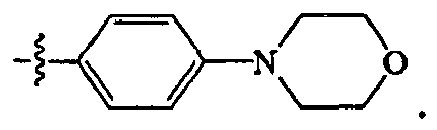
- The compound of claim 1, wherein Rx is CH2 and Q is -NR8CONH-.
- The compound of claim 7, wherein Ry is


- The compound according to any one of claims 1 to 8 which is selected from the group constituted by:- 1-(5-tert-butyl-2-p-tolyl-2H-pyrazol-3-yl)-3-[2-(1-methyl-1H-indazol-5-yloxy)-pyridin-3-ylmethyl]-urea,- 1-[5-cyclopropyl-2-(4-trifluoromethylphenyl)-2H-pyrazol-3yl]-3-[5-fluoro-2-(1-methyl-1H-indazol-5-ylamino)-benzyl]-urea,- 1-(5-tert-butyl-2-p-tolyl-2H-pyrazol-3-yl)-3-[2-(1-cyclobutylmethyl-1H-indazol-5-ylamino)-5-fluorobenzyl]-urea,- 1-(5-tert-butyl-2-p-chlorophenyl-2H-pyrazol-3-y1)-3-[2-(1-methyl-1H-indazo-5-ylsulfanyl)-5-fluorobenzyl]-urea,- 1-(5-tert-butyl-2-methyl-2H-pyrazol-3-yl)-3-{2-[1-(3-isopropylamino-propyl)-1H-indazol-5-ylamino]-benzyl}-urea,- 1-(5-tert-butyl-2-p-tolyl-2H-pyrazol-3-yl)-3-[5-fluoro-2-(1-methyl-1H-indazol-5-yloxy)-benzyl]urea,- 1-[5-tert-butyl-2-(4-chloro-phenyl)-2H-pyrazol-3-yl]-3-[5-fluoro-2-(1-methyl-1H-indazol-5-yloxy)-benzyl]urea,- 3-(5-tert-butyl-2-p-tolyl-2H-pyrazol-3-yl)-1-[5-fluoro-2-(1-methyl-1H-indazol-5-yloxy)-benzyl]-1-methylurea,- 1-(5-tert-butyl-2-p-tolyl-2H-pyrazol-3-yl)-3-[5-fluoro-2-(1-methyl-1H-indazol-5-yloxy)-benzyl]-1-methylurea,- 1-(5-tert-butyl-2-p-tolyl-2H-pyrazol-3-yl)-3-[5-fluoro-2-(1-methyl-1H-pyrazolo[3,4-c]pyridin-5-yloxy)-benzyl]-urea,- 2-(5-{2-[3-(5-tert-butyl-2-p-tolyl-2H-pyrazol-3-yl)-ureidomethyl]-4-fluorophenoxy}-indazol-1-yl)-N,N-dimethylacetamide,- 1-(5-tert-butyl-isoxazol-3-yl)-3-[5-fluoro-2-(1-isobutyl-1H-indazol-5-yloxy)-benzyl]-urea,- 1-(3-tert-butyl-isoxazol-5-yl)-3-{5-fluoro-2-[1-(2-piperazin-1-yl-ethyl)-1H-indazol-5-yloxy]-benzyl}-urea,- 1-(3-tert-butyl-isoxazol-5-yl)-3-{2-[1-(2-dimethylaminoethyl)-1H-indazol-5-yloxy]-5-fluoro-benzyl}-urea,- 1-(5-tert-butyl-2-methyl-2H-pyrazol-3-yl)-3-{5-fluoro-2-[1-(2-hydroxy-2-methylpropyl)-1H-indazol-5-yloxy]-benzyl}-ureaand pharmaceutically acceptable salt thereof.
- A composition comprising a compound of claim 1 and a pharmaceutically acceptable carrier.
- A compound according to any one of claims 1 to 9 for use in therapy.
- A compound according to any one of claims 1 to 9 for use in treating or preventing p-38 mediated condition.
- A compound according to claim 12 wherein said p-38 mediated condition is inflammatory disease, autoimmune disease, destructive bone disorder, proliferative bone disorder, infectious disease, viral disease, or neurodegenerative disease.
Priority Applications (2)
| Application Number | Priority Date | Filing Date | Title |
|---|---|---|---|
| SI200432236T SI1997811T1 (en) | 2003-03-03 | 2004-02-25 | Indazole, benzoxazole and pyrazolopyridine derivatives as P38 kinase inhibitors |
| CY20151100383T CY1116207T1 (en) | 2003-03-03 | 2015-04-27 | INDAZOLI, BENZOXAZOLI AND PYRAZOLOPYRIDEN PRODUCTION AS P38 INHIBITORS |
Applications Claiming Priority (3)
| Application Number | Priority Date | Filing Date | Title |
|---|---|---|---|
| US10/378,164 US7135575B2 (en) | 2003-03-03 | 2003-03-03 | P38 inhibitors and methods of use thereof |
| US10/688,849 US20040180896A1 (en) | 2003-03-03 | 2003-10-15 | P38 inhibitors and methods of use thereof |
| EP04714621A EP1606283B1 (en) | 2003-03-03 | 2004-02-25 | P38 inhibitors and methods of use thereof |
Related Parent Applications (1)
| Application Number | Title | Priority Date | Filing Date |
|---|---|---|---|
| EP04714621A Division EP1606283B1 (en) | 2003-03-03 | 2004-02-25 | P38 inhibitors and methods of use thereof |
Publications (3)
| Publication Number | Publication Date |
|---|---|
| EP1997811A2 EP1997811A2 (en) | 2008-12-03 |
| EP1997811A3 EP1997811A3 (en) | 2009-09-09 |
| EP1997811B1 true EP1997811B1 (en) | 2015-04-08 |
Family
ID=32926418
Family Applications (4)
| Application Number | Title | Priority Date | Filing Date |
|---|---|---|---|
| EP08164860.2A Expired - Lifetime EP1997810B1 (en) | 2003-03-03 | 2004-02-25 | Indazoles, benzotriazoles and N-analogs thereof as p38 kinase inhibitors |
| EP08166014A Expired - Lifetime EP2039685B1 (en) | 2003-03-03 | 2004-02-25 | Heterobicyclic compounds as P38 inhibitors |
| EP08164861.0A Expired - Lifetime EP1997811B1 (en) | 2003-03-03 | 2004-02-25 | Indazole, benzoxazole and pyrazolopyridine derivatives as P38 kinase inhibitors |
| EP08164856.0A Expired - Lifetime EP1997809B1 (en) | 2003-03-03 | 2004-02-25 | P38 inhibitors and methods of use thereof |
Family Applications Before (2)
| Application Number | Title | Priority Date | Filing Date |
|---|---|---|---|
| EP08164860.2A Expired - Lifetime EP1997810B1 (en) | 2003-03-03 | 2004-02-25 | Indazoles, benzotriazoles and N-analogs thereof as p38 kinase inhibitors |
| EP08166014A Expired - Lifetime EP2039685B1 (en) | 2003-03-03 | 2004-02-25 | Heterobicyclic compounds as P38 inhibitors |
Family Applications After (1)
| Application Number | Title | Priority Date | Filing Date |
|---|---|---|---|
| EP08164856.0A Expired - Lifetime EP1997809B1 (en) | 2003-03-03 | 2004-02-25 | P38 inhibitors and methods of use thereof |
Country Status (28)
| Country | Link |
|---|---|
| US (5) | US7135575B2 (en) |
| EP (4) | EP1997810B1 (en) |
| JP (2) | JP5424657B2 (en) |
| KR (3) | KR20110091532A (en) |
| CN (2) | CN101759645B (en) |
| AR (2) | AR043451A1 (en) |
| AT (1) | ATE410421T1 (en) |
| AU (1) | AU2009225343B2 (en) |
| BR (2) | BRPI0419305B8 (en) |
| CL (2) | CL2004000416A1 (en) |
| CO (1) | CO5670351A2 (en) |
| CY (4) | CY1108661T1 (en) |
| DE (1) | DE602004016970D1 (en) |
| DK (5) | DK1997811T3 (en) |
| DO (1) | DOP2009000155A (en) |
| EG (1) | EG27049A (en) |
| ES (4) | ES2315641T3 (en) |
| IL (3) | IL170527A (en) |
| IS (1) | IS2959B (en) |
| NO (1) | NO20085373L (en) |
| NZ (3) | NZ572694A (en) |
| PA (1) | PA8596901A1 (en) |
| PL (1) | PL219742B1 (en) |
| PT (4) | PT1997811E (en) |
| SI (5) | SI1606283T1 (en) |
| TW (2) | TWI346663B (en) |
| UA (2) | UA103873C2 (en) |
| ZA (1) | ZA200507874B (en) |
Families Citing this family (377)
| Publication number | Priority date | Publication date | Assignee | Title |
|---|---|---|---|---|
| US7893101B2 (en) * | 2002-03-20 | 2011-02-22 | Celgene Corporation | Solid forms comprising (+)-2-[1-(3-ethoxy-4-methoxyphenyl)-2-methylsulfonylethyl]-4-acetylaminoisoindoline-1,3-dione, compositions thereof, and uses thereof |
| US7407955B2 (en) | 2002-08-21 | 2008-08-05 | Boehringer Ingelheim Pharma Gmbh & Co., Kg | 8-[3-amino-piperidin-1-yl]-xanthines, the preparation thereof and their use as pharmaceutical compositions |
| US7135575B2 (en) * | 2003-03-03 | 2006-11-14 | Array Biopharma, Inc. | P38 inhibitors and methods of use thereof |
| MXPA05009459A (en) * | 2003-03-03 | 2006-05-17 | Array Biopharma Inc | P38 inhibitors and methods of use thereof. |
| US7344716B2 (en) * | 2003-05-13 | 2008-03-18 | Depuy Spine, Inc. | Transdiscal administration of specific inhibitors of pro-inflammatory cytokines |
| US7553827B2 (en) * | 2003-08-13 | 2009-06-30 | Depuy Spine, Inc. | Transdiscal administration of cycline compounds |
| US8273347B2 (en) * | 2003-05-13 | 2012-09-25 | Depuy Spine, Inc. | Autologous treatment of degenerated disc with cells |
| US7429378B2 (en) * | 2003-05-13 | 2008-09-30 | Depuy Spine, Inc. | Transdiscal administration of high affinity anti-MMP inhibitors |
| EP1663237B1 (en) * | 2003-09-10 | 2013-06-19 | Icagen, Inc. | Fused ring heterocycles as potassium channel modulators |
| CA2541509C (en) | 2003-10-17 | 2014-06-10 | Incyte Corporation | Substituted cyclic hydroxamates as inhibitors of matrix metalloproteinases |
| US8895540B2 (en) * | 2003-11-26 | 2014-11-25 | DePuy Synthes Products, LLC | Local intraosseous administration of bone forming agents and anti-resorptive agents, and devices therefor |
| NZ547696A (en) | 2003-12-23 | 2009-12-24 | Astex Therapeutics Ltd | Pyrazole derivatives as protein kinase modulators |
| US7501426B2 (en) | 2004-02-18 | 2009-03-10 | Boehringer Ingelheim International Gmbh | 8-[3-amino-piperidin-1-yl]-xanthines, their preparation and their use as pharmaceutical compositions |
| CN1922150A (en) * | 2004-02-27 | 2007-02-28 | 霍夫曼-拉罗奇有限公司 | Indazole derivatives and pharmaceutical compositions containing them |
| KR100844864B1 (en) * | 2004-02-27 | 2008-07-09 | 에프. 호프만-라 로슈 아게 | Heteroaryl-fused pyrazolo derivatives |
| JP2007523938A (en) * | 2004-02-27 | 2007-08-23 | エフ.ホフマン−ラ ロシュ アーゲー | Condensed derivatives of pyrazole |
| WO2006020060A2 (en) | 2004-07-15 | 2006-02-23 | Tetralogic Pharmaceuticals Corporation | Iap binding compounds |
| DE602005010714D1 (en) * | 2004-08-12 | 2008-12-11 | Pfizer | THE P38 MAP KINASE |
| US20100063093A1 (en) | 2007-03-28 | 2010-03-11 | Curt Wolfgang | Methods for the administration of iloperidone |
| EP1647549A1 (en) * | 2004-10-14 | 2006-04-19 | Laboratoire Theramex | Indazoles, benzisoxazoles and benzisothiazoles as estrogenic agents |
| DE102004054054A1 (en) | 2004-11-05 | 2006-05-11 | Boehringer Ingelheim Pharma Gmbh & Co. Kg | Process for preparing chiral 8- (3-amino-piperidin-1-yl) -xanthines |
| DK1851200T3 (en) | 2005-02-25 | 2014-04-14 | Tetralogic Pharm Corp | DIMER IAP INHIBITORS |
| KR20070113314A (en) * | 2005-03-22 | 2007-11-28 | 이나뜨 파르마 | Novel class γδ T cell activator and method of use |
| US8362075B2 (en) * | 2005-05-17 | 2013-01-29 | Merck Sharp & Dohme Corp. | Cyclohexyl sulphones for treatment of cancer |
| CA2606499C (en) | 2005-05-26 | 2017-06-13 | Metabasis Therapeutics, Inc. | Thyromimetics for the treatment of fatty liver diseases |
| EP1902032A1 (en) * | 2005-06-22 | 2008-03-26 | Astex Therapeutics Limited | Pharmaceutical compounds |
| EP1933832A2 (en) * | 2005-06-23 | 2008-06-25 | Astex Therapeutics Limited | Pharmaceutical combinations comprising pyrazole derivatives as protein kinase modulators |
| ITRM20050344A1 (en) * | 2005-06-30 | 2007-01-01 | Luca Maria De | SALTS OR COMPLEXES OF METHYL-DONOR SUBSTANCES WITH PHYTIC ACID OR ITS DERIVATIVES AND RELATIVE METHOD OF SYNTHESIS. |
| DE102005035891A1 (en) | 2005-07-30 | 2007-02-08 | Boehringer Ingelheim Pharma Gmbh & Co. Kg | 8- (3-amino-piperidin-1-yl) -xanthines, their preparation and their use as pharmaceuticals |
| ATE512145T1 (en) * | 2005-08-11 | 2011-06-15 | Vertex Pharma | CYSTIC FIBROSIS TRANSMEMBRANE CONDUCTANCE REGULATOR MODULATORS |
| KR20080039438A (en) * | 2005-08-25 | 2008-05-07 | 에프. 호프만-라 로슈 아게 | PI3 MAP P Kinase Inhibitor and Method of Use thereof |
| KR101011956B1 (en) * | 2005-08-25 | 2011-01-31 | 에프. 호프만-라 로슈 아게 | PI3 MAP P Kinase Inhibitor and Method of Use thereof |
| EP1944290B1 (en) * | 2005-09-14 | 2013-12-04 | Santen Pharmaceutical Co., Ltd. | Novel 1-2-dihydroquinoline derivative having glucocorticoid receptor binding activity |
| US7915286B2 (en) | 2005-09-16 | 2011-03-29 | Ranbaxy Laboratories Limited | Substituted pyrazolo [3,4-b] pyridines as phosphodiesterase inhibitors |
| WO2007031977A2 (en) * | 2005-09-16 | 2007-03-22 | Ranbaxy Laboratories Limited | Substituted pyrazolo [3,4-b]pyridines as phosphodiesterase inhibitors |
| ES2383090T3 (en) * | 2005-10-12 | 2012-06-18 | Vertex Pharmaceuticals, Inc. | Biphenyl derivatives as modulators of voltage-dependent ion channels |
| WO2007047397A2 (en) * | 2005-10-13 | 2007-04-26 | Smithkline Beecham Corporation | Phenol ethers as modulators of the opioid receptors |
| CA2755268C (en) | 2005-11-15 | 2013-12-31 | Array Biopharma, Inc. | Erbb inhibitors |
| UA94921C2 (en) * | 2005-12-08 | 2011-06-25 | Новартис Аг | 1-orthofluorophenyl substituted 1, 2, 5-thiazolidinedione derivatives as ptp-as inhibitors |
| BRPI0621027A2 (en) * | 2006-01-13 | 2011-11-29 | Pharmacyclics Inc | compound, pharmaceutical composition |
| AU2007210073B2 (en) * | 2006-01-31 | 2011-10-06 | Array Biopharma Inc. | Kinase inhibitors and methods of use thereof |
| US8541406B2 (en) * | 2006-02-07 | 2013-09-24 | Nv Remynd | Thiadiazole derivatives for the treatment of neurodegenerative diseases |
| PE20080251A1 (en) | 2006-05-04 | 2008-04-25 | Boehringer Ingelheim Int | USES OF DPP IV INHIBITORS |
| EP1852108A1 (en) | 2006-05-04 | 2007-11-07 | Boehringer Ingelheim Pharma GmbH & Co.KG | DPP IV inhibitor formulations |
| CN102838599A (en) | 2006-05-04 | 2012-12-26 | 贝林格尔.英格海姆国际有限公司 | Polymorphs |
| WO2008005651A2 (en) * | 2006-06-08 | 2008-01-10 | Decode Chemistry, Inc. | Cyclic carboxylic acid rhodanine derivatives for the treatment and prevention of tuberculosis |
| US7727978B2 (en) * | 2006-08-24 | 2010-06-01 | Bristol-Myers Squibb Company | Cyclic 11-beta hydroxysteroid dehydrogenase type I inhibitors |
| CA2663189A1 (en) * | 2006-09-12 | 2008-03-20 | Pfizer Products Inc. | Benzimidazolone derivatives |
| SG10201609581TA (en) | 2006-09-25 | 2016-12-29 | Ptc Therapeutics Inc | Crystalline forms of 3-[5-(2-fluorophenyl)-[1,2,4]oxadiazol-3-yl]-benzoic acid |
| PL2085387T3 (en) | 2006-11-14 | 2013-09-30 | Ayumi Pharmaceutical Corp | Novel 1,2-dihydroquinoline derivative having substituted phenylchalcogeno lower alkyl group and ester-introduced phenyl group as substituents |
| TW200831085A (en) * | 2006-12-13 | 2008-08-01 | Merck & Co Inc | Non-nucleoside reverse transcriptase inhibitors |
| CA2676444C (en) * | 2007-01-18 | 2013-07-30 | Evolva Sa | Prodrugs of substituted 1,3-dioxanes and their uses |
| DE102007009494A1 (en) * | 2007-02-27 | 2008-08-28 | Bayer Healthcare Ag | New 1,6-naphthyridine or 8-azaquinazoline derivatives useful for treating aldosteronism, hypertension, cardiac insufficiency, myocardial infarct sequelae, liver cirrhosis, renal insufficiency and stroke |
| WO2008112164A2 (en) | 2007-03-08 | 2008-09-18 | The Board Of Trustees Of The Leland Stanford Junior University | Mitochondrial aldehyde dehydrogenase-2 modulators and methods of use thereof |
| US8030344B2 (en) * | 2007-03-13 | 2011-10-04 | Methylgene Inc. | Inhibitors of histone deacetylase |
| GB0704932D0 (en) | 2007-03-14 | 2007-04-25 | Astex Therapeutics Ltd | Pharmaceutical compounds |
| BRPI0809081A2 (en) * | 2007-03-23 | 2019-09-24 | Abbott Gmbh & Co Kg | quinoline compounds suitable for treating disorders responsive to 5-ht6 serotonin receptor modulation |
| US7981917B2 (en) * | 2007-03-26 | 2011-07-19 | University Of Southern California | Methods and compositions for including apoptosis by stimulating ER stress |
| US8343995B2 (en) | 2007-04-27 | 2013-01-01 | Cydex Pharmaceuticals, Inc. | Formulations containing clopidogrel and sulfoalkyl ether cyclodextrin and methods of use |
| EP2011786A1 (en) * | 2007-07-05 | 2009-01-07 | Laboratorios del Dr. Esteve S.A. | Indane-amine derivatives, their preparation and use as medicaments |
| DE102007032347A1 (en) * | 2007-07-11 | 2009-01-15 | Bayer Healthcare Ag | Aminoacyl prodrugs |
| US8202899B2 (en) * | 2007-07-25 | 2012-06-19 | Array Biopharma Inc. | Pyrazole urea derivatives used as kinase inhibitors |
| TW200908984A (en) * | 2007-08-07 | 2009-03-01 | Piramal Life Sciences Ltd | Pyridyl derivatives, their preparation and use |
| EP2188257A2 (en) * | 2007-08-07 | 2010-05-26 | Cadila Healthcare Limited | Sulfoximine derivatives as factor xa inhibitors |
| US20110118274A1 (en) * | 2007-08-23 | 2011-05-19 | Cornell Research Foundation, Inc. | Proteasome inhibitors and their use in treating pathogen infection and cancer |
| US20100292292A1 (en) * | 2007-09-13 | 2010-11-18 | Link Medicine Corporation | Treatment of Neurodegenerative Diseases Using Indatraline Analogs |
| US8466187B2 (en) | 2007-09-18 | 2013-06-18 | Thermolife International, Llc | Amino acid compositions |
| US10646508B1 (en) * | 2007-09-18 | 2020-05-12 | Thermolife International, Llc | Method of safely administering nitrate dietary supplements and compositions |
| US10435356B1 (en) | 2007-09-18 | 2019-10-08 | Thermolife International, Llc | Amino acid compositions |
| US10426750B1 (en) | 2007-09-18 | 2019-10-01 | Thermolife International, Llc | Amino acid supplement formulations |
| JP2011503232A (en) | 2007-11-20 | 2011-01-27 | ザ ブリガム アンド ウィメンズ ホスピタル インコーポレイテッド | Modulating the immune response |
| FR2924712B1 (en) * | 2007-12-06 | 2012-12-21 | Univ Maine | DERIVATIVES OF GOSSYPOL AND APOGOSSYPOL, THEIR PREPARATIONS AND THEIR APPLICATIONS |
| EP2070929A1 (en) | 2007-12-11 | 2009-06-17 | Bayer Schering Pharma Aktiengesellschaft | Alkynylaryl compounds and salts thereof, pharmaceutical compositions comprising same, methods of preparing same and uses of same |
| AR069650A1 (en) * | 2007-12-14 | 2010-02-10 | Actelion Pharmaceuticals Ltd | DERIVATIVES OF AMINOPIRAZOL AS NON-PEPTIDIC AGONISTS OF THE HUMAN ALX RECEPTOR |
| US8986696B2 (en) * | 2007-12-21 | 2015-03-24 | Depuy Mitek, Inc. | Trans-capsular administration of p38 map kinase inhibitors into orthopedic joints |
| US20090162351A1 (en) * | 2007-12-21 | 2009-06-25 | Depuy Spine, Inc. | Transdiscal administration of inhibitors of p38 MAP kinase |
| CA2714111A1 (en) * | 2008-02-25 | 2009-09-03 | Merck Sharp & Dohme Corp. | Tetrahydro-1h-pyrrolo fused pyridones |
| WO2009111277A1 (en) * | 2008-02-29 | 2009-09-11 | Array Biopharma Inc. | Imdizo [4. 5-b] pyridine derivatives used as raf inhibitors |
| NZ587799A (en) * | 2008-03-25 | 2012-06-29 | Affectis Pharmaceuticals Ag | Novel p2x7r antagonists and their use |
| US20090246234A1 (en) * | 2008-04-01 | 2009-10-01 | Benjamin Johnson | Therapeutic Treatment Using Niacin for Skin Disorders |
| PE20091730A1 (en) | 2008-04-03 | 2009-12-10 | Boehringer Ingelheim Int | FORMULATIONS INVOLVING A DPP4 INHIBITOR |
| EP2116539A1 (en) | 2008-04-25 | 2009-11-11 | Laboratorios Del. Dr. Esteve, S.A. | 1-aryl-3-aminoalkoxy-pyrazoles as sigma ligands enhancing analgesic effects of opioids and attenuating the dependency thereof |
| EP2303273A1 (en) * | 2008-05-26 | 2011-04-06 | Medizinische Universität Innsbruck | Medical intervention in haematological cancers |
| HRP20150592T4 (en) | 2008-06-17 | 2025-02-14 | Millennium Pharmaceuticals, Inc | ORGANOBORO ESTER COMPOUNDS AND THEIR PHARMACEUTICAL COMPOSITIONS |
| EP2308842B1 (en) * | 2008-06-25 | 2013-10-23 | Keio University | DTCM glutarimide C-12 as iNOS and COX-2 inhibitor |
| JP2011530527A (en) * | 2008-08-06 | 2011-12-22 | バーテックス ファーマシューティカルズ インコーポレイテッド | Aminopyridine kinase inhibitor |
| UY32030A (en) | 2008-08-06 | 2010-03-26 | Boehringer Ingelheim Int | "TREATMENT FOR DIABETES IN INAPPROPRIATE PATIENTS FOR THERAPY WITH METFORMIN" |
| KR20200118243A (en) | 2008-08-06 | 2020-10-14 | 베링거 인겔하임 인터내셔날 게엠베하 | Treatment for diabetes in patients inappropriate for metformin therapy |
| EP2337563B1 (en) | 2008-09-08 | 2014-04-09 | The Board of Trustees of The Leland Stanford Junior University | Modulators of aldehyde dehydrogenase activity and methods of use thereof |
| BRPI0919288A2 (en) | 2008-09-10 | 2015-12-15 | Boehring Ingelheim Internat Gmbh | combination therapy for treatment of diabetes and related conditions. |
| KR100905419B1 (en) * | 2008-09-11 | 2009-07-02 | 연세대학교 산학협력단 | Use of Sesquiterpene Derivatives |
| WO2010037715A1 (en) * | 2008-10-01 | 2010-04-08 | Novartis Ag | Smoothened antagonism for the treatment of hedgehog pathway-related disorders |
| US8653143B2 (en) * | 2008-10-09 | 2014-02-18 | Newtree Co., Ltd. | Use of panduratin derivative or Boesenbergia pandurata extract |
| AR074797A1 (en) * | 2008-10-10 | 2011-02-16 | Japan Tobacco Inc | FLUORENE COMPOUND, PHARMACEUTICAL COMPOSITIONS, PDHK AND PDHK2 INHIBITORS, TREATMENT METHODS, USES OF THE SAME AND COMMERCIAL KIT |
| US20200155558A1 (en) | 2018-11-20 | 2020-05-21 | Boehringer Ingelheim International Gmbh | Treatment for diabetes in patients with insufficient glycemic control despite therapy with an oral antidiabetic drug |
| JP2012506856A (en) * | 2008-10-28 | 2012-03-22 | ボード オブ トラスティーズ オブ ザ レランド スタンフォード ジュニア ユニバーシティ | Modulator of aldehyde dehydrogenase and method of use thereof |
| DE102008059133A1 (en) * | 2008-11-26 | 2010-05-27 | Merck Patent Gmbh | Difluorophenyl diacylhydrazide derivatives |
| KR20100060189A (en) * | 2008-11-27 | 2010-06-07 | 국립암센터 | A pharmaceutical composition for preventing or treating transglutaminase-related disease comprising ethacrynic acid, and a method for preventing or treating transglutaminase-related disease by using thereof |
| US8362080B2 (en) * | 2008-12-18 | 2013-01-29 | Baylor College Of Medicine | Increasing glutathione levels for therapy |
| TWI432188B (en) * | 2008-12-19 | 2014-04-01 | Merz Pharma Gmbh & Co Kgaa | 1-amino-alkylcyclohexane derivatives for the treatment of inflammatory skin diseases |
| EA022310B1 (en) | 2008-12-23 | 2015-12-30 | Бёрингер Ингельхайм Интернациональ Гмбх | SALT FORMS OF ORGANIC COMPOUND |
| AR074990A1 (en) | 2009-01-07 | 2011-03-02 | Boehringer Ingelheim Int | TREATMENT OF DIABETES IN PATIENTS WITH AN INAPPROPRIATE GLUCEMIC CONTROL THROUGH METFORMIN THERAPY |
| US8470885B2 (en) * | 2009-01-12 | 2013-06-25 | Biokier, Inc. | Composition and method for treatment of diabetes |
| US9006288B2 (en) | 2009-01-12 | 2015-04-14 | Biokier, Inc. | Composition and method for treatment of diabetes |
| US9314444B2 (en) * | 2009-01-12 | 2016-04-19 | Biokier, Inc. | Composition and method for treatment of NASH |
| WO2010081488A1 (en) * | 2009-01-15 | 2010-07-22 | Humanitas Mirasole S.P.A. | Nitric oxide furoxan derivative compounds endowed with antitumoral activity |
| US8993808B2 (en) | 2009-01-21 | 2015-03-31 | Oryzon Genomics, S.A. | Phenylcyclopropylamine derivatives and their medical use |
| US20100204329A1 (en) * | 2009-02-06 | 2010-08-12 | Mcfaul William J | Method of using and establishing an absorption rate level and a neuron firing level |
| US20120046364A1 (en) * | 2009-02-10 | 2012-02-23 | Metabasis Therapeutics, Inc. | Novel Sulfonic Acid-Containing Thyromimetics, and Methods for Their Use |
| ES2345241B1 (en) | 2009-03-16 | 2011-09-08 | Lipopharma Therapeutics | USE OF 2-HYDROXIDERIVATES OF POLYINSATURATED FATTY ACIDS AS MEDICINES. |
| ES2660892T3 (en) * | 2009-03-23 | 2018-03-26 | Merck Sharp & Dohme Corp. | P2X3 receptor antagonists for pain management |
| US8946204B2 (en) | 2009-05-07 | 2015-02-03 | Gruenenthal Gmbh | Substituted phenylureas and phenylamides as vanilloid receptor ligands |
| JP5745505B2 (en) * | 2009-05-07 | 2015-07-08 | グリュネンタール・ゲゼルシャフト・ミト・ベシュレンクテル・ハフツング | Substituted phenylureas and substituted phenylamides as vanilloid receptor ligands |
| CN102625658B (en) | 2009-05-13 | 2015-01-28 | 锡德克斯药物公司 | Pharmaceutical compositions comprising prasugrel and cyclodextrin derivatives and methods of making and using the same |
| JP5634510B2 (en) | 2009-06-12 | 2014-12-03 | ユナイテッド セラピューティクス コーポレイション | Methods for treating iminosugars and bunyavirus and togavirus diseases |
| US8283372B2 (en) | 2009-07-02 | 2012-10-09 | Tetralogic Pharmaceuticals Corp. | 2-(1H-indol-3-ylmethyl)-pyrrolidine dimer as a SMAC mimetic |
| EP2470533A4 (en) * | 2009-08-24 | 2013-01-23 | Ascepion Pharmaceuticals Inc | 5,6-bicyclic heteroaryl-containing urea compounds as kinase inhibitors |
| WO2011032320A1 (en) * | 2009-09-21 | 2011-03-24 | F. Hoffmann-La Roche Ag | Novel alkene oxindole derivatives |
| US20130072427A1 (en) * | 2009-09-23 | 2013-03-21 | Pfizer Inc. | Gpr 119 modulators |
| US8859555B2 (en) | 2009-09-25 | 2014-10-14 | Oryzon Genomics S.A. | Lysine Specific Demethylase-1 inhibitors and their use |
| EP2486002B1 (en) | 2009-10-09 | 2019-03-27 | Oryzon Genomics, S.A. | Substituted heteroaryl- and aryl- cyclopropylamine acetamides and their use |
| NZ599298A (en) | 2009-11-27 | 2014-11-28 | Boehringer Ingelheim Int | Treatment of genotyped diabetic patients with dpp-iv inhibitors such as linagliptin |
| US20130102591A1 (en) * | 2010-01-26 | 2013-04-25 | Andrew Lurie Salzman | Compositions and methods for prevention and treatment of pulmonary hypertension |
| US8563610B2 (en) * | 2010-02-04 | 2013-10-22 | Rutgers, The State of New Jersey | Polyunsaturated fatty acids interactions and oxidative stress disorders |
| EP2353591A1 (en) | 2010-02-04 | 2011-08-10 | Laboratorios Del. Dr. Esteve, S.A. | Sigma ligands for potentiating the analgesic effect of opioids and opiates in post-operative pain and attenuating the dependency thereof |
| RU2012139491A (en) * | 2010-02-11 | 2014-03-20 | Вандербилт Юниверсити | Benzisoxazoles and azabenzisoxazoles as allosteric potentiators MGLUR4, compositions and methods for treating neurological dysfunctions |
| PT2534150T (en) | 2010-02-12 | 2017-05-02 | Chimerix Inc | Methods of treating viral infection |
| US9616058B2 (en) | 2010-02-24 | 2017-04-11 | Oryzon Genomics, S.A. | Potent selective LSD1 inhibitors and dual LSD1/MAO-B inhibitors for antiviral use |
| WO2011106573A2 (en) | 2010-02-24 | 2011-09-01 | Oryzon Genomics, S.A. | Lysine demethylase inhibitors for diseases and disorders associated with hepadnaviridae |
| CA2789895C (en) | 2010-03-08 | 2019-04-09 | Spectrum Pharmaceuticals, Inc. | Thioxanthone-based autophagy inhibitor therapies to treat cancer |
| MX2012012111A (en) * | 2010-04-19 | 2013-05-30 | Oryzon Genomics Sa | Lysine specific demethylase-1 inhibitors and their use. |
| WO2011133795A2 (en) * | 2010-04-22 | 2011-10-27 | The Brigham And Women's Hospital, Inc. | Beta-carbolines as inhibitors of haspin and dyrk kinases |
| US9278135B2 (en) * | 2010-04-26 | 2016-03-08 | Chimerix Inc. | Methods of treating retroviral infections and related dosage regimes |
| US20130035332A1 (en) * | 2010-04-29 | 2013-02-07 | Layton Mark E | Substituted 1,3-Benzothiazol-2(3H)-Ones and [1,3]Thiazolo[5,4-B]Pyridin-2(IH)-Ones as Positive Allosteric Modulators of MGLUR2 |
| WO2011138421A1 (en) | 2010-05-05 | 2011-11-10 | Boehringer Ingelheim International Gmbh | Combination therapy |
| GB201008005D0 (en) * | 2010-05-13 | 2010-06-30 | Sentinel Oncology Ltd | Pharmaceutical compounds |
| SG10201503504VA (en) * | 2010-05-14 | 2015-06-29 | Agency Science Tech & Res | Novel Antimicrobial Compounds And Uses Thereof |
| EP2388005A1 (en) | 2010-05-21 | 2011-11-23 | Laboratorios Del. Dr. Esteve, S.A. | Sigma ligands for the prevention and/or treatment of emesis induced by chemotherapy or radiotherapy |
| NZ603966A (en) * | 2010-05-27 | 2015-03-27 | Targacept Inc | Nicotinic receptor non-competitive antagonists |
| GB201010359D0 (en) * | 2010-06-21 | 2010-08-04 | Univ Nottingham | Compounds for treating proliferative disorders |
| WO2011163594A2 (en) * | 2010-06-24 | 2011-12-29 | Alkermes, Inc. | Prodrugs of nh-acidic compounds: ester, carbonate, carbamate and phosphonate derivatives |
| NZ603319A (en) | 2010-06-24 | 2015-04-24 | Boehringer Ingelheim Int | Diabetes therapy |
| TW201204733A (en) * | 2010-06-25 | 2012-02-01 | Kowa Co | Novel condensed pyridine or condensed pyrimidine derivative, and medicinal agent comprising same |
| US8846671B2 (en) * | 2010-07-01 | 2014-09-30 | Guangzhou Institute Of Biomedicine And Health, Chinese Academy Of Sciences | Heterocyclic alkynyl benzene compounds and medical compositions and uses thereof |
| US20130184273A1 (en) * | 2010-07-13 | 2013-07-18 | Bayer Intellectual Property Gmbh | Bicyclic pyrimidines |
| ES2539257T3 (en) | 2010-07-28 | 2015-06-29 | Bayer Intellectual Property Gmbh | Imidazo [1,2-b] substituted pyridazines |
| DK2599774T3 (en) * | 2010-07-29 | 2016-10-24 | Astellas Pharma Inc | DEHYDRATED pyridine AS CB2 cannabinoid receptor ligands |
| WO2012013727A1 (en) | 2010-07-29 | 2012-02-02 | Oryzon Genomics S.A. | Cyclopropylamine derivatives useful as lsd1 inhibitors |
| SI2598482T1 (en) | 2010-07-29 | 2018-09-28 | Oryzon Genomics, S.A. | Arylcyclopropylamine based demethylase inhibitors of lsd1 and their medical use |
| EP2415471A1 (en) | 2010-08-03 | 2012-02-08 | Laboratorios Del. Dr. Esteve, S.A. | Use of sigma ligands in opioid-induced hyperalgesia |
| PL392436A1 (en) * | 2010-09-17 | 2012-03-26 | Adamed Spółka Z Ograniczoną Odpowiedzialnością | Arylsulphonamide derivatives for treating the diseases of the central nervous system |
| US8829026B2 (en) * | 2010-10-01 | 2014-09-09 | Raqualia Pharma Inc. | Sulfamoyl benzoic acid heterobicyclic derivatives as TRPM8 antagonists |
| WO2012045883A1 (en) | 2010-10-08 | 2012-04-12 | Oryzon Genomics S.A. | Cyclopropylamine inhibitors of oxidases |
| WO2012051659A1 (en) * | 2010-10-20 | 2012-04-26 | Biota Scientific Management Pty Ltd | Viral polymerase inhibitors |
| TWI537258B (en) * | 2010-11-05 | 2016-06-11 | 百靈佳殷格翰國際股份有限公司 | Aryl-and heteroarylcarbonyl derivatives of hexahydroindenopyridine and octahydrobenzoquinoline |
| AR083878A1 (en) | 2010-11-15 | 2013-03-27 | Boehringer Ingelheim Int | VASOPROTECTORA AND CARDIOPROTECTORA ANTIDIABETIC THERAPY, LINAGLIPTINA, TREATMENT METHOD |
| WO2012069146A1 (en) * | 2010-11-24 | 2012-05-31 | Merck Patent Gmbh | Quinazoline carboxamide azetidines |
| WO2012072713A2 (en) | 2010-11-30 | 2012-06-07 | Oryzon Genomics, S.A. | Lysine demethylase inhibitors for diseases and disorders associated with flaviviridae |
| WO2012075242A2 (en) * | 2010-12-01 | 2012-06-07 | Washington State University Research Foundation | Controlled chemical release of hydrogen sulfide |
| US11759441B2 (en) | 2011-01-07 | 2023-09-19 | Anji Pharmaceuticals Inc. | Biguanide compositions and methods of treating metabolic disorders |
| US9572784B2 (en) | 2011-01-07 | 2017-02-21 | Elcelyx Therapeutics, Inc. | Compositions comprising statins, biguanides and further agents for reducing cardiometabolic risk |
| US9211263B2 (en) | 2012-01-06 | 2015-12-15 | Elcelyx Therapeutics, Inc. | Compositions and methods of treating metabolic disorders |
| US9480663B2 (en) | 2011-01-07 | 2016-11-01 | Elcelyx Therapeutics, Inc. | Biguanide compositions and methods of treating metabolic disorders |
| PT2661266T (en) | 2011-01-07 | 2020-11-30 | Anji Pharma Us Llc | Chemosensory receptor ligand-based therapies |
| US11974971B2 (en) | 2011-01-07 | 2024-05-07 | Anji Pharmaceuticals Inc. | Compositions and methods for treating metabolic disorders |
| US8796338B2 (en) | 2011-01-07 | 2014-08-05 | Elcelyx Therapeutics, Inc | Biguanide compositions and methods of treating metabolic disorders |
| US9050347B2 (en) * | 2011-01-25 | 2015-06-09 | Viviabiotech, S.L. | 1,2,4-oxadiazole derivatives as drugs modulating the GLP-1 peptide receptor |
| WO2012107498A1 (en) | 2011-02-08 | 2012-08-16 | Oryzon Genomics S.A. | Lysine demethylase inhibitors for myeloproliferative disorders |
| US20120208872A1 (en) * | 2011-02-11 | 2012-08-16 | Taipei Medical University | Use of tea polyphenols for treating and/or preventing nicotine or nicotine-derived compounds or estrogen induced breast cancer |
| MX348131B (en) * | 2011-02-25 | 2017-05-26 | Merck Sharp & Dohme | Novel cyclic azabenzimidazole derivatives useful as anti-diabetic agents. |
| US12612370B2 (en) | 2011-03-02 | 2026-04-28 | Thermolife International, Llc | Amino acid compositions |
| US8642655B2 (en) * | 2011-03-09 | 2014-02-04 | Benjamin Johnson | Systems and methods for preventing cancer and treating skin lesions |
| KR101925955B1 (en) | 2011-03-18 | 2018-12-06 | 코어셉트 쎄라퓨틱스, 잉크. | Pyrimidine cyclohexyl clucocorticoid receptor modulators |
| US9018257B2 (en) * | 2011-03-24 | 2015-04-28 | Bar Ilan University | 5-aminolevulinic acid derivatives, methods for their preparation and uses thereof |
| US8791112B2 (en) * | 2011-03-30 | 2014-07-29 | Arrien Pharmaceuticals Llc | Substituted 5-(pyrazin-2-yl)-1H-pyrazolo [3, 4-B] pyridine and pyrazolo [3, 4-B] pyridine derivatives as protein kinase inhibitors |
| HUE032165T2 (en) | 2011-04-13 | 2017-09-28 | Thermolife Int Llc | N-acetyl beta alanine methods of use |
| ES2617215T3 (en) * | 2011-04-19 | 2017-06-15 | Daiichi Sankyo Company, Limited | Tetrahirothiazepine derivative |
| WO2012149106A1 (en) | 2011-04-29 | 2012-11-01 | The Board Of Trustees Of The Leland Stanford Junior University | Compositions and methods for increasing proliferation of adult salivary stem cells |
| EP2524694A1 (en) * | 2011-05-19 | 2012-11-21 | Laboratorios Del. Dr. Esteve, S.A. | Use of sigma ligands in diabetes type-2 associated pain |
| US8487008B2 (en) * | 2011-06-22 | 2013-07-16 | Universita Degli Studi Di Padova | Treatment of muscular dystrophies and associated conditions by administration of monoamine oxidase inhibitors |
| WO2012177263A1 (en) * | 2011-06-24 | 2012-12-27 | Intra-Cellular Therapies, Inc. | Compounds and methods of prophylaxis and treatment regarding nictonic receptor antagonists |
| US8658677B2 (en) * | 2011-07-07 | 2014-02-25 | Aria Neurosciences Inc. | Pyridyl-2-methylamino compounds, compositions and uses thereof |
| CA2841552C (en) | 2011-07-15 | 2020-06-23 | Boehringer Ingelheim International Gmbh | Substituted quinazolines, the preparation thereof and the use thereof in pharmaceutical compositions |
| UA113291C2 (en) | 2011-08-04 | 2017-01-10 | TRANSCLOMYPHENE METABOLITES AND THEIR APPLICATIONS | |
| TW201311679A (en) * | 2011-08-04 | 2013-03-16 | Takeda Pharmaceutical | Nitrogen-containing heterocyclic compound |
| US9040567B2 (en) * | 2011-08-19 | 2015-05-26 | Emory University | BAX agonist, compositions, and methods related thereto |
| TWI568735B (en) * | 2011-09-14 | 2017-02-01 | 吉斯藥品公司 | Novel compounds |
| AU2012308570B2 (en) | 2011-09-14 | 2016-11-10 | Samumed, Llc | Indazole-3-carboxamides and their use as Wnt/b-catenin signaling pathway inhibitors |
| JP2014530198A (en) * | 2011-09-26 | 2014-11-17 | グリュネンタール・ゲゼルシャフト・ミト・ベシュレンクテル・ハフツング | Amine-substituted methanesulfonamide derivatives as vanilloid receptor ligands |
| WO2013045447A1 (en) | 2011-09-26 | 2013-04-04 | Grünenthal GmbH | Aryl or n-heteroaryl substituted methanesulfonamide derivatives as vanilloid receptor ligands |
| RS58475B1 (en) | 2011-10-20 | 2019-04-30 | Oryzon Genomics Sa | (hetero)aryl cyclopropylamine compounds as lsd1 inhibitors |
| CN107266345B (en) | 2011-10-20 | 2021-08-17 | 奥瑞泽恩基因组学股份有限公司 | (hetero) arylcyclopropylamine compounds as LSD1 inhibitors |
| HK1197191A1 (en) | 2011-10-26 | 2015-01-09 | Kempharm, Inc. | Benzoic acid, benzoic acid derivatives and heteroaryl carboxylic acid conjugates of hydromorphone, prodrugs, methods of making and use thereof |
| US9163032B2 (en) * | 2011-11-13 | 2015-10-20 | Blanchette Rockefeller Neurosciences Insitute | Esters of DCPLA and methods of treatment using the same |
| US9284337B2 (en) | 2011-11-22 | 2016-03-15 | Trustees Of Tufts College | Small molecule enhancer for dendritic cell cancer vaccines |
| CA2857109A1 (en) * | 2011-12-05 | 2013-06-13 | Glenmark Pharmaceuticals S.A. | Pharmaceutical composition comprising a trpa1 antagonist and an anticholinergic agent |
| MX2014008190A (en) | 2012-01-06 | 2015-02-04 | Elcelyx Therapeutics Inc | Biguanide compositions and methods of treating metabolic disorders. |
| SG10201901922VA (en) | 2012-01-06 | 2019-04-29 | Elcelyx Therapeutics Inc | Compositions and methods for treating metabolic disorders |
| CN102603493B (en) * | 2012-01-17 | 2014-03-12 | 青岛农业大学 | Preparation method and agricultural biological activities of o-allylphenol compounds containing fluorine |
| CN104114162A (en) * | 2012-02-14 | 2014-10-22 | 利普生物药剂公司 | Selective estrogen receptor modulators with short half-lives and uses thereof |
| CN102614177B (en) * | 2012-03-06 | 2014-08-06 | 北京伟峰益民科技有限公司 | Application of rupatadine to preparation of medicinal compositions for treating chronic obstructive pulmonary disease |
| US9555001B2 (en) | 2012-03-07 | 2017-01-31 | Boehringer Ingelheim International Gmbh | Pharmaceutical composition and uses thereof |
| US9238015B2 (en) * | 2012-03-30 | 2016-01-19 | Nestec S.A. | 4-oxo-2-pentenoic acid and cardiovascular health |
| WO2013150529A2 (en) * | 2012-04-02 | 2013-10-10 | Yissum Research Development Company Of The Hebrew University Of Jerusalem Ltd | Indole, indoline derivatives, compositions comprising them and uses thereof |
| CN104169251A (en) * | 2012-04-04 | 2014-11-26 | 奇斯药制品公司 | Derivatives of 1-(2-halo-biphenyl-4-yl)- alkanecarboxylic acids for the treatment of neurodegenerative diseases |
| PH12017500997A1 (en) | 2012-04-04 | 2018-02-19 | Samumed Llc | Indazole inhibitors of the wnt signal pathway and therapeutic uses thereof |
| US8809376B2 (en) * | 2012-04-30 | 2014-08-19 | Boehringer Ingelheim International Gmbh | Indanyloxydihydrobenzofuranylacetic acids |
| EP3685839A1 (en) | 2012-05-14 | 2020-07-29 | Boehringer Ingelheim International GmbH | Linagliptin for use in the treatment of albuminuria and kidney related diseases |
| US20130303554A1 (en) | 2012-05-14 | 2013-11-14 | Boehringer Ingelheim International Gmbh | Use of a dpp-4 inhibitor in sirs and/or sepsis |
| WO2013174767A1 (en) | 2012-05-24 | 2013-11-28 | Boehringer Ingelheim International Gmbh | A xanthine derivative as dpp -4 inhibitor for use in modifying food intake and regulating food preference |
| US12226412B2 (en) | 2012-05-25 | 2025-02-18 | Corcept Therapeutics, Inc. | Heteroaryl-ketone fused azadecalin glucocorticoid receptor modulators |
| US8859774B2 (en) | 2012-05-25 | 2014-10-14 | Corcept Therapeutics, Inc. | Heteroaryl-ketone fused azadecalin glucocorticoid receptor modulators |
| WO2013192350A1 (en) * | 2012-06-20 | 2013-12-27 | Vanderbilt University | Substituted bicyclic aralkyl pyrazole lactam analogs as allosteric modulators of mglur5 receptors |
| WO2013192343A1 (en) * | 2012-06-20 | 2013-12-27 | Vanderbilt University | Substituted bicyclic alkoxy pyrazole analogs as allosteric modulators of mglur5 receptors |
| CA2879431A1 (en) | 2012-07-17 | 2014-01-23 | Washington University | Anti-mucus drugs and uses therefor |
| ES2765573T3 (en) * | 2012-08-13 | 2020-06-09 | Univ Rockefeller | Melanoma treatment and diagnosis |
| DK2888010T3 (en) | 2012-08-22 | 2021-06-28 | Univ Cornell | PROCEDURES TO INHIBIT FASCIN |
| JP2015530378A (en) * | 2012-08-29 | 2015-10-15 | メルク パテント ゲゼルシャフト ミット ベシュレンクテル ハフツングMerck Patent Gesellschaft mit beschraenkter Haftung | DDR2 inhibitors for the treatment of osteoarthritis |
| US8859598B2 (en) * | 2012-10-04 | 2014-10-14 | Allergan, Inc. | 1, 2, 4-oxadiazoles azetidine derivatives as sphingosine-1 phosphate receptors modulators |
| US9278081B2 (en) * | 2012-10-04 | 2016-03-08 | University Of The West Indies | Extracts from Eucalyptus camaldulensis for the treatment of hyperglycemia and hypertension |
| WO2014070523A1 (en) | 2012-11-02 | 2014-05-08 | Repros Therapeutics Inc. | Trans-clomiphene for use in cancer therapy |
| US9624214B2 (en) | 2012-11-05 | 2017-04-18 | Bayer Pharma Aktiengesellschaft | Amino-substituted imidazo[1,2-a]pyridinecarboxamides and their use |
| EP2922548A4 (en) | 2012-11-21 | 2016-06-01 | Stategics Inc | Substituted triazolo-pyrimidine compounds for modulating cell proliferation, differentiation and survival |
| BR112015012716A2 (en) * | 2012-12-05 | 2017-07-11 | Chiesi Farm Spa | phenylethylpyridine derivatives as pde4 inhibitors |
| US20140163025A1 (en) | 2012-12-07 | 2014-06-12 | Boehringer Ingelheim International Gmbh | Indanyloxydihydrobenzofuranylacetic acids |
| UY35212A (en) | 2012-12-21 | 2014-06-30 | Gilead Sciences Inc | INHIBITORS OF THE KINASE THAT REGULATES THE SIGNAL OF APOPTOSIS |
| CN105120862A (en) | 2013-01-08 | 2015-12-02 | 萨穆梅德有限公司 | 3-(benzoimidazol-2-yl)-indazole inhibitors of the wnt signaling pathway and therapeutic uses thereof |
| CU20130027A7 (en) * | 2013-02-28 | 2014-10-30 | Ct De Neurociencias De Cuba | CHEMICAL CHAPERONINS AS NEW MOLECULAR MODULATORS OF THE BETA PROTEIC AGGREGATION PRESENT IN THE CONFORMATIONAL DISEASES |
| US9023883B2 (en) | 2013-03-14 | 2015-05-05 | Epizyme, Inc. | PRMT1 inhibitors and uses thereof |
| WO2014153226A1 (en) | 2013-03-14 | 2014-09-25 | Epizyme, Inc. | Arginine methyltransferase inhibitors and uses thereof |
| JP2016514164A (en) | 2013-03-14 | 2016-05-19 | エピザイム,インコーポレイティド | Pyrazole derivatives and their use as arginine methyltransferase inhibitors |
| EP2970136A1 (en) | 2013-03-14 | 2016-01-20 | Epizyme, Inc. | Arginine methyl transferase inhibtors and uses thereof |
| US9394258B2 (en) * | 2013-03-14 | 2016-07-19 | Epizyme, Inc. | Arginine methyltransferase inhibitors and uses thereof |
| WO2014160185A2 (en) | 2013-03-14 | 2014-10-02 | The Board Of Trustees Of The Leland Stanford Junior University | Mitochondrial aldehyde dehydrogenase-2 modulators and methods of use thereof |
| US9447079B2 (en) | 2013-03-14 | 2016-09-20 | Epizyme, Inc. | PRMT1 inhibitors and uses thereof |
| EP2970181B1 (en) | 2013-03-14 | 2017-06-07 | Epizyme, Inc. | Arginine methyltransferase inhibitors and uses thereof |
| US9120757B2 (en) | 2013-03-14 | 2015-09-01 | Epizyme, Inc. | Arginine methyltransferase inhibitors and uses thereof |
| MX365315B (en) * | 2013-03-15 | 2019-05-29 | Janssen Pharmaceutica Nv | Substituted pyridine derivatives useful as c-fms kinase inhibitors. |
| US20140335079A1 (en) * | 2013-05-07 | 2014-11-13 | Emory University | Solenopsin and derivatives, therapeutic compositions, and methods related thereto |
| DK3017814T3 (en) * | 2013-07-03 | 2018-03-12 | Mitsubishi Chemical Foods Corp | PROCEDURE FOR PREVENTION AND / OR TREATMENT OF DIGITAL DERMATITIS |
| PT3022202T (en) * | 2013-07-18 | 2019-09-03 | Novartis Ag | Autotaxin inhibitors comprising a heteroaromatic ring-benzyl-amide-cycle core |
| US20150045435A1 (en) * | 2013-08-06 | 2015-02-12 | Indiana University Research And Technology Corporation | Compounds and methods for treating diabetes |
| US20160199372A1 (en) * | 2013-08-20 | 2016-07-14 | Bristol-Myers Squibb Company | Imidazopyridazine kinase inhibitors useful to treating a disease or disorder mediated by aak1, such as alzheimer's disease, bipolar disorder, pain, schizophrenia |
| US9926275B2 (en) * | 2013-08-22 | 2018-03-27 | Northeastern University | Allosteric modulators of the cannabinoid 1 receptor |
| KR20160068776A (en) | 2013-09-13 | 2016-06-15 | 더 보드 오브 트러스티스 오브 더 유니버시티 오브 아칸소 | Preparation and use of a composition for prevention and mitigation of the effects of radiation |
| US9353078B2 (en) * | 2013-10-01 | 2016-05-31 | New York University | Amino, amido and heterocyclic compounds as modulators of rage activity and uses thereof |
| WO2015061467A1 (en) | 2013-10-22 | 2015-04-30 | Shire Human Genetic Therapies, Inc. | Lipid formulations for delivery of messenger rna |
| SMT201800270T1 (en) * | 2013-12-13 | 2018-07-17 | Daiichi Sankyo Co Ltd | 5-hydroxy-4-(trifluoromethyl)pyrazolopyridine derivative |
| TW201607538A (en) | 2013-12-17 | 2016-03-01 | 以斯提夫博士實驗室股份有限公司 | Serotonin-norepinephrine reuptake inhibitors (SNRIs) and sigma receptor ligands combinations |
| US9381171B2 (en) * | 2013-12-19 | 2016-07-05 | Samsung Electronics Co., Ltd. | Composition including dapsone for preventing or treating side effect of steroid in subject and use of the composition |
| WO2015091934A1 (en) * | 2013-12-20 | 2015-06-25 | AbbVie Deutschland GmbH & Co. KG | Oxindole derivatives carrying an amine-substituted piperidyl-azetidinyl substituent and use thereof for treating vasopressine-related diseases |
| CN104744446B (en) * | 2013-12-30 | 2019-06-25 | 广东东阳光药业有限公司 | Heteroaromatic compounds and their application in medicine |
| EP3091970B1 (en) | 2014-01-10 | 2020-10-28 | Rgenix, Inc. | Lxr agonists and uses thereof |
| US9636298B2 (en) | 2014-01-17 | 2017-05-02 | Methylgene Inc. | Prodrugs of compounds that enhance antifungal activity and compositions of said prodrugs |
| TWI672141B (en) | 2014-02-20 | 2019-09-21 | 美商醫科泰生技 | Molecules for administration to ros1 mutant cancer cells |
| WO2015127125A1 (en) | 2014-02-20 | 2015-08-27 | Cornell University | Compounds and methods for inhibiting fascin |
| ES2950384T3 (en) | 2014-02-28 | 2023-10-09 | Boehringer Ingelheim Int | Medical use of a DPP-4 inhibitor |
| JP2017508810A (en) | 2014-03-21 | 2017-03-30 | バイエル・ファルマ・アクティエンゲゼルシャフト | Cyano-substituted imidazo [1,2-a] pyridinecarboxamide and uses thereof |
| SG10202003693RA (en) | 2014-05-20 | 2020-05-28 | Millennium Pharm Inc | Boron-containing proteasome inhibitors for use after primary cancer therapy |
| JP6687550B2 (en) | 2014-06-23 | 2020-04-22 | セルジーン コーポレイション | Apremilast for treating liver disease or liver dysfunction |
| WO2016040185A1 (en) | 2014-09-08 | 2016-03-17 | Samumed, Llc | 2-(1h-indazol-3-yl)-3h-imidazo[4,5-b]pyridine and therapeutic uses thereof |
| WO2016040184A1 (en) | 2014-09-08 | 2016-03-17 | Samumed, Llc | 3-(3h-imidazo[4,5-b]pyridin-2-yl)-1h-pyrazolo[3,4-c]pyridine and therapeutic uses thereof |
| WO2016040193A1 (en) | 2014-09-08 | 2016-03-17 | Samumed, Llc | 3-(1h-imidazo[4,5-c]pyridin-2-yl)-1h-pyrazolo[3,4-b]pyridine and therapeutic uses thereof |
| WO2016040181A1 (en) | 2014-09-08 | 2016-03-17 | Samumed, Llc | 3-(1h-imidazo[4,5-c]pyridin-2-yl)-1h-pyrazolo[3,4-c]pyridine and therapeutic uses thereof |
| WO2016040180A1 (en) | 2014-09-08 | 2016-03-17 | Samumed, Llc | 3-(1h-benzo[d]imidazol-2-yl)-1h-pyrazolo[3,4-c]pyridine and therapeutic uses thereof |
| WO2016040190A1 (en) | 2014-09-08 | 2016-03-17 | Samumed, Llc | 3-(3h-imidazo[4,5-b]pyridin-2-yl)-1h-pyrazolo[3,4-b]pyridine and therapeutic uses thereof |
| WO2016062285A1 (en) * | 2014-10-24 | 2016-04-28 | 朗齐生物医学股份有限公司 | Applications of nervous system disease medicament in preparing anticancer pharmaceutical composition |
| US10213445B2 (en) * | 2014-11-06 | 2019-02-26 | ARIZONA BOARD OF REGENTS on behalf of THE UNIVERSITY OF ARIZONA, A BODY CORPORATE | Compositions and methods of diazeniumdiolate-based prodrugs for treating cancer |
| ES2882126T3 (en) * | 2014-11-07 | 2021-12-01 | Univ Northwestern | Ornithine aminotransferase inhibition with GABA analogues for the treatment of hepatocellular carcinoma |
| KR20170094251A (en) * | 2014-12-02 | 2017-08-17 | 켐팜 인코포레이티드 | Benzoic acid, benzoic acid derivatives and heteroaryl carboxylic acid conjugates of oxymorphone, prodrugs, methods and making and use thereof |
| KR102595599B1 (en) | 2014-12-02 | 2023-11-02 | 이그니타, 인코포레이티드 | Combinations for the treatment of neuroblastoma |
| JP2017536396A (en) | 2014-12-02 | 2017-12-07 | バイエル・ファルマ・アクティエンゲゼルシャフト | Heteroaryl substituted imidazo [1,2-a] pyridines and uses thereof |
| EP3226869A4 (en) * | 2014-12-03 | 2018-07-18 | Auckland UniServices, Ltd. | Kinase inhibitor prodrug for the treatment of cancer |
| WO2016094854A2 (en) * | 2014-12-12 | 2016-06-16 | Miradx | Methods for treating or preventing cancer in a kras-variant patient and for diagnosing risk of developing multiple primary breast tumors |
| HK1247101A1 (en) | 2015-01-22 | 2018-09-21 | Mitochon Pharmaceuticals, Inc. | Induced expression of brain derived neurotrophic factor (bdnf) for treatment of neuromuscular, neurodegenerative, autoimmune, developmental and/or metabolic diseases |
| PT3265087T (en) | 2015-03-04 | 2020-10-15 | Vanda Pharmaceuticals Inc | TRADIPITANT TREATMENT METHOD |
| WO2016154362A1 (en) | 2015-03-23 | 2016-09-29 | The Brigham And Women's Hospital, Inc. | Tolerogenic nanoparticles for treating diabetes mellitus |
| EA201792304A1 (en) * | 2015-04-20 | 2018-03-30 | Эпизайм, Инк. | COMBINED THERAPY FOR CANCER TREATMENT |
| AU2016254049A1 (en) * | 2015-04-30 | 2017-11-02 | Musc Foundation For Research Development | Oxindole compounds and pharmaceutical compositions thereof |
| US20160324914A1 (en) | 2015-05-05 | 2016-11-10 | Tocol Pharmaceuticals, Llc | Use of rice bran oil distillate extract for prevention and mitigation of the effects of radiation |
| TWI713534B (en) | 2015-06-11 | 2020-12-21 | 日商第一三共股份有限公司 | Crystal of 5-hydroxy-4-(trifluoromethyl)pyrazolopyridine derivative and use thereof |
| GB201511382D0 (en) | 2015-06-29 | 2015-08-12 | Imp Innovations Ltd | Novel compounds and their use in therapy |
| US10206908B2 (en) | 2015-08-03 | 2019-02-19 | Samumed, Llc | 3-(1H-pyrrolo[3,2-C]pyridin-2-YL)-1H-pyrazolo[3,4-C]pyridines and therapeutic uses thereof |
| US10350199B2 (en) | 2015-08-03 | 2019-07-16 | Samumed, Llc | 3-(1h-pyrrolo[2,3-b]pyridin-2-yl)-1h-indazoles and therapeutic uses thereof |
| US10195185B2 (en) | 2015-08-03 | 2019-02-05 | Samumed, Llc | 3-(1H-imidazo[4,5-C]pyridin-2-yl)-1H-pyrazolo[4,3-B]pyridines and therapeutic uses thereof |
| US10285983B2 (en) | 2015-08-03 | 2019-05-14 | Samumed, Llc | 3-(1H-pyrrolo[2,3-B]pyridin-2-yl)-1H-pyrazolo[3,4-B] pyridines and therapeutic uses thereof |
| US10604512B2 (en) | 2015-08-03 | 2020-03-31 | Samumed, Llc | 3-(1H-indol-2-yl)-1H-indazoles and therapeutic uses thereof |
| WO2017023988A1 (en) | 2015-08-03 | 2017-02-09 | Samumed, Llc. | 3-(3h-imidazo[4,5-c]pyridin-2-yl)-1h-pyrazolo[4,3-b]pyridines and therapeutic uses thereof |
| WO2017024004A1 (en) | 2015-08-03 | 2017-02-09 | Samumed, Llc. | 3-(1h-pyrrolo[2,3-b]pyridin-2-yl)-1h-pyrazolo[4,3-b]pyridines and therapeutic uses thereof |
| US10383861B2 (en) | 2015-08-03 | 2019-08-20 | Sammumed, LLC | 3-(1H-pyrrolo[2,3-C]pyridin-2-yl)-1H-pyrazolo[3,4-C]pyridines and therapeutic uses thereof |
| WO2017023993A1 (en) | 2015-08-03 | 2017-02-09 | Samumed, Llc. | 3-(1h-indol-2-yl)-1h-pyrazolo[4,3-b]pyridines and therapeutic uses thereof |
| WO2017024026A1 (en) | 2015-08-03 | 2017-02-09 | Samumed, Llc | 3-(1h-indol-2-yl)-1h-pyrazolo[3,4-c]pyridines and therapeutic uses thereof |
| WO2017023989A1 (en) | 2015-08-03 | 2017-02-09 | Samumed, Llc. | 3-(1h-benzo[d]imidazol-2-yl)-1h-pyrazolo[4,3-b]pyridines and therapeutic uses thereof |
| WO2017024003A1 (en) | 2015-08-03 | 2017-02-09 | Samumed, Llc | 3-(1h-pyrrolo[3,2-c]pyridin-2-yl)-1h-pyrazolo[4,3-b]pyridines and therapeutic uses thereof |
| WO2017023980A1 (en) | 2015-08-03 | 2017-02-09 | Samumed, Llc. | 3-(1h-pyrrolo[2,3-b]pyridin-2-yl)-1h-pyrazolo[3,4-c]pyridines and therapeutic uses thereof |
| US10226448B2 (en) | 2015-08-03 | 2019-03-12 | Samumed, Llc | 3-(1H-pyrrolo[3,2-C]pyridin-2-yl)-1H-pyrazolo[3,4-B]pyridines and therapeutic uses thereof |
| US10519169B2 (en) | 2015-08-03 | 2019-12-31 | Samumed, Llc | 3-(1H-pyrrolo[2,3-C]pyridin-2-yl)-1 H-pyrazolo[4,3-B]pyridines and therapeutic uses thereof |
| WO2017024015A1 (en) * | 2015-08-03 | 2017-02-09 | Samumed, Llc. | 3-(3h-imidazo[4,5-b]pyridin-2-yl)-1h-pyrazolo[4,3-b]pyridines and therapeutic uses thereof |
| US10463651B2 (en) | 2015-08-03 | 2019-11-05 | Samumed, Llc | 3-(1H-pyrrolo[3,2-C]pyridin-2-YL)-1H-indazoles and therapeutic uses thereof |
| US9675608B2 (en) * | 2015-08-26 | 2017-06-13 | Macau University Of Science And Technology | Identification of natural small-molecules AMPK activators for treatment of cancers or multidrug-resistant cancers |
| US10450300B2 (en) * | 2015-10-08 | 2019-10-22 | Suzhou Yunxuan Yiyao Keji Youxian Gongsi | Wnt signaling pathway inhibitors and therapeutic applications thereof |
| GB201519450D0 (en) * | 2015-11-03 | 2015-12-16 | Univ Liverpool | Novel treatment |
| CN108473491A (en) | 2015-11-06 | 2018-08-31 | 萨穆梅德有限公司 | 2- (1H- indazole -3- bases) -3H- imidazos [4,5-C] pyridines and its antiphlogistic use |
| US9549907B1 (en) * | 2015-11-13 | 2017-01-24 | Sovereign Pharmaceuticals, Llc | Immediate release oral guaifenesin solution |
| US10765665B2 (en) | 2015-11-24 | 2020-09-08 | Melin Jeffrey | Composition comprising combination of rapamycin and an activator of AMP kinase and use thereof for treating diseases |
| WO2017091661A1 (en) * | 2015-11-25 | 2017-06-01 | Strovel Jeffrey William | Bicyclic bet bromodomain inhibitors and uses thereof |
| CN108697661A (en) | 2015-12-18 | 2018-10-23 | 亚尼塔公司 | Combination for treating cancer |
| CN109071457A (en) * | 2016-03-09 | 2018-12-21 | 荷兰转化研究中心有限责任公司 | Indoleamine 2,3-dioxygenase inhibitors |
| HUE050890T2 (en) * | 2016-03-14 | 2021-01-28 | Pliva Hrvatska D O O | Solid forms of nilotinib salts |
| US10064834B2 (en) * | 2016-05-09 | 2018-09-04 | Texas Tech University System | Carbidopa for the treatment of cancer |
| EP4483875A3 (en) * | 2016-05-10 | 2025-04-02 | C4 Therapeutics, Inc. | Spirocyclic degronimers for target protein degradation |
| EP3466414B1 (en) * | 2016-05-26 | 2021-04-07 | Institute of Tropical Bioscience and Biotechnology | Use of nootkatone |
| DK3464285T3 (en) | 2016-06-01 | 2022-12-19 | Biosplice Therapeutics Inc | PROCEDURE FOR THE PREPARATION OF N-(5-(3-(7-(3-FLUORPHENYL)-3H-IMIDAZO[4,5-C]PYRIDIN-2-YL)-1H-INDAZOL-5-YL)PYRIDIN-3- YL)-3-METHYLBUTANAMIDE |
| EP3251668A1 (en) | 2016-06-02 | 2017-12-06 | Pharmotech SA | Cannabidiol compositions and uses thereof |
| WO2017211979A1 (en) | 2016-06-10 | 2017-12-14 | Boehringer Ingelheim International Gmbh | Combinations of linagliptin and metformin |
| AU2017324510B2 (en) | 2016-09-07 | 2023-08-31 | Temple University - Of The Commonwealth System Of Higher Education | Compositions and methods for treatment of insulin resistance |
| EP3446704A1 (en) | 2017-08-24 | 2019-02-27 | Isofol Medical AB | [6r]-mthf - an efficient folate alternative in 5-fluorouracil based chemotherapy |
| EP3446703A1 (en) * | 2017-08-24 | 2019-02-27 | Isofol Medical AB | 6r]-mthf multiple bolus administration in 5-fluorouracil based chemotherapy |
| EP3528808B1 (en) | 2016-10-21 | 2021-10-06 | BioSplice Therapeutics, Inc. | Methods of using indazole-3-carboxamides and their use as wnt/b-catenin signaling pathway inhibitors |
| MA46696A (en) | 2016-11-07 | 2019-09-11 | Samumed Llc | READY-TO-USE SINGLE-DOSE INJECTABLE FORMULATIONS |
| CA3044059A1 (en) | 2016-11-21 | 2018-05-24 | Viking Therapeutics, Inc. | Method of treating glycogen storage disease |
| CA3027257C (en) * | 2016-12-15 | 2024-05-28 | Nestec S.A. | Compositions and methods that modulate digestibility in a companion animal |
| US10723716B2 (en) | 2016-12-21 | 2020-07-28 | New York University | Alpha-helix mimetics as modulators of Abeta self-assembly |
| CN110312714B (en) | 2017-01-26 | 2022-12-09 | 勃林格殷格翰国际有限公司 | Benzyloxypyrazinylcyclopropanecarboxylic acids, pharmaceutical compositions and uses thereof |
| JP7050791B2 (en) | 2017-01-26 | 2022-04-08 | ベーリンガー インゲルハイム インターナショナル ゲゼルシャフト ミット ベシュレンクテル ハフツング | Benzyloxypyridylcyclopropanecarboxylic acid, its pharmaceutical composition and use |
| CN110248929B (en) | 2017-01-26 | 2023-05-12 | 勃林格殷格翰国际有限公司 | Benzylaminopyrazinylcyclopropanecarboxylic acid, its pharmaceutical composition and use |
| JP7023969B2 (en) | 2017-01-26 | 2022-02-22 | ベーリンガー インゲルハイム インターナショナル ゲゼルシャフト ミット ベシュレンクテル ハフツング | Benzylaminopyridylcyclopropanecarboxylic acid, its pharmaceutical composition and use |
| EP3580222B1 (en) | 2017-02-08 | 2021-04-07 | Boehringer Ingelheim International GmbH | Indanylaminoazadihydrobenzofuranylacetic acids, pharmaceutical compositions for the treatment of diabetes |
| AU2018220861B2 (en) | 2017-02-14 | 2021-08-19 | Isofol Medical Ab | Methods for increasing blood plasma 2'-deoxyuridine (dUrd) and thymidylate synthase inhibition |
| US10517842B2 (en) * | 2017-03-15 | 2019-12-31 | Los Angeles Biomedical Research Institute At Harbor-Ucla Medical Center | Methods of modulating miRNA levels and compositions for use in the same |
| SG11201908790PA (en) | 2017-03-31 | 2019-10-30 | Corcept Therapeutics Inc | Glucocorticoid receptor modulators to treat cervical cancer |
| RU2675496C1 (en) * | 2017-03-31 | 2018-12-20 | Федеральное государственное бюджетное учреждение науки Институт нефтехимии и катализа Российской академии наук | Method for obtaining alkyl esters of hydroxybenzoic acids |
| US20180280319A1 (en) * | 2017-04-04 | 2018-10-04 | University Of The Sciences | Compounds and compositions for treatment of breast cancer |
| FR3066393B1 (en) * | 2017-05-16 | 2019-07-19 | Polyneuros | ACTIVE INGREDIENT COMPOSED BY A MIXTURE OF POLY-LYSINE COMPOUNDS AND USE IN AVOID PREVENTION AND TREATMENT OF THE POST-AVC INFLAMMATORY PHASE |
| US11491150B2 (en) | 2017-05-22 | 2022-11-08 | Intra-Cellular Therapies, Inc. | Organic compounds |
| EA201992703A1 (en) | 2017-06-05 | 2020-04-15 | Вайкинг Терапьютикс, Инк. | COMPOSITIONS FOR TREATING FIBROSIS |
| EP3654952A1 (en) * | 2017-07-19 | 2020-05-27 | Ignyta, Inc. | Pharmaceutical compositions comprising entrectinib |
| US10639313B2 (en) * | 2017-09-01 | 2020-05-05 | Ndsu Research Foundation | Compound for inhibition of delta-5-desaturase (D5D) and treatment of cancer and inflammation |
| US11549147B2 (en) | 2017-09-13 | 2023-01-10 | Vanda Pharmaceuticals Inc. | Treatment of atopic dermatitis with tradipitant |
| US10342786B2 (en) | 2017-10-05 | 2019-07-09 | Fulcrum Therapeutics, Inc. | P38 kinase inhibitors reduce DUX4 and downstream gene expression for the treatment of FSHD |
| WO2019071144A1 (en) | 2017-10-05 | 2019-04-11 | Fulcrum Therapeutics, Inc. | Use of p38 inhibitors to reduce expression of dux4 |
| JP7311498B2 (en) | 2017-10-17 | 2023-07-19 | イグナイタ インコーポレイテッド | Pharmaceutical compositions and dosage forms |
| SG11202003452XA (en) | 2017-10-20 | 2020-05-28 | Eagle Res Labs Limited | Dantrolene prodrugs and methods of their use |
| US11607458B2 (en) * | 2017-10-25 | 2023-03-21 | Georgia State University Research Foundation, Inc. | Enrichment-triggered chemical delivery system |
| KR102821964B1 (en) | 2017-11-03 | 2025-06-19 | 어클라리스 쎄라퓨틱스, 인코포레이티드 | Substituted pyrrolopyrimidine JAK inhibitors and methods for their manufacture and use |
| AU2018373028A1 (en) | 2017-11-21 | 2020-04-30 | Inspirna, Inc. | Polymorphs and uses thereof |
| CA3094167A1 (en) | 2018-03-22 | 2019-09-26 | Viking Therapeutics, Inc. | Crystalline forms and methods of producing crystalline forms of a compound |
| JP2021519334A (en) | 2018-03-26 | 2021-08-10 | クリア クリーク バイオ, インコーポレイテッド | Compositions and Methods for Inhibiting Dihydroorotoic Acid Dehydrogenase |
| ES2987563T3 (en) | 2018-06-04 | 2024-11-15 | Corcept Therapeutics Inc | Glucocorticoid receptor modulators cyclohexenyl pyrimidine |
| EP3833350A4 (en) | 2018-08-10 | 2022-05-18 | Aclaris Therapeutics, Inc. | PYRROLOPYRIMIDINE ITC INHIBITORS |
| HUE065578T2 (en) | 2018-09-18 | 2024-06-28 | Hoffmann La Roche | Quinazoline derivatives as antitumor agents |
| WO2020117962A1 (en) | 2018-12-05 | 2020-06-11 | Viking Therapeutics, Inc. | Compositions for the treatment of fibrosis and inflammation |
| US11234971B2 (en) | 2018-12-19 | 2022-02-01 | Corcept Therapeutics Incorporated | Methods of treating cancer comprising administration of a glucocorticoid receptor modulator and a cancer chemotherapy agent |
| AU2019404026B2 (en) | 2018-12-19 | 2023-06-08 | Corcept Therapeutics Incorporated | Pharmaceutical formulations containing relacorilant, a heteroaryl-ketone fused azadecalin compound |
| WO2020132046A1 (en) | 2018-12-19 | 2020-06-25 | Corcept Therapeutics Incorporated | Methods of treating cancer comprising administration of a glucocorticoid receptor modulator and a cancer chemotherapy agent |
| US11420966B2 (en) | 2019-05-02 | 2022-08-23 | Aclaris Therapeutics, Inc. | Substituted pyrrolopyridines as JAK inhibitors |
| KR102368413B1 (en) * | 2019-09-25 | 2022-02-28 | 경희대학교 산학협력단 | Preventing or treating composition comprising syringaresinol for neuropathic pain |
| US11903945B2 (en) | 2019-12-11 | 2024-02-20 | Corcept Therapeutics Incorporated | Methods of treating antipsychotic-induced weight gain with miricorilant |
| EP4073025B1 (en) | 2019-12-13 | 2024-03-27 | Inspirna, Inc. | Metal salts and uses thereof |
| US20210300873A1 (en) | 2020-03-20 | 2021-09-30 | Clear Creek Bio, Inc. | Stable polymorphic compositions of brequinar sodium and methods of use and manufacture thereof |
| WO2021195205A1 (en) | 2020-03-26 | 2021-09-30 | Vanda Pharmaceuticals Inc. | Treatment of lower respiratory tract infection with tradipitant |
| TW202206062A (en) | 2020-04-24 | 2022-02-16 | 美國坦普大學 高等教育聯邦系統 | Methods for treatment of non-alcoholic steatohepatitis |
| MX2022013804A (en) | 2020-05-06 | 2022-11-30 | Corcept Therapeutics Inc | Polymorphs of pyrimidine cyclohexyl glucocorticoid receptor modulators. |
| WO2021226258A1 (en) | 2020-05-06 | 2021-11-11 | Corcept Therapeutics Incorporated | Formulations of pyrimidine cyclohexyl glucocorticoid receptor modulators |
| KR20230017829A (en) | 2020-05-27 | 2023-02-06 | 코어셉트 쎄라퓨틱스 인코포레이티드 | Concomitant administration of the glucocorticoid receptor modulator relacorilant and paclitaxel, a dual substrate of CYP2C8 and CYP3A4 |
| US11071739B1 (en) | 2020-09-29 | 2021-07-27 | Genus Lifesciences Inc. | Oral liquid compositions including chlorpromazine |
| US11865139B2 (en) | 2020-11-12 | 2024-01-09 | Thermolife International, Llc | Method of treating migraines and headaches |
| AU2021377897A1 (en) | 2020-11-12 | 2024-09-12 | Thermolife International, Llc | Methods of increasing blood oxygen saturation |
| IL303881A (en) | 2020-12-21 | 2023-08-01 | Corcept Therapeutics Inc | METHOD FOR PREPARING PYRIMIDINE CYCLOHEXYL GLUCOCORTICOID RECEPTOR MODULATORS |
| WO2022134033A1 (en) | 2020-12-25 | 2022-06-30 | Corcept Therapeutics Incorporated | Methods of preparing heteroaryl-ketone fused azadecalin glucocorticoid receptor modulators |
| KR20230145103A (en) | 2021-02-11 | 2023-10-17 | 써모라이프 인터내셔널, 엘엘씨 | Method of administering nitric oxide gas |
| US12616698B2 (en) | 2021-05-05 | 2026-05-05 | Corcept Therapeutics Incorporated | Methods for reducing liver fat and for treating fatty liver disorders |
| CN113354558B (en) * | 2021-07-12 | 2022-03-11 | 无锡双启科技有限公司 | Preparation method of 2-amino-5-fluorobenzonitrile |
| WO2024052684A1 (en) | 2022-09-09 | 2024-03-14 | MyricX Pharma Limited | Antibody drug conjugate comprising nmt inhibitor and its use |
| WO2024077169A1 (en) | 2022-10-06 | 2024-04-11 | Corcept Therapeutics Incorporated | Formulations of glucocorticoid receptor modulators |
| US12433882B2 (en) | 2022-10-28 | 2025-10-07 | Corcept Therapeutics Incorporated | Treatments for amyotrophic lateral sclerosis using dazucorilant |
| WO2025056518A1 (en) * | 2023-09-11 | 2025-03-20 | Univerza V Ljubljani | 5,6-DISUBSTITUTED ALKYL 1H AND 2H-INDAZOLES AS DUAL BUTYRYLCHOLINESTERASE AND p38α MITOGEN-ACTIVATED PROTEIN KINASE INHIBITORS FOR USE IN THE TREATMENT OF NEURODEGENERATIVE AND INFLAMMATORY DISEASES |
Family Cites Families (83)
| Publication number | Priority date | Publication date | Assignee | Title |
|---|---|---|---|---|
| US3755332A (en) * | 1971-07-01 | 1973-08-28 | Ciba Geigy Corp | Substituted 4 indazolaminoquinolines |
| JPS5998060A (en) * | 1982-11-27 | 1984-06-06 | Fujisawa Pharmaceut Co Ltd | Indazole derivative, its preparation and agricultural chemical |
| US4571255A (en) * | 1983-12-29 | 1986-02-18 | Ppg Industries, Inc. | Subsituted phenoxybenzisoxazole herbicides |
| GB8524157D0 (en) * | 1984-10-19 | 1985-11-06 | Ici America Inc | Heterocyclic amides |
| SU1545940A3 (en) | 1984-10-19 | 1990-02-23 | Ай-Си-Ай Америказ Инк (Фирма) | Method of producing heterocyclic acid or their salts |
| US5234942A (en) * | 1984-10-19 | 1993-08-10 | Ici Americas Inc. | Heterocyclic amides and leucotriene antagonistic use thereof |
| PL265549A1 (en) | 1985-03-26 | 1988-09-01 | The method of manufacture of new heterocyclic amides | |
| JPS6368568A (en) * | 1986-09-10 | 1988-03-28 | Otsuka Pharmaceut Factory Inc | P-aminophenol derivative |
| NZ224714A (en) | 1987-06-01 | 1990-03-27 | Janssen Pharmaceutica Nv | Substituted benzotriazole derivatives and pharmaceutical compositions |
| IL97102A0 (en) * | 1990-02-16 | 1992-03-29 | Ici Plc | Heterocyclic compounds |
| IE910278A1 (en) | 1990-02-16 | 1991-08-28 | Ici Plc | Heterocyclic compounds |
| CA2108889A1 (en) | 1991-05-29 | 1992-11-30 | Robert Lee Dow | Tricyclic polyhydroxylic tyrosine kinase inhibitors |
| RU2105005C1 (en) * | 1992-07-03 | 1998-02-20 | Кумиай Кемикал Индастри Ко., Лтд. | Condensed heterocyclic derivative, method of its synthesis and herbicide agent |
| AU682947B2 (en) * | 1994-05-27 | 1997-10-23 | Mochida Pharmaceutical Co., Ltd. | Novel azolyl methyl phenyl derivatives having aromatase inhibitory activity |
| JPH0841032A (en) * | 1994-05-27 | 1996-02-13 | Mochida Pharmaceut Co Ltd | Novel azole methylphenyl derivative with aromatase inhibitory action |
| US6083949A (en) * | 1995-10-06 | 2000-07-04 | Merck & Co., Inc. | Substituted imidazoles having anti-cancer and cytokine inhibitory activity |
| DE69637948D1 (en) | 1995-10-06 | 2009-07-23 | Merck & Co Inc | SUBSTITUTED IMIDAZOLE WITH CANCER BREATHERS AND CYTOKININHIBIEREN EFFECT |
| PL332187A1 (en) | 1996-09-04 | 1999-08-30 | Pfizer | Substitution derivatives of indazole and their application as inhibitors of phosphodiesterase (pde) of iv type and tumor necrosis factor (tnf) |
| AU733551B2 (en) | 1996-09-25 | 2001-05-17 | Astrazeneca Ab | Qinoline derivatives inhibiting the effect of growth factors such as VEGF |
| EE9900188A (en) | 1996-11-08 | 1999-12-15 | Dupont Pharmaceuticals Company | 1- (3-Aminoindazol-5-yl) -3-phenylmethyl-cyclic ureas useful as HIV protease inhibitors |
| US6218386B1 (en) * | 1996-11-08 | 2001-04-17 | Dupont Pharmaceuticals | A1-(3-aminoindazol-5-yl)-3 butyl-cyclic urea useful as a HIV protease inhibitor |
| US5932570A (en) * | 1996-11-08 | 1999-08-03 | Dupont Pharmaceuticals Company | 1-(3-aminoindazol-5-yl)-3-phenylmethyl-cyclic ureas useful as HIV protease inhibitors |
| US5945418A (en) | 1996-12-18 | 1999-08-31 | Vertex Pharmaceuticals Incorporated | Inhibitors of p38 |
| UA73073C2 (en) | 1997-04-03 | 2005-06-15 | Уайт Холдінгз Корпорейшн | Substituted 3-cyan chinolines |
| CA2297176A1 (en) | 1997-04-24 | 1998-10-29 | Ortho-Mcneil Pharmaceutical, Inc. | Substituted imidazoles useful in the treatment of inflammatory diseases |
| JP2002502380A (en) | 1997-05-22 | 2002-01-22 | ジー.ディー.サール アンド カンパニー | Pyrazole derivatives as p38 kinase inhibitors |
| US6093742A (en) | 1997-06-27 | 2000-07-25 | Vertex Pharmaceuticals, Inc. | Inhibitors of p38 |
| US6297239B1 (en) * | 1997-10-08 | 2001-10-02 | Merck & Co., Inc. | Inhibitors of prenyl-protein transferase |
| CA2306870A1 (en) | 1997-10-20 | 1999-04-29 | David Michael Goldstein | Bicyclic kinase inhibitors |
| US6080763A (en) | 1997-11-03 | 2000-06-27 | Boehringer Ingelheim Pharmaceuticals, Inc. | Aromatic heterocyclic compounds and their use as anti-inflammatory agents |
| US6329412B1 (en) * | 1997-11-04 | 2001-12-11 | Pfizer Inc | Bisamidine compounds as antiproliferative agents |
| TR200001256T2 (en) | 1997-11-04 | 2000-11-21 | Pfizer Products Inc. | Therapeutically active compositions. |
| PL340753A1 (en) | 1997-11-04 | 2001-02-26 | Pfizer Prod Inc | Substitution of indazolic bioisoster for cathechol in therapeutically active compounds |
| CA2321419A1 (en) | 1998-02-12 | 1999-08-19 | Woo-Kyu Kim | Catalyst compounds with beta-diiminate anionic ligands and processes for polymerizing olefins |
| US6589954B1 (en) | 1998-05-22 | 2003-07-08 | Scios, Inc. | Compounds and methods to treat cardiac failure and other disorders |
| GB9820767D0 (en) | 1998-09-23 | 1998-11-18 | Cerebrus Ltd | Chemical compounds VIII |
| UA73492C2 (en) | 1999-01-19 | 2005-08-15 | Aromatic heterocyclic compounds as antiinflammatory agents | |
| JP2002537397A (en) | 1999-02-22 | 2002-11-05 | ベーリンガー インゲルハイム ファーマシューティカルズ インコーポレイテッド | Polycyclic heterocyclic derivatives as anti-inflammatory agents |
| HUP0202248A3 (en) | 1999-03-12 | 2006-06-28 | Boehringer Ingelheim Pharma | Compounds useful as anti-inflammatory agents |
| EP1163236B1 (en) | 1999-03-12 | 2005-11-09 | Boehringer Ingelheim Pharmaceuticals Inc. | Aromatic heterocyclic compounds as anti-inflammatory agents |
| EP1165096B1 (en) | 1999-03-29 | 2009-09-09 | Shire Canada Inc. | Use of cytidine derivatives for the treatment of leukaemia |
| AU4063600A (en) | 1999-04-05 | 2000-10-23 | Merck & Co., Inc. | A method of treating cancer |
| US6355636B1 (en) * | 1999-04-21 | 2002-03-12 | American Cyanamid Company | Substituted 3-cyano-[1.7],[1.5], and [1.8] naphthyridine inhibitors of tyrosine kinases |
| ES2216884T3 (en) | 1999-04-21 | 2004-11-01 | Wyeth Holdings Corporation | 3-CIANO- (1.7), (1.5) AND (1.8) -NFTIRIDINE SUBSTITUTES THAT ARE INHIBITORS OF THYROSINE-KINASES. |
| SK16482001A3 (en) | 1999-05-21 | 2002-04-04 | Scios Inc. | Indole-type derivatives as inhibitors of p38 kinase |
| TWI262914B (en) | 1999-07-02 | 2006-10-01 | Agouron Pharma | Compounds and pharmaceutical compositions for inhibiting protein kinases |
| PE20010306A1 (en) | 1999-07-02 | 2001-03-29 | Agouron Pharma | INDAZOLE COMPOUNDS AND PHARMACEUTICAL COMPOSITIONS CONTAINING THEM USEFUL FOR THE INHIBITION OF PROTEIN KINASE |
| MXPA02000314A (en) * | 1999-07-09 | 2004-06-22 | Boehringer Ingelheim Pharma | Novel process for synthesis of heteroaryl-substituted urea compounds. |
| JP4234858B2 (en) | 1999-09-21 | 2009-03-04 | 東芝テック株式会社 | Negative developer |
| AU1899401A (en) * | 1999-11-27 | 2001-06-04 | Dong Wha Pharmaceutical Industrial Co., Ltd. | Novel 5-pyrimidinecarboxamide derivatives and the pharmaceutical compositions containing said derivatives |
| EP1235804A1 (en) * | 1999-11-27 | 2002-09-04 | Dong Wha Pharmaceutical Industrial Co. Ltd. | Novel 3-nitropyridine derivatives and the pharmaceutical compositions containing said derivatives |
| JP2003523952A (en) * | 1999-11-27 | 2003-08-12 | ドン ファ ファーマシューティカル インダストリアル カンパニー リミテッド | Novel 3-nitropyridine derivative and pharmaceutical composition containing the derivative |
| US6608058B2 (en) * | 2000-04-17 | 2003-08-19 | Dong Wha Pharm. Ind. Co., Ltd. | 6-methylnicotinamide derivatives as antiviral agents |
| WO2002042292A2 (en) | 2000-11-20 | 2002-05-30 | Scios Inc. | Indol derivative and their use as inhibitors of p38 kinase |
| US7102009B2 (en) * | 2001-01-12 | 2006-09-05 | Amgen Inc. | Substituted amine derivatives and methods of use |
| US7105682B2 (en) * | 2001-01-12 | 2006-09-12 | Amgen Inc. | Substituted amine derivatives and methods of use |
| TW593278B (en) * | 2001-01-23 | 2004-06-21 | Wyeth Corp | 1-aryl-or 1-alkylsulfonylbenzazole derivatives as 5-hydroxytryptamine-6 ligands |
| IL156567A0 (en) | 2001-03-09 | 2004-01-04 | Pfizer Prod Inc | Triazolopyridines as anti-inflammatory agents |
| US7199147B2 (en) * | 2001-06-12 | 2007-04-03 | Dainippon Sumitomo Pharma Co., Ltd. | Rho kinase inhibitors |
| CZ2004359A3 (en) * | 2001-09-26 | 2004-09-15 | Pharmacia Italia S.P.A. | Aminoindazole derivatives exhibiting kinase inhibitor activity, process of their preparation and pharmaceutical compositions in which the derivatives are comprised |
| JP2005506350A (en) | 2001-10-18 | 2005-03-03 | ベーリンガー インゲルハイム ファーマシューティカルズ インコーポレイテッド | 1,4-Disubstituted benzo-condensed urea compounds as cytokine inhibitors |
| AU2002353186A1 (en) | 2001-12-19 | 2003-06-30 | Smithkline Beecham P.L.C. | (1-h-indazol-3-yl) -amide derivatives as gsk-3 inhibitors |
| US7041669B2 (en) * | 2002-02-25 | 2006-05-09 | Boehringer Ingelheim Pharmaceuticals, Inc. | 1,4-benzofused urea compounds useful in treating cytokine mediated diseases |
| FR2836914B1 (en) | 2002-03-11 | 2008-03-14 | Aventis Pharma Sa | SUBSTITUTED INDAZOLES, COMPOSITIONS CONTAINING SAME, METHOD OF MANUFACTURE AND USE |
| FR2836915B1 (en) | 2002-03-11 | 2008-01-11 | Aventis Pharma Sa | AMINOINDAZOLE DERIVATIVES, PREPARATION METHOD AND INTERMEDIATES THEREOF AS MEDICAMENTS AND PHARMACEUTICAL COMPOSITIONS COMPRISING THE SAME |
| WO2003087072A1 (en) | 2002-03-29 | 2003-10-23 | Mochida Pharmaceutical Co., Ltd. | Therapeutic agent for endothelial disorder |
| RU2354648C2 (en) * | 2002-07-19 | 2009-05-10 | Мемори Фармасьютиклз Корпорейшн | 6-amino-1h-indazole and 4-aminobenzofuran compounds as phosphodiesterase 4 inhibitors |
| KR101166745B1 (en) * | 2002-09-05 | 2012-07-23 | 아방티 파르마 소시에테 아노님 | Novel aminoindazole derivatives as medicines and pharmaceutical compositions containing same |
| CA2503445C (en) * | 2002-10-24 | 2012-07-31 | Merck Patent Gesellschaft Mit Beschraenkter Haftung | Methylene urea derivatives as raf-kinase inhibitors |
| US7737153B2 (en) * | 2002-10-28 | 2010-06-15 | Bayer Schering Pharma Aktiengesellschaft | Heteroaryloxy-substituted phenylaminopyrimidines as rho-kinase inhibitors |
| US7196082B2 (en) * | 2002-11-08 | 2007-03-27 | Merck & Co. Inc. | Ophthalmic compositions for treating ocular hypertension |
| WO2004052280A2 (en) | 2002-12-10 | 2004-06-24 | Imclone Systems Incorporated | Anti-angiogenic compounds and their use in cancer treatment |
| MXPA05009459A (en) * | 2003-03-03 | 2006-05-17 | Array Biopharma Inc | P38 inhibitors and methods of use thereof. |
| US7135575B2 (en) | 2003-03-03 | 2006-11-14 | Array Biopharma, Inc. | P38 inhibitors and methods of use thereof |
| GB0320244D0 (en) | 2003-05-06 | 2003-10-01 | Aventis Pharma Inc | Pyrazoles as inhibitors of tumour necrosis factor |
| US7129252B2 (en) | 2003-06-16 | 2006-10-31 | Guoqing P Chen | Six membered amino-amide derivatives an angiogenisis inhibitors |
| SE0301906D0 (en) | 2003-06-26 | 2003-06-26 | Astrazeneca Ab | New compounds |
| US20090048301A1 (en) | 2003-07-09 | 2009-02-19 | Imclone Systems Incorporated | Heterocyclic compounds and their use as anticancer agents |
| MXPA06002853A (en) | 2003-09-11 | 2006-06-14 | Kemia Inc | Cytokine inhibitors. |
| JP2007514791A (en) | 2003-12-18 | 2007-06-07 | ベーリンガー インゲルハイム ファーマシューティカルズ インコーポレイテッド | Polymorph of BIRB796, a P38 MAP kinase inhibitor |
| AU2004312312A1 (en) * | 2003-12-22 | 2005-07-21 | Eli Lilly And Company | Opioid receptor antagonists |
| TW200716561A (en) * | 2005-05-11 | 2007-05-01 | Array Biopharma Inc | P38 inhibitors and methods of use thereof |
| AU2007210073B2 (en) | 2006-01-31 | 2011-10-06 | Array Biopharma Inc. | Kinase inhibitors and methods of use thereof |
-
2003
- 2003-03-03 US US10/378,164 patent/US7135575B2/en not_active Expired - Lifetime
- 2003-10-15 US US10/688,849 patent/US20040180896A1/en not_active Abandoned
-
2004
- 2004-02-25 BR BRPI0419305A patent/BRPI0419305B8/en active IP Right Grant
- 2004-02-25 PT PT81648610T patent/PT1997811E/en unknown
- 2004-02-25 SI SI200430987T patent/SI1606283T1/en unknown
- 2004-02-25 EP EP08164860.2A patent/EP1997810B1/en not_active Expired - Lifetime
- 2004-02-25 AT AT04714621T patent/ATE410421T1/en active
- 2004-02-25 EP EP08166014A patent/EP2039685B1/en not_active Expired - Lifetime
- 2004-02-25 CN CN200910266076.8A patent/CN101759645B/en not_active Expired - Lifetime
- 2004-02-25 DK DK08164861.0T patent/DK1997811T3/en active
- 2004-02-25 ZA ZA200507874A patent/ZA200507874B/en unknown
- 2004-02-25 CN CN200480011990A patent/CN100579976C/en not_active Expired - Lifetime
- 2004-02-25 KR KR1020117013119A patent/KR20110091532A/en not_active Withdrawn
- 2004-02-25 NZ NZ572694A patent/NZ572694A/en not_active IP Right Cessation
- 2004-02-25 SI SI200432103T patent/SI1997810T1/en unknown
- 2004-02-25 DK DK08164856.0T patent/DK1997809T3/en active
- 2004-02-25 NZ NZ582796A patent/NZ582796A/en not_active IP Right Cessation
- 2004-02-25 SI SI200432179T patent/SI1997809T1/en unknown
- 2004-02-25 PT PT04714621T patent/PT1606283E/en unknown
- 2004-02-25 PT PT81648560T patent/PT1997809E/en unknown
- 2004-02-25 DK DK08164860.2T patent/DK1997810T3/en active
- 2004-02-25 ES ES04714621T patent/ES2315641T3/en not_active Expired - Lifetime
- 2004-02-25 UA UAA200813377A patent/UA103873C2/en unknown
- 2004-02-25 SI SI200432236T patent/SI1997811T1/en unknown
- 2004-02-25 DE DE602004016970T patent/DE602004016970D1/en not_active Expired - Lifetime
- 2004-02-25 SI SI200432001T patent/SI2039685T1/en unknown
- 2004-02-25 DK DK04714621T patent/DK1606283T3/en active
- 2004-02-25 PL PL400577A patent/PL219742B1/en unknown
- 2004-02-25 ES ES08164856.0T patent/ES2484866T3/en not_active Expired - Lifetime
- 2004-02-25 BR BRPI0407993A patent/BRPI0407993B8/en not_active IP Right Cessation
- 2004-02-25 EP EP08164861.0A patent/EP1997811B1/en not_active Expired - Lifetime
- 2004-02-25 ES ES08164860T patent/ES2433096T3/en not_active Expired - Lifetime
- 2004-02-25 KR KR1020127004597A patent/KR20120037022A/en not_active Withdrawn
- 2004-02-25 UA UAA200509075A patent/UA86196C2/en unknown
- 2004-02-25 NZ NZ542616A patent/NZ542616A/en not_active IP Right Cessation
- 2004-02-25 PT PT81648602T patent/PT1997810E/en unknown
- 2004-02-25 KR KR1020097003110A patent/KR101236608B1/en not_active Expired - Lifetime
- 2004-02-25 ES ES08164861.0T patent/ES2534859T3/en not_active Expired - Lifetime
- 2004-02-25 DK DK08166014.4T patent/DK2039685T3/en active
- 2004-02-25 EP EP08164856.0A patent/EP1997809B1/en not_active Expired - Lifetime
- 2004-03-02 CL CL200400416A patent/CL2004000416A1/en unknown
- 2004-03-02 TW TW098110626A patent/TWI346663B/en not_active IP Right Cessation
- 2004-03-02 PA PA20048596901A patent/PA8596901A1/en unknown
- 2004-03-02 AR ARP040100656A patent/AR043451A1/en active IP Right Grant
- 2004-03-02 TW TW093105362A patent/TWI343386B/en not_active IP Right Cessation
-
2005
- 2005-08-28 IL IL170527A patent/IL170527A/en active IP Right Grant
- 2005-09-01 EG EGNA2005000507 patent/EG27049A/en active
- 2005-09-05 CO CO05088883A patent/CO5670351A2/en active IP Right Grant
-
2008
- 2008-11-21 AR ARP080105084A patent/AR069413A2/en not_active Application Discontinuation
- 2008-12-23 NO NO20085373A patent/NO20085373L/en not_active Application Discontinuation
- 2008-12-23 CY CY20081101489T patent/CY1108661T1/en unknown
-
2009
- 2009-01-23 JP JP2009012496A patent/JP5424657B2/en not_active Expired - Lifetime
- 2009-02-02 US US12/364,310 patent/US8017641B2/en not_active Expired - Fee Related
- 2009-02-02 US US12/364,330 patent/US8518983B2/en not_active Expired - Fee Related
- 2009-02-02 IL IL196847A patent/IL196847A0/en active IP Right Grant
- 2009-02-02 US US12/364,300 patent/US7799782B2/en not_active Expired - Lifetime
- 2009-02-03 CL CL2009000234A patent/CL2009000234A1/en unknown
- 2009-03-16 IS IS8810A patent/IS2959B/en unknown
- 2009-06-24 DO DO2009000155A patent/DOP2009000155A/en unknown
- 2009-10-15 AU AU2009225343A patent/AU2009225343B2/en not_active Expired
-
2011
- 2011-10-25 IL IL215917A patent/IL215917A0/en unknown
-
2012
- 2012-09-26 JP JP2012212497A patent/JP5687259B2/en not_active Expired - Lifetime
-
2013
- 2013-10-29 CY CY20131100951T patent/CY1114554T1/en unknown
-
2014
- 2014-08-06 CY CY20141100612T patent/CY1115441T1/en unknown
-
2015
- 2015-04-27 CY CY20151100383T patent/CY1116207T1/en unknown
Also Published As
Similar Documents
| Publication | Publication Date | Title |
|---|---|---|
| DK1997811T3 (en) | Indazole, benzoxazole and pyrozolopyridinderivater as P38-kinase inhibitors | |
| US7521447B2 (en) | P38 inhibitors and methods of use thereof | |
| AU2012247083B2 (en) | P38 inhibitors and methods of use thereof | |
| HK1084673B (en) | P38 inhibitors and methods of use thereof |
Legal Events
| Date | Code | Title | Description |
|---|---|---|---|
| PUAI | Public reference made under article 153(3) epc to a published international application that has entered the european phase |
Free format text: ORIGINAL CODE: 0009012 |
|
| AC | Divisional application: reference to earlier application |
Ref document number: 1606283 Country of ref document: EP Kind code of ref document: P |
|
| AK | Designated contracting states |
Kind code of ref document: A2 Designated state(s): AT BE BG CH CY CZ DE DK EE ES FI FR GB GR HU IE IT LI LU MC NL PT RO SE SI SK TR |
|
| AX | Request for extension of the european patent |
Extension state: AL LT LV MK |
|
| RTI1 | Title (correction) |
Free format text: P38 INHIBITORS AND METHODS OF USE THEREOF |
|
| RTI1 | Title (correction) |
Free format text: INDAZOLE, BENZOXAZOLE AND PYRAZOLOPYRIDINE DERIVATIVES AS P38 KINASE INHIBITORS |
|
| RIN1 | Information on inventor provided before grant (corrected) |
Inventor name: BALACHARI, DEVAN Inventor name: RAO, CHANG Inventor name: GRONEBERG, ROBERT Inventor name: MARESKA, DAVID, A. Inventor name: MUNSON, MARK Inventor name: RIZZI, JAMES Inventor name: HARVEY, DARREN Inventor name: VIGERS, GUY Inventor name: KIM, GANGHYEOK Inventor name: KIM, YOUNGBOO Inventor name: RODRIGUEZ, MARTHA |
|
| RIN1 | Information on inventor provided before grant (corrected) |
Inventor name: HARVEY, DARREN Inventor name: KIM, GANGHYEOK Inventor name: MARESKA, DAVID, A. Inventor name: GRONEBERG, ROBERT Inventor name: MUNSON, MARK Inventor name: KIM, YOUNGBOO Inventor name: RODRIGUEZ, MARTHA Inventor name: RIZZI, JAMES Inventor name: RAO, CHANG Inventor name: BALACHARI, DEVAN Inventor name: VIGERS, GUY |
|
| PUAL | Search report despatched |
Free format text: ORIGINAL CODE: 0009013 |
|
| AK | Designated contracting states |
Kind code of ref document: A3 Designated state(s): AT BE BG CH CY CZ DE DK EE ES FI FR GB GR HU IE IT LI LU MC NL PT RO SE SI SK TR |
|
| AX | Request for extension of the european patent |
Extension state: AL LT LV MK |
|
| RIN1 | Information on inventor provided before grant (corrected) |
Inventor name: RODRIGUEZ, MARTHA Inventor name: KIM, YOUNGBOO Inventor name: MARESKA, DAVID, A. Inventor name: RIZZI, JAMES Inventor name: VIGERS, GUY Inventor name: HARVEY, DARREN Inventor name: MUNSON, MARK Inventor name: KIM, GANGHYEOK Inventor name: BALACHARI, DEVAN Inventor name: RAO, CHANG Inventor name: GRONEBERG, ROBERT |
|
| 17P | Request for examination filed |
Effective date: 20100222 |
|
| AKX | Designation fees paid |
Designated state(s): AT BE BG CH CY CZ DE DK EE ES FI FR GB GR HU IE IT LI LU MC NL PT RO SE SI SK TR |
|
| AXX | Extension fees paid |
Extension state: LV Payment date: 20100222 Extension state: AL Payment date: 20100222 Extension state: MK Payment date: 20100222 Extension state: LT Payment date: 20100222 |
|
| 17Q | First examination report despatched |
Effective date: 20111102 |
|
| GRAP | Despatch of communication of intention to grant a patent |
Free format text: ORIGINAL CODE: EPIDOSNIGR1 |
|
| INTG | Intention to grant announced |
Effective date: 20140116 |
|
| GRAP | Despatch of communication of intention to grant a patent |
Free format text: ORIGINAL CODE: EPIDOSNIGR1 |
|
| INTG | Intention to grant announced |
Effective date: 20140703 |
|
| GRAP | Despatch of communication of intention to grant a patent |
Free format text: ORIGINAL CODE: EPIDOSNIGR1 |
|
| INTG | Intention to grant announced |
Effective date: 20141121 |
|
| GRAS | Grant fee paid |
Free format text: ORIGINAL CODE: EPIDOSNIGR3 |
|
| GRAA | (expected) grant |
Free format text: ORIGINAL CODE: 0009210 |
|
| AC | Divisional application: reference to earlier application |
Ref document number: 1606283 Country of ref document: EP Kind code of ref document: P |
|
| AK | Designated contracting states |
Kind code of ref document: B1 Designated state(s): AT BE BG CH CY CZ DE DK EE ES FI FR GB GR HU IE IT LI LU MC NL PT RO SE SI SK TR |
|
| AX | Request for extension of the european patent |
Extension state: AL LT LV MK |
|
| REG | Reference to a national code |
Ref country code: GB Ref legal event code: FG4D |
|
| REG | Reference to a national code |
Ref country code: CH Ref legal event code: EP |
|
| REG | Reference to a national code |
Ref country code: RO Ref legal event code: EPE |
|
| REG | Reference to a national code |
Ref country code: ES Ref legal event code: FG2A Ref document number: 2534859 Country of ref document: ES Kind code of ref document: T3 Effective date: 20150429 |
|
| REG | Reference to a national code |
Ref country code: IE Ref legal event code: FG4D |
|
| REG | Reference to a national code |
Ref country code: AT Ref legal event code: REF Ref document number: 720458 Country of ref document: AT Kind code of ref document: T Effective date: 20150515 |
|
| REG | Reference to a national code |
Ref country code: DE Ref legal event code: R096 Ref document number: 602004046985 Country of ref document: DE Effective date: 20150521 |
|
| REG | Reference to a national code |
Ref country code: NL Ref legal event code: T3 |
|
| REG | Reference to a national code |
Ref country code: GR Ref legal event code: EP Ref document number: 20150400784 Country of ref document: GR Effective date: 20150518 |
|
| REG | Reference to a national code |
Ref country code: CH Ref legal event code: NV Representative=s name: STOLMAR AND PARTNER PATENT- UND MARKENANWAELTE, CH |
|
| REG | Reference to a national code |
Ref country code: DK Ref legal event code: T3 Effective date: 20150702 |
|
| REG | Reference to a national code |
Ref country code: EE Ref legal event code: FG4A Ref document number: E010594 Country of ref document: EE Effective date: 20150409 |
|
| REG | Reference to a national code |
Ref country code: SE Ref legal event code: TRGR |
|
| REG | Reference to a national code |
Ref country code: PT Ref legal event code: SC4A Free format text: AVAILABILITY OF NATIONAL TRANSLATION Effective date: 20150619 |
|
| REG | Reference to a national code |
Ref country code: SK Ref legal event code: T3 Ref document number: E 18737 Country of ref document: SK |
|
| REG | Reference to a national code |
Ref country code: HU Ref legal event code: AG4A Ref document number: E024997 Country of ref document: HU |
|
| REG | Reference to a national code |
Ref country code: DE Ref legal event code: R097 Ref document number: 602004046985 Country of ref document: DE |
|
| REG | Reference to a national code |
Ref country code: CH Ref legal event code: PFA Owner name: ARRAY BIOPHARMA INC., US Free format text: FORMER OWNER: ARRAY BIOPHARMA INC., US |
|
| PLBE | No opposition filed within time limit |
Free format text: ORIGINAL CODE: 0009261 |
|
| STAA | Information on the status of an ep patent application or granted ep patent |
Free format text: STATUS: NO OPPOSITION FILED WITHIN TIME LIMIT |
|
| REG | Reference to a national code |
Ref country code: FR Ref legal event code: PLFP Year of fee payment: 13 |
|
| 26N | No opposition filed |
Effective date: 20160111 |
|
| REG | Reference to a national code |
Ref country code: FR Ref legal event code: PLFP Year of fee payment: 14 |
|
| REG | Reference to a national code |
Ref country code: AT Ref legal event code: UEP Ref document number: 720458 Country of ref document: AT Kind code of ref document: T Effective date: 20150408 |
|
| REG | Reference to a national code |
Ref country code: CH Ref legal event code: PCAR Free format text: NEW ADDRESS: RUE DU CENDRIER 15 CP 1489, 1201 GENEVE (CH) |
|
| REG | Reference to a national code |
Ref country code: FR Ref legal event code: PLFP Year of fee payment: 15 |
|
| PGFP | Annual fee paid to national office [announced via postgrant information from national office to epo] |
Ref country code: MC Payment date: 20210201 Year of fee payment: 18 |
|
| PG25 | Lapsed in a contracting state [announced via postgrant information from national office to epo] |
Ref country code: MC Free format text: LAPSE BECAUSE OF NON-PAYMENT OF DUE FEES Effective date: 20220228 |
|
| PGFP | Annual fee paid to national office [announced via postgrant information from national office to epo] |
Ref country code: BG Payment date: 20221229 Year of fee payment: 20 |
|
| PGFP | Annual fee paid to national office [announced via postgrant information from national office to epo] |
Ref country code: RO Payment date: 20230221 Year of fee payment: 20 Ref country code: LU Payment date: 20230113 Year of fee payment: 20 Ref country code: IE Payment date: 20230127 Year of fee payment: 20 Ref country code: FR Payment date: 20230109 Year of fee payment: 20 Ref country code: FI Payment date: 20230127 Year of fee payment: 20 Ref country code: ES Payment date: 20230303 Year of fee payment: 20 Ref country code: DK Payment date: 20230201 Year of fee payment: 20 Ref country code: CZ Payment date: 20230112 Year of fee payment: 20 Ref country code: CH Payment date: 20230307 Year of fee payment: 20 Ref country code: AT Payment date: 20230127 Year of fee payment: 20 |
|
| PGFP | Annual fee paid to national office [announced via postgrant information from national office to epo] |
Ref country code: TR Payment date: 20230209 Year of fee payment: 20 Ref country code: SK Payment date: 20230117 Year of fee payment: 20 Ref country code: SI Payment date: 20230117 Year of fee payment: 20 Ref country code: SE Payment date: 20230208 Year of fee payment: 20 Ref country code: PT Payment date: 20230127 Year of fee payment: 20 Ref country code: IT Payment date: 20230210 Year of fee payment: 20 Ref country code: HU Payment date: 20230208 Year of fee payment: 20 Ref country code: GR Payment date: 20230127 Year of fee payment: 20 Ref country code: GB Payment date: 20230111 Year of fee payment: 20 Ref country code: EE Payment date: 20230111 Year of fee payment: 20 Ref country code: DE Payment date: 20230111 Year of fee payment: 20 Ref country code: CY Payment date: 20230113 Year of fee payment: 20 Ref country code: BE Payment date: 20230113 Year of fee payment: 20 |
|
| P01 | Opt-out of the competence of the unified patent court (upc) registered |
Effective date: 20230418 |
|
| PGFP | Annual fee paid to national office [announced via postgrant information from national office to epo] |
Ref country code: NL Payment date: 20230117 Year of fee payment: 20 |
|
| REG | Reference to a national code |
Ref country code: DE Ref legal event code: R071 Ref document number: 602004046985 Country of ref document: DE |
|
| REG | Reference to a national code |
Ref country code: DK Ref legal event code: EUP Expiry date: 20240225 |
|
| REG | Reference to a national code |
Ref country code: NL Ref legal event code: MK Effective date: 20240224 |
|
| REG | Reference to a national code |
Ref country code: CH Ref legal event code: PL |
|
| REG | Reference to a national code |
Ref country code: ES Ref legal event code: FD2A Effective date: 20240301 |
|
| REG | Reference to a national code |
Ref country code: BE Ref legal event code: MK Effective date: 20240225 |
|
| REG | Reference to a national code |
Ref country code: LT Ref legal event code: MM9A Effective date: 20240225 |
|
| REG | Reference to a national code |
Ref country code: SK Ref legal event code: MK4A Ref document number: E 18737 Country of ref document: SK Expiry date: 20240225 |
|
| REG | Reference to a national code |
Ref country code: GB Ref legal event code: PE20 Expiry date: 20240224 |
|
| REG | Reference to a national code |
Ref country code: IE Ref legal event code: MK9A |
|
| REG | Reference to a national code |
Ref country code: AT Ref legal event code: MK07 Ref document number: 720458 Country of ref document: AT Kind code of ref document: T Effective date: 20240225 |
|
| PG25 | Lapsed in a contracting state [announced via postgrant information from national office to epo] |
Ref country code: ES Free format text: LAPSE BECAUSE OF EXPIRATION OF PROTECTION Effective date: 20240226 Ref country code: IE Free format text: LAPSE BECAUSE OF EXPIRATION OF PROTECTION Effective date: 20240225 |
|
| PG25 | Lapsed in a contracting state [announced via postgrant information from national office to epo] |
Ref country code: IE Free format text: LAPSE BECAUSE OF EXPIRATION OF PROTECTION Effective date: 20240225 Ref country code: ES Free format text: LAPSE BECAUSE OF EXPIRATION OF PROTECTION Effective date: 20240226 Ref country code: CZ Free format text: LAPSE BECAUSE OF EXPIRATION OF PROTECTION Effective date: 20240225 Ref country code: SK Free format text: LAPSE BECAUSE OF EXPIRATION OF PROTECTION Effective date: 20240225 Ref country code: GB Free format text: LAPSE BECAUSE OF EXPIRATION OF PROTECTION Effective date: 20240224 Ref country code: PT Free format text: LAPSE BECAUSE OF EXPIRATION OF PROTECTION Effective date: 20240306 |
|
| PG25 | Lapsed in a contracting state [announced via postgrant information from national office to epo] |
Ref country code: SI Free format text: LAPSE BECAUSE OF EXPIRATION OF PROTECTION Effective date: 20240226 |
|
| PG25 | Lapsed in a contracting state [announced via postgrant information from national office to epo] |
Ref country code: SI Free format text: LAPSE BECAUSE OF EXPIRATION OF PROTECTION Effective date: 20240226 |