EP1997499A1 - Mammalian milk microorganisms, compositions containing them and their use for the treatment of mastitis - Google Patents
Mammalian milk microorganisms, compositions containing them and their use for the treatment of mastitis Download PDFInfo
- Publication number
- EP1997499A1 EP1997499A1 EP07380158A EP07380158A EP1997499A1 EP 1997499 A1 EP1997499 A1 EP 1997499A1 EP 07380158 A EP07380158 A EP 07380158A EP 07380158 A EP07380158 A EP 07380158A EP 1997499 A1 EP1997499 A1 EP 1997499A1
- Authority
- EP
- European Patent Office
- Prior art keywords
- strains
- probiotic
- milk
- mastitis
- supernatant
- Prior art date
- Legal status (The legal status is an assumption and is not a legal conclusion. Google has not performed a legal analysis and makes no representation as to the accuracy of the status listed.)
- Withdrawn
Links
Images


Classifications
-
- A—HUMAN NECESSITIES
- A23—FOODS OR FOODSTUFFS; TREATMENT THEREOF, NOT COVERED BY OTHER CLASSES
- A23C—DAIRY PRODUCTS, e.g. MILK, BUTTER OR CHEESE; MILK OR CHEESE SUBSTITUTES; PREPARATION THEREOF
- A23C19/00—Cheese; Cheese preparations; Making thereof
- A23C19/02—Making cheese curd
- A23C19/032—Making cheese curd characterised by the use of specific microorganisms, or enzymes of microbial origin
- A23C19/0323—Making cheese curd characterised by the use of specific microorganisms, or enzymes of microbial origin using only lactic acid bacteria, e.g. Pediococcus and Leuconostoc species; Bifidobacteria; Microbial starters in general
-
- A—HUMAN NECESSITIES
- A23—FOODS OR FOODSTUFFS; TREATMENT THEREOF, NOT COVERED BY OTHER CLASSES
- A23C—DAIRY PRODUCTS, e.g. MILK, BUTTER OR CHEESE; MILK OR CHEESE SUBSTITUTES; PREPARATION THEREOF
- A23C9/00—Milk preparations; Milk powder or milk powder preparations
- A23C9/12—Fermented milk preparations; Treatment using microorganisms or enzymes
- A23C9/123—Fermented milk preparations; Treatment using microorganisms or enzymes using only microorganisms of the genus lactobacteriaceae; Yoghurt
- A23C9/1234—Fermented milk preparations; Treatment using microorganisms or enzymes using only microorganisms of the genus lactobacteriaceae; Yoghurt characterised by using a Lactobacillus sp. other than Lactobacillus Bulgaricus, including Bificlobacterium sp.
-
- A—HUMAN NECESSITIES
- A23—FOODS OR FOODSTUFFS; TREATMENT THEREOF, NOT COVERED BY OTHER CLASSES
- A23L—FOODS, FOODSTUFFS OR NON-ALCOHOLIC BEVERAGES, NOT OTHERWISE PROVIDED FOR; PREPARATION OR TREATMENT THEREOF
- A23L33/00—Modifying nutritive qualities of foods; Dietetic products; Preparation or treatment thereof
- A23L33/10—Modifying nutritive qualities of foods; Dietetic products; Preparation or treatment thereof using additives
- A23L33/135—Bacteria or derivatives thereof, e.g. probiotics
-
- A—HUMAN NECESSITIES
- A61—MEDICAL OR VETERINARY SCIENCE; HYGIENE
- A61K—PREPARATIONS FOR MEDICAL, DENTAL OR TOILETRY PURPOSES
- A61K35/00—Medicinal preparations containing materials or reaction products thereof with undetermined constitution
- A61K35/66—Microorganisms or materials therefrom
- A61K35/74—Bacteria
- A61K35/741—Probiotics
- A61K35/744—Lactic acid bacteria, e.g. enterococci, pediococci, lactococci, streptococci or leuconostocs
- A61K35/745—Bifidobacteria
-
- A—HUMAN NECESSITIES
- A61—MEDICAL OR VETERINARY SCIENCE; HYGIENE
- A61K—PREPARATIONS FOR MEDICAL, DENTAL OR TOILETRY PURPOSES
- A61K35/00—Medicinal preparations containing materials or reaction products thereof with undetermined constitution
- A61K35/66—Microorganisms or materials therefrom
- A61K35/74—Bacteria
- A61K35/741—Probiotics
- A61K35/744—Lactic acid bacteria, e.g. enterococci, pediococci, lactococci, streptococci or leuconostocs
- A61K35/747—Lactobacilli, e.g. L. acidophilus or L. brevis
-
- A—HUMAN NECESSITIES
- A61—MEDICAL OR VETERINARY SCIENCE; HYGIENE
- A61P—SPECIFIC THERAPEUTIC ACTIVITY OF CHEMICAL COMPOUNDS OR MEDICINAL PREPARATIONS
- A61P1/00—Drugs for disorders of the alimentary tract or the digestive system
-
- A—HUMAN NECESSITIES
- A61—MEDICAL OR VETERINARY SCIENCE; HYGIENE
- A61P—SPECIFIC THERAPEUTIC ACTIVITY OF CHEMICAL COMPOUNDS OR MEDICINAL PREPARATIONS
- A61P1/00—Drugs for disorders of the alimentary tract or the digestive system
- A61P1/04—Drugs for disorders of the alimentary tract or the digestive system for ulcers, gastritis or reflux esophagitis, e.g. antacids, inhibitors of acid secretion, mucosal protectants
-
- A—HUMAN NECESSITIES
- A61—MEDICAL OR VETERINARY SCIENCE; HYGIENE
- A61P—SPECIFIC THERAPEUTIC ACTIVITY OF CHEMICAL COMPOUNDS OR MEDICINAL PREPARATIONS
- A61P1/00—Drugs for disorders of the alimentary tract or the digestive system
- A61P1/10—Laxatives
-
- A—HUMAN NECESSITIES
- A61—MEDICAL OR VETERINARY SCIENCE; HYGIENE
- A61P—SPECIFIC THERAPEUTIC ACTIVITY OF CHEMICAL COMPOUNDS OR MEDICINAL PREPARATIONS
- A61P11/00—Drugs for disorders of the respiratory system
- A61P11/06—Antiasthmatics
-
- A—HUMAN NECESSITIES
- A61—MEDICAL OR VETERINARY SCIENCE; HYGIENE
- A61P—SPECIFIC THERAPEUTIC ACTIVITY OF CHEMICAL COMPOUNDS OR MEDICINAL PREPARATIONS
- A61P15/00—Drugs for genital or sexual disorders; Contraceptives
- A61P15/14—Drugs for genital or sexual disorders; Contraceptives for lactation disorders, e.g. galactorrhoea
-
- A—HUMAN NECESSITIES
- A61—MEDICAL OR VETERINARY SCIENCE; HYGIENE
- A61P—SPECIFIC THERAPEUTIC ACTIVITY OF CHEMICAL COMPOUNDS OR MEDICINAL PREPARATIONS
- A61P17/00—Drugs for dermatological disorders
- A61P17/06—Antipsoriatics
-
- A—HUMAN NECESSITIES
- A61—MEDICAL OR VETERINARY SCIENCE; HYGIENE
- A61P—SPECIFIC THERAPEUTIC ACTIVITY OF CHEMICAL COMPOUNDS OR MEDICINAL PREPARATIONS
- A61P19/00—Drugs for skeletal disorders
- A61P19/02—Drugs for skeletal disorders for joint disorders, e.g. arthritis, arthrosis
-
- A—HUMAN NECESSITIES
- A61—MEDICAL OR VETERINARY SCIENCE; HYGIENE
- A61P—SPECIFIC THERAPEUTIC ACTIVITY OF CHEMICAL COMPOUNDS OR MEDICINAL PREPARATIONS
- A61P25/00—Drugs for disorders of the nervous system
-
- A—HUMAN NECESSITIES
- A61—MEDICAL OR VETERINARY SCIENCE; HYGIENE
- A61P—SPECIFIC THERAPEUTIC ACTIVITY OF CHEMICAL COMPOUNDS OR MEDICINAL PREPARATIONS
- A61P29/00—Non-central analgesic, antipyretic or antiinflammatory agents, e.g. antirheumatic agents; Non-steroidal antiinflammatory drugs [NSAID]
-
- A—HUMAN NECESSITIES
- A61—MEDICAL OR VETERINARY SCIENCE; HYGIENE
- A61P—SPECIFIC THERAPEUTIC ACTIVITY OF CHEMICAL COMPOUNDS OR MEDICINAL PREPARATIONS
- A61P3/00—Drugs for disorders of the metabolism
-
- A—HUMAN NECESSITIES
- A61—MEDICAL OR VETERINARY SCIENCE; HYGIENE
- A61P—SPECIFIC THERAPEUTIC ACTIVITY OF CHEMICAL COMPOUNDS OR MEDICINAL PREPARATIONS
- A61P31/00—Antiinfectives, i.e. antibiotics, antiseptics, chemotherapeutics
- A61P31/04—Antibacterial agents
-
- A—HUMAN NECESSITIES
- A61—MEDICAL OR VETERINARY SCIENCE; HYGIENE
- A61P—SPECIFIC THERAPEUTIC ACTIVITY OF CHEMICAL COMPOUNDS OR MEDICINAL PREPARATIONS
- A61P35/00—Antineoplastic agents
-
- A—HUMAN NECESSITIES
- A61—MEDICAL OR VETERINARY SCIENCE; HYGIENE
- A61P—SPECIFIC THERAPEUTIC ACTIVITY OF CHEMICAL COMPOUNDS OR MEDICINAL PREPARATIONS
- A61P35/00—Antineoplastic agents
- A61P35/04—Antineoplastic agents specific for metastasis
-
- A—HUMAN NECESSITIES
- A61—MEDICAL OR VETERINARY SCIENCE; HYGIENE
- A61P—SPECIFIC THERAPEUTIC ACTIVITY OF CHEMICAL COMPOUNDS OR MEDICINAL PREPARATIONS
- A61P37/00—Drugs for immunological or allergic disorders
-
- A—HUMAN NECESSITIES
- A61—MEDICAL OR VETERINARY SCIENCE; HYGIENE
- A61P—SPECIFIC THERAPEUTIC ACTIVITY OF CHEMICAL COMPOUNDS OR MEDICINAL PREPARATIONS
- A61P37/00—Drugs for immunological or allergic disorders
- A61P37/02—Immunomodulators
- A61P37/04—Immunostimulants
-
- A—HUMAN NECESSITIES
- A61—MEDICAL OR VETERINARY SCIENCE; HYGIENE
- A61P—SPECIFIC THERAPEUTIC ACTIVITY OF CHEMICAL COMPOUNDS OR MEDICINAL PREPARATIONS
- A61P37/00—Drugs for immunological or allergic disorders
- A61P37/02—Immunomodulators
- A61P37/06—Immunosuppressants, e.g. drugs for graft rejection
-
- A—HUMAN NECESSITIES
- A61—MEDICAL OR VETERINARY SCIENCE; HYGIENE
- A61P—SPECIFIC THERAPEUTIC ACTIVITY OF CHEMICAL COMPOUNDS OR MEDICINAL PREPARATIONS
- A61P37/00—Drugs for immunological or allergic disorders
- A61P37/08—Antiallergic agents
-
- A—HUMAN NECESSITIES
- A61—MEDICAL OR VETERINARY SCIENCE; HYGIENE
- A61P—SPECIFIC THERAPEUTIC ACTIVITY OF CHEMICAL COMPOUNDS OR MEDICINAL PREPARATIONS
- A61P9/00—Drugs for disorders of the cardiovascular system
- A61P9/10—Drugs for disorders of the cardiovascular system for treating ischaemic or atherosclerotic diseases, e.g. antianginal drugs, coronary vasodilators, drugs for myocardial infarction, retinopathy, cerebrovascula insufficiency, renal arteriosclerosis
-
- C—CHEMISTRY; METALLURGY
- C12—BIOCHEMISTRY; BEER; SPIRITS; WINE; VINEGAR; MICROBIOLOGY; ENZYMOLOGY; MUTATION OR GENETIC ENGINEERING
- C12N—MICROORGANISMS OR ENZYMES; COMPOSITIONS THEREOF; PROPAGATING, PRESERVING, OR MAINTAINING MICROORGANISMS; MUTATION OR GENETIC ENGINEERING; CULTURE MEDIA
- C12N1/00—Microorganisms; Compositions thereof; Processes of propagating, maintaining or preserving microorganisms or compositions thereof; Processes of preparing or isolating a composition containing a microorganism; Culture media therefor
- C12N1/20—Bacteria; Culture media therefor
-
- C—CHEMISTRY; METALLURGY
- C12—BIOCHEMISTRY; BEER; SPIRITS; WINE; VINEGAR; MICROBIOLOGY; ENZYMOLOGY; MUTATION OR GENETIC ENGINEERING
- C12N—MICROORGANISMS OR ENZYMES; COMPOSITIONS THEREOF; PROPAGATING, PRESERVING, OR MAINTAINING MICROORGANISMS; MUTATION OR GENETIC ENGINEERING; CULTURE MEDIA
- C12N1/00—Microorganisms; Compositions thereof; Processes of propagating, maintaining or preserving microorganisms or compositions thereof; Processes of preparing or isolating a composition containing a microorganism; Culture media therefor
- C12N1/20—Bacteria; Culture media therefor
- C12N1/205—Bacterial isolates
-
- C—CHEMISTRY; METALLURGY
- C12—BIOCHEMISTRY; BEER; SPIRITS; WINE; VINEGAR; MICROBIOLOGY; ENZYMOLOGY; MUTATION OR GENETIC ENGINEERING
- C12Q—MEASURING OR TESTING PROCESSES INVOLVING ENZYMES, NUCLEIC ACIDS OR MICROORGANISMS; COMPOSITIONS OR TEST PAPERS THEREFOR; PROCESSES OF PREPARING SUCH COMPOSITIONS; CONDITION-RESPONSIVE CONTROL IN MICROBIOLOGICAL OR ENZYMOLOGICAL PROCESSES
- C12Q1/00—Measuring or testing processes involving enzymes, nucleic acids or microorganisms; Compositions therefor; Processes of preparing such compositions
- C12Q1/02—Measuring or testing processes involving enzymes, nucleic acids or microorganisms; Compositions therefor; Processes of preparing such compositions involving viable microorganisms
- C12Q1/18—Testing for antimicrobial activity of a material
-
- A—HUMAN NECESSITIES
- A23—FOODS OR FOODSTUFFS; TREATMENT THEREOF, NOT COVERED BY OTHER CLASSES
- A23V—INDEXING SCHEME RELATING TO FOODS, FOODSTUFFS OR NON-ALCOHOLIC BEVERAGES AND LACTIC OR PROPIONIC ACID BACTERIA USED IN FOODSTUFFS OR FOOD PREPARATION
- A23V2002/00—Food compositions, function of food ingredients or processes for food or foodstuffs
-
- C—CHEMISTRY; METALLURGY
- C12—BIOCHEMISTRY; BEER; SPIRITS; WINE; VINEGAR; MICROBIOLOGY; ENZYMOLOGY; MUTATION OR GENETIC ENGINEERING
- C12R—INDEXING SCHEME ASSOCIATED WITH SUBCLASSES C12C - C12Q, RELATING TO MICROORGANISMS
- C12R2001/00—Microorganisms ; Processes using microorganisms
- C12R2001/01—Bacteria or Actinomycetales ; using bacteria or Actinomycetales
-
- C—CHEMISTRY; METALLURGY
- C12—BIOCHEMISTRY; BEER; SPIRITS; WINE; VINEGAR; MICROBIOLOGY; ENZYMOLOGY; MUTATION OR GENETIC ENGINEERING
- C12R—INDEXING SCHEME ASSOCIATED WITH SUBCLASSES C12C - C12Q, RELATING TO MICROORGANISMS
- C12R2001/00—Microorganisms ; Processes using microorganisms
- C12R2001/01—Bacteria or Actinomycetales ; using bacteria or Actinomycetales
- C12R2001/225—Lactobacillus
-
- C—CHEMISTRY; METALLURGY
- C12—BIOCHEMISTRY; BEER; SPIRITS; WINE; VINEGAR; MICROBIOLOGY; ENZYMOLOGY; MUTATION OR GENETIC ENGINEERING
- C12R—INDEXING SCHEME ASSOCIATED WITH SUBCLASSES C12C - C12Q, RELATING TO MICROORGANISMS
- C12R2001/00—Microorganisms ; Processes using microorganisms
- C12R2001/01—Bacteria or Actinomycetales ; using bacteria or Actinomycetales
- C12R2001/225—Lactobacillus
- C12R2001/25—Lactobacillus plantarum
Definitions
- the present invention relates to a novel approach to prevent or treat mastitis both in humans and animals through the use of mammalian milk-derived microorganisms obtained from healthy hosts of the homologous species; to those new probiotic microorganisms obtained from milk able to reduce infectious mastitis; to the use of these probiotic bacteria for the prophylaxis or treatment against mastitis and other diseases; and finally, to compositions comprising these compounds.
- Mastitis is an inflammation and infection of the mammary gland that is particularly frequent in women and other mammal females during lactation. Mastitis is mainly caused by staphylococci and/or streptococci selection and overgrowth in the mammary ducts and mammary areola glands. Human mastitis affects up to 30% of lactating women and often leads to a precocious and undesired weaning because it is a really painful condition.
- mastitis is not human-specific pathology but affects to all mammalian species.
- infectious mastitis in animal species and breeds reared for milk production such as cows, ewes or goats, is an important economic problem since milk produced during the infective process must be discarded due to the high bacterial and somatic cells counts.
- mastitis can be an important problem in those domestic species (pigs, rabbits%) and breeds (e.g., meat-producing bovine) not dedicated to milk production since a reduced milk supply of low bacteriological quality may notably increase the morbidity and mortality rates among the offspring.
- antibiotic-based therapy has emerged as the unique therapeutical option.
- current wide-spectrum or Gram positive-targeted antibiotics are poorly effective for the staphylococcal and streptococcal strains causing mastitis and, in fact, such treatments can be in some circumstances, detrimental because they usually eliminate the commensal flora that characterise mammal milk, which could exert some protective effects.
- antibiotic therapy may result in the appearance of antibiotic residues in the milk, which is also detrimental if occurring during the lactating period.
- recombinant bovine GM-CSF has also been used for the treatment of subclinical mastitis caused by S.aureus ( Takahashi,H. et al. 2004, Cad.J.Vet.Res. 68:182-187 ) but did not prove efficient in the treatment of late-stage S.aureus infection.
- strains described in this document appear to act by means of a non-specific decrease in the pH in the mammary gland and, due to their particular formulation as emulsions, need to be administered by direct intramammary injection.
- the Russian patent RU2134583 describes the use of topic composition containing lactobacterin (microbe mass of lactobacteria that have been live lyophilized/dried in culture medium) or bifidumbacterin (a lyophilised biopreparation immobilized on special activated charcoal) for the treatment of massive microbe dissemination of breast milk.
- this preparation is only suitable for the topic administration and forms part of a multi-step treatment that includes relaxation massage and application of a suspension of organisms derived from the normal microflora of the intestine additionally containing a protective film-forming medium.
- the international patent application WO05/34970 describes the treatment of mastitis by direct intramammary injection of a Lactococcus lactis strain.
- the present invention is based on the unexpected and surprising finding that mammalian milk contains probiotic strains that are able to be transferred to the mammary gland after their oral intake, and exert a therapeutic effect locally against the pathogens that cause mastitis, thus helping to reduce the incidence of mastitis. Moreover, these strains have a number of additional unexpected advantageous properties which make them useful for the treatment of other diseases.
- the present invention is advantageous with respect to the methods known in the art in view of the valuable properties that lactation may provide, and due to the economic interest of milk productivity to farmers.
- the invention provides a process for the selection of probiotics comprising the steps of :
- the invention provides probiotic strains obtainable by the process of the invention.
- the invention provides a supernatant of a culture of a strain or of a mixture of strains according to the invention.
- the invention provides a composition, a pharmaceutical product, a feed or a nutritional product comprising at least a probiotic strain of the invention or a supernatant of a culture of one or more strains of the invention.
- the invention provides the use of the probiotic strains of the invention or the culture supernatant for the manufacture of a medicament for the treatment and/or prophylaxis of a chronic or acute infection or infestation, or of an undesirable microbial colonization, wherein the infection, infestation or colonization is caused by parasites, bacteria, yeast, fungi or viruses, affecting any body surface or mucosa in a subject or animal in need thereof.
- the invention provides the use of a probiotic strain or of a mixture of probiotic strains of the invention or the culture supernatant for the manufacture of a medicament for the treatment and/or prophylaxis of hypersensitivity reactions to food and metabolic intolerance; of constipation and other gastro-intestinal disorders; of inflammatory or auto-immune disorders selected from the group of IBD, ulcerative colitis, arthritis, atherosclerosis, multiple sclerosis, psoriasis or sarcoidosis; and of tumour growth, metastasis and cancer in subject or animal in need thereof.
- the invention provides the use of a probiotic strain or of a mixture of probiotic strains or the culture supernatant of the invention for the manufacture of a medicament for the treatment and/or prophylaxis of allergic disorders and asthma in a subject or animal in need thereof.
- the invention provides the use of a probiotic strain or of a mixture of probiotic strains or the culture supernatant of the invention for the manufacture of a medicament for the treatment and/or prophylaxis of temporally depressed immune levels in individuals or animals subjected to physiological and management-derived stress.
- the invention provides a new method for the prophylactic and therapeutic treatment of infectious mastitis both in women and other mammal females in need thereof.
- the method is based in the use of specific probiotic strains specially selected for that particular application.
- the invention provides a process for the selection of probiotics comprising the steps of:
- any milk obtained from a mammalian organism can be used as starting material for the process of the invention.
- the milk used is human, bovine, porcine, sheep, cat or canine milk.
- any lactic acid culture media known in the art can be used for selecting the strains.
- the lactic acid culture media is selected from MRS medium, APT medium, RCM medium, LM17 medium, GM17 medium and Elliker medium.
- the lactic acid culture media is MRS medium.
- step (ii) the strains isolated in step (i) are selected based on their ability to being transferred to the mammary gland after oral intake and/or colonise the mammary gland after topic application.
- an assay such as described in WO2004003235 for detecting transfer of a microorganism to the milk after oral intake can be used.
- step (iii) any assay known in the art for measuring survival rates of Staphylococcus and for measuring adhesion rates of S.aureus to epithelial cells can be used.
- the effect of the probiotics in the adhesion rates is measured using a confluent culture of an intestinal cell line to which the S.aureus cells and the probiotics of the invention are added and the number of attached S.aureus cells is measured by any suitable technique.
- the intestinal cell line is Caco-2 and the number of attached cells is measured by direct inspection of the cell monolayers under light microscopy.
- the selection step (iii) may also or alternatively involve measuring the viability of viability of S.aureus in the presence of the probiotic strains. Any assay suitable for measuring growth inhibition of bacterial strains may be used.
- the assessment of S.aureus viability is carried out by an agar well diffusion assay.
- any assay to measure protection of mastitis can be used.
- the assay involves using an animal model of mastitis wherein at least one of the pathogens known to be the causative agent of mastitis is injected into the mammary gland. More preferably, the animal model is a mouse and the pathogen that needs to be administered to cause mastitis is S.aureus.
- the invention provides a probiotic strain which is obtainable by the process of the invention.
- the probiotic strain is selected from the group of Bifidobacterium breve deposited in the CECT under Accession N° 7263, Bifidobacterium breve deposited in the CECT under Accession N° 7264, Lactobacillus reuteri deposited in the CECT under Accession N° 7260, Lactobacillus plantarum deposited in the CECT under Accession N° 7262, Lactobacillus fermentum in the CECT under Accession N° 7265 and Lactobacillus reuteri deposited in the CECT under Accession N° 7266.
- the invention provides a supernatant of a culture of one or more of the strains according to the invention.
- the supernatant can be obtained from the culture by any means available to the skilled person, including centrifugation, filtration, flotation and the like.
- the invention provides a probiotic strain or a mixture of probiotic strains according of the invention or a supernatant of a culture of one or more of the strains according to the invention for use as a medicament.
- the invention provides a composition which comprises at least one of the bacterial strains of the invention.
- the composition comprises at least 2, at least 3, at least 4, at least 5 or at least 6 of the strains of the invention, and wherein each of the strains is represented in the composition in a proportion from 0.1 % to 99.9%, preferably from 1% to 99%, more preferably from 10% to 90%.
- the composition comprises any of the bacterial strains of the invention together with another strain or mixture of strains and where each of the strains is represented in the composition in a proportion from 0.1 % to 99.9%, preferably from 1 % to 99%, more preferably from 10% to 90%.
- the invention provides a composition which comprises a supernatant of a culture of one or more of the strains according to the invention.
- the supernatant is represented in the composition in a proportion from 0.1 % to 99.9%, more preferably from 1 % to 99% and even more preferably from 10% to 90%.
- the invention provides a pharmaceutical composition
- a pharmaceutical composition comprising a therapeutically effective amount of at least one strain or a composition of the invention or of a supernatant of a culture of one or more of the strains according to the invention.
- the pharmaceutical preparation can take the form of tablets, capsules, liquid bacterial suspensions, dried oral supplements, wet oral supplements, dry tube feeding or a wet tube feeding.
- the probiotic, the probiotic-containing or supernatant-containing composition and pharmaceutical product is directed to the oral, gastric and/or to the intestinal mucosal surface; however, it could also be directed to naso-pharingeal, respiratory, reproductive or glandular mucosa, and/or to the mammary gland and it could be administered to women and animals by an oral, nasal, ocular, rectal, topical and/or vaginal route.
- the invention provides a feed or a nutritional product comprising at least a probiotic strain according to the invention or of a supernatant of a culture of one or more of the strains according to the invention.
- suitable foodstuffs which can be used in the present invention are milk, yoghourt, cheese, curd, fermented milks, milk based fermented products, fermented cereal based products, fermented meat products, other milk based or cereal based powders, clinical nutrition formula, ice-creams, juices, bread, cakes or candies, animal feed formulations, semi- or synthetic diet formulations, infant formulae, clinical nutrition formulae, ice-creams, juices, flours, bread, cakes, candies or chewing-gums.
- the required dosage amount of the probiotic strains in the composition, food or pharmaceutical composition described before will vary according to the nature of the disorder or the proposed use of the composition, whether used prophylactically or therapeutically and the type of organism involved.
- any suitable dosage of the probiotics or combinations thereof may be used in the present invention provided that the toxic effects do not exceed the therapeutic effects.
- Therapeutic efficacy and toxicity may be determined by standard pharmaceutical procedures with experimental animals, such as by calculating the ED, (the dose therapeutically effective in 50% of the population) or LD (the dose lethal to 50% of the population) statistics.
- the dose ratio of toxic to therapeutic effects is the therapeutic index, which can be expressed as the LD/ED ratio.
- the activity of the new microorganisms in the individual is naturally dose dependent. That is, the more the novel microorganisms are incorporated by means of ingesting or administration of the above food material or the pharmaceutical composition, the higher protective and/or therapeutic activity of the microorganisms.
- compositions which exhibit large therapeutic indices are preferred.
- the data obtained from animal studies are used to formulate a range of dosage for human or animal use.
- the dosage contained in such compositions is preferably within a range of circulating concentrations that includes the ED, with little or no toxicity.
- the dosage varies within this range depending upon the dosage form employed, the sensitivity of the patient, and the route of administration. The exact dosage will be determined by the practitioner, in light of factors related to the subject requiring treatment.
- At least one of the probiotic strains of the present invention is incorporated in a suitable support, in an amount of from 10 5 cfu/g to about 10 12 cfu/g support material, preferably from about 10 6 cfu/g to about 10 11 cfu/g support material, more preferably from about 10 6 cfu/g to about 10 10 cfu/g support material.
- the dosage of the probiotic strain should be from about 10 5 cfu/g to about 10 14 cfu/g support material, preferably from about 10 6 cfu/g to about 10 13 cfu/g support material, more preferably from about 10 7 cfu/g to about 10 12 cfu/g support material.
- the abbreviation cfu shall designate a "colony forming unit" that is defined as the number of bacterial cells as revealed by microbiological counts on agar plates.
- Dosage and administration are adjusted to provide sufficient levels of the active moiety or to maintain the desired effect.
- Factors which may be taken into account include the severity of the disease state, the general health of the subject, the age, weight, and gender of the subject, time and frequency of administration, drug combination(s), reaction sensitivities, and response to therapy.
- Long-acting compositions may be administered every 3 to 4 days, every week, or biweekly depending on the half-life and clearance rate of the particular formulation.
- the invention also refers to compositions of the strains of this invention in a lyophilized, freeze dried or dried form, which can be obtained by any conventional method known in the art.
- the invention provides a composition, pharmaceutical product, feed or nutritional product wherein the probiotic strain or the mixture thereof is in a partially or totally inactivated form.
- the probiotic strains of the invention are capable of preventing adhesion of S.aureus to epithelial cells, as well as of reducing survival rates of S.aureus cells and of many other pathogens.
- the probiotic strains of the invention are particularly useful for the treatment of said diseases since they contribute effectively to the killing of the pathogens while at the same time; they contribute to the repopulation of the mucosal surface with the physiological microflora.
- one aspect of this invention is the use of probiotics of the invention and of the supernatants of a culture of one or more strains of the invention for the preparation of a pharmaceutical composition for the prophylactic or therapeutic treatment of chronic or acute infection, or infestation or of undesirable microbial colonization, of a mucosal surface or any other human location, wherein the infection, infestation or colonization is caused by parasites, bacteria, yeast, fungi or viruses, affecting any body surface or mucosa, said therapeutic treatment comprising the administration of an effective amount of a probiotic, or a probiotic-containing composition, to a subject in need thereof.
- the infection or colonization is caused by parasites, bacteria, yeast, fungi or viruses, of any body surface or mucosa in a subject or animal in need thereof.
- the probiotics of the invention have been selected based on their ability to colonise the mammary gland after oral intake and to prevent adhesion to epithelial cells and to decrease survival of S.aureus.
- the strains are suitable for treatment of mastitis.
- the invention provides the use of the probiotic strains of the inventions and of the supernatants of a culture of one or more strains of the invention for the preparation of a pharmaceutical composition for the treatment or prophylaxis of human and animal infectious mastitis.
- This process consists in the use of probiotic strains selected from homologous fresh milk and in the ability of these strains to be transferred to the mammary gland and exert there their benefits, such as the inhibition of the staphylococcal infection.
- the probiotic strains of the invention have also been shown to possess some of the characteristics attributed to a potential probiotic strain, namely safety and good resistance to digestion process and the ability of gut colonization. Therefore, the strains are capable of reaching the intestinal tract after oral intake and exert their therapeutic properties there. Accordingly, in a preferred embodiment, the invention provides the use of the probiotic strains of the invention and of the supernatant of a culture of one or more of the strains of the invention for the preparation of a pharmaceutical composition for the treatment of neonatal diarrhoea.
- the probiotic strains are known to reduce the production of pro-inflammatory cytokines by activated macrophages during chronic inflammatory disorders. Accordingly, in another aspect, the invention provides the use of the bacterial strains, compositions of the invention and supernatants of a culture of one or more strains of the invention for the preparation of a pharmaceutical composition for the manufacture of a medicament for the treatment of inflammatory or auto-immune disorders.
- inflammatory and autoimmune diseases include IBD, ulcerative colitis, arthritis, atherosclerosis, multiple sclerosis, psoriasis or sarcoidosis.
- the probiotic strains according to the invention are capable of repopulating the immune gut barrier after oral intake and thus, they are also particularly suitable for the improvement of the immune gut barrier in a subject or animal in need thereof. Accordingly, in another aspect, the invention provides the use of one or more probiotic strains of the invention and of the supernatants of a culture of one or more strains of the invention for the preparation of a pharmaceutical composition for the preparation of a medicament for the treatment and/or prophylaxis of hypersensitivity reactions to food and metabolic intolerance such as lactose intolerance; of constipation and other gastro-intestinal disorders.
- Probiotics are known to be useful for counteracting cancer due to their effects in the inhibition of carcinogenic toxins in the intestines such as nitrosamines but also for the effect of this probiotics in the modulation of the natural immune response. Accordingly, in a further aspect, the invention provides the use of the strains stated in this invention and of the supernatants of a culture of one or more strains of the invention for the preparation of a pharmaceutical composition for the prophylactic or therapeutic treatment of some cancer types and for inhibiting tumor growth, metastasis and cancer in subject or animal in need thereof.
- the strains of the invention are capable of modulating the immune response and the balance between Th1 and Th2 cytokines. Accordingly, in a further aspect, the invention provides the use of the strain, compositions and supernatants of the invention in the manufacture of a medicament for the treatment and/or prophylaxis of allergic disorders, asthma and disorders related with the development of tolerance against ingested proteins.
- the invention provides the use of the strains, compositions and supernatant of the invention in the manufacture of a medicament for the treatment and/or prophylaxis of temporally depressed immune levels in individuals such as produced during aging or in healthy individuals who are subject to intense exertion or in general to a great physiological strain or stress.
- the invention provides for the therapeutic use of the probiotic strain, of the combinations of strains and of the supernatants wherein the strain or strains are administered via oral, topic, nasal, enteral, ocular, urogenital, rectal or vaginal.
- the invention provides the use of the strains, compositions and supernatant of the invention in the manufacture of a medicament designed to be administered to lactating woman for the therapeutic or prophylactic treatment of their fetus and/or their breastfed babies.
- Example 1 Isolation of probiotics from mammal milk
- Example 3a Transfer to the mammary gland after oral intake
- the following step in the selection process as described in the present invention is that bacteria should be able to be transferred to milk after oral intake or topic application.
- the putative strains were genetically labelled as described previously ( WO 2004/003235 ) and orally administered to pregnant rats as animal model. Total lactobacilli and bifidobacteria were measured in milk and neonatal fecal samples. Moreover, specific transfer of bacteria was analyzed by PCR screening of the colonies obtained from the milk of lactating rats and from the neonatal faeces.
- Example 3b Inhibition of Staphylococcus aureus survival
- the probiotic strains of this invention were assessed for their capability to produce bactericidal metabolites able to reduce the survival of Staphylococcus aureus using an agar well diffusion assay.
- TSA agar plates containing 10 6 cfu/ml of S. aureus were prepared. Wells with a diameter of 5 mm where cut in the agar using a sterile cork-borer. Then, 50 ⁇ l of a 2-fold concentrated supernatant of each probiotic strain solution were added to the wells and allowed to diffuse into the agar during a 2 hours preincubation period at 4°C, followed by aerobic incubation of the plates at 37°C for 16-18 hours. After the incubation period, an inhibitory halo was observed and measured (in millimetres) to evaluate the bactericide effect of the probiotic candidates ( Figure 3A ).
- Example 3c Inhibition of Staphylococcus aureus adhesion to epithelial cells
- Caco-2 intestinal cell lines were cultured to confluence in 35 mm plastic dishes containing 2 ml medium without antibiotics. On day 10-14 post-confluence, 1 ml of media was replaced with 1 ml of a suspension of 10 8 probiotic bacteria in DMEM. The cultures were incubated 1 hour at 37°C. After that, I ml of a suspension of 10 8 pathogenic bacteria ( S. aureus ) in DMEM was added to the cultures and incubated I hour more at 37°C. The cells were washed twice with PBS and fixed with ice-cold 70% methanol for 30 minutes. Plates were air dried and Gram stained.
- the attached bacteria were visualized using an optical Axiovert 200 (Zeiss) microscope at 1000x magnification in oil-immersion.
- the number of gram-negative bacteria in 10 randomized fields was counted and the results expressed as the mean of % of pathogenic bacteria attached to the cells compared to control cultures without probiotic strains ( Figure 3B ).
- mice model of this pathology To evaluate the efficacy of the probiotic candidates to protect against mastitis, we used a mice model of this pathology.
- 10 Wistar pregnant rats per group were daily supplemented by oral gavage with 10 8 cfu/day of each probiotic strain vehiculated in 200 ⁇ l of milk during two weeks after labour.
- mastitis infection was induced in the animals by injection of 10 6 cfu of S. aureus in the fourth mammary gland pair.
- Expressed milk was collected at days 0, 5 and 10 post-infection to measure bacterial load ( Figure 4A ); and 5 animals of each group were sacrificed at days 5 and 10 post infection in order to obtain mammary gland biopsies to evaluate the inflammatory process by histological examination.
- the selected strains were further analyzed for different characteristics that could enhance their capabilities to act as a probiotic strains.
- the results obtained are described in the indicated examples.
- Example 4a Adhesion to Caco-2 and HT-29 cells
- the cell lines Caco-2 (ATCC HTB-37) and HT-29 (ATCC HTB-38) were utilized as a model of the intestine cells. Both cell lines presented features characteristic for intestinal cells such as polarization, expression of intestinal enzymes, production of particular structural polypeptides and mucins.
- the cells were grown in plastic flasks (75 cm 2 , Nunc) in DMEM as culture medium supplemented with 10% inactivated FCS, non essential amino acids, 100 U/ml penicillin/streptomycin, 1 ⁇ g/ml amphotericine. Culturing was performed at 37°C in an atmosphere comprising 95% air and 5% CO 2 . Media was changed on a two daily basis and the cells were split every week.
- Caco-2 and HT-29 intestinal cell lines were split in 35 mm plastic dishes in 2 ml medium without antibiotics to confluence. 10-14 days post-confluence, 1 ml of media was replaced with 1 ml of a suspension of 10 8 bacteria in DMEM (PAA). The cultures were incubated 1 hour at 37°C. After that, cells were washed twice with PBS and fixed with ice-cold 70% methanol for 30 minutes. Plates were air dried and Gram stained. The attached bacteria were visualized using an optical Axiovert 200 (Zeiss) microscope at 1000x magnification in oil-immersion. Twenty randomized fields were counted and the results expressed as the mean of the number of bacteria attached to the cells per field ⁇ SD ( Figure 5 )
- Example 4b Resistance to acid and bile salts
- bacteria were cultured in MRS broth medium pH 3.0 or with 2 % bile salts (Sigma) for 90 minutes. The survival was calculated by MRS agar plating of serial dilutions and compared to the number of colonies obtained in control conditions (MRS broth pH 5.8). Plates were cultured 24 hours at 36°C in extreme anaerobic conditions. The experiment was repeated three times ( Figure 6 ).
- agar well diffusion assay To analyze the resistance of the probiotic strains of this invention we used a agar well diffusion assay. Mueller-Hinton agar plates containing 10 6 cfu/ml of each probiotic strain were prepared. Then, antibiotic commercial discs were added to the wells and allowed to diffuse into the agar during 10 minutes preincubation period at room temperature, followed by extreme anaerobic incubation of the plates at 36°C for 16-18 hours.
- Example 4d Production of antimicrobial metabolites
- lactic acid bacteria also produce bioactive peptides components and other metabolites that selective inhibit the growth of other bacteria, yeast or fungi. This is the case of reuterin (an aldehyde) or bacteriocins (peptides, such as nisin or pediocin PA-1).
- the probiotic strains of this invention were assessed for their capability to produce bactericidal metabolites using an agar well diffusion assay.
- TSA agar plates containing 10 6 cfu/ml of different pathogenic bacteria strain were prepared and assayed as previously indicated in Example 3b for S. aureus. Results obtained were described in Table III.
- Table III: pathogen inhibitory potential of the different probiotic strains of the invention 7263 7264 7260 7262 7265 7266 E. faecium P21 +++ +++ + + +++ +++ E. facealis TAB28 ++ +++ +++ +++ +/- L. monocytogenes Scott A +++ ++ ++ +/- + +++ L.
- Translocation of gram-negative bacteria across the gut epithelium can occur especially in subjects following gastrointestinal infection, disease or surgery. Left untreated it can lead to endotoxemia.
- the effect of feeding the probiotic strains of this invention on the translocation of the gut pathogen Salmonella typhimurium was examined.
- mice Male Balb/c mice (6-8 weeks old) were daily fasted with 1x10 8 cfu in 0.2 ml of milk or milk alone for two weeks. After that, mice were either orally immunized or not with an inactivated Salmonella vaccine (10 8 cfu inactivated with paraphormaldehyde in 0.2 ml milk). After immunization, mice were fasted two weeks more with the probiotic preparations in alternate days for two weeks more. Two weeks after oral immunization, all mice were orally challenged with live S. typhimurium (10 10 cfu in 0.2 ml milk). Then, after 24-48 hours, the level of colonization of S. typhimurium in the spleen was determined in half of the animals. The rest of the animals were followed during two additional weeks in order to evaluate the survival of the animals after Salmonella infection.
- Salmonella infection Male Balb/c mice (6-8 weeks old) were daily fasted with 1x10 8 cfu in 0.2 ml of milk or milk
- pro-inflammatory cytokines such as TNF- ⁇
- humoral cytokines such as IL-4 or IL-13
- regulatory cytokines such as IL-10 and TGF- ⁇ .
- the bias in the immune response will also modulate the secretion of immunoglobulins during the subsequent humoral response. For this reason, we have also tested the effect of some of the probiotic strains of this invention in regulating the expression of some of these clue cytokines and IgG.
- lymphocyte cultures obtained from the spleen of male Balb/c mice (6-8 weeks old). 2x10 6 lymphocytes were cultured in 1 ml DMEM in 24 well plastic plates and stimulated with inactivated probiotic cultures (10 8 cfu/ml) in presence or absence of 25 ⁇ g/ml LPS for 6 days. The production of IgG by lymphocytes was assessed using a mouse IgG ELISA from Bethyl ( Figure 8C ).
Landscapes
- Health & Medical Sciences (AREA)
- Life Sciences & Earth Sciences (AREA)
- Chemical & Material Sciences (AREA)
- Engineering & Computer Science (AREA)
- Organic Chemistry (AREA)
- General Health & Medical Sciences (AREA)
- Bioinformatics & Cheminformatics (AREA)
- Medicinal Chemistry (AREA)
- Veterinary Medicine (AREA)
- Public Health (AREA)
- Animal Behavior & Ethology (AREA)
- Pharmacology & Pharmacy (AREA)
- Chemical Kinetics & Catalysis (AREA)
- General Chemical & Material Sciences (AREA)
- Microbiology (AREA)
- Nuclear Medicine, Radiotherapy & Molecular Imaging (AREA)
- Zoology (AREA)
- Wood Science & Technology (AREA)
- Immunology (AREA)
- Biotechnology (AREA)
- Genetics & Genomics (AREA)
- Mycology (AREA)
- Food Science & Technology (AREA)
- Biochemistry (AREA)
- General Engineering & Computer Science (AREA)
- Polymers & Plastics (AREA)
- Molecular Biology (AREA)
- Biomedical Technology (AREA)
- Tropical Medicine & Parasitology (AREA)
- Virology (AREA)
- Epidemiology (AREA)
- Proteomics, Peptides & Aminoacids (AREA)
- Pulmonology (AREA)
- Analytical Chemistry (AREA)
- Rheumatology (AREA)
- Nutrition Science (AREA)
- Oncology (AREA)
- Biophysics (AREA)
- Physics & Mathematics (AREA)
- Toxicology (AREA)
Abstract
The present invention relates to a novel approach to prevent or treat mastitis both in humans and animals through the use of mammal milk-derived microorganisms obtained from healthy hosts of the homologous species; to those new probiotic microorganisms obtained from milk able to reduce infectious mastitis and the method of screening used for their obtaining; to the use of these probiotic bacteria for the prophylaxis or treatment against mastitis and other diseases; and finally, to compositions comprising these compounds.
Description
- The present invention relates to a novel approach to prevent or treat mastitis both in humans and animals through the use of mammalian milk-derived microorganisms obtained from healthy hosts of the homologous species; to those new probiotic microorganisms obtained from milk able to reduce infectious mastitis; to the use of these probiotic bacteria for the prophylaxis or treatment against mastitis and other diseases; and finally, to compositions comprising these compounds.
- Mastitis is an inflammation and infection of the mammary gland that is particularly frequent in women and other mammal females during lactation. Mastitis is mainly caused by staphylococci and/or streptococci selection and overgrowth in the mammary ducts and mammary areola glands. Human mastitis affects up to 30% of lactating women and often leads to a precocious and undesired weaning because it is a really painful condition.
- Moreover, mastitis is not human-specific pathology but affects to all mammalian species. In this sense, infectious mastitis in animal species and breeds reared for milk production, such as cows, ewes or goats, is an important economic problem since milk produced during the infective process must be discarded due to the high bacterial and somatic cells counts. In addition, mastitis can be an important problem in those domestic species (pigs, rabbits...) and breeds (e.g., meat-producing bovine) not dedicated to milk production since a reduced milk supply of low bacteriological quality may notably increase the morbidity and mortality rates among the offspring.
- In these cases, antibiotic-based therapy has emerged as the unique therapeutical option. However, current wide-spectrum or Gram positive-targeted antibiotics are poorly effective for the staphylococcal and streptococcal strains causing mastitis and, in fact, such treatments can be in some circumstances, detrimental because they usually eliminate the commensal flora that characterise mammal milk, which could exert some protective effects. Moreover, antibiotic therapy may result in the appearance of antibiotic residues in the milk, which is also detrimental if occurring during the lactating period. Alternatively, recombinant bovine GM-CSF has also been used for the treatment of subclinical mastitis caused by S.aureus (Takahashi,H. et al. 2004, Cad.J.Vet.Res. 68:182-187) but did not prove efficient in the treatment of late-stage S.aureus infection.
- An alternative approach for the treatment of mastitis is the use of probiotics. For instance, Sytnik,S.I. et al. (Vrach Delo., 1990, 3:98-100) attempted to use Bifidobacterium for preventing mastitis but did not observe any inhibition in the residence time of the breast microflora. Greene,W.A. et al. (J.Dairy Sci., 1991, 74:2976-2981) described the use of a commercial lactobacillus preparation for the treatment of elevated somatic cell count (SSC) when administered by direct intramammary injection but conclude that the Lactobacillus product used in the assay was not effective as an intramammary treatment of subclinical mastitis based on SCC. The US patent
US4591499 describes a method for treating mastitis using an intramammary injection of an oil in water emulsion containing a non-pathogenic lactobacillus strain or a mixture of strains. However, the strains described in this document appear to act by means of a non-specific decrease in the pH in the mammary gland and, due to their particular formulation as emulsions, need to be administered by direct intramammary injection. The Russian patentRU2134583 WO05/34970 - Therefore, all the prior art described above relate to the use of probiotic strains by either intramammary injection or topical application. Thus, there is a desire in the art for additional approaches to allow the prevention and treatment of mastitis and other mammary gland pathologies, in women and in other mammal females, which can be more easily applied and by less invasive means.
- The present invention is based on the unexpected and surprising finding that mammalian milk contains probiotic strains that are able to be transferred to the mammary gland after their oral intake, and exert a therapeutic effect locally against the pathogens that cause mastitis, thus helping to reduce the incidence of mastitis. Moreover, these strains have a number of additional unexpected advantageous properties which make them useful for the treatment of other diseases. The present invention is advantageous with respect to the methods known in the art in view of the valuable properties that lactation may provide, and due to the economic interest of milk productivity to farmers.
- In a first aspect, the invention provides a process for the selection of probiotics comprising the steps of :
- (i) isolating lactic acid bacteria or bifidobacteria strains present in the fresh milk from a mammalian species by selection in lactic acid culture media,
- (ii) selecting those strains from step (i) that are capable of being transferred to the mammary gland after oral intake and/or colonise the mammary gland after its topic application,
- (iii) selecting those strains from step (ii) which are able to reduce the rates of survival and/or the rates of adhesion to epithelial cells of Staphylococcus aureus and
- (iv) selecting those strains from step (iii) that are capable of protecting animals from mastitis.
- In another aspect, the invention provides probiotic strains obtainable by the process of the invention.
In another aspect, the invention provides a supernatant of a culture of a strain or of a mixture of strains according to the invention. - In a further aspect, the invention provides a composition, a pharmaceutical product, a feed or a nutritional product comprising at least a probiotic strain of the invention or a supernatant of a culture of one or more strains of the invention.
- In another aspect, the invention provides the use of the probiotic strains of the invention or the culture supernatant for the manufacture of a medicament for the treatment and/or prophylaxis of a chronic or acute infection or infestation, or of an undesirable microbial colonization, wherein the infection, infestation or colonization is caused by parasites, bacteria, yeast, fungi or viruses, affecting any body surface or mucosa in a subject or animal in need thereof.
- In a further aspect, the invention provides the use of a probiotic strain or of a mixture of probiotic strains of the invention or the culture supernatant for the manufacture of a medicament for the treatment and/or prophylaxis of hypersensitivity reactions to food and metabolic intolerance; of constipation and other gastro-intestinal disorders; of inflammatory or auto-immune disorders selected from the group of IBD, ulcerative colitis, arthritis, atherosclerosis, multiple sclerosis, psoriasis or sarcoidosis; and of tumour growth, metastasis and cancer in subject or animal in need thereof.
- In a further aspect, the invention provides the use of a probiotic strain or of a mixture of probiotic strains or the culture supernatant of the invention for the manufacture of a medicament for the treatment and/or prophylaxis of allergic disorders and asthma in a subject or animal in need thereof.
- In a further aspect, the invention provides the use of a probiotic strain or of a mixture of probiotic strains or the culture supernatant of the invention for the manufacture of a medicament for the treatment and/or prophylaxis of temporally depressed immune levels in individuals or animals subjected to physiological and management-derived stress.
-
-
Figure 1 provides the sequences of the 16S rRNA sequences of the probiotic strains bacteria included in this invention and their PCR-RAPD profile. -
Figure 2 is a graph bar showing the transfer ability to the mammary gland of and the gut colonization by the strains of the present invention in mice. The number of lactobacilli (grey bars) and bifidobacteria (black bars) in expressed milk and fecal samples in lactating mice supplemented daily for 14 days with 108 cfu of the genetically-labelled strains was analyzed by bacterial colony plating. Milk and fecal samples were collected atday -
Figure 3 is a graph bar showing the inhibition of the staphylococcal survival and adhesion produced after co-culture of the staphylococci with the strains included in this invention. A) The inhibitory effect of the probiotics included in this invention on Staphylococcus aureus survival was assessed in vitro by an agar well diffusion assay in TSA plates. The diameter of the inhibition halo (in millimetres) caused by the bacterial supernatants determines the antimicrobial effect. B) The adhesion of the pathogenic Staphylococcus aureus strain to Caco-2 cells was assessed in the presence of the probiotic strains of this invention. Ten randomized fields were counted and the results expressed as the mean of the % of adhered gram-negative bacteria attached to the cells compared to the number of pathogenic bacteria adhered in absence of probiotics. -
Figure 4 is a graph bar showing the protection from staphylococcal mastitis. Mastitis was induced inlactating mice 10 days post-parturition by injection of 106 cfu of S. aureus in the fourth mammary pair. Staphylococcal load in the expressed milk (A) and the inflammatory mammary score (B) was evaluated after 5 and 10 days of infection. -
Figure 5 is a graph bar showing the adhesion of probiotic strains to intestinal cells. The adhesion of the probiotic strains of this invention was assessed using Caco-2 (grey bars) or HT-29 (black bars) intestinal cell lines. Twenty randomized fields were counted and the results expressed as the mean of the number of bacteria attached to the cells per field ±SD. -
Figure 6 is a graph bar showing the survival of probiotic strains to digestion-resembling conditions. The resistance of the probiotic strains of this invention to acidic (grey bars) and high bile salt content (black bars) was assessed in vitro by culture of the bacteria in MRS pH 3.0 or 0.15% bile salts for 90 minutes. The results are represented as the mean ±SD of three independent experiments. -
Figure 7 shows the effect of the probiotic strains on a model of orally-induced Salmonella infection. A) Graph bar showing the effect of probiotic treatment in the inhibition of Salmonella translocation to the spleen. The number of Salmonella colonies was measured in the spleens of mice treated with the probiotics, with (grey bars) or without vaccination (black bars) with 108 cfu of inactivated Salmonella, after 24 hour of an oral challenge with 1010 cfu Salmonella. B) Survival curves of the animals after Salmonella infection. -
Figure 8 is a graph bar showing the effect of probiotic strains on cytokine and immunoglobulin G expression. The TNF-α (A) and IL-10 (B) cytokine production was analyzed in bone marrow-derived macrophages stimulated with LPS and the indicated probiotic strain for 12 hours while IgG expression (C) was analyzed in lymphocytes obtained from the spleen of Balb/c mice (6-8 weeks old) stimulated with LPS and the indicated probiotic strain for 6 days. Both cytokine and IgG production were detected by ELISA. - The invention provides a new method for the prophylactic and therapeutic treatment of infectious mastitis both in women and other mammal females in need thereof. The method is based in the use of specific probiotic strains specially selected for that particular application.
- In a first aspect, the invention provides a process for the selection of probiotics comprising the steps of:
- (i) isolating lactic acid bacteria or bifidobacteria strains present in the fresh milk from a mammalian species by selection in lactic acid culture media,
- (ii) selecting those strains from step (i) that are capable of being transferred to the mammary gland after oral intake and/or colonise the mammary gland after its topic application,
- (iii) selecting those strains from step (ii) which are able to reduce the rates of survival and/or the rates of adhesion to epithelial cells of Staphylococcus aureus and
- (iv) selecting those strains from step (iii) that are capable of protecting animals from mastitis.
- In step (i), any milk obtained from a mammalian organism can be used as starting material for the process of the invention. In a preferred embodiment, the milk used is human, bovine, porcine, sheep, cat or canine milk. Moreover, any lactic acid culture media known in the art can be used for selecting the strains. Preferably, the lactic acid culture media is selected from MRS medium, APT medium, RCM medium, LM17 medium, GM17 medium and Elliker medium. Most preferably, the lactic acid culture media is MRS medium.
- In step (ii), the strains isolated in step (i) are selected based on their ability to being transferred to the mammary gland after oral intake and/or colonise the mammary gland after topic application. For detecting the ability to being transferred to the mammary gland, an assay such as described in
WO2004003235 for detecting transfer of a microorganism to the milk after oral intake can be used. - In step (iii), any assay known in the art for measuring survival rates of Staphylococcus and for measuring adhesion rates of S.aureus to epithelial cells can be used. In a preferred embodiment, the effect of the probiotics in the adhesion rates is measured using a confluent culture of an intestinal cell line to which the S.aureus cells and the probiotics of the invention are added and the number of attached S.aureus cells is measured by any suitable technique. Typically, the intestinal cell line is Caco-2 and the number of attached cells is measured by direct inspection of the cell monolayers under light microscopy. Moreover, the selection step (iii) may also or alternatively involve measuring the viability of viability of S.aureus in the presence of the probiotic strains. Any assay suitable for measuring growth inhibition of bacterial strains may be used. Typically, the assessment of S.aureus viability is carried out by an agar well diffusion assay.
- In step (iv), any assay to measure protection of mastitis can be used. Preferably, the assay involves using an animal model of mastitis wherein at least one of the pathogens known to be the causative agent of mastitis is injected into the mammary gland. More preferably, the animal model is a mouse and the pathogen that needs to be administered to cause mastitis is S.aureus.
- In another aspect, the invention provides a probiotic strain which is obtainable by the process of the invention. Preferably, the probiotic strain is selected from the group of Bifidobacterium breve deposited in the CECT under Accession N° 7263, Bifidobacterium breve deposited in the CECT under Accession N° 7264, Lactobacillus reuteri deposited in the CECT under Accession N° 7260, Lactobacillus plantarum deposited in the CECT under Accession N° 7262, Lactobacillus fermentum in the CECT under Accession N° 7265 and Lactobacillus reuteri deposited in the CECT under Accession N° 7266.
- In a further aspect, the invention provides a supernatant of a culture of one or more of the strains according to the invention. The supernatant can be obtained from the culture by any means available to the skilled person, including centrifugation, filtration, flotation and the like.
- In a further aspect, the invention provides a probiotic strain or a mixture of probiotic strains according of the invention or a supernatant of a culture of one or more of the strains according to the invention for use as a medicament.
- In another aspect, the invention provides a composition which comprises at least one of the bacterial strains of the invention. Preferably, the composition comprises at least 2, at least 3, at least 4, at least 5 or at least 6 of the strains of the invention, and wherein each of the strains is represented in the composition in a proportion from 0.1 % to 99.9%, preferably from 1% to 99%, more preferably from 10% to 90%. In another embodiment, the composition comprises any of the bacterial strains of the invention together with another strain or mixture of strains and where each of the strains is represented in the composition in a proportion from 0.1 % to 99.9%, preferably from 1 % to 99%, more preferably from 10% to 90%. In another aspect, the invention provides a composition which comprises a supernatant of a culture of one or more of the strains according to the invention. Preferably, the supernatant is represented in the composition in a proportion from 0.1 % to 99.9%, more preferably from 1 % to 99% and even more preferably from 10% to 90%.
- In another aspect, the invention provides a pharmaceutical composition comprising a therapeutically effective amount of at least one strain or a composition of the invention or of a supernatant of a culture of one or more of the strains according to the invention. The pharmaceutical preparation can take the form of tablets, capsules, liquid bacterial suspensions, dried oral supplements, wet oral supplements, dry tube feeding or a wet tube feeding. Preferably the probiotic, the probiotic-containing or supernatant-containing composition and pharmaceutical product is directed to the oral, gastric and/or to the intestinal mucosal surface; however, it could also be directed to naso-pharingeal, respiratory, reproductive or glandular mucosa, and/or to the mammary gland and it could be administered to women and animals by an oral, nasal, ocular, rectal, topical and/or vaginal route.
- In another aspect, the invention provides a feed or a nutritional product comprising at least a probiotic strain according to the invention or of a supernatant of a culture of one or more of the strains according to the invention. Non-limiting examples of suitable foodstuffs which can be used in the present invention are milk, yoghourt, cheese, curd, fermented milks, milk based fermented products, fermented cereal based products, fermented meat products, other milk based or cereal based powders, clinical nutrition formula, ice-creams, juices, bread, cakes or candies, animal feed formulations, semi- or synthetic diet formulations, infant formulae, clinical nutrition formulae, ice-creams, juices, flours, bread, cakes, candies or chewing-gums.
- The required dosage amount of the probiotic strains in the composition, food or pharmaceutical composition described before will vary according to the nature of the disorder or the proposed use of the composition, whether used prophylactically or therapeutically and the type of organism involved.
- Any suitable dosage of the probiotics or combinations thereof may be used in the present invention provided that the toxic effects do not exceed the therapeutic effects. Therapeutic efficacy and toxicity may be determined by standard pharmaceutical procedures with experimental animals, such as by calculating the ED, (the dose therapeutically effective in 50% of the population) or LD (the dose lethal to 50% of the population) statistics. The dose ratio of toxic to therapeutic effects is the therapeutic index, which can be expressed as the LD/ED ratio. Nevertheless, the activity of the new microorganisms in the individual is naturally dose dependent. That is, the more the novel microorganisms are incorporated by means of ingesting or administration of the above food material or the pharmaceutical composition, the higher protective and/or therapeutic activity of the microorganisms. Since the microorganisms of this invention are not detrimental to mankind and animals and have eventually been isolated from healthy human breast milk, a high amount thereof may be incorporated so that essentially a high proportion of the individual's mucosa will be colonized by the novel microorganisms. Compositions which exhibit large therapeutic indices are preferred. The data obtained from animal studies are used to formulate a range of dosage for human or animal use. The dosage contained in such compositions is preferably within a range of circulating concentrations that includes the ED, with little or no toxicity. The dosage varies within this range depending upon the dosage form employed, the sensitivity of the patient, and the route of administration. The exact dosage will be determined by the practitioner, in light of factors related to the subject requiring treatment. For instance, for preparing a food composition according to the present invention at least one of the probiotic strains of the present invention is incorporated in a suitable support, in an amount of from 105 cfu/g to about 1012 cfu/g support material, preferably from about 106 cfu/g to about 1011 cfu/g support material, more preferably from about 106 cfu/g to about 1010 cfu/g support material.
- In the case of a pharmaceutical composition, the dosage of the probiotic strain should be from about 105 cfu/g to about 1014 cfu/g support material, preferably from about 106 cfu/g to about 1013 cfu/g support material, more preferably from about 107 cfu/g to about 1012 cfu/g support material. For the purpose of the present invention the abbreviation cfu shall designate a "colony forming unit" that is defined as the number of bacterial cells as revealed by microbiological counts on agar plates.
- Dosage and administration are adjusted to provide sufficient levels of the active moiety or to maintain the desired effect. Factors which may be taken into account include the severity of the disease state, the general health of the subject, the age, weight, and gender of the subject, time and frequency of administration, drug combination(s), reaction sensitivities, and response to therapy. Long-acting compositions may be administered every 3 to 4 days, every week, or biweekly depending on the half-life and clearance rate of the particular formulation.
- In a preferred embodiment, the invention also refers to compositions of the strains of this invention in a lyophilized, freeze dried or dried form, which can be obtained by any conventional method known in the art.
- In another aspect, the invention provides a composition, pharmaceutical product, feed or nutritional product wherein the probiotic strain or the mixture thereof is in a partially or totally inactivated form.
- Many people have a disturbed intestinal microflora, that is, the balance between useful and harmful intestinal bacteria is disturbed. A number of factors, among others stress, the presence of bile salts, and specially diet, influence the bacterial flora. In these situations the fermentation process could be disturbed and the number of useful bacteria be reduced, with the consequence that the colon mucosa withers away and ceases to function at the same time as the potentially malignant bacteria rapidly grow in number. The probiotic strains of the invention are capable of preventing adhesion of S.aureus to epithelial cells, as well as of reducing survival rates of S.aureus cells and of many other pathogens. Thus, the probiotic strains of the invention are particularly useful for the treatment of said diseases since they contribute effectively to the killing of the pathogens while at the same time; they contribute to the repopulation of the mucosal surface with the physiological microflora.
- For this reason, one aspect of this invention is the use of probiotics of the invention and of the supernatants of a culture of one or more strains of the invention for the preparation of a pharmaceutical composition for the prophylactic or therapeutic treatment of chronic or acute infection, or infestation or of undesirable microbial colonization, of a mucosal surface or any other human location, wherein the infection, infestation or colonization is caused by parasites, bacteria, yeast, fungi or viruses, affecting any body surface or mucosa, said therapeutic treatment comprising the administration of an effective amount of a probiotic, or a probiotic-containing composition, to a subject in need thereof. In a preferred embodiment, the infection or colonization is caused by parasites, bacteria, yeast, fungi or viruses, of any body surface or mucosa in a subject or animal in need thereof.
- The probiotics of the invention have been selected based on their ability to colonise the mammary gland after oral intake and to prevent adhesion to epithelial cells and to decrease survival of S.aureus. Thus, the strains are suitable for treatment of mastitis. Accordingly, in a further aspect, the invention provides the use of the probiotic strains of the inventions and of the supernatants of a culture of one or more strains of the invention for the preparation of a pharmaceutical composition for the treatment or prophylaxis of human and animal infectious mastitis. This process consists in the use of probiotic strains selected from homologous fresh milk and in the ability of these strains to be transferred to the mammary gland and exert there their benefits, such as the inhibition of the staphylococcal infection.
- Moreover, the probiotic strains of the invention have also been shown to possess some of the characteristics attributed to a potential probiotic strain, namely safety and good resistance to digestion process and the ability of gut colonization. Therefore, the strains are capable of reaching the intestinal tract after oral intake and exert their therapeutic properties there. Accordingly, in a preferred embodiment, the invention provides the use of the probiotic strains of the invention and of the supernatant of a culture of one or more of the strains of the invention for the preparation of a pharmaceutical composition for the treatment of neonatal diarrhoea.
- The probiotic strains are known to reduce the production of pro-inflammatory cytokines by activated macrophages during chronic inflammatory disorders. Accordingly, in another aspect, the invention provides the use of the bacterial strains, compositions of the invention and supernatants of a culture of one or more strains of the invention for the preparation of a pharmaceutical composition for the manufacture of a medicament for the treatment of inflammatory or auto-immune disorders. Non-limiting examples of such inflammatory and autoimmune diseases include IBD, ulcerative colitis, arthritis, atherosclerosis, multiple sclerosis, psoriasis or sarcoidosis.
- The probiotic strains according to the invention are capable of repopulating the immune gut barrier after oral intake and thus, they are also particularly suitable for the improvement of the immune gut barrier in a subject or animal in need thereof. Accordingly, in another aspect, the invention provides the use of one or more probiotic strains of the invention and of the supernatants of a culture of one or more strains of the invention for the preparation of a pharmaceutical composition for the preparation of a medicament for the treatment and/or prophylaxis of hypersensitivity reactions to food and metabolic intolerance such as lactose intolerance; of constipation and other gastro-intestinal disorders.
- Probiotics are known to be useful for counteracting cancer due to their effects in the inhibition of carcinogenic toxins in the intestines such as nitrosamines but also for the effect of this probiotics in the modulation of the natural immune response. Accordingly, in a further aspect, the invention provides the use of the strains stated in this invention and of the supernatants of a culture of one or more strains of the invention for the preparation of a pharmaceutical composition for the prophylactic or therapeutic treatment of some cancer types and for inhibiting tumor growth, metastasis and cancer in subject or animal in need thereof.
- The strains of the invention are capable of modulating the immune response and the balance between Th1 and Th2 cytokines. Accordingly, in a further aspect, the invention provides the use of the strain, compositions and supernatants of the invention in the manufacture of a medicament for the treatment and/or prophylaxis of allergic disorders, asthma and disorders related with the development of tolerance against ingested proteins.
- In a further aspect, the invention provides the use of the strains, compositions and supernatant of the invention in the manufacture of a medicament for the treatment and/or prophylaxis of temporally depressed immune levels in individuals such as produced during aging or in healthy individuals who are subject to intense exertion or in general to a great physiological strain or stress.
- In another aspect, the invention provides for the therapeutic use of the probiotic strain, of the combinations of strains and of the supernatants wherein the strain or strains are administered via oral, topic, nasal, enteral, ocular, urogenital, rectal or vaginal.
- Moreover, due to the presence of the selected strains in breast milk, the subjects in need of treatment could be not only those who intake directly the selected strains but also the fetus or breast feeding babies. Accordingly, in still a further aspect, the invention provides the use of the strains, compositions and supernatant of the invention in the manufacture of a medicament designed to be administered to lactating woman for the therapeutic or prophylactic treatment of their fetus and/or their breastfed babies.
- The following methods and examples illustrate the invention.
- Fresh milk samples (2 ml except in the case of the bitches where only 0.5 ml were collected) were obtained from 23 healthy women at day 6-14 after labour; 8 sows at
day 5 after labour, 9 bitches at day 2-10 after labour and 4 cows atday 2 after labour. - Neither the women nor the animals had complications during labour and no antibiotic therapy was administered in the last two weeks prior milk sample collection. All milk samples were immediately frozen at -80°C.
- In order to isolate bacterial strains from these samples, serial dilutions of 0.1 ml in peptone water were platted on MRS, APT, RCM, LM17, GM17 and Elliker agar plates at 37°C in both aerobic and anaerobic conditions for 24-48 hours. Among the approx. 1200 colonies initially obtained, 120 (10%; include representatives of the different morphologies observed on the plates) were selected and subcultured in MRS agar at 37°C in anaerobic conditions. Among them, we further selected 68 isolates with the following characteristics: non-spore-forming, catalase- and oxidase-negative Gram positive rods.
- These 68 selected isolates were further characterized both phenotipically (API CH50, APIZYM and antibiotic resistance evaluation) and genetically (16S rRNA sequencing and RAPD-PCR profile). This characterization resulted in 59 different bacterial strains which were further evaluated through the screening process described in this invention in order to obtain potential probiotic candidates to be able to protect against mastitis.
- After this screening process, only 6 strains (2 from women, 2 from bitches and 2 from sows) fulfilled all the defined criteria. Other lactic acid bacteria strains were obtained from other mammal species, such as goat, ewe, cat, rat and mice, but they were not successful to fulfil all the screening criteria and for this reason they are not included in this invention.
- Bifidobacterium breve said bacteria being obtained from human milk
- Bifidobacterium breve said bacteria being obtained from human milk
- Lactobacillus reuteri said bacteria being obtained from porcine milk
- Lactobacillus plantarum said bacteria being obtained from porcine milk
- Lactobacillus reuteri said bacteria being obtained from canine milk
- Lactobacillus fermentum said bacteria being obtained from canine milk
- All these isolates were physiological and genetically characterized. For the identification of each probiotic strain, we performed a fermentation API 50CH (BioMerieux) analysis of the strains at 37°C in anaerobic conditions for 24 and 48 hours, following the manufacturer instructions. The 24 hours results were summarized in Table I. A positive fermentable substrate is that with a value higher than 3.
- Due to the low specificity of the API characterization, we also performed the analysis of the 16S rRNA sequences of the selected bacterial strains. The 16S RNA sequence of the selected bacteria and their RAPD-PCR profile are shown in
Figure 1 . The results obtained led to the classification of the bacterial strains as indicated above. With this classification the bacterial strains of the invention were deposited according to the Budapest Agreement at the CECT -Colección Española de Cultivos Tipo-, Valencia (Spain) on April 17Th 2007 and accorded the following accession numbers: - Bifidobacterium breve CECT7263
- Bifidobacterium breve CECT7264
- Lactobacillus reuteri CECT7260
- Lactobacillus plantarum CECT7262
- Lactobacillus reuteri CECT7265
- Lactobacillus fermentum CECT7266
- Once the different candidate strains were obtained from mammal milk as indicated in the first selection criteria, the following step in the selection process as described in the present invention is that bacteria should be able to be transferred to milk after oral intake or topic application. In order to test this capability, the putative strains were genetically labelled as described previously (
WO 2004/003235 ) and orally administered to pregnant rats as animal model. Total lactobacilli and bifidobacteria were measured in milk and neonatal fecal samples. Moreover, specific transfer of bacteria was analyzed by PCR screening of the colonies obtained from the milk of lactating rats and from the neonatal faeces. - Four pregnant Wistar rats were orally inoculated with 108 cfu of genetically-labelled strains vehiculated in 0.5 ml of milk every two days from two weeks before labour. After labour, the transfer of genetically labelled bacteria to breast milk was analyzed by comparison of the bacteria isolated from the neonatal faeces at
day Figure 2 ). Transfer was considered positive when at least 1% of the colonies obtained were PCR-positive. - The probiotic strains of this invention were assessed for their capability to produce bactericidal metabolites able to reduce the survival of Staphylococcus aureus using an agar well diffusion assay. TSA agar plates containing 106 cfu/ml of S. aureus were prepared. Wells with a diameter of 5 mm where cut in the agar using a sterile cork-borer. Then, 50 µl of a 2-fold concentrated supernatant of each probiotic strain solution were added to the wells and allowed to diffuse into the agar during a 2 hours preincubation period at 4°C, followed by aerobic incubation of the plates at 37°C for 16-18 hours. After the incubation period, an inhibitory halo was observed and measured (in millimetres) to evaluate the bactericide effect of the probiotic candidates (
Figure 3A ). - Caco-2 intestinal cell lines were cultured to confluence in 35 mm plastic dishes containing 2 ml medium without antibiotics. On day 10-14 post-confluence, 1 ml of media was replaced with 1 ml of a suspension of 108 probiotic bacteria in DMEM. The cultures were incubated 1 hour at 37°C. After that, I ml of a suspension of 108 pathogenic bacteria (S. aureus) in DMEM was added to the cultures and incubated I hour more at 37°C. The cells were washed twice with PBS and fixed with ice-cold 70% methanol for 30 minutes. Plates were air dried and Gram stained. The attached bacteria were visualized using an optical Axiovert 200 (Zeiss) microscope at 1000x magnification in oil-immersion. The number of gram-negative bacteria in 10 randomized fields was counted and the results expressed as the mean of % of pathogenic bacteria attached to the cells compared to control cultures without probiotic strains (
Figure 3B ). - To evaluate the efficacy of the probiotic candidates to protect against mastitis, we used a mice model of this pathology. In brief, 10 Wistar pregnant rats per group were daily supplemented by oral gavage with 108 cfu/day of each probiotic strain vehiculated in 200 µl of milk during two weeks after labour. One week after labour, mastitis infection was induced in the animals by injection of 106 cfu of S. aureus in the fourth mammary gland pair. Expressed milk was collected at
days Figure 4A ); and5 animals of each group were sacrificed atdays - Whole glands were fixed in 5% formalin and dehydrated with alcohol, and finally embeded in paraffin. Tissue sections were stained with haematoxylin-eosin an examined in a blinded fashion (
Figure 4B ). To qualitatively evaluate alterations of mammary gland histology, an inflammatory index value (IIV) was determined as follow: - Score 0: No infiltration
- Score 1: Mild PMN cell interstitial infiltration in isolated areas of tissue sections, undamaged tubular epithelium
- Score 2: Interstitial infiltration covering most fields, dispersed areas of tissue damage with loss of tissue structure, and scant images of abscess formation
- Score 3: Severe infiltration covering most fields, frequent areas of tissue damage with loss of tissue architecture, and frequent images of abscess formation.
- The selected strains were further analyzed for different characteristics that could enhance their capabilities to act as a probiotic strains. The results obtained are described in the indicated examples.
- For the adhesion assays the cell lines Caco-2 (ATCC HTB-37) and HT-29 (ATCC HTB-38) were utilized as a model of the intestine cells. Both cell lines presented features characteristic for intestinal cells such as polarization, expression of intestinal enzymes, production of particular structural polypeptides and mucins.
- The cells were grown in plastic flasks (75 cm2, Nunc) in DMEM as culture medium supplemented with 10% inactivated FCS, non essential amino acids, 100 U/ml penicillin/streptomycin, 1 µg/ml amphotericine. Culturing was performed at 37°C in an atmosphere comprising 95% air and 5% CO2. Media was changed on a two daily basis and the cells were split every week.
- Caco-2 and HT-29 intestinal cell lines were split in 35 mm plastic dishes in 2 ml medium without antibiotics to confluence. 10-14 days post-confluence, 1 ml of media was replaced with 1 ml of a suspension of 108 bacteria in DMEM (PAA). The cultures were incubated 1 hour at 37°C. After that, cells were washed twice with PBS and fixed with ice-cold 70% methanol for 30 minutes. Plates were air dried and Gram stained. The attached bacteria were visualized using an optical Axiovert 200 (Zeiss) microscope at 1000x magnification in oil-immersion. Twenty randomized fields were counted and the results expressed as the mean of the number of bacteria attached to the cells per field ±SD (
Figure 5 ) - To analyze the resistance of the probiotic strains of this invention to acidic and high bile salt content, conditions that these bacteria will encounter during the digestive transit, bacteria were cultured in MRS broth medium pH 3.0 or with 2 % bile salts (Sigma) for 90 minutes. The survival was calculated by MRS agar plating of serial dilutions and compared to the number of colonies obtained in control conditions (MRS broth pH 5.8). Plates were cultured 24 hours at 36°C in extreme anaerobic conditions. The experiment was repeated three times (
Figure 6 ). - The use of modem antibiotics leads to a reduction of the comensal gut microflora which sometimes relates to diarrhoea and other gut disorders. Moreover, this reduction in the amount of gut bacteria could be the consequence of opportunistic pathogenic bacteria and viruses to infect the host. The use of antibiotics to block the infection does not resolve this disorder but complicates it. In other situations like intestinal inflammation where probiotics could exert a beneficial role, this potential effect is sometimes limited for the simultaneous therapy with antibiotics. For all these reasons, the selection of potential probiotic strains which were able to resist common antibiotics should be clearly interesting.
- To analyze the resistance of the probiotic strains of this invention we used a agar well diffusion assay. Mueller-Hinton agar plates containing 106 cfu/ml of each probiotic strain were prepared. Then, antibiotic commercial discs were added to the wells and allowed to diffuse into the agar during 10 minutes preincubation period at room temperature, followed by extreme anaerobic incubation of the plates at 36°C for 16-18 hours.
- The antibiotic resistance of the probiotic strains of this invention is summarized in Table II.
Table II: Antibiotic resistance of the different probiotic strains of the invention 7263 7264 7260 7262 7265 7266 Penicillin S S R S S R Ampicilin S S R S S R Ciprofloxacin S S S S R S Erythromycin S S S S S S Clindamicin S S S S S S Tetracycline S S S S S S Vancomycin S S R R R R Gentamicin R R S S R S Cloramphenicol S S S S S S Rifampicine S S S S S S - It has been suggested that the main mechanism used by probiotics is controlling the balance between useful and harmful intestinal bacteria is the gut. When the number of useful bacteria is reduced, opportunistic bacteria could over-grow and disturb the well-being of the host or even induce an infection. Most bacterial organisms have acquired characteristics or mechanisms that reduce the growth capabilities of other microorganisms that cohabitate with them and thus, enabling their selective growth. The reduction of pH through acid production by lactic acid bacteria is one of such mechanisms. Moreover, some lactic acid bacteria also produce bioactive peptides components and other metabolites that selective inhibit the growth of other bacteria, yeast or fungi. This is the case of reuterin (an aldehyde) or bacteriocins (peptides, such as nisin or pediocin PA-1).
- The probiotic strains of this invention were assessed for their capability to produce bactericidal metabolites using an agar well diffusion assay. TSA agar plates containing 106 cfu/ml of different pathogenic bacteria strain were prepared and assayed as previously indicated in Example 3b for S. aureus. Results obtained were described in Table III.
Table III: pathogen inhibitory potential of the different probiotic strains of the invention 7263 7264 7260 7262 7265 7266 E. faecium P21 +++ +++ + + +++ +++ E. facealis TAB28 ++ +++ +++ +++ +++ +/- L. monocytogenes Scott A +++ ++ ++ +/- + +++ L. innocua RdC ++ ++ +/- + +/- +/- E. coli CECT 4076 +++ + +++ +++ +++ +++ E. coli RJMI + +++ ++ +++ +++ +/- S. enteritidis 4396 +/- ++ ++ +++ +++ ++ K. pneumoniae CECT142 +++ + ++ + +++ ++ K. oxytoca CECT860T +++ +++ +/- +/- +/- ++ P. vulgaris CECT484 +/- + +++ +++ +++ +/- S. aurens CECT5191 +++ +++ +++ ++ +++ +++ S. epidemidis CECT231 ++ +++ +++ ++ ++ ++ - Translocation of gram-negative bacteria across the gut epithelium can occur especially in subjects following gastrointestinal infection, disease or surgery. Left untreated it can lead to endotoxemia. In this example, the effect of feeding the probiotic strains of this invention on the translocation of the gut pathogen Salmonella typhimurium was examined.
- Male Balb/c mice (6-8 weeks old) were daily fasted with 1x10⁸ cfu in 0.2 ml of milk or milk alone for two weeks. After that, mice were either orally immunized or not with an inactivated Salmonella vaccine (108 cfu inactivated with paraphormaldehyde in 0.2 ml milk). After immunization, mice were fasted two weeks more with the probiotic preparations in alternate days for two weeks more. Two weeks after oral immunization, all mice were orally challenged with live S. typhimurium (1010 cfu in 0.2 ml milk). Then, after 24-48 hours, the level of colonization of S. typhimurium in the spleen was determined in half of the animals. The rest of the animals were followed during two additional weeks in order to evaluate the survival of the animals after Salmonella infection.
- The results obtained demonstrate that most of the probiotics tested potentiates the beneficial effect of the vaccination of mice with the inactivated Salmonella vaccine as shown in
Figure 7 . - The weaning of piglets at 3-4 weeks of age correlates with a high mortality rate in those animals mainly due to an increase in the incidence of diarrhoeal infections. Probably, this high mortality relates to a down-regulation of their defences due to the stressing modification of their nutritional and management status and to important changes in the composition of their gut microbiota.
- For this reason, farmers have tried to solve this problem with the use of several approaches such as the use of antibiotics, immune-stimulant or mucosal protector components, such as colistine or ZnO. However, the EU ban of the use of antibiotics for animal production in 2006 has aggravated the situation. For this reason, the use of probiotics able to modulate the gut microbiota and the immune response appears as a potential alternative.
- We compared the protective effect of the administration of 3×10⁹ cfu/day of L. reuteri CECT7260 and L. plantarum CECT7262 versus the administration of an animal feed formulation containing 3000 ppm of ZnO and 40 ppm colistine in two groups of 48 and 45, respectively, weaned pigs for a period of 34 days.
- In both groups, none of the animals suffered from diarrhoea nor died during the study, and the evolution of the body weight was also similar between both treatments, suggesting that an animal feed formulation supplemented with these probiotics is, at least, as good as those containing conventional antibiotics and immune modulators.
- Besides the reduction of the risk of infection, many clinical effects associated to probiotic treatments are due to immunomodulatory capabilities of selected probiotic strains. The regulation of the immune response is usually mediated through a change in the balance between pro-inflammatory cytokines (Th1) such as TNF-α, humoral cytokines (Th2) such as IL-4 or IL-13, and regulatory cytokines (Th3) such as IL-10 and TGF-β. Moreover, the bias in the immune response will also modulate the secretion of immunoglobulins during the subsequent humoral response. For this reason, we have also tested the effect of some of the probiotic strains of this invention in regulating the expression of some of these clue cytokines and IgG.
- We have used bone marrow-derived macrophages stimulated with 100 ng/ml of LPS (Sigma) as a cellular model. 105 macrophages/well were cultured in 24-well plastic plates (Nunc) with 1 ml of DMEM. Once attached, macrophages were stimulated or not with 100 ng/ml LPS and with 107 cfu/ml of the indicated probiotic strains for 12 hours at 37°C in a 5% CO2 atmosphere. Supernatants were collected and the production of cytokines was analyzed using a mouse TNF-α or mouse IL-10 ELISA (Biosource). The results obtained are summarized in
Figure 8A and B . - The analysis of the effect of the probiotic strains of this invention on immunoglobulin production was performed using lymphocyte cultures obtained from the spleen of male Balb/c mice (6-8 weeks old). 2x10⁶ lymphocytes were cultured in 1 ml DMEM in 24 well plastic plates and stimulated with inactivated probiotic cultures (108 cfu/ml) in presence or absence of 25 µg/ml LPS for 6 days. The production of IgG by lymphocytes was assessed using a mouse IgG ELISA from Bethyl (
Figure 8C ).


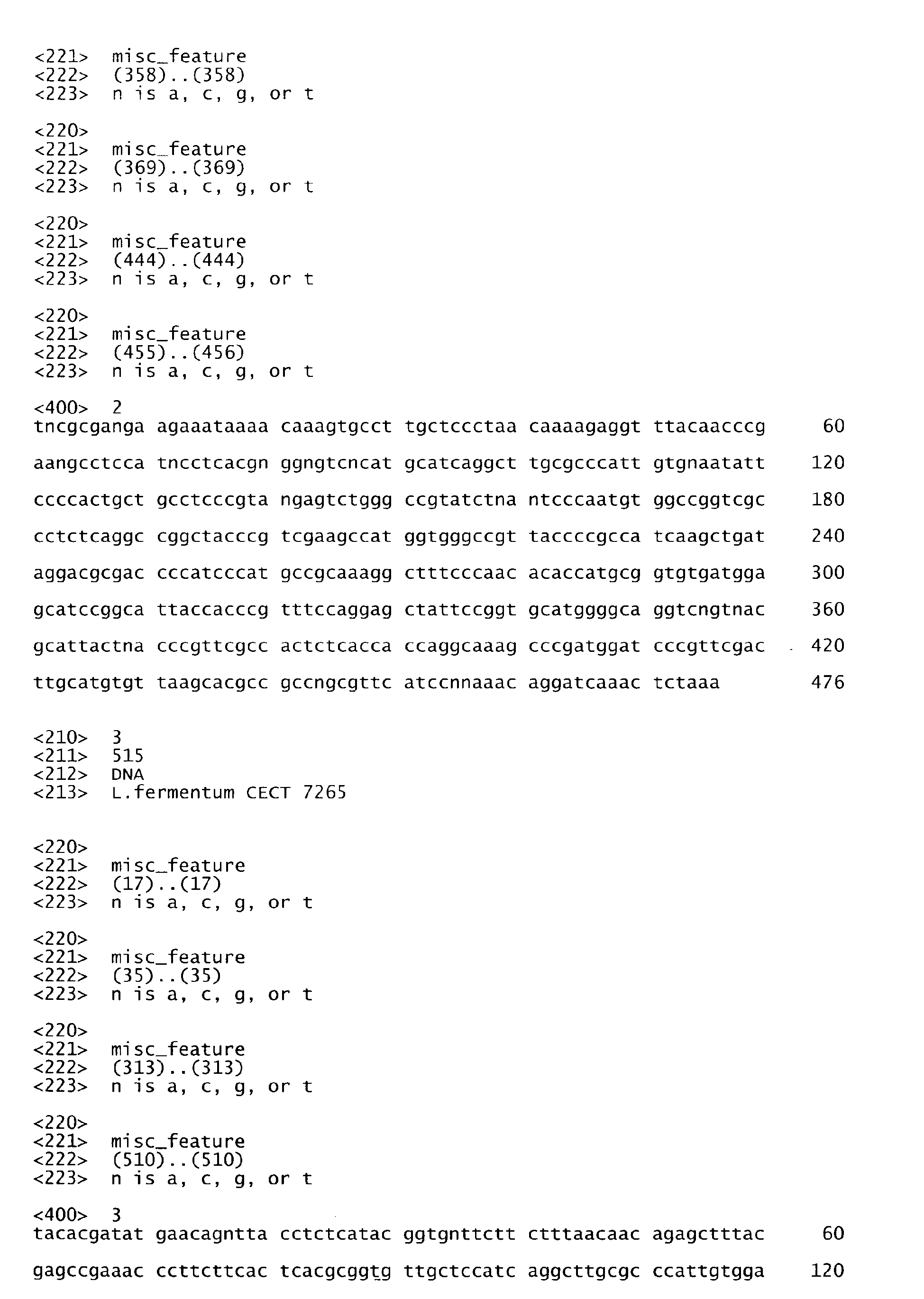

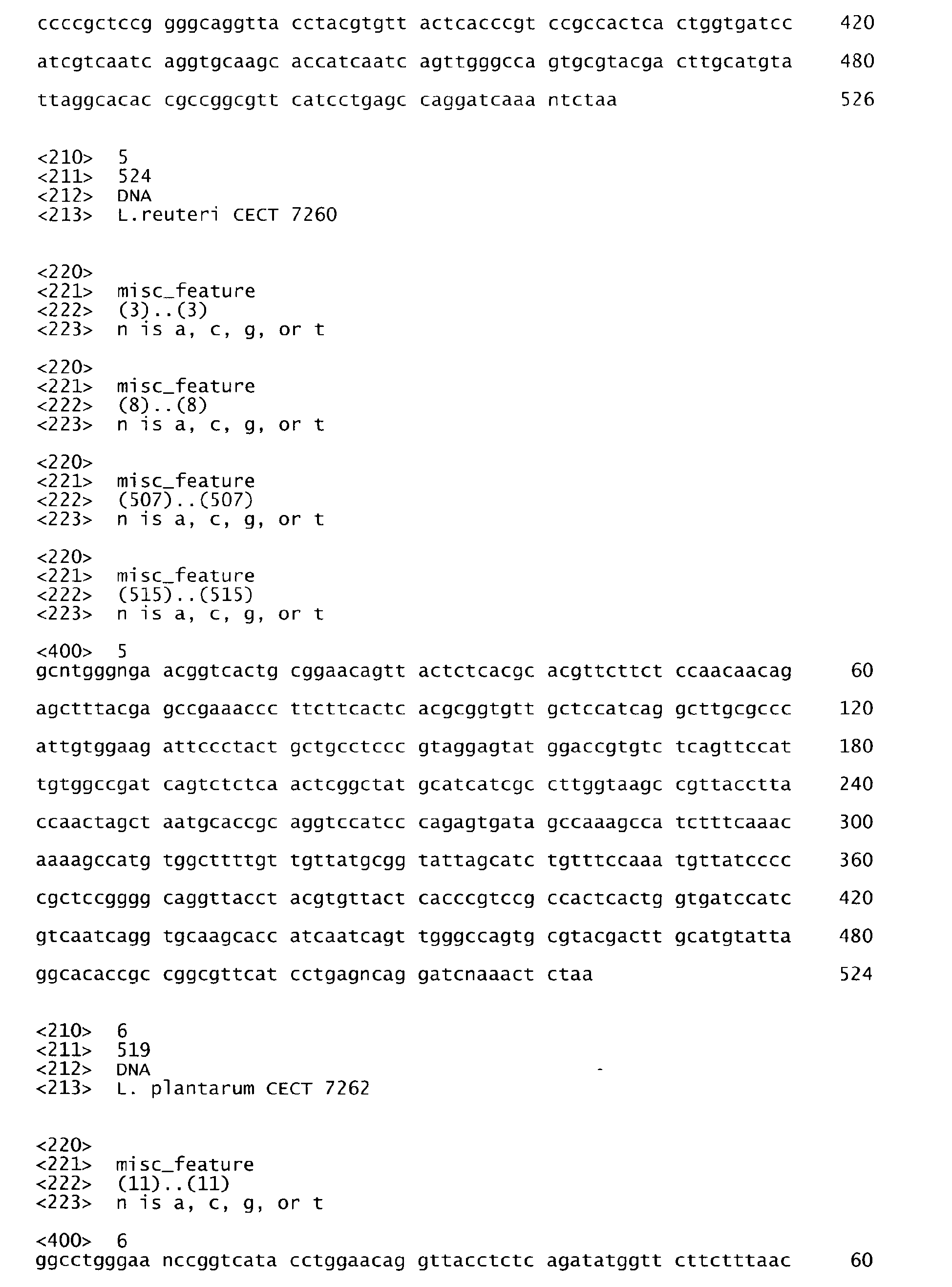

| TEST | 7263 | 7264 | 7260 | 7262 | 7265 | 7266 |
| Glycerol | 0 | 0 | 0 | 0 | 0 | 0 |
| Erythritol | 0 | 0 | 0 | 0 | 0 | 0 |
| D-Arabinose | 0 | 0 | 0 | 0 | 0 | 0 |
| L-Arabinose | 0 | 0 | 0 | 5 | 0 | 5 |
| Ribose | 5 | 0 | 0 | 5 | 5 | 5 |
| D-Xylose | 0 | 0 | 0 | 0 | 0 | 5 |
| L-Xylose | 0 | 0 | 0 | 0 | 0 | 0 |
| Adonitol | 0 | 0 | 0 | 0 | 0 | 0 |
| β Methyl-xyloside | 0 | 0 | 0 | 0 | 0 | 5 |
| Galactose | 5 | 5 | 5 | 5 | 5 | 5 |
| D-Glucose | 5 | 5 | 5 | 5 | 5 | 5 |
| D-Fructose | 5 | 5 | 0 | 5 | 5 | 0 |
| D-Mannose | 1 | 0 | 0 | 5 | 5 | 0 |
| L-Sorbose | 0 | 0 | 0 | 0 | 0 | 0 |
| Rhamnose | 0 | 0 | 0 | 0 | 0 | 0 |
| Dulcitol | 0 | 0 | 0 | 0 | 0 | 0 |
| Inositol | 0 | 0 | 0 | 0 | 0 | 0 |
| Mannitol | 4 | 0 | 0 | 5 | 5 | 0 |
| Sorbitol | 5 | 0 | 0 | 5 | 0 | 0 |
| α Methyl-D-mannoside | 0 | 0 | 0 | 0 | 0 | 0 |
| α Methyl-D-glucoside | 2 | 0 | 0 | 0 | 5 | 0 |
| N Acethyl glucosamine | 2 | 1 | 0 | 5 | 5 | 0 |
| Amygdaline | 0 | 1 | 0 | 5 | 0 | 0 |
| Arbutine | 0 | 0 | 0 | 5 | 0 | 0 |
| Esculine | 5 | 5 | 0 | 5 | 0 | 0 |
| Salicine | 1 | 0 | 0 | 5 | 0 | 0 |
| Cellobiose | 5 | 0 | 0 | 5 | 0 | 0 |
| Maltose | 5 | 5 | 5 | 5 | 5 | 5 |
| Lactose | 5 | 0 | 5 | 5 | 5 | 5 |
| Melibiose | 5 | 5 | 5 | 5 | 5 | 5 |
| Saccharose | 5 | 0 | 5 | 0 | 5 | 5 |
| Trehalose | 0 | 0 | 0 | 5 | 0 | 0 |
| Inuline | 0 | 0 | 0 | 0 | 0 | 0 |
| Melezitose | 0 | 0 | 0 | 0 | 0 | 0 |
| D-Raffinose | 5 | 0 | 5 | 5 | 5 | 5 |
| Amidon | 5 | 0 | 0 | 0 | 0 | 0 |
| Glycogene | 5 | 4 | 0 | 0 | 0 | 0 |
| Xylitol | 0 | 0 | 0 | 0 | 0 | 0 |
| β Gentiobiose | 0 | 2 | 0 | 5 | 0 | 0 |
| D-Turanose | 5 | 4 | 0 | 5 | 0 | 0 |
| D-Lyxose | 0 | 0 | 0 | 0 | 0 | 0 |
| D-Tagatose | 0 | 0 | 0 | 0 | 0 | 0 |
| D-Fucose | 0 | 0 | 0 | 0 | 0 | 0 |
| L-Fucose | 0 | 0 | 0 | 0 | 0 | 0 |
| D-Arabitol | 0 | 0 | 0 | 0 | 0 | 0 |
| L-Arabitol | 0 | 0 | 0 | 0 | 0 | 0 |
| Gluconate | 0 | 0 | 0 | 0 | 0 | 0 |
| 2 ceto-gluconate | 00 | 0 | 0 | 0 | 0 | 0 |
| 5 ceto-gluconate | 0 | 0 | 0 | 0 | 0 | 0 |
Claims (17)
- A process for the selection of probiotics comprising the steps of :(i) isolating lactic acid bacteria or bifidobacteria strains present in the fresh milk from a mammalian species by selection in lactic acid culture media,(ii) selecting those strains from step (i) that are capable of being transferred to the mammary gland after oral intake and/or colonise the mammary gland after its topic application,(iii) selecting those strains from step (ii) which are able to reduce the rates of survival and/or the rates of adhesion to epithelial cells of Staphylococcus aureus and(iv) selecting those strains from step (iii) that are capable of protecting animals from mastitis.
- A process according to claim 1 wherein the milk used in step (i) is selected from human, porcine, bovine, cat, ovine and canine milk.
- A probiotic strain obtainable by the process according to claims 1 or 2.
- A probiotic strain according to claim 3 characterised in that the strain is selected from the group of Bifidobacterium breve deposited in the CECT under Accession N° 7263, Bifidobacterium breve deposited in the CECT under Accession N° 7264, Lactobacillus reuteri deposited in the CECT under Accession N° 7260, Lactobacillus plantarum deposited in the CECT under Accession N° 7262, Lactobacillus fermentum in the CECT under Accession N° 7265 and Lactobacillus reuteri deposited in the CECT under Accession N° 7266.
- A supernatant of a culture of a strain or of a mixture of strains as defined in claims 3 or 4.
- A probiotic strain according to claims 3 or 4 or a mixture of strains according to claims 3 or 4 or a supernatant according to claim 5 for use as a medicament.
- A composition, a pharmaceutical product, a feed or a nutritional product comprising at least a probiotic strain according to claims 3 or 4 or a supernatant as defined in claim 5.
- A composition, pharmaceutical product, feed or nutritional product as defined in claim 7 which is in a frozen, lyophilized or dried form.
- A composition, pharmaceutical product, feed or nutritional product as defined in claims 7 or 8 wherein the probiotic strain or the mixture thereof is in a partially or totally inactivated form.
- Use of a probiotic strain according to claims 3 or 4 or a mixture thereof or a supernatant as defined in claim 5 for the manufacture of a medicament for the treatment and/or prophylaxis of a chronic or acute infection or infestation, or of an undesirable microbial colonization, wherein the infection, infestation or colonization is caused by parasites, bacteria, yeast, fungi or viruses, affecting any body surface or mucosa in a subject or animal in need thereof.
- Use according to claim 10 wherein the infection is mastitis and the probiotic strain has been selected in step (i) using milk from the same species that is intended to be treated.
- Use according to claim 10 wherein the infection is neonatal diarrhoea.
- Use of a probiotic strain according to claims 3 or 4 or a mixture thereof or a supernatant as defined in claim 5 for the manufacture of a medicament for the treatment and/or prophylaxis of hypersensitivity reactions to food and metabolic intolerance; of constipation and other gastro-intestinal disorders; of inflammatory or auto-immune disorders selected from the group of IBD, ulcerative colitis, arthritis, atherosclerosis, multiple sclerosis, psoriasis or sarcoidosis; and of tumour growth, metastasis and cancer in subject or animal in need thereof.
- Use of a probiotic strain according to claims 3 or 4 or a mixture thereof or a supernatant as defined in claim 5 for the manufacture of a medicament for the treatment and/or prophylaxis of allergic disorders and asthma in a subject or animal in need thereof.
- Use of a probiotic strain according to claims 3 or 4 or a mixture thereof or a supernatant as defined in claim 5 for the manufacture of a medicament for treatment and/or prophylaxis of temporally depressed immune levels in individuals or animals subjected to physiological and management-derived stress.
- Use according to claims 10 to 15 wherein the strain or composition is administered via oral, topic, nasal, enteral, ocular, urogenital, rectal or vaginal.
- Use according to claims 10 to 15 wherein the strain, composition, pharmaceutical product, feed or nutritional product is designed to be administered to lactating woman or animal for the therapeutic or prophylactic treatment of the foetus and/or their breastfed babies or pups.
Priority Applications (18)
| Application Number | Priority Date | Filing Date | Title |
|---|---|---|---|
| EP07380158A EP1997499A1 (en) | 2007-05-31 | 2007-05-31 | Mammalian milk microorganisms, compositions containing them and their use for the treatment of mastitis |
| US12/602,182 US8557560B2 (en) | 2007-05-31 | 2008-06-02 | Mammalian milk microorganisms, compositions containing them and their use for the treatment of mastitis |
| PT87603551T PT2162143E (en) | 2007-05-31 | 2008-06-02 | Mammalian milk microorganisms, compositions containing them and their use for the treatment of mastitis |
| MX2009013044A MX2009013044A (en) | 2007-05-31 | 2008-06-02 | Mammalian milk microorganisms, compositions containing them and their use for the treatment of mastitis. |
| EP08760355.1A EP2162143B1 (en) | 2007-05-31 | 2008-06-02 | Mammalian milk microorganisms, compositions containing them and their use for the treatment of mastitis |
| PCT/EP2008/056768 WO2008145756A1 (en) | 2007-05-31 | 2008-06-02 | Mammalian milk microorganisms, compositions containing them and their use for the treatment of mastitis |
| NZ581576A NZ581576A (en) | 2007-05-31 | 2008-06-02 | Probiotic selection for mastitis treatment |
| AU2008257455A AU2008257455B2 (en) | 2007-05-31 | 2008-06-02 | Mammalian milk microorganisms, compositions containing them and their use for the treatment of mastitis |
| RU2009149393/15A RU2446814C2 (en) | 2007-05-31 | 2008-06-02 | Mammal milk cells, compositions containing them, and using them for treating mastitis |
| ES08760355.1T ES2555159T3 (en) | 2007-05-31 | 2008-06-02 | Microorganisms of mammalian milk, compositions containing them and their use for the treatment of mastitis |
| JP2010509847A JP5710250B2 (en) | 2007-05-31 | 2008-06-02 | Mammalian milk microorganisms, compositions containing them and their use for the treatment of mastitis |
| HUE08760355A HUE025851T2 (en) | 2007-05-31 | 2008-06-02 | Mammalian milk microorganisms, compositions containing them and their use for the treatment of mastitis |
| BRPI0811973-2A BRPI0811973B1 (en) | 2007-05-31 | 2008-06-02 | PROCESS FOR SELECTING PROBIOTICS, PROBIOTIC STRAIN, SUPERNAENT, COMPOSITION, PHARMACEUTICAL PRODUCT, FOOD OR NUTRITIONAL PRODUCT AND USE OF A PROBIOTIC STRAIN |
| CA2689360A CA2689360C (en) | 2007-05-31 | 2008-06-02 | Mammalian milk microorganisms, compositions containing them and their use for the treatment of mastitis |
| PL08760355T PL2162143T3 (en) | 2007-05-31 | 2008-06-02 | Mammalian milk microorganisms, compositions containing them and their use for the treatment of mastitis |
| DK08760355.1T DK2162143T3 (en) | 2007-05-31 | 2008-06-02 | MAMMALS MILK-MICRO-FORMATIONS incorp-border THEM AND THEIR USE FOR THE TREATMENT OF MASTITIS |
| IL202386A IL202386A0 (en) | 2007-05-31 | 2009-11-26 | Mammalian milk microorganisms, compositions containing them and their use for the treatment of mastitis |
| CO09149368A CO6270334A2 (en) | 2007-05-31 | 2009-12-30 | MICROORGANISMS OF MILK OF MAMMALS, COMPOSITIONS THAT CONTAIN THEM AND THEIR USE FOR THE TREATMENT OF MASTITIS |
Applications Claiming Priority (1)
| Application Number | Priority Date | Filing Date | Title |
|---|---|---|---|
| EP07380158A EP1997499A1 (en) | 2007-05-31 | 2007-05-31 | Mammalian milk microorganisms, compositions containing them and their use for the treatment of mastitis |
Publications (1)
| Publication Number | Publication Date |
|---|---|
| EP1997499A1 true EP1997499A1 (en) | 2008-12-03 |
Family
ID=38657070
Family Applications (2)
| Application Number | Title | Priority Date | Filing Date |
|---|---|---|---|
| EP07380158A Withdrawn EP1997499A1 (en) | 2007-05-31 | 2007-05-31 | Mammalian milk microorganisms, compositions containing them and their use for the treatment of mastitis |
| EP08760355.1A Active EP2162143B1 (en) | 2007-05-31 | 2008-06-02 | Mammalian milk microorganisms, compositions containing them and their use for the treatment of mastitis |
Family Applications After (1)
| Application Number | Title | Priority Date | Filing Date |
|---|---|---|---|
| EP08760355.1A Active EP2162143B1 (en) | 2007-05-31 | 2008-06-02 | Mammalian milk microorganisms, compositions containing them and their use for the treatment of mastitis |
Country Status (16)
| Country | Link |
|---|---|
| US (1) | US8557560B2 (en) |
| EP (2) | EP1997499A1 (en) |
| JP (1) | JP5710250B2 (en) |
| AU (1) | AU2008257455B2 (en) |
| CA (1) | CA2689360C (en) |
| CO (1) | CO6270334A2 (en) |
| DK (1) | DK2162143T3 (en) |
| ES (1) | ES2555159T3 (en) |
| HU (1) | HUE025851T2 (en) |
| IL (1) | IL202386A0 (en) |
| MX (1) | MX2009013044A (en) |
| NZ (1) | NZ581576A (en) |
| PL (1) | PL2162143T3 (en) |
| PT (1) | PT2162143E (en) |
| RU (1) | RU2446814C2 (en) |
| WO (1) | WO2008145756A1 (en) |
Cited By (30)
| Publication number | Priority date | Publication date | Assignee | Title |
|---|---|---|---|---|
| CN104232545A (en) * | 2009-03-10 | 2014-12-24 | 海罗公司 | Solation, identification and characterisation of strains with probiotic activity, from faeces of infants fed exclusively with breast milk |
| EP2862576A1 (en) | 2013-10-16 | 2015-04-22 | Laboratorios Casen-Fleet, S.L.U. | Microorganisms and compositions comprising them for use in the treatment or prevention of mastitis |
| WO2016062771A1 (en) * | 2014-10-21 | 2016-04-28 | Aquilon Cyl Sociedad Limitada | Probiotic and prebiotic compositions |
| WO2017017662A1 (en) * | 2015-07-30 | 2017-02-02 | Univerzita Pavla Jozefa Šafárika V Košiciach | Microorganism strain lactobacillus plantarum ls/07 ccm 7766, method of its use and food product |
| US10322151B2 (en) | 2015-06-15 | 2019-06-18 | 4D Pharma Research Limited | Compositions comprising bacterial strains |
| US10357520B2 (en) | 2015-11-20 | 2019-07-23 | 4D Pharma Research Limited | Compositions comprising bacterial strains |
| US10391128B2 (en) | 2015-11-23 | 2019-08-27 | 4D Pharma Research Limited | Compositions comprising bacterial strains |
| US10391130B2 (en) | 2015-06-15 | 2019-08-27 | 4D Pharma Research Limited | Compositions comprising bacterial strains |
| US10456444B2 (en) | 2014-12-23 | 2019-10-29 | 4D Pharma Research Limited | Pirin polypeptide and immune modulation |
| US10471108B2 (en) | 2015-11-20 | 2019-11-12 | 4D Pharma Research Limited | Compositions comprising bacterial strains |
| US10485830B2 (en) | 2016-12-12 | 2019-11-26 | 4D Pharma Plc | Compositions comprising bacterial strains |
| US10493112B2 (en) | 2015-06-15 | 2019-12-03 | 4D Pharma Research Limited | Compositions comprising bacterial strains |
| US10500237B2 (en) | 2015-06-15 | 2019-12-10 | 4D Pharma Research Limited | Compositions comprising bacterial strains |
| US10583158B2 (en) | 2016-03-04 | 2020-03-10 | 4D Pharma Plc | Compositions comprising bacterial strains |
| US10610548B2 (en) | 2016-07-13 | 2020-04-07 | 4D Pharma Plc | Compositions comprising bacterial strains |
| US10736926B2 (en) | 2015-06-15 | 2020-08-11 | 4D Pharma Research Limited | Compositions comprising bacterial strains |
| US10744166B2 (en) | 2015-11-23 | 2020-08-18 | 4D Pharma Research Limited | Compositions comprising bacterial strains |
| US10851137B2 (en) | 2013-04-10 | 2020-12-01 | 4D Pharma Research Limited | Polypeptide and immune modulation |
| US10987387B2 (en) | 2017-05-24 | 2021-04-27 | 4D Pharma Research Limited | Compositions comprising bacterial strain |
| US11007233B2 (en) | 2017-06-14 | 2021-05-18 | 4D Pharma Research Limited | Compositions comprising a bacterial strain of the genus Megasphera and uses thereof |
| US11013773B2 (en) | 2011-07-14 | 2021-05-25 | 4D Pharma Research Limited | Lactic acid bacterial strains |
| WO2021105353A1 (en) * | 2019-11-29 | 2021-06-03 | Société des Produits Nestlé S.A. | Compositions and methods with a probiotic and a nutrient and/or mineral for the prevention or treatment of mastitis |
| US11123378B2 (en) | 2017-05-22 | 2021-09-21 | 4D Pharma Research Limited | Compositions comprising bacterial strains |
| US11123379B2 (en) | 2017-06-14 | 2021-09-21 | 4D Pharma Research Limited | Compositions comprising bacterial strains |
| US11224620B2 (en) | 2016-07-13 | 2022-01-18 | 4D Pharma Plc | Compositions comprising bacterial strains |
| US11266698B2 (en) | 2011-10-07 | 2022-03-08 | 4D Pharma Research Limited | Bacterium for use as a probiotic for nutritional and medical applications |
| EP3996510A4 (en) * | 2019-07-08 | 2023-08-09 | BioPlx, Inc. | Live biotherapeutic compositions and methods |
| US11723933B2 (en) | 2014-12-23 | 2023-08-15 | Cj Bioscience, Inc. | Composition of bacteroides thetaiotaomicron for immune modulation |
| CN117338823A (en) * | 2023-12-06 | 2024-01-05 | 山东百德生物科技有限公司 | An animal enzyme fermentation liquid and its preparation method and application |
| US12048720B2 (en) | 2017-06-14 | 2024-07-30 | Cj Bioscience, Inc. | Compositions comprising bacterial strains |
Families Citing this family (26)
| Publication number | Priority date | Publication date | Assignee | Title |
|---|---|---|---|---|
| RU2476591C1 (en) * | 2011-08-19 | 2013-02-27 | Федеральное государственное образовательное учреждение высшего профессионального образования "Горский государственный аграрный университет" | Strain of enterococcus hirae used for production of fermented milk products |
| RU2477313C1 (en) * | 2011-08-25 | 2013-03-10 | Федеральное государственное бюджетное образовательное учреждение высшего профессионального образования "Горский государственный аграрный университет" | STRAIN Enterococcus hirae, USED TO MAKE CULTURED MILK FOODS |
| RU2476592C1 (en) * | 2011-09-02 | 2013-02-27 | Федеральное государственное бюджетное образовательное учреждение высшего профессионального образования "Горский государственный аграрный университет" | Strain of enterococcus hirae used for production of fermented milk products |
| EP2830599B1 (en) | 2012-03-29 | 2018-08-15 | Therabiome, Llc | Gastrointestinal site-specific oral vaccination formulations active on the ileum and appendix |
| US9907755B2 (en) | 2013-03-14 | 2018-03-06 | Therabiome, Llc | Targeted gastrointestinal tract delivery of probiotic organisms and/or therapeutic agents |
| US20160066582A1 (en) | 2013-04-23 | 2016-03-10 | Terragen Holdings Limited | Bacterial strains having antimicrobial activity and biocontrol compositions comprising the same |
| DE102013105666A1 (en) * | 2013-06-03 | 2014-12-04 | Hochschule Hannover | Probiotic strains, compositions containing probiotic strains and pharmaceutical agents |
| EP2818056A1 (en) | 2013-06-25 | 2014-12-31 | Biosearch S.A. | Probiotic bacteria comprising metals, metal nanoparticles and uses thereof |
| US20150057574A1 (en) | 2013-08-23 | 2015-02-26 | Elwha Llc | Selecting and Delivering Treatment Agents based on a Microbe Profile |
| US9456777B2 (en) | 2013-08-23 | 2016-10-04 | Elwha Llc | Systems, methods, and devices for assessing microbiota of skin |
| US9811641B2 (en) | 2013-08-23 | 2017-11-07 | Elwha Llc | Modifying a cosmetic product based on a microbe profile |
| US10152529B2 (en) | 2013-08-23 | 2018-12-11 | Elwha Llc | Systems and methods for generating a treatment map |
| US10010704B2 (en) | 2013-08-23 | 2018-07-03 | Elwha Llc | Systems, methods, and devices for delivering treatment to a skin surface |
| US9390312B2 (en) | 2013-08-23 | 2016-07-12 | Elwha Llc | Systems, methods, and devices for assessing microbiota of skin |
| US9805171B2 (en) | 2013-08-23 | 2017-10-31 | Elwha Llc | Modifying a cosmetic product based on a microbe profile |
| US9557331B2 (en) | 2013-08-23 | 2017-01-31 | Elwha Llc | Systems, methods, and devices for assessing microbiota of skin |
| WO2015093937A1 (en) * | 2013-12-19 | 2015-06-25 | N.V. Nutricia | Lactobacillus salivarius for the treatment of mastitis |
| HK1248756A1 (en) * | 2015-01-16 | 2018-10-19 | Biogaia Ab | Lactic acid bacteria and their use for the treatment of mastitis |
| EP3250217A1 (en) * | 2015-01-30 | 2017-12-06 | Technische Universität München | Composition for use in preventing and/or treating diarrhea in animals |
| EP3277255A1 (en) | 2015-03-31 | 2018-02-07 | GOJO Industries, Inc. | Synergistic compositions and methods for mitigating skin irritation and enhancing skin barrier function |
| CN108495643A (en) * | 2015-12-24 | 2018-09-04 | 天天乳品有限公司 | The composition and application method of novel fermentation lactobacillus strain |
| CN110475853A (en) * | 2017-01-13 | 2019-11-19 | 益福生医股份有限公司 | Novel lactic acid bacteria and its application |
| US11730171B2 (en) | 2018-03-23 | 2023-08-22 | Morinaga Milk Industry Co., Ltd. | Composition for enhancing breast milk component |
| US20220184153A1 (en) * | 2019-03-25 | 2022-06-16 | The State of Israel, Ministry of Agriculture&Rural Development, Agricltural Research Oganization(ARO | Method of treating bovine mastitis |
| CL2019003739A1 (en) * | 2019-12-18 | 2020-06-19 | Univ Concepcion | Probiotic strains of lactobacillus sp. and pediococcus sp. and its use in the development of a probiotic formulation for the prevention of diarrhea caused by bacterial pathogens that affect dogs and cats. |
| JP2022150100A (en) * | 2021-03-26 | 2022-10-07 | 清竺 遠藤 | Composition for decreasing milk's somatic cell count or increasing amount of milk |
Citations (5)
| Publication number | Priority date | Publication date | Assignee | Title |
|---|---|---|---|---|
| EP0577904A1 (en) * | 1992-07-06 | 1994-01-12 | Societe Des Produits Nestle S.A. | Lactic bacteria |
| WO1997046104A1 (en) * | 1996-06-05 | 1997-12-11 | Biogaia Biologics Ab | Treatment of diarrhea |
| WO2004003235A2 (en) * | 2002-06-28 | 2004-01-08 | Puleva Biotech, S.A. | Probiotic strains, a process for the selection of them, compositions thereof, and their use |
| WO2005034970A1 (en) * | 2003-10-17 | 2005-04-21 | Teagasc The Agriculture And Food Development Authority | Use of probiotic bacteria in the treatment of infection |
| WO2005117532A2 (en) * | 2004-06-03 | 2005-12-15 | Biogaia Ab | Method for improved breast milk feeding to reduce the risk of allergy |
Family Cites Families (2)
| Publication number | Priority date | Publication date | Assignee | Title |
|---|---|---|---|---|
| US4591499A (en) | 1984-01-20 | 1986-05-27 | J. B. Lima, Inc. | Method for treatment and prevention of mastitis |
| WO2005085287A1 (en) * | 2004-03-03 | 2005-09-15 | En-N-Tech, Inc. | Treatments for contaminant reduction in lactoferrin preparations and lactoferrin-containing compositions |
-
2007
- 2007-05-31 EP EP07380158A patent/EP1997499A1/en not_active Withdrawn
-
2008
- 2008-06-02 JP JP2010509847A patent/JP5710250B2/en active Active
- 2008-06-02 EP EP08760355.1A patent/EP2162143B1/en active Active
- 2008-06-02 ES ES08760355.1T patent/ES2555159T3/en active Active
- 2008-06-02 NZ NZ581576A patent/NZ581576A/en unknown
- 2008-06-02 PT PT87603551T patent/PT2162143E/en unknown
- 2008-06-02 MX MX2009013044A patent/MX2009013044A/en active IP Right Grant
- 2008-06-02 RU RU2009149393/15A patent/RU2446814C2/en active
- 2008-06-02 DK DK08760355.1T patent/DK2162143T3/en active
- 2008-06-02 CA CA2689360A patent/CA2689360C/en active Active
- 2008-06-02 HU HUE08760355A patent/HUE025851T2/en unknown
- 2008-06-02 WO PCT/EP2008/056768 patent/WO2008145756A1/en not_active Ceased
- 2008-06-02 US US12/602,182 patent/US8557560B2/en active Active
- 2008-06-02 PL PL08760355T patent/PL2162143T3/en unknown
- 2008-06-02 AU AU2008257455A patent/AU2008257455B2/en active Active
-
2009
- 2009-11-26 IL IL202386A patent/IL202386A0/en unknown
- 2009-12-30 CO CO09149368A patent/CO6270334A2/en not_active Application Discontinuation
Patent Citations (5)
| Publication number | Priority date | Publication date | Assignee | Title |
|---|---|---|---|---|
| EP0577904A1 (en) * | 1992-07-06 | 1994-01-12 | Societe Des Produits Nestle S.A. | Lactic bacteria |
| WO1997046104A1 (en) * | 1996-06-05 | 1997-12-11 | Biogaia Biologics Ab | Treatment of diarrhea |
| WO2004003235A2 (en) * | 2002-06-28 | 2004-01-08 | Puleva Biotech, S.A. | Probiotic strains, a process for the selection of them, compositions thereof, and their use |
| WO2005034970A1 (en) * | 2003-10-17 | 2005-04-21 | Teagasc The Agriculture And Food Development Authority | Use of probiotic bacteria in the treatment of infection |
| WO2005117532A2 (en) * | 2004-06-03 | 2005-12-15 | Biogaia Ab | Method for improved breast milk feeding to reduce the risk of allergy |
Non-Patent Citations (4)
| Title |
|---|
| HEIKKILA M P ET AL: "Inhibition of Staphylococcus aureus by the commensal bacteria of human milk", JOURNAL OF APPLIED MICROBIOLOGY, OXFORD, GB, vol. 95, no. 3, 2003, pages 471 - 478, XP002312462, ISSN: 1364-5072 * |
| JACOBSEN C N ET AL: "Screening of probiotic activities of forty-seven strains of Lactobacillus spp. by in vitro techniques and evaluation of the colonization ability of five selected strains in humans", APPLIED AND ENVIRONMENTAL MICROBIOLOGY, WASHINGTON,DC, US, vol. 65, no. 11, November 1999 (1999-11-01), pages 4949 - 4956, XP002232455, ISSN: 0099-2240 * |
| KAUR I P ET AL: "Probiotics: Potential pharmaceutical applications", EUROPEAN JOURNAL OF PHARMACEUTICAL SCIENCES, ELSEVIER, AMSTERDAM, NL, vol. 15, no. 1, February 2002 (2002-02-01), pages 1 - 9, XP002232457, ISSN: 0928-0987 * |
| OLIVARES M ET AL: "Antimicrobial potential of four Lactobacillus strains isolated from breast milk", JOURNAL OF APPLIED MICROBIOLOGY, vol. 101, no. 1, July 2006 (2006-07-01), pages 72 - 79, XP002458357, ISSN: 1364-5072 * |
Cited By (55)
| Publication number | Priority date | Publication date | Assignee | Title |
|---|---|---|---|---|
| EP2848682A1 (en) * | 2009-03-10 | 2015-03-18 | Hero AG | Isolation, identification and characterization of strains with probiotic activity from the faeces of babies fed exclusively with breast milk |
| CN104232545A (en) * | 2009-03-10 | 2014-12-24 | 海罗公司 | Solation, identification and characterisation of strains with probiotic activity, from faeces of infants fed exclusively with breast milk |
| US11013773B2 (en) | 2011-07-14 | 2021-05-25 | 4D Pharma Research Limited | Lactic acid bacterial strains |
| US11266698B2 (en) | 2011-10-07 | 2022-03-08 | 4D Pharma Research Limited | Bacterium for use as a probiotic for nutritional and medical applications |
| US10851137B2 (en) | 2013-04-10 | 2020-12-01 | 4D Pharma Research Limited | Polypeptide and immune modulation |
| US11414463B2 (en) | 2013-04-10 | 2022-08-16 | 4D Pharma Research Limited | Polypeptide and immune modulation |
| EP2862576A1 (en) | 2013-10-16 | 2015-04-22 | Laboratorios Casen-Fleet, S.L.U. | Microorganisms and compositions comprising them for use in the treatment or prevention of mastitis |
| US10179153B2 (en) | 2014-10-21 | 2019-01-15 | Universidad De Leon | Probiotic and prebiotic compositions |
| CN107073049B (en) * | 2014-10-21 | 2021-12-14 | 阿曲龙Cyl有限公司 | Probiotic and Prebiotic Compositions |
| CN107073049A (en) * | 2014-10-21 | 2017-08-18 | 阿曲龙Cyl有限公司 | Probiotic and Prebiotic Compositions |
| WO2016062771A1 (en) * | 2014-10-21 | 2016-04-28 | Aquilon Cyl Sociedad Limitada | Probiotic and prebiotic compositions |
| US11723933B2 (en) | 2014-12-23 | 2023-08-15 | Cj Bioscience, Inc. | Composition of bacteroides thetaiotaomicron for immune modulation |
| US10973872B2 (en) | 2014-12-23 | 2021-04-13 | 4D Pharma Research Limited | Pirin polypeptide and immune modulation |
| US10456444B2 (en) | 2014-12-23 | 2019-10-29 | 4D Pharma Research Limited | Pirin polypeptide and immune modulation |
| US10493112B2 (en) | 2015-06-15 | 2019-12-03 | 4D Pharma Research Limited | Compositions comprising bacterial strains |
| US10500237B2 (en) | 2015-06-15 | 2019-12-10 | 4D Pharma Research Limited | Compositions comprising bacterial strains |
| US11389493B2 (en) | 2015-06-15 | 2022-07-19 | 4D Pharma Research Limited | Compositions comprising bacterial strains |
| US11331352B2 (en) | 2015-06-15 | 2022-05-17 | 4D Pharma Research Limited | Compositions comprising bacterial strains |
| US11273185B2 (en) | 2015-06-15 | 2022-03-15 | 4D Pharma Research Limited | Compositions comprising bacterial strains |
| US10391130B2 (en) | 2015-06-15 | 2019-08-27 | 4D Pharma Research Limited | Compositions comprising bacterial strains |
| US11433106B2 (en) | 2015-06-15 | 2022-09-06 | 4D Pharma Research Limited | Compositions comprising bacterial strains |
| US10736926B2 (en) | 2015-06-15 | 2020-08-11 | 4D Pharma Research Limited | Compositions comprising bacterial strains |
| US11040075B2 (en) | 2015-06-15 | 2021-06-22 | 4D Pharma Research Limited | Compositions comprising bacterial strains |
| US10744167B2 (en) | 2015-06-15 | 2020-08-18 | 4D Pharma Research Limited | Compositions comprising bacterial strains |
| US10780134B2 (en) | 2015-06-15 | 2020-09-22 | 4D Pharma Research Limited | Compositions comprising bacterial strains |
| US10322151B2 (en) | 2015-06-15 | 2019-06-18 | 4D Pharma Research Limited | Compositions comprising bacterial strains |
| US10864236B2 (en) | 2015-06-15 | 2020-12-15 | 4D Pharma Research Limited | Compositions comprising bacterial strains |
| WO2017017662A1 (en) * | 2015-07-30 | 2017-02-02 | Univerzita Pavla Jozefa Šafárika V Košiciach | Microorganism strain lactobacillus plantarum ls/07 ccm 7766, method of its use and food product |
| US10471108B2 (en) | 2015-11-20 | 2019-11-12 | 4D Pharma Research Limited | Compositions comprising bacterial strains |
| US10357520B2 (en) | 2015-11-20 | 2019-07-23 | 4D Pharma Research Limited | Compositions comprising bacterial strains |
| US10610550B2 (en) | 2015-11-20 | 2020-04-07 | 4D Pharma Research Limited | Compositions comprising bacterial strains |
| US11058732B2 (en) | 2015-11-20 | 2021-07-13 | 4D Pharma Research Limited | Compositions comprising bacterial strains |
| US10744166B2 (en) | 2015-11-23 | 2020-08-18 | 4D Pharma Research Limited | Compositions comprising bacterial strains |
| US10391128B2 (en) | 2015-11-23 | 2019-08-27 | 4D Pharma Research Limited | Compositions comprising bacterial strains |
| US10583158B2 (en) | 2016-03-04 | 2020-03-10 | 4D Pharma Plc | Compositions comprising bacterial strains |
| US10610549B2 (en) | 2016-07-13 | 2020-04-07 | 4D Pharma Plc | Composition comprising bacterial strains |
| US10960031B2 (en) | 2016-07-13 | 2021-03-30 | 4D Pharma Plc | Compositions comprising bacterial strains |
| US11224620B2 (en) | 2016-07-13 | 2022-01-18 | 4D Pharma Plc | Compositions comprising bacterial strains |
| US10967010B2 (en) | 2016-07-13 | 2021-04-06 | 4D Pharma Plc | Compositions comprising bacterial strains |
| US10610548B2 (en) | 2016-07-13 | 2020-04-07 | 4D Pharma Plc | Compositions comprising bacterial strains |
| US10543238B2 (en) | 2016-12-12 | 2020-01-28 | 4D Pharma Plc | Compositions comprising bacterial strains |
| US10485830B2 (en) | 2016-12-12 | 2019-11-26 | 4D Pharma Plc | Compositions comprising bacterial strains |
| US10898526B2 (en) | 2016-12-12 | 2021-01-26 | 4D Pharma Plc | Compositions comprising bacterial strains |
| US11376284B2 (en) | 2017-05-22 | 2022-07-05 | 4D Pharma Research Limited | Compositions comprising bacterial strains |
| US11382936B2 (en) | 2017-05-22 | 2022-07-12 | 4D Pharma Research Limited | Compositions comprising bacterial strains |
| US11123378B2 (en) | 2017-05-22 | 2021-09-21 | 4D Pharma Research Limited | Compositions comprising bacterial strains |
| US10987387B2 (en) | 2017-05-24 | 2021-04-27 | 4D Pharma Research Limited | Compositions comprising bacterial strain |
| US11007233B2 (en) | 2017-06-14 | 2021-05-18 | 4D Pharma Research Limited | Compositions comprising a bacterial strain of the genus Megasphera and uses thereof |
| US11123379B2 (en) | 2017-06-14 | 2021-09-21 | 4D Pharma Research Limited | Compositions comprising bacterial strains |
| US11660319B2 (en) | 2017-06-14 | 2023-05-30 | 4D Pharma Research Limited | Compositions comprising bacterial strains |
| US11779613B2 (en) | 2017-06-14 | 2023-10-10 | Cj Bioscience, Inc. | Compositions comprising a bacterial strain of the genus Megasphera and uses thereof |
| US12048720B2 (en) | 2017-06-14 | 2024-07-30 | Cj Bioscience, Inc. | Compositions comprising bacterial strains |
| EP3996510A4 (en) * | 2019-07-08 | 2023-08-09 | BioPlx, Inc. | Live biotherapeutic compositions and methods |
| WO2021105353A1 (en) * | 2019-11-29 | 2021-06-03 | Société des Produits Nestlé S.A. | Compositions and methods with a probiotic and a nutrient and/or mineral for the prevention or treatment of mastitis |
| CN117338823A (en) * | 2023-12-06 | 2024-01-05 | 山东百德生物科技有限公司 | An animal enzyme fermentation liquid and its preparation method and application |
Also Published As
| Publication number | Publication date |
|---|---|
| AU2008257455A1 (en) | 2008-12-04 |
| ES2555159T3 (en) | 2015-12-29 |
| HUE025851T2 (en) | 2016-04-28 |
| IL202386A0 (en) | 2010-06-30 |
| RU2446814C2 (en) | 2012-04-10 |
| PT2162143E (en) | 2016-01-07 |
| WO2008145756A1 (en) | 2008-12-04 |
| JP2010528093A (en) | 2010-08-19 |
| EP2162143A1 (en) | 2010-03-17 |
| NZ581576A (en) | 2012-01-12 |
| MX2009013044A (en) | 2010-04-12 |
| CA2689360A1 (en) | 2008-12-04 |
| US8557560B2 (en) | 2013-10-15 |
| AU2008257455B2 (en) | 2014-05-01 |
| EP2162143B1 (en) | 2015-09-09 |
| RU2009149393A (en) | 2011-07-10 |
| US20100266550A1 (en) | 2010-10-21 |
| PL2162143T3 (en) | 2016-03-31 |
| DK2162143T3 (en) | 2015-12-14 |
| BRPI0811973A2 (en) | 2014-10-21 |
| CO6270334A2 (en) | 2011-04-20 |
| JP5710250B2 (en) | 2015-04-30 |
| CA2689360C (en) | 2017-03-14 |
Similar Documents
| Publication | Publication Date | Title |
|---|---|---|
| CA2689360C (en) | Mammalian milk microorganisms, compositions containing them and their use for the treatment of mastitis | |
| US11759486B2 (en) | Lactobacillus plantarum and composition comprising same | |
| US11760970B2 (en) | Lactobacillus plantarum and composition comprising the same | |
| JP4176715B2 (en) | Probiotic strains, selection methods thereof, compositions thereof, and uses thereof | |
| EP2455450B1 (en) | Novel lactobacillus plantarum and composition containing same | |
| JP6849972B2 (en) | Infection protection for babies | |
| EP1997880A1 (en) | Breast milk bifidobacteria, compositions thereof, their use and a novel culture media to obtain them | |
| BRPI0811973B1 (en) | PROCESS FOR SELECTING PROBIOTICS, PROBIOTIC STRAIN, SUPERNAENT, COMPOSITION, PHARMACEUTICAL PRODUCT, FOOD OR NUTRITIONAL PRODUCT AND USE OF A PROBIOTIC STRAIN | |
| HK1171474B (en) | Novel lactobacillus plantarum and composition comprising same |
Legal Events
| Date | Code | Title | Description |
|---|---|---|---|
| PUAI | Public reference made under article 153(3) epc to a published international application that has entered the european phase |
Free format text: ORIGINAL CODE: 0009012 |
|
| AK | Designated contracting states |
Kind code of ref document: A1 Designated state(s): AT BE BG CH CY CZ DE DK EE ES FI FR GB GR HU IE IS IT LI LT LU LV MC MT NL PL PT RO SE SI SK TR |
|
| AX | Request for extension of the european patent |
Extension state: AL BA HR MK RS |
|
| AKX | Designation fees paid | ||
| REG | Reference to a national code |
Ref country code: DE Ref legal event code: 8566 |
|
| STAA | Information on the status of an ep patent application or granted ep patent |
Free format text: STATUS: THE APPLICATION IS DEEMED TO BE WITHDRAWN |
|
| 18D | Application deemed to be withdrawn |
Effective date: 20090604 |