EP1990335A1 - 17 beta hsd type 5 inhibitor - Google Patents
17 beta hsd type 5 inhibitor Download PDFInfo
- Publication number
- EP1990335A1 EP1990335A1 EP07737642A EP07737642A EP1990335A1 EP 1990335 A1 EP1990335 A1 EP 1990335A1 EP 07737642 A EP07737642 A EP 07737642A EP 07737642 A EP07737642 A EP 07737642A EP 1990335 A1 EP1990335 A1 EP 1990335A1
- Authority
- EP
- European Patent Office
- Prior art keywords
- lower alkyl
- halogen
- pharmaceutically acceptable
- substituted
- acceptable salt
- Prior art date
- Legal status (The legal status is an assumption and is not a legal conclusion. Google has not performed a legal analysis and makes no representation as to the accuracy of the status listed.)
- Withdrawn
Links
- 0 CC(*)CC*1C(*S(N([C@@]2C=C/C=[N+](\C)/[O-])C=C[C@]2C=CCO)(=O)=O)CCCCCCC1 Chemical compound CC(*)CC*1C(*S(N([C@@]2C=C/C=[N+](\C)/[O-])C=C[C@]2C=CCO)(=O)=O)CCCCCCC1 0.000 description 4
- KXFQCWGZKPVJGB-FRYQIGRPSA-O CC(/C1=N/S)=CC=CC1=[NH2+] Chemical compound CC(/C1=N/S)=CC=CC1=[NH2+] KXFQCWGZKPVJGB-FRYQIGRPSA-O 0.000 description 1
- HFPZCAJZSCWRBC-UHFFFAOYSA-N CC(C)c1ccc(C)cc1 Chemical compound CC(C)c1ccc(C)cc1 HFPZCAJZSCWRBC-UHFFFAOYSA-N 0.000 description 1
- SHWOXJYOILJMHN-UHFFFAOYSA-N CC(C1F)C=C(C)C=C1F Chemical compound CC(C1F)C=C(C)C=C1F SHWOXJYOILJMHN-UHFFFAOYSA-N 0.000 description 1
- OPFCJNULWJAZOP-UHFFFAOYSA-N CCCc(cccc1c(C(O)=O)c2)c1[n]2S(c1ccccc1)(=O)=O Chemical compound CCCc(cccc1c(C(O)=O)c2)c1[n]2S(c1ccccc1)(=O)=O OPFCJNULWJAZOP-UHFFFAOYSA-N 0.000 description 1
- IHHXYTIKYUHTQU-UHFFFAOYSA-N CCc1ccc(C(F)(F)F)cc1 Chemical compound CCc1ccc(C(F)(F)F)cc1 IHHXYTIKYUHTQU-UHFFFAOYSA-N 0.000 description 1
- JYTYSQJPOHIDHZ-UHFFFAOYSA-N COc1c(c(C(O)=O)c[n]2S(c3ccccc3)(=O)=O)c2ccc1 Chemical compound COc1c(c(C(O)=O)c[n]2S(c3ccccc3)(=O)=O)c2ccc1 JYTYSQJPOHIDHZ-UHFFFAOYSA-N 0.000 description 1
- ZIWINGKNYMZDFF-UHFFFAOYSA-O CS(c(cc1)ccc1S([n]1c2ccccc2c(C(O)=O)c1)(=O)=[OH+])(=O)=O Chemical compound CS(c(cc1)ccc1S([n]1c2ccccc2c(C(O)=O)c1)(=O)=[OH+])(=O)=O ZIWINGKNYMZDFF-UHFFFAOYSA-O 0.000 description 1
- MZLSNIREOQCDED-UHFFFAOYSA-N Cc(c(F)ccc1)c1F Chemical compound Cc(c(F)ccc1)c1F MZLSNIREOQCDED-UHFFFAOYSA-N 0.000 description 1
- FRLVKAJKOYFHKQ-UHFFFAOYSA-N Cc(c1ccccc11)ccc1[N+]([O-])=O Chemical compound Cc(c1ccccc11)ccc1[N+]([O-])=O FRLVKAJKOYFHKQ-UHFFFAOYSA-N 0.000 description 1
- WYUIWKFIFOJVKW-UHFFFAOYSA-N Cc(cc1)cc(Cl)c1Cl Chemical compound Cc(cc1)cc(Cl)c1Cl WYUIWKFIFOJVKW-UHFFFAOYSA-N 0.000 description 1
- JUXFXYQUXNXVAA-UHFFFAOYSA-N Cc(cc1)ccc1OC(F)(F)F Chemical compound Cc(cc1)ccc1OC(F)(F)F JUXFXYQUXNXVAA-UHFFFAOYSA-N 0.000 description 1
- IMYNPWUFTCRYQY-UHFFFAOYSA-N Cc(cc1)ccc1S([n]1c2ccccc2c(C(O)=O)c1)(=O)=O Chemical compound Cc(cc1)ccc1S([n]1c2ccccc2c(C(O)=O)c1)(=O)=O IMYNPWUFTCRYQY-UHFFFAOYSA-N 0.000 description 1
- VFERJFHPHSUIHY-UHFFFAOYSA-N Cc(ccc(C(F)(F)F)c1)c1[N+]([O-])=O Chemical compound Cc(ccc(C(F)(F)F)c1)c1[N+]([O-])=O VFERJFHPHSUIHY-UHFFFAOYSA-N 0.000 description 1
- UECIYDCFUXGAIX-ATELFFGISA-N Cc(ccc(F)c1)c1/C(/C(O)=O)=C\CS(/C=C/c1ccccc1)(=O)=O Chemical compound Cc(ccc(F)c1)c1/C(/C(O)=O)=C\CS(/C=C/c1ccccc1)(=O)=O UECIYDCFUXGAIX-ATELFFGISA-N 0.000 description 1
- GNYJFZNIMOMCCF-UHFFFAOYSA-N Cc(cccc1)c1-c(cc1)ccc1OC Chemical compound Cc(cccc1)c1-c(cc1)ccc1OC GNYJFZNIMOMCCF-UHFFFAOYSA-N 0.000 description 1
- LULFWAWCOILAGA-UHFFFAOYSA-O Cc1[nH+]nc(-c2cc(C)ccc2)[o]1 Chemical compound Cc1[nH+]nc(-c2cc(C)ccc2)[o]1 LULFWAWCOILAGA-UHFFFAOYSA-O 0.000 description 1
- NVLHGZIXTRYOKT-UHFFFAOYSA-N Cc1cccc(Cl)c1C Chemical compound Cc1cccc(Cl)c1C NVLHGZIXTRYOKT-UHFFFAOYSA-N 0.000 description 1
- APVQRVSBMIDSFS-UHFFFAOYSA-N Cc1cccc(Oc(cc2)ccc2F)c1 Chemical compound Cc1cccc(Oc(cc2)ccc2F)c1 APVQRVSBMIDSFS-UHFFFAOYSA-N 0.000 description 1
- WPWCCTZDSJTZRX-UHFFFAOYSA-N Cc1cccc(Oc(cccc2)c2OC)c1 Chemical compound Cc1cccc(Oc(cccc2)c2OC)c1 WPWCCTZDSJTZRX-UHFFFAOYSA-N 0.000 description 1
- MUTKBKUXNYJYHW-UHFFFAOYSA-N Cc1ccccc1Oc(cc1)ccc1F Chemical compound Cc1ccccc1Oc(cc1)ccc1F MUTKBKUXNYJYHW-UHFFFAOYSA-N 0.000 description 1
- LFKPVLOZTMRKKQ-ZHACJKMWSA-N OC(/C=C/c1cc2ccccc2[n]1S(c1ccccc1)(=O)=O)=O Chemical compound OC(/C=C/c1cc2ccccc2[n]1S(c1ccccc1)(=O)=O)=O LFKPVLOZTMRKKQ-ZHACJKMWSA-N 0.000 description 1
- NDXKGDDPLSNOSB-UHFFFAOYSA-N OC(c(c1cc(F)ccc11)c[n]1S(c(cc1)ccc1Br)(=O)=O)=O Chemical compound OC(c(c1cc(F)ccc11)c[n]1S(c(cc1)ccc1Br)(=O)=O)=O NDXKGDDPLSNOSB-UHFFFAOYSA-N 0.000 description 1
- NQDIEGQHWJYNEV-UHFFFAOYSA-N OC(c(c1ccccc11)c[n]1S(c(cc(cc1)Cl)c1Cl)(=O)=O)=O Chemical compound OC(c(c1ccccc11)c[n]1S(c(cc(cc1)Cl)c1Cl)(=O)=O)=O NQDIEGQHWJYNEV-UHFFFAOYSA-N 0.000 description 1
Classifications
-
- C—CHEMISTRY; METALLURGY
- C07—ORGANIC CHEMISTRY
- C07D—HETEROCYCLIC COMPOUNDS
- C07D209/00—Heterocyclic compounds containing five-membered rings, condensed with other rings, with one nitrogen atom as the only ring hetero atom
- C07D209/02—Heterocyclic compounds containing five-membered rings, condensed with other rings, with one nitrogen atom as the only ring hetero atom condensed with one carbocyclic ring
- C07D209/04—Indoles; Hydrogenated indoles
- C07D209/30—Indoles; Hydrogenated indoles with hetero atoms or with carbon atoms having three bonds to hetero atoms with at the most one bond to halogen, directly attached to carbon atoms of the hetero ring
- C07D209/42—Carbon atoms having three bonds to hetero atoms with at the most one bond to halogen, e.g. ester or nitrile radicals
-
- C—CHEMISTRY; METALLURGY
- C07—ORGANIC CHEMISTRY
- C07D—HETEROCYCLIC COMPOUNDS
- C07D209/00—Heterocyclic compounds containing five-membered rings, condensed with other rings, with one nitrogen atom as the only ring hetero atom
- C07D209/02—Heterocyclic compounds containing five-membered rings, condensed with other rings, with one nitrogen atom as the only ring hetero atom condensed with one carbocyclic ring
- C07D209/04—Indoles; Hydrogenated indoles
- C07D209/08—Indoles; Hydrogenated indoles with only hydrogen atoms or radicals containing only hydrogen and carbon atoms, directly attached to carbon atoms of the hetero ring
-
- A—HUMAN NECESSITIES
- A61—MEDICAL OR VETERINARY SCIENCE; HYGIENE
- A61P—SPECIFIC THERAPEUTIC ACTIVITY OF CHEMICAL COMPOUNDS OR MEDICINAL PREPARATIONS
- A61P13/00—Drugs for disorders of the urinary system
- A61P13/08—Drugs for disorders of the urinary system of the prostate
-
- A—HUMAN NECESSITIES
- A61—MEDICAL OR VETERINARY SCIENCE; HYGIENE
- A61P—SPECIFIC THERAPEUTIC ACTIVITY OF CHEMICAL COMPOUNDS OR MEDICINAL PREPARATIONS
- A61P15/00—Drugs for genital or sexual disorders; Contraceptives
-
- A—HUMAN NECESSITIES
- A61—MEDICAL OR VETERINARY SCIENCE; HYGIENE
- A61P—SPECIFIC THERAPEUTIC ACTIVITY OF CHEMICAL COMPOUNDS OR MEDICINAL PREPARATIONS
- A61P15/00—Drugs for genital or sexual disorders; Contraceptives
- A61P15/08—Drugs for genital or sexual disorders; Contraceptives for gonadal disorders or for enhancing fertility, e.g. inducers of ovulation or of spermatogenesis
-
- A—HUMAN NECESSITIES
- A61—MEDICAL OR VETERINARY SCIENCE; HYGIENE
- A61P—SPECIFIC THERAPEUTIC ACTIVITY OF CHEMICAL COMPOUNDS OR MEDICINAL PREPARATIONS
- A61P17/00—Drugs for dermatological disorders
- A61P17/08—Antiseborrheics
-
- A—HUMAN NECESSITIES
- A61—MEDICAL OR VETERINARY SCIENCE; HYGIENE
- A61P—SPECIFIC THERAPEUTIC ACTIVITY OF CHEMICAL COMPOUNDS OR MEDICINAL PREPARATIONS
- A61P17/00—Drugs for dermatological disorders
- A61P17/10—Anti-acne agents
-
- A—HUMAN NECESSITIES
- A61—MEDICAL OR VETERINARY SCIENCE; HYGIENE
- A61P—SPECIFIC THERAPEUTIC ACTIVITY OF CHEMICAL COMPOUNDS OR MEDICINAL PREPARATIONS
- A61P17/00—Drugs for dermatological disorders
- A61P17/14—Drugs for dermatological disorders for baldness or alopecia
-
- A—HUMAN NECESSITIES
- A61—MEDICAL OR VETERINARY SCIENCE; HYGIENE
- A61P—SPECIFIC THERAPEUTIC ACTIVITY OF CHEMICAL COMPOUNDS OR MEDICINAL PREPARATIONS
- A61P35/00—Antineoplastic agents
-
- A—HUMAN NECESSITIES
- A61—MEDICAL OR VETERINARY SCIENCE; HYGIENE
- A61P—SPECIFIC THERAPEUTIC ACTIVITY OF CHEMICAL COMPOUNDS OR MEDICINAL PREPARATIONS
- A61P43/00—Drugs for specific purposes, not provided for in groups A61P1/00-A61P41/00
-
- A—HUMAN NECESSITIES
- A61—MEDICAL OR VETERINARY SCIENCE; HYGIENE
- A61P—SPECIFIC THERAPEUTIC ACTIVITY OF CHEMICAL COMPOUNDS OR MEDICINAL PREPARATIONS
- A61P5/00—Drugs for disorders of the endocrine system
- A61P5/24—Drugs for disorders of the endocrine system of the sex hormones
-
- A—HUMAN NECESSITIES
- A61—MEDICAL OR VETERINARY SCIENCE; HYGIENE
- A61P—SPECIFIC THERAPEUTIC ACTIVITY OF CHEMICAL COMPOUNDS OR MEDICINAL PREPARATIONS
- A61P5/00—Drugs for disorders of the endocrine system
- A61P5/38—Drugs for disorders of the endocrine system of the suprarenal hormones
-
- C—CHEMISTRY; METALLURGY
- C07—ORGANIC CHEMISTRY
- C07D—HETEROCYCLIC COMPOUNDS
- C07D401/00—Heterocyclic compounds containing two or more hetero rings, having nitrogen atoms as the only ring hetero atoms, at least one ring being a six-membered ring with only one nitrogen atom
- C07D401/02—Heterocyclic compounds containing two or more hetero rings, having nitrogen atoms as the only ring hetero atoms, at least one ring being a six-membered ring with only one nitrogen atom containing two hetero rings
- C07D401/12—Heterocyclic compounds containing two or more hetero rings, having nitrogen atoms as the only ring hetero atoms, at least one ring being a six-membered ring with only one nitrogen atom containing two hetero rings linked by a chain containing hetero atoms as chain links
-
- C—CHEMISTRY; METALLURGY
- C07—ORGANIC CHEMISTRY
- C07D—HETEROCYCLIC COMPOUNDS
- C07D403/00—Heterocyclic compounds containing two or more hetero rings, having nitrogen atoms as the only ring hetero atoms, not provided for by group C07D401/00
- C07D403/02—Heterocyclic compounds containing two or more hetero rings, having nitrogen atoms as the only ring hetero atoms, not provided for by group C07D401/00 containing two hetero rings
- C07D403/12—Heterocyclic compounds containing two or more hetero rings, having nitrogen atoms as the only ring hetero atoms, not provided for by group C07D401/00 containing two hetero rings linked by a chain containing hetero atoms as chain links
-
- C—CHEMISTRY; METALLURGY
- C07—ORGANIC CHEMISTRY
- C07D—HETEROCYCLIC COMPOUNDS
- C07D405/00—Heterocyclic compounds containing both one or more hetero rings having oxygen atoms as the only ring hetero atoms, and one or more rings having nitrogen as the only ring hetero atom
- C07D405/02—Heterocyclic compounds containing both one or more hetero rings having oxygen atoms as the only ring hetero atoms, and one or more rings having nitrogen as the only ring hetero atom containing two hetero rings
- C07D405/12—Heterocyclic compounds containing both one or more hetero rings having oxygen atoms as the only ring hetero atoms, and one or more rings having nitrogen as the only ring hetero atom containing two hetero rings linked by a chain containing hetero atoms as chain links
-
- C—CHEMISTRY; METALLURGY
- C07—ORGANIC CHEMISTRY
- C07D—HETEROCYCLIC COMPOUNDS
- C07D409/00—Heterocyclic compounds containing two or more hetero rings, at least one ring having sulfur atoms as the only ring hetero atoms
- C07D409/02—Heterocyclic compounds containing two or more hetero rings, at least one ring having sulfur atoms as the only ring hetero atoms containing two hetero rings
- C07D409/12—Heterocyclic compounds containing two or more hetero rings, at least one ring having sulfur atoms as the only ring hetero atoms containing two hetero rings linked by a chain containing hetero atoms as chain links
-
- C—CHEMISTRY; METALLURGY
- C07—ORGANIC CHEMISTRY
- C07D—HETEROCYCLIC COMPOUNDS
- C07D409/00—Heterocyclic compounds containing two or more hetero rings, at least one ring having sulfur atoms as the only ring hetero atoms
- C07D409/14—Heterocyclic compounds containing two or more hetero rings, at least one ring having sulfur atoms as the only ring hetero atoms containing three or more hetero rings
-
- C—CHEMISTRY; METALLURGY
- C07—ORGANIC CHEMISTRY
- C07D—HETEROCYCLIC COMPOUNDS
- C07D413/00—Heterocyclic compounds containing two or more hetero rings, at least one ring having nitrogen and oxygen atoms as the only ring hetero atoms
- C07D413/02—Heterocyclic compounds containing two or more hetero rings, at least one ring having nitrogen and oxygen atoms as the only ring hetero atoms containing two hetero rings
- C07D413/12—Heterocyclic compounds containing two or more hetero rings, at least one ring having nitrogen and oxygen atoms as the only ring hetero atoms containing two hetero rings linked by a chain containing hetero atoms as chain links
-
- C—CHEMISTRY; METALLURGY
- C07—ORGANIC CHEMISTRY
- C07D—HETEROCYCLIC COMPOUNDS
- C07D413/00—Heterocyclic compounds containing two or more hetero rings, at least one ring having nitrogen and oxygen atoms as the only ring hetero atoms
- C07D413/14—Heterocyclic compounds containing two or more hetero rings, at least one ring having nitrogen and oxygen atoms as the only ring hetero atoms containing three or more hetero rings
-
- C—CHEMISTRY; METALLURGY
- C07—ORGANIC CHEMISTRY
- C07D—HETEROCYCLIC COMPOUNDS
- C07D417/00—Heterocyclic compounds containing two or more hetero rings, at least one ring having nitrogen and sulfur atoms as the only ring hetero atoms, not provided for by group C07D415/00
- C07D417/02—Heterocyclic compounds containing two or more hetero rings, at least one ring having nitrogen and sulfur atoms as the only ring hetero atoms, not provided for by group C07D415/00 containing two hetero rings
- C07D417/12—Heterocyclic compounds containing two or more hetero rings, at least one ring having nitrogen and sulfur atoms as the only ring hetero atoms, not provided for by group C07D415/00 containing two hetero rings linked by a chain containing hetero atoms as chain links
-
- C—CHEMISTRY; METALLURGY
- C07—ORGANIC CHEMISTRY
- C07D—HETEROCYCLIC COMPOUNDS
- C07D471/00—Heterocyclic compounds containing nitrogen atoms as the only ring hetero atoms in the condensed system, at least one ring being a six-membered ring with one nitrogen atom, not provided for by groups C07D451/00 - C07D463/00
- C07D471/02—Heterocyclic compounds containing nitrogen atoms as the only ring hetero atoms in the condensed system, at least one ring being a six-membered ring with one nitrogen atom, not provided for by groups C07D451/00 - C07D463/00 in which the condensed system contains two hetero rings
- C07D471/04—Ortho-condensed systems
-
- C—CHEMISTRY; METALLURGY
- C07—ORGANIC CHEMISTRY
- C07D—HETEROCYCLIC COMPOUNDS
- C07D491/00—Heterocyclic compounds containing in the condensed ring system both one or more rings having oxygen atoms as the only ring hetero atoms and one or more rings having nitrogen atoms as the only ring hetero atoms, not provided for by groups C07D451/00 - C07D459/00, C07D463/00, C07D477/00 or C07D489/00
- C07D491/02—Heterocyclic compounds containing in the condensed ring system both one or more rings having oxygen atoms as the only ring hetero atoms and one or more rings having nitrogen atoms as the only ring hetero atoms, not provided for by groups C07D451/00 - C07D459/00, C07D463/00, C07D477/00 or C07D489/00 in which the condensed system contains two hetero rings
- C07D491/04—Ortho-condensed systems
- C07D491/056—Ortho-condensed systems with two or more oxygen atoms as ring hetero atoms in the oxygen-containing ring
-
- C—CHEMISTRY; METALLURGY
- C07—ORGANIC CHEMISTRY
- C07D—HETEROCYCLIC COMPOUNDS
- C07D513/00—Heterocyclic compounds containing in the condensed system at least one hetero ring having nitrogen and sulfur atoms as the only ring hetero atoms, not provided for in groups C07D463/00, C07D477/00 or C07D499/00 - C07D507/00
- C07D513/02—Heterocyclic compounds containing in the condensed system at least one hetero ring having nitrogen and sulfur atoms as the only ring hetero atoms, not provided for in groups C07D463/00, C07D477/00 or C07D499/00 - C07D507/00 in which the condensed system contains two hetero rings
- C07D513/04—Ortho-condensed systems
Definitions
- the present invention relates to an indole compound having a pharmacological activity and a pharmaceutically acceptable salt thereof.
- the present invention also relates to a medicament or a pharmaceutical composition containing the indole compound or a pharmaceutically acceptable salt thereof described above as an active ingredient.
- Benign prostatic hyperplasia is a disease mainly occurring in elder males aged 50 years or above and accompanying urinary disturbance, and its incidence rate increases as an increase in age.
- the number of patients with BPH in Japan has been constantly increasing in recent years with rapid aging of population structure (Non-patent Document 1).
- BPH remarkably deteriorates the quality of life of the aged males due to urinary disturbance, and it is an important disease in terms of medical economics since it is most frequently diagnosed and treated in medical practice in the department of urology.
- DHT in the prostate is produced by 5 ⁇ -reductase from testosterone, which is produced in the testes and secreted endocrinologically to the prostate. It has been reported recently, however, that about half of DHT and its precursor, testosterone in prostate are synthesized from dehydroepiandrosterone (DHEA), an adrenal steroid, in cells of the prostate (Non-patent Document 3). Such sex hormone production system in cells of the sex hormone target organs is called intracrinology.
- Anti-androgen therapies using surgical castration and gonadotropin releasing hormone agonists are also used for the treatment of prostatic cancer. These anti-androgen therapies have been reported to exert an insufficient effect of reducing the concentrations of testosterone in prostate. For example, in patients with prostatic cancer who receive the anti-androgen therapy, the concentration of testosterone in blood decreased to about 10% of the concentration before the therapy, while the concentration of dehydrotestosterone in prostate remained at about 50% (Non-patent Document 5). It suggests that the concentration of testosterone in prostate is neither reduced sufficiently.
- inhibitors of intracrine testosterone synthesis in prostate have an effect of reducing the concentrations of testosterone in prostate and no effect of reducing the concentrations of testosterone in blood
- the inhibitors are expected to be very attractive agents for the treatment of BPH, which can reduce not only the concentrations of testosterone but also the concentrations of DHT in prostate (1) and can avoid the adverse drug reactions due to the suppression of the concentrations of the testosterone in blood derived from testes (2).
- 17 ⁇ - hydroxysteroid dehydrogenase is essential for the biosynthesis of testosterone.
- 17 ⁇ - hydroxysteroid dehydrogenase type 5 (17 ⁇ HSD type 5) is highly expressed in a human prostate and the increases of the expression were reported for prostatic cancer and recurrent prostatic cancer (Patent Document 1, and Non-patent Documents 7, 18).
- almost all the testosterone in blood is biosynthesized by 17 ⁇ -hydroxysteroid dehydrogenase type 3 (17 ⁇ HSD type 3) in testes and the expression of 17 ⁇ HSD type 3 is scarcely observed in other tissues including the prostate (Non-patent Document 8).
- 17 ⁇ HSD type 5 is thus considered to be attributable to the intracrine testosterone synthesis in prostate and selective inhibitors for 17 ⁇ HSD type 5 are expected to suppress intracrine testosterone synthesis in prostate selectively. Further, since attribution of 17 ⁇ HSD type 5 has been pointed out also in estrogen-dependent tissues such as the breast and the like, the selective inhibitors are expected to be effective for estrogen-dependent diseases such as breast cancer and the like (Patent Document 1 and Non-patent Document 9).
- AKR1C3 another name for 17 ⁇ HSD type 5
- PHR aldo-keto reductase
- ROS reactive oxygen species
- SNP single nucleotide polymorphism
- Non-patent Document 1 steroid derivatives
- Non-patent Document 12 nonsteroidal anti-inflammatory drugs
- Non-patent Document 20 cinnamic acid derivatives
- Patent Document 7 a certain type of indazole derivative is known to be effective for BPH.
- indole derivatives such as the compound of the present invention inhibit 17 ⁇ HSD type 5 and are effective for BPH.
- An object of the present invention is to provide a compound useful as a medicament having selective inhibitory activity against 17 ⁇ HSD type 5, in particular as a therapeutic agent for benign prostatic hyperplasia and prostate cancer.
- N-sulfonylindole derivatives where the indole ring is substituted by a carboxy group, a carboxy-substituted lower alkyl group or a carboxy-substituted lower alkenyl group at its carbon atom, have a potent selective inhibitory activity against 17 ⁇ HSD type 5 and can be a therapeutic agent and/or a preventive agent for diseases in which 17 ⁇ HSD type 5 is involved such as benign prostatic hyperplasia and prostatic cancer without accompanying adverse drug reactions due to a decrease in testosterone, and completed the present invention.
- the present invention relates to a compound represented by general formula (I) or a pharmaceutically acceptable salt thereof.
- L represents lower alkylene, lower alkenylene, -O-lower alkylene, lower alkylene-O- or a bond, in which each of the groups may be substituted by aryl(s); represents an aryl, cycloalkyl or heterocyclic group;
- Raaa which is the same or different, represents hydrogen, lower alkyl, halogen, cyano, lower alkenyl, halogen-substituted lower alkyl, lower alkyl-O-, cyano lower alkyl-O-, halogen-substituted lower alkyl-O-, aryl, heteroaryl, aryl-O-, heteroaryl-O-, aryl lower alkyl, acyl-O-, acyl, heteroaryl lower alkyl-O-, lower alkylthio, lower alkylsulfonyl, oxo, nitro, amino, mono-lower alkylamino, di-lower alkyla
- A represents lower alkylene, lower alkenylene, -O-lower alkylene, lower alkylene-O- or a bond, in which each of the groups may be substituted by aryl(s); represents an aryl, cycloalkyl or heterocyclic group;
- Ra which is the same or different, represents hydrogen, lower alkyl, halogen, cyano, lower alkenyl, halogen-substituted lower alkyl, lower alkyl-O-, cyano lower alkyl-O-, halogen-substituted lower alkyl-O-, aryl, heteroaryl, aryl-O-, heteroaryl-O-, aryl lower alkyl, acyl-O-, acyl, heteroaryl lower alkyl-O-, lower alkylthio, lower alkylsulfonyl, o
- R 2 is carboxy
- R 3 , R 4 , R 5 and R 6 are hydrogen, is 1-naphthyl, A is a bond and n is 1
- Ra is a group other than 4-methoxy (namely, other than the known compound 3):
- the present invention relates to a pharmaceutical composition
- a pharmaceutical composition comprising the compound represented by formula (I) and/or formula (III).
- the present invention relates to a therapeutic agent and/or a preventive agent for a disease associated with 17 ⁇ HSD type 5 containing the compound represented by formula (I) and/or formula (III) or a pharmaceutically acceptable salt thereof as an active ingredient.
- the present invention relates to use of the compound represented by formula (I) and/or formula (III) or a pharmaceutically acceptable salt thereof for producing a medicament for a treatment and/or prevention of a disease associated with 17 ⁇ HSD type 5.
- the present invention relates to a therapeutic and/or preventive method for a disease associated with 17 ⁇ HSD type 5 administering an effective amount of the compound represented by formula (I) and/or formula (III) or a pharmaceutically acceptable salt thereof to a patient.
- the present invention relates to an inhibitor of 17 ⁇ HSD type 5 containing the compound represented by formula (I) and/or formula (III) or a pharmaceutically acceptable salt thereof.
- the present invention relates to a commercial package containing a pharmaceutical composition containing the compound represented by formula (I) and/or formula (III) or a pharmaceutically acceptable salt thereof; and a description that the compound represented by formula (I) and/or formula (III) or a pharmaceutically acceptable salt thereof is capable of being used or should be used for a treatment and/or prevention of prostatic cancer, benign prostatic hyperplasia, acne, seborrhea, hirsutism, baldness, alopecia, precocious puberty, adrenal hypertrophy, polycystic ovary syndrome, breast cancer, endometriosis, lung cancer or leiomyoma.
- prostatic cancer benign prostatic hyperplasia, acne, seborrhea, hirsutism, baldness, alopecia, precocious puberty, adrenal hypertrophy, polycystic ovary syndrome, breast cancer, endometriosis, lung cancer or leiomyoma.
- T represents lower alkylene, lower alkenylene, -O-lower alkylene, lower alkylene-O- or a bond, in which each of the groups may be substituted by aryl(s); represents an aryl, cycloalkyl or heterocyclic group;
- Raa which is the same or different, represents hydrogen, lower alkyl, halogen, cyano, lower alkenyl, halogen-substituted lower alkyl, lower alkyl-O-, cyano lower alkyl-O-, halogen-substituted lower alkyl-O-, aryl, heteroaryl, aryl-O-, heteroaryl-O-, aryl lower alkyl, acyl-O-, acyl-O-, acyl-O-, acyl-O-, acyl-O-, acyl-O-, acyl-O-, acyl-O-, acyl-O-, acyl-O-,
- the present invention relates to use of the compound represented by formula (II) or a pharmaceutically acceptable salt thereof for producing a medicament for a treatment and/or prevention of a disease associated with 17 ⁇ HSD type 5.
- the present invention relates to a therapeutic and/or preventive method for a disease associated with 17 ⁇ HSD type 5 administering an effective amount of the compound represented by formula (II) or a pharmaceutically acceptable salt thereof to a patient.
- the present invention relates to an inhibitor of 17 ⁇ HSD type 5 containing the compound represented by formula (II) or a pharmaceutically acceptable salt thereof.
- the present invention relates to a commercial package containing a pharmaceutical composition containing the compound represented by formula (II) or a pharmaceutically acceptable salt thereof; and a description that the compound represented by formula (II) or a pharmaceutically acceptable salt thereof is capable of being used or should be used for a treatment and/or prevention of prostatic cancer, benign prostatic hyperplasia, acne, seborrhea, hirsutism, baldness, alopecia, precocious puberty, adrenal hypertrophy, polycystic ovary syndrome, breast cancer, endometriosis, lung cancer or leiomyoma.
- prostatic cancer benign prostatic hyperplasia, acne, seborrhea, hirsutism, baldness, alopecia, precocious puberty, adrenal hypertrophy, polycystic ovary syndrome, breast cancer, endometriosis, lung cancer or leiomyoma.
- the compound of the present invention represented by formula (I) and/or formula (II) and/or formula (III) inhibits 17 ⁇ HSD type 5 selectively. Accordingly, the compound of the present invention is useful as a preventive and/or therapeutic agent for diseases associated with 17 ⁇ HSD type 5, for example, diseases associated with androgen, since androgen synthesis is suppressed by the inhibition of 17 ⁇ HSD type 5.
- diseases associated with androgen include prostatic cancer, benign prostatic hyperplasia , acne, seborrhea, hirsutism, baldness, alopecia, precocious puberty, adrenal hypertrophy, polycystic ovary syndrome, breast cancer, endometriosis and leiomyoma.
- AKR1C3 another name for 17 ⁇ HSD type 5
- AZA aldo-keto reductase
- ROS reactive oxygen species
- SNP single nucleotide polymorphism
- the compound of the present invention is particularly useful as a therapeutic agent and/or a preventive agent for diseases associated with androgen in prostate, that is, prostatic cancer and benign prostatic hyperplasia.
- the compound of the present invention does not influence the concentrations of testosterone in blood
- the compound may be a therapeutic drug and/or preventive drug for benign prostatic hyperplasia and prostatic cancer without adverse drug reactions such as sexual function disorder due to the reduction of the concentrations of testosterone in blood, and the like.
- lower refers to a group containing 1 to 6 carbon atoms, unless otherwise particularly noted.
- Lower alkyl refers to a linear or branched aliphatic hydrocarbon containing 1 to 6 carbon atoms. For example, methyl, ethyl, propyl, isopropyl, butyl, isobutyl, tert-butyl, pentyl, hexyl and the like are included.
- “Lower alkylene” refers to a divalent group formed by removing a hydrogen atom from “lower alkyl”.
- lower alkyl-O- refers to a divalent oxygen atom.
- lower alkyl-O- represents lower alkoxy.
- Lower alkoxy refers to a linear or branched aliphatic hydrocarbonoxy group containing 1 to 6 carbon atoms. For example, methoxy, ethoxy, propoxy, isopropoxy, butoxy, isobutoxy, tert-butoxy, pentoxy, hexoxy and the like are included.
- L in formula (I) means that the oxygen atom in -O-lower alkylene is a group binding to an S atom in formula (I) and that the oxygen atom in lower alkylene-O- is a group binding to in formula (I).
- Aryl refers to a group formed by an aromatic hydrocarbon ring containing 6 to 14 carbon atoms, preferably 6 to 10 carbon atoms. For example, phenyl, naphthyl, anthryl and the like are included.
- Heterocyclic group refers to a 5 to 6-membered monocyclic heteroaromatic group containing 1 to 4 heteroatoms selected from O, N and S, or a 8 to 10-membered bicyclic heteroaromatic groups containing 1 to 6 heteroatoms selected from O, N and S, or a 11 to 14-membered tricyclic heteroaromatic group containing 1 to 8 heteroatoms selected from O, N and S.
- Preferable examples thereof include 3 to 6-membered monocyclic heteroaromatic groups containing 1 to 4 nitrogen atoms, for example, pyrrolyl, imidazolyl, pyrazolyl, pyridyl, pyrimidinyl, pyrazinyl, pyridazinyl, triazolyl (for example, 4H-1,2,4-triazolyl, 1H-1,2,3-triazolyl, 2H-1,2,3-triazolyl and the like), tetrazolyl (for example, 1H-tetrazolyl, 2H-tetrazolyl and the like) and the like; fused cyclic heteroaromatic groups containing 1 to 5 nitrogen atoms, for example, indolyl, isoindolyl, indolizinyl, benzimidazolyl, quinolyl, isoquinolyl, indazolyl, benzotriazolyl, tetrazolopyridaziny
- Heterocyclic group further refers to a 3 to 10-membered saturated or unsaturated cyclic group containing 1 to 4 heteroatoms selected from O, N and S, and preferable examples thereof include 3 to 7-membered saturated or unsaturated heteromonocyclic groups containing 1 to 4 nitrogen atoms, for example, pyrrolidinyl, pyrrolinyl, imidazolidinyl, piperidyl, piperazinyl, homopiperazinyl and the like; 3 to 10-membered saturated or unsaturated bicyclic heterocyclic groups containing 1 to 4 nitrogen atoms, for example, quinuclidinyl and the like; 3 to 6-membered saturated heteromonocyclic groups containing one oxygen atom, for example, 1H-tetrahydropyranyl, tetrahydrofuranyl and the like; 3 to 6-membered saturated or unsaturated heteromonocyclic groups containing 1 to 2 oxygen atoms and 1 to 3 nitrogen atoms, for example,
- Heterocyclic group further refers to a heterocyclic group in which an aryl group or a heteroaryl group is fused to a 3 to 10-membered saturated or unsaturated heterocyclic group containing 1 to 4 heteroatoms selected from O, N and S, and examples thereof includes isocromanyl, cromanyl, isoindolinyl, indolinyl, 3,4-dihydro-2H-1,4-benzoxazinyl, dihydrobenzofuranyl, 2,3-dihydro-1,4-benzodioxyzinyl and the like.
- Heteroaryl refers to a group included in the “heterocyclic group” and having an aromaticity.
- Cycloalkyl refers to a saturated hydrocarbon ring group containing 3 to 10 carbon atoms. For example, cyclopropyl, cyclobutyl, cyclopentyl, cyclohexyl, cycloheptyl, norbornyl, adamantyl and the like are included.
- Halogen includes a fluorine atom, a chlorine atom, a bromine atom and an iodine atom and is preferably a fluorine atom, a chlorine atom or a bromine atom.
- Heteroaryl lower alkyl refers to a lower alkyl substituted by the heteroaryl(s) described above, and includes, for example, thiazolyl lower alkyl (for example, thiazolylmethyl and the like) and others.
- Halogen-substituted lower alkyl refers to a lower alkyl substituted by halogen atom(s).
- “Lower alkenyl” refers to an unsaturated linear or branched noncyclic hydrocarbon containing 2 to 10 carbon atoms and having at least one double bond. The number of carbon atoms is preferably 2 to 6. For example, vinyl, propenyl, butenyl, pentenyl, hexenyl and the like are included.
- “Lower alkenylene” refers to a divalent group formed by removing a hydrogen atom from “lower alkenyl”.
- acyl group examples include carboxy; esterified carboxy; carbamoyl substituted by lower alkyl(s), aryl(s), aryl lower alkyl(s), arylsulfonyl(s), heterocyclic group-substituted sulfonyl(s), lower alkylsulfonyl(s) or heterocyclic group(s); substituted or unsubstituted arylsulfonyl; sulfonyl substituted by a heterocyclic group; lower alkylsulfonyl; cycloalkylcarbonyl; lower alkanoyl; substituted or unsubstituted aroyl;carbonyl substituted by a heterocyclic group, and the like.
- Examples of the lower alkyl-substituted carbamoyl group include methylcarbamoyl, ethylcarbamoyl, propylcarbamoyl, dimethylcarbamoyl, diethylcarbamoyl, methylethylcarbamoyl and the like.
- aryl-substituted carbamoyl group examples include phenylcarbamoyl, naphthylcarbamoyl, lower alkyl-substituted phenylcarbamoyl (for example, tolylcarbamoyl, xylylcarbamoyl and the like) and others.
- aryl lower alkyl-substituted carbamoyl group examples include benzylcarbamoyl, phenethylcarbamoyl, phenylpropylcarbamoyl and the like.
- arylsulfonyl-substituted carbamoyl group examples include phenylsulfonylcarbamoyl, tolylsulfonylcarbamoyl and the like.
- Examples of the (heterocyclic group-substituted sulfonyl)-substituted carbamoyl include pyridylsulfonylcarbamoyl and the like.
- Examples of the lower alkylsulfonyl-substituted carbamoyl group include methylsulfonylcarbamoyl, ethylsulfonylcarbamoyl and the like.
- Examples of the substituted or unsubstituted arylsulfonyl group include phenylsulfonyl, tolylsulfonyl, halophenylsulfonyl (for example, fluorophenylsulfonyl and the like) and others.
- Examples of the heterocyclesulfonyl group include pyrrolidinylsulfonyl and the like.
- Examples of the lower alkylsulfonyl group include methylsulfonyl, ethylsulfonyl and the like.
- Examples of the cycloalkylcarbonyl group include cyclopropylcarbonyl, cyclobutylcarbonyl, cyclopentylcarbonyl or cyclohexylcarbonyl and the like.
- Examples of the lower alkanoyl group include formyl, acetyl, propionyl, butyryl, isobutyryl, valeryl, isovaleryl, pivaloyl, hexanoyl and the like.
- substituted or unsubstituted aroyl group examples include benzoyl, naphtoyl, toluoyl, di(tert-butyl)benzoyl, halogen-substituted lower alkyl-O-benzoyl (for example, trifluoromethoxybenzoyl and the like) and others.
- the heterocyclic group moiety of the "heterocyclic group-substituted carbonyl" refers to the "heterocyclic group" described above. For example, pyridylcarbonyl and the like are included.
- “Mono-lower alkylamino” refers to an amino group substituted by a "lower alkyl” group described above. For example, methylamino, ethylamino, propylamino, isopropylamino, butylamino, isobutylamino, pentylamino, hexylamino and the like are included.
- “Di-lower alkylamino” refers to an amino group substituted by two same or different "lower alkyl” groups described above.
- dimethylamino, diethylamino, dipropylamino, diisopropylamino, dibutylamino, diisobutylamino, dipentylamino, dihexylamino, ethylmethylamino, methylpropylamino, butylmethylamino, ethylpropylamino, butylethylamino and the like are included.
- lower alkylenedioxy group include methylenedioxy group, ethylenedioxy group and the like.
- esters of "appropriate substituent” include lower alkyl, halogen, cyano, lower alkenyl, halogen-substituted lower alkyl, lower alkyl-O-, cyano lower alkyl-O-, halogen-substituted lower alkyl-O-, aryl, heteroaryl, aryl-O-, heteroaryl-O-, aryl lower alkyl, acyl-O-, acyl, heteroaryl lower alkyl-O-, lower alkylthio, nitro, amino, hydroxy, mercapto, mono-lower alkylamino, di-lower alkylamino, acylamino, arylamino, carboxy and the like.
- aryl aryl, “heteroaryl”, “cycloalkyl”, “heterocycle”, “phenyl”, “naphthyl”, “benzothiazolyl”, “cyclohexyl” and the like are described as monovalent groups in the present Description for convenience, they may be multivalent groups of divalent or higher according to their structures.
- the present invention encompasses these structures.
- groups exemplified for in formula (III) are described as monovalent groups for convenience, they are actually multivalent groups of divalent or higher. Specific aspects of the divalent group correspond to those having the suffix of the above ring groups converted into diyl in accordance with the Nomenclature of Organic Chemistry.
- a divalent group corresponding to a phenyl group that is a monovalent group is a phenylene group.
- a divalent group corresponding to a benzothiazolyl group as a monovalent group is benzothiazolediyl.
- a preferred aspect of the compound of formula (I) above as the compound of the present invention is compounds represented by the formula (II) and/or formula (III) above. Accordingly, all the compounds represented by formula (II) and/or formula (III) above are included in the compounds represented by formula (I) above. Further a preferred aspect of the compound of formula (II) above is compounds represented by formula (III) above. Preferred aspects of the compounds of formula (III) are shown below.
- A is lower alkylene which may be substituted by phenyl(s), lower alkylene-O- which may be substituted by phenyl(s), lower alkenylene or a bond, more preferably lower alkenylene or a bond, most preferably a bond.
- (2) is phenyl, naphthyl, benzothiazolyl, dibenzo[b,d]furanyl, thienyl, pyrazolyl, benzothienyl, imidazolyl, pyridyl, 2,1,3,-benzothiadiazolyl, isoquinolyl, cyclopropyl, cyclohexyl or 3,4-dihydro-2H-1,4-benzoxazinyl, preferably phenyl, naphthyl, pyridyl or isoquinolyl, more preferably phenyl or naphthyl, most preferably phenyl.
- Ra which is the same or different, is hydrogen, lower alkyl, halogen, cyano, lower alkenyl, halogen-substituted lower alkyl, lower alkyl-O-, cyano lower alkyl-O-, halogen-substituted lower alkyl-O-, phenyl, oxadiazolyl, phenoxy, pyridyloxy, pyridylcarbonyl, pyrrolidinylsulfonyl, thiazolyl lower alkyl-O-, lower alkylsulfonyl, nitro or di-lower alkylamino, in which the phenyl and oxadiazolyl and the phenyl, pyridyl and thiazolyl moieties of each of the phenoxy, pyridyloxy, pyridylcarbonyl and thiazolyl lower alkyl-O- may be substituted by lower alkyl(s),
- R 2 to R 6 are hydrogen, lower alkyl, lower alkyl-O-, benzyloxy, hydroxy, halogen, halogen-substituted lower alkyl, carboxy, or a lower alkylene dioxy group formed from any adjacent two groups of R 3 to R 6 , in which at least one of R 2 to R 6 is carboxy; more preferably, R 2 to R 6 are hydrogen, lower alkyl, lower alkyl-O-, benzyloxy, hydroxy, halogen, halogen-substituted lower alkyl, carboxy, or a lower alkylene dioxy group formed from any adjacent two groups of R 3 to R 6 , provided either one of R 2 or R 5 is carboxy; more preferably, R 2 is carboxy, and R 3 to R 6 are hydrogen, lower alkyl, lower alkyl-O-, benzyloxy, hydroxy, halogen, halogen-substituted lower alkyl, or a lower alkylene dioxy group formed from any
- n is preferably an integer of 1 to 3.
- Particularly preferred aspects of the compound of formula (III) are, for example, compounds composed of each preferred group described in (1) to (5) above in combination. Specifically, they are compounds composed of a combination described in (A1) to (A11) described below.
- A3 The compound described in (A2) above, wherein A is lower alkenylene or a bond, is phenyl, naphthyl, pyridyl or isoquinolyl, R 2 is carboxy, Ra, which is the same or different, is hydrogen, lower alkyl, halogen, cyano, halogen-substituted lower alkyl, lower alkyl-O-, halogen-substituted lower alkyl-O- or lower alkylsulfonyl, R 3 to R 6 are hydrogen, lower alkyl, lower alkyl-O-, benzyloxy, hydroxy, halogen, halogen-substituted lower alkyl, or a lower alkylene dioxy group formed from any adjacent two groups of R 3 to R 6 .
- (A7) The compound described in (A4) above, which is 1-[(4-bromophenyl)sulfonyl]-1H-indole-3-carboxylic acid, 4-methoxy-1-(phenylsulfonyl)-1H-indole-3-carboxylic acid, 5-methyl-1-(phenylsulfonyl)-1H-indole-3-carboxylic acid, 5-fluoro-1-(phenylsulfonyl)-1H-indole-3-carboxylic acid, 7-fluoro-1-(phenylsulfonyl)-1H-indole-3-carboxylic acid, 1-[(4-bromophenyl)sulfonyl]-7-chloro-1H-indole-3-carboxylic acid, 7-chloro-1-(phenylsulfonyl)-1H-indole-3-carboxylic acid or 5-chloro-1-(
- (A10) The compound described in (A1) above, wherein A is a bond, is phenyl or naphthyl, Ra, which is the same or different, is hydrogen, lower alkyl, halogen, cyano, halogen-substituted lower alkyl, lower alkyl-O-, halogen-substituted lower alkyl-O- or lower alkylsulfonyl, R 5 is carboxy, R 2 to R 4 and R 6 are hydrogen, lower alkyl, lower alkyl-O-, benzyloxy, hydroxy, halogen or halogen-substituted lower alkyl.
- (A11) The compound described in (A1) above, wherein A is a bond, is phenyl or naphthyl, Ra, which is the same or different, is hydrogen, lower alkyl, halogen, cyano, halogen-substituted lower alkyl, lower alkyl-O-, halogen-substituted lower alkyl-O- or lower alkylsulfonyl, R 6 is carboxy, R 2 to R 5 are hydrogen, lower alkyl, lower alkyl-O-, benzyloxy, hydroxy, halogen or halogen-substituted lower alkyl.
- (B1) A compound, wherein L is a bond, is phenyl or naphthyl, R 222 is carboxy, Raaa, which is the same or different, is hydrogen or halogen, R 111 , R 333 , R 444 , R 555 and R 666 are hydrogen, a double line of a solid line and a dotted line is a single bond, and p is an integer of 1 to 3.
- (B2) A compound, wherein L is a bond, is phenyl, Raaa, which is the same or different, is hydrogen or halogen, R 111 is carboxy-substituted lower alkyl or carboxy-substituted lower alkenyl, R 222 , R 333 , R 444 , R 555 and R 666 are hydrogen, a double line of a solid line and a dotted line is a double bond, and p is an integer of 1 to 3.
- (B3) A compound, wherein L is a bond, is phenyl, Raaa, which is the same or different, is hydrogen or halogen, R 444 is carboxy-substituted lower alkyl or carboxy-substituted lower alkenyl, R 111 , R 222 , R 333 , R 555 and R 666 are hydrogen, a double line of a solid line and a dotted line is a double bond and p is an integer of 1 to 3.
- Examples of groups that form prodrugs of the compound of the present invention include the groups described in Prog. Med. 5: 2157-2161 (1985 ), the groups described in " Pharmaceutical Research and Development", Vol. 7, Drug Design, p. 163-198, 1990, Hirokawa Publishing Co. , and the like.
- derivatives of the compound of the present invention in which a free carboxy group is converted into an amide or ester can be metabolized in vivo to be converted into the compound of the general formula (I) and/or (II) and/or (III), and these are considered to be the prodrugs of the present invention.
- These prodrugs are included in the present invention.
- the compound of the present invention represented by formula (I) and/or formula (II) and/or formula (III) may have one or more asymmetric centers and may be present as enantiomers or diastereomers in this case.
- the present invention includes both of the mixture of isomers and the individual isomers separated.
- the compound of the present invention represented by formula (I) and/or formula (II) and/or formula (III) may be present as tautomers, and the present invention includes both of the mixture of tautomers and the individual tautomers separated.
- the compound of the present invention represented by formula (I) and/or formula (II) and/or formula (III) may be present as geometric isomers, and the present invention includes both of the mixture of geometric isomers and the individual geometric isomers separated.
- the compound of the present invention represented by formula (I) and/or formula (II) and/or formula (III) may be converted into a salt thereof by an ordinary method.
- Preferred salts of the compound represented by formula (I) and/or formula (II) and/or formula (III) are pharmaceutically acceptable salts, and examples thereof include metal salts such as alkali metal salts (for example, sodium salt, potassium salt and the like), alkaline earth metal salts (for example, calcium salt, magnesium salt and the like), ammonium salt, organic base salts (for example, trimethylamine salt, triethylamine salt, pyridine salt, picoline salt, dicyclohexylamine salt and the like), organic acid salts (acetate, malonate, tartrate, methanesulfonate, benzenesulfonate, formate, toluenesulfonate, trifluoroacetate and the like), inorganic acid salts (hydrochloride, hydrobromide, sulfate
- the compound of formula (I) and/or formula (II) and/or formula (III) may form hydrates and various pharmaceutically acceptable solvates. These hydrates and solvates are also included in the present invention.
- the present invention also encompasses radiolabeled derivatives of the compound of formula (I) and/or formula (II) and/or formula (III) that are useful for biological research.
- the compound (I) and/or (II) and/or (III) as an active ingredient of the present invention can be produced by utilizing the characteristics based on the types of skeleton or substituent and by applying various known synthetic methods. It is sometimes effective, in terms of production techniques, that the functional group is protected by an appropriate protecting group or replaced by a group that can be readily converted into the functional group in the stage of a raw material to intermediate depending on the type of the functional group during the production. Examples of such functional group include an amino group, a hydroxy group, a carboxyl group and the like, and examples of such protecting group thereof include protecting groups described in " Protective Groups in Organic Synthesis", 3rd ed., 1999, T. W. Greene and P. G. M. Wuts . These protecting groups may be appropriately selected and used depending on the reaction conditions. By these methods, a desired compound can be obtained by introducing a protecting group, performing a reaction, and then removing the protecting group or converted the protecting group into a desired group, as required.
- a prodrug of the compound (I) and/or (II) and/or (III) or a pharmaceutically acceptable salt thereof can be produced by introducing a specific group, as in the protecting group above, in the stage of a raw material or intermediate to performing a reaction using a compound (I) and/or (II) and/or (III) obtained.
- the reaction can be performed by applying the methods known to the person skilled in the art, such as ordinary esterification, amidation and acylation.
- the compound of the present invention (III) is produced by a sulfonamide condensation reaction using a compound (IV) and/or compound (V).
- the compound of the present invention (I) and/or (II) can also be produced by a similar method. Production can be performed by reacting a compound represented by general formula (IV) below:
- Rb 2 to Rb 6 represent hydrogen or an appropriate substituent, in which at least one of Rb 2 to Rb 6 represents a carboxy group that may be protected, and any adjacent two groups of Rb 3 to Rb 6 together may form a lower alkylene dioxy group
- a sulfonic acid or a reactive derivative thereof represented by general formula (V) below:
- Examples of the reactive derivative of sulfonic acid include reactive derivatives generally used, such as sulfonyl halides and sulfonic anhydride, and sulfonyl halides are particularly preferred.
- the solvent used in this reaction is not particularly limited, as long as the solvent does not inhibit the reaction and dissolves the starting materials in a certain level, and the solvent may be, for example, aliphatic hydrocarbons such as hexane, cyclohexane, heptane, ligroin or petroleum ether; aromatic hydrocarbons such as benzene, toluene or xylene; halogenated hydrocarbons such as dichloromethane, chloroform, carbon tetrachloride, 1,2-dichloroethane, chlorobenzene or dichlorobenzene; ethers such as diethyl ether, diisopropyl ether, tetrahydrofuran, dioxane, dimethoxyethane, diethylene glycol dimethyl ether, tert-butyl methyl ether or cyclopentyl methyl ether; nitro compounds such as nitromethane; nitriles such as acetonitrile
- the base used in this reaction may be, for example, alkali metal carbonates such as sodium carbonate, potassium carbonate or lithium carbonate; alkali metal hydrogen carbonates such as sodium hydrogen carbonate, potassium hydrogen carbonate or lithium hydrogen carbonate; alkali metal acetates such as sodium acetate; alkali metal hydrides such as lithium hydride, sodium hydride or potassium hydride; alkali metal hydroxides such as sodium hydroxide, potassium hydroxide or lithium hydroxide; alkali metal alkoxides such as sodium methoxide, sodium ethoxide, potassium tert-butoxide or lithium methoxide; organic bases such as triethylamine, tributylamine, diisopropylethylamine, N-methylmorpholine, pyridine, 4-(N,N-dimethylamino)pyridine, N,N-dimethylaniline, N,N-diethylaniline, 1,5-diazabicyclo[4.3.0]non-5-ene
- the reaction temperature of this reaction is generally -78°C to 100°C, preferably -78°C to 50°C, depending on the raw material compounds, reagents and the like.
- the reaction time of this reaction is generally 5 minutes to 24 hours, preferably 10 minutes to 12 hours, depending on the raw material compounds, reagents and the reaction temperature.
- the compound (III) of the present invention can be obtained by deprotecting the protecting group after the reaction above.
- protecting groups for the carboxy group in the "carboxy which may be protected” and deprotection methods therefor are described in " Protective Groups in Organic Synthesis” (3rd Edition, T.W. Greene and P.G.M. Wuts, John Wiley & Sons, Inc. ), and the like, and the entire description thereof is herein incorporated.
- Examples of the protecting group for a carboxy group include esters, amides, ortho-esters and the like.
- the deprotection method therefor can be performed in accordance with conventional methods, for example, hydrolysis, reduction and the like.
- the compound of the present invention (I) and/or (II) and/or (III) having various functional group(s) can also be produced by methods per se well known to the person skilled in the art or known methods, or variations thereof.
- a desired compound can be produced by a reaction forming an indole ring or subjecting a compound obtained by the production method described above to a substituent-modification reaction. Representative reactions are shown below.
- the compound (I) and/or (II) and/or (III) can be produced using a benzene derivative having a nitro group as a raw material by a reaction forming an indole ring. It can be performed, for example, referring to the method described in Tetrahedron Letters 1989, 30 (16), 2129-2132 .
- the compound (I) and/or (II) and/or (III) having a carboxyl group, a sulfonyl group or a sulfenyl group can be produced from a compound having an aldehyde group or a sulfide group by an oxidation reaction.
- the reaction can be performed referring, for example, to the methods described in Heterocycles 1987, 26(5), 1173-1176 , " Experimental Chemistry Series", the Chemical Society of Japan ed., Maruzen, vol. 23, 4th ed., 1992 and vol. 17, 5th. ed., 2005 or the " Compendium of Organic Synthetic Methods" described above, vols. 1 to 3 , and the like.
- the compound (I) and/or (II) and/or (III) having a lower alkoxy group or a lower alkylamino group can be produced by subjecting a compound having a hydroxy group or an amino group to an alkylation reaction.
- the reaction can be performed by the methods described in " Experimental Chemistry Series", the Chemical Society of Japan ed., Maruzen, vol. 20, 4th ed., 1992 and vol. 14, 5th ed., 2005 , the " Compendium of Organic Synthetic Methods" described above, vols. 1 to 3 , or the like.
- the compounds (I) and/or (II) and/or (III) having a lower alkoxy group or a lower alkylamino group can also be produced by substituting a compound having halogen with a corresponding alcohol or amine compound in a basic condition.
- the reaction conditions described in " Experimental Chemistry Series", the Chemical Society of Japan ed., Maruzen, vol. 20, 4th ed., 1992 and vol. 14, 5th ed., 2005 may be appropriately selected for use.
- the compound (I) and/or (II) and/or (III) having an amide group or an ester group can be produced by reacting a compound having an amino group or a hydroxy group as a raw material with a carboxylic acid or a reactive derivative thereof.
- the reaction can be performed referring, for example, to the methods described in " Experimental Chemistry Series", the Chemical Society of Japan ed., Maruzen, vol. 22, 4th ed., 1992 and vol. 16, 5th ed., 2005 , the " Compendium of Organic Synthetic Methods" described above, vols. 1 to 3 , or the like.
- the compound (I) and/or (II) and/or (III) having an ⁇ , ⁇ -unsaturated carboxyl group can be produced by a method using Wittig reaction or Horner-Emmons reaction of a compound having an aldehyde group followed by hydrolysis of the ester or by Knoevenagel reaction.
- the production can be conducted referring, for example, to the method described in " Experimental Chemistry Series", the Chemical Society of Japan ed., Maruzen, vol. 19, 4th ed., 1992 and vol. 13, 5th ed., 2005 , " Comprehensive Organic Synthesis", vol. 2, Pergamon Press, 1991 , or the like.
- the raw material compound (IV) in which Rb 2 is carboxy can be produced in accordance with a method (1) in which carboxylic acid is introduced in one step, for example, the method described in Bioorganic and Medicinal Chemistry Letters 2005, 15, 2734-2737 ; a method (2) in which oxidation reaction is performed after introduction of an aldehyde group, for example, the method described in Journal of the Chemical Society 1954, 3842-3845 and Heterocycles 1987, 26(5), 1173-1176 ; a method (3) in which an ester is hydrolyzed; and the like.
- the substitution method can be performed referring to the method described in " Experimental Chemistry Series", the Chemical Society of Japan ed., Maruzen, vol. 23, 4th ed., 1992 and the like, hydrolysis to the method described in " Experimental Chemistry Series”, the Chemical Society of Japan ed., Maruzen, vol. 22, 4th ed., 1992 and the like, and deprotection to the method in " Protective Groups in Organic Synthesis", 3rd ed., 1999 described above.
- the compound (I) and/or (II) and/or (III) thus produced can be isolated and purified in its free form or as a salt thereof by a general salt formation reaction. Isolation and purification are conducted applying general chemical operations such as extraction, concentration, distillation, crystallization, filtration, recrystallization, various chromatographic operations and the like. Various isomers can be isolated by an ordinary method utilizing the differences in physicochemical properties among the isomers.
- optical isomers can be isolated and purified by a method in which a racemic compound is converted to a diasteromer salt with an optically active organic acid (tartaric acid and the like) followed by fractional crystallization, or by a technique in which column chromatography using a chiral column and the like.
- an optically active compound may also be produced using a suitable optically active compound as a raw material.
- a mixture of diasteromers can be separated by fractional crystallization or chromatography and the like.
- the production methods for compounds included in the compound (I) and/or (II) and/or (III) as an active ingredient of the present invention will be described below as Examples. Production methods for the novel compounds used as raw materials will be described as Production Examples.
- the production methods for the compound (I) and/or (II) and/or (III) are not limited to the production methods in specific Examples shown below and the compound of the present invention can be produced by a combination of these production methods or known production methods.
- Example No. REx: Production Example No., Data: physicochemical data (FAB+:FAB-MS (M+H) + , FAB-: FAB-MS (M-H) - , ESI+:ESI-MS (M+H) + , ESI-:ESI-MS (M-H) - , API+: API-ES-MS (M+H) + , EI: EI-MS (M) + , NMR-DMSOd6: ⁇ (ppm) of characteristic peak(s) in 1 H NMR in DMSO-d 6 ), Str: Structural formula, DME: dimethoxyethane, DMF: N,N-dimethylformamide, DMSO: dimethyl sulfoxide, THF: tetrahydrofuran, MeCN: acetonitrile, MeOH: methanol, tBuOH: t-buty
- Example Compounds listed in Tables 6 to 22 below were obtained by the method similar to that described in Example 1.
- the conditions of HPLC performed for the determination of RT in Examples 1 to 132 are shown below.
- Example compounds listed in Tables 24 to 31 below were obtained by the methods similar to that described in Example 133.
- Example compounds listed in Table 36 below were obtained by the method similar to that of Example 210.
- a full-length cDNA encoding human 17 ⁇ HSD type 5 used in the pharmacological test of the present invention was obtained by the PCR method using a cDNA derived from a human lung cancer-derived cell line, A549 cells as a template.
- the nucleotide sequence of the obtained cDNA was analyzed by the dideoxyterminator method, and the clone matched with the known human 17 ⁇ HSD type 5 sequence (GenBank accession No. NM_003739) was selected.
- Escherichia coli BL21 was transformed with a plasmid containing the cDNA, cultured on a large scale, and the proteins were purified by using GSTrapFF column (Amersham) and PreScissionProtease (Amersham). The purification was performed in accordance with the instructions attached to the GSTrapFF column.
- a full-length cDNA encoding human 17 ⁇ HSD type 3 used in the pharmacological test of the present invention was obtained by the PCR method using a cDNA derived from human testis as a template.
- the nucleotide sequence of the obtained cDNA was analyzed by the dideoxyterminator method, and the clone matched with the known human 17 ⁇ HSD type 3 sequence (GenBank accession No. BC034281) was selected.
- a human fetus kidney-derived cell line, 293 cells was transformed with a plasmid containing the cDNA, and the cells were collected 24 hours later.
- the collected cells were then disrupted in a phosphate buffer solution containing 5% glycerol (500 ⁇ L per 100 mm-dish of a phosphate buffer solution (pH 7.4, 200 mM) containing 5% glycerol) and centrifuged (16000 rpm, 5 min, 4°C), and the supernatant was used as an enzyme source.
- a phosphate buffer solution containing 5% glycerol 500 ⁇ L per 100 mm-dish of a phosphate buffer solution (pH 7.4, 200 mM) containing 5% glycerol
- Enzyme activity was measured referring to Trevor M. Penning, et al., Biochem. J., 351, 67-77, (2000 ). Specifically, using a 100 mM potassium phosphate buffer (pH 6.0), (1) the enzyme purified in above 1 at a final concentration of 10 ⁇ g/mL, (2) androstenedione at a final concentration of 300 nM, (3) NADPH at a final concentration of 200 ⁇ M and (4) a test substance at a final concentration of 3 ⁇ M were mixed to react at room temperature for 2 hours, and then the amount of testosterone produced was measured using DELFIA (registered trademark) Testosterone Reagents R050-201 (PerkinElmer). The measurement was performed in accordance with the attached instructions.
- DELFIA registered trademark
- Testosterone Reagents R050-201 PerkinElmer
- the amount of reduction of testosterone production in the presence of the compound was obtained as a relative value with respect to the amount of testosterone in the absence of the enzyme set at 0% and the amount of testosterone produced in the absence of the compound set at 100%. Then, IC 50 values were calculated by the Logistic regression method.
- the IC 50 values of inhibitory activity against human 17 ⁇ HSD type 5 and type 3 of the Example compounds included in the compounds of the present invention are shown in Table 51.
- the IC 50 values of inhibitory activity against human 17 ⁇ HSD type 5 of the compounds described in Non-patent Document 19 and confirmed to be effective for Ehrlich ascites tumor are shown in Comparative Examples (1) and (2) in Table 51.
- the structural formula of the compounds in Comparative Examples (1) and (2) are shown below.
- the concentrations in plasma and in prostate were measured after oral administration of a test substance.
- Male 8 to 15-wee old ICR mice were used, and a solution or suspension obtained by adding 1 N NaOH solution and water in an equivalent amount to a test substance and stirring was used as an administration solution.
- the administration solution was administered orally once to mice, and after 2 hours, blood and a prostate were collected under ether anesthesia.
- the prostate was frozen and stored at -80°C until measurement.
- the blood was centrifuged (3000 rpm, 15 min, 4°C) after the addition of a minor amount of heparin, and the upper layer was collected as plasma and frozen and stored at -80°C until measurement.
- 0.1 mL of the plasma was subjected to protein degeneration with 0.1 mL of acetonitrile and then centrifuged (15000 rpm, 7 min, 4°C) to remove proteins and the supernatant thus obtained was used as an HPLC sample.
- the prostate was homogenized in a phosphate buffer solution (200 mM, pH 7.4, 0.5 mL), and then the whole volume was added to 3 mL of t-butyl methyl ether to perform extraction. The solvent was evaporated in a stream of nitrogen (15 min, 45°C).
- the compounds of formula (I) and/or (II) and/or formula (III) show good oral drug absorption and prostate distribution. Since the compounds of formula (I) and/or (II) and/or formula (III) have very weak inhibitory activity against human 17 ⁇ HSD type 3, it is expected to suppress intracrine testosterone synthesis selectively in the prostate by their selective inhibitory effect against 17 ⁇ HSD type 5 without affecting biosynthesis of testosterone derived from human 17 ⁇ HSD type 3 in the testes, thus useful especially for treating and/or preventing benign prostatic hyperplasia and prostatic cancer without adverse drug reactions.
- a pharmaceutical composition containing the compound of formula (I) and/or formula (II) and/or formula (III) or a pharmaceutically acceptable salt thereof as an active ingredient can be prepared using a carrier, an excipient, and other additives that are generally used for formulation.
- Administration may be any of oral administration using tablets, pills, capsules, granules, powders, liquids and the like, or parenteral administration using injections such as intravenous injection, intramuscular injection and the like, suppositories, percutaneous preparations, nasal preparations, inhalation preparations or others.
- the dose is determined accordingly taking symptoms, age and sex of a subject and the like into consideration depending on each case.
- the dose is generally around 0.001 to 100 mg/kg/day for an adult in the case of oral administration, and the daily dose is administered in a single dose or 2 to 4 divided doses.
- intravenously according to symptoms it is administered one to several times a day at a dose in the range of 0.0001 to 10 mg/kg/dose for an adult.
- inhalation it is administered one to several times a day at a dose in the range of 0.0001 to 1 mg/kg/dose for an adult.
- a solid composition for oral administration tablets, powder, granules and the like are used.
- one or more active ingredients are mixed with at least one inactive excipient, for example, lactose, mannitol, glucose, hydroxypropylcellulose, microcrystalline cellulose, starch, polyvinyl pyrrolidone, magnesium aluminometasilicate and the like.
- the composition may contain, according to an ordinary method, inactive additives, for example, lubricants such as magnesium stearate and the like, disintegrants such as sodium carboxymethyl starch and the like, and solubilization assisting agents.
- Tablets or pills may be sugar-coated or coated with a gastric dissolving or enteric coating, if necessary.
- a liquid composition for oral administration includes pharmaceutically acceptable emulsion, solution, suspension, syrup, elixir and the like, and contains inert solvents used in general, for example, purified water and ethanol.
- the composition may contain, in addition to the inert solvent, auxiliary agents such as solubilizing agents, moistening agents, and suspending agents; sweeteners; flavoring agents; fragrances; and preservatives.
- An injection for parenteral administration includes sterile aqueous or non-aqueous solution, suspension, and emulsion.
- aqueous solvents include, for example, distilled water for injection and physiological saline solution.
- non-aqueous solvents include, for example, propylene glycol, polyethylene glycol, vegetable oils such as olive oil, alcohols such as ethanol, polysorbate 80 (Pharmacopoeia name) and the like.
- the composition may further contain tonicity agents, preservatives, moistening agents, emulsifiers, dispersing agents, stabilizers, and solubilizing agents.
- composition is sterilized by, for example, filtration through a bacteria-retaining filter, incorporation of a bactericide or irradiation.
- a sterile solid composition may be first produced, and then dissolved or suspended in sterile water or sterile solvent for injection before use, and then used.
- Transmucosal preparations such as inhalation preparations, transnasal preparations and the like are used in a solid, liquid, or semisolid form, and can be produced by the method conventionally known.
- excipients such as lactose and starch, and further, pH adjusting agents, preservatives, surfactants, lubricants, stabilizers, and thickeners and the like may be appropriately added.
- an appropriate device for inhalation or insufflation may be used.
- the compound can be administered alone or as powder of a formulated mixture or a solution or suspension in combination with pharmaceutically acceptable carriers.
- a dry powder inhaler and the like may be for single dose or multiple dose, and dry powder or powder-containing capsule may be used.
- a low melting point wax for example, a fatty acid glyceride mixture or cocoa butter is melted, and an active ingredient is added and dispersed homogeneously by stirring. After that, the mixture is injected into an appropriate mold and cooled for solidification.
- Liquid preparations include solution, suspension, retention enema and emulsion, for example, a water or aqueous propylene glycol solution.
- the pharmaceutical composition according to the present invention is useful as a therapeutic and/or preventive agent for diseases associated with 17 ⁇ HSD type 5, particularly prostatic cancer, benign prostatic hyperplasia, acne, seborrhea, hirsutism, baldness, alopecia, precocious puberty, adrenal hypertrophy, polycystic ovary syndrome, breast cancer, lung cancer, endometriosis, leiomyoma or the like.
Landscapes
- Organic Chemistry (AREA)
- Chemical & Material Sciences (AREA)
- Health & Medical Sciences (AREA)
- Veterinary Medicine (AREA)
- Medicinal Chemistry (AREA)
- Nuclear Medicine, Radiotherapy & Molecular Imaging (AREA)
- General Chemical & Material Sciences (AREA)
- Pharmacology & Pharmacy (AREA)
- Life Sciences & Earth Sciences (AREA)
- Animal Behavior & Ethology (AREA)
- General Health & Medical Sciences (AREA)
- Public Health (AREA)
- Chemical Kinetics & Catalysis (AREA)
- Bioinformatics & Cheminformatics (AREA)
- Engineering & Computer Science (AREA)
- Endocrinology (AREA)
- Reproductive Health (AREA)
- Dermatology (AREA)
- Diabetes (AREA)
- Gynecology & Obstetrics (AREA)
- Pregnancy & Childbirth (AREA)
- Urology & Nephrology (AREA)
- Pharmaceuticals Containing Other Organic And Inorganic Compounds (AREA)
- Indole Compounds (AREA)
- Nitrogen Condensed Heterocyclic Rings (AREA)
- Plural Heterocyclic Compounds (AREA)
- Acyclic And Carbocyclic Compounds In Medicinal Compositions (AREA)
Abstract
Description
- The present invention relates to an indole compound having a pharmacological activity and a pharmaceutically acceptable salt thereof. The present invention also relates to a medicament or a pharmaceutical composition containing the indole compound or a pharmaceutically acceptable salt thereof described above as an active ingredient.
- Benign prostatic hyperplasia (BPH) is a disease mainly occurring in elder males aged 50 years or above and accompanying urinary disturbance, and its incidence rate increases as an increase in age. The number of patients with BPH in Japan has been constantly increasing in recent years with rapid aging of population structure (Non-patent Document 1). BPH remarkably deteriorates the quality of life of the aged males due to urinary disturbance, and it is an important disease in terms of medical economics since it is most frequently diagnosed and treated in medical practice in the department of urology.
- It has been found that two factors, that is, direct urethral compression due to hypertrophy of the prostate (mechanical obstruction) and elevation of intraurethral pressure due to overcontraction of the prostatic smooth muscle via the sympathetic nerve (functional obstruction), are simultaneously involved in urinary disturbance accompanying BPH. Drug therapy can deal with the both of the mechanisms, and 5α-reductase inhibitors are mainly used for the mechanical obstruction and α1-sympatholytic agents (α1 blockers) for the functional obstruction. 5α reductase inhibitors regress the prostate due to their anti-androgenic effect based on the suppression of conversion from testosterone to more potent 5α-dehydrotestosterone (DHT) of androgen by a 5α-reductase. Only the prostatic epithelium regresses, however, and it takes a long period of time (several weeks to several months) for its drug efficacy to appear. Since α1-blockers exert their drug efficacy swiftly after administration and are excellent in safety, on the other hand, α1-blockers are now the first-line agent for the treatment of BPH. Since long-term clinical studies of a 5α-reductase inhibitor have revealed, however, that the inhibitor preferentially delays the transfer to invasive therapy as compared with an α1-blocker used alone, and the like (Non-patent Document 2), the usefulness of 5α-reductase inhibitors has recently been recognized again.
- It has been considered that DHT in the prostate is produced by 5α-reductase from testosterone, which is produced in the testes and secreted endocrinologically to the prostate. It has been reported recently, however, that about half of DHT and its precursor, testosterone in prostate are synthesized from dehydroepiandrosterone (DHEA), an adrenal steroid, in cells of the prostate (Non-patent Document 3). Such sex hormone production system in cells of the sex hormone target organs is called intracrinology.
- It is difficult for 5α-reductase inhibitors to inhibit the local testosterone synthesis (intracrine testosterone synthesis) in the prostate. For example, it has been reported that the concentration of DHT in the prostate of the patients with BPH decreased after the administration of finasteride, a 5α-reductase inhibitor, to about 20% of the concentration before the administration, while the concentration of testosterone, a precursor, in the prostate increased 4-fold inversely (Non-patent Document 4). It means that although the 5α-reductase inhibitor has an effect of reducing DHT concentration in prostate, it has no effect of reducing the concentration of testosterone in prostate and elevates the concentration instead. Since testosterone has an androgen receptor binding activity in the order of half that of DHT, this local elevation of the concentrations of testosterone in prostate is considered to be partly attributable to insufficient drug efficacy of finasteride for BPH.
- Anti-androgen therapies using surgical castration and gonadotropin releasing hormone agonists are also used for the treatment of prostatic cancer. These anti-androgen therapies have been reported to exert an insufficient effect of reducing the concentrations of testosterone in prostate. For example, in patients with prostatic cancer who receive the anti-androgen therapy, the concentration of testosterone in blood decreased to about 10% of the concentration before the therapy, while the concentration of dehydrotestosterone in prostate remained at about 50% (Non-patent Document 5). It suggests that the concentration of testosterone in prostate is neither reduced sufficiently. Further, androgen receptors were localized in nuclei also in a prostatic cancer recurring after anti-androgen therapy (hormone refractory prostate cancer), and no significant difference was observed between the concentration of testosterone in recurrent prostatic cancer tissue and that in the normal prostate (Non-patent Document 6). These reports strongly suggest that the effect of reducing the concentrations of testosterone in prostate in existing therapeutic methods is quite insufficient for the treatment of recurrent prostatic cancer and that suppression of the testosterone synthesizing mechanism in prostate, that is, intracrine testosterone synthesis in prostate may be a new target of the prostatic cancer therapy.
- Based on the known arts described above, since inhibitors of intracrine testosterone synthesis in prostate have an effect of reducing the concentrations of testosterone in prostate and no effect of reducing the concentrations of testosterone in blood, the inhibitors are expected to be very attractive agents for the treatment of BPH, which can reduce not only the concentrations of testosterone but also the concentrations of DHT in prostate (1) and can avoid the adverse drug reactions due to the suppression of the concentrations of the testosterone in blood derived from testes (2).
- 17β- hydroxysteroid dehydrogenase (17βHSD) is essential for the biosynthesis of testosterone. There are several subtypes of 17β- hydroxysteroid dehydrogenase. 17β- hydroxysteroid dehydrogenase type 5 (17βHSD type 5) is highly expressed in a human prostate and the increases of the expression were reported for prostatic cancer and recurrent prostatic cancer (Patent Document 1, and Non-patent Documents 7, 18). On the other hand, almost all the testosterone in blood is biosynthesized by 17β-hydroxysteroid dehydrogenase type 3 (17βHSD type 3) in testes and the expression of 17βHSD type 3 is scarcely observed in other tissues including the prostate (Non-patent Document 8). 17βHSD type 5 is thus considered to be attributable to the intracrine testosterone synthesis in prostate and selective inhibitors for 17βHSD type 5 are expected to suppress intracrine testosterone synthesis in prostate selectively. Further, since attribution of 17βHSD type 5 has been pointed out also in estrogen-dependent tissues such as the breast and the like, the selective inhibitors are expected to be effective for estrogen-dependent diseases such as breast cancer and the like (Patent Document 1 and Non-patent Document 9). In addition, since AKR1C3 (another name for 17βHSD type 5), which is a subtype of aldo-keto reductase (AKR), metabolizes polycyclic aromatic hydrocarbon (PAH) to generate reactive oxygen species (ROS) (Non-patent Document 10) and since single nucleotide polymorphism (SNP) of AKR1C3 gene relating to oxidation stress correlates to a risk of lung cancer (Non-patent Document 11), it is suggested that the activity of AKR1C3 in the lungs increases a risk of lung cancer via biosynthesis of ROS from PAH. Selective inhibitors of 17βHSD type 5 are expected to be effective for lung cancer.
- As 17βHSD type 5 inhibitors, steroid derivatives (Patent Document 1) and nonsteroidal anti-inflammatory drugs (NSAIDs) such as flufenamic acid, indomethacin and the like (Non-patent Document 12), cinnamic acid derivatives (Non-patent Document 20) and the like have been reported. Although the mechanism of action is different, a certain type of indazole derivative is known to be effective for BPH (Patent Document 7). However, it has not been known that indole derivatives such as the compound of the present invention inhibit 17βHSD type 5 and are effective for BPH.
- At the same time, although a certain type of indole compound is known to be effective for Ehrlich ascites cancer (Non-patent Document 19), they are not known to be effective for another type of cancer, prostatic cancer and BPH. In addition, although the known compounds described below having structures similar to the structure of the compound of the present invention are excluded from the compound of the present invention, the compounds described below are not known to be used for the treatment or prevention of the diseases described for the present invention.
-


- Patent Document 1: International Publication
WO99/4627 - Patent Document 2: International Publication
WO03/68220 - Patent Document 3: International Publication
WO96/36611 - Patent Document 4: International Publication
WO99/50245 - Patent Document 5: International Publication
WO97/4869 - Patent Document 6: Japanese Patent Laid-open No.
H09-104675 - Patent Document 7: International Publication
WO2004/064735 - Non-patent Document 1: National Institute of Population and Social Security Research: Population Prediction for Japan (estimated in January, 1997), Japan, 1997, p. 1900
- Non-patent Document 2: The New England Journal of Medicine, 2003, Vol. 349, p. 2387-2398
- Non-patent Document 3: Frontier in Neuroendocrinology, 2003, vol. 22, p. 185-212
- Non-patent Document 4: Journal of Urology, 1999, Vol. 161, p. 332-337
- Non-patent Document 5: The Journal of Clinical Endocrinology and Metabolism, 1995, Vol. 80, p. 1066-1071
- Non-patent Document 6: Clinical Cancer Research, 2004, Vol. 10, p. 440-448
- Non-patent Document 7: Steroids, 2004, Vol. 69, p. 795-801
- Non-patent Document 8: Nature Genetics, 1994, Vol. 7,p. 34-39
- Non-patent Document 9: Endocrine Reviews, 2003, Vol. 24, p. 152-182
- Non-patent Document 10: The Journal of Biological Chemistry, 2002, Vol. 277, No. 27, p.24799-24808
- Non-patent Document 11: Carcinogenesis, 2004, Vol. 25, No. 11, p.2177-2181
- Non-patent Document 12: Cancer Research, 2004, Vol. 64, p. 1802-1810
- Non-patent Document 13: Synthesis, 2000, No. 4, p.549-556
- Non-patent Document 14: Rare Chemicals Catalogue, Rare Chemicals Gmbh Order No. AL BE 0453
- Non-patent Document 15: Heterocycles, 1989, Vol. 29, No. 4, p.783-794
- Non-patent Document 16: Journal of Chemical Information and Computer Sciences, 2003, Vol. 43, No. 3, p.829-836
- Non-patent Document 17: Organic Preparations and Procedures International, 2002, Vol. 34, No. 5, p.511-514
- Non-patent Document 18: Cancer Research, 2006, Vol. 66, p. 2815-2825
- Non-patent Document 19: Archiv der Pharmazie - Pharmaceutical and Medicinal Chemistry, 1984, Vol. 317, p.847-851
- Non-patent Document 20: Molecular and Cellular Endocrinology, 2006, Vol. 248, p. 233-235
- An object of the present invention is to provide a compound useful as a medicament having selective inhibitory activity against 17βHSD type 5, in particular as a therapeutic agent for benign prostatic hyperplasia and prostate cancer.
- The present inventors have keenly studied about compounds having selective inhibitory activity against 17βHSD type 5, as a result, found that N-sulfonylindole derivatives, where the indole ring is substituted by a carboxy group, a carboxy-substituted lower alkyl group or a carboxy-substituted lower alkenyl group at its carbon atom, have a potent selective inhibitory activity against 17βHSD type 5 and can be a therapeutic agent and/or a preventive agent for diseases in which 17βHSD type 5 is involved such as benign prostatic hyperplasia and prostatic cancer without accompanying adverse drug reactions due to a decrease in testosterone, and completed the present invention.
- The present invention relates to a compound represented by general formula (I) or a pharmaceutically acceptable salt thereof.
-


Raaa, which is the same or different, represents hydrogen, lower alkyl, halogen, cyano, lower alkenyl, halogen-substituted lower alkyl, lower alkyl-O-, cyano lower alkyl-O-, halogen-substituted lower alkyl-O-, aryl, heteroaryl, aryl-O-, heteroaryl-O-, aryl lower alkyl, acyl-O-, acyl, heteroaryl lower alkyl-O-, lower alkylthio, lower alkylsulfonyl, oxo, nitro, amino, mono-lower alkylamino, di-lower alkylamino, acylamino or arylamino, in which the aryl, the heteroaryl, and the aryl and the heteroaryl moieties of each of the aryl-O-, heteroaryl-O-, heteroaryl lower alkyl-O-, aryl lower alkyl and arylamino in the Raaa may be substituted by lower alkyl(s), lower alkyl-O-(s), halogen(s) or halogen-substituted lower alkyl(s);
R111, R222, R333, R444, R555 and R666 represent hydrogen or an appropriate substituent, in which at least one of the R111, R222, R333, R444, R555 and R666 represents carboxy, carboxy-substituted lower alkyl or carboxy-substituted lower alkenyl, and any adjacent two groups of R333, R444, R555 and R666 together may form a lower alkylene dioxy group; a double line of a solid line and a dotted line represents a single bond or a double bond; and
p represents an integer of 1 to 15. - Further, the present invention relates to a compound represented by general formula (III) or a pharmaceutically acceptable salt thereof.


Ra, which is the same or different, represents hydrogen, lower alkyl, halogen, cyano, lower alkenyl, halogen-substituted lower alkyl, lower alkyl-O-, cyano lower alkyl-O-, halogen-substituted lower alkyl-O-, aryl, heteroaryl, aryl-O-, heteroaryl-O-, aryl lower alkyl, acyl-O-, acyl, heteroaryl lower alkyl-O-, lower alkylthio, lower alkylsulfonyl, oxo, nitro, amino, mono-lower alkylamino, di-lower alkylamino, acylamino or arylamino, in which the aryl, the heteroaryl, and the aryl and the heteroaryl moieties of each of the aryl-O-, heteroaryl-O-, heteroaryl lower alkyl-O-, aryl lower alkyl and arylamino in the Ra may be substituted by lower alkyl(s), lower alkyl-O-(s), halogen(s) or halogen-substituted lower alkyl(s);
R2 to R6 represent hydrogen or an appropriate substituent, in which at least one of R2 to R6 represents carboxy, and any adjacent two groups of R3 to R6 together may form a lower alkylene dioxy group; and
n represents an integer of 1 to 15. - Provided that when R2 is carboxy, R3, R4, R5 and R6 are hydrogen,

- when R2 is carboxy, and R3, R4, R5 and R6 are hydrogen,

- when R3 is carboxy, R2, R4, R5 and R6 are hydrogen,

- when R4 is carboxy, R2, R5 and R6 are hydrogen, R3 is 2-bromophenyl,

- when R4 is carboxy, R2, R3, R5 and R6 are hydrogen,

- when R4 is carboxy, R3, R5 and R6 are hydrogen, R2 is 3-methoxycarbonyl-3-hydroxyacryloyl,

- when R4 is carboxy, R3, R5 and R6 are hydrogen, R2 is 3-carboxy-3-hydroxyacryloyl,

- when R4 is carboxy, R3, R5 and R6 are hydrogen, R2 is acetyl,

- when R5 is carboxy, R2 is methyl, R3, R4 and R6 are hydrogen,

- when R5 is carboxy, R2, R3, R4 and R6 are hydrogen,


- Further, the present invention relates to a pharmaceutical composition comprising the compound represented by formula (I) and/or formula (III).
- Further, the present invention relates to a therapeutic agent and/or a preventive agent for a disease associated with 17βHSD type 5 containing the compound represented by formula (I) and/or formula (III) or a pharmaceutically acceptable salt thereof as an active ingredient.
- Further, the present invention relates to use of the compound represented by formula (I) and/or formula (III) or a pharmaceutically acceptable salt thereof for producing a medicament for a treatment and/or prevention of a disease associated with 17βHSD type 5.
- Further, the present invention relates to a therapeutic and/or preventive method for a disease associated with 17βHSD type 5 administering an effective amount of the compound represented by formula (I) and/or formula (III) or a pharmaceutically acceptable salt thereof to a patient.
- Further, the present invention relates to an inhibitor of 17βHSD type 5 containing the compound represented by formula (I) and/or formula (III) or a pharmaceutically acceptable salt thereof.
- Further, the present invention relates to a commercial package containing a pharmaceutical composition containing the compound represented by formula (I) and/or formula (III) or a pharmaceutically acceptable salt thereof; and a description that the compound represented by formula (I) and/or formula (III) or a pharmaceutically acceptable salt thereof is capable of being used or should be used for a treatment and/or prevention of prostatic cancer, benign prostatic hyperplasia, acne, seborrhea, hirsutism, baldness, alopecia, precocious puberty, adrenal hypertrophy, polycystic ovary syndrome, breast cancer, endometriosis, lung cancer or leiomyoma.
- Further, the present invention relates to a therapeutic agent and/or a preventive agent for a disease associated with 17βHSD type 5 containing a compound represented by general formula (II) or a pharmaceutically acceptable salt thereof as an active ingredient.


Raa, which is the same or different, represents hydrogen, lower alkyl, halogen, cyano, lower alkenyl, halogen-substituted lower alkyl, lower alkyl-O-, cyano lower alkyl-O-, halogen-substituted lower alkyl-O-, aryl, heteroaryl, aryl-O-, heteroaryl-O-, aryl lower alkyl, acyl-O-, acyl, heteroaryl lower alkyl-O-, lower alkylthio, lower alkylsulfonyl, oxo, nitro, amino, mono-lower alkylamino, di-lower alkylamino, acylamino or arylamino, in which the aryl, the heteroaryl, and the aryl and the heteroaryl moieties of each of the aryl-O-, heteroaryl-O-, heteroaryl lower alkyl-O-, aryl lower alkyl and arylamino in the Raa may be substituted by lower alkyl(s), lower alkyl-O-(s), halogen(s) or halogen-substituted lower alkyl(s);
R22, R33, R44, R55 and R66 represent hydrogen or an appropriate substituent, in which at least one of R22, R33, R44, R55 and R66 represents carboxy, and any of adjacent two groups of R33, R44, R55 and R66 together may form a lower alkylene dioxy group; and
m represents an integer of 1 to 15. - Further, the present invention relates to use of the compound represented by formula (II) or a pharmaceutically acceptable salt thereof for producing a medicament for a treatment and/or prevention of a disease associated with 17βHSD type 5.
- Further, the present invention relates to a therapeutic and/or preventive method for a disease associated with 17βHSD type 5 administering an effective amount of the compound represented by formula (II) or a pharmaceutically acceptable salt thereof to a patient.
- Further, the present invention relates to an inhibitor of 17βHSD type 5 containing the compound represented by formula (II) or a pharmaceutically acceptable salt thereof.
- Further, the present invention relates to a commercial package containing a pharmaceutical composition containing the compound represented by formula (II) or a pharmaceutically acceptable salt thereof; and a description that the compound represented by formula (II) or a pharmaceutically acceptable salt thereof is capable of being used or should be used for a treatment and/or prevention of prostatic cancer, benign prostatic hyperplasia, acne, seborrhea, hirsutism, baldness, alopecia, precocious puberty, adrenal hypertrophy, polycystic ovary syndrome, breast cancer, endometriosis, lung cancer or leiomyoma.
- The compound of the present invention represented by formula (I) and/or formula (II) and/or formula (III) inhibits 17βHSD type 5 selectively. Accordingly, the compound of the present invention is useful as a preventive and/or therapeutic agent for diseases associated with 17βHSD type 5, for example, diseases associated with androgen, since androgen synthesis is suppressed by the inhibition of 17βHSD type 5. Examples of the diseases associated with androgen include prostatic cancer, benign prostatic hyperplasia , acne, seborrhea, hirsutism, baldness, alopecia, precocious puberty, adrenal hypertrophy, polycystic ovary syndrome, breast cancer, endometriosis and leiomyoma. In addition, since AKR1C3 (another name for 17βHSD type 5), which is a subtype of aldo-keto reductase (AKR), metabolizes polycyclic aromatic hydrocarbon (PAH) to generate reactive oxygen species (ROS) and since single nucleotide polymorphism (SNP) of AKR1C3 gene relating to oxidation stress correlates to a risk of lung cancer, lung cancer is also included in the diseases associated with 17βHSD type 5. The compound of the present invention is therefore useful as a therapeutic agent and/or a preventive agent for these diseases.
- In addition, since 17βHSD type 5 is considered to be attributable to intracrine androgen synthesis in prostate, selective inhibitors of 17βHSD type 5 are expected to suppress intracrine androgen synthesis in prostate selectively. Accordingly, the compound of the present invention is particularly useful as a therapeutic agent and/or a preventive agent for diseases associated with androgen in prostate, that is, prostatic cancer and benign prostatic hyperplasia.
- Further, since the compound of the present invention does not influence the concentrations of testosterone in blood, the compound may be a therapeutic drug and/or preventive drug for benign prostatic hyperplasia and prostatic cancer without adverse drug reactions such as sexual function disorder due to the reduction of the concentrations of testosterone in blood, and the like.
- The present invention will be described in detail below.
The compound of the present invention represented by formula (I) and/or formula (II) and/or formula (III) will be then described in detail. - Various preferred examples of the definitions included in the range of the present invention in the description above and below in the present Description will be described in detail below.
The term "lower" refers to a group containing 1 to 6 carbon atoms, unless otherwise particularly noted.
"Lower alkyl" refers to a linear or branched aliphatic hydrocarbon containing 1 to 6 carbon atoms. For example, methyl, ethyl, propyl, isopropyl, butyl, isobutyl, tert-butyl, pentyl, hexyl and the like are included.
"Lower alkylene" refers to a divalent group formed by removing a hydrogen atom from "lower alkyl". - The expression "-O-" used in the definitions refers to a divalent oxygen atom. For example, the expression of lower alkyl-O- represents lower alkoxy. Lower alkoxy refers to a linear or branched aliphatic hydrocarbonoxy group containing 1 to 6 carbon atoms. For example, methoxy, ethoxy, propoxy, isopropoxy, butoxy, isobutoxy, tert-butoxy, pentoxy, hexoxy and the like are included. In addition, for the definition of L in formula (I), it means that the oxygen atom in -O-lower alkylene is a group binding to an S atom in formula (I) and that the oxygen atom in lower alkylene-O- is a group binding to

- "Aryl" refers to a group formed by an aromatic hydrocarbon ring containing 6 to 14 carbon atoms, preferably 6 to 10 carbon atoms. For example, phenyl, naphthyl, anthryl and the like are included.
- "Heterocyclic group" refers to a 5 to 6-membered monocyclic heteroaromatic group containing 1 to 4 heteroatoms selected from O, N and S, or a 8 to 10-membered bicyclic heteroaromatic groups containing 1 to 6 heteroatoms selected from O, N and S, or a 11 to 14-membered tricyclic heteroaromatic group containing 1 to 8 heteroatoms selected from O, N and S. Preferable examples thereof include 3 to 6-membered monocyclic heteroaromatic groups containing 1 to 4 nitrogen atoms, for example, pyrrolyl, imidazolyl, pyrazolyl, pyridyl, pyrimidinyl, pyrazinyl, pyridazinyl, triazolyl (for example, 4H-1,2,4-triazolyl, 1H-1,2,3-triazolyl, 2H-1,2,3-triazolyl and the like), tetrazolyl (for example, 1H-tetrazolyl, 2H-tetrazolyl and the like) and the like; fused cyclic heteroaromatic groups containing 1 to 5 nitrogen atoms, for example, indolyl, isoindolyl, indolizinyl, benzimidazolyl, quinolyl, isoquinolyl, indazolyl, benzotriazolyl, tetrazolopyridazinyl (for example, tetrazolo[1,5-b]pyridazinyl and the like), quinoxalinyl, imidazopyridyl (for example, imidazo[1,2-a]pyridyl and the like) and others; 3 to 6-membered monocyclic heteroaromatic groups containing one oxygen atom, for example, pyranyl, furyl and the like; 3 to 6-membered monocyclic heteroaromatic groups containing 1 to 2 sulfur atoms, for example, thienyl and the like; 3 to 6-membered monocyclic heteroaromatic groups containing 1 to 2 oxygen atoms and 1 to 3 nitrogen atoms, for example, oxazolyl, isooxazolyl, oxadiazolyl (for example, 1,2,4-oxadiazolyl, 1,3,4-oxadiazolyl, 1,2,5-oxadiazolyl and the like) and others; fused cyclic heteroaromatic groups containing 1 to 2 oxygen atoms and 1 to 3 nitrogen atoms, for example, benzofurazanyl, benzoxazolyl, benzoxadiazolyl and the like; 3 to 6-membered monocyclic heteroaromatic groups containing 1 to 2 sulfur atoms and 1 to 3 nitrogen atoms, for example, thiazolyl, thiadiazolyl (for example, 1,2,4-thiadiazolyl, 1,3,4-thiadiazolyl, 1,2,5-thiadiazolyl and the like) and others; fused cyclic heteroaromatic groups containing 1 to 2 sulfur atoms and 1 to 3 nitrogen atoms, for example, benzothiazolyl, benzothiadiazolyl, imidazothiazolyl (for example, imidazo[2,1-b][1,3]thiazolyl and the like) and others; fused cyclic heteroaromatic groups containing 1 to 2 oxygen atoms, for example, benzofuranyl, dibenzo[b,d]furanyl and the like; fused cyclic heteroaromatic groups containing 1 to 2 sulfur atoms, for example, benzothienyl and the like; and others.
- "Heterocyclic group" further refers to a 3 to 10-membered saturated or unsaturated cyclic group containing 1 to 4 heteroatoms selected from O, N and S, and preferable examples thereof include 3 to 7-membered saturated or unsaturated heteromonocyclic groups containing 1 to 4 nitrogen atoms, for example, pyrrolidinyl, pyrrolinyl, imidazolidinyl, piperidyl, piperazinyl, homopiperazinyl and the like; 3 to 10-membered saturated or unsaturated bicyclic heterocyclic groups containing 1 to 4 nitrogen atoms, for example, quinuclidinyl and the like; 3 to 6-membered saturated heteromonocyclic groups containing one oxygen atom, for example, 1H-tetrahydropyranyl, tetrahydrofuranyl and the like; 3 to 6-membered saturated or unsaturated heteromonocyclic groups containing 1 to 2 oxygen atoms and 1 to 3 nitrogen atoms, for example, morpholinyl, oxazolinyl (for example, 2-oxazolinyl and the like) and others; 3 to 6-membered saturated or unsaturated heteromonocyclic groups containing 1 to 2 sulfur atoms and 1 to 3 nitrogen atoms, for example, thiazolidinyl and others; and the like. "Heterocyclic group" further refers to a heterocyclic group in which an aryl group or a heteroaryl group is fused to a 3 to 10-membered saturated or unsaturated heterocyclic group containing 1 to 4 heteroatoms selected from O, N and S, and examples thereof includes isocromanyl, cromanyl, isoindolinyl, indolinyl, 3,4-dihydro-2H-1,4-benzoxazinyl, dihydrobenzofuranyl, 2,3-dihydro-1,4-benzodioxyzinyl and the like.
- "Heteroaryl" refers to a group included in the "heterocyclic group" and having an aromaticity.
"Cycloalkyl" refers to a saturated hydrocarbon ring group containing 3 to 10 carbon atoms. For example, cyclopropyl, cyclobutyl, cyclopentyl, cyclohexyl, cycloheptyl, norbornyl, adamantyl and the like are included. - "Halogen" includes a fluorine atom, a chlorine atom, a bromine atom and an iodine atom and is preferably a fluorine atom, a chlorine atom or a bromine atom.
"Heteroaryl lower alkyl" refers to a lower alkyl substituted by the heteroaryl(s) described above, and includes, for example, thiazolyl lower alkyl (for example, thiazolylmethyl and the like) and others.
"Halogen-substituted lower alkyl" refers to a lower alkyl substituted by halogen atom(s). For example, fluoromethyl, chloromethyl, difluoromethyl, dichloromethyl, dibromomethyl, trifluoromethyl, trichloromethyl, fluoroethyl, chloroethyl, 2,2,2-trifluoroethyl, 2,2,2-trichloroethyl, 2,2,3,3,3-pentafluoroethyl, fluoropropyl, fluorobutyl, fluorohexyl and the like are included. - "Lower alkenyl" refers to an unsaturated linear or branched noncyclic hydrocarbon containing 2 to 10 carbon atoms and having at least one double bond.
The number of carbon atoms is preferably 2 to 6. For example, vinyl, propenyl, butenyl, pentenyl, hexenyl and the like are included.
"Lower alkenylene" refers to a divalent group formed by removing a hydrogen atom from "lower alkenyl". - Examples of "acyl group" include carboxy; esterified carboxy; carbamoyl substituted by lower alkyl(s), aryl(s), aryl lower alkyl(s), arylsulfonyl(s), heterocyclic group-substituted sulfonyl(s), lower alkylsulfonyl(s) or heterocyclic group(s); substituted or unsubstituted arylsulfonyl; sulfonyl substituted by a heterocyclic group; lower alkylsulfonyl; cycloalkylcarbonyl; lower alkanoyl; substituted or unsubstituted aroyl;carbonyl substituted by a heterocyclic group, and the like.
- Examples of the esterified carboxy group include substituted or unsubstituted lower alkyl-O-C(=O)- (for example, methoxycarbonyl, ethoxycarbonyl, propoxycarbonyl, butoxycarbonyl, tert-butoxycarbonyl, hexyloxycarbonyl, 2-iodoethoxycarbonyl, 2,2,2-trichloroethoxycarbonyl and the like), substituted or unsubstituted aryl-O-C(=O)- (for example, phenoxycarbonyl, 4-nitrophenoxycarbonyl, 2-naphthyloxycarbonyl and the like), substituted or unsubstituted aryl lower alkyl-O-C(=O)- (for example, benzyloxycarbonyl, phenethyloxycarbonyl, benzhydryloxycarbonyl, 4-nitrobenzyloxycarbonyl and the like) and others.
- Examples of the lower alkyl-substituted carbamoyl group include methylcarbamoyl, ethylcarbamoyl, propylcarbamoyl, dimethylcarbamoyl, diethylcarbamoyl, methylethylcarbamoyl and the like.
- Examples of the aryl-substituted carbamoyl group include phenylcarbamoyl, naphthylcarbamoyl, lower alkyl-substituted phenylcarbamoyl (for example, tolylcarbamoyl, xylylcarbamoyl and the like) and others.
- Examples of the aryl lower alkyl-substituted carbamoyl group include benzylcarbamoyl, phenethylcarbamoyl, phenylpropylcarbamoyl and the like.
- Examples of the arylsulfonyl-substituted carbamoyl group include phenylsulfonylcarbamoyl, tolylsulfonylcarbamoyl and the like.
- Examples of the (heterocyclic group-substituted sulfonyl)-substituted carbamoyl include pyridylsulfonylcarbamoyl and the like.
- Examples of the lower alkylsulfonyl-substituted carbamoyl group include methylsulfonylcarbamoyl, ethylsulfonylcarbamoyl and the like.
- Examples of the substituted or unsubstituted arylsulfonyl group include phenylsulfonyl, tolylsulfonyl, halophenylsulfonyl (for example, fluorophenylsulfonyl and the like) and others.
Examples of the heterocyclesulfonyl group include pyrrolidinylsulfonyl and the like. - Examples of the lower alkylsulfonyl group include methylsulfonyl, ethylsulfonyl and the like.
Examples of the cycloalkylcarbonyl group include cyclopropylcarbonyl, cyclobutylcarbonyl, cyclopentylcarbonyl or cyclohexylcarbonyl and the like. - Examples of the lower alkanoyl group include formyl, acetyl, propionyl, butyryl, isobutyryl, valeryl, isovaleryl, pivaloyl, hexanoyl and the like.
- Examples of the substituted or unsubstituted aroyl group include benzoyl, naphtoyl, toluoyl, di(tert-butyl)benzoyl, halogen-substituted lower alkyl-O-benzoyl (for example, trifluoromethoxybenzoyl and the like) and others.
The heterocyclic group moiety of the "heterocyclic group-substituted carbonyl" refers to the "heterocyclic group" described above. For example, pyridylcarbonyl and the like are included. - "Mono-lower alkylamino" refers to an amino group substituted by a "lower alkyl" group described above. For example, methylamino, ethylamino, propylamino, isopropylamino, butylamino, isobutylamino, pentylamino, hexylamino and the like are included.
"Di-lower alkylamino" refers to an amino group substituted by two same or different "lower alkyl" groups described above. For example, dimethylamino, diethylamino, dipropylamino, diisopropylamino, dibutylamino, diisobutylamino, dipentylamino, dihexylamino, ethylmethylamino, methylpropylamino, butylmethylamino, ethylpropylamino, butylethylamino and the like are included.
Examples of "lower alkylenedioxy group" include methylenedioxy group, ethylenedioxy group and the like. - Examples of "appropriate substituent" include lower alkyl, halogen, cyano, lower alkenyl, halogen-substituted lower alkyl, lower alkyl-O-, cyano lower alkyl-O-, halogen-substituted lower alkyl-O-, aryl, heteroaryl, aryl-O-, heteroaryl-O-, aryl lower alkyl, acyl-O-, acyl, heteroaryl lower alkyl-O-, lower alkylthio, nitro, amino, hydroxy, mercapto, mono-lower alkylamino, di-lower alkylamino, acylamino, arylamino, carboxy and the like.
- Although "aryl", "heteroaryl", "cycloalkyl", "heterocycle", "phenyl", "naphthyl", "benzothiazolyl", "cyclohexyl" and the like are described as monovalent groups in the present Description for convenience, they may be multivalent groups of divalent or higher according to their structures. The present invention encompasses these structures. For example, although groups exemplified for

- A preferred aspect of the compound of formula (I) above as the compound of the present invention is compounds represented by the formula (II) and/or formula (III) above. Accordingly, all the compounds represented by formula (II) and/or formula (III) above are included in the compounds represented by formula (I) above. Further a preferred aspect of the compound of formula (II) above is compounds represented by formula (III) above. Preferred aspects of the compounds of formula (III) are shown below.
- (1) A is lower alkylene which may be substituted by phenyl(s), lower alkylene-O- which may be substituted by phenyl(s), lower alkenylene or a bond, more preferably lower alkenylene or a bond, most preferably a bond.
- (2)

- (3) Ra, which is the same or different, is hydrogen, lower alkyl, halogen, cyano, lower alkenyl, halogen-substituted lower alkyl, lower alkyl-O-, cyano lower alkyl-O-, halogen-substituted lower alkyl-O-, phenyl, oxadiazolyl, phenoxy, pyridyloxy, pyridylcarbonyl, pyrrolidinylsulfonyl, thiazolyl lower alkyl-O-, lower alkylsulfonyl, nitro or di-lower alkylamino, in which the phenyl and oxadiazolyl and the phenyl, pyridyl and thiazolyl moieties of each of the phenoxy, pyridyloxy, pyridylcarbonyl and thiazolyl lower alkyl-O- may be substituted by lower alkyl(s), lower alkyl-O-(s) or halogen(s); more preferably, Ra, which is the same or different, is hydrogen, lower alkyl, halogen, cyano, halogen-substituted lower alkyl, lower alkyl-O-, halogen-substituted lower alkyl-O- or lower alkylsulfonyl, most preferably Ra, which is the same or different, is hydrogen or halogen.
- (4) R2 to R6 are hydrogen, lower alkyl, lower alkyl-O-, benzyloxy, hydroxy, halogen, halogen-substituted lower alkyl, carboxy, or a lower alkylene dioxy group formed from any adjacent two groups of R3 to R6, in which at least one of R2 to R6 is carboxy; more preferably, R2 to R6 are hydrogen, lower alkyl, lower alkyl-O-, benzyloxy, hydroxy, halogen, halogen-substituted lower alkyl, carboxy, or a lower alkylene dioxy group formed from any adjacent two groups of R3 to R6, provided either one of R2 or R5 is carboxy; more preferably, R2 is carboxy, and R3 to R6 are hydrogen, lower alkyl, lower alkyl-O-, benzyloxy, hydroxy, halogen, halogen-substituted lower alkyl, or a lower alkylene dioxy group formed from any adjacent two groups; most preferably, R2 is carboxy, and R3 to R6 are hydrogen, lower alkyl, lower alkyl-O- or halogen.
- (5) n is preferably an integer of 1 to 3.
- Particularly preferred aspects of the compound of formula (III) are, for example, compounds composed of each preferred group described in (1) to (5) above in combination. Specifically, they are compounds composed of a combination described in (A1) to (A11) described below.
- (A1) A compound wherein A is lower alkylene which may be substituted by phenyl(s), lower alkylene-O- which may be substituted by phenyl(s), lower alkenylene or a bond;

- (A2) The compound described in (A1), wherein either one of R2 or R5 is necessarily carboxy.
- (A3) The compound described in (A2) above, wherein A is lower alkenylene or a bond,

- (A4) The compound described in (A3) above, wherein A is a bond,
- (A5) The compound described in (A4) above, wherein Ra is halogen.
- (A6) The compound described in (A5) above, wherein R3 to R5 are hydrogen and R6 is halogen.
- (A7) The compound described in (A4) above, which is
1-[(4-bromophenyl)sulfonyl]-1H-indole-3-carboxylic acid,
4-methoxy-1-(phenylsulfonyl)-1H-indole-3-carboxylic acid,
5-methyl-1-(phenylsulfonyl)-1H-indole-3-carboxylic acid,
5-fluoro-1-(phenylsulfonyl)-1H-indole-3-carboxylic acid,
7-fluoro-1-(phenylsulfonyl)-1H-indole-3-carboxylic acid,
1-[(4-bromophenyl)sulfonyl]-7-chloro-1H-indole-3-carboxylic acid,
7-chloro-1-(phenylsulfonyl)-1H-indole-3-carboxylic acid or
5-chloro-1-(phenylsulfonyl)-1H-indole-3-carboxylic acid. - (A8) The compound described in (A1) above, wherein A is a bond,

- (A9) The compound described in (A1) above, wherein A is a bond,

- (A10) The compound described in (A1) above, wherein A is a bond,

- (A11) The compound described in (A1) above, wherein A is a bond,

- Other preferred aspects of the compound of formula (I), the compound of the present invention, are described below.
- (B1) A compound, wherein L is a bond,

- (B2) A compound, wherein L is a bond,

- (B3) A compound, wherein L is a bond,

- Examples of groups that form prodrugs of the compound of the present invention include the groups described in Prog. Med. 5: 2157-2161 (1985), the groups described in "Pharmaceutical Research and Development", Vol. 7, Drug Design, p. 163-198, 1990, Hirokawa Publishing Co., and the like. Especially, derivatives of the compound of the present invention in which a free carboxy group is converted into an amide or ester can be metabolized in vivo to be converted into the compound of the general formula (I) and/or (II) and/or (III), and these are considered to be the prodrugs of the present invention. These prodrugs are included in the present invention.
- The compound of the present invention represented by formula (I) and/or formula (II) and/or formula (III) may have one or more asymmetric centers and may be present as enantiomers or diastereomers in this case. The present invention includes both of the mixture of isomers and the individual isomers separated.
- The compound of the present invention represented by formula (I) and/or formula (II) and/or formula (III) may be present as tautomers, and the present invention includes both of the mixture of tautomers and the individual tautomers separated.
- The compound of the present invention represented by formula (I) and/or formula (II) and/or formula (III) may be present as geometric isomers, and the present invention includes both of the mixture of geometric isomers and the individual geometric isomers separated.
- The compound of the present invention represented by formula (I) and/or formula (II) and/or formula (III) may be converted into a salt thereof by an ordinary method. Preferred salts of the compound represented by formula (I) and/or formula (II) and/or formula (III) are pharmaceutically acceptable salts, and examples thereof include metal salts such as alkali metal salts (for example, sodium salt, potassium salt and the like), alkaline earth metal salts (for example, calcium salt, magnesium salt and the like), ammonium salt, organic base salts (for example, trimethylamine salt, triethylamine salt, pyridine salt, picoline salt, dicyclohexylamine salt and the like), organic acid salts (acetate, malonate, tartrate, methanesulfonate, benzenesulfonate, formate, toluenesulfonate, trifluoroacetate and the like), inorganic acid salts (hydrochloride, hydrobromide, sulfate, phosphate and the like), amino acid salts (alginate, aspartate, glutamate and the like) and others. Accordingly, the present invention encompasses all of the indole derivatives represented by formula (I) and/or formula (II) and/or formula (III) and pharmaceutically acceptable salts thereof.
- The compound of formula (I) and/or formula (II) and/or formula (III) may form hydrates and various pharmaceutically acceptable solvates. These hydrates and solvates are also included in the present invention.
- The present invention also encompasses radiolabeled derivatives of the compound of formula (I) and/or formula (II) and/or formula (III) that are useful for biological research.
- The compound (I) and/or (II) and/or (III) as an active ingredient of the present invention can be produced by utilizing the characteristics based on the types of skeleton or substituent and by applying various known synthetic methods. It is sometimes effective, in terms of production techniques, that the functional group is protected by an appropriate protecting group or replaced by a group that can be readily converted into the functional group in the stage of a raw material to intermediate depending on the type of the functional group during the production. Examples of such functional group include an amino group, a hydroxy group, a carboxyl group and the like, and examples of such protecting group thereof include protecting groups described in "Protective Groups in Organic Synthesis", 3rd ed., 1999, T. W. Greene and P. G. M. Wuts. These protecting groups may be appropriately selected and used depending on the reaction conditions. By these methods, a desired compound can be obtained by introducing a protecting group, performing a reaction, and then removing the protecting group or converted the protecting group into a desired group, as required.
- Further, a prodrug of the compound (I) and/or (II) and/or (III) or a pharmaceutically acceptable salt thereof can be produced by introducing a specific group, as in the protecting group above, in the stage of a raw material or intermediate to performing a reaction using a compound (I) and/or (II) and/or (III) obtained. The reaction can be performed by applying the methods known to the person skilled in the art, such as ordinary esterification, amidation and acylation.
- According to the first production method, the compound of the present invention (III) is produced by a sulfonamide condensation reaction using a compound (IV) and/or compound (V). The compound of the present invention (I) and/or (II) can also be produced by a similar method.
Production can be performed by reacting a compound represented by general formula (IV) below: -

- (wherein, Rb2 to Rb6 represent hydrogen or an appropriate substituent, in which at least one of Rb2 to Rb6 represents a carboxy group that may be protected, and any adjacent two groups of Rb3 to Rb6 together may form a lower alkylene dioxy group) and a sulfonic acid or a reactive derivative thereof represented by general formula (V) below:
-

- (wherein A, X, Ra and n are defined in formula (III) above). Examples of the reactive derivative of sulfonic acid include reactive derivatives generally used, such as sulfonyl halides and sulfonic anhydride, and sulfonyl halides are particularly preferred.
- The solvent used in this reaction is not particularly limited, as long as the solvent does not inhibit the reaction and dissolves the starting materials in a certain level, and the solvent may be, for example, aliphatic hydrocarbons such as hexane, cyclohexane, heptane, ligroin or petroleum ether; aromatic hydrocarbons such as benzene, toluene or xylene; halogenated hydrocarbons such as dichloromethane, chloroform, carbon tetrachloride, 1,2-dichloroethane, chlorobenzene or dichlorobenzene; ethers such as diethyl ether, diisopropyl ether, tetrahydrofuran, dioxane, dimethoxyethane, diethylene glycol dimethyl ether, tert-butyl methyl ether or cyclopentyl methyl ether; nitro compounds such as nitromethane; nitriles such as acetonitrile or isobutyronitrile; amides such as formamide, N,N-dimethylformamide, N,N-dimethylacetamide or N-methyl-2-pyrrolidinone; or sulfoxides such as dimethyl sulfoxide or sulfolane, and is preferably ethers and amides, particularly preferably tetrahydrofuran.
- The base used in this reaction may be, for example, alkali metal carbonates such as sodium carbonate, potassium carbonate or lithium carbonate; alkali metal hydrogen carbonates such as sodium hydrogen carbonate, potassium hydrogen carbonate or lithium hydrogen carbonate; alkali metal acetates such as sodium acetate; alkali metal hydrides such as lithium hydride, sodium hydride or potassium hydride; alkali metal hydroxides such as sodium hydroxide, potassium hydroxide or lithium hydroxide; alkali metal alkoxides such as sodium methoxide, sodium ethoxide, potassium tert-butoxide or lithium methoxide; organic bases such as triethylamine, tributylamine, diisopropylethylamine, N-methylmorpholine, pyridine, 4-(N,N-dimethylamino)pyridine, N,N-dimethylaniline, N,N-diethylaniline, 1,5-diazabicyclo[4.3.0]non-5-ene, 1,4-diazabicyclo[2.2.2]octane (DABCO) or 1,8-diazabicyclo[5.4.0]undec-7-ene (DBU); alkyllithiums such as methyllithium, ethyllithium or n-butyllithium; or lithium alkylamides such as lithium diisopropylamide or lithium dicyclohexylamide, and is preferably alkali metal hydrides (in particular, lithium hydride or sodium hydride), metal alkoxides (in particular, sodium methoxide, potassium tert-butoxide) or alkyllithiums (in particular, n-butyllithium).
- The reaction temperature of this reaction is generally -78°C to 100°C, preferably -78°C to 50°C, depending on the raw material compounds, reagents and the like.
The reaction time of this reaction is generally 5 minutes to 24 hours, preferably 10 minutes to 12 hours, depending on the raw material compounds, reagents and the reaction temperature. - When at least one of Rb2 to Rb6 represents a protected carboxy group in the formula (IV) above, the compound (III) of the present invention can be obtained by deprotecting the protecting group after the reaction above.
- Preferable protecting groups for the carboxy group in the "carboxy which may be protected" and deprotection methods therefor are described in "Protective Groups in Organic Synthesis" (3rd Edition, T.W. Greene and P.G.M. Wuts, John Wiley & Sons, Inc.), and the like, and the entire description thereof is herein incorporated. Examples of the protecting group for a carboxy group include esters, amides, ortho-esters and the like. The deprotection method therefor can be performed in accordance with conventional methods, for example, hydrolysis, reduction and the like.
- The compound of the present invention (I) and/or (II) and/or (III) having various functional group(s) can also be produced by methods per se well known to the person skilled in the art or known methods, or variations thereof. For example, a desired compound can be produced by a reaction forming an indole ring or subjecting a compound obtained by the production method described above to a substituent-modification reaction. Representative reactions are shown below.
- The compound (I) and/or (II) and/or (III) can be produced using a benzene derivative having a nitro group as a raw material by a reaction forming an indole ring. It can be performed, for example, referring to the method described in Tetrahedron Letters 1989, 30 (16), 2129-2132.
- The compound (I) and/or (II) and/or (III) having a carboxyl group, a sulfonyl group or a sulfenyl group can be produced from a compound having an aldehyde group or a sulfide group by an oxidation reaction. The reaction can be performed referring, for example, to the methods described in Heterocycles 1987, 26(5), 1173-1176, "Experimental Chemistry Series", the Chemical Society of Japan ed., Maruzen, vol. 23, 4th ed., 1992 and vol. 17, 5th. ed., 2005 or the "Compendium of Organic Synthetic Methods" described above, vols. 1 to 3, and the like.
- The compound (I) and/or (II) and/or (III) having a lower alkoxy group or a lower alkylamino group can be produced by subjecting a compound having a hydroxy group or an amino group to an alkylation reaction. For example, the reaction can be performed by the methods described in "Experimental Chemistry Series", the Chemical Society of Japan ed., Maruzen, vol. 20, 4th ed., 1992 and vol. 14, 5th ed., 2005, the "Compendium of Organic Synthetic Methods" described above, vols. 1 to 3, or the like.
- The compounds (I) and/or (II) and/or (III) having a lower alkoxy group or a lower alkylamino group can also be produced by substituting a compound having halogen with a corresponding alcohol or amine compound in a basic condition. For the reaction, the reaction conditions described in "Experimental Chemistry Series", the Chemical Society of Japan ed., Maruzen, vol. 20, 4th ed., 1992 and vol. 14, 5th ed., 2005, may be appropriately selected for use.
- The compound (I) and/or (II) and/or (III) having an amide group or an ester group can be produced by reacting a compound having an amino group or a hydroxy group as a raw material with a carboxylic acid or a reactive derivative thereof. The reaction can be performed referring, for example, to the methods described in "Experimental Chemistry Series", the Chemical Society of Japan ed., Maruzen, vol. 22, 4th ed., 1992 and vol. 16, 5th ed., 2005, the "Compendium of Organic Synthetic Methods" described above, vols. 1 to 3, or the like.
- The compound (I) and/or (II) and/or (III) having an α, β-unsaturated carboxyl group can be produced by a method using Wittig reaction or Horner-Emmons reaction of a compound having an aldehyde group followed by hydrolysis of the ester or by Knoevenagel reaction. The production can be conducted referring, for example, to the method described in "Experimental Chemistry Series", the Chemical Society of Japan ed., Maruzen, vol. 19, 4th ed., 1992 and vol. 13, 5th ed., 2005, "Comprehensive Organic Synthesis", vol. 2, Pergamon Press, 1991, or the like.
- Of the raw material compounds for the First Production Method above, the raw material compound (IV) in which Rb2 is carboxy can be produced in accordance with a method (1) in which carboxylic acid is introduced in one step, for example, the method described in Bioorganic and Medicinal Chemistry Letters 2005, 15, 2734-2737; a method (2) in which oxidation reaction is performed after introduction of an aldehyde group, for example, the method described in Journal of the Chemical Society 1954, 3842-3845 and Heterocycles 1987, 26(5), 1173-1176; a method (3) in which an ester is hydrolyzed; and the like.
- In production of the raw material compounds for the First Production Method and/or Second Production Method above, the substitution method can be performed referring to the method described in "Experimental Chemistry Series", the Chemical Society of Japan ed., Maruzen, vol. 23, 4th ed., 1992 and the like, hydrolysis to the method described in "Experimental Chemistry Series", the Chemical Society of Japan ed., Maruzen, vol. 22, 4th ed., 1992 and the like, and deprotection to the method in "Protective Groups in Organic Synthesis", 3rd ed., 1999 described above.
- The compound (I) and/or (II) and/or (III) thus produced can be isolated and purified in its free form or as a salt thereof by a general salt formation reaction. Isolation and purification are conducted applying general chemical operations such as extraction, concentration, distillation, crystallization, filtration, recrystallization, various chromatographic operations and the like.
Various isomers can be isolated by an ordinary method utilizing the differences in physicochemical properties among the isomers. For example, optical isomers can be isolated and purified by a method in which a racemic compound is converted to a diasteromer salt with an optically active organic acid (tartaric acid and the like) followed by fractional crystallization, or by a technique in which column chromatography using a chiral column and the like. In addition, an optically active compound may also be produced using a suitable optically active compound as a raw material. Here, a mixture of diasteromers can be separated by fractional crystallization or chromatography and the like. - The production methods for compounds included in the compound (I) and/or (II) and/or (III) as an active ingredient of the present invention will be described below as Examples. Production methods for the novel compounds used as raw materials will be described as Production Examples. The production methods for the compound (I) and/or (II) and/or (III) are not limited to the production methods in specific Examples shown below and the compound of the present invention can be produced by a combination of these production methods or known production methods.
- The following abbreviations are used in Production Examples, Examples and Tables below.
Ex: Example No., REx: Production Example No., Data: physicochemical data
(FAB+:FAB-MS (M+H)+, FAB-: FAB-MS (M-H)-, ESI+:ESI-MS (M+H)+,
ESI-:ESI-MS (M-H)-, API+: API-ES-MS (M+H)+, EI: EI-MS (M)+, NMR-DMSOd6: δ (ppm) of characteristic peak(s) in 1H NMR in DMSO-d6), Str: Structural formula, DME: dimethoxyethane, DMF: N,N-dimethylformamide, DMSO: dimethyl sulfoxide, THF: tetrahydrofuran, MeCN: acetonitrile, MeOH: methanol, tBuOH: t-butyl alcohol,
n-BuLi: n-butyllithium, RT: retention time (minutes) in HPLC, Ps: position of substitution with -COOH. - To a solution of 3.0 g of 7-ethylindole in 25 mL of DMF, 3.5 mL of trifluoroacetic anhydride was added under ice cooling and the resulting mixture was stirred at room temperature for 3 hours. To the solution, 100 mL of water was added, and the precipitated solid was collected by filtration. The solid thus obtained was suspended in 100 mL of 5 M aqueous sodium hydroxide solution and the resulting suspension was stirred at 100°C for 5 hours. After the solution was allowed to cool, it was washed twice with 30 mL of 1,2-dichloroethane. Concentrated hydrochloric acid was added to the aqueous layer to adjust the pH to pH2 and the precipitated solid was collected by filtration and washed with ether to obtain 3.14 g of 7-ethylindole-3-carboxylic acid as a beige solid.
The compounds listed in Table 1 were obtained by the method similar to that described in Production Example 1. -
[Table 1] REx Str Data Rex Str Data 1 
FAB-: 188 2 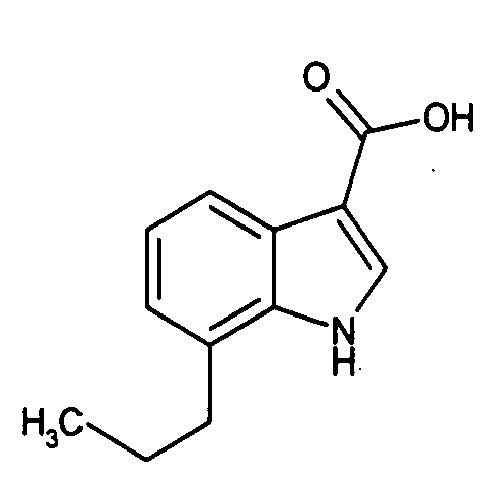
FAB+: 204 3 
EI: 203 4 
EI: 189 5 
FAB-: 208 - To 4.5 mL of DMF cooled in an ice-salt bath, 1.3 mL of phosphorus oxychloride was added, and the resulting mixture was stirred for 30 minutes. A solution of 2.13 g of 7-chloro-4-methyl-1H-indole in 3 mL of DMF was added to the solution under cooling and the resulting mixture was stirred at room temperature for 15 minutes and at 35°C for 1 hour. After the solution was allowed to cool, 20 g of ice and 15 mL of 10 M aqueous sodium hydroxide solution were added, the resulting mixture was heated to 100°C, then allowed to cool to room temperature, and stirred under ice cooling for 30 minutes, and the precipitated solid was collected by filtration. To a solution of the solid obtained in 15 mL of MeCN and 50 mL of t-BuOH, 14 mL of 2-methyl-2-butene and 3.1 g of sodium dihydrogen phosphate were added, and a mixture of 9.3 g of sodium chlorite and 15 mL of water were further added, and the resulting mixture was stirred at room temperature for 2 days. To the solution, 100 mL of toluene and 50 mL water were added, and the mixture was extracted twice with 50 mL of 0.5 M aqueous sodium hydroxide solution. Concentrated hydrochloric acid was added to the extract to adjust the pH to pH3, the precipitated solid was collected by filtration, and the obtained solid was purified by silica gel column chromatography (chloroform-methanol = 100:1 → 50:1 → 20:1) to obtain 0.79 g of 7-chloro-4-methyl-1H-indole-3-carboxylic acid as a beige solid.
The compounds listed in Table 2 were obtained by the method similar to that described in Production Example 6. -
[Table 2] REx Str Data REx Str Data 6 
EI: 209 7 
EI: 181 8 
EI: 227 9 
FAB-: 246 - To a solution of 1.01 g of methyl 5-(trifluoromethyl)-1H-indole-3-carboxylate in 12 mL of MeOH and 12 mL of THF, 6 mL of 1 M aqueous sodium hydroxide solution was added, and the resulting mixture was stirred at 80°C overnight. To the solution, 3 mL of 1 M aqueous sodium hydroxide solution was further added, and the resulting mixture was stirred at 80°C for 6 hours. To the solution, 9 mL of 1 M hydrochloric acid and 60 mL of water were added, the precipitated solid was collected by filtration, and the solid obtained was purified by silica gel column chromatography (chloroform-methanol = 100:1 → 50:1 → 20:1) and then washed with hexane to obtain 0.71 g of 5-(trifluoromethyl)-1H-indole-3-carboxylic acid as a cream-colored solid. FAB-: 228
- A solution of 5.21 g of 1-chloro-4-methyl-2-nitrobenzene in 150 mL of THF was cooled to -50°C. To the solution was added 95 mL of 1 M vinylmagnesium bromide solution in THF while the inner temperature was kept at -30°C or lower, and the resulting mixture was stirred at -50°C for 2 hours. To the solution, 100 mL of the saturated aqueous ammonium chloride solution and 100 mL of 1 M hydrochloric acid were added, then the resulting mixture was warmed to room temperature and stirred for 15 minutes, and then extracted twice with 100 mL of ethyl acetate. The extract was washed with water and saturated aqueous sodium chloride solution and dried over anhydrous sodium sulfate, and then the solvent was evaporated under reduced pressure. The residue was purified by silica gel column chromatography (ethyl acetate-hexane = 1:9) to obtain 2.69 g of 7-chloro-4-methylindole as a brown oil.
Compounds listed in Table 3 were obtained by the method similar to that described in Production Example 11. -
[Table 3] REx Str Data REx Str Data 11 
EI: 165 12 
EI: 181 13 
EI: 183 14 
EI: 202 - The following Examples are described to explain the present invention in more detail, and the present invention will not restricted by the following Examples. Although the present invention is fully explained by way of the Examples, the person skilled in the art will appreciate that various alterations and modifications can naturally be made. Accordingly, these alterations and modifications are included in the present invention unless they depart from the scope of the present invention.
- 4.8 mg of indole-3-carboxylic acid was dissolved in 1 mL of tetrahydrofuran, 0.042 mL of n-butyllithium (1.58 M hexane solution) was added to the solution at 0°C, the resulting mixture was stirred for 30 minutes. Then 5.3 mg of benzenesulfonyl chloride was added to the mixture, and the resulting mixture was stirred at 0°C overnight. Water and chloroform were added to the mixture, the organic layer was separated and concentrated under reduced pressure, and the residue was purified by HPLC to obtain 1.0 mg of 1-(phenylsulfonyl)-1H-indole-3-carboxylic acid.
- The HPLC conditions used for the purification will be described below.
Column: SunFire (registered trademark)
Particle size: 5 µm, Inner diameter: 19 mm, Length: 100 mm - Mobile phase:
- Solution A (= A sol), methanol
Solution B (= B sol), 0.1 % aqueous formic acid solution -
[Table 4] Time (min) A sol (%) B sol (%) 0 - 1 10 90 1 - 9 10 → 95 90 → 5 9 - 12 95 5
Column temperature: 20°C
Injection volume: ,800 µL - Example Compounds listed in Tables 6 to 22 below were obtained by the method similar to that described in Example 1. The conditions of HPLC performed for the determination of RT in Examples 1 to 132 are shown below.
Column: Wakosil-II 5C18AR (registered trademark)
Particle size: 5 µm, Inner diameter: 2.0 mm, Length: 30 mm
Mobile phase: Solution A (= A sol), 5 mM aqueous trifluoroacetic acid solution
Solution B (=B sol), methanol -
[Table 5] Time (min) A sol (%) B sol (%) 0 - 4 90 → 0 10 → 100 4 - 4. 5 0 100
Detection wavelength: 254 nm
Column temperature: 35.0°C
Injection volume: 5 µL -
[Table 6] 
Ex Ps 
RT ESI+ 1 3 
2.6 302 2 3 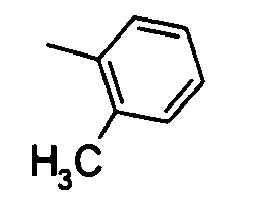
2.74 316 3 3 
2.8 316 4 3 
2.8 316 5 3 
2.59 320 6 3 
2.75 320 7 3 
2.67 320 8 3 
2.37 327 -
[Table 7] 
Ex Ps 
RT ESI+ 9 3 
2.92 328 10 3 
2.98 330 11 3 
3 330 12 3 
2.77 332 13 3 
2.58 332 14 3 
2.9 336 15 3 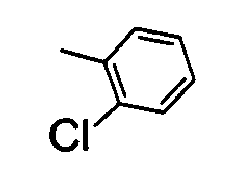
2.65 336 16 3 
2.95 336 -
[Table 8] 
Ex Ps 
RT ESI+ 17 3 
2.64 338 18 3 
2.83 338 19 3 
3.13 344 20 3 
3.34 358 21 3 
3.03 360 22 3 
3.03 370 23 3 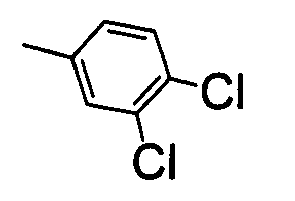
3.21 370 24 3 
2.52 371 -
[Table 9] 
Ex Ps 
RT ESI+ 25 3 
3.22 378 26 3 
3.25 378 27 3 
2.95 378 28 3 
2.95 380 29 3 
3.07 386 30 3 
3.42 392 31 3 
3.23 394 32 3 
3.23 394 -
[Table 10] 
Ex Ps 
RT ESI+ 33 3 
2.94 394 34 3 
2.79 407 35 3 
3.39 408 36 3 
3.33 408 37 3 
3.38 408 38 3 
3.1 408 39 3 
2.97 412 40 3 
3.24 424 -
[Table 11] 
Ex Ps 
RT ESI+ 41 3 
3.63 428 42 3 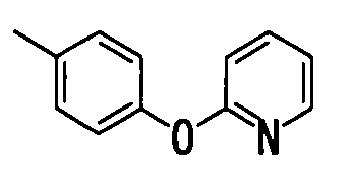
2.82 395 43 3 
2.72 435 44 3 
3.06 449 45 3 
2.84 338 46 3 
3.15 424 47 3 
3.23 412 48 3 
2.68 338 -
[Table 12] 
Ex Ps 
RT ESI+ 49 3 
3 408 50 3 
3.28 408 51 3 
3.09 412 52 3 
3.26 396 53 3 
3.44 392 54 3 
3.12 392 55 3 
2.96 334 56 3 
2.98 370 -
[Table 13] 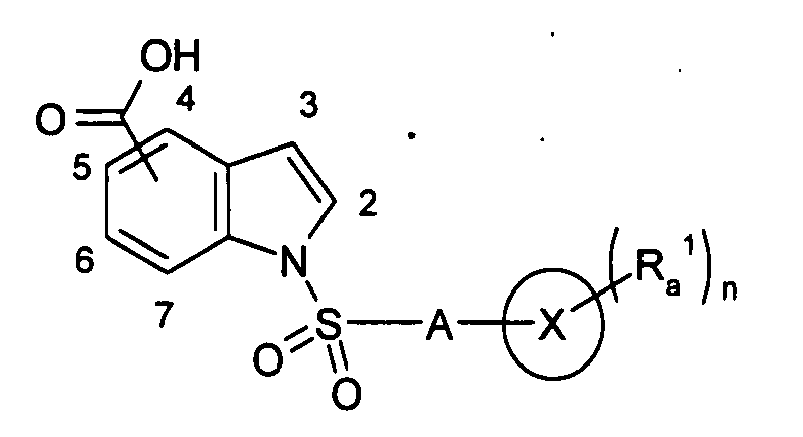
Ex Ps 
RT ESI+ 57 3 
3.02 354 58 3 
2.91 415 59 3 
2.76 346 60 3 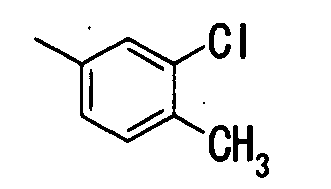
3.13 350 61 3 
2.5 347 62 3 
2.81 370 63 3 
2.96 330 64 3 
2.91 370 -
[Table 14] 
Ex Ps 
RT ESI+ 65 3 
3.06 370 66 3 
2.79 346 67 3 
3.02 366 68 3 
3.07 350 69 3 
2.8 350 70 3 
3.17 344 71 3 
2.79 338 72 3 
3.06 370 -
[Table 15] 
Ex Ps 
RT ESI+ 73 3 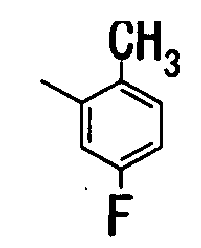
2.92 334 74 3 
2.99 354 75 3 
2.87 354 76 3 
3.11 415 77 3 
2.85 334 78 3 
2.98 360 79 3 
2.92 352 80 3 
3.04 352 -
[Table 16] 
Ex Ps 
RT ESI+ 81 3 
3.07 366 82 3 
3.1 395 83 3 
2.57 359 84 3 
2.84 373 85 3 
2.52 384 86 3 
3.31 392 87 3 
2.46 308 88 3 
2.63 354 -
[Table 17] 
Ex Ps 
RT ESI+ 89 3 
3.08 358 90 3 
1.86 320 91 3 
2.86 358 92 3 
2.28 303 93 3 
2.57 360 94 3 
2.99 342 95 3 
2.42 334 96 3 
3.32 375 -
[Table 18] 
Ex Ps 
RT ESI+ 97 3 
2.76 384 98 3 
2.85 384 99 3 
2 317 100 3 
2.88 384 101 3 
2.73 350 102 3 
2.54 334 103 3 
2.98 440 104 3 
2.52 316 -
[Table 19] 
Ex Ps 
RT ESI+ 105 3 
2.39 361 106 3 
2.7 350 107 3 
2.92 364 108 3 
2.84 364 109 3 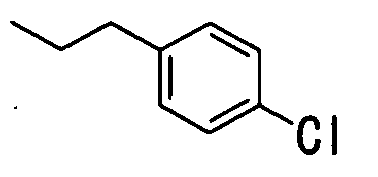
2.84 364 110 3 
2.71 330 111 3 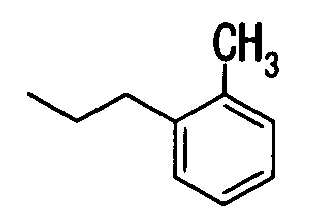
2.93 344 112 3 
2.86 344 -
[Table 20] 
Ex Ps 
RT ESI+ 113 3 
2.88 344 114 3 
2.69 348 115 3 
2.73 348 116 3 
2.81 390 117 3 
2.22 266 118 3 
3.04 322 119 4 
2.71 316 120 4 
2.73 316 -
[Table 21] 
Ex Ps 
RT ESI+ 121 4 
3.16 378 122 4 
3.02 395 123 5 
2.97 395 124 6 
2.43 302 125 6 
2.61 316 126 6 
2.61 316 127 6 
2.61 316 128 6 
2.8 352 -
[Table 22] 
Ex Ps 
RT ESI+ 129 6 
2.86 352 130 6 
3.14 378 131 6 
2.75 380 132 6 
2.97 395 -
[Table 23] Ex NMR-DMSOd6 28 7.36-7.46 (2H, m), 7. 85 (2H, d), 8. 00 (1H, d), 8.06-8.11 (3H, m), 8.37 (1H, s), 13.03 (1H, br) 80 7. 33-7. 45 (2H, m), 7. 70-7. 78 (2H, m), 8. 02-8. 07 (4H, m), 8. 13 (1H, d), 8.26 (1H, d), 8.44 (1H, s), 9.01 (1H, d), 13.00 (1H, br) - To a solution of 300 mg of 1H-indole-3-carboxylic acid in 9 mL of THF, 2.68 mL of 1.60 M n-BuLi hexane solution was added dropwise while the inner temperature was kept at -50°C or lower by cooling in a dry ice-acetone bath, and the resulting mixture was stirred at the same temperature for 5 minutes, then at 0°C for 1 hour. The solution was cooled in a dry ice-acetone bath and a solution of 461 mg of 4-methoxybenzenesulfonyl chloride in 1 mL of THF was added dropwise. The solution was stirred at 0°C for 3 hours. To the solution, 20 mL of 5% aqueous potassium hydrogen sulfate solution and 40 mL of water were added in this order, and then the resulting mixture was extracted with ethyl acetate. The organic layer was washed with saturated aqueous sodium chloride solution and dried over anhydrous magnesium sulfate, and then the solvent was evaporated under reduced pressure. To the residue was added 5 mL of ethyl acetate, and the resulting mixture was stirred at room temperature for 15 minutes. The white crystals formed were collected by filtration to obtain 509 mg of 1-[(4-methoxyphenyl)sulfonyl]-1H-indole-3-carboxylic acid as a white solid.
Example compounds listed in Tables 24 to 31 below were obtained by the methods similar to that described in Example 133. -
[Table 24] Ex Str Ex Str 133 
134 
135 
136 
137 
138 
139 
140 
141 
142 
-
[Table 25] Ex Str Ex Str 143 
144 
145 
146 
147 
148 
149 
150 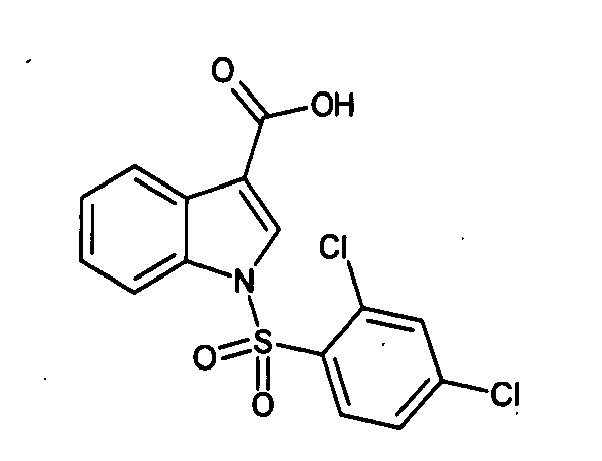
151 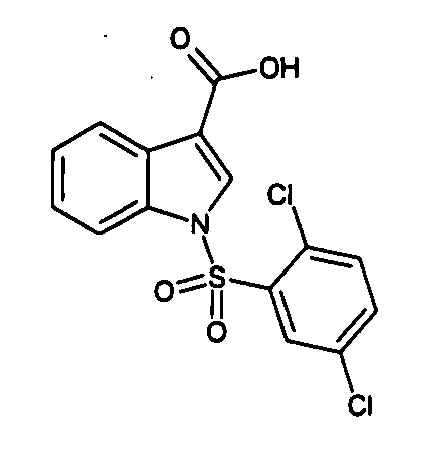
152 
-
[Table 26] Ex Str Ex Str 153 
154 
155 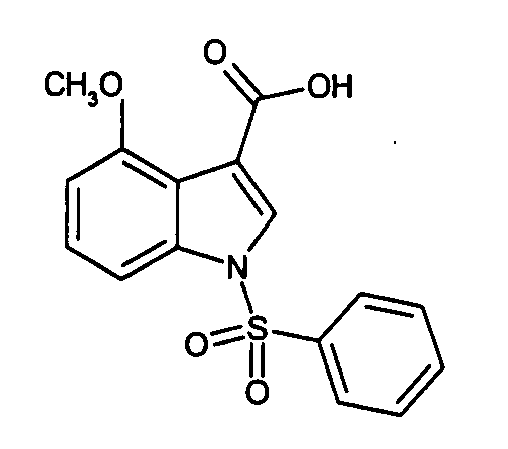
156 
157 
158 
159 
160 
161 
162 
-
[Table 27] Ex Str Ex I Str 163 
164 
165 
166 
167 
168 
169 
170 
171 
172 
-
[Table 28] Ex Str Ex Str 173 
174 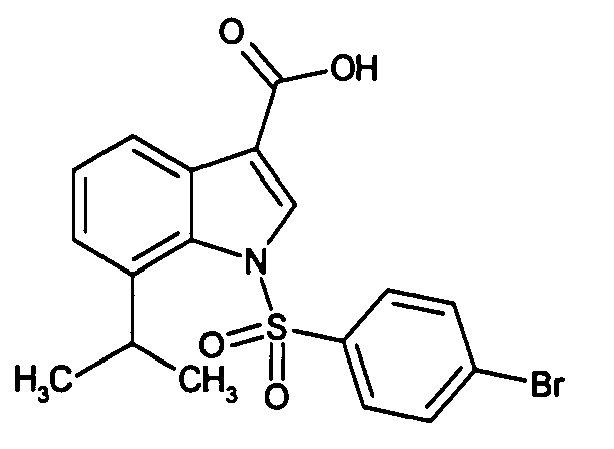
175 
176 
177 
178 
179 
180 
181 
182 
-
[Table 29] Ex Str Ex Str 183 
184 
185 
186 
187 
188 
189 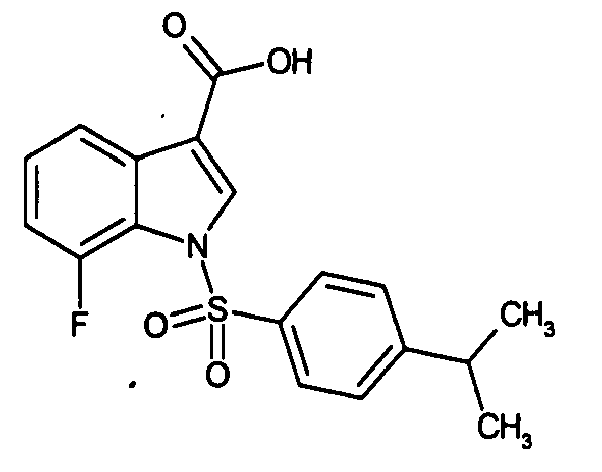
190 
191 
192 
-
[Table 30] Ex Str Ex Str 193 
194 
195 
196 
197 
198 
199 
200 
-
[Table 31] Ex Str Ex Str 201 
202 
203 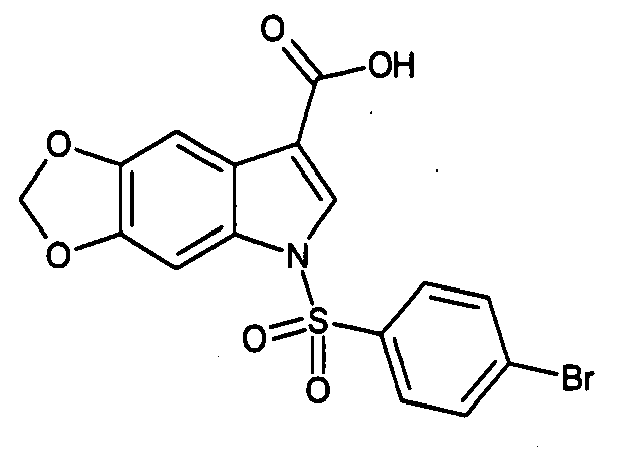
204 
205 
206 
207 
208 
-
[Table 32] Ex Data 133 NMR-DMSOd6: 3.81 (3H, s), 7.12 (2H, d, J=9.0Hz), 7.35-7.45 (2H, m), 7.96-8.11 (4H, m), 8.34 (1H, s), 12.97 (1H, s)
ESI+:332134 ESI+:332 135 ESI+: 386 136 ESI+:316 137 ESI+:316 138 NMR-DMSOd6: 2.34 (3H, s), 7.35-7.44 (4H, m), 7.95-8.07 (4H, m), 8.34 (1H, s), 12.99 (1H, s)
ESI+: 316139 ESI+: 330. 140 ESI+: 358 141 ESI+: 358 142 ESI+: 320 143 ESI+: 336 144 NMR-DMSOd6: 7.36-7.46 (2H, m), 7.85 (2H, d, J=8.8 Hz), 8.00 (1H, d, J=7.6 Hz), 8.06-8.11 (3H, m), 8.37 (1H, s), 13.03 (1H, s)
FAB-: 378145 ESI-:368 146 ESI+: 380 147 ESI-: 325 148 ESI+: 350 149 ESI+: 354 150 API+: 370 151 ESI+: 370 152 ESI+: 370 153 ESI+: 370 154 ESI+: 417 -
[Table 33] Ex Data 155 NMR-DMSOd6: 3.81 (3H, s), 6.79 (1H, d, J=8.2Hz), 7.35 (1H, t, J=8.2Hz), 7.5-7.8 (4H, m), 8.08 (2H, m), 8.14 (1H, s), 12.62 (1H, s)
FAB+: 332156 ESI+:411 157 FAB:330 158 ESI-: 409 159 FAB-: 330 160 FAB+: 332 161 FAB+: 408 162 ESI-: 484, 486 163 NMR-DMSOd6: 2.39 (3H, s), 7.24 (1H, d, J=8.6Hz), 7.61 (2H, m), 7.73 (1H, m), 7.85 (2H, m), 8.11 (2H, m), 8.30 (1H, s), 12.97 (1H, s)
ESI-: 314164 ESI-: 392 165 FAB-: 356 166 FAB-:314 167 ESI-: 392, 394 168 NMR-DMSOd6: 0.86 (3H, t, J=7.3Hz), 2.89 (2H, q, J=7.3Hz), 7.20 (1H, d, J=7.1Hz), 7.33 (1H, m), 7.66 (2H, m), 7.78 (1H, m), 7.87 (2H, m), 8.03 (1H, dd, J=0.7, 7.8Hz), 8.42 (1H, s), 12.98 (1H, s)
FAB-: 328169 ESI-: 406, 408 170 FAB-:370 171 ESI-: 342 172 FAB-: 420, 422 173 FAB-:342 174 ESI-: 420, 422 -
[Table 34] Ex Data 175 NMR-DMSOd6: 7.30 (1H, m), 7.6-7.8 (4H, m), 8.01 (1H, m), 8.16 (2H, m), 8.45 (1H, s), 13.12(1H, s)
ESI-:318176 ESI-: 396, 398 177 FAB-: 332 178 FAB-: 346 179 ESI-: 360 180 ESI-: 374 181 ESI-: 352 182 ESI-:410 183 ESI-:414 184 ESI-: 386 185 ESI+: 371 186 FAB-: 344 187 NMR-DMSOd6: 7.22 (1H, m), 7.36 (1H, m), 7.68 (2H, m), 7.79 (1H, m), 7.94 (1H, d, J=8.1Hz), 8.07 (2H, d, J=7.3Hz), 8.44 (1H, s), 13.15 (1H, s)
FAB+: 320188 ESI-: 396 189 ESI-: 360 190 NMR-DMSOd6: 7.48 (1H, m), 7.65 (2H, m), 7.78 (1H, m), 8.01 (2H, d, J=8.4Hz), 8.15(2H,m),8.44(1H,s),13.17(1H,s)
ESI-: 334191 NMR-DMSOd6: 7.39 (2H, m), 7.65 (2H, m), 7.80 (1H, m), 7.99 (2H, m), 8.16 (1H, dd, J=6.8,2.2Hz), 8.52 (1H, s), 13.17 (1H, s)
ESI-:333192 NMR-DMSOd6: 7.41 (2H, m), 7.87 (2H, m), 7.96 (2H, m), 8.16 (1H, dd, J=7.1, 2.1Hz), 8.52 (1H, s), 13.17 (1H, s)
ESI-: 413 -
[Table 35] Ex Data 193 NMR-DMSOd6: 1.20 (6H, d, J=6.8Hz), 2.96-3.04 (1H, m), 7.35-7.42 (2H, m), 7.53 (2H, d, J=8.5Hz), 7.93 (2H, d, J=8.8Hz), 8.15 (1H, dd, J=7.6, 1.7Hz), 8.52 (1H, s), 13.17(1H,s)
ESI+: 378194 NMR-DMSOd6: 2.44 (3H, s), 7.39-7.45 (2H, m), 7.68 (1H, dd, J=8.0, 2.0Hz), 7.77 (1H, d, J=8.4Hz), 7.82 (1H, d, J=1.6Hz), 8.18 (1H, dt, J=9.2, 2.4Hz), 8.47 (1H, s), 13.22(1H,s)
FAB+: 429195 ESI-: 368 196 ESI-: 446, 448 197 ESI+: 366 198 ESI-: 348 199 FAB-: 348 200 ESI-: 426, 428 201 FAB+: 330 202 FAB-: 344 203 NMR-DMSOd6: 6.10 (2H, s), 7.40 (1H, s), 7.48 (1H, s), 7.86 (2H, d, J=8.0Hz), 8.09 (2H, d, J=8.0Hz), 8.20 (1H, s), 12.97 (1H, s)
ESI-: 422, 424204 ESI-: 366 205 FAB-: 385 206 FAB+: 407 207 FAB+:407 208 NMR-DMSOd6: 1.57-1.67 (4H, m), 2.53-2.63 (4H, m), 7.76 (1H, s), 7.88-7.94 (4H, m), 12.48 (1H, s)
ESI-: 382, 384 - To a solution of 1.0 g of 7-benzyloxy-1-phenylsulfonyl-1H-indole-3-carboxylic acid in 5 mL of trifluoroacetic acid, 1.0 g of 1,2,3,4,5-pentamethylbenzene was added, and the resulting mixture was stirred at room temperature overnight. 20 mL of ether was added to the solution, insoluble matter was removed, the solvent was evaporated under reduced pressure, and the residue was washed with ethyl acetate to obtain 0.25 g of 7-hydroxy-1-phenylsulfonyl-1H-indole-3-carboxylic acid as a gray solid. FAB-:316
- To a solution of 0.5 g of potassium t-butoxide and 0.1 g of 18-crown-6 in 3 mL of THF, a mixed solution of 0.7 g of ethyl 1H-indole-2-carboxylate and 3 mL of THF was added, and the resulting mixture was stirred at room temperature for 30 minutes. The solution was cooled with ice, 1.13 g of 4-bromobenzenesulfonyl chloride was added, and the resulting mixture was stirred at room temperature for 5 hours. To the solution was added 60 mL of ethyl acetate, the resulting mixture was washed with water and saturated aqueous sodium chloride solution and dried over anhydrous sodium sulfate, and then the solvent was evaporated under reduced pressure. The residue was purified by silica gel column chromatography (ethyl acetate-hexane = 1:5) to obtain 1.44 g of ethyl 1-[(4-bromophenyl)sulfonyl]-1H-indole-2-carboxylate as a pale yellow syrup. FAB+:408,410
- To a solution of 1.4 g of ethyl 1-[(4-bromophenyl)sulfonyl]-1H-indole-2-carboxylate in 10 mL of THF, 7.6 mL of diisobutylalminum hydride-toluene solution was added at a temperature of -60°C or lower, and the resulting mixture was stirred under cooling in a dry ice-acetone bath for 5 hours and under ice cooling for 2 hours. After the solution was cooled to -70°C, 5 g of sodium sulfate decahydrate and 5 mL of methanol were added, the resulting mixture was warmed to room temperature, 50 mL of ethyl acetate and anhydrous sodium sulfate were added, insoluble matter was removed by filtration, and the solvent was evaporated under reduced pressure. The residue was purified by silica gel column chromatography (chloroform) to obtain 0.97 g of {1-[(4-bromophenyl)sulfonyl]-1H-indol-2-yl}methanol as a pale violet solid. EI: 365, 367
- To a solution of 0.93 g of {1-[(4-bromophenyl)sulfonyl]-1H-indol-2-yl}methanol and 1.1 mL of triethylamine in 10 mL of 1,2-dichloroethane, a solution of 1.21 g of sulfur trioxide-pyridine complex in 5 mL of DMSO was added under ice cooling, and the resulting mixture was stirred under ice cooling for 1 hour. The solution was poured into a mixed solution of 25 ml of ice water and 25 mL of saturated aqueous sodium chloride solution, the resulting mixture was extracted with 100 mL of ethyl acetate, the extract was washed with 5% aqueous potassium hydrogen sulfate solution, water and saturated aqueous sodium chloride solution and dried over anhydrous sodium sulfate, and the solvent was evaporated under reduced pressure. The residue was washed with hexane to obtain 0.91 g of 1-[(4-bromophenyl)sulfonyl]-1H-indole-2-carbaldehyde as a beige solid. FAB+: 364, 366
- To a solution of 0.41 g of 1-[(4-bromophenyl)sulfonyl]-1H-indole-2-carbaldehyde in 3 mL of pyridine, 0.35 g of malonic acid and 0.02 mL of piperidine were added, and the resulting mixture was stirred at 80°C for 3 hours. After the solution was allowed to cool, 50 mL of water and concentrated hydrochloric acid were added to adjust the pH to pH3, and the precipitated solid was collected by filtration and washed with ethanol to obtain 0.29 g of (2E)-3-{1-[(4-bromophenyl)sulfonyl]-1H-indol-2-yl}acrylic acid as a pale yellow solid.
Example compounds listed in Table 36 below were obtained by the method similar to that of Example 210. -
[Table 36] Ex Str Ex Str 210 
211 
-
[Table 37] Ex Data 210 NMR-DMSOd6: 6.59 (1H, d, J=15.9Hz), 7.33 (1H, m), 7.44 (1H, m), 7.52 (1H, s), 7.62 (3H, m), 7.80 (2H, d, J=7.1Hz), 8.09 (1H, d, J=8.5Hz), 8.17 (1H, d, J=15.9Hz), 12.71 (1H,s)
FAB-:404,406211 FAB-:327 - To a solution of 180 mg of (2E)-3-[1-(phenylsulfonyl)-1H-indol-2-yl]acrylic acid in 3 mL of ethanol and 5 mL of methanol, 50 mg of 10% palladium-carbon (wet, water content 53%) was added, and the resulting mixture was stirred under hydrogen atmosphere (1 atm) at room temperature for 2 hours. The catalyst was removed from the solution, the solvent was evaporated under reduced pressure, and the residue was washed with ether to obtain 90 mg of 3-[1-(phenylsulfonyl)-1H-indol-2-yl]propanoic acid as a white solid. FAB-: 328
- To a solution of 0.4 mL of ethyl di-o-tolylphosphonoacetate in 15 mL of THF was added 0.67 g of a 40% benzyltrimethylammonium hydroxide-methanol solution under cooling in a dry ice-acetone bath, and the resulting mixture was stirred at -70°C for 15 minutes. To the solution, a solution of 0.47 g of 1-[(4-bromophenyl)sulfonyl]-1H-indole-2-carbaldehyde in 5 mL of THF was added, the resulting mixture was stirred at -70°C for 1.5 hours and under cooling in an ice-methanol bath for 1 hour. To the solution, 50 mL of saturated aqueous sodium chloride solution was added, the mixture was extracted with 100 mL of ethyl acetate, the extract was washed with water and saturated aqueous sodium chloride solution and dried over anhydrous sodium sulfate, and the solvent was evaporated under reduced pressure. The residue was purified by silica gel column chromatography (ethyl acetate-hexane = 1:5) to obtain 0.53 g of ethyl
(2Z)-3-{1-[(4-bromophenyl)sulfonyl]-1H-indol-2-yl}acrylate as a pale yellow syrup. ESI-: 432, 434 - To a solution of 0.5 g of ethyl (2Z)-3-{1-[(4-bromophenyl)sulfonyl]-1H-indol-2-yl}acrylate in 4 mL of methanol and 0.4 mL of THF, 1.5 mL of a 1 M aqueous sodium hydroxide solution was added under ice cooling, and the resulting mixture was stirred under ice cooling for 2 hours and at room temperature for 3 hours. The solution was cooled with ice, 50 mL of water and 1.5 mL of 1 M hydrochloric acid were added, the mixture was extracted twice with 30 mL of chloroform, the extract was dried over anhydrous sodium sulfate, and then the solvent was evaporated under reduced pressure. The residue was purified by silica gel column chromatography (chloroform → chloroform-methanol = 100:1 → 50:1) and then washed with hexane to obtain 0.28 g of
(2Z)-3-{(1-[(4-bromophenyl)sulfonyl]-1H-indol-2-yl)acrylic acid as a pale yellow solid. FAB-: 404, 406 - Further, compounds listed in Tables 38 to 50 can be easily produced by the methods similar to those described in Examples above or applying the methods well known to the person skilled in the art based on these methods. These compounds are also included in the present invention.
-
[Table 38] 
No. Ps 
No. Ps 
1 3 
2 3 
3 3 
4 3 
5 3 
6 3 
7 3 
8 3 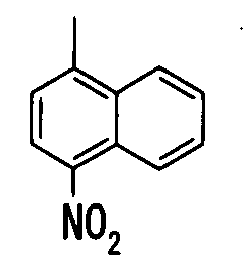
9 3 
10 3 
11 3 
12 3 
-
[Table 39] 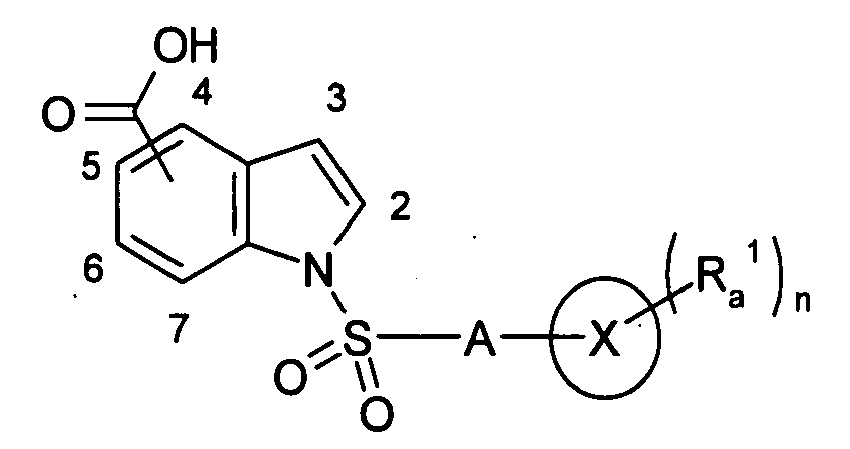
No. Ps 
No. Ps 
13 3 
14 3 
15 3 
16 3 
17 3 
18 3 
19 3 
20 3 
21 3 
22 3 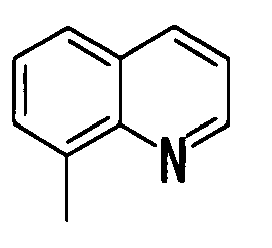
23 3 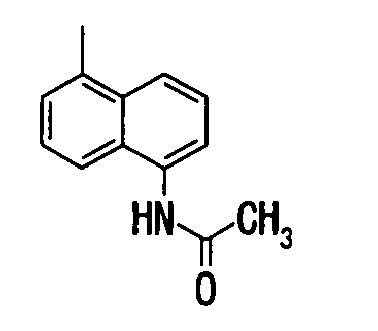
24 3 
-
[Table 40] 
No. Ps 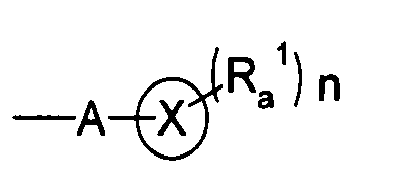
No. Ps 
25 3 
26 3 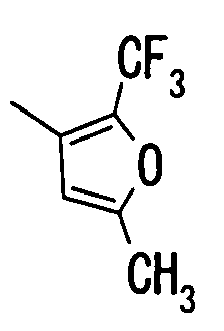
27 3 
28 3 
29 3 
30 3 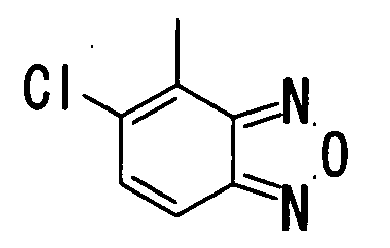
31 3 
32 3 
33 3 
34 3 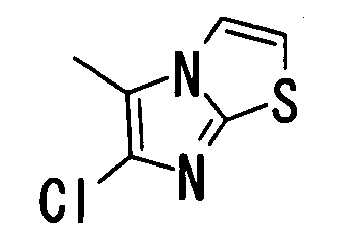
35 3 
36 3 
-
[Table 41] 
No. Ps 
No. Ps 
37 3 
38 3 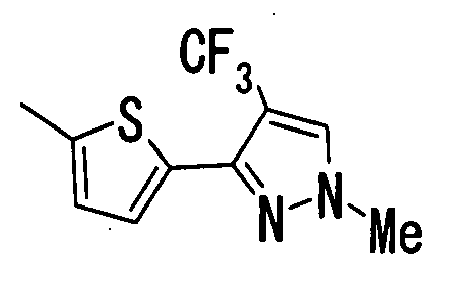
39 3 
40 3 
41 3 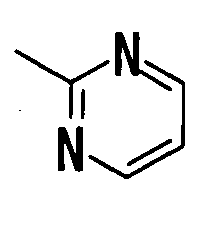
42 3 
43 3 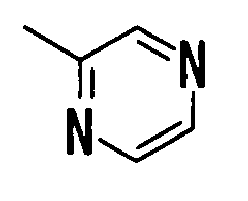
44 3 
45 3 
46 3 
47 3 
48 6 
-
[Table 42] 
No. Ps 
No. Ps 
49 6 
50 6 
51 6 
52 6 
53 6 
54 6 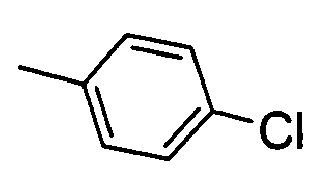
55 6 
56 6 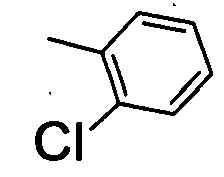
57 6 
58 6 
59 6 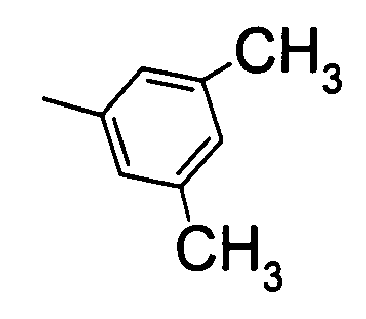
60 6 
-
[Table 43] 
No. Ps 
No. Ps 
61 6 
62 6 
63 6 
64 6 
65 6 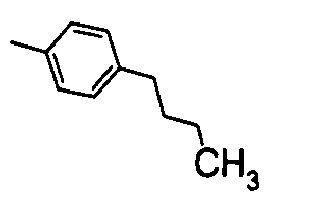
66 6 
67 6 
68 6 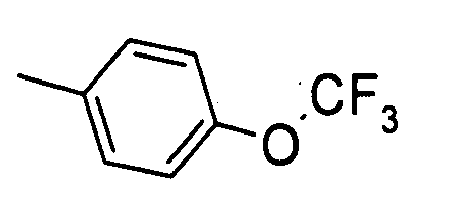
69 6 
70 6 
71 6 
72 6 
-
[Table 44] 
No. Ps 
No. Ps 
73 6 
74 6 
75 6 
76 6 
77 6 
78 6 
79 6 
80 6 
81 6 
82 6 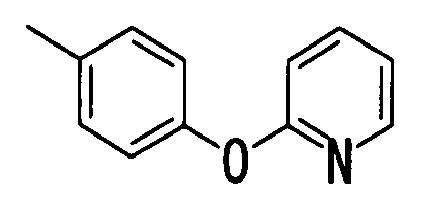
83 6 
84 6 
-
[Table 45] 
No. Ps 
No. Ps 
85 6 
86 6 
87 6 
88 6 
89 6 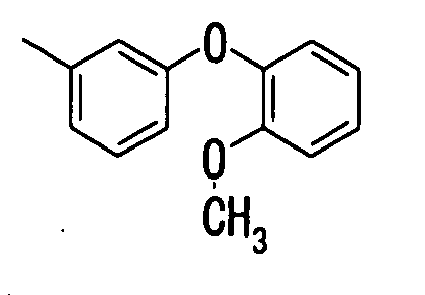
90 6 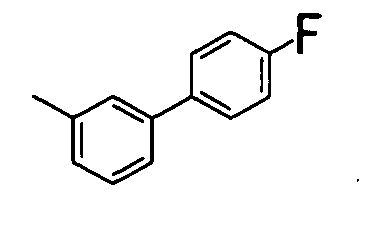
91 6 
91 6 
93 6 
94 6 
95 
96 6 
-
[Table 46] 
No. Ps 
No. Ps 
97 6 
98 6 
99 6 
100 6 
101 6 
102 6 
103 6 
104 6 
105 6 
106 6 
107 6 
108 6 
-
[Table 47] 
No. Ps 
No. Ps 
109 6 
110 6 
111 6 
112 6 
113 6 
114 6 
115 6 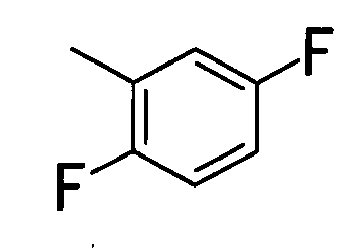
116 6 
117 6 
118 6 
119 6 
120 6 
-
[Table 48] 
No. Ps 
No. Ps 
121 6 
122 6 
123 6 
124 6 
125 6 
126 6 
127 6 
128 6 
129 6 
130 6 
131 6 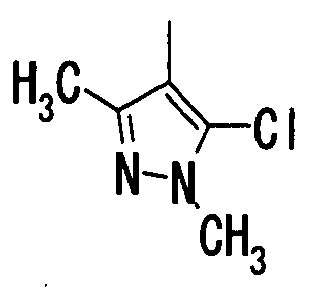
132 6 
-
[Table 49] 
No. Ps 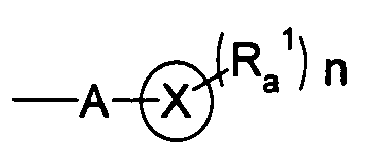
No. Ps 
133 6 
134 6 
135 6 
136 6 
137 6 
138 6 
139 6 
140 6 
141 6 
142 6 
143 6 
144 6 
-
[Table 50] 
No. Ps 
No. Ps 
145 6 
146 6 
147 6 
148 6 
149 6 
150 6 
151 6 
152 6 
153 6 
154 6 
155 6 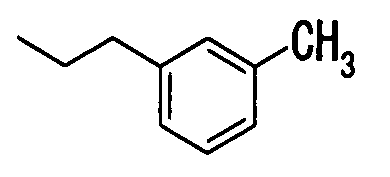
156 6 
- An excellent selective inhibitory activity against human 17βHSD type 5 of the compounds of the present invention was confirmed by a test method described below. Further, the test may be performed by referring to the details of test procedure described in Maniatis,T. et al., Molecular Cloning-A Laboratory Manual Cold Spring Harbor Laboratory, NY and the like (1982). In addition, a gene encoding human 17βHSD type5 and type3 described in 1 and 2 below, and human 17βHSD type5 and type3 may be obtained by the method described in Mol. Endocrinol, 1971-1984, 11(13) (1997).
- A full-length cDNA encoding human 17βHSD type 5 used in the pharmacological test of the present invention was obtained by the PCR method using a cDNA derived from a human lung cancer-derived cell line, A549 cells as a template. The nucleotide sequence of the obtained cDNA was analyzed by the dideoxyterminator method, and the clone matched with the known human 17βHSD type 5 sequence (GenBank accession No. NM_003739) was selected. Escherichia coli BL21 was transformed with a plasmid containing the cDNA, cultured on a large scale, and the proteins were purified by using GSTrapFF column (Amersham) and PreScissionProtease (Amersham). The purification was performed in accordance with the instructions attached to the GSTrapFF column.
- A full-length cDNA encoding human 17βHSD type 3 used in the pharmacological test of the present invention was obtained by the PCR method using a cDNA derived from human testis as a template. The nucleotide sequence of the obtained cDNA was analyzed by the dideoxyterminator method, and the clone matched with the known human 17βHSD type 3 sequence (GenBank accession No. BC034281) was selected. Subsequently, a human fetus kidney-derived cell line, 293 cells was transformed with a plasmid containing the cDNA, and the cells were collected 24 hours later. The collected cells were then disrupted in a phosphate buffer solution containing 5% glycerol (500 µL per 100 mm-dish of a phosphate buffer solution (pH 7.4, 200 mM) containing 5% glycerol) and centrifuged (16000 rpm, 5 min, 4°C), and the supernatant was used as an enzyme source.
- Enzyme activity was measured referring to Trevor M. Penning, et al., Biochem. J., 351, 67-77, (2000). Specifically, using a 100 mM potassium phosphate buffer (pH 6.0), (1) the enzyme purified in above 1 at a final concentration of 10 µg/mL, (2) androstenedione at a final concentration of 300 nM, (3) NADPH at a final concentration of 200 µM and (4) a test substance at a final concentration of 3 µM were mixed to react at room temperature for 2 hours, and then the amount of testosterone produced was measured using DELFIA (registered trademark) Testosterone Reagents R050-201 (PerkinElmer). The measurement was performed in accordance with the attached instructions. The amount of reduction of testosterone production in the presence of the compound was obtained as a relative value with respect to the amount of testosterone in the absence of the enzyme set at 0% and the amount of testosterone produced in the absence of the compound set at 100%. Then, IC50 values were calculated by the Logistic regression method.
- The IC50 values of inhibitory activity against human 17βHSD type 5 and type 3 of the Example compounds included in the compounds of the present invention are shown in Table 51. In addition, the IC50 values of inhibitory activity against human 17βHSD type 5 of the compounds described in Non-patent Document 19 and confirmed to be effective for Ehrlich ascites tumor are shown in Comparative Examples (1) and (2) in Table 51. The structural formula of the compounds in Comparative Examples (1) and (2) are shown below.
-

-
[Table 51] Ex (CEx) IC50(µM) Type 5 Type 3 144 0.090 >10 190 0.69 >10 155 5.5 >10 191 0.30 >10 175 0.12 8.9 163 0.22 >10 192 0.069 > 10 187 2.2 >10 168 0.085 >10 193 0.13 >10 194 0.19 6.2 203 2.0 >10 208 2.2 >10 138 0.33 >10 133 3.1 >10 (1) >10 - (2) >10 - CEx: Comparative Example - As shown by the test results above, the compounds of the present invention represented by formula (I) and/or formula (II) and/or formula (III) scarcely have inhibitory activity against human 17βHSD type 3 and have inhibitory activity selective to human 17βHSD type 5. In addition, the compounds of Comparative Examples (1) and (2) that are known to be effective for Ehrlich ascites tumor scarcely exhibited 17βHSD type 5 inhibitory activity.
- The concentrations in plasma and in prostate were measured after oral administration of a test substance. Male 8 to 15-wee old ICR mice were used, and a solution or suspension obtained by adding 1 N NaOH solution and water in an equivalent amount to a test substance and stirring was used as an administration solution. The administration solution was administered orally once to mice, and after 2 hours, blood and a prostate were collected under ether anesthesia. The prostate was frozen and stored at -80°C until measurement. The blood was centrifuged (3000 rpm, 15 min, 4°C) after the addition of a minor amount of heparin, and the upper layer was collected as plasma and frozen and stored at -80°C until measurement. 0.1 mL of the plasma was subjected to protein degeneration with 0.1 mL of acetonitrile and then centrifuged (15000 rpm, 7 min, 4°C) to remove proteins and the supernatant thus obtained was used as an HPLC sample. The prostate was homogenized in a phosphate buffer solution (200 mM, pH 7.4, 0.5 mL), and then the whole volume was added to 3 mL of t-butyl methyl ether to perform extraction. The solvent was evaporated in a stream of nitrogen (15 min, 45°C). The residue was resuspended in a Tris buffer solution (12.5 mM, pH 7.4, 0.3 mL) containing 2% BSA, and an equal volume of acetonitrile (0.3 mL) was added. Protein was removed as in the case of plasma and the supernatant was used as an HPLC measurement sample. Measurement was performed by an ordinary method using liquid chromatography (HPLC). The results are described in Table 52.
- Column: STR ODS-II (registered trademark), particle size: 5 µm, inner diameter: 4.6 mm, length: 150 mm, joint type: Waters
Mobile phase: 20 mM ammonium acetate:acetonitrile = 7:3 or 17 mM ammonium acetate:acetonitrile = 6:4
Flow rate: 1 mL/min
Column temperature: 40°C
Injection volume: 50 µL -
[Table 52] Ex Dose(mg/kg) Conc (plasma)(uM) Conc (prostate)(uM) 1 30 17.0 5.3 100 57.4 13.3 300 145.1 47.4 144 100 38.5 7.2 300 79.1 24.8 190 300 225.5 37.4 155 100 88.4 23.0 175 100 83.8 8.6 163 100 88.8 19.1 192 100 57.3 9.4 300 126.1 24.9 187 100 69.7 12.2 Dose: dose, Conc (plasma): concentration in the plasma, Conc (prostate): concentration in prostate - As shown by the test results above, the compounds of formula (I) and/or (II) and/or formula (III) show good oral drug absorption and prostate distribution. Since the compounds of formula (I) and/or (II) and/or formula (III) have very weak inhibitory activity against human 17βHSD type 3, it is expected to suppress intracrine testosterone synthesis selectively in the prostate by their selective inhibitory effect against 17βHSD type 5 without affecting biosynthesis of testosterone derived from human 17βHSD type 3 in the testes, thus useful especially for treating and/or preventing benign prostatic hyperplasia and prostatic cancer without adverse drug reactions.
- A pharmaceutical composition containing the compound of formula (I) and/or formula (II) and/or formula (III) or a pharmaceutically acceptable salt thereof as an active ingredient can be prepared using a carrier, an excipient, and other additives that are generally used for formulation.
- Administration may be any of oral administration using tablets, pills, capsules, granules, powders, liquids and the like, or parenteral administration using injections such as intravenous injection, intramuscular injection and the like, suppositories, percutaneous preparations, nasal preparations, inhalation preparations or others. The dose is determined accordingly taking symptoms, age and sex of a subject and the like into consideration depending on each case. The dose is generally around 0.001 to 100 mg/kg/day for an adult in the case of oral administration, and the daily dose is administered in a single dose or 2 to 4 divided doses. When it is administered intravenously according to symptoms, it is administered one to several times a day at a dose in the range of 0.0001 to 10 mg/kg/dose for an adult. In the case of inhalation, it is administered one to several times a day at a dose in the range of 0.0001 to 1 mg/kg/dose for an adult.
- As a solid composition for oral administration according to the present invention, tablets, powder, granules and the like are used. In such solid composition, one or more active ingredients are mixed with at least one inactive excipient, for example, lactose, mannitol, glucose, hydroxypropylcellulose, microcrystalline cellulose, starch, polyvinyl pyrrolidone, magnesium aluminometasilicate and the like. The composition may contain, according to an ordinary method, inactive additives, for example, lubricants such as magnesium stearate and the like, disintegrants such as sodium carboxymethyl starch and the like, and solubilization assisting agents. Tablets or pills may be sugar-coated or coated with a gastric dissolving or enteric coating, if necessary.
- A liquid composition for oral administration includes pharmaceutically acceptable emulsion, solution, suspension, syrup, elixir and the like, and contains inert solvents used in general, for example, purified water and ethanol. The composition may contain, in addition to the inert solvent, auxiliary agents such as solubilizing agents, moistening agents, and suspending agents; sweeteners; flavoring agents; fragrances; and preservatives.
- An injection for parenteral administration includes sterile aqueous or non-aqueous solution, suspension, and emulsion. Examples of aqueous solvents include, for example, distilled water for injection and physiological saline solution. Examples of non-aqueous solvents include, for example, propylene glycol, polyethylene glycol, vegetable oils such as olive oil, alcohols such as ethanol, polysorbate 80 (Pharmacopoeia name) and the like. The composition may further contain tonicity agents, preservatives, moistening agents, emulsifiers, dispersing agents, stabilizers, and solubilizing agents. The composition is sterilized by, for example, filtration through a bacteria-retaining filter, incorporation of a bactericide or irradiation. In addition, a sterile solid composition may be first produced, and then dissolved or suspended in sterile water or sterile solvent for injection before use, and then used.
- Transmucosal preparations such as inhalation preparations, transnasal preparations and the like are used in a solid, liquid, or semisolid form, and can be produced by the method conventionally known. For example, excipients such as lactose and starch, and further, pH adjusting agents, preservatives, surfactants, lubricants, stabilizers, and thickeners and the like may be appropriately added. For administration, an appropriate device for inhalation or insufflation may be used. For example, using known devices such as a metered dose inhalation device or spray device, the compound can be administered alone or as powder of a formulated mixture or a solution or suspension in combination with pharmaceutically acceptable carriers. A dry powder inhaler and the like may be for single dose or multiple dose, and dry powder or powder-containing capsule may be used. Alternatively, a pressurized aerosol spray and the like using an appropriate gas, such as propellants, for example, chlorofluoroalkane, hydrofluoroalkane, carbon dioxide or the like.
- In producing suppositories, a low melting point wax, for example, a fatty acid glyceride mixture or cocoa butter is melted, and an active ingredient is added and dispersed homogeneously by stirring. After that, the mixture is injected into an appropriate mold and cooled for solidification. Liquid preparations include solution, suspension, retention enema and emulsion, for example, a water or aqueous propylene glycol solution.
- Since the compound, an active ingredient of the medicament of the present invention, has a selective inhibitory effect against 17βHSD type 5 and a superior pharmacological effect based thereon, the pharmaceutical composition according to the present invention is useful as a therapeutic and/or preventive agent for diseases associated with 17βHSD type 5, particularly prostatic cancer, benign prostatic hyperplasia, acne, seborrhea, hirsutism, baldness, alopecia, precocious puberty, adrenal hypertrophy, polycystic ovary syndrome, breast cancer, lung cancer, endometriosis, leiomyoma or the like.
Claims (41)
- A compound or a pharmaceutically acceptable salt thereof,
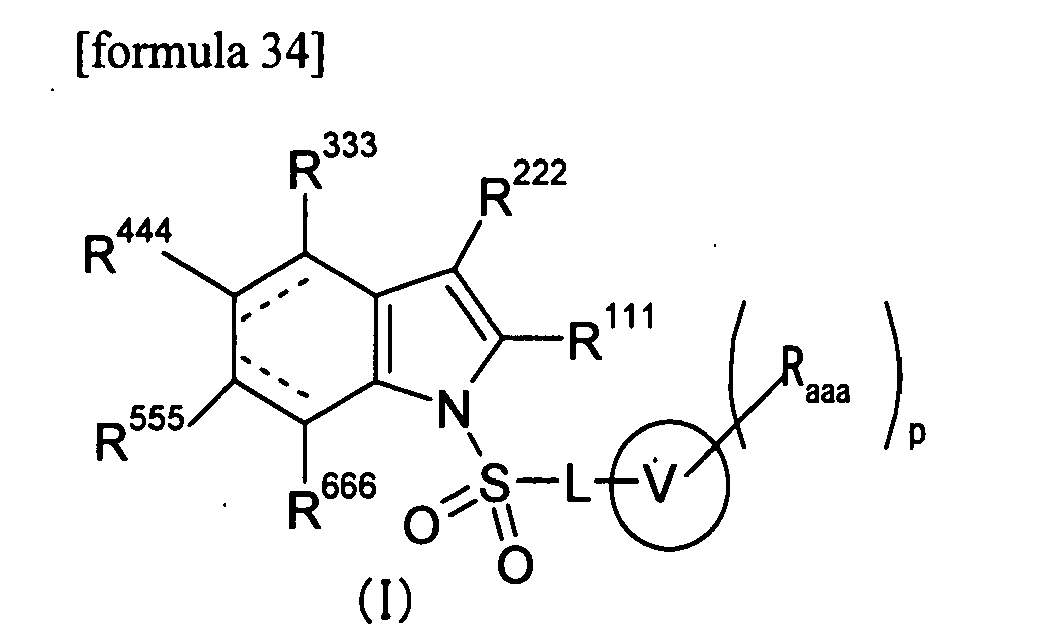

Raaa, which is the same or different, represents hydrogen, lower alkyl, halogen, cyano, lower alkenyl, halogen-substituted lower alkyl, lower alkyl-O-, cyano lower alkyl-O-, halogen-substituted lower alkyl-O-, aryl, heteroaryl, aryl-O-, heteroaryl-O-, aryl lower alkyl, acyl-O-, acyl, heteroaryl lower alkyl-O-, lower alkylthio, lower alkylsulfonyl, oxo, nitro, amino, mono-lower alkylamino, di-lower alkylamino, acylamino or arylamino, in which the aryl, the heteroaryl, and the aryl and the heteroaryl moieties of each of the aryl-O-, heteroaryl-O-, heteroaryl lower alkyl-O-, aryl lower alkyl and arylamino in the Raaa may be substituted by lower alkyl(s), lower alkyl-O-(s), halogen(s) or halogen-substituted lower alkyl(s);
R111, R222, R333, R444, R555 and R666 represent hydrogen or an appropriate substituent, in which at least one of the R111, R222, R333, R444, R555 and R666 represents carboxy, carboxy-substituted lower alkyl or carboxy-substituted lower alkenyl, and any adjacent two groups of R333, R444, R555 and R666 together may form a lower alkylene dioxy group;
a double line of a solid line and a dotted line represents a single bond or a double bond; and
p represents an integer of 1 to 15. - The compound according to claim 1 or a pharmaceutically acceptable salt thereof, wherein
L is a bond;
R222 represents carboxy;
Raaa, which is the same or different, represents hydrogen or halogen;
R111, R333, R444, R555 and R666 represent hydrogen;
a double line of a solid line and a dotted line represents a single bond; and
p represents an integer of 1 to 3. - The compound according to claim 1 or a pharmaceutically acceptable salt thereof, wherein
L is a bond;
Raaa, which is the same or different, represents hydrogen or halogen;
R111 represents carboxy-substituted lower alkyl or carboxy-substituted lower alkenyl; R222, R333, R444, R555 and R666 represents hydrogen;
a double line of a solid line and a dotted line represents a double bond; and
p represents an integer of 1 to 3. - The compound according to claim 1 or a pharmaceutically acceptable salt thereof, wherein
L is a bond;

Raaa, which is the same or different, represents hydrogen or halogen; . R444 represents carboxy-substituted lower alkyl or carboxy-substituted lower alkenyl;
R111, R222, R333, R555 and R666 represent hydrogen;
a double line of a solid line and a dotted line represents a double bond; and
p represents an integer of 1 to 3. - A pharmaceutical composition comprising the compound according to claim 1 represented by formula (I).
- A therapeutic agent and/or a preventive agent for a disease associated with 17βHSD type 5, comprising the compound according to claim 1 represented by formula (I) or a pharmaceutically acceptable salt thereof as an active ingredient.
- A therapeutic agent and/or preventive agent for prostatic cancer, benign prostatic hyperplasia, acne, seborrhea, hirsutism, baldness, alopecia, precocious puberty, adrenal hypertrophy, polycystic ovary syndrome, breast cancer, endometriosis, lung cancer or leiomyoma, comprising the compound according to claim 1 represented by formula (I) or a pharmaceutically acceptable salt thereof as an active ingredient.
- Use of the compound according to claim 1 represented by formula (I) or a pharmaceutically acceptable salt thereof for producing a medicament for a treatment and/or prevention of a disease associated with 17βHSD type 5.
- Use of the compound according to claim 1 represented by formula (I) or a pharmaceutically acceptable salt thereof for producing a medicament for a treatment and/or prevention of prostatic cancer, benign prostatic hyperplasia, acne, seborrhea, hirsutism, baldness, alopecia, precocious puberty, adrenal hypertrophy, polycystic ovary syndrome, breast cancer, endometriosis, lung cancer or leiomyoma.
- A therapeutic and/or preventive method for a disease associated with 17βHSD type 5, comprising administering an effective amount of the compound according to claim 1 represented by formula (I) or a pharmaceutically acceptable salt thereof to a patient.
- A method for treating and/or preventing prostatic cancer, benign prostatic hyperplasia, acne, seborrhea, hirsutism, baldness, alopecia, precocious puberty, adrenal hypertrophy, polycystic ovary syndrome, breast cancer, endometriosis, lung cancer or leiomyoma, comprising administering an effective amount of the compound according to claim 1 represented by formula (I) or a pharmaceutically acceptable salt thereof to a patient.
- An inhibitor of 17βHSD type 5, comprising the compound according to claim 1 represented by formula (I) or a pharmaceutically acceptable salt thereof.
- A commercial package, comprising a pharmaceutical composition containing the compound according to claim 1 represented by formula (I) or a pharmaceutically acceptable salt thereof; and a description that the compound represented by formula (I) or a pharmaceutically acceptable salt thereof is capable of being used or should be used for a treatment and/or prevention of prostatic cancer, benign prostatic hyperplasia, acne, seborrhea, hirsutism, baldness, alopecia, precocious puberty, adrenal hypertrophy, polycystic ovary syndrome, breast cancer, endometriosis, lung cancer or leiomyoma.
- A therapeutic agent and/or a preventive agent for a disease associated with 17βHSD type 5, comprising a compound represented by formula (II) or a pharmaceutically acceptable salt thereof as an active ingredient,


Raa, which is the same or different, represents hydrogen, lower alkyl, halogen, cyano, lower alkenyl, halogen-substituted lower alkyl, lower alkyl-O-, cyano lower alkyl-O-, halogen-substituted lower alkyl-O-, aryl, heteroaryl, aryl-O-, heteroaryl-O-, aryl lower alkyl, acyl-O-, acyl, heteroaryl lower alkyl-O-, lower alkylthio, lower alkylsulfonyl, oxo, nitro, amino, mono-lower alkylamino, di-lower alkylamino, acylamino or arylamino, in which the aryl, the heteroaryl, and the aryl and the heteroaryl moieties of each of the aryl-O-, heteroaryl-O-, heteroaryl lower alkyl-O-, aryl lower alkyl and arylamino in the Raa may be substituted by lower alkyl(s), lower alkyl-O-(s), halogen(s) or halogen-substituted lower alkyl(s);
R22, R33, R44, R55 and R66 represent hydrogen or an appropriate substituent, in which at least one of R22, R33, R44, R55 and R66 represents carboxy; and
m represents an integer of 1 to 15. - A therapeutic agent and/or preventive agent for prostatic cancer, benign prostatic hyperplasia, acne, seborrhea, hirsutism, baldness, alopecia, precocious puberty, adrenal hypertrophy, polycystic ovary syndrome, breast cancer, endometriosis, lung cancer or leiomyoma, comprising the compound (II) according to claim 14 or a pharmaceutically acceptable salt thereof.
- Use of the compound according to claim 14 represented by formula (II) or a pharmaceutically acceptable salt thereof for producing a medicament for a treatment and/or prevention of a disease associated with 17βHSD type 5.
- Use of the compound according to claim 14 represented by formula (II) or a pharmaceutically acceptable salt thereof for producing a medicament for a treatment and/or prevention of prostatic cancer, benign prostatic hyperplasia, acne, seborrhea, hirsutism, baldness, alopecia, precocious puberty, adrenal hypertrophy, polycystic ovary syndrome, breast cancer, endometriosis, lung cancer or leiomyoma.
- A therapeutic and/or preventive method for a disease associated with 17βHSD type 5, comprising administering an effective amount of the compound according to claim 14 represented by formula (II) or a pharmaceutically acceptable salt thereof to a patient.
- A method for treating and/or preventing prostatic cancer, benign prostatic hyperplasia, acne, seborrhea, hirsutism, baldness, alopecia, precocious puberty, adrenal hypertrophy, polycystic ovary syndrome, breast cancer, endometriosis, lung cancer or leiomyoma, comprising administering an effective amount of the compound according to claim 14 represented by formula (II) or a pharmaceutically acceptable salt thereof to a patient.
- An inhibitor of 17βHSD type 5, comprising the compound according to claim 14 represented by formula (II) or a pharmaceutically acceptable salt thereof.
- A commercial package, comprising a pharmaceutical composition containing the compound according to claim 14 represented by formula (II) or a pharmaceutically acceptable salt thereof; and a description that the compound represented by formula (II) or a pharmaceutically acceptable salt thereof is capable of being used or should be used for a treatment and/or prevention of prostatic cancer, benign prostatic hyperplasia, acne, seborrhea, hirsutism, baldness, alopecia, precocious puberty, adrenal hypertrophy, polycystic ovary syndrome, breast cancer, endometriosis, lung cancer or leiomyoma.
- A compound or a pharmaceutically acceptable salt thereof,


Ra, which is the same or different, represents hydrogen, lower alkyl, halogen, cyano, lower alkenyl, halogen-substituted lower alkyl, lower alkyl-O-, cyano lower alkyl-O-, halogen-substituted lower alkyl-O-, aryl, heteroaryl, aryl-O-, heteroaryl-O-, aryl lower alkyl, acyl-O-, acyl, heteroaryl lower alkyl-O-, lower alkylthio, lower alkylsulfonyl, oxo, nitro, amino, mono-lower alkylamino, di-lower alkylamino, acylamino or arylamino, in which the aryl, the heteroaryl, and the aryl and the heteroaryl moieties of each of the aryl-O-, heteroaryl-O-, heteroaryl lower alkyl-O-, aryl lower alkyl and arylamino in the Ra may be substituted by lower alkyl(s), lower alkyl-O-(s), halogen(s) or halogen-substituted lower alkyl(s);
R2 to R6 represent hydrogen or an appropriate substituent, in which at least one of R2 to R6 represents carboxy, and any adjacent two groups of R3 to R6 together may form a lower alkylene dioxy group; and
n represents an integer of 1 to 15;
provided that when R2 is carboxy, R3, R4, R5 and R6 are hydrogen, when R2 is carboxy, and R3, R4, R5 and R6 are hydrogen,
 when R3 is carboxy, R2, R4, R5 and R6 are hydrogen,
 when R4 is carboxy, R2, R5 and R6 are hydrogen, R3 is 2-bromophenyl;
 when R4 is carboxy, R2, R3, R5 and R6 are hydrogen,
 when R4 is carboxy, R3, R5 and R6 are hydrogen, R2 is 3-methoxycarbonyl-3-hydroxyacryloyl,
 when R4 is carboxy, R3, R5 and R6 are hydrogen, R2 is 3-carboxy-3-hydroxyacryloyl,
 when R4 is carboxy, R3, R5 and R6 are hydrogen, R2 is acetyl,
 when R5 is carboxy, R2 is methyl, R3, R4 and R6 are hydrogen,
 when R5 is carboxy, R2, R3, R4 and R6 are hydrogen,
- The compound according to claim 22 or a pharmaceutically acceptable salt thereof, wherein
A is lower alkylene which may be substituted by phenyl(s), lower alkylene-O- which may be substituted by phenyl(s), lower alkenylene or a bond;
Ra, which is the same or different, represents hydrogen, lower alkyl, halogen, cyano, lower alkenyl, halogen-substituted lower alkyl, lower alkyl-O-, cyano lower alkyl-O-, halogen-substituted lower alkyl-O-, phenyl, oxadiazolyl, phenoxy, pyridyloxy, pyridylcarbonyl, pyrrolidinylsulfonyl, thiazolyl lower alkyl-O-, lower alkylsulfonyl, nitro or di-lower alkylamino, in which the phenyl and oxadiazolyl and the phenyl, the pyridyl and the thiazolyl moieties of each of the phenoxy, pyridyloxy, pyridylcarbonyl and thiazolyl lower alkyl-O- may be substituted by lower alkyl(s), lower alkyl-O-(s) or halogen(s);
R2 to R6 represent hydrogen, lower alkyl, lower alkyl-O-, benzyloxy, hydroxy, halogen, halogen-substituted lower alkyl, carboxy or any adjacent two groups of R3 to R6 together form lower alkylene dioxy group, provided that at least one of R2 to R6 represents carboxy; and
n represents an integer of 1 to 3. - The compound according to claim 23 or a pharmaceutically acceptable salt thereof, wherein either one of R2 or R5 is carboxy.
- The compound according to claim 24 or a pharmaceutically acceptable salt thereof, wherein
A is lower alkenylene or a bond;
R2 represents carboxy;
Ra, which is the same or different, represents hydrogen, lower alkyl, halogen, cyano, halogen-substituted lower alkyl, lower alkyl-O-, halogen-substituted lower alkyl-O- or lower alkylsulfonyl: and
R3 to R6 represent hydrogen, lower alkyl, lower alkyl-O-, benzyloxy, hydroxy, halogen, halogen-substituted lower alkyl, or a lower alkylene dioxy group formed from any adjacent two groups. - The compound according to claim 25 or a pharmaceutically acceptable salt thereof, wherein
A is a bond;
Ra, which is the same or different, represents hydrogen or halogen; and
R3 to R6 represent hydrogen, lower alkyl, lower alkyl-O-, or halogen. - The compound according to claim 26 or a pharmaceutically acceptable salt thereof, which is
1-[(4-bromophenyl)sulfonyl]-1H-indole-3-carboxylic acid,
4-methoxy-1-(phenylsulfonyl)-1H-indole-3-carboxylic acid,
5-methyl-1-(phenylsulfonyl)-1H-indole-3-carboxylic acid,
5-fluoro-1-(phenylsulfonyl)-1H-indole-3-carboxylic acid,
7-fluoro-1-(phenylsulfonyl)-1H-indole-3-carboxylic acid,
1-[(4-bromophenyl)sulfonyl]-7-chloro-1H-indole-3-carboxylic acid,
7-chloro-1-(phenylsulfonyl)-1H-indole-3-carboxylic acid, or
5-chloro-1-(phenylsulfonyl)-1H-indole-3-carboxylic acid. - The compound according to claim 22 or a pharmaceutically acceptable salt thereof, wherein
A is lower alkylene, -O-lower alkylene, lower alkylene-O- or a bond, in which each of the groups may be substituted by aryl(s);
Ra, which is the same or different, represents hydrogen, lower alkyl, halogen, cyano, lower alkenyl, halogen-substituted lower alkyl, lower alkyl-O-, cyano lower alkyl-O-, halogen-substituted lower alkyl-O-, aryl, heteroaryl, aryl-O-, heteroaryl-O-, aryl lower alkyl, acyl-O-, acyl, heteroaryl lower alkyl-O-, lower alkylthio, oxo, nitro, amino, mono-lower alkylamino, di-lower alkylamino, acylamino, or arylamino, in which the aryl and heteroaryl and the aryl and the heteroaryl moieties of each of the aryl-O-, heteroaryl-O-, heteroaryl lower alkyl-O-, aryl lower alkyl, and arylamino in the Ra may be substituted by lower alkyl(s), lower alkyl-O-(s), halogen(s), or halogen-substituted lower alkyl(s);
R2 to R6 represent hydrogen or an appropriate substituent, in which at least one of the R2 to R6 represents carboxy; and
n represents an integer of 1 to 15. - The compound according to claim 22 or a pharmaceutically acceptable salt thereof, wherein
A is a bond;
Ra, which is the same or different, represents hydrogen, lower alkyl, halogen, cyano, halogen-substituted lower alkyl, lower alkyl-O-, halogen-substituted lower alkyl-O- or lower alkylsulfonyl;
R3 represents carboxy; and
R2 and R4 to R6 represent hydrogen, lower alkyl, lower alkyl-O-, benzyloxy, hydroxy, halogen, or halogen-substituted lower alkyl. - The compound according to claim 22 or a pharmaceutically acceptable salt thereof, wherein
A is a bond;
Ra, which is the same or different, represents hydrogen, lower alkyl, halogen, cyano, halogen-substituted lower alkyl, lower alkyl-O-, halogen-substituted lower alkyl-O-, or lower alkylsulfonyl;
R4 represents carboxy; and
R2 to R3 and R5 to R6 represent hydrogen, lower alkyl, lower alkyl-O-, benzyloxy, hydroxy, halogen, or halogen-substituted lower alkyl. - The compound according to claim 22 or a pharmaceutically acceptable salt thereof, wherein
A is a bond;
Ra, which is the same or different, represents hydrogen, lower alkyl, halogen, cyano, halogen-substituted lower alkyl, lower alkyl-O-, halogen-substituted lower alkyl-O-, or lower alkylsulfonyl;
R5 represents carboxy; and
R2 to R4 and R6 represent hydrogen, lower alkyl, lower alkyl-O-, benzyloxy, hydroxy, halogen or halogen-substituted lower alkyl. - The compound according to claim 22 or a pharmaceutically acceptable salt thereof, wherein
A is a bond;
Ra, which is the same or different, represents hydrogen, lower alkyl, halogen, cyano, halogen-substituted lower alkyl, lower alkyl-O-, halogen-substituted lower alkyl-O-, or lower alkylsulfonyl;R6 represents carboxy; and
R2 to R5 represent hydrogen, lower alkyl, lower alkyl-O-, benzyloxy, hydroxy, halogen, or halogen-substituted lower alkyl. - A pharmaceutical composition, comprising the compound according to claim 22 represented by formula (III).
- A therapeutic agent and/or preventive agent for a disease associated with 17βHSD type 5, comprising the compound according to claim 22 represented by formula (III) or a pharmaceutically acceptable salt thereof as an active ingredient.
- A therapeutic agent and/or preventive agent for prostatic cancer, benign prostatic hyperplasia, acne, seborrhea, hirsutism, baldness, alopecia, precocious puberty, adrenal hypertrophy, polycystic ovary syndrome, breast cancer, endometriosis, lung cancer or leiomyoma, comprising the compound according to claim 22 represented by formula (III) or a pharmaceutically acceptable salt thereof as an active ingredient.
- Use of the compound according to claim 22 represented by formula (III) or a pharmaceutically acceptable salt thereof for producing a medicament for the a treatment and/or prevention of a disease associated with 17βHSD type 5.
- Use of the compound according to claim 22 represented by formula (III) or a pharmaceutically acceptable salt thereof for producing a medicament for a treatment and/or prevention of prostatic cancer, benign prostatic hyperplasia, acne, seborrhea, hirsutism, baldness, alopecia, precocious puberty, adrenal hypertrophy, polycystic ovary syndrome, breast cancer, endometriosis, lung cancer or leiomyoma.
- A method for treating a disease associated with 17βHSD type 5, comprising administering an effective amount of the compound according to claim 22 represented by formula (III) or a pharmaceutically acceptable salt thereof to a patient.
- A method for treating and/or preventing prostatic cancer, benign prostatic hyperplasia, acne, seborrhea, hirsutism, baldness, alopecia, precocious puberty, adrenal hypertrophy, polycystic ovary syndrome, breast cancer, endometriosis, lung cancer or leiomyoma, comprising administering an effective amount of the compound according to claim 22 represented by formula (III) or a pharmaceutically acceptable salt thereof to a patient.
- An inhibitor for 17βHSD type 5, comprising the compound according to claim 22 represented by formula (III) or a pharmaceutically acceptable salt thereof.
- A commercial package, comprising a pharmaceutical composition containing the compound according to claim 22 represented by formula (III) or a pharmaceutically acceptable salt thereof, and a description that the compound represented by formula (III) or a pharmaceutically acceptable salt thereof is capable of being used or should be used for a treatment and/or prevention of prostatic cancer, benign prostatic hyperplasia, acne, seborrhea, hirsutism, baldness, alopecia, precocious puberty, adrenal hypertrophy, polycystic ovary syndrome, breast cancer, endometriosis, lung cancer or leiomyoma.
Applications Claiming Priority (2)
| Application Number | Priority Date | Filing Date | Title |
|---|---|---|---|
| JP2006056827 | 2006-03-02 | ||
| PCT/JP2007/053976 WO2007100066A1 (en) | 2006-03-02 | 2007-03-01 | 17β HSD type 5 INHIBITOR |
Publications (2)
| Publication Number | Publication Date |
|---|---|
| EP1990335A1 true EP1990335A1 (en) | 2008-11-12 |
| EP1990335A4 EP1990335A4 (en) | 2009-11-11 |
Family
ID=38459165
Family Applications (1)
| Application Number | Title | Priority Date | Filing Date |
|---|---|---|---|
| EP07737642A Withdrawn EP1990335A4 (en) | 2006-03-02 | 2007-03-01 | INHIBITOR OF 17 BETA HSD TYPE 5 |
Country Status (8)
| Country | Link |
|---|---|
| US (2) | US7855225B2 (en) |
| EP (1) | EP1990335A4 (en) |
| JP (1) | JP5093096B2 (en) |
| KR (1) | KR20080114711A (en) |
| CN (1) | CN101395134B (en) |
| CA (1) | CA2644809A1 (en) |
| MX (1) | MX2008011127A (en) |
| WO (1) | WO2007100066A1 (en) |
Cited By (6)
| Publication number | Priority date | Publication date | Assignee | Title |
|---|---|---|---|---|
| WO2012025638A1 (en) * | 2010-08-27 | 2012-03-01 | Universität des Saarlandes | Selective 17beta-hydroxysteroid dehydrogenase type 1 inhibitors |
| EP2383573A4 (en) * | 2009-01-27 | 2012-10-24 | Astellas Pharma Inc | METHOD OF SCREENING USEFUL SUBSTANCE AS AGENT FOR PROSTATE CANCER |
| EP2552887A4 (en) * | 2010-03-29 | 2013-09-04 | Univ Taipei Medical | INDOLYL OR INDOLINYL HYDROXAMATE COMPOUNDS |
| WO2018130625A1 (en) * | 2017-01-12 | 2018-07-19 | MAX-PLANCK-Gesellschaft zur Förderung der Wissenschaften e.V. | Benzene disulfonamide for the treatment of cancer |
| WO2021220012A1 (en) | 2020-04-30 | 2021-11-04 | Spermatech As | 5-(1h-indol-3-yl)-oxazole, -oxadiazole and -furan derivatives as enhancers of sperm motility |
| EP4051283A4 (en) * | 2019-11-01 | 2024-03-27 | The Regents of the University of California | P53 MODULATORS AND USES THEREOF |
Families Citing this family (19)
| Publication number | Priority date | Publication date | Assignee | Title |
|---|---|---|---|---|
| KR101638035B1 (en) * | 2007-01-22 | 2016-07-11 | 지티엑스, 인코포레이티드 | Nuclear receptor binding agents |
| US9604931B2 (en) | 2007-01-22 | 2017-03-28 | Gtx, Inc. | Nuclear receptor binding agents |
| US9623021B2 (en) * | 2007-01-22 | 2017-04-18 | Gtx, Inc. | Nuclear receptor binding agents |
| MX2010000918A (en) * | 2007-07-24 | 2010-03-15 | Astellas Pharma Inc | Benzimidazole derivative. |
| HRP20120837T1 (en) * | 2007-08-31 | 2012-11-30 | Astellas Pharma Inc. | PIPERIDINE DERIVATIVES |
| JP5609150B2 (en) * | 2009-02-27 | 2014-10-22 | アステラス製薬株式会社 | Piperidine derivatives |
| AU2010308028A1 (en) * | 2009-10-15 | 2012-04-19 | Pfizer Inc. | Pyrrolo[2,3-d] pyrimidine compounds |
| JP5990106B2 (en) | 2011-01-28 | 2016-09-07 | 佐藤製薬株式会社 | Fused ring compound |
| US9346803B2 (en) | 2011-10-17 | 2016-05-24 | Vanderbilt University | Indomethacin analogs for the treatment of castrate-resistant prostate cancer |
| WO2013142390A1 (en) * | 2012-03-21 | 2013-09-26 | Gtx, Inc. | Aldo-keto reductase subfamily 1c3 (akr1c3) inhibitors |
| AU2013289344A1 (en) | 2012-07-10 | 2015-02-05 | Bayer Pharma Aktiengesellschaft | 3-substituted estra-1,3,5(10),16-tetraene derivatives, methods for the production thereof, pharmaceutical preparations containing same, and use thereof for the production of medicaments |
| WO2014017643A1 (en) | 2012-07-27 | 2014-01-30 | 佐藤製薬株式会社 | Difluoromethylene compound |
| MA38349A1 (en) | 2013-02-21 | 2017-02-28 | Bayer Pharma AG | Estra-1,3,5 (10), 16-tetraeno-3-carboxamide to inhibit 17-beta-hydroxysteroid dehydrogenase (akr1c3) |
| TWI726969B (en) | 2016-01-11 | 2021-05-11 | 比利時商健生藥品公司 | Substituted thiohydantoin derivatives as androgen receptor antagonists |
| WO2017163263A1 (en) | 2016-03-22 | 2017-09-28 | Council Of Scientific & Industrial Research | Indole derivatives, preparation and use thereof |
| US10167293B2 (en) * | 2016-05-26 | 2019-01-01 | Bayer Pharma Aktiengesellschaft | [8-(phenylsulfonyl)-3,8-diazabicyclo[3.2.1]oct-3-yl](1H-1,2,3-triazol-4-yl)methanones |
| EP3421483A1 (en) | 2017-06-29 | 2019-01-02 | Bayer Pharma Aktiengesellschaft | Novel steroidal 17-beta heteroaryl compounds as inhibitors of akr1c3 |
| WO2021021951A1 (en) | 2019-07-29 | 2021-02-04 | Vanderbilt University | Wdr5-myc inhibitors |
| US12528792B2 (en) | 2019-10-15 | 2026-01-20 | TroBio Therapeutics Pty Ltd | Sulfonamide compounds and the use thereof in the treatment of cancer |
Family Cites Families (31)
| Publication number | Priority date | Publication date | Assignee | Title |
|---|---|---|---|---|
| US5283251A (en) * | 1990-02-26 | 1994-02-01 | Fujisawa Pharmaceutical Co., Ltd. | Indole derivatives |
| GB9004301D0 (en) * | 1990-02-26 | 1990-04-18 | Fujisawa Pharmaceutical Co | Indolebutyric acid derivatives and process for preparation thereof |
| GB9116732D0 (en) * | 1991-08-02 | 1991-09-18 | Fujisawa Pharmaceutical Co | Indole derivatives |
| NZ250916A (en) * | 1993-02-27 | 1995-08-28 | Nihon Nohyaku Co Ltd | N-heteroaryl-n'-phenylureas, their use as acat inhibitors |
| CA2194984C (en) * | 1994-07-26 | 2002-07-02 | John Eugene Macor | 4-indole derivatives as serotonin agonists and antagonists |
| US5728712A (en) * | 1995-05-19 | 1998-03-17 | Chiroscience Limited | 3,4-disubstituted-phenylsulphonamides and their therapeutic use |
| JPH09104675A (en) | 1995-10-06 | 1997-04-22 | Soyaku Gijutsu Kenkyusho:Kk | Unknown pyridone derivative |
| CA2258728C (en) | 1996-06-19 | 2011-09-27 | Rhone Poulenc Rorer Limited | Substituted azabicylic compounds and their use as inhibitors of the production of tnf and cyclic amp phosphodiesterase |
| AUPO395396A0 (en) * | 1996-12-02 | 1997-01-02 | Fujisawa Pharmaceutical Co., Ltd. | Benzamide derivatives |
| JP3783810B2 (en) | 1997-01-14 | 2006-06-07 | 第一製薬株式会社 | Novel benzofuranone derivative and method for producing the same |
| CA2289102A1 (en) | 1997-05-07 | 1998-11-12 | Sugen, Inc. | 2-indolinone derivatives as modulators of protein kinase activity |
| GB9716656D0 (en) * | 1997-08-07 | 1997-10-15 | Zeneca Ltd | Chemical compounds |
| MXPA00008868A (en) | 1998-03-11 | 2003-04-25 | Endorech Inc | INHIBITORS OF TYPE 5 AND TYPE 3 17beta-HYDROXYSTEROID DEHYDROGENASE AND METHODS FOR THEIR USE. |
| IL137974A0 (en) | 1998-03-26 | 2001-10-31 | Shionogi & Co | Indole derivatives having antiviral activity |
| JP4241970B2 (en) * | 1998-10-30 | 2009-03-18 | 中外製薬株式会社 | Indole derivatives having amide bonds, and mono- or diazaindole derivatives |
| GB9902461D0 (en) * | 1999-02-05 | 1999-03-24 | Zeneca Ltd | Chemical compounds |
| CO5180605A1 (en) * | 1999-06-23 | 2002-07-30 | Smithkline Beecham Corp | INDOL COMPOUNDS |
| US6249159B1 (en) * | 1999-12-30 | 2001-06-19 | Intel Corporation | Frequency control circuit having increased control bandwidth at lower device operating speed |
| IL154981A0 (en) * | 2000-10-10 | 2003-10-31 | Smithkline Beecham Corp | Substituted indoles, pharmaceutical compositions containing such indoles and their use as ppay-y-binding agents |
| PE20020776A1 (en) * | 2000-12-20 | 2002-08-22 | Sugen Inc | INDOLINONES 4-ARIL SUBSTITUTED |
| AU2002258550B2 (en) | 2001-03-14 | 2006-04-27 | Eli Lilly And Company | Retinoid X receptor modulators |
| ATE401072T1 (en) * | 2002-02-12 | 2008-08-15 | Organon Nv | 1-ARYLSULFONYL-3-SUBSTITUTED INDOLE AND INDOLINE DERIVATIVES USABLE FOR TREATING DISEASES OF THE CENTRAL NERVOUS SYSTEM |
| EP1610778A4 (en) | 2003-01-17 | 2006-05-31 | Threshold Pharmaceuticals Inc | TREATMENT OF BENIGN PROSTATIC HYPERTROPHY |
| US7754709B2 (en) * | 2003-06-10 | 2010-07-13 | Solvay Pharmaceuticals Bv | Tetracyclic thiophenepyrimidinone compounds as inhibitors of 17β hydroxysteroid dehydrogenase compounds |
| BRPI0412684A (en) | 2003-07-17 | 2006-10-03 | Plexxinko Inc | par active compounds |
| WO2005040112A1 (en) * | 2003-10-14 | 2005-05-06 | Oxagen Limited | Compounds with pgd2 antagonist activity |
| WO2005092062A2 (en) * | 2004-03-19 | 2005-10-06 | Myriad Genetics, Inc. | Compounds for neurodegenerative disorders |
| WO2005113542A2 (en) * | 2004-05-20 | 2005-12-01 | Elan Pharmaceuticals, Inc. | N-cyclic sulfonamido inhibitors of gamma secretase |
| US7569604B2 (en) * | 2004-06-22 | 2009-08-04 | Vertex Pharmaceuticals Incorporated | Heterocyclic derivatives for modulation of calcium channels |
| CA2621474A1 (en) | 2005-09-07 | 2007-03-15 | Plexxikon, Inc. | 1,3-disubstituted indole derivatives for use as ppar modulators |
| CA2621275A1 (en) * | 2005-09-07 | 2007-03-15 | Plexxikon, Inc. | 1 , 4 and 1 , 5-disubstituted indole derivatives for use as ppar active compounds |
-
2007
- 2007-03-01 MX MX2008011127A patent/MX2008011127A/en not_active Application Discontinuation
- 2007-03-01 EP EP07737642A patent/EP1990335A4/en not_active Withdrawn
- 2007-03-01 JP JP2008502852A patent/JP5093096B2/en not_active Expired - Fee Related
- 2007-03-01 CA CA002644809A patent/CA2644809A1/en not_active Abandoned
- 2007-03-01 WO PCT/JP2007/053976 patent/WO2007100066A1/en not_active Ceased
- 2007-03-01 US US12/281,416 patent/US7855225B2/en not_active Expired - Fee Related
- 2007-03-01 CN CN2007800072135A patent/CN101395134B/en not_active Expired - Fee Related
- 2007-03-01 KR KR1020087021519A patent/KR20080114711A/en not_active Withdrawn
-
2010
- 2010-11-10 US US12/943,435 patent/US20110071146A1/en not_active Abandoned
Cited By (12)
| Publication number | Priority date | Publication date | Assignee | Title |
|---|---|---|---|---|
| EP2383573A4 (en) * | 2009-01-27 | 2012-10-24 | Astellas Pharma Inc | METHOD OF SCREENING USEFUL SUBSTANCE AS AGENT FOR PROSTATE CANCER |
| EP2552887A4 (en) * | 2010-03-29 | 2013-09-04 | Univ Taipei Medical | INDOLYL OR INDOLINYL HYDROXAMATE COMPOUNDS |
| US8846748B2 (en) | 2010-03-29 | 2014-09-30 | Taipei Medical University | Indolyl or indolinyl hydroxamate compounds |
| RU2584682C2 (en) * | 2010-03-29 | 2016-05-20 | Тайпей Медикл Юнивесити | Indolyl or indolinyl hydroxamate compounds, pharmaceutical composition containing same (versions) and method of treating cancer (versions) using same |
| AU2011238628B2 (en) * | 2010-03-29 | 2016-10-27 | National Taiwan University | Indolyl or indolinyl hydroxamate compounds |
| WO2012025638A1 (en) * | 2010-08-27 | 2012-03-01 | Universität des Saarlandes | Selective 17beta-hydroxysteroid dehydrogenase type 1 inhibitors |
| WO2018130625A1 (en) * | 2017-01-12 | 2018-07-19 | MAX-PLANCK-Gesellschaft zur Förderung der Wissenschaften e.V. | Benzene disulfonamide for the treatment of cancer |
| EP3351544A1 (en) * | 2017-01-12 | 2018-07-25 | Max-Planck-Gesellschaft zur Förderung der Wissenschaften e.V. | Benzene disulfonamide for the treatment of cancer |
| US10913710B2 (en) | 2017-01-12 | 2021-02-09 | Max-Planck-Gesellschaft Zur Forderung Der Wissenschaften E.V | Benzene disulfonamide for the treatment of cancer |
| EP4051283A4 (en) * | 2019-11-01 | 2024-03-27 | The Regents of the University of California | P53 MODULATORS AND USES THEREOF |
| US12692273B2 (en) | 2019-11-01 | 2026-07-28 | The Regents Of The University Of California | p53 modulators and uses thereof |
| WO2021220012A1 (en) | 2020-04-30 | 2021-11-04 | Spermatech As | 5-(1h-indol-3-yl)-oxazole, -oxadiazole and -furan derivatives as enhancers of sperm motility |
Also Published As
| Publication number | Publication date |
|---|---|
| MX2008011127A (en) | 2008-10-31 |
| KR20080114711A (en) | 2008-12-31 |
| JPWO2007100066A1 (en) | 2009-07-30 |
| CN101395134A (en) | 2009-03-25 |
| CN101395134B (en) | 2011-08-31 |
| JP5093096B2 (en) | 2012-12-05 |
| CA2644809A1 (en) | 2007-09-07 |
| WO2007100066A1 (en) | 2007-09-07 |
| US20090181960A1 (en) | 2009-07-16 |
| US20110071146A1 (en) | 2011-03-24 |
| EP1990335A4 (en) | 2009-11-11 |
| US7855225B2 (en) | 2010-12-21 |
Similar Documents
| Publication | Publication Date | Title |
|---|---|---|
| US7855225B2 (en) | 17βHSD type 5 inhibitor | |
| JP5251876B2 (en) | Benzimidazole derivatives | |
| JP5140080B2 (en) | Benzimidazole derivatives as selective acid pump inhibitors | |
| CN105829285A (en) | Quinazolinone and isoquinolinone derivatives | |
| WO2010101127A1 (en) | Indole compound | |
| EP2181990B1 (en) | Piperidine derivative | |
| WO2010101128A1 (en) | Amide compound | |
| WO2017063564A1 (en) | Octahydrocyclopenta[c]pyrrole derivative, preparation method therefor, and pharmaceutical use | |
| Zhao et al. | Design, synthesis and evaluation of 3-phenoxypyrazine-2-carboxamide derivatives as potent TGR5 agonists | |
| JP2010195774A (en) | Benzimidazole derivative | |
| CN103958466B (en) | Nitrogenous ring compounds as CRTH2 antagonists | |
| JPWO2010087319A1 (en) | Screening method of substances effective as therapeutic agents for prostate cancer | |
| JP5609150B2 (en) | Piperidine derivatives |
Legal Events
| Date | Code | Title | Description |
|---|---|---|---|
| PUAI | Public reference made under article 153(3) epc to a published international application that has entered the european phase |
Free format text: ORIGINAL CODE: 0009012 |
|
| 17P | Request for examination filed |
Effective date: 20080901 |
|
| AK | Designated contracting states |
Kind code of ref document: A1 Designated state(s): AT BE BG CH CY CZ DE DK EE ES FI FR GB GR HU IE IS IT LI LT LU LV MC NL PL PT RO SE SI SK TR |
|
| A4 | Supplementary search report drawn up and despatched |
Effective date: 20091012 |
|
| RIC1 | Information provided on ipc code assigned before grant |
Ipc: A61K 31/4155 20060101ALI20091006BHEP Ipc: C07D 403/12 20060101ALI20091006BHEP Ipc: A61K 31/4178 20060101ALI20091006BHEP Ipc: A61K 31/4439 20060101ALI20091006BHEP Ipc: A61K 31/407 20060101ALI20091006BHEP Ipc: A61K 31/4245 20060101ALI20091006BHEP Ipc: C07D 401/12 20060101ALI20091006BHEP Ipc: C07D 209/08 20060101ALI20091006BHEP Ipc: A61K 31/538 20060101ALI20091006BHEP Ipc: C07D 513/04 20060101ALI20091006BHEP Ipc: C07D 209/42 20060101AFI20080902BHEP Ipc: A61K 31/433 20060101ALI20091006BHEP Ipc: C07D 417/12 20060101ALI20091006BHEP Ipc: A61K 31/427 20060101ALI20091006BHEP Ipc: C07D 405/12 20060101ALI20091006BHEP Ipc: A61K 31/404 20060101ALI20091006BHEP Ipc: C07D 471/04 20060101ALI20091006BHEP Ipc: C07D 409/12 20060101ALI20091006BHEP Ipc: A61K 31/428 20060101ALI20091006BHEP Ipc: C07D 413/12 20060101ALI20091006BHEP |
|
| 17Q | First examination report despatched |
Effective date: 20091217 |
|
| GRAP | Despatch of communication of intention to grant a patent |
Free format text: ORIGINAL CODE: EPIDOSNIGR1 |
|
| DAX | Request for extension of the european patent (deleted) | ||
| STAA | Information on the status of an ep patent application or granted ep patent |
Free format text: STATUS: THE APPLICATION IS DEEMED TO BE WITHDRAWN |
|
| 18D | Application deemed to be withdrawn |
Effective date: 20121002 |