EP1984462B1 - Electrografting method for forming and regulating a strong adherent nanostructured polymer coating - Google Patents
Electrografting method for forming and regulating a strong adherent nanostructured polymer coating Download PDFInfo
- Publication number
- EP1984462B1 EP1984462B1 EP07704279A EP07704279A EP1984462B1 EP 1984462 B1 EP1984462 B1 EP 1984462B1 EP 07704279 A EP07704279 A EP 07704279A EP 07704279 A EP07704279 A EP 07704279A EP 1984462 B1 EP1984462 B1 EP 1984462B1
- Authority
- EP
- European Patent Office
- Prior art keywords
- polymer coating
- electrografting
- monomer
- nanostructured
- coating
- Prior art date
- Legal status (The legal status is an assumption and is not a legal conclusion. Google has not performed a legal analysis and makes no representation as to the accuracy of the status listed.)
- Not-in-force
Links
- 238000000576 coating method Methods 0.000 title claims abstract description 70
- 229920000642 polymer Polymers 0.000 title claims abstract description 58
- 239000011248 coating agent Substances 0.000 title claims abstract description 50
- 230000001464 adherent effect Effects 0.000 title claims abstract description 31
- 238000000034 method Methods 0.000 title claims abstract description 24
- 230000001105 regulatory effect Effects 0.000 title claims abstract description 11
- 230000015572 biosynthetic process Effects 0.000 claims abstract description 19
- 238000004070 electrodeposition Methods 0.000 claims abstract description 7
- 239000000178 monomer Substances 0.000 claims description 40
- XLYOFNOQVPJJNP-UHFFFAOYSA-N water Substances O XLYOFNOQVPJJNP-UHFFFAOYSA-N 0.000 claims description 30
- 239000004094 surface-active agent Substances 0.000 claims description 28
- 239000000839 emulsion Substances 0.000 claims description 21
- 239000003586 protic polar solvent Substances 0.000 claims description 19
- 239000011368 organic material Substances 0.000 claims description 3
- 230000001939 inductive effect Effects 0.000 claims description 2
- 230000006911 nucleation Effects 0.000 claims description 2
- 238000010899 nucleation Methods 0.000 claims description 2
- 239000004020 conductor Substances 0.000 claims 1
- 238000005755 formation reaction Methods 0.000 description 16
- -1 succinimidyl Chemical group 0.000 description 14
- 230000002209 hydrophobic effect Effects 0.000 description 13
- OKTJSMMVPCPJKN-UHFFFAOYSA-N Carbon Chemical compound [C] OKTJSMMVPCPJKN-UHFFFAOYSA-N 0.000 description 12
- ZMXDDKWLCZADIW-UHFFFAOYSA-N N,N-Dimethylformamide Chemical compound CN(C)C=O ZMXDDKWLCZADIW-UHFFFAOYSA-N 0.000 description 11
- 229910052799 carbon Inorganic materials 0.000 description 11
- SJMYWORNLPSJQO-UHFFFAOYSA-N tert-butyl 2-methylprop-2-enoate Chemical compound CC(=C)C(=O)OC(C)(C)C SJMYWORNLPSJQO-UHFFFAOYSA-N 0.000 description 11
- 239000002904 solvent Substances 0.000 description 10
- NIXOWILDQLNWCW-UHFFFAOYSA-M Acrylate Chemical compound [O-]C(=O)C=C NIXOWILDQLNWCW-UHFFFAOYSA-M 0.000 description 9
- DXPPIEDUBFUSEZ-UHFFFAOYSA-N 6-methylheptyl prop-2-enoate Chemical compound CC(C)CCCCCOC(=O)C=C DXPPIEDUBFUSEZ-UHFFFAOYSA-N 0.000 description 8
- 230000003746 surface roughness Effects 0.000 description 8
- LZZYPRNAOMGNLH-UHFFFAOYSA-M Cetrimonium bromide Chemical compound [Br-].CCCCCCCCCCCCCCCC[N+](C)(C)C LZZYPRNAOMGNLH-UHFFFAOYSA-M 0.000 description 7
- NIXOWILDQLNWCW-UHFFFAOYSA-N acrylic acid group Chemical group C(C=C)(=O)O NIXOWILDQLNWCW-UHFFFAOYSA-N 0.000 description 7
- 238000002360 preparation method Methods 0.000 description 7
- 229910052710 silicon Inorganic materials 0.000 description 7
- 239000010703 silicon Substances 0.000 description 7
- 239000000243 solution Substances 0.000 description 7
- GETTZEONDQJALK-UHFFFAOYSA-N (trifluoromethyl)benzene Chemical compound FC(F)(F)C1=CC=CC=C1 GETTZEONDQJALK-UHFFFAOYSA-N 0.000 description 6
- WEVYAHXRMPXWCK-UHFFFAOYSA-N Acetonitrile Chemical compound CC#N WEVYAHXRMPXWCK-UHFFFAOYSA-N 0.000 description 6
- XUIMIQQOPSSXEZ-UHFFFAOYSA-N Silicon Chemical compound [Si] XUIMIQQOPSSXEZ-UHFFFAOYSA-N 0.000 description 6
- BASFCYQUMIYNBI-UHFFFAOYSA-N platinum Chemical compound [Pt] BASFCYQUMIYNBI-UHFFFAOYSA-N 0.000 description 6
- 239000010935 stainless steel Substances 0.000 description 6
- 229910001220 stainless steel Inorganic materials 0.000 description 6
- 238000000970 chrono-amperometry Methods 0.000 description 5
- 238000002296 dynamic light scattering Methods 0.000 description 5
- 239000000693 micelle Substances 0.000 description 5
- 238000004832 voltammetry Methods 0.000 description 5
- 229910000831 Steel Inorganic materials 0.000 description 4
- 125000000217 alkyl group Chemical group 0.000 description 4
- 239000007864 aqueous solution Substances 0.000 description 4
- 238000004630 atomic force microscopy Methods 0.000 description 4
- 239000003093 cationic surfactant Substances 0.000 description 4
- 150000001875 compounds Chemical class 0.000 description 4
- 230000007423 decrease Effects 0.000 description 4
- OGQYPPBGSLZBEG-UHFFFAOYSA-N dimethyl(dioctadecyl)azanium Chemical compound CCCCCCCCCCCCCCCCCC[N+](C)(C)CCCCCCCCCCCCCCCCCC OGQYPPBGSLZBEG-UHFFFAOYSA-N 0.000 description 4
- 239000002103 nanocoating Substances 0.000 description 4
- 239000010959 steel Substances 0.000 description 4
- 238000004483 ATR-FTIR spectroscopy Methods 0.000 description 3
- OKKJLVBELUTLKV-UHFFFAOYSA-N Methanol Chemical compound OC OKKJLVBELUTLKV-UHFFFAOYSA-N 0.000 description 3
- YXFVVABEGXRONW-UHFFFAOYSA-N Toluene Chemical compound CC1=CC=CC=C1 YXFVVABEGXRONW-UHFFFAOYSA-N 0.000 description 3
- 230000009102 absorption Effects 0.000 description 3
- 238000010521 absorption reaction Methods 0.000 description 3
- 125000000129 anionic group Chemical group 0.000 description 3
- 238000010586 diagram Methods 0.000 description 3
- 239000000463 material Substances 0.000 description 3
- 238000001000 micrograph Methods 0.000 description 3
- 239000000203 mixture Substances 0.000 description 3
- 229910052697 platinum Inorganic materials 0.000 description 3
- 230000009257 reactivity Effects 0.000 description 3
- 230000009467 reduction Effects 0.000 description 3
- 238000000527 sonication Methods 0.000 description 3
- 238000009736 wetting Methods 0.000 description 3
- OVQQQQUJAGEBHH-UHFFFAOYSA-N 1,1,2,2,3,3,4,4,5,5,6,6,7,7,10,10,10-heptadecafluorodecyl prop-2-enoate Chemical compound FC(F)(F)CCC(F)(F)C(F)(F)C(F)(F)C(F)(F)C(F)(F)C(F)(F)C(F)(F)OC(=O)C=C OVQQQQUJAGEBHH-UHFFFAOYSA-N 0.000 description 2
- DPBJAVGHACCNRL-UHFFFAOYSA-N 2-(dimethylamino)ethyl prop-2-enoate Chemical compound CN(C)CCOC(=O)C=C DPBJAVGHACCNRL-UHFFFAOYSA-N 0.000 description 2
- CSCPPACGZOOCGX-UHFFFAOYSA-N Acetone Chemical compound CC(C)=O CSCPPACGZOOCGX-UHFFFAOYSA-N 0.000 description 2
- LFQSCWFLJHTTHZ-UHFFFAOYSA-N Ethanol Chemical compound CCO LFQSCWFLJHTTHZ-UHFFFAOYSA-N 0.000 description 2
- ZHNUHDYFZUAESO-UHFFFAOYSA-N Formamide Chemical compound NC=O ZHNUHDYFZUAESO-UHFFFAOYSA-N 0.000 description 2
- UFHFLCQGNIYNRP-UHFFFAOYSA-N Hydrogen Chemical compound [H][H] UFHFLCQGNIYNRP-UHFFFAOYSA-N 0.000 description 2
- XEEYBQQBJWHFJM-UHFFFAOYSA-N Iron Chemical compound [Fe] XEEYBQQBJWHFJM-UHFFFAOYSA-N 0.000 description 2
- IMNFDUFMRHMDMM-UHFFFAOYSA-N N-Heptane Chemical compound CCCCCCC IMNFDUFMRHMDMM-UHFFFAOYSA-N 0.000 description 2
- PXHVJJICTQNCMI-UHFFFAOYSA-N Nickel Chemical compound [Ni] PXHVJJICTQNCMI-UHFFFAOYSA-N 0.000 description 2
- KAESVJOAVNADME-UHFFFAOYSA-N Pyrrole Chemical compound C=1C=CNC=1 KAESVJOAVNADME-UHFFFAOYSA-N 0.000 description 2
- YTPLMLYBLZKORZ-UHFFFAOYSA-N Thiophene Chemical compound C=1C=CSC=1 YTPLMLYBLZKORZ-UHFFFAOYSA-N 0.000 description 2
- 230000000844 anti-bacterial effect Effects 0.000 description 2
- 238000004140 cleaning Methods 0.000 description 2
- 230000001276 controlling effect Effects 0.000 description 2
- OPQARKPSCNTWTJ-UHFFFAOYSA-L copper(ii) acetate Chemical compound [Cu+2].CC([O-])=O.CC([O-])=O OPQARKPSCNTWTJ-UHFFFAOYSA-L 0.000 description 2
- 238000005260 corrosion Methods 0.000 description 2
- NNBZCPXTIHJBJL-UHFFFAOYSA-N decalin Chemical compound C1CCCC2CCCCC21 NNBZCPXTIHJBJL-UHFFFAOYSA-N 0.000 description 2
- 238000013461 design Methods 0.000 description 2
- 229910052739 hydrogen Inorganic materials 0.000 description 2
- 239000001257 hydrogen Substances 0.000 description 2
- 125000005395 methacrylic acid group Chemical group 0.000 description 2
- 230000010287 polarization Effects 0.000 description 2
- 229920000058 polyacrylate Polymers 0.000 description 2
- 125000001453 quaternary ammonium group Chemical group 0.000 description 2
- 230000003075 superhydrophobic effect Effects 0.000 description 2
- CMQCNTNASCDNGR-UHFFFAOYSA-N toluene;hydrate Chemical compound O.CC1=CC=CC=C1 CMQCNTNASCDNGR-UHFFFAOYSA-N 0.000 description 2
- 238000012876 topography Methods 0.000 description 2
- 238000001075 voltammogram Methods 0.000 description 2
- MYMSJFSOOQERIO-UHFFFAOYSA-N 1-bromodecane Chemical compound CCCCCCCCCCBr MYMSJFSOOQERIO-UHFFFAOYSA-N 0.000 description 1
- CSDQQAQKBAQLLE-UHFFFAOYSA-N 4-(4-chlorophenyl)-4,5,6,7-tetrahydrothieno[3,2-c]pyridine Chemical compound C1=CC(Cl)=CC=C1C1C(C=CS2)=C2CCN1 CSDQQAQKBAQLLE-UHFFFAOYSA-N 0.000 description 1
- PDNFBHCXEDWSAD-UHFFFAOYSA-N 5-prop-2-enoyloxepan-2-one Chemical compound C=CC(=O)C1CCOC(=O)CC1 PDNFBHCXEDWSAD-UHFFFAOYSA-N 0.000 description 1
- 229910000975 Carbon steel Inorganic materials 0.000 description 1
- VYZAMTAEIAYCRO-UHFFFAOYSA-N Chromium Chemical compound [Cr] VYZAMTAEIAYCRO-UHFFFAOYSA-N 0.000 description 1
- RYGMFSIKBFXOCR-UHFFFAOYSA-N Copper Chemical compound [Cu] RYGMFSIKBFXOCR-UHFFFAOYSA-N 0.000 description 1
- PXXNTAGJWPJAGM-VCOUNFBDSA-N Decaline Chemical compound C=1([C@@H]2C3)C=C(OC)C(OC)=CC=1OC(C=C1)=CC=C1CCC(=O)O[C@H]3C[C@H]1N2CCCC1 PXXNTAGJWPJAGM-VCOUNFBDSA-N 0.000 description 1
- 101000801643 Homo sapiens Retinal-specific phospholipid-transporting ATPase ABCA4 Proteins 0.000 description 1
- 229920003171 Poly (ethylene oxide) Polymers 0.000 description 1
- 239000004793 Polystyrene Substances 0.000 description 1
- 102100033617 Retinal-specific phospholipid-transporting ATPase ABCA4 Human genes 0.000 description 1
- DBMJMQXJHONAFJ-UHFFFAOYSA-M Sodium laurylsulphate Chemical compound [Na+].CCCCCCCCCCCCOS([O-])(=O)=O DBMJMQXJHONAFJ-UHFFFAOYSA-M 0.000 description 1
- RTAQQCXQSZGOHL-UHFFFAOYSA-N Titanium Chemical compound [Ti] RTAQQCXQSZGOHL-UHFFFAOYSA-N 0.000 description 1
- 239000002253 acid Substances 0.000 description 1
- 150000007513 acids Chemical class 0.000 description 1
- 150000001252 acrylic acid derivatives Chemical class 0.000 description 1
- 229920000469 amphiphilic block copolymer Polymers 0.000 description 1
- 239000012491 analyte Substances 0.000 description 1
- 150000001450 anions Chemical class 0.000 description 1
- 230000000181 anti-adherent effect Effects 0.000 description 1
- 230000003373 anti-fouling effect Effects 0.000 description 1
- 239000012298 atmosphere Substances 0.000 description 1
- 230000001580 bacterial effect Effects 0.000 description 1
- 230000000975 bioactive effect Effects 0.000 description 1
- 230000033228 biological regulation Effects 0.000 description 1
- 125000004432 carbon atom Chemical group C* 0.000 description 1
- 239000010962 carbon steel Substances 0.000 description 1
- 238000006555 catalytic reaction Methods 0.000 description 1
- 125000002091 cationic group Chemical group 0.000 description 1
- 238000012512 characterization method Methods 0.000 description 1
- 229910052804 chromium Inorganic materials 0.000 description 1
- 239000011651 chromium Substances 0.000 description 1
- 239000002131 composite material Substances 0.000 description 1
- 229920001577 copolymer Polymers 0.000 description 1
- 229910052802 copper Inorganic materials 0.000 description 1
- 239000010949 copper Substances 0.000 description 1
- 230000002596 correlated effect Effects 0.000 description 1
- 230000000875 corresponding effect Effects 0.000 description 1
- 230000007797 corrosion Effects 0.000 description 1
- 238000002484 cyclic voltammetry Methods 0.000 description 1
- 238000000151 deposition Methods 0.000 description 1
- 230000008021 deposition Effects 0.000 description 1
- 238000011161 development Methods 0.000 description 1
- UNXNGGMLCSMSLH-UHFFFAOYSA-N dihydrogen phosphate;triethylazanium Chemical compound OP(O)(O)=O.CCN(CC)CC UNXNGGMLCSMSLH-UHFFFAOYSA-N 0.000 description 1
- SUPCQIBBMFXVTL-UHFFFAOYSA-N ethyl 2-methylprop-2-enoate Chemical compound CCOC(=O)C(C)=C SUPCQIBBMFXVTL-UHFFFAOYSA-N 0.000 description 1
- 238000007306 functionalization reaction Methods 0.000 description 1
- PCHJSUWPFVWCPO-UHFFFAOYSA-N gold Chemical compound [Au] PCHJSUWPFVWCPO-UHFFFAOYSA-N 0.000 description 1
- 229910052737 gold Inorganic materials 0.000 description 1
- 239000010931 gold Substances 0.000 description 1
- 230000007062 hydrolysis Effects 0.000 description 1
- 238000006460 hydrolysis reaction Methods 0.000 description 1
- 229920001477 hydrophilic polymer Polymers 0.000 description 1
- 229920001600 hydrophobic polymer Polymers 0.000 description 1
- 239000007943 implant Substances 0.000 description 1
- 229910052742 iron Inorganic materials 0.000 description 1
- 238000005259 measurement Methods 0.000 description 1
- 238000004377 microelectronic Methods 0.000 description 1
- 230000004048 modification Effects 0.000 description 1
- 238000012986 modification Methods 0.000 description 1
- 230000007935 neutral effect Effects 0.000 description 1
- 229910052759 nickel Inorganic materials 0.000 description 1
- 229910000510 noble metal Inorganic materials 0.000 description 1
- 231100000252 nontoxic Toxicity 0.000 description 1
- 230000003000 nontoxic effect Effects 0.000 description 1
- 229920000620 organic polymer Polymers 0.000 description 1
- 239000003960 organic solvent Substances 0.000 description 1
- 238000004806 packaging method and process Methods 0.000 description 1
- 238000002161 passivation Methods 0.000 description 1
- 230000037361 pathway Effects 0.000 description 1
- 229920001983 poloxamer Polymers 0.000 description 1
- 229920002432 poly(vinyl methyl ether) polymer Polymers 0.000 description 1
- 229920000728 polyester Polymers 0.000 description 1
- 229920000570 polyether Polymers 0.000 description 1
- 229920006254 polymer film Polymers 0.000 description 1
- 229920001296 polysiloxane Polymers 0.000 description 1
- 229920002223 polystyrene Polymers 0.000 description 1
- 229920002635 polyurethane Polymers 0.000 description 1
- 239000004814 polyurethane Substances 0.000 description 1
- 230000001902 propagating effect Effects 0.000 description 1
- 150000003242 quaternary ammonium salts Chemical class 0.000 description 1
- 238000005956 quaternization reaction Methods 0.000 description 1
- 238000002310 reflectometry Methods 0.000 description 1
- 150000003839 salts Chemical class 0.000 description 1
- 239000004065 semiconductor Substances 0.000 description 1
- 239000007787 solid Substances 0.000 description 1
- 239000000126 substance Substances 0.000 description 1
- 239000000758 substrate Substances 0.000 description 1
- 239000000725 suspension Substances 0.000 description 1
- 238000003786 synthesis reaction Methods 0.000 description 1
- WGHUNMFFLAMBJD-UHFFFAOYSA-M tetraethylazanium;perchlorate Chemical compound [O-]Cl(=O)(=O)=O.CC[N+](CC)(CC)CC WGHUNMFFLAMBJD-UHFFFAOYSA-M 0.000 description 1
- 229930192474 thiophene Natural products 0.000 description 1
- 239000010936 titanium Substances 0.000 description 1
- 229910052719 titanium Inorganic materials 0.000 description 1
- 229910052723 transition metal Inorganic materials 0.000 description 1
- 150000003624 transition metals Chemical class 0.000 description 1
- PXXNTAGJWPJAGM-UHFFFAOYSA-N vertaline Natural products C1C2C=3C=C(OC)C(OC)=CC=3OC(C=C3)=CC=C3CCC(=O)OC1CC1N2CCCC1 PXXNTAGJWPJAGM-UHFFFAOYSA-N 0.000 description 1
- 230000000007 visual effect Effects 0.000 description 1
- PAPBSGBWRJIAAV-UHFFFAOYSA-N ε-Caprolactone Chemical compound O=C1CCCCCO1 PAPBSGBWRJIAAV-UHFFFAOYSA-N 0.000 description 1
Images



Classifications
-
- C—CHEMISTRY; METALLURGY
- C09—DYES; PAINTS; POLISHES; NATURAL RESINS; ADHESIVES; COMPOSITIONS NOT OTHERWISE PROVIDED FOR; APPLICATIONS OF MATERIALS NOT OTHERWISE PROVIDED FOR
- C09D—COATING COMPOSITIONS, e.g. PAINTS, VARNISHES OR LACQUERS; FILLING PASTES; CHEMICAL PAINT OR INK REMOVERS; INKS; CORRECTING FLUIDS; WOODSTAINS; PASTES OR SOLIDS FOR COLOURING OR PRINTING; USE OF MATERIALS THEREFOR
- C09D5/00—Coating compositions, e.g. paints, varnishes or lacquers, characterised by their physical nature or the effects produced; Filling pastes
- C09D5/44—Coating compositions, e.g. paints, varnishes or lacquers, characterised by their physical nature or the effects produced; Filling pastes for electrophoretic applications
- C09D5/4476—Coating compositions, e.g. paints, varnishes or lacquers, characterised by their physical nature or the effects produced; Filling pastes for electrophoretic applications comprising polymerisation in situ
-
- B—PERFORMING OPERATIONS; TRANSPORTING
- B81—MICROSTRUCTURAL TECHNOLOGY
- B81C—PROCESSES OR APPARATUS SPECIALLY ADAPTED FOR THE MANUFACTURE OR TREATMENT OF MICROSTRUCTURAL DEVICES OR SYSTEMS
- B81C1/00—Manufacture or treatment of devices or systems in or on a substrate
- B81C1/00015—Manufacture or treatment of devices or systems in or on a substrate for manufacturing microsystems
- B81C1/00206—Processes for functionalising a surface, e.g. provide the surface with specific mechanical, chemical or biological properties
-
- C—CHEMISTRY; METALLURGY
- C25—ELECTROLYTIC OR ELECTROPHORETIC PROCESSES; APPARATUS THEREFOR
- C25D—PROCESSES FOR THE ELECTROLYTIC OR ELECTROPHORETIC PRODUCTION OF COATINGS; ELECTROFORMING; APPARATUS THEREFOR
- C25D15/00—Electrolytic or electrophoretic production of coatings containing embedded materials, e.g. particles, whiskers, wires
-
- B—PERFORMING OPERATIONS; TRANSPORTING
- B01—PHYSICAL OR CHEMICAL PROCESSES OR APPARATUS IN GENERAL
- B01L—CHEMICAL OR PHYSICAL LABORATORY APPARATUS FOR GENERAL USE
- B01L3/00—Containers or dishes for laboratory use, e.g. laboratory glassware; Droppers
- B01L3/50—Containers for the purpose of retaining a material to be analysed, e.g. test tubes
- B01L3/502—Containers for the purpose of retaining a material to be analysed, e.g. test tubes with fluid transport, e.g. in multi-compartment structures
- B01L3/5027—Containers for the purpose of retaining a material to be analysed, e.g. test tubes with fluid transport, e.g. in multi-compartment structures by integrated microfluidic structures, i.e. dimensions of channels and chambers are such that surface tension forces are important, e.g. lab-on-a-chip
-
- B—PERFORMING OPERATIONS; TRANSPORTING
- B81—MICROSTRUCTURAL TECHNOLOGY
- B81C—PROCESSES OR APPARATUS SPECIALLY ADAPTED FOR THE MANUFACTURE OR TREATMENT OF MICROSTRUCTURAL DEVICES OR SYSTEMS
- B81C2201/00—Manufacture or treatment of microstructural devices or systems
- B81C2201/01—Manufacture or treatment of microstructural devices or systems in or on a substrate
- B81C2201/0174—Manufacture or treatment of microstructural devices or systems in or on a substrate for making multi-layered devices, film deposition or growing
- B81C2201/0197—Processes for making multi-layered devices not provided for in groups B81C2201/0176 - B81C2201/0192
Definitions
- the present invention relates to a new method for forming and regulating by electrografting a strongly adherent nanostructured polymer coating onto an electro-conductive surface by controlling its surface profile.
- the present invention also relates to the strongly adherent nanostructured polymer coating obtained thereof and its uses.
- Electrografting methods for forming a polymer coating are known in the art.
- WO 02/098926 and WO 2005/033378 describe a polymer film forming at the surface of an electroconductive surface. Nevertheless, the polymer coatings obtained by such methods known in the art require aprotic or nearly aprotic conditions to be formed. Organic solvents are therefore required which are costly and toxici for the environment.
- WO 2005/033378 describes that protic substances like Brönsted acids hinder anionic polymerisation during preparation of a polymer coating by electrografting. Cathodic polarisation induces an anionic polymerisation which is stopped in the presence of protic compounds because propagating anions react irreversibly with the said protic compounds. The formation of a strongly adherent polymer coating is thus impossible in the presence of such protic compounds and only very low molecular weight polymer chains may be formed at the cathode.
- surface roughness in the context of the present invention can be defined as small-scale (i.e., nanometer- and/or micrometer-scale) variations in the height of a solid surface as would be caused by a plurality of nodular formations present on a surface.
- the surface roughness has an influence on many properties of the said surface and cannot be easily tuned while preparing a strongly adherent coating.
- a modification of the surface roughness can enhance existing properties or impart new properties to a surface, the control of surface roughness is desired for many applications. Varying the surface roughness may for example modify the wetting, adhesion and reactivity properties of the surface. It can also enhance or reduce the contact between two surfaces, the friction at the surface, the specific area of a surface, the refractive index and so on.
- biosensors Beside the good adhesion of the coatings, all these properties are of the utmost importance if the coating has to be used for example as self-cleaning surfaces, as anti-adhesive surfaces, in anti-corrosion, for the design of biosensors, as a primer to promote adhesion of a second coating or as molecular Velcro to form composites of different materials.
- biosensors may be more sensitive if the surface area of the functional coating used to detect an analyte is increased.
- the present invention provides an electrografting method for forming and regulating a strongly adherent nanostructured polymer coating onto an electro-conductive surface profile characterized in that the surface profile is regulated by electrodeposition of nanometre- and/or micrometre-scale nuclei onto the surface profile prior to or simultaneously to the formation of the polymer coating, and characterized in that the nuclei are made of an organic material provided by electrodeposition from a monomer droplet or from a monomer droplet which is provided by an emulsion comprising the monomer in a protic solvent.
- nuclei refers to a nodule of an electrodeposited material with a nanometre- and/or micrometer-scale diameter, wherein the diameter is considered to be the greatest diameter of the nodule.
- the electrografting method according to the present invention may be carried out with conventional electrochemical techniques, as for example, a three-electrode cell connected to a potentiostat.
- a working electrode i.e., the electroconductive surface to be electrocoated, is a conductive or semi-conductive surface made for example from noble metals such as gold or platinum, transition metals such as chromium, titanium, iron, copper or nickel, or semi-conductors, such as doped silicon or carbon.
- the electrografting method according to the present invention may be successfully applied to a surface of any size and shape.
- surfaces of medical devices such as coronary stents, dentistry tools or surfaces of analytical devices, such as atomic force microscopy (AFM) tips, microelectronic circuitry, microfluidic devices and also conducting (metallic) surfaces used in packaging, householding, the automobile sector, or design goods.
- FDAM atomic force microscopy
- the advantages of such embodiments for the nanostructured strongly adhering polymer coatings are a precise tailoring of both chemistry and topography of the (semi)-conducting surface.
- new properties can be afford to the coated material, such as superhydrophobicity, superhydrophilicity and anti-fouling properties.
- Other surface properties can also be deeply enhanced such as anti-bacterial activity, reactivity, catalytic reaction selectivity, friction, and reflectivity.
- the present invention provides an electrografting method wherein the nuclei are made of an organic material provided by electrodeposition from monomer droplets.
- monomer droplet is meant a droplet comprising a monomer (M).
- a monomer droplet is for example an emulsion droplet as illustrated in scheme 1A and comprising a monomer (M), a surfactant (Su) and a protic solvent (PSo) or a droplet as illustrated in scheme 1B comprising a reactive amphiphile (R) in a selective (protic) solvent (SSo).
- Reactive amphiphile is defined as a molecule comprising a hydrophilic part and a hydrophobic part, and bearing at least one polymerizable moiety such as a (meth)acrylic function as illustrated in scheme 2.
- the protic solvent according to the present embodiment means a solvent having one dissociable proton such as water, but also methanol, ethanol, formamide and the like and combinations thereof.
- the surfactant according to the present embodiment may be any molecule comprising a hydrophilic part and a hydrophobic part.
- the surfactant may be an anionic (such as sodium dodecyl sulfate), a cationic (such as alkyl quaternary ammonium), a zwiterionic (such as betaines), or a neutral (non-ionic) (such as pluronics) surfactant.
- the amount of surfactant which is added in the emulsion preferably exceeds the critical micellar concentration (CMC) of the surfactant in the protic solvent. It is, for example, 10 -7 M to 10 M, preferably between 10 -5 M to 10 -1 M.
- CMC critical micellar concentration
- the electrografting method using such monomer containing droplets allows regulating both topography and chemistry of the (semi)-conducting surface by electrochemical formation of organic (polymer) nuclei onto the conductive surface upon application of a potential z to said surface.
- the droplets of the monomer which are formed in a protic solvent such as water may form a nanostructured strongly adherent polymer coating (C) on the electrically conductive or semiconductive surface as illustrated in scheme 3.
- the monomer droplets upon applying a potential to the electrically conductive surface may be attracted to the electrically conductive surface (scheme 3 step 1).
- the droplets of the monomer which are formed in the protic solvent may be projected onto the electrically conductive surface, forming nuclei at the surface, and therefore modifying the profile of the conductive surface.
- the formation of a strongly adherent polymer coating begins at the edge of the droplets which first contacts with the electrically conductive surface.
- Each said droplet may therefore form a strongly adherent polymer protuberance, especially a hemispheric or ellipsoidal polymer protuberance, on the electrically conductive surface (scheme 3).
- the crash of the droplets may be strong enough to spread the monomer on the electrode so that a smoother coating may be obtained.
- the diameter of the polymer protuberances of the strongly adherent polymer coating which are formed on the electrically (semi)conductive surface may depend on the diameter of the droplets which are formed in the protic solvent.
- the conductive surface profile particularly the surface roughness of the at least partially polymer coated surface by modifying the diameter of the droplets of the monomer which may be formed in the protic solvent and/or by tuning the selected potential(s) which may be applied to the electrically conductive or semiconductive surface, going progressively from a nearly smooth polymer coated surface, which can for example be obtained using small droplets, especially, for example, droplets with a mean diameter ⁇ 100 nm, and/or high potential(s), to a rough polymer coated surface, which can for example be obtained using large droplets, especially, for example, droplets and/or aggregates with a diameter > 100 nm, and/or low potential(s).
- the selected potential y applied to the electrically conductive surface may be, for example, in the potential range between 10 V and -10 V, preferably between 0 V and -4.5 V.
- the potential applied to the electrically conductive or semiconductive surface may vary during application, for example, at a speed between 0.1 mV/s and 5 V/s, preferred between 1 mV/s and 250 mV/s.
- a constant potential may be applied to the electrically conductive or semiconductive surface, for example, during between 0.001 seconds and 15 minutes, preferably 0.1 seconds and 1 minute.
- the monomer involved in the monomer droplets in the embodiment of the invention is any kind of acrylic or methacrylic derivatives, such as alkyl(meth)acrylate, fluorinated (meth)acrylate, succinimidyl (meth)acrylate, pyrrole (meth)acrylate, thiophene (meth)acrylate, and so on, and polymers bearing one or more acrylic or methacrylic functions, such as polysiloxanes, polyesters, polyurethanes, poly(methylvinyl ether), polystyrene, polyethers, and the monomers and polymers described in WO 02/098926 incorporated herein by reference.
- acrylic or methacrylic derivatives such as alkyl(meth)acrylate, fluorinated (meth)acrylate, succinimidyl (meth)acrylate, pyrrole (meth)acrylate, thiophene (meth)acrylate, and so on
- polymers bearing one or more acrylic or methacrylic functions such
- the electroconductive surface is also preferably immersed in a micellar composition comprising a reactive amphiphile in a selective (protic)solvent (Sso).
- the reactive amphiphile (also called a reactive surfactant) involved in the monomer droplets in case of micelles are amphiphilic monomers that self-assemble in a selective solvent (eg, water).
- a selective solvent eg, water
- Emulsions in water require hydrophobic monomers and consequently lead to polymer coatings with a hydrophobic character (if prepared in one step).
- hydrophilic coatings have to be prepared in one step in water
- the emulsion has to be replaced by a micellar composition as illustrated in scheme 1B.
- reactive surfactants have to be prepared that meet several requirements. Such reactive surfactants have to be able to form micelles in water, to repulse water from the electrical double layer upon polarization and to electrochemically react to form the strongly adhering nanostructured coating. Examples of suitable monomers for this strategy are described in scheme 2.
- amphiphilic and reactive (acrylic derivative) molecules that are able to self-associate in water to form micelles thanks to their hydrophilic (charged) and hydrophobic (long alkyl chain) character, whereas because of the (meth)acrylic group they can also electropolymerize.
- the polymer coating is built by the polymerized surfactant and thus includes some charged groups that increases the hydrophilicity of the coating.
- the hydrophilic part and the hydrophobic part are constituted by two polymer sequences, one made of a hydrophilic polymer, such as poly(ethylene oxide) or quaternized poly(vinylpyridine), and one made of a hydrophobic chain bearing at least one (meth)acrylic group, for example a copolymer of ⁇ -caprolactone and ⁇ -acryloyl- ⁇ -caprolactone.
- a hydrophilic polymer such as poly(ethylene oxide) or quaternized poly(vinylpyridine
- a hydrophobic chain bearing at least one (meth)acrylic group for example a copolymer of ⁇ -caprolactone and ⁇ -acryloyl- ⁇ -caprolactone.
- the present invention also refers to a strong adherent nanostructured polymer coating obtained by the electrografting method according to the invention.
- the nanostructuration is made of nuclei that can be provided by organic (monomer) droplet that may be further polymerized to form a polymer aggregate and formation of a nanostructured polymer coating.
- Diagram C shows a polymeric surfactant with one hydrophilic (left-side part) and one hydrophobic and reactive (right-side part) segments.
- Example 1 Preparation of nanostructured surfaces from monomer droplets consisting of an emulsion in protic solvents
- Emulsions are used to create droplets of an organic hydrophobic compound, the monomer, in protic hydrophilic medium, e.g. water.
- the emulsion of hydrophobic acrylates in water has been performed in the presence of a cationic surfactant (long alkyl chain bearing quaternary ammonium groups).
- a cationic surfactant long alkyl chain bearing quaternary ammonium groups.
- Acetonitrile (Aldrich), tert-butyl methacrylate (tBMA, Aldrich), isooctyl acrylate (iOA, Aldrich) and heptadecafluorodecyl acrylate (HDFDA, ABCR) were dried over calcium hydride and distilled under reduced pressure.
- Dimethylformamide (DMF, Aldrich) was dried over P 2 O 5 and distilled under reduced pressure.
- Tetraethylammonium perchlorate (TEAP, Fluka) and copper(II) acetate (Aldrich) were heated in vacuum at 80 °C for 12 h prior to use.
- Voltammetry and chronoamperometry were carried out in a one-compartment cell equipped with a platinum counter-electrode and a platinum pseudo-reference by using an EG&G potentiostat/galvanostat (M273) under the ambient atmosphere.
- the working electrode (2 cm 2 stainless steel, silicon or carbon plates) was washed with heptane and acetone (the silicon plates were washed with HF), and dried overnight at 150 °C in a vacuum.
- the working electrode was immersed in dry DMF containing the acrylate (tBMA) (1.5 M) or HDFDA (2 M), the surfactant cetyltrimethylammonium bromide (12.5 mg) and a selected potential was applied.
- the potential varies at 20 mV/s during voltammetry.
- the nanostructured surfaces were washed extensively with dry DMF followed by acetonitrile in the case of PtBMA and by trifluorotoluene when fluorinated polyacrylate was used.
- the nanostructured surface was dried in vacuum before characterization.
- a surfactant cetyltrimethylammonium bromide
- DLS dynamic light scattering
- an emulsion comprising droplets of HDFDA at least partially surrounded by the surfactant molecules is formed in the protic solvent.
- the diameter of the droplets of HDFDA of the emulsion may also be measured by DLS.
- the diameter of the droplets is about 600 nm to 800 nm, with a mean diameter of about 700 nm.
- the formation of the strongly adherent polymer coating is performed in an electrochemical cell containing 5 ml of a 2M HDFDA solution comprising 12.5 mg of cetyltrimethylammonium bromide in water at about -2 V on doped-silicon, steel and carbon.
- the cationic surfactant insures the conductivity of the aqueous solution. After each application of a selected potential the electrically conductive or semiconductive surface is washed with water and trifluorotoluene.
- Cetyltrimethylammonium bromide surfactant comprises an alkyl chain containing 16 carbon atoms and is only poorly soluble in the aqueous solution (saturation for about 30mg of surfactant added to 10 ml water 2M in HDFDA).
- the contact angle of water may vary. However all the contact angles measured for nanostructured coatings prepared using a surfactant and a protic solvent are higher then the contact angle which can be measured for a strongly adherent poly(HDFDA) coating prepared using a 2 M HDFDA DMF based solution on the same surfaces (average contact angle 118° ⁇ 4°). Moreover, nanostructured coatings, which may be called superhydrophobic because they exhibit a contact angle of more then 130°, may be obtained for all the different electrically conductive or semiconductive surfaces, due to the roughness of the strongly adherent polymer coating ( Figure 2 ).
- the formation of hydrogen bubbles at the working electrode during the formation of the strongly adherent polymer coating may induce an additional porosity of the polymer coating because hydrogen bubbles may be trapped in the strongly adherent polymer coatings, so that this porosity may also contribute to increase the overall roughness of the obtained strongly adherent polymer coatings.
- the roughness depends on how the selected potential(s) is/are applied to the electrically conductive or semiconductive surfaces.
- chronoamperometry i.e. applying a constant potential with time, rather than cyclic voltammetry
- the coatings are more hydrophobic because the number of strongly adherent protuberances which are formed and subsequently the roughness of the strongly adherent polymer coating is higher.
- AFM measurements have confirmed that roughness of the nanostructured coating is increased when the coating is prepared by chronoamperometry whatever the used surface (carbon, steel or stainless steel). This explains the increase of the contact angle of water for these nanostructured surfaces prepared by chronoamperometry.
- nanostructured coatings comprising poly(tert-butyl methacrylate) or poly(isooctyl acrylate) using a protic solvent
- tBMA tert-butyl methacrylate
- iOA isooctyl acrylate
- the diameter of the droplets of tBMA and iOA of the emulsion may be measured by DLS.
- the diameter of the droplets is about 1 ⁇ m to 3 ⁇ m for tBMA and about 0.8 to 2 ⁇ m for iOA.
- the emulsion prepared using 1.5ml of tBMA is not stable and 600 ⁇ l of decaline (decahydronaphtalene) have been added to the emulsion to decrease the diameter of the tBMA droplets and to increase the stability of the emulsion.
- the formation of the strongly adherent polymer coating is performed in a electrochemical cell containing 5 ml of a 1.5 M tBMA or iOA solution comprising 15 mg of cetyltrimethylammonium bromide in water at about -2.2 V for both monomers on carbon and stainless steel.
- the cationic surfactant also increases the conductivity of the aqueous solution. After each application of a selected potential the electrically conductive surface is washed with water and good solvents for the polymer (toluene or THF).
- the nanostructured coatings prepared using tBMA or iOA, a surfactant and water are smoother as compared to coatings obtained with HDFDA.
- the formation of the strongly adherent polymer coating is performed in a electrochemical cell containing 5 ml of 0.05 M to 1 M ZONYL TM fluoromonomer (average Mn ⁇ 534) solutions comprising 15 mg of cetyltrimethylammonium bromide in water at potentials between -0.8 V and -2 V depending on the concentration on stainless steel. After each application of a selected potential the electrically conductive or semiconductive surface is washed with water and trifluorotoluene.
- Example 2 Preparation of nanostructured surfaces from monomer droplets consisting of micelles of a reactive surfactant in a selective solvent.
- the formation of the nanostructured and strongly adherent polymer coating is performed in an electrochemical cell containing 5 ml of a 0.1 M of DMDAEABr solution in water at about -2.2 V on carbon.
- the ionic reactive surfactant ensures the conductivity of the aqueous solution.
- Voltammetry ( Fig. 3 ) shows four successive scans of the potential on the same carbon electrode and clearly evidence the at least partial passivation of the surface due to the formation of the strongly adherent polymer coating.
- quaternary ammonium salt is part of the nanostructured coating so that the contact angle decreases drastically below 40°. Nanostructuration of the coating is still present due to the micellar monomer droplets spontaneously formed when the monomer is put in water.
- surfaces coated with quaternary ammonium of this type have efficiency in bacterial lyses. In a one step and in an aqueous micellar medium, such coatings have thus been achieved.
Landscapes
- Engineering & Computer Science (AREA)
- Chemical & Material Sciences (AREA)
- Life Sciences & Earth Sciences (AREA)
- Materials Engineering (AREA)
- Molecular Biology (AREA)
- Manufacturing & Machinery (AREA)
- Organic Chemistry (AREA)
- Health & Medical Sciences (AREA)
- Wood Science & Technology (AREA)
- Chemical Kinetics & Catalysis (AREA)
- Electrochemistry (AREA)
- General Health & Medical Sciences (AREA)
- Metallurgy (AREA)
- Microelectronics & Electronic Packaging (AREA)
- Application Of Or Painting With Fluid Materials (AREA)
- Polymerisation Methods In General (AREA)
- Graft Or Block Polymers (AREA)
- Agricultural Chemicals And Associated Chemicals (AREA)
- Paints Or Removers (AREA)
Abstract
Description
- The present invention relates to a new method for forming and regulating by electrografting a strongly adherent nanostructured polymer coating onto an electro-conductive surface by controlling its surface profile. The present invention also relates to the strongly adherent nanostructured polymer coating obtained thereof and its uses.
- Electrografting methods for forming a polymer coating are known in the art.
WO 02/098926 WO 2005/033378 describe a polymer film forming at the surface of an electroconductive surface. Nevertheless, the polymer coatings obtained by such methods known in the art require aprotic or nearly aprotic conditions to be formed. Organic solvents are therefore required which are costly and toxici for the environment. -
WO 2005/033378 describes that protic substances like Brönsted acids hinder anionic polymerisation during preparation of a polymer coating by electrografting. Cathodic polarisation induces an anionic polymerisation which is stopped in the presence of protic compounds because propagating anions react irreversibly with the said protic compounds. The formation of a strongly adherent polymer coating is thus impossible in the presence of such protic compounds and only very low molecular weight polymer chains may be formed at the cathode. - Moreover, if some regulation of such polymer-coated surfaces is possible in the electrografting methods described in
WO 02/098926 - One interesting characteristic of the surface profile is its surface roughness which influences many properties of the surface such as its wetting, adhesion, compatibility and reactivity with one or more polymeric coating. "Surface roughness" in the context of the present invention can be defined as small-scale (i.e., nanometer- and/or micrometer-scale) variations in the height of a solid surface as would be caused by a plurality of nodular formations present on a surface.
- The surface roughness has an influence on many properties of the said surface and cannot be easily tuned while preparing a strongly adherent coating. On the other hand, because a modification of the surface roughness can enhance existing properties or impart new properties to a surface, the control of surface roughness is desired for many applications. Varying the surface roughness may for example modify the wetting, adhesion and reactivity properties of the surface. It can also enhance or reduce the contact between two surfaces, the friction at the surface, the specific area of a surface, the refractive index and so on.
- Beside the good adhesion of the coatings, all these properties are of the utmost importance if the coating has to be used for example as self-cleaning surfaces, as anti-adhesive surfaces, in anti-corrosion, for the design of biosensors, as a primer to promote adhesion of a second coating or as molecular Velcro to form composites of different materials. For example, biosensors may be more sensitive if the surface area of the functional coating used to detect an analyte is increased. Furthermore, it can be desirable to optimize the wetting properties of these functional coatings used in biosensors and this can also be easily done by tuning the surface profile, particularly the surface roughness.
- We have now found a new electrografting method comprising a step of nuclei deposition at a conductive surface regulating its surface profile and the polymeric coating properties before, during or resulting from electrografting. The surface profile is therefore controlled by a controlled nucleation step at the conductive surface inducing nanostructuration of the coating.
- Accordingly, the present invention provides an electrografting method for forming and regulating a strongly adherent nanostructured polymer coating onto an electro-conductive surface profile characterized in that the surface profile is regulated by electrodeposition of nanometre- and/or micrometre-scale nuclei onto the surface profile prior to or simultaneously to the formation of the polymer coating, and characterized in that the nuclei are made of an organic material provided by electrodeposition from a monomer droplet or from a monomer droplet which is provided by an emulsion comprising the monomer in a protic solvent.
- In the context of the present invention, the term "nuclei" refers to a nodule of an electrodeposited material with a nanometre- and/or micrometer-scale diameter, wherein the diameter is considered to be the greatest diameter of the nodule.
- The electrografting method according to the present invention may be carried out with conventional electrochemical techniques, as for example, a three-electrode cell connected to a potentiostat. A working electrode, i.e., the electroconductive surface to be electrocoated, is a conductive or semi-conductive surface made for example from noble metals such as gold or platinum, transition metals such as chromium, titanium, iron, copper or nickel, or semi-conductors, such as doped silicon or carbon.
- Moreover, the electrografting method according to the present invention may be successfully applied to a surface of any size and shape. For example, surfaces of medical devices, such as coronary stents, dentistry tools or surfaces of analytical devices, such as atomic force microscopy (AFM) tips, microelectronic circuitry, microfluidic devices and also conducting (metallic) surfaces used in packaging, householding, the automobile sector, or design goods.
- The advantages of such embodiments for the nanostructured strongly adhering polymer coatings are a precise tailoring of both chemistry and topography of the (semi)-conducting surface. When controlling both parameters, new properties can be afford to the coated material, such as superhydrophobicity, superhydrophilicity and anti-fouling properties. Other surface properties can also be deeply enhanced such as anti-bacterial activity, reactivity, catalytic reaction selectivity, friction, and reflectivity.
- Applications of such nanostructured and strong adhering polymer coatings are found when corrosion-resistant coatings and self-cleaning coatings are required for biocompatibilization or the building-up of bioactive medical implants, for the elaboration of (bio)sensors particularly electrochemical biocaptors, for functionalization of channels of microfluidic devices, for tuning the visual aspect of goods (for example, decorative handles and watches), for imparting anti-bacterial properties to surfaces (such as air filters and medical tools).
- In one embodiment, the present invention provides an electrografting method wherein the nuclei are made of an organic material provided by electrodeposition from monomer droplets.
- By monomer droplet is meant a droplet comprising a monomer (M). A monomer droplet is for example an emulsion droplet as illustrated in scheme 1A and comprising a monomer (M), a surfactant (Su) and a protic solvent (PSo) or a droplet as illustrated in scheme 1B comprising a reactive amphiphile (R) in a selective (protic) solvent (SSo).
- Reactive amphiphile is defined as a molecule comprising a hydrophilic part and a hydrophobic part, and bearing at least one polymerizable moiety such as a (meth)acrylic function as illustrated in
scheme 2. - The protic solvent according to the present embodiment means a solvent having one dissociable proton such as water, but also methanol, ethanol, formamide and the like and combinations thereof.
- The surfactant according to the present embodiment may be any molecule comprising a hydrophilic part and a hydrophobic part. The surfactant may be an anionic (such as sodium dodecyl sulfate), a cationic (such as alkyl quaternary ammonium), a zwiterionic (such as betaines), or a neutral (non-ionic) (such as pluronics) surfactant.
- The amount of surfactant which is added in the emulsion, preferably exceeds the critical micellar concentration (CMC) of the surfactant in the protic solvent. It is, for example, 10-7 M to 10 M, preferably between 10-5 M to 10-1 M.
- The electrografting method using such monomer containing droplets allows regulating both topography and chemistry of the (semi)-conducting surface by electrochemical formation of organic (polymer) nuclei onto the conductive surface upon application of a potential z to said surface.
- By the application of at least one selected potential z to the electricallyconductive or semiconductive surface of electrode (E), the droplets of the monomer which are formed in a protic solvent such as water may form a nanostructured strongly adherent polymer coating (C) on the electrically conductive or semiconductive surface as illustrated in
scheme 3. - The monomer droplets upon applying a potential to the electrically conductive surface may be attracted to the electrically conductive surface (
scheme 3 step 1). The droplets of the monomer which are formed in the protic solvent may be projected onto the electrically conductive surface, forming nuclei at the surface, and therefore modifying the profile of the conductive surface. While upon reaching said surface, the formation of a strongly adherent polymer coating begins at the edge of the droplets which first contacts with the electrically conductive surface. Each said droplet may therefore form a strongly adherent polymer protuberance, especially a hemispheric or ellipsoidal polymer protuberance, on the electrically conductive surface (scheme 3). Depending on the potential which is used to project the droplets against the electrode, the crash of the droplets may be strong enough to spread the monomer on the electrode so that a smoother coating may be obtained. - The diameter of the polymer protuberances of the strongly adherent polymer coating which are formed on the electrically (semi)conductive surface may depend on the diameter of the droplets which are formed in the protic solvent.
- It is therefore possible to tune the conductive surface profile particularly the surface roughness of the at least partially polymer coated surface by modifying the diameter of the droplets of the monomer which may be formed in the protic solvent and/or by tuning the selected potential(s) which may be applied to the electrically conductive or semiconductive surface, going progressively from a nearly smooth polymer coated surface, which can for example be obtained using small droplets, especially, for example, droplets with a mean diameter < 100 nm, and/or high potential(s), to a rough polymer coated surface, which can for example be obtained using large droplets, especially, for example, droplets and/or aggregates with a diameter > 100 nm, and/or low potential(s).
- The selected potential y applied to the electrically conductive surface may be, for example, in the potential range between 10 V and -10 V, preferably between 0 V and -4.5 V. In some preferred embodiments of the present invention, the potential applied to the electrically conductive or semiconductive surface may vary during application, for example, at a speed between 0.1 mV/s and 5 V/s, preferred between 1 mV/s and 250 mV/s. Furthermore, a constant potential may be applied to the electrically conductive or semiconductive surface, for example, during between 0.001 seconds and 15 minutes, preferably 0.1 seconds and 1 minute.
- The monomer involved in the monomer droplets in the embodiment of the invention is any kind of acrylic or methacrylic derivatives, such as alkyl(meth)acrylate, fluorinated (meth)acrylate, succinimidyl (meth)acrylate, pyrrole (meth)acrylate, thiophene (meth)acrylate, and so on, and polymers bearing one or more acrylic or methacrylic functions, such as polysiloxanes, polyesters, polyurethanes, poly(methylvinyl ether), polystyrene, polyethers, and the monomers and polymers described in
WO 02/098926 - In the embodiment of the invention, the electroconductive surface is also preferably immersed in a micellar composition comprising a reactive amphiphile in a selective (protic)solvent (Sso).
- The reactive amphiphile (also called a reactive surfactant) involved in the monomer droplets in case of micelles are amphiphilic monomers that self-assemble in a selective solvent (eg, water). For example, alkyl quaternary ammonium bearing a (meth)acrylate, amphiphilic block copolymers bearing one or several (meth)acrylic functions on one block, or a combination thereof.
- Emulsions in water require hydrophobic monomers and consequently lead to polymer coatings with a hydrophobic character (if prepared in one step). Whenever hydrophilic coatings have to be prepared in one step in water, the emulsion has to be replaced by a micellar composition as illustrated in scheme 1B. For that purpose, reactive surfactants have to be prepared that meet several requirements. Such reactive surfactants have to be able to form micelles in water, to repulse water from the electrical double layer upon polarization and to electrochemically react to form the strongly adhering nanostructured coating. Examples of suitable monomers for this strategy are described in
scheme 2. Indeed in schemes 2A and 2B, there is illustrated amphiphilic and reactive (acrylic derivative) molecules that are able to self-associate in water to form micelles thanks to their hydrophilic (charged) and hydrophobic (long alkyl chain) character, whereas because of the (meth)acrylic group they can also electropolymerize. In such systems, the polymer coating is built by the polymerized surfactant and thus includes some charged groups that increases the hydrophilicity of the coating. - In scheme 2C, a similar use of a polymeric reactive surfactant is illustrated.
- In such cases, the hydrophilic part and the hydrophobic part are constituted by two polymer sequences, one made of a hydrophilic polymer, such as poly(ethylene oxide) or quaternized poly(vinylpyridine), and one made of a hydrophobic chain bearing at least one (meth)acrylic group, for example a copolymer of ε-caprolactone and γ-acryloyl-ε-caprolactone.
- Most advantageous of the invention is the use of protic solvents, and particularly the cheap, non-toxic solvent water, a solvent being particularly opportune for the industrial development of the method of the invention.
- The present invention also refers to a strong adherent nanostructured polymer coating obtained by the electrografting method according to the invention. The nanostructuration is made of nuclei that can be provided by organic (monomer) droplet that may be further polymerized to form a polymer aggregate and formation of a nanostructured polymer coating.
- The invention is now illustrated with reference to the following Schemes and Figures of the accompanying drawings:
- Schematic description of the monomer droplets of the embodiment of the invention showing an emulsion system (diagram A) and a micellar system (diagram B), wherein M represents a hydrophobic monomer, Su a surfactant , RSu a reactive surfactant, PSo a protic solvent, and SSo a selective solvent.
- Possible structures for the reactive surfactants able to give micelles as monomer droplets. Diagram C shows a polymeric surfactant with one hydrophilic (left-side part) and one hydrophobic and reactive (right-side part) segments.
- Schematic description of the nanostructuration of the surface by using the monomer droplets systems. Firstly, the monomer droplets (M) are in suspension in the solvent (e.g. water) (left-side image). Then, upon polarization (middle image), some droplets go to the electrode (E) surface forming there nuclei from which the electropolymerization starts. The polymer grown from these droplets nuclei forms a nanostructured coating (C) (right-side image), the nanostructuration originating from the original monomer compartmentation within the droplets.
-
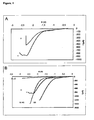
Fig. 1 : Voltammogram illustrating the embodiment of the invention for the reduction of an emulsion of heptadecafluorodecyl acrylate (2M) with cetyltrimethylammonium bromide as surfactant recorded on carbon surface (A), with two reduction cycles (1 and 2) on the same electrode, and (B) different substrates (i.e., SS: stainless steel, SiHC: higly-doped silicon, SiLC: slightly-doped silicon, C: carbon) as performed in example 1. -
Fig. 2 : AFM micrographs showing the nanostructuration of steel (micrograph A) and carbon (micrograph B) surfaces after electrografting step as described in example 1 for the embodiment of the invention. -
Fig. 3 : Voltammogram illustrating the embodiment for the reduction of a micellar solution of reactive monomer on carbon surface as performed in example 2. - The invention will now be illustrated with reference to the following examples which are not intended to limit the scope of the claimed invention.
- Emulsions are used to create droplets of an organic hydrophobic compound, the monomer, in protic hydrophilic medium, e.g. water. The emulsion of hydrophobic acrylates in water has been performed in the presence of a cationic surfactant (long alkyl chain bearing quaternary ammonium groups). Moreover the conductivity of the solution is thus ensured by the cationic surfactant, so there is no need to add other salt to the medium.
- Acetonitrile (Aldrich), tert-butyl methacrylate (tBMA, Aldrich), isooctyl acrylate (iOA, Aldrich) and heptadecafluorodecyl acrylate (HDFDA, ABCR) were dried over calcium hydride and distilled under reduced pressure. Dimethylformamide (DMF, Aldrich) was dried over P2O5 and distilled under reduced pressure. Tetraethylammonium perchlorate (TEAP, Fluka) and copper(II) acetate (Aldrich) were heated in vacuum at 80 °C for 12 h prior to use.
- Voltammetry and chronoamperometry were carried out in a one-compartment cell equipped with a platinum counter-electrode and a platinum pseudo-reference by using an EG&G potentiostat/galvanostat (M273) under the ambient atmosphere. The working electrode (2 cm2 stainless steel, silicon or carbon plates) was washed with heptane and acetone (the silicon plates were washed with HF), and dried overnight at 150 °C in a vacuum. The working electrode was immersed in dry DMF containing the acrylate (tBMA) (1.5 M) or HDFDA (2 M), the surfactant cetyltrimethylammonium bromide (12.5 mg) and a selected potential was applied. The potential varies at 20 mV/s during voltammetry. The nanostructured surfaces were washed extensively with dry DMF followed by acetonitrile in the case of PtBMA and by trifluorotoluene when fluorinated polyacrylate was used. The nanostructured surface was dried in vacuum before characterization.
- If a surfactant, cetyltrimethylammonium bromide, is added to water until saturation, the surfactant self-associates and may be characterized by dynamic light scattering (DLS). The diameter of the observed aggregates is large, about 3 to 10µm, with a mean diameter of about 5 µm these aggregates are formed of micellar rods.
- After addition of the acrylate (HDFDA) and a subsequent sonication, an emulsion comprising droplets of HDFDA at least partially surrounded by the surfactant molecules is formed in the protic solvent. The diameter of the droplets of HDFDA of the emulsion may also be measured by DLS. The diameter of the droplets is about 600 nm to 800 nm, with a mean diameter of about 700 nm.
- The formation of the strongly adherent polymer coating is performed in an electrochemical cell containing 5 ml of a 2M HDFDA solution comprising 12.5 mg of cetyltrimethylammonium bromide in water at about -2 V on doped-silicon, steel and carbon. The cationic surfactant insures the conductivity of the aqueous solution. After each application of a selected potential the electrically conductive or semiconductive surface is washed with water and trifluorotoluene.
- Cetyltrimethylammonium bromide surfactant comprises an alkyl chain containing 16 carbon atoms and is only poorly soluble in the aqueous solution (saturation for about 30mg of surfactant added to 10 ml water 2M in HDFDA).
- However, a decrease of the current intensity is measured after each scan (
Figure 1 ). The current intensity corresponding to the hydrolysis of H2O decreases after each potential scanning, because hydrophocicity of the electrically conductive or semiconductive surface increases due to the formation of a strongly adherent hydrophobic polymer coating which reduces the access of water to the working electrode. - The formation of a strongly adherent fluorinated polyacrylate coating on steel, stainless steel, carbon and silicon (of different resistivity values from 0.001 Ω*cm heavily p- and n-doped Si, to 50 Ω*cm lightly n-doped Si: LC= low conductivity and HC= high conductivity) surfaces evidenced by voltammetry (Figure 4) is confirmed by ATR-FTIR Absorptions characteristic of the polymer are observed at 1727 cm-1 (C=O stretching vibration) and 1157 cm-1 (CO stretching vibration). The contact angle values measured for the different nanostructured surfaces confirm the presence of a strongly adherent hydrophobic poly(HDFDA) on the different electrically conductive or semiconductive surfaces. Depending on the method which is used, chronoamperometry or voltammetry, the contact angle of water may vary. However all the contact angles measured for nanostructured coatings prepared using a surfactant and a protic solvent are higher then the contact angle which can be measured for a strongly adherent poly(HDFDA) coating prepared using a 2 M HDFDA DMF based solution on the same surfaces (average contact angle 118° ± 4°). Moreover, nanostructured coatings, which may be called superhydrophobic because they exhibit a contact angle of more then 130°, may be obtained for all the different electrically conductive or semiconductive surfaces, due to the roughness of the strongly adherent polymer coating (
Figure 2 ). Although the roughness seems to be correlated to the diameter of the droplets which are formed in the emulsion, the formation of hydrogen bubbles at the working electrode during the formation of the strongly adherent polymer coating, may induce an additional porosity of the polymer coating because hydrogen bubbles may be trapped in the strongly adherent polymer coatings, so that this porosity may also contribute to increase the overall roughness of the obtained strongly adherent polymer coatings. - Furthermore, the roughness depends on how the selected potential(s) is/are applied to the electrically conductive or semiconductive surfaces. When using chronoamperometry, i.e. applying a constant potential with time, rather than cyclic voltammetry, the coatings are more hydrophobic because the number of strongly adherent protuberances which are formed and subsequently the roughness of the strongly adherent polymer coating is higher. AFM measurements have confirmed that roughness of the nanostructured coating is increased when the coating is prepared by chronoamperometry whatever the used surface (carbon, steel or stainless steel). This explains the increase of the contact angle of water for these nanostructured surfaces prepared by chronoamperometry.
- After addition of tert-butyl methacrylate (tBMA) or isooctyl acrylate (iOA) to water, an emulsion is formed upon sonication. The diameter of the droplets of tBMA and iOA of the emulsion may be measured by DLS. The diameter of the droplets is about 1 µm to 3 µm for tBMA and about 0.8 to 2 µm for iOA. The emulsion prepared using 1.5ml of tBMA is not stable and 600 µl of decaline (decahydronaphtalene) have been added to the emulsion to decrease the diameter of the tBMA droplets and to increase the stability of the emulsion.
- The formation of the strongly adherent polymer coating is performed in a electrochemical cell containing 5 ml of a 1.5 M tBMA or iOA solution comprising 15 mg of cetyltrimethylammonium bromide in water at about -2.2 V for both monomers on carbon and stainless steel. The cationic surfactant also increases the conductivity of the aqueous solution. After each application of a selected potential the electrically conductive surface is washed with water and good solvents for the polymer (toluene or THF).
- The nanostructured coatings prepared using tBMA or iOA, a surfactant and water are smoother as compared to coatings obtained with HDFDA. However, the presence of the strongly adherent polymer coating was assessed by ATR-FTIR. Absorptions characteristic of the polymer are observed at 1727 cm-1 (C=O stretching vibration) and 1157 cm-1 (C-O stretching vibration).
- After addition of ZONYL TM fluoromonomer (2-(perfluoroalkyl)ethyl methacrylate) to the surfactant/water mixture, an emulsion is formed upon sonication. The size of the droplets measured by DLS is about 0.5 µm to 2 µm.
- The formation of the strongly adherent polymer coating is performed in a electrochemical cell containing 5 ml of 0.05 M to 1 M ZONYL TM fluoromonomer (average Mn ~ 534) solutions comprising 15 mg of cetyltrimethylammonium bromide in water at potentials between -0.8 V and -2 V depending on the concentration on stainless steel. After each application of a selected potential the electrically conductive or semiconductive surface is washed with water and trifluorotoluene.
- The presence of the strongly adherent polymer coating was assessed by ATR-FTIR. Absorptions characteristic of the polymer are observed at 1727 cm-1 (C=O stretching vibration) and 1157 cm-1 (C-O stretching vibration). Comparable contact angle as with poly(HDFDA) were reached on these surfaces.
- The monomer dimethyldecylaminoethylacrylate quaternary ammonium bromide (DMDAEABr) (scheme 4 structure A with n = 10) has been synthesized by quaternization of dimethylamino-ethylacrylate (DMAEA) with decylbromide following a general synthesis pathway described in Polymer Preprints, 2003, 44(2), 264-265 and references therein.
- The formation of the nanostructured and strongly adherent polymer coating is performed in an electrochemical cell containing 5 ml of a 0.1 M of DMDAEABr solution in water at about -2.2 V on carbon. The ionic reactive surfactant ensures the conductivity of the aqueous solution. Voltammetry (
Fig. 3 ) shows four successive scans of the potential on the same carbon electrode and clearly evidence the at least partial passivation of the surface due to the formation of the strongly adherent polymer coating. In such coating, quaternary ammonium salt is part of the nanostructured coating so that the contact angle decreases drastically below 40°. Nanostructuration of the coating is still present due to the micellar monomer droplets spontaneously formed when the monomer is put in water. Interestingly, it must be noted that surfaces coated with quaternary ammonium of this type have efficiency in bacterial lyses. In a one step and in an aqueous micellar medium, such coatings have thus been achieved.
Claims (11)
- An electrogafting method for forming and regulating a strongly adherent nanostructured polymer coating onto an electro-conductive surface profile characterized in that the surface profile is regulated by electrodeposition of nanometre- andior micrometre-scale nuclei onto the surface profile prior to or simultaneously to the formation of the polymer coating, and characterised in that the nuclei are made of an organic material provided by electrodeposition from a monomer droplet or from a monomer droplet which is provided by an emulsion comprising the monomer in a protic solvent.
- The electrografting method according to claim 1 wherein the electro-conductive surface is made of conductive and semi-conductive material.
- The electrogafting method according to claim 1 characterised in that the nuclei further comprise a polymer provided by polymerisation of the monomer droplet at the conductive surface upon application of a potential z.
- The electrografting method according to anyone of claim 1 to 3 characterised in that the emulsion further comprises a surfactant.
- The electrografting method according to anyone of claim 1 to 4 characterised in that the protic solvent is water.
- The electrografting method according to claim 3 characterised in that the potential z is applied repeatedly with different values.
- The electrografting method according to any one of claims 1 to 6 comprising a nucleation step at the electroconductive surface inducing nanostructuration of the coating.
- The nanostructured polymer coating obtained by the electrografting method according to any one of claims 1 to 7.
- Use of the nanostructured polymer coating according to claim 8 for a medical device application.
- Use of the nanostructured polymer coating according to claim 8 for a biosensor application.
- Use of the nanostructured polymer coating according to claim 8 for a microfluidic application.
Priority Applications (1)
| Application Number | Priority Date | Filing Date | Title |
|---|---|---|---|
| EP07704279A EP1984462B1 (en) | 2006-02-10 | 2007-01-31 | Electrografting method for forming and regulating a strong adherent nanostructured polymer coating |
Applications Claiming Priority (3)
| Application Number | Priority Date | Filing Date | Title |
|---|---|---|---|
| EP06101558 | 2006-02-10 | ||
| EP07704279A EP1984462B1 (en) | 2006-02-10 | 2007-01-31 | Electrografting method for forming and regulating a strong adherent nanostructured polymer coating |
| PCT/EP2007/050956 WO2007090779A1 (en) | 2006-02-10 | 2007-01-31 | Electrografting method for forming and regulating a strong adherent nanostructured polymer coating |
Publications (2)
| Publication Number | Publication Date |
|---|---|
| EP1984462A1 EP1984462A1 (en) | 2008-10-29 |
| EP1984462B1 true EP1984462B1 (en) | 2012-07-04 |
Family
ID=36346917
Family Applications (1)
| Application Number | Title | Priority Date | Filing Date |
|---|---|---|---|
| EP07704279A Not-in-force EP1984462B1 (en) | 2006-02-10 | 2007-01-31 | Electrografting method for forming and regulating a strong adherent nanostructured polymer coating |
Country Status (4)
| Country | Link |
|---|---|
| US (1) | US20090020431A1 (en) |
| EP (1) | EP1984462B1 (en) |
| JP (1) | JP2009526112A (en) |
| WO (1) | WO2007090779A1 (en) |
Families Citing this family (13)
| Publication number | Priority date | Publication date | Assignee | Title |
|---|---|---|---|---|
| FR2905708B1 (en) * | 2006-09-07 | 2008-12-05 | Commissariat Energie Atomique | CULTURE SUBSTRATE WITH OXIDIZED SILICONE COATING |
| ITMI20081734A1 (en) * | 2008-09-30 | 2010-04-01 | Consiglio Nazionale Ricerche | SPACIOUSLY CONTROLLED INCORPORATION OF A PARTICLE MICROMETRIC OR NANOMETRIC SCALE IN A CONDUCTIVE SURFACE LAYER OF A SUPPORT. |
| US8247325B2 (en) * | 2008-10-10 | 2012-08-21 | Uchicago Argonne, Llc | Direct growth of metal nanoplates on semiconductor substrates |
| CA2795147A1 (en) * | 2010-04-21 | 2011-10-27 | Purdue Research Foundation | Formation of conductive polymers using nitrosyl ion as an oxidizing agent |
| CN110763842A (en) | 2011-06-29 | 2020-02-07 | 中央研究院 | Capture, purification and release of biological substances using surface coatings |
| EP2949782B1 (en) * | 2013-10-18 | 2019-12-11 | Sumitomo Rubber Industries, Ltd. | Surface-modified metal and method for modifying metal surface |
| JP6018237B2 (en) * | 2014-02-14 | 2016-11-02 | アークレイ株式会社 | Chip manufacturing method including microchannel and chip manufactured thereby |
| CN106662514A (en) | 2014-04-01 | 2017-05-10 | 中央研究院 | Methods and systems for cancer diagnosis and prognosis |
| CN105381824B (en) | 2014-08-26 | 2019-04-23 | 中央研究院 | collector architecture layout design |
| US9217098B1 (en) * | 2015-06-01 | 2015-12-22 | Sirrus, Inc. | Electroinitiated polymerization of compositions having a 1,1-disubstituted alkene compound |
| JP6753041B2 (en) | 2015-08-27 | 2020-09-09 | 住友ゴム工業株式会社 | Surface modification Metal and metal surface modification method |
| JP7012648B2 (en) * | 2016-01-29 | 2022-02-15 | コモンウェルス サイエンティフィック アンド インダストリアル リサーチ オーガナイゼーション | Conductive polymer |
| US10107726B2 (en) | 2016-03-16 | 2018-10-23 | Cellmax, Ltd. | Collection of suspended cells using a transferable membrane |
Family Cites Families (4)
| Publication number | Priority date | Publication date | Assignee | Title |
|---|---|---|---|---|
| FR2821575B1 (en) * | 2001-03-02 | 2003-10-24 | Commissariat Energie Atomique | METHOD OF LOCALIZED ORGANIC GRAFTING WITHOUT MASK ON CONDUCTIVE OR SEMICONDUCTOR PROPERTIES OF COMPOSITE SURFACES |
| WO2002098926A2 (en) | 2001-06-04 | 2002-12-12 | Universite De Liege | Process for depositing strong adherend polymer coating onto an electrically conductive surface |
| FR2843742B1 (en) * | 2002-08-26 | 2005-10-14 | Commissariat Energie Atomique | MICROSTRUCTURE WITH FUNCTIONALIZED SURFACE BY LOCALIZED DEPOSITION OF A THIN LAYER AND METHOD OF MANUFACTURING THE SAME |
| FR2860523B1 (en) | 2003-10-01 | 2006-01-13 | Commissariat Energie Atomique | METHOD FOR FORMING POLYMER FILM ON A CONDUCTIVE OR SEMICONDUCTOR SURFACE OF ELECTRICITY BY ELECTRO-GRAFTING, SURFACES OBTAINED AND APPLICATIONS |
-
2007
- 2007-01-31 WO PCT/EP2007/050956 patent/WO2007090779A1/en not_active Ceased
- 2007-01-31 JP JP2008553726A patent/JP2009526112A/en active Pending
- 2007-01-31 US US12/223,625 patent/US20090020431A1/en not_active Abandoned
- 2007-01-31 EP EP07704279A patent/EP1984462B1/en not_active Not-in-force
Also Published As
| Publication number | Publication date |
|---|---|
| US20090020431A1 (en) | 2009-01-22 |
| EP1984462A1 (en) | 2008-10-29 |
| WO2007090779A1 (en) | 2007-08-16 |
| JP2009526112A (en) | 2009-07-16 |
Similar Documents
| Publication | Publication Date | Title |
|---|---|---|
| WO2007090779A1 (en) | Electrografting method for forming and regulating a strong adherent nanostructured polymer coating | |
| US9248467B2 (en) | Types of electrodeposited polymer coatings with reversible wettability and electro-optical properties | |
| Bao et al. | Robust superhydrophobic coating with hollow SiO2/PAA-b-PS Janus microspheres for self-cleaning and oil–water separation | |
| Bui-Thi-Tuyet et al. | Surface and electrochemical properties of polymer brush-based redox poly (ionic liquid) | |
| WO2012009238A2 (en) | New types of electrodeposited polymer coatings with reversible wettability and electro-optical properties | |
| CN101213264B (en) | Generation of organic electrografted thin films on conductive or semiconductive surfaces | |
| Dong et al. | Phase behavior of poly (sulfobetaine methacrylate)-grafted silica nanoparticles and their stability in protein solutions | |
| Chen et al. | Integration of hydrogels with functional nanoparticles using hydrophobic comb-like polymers as an adhesive layer | |
| Wang et al. | Self-assembly of catecholic macroinitiator on various substrates and surface-initiated polymerization | |
| US12023641B2 (en) | Composition comprising self-stratifying amphiphilic Janus particles | |
| Taleb et al. | Elaboration of voltage and ion exchange stimuli-responsive conducting polymers with selective switchable liquid-repellency | |
| Arjomandi et al. | Surface characterization and morphology of conducting polypyrrole thin films during polymer growth on ITO glass electrode | |
| Fenoy et al. | Reversible modulation of the redox activity in conducting polymer nanofilms induced by hydrophobic collapse of a surface-grafted polyelectrolyte | |
| Darmanin et al. | Fluorophobic effect for building up the surface morphology of electrodeposited substituted conductive polymers | |
| CN1507375B (en) | Method for maskless localized organic grafting of conductive or semiconducting parts of composite surfaces | |
| Mortier et al. | 3, 4-Ethylenedioxypyrrole (EDOP) monomers with aromatic substituents for parahydrophobic surfaces by electropolymerization | |
| Mortier et al. | 3, 4-Dialkoxypyrrole for the formation of bioinspired rose petal-like substrates with high water adhesion | |
| JP5236503B2 (en) | Method of forming an organic film on a conductive or semiconductive surface from an aqueous solution | |
| Friis et al. | Hydrophilic polymer brush layers on stainless steel using multilayered ATRP initiator layer | |
| Santos et al. | Electrosynthesis of well-organized nanoporous poly (3, 4-ethylenedioxythiophene) by nanosphere lithography | |
| Lakard et al. | Electrochemical preparation and physicochemical study of polymers obtained from carbazole and N-((methoxycarbonyl) methyl) carbazole | |
| Parakhonskiy et al. | Hollow polypyrrole containers with regulated uptake/release properties | |
| Joy et al. | Superhydrophobic Polyaniline–Siloxane Coatings with Excellent Barrier and Active Corrosion Protection Properties for Mild Steel | |
| Darmanin et al. | Super oil-repellent surfaces from conductive polymers | |
| Akerboom et al. | Controlled fabrication of polypyrrole surfaces with overhang structures by colloidal templating |
Legal Events
| Date | Code | Title | Description |
|---|---|---|---|
| PUAI | Public reference made under article 153(3) epc to a published international application that has entered the european phase |
Free format text: ORIGINAL CODE: 0009012 |
|
| 17P | Request for examination filed |
Effective date: 20080910 |
|
| AK | Designated contracting states |
Kind code of ref document: A1 Designated state(s): AT BE BG CH CY CZ DE DK EE ES FI FR GB GR HU IE IS IT LI LT LU LV MC NL PL PT RO SE SI SK TR |
|
| 17Q | First examination report despatched |
Effective date: 20090911 |
|
| RIC1 | Information provided on ipc code assigned before grant |
Ipc: B81C 1/00 20060101ALI20120109BHEP Ipc: C25D 15/00 20060101ALI20120109BHEP Ipc: C09D 5/44 20060101AFI20120109BHEP |
|
| GRAP | Despatch of communication of intention to grant a patent |
Free format text: ORIGINAL CODE: EPIDOSNIGR1 |
|
| DAX | Request for extension of the european patent (deleted) | ||
| GRAS | Grant fee paid |
Free format text: ORIGINAL CODE: EPIDOSNIGR3 |
|
| GRAA | (expected) grant |
Free format text: ORIGINAL CODE: 0009210 |
|
| AK | Designated contracting states |
Kind code of ref document: B1 Designated state(s): AT BE BG CH CY CZ DE DK EE ES FI FR GB GR HU IE IS IT LI LT LU LV MC NL PL PT RO SE SI SK TR |
|
| REG | Reference to a national code |
Ref country code: GB Ref legal event code: FG4D |
|
| REG | Reference to a national code |
Ref country code: CH Ref legal event code: EP |
|
| REG | Reference to a national code |
Ref country code: AT Ref legal event code: REF Ref document number: 565178 Country of ref document: AT Kind code of ref document: T Effective date: 20120715 |
|
| REG | Reference to a national code |
Ref country code: IE Ref legal event code: FG4D |
|
| REG | Reference to a national code |
Ref country code: DE Ref legal event code: R096 Ref document number: 602007023787 Country of ref document: DE Effective date: 20120830 |
|
| REG | Reference to a national code |
Ref country code: AT Ref legal event code: MK05 Ref document number: 565178 Country of ref document: AT Kind code of ref document: T Effective date: 20120704 |
|
| REG | Reference to a national code |
Ref country code: NL Ref legal event code: VDEP Effective date: 20120704 |
|
| PG25 | Lapsed in a contracting state [announced via postgrant information from national office to epo] |
Ref country code: SI Free format text: LAPSE BECAUSE OF FAILURE TO SUBMIT A TRANSLATION OF THE DESCRIPTION OR TO PAY THE FEE WITHIN THE PRESCRIBED TIME-LIMIT Effective date: 20120704 |
|
| REG | Reference to a national code |
Ref country code: LT Ref legal event code: MG4D Effective date: 20120711 |
|
| PG25 | Lapsed in a contracting state [announced via postgrant information from national office to epo] |
Ref country code: CY Free format text: LAPSE BECAUSE OF FAILURE TO SUBMIT A TRANSLATION OF THE DESCRIPTION OR TO PAY THE FEE WITHIN THE PRESCRIBED TIME-LIMIT Effective date: 20120704 Ref country code: LT Free format text: LAPSE BECAUSE OF FAILURE TO SUBMIT A TRANSLATION OF THE DESCRIPTION OR TO PAY THE FEE WITHIN THE PRESCRIBED TIME-LIMIT Effective date: 20120704 Ref country code: FI Free format text: LAPSE BECAUSE OF FAILURE TO SUBMIT A TRANSLATION OF THE DESCRIPTION OR TO PAY THE FEE WITHIN THE PRESCRIBED TIME-LIMIT Effective date: 20120704 Ref country code: BE Free format text: LAPSE BECAUSE OF FAILURE TO SUBMIT A TRANSLATION OF THE DESCRIPTION OR TO PAY THE FEE WITHIN THE PRESCRIBED TIME-LIMIT Effective date: 20120704 Ref country code: IS Free format text: LAPSE BECAUSE OF FAILURE TO SUBMIT A TRANSLATION OF THE DESCRIPTION OR TO PAY THE FEE WITHIN THE PRESCRIBED TIME-LIMIT Effective date: 20121104 Ref country code: AT Free format text: LAPSE BECAUSE OF FAILURE TO SUBMIT A TRANSLATION OF THE DESCRIPTION OR TO PAY THE FEE WITHIN THE PRESCRIBED TIME-LIMIT Effective date: 20120704 |
|
| PG25 | Lapsed in a contracting state [announced via postgrant information from national office to epo] |
Ref country code: GR Free format text: LAPSE BECAUSE OF FAILURE TO SUBMIT A TRANSLATION OF THE DESCRIPTION OR TO PAY THE FEE WITHIN THE PRESCRIBED TIME-LIMIT Effective date: 20121005 Ref country code: LV Free format text: LAPSE BECAUSE OF FAILURE TO SUBMIT A TRANSLATION OF THE DESCRIPTION OR TO PAY THE FEE WITHIN THE PRESCRIBED TIME-LIMIT Effective date: 20120704 Ref country code: SE Free format text: LAPSE BECAUSE OF FAILURE TO SUBMIT A TRANSLATION OF THE DESCRIPTION OR TO PAY THE FEE WITHIN THE PRESCRIBED TIME-LIMIT Effective date: 20120704 Ref country code: PT Free format text: LAPSE BECAUSE OF FAILURE TO SUBMIT A TRANSLATION OF THE DESCRIPTION OR TO PAY THE FEE WITHIN THE PRESCRIBED TIME-LIMIT Effective date: 20121105 Ref country code: PL Free format text: LAPSE BECAUSE OF FAILURE TO SUBMIT A TRANSLATION OF THE DESCRIPTION OR TO PAY THE FEE WITHIN THE PRESCRIBED TIME-LIMIT Effective date: 20120704 |
|
| PG25 | Lapsed in a contracting state [announced via postgrant information from national office to epo] |
Ref country code: NL Free format text: LAPSE BECAUSE OF FAILURE TO SUBMIT A TRANSLATION OF THE DESCRIPTION OR TO PAY THE FEE WITHIN THE PRESCRIBED TIME-LIMIT Effective date: 20120704 |
|
| PG25 | Lapsed in a contracting state [announced via postgrant information from national office to epo] |
Ref country code: RO Free format text: LAPSE BECAUSE OF FAILURE TO SUBMIT A TRANSLATION OF THE DESCRIPTION OR TO PAY THE FEE WITHIN THE PRESCRIBED TIME-LIMIT Effective date: 20120704 Ref country code: EE Free format text: LAPSE BECAUSE OF FAILURE TO SUBMIT A TRANSLATION OF THE DESCRIPTION OR TO PAY THE FEE WITHIN THE PRESCRIBED TIME-LIMIT Effective date: 20120704 Ref country code: ES Free format text: LAPSE BECAUSE OF FAILURE TO SUBMIT A TRANSLATION OF THE DESCRIPTION OR TO PAY THE FEE WITHIN THE PRESCRIBED TIME-LIMIT Effective date: 20121015 Ref country code: CZ Free format text: LAPSE BECAUSE OF FAILURE TO SUBMIT A TRANSLATION OF THE DESCRIPTION OR TO PAY THE FEE WITHIN THE PRESCRIBED TIME-LIMIT Effective date: 20120704 Ref country code: DK Free format text: LAPSE BECAUSE OF FAILURE TO SUBMIT A TRANSLATION OF THE DESCRIPTION OR TO PAY THE FEE WITHIN THE PRESCRIBED TIME-LIMIT Effective date: 20120704 |
|
| PLBE | No opposition filed within time limit |
Free format text: ORIGINAL CODE: 0009261 |
|
| STAA | Information on the status of an ep patent application or granted ep patent |
Free format text: STATUS: NO OPPOSITION FILED WITHIN TIME LIMIT |
|
| PG25 | Lapsed in a contracting state [announced via postgrant information from national office to epo] |
Ref country code: IT Free format text: LAPSE BECAUSE OF FAILURE TO SUBMIT A TRANSLATION OF THE DESCRIPTION OR TO PAY THE FEE WITHIN THE PRESCRIBED TIME-LIMIT Effective date: 20120704 Ref country code: SK Free format text: LAPSE BECAUSE OF FAILURE TO SUBMIT A TRANSLATION OF THE DESCRIPTION OR TO PAY THE FEE WITHIN THE PRESCRIBED TIME-LIMIT Effective date: 20120704 |
|
| 26N | No opposition filed |
Effective date: 20130405 |
|
| PG25 | Lapsed in a contracting state [announced via postgrant information from national office to epo] |
Ref country code: BG Free format text: LAPSE BECAUSE OF FAILURE TO SUBMIT A TRANSLATION OF THE DESCRIPTION OR TO PAY THE FEE WITHIN THE PRESCRIBED TIME-LIMIT Effective date: 20121004 |
|
| REG | Reference to a national code |
Ref country code: DE Ref legal event code: R097 Ref document number: 602007023787 Country of ref document: DE Effective date: 20130405 |
|
| PG25 | Lapsed in a contracting state [announced via postgrant information from national office to epo] |
Ref country code: MC Free format text: LAPSE BECAUSE OF NON-PAYMENT OF DUE FEES Effective date: 20130131 |
|
| REG | Reference to a national code |
Ref country code: CH Ref legal event code: PL |
|
| GBPC | Gb: european patent ceased through non-payment of renewal fee |
Effective date: 20130131 |
|
| REG | Reference to a national code |
Ref country code: IE Ref legal event code: MM4A |
|
| REG | Reference to a national code |
Ref country code: FR Ref legal event code: ST Effective date: 20130930 |
|
| PG25 | Lapsed in a contracting state [announced via postgrant information from national office to epo] |
Ref country code: LI Free format text: LAPSE BECAUSE OF NON-PAYMENT OF DUE FEES Effective date: 20130131 Ref country code: CH Free format text: LAPSE BECAUSE OF NON-PAYMENT OF DUE FEES Effective date: 20130131 Ref country code: DE Free format text: LAPSE BECAUSE OF NON-PAYMENT OF DUE FEES Effective date: 20130801 |
|
| REG | Reference to a national code |
Ref country code: DE Ref legal event code: R119 Ref document number: 602007023787 Country of ref document: DE Effective date: 20130801 |
|
| PG25 | Lapsed in a contracting state [announced via postgrant information from national office to epo] |
Ref country code: FR Free format text: LAPSE BECAUSE OF NON-PAYMENT OF DUE FEES Effective date: 20130131 Ref country code: GB Free format text: LAPSE BECAUSE OF NON-PAYMENT OF DUE FEES Effective date: 20130131 |
|
| PG25 | Lapsed in a contracting state [announced via postgrant information from national office to epo] |
Ref country code: IE Free format text: LAPSE BECAUSE OF NON-PAYMENT OF DUE FEES Effective date: 20130131 |
|
| PG25 | Lapsed in a contracting state [announced via postgrant information from national office to epo] |
Ref country code: TR Free format text: LAPSE BECAUSE OF FAILURE TO SUBMIT A TRANSLATION OF THE DESCRIPTION OR TO PAY THE FEE WITHIN THE PRESCRIBED TIME-LIMIT Effective date: 20120704 |
|
| PG25 | Lapsed in a contracting state [announced via postgrant information from national office to epo] |
Ref country code: LU Free format text: LAPSE BECAUSE OF NON-PAYMENT OF DUE FEES Effective date: 20130131 Ref country code: HU Free format text: LAPSE BECAUSE OF FAILURE TO SUBMIT A TRANSLATION OF THE DESCRIPTION OR TO PAY THE FEE WITHIN THE PRESCRIBED TIME-LIMIT; INVALID AB INITIO Effective date: 20070131 |