EP1982868A1 - Vehicle door glass blocker and breaker - Google Patents
Vehicle door glass blocker and breaker Download PDFInfo
- Publication number
- EP1982868A1 EP1982868A1 EP08103597A EP08103597A EP1982868A1 EP 1982868 A1 EP1982868 A1 EP 1982868A1 EP 08103597 A EP08103597 A EP 08103597A EP 08103597 A EP08103597 A EP 08103597A EP 1982868 A1 EP1982868 A1 EP 1982868A1
- Authority
- EP
- European Patent Office
- Prior art keywords
- vehicle
- blocking
- vehicle door
- bracket
- vehicle window
- Prior art date
- Legal status (The legal status is an assumption and is not a legal conclusion. Google has not performed a legal analysis and makes no representation as to the accuracy of the status listed.)
- Granted
Links
- 239000011521 glass Substances 0.000 title claims abstract description 51
- 230000000903 blocking effect Effects 0.000 claims abstract description 65
- 238000001125 extrusion Methods 0.000 claims abstract description 15
- 230000007246 mechanism Effects 0.000 claims abstract description 12
- 238000006073 displacement reaction Methods 0.000 claims abstract description 7
- 230000001012 protector Effects 0.000 description 5
- 230000013011 mating Effects 0.000 description 4
- 239000000853 adhesive Substances 0.000 description 3
- 230000001070 adhesive effect Effects 0.000 description 3
- 239000005357 flat glass Substances 0.000 description 3
- 230000003116 impacting effect Effects 0.000 description 3
- 238000004026 adhesive bonding Methods 0.000 description 2
- 239000000463 material Substances 0.000 description 2
- 230000004048 modification Effects 0.000 description 2
- 238000012986 modification Methods 0.000 description 2
- 230000001960 triggered effect Effects 0.000 description 2
- 238000003466 welding Methods 0.000 description 2
- 238000005299 abrasion Methods 0.000 description 1
- 230000004913 activation Effects 0.000 description 1
- 230000008878 coupling Effects 0.000 description 1
- 238000010168 coupling process Methods 0.000 description 1
- 238000005859 coupling reaction Methods 0.000 description 1
- 230000007812 deficiency Effects 0.000 description 1
- 239000006260 foam Substances 0.000 description 1
- 238000002347 injection Methods 0.000 description 1
- 239000007924 injection Substances 0.000 description 1
- 239000002991 molded plastic Substances 0.000 description 1
- 230000009467 reduction Effects 0.000 description 1
- 239000005336 safety glass Substances 0.000 description 1
Images


Classifications
-
- B—PERFORMING OPERATIONS; TRANSPORTING
- B60—VEHICLES IN GENERAL
- B60R—VEHICLES, VEHICLE FITTINGS, OR VEHICLE PARTS, NOT OTHERWISE PROVIDED FOR
- B60R21/00—Arrangements or fittings on vehicles for protecting or preventing injuries to occupants or pedestrians in case of accidents or other traffic risks
-
- B—PERFORMING OPERATIONS; TRANSPORTING
- B60—VEHICLES IN GENERAL
- B60R—VEHICLES, VEHICLE FITTINGS, OR VEHICLE PARTS, NOT OTHERWISE PROVIDED FOR
- B60R21/00—Arrangements or fittings on vehicles for protecting or preventing injuries to occupants or pedestrians in case of accidents or other traffic risks
- B60R2021/0002—Type of accident
- B60R2021/0004—Frontal collision
-
- B—PERFORMING OPERATIONS; TRANSPORTING
- B60—VEHICLES IN GENERAL
- B60R—VEHICLES, VEHICLE FITTINGS, OR VEHICLE PARTS, NOT OTHERWISE PROVIDED FOR
- B60R21/00—Arrangements or fittings on vehicles for protecting or preventing injuries to occupants or pedestrians in case of accidents or other traffic risks
- B60R2021/0002—Type of accident
- B60R2021/0009—Oblique collision
Definitions
- the invention relates generally to vehicle safety devices, and more particularly to a bracket assembly mounted to the interior of a vehicle door frame adapted to protect the vehicle door latch from contact with the vehicle window in the event of a frontal crash.
- French Patent No. FR 2,874,559 to Olivier provides a mechanism to shatter a side window in the event of a crash.
- Olivier discloses a striker (30) and window glass, both mounted inside a vehicle door frame (10).
- the striker (30) is cylindrical in shape with a pointed end, and the pointed end is fixed in a position near the vehicle's window glass. If a force is applied to the vehicle door in a direction normal to the surface of the vehicle window, as occurs during a side impact crash, the vehicle window will be displaced in the direction of striker (30). If the force is relatively large, the vehicle window will impact the pointed end of striker (30) and striker (30) will break the glass of the vehicle window before the vehicle window impacts door lock (14), thus protecting door lock (14) from damage.
- the device of Olivier overcomes several of the drawbacks of the device of Vollmer, particularly those associated with high cost and complex activation, the device of Olivier still suffers from several significant shortcomings. Specifically, striker (30) only impacts and breaks the vehicle window glass when the collision force is directed normal to the vehicle window, such as during a side impact crash event. In the case of a frontal or offset frontal crash event, when the displacement of the vehicle's side door window is in a direction substantially parallel to the plane of the window, striker (30) does not contact the door glass, and is therefore unable to break the glass of the vehicle window. Therefore, the vehicle window can still impact the door latch actuator mechanism and open the vehicle's door.
- a vehicle door glass blocker assembly which comprises comprising a blocking bracket securable to a vehicle door frame panel; a blocking edge integrally formed with said blocking bracket, being substantially normal to a vertical edge of a vehicle window when secured to the vehicle door frame panel, and being capable of at least partially shattering the vehicle window when the vehicle window impacts said blocking edge during a vehicle crash event.
- a blocking protrusion may be coupled to said blocking bracket, being longitudinally disposable between the vehicle window and a vehicle door latch mechanism, and being capable of at least partially preventing transverse displacement of the vehicle window.
- a support bracket may additionally be secured to said blocking bracket.
- a glass run extrusion may be secured to the support bracket, be adapted to accept an edge of the vehicle window, and be capable of reducing vibrations in the vehicle window.
- One or more channel tabs may be integrally formed with a channel portion of the support bracket, the channel tab being adapted to secure the glass run extrusion to the channel portion of the support bracket.
- the invention further provides a vehicle having a door that incorporates a door glass blocker assembly as set out above.
- Figs. 1A-12 illustrate various views of a vehicle door glass blocker and breaker assembly, the assembly being hereinafter generally designated “vehicle door glass blocker assembly 20.”
- Vehicle door glass blocker assembly 20 may generally include a blocking bracket 22 secured to vehicle door frame rear panel 24, with panel 24 being one of a plurality of vehicle door frame panels that define the vehicle door frame interior.
- Blocking bracket 22 may be adapted to block or shatter vehicle window 26 if window 26 is displaced towards blocking bracket 22 in a longitudinal direction, herein defined to be a direction that is generally parallel to a horizontal axis passing through the length of vehicle window 26.
- Blocking bracket 22 may also include an elongated blocking protrusion 28 oriented in the longitudinal direction and disposed between vehicle window 26 and door latch actuator rod 30.
- Blocking protrusion 28 may be adapted to prevent the intact or partially shattered vehicle window 26 from contacting door latch actuator rod 30 (or any other component of the latch mechanism that may deploy the latch) if window 26 is displaced in a transverse direction, herein defined to be a direction that is generally horizontal and normal to a horizontal axis passing through the length of vehicle window 26.
- Vehicle door glass blocker assembly 20 may also include a support bracket 32 coupled to blocking bracket 22 and vehicle door frame side panel 34, with panel 34 being one of a plurality of vehicle door frame panels that define the vehicle door frame interior.
- Support bracket 32 may include a vertically disposed channel portion that is adapted to secure a glass run extrusion 36 capable of receiving an edge of vehicle window 26, thereby preventing or reducing vibration of vehicle window 26.
- blocking bracket 22 may include a substantially planar door frame mounting surface 38 adapted to mate with a corresponding surface on vehicle door frame rear panel 24 (see especially Fig. 6 ).
- Door frame mounting surface 38 may also include a door frame mounting aperture 40 that is centrally disposed near the top edge of surface 38 (see especially Fig. 8 ).
- the door frame mounting aperture 40 may be dimensioned to receive a frame mounting screw 42 which is adapted to secure blocking bracket 22 to vehicle door frame rear panel 24.
- frame mounting screw 42 may be first inserted into a retainer 44.
- Retainer 44 may be an injection moulded plastic part having a generally rectangular cross-sectional shape with an aperture dimensioned to receive frame mounting screw 42.
- Retainer 44 may be adapted to distribute pressure exerted by frame mounting screw 42 over a relatively wide area on door frame mounting surface 38, thus preventing damage to the area surrounding door frame mounting aperture 40 of blocking bracket 22.
- Frame mounting screw 42, with retainer 44 coupled thereto may then be inserted into door frame mounting aperture 40 of blocking bracket 22.
- Frame mounting screw 42 may next be received into an aperture (not shown) on vehicle door frame rear panel 24, and then tightened to a specified torque, thus securing blocking bracket 22 to vehicle door frame rear panel 24.
- blocking bracket 22 may also include a corner protector 46 (see Fig. 2 ).
- Corner protector 46 may be a generally rectangular pad having a surface comprised of foam, felt, or any other suitable material, and having an adhesive backing allowing corner protector 46 to be secured to a surface on blocking bracket 22.
- Corner protector 46 may be adapted to be secured to any portion of blocking bracket 22 that can come in contact with any portion of the vehicle door frame.
- corner protector 46 may be secured to the lower rear surface of door frame mounting surface 38 in a position that will prevent direct contact between blocking bracket 22 and vehicle door frame rear panel 24.
- blocking bracket 22 may also include a substantially planar support bracket mounting surface 48 that is generally oriented perpendicular to the rearmost edge of vehicle window 26.
- Support bracket mounting surface 48 may include a blocking edge 50 which is disposed along the transverse edge of support bracket mounting surface 48 and is perpendicularly oriented proximate to the rearmost vertical edge of vehicle window 26.
- blocking protrusion 28 may be adapted to prevent significant transverse displacement of vehicle window 26 in the direction of door latch actuator rod 30 following contact with blocking edge 50 or the shattering of vehicle window 26 by blocking edge 50. Since blocking protrusion 28 prevents vehicle window 26 from contacting door latch actuator rod 30, door latch actuator rod 30 will not be inadvertently triggered during a frontal collision event and the vehicle door will remain closed.
- blocking protrusion 28 may be integrally formed with blocking bracket 22 and, more specifically, integrally formed with support bracket mounting surface 48.
- glass run extrusion 36 may be secured to support bracket 32 by a pair of channel tabs 52 that are integrally formed from the vertical channel portion of support bracket 32.
- Each channel tab 52 may be an elongated body portion and may include a head portion at the terminal end of the elongated body that is generally wider than the elongated body portion.
- Each channel tab 52 may be adapted to be received into an aperture formed through a longitudinal surface of glass run extrusion 36, or that may pierce through glass run extension 36 and subsequently be crimped over to thereby retain glass run extrusion 36 to support bracket 32, and the head portion of channel tab 52 may have a width greater than the diameter of the aperture on glass run extrusion 36.
- the head portion of channel tab 52 may be pushed through the aperture of glass run extrusion 36. Undercuts formed on the head portion of channel tab 52 may capture the glass run extrusion against support bracket 32, thus securing the glass run extrusion 36 to support bracket 32.
- Support bracket 32 may also include a substantially longitudinally disposed side support member 54 integrally formed with support bracket 32 and adapted to secure support bracket 32 to vehicle door frame side panel 34.
- Side support member 54 may include a mating surface that is substantially planar and parallel to a corresponding mating surface on vehicle door frame side panel 34.
- an aperture on the mating surface of side support member 54 is adapted to receive a stud 56 which in turn is adapted to be received into a corresponding aperture on the mating surface of vehicle door frame side panel 34.
- stud 56 may be inserted in the aperture on frame side panel 34, and then inserted into the aperture of vehicle door frame side panel 34. Stud 56 may then be attached to the vehicle door by any means known in the art, thereby securing support bracket 32 to vehicle door frame side panel 34.
- the vehicle's door frame structure could compress due to the forces imparted on the door frame in a longitudinal direction.
- This structural failure, and the associated reduction in the overall length of the vehicle's door can propel vehicle window 26 towards vehicle door frame rear panel 24.
- vehicle window 26 may impact rigid blocking edge 50 of blocking bracket 22 that is secured to vehicle door frame rear panel 24. If vehicle window 26 impacts blocking edge 50 with a relatively small amount of force, blocking edge 50 prevents further rearward displacement of vehicle window 26, and blocking protrusion 28 blocks vehicle window 26 from impacting door latch actuator rod 30, thus preventing the vehicle window 26 from contacting and actuating door latch actuator rod 30, thereby preventing the vehicle's door from opening.
- blocking protrusion 28 still remains in place to prevent any partially shattered vehicle window 26 from transversely displacing towards, and impacting, door latch actuator rod 30, so that the shattered glass no longer poses a threat to actuate the latch.
- blocking bracket 22 may be secured to vehicle door frame rear panel 24 by any means known in the art, including adhesive bonding and welding. Additionally, blocking bracket 22 may be secured to vehicle door frame rear panel 24 using any number and configuration of mechanical fastening devices, such as bolts, screws, or rivets. Moreover, the blocking bracket may be secured to one or more of the plurality of vehicle door frame panels. It is also contemplated that blocking protrusion 28 may be coupled to blocking bracket 22 by any means known in the art, including adhesive bonding, welding, or mechanical fastening.
- support bracket 32 can be coupled to blocking bracket 22 using any means known in the art. Specifically, support bracket 32 can be secured to support bracket mounting surface 48 using an adhesive bond or by using one or more mechanical fastening devices. It is also contemplated that support bracket 32 can be integrally formed with the blocking bracket. Additionally, glass run extrusion 36 can be coupled to support bracket 32 using any means known in the art, including by the use of an adhesive bond or by using one or more mechanical coupling devices.
Landscapes
- Engineering & Computer Science (AREA)
- Mechanical Engineering (AREA)
- Window Of Vehicle (AREA)
Abstract
Description
- The invention relates generally to vehicle safety devices, and more particularly to a bracket assembly mounted to the interior of a vehicle door frame adapted to protect the vehicle door latch from contact with the vehicle window in the event of a frontal crash.
- Passenger safety is of importance to today's car manufacturers. With the development of crumple zones, laminated safety glass, and air bags, manufacturers have provided a relatively secure environment for passengers seated inside the vehicle's cabin. However, certain crash events present risks that could compromise the interior safety features of a vehicle. Specifically, in the event of a frontal crash or offset frontal crash, deformation of the vehicle structure could rearwardly displace an unbroken side door window housed inside the car door cavity. The unbroken window, as it is displaced, can impact the door latch actuator mechanism, triggering the latch and thrusting the car door open.
- While various mechanisms have been developed to shatter the glass of a vehicle's side window in the event of a collision, such mechanisms do not provide protection against the possible triggering of the door latch actuator mechanism during a frontal impact collision. For example,
U.S. Patent No. 5,318,145 to Vollmer discloses a striker device (5) that is actuated by a sensor to impact and thereby shatter the side window in the event of a crash. The device of Vollmer, however, relies on a complex sensor system to detect an impact and an equally elaborate pyrotechnic triggering device to activate the breaker. Such a complicated system is expensive, difficult to install, and prone to failure. Most importantly, the device of Vollmer is only triggered from a side impact collision and therefore, in the event of a frontal impact, the unbroken side window can still trigger the door latch actuator mechanism and thus thrust the vehicle's door open. - Similarly, French Patent No.
FR 2,874,559 to Olivier - While the device of Olivier overcomes several of the drawbacks of the device of Vollmer, particularly those associated with high cost and complex activation, the device of Olivier still suffers from several significant shortcomings. Specifically, striker (30) only impacts and breaks the vehicle window glass when the collision force is directed normal to the vehicle window, such as during a side impact crash event. In the case of a frontal or offset frontal crash event, when the displacement of the vehicle's side door window is in a direction substantially parallel to the plane of the window, striker (30) does not contact the door glass, and is therefore unable to break the glass of the vehicle window. Therefore, the vehicle window can still impact the door latch actuator mechanism and open the vehicle's door.
- It is therefore desirable to provide an inexpensive and simple to install vehicle window blocker and breaker that can shatter the glass of a vehicle window following a frontal crash event and prevent the vehicle window from impacting and triggering the vehicle's door latch actuator mechanism.
- The present invention mitigates the drawbacks and deficiencies of prior art by providing a vehicle door glass blocker assembly which comprises comprising a blocking bracket securable to a vehicle door frame panel; a blocking edge integrally formed with said blocking bracket, being substantially normal to a vertical edge of a vehicle window when secured to the vehicle door frame panel, and being capable of at least partially shattering the vehicle window when the vehicle window impacts said blocking edge during a vehicle crash event.
- Preferably, a blocking protrusion may be coupled to said blocking bracket, being longitudinally disposable between the vehicle window and a vehicle door latch mechanism, and being capable of at least partially preventing transverse displacement of the vehicle window.
- A support bracket may additionally be secured to said blocking bracket.
- A glass run extrusion may be secured to the support bracket, be adapted to accept an edge of the vehicle window, and be capable of reducing vibrations in the vehicle window.
- One or more channel tabs may be integrally formed with a channel portion of the support bracket, the channel tab being adapted to secure the glass run extrusion to the channel portion of the support bracket.
- The invention further provides a vehicle having a door that incorporates a door glass blocker assembly as set out above.
- The invention will now be described further, by way of example, with reference to the accompanying drawings, in which :-
-
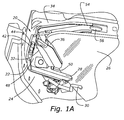
Fig. 1A is an isometric view of an embodiment of a vehicle door glass blocker assembly according to the present invention, secured to a vehicle's door frame panels; -
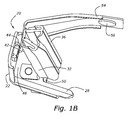
Fig. 1B is an isometric view of the vehicle door glass blocker assembly ofFig. 1A , without the associated vehicle structure; -
Fig. 2 is a left side view of the vehicle door glass blocker assembly ofFig. 1A , secured to a vehicle's door frame panels; -
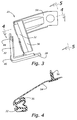
Fig. 3 is another side view of the vehicle door glass blocker assembly ofFig. 1A , with certain features omitted for clarity; -
Fig. 4 is a cross-sectional view of the vehicle door glass blocker assembly ofFig. 3 , taken generally along line 4-4 inFig. 3 ; -
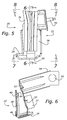
Fig. 5 is a back view of the vehicle door glass blocker assembly ofFig. 3 , taken generally in the direction of arrows 5-5 inFig. 3 ; -
Fig. 6 is a cross-sectional view of the vehicle door glass blocker assembly ofFig. 3 , taken generally along line 6-6 inFig. 5 , with certain components omitted for clarity; -
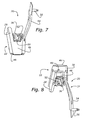
Fig. 7 is a bottom view of the vehicle door glass blocker assembly ofFig. 3 , taken generally in the direction of arrows 7-7 inFig. 5 ; -
Fig. 8 is a top view of the vehicle door glass blocker assembly ofFig. 3 , taken generally in the direction of arrows 8-8 inFig. 5 ; -
Fig. 9 is a right side view of the vehicle door glass blocker assembly ofFig. 3 ; -
Fig. 10 is a front view of the vehicle door glass blocker assembly ofFig. 3 , taken generally in the direction of arrows 10-10 inFig. 9 ; -
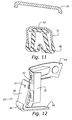
Fig. 11 is a cross-sectional view of the vehicle door glass blocker assembly ofFig. 3 , taken generally along line 11-11 inFig. 9 ; and -
Fig. 12 is another isometric view of the vehicle door glass blocker assembly ofFig. 3 . - Referring now to the drawings, wherein like reference numerals designate corresponding parts throughout the several views,
Figs. 1A-12 illustrate various views of a vehicle door glass blocker and breaker assembly, the assembly being hereinafter generally designated "vehicle doorglass blocker assembly 20." - Vehicle door
glass blocker assembly 20 may generally include ablocking bracket 22 secured to vehicle door framerear panel 24, withpanel 24 being one of a plurality of vehicle door frame panels that define the vehicle door frame interior.Blocking bracket 22 may be adapted to block orshatter vehicle window 26 ifwindow 26 is displaced towards blockingbracket 22 in a longitudinal direction, herein defined to be a direction that is generally parallel to a horizontal axis passing through the length ofvehicle window 26.Blocking bracket 22 may also include anelongated blocking protrusion 28 oriented in the longitudinal direction and disposed betweenvehicle window 26 and doorlatch actuator rod 30.Blocking protrusion 28 may be adapted to prevent the intact or partially shatteredvehicle window 26 from contacting door latch actuator rod 30 (or any other component of the latch mechanism that may deploy the latch) ifwindow 26 is displaced in a transverse direction, herein defined to be a direction that is generally horizontal and normal to a horizontal axis passing through the length ofvehicle window 26. Vehicle doorglass blocker assembly 20 may also include asupport bracket 32 coupled to blockingbracket 22 and vehicle doorframe side panel 34, withpanel 34 being one of a plurality of vehicle door frame panels that define the vehicle door frame interior.Support bracket 32 may include a vertically disposed channel portion that is adapted to secure aglass run extrusion 36 capable of receiving an edge ofvehicle window 26, thereby preventing or reducing vibration ofvehicle window 26. - As illustrated in
Figs. 1A-12 ,blocking bracket 22 may include a substantially planar doorframe mounting surface 38 adapted to mate with a corresponding surface on vehicle door frame rear panel 24 (see especiallyFig. 6 ). Doorframe mounting surface 38 may also include a doorframe mounting aperture 40 that is centrally disposed near the top edge of surface 38 (see especiallyFig. 8 ). The doorframe mounting aperture 40 may be dimensioned to receive aframe mounting screw 42 which is adapted to secureblocking bracket 22 to vehicle door framerear panel 24. - In order to secure blocking
bracket 22 to vehicle door framerear panel 24,frame mounting screw 42 may be first inserted into aretainer 44.Retainer 44 may be an injection moulded plastic part having a generally rectangular cross-sectional shape with an aperture dimensioned to receiveframe mounting screw 42.Retainer 44 may be adapted to distribute pressure exerted byframe mounting screw 42 over a relatively wide area on doorframe mounting surface 38, thus preventing damage to the area surrounding doorframe mounting aperture 40 of blockingbracket 22.Frame mounting screw 42, withretainer 44 coupled thereto, may then be inserted into doorframe mounting aperture 40 of blockingbracket 22.Frame mounting screw 42 may next be received into an aperture (not shown) on vehicle door framerear panel 24, and then tightened to a specified torque, thus securing blockingbracket 22 to vehicle door framerear panel 24. - In order to protect the surface of the vehicle door frame
rear panel 24 from abrasion damage caused by contact with blockingbracket 22, blockingbracket 22 may also include a corner protector 46 (seeFig. 2 ).Corner protector 46 may be a generally rectangular pad having a surface comprised of foam, felt, or any other suitable material, and having an adhesive backing allowingcorner protector 46 to be secured to a surface on blockingbracket 22.Corner protector 46 may be adapted to be secured to any portion of blockingbracket 22 that can come in contact with any portion of the vehicle door frame. In an exemplary embodiment,corner protector 46 may be secured to the lower rear surface of doorframe mounting surface 38 in a position that will prevent direct contact between blockingbracket 22 and vehicle door framerear panel 24. - As shown in
Fig. 1A , blockingbracket 22 may also include a substantially planar supportbracket mounting surface 48 that is generally oriented perpendicular to the rearmost edge ofvehicle window 26. Supportbracket mounting surface 48 may include a blockingedge 50 which is disposed along the transverse edge of supportbracket mounting surface 48 and is perpendicularly oriented proximate to the rearmost vertical edge ofvehicle window 26. When, following a frontal crash event,vehicle window 26 is displaced in a direction towards vehicle door framerear panel 24, blockingedge 50 is adapted to impact the rearmost vertical edge ofvehicle window 26 and prevent further rearward displacement. Ifvehicle widow 26impacts blocking edge 50 with a sufficient amount of force, the impact ofvehicle window 26 against therigid blocking edge 50 will shattervehicle window 26. - As briefly discussed above, blocking
protrusion 28 may be adapted to prevent significant transverse displacement ofvehicle window 26 in the direction of doorlatch actuator rod 30 following contact with blockingedge 50 or the shattering ofvehicle window 26 by blockingedge 50. Since blockingprotrusion 28 preventsvehicle window 26 from contacting doorlatch actuator rod 30, doorlatch actuator rod 30 will not be inadvertently triggered during a frontal collision event and the vehicle door will remain closed. In an exemplary embodiment, blockingprotrusion 28 may be integrally formed with blockingbracket 22 and, more specifically, integrally formed with supportbracket mounting surface 48. - As shown in
Fig. 7 ,glass run extrusion 36 may be secured to supportbracket 32 by a pair ofchannel tabs 52 that are integrally formed from the vertical channel portion ofsupport bracket 32. Eachchannel tab 52 may be an elongated body portion and may include a head portion at the terminal end of the elongated body that is generally wider than the elongated body portion. Eachchannel tab 52 may be adapted to be received into an aperture formed through a longitudinal surface ofglass run extrusion 36, or that may pierce throughglass run extension 36 and subsequently be crimped over to thereby retainglass run extrusion 36 to supportbracket 32, and the head portion ofchannel tab 52 may have a width greater than the diameter of the aperture onglass run extrusion 36. Due to the elastomeric nature of theglass run extrusion 36 material, the head portion ofchannel tab 52 may be pushed through the aperture ofglass run extrusion 36. Undercuts formed on the head portion ofchannel tab 52 may capture the glass run extrusion againstsupport bracket 32, thus securing theglass run extrusion 36 to supportbracket 32. -
Support bracket 32 may also include a substantially longitudinally disposedside support member 54 integrally formed withsupport bracket 32 and adapted to securesupport bracket 32 to vehicle doorframe side panel 34.Side support member 54 may include a mating surface that is substantially planar and parallel to a corresponding mating surface on vehicle doorframe side panel 34. In an exemplary embodiment, an aperture on the mating surface ofside support member 54 is adapted to receive astud 56 which in turn is adapted to be received into a corresponding aperture on the mating surface of vehicle doorframe side panel 34. In order to securesupport bracket 32 to vehicle doorframe side panel 34,stud 56 may be inserted in the aperture onframe side panel 34, and then inserted into the aperture of vehicle doorframe side panel 34.Stud 56 may then be attached to the vehicle door by any means known in the art, thereby securingsupport bracket 32 to vehicle doorframe side panel 34. - Operation of vehicle door
glass blocker assembly 20 will now be described in detail with reference toFigs. 1A and2 . - Specifically, in the event of a frontal or offset frontal crash event, the vehicle's door frame structure could compress due to the forces imparted on the door frame in a longitudinal direction. This structural failure, and the associated reduction in the overall length of the vehicle's door, can propel
vehicle window 26 towards vehicle door framerear panel 24. However, asvehicle window 26 is rearwardly displaced,vehicle window 26 may impact rigid blockingedge 50 of blockingbracket 22 that is secured to vehicle door framerear panel 24. Ifvehicle window 26impacts blocking edge 50 with a relatively small amount of force, blockingedge 50 prevents further rearward displacement ofvehicle window 26, and blockingprotrusion 28blocks vehicle window 26 from impacting doorlatch actuator rod 30, thus preventing thevehicle window 26 from contacting and actuating doorlatch actuator rod 30, thereby preventing the vehicle's door from opening. Ifvehicle window 26 is propelled toward blockingbracket 22 with a sufficient amount of force,vehicle window 26 will shatter upon contact with therigid blocking edge 50. In this case, blockingprotrusion 28 still remains in place to prevent any partially shatteredvehicle window 26 from transversely displacing towards, and impacting, doorlatch actuator rod 30, so that the shattered glass no longer poses a threat to actuate the latch. - Those skilled in the art would readily appreciate in view of this disclosure that various modifications could be made to vehicle door
glass blocker assembly 20 described above, without departing from the scope of the present invention. For example, blockingbracket 22 may be secured to vehicle door framerear panel 24 by any means known in the art, including adhesive bonding and welding. Additionally, blockingbracket 22 may be secured to vehicle door framerear panel 24 using any number and configuration of mechanical fastening devices, such as bolts, screws, or rivets. Moreover, the blocking bracket may be secured to one or more of the plurality of vehicle door frame panels. It is also contemplated that blockingprotrusion 28 may be coupled to blockingbracket 22 by any means known in the art, including adhesive bonding, welding, or mechanical fastening. - Further,
support bracket 32 can be coupled to blockingbracket 22 using any means known in the art. Specifically,support bracket 32 can be secured to supportbracket mounting surface 48 using an adhesive bond or by using one or more mechanical fastening devices. It is also contemplated thatsupport bracket 32 can be integrally formed with the blocking bracket. Additionally,glass run extrusion 36 can be coupled to supportbracket 32 using any means known in the art, including by the use of an adhesive bond or by using one or more mechanical coupling devices. - Although particular embodiments of the invention have been described in detail herein with reference to the accompanying drawings, it is to be understood that the invention is not limited to those particular embodiments, and that various changes and modifications may be effected therein by one skilled in the art without departing from the scope of the invention as defined in the appended claims.
Claims (6)
- A vehicle door glass blocker assembly comprising:a blocking bracket (20) securable to a vehicle door frame panel; anda blocking edge (50) integrally formed with said blocking bracket (20), being substantially normal or transverse to an edge of a vehicle window (26) when secured to the vehicle door frame panel, and being capable of at least partially shattering the vehicle window (26) when the vehicle window impacts said blocking edge during a vehicle crash event.
- A vehicle door glass blocker assembly as claimed in claim 1, further comprising a blocking protrusion (28) coupled to said blocking bracket (20), being generally longitudinally disposable between the vehicle window and a vehicle door latch mechanism, and being capable of at least partially preventing transverse displacement of the vehicle window.
- A vehicle door glass blocker assembly as claimed in claim 1 or 2, further comprising a support bracket (32) secured to said blocking bracket.
- A vehicle door glass blocker assembly as claimed in claim 3, further comprising a glass run extrusion (36) secured to said support bracket (32), being adapted to accept an edge of the vehicle window (26), and capable of reducing vibrations in the vehicle window (26).
- A vehicle door glass blocker assembly as claimed in claim 4, further comprising at least one channel tab (52) integrally formed with a channel portion of said support bracket, said channel tab (52) being adapted to secure said glass run extrusion (30) to said channel portion of said support bracket (32).
- A vehicle having a door incorporating a glass blocker assembly as claimed in any preceding claim.
Applications Claiming Priority (2)
| Application Number | Priority Date | Filing Date | Title |
|---|---|---|---|
| US92558807P | 2007-04-20 | 2007-04-20 | |
| US12/047,386 US7748166B2 (en) | 2007-04-20 | 2008-03-13 | Vehicle door glass blocker and breaker |
Publications (2)
| Publication Number | Publication Date |
|---|---|
| EP1982868A1 true EP1982868A1 (en) | 2008-10-22 |
| EP1982868B1 EP1982868B1 (en) | 2009-11-18 |
Family
ID=39534828
Family Applications (1)
| Application Number | Title | Priority Date | Filing Date |
|---|---|---|---|
| EP08103597A Ceased EP1982868B1 (en) | 2007-04-20 | 2008-04-17 | Vehicle door glass blocker and breaker |
Country Status (3)
| Country | Link |
|---|---|
| US (1) | US7748166B2 (en) |
| EP (1) | EP1982868B1 (en) |
| DE (1) | DE602008000282D1 (en) |
Families Citing this family (1)
| Publication number | Priority date | Publication date | Assignee | Title |
|---|---|---|---|---|
| US20260061959A1 (en) * | 2024-08-30 | 2026-03-05 | Inteva Products, Llc | Vehicle emergency glass breaker system |
Citations (5)
| Publication number | Priority date | Publication date | Assignee | Title |
|---|---|---|---|---|
| FR2096188A5 (en) * | 1970-06-10 | 1972-02-11 | Saint Gobain | |
| DE4016612A1 (en) * | 1990-05-23 | 1991-11-28 | Audi Ag | SAFETY DEVICE ON A MOTOR VEHICLE |
| US5318145A (en) | 1990-05-23 | 1994-06-07 | Audi Ag | Side window safety device for a motor vehicle |
| FR2874559A1 (en) | 2004-08-31 | 2006-03-03 | Renault Sas | VEHICLE COMPRISING A GLASS AND A GLASS PERCUTER |
| DE102006028484A1 (en) * | 2006-06-21 | 2007-12-27 | Kuraray Europe Gmbh | Pedestrian collision protection system for motor vehicle, comprises laminated glass windshield, collision detection system and disintegration device damaging windshield before collision of person by collision detection system |
Family Cites Families (4)
| Publication number | Priority date | Publication date | Assignee | Title |
|---|---|---|---|---|
| US3273286A (en) * | 1964-03-25 | 1966-09-20 | Gen Motors Corp | Vehicle body |
| US5548929A (en) * | 1994-12-02 | 1996-08-27 | The Standard Products Company | Window sealing assembly |
| GB2299309B (en) * | 1995-03-28 | 1999-02-17 | Kiekert Ag | Motor vehicle door |
| US6205714B1 (en) * | 1998-12-16 | 2001-03-27 | Delphi Technologies, Inc. | Modular vehicle door |
-
2008
- 2008-03-13 US US12/047,386 patent/US7748166B2/en active Active
- 2008-04-17 DE DE602008000282T patent/DE602008000282D1/en active Active
- 2008-04-17 EP EP08103597A patent/EP1982868B1/en not_active Ceased
Patent Citations (5)
| Publication number | Priority date | Publication date | Assignee | Title |
|---|---|---|---|---|
| FR2096188A5 (en) * | 1970-06-10 | 1972-02-11 | Saint Gobain | |
| DE4016612A1 (en) * | 1990-05-23 | 1991-11-28 | Audi Ag | SAFETY DEVICE ON A MOTOR VEHICLE |
| US5318145A (en) | 1990-05-23 | 1994-06-07 | Audi Ag | Side window safety device for a motor vehicle |
| FR2874559A1 (en) | 2004-08-31 | 2006-03-03 | Renault Sas | VEHICLE COMPRISING A GLASS AND A GLASS PERCUTER |
| DE102006028484A1 (en) * | 2006-06-21 | 2007-12-27 | Kuraray Europe Gmbh | Pedestrian collision protection system for motor vehicle, comprises laminated glass windshield, collision detection system and disintegration device damaging windshield before collision of person by collision detection system |
Also Published As
| Publication number | Publication date |
|---|---|
| DE602008000282D1 (en) | 2009-12-31 |
| EP1982868B1 (en) | 2009-11-18 |
| US20080258505A1 (en) | 2008-10-23 |
| US7748166B2 (en) | 2010-07-06 |
Similar Documents
| Publication | Publication Date | Title |
|---|---|---|
| US5318145A (en) | Side window safety device for a motor vehicle | |
| US6913280B2 (en) | Overhead airbag deployment apparatus and method | |
| US7648192B2 (en) | Door latch system for automotive vehicle | |
| KR100402780B1 (en) | Rail-roof side part structure of vehicle | |
| KR101356155B1 (en) | Apparatus for spread air bag exterior of vehicle | |
| US6971667B2 (en) | Glove compartment airbag system | |
| CN102361782B (en) | Fasteners for curtain airbags | |
| US6286858B1 (en) | Energy absorbing air bag module | |
| US7614472B2 (en) | System for deviating part of the external paneling of a motor vehicle | |
| US5588692A (en) | Push-out vehicle side door | |
| CN100377925C (en) | System for preventing window from protruding into railway vehicle cab during impact | |
| US6364397B1 (en) | Attachment devices for attaching a window for a motor vehicle | |
| US20020061677A1 (en) | Mounting structure for vehicle electrical connection box | |
| CN106364318A (en) | Motor vehicle having instrument panel | |
| EP1982868B1 (en) | Vehicle door glass blocker and breaker | |
| JP4085308B2 (en) | Airbag door opening structure | |
| US20050023859A1 (en) | Impact load transfer element | |
| JP2000103360A (en) | Vehicle body structure | |
| KR20030016006A (en) | Bumper mounting apparatus of automobile | |
| EP2423056A1 (en) | A safety device | |
| CN101559755A (en) | Blocker and knapper of car door glass | |
| KR100424745B1 (en) | Structure for absorbing shock of a side-door | |
| KR20040052069A (en) | A Transparent A-Pillar Structure For Motors | |
| KR100513684B1 (en) | Bumper Structure for Increasing Impact Performance | |
| JP4009990B2 (en) | Airbag door |
Legal Events
| Date | Code | Title | Description |
|---|---|---|---|
| PUAI | Public reference made under article 153(3) epc to a published international application that has entered the european phase |
Free format text: ORIGINAL CODE: 0009012 |
|
| AK | Designated contracting states |
Kind code of ref document: A1 Designated state(s): AT BE BG CH CY CZ DE DK EE ES FI FR GB GR HR HU IE IS IT LI LT LU LV MC MT NL NO PL PT RO SE SI SK TR |
|
| AX | Request for extension of the european patent |
Extension state: AL BA MK RS |
|
| 17P | Request for examination filed |
Effective date: 20090318 |
|
| GRAP | Despatch of communication of intention to grant a patent |
Free format text: ORIGINAL CODE: EPIDOSNIGR1 |
|
| AKX | Designation fees paid |
Designated state(s): DE GB SE |
|
| GRAS | Grant fee paid |
Free format text: ORIGINAL CODE: EPIDOSNIGR3 |
|
| GRAA | (expected) grant |
Free format text: ORIGINAL CODE: 0009210 |
|
| AK | Designated contracting states |
Kind code of ref document: B1 Designated state(s): DE GB SE |
|
| REG | Reference to a national code |
Ref country code: GB Ref legal event code: FG4D |
|
| REF | Corresponds to: |
Ref document number: 602008000282 Country of ref document: DE Date of ref document: 20091231 Kind code of ref document: P |
|
| REG | Reference to a national code |
Ref country code: SE Ref legal event code: TRGR |
|
| PLBE | No opposition filed within time limit |
Free format text: ORIGINAL CODE: 0009261 |
|
| STAA | Information on the status of an ep patent application or granted ep patent |
Free format text: STATUS: NO OPPOSITION FILED WITHIN TIME LIMIT |
|
| 26N | No opposition filed |
Effective date: 20100819 |
|
| REG | Reference to a national code |
Ref country code: DE Ref legal event code: R082 Ref document number: 602008000282 Country of ref document: DE Representative=s name: DOERFLER, THOMAS, DR.-ING., DE |
|
| PGFP | Annual fee paid to national office [announced via postgrant information from national office to epo] |
Ref country code: GB Payment date: 20190326 Year of fee payment: 12 |
|
| PGFP | Annual fee paid to national office [announced via postgrant information from national office to epo] |
Ref country code: DE Payment date: 20190318 Year of fee payment: 12 |
|
| PGFP | Annual fee paid to national office [announced via postgrant information from national office to epo] |
Ref country code: SE Payment date: 20190409 Year of fee payment: 12 |
|
| REG | Reference to a national code |
Ref country code: DE Ref legal event code: R119 Ref document number: 602008000282 Country of ref document: DE |
|
| PG25 | Lapsed in a contracting state [announced via postgrant information from national office to epo] |
Ref country code: DE Free format text: LAPSE BECAUSE OF NON-PAYMENT OF DUE FEES Effective date: 20201103 Ref country code: SE Free format text: LAPSE BECAUSE OF NON-PAYMENT OF DUE FEES Effective date: 20200418 |
|
| GBPC | Gb: european patent ceased through non-payment of renewal fee |
Effective date: 20200417 |
|
| PG25 | Lapsed in a contracting state [announced via postgrant information from national office to epo] |
Ref country code: GB Free format text: LAPSE BECAUSE OF NON-PAYMENT OF DUE FEES Effective date: 20200417 |