EP1981509B1 - Pyrazolo[1,5-a]pyrimidine derivatives for use in treatment of Alzheimer's disease and related conditions - Google Patents
Pyrazolo[1,5-a]pyrimidine derivatives for use in treatment of Alzheimer's disease and related conditions Download PDFInfo
- Publication number
- EP1981509B1 EP1981509B1 EP07705350A EP07705350A EP1981509B1 EP 1981509 B1 EP1981509 B1 EP 1981509B1 EP 07705350 A EP07705350 A EP 07705350A EP 07705350 A EP07705350 A EP 07705350A EP 1981509 B1 EP1981509 B1 EP 1981509B1
- Authority
- EP
- European Patent Office
- Prior art keywords
- ethyl
- piperidin
- conhch
- alkyl
- compound
- Prior art date
- Legal status (The legal status is an assumption and is not a legal conclusion. Google has not performed a legal analysis and makes no representation as to the accuracy of the status listed.)
- Not-in-force
Links
- 0 C[C@@](C*)C1CCCC1 Chemical compound C[C@@](C*)C1CCCC1 0.000 description 7
- RSCDOBZSRKQLJL-UHFFFAOYSA-N CC(C)C(C(F)(F)F)NC(c1cc(-c2c3ncc(-c(cc4)ccc4OCCNC(C)=O)c[n]3nc2)c[s]1)=O Chemical compound CC(C)C(C(F)(F)F)NC(c1cc(-c2c3ncc(-c(cc4)ccc4OCCNC(C)=O)c[n]3nc2)c[s]1)=O RSCDOBZSRKQLJL-UHFFFAOYSA-N 0.000 description 1
- VUALFNSMHWCKFR-UHFFFAOYSA-O CN(C1)[NH+](C=C(C=N2)c3ccc(COCCN4CCCCC4)cc3)C2=C1c1cc(C(NCC(F)(F)F)=O)ccc1 Chemical compound CN(C1)[NH+](C=C(C=N2)c3ccc(COCCN4CCCCC4)cc3)C2=C1c1cc(C(NCC(F)(F)F)=O)ccc1 VUALFNSMHWCKFR-UHFFFAOYSA-O 0.000 description 1
- NMCFNVULNHPZNP-UHFFFAOYSA-O O=C(c1cc(-c2c3ncc(-c(cc4)ccc4OCC[NH+]4CCCCC4)c[n]3nc2)c[s]1)NC(C(F)(F)F)c1ccncc1 Chemical compound O=C(c1cc(-c2c3ncc(-c(cc4)ccc4OCC[NH+]4CCCCC4)c[n]3nc2)c[s]1)NC(C(F)(F)F)c1ccncc1 NMCFNVULNHPZNP-UHFFFAOYSA-O 0.000 description 1
- DTQVDTLACAAQTR-UHFFFAOYSA-N OC(C(F)(F)F)=O Chemical compound OC(C(F)(F)F)=O DTQVDTLACAAQTR-UHFFFAOYSA-N 0.000 description 1
- DTQVDTLACAAQTR-UHFFFAOYSA-M [O-]C(C(F)(F)F)=O Chemical compound [O-]C(C(F)(F)F)=O DTQVDTLACAAQTR-UHFFFAOYSA-M 0.000 description 1
Classifications
-
- C—CHEMISTRY; METALLURGY
- C07—ORGANIC CHEMISTRY
- C07D—HETEROCYCLIC COMPOUNDS
- C07D487/00—Heterocyclic compounds containing nitrogen atoms as the only ring hetero atoms in the condensed system, not provided for by groups C07D451/00 - C07D477/00
- C07D487/02—Heterocyclic compounds containing nitrogen atoms as the only ring hetero atoms in the condensed system, not provided for by groups C07D451/00 - C07D477/00 in which the condensed system contains two hetero rings
- C07D487/04—Ortho-condensed systems
-
- A—HUMAN NECESSITIES
- A61—MEDICAL OR VETERINARY SCIENCE; HYGIENE
- A61K—PREPARATIONS FOR MEDICAL, DENTAL OR TOILETRY PURPOSES
- A61K31/00—Medicinal preparations containing organic active ingredients
- A61K31/33—Heterocyclic compounds
- A61K31/395—Heterocyclic compounds having nitrogen as a ring hetero atom, e.g. guanethidine or rifamycins
- A61K31/495—Heterocyclic compounds having nitrogen as a ring hetero atom, e.g. guanethidine or rifamycins having six-membered rings with two or more nitrogen atoms as the only ring heteroatoms, e.g. piperazine or tetrazines
- A61K31/505—Pyrimidines; Hydrogenated pyrimidines, e.g. trimethoprim
- A61K31/519—Pyrimidines; Hydrogenated pyrimidines, e.g. trimethoprim ortho- or peri-condensed with heterocyclic rings
-
- A—HUMAN NECESSITIES
- A61—MEDICAL OR VETERINARY SCIENCE; HYGIENE
- A61P—SPECIFIC THERAPEUTIC ACTIVITY OF CHEMICAL COMPOUNDS OR MEDICINAL PREPARATIONS
- A61P25/00—Drugs for disorders of the nervous system
-
- A—HUMAN NECESSITIES
- A61—MEDICAL OR VETERINARY SCIENCE; HYGIENE
- A61P—SPECIFIC THERAPEUTIC ACTIVITY OF CHEMICAL COMPOUNDS OR MEDICINAL PREPARATIONS
- A61P25/00—Drugs for disorders of the nervous system
- A61P25/28—Drugs for disorders of the nervous system for treating neurodegenerative disorders of the central nervous system, e.g. nootropic agents, cognition enhancers, drugs for treating Alzheimer's disease or other forms of dementia
-
- A—HUMAN NECESSITIES
- A61—MEDICAL OR VETERINARY SCIENCE; HYGIENE
- A61P—SPECIFIC THERAPEUTIC ACTIVITY OF CHEMICAL COMPOUNDS OR MEDICINAL PREPARATIONS
- A61P43/00—Drugs for specific purposes, not provided for in groups A61P1/00-A61P41/00
Definitions
- This invention relates to compositions for use in the treatment or prevention of neurodegenerative diseases such as Alzheimer's disease.
- neurodegenerative diseases such as Alzheimer's disease.
- pyrazolo[1,5-a]pyrimidine derivatives which selectively inhibit microtubule affinity regulating kinase (MARK).
- AD Alzheimer's disease
- AD Alzheimer's disease
- AD Alzheimer's disease
- senile or neuritic plaques and tangled bundles of fibers neuroofibrillary tangles
- Verdile, G., et al, Pharm. Res. 50:397-409 (2004 ) there is a severe loss of neurons in the hippocampus and the cerebral cortex.
- Neuritic plaques are extracellular lesions, consisting mainly of deposits of ⁇ -amyloid peptide (A ⁇ ), surrounded by dystrophic (swollen, damaged and degenerating) neurites and glial cells activated by inflammatory processes.
- a ⁇ ⁇ -amyloid peptide
- NFTs neurofibrillary tangles
- tau is a soluble cytoplasmic protein which has a role in microtubule stabilisation. Excessive phosphorylation of this protein renders it insoluble and leads to its aggregation into paired helical filaments, which in turn form NFTs.
- amyloid cascade hypothesis proposes that abnormal accumulation of A ⁇ peptides, particularly A ⁇ 42, initiates a cascade of events leading to the classical symptoms of AD and ultimately, to the death of the patient.
- a ⁇ pathology e.g. Rapoport, M., et al (2002) Proc. Natl. Acad. Sci USA 99:6364-6369 .
- dysregulation of tau function is a key step in the cascade of Alzheimer's disease pathology leading ultimately to neuronal death.
- tau mutations and NFTs are found in other dementias in which A ⁇ pathology is absent, such as frontotemporal dementia, Pick's disease and parkinsonism linked to chromosome 17 (FTDP-17) [ Mizutani, T.
- Tau is a 352-441 amino acid protein encoded by the Mapt ( Microtubule-associated protein tau ) gene which is widely expressed in the central nervous system (CNS) with localisation primarily in axons [ Binder et al J. Cell Biol. 1985, 101(4), 1371-1378 ].
- the major function of tau is regulation of the stability of microtubules (MTs), intracellular structural components comprised of tubulin dimers which are integral in regulating many essential cellular processes such as axonal transport and elongation as well as generation of cell polarity and shape.
- MTs microtubules
- intracellular structural components comprised of tubulin dimers which are integral in regulating many essential cellular processes such as axonal transport and elongation as well as generation of cell polarity and shape.
- Tau binding to tubulin is a key factor in determining the rates of polymerisation/depolymerisation (termed dynamic instability) of MTs, and tau is therefore key to the regulation of many essential cellular processes [see, for example, Butner, K.A., Kirschner, M.W. (1991) J.Cell. Biol. 115: 717-730 ].
- Tau is a basic protein with numerous serine and threonine residues, many of which are susceptible to phosphorylation. While normal tau has two to three phosphorylated amino acid residues, hyperphosphorylated tau found in AD and other tauopathies typically has eight or nine phosphorylated residues.
- kinases promote phosphorylation of these sites, including proline-directed kinases such as glycogen synthase kinase 3 ⁇ (GSK3 ⁇ ) and cyclin dependent kinase 5 (cdk5); and non-proline-directed kinases such as protein kinase A (PKA) and calmodulin (CaM) kinase II, which phosphorylate tau at Lys-(Ile/Cys)-Gly-Ser sequences, also known as KXGS motifs.
- proline-directed kinases such as glycogen synthase kinase 3 ⁇ (GSK3 ⁇ ) and cyclin dependent kinase 5 (cdk5)
- non-proline-directed kinases such as protein kinase A (PKA) and calmodulin (CaM) kinase II, which phosphorylate tau at Lys-(Ile/Cys)-Gly-Ser sequences, also
- Phosphorylation at these sites is important for the regulation of tau-MT binding and while the degree of phosphorylation is normally low, it has been shown to be increased in brain tissue from AD patients. Phosphorylation of one particular residue within the KXGS motifs, Ser-262 has been shown to be elevated in tau protein extracted from the NFTs in AD [ Hasegawa, M. et al (1992) J. Biol. Chem 267:17047-17054 ] and phosphorylation at this site also appears to dramatically reduce MT binding [ Biernat, J. et al. (1993) Neuron 11: 153-163 ].
- Nishimura et al. [Cell 116: 671-682 (2004 )] demonstrated that overexpression of the kinase PAR-1 in Drosophila led to enhanced tau-mediated toxicity and an increase in the phosphorylation of tau on Ser-262, Ser-356, and other amino acid residues, including sites phosphorylated by GSK3 ⁇ and Cdk5.
- Their findings suggest that PAR-1 kinase acts as a master kinase during the process of tau hyperphosphorylation, with the phosphorylation of the Ser-262 and Ser-356 sites being a prerequisite for the subsequent phosphorylation at downstream sites by other kinases.
- MARK microtubule affinity-regulating kinase
- AMPK AMP-dependent protein kinase
- MARK is thought to phosphorylate tau, perhaps in response to an external insult, such as the disruption of Ca 2+ homeostasis caused by A ⁇ , priming it for further phosphorylation events. It is not clear whether the phosphorylation of tau by MARK leads directly to its detachment from MTs or the subsequent phosphorylation events cause detachment.
- the resulting unbound, hyperphosphorylated tau is delocalised to the somatodendritic compartment and is then cleaved by caspases to form fragments prone to aggregation [ Drewes, G. (2004). Trends Biochem. Sci 29:548-555 ; Gamblin, T.C., et al, (2003) Proc. Natl. Acad. Sci. U.S.A. 100:10032-10037 ].
- These aggregates can grow into filaments, which are potentially toxic, eventually forming the NFTs found in AD.
- MARK inhibitors will enable the prevention or amelioration of neurodegeneration in AD and other tauopathies.
- the invention further provides compounds of formula I for use in treatment or prevention of a neurodegenerative disease associated with hyperphosphorylation of tau in a human patient.
- Neurodegenerative diseases associated with hyperphosphorylation of tau refers to AD, frontotemporal dementia, Pick's disease and parkinsonism linked to chromosome 17 (FTDP-17).
- C 1-x alkyl where x is an integer greater than 1 refers to straight-chained and branched alkyl groups wherein the number of constituent carbon atoms is in the range 1 to x.
- Particular alkyl groups are methyl, ethyl, n-propyl, isopropyl and t-butyl.
- Derived expressions such as "C 2-6 alkenyl”, “hydroxyC 1-6 alkyl”, “heteroarylC 1-6 alkyl”, “C 2-6 alkynyl” and “C 1-6 alkoxy” are to be construed in an analogous manner. Most suitably, the number of carbon atoms in such groups is not more than 6.
- halogen as used herein includes fluorine, chlorine, bromine and iodine.
- C 3-6 cycloalkyl refers to nonaromatic monocyclic hydrocarbon ring systems comprising from 3 to 6 ring atoms. Examples include cyclopropyl, cyclobutyl, cyclopentyl and cyclohexyl.
- the compounds of formula I may be in the form of pharmaceutically acceptable salts.
- Other salts may, however, be useful in the preparation of the compounds of formula I or of their pharmaceutically acceptable salts.
- Suitable pharmaceutically acceptable salts of the compounds of this invention include acid addition salts which may, for example, be formed by mixing a solution of the compound according to the invention with a solution of a pharmaceutically acceptable acid such as hydrochloric acid, sulphuric acid, methanesulphonic acid, benzenesulphonic acid, fumaric acid, maleic acid, succinic acid, acetic acid, trifluoroacetic acid, benzoic acid, oxalic acid, citric acid, tartaric acid, carbonic acid or phosphoric acid.
- a pharmaceutically acceptable acid such as hydrochloric acid, sulphuric acid, methanesulphonic acid, benzenesulphonic acid, fumaric acid, maleic acid, succinic acid, acetic acid, trifluoroacetic acid, be
- a pharmaceutically acceptable salt may be formed by neutralisation of said acidic moiety with a suitable base.
- suitable bases such as amine salts (including pyridinium salts) and quaternary ammonium salts.
- the compounds useful in the invention may accordingly exist as enantiomers. Where the compounds according to the invention possess two or more asymmetric centres, they may additionally exist as diastereoisomers. It is to be understood that all such isomers and mixtures thereof in any proportion are encompassed within the scope of the present invention.
- a nitrogen atom forming part of a heteroaryl ring may be in the form of the N-oxide.
- a sulphur atom forming part of a nonaromatic heterocycle may be in the form of the S-oxide or S,S-dioxide.
- a heteroaryl group may be attached to the remainder of the molecule via a ring carbon or a ring nitrogen, provided that this is consistent with preservation of aromaticity.
- R may complete a fused tetrahydrofuran ring, but preferably R represents C 1-4 alkyl which is optionally substituted with halogen, CN, CF 3 , OR 1 , NR 1 R 2 , NHPh or NHCOC 1-4 alkyl, where R 1 and R 2 are as defined previously.
- R represents unsubstituted C 1-4 alkyl, in particular methyl.
- R represents substituted C 1-4 alkyl
- a preferred substituent is NR 1 R 2 , and in a particular embodiment R represents CH 2 CH 2 NR 1 R 2 or CH 2 CH 2 CH 2 NR 1 R 2 .
- R 1 and R 2 independently represent H or C 1-4 alkyl such as methyl, or together complete a heterocyclic ring of up to 6 members. Suitable rings completed by R 1 and R 2 include pyrrolidine, piperidine, piperazine and morpholine.
- groups represented by R include methyl, 2-(pyrrolidin-1-yl)ethyl, 2-(piperidin-1-yl)ethyl, 2-(morpholin-4-yl)ethyl, 2-(4-cyanopipendin-1-yl)ethyl, 3-(dimethylamino)propyl, 2-(dimethylamino)ethyl, 2-(acetylamino)ethyl, 2-(methylamino)ethyl, 2-(phenylamino)ethyl, 2-(4-methylpiperazin-1-yl)ethyl, 2-(3,3-difluoropipetidine-1-yl)ethyl, 2-(3-fluoropyrrolidin-1-yl)ethyl, 2-(4,4-difluoropiperidin-1-yl)ethyl, 2-methoxyethyl and 3-methoxypropyl.
- Ar represents phenyl or optionally benzofused 5- or 6-membered heteroaryl, any of which may bear up to 3 independently selected R 3 substituents as defined previously.
- Ar is monosubstituted or disubstituted.
- 5-membered heteroaryl rings represented by Ar include thiophene and benzofuran
- 6-membered heteroaryl rings represented by Ar include pyridine.
- Ar represents optionally substituted 3-thienyl.
- R 3 groups may combine to form a fused 5- or 6-membered carbocylic or heterocyclic ring which optionally bears up to 3 substituents selected from oxo, imino, and R 5 where R 5 is as defined previously.
- the R 3 groups may complete a pyrrolidine ring so that Ar represents an isoindolinyl group, in particular a 3-iminoisoindolin-1-one group or an isoindolin-1,3-dione group, optionally substituted on the 2-position, wherein said 2-substituent is an optionally-substituted C 1-4 alkyl group such as methyl, ethyl, trifluoroethyl, hydroxyethyl or dimethylaminoethyl.
- R 3 Preferred substituents represented by R 3 include halogen (especially Cl or F), CN, OR 4 , CH 2 OR 4 , CH(CF 3 )-N(R 4 ) 2 , CO 2 R 4 , COR 4 , CON(R 4 ) 2 , CH 2 N(R 4 ) 2 , pyridyl and 5-membered heteroaryl (such as furyl, thienyl and pyrazolyl), where R 4 is as defined previously.
- Suitable identities for R 4 include H, C 1-4 alkyl (optionally substituted with CF 3 , OR 1 or NR 1 R 2 ), allyl, cyclopropyl, cyclopropylmethyl and cyclobutyl.
- R 4 is CH(CF 3 )-Ar 1 where Ar 1 is as defined previously. Suitable identities for Ar 1 include furyl, pyridyl, imidazolyl, quinolyl and benzothiophenyl. In a particular embodiment Ar bears a substituent CONHR 4 where R 4 is H or C 1-4 alkyl which is optionally substituted with CF 3 , OR 1 or NR 1 R 2 , or where R 4 is CH(CF 3 )-Ar 1 .
- a subset of the compounds suitable for use in the invention consists of those in accordance with formula II: and pharmaceutically acceptable salts and hydrates thereof; wherein R 3a and R 3b independently represent H or R 3 , and R and R 3 have the same definitions and preferred identities as described previously.
- a subset of the compounds of formula II consists of those in accordance with formula IIA: wherein A represents O or NH, and R and R 4 have the same definitions and preferred identities as before.
- Specific examples of compounds in accordance with formula IIA include those in which R represents 2-(piperidin-1-yl)ethyl and A and R 4 areas indicated in Table 2: Table 2 A R 4 NH Me NH Et NH CH 2 CH 2 OH NH CH 2 CF 3 NH CH 2 CH 2 N(Me) 2 NH CH 2 CH 2 NH 2 O H
- Another subset of the compounds suitable for use in the invention consists of those in accordance with formula III: and pharmaceutically acceptable salts and hydrates thereof; wherein R 3a represents H or R 3 , and R and R 3 have the same definitions and preferred identities as described previously.
- R and R 3a are as listed in Table 3: Table 3 R R 3a Me CONHMe Me CONHEt Me CONH cyclobutyl Me CONH cyclopropyl Me CONH-n-propyl 2-(morpholin-4-yl)ethyl H 2-(piperidin-1-yl)ethyl H 2-(piperidin-1-yl)ethyl CO 2 Me 2-(piperidin-1-yl)ethyl CONHMe 2-(piperidin-1-yl)ethyl CONHCH 2 CH 2 OH 2-(piperidin-1-yl)ethyl CONH 2 2-(piperidin-1-yl)ethyl CONHEt 2-(piperidin-1-yl)ethyl CONH-isobutyl 2-(piperidin-1-yl)ethyl CON(Me) 2 2-(piperidin-1-yl)ethyl CONHCH 2 CH 2 NH 2 2-(piperidin
- R represents substituted C 1-4 alkyl in which the substituent is NR 1 R 2 , and in a particular embodiment R represents CH 2 CH 2 NR 1 R 2 or CH 2 CH 2 CH 2 NR 1 R 2 , where R 1 and R 2 have the same definitions and preferred identities as before, for example 2-(piperidin-1-yl)ethyl.
- R 3a represents CON(R 4 ) 2 where R 4 has the same definition and preferred identities as before.
- R 3a represents CONHR 4 where R 4 is H or C 1-4 alkyl which is optionally substituted with CF 3 , OR 1 or NR 1 R 2 , for example CONHCH 2 CF 3 .
- R 3a represents CH(CF 3 )NHR 4 and R 4 represents H or C 1-4 alkyl which is optionally substituted with CF 3 , OR 1 or NR 1 R 2 .
- R 3a represents CH 2 NHR 4 or CONHR 4 and R 4 represents CH(CF 3 )-Ar 1 where Ar 1 is as defined previously.
- Ar 1 may represent 5- or 6-membered heteroaryl, such as imidazolyl, quinolyl, benzothiophenyl, furyl or pyridyl, in particular 2-furyl or 2-pyridyl.
- a compound of formula I is obtained by Suzuki coupling of Ar-B(OR') 2 with a compound of formula (1): where R' represents H or C 1-4 alkyl, or the two OR' groups complete a cyclic boronate ester, and R and Ar have the same meanings as before.
- the reaction takes place under standard Suzuki conditions, e.g.
- boronic acids and esters are either available commercially or are accessible by standard methods, e.g. treatment of Ar-Br with dipinacoldiborane in the presence of PdCl 2 (dppf) and potassium acetate in dioxan at about 85°C.
- Compounds (1) are obtainable by alkylation of the corresponding phenol (2) with R-L: where L is a leaving group (e.g. Cl, Br, mesylate or tosylate) and R has the same meaning as before.
- L is a leaving group (e.g. Cl, Br, mesylate or tosylate) and R has the same meaning as before.
- the compound of formula (2) is treated with R-Cl in DMF in the presence of caesium carbonate and sodium iodide at about 60°C.
- the synthesis of compound (2) is described in the Examples section appended hereto.
- the starting materials and reagents described above may be obtained from commercially available precursors by means of well known synthetic procedures and/or the methods disclosed in the Examples section herein.
- the above-described processes for the preparation of the compounds of use in the invention give rise to mixtures of stereoisomers
- these isomers may be separated by conventional techniques such as preparative chromatography.
- the compounds may be prepared in racemic form, or individual enantiomers may be prepared either by enantiospecific synthesis or by resolution.
- the compounds may, for example, be resolved into their component enantiomers by standard techniques such as preparative HPLC, or the formation of diastereomeric pairs by salt formation with an optically active acid, such as di- p -toluoyl-D-tartaric acid and/or di- p -toluoyl-L-tartaric acid, followed by fractional crystallization and regeneration of the free base.
- the compounds may also be resolved by formation of diastereomeric esters or amides, followed by chromatographic separation and removal of the chiral auxiliary.
- any of the above synthetic sequences it may be necessary and/or desirable to protect sensitive or reactive groups on any of the molecules concerned. This may be achieved by means of conventional protecting groups, such as those described in Protective Groups in Organic Chemistry, ed. J.F.W. McOmie, Plenum Press, 1973 ; and T.W. Greene & P.G.M. Wuts, Protective Groups in Organic Synthesis, John Wiley & Sons, 1991 .
- the protecting groups may be removed at a convenient subsequent stage using methods known from the art.
- the compounds of formula I are suitably administered to patients in the form a pharmaceutical composition
- a pharmaceutical composition comprising the active ingredient (i.e. the compound of formula I or pharmaceutically acceptable salt or hydrate thereof) and a pharmaceutically acceptable carrier.
- compositions are in unit dosage forms such as tablets, pills, capsules, powders, granules, sterile parenteral solutions or suspensions, metered aerosol or liquid sprays, drops, ampoules, transdermal patches, auto-injector devices or suppositories; for oral, parenteral, intranasal, sublingual or rectal administration, or for administration by inhalation or insufflation.
- the principal active ingredient typically is mixed with a pharmaceutical carrier, e.g.
- a tableting ingredient such as corn starch, lactose, sucrose, sorbitol, talc, stearic acid, magnesium stearate and dicalcium phosphate, or gums, dispersing agents, suspending agents or surfactants such as sorbitan monooleate and polyethylene glycol, and other pharmaceutical diluents, e.g. water, to form a homogeneous preformulation composition containing a compound of the present invention, or a pharmaceutically acceptable salt thereof.
- these preformulation compositions as homogeneous, it is meant that the active ingredient is dispersed evenly throughout the composition so that the composition may be readily subdivided into equally effective unit dosage forms such as tablets, pills and capsules.
- This preformulation composition is then subdivided into unit dosage forms of the type described above containing from 0.1 to about 500 mg of the active ingredient of the present invention.
- Typical unit dosage forms contain from 1 to 100 mg, for example 1, 2, 5, 10, 25, 50 or 100 mg, of the active ingredient.
- Tablets or pills of the composition can be coated or otherwise compounded to provide a dosage form affording the advantage of prolonged action.
- the tablet or pill can comprise an inner dosage and an outer dosage component, the latter being in the form of an envelope over the former.
- the two components can be separated by an enteric layer which serves to resist disintegration in the stomach and permits the inner component to pass intact into the duodenum or to be delayed in release.
- enteric layers or coatings such materials including a number of polymeric acids and mixtures of polymeric acids with such materials as shellac, cetyl alcohol and cellulose acetate.
- suitable dispersing or suspending agents for aqueous suspensions include synthetic and natural gums such as tragacanth, acacia, alginate, dextran, sodium carboxymethylcellulose, methylcellulose, poly(ethylene glycol), poly(vinylpyrrolidone) or gelatin.
- the compound of formula I is administered to a patient suffering from AD, FTDP-17, Pick's disease or frontotemporal dementia, preferably AD.
- the compound of formula I is administered to a patient suffering from mild cognitive impairment or age-related cognitive decline.
- a favourable outcome of such treatment is prevention or delay of the onset of AD.
- Age-related cognitive decline and mild cognitive impairment (MCI) are conditions in which a memory deficit is present, but other diagnostic criteria for dementia are absent ( Santacruz and Swagerty, American Family Physician, 63 (2001), 703-13 ). (See also " The ICD-10 Classification of Mental and Behavioural Disorders", Geneva: World Health Organization, 1992, 64-5 ).
- age-related cognitive decline implies a decline of at least six months' duration in at least one of: memory and learning, attention and concentration; thinking; language; and visuospatial functioning and a score of more than one standard deviation below the norm on standardized neuropsychologic testing such as the MMSE. In particular, there may be a progressive decline in memory. In the more severe condition MCI, the degree of memory impairment is outside the range considered normal for the age of the patient but AD is not present.
- the differential diagnosis of MCI and mild AD is described by Petersen et al., Arch. Neurol., 56 (1999), 303-8 . Further information on the differential diagnosis of MCI is provided by Knopman et al, Mayo Clinic Proceedings, 78 (2003), 1290-1308 . In a study of elderly subjects, Tuokko et al (Arch, Neurol., 60 (2003) 577-82 ) found that those exhibiting MCI at the outset had a three-fold increased risk of developing dementia within 5 years.
- the compound of formula I is advantageously administered to patients who suffer impaired memory function but do not exhibit symptoms of dementia.
- impairment of memory function typically is not attributable to systemic or cerebral disease, such as stroke or metabolic disorders caused by pituitary dysfunction.
- Such patients may be in particular people aged 55 or over, especially people aged 60 or over, and preferably people aged 65 or over.
- Such patients may have normal patterns and levels of growth hormone secretion for their age.
- Such patients may possess one or more additional risk factors for developing Alzheimer's disease.
- Such factors include a family history of the disease; a genetic predisposition to the disease; elevated serum cholesterol; and adult-onset diabetes mellitus.
- the compound of formula I is administered to a patient suffering from age-related cognitive decline or MCI who additionally possesses one or more risk factors for developing AD selected from: a family history of the disease; a genetic predisposition to the disease; elevated serum cholesterol; adult-onset diabetes mellitus; elevated baseline hippocampal volume; elevated CSF levels of total tau; elevated CSF levels of phospho-tau; and lowered CSF levels of A ⁇ (1-42).
- a genetic predisposition (especially towards early onset AD) can arise from point mutations in one or more of a number of genes, including the APP, presenilin-1 and presenilin-2 genes. Also, subjects who are homozygous for the ⁇ 4 isoform of the apolipoprotein E gene are at greater risk of developing AD.
- the patient's degree of cognitive decline or impairment is advantageously assessed at regular intervals before, during and/or after a course of treatment in accordance with the invention, so that changes therein may be detected, e.g. the slowing or halting of cognitive decline.
- a variety of neuropsychological tests are known in the art for this purpose, such as the Mini-Mental State Examination (MMSE) with norms adjusted for age and education ( Folstein et al., J. Psych. Res., 12 (1975), 196-198 , Anthony et al., Psychological Med., 12 (1982), 397-408 ; Cockrell et al., Psychopharmacology, 24 (1988), 689-692 ; Crum et al., J. Am. Med.
- MMSE Mini-Mental State Examination
- the MMSE is a brief, quantitative measure of cognitive status in adults. It can be used to screen for cognitive decline or impairment, to estimate the severity of cognitive decline or impairment at a given point in time, to follow the course of cognitive changes in an individual over time, and to document an individual's response to treatment.
- Another suitable test is the Alzheimer Disease Assessment Scale (ADAS), in particular the cognitive element thereof (ADAS-cog) (See Rosen et al., Am. J. Psychiatry, 141 (1984), 1356-64 ).
- a suitable dosage level is about 0.01 to 250 mg/kg per day, preferably about 0.01 to 100 mg/kg per day, and more preferably about 0.05 to 50 mg/kg of body weight per day, of the active compound.
- the compounds may be administered on a regimen of 1 to 4 times per day. In some cases, however, a dosage outside these limits may be used.
- the compound of formula I optionally may be administered in combination with one or more additional compounds known to be useful in the treatment or prevention of AD or the symptoms thereof.
- additional compounds thus include cognition-enhancing drugs such as acetylcholinesterase inhibitors (e.g. donepezil and galanthamine), NMDA antagonists (e.g. memantine) or PDE4 inhibitors (e.g. ArifloTM and the classes of compounds disclosed in WO 03/018579 , WO 01/46151 , WO 02/074726 and WO 02/098878 ).
- Such additional compounds also include cholesterol-lowering drugs such as the statins, e.g. simvastatin.
- Such additional compounds similarly include compounds known to modify the production or processing of A ⁇ in the brain ("amyloid modifiers"), such as compounds which modulate the secretion of A ⁇ (including ⁇ -secretase inhibitors, ⁇ -secretase modulators and ⁇ -secretase inhibitors), compounds which inhibit the aggregation of A ⁇ , and antibodies which selectively bind to A ⁇ .
- amloid modifiers compounds which modulate the secretion of A ⁇ (including ⁇ -secretase inhibitors, ⁇ -secretase modulators and ⁇ -secretase inhibitors), compounds which inhibit the aggregation of A ⁇ , and antibodies which selectively bind to A ⁇ .
- additional compounds further include growth hormone secretagogues, e.g. as described in WO 2004/080459 .
- the amyloid modifier may be a compound which inhibits the secretion of A ⁇ , for example an inhibitor of ⁇ -secretase (such as those disclosed in WO 01/90084 , WO 02/30912 , WO 01/70677 , WO 03/013506 , WO 02/36555 , WO 03/093252 , WO 03/093264 , WO 03/093251 , WO 03/093253 , WO 2004/039800 , WO 2004/039370 , WO 2005/030731 , WO 2005/014553 , WO 2004/089911 , WO 02/081435 , WO 02/081433 , WO 03/018543 , WO 2004/031137 , WO 2004/031139 , WO 2004/031138 , WO 2004/101538 , WO 2004/101539 and WO 02/47671 ), or a ⁇ -secretase
- the amyloid modifier may be a compound which modulates the action of ⁇ -secretase so as to selectively attenuate the production of A ⁇ (1-42).
- NSAIDs non-steroidal antiinflammatory drugs
- analogues see WO 01/78721 and US 2002/0128319 and Weggen et al Nature, 414 (2001) 212-16 ; Morihara et al; J. Neurochem., 83 (2002), 1009-12 ; and Takahashi et al, J. Biol. Chem., 278 (2003), 18644-70
- ⁇ -secretase modulators are disclosed in WO 2005/054193 , WO 2005/013985 , WO 2005/108362 , WO 2006/008558 and WO 2006/043064 ..
- the amyloid modifier may be a compound which inhibits the aggregation of A ⁇ or otherwise attenuates is neurotoxicicity.
- Suitable examples include chelating agents such as clioquinol ( Gouras and Beal, Neuron, 30 (2001), 641-2 ) and the compounds disclosed in WO 99/16741 , in particular that known as DP-109 ( Kalendarev et al, J. Pharm. Biomed. Anal., 24 (2001), 967-75 ).
- inhibitors of A ⁇ aggregation suitable for use in the invention include the compounds disclosed in WO 96/28471 , WO 98/08868 and WO 00/052048 , including the compound known as ApanTM (Praecis); WO 00/064420 , WO 03/017994 , WO 99/59571 (in particular 3-aminopropane-1-sulfonic acid, also known as tramiprosate or AlzhemedTM); WO 00/149281 and the compositions known as PTI-777 and PTI-00703 (ProteoTech); WO 96/39834 , WO 01/83425 , WO 01/55093 , WO 00/76988 , WO 00/76987 , WO 00/76969 , WO 00/76489 , WO 97/26919 , WO 97/16194 , and WO 97/16191 . Further examples include phytic acid derivatives as disclosed
- the amyloid modifier may be an antibody which binds selectively to A ⁇ .
- Said antibody may be polyclonal or monoclonal, but is preferably monoclonal, and is preferably human or humanized.
- the antibody is capable of sequestering soluble A ⁇ from biological fluids, as described in WO 03/016466 , WO 03/016467 , WO 03/015691 and WO 01/62801 .
- Suitable antibodies include humanized antibody 266 (described in WO 01/62801 ) and the modified version thereof described in WO 03/016466 .
- Suitable antibodies also include those specific to A ⁇ -derived diffusible ligands (ADDLS), as disclosed in WO 2004/031400 .
- ADDLS A ⁇ -derived diffusible ligands
- the expression "in combination with” requires that therapeutically effective amounts of both the compound of formula I and the additional compound are administered to the subject, but places no restriction on the manner in which this is achieved.
- the two species may be combined in a single dosage form for simultaneous administration to the subject, or may be provided in separate dosage forms for simultaneous or sequential administration to the subject. Sequential administration may be close in time or remote in time, e.g. one species administered in the morning and the other in the evening.
- the separate species may be administered at the same frequency or at different frequencies, e.g. one species once a day and the other two or more times a day.
- the separate species may be administered by the same route or by different routes, e.g. one species orally and the other parenterally, although oral administration of both species is preferred, where possible.
- the additional compound is an antibody, it will typically be administered parenterally and separately from the compound of formula I.
- MARK3 activity was assayed in vitro using a Cdc25C biotinylated peptide substrate (Cell Signalling Technologies).
- the phosphopeptide product was quantitated using a Homogenous Time-Resolved Fluorescence (HTRF) assay system ( Park et al., 1999, Anal. Biochem. 269:94-104 ).
- HTRF Homogenous Time-Resolved Fluorescence
- the reaction mixture contained 50 mM HEPES/Tris-HCl, pH 7.4; 10 mM NaCl, 5 mM MgCl 2 , 0.2 mM NaVO 4 , 5 mM ⁇ -glycerol phosphate, 0.1% Tween-20, 2 mM dithiothreitol, 0.1% BSA, 10 ⁇ M ATP, 1 ⁇ M peptide substrate, and 10 nM recombinant MARK3 enzyme (University of Dundee) in a final volume of 12 ⁇ l.
- the buffer additionally contained protease inhibitor cocktail (Roche EDTA-free, 1 tab per 50 ml).
- the kinase reaction was incubated for 2 hours at 25°C, and then terminated with 3 ⁇ l Stop/Detection Buffer (50 mM HEPES, pH 7.0, 16.6 mM EDTA, 0.5M KF, 0.1% Tween-20, 0.1 % BSA, 2 ⁇ g/ml SLX ent 665 (CISBIO), and 2 ⁇ g/ml Eu 3+ cryptate label antibody (CISBIO)).
- the reaction was allowed to equilibrate overnight at 0°C, and relative fluorescent units were read on an HTRF enabled plate reader (e.g. TECAN GENios Pro).
- Inhibitor compounds were assayed in the reaction described above to determine compound IC50s. Aliquots of compound dissolved in DMSO were added to the reaction wells in a third-log dilution series covering a range of 1 nM to 10 ⁇ M. Relative phospho substrate formation, read as HTRF fluorescence units, was measured over the range of compound concentrations and a titration curve generated.
- the compounds listed below gave IC50 values of 1 ⁇ M or less, typically 500nM or less, and in preferred cases 50 nM less, in the above assay.
- Step 1 3-(Dimethylamino)-2-(4-hydroxynhenyl)acrylaldehyde.
- Step 1 methyl 4-(4,4,5,5-tetramethyl-1,3,2-dioxaborolan-2-yl)thiophene-2-carboxylate
- BOP (0.16 g, 0.36 mmol) was added to a suspension of the acid from the foregoing step (0.15 g, 0.33 mmol) in dry DMF (10 mL). The mixture was stirred for 20 min., then diisopropylethylamine (0.3 mL, 1.65 mmol) and trifluoroethylamine (0.065 g, 0.66 mmol) were added, and the mixture was stirred at room temperature overnight.
- Step 1 2-[4-(3-bromopyrazolo[1,5-a]pyrimidin-6-yl)phenoxy]-N,N-dimethylethanamine
Landscapes
- Health & Medical Sciences (AREA)
- Chemical & Material Sciences (AREA)
- Organic Chemistry (AREA)
- General Health & Medical Sciences (AREA)
- Veterinary Medicine (AREA)
- Public Health (AREA)
- Medicinal Chemistry (AREA)
- Animal Behavior & Ethology (AREA)
- Life Sciences & Earth Sciences (AREA)
- Pharmacology & Pharmacy (AREA)
- Engineering & Computer Science (AREA)
- Bioinformatics & Cheminformatics (AREA)
- Nuclear Medicine, Radiotherapy & Molecular Imaging (AREA)
- General Chemical & Material Sciences (AREA)
- Chemical Kinetics & Catalysis (AREA)
- Biomedical Technology (AREA)
- Neurology (AREA)
- Neurosurgery (AREA)
- Epidemiology (AREA)
- Hospice & Palliative Care (AREA)
- Psychiatry (AREA)
- Pharmaceuticals Containing Other Organic And Inorganic Compounds (AREA)
- Nitrogen Condensed Heterocyclic Rings (AREA)
- Acyclic And Carbocyclic Compounds In Medicinal Compositions (AREA)
Abstract
Description
- This invention relates to compositions for use in the treatment or prevention of neurodegenerative diseases such as Alzheimer's disease. In particular, there is disclosed a particular class of pyrazolo[1,5-a]pyrimidine derivatives which selectively inhibit microtubule affinity regulating kinase (MARK).
- Alzheimer's disease (AD) is the most common cause of dementia in the elderly and is characterised by a decline in cognitive function, that progresses slowly and results in symptoms such as memory loss and disorientation. Death occurs, on average, 9 years after diagnosis. The incidence of AD increases with age, so that while about 5% of people over the age of 70 are sufferers, this figure increases to 20% of those over 80 years old.
- Existing treatments exclusively target the primary symptoms of AD. Diseased neurons may release insufficient or excessive amounts of particular neurotransmitters, and so current drugs are aimed at increasing neurotransmitter levels or at reducing the stimulation of nerve cells by neurotransmitters. Although these drugs provide some improvement in the symptoms of AD, they fail to address the underlying cause of the disease.
- The classic clinical and neuropathological features of AD consist of senile or neuritic plaques and tangled bundles of fibers (neurofibrillary tangles) [Verdile, G., et al, Pharm. Res. 50:397-409 (2004)]. In addition, there is a severe loss of neurons in the hippocampus and the cerebral cortex. Neuritic plaques are extracellular lesions, consisting mainly of deposits of β-amyloid peptide (Aβ), surrounded by dystrophic (swollen, damaged and degenerating) neurites and glial cells activated by inflammatory processes. In contrast, neurofibrillary tangles (NFTs) are intracellular clusters composed of a hyperphosphorylated form of the protein tau, which are found extensively in the brain (e.g. mainly in cortex and hippocampus in AD). Tau is a soluble cytoplasmic protein which has a role in microtubule stabilisation. Excessive phosphorylation of this protein renders it insoluble and leads to its aggregation into paired helical filaments, which in turn form NFTs.
- The amyloid cascade hypothesis proposes that abnormal accumulation of Aβ peptides, particularly Aβ42, initiates a cascade of events leading to the classical symptoms of AD and ultimately, to the death of the patient. There is strong evidence [e.g. Rapoport, M., et al (2002) Proc. Natl. Acad. Sci USA 99:6364-6369] that dysregulation of tau function is a key step in the cascade of Alzheimer's disease pathology leading ultimately to neuronal death. Furthermore, tau mutations and NFTs are found in other dementias in which Aβ pathology is absent, such as frontotemporal dementia, Pick's disease and parkinsonism linked to chromosome 17 (FTDP-17) [Mizutani, T. (1999) Rinsho Shikeigaku 39: 1262-1263]. Also, in AD the frequency of NFTs correlates to the degree of dementia better than that of senile plaques [Arriagada, P.V., et al (1992) Neurology 42:631-639], while significant numbers of amyloid plaques are often found in the brains of non-demented elderly people, suggesting that amyloid pathology on its own is not sufficient to cause dementia. For these reasons, normalisation of tau function (in particular prevention of hyperphosphorylation) is seen as a desirable therapeutic goal for the treatment of AD and other dementing conditions.
- Tau is a 352-441 amino acid protein encoded by the Mapt (Microtubule-associated protein tau) gene which is widely expressed in the central nervous system (CNS) with localisation primarily in axons [Binder et al J. Cell Biol. 1985, 101(4), 1371-1378]. The major function of tau is regulation of the stability of microtubules (MTs), intracellular structural components comprised of tubulin dimers which are integral in regulating many essential cellular processes such as axonal transport and elongation as well as generation of cell polarity and shape. Tau binding to tubulin is a key factor in determining the rates of polymerisation/depolymerisation (termed dynamic instability) of MTs, and tau is therefore key to the regulation of many essential cellular processes [see, for example, Butner, K.A., Kirschner, M.W. (1991) J.Cell. Biol. 115: 717-730].
- Tau is a basic protein with numerous serine and threonine residues, many of which are susceptible to phosphorylation. While normal tau has two to three phosphorylated amino acid residues, hyperphosphorylated tau found in AD and other tauopathies typically has eight or nine phosphorylated residues. A variety of kinases promote phosphorylation of these sites, including proline-directed kinases such as glycogen synthase kinase 3β (GSK3β) and cyclin dependent kinase 5 (cdk5); and non-proline-directed kinases such as protein kinase A (PKA) and calmodulin (CaM) kinase II, which phosphorylate tau at Lys-(Ile/Cys)-Gly-Ser sequences, also known as KXGS motifs. One KXGS motif is found in each of the MT binding repeats. Phosphorylation at these sites is important for the regulation of tau-MT binding and while the degree of phosphorylation is normally low, it has been shown to be increased in brain tissue from AD patients. Phosphorylation of one particular residue within the KXGS motifs, Ser-262 has been shown to be elevated in tau protein extracted from the NFTs in AD [Hasegawa, M. et al (1992) J. Biol. Chem 267:17047-17054] and phosphorylation at this site also appears to dramatically reduce MT binding [Biernat, J. et al. (1993) Neuron 11: 153-163].
- Nishimura et al. [Cell 116: 671-682 (2004)] demonstrated that overexpression of the kinase PAR-1 in Drosophila led to enhanced tau-mediated toxicity and an increase in the phosphorylation of tau on Ser-262, Ser-356, and other amino acid residues, including sites phosphorylated by GSK3β and Cdk5. Their findings suggest that PAR-1 kinase acts as a master kinase during the process of tau hyperphosphorylation, with the phosphorylation of the Ser-262 and Ser-356 sites being a prerequisite for the subsequent phosphorylation at downstream sites by other kinases.
- The mammalian ortholog of PAR-1 is microtubule affinity-regulating kinase (MARK). There are four MARK isoforms and these form part of the AMP-dependent protein kinase (AMPK) family. Like PAR-1, MARK is thought to phosphorylate tau, perhaps in response to an external insult, such as the disruption of Ca2+ homeostasis caused by Aβ, priming it for further phosphorylation events. It is not clear whether the phosphorylation of tau by MARK leads directly to its detachment from MTs or the subsequent phosphorylation events cause detachment. The resulting unbound, hyperphosphorylated tau is delocalised to the somatodendritic compartment and is then cleaved by caspases to form fragments prone to aggregation [Drewes, G. (2004). Trends Biochem. Sci 29:548-555; Gamblin, T.C., et al, (2003) Proc. Natl. Acad. Sci. U.S.A. 100:10032-10037]. These aggregates can grow into filaments, which are potentially toxic, eventually forming the NFTs found in AD.
- For these reasons, it is proposed that MARK inhibitors will enable the prevention or amelioration of neurodegeneration in AD and other tauopathies.
- In
WO 98/54093 WO 00/53605 WO 2004/052286 ,WO 2004/052315 and in Fraley et al, Biorg. Med. Chem. Lett., 12(2002) 3537-41, various 3,6-disubstituted pyrazolo[1,5-a]pyrimidines derivatives are disclosed as inhibitors of tyrosine kinases (e.g. KDR kinase), implicated in angiogenesis and other cell proliferative processes, but there is no disclosure of utility as MARK inhibitors or in the treatment or prevention of tauopathies. - According to the invention, there is provided the use, for the manufacture of a medicament for treatment or prevention of a neurodegenerative disease associated with hyperphosphorylation of tau, of a compound according to formula I:

- R represents C1-4alkyl which is optionally substituted with halogen, CN, CF3, OR1, NR1R2, NHPh or NHCOC1-4alkyl; or R may complete a fused tetrahydrofuran ring;
- Ar represents phenyl or optionally benzofused 5- or 6-membered heteroaryl, any of which optionally bears up to 3 independently-selected R3 substituents;
- R1 and R2 independently represent H or C1-4alkyl, or R1 and R2 bonded to the same nitrogen atom may complete a heterocyclic ring of up to 6 members which optionally comprises one additional heteroatom selected from N, O and S and which optionally bears up to 2 substituents selected from C1-4alkyl, CN, CF3, halogen and oxo;
- R3 represents halogen, CN, R5, SR5, X-OR4, X-N(R4)2, CH(CF3)-N(R4)2, COR4, CONHOH, phenyl, 5- or 6-membered heteroaryl or C-heterocyclyl, said phenyl, 5- or 6-membered heteroaryl or C-heterocyclyl optionally bearing up to 2 substituents selected from C1-4alkyl, CF3 and halogen; or when Ar represents phenyl two R3 groups attached to adjacent ring atoms on Ar may complete a fused 5- or 6-membered carbocyclic or heterocyclic ring which optionally bears up to 3 substituents selected from oxo, imino, and R5 ;
- R4 represents H, CF3, CH(CF3)-Ar1, or alkyl, alkenyl, cycloalkyl or cycloalkylalkyl of up to 6 carbon atoms which is optionally substituted with halogen, CN, CF3, OR1 or NR1R2; or two R4 groups bonded to the same nitrogen atom may complete a heterocyclic ring of up to 6 members which optionally comprises one additional heteroatom selected from N, O and S and which optionally bears up to 2 substituents selected from C1-4alkyl, CF3, halogen and oxo;
- R5 represents R4 that is not H;
- Ar1 represents an aromatic mono- or bicyclic ring system of up to 10 ring atoms of which 0-3 are selected from N, O and S and the rest are carbon, said ring system bearing 0-3 substituents selected from halogen, CF3 and C1-4alkyl;
- X represents a bond, CH2 or CO; and
- "C-heterocyclyl" refers to nonaromatic heterocyclic rings of 5 or 6 ring atoms, up to 2 of which are selected from N, O and S, said ring being attached via a ring carbon atom.
- In a particular embodiment,
- R represents C1-4alkyl which is optionally substituted with halogen, CN, CF3, OR1 or NR1R2;
- R3 represents halogen, CN, R5, SR5, X-OR4, X-N(R4)2, COR4, CONHOH, phenyl, 5- or 6-membered heteroaryl or C-heterocyclyl, said phenyl, 5- or 6-membered heteroaryl or C-heterocyclyl optionally bearing up to 2 substituents selected from C1-4alkyl, CF3 and halogen; or when Ar represents phenyl two R3 groups attached to adjacent ring atoms on Ar may complete a fused 5- or 6-membered carbocyclic or heterocyclic ring which optionally bears up to 3 substituents selected from oxo, imino, and R5;
- and R4 represents H, CF3 or alkyl, alkenyl, cycloalkyl or cycloalkylalkyl of up to 6 carbon atoms which is optionally substituted with halogen, CN, CF3, OR1 or NR1R2; or two R4 groups bonded to the same nitrogen atom may complete a heterocyclic ring of up to 6 members which optionally comprises one additional heteroatom selected from N, O and S and which optionally bears up to 2 substituents selected from C1-4alkyl, CF3, halogen and oxo.
- The invention further provides compounds of formula I for use in treatment or prevention of a neurodegenerative disease associated with hyperphosphorylation of tau in a human patient.
- "Neurodegenerative diseases associated with hyperphosphorylation of tau" refers to AD, frontotemporal dementia, Pick's disease and parkinsonism linked to chromosome 17 (FTDP-17).
- As used herein, the expression "C1-xalkyl" where x is an integer greater than 1 refers to straight-chained and branched alkyl groups wherein the number of constituent carbon atoms is in the range 1 to x. Particular alkyl groups are methyl, ethyl, n-propyl, isopropyl and t-butyl. Derived expressions such as "C2-6alkenyl", "hydroxyC1-6alkyl", "heteroarylC1-6alkyl", "C2-6alkynyl" and "C1-6alkoxy" are to be construed in an analogous manner. Most suitably, the number of carbon atoms in such groups is not more than 6.
- The term "halogen" as used herein includes fluorine, chlorine, bromine and iodine.
- The expression "C3-6cycloalkyl" as used herein refers to nonaromatic monocyclic hydrocarbon ring systems comprising from 3 to 6 ring atoms. Examples include cyclopropyl, cyclobutyl, cyclopentyl and cyclohexyl.
- For use in medicine, the compounds of formula I may be in the form of pharmaceutically acceptable salts. Other salts may, however, be useful in the preparation of the compounds of formula I or of their pharmaceutically acceptable salts. Suitable pharmaceutically acceptable salts of the compounds of this invention include acid addition salts which may, for example, be formed by mixing a solution of the compound according to the invention with a solution of a pharmaceutically acceptable acid such as hydrochloric acid, sulphuric acid, methanesulphonic acid, benzenesulphonic acid, fumaric acid, maleic acid, succinic acid, acetic acid, trifluoroacetic acid, benzoic acid, oxalic acid, citric acid, tartaric acid, carbonic acid or phosphoric acid. Alternatively, where the compound of the invention carries an acidic moiety, a pharmaceutically acceptable salt may be formed by neutralisation of said acidic moiety with a suitable base. Examples of pharmaceutically acceptable salts thus formed include alkali metal salts such as sodium or potassium salts; ammonium salts; alkaline earth metal salts such as calcium or magnesium salts; and salts formed with suitable organic bases, such as amine salts (including pyridinium salts) and quaternary ammonium salts.
- When the compounds useful in the invention have one or more asymmetric centres, they may accordingly exist as enantiomers. Where the compounds according to the invention possess two or more asymmetric centres, they may additionally exist as diastereoisomers. It is to be understood that all such isomers and mixtures thereof in any proportion are encompassed within the scope of the present invention.
- When a compound useful in the invention is capable of existing in tautomeric keto and enol forms, both of said forms are considered to be within the scope of the invention.
- A nitrogen atom forming part of a heteroaryl ring may be in the form of the N-oxide. A sulphur atom forming part of a nonaromatic heterocycle may be in the form of the S-oxide or S,S-dioxide.
- A heteroaryl group may be attached to the remainder of the molecule via a ring carbon or a ring nitrogen, provided that this is consistent with preservation of aromaticity.
- In formula I, R may complete a fused tetrahydrofuran ring, but preferably R represents C1-4 alkyl which is optionally substituted with halogen, CN, CF3, OR1, NR1R2, NHPh or NHCOC1-4alkyl, where R1 and R2 are as defined previously. In one embodiment, R represents unsubstituted C1-4alkyl, in particular methyl. When R represents substituted C1-4alkyl, a preferred substituent is NR1R2, and in a particular embodiment R represents CH2CH2NR1R2 or CH2CH2CH2NR1R2. R1 and R2 independently represent H or C1-4alkyl such as methyl, or together complete a heterocyclic ring of up to 6 members. Suitable rings completed by R1 and R2 include pyrrolidine, piperidine, piperazine and morpholine. Specific examples of groups represented by R include methyl, 2-(pyrrolidin-1-yl)ethyl, 2-(piperidin-1-yl)ethyl, 2-(morpholin-4-yl)ethyl, 2-(4-cyanopipendin-1-yl)ethyl, 3-(dimethylamino)propyl, 2-(dimethylamino)ethyl, 2-(acetylamino)ethyl, 2-(methylamino)ethyl, 2-(phenylamino)ethyl, 2-(4-methylpiperazin-1-yl)ethyl, 2-(3,3-difluoropipetidine-1-yl)ethyl, 2-(3-fluoropyrrolidin-1-yl)ethyl, 2-(4,4-difluoropiperidin-1-yl)ethyl, 2-methoxyethyl and 3-methoxypropyl.
- Ar represents phenyl or optionally benzofused 5- or 6-membered heteroaryl, any of which may bear up to 3 independently selected R3 substituents as defined previously. Preferably, Ar is monosubstituted or disubstituted. Examples of 5-membered heteroaryl rings represented by Ar include thiophene and benzofuran, and examples of 6-membered heteroaryl rings represented by Ar include pyridine. In a particular embodiment Ar represents optionally substituted 3-thienyl.
- When Ar represents phenyl and two R3 groups are present on adjacent ring carbons, said R3 groups may combine to form a fused 5- or 6-membered carbocylic or heterocyclic ring which optionally bears up to 3 substituents selected from oxo, imino, and R5 where R5 is as defined previously. For example, the R3 groups may complete a pyrrolidine ring so that Ar represents an isoindolinyl group, in particular a 3-iminoisoindolin-1-one group or an isoindolin-1,3-dione group, optionally substituted on the 2-position, wherein said 2-substituent is an optionally-substituted C1-4alkyl group such as methyl, ethyl, trifluoroethyl, hydroxyethyl or dimethylaminoethyl.
- Preferred substituents represented by R3 include halogen (especially Cl or F), CN, OR4, CH2OR4, CH(CF3)-N(R4)2, CO2R4, COR4, CON(R4)2, CH2N(R4)2, pyridyl and 5-membered heteroaryl (such as furyl, thienyl and pyrazolyl), where R4 is as defined previously. Suitable identities for R4 include H, C1-4alkyl (optionally substituted with CF3, OR1 or NR1R2), allyl, cyclopropyl, cyclopropylmethyl and cyclobutyl. Another favoured identity for R4 is CH(CF3)-Ar1 where Ar1 is as defined previously. Suitable identities for Ar1 include furyl, pyridyl, imidazolyl, quinolyl and benzothiophenyl. In a particular embodiment Ar bears a substituent CONHR4 where R4 is H or C1-4alkyl which is optionally substituted with CF3, OR1 or NR1R2, or where R4 is CH(CF3)-Ar1.
- A subset of the compounds suitable for use in the invention consists of those in accordance with formula II:

Table1 R R3a R3b 2-(piperidin-1-yl)ethyl H H 2-(piperidin-1-yl)ethyl F H 2-(piperidin-1-yl)ethyl H NHAc 2-(piperidin-1-yl)ethyl H morpholin-4-ylmethyl 2-(piperidin-1-yl)ethyl H OEt 2-(piperidin-1-yl)ethyl Ac H 2-(piperidin-1-yl)ethyl CN H 2-(piperidin-1-yl)ethyl F F Me CO2H H 2-(piperidin-1-yl)ethyl Cl H 2-(piperidin-1-yl)ethyl OMe H 2-(piperidin-1-yl)ethyl CO2H H 2-(piperidin-1-yl)ethyl H OMe 2-(piperidin-1-yl)ethyl SMe H 2-(piperidin-1-yl)ethyl CH2OH H 2-(piperidin-1-yl)ethyl OH H 2-(piperidin-1-yl)ethyl CONHMe H 2-(piperidin-1-yl)ethyl CONHEt H 2-(piperidin-1-yl)ethyl CONH2 H 2-(piperidin-1-yl)ethyl CONHCH2CH2OH H 2-(piperidin-1-yl)ethyl CONHCH2CH2NH2 H 2-(piperidin-1-yl)ethyl CONHOH H 2-(piperidin-1-yl)ethyl CN OH 2-(piperidin-1-yl)ethyl CN OAc 2-(piperidin-1-yl)ethyl CN 3-pyridyl 2-(piperidin-1-yl)ethyl CN CO2Me 2-(piperidin-1-yl)ethyl CN CON(Me)2 2-(piperidin-1-yl)ethyl CN 2-thienyl 2-(piperidin-1-yl)ethyl CN 3-pyrazolyl 2-(piperidin-1-yl)ethyl CN 3-furyl 2-(piperidin-1-yl)ethyl CN CONH2 2-(piperidin-1-yl)ethyl CN CON(Me)CH2CH2N(Me)2 2-(piperidin-1-yl)ethyl CN CO-(1-pyrrolidinyl) 2-(piperidin-1-yl)ethyl CN CO-(1-piperidinyl) 2-(piperidin-1-yl)ethyl CN O-allyl 2-(piperidin-1-yl)ethyl CO2H CO2H 2-(piperidin-1-yl)ethyl CN OMe 2-(piperidin-1-yl)ethyl CN OCH2CH2N(Me)2 2-(piperidin-1-yl)ethyl CN OCH2CH2(1-pyrrolidinyl) 2-(piperidin-1-yl)ethyl CN OCH2CH2NH-n-propyl 2-(piperidin-1-yl)ethyl CONHCH2CF3 H 2-(piperidin-1-yl)ethyl H CONHCH(CP3)-iPr 2-(piperidin-1-yl)ethyl H CONHCH2CF3 - A subset of the compounds of formula II consists of those in accordance with formula IIA:

Table 2 A R4 NH Me NH Et NH CH2CH2OH NH CH2CF3 NH CH2CH2N(Me)2 NH CH2CH2NH2 O H - Another subset of the compounds suitable for use in the invention consists of those in accordance with formula III:

Table 3 R R3a Me CONHMe Me CONHEt Me CONH cyclobutyl Me CONH cyclopropyl Me CONH-n-propyl 2-(morpholin-4-yl)ethyl H 2-(piperidin-1-yl)ethyl H 2-(piperidin-1-yl)ethyl CO2Me 2-(piperidin-1-yl)ethyl CONHMe 2-(piperidin-1-yl)ethyl CONHCH2CH2OH 2-(piperidin-1-yl)ethyl CONH2 2-(piperidin-1-yl)ethyl CONHEt 2-(piperidin-1-yl)ethyl CONH-isobutyl 2-(piperidin-1-yl)ethyl CON(Me)2 2-(piperidin-1-yl)ethyl CONHCH2CH2NH2 2-(piperidin-1-yl)ethyl CO-(1-pyrrolidinyl) 2-(piperidin-1-yl)ethyl CO-(1-piperidinyl) 2-(piperidin-1-yl)ethyl CONHCH2CF3 2-(piperidin-1-yl)ethyl CONHOH 2-(piperidin-1-yl)ethyl CONHCH2CH2N(Me)2 2-(piperidin-1-yl)ethyl CON(Me)CH2CH2N(Me)2 2-(piperidin-1-yl)ethyl CH2NH-isobutyl 2-(piperidin-1-yl)ethyl CHO 2-(piperidin-1-yl)ethyl CH2NHCH2CH2OH 2-(piperidin-1-yl)ethyl CH2NHCH2CH2N(Me)2 2-(piperidin-1-yl)ethyl CH2N(Me)CH2CH2N(Me)2 2-(piperidin-1-yl)ethyl 4-isopropyl-4,5-dihydro-1,3-oxazol-2-yl 2-(dimethylamino)ethyl CH2CF3 2-(pyrrolidin-1-yl)ethyl CH2CF3 2-(piperidin-1-yl)ethyl CH2NHCH2CH2NH2 2-(piperidin-1-yl)ethyl CH2NHCH2CF3 2-(piperidin-1-yl)ethyl CH2OH 2-(piperidin-1-yl)ethyl 5-methyl-4,5-dihydro-1H-imidazol-2-yl R R3a 2-(morpholin-4-yl)ethyl CONHCH2CF3 2-(4-Me-piperazin-1-yl)ethyl CONHCH2CF3 2-(piperidin-1-yl)ethyl CONHCH(CF3)-(2-furyl) 2-(piperidin-1-yl)ethyl CONHCH(CF3)-(2-pyridyl) 2-(piperidin-1-yl)ethyl CH2NHCH(CF3)-(2-furyl) 2-(piperidin-1-yl)ethyl CH2NHCH(CF3)-(2-pyridyl) 2-(piperidin-1-yl)ethyl CH(CF3)-NH2 2-(piperidin-1-yl)ethyl CONHCH(CF3)-Me 2-(piperidin-1-yl)ethyl CH(CF3)-NH-isopropyl 2-(piperidin-1-yl)ethyl CH(CF3)-NHCH2cyclopropyl 2-(piperidin-1-yl)ethyl CONHC(Me)2CF3 2-(3,3-di-F-piperidin-1-yl)ethyl CONHCH2CF3 2-(3-F-pyrrolidin-1-yl) CONHCH2CF3 2-(piperidin-1-yl)ethyl CONHCH(CF3)-(3-pyridyl) 2-(3-F-piperidin-1-yl)ethyl CONHCH2CF3 2-(piperidin-1-yl)ethyl CONHCH(CF3)-isopropyl 2-(3,3-di-F-pyrtolidin-1yl)ethyl CONHCH2CF3 2-(4,4-di-F-piperidin-lyl)ethyl CONHCH2CF3 2-(piperidin-1-yl)ethyl CONHCH(CF3)-(quinolin-5-yl) 2-(piperidin-1-yl)ethyl CONHCH(CF3)-(quinolin-8-yl) 2-(piperidin-1-yl)ethyl CH2NHCH(CF3)-isopropyl 2-(piperidin-1-yl)ethyl CONHCH(CF3)-(1-Me-imidazol-2-yl) 2-(piperidin-1-yl)ethyl CONHCH(CF3)-(4-pyridyl) 2-(piperidin-1-yl)ethyl CONHCH(CF3)-(benzthiophen-2-yl) 2-AcNH-ethyl CONHCH(CF3)-isopropyl Fused tetrahydrofuran CONHCH2CF3 2-methoacyethyl CONHCH2CF3 3-methoxypropyl CONHCH2CF3 - Compounds of formula III in which R represents substituted C1-4alkyl and R3a is other than H, and the pharmaceutically acceptable salts and hydrates thereof, are believed to be novel, and therefore constitute a further aspect of the invention. The invention further extends to pharmaceutical compositions comprising a compound of formula III in which R represents substituted C1-4alkyl and R3a is other than H, or a pharmaceutically acceptable salt or hydrate thereof, and a pharmaceutically acceptable carrier.
- Preferably R represents substituted C1-4alkyl in which the substituent is NR1R2, and in a particular embodiment R represents CH2CH2NR1R2 or CH2CH2CH2NR1R2, where R1 and R2 have the same definitions and preferred identities as before, for example 2-(piperidin-1-yl)ethyl.
- In a particular embodiment, R3a represents CON(R4)2 where R4 has the same definition and preferred identities as before. Very suitably, R3a represents CONHR4 where R4 is H or C1-4alkyl which is optionally substituted with CF3, OR1 or NR1R2, for example CONHCH2CF3.
- In another embodiment, R3a represents CH(CF3)NHR4 and R4 represents H or C1-4alkyl which is optionally substituted with CF3, OR1 or NR1R2.
- In a further embodiment, R3a represents CH2NHR4 or CONHR4 and R4 represents CH(CF3)-Ar1 where Ar1 is as defined previously. For example, Ar1 may represent 5- or 6-membered heteroaryl, such as imidazolyl, quinolyl, benzothiophenyl, furyl or pyridyl, in particular 2-furyl or 2-pyridyl. Further specific examples of compounds of formula I include those in which R and Ar are as shown in Table 4:
Table 4 R Ar 2-(pyrrolidin-1-yl)ethyl 4-pyridyl 2-(piperidin-1-yl)ethyl 2-thienyl 2-(piperidin-1-yl)ethyl 4-pyridyl 3-(dimethylamino)propyl 4-pyridyl 2-(4-cyanopiperidin-1-yl)ethyl 3-pyridyl 2-(piperidin-1yl)ethyl benzofuran-2-yl 2-(piperidin-1-yl)ethyl 6-fluoro-3-pyridyl 2-(piperidin-1-yl)ethyl 6-methoxy-3-pyridyl 2-(piperidin-1-yl)ethyl 6-amino-3-pyridyl - Compounds in accordance with formula I may be prepared by the methods disclosed in the aforementioned
WO 98/54093 WO 00/53605 WO 2004/052286 ,WO 2004/052315 and Fraley et al, Biorg. Med. Chem. Lett., 12(2002) 3537-41, or by straightforward adaptations thereof. Typically, a compound of formula I is obtained by Suzuki coupling of Ar-B(OR')2 with a compound of formula (1):
- Compounds (1) are obtainable by alkylation of the corresponding phenol (2) with R-L:

- It will be readily apparent that individual compounds in accordance with formula I may be converted into other compounds in accordance with formula I by means of standard techniques of synthetic chemistry familiar to those skilled in the art. For example, compounds in which Ar bears a CO2C1-4alkyl substituent may be hydrolysed to the corresponding acids then coupled with (R4)2NH to provide compounds I which Ar bears a substituent CON(R4)2 where R4 is has the same meaning as before. The coupling may be carried out using standard coupling techniques, e.g. using agents such benzotriazol-1-yloxytris(dimethylamino)phosphonium hexafluorophosphate (BOP).
- Where they are not themselves commercially available, the starting materials and reagents described above may be obtained from commercially available precursors by means of well known synthetic procedures and/or the methods disclosed in the Examples section herein.
- Where the above-described processes for the preparation of the compounds of use in the invention give rise to mixtures of stereoisomers, these isomers may be separated by conventional techniques such as preparative chromatography. The compounds may be prepared in racemic form, or individual enantiomers may be prepared either by enantiospecific synthesis or by resolution. The compounds may, for example, be resolved into their component enantiomers by standard techniques such as preparative HPLC, or the formation of diastereomeric pairs by salt formation with an optically active acid, such as di-p-toluoyl-D-tartaric acid and/or di-p-toluoyl-L-tartaric acid, followed by fractional crystallization and regeneration of the free base. The compounds may also be resolved by formation of diastereomeric esters or amides, followed by chromatographic separation and removal of the chiral auxiliary.
- During any of the above synthetic sequences it may be necessary and/or desirable to protect sensitive or reactive groups on any of the molecules concerned. This may be achieved by means of conventional protecting groups, such as those described in Protective Groups in Organic Chemistry, ed. J.F.W. McOmie, Plenum Press, 1973; and T.W. Greene & P.G.M. Wuts, Protective Groups in Organic Synthesis, John Wiley & Sons, 1991. The protecting groups may be removed at a convenient subsequent stage using methods known from the art.
- The compounds of formula I are suitably administered to patients in the form a pharmaceutical composition comprising the active ingredient (i.e. the compound of formula I or pharmaceutically acceptable salt or hydrate thereof) and a pharmaceutically acceptable carrier.
- Preferably these compositions are in unit dosage forms such as tablets, pills, capsules, powders, granules, sterile parenteral solutions or suspensions, metered aerosol or liquid sprays, drops, ampoules, transdermal patches, auto-injector devices or suppositories; for oral, parenteral, intranasal, sublingual or rectal administration, or for administration by inhalation or insufflation. The principal active ingredient typically is mixed with a pharmaceutical carrier, e.g. conventional tableting ingredients such as corn starch, lactose, sucrose, sorbitol, talc, stearic acid, magnesium stearate and dicalcium phosphate, or gums, dispersing agents, suspending agents or surfactants such as sorbitan monooleate and polyethylene glycol, and other pharmaceutical diluents, e.g. water, to form a homogeneous preformulation composition containing a compound of the present invention, or a pharmaceutically acceptable salt thereof. When referring to these preformulation compositions as homogeneous, it is meant that the active ingredient is dispersed evenly throughout the composition so that the composition may be readily subdivided into equally effective unit dosage forms such as tablets, pills and capsules. This preformulation composition is then subdivided into unit dosage forms of the type described above containing from 0.1 to about 500 mg of the active ingredient of the present invention. Typical unit dosage forms contain from 1 to 100 mg, for example 1, 2, 5, 10, 25, 50 or 100 mg, of the active ingredient. Tablets or pills of the composition can be coated or otherwise compounded to provide a dosage form affording the advantage of prolonged action. For example, the tablet or pill can comprise an inner dosage and an outer dosage component, the latter being in the form of an envelope over the former. The two components can be separated by an enteric layer which serves to resist disintegration in the stomach and permits the inner component to pass intact into the duodenum or to be delayed in release. A variety of materials can be used for such enteric layers or coatings, such materials including a number of polymeric acids and mixtures of polymeric acids with such materials as shellac, cetyl alcohol and cellulose acetate.
- The liquid forms in which the compositions useful in the present invention may be incorporated for administration orally or by injection include aqueous solutions, liquid- or gel-filled capsules, suitably flavoured syrups, aqueous or oil suspensions, and flavoured emulsions with edible oils such as cottonseed oil, sesame oil, coconut oil or peanut oil, as well as elixirs and similar pharmaceutical vehicles. Suitable dispersing or suspending agents for aqueous suspensions include synthetic and natural gums such as tragacanth, acacia, alginate, dextran, sodium carboxymethylcellulose, methylcellulose, poly(ethylene glycol), poly(vinylpyrrolidone) or gelatin.
- In one embodiment of the invention, the compound of formula I is administered to a patient suffering from AD, FTDP-17, Pick's disease or frontotemporal dementia, preferably AD.
- In an alternative embodiment of the invention, the compound of formula I is administered to a patient suffering from mild cognitive impairment or age-related cognitive decline. A favourable outcome of such treatment is prevention or delay of the onset of AD. Age-related cognitive decline and mild cognitive impairment (MCI) are conditions in which a memory deficit is present, but other diagnostic criteria for dementia are absent (Santacruz and Swagerty, American Family Physician, 63 (2001), 703-13). (See also "The ICD-10 Classification of Mental and Behavioural Disorders", Geneva: World Health Organisation, 1992, 64-5). As used herein, "age-related cognitive decline" implies a decline of at least six months' duration in at least one of: memory and learning, attention and concentration; thinking; language; and visuospatial functioning and a score of more than one standard deviation below the norm on standardized neuropsychologic testing such as the MMSE. In particular, there may be a progressive decline in memory. In the more severe condition MCI, the degree of memory impairment is outside the range considered normal for the age of the patient but AD is not present. The differential diagnosis of MCI and mild AD is described by Petersen et al., Arch. Neurol., 56 (1999), 303-8. Further information on the differential diagnosis of MCI is provided by Knopman et al, Mayo Clinic Proceedings, 78 (2003), 1290-1308. In a study of elderly subjects, Tuokko et al (Arch, Neurol., 60 (2003) 577-82) found that those exhibiting MCI at the outset had a three-fold increased risk of developing dementia within 5 years.
- Grundman et al (J. Mol. Neurosci., 19 (2002), 23-28) report that lower baseline hippocampal volume in MCI patients is a prognostic indicator for subsequent AD. Similarly, Andreasen et al (Acta Neurol. Scand, 107 (2003) 47-51) report that high CSF levels of total tau, high CSF levels of phospho-tau and lowered CSF levels of Aβ42 are all associated with increased risk of progression from MCI to AD.
- Within this embodiment, the compound of formula I is advantageously administered to patients who suffer impaired memory function but do not exhibit symptoms of dementia. Such impairment of memory function typically is not attributable to systemic or cerebral disease, such as stroke or metabolic disorders caused by pituitary dysfunction. Such patients may be in particular people aged 55 or over, especially people aged 60 or over, and preferably people aged 65 or over. Such patients may have normal patterns and levels of growth hormone secretion for their age. However, such patients may possess one or more additional risk factors for developing Alzheimer's disease. Such factors include a family history of the disease; a genetic predisposition to the disease; elevated serum cholesterol; and adult-onset diabetes mellitus.
- In a particular embodiment of the invention, the compound of formula I is administered to a patient suffering from age-related cognitive decline or MCI who additionally possesses one or more risk factors for developing AD selected from: a family history of the disease; a genetic predisposition to the disease; elevated serum cholesterol; adult-onset diabetes mellitus; elevated baseline hippocampal volume; elevated CSF levels of total tau; elevated CSF levels of phospho-tau; and lowered CSF levels of Aβ(1-42).
- A genetic predisposition (especially towards early onset AD) can arise from point mutations in one or more of a number of genes, including the APP, presenilin-1 and presenilin-2 genes. Also, subjects who are homozygous for the ε4 isoform of the apolipoprotein E gene are at greater risk of developing AD.
- The patient's degree of cognitive decline or impairment is advantageously assessed at regular intervals before, during and/or after a course of treatment in accordance with the invention, so that changes therein may be detected, e.g. the slowing or halting of cognitive decline. A variety of neuropsychological tests are known in the art for this purpose, such as the Mini-Mental State Examination (MMSE) with norms adjusted for age and education (Folstein et al., J. Psych. Res., 12 (1975), 196-198, Anthony et al., Psychological Med., 12 (1982), 397-408; Cockrell et al., Psychopharmacology, 24 (1988), 689-692; Crum et al., J. Am. Med. Assoc'n. 18 (1993), 2386-2391). The MMSE is a brief, quantitative measure of cognitive status in adults. It can be used to screen for cognitive decline or impairment, to estimate the severity of cognitive decline or impairment at a given point in time, to follow the course of cognitive changes in an individual over time, and to document an individual's response to treatment. Another suitable test is the Alzheimer Disease Assessment Scale (ADAS), in particular the cognitive element thereof (ADAS-cog) (See Rosen et al., Am. J. Psychiatry, 141 (1984), 1356-64).
- For treating or preventing Alzheimer's disease, a suitable dosage level is about 0.01 to 250 mg/kg per day, preferably about 0.01 to 100 mg/kg per day, and more preferably about 0.05 to 50 mg/kg of body weight per day, of the active compound. The compounds may be administered on a regimen of 1 to 4 times per day. In some cases, however, a dosage outside these limits may be used.
- The compound of formula I optionally may be administered in combination with one or more additional compounds known to be useful in the treatment or prevention of AD or the symptoms thereof. Such additional compounds thus include cognition-enhancing drugs such as acetylcholinesterase inhibitors (e.g. donepezil and galanthamine), NMDA antagonists (e.g. memantine) or PDE4 inhibitors (e.g. Ariflo™ and the classes of compounds disclosed in
WO 03/018579 WO 01/46151 WO 02/074726 WO 02/098878 WO 2004/080459 . - In this embodiment of the invention, the amyloid modifier may be a compound which inhibits the secretion of Aβ, for example an inhibitor of γ-secretase (such as those disclosed in
WO 01/90084 WO 02/30912 WO 01/70677 WO 03/013506 WO 02/36555 WO 03/093252 WO 03/093264 WO 03/093251 WO 03/093253 WO 2004/039800 ,WO 2004/039370 ,WO 2005/030731 ,WO 2005/014553 ,WO 2004/089911 ,WO 02/081435 WO 02/081433 WO 03/018543 WO 2004/031137 ,WO 2004/031139 ,WO 2004/031138 ,WO 2004/101538 ,WO 2004/101539 andWO 02/47671 WO 03/037325 WO 03/030886 WO 03/006013 WO 03/006021 WO 03/006423 WO 03/006453 WO 02/002122 WO 01/70672 WO 02/02505 WO 02/02506 WO 02/02512 WO 02/02520 WO 02/098849 WO 02/100820 WO 98/28268 WO 02/47671 WO 99/67221 WO 01/34639 WO 01/34571 WO 00/07995 WO 00/38618 WO 01/92235 WO 01/77086 WO 01/74784 WO 01/74796 WO 01/74783 WO 01/60826 WO 01/19797 WO 01/27108 WO 01/27091 WO 00/50391 WO 02/057252 US 2002/0025955 andUS2002/0022621 , and also including GSK-3 inhibitors, particularly GSK-3α inhibitors, such as lithium, as disclosed in Phiel et al, Nature, 423 (2003), 435-9. - Alternatively, the amyloid modifier may be a compound which modulates the action of γ-secretase so as to selectively attenuate the production of Aβ(1-42). Compounds reported to show this effect include certain non-steroidal antiinflammatory drugs (NSAIDs) and their analogues (see
WO 01/78721 US 2002/0128319 and Weggen et al Nature, 414 (2001) 212-16; Morihara et al; J. Neurochem., 83 (2002), 1009-12; and Takahashi et al, J. Biol. Chem., 278 (2003), 18644-70), and compounds which modulate the activity of PPARα and/or PPARδ (WO 02/100836 WO 2005/054193 ,WO 2005/013985 ,WO 2005/108362 ,WO 2006/008558 andWO 2006/043064 .. - Alternatively, the amyloid modifier may be a compound which inhibits the aggregation of Aβ or otherwise attenuates is neurotoxicicity. Suitable examples include chelating agents such as clioquinol (Gouras and Beal, Neuron, 30 (2001), 641-2) and the compounds disclosed in
WO 99/16741 WO 96/28471 WO 98/08868 WO 00/052048 WO 00/064420 WO 03/017994 WO 99/59571 WO 00/149281 WO 96/39834 WO 01/83425 WO 01/55093 WO 00/76988 WO 00/76987 WO 00/76969 WO 00/76489 WO 97/26919 WO 97/16194 WO 97/16191 US 4,847,082 and inositol derivatives as taught inUS 2004/0204387 . - Alternatively, the amyloid modifier may be an antibody which binds selectively to Aβ. Said antibody may be polyclonal or monoclonal, but is preferably monoclonal, and is preferably human or humanized. Preferably, the antibody is capable of sequestering soluble Aβ from biological fluids, as described in
WO 03/016466 WO 03/016467 WO 03/015691 WO 01/62801 WO 01/62801 WO 03/016466 WO 2004/031400 . - As used herein, the expression "in combination with" requires that therapeutically effective amounts of both the compound of formula I and the additional compound are administered to the subject, but places no restriction on the manner in which this is achieved. Thus, the two species may be combined in a single dosage form for simultaneous administration to the subject, or may be provided in separate dosage forms for simultaneous or sequential administration to the subject. Sequential administration may be close in time or remote in time, e.g. one species administered in the morning and the other in the evening. The separate species may be administered at the same frequency or at different frequencies, e.g. one species once a day and the other two or more times a day. The separate species may be administered by the same route or by different routes, e.g. one species orally and the other parenterally, although oral administration of both species is preferred, where possible. When the additional compound is an antibody, it will typically be administered parenterally and separately from the compound of formula I.
- MARK3 activity was assayed in vitro using a Cdc25C biotinylated peptide substrate (Cell Signalling Technologies). The phosphopeptide product was quantitated using a Homogenous Time-Resolved Fluorescence (HTRF) assay system (Park et al., 1999, Anal. Biochem. 269:94-104). The reaction mixture contained 50 mM HEPES/Tris-HCl, pH 7.4; 10 mM NaCl, 5 mM MgCl2, 0.2 mM NaVO4, 5 mM β-glycerol phosphate, 0.1% Tween-20, 2 mM dithiothreitol, 0.1% BSA, 10 µM ATP, 1 µM peptide substrate, and 10 nM recombinant MARK3 enzyme (University of Dundee) in a final volume of 12 µl. The buffer additionally contained protease inhibitor cocktail (Roche EDTA-free, 1 tab per 50 ml). The kinase reaction was incubated for 2 hours at 25°C, and then terminated with 3 µl Stop/Detection Buffer (50 mM HEPES, pH 7.0, 16.6 mM EDTA, 0.5M KF, 0.1% Tween-20, 0.1 % BSA, 2 µg/ml SLXent 665 (CISBIO), and 2 µg/ml Eu3+ cryptate label antibody (CISBIO)). The reaction was allowed to equilibrate overnight at 0°C, and relative fluorescent units were read on an HTRF enabled plate reader (e.g. TECAN GENios Pro).
- Inhibitor compounds were assayed in the reaction described above to determine compound IC50s. Aliquots of compound dissolved in DMSO were added to the reaction wells in a third-log dilution series covering a range of 1 nM to 10 µM. Relative phospho substrate formation, read as HTRF fluorescence units, was measured over the range of compound concentrations and a titration curve generated.
- The compounds listed below gave IC50 values of 1 µM or less, typically 500nM or less, and in preferred cases 50 nM less, in the above assay.
- To DMF (freshly distilled over phthalic anhydride, 66 mL)at 0°C, POCl3 (25.39 g, 0.166 mol) was added dropwise under stirring and cooling. The reaction mixture was stirred at room temperature for 10 min, then 4-hydroxyphenylacetic acid (8.40 g, 0.055 mol) was added, and the mixture was stirred at 80-85°C for 6 h. After cooling, the mixture was poured on 180 g of ice, and 20 g of NaOH and then 115 mL of 10M NaOH solution were added slowly, while maintaining the temperature below 40°C. The mixture was then stirred at room temperature for 2 h and slowly neutralized with concentrated HCl to pH 3. The precipitate was filtered off, washed with water and dried in vacuum at 50°C for 20 h. to afford the desired aldehyde. Yield: 5.51 g (52.2%).
- A mixture of 3-(dimethylamino)-2-(4-hydroxyphenyl)acrylaldehyde (5.00 g, 0.026 mol), 3-amino-4-bromopyrazole (4.23 g, 0.026 mol), 84 mL of ethanol and 4.2 mL of acetic acid was refluxed for 12 h. The mixture was cooled and the precipitate filtered off, washed twice with water and a small amount of ethanol, then dried in vacuum at 40-50°C for 8 h. to give the desired phenol. Yield: 4.66 g (61.5%).
- To a solution of the phenol of Step 2 (4.6 g, 0.016 mol) in 65 mL of absolute DMF, were added N-(2-chloroethyl)piperidine (3.83 g, 0.021 mol), Cs2CO3 (13.55 g, 0.042 mol) and NaI (0.285 g, 0.0019 mol) in this order. The reaction mixture was stirred at 60-65°C for 18 h., cooled down and poured into 300 mL of 50% solution of NaOH, The product was extracted with ethyl acetate (3x150 mL). The combined organic extracts were twice washed with brine (2x200 mL), dried over anhydrous MgSO4, concentrated on a rotary evaporator and evaporated with xylene twice. The residue was subjected to chromatography on silica gel, eluting with chloroform-methanol, 15:1 to afford desired Intermediate A. Yield: 4.33 g (67.4%).
- 4-Bromothiophene-2-carboxylic acid (0.418 g, 2 mmol) was dissolved in methanol (1 mL), and concentrated sulfuric acid (0.039 g, 0.4 mmol) was added. The mixture was refluxed for 10 h, poured into water, and subjected to 3-fold extraction with ethyl acetate. The organic layer was washed with K2CO3solution, concentrated, dried over MgSO4, filtered and evaporated to give methyl 4-bromothiophene-2-carboxylate, weight 0.4 g (90% yield).
- A flask containing PdCl2(dppf) (0.32 g, 0.43 mmol), dppf (0.24 g, 0.43 mmol), KOAc (4.23 g, 0.043 mol), and pinacolediborone (5.5 g, 0.021 mol) was flushed with argon, then a solution of the ester from the foregoing step (3.2 g, 0.014 mol) in dioxane (60 mL) was added. The mixture was stirred at 85°C under argon atmosphere for 40 h. Water (5-fold excess) was added, and the mixture was subjected to 3-fold extraction with ethyl acetate. The organic layer was washed with brine, concentrated, dried over MgSO4, filtered, and evaporated to give the crude methyl 4-(4,4,5,5-tetramethyl-1,3,2-dioxaborolan-2-yl)thiophene-2-carboxylate (5.1 g, purity 85% according to 1H NMR data). This crude boronate was used without further purification.
- Dioxane (45 mL) and 1M Na2CO3-solution (10.4 mL) were added to a mixture of Intermediate A (2.15 g, 5.36 mmol) and methyl 4-(4,4,5,5-tetramethyl-1,3,2-dioxaborolan-2-yl)thiophen-2-carboxylate (2.20 g of the crude boronate, 6.97 mmol). The mixture was flushed with argon, then Pd(Ph3P)4 (0.31 g, 0.27 mmol) was added, the temperature was elevated to 85°C, and stirring was continued at this temperature for 16 h. After cooling to room temperature, the reaction mixture was poured into water (5-fold excess) and subjected to 3-fold extraction with chloroform. The organic layer was washed with brine, concentrated, dried over MgSO4, filtered, and the solvent was evaporated. The residue was purified by column chromatography on silica gel (chloroform/methanol, 15:1) to give the desired ester, weight 2.22 g (90% yield).
m/z [MH+] 463. - A suspension of the methyl ester from Example 1 (2.22 g, 4.82 mmol) in 15 mL of 9M aqueous HCl was refluxed for 24 h. Water was evaporated, and the residue was re-evaporated with acetonitrile. The solid residue (hydrochloride) was transferred on to a Shott filter, washed with ether, and dried in a vacuum drying oven to afford 2.0 g (96% yield) of the desired carboxylic acid.
- BOP (0.16 g, 0.36 mmol) was added to a suspension of the acid from the foregoing step (0.15 g, 0.33 mmol) in dry DMF (10 mL). The mixture was stirred for 20 min., then diisopropylethylamine (0.3 mL, 1.65 mmol) and trifluoroethylamine (0.065 g, 0.66 mmol) were added, and the mixture was stirred at room temperature overnight. Water (10-fold excess) was added, the resulting precipitate was filtered, washed with 5% NaHCO3, water, ether, and dried in a vacuum drying oven to afford 0.075 g (44% yield) of the desired 4-{6-[4-(2-piperidin-1-ylethoxy)phenyl]pyrazolo[1,5-a]pyrimidin-3-yl}-N-(2,2,2-trifluoroethyl)thiophene-2-carboxamide. m/z [MH+] 530.
- A mixture of the phenol from Step 2 of Intermediate A (0.406 g, 1.40 mmol), 2-(dimethylamine)ethyl chloride hydrochloride (0.282 g, 1.96 mmol), Cs2CO3 (1.27 g, 3.92 mmol), NaI (0.025 g, 0.168 mol) and dry DMF (12 mL) was stirred at 60°C for 16 h. After cooling to room temperature, water (50 mL) was added, the resulting precipitate was separated by filtration, washed with water, and re-evaporated with chloroform. The residue was purified by column chromatography on silica gel (chloroform/NH3-saturated methanol, 20:1) to yield the desired 2-[4-(3-bromopyrazolo[1,5-a]pyrimidin-6-yl)phenoxy]-N,N-dimethylethanamine (0.3 g 60% yield).
- The Suzuki reaction was carried out as described in Example 1 Step 2 with the use of 2-[4-(3-bromopyazalo[1,5-a]pyrimidin-6-yl)phenoxy]-N,N-dimethylethanamine (0.3 g, 0.3 mmol), methyl 4-(4,4,5,5-tetramethyl-1,3,2-dioxaborolan-2-yl)thiophene-2-carboxylate (0.35 g of the crude boronate, 1.08 mmol), 1M Na2CO3-solution (1.6 mL), Pd(Ph3P)4 (0.048 g, 0.04 mmol), and dioxane (8 mL). The reaction mixture was stirred at 85°C for 16 h, cooled to room temperature, then water (5-fold excess) was added. After 3-fold extraction with chloroform, the organic layer was washed with brine, concentrated, dried over MgSO4, filtered, and the solvent was evaporated. The residue was purified by column chromatography on silica gel (chloroform/NH3-saturated methanol 20:1) to afford the desired ester, 0.23 g (65% yield).
- Prepared from the product of Example 3 by the procedure of Example 2.
1H NMR (400 MHz, DMSO-d6 ): 2.23-2.24 (6H, m), 2.63-2.67 (2H, t, J=5.87 Hz, J=5.87 Hz), 4.08-4.15 (4H, m), 7.09-7.13 (2H, d, J=8.81 Hz), 7.79-7.82 (2H, d, J=8.80 Hz), 8.22-8.24 (1H, d, J=1.24 Hz), 8.50-8.51(1H, d, J=1.23 Hz), 8.61 (1H, s), 9.02-9.03 (1H, d, J=2.20 Hz), 9.20-9.24 (1H, t, J=6.36 Hz, J=6.11 Hz), 9.41-9.43 (1H, d, J=2.20 Hz).
LC-MS APCI: m/z 490.1 [M + H]+. - To a solution of the appropriate boronic acid/ester (260 µmol, 1.3 eq.) in dioxane (500 uL) in a glove box under an atmosphere of nitrogen, were added a solution of Na2C03 (300 µmol, 1.5 eq.) in water (500 µL) and a solution of 3-bromo-6-(4-methoxyphenyl)pyrazolo[1,5-a]pyrimidine (
WO 98/54093 - The following were prepared by methods analogous to those described above:
Example. Structure m/z [MH+] Example 6 
365 Example 7 
379 Example 8 
405 Example 9 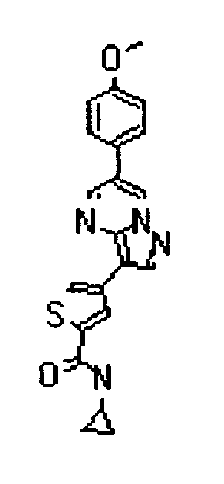
391 Example 10 
393 Example 11 
498 Example 12 
443 Example 13 
441 Example 14 
424 Example 15 
435 Example 16 
439 Example 17 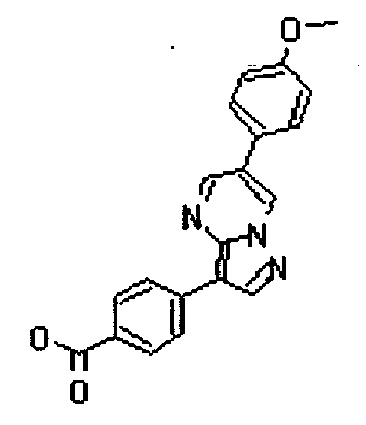
346 Example 18 
433 Example 19 
429 Example 20 
443 Example 21 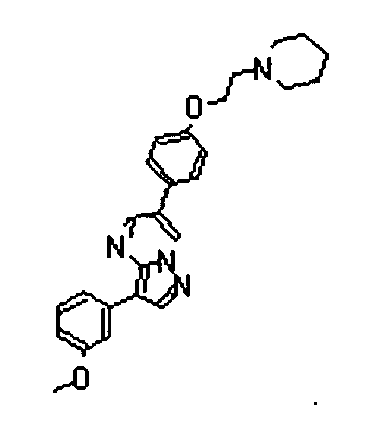
429 Example 22 
445 Example 23 
429 Example 24 
415 Example 25 
418 Example 26 
430 Example 27 
456 Example 28 
484 Example 29 
442 Example 30 
486 Example 31 
485 Example 32 
458 Example 33 
440 Example 34 
482 Example 35 
462 Example 36 
492 Example 37 
501 Example 38 
415 Example 39 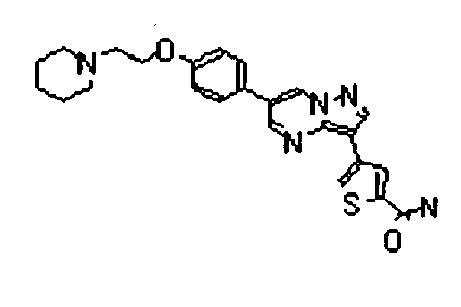
448 Example 40 
476 Example 41 
504 Example 42 
476 Example 43 
491 Example 44 
502 Example 45 
516 Example 46 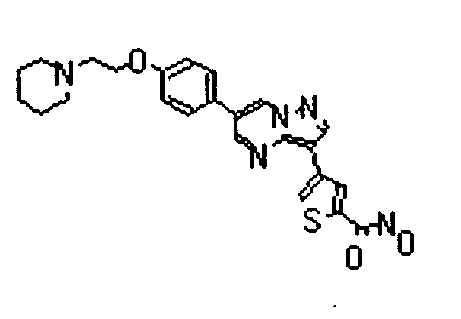
464 Example 47 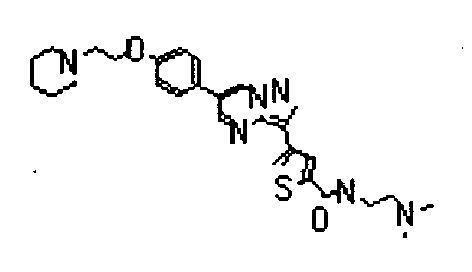
519 Example 48 
533 Example 49 
468 Example 50 
495 Example 51 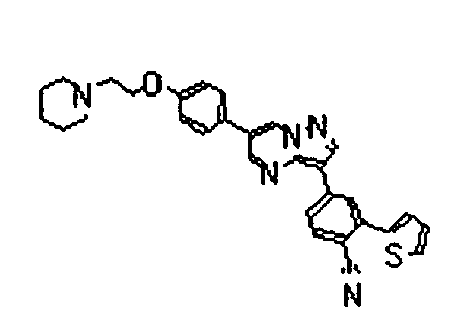
506 Example 52 
490 Example 53 
490 Example 54 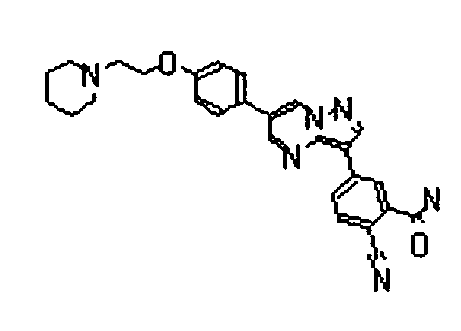
467 Example 55 
481 Example 56 
495 Example 57 
511 Example 58 
549 Example 59 
538 Example 60 
552 Example 61 
521 Example 62 
535 Example 63 
480 Example 64 
487 Example 65 
469 Example 66 
510 Example 67 
511 Example 68 
537 Example 69 
468 Example 70 
525 Example 71 
490 Example 72 
433 Example 73 
476 Example 74 
505 Example 75 
519 Example 76 
516 Example 77 
516 Example 78 
477 Example 79 
516 Example 80 
435 Example 81 
487 - In the above table, hydrogen atoms are to be inferred where heteroatoms are shown with one or more unsatisfied valencies.
Also prepared by similar routes were the following:Example Structure m/z (MH+) 82 
531.56 83 
523.56 84 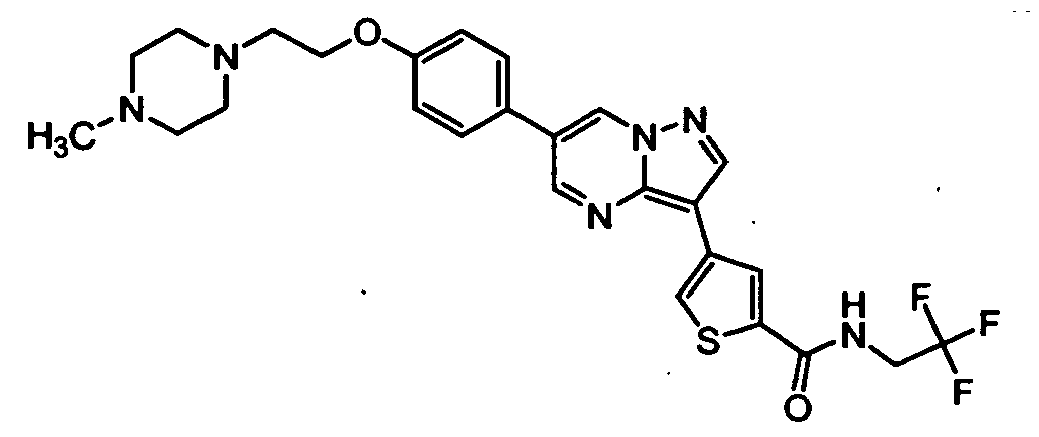
544.60 85 
595.65 86 
606.675 87 
581.665 88 
592.692 89 
501.578 90 
543.616 91 
543.659 92 
555.670 93 
557.643 94 
565.569 95 
533.552 96 
533.552 97 
606.675 98 
565.644 99 
547.579 100 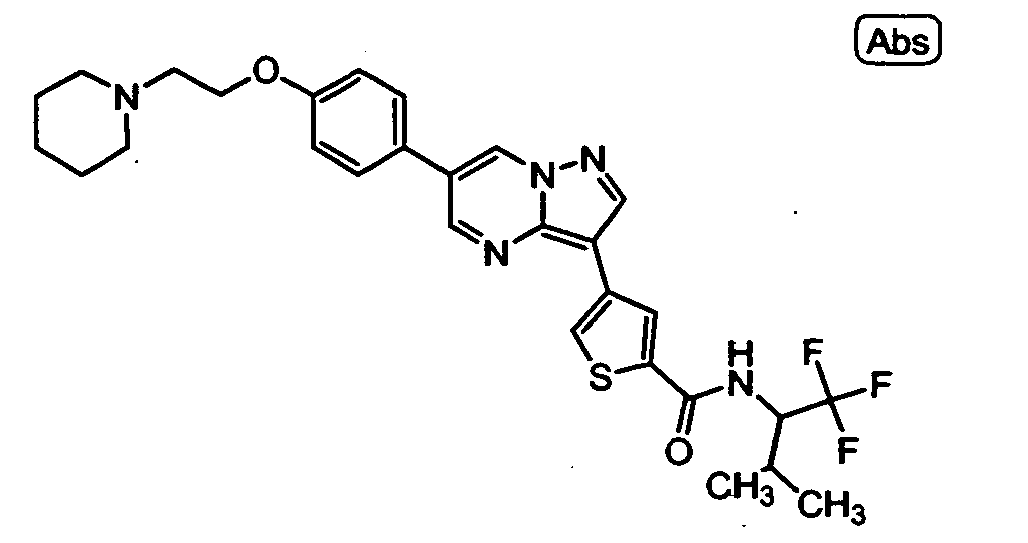
571.670 101 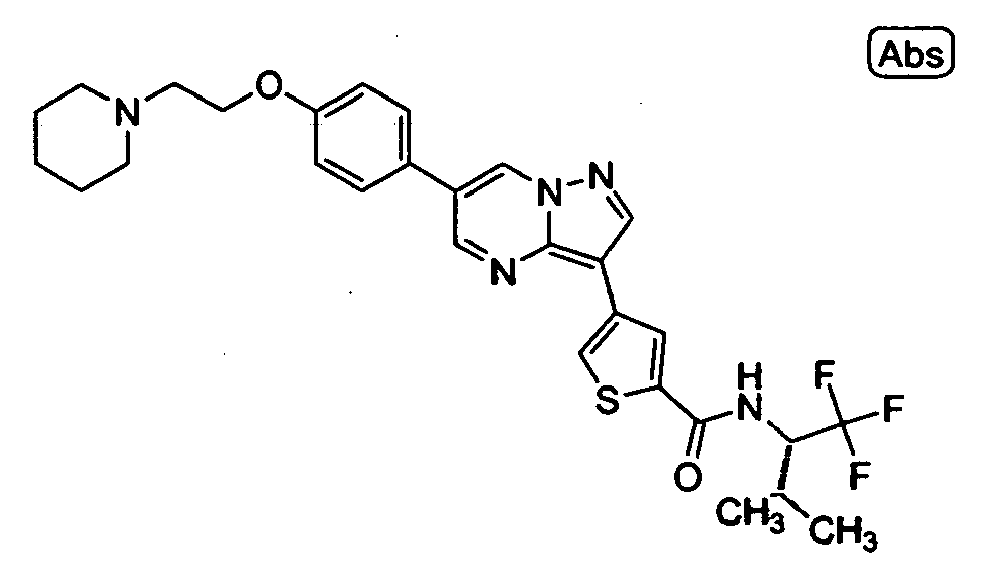
571.670 102 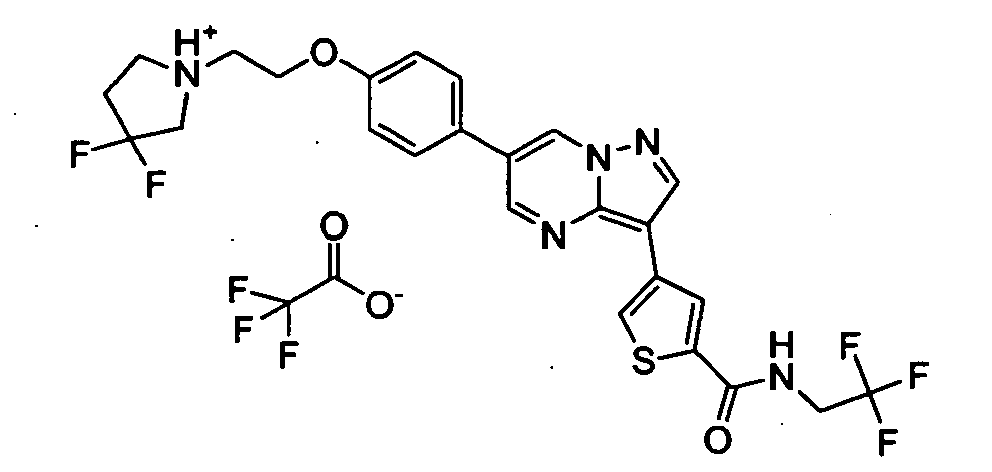
551.542 103 
523.563 104 
663.749 105 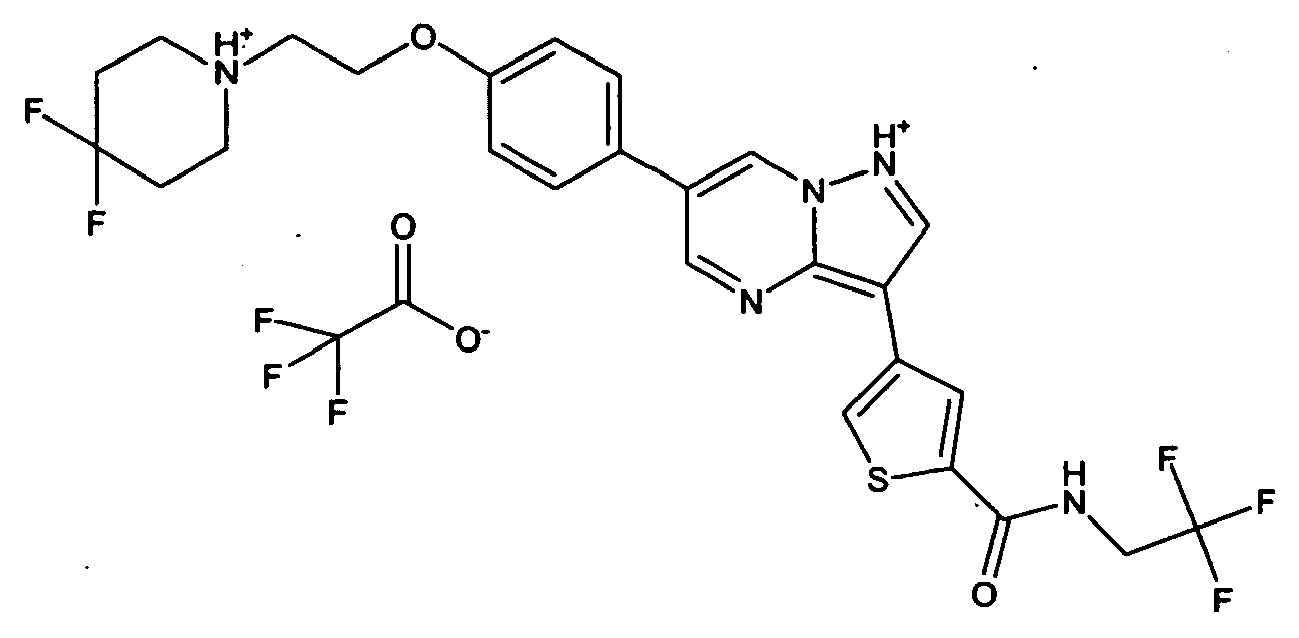
565.569 106 
656.736 107 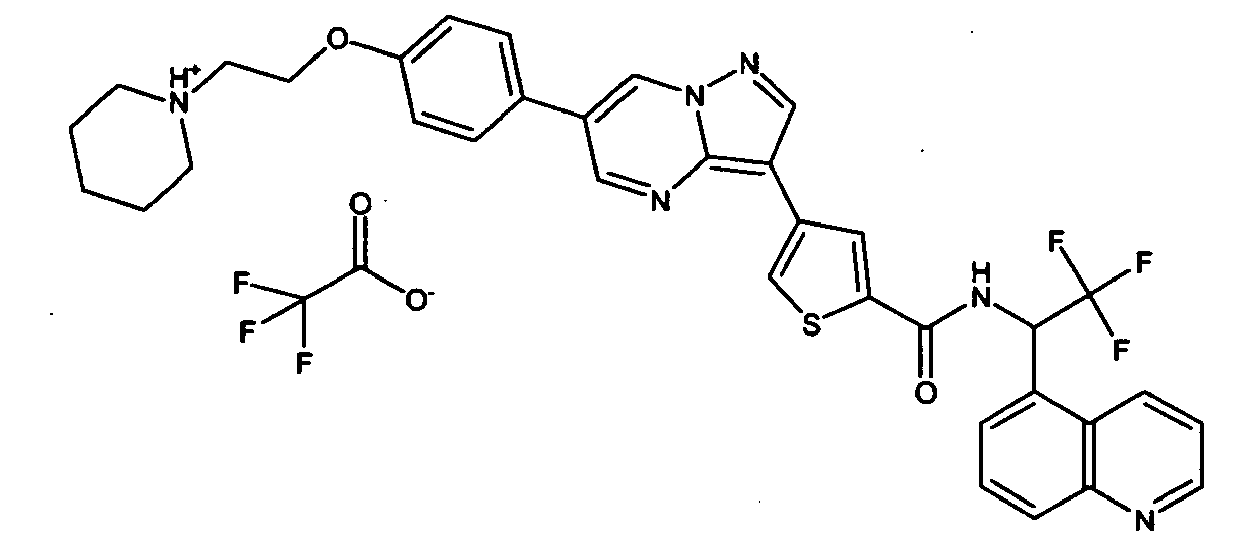
656.736 108 
557.686 109 
609.679 110 
606.675 111 
661.774 112 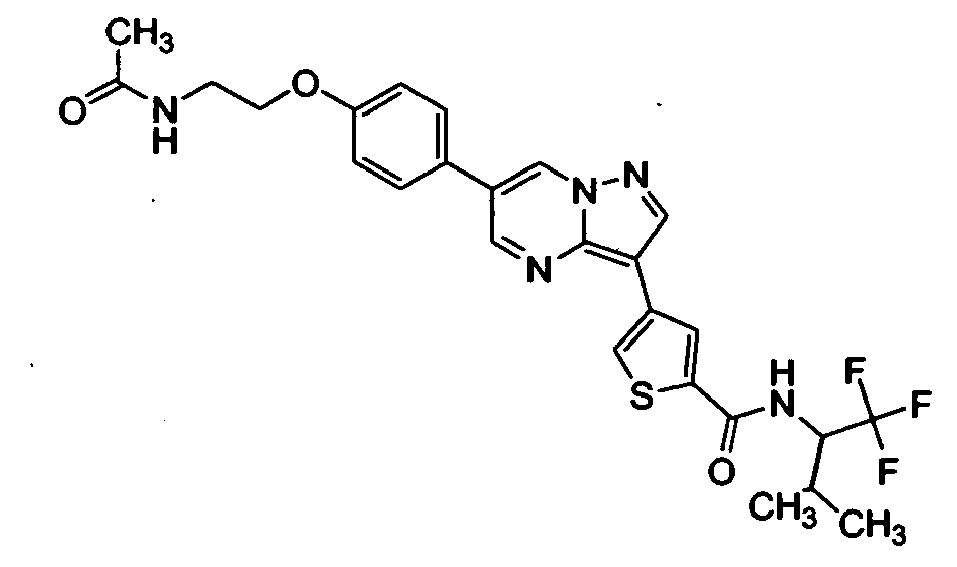
545.588 113 
444.438 114 
476.481 115 
490.508
Claims (13)
- The use, for the manufacture of a medicament for treatment or prevention of a neurodegenerative disease associated with hyperphosphorylation of tau, of a compound according to formula I:
 R represents C1-4alkyl which is optionally substituted with halogen, CN, CF3, OR1, NR1R2, NHPh or NHCOC1-4alkyl; or R may complete a fused tetrahydrofuran ring;Ar represents phenyl or optionally benzofused 5- or 6-membered heteroaryl, any of which optionally bears up to 3 independently-selected R3 substituents;R1 and R2 independently represent H or C1-4alkyl, or R1 and R2 bonded to the same nitrogen atom may complete a heterocyclic ring of up to 6 members which optionally comprises one additional heteroatom selected from N, O and S and which optionally bears up to 2 substituents selected from C1-4alkyl, CN, CF3, halogen and oxo;R3 represents halogen, CN, R5, SR5, X-OR4, X-N(R4)2, CH(CF3)-N(R4)2, COR4, CONHOH, phenyl, 5- or 6-membered heteroaryl or C-heterocyclyl, said phenyl, 5- or 6-membered heteroaryl or C-heterocyclyl optionally bearing up to 2 substituents selected from C1-4alkyl, CF3 and halogen; or when Ar represents phenyl two R3 groups attached to adjacent ring atoms on Ar may complete a fused 5- or 6-membered carbocyclic or heterocyclic ring which optionally bears up to 3 substituents selected from oxo, imino, and R5;R4 represents H, CF3, CH(CF3)-Ar1, or alkyl, alkenyl, cycloalkyl or cycloalkylalkyl of up to 6 carbon atoms which is optionally substituted with halogen, CN, CF3, OR1 or NR1R2; or two R4 groups bonded to the same nitrogen atom may complete a heterocyclic ring of up to 6 members which optionally comprises one additional heteroatom selected from N, O and S and which optionally bears up to 2 substituents selected from C1-4alkyl, CF3, halogen and oxo;R5 represents R4 that is not H;Ar1 represents an aromatic mono- or bicyclic ring system of up to 10 ring atoms of which 0-3 are selected from N, O and S and the rest are carbon, said ring system bearing 0-3 substituents selected from halogen, CF3 and C1-4alkyl;X represents a bond, CH2 or CO; and"C-heterocyclyl" refers to nonaromatic heterocyclic rings of 5 or 6 ring atoms, up to 2 of which are selected from N, O and S, said ring being attached via a ring carbon atom;wherein said neurodegenerative disease associated with hyperphosphorylation of tau is selected from Alzheimer's disease (AD), frontotemporal dementia, Pick's disease and parkinsonism linked to chromosome 17 (FTDP-17).
 - A compound of formula I as defined in claim 1, or a pharmaceutically acceptable salt or hydrate thereof for use in treatment or prevention of a neurodegenerative disease associated with hyperphosphorylation of tau in a human patient, wherein said neurodegenerative disease associated with hyperphosphorylation of tau is selected from Alzheimer's disease (AD), frontotemporal dementia, Pick's disease and parkinsonism linked to chromosome 17 (FTDP-17).
- Use according to claim 1 wherein said compound is a compound of formula II:

- Use according to claim 1 wherein said compound is a compound formula III:
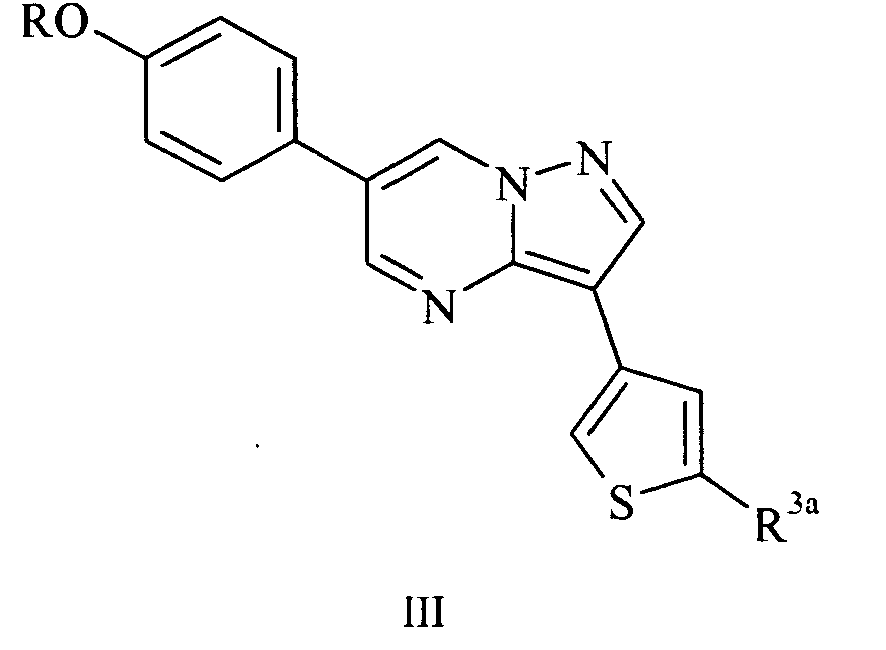
- Use according to any of claims 1, 3 and 4 wherein R represents CH2CH2NR1R2 or CH2CH2CH2NR1R2, where R1 and R2 are as defined in claim 1.
- A compound of formula III:
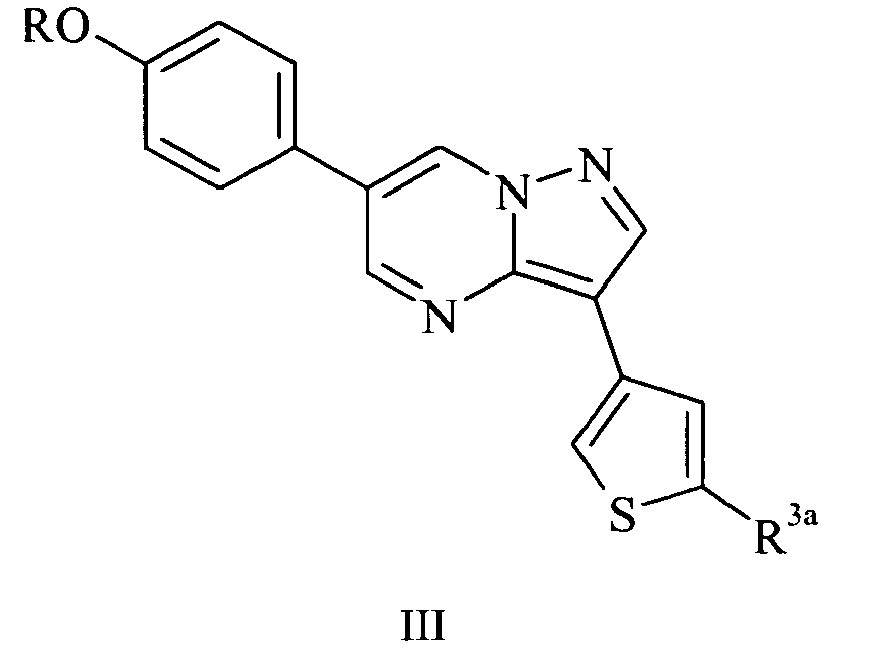 R represents C1-4alkyl which is substituted with halogen, CN, CF3, OR1, NR1R2, NHPh or NHCOC1-4alkyl;R3a represents R3;and R1, R2 and R3 are as defined in claim 1.
 - A compound according to claim 6 wherein R represents CH2CH2NR1R2 or CH2CHCHNR1R2.
- A compound according to claim 6 or claim 7 wherein R3a represents CONHR4 where R4 is H or C1-4 alkyl which is optionally substituted with CF3, OR1 or NR1R2.
- A compound according to claim 6 wherein R3a represents CH2NHR4 or CONHR4 and R4 represents CH(CF3)-Ar1 where Ar1 is as defined in claim 1.
- A compound according to claim 6 wherein R and R3a are as listed in the following table:
R R3a 2-(piperidin-1-yl)ethyl CO2Me 2-(piperidin-1-yl)ethyl CONHMe 2-(piperidin-1-yl)ethyl CONHCH2CH2OH 2-(piperidin-1-yl)ethyl CONH2 2-(piperidin-1-yl)ethyl CONHEt 2-(piperidin-1-yl)ethyl CONH-isobutyl 2-(piperidin-1-yl)ethyl CON(Me)2 2-(piperidin-1-yl)ethyl CONHCH2CH2NH2 2-(piperidin-1-yl)ethyl CO-(1-pyrrolidinyl) 2-(piperidin-1-yl)ethyl CO-(1-piperidinyl) 2-(piperidin-1-yl)ethyl CONHCH2CF3 2-(piperidin-1-yl)ethyl CONHOH 2-(piperidin-1-yl)ethyl CONHCH2CH2N(Me)2 2-(piperidin-1-yl)ethyl CON(Me)CH2CH2N(Me)2 2-(piperidin-1-yl)ethyl CH2NH-isobutyl 2-(piperidin-1-yl)ethyl CHO 2-(piperidin-1-yl)ethyl CH2NHCH2CH2OH 2-(piperidin-1-yl)ethyl CH2NHCH2CH2N(Me)2 2-(piperidin-1-yl)ethyl CH2N(Me)CH2CH2N(Me)2 2-(piperidin-1-yl)ethyl 4-isopropyl-4,5-dihydro-1,3-oxazol-2-yl 2-(dimethylamino)ethyl CH2CF3 2-(pyrrolidin-1-yl)ethyl CH2CF3 2-(piperidin-1-yl)ethyl CH2NHCH2CH2NH2 2-(piperidin-1-yl)ethyl CH2NHCH2CF3 2-(piperidin-1-yl)ethyl CH2OH 2-(piperidin-1-yl)ethyl 5-methyl-4,5-dihydro-1H-imidazol-2-yl - A compound according to claim 6 wherein R and R3a are as listed in the following table:
R R3a 2-(morpholin-4-yl)ethyl CONHCH2CF3 2-(4-Me-piperazin-1-yl)ethyl CONHCH2CF3 2-(piperidin-1-yl)ethyl CONHCH(CF3)-(2-furyl) 2-(piperidin-1-yl)ethyl CONHCH(CF3)-(2-pyridyl) 2-(piperidin-1-yl)ethyl CH2NHCH(CF3)-(2-furyl) 2-(piperidin-1-yl)ethyl CH2NHCH(CF3)-(2-pyridyl) 2-(piperidin-1-yl)ethyl CH(CF3)-NH2 2-(piperidin-1-yl)ethyl CONHCH(CF3)-Me 2-(piperidin-1-yl)ethyl CH(CF3)-NH-isopropyl 2-(piperidin-1-yl)ethyl CH(CF3)-NHCH2cyclopropyl 2-(piperidin-1-yl)ethyl CONHC(Me)2CF3 2-(3,3-di-F-piperidin-1-yl)ethyl CONHCH2CF3 2-(3-F-pyrrolidin-1-yl) CONHCH2CF3 2-(piperidin-1-yl)ethyl CONHCH(CF3)-(3-pyridyl) 2-(3-F-piperidin-1-yl)ethyl CONHCH2CF3 2-(piperidin-1-yl)ethyl CONHCH(CF3)-isopropyl 2-(3,3-di-F-pyrrolidin-1yl)ethyl CONHCH2CF3 2-(4,4-di-F-piperidin-1yl)ethyl CONHCH2CF3 2-(piperidin-1-yl)ethyl CONHCH(CF3)-(quinolin-5-yl) 2-(piperidin-1-yl)ethyl CONHCH(CF3)-(quinolin-8-yl) 2-(piperidin-1-yl)ethyl CH2NHCH(CF3)-isopropyl 2-(piperidin-1-yl)ethyl CONHCH(CF3)-(1-Me-imidazol-2-yl) 2-(piperidin-1-yl)ethyl CONHCH(CF3)-(4-pyridyl) 2-(piperidin-1-yl)ethyl CONHCH(CF3)-(benzthiophen-2-yl) 2-AcNH-ethyl CONHCH(CF3)-isopropyl Fused tetrahydrofuran CONHCH2CF3 2-methoxyethyl CONHCH2CF3 3-methoxypropyl CONHCH2CF3 - A pharmaceutical composition comprising a compound according to any of claims 6-11 and a pharmaceutically acceptable carrier.
- A compound according to any of claims 6-11 for use in medicine.
Applications Claiming Priority (2)
| Application Number | Priority Date | Filing Date | Title |
|---|---|---|---|
| GBGB0601638.0A GB0601638D0 (en) | 2006-01-27 | 2006-01-27 | Therapeutic treatment |
| PCT/GB2007/050036 WO2007085873A1 (en) | 2006-01-27 | 2007-01-23 | Treatment of alzheimer's disease and related conditions |
Publications (2)
| Publication Number | Publication Date |
|---|---|
| EP1981509A1 EP1981509A1 (en) | 2008-10-22 |
| EP1981509B1 true EP1981509B1 (en) | 2010-03-17 |
Family
ID=36060954
Family Applications (1)
| Application Number | Title | Priority Date | Filing Date |
|---|---|---|---|
| EP07705350A Not-in-force EP1981509B1 (en) | 2006-01-27 | 2007-01-23 | Pyrazolo[1,5-a]pyrimidine derivatives for use in treatment of Alzheimer's disease and related conditions |
Country Status (9)
| Country | Link |
|---|---|
| US (1) | US20100240647A1 (en) |
| EP (1) | EP1981509B1 (en) |
| JP (1) | JP2009524635A (en) |
| AT (1) | ATE460936T1 (en) |
| AU (1) | AU2007209166A1 (en) |
| CA (1) | CA2640386A1 (en) |
| DE (1) | DE602007005353D1 (en) |
| GB (1) | GB0601638D0 (en) |
| WO (1) | WO2007085873A1 (en) |
Families Citing this family (9)
| Publication number | Priority date | Publication date | Assignee | Title |
|---|---|---|---|---|
| EP1849465A4 (en) * | 2005-02-18 | 2008-12-24 | Takeda Pharmaceutical | AGENT FOR CONTROLLING THE FUNCTION OF THE GPR34 RECEPTOR |
| AU2008279759A1 (en) * | 2007-07-20 | 2009-01-29 | Merck & Co., Inc. | Pyrazolo[1,5-a]pyrimidine derivatives |
| EP2265603B1 (en) | 2008-03-13 | 2014-05-07 | The General Hospital Corporation | Inhibitors of the bmp signaling pathway |
| WO2010017046A1 (en) | 2008-08-05 | 2010-02-11 | Merck & Co., Inc. | Pyrazolo[1,5-a]pyridines as mark inhibitors |
| US8592425B2 (en) * | 2009-01-16 | 2013-11-26 | Merck Sharp & Dohme Corp. | Imidazo[1,2-a]pyridines and imidazo[1,2-b]pyridazines as mark inhibitors |
| US8946237B2 (en) | 2010-01-14 | 2015-02-03 | Merck Sharp & Dohme Corp. | Pyrazolo[1,5-A]pyrimidines as mark inhibitors |
| WO2012045451A1 (en) * | 2010-10-05 | 2012-04-12 | Ludwig-Maximilians-Universitaet Muenchen | Novel therapeutic treatment of progranulin-dependent diseases |
| JP6542192B2 (en) | 2013-03-14 | 2019-07-10 | ザ ブリガム アンド ウィメンズ ホスピタル インコーポレイテッドThe Brigham and Women’s Hospital, Inc. | BMP inhibitors and methods of use thereof |
| US10513521B2 (en) | 2014-07-15 | 2019-12-24 | The Brigham And Women's Hospital, Inc. | Compositions and methods for inhibiting BMP |
Family Cites Families (2)
| Publication number | Priority date | Publication date | Assignee | Title |
|---|---|---|---|---|
| EP1514558A1 (en) * | 2003-09-15 | 2005-03-16 | Max-Planck-Gesellschaft zur Förderung der Wissenschaften e.V. | Use of MARKK or MARKK antagonists for the treatment of pathologies characterised by increased or reduced phosphorylation of MARK or tau protein |
| DE602005023763D1 (en) * | 2004-11-04 | 2010-11-04 | Vertex Pharma | PYRAZOLOA1,5-ATPYRIMIDINES SUITABLE AS INHIBITORS OF PROTEIN KINASES |
-
2006
- 2006-01-27 GB GBGB0601638.0A patent/GB0601638D0/en not_active Ceased
-
2007
- 2007-01-23 JP JP2008551887A patent/JP2009524635A/en not_active Withdrawn
- 2007-01-23 CA CA002640386A patent/CA2640386A1/en not_active Abandoned
- 2007-01-23 US US12/223,157 patent/US20100240647A1/en not_active Abandoned
- 2007-01-23 DE DE602007005353T patent/DE602007005353D1/en active Active
- 2007-01-23 AU AU2007209166A patent/AU2007209166A1/en not_active Abandoned
- 2007-01-23 AT AT07705350T patent/ATE460936T1/en not_active IP Right Cessation
- 2007-01-23 WO PCT/GB2007/050036 patent/WO2007085873A1/en not_active Ceased
- 2007-01-23 EP EP07705350A patent/EP1981509B1/en not_active Not-in-force
Also Published As
| Publication number | Publication date |
|---|---|
| ATE460936T1 (en) | 2010-04-15 |
| EP1981509A1 (en) | 2008-10-22 |
| JP2009524635A (en) | 2009-07-02 |
| US20100240647A1 (en) | 2010-09-23 |
| AU2007209166A1 (en) | 2007-08-02 |
| DE602007005353D1 (en) | 2010-04-29 |
| CA2640386A1 (en) | 2007-08-02 |
| GB0601638D0 (en) | 2006-03-08 |
| WO2007085873A1 (en) | 2007-08-02 |
Similar Documents
| Publication | Publication Date | Title |
|---|---|---|
| US8592425B2 (en) | Imidazo[1,2-a]pyridines and imidazo[1,2-b]pyridazines as mark inhibitors | |
| US20090247504A1 (en) | Indazole Derivatives for Treatment of Alzheimer's Disease | |
| EP2178375B1 (en) | Pyrazoloý1,5-a¨pyrimidine derivatives | |
| US8252803B2 (en) | Piperidine derivatives | |
| US8518911B2 (en) | Pyrazolo[1,5-a]pyridines as MARK inhibitors | |
| US20100240647A1 (en) | Treatment of Alzheimer's Disease and Related Conditions | |
| WO2009152027A1 (en) | 5,7-dihydro-6h-pyrrolo[2,3-d]pyrimidin-6-one derivatives for mark inhibition | |
| EP2117311A1 (en) | Therapeutic agents | |
| US20100009987A1 (en) | Aminothiazole derivatives as inhibitors of mark | |
| US8946237B2 (en) | Pyrazolo[1,5-A]pyrimidines as mark inhibitors | |
| US20100048555A1 (en) | Imidazothiazole derivatives as mark inhibitors | |
| US20090192155A1 (en) | Identification of Compounds Suitable for Treating Ad |
Legal Events
| Date | Code | Title | Description |
|---|---|---|---|
| PUAI | Public reference made under article 153(3) epc to a published international application that has entered the european phase |
Free format text: ORIGINAL CODE: 0009012 |
|
| 17P | Request for examination filed |
Effective date: 20080827 |
|
| AK | Designated contracting states |
Kind code of ref document: A1 Designated state(s): AT BE BG CH CY CZ DE DK EE ES FI FR GB GR HU IE IS IT LI LT LU LV MC NL PL PT RO SE SI SK TR |
|
| 17Q | First examination report despatched |
Effective date: 20081201 |
|
| GRAP | Despatch of communication of intention to grant a patent |
Free format text: ORIGINAL CODE: EPIDOSNIGR1 |
|
| RTI1 | Title (correction) |
Free format text: PYRAZOLO(1,5-A)PYRIMIDINE DERIVATIVES FOR USE IN TREATMENT OF ALZHEIMER'S DISEASE AND RELATED CONDITIONS |
|
| GRAS | Grant fee paid |
Free format text: ORIGINAL CODE: EPIDOSNIGR3 |
|
| GRAA | (expected) grant |
Free format text: ORIGINAL CODE: 0009210 |
|
| RAP1 | Party data changed (applicant data changed or rights of an application transferred) |
Owner name: MERCK SHARP & DOHME CORP. Owner name: MERCK SHARP & DOHME LIMITED |
|
| AK | Designated contracting states |
Kind code of ref document: B1 Designated state(s): AT BE BG CH CY CZ DE DK EE ES FI FR GB GR HU IE IS IT LI LT LU LV MC NL PL PT RO SE SI SK TR |
|
| REG | Reference to a national code |
Ref country code: GB Ref legal event code: FG4D |
|
| REG | Reference to a national code |
Ref country code: CH Ref legal event code: NV Representative=s name: SERVOPATENT GMBH Ref country code: CH Ref legal event code: EP |
|
| REG | Reference to a national code |
Ref country code: IE Ref legal event code: FG4D |
|
| REF | Corresponds to: |
Ref document number: 602007005353 Country of ref document: DE Date of ref document: 20100429 Kind code of ref document: P |
|
| REG | Reference to a national code |
Ref country code: NL Ref legal event code: VDEP Effective date: 20100317 |
|
| PG25 | Lapsed in a contracting state [announced via postgrant information from national office to epo] |
Ref country code: LT Free format text: LAPSE BECAUSE OF FAILURE TO SUBMIT A TRANSLATION OF THE DESCRIPTION OR TO PAY THE FEE WITHIN THE PRESCRIBED TIME-LIMIT Effective date: 20100317 |
|
| LTIE | Lt: invalidation of european patent or patent extension |
Effective date: 20100317 |
|
| PG25 | Lapsed in a contracting state [announced via postgrant information from national office to epo] |
Ref country code: SI Free format text: LAPSE BECAUSE OF FAILURE TO SUBMIT A TRANSLATION OF THE DESCRIPTION OR TO PAY THE FEE WITHIN THE PRESCRIBED TIME-LIMIT Effective date: 20100317 Ref country code: PL Free format text: LAPSE BECAUSE OF FAILURE TO SUBMIT A TRANSLATION OF THE DESCRIPTION OR TO PAY THE FEE WITHIN THE PRESCRIBED TIME-LIMIT Effective date: 20100317 Ref country code: LV Free format text: LAPSE BECAUSE OF FAILURE TO SUBMIT A TRANSLATION OF THE DESCRIPTION OR TO PAY THE FEE WITHIN THE PRESCRIBED TIME-LIMIT Effective date: 20100317 Ref country code: FI Free format text: LAPSE BECAUSE OF FAILURE TO SUBMIT A TRANSLATION OF THE DESCRIPTION OR TO PAY THE FEE WITHIN THE PRESCRIBED TIME-LIMIT Effective date: 20100317 Ref country code: AT Free format text: LAPSE BECAUSE OF FAILURE TO SUBMIT A TRANSLATION OF THE DESCRIPTION OR TO PAY THE FEE WITHIN THE PRESCRIBED TIME-LIMIT Effective date: 20100317 |
|
| PG25 | Lapsed in a contracting state [announced via postgrant information from national office to epo] |
Ref country code: RO Free format text: LAPSE BECAUSE OF FAILURE TO SUBMIT A TRANSLATION OF THE DESCRIPTION OR TO PAY THE FEE WITHIN THE PRESCRIBED TIME-LIMIT Effective date: 20100317 Ref country code: NL Free format text: LAPSE BECAUSE OF FAILURE TO SUBMIT A TRANSLATION OF THE DESCRIPTION OR TO PAY THE FEE WITHIN THE PRESCRIBED TIME-LIMIT Effective date: 20100317 Ref country code: GR Free format text: LAPSE BECAUSE OF FAILURE TO SUBMIT A TRANSLATION OF THE DESCRIPTION OR TO PAY THE FEE WITHIN THE PRESCRIBED TIME-LIMIT Effective date: 20100618 Ref country code: EE Free format text: LAPSE BECAUSE OF FAILURE TO SUBMIT A TRANSLATION OF THE DESCRIPTION OR TO PAY THE FEE WITHIN THE PRESCRIBED TIME-LIMIT Effective date: 20100317 Ref country code: CY Free format text: LAPSE BECAUSE OF FAILURE TO SUBMIT A TRANSLATION OF THE DESCRIPTION OR TO PAY THE FEE WITHIN THE PRESCRIBED TIME-LIMIT Effective date: 20100317 Ref country code: ES Free format text: LAPSE BECAUSE OF FAILURE TO SUBMIT A TRANSLATION OF THE DESCRIPTION OR TO PAY THE FEE WITHIN THE PRESCRIBED TIME-LIMIT Effective date: 20100628 Ref country code: BE Free format text: LAPSE BECAUSE OF FAILURE TO SUBMIT A TRANSLATION OF THE DESCRIPTION OR TO PAY THE FEE WITHIN THE PRESCRIBED TIME-LIMIT Effective date: 20100317 Ref country code: SE Free format text: LAPSE BECAUSE OF FAILURE TO SUBMIT A TRANSLATION OF THE DESCRIPTION OR TO PAY THE FEE WITHIN THE PRESCRIBED TIME-LIMIT Effective date: 20100317 |
|
| PG25 | Lapsed in a contracting state [announced via postgrant information from national office to epo] |
Ref country code: BG Free format text: LAPSE BECAUSE OF FAILURE TO SUBMIT A TRANSLATION OF THE DESCRIPTION OR TO PAY THE FEE WITHIN THE PRESCRIBED TIME-LIMIT Effective date: 20100617 Ref country code: SK Free format text: LAPSE BECAUSE OF FAILURE TO SUBMIT A TRANSLATION OF THE DESCRIPTION OR TO PAY THE FEE WITHIN THE PRESCRIBED TIME-LIMIT Effective date: 20100317 Ref country code: IS Free format text: LAPSE BECAUSE OF FAILURE TO SUBMIT A TRANSLATION OF THE DESCRIPTION OR TO PAY THE FEE WITHIN THE PRESCRIBED TIME-LIMIT Effective date: 20100717 Ref country code: CZ Free format text: LAPSE BECAUSE OF FAILURE TO SUBMIT A TRANSLATION OF THE DESCRIPTION OR TO PAY THE FEE WITHIN THE PRESCRIBED TIME-LIMIT Effective date: 20100317 |
|
| PLBE | No opposition filed within time limit |
Free format text: ORIGINAL CODE: 0009261 |
|
| STAA | Information on the status of an ep patent application or granted ep patent |
Free format text: STATUS: NO OPPOSITION FILED WITHIN TIME LIMIT |
|
| PG25 | Lapsed in a contracting state [announced via postgrant information from national office to epo] |
Ref country code: PT Free format text: LAPSE BECAUSE OF FAILURE TO SUBMIT A TRANSLATION OF THE DESCRIPTION OR TO PAY THE FEE WITHIN THE PRESCRIBED TIME-LIMIT Effective date: 20100719 Ref country code: DK Free format text: LAPSE BECAUSE OF FAILURE TO SUBMIT A TRANSLATION OF THE DESCRIPTION OR TO PAY THE FEE WITHIN THE PRESCRIBED TIME-LIMIT Effective date: 20100317 |
|
| 26N | No opposition filed |
Effective date: 20101220 |
|
| PG25 | Lapsed in a contracting state [announced via postgrant information from national office to epo] |
Ref country code: IT Free format text: LAPSE BECAUSE OF FAILURE TO SUBMIT A TRANSLATION OF THE DESCRIPTION OR TO PAY THE FEE WITHIN THE PRESCRIBED TIME-LIMIT Effective date: 20100317 |
|
| PG25 | Lapsed in a contracting state [announced via postgrant information from national office to epo] |
Ref country code: MC Free format text: LAPSE BECAUSE OF NON-PAYMENT OF DUE FEES Effective date: 20110131 |
|
| REG | Reference to a national code |
Ref country code: CH Ref legal event code: PL |
|
| GBPC | Gb: european patent ceased through non-payment of renewal fee |
Effective date: 20110123 |
|
| REG | Reference to a national code |
Ref country code: FR Ref legal event code: ST Effective date: 20110930 |
|
| REG | Reference to a national code |
Ref country code: IE Ref legal event code: MM4A |
|
| PG25 | Lapsed in a contracting state [announced via postgrant information from national office to epo] |
Ref country code: LI Free format text: LAPSE BECAUSE OF NON-PAYMENT OF DUE FEES Effective date: 20110131 Ref country code: FR Free format text: LAPSE BECAUSE OF NON-PAYMENT OF DUE FEES Effective date: 20110131 Ref country code: CH Free format text: LAPSE BECAUSE OF NON-PAYMENT OF DUE FEES Effective date: 20110131 |
|
| PG25 | Lapsed in a contracting state [announced via postgrant information from national office to epo] |
Ref country code: GB Free format text: LAPSE BECAUSE OF NON-PAYMENT OF DUE FEES Effective date: 20110123 |
|
| REG | Reference to a national code |
Ref country code: DE Ref legal event code: R119 Ref document number: 602007005353 Country of ref document: DE Effective date: 20110802 |
|
| PG25 | Lapsed in a contracting state [announced via postgrant information from national office to epo] |
Ref country code: IE Free format text: LAPSE BECAUSE OF NON-PAYMENT OF DUE FEES Effective date: 20110123 |
|
| PG25 | Lapsed in a contracting state [announced via postgrant information from national office to epo] |
Ref country code: LU Free format text: LAPSE BECAUSE OF NON-PAYMENT OF DUE FEES Effective date: 20110123 |
|
| PG25 | Lapsed in a contracting state [announced via postgrant information from national office to epo] |
Ref country code: DE Free format text: LAPSE BECAUSE OF NON-PAYMENT OF DUE FEES Effective date: 20110802 |
|
| PG25 | Lapsed in a contracting state [announced via postgrant information from national office to epo] |
Ref country code: TR Free format text: LAPSE BECAUSE OF FAILURE TO SUBMIT A TRANSLATION OF THE DESCRIPTION OR TO PAY THE FEE WITHIN THE PRESCRIBED TIME-LIMIT Effective date: 20100317 |
|
| PG25 | Lapsed in a contracting state [announced via postgrant information from national office to epo] |
Ref country code: HU Free format text: LAPSE BECAUSE OF FAILURE TO SUBMIT A TRANSLATION OF THE DESCRIPTION OR TO PAY THE FEE WITHIN THE PRESCRIBED TIME-LIMIT Effective date: 20100317 |