EP1981192A1 - Modulation parameter selecting method, modulation parameter selecting apparatus and communication apparatus - Google Patents
Modulation parameter selecting method, modulation parameter selecting apparatus and communication apparatus Download PDFInfo
- Publication number
- EP1981192A1 EP1981192A1 EP07706858A EP07706858A EP1981192A1 EP 1981192 A1 EP1981192 A1 EP 1981192A1 EP 07706858 A EP07706858 A EP 07706858A EP 07706858 A EP07706858 A EP 07706858A EP 1981192 A1 EP1981192 A1 EP 1981192A1
- Authority
- EP
- European Patent Office
- Prior art keywords
- coding rate
- channels
- modulation
- rate
- modulation method
- Prior art date
- Legal status (The legal status is an assumption and is not a legal conclusion. Google has not performed a legal analysis and makes no representation as to the accuracy of the status listed.)
- Withdrawn
Links
- 238000000034 method Methods 0.000 title claims abstract description 148
- 238000004891 communication Methods 0.000 title claims description 25
- 230000005540 biological transmission Effects 0.000 claims abstract description 137
- 230000002123 temporal effect Effects 0.000 claims abstract description 63
- 238000012545 processing Methods 0.000 claims abstract description 33
- 238000013507 mapping Methods 0.000 description 12
- 238000005259 measurement Methods 0.000 description 4
- 238000010586 diagram Methods 0.000 description 3
- 230000000694 effects Effects 0.000 description 3
- 238000011835 investigation Methods 0.000 description 3
- 230000001174 ascending effect Effects 0.000 description 2
- 230000009466 transformation Effects 0.000 description 2
- 230000003044 adaptive effect Effects 0.000 description 1
- 239000000284 extract Substances 0.000 description 1
- 238000007616 round robin method Methods 0.000 description 1
Images







Classifications
-
- H—ELECTRICITY
- H04—ELECTRIC COMMUNICATION TECHNIQUE
- H04L—TRANSMISSION OF DIGITAL INFORMATION, e.g. TELEGRAPHIC COMMUNICATION
- H04L1/00—Arrangements for detecting or preventing errors in the information received
- H04L1/0001—Systems modifying transmission characteristics according to link quality, e.g. power backoff
- H04L1/0015—Systems modifying transmission characteristics according to link quality, e.g. power backoff characterised by the adaptation strategy
-
- H—ELECTRICITY
- H04—ELECTRIC COMMUNICATION TECHNIQUE
- H04L—TRANSMISSION OF DIGITAL INFORMATION, e.g. TELEGRAPHIC COMMUNICATION
- H04L1/00—Arrangements for detecting or preventing errors in the information received
- H04L1/0001—Systems modifying transmission characteristics according to link quality, e.g. power backoff
- H04L1/0002—Systems modifying transmission characteristics according to link quality, e.g. power backoff by adapting the transmission rate
- H04L1/0003—Systems modifying transmission characteristics according to link quality, e.g. power backoff by adapting the transmission rate by switching between different modulation schemes
-
- H—ELECTRICITY
- H04—ELECTRIC COMMUNICATION TECHNIQUE
- H04L—TRANSMISSION OF DIGITAL INFORMATION, e.g. TELEGRAPHIC COMMUNICATION
- H04L5/00—Arrangements affording multiple use of the transmission path
- H04L5/003—Arrangements for allocating sub-channels of the transmission path
- H04L5/0044—Allocation of payload; Allocation of data channels, e.g. PDSCH or PUSCH
- H04L5/0046—Determination of the number of bits transmitted on different sub-channels
-
- H—ELECTRICITY
- H04—ELECTRIC COMMUNICATION TECHNIQUE
- H04L—TRANSMISSION OF DIGITAL INFORMATION, e.g. TELEGRAPHIC COMMUNICATION
- H04L1/00—Arrangements for detecting or preventing errors in the information received
- H04L1/0001—Systems modifying transmission characteristics according to link quality, e.g. power backoff
- H04L1/0009—Systems modifying transmission characteristics according to link quality, e.g. power backoff by adapting the channel coding
-
- H—ELECTRICITY
- H04—ELECTRIC COMMUNICATION TECHNIQUE
- H04L—TRANSMISSION OF DIGITAL INFORMATION, e.g. TELEGRAPHIC COMMUNICATION
- H04L1/00—Arrangements for detecting or preventing errors in the information received
- H04L1/0001—Systems modifying transmission characteristics according to link quality, e.g. power backoff
- H04L1/0023—Systems modifying transmission characteristics according to link quality, e.g. power backoff characterised by the signalling
- H04L1/0026—Transmission of channel quality indication
-
- H—ELECTRICITY
- H04—ELECTRIC COMMUNICATION TECHNIQUE
- H04L—TRANSMISSION OF DIGITAL INFORMATION, e.g. TELEGRAPHIC COMMUNICATION
- H04L5/00—Arrangements affording multiple use of the transmission path
- H04L5/0001—Arrangements for dividing the transmission path
- H04L5/0003—Two-dimensional division
- H04L5/0005—Time-frequency
- H04L5/0007—Time-frequency the frequencies being orthogonal, e.g. OFDM(A) or DMT
-
- H—ELECTRICITY
- H04—ELECTRIC COMMUNICATION TECHNIQUE
- H04L—TRANSMISSION OF DIGITAL INFORMATION, e.g. TELEGRAPHIC COMMUNICATION
- H04L5/00—Arrangements affording multiple use of the transmission path
- H04L5/003—Arrangements for allocating sub-channels of the transmission path
- H04L5/0042—Intra-user or intra-terminal allocation
-
- H—ELECTRICITY
- H04—ELECTRIC COMMUNICATION TECHNIQUE
- H04L—TRANSMISSION OF DIGITAL INFORMATION, e.g. TELEGRAPHIC COMMUNICATION
- H04L5/00—Arrangements affording multiple use of the transmission path
- H04L5/003—Arrangements for allocating sub-channels of the transmission path
- H04L5/0058—Allocation criteria
- H04L5/006—Quality of the received signal, e.g. BER, SNR, water filling
Definitions
- the present invention relates to a modulation parameter selecting method and the like including a modulation method and a coding rate, in a system which allows that, with respect to data allocated over a plurality of channels by performing data transmission using the plurality of channels from a first communication apparatus to a second communication apparatus, a coding rate is same and only a modulation method is different in the plurality of channels to which the data has been allocated.
- An OFDM (Orthogonal Frequency Division Multiplex) method that is one of multicarrier transmission methods, is one of the most prevailing modulation methods for a broadband wireless communication system, since the space between subcarriers orthogonal to each other can be narrowed, and therefore efficiency in the frequency utilization is high and the resistance to a multi-path phasing is high by a guard interval added at the head of a symbol sequence.
- a method of giving a modulation parameter for each subcarrier, or for each group including a plurality of subcarriers requires a notification of a modulation parameter between a transmitter and a receiver for each of the subcarriers or each of the groups. Since the amount of information to be notified also increases as the number of subcarriers or the number of groups increases, there is a problem that a ratio of control information to a limited communication capacity becomes high and transmission efficiency is deteriorated.
- Transmission data to a certain user is channel-coded collectively (2001) and subjected to rate matching processing (2002). That is, the coding rate is constant, independent of channels. Thereafter, the coded transmission data is allocated to each of the channels (2003), and modulated by individual modulation method for each of the channels (2004).
- Non-Patent Document 1 "Adaptive Modulation and Channel Coding Rate Control for Frequency Domain Scheduling in Evolved UTRA Downlink", 3GPP, TSG RAN WG1 #42 on LTE, R1-050854, September 2005
- the present invention has an object to realize a modulation parameter selecting method and a modulation parameter selecting apparatus, that can realize a high transmission rate efficiently in a system that a coding rate is made to be common in a plurality of channels allocated to a predetermined terminal and a modulation method is made different for each of the channels.
- a modulation parameter selecting method of a fist aspect of the present invention that is related to a modulation method and a coding rate in a system which allows, with respect to data allocated over a plurality of channels by performing data transmission using the plurality of channels from a first communication apparatus to a second communication apparatus, that the coding rate is same and only the modulation method is different in the plurality of channels to which the data has been allocated, includes: a first step of selecting and temporarily determining one coding rate from predetermined selectable coding rates; a second step of selecting a modulation method that satisfies required quality and has a predetermined transmission rate in each of the channels, under the temporarily determined coding rate; a third step of calculating a transmission rate from the coding rate temporarily determined at the first step and the modulation method in each of the channels selected at the second step; and a fourth step of repeating from the first step to the third step with respect to other selectable coding rates to determine the coding rate that has the predetermined transmission rate
- a second aspect of the present invention according to the modulation parameter selecting method of the first aspect of the present invention, further includes, before the second step, a fifth step of ordering each of the channels based on reception quality, and a sixth step of ordering selectable modulation methods by modulation multi-value number, and is characterized in that the modulation method is selected at the second step in accordance with an order of the channels determined at the fifth step and an order of the modulation methods determined at the sixth step.
- a third aspect of the present invention according to the modulation parameter selecting method of the first or second aspect of the present invention, further includes, before the first step, a seventh step of changing the selectable coding rate from the reception quality in a channel whose predetermined conditions include the reception quality, and is characterized in that the temporal coding rate is determined at the first step from the selectable coding rates determined at the seventh step.
- a fourth aspect of the present invention according to the modulation parameter selecting method of the first or second aspect of the present invention, further includes, before the first step, an eighth step of determining a selectable modulation method with a minimum transmission rate temporarily in a channel that has a most inferior reception quality, a ninth step of determining a coding rate in which the channel satisfies the required quality and the transmission rate becomes maximum, under the modulation method temporarily determined at the eighth step, and a tenth step of changing the selectable coding rates based on the coding rate determined at the ninth step, and is characterized in that the temporal coding rate is determined at the first step from the selectable coding rates determined at the tenth step.
- a fifth aspect of the present invention according to the modulation parameter selecting method of any one of the first to fourth aspects of the present invention, further includes, before the first step, an eighth step of determining a selectable modulation method with a minimum transmission rate temporarily in a channel that has a most inferior reception quality in the channels that satisfy predetermined reception quality, a ninth step of determining a coding rate in which the channel satisfies the required quality and the transmission rate becomes maximum, under the modulation method temporarily determined at the eighth step, and a tenth step changing the selectable coding rates based on the coding rate determined at the ninth step, and is characterized in that the temporal coding rate is determined at the first step from the selectable coding rates determined at the tenth step, and a channel that does not satisfy the predetermined reception quality is determined as a carrier hole.
- a sixth aspect of the present invention that is a modulation parameter selecting apparatus related to a modulation method and a coding rate in a system which allows, with respect to data allocated over a plurality of channels by performing data transmission using the plurality of channels from a first communication apparatus to a second communication apparatus, that the coding rate is same and only the modulation method is different in the plurality of channels to which the data has been allocated, includes a temporal coding rate determining portion that selects and temporarily determines one coding rate from predetermined selectable coding rates; a temporal modulation method determining portion that selects a modulation method that satisfies required quality and has a predetermined transmission rate in each of the channels, under the temporarily determined coding rate; and a transmission rate computing portion that calculates a transmission rate from the coding rate temporarily determined at the temporal coding rate determining portion and the modulation method in each of the channels selected at the temporal modulation method determining portion, and is characterized in that, processing from the temporal coding rate determining portion to the transmission rate
- a seventh aspect of the present invention according to the modulation parameter selecting apparatus of the sixth aspect of the present invention, further includes, a channel ordering portion that orders each of the channels based on reception quality, and a modulation method ordering portion that orders selectable modulation methods by modulation multi-value number, and is characterized in that, the modulation method is selected at the temporal modulation method determining portion in accordance with an order of the channels determined at the channel ordering portion and an order of the modulation methods determined at the modulation method ordering portion.
- an eighth aspect of the present invention according to the modulation parameter selecting apparatus of the sixth or seventh aspect of the present invention, further includes, a coding rate computing portion that changes the selectable coding rate from the reception quality in a channel whose predetermined conditions include the reception quality, and is characterized in that, the temporal coding rate is determined at the temporal coding rate determining portion from the selectable coding rates determined at the coding rate computing portion.
- a ninth aspect of the present invention according to the modulation parameter selecting apparatus of the sixth or seventh aspect of the present invention, further includes, a maximum coding rate computing portion that changes the selectable coding rates based on a coding rate in which a channel satisfies the required quality and a transmission rate is maximum, under the selectable modulation method that has a minimum transmission rate in the channel that has most inferior reception quality, and is characterized in that, the temporal coding rate is determined at the temporal coding rate determining portion from the selectable coding rates changed at the maximum coding rate computing portion.
- a tenth aspect of the present invention according to the modulation parameter selecting apparatus of the sixth or seventh aspect of the present invention, further includes, a maximum coding rate computing portion that changes the selectable coding rates based on a coding rate in which a channel satisfies the required quality and a transmission rate is maximum, under the selectable modulation method that has a minimum transmission rate in the channel that has most inferior reception quality in the channels that satisfy predetermined reception quality, and is characterized in that, the temporal coding rate is determined at the temporal coding rate determining portion from the selectable coding rates changed at the maximum coding rate computing portion, and a channel that does not satisfy the predetermined reception quality is determined as a carrier hole.
- an eleventh aspect of the present invention of a communication apparatus includes the modulation parameter selecting apparatus of any one of the sixth to tenth aspects of the present invention, and is characterized in that, information related to a modulation parameter selected by the modulation parameter selecting apparatus is transmitted to a communication partner.
- a coding rate that satisfies required quality and has a predetermined transmission rate and a modulation method of each channel are determined. For example, a coding rate that has a maximum transmission rate as the predetermined transmission rate and a coding rate of each of the channels are determined, and thereby a communication terminal can perform communication efficiently.
- reception quality and modulation multi-value number in each channel are ordered beforehand and thereby the computing amount required for the ordering is increased, but in all of the allocated channels, it is possible to suppress the computing amount at the time of selecting the coding rate that has the predetermined transmission rate under the conditions that the required quality is satisfied and the modulation method in each of the channels. Accordingly, it is possible to select the coding rate and the modulation method of each of the channels efficiently.
- the present invention relates to an MCS (Modulation and channel Coding Scheme) selecting method when a plurality of channels are allocated for one radio device. Moreover, a system which allows that a coding rate is same and only a modulation method is different in the plurality of channels, for example as shown in FIG. 15 , is assumed.
- MCS Modulation and channel Coding Scheme
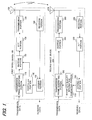
- FIG. 1 An example of a block configuration of a system according to the present embodiment is shown in FIG. 1 .
- first radio device 100 and one second radio device 200 perform communication using a plurality of channels.
- the first radio device 100 is configured so as to comprise a transmission frame generating portion 110, a mapping portion 120, an IFFT (Inverse Fast Fourier Transformation) portion 130, a transmission portion 140, an antenna 150, a receiving portion 160, a judging portion 170, and a scheduler portion 180.
- the second radio device 200 is configured so as to comprise an antenna 210, a receiving portion 220, an FFT (Fast Fourier Transformation) portion 230, a judging portion 240, a reception quality information generating portion 250, a transmission frame generating portion 260, a mapping portion 280, and a transmission portion 290.
- FFT Fast Fourier Transformation
- the transmission frame generating portion 110 performs coding and modulation processing based on scheduling control information notified from the scheduler portion 180 and MCS information. Moreover, in a generated symbol sequence, control information (and pilot signal) for notifying the scheduling control information and the MCS information to the second radio device 200 is generated to multiplex to a data symbol. The generated transmission frame is output to the mapping portion 120.
- the mapping portion 120 is a functional portion for mapping the modulation symbol sequence input from the transmission frame generating portion 110 in accordance with the scheduling control information notified from the scheduler portion 180.
- the modulation symbol sequence thus mapped is output to the IFFT portion 130 and an OFDM symbol sequence is generated by IFFT processing.
- An OFDM frame generated at the FFT portion 130 is transmitted from the antenna 150 to the second radio device 200 through the transmission portion 140.
- the OFDM symbol sequence received at the receiving portion 220 through the antenna 210 is output to the FFT portion 230.
- the FFT portion 230 executes FFT processing, and thereby a signal of the OFDM symbol sequence is converted into a signal of the modulation symbol sequence, and output to the judging portion 240.
- the judging portion 240 is a function portion for demodulating and decoding the input modulation symbol sequence to extract received data. At this time, judging processing is performed in accordance with the scheduling control information and the MCS information notified from the first radio device 100. In addition, the pilot signal that has been multiplexed to a frame in advance is output to the reception quality information generating portion 250. Note that, when performing an interference power measurement in the judgment feedback type, a data sequence and judgment result are output to the reception quality information generating portion 250.
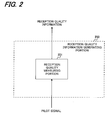
- the reception quality information generating portion 250 includes a reception quality measuring portion 251.
- the reception quality measuring portion 251 measures reception quality from the pilot signal input from the judging portion 240 to generate reception quality information for outputting the reception quality to the first radio device 100.
- the generated reception quality information is output to the transmission frame portion 260, and transmission frame is generated with transmission data.
- the transmission frame portion 260 generates a transmission frame from the input reception quality information to output to the mapping portion 280. Then, the mapping portion 280 performs mapping to transmit from the antenna 210 to the first radio device 100 through the transmission portion 290.
- a signal received from the antenna 150 is input to the judging portion 170 through the receiving portion 160.
- the judging portion 170 extracts reception data from the input reception signal, separates the reception quality information that has been multiplexed to a frame in advance, and outputs the separated reception quality information to the scheduler portion 180.
- the scheduler portion 180 is a functional portion for performing scheduling of transmission data based on reception quality information informed from the second radio device 200. Moreover, processing for determining a modulation method and a coding rate of the transmission data is executed based on the reception quality information.
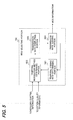
- the scheduler portion 180 is configured so as to comprise an allocation judging portion 181 and an MCS selecting portion 182.
- the reception quality information input from the judging portion 170 is firstly output to the allocation determining portion 181.
- the allocation determining portion 181 compares reception quality information notified from the plurality of second radio devices 200 in each of channel, and allocates each of the channels to transmission data to be transmitted to the second radio devices 200 that has excellent reception quality. Information that shows which transmission data to the second radio devices 200 is allocated to each of the channels, is notified to the transmission frame generating portion 110 and the mapping portion 120 as scheduling information. In addition, the scheduling information is also output to the MCS selecting portion 182.
- an MCS at the time of modulating and demodulating each of the transmission data is determined from the scheduling information showing that to which channel the transmission data to be transmitted to each of the second radio devices 200 is allocated and the reception quality information in the channels informed from each of the second radio devices 200, so as to notify MCS information to the transmission frame generating portion 110.
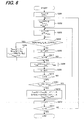
- the MCS selecting portion 182 investigates a modulation method in which each of the channels satisfies a required PER (Packet Error Rate) in each coding rate, and selects a combination of an MCS so that a transmission rate in all of the allocated channels becomes a predetermined transmission rate.
- a required PER Packet Error Rate
- CNR k , R n , and Q m indicate a CNR (Carrier-to-Noise power Ratio) measurement value (reception quality informed from the second radio device 200) in the k-th channel, an n-th coding rate, and an m-th modulation multi-value number (in bit unit), respectively.
- Each of K, N, and M indicates a channel number, a kind of a coding rate, and a kind of a modulation method, respectively, and each of k, n, and m indicates a counter of a channel number, a coding rate number, and a modulation method number, respectively.
- the constant PER req indicates a required PER
- each of a function PER (CNR k , R n , Q m ) and a Rate (R n , Q m ) indicates PER when the CNR applies Rn and Qm as the MCS under an environment of CNR k , and a transmission rate per one channel when Rn and Q m are applied.
- a variable r max showing a maximum value of transmission rates in all of the allocated channels and a counter n a variable r tmp total showing a maximum value of transmission rates in all of the allocated channels with respect to a subject coding rate and a counter k, and r tmp showing a maximum value of transmission rates in the subject channel with respect to a subject coding rate and a counter m, are initialized (step S101 to step S103).
- the PER when R n and Q m are applied to the k-th channel as the MCS is calculated to judge whether the PER satisfies the required value PER req (step S104).
- a transmission rate when R n and Q m are applied is calculated to compare with r tmp (step S105).
- step S105 When the transmission rate is larger than r tmp (S105; Yes), R tmp (k) and Q tmp (k), and the transmission rate r tmp , which is a combination of the MCS in which the transmission rate of the subject channel with respect to the subject coding rate becomes maximum, is updated to R n and Q m , and the Rate (R n , Q m ) (step S106) to increment the counter m (step S107).
- step S104 when the PER does not satisfy the required value at step S104 (step S104; No), or when the transmission rate is not maximum value at step S105 (step S105; No), moving to step S107 without passing through step S106. Then, step S104 to step S107 are repeated until the computing is finished in all of the modulation methods (until m becomes larger than M) (step S108).
- the maximum transmission rate of each of the channels is added in the subject coding rate (step S109 to step S111), so that the maximum transmission rate r tmp total in the subject coding rate is calculated to compare with r max (step S112).
- the transmission rate r max which is a combination of the MCS with the maximum transmission rate, is updated to R tmp (k) and Q tmp (k), and r tmp total (step S113), to increment the counter n(step S114).
- the maximum transmission rate in the subject coding rate is smaller than r max (step S112; No) moving to step S114 without passing through step S113.
- step S102 to step S114 are repeated until n becomes larger than N, in other words, in all of the coding rates (step S115; Yes), and R max (k) and Q max (k) at a terminating stage becomes the MCS to be selected.
- the MCS selecting portion 182 is configured so as to comprise a temporal coding rate determining portion 1821, a temporal modulation method determining portion 1822, a transmission rate computing portion 1823, and a transmission rate determining portion 1824.
- one coding rate is selected in advance among selectable coding rates and determined as a temporal coding rate, to notify to the temporal modulation method determining portion 1822.
- the temporal modulation method determining portion 1822 under the temporal coding rate determined by the temporal coding rate determining portion 1821, from scheduling control information including information indicative of the allocated channels and reception quality information including information indicative of reception quality in each of the allocated channels, a modulation method with the maximum rate that satisfies the required quality is determined in each of the allocated channels.
- the temporal coding rate and the temporal modulation method in each of the allocated channels are output to the transmission rate computing portion 1823 to calculate the maximum transmission rate under the temporal coding rate.
- the maximum transmission rate under the temporal coding rate and the temporal modulation method in the temporal coding rate and each of the allocated channels are output to the transmission rate judging portion 1824.
- the transmission rate judging portion 1824 requires the temporal coding rate determining portion 1821 to set another temporal coding rate.
- the maximum transmission rates in each of the terminal coding rates are compared to output MCS information including the coding rate in which the transmission rate is maximum and the modulation method in each of the allocated channels.
- the present embodiment it is possible to select a combination so that the transmission rate becomes maximum under the conditions that the required quality is satisfied in all of the allocated channels. Accordingly, it is possible to perform efficient communication while satisfying the required quality.
- a method of selecting an optimum MCS by investigating in a round-robin method a combination in which a transmission rate becomes maximum under the conditions that the required quality is satisfied has been described.
- a method of selecting an optimum MCS more efficiently by sorting reception quality and modulation multi-value number in each channel beforehand in the descending order will be described.
- FIG. 1 to FIG. 3 processing in the MCS selecting portion 182 is different from the first embodiment.
- FIG. 6 shows a processing flow of MCS selection in the second embodiment.
- a method of selecting an MCS in the present embodiment will be described focusing on the point different from the first embodiment.
- the first embodiment it is calculated that whether a required PER is satisfied for all modulation methods, or whether a transmission rate is maximum, at step S103 to step S108.
- the processing of selecting an MCS in the present embodiment only judgment as to whether the required PER is satisfied is performed while repeating step S203 to step S207, and when the required PER is satisfied, the repeat is interrupted to move to a next step. This is because it is obvious that the transmission rate is reduced every time the repeat is continued since the modulation multi-value number is sorted in the descending order beforehand with respect to the counter m. Thereby, it is possible to suppress the computing amount of the repeat part (step S103 to step S108) in the modulation method, compared with the first embodiment.
- the counter m indicative of the modulation method number was initialized to "1" at step S103.
- m is set at m tmp at step S203.
- m tmp is set at "1" at the time of first processing and it is set to be the modulation method number which attains a maximum rate in the previous subject channel in the second and proceeding processing.
- the modulation methods selectable in the (k+1) th channel are 16QAM and QPSK.
- the required quality is not satisfied when 64QAM is applied to the k-th channel in the k-th channel and (k+1)th channel, that have a relation of CNR k ⁇ CNR k+1 , the required quality is not also satisfied when 64QAM is applied to the (k+1) th channel.
- the MCS selecting section 182 is configured so as to comprise a channel ordering portion 1825 and a modulation method ordering portion 1826, in addition to the temporal coding rate determining portion 1821, the temporal modulation method determining portion 1822, the transmission rate computing portion 1823, and the transmission rate judging portion 1824, that are shown in FIG. 5 .
- channels are ordered depending on reception quality, from scheduling control information including information indicative of allocated channels and reception quality information including information indicative of reception quality in each of the allocated channels.
- selectable modulation methods are ordered by multi-value number thereof.
- the selectable modulation methods that are ordered by the multi-value number are stored.
- the temporal modulation method determining portion 1822 when a modulation method with a maximum rate that satisfies required quality is determined in each of the allocated channels from the scheduling control information and the reception quality information, under the temporal coding rate determined by the temporal coding rate determining portion 1821, computation is performed in the order of the channels ordered in the channel ordering portion 1825 and the order of the modulation methods ordered in the modulation method ordering portion 1826.
- the computing amount required for the sorting is increased by sorting reception quality and the modulation multi-value number in each of the channels beforehand, it is possible to select efficiently a combination in which the transmission rate becomes maximum under the conditions that the required quality is satisfied, in all of the allocated channels.
- the third embodiment will be described.
- a method of selecting an optimum MCS by investigating a combination in which a transmission rate becomes maximum under the conditions that required quality is satisfied in all coding rates has been described.
- a method of selecting an optimum MCS more efficiently by restricting in advance a coding rate so that required quality is satisfied in a channel that includes predetermined conditions of reception quality will be described. Note that, in the present embodiment, a case that a channel with a minimum value is selected from each of the channels as the conditions of the reception quality in the channels, will be described as an example.
- FIG. 8 shows a processing flow of the MCS selection according to the third embodiment, and a method of selecting an MCS in the present embodiment will be described focusing on the point different from the first embodiment.
- Steps of restricting a coding rate in advance so that the required quality is satisfied in a channel having a minimum value in the reception quality (step S301 to step S303) will be described.
- coding rates, reception quality in each channel, and modulation multi-value number are sorted beforehand in the descending order.
- R 1 ⁇ R 2 ⁇ ⁇ ⁇ R N CNR 1 ⁇ CNR 2 ⁇ ⁇ ⁇ CNR k
- Q 1 ⁇ Q 2 ⁇ ⁇ ⁇ Q M there is a relation of R 1 ⁇ R 2 ⁇ ⁇ ⁇ R N , CNR 1 ⁇ CNR 2 ⁇ ⁇ ⁇ CNR k , and Q 1 ⁇ Q 2 ⁇ ⁇ ⁇ Q M .
- the counter n indicative of a number of a coding rate is initialized (step S301).
- the channel having the minimum value in the reception quality when the modulation method Q M with the minimum transmission rate is selected in the reception quality value CNR k , whether or not the required quality is satisfied in the coding rate R n is judged (step S302).
- the counter n is set at the variable no indicative of a maximum number of the coding rate in the investigation range.
- step S302 When the required quality is not satisfied in the coding rate R n (step S302; No), the variable n is incremented so that the low coding rate is targeted (step S304), and the same judgment is performed while the variable n is not more than N-1 (step S305; No to Step S302). In addition, when the variable n becomes larger than N-1 (step S305; Yes), n is set at no as the minimum coding rate (step S303).
- the coding rate having the maximum rate that satisfies the required quality is determined in a case where the modulation method of the minimum rate is selected in the channel having the minimum value in the reception quality, and the number indicative of the coding rate is set at no.
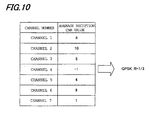
- the reception quality is the lowest in a channel 4.
- QPSK that is a modulation method having the minimum transmission rate.
- the coding rate having the maximum transmission rate is 1/3. At this time, if the coding rate is set so as to be larger than 1/3, the required quality can not be satisfied in this channel for any modulation methods. That is, the investigation range of coding rates can be narrowed down to 1/3 or less.
- an initial value of the counter n indicative of the number of the coding rate is set at no, and repeat processing from step S307 to step S319 is performed for n that is larger than no, and thereby the amount of the repeat processing can be suppressed.
- FIG. 8 as the repeat processing from step S307 to step S319, although a case that the similar processing as the processing shown in FIG. 6 is performed is shown, the processing same as FIG. 4 may be performed.
- the MCS selecting portion 182 is configured so as to comprise a maximum coding rate computing portion 1827, in addition to the temporal coding rate determining portion 1821, the temporal modulation method determining portion 1822, the transmission rate computing portion 1823, the transmission rate judging portion 1824, the channel ordering portion 1825, and the modulation method ordering portion 1826, that are shown in FIG. 7 .
- the maximum coding rate computing portion 1827 when a modulation method having a minimum rate notified from the modulation method ordering portion is applied in a channel, that has the lowest reception quality, notified from the channel ordering portion 1825, a coding rate having a maximum rate that satisfies the reception quality is computed to notify to the temporal coding rate determining portion 1821.
- a coding rate that is not more than the coding rate notified from the maximum coding rate computing portion 1827 is determined as a temporal coding rate.
- FIG. 11 although it is configured so that the channel having the lowest reception quality and the modulation method having the minimum rate are notified, respectively from the channel ordering portion 1825 and the modulation method ordering portion 1826 to the maximum coding rate computing portion 1827, it may be replaced with another block in which the channel having the lowest reception quality and the modulation method having the minimum rate are extracted.
- the coding rate is restricted in advance so that the required quality is satisfied in the channel having the lowest value in the reception quality.
- the computing amount required for restricting the coding rate is increased, it is possible to efficiently select a combination, in which the transmission rate is maximum under the conditions that the required quality is satisfied, in all of the allocated channels.
- information of the reception quality is not limited thereto.
- other information related to reception power including a CIR (Carrier-to-Interface power Ratio), a SNR (Signal-to-Noise power Ratio), an Es/N 0 (energy to noise power density ratio per a symbol), and an RSSI (Receive Signal Strength Indication), can be used, and information related to a transmission rate, including an MCS with a maximum rate that satisfies the required quality, and a maximum number of information bits per a frame that satisfies the required quality, can be also used.
- CIR Carrier-to-Interface power Ratio
- SNR Signal-to-Noise power Ratio
- Es/N 0 energy to noise power density ratio per a symbol
- RSSI Receiveive Signal Strength Indication
- a PER is assumed as the required value, but not limited thereto.
- Other parameters including parameters related to the reception success such as a BER (Bit Error Rate) and a BLER (Block Error Rate) can be used, as long as it is a parameter indicative of communication quality.
- the fourth embodiment describes a case that the second radio device 200 selects an MCS using the present invention in a system in which the second radio device 200 informs the first radio device 100 of a receivable MCS as reception quality information.
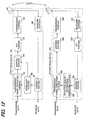
- FIG. 12 An example of a block configuration of a system according to the present embodiment is shown in FIG. 12 .
- FIG. 12 has the same configuration as FIG. 1 , processing in a scheduler portion 380 in the first radio device 100 and a reception quality information generating portion 450 in the second radio device 200.
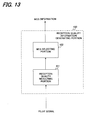
- a block configuration of the reception quality information generating portion 380 is shown in FIG. 13 .
- a pilot signal separated at a judging portion is transmitted to the reception quality measuring portion 451, and reception quality of each channel is measured at the reception quality measuring portion 451.
- the measurement result of the reception quality in each of the channels is transmitted to an MCS selecting portion 452.
- an MCS in each of the channels is selected from the measurement result of the reception quality in each of the channels, and MCS information indicative of the selected MCS is notified to the transmission frame 260.
- the same selecting method as described in the first embodiment to the third embodiment can be used.
- a career hole may be set as one of MCS levels.
- a carrier hole is to be selected as the MCS of the channel.
- the same selecting method as described in the first embodiment to the third embodiment is used for channels except for the channel.
- the transmission frame generating portion 260 multiplexes a control signal to transmission data in order to inform the first radio device 100 of the MCS information notified from the reception quality information generating portion 380.
- a block configuration of the scheduler portion 380 is shown in FIG. 14 .
- the MCS information informed from each of the second radio devices 200 is transmitted to an allocation determining portion 381 to compare with an MCS in each of the channels.
- the channel is allocated to transmission data to be transmitted to the second radio devices 200 having a large transmission rate in each of the channels.
- the MCS of the allocated transmission data is adapted to be an MCS informed from the second radio device 200 that is a transmission destination of the transmission data.
- Scheduling information determined at the allocation determining portion 381 is transmitted to the transmission frame generating portion 110 together with the MCS information of the allocated transmission data.
- the scheduling control information is also output to the mapping portion 120.
Landscapes
- Engineering & Computer Science (AREA)
- Signal Processing (AREA)
- Computer Networks & Wireless Communication (AREA)
- Quality & Reliability (AREA)
- Mobile Radio Communication Systems (AREA)
- Digital Transmission Methods That Use Modulated Carrier Waves (AREA)
- Communication Control (AREA)
- Detection And Prevention Of Errors In Transmission (AREA)
Abstract
A modulation parameter selecting method and the like is realized, that can realize a high transmission rate efficiently, in a system including, as a scheduler portion, a temporal coding rate determining portion that determines a coding rate temporarily, a temporal modulation rate determining portion for selecting a modulation method that satisfies required quality and has a maximum transmission rate in each channel, under the temporarily determined coding rate, and a transmission rate computing portion that calculates a transmission rate from the coding rate determined at the temporal coding rate determining portion and the modulation method in each of the channels selected at the temporal modulation method determining portion, in which processing from the temporal coding rate determining portion to the transmission rate computing portion is performed repeatedly with respect to selectable coding rates and a coding rate with a maximum transmission rate and a modulation method in each of the channels are determined, and thereby the coding rate is made to be common in a plurality of channels allocated to a predetermined terminal and the modulation method is made different for each of the channels.
Description
- The present invention relates to a modulation parameter selecting method and the like including a modulation method and a coding rate, in a system which allows that, with respect to data allocated over a plurality of channels by performing data transmission using the plurality of channels from a first communication apparatus to a second communication apparatus, a coding rate is same and only a modulation method is different in the plurality of channels to which the data has been allocated.
- Recently, it has been required to increase speed in a wireless communication system, and as one of methods capable of realizing a speed up and a large capacity, a multicarrier transmission method for performing communication by putting information on a plurality of carrier waves attracts attentions. An OFDM (Orthogonal Frequency Division Multiplex) method, that is one of multicarrier transmission methods, is one of the most prevailing modulation methods for a broadband wireless communication system, since the space between subcarriers orthogonal to each other can be narrowed, and therefore efficiency in the frequency utilization is high and the resistance to a multi-path phasing is high by a guard interval added at the head of a symbol sequence.
- However, a method of giving a modulation parameter for each subcarrier, or for each group including a plurality of subcarriers, requires a notification of a modulation parameter between a transmitter and a receiver for each of the subcarriers or each of the groups. Since the amount of information to be notified also increases as the number of subcarriers or the number of groups increases, there is a problem that a ratio of control information to a limited communication capacity becomes high and transmission efficiency is deteriorated.
- As a method for solving the problem, in the 3GPP (The 3rd Generation Partnership Project), as shown in
FIG. 15 , a system in which a coding rate is made to be common in a plurality of channels allocated to a certain terminal and a modulation method is made different for each of the channels so that the amount of information required for the notification of a modulation parameter is suppressed, is proposed (for example, refer to the Non-Patent Document 1). - Transmission data to a certain user is channel-coded collectively (2001) and subjected to rate matching processing (2002). That is, the coding rate is constant, independent of channels. Thereafter, the coded transmission data is allocated to each of the channels (2003), and modulated by individual modulation method for each of the channels (2004).
- For example, in the case of a transmission path (2101) as shown in
FIG. 16 , as a combination of a modulation method and a coding rate in each channel, the coding rate of 1/3 is selected in all of the channels and the modulation method is selected from QPSK, 16QAM, and 64QAM for each of the channels (2102).
Non-Patent Document 1: "Adaptive Modulation and Channel Coding Rate Control for Frequency Domain Scheduling in Evolved UTRA Downlink", 3GPP, TSG RAN WG1 #42 on LTE, R1-050854, September 2005 - However, in the system proposed in the above well-known document, since there is a restriction that a coding rate is made to be common, it is difficult to apply a conventionally used method of selecting a modulation parameter as it is.
- Further, in the above well-known document, although a communication system in which a coding rate is made to be common in a plurality of channels allocated to a certain terminal and a modulation method is made different for each of the channels so that the amount of information required for the notification of a modulation parameter is suppressed, is proposed, an investigation related to a method of selecting a modulation parameter in the system is not made.
- In view of the above mentioned problems, the present invention has an object to realize a modulation parameter selecting method and a modulation parameter selecting apparatus, that can realize a high transmission rate efficiently in a system that a coding rate is made to be common in a plurality of channels allocated to a predetermined terminal and a modulation method is made different for each of the channels.
- In order to solve the above problems, a modulation parameter selecting method of a fist aspect of the present invention, that is related to a modulation method and a coding rate in a system which allows, with respect to data allocated over a plurality of channels by performing data transmission using the plurality of channels from a first communication apparatus to a second communication apparatus, that the coding rate is same and only the modulation method is different in the plurality of channels to which the data has been allocated, includes: a first step of selecting and temporarily determining one coding rate from predetermined selectable coding rates; a second step of selecting a modulation method that satisfies required quality and has a predetermined transmission rate in each of the channels, under the temporarily determined coding rate; a third step of calculating a transmission rate from the coding rate temporarily determined at the first step and the modulation method in each of the channels selected at the second step; and a fourth step of repeating from the first step to the third step with respect to other selectable coding rates to determine the coding rate that has the predetermined transmission rate and the modulation method in each of the channels.
- Further, a second aspect of the present invention according to the modulation parameter selecting method of the first aspect of the present invention, further includes, before the second step, a fifth step of ordering each of the channels based on reception quality, and a sixth step of ordering selectable modulation methods by modulation multi-value number, and is characterized in that the modulation method is selected at the second step in accordance with an order of the channels determined at the fifth step and an order of the modulation methods determined at the sixth step.
- Further, a third aspect of the present invention according to the modulation parameter selecting method of the first or second aspect of the present invention, further includes, before the first step, a seventh step of changing the selectable coding rate from the reception quality in a channel whose predetermined conditions include the reception quality, and is characterized in that the temporal coding rate is determined at the first step from the selectable coding rates determined at the seventh step.
- Further, a fourth aspect of the present invention according to the modulation parameter selecting method of the first or second aspect of the present invention, further includes, before the first step, an eighth step of determining a selectable modulation method with a minimum transmission rate temporarily in a channel that has a most inferior reception quality, a ninth step of determining a coding rate in which the channel satisfies the required quality and the transmission rate becomes maximum, under the modulation method temporarily determined at the eighth step, and a tenth step of changing the selectable coding rates based on the coding rate determined at the ninth step, and is characterized in that the temporal coding rate is determined at the first step from the selectable coding rates determined at the tenth step.
- Further, a fifth aspect of the present invention according to the modulation parameter selecting method of any one of the first to fourth aspects of the present invention, further includes, before the first step, an eighth step of determining a selectable modulation method with a minimum transmission rate temporarily in a channel that has a most inferior reception quality in the channels that satisfy predetermined reception quality, a ninth step of determining a coding rate in which the channel satisfies the required quality and the transmission rate becomes maximum, under the modulation method temporarily determined at the eighth step, and a tenth step changing the selectable coding rates based on the coding rate determined at the ninth step, and is characterized in that the temporal coding rate is determined at the first step from the selectable coding rates determined at the tenth step, and a channel that does not satisfy the predetermined reception quality is determined as a carrier hole.
- A sixth aspect of the present invention that is a modulation parameter selecting apparatus related to a modulation method and a coding rate in a system which allows, with respect to data allocated over a plurality of channels by performing data transmission using the plurality of channels from a first communication apparatus to a second communication apparatus, that the coding rate is same and only the modulation method is different in the plurality of channels to which the data has been allocated, includes a temporal coding rate determining portion that selects and temporarily determines one coding rate from predetermined selectable coding rates; a temporal modulation method determining portion that selects a modulation method that satisfies required quality and has a predetermined transmission rate in each of the channels, under the temporarily determined coding rate; and a transmission rate computing portion that calculates a transmission rate from the coding rate temporarily determined at the temporal coding rate determining portion and the modulation method in each of the channels selected at the temporal modulation method determining portion, and is characterized in that, processing from the temporal coding rate determining portion to the transmission rate computing portion is performed repeatedly with respect to other selectable coding rates, to determine the coding rate that has the predetermined transmission rate and the modulation method in each of the channels.
- A seventh aspect of the present invention according to the modulation parameter selecting apparatus of the sixth aspect of the present invention, further includes, a channel ordering portion that orders each of the channels based on reception quality, and a modulation method ordering portion that orders selectable modulation methods by modulation multi-value number, and is characterized in that, the modulation method is selected at the temporal modulation method determining portion in accordance with an order of the channels determined at the channel ordering portion and an order of the modulation methods determined at the modulation method ordering portion.
- Further, an eighth aspect of the present invention according to the modulation parameter selecting apparatus of the sixth or seventh aspect of the present invention, further includes, a coding rate computing portion that changes the selectable coding rate from the reception quality in a channel whose predetermined conditions include the reception quality, and is characterized in that, the temporal coding rate is determined at the temporal coding rate determining portion from the selectable coding rates determined at the coding rate computing portion.
- Further, a ninth aspect of the present invention according to the modulation parameter selecting apparatus of the sixth or seventh aspect of the present invention, further includes, a maximum coding rate computing portion that changes the selectable coding rates based on a coding rate in which a channel satisfies the required quality and a transmission rate is maximum, under the selectable modulation method that has a minimum transmission rate in the channel that has most inferior reception quality, and is characterized in that, the temporal coding rate is determined at the temporal coding rate determining portion from the selectable coding rates changed at the maximum coding rate computing portion.
- Further, a tenth aspect of the present invention according to the modulation parameter selecting apparatus of the sixth or seventh aspect of the present invention, further includes, a maximum coding rate computing portion that changes the selectable coding rates based on a coding rate in which a channel satisfies the required quality and a transmission rate is maximum, under the selectable modulation method that has a minimum transmission rate in the channel that has most inferior reception quality in the channels that satisfy predetermined reception quality, and is characterized in that, the temporal coding rate is determined at the temporal coding rate determining portion from the selectable coding rates changed at the maximum coding rate computing portion, and a channel that does not satisfy the predetermined reception quality is determined as a carrier hole.
- Further, an eleventh aspect of the present invention of a communication apparatus includes the modulation parameter selecting apparatus of any one of the sixth to tenth aspects of the present invention, and is characterized in that, information related to a modulation parameter selected by the modulation parameter selecting apparatus is transmitted to a communication partner.
- By applying the present invention, in a plurality of allocated channels, a coding rate that satisfies required quality and has a predetermined transmission rate and a modulation method of each channel are determined. For example, a coding rate that has a maximum transmission rate as the predetermined transmission rate and a coding rate of each of the channels are determined, and thereby a communication terminal can perform communication efficiently.
- Further, reception quality and modulation multi-value number in each channel are ordered beforehand and thereby the computing amount required for the ordering is increased, but in all of the allocated channels, it is possible to suppress the computing amount at the time of selecting the coding rate that has the predetermined transmission rate under the conditions that the required quality is satisfied and the modulation method in each of the channels. Accordingly, it is possible to select the coding rate and the modulation method of each of the channels efficiently.
-
-
FIG. 1 is a view illustrating a configuration of a radio device in a first embodiment; -
FIG. 2 is a view illustrating a configuration of a reception quality information generating portion in the first embodiment; -
FIG. 3 is a view illustrating a configuration of a scheduler portion in the first embodiment; -
FIG. 4 is a view illustrating a processing flow of an MCS selecting portion in the first embodiment; -
FIG. 5 is a view illustrating a configuration of the MCS selecting portion in the first embodiment; -
FIG. 6 is a view illustrating a processing flow of an MCS selecting portion in a second embodiment; -
FIG. 7 is a view illustrating a configuration of the MCS selecting portion in the second embodiment; -
FIG. 8 is a view illustrating a processing flow of an MCS selecting portion in a third embodiment; -
FIG. 9 is a view illustrating a relation between a reception CNR value and a frequency; -
FIG. 10 is a view illustrating a relation between a reception CNR value and a frequency; -
FIG. 11 is a view illustrating a configuration of the MCS selecting portion in the third embodiment; -
FIG. 12 is a view illustrating a configuration of a radio device in a fourth embodiment; -
FIG. 13 is a view illustrating a configuration of a reception quality information generating portion in the fourth embodiment; -
FIG. 14 is a view illustrating a configuration of a scheduler portion in the fourth embodiment; -
FIG. 15 is a view illustrating a conventional example; and -
FIG. 16 is a view illustrating a conventional example. - 100 first radio device
- 110
- transmission frame generating portion
- 120
- mapping portion
- 130
- IFFT portion
- 140
- transmission portion
- 150
- antenna
- 160
- receiving portion
- 170
- judging portion
- 180
- scheduler portion
- 181
- allocation determining portion
- 182
- MCS selecting portion
1821 temporal coding rate determining portion
1822 temporal modulation method determining portion
1823 transmission rate computing portion
1824 transmission rate judging portion
1825 channel ordering portion
1826 modulation method ordering portion
1827 maximum coding rate computing portion - 200
- second radio device
- 210
- antenna
- 220
- receiving portion
- 230
- FFT portion
- 240
- judging portion
- 250
- reception quality information generating portion
- 251
- reception quality information generating portion
- 260
- transmission frame generating portion
- 280
- mapping portion
- 290
- transmission portion
- The present invention relates to an MCS (Modulation and channel Coding Scheme) selecting method when a plurality of channels are allocated for one radio device. Moreover, a system which allows that a coding rate is same and only a modulation method is different in the plurality of channels, for example as shown in
FIG. 15 , is assumed. - In the present embodiment, a case that an MCS of transmission data from a
first radio device 100 to asecond radio device 200 is selected by thefirst radio device 100 using the present invention, will be described. An example of a block configuration of a system according to the present embodiment is shown inFIG. 1 . - In
FIG. 1 , although onefirst radio device 100 and onesecond radio device 200 are shown, thefirst radio device 100 and a plurality ofsecond radio devices 200 perform communication using a plurality of channels. - Here, the
first radio device 100 is configured so as to comprise a transmissionframe generating portion 110, amapping portion 120, an IFFT (Inverse Fast Fourier Transformation)portion 130, atransmission portion 140, anantenna 150, a receivingportion 160, a judgingportion 170, and ascheduler portion 180. Further, thesecond radio device 200 is configured so as to comprise anantenna 210, a receivingportion 220, an FFT (Fast Fourier Transformation)portion 230, a judgingportion 240, a reception qualityinformation generating portion 250, a transmissionframe generating portion 260, amapping portion 280, and atransmission portion 290. - The transmission
frame generating portion 110 performs coding and modulation processing based on scheduling control information notified from thescheduler portion 180 and MCS information. Moreover, in a generated symbol sequence, control information (and pilot signal) for notifying the scheduling control information and the MCS information to thesecond radio device 200 is generated to multiplex to a data symbol. The generated transmission frame is output to themapping portion 120. - The
mapping portion 120 is a functional portion for mapping the modulation symbol sequence input from the transmissionframe generating portion 110 in accordance with the scheduling control information notified from thescheduler portion 180. The modulation symbol sequence thus mapped is output to theIFFT portion 130 and an OFDM symbol sequence is generated by IFFT processing. - An OFDM frame generated at the
FFT portion 130 is transmitted from theantenna 150 to thesecond radio device 200 through thetransmission portion 140. - In the
second radio device 200, the OFDM symbol sequence received at the receivingportion 220 through theantenna 210 is output to theFFT portion 230. TheFFT portion 230 executes FFT processing, and thereby a signal of the OFDM symbol sequence is converted into a signal of the modulation symbol sequence, and output to the judgingportion 240. - The judging
portion 240 is a function portion for demodulating and decoding the input modulation symbol sequence to extract received data. At this time, judging processing is performed in accordance with the scheduling control information and the MCS information notified from thefirst radio device 100. In addition, the pilot signal that has been multiplexed to a frame in advance is output to the reception qualityinformation generating portion 250. Note that, when performing an interference power measurement in the judgment feedback type, a data sequence and judgment result are output to the reception qualityinformation generating portion 250. - A block configuration of the reception quality
information generating portion 250 is shown inFIG. 2 . The reception qualityinformation generating portion 250 includes a receptionquality measuring portion 251. The receptionquality measuring portion 251 measures reception quality from the pilot signal input from the judgingportion 240 to generate reception quality information for outputting the reception quality to thefirst radio device 100. The generated reception quality information is output to thetransmission frame portion 260, and transmission frame is generated with transmission data. - The
transmission frame portion 260 generates a transmission frame from the input reception quality information to output to themapping portion 280. Then, themapping portion 280 performs mapping to transmit from theantenna 210 to thefirst radio device 100 through thetransmission portion 290. - In the
first radio device 100, a signal received from theantenna 150 is input to the judgingportion 170 through the receivingportion 160. The judgingportion 170 extracts reception data from the input reception signal, separates the reception quality information that has been multiplexed to a frame in advance, and outputs the separated reception quality information to thescheduler portion 180. - The
scheduler portion 180 is a functional portion for performing scheduling of transmission data based on reception quality information informed from thesecond radio device 200. Moreover, processing for determining a modulation method and a coding rate of the transmission data is executed based on the reception quality information. - Here, a block configuration of the
scheduler portion 180 is shown inFIG. 3 . Thescheduler portion 180 is configured so as to comprise anallocation judging portion 181 and anMCS selecting portion 182. The reception quality information input from the judgingportion 170 is firstly output to theallocation determining portion 181. - The
allocation determining portion 181 compares reception quality information notified from the plurality ofsecond radio devices 200 in each of channel, and allocates each of the channels to transmission data to be transmitted to thesecond radio devices 200 that has excellent reception quality. Information that shows which transmission data to thesecond radio devices 200 is allocated to each of the channels, is notified to the transmissionframe generating portion 110 and themapping portion 120 as scheduling information. In addition, the scheduling information is also output to theMCS selecting portion 182. - In the
MCS selecting portion 182, an MCS at the time of modulating and demodulating each of the transmission data is determined from the scheduling information showing that to which channel the transmission data to be transmitted to each of thesecond radio devices 200 is allocated and the reception quality information in the channels informed from each of thesecond radio devices 200, so as to notify MCS information to the transmissionframe generating portion 110. - Subsequently, a processing flow of the
MCS selecting portion 182 according to the present embodiment will be shown inFIG. 4 as an example. TheMCS selecting portion 182 investigates a modulation method in which each of the channels satisfies a required PER (Packet Error Rate) in each coding rate, and selects a combination of an MCS so that a transmission rate in all of the allocated channels becomes a predetermined transmission rate. In this embodiment, description is made according to an example wherein a maximum modulation method in which each of the channels satisfies a required PER is investigated, and combination of an MCS wherein the transmission rate is the highest is slelected. - Note that, CNRk, Rn, and Qm indicate a CNR (Carrier-to-Noise power Ratio) measurement value (reception quality informed from the second radio device 200) in the k-th channel, an n-th coding rate, and an m-th modulation multi-value number (in bit unit), respectively. Each of K, N, and M indicates a channel number, a kind of a coding rate, and a kind of a modulation method, respectively, and each of k, n, and m indicates a counter of a channel number, a coding rate number, and a modulation method number, respectively. The constant PERreq indicates a required PER, and each of a function PER (CNRk, Rn, Qm) and a Rate (Rn, Qm) indicates PER when the CNR applies Rn and Qm as the MCS under an environment of CNRk, and a transmission rate per one channel when Rn and Qm are applied.
- First, a variable rmax showing a maximum value of transmission rates in all of the allocated channels and a counter n, a variable rtmp total showing a maximum value of transmission rates in all of the allocated channels with respect to a subject coding rate and a counter k, and rtmp showing a maximum value of transmission rates in the subject channel with respect to a subject coding rate and a counter m, are initialized (step S101 to step S103).
- Next, the PER when Rn and Qm are applied to the k-th channel as the MCS is calculated to judge whether the PER satisfies the required value PERreq (step S104). When the required value is satisfied (S104; Yes), a transmission rate when Rn and Qm are applied is calculated to compare with rtmp (step S105). When the transmission rate is larger than rtmp (S105; Yes), Rtmp (k) and Qtmp (k), and the transmission rate rtmp, which is a combination of the MCS in which the transmission rate of the subject channel with respect to the subject coding rate becomes maximum, is updated to Rn and Qm, and the Rate (Rn, Qm) (step S106) to increment the counter m (step S107). On the other hand, when the PER does not satisfy the required value at step S104 (step S104; No), or when the transmission rate is not maximum value at step S105 (step S105; No), moving to step S107 without passing through step S106. Then, step S104 to step S107 are repeated until the computing is finished in all of the modulation methods (until m becomes larger than M) (step S108).
- Subsequently, the maximum transmission rate of each of the channels is added in the subject coding rate (step S109 to step S111), so that the maximum transmission rate rtmp total in the subject coding rate is calculated to compare with rmax (step S112). When the maximum transmission rate in the subject coding rate is larger than rmax (step S112; Yes), Rmax(k) and Qmax(k), and the transmission rate rmax, which is a combination of the MCS with the maximum transmission rate, is updated to Rtmp(k) and Qtmp(k), and rtmp total (step S113), to increment the counter n(step S114). When the maximum transmission rate in the subject coding rate is smaller than rmax (step S112; No), moving to step S114 without passing through step S113.
- Then, step S102 to step S114 are repeated until n becomes larger than N, in other words, in all of the coding rates (step S115; Yes), and Rmax(k) and Qmax(k) at a terminating stage becomes the MCS to be selected.
- An example of a block diagram of the
MCS selecting portion 182 that realizes the above processing is shown inFIG. 5 . TheMCS selecting portion 182 is configured so as to comprise a temporal codingrate determining portion 1821, a temporal modulationmethod determining portion 1822, a transmissionrate computing portion 1823, and a transmissionrate determining portion 1824. - In the temporal coding
rate determining portion 1821, one coding rate is selected in advance among selectable coding rates and determined as a temporal coding rate, to notify to the temporal modulationmethod determining portion 1822. In the temporal modulationmethod determining portion 1822, under the temporal coding rate determined by the temporal codingrate determining portion 1821, from scheduling control information including information indicative of the allocated channels and reception quality information including information indicative of reception quality in each of the allocated channels, a modulation method with the maximum rate that satisfies the required quality is determined in each of the allocated channels. - The temporal coding rate and the temporal modulation method in each of the allocated channels are output to the transmission
rate computing portion 1823 to calculate the maximum transmission rate under the temporal coding rate. The maximum transmission rate under the temporal coding rate and the temporal modulation method in the temporal coding rate and each of the allocated channels are output to the transmissionrate judging portion 1824. When the above processing is not finished for all of the coding rates, the transmissionrate judging portion 1824 requires the temporal codingrate determining portion 1821 to set another temporal coding rate. Further, when the above processing is finished for all of the coding rates, the maximum transmission rates in each of the terminal coding rates are compared to output MCS information including the coding rate in which the transmission rate is maximum and the modulation method in each of the allocated channels. - As described above, according to the present embodiment, it is possible to select a combination so that the transmission rate becomes maximum under the conditions that the required quality is satisfied in all of the allocated channels. Accordingly, it is possible to perform efficient communication while satisfying the required quality.
- In the first embodiment, a method of selecting an optimum MCS by investigating in a round-robin method a combination in which a transmission rate becomes maximum under the conditions that the required quality is satisfied, has been described. In the present embodiment, a method of selecting an optimum MCS more efficiently by sorting reception quality and modulation multi-value number in each channel beforehand in the descending order, will be described. Although an example of a block configuration of a system according to the present embodiment is same as
FIG. 1 to FIG. 3 , processing in theMCS selecting portion 182 is different from the first embodiment. -
FIG. 6 shows a processing flow of MCS selection in the second embodiment. Hereinafter, usingFIG. 6 , a method of selecting an MCS in the present embodiment will be described focusing on the point different from the first embodiment. - Note that, as described above, it is assumed that the reception quality and the modulation multi-value number in each channel are sorted beforehand in the descending order. In other words, there is a relation of CNR1 ≧ CNR2 ≧ ··· ≧ CNRk, Q1 ≧ Q2 ≧ ··· ≧ QM.
- First, in the first embodiment, it is calculated that whether a required PER is satisfied for all modulation methods, or whether a transmission rate is maximum, at step S103 to step S108. On the other hand, in the processing of selecting an MCS in the present embodiment, only judgment as to whether the required PER is satisfied is performed while repeating step S203 to step S207, and when the required PER is satisfied, the repeat is interrupted to move to a next step. This is because it is obvious that the transmission rate is reduced every time the repeat is continued since the modulation multi-value number is sorted in the descending order beforehand with respect to the counter m. Thereby, it is possible to suppress the computing amount of the repeat part (step S103 to step S108) in the modulation method, compared with the first embodiment.
- Second, in the first embodiment, the counter m indicative of the modulation method number was initialized to "1" at step S103. On the other hand, in the present embodiment, m is set at mtmp at step S203. Here, in the repeat processing from step S203 to S210, mtmp is set at "1" at the time of first processing and it is set to be the modulation method number which attains a maximum rate in the previous subject channel in the second and proceeding processing.
- For example, in a case where M is three selectable kinds of 64QAM, 16QAM, and QPSK as the modulation method, when a modulation method with a maximum transmission rate in the k-th channel is 16QAM, the modulation methods selectable in the (k+1) th channel are 16QAM and QPSK. This is because it is obvious that in a case where the coding rate is fixed, if the required quality is not satisfied when 64QAM is applied to the k-th channel in the k-th channel and (k+1)th channel, that have a relation of CNRk ≧ CNRk+1, the required quality is not also satisfied when 64QAM is applied to the (k+1) th channel.
- An example of a block diagram of the
MCS selecting portion 182 that realizes the above processing is shown inFIG. 7 . TheMCS selecting section 182 is configured so as to comprise achannel ordering portion 1825 and a modulationmethod ordering portion 1826, in addition to the temporal codingrate determining portion 1821, the temporal modulationmethod determining portion 1822, the transmissionrate computing portion 1823, and the transmissionrate judging portion 1824, that are shown inFIG. 5 . - In the
channel ordering portion 1825, channels are ordered depending on reception quality, from scheduling control information including information indicative of allocated channels and reception quality information including information indicative of reception quality in each of the allocated channels. - In the modulation
method ordering portion 1826, selectable modulation methods are ordered by multi-value number thereof. Alternatively, the selectable modulation methods that are ordered by the multi-value number are stored. - In the temporal modulation
method determining portion 1822, when a modulation method with a maximum rate that satisfies required quality is determined in each of the allocated channels from the scheduling control information and the reception quality information, under the temporal coding rate determined by the temporal codingrate determining portion 1821, computation is performed in the order of the channels ordered in thechannel ordering portion 1825 and the order of the modulation methods ordered in the modulationmethod ordering portion 1826. - As described above, according to the second embodiment, although the computing amount required for the sorting is increased by sorting reception quality and the modulation multi-value number in each of the channels beforehand, it is possible to select efficiently a combination in which the transmission rate becomes maximum under the conditions that the required quality is satisfied, in all of the allocated channels.
- Note that, in the above second embodiment, although it has been described assuming that the reception quality and the modulation multi-value number are sorted beforehand in the descending order, similar effect can be obtained when the reception quality and the modulation multi-value number are sorted in the ascending order.
- Subsequently, the third embodiment will be described. In the first embodiment and the second embodiment, a method of selecting an optimum MCS by investigating a combination in which a transmission rate becomes maximum under the conditions that required quality is satisfied in all coding rates, has been described. In the present embodiment, a method of selecting an optimum MCS more efficiently by restricting in advance a coding rate so that required quality is satisfied in a channel that includes predetermined conditions of reception quality, will be described. Note that, in the present embodiment, a case that a channel with a minimum value is selected from each of the channels as the conditions of the reception quality in the channels, will be described as an example.
- Although an example of a block configuration of a system according to the present embodiment is same as
FIG. 1 to FIG. 3 , processing in theMCS selecting portion 182 is different from the first embodiment or the second embodiment.FIG. 8 shows a processing flow of the MCS selection according to the third embodiment, and a method of selecting an MCS in the present embodiment will be described focusing on the point different from the first embodiment. - Steps of restricting a coding rate in advance so that the required quality is satisfied in a channel having a minimum value in the reception quality (step S301 to step S303) will be described. Note that, it is assumed that coding rates, reception quality in each channel, and modulation multi-value number are sorted beforehand in the descending order. In other words, there is a relation of R1 ≧ R2 ≧ ··· ≧ RN, CNR1 ≧ CNR2 ≧ ··· ≧ CNRk, and Q1 ≧ Q2 ≧ ··· ≧ QM.
- First, the counter n indicative of a number of a coding rate is initialized (step S301). Next, in the channel having the minimum value in the reception quality, when the modulation method QM with the minimum transmission rate is selected in the reception quality value CNRk, whether or not the required quality is satisfied in the coding rate Rn is judged (step S302). When the required quality is satisfied in the coding rate Rn (step S302; Yes), the counter n is set at the variable no indicative of a maximum number of the coding rate in the investigation range. When the required quality is not satisfied in the coding rate Rn (step S302; No), the variable n is incremented so that the low coding rate is targeted (step S304), and the same judgment is performed while the variable n is not more than N-1 (step S305; No to Step S302). In addition, when the variable n becomes larger than N-1 (step S305; Yes), n is set at no as the minimum coding rate (step S303).
- That is, at step S301 to step S303, the coding rate having the maximum rate that satisfies the required quality is determined in a case where the modulation method of the minimum rate is selected in the channel having the minimum value in the reception quality, and the number indicative of the coding rate is set at no.
- Here, for example, it is considered that when a relation between a frequency (channel) and a reception CNR value is in a state shown in a graph of
FIG. 9 and a table ofFIG. 10 . In this case, from the graph ofFIG. 9 and the table ofFIG. 10 , the reception quality is the lowest in achannel 4. Here, when three kinds of modulation methods including 64QAM, 16QAM, and QPSK are selectable as a modulation method, QPSK that is a modulation method having the minimum transmission rate is selected. In this case, it is assumed that the required quality is satisfied and the coding rate having the maximum transmission rate is 1/3. At this time, if the coding rate is set so as to be larger than 1/3, the required quality can not be satisfied in this channel for any modulation methods. That is, the investigation range of coding rates can be narrowed down to 1/3 or less. - Next, an initial value of the counter n indicative of the number of the coding rate is set at no, and repeat processing from step S307 to step S319 is performed for n that is larger than no, and thereby the amount of the repeat processing can be suppressed. In
FIG. 8 , as the repeat processing from step S307 to step S319, although a case that the similar processing as the processing shown inFIG. 6 is performed is shown, the processing same asFIG. 4 may be performed. - An example of a block diagram of the
MCS selecting portion 182 that realizes the above processing is shown inFIG. 11 . TheMCS selecting portion 182 is configured so as to comprise a maximum codingrate computing portion 1827, in addition to the temporal codingrate determining portion 1821, the temporal modulationmethod determining portion 1822, the transmissionrate computing portion 1823, the transmissionrate judging portion 1824, thechannel ordering portion 1825, and the modulationmethod ordering portion 1826, that are shown inFIG. 7 . - In the maximum coding
rate computing portion 1827, when a modulation method having a minimum rate notified from the modulation method ordering portion is applied in a channel, that has the lowest reception quality, notified from thechannel ordering portion 1825, a coding rate having a maximum rate that satisfies the reception quality is computed to notify to the temporal codingrate determining portion 1821. - In the temporal coding
rate determining portion 1821, a coding rate that is not more than the coding rate notified from the maximum codingrate computing portion 1827 is determined as a temporal coding rate. - Note that, in
FIG. 11 , although it is configured so that the channel having the lowest reception quality and the modulation method having the minimum rate are notified, respectively from thechannel ordering portion 1825 and the modulationmethod ordering portion 1826 to the maximum codingrate computing portion 1827, it may be replaced with another block in which the channel having the lowest reception quality and the modulation method having the minimum rate are extracted. - As described above, according to the present embodiment, the coding rate is restricted in advance so that the required quality is satisfied in the channel having the lowest value in the reception quality. Thereby, although the computing amount required for restricting the coding rate is increased, it is possible to efficiently select a combination, in which the transmission rate is maximum under the conditions that the required quality is satisfied, in all of the allocated channels.
- Note that, although an example of using a CNR as the reception quality informed from the
second radio device 200 is assumed in any of the above embodiments, information of the reception quality is not limited thereto. For example, other information related to reception power, including a CIR (Carrier-to-Interface power Ratio), a SNR (Signal-to-Noise power Ratio), an Es/N0 (energy to noise power density ratio per a symbol), and an RSSI (Receive Signal Strength Indication), can be used, and information related to a transmission rate, including an MCS with a maximum rate that satisfies the required quality, and a maximum number of information bits per a frame that satisfies the required quality, can be also used. - Further, in all of the embodiments, a PER is assumed as the required value, but not limited thereto. Other parameters including parameters related to the reception success such as a BER (Bit Error Rate) and a BLER (Block Error Rate) can be used, as long as it is a parameter indicative of communication quality.
- Furthermore, although the description has been made assuming that the reception quality and the modulation multi-value number are sorted in the descending order beforehand also in the above third embodiment, similar effect can be obtained as well when the reception quality and the modulation multi-value number are sorted in the ascending order.
- Subsequently, the fourth embodiment will be described. The fourth embodiment describes a case that the
second radio device 200 selects an MCS using the present invention in a system in which thesecond radio device 200 informs thefirst radio device 100 of a receivable MCS as reception quality information. - An example of a block configuration of a system according to the present embodiment is shown in
FIG. 12 . AlthoughFIG. 12 has the same configuration asFIG. 1 , processing in ascheduler portion 380 in thefirst radio device 100 and a reception qualityinformation generating portion 450 in thesecond radio device 200. - A block configuration of the reception quality
information generating portion 380 is shown inFIG. 13 . A pilot signal separated at a judging portion is transmitted to the receptionquality measuring portion 451, and reception quality of each channel is measured at the receptionquality measuring portion 451. The measurement result of the reception quality in each of the channels is transmitted to anMCS selecting portion 452. At theMCS selecting portion 452, an MCS in each of the channels is selected from the measurement result of the reception quality in each of the channels, and MCS information indicative of the selected MCS is notified to thetransmission frame 260. At this time, in theMCS selecting portion 452, the same selecting method as described in the first embodiment to the third embodiment can be used. In addition, when an MCS is selected in thesecond radio device 200, a career hole may be set as one of MCS levels. That is, in a certain channel, when the required quality can not be satisfied even when a combination of a coding rate and a modulation method with a minimum transmission rate is selected, a carrier hole is to be selected as the MCS of the channel. When the channel to be the carrier hole exists, the same selecting method as described in the first embodiment to the third embodiment is used for channels except for the channel. - The transmission
frame generating portion 260 multiplexes a control signal to transmission data in order to inform thefirst radio device 100 of the MCS information notified from the reception qualityinformation generating portion 380. - A block configuration of the
scheduler portion 380 is shown inFIG. 14 . The MCS information informed from each of thesecond radio devices 200 is transmitted to anallocation determining portion 381 to compare with an MCS in each of the channels. The channel is allocated to transmission data to be transmitted to thesecond radio devices 200 having a large transmission rate in each of the channels. The MCS of the allocated transmission data is adapted to be an MCS informed from thesecond radio device 200 that is a transmission destination of the transmission data. Scheduling information determined at theallocation determining portion 381 is transmitted to the transmissionframe generating portion 110 together with the MCS information of the allocated transmission data. In addition, the scheduling control information is also output to themapping portion 120. - As described above, also in a system in which an MCS having a maximum rate that satisfies the required quality is selected in the
second radio device 200 to inform to thefirst radio device 100, it is possible to select an MCS efficiently by using the present invention.
Claims (11)
- A modulation parameter selecting method related to a modulation method and a coding rate, in a system which allows, with respect to data allocated over a plurality of channels by performing data transmission using the plurality of channels from a first communication apparatus to a second communication apparatus, that the coding rate is same and only the modulation method is different in the plurality of channels to which the data has been allocated, comprising:a first step of selecting and temporarily determining one coding rate from predetermined selectable coding rates;a second step of selecting a modulation method that satisfies required quality and has a predetermined transmission rate in each of the channels, under the temporarily determined coding rate;a third step of calculating a transmission rate from the coding rate temporarily determined at the first step and the modulation method in each of the channels selected at the second step; anda fourth step of repeating from the first step to the third step with respect to other selectable coding rates to determine the coding rate that has the predetermined transmission rate and the modulation method in each of the channels.
- The modulation parameter selecting method according to Claim 1, further comprising: before the second step, a fifth step of ordering each of the channels based on reception quality, and a sixth step of ordering selectable modulation methods by modulation multi-value number, wherein the modulation method is selected at the second step in accordance with an order of the channels determined at the fifth step and an order of the modulation methods determined at the sixth step.
- The modulation parameter selecting method according to Claim 1 or 2, further comprising: before the first step, a seventh step of changing the selectable coding rate from the reception quality in a channel whose predetermined conditions include the reception quality, wherein the temporal coding rate is determined at the first step from the selectable coding rates determined at the seventh step.
- The modulation parameter selecting method according to Claim 1 or 2, further comprising: before the first step, an eighth step of determining a selectable modulation method with a minimum transmission rate temporarily in a channel that has a most inferior reception quality, a ninth step of determining a coding rate in which the channel satisfies the required quality and the transmission rate becomes maximum, under the modulation method temporarily determined at the eighth step, and a tenth step of changing the selectable coding rates based on the coding rate determined at the ninth step, wherein the temporal coding rate is determined at the first step from the selectable coding rates determined at the tenth step.
- The modulation parameter selecting method according to Claim 1 or 2, further comprising: before the first step, an eighth step of determining a selectable modulation method with a minimum transmission rate temporarily in a channel that has a most inferior reception quality in the channels that satisfy predetermined reception quality, a ninth step of determining a coding rate in which the channel satisfies the required quality and the transmission rate becomes maximum, under the modulation method temporarily determined at the eighth step, and a tenth step changing the selectable coding rates based on the coding rate determined at the ninth step, wherein the temporal coding rate is determined at the first step from the selectable coding rates determined at the tenth step, and a channel that does not satisfy the predetermined reception quality is determined as a carrier hole.
- A modulation parameter selecting apparatus related to a modulation method and a coding rate, in a system which allows, with respect to data allocated over a plurality of channels by performing data transmission using the plurality of channels from a first communication apparatus to a second communication apparatus, that the coding rate is same and only the modulation method is different in the plurality of channels to which the data has been allocated, comprising:a temporal coding rate determining portion that selects and temporarily determines one coding rate from predetermined selectable coding rates;a temporal modulation method determining portion that selects a modulation method that satisfies required quality and has a predetermined transmission rate in each of the channels, under the temporarily determined coding rate; anda transmission rate computing portion that calculates a transmission rate from the coding rate temporarily determined at the temporal coding rate determining portion and the modulation method in each of the channels selected at the temporal modulation method determining portion, whereinprocessing from the temporal coding rate determining portion to the transmission rate computing portion is performed repeatedly with respect to other selectable coding rates, to determine the coding rate that has the predetermined transmission rate and the modulation method in each of the channels.
- The parameter selecting apparatus according to Claim 6, further comprising: a channel ordering portion that orders each of the channels based on reception quality, and a modulation method ordering portion that orders selectable modulation methods by modulation multi-value number, wherein the modulation method is selected at the temporal modulation method determining portion in accordance with an order of the channels determined at the channel ordering portion and an order of the modulation methods determined at the modulation method ordering portion.
- The parameter selecting apparatus according to Claim 6 or 7, further comprising: a coding rate computing portion that changes the selectable coding rate from the reception quality in a channel whose predetermined conditions include the reception quality, wherein the temporal coding rate is determined at the temporal coding rate determining portion from the selectable coding rates determined at the coding rate computing portion.
- The parameter selecting apparatus according to Claim 6 or 7, further comprising: a maximum coding rate computing portion that changes the selectable coding rates based on a coding rate in which a channel satisfies the required quality and a transmission rate is maximum, under the selectable modulation method that has a minimum transmission rate in the channel that has most inferior reception quality, wherein the temporal coding rate is determined at the temporal coding rate determining portion from the selectable coding rates changed at the maximum coding rate computing portion.
- The parameter selecting apparatus according to Claim 6 or 7, further comprising: a maximum coding rate computing portion that changes the selectable coding rates based on a coding rate in which a channel satisfies the required quality and a transmission rate is maximum, under the selectable modulation method that has a minimum transmission rate in the channel that has most inferior reception quality in the channels that satisfy predetermined reception quality, wherein the temporal coding rate is determined at the temporal coding rate determining portion from the selectable coding rates changed at the maximum coding rate computing portion, and a channel that does not satisfy the predetermined reception quality is determined as a carrier hole.
- A communication apparatus, comprising the modulation parameter selecting apparatus according to any one of Claims 6 to 10, wherein information related to a modulation parameter selected by the modulation parameter selecting apparatus is transmitted to a communication partner.
Applications Claiming Priority (2)
| Application Number | Priority Date | Filing Date | Title |
|---|---|---|---|
| JP2006022454 | 2006-01-31 | ||
| PCT/JP2007/050531 WO2007088723A1 (en) | 2006-01-31 | 2007-01-16 | Modulation parameter selecting method, modulation parameter selecting apparatus and communication apparatus |
Publications (1)
| Publication Number | Publication Date |
|---|---|
| EP1981192A1 true EP1981192A1 (en) | 2008-10-15 |
Family
ID=38327303
Family Applications (1)
| Application Number | Title | Priority Date | Filing Date |
|---|---|---|---|
| EP07706858A Withdrawn EP1981192A1 (en) | 2006-01-31 | 2007-01-16 | Modulation parameter selecting method, modulation parameter selecting apparatus and communication apparatus |
Country Status (5)
| Country | Link |
|---|---|
| US (1) | US8094739B2 (en) |
| EP (1) | EP1981192A1 (en) |
| JP (1) | JP4476331B2 (en) |
| CN (1) | CN101375537A (en) |
| WO (1) | WO2007088723A1 (en) |
Families Citing this family (5)
| Publication number | Priority date | Publication date | Assignee | Title |
|---|---|---|---|---|
| CN101494469B (en) * | 2008-01-23 | 2015-05-13 | 电信科学技术研究院 | Method and apparatus for determining modulation mode of communication system |
| JP6180229B2 (en) * | 2013-08-21 | 2017-08-16 | キヤノン株式会社 | COMMUNICATION DEVICE, ITS CONTROL METHOD, AND PROGRAM |
| EP3449588B1 (en) | 2016-04-29 | 2022-01-05 | Telefonaktiebolaget LM Ericsson (publ) | Wireless device specific maximum code rate limit adjustment |
| JP6533557B2 (en) * | 2017-06-05 | 2019-06-19 | アンリツ株式会社 | Measuring device and measuring method |
| TWI806402B (en) * | 2022-02-07 | 2023-06-21 | 瑞昱半導體股份有限公司 | Method of wireless transmission |
Family Cites Families (4)
| Publication number | Priority date | Publication date | Assignee | Title |
|---|---|---|---|---|
| KR100493091B1 (en) * | 2002-01-21 | 2005-06-02 | 삼성전자주식회사 | Apparatus and method for distributing power in an hsdpa system |
| KR20060025197A (en) | 2003-06-30 | 2006-03-20 | 닛본 덴끼 가부시끼가이샤 | Wireless communication system and transmission mode selection method |
| JP2005252834A (en) | 2004-03-05 | 2005-09-15 | Rikogaku Shinkokai | MIMO eigenmode adaptive transmission system and MIMO-OFDM eigenmode adaptive transmission system |
| US7525988B2 (en) * | 2005-01-17 | 2009-04-28 | Broadcom Corporation | Method and system for rate selection algorithm to maximize throughput in closed loop multiple input multiple output (MIMO) wireless local area network (WLAN) system |
-
2007
- 2007-01-16 JP JP2007556808A patent/JP4476331B2/en active Active
- 2007-01-16 EP EP07706858A patent/EP1981192A1/en not_active Withdrawn
- 2007-01-16 CN CNA2007800038100A patent/CN101375537A/en active Pending
- 2007-01-16 US US12/161,660 patent/US8094739B2/en not_active Expired - Fee Related
- 2007-01-16 WO PCT/JP2007/050531 patent/WO2007088723A1/en not_active Ceased
Non-Patent Citations (1)
| Title |
|---|
| See references of WO2007088723A1 * |
Also Published As
| Publication number | Publication date |
|---|---|
| CN101375537A (en) | 2009-02-25 |
| JPWO2007088723A1 (en) | 2009-06-25 |
| US8094739B2 (en) | 2012-01-10 |
| US20100220807A1 (en) | 2010-09-02 |
| JP4476331B2 (en) | 2010-06-09 |
| WO2007088723A1 (en) | 2007-08-09 |
Similar Documents
| Publication | Publication Date | Title |
|---|---|---|
| US8155227B2 (en) | Mobile station apparatus, communication method, and base station apparatus | |
| US20200259624A1 (en) | Method and apparatus for transmitting/receiving data and control information through an uplink in a wireless communication system | |
| KR101794392B1 (en) | Method and apparatus for restricting set of control channels monitored by ue in wireless telecommunication system | |
| KR101657457B1 (en) | Base station apparatus and resource allocation method | |
| US8948799B1 (en) | Channel quality indicator apparatus and method | |
| EP2280516A1 (en) | Channel quality indicator for time, frequency and spatial channel in terrestrial radio access network | |
| EP1533966A2 (en) | Apparatus and method for transmitting/receiving channel quality information of subcarriers in an orthogonal frequency division multiplexing system | |
| EP1903692A1 (en) | Multicarrier communication system, multicarrier communication apparatus and cqi reporting method | |
| MX2007001707A (en) | Method and apparatus for subcarrier and antenna selection in mimo-ofdm system. | |
| KR20050119590A (en) | Apparatus and method for feedback of channel quality information in a communication system using orthogonal frequency division multiplexing scheme | |
| CN101785229A (en) | Reporting channel quality information | |
| CN101919192B (en) | Reporting channel quality information | |
| US8422443B2 (en) | Base station apparatus, terminal apparatus and communication system | |
| US8094739B2 (en) | Modulation parameter selecting method, modulation parameter selecting apparatus, and communication apparatus | |
| EP2244513A1 (en) | Multi-carrier communication base station device and sub carrier allocation method | |
| US8249179B2 (en) | Communication apparatus, multicarrier communication system and communication method | |
| EP1931062A1 (en) | Communication terminal apparatus, communication control apparatus, wireless communication system, and communication method | |
| US8611286B2 (en) | Methods for channel-dependent time-and-frequency-domain scheduling and related communication nodes | |
| US20080259854A1 (en) | Communication Terminal Apparatus, Base Station Apparatus, and Resource Assigning Method | |
| JP4734314B2 (en) | Wireless communication apparatus and wireless communication method | |
| JP2009060624A (en) | Wireless communication device | |
| HK40037454B (en) | Apparatuses and methods to calculate a channel quality indicator | |
| HK1219581B (en) | Mobile station and base station apparatuses and methods for sending and receiving channel quality information |
Legal Events
| Date | Code | Title | Description |
|---|---|---|---|
| PUAI | Public reference made under article 153(3) epc to a published international application that has entered the european phase |
Free format text: ORIGINAL CODE: 0009012 |
|
| 17P | Request for examination filed |
Effective date: 20080822 |
|
| AK | Designated contracting states |
Kind code of ref document: A1 Designated state(s): AT BE BG CH CY CZ DE DK EE ES FI FR GB GR HU IE IS IT LI LT LU LV MC NL PL PT RO SE SI SK TR |
|
| DAX | Request for extension of the european patent (deleted) | ||
| STAA | Information on the status of an ep patent application or granted ep patent |
Free format text: STATUS: THE APPLICATION IS DEEMED TO BE WITHDRAWN |
|
| 18D | Application deemed to be withdrawn |
Effective date: 20130801 |