EP1980588A1 - Process for the preparation of a treated mineral filler product, the obtained mineral filler product and its uses - Google Patents
Process for the preparation of a treated mineral filler product, the obtained mineral filler product and its uses Download PDFInfo
- Publication number
- EP1980588A1 EP1980588A1 EP07007599A EP07007599A EP1980588A1 EP 1980588 A1 EP1980588 A1 EP 1980588A1 EP 07007599 A EP07007599 A EP 07007599A EP 07007599 A EP07007599 A EP 07007599A EP 1980588 A1 EP1980588 A1 EP 1980588A1
- Authority
- EP
- European Patent Office
- Prior art keywords
- process according
- mineral filler
- carboxylic acid
- aliphatic carboxylic
- group
- Prior art date
- Legal status (The legal status is an assumption and is not a legal conclusion. Google has not performed a legal analysis and makes no representation as to the accuracy of the status listed.)
- Granted
Links
Images

Classifications
-
- C—CHEMISTRY; METALLURGY
- C09—DYES; PAINTS; POLISHES; NATURAL RESINS; ADHESIVES; COMPOSITIONS NOT OTHERWISE PROVIDED FOR; APPLICATIONS OF MATERIALS NOT OTHERWISE PROVIDED FOR
- C09C—TREATMENT OF INORGANIC MATERIALS, OTHER THAN FIBROUS FILLERS, TO ENHANCE THEIR PIGMENTING OR FILLING PROPERTIES ; PREPARATION OF CARBON BLACK ; PREPARATION OF INORGANIC MATERIALS WHICH ARE NO SINGLE CHEMICAL COMPOUNDS AND WHICH ARE MAINLY USED AS PIGMENTS OR FILLERS
- C09C1/00—Treatment of specific inorganic materials other than fibrous fillers; Preparation of carbon black
- C09C1/02—Compounds of alkaline earth metals or magnesium
- C09C1/021—Calcium carbonates
-
- C—CHEMISTRY; METALLURGY
- C08—ORGANIC MACROMOLECULAR COMPOUNDS; THEIR PREPARATION OR CHEMICAL WORKING-UP; COMPOSITIONS BASED THEREON
- C08J—WORKING-UP; GENERAL PROCESSES OF COMPOUNDING; AFTER-TREATMENT NOT COVERED BY SUBCLASSES C08B, C08C, C08F, C08G or C08H
- C08J5/00—Manufacture of articles or shaped materials containing macromolecular substances
- C08J5/18—Manufacture of films or sheets
-
- C—CHEMISTRY; METALLURGY
- C08—ORGANIC MACROMOLECULAR COMPOUNDS; THEIR PREPARATION OR CHEMICAL WORKING-UP; COMPOSITIONS BASED THEREON
- C08K—Use of inorganic or non-macromolecular organic substances as compounding ingredients
- C08K3/00—Use of inorganic substances as compounding ingredients
- C08K3/18—Oxygen-containing compounds, e.g. metal carbonyls
- C08K3/24—Acids; Salts thereof
- C08K3/26—Carbonates; Bicarbonates
-
- C—CHEMISTRY; METALLURGY
- C08—ORGANIC MACROMOLECULAR COMPOUNDS; THEIR PREPARATION OR CHEMICAL WORKING-UP; COMPOSITIONS BASED THEREON
- C08K—Use of inorganic or non-macromolecular organic substances as compounding ingredients
- C08K5/00—Use of organic ingredients
- C08K5/04—Oxygen-containing compounds
- C08K5/09—Carboxylic acids; Metal salts thereof; Anhydrides thereof
- C08K5/098—Metal salts of carboxylic acids
-
- C—CHEMISTRY; METALLURGY
- C08—ORGANIC MACROMOLECULAR COMPOUNDS; THEIR PREPARATION OR CHEMICAL WORKING-UP; COMPOSITIONS BASED THEREON
- C08K—Use of inorganic or non-macromolecular organic substances as compounding ingredients
- C08K5/00—Use of organic ingredients
- C08K5/54—Silicon-containing compounds
- C08K5/541—Silicon-containing compounds containing oxygen
- C08K5/5415—Silicon-containing compounds containing oxygen containing at least one Si—O bond
- C08K5/5419—Silicon-containing compounds containing oxygen containing at least one Si—O bond containing at least one Si—C bond
-
- C—CHEMISTRY; METALLURGY
- C08—ORGANIC MACROMOLECULAR COMPOUNDS; THEIR PREPARATION OR CHEMICAL WORKING-UP; COMPOSITIONS BASED THEREON
- C08K—Use of inorganic or non-macromolecular organic substances as compounding ingredients
- C08K9/00—Use of pretreated ingredients
- C08K9/04—Ingredients treated with organic substances
-
- C—CHEMISTRY; METALLURGY
- C08—ORGANIC MACROMOLECULAR COMPOUNDS; THEIR PREPARATION OR CHEMICAL WORKING-UP; COMPOSITIONS BASED THEREON
- C08K—Use of inorganic or non-macromolecular organic substances as compounding ingredients
- C08K9/00—Use of pretreated ingredients
- C08K9/04—Ingredients treated with organic substances
- C08K9/06—Ingredients treated with organic substances with silicon-containing compounds
-
- C—CHEMISTRY; METALLURGY
- C08—ORGANIC MACROMOLECULAR COMPOUNDS; THEIR PREPARATION OR CHEMICAL WORKING-UP; COMPOSITIONS BASED THEREON
- C08L—COMPOSITIONS OF MACROMOLECULAR COMPOUNDS
- C08L23/00—Compositions of homopolymers or copolymers of unsaturated aliphatic hydrocarbons having only one carbon-to-carbon double bond; Compositions of derivatives of such polymers
- C08L23/02—Compositions of homopolymers or copolymers of unsaturated aliphatic hydrocarbons having only one carbon-to-carbon double bond; Compositions of derivatives of such polymers not modified by chemical after-treatment
- C08L23/04—Homopolymers or copolymers of ethene
- C08L23/06—Polyethylene
-
- C—CHEMISTRY; METALLURGY
- C09—DYES; PAINTS; POLISHES; NATURAL RESINS; ADHESIVES; COMPOSITIONS NOT OTHERWISE PROVIDED FOR; APPLICATIONS OF MATERIALS NOT OTHERWISE PROVIDED FOR
- C09C—TREATMENT OF INORGANIC MATERIALS, OTHER THAN FIBROUS FILLERS, TO ENHANCE THEIR PIGMENTING OR FILLING PROPERTIES ; PREPARATION OF CARBON BLACK ; PREPARATION OF INORGANIC MATERIALS WHICH ARE NO SINGLE CHEMICAL COMPOUNDS AND WHICH ARE MAINLY USED AS PIGMENTS OR FILLERS
- C09C1/00—Treatment of specific inorganic materials other than fibrous fillers; Preparation of carbon black
- C09C1/02—Compounds of alkaline earth metals or magnesium
-
- C—CHEMISTRY; METALLURGY
- C09—DYES; PAINTS; POLISHES; NATURAL RESINS; ADHESIVES; COMPOSITIONS NOT OTHERWISE PROVIDED FOR; APPLICATIONS OF MATERIALS NOT OTHERWISE PROVIDED FOR
- C09C—TREATMENT OF INORGANIC MATERIALS, OTHER THAN FIBROUS FILLERS, TO ENHANCE THEIR PIGMENTING OR FILLING PROPERTIES ; PREPARATION OF CARBON BLACK ; PREPARATION OF INORGANIC MATERIALS WHICH ARE NO SINGLE CHEMICAL COMPOUNDS AND WHICH ARE MAINLY USED AS PIGMENTS OR FILLERS
- C09C3/00—Treatment in general of inorganic materials, other than fibrous fillers, to enhance their pigmenting or filling properties
- C09C3/08—Treatment with low-molecular-weight non-polymer organic compounds
-
- C—CHEMISTRY; METALLURGY
- C01—INORGANIC CHEMISTRY
- C01P—INDEXING SCHEME RELATING TO STRUCTURAL AND PHYSICAL ASPECTS OF SOLID INORGANIC COMPOUNDS
- C01P2002/00—Crystal-structural characteristics
- C01P2002/80—Crystal-structural characteristics defined by measured data other than those specified in group C01P2002/70
- C01P2002/88—Crystal-structural characteristics defined by measured data other than those specified in group C01P2002/70 by thermal analysis data, e.g. TGA, DTA, DSC
-
- C—CHEMISTRY; METALLURGY
- C01—INORGANIC CHEMISTRY
- C01P—INDEXING SCHEME RELATING TO STRUCTURAL AND PHYSICAL ASPECTS OF SOLID INORGANIC COMPOUNDS
- C01P2004/00—Particle morphology
- C01P2004/60—Particles characterised by their size
- C01P2004/61—Micrometer sized, i.e. from 1-100 micrometer
-
- C—CHEMISTRY; METALLURGY
- C01—INORGANIC CHEMISTRY
- C01P—INDEXING SCHEME RELATING TO STRUCTURAL AND PHYSICAL ASPECTS OF SOLID INORGANIC COMPOUNDS
- C01P2004/00—Particle morphology
- C01P2004/80—Particles consisting of a mixture of two or more inorganic phases
- C01P2004/82—Particles consisting of a mixture of two or more inorganic phases two phases having the same anion, e.g. both oxidic phases
- C01P2004/84—Particles consisting of a mixture of two or more inorganic phases two phases having the same anion, e.g. both oxidic phases one phase coated with the other
-
- C—CHEMISTRY; METALLURGY
- C01—INORGANIC CHEMISTRY
- C01P—INDEXING SCHEME RELATING TO STRUCTURAL AND PHYSICAL ASPECTS OF SOLID INORGANIC COMPOUNDS
- C01P2006/00—Physical properties of inorganic compounds
- C01P2006/22—Rheological behaviour as dispersion, e.g. viscosity, sedimentation stability
-
- C—CHEMISTRY; METALLURGY
- C08—ORGANIC MACROMOLECULAR COMPOUNDS; THEIR PREPARATION OR CHEMICAL WORKING-UP; COMPOSITIONS BASED THEREON
- C08K—Use of inorganic or non-macromolecular organic substances as compounding ingredients
- C08K3/00—Use of inorganic substances as compounding ingredients
- C08K3/18—Oxygen-containing compounds, e.g. metal carbonyls
- C08K3/24—Acids; Salts thereof
- C08K3/26—Carbonates; Bicarbonates
- C08K2003/265—Calcium, strontium or barium carbonate
Definitions
- the present invention relates to the domain of mineral filler treatment processes, in particular to prepare treated mineral filler products to be used in plastic applications, and especially in polypropylene (PP)- or polyethylene (PE)-based breathable or extrusion coating film applications.
- PP polypropylene
- PE polyethylene
- Another object of the present invention is a product obtained by the process of the invention.
- Another object of the present invention are applications of products obtained by the process of the invention in plastic applications, especially in polyethylene (PE), polypropylene (PP), polyurethane (PU) and polyvinylchloride (PVC) applications, and more particularly in PP- or PE-based breathable or extrusion coating film applications.
- PE polyethylene
- PP polypropylene
- PU polyurethane
- PVC polyvinylchloride
- Mineral fillers such as calcium carbonate, are often used as particulate fillers in polymer products.
- volatiles may lead to a reduction in the tensile and tear strength of such a film, and may degrade its visible aspects, in particular of its visible uniformity.
- Volatiles can generate excessive foaming of the mineral filled polymer melt during a step of compounding, causing unwanted product build-up at the vacuum extraction and hence, forcing a reduced output rate.
- Such volatiles may, for example, be:
- total volatiles The mass fraction of all of the volatiles relative to the mass of a sample of mineral filler - including volatiles introduced as a result of common mineral filler preparation steps including grinding, with or without grinding aid agents, beneficiaation, with or without flotation aid or other agents, and other pre-treatment agents not expressly listed above, detected according to the thermogravimetric analysis described hereafter will be referred to as the "total volatiles" throughout the present specification and claims.
- thermogravimetric (TGA) curve the preparation of such a thermogravimetric (TGA) curve is a technique well known to the skilled man.
- thermogravimetric analysis TGA
- Mettler Toledo TGA 851 based on a sample of 500 +/- 50 mg and scanning temperatures from 25 to 300°C at a rate of 20°C/minute under an air flow of 70 ml/min.
- the % mass loss, corresponding to the total volatiles, over a given temperature on the TGA curve so obtained is thereafter determined using Star e SW 9.01 software. Using this software, the curve is first normalised relative to the original sample weight in order to obtain mass losses in % values relative to the original sample. Thereafter, the temperature range of 25 to 300°C is selected and the step horizontal (in German: "Stufe horizontal") option selected in order to obtain the % mass loss over the selected temperature range.
- FIGS. 1 and 2 described hereafter, are illustrative thereof.
- additives are known to be introduced to provide the mineral filler with a hydrophobic coating and to improve the dispersability of the mineral filler in the film precursor material as well as possibly to improve the processability of this film precursor material and/or properties of the final application products. A reduction in the quantity of such additives would unacceptably compromise the resulting film quality.
- WO 00/20336 relates to an ultrafine natural calcium carbonate, which may be treated with one or several fatty acids or one or several salts or mixtures thereof, and which is used as a rheology regulator for polymer compositions. Nowhere does this document disclose nor suggest the advantageous process of the present invention characterised by its precise order of addition of an aliphatic carboxylic acid salt and an aliphatic carboxylic acid to a mineral filler.
- US 4,407,986 recites a precipitated calcium carbonate that is surface-treated with a dispersant that may include higher aliphatic acids and their metal salts, but fails to provide any information regarding a process in which an aliphatic carboxylic acid and an aliphatic carboxylic acid salt are necessarily and advantageously added to a mineral filler in the given order of the present invention. Indeed, the particular combination of a higher aliphatic acid and a metal salt of a higher aliphatic acid is not even exemplified.
- example 7 discloses in a mixture of an ammonium salt of 12-hydroxystearic acid in combination with stearic acid and a mineral filler. Again, no precise order of additive addition is recited.
- WO 03/082966 relates to a cross-linkable and/or cross-linked nanofiller composition which, in certain embodiments when coated, may be coated with stearic acid, stearate, silane, siloxane and/or titanate. Again, no information is provided regarding a process in which an aliphatic carboxylic acid and an aliphatic carboxylic acid salt are preferentially and necessarily added to a mineral filler in a given order.
- US 2002/0102404 describes calcium carbonate particles coated on their surface with a combination of saturated and unsaturated aliphatic carboxylic acids and salts thereof along with an organic compound such as a phthalic ester. Not only does this document not make any suggestion as to the inventive process of the present application, but indeed suggests the skilled man combine any treatment agents prior to their introduction to the calcium carbonate.
- Claim 11 of WO 92/02587 indicates that a saponified sodium salt solution of at least one high molecular weight unsaturated fatty acid or combination of at least one high molecular weight unsaturated fatty acid and at least one high molecular weight unsaturated acid, may be added to a pre-heated slurry of precipitated calcium carbonate, to ultimately produce a desired level of fatty acid coating on the calcium carbonate before proceeding with further process steps.
- JP54162746 discloses a composition comprising certain relative amounts of rigid vinyl chloride resin, fatty acid treated-colloidal calcium carbonate, and barium stearate. Though no explicit information is provided regarding the order of addition of the various components of this composition, this document nonetheless suggests to the skilled man that the calcium carbonate first be treated with a fatty acid before encountering the barium stearate, which is entirely contrary to the principle of the present invention.
- WO 01/32787 describes a particulate alkaline earth metal carbonate material product which has on its particles a coating of hydrophobic material comprising a composition formed of (a) a first component which comprises the reaction product of the alkaline earth metal carbonate and at least one given aliphatic carboxylic acid and (b) a second component having a carbonate release temperature substantially higher than the first component comprises a compound of formula CH3(CH2)mCOOR, wherein, among other options, R is a Group II metal radical; further constraints regarding the quantities of the first and second components are additionally indicated.
- This patent application focuses and exemplifies the simultaneous addition of the first and second components.
- Group X indicates the main group elements falling under column X of the Mendeleev Periodic Table.
- Group II and Group III are also referred to as Group IIA and Group IIIA.
- Group II elements are also referred to as earth alkali elements.
- the process according to the present invention especially provides treated mineral filler products featuring a total volatile content of less than 0.25 %, and preferably of less than 0.23 % by mass as measured according to the TGA method described hereabove.
- Mineral fillers employed in the process according to the invention are especially calcium carbonate-comprising mineral fillers (such as precipitated calcium carbonate (PCC), namely one or more of the aragonitic, vateritic and calcitic mineralogical crystal forms, and/or natural ground calcium carbonate (NGCC), namely one or more of marble, limestone, or chalk, and/or dolomite) and/or plate-like minerals (featuring a length to width or length to height ratio of at least 2 as determined according to measurements made on scanning electron microscope (SEM) images), such as talc.
- PCC precipitated calcium carbonate
- NGCC natural ground calcium carbonate
- Such minerals fillers are well known to the average skilled man, in particular for their use in plastic formulations, such as in film or in film precursors, notably breathable or extrusion coating films, so that it will not be necessary to fully describe them in detail except when such a description is necessary for completeness and clarity due to a specific and original feature of the invention.
- this mineral filler is preferably a calcium carbonate and/or dolomite, and is more preferably a marble and/or dolomite.
- the mineral filler can be dry ground or wet ground and dried prior to introduction into the process according to the present invention with or without grinding aids.
- Conventional grinding aids such as glycols for dry grinding and polyacrylates for wet grinding, are well-known to the skilled man.
- this mineral filler may also undergo a beneficiaation step in order to increase the purity of this mineral filler.
- Such benefications include flotation and/or magnetic separation.
- this mineral filler may also undergo a classification step prior to implementation in order to obtain a mineral filler featuring a particular particle size distribution.
- Typical classification steps use classification technology separating particles under the effects of a cyclone.
- the mineral filler features a dso of 0.5 to 10 microns, and more preferably features a dso of 1.5 to 1.8 microns, as measured using Malvern Mastersizer TM X instrumentation (with software version 2.18 and using the OHD presentation and analysis model), the latter d 50 range being especially preferred in view of subsequent applications in breathable or extrusion coating films.
- a mineral filler featuring a d 98 of less than 25 microns, as determined according to measurements made with Malvern Mastersizer TM X instrumentation (with software version 2.18 and using the OHD presentation and analysis model).
- d x represents the diameter relative to which X % by weight of the particles have diameters less than d x , and is determined based on diameter measurements made using Malvern Mastersizer TM X instrumentation (with software version 2.18 and using the OHD presentation and analysis model).
- the mineral filler provided for the process of the invention is dry.
- a dry mineral filler features less than 0.2 % by weight of water relative to the mineral filler weight.
- this mineral filler features from 0.1 to 0.2 % by weight of water relative to the mineral filler weight. All % water determinations are made using a Coulometric Karl Fischer measurement method, wherein the mineral filler is heated to 220°C, and water content of the released vapour, isolated using a stream of nitrogen gas (at 100 mL/min), determined in a Coulometric Karl Fischer unit.
- Step (a) implements at least one Group II or Group III salt of a C8 to C24 aliphatic carboxylic acid ; it is understood that step (a) does not implement any C8 to C24 aliphatic carboxylic acid(s), though the skilled man will appreciate that trace amounts of this acid may be naturally present. This trace amount does not influence the process of the present invention.
- the Group 11 or Group III salt(s) of a C8 to C24 aliphatic monocarboxylic acid employed in step (a) are selected among calcium, magnesium and aluminium salts, and mixtures thereof.
- the Group II or Group III salt(s) of a C8 to C24 aliphatic monocarboxylic acid employed in step (a) are selected among calcium salts, magnesium salts and mixtures thereof.
- step (a) of the present invention preferably implements at least one Group II or Group III salt of a C12 to C18, and preferably of a C16 to C18 aliphatic carboxylic acid.
- the value of X in the designation Group II or Group III salt of a CX aliphatic carboxylic acid is intended to represent the number of carbon atoms forming the Group II or Group III salt of this aliphatic carboxylic acid.
- the Group II or Group III salt(s) of an aliphatic carboxylic acid of step (a) are salt(s) of a saturated aliphatic carboxylic acid.
- saturated means an iodine number of less than 1 g I 2 /100 g sample. This iodine number determination is well-known to the skilled man, and namely implements determination of the iodine addition to a 100 g sample by back-titration of the surplus iodine solution with sodium thiosulfate.
- the Group II or Group III salt(s) of an aliphatic carboxylic acid of step (a) are salt(s) of a linear aliphatic carboxylic acid.
- the Group II or Group III salt(s) of an aliphatic carboxylic acid of step (a) are salt(s) of a hydroxylated aliphatic carboxylic acid.
- the Group II or Group III salt(s) of an aliphatic carboxylic acid of step (a) are salt(s) of stearic and/or palmitic and/or myristic and/or lauric acid. It is most preferred to implement such salts of stearic and/or palmitic acid in the process according to the invention.
- aliphatic carboxylic acid(s) of step (b) and/or the Group II or Group III salt(s) of an aliphatic carboxylic acid of step (a) may be implemented in the process of the invention in dry form or in the form of a fluid such as a melt.
- the Group II or Group III salt(s) of an aliphatic carboxylic acid employed in step (a) are implemented in the form of a dry powder.
- the Group II or Group III salt(s) of an aliphatic carboxylic acid of step (a) is in the form of a dry powder, it is preferable that this salt feature a d 98 of 20 microns according to screen residue measurement performed with 20 microns DIN screens.
- the Group II or Group III salt(s) of an aliphatic carboxylic acid salt employed in step (a) are selected so as to feature a viscosity of more than 100 000 mPas, and preferably of more than 1 000 000 mPas, at 180 °C measured in a PHYSICA MCR 300 equipped with a CP50 - 1 instrumentation at a shear rate of 5 s(-1) and scanning temperatures from 200 to 130 °C.
- aliphatic carboxylic acid(s) of step (b) and the aliphatic carboxylic acid(s) of the salified aliphatic carboxylic acid(s) of step (a) are not necessarily identical. Various combinations can be easily envisioned by the skilled man.
- this step preferably implements C12 to C18, and preferably a C16 to C18 aliphatic carboxylic acid(s).
- the value of X in the designation CX aliphatic carboxylic acid is intended to represent the number of carbon atoms forming the aliphatic carboxylic acid.
- the aliphatic carboxylic acid(s) of step (b) are saturated.
- the aliphatic carboxylic acid(s) of step (b) are linear aliphatic carboxylic acids.
- the aliphatic carboxylic acid(s) employed in step (b) are hydroxylated aliphatic carboxylic acids.
- the aliphatic carboxylic acid(s) employed in step (b) are stearic and/or palmitic and/or myristic and/or lauric acids or mixtures thereof. It is most preferred to implement stearic and/or palmitic acid in the process according to the invention.
- the aliphatic carboxylic acid(s) employed in step (b) are implemented in step (b) in the form of a melt.
- An appropriate range of total aliphatic carboxylic acid(s) and aliphatic carboxylic acid salt(s) added during the process of the invention is 0.2 to 8, preferably 0.6 to 5, and most preferably 3 to 4 mg of total aliphatic carboxylic acid(s) and aliphatic carboxylic acid salt(s) /m 2 mineral filler(s).
- the surface area (m 2 ) of a given quantity of mineral filler(s) is determined based on measurements made using the BET method, which is well known to the skilled man (ISO 9277).
- the aliphatic carboxylic acid salts(s) employed in step (a) and the aliphatic carboxylic acid(s) employed in step (b) are selected so that their equivalent isolated mixture features a viscosity of between 5 and 400 mPas at 180 °C measured in a PHYSICA MCR 300 equipped with a CP50 - 1 instrumentation at a shear rate of 5 s(-1) and scanning temperatures from 200 to 130 °C.
- the aliphatic carboxylic acid employed in step (b) is 1:1 stearic acid:palmitic acid mixture
- the aliphatic carboxylic acid salt(s) employed in step (a) is a magnesium or calcium stearate.
- step (a) It may be particularly advantageous to implement 0.4 by weight % of aliphatic carboxylic acid(s), based on the weight of the mineral filler in step (b), and 0.8, 0.6; 1.0 or 1.2 by weight % of Group II or Group III salt(s) of an aliphatic carboxylic acid, based on the weight of the mineral filler, in step (a). It is most preferably to implement 0.4 by weight % of aliphatic carboxylic acid(s), based on the weight of the mineral filler in step (b), and 0.8 by weight % of Group II or Group III salt(s) of an aliphatic carboxylic acid, based on the weight of the mineral filler, in step (a).
- the weight ratio of aliphatic carboxylic acid(s):Group II or Group III salt(s) of an aliphatic carboxylic acid is 1:1 to 10:1, and preferably is 1:2.
- an additional treatment agent that does not correspond to a C8 to C24 aliphatic carboxylic acid, nor to a Group II or Group III salt of a C8 to C24 aliphatic carboxylic acid.
- a preferred, but non-limitative example of a process of the invention implementing such an additional treatment agent is a process implementing a siloxane, and preferably a polydimethylsiloxane (PDMS).
- PDMS polydimethylsiloxane
- this siloxane may be advantageously dosed at 200 to 1000 ppm, preferably at 400 to 600 ppm, and most preferably at 500 ppm.
- this siloxane may be advantageously introduced in the process following step (b).
- the invention also relates to treated minerals filler products obtained by the process of the invention.
- Such a total volatile content can especially be reached by implementing:
- Treated mineral filler product obtained by the process of the invention find applications in mixing/extruding/compounding/moulding with plastic materials, namely polyolefins or thermoplastics, such as polyethylene (PE), polypropylene (PP), polyurethanes (PU) and polyvinylchloride (PVC), in order to produce articles of manufacture, such as by extrusion / compounding, such as films, such as stretched or oriented films, and in particular such as PP- or PE-based breathable or extrusion coating films, and such as by blow moulding processes.
- plastic materials namely polyolefins or thermoplastics, such as polyethylene (PE), polypropylene (PP), polyurethanes (PU) and polyvinylchloride (PVC), in order to produce articles of manufacture, such as by extrusion / compounding, such as films, such as stretched or oriented films, and in particular such as PP- or PE-based breathable or extrusion coating films, and such as by blow moulding processes.
- Viscosity measurements were performed with Physica MCR 300 instrumentation under a shear rate of 5 s(-1) and equipped with a CP50-1.
- Total volatiles (% volatiles evolved relative to the mass of the sample) were determined based on the curve obtained used Mettler Toledo TGA 851 instrumentation with a sample of 500 +/- 50 mg and scanning temperatures from 25 to 300°C at a rate of 20°C/minute under an air flow of 70 ml/min.
- the % mass loss, corresponding to the total volatiles, over a given temperature on the TGA curve so obtained was thereafter determined using Stare SW 9.01 software. Using this software, the curve was first normalised relative to the original sample weight in order to obtain mass losses in % values relative to the original sample. Thereafter, the temperature range of 25 to 300°C was selected and the step horizontal (in German : "Stufe horizontal") option selected in order to obtain the % mass loss over the selected temperature range.
- Transformation rates of the acid groups of the aliphatic carboxylic acids employed in the examples were determined by forming a slurry of a sample of the final mineral product obtained in ethanol, and thereafter performing a potentiometric titratation of the moles of remaining free acid groups using a 0.1 molar solution of KOH in methanol obtained from the company Fluka.
- the transformation rate was evaluated as the % weight of converted aliphatic carboxylic acid (in other words, not detected as free acid) relative to the total amount of aliphatic carboxylic acid added in the treatment process.
- 500 g of a cyclone-classified, marble from Carrara, Italy, dry ground using a glycol-based dry grinding aid and featuring a d 50 of approximately 1.7 microns was added to an MTI Mixer and the mixing was activated at 500 rpm. Thereafter a 1:1 mixture of dry stearic acid powder and dry palmitic acid powder at room temperature was introduced to the mixer in a quantity so as to obtain the weight % based on the weight of the marble indicated in Table 1, and the mixer contents were heated to 130°C. The contents of the mixer were mixed at 130°C; under a stirring speed of 500 rpm for a period of 10 minutes.
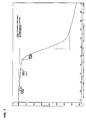
- Figure 1 presents the TGA curve obtained for the treated mineral filler product of Example 1.
- a transformation rate of the original stearic acid introduced in the process of 75% was determined.
- 500 g of a cyclone-classified, marble from Carrara, Italy, dry ground using a glycol-based dry grinding aid and featuring a d 50 of approximately 1.7 microns was added to an MTI Mixer and the mixing was activated at 500 rpm. Thereafter a 1:1 mixture of dry stearic acid powder and dry palmitic acid powder at room temperature was introduced to the mixer in a quantity so as to obtain the weight % based on the weight of the marble indicated in Table 1, and immediately thereafter 500 ppm of polydimethylsiloxane (PDMS) was introduced into the mixer. Thereafter the mixer contents were heated to 130°C and the mixer content mixed at 130°C under a stirring speed of 500 rpm for a period of 10 minutes.
- PDMS polydimethylsiloxane
- the so obtained powder was thereafter added to the marble in the MTI Mixer in a quantity so as to obtain the weight % based on the weight of the marble indicated in Table 1.
- the contents of the mixer heated to 130°C and were mixed at 130°C under a stirring speed of 500 rpm for a period of 10 minutes.
- Example 5 Invention Example
- the mixer contents continued to be mixed while allowed to cool to 130°C, at which point a 1:1 mixture of dry stearic acid powder and dry palmitic acid powder was added to the mixer in a quantity so as to obtain the weight % based on the weight of the marble indicated in Table 1.
- the temperature was so maintained and the contents on the mixer continued to be mixed under a stirring speed of 5 00 rpm for an additional 10 minutes.
- Figure 2 presents the TGA curve obtained for the treated mineral filler product of Example 5.
- a transformation rate of the original stearic acid introduced in the process of 25% was determined.
- Example 6 Invention Example
- the mixer contents continued to be mixed while allowed to cool to 130°C, at which point a 1:1 mixture of dry stearic acid powder and dry palmitic acid powder was added to the mixer in a quantity so as to obtain the weight % based on the weight of the marble indicated in Table 1, and immediately thereafter 500 ppm of polydimethylsiloxane (PDMS) was introduced into the mixer.
- PDMS polydimethylsiloxane
- Example 7 Invention Example
- Example 8 Invention Example
- the mixer contents continued to be mixed while allowed to cool to 130°C, at which point a 1;1 mixture of dry stearic acid powder and dry palmitic acid powder was added to the mixer in a quantity so as to obtain the weight % based on the weight of the marble indicated in Table 1.
- the temperature was so maintained and the contents on the mixer continued to be mixed under a stirring speed of 500 rpm for an additional 10 minutes.
- Example 3 provided good results in terms of total volatiles, treatment with calcium stearate alone lead to difficulties in processing a plastic medium comprising the treated calcium carbonate of Example 3, and especially to an overly high viscosity in an extrusion step.
- a compound consisting of 50 % by weight of the product of Example 3, 45 % by weight of a linear low density polyethylene (featuring a melt flow index (MFI) of 6, according to a measurement made at 190°C using 2.16 kg of this polyethylene) and 5 % by weight of a low density polyethylene (featuring a MFI of 3 according to a measurement made at 190°C using 2.16 kg of this polyethylene) was formed in a Buss co-kneader.
- the compound so obtained was then transformed into a film using a Collin Castfilm lab line, equipped with a single screw extruder having a diameter of 30 mm and a die length of 250 mm.
- a GKD Gabr.
- Example 1 Considering the total volatile results of Table 1 and the transformation rate of Example 1, which indicates that a significant fraction of the acid groups of the employed stearic acid were transformed into a non-acid species, and theorising that this transformed stearic acid formed a salt by reaction with calcium carbonate, thus forming a system comprising a stearic acid and a calcium stearate, the Applicant considers that this renders the specific addition of such an acid and such an acid salt to a mineral filler in a particular order to obtain a material of particularly low total volatiles, as in Example 5, all the more surprising.
Landscapes
- Chemical & Material Sciences (AREA)
- Organic Chemistry (AREA)
- Health & Medical Sciences (AREA)
- Chemical Kinetics & Catalysis (AREA)
- Medicinal Chemistry (AREA)
- Polymers & Plastics (AREA)
- Engineering & Computer Science (AREA)
- Manufacturing & Machinery (AREA)
- Materials Engineering (AREA)
- Compositions Of Macromolecular Compounds (AREA)
- Pigments, Carbon Blacks, Or Wood Stains (AREA)
- Processes Of Treating Macromolecular Substances (AREA)
- Compounds Of Alkaline-Earth Elements, Aluminum Or Rare-Earth Metals (AREA)
- Manufacture Of Macromolecular Shaped Articles (AREA)
- Manufacture Of Porous Articles, And Recovery And Treatment Of Waste Products (AREA)
- Materials For Medical Uses (AREA)
- Solid-Sorbent Or Filter-Aiding Compositions (AREA)
- Silicates, Zeolites, And Molecular Sieves (AREA)
- Extrusion Moulding Of Plastics Or The Like (AREA)
Abstract
(a) treating at least one dry mineral filler with at least one Group II or Group III salt of a C8 to C24 aliphatic monocarboxylic acid to produce an intermediate mineral filler product; followed by
(b) treating the intermediate mineral filler product of step (a) with at least one C8 to C24 aliphatic monocarboxylic acid to produce a treated mineral filler product.
Description
- The present invention relates to the domain of mineral filler treatment processes, in particular to prepare treated mineral filler products to be used in plastic applications, and especially in polypropylene (PP)- or polyethylene (PE)-based breathable or extrusion coating film applications.
- The object of the present invention is a process for the preparation of a treated mineral filler product characterised in that the process comprises the following steps:
- (a) treating at least one dry mineral filler with at least one Group II or Group III salt of a C8 to C24 aliphatic monocarboxylic acid to produce an intermediate mineral filler product; followed by
- (b) treating the intermediate mineral filler product of step (a) with at least one C8 to C24 aliphatic monocarboxylic acid to produce a treated mineral filler product.
- Another object of the present invention is a product obtained by the process of the invention.
- Another object of the present invention are applications of products obtained by the process of the invention in plastic applications, especially in polyethylene (PE), polypropylene (PP), polyurethane (PU) and polyvinylchloride (PVC) applications, and more particularly in PP- or PE-based breathable or extrusion coating film applications.
- Mineral fillers, such as calcium carbonate, are often used as particulate fillers in polymer products.
- The presence of volatiles associated with mineral fillers that evolve at temperatures reached during the application of such mineral fillers and/or in the processing of such mineral filler-comprising products may lead to the degradation of the quality of the final mineral-comprising polymer product. This is particularly a problem encountered in the preparation of mineral-filler comprising, and more particularly calcium carbonate comprising, PP- or PE-based breathable or extrusion coating films.
- Moreover, volatiles may lead to a reduction in the tensile and tear strength of such a film, and may degrade its visible aspects, in particular of its visible uniformity.
- Volatiles can generate excessive foaming of the mineral filled polymer melt during a step of compounding, causing unwanted product build-up at the vacuum extraction and hence, forcing a reduced output rate.
- Such volatiles may, for example, be:
- inherently associated with the mineral filler ("inherent volatiles"), and is especially associated water, and/or
- introduced during the treatment of the mineral filler ("added volatiles"), for example to render the mineral filler more dispersible within a plastic medium, and/or
- generated by the reaction of inherent organic materials and/or added organic materials, with the mineral filler; such reactions may especially be induced or enhanced by the temperatures reached during the introduction and/or processing of the polymeric material comprising the treated mineral filler, such as during the extrusion or compounding process; and/or
- generated by the degradation of inherent organic materials and/or added organic materials, forming CO2, water and possibly low molecular mass fractions of these organic materials; such a degradation may especially be induced or enhanced by the temperatures reached during the introduction and/or processing of the polymeric material comprising the treated mineral filler, such as during the extrusion or compounding process.
- The mass fraction of all of the volatiles relative to the mass of a sample of mineral filler - including volatiles introduced as a result of common mineral filler preparation steps including grinding, with or without grinding aid agents, benefication, with or without flotation aid or other agents, and other pre-treatment agents not expressly listed above, detected according to the thermogravimetric analysis described hereafter will be referred to as the "total volatiles" throughout the present specification and claims.
- For the purposes of the present Application, the total volatiles associated with mineral fillers and evolved over the given temperature range will be characterised according to % mass loss of the mineral filler sample over this temperature range as presented on a thermogravimetric (TGA) curve; the preparation of such a thermogravimetric (TGA) curve is a technique well known to the skilled man.
- Such an analytical method provides information regarding losses of mass with great accuracy, and is common knowledge; it is, for example, described in " Principles of Instrumental analysis", fifth edition, Skoog, Holler, Nieman, 1998 (first edition 1992) in Chapter 31 pages 798 to 800, and in many other commonly known reference works.
- The skilled man will be able to determine the "total volatiles" by very simple routine tests, namely by performing a thermogravimetric analysis (TGA) using a Mettler Toledo TGA 851 based on a sample of 500 +/- 50 mg and scanning temperatures from 25 to 300°C at a rate of 20°C/minute under an air flow of 70 ml/min.
- The % mass loss, corresponding to the total volatiles, over a given temperature on the TGA curve so obtained is thereafter determined using Stare SW 9.01 software. Using this software, the curve is first normalised relative to the original sample weight in order to obtain mass losses in % values relative to the original sample. Thereafter, the temperature range of 25 to 300°C is selected and the step horizontal (in German: "Stufe horizontal") option selected in order to obtain the % mass loss over the selected temperature range.
-
Figures 1 and2 , described hereafter, are illustrative thereof. - One obvious means to reduce the total volatiles associated with a mineral filler could be to reduce the amount of additives leading to the production of added volatiles. However, often, as in the case when a mineral filler is applied in a plastic application, minimum quantities of additives are needed to ensure other functions. In the case of breathable film applications, additives are known to be introduced to provide the mineral filler with a hydrophobic coating and to improve the dispersability of the mineral filler in the film precursor material as well as possibly to improve the processability of this film precursor material and/or properties of the final application products. A reduction in the quantity of such additives would unacceptably compromise the resulting film quality.
- In response to this problem of the skilled man, who knows of documents describing the simple addition of an aliphatic carboxylic acid to a mineral filler, the applicant has surprisingly found that mineral fillers treated according to the process of the invention provide the skilled man with the possibility to reduce the quantity of volatiles evolved for a given quantity of treatment agent relative to the solutions presented in the prior art.
- When the prior art makes reference to a mineral filler treatment comprising an aliphatic carboxylic acid, which in some cases may also commonly be referred to as a fatty acid, and an aliphatic carboxylic acid salt, it not only fails to recognise the advantages provided by the identification of a precise order of process steps, but indeed directs the skilled man away from the technology of the present invention.
- In this respect,
WO 00/20336 - Likewise,
US 4,407,986 recites a precipitated calcium carbonate that is surface-treated with a dispersant that may include higher aliphatic acids and their metal salts, but fails to provide any information regarding a process in which an aliphatic carboxylic acid and an aliphatic carboxylic acid salt are necessarily and advantageously added to a mineral filler in the given order of the present invention. Indeed, the particular combination of a higher aliphatic acid and a metal salt of a higher aliphatic acid is not even exemplified. - In
US 5,135,967 , example 7 discloses in a mixture of an ammonium salt of 12-hydroxystearic acid in combination with stearic acid and a mineral filler. Again, no precise order of additive addition is recited. -
WO 03/082966 -
US 2002/0102404 describes calcium carbonate particles coated on their surface with a combination of saturated and unsaturated aliphatic carboxylic acids and salts thereof along with an organic compound such as a phthalic ester. Not only does this document not make any suggestion as to the inventive process of the present application, but indeed suggests the skilled man combine any treatment agents prior to their introduction to the calcium carbonate. - Claim 11 of
WO 92/02587 - The abstract of
JP54162746 -
WO 01/32787 WO 01/32787 - As a conclusion, no leading line or direction is available to the skilled man in the prior art, even in an indistinct manner, which would suggest the particular process of the present invention, which is able to reduce the total volatiles of a treated mineral filler product.
- Additional prior art, namely
WO 99/61521 WO 2005/075353 , which suggest a reduction of only the inherent water and picked up humidity of the starting mineral filler, entirely missed the point of reducing the other volatiles besides water which contribute to the total volatiles, and that this total volatile reduction is a useful parameter and indeed, the only one parameter needed. This prior art also entirely missed the point that the special order of addition of the treatment agents of the present invention is able to limit the total volatiles measured by TGA. - The Applicant has surprisingly found that total volatiles measured by TGA can be reduced by a process for the preparation of a treated mineral filler product characterised in that the process comprises the following steps :
- (a) treating at least one dry mineral filler with at least one Group II or Group III salt of a C8 to C24 aliphatic monocarboxylic acid to produce an intermediate mineral filler product; followed by
- (b) treating the intermediate mineral filler product of step (a) with at least one C8 to C24 aliphatic monocarboxylic acid to produce a treated mineral filler product.
- The term "Group X" indicates the main group elements falling under column X of the Mendeleev Periodic Table. Group II and Group III are also referred to as Group IIA and Group IIIA. Moreover, Group II elements are also referred to as earth alkali elements.
- The process according to the present invention especially provides treated mineral filler products featuring a total volatile content of less than 0.25 %, and preferably of less than 0.23 % by mass as measured according to the TGA method described hereabove.
- Mineral fillers employed in the process according to the invention are especially calcium carbonate-comprising mineral fillers (such as precipitated calcium carbonate (PCC), namely one or more of the aragonitic, vateritic and calcitic mineralogical crystal forms, and/or natural ground calcium carbonate (NGCC), namely one or more of marble, limestone, or chalk, and/or dolomite) and/or plate-like minerals (featuring a length to width or length to height ratio of at least 2 as determined according to measurements made on scanning electron microscope (SEM) images), such as talc.
- Such minerals fillers are well known to the average skilled man, in particular for their use in plastic formulations, such as in film or in film precursors, notably breathable or extrusion coating films, so that it will not be necessary to fully describe them in detail except when such a description is necessary for completeness and clarity due to a specific and original feature of the invention.
- Preferably, in the case of the subsequent application of the mineral filler in breathable or extrusion coating films, this mineral filler is preferably a calcium carbonate and/or dolomite, and is more preferably a marble and/or dolomite.
- The mineral filler can be dry ground or wet ground and dried prior to introduction into the process according to the present invention with or without grinding aids. Conventional grinding aids, such as glycols for dry grinding and polyacrylates for wet grinding, are well-known to the skilled man.
- Alternatively or additionally, this mineral filler may also undergo a benefication step in order to increase the purity of this mineral filler. Such benefications include flotation and/or magnetic separation.
- Alternatively or additionally, this mineral filler may also undergo a classification step prior to implementation in order to obtain a mineral filler featuring a particular particle size distribution. Typical classification steps use classification technology separating particles under the effects of a cyclone.
- Preferably, the mineral filler features a dso of 0.5 to 10 microns, and more preferably features a dso of 1.5 to 1.8 microns, as measured using Malvern Mastersizer™ X instrumentation (with software version 2.18 and using the OHD presentation and analysis model), the latter d50 range being especially preferred in view of subsequent applications in breathable or extrusion coating films.
- Alternatively or additionally, it may be of interest to implement a mineral filler featuring a d98 of less than 25 microns, as determined according to measurements made with Malvern Mastersizer™ X instrumentation (with software version 2.18 and using the OHD presentation and analysis model).
- Throughout the present Application, the value of dx represents the diameter relative to which X % by weight of the particles have diameters less than dx, and is determined based on diameter measurements made using Malvern Mastersizer™ X instrumentation (with software version 2.18 and using the OHD presentation and analysis model).
- The mineral filler provided for the process of the invention is dry. For the purpose of the present invention, a dry mineral filler features less than 0.2 % by weight of water relative to the mineral filler weight. Preferably, this mineral filler features from 0.1 to 0.2 % by weight of water relative to the mineral filler weight. All % water determinations are made using a Coulometric Karl Fischer measurement method, wherein the mineral filler is heated to 220°C, and water content of the released vapour, isolated using a stream of nitrogen gas (at 100 mL/min), determined in a Coulometric Karl Fischer unit.
- Step (a) implements at least one Group II or Group III salt of a C8 to C24 aliphatic carboxylic acid ; it is understood that step (a) does not implement any C8 to C24 aliphatic carboxylic acid(s), though the skilled man will appreciate that trace amounts of this acid may be naturally present. This trace amount does not influence the process of the present invention.
- In one embodiment of the process according to the invention, the Group 11 or Group III salt(s) of a C8 to C24 aliphatic monocarboxylic acid employed in step (a) are selected among calcium, magnesium and aluminium salts, and mixtures thereof.
- In a more preferred embodiment of the process according to the invention, the Group II or Group III salt(s) of a C8 to C24 aliphatic monocarboxylic acid employed in step (a) are selected among calcium salts, magnesium salts and mixtures thereof.
- Moreover, step (a) of the present invention preferably implements at least one Group II or Group III salt of a C12 to C18, and preferably of a C16 to C18 aliphatic carboxylic acid. The value of X in the designation Group II or Group III salt of a CX aliphatic carboxylic acid is intended to represent the number of carbon atoms forming the Group II or Group III salt of this aliphatic carboxylic acid.
- In one embodiment of the process according to the invention, the Group II or Group III salt(s) of an aliphatic carboxylic acid of step (a) are salt(s) of a saturated aliphatic carboxylic acid. The term saturated means an iodine number of less than 1 g I2/100 g sample. This iodine number determination is well-known to the skilled man, and namely implements determination of the iodine addition to a 100 g sample by back-titration of the surplus iodine solution with sodium thiosulfate.
- In another embodiment of the process according to the invention, the Group II or Group III salt(s) of an aliphatic carboxylic acid of step (a) are salt(s) of a linear aliphatic carboxylic acid.
- In another embodiment of the process according to the invention, the Group II or Group III salt(s) of an aliphatic carboxylic acid of step (a) are salt(s) of a hydroxylated aliphatic carboxylic acid.
- In a preferred embodiment of the process according to the invention, the Group II or Group III salt(s) of an aliphatic carboxylic acid of step (a) are salt(s) of stearic and/or palmitic and/or myristic and/or lauric acid. It is most preferred to implement such salts of stearic and/or palmitic acid in the process according to the invention.
- It will be understood in the whole specification and claims that the aliphatic carboxylic acid(s) of step (b) and/or the Group II or Group III salt(s) of an aliphatic carboxylic acid of step (a) may be implemented in the process of the invention in dry form or in the form of a fluid such as a melt.
- In a preferred embodiment of the process according to the invention, the Group II or Group III salt(s) of an aliphatic carboxylic acid employed in step (a) are implemented in the form of a dry powder.
- In the particular case where the Group II or Group III salt(s) of an aliphatic carboxylic acid of step (a) is in the form of a dry powder, it is preferable that this salt feature a d98 of 20 microns according to screen residue measurement performed with 20 microns DIN screens.
- In a preferred embodiment of the process according to the invention, the Group II or Group III salt(s) of an aliphatic carboxylic acid salt employed in step (a) are selected so as to feature a viscosity of more than 100 000 mPas, and preferably of more than 1 000 000 mPas, at 180 °C measured in a
PHYSICA MCR 300 equipped with a CP50 - 1 instrumentation at a shear rate of 5 s(-1) and scanning temperatures from 200 to 130 °C. - It is of note that the aliphatic carboxylic acid(s) of step (b) and the aliphatic carboxylic acid(s) of the salified aliphatic carboxylic acid(s) of step (a) are not necessarily identical. Various combinations can be easily envisioned by the skilled man.
- As regards step (b) of the present invention, this step preferably implements C12 to C18, and preferably a C16 to C18 aliphatic carboxylic acid(s). The value of X in the designation CX aliphatic carboxylic acid is intended to represent the number of carbon atoms forming the aliphatic carboxylic acid.
- In one embodiment of the process according to the invention, the aliphatic carboxylic acid(s) of step (b) are saturated.
- In another embodiment of the process according to the invention, the aliphatic carboxylic acid(s) of step (b) are linear aliphatic carboxylic acids.
- In another embodiment of the process according to the invention, the aliphatic carboxylic acid(s) employed in step (b) are hydroxylated aliphatic carboxylic acids.
- In a preferred embodiment of the process according to the invention, the aliphatic carboxylic acid(s) employed in step (b) are stearic and/or palmitic and/or myristic and/or lauric acids or mixtures thereof. It is most preferred to implement stearic and/or palmitic acid in the process according to the invention.
- In a preferred embodiment of the process according to the invention, the aliphatic carboxylic acid(s) employed in step (b) are implemented in step (b) in the form of a melt.
- It may be of interest that sufficient surface treatment of the mineral filler be provided to render the mineral filler easily dispersible in polyolefins.
- An appropriate range of total aliphatic carboxylic acid(s) and aliphatic carboxylic acid salt(s) added during the process of the invention is 0.2 to 8, preferably 0.6 to 5, and most preferably 3 to 4 mg of total aliphatic carboxylic acid(s) and aliphatic carboxylic acid salt(s) /m2 mineral filler(s).
- It is of note that throughout the present Application, the surface area (m2) of a given quantity of mineral filler(s) is determined based on measurements made using the BET method, which is well known to the skilled man (ISO 9277).
- In a preferred embodiment of the process according to the invention, the aliphatic carboxylic acid salts(s) employed in step (a) and the aliphatic carboxylic acid(s) employed in step (b) are selected so that their equivalent isolated mixture features a viscosity of between 5 and 400 mPas at 180 °C measured in a
PHYSICA MCR 300 equipped with a CP50 - 1 instrumentation at a shear rate of 5 s(-1) and scanning temperatures from 200 to 130 °C. It is understood that this equivalent isolated mixture is not directly implemented in the process of the invention; this characterisation of this equivalent isolated mixture serves only to assist the skilled man in selecting the appropriate aliphatic carboxylic acid salts(s) to implement in step (a) and aliphatic carboxylic acid(s) to implement in step (b). - In a particular embodiment of the process according to the invention, the aliphatic carboxylic acid employed in step (b) is 1:1 stearic acid:palmitic acid mixture, and the aliphatic carboxylic acid salt(s) employed in step (a) is a magnesium or calcium stearate.
- It may be particularly advantageous to implement 0.4 by weight % of aliphatic carboxylic acid(s), based on the weight of the mineral filler in step (b), and 0.8, 0.6; 1.0 or 1.2 by weight % of Group II or Group III salt(s) of an aliphatic carboxylic acid, based on the weight of the mineral filler, in step (a).
It is most preferably to implement 0.4 by weight % of aliphatic carboxylic acid(s), based on the weight of the mineral filler in step (b), and 0.8 by weight % of Group II or Group III salt(s) of an aliphatic carboxylic acid, based on the weight of the mineral filler, in step (a). - Alternatively, it may be of interest to implement the process according to the invention such that the weight ratio of aliphatic carboxylic acid(s):Group II or Group III salt(s) of an aliphatic carboxylic acid is 1:1 to 10:1, and preferably is 1:2.
- It may additionally be advantageous to implement an additional treatment agent that does not correspond to a C8 to C24 aliphatic carboxylic acid, nor to a Group II or Group III salt of a C8 to C24 aliphatic carboxylic acid. A preferred, but non-limitative example of a process of the invention implementing such an additional treatment agent is a process implementing a siloxane, and preferably a polydimethylsiloxane (PDMS). Such siloxanes are known to improve the processability of plastic materials, particularly during an extrusion step.
- In the case where such a siloxane is implemented in addition to the additives introduced in steps (a) and (b) according to the process of the invention, this siloxane may be advantageously dosed at 200 to 1000 ppm, preferably at 400 to 600 ppm, and most preferably at 500 ppm.
- In the case where such a siloxane is implemented in addition to the additives introduced in steps (a) and (b) according to the process of the invention, this siloxane may be advantageously introduced in the process following step (b).
- The invention also relates to treated minerals filler products obtained by the process of the invention.
- Implementing the process according to the invention especially leads to treated mineral filler products featuring a total volatile content of less than 0.25 %, and preferably of less than 0.23 % by mass as measured according to the TGA method described hereabove, namely between 25 and 300°C.
- Such a total volatile content can especially be reached by implementing:
- in step (a) of the process according to the invention, aliphatic carboxylic acid salt(s) selected so as to feature an isolated equivalent viscosity of more than 100 000 mPas, and preferably of more than 1 000 000 mPas, at 180 °C measured in a
PHYSICA MCR 300 equipped with a CP50 - 1 instrumentation at a shear rate of 5 s(-1) and scanning temperatures from 200 to 130 °C; - in steps (a) and (b) of the process according to the invention, aliphatic carboxylic acid(s) employed in step (b) and aliphatic carboxylic acid salt(s) employed in step (a) selected so that their equivalent isolated mixture features a viscosity of between 5 and 400 mPas at 180 °C measured in a
PHYSICA MCR 300 equipped with a CP50 - 1 instrumentation at a shear rate of 5 s(-1) and scanning temperatures from 200 to 130 °C. - Treated mineral filler product obtained by the process of the invention find applications in mixing/extruding/compounding/moulding with plastic materials, namely polyolefins or thermoplastics, such as polyethylene (PE), polypropylene (PP), polyurethanes (PU) and polyvinylchloride (PVC), in order to produce articles of manufacture, such as by extrusion / compounding, such as films, such as stretched or oriented films, and in particular such as PP- or PE-based breathable or extrusion coating films, and such as by blow moulding processes.
- So obtained films, namely stretched/oriented films, such as in particular breathable films, or products obtained by extrusion/compounding or moulding or blow moulding processes, such as in particular extrusion coating films, comprising the treated mineral fillers obtained by the process according to the invention are also an object of the present invention.
- All particle size measurements were performed using Malvern Mastersizer™ X instrumentation (with software version 2.18 and using the OHD presentation and analysis model).
- Viscosity measurements were performed with
Physica MCR 300 instrumentation under a shear rate of 5 s(-1) and equipped with a CP50-1. - Total volatiles (% volatiles evolved relative to the mass of the sample) were determined based on the curve obtained used Mettler Toledo TGA 851 instrumentation with a sample of 500 +/- 50 mg and scanning temperatures from 25 to 300°C at a rate of 20°C/minute under an air flow of 70 ml/min.
- The % mass loss, corresponding to the total volatiles, over a given temperature on the TGA curve so obtained was thereafter determined using Stare SW 9.01 software. Using this software, the curve was first normalised relative to the original sample weight in order to obtain mass losses in % values relative to the original sample. Thereafter, the temperature range of 25 to 300°C was selected and the step horizontal (in German : "Stufe horizontal") option selected in order to obtain the % mass loss over the selected temperature range.
- Transformation rates of the acid groups of the aliphatic carboxylic acids employed in the examples were determined by forming a slurry of a sample of the final mineral product obtained in ethanol, and thereafter performing a potentiometric titratation of the moles of remaining free acid groups using a 0.1 molar solution of KOH in methanol obtained from the company Fluka. The transformation rate was evaluated as the % weight of converted aliphatic carboxylic acid (in other words, not detected as free acid) relative to the total amount of aliphatic carboxylic acid added in the treatment process.
- 500 g of a cyclone-classified, marble from Carrara, Italy, dry ground using a glycol-based dry grinding aid and featuring a d50 of approximately 1.7 microns was added to an MTI Mixer and the mixing was activated at 500 rpm. Thereafter a 1:1 mixture of dry stearic acid powder and dry palmitic acid powder at room temperature was introduced to the mixer in a quantity so as to obtain the weight % based on the weight of the marble indicated in Table 1, and the mixer contents were heated to 130°C. The contents of the mixer were mixed at 130°C; under a stirring speed of 500 rpm for a period of 10 minutes.
- The product so obtained was thereafter analysed by TGA in order to determine the total volatiles. The results are presented in Table 1.
-
Figure 1 presents the TGA curve obtained for the treated mineral filler product of Example 1. - A transformation rate of the original stearic acid introduced in the process of 75% was determined.
- 500 g of a cyclone-classified, marble from Carrara, Italy, dry ground using a glycol-based dry grinding aid and featuring a d50 of approximately 1.7 microns was added to an MTI Mixer and the mixing was activated at 500 rpm. Thereafter a 1:1 mixture of dry stearic acid powder and dry palmitic acid powder at room temperature was introduced to the mixer in a quantity so as to obtain the weight % based on the weight of the marble indicated in Table 1, and immediately thereafter 500 ppm of polydimethylsiloxane (PDMS) was introduced into the mixer. Thereafter the mixer contents were heated to 130°C and the mixer content mixed at 130°C under a stirring speed of 500 rpm for a period of 10 minutes.
- The product so obtained was thereafter analysed by TGA in order to determine the total volatiles. The results are presented in Table 1.
- 500 g of a cyclone-classified, marble from Carrara, Italy, dry ground using a glycol-based dry grinding aid and featuring a d50 of approximately 1.7 microns was added to an MTI Mixer and the mixing was activated at 500 rpm. Thereafter dry calcium stearate powder at room temperature was introduced to the mixer in a quantity so as to obtain the weight % based on the weight of the marble indicated in Table 1, and the mixer contents were heated to 180°C. The contents of the mixer were mixed at 180°C under a stirring speed of 500 rpm for a period of 10 minutes.
- The product so obtained was thereafter analysed by TGA in order to determine the total volatiles. The results are presented in Table 1.
- 500 g of a cyclone-classified, marble from Carrara, Italy, dry ground using a glycol-based dry grinding aid and featuring a d50 of approximately 1.7 microns was added to an MTI Mixer and the mixing was activated at 500 rpm. Separately, a 1:1 mixture of dry stearic acid powder and dry palmitic acid powder was mixed by hand with calcium stearate, also in powder form, at a temperature of 130°C in a beaker. Once a visually homogeneous molten mixture of the acid and salt were obtained, this molten mixture was allowed to cool to form a powder. The so obtained powder was thereafter added to the marble in the MTI Mixer in a quantity so as to obtain the weight % based on the weight of the marble indicated in Table 1. The contents of the mixer heated to 130°C and were mixed at 130°C under a stirring speed of 500 rpm for a period of 10 minutes.
- The product so obtained was thereafter analysed by TGA in order to determine the total volatiles. The results are presented in Table 1.
- 500 g of a cyclone-classified, marble from Carrara, Italy, dry ground using a glycol-based dry grinding aid and featuring a dso of approximately 1.7 microns was added to an MTI Mixer and the mixing was activated at 500 rpm. Thereafter calcium stearate in powder form was added to the mixer in a quantity so as to obtain the weight % based on the weight of the marble indicated in Table 1, and the mixer contents heated to 180°C for a period of 10 minutes. Thereafter, the mixer contents continued to be mixed while allowed to cool to 130°C, at which point a 1:1 mixture of dry stearic acid powder and dry palmitic acid powder was added to the mixer in a quantity so as to obtain the weight % based on the weight of the marble indicated in Table 1. The temperature was so maintained and the contents on the mixer continued to be mixed under a stirring speed of 5 00 rpm for an additional 10 minutes.
- The product so obtained was thereafter analysed by TGA in order to determine the total volatiles. The results are presented in Table 1.
-
Figure 2 presents the TGA curve obtained for the treated mineral filler product of Example 5. - A transformation rate of the original stearic acid introduced in the process of 25% was determined.
- 500 g of a cyclone-classified, marble from Carrara, Italy, dry ground using a glycol-based dry grinding aid and featuring a d50 of approximately 1.7 microns was added to an MTI Mixer and the mixing was activated at 500 rpm. Thereafter calcium stearate in powder form was added to the mixer in a quantity so as to obtain the weight % based on the weight of the marble indicated in Table 1, and the mixer contents heated to 180°C for a period of 10 minutes. Thereafter, the mixer contents continued to be mixed while allowed to cool to 130°C, at which point a 1:1 mixture of dry stearic acid powder and dry palmitic acid powder was added to the mixer in a quantity so as to obtain the weight % based on the weight of the marble indicated in Table 1, and immediately thereafter 500 ppm of polydimethylsiloxane (PDMS) was introduced into the mixer. The temperature was so maintained and the contents on the mixer continued to be mixed under a stirring speed of 500 rpm for an additional 10 minutes.
- The product so obtained was thereafter analysed by TGA in order to determine the total volatiles. The results are presented in Table 1.
- 500 g of a cyclone-classified, marble from Carrara, Italy, dry ground using a glycol-based dry grinding aid and featuring a d50 of approximately 1.7 microns was added to an MTI Mixer and the mixing was activated at 500 rpm. Thereafter calcium stearate in powder form was added to the mixer in a quantity so as to obtain the weight % based on the weight of the marble indicated in Table 1, and the mixer contents heated to 180°C for a period of 10 minutes. Thereafter, the mixer contents continued to be mixed while allowed to cool to 130°C, at which point a 1:1 mixture of dry stearic acid powder and dry palmitic acid powder was added to the mixer in a quantity so as to obtain the weight % based on the weight of the marble indicated in Table 1. The temperature was so maintained and the contents on the mixer continued to be mixed under a stirring speed of 500 rpm for an additional 10 minutes.
- The product so obtained was thereafter analysed by TGA in order to determine the total volatiles. The results are presented in Table 1.
- 500 g of a cyclone-classified, marble from Carrara, Italy, dry ground using a glycol-based dry grinding aid and featuring a d50 of approximately 1.7 microns was added to an MTI Mixer and the mixing was activated at 500 rpm. Thereafter calcium stearate in powder form was added to the mixer in a quantity so as to obtain the weight % based on the weight of the marble indicated in Table 1, and the mixer contents heated to 180°C for a period of 10 minutes. Thereafter, the mixer contents continued to be mixed while allowed to cool to 130°C, at which point a 1;1 mixture of dry stearic acid powder and dry palmitic acid powder was added to the mixer in a quantity so as to obtain the weight % based on the weight of the marble indicated in Table 1. The temperature was so maintained and the contents on the mixer continued to be mixed under a stirring speed of 500 rpm for an additional 10 minutes.
- The product so obtained was thereafter analysed by TGA in order to determine the total volatiles. The results are presented in Table 1.
- 500 g of a cyclone-classified, marble from Carrara, Italy, dry ground using a glycol-based dry grinding aid and featuring a d50 of approximately 1.7 microns was added to an MTI Mixer and the mixing was activated at 500 rpm. Thereafter calcium stearate in powder form was added to the mixer in a quantity so as to obtain the weight % based on the weight of the marble indicated in Table 1, and the mixer contents heated to 180°C for a period of 10 minutes. Thereafter, the mixer contents continued to be mixed while allowed to cool to 130°C, at which point a 1:1 mixture of dry stearic acid powder and dry palmitic acid powder was added to the mixer in a quantity so as to obtain the weight % based on the weight of the marble indicated in Table 1. The temperature was so maintained and the contents on the mixer continued to be mixed under a stirring speed of 500 rpm for an additional 10 minutes.
- The product so obtained was thereafter analysed by TGA in order to determine the total volatiles. The results are presented in Table 1.
- The results presented in Table 1 clearly demonstrate the advantage in terms of the total volatile content of the products obtained by the process of the invention.
- It is of note that although Example 3 provided good results in terms of total volatiles, treatment with calcium stearate alone lead to difficulties in processing a plastic medium comprising the treated calcium carbonate of Example 3, and especially to an overly high viscosity in an extrusion step.
- Notably, a compound consisting of 50 % by weight of the product of Example 3, 45 % by weight of a linear low density polyethylene (featuring a melt flow index (MFI) of 6, according to a measurement made at 190°C using 2.16 kg of this polyethylene) and 5 % by weight of a low density polyethylene (featuring a MFI of 3 according to a measurement made at 190°C using 2.16 kg of this polyethylene) was formed in a Buss co-kneader. The compound so obtained was then transformed into a film using a Collin Castfilm lab line, equipped with a single screw extruder having a diameter of 30 mm and a die length of 250 mm. In front of the die, a GKD (Gebr. Kufferath AG of Düren, Germany under Article number 12105170051) bordered filter package having a diameter of 30 mm, formed of filter meshes placed one against another, each featuring a given filter mesh size, namely (in the order encountered by the incoming compound) of 630 microns, 250 microns, 120 microns, 42 microns, and 120 microns, was inserted. The pressure reached in front of this filter package was recorded with a Dynisco DYN A4 - 1/2-6C-7.6 pressure measurement device (capable of measuring pressures from 0 to 600 bar) 3 minutes following the commencement of the extrusion and the pressure increase determined following 20 minutes of extrusion, giving values of 80 +/- 5 bar and 90 +/- 5 bar respectively. These results were compared with those obtained with a compound prepared and processed as above but wherein the product of Example 3 was replaced with the product of Example 7, which gave a pressure 3 minutes following the commencement of the extrusion of 65 +/- 5 bar and a pressure increase after 20 minutes of extrusion of 10 +/- 5 bar. These results clearly demonstrate that a far more workable pressure is encountered when processing a product obtained according to the invention.
- Considering the total volatile results of Table 1 and the transformation rate of Example 1, which indicates that a significant fraction of the acid groups of the employed stearic acid were transformed into a non-acid species, and theorising that this transformed stearic acid formed a salt by reaction with calcium carbonate, thus forming a system comprising a stearic acid and a calcium stearate, the Applicant considers that this renders the specific addition of such an acid and such an acid salt to a mineral filler in a particular order to obtain a material of particularly low total volatiles, as in Example 5, all the more surprising.
Table 1 Test 1 2 3 4 5 6 7 8 9 Comparison Comparison Comparison Comparison Invention Invention Invention Invention Invention 1:1 Stearic acid: Palmitic acid 1.2 wt % 1.2 wt % 0.4 wt % 0.4 wt % 0.4 wt % 0.4 we % 0.4 wt % 0.4 wt % Calcium stearate 1.2 wt % 0.8 wt % 0.8 wt % 0.8 wt % 0.6 wt % 1.0 wt % 1.2 wt % PDMS 500 ppm 500 ppm Viscosity of isolated salt component of treatment agent at 180°C (mPas) -- -- > 1 600 100 > 1 600 100 > 1 600 100 > 1 600 100 > 1 600 100 > 1 600 100 > 1 600 100 Viscosity of equivalent acid/salt mixture at 180°C (mPas) -- -- -- < 100 < 100 < 100 < 100 < 100 < 100 Total quantity of acid and salt (wt % on wt of CaCO3) 1.2 wt % 1.2 wt % 1.2 wt % 1.2 wt % 1.2 wt % 1.2 wt % 1.0 wt % 1.4 wt % 1.6 wt % Total volatiles evolved between 25 and 300°C (+/-0.01%) 0.45 mass % 0.42 mass % 0.16 mass % 0.26 mass % 0.16 mass % 0.19 mass % 0.19 mass % 0.19 mass % 0.22 mass %
Claims (43)
- A process for the preparation of a treated mineral filler product characterised in that the process comprises the following steps:(a) treating at least one dry mineral filler with at least one Group II or Group III salt of a C8 to C24 aliphatic monocarboxylic acid to produce an intermediate mineral filler product; followed by(b) treating the intermediate mineral filler product of step (a) with at least one C8 to C24 aliphatic monocarboxylic acid to produce a treated mineral filler product.
- The process according to claim 1, characterised in that it is adapted to provide a treated mineral filler product featuring a total volatiles between 25 and 300 °C of less than 0.25 %, and preferably of less than 0.23 % by mass.
- The process according to claims 1 or 2, characterised in that the mineral filler(s) provided to step (a) of the process are calcium carbonate-comprising mineral fillers and/or plate-like minerals.
- The process according to claim 3, characterised in that the calcium carbonate-comprising mineral fillers are precipitated calcium carbonate (PCC), namely one or more of the aragonitic, vateritic and calcitic mineralogical crystal forms, and/or natural ground calcium carbonate (NGCC), namely one or more of marble, limestone, or chalk, and/or dolomite.
- The process according to claim 4, characterised in that the calcium carbonate-comprising mineral fillers are marble and/or dolomite.
- The process according to claim 3, characterised in that the plate-like minerals are talc.
- The process according to any of claims 1 to 6, characterised in that prior to providing the mineral filler(s) to step (a), the mineral filler is dry or wet ground.
- The process according to any of claims 1 to 7, characterised in that prior to providing the mineral filler(s) to step (a), the mineral filler undergoes a benefication step.
- The process according to any of claims 1 to 8, characterised in that prior to providing the mineral filler(s) to step (a), the mineral filler undergoes a classification step.
- The process according to any of claims 1 to 9, characterised in that the mineral filler(s) provided to step (a) features a d50 of 0.5 to 10 microns, and more preferably features a d50 of 1.5 to 1.8 microns, as measured using Malvern Mastersizer™ X instrumentation (with software version 2.18 and using the OHD presentation and analysis model).
- The process according to any of claims 1 to 10, characterised in that the mineral filler(s) provided to step (a) features a d98 of less than 25 microns, as determined according to measurements made with Malvern Mastersizer™ X instrumentation (with software version 2.18 and using the OHD presentation and analysis model).
- The process according to any of claims 1 to 11, characterised in that the mineral filler(s) provided to step (a) features less than 0.2 % by weight of water relative to the mineral filler weight, and preferably features from 0.1 to 0.2 % by weight of water relative to the mineral filler weight.
- The process according to any of claims 1 to 12, characterised in that the Group II or Group III salt(s) of a C8 to C24 aliphatic monocarboxylic acid employed in step (a) are selected among calcium, magnesium and aluminium salts, and mixtures thereof.
- The process according to claim 13, characterised in that the Group II or Group III salt(s) of a C8 to C24 aliphatic monocarboxylic acid employed in step (a) are selected among calcium salts, magnesium salts and mixtures thereof.
- The process according to any of claims 1 to 14, characterised in that the Group II or Group III salt(s) of a C8 to C24 aliphatic monocarboxylic acid employed in step (a) are Group II or Group III salt of a C12 to C18, and preferably of a C16 to C18 aliphatic carboxylic acid.
- The process according to any of claims 1 to 15, characterised in that the Group II or Group III salt(s) of a C8 to C24 aliphatic monocarboxylic acid employed in step (a) are salt(s) of a saturated aliphatic carboxylic acid.
- The process according to any of claims 1 to 16, characterised in that the Group II or Group III salt(s) of a C8 to C24 aliphatic monocarboxylic acid employed in step (a) are salt(s) of a linear aliphatic carboxylic acid.
- The process according to any of claims 1 to 17, characterised in that the Group II or Group III salt(s) of a C8 to C24 aliphatic monocarboxylic acid employed in step (a) are salt(s) of a hydroxylated aliphatic carboxylic acid.
- The process according to any of claims 1 to 17, characterised in that the Group II or Group III salt(s) of a C8 to C24 aliphatic monocarboxylic acid employed in step (a) arc salt(s) of stearic and/or palmitic and/or myristic and/or lauric acid, and most preferably are salts of stearic and/or palmitic acid.
- The process according to any of claims 1 to 19, characterised in that the Group II or Group III salt(s) of a C8 to C24 aliphatic monocarboxylic acid employed in step (a) are implemented in the form of a dry powder.
- The process according to claim 20, characterised in that the Group II or Group III salt(s) of a C8 to C24 aliphatic monocarboxylic acid employed in step (a) features a d98 of 20 microns according to screen residue measurement performed with 20 microns DIN screens.
- The process according to any of claims 1 to 21, characterised in that the Group II or Group III salt(s) of a C8 to C24 aliphatic monocarboxylic acid employed in step (a) are selected so as to feature a viscosity of more than 100 000 mPas, and preferably of more than 1 000 000 mPas, at 180°C measured in a PHYSICA MCR 300 equipped with a CP50 - 1 instrumentation at a shear rate of 5 s(-1) and scanning temperatures from 200 to 130 °C.
- The process according to any of claims 1 to 22, characterised in that the C8 to C24 aliphatic monocarboxylic acid of the Group II or Group III salt(s) of a C8 to C24 aliphatic monocarboxylic acid employed in step (a) and the C8 to C24 aliphatic carboxylic acid(s) employed in step (b) are not equivalent.
- The process according to any of claims 1 to 23, characterised in that the C8 to C24 aliphatic carboxylic acid(s) employed in step (b) are C12 to C18, and preferably a C16 to C18 aliphatic carboxylic acid(s).
- The process according to any of claims 1 to 24, characterised in that the C8 to C24 aliphatic carboxylic acid(s) employed in step (b) are saturated.
- The process according to any of claims 1 to 25, characterised in that the C8 to C24 aliphatic carboxylic acid(s) employed in step (b) are linear aliphatic carboxylic acids.
- The process according to any of claims 1 to 26, characterised in that the C8 to C24 aliphatic carboxylic acid(s) employed in step (b) are hydroxylated aliphatic carboxylic acids.
- The process according to any of claims 1 to 26, characterised in that the C8 to C24 aliphatic carboxylic acid(s) employed in step (b) are stearic and/or palmitic and/or myristic and/or lauric acids or mixtures thereof, and most preferably are stearic and/or palmitic acid.
- The process according to any of claims 1 to 28, characterised in that the C8 to C24 aliphatic carboxylic acid(s) employed in step (b) are implemented in the form of a melt.
- The process according to any of claims 1 to 29, characterised in that the total aliphatic carboxylic acid(s) and aliphatic carboxylic acid salt(s) added during the process of the invention is of 0.2 to 8, preferably of 0.6 to 5, and most preferably of 3 to 4 mg of total aliphatic carboxylic acid(s) and aliphatic carboxylic acid salt(s)/m2 mineral filler(s).
- The process according to any of claims 1 to 30, characterised in that the aliphatic carboxylic acid salts(s) employed in step (a) and the aliphatic carboxylic acid(s) employed in step (b) are selected so that their equivalent isolated mixture features a viscosity of between 5 and 400 mPas at 180 °C measured in a PHYSICA MCR 300 equipped with a CP50 - 1 instrumentation at a shear rate of 5 s(-1) and scanning temperatures from 200 to 130 °C.
- The process according to any of claims 1 to 31, characterised in that the aliphatic carboxylic acid employed in step (b) is a 1:1 stearic acid:palmitic acid mixture, and the aliphatic carboxylic acid salt(s) employed in step (a) is a magnesium or calcium stearate.
- The process according to any of claims 1 to 32, characterised in that 0.4 by weight % of aliphatic carboxylic acid(s), based on the weight of the mineral filler is implemented in step (b), and 0.8, 0.6; 1.0 or 1-2 by weight % of Group II or Group III salt(s) of an aliphatic carboxylic acid, based on the weight of the mineral filler, is implemented in step (a).
- The process according to claim 33, characterised in that 0.4 by weight % of aliphatic carboxylic acid(s), based on the weight of the mineral filler in step (b), and 0.8 by weight % of Group II or Group III salt(s) of an aliphatic carboxylic acid, based on the weight of the mineral filler, in step (a).
- The process according to any of claims 1 to 32, characterised in that the weight ratio of aliphatic carboxylic acid(s):Group II or Group III salt(s) of an aliphatic carboxylic acid is 1:1 to 10:1, and preferably is 1:2..
- The process according to any of claims 1 to 35, characterised in that an additional treatment agent that does not correspond to a C8 to C24 aliphatic carboxylic acid, nor to a Group II or Group III salt of a C8 to C24 aliphatic monocarboxylic acid is implemented.
- The process according to claim 36, characterised in that the additional treatment agent is a siloxane, and more preferably is a polydimethylsiloxane (PDMS).
- The process according to claim 37, characterised in that the siloxane is dosed at 200 to 1000 ppm, preferably at 400 to 600 ppm, and most preferably at 500 ppm.
- The process according to claim 37 or 38, characterised in that the siloxane is introduced in the process following step (b).
- Product characterised in that it is obtained by a process according to any of claims 1 to 39.
- Use of a product according to claim 40 in mixing and/or extruding and/or compounding and/or blow moulding with plastic materials, and preferably with polyolefins or thermoplastics such as polyethylene (PE), polypropylene (PP), polyurethanes (PU) and polyvinylchloride (PVC)
- Use of a product according to claim 40 in the formation of PP- or PE-based breathable or extrusion coating films.
- Films, namely stretched / oriented films, and preferably breathable films, or extrusion coating films, characterised in that they comprise the products of claim 40.
Priority Applications (40)
| Application Number | Priority Date | Filing Date | Title |
|---|---|---|---|
| DK07007599.9T DK1980588T3 (en) | 2007-04-13 | 2007-04-13 | Process for preparing a treated mineral filler product, the mineral filler product obtained and uses thereof |
| AT07007599T ATE514745T1 (en) | 2007-04-13 | 2007-04-13 | METHOD FOR PRODUCING A TREATED MINERAL FILLING PRODUCT AND OBTAINED MINERAL FILLING PRODUCT AND USES THEREOF |
| ES07007599T ES2369000T3 (en) | 2007-04-13 | 2007-04-13 | PROCESS FOR THE PREPARATION OF A TREATED MINERAL LOAD, THE MINERAL LOAD OBTAINED AND ITS USES. |
| PT07007599T PT1980588E (en) | 2007-04-13 | 2007-04-13 | Process for the preparation of a treated mineral filler product, the obtained mineral filler product and its uses |
| SI200730734T SI1980588T1 (en) | 2007-04-13 | 2007-04-13 | Process for the preparation of a treated mineral filler product, the obtained mineral filler product and its uses |
| EP07007599A EP1980588B1 (en) | 2007-04-13 | 2007-04-13 | Process for the preparation of a treated mineral filler product, the obtained mineral filler product and its uses |
| PL07007599T PL1980588T3 (en) | 2007-04-13 | 2007-04-13 | Process for the preparation of a treated mineral filler product, the obtained mineral filler product and its uses |
| ARP080101490A AR066017A1 (en) | 2007-04-13 | 2008-04-10 | PROCESS FOR THE PREPARATION OF A TREATED MINERAL LOAD, THE MINERAL LOAD OBTAINED AND ITS USES |
| MX2009011054A MX2009011054A (en) | 2007-04-13 | 2008-04-11 | Process for the preparation of a treated mineral filler product, the obtained mineral filler product and its uses. |
| JP2010502604A JP5200268B2 (en) | 2007-04-13 | 2008-04-11 | Process for preparing treated inorganic filler products, resulting inorganic filler products and uses thereof |
| PL11005154T PL2380929T3 (en) | 2007-04-13 | 2008-04-11 | Treated mineral filler product, and its uses |
| CN2008800185689A CN101679680B (en) | 2007-04-13 | 2008-04-11 | Process for the preparation of treated mineral filler products, the resulting mineral filler products and uses thereof |
| ES11005154T ES2427291T3 (en) | 2007-04-13 | 2008-04-11 | Treated mineral loading product, and its uses |
| EP11005154.7A EP2380929B1 (en) | 2007-04-13 | 2008-04-11 | Treated mineral filler product, and its uses |
| KR1020097023758A KR101353179B1 (en) | 2007-04-13 | 2008-04-11 | Process for the preparation of a treated mineral filler product, the obtained mineral filler product and its uses |
| BRPI0810188A BRPI0810188B1 (en) | 2007-04-13 | 2008-04-11 | process for the preparation of a treated mineral filler product, product, use of a product, and films. |
| SI200831016T SI2380929T1 (en) | 2007-04-13 | 2008-04-11 | Treated mineral filler product, and its uses |
| US12/450,719 US10131791B2 (en) | 2007-04-13 | 2008-04-11 | Process for the preparation of a treated mineral filler product, the obtained mineral filler product and its uses |
| HRP20120625AT HRP20120625T1 (en) | 2007-04-13 | 2008-04-11 | PROCEDURE FOR PREPARATION OF PROCESSED MINERAL FILLER, MINERAL FILLER OBTAINED, AND ITS USE |
| PT110051547T PT2380929E (en) | 2007-04-13 | 2008-04-11 | Treated mineral filler product, and its uses |
| CA2683700A CA2683700C (en) | 2007-04-13 | 2008-04-11 | Process for the preparation of a treated mineral filler product, the obtained mineral filler product and its uses |
| PCT/IB2008/000889 WO2008125955A1 (en) | 2007-04-13 | 2008-04-11 | Process for the preparation of a treated mineral filler product, the obtained mineral filler product and its uses |
| EP08737426A EP2193165B1 (en) | 2007-04-13 | 2008-04-11 | Process for the preparation of a treated mineral filler product, the obtained mineral filler product and its uses |
| AU2008237670A AU2008237670B2 (en) | 2007-04-13 | 2008-04-11 | Process for the preparation of a treated mineral filler product, the obtained mineral filler product and its uses |
| AT08737426T ATE556112T1 (en) | 2007-04-13 | 2008-04-11 | METHOD FOR PRODUCING A TREATED MINERAL FILLER PRODUCT, OBTAINED MINERAL FILLER PRODUCT AND USES THEREOF |
| CN201110189975XA CN102336927B (en) | 2007-04-13 | 2008-04-11 | Process for the preparation of a treated mineral filler product, the obtained mineral filler product and its uses |
| CL2008001031A CL2008001031A1 (en) | 2007-04-13 | 2008-04-11 | Process for the preparation of a treated mineral filler that comprises wrapping at least one dry mineral filler with at least one salt of group 11 or group ti of an aliphatic monocarboxylic acid c8 to c24 and treating the intermediate mineral filler produced with an aliphatic monocarboxylic acid c8 to c24. |
| TW097113171A TWI438247B (en) | 2007-04-13 | 2008-04-11 | Process for the prepartion of a treated mineral filler product, the obtained mineral filler product and its uses |
| DK11005154.7T DK2380929T3 (en) | 2007-04-13 | 2008-04-11 | TREATED MINERAL FILLING PRODUCT AND APPLICATIONS THEREOF |
| RU2009141838/05A RU2463325C2 (en) | 2007-04-13 | 2008-04-11 | Method of preparing product from processed mineral filler, product obtained from mineral filler and use thereof |
| JO2008170A JO2745B1 (en) | 2007-04-13 | 2008-04-13 | Process For The Preparation Of A Treated Mineral Filler Product, The Obtained Mineral Filler Product And Its Uses |
| HK09103455.3A HK1128298B (en) | 2009-04-15 | Process for the preparation of a treated mineral filler product, the obtained mineral filler product and its uses | |
| ZA2009/07024A ZA200907024B (en) | 2007-04-13 | 2009-10-08 | Process for the preparation of a treated mineral filler product,the obtained mineral filler product and its uses |
| IL201396A IL201396A (en) | 2007-04-13 | 2009-10-11 | Process for the preparation of a treated mineral filler product, the obtained mineral filler product and its use |
| EG2009101501A EG25740A (en) | 2007-04-13 | 2009-10-12 | Process for the preparation of a treated mineral filler product, the obtained mineral filler productand its uses |
| ZA2011/02073A ZA201102073B (en) | 2007-04-13 | 2011-03-18 | Process for the preparation of a treated mineral filler product,the obtained mineral filler product and its uses |
| HK12104055.0A HK1163723B (en) | 2007-04-13 | 2012-04-25 | Treated mineral filler product, and its uses |
| HRP20130826AT HRP20130826T1 (en) | 2007-04-13 | 2013-09-04 | Treated mineral filler product, and its uses |
| ARP160100089A AR103417A2 (en) | 2007-04-13 | 2016-01-14 | PROCESS FOR THE PREPARATION OF A TREATED MINERAL LOAD, THE MINERAL LOAD OBTAINED AND ITS USES |
| US15/280,191 US20170051153A1 (en) | 2007-04-13 | 2016-09-29 | Process for the preparation of a treated mineral filler product, the obtained mineral filler product and its uses |
Applications Claiming Priority (1)
| Application Number | Priority Date | Filing Date | Title |
|---|---|---|---|
| EP07007599A EP1980588B1 (en) | 2007-04-13 | 2007-04-13 | Process for the preparation of a treated mineral filler product, the obtained mineral filler product and its uses |
Publications (2)
| Publication Number | Publication Date |
|---|---|
| EP1980588A1 true EP1980588A1 (en) | 2008-10-15 |
| EP1980588B1 EP1980588B1 (en) | 2011-06-29 |
Family
ID=38457956
Family Applications (3)
| Application Number | Title | Priority Date | Filing Date |
|---|---|---|---|
| EP07007599A Not-in-force EP1980588B1 (en) | 2007-04-13 | 2007-04-13 | Process for the preparation of a treated mineral filler product, the obtained mineral filler product and its uses |
| EP11005154.7A Revoked EP2380929B1 (en) | 2007-04-13 | 2008-04-11 | Treated mineral filler product, and its uses |
| EP08737426A Active EP2193165B1 (en) | 2007-04-13 | 2008-04-11 | Process for the preparation of a treated mineral filler product, the obtained mineral filler product and its uses |
Family Applications After (2)
| Application Number | Title | Priority Date | Filing Date |
|---|---|---|---|
| EP11005154.7A Revoked EP2380929B1 (en) | 2007-04-13 | 2008-04-11 | Treated mineral filler product, and its uses |
| EP08737426A Active EP2193165B1 (en) | 2007-04-13 | 2008-04-11 | Process for the preparation of a treated mineral filler product, the obtained mineral filler product and its uses |
Country Status (25)
| Country | Link |
|---|---|
| US (2) | US10131791B2 (en) |
| EP (3) | EP1980588B1 (en) |
| JP (1) | JP5200268B2 (en) |
| KR (1) | KR101353179B1 (en) |
| CN (2) | CN102336927B (en) |
| AR (2) | AR066017A1 (en) |
| AT (2) | ATE514745T1 (en) |
| AU (1) | AU2008237670B2 (en) |
| BR (1) | BRPI0810188B1 (en) |
| CA (1) | CA2683700C (en) |
| CL (1) | CL2008001031A1 (en) |
| DK (2) | DK1980588T3 (en) |
| EG (1) | EG25740A (en) |
| ES (2) | ES2369000T3 (en) |
| HR (2) | HRP20120625T1 (en) |
| IL (1) | IL201396A (en) |
| JO (1) | JO2745B1 (en) |
| MX (1) | MX2009011054A (en) |
| PL (2) | PL1980588T3 (en) |
| PT (2) | PT1980588E (en) |
| RU (1) | RU2463325C2 (en) |
| SI (2) | SI1980588T1 (en) |
| TW (1) | TWI438247B (en) |
| WO (1) | WO2008125955A1 (en) |
| ZA (2) | ZA200907024B (en) |
Cited By (12)
| Publication number | Priority date | Publication date | Assignee | Title |
|---|---|---|---|---|
| EP2390285A1 (en) * | 2010-05-28 | 2011-11-30 | Omya Development AG | Process for the preparation of surface treated mineral filler products and uses of same |
| EP2410023A1 (en) * | 2010-07-20 | 2012-01-25 | Omya Development AG | Process for the preparation of surface-treated calcium carbonate material and use of same in the control of organic material in an aqueous medium |
| US20120264865A1 (en) * | 2011-04-12 | 2012-10-18 | Lane George Shaw | Narrow particle size distribution calcium carbonate and methods of making same |
| US20130217819A1 (en) * | 2010-05-28 | 2013-08-22 | Matthias Buri | Treated mineral filler products, process for the preparation thereof and uses of same |
| EP2975078A1 (en) | 2014-08-14 | 2016-01-20 | Omya International AG | Surface-treated fillers for breathable films |
| RU2574242C2 (en) * | 2010-07-20 | 2016-02-10 | Омиа Интернэшнл Аг | Method for manufacturing calcium carbonate-containing material with processed surface and thereof application for removal of organic material from water medium |
| EP3133127A1 (en) * | 2015-08-21 | 2017-02-22 | Omya International AG | Process for the preparation of a mineral filler product |
| WO2017029480A1 (en) * | 2015-08-14 | 2017-02-23 | Imerys Minerals Limited | Coated alkaline earth metal carbonates and their uses |
| EP3176204A1 (en) | 2015-12-02 | 2017-06-07 | Omya International AG | Surface-treated fillers for ultrathin breathable films |
| EP3415570A1 (en) | 2017-06-14 | 2018-12-19 | Omya International AG | Process for preparing a surface treated filler material product with mono-substituted succinic anhydride(s) and a mixture of aliphatic linear or branched carboxylic acids comprising stearic acid |
| EP3628705A1 (en) | 2018-09-28 | 2020-04-01 | Omya International AG | Process for preparing a coarse surface treated filler material product |
| CN111019332A (en) * | 2019-12-10 | 2020-04-17 | 浙江华峰合成树脂有限公司 | Polyurethane waterproof moisture-permeable film and preparation method thereof |
Families Citing this family (8)
| Publication number | Priority date | Publication date | Assignee | Title |
|---|---|---|---|---|
| EP2159258B1 (en) * | 2008-08-26 | 2011-07-27 | Omya Development AG | Treated mineral filler products, process for the preparation thereof and uses of same |
| SI2770017T1 (en) | 2013-02-22 | 2015-11-30 | Omya International Ag | New surface treatment of white mineral materials for application in plastics |
| EP2843005A1 (en) | 2013-08-26 | 2015-03-04 | Omya International AG | Earth alkali carbonate, surface modified by at least one polyhydrogensiloxane |
| RU2543209C1 (en) * | 2013-09-10 | 2015-02-27 | Федеральное государственное бюджетное образовательное учреждение высшего профессионального образования "Воронежский государственный университет инженерных технологий" (ФГБОУ ВПО "ВГУИТ") | Method of hydrophobic filler obtainment for polymers by chemical deposit calcium carbonate modification by stearic acid |
| EP3192850B1 (en) | 2016-01-14 | 2018-10-03 | Omya International AG | Use of surface-treated calcium carbonate as oxygen scavenger |
| EP3192838A1 (en) | 2016-01-14 | 2017-07-19 | Omya International AG | Treatment of surface-reacted calcium carbonate |
| EP3272524A1 (en) * | 2016-07-21 | 2018-01-24 | Omya International AG | Calcium carbonate as cavitation agent for biaxially oriented polypropylene films |
| KR20230083303A (en) * | 2020-10-05 | 2023-06-09 | 옴야 인터내셔널 아게 | Surface-Treated Ultrafine Calcium Carbonate to Improve Mechanical Properties of Polyethylene/Polypropylene Compositions |
Citations (11)
| Publication number | Priority date | Publication date | Assignee | Title |
|---|---|---|---|---|
| JPS54162746A (en) | 1978-06-14 | 1979-12-24 | Matsushita Electric Works Ltd | Vinyl chloride resin composition |
| US4407986A (en) | 1980-02-29 | 1983-10-04 | Idemitsu Petrochemical Co., Ltd. | Polypropylene composition |
| US4520073A (en) * | 1983-12-23 | 1985-05-28 | Usg Corporation | Pressure coating of mineral fillers |
| WO1992002587A1 (en) | 1990-08-06 | 1992-02-20 | Pfizer Inc. | Calcium carbonate treated with fatty acids, manufacture and use |
| US5135967A (en) | 1988-01-21 | 1992-08-04 | Deutsche Solvay-Werke Gmbh | Underseal composition, and process for the production thereof |
| WO1999061521A1 (en) | 1998-05-22 | 1999-12-02 | Ecc International Ltd. | Particulate carbonates and their preparation and use in thermoplastic film compositions |
| WO2000020336A1 (en) | 1998-10-07 | 2000-04-13 | Plüss-Staufer Ag | Novel rheology regulators such as ground natural calcium carbonates optionally treated with a fatty acid or salt and their use |
| WO2001032787A1 (en) | 1999-11-03 | 2001-05-10 | Imerys Minerals Limited | Treating particulate alkaline earth metal carbonates |
| US20020102404A1 (en) | 2000-12-04 | 2002-08-01 | Go Nakai | Surface-coated calcium carbonate particles, method for manufacturing same, and adhesive |
| WO2003082966A1 (en) | 2002-03-28 | 2003-10-09 | Compco Pty Ltd | Cross-linkable and/or cross-linked nanofiller compositions |
| WO2005075353A1 (en) | 2004-02-05 | 2005-08-18 | Imerys Minerals Limited | Natural particulate carbonate |
Family Cites Families (7)
| Publication number | Priority date | Publication date | Assignee | Title |
|---|---|---|---|---|
| JPS5423648A (en) * | 1977-07-25 | 1979-02-22 | Shiraishi Kogyo Kaisha Ltd | Calcium carbonate filler for wire and its making method |
| SU1198001A1 (en) | 1983-12-15 | 1985-12-15 | Предприятие П/Я А-7815 | Method of producing hydrophobic calcium carbonate for filling polyvinyl chloride compositions |
| SU1326590A1 (en) | 1985-04-25 | 1987-07-30 | Белгородский технологический институт строительных материалов им.И.А.Гришманова | Method of producing modified calcium carbonate |
| JPH0431318A (en) * | 1990-05-23 | 1992-02-03 | Mitsubishi Materials Corp | Double-layer surface-treatment of calcium carbonate |
| JP2000345068A (en) * | 1999-06-04 | 2000-12-12 | Shiraishi Kogyo Kaisha Ltd | Filling calcium carbonate |
| FR2819518B1 (en) * | 2001-01-12 | 2005-03-11 | Omya Ag | PROCESS FOR TREATING A MINERAL FILL BY A POLYDIALKYLSILOXANE AND A FATTY ACID, HYDROPHOBIC CHARGES THUS OBTAINED, AND THEIR APPLICATIONS IN "BREATHABLE" FILM POLYMERS |
| AU2003272923A1 (en) * | 2002-10-03 | 2004-04-23 | Maruo Calcium Company Limited | Surface-treated calcium carbonate and resin composition comprising the same |
-
2007
- 2007-04-13 PT PT07007599T patent/PT1980588E/en unknown
- 2007-04-13 AT AT07007599T patent/ATE514745T1/en active
- 2007-04-13 SI SI200730734T patent/SI1980588T1/en unknown
- 2007-04-13 PL PL07007599T patent/PL1980588T3/en unknown
- 2007-04-13 DK DK07007599.9T patent/DK1980588T3/en active
- 2007-04-13 ES ES07007599T patent/ES2369000T3/en active Active
- 2007-04-13 EP EP07007599A patent/EP1980588B1/en not_active Not-in-force
-
2008
- 2008-04-10 AR ARP080101490A patent/AR066017A1/en not_active Application Discontinuation
- 2008-04-11 RU RU2009141838/05A patent/RU2463325C2/en not_active IP Right Cessation
- 2008-04-11 CL CL2008001031A patent/CL2008001031A1/en unknown
- 2008-04-11 EP EP11005154.7A patent/EP2380929B1/en not_active Revoked
- 2008-04-11 HR HRP20120625AT patent/HRP20120625T1/en unknown
- 2008-04-11 SI SI200831016T patent/SI2380929T1/en unknown
- 2008-04-11 AT AT08737426T patent/ATE556112T1/en active
- 2008-04-11 WO PCT/IB2008/000889 patent/WO2008125955A1/en not_active Ceased
- 2008-04-11 ES ES11005154T patent/ES2427291T3/en active Active
- 2008-04-11 AU AU2008237670A patent/AU2008237670B2/en not_active Ceased
- 2008-04-11 CN CN201110189975XA patent/CN102336927B/en not_active Expired - Fee Related
- 2008-04-11 PT PT110051547T patent/PT2380929E/en unknown
- 2008-04-11 PL PL11005154T patent/PL2380929T3/en unknown
- 2008-04-11 JP JP2010502604A patent/JP5200268B2/en not_active Expired - Fee Related
- 2008-04-11 MX MX2009011054A patent/MX2009011054A/en active IP Right Grant
- 2008-04-11 BR BRPI0810188A patent/BRPI0810188B1/en not_active IP Right Cessation
- 2008-04-11 US US12/450,719 patent/US10131791B2/en not_active Expired - Fee Related
- 2008-04-11 TW TW097113171A patent/TWI438247B/en not_active IP Right Cessation
- 2008-04-11 CN CN2008800185689A patent/CN101679680B/en not_active Expired - Fee Related
- 2008-04-11 CA CA2683700A patent/CA2683700C/en not_active Expired - Fee Related
- 2008-04-11 EP EP08737426A patent/EP2193165B1/en active Active
- 2008-04-11 DK DK11005154.7T patent/DK2380929T3/en active
- 2008-04-11 KR KR1020097023758A patent/KR101353179B1/en not_active Expired - Fee Related
- 2008-04-13 JO JO2008170A patent/JO2745B1/en active
-
2009
- 2009-10-08 ZA ZA2009/07024A patent/ZA200907024B/en unknown
- 2009-10-11 IL IL201396A patent/IL201396A/en active IP Right Grant
- 2009-10-12 EG EG2009101501A patent/EG25740A/en active
-
2011
- 2011-03-18 ZA ZA2011/02073A patent/ZA201102073B/en unknown
-
2013
- 2013-09-04 HR HRP20130826AT patent/HRP20130826T1/en unknown
-
2016
- 2016-01-14 AR ARP160100089A patent/AR103417A2/en unknown
- 2016-09-29 US US15/280,191 patent/US20170051153A1/en not_active Abandoned
Patent Citations (12)
| Publication number | Priority date | Publication date | Assignee | Title |
|---|---|---|---|---|
| JPS54162746A (en) | 1978-06-14 | 1979-12-24 | Matsushita Electric Works Ltd | Vinyl chloride resin composition |
| US4407986A (en) | 1980-02-29 | 1983-10-04 | Idemitsu Petrochemical Co., Ltd. | Polypropylene composition |
| US4520073A (en) * | 1983-12-23 | 1985-05-28 | Usg Corporation | Pressure coating of mineral fillers |
| US5135967A (en) | 1988-01-21 | 1992-08-04 | Deutsche Solvay-Werke Gmbh | Underseal composition, and process for the production thereof |
| WO1992002587A1 (en) | 1990-08-06 | 1992-02-20 | Pfizer Inc. | Calcium carbonate treated with fatty acids, manufacture and use |
| WO1999061521A1 (en) | 1998-05-22 | 1999-12-02 | Ecc International Ltd. | Particulate carbonates and their preparation and use in thermoplastic film compositions |
| WO2000020336A1 (en) | 1998-10-07 | 2000-04-13 | Plüss-Staufer Ag | Novel rheology regulators such as ground natural calcium carbonates optionally treated with a fatty acid or salt and their use |
| FR2784371A1 (en) * | 1998-10-07 | 2000-04-14 | Pluss Stauffer Ag | NEW NATURAL CRUSHED CALCIUM CARBONATES, POSSIBLY TREATED WITH A FATTY ACID OR ITS SALT, THEIR APPLICATION AS A RHEOLOGY REGULATOR IN POLYMERIC COMPOSITIONS |
| WO2001032787A1 (en) | 1999-11-03 | 2001-05-10 | Imerys Minerals Limited | Treating particulate alkaline earth metal carbonates |
| US20020102404A1 (en) | 2000-12-04 | 2002-08-01 | Go Nakai | Surface-coated calcium carbonate particles, method for manufacturing same, and adhesive |
| WO2003082966A1 (en) | 2002-03-28 | 2003-10-09 | Compco Pty Ltd | Cross-linkable and/or cross-linked nanofiller compositions |
| WO2005075353A1 (en) | 2004-02-05 | 2005-08-18 | Imerys Minerals Limited | Natural particulate carbonate |
Non-Patent Citations (1)
| Title |
|---|
| SKOOG; HOLLER; NIEMAN: "Principles of Instrumental analysis", 1992, pages: 798 - 800 |
Cited By (38)
| Publication number | Priority date | Publication date | Assignee | Title |
|---|---|---|---|---|
| US9212284B2 (en) | 2010-05-28 | 2015-12-15 | Omya International Ag | Process for the preparation of surface treated mineral filler products and uses of same |
| RU2535803C2 (en) * | 2010-05-28 | 2014-12-20 | Омиа Интернэшнл Аг | Method of obtaining superficially processed products of mineral fillers and their application |
| US9212283B2 (en) | 2010-05-28 | 2015-12-15 | Omya International Ag | Process for the preparation of surface treated mineral filler products and uses of same |
| US9238727B2 (en) * | 2010-05-28 | 2016-01-19 | Omya International Ag | Treated mineral filler products, process for the preparation thereof and uses of same |
| US9139735B2 (en) | 2010-05-28 | 2015-09-22 | Omya International Ag | Process for the preparation of surface treated mineral filler products and uses of same |
| WO2011147802A1 (en) * | 2010-05-28 | 2011-12-01 | Omya Development Ag | Process for the preparation of surface treated mineral filler products and uses of same |
| US20130217819A1 (en) * | 2010-05-28 | 2013-08-22 | Matthias Buri | Treated mineral filler products, process for the preparation thereof and uses of same |
| US9139734B2 (en) | 2010-05-28 | 2015-09-22 | Omya International Ag | Process for the preparation of surface treated mineral filler products and uses of same |
| EP2390285A1 (en) * | 2010-05-28 | 2011-11-30 | Omya Development AG | Process for the preparation of surface treated mineral filler products and uses of same |
| CN103003371A (en) * | 2010-07-20 | 2013-03-27 | Omya发展股份公司 | Process for the preparation of surface-treated calcium carbonate material and use of same in the control of organic material in an aqueous medium |
| CN103003371B (en) * | 2010-07-20 | 2014-10-01 | Omya国际股份公司 | Process for the preparation of surface-treated calcium carbonate material and use of same in the control of organic material in an aqueous medium |
| US8992734B2 (en) | 2010-07-20 | 2015-03-31 | Omya International Ag | Process for the preparation of surface-treated calcium carbonate material and use of same in the control of organic material in an aqueous medium |
| US9017519B2 (en) | 2010-07-20 | 2015-04-28 | Omya International Ag | Process for the preparation of surface-treated calcium carbonate material and use of same in the control of organic material in an aqueous medium |
| US9017518B2 (en) | 2010-07-20 | 2015-04-28 | Omya International Ag | Process for the preparation of surface-treated calcium carbonate material and use of same in the control of organic material in an aqueous medium |
| AU2011281796B2 (en) * | 2010-07-20 | 2013-10-03 | Omya International Ag | Process for the preparation of surface-treated calcium carbonate material and use of same in the control of organic material in an aqueous medium |
| RU2574242C2 (en) * | 2010-07-20 | 2016-02-10 | Омиа Интернэшнл Аг | Method for manufacturing calcium carbonate-containing material with processed surface and thereof application for removal of organic material from water medium |
| WO2012010466A1 (en) * | 2010-07-20 | 2012-01-26 | Omya Development Ag | Process for the preparation of surface-treated calcium carbonate material and use of same in the control of organic material in an aqueous medium |
| EP2410023A1 (en) * | 2010-07-20 | 2012-01-25 | Omya Development AG | Process for the preparation of surface-treated calcium carbonate material and use of same in the control of organic material in an aqueous medium |
| US8987363B2 (en) * | 2011-04-12 | 2015-03-24 | J.M. Huber Corporation | Narrow particle size distribution calcium carbonate and methods of making same |
| US20120264865A1 (en) * | 2011-04-12 | 2012-10-18 | Lane George Shaw | Narrow particle size distribution calcium carbonate and methods of making same |
| US9193602B2 (en) | 2011-04-12 | 2015-11-24 | Huber Carbonates, Llc | Narrow particle size distribution calcium carbonate and methods of making same |
| EP2975078A1 (en) | 2014-08-14 | 2016-01-20 | Omya International AG | Surface-treated fillers for breathable films |
| US10287407B2 (en) | 2014-08-14 | 2019-05-14 | Omya International Ag | Surface-treated fillers for breathable films |
| WO2017029480A1 (en) * | 2015-08-14 | 2017-02-23 | Imerys Minerals Limited | Coated alkaline earth metal carbonates and their uses |
| EP3133127A1 (en) * | 2015-08-21 | 2017-02-22 | Omya International AG | Process for the preparation of a mineral filler product |
| WO2017032712A1 (en) * | 2015-08-21 | 2017-03-02 | Omya International Ag | Process for the preparation of a mineral filler product |
| CN108137940A (en) * | 2015-08-21 | 2018-06-08 | Omya国际股份公司 | Process for the preparation of mineral filler products |
| CN108137940B (en) * | 2015-08-21 | 2021-04-20 | Omya国际股份公司 | Method of making mineral filler products |
| US10961397B2 (en) | 2015-08-21 | 2021-03-30 | Omya International Ag | Process for the preparation of a mineral filler product |
| US10941279B2 (en) | 2015-12-02 | 2021-03-09 | Omya International Ag | Surface-treated fillers for ultrathin breathable films |
| EP3176204A1 (en) | 2015-12-02 | 2017-06-07 | Omya International AG | Surface-treated fillers for ultrathin breathable films |
| EP3415570A1 (en) | 2017-06-14 | 2018-12-19 | Omya International AG | Process for preparing a surface treated filler material product with mono-substituted succinic anhydride(s) and a mixture of aliphatic linear or branched carboxylic acids comprising stearic acid |
| TWI667298B (en) * | 2017-06-14 | 2019-08-01 | 瑞士商歐米亞國際公司 | Process for preparing a surface treated filler material product with mono-substituted succinic anhydride(s) and a mixture of aliphatic linear or branched carboxylic acids comprising stearic acid |
| WO2018229061A1 (en) | 2017-06-14 | 2018-12-20 | Omya International Ag | Process for preparing a surface treated filler material product with mono-substituted succinic anhydride(s) and a mixture of aliphatic linear or branched carboxylic acids comprising stearic acid |
| US11441037B2 (en) | 2017-06-14 | 2022-09-13 | Onya International Ag | Process for preparing a surface treated filler material product with mono-substituted succinic anhydride(s) and a mixture of aliphatic linear or branched carboxylic acids comprising stearic acid |
| WO2020064968A1 (en) | 2018-09-28 | 2020-04-02 | Omya International Ag | Process for preparing a coarse surface treated filler material product |
| EP3628705A1 (en) | 2018-09-28 | 2020-04-01 | Omya International AG | Process for preparing a coarse surface treated filler material product |
| CN111019332A (en) * | 2019-12-10 | 2020-04-17 | 浙江华峰合成树脂有限公司 | Polyurethane waterproof moisture-permeable film and preparation method thereof |
Also Published As
Similar Documents
| Publication | Publication Date | Title |
|---|---|---|
| EP1980588B1 (en) | Process for the preparation of a treated mineral filler product, the obtained mineral filler product and its uses | |
| EP2159258B1 (en) | Treated mineral filler products, process for the preparation thereof and uses of same | |
| EP2390280B1 (en) | Treated mineral filler products, process for the preparation thereof and uses of same | |
| US9139735B2 (en) | Process for the preparation of surface treated mineral filler products and uses of same | |
| HK1128298B (en) | Process for the preparation of a treated mineral filler product, the obtained mineral filler product and its uses | |
| HK1163723B (en) | Treated mineral filler product, and its uses |
Legal Events
| Date | Code | Title | Description |
|---|---|---|---|
| PUAI | Public reference made under article 153(3) epc to a published international application that has entered the european phase |
Free format text: ORIGINAL CODE: 0009012 |
|
| AK | Designated contracting states |
Kind code of ref document: A1 Designated state(s): AT BE BG CH CY CZ DE DK EE ES FI FR GB GR HU IE IS IT LI LT LU LV MC MT NL PL PT RO SE SI SK TR |
|
| AX | Request for extension of the european patent |
Extension state: AL BA HR MK RS |
|
| 17P | Request for examination filed |
Effective date: 20090415 |
|
| AKX | Designation fees paid |
Designated state(s): AT BE BG CH CY CZ DE DK EE ES FI FR GB GR HU IE IS IT LI LT LU LV MC MT NL PL PT RO SE SI SK TR |
|
| 17Q | First examination report despatched |
Effective date: 20090710 |
|
| REG | Reference to a national code |
Ref country code: HK Ref legal event code: DE Ref document number: 1128298 Country of ref document: HK |
|
| GRAP | Despatch of communication of intention to grant a patent |
Free format text: ORIGINAL CODE: EPIDOSNIGR1 |
|
| GRAS | Grant fee paid |
Free format text: ORIGINAL CODE: EPIDOSNIGR3 |
|
| GRAA | (expected) grant |
Free format text: ORIGINAL CODE: 0009210 |
|
| AK | Designated contracting states |
Kind code of ref document: B1 Designated state(s): AT BE BG CH CY CZ DE DK EE ES FI FR GB GR HU IE IS IT LI LT LU LV MC MT NL PL PT RO SE SI SK TR |
|
| REG | Reference to a national code |
Ref country code: GB Ref legal event code: FG4D |
|
| REG | Reference to a national code |
Ref country code: CH Ref legal event code: EP |
|
| REG | Reference to a national code |
Ref country code: IE Ref legal event code: FG4D |
|
| REG | Reference to a national code |
Ref country code: DE Ref legal event code: R096 Ref document number: 602007015455 Country of ref document: DE Effective date: 20110818 |
|
| REG | Reference to a national code |
Ref country code: RO Ref legal event code: EPE |
|
| REG | Reference to a national code |
Ref country code: CH Ref legal event code: NV Representative=s name: MAIWALD PATENTANWALTSGESELLSCHAFT (SCHWEIZ) MBH |
|
| REG | Reference to a national code |
Ref country code: PT Ref legal event code: SC4A Free format text: AVAILABILITY OF NATIONAL TRANSLATION Effective date: 20110926 |
|
| REG | Reference to a national code |
Ref country code: NL Ref legal event code: T3 |
|
| REG | Reference to a national code |
Ref country code: DK Ref legal event code: T3 |
|
| REG | Reference to a national code |
Ref country code: SE Ref legal event code: TRGR |
|
| PG25 | Lapsed in a contracting state [announced via postgrant information from national office to epo] |
Ref country code: LT Free format text: LAPSE BECAUSE OF FAILURE TO SUBMIT A TRANSLATION OF THE DESCRIPTION OR TO PAY THE FEE WITHIN THE PRESCRIBED TIME-LIMIT Effective date: 20110629 |
|
| REG | Reference to a national code |
Ref country code: ES Ref legal event code: FG2A Ref document number: 2369000 Country of ref document: ES Kind code of ref document: T3 Effective date: 20111124 |
|
| PG25 | Lapsed in a contracting state [announced via postgrant information from national office to epo] |
Ref country code: LV Free format text: LAPSE BECAUSE OF FAILURE TO SUBMIT A TRANSLATION OF THE DESCRIPTION OR TO PAY THE FEE WITHIN THE PRESCRIBED TIME-LIMIT Effective date: 20110629 Ref country code: GR Free format text: LAPSE BECAUSE OF FAILURE TO SUBMIT A TRANSLATION OF THE DESCRIPTION OR TO PAY THE FEE WITHIN THE PRESCRIBED TIME-LIMIT Effective date: 20110930 |
|
| REG | Reference to a national code |
Ref country code: PL Ref legal event code: T3 |
|
| REG | Reference to a national code |
Ref country code: SK Ref legal event code: T3 Ref document number: E 10335 Country of ref document: SK |
|
| PG25 | Lapsed in a contracting state [announced via postgrant information from national office to epo] |
Ref country code: IS Free format text: LAPSE BECAUSE OF FAILURE TO SUBMIT A TRANSLATION OF THE DESCRIPTION OR TO PAY THE FEE WITHIN THE PRESCRIBED TIME-LIMIT Effective date: 20111029 Ref country code: EE Free format text: LAPSE BECAUSE OF FAILURE TO SUBMIT A TRANSLATION OF THE DESCRIPTION OR TO PAY THE FEE WITHIN THE PRESCRIBED TIME-LIMIT Effective date: 20110629 |
|
| REG | Reference to a national code |
Ref country code: HU Ref legal event code: AG4A Ref document number: E012343 Country of ref document: HU |
|
| PG25 | Lapsed in a contracting state [announced via postgrant information from national office to epo] |
Ref country code: CY Free format text: LAPSE BECAUSE OF FAILURE TO SUBMIT A TRANSLATION OF THE DESCRIPTION OR TO PAY THE FEE WITHIN THE PRESCRIBED TIME-LIMIT Effective date: 20110629 |
|
| PLBE | No opposition filed within time limit |
Free format text: ORIGINAL CODE: 0009261 |
|
| REG | Reference to a national code |
Ref country code: HK Ref legal event code: GR Ref document number: 1128298 Country of ref document: HK |
|
| STAA | Information on the status of an ep patent application or granted ep patent |
Free format text: STATUS: NO OPPOSITION FILED WITHIN TIME LIMIT |
|
| 26N | No opposition filed |
Effective date: 20120330 |
|
| REG | Reference to a national code |
Ref country code: DE Ref legal event code: R097 Ref document number: 602007015455 Country of ref document: DE Effective date: 20120330 |
|
| PG25 | Lapsed in a contracting state [announced via postgrant information from national office to epo] |
Ref country code: MC Free format text: LAPSE BECAUSE OF NON-PAYMENT OF DUE FEES Effective date: 20120430 |
|
| REG | Reference to a national code |
Ref country code: IE Ref legal event code: MM4A |
|
| PG25 | Lapsed in a contracting state [announced via postgrant information from national office to epo] |
Ref country code: IE Free format text: LAPSE BECAUSE OF NON-PAYMENT OF DUE FEES Effective date: 20120413 |
|
| PG25 | Lapsed in a contracting state [announced via postgrant information from national office to epo] |
Ref country code: MT Free format text: LAPSE BECAUSE OF FAILURE TO SUBMIT A TRANSLATION OF THE DESCRIPTION OR TO PAY THE FEE WITHIN THE PRESCRIBED TIME-LIMIT Effective date: 20110629 |
|
| REG | Reference to a national code |
Ref country code: NL Ref legal event code: TD Effective date: 20131004 |
|
| REG | Reference to a national code |
Ref country code: SI Ref legal event code: SP73 Owner name: OMYA INTERNATIONAL AG; CH Effective date: 20131028 |
|
| REG | Reference to a national code |
Ref country code: ES Ref legal event code: PC2A Owner name: OMYA INTERNATIONAL AG Effective date: 20140113 |
|
| REG | Reference to a national code |
Ref country code: DE Ref legal event code: R082 Ref document number: 602007015455 Country of ref document: DE Representative=s name: MAIWALD PATENTANWALTS GMBH, DE |
|
| REG | Reference to a national code |
Ref country code: HU Ref legal event code: HC9C Owner name: OMYA INTERNATIONAL AG, CH Free format text: FORMER OWNER(S): OMYA DEVELOPMENT AG, CH |
|
| REG | Reference to a national code |
Ref country code: SK Ref legal event code: TC4A Ref document number: E 10335 Country of ref document: SK Owner name: OMYA INTERNATIONAL AG, OFTRINGEN, CH Effective date: 20131230 |
|
| REG | Reference to a national code |
Ref country code: FR Ref legal event code: CD Owner name: OMYA INTERNATIONAL AG, CH Effective date: 20140120 |
|
| REG | Reference to a national code |
Ref country code: DE Ref legal event code: R082 Ref document number: 602007015455 Country of ref document: DE Representative=s name: MAIWALD PATENTANWALTS GMBH, DE Effective date: 20140120 Ref country code: DE Ref legal event code: R081 Ref document number: 602007015455 Country of ref document: DE Owner name: OMYA INTERNATIONAL AG, CH Free format text: FORMER OWNER: OMYA DEVELOPMENT AG, OFTRINGEN, CH Effective date: 20140120 Ref country code: DE Ref legal event code: R082 Ref document number: 602007015455 Country of ref document: DE Representative=s name: MAIWALD PATENTANWALTS- UND RECHTSANWALTSGESELL, DE Effective date: 20140120 |
|
| PG25 | Lapsed in a contracting state [announced via postgrant information from national office to epo] |
Ref country code: LU Free format text: LAPSE BECAUSE OF NON-PAYMENT OF DUE FEES Effective date: 20120413 |
|
| REG | Reference to a national code |
Ref country code: AT Ref legal event code: HC Ref document number: 514745 Country of ref document: AT Kind code of ref document: T Owner name: OMYA INTERNATIONAL AG, CH Effective date: 20140416 |
|
| REG | Reference to a national code |
Ref country code: CH Ref legal event code: PFA Owner name: OMYA INTERNATIONAL AG, CH Free format text: FORMER OWNER: OMYA DEVELOPMENT AG, CH |
|
| REG | Reference to a national code |
Ref country code: FR Ref legal event code: PLFP Year of fee payment: 10 |
|
| REG | Reference to a national code |
Ref country code: CH Ref legal event code: PFA Owner name: OMYA INTERNATIONAL AG, CH Free format text: FORMER OWNER: OMYA INTERNATIONAL AG, CH |
|
| REG | Reference to a national code |
Ref country code: FR Ref legal event code: PLFP Year of fee payment: 11 |
|
| REG | Reference to a national code |
Ref country code: FR Ref legal event code: PLFP Year of fee payment: 12 |
|
| PGFP | Annual fee paid to national office [announced via postgrant information from national office to epo] |
Ref country code: RO Payment date: 20180328 Year of fee payment: 12 |
|
| REG | Reference to a national code |
Ref country code: DE Ref legal event code: R082 Ref document number: 602007015455 Country of ref document: DE Representative=s name: MAIWALD GMBH, DE Ref country code: DE Ref legal event code: R082 Ref document number: 602007015455 Country of ref document: DE Representative=s name: MAIWALD PATENTANWALTS- UND RECHTSANWALTSGESELL, DE |
|
| PGFP | Annual fee paid to national office [announced via postgrant information from national office to epo] |
Ref country code: NL Payment date: 20180418 Year of fee payment: 12 |
|
| PGFP | Annual fee paid to national office [announced via postgrant information from national office to epo] |
Ref country code: CZ Payment date: 20180410 Year of fee payment: 12 Ref country code: FI Payment date: 20180419 Year of fee payment: 12 Ref country code: PT Payment date: 20180409 Year of fee payment: 12 Ref country code: SK Payment date: 20180410 Year of fee payment: 12 Ref country code: DK Payment date: 20180418 Year of fee payment: 12 |
|
| PGFP | Annual fee paid to national office [announced via postgrant information from national office to epo] |
Ref country code: SI Payment date: 20180524 Year of fee payment: 10 Ref country code: BE Payment date: 20180418 Year of fee payment: 12 Ref country code: PL Payment date: 20180413 Year of fee payment: 12 |
|
| PGFP | Annual fee paid to national office [announced via postgrant information from national office to epo] |
Ref country code: HU Payment date: 20180413 Year of fee payment: 12 Ref country code: SE Payment date: 20180418 Year of fee payment: 12 |
|
| REG | Reference to a national code |
Ref country code: DK Ref legal event code: EBP Effective date: 20190430 |
|
| REG | Reference to a national code |
Ref country code: SE Ref legal event code: EUG |
|
| REG | Reference to a national code |
Ref country code: NL Ref legal event code: MM Effective date: 20190501 |
|
| REG | Reference to a national code |
Ref country code: BE Ref legal event code: MM Effective date: 20190430 |
|
| REG | Reference to a national code |
Ref country code: SK Ref legal event code: MM4A Ref document number: E 10335 Country of ref document: SK Effective date: 20190413 |
|
| PG25 | Lapsed in a contracting state [announced via postgrant information from national office to epo] |
Ref country code: SK Free format text: LAPSE BECAUSE OF NON-PAYMENT OF DUE FEES Effective date: 20190413 Ref country code: NL Free format text: LAPSE BECAUSE OF NON-PAYMENT OF DUE FEES Effective date: 20190501 Ref country code: CZ Free format text: LAPSE BECAUSE OF NON-PAYMENT OF DUE FEES Effective date: 20190413 Ref country code: RO Free format text: LAPSE BECAUSE OF NON-PAYMENT OF DUE FEES Effective date: 20190413 Ref country code: BG Free format text: LAPSE BECAUSE OF NON-PAYMENT OF DUE FEES Effective date: 20191031 Ref country code: SE Free format text: LAPSE BECAUSE OF NON-PAYMENT OF DUE FEES Effective date: 20190414 Ref country code: PT Free format text: LAPSE BECAUSE OF NON-PAYMENT OF DUE FEES Effective date: 20191014 Ref country code: FI Free format text: LAPSE BECAUSE OF NON-PAYMENT OF DUE FEES Effective date: 20190413 Ref country code: HU Free format text: LAPSE BECAUSE OF NON-PAYMENT OF DUE FEES Effective date: 20190414 |
|
| PG25 | Lapsed in a contracting state [announced via postgrant information from national office to epo] |
Ref country code: BE Free format text: LAPSE BECAUSE OF NON-PAYMENT OF DUE FEES Effective date: 20190430 Ref country code: SI Free format text: LAPSE BECAUSE OF NON-PAYMENT OF DUE FEES Effective date: 20190414 |
|
| PG25 | Lapsed in a contracting state [announced via postgrant information from national office to epo] |
Ref country code: DK Free format text: LAPSE BECAUSE OF NON-PAYMENT OF DUE FEES Effective date: 20190430 |
|
| PGFP | Annual fee paid to national office [announced via postgrant information from national office to epo] |
Ref country code: AT Payment date: 20200421 Year of fee payment: 14 |
|
| PG25 | Lapsed in a contracting state [announced via postgrant information from national office to epo] |
Ref country code: PL Free format text: LAPSE BECAUSE OF NON-PAYMENT OF DUE FEES Effective date: 20190413 |
|
| PGFP | Annual fee paid to national office [announced via postgrant information from national office to epo] |
Ref country code: FR Payment date: 20210423 Year of fee payment: 15 Ref country code: DE Payment date: 20210420 Year of fee payment: 15 Ref country code: IT Payment date: 20210427 Year of fee payment: 15 |
|
| PGFP | Annual fee paid to national office [announced via postgrant information from national office to epo] |
Ref country code: TR Payment date: 20210409 Year of fee payment: 15 Ref country code: CH Payment date: 20210420 Year of fee payment: 15 Ref country code: ES Payment date: 20210621 Year of fee payment: 15 Ref country code: GB Payment date: 20210421 Year of fee payment: 15 |
|
| REG | Reference to a national code |
Ref country code: AT Ref legal event code: MM01 Ref document number: 514745 Country of ref document: AT Kind code of ref document: T Effective date: 20210413 |
|
| PG25 | Lapsed in a contracting state [announced via postgrant information from national office to epo] |
Ref country code: AT Free format text: LAPSE BECAUSE OF NON-PAYMENT OF DUE FEES Effective date: 20210413 |
|
| REG | Reference to a national code |
Ref country code: DE Ref legal event code: R119 Ref document number: 602007015455 Country of ref document: DE |
|
| REG | Reference to a national code |
Ref country code: CH Ref legal event code: PL |
|
| GBPC | Gb: european patent ceased through non-payment of renewal fee |
Effective date: 20220413 |
|
| PG25 | Lapsed in a contracting state [announced via postgrant information from national office to epo] |
Ref country code: LI Free format text: LAPSE BECAUSE OF NON-PAYMENT OF DUE FEES Effective date: 20220430 Ref country code: GB Free format text: LAPSE BECAUSE OF NON-PAYMENT OF DUE FEES Effective date: 20220413 Ref country code: FR Free format text: LAPSE BECAUSE OF NON-PAYMENT OF DUE FEES Effective date: 20220430 Ref country code: DE Free format text: LAPSE BECAUSE OF NON-PAYMENT OF DUE FEES Effective date: 20221103 Ref country code: CH Free format text: LAPSE BECAUSE OF NON-PAYMENT OF DUE FEES Effective date: 20220430 |
|
| REG | Reference to a national code |
Ref country code: ES Ref legal event code: FD2A Effective date: 20230526 |
|
| PG25 | Lapsed in a contracting state [announced via postgrant information from national office to epo] |
Ref country code: IT Free format text: LAPSE BECAUSE OF NON-PAYMENT OF DUE FEES Effective date: 20220413 |
|
| PG25 | Lapsed in a contracting state [announced via postgrant information from national office to epo] |
Ref country code: ES Free format text: LAPSE BECAUSE OF NON-PAYMENT OF DUE FEES Effective date: 20220414 |
|
| PG25 | Lapsed in a contracting state [announced via postgrant information from national office to epo] |
Ref country code: TR Free format text: LAPSE BECAUSE OF NON-PAYMENT OF DUE FEES Effective date: 20220413 |