EP1980248A1 - Composition for treating cancer cells and synthetic method for the same - Google Patents
Composition for treating cancer cells and synthetic method for the same Download PDFInfo
- Publication number
- EP1980248A1 EP1980248A1 EP08006865A EP08006865A EP1980248A1 EP 1980248 A1 EP1980248 A1 EP 1980248A1 EP 08006865 A EP08006865 A EP 08006865A EP 08006865 A EP08006865 A EP 08006865A EP 1980248 A1 EP1980248 A1 EP 1980248A1
- Authority
- EP
- European Patent Office
- Prior art keywords
- compound
- group
- flavonoid
- catalyzer
- iodobenzene
- Prior art date
- Legal status (The legal status is an assumption and is not a legal conclusion. Google has not performed a legal analysis and makes no representation as to the accuracy of the status listed.)
- Granted
Links
Images

Classifications
-
- A—HUMAN NECESSITIES
- A61—MEDICAL OR VETERINARY SCIENCE; HYGIENE
- A61K—PREPARATIONS FOR MEDICAL, DENTAL OR TOILETRY PURPOSES
- A61K31/00—Medicinal preparations containing organic active ingredients
- A61K31/33—Heterocyclic compounds
- A61K31/335—Heterocyclic compounds having oxygen as the only ring hetero atom, e.g. fungichromin
- A61K31/35—Heterocyclic compounds having oxygen as the only ring hetero atom, e.g. fungichromin having six-membered rings with one oxygen as the only ring hetero atom
-
- C—CHEMISTRY; METALLURGY
- C07—ORGANIC CHEMISTRY
- C07D—HETEROCYCLIC COMPOUNDS
- C07D311/00—Heterocyclic compounds containing six-membered rings having one oxygen atom as the only hetero atom, condensed with other rings
- C07D311/02—Heterocyclic compounds containing six-membered rings having one oxygen atom as the only hetero atom, condensed with other rings ortho- or peri-condensed with carbocyclic rings or ring systems
- C07D311/04—Benzo[b]pyrans, not hydrogenated in the carbocyclic ring
- C07D311/22—Benzo[b]pyrans, not hydrogenated in the carbocyclic ring with oxygen or sulfur atoms directly attached in position 4
- C07D311/26—Benzo[b]pyrans, not hydrogenated in the carbocyclic ring with oxygen or sulfur atoms directly attached in position 4 with aromatic rings attached in position 2 or 3
- C07D311/28—Benzo[b]pyrans, not hydrogenated in the carbocyclic ring with oxygen or sulfur atoms directly attached in position 4 with aromatic rings attached in position 2 or 3 with aromatic rings attached in position 2 only
- C07D311/30—Benzo[b]pyrans, not hydrogenated in the carbocyclic ring with oxygen or sulfur atoms directly attached in position 4 with aromatic rings attached in position 2 or 3 with aromatic rings attached in position 2 only not hydrogenated in the hetero ring, e.g. flavones
-
- A—HUMAN NECESSITIES
- A61—MEDICAL OR VETERINARY SCIENCE; HYGIENE
- A61K—PREPARATIONS FOR MEDICAL, DENTAL OR TOILETRY PURPOSES
- A61K31/00—Medicinal preparations containing organic active ingredients
- A61K31/33—Heterocyclic compounds
- A61K31/335—Heterocyclic compounds having oxygen as the only ring hetero atom, e.g. fungichromin
- A61K31/35—Heterocyclic compounds having oxygen as the only ring hetero atom, e.g. fungichromin having six-membered rings with one oxygen as the only ring hetero atom
- A61K31/352—Heterocyclic compounds having oxygen as the only ring hetero atom, e.g. fungichromin having six-membered rings with one oxygen as the only ring hetero atom condensed with carbocyclic rings, e.g. methantheline
-
- A—HUMAN NECESSITIES
- A61—MEDICAL OR VETERINARY SCIENCE; HYGIENE
- A61P—SPECIFIC THERAPEUTIC ACTIVITY OF CHEMICAL COMPOUNDS OR MEDICINAL PREPARATIONS
- A61P35/00—Antineoplastic agents
-
- A—HUMAN NECESSITIES
- A61—MEDICAL OR VETERINARY SCIENCE; HYGIENE
- A61P—SPECIFIC THERAPEUTIC ACTIVITY OF CHEMICAL COMPOUNDS OR MEDICINAL PREPARATIONS
- A61P35/00—Antineoplastic agents
- A61P35/02—Antineoplastic agents specific for leukemia
-
- A—HUMAN NECESSITIES
- A61—MEDICAL OR VETERINARY SCIENCE; HYGIENE
- A61P—SPECIFIC THERAPEUTIC ACTIVITY OF CHEMICAL COMPOUNDS OR MEDICINAL PREPARATIONS
- A61P35/00—Antineoplastic agents
- A61P35/04—Antineoplastic agents specific for metastasis
-
- C—CHEMISTRY; METALLURGY
- C07—ORGANIC CHEMISTRY
- C07D—HETEROCYCLIC COMPOUNDS
- C07D311/00—Heterocyclic compounds containing six-membered rings having one oxygen atom as the only hetero atom, condensed with other rings
- C07D311/02—Heterocyclic compounds containing six-membered rings having one oxygen atom as the only hetero atom, condensed with other rings ortho- or peri-condensed with carbocyclic rings or ring systems
- C07D311/78—Ring systems having three or more relevant rings
- C07D311/92—Naphthopyrans; Hydrogenated naphthopyrans
-
- Y—GENERAL TAGGING OF NEW TECHNOLOGICAL DEVELOPMENTS; GENERAL TAGGING OF CROSS-SECTIONAL TECHNOLOGIES SPANNING OVER SEVERAL SECTIONS OF THE IPC; TECHNICAL SUBJECTS COVERED BY FORMER USPC CROSS-REFERENCE ART COLLECTIONS [XRACs] AND DIGESTS
- Y02—TECHNOLOGIES OR APPLICATIONS FOR MITIGATION OR ADAPTATION AGAINST CLIMATE CHANGE
- Y02P—CLIMATE CHANGE MITIGATION TECHNOLOGIES IN THE PRODUCTION OR PROCESSING OF GOODS
- Y02P20/00—Technologies relating to chemical industry
- Y02P20/50—Improvements relating to the production of bulk chemicals
- Y02P20/55—Design of synthesis routes, e.g. reducing the use of auxiliary or protecting groups
Definitions
- the present invention relates to a composition for treating cancer cells and a synthetic method therefor. More particularly, the method is total synthesis or semi-synthesis.
- protoapegenone is a compound derived from Thelypteris torresiana produced in Taiwan.
- the compound has strong cytotoxic activities to many human cancer cell lines, including breast cancer cells (MCF-7, MDA-MB-231), liver cancer cells (Hep G2, and Hep 3B), and lung cancer cells (A549).
- MCF-7 breast cancer cells
- MDA-MB-231 liver cancer cells
- Hep G2 liver cancer cells
- Hep 3B lung cancer cells
- the protoapigenone can be obtained merely by extraction and isolation from natural plants.
- the efficiency of collecting the compound is under influence of unstable sources such as plant genes, humidity, and latitude, altitude of the collection location, season and individual variation of the plants.
- the inventors develop a method for producing a compound for treating cancer cells through total synthesis or semi-synthesis based on the inventors' experience in studying the ingredient of natural plants and chemical synthesis for a long time.
- the protoapigenone can be produced from commercially available chemical products without extracting from natural plants.
- the activity of the synthetic compound has no obvious difference with nature product through a comparison of activity.
- the source of the compound would be stable and preparation time would be saved. Further, yield of the compound can be estimated in a large scale production by using the synthetic method of the present invention.
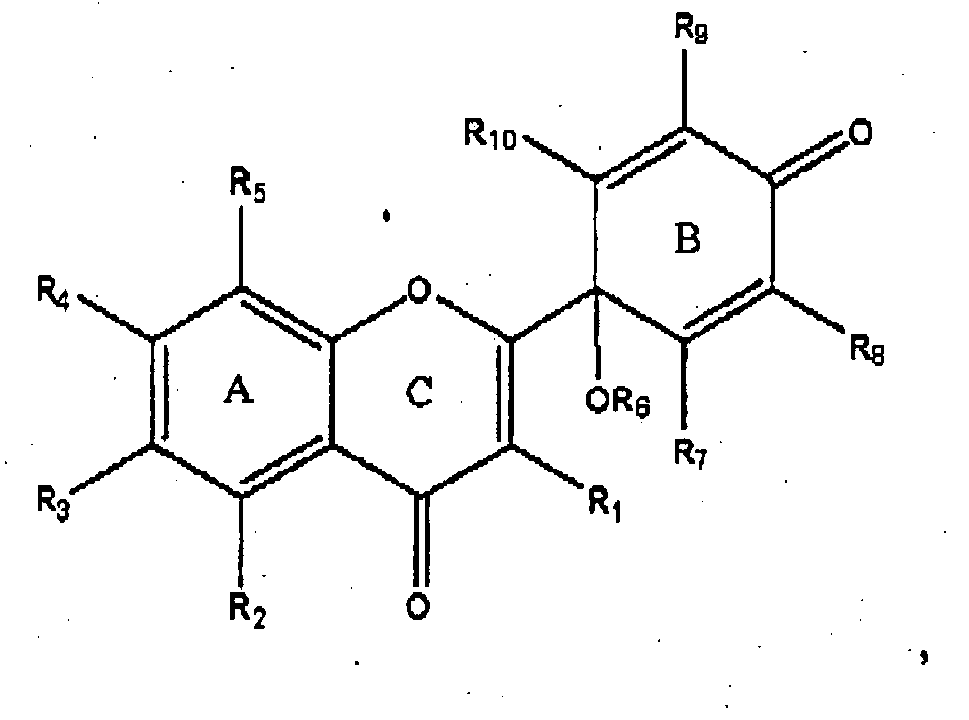
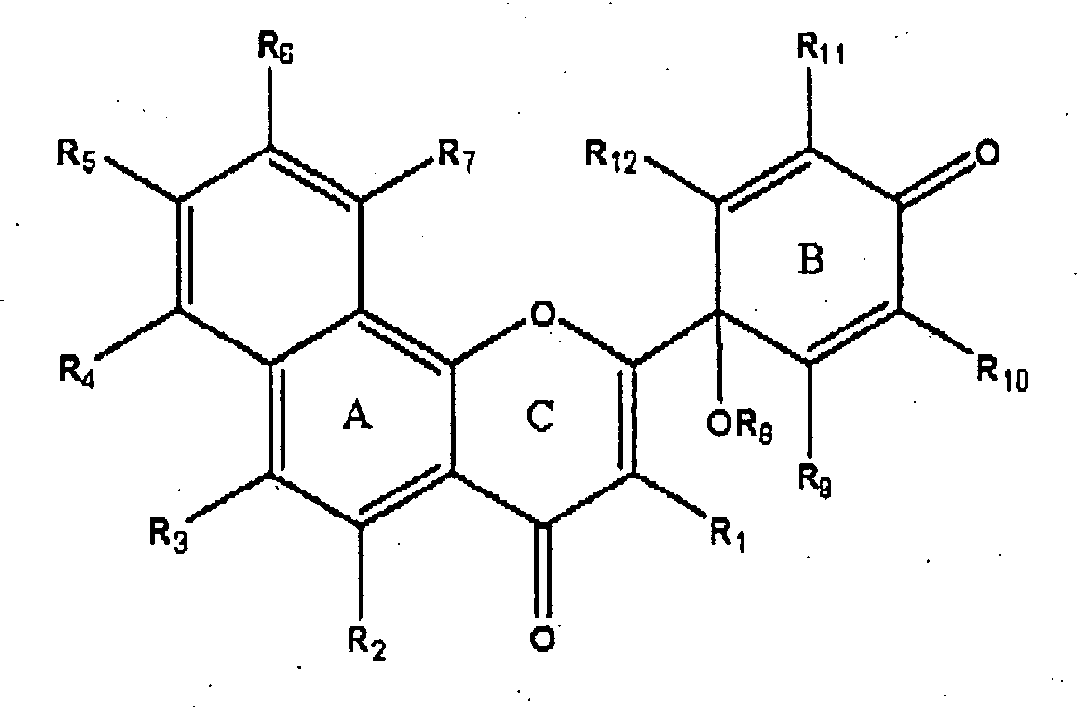
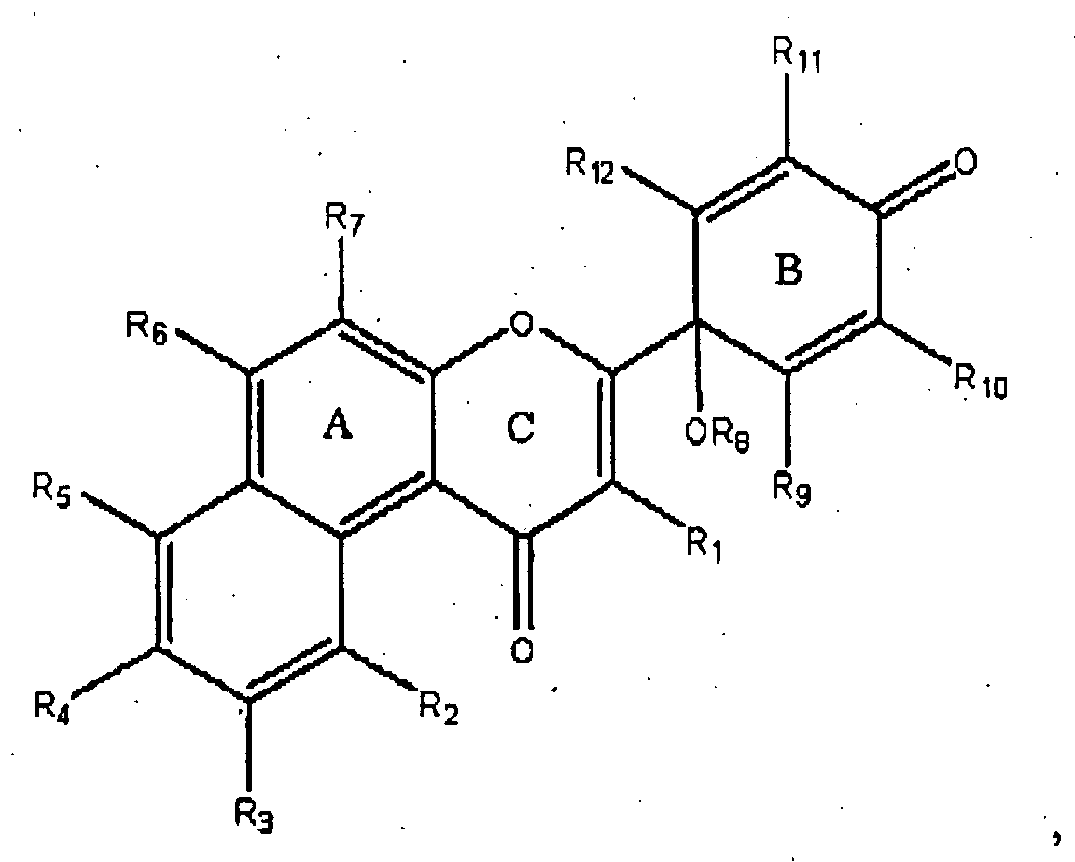
- the pharmaceutical composition comprises a flavonoid compound having at least one of the following formulas: and wherein B ring is a 4-oxo-cyclohexa-2,5-dienyl group, and any one of R 1 -R 12 is one selected from a group consisting of hydrogen group, hydroxyl group, C1-C20 alkyl group, C1-C20 ether group, C1-C20 ester group, carboxyl group, halogen and sugar.
- flavonoid compound is obtained from a total synthesis method.
- the flavonoid compound is obtained from a semi-synthesis method.
- the pharmaceutical composition is used for treating a disease of a mammal.
- the disease is a cancer.
- the mammal is a human.
- the method comprises steps of mixing an acetophenone comprising a first protecting group with a benzaldehyde comprising a second protecting group to obtain a first compound through a Claisen-Schmidt Condensation reaction, reacting the first compound with a first catalyzer to obtain a second compound, removing the second protecting group from the second compound to obtain a third compound, reacting the third compound with a second catalyzer and an iodobenzene compound to obtain a fourth compound through an oxidation, and adding an acid into the fourth compound to remove the first protecting group and obtain the flavonoid compound.
- the specific flavonoid compound is protoapigenone.
- the first protecting group is a MOM.
- the second protecting group is a benzyloxy group.
- the first catalyzer is an iodine.
- the second catalyzer is a TEMPO.
- the iodobenzene compound is one of an iodobenzene diacetate and a [bis(trifluoroacetoxy)iodo]benzene.
- the acid is a hydrochloric acid.
- the method comprises steps of providing a flavonoid compound comprising a 4'-hydroxy group, and mixing the flavonoid compound with a first catalyzer and an iodobenzene compound to obtain the specific flavonoid compound.
- the specific flavonoid compound is derivatives of protoapigenone.
- the first catalyzer is a TEMPO.
- the iodobenzene compound is one of an iodobenzene diacetate and an [bis(trifluoroacetoxy)iodo]benzene.
- Fig. 1 is a flow chart showing the total synthesis method for preparing the flavonoid compound in the present invention
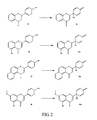
- Fig. 2 shows chemical structures of compounds 8a, 10a, 15a and 18a prepared by a semi-synthesis method in the present invention.
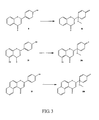
- Fig. 3 shows chemical structures of compounds 8b, 10b, and 15b prepared by a semi-synthesis method in the present invention.
- C1-C20 alkyl represents a straight- or branched-chain saturated hydrocarbon containing 1 to 20 carbon atoms which may be unsubstituted or substituted by one or more substituents.
- Examples of C1-C20 alkyl groups include methyl, ethyl, propyl, 2-propyl, n-butyl, iso-butyl, tert-butyl, pentyl, and the like.
- C1-C20 ether” and “C 1-C20 ester” represents a compound containing 1 to 20 carbon atoms which may be unsubstituted or substituted by one or more substituents.
- alkyl represents both straight and branched, saturated and unsaturated hydrocarbon groups.
- ether represents any of a number of organic compounds whose molecules contain two hydrocarbon groups joined by single bonds to an oxygen atom.
- esters refers to and covers any compound falling within the definition of that term as classically used in organic chemistry. It includes organic and inorganic esters, where A is -COOH; this term covers the products derived from treatment of the function with alcohols or thioalcohols.
- the ester is derived from compounds whcrc A is --CH 2 OH; this term covers compounds derived from organic acids capable of forming esters such as phosphorous-based and sulfur-based acids, or compounds of the formula --CH 2 OCOR where R is any substituted or unsubstituted aliphatic, aromatic, heteroaromatic or aliphatic-aromatic group.
- halogen refers to fluorine, chlorine, bromine or iodine.
- total synthetisis refers to the chemically synthetic method using starting, materials other than one of the naturally occurring compounds.
- si-synthesis refers to the chemical synthetic method using naturally occurring compounds as starting materials.
- mammal refers to the Mammalia class of higher vertebrates, especially human.
- protecting refers to a process in which a functional group in a chemical compound is selectively masked by a non-reactive functional group in order to allow a selective reaction(s) to occur elsewhere on the chemical compound.
- non-reactive functional groups are herein termed as “protecting groups.”
- Such groups are generally able to be selectively introduced and removed using mild reaction conditions that do not interfere with other portions of the subject compounds.
- oxidation refers to the loss of one or more electrons in an element, compound, or chemical substituent/subunit.
- electrons are lost by atoms of the element(s) involved in the reaction. The charge on these atoms must then become more positive. The electrons are lost from the species undergoing oxidation and thus electrons appear as products in an oxidation reaction.
- protoapigenone used in the embodiment refers to a flavonoid compound containing a 4'-oxocyclohexa-2',5'-dienyl moiety rather than a 4'-hydroxycyclohexa-2',5'-dienyl moiety in a nature product. Except the particularly mentioned “natural protoapigenone” or “protoapigenone extracted from a plant”, the term “protoapigenone” mentioned in the embodiment represents the flavonoid derived from a chemical synthesis method.
- Example I The total synthetic method for preparing protoapigenone compound
- Fig. 1 is a flowchart showing a total synthesis method for preparing the flavonoid compound in the present invention.
- an exceed amount for example, 7E (equivalent)
- acetone solution containing 2' ,4,6'-Trihydroxy-acetophenone monohydrate
- 3E of chloromethyl mcthyl ether is added dropwise into the first mixture.
- the first mixture is refluxed for 90 minutes. After cooling, the first mixture is filtrated to obtain a precipitation.
- the precipitation is rinsed with acetone and chloroform, and then evaporated and purified by column chromatography on a silica gel (isocratic elution, 90% n -hexane / 10% ethyl acetate) to obtain a 2'-hydroxy-4'-6'-dimethoxymethyl-acetophenone with MOM protecting groups on the 4' and the 6' positions in 50.3% yield.
- 0.2E of iodine is added into a proper amount of pyridine solution containing the dissolved first compound. After the pyridine solution is heated and refluxed for 5 hrs, a sodium thiosulfate is added thereinto. The pyridine solution is extracted with ethyl acetate/water and then purified by a column chromatography on silica gel to obtain a second compound in 85.5% yield.
- the second compound is dissolved in an ethyl acetate/methanol solution.
- 1E of 10% palladium carbon (Pd/C) is added into the ethyl acetate/methanol solution and the solution mixture is stirred under an atmosphere of hydrogen for 3 hrs.
- the above solution is concentrated under reduced pressure to obtain a third compound in 88.9% yield.
- An oxidation reaction is carried out by reacting the third compound with 1E of iodobenzene diacetate or [bis(trifluoroacetoxy)iodo]benzene in the presence of a catalytic amount of TEMPO under a heating condition to obtain a reactant a.
- the reactant a is extracted with ethyl acetate/water and then isolated repeatedly on a silica gel column to obtain a forth compound in 22.2% yield.
- the MOM protecting groups on the 4' and the 6' positions of the forth compound is removed by heating with hydrochloric acid to provide a protoapigenone compound in 46.7% yield.
- Example II The semi-synthesis method for preparing derivatives of protoapigenone
- the embodiment herein illustrates a semi-synthesis method for synthesizing the following compounds: compound 8a: protoflavonone (IIUPAC name is 2-(1-hydroxy-4-oxocyclohexa-2,5-dienyl)-4H-chromen-4-one), compound 10a: 5-hydroxyprotoflavone (IIPAC name is 2-(1-hydroxy-4-oxocyclohexa-2,5-dienyl)-5-hydroxy-4H-chromen-4-one), compound 15a: ⁇ -nanphthoflavonone (IIPAC name is 3-(1-hydroxy-4-oxocyclohexa-2,5-dienyl)-1H-benzo[f]chromen-1-one) and compound 18a: 5-hydroxy-7-methoxyprotoflavonone (IIPAC name is 5-hydroxy-2-(1-hydroxy-4-oxocycIohexa-2,5-dienyl)-7-methoxy-4H-chromen-4-one).
- a commercially available precursor flavonoid such as 4'-hydroxyflavone, 4'-5-dihydroxyflavone, 4'-hydroxy- ⁇ -naphthoflavone and 4'-5-dihydroxy-7-methoxyflavone is selected as a starting material and dissolved in an appropriate amount of water.
- a catalytic amount of TEMPO is added to the precursor flavonoid.
- the solution mixture is oxidized with 1E of iodobenzene diacetate or [bis(trifluoroacetoxy)iodo]benzene in a heating condition to obtain a product b.
- the product b is extracted with ethyl acetate/water to afford an organic layer, and the organic layer is isolated by chromatography repeatedly to obtain the compound 8a, compound 10 a, compound 15a and compound 18a in 20-30% yield.
- the structural changes of these compounds are shown in Fig. 2 .
- the above precursor flavonoids can be dissolved in an appropriate amount of methanol.
- a catalytic amount of TEMPO is added to the precursor flavonoid respectively.
- the solution mixture is oxidized with 1E of iodobenzene diacetate or [bis(trifluoroacetoxy)iodo]benzene in a heating condition to obtain a product c.
- the product c is extracted with ethyl acetate/water to afford an organic layer, and the organic layer is isolated by chromatography repeatedly to obtain a compound having a methoxy group on the 1'-position such as 1'-methoxyprotoflavonoen (compound 8b), 1'-methoxy-5-methylprotoflavonone (compound 10 b), and 1'-methoxy- ⁇ -naphthoflavone (compound 15b) in 25-35% yield.
- the structural changes of these compounds are shown in Fig. 3 .
- Example III The bio-activities of the derivatives of protoapigenone
- Human liver (HepG2 and Hep3B), breast (MCF-7 and MDA-MB-231), and lung (A549) cancer cell lines were propagated in RPMI-1640 medium supplement with 10% (v/v) FBS, 100 U/mL penicillin and 100 g/mL streptomycin at 37 ⁇ in a humidified atmosphere of 5% CO2 and 95% air.
- the culturing medium is changed every three days.
- cells were subcultured to confluency, and used for experiments. The experimental period is determined according to the aim of experiment.
- Cytotoxicity is measured by the MTT colorimetric method. Cells were seeded at densities of 5,000 - 10,000 cells/well in 96-well tissue culture plates. On day two, cells are treated with test compounds for another 72 hrs. After drug treatment, attached cells were incubated with MTT (0.5 mg/mL) for 1 hr and subsequently solubilized in DMSO. The absorbency at 550 nm is then measured using a microplate reader. The result of cell viability is shown in Table 1. The IC50 is the concentration of agent that reduces the cell viability by 50% under the experimental conditions, and the cytotoxic compound, Doxorubicin, is used as a positive control.
- each test compound is examined for in vitro cytotoxic activities against several human cancer lines and compared with the related flavonoid protoapigenone and doxorubicin, a positive control.
- compounds 8a, 10a, 15a and 18a show significant cytotoxic activity with notable IC 50 against cancer cell lines, especially Hep3B and MDA-MB-231.
- IC 50 against cancer cell lines
- compound 18a shows the highest potency against all five cancer cell lines.
- the present invention provides a composition having a cytotoxic effect to a cancer cell and a method for synthesizing the same.
- the total synthesis or semi-synthesis method can generate the cytotoxic compound protoapigenone.
- the method of the present invention can produce other derivatives with similar activity or even with better activity.
Landscapes
- Health & Medical Sciences (AREA)
- Chemical & Material Sciences (AREA)
- Organic Chemistry (AREA)
- Medicinal Chemistry (AREA)
- Pharmacology & Pharmacy (AREA)
- Life Sciences & Earth Sciences (AREA)
- Animal Behavior & Ethology (AREA)
- General Health & Medical Sciences (AREA)
- Public Health (AREA)
- Veterinary Medicine (AREA)
- Epidemiology (AREA)
- Chemical Kinetics & Catalysis (AREA)
- General Chemical & Material Sciences (AREA)
- Nuclear Medicine, Radiotherapy & Molecular Imaging (AREA)
- Oncology (AREA)
- Hematology (AREA)
- Pharmaceuticals Containing Other Organic And Inorganic Compounds (AREA)
- Pyrane Compounds (AREA)
- Low-Molecular Organic Synthesis Reactions Using Catalysts (AREA)
Abstract
Description
- The present invention relates to a composition for treating cancer cells and a synthetic method therefor. More particularly, the method is total synthesis or semi-synthesis.
- Recently many extracts and their derivatives oriented from natural plants, such as vincristine, vinbalstine, camptothecin, taxol and its derivatives, palitaxel and docetaxel, have been widely used in clinical chemical therapy of a malignant tumor. Therefore, the effect of the extracts from natural plants has been a burgeoning research in the field of new drug development.
- According to present publication, protoapegenone is a compound derived from Thelypteris torresiana produced in Taiwan. The compound has strong cytotoxic activities to many human cancer cell lines, including breast cancer cells (MCF-7, MDA-MB-231), liver cancer cells (Hep G2, and Hep 3B), and lung cancer cells (A549). ( Planta Medica 71:867-870, 2005)
- Prior to that, the protoapigenone can be obtained merely by extraction and isolation from natural plants. However, the efficiency of collecting the compound is under influence of unstable sources such as plant genes, humidity, and latitude, altitude of the collection location, season and individual variation of the plants.
- In view of the above, the inventors develop a method for producing a compound for treating cancer cells through total synthesis or semi-synthesis based on the inventors' experience in studying the ingredient of natural plants and chemical synthesis for a long time. By using such preparation, the protoapigenone can be produced from commercially available chemical products without extracting from natural plants. Moreover, the activity of the synthetic compound has no obvious difference with nature product through a comparison of activity. Moreover, the source of the compound would be stable and preparation time would be saved. Further, yield of the compound can be estimated in a large scale production by using the synthetic method of the present invention.
- Besides, many derivatives of protoapigenone will be produced from different initiators, reagents and intermediator. Moreover, the acidity, the alkalinity, the lipid solubility, the solubility, the activity and the toxicity of the compound can be changed by substituting with different functional groups so that a more potent compound with cytotoxic effect can be afforded. The summary of the present invention is described below.
- It is an aspect of the present invention to provide a pharmaceutical composition having a cytotoxic effect to a cancer cell. The pharmaceutical composition comprises a flavonoid compound having at least one of the following formulas:


- Preferably, the pharmaceutical composition is used for treating a disease of a mammal.
- Preferably, the disease is a cancer.
- Preferably, the mammal is a human.
- It is another aspect of the present invention to provide a method for synthesizing a specific flavonoid compound. The method comprises steps of mixing an acetophenone comprising a first protecting group with a benzaldehyde comprising a second protecting group to obtain a first compound through a Claisen-Schmidt Condensation reaction, reacting the first compound with a first catalyzer to obtain a second compound, removing the second protecting group from the second compound to obtain a third compound, reacting the third compound with a second catalyzer and an iodobenzene compound to obtain a fourth compound through an oxidation, and adding an acid into the fourth compound to remove the first protecting group and obtain the flavonoid compound. In a specific embodiment, the specific flavonoid compound is protoapigenone.
- Preferably, the first protecting group is a MOM.
- Preferably, the second protecting group is a benzyloxy group.
- Preferably, the first catalyzer is an iodine.
- Preferably, the second catalyzer is a TEMPO.
- Preferably, the iodobenzene compound is one of an iodobenzene diacetate and a [bis(trifluoroacetoxy)iodo]benzene.
- Preferably, the acid is a hydrochloric acid.
- It is a further aspect of the present invention to provide a method for synthesizing a specific flavonoid compound. The method comprises steps of providing a flavonoid compound comprising a 4'-hydroxy group, and mixing the flavonoid compound with a first catalyzer and an iodobenzene compound to obtain the specific flavonoid compound. In an exemplary embodiment, the specific flavonoid compound is derivatives of protoapigenone.
- Preferably, the first catalyzer is a TEMPO.
- Preferably, the iodobenzene compound is one of an iodobenzene diacetate and an [bis(trifluoroacetoxy)iodo]benzene.
- Other objects, advantages and efficacies of the present invention will be described in detail below taken from the preferred embodiments with reference to the accompanying drawings, in which:
-
Fig. 1 is a flow chart showing the total synthesis method for preparing the flavonoid compound in the present invention; -
Fig. 2 shows chemical structures ofcompounds -
Fig. 3 shows chemical structures of compounds 8b, 10b, and 15b prepared by a semi-synthesis method in the present invention. - I. Definitions
- The following definitions are provided in order to aid understanding of the detailed description of the present invention:
- As used herein, the term "C1-C20 alkyl" represents a straight- or branched-chain saturated hydrocarbon containing 1 to 20 carbon atoms which may be unsubstituted or substituted by one or more substituents. Examples of C1-C20 alkyl groups include methyl, ethyl, propyl, 2-propyl, n-butyl, iso-butyl, tert-butyl, pentyl, and the like. Similarly, the term "C1-C20 ether" and "C 1-C20 ester" represents a compound containing 1 to 20 carbon atoms which may be unsubstituted or substituted by one or more substituents.
- As used herein, the term "alkyl" represents both straight and branched, saturated and unsaturated hydrocarbon groups.
- As used herein, the term "ether" represents any of a number of organic compounds whose molecules contain two hydrocarbon groups joined by single bonds to an oxygen atom.
- As used herein, the term "ester" refers to and covers any compound falling within the definition of that term as classically used in organic chemistry. It includes organic and inorganic esters, where A is -COOH; this term covers the products derived from treatment of the function with alcohols or thioalcohols. The ester is derived from compounds whcrc A is --CH2 OH; this term covers compounds derived from organic acids capable of forming esters such as phosphorous-based and sulfur-based acids, or compounds of the formula --CH2 OCOR where R is any substituted or unsubstituted aliphatic, aromatic, heteroaromatic or aliphatic-aromatic group.
- The term "halogen" refers to fluorine, chlorine, bromine or iodine.
- The term "total synthetisis" refers to the chemically synthetic method using starting, materials other than one of the naturally occurring compounds. The term "semi-synthesis" refers to the chemical synthetic method using naturally occurring compounds as starting materials.
- As used herein, the term "mammal" refers to the Mammalia class of higher vertebrates, especially human.
- The term "protecting" as used herein refers to a process in which a functional group in a chemical compound is selectively masked by a non-reactive functional group in order to allow a selective reaction(s) to occur elsewhere on the chemical compound. Such non-reactive functional groups are herein termed as "protecting groups." Such groups are generally able to be selectively introduced and removed using mild reaction conditions that do not interfere with other portions of the subject compounds.
- The term "oxidation" refers to the loss of one or more electrons in an element, compound, or chemical substituent/subunit. In an oxidation reaction, electrons are lost by atoms of the element(s) involved in the reaction. The charge on these atoms must then become more positive. The electrons are lost from the species undergoing oxidation and thus electrons appear as products in an oxidation reaction.
- The term "protoapigenone" used in the embodiment refers to a flavonoid compound containing a 4'-oxocyclohexa-2',5'-dienyl moiety rather than a 4'-hydroxycyclohexa-2',5'-dienyl moiety in a nature product. Except the particularly mentioned "natural protoapigenone" or "protoapigenone extracted from a plant", the term "protoapigenone" mentioned in the embodiment represents the flavonoid derived from a chemical synthesis method.
- II. Detailed Description
- Example I: The total synthetic method for preparing protoapigenone compound
- Please refer to
Fig. 1 , which is a flowchart showing a total synthesis method for preparing the flavonoid compound in the present invention. Firstly, an exceed amount (for example, 7E (equivalent)) of potassium carbonate is added into an acetone solution containing 2' ,4,6'-Trihydroxy-acetophenone monohydrate to form a first mixture, and the first mixture is stirred. Then, 3E of chloromethyl mcthyl ether is added dropwise into the first mixture. For fully reacting, the first mixture is refluxed for 90 minutes. After cooling, the first mixture is filtrated to obtain a precipitation. The precipitation is rinsed with acetone and chloroform, and then evaporated and purified by column chromatography on a silica gel (isocratic elution, 90% n-hexane / 10% ethyl acetate) to obtain a 2'-hydroxy-4'-6'-dimethoxymethyl-acetophenone with MOM protecting groups on the 4' and the 6' positions in 50.3% yield. - Subsequently, the aforementioned 2'-hydroxy-4'-6'-dimethoxymethyl-acetophenone and a 4-benzyloxy-benaldehyde are mixed to carry out a Claisen-Schmidt Condensation reaction. In this condensation reaction, 2'-hydroxy-4'-6'-dimethoxymethyl-acetophenone and 2E of 4-benzyloxy-benaldehyde are mixed in ethanol solution to obtain a second mixture. After stirring the second mixture, a catalytic amount of potassium hydroxide is added thereinto. The second mixture is stirred at room temperature for 30 hrs, and then the solvent was evaporated under reduced pressure. The concentrated second mixture is chromatographed on a silica gel and eluted with n-hexane/ethyl acetate to obtain a first compound in 87.2% yield.
- 0.2E of iodine is added into a proper amount of pyridine solution containing the dissolved first compound. After the pyridine solution is heated and refluxed for 5 hrs, a sodium thiosulfate is added thereinto. The pyridine solution is extracted with ethyl acetate/water and then purified by a column chromatography on silica gel to obtain a second compound in 85.5% yield.
- Then, the second compound is dissolved in an ethyl acetate/methanol solution. 1E of 10% palladium carbon (Pd/C) is added into the ethyl acetate/methanol solution and the solution mixture is stirred under an atmosphere of hydrogen for 3 hrs. After a filtration process for removing the palladium carbon, the above solution is concentrated under reduced pressure to obtain a third compound in 88.9% yield.
- An oxidation reaction is carried out by reacting the third compound with 1E of iodobenzene diacetate or [bis(trifluoroacetoxy)iodo]benzene in the presence of a catalytic amount of TEMPO under a heating condition to obtain a reactant a. The reactant a is extracted with ethyl acetate/water and then isolated repeatedly on a silica gel column to obtain a forth compound in 22.2% yield.
- The MOM protecting groups on the 4' and the 6' positions of the forth compound is removed by heating with hydrochloric acid to provide a protoapigenone compound in 46.7% yield.
- Example II: The semi-synthesis method for preparing derivatives of protoapigenone
- The embodiment herein illustrates a semi-synthesis method for synthesizing the following compounds: compound 8a: protoflavonone (IIUPAC name is 2-(1-hydroxy-4-oxocyclohexa-2,5-dienyl)-4H-chromen-4-one),
compound 10a: 5-hydroxyprotoflavone (IIPAC name is 2-(1-hydroxy-4-oxocyclohexa-2,5-dienyl)-5-hydroxy-4H-chromen-4-one),compound 15a: β-nanphthoflavonone (IIPAC name is 3-(1-hydroxy-4-oxocyclohexa-2,5-dienyl)-1H-benzo[f]chromen-1-one) andcompound 18a: 5-hydroxy-7-methoxyprotoflavonone (IIPAC name is 5-hydroxy-2-(1-hydroxy-4-oxocycIohexa-2,5-dienyl)-7-methoxy-4H-chromen-4-one). - Firstly, a commercially available precursor flavonoid such as 4'-hydroxyflavone, 4'-5-dihydroxyflavone, 4'-hydroxy-β-naphthoflavone and 4'-5-dihydroxy-7-methoxyflavone is selected as a starting material and dissolved in an appropriate amount of water. Secondly, a catalytic amount of TEMPO is added to the precursor flavonoid. The solution mixture is oxidized with 1E of iodobenzene diacetate or [bis(trifluoroacetoxy)iodo]benzene in a heating condition to obtain a product b. Sequentially, the product b is extracted with ethyl acetate/water to afford an organic layer, and the organic layer is isolated by chromatography repeatedly to obtain the compound 8a, compound 10 a,
compound 15a andcompound 18a in 20-30% yield. The structural changes of these compounds are shown inFig. 2 . - In another way, the above precursor flavonoids can be dissolved in an appropriate amount of methanol. A catalytic amount of TEMPO is added to the precursor flavonoid respectively. The solution mixture is oxidized with 1E of iodobenzene diacetate or [bis(trifluoroacetoxy)iodo]benzene in a heating condition to obtain a product c. Similarly, the product c is extracted with ethyl acetate/water to afford an organic layer, and the organic layer is isolated by chromatography repeatedly to obtain a compound having a methoxy group on the 1'-position such as 1'-methoxyprotoflavonoen (compound 8b), 1'-methoxy-5-methylprotoflavonone (compound 10 b), and 1'-methoxy-β-naphthoflavone (compound 15b) in 25-35% yield. The structural changes of these compounds are shown in
Fig. 3 . - Example III: The bio-activities of the derivatives of protoapigenone
- Cells culture
- Human liver (HepG2 and Hep3B), breast (MCF-7 and MDA-MB-231), and lung (A549) cancer cell lines were propagated in RPMI-1640 medium supplement with 10% (v/v) FBS, 100 U/mL penicillin and 100 g/mL streptomycin at 37□ in a humidified atmosphere of 5% CO2 and 95% air. The culturing medium is changed every three days. Upon confluency, cells were subcultured to confluency, and used for experiments. The experimental period is determined according to the aim of experiment.
- Cytotoxicity assay
- Cytotoxicity is measured by the MTT colorimetric method. Cells were seeded at densities of 5,000 - 10,000 cells/well in 96-well tissue culture plates. On day two, cells are treated with test compounds for another 72 hrs. After drug treatment, attached cells were incubated with MTT (0.5 mg/mL) for 1 hr and subsequently solubilized in DMSO. The absorbency at 550 nm is then measured using a microplate reader. The result of cell viability is shown in Table 1. The IC50 is the concentration of agent that reduces the cell viability by 50% under the experimental conditions, and the cytotoxic compound, Doxorubicin, is used as a positive control.
Table 1 IC50 (µg/mL) Compound HepG2 Hep3B MDA-MB-231 MCF-7 A549 protoapigenone 2.32 0.65 0.41 1.07 3.96 8a 1.71 0.32 0.18 0.44 1.33 8b 10.95 1.45 1.47 2.14 >20 10a 1.34 0.35 0.18 0.93 1.37 10b 7.64 0.66 0.54 1.55 16.36 15a 1.08 0.09 0.12 0.20 0.55 15b 3.16 0.35 0.37 0.86 8.20 18a 0.17 0.20 0.13 0.51 0.93 Doxorubicin 0.29 0.36 0.08 0.43. 0.21 - As shown in Table 1, each test compound is examined for in vitro cytotoxic activities against several human cancer lines and compared with the related flavonoid protoapigenone and doxorubicin, a positive control. Remarkably,
compounds compound 18a shows the highest potency against all five cancer cell lines. Amazingly, this compound also exhibits significantly enhanced activity against the HcpG2 human liver cancer cell line, while most analogs show comparatively weak activity against this cell line. From the above data, it is proved that many derivatives having more potency to particular cancer cells than protoapigenone can be produced by using the synthetic method of the present invention. - To summarize, the present invention provides a composition having a cytotoxic effect to a cancer cell and a method for synthesizing the same. The total synthesis or semi-synthesis method can generate the cytotoxic compound protoapigenone. Further, the method of the present invention can produce other derivatives with similar activity or even with better activity.
Claims (17)
- A pharmaceutical composition having a cytotoxic effect to a cancer cell comprising:a flavonoid compound having at least one of the following formulas:wherein B ring is a 4-oxo-cyclohexa-2,5-dienyl group, and any one of R1-R12 is one selected from a group consisting of hydrogen group, hydroxyl group, C1-C20 alkyl group, C1-C20 ether group, C1-C20 ester group, carboxyl group, halogen and sugar.


- The composition as claimed in Claim 1, characterized in that the flavonoid compound is obtained from a chemical method being one of a total synthesis method and a semi-synthesis method.
- The pharmaceutical composition as claimed in Claim 1 being used for treating a disease of a mammal.
- The pharmaceutical composition as claimed in Claim 3, characterized in that the disease is a cancer.
- The pharmaceutical composition as claimed in Claim 4, characterized in that the mammal is a human.
- A synthesis method for synthesizing a specific flavonoid compound comprising steps of:mixing a acetophenone comprising a first protecting group with a benzaldehyde comprising a second protecting group to obtain a first compound through a Claisen-Schmidt Condensation reaction;reacting the first compound (1) with a first catalyzer to obtain a second compound (2);removing the second protecting group from the second compound (2) to obtain a third compound (3);reacting the third compound (3) with a second catalyzer and an iodobenzene compound to obtain a fourth compound (4) through an oxidation; andadding an acid into the fourth compound (4) to remove the first protecting group and obtain the flavonoid compound.
- The method as claimed in Claim 6, characterized in that the first protecting group is a MOM.
- The method as claimed in Claim 6, characterized in that the second protecting group is a benzyloxy group.
- The method as claimed in Claim 6, characterized in that the first catalyzer is an iodine.
- The method as claimed in Claim 6, characterized in that the second catalyzer is a TEMPO.
- The method as claimed in Claim 6, characterized in that the iodobenzene compound is one of an iodobenzene diacetate and a [bis(trifiluoroacetoxy)iodo]benzene.
- The method as claimed in Claim 6, characterized in that the acid is a hydrochloric acid.
- The method as claimed in Claim 6, characterized in that the specific flavonoid compound is one selected from a group consisting of those as recited in Claims 1-5.
- A synthesis method for synthesizing a specific flavonoid compound comprising steps of:providing a flavonoid compound (8, 10, 15, 18) comprising a 4'-hydroxy group; andmixing the flavonoid compound with a first catalyzer and an iodobenzene compound to obtain the specific flavonoid compound (8a, 10a, 15a, 18a, 8b, 10b, 15b).
- The method as claimed in Claim 14, characterized in that the first catalyzer is a TEMPO.
- The method as claimed in Claim 14, characterized in that the iodobenzene compound is one of an iodobenzene diacetate and an [bis(trifluoroacetoxy)iodo]benzene.
- The method as claimed in Claim 14, characterized in that the specific flavonoid compound is one selected from a group consisting of those as recited in Claims 1-5.
Applications Claiming Priority (1)
| Application Number | Priority Date | Filing Date | Title |
|---|---|---|---|
| TW096112618A TWI324062B (en) | 2007-04-10 | 2007-04-10 | Composition for treating cancer cells and synthesis method thereof |
Publications (2)
| Publication Number | Publication Date |
|---|---|
| EP1980248A1 true EP1980248A1 (en) | 2008-10-15 |
| EP1980248B1 EP1980248B1 (en) | 2019-06-12 |
Family
ID=39650589
Family Applications (1)
| Application Number | Title | Priority Date | Filing Date |
|---|---|---|---|
| EP08006865.3A Not-in-force EP1980248B1 (en) | 2007-04-10 | 2008-04-04 | Composition for treating cancer cells and synthetic method for the same |
Country Status (6)
| Country | Link |
|---|---|
| EP (1) | EP1980248B1 (en) |
| JP (2) | JP5021549B2 (en) |
| KR (1) | KR20080092260A (en) |
| AU (1) | AU2008201553B2 (en) |
| HU (1) | HUE046349T2 (en) |
| TW (1) | TWI324062B (en) |
Cited By (6)
| Publication number | Priority date | Publication date | Assignee | Title |
|---|---|---|---|---|
| CN103980245A (en) * | 2013-02-07 | 2014-08-13 | 中国医药大学 | Compound for inhibiting glutathione S-transferase omega 1 activity, preparation method thereof, and pharmaceutical composition comprising the compound |
| US9127036B2 (en) | 2010-08-12 | 2015-09-08 | Kythera Biopharmaceuticals, Inc. | Synthetic bile acid compositions and methods |
| US9522155B2 (en) | 2007-06-19 | 2016-12-20 | Kythera Biopharmaceuticals, Inc. | Synthetic bile acid compositions and methods |
| EP3081562A4 (en) * | 2013-12-09 | 2016-12-21 | Univ China Medical | COMPOUND FOR INHIBITING OMEGA 1 GLUTATHION S-TRANSFERASE ACTIVITY, PROCESS FOR PREPARING THE SAME, AND PHARMACEUTICAL COMPOSITIONS CONTAINING THE COMPOUND |
| US9636349B2 (en) | 2007-06-19 | 2017-05-02 | Kythera Biopharmaceuticals, Inc. | Synthetic bile acid compositions and methods |
| US10053486B2 (en) | 2008-04-25 | 2018-08-21 | Kythera Biopharmaceuticals, Inc. | Preparation of bile acids and intermediates thereof |
Families Citing this family (4)
| Publication number | Priority date | Publication date | Assignee | Title |
|---|---|---|---|---|
| WO2012155126A2 (en) | 2011-05-12 | 2012-11-15 | Alencon Acquisition Co., Llc | High voltage energy harvesting and conversion renewable energy utility size electric power systems and visual monitoring and control systems |
| TWI486341B (en) * | 2012-05-18 | 2015-06-01 | 高雄醫學大學 | Composition and method for inhibiting activation of ATR and FANCD2 |
| US9918962B2 (en) | 2012-05-18 | 2018-03-20 | Kaohsiung Medical University | Methods and compositions for inhibition of ATR and FANCD2 activation |
| US11413267B2 (en) | 2012-05-18 | 2022-08-16 | Kaohsiung Medical University | Methods and compositions for inhibition of ATR and FANCD2 activation |
Citations (2)
| Publication number | Priority date | Publication date | Assignee | Title |
|---|---|---|---|---|
| US6340694B1 (en) * | 1998-08-22 | 2002-01-22 | Pacific Corporation | Diarylbenzopyran derivatives as cyclooxygenase-2 inhibitors |
| US20070104804A1 (en) * | 2005-11-08 | 2007-05-10 | Kaohsiung Medical University | Composition for treating cancer cells and preparation method for the same |
Family Cites Families (1)
| Publication number | Priority date | Publication date | Assignee | Title |
|---|---|---|---|---|
| JP3957795B2 (en) * | 1996-10-04 | 2007-08-15 | 興和株式会社 | Flavone derivative and pharmaceutical containing the same |
-
2007
- 2007-04-10 TW TW096112618A patent/TWI324062B/en not_active IP Right Cessation
-
2008
- 2008-04-04 HU HUE08006865A patent/HUE046349T2/en unknown
- 2008-04-04 EP EP08006865.3A patent/EP1980248B1/en not_active Not-in-force
- 2008-04-04 AU AU2008201553A patent/AU2008201553B2/en not_active Ceased
- 2008-04-04 KR KR1020080031721A patent/KR20080092260A/en not_active Ceased
- 2008-04-09 JP JP2008101826A patent/JP5021549B2/en not_active Expired - Fee Related
-
2011
- 2011-11-28 JP JP2011259177A patent/JP5547167B2/en not_active Expired - Fee Related
Patent Citations (2)
| Publication number | Priority date | Publication date | Assignee | Title |
|---|---|---|---|---|
| US6340694B1 (en) * | 1998-08-22 | 2002-01-22 | Pacific Corporation | Diarylbenzopyran derivatives as cyclooxygenase-2 inhibitors |
| US20070104804A1 (en) * | 2005-11-08 | 2007-05-10 | Kaohsiung Medical University | Composition for treating cancer cells and preparation method for the same |
Non-Patent Citations (6)
| Title |
|---|
| CHANG HSUEH-LING ET AL: "Protoapigenone, a novel flavonoid, induces apoptosis in human prostate cancer cells through activation of p38 mitogen-activated protein kinase and c-Jun NH2-terminal kinase 1/2", JOURNAL OF PHARMACOLOGY AND EXPERIMENTAL THERAPEUTICS, EXPERIMENTAL THERAPEUTICS, BALTIMORE, MD, vol. 325, no. 3, 1 June 2008 (2008-06-01), pages 841 - 849, XP009104206, ISSN: 0022-3565 * |
| FELPIN ET AL: "Oxidation of 4-arylphenol trimethylsilyl ethers to p-arylquinols using hypervalent iodine(III) reagents", TETRAHEDRON LETTERS, ELSEVIER, AMSTERDAM, vol. 48, no. 3, 14 December 2006 (2006-12-14), pages 409 - 412, XP005730747, ISSN: 0040-4039 * |
| LIN AN-SHEN ET AL: "First total synthesis of protoapigenone and its analogues as potent cytotoxic agents.", JOURNAL OF MEDICINAL CHEMISTRY 9 AUG 2007, vol. 50, no. 16, 9 August 2007 (2007-08-09), pages 3921 - 3927, XP002491004, ISSN: 0022-2623 * |
| LIN AN-SHEN ET AL: "New cytotoxic flavonoids from Thelypteris torresiana.", PLANTA MEDICA SEP 2005, vol. 71, no. 9, September 2005 (2005-09-01), pages 867 - 870, XP002491003, ISSN: 0032-0943 * |
| PLANTA MEDICA, vol. 71, 2005, pages 867 - 870 |
| SHAH M ET AL: "Antitubercular properties of substituted hydroxycyclohexadienones", LETTERS IN DRUG DESIGN AND DISCOVERY, BENTHAM SCIENCE PUBLISHERS, US, vol. 3, no. 6, 1 January 2006 (2006-01-01), pages 419 - 423, XP001538528, ISSN: 1570-1808 * |
Cited By (17)
| Publication number | Priority date | Publication date | Assignee | Title |
|---|---|---|---|---|
| US10434108B2 (en) | 2007-06-19 | 2019-10-08 | Allergan Sales, Llc | Synthetic bile acid compositions and methods |
| US9987291B2 (en) | 2007-06-19 | 2018-06-05 | Kythera Biopharmaceuticals, Inc. | Synthetic bile acid compositions and methods |
| US11202786B2 (en) | 2007-06-19 | 2021-12-21 | Allergan Sales, Llc | Synthetic bile acid compositions and methods |
| US9522155B2 (en) | 2007-06-19 | 2016-12-20 | Kythera Biopharmaceuticals, Inc. | Synthetic bile acid compositions and methods |
| US11026955B2 (en) | 2007-06-19 | 2021-06-08 | Allergan Sales, Llc | Synthetic bile acid compositions and methods |
| US9636349B2 (en) | 2007-06-19 | 2017-05-02 | Kythera Biopharmaceuticals, Inc. | Synthetic bile acid compositions and methods |
| US10434107B2 (en) | 2007-06-19 | 2019-10-08 | Allergan Sales, Llc | Synthetic bile acid compositions and methods |
| US9949986B2 (en) | 2007-06-19 | 2018-04-24 | Kythera Biopharmaceuticals, Inc. | Synthetic bile acid compositions and methods |
| US10053486B2 (en) | 2008-04-25 | 2018-08-21 | Kythera Biopharmaceuticals, Inc. | Preparation of bile acids and intermediates thereof |
| US10633412B2 (en) | 2008-04-25 | 2020-04-28 | Allergan Sales, Llc | Preparation of bile acids and intermediates thereof |
| US11008363B2 (en) | 2008-04-25 | 2021-05-18 | Allergan Sales, Llc | Preparation of bile acids and intermediates thereof |
| US10144757B2 (en) | 2010-08-12 | 2018-12-04 | Kythera Biopharmaceuticals, Inc. | Synthetic bile acid compositions and methods |
| US9127036B2 (en) | 2010-08-12 | 2015-09-08 | Kythera Biopharmaceuticals, Inc. | Synthetic bile acid compositions and methods |
| US9683008B2 (en) | 2010-08-12 | 2017-06-20 | Kythera Biopharmaceuticals, Inc. | Synthetic bile acid compositions and methods |
| CN103980245A (en) * | 2013-02-07 | 2014-08-13 | 中国医药大学 | Compound for inhibiting glutathione S-transferase omega 1 activity, preparation method thereof, and pharmaceutical composition comprising the compound |
| CN103980245B (en) * | 2013-02-07 | 2016-02-03 | 中国医药大学 | Compound for inhibiting glutathione S-transferase omega 1 activity, preparation method thereof, and pharmaceutical composition comprising the compound |
| EP3081562A4 (en) * | 2013-12-09 | 2016-12-21 | Univ China Medical | COMPOUND FOR INHIBITING OMEGA 1 GLUTATHION S-TRANSFERASE ACTIVITY, PROCESS FOR PREPARING THE SAME, AND PHARMACEUTICAL COMPOSITIONS CONTAINING THE COMPOUND |
Also Published As
| Publication number | Publication date |
|---|---|
| AU2008201553B2 (en) | 2010-06-17 |
| JP5547167B2 (en) | 2014-07-09 |
| JP5021549B2 (en) | 2012-09-12 |
| TW200840561A (en) | 2008-10-16 |
| AU2008201553A1 (en) | 2008-10-30 |
| KR20080092260A (en) | 2008-10-15 |
| TWI324062B (en) | 2010-05-01 |
| JP2012126721A (en) | 2012-07-05 |
| HUE046349T2 (en) | 2020-02-28 |
| JP2009023990A (en) | 2009-02-05 |
| EP1980248B1 (en) | 2019-06-12 |
Similar Documents
| Publication | Publication Date | Title |
|---|---|---|
| EP1980248B1 (en) | Composition for treating cancer cells and synthetic method for the same | |
| SU1729294A3 (en) | Method for preparation 4-demethoxy-7-deoxy-daunomycinone or 4-demetoxy-daunomycinone | |
| Sato et al. | Total synthesis of three naturally occurring 6, 8-di-C-glycosylflavonoids: phloretin, naringenin, and apigenin bis-C-β-D-glucosides | |
| Takeda et al. | New phenolic glucosides from Lawsonia inermis | |
| Yan et al. | Semi-synthesis of a series natural flavonoids and flavonoid glycosides from scutellarin | |
| Panda et al. | Synthesis and antiproliferative activity of helonioside A, 3′, 4′, 6′-tri-O-feruloylsucrose, lapathoside C and their analogs | |
| US7842721B2 (en) | Composition for treating cancer cells and synthetic method for the same | |
| CN101434524B (en) | 4-(4-hydroxy-3-methoxybenzene methylene) curcumin, preparation thereof and use in preparing anti-cancer medicament | |
| CN113979851B (en) | 2′-halochalcone derivatives, their preparation methods, pharmaceutical compositions and uses | |
| CN104610212B (en) | Icaritin derivatives as well as preparation method and application thereof | |
| Dao et al. | Synthesis and PGE2 inhibitory activity of vinylated and allylated chrysin analogues | |
| CA1317290C (en) | 4'-deshydroxyepipodophyllotoxin glucosides: synthesis and use | |
| EP1963349B1 (en) | Novel loganin analogues and a process for the preparation thereof | |
| CN110003291A (en) | A kind of paclitaxel analog compound that fluoro is glycosyl modified and its synthetic method and application | |
| Van Chinh et al. | Synthesis and cytotoxic activity of some novel 2’-hydroxychalcones containing murrayafoline A | |
| CN119101061B (en) | Synthesis and anti-tumor application of cycloicaritin dihydroflavone derivative | |
| KR101825614B1 (en) | C-methylisoflavones and their derivatives and producing methods thereof | |
| CN104151375B (en) | A kind of the Kunlun snow chrysanthemum phenolic glycoside compound and its production and use | |
| CN118994187B (en) | Cycloicaritin dihydroflavone 3-gem diol derivative with anti-tumor activity and preparation method thereof | |
| Zheng et al. | Synthesis of Hirtellanine B, an isoflavonoid with potent antiproliferative effects in cancer cells | |
| PL237327B1 (en) | 3'-hydroxy-4'-O-β-D-(4"-O-methylglucopyranosyl)-flavone and method for producing 3'-hydroxy-4'-O-β-D-(4"-O-methylglucopyranosyl)-flavone | |
| EP3733656B1 (en) | Method for synthesis of lobaric acid and analog thereof | |
| Binh et al. | Total synthesis and cytotoxic evaluation of 6‐C‐prenylated flavones against MCF‐7 cells | |
| PL237701B1 (en) | 2'-Methoxy-5'-O-β-D-(4"-O-methylglucopyranosyl)-flavanone and method of preparing 2'-methoxy-5'-O-β-D-(4"-O-methylglucopyranosyl)-flavanones | |
| PL237704B1 (en) | 6-Methoxy-4'-O-β-D- (4"-O-methylglucopyranosyl)-flavone and method of preparing 6-methoxy-4'-O-β-D-(4"-O-methylglucopyranosyl)-flavone |
Legal Events
| Date | Code | Title | Description |
|---|---|---|---|
| PUAI | Public reference made under article 153(3) epc to a published international application that has entered the european phase |
Free format text: ORIGINAL CODE: 0009012 |
|
| 17P | Request for examination filed |
Effective date: 20080404 |
|
| AK | Designated contracting states |
Kind code of ref document: A1 Designated state(s): AT BE BG CH CY CZ DE DK EE ES FI FR GB GR HR HU IE IS IT LI LT LU LV MC MT NL NO PL PT RO SE SI SK TR |
|
| AX | Request for extension of the european patent |
Extension state: AL BA MK RS |
|
| 17Q | First examination report despatched |
Effective date: 20090325 |
|
| AKX | Designation fees paid |
Designated state(s): AT BE BG CH CY CZ DE DK EE ES FI FR GB GR HR HU IE IS IT LI LT LU LV MC MT NL NO PL PT RO SE SI SK TR |
|
| STAA | Information on the status of an ep patent application or granted ep patent |
Free format text: STATUS: EXAMINATION IS IN PROGRESS |
|
| GRAP | Despatch of communication of intention to grant a patent |
Free format text: ORIGINAL CODE: EPIDOSNIGR1 |
|
| STAA | Information on the status of an ep patent application or granted ep patent |
Free format text: STATUS: GRANT OF PATENT IS INTENDED |
|
| INTG | Intention to grant announced |
Effective date: 20181211 |
|
| GRAS | Grant fee paid |
Free format text: ORIGINAL CODE: EPIDOSNIGR3 |
|
| GRAA | (expected) grant |
Free format text: ORIGINAL CODE: 0009210 |
|
| STAA | Information on the status of an ep patent application or granted ep patent |
Free format text: STATUS: THE PATENT HAS BEEN GRANTED |
|
| AK | Designated contracting states |
Kind code of ref document: B1 Designated state(s): AT BE BG CH CY CZ DE DK EE ES FI FR GB GR HR HU IE IS IT LI LT LU LV MC MT NL NO PL PT RO SE SI SK TR |
|
| REG | Reference to a national code |
Ref country code: GB Ref legal event code: FG4D |
|
| REG | Reference to a national code |
Ref country code: CH Ref legal event code: EP |
|
| REG | Reference to a national code |
Ref country code: AT Ref legal event code: REF Ref document number: 1141690 Country of ref document: AT Kind code of ref document: T Effective date: 20190615 |
|
| REG | Reference to a national code |
Ref country code: DE Ref legal event code: R096 Ref document number: 602008060316 Country of ref document: DE |
|
| REG | Reference to a national code |
Ref country code: IE Ref legal event code: FG4D |
|
| REG | Reference to a national code |
Ref country code: NL Ref legal event code: MP Effective date: 20190612 |
|
| REG | Reference to a national code |
Ref country code: LT Ref legal event code: MG4D |
|
| PG25 | Lapsed in a contracting state [announced via postgrant information from national office to epo] |
Ref country code: NO Free format text: LAPSE BECAUSE OF FAILURE TO SUBMIT A TRANSLATION OF THE DESCRIPTION OR TO PAY THE FEE WITHIN THE PRESCRIBED TIME-LIMIT Effective date: 20190912 Ref country code: HR Free format text: LAPSE BECAUSE OF FAILURE TO SUBMIT A TRANSLATION OF THE DESCRIPTION OR TO PAY THE FEE WITHIN THE PRESCRIBED TIME-LIMIT Effective date: 20190612 Ref country code: LT Free format text: LAPSE BECAUSE OF FAILURE TO SUBMIT A TRANSLATION OF THE DESCRIPTION OR TO PAY THE FEE WITHIN THE PRESCRIBED TIME-LIMIT Effective date: 20190612 Ref country code: ES Free format text: LAPSE BECAUSE OF FAILURE TO SUBMIT A TRANSLATION OF THE DESCRIPTION OR TO PAY THE FEE WITHIN THE PRESCRIBED TIME-LIMIT Effective date: 20190612 Ref country code: SE Free format text: LAPSE BECAUSE OF FAILURE TO SUBMIT A TRANSLATION OF THE DESCRIPTION OR TO PAY THE FEE WITHIN THE PRESCRIBED TIME-LIMIT Effective date: 20190612 Ref country code: FI Free format text: LAPSE BECAUSE OF FAILURE TO SUBMIT A TRANSLATION OF THE DESCRIPTION OR TO PAY THE FEE WITHIN THE PRESCRIBED TIME-LIMIT Effective date: 20190612 |
|
| PG25 | Lapsed in a contracting state [announced via postgrant information from national office to epo] |
Ref country code: BG Free format text: LAPSE BECAUSE OF FAILURE TO SUBMIT A TRANSLATION OF THE DESCRIPTION OR TO PAY THE FEE WITHIN THE PRESCRIBED TIME-LIMIT Effective date: 20190912 Ref country code: GR Free format text: LAPSE BECAUSE OF FAILURE TO SUBMIT A TRANSLATION OF THE DESCRIPTION OR TO PAY THE FEE WITHIN THE PRESCRIBED TIME-LIMIT Effective date: 20190913 Ref country code: LV Free format text: LAPSE BECAUSE OF FAILURE TO SUBMIT A TRANSLATION OF THE DESCRIPTION OR TO PAY THE FEE WITHIN THE PRESCRIBED TIME-LIMIT Effective date: 20190612 |
|
| REG | Reference to a national code |
Ref country code: AT Ref legal event code: MK05 Ref document number: 1141690 Country of ref document: AT Kind code of ref document: T Effective date: 20190612 |
|
| PG25 | Lapsed in a contracting state [announced via postgrant information from national office to epo] |
Ref country code: SK Free format text: LAPSE BECAUSE OF FAILURE TO SUBMIT A TRANSLATION OF THE DESCRIPTION OR TO PAY THE FEE WITHIN THE PRESCRIBED TIME-LIMIT Effective date: 20190612 Ref country code: PT Free format text: LAPSE BECAUSE OF FAILURE TO SUBMIT A TRANSLATION OF THE DESCRIPTION OR TO PAY THE FEE WITHIN THE PRESCRIBED TIME-LIMIT Effective date: 20191014 Ref country code: CZ Free format text: LAPSE BECAUSE OF FAILURE TO SUBMIT A TRANSLATION OF THE DESCRIPTION OR TO PAY THE FEE WITHIN THE PRESCRIBED TIME-LIMIT Effective date: 20190612 Ref country code: AT Free format text: LAPSE BECAUSE OF FAILURE TO SUBMIT A TRANSLATION OF THE DESCRIPTION OR TO PAY THE FEE WITHIN THE PRESCRIBED TIME-LIMIT Effective date: 20190612 Ref country code: NL Free format text: LAPSE BECAUSE OF FAILURE TO SUBMIT A TRANSLATION OF THE DESCRIPTION OR TO PAY THE FEE WITHIN THE PRESCRIBED TIME-LIMIT Effective date: 20190612 Ref country code: RO Free format text: LAPSE BECAUSE OF FAILURE TO SUBMIT A TRANSLATION OF THE DESCRIPTION OR TO PAY THE FEE WITHIN THE PRESCRIBED TIME-LIMIT Effective date: 20190612 Ref country code: EE Free format text: LAPSE BECAUSE OF FAILURE TO SUBMIT A TRANSLATION OF THE DESCRIPTION OR TO PAY THE FEE WITHIN THE PRESCRIBED TIME-LIMIT Effective date: 20190612 |
|
| PG25 | Lapsed in a contracting state [announced via postgrant information from national office to epo] |
Ref country code: IS Free format text: LAPSE BECAUSE OF FAILURE TO SUBMIT A TRANSLATION OF THE DESCRIPTION OR TO PAY THE FEE WITHIN THE PRESCRIBED TIME-LIMIT Effective date: 20191012 Ref country code: IT Free format text: LAPSE BECAUSE OF FAILURE TO SUBMIT A TRANSLATION OF THE DESCRIPTION OR TO PAY THE FEE WITHIN THE PRESCRIBED TIME-LIMIT Effective date: 20190612 |
|
| REG | Reference to a national code |
Ref country code: HU Ref legal event code: AG4A Ref document number: E046349 Country of ref document: HU |
|
| REG | Reference to a national code |
Ref country code: DE Ref legal event code: R097 Ref document number: 602008060316 Country of ref document: DE |
|
| PG25 | Lapsed in a contracting state [announced via postgrant information from national office to epo] |
Ref country code: TR Free format text: LAPSE BECAUSE OF FAILURE TO SUBMIT A TRANSLATION OF THE DESCRIPTION OR TO PAY THE FEE WITHIN THE PRESCRIBED TIME-LIMIT Effective date: 20190612 |
|
| PLBE | No opposition filed within time limit |
Free format text: ORIGINAL CODE: 0009261 |
|
| STAA | Information on the status of an ep patent application or granted ep patent |
Free format text: STATUS: NO OPPOSITION FILED WITHIN TIME LIMIT |
|
| PG25 | Lapsed in a contracting state [announced via postgrant information from national office to epo] |
Ref country code: DK Free format text: LAPSE BECAUSE OF FAILURE TO SUBMIT A TRANSLATION OF THE DESCRIPTION OR TO PAY THE FEE WITHIN THE PRESCRIBED TIME-LIMIT Effective date: 20190612 Ref country code: PL Free format text: LAPSE BECAUSE OF FAILURE TO SUBMIT A TRANSLATION OF THE DESCRIPTION OR TO PAY THE FEE WITHIN THE PRESCRIBED TIME-LIMIT Effective date: 20190612 |
|
| 26N | No opposition filed |
Effective date: 20200313 |
|
| PG25 | Lapsed in a contracting state [announced via postgrant information from national office to epo] |
Ref country code: IS Free format text: LAPSE BECAUSE OF FAILURE TO SUBMIT A TRANSLATION OF THE DESCRIPTION OR TO PAY THE FEE WITHIN THE PRESCRIBED TIME-LIMIT Effective date: 20200224 Ref country code: SI Free format text: LAPSE BECAUSE OF FAILURE TO SUBMIT A TRANSLATION OF THE DESCRIPTION OR TO PAY THE FEE WITHIN THE PRESCRIBED TIME-LIMIT Effective date: 20190612 |
|
| PG2D | Information on lapse in contracting state deleted |
Ref country code: IS |
|
| PG25 | Lapsed in a contracting state [announced via postgrant information from national office to epo] |
Ref country code: IS Free format text: LAPSE BECAUSE OF FAILURE TO SUBMIT A TRANSLATION OF THE DESCRIPTION OR TO PAY THE FEE WITHIN THE PRESCRIBED TIME-LIMIT Effective date: 20191112 |
|
| PG25 | Lapsed in a contracting state [announced via postgrant information from national office to epo] |
Ref country code: MC Free format text: LAPSE BECAUSE OF FAILURE TO SUBMIT A TRANSLATION OF THE DESCRIPTION OR TO PAY THE FEE WITHIN THE PRESCRIBED TIME-LIMIT Effective date: 20190612 |
|
| REG | Reference to a national code |
Ref country code: CH Ref legal event code: PL |
|
| PG25 | Lapsed in a contracting state [announced via postgrant information from national office to epo] |
Ref country code: LI Free format text: LAPSE BECAUSE OF NON-PAYMENT OF DUE FEES Effective date: 20200430 Ref country code: LU Free format text: LAPSE BECAUSE OF NON-PAYMENT OF DUE FEES Effective date: 20200404 Ref country code: CH Free format text: LAPSE BECAUSE OF NON-PAYMENT OF DUE FEES Effective date: 20200430 |
|
| REG | Reference to a national code |
Ref country code: BE Ref legal event code: MM Effective date: 20200430 |
|
| PG25 | Lapsed in a contracting state [announced via postgrant information from national office to epo] |
Ref country code: BE Free format text: LAPSE BECAUSE OF NON-PAYMENT OF DUE FEES Effective date: 20200430 |
|
| PG25 | Lapsed in a contracting state [announced via postgrant information from national office to epo] |
Ref country code: IE Free format text: LAPSE BECAUSE OF NON-PAYMENT OF DUE FEES Effective date: 20200404 |
|
| PG25 | Lapsed in a contracting state [announced via postgrant information from national office to epo] |
Ref country code: MT Free format text: LAPSE BECAUSE OF FAILURE TO SUBMIT A TRANSLATION OF THE DESCRIPTION OR TO PAY THE FEE WITHIN THE PRESCRIBED TIME-LIMIT Effective date: 20190612 Ref country code: CY Free format text: LAPSE BECAUSE OF FAILURE TO SUBMIT A TRANSLATION OF THE DESCRIPTION OR TO PAY THE FEE WITHIN THE PRESCRIBED TIME-LIMIT Effective date: 20190612 |
|
| PGFP | Annual fee paid to national office [announced via postgrant information from national office to epo] |
Ref country code: GB Payment date: 20240315 Year of fee payment: 17 |
|
| PGFP | Annual fee paid to national office [announced via postgrant information from national office to epo] |
Ref country code: DE Payment date: 20240429 Year of fee payment: 17 |
|
| PGFP | Annual fee paid to national office [announced via postgrant information from national office to epo] |
Ref country code: FR Payment date: 20240416 Year of fee payment: 17 |
|
| PGFP | Annual fee paid to national office [announced via postgrant information from national office to epo] |
Ref country code: HU Payment date: 20240405 Year of fee payment: 17 |
|
| REG | Reference to a national code |
Ref country code: DE Ref legal event code: R119 Ref document number: 602008060316 Country of ref document: DE |
|
| PG25 | Lapsed in a contracting state [announced via postgrant information from national office to epo] |
Ref country code: HU Free format text: LAPSE BECAUSE OF NON-PAYMENT OF DUE FEES Effective date: 20250405 |
|
| GBPC | Gb: european patent ceased through non-payment of renewal fee |
Effective date: 20250404 |
|
| PG25 | Lapsed in a contracting state [announced via postgrant information from national office to epo] |
Ref country code: DE Free format text: LAPSE BECAUSE OF NON-PAYMENT OF DUE FEES Effective date: 20251104 |
|
| PG25 | Lapsed in a contracting state [announced via postgrant information from national office to epo] |
Ref country code: GB Free format text: LAPSE BECAUSE OF NON-PAYMENT OF DUE FEES Effective date: 20250404 |
|
| PG25 | Lapsed in a contracting state [announced via postgrant information from national office to epo] |
Ref country code: FR Free format text: LAPSE BECAUSE OF NON-PAYMENT OF DUE FEES Effective date: 20250430 |