EP1976843B1 - Carbocyclic and heterocyclic arylsulfones as gamma secretase inhibitors - Google Patents
Carbocyclic and heterocyclic arylsulfones as gamma secretase inhibitors Download PDFInfo
- Publication number
- EP1976843B1 EP1976843B1 EP07716750.0A EP07716750A EP1976843B1 EP 1976843 B1 EP1976843 B1 EP 1976843B1 EP 07716750 A EP07716750 A EP 07716750A EP 1976843 B1 EP1976843 B1 EP 1976843B1
- Authority
- EP
- European Patent Office
- Prior art keywords
- alkyl
- alkylene
- compound
- group
- independently selected
- Prior art date
- Legal status (The legal status is an assumption and is not a legal conclusion. Google has not performed a legal analysis and makes no representation as to the accuracy of the status listed.)
- Active
Links
- 0 *N1CC(CC2)NC2C1 Chemical compound *N1CC(CC2)NC2C1 0.000 description 62
- VZXOZSQDJJNBRC-UHFFFAOYSA-N Sc(cc1)ccc1Cl Chemical compound Sc(cc1)ccc1Cl VZXOZSQDJJNBRC-UHFFFAOYSA-N 0.000 description 5
- KYJLSJMYBCZTFZ-UHFFFAOYSA-N O=S(c(cc1)ccc1Cl)=O Chemical compound O=S(c(cc1)ccc1Cl)=O KYJLSJMYBCZTFZ-UHFFFAOYSA-N 0.000 description 4
- QNSDDAGRPTWGIF-UHFFFAOYSA-N Fc(c1c2OCCC11CC1)ccc2F Chemical compound Fc(c1c2OCCC11CC1)ccc2F QNSDDAGRPTWGIF-UHFFFAOYSA-N 0.000 description 3
- ZQZPUSIZZVVLSD-XCLFUZPHSA-N CC(N(CC1)C[C@H](COc(c2c(cc3)F)c3F)[C@@]12S(c(cc1)ccc1Cl)(=O)=O)=O Chemical compound CC(N(CC1)C[C@H](COc(c2c(cc3)F)c3F)[C@@]12S(c(cc1)ccc1Cl)(=O)=O)=O ZQZPUSIZZVVLSD-XCLFUZPHSA-N 0.000 description 2
- CJUGDACTQDKJBU-SIKLNZKXSA-N CCCCN(CCC1)[C@@H](COc(c2c(cc3)F)c3F)[C@]12S(c(cc1)ccc1Cl)(=O)=O Chemical compound CCCCN(CCC1)[C@@H](COc(c2c(cc3)F)c3F)[C@]12S(c(cc1)ccc1Cl)(=O)=O CJUGDACTQDKJBU-SIKLNZKXSA-N 0.000 description 2
- NHAPIELCDAQXLJ-BLVKFPJESA-N CS(N(CC1)C[C@H](COc(c2c(cc3)F)c3F)[C@@]12S(c(cc1)ccc1Cl)(=O)=O)(=O)=O Chemical compound CS(N(CC1)C[C@H](COc(c2c(cc3)F)c3F)[C@@]12S(c(cc1)ccc1Cl)(=O)=O)(=O)=O NHAPIELCDAQXLJ-BLVKFPJESA-N 0.000 description 2
- TZTQHCJLDLEQKK-UHFFFAOYSA-N C[O-]([N+](c(cc1)ccc1N)=O)#C Chemical compound C[O-]([N+](c(cc1)ccc1N)=O)#C TZTQHCJLDLEQKK-UHFFFAOYSA-N 0.000 description 2
- KKTJATAOFLBLSR-CXIBIASBSA-N N#C[C@@H]([C@H](COc(c1c(cc2)F)c2F)[C@]1(CC1)S(c(cc2)ccc2Cl)(=O)=O)[C@H]1O Chemical compound N#C[C@@H]([C@H](COc(c1c(cc2)F)c2F)[C@]1(CC1)S(c(cc2)ccc2Cl)(=O)=O)[C@H]1O KKTJATAOFLBLSR-CXIBIASBSA-N 0.000 description 2
- MTZASCILUJUBOI-YNEXMFEJSA-N O=S(C(CCCN(CC1CCCC1)[C@H]1COc2c(cc3)F)C1c2c3F)(c(cc1)ccc1Cl)=O Chemical compound O=S(C(CCCN(CC1CCCC1)[C@H]1COc2c(cc3)F)C1c2c3F)(c(cc1)ccc1Cl)=O MTZASCILUJUBOI-YNEXMFEJSA-N 0.000 description 2
- QBQLGDHXUVCYJA-UHFFFAOYSA-N O=S(C(CCOc1c(cc2)F)c1c2F)(c(cc1)ccc1Cl)=O Chemical compound O=S(C(CCOc1c(cc2)F)c1c2F)(c(cc1)ccc1Cl)=O QBQLGDHXUVCYJA-UHFFFAOYSA-N 0.000 description 2
- LRCURQXSSFXWFS-ZMZPIMSZSA-N O=S(C(F)(F)F)(N(CC1)C[C@H](COc2c3c(F)ccc2F)[C@@]13S(c(cc1)ccc1Cl)(=O)=O)=O Chemical compound O=S(C(F)(F)F)(N(CC1)C[C@H](COc2c3c(F)ccc2F)[C@@]13S(c(cc1)ccc1Cl)(=O)=O)=O LRCURQXSSFXWFS-ZMZPIMSZSA-N 0.000 description 2
- NEVUKAAPZZQQIG-LCMPSIMXSA-N O=S(C(F)(F)F)(NC[C@H](CCC1)[C@H](CO2)[C@@]11[S](c3ccc(C(F)(F)F)cc3)(=O)(=O)#[F]c(cc3)c1c2c3F)=O Chemical compound O=S(C(F)(F)F)(NC[C@H](CCC1)[C@H](CO2)[C@@]11[S](c3ccc(C(F)(F)F)cc3)(=O)(=O)#[F]c(cc3)c1c2c3F)=O NEVUKAAPZZQQIG-LCMPSIMXSA-N 0.000 description 2
- ZUWRGEIMQJYSRW-UHFFFAOYSA-N O=S(c(cc1)ccc1Cl)(C(c1c(cc2)F)=CCOc1c2F)=O Chemical compound O=S(c(cc1)ccc1Cl)(C(c1c(cc2)F)=CCOc1c2F)=O ZUWRGEIMQJYSRW-UHFFFAOYSA-N 0.000 description 2
- HRNSBSNRNNEGJO-UHFFFAOYSA-N OCCC(c(c(F)c(cc1)F)c1F)S(c(cc1)ccc1Cl)(=O)=O Chemical compound OCCC(c(c(F)c(cc1)F)c1F)S(c(cc1)ccc1Cl)(=O)=O HRNSBSNRNNEGJO-UHFFFAOYSA-N 0.000 description 2
- WTXUIYHQKGABGR-AGMRTUQYSA-N O[C@@H](CC1)C[C@H](COc(c2c(cc3)F)c3F)[C@@]12S(c(cc1)ccc1Cl)(=O)=O Chemical compound O[C@@H](CC1)C[C@H](COc(c2c(cc3)F)c3F)[C@@]12S(c(cc1)ccc1Cl)(=O)=O WTXUIYHQKGABGR-AGMRTUQYSA-N 0.000 description 2
- KGGFUOGIHCANTH-UAYVVIHISA-N C#[N]([C@@](CC[C@@H](CC(CNCCO)=O)C1)([C@H]1COc1c(cc2)F)c1c2F)(c1ccc(C(F)(F)F)cc1)O Chemical compound C#[N]([C@@](CC[C@@H](CC(CNCCO)=O)C1)([C@H]1COc1c(cc2)F)c1c2F)(c1ccc(C(F)(F)F)cc1)O KGGFUOGIHCANTH-UAYVVIHISA-N 0.000 description 1
- LDRLUDLNEINYIJ-XCLFUZPHSA-N C#[S]([C@@](CCC(C1)=O)([C@H]1COc1c(cc2)F)c1c2F)(c1ccc(C(F)(F)F)cc1)(O)=O Chemical compound C#[S]([C@@](CCC(C1)=O)([C@H]1COc1c(cc2)F)c1c2F)(c1ccc(C(F)(F)F)cc1)(O)=O LDRLUDLNEINYIJ-XCLFUZPHSA-N 0.000 description 1
- ODKINCDMCQNTTJ-LFRPXUGBSA-N C#[S]([C@@]1([C@@H](COc2c(cc3)F)[C@H](CC(C(F)(F)F)=O)OCC1)c2c3F)(c(cc1)ccc1Cl)(O)=O Chemical compound C#[S]([C@@]1([C@@H](COc2c(cc3)F)[C@H](CC(C(F)(F)F)=O)OCC1)c2c3F)(c(cc1)ccc1Cl)(O)=O ODKINCDMCQNTTJ-LFRPXUGBSA-N 0.000 description 1
- FZSOWCJWTOHPKY-VHFSOBRXSA-N C#[S]([C@@]1([C@@H](COc2c(cc3)F)[C@H](CN)OCC1)c2c3F)(c(cc1)ccc1Cl)(O)=O Chemical compound C#[S]([C@@]1([C@@H](COc2c(cc3)F)[C@H](CN)OCC1)c2c3F)(c(cc1)ccc1Cl)(O)=O FZSOWCJWTOHPKY-VHFSOBRXSA-N 0.000 description 1
- WPHGSKGZRAQSGP-UHFFFAOYSA-N C1C2C1CCCC2 Chemical compound C1C2C1CCCC2 WPHGSKGZRAQSGP-UHFFFAOYSA-N 0.000 description 1
- NCHUNCUOIDROSV-RQOWECAXSA-N C=C(/C=C\CCO)F Chemical compound C=C(/C=C\CCO)F NCHUNCUOIDROSV-RQOWECAXSA-N 0.000 description 1
- NMPQTANPRSWQDT-JYFHCDHNSA-N C=CCCCN([C@@H](COc(c1c(cc2)F)c2F)[C@H]1S(c(cc1)ccc1Cl)(=O)=O)C(c1ccccc1F)=O Chemical compound C=CCCCN([C@@H](COc(c1c(cc2)F)c2F)[C@H]1S(c(cc1)ccc1Cl)(=O)=O)C(c1ccccc1F)=O NMPQTANPRSWQDT-JYFHCDHNSA-N 0.000 description 1
- XILBJAXTMIXXBZ-YGHRGLEHSA-N C=CCO[C@H](CC1)C[C@H](COc(c2c(cc3)F)c3F)[C@@]12S(c(cc1)ccc1Cl)(=O)=O Chemical compound C=CCO[C@H](CC1)C[C@H](COc(c2c(cc3)F)c3F)[C@@]12S(c(cc1)ccc1Cl)(=O)=O XILBJAXTMIXXBZ-YGHRGLEHSA-N 0.000 description 1
- WBVJHZBFDPKERB-FENDNCTDSA-N C=[S]([C@@](CC[C@@H](CS(NC1CC1)(=O)=O)C1)([C@H]1COc1c(cc2Cl)F)c1c2F)(c(cc1)ccc1Cl)(=O)=O Chemical compound C=[S]([C@@](CC[C@@H](CS(NC1CC1)(=O)=O)C1)([C@H]1COc1c(cc2Cl)F)c1c2F)(c(cc1)ccc1Cl)(=O)=O WBVJHZBFDPKERB-FENDNCTDSA-N 0.000 description 1
- KZTAJERPKLXKDL-UTELUNRMSA-N CC(C(C=C1)S([C@@]2(CCC3)c(c(F)ccc4F)c4OC[C@@H]2N3C(Cc(cc2)ccc2F)=O)(=O)=O)C=C1Cl Chemical compound CC(C(C=C1)S([C@@]2(CCC3)c(c(F)ccc4F)c4OC[C@@H]2N3C(Cc(cc2)ccc2F)=O)(=O)=O)C=C1Cl KZTAJERPKLXKDL-UTELUNRMSA-N 0.000 description 1
- KNSCLWNLJDYAQJ-LRITWCFBSA-N CC(C)(C)N(CC1)CCN1C(O[C@H](CC1)CC(COc(c2c(cc3)F)c3F)[C@@]12S(c(cc1)ccc1Cl)(=O)=O)=O Chemical compound CC(C)(C)N(CC1)CCN1C(O[C@H](CC1)CC(COc(c2c(cc3)F)c3F)[C@@]12S(c(cc1)ccc1Cl)(=O)=O)=O KNSCLWNLJDYAQJ-LRITWCFBSA-N 0.000 description 1
- UZRYDUSUFZBEIT-REIDKSKDSA-N CC(C)(CC[C@@H]([C@@H]1COc(c2c(cc3)F)c3F)OCC[C@]12[S](c(cc1)ccc1Cl)(O)(=O)#C)O Chemical compound CC(C)(CC[C@@H]([C@@H]1COc(c2c(cc3)F)c3F)OCC[C@]12[S](c(cc1)ccc1Cl)(O)(=O)#C)O UZRYDUSUFZBEIT-REIDKSKDSA-N 0.000 description 1
- QUCFFFASMOWQLT-KKSFZXQISA-N CC(C)([C@H](COc(c1c(cc2)F)c2F)[C@]1(CC1)S(c(cc2)ccc2Cl)(=O)=O)C1=O Chemical compound CC(C)([C@H](COc(c1c(cc2)F)c2F)[C@]1(CC1)S(c(cc2)ccc2Cl)(=O)=O)C1=O QUCFFFASMOWQLT-KKSFZXQISA-N 0.000 description 1
- ZLWQXYNLTFGBPY-KKSFZXQISA-N CC(C)([C@H](COc(c1c(cc2)F)c2F)[C@]1(CC1)S(c2ccc(C(F)(F)F)cc2)(O)=O)C1=O Chemical compound CC(C)([C@H](COc(c1c(cc2)F)c2F)[C@]1(CC1)S(c2ccc(C(F)(F)F)cc2)(O)=O)C1=O ZLWQXYNLTFGBPY-KKSFZXQISA-N 0.000 description 1
- ZNJXOSJJNURYCQ-UHFFFAOYSA-N CC(CC(Cc1ccccc1)Oc1c(cc2)F)(c1c2F)S(c(cc1)ccc1Cl)(=O)=O Chemical compound CC(CC(Cc1ccccc1)Oc1c(cc2)F)(c1c2F)S(c(cc1)ccc1Cl)(=O)=O ZNJXOSJJNURYCQ-UHFFFAOYSA-N 0.000 description 1
- NSAARLBSJCQTAE-VBVCHWQCSA-N CC(CCC(C1COc2c(cc3)F)OCC[C@]1(CS(c(cc1)ccc1Cl)(O)=O)c2c3F)=O Chemical compound CC(CCC(C1COc2c(cc3)F)OCC[C@]1(CS(c(cc1)ccc1Cl)(O)=O)c2c3F)=O NSAARLBSJCQTAE-VBVCHWQCSA-N 0.000 description 1
- NIUCKKIWTLIOSP-UHFFFAOYSA-N CC(CCO)C(CCOc1c(cc2)F)(c1c2F)S(c(cc1)ccc1Cl)(=O)=O Chemical compound CC(CCO)C(CCOc1c(cc2)F)(c1c2F)S(c(cc1)ccc1Cl)(=O)=O NIUCKKIWTLIOSP-UHFFFAOYSA-N 0.000 description 1
- BTOZGSIVAZGXCH-UHFFFAOYSA-N CC(CCOCc1ccccc1)=O Chemical compound CC(CCOCc1ccccc1)=O BTOZGSIVAZGXCH-UHFFFAOYSA-N 0.000 description 1
- WJGPBVHZIJGZPA-FXAWDEMLSA-N CC(N(CCC1)[C@@H](COc(c2c(cc3)F)c3F)[C@]12S(c(cc1)ccc1Cl)(=O)=O)=O Chemical compound CC(N(CCC1)[C@@H](COc(c2c(cc3)F)c3F)[C@]12S(c(cc1)ccc1Cl)(=O)=O)=O WJGPBVHZIJGZPA-FXAWDEMLSA-N 0.000 description 1
- GZMUVYVBERKNEC-YGHRGLEHSA-N CC(N[C@H](CC1)C[C@H](COc(c2c(cc3)F)c3F)[C@@]12S(C=O)(c(cc1)ccc1Cl)=O)=O Chemical compound CC(N[C@H](CC1)C[C@H](COc(c2c(cc3)F)c3F)[C@@]12S(C=O)(c(cc1)ccc1Cl)=O)=O GZMUVYVBERKNEC-YGHRGLEHSA-N 0.000 description 1
- IKHWELMBUVKYHX-GNAUSZLLSA-N CC(OCC[C@@H](C1COc(c2c(cc3)F)c3F)OCC[C@]12S(c(cc1)ccc1Cl)(=O)=O)=O Chemical compound CC(OCC[C@@H](C1COc(c2c(cc3)F)c3F)OCC[C@]12S(c(cc1)ccc1Cl)(=O)=O)=O IKHWELMBUVKYHX-GNAUSZLLSA-N 0.000 description 1
- BCUOHENYGJPTPL-VWLHBSKXSA-N CC(O[C@H](CC1)C[C@H](COc(c2c(cc3)F)c3F)[C@@]12S(c(cc1)ccc1Cl)(=O)=O)=O Chemical compound CC(O[C@H](CC1)C[C@H](COc(c2c(cc3)F)c3F)[C@@]12S(c(cc1)ccc1Cl)(=O)=O)=O BCUOHENYGJPTPL-VWLHBSKXSA-N 0.000 description 1
- SBDCVMOHTIXKSM-UHFFFAOYSA-N CC(c(c(F)ccc1F)c1F)S(c(cc1)ccc1Cl)(=O)=O Chemical compound CC(c(c(F)ccc1F)c1F)S(c(cc1)ccc1Cl)(=O)=O SBDCVMOHTIXKSM-UHFFFAOYSA-N 0.000 description 1
- CQQFMDFXZIFUCV-DWXLDPMZSA-N CC(c(c1c2OC[C@@H]([C@@H]3COC)[C@@]11CC[C@H]3O)ccc2F)=[S]1(c(cc1)ccc1Cl)(=O)=O Chemical compound CC(c(c1c2OC[C@@H]([C@@H]3COC)[C@@]11CC[C@H]3O)ccc2F)=[S]1(c(cc1)ccc1Cl)(=O)=O CQQFMDFXZIFUCV-DWXLDPMZSA-N 0.000 description 1
- WROMTMACHIMVSL-KLNOSBNDSA-N CC(c(c1c2OC[C@@H]([C@@H]3COC)[C@@]11CC[C@H]3OC)ccc2F)=[S]1(c(cc1)ccc1Cl)(=O)=O Chemical compound CC(c(c1c2OC[C@@H]([C@@H]3COC)[C@@]11CC[C@H]3OC)ccc2F)=[S]1(c(cc1)ccc1Cl)(=O)=O WROMTMACHIMVSL-KLNOSBNDSA-N 0.000 description 1
- GDBBLQGILADXSV-CZMAAWQOSA-N CC(c(cc1)c(C(CC2)[C@@H](CO3)[C@H](COC)C2C#[O]C)c3c1F)[S](C)(c(cc1)ccc1Cl)(=C)(=O)=O Chemical compound CC(c(cc1)c(C(CC2)[C@@H](CO3)[C@H](COC)C2C#[O]C)c3c1F)[S](C)(c(cc1)ccc1Cl)(=C)(=O)=O GDBBLQGILADXSV-CZMAAWQOSA-N 0.000 description 1
- KYHXUUGINZKAEI-JLMCIHFGSA-N CC(c(cc1)c(C(CCC2=O)[C@@H](CO3)[C@@H]2C#N)c3c1F)=[S](c(cc1)ccc1Cl)(=C)(=O)=O Chemical compound CC(c(cc1)c(C(CCC2=O)[C@@H](CO3)[C@@H]2C#N)c3c1F)=[S](c(cc1)ccc1Cl)(=C)(=O)=O KYHXUUGINZKAEI-JLMCIHFGSA-N 0.000 description 1
- AQOMNNVJVIEFQP-UHFFFAOYSA-N CC1(c2ccccc2CCC1)S(c(cc1)ccc1Cl)(=O)=O Chemical compound CC1(c2ccccc2CCC1)S(c(cc1)ccc1Cl)(=O)=O AQOMNNVJVIEFQP-UHFFFAOYSA-N 0.000 description 1
- LNPPNXXGATVIKW-BPXKWBHBSA-N CCC(C[C@@H]([C@@H]1COc(c2c(cc3)F)c3F)OCC[C@]12[S](c(cc1)ccc1Cl)(=O)#[O])=O Chemical compound CCC(C[C@@H]([C@@H]1COc(c2c(cc3)F)c3F)OCC[C@]12[S](c(cc1)ccc1Cl)(=O)#[O])=O LNPPNXXGATVIKW-BPXKWBHBSA-N 0.000 description 1
- JMMOZPAKTYWZTK-UHFFFAOYSA-N CCC1(c(c(F)ccc2)c2OCC1)S(c(cc1)ccc1Cl)(=O)=O Chemical compound CCC1(c(c(F)ccc2)c2OCC1)S(c(cc1)ccc1Cl)(=O)=O JMMOZPAKTYWZTK-UHFFFAOYSA-N 0.000 description 1
- CQTQWONJBHBGOG-GBXCKJPGSA-N CCCCCC(N(CCC1)[C@@H](COc(c2c(cc3)F)c3F)[C@]12S(c(cc1)ccc1Cl)(=O)=O)=O Chemical compound CCCCCC(N(CCC1)[C@@H](COc(c2c(cc3)F)c3F)[C@]12S(c(cc1)ccc1Cl)(=O)=O)=O CQTQWONJBHBGOG-GBXCKJPGSA-N 0.000 description 1
- MBOZSZZBOFHPPM-NZQKXSOJSA-N CCCCCN(CCC1)[C@@H](COc2c3c(F)ccc2F)[C@]13S(c(cc1)ccc1Cl)(=O)=O Chemical compound CCCCCN(CCC1)[C@@H](COc2c3c(F)ccc2F)[C@]13S(c(cc1)ccc1Cl)(=O)=O MBOZSZZBOFHPPM-NZQKXSOJSA-N 0.000 description 1
- SCSXXAKPMBZSFS-VXLWULRPSA-N CCCCN(CCC1)[C@@H](COc(c(C2)c(cc3)F)c3F)C1C[S]2(c(cc1)ccc1Cl)(=O)=O Chemical compound CCCCN(CCC1)[C@@H](COc(c(C2)c(cc3)F)c3F)C1C[S]2(c(cc1)ccc1Cl)(=O)=O SCSXXAKPMBZSFS-VXLWULRPSA-N 0.000 description 1
- KUCRRVUWHIEETP-DZTNWFRXSA-N CCCCNC(N[C@H](CC1)C[C@H](COc2c(C=C)ccc(F)c22)[C@@]12S(c(cc1)ccc1Cl)(=O)=O)=O Chemical compound CCCCNC(N[C@H](CC1)C[C@H](COc2c(C=C)ccc(F)c22)[C@@]12S(c(cc1)ccc1Cl)(=O)=O)=O KUCRRVUWHIEETP-DZTNWFRXSA-N 0.000 description 1
- VYUDGOLIHYSDKB-HSTJUUNISA-N CCCN([C@@H](COc(c1c(cc2)F)c2F)C1S(c(cc1)ccc1Cl)(=O)=O)C(CNS(C1CC1)(=O)=O)=O Chemical compound CCCN([C@@H](COc(c1c(cc2)F)c2F)C1S(c(cc1)ccc1Cl)(=O)=O)C(CNS(C1CC1)(=O)=O)=O VYUDGOLIHYSDKB-HSTJUUNISA-N 0.000 description 1
- HIIBTROVBVQGJJ-SIKLNZKXSA-N CCCN([C@@H](COc(c1c(cc2)F)c2F)[C@H]1S(c(cc1)ccc1Cl)(=O)=O)C(Nc1c[s]cc1)=O Chemical compound CCCN([C@@H](COc(c1c(cc2)F)c2F)[C@H]1S(c(cc1)ccc1Cl)(=O)=O)C(Nc1c[s]cc1)=O HIIBTROVBVQGJJ-SIKLNZKXSA-N 0.000 description 1
- FCTNFIYFSKCGTO-VPKVUBIPSA-N CCC[C@@H]([C@@H]1CO2)OCC[C@]11C(S(c(cc3)ccc3Cl)(O)=O)=[F]c(cc3)c1c2c3F Chemical compound CCC[C@@H]([C@@H]1CO2)OCC[C@]11C(S(c(cc3)ccc3Cl)(O)=O)=[F]c(cc3)c1c2c3F FCTNFIYFSKCGTO-VPKVUBIPSA-N 0.000 description 1
- NUEPMFFIFIPUFX-FXAWDEMLSA-N CCN(CCC1)[C@@H](COc(c2c(cc3)F)c3F)[C@]12S(c(cc1)ccc1Cl)(=O)=O Chemical compound CCN(CCC1)[C@@H](COc(c2c(cc3)F)c3F)[C@]12S(c(cc1)ccc1Cl)(=O)=O NUEPMFFIFIPUFX-FXAWDEMLSA-N 0.000 description 1
- JEZTUMZZVWLUHH-PZPFLDFDSA-N CCNC(NC[C@H](CCC1)C(COc(c2c(cc3)F)c3F)[C@@]12S(c(cc1)ccc1Cl)(=O)=O)=O Chemical compound CCNC(NC[C@H](CCC1)C(COc(c2c(cc3)F)c3F)[C@@]12S(c(cc1)ccc1Cl)(=O)=O)=O JEZTUMZZVWLUHH-PZPFLDFDSA-N 0.000 description 1
- FEWVUNBXYXPACQ-SOHPYSCWSA-N CCNS(C[C@H](CC1)C[C@H](COc(c2c(c(Cl)c3)F)c3F)[C@@]12S(c(cc1)ccc1Cl)(O)=O)(=O)=O Chemical compound CCNS(C[C@H](CC1)C[C@H](COc(c2c(c(Cl)c3)F)c3F)[C@@]12S(c(cc1)ccc1Cl)(O)=O)(=O)=O FEWVUNBXYXPACQ-SOHPYSCWSA-N 0.000 description 1
- YKDOUZUBIGITMT-UHFFFAOYSA-N CCOC(CC(CC1)C2c3c1c(F)ccc3[F](CCC1Sc(cc3)ccc3Cl)C1C2=O)=O Chemical compound CCOC(CC(CC1)C2c3c1c(F)ccc3[F](CCC1Sc(cc3)ccc3Cl)C1C2=O)=O YKDOUZUBIGITMT-UHFFFAOYSA-N 0.000 description 1
- JUYWYYZSJJGCPI-ZZXKWVIFSA-N CCOC(CC1(c2cc(/C=C/C)ccc2CCC1)S(c(cc1)ccc1Cl)(=O)=O)=O Chemical compound CCOC(CC1(c2cc(/C=C/C)ccc2CCC1)S(c(cc1)ccc1Cl)(=O)=O)=O JUYWYYZSJJGCPI-ZZXKWVIFSA-N 0.000 description 1
- FCDPMENPBSSKFP-UHFFFAOYSA-N CCOC(CC1(c2ccccc2CCC1)S(c1ccc(C2CCC2)cc1)(=O)=O)=O Chemical compound CCOC(CC1(c2ccccc2CCC1)S(c1ccc(C2CCC2)cc1)(=O)=O)=O FCDPMENPBSSKFP-UHFFFAOYSA-N 0.000 description 1
- JDOBGFRSLNQFNJ-VWLHBSKXSA-N CCO[C@H](CC1)C[C@H](COc(c2c(cc3)F)c3F)[C@@]12S(c(cc1)ccc1Cl)(=O)=O Chemical compound CCO[C@H](CC1)C[C@H](COc(c2c(cc3)F)c3F)[C@@]12S(c(cc1)ccc1Cl)(=O)=O JDOBGFRSLNQFNJ-VWLHBSKXSA-N 0.000 description 1
- FWWRRVQDEPODPD-GBXCKJPGSA-N CCS(N(CC(N(CCC1)[C@@H](COc(c2c(cc3)F)c3F)[C@]12S(c(cc1)ccc1Cl)(=O)=O)=O)S(CC)(=O)=O)(=O)=O Chemical compound CCS(N(CC(N(CCC1)[C@@H](COc(c2c(cc3)F)c3F)[C@]12S(c(cc1)ccc1Cl)(=O)=O)=O)S(CC)(=O)=O)(=O)=O FWWRRVQDEPODPD-GBXCKJPGSA-N 0.000 description 1
- NYIJTTVXMKFPPU-ZJRDLVKKSA-N CCS(N(CCCC1[S-5](c(cc2)ccc2Cl)(=O)=O)[C@@H](COc2c(cc3)F)C1c2c3F)(=O)=O Chemical compound CCS(N(CCCC1[S-5](c(cc2)ccc2Cl)(=O)=O)[C@@H](COc2c(cc3)F)C1c2c3F)(=O)=O NYIJTTVXMKFPPU-ZJRDLVKKSA-N 0.000 description 1
- RGZPDHHUPAQVFG-MHECFPHRSA-N CCS(NCC(N(CCC1)[C@@H]2[C@@]1(C(C(c(cc1)ccc1Cl)=O)=O)c(c(F)ccc1F)c1OC2)=O)(=O)=O Chemical compound CCS(NCC(N(CCC1)[C@@H]2[C@@]1(C(C(c(cc1)ccc1Cl)=O)=O)c(c(F)ccc1F)c1OC2)=O)(=O)=O RGZPDHHUPAQVFG-MHECFPHRSA-N 0.000 description 1
- FGPZAEQKKRTHKF-TZRRMPRUSA-N CCS(NC[C@](C1)(CCC2)[C@]1(COc(c1c(cc3)F)c3F)[C@@]21[S](c1ccc(C(F)(F)F)cc1)(O)(=O)#C)(=O)=O Chemical compound CCS(NC[C@](C1)(CCC2)[C@]1(COc(c1c(cc3)F)c3F)[C@@]21[S](c1ccc(C(F)(F)F)cc1)(O)(=O)#C)(=O)=O FGPZAEQKKRTHKF-TZRRMPRUSA-N 0.000 description 1
- XTNSWFFFAFESNX-UHFFFAOYSA-N CN(C)CC(c(c(F)c(cc1)F)c1F)S(c(cc1)ccc1Cl)(=O)=O Chemical compound CN(C)CC(c(c(F)c(cc1)F)c1F)S(c(cc1)ccc1Cl)(=O)=O XTNSWFFFAFESNX-UHFFFAOYSA-N 0.000 description 1
- JHTUSMRCTTYEJW-SOHPYSCWSA-N CN(C)S(C[C@H](CC1)C[C@H](COc(c2c(c(Cl)c3)F)c3F)[C@@]12S(c(cc1)ccc1Cl)(=O)=O)(=O)=O Chemical compound CN(C)S(C[C@H](CC1)C[C@H](COc(c2c(c(Cl)c3)F)c3F)[C@@]12S(c(cc1)ccc1Cl)(=O)=O)(=O)=O JHTUSMRCTTYEJW-SOHPYSCWSA-N 0.000 description 1
- OXGBZSDVAKRCJK-IMVPFUBLSA-N CN(CC1)CCN1S(CC(CC1)C[C@H](COc(c2c(cc3)F)c3F)[C@@]12S(c(cc1)ccc1Cl)(=O)=O)(=O)=O Chemical compound CN(CC1)CCN1S(CC(CC1)C[C@H](COc(c2c(cc3)F)c3F)[C@@]12S(c(cc1)ccc1Cl)(=O)=O)(=O)=O OXGBZSDVAKRCJK-IMVPFUBLSA-N 0.000 description 1
- OOKGDCUECPFCHH-YWLUSJLASA-N CNC(OC#CC(CC1)C[C@H](COc2c(cc3)F)[C@]11c2c3[F]C1S(c(cc1)ccc1Cl)(O)=O)=O Chemical compound CNC(OC#CC(CC1)C[C@H](COc2c(cc3)F)[C@]11c2c3[F]C1S(c(cc1)ccc1Cl)(O)=O)=O OOKGDCUECPFCHH-YWLUSJLASA-N 0.000 description 1
- ANTIDXFETXGPPP-OIYUJBEYSA-N CNC[C@H](CCC1S(c(cc2)ccc2Cl)(O)=O)[C@H](COc2c(cc3)F)C1c2c3F Chemical compound CNC[C@H](CCC1S(c(cc2)ccc2Cl)(O)=O)[C@H](COc2c(cc3)F)C1c2c3F ANTIDXFETXGPPP-OIYUJBEYSA-N 0.000 description 1
- SLXSVQIQMRZGGK-GORDUTHDSA-N COC(/C=C/c(c(F)ccc1F)c1F)=O Chemical compound COC(/C=C/c(c(F)ccc1F)c1F)=O SLXSVQIQMRZGGK-GORDUTHDSA-N 0.000 description 1
- ANPCFCVFXQFZAZ-UHFFFAOYSA-N COC(CC(c(c(F)c(cc1)F)c1F)S(c(cc1)ccc1Cl)(=O)=O)=O Chemical compound COC(CC(c(c(F)c(cc1)F)c1F)S(c(cc1)ccc1Cl)(=O)=O)=O ANPCFCVFXQFZAZ-UHFFFAOYSA-N 0.000 description 1
- HUWFYQLDJNDPNM-YOEYROIRSA-N COC(N[C@H](CC1)C[C@H](COc(c2c(cc3)F)c3F)[C@@]12S(c(cc1)ccc1Cl)(=O)=O)=O Chemical compound COC(N[C@H](CC1)C[C@H](COc(c2c(cc3)F)c3F)[C@@]12S(c(cc1)ccc1Cl)(=O)=O)=O HUWFYQLDJNDPNM-YOEYROIRSA-N 0.000 description 1
- HCLVAXQMCZERHJ-JTDSTZFVSA-N COC([C@@H](CCO)N[C@@H](COc(c1c(cc2)F)c2F)[C@H]1S(c(cc1)ccc1Cl)(=O)=O)=O Chemical compound COC([C@@H](CCO)N[C@@H](COc(c1c(cc2)F)c2F)[C@H]1S(c(cc1)ccc1Cl)(=O)=O)=O HCLVAXQMCZERHJ-JTDSTZFVSA-N 0.000 description 1
- SIMXCMACAQMHNG-MVERNJQCSA-N COC([C@@H](CCOCc1ccccc1)N[C@@H](COc(c1c(cc2)F)c2F)[C@H]1S(c(cc1)ccc1Cl)(=O)=O)=O Chemical compound COC([C@@H](CCOCc1ccccc1)N[C@@H](COc(c1c(cc2)F)c2F)[C@H]1S(c(cc1)ccc1Cl)(=O)=O)=O SIMXCMACAQMHNG-MVERNJQCSA-N 0.000 description 1
- QYLVKOPWGLVLSS-OWRPTYIMSA-N CS(N(CC#CC(CC1)CC(COc2c(cc3)F)[C@]1(CC=[S](c1ccc(C(F)(F)F)cc1)(=O)=O)c2c3F)S(C)(=O)=O)(=O)=O Chemical compound CS(N(CC#CC(CC1)CC(COc2c(cc3)F)[C@]1(CC=[S](c1ccc(C(F)(F)F)cc1)(=O)=O)c2c3F)S(C)(=O)=O)(=O)=O QYLVKOPWGLVLSS-OWRPTYIMSA-N 0.000 description 1
- SZGPTWJSKRUGAU-LAUBAEHRSA-N CS(NCC(N(CCC1)[C@@H](COc(c2c(cc3)F)c3F)[C@]12S(c(cc1)ccc1Cl)(=O)=O)=O)(=O)=O Chemical compound CS(NCC(N(CCC1)[C@@H](COc(c2c(cc3)F)c3F)[C@]12S(c(cc1)ccc1Cl)(=O)=O)=O)(=O)=O SZGPTWJSKRUGAU-LAUBAEHRSA-N 0.000 description 1
- GQDRNZICZTYFOZ-UQJQWXOYSA-N CS(NCC[C@H](CC1)CC(COc2c3c(F)ccc2F)[C@@]13[S](c1ccc(C(F)(F)F)cc1)(=C)(=O)=O)(=O)=O Chemical compound CS(NCC[C@H](CC1)CC(COc2c3c(F)ccc2F)[C@@]13[S](c1ccc(C(F)(F)F)cc1)(=C)(=O)=O)(=O)=O GQDRNZICZTYFOZ-UQJQWXOYSA-N 0.000 description 1
- HNTGQRSSDAVJQK-ZFANIMLASA-N CS(NC[C@H](CC=C1)C(COc(c2c(cc3)F)c3F)[C@@]12S(c(cc1)ccc1Cl)(=O)=O)(=O)=O Chemical compound CS(NC[C@H](CC=C1)C(COc(c2c(cc3)F)c3F)[C@@]12S(c(cc1)ccc1Cl)(=O)=O)(=O)=O HNTGQRSSDAVJQK-ZFANIMLASA-N 0.000 description 1
- GMMUJCYDEHOTFH-QFBILLFUSA-N CS(OCCCN[C@@H](COc(c1c(cc2)F)c2F)[C@H]1S(c(cc1)ccc1Cl)(=O)=O)(=O)=O Chemical compound CS(OCCCN[C@@H](COc(c1c(cc2)F)c2F)[C@H]1S(c(cc1)ccc1Cl)(=O)=O)(=O)=O GMMUJCYDEHOTFH-QFBILLFUSA-N 0.000 description 1
- YRVMEWRNQLJYBX-YZIJFISFSA-N C[C@@H]([C@H](COc(c1c(cc2)F)c2F)[C@]1(CC1)S(c(cc2)ccc2Cl)(=O)=O)C1=O Chemical compound C[C@@H]([C@H](COc(c1c(cc2)F)c2F)[C@]1(CC1)S(c(cc2)ccc2Cl)(=O)=O)C1=O YRVMEWRNQLJYBX-YZIJFISFSA-N 0.000 description 1
- PMMRDBXMLSAOEG-BYYRLHKVSA-N C[C@@](CC1)(C[C@H](COc(c2c(cc3)F)c3F)[C@@]12S(c(cc1)ccc1Cl)(=O)=O)O Chemical compound C[C@@](CC1)(C[C@H](COc(c2c(cc3)F)c3F)[C@@]12S(c(cc1)ccc1Cl)(=O)=O)O PMMRDBXMLSAOEG-BYYRLHKVSA-N 0.000 description 1
- LYUBFFKQKFNUIW-DYUWCYPESA-N C[C@@](CCCC[C@@H](CNC(C(F)(F)F)=O)[C@@H](C1)CO2)([F]c(cc3)c1c2c3F)S(c(cc1)ccc1Cl)=O Chemical compound C[C@@](CCCC[C@@H](CNC(C(F)(F)F)=O)[C@@H](C1)CO2)([F]c(cc3)c1c2c3F)S(c(cc1)ccc1Cl)=O LYUBFFKQKFNUIW-DYUWCYPESA-N 0.000 description 1
- LEPLHBCMVCNQQL-UCZIQWTASA-N C[C@@](CC[C@@H](CS(c1ccccc1)(=O)=O)C1)(C1COc1c(cc2)F)c1c2[F]#[S](c(cc1)ccc1Cl)(=O)=O Chemical compound C[C@@](CC[C@@H](CS(c1ccccc1)(=O)=O)C1)(C1COc1c(cc2)F)c1c2[F]#[S](c(cc1)ccc1Cl)(=O)=O LEPLHBCMVCNQQL-UCZIQWTASA-N 0.000 description 1
- WWUMENZTZZQWAJ-RPWBYXODSA-N C[C@H](CC(CS(c(cc1)ccc1Cl)(=O)=O)([C@@H](COc1c(cc2)F)C3C)c1c2F)C3=O Chemical compound C[C@H](CC(CS(c(cc1)ccc1Cl)(=O)=O)([C@@H](COc1c(cc2)F)C3C)c1c2F)C3=O WWUMENZTZZQWAJ-RPWBYXODSA-N 0.000 description 1
- SZFZMYNEPZZMPK-QGHHPUGFSA-N C[C@H](CCOc(c1c(cc2)F)c2F)[C@@H]1S(c(cc1)ccc1Cl)(=O)=O Chemical compound C[C@H](CCOc(c1c(cc2)F)c2F)[C@@H]1S(c(cc1)ccc1Cl)(=O)=O SZFZMYNEPZZMPK-QGHHPUGFSA-N 0.000 description 1
- SZFZMYNEPZZMPK-BMLIUANNSA-N C[C@H](CCOc(c1c(cc2)F)c2F)[C@H]1S(c(cc1)ccc1Cl)(=O)=O Chemical compound C[C@H](CCOc(c1c(cc2)F)c2F)[C@H]1S(c(cc1)ccc1Cl)(=O)=O SZFZMYNEPZZMPK-BMLIUANNSA-N 0.000 description 1
- PMMRDBXMLSAOEG-CFGAKRJMSA-N C[C@](CC1)(C[C@H](COc(c2c(cc3)F)c3F)[C@@]12S(c(cc1)ccc1Cl)(=O)=O)O Chemical compound C[C@](CC1)(C[C@H](COc(c2c(cc3)F)c3F)[C@@]12S(c(cc1)ccc1Cl)(=O)=O)O PMMRDBXMLSAOEG-CFGAKRJMSA-N 0.000 description 1
- JCMLHTJLMLUANB-MAOXOFKSSA-N C[C@](CO1)([C@H](CCOC(C)=O)OCC2)[C@@]22[N+](c(cc3)ccc3N)([O-])Oc(cc3)c2c1c3N Chemical compound C[C@](CO1)([C@H](CCOC(C)=O)OCC2)[C@@]22[N+](c(cc3)ccc3N)([O-])Oc(cc3)c2c1c3N JCMLHTJLMLUANB-MAOXOFKSSA-N 0.000 description 1
- GIWGNBFUGQUCQV-HJMRYINQSA-N C[C@]12c(c([F]=[S](c3ccc(C(F)(F)F)cc3)(=O)=O)ccc3F)c3OCC1CC(CCN(S(C)(=O)=O)S(C)(=O)=O)CC2 Chemical compound C[C@]12c(c([F]=[S](c3ccc(C(F)(F)F)cc3)(=O)=O)ccc3F)c3OCC1CC(CCN(S(C)(=O)=O)S(C)(=O)=O)CC2 GIWGNBFUGQUCQV-HJMRYINQSA-N 0.000 description 1
- QUVJWJCWUSVZTR-VWLHBSKXSA-N C[F]c(cc1)c([C@](CC[C@H](C2)OCC(F)(F)F)([C@H]2CO2)S(c(cc3)ccc3Cl)(=O)=O)c2c1F Chemical compound C[F]c(cc1)c([C@](CC[C@H](C2)OCC(F)(F)F)([C@H]2CO2)S(c(cc3)ccc3Cl)(=O)=O)c2c1F QUVJWJCWUSVZTR-VWLHBSKXSA-N 0.000 description 1
- DKGDZJJSCHJVPF-UHFFFAOYSA-N C[N](C)(C)C/C=[O]/C#C Chemical compound C[N](C)(C)C/C=[O]/C#C DKGDZJJSCHJVPF-UHFFFAOYSA-N 0.000 description 1
- ZCGNHJJPJMMXOF-FNQQBUSASA-N Cc(c(F)ccc1F)c1OC[C@@H](CC(CS(N(C)C)(O)=O)CC1)[C@H]1S(c(cc1)ccc1Cl)(=O)=O Chemical compound Cc(c(F)ccc1F)c1OC[C@@H](CC(CS(N(C)C)(O)=O)CC1)[C@H]1S(c(cc1)ccc1Cl)(=O)=O ZCGNHJJPJMMXOF-FNQQBUSASA-N 0.000 description 1
- XYFOXNCBFQCPGX-NHOUUOFBSA-N Cc(cc1)ccc1S(N/N=C(/CC1)\C[C@H](COc(c2c(cc3)F)c3F)[C@@]12S(c(cc1)ccc1Cl)(=O)=O)(=O)=O Chemical compound Cc(cc1)ccc1S(N/N=C(/CC1)\C[C@H](COc(c2c(cc3)F)c3F)[C@@]12S(c(cc1)ccc1Cl)(=O)=O)(=O)=O XYFOXNCBFQCPGX-NHOUUOFBSA-N 0.000 description 1
- PGXBYVKAVACMQA-OSWMTFESSA-N Cc(ccc(F)c12)c1OC[C@@H](C[C@@H](CC1)NC(C3CC3)=O)[C@]21S(c(cc1)ccc1Cl)(=O)=O Chemical compound Cc(ccc(F)c12)c1OC[C@@H](C[C@@H](CC1)NC(C3CC3)=O)[C@]21S(c(cc1)ccc1Cl)(=O)=O PGXBYVKAVACMQA-OSWMTFESSA-N 0.000 description 1
- JPBWEVKHPSNBCE-UHFFFAOYSA-N Fc(c(CBr)c1F)ccc1F Chemical compound Fc(c(CBr)c1F)ccc1F JPBWEVKHPSNBCE-UHFFFAOYSA-N 0.000 description 1
- GFTUYHBPDJBUON-UHFFFAOYSA-N Fc(c1c2OCC3OC13)ccc2F Chemical compound Fc(c1c2OCC3OC13)ccc2F GFTUYHBPDJBUON-UHFFFAOYSA-N 0.000 description 1
- QEVFHSARMKZJDY-UHFFFAOYSA-N Fc(c1c2OCC=C1)ccc2F Chemical compound Fc(c1c2OCC=C1)ccc2F QEVFHSARMKZJDY-UHFFFAOYSA-N 0.000 description 1
- PKSDMYGCXANGPG-CJAUYULYSA-N Fc(cc1)c([C@H]([C@H](COCCOCc2ccccc2)CO2)Sc(cc3)ccc3Cl)c2c1F Chemical compound Fc(cc1)c([C@H]([C@H](COCCOCc2ccccc2)CO2)Sc(cc3)ccc3Cl)c2c1F PKSDMYGCXANGPG-CJAUYULYSA-N 0.000 description 1
- SPJTUQFEHJRJSU-TUVDCLKLSA-N N#CCC(CC1)N[C@H](COc2c(cc3)F)C1(CS(c(cc1)ccc1Cl)(=O)=O)c2c3F Chemical compound N#CCC(CC1)N[C@H](COc2c(cc3)F)C1(CS(c(cc1)ccc1Cl)(=O)=O)c2c3F SPJTUQFEHJRJSU-TUVDCLKLSA-N 0.000 description 1
- OVPKVIMIEFXNAH-BBATYDOGSA-N N#CCC[C@@H](COc1c2c(F)ccc1F)[C@H]2S(c(cc1)ccc1Cl)(=O)=O Chemical compound N#CCC[C@@H](COc1c2c(F)ccc1F)[C@H]2S(c(cc1)ccc1Cl)(=O)=O OVPKVIMIEFXNAH-BBATYDOGSA-N 0.000 description 1
- XBHGTEQGRIWAQJ-MVBJNABHSA-N N[C@H](CC1)C[C@H](COc(c2c(cc3)F)c3F)[C@@]12S(c(cc1)ccc1Cl)(=O)=O Chemical compound N[C@H](CC1)C[C@H](COc(c2c(cc3)F)c3F)[C@@]12S(c(cc1)ccc1Cl)(=O)=O XBHGTEQGRIWAQJ-MVBJNABHSA-N 0.000 description 1
- XSDUMHJBDGEHRO-NYDQNWGQSA-N N[C@](CNS(C1CC1)(=O)=O)(CC1)C[C@@H](COc2c3c(F)ccc2F)[C@]13S(c(cc1)ccc1Cl)(=O)=O Chemical compound N[C@](CNS(C1CC1)(=O)=O)(CC1)C[C@@H](COc2c3c(F)ccc2F)[C@]13S(c(cc1)ccc1Cl)(=O)=O XSDUMHJBDGEHRO-NYDQNWGQSA-N 0.000 description 1
- KVIJXPZZJHLYIK-UHFFFAOYSA-N Nc(cc1OCC2CCCCC2)ccc1N Chemical compound Nc(cc1OCC2CCCCC2)ccc1N KVIJXPZZJHLYIK-UHFFFAOYSA-N 0.000 description 1
- QEWLAOMLOLLOTC-PGRDOPGGSA-N O=C(C1CC1)N(CCC1)[C@@H](COc2c3c(F)ccc2F)[C@]13[S-2](c(cc1)ccc1Cl)(=O)=O Chemical compound O=C(C1CC1)N(CCC1)[C@@H](COc2c3c(F)ccc2F)[C@]13[S-2](c(cc1)ccc1Cl)(=O)=O QEWLAOMLOLLOTC-PGRDOPGGSA-N 0.000 description 1
- HHNDILOOQWVYFP-GBXCKJPGSA-N O=C(C1CCCC1)N(CCC1)[C@@H](COc2c3c(F)ccc2F)[C@]13S(c(cc1)ccc1Cl)(=O)=O Chemical compound O=C(C1CCCC1)N(CCC1)[C@@H](COc2c3c(F)ccc2F)[C@]13S(c(cc1)ccc1Cl)(=O)=O HHNDILOOQWVYFP-GBXCKJPGSA-N 0.000 description 1
- WTCGMGACKXOKHB-WYRIXSBYSA-N O=C(CC1)C[C@H](COc(c2c(cc3)F)c3F)[C@@]12S(c(cc1)ccc1Cl)(=O)=O Chemical compound O=C(CC1)C[C@H](COc(c2c(cc3)F)c3F)[C@@]12S(c(cc1)ccc1Cl)(=O)=O WTCGMGACKXOKHB-WYRIXSBYSA-N 0.000 description 1
- DWAAJTPUNAFPAA-LSBIWMFESA-N O=C(CC1)C[C@H](COc2c3c(F)ccc2F)[C@@]13[Os](c(cc1)ccc1Cl)=O Chemical compound O=C(CC1)C[C@H](COc2c3c(F)ccc2F)[C@@]13[Os](c(cc1)ccc1Cl)=O DWAAJTPUNAFPAA-LSBIWMFESA-N 0.000 description 1
- CNOZIESLXBJHNV-WCYRKSIYSA-N O=C(CC1)[C@@H](CCS(c2ccccc2)(=O)=O)[C@H](COc(cc(cc2)F)c2F)[C@H]1S(c1ccc(C(F)(F)F)cc1)(=O)=O Chemical compound O=C(CC1)[C@@H](CCS(c2ccccc2)(=O)=O)[C@H](COc(cc(cc2)F)c2F)[C@H]1S(c1ccc(C(F)(F)F)cc1)(=O)=O CNOZIESLXBJHNV-WCYRKSIYSA-N 0.000 description 1
- ZEKRKVSVFBSLDQ-BKBNBNODSA-N O=C(CC[C@]1(c(c(F)ccc2F)c2OC[C@H]11)S(c2ccc(C(F)(F)F)cc2)(=O)=O)C1F Chemical compound O=C(CC[C@]1(c(c(F)ccc2F)c2OC[C@H]11)S(c2ccc(C(F)(F)F)cc2)(=O)=O)C1F ZEKRKVSVFBSLDQ-BKBNBNODSA-N 0.000 description 1
- ZEKRKVSVFBSLDQ-KHDYIWLOSA-N O=C(CC[C@]1(c(c(F)ccc2F)c2OC[C@H]11)S(c2ccc(C(F)(F)F)cc2)(=O)=O)[C@H]1F Chemical compound O=C(CC[C@]1(c(c(F)ccc2F)c2OC[C@H]11)S(c2ccc(C(F)(F)F)cc2)(=O)=O)[C@H]1F ZEKRKVSVFBSLDQ-KHDYIWLOSA-N 0.000 description 1
- MYNZWKPOMUSEII-UZLBHIALSA-N O=C(CNS(C(F)(F)F)(=O)=O)N(CCC1)[C@H](COc(c2c(cc3)F)c3F)[C@@]12S(c(cc1)ccc1Cl)(=O)=O Chemical compound O=C(CNS(C(F)(F)F)(=O)=O)N(CCC1)[C@H](COc(c2c(cc3)F)c3F)[C@@]12S(c(cc1)ccc1Cl)(=O)=O MYNZWKPOMUSEII-UZLBHIALSA-N 0.000 description 1
- VAHFAPPVZVUMAJ-WMZHIEFXSA-N O=C(c1ccc[o]1)N(CCC1)[C@@H](COc2c3c(F)ccc2F)[C@]13S(c(cc1)ccc1Cl)(=O)=O Chemical compound O=C(c1ccc[o]1)N(CCC1)[C@@H](COc2c3c(F)ccc2F)[C@]13S(c(cc1)ccc1Cl)(=O)=O VAHFAPPVZVUMAJ-WMZHIEFXSA-N 0.000 description 1
- XSBAHBVACIKRTG-UHFFFAOYSA-N O=Cc(c(F)c(cc1)F)c1F Chemical compound O=Cc(c(F)c(cc1)F)c1F XSBAHBVACIKRTG-UHFFFAOYSA-N 0.000 description 1
- ACTJKPLPGRZBHD-UHFFFAOYSA-N O=S(C(CCS)c(c(F)c(cc1)F)c1F)(c(cc1)ccc1Cl)=O Chemical compound O=S(C(CCS)c(c(F)c(cc1)F)c1F)(c(cc1)ccc1Cl)=O ACTJKPLPGRZBHD-UHFFFAOYSA-N 0.000 description 1
- ZRFXEKMJNSIXMX-GOSISDBHSA-N O=S(C(F)(F)F)(NCCC[C@@](CCOc1c(cc2)F)(c1c2F)S(c(cc1)ccc1Cl)(=O)=O)=O Chemical compound O=S(C(F)(F)F)(NCCC[C@@](CCOc1c(cc2)F)(c1c2F)S(c(cc1)ccc1Cl)(=O)=O)=O ZRFXEKMJNSIXMX-GOSISDBHSA-N 0.000 description 1
- VNUKGGMNIGEIQE-LCMPSIMXSA-N O=S(C(F)(F)F)(NC[C@H](CCC1)[C@H](COc(c2c(cc3)F)c3F)[C@@]12S(c(cc1)ccc1Cl)(=O)=O)=O Chemical compound O=S(C(F)(F)F)(NC[C@H](CCC1)[C@H](COc(c2c(cc3)F)c3F)[C@@]12S(c(cc1)ccc1Cl)(=O)=O)=O VNUKGGMNIGEIQE-LCMPSIMXSA-N 0.000 description 1
- ZTAOHSWXCOQFBY-VHXSRGPHSA-N O=S(C(F)F)(NC[C@@H](C1COc(c2c(cc3)F)c3F)OCC[C@]12S(c(cc1)ccc1Cl)(=O)=O)=O Chemical compound O=S(C(F)F)(NC[C@@H](C1COc(c2c(cc3)F)c3F)OCC[C@]12S(c(cc1)ccc1Cl)(=O)=O)=O ZTAOHSWXCOQFBY-VHXSRGPHSA-N 0.000 description 1
- BEBPUFOLIDMKPD-IGMHASDESA-N O=S(C1CC1)(NC[C@H](CCC1)[C@H](COc(c2c(cc3)[F]4)c3F)[C@@]12[S]4(c1ccc(C(F)(F)F)cc1)(=O)=O)=O Chemical compound O=S(C1CC1)(NC[C@H](CCC1)[C@H](COc(c2c(cc3)[F]4)c3F)[C@@]12[S]4(c1ccc(C(F)(F)F)cc1)(=O)=O)=O BEBPUFOLIDMKPD-IGMHASDESA-N 0.000 description 1
- YHVUFBRQPFJQDO-UHFFFAOYSA-N O=S(C1c2cc(F)ccc2OCC1)(c(cc1)ccc1Cl)=O Chemical compound O=S(C1c2cc(F)ccc2OCC1)(c(cc1)ccc1Cl)=O YHVUFBRQPFJQDO-UHFFFAOYSA-N 0.000 description 1
- AKLOJUDORBTQDI-UHFFFAOYSA-N O=S(Cc(c(F)c(cc1)F)c1F)(c(cc1)ccc1Cl)=O Chemical compound O=S(Cc(c(F)c(cc1)F)c1F)(c(cc1)ccc1Cl)=O AKLOJUDORBTQDI-UHFFFAOYSA-N 0.000 description 1
- GEEMUAHRGOCYJS-BFUOFWGJSA-N O=S([C@@](C1)(CCCC[C@H]1Oc1c(cc2)Cl)c1c2F)(c(cc1)ccc1Cl)=O Chemical compound O=S([C@@](C1)(CCCC[C@H]1Oc1c(cc2)Cl)c1c2F)(c(cc1)ccc1Cl)=O GEEMUAHRGOCYJS-BFUOFWGJSA-N 0.000 description 1
- MMDMIOPXSGLGAP-VCAUDGDASA-N O=S([C@@](CC/C(/C1)=N/Oc2ccccc2)([C@H]1COc1c(cc2)F)c1c2F)(c1ccc(C(F)(F)F)cc1)=O Chemical compound O=S([C@@](CC/C(/C1)=N/Oc2ccccc2)([C@H]1COc1c(cc2)F)c1c2F)(c1ccc(C(F)(F)F)cc1)=O MMDMIOPXSGLGAP-VCAUDGDASA-N 0.000 description 1
- WKJIHCVSKHHQDA-BLVKFPJESA-N O=S([C@@](CCCC1)([C@H]1COc1c(cc2)F)c1c2F)(c(cc1)ccc1Cl)=O Chemical compound O=S([C@@](CCCC1)([C@H]1COc1c(cc2)F)c1c2F)(c(cc1)ccc1Cl)=O WKJIHCVSKHHQDA-BLVKFPJESA-N 0.000 description 1
- GUSHTLDWLDZIDT-QAPCUYQASA-N O=S([C@@]1([C@@H](COc2c(cc3)F)OCCC1)c2c3F)(c(cc1)ccc1Cl)=O Chemical compound O=S([C@@]1([C@@H](COc2c(cc3)F)OCCC1)c2c3F)(c(cc1)ccc1Cl)=O GUSHTLDWLDZIDT-QAPCUYQASA-N 0.000 description 1
- DNIDVMXHVFYQSK-HXPMCKFVSA-N O=S([C@@]12c(c(F)c(cc3)F)c3OC[C@@H]1CCCC2)(c(cc1)ccc1Cl)=O Chemical compound O=S([C@@]12c(c(F)c(cc3)F)c3OC[C@@H]1CCCC2)(c(cc1)ccc1Cl)=O DNIDVMXHVFYQSK-HXPMCKFVSA-N 0.000 description 1
- GUSHTLDWLDZIDT-MAUKXSAKSA-N O=S([C@@]12c(c(F)ccc3F)c3OC[C@@H]1OCCC2)(c(cc1)ccc1Cl)=O Chemical compound O=S([C@@]12c(c(F)ccc3F)c3OC[C@@H]1OCCC2)(c(cc1)ccc1Cl)=O GUSHTLDWLDZIDT-MAUKXSAKSA-N 0.000 description 1
- ZFIZSBHGNRRVAO-DJJJIMSYSA-N O=S([C@](C1)(CCCC[C@@H]1Oc1c(cc2)F)c1c2F)(c(cc1)ccc1Cl)=O Chemical compound O=S([C@](C1)(CCCC[C@@H]1Oc1c(cc2)F)c1c2F)(c(cc1)ccc1Cl)=O ZFIZSBHGNRRVAO-DJJJIMSYSA-N 0.000 description 1
- XTOJUOWOZRARHT-ASSNKEHSSA-N O=S([C@]1(CC2)c(c(F)ccc3F)c3OC[C@H]1CC21OCCO1)(c(cc1)ccc1Cl)=O Chemical compound O=S([C@]1(CC2)c(c(F)ccc3F)c3OC[C@H]1CC21OCCO1)(c(cc1)ccc1Cl)=O XTOJUOWOZRARHT-ASSNKEHSSA-N 0.000 description 1
- BZCDAOHASFEZMP-AGMRTUQYSA-N O=S([C@]1(CC2)c(c(F)ccc3F)c3OC[C@H]1C[C@H]2F)(c(cc1)ccc1Cl)=O Chemical compound O=S([C@]1(CC2)c(c(F)ccc3F)c3OC[C@H]1C[C@H]2F)(c(cc1)ccc1Cl)=O BZCDAOHASFEZMP-AGMRTUQYSA-N 0.000 description 1
- WQDOACGANATQQO-ZMZPIMSZSA-N O=S([C@]12c(c(F)ccc3F)c3OC[C@H]1CNCC2)(c(cc1)ccc1Cl)=O Chemical compound O=S([C@]12c(c(F)ccc3F)c3OC[C@H]1CNCC2)(c(cc1)ccc1Cl)=O WQDOACGANATQQO-ZMZPIMSZSA-N 0.000 description 1
- AMPZFPBWUJOHJP-UHFFFAOYSA-N O=S(c(c(C(CCC1COc2c(cc3)F)CC1c2c3F)c1)ccc1Cl)=O Chemical compound O=S(c(c(C(CCC1COc2c(cc3)F)CC1c2c3F)c1)ccc1Cl)=O AMPZFPBWUJOHJP-UHFFFAOYSA-N 0.000 description 1
- DPPKRJBZASLDQD-IZDJOXEWSA-N O=[IH]([C@@](CC[C@@H](CS)C1)([C@H]1COc1c(cc2)F)c1c2F)c(cc1)ccc1Cl Chemical compound O=[IH]([C@@](CC[C@@H](CS)C1)([C@H]1COc1c(cc2)F)c1c2F)c(cc1)ccc1Cl DPPKRJBZASLDQD-IZDJOXEWSA-N 0.000 description 1
- WRCULJNWDTTWRG-NHLOTGQUSA-N OC#CC(CC1)C[C@H](COc(c2c(cc3)F)c3F)[C@@]12S(c(cc1)ccc1Cl)(O)=O Chemical compound OC#CC(CC1)C[C@H](COc(c2c(cc3)F)c3F)[C@@]12S(c(cc1)ccc1Cl)(O)=O WRCULJNWDTTWRG-NHLOTGQUSA-N 0.000 description 1
- UFCUBPIGHYCZNE-TWBODEOLSA-N OC(CC[C@]1(c(c(F)ccc2F)c2OC[C@H]11)S(c(cc2)ccc2Cl)(=O)=O)[C@H]1F Chemical compound OC(CC[C@]1(c(c(F)ccc2F)c2OC[C@H]11)S(c(cc2)ccc2Cl)(=O)=O)[C@H]1F UFCUBPIGHYCZNE-TWBODEOLSA-N 0.000 description 1
- XYALFOHXBMXTOG-UHFFFAOYSA-N OC(COc1c2c(F)ccc1F)C2Sc(cc1)ccc1Cl Chemical compound OC(COc1c2c(F)ccc1F)C2Sc(cc1)ccc1Cl XYALFOHXBMXTOG-UHFFFAOYSA-N 0.000 description 1
- LDWBVXMSCDFMEW-UAHREZGYSA-N OCC(CC[C@@H](C1COc(c2c(cc3)F)c3F)OCC[C@]12S(c(cc1)ccc1Cl)(=O)=O)O Chemical compound OCC(CC[C@@H](C1COc(c2c(cc3)F)c3F)OCC[C@]12S(c(cc1)ccc1Cl)(=O)=O)O LDWBVXMSCDFMEW-UAHREZGYSA-N 0.000 description 1
- SFFDFGXDDXTGPV-MAUKXSAKSA-N OCCCN[C@@H](COc(c1c(cc2)F)c2F)[C@H]1S(c(cc1)ccc1Cl)(=O)=O Chemical compound OCCCN[C@@H](COc(c1c(cc2)F)c2F)[C@H]1S(c(cc1)ccc1Cl)(=O)=O SFFDFGXDDXTGPV-MAUKXSAKSA-N 0.000 description 1
- MIIDSQVAMZNZTO-UHFFFAOYSA-N OCCCOC(COc(c1c(cc2)F)c2F)C1S(c(cc1)ccc1Cl)(=O)=O Chemical compound OCCCOC(COc(c1c(cc2)F)c2F)C1S(c(cc1)ccc1Cl)(=O)=O MIIDSQVAMZNZTO-UHFFFAOYSA-N 0.000 description 1
- GJQGRLPULSPGGV-ZMZPIMSZSA-N OCCOC[C@H](COc(c1c(cc2)F)c2F)[C@@H]1S(c(cc1)ccc1Cl)(=O)=O Chemical compound OCCOC[C@H](COc(c1c(cc2)F)c2F)[C@@H]1S(c(cc1)ccc1Cl)(=O)=O GJQGRLPULSPGGV-ZMZPIMSZSA-N 0.000 description 1
- HKARCGRULDWGOF-KUUHDYPXSA-N OCC[C@H](CC1)C[C@H](COc(c2c(cc3)F)c3F)[C@@]12S(c1ccc(C(F)(F)F)cc1)(O)=O Chemical compound OCC[C@H](CC1)C[C@H](COc(c2c(cc3)F)c3F)[C@@]12S(c1ccc(C(F)(F)F)cc1)(O)=O HKARCGRULDWGOF-KUUHDYPXSA-N 0.000 description 1
- VORAMNWOAFTRLL-GGNFXRSNSA-N O[C@@H](CCC1COc2c(cc3)F)CC[C@]1(C(S(c(cc1)ccc1Cl)=O)=O)c2c3F Chemical compound O[C@@H](CCC1COc2c(cc3)F)CC[C@]1(C(S(c(cc1)ccc1Cl)=O)=O)c2c3F VORAMNWOAFTRLL-GGNFXRSNSA-N 0.000 description 1
- WTXUIYHQKGABGR-CENXUZMRSA-N O[C@H](CC1)C[C@@H](COc(c2c(cc3)F)c3F)[C@]12S(c(cc1)ccc1Cl)(=O)=O Chemical compound O[C@H](CC1)C[C@@H](COc(c2c(cc3)F)c3F)[C@]12S(c(cc1)ccc1Cl)(=O)=O WTXUIYHQKGABGR-CENXUZMRSA-N 0.000 description 1
- NBZOTLLXAYJZKV-PTIALTSUSA-N O[C@H](CCC1COc2c(cc3)F)CC[C@]1(C(C(c(cc1)ccc1Cl)=O)=O)c2c3F Chemical compound O[C@H](CCC1COc2c(cc3)F)CC[C@]1(C(C(c(cc1)ccc1Cl)=O)=O)c2c3F NBZOTLLXAYJZKV-PTIALTSUSA-N 0.000 description 1
- UFCUBPIGHYCZNE-UBTURXDTSA-N O[C@H](CC[C@]([C@H]1COc2c(cc3)F)(c2c3F)S(c(cc2)ccc2Cl)(=O)=O)[C@H]1F Chemical compound O[C@H](CC[C@]([C@H]1COc2c(cc3)F)(c2c3F)S(c(cc2)ccc2Cl)(=O)=O)[C@H]1F UFCUBPIGHYCZNE-UBTURXDTSA-N 0.000 description 1
- HDDNSUIXRLQJQW-QQGDVQBRSA-N O[C@H](CC[C@]1(c(c(OC2)c(cc3)F)c3F)S(c3ccc(C(F)(F)F)cc3)(=O)=O)C[C@]12O Chemical compound O[C@H](CC[C@]1(c(c(OC2)c(cc3)F)c3F)S(c3ccc(C(F)(F)F)cc3)(=O)=O)C[C@]12O HDDNSUIXRLQJQW-QQGDVQBRSA-N 0.000 description 1
- UZESAGIDUMMYMP-MCEAHNFKSA-N O[S]([C@@]1(CCOC2)C2CO2)(c(cc3)ccc3Cl)(=O)#[F]c(cc3)c1c2c3F Chemical compound O[S]([C@@]1(CCOC2)C2CO2)(c(cc3)ccc3Cl)(=O)#[F]c(cc3)c1c2c3F UZESAGIDUMMYMP-MCEAHNFKSA-N 0.000 description 1
- ZHYXFYZVLVWKAY-AXHNFQJDSA-N O[S]([C@]12[C@@H](CO3)[C@H](CNS(C(F)(F)F)(=O)=O)OCC1)(c(cc1)ccc1Cl)(=O)#[F]c(cc1)c2c3c1F Chemical compound O[S]([C@]12[C@@H](CO3)[C@H](CNS(C(F)(F)F)(=O)=O)OCC1)(c(cc1)ccc1Cl)(=O)#[F]c(cc1)c2c3c1F ZHYXFYZVLVWKAY-AXHNFQJDSA-N 0.000 description 1
Classifications
-
- C—CHEMISTRY; METALLURGY
- C07—ORGANIC CHEMISTRY
- C07D—HETEROCYCLIC COMPOUNDS
- C07D311/00—Heterocyclic compounds containing six-membered rings having one oxygen atom as the only hetero atom, condensed with other rings
- C07D311/02—Heterocyclic compounds containing six-membered rings having one oxygen atom as the only hetero atom, condensed with other rings ortho- or peri-condensed with carbocyclic rings or ring systems
- C07D311/04—Benzo[b]pyrans, not hydrogenated in the carbocyclic ring
- C07D311/22—Benzo[b]pyrans, not hydrogenated in the carbocyclic ring with oxygen or sulfur atoms directly attached in position 4
-
- A—HUMAN NECESSITIES
- A61—MEDICAL OR VETERINARY SCIENCE; HYGIENE
- A61P—SPECIFIC THERAPEUTIC ACTIVITY OF CHEMICAL COMPOUNDS OR MEDICINAL PREPARATIONS
- A61P25/00—Drugs for disorders of the nervous system
- A61P25/28—Drugs for disorders of the nervous system for treating neurodegenerative disorders of the central nervous system, e.g. nootropic agents, cognition enhancers, drugs for treating Alzheimer's disease or other forms of dementia
-
- A—HUMAN NECESSITIES
- A61—MEDICAL OR VETERINARY SCIENCE; HYGIENE
- A61P—SPECIFIC THERAPEUTIC ACTIVITY OF CHEMICAL COMPOUNDS OR MEDICINAL PREPARATIONS
- A61P43/00—Drugs for specific purposes, not provided for in groups A61P1/00-A61P41/00
-
- C—CHEMISTRY; METALLURGY
- C07—ORGANIC CHEMISTRY
- C07C—ACYCLIC OR CARBOCYCLIC COMPOUNDS
- C07C317/00—Sulfones; Sulfoxides
- C07C317/14—Sulfones; Sulfoxides having sulfone or sulfoxide groups bound to carbon atoms of six-membered aromatic rings
-
- C—CHEMISTRY; METALLURGY
- C07—ORGANIC CHEMISTRY
- C07C—ACYCLIC OR CARBOCYCLIC COMPOUNDS
- C07C317/00—Sulfones; Sulfoxides
- C07C317/16—Sulfones; Sulfoxides having sulfone or sulfoxide groups and singly-bound oxygen atoms bound to the same carbon skeleton
- C07C317/20—Sulfones; Sulfoxides having sulfone or sulfoxide groups and singly-bound oxygen atoms bound to the same carbon skeleton with sulfone or sulfoxide groups bound to carbon atoms of rings other than six-membered aromatic rings of the carbon skeleton
-
- C—CHEMISTRY; METALLURGY
- C07—ORGANIC CHEMISTRY
- C07C—ACYCLIC OR CARBOCYCLIC COMPOUNDS
- C07C317/00—Sulfones; Sulfoxides
- C07C317/44—Sulfones; Sulfoxides having sulfone or sulfoxide groups and carboxyl groups bound to the same carbon skeleton
-
- C—CHEMISTRY; METALLURGY
- C07—ORGANIC CHEMISTRY
- C07D—HETEROCYCLIC COMPOUNDS
- C07D311/00—Heterocyclic compounds containing six-membered rings having one oxygen atom as the only hetero atom, condensed with other rings
- C07D311/02—Heterocyclic compounds containing six-membered rings having one oxygen atom as the only hetero atom, condensed with other rings ortho- or peri-condensed with carbocyclic rings or ring systems
- C07D311/78—Ring systems having three or more relevant rings
- C07D311/80—Dibenzopyrans; Hydrogenated dibenzopyrans
-
- C—CHEMISTRY; METALLURGY
- C07—ORGANIC CHEMISTRY
- C07D—HETEROCYCLIC COMPOUNDS
- C07D311/00—Heterocyclic compounds containing six-membered rings having one oxygen atom as the only hetero atom, condensed with other rings
- C07D311/02—Heterocyclic compounds containing six-membered rings having one oxygen atom as the only hetero atom, condensed with other rings ortho- or peri-condensed with carbocyclic rings or ring systems
- C07D311/78—Ring systems having three or more relevant rings
- C07D311/92—Naphthopyrans; Hydrogenated naphthopyrans
-
- C—CHEMISTRY; METALLURGY
- C07—ORGANIC CHEMISTRY
- C07D—HETEROCYCLIC COMPOUNDS
- C07D311/00—Heterocyclic compounds containing six-membered rings having one oxygen atom as the only hetero atom, condensed with other rings
- C07D311/02—Heterocyclic compounds containing six-membered rings having one oxygen atom as the only hetero atom, condensed with other rings ortho- or peri-condensed with carbocyclic rings or ring systems
- C07D311/94—Heterocyclic compounds containing six-membered rings having one oxygen atom as the only hetero atom, condensed with other rings ortho- or peri-condensed with carbocyclic rings or ring systems condensed with rings other than six-membered or with ring systems containing such rings
-
- C—CHEMISTRY; METALLURGY
- C07—ORGANIC CHEMISTRY
- C07D—HETEROCYCLIC COMPOUNDS
- C07D313/00—Heterocyclic compounds containing rings of more than six members having one oxygen atom as the only ring hetero atom
- C07D313/02—Seven-membered rings
- C07D313/06—Seven-membered rings condensed with carbocyclic rings or ring systems
- C07D313/08—Seven-membered rings condensed with carbocyclic rings or ring systems condensed with one six-membered ring
-
- C—CHEMISTRY; METALLURGY
- C07—ORGANIC CHEMISTRY
- C07D—HETEROCYCLIC COMPOUNDS
- C07D335/00—Heterocyclic compounds containing six-membered rings having one sulfur atom as the only ring hetero atom
- C07D335/04—Heterocyclic compounds containing six-membered rings having one sulfur atom as the only ring hetero atom condensed with carbocyclic rings or ring systems
- C07D335/06—Benzothiopyrans; Hydrogenated benzothiopyrans
-
- C—CHEMISTRY; METALLURGY
- C07—ORGANIC CHEMISTRY
- C07D—HETEROCYCLIC COMPOUNDS
- C07D405/00—Heterocyclic compounds containing both one or more hetero rings having oxygen atoms as the only ring hetero atoms, and one or more rings having nitrogen as the only ring hetero atom
- C07D405/02—Heterocyclic compounds containing both one or more hetero rings having oxygen atoms as the only ring hetero atoms, and one or more rings having nitrogen as the only ring hetero atom containing two hetero rings
- C07D405/12—Heterocyclic compounds containing both one or more hetero rings having oxygen atoms as the only ring hetero atoms, and one or more rings having nitrogen as the only ring hetero atom containing two hetero rings linked by a chain containing hetero atoms as chain links
-
- C—CHEMISTRY; METALLURGY
- C07—ORGANIC CHEMISTRY
- C07D—HETEROCYCLIC COMPOUNDS
- C07D409/00—Heterocyclic compounds containing two or more hetero rings, at least one ring having sulfur atoms as the only ring hetero atoms
- C07D409/02—Heterocyclic compounds containing two or more hetero rings, at least one ring having sulfur atoms as the only ring hetero atoms containing two hetero rings
- C07D409/12—Heterocyclic compounds containing two or more hetero rings, at least one ring having sulfur atoms as the only ring hetero atoms containing two hetero rings linked by a chain containing hetero atoms as chain links
-
- C—CHEMISTRY; METALLURGY
- C07—ORGANIC CHEMISTRY
- C07D—HETEROCYCLIC COMPOUNDS
- C07D491/00—Heterocyclic compounds containing in the condensed ring system both one or more rings having oxygen atoms as the only ring hetero atoms and one or more rings having nitrogen atoms as the only ring hetero atoms, not provided for by groups C07D451/00 - C07D459/00, C07D463/00, C07D477/00 or C07D489/00
- C07D491/02—Heterocyclic compounds containing in the condensed ring system both one or more rings having oxygen atoms as the only ring hetero atoms and one or more rings having nitrogen atoms as the only ring hetero atoms, not provided for by groups C07D451/00 - C07D459/00, C07D463/00, C07D477/00 or C07D489/00 in which the condensed system contains two hetero rings
- C07D491/04—Ortho-condensed systems
-
- C—CHEMISTRY; METALLURGY
- C07—ORGANIC CHEMISTRY
- C07D—HETEROCYCLIC COMPOUNDS
- C07D493/00—Heterocyclic compounds containing oxygen atoms as the only ring hetero atoms in the condensed system
- C07D493/02—Heterocyclic compounds containing oxygen atoms as the only ring hetero atoms in the condensed system in which the condensed system contains two hetero rings
- C07D493/04—Ortho-condensed systems
-
- C—CHEMISTRY; METALLURGY
- C07—ORGANIC CHEMISTRY
- C07C—ACYCLIC OR CARBOCYCLIC COMPOUNDS
- C07C2602/00—Systems containing two condensed rings
- C07C2602/02—Systems containing two condensed rings the rings having only two atoms in common
- C07C2602/04—One of the condensed rings being a six-membered aromatic ring
- C07C2602/08—One of the condensed rings being a six-membered aromatic ring the other ring being five-membered, e.g. indane
-
- C—CHEMISTRY; METALLURGY
- C07—ORGANIC CHEMISTRY
- C07C—ACYCLIC OR CARBOCYCLIC COMPOUNDS
- C07C2602/00—Systems containing two condensed rings
- C07C2602/02—Systems containing two condensed rings the rings having only two atoms in common
- C07C2602/04—One of the condensed rings being a six-membered aromatic ring
- C07C2602/10—One of the condensed rings being a six-membered aromatic ring the other ring being six-membered, e.g. tetraline
-
- C—CHEMISTRY; METALLURGY
- C07—ORGANIC CHEMISTRY
- C07C—ACYCLIC OR CARBOCYCLIC COMPOUNDS
- C07C2602/00—Systems containing two condensed rings
- C07C2602/02—Systems containing two condensed rings the rings having only two atoms in common
- C07C2602/04—One of the condensed rings being a six-membered aromatic ring
- C07C2602/12—One of the condensed rings being a six-membered aromatic ring the other ring being at least seven-membered
Definitions
- WO 00/50391 published August 13, 2000 , discloses compounds having a sulfonamide moiety that are useful for the treatment and prevention of Alzheimer's Disease and other diseases relating to the deposition of amyloid protein.
- WO 2006/004880 disclose various compounds which are useful in the treatment or prevention of Alzheimer's disease.
- gamma-secretase also termed " ⁇ -secretase”
- Formula (I) or a pharmaceutically acceptable salt, solvate, or ester thereof, wherein L 1 , m, n, Ar, X, R 2 , R 3 , and R 3 are defined below.
- composition comprising an effective amount of one or more compounds of Formula (I) and at least one pharmaceutically acceptable carrier.
- composition comprising an effective amount a compound of Formula (I) and at least one pharmaceutically acceptable carrier.
- Also disclosed herein is a method for inhibiting gamma-secretase comprising administering an effective (i.e., therapeutically effective) amount of one or more compounds of formula (I) to a patient in need of treatment.
- Also disclosed herein is a method for inhibiting gamma-secretase comprising administering an effective (i.e., therapeutically effective) amount of a compound of formula (I) to a patient in need of treatment.
- Also disclosed herein is a method of treating one or more neurodegenerative diseases comprising administering an effective (i.e., therapeutically effective) amount of one or more compounds of formula (I) to a patient in need of treatment.
- Also disclosed herein is a method of treating one or more neurodegenerative diseases comprising administering an effective (i.e., therapeutically effective) amount of a compound of formula (I) to a patient in need of treatment.
- amyloid protein e.g., amyloid beta protein
- administering an effective (i.e., therapeutically effective) amount of one or more compounds of formula (I) comprising administering an effective (i.e., therapeutically effective) amount of one or more compounds of formula (I) to a patient in need of treatment.
- amyloid protein e.g., amyloid beta protein
- a method of inhibiting the deposition of amyloid protein comprising administering an effective (i.e., therapeutically effective) amount of a compound of formula (I) to a patient in need of treatment.
- Also disclosed herein is a method of treating Alzheimer's disease comprising administering an effective (i.e., therapeutically effective) amount of one or more compounds of formula (I) to a patient in need of treatment.
- Also disclosed herein is a method of treating Alzheimer's disease comprising administering an effective (i.e., therapeutically effective) amount of a compound of formula (I) to a patient in need of treatment.
- Also disclosed herein is a method of treating Alzheimer's disease comprising administering an effective (i.e., therapeutically effective) amount of one or more compounds of formula (I), in combination with an effective (i.e., therapeutically effective) amount of one or more cholinesterase inhibitors (such as, for example, ( ⁇ )-2,3-dihydro-5,6-dimethoxy-2-[[1-(phenylmethyl)-4-piperidinyl]methyl]-1H-inden-1-one hydrochloride, i.e, donepezil hydrochloride, available as the Aricept ® brand of donepezil hydrochloride), to a patient in need of treatment.
- an effective (i.e., therapeutically effective) amount of one or more compounds of formula (I) in combination with an effective (i.e., therapeutically effective) amount of one or more cholinesterase inhibitors (such as, for example, ( ⁇ )-2,3-dihydro-5,6-dimethoxy-2-[[1-
- Also disclosed herein is a method of treating Alzheimer's disease comprising administering an effective (i.e., therapeutically effective) amount of a compound of formula (I), in combination with an effective (i.e., therapeutically effective) amount of one or more (e.g., one) cholinesterase inhibitors (such as, for example, ( ⁇ )-2,3-dihydro-5,6-dimethoxy-2-[[1-(phenylmethyl)-4-piperidinyl]methyl]-1H-inden-1-one hydrochloride, i.e, donepezil hydrochloride, available as the Aricept ® brand of donepezil hydrochloride), to a patient in need of treatment.
- an effective (i.e., therapeutically effective) amount of a compound of formula (I) in combination with an effective (i.e., therapeutically effective) amount of one or more (e.g., one) cholinesterase inhibitors (such as, for example, ( ⁇ )-2,3-dihydro
- the compound of formula I is selected from the group consisting of the final compounds of Examples 1, 1A-1V, 2, 3, 3A-3H, 4, 5, 5A-5C, 6, 6A, 7, 7A-7E, 8, 8A-8Z, 9, 9A-9D, 10, 10A-10E, 11, 11A-11E, 12, 13, 13A, 14, 14A, 15, 15A, 16, 17, 18, 19, 20, 20D-20K, 21, 22, 23, 24, 24C, 25, 26, 27A, 27B, 28 to 400, and 403 to 447.
- the compound of formula I is selected from the group consisting of the final compounds of Examples 13A, 14A, 15A, 16, 17, 18, 19, 20, 20D-20K, 21, 22, 23, 24, 24C, 25, 26, 27A, 27B, and 28.
- gamma-secretase also termed " ⁇ -secretase”
- Formula (I) or a pharmaceutically acceptable salt, solvate, or ester thereof, wherein:
- the present disclosure is directed to compounds of Formula (I), or pharmaceutically acceptable salts, solvates or esters thereof, as described herein above.
- Another instance of this disclosure is directed to compounds of formula (I).
- Another instance of this disclosure is directed to pharmaceutically acceptable salts of the compounds of formula (I).
- Another instance of this disclosure is directed to solvates of the compounds of formula (I).
- Another instance of this disclosure is directed to pharmaceutically acceptable esters of the compounds of formula (I).
- Ar is unsubstituted aryl (e.g., unsubstituted phenyl).
- Ar is substituted aryl (e.g., substituted phenyl).
- Ar is unsubstituted heteroaryl (e.g., unsubstituted pyridyl).
- Ar is substituted heteroaryl (e.g., substituted pyridyl).
- Ar is unsubstituted aryl (e.g., unsubstituted phenyl) and said compound of formula (I) is a compound of formula (IA).
- Ar is substituted aryl (e.g., substituted phenyl) and said compound of formula (I) is a compound of formula (IA).
- Ar is unsubstituted heteroaryl (e.g., unsubstituted pyridyl) and said compound of formula (I) is a compound of formula (IA).
- Ar is substituted heteroaryl (e.g., substituted pyridyl) and said compound of formula (I) is a compound of formula (IA).
- Ar is unsubstituted aryl (e.g., unsubstituted phenyl) and said compound of formula (I) is a compound of formula (IB).
- Ar is substituted aryl (e.g., substituted phenyl) and said compound of formula (I) is a compound of formula (IB).
- Ar is unsubstituted heteroaryl (e.g., unsubstituted pyridyl) and said compound of formula (I) is a compound of formula (IB).
- Ar is substituted heteroaryl (e.g., substituted pyridyl) and said compound of formula (I) is a compound of formula (IB).
- Ar is unsubstituted aryl (e.g., unsubstituted phenyl) and said compound of formula (I) is a compound of formula (IC).
- Ar is substituted aryl (e.g., substituted phenyl) and said compound of formula (I) is a compound of formula (IC).
- Ar is unsubstituted heteroaryl (e.g., unsubstituted pyridyl) and said compound of formula (I) is a compound of formula (IC).
- Ar is substituted heteroaryl (e.g., substituted pyridyl) and said compound of formula (I) is a compound of formula (IC).
- Ar is unsubstituted aryl (e.g., unsubstituted phenyl) and said compound of formula (I) is a compound of formula (ID).
- Ar is substituted aryl (e.g., substituted phenyl) and said compound of formula (I) is a compound of formula (ID).
- Ar is unsubstituted heteroaryl (e.g., unsubstituted pyridyl) and said compound of formula (I) is a compound of formula (ID).
- Ar is substituted heteroaryl (e.g., substituted pyridyl) and said compound of formula (I) is a compound of formula (ID).
- Ar is unsubstituted aryl (e.g., unsubstituted phenyl) and said compound of formula (I) is a compound of formula (IE).
- Ar is substituted aryl (e.g., substituted phenyl) and said compound of formula (I) is a compound of formula (IE).
- Ar is unsubstituted heteroaryl (e.g., unsubstituted pyridyl) and said compound of formula (I) is a compound of formula (IE).
- Ar is substituted heteroaryl (e.g., substituted pyridyl) and said compound of formula (I) is a compound of formula (IE).
- Ar is unsubstituted aryl (e.g., unsubstituted phenyl) and said compound of formula (I) is a compound of formula (IF).
- Ar is substituted aryl (e.g., substituted phenyl) and said compound of formula (I) is a compound of formula (IF).
- Ar is unsubstituted heteroaryl (e.g., unsubstituted pyridyl) and said compound of formula (I) is a compound of formula (IF).
- Ar is substituted heteroaryl (e.g., substituted pyridyl) and said compound of formula (I) is a compound of formula (IF).
- Ar is unsubstituted aryl (e.g., unsubstituted phenyl) and said compound of formula (I) is a compound of formula (IF.1A).
- Ar is substituted aryl (e.g., substituted phenyl) and said compound of formula (I) is a compound of formula (IF.1A).
- Ar is unsubstituted heteroaryl (e.g., unsubstituted pyridyl) and said compound of formula (I) is a compound of formula (IF.1A).
- Ar is substituted heteroaryl (e.g., substituted pyridyl) and said compound of formula (I) is a compound of formula (IF.1A).
- Ar is unsubstituted aryl (e.g., unsubstituted phenyl) and said compound of formula (I) is a compound of formula (IG).
- Ar is substituted aryl (e.g., substituted phenyl) and said compound of formula (I) is a compound of formula (IG).
- Ar is unsubstituted heteroaryl (e.g., unsubstituted pyridyl) and said compound of formula (I) is a compound of formula (IG).
- Ar is substituted heteroaryl (e.g., substituted pyridyl) and said compound of formula (I) is a compound of formula (IG).
- Ar is unsubstituted aryl (e.g., unsubstituted phenyl) and said compound of formula (I) is a compound of formula (IH).
- Ar is substituted aryl (e.g., substituted phenyl) and said compound of formula (I) is a compound of formula (IH).
- Ar is unsubstituted heteroaryl (e.g., unsubstituted pyridyl) and said compound of formula (I) is a compound of formula (IH).
- Ar is substituted heteroaryl (e.g., substituted pyridyl) and said compound of formula (I) is a compound of formula (IH).
- one or more L 3 groups are - N(R 5 ) 2 substituents wherein one of the R 5 groups is H, i.e., one or more of the L 3 groups is -NHR 5 .
- each L 3 is the same or different -NHR 5 group, and each R 5 is independently selected from the group consisting of: -S(O) 2 -(C 1 -C 6 )alkyl, -S(O) 2 -(C 1 -C 6 )haloalkyl, -S(O) 2 R 6 , -S(O) 2 R 7 , and -S(O) 2 R 8 .
- each L 3 is the same or different OR 5 group, and each R 5 is independently selected from the group consisting of: H, (C 1 -C 6 )alkyl, R 6 , R 7 , -C(O)-(C 1 -C 6 )alkyl, -C(O)-C 1 -C 6 )haloalkyl , - C(O)-R 6 , and -C(O)-R 7 .
- each L 3 is the same or different R 5 group, and each R 5 is independently selected from the group consisting of: H, (C 1 -C 6 )alkyl, R 6 , R 7 , -S(O) 2 -(C 1 -C 6 )alkyl, -S(O) 2 -(C 1 -C 6 )haloalkyl, -S(O) 2 R 6 , -S(O) 2 R 7 , -S(O) 2 R 8 , -C(O)-(C 1 -C 6 )alkyl, -C(O)-(C 1 -C 6 )haloalkyl, -C(O)-R 6 , and -C(O)-R 7 .
- each L 3 is the same or different -NHR 5 group, and each R 5 is independently selected from the group consisting of: -S(O) 2 -(C 1 -C 6 )alkyl, -S(O) 2 -(C 1 -C 6 )haloalkyl, -S(O) 2 R 6 , -S(O) 2 R 7 , and -S(O) 2 R 8 .
- each L 3 is the same or different -NHR 5 group, and each R 5 is independently selected from the group consisting of: -S(O) 2 -(C 1 -C 6 )alkyl, -S(O) 2 -(C 1 -C 6 )haloalkyl, -S(O) 2 R 6 , -S(O) 2 R 7 , and -S(O) 2 R 8 .
- each L 3 is the same or different -NHR 5 group, and each R 5 is independently selected from the group consisting of: -S(O) 2 -(C 1 -C 6 )alkyl, -S(O) 2 -(C 1 -C 6 )haloalkyl, -S(O) 2 R 6 , and -S(O) 2 R 7 , and -S(O) 2R 8 .
- each L 3 is the same or different -NHR 5 group, and each R 5 is independently selected from the group consisting of: -S(O) 2 -(C 1 -C 6 )alkyl, -S(O) 2 -(C 1 -C 6 )haloalkyl, -S(O) 2 R 6 , and -S(O) 2 R 7 , and -S(O) 2 R 8 .
- each L 3 is the same or different -NHR 5 group, and each R 5 is independently selected from the group consisting of: -S(O) 2 -(C 1 -C 6 )alkyl, -S(O) 2 -(C 1 -C 6 )haloalkyl, -S(O) 2 R 6 , and -S(O) 2 R 7 , and -S(O) 2 R 8 .
- each L 3 is the same or different OR 5 group, and each R 5 is independentlyl selected from the group consisting of: H, (C 1 -C 6 )alkyl, R 6 , R 7 , -C(O)-(C 1 -C 6 )alkyl, -C(O)-C 1 -C 6 )haloalkyl, - C(O)-R 6 , and -C(O)-R 7 .
- each L 3 is the same or different OR 5 group, and each R 5 is independentlyl selected from the group consisting of: H, (C 1 -C 6 )alkyl, R 6 , R 7 , -C(O)-(C 1 -C 6 )alkyl, -C(O)-C 1 -C 6 )haloalkyl, -C(O)-R 6 , and -C(O)-R 7 .
- each L 3 is the same or different OR 5 group, and each R 5 is independentlyl selected from the group consisting of: H, (C 1 -C 6 )alkyl, R 6 , R 7 , -C(O)-(C 1 -C 6 )alkyl, -C(O)-C 1 -C 6 )haloalkyl, -C(O)-R 6 , and -C(O)-R 7 .
- each L 3 is the same or different OR 5 group, and each R 5 is independentlyl selected from the group consisting of: H, (C 1 -C 6 )alkyl, R 6 , R 7 , -C(O)-(C 1 -C 6 )alkyl, -C(O)-C 1 -C 6 )haloalkyl, -C(O)-R 6 , and -C(O)-R 7 .
- each L 3 is the same or different OR 5 group, and each R 5 is independentlyl selected from the group consisting of: H, (C 1 -C 6 )alkyl, R 6 , R 7 , -C(O)-(C 1 -C 6 )alkyl, -C(O)-C 1 -C 6 )haloalkyl, -C(O)-R 6 , and -C(O)-R 7 .
- each L 3 is the same or different R 5 group, and each R 5 is independently selected from the group consisting of: H, (C 1 -C 6 )alkyl, R 6 , R 7 , -S(O) 2 -(C 1 -C 6 )alkyl, -S(O) 2 -(C 1 -C 6 )haloalkyl, -S(O) 2 R 6 , S(O) 2 R 7 , -S(O) 2 R 8 , -C(O)-(C 1 -C 6 )alkyl, -C(O)-(C 1 -C 6 )haloalkyl, -C(O)-R 6 , and -C(O)-R 7 .
- each L 3 is the same or different R 5 group, and each R 5 is independently selected from the group consisting of: H, (C 1 -C 6 )alkyl, R 6 , R 7 , -S(O) 2 -(C 1 -C 6 )alkyl, -S(O) 2 -(C 1 -C 6 )haloalkyl, -S(O) 2 R 6 , -S(O) 2 R 7 , -S(O) 2 R 8 , -C(O)-(C 1 -C 6 )alkyl, -C(O)-(C 1 -C 6 )haloalkyl, -C(O)-R 6 , and -C(O)-R 7 .
- each L 3 is the same or different R 5 group, and each R 5 is independently selected from the group consisting of: H, (C 1 -C 6 )alkyl, R 6 , R 7 , -S(O) 2 -(C 1 -C 6 )alkyl, -S(O) 2 -(C 1 -C 6 )haloalkyl, -S(O) 2 R 6 , -S(O) 2 R 7 , -S(O) 2 R 8 , -C(O)-(C 1 -C 6 )alkyl, -C(O)-(C 1 -C 6 )haloalkyl, -C(O)-R 6 , and -C(O)-R 7 .
- each L 3 is the same or different R 5 group, and each R 5 is independently selected from the group consisting of: H, (C 1 -C 6 )alkyl, R 6 , R 7 , -S(O) 2 -(C 1 -C 6 )alkyl, -S(O) 2 -(C 1 -C 6 )haloalkyl, -S(O) 2 R 6 , S(O) 2 R 7 , -S(O) 2 R 8 , -C(O)-(C 1 -C 6 )alkyl, -C(O)-(C 1 -C 6 )haloalkyl, -C(O)-R 6 , and -C(O)-R 7 .
- each L 3 is the same or different R 5 group, and each R 5 is independently selected from the group consisting of: H, (C 1 -C 6 )alkyl, R 6 , R 7 , -S(O) 2 -(C 1 -C 6 )alkyl, -S(O) 2 -(C 1 -C 6 )haloalkyl, -S(O) 2 R 6 , -S(O) 2 R 7 , -S(O) 2 R 8 , -C(O)-(C 1 -C 6 )alkyl, -C(O)-(C 1 -C 6 )haloalkyl, -C(O)-R 6 , and -C(O)-R 7 .
- R 2 and R 3 , or R 2 and an R 4 , or R 3 and an R 4 together with the atoms to which they are shown attached form a fused cycloalkyl or heterocycloalkyl ring, wherein said fused cycloalkyl or heterocycloalkyl ring is unsubstituted or substituted with one or more L 3 groups.
- compounds of formula (I) include compounds wherein R 2 and R 3 together with the carbon atoms to which they are shown attached form a fused ring (Q), such compounds have the formula (IF) or (IF.1A): wherein Q is a fused ring selected from the group consisting of: unsubstituted cycloalkyl, cycloalkyl substituted with one or more independently selected L 3 groups, unsubstituted heterocycloalkyl, and heterocycloalkyl substituted with one or more independently selected L 3 groups, and wherein Y is bound to the carbon atom common to the two fused rings and Y is selected from the group consisting of: -NHR 5 , -OH, and -OR 5 .
- R 5 of the Y substituent is selected from the group consisting of: -O-alkylene-S(O) 2 NHC(O)-(C 1 -C 6 )alkyl, -O-alkylene-S(O) 2 NHC(O)-haloalkylalkyl, -O-alkylene-S(O) 2 NHC(O)-R 6 , -O-alkylene-S(O) 2 NHC(O)-R 7 , -O-alkylene-C(O)NH-S(O) 2 -(C 1 -C 6 )alkyl, - O-alkylene-C(O)NH-S(O) 2 -haloalkyl, -O-alkylene-C(O)NH-S(O) 2 -(C 1 -C 6 )alkyl, - O-alkylene-C(O)NH-S(O) 2 -R 6 , and -O-alkylene-
- the compound of formula I is a compound of formula (IF).
- the compound of formula I is a compound of formula (IF.1A).
- each L 3 is the same or different -NHR 5 group, and each R 5 is independently selected from the group consisting of: -S(O) 2 -(C 1 -C 6 )alkyl, -S(O) 2 -(C 1 -C 6 )haloalkyl, -S(O) 2 R 6 , -S(O) 2 R 7 , and -S(O) 2 R 8 .
- each L 3 is the same or different OR 5 group, and each R 5 is independentlyl selected from the group consisting of: H, (C 1 -C 6 )alkyl, R 6 , R 7 , -C(O)-(C 1 -C 6 )alkyl, -C(O)-C 1 -C 6 )haloalkyl, - C(O)-R 6 , and -C(O)-R 7 .
- each L 3 is the same or different R 5 group, and each R 5 is independently selected from the group consisting of: H, (C 1 -C 6 )alkyl, R 6 , R 7 , -S(O) 2 -(C 1 -C 6 )alkyl, -S(O) 2 -(C 1 -C 6 )haloalkyl, -S(O) 2 R 6 , S(O) 2 R 7 , -S(O) 2 R 8 .-C(O)-(C 1 -C 6 )alkyl, -C(O)-(C 1 -C 6 )haloalkyl, -C(O)-R 6 , and -C(O)-R 7 .
- Preferred are compounds of formula (I) are compounds of formula (IF) wherein each L 3 is the same or different -NHR 5 group, and each R 5 is independently selected from the group consisting of: -S(O) 2 -(C 1 -C 6 )alkyl, -S(O) 2 -(C 1 -C 6 )haloalkyl, -S(O) 2 R 6 , -S(O) 2 R 7 , and -S(O) 2 R 8 .
- Preferred compounds of formula (I) also include compounds of formula (IF) wherein each L 3 is the same or different OR 5 group, and each R 5 is independentlyl selected from the group consisting of: H, (C 1 -C 6 )alkyl, R 6 , R 7 , -C(O)-(C 1 -C 6 )alkyl, -C(O)-C 1 -C 6 )haloalkyl , -C(O)-R 6 , and -C(O)-R 7 .
- each L 3 is the same or different OR 5 group
- each R 5 is independentlyl selected from the group consisting of: H, (C 1 -C 6 )alkyl, R 6 , R 7 , -C(O)-(C 1 -C 6 )alkyl, -C(O)-C 1 -C 6 )haloalkyl , -C(O)-R 6 , and -C(O)-R 7 .
- Preferred compounds of formula (I) also include compounds of formula (IF) wherein each L 3 is the same or different R 5 group, and each R 5 is independently selected from the group consisting of: H, (C 1 -C 6 )alkyl, R 6 , R 7 S(O) 2 -(C 1 -C 6 )alkyl, -S(O) 2 -(C 1 -C 6 )haloalkyl, -S(O) 2 R 6 , -S(O) 2 R 7 , -S(O) 2 R 8 , -C(O)-(C 1 -C 6 )alkyl, -C(O)-(C 1 -C 6 )haloalkyl, -C(O)-R 6 , and -C(O)-R 7 .
- each L 3 is the same or different R 5 group
- each R 5 is independently selected from the group consisting of: H, (C 1 -C 6 )alkyl, R 6 ,
- Q is a fused cycloalkyl ring.
- R 4 is H.
- L 1 is halogen
- L 1 is halogen wherein each halogen is individually selected from the group consisting of: Cl and F.
- substituent Ar is an aryl moiety substituted with one or more L 1 groups.
- substituent Ar is phenyl substituted with one or more L 1 groups.
- substituent Ar is phenyl substituted with an L 1 group wherein said L 1 group is halogen.
- substituent Ar is phenyl substituted with an L 1 group wherein said L 1 group is Cl (e.g., Ar is p-Cl-phenyl).
- n 1 or 2.
- n 1
- n 2
- L 1 is halogen wherein each halogen is independently selected from the group consisting of Cl and Br, and n is 2.
- L 1 is F and n is 2.
- m is 1, X is O and R 4 is H, n is 2, L 1 is selected from the group consisting of Cl and F, and Ar is phenyl substituted with Cl.
- Q is an unsubstituted cyclohexyl ring: such as, for example,
- Q is a substituted cyclohexyl ring: such as, for example,
- Q is a substituted cyclohexyl ring:
- cyclohexyl ring Q is a cyclohexyl ring of the formula:
- cyclohexyl ring Q is a cyclohexyl ring of the formula:
- Q is a substituted cyclohexyl ring: wherein L 3 is selected from the group consisting of: -alkylene-C(O)NH(C 1 to C 6 )alkyl (e.g., -CH 2 C(O)NHC 2 H 5 and -CH 2 C(O)NHCH 3 ), -alkylene-C(O)N ((C 1 to C 6 )alkyl) 2 wherein each alkyl is independently selected, -alkylene-C(O)NH(C 1 to C 6 )haloalkyl (e.g., -CH 2 C(O)NHCH 2 CF 3 ), and -alkylene-C(O)N((C 1 to C 6 )haloalkyl) 2 wherein each alkyl is independently selected.
- L 3 is selected from the group consisting of: -alkylene-C(O)NH(C 1 to C 6 )alkyl (e.g., -CH 2 C(O)NHC
- Q is a substituted cyclohexyl ring: such as, for example, wherein L 3 is selected from the group consisting of: -CH 2 C(O)NHC 2 H 5 , -CH 2 C(O)NHCH 3 , and -CH 2 C(O)NHCH 2 CF 3 .
- Q is a substituted cyclohexyl ring: wherein L 3 is selected from the group consisting of: -alkylene-NHS(O) 2 -(C 1 -C 6 )alkyl (e:g., -CH 2 NHS(O) 2 CH 2 CH 3 ), and -alkylene-NHS(O) 2 -(C 1 -C 6 )haloalkyl (e.g., -CH 2 NHS(O) 2 CF 3 ).
- Q is a substituted cyclohexyl ring: wherein L 3 is selected from the group consisting of: hydroxyl substituted alkyls (such as, for example, alkyl substituted with at least one -OH group, such as, for example, (C 1 to C 6 ) alkyl substituted with 1 to 3 -OH groups, and in one example (C 1 to C 6 ) alkyl substituted with 1 or 2 -OH groups, and in another example (C 1 to C 6 ) alkyl substituted with 2 -OH groups, and in another example -CH 2 CH(OH)CH 2 CH 3 and in another example -CH 2 CH 2 CH(OH)CH 2 OH).
- hydroxyl substituted alkyls such as, for example, alkyl substituted with at least one -OH group, such as, for example, (C 1 to C 6 ) alkyl substituted with 1 to 3 -OH groups, and in one example (C 1 to C 6 ) alkyl substituted with 1 or 2 -
- Q is a substituted cyclohexyl ring: wherein L 3 is selected from the group consisting of: wherein L 3 is selected from the group consisting of: -alkylene-S(O) 2 -(C 1 -C 6 )alkyl (e.g., is -CH 2 CH 2 SO 2 CH 2 CH 3 or -CH 2 CH 2 SO 2 CH 3 ).
- Q is a substituted cyclohexyl ring: wherein L 3 is selected from the group consisting of: : -alkylene-C(O)-(C 1 -C 6 )alkyl (e.g., -CH 2 CH 2 -C(O)-CH 3 ).
- Q is an unsubstituted cycloheptyl ring:
- Q is a substituted cycloheptyl ring: such as, for example,
- Q is a substituted cycloheptyl ring:
- Q is a substituted cycloheptyl ring: wherein L 3 is selected from the group consisting of: -OR 5 (wherein, for example, R 5 is H), and -NHR 5 (wherein, for example, R 5 is -SO 2 -(C 1 -C 6 )haloalkyl (such as, for example, -SO 2 CF 3 )).
- Q is a substituted cycloheptyl ring: wherein L 3 is selected from the group consisting of: -OH and -NHSO 2 CF 3 .
- Q is an unsubstituted heterocycloalkyl ring comprising one heteroatom selected from the group consisting of -O- and -NH-.
- Q is a heterocycloalkyl ring substituted with one or more L 3 groups (e.g., one L 3 group), said heterocycloalkyl ring comprising at least one heteroatom selected from the group consisting of -O- - NH- and -N(L 3 )- (e.g., wherein L 3 on said N is, for example, the R 5 group -C(O)-(C 1 -C 6 )alkyl, such as, for example, -C(O)CH 3 ).
- L 3 group when, for example, said heterocycloalkyl ring comprises -O- as the heteroatom include methyl and butyl.
- Q is the unsubstituted heterocycloalkyl ring: such as, for example,
- Q is the substituted heterocycloalkyl ring: such as, for example,
- Q is the substitued heterocycloalkyl ring: such as, for example,
- L 3 examples include alkyl, such as, for example, methyl and butyl.
- Q groups include:
- Q is the substitued heterocycloalkyl ring: wherein L 3 is selected from the group consisting of: -alkylene-C(O)NH(C 1 to C 6 )alkyl (e.g., -CH 2 C(O)NHC 2 H 5 and -CH 2 C(O)NHCH 3 ), -alkylene-C(O)N ((C 1 to C 6 )alkyl) 2 wherein each alkyl is independently selected, -alkylene-C(O)NH(C 1 to C 6 )haloalkyl (e.g., -CH 2 C(O)NHCH 2 CF 3 ), and -alkylene-C(O)N((C 1 to C 6 )haloalkyl) 2 wherein each alkyl is independently selected.
- L 3 is selected from the group consisting of: -alkylene-C(O)NH(C 1 to C 6 )alkyl (e.g., -CH 2 C(O)NHC 2
- Q is the substitued heterocycloalkyl ring: wherein L 3 is selected from the group consisting of: -alkylene-NHS(O) 2 -(C 1 -C 6 )alkyl (e.g., -CH 2 NHS(O) 2 CH 2 CH 3 ), and -alkylene-NHS(O) 2 -(C 1 -C 6 )haloalkyl (e.g., -CH 2 NHS(O) 2 CF 3 ).
- Q is the substitued heterocycloalkyl ring: wherein L 3 is selected from the group consisting of: hydroxyl substituted alkyls (such as, for example, alkyl substituted with at least one -OH group, such as, for example, (C 1 to C 6 ) alkyl substituted with 1 to 3 -OH groups, and in one example (C 1 to C 6 ) alkyl substituted with 1 or 2 -OH groups, and in another example (C 1 to C 6 ) alkyl substituted with 2 -OH groups, and in another example -CH 2 CH(OH)CH 2 CH 3 and in another example -CH 2 CH 2 CH(OH)CH 2 OH).
- hydroxyl substituted alkyls such as, for example, alkyl substituted with at least one -OH group, such as, for example, (C 1 to C 6 ) alkyl substituted with 1 to 3 -OH groups, and in one example (C 1 to C 6 ) alkyl substituted with 1 or 2 -OH
- Q is the substitued heterocycloalkyl ring: wherein L 3 is selected from the group consisting of: 3-hydroxybutyl (-CH 2 CH(OH)CH 2 CH 3 ) and 2,3-dihydroxybutyl (-CH 2 CH 2 CH(OH)CH 2 OH).
- Q is the substitued heterocycloalkyl ring: wherein L 3 is selected from the group consisting of: -alkylene-S(O) 2 -(C 1 -C 6 )alkyl.
- Q is the substitued heterocycloalkyl ring: wherein L 3 is -CH 2 CH 2 SO 2 CH 2 CH 3 or-CH 2 CH 2 SO 2 CH 3 .
- Q is the substitued heterocycloalkyl ring: wherein L 3 is selected from the group consisting of: -alkylene-C(O)-(C 1 -C 6 )alkyl.
- Q is the substitued heterocycloalkyl ring: wherein L 3 is -CH 2 CH 2 -C(O)-CH 3 .
- Q is the unsubstituted heterocycloalkyl ring:
- Q is the substituted heterocycloalkyl ring: such as, for example,
- Q is the substituted heterocycloalkyl ring: such as, for example, wherein the L 3 group bound to the N is the same or different as an L 3 group bound to a ring carbon.
- Q is the substituted heterocycloalkyl ring:
- L 3 is a -C(O)-alkyl group, such as, for example, -C(O)CH 3 .
- compounds of formula (I) include compounds wherein m is 1, and R 2 and R 4 together with the carbon atoms to which they are shown attached form a fused ring (Q), such compounds have the formula (IG): wherein Q is a fused ring selected from the group consisting of: unsubstituted cycloalkyl, cycloalkyl substituted with one or more independently selected L 3 groups, unsubstituted heterocycloalkyl, and heterocycloalkyl substituted with one or more independently selected L 3 groups.
- each L 3 is the same or different -NHR 5 group, and each R 5 is independently selected from the group consisting of: -S(O) 2 -(C 1 -C 6 )alkyl, -S(O) 2 -(C 1 -C 6 )haloalkyl, -S(O) 2 R6, -S(O) 2 R 7 and -S(O) 2 R 8 .
- each L 3 is the same or different OR 5 group, and each R 5 is independentlyl selected from the group consisting of: H, (C 1 -C 6 )alkyl, R 6 , R 7 , -C(O)-(C 1 -C 6 )alkyl, -C(O)-C 1 -C 6 )haloalkyl , -C(O)-R 6 , and -C(O)-R 7 .
- each L 3 is the same or different R 5 group, and each R 5 is independently selected from the group consisting of: H, (C 1 -C 6 )alkyl, R 6 , R 7 , S(O) 2 -(C 1 -C 6 )alkyl, -S(O) 2 -(C 1 -C 6 )haloalkyl, S(O) 2 R 6 , S(O) 2 R 7 , -S(O) 2 R 7 , -C(O)-(C 1 -C 6 )alkyl, -C(O)-(C 1 -C 6 )haloalkyl, -C(O)-R 6 , and -C(O)-R 7 .
- ring "Q" is a fused cycloalkyl ring.
- compounds of formula (I) include compounds wherein m is 1, and R 3 and R 4 together with the carbon atoms to which they are shown attached form a fused ring (Q), such compounds have the formula (IH): wherein Q is a fused ring selected from the group consisting of: unsubstituted cycloalkyl, cycloalkyl substituted with one or more independently selected L 3 groups, unsubstituted heterocycloalkyl, and heterocycloalkyl substituted with one or more independently selected L 3 groups.
- each L 3 is the same or different -NHR 5 group, and each R 5 is independently selected from the group consisting of: -S(O) 2 -(C 1 -C 6 )alkyl, -S(O) 2 -(C 1 -C 6 )haloalkyl, -S(O) 2 R6, -S(O) 2 R 7 and -S(O) 2 R 8 .
- each L 3 is the same or different OR 5 group, and each R 5 is independentlyl selected from the group consisting of: H, (C 1 -C 6 )alkyl, R 6 , R 7 , -C(O)-(C 1 -C 6 )alkyl, -C(O)-C 1 -C 6 )haloalkyl, - C(O)-R 6 , and -C(O)-R 7 .
- each L 3 is the same or different R 5 group, and each R 5 is independently selected from the group consisting of: H, (C 1 -C 6 )alkyl, R 6 , R 7 S(O) 2 -(C 1 -C 6 )alkyl, -S(O) 2 -(C 1 -C 6 )haloalkyl, S(O) 2 R 6 , S(O) 2 R 7 , -S(O) 2 R 8 , -C(O)-(C 1 -C 6 )alkyl, -C(O)-(C 1 -C 6 )haloalkyl, -C(O)-R 6 , and -C(O)-R 7 .
- ring "Q" is a fused cycloalkyl ring.
- said compounds can have the Formula (1F): wherein:
- said compounds can have the Formula (1 G):
- X for compounds of formula (I), is selected from the group consisting of -C(R 1 ) 2 , -O-, -NR 1 -, and -N(C(O)R 1 ), with the proviso that when X is -O- and m is 1, at least one of R 2 , R 3 or R 4 is a group other than H.
- Non-limiting examples of -C(R 1 ) 2 , -NR 1 -, and -N(C(O)R 1 ) include those groups wherein R 1 is as defined herein.
- Each R 1 for compounds of formula (I), is independently H and alkyl wherein the term "alkyl" includes, for example, -CH 3 , -CH 2 CH 3 , -CH 2 CH 2 CH 3 , -CH(CH 3 ) 2 , -CH 2 CH 2 CH 2 CH 3 , -C(CH 3 ) 3 , -C(CH 3 )CH 2 CH 3 , -CH 2 CH(CH 3 ) 2 , etc.
- R 2 in one instance of the compounds of formula (I), is selected from the group consisting of H, alkyl, alkylene-OR 5 , -alkylene-R 6 , -alkylene-C(O)O-alkyl, -alkylene-R 8 , -C(O)O-alkyl, and alkenyl.
- R 2 is "alkyl"
- non-limiting examples of said "alkyls” include, for example, those defined above and elsewhere herein.
- R 2 is -C(O)O-alkyl or -alkylene-C(O)O-alkyl
- the alkyl portion of these groups can include for example the "alkyl" groups defined above or elsewhere herein.
- R 2 is -alkylene-OR 5
- non-limiting examples of -alkylene-OR 5 include those groups wherein the R 5 portion is as defined herein, and the "alkylene" portion of includes, e.g., -CH 2 -, -CH 2 CH 2 -, -CH 2 CH 2 CH 2 -, wherein each of the preceding alkylene groups may be optionally substituted with a lower alkyl group, thereby forming a branched alkylene.
- Such branched alkylenes include, for example -CH(CH 3 )-, -C(CH 3 ) 2 -, -CH(CH 3 )CH 2 -, -CH 2 CH(CH 3 )-, etc., Likewise, when R 2 is -alkylene-R 6 , -alkylene-C(O)O-alkyl, and -alkylene-R 8 the "alkylene" portions of these groups can include the unbranched or branched alkylene groups defined above or elsewhere herein.
- R 2 is "alkenyl”
- R 3 in one instance of the compounds of formula (I), is selected from the group consisting of H, alkyl, alkylene-OR 5 , alkenyl, -C(O)O-alkyl, and -alkylene-C(O)O-alkyl.
- alkyl non-limiting examples of alkyl include those described above and elsewhere herein.
- R 3 is -C(O)O-alkyl or -alkylene-C(O)O-alkyl
- non-limiting examples include groups wherein the alkyl portion thereof can include, for example, alkyl groups described above or elsewhere herein.
- R 3 is alkylene-OR 5 or -alkylene-C(O)O-alkyl
- alkylene portion includes those described above or elsewhere herein.
- R 4 in one instance of the compounds of formula (I), is independently selected from the group consisting of H, alkyl, and -alkylene-R 6 .
- R 4 is alkyl
- non-limiting examples of such groups include the alkyl groups described above or elsewhere herein.
- R 4 is -alkylene-R 6
- non-limiting examples of such groups include those wherein the R 6 portion is as defined herein, and the alkylene portion includes those alkylenes described above or elsewhere herein.
- R 2 and R 3 , or R 2 and an R 4 , or R 3 and an R 4 , together with the atoms to which they are shown attached can form a fused cycloalkyl ring, wherein said fused cycloalkyl ring is unsubstituted or substituted with one or more L 3 groups.
- R 2 and an R 4 , or R 3 and an R 4 form a fused cycloalkyl ring, only one fused cycloalkyl ring is formed.
- m is 2 or more, only one R 4 forms part of the fused cycloalkyl ring, and the other R 4 groups are independently one of the groups defined herein for R 4 .
- Each R 5 in one instance of the compounds of formula (I), is independently selected from the group consisting of H, alkyl, R 6 , -C(O)-alkyl, -C(O)-R 6 , and -C(O)-R 7 .
- Non-limiting examples of such groups include those wherein alkyl, or the R 6 , R 7 and alkyl portion thereof, are as defined above and herein.
- the compounds of Formula (I) include a group R 6 , or one of the substituents of said compound includes an R 6 portion
- said R 6 in one instance of the compounds of formula (I), includes any chemically stable, optionally substituted aryl group.
- aryl groups include phenyl, naphthyl, biphenyl, anthacenyl, etc.
- R 7 includes any chemically stable, optionally substituted heterocycloalkyl group.
- heterocycloalkyl groups include piperidyl, pyrrolidinyl, piperidinyl, piperazinyl, morpholinyl, thiomorpholinyl, thiazolidinyl, 1,4-dioxanyl, tetrahydrofuranyl, tetrahydrothiophenyl, thiazolinyl, 2,3-dihydrofuranyl, 2,3-dihydrothiophenyl, etc.
- R 8 when the compounds of Formula (I) include a group R 8 , or one of the substituents of said compound includes an R 8 portion, said R 8 includes any chemically stable, optionally substituted cycloalkyl group.
- Non-limiting examples thereof include, for example, cyclopropyl, cyclobutyl, cyclopentyl, cyclohexyl, cycloheptyl, cyclooctyl, cyclononyl, etc.
- Ar includes any chemically stable, optionally substituted aryl group.
- aryl groups include phenyl, naphthyl, biphenyl, anthacenyl, etc.
- Each L 1 is independently selected from the group consisting of halogen, alkyl, -CN, and -CF 3 .
- each halogen in independently F, Cl, Cr, or I.
- an L 1 is alkyl, non-limiting example of said alkyl include those described above and elsewhere herein.
- Each L 2 in one instance of the compounds of formula (I), is independently selected from the group consisting of -OH, alkyl, alkyl substituted with one or more -OH groups, and heterocycloalkyl.
- an L 2 is alkyl or heterocycloalkyl
- non-limiting examples of said alkyl or heterocycloalkyl include those described above and elsewhere herein.
- an L 2 is alkyl substituted with one or more -OH groups
- non-limiting examples of such groups include -CH 2 - OH, -CH 2 CH 2 -OH, -CH(OH)CH 3 , -CH 2 CH 2 CH 2 -OH, -CH 2 CH(OH)CH 3 , etc.
- L 3 in one instance of the compounds of formula (I), is -OR 5 .
- Non-limiting examples thereof include -OH, -O-alkyl (wherein said alkyl portion includes the alkyl groups described above and elsewhere herein), -O-aryl (wherein said aryl portion includes the aryl groups described above and elsewhere herein), -O-acyl, -O-aroyl, -O-C(O)-R 7 , wherein the acyl; aroyl, and R 7 portions thereof are defined above and elsewhere herein.
- Hydroxyalkyl means an alkyl group substituted with a hydroxyl (-OH) group in which alkyl is as previously defined. Preferred hydroxyalkyls contain lower alkyl. Non-limiting examples of suitable hydroxyalkyl groups include hydroxymethyl and 2-hydroxyethyl.
- acyl means an H-C(O)-, alkyl-C(O)- or cycloalkyl-C(O)-, group in which the various groups are as previously described.
- the bond to the parent moiety is through the carbonyl.
- Preferred acyls contain a lower alkyl.
- suitable acyl groups include formyl, acetyl and propanoyl.
- Aroyl means an aryl-C(O)- group in which the aryl group is as previously described. The bond to the parent moiety is through the carbonyl.
- suitable groups include benzoyl and 1- naphthoyl.
- Alkoxy means an -O-alky; group in which the alkyl group is as previously described.
- suitable alkoxy groups include methoxy, ethoxy, n-propoxy, isopropoxy and n-butoxy.
- the bond to the parent moiety is through the ether oxygen.
- Aryloxy means an -O-aryl group in which the aryl group is as previously described.
- suitable aryloxy groups include phenoxy and naphthoxy.
- the bond to the parent moiety is through the ether oxygen.
- Alkylthio means an -S-alkyl group in which the alkyl group is as previously described.
- suitable alkylthio groups include methylthio and ethylthio.
- the bond to the parent moiety is through the sulfur.
- Arylthio means an -S-aryl group in which the aryl group is as previously described.
- suitable arylthio groups include phenylthio and naphthylthio.
- the bond to the parent moiety is through the sulfur.
- Arylalkylthio means an -S-alkylene-aryl group in which the alkylene and aryl groups are as previously described.
- a non-limiting example of a suitable arylalkylthio group is benzylthio.
- the bond to the parent moiety is through the sulfur.
- Alkoxycarbonyl means an alkyl-O-CO- group.
- suitable alkoxycarbonyl groups include methoxycarbonyl and ethoxycarbonyl.
- the bond to the parent moiety is through the carbonyl.
- Aryloxycarbonyl means an aryl-O-C(O)- group.
- suitable aryloxycarbonyl groups include phenoxycarbonyl and naphthoxycarbonyl.
- the bond to the parent moiety is through the carbonyl.
- Arylalkoxycarbonyl means an -C(O)-O-alkylene-aryl group.
- a non-limiting example of a suitable arylalkoxycarbonyl group is benzyloxycarbonyl.
- the bond to the parent moiety is through the carbonyl.
- Alkylsulfonyl means an alkyl-S(O 2 )- group. Preferred groups are those in which the alkyl group is a lower alkyl. The bond to the parent moiety is through the sulfonyl.
- Arylsulfonyl means an aryl-S(O 2 )- group. The bond to the parent moiety is through the sulfonyl.
- substituted means that one or more hydrogens on the designated atom is replaced with a selection from the indicated group, provided that the designated atom's normal valency under the existing circumstances is not exceeded, and that the substitution results in a stable compound. Combinations of substituents and/or variables are permissible only if such combinations result in stable compounds.
- stable compound' or “stable structure” is meant a compound that is sufficiently robust to survive isolation to a useful degree of purity from a reaction mixture, and formulation into an efficacious therapeutic agent.
- an aryl optionally substituted with an indicated group of substituents includes unsubstituted aryl as well as aryl substituted with any of the indicated substituents.
- isolated or “in isolated form” for a compound refers to the physical state of said compound after being isolated from a synthetic process or natural source or combination thereof.
- purified or “in purified form” for a compound refers to the physical state of said compound after being obtained from a purification process or processes described herein or well known to the skilled artisan, in sufficient purity to be characterizable by standard analytical techniques described herein or well known to the skilled artisan.
- protecting groups When a functional group in a compound is termed "protected”, this means that the group is present in modified form to preclude undesired side reactions at the protected site when the compound is subjected to a reaction. Suitable protecting groups will be recognized by those with ordinary skill in the art as well as by reference to standard textbooks such as, for example, T. W. Greene et al, Protective Groups in Organic Synthesis (1991), Wiley, New York , herein incorporated by reference in its entirety.
- variable e.g., aryl, heterocycloalkyl, R 2 , etc.
- its definition on each occurrence is independent of its definition at every other occurrence (unless otherwise expressly indicated).
- composition is intended to encompass a product comprising the specified ingredients in the specified amounts, as well as any product which results, directly or indirectly, from combination of the specified ingredients in the specified amounts.
- Prodrugs and solvates of the compounds of the disclosure are also contemplated herein.
- the term "prodrug”, as employed herein, denotes a compound that is a drug precursor that, upon administration to a subject, undergoes chemical conversion by metabolic or chemical processes to yield a compound of Formula (I) or a salt and/or solvate thereof.
- a discussion of prodrugs is provided in T. Higuchi and V. Stella, Pro-drugs as Novel Delivery Systems (1987) 14 of the A.C.S. Symposium Series , and in Bioreversible Carriers in Drug Design, (1987) Edward B. Roche, ed., American Pharmaceutical Association and Pergamon Press , both of which are incorporated herein by reference thereto.
- Solvate means a physical association of a compound of this disclosure with one or more solvent molecules. This physical association involves varying degrees of ionic and covalent bonding, including hydrogen bonding. In certain instances the solvate will be capable of isolation, for example when one or more solvent molecules are incorporated in the crystal lattice of the crystalline solid. "Solvate” encompasses both solution-phase and isolatable solvates. Non-limiting examples of suitable solvates include ethanolates, methanolates, and the like. A “hydrate” is a solvate wherein the solvent molecule(s) is/are H 2 O.
- Effective amount or “therapeutically effective amount” is meant to describe an amount of compound or a composition of the present disclosure effective in preventing the formation and/or deposition of amyloid protein, and thus producing the desired therapeutic, ameliorative, inhibitory or preventative effect.
- the compounds of Formula (I) can form salts, which are also within the scope of this disclosure.
- Reference to a compound of Formula (I) herein is understood to include reference to salts thereof, unless otherwise indicated.
- the term "salt(s)", as employed herein, denotes acidic salts formed with inorganic and/or organic acids, as well as basic salts formed with inorganic and/or organic bases.
- zwitterions inner salts
- Salts of the compounds of the Formula (I) may be formed, for example, by reacting a compound of Formula (I) with an amount of acid or base, such as an equivalent amount, in a medium such as one in which the salt precipitates or in an aqueous medium followed by lyophilization.
- Exemplary acid addition salts include acetates, ascorbates, benzoates, benzenesulfonates, bisulfates, borates, butyrates, citrates, camphorates, camphorsulfonates, fumarates, hydrochlorides, hydrobromides, hydroiodides, lactates, maleates, methanesulfonates, naphthalenesulfonates, nitrates, oxalates, phosphates, propionates, salicylates, succinates, sulfates, tartarates, thiocyanates, toluenesulfonates (also known as tosylates,) and the like.
- Exemplary basic salts include ammonium salts, alkali metal salts such as sodium, lithium, and potassium salts, alkaline earth metal salts such as calcium and magnesium salts, salts with organic bases (for example, organic amines) such as dicyclohexylamines, t-butyl amines, and salts with amino acids such as arginine, lysine and the like.
- Basic nitrogen-containing groups may be quarternized with agents such as lower alkyl halides (e.g. methyl, ethyl, and butyl chlorides, bromides and iodides), dialkyl sulfates (e.g.
- dimethyl, diethyl, and dibutyl sulfates dimethyl, diethyl, and dibutyl sulfates
- long chain halides e.g. decyl, lauryl, and stearyl chlorides, bromides and iodides
- aralkyl halides e.g. benzyl and phenethyl bromides
- All stereoisomers (for example, geometric isomers, optical isomers and the like) of the present compounds including those of the salts, solvates and prodrugs of the compounds as well as the salts and solvates of the prodrugs), such as those which may exist due to asymmetric carbons on various substituents, including enantiomeric forms (which may exist even in the absence of asymmetric carbons), rotameric forms, atropisomers, and diastereomeric forms, are contemplated within the scope of this disclosure, as are positional isomers (such as, for example, 4-pyridyl and 3-pyridyl).
- Individual stereoisomers of the compounds of the disclosure may, for example, be substantially free of other isomers, or may be admixed, for example, as racemates or with all other, or other selected, stereoisomers.
- the chiral centers of the present disclosure can have the S or R configuration as defined by the IUPAC 1974 Recommendations.
- the use of the terms "salt”, “solvate” "prodrug” and the like, is intended to equally apply to the salt, solvate and prodrug of enantiomers, stereoisomers, rotamers, tautomers, positional isomers, racemates or prodrugs of the inventive compounds.
- the compounds according to the disclosure have pharmacological properties; in particular, the compounds of Formula (I) can inhibit gamma-secretase, and are therefore useful in the treatment or prevention of neurodegenerative diseases, e.g., Alzheimer's Disease.
- Representative compounds of the disclosure include but are not limited to the compounds and Examples described herein.
- compositions can comprise one or more of the compounds of Formula (I).
- inert, pharmaceutically acceptable carriers can be either solid or liquid.
- Solid form preparations include powders, tablets, dispersible granules, capsules, cachets and suppositories. The powders and tablets may be comprised of from about 5 to about 95 percent active compound.
- Suitable solid carriers are known in the art, e.g. magnesium carbonate, magnesium stearate, talc, sugar or lactose. Tablets, powders, cachets and capsules can be used as solid dosage forms suitable for oral administration. Examples of pharmaceutically acceptable carriers and methods of manufacture for various compositions may be found in A. Gennaro (ed.), Remington's Pharmaceutical Sciences, 18th Edition, (1990), Mack Publishing Co., Easton, Pennsylvania , herein incorporated by reference in its entirety.
- Liquid form preparations include solutions, suspensions and emulsions. Water or water-propylene glycol solutions for parenteral injection or addition of sweeteners and opacifiers for oral solutions, suspensions and emulsions are examples. Liquid form preparations may also include solutions for intranasal administration.
- Aerosol preparations suitable for inhalation may include solutions and solids in powder form, which may be in combination with a pharmaceutically acceptable carrier, such as an inert compressed gas, e.g. nitrogen.
- a pharmaceutically acceptable carrier such as an inert compressed gas, e.g. nitrogen.
- solid form preparations that are intended to be converted, shortly before use, to liquid form preparations for either oral or parenteral administration.
- liquid forms include solutions, suspensions and emulsions.
- the compounds of the disclosure may also be deliverable transdermally.
- the transdermal compositions can take the form of creams, lotions, aerosols and/or emulsions and can be included in a transdermal patch of the matrix or reservoir type as are conventional in the art for this purpose.
- the pharmaceutical preparation is in a unit dosage form.
- the preparation is subdivided into suitably sized unit doses containing appropriate quantities of the active compound, e.g., an effective amount to achieve the desired purpose.
- pharmaceutical composition is also intended to encompass both the bulk composition and individual dosage units comprised of more than one (e.g., two) pharmaceutically active agents such as, for example, a compound of the present disclosure and an additional agent selected from the lists of the additional agents described herein, along with any pharmaceutically inactive excipients.
- the bulk composition and each individual dosage unit can contain fixed amounts of the afore-said "more than one pharmaceutically active agents”.
- the bulk composition is material that has not yet been formed into individual dosage units.
- An illustrative dosage unit is an oral dosage unit such as tablets, pills and the like.
- the herein-described method of treating a patient by administering a pharmaceutical composition of the present disclosure is also intended to encompass the administration of the afore-said bulk composition and individual dosage units.
- the quantity of active compound in a unit dose of preparation may be varied or adjusted from about 0.01 mg to about 1000 mg, preferably from about 0.01 mg to about 750 mg, more preferably from about 0.01 mg to about 500 mg, and most preferably from about 0.01 mg to about 250 mg, according to the particular application.
- the actual dosage employed may be varied depending upon the requirements of the patient and the severity of the condition being treated. Determination of the proper dosage regimen for a particular situation is within the skill of the art. For convenience, the total daily dosage may be divided and administered in portions during the day as required.
- a typical recommended daily dosage regimen for oral administration can range from about 0.04 mg/day to about 4000 mg/day, in one to four divided doses.
- Compounds of Formula (I) can be prepared by various methods well known to those skilled in the art, and by the methods described below. The following methods are typical.
- a cyclic ketone such as (i) is treated with a thiol in the presence of a suitable reducing agent such as borane optionally in the presence of an acid such as trifluoroacetic acid.
- a suitable reducing agent such as borane
- an acid such as trifluoroacetic acid.
- the resulting sulfide is oxidized according to known procedures, for instance using a peracid or oxone, to give sulfone (ii).
- Compounds of Formula (I), wherein R 3 is H and R 2 is not H, can be prepared by treating sulfone (ii) with a suitable base such as LDA or n-butyllithium followed by alkylation with a group R 2 Z, wherein Z is a leaving group such as halo or sulfonate or other functional group that causes R 3 to be electrophilic.
- Compounds of Formula (I) wherein R 3 is not H can be prepared by treating compound (i) with a suitable base such as LDA followed by alkylation with a group R 3 Z, wherein Z is a leaving group such as halo or sulfonate or other functional group that causes R 3 to be electrophilic.
- the resulting ketone (iv) is converted to sulfone (v) as described for the conversion of (i) to (iii).
- Sulfone (vi), wherein Z 1 is defined as Z above, is treated with a suitable base such as sodium hydride or LDA.
- a suitable base such as sodium hydride or LDA.
- the resulting anion is treated with an alkylating agent (vii), wherein Z is as defined above, and P is an optional protecting group such as trimethylsilyl, t-butyldimethylsilyl, t-butoxycarbonyl, or benzyloxycarbonyl.
- cyclization optionally in the presence of base such as sodium hydride, potassium carbonate, or LDA, yields compound (iv).
- Compound (iv) can be transformed into other compounds of formula (I) as describe elsewhere.
- Vinylsulfone (ix) is treated with a nucleophile R 3 -M, wherein M is a metal such as sodium, lithium, potassium, magnesium, copper, or zinc, optionally followed by treatment with an electrophile R 2 Z, wherein Z is as defined above.
- Vinylsulfone (ix) is treated with a diene (x) optionally in the presence of an acid catalyst such as zinc chloride or boron trifluoride in a solvent such as toluene or trifluorotoluene to give compounds of formula (IF).
- an acid catalyst such as zinc chloride or boron trifluoride in a solvent such as toluene or trifluorotoluene to give compounds of formula (IF).
- Procedures 1-5 illustrate general procedures for preparing compounds of this disclosure, e.g. compounds of the invention. Certain compounds of this disclosure can be transformed into other compounds of this disclosure by functional group manipulations as described below.
- Example 1 product from Step 4 (21.9 mg, 0.064 mmol) in THF (0.3 mL) at -78°C was added BuLi 2.5 N in hexanes (30 ⁇ L, 0.07 mmol) followed, 2 min later by iodomethane (30 ⁇ L) and the reaction mixture was allowed to warm to RT. After 10 min, the reaction mixture was poured into saturated NH 4 Cl, extracted with DCM, dried over sodium sulfate and concentrated.
- Example 1-T (not of the invention):
- Example 1-l 100 mg, 0.30 mmol
- THF 2 mL
- n-BuLi 2.5 N in hexanes 0.12 mL, 0.30 mmol
- TBS protected bromoethanol 0.32 mL, 1.50 mmol
- the reaction was allowed to warm to RT for 2 days.
- the final mixture was poured into water, extracted with DCM, dried and concentrated. The residue was purified by preparative-chromatography over silica gel (eluted with hexanes/EtOAc 90:10) to afford 90 mg of TBS-protected alcohol.
- Example 1-B Example No. (not of the invention) STRUCTURE Mass Spec (M + except as otherwise noted); retention time (min) 1-U 351.2; 3.14 Example No. (not of the invention) STRUCTURE Mass Spec (M + except as otherwise noted); retention time (min) 1-V 563.3; 3.08
- Step 3 To a solution of the ketone product from Scheme 1-A, Step 3 (398 mg, 2.18 mmol) in THF (2 mL) at -78°C was added LDA 1.8 N in hexanes (1.20 mL, 2.19 mmol). The reaction was warmed to -30°C, cooled to -78°C again and Etl (175 uL, 2.18 mmol) was slowly added. The reaction was allowed to warm to RT overnight then poured into saturated NH 4 Cl and extracted with DCM.
- the crude was purified by flash-chromatography over silica gel (eluted with hexanes/EtOAc 95:5 to 7:3) to allow, in order of elution, 32.7 mg of ethylketone followed by 314 mg of the starting ketone.
- Step 1 2-(4-Chloro phenylsulfanylmethyl)-1,3,4-trifluoro-benzene
- 2,3,6-Trifluoroberizyl bromide (9.79 g, 43.3 mmol) and 4-chlorothiophenol (6.23 g, 43.3 mmol) were dissolved in 300 mL of THF. Triethylamine (4.59g, 45.4 mmol) was added. The solution was stirred at room temperature overnight. 300 mL of EtOAc and 300 mL of water were added. The organic layers were washed with 200 mL 1 N HCl solution, dried over Na 2 SO 4 and concentrated. The residue was pure product (12.5 g, quant. yield).
- Step 3 tert-Butyl-[3-(4-chloro-benzenesulfonyl)-3-(2,3,6-trifluoro-phenyl)-propoxy]-dimethyl-silane
- Step 4 3-(4-Chloro-benzenesulfonyl)-3-(2,3,6-trifluoro-phenyl)-propan-1-ol
- Step 5 4-[(4-Chlorophenyl)sulfonyl]-5,8-difluoro-3,4-dihydro-2H-1-benzopyran
- Step 6 4-[(4-Chlorophenyl)sulfonyl]-4-ethyl-5,8-difluoro-3,4-dihydro-2H-1-benzopyran
- Example 9 4-(4-Chloro-benzenesulfonyl)-6-fluoro-chroman
- Step 1 4-[(4-Chlorophenyl)sulfonyl]-6-fluoro-3,4-dihydro-2H-1-benzopyran
- 6-Fluorochroman-4-one (352 mg, 2.12 mmol) and 4-chlorothiophenol (320 mg, 2.2 mmol) were dissolved in 5 mL DCM.
- the reaction mixture was cooled to 0°C and 2.4 mL of trifluroacetic acid was added. After 5 min at 0°C, pyridine-borane complex (0.20 mL) was slowly added. The reaction mixture was stirred for 1 h at 0°C. Et 2 O (100 mL) and sat. NaHCO 3 solution (100 mL) were added. The ether layer was dried over Na 2 SO 4 and concentrated.
- Example 10 4-(4-Chloro-benzenesulfonyl)-5,8-difluoro-3-methyl-chroman
- 2,3,6-trifluorobenzoaldehyde (10.2 g, 63.8 mmol) and dimethyl malonate (8.41g, 63.8 mmol) were dissolved in 50 mL of DMF. 3g of K 2 CO 3 was added and the reaction mixture was heated to 80°C for three hours. 500 mL of EtOAc and 500 mL of water were added. The organic layer was washed with saturated NH 4 Cl solution (200 mL), dried over Na 2 SO 4 and concentrated. The product was purified by column chromatography using EtOAc/hex as the eluent (gradient from 0/100 to 40/60 in 40 min, 13g, 70%).
- Step 3 2-[(4-Chloro-phenylsulfanyl)-(2,3,6-trifluoro-phenyl)-methyl]-malonic Acid Dimethyl Ester
- Step 4 2-[(4-Chloro-benzenesulfonyl)-(2,3,6-trifluoro-phenyl)-methyl]-propane-1,3-diol
- Step 5 Trans-4-[(4-chlorophenyl)sulfonyl)]-5,8-difluoro-3,4-dihydro-2H-1-benzopyran-3-methanol
- Step 6 Methanesulfonic acid O-[4-(4-chloro-benzenesulfonyl)-5, 8-difluoro-3,4-dihydro-2H-1-benzopyran-3-yl-methyl] ester
- Step 7 Trans-4-[(4-chlorophenyl)su / fonyl)]-5,8-difluoro-3, 4-dihydro-3-methyl-2H-1-benzopyran
- Methanesulfonic acid O-[4-(4-chloro-benzenesulfonyl)-5,8-difluoro-3,4-dihydro-2H-1-benzopyran-3-yl-methyl] ester (0.5g, 1.1mmole), Nal (0.83g, 5.5mmole) Zinc dust (0.71 g, 11 mole) and 0.1 mL acetic acid were refluxed in 15 mL ethylene glycol dimethyl ether for 6 hours. The solid was filtered and the filtrate was partitioned between 100 mL 0.1 N Na 2 SO 3 solution and 100 mL EtOAc.
- Example 11 4-(4-Chloro-benzenesulfonyl)-5,8-difluoro-2,4-dimethyl-chroman
- Step 1 4-(4-Chloro-benzenesulfonyl)-4-(2,3,6-trifluoro phenyl)-butan-2-ol
- reaction mixture was quenched with a saturated NH 4 Cl solution (50 mL).
- the reaction mixture was extracted three times with EtOAc (50 mL each) and the combined organics were washed with water (100 mL) and brine (100 m L). The organic layer was then dried over Na 2 SO 4 and concentrated.
- the product was purified using column chromatography (hex./EtOAc 100/0 to 70/30 in 60 min. 0.19 g, 52%).
- Step 2 Trans-4-[(4-chlorophenyl)sulfonyl]-5,8-difluoro-3, 4-dihydro-2-methyl-2H-1-benzopyran
- Step 3 Trans-4-[(4-chlorophenyl)sulfonyl]-5,8-difluoro-3,4-dihydro-2,4-dimethyl-2H-1-benzopyran
- Example 12 5-(4-Chloro-benzenesulfonyl)-6,9-difluoro-4-methyl-2,3,4,5-tetrahydro-benzo[b]oxepine
- Step 1 4-(4-Chloro-benzenesulfonyl)-3-methyl-4-(2,3,6-trifluoro-phenyl)-butyric acid methyl ester
- Step 2 4-(4-Chloro-benzenesulfonyl)-3-methyl-4-(2,3,6-trifluoro-phenyl)-butan-1-ol
- Step 3 Trans-5-[(4-chlorophenyl)sulfonyl]-6,9-difluoro-2,3,4,5-tetrahydro-4-methyl-1-benzoxepin and Cis-5-[(4-chlorophenyl)sulfonyl]-6,9-difluoro-2,3,4,5-tetrahydro-4-methyl-1-benzoxepin
- Cis isomer (31 mg, 4.6%).
- Trans isomer (0.46 g, 68%).
- Step 1 [7-(4-chloro-benzenesulfonyl)-7-(2,3,6-trifluoro-phenyl)-1-heptene
- Step 2 2-[5-(4-Chloro-benzenesulfonyl)-5-(2,3,6-trifluorophenyl)-pentyl]-oxirane
- Step 3 (6aR)-10aS-[(4-Chloro-benzenesulfonyl)-1,4-difluoro-6a, 7,8,9,10,10a-hexahydro-6H-dibenzo[b,d]pyran(racemic) and 7(S)-[(4-Chloro-benzenesulfonyl)-8,11-difluoro-2,3,4,5,6,7-hexahydro-2(S),7-methano-1-benzoxonin (racemic)
- Example 13 (6aR)-10aS-[(4-chloro-benzenesulfonyl)-1,4-difluoro-6a,7,8,9,10,10a-hexahydro-6H-dibenzo[b,d]pyran (racemic, containing about 13% of 14, 31 mg, 5.4% ).
- Compound 15 7(S)-[(4-chloro-benzenesulfonyl)-8,11-difluoro-2,3,4,5,6,7-hexahydro-2(S),7-methano-1-benzoxonin (racemic, 112 mg, 23%).
- Step 1 2-[(4-Chloro-phenylsulfanyl)-(2,3,6-trifluoro-phenyl)-methyl]-propane-1,3-diol
- Step 2 Trans-[4-(4-chloro-phenylsulfanyl)-5,8-difluoro-chroman-3-yl]-methanol
- Step 3 3-(2-Benzyloxy-ethoxymethyl)-4-(4-chloro-phenylsulfanyl)-5,8-difluoro-chroman
- Step 4 3-(2-Benzyloxy-ethoxymethyl)-4-(4-chloro-benzenesulfonyl)-5, 8-difluoro-chroman
- Step 5 2-[trans-4-(4-Chloro-benzenesulfonyl)-5,8-difluoro-chroman-3-ylmethoxy]-ethanol
- Step 6 Trans-10b-(4-Chloro-benzenesulfonyl)-7,10-difluoro-1,4a,5,10b-tetrahydro-2H, 4H-pyrano[3,4-c]chromene
- the compound was synthesized as previously disclosed method.
- the racemic mixture can be separated into two pure enantiomers using Chiral OJ column with ethanol as solvent.
- Step 2 4-(4-Chloro-phenylsulfanyl)-5,8-difluoro-chroman-3-ol
- Step 3 4-(4-Chloro-benzenesulfonyl)-5, 8-difluoro-2H-chromene
- Step 4 4-Benzyloxy-1-[4-(4-chloro-benzenesulfonyl)-5,8-difluoro-chroman-3-yl]-butan-2-one
- Step 5 3-[2-(2-Benzyloxy-ethyl)-[1,3]dioxolan-2-ylmethyl]-4-(4-chloro-benzene-sulfonyl)-5, 8-difluoro-chroman
- Step 6 Trans-10a-[(4-chlorophenyl)sulfonyl]-1,4-difluoro-6a,9,10,10a-tetrahydrospiro[6H-dibenzo[b,d]pyran-8(7H), 2'-[1, 3]dioxolane]
- Step 7 Trans-10a-(4-chloro-benzenesulfonyl)-14-difluoro-6a,9,10,10a-tetrahydro-6H, 7H-benzo[c]chromen-8-one
- Trans-1 0a-[(4-chlorophenyl)sulfonyl]-1,4-difluoro-6a,9,10,10a-tetrahydrospiro[6H-dibenzo[b,d]pyran-8(7H),2'-[1,3]dioxolane] (3.1g, 6.8mmole) was dissolved in 200ml acetone and 10ml water. Toluenesulfonyl chloride (1g) was added and the mixture was refluxed overnight. Acetone was removed. 100 water and 100 ml EtOAc were added. The organic layer was washed with water (50 ml), dried over Na 2 SO 4 and concentrated. The residue was pure enough for next step.
- Step 1 Cis-8-Azido-10a-(4-chloro-benzenesulfonyl)-1,4-difluoro-6a, 7,8,9,10,10a-hexahydro-6H-benzo[c]chromene
- Trans-10a-(4-chloro-benzenesulfonyl)-1,4-difluoro-6a,7,8,9,10,10a-hexahydro-6H-benzo[c]chromen-8-ol (0.81g, 2.0mmole) was dissolved in 10ml DCM.
- Mesyl chloride (0.23g, 2.0mmole) and triethylamine (0.5ml) were added. The reaction was stirred at room temperature for 10 minutes. 50ml brine and 50 ml DCM were added. The organic layer was washed with 1 N HCl solution (50ml), water (50 ml), brine (50ml), dried over Na 2 SO 4 and concentrated.
- Step 2 (6aR)-10aS-(4-Chloro-benzenesulfonyl)-1, 4-difluoro-6a,7,8,9,10,10a-hexahydro-6H-benzo[b,d]pyran-8(R)-amine (racemic)
- Cis-8-Azido-10a-(4-chloro-benzenesulfonyl)-1,4-difluoro-6a,7,8,9,10,10a-hexahydro-6H-benzo[c]chromene (0.63g, 1.43mmole) was dissolved in 25 ml THF and triphenylphosphine (0.45g, 1.72mmole) was added. 2ml water was added and the reaction was refluxed for 4 hours. The reaction was cooled to room temperature. 10ml 1N NaOH soluton was added and the reaction was stirred at room temperature overnight. 50ml water and 50 ml EtOAc were added.
- the racemic mixture can be separated into two pure enantiomers 20B and 20C using Chiral OJ column with hexane/isopropanol (65/35) as solvent.
- Step 1 3-[4-(4-Chloro-benzenesulfonyl)-5,8-difluoro-chroman-3-ylamino]-propan-1-ol
- Step 2 Methanesulfonic acid 3-[4-(4-chloro-benzenesulfonyl)-5,8-difluoro-chroman-3-ylamino]-propyl ester
- Methanesulfonic acid 4-(4-chloro-benzenesulfonyl)-5,8-difluoro-chroman-3-yl ester (0.29g, 0.69mmol) was dissolved in 50ml of dichloromethane.
- Methanesulfonyl chloride (64 ⁇ L, 0.83mmol) and triethylamine (117 ⁇ L, 0.83mmol) were added respectively and stirred at room temperature overnight. The solution was quenched with water (40 ml) and dichloromethane (40 ml). The layers were separated and the aqueous layer was washed with dichloromethane. The combined organics were dried over Na 2 SO 4 and concentrated under vacuum.
- Step 3 4a-(4-Chloro-benzenesulfonyl)-5,8-difluoro-2,3,4,4a,10,10a-hexahydro-1H-9-oxa-1-aza-phenanthrene
- Methanesulfonic acid 3-[4-(4-chloro-benzenesulfonyl)-5,8-difluoro-chroman-3-ylamino]-propyl ester (0.28g, 0.57mmol) was dissolved in 25 ml of tetrahydrofuran then 1 M potassium tert-butoxide solution (2.40ml, 2.40mmol) was added. The reaction was stirred at room temperature for 3.5 h. The reaction was quenched with 50 ml of water and washed with 50 ml of ethyl acetate. The organic layer was dried over Na 2 SO 4 and concentrated. The product was purified by prep TLC (EtOAc/Hex. 50/50).
- the isomer A product from Step 2 (217 mg, 0.61 mmol) was subjected to conditions similar to the ones described in Step 3 of Example 16 to give 153 mg (51 %) of an intermediate.
- This intermediate (153 mg, 0.31 mmol) was oxidized with MCPBA according to conditions similar to the ones described in Step 4 of Example 16 then hydrogenated with 20% Pd(OH)2 over charcoal in AcOEt at 1 atm for 1 h to provide 116 mg of alcohol intermediate.
- the isomer B product from Step 1 (950 mg, 2.48 mmol) was subjected to conditions similar to the one described above for the preparation of allylbenzylether isomer A to give 700 mg (59%) of allylbenzylether isomer B.
- the allylbenzylether isomer B product from Step 2 (550 mg, 1.16 mmol) was subjected to conditions similar to the one described above for the preparation of alcohol isomer A to give 800 mg of crude alcohol isomer B.
- Example 25A To a solution of Example 25A (15 mg, 0.036 mmol) in THF (1 mL) was added 60% NaH (3 mg, 0.072 mmol) followed by Mel (22 uL, 0.36 mmol) and the reaction was stirred at RT for 2 h then worked-up in water and EtOAc.
- the allylalcohol mixture of isomers product from Step 7 was subjected to conditions similar to the ones described in Steps 2 to 5 of Examples 25A and 25B to provide, after separation by flash-chromatography over silica gel (eluted with Hexanes/EtOAc 99:1 to EtOAc), Example 27A followed by Example 27B.
- Methanesulfonic acid 4-(4-chloro-benzenesulfonyl)-5,8-difluoro-chroman-3-ylmethyl ester described in Example 10, Step 6 230 mg, 0.51 mmol was dissolved in 7.0 mL of methanol and treated with 992 mg (12.7 mmol) of 2-mercaptoethanol and 2.0 mL of 1 M aqueous NaOH. The mixture was heated with a reflux condenser at 77°C overnight. The mixture was cooled and partitioned between water and DCM. Aqueous phase was extracted with DCM. Combined organic phase was dried over MgSO 4 and concentrated. The product was purified by column chromatography using 20% of EtOAc in hexanes as the eluent (140 mg, 63%)
- step 1 The product of step 1 was mesylated according to the procedure of Example 10, Step 6, except that the reaction was conducted at 0°C.
- Step 2 The product of Step 2 (140 mg, 0.273 mmol) was dissolved in 2.7 mL of THF, cooled to 0°C, and treated with 0.273 mL (0.273 mmol) of 1 M solution of potassium tert-butoxide in THF. The mixture was stirred at 0°C for 10 min, quenched with water, extracted with DCM. Organic phase was dried over MgSO 4 and concentrated. The product was purified by column chromatography using 10% of EtOAc in hexanes as the eluent (50 mg, 44%).
- Example 29 A solution 30 mg (0.072 mmol) of Example 29 in 0.38 mL of acetone was treated with 0.095 mL of water and 48.7 mg (0.079 mmol) of Oxone TM . After 4 hrs of stirring, the mixture was partitioned between water and DCM. Organic phase was dried over MgSO 4 and concentrated. The following three products were separated by prep. TLC using 30% of EtOAc in hexanes as the eluent.
- Step 1 To the product of Step 1 (95 mg, 0.174 mmol) was dissolved in 2.0 mL of 3% TFA solution of DCM. The mixture was stirred for 40minutes. The reaction was washed with water and brine, dried over MgSO 4 and concentrated. The product (60 mg) was isolated by prep. TLC using 40% EtOAc in hexanes as the eluent.
- Step 2 The product of Step 2 was mesylated according to the procedure of Example 10, Step 6 followed by cyclization according Example 29, Step 3.
- the desired compound was isolated from diastereomeric mixture by prep. TLC using 15% EtOAc in hexanes as the eluent.
- This compound was prepared similarly to the procedure of Example 33 using 1,3-propanediol as the starting material.
- This compound was prepared similarly to Example 33, Step 1, except that 3-mercapto-propan-1-ol was used as the reagent and potassium carbonate as the base.
- Example 35 The product obtained in Example 35 was treated with oxone according to the procedure described in Examples 30-32.
- Example 41 A and 41B were prepared according to the protocol described for the preparation of Example 18.
- Table 16 Ex. No. Structure LCMS (M+1, retention time) 41A 450(M+H 2 O), 4.08 Min. 41B 450(M+H 2 O), 3.92 Min.
- Example 42A, 42B and 42C were prepared according to the procedure of Example 20.
- Example 21 Example No. STRUCTURE Mass Spec (M + except as otherwise noted); retention time (min) 45 561.3 (MH+); 4.42 46 521.3; 4.47
- step 1 The prodict of step 1 was dissolved in 4 mL of THF. It was cooled to -78°C, and 3 mL (3 mmol) of L-Selectride in THF was added. After 2 h, it was quenched with 15 mL og brine, and extracted with three 40 mL portions of methylene chloride. The combined organic extracts were concentrated, the residue was purified by chromatography eluting with 15% to 50% ethyl acetate in hexanes to give the title compound (Example 51 Table 25).
- Example 26 The compounds of Examples 54 and 55 (Table 26) are prepared using the method described for Example 18. Table 26 Example No. STRUCTURE Mass Spec (M + except as otherwise noted); retention time (min) 54 454.2 (MH+); 3.97 55 406.2 (MH+); 3.52
- Example 57 The compound of Example 57 (Table 28) was prepared using the methods from Example 19. Table 28 Example No. STRUCTURE Mass Spec (M + except as otherwise noted); retention time (min) 57 405.2 (MH+); 2.60
- Example 29 The compounds of Examples 58 and 59 (Table 29) were prepared using the methods from Example 20. Table 29 Example No. STRUCTURE Mass Spec (M + except as otherwise noted); retention time (min) 58 537.3 (MH+); 4.45 59 509.3 (MH+); 3.89
- 1,4-Difluoro-7-methyl-10a-(4-trifluoromethyl-benzenesulfonyl)-6a,9,10,10a-tetrahydro-6H,7H-benzo[c]chromen-8-one (48 mg, 0.104 mmol) was dissolved in tetrahydrofuran (2 mL). This solution was cooled in a dry ice/acetone bath, and then a 1.0 M solution of L-Selectride in tetrahydrofuran (0.16 mL) was added. The reaction was allowed to warm slowly as the cooling bath warmed. After 2 h, acetone was added to the reaction. The cooling bath was removed, and then aqueous 10% NH 4 OH was added.
- Example 60 (32 mg, 66%).
- Example 60 1 H NMR (CDCl 3 , 400 MHz) ⁇ 7.86 (d, 2H), 7.78 (d, 2H), 7.10-7.04 (m, 1 H), 6.47-6.41 (m, 1H), 5.18 (dd, 1H), 4.51 (d, 1H), 3.75 (br s, 1H), 2.78 (br d, 1 H), 2.54 (dddd, 1 H), 2.26 (br d, 1 H), 1.79 (dq, 1 H), 1.63-1.58 (m, 1 H), 1.32 (br t, 1 H), 1.18 (d, 3H).
- Example 61A 1 H NMR (CDCl 3 , 400 MHz) ⁇ 7.79 (br s, 4H), 7.13-7.08 (m, 1 H), 6.45-6.39 (m, 1 H), 5.26 (dd, 1 H), 4.14 (d, 1 H), 2.81 (ddd, 1 H), 2.58 (d, 2H), 2.40 (ddd, 1H), 2.24 (m, 1H), 2.12 (dddd, 1 H), 1.82-1.73 (m, 3H), 1.42 (dddd, 1 H).
- Example 61 1 H NMR (CDCl 3 , 400 MHz) ⁇ 7.98 (br s, 2H), 7.77 (br s, 4H), 7.10-7.04 (m, 1 H), 6.40-6.34 (m, 1 H), 5.13 (d, 1H), 4.07 (d, 1 H), 3.25-2.95 (m, 4H), 2.82 (br d, 1H), 2.30 (br d, 1H), 2.19 (br t, 1H), 1.93 (br s, 2H), 1.76 (br s, 1 H), 1.70-1.61 (m, 2H), 1.51 (br d, 1 H), 1.25 (br t, 1H).
- Example 64A and 64B were prepared.
- Table 31 Ex. No. Structure LCMS (M+1, retention time) 64A 519.3, 5.11 min. 64B 477.3, 4.35 min.
- Table 32 Ex. No. Structure LCMS (M+1, retention time) 65 478.3, 4.56 Min. 66 456.3, 4.18 Min. 67 470.3, 4.39 Min. 68 484.3, 4.62 Min. 69 468.3, 4.27 Min. 70 496.3, 4.72 Min. 71 514.3, 4.59 Min. 72 442.2, 3.10 Min. 73 456.3, 3.41 Min. 74 470.3, 3.60 Min. 75 482.3, 3.87 Min. 76 492.3, 4.66 Min. 77 471.3, 4.18 Min. 78 519.3, 4.80 Min. 79 510.3, 4.44 Min. 80 505.3, 4.14 Min. 81 541.3, 4.50 Min.
- Table 33 Ex. No. Structure LCMS (M+1, retention time) 109 375.2, 4.49 Min 110 382.2 (M+Na), 2.52 Min 111 374.2, 2.76 Min 112 444.2, 4.45 Min 113 444.2, 4.40 Min 114 450.2, 3.68 Min 115 566.3, 5.25 Min 116 444.2, 4.08 Min
- Step 1 ⁇ 2-[4a-(4-Chloro-benzenesulfonyl)-5,8-difluoro-2,3,4,4a,10,10a-hexahydro-9-oxa-1-aza-phenanthren-1-yl]-2-oxo-ethyl ⁇ -carbamic acid tert-butyl ester
- BOC-Glycine was dissolved in 150 ml of DMF. 0.5 ml of diisopropylamine was added followed by HATU (2.54g, 6.68mmol). The solution was stirred at room temperature for 25 minutes then 4a-(4-Chloro-benzenesulfonyl)-5,8-difluoro-2,3,4,4a,10,10a-hexahydro-1H-9-oxa-1-aza-phenanthrene (541 mg, 1.35mmol) was added and the reaction was stirred overnight. The reaction was quenched with water and washed with 1:1 mixture of ethyl acetate and hexanes solution. The organic layer was dried over sodium sulfate and concentrated.
- Slep 2 2-Amino-1-[4a-(4-chloro-benzenesulfonyl)-5,8-difluoro-2,3,4,4a,10,10a-hexahydro-9-oxa-1-aza-phenanthren-1-yl]-ethanone
- Trifluoroacetic acid (2mL, 27.0mmol) was dissolved in 16 ml of dichloromethane. The solution was added to ⁇ 2-[4a-(4-Chloro-benzenesulfonyl)-5,8-difluoro-2,3,4,4a,10,10a-hexahydro-9-oxa-1-aza-phenanthren-1-yl]-2-oxo-ethyl ⁇ -carbamic acid tert-butyl ester (260mg, 0.467mmol). The solution was stirred at room temperature overnight. The reaction was quenched by washing with Sat. sodium carbonate solution. The organic layer was dried over sodium sulfate and concentrated. Yield: 20.0mg, 9%.
- Step 3 N- ⁇ 2-[4a-(4-Chloro-benzenesulfonyl)-5,8-difluoro-2,3,4,4a,10,10a-hexahydro-9-oxa-1-aza-phenanthren-1-yl]-2-oxo-ethyl ⁇ -C,C,C-trifluoro-methanesulfonamide
- Step 1 3- ⁇ (3-Benzyloxy-propyl)-[4-(4-chloro-benzenesulfonyl)-5,8-difluoro-chroman-3-yl]-amino ⁇ -propan-1-ol
- Benzyl 3-bromopropyl ether (7.8475g, 34.27mmol) was dissolved in 50 ml of THF then 3-aminopropanol (2.56g, 34.13mmol) was added the reaction was stirred at room temperature for three days. The reaction was quenched with 100 ml of Sat. potassium carbonate solution and the solution was washed with ethyl acetate. The organic layer washed with Sat. potassium carbonate solution (2x100 mL) then dried over sodium sulfate and concentrated. This amine solution was used without any further purification. The amine solution (3.91g, 17.5 mmol) was dissolved in 100 ml of THF.
- Step 2 1-(3-Benzyloxy-propyl)-4a-(4-chloro-benzenesulfonyl)-5,8-difluoro-2,3,4,4a,10,10a-hexahydro-1H-9-oxa-1-aza-phenanthrene
- Step 3 3-[4a-(4-Chloro-benzenesulfonyl)-5,8-difluoro-2,3,4,4a,10,10a-hexahydro-9-oxa-1-aza-phenanthren-1-yl]-propan-1-ol
- Table 38 The compounds in Table 38 were prepared via a simlar procedure to that of Example 133.
- Table 38 Ex. No. Structure LCMS (M+1, retention time) 134 500.3, 3.27 Min 135 548.3, 4.10 Min 136 514.3, 3.78 Min 137 458.3, 3.01 Min 138 424.2, 2.65 Min
- Step 1 [4a-(4-Chloro-benzenesulfonyl)-5,8-difluoro-1,2,3,4,4a,9,10,10a-octahydro-phenanthren-1-yl]-methanol ( + ) and (-) enantiomers
- Table 40 The compounds in Table 40 were prepared using a similar procedure to that of Example 139.
- Table 40 Ex. No. Structure LCMS (M+1, retention time) 140 443.2, 4.35 Min 141 560.3, 4.99 Min 142 574.3, 4.59 Min 143 No M+1, 4.43 Min 144 520.3, 4.36 Min 145 524.3, 4.66 Min 146 470.3, 3.98 Min 147 499.3, 4.09 Min 148 506.3, 4.41 Min
- Example 149 (not of the invention):
- step 3 To the alcohol from step 3 (0.849 g, 2.33 mmol) in DCM (50 mL) at 0 °C was added Et 3 N (0.65 mL, 0.471 g, 4.65 mmol, 2.0 equiv.) and MsCl (0.27 mL, 0.399 g, 3.49 mmol, 1.5 equiv.) respectively in the presence of molecule sieves, it was stirred at 0 °C for 50 mins, and quenched with 1.0 mL of CH 3 OH. It was filtered through a pad of Celite, the filtrate was diluted with DCM (100 mL), washed with brine, dried over MgSO 4 , filtered, and evaporated.
- Example 150 (not of the invention):
- Example 151 (not of the invention):
- Example 152 (not of the invention):
- Step 1
- step 3 To alcohol from step 3 (0.469 g, 1.20 mmol) in THF (20 mL) was added NaH (0.096 g, 2.0 equiv.), it was stirred at room temperature for 30 mins, followed by addition of benzyl 2-bromoethyl ether (0.401 g, 0.30 mL, 1.5 equiv.), and the reaction mixture was stirred under reflux overnight. It was cooled to room temperature, quenched with saturated NH 4 Cl, and extracted with EtOAc. The combined organic phase was washed with brine, dried over MgSO 4 , filtered, and evaporated.
- step 4 The product of step 4 was converted to the title compound folowing the procedures desribed in Example 16.
Landscapes
- Organic Chemistry (AREA)
- Chemical & Material Sciences (AREA)
- Health & Medical Sciences (AREA)
- Bioinformatics & Cheminformatics (AREA)
- Engineering & Computer Science (AREA)
- Veterinary Medicine (AREA)
- Neurosurgery (AREA)
- Nuclear Medicine, Radiotherapy & Molecular Imaging (AREA)
- General Chemical & Material Sciences (AREA)
- Pharmacology & Pharmacy (AREA)
- Life Sciences & Earth Sciences (AREA)
- Animal Behavior & Ethology (AREA)
- General Health & Medical Sciences (AREA)
- Public Health (AREA)
- Chemical Kinetics & Catalysis (AREA)
- Biomedical Technology (AREA)
- Medicinal Chemistry (AREA)
- Neurology (AREA)
- Hospice & Palliative Care (AREA)
- Psychiatry (AREA)
- Pharmaceuticals Containing Other Organic And Inorganic Compounds (AREA)
- Acyclic And Carbocyclic Compounds In Medicinal Compositions (AREA)
- Organic Low-Molecular-Weight Compounds And Preparation Thereof (AREA)
- Hydrogenated Pyridines (AREA)
- Plural Heterocyclic Compounds (AREA)
- Pyrrole Compounds (AREA)
- Nitrogen Condensed Heterocyclic Rings (AREA)
- Pyrane Compounds (AREA)
- Heterocyclic Carbon Compounds Containing A Hetero Ring Having Oxygen Or Sulfur (AREA)
Description
-
WO 00/50391, published August 13, 2000 - McCombie et al., Tetrahedron Letters, Vol. 34, No. 50, pp. 8033-8036 (1993) describe methods of preparing chromans and thiochromans. However, the chromans and thiochromans described therein are quite different from the compounds of the present disclosure.
-
WO 2006/004880 ,EP-A-1586561 ,WO 2004/101539 ,WO 2004/031137 andWO 031014075 - In view of the present interest in the treatment or prevention of neurodegenerative diseases, such as Alzheimer's Disease, a welcome contribution to the art would be compounds for use in such treatment or prevention. This disclosure provides such a contribution.
- Disclosed herein are compounds that are inhibitors (e.g., antagonists) of gamma-secretase (also termed "γ-secretase") and have the Formula (I):

- Also disclosed herein are the compounds of formula (I) in pure and isolated form.
- Also disclosed herein are the compounds of formula (I) in pure form.
- Also disclosed herein are the compounds of formula (I) in isolated form.
- Also disclosed herein are the final compounds of Examples 1, 1A-1V, 2, 3, 3A-3H, 4, 5, 5A-5C, 6, 6A, 7, 7A-7E, 8, 8A-8Z, 9, 9A-9D, 10, 10A-10E, 11, 11A-11E, 12, 13, 13A, 14, 14A, 15, 15A, 16, 17, 18, 19, 20, 20D-20K, 21, 22, 23, 24, 24C, 25, 26, 27A, 27B, 28 to 400, and 403 to 447.
- Also disclosed herein are the final compounds of Examples 13A, 14A, 15A, 16, 17, 18, 19, 20, 20D-20K, 21, 22, 23, 24, 24C, 25, 26, 27A, 27B, and 28.
- Also disclosed herein are the compounds in Table 93.
- Also disclosed herein are the compounds in Table 94.
- Also disclosed herein is a pharmaceutical composition comprising an effective amount of one or more compounds of Formula (I) and at least one pharmaceutically acceptable carrier.
- Also disclosed herein is a pharmaceutical composition comprising an effective amount a compound of Formula (I) and at least one pharmaceutically acceptable carrier.
- Also disclosed herein is a method for inhibiting gamma-secretase comprising administering an effective (i.e., therapeutically effective) amount of one or more compounds of formula (I) to a patient in need of treatment.
- Also disclosed herein is a method for inhibiting gamma-secretase comprising administering an effective (i.e., therapeutically effective) amount of a compound of formula (I) to a patient in need of treatment.
- Also disclosed herein is a method of treating one or more neurodegenerative diseases comprising administering an effective (i.e., therapeutically effective) amount of one or more compounds of formula (I) to a patient in need of treatment.
- Also disclosed herein is a method of treating one or more neurodegenerative diseases comprising administering an effective (i.e., therapeutically effective) amount of a compound of formula (I) to a patient in need of treatment.
- Also disclosed herein is a method of inhibiting the deposition of amyloid protein (e.g., amyloid beta protein) in, on or around neurological tissue (e.g., the brain) comprising administering an effective (i.e., therapeutically effective) amount of one or more compounds of formula (I) to a patient in need of treatment.
- Also disclosed herein is a method of inhibiting the deposition of amyloid protein (e.g., amyloid beta protein) in, on or around neurological tissue (e.g., the brain) comprising administering an effective (i.e., therapeutically effective) amount of a compound of formula (I) to a patient in need of treatment.
- Also disclosed herein is a method of treating Alzheimer's disease comprising administering an effective (i.e., therapeutically effective) amount of one or more compounds of formula (I) to a patient in need of treatment.
- Also disclosed herein is a method of treating Alzheimer's disease comprising administering an effective (i.e., therapeutically effective) amount of a compound of formula (I) to a patient in need of treatment.
- Also disclosed herein is a method of treating Alzheimer's disease comprising administering an effective (i.e., therapeutically effective) amount of one or more compounds of formula (I), in combination with an effective (i.e., therapeutically effective) amount of one or more cholinesterase inhibitors (such as, for example, (±)-2,3-dihydro-5,6-dimethoxy-2-[[1-(phenylmethyl)-4-piperidinyl]methyl]-1H-inden-1-one hydrochloride, i.e, donepezil hydrochloride, available as the Aricept ® brand of donepezil hydrochloride), to a patient in need of treatment.
- Also disclosed herein is a method of treating Alzheimer's disease comprising administering an effective (i.e., therapeutically effective) amount of a compound of formula (I), in combination with an effective (i.e., therapeutically effective) amount of one or more (e.g., one) cholinesterase inhibitors (such as, for example, (±)-2,3-dihydro-5,6-dimethoxy-2-[[1-(phenylmethyl)-4-piperidinyl]methyl]-1H-inden-1-one hydrochloride, i.e, donepezil hydrochloride, available as the Aricept ® brand of donepezil hydrochloride), to a patient in need of treatment.
- Also disclosed herein are any one of the above mentioned methods of treatment wherein the compound of formula I is selected from the group consisting of the compounds in Table 93.
- Also disclosed herein are any one of the above mentioned methods of treatment wherein the compound of formula I is selected from the group consisting of the compounds in Table 94.
- Also disclosed herein are any one of the above mentioned methods of treatment wherein the compound of formula I is selected from the group consisting of the final compounds of Examples 1, 1A-1V, 2, 3, 3A-3H, 4, 5, 5A-5C, 6, 6A, 7, 7A-7E, 8, 8A-8Z, 9, 9A-9D, 10, 10A-10E, 11, 11A-11E, 12, 13, 13A, 14, 14A, 15, 15A, 16, 17, 18, 19, 20, 20D-20K, 21, 22, 23, 24, 24C, 25, 26, 27A, 27B, 28 to 400, and 403 to 447.
- Also disclosed herein are any one of the above mentioned methods of treatment wherein the compound of formula I is selected from the group consisting of the final compounds of Examples 13A, 14A, 15A, 16, 17, 18, 19, 20, 20D-20K, 21, 22, 23, 24, 24C, 25, 26, 27A, 27B, and 28.
- According to the present invention, there is provided a compound of the Formula IF as defined in the appended claims, or a pharmaceutically acceptable salt, solvate, or ester thereof.
- Disclosed herein are compounds that are inhibitors (e.g., antagonists) of gamma-secretase (also termed "γ-secretase") and have the Formula (I):

- X is selected from the group consisting of -C(R1)2-, -O-, -S-, -S(O2)-, -NR1-, and -N(C(O)R1)-;
- each R1 is independently selected from the group consisting of H and alkyl;
- R2, R3, and R4 are each independently selected from the group consisting of: (1) H, (2) alkyl, (3) -OR5, (4) alkylene-OR5, (5) -alkylene-R6, (6) -C(O)-alkyl, (7) -alkylene-C(O)-alkyl, (8) -C(O)-R6, (9) -alkylene-C(O)-R6, (10) -C(O)O-alkyl, (11) -alkylene-C(O)O-alkyl, (12) -C(O)NH-alkyl, (13) -alkylene-C(O)NH-alkyl, (14) -C(O)N(alkyl)2, (15) -alkylene-C(O)N(alkyl)2, (16) -R8, (17) -alkylene-R8, (18) -NHR5, (19) -N(R5)2, (20) -alkylene-NHR 5, (21) -alkylene-N(R5)2, (22) alkenyl, (23) -NH-R8 (e.g., -NH-(dihydro-furan-2-one), (24) -NH-CH(C(O)O(C1-C6)alkyl)-alkylene-O-alkylene-R6 (e.g., -NHCH(C(O)OCH3)CH2CH2OCH2phenyl), (25) -NHCH(C(O)O(C1-C6)alkyl)-alkylene-OH (e.g., -NHCH(C(O)OCH3)CH2CH2OH), (26) -NH-C(O)-alkenyl (e.g., -NHC(O)CH=CH2), and (27) -N(C1-C6 alkyl)C(O)-alkenyl (e.g., -N(CH3)C(O)CH=CH2) (wherein examples of said alkyl groups (including the alkyl portion of said R2, R3, and R4 substituents) include C1-C6 alkyl groups, and wherein examples of said alkylene portion of said R2, R3, and R4 substituents include C1-C6 alkylene groups, and wherein examples of said alkenyl groups of said R2, R3, and R4 substituents include C2-C6 alkylene groups); or
- R2 and R3 or R2 and an R4 or R3 and an R4, together with the atoms to which they are shown attached form a fused cycloalkyl or heterocycloalkyl ring, wherein said fused cycloalkyl or heterocycloalkyl ring is unsubstituted or substituted with one or more L3 groups (wherein examples of said fused ring cycloalky groups include C3 -C10 rings (including the carbon atoms common to both rings), and examples of said fused heterocycloalkyl rings include 4 to 8 membered rings (including the carbon atoms common to both rings) comprising 1 to 3 heteroatoms independently selected from the group consisting of: O, N, S, SO2, SO, Si and P, and in other examples said heteroatoms of said heterocycloalkyl rings are independently selected from the group consisting of: O, N, S, SO2, SO, and P, and in other examples said heteroatoms of said heterocycloalkyl rings are independently selected from the group consiting of: O, N and S); and wherein those skilled in the art will appreciate that the substituted fused rings can be substituted with the L3 groups on the substitutable atoms selected from the group consisting of: the ring carbons (including the carbon atoms common to the two fused rings) and the heteroatoms (e.g., N or S); and
- with the proviso that when X is -O- and m is 1, then at least one of R2, R3 or R4 is not H;
- each R5 is independently selected from the group consisting of: (1) H, (2) (C1-C6)alkyl, (3) hydroxyl substituted alkyl (such as, for example, alkyl substituted with at least one -OH group, such as, for example, (C1 to C6) alkyl substituted with 1 to 3 -OH groups, and in one example (C1 to C6) alkyl substituted with 1 or 2 -OH groups, and in another example (C1 to C6) alkyl substituted with 2 -OH groups, and in another example -CH2CH(OH)CH2CH3 and in another example -CH2CH2CH(OH)CH2OH), (4) R6 (in one example R6 is heteroaryl, such as, for example, pyridyl), (5) R7, (6) -C(O)-(C1-C6)alkyl, (7) -C(O)-(C1-C6)haloalkyl, (8) -C(O)-R6, (9) -C(O)-R7, (10) -C(O)NH-(C1-C6)alkyl, (11) -C(O)N((C1-C6)alkyl)2 wherein each alkyl group is independently selected, (12) -S(O)2-(C1-C6)alkyl, (13) -S(O)2-(C1-C6)haloalkyl, (14) -S(O)2-R6, (15) -S(O)2-R7, (16) -S(O)2-R8, (17) -alkylene-C(O)-(C1-C6)alkyl, (18) -alkylene-C(O)-(C1-C6)haloalkyl, (19) -alkylene-C(O0)-R6, (20) -alkylene-C(O)-R7, (21) -alkylene-S(O)2-(C1-C6)alkyl, (22) -alkylene-S(O)2-(C1-C6)haloalkyl, (23) -alkylene-S(O)2-R6, (24) -alkylene-S(O)2-R7, (25) -alkylene-S(O)2-R8, (26) -alkylene-NHC(O)-(C1-C6)alkyl, (27) -alkylene-NHC(O)-(C1-C6)haloalkyl, (28) -alkylene-NHC(O)-R6, (29) -alkylene-NHC(O)-R7, (30) -alkylene-NHS(O)2-(C1-C6)alkyl, (31) -alkylene-NHS(O)2-(C1-C6)haloalkyl, (32) -alkylene-NHS(O)2-R6, (33) -alkylene-NHS(O)2-R7, (34) -alkylene-N(alkyl)C(O)-(C1-C6)alkyl (e.g., -alkylene-N((C1-C6)alkyl)-C(O)-(C1-C6)alkyl, such as, for example, -CH2N(C2H5)C(O)CH3), (35) -alkylene-N(alkyl)C(O)-(C1-C6)haloalkyl, (36) -alkylene-N(alkyl)C(O)-R6, (37) -alkylene-N(alkyl)C(O)-R7, (38) -alkylene-N(alkyl)S(O)2-(C1-C6)alkyl, (39) -alkylene-N(alkyl)S(O)2-(C1-C6)haloalkyl, (40)-alkylene-N(alkyl)S(O)2-R6, (41) -alkylene-N(alkyl)S(O)2-R7, (42) -alkylene-C(O)-NH-(C1-C6)alkyl, (43) -alkylene-C(O)-NHR6, (44) -alkylene-C(O)-NHR7, (45) -alkylene-S(O)2NH-(C1-C6)alkyl, (46) -alkylene-S(O)2NH-R6, (47) -alkylene-S(O)2NH-R7 (48) - alkylene-C(O)-N((C1-C6)alkyl)2 wherein each alkyl group is independently selected, (49) -alkylene-C(O)-N(alkyl)R6, (50) -alkylene-C(O)-N(alkyl)R7, (51) -alkylene-S(O)2N((C1-C6)alkyl)2 wherein each alkyl group is independently selected, (52) - alkylene-S(O)2N(alkyl)-R6, (53) -alkylene-S(O)2N(alkyl)-R7, (54) -alkylene-OH (e.g., - (CH2)2OH and-CH2OH), (55) -alkylene-OC(O)-NH-alkyl (e.g., -alkylene-OC(O)-NH-(C1-C6)alkyl), (56) -alkylene-OC(O)NH-R8, (57) -alkylene-CN (e.g., -(CH2)2CN), (58) -R8 (e.g., cyclopropyl), (59) -alkylene-SH, (60) -alkylene-S(O)2-NH-R8 (wherein examples of said R8 group in this moiety include cyclopropyl, cyclobutyl and cyclohexyl), (61) - alkylene-S(O)2-alkylene-R6 (e.g., -alkylene-S(O)2-alkylene-heteroaryl, such as, for example,
-CH2-S(O)2-CH2-furanyl), (62) halo substituted alkylene (e.g., -alkylene-halo, such as, for example, -CH2I), (63) -C(O)OR8 (e.g., -C(O)O-cyclopentyl), (64) -C(O)O(C1-C6)alkyl (e.g., -C(O)OCH3), (65) -C(O)R8 (e.g., -C(O)-cyclopropyl), (66) -C(O)-alkylene-O-(C1-C6)alkyl (e.g., -C(O)-CH2-O-CH3), (67) -C(O)NH2, (68) -alkylene-O-(C1-C6)alkyl (e.g. -CH2OCH3), (69) -alkylene-R8 (e.g., -CH2-cyclopropyl), (70) -S(O)2-halo(C1-C6)alkyl (e.g., -S(O)2CF3), (71) hydroxy substituted halo(C1-C6)alkyl (e.g. -CH2CH2CH(OH)CF3), (72) -alkylene-NH2 (e.g., -CH2NH2), (73) -alkylene-NH-S(O)2-R8 (e.g., -CH2-NH-S(O)2-cyclopropyl), (74) -alkylene-NH-C(O)-R8, (75) -alkylene-NH-C(O)O-(C1-C6)alkyl (e.g., -CH2NHC(O)CH2CH(CH3)2), (76) -alkylene-O-C(O)-(C1-C6)alkyl (e.g., -CH2CH2OC(O)CH3), (77) -alkylene-O-S(O)2-(C1-C6)alkyl (e.g., -CH2CH2OSO2CH3), (78) -alkylene-R6 (e.g., -CH2-isoxazolyl, -CH2-benzothiazolyl, -CH2-benzoimidazolyl, and-CH2-phenyl), (79) -alkylene-R7 (e.g., -CH2-thiazolidinyl), (80) -alkylene-NH-C(O)-NH-(C1-C6)alkyl (e.g., -CH2NHC(O)NHC2H5), (81) -alkylene-N(S(O)2halo(C1-C6)alkyl)2 wherein each -S(O)2halo(C1-C6)alkyl moiety is independently selected, (82) -alkylene-N((C1-C6)alkyl)S(O)2R8 (e.g., -CH2N(C2H5)S(O)2-cyclopropyl), (83) -alkylene-OC(O)-N(alkyl)2 (e.g., -alkylene-OC(O)-N(C1-C6)alkyl)2) wherein each alkyl is independently selected, (84) -alkylene-NH-(C1-C6)alkyl (e.g., -CH2NHCH3), (85) -C(O)-alkylene-C(O)O-(C1-C6)alkyl (e.g., -C(O)CH2C(O)OC2H5), (86) -C(O)-C(O)-O-(C1-C6)alkyl (e.g., -C(O)C(O)OCH3), (87) -C(O)-alkylene-R6 (e.g., -C(O)-CH2-thienyl), (88) -C(O)-NH-R8 (e.g., -C(O)-NH-cyclopentyl), (89) -C(O)-NH-R6 (e.g., -C(O)-NH-thienyl), (90) -C(O)-NH-alkylene-R6 (e.g., -C(O)-NH-(CH2)2-thienyl), (91) -C(O)-alkylene-NH-S(O)2-halo(C1-C6)alkyl (e.g., -C(O)CH2NHSO2CF3), (92) -C(O)-alkylene-NH-C(O)-O-(C1-C6)alkyl (e.g., -C(O)-CH2-NH-C(O)-O-t-butyl), (93) -C(O)-alkylene-NH2 (e.g., -C(O)CH2NH2), (94) -C(O)-alkylene-NH-S(O)2-R8 (e.g., -C(O)-CH2-NH-S(O)2-cyclopropyl), (95) -C(O)-alkylene-NH-S(O)2-(C1-C6)alkyl (e.g., -C(O)CH2NHS(O)2CH3), (96) -C(O)-alkylene-NH-C(O)-(C1-C6)alkyl (e.g., -C(O)CH2NHC(O)CH3), (97) -C(O)-alkylene-N(S(O)2(C1-C6)alkyl)2 wherein each-S(O)2(C1-C6)alkyl moiety is independently selected (e.g. -C(O)CH2N(S(O)2C2H5)2), (98) -C(O)-alkylene-NH-C(O)-NH-(C1-C6)alkyl (e.g., -C(O)CH2NHC(O)NH-isopropyl), (99) -alkylene-O-R6 (e.g., -(CH2)3OCH2phenyl), (100) -alkylene-R7 (e.g., -CH2-[1,3]dioxolanyl), (101) -C(O)OH, (102) -alkylene-N(S(O)2(C1-C6)alkyl)2 (e.g., -(CH2)2N(S(O)2CH3)2), (103) -alkylene-C(O)-O-(C1-C6)alkyl (e.g., -CH2C(O)OC2H5), (104) haloalkyl (i.e., halo substituted alkyl, such as, for example, -CF3), (105) halo (e.g., F), (106) -alkylene -C(O)-NH2 (e.g., -CH2C(O)NH2), (107) =N-O-(C1-C6)alkyl (e.g., =N-O-CH3), (108) =N-O-alkylene-R6 (e.g., =N-O-CH2-phenyl), (109) =N-O-alkenyl (e.g., =N-O-CH2=CH2), (110) =N-O-R6 (e.g., =N-O-phenyl), (111) =N-NH-S(O)2-R6 (e.g., =N-NH-S(O)2-p-methylphenyl), (112) alkenyl (e.g., =CH2, i.e., CH2 double bonded to the rest of the molecule), (113) =R8 (e.g., =cyclopropyl, i.e., cyclopropyl double bonded to the rest of the molecule), (114) -alkylene-O-alkylene-Si((C1-C6)alkyl)3 wherein each alkyl is independently selected (e.g., -CH2-O-(CH2)2Si(CH3)3), (115) -alkylene-S(O)2-N(alkylene-R6)2 wherein each alkylene-R6 moiety is independently selected (e.g., -(CH2)2-S(O)2-N(CH2-p-methoxyphenyl)2), (116) -alkylene-S(O)2-NH2, (117) -O-C(O)-R9, (118) -O-C(O)-(C1-C6)alkyl (e.g., -O-C(O)-CH3), (119) -S(O)2NH((C1-C6)alkyl), (120) -S(O)2N((C1-C6)alkyl)2 wherein each alkyl is independently selected, (121) -S(O)2NHR8 (e.g., -S(O)2N-cyclopropyl), (122) -alkylene-C(O)OH (e.g., -CH2C(O)OH), (123) -alkylene-C(O)NH(halo(C1-C6)alkyl) (e.g., -CH2-C(O)NHCH2CF3), (124) -alkylene-C(O)-NH-alkylene-R8 (e.g., -CH2-C(O)-NH-CH2-cyclopropyl), (125) -alkylene-C(O)-NH-alkylene-OH (e.g., -CH2-C(O)-NH-CH2CH2-OH), (126) -C(O)O(haloC1-C6alkyl), (127) -C(O)OR6, (128) -C(O)OR7, (129) -alkylene-NHSO2N(alkyl)2 wherein each alkyl is independently selected, (130) -alkylene-NHSO2NHalkyl, (131) -alkylene-N(alkyl)-SO2N(alkyl)2 wherein each alkyl is independently selected, (132) -alkylene-N(alkyl)-SO2NHalkyl wherein each alkyl is independently selected, (133) -alkylene-O-SO2-alkyl, (134) -alkylene-NH-C(O)-N(alkyl)2 wherein each alkyl is independently selected, (135) -alkylene-NH-C(O)-NHalkyl, (136) -alkylene-N(alkyl)-C(O)-N-(alkyl)2 wherein each alkyl is independently selected, (137) -alkylene-N(alkyl)-C(O)-NHalkyl, (138) -CN, (139) -alkylene-P(O)(Oalkyl)2 (e.g., -alkylene-P(O)(O(C1-C6)alkyl)2) wherein each alkyl is independently selected, (140) -alkylene-CH(OH)-P(O)(Oalkyl)2 (e.g., -alkylene-CH(OH)-P(O)(O(C1-C6)alkyl)2 wherein each alkyl is independently selected, (141) -alkylene-OC(O)N(C1-C6 alkyl)-R8, (142) -alkylene-S(O)2-N(C1-C6 alkyl)-R8, (143) -alkylene-N(C1-C6 alkyl)-S(O)2-R8, (144) -alkylene-N(C1-C6 alkyl)-C(O)-R8, (145) -alkylene-N(C1-C6 alkyl)-C(O)O-(C1-C6)alkyl wherein each alkyl is independently selected, (146) -alkylene-N(C1-C6 alkyl)-C(O)-NH-(C1-C6)alkyl wherein each alkyl is independently selected, (147) -alkylene-NH-C(O)-N(C1-C6 alkyl)2 wherein each alkyl is independently selected, (148) -alkylene-N(C1-C6 alkyl)-C(O)-N(C1-C6 alkyl)2 wherein each alkyl is independently selected, (149) -C(O)-N(C1-C6 alkyl)-R8, (150) -C(O)-N(C1-C6 alkyl)-R6, (151) -C(O)-N(C1-C6 alkyl)-alkylene-R6, (152) -C(O)-alkylene-N(C1-C6 alkyl)-S(O)2-halo(Ci-C6)alkyl wherein each alkyl is independently selected, (153) - C(O)-alkylene-N(C1-C6 alkyl)-C(O)-O-(C1-C6)alkyl wherein each alkyl is independently selected, (154) -C(O)-alkylene-NH(C1-C6 alkyl), (155) -C(O)-alkylene-N(C1-C6 alkyl)2 wherein each alkyl is independently selected, (156) -C(O)-alkylene-N(C1-C6 alkyl)-S(O)2-R8, (157) -C(O)-alkylene-N(C1-C6 alkyl)-S(O)2-(C1-C6)alkyl, (158) -C(O)-alkylene-N(C1-C6 alkyl)-C(O)-(C1-C6)alkyl, (159) -C(O)-alkylene-N(C1-C6 alkyl)-C(O)-NH-(C1-C6)alkyl wherein each alkyl is independently selected, (160) -C(O)-alkylene-NH-C(O)-N((C1-C6)alkyl)2 wherein each alkyl is independently selected, (161) -C(O)-alkylene-N(C1-C6 alkyl)-C(O)-N((C1-C6)alkyl)2 wherein each alkyl is independently selected, (162) -alkylene -C(O)-NH(C1-C6 alkyl), (163) -alkylene -C(O)-N(C1-C6 alkyl)2 wherein each alkyl is independently selected, (164) =N-N(C1-C6 alkyl)-S(O)2-R6, (165) -S(O)2N(C1-C6 alkyl)R8, (166) -alkylene-C(O)N(C1-C6 alkyl)(halO(C1-C6)alkyl) wherein each alkyl group is independently selected, (167) -alkylene-C(O)N(halo(C1-C6)alkyl)2 wherein each alkyl group is independently selected, (168) -alkylene-C(O)-N(C1-C6 alkyl)-alkylene-R8, (169) -alkylene-C(O)-N(C1-C6 alkyl)-alkylene-OH, (170) - O-C(O)-R7 (e.g., -O-C(O)-(3-OH-pyrrolidinyl)); and wherein examples of the alkylene groups of the R5 substituents include C1-C6 alkylene groups, for example, C1 to C4 alkylene groups, and in another example, C1-C3 alkylene groups, and in another example C1 to C2 alkylene groups; and wherein examples of the alkyl groups of the R5 substituents include C1-C6 alkyl groups; - R6 is selected from the group consisting of: unsubstituted (C6-C14)aryl, (C6-C14)aryl substituted with one or more L1 groups, unsubstituted (C5-C14)heteroaryl, and (C5-C14)heteroaryl substituted with one or more L1 groups;
- R7 is selected from the group consisting of unsubstituted heterocycloalkyl and heterocycloalkyl substituted with one or more L2 groups (wherein examples of said heterocycloalkyl rings (unsubstituted or substituted) include 4 to 8 membered rings comprising 1 to 3 heteroatoms independently selected from the group consisting of: O, N, S, -S(O)2, -S(O)-, Si and P, and in other examples said heteroatoms of said heterocycloalkyl rings are independently selected from the group consisting of: O, N, S, -S(O)2, -S(O)-, and P, and in other examples said heteroatoms of said heterocycloalkyl rings are independently selected from the group consiting of: O, N and S);
- R8 is selected from the group consisting of unsubstituted cycloalkyl and cycloalkyl substituted with one or more L3 groups (wherein examples of said cycloalkyl groups (unsubstituted or substituted) include C3 -C10 cycloalkyl rings);
- Ar is selected from the group consisting of: (a) unsubstituted aryl, (b) aryl substituted with one or more L1 groups, (c) unsubstituted heteroaryl (e.g., pyridyl), and (d) substituted heteroaryl (e.g., substituted pyridyl) substituted with one or more L1 groups;
- R9 is a bridged multicyclic heterocycloalkyl ring (e.g., a bridged bicyclic hetercycloalkyl ring) wherein said R9 moiety is unsubstituted or said R9 moiety is substituted with one or more L2 groups, and wherein said heterocycloalkyl rings include 4 to 8 membered rings comprising 1 to 3 heteroatoms independently selected from the group consisting of: O, N, S, Si and P (and in one example said heteroatoms are N), examples of said R9 moiety include but are not limited to:

- each L1 is independently selected from the group consisting of: halogen, alkyl (e.g., C1-C6 alkyl), -CN, -CF3, -O-(C1-C6)alkyl (e.g., -OCH3), -O-(halo(C1-C6)alkyl) (e.g., -OCF3), -C(O)-O-(C1-C6)alkyl (e.g., -C(O)OCH3), -alkylene-OH (-CH2OH) halo(C1-C6)alkyl (e.g., -CF3), hydroxyalkoxy- (e.g., HOCH2CH2O-), and alkoxyalkoxy-(e.g., CH3OCH2CH2O-);
- each L2 is independently selected from the group consisting of: (a) -OH, (b) alkyl (e.g., C1-C6 alkyl), (c) alkyl (e.g., C1-C6 alkyl), substituted with one or more -OH groups, (d) halo, (e) haloalkyl (e.g., halo(C1-C6)alkyl), and (f) heterocycloalkyl (e.g., said heterocycloalkyl rings include unsubstituted or substituted heterocycloalkyl rings comprising 4 to 8 membered rings comprising 1 to 3 heteroatoms independently selected from the group consisting of: O, N, S, , and in other examples said heteroatoms of said heterocycloalkyl rings are independently selected from the group consisting of: O, N, S and P, and in other examples said heteroatoms of said heterocycloalkyl rings are independently selected from the group consiting of: O, N and S and P);
- each L3 is independently selected from the group consisting of: -CN, =O, R5, -OR5; =N-R5 and -N(R5)2 (e.g., -NHR5); (in one example L3 is selected from the group consisting of: -CH2OH, -CH2NH2, -CH2NHalkyl (such as, for example, -CH2NH(C1-C6)alkyl), and-C(O)OH, and in another example L3 is selected from the group consisting of: -alkylene-C(O)NH(C1 to C6)alkyl, -alkylene-C(O)N ((C1 to C6)alkyl)2 wherein each alkyl is independently selected, -alkylene-C(O)NH(C1 to C6)haloalkyl, and -alkylene-C(O)N((C1 to C6)haloalkyl)2 wherein each alkyl is independently selected);
- n is 0, 1, 2 or 3; and
- m is 0, 1, 2, or 3; and
- provided that for the substituent -OR5, the R5 moiety and the oxygen atom to which it is bound to does not form a -O-O- group (i.e., for the substituent -OR5, the R5 moiety is not bound through an oxygen atom of the R5 moiety to the oxygen atom of the -OR5 substituent); and
- provided that for the substituents -OR5, =N-R5 and -NHR5, R5 is not -CH2OH, -CH2NH2, -CH2NHalkyl, -CH2NHaryl or-C(O)OH.
- In a first instance, the present disclosure is directed to compounds of Formula (I), or pharmaceutically acceptable salts, solvates or esters thereof, as described herein above.
- Another instance of this disclosure is directed to compounds of formula (I).
- Another instance of this disclosure is directed to pharmaceutically acceptable salts of the compounds of formula (I).
- Another instance of this disclosure is directed to solvates of the compounds of formula (I).
- Another instance of this disclosure is directed to pharmaceutically acceptable esters of the compounds of formula (I).
- In one instance of the compounds of formula (I), Ar is unsubstituted aryl (e.g., unsubstituted phenyl).
- In another instance of the compounds of formula (I), Ar is substituted aryl (e.g., substituted phenyl).
- In another instance of the compounds of formula (I), Ar is unsubstituted heteroaryl (e.g., unsubstituted pyridyl).
- In another instance of the compounds of formula (I), Ar is substituted heteroaryl (e.g., substituted pyridyl).
- In one instance of the compounds of formula (I), Ar is unsubstituted aryl (e.g., unsubstituted phenyl) and said compound of formula (I) is a compound of formula (IA).
- In another instance of the compounds of formula (I), Ar is substituted aryl (e.g., substituted phenyl) and said compound of formula (I) is a compound of formula (IA).
- In another instance of the compounds of formula (I), Ar is unsubstituted heteroaryl (e.g., unsubstituted pyridyl) and said compound of formula (I) is a compound of formula (IA).
- In another instance of the compounds of formula (I), Ar is substituted heteroaryl (e.g., substituted pyridyl) and said compound of formula (I) is a compound of formula (IA).
- In one instance of the compounds of formula (I), Ar is unsubstituted aryl (e.g., unsubstituted phenyl) and said compound of formula (I) is a compound of formula (IB).
- In another instance of the compounds of formula (I), Ar is substituted aryl (e.g., substituted phenyl) and said compound of formula (I) is a compound of formula (IB).
- In another instance of the compounds of formula (I), Ar is unsubstituted heteroaryl (e.g., unsubstituted pyridyl) and said compound of formula (I) is a compound of formula (IB).
- In another instance of the compounds of formula (I), Ar is substituted heteroaryl (e.g., substituted pyridyl) and said compound of formula (I) is a compound of formula (IB).
- In one instance of the compounds of formula (I), Ar is unsubstituted aryl (e.g., unsubstituted phenyl) and said compound of formula (I) is a compound of formula (IC).
- In another instance of the compounds of formula (I), Ar is substituted aryl (e.g., substituted phenyl) and said compound of formula (I) is a compound of formula (IC).
- In another instance of the compounds of formula (I), Ar is unsubstituted heteroaryl (e.g., unsubstituted pyridyl) and said compound of formula (I) is a compound of formula (IC).
- In another instance of the compounds of formula (I), Ar is substituted heteroaryl (e.g., substituted pyridyl) and said compound of formula (I) is a compound of formula (IC).
- In one instance of the compounds of formula (I), Ar is unsubstituted aryl (e.g., unsubstituted phenyl) and said compound of formula (I) is a compound of formula (ID).
- In another instance of the compounds of formula (I), Ar is substituted aryl (e.g., substituted phenyl) and said compound of formula (I) is a compound of formula (ID).
- In another instance of the compounds of formula (I), Ar is unsubstituted heteroaryl (e.g., unsubstituted pyridyl) and said compound of formula (I) is a compound of formula (ID).
- In another instance of the compounds of formula (I), Ar is substituted heteroaryl (e.g., substituted pyridyl) and said compound of formula (I) is a compound of formula (ID).
- In one instance of the compounds of formula (I), Ar is unsubstituted aryl (e.g., unsubstituted phenyl) and said compound of formula (I) is a compound of formula (IE).
- In another instance of the compounds of formula (I), Ar is substituted aryl (e.g., substituted phenyl) and said compound of formula (I) is a compound of formula (IE).
- In another instance of the compounds of formula (I), Ar is unsubstituted heteroaryl (e.g., unsubstituted pyridyl) and said compound of formula (I) is a compound of formula (IE).
- In another instance of the compounds of formula (I), Ar is substituted heteroaryl (e.g., substituted pyridyl) and said compound of formula (I) is a compound of formula (IE).
- In one instance of the compounds of formula (I), Ar is unsubstituted aryl (e.g., unsubstituted phenyl) and said compound of formula (I) is a compound of formula (IF).
- In another instance of the compounds of formula (I), Ar is substituted aryl (e.g., substituted phenyl) and said compound of formula (I) is a compound of formula (IF).
- In another instance of the compounds of formula (I), Ar is unsubstituted heteroaryl (e.g., unsubstituted pyridyl) and said compound of formula (I) is a compound of formula (IF).
- In another instance of the compounds of formula (I), Ar is substituted heteroaryl (e.g., substituted pyridyl) and said compound of formula (I) is a compound of formula (IF).
- In one instance of the compounds of formula (I), Ar is unsubstituted aryl (e.g., unsubstituted phenyl) and said compound of formula (I) is a compound of formula (IF.1A).
- In another instance of the compounds of formula (I), Ar is substituted aryl (e.g., substituted phenyl) and said compound of formula (I) is a compound of formula (IF.1A).
- In another instance of the compounds of formula (I), Ar is unsubstituted heteroaryl (e.g., unsubstituted pyridyl) and said compound of formula (I) is a compound of formula (IF.1A).
- In another instance of the compounds of formula (I), Ar is substituted heteroaryl (e.g., substituted pyridyl) and said compound of formula (I) is a compound of formula (IF.1A).
- In one instance of the compounds of formula (I), Ar is unsubstituted aryl (e.g., unsubstituted phenyl) and said compound of formula (I) is a compound of formula (IG).
- In another instance of the compounds of formula (I), Ar is substituted aryl (e.g., substituted phenyl) and said compound of formula (I) is a compound of formula (IG).
- In another instance of the compounds of formula (I), Ar is unsubstituted heteroaryl (e.g., unsubstituted pyridyl) and said compound of formula (I) is a compound of formula (IG).
- In another instance of the compounds of formula (I), Ar is substituted heteroaryl (e.g., substituted pyridyl) and said compound of formula (I) is a compound of formula (IG).
- In one instance of the compounds of formula (I), Ar is unsubstituted aryl (e.g., unsubstituted phenyl) and said compound of formula (I) is a compound of formula (IH).
- In another instance of the compounds of formula (I), Ar is substituted aryl (e.g., substituted phenyl) and said compound of formula (I) is a compound of formula (IH).
- In another instance of the compounds of formula (I), Ar is unsubstituted heteroaryl (e.g., unsubstituted pyridyl) and said compound of formula (I) is a compound of formula (IH).
- In another instance of the compounds of formula (I), Ar is substituted heteroaryl (e.g., substituted pyridyl) and said compound of formula (I) is a compound of formula (IH).
- In one instance of the compounds of formula (I) one or more L3 groups are - N(R5)2 substituents wherein one of the R5 groups is H, i.e., one or more of the L3 groups is -NHR5. Thus, in one instance of the compounds of formula (I), each L3 is independently selected from: =O, R5 ,-OR5 -NHR5, and -N(R5)2
- In one preferred instance of the compounds of formula (I) each L3 is the same or different -NHR5 group, and each R5 is independently selected from the group consisting of: -S(O)2-(C1-C6)alkyl, -S(O)2-(C1-C6)haloalkyl, -S(O)2R6, -S(O)2R7, and -S(O)2R8.
- In another preferred instance of the compounds of formula (I) each L3 is the same or different OR5 group, and each R5 is independently selected from the group consisting of: H, (C1-C6)alkyl, R6, R7, -C(O)-(C1-C6)alkyl, -C(O)-C1-C6)haloalkyl , - C(O)-R6, and -C(O)-R7.
- In another preferred instance of the compounds of formula (I) each L3 is the same or different R5 group, and each R5 is independently selected from the group consisting of: H, (C1-C6)alkyl, R6, R7, -S(O)2-(C1-C6)alkyl, -S(O)2-(C1-C6)haloalkyl, -S(O)2R6, -S(O)2R7, -S(O)2R8, -C(O)-(C1-C6)alkyl, -C(O)-(C1-C6)haloalkyl, -C(O)-R6, and -C(O)-R7.
- Thus, another instance of this disclosure is directed to compounds of Formula (I), or pharmaceutically acceptable salts, solvates or esters thereof, wherein each L3 is the same or different -NHR5 group, and each R5 is independently selected from the group consisting of: -S(O)2-(C1-C6)alkyl, -S(O)2-(C1-C6)haloalkyl, -S(O)2R6, -S(O)2R7, and -S(O)2R8.
- Another instance of this disclosure is directed to compounds of Formula (I) wherein each L3 is the same or different -NHR5 group, and each R5 is independently selected from the group consisting of: -S(O)2-(C1-C6)alkyl, -S(O)2-(C1-C6)haloalkyl, -S(O)2R6, -S(O)2R7, and -S(O)2R8.
- Another instance of this disclosure is directed to the pharmaceutically acceptable salts of the compounds of Formula (I) wherein each L3 is the same or different -NHR5 group, and each R5 is independently selected from the group consisting of: -S(O)2-(C1-C6)alkyl, -S(O)2-(C1-C6)haloalkyl, -S(O)2R6, and -S(O)2R7, and -S(O)2R 8.
- Another instance of this disclosure is directed to solvates of the compounds of Formula (I) wherein each L3 is the same or different -NHR5 group, and each R5 is independently selected from the group consisting of: -S(O)2-(C1-C6)alkyl, -S(O)2-(C1-C6)haloalkyl, -S(O)2R6, and -S(O)2R7, and -S(O)2R8.
- Another instance of this disclosure is directed to the pharmaceutically acceptable esters of the compounds of Formula (I) wherein each L3 is the same or different -NHR5 group, and each R5 is independently selected from the group consisting of: -S(O)2-(C1-C6)alkyl, -S(O)2-(C1-C6)haloalkyl, -S(O)2R6, and -S(O)2R7, and -S(O)2R8.
- Another instance of this disclosure is directed to compounds of Formula (I), or pharmaceutically acceptable salts, solvates or esters thereof, wherein each L3 is the same or different OR5 group, and each R5 is independentlyl selected from the group consisting of: H, (C1-C6)alkyl, R6, R7, -C(O)-(C1-C6)alkyl, -C(O)-C1-C6)haloalkyl, - C(O)-R6, and -C(O)-R7.
- Another instance of this disclosure is directed to compounds of Formula (I) wherein each L3 is the same or different OR5 group, and each R5 is independentlyl selected from the group consisting of: H, (C1-C6)alkyl, R6, R7, -C(O)-(C1-C6)alkyl, -C(O)-C1-C6)haloalkyl, -C(O)-R6, and -C(O)-R7.
- Another instance of this disclosure is directed to the pharmaceutically acceptable salts of the compounds of Formula (I) wherein each L3 is the same or different OR5 group, and each R5 is independentlyl selected from the group consisting of: H, (C1-C6)alkyl, R6, R7, -C(O)-(C1-C6)alkyl, -C(O)-C1-C6)haloalkyl, -C(O)-R6, and -C(O)-R7.
- Another instance of this disclosure is directed to solvates of the compounds of Formula (I) wherein each L3 is the same or different OR5 group, and each R5 is independentlyl selected from the group consisting of: H, (C1-C6)alkyl, R6, R7, -C(O)-(C1-C6)alkyl, -C(O)-C1-C6)haloalkyl, -C(O)-R6, and -C(O)-R7.
- Another instance of this disclosure is directed to the pharmaceutically acceptable esters of the compounds of Formula (I) wherein each L3 is the same or different OR5 group, and each R5 is independentlyl selected from the group consisting of: H, (C1-C6)alkyl, R6, R7, -C(O)-(C1-C6)alkyl, -C(O)-C1-C6)haloalkyl, -C(O)-R6, and -C(O)-R7.
- Another instance of this disclosure is directed to compounds of Formula (I), or pharmaceutically acceptable salts, solvates or esters thereof, wherein each L3 is the same or different R5 group, and each R5 is independently selected from the group consisting of: H, (C1-C6)alkyl, R6, R7, -S(O)2-(C1-C6)alkyl, -S(O)2-(C1-C6)haloalkyl, -S(O)2R6, S(O)2R7, -S(O)2R8, -C(O)-(C1-C6)alkyl, -C(O)-(C1-C6)haloalkyl, -C(O)-R6, and -C(O)-R7.
- Another instance of this disclosure is directed to compounds of Formula (I) wherein each L3 is the same or different R5 group, and each R5 is independently selected from the group consisting of: H, (C1-C6)alkyl, R6, R7, -S(O)2-(C1-C6)alkyl, -S(O)2-(C1-C6)haloalkyl, -S(O)2R6, -S(O)2R7, -S(O)2R8, -C(O)-(C1-C6)alkyl, -C(O)-(C1-C6)haloalkyl, -C(O)-R6, and -C(O)-R7.
- Another instance of this disclosure is directed to the pharmaceutically acceptable salts of the compounds of Formula (I) wherein each L3 is the same or different R5 group, and each R5 is independently selected from the group consisting of: H, (C1-C6)alkyl, R6, R7, -S(O)2-(C1-C6)alkyl, -S(O)2-(C1-C6)haloalkyl, -S(O)2R6, -S(O)2R7, -S(O)2R8, -C(O)-(C1-C6)alkyl, -C(O)-(C1-C6)haloalkyl, -C(O)-R6, and -C(O)-R7.
- Another instance of this disclosure is directed to solvates of the compounds of Formula (I) wherein each L3 is the same or different R5 group, and each R5 is independently selected from the group consisting of: H, (C1-C6)alkyl, R6, R7, -S(O)2-(C1-C6)alkyl, -S(O)2-(C1-C6)haloalkyl, -S(O)2R6, S(O)2R7, -S(O)2R8, -C(O)-(C1-C6)alkyl, -C(O)-(C1-C6)haloalkyl, -C(O)-R6, and -C(O)-R7.
- Another instance of this disclosure is directed to the pharmaceutically acceptable esters of the compounds of Formula (I) wherein each L3 is the same or different R5 group, and each R5 is independently selected from the group consisting of: H, (C1-C6)alkyl, R6, R7, -S(O)2-(C1-C6)alkyl, -S(O)2-(C1-C6)haloalkyl, -S(O)2R6, -S(O)2R7, -S(O)2R8, -C(O)-(C1-C6)alkyl, -C(O)-(C1-C6)haloalkyl, -C(O)-R6, and -C(O)-R7.
- In another instance of the compounds of Formula (I), or pharmaceutically acceptable salts, solvates and/or esters thereof:
- R1 is selected from the group consisting of H and (C1-C6)alkyl;
- R2 is selected from the group consisting of H, -(C1-C6)alkyl, -(C1-C6)alkylene-OR5, -(C1-C6)alkylene-R6, -(C1-C6)alkylene-C(O)O-(C1-C6)alkyl, -(C1-C6)alkylene-R8, -C(O)O-(C1-C6)alkyl, and -(C2-C6)alkenyl;
- R3 is selected from the group consisting of H, -(C1-C6)alkyl, -(C1-C6)alkylene-OR5, -(C2-C6)alkenyl, -C(O)O-(C1-C6)alkyl, and -(C1-C6)alkylene-C(O)O-(C1-C6)alkyl; or
- R2 and R3 or R2 and an R4 or R3 and an R4 together with the atoms to which they are shown attached form a fused (C3-C10)cycloalkyl ring, wherein said fused (C3-C10)cycloalkyl ring is unsubstituted or substituted with one or more L3 groups;
- each R4 is independently selected from the group consisting of H, -(C1-C6)alkyl, and -(C1-C6)alkylene-R6; and
- with the proviso that when X is -O- and m is 1, at least one of R2, R3 or R4 is not H;
- each R5 is independently selected from the group consisting of H, (C1-C6)alkyl, R6, -C(O)-(C1-C6)alkyl, -C(O)-R6, and -C(O)-R 7 ;
- R6 is selected from the group consisting of unsubstituted (C6-C14)aryl and (C6-C14)aryl substituted with one or more L1 groups;
- R7 is selected from the group consisting of unsubstituted (C3-C10)heterocycloalkyl and (C3-C10)heterocycloalkyl substituted with one or more L2 groups;
- R8 is selected from the group consisting of unsubstituted (C3-C10)cycloalkyl and (C3-C10)cycloalkyl substituted with one or more L3 groups;
- Ar is unsubstituted aryl or aryl substituted with one or more L1 groups;
- each L1 is independently selected from the group consisting of halogen, (C1-C6)alkyl, -CN, and -CF3; and
- each L2 is independently selected from the group consisting of -OH, (C1-C6)alkyl, (C1-C6)alkyl substituted with one or more -OH groups, and (C3-C10)heterocycloalkyl.
- In another instance, the compounds of Formula (I), or pharmaceutically acceptable salts, solvates and/or esters thereof, have the following Formula (IA):

- In another instance, the compounds of Formula (I), or pharmaceutically acceptable salts, solvates and/or esters thereof, have the following Formula (IB):

- In another instance, the compounds of Formula (I), or pharmaceutically acceptable salts, solvates and/or esters thereof, have the following Formula (IC):

- In another instance, the compounds of Formula (I), or pharmaceutically acceptable salts, solvates and/or esters thereof, have the following Formula (ID):

- In another instance, the compounds of Formula (I), or pharmaceutically acceptable salts, solvates and/or esters thereof, have the following Formula (IE):

- In another instance, the compounds of Formula (I), or pharmaceutically acceptable salts, solvates and/or esters thereof, have the following Formula (IA):

- R1 is H or alkyl;
- R2 is selected from the group consisting of H, alkyl, alkylene-OR5, -alkylene-R6, -alkylene-C(O)O-alkyl, -C(O)O-alkyl, and alkenyl;
- R3 is selected from the group consisting of H, alkyl, alkylene-OR5, and -alkylene-C(O)O-alkyl;
- R4 is independently H or alkyl;
- each R5 is independently H or -C(O)-R7;
- R6 is selected from the group consisting of unsubstituted aryl and aryl substituted with one or more L1 groups;
- R7 is selected from the group consisting of unsubstituted heterocycloalkyl and heterocycloalkyl substituted with one or more L2 groups;
- Ar is unsubstituted aryl or aryl substituted with one or more L1 groups;
- each L1 is independently halogen or alkyl;
- each L2 is independently -OH or heterocycloalkyl; and
- n is 0, 1, or 2.
- In another instance, the compounds of Formula (I), or pharmaceutically acceptable salts, solvates and/or esters thereof, have the following Formula (IA):

- R1 is H or -CH3;
- R2 is selected from the group consisting of H, -CH(CH3)2, -CH3, -CH2CH3, -(CH2)3CH3, -CH2-R6, -CH2CH2-OH, -CH2-C(O)O-CH2CH3, -C(O)O-CH2CH3, -CH2CH2-O-C(O)-pyrrolidinyl substituted with one or more L2 group, -CH2CH2-O-C(O)-piperidyl substituted with one or more L2 group, -CH2CH=CH2,
- R3 is selected from the group consisting of H, -CH3, -CH2CH3, -CH2-OH, -CH2-O-C(O)-piperidyl substituted with one or more L2 group, -CH2-O-C(O)-pyrrolidinyl substituted with one or more L2 group, -CH2-C(O)O-CH3, -CH2-C(O)O-CH2CH3, ;
- R4 is H or -CH3;
- R6 is selected from the group consisting of unsubstituted phenyl and phenyl substituted with one or more L1 groups;
- Ar is unsubstituted phenyl or phenyl substituted with one or more L1 groups;
- each L1 is independently F, Cl or -CH3;
- each L2 is independently -OH or piperidyl; and
- n is 0, 1 or 2.
- In another instance, the compounds of Formula (I), or pharmaceutically acceptable salts, solvates and/or esters thereof, have the following Formula (IB):

- R2 is selected from the group consisting of H, alkyl, alkylene-OR5, -alkylene-R6, -alkylene-C(O)O-alkyl, -alkylene-R8, and alkenyl;
- R3 is selected from the group consisting of H, alkyl, and alkylene-OR5; or
- R2 and R3, or R2 and an R4 or R3 and an R4 together with the atoms to which they are shown attached form a fused cycloalkyl or heterocycloalkyl ring, wherein said fused cycloalkyl or heterocycloalkyl ring is unsubstituted or substituted with one or more L3 groups;
- R4 is selected from the group consisting of H, alkyl, and -alkylene-R6;
- each R5 is independently selected from the group consisting of H, alkyl, and -C(O)-R 7 ;
- R6 is selected from the group consisting of unsubstituted aryl and aryl substituted with one or more L1 groups;
- R7 is selected from the group consisting of unsubstituted heterocycloalkyl and heterocycloalkyl substituted with one or more L2 groups;
- R8 is selected from the group consisting of unsubstituted cycloalkyl and cycloalkyl substituted with one or more L3 groups;
- Ar is unsubstituted aryl or aryl substituted with one or more L1 groups;
- each L1 is independently halogen or alkyl;
- each L2 is independently selected from the group consisting of -OH, alkyl, alkyl substituted with one or more -OH groups, and heterocycloalkyl;
- each L3 is -OR5; and
- n is an integer of from 0 to 3.
- In another instance, the compounds of Formula (I), or pharmaceutically acceptable salts, solvates and/or esters thereof, have the following Formula (IB):

- R2 is selected from the group consisting of H, -CH2-C(O)O-CH3, -CH3, -CH2CH3, -CH(CH3)2, -CH2-R6, -CH2-R8, -CH2CH2-OR5, -CH2CH=CH2, and -CH(CH3)CH2CH2-OH;
- R3 is selected from the group consisting of H, -CH3, -CH2-OH, and -CH2-O-CH3; or
- R2 and R3, or R2 and an R4, or R3 and an R4, together with the atoms to which they are shown attached form a fused cycloalkyl or heterocycloalkyl ring, wherein said fused cycloalkyl or heterocycloalkyl ring is unsubstituted or substituted with one or more L3 groups;
- R4 is selected from the group consisting of H, -CH3, -CH2CH3, and -CH2-R6;
- each R5 is independently selected from H or -C(O)-R7;
- R6 is selected from the group consisting of unsubstituted phenyl and phenyl substituted with one or more L1 groups;
- R7 is selected from the group consisting of unsubstituted piperidyl, piperidyl substituted with one or more L2 groups, unsubstituted piperazinyl, piperazinyl substituted with one or more L2 groups, unsubstituted pyrrolidinyl, pyrrolidinyl substituted with one or more L2 groups;
- R8 is selected from the group consisting of unsubstituted cyclopropyl and cyclopropyl substituted with one or more L3 groups;
- Ar is unsubstituted phenyl or phenyl substituted with one or more L1 groups;
- each L1 is independently F, Cl, or -CH3;
- each L2 is independently selected from the group consisting of -OH, -CH2CH2-OH, piperidyl, and -C(CH3)3;
- each L3 is independently -OH or -C(O)-R7; and
- n is 0, 1, 2, or 3.
- In another instance, the compounds of Formula (I), or pharmaceutically acceptable salts, solvates and/or esters thereof, have the following Formula (IC):

- R1 is selected from the group consisting of H and alkyl;
- R2 is H;
- R3 is H;
- Ar is unsubstituted aryl or aryl substituted with one or more L1 groups;
- each L1 is independently selected from the group consisting of halogen, alkyl, -CN, and -CF3; and
- n is 0, 1, or 2.
- In another instance, the compounds of Formula (I), or pharmaceutically acceptable salts, solvates and/or esters thereof, have the following Formula (IC):

- R1 is selected from the group consisting of H and -CH3,
- R2 is H;
- R3 is H;
- Ar is unsubstituted phenyl or phenyl substituted with one or more L1 groups; each L1 is independently F or Cl; and
- n is 0, 1, or 2.
- In another instance, the compounds of Formula (I), or pharmaceutically acceptable salts, solvates and/or esters thereof, have the following Formula (ID):

- R1 is H;
- R2 is selected from the group consisting of H, alkyl, and alkenyl;
- R3 is selected from the group consisting of H, alkyl, and alkenyl;
- each R4 is H;
- Ar is unsubstituted aryl or aryl substituted with one or more L1 groups;
- each L1 is independently selected from the group consisting of halogen, alkyl, -CN, and -CF3; and
- n is 0, 1, 2 or 3.
- In another instance, the compounds of Formula (I), or pharmaceutically acceptable salts, solvates and/or esters thereof, have the following Formula (ID):

- R1 is H;
- R2 is selected from the group consisting of H, -CH3, -CH(CH3)2, and -CH2CH=CH2;
- R3 is selected from the group consisting of H, -CH3, and -CH2CH=CH2;
- each R4 is H;
- Ar is unsubstituted phenyl or phenyl substituted with one or more L1 groups;
- each L1 is independently F or Cl; and
- n is 0, 1, or 2.
- In another instance, the compounds of Formula (I), or pharmaceutically acceptable salts, solvates and/or esters thereof, have the following Formula (IE):

- R2 is H or alkyl;
- R3 is H or alkyl;
- each R4 is H;
- Ar is unsubstituted aryl or aryl substituted with one or more L1 groups;
- each L1 is independently selected from the group consisting of halogen, alkyl, -CN, and -CF3; and
- n is 0, 1, 2 or 3.
- In another instance, the compounds of Formula (I), or pharmaceutically acceptable salts, solvates and/or esters thereof, have the following Formula (IE):

- R2 is H or -CH3;
- R3 is H or -CH3;
- each R4 is H;
- Ar is unsubstituted phenyl or phenyl substituted with one or more L1 groups; each L1 is independently F or Cl; and
- n is 0, 1, or 2.
- In another instance of the compounds of Formula (I), or pharmaceutically acceptable salts, solvates and/or esters thereof, R2 and R3, or R2 and an R4, or R3 and an R4, together with the atoms to which they are shown attached form a fused cycloalkyl or heterocycloalkyl ring, wherein said fused cycloalkyl or heterocycloalkyl ring is unsubstituted or substituted with one or more L3 groups.
- For example, compounds of formula (I) include compounds wherein R2 and R3 together with the carbon atoms to which they are shown attached form a fused ring (Q), such compounds have the formula (IF) or (IF.1A):

- In one instance of the disclosure the compound of formula I is a compound of formula (IF).
- In another instance of the disclosure the compound of formula I is a compound of formula (IF.1A).
- Other instances of this disclosure are directed to compounds of formula (IF.1A) wherein Y is as defined above, and the remaining substituents are as defined in any one of the instances described below for the compounds of formula (IF).
- In one preferred instance of the compounds of formula (IF), each L3 is the same or different -NHR5 group, and each R5 is independently selected from the group consisting of: -S(O)2-(C1-C6)alkyl, -S(O)2-(C1-C6)haloalkyl, -S(O)2R6, -S(O)2R7, and -S(O)2R8.
- In another preferred instance of the compounds of formula (IF) each L3 is the same or different OR5 group, and each R5 is independentlyl selected from the group consisting of: H, (C1-C6)alkyl, R6, R7, -C(O)-(C1-C6)alkyl, -C(O)-C1-C6)haloalkyl, - C(O)-R6, and -C(O)-R7.
- In another preferred instance of the compounds of formula (IF) each L3 is the same or different R5 group, and each R5 is independently selected from the group consisting of: H, (C1-C6)alkyl, R6, R7, -S(O)2-(C1-C6)alkyl, -S(O)2-(C1-C6)haloalkyl, -S(O)2R6, S(O)2R7, -S(O)2R8.-C(O)-(C1-C6)alkyl, -C(O)-(C1-C6)haloalkyl, -C(O)-R6, and -C(O)-R7.
- Preferred are compounds of formula (I) are compounds of formula (IF) wherein each L3 is the same or different -NHR5 group, and each R5 is independently selected from the group consisting of: -S(O)2-(C1-C6)alkyl, -S(O)2-(C1-C6)haloalkyl, -S(O)2R6, -S(O)2R7, and -S(O)2R8.
- Preferred compounds of formula (I) also include compounds of formula (IF) wherein each L3 is the same or different OR5 group, and each R5 is independentlyl selected from the group consisting of: H, (C1-C6)alkyl, R6, R7, -C(O)-(C1-C6)alkyl, -C(O)-C1-C6)haloalkyl , -C(O)-R6, and -C(O)-R7.
- Preferred compounds of formula (I) also include compounds of formula (IF) wherein each L3 is the same or different R5 group, and each R5 is independently selected from the group consisting of: H, (C1-C6)alkyl, R6, R7 S(O)2-(C1-C6)alkyl, -S(O)2-(C1-C6)haloalkyl, -S(O)2R6, -S(O)2R7, -S(O)2R8, -C(O)-(C1-C6)alkyl, -C(O)-(C1-C6)haloalkyl, -C(O)-R6, and -C(O)-R7.
- In another instance of the compounds of formula (IF), "Q" is a fused cycloalkyl ring.
- In one instance of the compounds of formula (IF) m is 1.
- In another instance of the compounds of formula (IF) R4 is H.
- In another instance of the compounds of formula (IF) X is O.
- In another instance of the compounds of formula (IF) L1 is halogen.
- In another instance of the compounds of formula (IF) L1 is halogen wherein each halogen is individually selected from the group consisting of: Cl and F.
- In another instance of the compounds of formula (IF) substituent Ar is an aryl moiety substituted with one or more L1 groups.
- In another instance of the compounds of formula (IF) substituent Ar is phenyl substituted with one or more L1 groups.
- In another instance of the compounds of formula (IF) substituent Ar is phenyl substituted with an L1 group wherein said L1 group is halogen.
- In another instance of the compounds of formula (IF) substituent Ar is phenyl substituted with an L1 group wherein said L1 group is Cl (e.g., Ar is p-Cl-phenyl).
- In another instance of the compounds of formula (IF) n is 1 or 2.
- In another instance of the compounds of formula (IF) n is 1.
- In another instance of the compounds of formula (IF) n is 2.
- In another instance of the compounds of formula (IF) L1 is halogen wherein each halogen is independently selected from the group consisting of Cl and Br, and n is 2.
- In another instance of the compounds of formula (IF) L1 is F and n is 2.
- In another instance of the compounds of formula (IF) m is 1, and X is O.
- In another instance of the compounds of formula (IF) m is 1, X is O and R4 is H.
- In another instance of the compounds of formula (IF) m is 1, X is O and R4 is H, n is 2, and L1 is selected from the group consisting of Cl and F.
- In another instance of the compounds of formula (IF) m is 1, X is O and R4 is H, n is 2, L1 is selected from the group consisting of Cl and F, and Ar is phenyl substituted with Cl.
- In another instance of the compounds of formula (IF) m is 1, X is O and R4 is H, n is 2, and L1 is F.
- In another instance of the compounds of formula (IF) m is 1, X is O and R4 is H, n is 2, L1 is F, and Ar is phenyl substituted with Cl.
- Another instance of the compounds of formula (IF) is directed to compounds of formula (IF.1):

- Other instances of the compounds of formula (IF) are directed to any one of the instances described above for formula (IF), just as if each instance where individual described, wherein the compound of formula (IF) is a compound of formula (IF.1).
- Other instances of the compounds of formula (IF), as described in any one of the above instances, are directed to compounds wherein Q is as described in any one of the instances below.
- In another instance of the compounds of formula (IF) Q is an unsubstituted cyclohexyl ring:
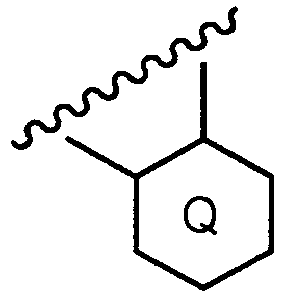

- In another instance of the compounds of formula (IF) Q is a substituted cyclohexyl ring:


- In another instance of the compounds of formula (IF) Q is a substituted cyclohexyl ring:

- In one instance the cyclohexyl ring Q:


- In another instance the cyclohexyl ring Q:

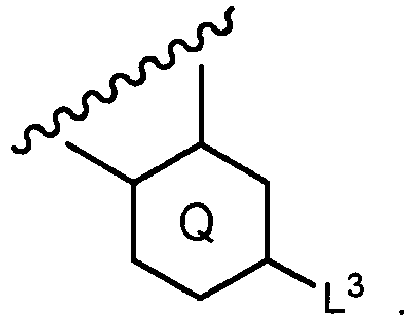
- In another instance of the compounds of formula (IF) Q is a substituted cyclohexyl ring:

- In another instance of the compounds of formula (IF) Q is a substituted cyclohexyl ring:


- In another instance of the compounds of formula (IF) Q is a substituted cyclohexyl ring:

- In another instance of the compounds of formula (IF) Q is a substituted cyclohexyl ring:

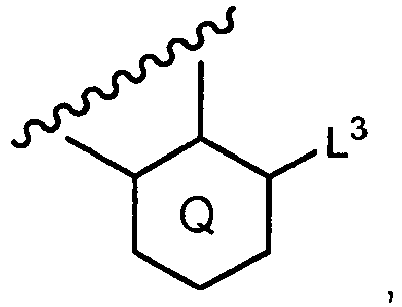
- In another instance of the compounds of formula (IF) Q is a substituted cyclohexyl ring:

- In another instance of the compounds of formula (IF) Q is a substituted cyclohexyl ring:

- In another instance of the compounds of formula (IF) Q is a substituted cyclohexyl ring:

- In another instance of the compounds of formula (IF) Q is a substituted cyclohexyl ring:

- In another instance of the compounds of formula (IF) Q is an unsubstituted cycloheptyl ring:

- In another instance of the compounds of formula (IF) Q is a substituted cycloheptyl ring:


- In another instance of the compounds of formula (IF) Q is a substituted cycloheptyl ring:

- In another instance of the compounds of formula (IF) Q is a substituted cycloheptyl ring:
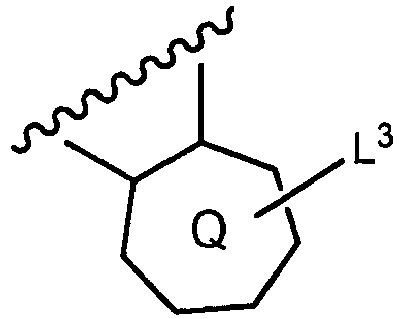
- In another instance of the compounds of formula (IF) Q is a substituted cycloheptyl ring:

- In another instance of the compounds of formula (IF) Q is a heterocycloalkyl ring substituted with one or more L3 groups (e.g., one L3 group), said heterocycloalkyl ring comprising at least one heteroatom selected from the group consisting of -O- - NH- and -N(L3)- (e.g., wherein L3 on said N is, for example, the R5 group -C(O)-(C1-C6)alkyl, such as, for example, -C(O)CH3). Examples of said L3 group when, for example, said heterocycloalkyl ring comprises -O- as the heteroatom include methyl and butyl.
- In another instance of the compounds of formula (IF) Q is the unsubstituted heterocycloalkyl ring:


- In another instance of the compounds of formula (IF) Q is the substituted heterocycloalkyl ring:


- In another instance of the compounds of formula (IF) Q is the substitued heterocycloalkyl ring:


- Examples of L3 include alkyl, such as, for example, methyl and butyl. Thus, examples of these Q groups include:

- In another instance of the compounds of formula (IF) Q is the substitued heterocycloalkyl ring:

- In another instance of the compounds of formula (IF) Q is the substitued heterocycloalkyl ring:

- In another instance of the compounds of formula (IF) Q is the substitued heterocycloalkyl ring:

- In another instance of the compounds of formula (IF) Q is the substitued heterocycloalkyl ring:

- In another instance of the compounds of formula (IF) Q is the substitued heterocycloalkyl ring:

- In another instance of the compounds of formula (IF) Q is the substitued heterocycloalkyl ring:

- In another instance of the compounds of formula (IF) Q is the substitued heterocycloalkyl ring:

- In another instance of the compounds of formula (IF) Q is the substitued heterocycloalkyl ring:

- In another instance of the compounds of formula (IF) Q is the unsubstituted heterocycloalkyl ring:
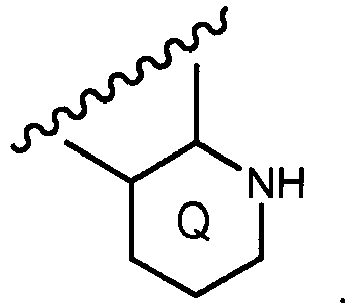
- In another instance of the compounds of formula (IF) Q is the substituted heterocycloalkyl ring:


- In another instance of the compounds of formula (IF) Q is the substituted heterocycloalkyl ring:


- In another instance of the compounds of formula (IF) Q is the substituted heterocycloalkyl ring:

- Also, for example, compounds of formula (I) include compounds wherein m is 1, and R2 and R4 together with the carbon atoms to which they are shown attached form a fused ring (Q), such compounds have the formula (IG):

- In one preferred instance of the compounds of formula (IG), each L3 is the same or different -NHR5 group, and each R5 is independently selected from the group consisting of: -S(O)2-(C1-C6)alkyl, -S(O)2-(C1-C6)haloalkyl, -S(O)2R6, -S(O)2R7 and -S(O)2R8.
- In another preferred instance of the compounds of formula (IG) each L3 is the same or different OR5 group, and each R5 is independentlyl selected from the group consisting of: H, (C1-C6)alkyl, R6, R7, -C(O)-(C1-C6)alkyl, -C(O)-C1-C6)haloalkyl , -C(O)-R6, and -C(O)-R7.
- In another preferred instance of the compounds of formula (IG) each L3 is the same or different R5 group, and each R5 is independently selected from the group consisting of: H, (C1-C6)alkyl, R6, R7, S(O)2-(C1-C6)alkyl, -S(O)2-(C1-C6)haloalkyl, S(O)2R6, S(O)2R7, -S(O)2R7, -C(O)-(C1-C6)alkyl, -C(O)-(C1-C6)haloalkyl, -C(O)-R6, and -C(O)-R7.
- In another instance of the compounds of formula (IG) ring "Q" is a fused cycloalkyl ring.
- Also, for example, compounds of formula (I) include compounds wherein m is 1, and R3 and R4 together with the carbon atoms to which they are shown attached form a fused ring (Q), such compounds have the formula (IH):

- In another preferred instance of the compounds of formula (IH) each L3 is the same or different OR5 group, and each R5 is independentlyl selected from the group consisting of: H, (C1-C6)alkyl, R6, R7, -C(O)-(C1-C6)alkyl, -C(O)-C1-C6)haloalkyl, - C(O)-R6, and -C(O)-R7.
- In another preferred instance of the compounds of formula (IH) each L3 is the same or different R5 group, and each R5 is independently selected from the group consisting of: H, (C1-C6)alkyl, R6, R7 S(O)2-(C1-C6)alkyl, -S(O)2-(C1-C6)haloalkyl, S(O)2R6, S(O)2R7, -S(O)2R8, -C(O)-(C1-C6)alkyl, -C(O)-(C1-C6)haloalkyl, -C(O)-R6, and -C(O)-R7.
- In another instance of the compounds of formula (IH) ring "Q" is a fused cycloalkyl ring.
- In another instance of the compounds of Formula (I), or pharmaceutically acceptable salts, solvates, and/or esters thereof, said compounds can have the Formula (1F):

- X is-O-;
- R3 is selected from the group consisting of H, alkyl, alkylene-OR5, alkenyl, -C(O)O-alkyl, and -alkylene-C(O)O-alkyl; or
- R2 and R3, or R2 and an R4, together with the atoms to which they are shown attached form a fused cycloalkyl ring, wherein said fused cycloalkyl ring is unsubstituted or substituted with one or more L3 groups;
- each R4 is independently selected from the group consisting of H, alkyl, and -alkylene-R6; and
- each R5 is independently selected from the group consisting of H, alkyl, R6, -C(O)-alkyl,-C(O)-R6, and -C(O)-R7;
- R6 is selected from the group consisting of unsubstituted aryl and aryl substituted with one or more L1 groups;
- R7 is selected from the group consisting of unsubstituted heterocycloalkyl and heterocycloalkyl substituted with one or more L2 groups;
- Ar is unsubstituted aryl or aryl substituted with one or more L1 groups; each L1 is independently selected from the group consisting of halogen, alkyl, -CN, and -CF3,
- each L2 is independently selected from the group consisting of -OH, alkyl, alkyl substituted with one or more -OH groups, and heterocycloalkyl;
- L3 is -OR5;
- n is 0, 1, 2 or 3; and
- m is 1.
- In another instance of the compounds of Formula (I), or pharmaceutically acceptable salts, solvates, and/or esters thereof, said compounds can have the Formula (1 G):
- wherein
- X is -O-;
- R3 is selected from the group consisting of H, alkyl, alkylene-OR5, alkenyl, -C(O)O-alkyl, and -alkylene-C(O)O-alkyl; or
- R2 and R3, or R2 and an R4, together with the atoms to which they are shown attached form a fused cycloalkyl ring, wherein said fused cycloalkyl ring is unsubstituted or substituted with one or more L3 groups;
- each R4 is independently selected from the group consisting of H, alkyl, and -alkylene-R6; and
- each R5 is independently selected from the group consisting of H, alkyl, R6, -C(O)-alkyl,-C(O)-R6, and -C(O)-R7;
- R6 is selected from the group consisting of unsubstituted aryl and aryl substituted with one or more L1 groups;
- R7 is selected from the group consisting of unsubstituted heterocycloalkyl and heterocycloalkyl substituted with one or more L2 groups;
- Ar is unsubstituted aryl or aryl substituted with one or more L1 groups;
- each L1 is independently selected from the group consisting of halogen, alkyl, -CN, and -CF3;
- each L2 is independently selected from the group consisting of -OH, alkyl, alkyl substituted with one or more -OH groups, and heterocycloalkyl;
- L3 is -OR5;
- n is 0, 1, 2 or 3; and
- m is 1.
- In another instance of the compounds of Formula (I), or pharmaceutically acceptable salts, solvates, and/or esters thereof, said compounds can have the Formula (1 H):
- wherein
- X is -O-;
- R3 is selected from the group consisting of H, alkyl, alkylene-OR5, alkenyl, -C(O)O-alkyl, and -alkylene-C(O)O-alkyl; or
- R2 and R3, or R2 and R4, together with the carbon atoms to which they are shown attached form a fused cycloalkyl ring, wherein said fused cycloalkyl ring is unsubstituted or substituted with one or more L3 groups;
- each R4 is independently selected from the group consisting of H, alkyl, and -alkylene-R6; and
- each R5 is independently selected from the group consisting of H, alkyl, R6, -C(O)-alkyl,-C(O)-R6, and -C(O)-R7;
- R6 is selected from the group consisting of unsubstituted aryl and aryl substituted with one or more L1 groups;
- R7 is selected from the group consisting of unsubstituted heterocycloalkyl and heterocycloalkyl substituted with one or more L2 groups;
- Ar is unsubstituted aryl or aryl substituted with one or more L1 groups;
- each L1 is independently selected from the group consisting of halogen, alkyl, -CN, and -CF3;
- each L2 is independently selected from the group consisting of -OH, alkyl, alkyl substituted with one or more -OH groups, and heterocycloalkyl;
- L3 is -OR5;
- n is 0, 1, 2 or 3; and
- m is 1.
- Other instances of this disclosure are directed to any one of the instances described above for the compounds of formula (IF) wherein said compound is the free acid or free base.
- Other instances of this disclosure are directed to any one of the instances described above for the compounds of formula (IF) wherein said compound is a pharmaceutically acceptable salt.
- Other instances of this disclosure are directed to any one of the instances described above for the compounds of formula (IF) wherein said compound is a pharmaceutically acceptable ester.
- Other instances of this disclosure are directed to any one of the instances described above for the compounds of formula (IF) wherein said compound is a solvate.
- Other instances of this disclosure are directed to any one of the instances described above for the compounds of formula (IG) wherein said compound is the free acid or free base.
- Other instances of this disclosure are directed to any one of the instances described above for the compounds of formula (IG) wherein said compound is a pharmaceutically acceptable salt.
- Other instances of this disclosure are directed to any one of the instances described above for the compounds of formula (IG) wherein said compound is a pharmaceutically acceptable ester.
- Other instances of this disclosure are directed to any one of the instances described above for the compounds of formula (IG) wherein said compound is a solvate.
- Other instances of this disclosure are directed to any one of the instances described above for the compounds of formula (IH) wherein said compound is the free acid or free base.
- Other instances of this disclosure are directed to any one of the instances described above for the compounds of formula (IH) wherein said compound is a pharmaceutically acceptable salt.
- Other instances of this disclosure are directed to any one of the instances described above for the compounds of formula (IH) wherein said compound is a pharmaceutically acceptable ester.
- Other instances of this disclosure are directed to any one of the instances described above for the compounds of formula (IH) wherein said compound is a solvate.
- X, for compounds of formula (I), is selected from the group consisting of -C(R1)2, -O-, -NR1 -, and -N(C(O)R1), with the proviso that when X is -O- and m is 1, at least one of R2, R3 or R4 is a group other than H. Non-limiting examples of -C(R1)2, -NR1-, and -N(C(O)R1) include those groups wherein R1 is as defined herein.
- Each R1, for compounds of formula (I), is independently H and alkyl wherein the term "alkyl" includes, for example, -CH3, -CH2CH3, -CH2CH2CH3, -CH(CH3)2, -CH2CH2CH2CH3, -C(CH3)3, -C(CH3)CH2CH3, -CH2CH(CH3)2, etc.
- R2, in one instance of the compounds of formula (I), is selected from the group consisting of H, alkyl, alkylene-OR5, -alkylene-R6, -alkylene-C(O)O-alkyl, -alkylene-R8, -C(O)O-alkyl, and alkenyl. When R2 is "alkyl", non-limiting examples of said "alkyls" include, for example, those defined above and elsewhere herein. Likewise, when R2 is -C(O)O-alkyl or -alkylene-C(O)O-alkyl, the alkyl portion of these groups can include for example the "alkyl" groups defined above or elsewhere herein. When R2 is -alkylene-OR5, non-limiting examples of -alkylene-OR5 include those groups wherein the R5 portion is as defined herein, and the "alkylene" portion of includes, e.g., -CH2-, -CH2CH2-, -CH2CH2CH2-, wherein each of the preceding alkylene groups may be optionally substituted with a lower alkyl group, thereby forming a branched alkylene. Such branched alkylenes include, for example -CH(CH3)-, -C(CH3)2-, -CH(CH3)CH2-, -CH2CH(CH3)-, etc., Likewise, when R2 is -alkylene-R6, -alkylene-C(O)O-alkyl, and -alkylene-R8 the "alkylene" portions of these groups can include the unbranched or branched alkylene groups defined above or elsewhere herein. When R2 is "alkenyl", non-limiting examples of "alkenyl" include those described herein, including -CH=CH2, -C(CH3)=CH2,-CH=CH(CH3), -CH2CH=CH2, -CH2CH2CH=CH2, etc.
- R3, in one instance of the compounds of formula (I), is selected from the group consisting of H, alkyl, alkylene-OR5, alkenyl, -C(O)O-alkyl, and -alkylene-C(O)O-alkyl. When R3 is alkyl, non-limiting examples of alkyl include those described above and elsewhere herein. When R3 is -C(O)O-alkyl or -alkylene-C(O)O-alkyl, non-limiting examples include groups wherein the alkyl portion thereof can include, for example, alkyl groups described above or elsewhere herein. Likewise, when R3 is alkylene-OR5 or -alkylene-C(O)O-alkyl, non-limiting examples thereof include groups wherein the alkylene portion includes those described above or elsewhere herein.
- R4, in one instance of the compounds of formula (I), is independently selected from the group consisting of H, alkyl, and -alkylene-R6. When an R4 is alkyl, non-limiting examples of such groups include the alkyl groups described above or elsewhere herein. Likewise, when an R4 is -alkylene-R6, non-limiting examples of such groups include those wherein the R6 portion is as defined herein, and the alkylene portion includes those alkylenes described above or elsewhere herein.
- Groups R2 and R3, or R2 and an R4, or R3 and an R4, together with the atoms to which they are shown attached can form a fused cycloalkyl ring, wherein said fused cycloalkyl ring is unsubstituted or substituted with one or more L3 groups. One of skill in the art will understand that when R2 and an R4, or R3 and an R4 form a fused cycloalkyl ring, only one fused cycloalkyl ring is formed. Thus, when m is 2 or more, only one R4 forms part of the fused cycloalkyl ring, and the other R4 groups are independently one of the groups defined herein for R4.
- Each R5, in one instance of the compounds of formula (I), is independently selected from the group consisting of H, alkyl, R6, -C(O)-alkyl, -C(O)-R6, and -C(O)-R7. Non-limiting examples of such groups include those wherein alkyl, or the R6, R7 and alkyl portion thereof, are as defined above and herein.
- When the compounds of Formula (I) include a group R6, or one of the substituents of said compound includes an R6 portion, said R6, in one instance of the compounds of formula (I), includes any chemically stable, optionally substituted aryl group. Non-limiting examples of such aryl groups include phenyl, naphthyl, biphenyl, anthacenyl, etc.
- When the compounds of Formula (I) include a group R7, or one of the substituents of said compound includes an R7 portion, said R7 includes any chemically stable, optionally substituted heterocycloalkyl group. Non-limiting examples of such heterocycloalkyl groups include piperidyl, pyrrolidinyl, piperidinyl, piperazinyl, morpholinyl, thiomorpholinyl, thiazolidinyl, 1,4-dioxanyl, tetrahydrofuranyl, tetrahydrothiophenyl, thiazolinyl, 2,3-dihydrofuranyl, 2,3-dihydrothiophenyl, etc.
- When the compounds of Formula (I) include a group R8, or one of the substituents of said compound includes an R8 portion, said R8 includes any chemically stable, optionally substituted cycloalkyl group. Non-limiting examples thereof include, for example, cyclopropyl, cyclobutyl, cyclopentyl, cyclohexyl, cycloheptyl, cyclooctyl, cyclononyl, etc.
- Ar includes any chemically stable, optionally substituted aryl group. Non-limiting examples of such aryl groups include phenyl, naphthyl, biphenyl, anthacenyl, etc.
- Each L1 is independently selected from the group consisting of halogen, alkyl, -CN, and -CF3. When an L1 is halogen, each halogen in independently F, Cl, Cr, or I. When an L1 is alkyl, non-limiting example of said alkyl include those described above and elsewhere herein.
- Each L2, in one instance of the compounds of formula (I), is independently selected from the group consisting of -OH, alkyl, alkyl substituted with one or more -OH groups, and heterocycloalkyl. When an L2 is alkyl or heterocycloalkyl, non-limiting examples of said alkyl or heterocycloalkyl include those described above and elsewhere herein. When an L2 is alkyl substituted with one or more -OH groups, non-limiting examples of such groups include -CH2 -OH, -CH2CH2-OH, -CH(OH)CH3, -CH2CH2CH2-OH, -CH2CH(OH)CH3, etc.
- L3, in one instance of the compounds of formula (I), is -OR5. Non-limiting examples thereof include -OH, -O-alkyl (wherein said alkyl portion includes the alkyl groups described above and elsewhere herein), -O-aryl (wherein said aryl portion includes the aryl groups described above and elsewhere herein), -O-acyl, -O-aroyl, -O-C(O)-R7, wherein the acyl; aroyl, and R7 portions thereof are defined above and elsewhere herein.
- As used above, and throughout this disclosure, the following terms, unless otherwise indicated, shall be understood to have the following meanings:
- "Patient" includes both human and animals.
- "Mammal" means humans and other mammalian animals.
- "One or more" means at least one, for example, 1, 2 or 3, or 1 or 2, or 1, thus, for example, "one or more L3 groups" means at least one L3 group, and examples include 1-3 L3 groups, 1 or 2 L3 groups, and one L3 group.
- "At least one" means there is at least one, and examples include 1, 2 or 3, or 1 or 2, or 1.
- "Alkyl" means an aliphatic hydrocarbon group, which may be straight or branched and comprising about 1 to about 20 carbon atoms in the chain. Preferred alkyl groups contain about 1 to about 12 carbon atoms in the chain. More preferred alkyl groups contain about 1 to about 6 carbon atoms in the chain. Branched means that one or more lower alkyl groups such as methyl, ethyl or propyl, are attached to a linear alkyl chain. "Lower alkyl" means a group having about 1 to about 6 carbon atoms in the chain, which may be straight or branched. The term "substituted alkyl" means that the alkyl group may be substituted by one or more substituents which may be the same or different, each substituent being independently selected from the group consisting of halo, alkyl, aryl, cycloalkyl, cyano, hydroxy, alkoxy, alkylthio, amino, -NH(alkyl), -NH(cycloalkyl), -N(alkyl)2, carboxy and -C(O)O-alkyl (unless expressly defined otherwise). Non-limiting examples of suitable alkyl groups include methyl, ethyl, n-propyl, isopropyl and t-butyl.
- "Alkylene" means a divalent aliphatic hydrocarbon radical derived from an alkyl group, as defined above. Both "open" valences may be on the same carbon atom, or on different carbon atoms. Examples of alkylene groups include C1-C6 alkylene groups, for example, C1 to C4 alkylene groups, and in another example, C1-C3 alkylene groups, and in another example C1 to C2 alkylene groups. Non-limiting examples of alkylene groups include -CH2-, -CH2-CH2-, -CH(CH3)-, etc.
- "Alkynyl" means an aliphatic hydrocarbon group containing at least one carbon-carbon triple bond and which may be straight or branched and comprising about 2 to about 15 carbon atoms in the chain. Preferred alkynyl groups have about 2 to about 12 carbon atoms in the chain; and more preferably about 2 to about 4 carbon atoms in the chain. Branched means that one or more lower alkyl groups such as methyl, ethyl or propyl, are attached to a linear alkynyl chain. "Lower alkynyl" means about 2 to about 6 carbon atoms in the chain, which may be straight or branched. Non-limiting examples of suitable alkynyl groups include ethynyl, propynyl, 2-butynyl and 3-methylbutynyl. The term "substituted alkynyl" means that the alkynyl group may be substituted by one or more substituents which may be the same or different, each substituent being independently selected from the group consisting of alkyl, aryl and cycloalkyl.
- "Aryl" means an aromatic monocyclic or multicyclic ring system comprising about 6 to about 14 carbon atoms, preferably about 6 to about 10 carbon atoms. The aryl group can be optionally substituted with one or more "ring system substituents" which may be the same or different, and are as defined herein. Non-limiting examples of suitable aryl groups include phenyl and naphthyl.
- "Heteroaryl" means an aromatic monocyclic or multicyclic ring system comprising about 5 to about 14 ring atoms, preferably about 5 to about 10 ring atoms, in which one or more of the ring atoms is an element other than carbon, for example nitrogen, oxygen or sulfur, alone or in combination. Preferred heteroaryls contain about 5 to about 6 ring atoms. The "heteroaryl" can be optionally substituted by one or more "ring system substituents" which may be the same or different, and are as defined herein. The prefix aza, oxa or thia before the heteroaryl root name means that at least a nitrogen, oxygen or sulfur atom respectively, is present as a ring atom. A nitrogen atom of a heteroaryl can be optionally oxidized to the corresponding N-oxide. Non-limiting examples of suitable heteroaryls include pyridyl, pyrazinyl, furanyl, thienyl, pyrimidinyl, pyridone (including N-substituted pyridones), isoxazolyl, isothiazolyl, oxazolyl, thiazolyl, pyrazolyl, furazanyl, pyrrolyl, pyrazolyl, triazolyl, 1,2,4-thiadiazolyl, pyrazinyl, pyridazinyl, quinoxalinyl, phthalazinyl, oxindolyl, imidazo[1,2-a]pyridinyl, imidazo[2,1-b]thiazolyl, benzofurazanyl, indolyl, azaindolyl, benzimidazolyl, benzothienyl, quinolinyl, imidazolyl, thienopyridyl, quinazolinyl, thienopyrimidyl, pyrrolopyridyl, imidazopyridyl, isoquinolinyl, benzoazaindolyl, 1,2,4-triazinyl, benzothiazolyl and the like. The term "heteroaryl" also refers to partially saturated heteroaryl moieties such as, for example, tetrahydroisoquinolyl, tetrahydroquinolyl and the like.
- "Cycloalkyl" means a non-aromatic mono- or multicyclic ring system comprising about 3 to about 10 carbon atoms, preferably about 5 to about 10 carbon atoms. Preferred cycloalkyl rings contain about 5 to about 7 ring atoms. The cycloalkyl can be optionally substituted with one or more "ring system substituents" which may be the same or different, and are as defined herein. Non-limiting examples of suitable saturated monocyclic cycloalkyls include cyclopropyl, cyclopentyl, cyclohexyl, cycloheptyl and the like, and non-limiting examples of non-aromatic, unsaturated monocyclic cycloalkyls include cyclopentenyl, cyclohexenyl, etc. Non-limiting examples of suitable multicyclic cycloalkyls include 1-decalinyl, norbornyl, adamantyl and the like, as well as partially saturated species such as, for example, indanyl, tetrahydronaphthyl and the like.
- "Halogen" or "halo" means fluorine, chlorine, bromine, or iodine. Fluorine, chlorine and bromine are preferred.
- "Ring system substituent" means a substituent attached to an aromatic or non-aromatic ring system, which, for example, replaces an available hydrogen on the ring system. Ring system substituents may be the same or different, each being independently selected from the group consisting of alkyl, alkenyl, alkynyl, aryl (substituted or unsubstituted, heteroaryl (substituted or unsubstituted, alkylene-aryl, heteroarylalkenyl, heteroarylalkynyl, hydroxy, hydroxyalkyl, alkoxy, aryloxy, aryl substituted alkoxy, acyl, aroyl, halo, nitro, cyano, carboxy, alkoxycarbonyl, aryloxycarbonyl, arylalkoxycarbonyl, alkylsulfonyl, arylsulfonyl, heteroarylsulfonyl, alkylthio, arylthio, heteroarylthio, arylalkylthio, heteroarylalkylthio, cycloalkyl, heterocycloalkyl, -C(=N-CN)-NH2, -C(=NH)-NH2, -C(=NH)-NH(alkyl), Y1Y2N-, Y1Y2N-alkyl-, Y1Y2NC(O)-, Y1Y2NSO2- and -SO2NY1Y2, wherein Y1 and Y2 can be the same or different and are independently selected from the group consisting of hydrogen, alkyl, aryl, cycloalkyl, and -alkylene-aryl (unless expressly defined otherwise). The term "ring system substituent" may also mean a single moiety in which two available hydrogens on two adjacent carbon atoms are simultaneously replaced (e.g., one H on each carbon) on a ring system. Examples of such moiety are methylenedioxy, ethylenedioxy, -C(CH3)2- and the like which form moieties such as, for example:

- "Heterocycloalkyl" means a non-aromatic monocyclic or multicyclic ring system comprising about 3 to about 10 ring atoms, preferably about 5 to about 10 ring atoms, in which one or more of the atoms in the ring system is an element other than carbon, for example nitrogen, oxygen or sulfur, alone or in combination. There are no adjacent oxygen and/or sulfur atoms present in the ring system. Preferred heterocycloalkyls contain about 5 to about 6 ring atoms. The prefix aza, oxa or thia before the heterocycloalkyl root name means that at least a nitrogen, oxygen or sulfur atom respectively is present as a ring atom. Any -NH in a heterocycloalkyl ring may exist in protected form, for example, as an -N(Boc), -N(CBz), -N(Tos) group and the like; such protected forms are also considered part of this disclosure. The heterocycloalkyl can be optionally substituted by one or more "ring system substituents" which may be the same or different, and are as defined herein. The nitrogen or sulfur atom of the heterocycloalkyl can be optionally oxidized to the corresponding N-oxide, S-oxide or S,S-dioxide. Non-limiting examples of suitable monocyclic heterocycloalkyl rings include piperidyl, pyrrolidinyl, piperazinyl, morpholinyl, thiomorpholinyl, thiazolidinyl, 1,4-dioxanyl, tetrahydrofuranyl, tetrahydrothiophenyl, lactam, lactone, and the like. Non-limiting examples of non-aromatic, unsaturated monocyclic heterocycloalkyl rings include thiazolinyl, 2,3-dihydrofuranyl, 2,3-dihydrothiophenyl, etc.
- It should be noted that in the hetero-atom containing ring systems of this disclosure, there are no hydroxyl groups on carbon atoms adjacent to a N, O or S, as well as there are no N or S groups on carbon atoms adjacent to another heteroatom. Thus, for example, in the ring:

- It should also be noted that tautomeric forms such as, for example, the moieties:

- "Hydroxyalkyl" means an alkyl group substituted with a hydroxyl (-OH) group in which alkyl is as previously defined. Preferred hydroxyalkyls contain lower alkyl. Non-limiting examples of suitable hydroxyalkyl groups include hydroxymethyl and 2-hydroxyethyl.
- "Acyl" means an H-C(O)-, alkyl-C(O)- or cycloalkyl-C(O)-, group in which the various groups are as previously described. The bond to the parent moiety is through the carbonyl. Preferred acyls contain a lower alkyl. Non-limiting examples of suitable acyl groups include formyl, acetyl and propanoyl.
- "Aroyl" means an aryl-C(O)- group in which the aryl group is as previously described. The bond to the parent moiety is through the carbonyl. Non-limiting examples of suitable groups include benzoyl and 1- naphthoyl.
- "Alkoxy" means an -O-alky; group in which the alkyl group is as previously described. Non-limiting examples of suitable alkoxy groups include methoxy, ethoxy, n-propoxy, isopropoxy and n-butoxy. The bond to the parent moiety is through the ether oxygen.
- "Aryloxy" means an -O-aryl group in which the aryl group is as previously described. Non-limiting examples of suitable aryloxy groups include phenoxy and naphthoxy. The bond to the parent moiety is through the ether oxygen.
- "Alkylthio" means an -S-alkyl group in which the alkyl group is as previously described. Non-limiting examples of suitable alkylthio groups include methylthio and ethylthio. The bond to the parent moiety is through the sulfur.
- "Arylthio" means an -S-aryl group in which the aryl group is as previously described. Non-limiting examples of suitable arylthio groups include phenylthio and naphthylthio. The bond to the parent moiety is through the sulfur.
- "Arylalkylthio" means an -S-alkylene-aryl group in which the alkylene and aryl groups are as previously described. A non-limiting example of a suitable arylalkylthio group is benzylthio. The bond to the parent moiety is through the sulfur.
- "Alkoxycarbonyl" means an alkyl-O-CO- group. Non-limiting examples of suitable alkoxycarbonyl groups include methoxycarbonyl and ethoxycarbonyl. The bond to the parent moiety is through the carbonyl.
- "Aryloxycarbonyl" means an aryl-O-C(O)- group. Non-limiting examples of suitable aryloxycarbonyl groups include phenoxycarbonyl and naphthoxycarbonyl. The bond to the parent moiety is through the carbonyl.
- "Arylalkoxycarbonyl" means an -C(O)-O-alkylene-aryl group. A non-limiting example of a suitable arylalkoxycarbonyl group is benzyloxycarbonyl. The bond to the parent moiety is through the carbonyl.
- "Alkylsulfonyl" means an alkyl-S(O2)- group. Preferred groups are those in which the alkyl group is a lower alkyl. The bond to the parent moiety is through the sulfonyl.
- "Arylsulfonyl" means an aryl-S(O2)- group. The bond to the parent moiety is through the sulfonyl.
- The term "substituted" means that one or more hydrogens on the designated atom is replaced with a selection from the indicated group, provided that the designated atom's normal valency under the existing circumstances is not exceeded, and that the substitution results in a stable compound. Combinations of substituents and/or variables are permissible only if such combinations result in stable compounds. By "stable compound' or "stable structure" is meant a compound that is sufficiently robust to survive isolation to a useful degree of purity from a reaction mixture, and formulation into an efficacious therapeutic agent.
- When a group is substituted with "one or more" substituents, the indicated group may be substituted with one substituent, two substituents, etc., provided that the resulting substituted group forms a stable structure, as described above.
- The term "optionally substituted" means optional substitution with the specified groups, radicals or moieties. For example, an aryl optionally substituted with an indicated group of substituents includes unsubstituted aryl as well as aryl substituted with any of the indicated substituents.
- The term "isolated" or "in isolated form" for a compound refers to the physical state of said compound after being isolated from a synthetic process or natural source or combination thereof. The term "purified" or "in purified form" for a compound refers to the physical state of said compound after being obtained from a purification process or processes described herein or well known to the skilled artisan, in sufficient purity to be characterizable by standard analytical techniques described herein or well known to the skilled artisan.
- It should also be noted that any carbon atom as well as any heteroatom with unsatisfied valences in the text, schemes, examples, Tables, etc. herein is assumed to have the sufficient number of hydrogen atom(s) to satisfy the valences.
- When a functional group in a compound is termed "protected", this means that the group is present in modified form to preclude undesired side reactions at the protected site when the compound is subjected to a reaction. Suitable protecting groups will be recognized by those with ordinary skill in the art as well as by reference to standard textbooks such as, for example, T. W. Greene et al, Protective Groups in Organic Synthesis (1991), Wiley, New York, herein incorporated by reference in its entirety.
- When any variable (e.g., aryl, heterocycloalkyl, R2, etc.) occurs more than one time in any constituent or in Formula (I), its definition on each occurrence is independent of its definition at every other occurrence (unless otherwise expressly indicated).
- As used herein, the term "composition" is intended to encompass a product comprising the specified ingredients in the specified amounts, as well as any product which results, directly or indirectly, from combination of the specified ingredients in the specified amounts.
- Prodrugs and solvates of the compounds of the disclosure are also contemplated herein. The term "prodrug", as employed herein, denotes a compound that is a drug precursor that, upon administration to a subject, undergoes chemical conversion by metabolic or chemical processes to yield a compound of Formula (I) or a salt and/or solvate thereof. A discussion of prodrugs is provided in T. Higuchi and V. Stella, Pro-drugs as Novel Delivery Systems (1987) 14 of the A.C.S. Symposium Series, and in Bioreversible Carriers in Drug Design, (1987) Edward B. Roche, ed., American Pharmaceutical Association and Pergamon Press, both of which are incorporated herein by reference thereto.
- "Solvate" means a physical association of a compound of this disclosure with one or more solvent molecules. This physical association involves varying degrees of ionic and covalent bonding, including hydrogen bonding. In certain instances the solvate will be capable of isolation, for example when one or more solvent molecules are incorporated in the crystal lattice of the crystalline solid. "Solvate" encompasses both solution-phase and isolatable solvates. Non-limiting examples of suitable solvates include ethanolates, methanolates, and the like. A "hydrate" is a solvate wherein the solvent molecule(s) is/are H2O.
- "Effective amount" or "therapeutically effective amount" is meant to describe an amount of compound or a composition of the present disclosure effective in preventing the formation and/or deposition of amyloid protein, and thus producing the desired therapeutic, ameliorative, inhibitory or preventative effect.
- The compounds of Formula (I) can form salts, which are also within the scope of this disclosure. Reference to a compound of Formula (I) herein is understood to include reference to salts thereof, unless otherwise indicated. The term "salt(s)", as employed herein, denotes acidic salts formed with inorganic and/or organic acids, as well as basic salts formed with inorganic and/or organic bases. In addition, when a compound of Formula (I) contains both a basic moiety, such as, but not limited to a pyridine or imidazole, and an acidic moiety, such as, but not limited to a carboxylic acid, zwitterions ("inner salts") may be formed and are included within the term "salt(s)" as used herein. Pharmaceutically acceptable (i.e., non-toxic, physiologically acceptable) salts are preferred, although other salts are also useful. Salts of the compounds of the Formula (I) may be formed, for example, by reacting a compound of Formula (I) with an amount of acid or base, such as an equivalent amount, in a medium such as one in which the salt precipitates or in an aqueous medium followed by lyophilization.
- Exemplary acid addition salts include acetates, ascorbates, benzoates, benzenesulfonates, bisulfates, borates, butyrates, citrates, camphorates, camphorsulfonates, fumarates, hydrochlorides, hydrobromides, hydroiodides, lactates, maleates, methanesulfonates, naphthalenesulfonates, nitrates, oxalates, phosphates, propionates, salicylates, succinates, sulfates, tartarates, thiocyanates, toluenesulfonates (also known as tosylates,) and the like. Additionally, acids which are generally considered suitable for the formation of pharmaceutically useful salts from basic pharmaceutical compounds are discussed, for example, by P. Stahl et al, Camille G. (eds.) Handbook of Pharmaceutical Salts. Properties, Selection and Use. (2002) Zurich: Wiley-VCH; S. Berge et al, Journal of Pharmaceutical Sciences (1977) 66(1) 1-19; P. Gould, International J. of Pharmaceutics (1986) 33 201-217; Anderson et al, The Practice of Medicinal Chemistry (1996), Academic Press, New York; and in The Orange Book (Food & Drug Administration, Washington, D.C. on their website). These disclosures are incorporated herein by reference thereto.
- Exemplary basic salts include ammonium salts, alkali metal salts such as sodium, lithium, and potassium salts, alkaline earth metal salts such as calcium and magnesium salts, salts with organic bases (for example, organic amines) such as dicyclohexylamines, t-butyl amines, and salts with amino acids such as arginine, lysine and the like. Basic nitrogen-containing groups may be quarternized with agents such as lower alkyl halides (e.g. methyl, ethyl, and butyl chlorides, bromides and iodides), dialkyl sulfates (e.g. dimethyl, diethyl, and dibutyl sulfates), long chain halides (e.g. decyl, lauryl, and stearyl chlorides, bromides and iodides), aralkyl halides (e.g. benzyl and phenethyl bromides), and others.
- All such acid salts and base salts are intended to be pharmaceutically acceptable salts within the scope of the disclosure and all acid and base salts are considered equivalent to the free forms of the corresponding compounds for purposes of the disclosure.
- Compounds of Formula (I), and salts, solvates and prodrugs thereof, may exist in their tautomeric form (for example, as an amide or imino ether). All such tautomeric forms are contemplated herein as part of the present disclosure.
- All stereoisomers (for example, geometric isomers, optical isomers and the like) of the present compounds (including those of the salts, solvates and prodrugs of the compounds as well as the salts and solvates of the prodrugs), such as those which may exist due to asymmetric carbons on various substituents, including enantiomeric forms (which may exist even in the absence of asymmetric carbons), rotameric forms, atropisomers, and diastereomeric forms, are contemplated within the scope of this disclosure, as are positional isomers (such as, for example, 4-pyridyl and 3-pyridyl). Individual stereoisomers of the compounds of the disclosure may, for example, be substantially free of other isomers, or may be admixed, for example, as racemates or with all other, or other selected, stereoisomers. The chiral centers of the present disclosure can have the S or R configuration as defined by the IUPAC 1974 Recommendations. The use of the terms "salt", "solvate" "prodrug" and the like, is intended to equally apply to the salt, solvate and prodrug of enantiomers, stereoisomers, rotamers, tautomers, positional isomers, racemates or prodrugs of the inventive compounds.
- Polymorphic forms of the compounds of Formula (I), and of the salts, solvates and prodrugs of the compounds of Formula (I), are intended to be included in the present disclosure.
- The compounds according to the disclosure have pharmacological properties; in particular, the compounds of Formula (I) can inhibit gamma-secretase, and are therefore useful in the treatment or prevention of neurodegenerative diseases, e.g., Alzheimer's Disease.
- Representative compounds of the disclosure include but are not limited to the compounds and Examples described herein.
- Pharmaceutical compositions can comprise one or more of the compounds of Formula (I). For preparing pharmaceutical compositions from the compounds described by this disclosure, inert, pharmaceutically acceptable carriers can be either solid or liquid. Solid form preparations include powders, tablets, dispersible granules, capsules, cachets and suppositories. The powders and tablets may be comprised of from about 5 to about 95 percent active compound. Suitable solid carriers are known in the art, e.g. magnesium carbonate, magnesium stearate, talc, sugar or lactose. Tablets, powders, cachets and capsules can be used as solid dosage forms suitable for oral administration. Examples of pharmaceutically acceptable carriers and methods of manufacture for various compositions may be found in A. Gennaro (ed.), Remington's Pharmaceutical Sciences, 18th Edition, (1990), Mack Publishing Co., Easton, Pennsylvania, herein incorporated by reference in its entirety.
- Liquid form preparations include solutions, suspensions and emulsions. Water or water-propylene glycol solutions for parenteral injection or addition of sweeteners and opacifiers for oral solutions, suspensions and emulsions are examples. Liquid form preparations may also include solutions for intranasal administration.
- Aerosol preparations suitable for inhalation may include solutions and solids in powder form, which may be in combination with a pharmaceutically acceptable carrier, such as an inert compressed gas, e.g. nitrogen.
- Also included are solid form preparations that are intended to be converted, shortly before use, to liquid form preparations for either oral or parenteral administration. Such liquid forms include solutions, suspensions and emulsions.
- The compounds of the disclosure may also be deliverable transdermally. The transdermal compositions can take the form of creams, lotions, aerosols and/or emulsions and can be included in a transdermal patch of the matrix or reservoir type as are conventional in the art for this purpose.
- Preferably, the pharmaceutical preparation is in a unit dosage form. In such form, the preparation is subdivided into suitably sized unit doses containing appropriate quantities of the active compound, e.g., an effective amount to achieve the desired purpose.
- The term "pharmaceutical composition" is also intended to encompass both the bulk composition and individual dosage units comprised of more than one (e.g., two) pharmaceutically active agents such as, for example, a compound of the present disclosure and an additional agent selected from the lists of the additional agents described herein, along with any pharmaceutically inactive excipients. The bulk composition and each individual dosage unit can contain fixed amounts of the afore-said "more than one pharmaceutically active agents". The bulk composition is material that has not yet been formed into individual dosage units. An illustrative dosage unit is an oral dosage unit such as tablets, pills and the like. Similarly, the herein-described method of treating a patient by administering a pharmaceutical composition of the present disclosure is also intended to encompass the administration of the afore-said bulk composition and individual dosage units.
- The quantity of active compound in a unit dose of preparation may be varied or adjusted from about 0.01 mg to about 1000 mg, preferably from about 0.01 mg to about 750 mg, more preferably from about 0.01 mg to about 500 mg, and most preferably from about 0.01 mg to about 250 mg, according to the particular application.The actual dosage employed may be varied depending upon the requirements of the patient and the severity of the condition being treated. Determination of the proper dosage regimen for a particular situation is within the skill of the art. For convenience, the total daily dosage may be divided and administered in portions during the day as required.
- The amount and frequency of administration of the compounds of the disclosure and/or the pharmaceutically acceptable salts thereof will be regulated according to the judgment of the attending clinician considering such factors as age, condition and size of the patient as well as severity of the symptoms being treated. A typical recommended daily dosage regimen for oral administration can range from about 0.04 mg/day to about 4000 mg/day, in one to four divided doses.
- The present disclosure is exemplified by the following preparations and examples, which should not be construed to limit the scope of the disclosure. Alternative mechanistic pathways and analogous structures will be apparent to those skilled in the art.
- Where NMR data are presented, 1H spectra were obtained on either a Varian VXR-200 (200 MHz, 1H), Varian Gemini-300 (300 MHz) or XL-400 (400 MHz) and are reported as ppm down field from Me4Si with number of protons, multiplicities, and coupling constants in Hertz indicated parenthetically. Where LC/MS data are presented, analyses was performed using an Applied Biosystems API-100 mass spectrometer and Shimadzu SCL-10A LC column: Altech platinum C18, 3 micron, 33mm x 7mm ID; gradient flow: 0 min - 10% CH3CN, 5 min - 95% CH3CN, 7 min - 95% CH3CN, 7.5 min - 10% CH3CN, 9 min - stop. The retention time and observed parent ion are given.
- The following solvents, reagents, and conditions may be referred to by their abbreviations in parenthesis:
- Acetyl (Ac), i.e., CH3C(O)-
- Butyl (Bu)
- Cyclopropyl (Pr-c)
- Dichloroethane (DCE)
- Dichloromethane (DCM)
- Diethyl ether (Et2O)
- Diisobutylaluminum hydride (DIBAL-H)
- Dimethyl formamide (DMF)
- Ethanol (EtOH)
- Ethyl (Et)
- Ethyl acetate (EtOAc)
- High resolution mass spectrometry (HRMS)
- Lithium diisopropyl amide (LDA)
- Liquid chromatography/mass spectrometry (LCMS)
- m-Chloroperoxybenzoic acid (mCPBA)
- Mesyl (Ms), i.e., -S(O)2CH3
- Methanol (MeOH)
- Methyl (Me)
- Nuclear magnetic resonance spectroscopy (NMR)
- Preparative thin-layer chromatography (PTLC)
- Pyridine (Pyr)
- Room temperature (RT)
- Tert-butyldimethylsilyl (TBS)
- Tetrabutyl ammonium fluoride (TBAF)
- Tetrahydrofuran (THF)
- Trifluoroacetic acid (TFA)
- Trimethylsilyl (TMS)
- Trimethylsilyl chloride (TMSCI)
- Triethylamine (NEt3 or Et3N)
- Compounds of Formula (I) can be prepared by various methods well known to those skilled in the art, and by the methods described below. The following methods are typical.
- Compounds of Formula (I) can be prepared according to the procedure outlined in General Procedure 1.
-

- A cyclic ketone such as (i) is treated with a thiol in the presence of a suitable reducing agent such as borane optionally in the presence of an acid such as trifluoroacetic acid. The resulting sulfide is oxidized according to known procedures, for instance using a peracid or oxone, to give sulfone (ii). Compounds of Formula (I), wherein R3 is H and R2 is not H, can be prepared by treating sulfone (ii) with a suitable base such as LDA or n-butyllithium followed by alkylation with a group R2Z, wherein Z is a leaving group such as halo or sulfonate or other functional group that causes R3 to be electrophilic. Compounds of Formula (I) wherein R3 is not H can be prepared by treating compound (i) with a suitable base such as LDA followed by alkylation with a group R3Z, wherein Z is a leaving group such as halo or sulfonate or other functional group that causes R3 to be electrophilic. The resulting ketone (iv) is converted to sulfone (v) as described for the conversion of (i) to (iii).
- Compounds of Formula (I), especially when X is -O-, S, -NR1-, and -N(C(O)R1, can be prepared according to General Procedure 2.
-

- Sulfone (vi), wherein Z1 is defined as Z above, is treated with a suitable base such as sodium hydride or LDA. The resulting anion is treated with an alkylating agent (vii), wherein Z is as defined above, and P is an optional protecting group such as trimethylsilyl, t-butyldimethylsilyl, t-butoxycarbonyl, or benzyloxycarbonyl. After removing the optional protecting group, cyclization optionally in the presence of base such as sodium hydride, potassium carbonate, or LDA, yields compound (iv). Compound (iv) can be transformed into other compounds of formula (I) as describe elsewhere.
- Compounds of formula (I), especially when R3 is not H, can be also be prepared by General Procedure 3.
-

- Vinylsulfone (ix) is treated with a nucleophile R3-M, wherein M is a metal such as sodium, lithium, potassium, magnesium, copper, or zinc, optionally followed by treatment with an electrophile R2Z, wherein Z is as defined above.
- Compounds of formula (IF) can be prepared by general procedures 1,2, or 3 by joining together two R2 and R3 groups. Alternatively, compounds of formula (IF) where Q is a substituted or unsubstituted cyclohexyl ring can be prepared according to General Procedure 4.
-

- Vinylsulfone (ix) is treated with a diene (x) optionally in the presence of an acid catalyst such as zinc chloride or boron trifluoride in a solvent such as toluene or trifluorotoluene to give compounds of formula (IF).
- In addition, compounds of formula (IF) where where Q is a substituted or unsubstituted heterocyclic ring, and in particular where said substituted or unsubsituted heterocyclic ring is a pyran ring as in XI, can be prepared according to general procedure 5.
-

- Procedures 1-5 illustrate general procedures for preparing compounds of this disclosure, e.g. compounds of the invention. Certain compounds of this disclosure can be transformed into other compounds of this disclosure by functional group manipulations as described below.
-

- To a solution of LiCl (3.39 g, 80 mmol) and palladium (II) acetate (450 mg, 2.0 mmol) in DMF (75 mL) in a sealed tube was added 2,5-difluorobenzylbromide (9.65 mL, 75 mmol), tert-butylacrylate (11.9 mL, 82 mmol) and tributylamine (19.5 mL, 82 mmol). The reaction was then stirred 2 h at 45°C and overnight at 120°C. The cooled solution was taken up in Et2O, washed with water and brine, dried and concentrated. The residue was purified by flash-chromatography over silica gel (eluted with hexanes/DCM 75:25 to DCM) to give 9.26 g (49%) of alkene.
- A mixture of the alkene product of Step 1 (6.36 g, 25 mmol) and 10% Pd/C (650 mg) in EtOH (20 mL) and EtOAc (20 mL) was hydrogenated at 25 psi for 90 min then filtered over CELITE and concentrated to provide 6.34 g (99%) of tert-butyl ester.
- A solution of the tert-butyl ester product from Step 2 (5.00 g, 19.5 mmol) in DCM (10 mL) and TFA (10 mL) was stirred at RT for 1 hr then concentrated. The crude product (3.95 g) was dissolved in DCM (20 mL) and treated with oxalyl chloride (3.35 mL, 39 mmol) and a drop of DMF. The reaction was stirred at RT for 30 min then concentrated. To a solution of this crude in DCM (15 mL) was added AlCl3 (5.20 g, 39 mmol) and the reaction was stirred at RT for 2 days. The final mixture was poured into ice-cooled 0.1 N HCl, extracted with DCM, dried and concentrated. The residue was purified by flash-chromatography over silica gel (eluted with hexanes/DCM 7:3 to DCM) to afford 3.17 g (89%) of ketone.
- To a solution of the ketone product from Step 3 (67 mg, 0.37 mmol) and 4-chlorothiophenol (56 mg, 0.39 mmol) in DCM (0.4 mL) at 0°C was added TFA (0.5 mL) followed,10 min later, by pyridine borane complex (40 µL). The solution was then allowed to stir 40 min at 0°C then concentrated. The residue was taken up in Et2O and 1 N NaOH, extracted with Et2O, dried over sodium sulfate and concentrated. The residue was taken up in DCM (1 mL) and treated with mCPBA 57 (172 mg, 1.0 mmol). After reaction overnight, the crude product was washed with sodium carbonate solution, dried and concentrated and the residue was purified by preparative-chromatography over silica gel (eluted with hexanes/DCM 1:1) to give 45.5 mg of Example 1: 1H NMR (CDCl3 400 MHz) δ 7.67 (d, J = 8.7 Hz, 2H), 7.47 (d, J = 8.7 Hz, 2H), 6.97 (m, 1 H), 6.72 (m, 1 H), 4.61 (d, 1 H), 3.92 (m, 1 H), 2.65-2.75 (m, 2H), 2.43 (m, 1 H), 1.90 (m, 1 H), 1.78 (m, 1 H); LCMS (MH+) = 343.2; retention time = 4.71 min.
- To a solution of the Example 1 product from Step 4 (21.9 mg, 0.064 mmol) in THF (0.3 mL) at -78°C was added BuLi 2.5 N in hexanes (30 µL, 0.07 mmol) followed, 2 min later by iodomethane (30 µL) and the reaction mixture was allowed to warm to RT. After 10 min, the reaction mixture was poured into saturated NH4Cl, extracted with DCM, dried over sodium sulfate and concentrated. The residue was purified by preparative-chromatography over silica gel (eluted with hexanes/EtOAc 9:1) to give 12.6 mg of Example 2: 1H NMR (CDCl3 400 MHz) δ 7.62 (d, J = 8.7 Hz, 2H), 7.45 (d, J = 8.7 Hz, 2H), 6.98 (m, 1 H), 6.76 (m, 1 H), 2.90 (m, 1 H), 2.55-2.70 (m, 2H), 2.44 (m, 1 H), 1.75-1.85 (m, 2H), 1.80 (s, 3H); LCMS (2MH+) = 713.4; retention time = 4.90 min.
- Following procedures similar to those used in Scheme 1-A to prepare Examples 1 and 2, substituting appropriate electrophiles and also substituting readily available ketones for the ketone product of Step 4, the compounds in Table 1-A were prepared.
TABLE 1-A Example No. (not of the invention) STRUCTURE Mass Spec (M+ except as otherwise noted); retention time (min) 1-A 
585.3 (2MH+); 3.44 1-B 
621.3 (2MH+); 7.52 1-C 
311.2; 4.56 1-D 
613.3 (2MH+); 7.86 1-E 
641.4 (2MH+); 5.05 1-F 
695.4 (2MH+); 5.36 1-G 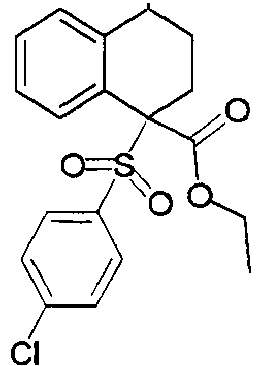
379.2; 4.99 1-H 
393.2; 4.96 1-I 
651.4 (2MH+); 3.57 1-J 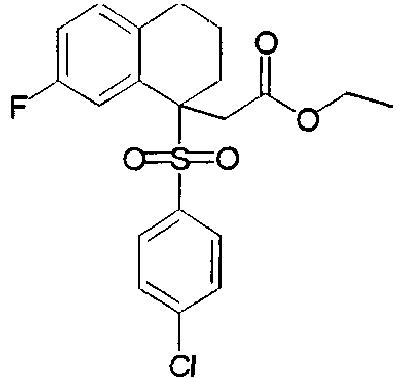
411.2; 3.75 1-K 
411.2; 4.10 1-L 
397.2; 4.96 1-M 
687.4 (2MH+); 4.80 1-N 
713.4 (2MH+); 5.25 1-O 
763.4 (2MNa); 5.41 1-P 
325.2; 4.66 1-Q 
381.2; 5.17 1-R 
(2MH+) 741.4; 5.08 1-S 
(2MNa) 791.4; 5.23 -

- To a solution of Example 1-l (100 mg, 0.30 mmol) in THF (2 mL) at -78°C was added n-BuLi 2.5 N in hexanes (0.12 mL, 0.30 mmol) and the resulting solution was stirred 10 minutes, warmed to RT for 5 min then cooled again to -78°C. It was quenched with TBS protected bromoethanol (0.32 mL, 1.50 mmol).The reaction was allowed to warm to RT for 2 days. The final mixture was poured into water, extracted with DCM, dried and concentrated. The residue was purified by preparative-chromatography over silica gel (eluted with hexanes/EtOAc 90:10) to afford 90 mg of TBS-protected alcohol.
- A solution of TBS-protected alcohol product from Step 1 (90 mg; 0.186 mmol) in THF (5 mL) was treated with TBAF 1 N in THF (0.20 mL, 0.20 mmol) and stirred for 2 h. The reaction was then concentrated and purified by preparative-chromatography over silica gel (eluted with hexanes/EtOAc 80:20) to give 54 mg of alcohol.
- To a solution of alcohol product from Step 2 (55 mg, 0.149 mmol) in THF (1 mL) and acetonitrile (0.5 mL) was added 4-nitrophenylchloroformate (60 mg, 0.298 mmol) and pyridine (0.08 mL) and the reaction was stirred at RT for 2 h. The final mixture was washed with 1 N HCI, then extracted with DCM. After concentration, the crude was purified by preparative-chromatography over silica gel (eluted with hexanes/EtOAc 80:20) to provide 70 mg of nitrophenylcarbonate.
- A solution of nitrophenylcarbonate product from Step 3 (15 mg) and (S)-3-hydroxypyrrolidine (15 mg) in DCE (1 mL) was stirred overnight at RT. The reaction was washed with water, extracted with DCM and dried. After concentration, the crude was purified by preparative-chromatography over silica gel (eluted with hexanes/EtOAc 50:50) to give 6.0 mg of Example 1-T: 1H NMR (CDCl3 400 MHz) δ 7.48 (d, J = 8.7 Hz, 1 H), 7.35 (br s, 4H), 6.95 (d, J = 7.2, 2H), 4.42 (br s, 1 H), 4.10-4.25 (m, 1 H), 3.90-4.05 (m, 1 H), 3.10-3.50 (m, 3H), 2.90-3.00 (m, 1 H), 2.40-2.60 (m, 2H), 2.15-2.35 (m, 2H), 2.00-2.15 (m, 1 H), 1.75-1.95 (m, 2H), 1.40-1.70 (m, 3H), 1.25 (br s, 1 H); LCMS (MH+) = 482.3; retention time = 3.98 min.
- Following procedures similar to those used in Scheme 1-B to prepare Example 1-T, the compounds in Table 1-B were prepared.
TABLE 1-B Example No. (not of the invention) STRUCTURE Mass Spec (M+ except as otherwise noted); retention time (min) 1-U 
351.2; 3.14 Example No. (not of the invention) STRUCTURE Mass Spec (M+ except as otherwise noted); retention time (min) 1-V 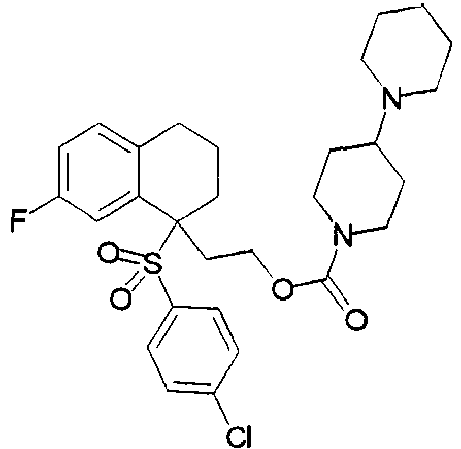
563.3; 3.08 -
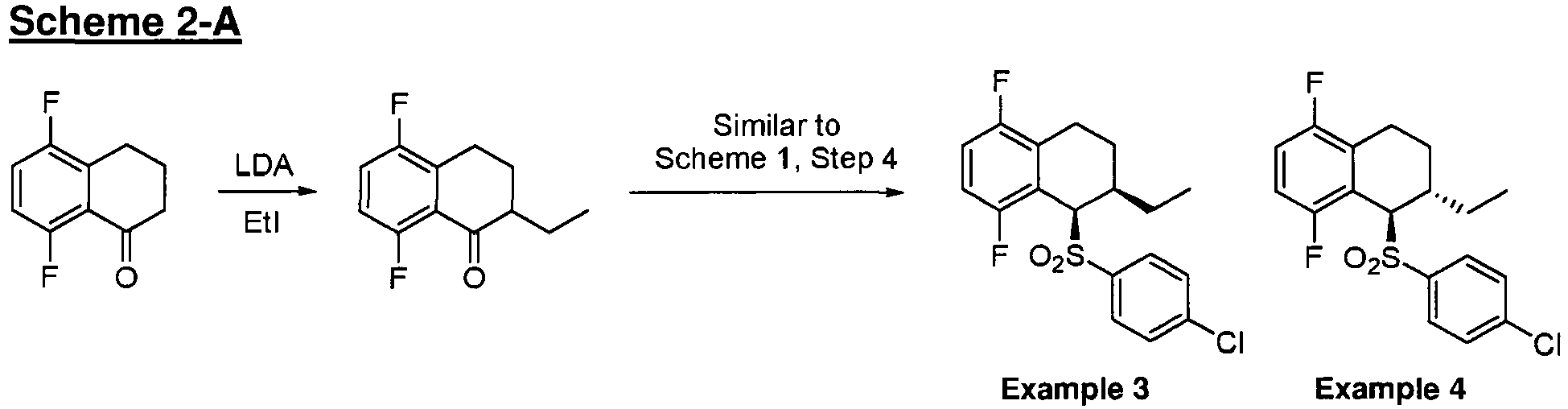
- To a solution of the ketone product from Scheme 1-A, Step 3 (398 mg, 2.18 mmol) in THF (2 mL) at -78°C was added LDA 1.8 N in hexanes (1.20 mL, 2.19 mmol). The reaction was warmed to -30°C, cooled to -78°C again and Etl (175 uL, 2.18 mmol) was slowly added. The reaction was allowed to warm to RT overnight then poured into saturated NH4Cl and extracted with DCM. After concentration, the crude was purified by flash-chromatography over silica gel (eluted with hexanes/EtOAc 95:5 to 7:3) to allow, in order of elution, 32.7 mg of ethylketone followed by 314 mg of the starting ketone.
- The ethylketone product from Step 1 was reacted with 4-chlorothiophenol following conditions similar to those described in Step 4 of Scheme 1-A, to provide, after separation over silica gel, the cis compound i.e., Example 3, and the trans compound Example 4. Example 3: 1H-NMR (CDCl3 400 MHz) δ 7.55 (d, J = 8.7 Hz, 2H), 7.39 (d, J = 8.7 Hz, 2H), 6.91 (m, 1H), 6.58 (m, 1H), 4.65 (br s, 1H), 3.10 (m, 1 H), 2.88 (m, 1 H), 2.57 (m, 1 H), 1.80-2.15 (m, 4H), 1.07 (t, J = 7.2 Hz, 3H); LCMS (MH+) = 371.2; retention time = 5.27 min. Example 4:1H-NMR (CDCl3 400 Mhz) δ 7.61 (d, J = 8.7 Hz, 2H), 7.43 (d, J = 8.7 Hz, 2H), 6.95 (m, 1 H), 6.67 (m, 1 H), 4.39 (br s, 1 H), 2.70-2.80 (m, 3H), 2.46 (m, 1 H), 1.46 (m, 1 H), 1.30-1.40 (m, 2H), 0.93 (t, J = 7.2 Hz, 3H); LCMS (MH+) = 371.2; retention time = 5.21 min.
- Following procedures similar to those described in Schemes 1-A, 1-B and 2-A, the compounds in Table 2-A were prepared.
TABLE 2-A Example No. (not of the invention) STRUCTURE Mass Spec (M+ except otherwise noted); retention time (min) 3-A 
357.2; 5.53 3-B 
357.2; 5.23 3-C 
429.2; 5.19 3-D 
(2MNa) 815.4; 5.77 3-E 
(2MNa) 815.4; 5.67 3-F 
(2MNa) 763.4; 5.42 -

- To a mixture of NaH 60% (700 mg, 17.5 mmol) in THF (35 mL) was added alpha-tetralone (0.665 mL, 5.0 mmol) followed by dimethylcarbonate (1.20 mL, 14.3 mmol) and the reaction was refluxed overnight. It was then concentrated, taken up in Et2O and half-brine, washed twice with half-brine, dried and concentrated. The residue was purified by flash-chromatography over silica gel (eluted with Hexanes/DCM 80:20 to DCM) to give 936 mg of ester ketone.
- The ester ketone product from Step 1 (408 mg, 2.00 mmol) was reacted with 4-chlorothiophenol following conditions similar to those described in Step 4 of Scheme 1-A, to provide, after separation over silica gel, 85 mg of the ester sulfone.
- To a solution of ester sulfone product from Step 2 (100 mg, 0.27 mmol) in THF (2.5 mL) was added lithium borohydride (120 mg, 5.84 mmol) and the reaction was refluxed for 3 h. The final mixture was quenched with saturated sodium bicarbonate, extracted with EtOAc, dried and concentrated. The residue was purified by preparative-chromatography over silica gel (eluted with hexanes/EtOAc 60:40) to give 65 mg of alcohol: 1H-NMR (CDCl3 400 MHz) δ 7.35-7.45 (m, 3H), 7.10-7.25 (m, 3H), 6.87 (m, 1 H), 6.37 (d, 1 H), 4.60 and 4.51 (d, 1 H), 4.22 (m,1H), 3.92 and 3.80 (m, 1 H), 2.00-2.10 (m, 1 H), 2.80-2.90 (m, 1 H), 2.53 (m, 1H), 2.15-2.25 (m, 1 H), 1.74 (m, 1 H), 1.25 (br s, 1 H); LCMS (MH+) = 337.2; retention time = 3.10 min.
- The alcohol product from Step 3 was subjected to conditions similar to those described in Steps 3 and 4 of Scheme 1-B, to provide, after separation over silica gel, Example 3-G:1H-NMR (CDCl3 400 MHz) δ 7.35-7.45 (m, 3H), 7.00-7.30 (m, 3H), 6.94 (m, 1 H), 6.58 (m, 1 H), 4.65-4.75 (m, 1 H), 4.35-4.55 (m, 2H), 3.30-3.60 (m, 3H), 2.80-3.05 (m, 2H), 2.50-2.60 (m, 1 H), 2.20-2.35 (m, 1 H), 1.55-2.10 (m, 5H), 1.25 (br s, 1 H); LCMS (MH+) = 450.2; retention time = 3.87 min.
- Following procedures similar to those described in Scheme 2-B, the compound in Table 2-B was prepared.
TABLE 2-B Example No. (not of the invention) STRUCTURE Mass Spec (M+ except otherwise noted); retention time (min) 3-H 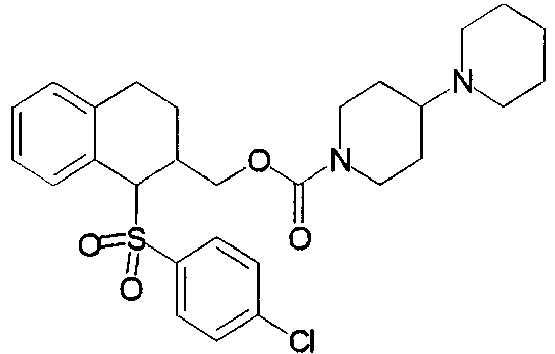
531.3; 3.11 -

- To a solution of 1,4-difluorobenzene (9.75 m L, 100 mmol) and gamma-valerolactone (1.90 mL, 20 mmol) in an acetone bath was added slowly AlCl3 (13.4 g, 100 mmol) then the reaction was stirred under reflux overnight. The mixture was then slowly poured into ice-cooled 1 N HCl, extracted with DCM, washed with water and saturated sodium bicarbonate, dried over sodium sulfate and concentrated to give 3.92 g (100%) of ketone.
- The ketone product from Step 1 was reacted with 4-chlorothiophenol following conditions similar to the ones described in Step 4 of Scheme 1-A, to provide Example 5, as an approximately 65:35 trans:cis mixture of diastereoisomers: 1H-NMR (CDCl3 400 MHz) δ 7.71 (d, J = 8.7 Hz, 2H cis), 7.70 (d, J = 8.7 Hz, 2H trans), 7.51 (d, J = 8.7 Hz, 2H cis+trans), 6.97 (m, 1 H cis+trans), 6.72 (m, 1 H cis+trans), 4.60 (br s, 1 H cis), 4.56 (d, 1 H trans), 3.37 (m, 1 H trans), 3.17 (1 H cis), 2.55-2.75 (m, 2H cis+trans), 2.00-2.20 (m, 1 H cis+trans), 1.83 (m, 1 H cis), 1.60 (br d, 1 H trans), 1.44 (d, J = 6.8 Hz, 3H cis), 1.18 (d, J = 7.2 Hz, 3H trans); LCMS (MH+) = 357.2; retention time = 3.79 min.
- Following procedures similar to those described in Schemes 1-A and 3, the compounds in Table 3 were prepared using the appropriate electrophile and lactone reactants.
TABLE 3 Example No. (not of the invention) STRUCTURE Mass Spec (M+ except otherwise noted); retention time (min) 5-A 
343.2; 3.71 5-B 
443.2; 3.89 5-C 
429.2; 3.88 -

- To a solution of magnesium turnings (7.0 g; 290 mmol) in Et2O (40 mL) were added a hexane solution containing a catalytic amount of iodine and dibromoethane (1 mL).The reaction was heated to 40°C and a solution of 2, 5-difluorobenzyl bromide (15.0 g, 72.4 mmol) in Et2O (40 mL) was added over 1 h. The reaction mixture was then stirred another hour at 40°C then cooled and diluted with Et2O to 100 mL to provide a benzyl Grignard reagent solution (16.7 g).
- To a solution of Cu (I) iodide (4.6 g, 24.1 mmol) in THF (80 mL) was added N,N,N',N'-tetramethylethylenediamine (4.0 mL, 26.6 mmol) and the reaction mixture was stirred for 15 minutes at RT. The mixture was then cooled to -78°C and the benzyl Grignard solution prepared above (5 g, 21.6 mmol) in Et2O (30 mL) was added to the mixture, followed by 15 minutes of stirring. A solution of TMSCI (6.0 mL, 60.4 mmol) and trans-methyl crotonate (2.0 mL, 21.7 mmol) in THF (30 mL) was then added and the reaction mixture was allowed to warm to -50°C and stirred at -50°C overnight. The crude product was poured into a saturated solution of NH4OH and NH4Cl, extracted with Et2O, washed with water and dried over sodium sulfate. The crude product obtained after concentration was purified by chromatography over silica gel (eluted with hexanes/EtOAc 95:5) to give 2.5 g (45%) of ester.
- To a solution of the ester from Step 1 (200 mg, 0.88 mmol) in MeOH (4 mL) was added 1 N NaOH (4 mL) and the reaction was stirred at RT overnight. The reaction was diluted with water, washed with EtOAc then acidified with 1 N HCl, extracted with EtOAc, dried over sodium sulfate and concentrated to give 173 mg (92%) of acid.
- To a solution of the acid from Step 2 (170 mg, 0.79 mmol) in DCM (2 mL) was added oxalyl chloride (0.14 mL, 1.60 mmol) and a drop of DMF and the reaction mixture was stirred 30 min at RT then concentrated. The resulting residue was taken up in DCM (3 mL), treated with AlCl3 (213 mg, 1.60 mmol) and then stirred at RT overnight. The crude product was poured into 0.1 N HCl, extracted with DCM and EtOAc, dried over sodium sulfate and concentrated. The residue was purified by chromatography over silica gel (hexanes/DCM 1:1) to afford 112 mg (70) of ketone.
- The ketone product from Step 3 was reacted with 4-chlorothiophenol following conditions similar to the ones described in Step 4 of Scheme 1-A, to provide Example 6, as a 55:45 mixture of diastereoisomers 1 and 2: 1H-NMR (CDCl3 400 MHz) δ 7.76 (d, J = 8.7 Hz, 2H diast 1), 7.45-7.55 (m, 2H diast 1 and 2), 7.42 (d, J = 8.7 Hz, diast 2), 6.90-7.00 (m, 1 H diast 1 and 2), 6.60-6.75 (m, 1 H diast 1 and 2), 4.81 (dd, 1 H diast 2), 4.60 (br s, 1 H diast 1), 3.45-3.50 (m, 1 H diast 2), 3.15 (dd, 1 H diast 1), 2.87 (br d, 1 H diast 2), 2.60-2.80 (m), 2.38 (m, 1 H diast 2), 2.10-2.30 (m), 1.50-1.60 (m), 1.18 (d, J = 6.4 Hz, 3H diast 2), 1.11 (d, J = 6.4 Hz, 3H diast 1); LCMS (2MH+) = 713.4; retention time = 5.00.
- Following procedures similar to those described in Scheme 1, the compound in Table 4 was prepared.
TABLE 4 Example No. (not of the invention) Structure Mass Spec (M+ except otherwise noted); retention time (min) 6-A 
(2MNa) 763.4; 5.17 -

- To a solution of 2,5-difluorobenzaldehyde (8.65 g, 60.9 mmol) in THF (150 mL) was slowly added vinylmagnesium bromide 1 N in THF (85 mL, 85 mmol) at -40°C and the reaction mixture was allowed to warm to 0°C over 45 min. It was then quenched into saturated NH4Cl, extracted with DCM and EtOAc, dried over sodium sulfate and concentrated. The residue was purified by flash-chromatography over silica gel (eluted with hexanes/EtOAc 95:5 to 70:30) to provide 5.37 g (37%) of alcohol.
- A solution of the alcohol product from Step 1 (5.35 g, 31.4 mmol), triethyl orthoacetate (41.3 mL, 220 mmol) and propionic acid (155 mg) was stirred at 180°C under reflux overnight. The reaction mixture was concentrated and purified by flash-chromatography over silica gel (eluted with hexanes/EtOAc 95:5 to 70:30) to give 6.42 g (85%) of alkene.
- A solution of the alkene product from Step 2 (6.42 g, 26.7 mmol) and 10% Pd/C (720 mg) in EtOH (20 mL) and EtOAc (20 mL) was hydrogenated at 30 psi for 60 min then filtered over CELITE and concentrated to afford 6.19 g (96%) of ester.
- A solution of ester product from Step 3 (5.35 g, 31.4 mmol) in EtOH (50 mL) was treated with 1 N NaOH (50 mL) and stirred at 50°C then the organic solvent was concentrated. After washing with Et2O, the aqueous layers is acidified with 1 N HCl, extracted with EtOAc and DCM, dried over sodium sulfate and concentrated to provide 4.76 g (87%) of acid.
- To a solution of the acid product from Step 4 (3.05 g, 14.2 mmol) in DCM (30 mL) at 0°C was added oxalyl chloride (2.45 mL, 28.4 mmol) followed by a drop of DMF. The reaction mixture was allowed to warm to RT and stirred 30 min then concentrated. The residue was immediately dissolved in DCE (8 mL), treated with AlCl3 (3.79 g, 28.4 mmol) and stirred overnight at 60°C. It was then poured into diluted HCl, extracted with DCM, dried over sodium sulfate and concentrated. The residue was purified by flash-chromatography over silica gel (eluted with hexanes/EtOAc 95:5 to EtOAc) to provide 1.20 g (43%) of ketone.
- The ketone product from Step 5 was reacted with 4-chlorothiophenol following conditions similar to the ones described in Step 4 of Scheme 1-A, to provide Example 7: 1H-NMR (CDCl3 400 MHz) δ 7.58 (d, J = 8.7 Hz, 2H), 7.40 (d, J = 8.7 Hz, 2H), 6.96 (m, 1 H), 6.63 (m, 1 H), 4.84 (m, 1 H), 3.20-3.35 (m, 2H), 2.72 (m, 1 H), 2.23 (m, 1 H), 1.90-2.10 (m, 2H), 1.70 (m, 1 H), 1.40 (m, 1H); LCMS (MH+) = 357.2; retention time = 5.04 min.
- Following procedures similar to those described in Schemes 1-A, 1-B, 2-A, 2-B, and 5, the compounds in Table 5 were prepared.
TABLE 5 Example No. (not of the invention) STRUCTURE Mass Spec (M+ except otherwise noted); retention time (min) 7-A 
321.2; 4.99 7-B 
715.2 (2MH+); 6.42 7-C 
741.4 (2MH+); 5.13 7-D 
793.4 (2MH+); 5.47 7-E 
371.2; 5.35 7-E 
371.2; 5.29 -

-

- 2,3,6-Trifluoroberizyl bromide (9.79 g, 43.3 mmol) and 4-chlorothiophenol (6.23 g, 43.3 mmol) were dissolved in 300 mL of THF. Triethylamine (4.59g, 45.4 mmol) was added. The solution was stirred at room temperature overnight. 300 mL of EtOAc and 300 mL of water were added. The organic layers were washed with 200 mL 1 N HCl solution, dried over Na2SO4 and concentrated. The residue was pure product (12.5 g, quant. yield). 1H NMR (CDCl3 400 MHz) δ 7.30 (d, J = 8.8Hz, 2H), 7.24 (d, J=8.8Hz, 2H), 7.03 (m, 1 H), 6.77 (m, 1 H), 4.08 (s, 2H).
-

- 2-(4-Chloro-phenylsulfanylmethyl)-1,3,4-trifluoro-benzene(12.5 g , 43.3 mmol) was dissolved in 600 mL of DCM, mCPBA (77%, 19.3 g, 86.4 mmol) was added slowly and the reaction mixture was stirred at room temperature overnight. The excess mCPBA was quenched with 10.2 g of Na2SO3 in 300 mL of water. The organic layer was separated and washed with 1 N NaOH (2x200 mL), brine (200 mL), dried over Na2SO4, filtered and concentrated. The residue was used in the next step without further purification (14.8 g, quant. yield). 1H NMR (CDCl3 400 MHz) δ 7.70 (d, J = 8.8Hz, 2H), 7.50 (d, J=8.8Hz, 2H), 7.17 (m, 1 H), 6.87 (m, 1 H), 4.49 (s, 2H).
-

- 2-(4-Chloro-benzenesulfonylmethyl)-1,3,4-trifluoro-benzene (4.0 g, 12.5 mmol) was dissolved in 40 mL dry DMF. (2-Bromo-ethoxy)-tert-butyl-dimethylsilane (4.1 g, 17.1 mmol) and NaH (2.28 g, 95.0 mmol) were added respectively. The solution was stirred at room temperature overnight. 200 mL of water and 200 mL of EtOAc were added. The aqueous layer was washed with 100 mL of EtOAc. The combined organic layers were washed with brine (100 mL), dried over Na2SO4 and concentrated. The product was purified using column chromatography (hex./EtOAc 100/0 to 90/10 in 45 min, 1.7 g, 28%). 1H NMR (CDCl3 400 MHz) δ 7.65 (m, 2H), 7.46 (m, 2H), 7.14(m, 1 H), 6.84(m, 0.5), 6.73 (m, 0.5H), 4.87 (m, 1 H), 4.79 (m, 1 H), 4.37(m, 1 H), 2.55(m, 2H), 2.04(s, 9H), -0.13 (d, J= 22.7 Hz, 6H).
-

- Tert-butyl-[3-(4-chloro-benzenesulfonyl)-3-(2,3,6-trifluoro-phenyl)-propoxy]-dimethyl-silane (2.62 g, 5.47 mmol) was dissolved in 80 mL of THF and tetrabutylammonium fluoride (1.96 g, 7.51 mmol) was added at room temperature. The solution was stirred at room temperature overnight. 200 mL of EtOAc and 200 mL of water were added and the organic layer was separated. The organic layer was dried over Na2SO4 and concentrated. The product was purified by column chromatography using hex./EtOAc as the eluent (gradient from 0/100 to 75/25 in 45 min, 1.38 g, 69%). 1H NMR (CDCl3 400 MHz) δ 7.63 (d, J = 8.8 Hz, 2H), 7.45 (d, J=8.8 Hz, 2H), 7.12 (m, 1 H), 6.82 (m, 0.5H), 6.71 (m, 0.5H), 4.91 (m, 1 H), 3.89 (m, 1 H), 4.44 (m, 1 H), 2.60 (m, 2H).
-

- 3-(4-Chloro-benzenesulfonyl)-3-(2,3,6-trifluoro-phenyl)-propan-1-ol (1.28 g, 3.51 mmol) was dissolved in 40 mL THF and NaH (60% in oil, 0.5 g, excess) was added. The solution was stirred at room temperature overnight. The reaction mixture was diluted with water (40 mL) and extracted with ethyl acetate (3x50 mL), the organic layer was combined, dried over Na2SO4 and concentrated. The product was purified using column chromatography (hex./EtOAc 100/0 to 85/15 in 40 minutes, then up to 70/30 in 60 min, 0.81g, 67%). 1H NMR (CDCl3 400 MHz) δ 7.73 (d, J = 8.8 Hz, 2H), 7.51 (d, J=8.8 Hz, 2H), 7.01 (m, 1 H), 6.39 (m, 1H), 4.85 (m, 1 H), 4.51 (m, 2H), 2.80 (m, 1H), 2.17 (m, 1 H).
-

- 4-[(4-Chlorophenyl)sulfonyl]-5,8-difluoro-3,4-dihydro-2H-1-benzopyran (101.1 mg, 0.294 mmol) was dissolved in 10 mL of THF. Ethyl bromide (600 mg, 4.88 mmol) was added, followed by potassium tert-butoxide (1M in THF, 3.05 mL, 3.05 mmol). The solution was stirred at room temperature overnight. The reaction mixture was diluted with water and extracted with ethyl acetate (3x50 mL). The organic layer was separated, washed with brine (50 mL), dried over Na2SO4 and concentrated. The product was purified using column chromatography (Hex./EtOAc 100/0 to 70/30 in 60 min, 55 mg, 50%). 1H NMR (CDCl3 400 MHz) δ 7.63 (d, J = 8.8 Hz, 2H), 7.47 (d, J=8.8 Hz, 2H), 7.03 (m, 1 H), 6.38 (m, 1 H), 4.91 (m, 1 H), 4.39 (m, 1 H), 2.55 (m, 2H), 2.30 (m, 1 H), 1.89 (m, 1 H), 0.74 (t, J=7.3 Hz, 3H).
- Following procedures similar to those described for preparing Example 8, the compounds in Table 6 were prepared.
Table 6: Ex. No (not of the invention) STRUCTURE LCMS (Min. MS) HRMS Comments 8-A 
3.34 Min. 367(M+Na) Separated by Chiral AS Column, with IPA/Hexane(40/60) as mobile phase 8-B 
3.35 Min. 345.2 (M+1) Separated by Chiral AS Column, with IPA/Hexane(40/60) as mobile phase 8-C 
3.46 Min. 417.2 (M+1) 417.0382 8-D 
3.48 Min. 1H NMR (CDCl3 400 MHz δ 7.66 (d, J = 8.8 Hz, 2H), 7.49 (d, J=8.8 Hz, 2H), 7.02 (m, 1H), 6.39 (m, 1H), 4.92 (m, 1H), 4.40 (m, 1H), 2.81 (tt, J = 15.4 and 2.9 Hz, 1H), 2.11 (m, 1H), 1.77 (d, J=2.9 Hz, 3H). 8-E 
3.92 Min. 453.2 (M+1) 8-F 
3.89 Min. 435.2 (M+1) 8-G 
4.25 Min. 415.2 (M+1) 8-H 
3.90 Min. 389.2 (M+1) 8-I 
3.50 Min. 609.3 (M+1) 609.2002 8-J 
4.84 Min. 407.2 (M+Na) 8-K 
4.13 Min. 544.3 (M+1) 544.1375 8-L 
3.42 Min. 583.3 (M+1) 583.1855 8-M 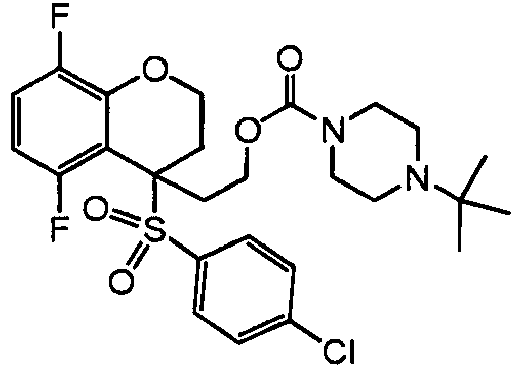
3.33 Min. 557.3 (M+1) 557.168 8-N 
3.70 Min. 502.3 (M+1) 8-O 
4.98 Min. 1H NMR (CDCl3 400 MHz δ 7.64 (d,J=8.8 Hz, 2H), 7.43 (d, J=8.8 Hz, 2H), 6.97 (m, 1H), 6.40 (m, 1H), 4.65 (m, 1H), 4.42 (m, 1H), 2.99 (m, 1H), 2.90 (tt, J=15.4 and 2.9 Hz, 1H), 2.20 (m, 1H), 1.31 (d, J=6.6 Hz, 3H), 0.71 (d, J=6.6 Hz, 3H). 8-P 
4.60 Min. 689.4 (2M+1) 436.0543 (M+Na+A CN) 8-Q 
4.70 Min. 8-R 
4.05 Min. 417.2 (M+1) 417.0725 8-S 
4.89 Min. 8-T 
5.02 Min. 8-U 
3.91 Min. 8-V 
4.68 Min. 341.0403 1H NMR (CDCl3 400 MHz δ 7.64 (d, J = 8.8 Hz, 2H), 7.43 (d, J=8.8 Hz, 2H), 6.97 (m, 1H), 6.40 (m, 1H), 4.65 (m, 1H), 4.42 (m, 1H), 2.99 (m, 1H), 2.90 (tt, J=15.4 and 2.9 Hz, 1H), 2.20 (m, 1H), 1.31 (d, J=6.6 Hz, 3H), 0.71 (d, J=6.6 Hz, 3H). 8-W 
4.85 Min. 731.4 (2M+Na) 353.0414 8-X 
4.45 Min. 327.2 (M+1) 8-Y 
4.61 Min. 8-Z 
5.51 Min. -

-

- 6-Fluorochroman-4-one (352 mg, 2.12 mmol) and 4-chlorothiophenol (320 mg, 2.2 mmol) were dissolved in 5 mL DCM. The reaction mixture was cooled to 0°C and 2.4 mL of trifluroacetic acid was added. After 5 min at 0°C, pyridine-borane complex (0.20 mL) was slowly added. The reaction mixture was stirred for 1 h at 0°C. Et2O (100 mL) and sat. NaHCO3 solution (100 mL) were added. The ether layer was dried over Na2SO4 and concentrated. The residue was dissolved in 10 mL DCM, mCPBA (77%,1.01 g, 4.50 mmol) was added and the reaction mixture was stirred at room temperature overnight. 2 g of Na2SO3 in 20 mL of water was added and the reaction was stirred for 1 h then filtered. The layers were separated, then the organic layer was washed with 1 N NaOH solution (100 mL), dried over Na2SO4 and concentrated. The product was purified by column chromatography using hex./EtOAc as the eluent (gradient from 100/0 to 30/70 in 60 min, 0.37g, 53%). 1H NMR (CDCl3 400 MHz) δ 7.67 (d, J = 8.8 Hz, 2H), 7.49 (d, J=8.8 Hz, 2H), 6.92 (m, 2H), 6.77 (m, 1 H), 4.24 (m, 2H), 4.10 (m, 1 H), 2.36 (m, 1 H), 2.18 (m, 1 H).
- Following procedures similar to those described in the preparation of Example 9, the compounds in Table 7 were prepared.
Table 7 Example No (not of the invention) STRUCTURE LCMS (Min. MS) HRMS 9-A 
4.73 Min. 341.9885 9-B 
4.72 Min. 341.2 (M+1) 9-C 
4.88 Min. 9-D 
4.63 Min. -

-

-

-

- 2-(2,3,6-Trifluoro-benzylidene)-malonic acid dimethyl ester (6.5 g, 23.7 mmol) and 4-chlorothiophenol (5.1 g, 35.5 mmol) were dissolved in 100 mL THF. K2CO3 (5 g, excess) was added, the reaction mixture was stirred at 60°C for three hours. 300 mL of EtOAc and 300 mL of water were added. The organic layer was separated, washed with water, dried over Na2SO4 and concentrated. The product was purified by column chromatography using EtOAc/hexane as the eluent. (Gradient from 0/100 to 25/75 in 45 min, 7.1 g, 72%). 1H NMR (CDCl3 400 MHz) δ 7.26 (m, 4H), 7.03 (m, 1 H), 6.75 (m, 1 H), 5.08 (d, J=11.7Hz, 1 H), 4.34 (d, J=12.4 Hz, 1 H), 3.84 (s, 3H), 3.56 (s, 3H).
-

- 2-[(4-Chloro-phenylsulfanyl)-(2,3,6-trifluoro-phenyl)-methyl]-malonic acid dimethyl ester (7.1 g, 17 mmol) was dissolved in 50 mL THF and DIBAL-H (1M in hexane, 68 mL) was added. The reaction was stirred at room temperature overnight. 100 m L of water was added to quench the reaction and 100 m L EtOAc was added to extract the product. The organic layer was washed with 1 N HCl solution (2x50 mL), brine (50 mL), dried over Na2SO4 and concentrated. The residue was dissolved in 200 mL DCM and mCPBA (77%, 7.6g, 34 mmol) was added. The reaction was stirred at room temperature for three hours. 8 g Na2SO3 in 50 mL of water was added to quench excess mCPBA. The organic layer was separated, washed with 1 N NaOH solution, brine, dried over Na2SO4 and concentrated. The product was purified by column using EtOAc/hex as the eluent (gradient from 0/100 to 75/25 in 40 min, 2.7g, 40%). 1H NMR (CDCl3 400 MHz) δ 7.59 (m, 2H), 7.36 (m, 2H), 7.06 (m, 1H), 6.81 (m, 0.5H), 6.57 (m, 0.5H), 5.26 (d, J=11.0 Hz, 1 H), 4.65 (m, 1 H), 4.20 (dt, J=11.7 and 2.2 Hz, 1 H), 3.93 (m, 1H), 3.42 (m, 1 H), 3.02 (m, 1 H).
-

- 2-[(4-Chloro-benzenesulfonyl)-(2,3,6-trifluoro-phenyl)-methyl]-propane-1, 3-diol (2.7 g, 6.9 mmol) was dissolved in 70 mL THF and NaH (2 g, excess) was added. The reaction mixture was stirred at room temperature overnight. 50 mL of water and 50 mL of EtOAc were added. The organic layer was washed with brine (50 mL), dried over Na2SO4 and concentrated. The product was purified by column chromatography using EtOAc/hex as the eluent (gradient from 0/100 to 50/50 in 40 min, 2.3g, 90%). Only the trans isomer was isolated from the reaction. 1H NMR (CDCl3 400 MHz) δ 7.72 (d, J=8.8 Hz, 2H), 7.50 (d, J=8.8 Hz, 2H), 7.03 (m, 1 H), 6.41 (m, 1 H), 4.93 (dd, J=11.7 and 3.7 Hz, 1 H), 4.63 (s, 1 H), 4.41 (d, J=11.7 Hz, 1 H), 3.69 (dd, J=11.0 and 6.6 Hz, 1 H), 3.43 (t, J=11.0 Hz, 1 H), 3.02 (m, 1 H).
-

- Trans-4-[(4-chlorophenyl)sulfonyl)]-5,8-difluoro-3,4-dihydro-2H-1-benzopyran-3-methanol (1.0g, 2.54 mmole), mesyl chloride (0.87g, 7.6 mmole) and triethylamine (0.77g, 7.6mmole) were stirred in 50ml CH2Cl2 at room temperature for two hours. 50ml water was added. The organic layer was washed with 1 N HCl solution (50ml x 2), brine (50 mL), dried over Na2SO4 and concentrated. The product was purified by column using EtOAc/Hexane as eluent (gradient from 0/100 to 50/50 in 40 minutes, 1.1 g, 96%). 1H NMR (400 MHz, CDCl3) δ 7.75 (d, J=8.8Hz, 2H), 7.54 (d, J=8.8Hz, 2H), 7.43 (s, 1H), 7.07 (m, 1H), 7.47 (s, 1 H), 4.98 (dd, J=12.4 and 2.9Hz, 1H), 4.52 (s, 1 H), 4.44 (d, J=12.4Hz, 1 H), 4.20 (dd, J=10.3 and 6.6Hz, 1 H), 4.00 (dd, J=10.3 and 8.7Hz, 1 H), 3.31 (m, 1 H), 2.98 (s, 3H).
-

- Methanesulfonic acid O-[4-(4-chloro-benzenesulfonyl)-5,8-difluoro-3,4-dihydro-2H-1-benzopyran-3-yl-methyl] ester (0.5g, 1.1mmole), Nal (0.83g, 5.5mmole) Zinc dust (0.71 g, 11 mole) and 0.1 mL acetic acid were refluxed in 15 mL ethylene glycol dimethyl ether for 6 hours. The solid was filtered and the filtrate was partitioned between 100 mL 0.1 N Na2SO3 solution and 100 mL EtOAc. The organic layer was washed with 0.5N NaOH solution (2x50ml), brine, dried over Na2SO4 and concentrated. The residue was recrystalized from EtOAc/Hexane to pure product (0.33g, 83%) 1H NMR (400 MHz, CDCl3) δ 7.71 (d, J=8.8Hz, 2H), 7.50 (d, J=8.8Hz, 2H), 7.03 (m, 1 H), 6.40 (m, 1 H), 4.92 (dd, J=11.7 and 2.9 Hz, 1 H), 4.21 (m, 2H), 3.02 (m, 1 H), 1.07(d, J = 7.3Hz, 3H).
- Following procedures similar to those described for the preparation of Example 10, the compounds in Table 8 were prepared.
Table 8 Ex. No (* = not of the invention) STRUCTURE LCMS (Min. MS) HRMS Comments 10-A* 
4.77 Min. 403.2(M+1) 10-B 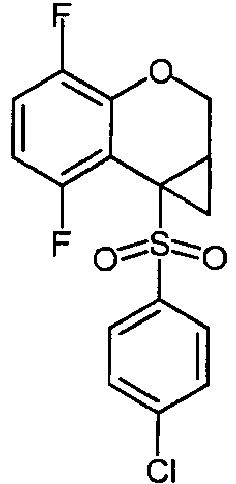
4.37 Min. 357.2 (M+1) 420.0247 (M+Na+ACN) 10-C* 
4.82 Min. 1H NMR (CDCl3 400 MHz δ 7.63 (d, J = 8.1 Hz, 2H), 7.49 (d, J=8.1 Hz, 2H), 7.04 (m, 1H), 6.40 (m, 1H), 5.23 (dd, J = 11.0 and 2.9Hz, 1H), 4.48 (dd, J = 11.7 and 1.5Hz, 1 H), 2.78 (m, 1H), 1.72 (d, J= 4.4 Hz, 3H), 1.12 (d, J = 7.3 Hz, 3H). 10-D* 
4.60 Min. 359.2 (M+1) Separated by Chiral OD Column, with IPA/Hexane(10/90) as mobile phase 10-E* 
Separated by Chiral OD Column, with IPA/Hexane (10/90) as mobile phase -

-

- 2-(4-Chloro-benzenesulfonylmethyl)-1,3,4-trifluoro-benzene (Example 8, step 2, 305 mg, 0.95 mmol) was dissolved in 4 mL THF. The solution was cooled to -78°C and butyllithium (2.5M in hexane, 0.4 mL) was added slowly. The solution was stirred at -78°C for 2 h then warmed to 0°C and stirred for 0.5 h. The solution was then cooled to -78°C again and propylene oxide (178.0 mg, 3.1 mmol) in 3.25 mL of THF was added slowly and the reaction mixture was allowed to stir and warm to room temperature overnight. The reaction mixture was quenched with a saturated NH4Cl solution (50 mL). The reaction mixture was extracted three times with EtOAc (50 mL each) and the combined organics were washed with water (100 mL) and brine (100 m L). The organic layer was then dried over Na2SO4 and concentrated. The product was purified using column chromatography (hex./EtOAc 100/0 to 70/30 in 60 min. 0.19 g, 52%). 1H NMR (CDCl3 400 MHz) δ 7.59 (m, 2H), 7.42 (m, 2H), 7.10 (m, 1 H), 6.81 (m, 0.5H), 6.66 (m, 0.5H), 4.83-4.99 (m, 1 H), 4.06 (m, 0.5H), 3.51 (m, 0.5H), 2.50-2.74 (m, 1 H), 2.26 (m, 1 H), 1.03-2.24 (m, 3H). The product is a mixture of diastereomers.
-

- The above intermediate was prepared using the procedure of Example 8, step 5. Only the trans isomer was obtained from the reaction. 1H NMR (CDCl3 400 MHz) δ 7.72 (d, J=8.8 Hz, 2H), 7.50 (d, J=8.8 Hz, 2H), 6.99 (m, 1 H), 6.36 (m, 1 H), 5.00 (m, 1H), 4.50 (m, 1 H), 2.79 (dt, J=15.4 and 2.2 Hz, 1 H), 1.85 (m, 1 H), 1.50 (d, J=6.6 Hz, 3H).
-

- Trans-4-[(4-chlorophenyl)sulfonyl]-5,8-difluoro-3,4-dihydro-2-methyl-2H-1-benzopyran (57 mg, 0.16 mmol) was dissolved in 10 mL of THF. lodomethane (720 mg, 5.11 mmol) was added, followed by potassium tert-butoxide (1M in THF, 0.5 mL, 0.5 mmol). The solution was stirred at room temperature overnight. 50 mL of water was added and the product was extracted with ethyl acetate (3x50 mL). The organic layer was separated, washed with brine (50 mL), dried over Na2SO4 and concentrated. The product was purified using column chromatography (hex./EtOAc 100/0 to 70/30 in 60 min, 39 mg, 65%). Only the trans isomer was isolated from the reaction mixture 1H NMR (CDCl3 400 MHz) δ 7.66 (d, J=8.8 Hz, 2H), 7.49 (d, J=8.8 Hz, 2H), 7.01 (m, 1 H), 6.35 (m, 1 H), 5.08 (m, 1 H), 2.79 (dt, J=15.4 and 2.2 Hz, 1 H), 1.72-1.81 (m, 4H), 1.47 (d, J=6.6 Hz, 3H).
- Following procedures similar to those described for the preparation of Example 11, the compounds in Table 9 were prepared.
Table 9 Example No (not of the invention) STRUCTURE LCMS (Min. MS) HRMS 11-A 
5.18 Min. 457.3 (M+23) 11-B 
4.86 Min. 373.2 (M+1) 373.0475 11-C 
4.77 Min. 355.2 (M+1) 11-D 
5.37 Min. 11-E 
4.93 Min. -

-

- 2-(4-Chloro-phenylsulfanylmethyl)-1,3,4-trifluoro-benzene (Example 8, step 2, 1.0 g, 3.1 mmol) and methyl crotonate (1.55 g, 15.5 mmol) were dissolved in 50 mL of THF and potassium t-butoxide (1M in THF, 6.2 mL) was added. The reaction mixture was stirred at room temperature for five hours. 100 mL of water and 100 mL of EtOAc were added. The organic layer was washed with brine (100 mL), dried over Na2SO4 and concentrated. The product was purified by column chromatography using EtOAc/hexane as the eluent (gradient from 0/100 to 50/50 in 40 min, 0.79 g, 60%). The product is a mixture of diastereomers. 1H NMR (CDCl3 400 MHz) δ 7.60 (m, 2H), 7.37 (m, 2H), 7.07 (m, 1 H), 6.83 (m, 0.5H), 6.63 (m, 0.5H), 5.03 (t, J=10.2 Hz, 0.5H), 4.80 (d, J=10.2 Hz, 0.5H), 3.71 (s, 1.5H), 3.60 (s, 1.5H), 3.33 (m, 1 H), 3.10 (m, 0.5H), 2.89 (m, 0.5H), 2.42 (m, 0.5H), 2.15 (m, 0.5H), 1.49(t, J=6.6 Hz, 1.5H), 0.95 (dd, J=8.8 and 7.3 Hz, 1.5H).
-

- 4-(4-Chloro-benzenesulfonyl)-3-methyl-4-(2,3,6-trifluoro-phenyl)-butyric acid methyl ester (0.79 g, 1.88 mmol) was dissolved in 10 mL of THF and lithium borohydride (0.5 g, excess) was added. The reaction mixture was stirred at room temperature overnight. 50 mL of water and 50 mL of EtOAc were added. The organic layer was washed with brine (50 mL), dried over Na2SO4 and concentrated. The residue was used in next step without further purification (0.71 g, 96%). 1H NMR (CDCl3 400 MHz) δ 7.61 (m, 2H), 7.36 (m, 2H), 7.06 (m, 1 H), 6.82 (m, 0.5H), 6.60 (m, 0.5H), 4.79 (m, 0.5H), 4.56 (m, 0.5H), 3.85 (m, 1 H), 3.68 (m, 1 H), 3.12 (m, 1 H), 2.39 (m, 0.5H), 1.95 (m, 0.5H), 1.57 (m, 0.5H), 1.46 (dd, J=4.4 and 5.9 Hz, 1.5H), 1.32 (m, 0.5H), 0.92 (dd, J=7.3 and 9.5 Hz, 1.5H).
-

- 4-(4-Chloro-benzenesulfonyl)-3-methyl-4-(2,3,6-trifluoro-phenyl)-butan-1-ol (0.71g, 1.8 mmol) was dissolved in 50 mL of THF and sodium hydride (60% in oil, 0.5 g, excess) was added. The reaction was stirred at room temperature for two hours. 50 mL of water and 50 mL of EtOAc were added. The organic layer was washed with saturated NaCl solution (50 mL), dried over Na2SO4 and concentrated. The product was purified by column chromatography using EtOAc/hex as the eluent (gradient from 0/100 to 25/75 in 40 min). Two products were isolated. Cis isomer (31 mg, 4.6%). 1H NMR (CDCl3 400 MHz) δ 7.57 (d, J=8.8 Hz, 2H), 7.34 (d, J=8.8 Hz, 2H), 6.95 (m, 1H), 6.44 (m, 1H), 4.74 (bs, 1 H), 4.66 (dt, J=12.4 and 3.7 Hz, 1 H), 3.81 (m, 1 H), 3.07 (m, 1 H), 2.39 (m, 1 H), 1.85 (m, 1 H), 1.65 (d, J=7.3 Hz, 3H). Trans isomer (0.46 g, 68%). 1 H NMR (CDCl3 400 MHz) δ 7.52 (d, J=8.8 Hz, 2H), 7.37 (d, J=8.8 Hz, 2H), 7.03 (m, 1 H), 6.54 (m, 1 H), 4.52 (d, J=3.7 Hz, 1 H), 4.40 (m, 1 H), 3.93 (m, 1 H), 3.21 (m, 1 H), 2.79 (m, 1 H), 2.72 (m, 1 H), 1.11 (d, J=7.3 Hz, 3H).
- Two enantiomers were isolated from the trans isomer by Chiral-AS® column using hexane/isopropanol (75/25) as the mobile phase.
-

-

- 2-(4-Chloro-benzenesulfonylmethyl)-1,3,4-trifluoro-benzene (1.0 g, 3.1 mmol, from example 8, step 2) and 6-bromo-1-hexene (1.5g, 6.3 mmole) were dissolved in 20 mL THF and potassium t-butoxide (1M in THF, 6.2 mL) was added. The reaction mixture was stirred at room temperature for three hours. 50 mL water and 50 mL EtOAc were added. The organic layer was washed with brine (50 mL), dried over Na2SO4 and concentrated. The product was purified by column chromatography using EtOAc/Hexane as eluent (gradient from 0/100 to 25/75 in 40 minutes, 0.65 g, 52%). 1H NMR (CDCl3, 400 MHz) δ 7.63 (d, j = 8.05 Hz, 2H), 7.45 (d, j = 8.05 Hz, 2H), 7.14(m, 1 H), 6.83(m, 0.5), 6.74 (m, 0.5H), 5.70 (m, 1 H), 4.93 (m, 2H), 4.58(d, j = 5.1 and 6.5 Hz, 1 H), 2.43(m, 1 H), 2.31 (m, 1 H), 1.99 (m, 2H), 1.39 (m, 2H), 1.25 (m, 2H).
-

- [7-(4-chloro-benzenesulfonyl)-7-(2,3,6-trifluoro-phenyl)-1-heptene (0.65g, 1.6mmole) and mCPBA (77%, 0.71 g, 3.2 mmole) were stirred in 50 mL DCM for 5 hours. 2g Na2S2O3 in 100 mL water were added to quench excess mCPBA. The organic layer was separated, washed with 1 N NaOH solution (50 mL), brine (50 mL), dried over Na2SO4 and concentrated. The product was purified by column chromatography using EtOAc/Hexane as eluent (Gradient from 0/100 to 40/60 in 40 minute, 0.52 g, 77%). 1H NMR (CDCl3, 400 MHz) δ 7.63 (d, j = 8.05 Hz, 2H), 7.45 (d, j = 8.05 Hz, 2H), 7.15 (m, 1 H), 6.83(m, 0.5), 6.74 (m, 0.5H), 4.58 (dd, j = 5.1 and 6.5 Hz, 1 H), 2.84 (m, 1H), 2.71 (t, j = 4.4Hz, 1 H), 2.41 (dd, j = 2.9 and 5.1 Hz), 2.45(m, 1 H), 2.34 (m, 1 H), 1.25-1.55 (m, 6H).
-

- 2-[5-(4-Chloro-benzenesulfonyl)-5-(2,3,6-trifluoro-phenyl)-pentyl]-oxirane(0.52 g, 1.24 mmole) was dissolved in 25 mL THF and potassium t-butoxide (1 M in THF, 3.72 mL) was added. The reaction mixture was stirred at room temperature for 2 hours, then heated to 50°C for four hours, 50 mL of water and 50 mL of EtOAc were added. The organic layer was washed with brine (50 mL), dried over Na2SO4 and concentrated. The product was purified by column chromatography using EtOAc/Hexane as eluent (gradient from 0/100 to 25/75 in 40 minutes). Two major products were isolated. Example 13: (6aR)-10aS-[(4-chloro-benzenesulfonyl)-1,4-difluoro-6a,7,8,9,10,10a-hexahydro-6H-dibenzo[b,d]pyran (racemic, containing about 13% of 14, 31 mg, 5.4% ). 1H NMR (CDCl3, 400 MHz) δ 7.59 (d, j = 8.05 Hz, 2H), 7.47 (d, j = 8.05Hz, 2H), 7.06 (m, 1 H), 6.40 (m, 1 H), 5.23 (dd, j = 11.7 and 2.9 Hz, 1 H), 4.14 (d, j = 11.7Hz, 1H), 2.61 (m, 2H), 1.90 (tt, j = 13.9 and 2.9 Hz, 1 H), 1.65-1.81 (m, 3H), 1.42 (m, 2H), 1.02 (m, 1 H). Compound 15: 7(S)-[(4-chloro-benzenesulfonyl)-8,11-difluoro-2,3,4,5,6,7-hexahydro-2(S),7-methano-1-benzoxonin (racemic, 112 mg, 23%). 1H NMR (CDCl3, 400 MHz) δ 7.53 (d, j = 8.05Hz, 2H), 7.39 (d, j = 8.05Hz, 2H), 7.02 (m, 1 H), 6.60 (m, 1 H), 4.85 (m, 1 H), 3.12 (d, j = 13.9Hz, 1 H), 2.81 (m, 1 H), 2.36 (m, 1 H), 2.29 (dd, j = 14.6 and 1.5 Hz, 1 H), 2.10 (m, 1 H), 1.97 (m, 1 H), 1.65 (m, 1 H), 1.09-1.37 (m, 3H).
- Following procedures similar to those described for the preparation of Examples 13 to 15, the compounds in Table 10 were prepared.
TABLE 10 Example No. STRUCTURE Mass Spec (M+ except otherwise noted); retention time (min) 13-A
14-A
(2MNa) 853.1; 5.31 and 5.44 15-A 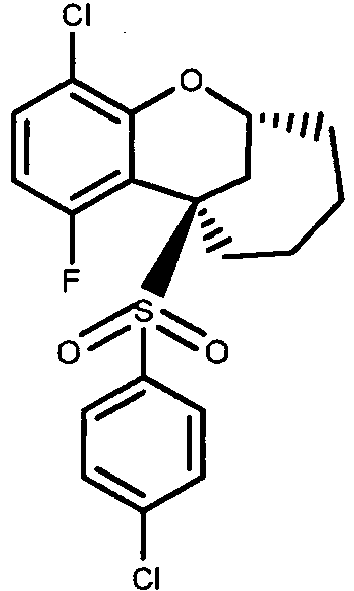
(2MH) 831.5; 5.01 -

-

-

-

- Trans-[4-(4-chloro-phenylsulfanyl)-5,8-difluoro-chroman-3-yl]-methanol (0.6g, 1.65 mmole) and (2-bromo-ethoxymethyl)-benzene (0.71 g, 3.3mmole) were dissolved in 30 ml THF and NaH (0.5g) was added. The reaction was stirred at room temperature overnight. (2-Bromo-ethoxymethyl)-benzene (0.71g, 3.3mmole) and NaH (0.5g) were added and the reaction was refluxed overnight. 50 ml water and 50 ml EtOAc were added. The organic layer was washed with Sat. NaCl solution (50ml), dried over Na2SO4 and concentrated. The product was purified by column chromatography (EtOAc/Hex. from 0/100 to 25/75 in 40 minute). Yield: 0.42g, 53%. 1H NMR (CDCl3 400 MHz δ 7.42 (d, J = 8.8 Hz, 2H), 7.25-7.37 (m, 7H), 6.96 (m, 1 H), 6.57 (m, 1 H), 4.60 (dd, J = 11.7 and 2.2 Hz, 1 H), 4.52 (bs, 3H), 4.40 (t, J = 11.0, 1 H), 3.3-3.56(m, 6H), 2.38 (m, 1 H).
-

- 3-(2-Benzyloxy-ethoxymethyl)-4-(4-chloro-phenylsulfanyl)-5,8-difluoro-chroman (0.42g, 0.88mmole) was dissolved in 15 ml DCM and MCPBA (77%, 0.6g, 2.6mmole) was added. The reaction was stirred at room temperature for 30 minutes. 0.5g sodium thiosulfate in 50 ml water and 50 ml EtOAc were added. The organic layer was washed with 1 N NaOH solution (50 ml), brine (50ml), dried over sodium sulfate and concentrated. The product was purified by column (EtOAc/hexane from 0/100 to 50/50 in 45 minutes). Yield: 0.40g, 89%. 1H NMR (CDCl3 400 MHz δ 7.73 (d, J = 8.8Hz, 2H), 7.4 (d, J = 8.1 Hz, 2H), 7.25-7.37 (m, 5H), 7.02 (m, 1 H), 6.42 (m, 1 H), 4.90 (dd, J = 11.7 and 2.9 Hz, 1 H), 4.63 (s, 1 H), 4.50 (s, 2H), 4.38 (t, J = 11.0, 1 H), 3.45-3.62(m, 5H), 3.30 (t, J = 9.5 Hz, 1 H), 3.13 (m, 1 H).
-

- 3-(2-Benzyloxy-ethoxymethyl)-4-(4-chloro-benzenesulfonyl)-5,8-difluoro-chroman (0.4g, 0.79mmole) was dissolved in 10 ml EtOAc and Pd(OH)2 was added. Hydrogen was introduced via a balloon. The reaction was stirred at room temperature for 30 minutes. The catalyst was filtered and residue was used in next step without purification. Yield: 0.32g, 97%. 1H NMR (CDCl3 400 MHz δ 7.73 (d, J = 8.1 Hz, 2H), 7.51 (d, J = 8.1 Hz, 2H), 7.03 (m, 1 H), 6.41 (m, 1 H), 4.90 (dd, J = 8.8 and 2.9 Hz, 1 H), 4.57 (s, 1 H), 4.39 (td, J = 11.7 and 1.5 Hz, 1 H), 3.68(br, 2H), 3.41-3.54 (m, 3H), 2.30 (t, J = 9.5 Hz, 1H), 3.15 (m, 1 H).
-
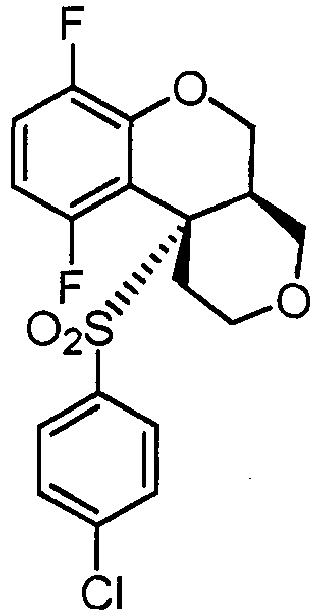
- The compound was synthesized as previously disclosed method.
- The racemic mixture can be separated into two pure enantiomers using Chiral OJ column with ethanol as solvent.
- First fraction: [α] = -138.4 deg. (c = 1.00 in DCM)
- Second fraction: [α] = 137.2 deg. (c = 1.02 in DCM)
-

-

- 5,8-Difluoro-2H-chromene (35g, 0.21 mole) was dissolved in 500 ml DCM and MCPBA (77%, 93g, 0.42 mole) was added. The reaction was stirred at room temperature for 30 minutes. 50g Na2S2O3 in 500 ml water was added to quench the reaction. The organic layer was washed with 2N NaOH solution (2 x 500ml), brine(200ml), dried over Na2SO4 and concentrated. The residue was recrystalized from EtOAc/Hexane solution to give rise to 21.6g pure product. The residue from mother liquor was purified by column chromatography (EtOAc/hexane from 0/100 to 25/75 in 55 minute, additional 1.4g obtained). Total Yield: 23g, 60%. 1H NMR (CDCl3 400 MHz δ 7.00 (m, 1 H), 6.63 (m, 1 H), 4.67 (d, J = 12.4 Hz, 1 H), 4.27 (m, 2H), 3.84 (d, J = 4.4Hz, 1 H).
-

- 5,8-Difluoro-2H-chromene oxide (23g, 0.125mole) and 4-Chloro-benzenethiol (18.1g, 0.125mmole) were dissolved in 500ml DCM and InCl3 (2.9g, 0.013mole) was added. The reaction was stirred at room temperature overnight. 200ml DCM and 200ml water were added. The organic layer was washed with brine, dried over Na2SO4 and concentrated. The product was purified by column chromatography (EtOAc/hexane from 0/100 to 50/50 in 55 minute). Yield: 23.2g, 57%. 1H NMR (CDCl3 400 MHz δ 7.48 (d, J = 8.8 Hz, 2H), 7.34 (d, J = 8.8 Hz, 2H), 7.01 (m, 1 H), 6.64 (m, 1 H), 4.63 (d, J = 11.7 Hz, 1 H), 4.32-4.41 (m, 2H), 4.12 (m, 1 H).
-
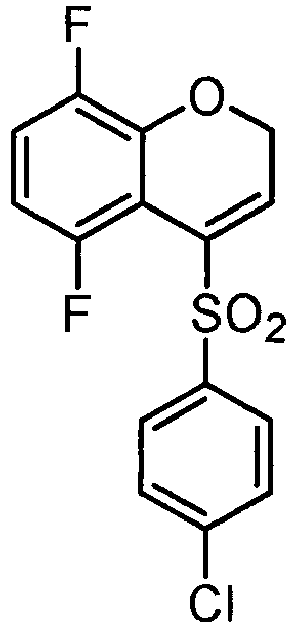
- 4-(4-Chloro-phenylsulfanyl)-5,8-difluoro-chroman-3-ol (23.2, 71 mmole) was dissolved in 200 ml DCM and MCPBA (77%, 31.7g, 142mmole) was added. The reaction was stirred at room temperature for 3 hours. 10g Na2S2O3 in 50 ml water was added to quench the reaction. The organic layer was washed with 1 N NaOH solution (2x100ml), brine(100ml), dried over Na2SO4 and concentrated. The residue was dissolved in 200 ml DCM, mesyl chloride (16.1g, 142 mmole) and triethylamine (14.3g, 142 mmole) were added. The reaction was stirred at room temperature for one hour. The reaction solution was washed with brine(100ml), dried over Na2SO4 and concentrated. The residue was recrystalized from EtOAc/Hexane solution to give rise to 8.4 g pure product. The residue from mother liquor was purified by column chromatography (EtOAc/hexane from 0/100 to 25/75 in 55 minute, 7.1g). Total yield: 15.5g, 64%. 1H NMR (CDCl3 400 MHz δ 7.84 (dd, J = 8.8 and 2.2 Hz, 2H), 7.51 (d, J = 8.1 Hz, 2H), 7.30 (t, J = 4.4Hz, 1 H), 7.00 (m, 1 H), 6.54 (m, 1 H), 4.99 (d, J = 4.4 Hz, 2H).
-

-

-

- 3-[2-(2-Benzyloxy-ethyl)-[1,3]dioxolan-2-ylmethyl]-4-(4-chloro-benzenesulfonyl)-5,8-difluoro-chroman (6.3g, 11.2mmole) was dissolved in 200 ml EtOAc and Pd(OH)2 (0.5g) was added. Hydrogen was introduced via a balloon. The reaction was stirred at room temperature for 45 minutes. The catalyst was filtered and the filtrate was concentrated. The residue was dissolved in 200ml DCM and MsCl (1.4g, 12mmole) and NEt3 (1.7g, 17mmole) were added. The mixture was stirred at room temperature for ten minutes. 200 ml water and 100 ml DCM were added. The organic layer was washed with 1N HCl (100ml), water (100 ml), brine (100ml), dried over Na2SO4 and concentrated. The residue was dissolved in 200ml THF and KOt-Bu (1 M in THF, 14ml) was added. The mixture was stirred at room temperature for twenty minutes. 200 ml water and 200 ml EtOAc were added. The organic layer was washed with brine (200ml), dried over Na2SO4 and concentrated. The product was purified by column (EtOAc/hexane from 0/100 to 25/75 in 45 minutes). Yield: 3.1 g, 61%. 1H NMR (CDCl3 400 MHz δ 7.61 (d, J = 8.8 Hz, 2H), 7.49 (d, J = 8.8 Hz, 2H), 7.07 (m, 1 H), 6.42 (m, 1 H), 5.23 (dd, J = 11.7 and 2.9 Hz, 1 H), 4.12 (d, J = 11.0 Hz, 1 H), 3.88-4.01 (m, 4H), 2.97 (dt, J = 13.2 and 2.9 Hz, 1 H), 2.53 (dt, J = 13.1 and 2.9Hz, 1 H), 2.33 (tt, J = 13.2 and 2.9 Hz, 1 H), 1.62-1.81 (m, 3H), 1.23-1.35 (m, 1 H).
-

- Trans-1 0a-[(4-chlorophenyl)sulfonyl]-1,4-difluoro-6a,9,10,10a-tetrahydrospiro[6H-dibenzo[b,d]pyran-8(7H),2'-[1,3]dioxolane] (3.1g, 6.8mmole) was dissolved in 200ml acetone and 10ml water. Toluenesulfonyl chloride (1g) was added and the mixture was refluxed overnight. Acetone was removed. 100 water and 100 ml EtOAc were added. The organic layer was washed with water (50 ml), dried over Na2SO4 and concentrated. The residue was pure enough for next step. Yield: 2.8g, 100%. 1H NMR (CDCl3 400 MHz δ 7.63 (d, J = 8.1 Hz, 2H), 7.52 (d, J = 8.8 Hz, 2H), 7.14 (m, 1 H), 6.64 (m, 1 H), 5.27 (dd, J = 11.7 and 2.9 Hz, 1 H), 4.13 (d, J = 11.7 Hz, 1 H), 3.18 (d, J = 12.4 Hz, 1 H), 2.79 (dt, J = 12.4 and 3.7Hz, 1 H), 2.4-2.57 (m, 4H), 2.04-2.17 (m, 1 H).
-

- Trans-10a-(4-chloro-benzenesulfonyl)-1,4-difluoro-6a, 7,8,9,10,10a-hexahydro-6H-benzo[c]chromen-8-ol (1.0g, 2.4mmole) was dissolved in 50ml THF and sodium hydride (0.3g) was added. The reaction was stirred at room temperature for 10 minutes. 100ml water and 100 ml EtOAc were added. The organic layer was washed with water (50 ml), brine (50ml), dried over Na2SO4 and concentrated. The residue was purified by column (EtOAc/hexane from 0/100 to 50/50 in 35 minutes). Yield: 0.81g of 18A and 60mg of 18B
- 18A: 1H NMR (CDCl3 400 MHz) δ 7.58 (d, J = 8.8 Hz, 2H), 7.48 (d, J = 8.8 Hz, 2H), 7.05 (m, 1H), 6.61 (m, 1 H), 5.22 (dd, J = 8.8 and 2.9 Hz, 1 H), 4.15 (d, J = 11.0 Hz, 1 H), 3.78 (m, 1 H), 2.78 (dt, J = 13.2 and 2.9Hz, 1 H), 2.60 (dt, J = 13.2 and 2.9Hz, 1 H), 1.90-2.06 (m, 3H), 1.42 (m, 1 H), 0.96-1.08 (m, 1 H).
- 18B: 1H NMR (CDCl3 400 MHz) δ 7.63 (d, 2H, J=8.8 Hz), 7.50 (d, 2H, J=9.0 Hz), 7.10-7.04 (m, 1 H), 6.45-6.39 (m, 1H), 5.28 (dd, 1 H, J=2.8 Hz), 4.10 (d, 1 H, J=11.6 Hz), 4.04 (dd, 1 H, J=2.8 Hz), 3.10-3.06 (m, 1 H), 2.54-2.46 (m, 1 H), 2.37-2.33 (m, 1 H), 1.85-1.59 (m, 3H), 1.49 (br s, 1H), 1.33-1.26 (m, 1 H).
-

-

- Trans-10a-(4-chloro-benzenesulfonyl)-1,4-difluoro-6a,7,8,9,10,10a-hexahydro-6H-benzo[c]chromen-8-ol (0.81g, 2.0mmole) was dissolved in 10ml DCM. Mesyl chloride (0.23g, 2.0mmole) and triethylamine (0.5ml) were added. The reaction was stirred at room temperature for 10 minutes. 50ml brine and 50 ml DCM were added. The organic layer was washed with 1 N HCl solution (50ml), water (50 ml), brine (50ml), dried over Na2SO4 and concentrated. The residue was dissolved in 20 ml DMF. Sodium azide (0.5g, 7.4mmole) and 50 mg 18-crown-6 were added. The rection was heated to 80°C over the weekend. 50 ml EtOAc and 50 ml hexane were added. The organic layer was washed with water (2 x 50 ml), dried over Na2SO4 and concentrated. The residue was pure product and it was used in next step without further purification. Yield: 0.68g, 79%. 1H NMR (CDCl3 400 MHz δ 7.61 (d, J = 8.8 Hz, 2H), 7.50 (d, J = 8.8 Hz, 2H), 7.08 (m, 1 H), 6.42 (m, 1 H), 5.25 (dd, J = 11.7 and 2.9 Hz, 1 H), 4.12 (d, J = 11.0 Hz, 1H), 3.87 (m, 1H), 2.96 (dt, J = 11.7 and 2.9Hz, 1 H), 2.27-2.42 (m, 2H), 1.79-1.92 (m, 2H), 1.61-1.70 (m, 1 H), 1.23-1.31 (m, 1 H).
-

- Cis-8-Azido-10a-(4-chloro-benzenesulfonyl)-1,4-difluoro-6a,7,8,9,10,10a-hexahydro-6H-benzo[c]chromene (0.63g, 1.43mmole) was dissolved in 25 ml THF and triphenylphosphine (0.45g, 1.72mmole) was added. 2ml water was added and the reaction was refluxed for 4 hours. The reaction was cooled to room temperature. 10ml 1N NaOH soluton was added and the reaction was stirred at room temperature overnight. 50ml water and 50 ml EtOAc were added. The organic layer was washed with water (2 x 50 ml), dried over Na2SO4 and concentrated. The residue was purified by column (EtOAc/2.5N NH3 in MeOH from 100/0 to 80/20 in 45 minutes). Yield: 0.46g, 78%. 1H NMR (CDCl3 400 MHz δ 7.61 (d, J = 8.8 Hz, 2H), 7.48 (d, J = 8.8 Hz, 2H), 7.05 (m, 1 H), 6.40 (m, 1 H), 5.24 (dd, J = 11.7 and 2.9 Hz, 1 H), 4.07 (d, J = 11.0 Hz, 1 H), 3.24 (bs, 1 H), 3.09 (m, 1 H), 2.52 (tt, J = 13.9 and 2.9 Hz, 1 H), 2.27 (d, J = 13.9 Hz, 1 H), 1.49-1.31 (m, 3H),1.30 (m, 1 H).
-

- (6aR)-1 0aS-(4-Chloro-benzenesulfonyl)-1,4-difluoro-6a,7,8,9,10,10a-hexahydro-6H-benzo[b,d]pyran-8(R)-amine(150mg, 0.36mmole) was dissolved in 25 ml DCM and trifluoromethanesulfonyl chloride (0.15g, 0.54mmole) in 5 ml DCM was added, followed by triethylamine (0.2ml). The reaction was stirred at room temperature for 10 minutes. 50m water and 50 ml DCM were added. The organic layer was separated, dried over Na2SO4 and concentrated. The residue was purified by column (EtOAc/hexane from 0/100 to 25/75 in 35 minutes). Yield: 0.18g, 91 % of racemic compound 20A. 1H NMR (CDCl3 400 MHz δ 7.57 (d, J = 8.1 Hz, 2H), 7.50 (d, J = 8.8 Hz, 2H), 7.10 (m, 1 H), 6.42 (m, 1 H), 6.07 (d, J = 8.1 Hz, 1 H), 5.25 (dd, J = 11.7 and 2.9 Hz, 1H), 4.13 (d, J = 12.4 Hz, 1H), 3.90 (bs, 1H), 2.96 (dt, J = 13.2 and 2.9 Hz, 1 H), 2.52 (dt, J = 13.9 and 2.9 Hz, 1H), 2.25 (tt, J = 13.9 and 2.2 Hz, 1 H), 1.81-2.01 (m, 3H),1.41 (tt, J = 14.6 and 2.9 Hz, 1 H).
- The racemic mixture can be separated into two pure enantiomers 20B and 20C using Chiral OJ column with hexane/isopropanol (65/35) as solvent.
- First fraction: [α] = -72.2 deg. (c = 0.90 in DCM)- Compounds 20B.
- Second fraction: [α] = 67.2 deg. (c = 0.95 in DCM)- Compounds 20C
- Using methods similar to those in Example 20 (i.e., methods similar to those used for the preparation of compound 20A) and substituting an appropriate acyl or sulfonyl halide, the compounds in Table 11 were prepared.
Table 11 Ex. No. Structure LCMS (M+1, retention time) 20D 
456.3, 4.19 Min. 20E 
485.3, 4.35 Min. 20F 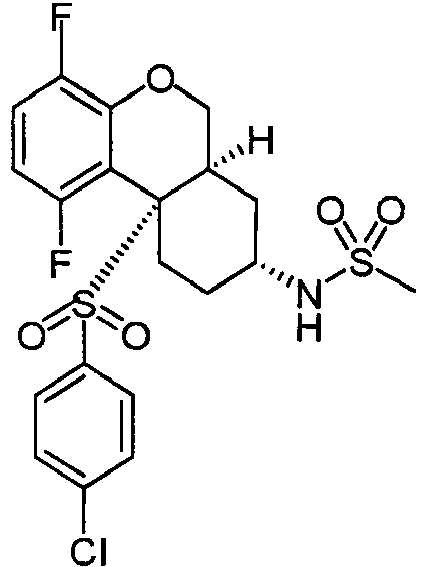
492.3, 4.06 Min. 20G 
506.3, 4.18 Min. 20H 
520.3, 4.36 Min. 20I 
560.3, 4.77 Min. 20J 
(No M+1), 4.52 Min. 20K 
520.3, 4.50 Min. 20L 
533.3, 4.70 Min. -

-

- 4-(4-Chloro-benzenesulfonyl)-5,8-difluoro-2H-chromene (0.3g, 0.88 mmole) was dissolved in 15ml THF and 3-aminopropanol (1ml) was added. The mixture was stirred at room temperature for 30 minutes. 50 saturated Na2CO3 solution and 50 ml EtOAc were added. The organic layer was washed with water (50 ml), brine (50ml), dried over Na2SO4 and concentrated. The product was purified by column (EtOAc/hexane from 50/50 to 100/0 in 45 minutes). Yield: 0.31 g, 84%. 1H NMR (CDCl3 400 MHz) δ 7.69 (d, J = 8.8 Hz, 2H), 7.48 (d, J = 8.1 Hz), 6.99 (td, J = 9.5, 5.1 Hz, 1 H), 6.38 (td, J = 9.5, 3.7 HZ, 1 H), 4.80 (dd, J = 12.5, 2.9 Hz, 1H), 4.53 (s, 1 H), 4.43 (d, J = 11.8 Hz, 1 H), 3.78 (s, 1 H), 3.61 (t, J = 5.9 Hz, 2H), 2.86-2.71 (m, 2H), 2.25 (bs, 1 H), 1.57 (p, J = 5.9 Hz, 2H).
-

- Methanesulfonic acid 4-(4-chloro-benzenesulfonyl)-5,8-difluoro-chroman-3-yl ester (0.29g, 0.69mmol) was dissolved in 50ml of dichloromethane. Methanesulfonyl chloride (64µL, 0.83mmol) and triethylamine (117µL, 0.83mmol) were added respectively and stirred at room temperature overnight. The solution was quenched with water (40 ml) and dichloromethane (40 ml). The layers were separated and the aqueous layer was washed with dichloromethane. The combined organics were dried over Na2SO4 and concentrated under vacuum. The product was used in next step without further purification. Crude yield: 280mg, 81%. 1H NMR (CDCl3 400 MHz) δ 7.71 (d, J = 8.8 Hz, 2H), 7.50 (d, J = 8.8 Hz, 2H), 7.01 (td, J = 10.3, 5.1 Hz), 6.41 (td, 8.8, 3.7 Hz, 1 H), 4.80 (dd, J = 11.8, 2.2 Hz, 1 H), 4.53 (s, 1 H), 4.48 (d, J = 11.8 Hz, 1 H), 4.22 (t, 5.9 Hz, 2H), 3.75 (s, 1 H), 2.93 (s, 3 H), 2.82-2.67 (m, 2H), 1.79 (p, J = 5.9 Hz, 2H).
-

- Methanesulfonic acid 3-[4-(4-chloro-benzenesulfonyl)-5,8-difluoro-chroman-3-ylamino]-propyl ester (0.28g, 0.57mmol) was dissolved in 25 ml of tetrahydrofuran then 1 M potassium tert-butoxide solution (2.40ml, 2.40mmol) was added. The reaction was stirred at room temperature for 3.5 h. The reaction was quenched with 50 ml of water and washed with 50 ml of ethyl acetate. The organic layer was dried over Na2SO4 and concentrated. The product was purified by prep TLC (EtOAc/Hex. 50/50). Yield: 140mg, 60%. 1H NMR (CDCl3 400 MHz) δ 7.60 (d, J = 8.1 Hz, 2H), 7.49 (d, J = 8.8 Hz, 2H), 7.08 (td, J = 9.5, 4.4 Hz, 1 H), 6.47-6.40 (m, 1 H), 5.21 (dd, J = 11.8, 2.2 Hz, 1 H), 4.33 (d, J = 11.8 Hz, 1 H), 3.70 (s, 1 H), 3.00 (d, J = 13.2 Hz, 1 H), 2.76 (td, J = 12.4 Hz, 2.9 Hz, 1H), 2.68 (d, J = 13.2 Hz, 1 H), 2.17(tt, J = 13.2, 2.9 Hz 1 H), 1.66-1.44 (m, 2H), 1.21-1.07(m, 1 H).
-

- 4a-(4-Chloro-benzenesulfonyl)-5,8-difluoro-2,3,4,4a,10,10a-hexahydro-1 H-9-oxa-1-aza-phenanthrene (73mg, 0.18mmol) was dissolved in 5 ml of tetrahydrofuran then acetic anhydride (182mg, 1.78mmol) was added. The reaction was stirred at room temperature overnight. Lithium borohydride (64mg, 2.91 mmol) was added and the reaction was stirred at room temperature for 3 h. The reaction was quenched with 25 ml of water then 25 ml of ethyl acetate was added. The organic layer was dried over Na2SO4 and concentrated. The product was purified by column using EtOAc/Hex. as the eluent (gradient from 0/100 to 50/50 in 40 minutes). Two compounds were isolated.
- 4a-(4-Chloro-benzenesulfonyl)-1-ethyl-5,8-difluoro-2,3,4,4a,10,10a-hexahydro-1 H-9-oxa-1-aza-phenanthrene (22): Yield: 20.8mg, 26%. 1H NMR (CDCl3 400 MHz) δ 7.60 (d, J = 8.1 Hz, 2H), 7.48 (d, J = 8.8 Hz, 2H), 7.07-6.99 (m, 1 H), 6.43-6.35 (m, 1 H), 5.16 (dd, J = 13.2, 1.5 Hz, 1 H), 4.67 (dd, J = 13.2, 1.5 Hz, 1 H), 3.34 (s, 1 H), 3.15-3.04 (m, 1 H), 2.84-2.67 (m, 2H), 2.61-2.51 (m, 2H), 2.04-1.94 (m, 1H), 1.66-1.58 (m, 1 H), 1.39-1.27 (m, 1 H), 1.00 (t, J = 7.3 Hz, 3H).
- 1-[4a-(4-Chloro-benzenesulfonyl)-5,8-difluoro-2,3,4,4a, 10, 10a-hexahydro-9-oxa-1-aza-phenanthren-1-yl]-ethanone(23): Yield: 36.6mg, 46%. 1H NMR (CDCl3 400 MHz) δ 7.61 (d, J = 8.8 Hz, 2H), 7.43 (d, J = 8.8 Hz, 2H), 7.05 (td, J = 9.5, 4.4 Hz, 1 H), 6.60-6.51 (m, 1 H), 5.40 (bs, 1 H), 4.50 (dd, J = 11.8, 3.7 Hz, 1 H), 4.20 (dd, J = 11.8, 5.9 Hz, 1 H), 3.62 (bs, 1 H), 2.90 (bs, 1 H), 2.70-2.60 (m, 1 H), 2.50-2.40 (m, 1 H), 2.22-2.03 (m, 4H), 1.52-1.41 (m, 1 H).
-

- A solution of the product from Example 16 Step 2 (500 mg, 1.46 mmol) in DCM (3 mL) was treated with Dess-Martin periodinane (732 mg, 1.72 mmol) and stirred at RT for 1 h before excess sodium thiosulfate was added. The slurry was diluted with EtOAc and half-saturated NaHCO3, washed with half-saturated NaHCO3, dried over Na2SO4 and concentrated. The resulting aldehyde (500 mg) could be used as such in the next step.
- A solution of anhydrous cerium chloride (1.23 g, 5.00 mmol) in THF (6 mL) was stirred 90 min at RT then methylmagnesium bromide 3N in Et2O (1.66 mmol, 5.00 mmol) was added at 0 C. The slurry was stirred at 0 C for another hour then treated with a solution of aldehyde from Step 1 (500 mg) in THF (3 mL), and stirred 1 h at 0 C. The final mixture was poured in saturated NH4Cl, extracted with EtOAc, dried and concentrated. The residue was purified by flash-chromatography over silica gel (eluted with Hexanes/AcOEt 99:1 to AcOEt) to afford, in order of elution, 217 mg (42%) of isomer A followed by 140 mg (27%) of isomer B.
- The isomer A product from Step 2 (217 mg, 0.61 mmol) was subjected to conditions similar to the ones described in Step 3 of Example 16 to give 153 mg (51 %) of an intermediate. This intermediate (153 mg, 0.31 mmol) was oxidized with MCPBA according to conditions similar to the ones described in Step 4 of Example 16 then hydrogenated with 20% Pd(OH)2 over charcoal in AcOEt at 1 atm for 1 h to provide 116 mg of alcohol intermediate. This alcohol intermediate (116 mg, 0.27 mmol) was subjected to conditions similar to the ones described in Steps 6 and 7 of Example 16 to provide 64 mg of Example 24A: 1H-NMR (CDCl3 400 MHz) δ 7.64 (d, J = 8.8 Hz, 2H), 7.50 (d, J = 8.8 Hz, 2H), 7.08 (m, 1 H), 6.45 (m, 1 H), 5.17 (dd, 1 H), 4.43 (d, 1 H), 3.87 (m, 1 H), 3.40 (m, 1 H), 3.18 (t, 1 H), 2.45-2.55 (m, 2H), 2.33 (m, 1 H), 1.38 (d, J = 6 Hz, 3H); LCMS (MH+) = 415.2; retention time = 4.86 min.
- The isomer B product from Step 2 (140 mg, 0.40 mmol) was subjected to conditions similar to the ones described above to afford 26.5 mg of Example 24B: 1H-NMR (CDCl3 400 MHz) δ 7.50 (d, J = 8.7 Hz, 2H), 7.42 (d, J = 8.7 Hz, 2H), 7.01 (m, 1 H), 6.42 (m, 1 H), 4.88 (dd, 1 H), 4.36 (m, 1 H), 4.12 (dd, 1 H), 3.88 (m, 1 H), 3.63 (m, 1 H), 2.97 (m, 1 H), 2.76 (m, 1 H), 2.53 (m, 1 H), 1.17 (d, J = 6.8 Hz, 3H); LCMS (MH+) = 415.2; retention time = 4.73 min.
- Following procedures similar to those described for the preparation of Examples 24A and 24B, the compound in Table 12 was prepared.
TABLE 12 Ex. No. (not of the invention) STRUCTURE Mass Spec (M+ except otherwise noted); retention time (min) 24-C 
457.3; 5.62 -


- A solution of the product from Example 16 Step 2 (7.0, 20.0 mmol) was subjected to conditions similar to the ones describe in Steps 1 and 2 of Examples 24a and 24b, but using allylmagnesium bromide instead of methylmagnesium bromide to afford after similar flash-chromatography and in the same order of elution, 1.40 g (21 %) of isomer A followed by 850 mg (11%) of isomer B.
- To a solution of isomer A product from Step 1 (1.62 g, 4.23 mmol) in THF (50 mL) was added NaH 60% (540 mg, 13.4 mmol) followed by benzylbromide (1.5 mL, 13.4 mmol) and the reaction was stirred at 55 C overnight. The cooled mixture was poured into water, extracted with EtOAc, dried over Na2SO4 and concentrated. The residue was purified by flash-chromatography over silica gel (eluted with Hexanes/AcOEt 99:1 to 50:50) to afford 1.07g (53%) of allylbenzylether isomer A.
- The isomer B product from Step 1 (950 mg, 2.48 mmol) was subjected to conditions similar to the one described above for the preparation of allylbenzylether isomer A to give 700 mg (59%) of allylbenzylether isomer B.
- To a solution of allylbenzylether isomer A product from Step 2 (900 mg, 1.90 mmol) in THF(2 mL) was added borane dimethylsulfide 2N in THF (4.7 mL, 9.4 mmol) and the reaction was stirred 90 min at RT and 30 min at 55 C. The reaction was then quenched with 3N NaOH (4 mL) followed by 30% H2O2 (4 mL) and stirred for 1 hr. The final mixture was diluted with water, extracted with EtOAc, dried over Na2SO4 and concentrated to provide 1.52 g of crude alcohol isomer A.
- The allylbenzylether isomer B product from Step 2 (550 mg, 1.16 mmol) was subjected to conditions similar to the one described above for the preparation of alcohol isomer A to give 800 mg of crude alcohol isomer B.
- The crude alcohol isomer A product from Step 3 (1.52 g) was oxidized with MCPBA according to conditions similar to the ones described in Step 4 of Example 16 then the resulting intermediate was subjected to conditions similar to the ones described in Steps 6 and 7 of Example 16 to provide 320 mg of O-benzylated isomer A direct precursor of Example 25A: 1H-NMR (CDCl3 400 MHz) δ 7.40-7.60 (m, 4H), 7.15-7.30 (m, 3H), 7.03 (d, J = 8.7 Hz, 2H), 6.95 (m, 1 H), 6.24 (m, 1 H), 5.18 (m, 1 H), 4.39 (m, 2H), 4.27 (d, 1 H), 3.94 (br s, 1H), 2.75 (m, 1H), 2.63 (m, 1 H), 1.95-2.10 (m, 2H), 1.40-1.65 (m, 3H).
- The crude alcohol isomer B product from Step 3 (800 mg) was oxidized with MCPBA according to conditions similar to the ones described in Step 4 of Example 16 then the resulting intermediate was subjected to conditions similar to the ones described in Steps 6 and 7 of Example 16 to provide 223 mg of O-benzylated isomer B direct precursor of Example 25B: 1H-NMR (CDCl3 400 MHz) δ 7.60 (d, J = 8.8 Hz, 2H), 7.49 (d, J = 8.8 Hz, 2H), 7.20-7.40 (m, 5H), 7.07 (m, 1 H), 6.41 (m, 1 H), 5.06 (m, 1 H), 4.88 (d, 1 H), 4.63 (d, 1 H), 4.48 (d, 1 H), 3.25 (m, 1 H), 2.63 (br d, 1 H), 2.55 (d, 1 H), 2.16 (m, 1 H), 1.70-1.95 (m, 2H), 1.00-1.45 (m, 2H); LCMS (MH+) = 505.3; retention time = 5.31 min.
- The O-benzylated isomer A product from Step 4 (320 mg) in EtOAc was hydrogenated at 1 atm with over 20% Pd(OH)2 over charcoal for 1 h then filtered over Celite and concentrated to provide 220 mg of Example 25A: 1H-NMR (CDCl3 400 MHz) δ 7.40-7.55 (m, 4H), 7.02 (m, 1 H), 6.83 (m, 1 H), 5.28 (dd, 1 H), 4.49 (d, 1 H), 4.27 (br s, 1 H), 2.60-2.70 (m, 2H), 1.90-2.15 (m, 2H), 1.77 (m, 1 H), 1.40-1.70 (m, 3H); LCMS (MH+) = 415.2; retention time = 4.12 min.
- The O-benzylated isomer A product from Step 4 (223 mg) in EtOAc (5 mL) was hydrogenated at 1 atm with over 20% Pd(OH)2 over charcoal (30 mg) for 1 h then filtered over Celite and concentrated to provide 146 mg of Example 25B: 1H-NMR (CDCl3 400 MHz) δ 7.60 (d, J = 8.8 Hz, 2H), 6.98 (d, J = 8.8 Hz, 2H), 7.05 (m, 1 H), 6.40 (m, 1 H), 5.07 (m, 1 H), 4.86 (d, 1 H), 3.43 (m, 1 H), 2.59 (br d, 1 H), 2.40 (d, 1 H), 2.28 (m, 1 H), 1.85-2.05 (m, 2H), 1.76 (m, 1 H), 1.38 (m, 1 H), 1.08 (m, 1 H); LCMS (MH+) = 415.2; retention time = 4.13 min.
-

- To a solution of Example 25A (15 mg, 0.036 mmol) in THF (1 mL) was added 60% NaH (3 mg, 0.072 mmol) followed by Mel (22 uL, 0.36 mmol) and the reaction was stirred at RT for 2 h then worked-up in water and EtOAc. The mixture was subjected to flash-chromatography over silica gel (eluted with Hexanes/EtOAc 99:1 to 50:50) to yield 13.5 mg of Example 26: 1H-NMR (CDCl3 400 MHz) δ 7.61 (d, J = 8.8 Hz, 2H), 6.99 (d, J = 8.8 Hz, 2H), 7.07 (m, 1 H), 6.41 (m, 1 H), 5.05 (m, 1 H), 4.81 (d, 1H), 2.97 (m, 1H), 2.62 (br d, 1H), 2.45 (d, 1H), 2.16 (m, 1 H), 1.89 (m, 1 H), 1.78 (m, 1 H), 1.25 (m, 1 H), 1.06 (m, 1 H); LCMS (MH+) = 429.2; retention time = 5.15 min.
-

- A solution of the product from Example 8 Step 2 (35.0 g, 109 mmol) in THF (500 mL) was cooled to -78 C and nBuLi 2.5N in hexanes (45.3 mL, 113.2 mmol) was added over 5 min. The reaction was stirred 10 min at -78 C and 2(5H)furanone (8.2 mL, 120 mmol) was added over 10 min. The mixture was slowly allowed to warm to -45 C over 2 h and kept at this temperature for another hour. The final mixture was quenched with saturated NH4Cl, extracted with EtOAc and DCM, dried over Na2SO4 and concentrated. The residue was purified by flash-chromatography over silica gel (eluted with Hexanes/EtOAc 90:10 to EtOAc) to afford, in order of elution, 17.9 g of starting material and 10.4 g of lactone product.
- To a solution of lactone product from Step 1 (17.5 g, 43.2 mmol) in THF (500 mL) was added lithium borohydride (3.74 g, 172 mmol) and the reaction was stirred at RT overnight. The final mixture was slowly poured into 0.1 N HCl, extracted with EtOAc and DCM, dried over Na2SO4 and concentrated. The residue was purified by flash-chromatography over silica gel (eluted with DCM/EtOAc 99:1 to EtOAc) to provide 18.0 g (100%) of diol.
- A solution of diol product from Step 2 (18.0 g, 43.2 mmol) and imidazole (7.5 g, 110 mmol) in DMF (150 mL) was treated with TBDPSCI (11.4 mL, 44.0 mmol) and the reaction was heated overnight at 45 C. The mixture was diluted with water, extracted with Et2O, dried over Na2SO4 and concentrated. The residue was purified by flash-chromatography over silica gel (eluted with Hexanes/EtOAc 99:1 to 50:50) to provide 28.7 g (100%) of monoprotected diol, as a mixture of isomers.
- A solution of monoprotected diol product from Step 3 (5.5 g, 8.5 mmol) in THF (50 mL) was treated with NaH 60% in hexanes (375 mg, 9.4 mmol) and the reaction was heated at 60 C overnight. The final mixture was poured into 10% citric acid, extracted with DCM, dried over Na2SO4 and concentrated and the residue was purified by flash-chromatography over silica gel (eluted with Hexanes/EtOAc 99:1 to 50:50) to provide 4.8 g (90%) of O-protected chromene.
- A solution of O-protected chromene product from Step 4 (15.7 g, 25.0 mmol) in THF (100 mL) was treated with TBAF 1 N in THF (30 mL, 30.0 mmol) and the reaction was stirred 3 h at 60 C. The final mixture was worked-up in water in EtOAc, dried over Na2SO4 and concentrated and the residue was purified by flash-chromatography over silica gel (eluted with Hexanes/EtOAc 99:1 to EtOAc) to provide 9.91 g (100%) of alcohol.
- To a solution of alcohol product from Step 5 (3.0 g, 7.7 mmol) in DCM (50 mL) was added Dess-Martin periodinane (6.5 g, 15.4 mmol) and the reaction was stirred 2 h at RT. The reaction was quenched with saturated sodium thiosulfate, diluted with saturated NaHCO3, extracted with EtOAc, dried over Na2SO4 and concentrated to yield 3.25 g (100%) of crude aldehyde.
- To a solution of crude aldehyde product from Step 6 (3.25 g, 8.4 mmol) in THF (60 mL) at -78 C was slowly added allylmagnesium bromide 1N in Et2O (12.6 mL, 12.6 mmol) and the reaction was stirred 2 h at -50 C then warmed to 0 C another 2 h. The final mixture was poured into saturated NH4Cl, extracted with EtOAc, dried over Na2SO4 and concentrated. The residue was purified by flash-chromatography over silica gel (eluted with Hexanes/EtOAc 99:1 to EtOAc) to provide 1.50 g (50%) of allylalcohol as a mixture of isomers A and B.
- The allylalcohol mixture of isomers product from Step 7 was subjected to conditions similar to the ones described in Steps 2 to 5 of Examples 25A and 25B to provide, after separation by flash-chromatography over silica gel (eluted with Hexanes/EtOAc 99:1 to EtOAc), Example 27A followed by Example 27B. Example 27A: 1H-NMR (CDCl3 400 MHz) δ 7.66 (d, J = 8.8 Hz, 2H), 7.49 (d, J = 8.8 Hz, 2H), 7.03 (m, 1H), 6.91 (m, 1 H), 5.18 (dd, 1 H), 4.15-4.25 (m, 2H), 3.65 (br d, 1H), 2.96 (m, 1H), 2.15 (m, 1 H), 1.98 (m, 1 H), 1.70-1.90 (m, 3H), 1.35-1.65 (m, 3H); LCMS (MH+) = 429.2; retention time = 4.19 min. Example 27B: 1H-NMR (CDCl3 400 MHz) δ 7.63 (d, J = 8.7 Hz, 2H), 7.48 (d, J = 8.7 Hz, 2H), 7.04 (m, 1 H), 6.90 (m, 1H), 5.10 (dd, 1 H), 4.26 (d, 1 H), 3.94 (m, 1 H), 2.99 (br d, 1 H), 2.88 (m, 1 H), 2.18 (m, 1 H), 1.80-2.00 (m, 3H), 1.60-1.80 (m, 3H), 1.16 (m, 1 H); LCMS (MH+) = 429.2; retention time = 4.03 min.
-

- Example 27A was subjected to conditions similar to the ones described in Examples 19 and 20 SCH 1372731 to provide Example 28: 1H-NMR (CDCl3 400 MHz) δ 7.61 (d, J = 8.7 Hz, 2H), 7.48 (d, J = 8.7 Hz, 2H), 7.05 (m, 1 H), 6.92 (m, 1 H), 5.64 (br s, 1H), 5.10 (dd, 1H), 4.19 (dd, 1H), 4.03 (br s, 1H), 3.49 (d, 1H), 3.27 (br d, 1 H), 2.95 (m, 1 H), 2.05-2.25 (m, 2H), 1.80-2.00 (m, 3H), 1.65-1.75 (m, 1 H); LCMS (MH+) = 560.3; retention time = 4.78 min.
-

-

- Methanesulfonic acid 4-(4-chloro-benzenesulfonyl)-5,8-difluoro-chroman-3-ylmethyl ester described in Example 10, Step 6 (230 mg, 0.51 mmol) was dissolved in 7.0 mL of methanol and treated with 992 mg (12.7 mmol) of 2-mercaptoethanol and 2.0 mL of 1 M aqueous NaOH. The mixture was heated with a reflux condenser at 77°C overnight. The mixture was cooled and partitioned between water and DCM. Aqueous phase was extracted with DCM. Combined organic phase was dried over MgSO4 and concentrated. The product was purified by column chromatography using 20% of EtOAc in hexanes as the eluent (140 mg, 63%)
-

- The product of step 1 was mesylated according to the procedure of Example 10, Step 6, except that the reaction was conducted at 0°C.
-

-
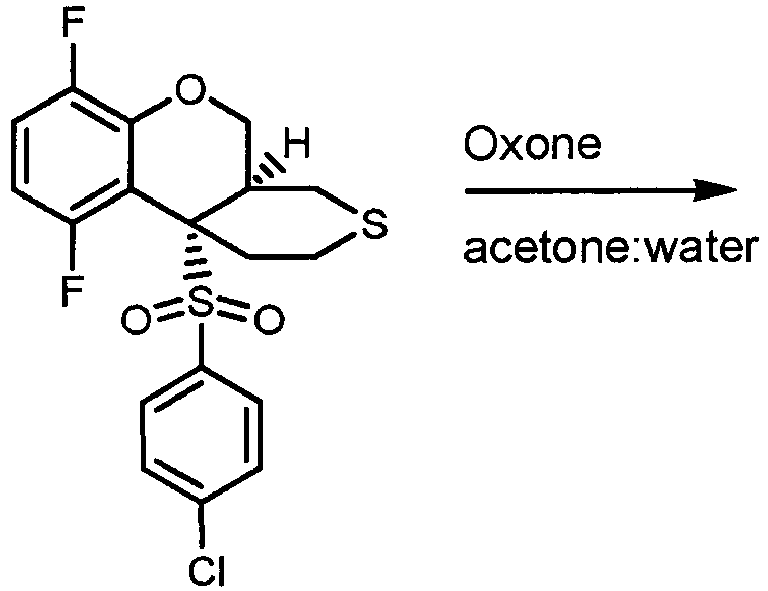

- A solution 30 mg (0.072 mmol) of Example 29 in 0.38 mL of acetone was treated with 0.095 mL of water and 48.7 mg (0.079 mmol) of Oxone™. After 4 hrs of stirring, the mixture was partitioned between water and DCM. Organic phase was dried over MgSO4 and concentrated. The following three products were separated by prep. TLC using 30% of EtOAc in hexanes as the eluent.
- LCMS m/z=433.2 (M+H)+, ret. time 3.65 min, 1H NMR (CDCl3 400 MHz) δ 7.68 (d, J=8.5 Hz, 2 H), 7.54 (d, J=8.5 Hz, 2 H), 7.14 (m, 1 H), 6.53 (m, 1 H), 5.44 (dd, J=2.7 and 12.0 Hz, 1 H), 4.14 (d, J=12.0 Hz, 1 H), 3.57 (d, J=12.2 Hz, 1 H), 3.17 (tt, J=14.8 and 3.2 Hz, 1 H), 3.02 (dt, J=14.0 and 2.9 Hz, 1 H), 2.91 (dm, J=14.5 Hz, 1 H), 2.60 (dm, J=14.3 Hz, 1 H), 2.45 (dd, J=12.0 and 14.0 Hz, 1 H), 2.24 (td, J=14.0 and 2.0 Hz, 1 H).
- LCMS m/z=433.2 (M+H)+, ret. time 3.57 min, 1H NMR (CDCl3 400 MHz) δ 7.58 (d, J=8.8 Hz, 2 H), 7.52 (d, J=8.8 Hz, 2 H), 7.17 (m, 1 H), 6.52 (m, 1 H), 5.31 (dd, J=3.1 and 9.0 Hz, 1 H), 4.22 (dd, J=11.9 and 1.5 Hz, 1 H), 3.49 (s, 1 H), 3.39 (tt, J=13.0 and 3.0 Hz, 1 H), 3.34-3.28 (ser. m, 1 H), 3.13 (dm, J=12.2 Hz, 1 H), 2.84 (dd, J=13.5 and 6.9 Hz, 1 H), 2.69 (t, J=13.0 Hz, 1 H), 2.37 (t, J=12.0 Hz, 1 H).
- LCMS m/z=449.1 (M+H)+, ret. time 4.10 min, 1H NMR (CDCl3 400 MHz) δ 7.62 (d, J=8.8 Hz, 2 H), 7.54 (d, J=8.8 Hz, 2 H), 7.20 (m, 1 H), 6.56 (m, 1 H), 5.38 (dd, J=2.7 and 12.2 Hz, 1 H), 4.18 (d, J=12.2 Hz, 1 H), 3.46 (dm, J=12.6 Hz, 1 H), 3.13-2.69 (ser. m., 6 H).
-


-

- To a solution of 1.80 g (8.77 mmol) of (R)-4-(tert-butyl-dimethyl-silanyloxy)-butan-2-ol in THF (10 mL) at 0°C was added dropwise 0.28 mL (0.96 mmol) of 2.5 M n-BuLi in hexanes. The mixture was stirred for a few minutes and 300 mg of the product of Example 17, step 3 was added. Continued stirring at 0°C for 30 minutes. The reaction was quenched with water, extracted with EtOAc, washed with water and brine, dried over MgSO4 and concentrated. The product (550 mg) was isolated by flash chromatography using gradient from 0% to 40% of EtOAc in hexanes as the eluent.
-
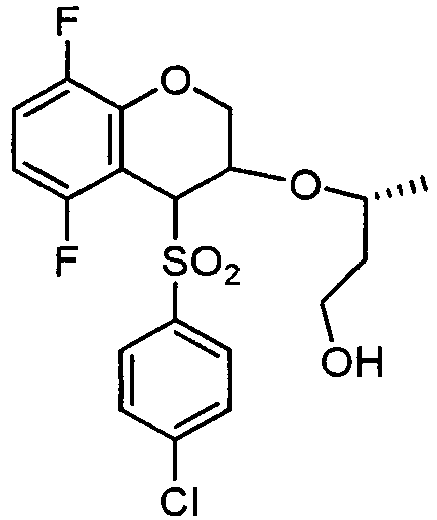
- To the product of Step 1 (95 mg, 0.174 mmol) was dissolved in 2.0 mL of 3% TFA solution of DCM. The mixture was stirred for 40minutes. The reaction was washed with water and brine, dried over MgSO4 and concentrated. The product (60 mg) was isolated by prep. TLC using 40% EtOAc in hexanes as the eluent.
-

- The product of Step 2 was mesylated according to the procedure of Example 10, Step 6 followed by cyclization according Example 29, Step 3. The desired compound was isolated from diastereomeric mixture by prep. TLC using 15% EtOAc in hexanes as the eluent.
- 1H NMR (CDCl3 400 MHz) δ 7.60 (d, J=8.8 Hz, 2 H), 7.49 (d, J=8.8 Hz, 2 H), 7.05 (m, 1 H), 6.38 (m, 1 H), 5.05 (dd, J=12.2 and 2.0 Hz, 1 H), 4.58 (m, 1 H), 4.40 (dd, J=12.2 and 1.6 Hz, 1 H), 4.12 (m, 1 H), 2.58 (tt, J=13.0 and 3.1 Hz, 1 H), 2.44 (tt, J=13.7 and 4.0 Hz, 1 H), 1.71-1.62 (ser. m., 1 H), 4.53-1.46 (ser. m., 1 H), 1.37 (d, J=6.7 Hz, 3 H).
-

-

- This compound was prepared similarly to the procedure of Example 33 using 1,3-propanediol as the starting material.
-

- The product of Step 1, was mesylated according to Example 10, Step 6 and cyclized according to Example 29, Step 3. 1H NMR (CDCl3 400 MHz) δ 7.59 (d, J=8.7 Hz, 2 H), 7.49 (d, J=8.7 Hz, 2 H), 7.07 (m, 1 H), 6.39 (m, 1 H), 5.07 (dd, J=12.2 and 1.8 Hz, 1 H), 4.48 (d, J=13.9 Hz, 1 H), 4.30 (s, 1 H), 3.94 (dd, J=11.2 and 4.7 Hz, 1 H), 3.59 (td, J=11.9 and 2.5 Hz, 1 H), 3.49 (d, J=5.5 Hz, 1 H), 2.72 (dm, J=13.0 Hz, 1 H), 2.30 (tt, J=13.0 and 3.3 Hz, 1 H), 1.53-1.40 (ser. m., 1 H).
-

-

- This compound was prepared similarly to Example 33, Step 1, except that 3-mercapto-propan-1-ol was used as the reagent and potassium carbonate as the base.
-

- The product of Step 1, was mesylated according to Example 10, Step 6 and cyclized according to Example 29, Step 3. 1H NMR (CDCl3 400 MHz) δ 7.57 (d, J=8.7 Hz, 2 H), 7.49 (d, J=8.7 Hz, 2 H), 7.10 (m, 1 H), 6.44 (m, 1 H), 5.44 (dd, J=12.2 and 1.8 Hz, 1 H), 4.25 (d, J=12.5 Hz, 1 H), 4.01 (s, 1 H), 2.86 (td, J=12.5 and 2.7 Hz, 1 H), 2.67 (d, J=11.2 Hz, 1 H), 2.46 (d, J=13.5 Hz, 1 H), 2.04-1.90 (ser. m., 2 H), 1.53-1.40 (ser. m., 1 H).
-

- The product obtained in Example 35 was treated with oxone according to the procedure described in Examples 30-32. The two products, sulfoxide (Example 36) and sulfone (Example 37), were separated by prep. TLC using 30% EtOAc in hexanes as the eluent.
- LCMS m/z=433.2 (M+H)+, ret. time 3.65 min. 1H NMR (CDCl3 400 MHz) δ 7.59 (d, J=8.7 Hz, 2 H), 7.52 (d, J=8.7 Hz, 2 H), 7.13 (m, 1 H), 6.46 (m, 1 H), 5.43 (d, J=13.0 Hz, 1 H), 5.16 (d, J=13.1 Hz, 1 H), 3.51 (s, 1 H), 3.45 (d, J=13.1 Hz, 1 H), 2.83 (td, J=13.0 and 3.3 Hz, 1 H), 2.70 (d, J=11.0 Hz, 1 H), 2.23-2.08 (ser. m., 2 H), 1.5-1.43 (ser. m., 1 H).
- LCMS m/z=449.2 (M+H)+, ret. time 4.19 min. 1H NMR (CDCl3 400 MHz) 7.53-7.49 (m, 4 H), 7.12 (m, 1 H), 6.42 (m, 1 H), 5.27 (s, 2 H), 3.99 (t, J=2.9 Hz, 1 H), 3.19-3.05 (ser. m., 2 H), 2.85 (d, J=13.4 Hz, 1 H), 2.32-2.16 (ser. m., 2 H), 1.96 (m, 1 H).
-
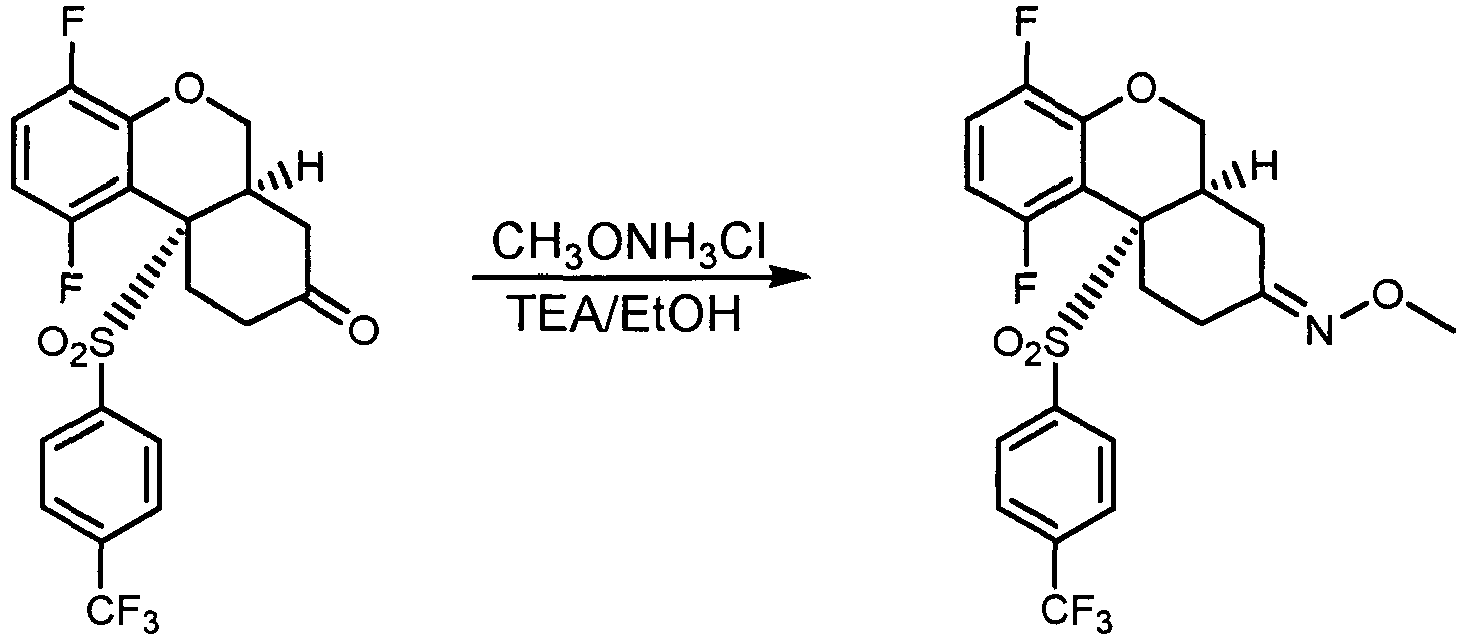
- To a solution of trans-10a-(4-trifluoromethyl-benzenesulfonyl)-1,4-difluoro-6a,9,10,10a-tetrahydro-6H,7H-benzo[c]chromen-8-one (40 mg, 0.10 mmol) in EtOH (2mL) was added O-methyl hydroxylamine hydrochloride (20 mg, 0.23mmol), and NEt3 (20 uL, 0.14 mmol). The reaction mixture was stirred overnight and then PS-dimethylaminoethyl resin was added, the stirring was continued for 2h and then the resin removed by filtration. The solvent was removed under a stream of N2 and the residue purified by preparative TLC eluting with 25% ethyl acetate in hexanes (22 mg, 47 %).
Table 14 Ex. No. Structure LCMS (M+1, retention time) 38 
476, 4.66 Min. - The compounds in the examples in Table 15 were prepared by a similar procedure as for Example 38.
Table 15 Ex. No. Structure LCMS (M+1, retention time) 38B 
490, 4.9 Min. 38C 
518, 5.36 Min. 38D 
552, 5.12 Min. 38E 
502, 5.07 Min. 38F 
538, 5.39 Min. -

- To a solution of trans-10a-(4-trifluoromethyl-benzenesulfonyl)-1,4-difluoro-6a,9,10,10a-tetrahydro-6H,7H-benzo[c]chromen-8-one in (160 mg, 0.38 mmol) in THF (1.5 mL) was added pTolylsulfonyl hydrazine (80 mg, 0.43 mmol). The reaction mixture was stirred at rt for 2 h and then concentrated. The residue was purified on silica gel to give a white solid ∼1:1 mixture of isomers (205 mg, 96 %). 1H NMR (CDCl3 400 MHz) δ 7.77 (dd, 2H), 7.57 (d, 2H), 7.49 (d, 1 H), 7.38 (s, 1 H, isomer B) 7.34 (s, 1 H, isomer A), 7.30 (dd, 2H), 7.10-7.04 (m, 1 H), 6.46-6.4 (m, 2H), 5.23 (dd, 3H, isomer B), 5.15 (s, 3H, isomer A), 4.10 (dd, 1 H), 2.91-2.77 (m, 1 H), 2.71-2.44 (m, 2H), 2.28-2.16 (m, 5H); LCMS(MH+) 581 au.
-
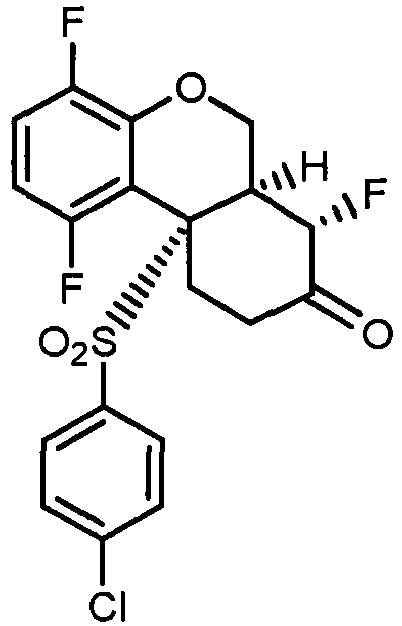
- To a solution of trans-10a-(4-chloro-benzenesulfonyl)-1,4-difluoro-6a,9,10,10a-tetrahydro-6H,7H-benzo[c]chromen-8-one in DMF (4 mL) was added Selectfluor®.
- The reaction mixture was heated at 50 °C overnight, cooled to rt and water was added to precipitate the desired product. The product was isolated by filtration washing with water then dried under vacuum to provide a colorless solid. H NMR CDCl3 400 MHz) δ 7.61 (d, 2H), 7.53 (d, 2H), 7.19-7.14 (m, 1 H), 6.55-6.49 (m, 1 H), 5.20 (d, 1H), 4.74 (dd, 2JH-F= 46.7 Hz, 3JH-F= 11.8 Hz, 1 H) 4.66 (d, 1 H), 3.18 (t, 1 H), 2.9 (m, 1 H), 2.53 (m, 1H), 2.41 (m, 1H), 2.18 (m, 1 H); LCMS (MH+) 431.
- Using a similar procedure, the compound of Example 40B was prepared:

- The compounds of Examples 41 A and 41B (Table 16) were prepared according to the protocol described for the preparation of Example 18.
Table 16 Ex. No. Structure LCMS (M+1, retention time) 41A 
450(M+H2O), 4.08 Min. 41B 
450(M+H2O), 3.92 Min. - The compounds of Examples 42A, 42B and 42C were prepared according to the procedure of Example 20.
Table 17 Ex. No. Structure LCMS (M+1, retention time) 42A 
504, 3.98 Min. 42B 
505, 4.05 Min. 42C 
533, 4.38 Min. -

- To a solution of the trans-10a-(4-chloro-benzenesulfonyl)-1,4-difluoro-6a,9,10,10a-tetrahydro-6H,7H-benzo[c]chromen-8-one (100 mg, 0.24 mmol) at 0 °C was added MeMgBr (500 µL, 1 M in THF), the bath was allowed to expire and reaction mixture was stirred overnight. The reaction mixture was diluted with ethyl acetate and treated with 1 N HCl followed by NH4Cl (sat. aq.). The aqueous was extracted with 2 additional portions of ethyl acetate. The dried organics were combined, dried over MgSO4 and concentrated. The products were purified and separated by chromatography on silica gel eluting with dichloromethane /methanol mixtures.
Table 18 Ex. No. Structure NMR 43A 
1H NMR (CDCl3 400 MHz) δ 7.62 (d, 2H), 7.49 (d, 2H), 7.10-7.04 (m, 1H), 6.45-6.39 (m, 1H), 5.24, (dd, 1H), 4.10 (d, 1H), 3.05 (dt, 1H), 2.50 (tt, 1H), 2.38 (br.dt, 1H), 1.6-1.56 (m, 1H) 1.4 (s, 3H), 0.9-0.82 (m,1H). 43B 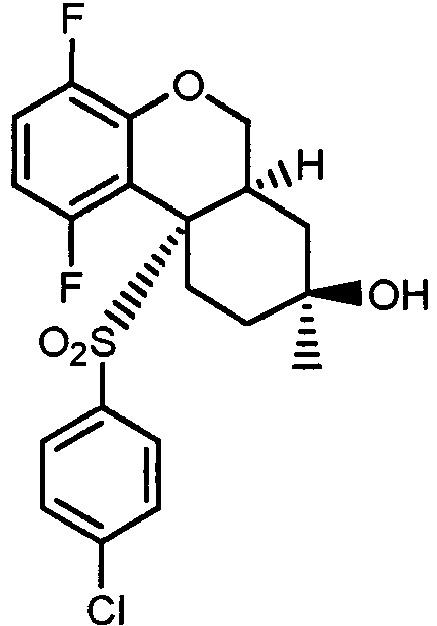
1H NMR (CDCl3 400 MHz) δ 7.58 (d, 2H), 7.48 (d, 2H), 7.09-7.00 (m, 1H), 6.43-6.37 (m, 1H), 5.20, (dd, 1H), 4.12 (d, 1H), 2.77 (br. d, 1H), 2.54 (br. dt, 1H), 2.09 (br.tt, 1H), 1.76-1.56 (m, 2H) 1.39 (s, 3H), 0.9-0.82 (m,1H). - Using a similar procedure to that for Examples 43A and 43B, the compounds of Examples 43C and 43D (Table 19) were prepared.
Table 19 Ex. No. Structure LCMS (M+1, retention time) 43C 
472.3(M+H2O): 4.67 43D 
472.3(M+H2O): 4.57 -

- To a stirred solution of 0.09 g (0.22 mmol) of the amine and 0.035 g (0.5 mmol) of sodium nitrite in 3 mL of water and 5 mL of THF was added 0.024 g (0.4 mmol) of acetic acid slowly. The mixture was stirred at room temperature for 3 h. It was quenched with 15 mL of saturated sodium bicarbonate, and extracted with two 40 mL portions of methylene chloride. The combined organic extracts were concentrated, the residue was dissolved in 5 mL of THF and cooled to 0 °C. To this solution was added 0.6 mL (0.6 mmol) of lithium aluminum hydride in THF. The mixture was stirred at room temperature for 1 h and quenched with 15 mL of water. It was extracted with two 40 mL portions of methylene chloride, and the combined organic extracts were concentrated to give 0.089 g of the title compound.
Table 20 Example No. STRUCTURE Mass Spec (M+ except as otherwise noted); retention time (min) 44 
415.2 (MH+); 3.75 -

- Using procedures described in Example 20, the compounds in Table 21 were prepared starting with the hydrazine of Example 44.
Table 21 Example No. STRUCTURE Mass Spec (M+ except as otherwise noted); retention time (min) 45 
561.3 (MH+); 4.42 46 
521.3; 4.47 -

- To a solution of 0.06 g (0.145 mmol) of the ketone and 1 mL (0.5 mmol) of trifluorotrimethylsilane in THF was added 0.005 g (cat.) of CsF. The mixture was stirred at room temperature for 2 h, and quenched with 3 mL of 3N HCl. The mixture was stirred overnight, and then diluted with 40 mL of methylene chloride. It was washed with 20 m L of brine. The aqueous layer was extracted with 20 m L of methylene chloride. The combined organic extracts were concentrated to give a crude product, which was dissolved in 5 mL of methanol. The unreacted ketone was reduced with 0.01 g (0.25 mmol) of sodium borohydride. The reaction mixture was concentrated, and the residue was purified by preparative TLC eluting with 40% ethyl acetate in hexanes to give the title compound, Example 47 in the Table 22.
Table 22 Example No. STRUCTURE Mass Spec (M+ except as otherwise noted); retention time (min) 47 
415.2 (MH+); 3.75 -

- To a solution of 0.054 g (0.13 mmol) of the alcohol and 0.06 g (0.4 mmol) of DBU in 5 mL of toluene was added 0.06 g (0.2 mmol) of perfluorobutanesulfonyl fluoride in 1 mL of toluene at 0 °C. The mixture was stirred at 0 - 5°C for 1 h and left in refrigerator (4°C) overnight. It was concentrated, the residue was purified by preparative TLC eluting with 20% ethyl acetate in hexanes to give 0.036 g of the product.
Table 23 Example No. STRUCTURE Mass Spec (M+ except as otherwise noted); retention time (min) 48 
417.2 (MH+); 4.76 -

- A mixture of 10.8 g (31.5 mmol) of the vinylsulphone product of step 3 of Example 17 and 24 g (165 mmol) of the 3-trimethylsiloxy-1,3-butadiene in 100 mL of trifluorotoluene in a sealed tube was heated at 150°C for 15 h. It was concentrated, the residue was dissolved in 50 mL of THF. To this solution was added 3 mL of 1 N HCl, the mixture was stirred at room temperature for 30 min. It was diluted with 300 mL of methylene chloride, washed with 50 mL of brine, and concentrated. The residue was recrystalized from ethyl acetate to give 6.8 g of the ketone. Chromatography of the mother liquid gave additional 3.4 g of the ketone.
-

- To a stirred solution of 3.0 g (7.27 mmol) of the ketone in 40 mL of THF was added 10 mL (10 mmol) of LiHMDS at -78°C. After 45 min., a solution of 1.83 g (11 mmol) of iodoacetonitrile was added. The mixture was stirred at -78°C for 2 h, then warmed to room temperature over 5 h. It was quenched with 15 mL of water, and the mixture was stirred overnight. It was diluted with 100 mL of water, the precipitate was collected by filtration to give the title compound (Table 24).
Table 24 Example No. STRUCTURE Mass Spec (M+ except as otherwise noted); retention time (min) 50 
470.3 (MH+); 3.32 -

- To a suspension of the 0.41 g (1 mmol) of the ketone in 15 mL of t-BuOH were added 0.08 g (1.5 mmol) of acrylonitrile and 0.03 g (0.265 mmol) of potassium tert-butoxide. The mixture was stirred at room temperature for 4 days, additional 0.03 g of potassium tert-butoxide and 5 mL of THF was added. It was stirred for 2 h, quenched with 30 mL of brine, and extracted with three 40 mL portions of methylene chloride. It was concentrated to give a crude product, that we used directly in the next step.
- The prodict of step 1 was dissolved in 4 mL of THF. It was cooled to -78°C, and 3 mL (3 mmol) of L-Selectride in THF was added. After 2 h, it was quenched with 15 mL og brine, and extracted with three 40 mL portions of methylene chloride. The combined organic extracts were concentrated, the residue was purified by chromatography eluting with 15% to 50% ethyl acetate in hexanes to give the title compound (Example 51 Table 25).
- Using a similar procedure as described in step 2, the compounds of Examples 52 and 53 (Table 25) are prepared.
Table 25 Example No. STRUCTURE Mass Spec (M+ except as otherwise noted); retention time (min) 51 
468.3 (MH+); 4.21 52 
454.2 (MH+); 4.19 53 
406.2 (MH+); 3.62 - The compounds of Examples 54 and 55 (Table 26) are prepared using the method described for Example 18.
Table 26 Example No. STRUCTURE Mass Spec (M+ except as otherwise noted); retention time (min) 54 
454.2 (MH+); 3.97 55 
406.2 (MH+); 3.52 -
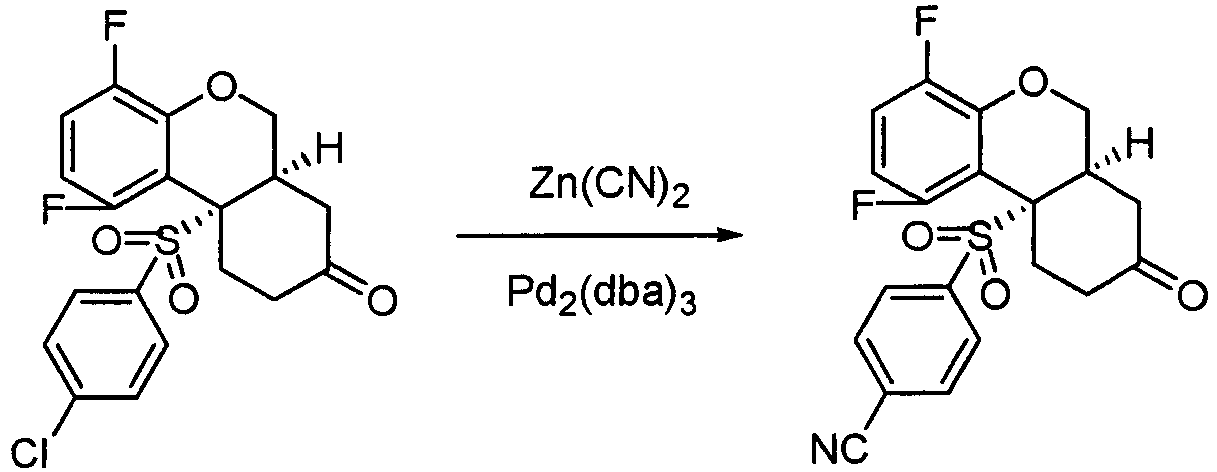
- A mixture of 1.5 g (3.63 mmol) of the chloro ketone , 0.19 g (0.2 mmol) of Pd2(dba)3, 0.23 g (0.4 mmol) of dppf, 0.3 g (2.5 mmol) of zinc cyanide and 0.065 g (1 mmol) of zinc power in 18 mL of DMA in a sealed tube was heated at 150°C for 1 h in microwave (Biotage). It was diluted with 100 mL of water, and extracted with three 80 mL portions of ethyl acetate. The combined organic extracts were concentrated, the residue was purified by chromatography eluting with 10% to 40% ethyl acetate in hexanes to give 0.8 g of the title compound.
Table 27 Example No. STRUCTURE Mass Spec (M+ except as otherwise noted); retention time (min) 56 
404.2 (MH+); 3.91 - The compound of Example 57 (Table 28) was prepared using the methods from Example 19.
Table 28 Example No. STRUCTURE Mass Spec (M+ except as otherwise noted); retention time (min) 57 
405.2 (MH+); 2.60 - The compounds of Examples 58 and 59 (Table 29) were prepared using the methods from Example 20.
Table 29 Example No. STRUCTURE Mass Spec (M+ except as otherwise noted); retention time (min) 58 
537.3 (MH+); 4.45 59 
509.3 (MH+); 3.89 -

- Example 60: 1H NMR (CDCl3, 400 MHz) δ 7.86 (d, 2H), 7.78 (d, 2H), 7.10-7.04 (m, 1 H), 6.47-6.41 (m, 1H), 5.18 (dd, 1H), 4.51 (d, 1H), 3.75 (br s, 1H), 2.78 (br d, 1 H), 2.54 (dddd, 1 H), 2.26 (br d, 1 H), 1.79 (dq, 1 H), 1.63-1.58 (m, 1 H), 1.32 (br t, 1 H), 1.18 (d, 3H). LCMS: (M+1) = 463.3, retention time = 4.46 min.
-

-

- To a 0 °C mixture of 60% NaH oil dispersion (60 mg) in tetrahydrofuran (11 mL) was added diethyl cyanomethylphosphonate (0.235 mL). After being stirred for 10 min at 0 °C, 1,4-difluoro-10a-(4-trifluoromethyl-benzenesulfonyl)-6a,9,10,10a-tetrahydro-6H,7H-benzo[c]chromen-8-one (0.50 g, 1.12 mmol) was added to the resulting clear and colorless solution. After 1 h, saturated aqueous NH4Cl was added to the reaction solution. This mixture was then extracted with ethyl acetate (3x). The combined organic layers were dried over Na2SO4, filtered and concentrated. The resulting crude residue (0.574 g) was used without further purification.
-

- To a -78°C solution of crude [1,4-difluoro-10a-(4-trifluoromethyl-benzenesulfonyl)-6a,9,10,10a-tetrahydro-6H,7H-benzo[c]chromen-8-ylidene]-acetonitrile (0.574 g) in tetrahydrofuran (22 mL) was added 1.0 M L-Selectride in tetrahydrofuran (1.8 mL). The reaction was allowed to warm slowly as the cooling bath warmed. After 1.5 h, brine(1.8 mL), aqueous 1 M NaOH (1.8 mL), and then aqueous 30% H2O2 (0.75 mL) were added to the reaction. After being stirred another 0.5 h, aqueous 25% Na2SO3 (5 mL) was added. This mixture was extracted with ethyl acetate (3x). The combined organic layers were dried over Na2SO4, filtered and absorbed onto silica gel (5 g). This absorbed crude material was purified by silica gel chromatography with ethyl acetate/hexanes (0/100 to 50/50 over 25 min) to afford Example 61 A (0.330 g, 62% over two steps).
- Example 61A: 1H NMR (CDCl3, 400 MHz) δ7.79 (br s, 4H), 7.13-7.08 (m, 1 H), 6.45-6.39 (m, 1 H), 5.26 (dd, 1 H), 4.14 (d, 1 H), 2.81 (ddd, 1 H), 2.58 (d, 2H), 2.40 (ddd, 1H), 2.24 (m, 1H), 2.12 (dddd, 1 H), 1.82-1.73 (m, 3H), 1.42 (dddd, 1 H). LCMS: (M+1) = 472.3, retention time = 4.53 min.
-

- To a room temperature mixture of [1,4-difluoro-10a-(4-trifluoromethyl-benzenesulfonyl)-6a,7,8,9,10,10a-hexahydro-6H-benzo[c]chromen-8-yl]-acetonitrile.(Example 61.1) (23 mg) in 7 M NH3 in MeOH (1 mL) was added Raney 2800 Nickel. The reaction vessel was then fitted with a balloon of H2. After being stirred overnight at room temperature, this reaction mixture was diluted with MeOH/CH2Cl2 (1: 1) and filtered through Celite. The filtrate was concentrated. This resulting crude material was purified by silica gel chromatography with MeOH/NH4O CH2Cl2 (0/0/100 to 10/1/89 over 15 min) and then by reverse phase HPLC using CH3CN/H2O with 0.1 % formic acid (5/95 to 95/5 over 10 min) to afford the formate salt of Example 61 (13.6 mg).
- Example 61: 1H NMR (CDCl3, 400 MHz) δ 7.98 (br s, 2H), 7.77 (br s, 4H), 7.10-7.04 (m, 1 H), 6.40-6.34 (m, 1 H), 5.13 (d, 1H), 4.07 (d, 1 H), 3.25-2.95 (m, 4H), 2.82 (br d, 1H), 2.30 (br d, 1H), 2.19 (br t, 1H), 1.93 (br s, 2H), 1.76 (br s, 1 H), 1.70-1.61 (m, 2H), 1.51 (br d, 1 H), 1.25 (br t, 1H). LCMS: (M+1) = 476.3, retention time = 3.12 min.
- Following procedures similar to those described in Example 20, the compounds in Table 30 were prepared.
Table 30 Ex. No. Structure LCMS (M+1, retention time) 62 
358.2 [M - HN(SO2Me)2], 4.74 min. 63 
554.3, 4.53 min. - Following procedures similar to those described in Steps 1 and 2 of Example 61, the compounds of Example 64A and 64B (Table 31) were prepared.

Table 31 Ex. No. Structure LCMS (M+1, retention time) 64A 
519.3, 5.11 min. 64B 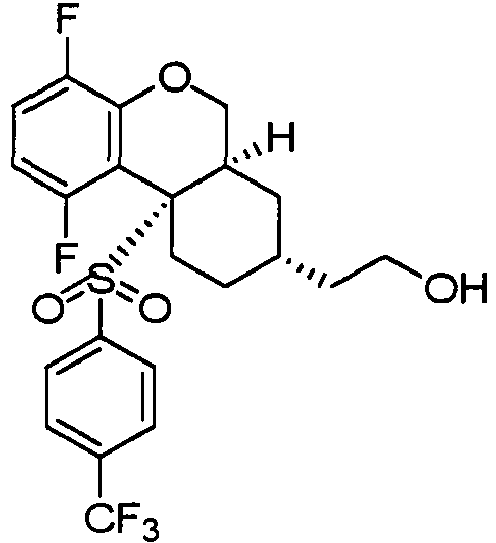
477.3, 4.35 min. - Following procedures of Example 23 the compounds in Table 32 are prepared.
Table 32 Ex. No. Structure LCMS (M+1, retention time) 65 
478.3, 4.56 Min. 66 
456.3, 4.18 Min. 67 
470.3, 4.39 Min. 68 
484.3, 4.62 Min. 69 
468.3, 4.27 Min. 70 
496.3, 4.72 Min. 71 
514.3, 4.59 Min. 72 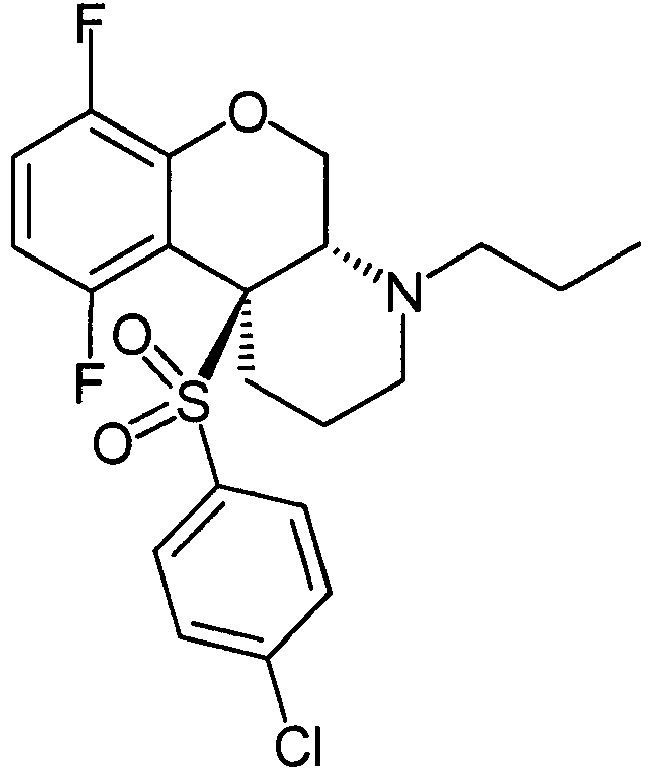
442.2, 3.10 Min. 73 
456.3, 3.41 Min. 74 
470.3, 3.60 Min. 75 
482.3, 3.87 Min. 76 
492.3, 4.66 Min. 77 
471.3, 4.18 Min. 78 
519.3, 4.80 Min. 79 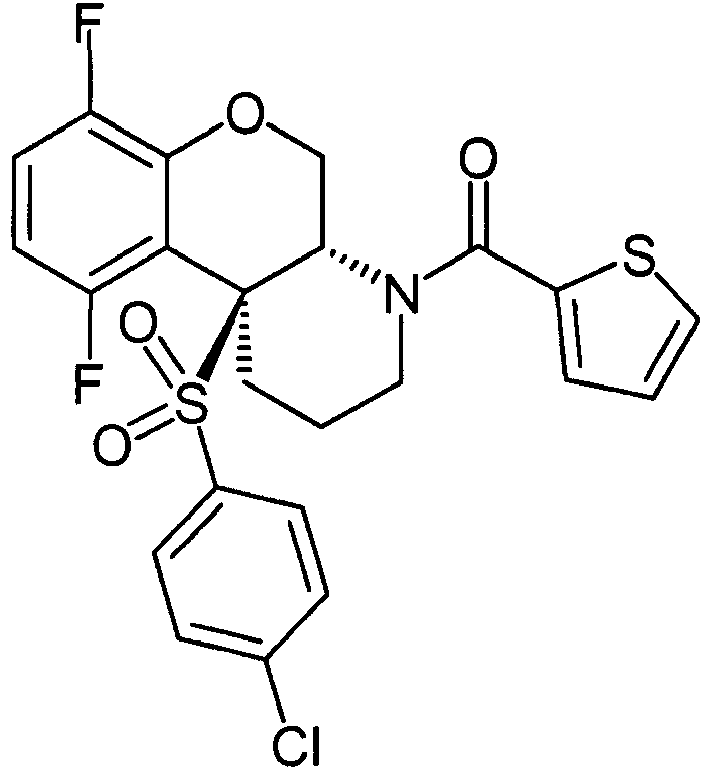
510.3, 4.44 Min. 80 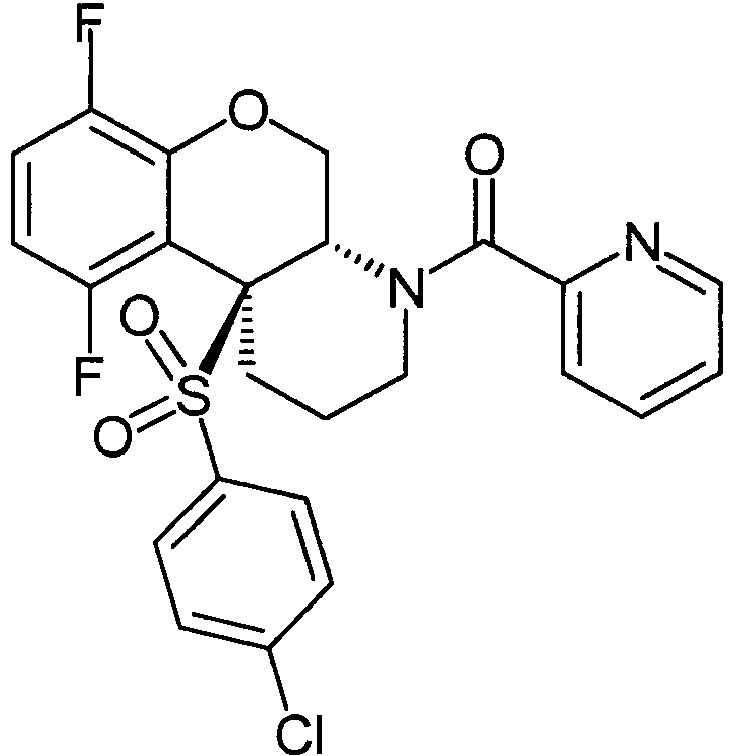
505.3, 4.14 Min. 81 
541.3, 4.50 Min. 82 
500.3, 4.79 Min 83 
524.3, 5.21 Min 84 
486.3, 4.91 Min 85 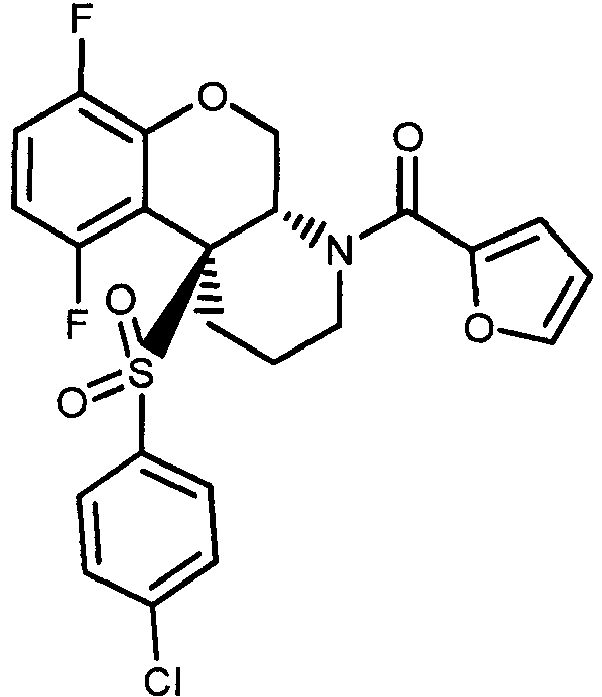
494.3, 4.97 Min 86 
496.3, 4.89 Min 87 
498.3, 5.39 Min 88 
522.3, 4.76 Min. 89 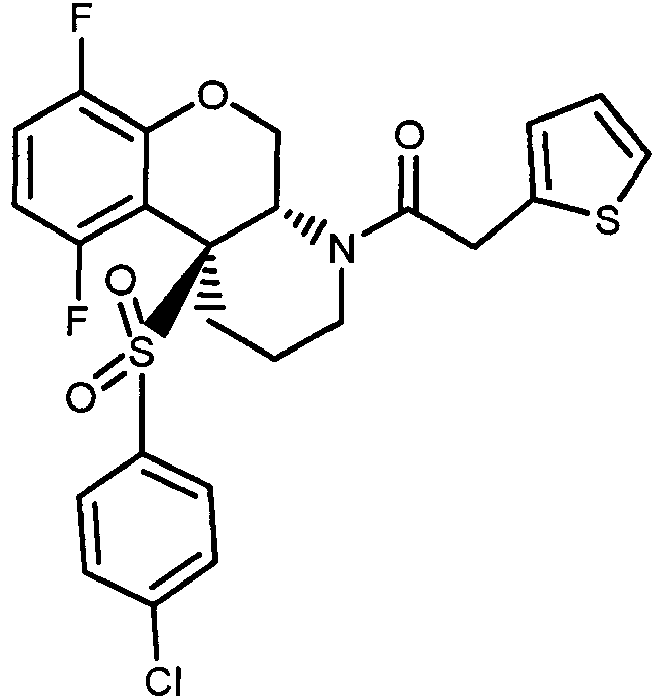
524.3, 5.13 Min 90 
524.3, 5.13 Min 91 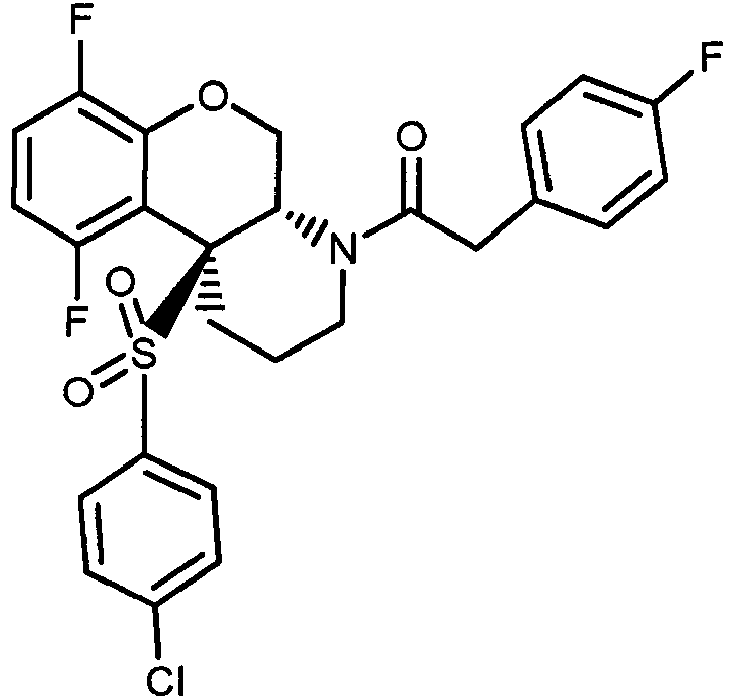
536.3, 5.22 Min 92 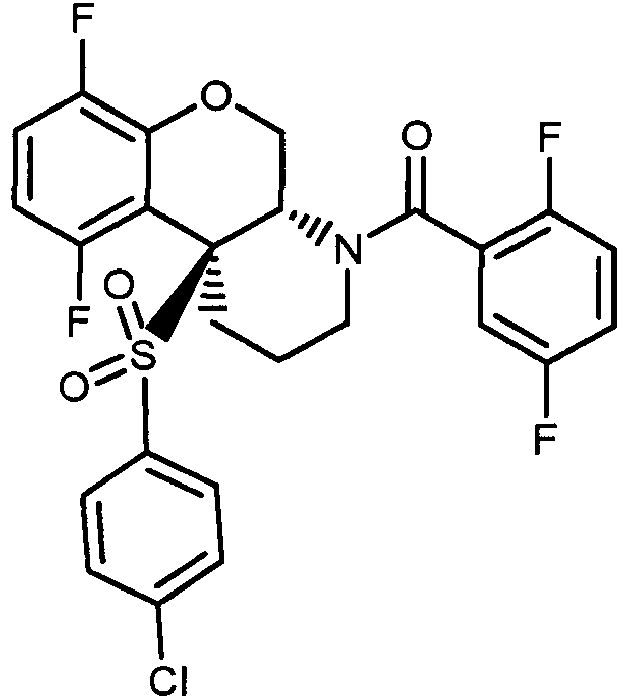
540.3, 5.25 Min 93 
544.3, 5.25 Min 94 
562.3, 5.15 Min 95 
454.2, 3.42 Min. 96 
511.3, 4.37 Min. 97 
485.3, 4.10 Min. 98 
525.3, 4.49 Min. 99 
555.3, 4.40 Min. 100 
414.2, 2.91 Min 101 
No M+1, 4.87 Min 102 
496.3, 4.89 Min 103 
574.3, 5.03 Min 104 
533.3, 4.71 Min 105 
555.3, 4.74 Min 106 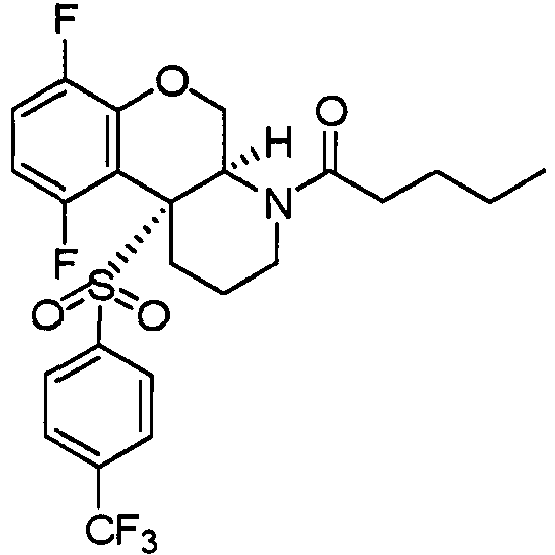
518.8, 4.90 min. 107 
502.3, 4.46 min. 108 
512.3, 4.42 min. - Using the procedure described in Example 21 Step 1, the compounds in Table 33 were prepared.
Table 33 Ex. No. Structure LCMS (M+1, retention time) 109 
375.2, 4.49 Min 110 
382.2 (M+Na), 2.52 Min 111 
374.2, 2.76 Min 112 
444.2, 4.45 Min 113 
444.2, 4.40 Min 114 
450.2, 3.68 Min 115 
566.3, 5.25 Min 116 
444.2, 4.08 Min - Using the procedure described in Example 20, the compounds in Table 34 were prepared
Table 34 Ex. No. Structure LCMS (M+1, retention time) 117 
414.2, 4.35 Min 118 
428.2, 4.41 Min -

- 4a-(4-Chloro-benzenesulfonyl)-5,8-difluoro-2,3,4,4a, 10,10a-hexahydro-1H-9-oxa-1-aza-phenanthrene (96.8mg, 0.242mmol) was dissolved in 2.35 ml of water, 11.5mg of acetonitrile, and 11.5 ml of ethyl acetate. Then sodium periodate (399mg, 1.86mmol) and ruthenium dioxide (20.5mg, 0.154mmol) were added respectively and stirred overnight. The reaction was quenched with 50 ml of water and washed with 75 ml of ethyl acetate. The organic layer was treated with 50 ml of isopropanol and left for 2.5 h. The solution was filtered through celite, washed with brine, and dried over sodium sulfate. The product was purified by column using EtOAc/Hex. as the eluent (gradient from 50/50 to 100/0 in 60 minutes). Yield: 30.0mg, 30%. 1H NMR (CDCl3 400 MHz) δ 7.65 (d, J = 8.8 Hz, 2H), 7.52 (d, J = 8.1 Hz, 2H), 7.10 (td, J = 9.5, 5.1 Hz, 1H), 7.01 (bs, 1H), 6.50-6.41 (m, 1H), 5.10 (d, J = 12.4 Hz, 1H), 4.50 (s, 1H), 4.32 (d, J = 12.4 Hz, 1H), 2.80-2.70 (m, 1H), 2.60-2.41 (m, 1H), 2.06-1.93 (m, 1H), 1.68 (bs, 1H).
- The compounds in Table 35 were made by a similar procedure to that of Example 119.
Table 35 Ex. No. Structure LCMS (M+1, retention time) 120 
482.3, 4.41 Min 121 
470.3, 4.36 Min -

- 4a-(4-Chloro-benzenesulfonyl)-5,8-difluoro-2,3,4,4a, 10,10a-hexahydro-1H-9-oxa-1-aza-phenanthrene (1.0190g, 2.5475mmol) was dissolved in 75 ml dichloromethane and cooled to 0°C then triethylamine (1.1 mL) was added. The solution was stirred at 0°C for 10 minutes then II was added slowly and the solution was stirred at 0°C for 3 h. Then the reaction was warmed to room temperature and stirred for 1 h. The reaction was quenched with 50 ml of ice water. The organic layer was washed with 50 ml of 1 N HCl solution and dried over sodium sulfate. The product was purified by column using EtOAc/Hex. as the eluent (gradient from 0/100 to 50/50 in 45 minutes). Yield: 124.0mg, 11 %. 1H NMR (CDCl3 400 MHz) δ 7.57 (d, J = 8.8 Hz, 2H), 7.52 (d, J = 8.8 Hz, 2H), 7.23 (dd, J = 9.5, 6.6 Hz, 1 H), 5.19 (dd, J = 8.8, 6.6 Hz, 1H), 4.32 (d, J = 11.7 Hz, 1H), 3.69 (s, 1H), 2.99 (d, J = 13.1 Hz, 1H), 2.74 (td, J = 13.1, 2.9 Hz, 1H), 2.64 (d, J = 13.1 Hz, 1 H), 2.20-2.11 (m, 1H), 1.62 (d, J = 13.1 Hz, 2H), 1.19-1.06 (m, 1H).
Table 36 Ex. No. Structure LCMS (M+1, retention time) 122 
434.2, 3.02 Min -

-

- BOC-Glycine was dissolved in 150 ml of DMF. 0.5 ml of diisopropylamine was added followed by HATU (2.54g, 6.68mmol). The solution was stirred at room temperature for 25 minutes then 4a-(4-Chloro-benzenesulfonyl)-5,8-difluoro-2,3,4,4a,10,10a-hexahydro-1H-9-oxa-1-aza-phenanthrene (541 mg, 1.35mmol) was added and the reaction was stirred overnight. The reaction was quenched with water and washed with 1:1 mixture of ethyl acetate and hexanes solution. The organic layer was dried over sodium sulfate and concentrated. The product was purified by column using EtOAc/Hex. as the eluent (0/100 to 25/75 in 35 minutes). Yield: 594.6mg, 79%. 1H NMR (CDCl3 400 MHz) δ 7.57 (d, J = 8.8 Hz, 2H), 7.41 (d, J = 8.8 Hz, 2H), 7.03 (td, J = 8.8, 4.4 Hz, 1H), 6.57-6.49 (m, 1H), 5.60-5.55 (m, 1 H), 5.35 (bs, 1 H), 4.49 (dd, J = 11.7, 3.7 Hz, 1H), 4.18 (dd, J = 11.7, 5.9 Hz, 1 H), 4.00 (s, 1 H), 3.90 (d, J = 5.1 Hz, 1H), 3.54 (bs, 1 H), 2.95-2.80 (m, 1H), 2.65-2.56 (m, 1H), 2.52-2.41 (m, 1H), 2.13-1.98 (m, 1H), 1.51-1.40 (m, 1H), 1.40 (s, 9H).
-

- Trifluoroacetic acid (2mL, 27.0mmol) was dissolved in 16 ml of dichloromethane. The solution was added to {2-[4a-(4-Chloro-benzenesulfonyl)-5,8-difluoro-2,3,4,4a,10,10a-hexahydro-9-oxa-1-aza-phenanthren-1-yl]-2-oxo-ethyl}-carbamic acid tert-butyl ester (260mg, 0.467mmol). The solution was stirred at room temperature overnight. The reaction was quenched by washing with Sat. sodium carbonate solution. The organic layer was dried over sodium sulfate and concentrated. Yield: 20.0mg, 9%. %. 1H NMR (CDCl3 400 MHz) δ 7.62 (d, J = 8.1 Hz, 2H), 7.45 (d, J = 8.8 Hz, 2H), 7.06 (td, J = 8.8, 4.4 Hz, 1H), 6.61-6.52 (m, 1H), 5.41 (bs, 1H), 4.52 (dd, J = 11.0, 3.7 Hz, 1H), 4.21 (dd, J = 11.7, 5.1 Hz, 1H), 3.53 (bs, 2H), 2.86 (bs, 1H), 2.70-2.61 (m, 1H), 2.55-2.45 (m, 1H), 2.15-2.03 (m, 1H), 1.75-1.44 (m, 4H).
-

- 2-Amino-1-[4a-(4-chloro-benzenesulfonyl)-5,8-difluoro-2,3,4,4a,10,10a-hexahydro-9-oxa-1-aza-phenanthren-1-yl]-ethanone (40.0mg, 0.0875mmol) was dissolved in 1 ml of dichloromethane and triethylamine (1 ml) and trifluorosulfonic anhydride (343mg, 1.54mmol) were added respectively. The solution was stirred at room temperature overnight. 50 ml of 1 N HCl was added and then washed with 50 ml of dichloromethane. The aqueous layer was washed with an additional 50 ml of dichloromethane. The combined organics were dried over sodium sulfate and concentrated. The product was purified by column using EtOAc/Hex. as the eluent (0/100 to 100/0 in 35 minutes). Yield: 35.2mg, 68%. 1H NMR (CDCl3 400 MHz) δ 7.60 (d, J = 8.1 Hz, 2H), 7.47-7.41 (m, 1H), 7.07 (td, J = 9.50, 4.4 Hz, 1H), 6.62-6.53 (m, 2H), 5.40 (bs, 1H), 4.52 (dd, J = 11.7, 3.7 Hz, 1H), 4.26-4.12 (m, 2H), 3.44 (bs, 1H), 2.95 (bs, 1H), 2.71-2.59 (m, 1H), 2.61-2.50 (m, 1H), 2.20-2.06 (m, 1H), 1.70 (bs, 2H), 1.61-1.49 (m, 1 H).
- The compounds in Table 37 were made following similar procedures to those of Example 123.
Table 37 Ex. No. Structure LCMS (M+1, retention time) 124 
557.3, 4.54 Min 125 
457.3, 2.93 Min 126 
561.3, 3.99 Min. 127 
589.3, 4.38 Min. 128 
535.3, 4.00 Min. 129 
499.3, 3.65 Min. 130 
641.4, 4.46 Min 131 
549.3, 3.91 Min 132 
542.3, 4.03 Min -


-

- Benzyl 3-bromopropyl ether (7.8475g, 34.27mmol) was dissolved in 50 ml of THF then 3-aminopropanol (2.56g, 34.13mmol) was added the reaction was stirred at room temperature for three days. The reaction was quenched with 100 ml of Sat. potassium carbonate solution and the solution was washed with ethyl acetate. The organic layer washed with Sat. potassium carbonate solution (2x100 mL) then dried over sodium sulfate and concentrated. This amine solution was used without any further purification. The amine solution (3.91g, 17.5 mmol) was dissolved in 100 ml of THF. 4-(4-Chloro-benzenesulfonyl)-5,8-difluoro-2H-chromene (2.0486g, 5.97mmol) was added and the reaction was stirred at room temperature overnight. Triethylamine (3 ml) was added and the reaction was stirred at room temperature for 2 h. Then additional amine solution (2.85g, 12.8mmol) was added and the reaction was stirred overnight at room temperature then warmed to reflux and stirred overnight. The reaction was quenched with water (100 ml) and washed with ethyl acetate (100 ml). The organic layer was dried over sodium sulfate and concentrated. The product was purified by column using EtOAc/Hex. as the eluent (gradient from 0/100 to 100/0 in 45 minutes). Yield: 570mg, 17%. 1H NMR (CDCl3 400 MHz) δ7.64-7.59 (m, 2H), 7.45-7.40 (m, 2H), 7.36-7.25 (m, 5H), 7.00 (td, J = 9.5, 5.1 Hz, 1 H), 6.42 (td, J = 8.8, 3.7 Hz, 1 H), 4.74 (dd, J = 12.4, 5.1 Hz, 1H), 4.65 (s, 1 H), 4.42 (s, 2H), 4.32-4.26 (m, 1 H), 4.06-4.01 (m, 1 H), 3.59 (t, J = 5.4 Hz, 2H), 3.41 (t, J = 5.9 Hz, 2H), 2.87 (bs, 1 H), 2.71-2.53 (m, 3H), 2.50-2.42 (m, 1 H), 1.74-1.62 (m, 3H), 1.60-1.50 (m, 1 H).
-

- 3-{(3-Benzyloxy-propyl)-[4-(4-chloro-benzenesulfonyl)-5,8-difluoro-chroman-3-yl]-amino}-propan-1-ol (570mg, 1.01mmol) was dissolved in 50 ml of DCM methanesulfonyl choride (439µL, 5.68mmol) and triethylamine (2 ml) were added respectively. The reaction was stirred at room temperature for 1 h. The reaction was quenched with 50 ml of water and washed with 50 ml of DCM. The organic layer was dried over sodium sulfate and concentrated. The Methanesulfonic acid 3-{(3-benzyloxy-propyl)-[4-(4-chloro-benzenesulfonyl)-5,8-difluoro-chroman-3-yl]-amino}-propyl ester was used without further purification.
- The Methanesulfonic acid 3-{(3-benzyloxy-propyl)-[4-(4-chloro-benzenesulfonyl)-5,8-difluoro-chroman-3-yl]-amino}-propyl ester was dissolved in 60 mL of THF then potassium tertbutoxide (1M solution in tertbutanol, 3.27ml, 3.27mmol) was added and the reaction was stirred at room temperature for 1 h. The reaction was quenched with 100 ml of brine and 100 ml of ethyl acetate. The layers were separated and the organic layer was dried over sodium sulfate then concentrated. The product was purified by column using EtOAc/Hex. as the eluent (gradient from 0/100 to 100/0 in 35 minutes). Yield: 438.8mg, 80.1H NMR (CDCl3 400 MHz) δ 7.61 (d, J = 8.1 Hz, 2H), 7.48 (d, J = 8.8 Hz, 2H), 7.37-7.24 (m, 5H), 7.04 (td, 9.5, 5.1 Hz, 1 H), 6.43-6.36 (m, 1 H), 5.14 (d, J = 12.4 Hz, 1 H), 4.72 (d, J = 13.9 Hz, 1H), 4.47 (dd, J = 28.5, 11.7 Hz, 2H), 3.42 (t, J = 6.2 Hz, 2H), 3.29 (s, 1 H), 2.90-2.82 (m, 2H), 2.82-2.75 (m, 1 H), 2.57 (d, 12.4 Hz, 1 H), 2.45 (td, J = 11.7, 2.2 Hz, 1 H), 2.03-1.93 (m, 1 H), 1.83-1.64 (m, 2H), 1.63-1.59 (m, 1 H), 1.36-1.23 (m, 1 H).
-

- 1-(3-Benzyloxy-propyl)-4a-(4-chloro-benzenesulfonyl)-5,8-difluoro-2,3,4,4a,10,10a-hexahydro-1H-9-oxa-1-aza-phenanthrene (399.1mg, 0.728mmol) was dissolved in 20 ml of ethyl acetate. Palladium hydroxide (20 % on carbon, 105mg) was added and the system was purged with hydrogen gas. The reaction was stirred at room temperature for 1.5 h. More palladium hydroxide on carbon was added (203mg) The reaction was stirred at room temperature for 3.5 h. Palladium hydroxide (307mg) was added again and stirred for 1 h. The reaction was filter through a celite cake and concentrated. The product was purified by column using Hex./EtOAc as the eluent (gradient from 100/0 to 50/50 in 35 minutes, then to 0/100). This resulted in three products the desired product and two dechloronation products.

- 3-[4a-(4-Chloro-benzenesulfonyl)-5,8-difluoro-2,3,4,4a,10,10a-hexahydro-9-oxa-1-aza-phenanthren-1-yl]-propan-1-ol: Yield: 14.8mg, 4.4%. 1H NMR (CDCl3 400 MHz) δ 7.62 (d, J = 8.1 Hz, 2H), 7.50 (d, J = 8.1 Hz, 2H), 7.06 (td, 9.5, 4.4 Hz, 1 H), 6.46-6.38 (m, 1 H), 5.21 (d, J = 13.2 Hz, 1 H), 4.81 (d, J = 13.2 Hz, 1 H), 3.68-3.55 (m, 2H), 3.22 (s, 1 H), 3.20-3.11 (m, 1 H), 3.05 (d, J = 11.0 Hz, 1 H), 2.70 (s, 1 H), 2.61-2.53 (m, 2H), 2.25(td, J = 11.7, 2.9 Hz, 1H), 2.02 (tt, J = 13.2, 3.2 Hz, 1H), 1.85-1.74 (m, 1H), 1.69-1.56 (m, 2H), 1.35-1.22 (m, 1 H).


- 3-(4a-Benzenesulfonyl-5,8-difluoro-2,3,4,4a,10,10a-hexahydro-9-oxa-1-aza-phenanthren-1-yl)-propan-1-ol: Yield: 17.9mg, 1.9%. 1H NMR (CDCl3 400 MHz) δ 7.68 (t, J = 8.8 Hz, 3H), 7.51 (t, J = 7.7 Hz, 2H), 7.05 (td, J = 9.5, 5.1 Hz, 1 H), 6.44-6.34 (m, 1 H), 5.24 (d, J = 13.2 Hz, 1 H), 4.81 (d, J = 13.9 Hz, 1 H), 3.68-3.54 (m, 2H), 3.22 (s, 1 H), 3.20-3.10 (m, 1 H), 3.04 (d, J = 10.9 Hz, 1H), 2.83 (bs, 1 H), 2.64-2.53 (m, 2H), 2.25 (td, J = 11.7, 2.2 Hz, 1 H), 2.02 (tt, J = 13.1, 3.3 Hz, 1 H), 1.85-1.73 (m, 1 H), 1.67-1.55 (m, 2H), 1.37-1.22 (m, 1 H).
- The compounds in Table 38 were prepared via a simlar procedure to that of Example 133.
Table 38 Ex. No. Structure LCMS (M+1, retention time) 134 
500.3, 3.27 Min 135 
548.3, 4.10 Min 136 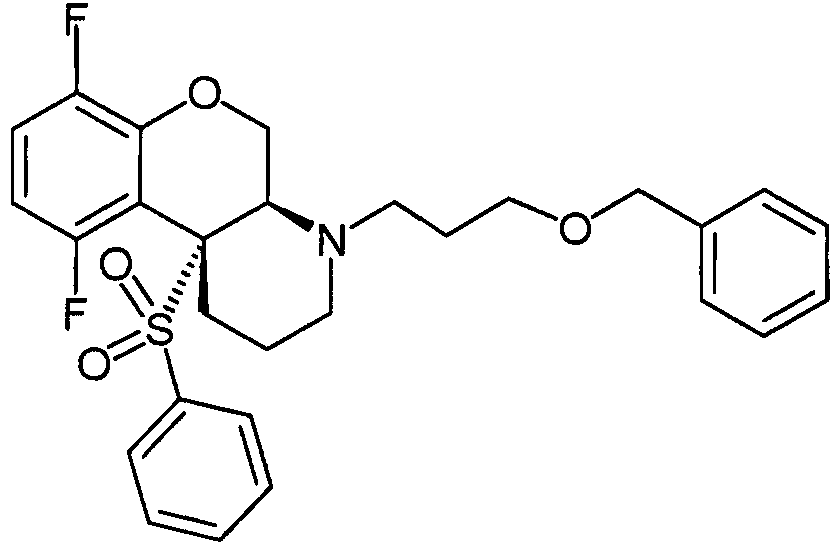
514.3, 3.78 Min 137 
458.3, 3.01 Min 138 
424.2, 2.65 Min -

-

- [4a-(4-Chloro-benzenesulfonyl)-5,8-difluoro-1,2,3,4,4a,9,10,10a-octahydro-phenanthren-1-yl]-methanol racemic mixture (1.11g, 2.59mmol) was dissolved in isopropanol separated on an OD column using Hexanes/isopropanol in an 80/20 ratio as the eluent.
- [4a-(4-Chloro-benzenesulfonyl)-5,8-difluoro-1,2,3,4,4a,9,10,10a-octahydro-phenanthren-1-yl]-methanol (-): Yield: 470mg, 42%. [α] = -153.4 (c = 1.035 in DCM). 98.3% enantiomerically pure by analytical OJ column.
- [4a-(4-Chloro-benzenesulfonyl)-5,8-difluoro-1,2,3,4,4a,9,10,10a-octahydro-phenanthren-1-yl]-methanol (+): Yield: 450mg, 41%. [α] = +158.6 (c = 0.955 in DCM). 97.9% enantiomerically pure by analytical OJ column.
Table 39 Ex. No. Structure LCMS (M+1, retention time) 139 (-)-enantiomer 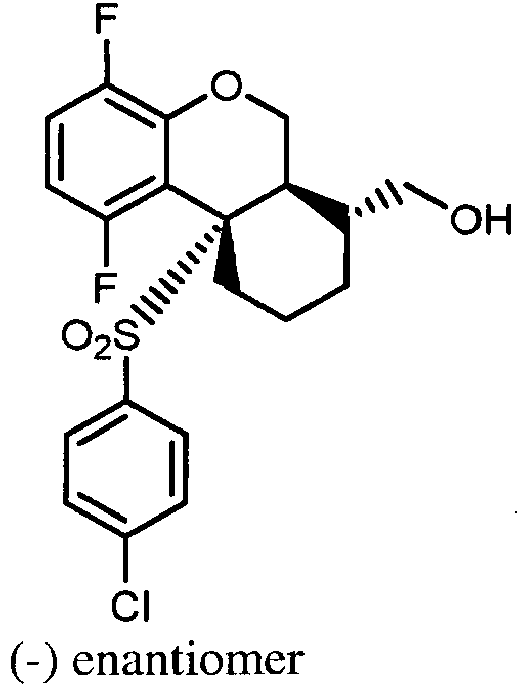
429.2, 4.41 Min 139 (+)-enantiomer 
429.2, 4.41 Min - The compounds in Table 40 were prepared using a similar procedure to that of Example 139.
Table 40 Ex. No. Structure LCMS (M+1, retention time) 140 
443.2, 4.35 Min 141 
560.3, 4.99 Min 142 
574.3, 4.59 Min 143 
No M+1, 4.43 Min 144 
520.3, 4.36 Min 145 
524.3, 4.66 Min 146 
470.3, 3.98 Min 147 
499.3, 4.09 Min 148 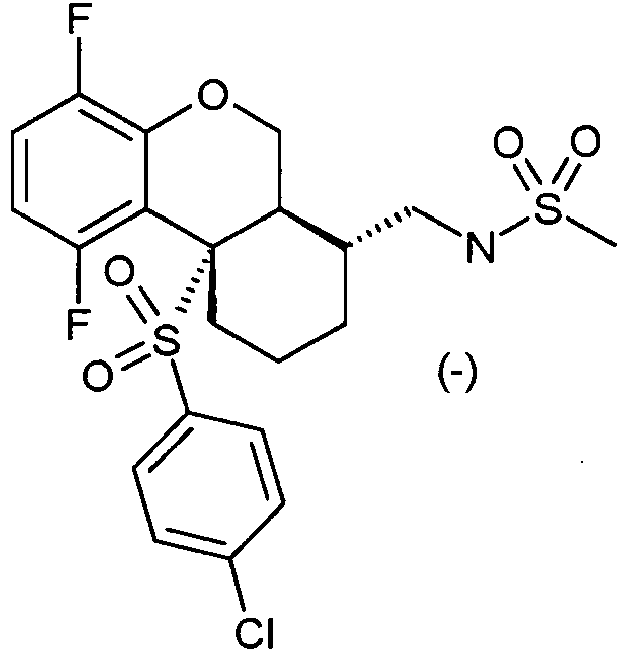
506.3, 4.41 Min - Example 149 (not of the invention):
-


- To a stirred solution of 2,3,6-trifluorobenzylaldehyde (10 g, 60.6 mmol) in toluene (100 mL) was added 1-triphenyl-phosphoranylidene-2-propanone (24.3 g, 72.7 mmol, 1.2 equiv.), and the reaction mixture was stirred at 50 °C for 3 hrs. It was quenched with water, aqueous layer was extracted with EtOAc (3x100 mL), the combined organic layers were washed with brine, dried over MgSO4, filtered, and evaporated. The crude reaction mixture was purified by the column chromatography (Eluent: EtOAc/Hexane: 10% then 20%) to afford Wittig reaction product (11.47 g, 85% yield). 1H-NMR (CDCl3 400 MHz) δ: 7.74 (d, J = 16.84 Hz, 1 H), 7.22-7.06 (m, 1 H), 6.82-6.67 (m, 1 H), 6.77 (d, J = 16.84 Hz, 1 H), 3.83 (s, 3H).
- To the α, β- unsaturated ketone (1.948 g, 9.01 mmol) from step 1 in THF (20 mL) was added 4-chlorothiophenol (1.303 g, 9.01 mmol, 1.0 equiv.) and K2CO3 (1.1 g, 7.96 mmol, 0.88 equiv.), the reaction mixture was stirred at room temperature overnight, and the starting material wasn't consumed completely. Followed by addition of excess 4-chlorothiophenol (0.65 g, 0.5 equiv.) and K2CO3 (0.6 g, 0.5 equiv.), the reaction mixture was then stirred at 40°C for an hour. It was cooled to room temperature, diluted with EtOAc (200 mL), washed with water, 1 N NaOH, and brine, dried over MgSO4, filtered, and evaporated. The crude reaction mixture was purified with column chromatography (Eluent: EtOAc/Hexane: 5% to 50%), and the product was still contaminated with certain thiophenol. 1H-NMR (CDCl3 400 MHz) δ: 7.31 (d, J = 8.4 Hz, 2H), 7.26-7.20 (2H), 7.03-6.98 (m, 1 H), 6.75-6.73 (m, 1 H), 4.95 (t, J = 8.05 Hz, 1 H), 3.65 (s, 3H), 3.13 (d, J = 8.05 Hz, 2H).
- To the Michael adduct product from the above step in DCM (150 mL) was added m-cpba, it was stirred at room temperature for 2 hrs, and quenched with saturated Na2S2O3 to reduce the excess m-cpba. The reaction mixture was then washed with 1 N NaOH and brine, dried over MgSO4, filtered, and evaporated. The crude reaction mixture was purified by the column chromatography (Eluent: EtOAc/Hexane = 10% to 100%), and sulfoxide was obtained (1.443 g, 3.67 mmol, 41% for two steps.) 1H-NMR (CDCl3 400 MHz) δ: 7.65 (d, J = 7.6 Hz, 2H), 7.47 (d, J = 8.0 Hz, 2H), 7.20-7.10 (m, 1 H), 6.90-6.70 (broad s, 1 H), 5.16 (t, J = 7.4 Hz, 1 H), 3.66 (s, 3H), 3.52 (dd, J = 6.0, 17.6 Hz, 1 H), 3.32 (dd, J = 8.8, 17.6 Hz, 1 H).
- To the sulfoxide from step 2 (1.35 g, 3.44 mmol) in THF (15 mL) was added LAH in Et2O (1.0 M, 6.9 mL, 2. 0 equiv.) dropwise at 0°C, it was stirred for an hr at this temperature. The reaction was quenched with saturated NaHCO3 extracted with EtOAc (3X100 mL), the combined organic layers were washed with brine, dried over MgSO4, filtered, and evaporated. The crude reaction mixture was obtained (1.289 g, quantitative.). 1H-NMR (CDCl3 400 MHz) δ: 7.63 (d, J = 8.4 Hz, 2H), 7.44 (d, J = 8.4 Hz, 2H), 7.16-7.10 (m, 1 H), 6.90-6.68 (m, 1 H), 6.92 (dd, J = 5.6, 9.4 Hz, 1 H), 3.87 (m, 1 H), 3.47 (m, 1 H), 2.70-2.50 (m, 2H).
- To the alcohol from step 3 (0.849 g, 2.33 mmol) in DCM (50 mL) at 0 °C was added Et3N (0.65 mL, 0.471 g, 4.65 mmol, 2.0 equiv.) and MsCl (0.27 mL, 0.399 g, 3.49 mmol, 1.5 equiv.) respectively in the presence of molecule sieves, it was stirred at 0 °C for 50 mins, and quenched with 1.0 mL of CH3OH. It was filtered through a pad of Celite, the filtrate was diluted with DCM (100 mL), washed with brine, dried over MgSO4, filtered, and evaporated. The crude reaction mixture was obtained (1.215 g, quantitative.). 1H-NMR (CDCl3 400 MHz) δ: 7.63 (d, J = 8.8 Hz, 2H), 7.46 (d, J = 7.2 Hz, 2H), 7.22-7.15 (m, 1 H), 6.96-6.67 (m, 1 H), 4.81 (dd, J = 5.6, 9.6 Hz, 1 H), 4.48 (m, 1 H), 4.13 (m, 1 H), 3.14-3.05 (m, 1 H), 2.95 (s, 3H), 2.84-2.70 (m, 1H).
- The Mesylate (2.33 mmol) from previous step and KSAc (1.064g, 9.32 mmol, 4.0 equiv.) in DMF was stirred at 90 °C for 30 mins. It was cooled to room temperature, diluted with EtOAc (100 mL), and washed with water. The aqueous phase was extracted with EtOAc (3x50 mL), the combined organic phase was washed with water and brine, dried over MgSO4, filtered, and evaporated. The crude reaction mixture was purified by the column chromatography. (Eluent: EtOAc/Hexane = 5% to 50%), and the thioacetate was obtained (0.848 g, 2.00mmol, 86% for two steps). 1H-NMR (CDCl3 400 MHz) δ: 7.62 (d, J = 8.0 Hz, 2H), 7.45 (d, J = 8.0 Hz, 2H), 7.21-7.10 (m, 1 H), 6.90-6.70 (m, 1H), 4.74-4.68 (m, 1 H), 3.04-2.94 (m, 1 H), 2.85-2.50 (m, 3H), 2.29 (s, 3H).
- To the thioacetate (0.542 g) in CH3OH (10 mL) was added 1 N NaOH (10 mL) at 0 °C, it was warmed to rt slowly and stirred overnight. The reaction mixture was diluted with EtOAc (100 mL), and acidified with 1 N HCl (12 mL). The aqueous phase was extracted with EtOAc (3x50 mL), the combined organic phase was washed with brine, dried over MgSO4, filtered, and evaporated. The crude reaction residue was subjected to the next ring cyclization directly. 1H-NMR (CDCl3 400 MHz) δ: 7.62 (d, J = 8.8 Hz, 2H), 7.45 (d, J = 8.8 Hz, 2H), 7.25-7.10 (m, 1 H), 6.90-6.70 (m, 1 H), 4.85-4.76 (m, 1 H), 2.86-2.64 (m, 3H), 2.55-2.40 (m, 1 H).
- To the thiol (0.5 g) from step 4 in THF (30 mL) was added NaH (0.2 g, excess), and it was stirred at 60 °C overnight. The reaction was cooled to room temperature, quenched with saturated NH4Cl, and extracted with EtOAc. The combined organic layers were washed with brine, dried over MgSO4, filtered, and evaporated. The crude reaction mixture was purified by the column chromatography (Eluent: EtOAc/Hexane = 2% to 50%), and 4-(4-Chloro-benzenesulfonyl)-5,8-difluoro-thiochroman was obtained (0.176 g, 0.49 mmol, 38% for two steps). 1H-NMR (CDCl3 400 MHz) δ: 7.67 (d, J = 8.0 Hz, 2H), 7.48 (d, J = 7.2 Hz, 2H), 7.00-6.92 (m, 1 H), 6.60-6.50 (m, 1 H), 4.68 (s, 1 H), 3.87 (dt, J = 3.6, 13.2 Hz, 1 H), 3.17 (d, J = 15.2 Hz, 1 H), 3.04 (d, J = 12.4 Hz, 1 H), 2.04 (t, J = 12.8 Hz, 1 H).
-

- To 4-(4-Chloro-benzenesulfonyl)-5,8-difluoro-thiochroman (0.246 g, 0.68 mmol) in THF (20 mL) was added K-tOBu (1.0 M, 2 mL, 3.0 equiv.) and Etl (0.318 g, 0.16 mmol, 3.0 equiv.) separately. After 20 mins' stirring, TLC showed the completion of the reaction. It was queched with saturated NH4Cl, diluted with EtOAc, the aqueous layer was extracted with EtOAc (3x20 mL), the combined organic layer was washed with water and brine, dried over MgSO4, filtered, and evaporated. The crude reaction mixture was purified by the column chromatography (Eluent: EtOAc/Hexane = 2% to 50%), and ethylated thiochroman was obtained (0.143 g, 0.37 mmol, 54%). 1H-NMR (CDCl3 400 MHz) δ: 7.60 (d, J = 8.8 Hz, 2H), 7.46 (d, J = 8.8 Hz, 2H), 7.00-6.95 (m, 1 H), 6.60-6.52 (m, 1 H), 3.93 (t, J = 13.2 Hz, 1 H), 2.92 (dd, J = 4.2, 12.6 Hz, 1 H), 2.82 (d, J = 15.2 Hz, 1 H), 2.70-2.48 (m, 1 H), 2.33 (dt, J = 4.0, 14.4 Hz, 1 H), 1.92-1.80 (m, 1 H), 0.775 (t, J = 7.4 Hz, 3H).
-

- To 4-(4-Chloro-benzenesulfonyl)-4-ethyl-5,8-difluoro-thiochroman (0.119 g, 0.31 mmol) in DCM (20 mL) was added m-cpba (0.137 g, 0.61 mmol, 2.0 equiv.), and it was stirred at room temperature for 1 hr, and TLC showed the consumption of starting material. The reaction was quenched with satutated NasS2O3, diluted with DCM (100 mL), washed with 1 N NaOH (20 mL) and brine, dried over MgSO4, filtered, and evaporated. The crude reaction mixture was purified by the column chromatography (Eleunt: EtOAc/hexane = 25% to 75%), both sulfone (0.063 g, 0.15 mmol, 48%) and sulfoxide (0.028 g, 0.07 mmol, 22%) were obtained. 1H-NMR (CDCl3 400 MHz) for sulfone δ: 7.65 (d, J = 8.8 Hz, 2H), 7.53 (d, J = 8.8 Hz, 2H), 7.36-7.28 (m, 1 H), 7.16-7.08 (m, 1 H), 4.70 (td, J = 2.9, 14.3 Hz, 1 H), 3.40-3.32 (m, 1 H), 3.10-3.00 (m, 1 H), 2.87 (dt, J = 4.1, 8.2 Hz, 1 H), 2.70-2.58 (m, 1 H), 1.90-1.76 (m, 1 H), 0.83 (t, J = 7.2 Hz, 3H). 1H-NMR (CDCl3 400 MHz) for sulfoxide δ: 7.65 (d, J = 8.8 Hz, 2H), 7.53 (d, J = 8.0 Hz, 2H), 7.35-7.25 (m, 1 H), 7.20-7.10 (m, 1 H), 4.05 (td, J = 2.8, 14.8 Hz, 1 H), 3.30-3.12 (m, 2 H), 2.76-2.64 (m, 1 H), 2.53 (d, J = 16.4 Hz, 1 H), 1.89-1.77 (m, 1 H), 0.85 (t, J = 7.00 Hz, 3H).
-

- At -78 °C, to 2-(4-chloro-benzenesulfonylmethyl)-1,3,4-trifluoro-benzene (6.51 g, 20.3 mmol) in THF (100 mL) was added n-BuLi (2.0 M in pentanem 12.2 mL, 24.4 mmol, 1.2 equiv.) dropwise, it was stirred at this temperature for 30 mins, followed by addition of α,β-unsaturated methyl ester. The reaction was warmed to room temperature slowly over the night. It was quenched with water, extracted with EtOAc (3x150 mL), the combined organic layers were washed with brine, dried over MgSO4, filtered, and evaporated. The crude reaction mixture was purified by column chromatography (Eluent: EtOAc/Hexane = 5% to 75%), Michael adduct was obtained (2.637 g, 4.78 mmol, 24%) as mixture of diastereomers, and starting material (29%) was recovered. The ester (2.637 g, 4.78 mmol) in THF was treated with LAH (1.0 M in Et2O, 9.6 mL, 2.0 equiv.) at 0 °C, it was stirred for an hr., and quenched with saturated NaHCO3. The aqueous phase was extracted with EtOAc (3x100 mL), the combined organic phase was washed with brine, dried over MgSO4, filtered, and evaporated. The crude reaction mixture was separated with the column chromatograohy (Eluent: EtOAc/Hexane = 10% to 50%), and three different fractions were obtained (1.457 g, 58%) and all had the right mass according to LCMS ([M+H]+ = 523). 1H-NMR (CDCl3 400 MHz) for the first fraction δ: 7.81 (d, J = 8.8 Hz, 2H), 7.53 (d, J = 7.6 Hz, 2H), 7.01-6.95 (m, 1 H), 6.86-6.80 (m, 1 H), 4.77 (s, 1 H), 4.48 (s, 1 H), 4.18-4.04 (m, 1 H), 3.96 (t, J = 9.6 Hz, 1 H), 3.67 (dd, J = 5.6, 10.0 Hz, 1 H), 3.48 (dd, J = 6.8, 10.8 Hz, 1H), 3.31-3.23 (m, 2H), 0.71 (s, 9H), 0.03 (s, 3H), 0.04 (s, 3H). 1H-NMR (CDCl3 400 MHz) for the second fraction δ: 7.59 (dd, J = 2.8, 8.8 Hz, 2H), 7.37 (d, J = 8.0 Hz, 2H), 7.12-6.98 (m, 1 H), 6.90-6.48 (m, 1 H), 4.87 (d, J = 10.4 Hz, 1 H), 3.96-3.77 (m, 2H), 3.73 (t, J = 10.2 Hz, 1H), 3.31 (t, J = 11.6 Hz, 1 H), 3.17-3.02 (m, 1 H), 2.60-2.41 (m, 1 H), 2.31-2.11 (m, 1 H), 0.75 (s, 9H), -0.16 (s, 3H), -0.32 (s, 3H). 1H-NMR (CDCl3 400 MHz) for the third fraction δ: 7.75-7.45 (m, 2H), 7.44-7.29 (m, 2H), 7.11-6.98 (m, 1 H), 6.92-6.52 (m, 1 H), 5.09 (t, J = 8.2 Hz, 1 H), 4.28 (dt, J = 3.6, 10.8 Hz, 1 H), 3.92-3.80 (m, 1 H), 3.72-3.48 (m, 2H), 3.19-3.06 (broad s, 1 H), 1.60-1.48 (m, 2H), 0.90 (s, 9H), 0.13 (d, J = 5.2 Hz, 3H), 0.10 (d, J = 3.2 Hz, 3H).
- All three fractions from Step 1 in THF were treated with NaH, and the reaction mixture was stirred at 60 °C overnight. It was quenched with saturated NH4Cl, extracted with EtOAc, the combined organic phase was washed with brine, dried over MgSO4, filtered, and evaporated. The crude reaction mixture was purified by the column chromatography (Eluent: EtOAc/Hexane = 5% to 50%), all three reactions afford the same ring cyclized product. 1H-NMR (CDCl3 400 MHz) δ: 7.54 (d, J = 8.8 Hz, 2H), 7.39 (d, J = 8.4 Hz, 2H), 7.06-7.00 (m, 1 H), 6.60-6.54 (m, 1 H), 4.93 (d, J = 4.4 Hz, 1 H), 4.41-4.34 (m, 1 H), 3.93-3.87 (m, 1 H), 3.70-3.58 (m, 2H), 3.03 (broad s, 1 H), 2.58-2.44 (m, 1 H), 1.88-1.76 (m, 1 H), 0.83 (s, 9H), 0.01 (s, 3H), -0.03 (s, 3H).
- At 0 °C to the bi-cyclic product (0.552 g, 1.10 mmol) from step 2 in THF (30 mL) was added TBAF (1.0 M in THF, 1.6 mL, 1.5 equiv.) slowly, it was stirred at this temperature for an hour, and quenched with saturated NH4Cl. The aqueous phase was extracted with EtOAc (3x50 mL), the combined organic phase was washed with brine, dried over MgSO4, filtered, and evaporated. The crude reaction mixture was purified by the column chromatography (Eluent: EtOAc/Hexane = 5% to 100%), and the alcohol was obtained (0.394 g, 1.01 mmol, 92%). 1H-NMR (CDCl3 400 MHz) δ: 7.54 (d, J = 8.8 Hz, 2H), 7.39 (d, J = 8.8 Hz, 2H), 7.05 (dt, J = 5.2, 9.0 Hz, 1 H), 6.59 (dt, J = 3.6, 8.8 Hz, 1H), 4.89 (d, J = 4.4 Hz, 1 H), 4.40-4.30 (m, 1H), 3.95-3.85 (m, 1 H), 3.75 (dd, J = 6.2, 10.6 Hz, 1 H), 3.66 (dd, J = 7.6, 9.2 Hz, 1 H), 3.09 (broad s, 1 H), 2.48-2.36 (m, 1 H), 2.00-1.86 (broad s, 1H, -OH), 1.86-1.74 (m, 1 H).
- To alcohol from step 3 (0.469 g, 1.20 mmol) in THF (20 mL) was added NaH (0.096 g, 2.0 equiv.), it was stirred at room temperature for 30 mins, followed by addition of benzyl 2-bromoethyl ether (0.401 g, 0.30 mL, 1.5 equiv.), and the reaction mixture was stirred under reflux overnight. It was cooled to room temperature, quenched with saturated NH4Cl, and extracted with EtOAc. The combined organic phase was washed with brine, dried over MgSO4, filtered, and evaporated. The crude reaction mixture was purified by the column chromatography (Eluent: EtOAc/Hexane = 10% to 75%), and alkylated product was obtained (0.459 g, 0.88 mmol, 73% yield). 1H-NMR (CDCl3 400 MHz) δ: 7.53 (d, J = 8.0 Hz, 2H), 7.35 (d, J = 8.8 Hz, 2H), 7.33-7.20 (m, 5H), 7.02 (dt, J = 5.2, 8.8 Hz, 1 H), 6.55 (dt, J = 4.0, 8.8 Hz, 1 H), 4.88 (d, J = 4.4 Hz, 1 H), 4.50 (s, 2H), 4.40-4.30 (m, 1 H), 3.91-3.80 (m, 1 H), 3.62-3.44 (m, 6H), 3.23-3.12 (m, 1 H), 2.65-2.50 (m, 1 H), 1.88-1.74 (m, 1 H).
- The product of step 4 was converted to the title compound folowing the procedures desribed in Example 16. 1H-NMR (CDCl3 400 MHz) δ: 7.50 (d, J = 8.0 Hz, 2H), 7.41 (d, J = 8.4 Hz, 2H), 7.10 (dt, J = 4.4, 8.8 Hz, 1 H), 6.54 (ddd, J = 4.4, 9.2, 13.2 Hz, 1 H), 4.50-4.33 (broad s, 1 H), 4.28-4.11 (broad s, 1 H), 4.10-3.97 (m, 2H), 3.77 (dd, J = 7.2, 12.0 Hz, 1 H), 3.56-3.39 (broad s, 1 H), 3.06-2.98 (m, 1 H), 2.80-2.60 (broad s, 1 H), 2.57-2.35 (m, 2H), 2.14-2.00 (m, 1 H). LCMS (M+1, retention time)= 415.2, 4.24 min
-

- At 0 °C, to a suspension of NaH (3.93 g, 98.3 mmol, 1.06 Equiv.) in THF (100 mL) was added methyl acetoacetate dropwise within 30 mins by syringe pump, it was stirred at this temperature for another 30 mins. The reaction mixture was then cooled to -25 °C, and 51 mL of n-BuLi (2.0 M in pentane, 102 mmol, 1.1 Equiv.) was added dropwise by dropping funnel over 15 mins, it was stirred at this temperature for another 30 mins after addition, followed by addition if BOMCl (14.2 mL, 15.98 g, 102.0 mmol, 1.1 Equiv.) slowly. It was stirred at -25 °C for 1 hr., and the reaction was quenched with 100 mL of ice cold 1 N HCl. It was diluted with 100 mL of EtOAc, the aqueous phase was extracted with EtOAc (3x100 mL), and the combined organic phases were washed with brine, dried over MgSO4, filtered, and evaporated. The crude reaction mixture was purified by the column chromatography (Eleunt: EtOAc/Hexane = 10% to 40%), and the pure product was obtained (9.14 g, 38.7 mmol, 41%). 1H-NMR (CDCl3 400 MHz) δ: 7.40-7.20 (m, 5H), 4.51 (s, 2H), 3.75 (t, J = 6.0 Hz, 2H), 3.72 (s, 3H), 3.51 (s, 2H), 2.83 (t, J = 6.0Hz, 2H).
- At 0 °C, to the β-keto methylester (3.825 g, 16.2 mmol, 1.05 Equiv.) in THF (100 mL) was added NaH (0.648 g, 16.2 mmol, 1.05 Equiv.), it was stirred at this temperature for 30 mins, followed by addition of vinyl sulfone (5.285 g, 15.4 mmol, 1.0 Equiv.). It was quenched with saturated NH4Cl when starting material was consumed, the aqueous phase was extracted with EtOAc (3x150 mL), and the combined organic phase was washed with brine, dried over MgSO4, filtered, and evaporated. The crude reaction mixture was purified by the column chromatography, and the Michael adduct was obtained (7.21 g, 12.4 mmol, 80%) as diastereomers (ratio: 1/1). 1H-NMR (CDCl3 400 MHz) δ: 7.85 (d, J = 8.0 Hz, 2H), 7.80 (d, J = 9.2 Hz, 2H), 7.56 (d, J = 8.8 Hz, 2H), 7.49 (d, J = 9.2 Hz, 2H), 7.38-7.22 (m, 8 H), 7.18 (d, J = 6.8 Hz, 2H), 7.12-6.97 (m, 2H), 6.55 (dt, J = 3.66, 8.78 Hz, 1 H), 6.48 (dt, J = 3.66, 8.78 Hz, 1 H), 4.91 (d, J = 12.4 Hz, 1 H), 4.81 (d, J = 12.8 Hz, 1 H), 4.51-4.28 (m, 7H), 4.25 (d, J = 12.4 Hz, 1 H), 3.74-3.65 (m, 5H), 3.61-3.53 (m, 5H), 3.53-3.47 (m, 4H), 2.89-2.75 (m, 2H), 2.72-2.55 (m, 2H).
- At 0 °C, to the Michael adduct (10.59 g, 18.3 mmol, 1.0 equiv.) in THF (200 mL) was added LAH (2.92 g, 73.2 mmol, 4.0 equiv.), it was stirred at this temperature for 2 hrs, and quenched with 1 N HCl (50 mL). It was extracted with EtOAc (3x100 mL) and DCM (3x100 mL), the combined organic phase was washed with brine, dried over MgSO4, filtered, and evaporated. The crude reaction mixture was purified by the column chromatography (Eluent: EtOAc/Hexane = 30% to 50%), and the diol was obtained (9.42 g, 17.0 mmol, 93%). To the diol (9.42 g, 17.1 mmol) in acetone (200 mL) was added p-TsOH (0.324 g, 1.7 mmol, 10% cat.) and 2,2-dimethoxy-propane (1.774 g, 2.1 mL, 170 mmol, 10 equiv.) respectively, it was stirred at room temperature overnight. The reaction was diluted with EtOAc (500 mL), washed with saturated NaHCO3, and extracted with EtOAc (2x100 mL). The combined organic phases were washed with brine, dried over MgSO4, filtered, and evaporated. The crude reaction mixture was purified by the column chromatography (Eluent: EtOAc/Hexane = 10% to 25%), and two fraction were obtained (5.66 g, 9.54 mmol, 56% for two steps).
- The two fractions from Step 3 were treated by the standard ring closure procedure from Example 16.
- The mixture of acetonide protected tricyclic diols in DCM was treated with TFA (5%) at room temperature for an hr., it was quenched with saturated NaHCO3, extracted with DCM, and the combined organic layers were washed with brine, dried over MgSO4, filtered, and evaporated. The crude reaction mixture was purified by the column chromatography (Eluent: EtOAc/Hexane = 35% to 75%). to give four isomers of the title compound. 1H-NMR (CDCl3 400 MHz) for A δ: 7.65 (d, J = 8.8 Hz, 2H), 7.50 (d, J = 8.8 Hz, 2H), 7.12-7.00 (m, 1 H), 6.50-6.40 (m, 1 H), 5.22 (d,J = 12.8 Hz, 1 H), 4.55 (d, J = 12.4 Hz, 1 H), 4.17-4.07 (m, 2H), 3.93 (d, J = 11. 2Hz, 1 H), 3.28 (d, J = 11.6Hz, 1 H), 2.98-2.89 (broad s, 1 H), 2.83-2.74 (broad s, 1 H), 2.55 (t, J = 13.6 Hz, 1 H), 2.32 (d, J = 13.2 Hz, 1 H), 1.74 (dd, J = 3.0, 14.4 Hz, 1 H), 1.52 (d, J = 12.8 Hz, 1 H), 1.30 (t, J = 14.8 Hz, 1 H). 1H-NMR (CDCl3 400 MHz) for B δ: 7.51 (d, J = 9.2 Hz, 2H), 7.43 (d, J = 8.4 Hz, 2H), 7.08-7.00 (m, 1 H), 6.48-6.37 (m, 1 H), 5.04 (dd, J = 4.0, 11.6 Hz, 1 H), 4.17 (dd, J = 3.6, 11.6 Hz, 1 H), 4.10-4.03 (m, 1 H), 3.84 (dd, J = 4.0, 10.0 Hz, 1 H), 3.29 (dd, J = 5.2, 9.6 Hz, 1 H), 3.22 (t, J = 9.8 Hz, 1 H), 2.80 (t, J = 13.2 Hz, 1 H), 2.45-2.29 (m, 2H), 1.86-1.78 m, 1 H), 1.68-1.58 (m, 1 H). 1H-NMR (CDCl3 400 MHz) for C δ:7.61 (d, J = 8.4 Hz, 2H), 7.50 (d, J = 8.4 Hz, 2H), 7.13-7.03 (m, 1 H), 6.49-6.39 (m, 1 H), 5.17 (dd, J = 3.2, 13.2 Hz, 1 H), 4.53 (d, J = 12.4 Hz, 1 H), 4.22 (dd, J = 2.92, 10.25 Hz, 1 H), 3.89 (dd, J = 6.0, 10. 8 Hz, 1 H), 3.78 (dt, J = 4. 4, 10.4 Hz, 1 H), 2.74 (d,J = 11.6 Hz, 1 H), 2.60-2.50 (m, 1 H), 2.01-1.92 (m, 2H), 1.58-1.42 (m, 1 H), 1.20-1.07 (m, 1H). 1H-NMR (CDCl3 400 MHz) for D δ: 7.44 (d, J = 8.8 Hz, 2H), 7.39 (d, J = 9.6 Hz, 2H), 7.06-6.95 (m, 1 H), 6.50-6.36 (m, 1 H), 4.99 (dd, J = 4.8, 11.6 Hz, 1H), 4.29 (dd, J = 5.2, 11.6 Hz, 1 H), 4.21-4.14 (m, 1 H), 3.88 (dd, J = 4.8, 11.2 Hz, 1 H), 3.60 (dd, J = 8.4, 9.8 Hz, 1 H), 2.98 (dd, J = 5.2, 10.0 Hz, 1 H), 2.76-2.68 (m, 1 H), 2.56 (t, J = 5.8, 2H), 2.04-1.98 (m, 1 H), 1.72-1.60 (m, 1 H).
- LCMS data for A, B, C and D are given in Table 41.
Table 41 Ex. No. Structure LCMS (M+1, retention time) 153
Compound C
445.2, 3.78 min. 153
Compound B
445.2, 3.67 min 153
Compound A
445.2, 3.79 min 153
Compound D
445.2, 3.62 min -

- At 0 °C, to diol (0.101 g, 0.22 mmol) in THF (5 mL) was added NaH (0.014g, 0.34 mmol, 1.5 equiv.), it was stirred for 30 mins, followed by addition of CH3l (16 uL, 0.25 mmol, 1.1 equiv.). The reaction mixture was warmed to room temperature slowly, and quenched with saturated NH4Cl. The aqueous phase was extracted with EtOAc (3x50 mL), the combined organic phase was washed with brine, dried over MgSO4, filtered, and evaporated. The crude reaction mixture was purified by the column chromatography, followed by preparative TLC to give the title compounds.. 1H-NMR for 10a-(4-Chloro-benzenesulfonyl)-1,4-difluoro-7-methoxymethyl-6a,7,8,9,10,10a-hexahydro-6H-benzo[c]chromen-8-ol: (CDCl3 400 MHz) δ: 7.65 (d, J = 8.8 Hz, 2H), 7.49 (d, J = 9.2 Hz, 2H), 7.12-7.00 (m, 1 H), 6.51-6.39 (m, 1 H), 5.21 (d, J = 12.8 Hz, 1 H), 4.45 (d, J = 12.4 Hz, 1H), 4.03 (s, 1 H), 3.94-3.87 (m, 1 H), 3.65-3.59 (m, 1 H), 3.40 (s, 3H), 3.25 (d, J = 12.4 Hz, 1 H), 2.58 (t, J = 11.8 Hz, 1 H), 2.23 (d, J = 13.2 Hz, 1 H), 1.86-1.75 (m, 1 H), 1.56 (d, J = 11.6 Hz, 1 H), 1.21 (t, J = 13.6 Hz, 1 H).
Table 42 Ex. No. Structure LCMS (M+1, retention time) 154 
459.3, 4.23 min 155 
473.3, 4.80 min. -

- At -78°C, to tricyclic ketone (0.484 g, 1.17 mmol) in THF (20 mL) was added LiHMDS (1.0 M in THF, 1.3 mL, 1.3 mmol, 1.1 equiv.) dropwise, it was stirred at this temperature for 30 mins, followed by addition of CH3l slowly. The reaction was warmed to room temperature slowly, and stirred at room temperature overnight. It was quenched with water, extracted with EtOAc (3x50 mL), the combined organic phase was washed with brine, dried over MgSO4 filtered, and evaporated. The crude reaction mixture was purified by the column chromatography (Eluent: EtOAc/Hexane = 5% to 50%), and three alkylated ketone were obtained (A, 41%; B, 4%; C, 3%). 1H-NMR (CDCl3 400 MHz) for A δ: 7.64 (d, J = 8.0 Hz, 2H), 7.52 (d, J = 8.8 Hz, 2H), 7.19-7.08 (m, 1 H), 6.56-6.44 (m, 1 H), 5.26 (d, J = 12.4 Hz, 1 H), 4.50 (d, J = 12.8 Hz, 1 H), 2.83-2.70 (m, 2H), 2.52-2.28 (m, 3H), 2.21-2.09 (m, 1 H), 1.26 (d, J = 6.4 Hz, 3H). 1H-NMR (CDCl3 400 MHz) for B δ: 7.58 (d, J = 8.0 Hz, 2H), 7.49 (d, J = 8.8 Hz, 2H), 7.15-7.02 (m, 1 H), 6.45-6.32 (m, 1 H), 5.22 (dd, J = 4.4, 13.4 Hz, 1 H), 4.68 (d, J = 12.4 Hz, 1 H), 2.96 (d, J = 4.4 Hz, 1 H), 2.81-2.64 (m, 2H), 2.60-2.47 (m, 1 H), 2.47-2.35 (m, 1 H), 1.33 (s, 3H), 0.96 (s, 3H). 1H-NMR (CDCl3 400 MHz) for C δ: 7.62 d, J = 8.8 Hz, 2H), 7.52 (d, J = 8.8 Hz, 2H), 7.19-7.07 (m, 1 H), 6.57-6.44 (m, 1H), 5.27 (d, J = 12.4 Hz, 1 H), 4.49 (d, J = 12.4 Hz, 1 H), 2.77 (dd, J = 4.0, 12.8 Hz, 1H), 2.72 (d, J = 11.6 Hz, 1 H), 2.44-2.32 (m, 1 H), 2.26-2.14 (m, 1 H), 2.09 (dd, J = 2.8, 13.2 Hz, 1 H), 1.24 (d, J = 6.4 Hz, 3H), 0.98 (d, J = 6.8 Hz, 3H).
- Using similar procedures to that of Example 156 the compounds in Table 43 were prepared.
Table 43 Ex. No. Structure LCMS (M+1, retention time) 157 
469.3, 5.01 min. 158 
438.2, 4.00 min 159 
478.3 (M+H2O), 4.48 min. 160 
475.3, 4.84 min. 161 
452.2; 4.18 - The compounds in Table 44 were made following the procedure of Example 18.
Table 44 Ex. No. Structure LCMS (M+1, retention time) 162 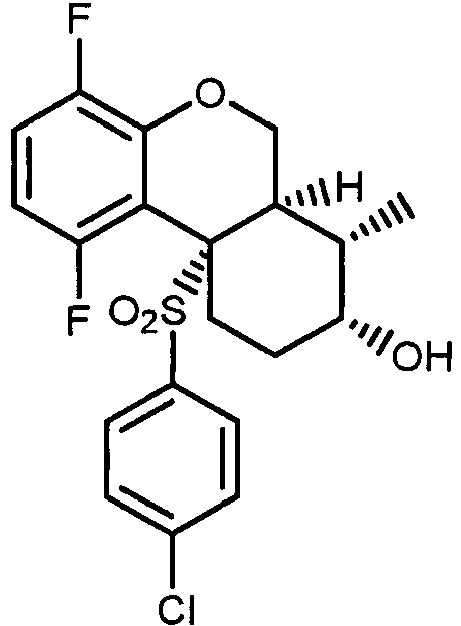
429.2, 4.24 min. 163 
429.2, 4.06 min. 164 
440.2, 4.13 min. 165 
440.2, 4.02 min. -

- At 0°C, to the nitrile alcohol (0.052 g, 0.12 mmol) in THF (10 mL) was added LAH (1.0 M in THF, 0.24 mL) dropwise, it was stirred for 1.5 hr, and diluted with DCM (20 mL). The reaction mixture was neutralized with 4 drops of saturated NaHCO3 and stirred for 15 mins, followed by addition of Na2SO4 (solid). It was filtered, washed with CH3OH/DCM (40%) several times, and evaporated. The crude reaction mixture was purified by the preparative TLC (Eluent: CH3OH/DCM = 30%), and hydroxyl amine was obtained (0.034 g, 0.08 mmol, 65%). 1H-NMR (CD30D 400 MHz) δ- 7.69 (d, J = 9.2 Hz, 2H), 7.63 (d, J = 8.8 Hz, 2H), 7.23-7.14 (m, 1 H), 6.61-6.51 (m, 1 H), 5.15 (d, J = 13.2 Hz, 1 H), 4.51 (d, J = 12.4 Hz, 1 H), 3.98 (s, 1 H), 3.57 (s, 1 H), 3.34 (s, 1 H), 3.16-2.96 (m, 1H), 2.91 (d, J = 11.6 Hz, 1 H), 2.53 (t, J = 13.2 Hz, 1H), 2.36 (d, J = 13.2 Hz, 1 H), 1.77 (d, J = 14.4 Hz, 1 H), 1.63-1.47 (m, 2H), 1.36-1.20 (m, 1 H).
- The product of Step 1 was converted to the title compound using the prodedures described in Example 20.
Table 45 Ex. No. Structure LCMS (M+1, retention time) 166 
372.2(M-phenylsulfone+1), 4.03 min. -

- The title compound of Example 167 was prepared following the general procedures from Example 19 and 20. The compound of Example 168 (Table 46) was prepared following procedures similar to those of Example 167.
Table 46 Ex. No. Structure LCMS (M+1, retention time) 167 
560.3, 5.06 min. 168 
374.2 (M-phenylsulfone+NH4), 4.79 min. -


- At 0 °C, to the ester in THF (40 mL) was added NH(i-Pr)2 (4.0 mL, 2.86 g, 28.3 mmol, 3.0 Equiv.) first, followed by n-BuLi (11.3 mL, 28.3 mmol, 3.0 Equiv.) dropwise, it was stirred at this temperature for 10 mins before cooling to -78°C. The reaction mixture was then stirred at -78°C for an hour followed by addition of vinyl sulfone (3.226 g, 9.43 mmol) in THF (20 mL) slowly, it was stirred at this temperature for another hr., quenched with water (40 mL), and warmed to room temperature slowly. It was extracted with EtOAc (3x100 mL), the combined organic layers were washed with water, brine, dried over MgSO4, filtered, and evaporated. The crude reaction was obtained as a mixture of diastereomers (9.95 g), and was reduced directly.
- The Michael addition product was dissolved in EtOAc (100 mL), and stirred under H2 (1 atm) on catalysis of Pd(OH)2/C (10%, 3.0 g). When the reaction completed, it was filtered through a pad of Celite, rinsed with EtOAc, and evaporated under vacuum. The crude reaction mixture was purified by the column chromatography (Eluent: EtOAc/Hexane = 10% to 75%), and the alcohol was obtained (3.039 g, 6.60mmol, 70% for two steps).
- The ring cyclization followed the general procedure from Example 16, and a pair of diastereomers was epimerized to the desired ester. 1H-NMR (CDCl3 400 MHz) for methyl ester δ: 7.61 (d, J = 8.8 Hz, 2H), 7.49 (d, J = 9.2 HZ, 2H), 7.14-7.00 (m, 1 H), 6.50-6.35 (m, 1 H), 5.19 (dd, J = 3.2, 12.4 Hz, 1H), 4.20 (d, J = 11.6 Hz, 1 H), 3.72 (s, 3H), 2.98 (d, J = 12.0 Hz, 1H), 2.64 (d, J = 13.2 Hz, 1H), 2.45 (dt, J = 4.4, 12.8 Hz, 1 H), 1.98-1.87 (m, 2H), 1.82-1.73 (m, 1 H), 1.54 (dd, J = 4.0, 12.8 Hz, 1 H), 1.18-1.02 (m, 1 H). 1H-NMR (CDCl3 400 MHz) for t-Butyl ester δ: 7.60 (d, J = 8.4 Hz, 2H), 7.48 (d, J = 8.8 Hz, 2H), 7.14-7.01 (m, 1 H), 6.48-6.35 (m, 1 H), 5.18 (dd, J = 2.8, 12.0 Hz, 1H), 4.23 (d, J = 11.6 Hz, 1H), 2.90 (d, J = 11.6 Hz, 1H), 2.65 (d, J = 14.0 Hz, 1H), 2.31 (dt, J = 4.0, 12.0 Hz, 1 H), 1.96-1.84 (m, 2H), 1.80-1.70 (m, 1 H), 1.46 (s, 9H), 1.54-1.40 (m, 1 H), 1.16-1.06 (m, 1 H).
- To the ester (0.454 g, 0.99 mmol) in THF/EtOH (10 mL/50 mL) was added LiBH4 (0.433 g, 19.88 mmol, 20 Equiv.), and it was stirred overnight. Most solvent was removed under vacuum, the residue was dissolved in water, extracted with EtOAc, the combined organic phase was washed with brine, dried over MgSO4, filtered, and evaporated. The crude reaction mixture was purified by the column chromatography (Eluent: EtOAc/Hexane = 5% to 75%), and alcohol (0.285 g, 0.66 mmol, 67%) was obtained. 1H-NMR (CDCl3 400 MHz) δ: 7.61 (d, J = 9.2 Hz, 2H), 7.48 (d, J = 8.8 Hz, 2H), 7.09-7.04 (m, 1 H), 6.46-6.39 (m, 1 H), 5.16 (d, J = 12.4 Hz, 1H), 4.63 (d, J = 12.4 Hz, 1 H), 3.88 (d, J = 4.4, 10.8 Hz, 1 H), 3.70 (dd, J = 2.8, 11.2 Hz, 1 H), 2.69 (d, J = 11.2 Hz, 1 H), 2.56 (d, J = 13.2 Hz, 1 H), 1.94-1.83 (m, 1 H), 1.80-1.36 (m, 6H), 1.16-1.02 (m, 1 H).
- The transformation from alcohol to amine followed the general procedure from Example 19.
- The synthesis of title compound followed the general procedure from Example 20.
Table 47 Ex. No. Structure LCMS (M+1, retention time) 169 
328.2 (M-phenylsulfone), 4.18 min. - Using similar procedures to that of Example 169, the compounds in Table 48 were prepared.
Table 48 Ex. No. Structure LCMS (M+1, retention time) 170 
294.2 (M-phenylsulfone), 3.93min. 171 
323.2(M-phenylsulfone), 4.05min. 172 
344.2(M-phenylsulfone), 4.33min. 173 
356.2(M-phenylsulfone), 4.38 min. 174 
384.2(M-phenylsulfone), 4.81 min. 175 
491.3, 4.99 Min 176 
463.3, 4.50 Min 177 
462.3, 3.22 Min 178 
540.3, 4.41 Min 179 
554.3, 4.68 Min 180 
594.3, 5.05 Min 181 
726.4, 5.52 Min 182 
566.3, 4.61 Min -

- To the alcohol (0.431 g, 1.00 mmol) in DCM (10 mL) was added TEMPO (0.10 mmol, 10mol%) and DIAB (0.363 g, 1.10 mmol, 1.1 Equiv.), it was stirred at room temperature until the completion of the reaction. It was diluted with DCM (100 mL), washed with saturated Na2S2O3, and extracted with DCM (3x50 mL). The combined organic layers were washed with saturated NaHCO3, brine, dried over MgSO4, filtered, and evaporated. The crude reaction mixture was purified by the column chromatography (Eluent: EtOAc/Hexane = 5% to 75%), and aldehyde (0.311 g, 0.73 mmol, 73%) was obtained. 1H-NMR (CDCl3 400 MHz) δ: 9.66 (s, 1 H), 7.61 (d, J = 8.8 Hz, 2H), 7.49 (d, J = 8.8 Hz, 2H), 7.11-7.03 (m, 1 H), 6.47-6.40 (m, 1H), 5.16 (dd, J = 2.8, 12.6 Hz, 1 H), 4.32 (d, J = 12.8 Hz, 1 H), 3.00 (d, J = 11.2 Hz, 1 H), 2.67 (d, J = 12.4 Hz, 1 H), 2.56-2.48 (m, 1 H), 2.00-1.80 (m, 3H), 1.78-1.65 (m, 1 H), 1.20-1.06 (m, 1 H).
- To aldehyde (0.271 g, 0.63 mmol) in CH3OH/CH3OH (10 mL/10 mL) was added ethylamine (2.0 M in CH3OH 0.48 mL, 0.95 mmol, 1.5 Equiv.) and Ti(OiPr)4 (0.271 g, 0.28 mL, 0.95 mmol, 1.5 Equiv.), after being stirred overnight at room temperature, NaBH(OAc)3 was added, and it was stirred for 4 hrs. The reaction mixture was quenched with 10 mL of H2O, and stirred for 30 mins, it was filtered through a pad of Celite, rinsed with CH3OH, filtered, and concentrated. The residue was diluted with saturated NaHCO3, extracted with EtOAc (3x100 mL) and DCM (100 mL), the combined organic layers were washed with brine, dried over MgSO4, filtered, and evaporated. The crude reaction mixture was purified by the column chromatography (Eluent: DCM/CH3OH (0.7 N NH3) = 5% to 50%), and amine Example 183A was obtained (0.169 g, 0.37 mmol, 59%). 1H-NMR (CDCl3 400 MHz) δ: 7.60 (d, J = 8.4 Hz, 2H), 7.47 (d, J = 8.8 Hz, 2H), 7.08-7.01 (m, 1 H), 6.48-6.33 (m, 1 H), 5.70-5.30 (broad s, 1 H), 5.14 (d, J = 12.4 Hz, 1 H), 4.60 (d, J = 12.8 Hz, 1 H), 2.83 (d, J = 12.8 Hz, 1 H), 2.71-2.63 (m, 3H), 2.55 (d, J = 10.4 Hz, 2H), 2.04-1.82 (m, 7H), 1.82-1.68 (m, 2H), 1.60-1.48 (m, 1 H), 1.30-1.16 (m, 1 H), 1.10 (t, J = 7.0 Hz, 3H).
- The synthesis of sulfonamides and amide followed the general procedure from Example 20. 1H-NMR (CDCl3 400 MHz) δ: 7.62 (d, J = 8.8 Hz, 2H), 7.49 (d, J = 8.8 Hz, 2H), 7.11-7.04 (m, 1 H), 6.49-6.42 (m, 1 H), 5.18 (d, J = 12.4 Hz, 1 H), 4.56 (d, J = 12.4 Hz, 1 H), 3.40 (dd, J = 4.0, 13.6 Hz, 1 H), 3.32-3.11 (m, 3H), 2.84 (s, 3H), 2.56 (d, J = 13.2Hz, 1H),2.45(d,J=11.2Hz, 1H), 1.95(d,J=13.2Hz, 1H), 1.86(t,J=13.2 Hz, 1 H), 1.66 (d, J = 9.6 Hz, 1 H), 1.68-1.60 (m,1 H), 1.16 (t, J = 7.2 Hz, 3H), 1.05-0.98 (m, 1 H).
- Using similar procedures to that of Example 183, the compounds in Table 49 were prepared.
Table 49 Ex. No. Structure LCMS (M+1, retention time) 184 
548.3, 4.88 min. 185 
560.3, 4.94 min. 186 
498.3, 4.41 min 187 
442.2, 2.98 Min 188 
520.3, 4.57 Min -


- To aldehyde (0.049 g, 0.11 mmol) in toluene (10 mL) was added the ylide (0.055 g, 0.17 mmol, 1.5 Equiv.), and it was stirred at 90 °C overnight. Solvent was removed, and the crude residue was purified by preparative TLC (Eluent: EtOAc/Hexane = 20%), and Wittig reaction product was obtained (0.039 g, 0.08 mmol, 76%). 1H-NMR (CDCl3 400 MHz) δ: 7.60 (d, J = 9.2 Hz, 2H), 7.49 (d, J = 8.8 Hz, 2H), 7.08 (dd, J = 9.4, 6.0Hz, 1 H), 6.47-6.40 (m, 1 H), 6.20 (d, J = 16.0 Hz, 1 H), 5.09 (d, J = 9.2 Hz, 1H), 4.30 (d, J = 12.0Hz, 1 H), 2.62 (d, J = 13.2 Hz, 1H), 2.51 (d, J = 10.8 Hz, 1 H), 2.27 (s, 3H), 2.26-2.18 (m, 1 H), 1.94 (t, J = 13.2 Hz, 1 H), 1.80-1.74 (m, 1 H), 1.71-1.57 (m, 1 H), 1.39 (dq, J = 4.0, 12.8, 16.0 Hz, 1 H), 1.12 (q, J = 13.2, 16.4 Hz, 1 H).
- The α,β-unsaturated ketone was treated with hydrogenation on catalysis of Pd(OH)2 in EtOAc, the catalyst was filtered off through a pad of Celite, and the filtrate was dried under vacuum. The crude reaction mixture was purified by preparative TLC (Eluent: EtOAc/Hexane = 20%), and reduced product was obtained (0.0188 g, 0.04 mmol, 54%). 1H-NMR (CDCl3 400 MHz) δ:7.60 (d, J = 8.0 Hz, 2H), 7.48 (d, J = 8.0 Hz, 2H), 7.08-7.02 (m, 1 H), 6.44-6.32 (m, 1H), 5.15 (d, J = 12.4 Hz, 1H), 4.58 (d, J = 12.4 Hz, 1 H), 2.55 (d, J = 10.8 Hz, 1 H), 2.52-2.44 (m, 1 H), 2.44-2.38 (m, 1 H), 2.34 (d, J = 11.2 Hz, 1H), 2.14 (s, 3H), 2.08-1.96 (m, 1 H), 1.86 (t, J = 12.8 HZ, 1 H), 1.70 (d, J = 10.4 Hz, 2H), 1.60-1.48 (m, 1 H), 1.44-1.28 (m, 1 H), 1.14-0.96 (m, 2H).
- The ketone was reduced by use of the general procedure from Example 18, and a pair of diastereomer (1/1) was obtained. 1H-NMR (CDCl3 400 MHz) δ: 7.60 (d, J = 8.8 Hz, 2H), 7.48 (d, J = 8.8 Hz, 2H), 7.09-7.02 (m, 1 H), 6.45-6.38 (m, 1 H), 5.15 (d, J = 11.6 Hz, 1 H), 4.64-4.58 (m, 1 H), 3.82-3.70 (m, 1 H), 2.54 (d, J = 11.6 Hz, 1 H), 2.37 (d, J = 10.8 Hz, 1 H), 1.96-1.22 (m, 9H), 1.20 (d, J = 6.4 Hz, 3H), 1.16-.98 (m, 1 H).
-

- Following the general procedure from Example 24 Step two, two diastereomers (Example 190A and 190B) of the title compound were obtained. 1H-NMR (CDCl3 400 MHz) for 190A δ: 7.62 (d, J = 8.8 Hz, 2H), 7.48 (d, J = 8.8 Hz, 2H), 7.09-7.03 (m, 1 H), 6.46-9.39 (m, 1 H), 5.17 (d, J = 12.4 Hz, 1 H), 4.73 (d, J = 12.0 Hz, 1 H), 4.32-4.22 (m, 1 H), 2.81 (d, J = 10.4 Hz, 1 H), 1.87 (t, J = 12.8 Hz, 1 H), 1.77 (d, J = 13.6 Hz, 1 H), 1.70-1.60 (m, 1 H), 1.40-1.22 (m, 3H), 1.19 (d, J = 6.8 Hz, 3H), 1.10-0.98 (m, 1 H). 1H-NMR (CDCl3 400 MHz) for 190B δ: 7.60 (d, J = 8.0 Hz, 2H), 7.49 (d, J = 8.4 Hz, 2H), 7.10-7.03 (m, 1 H), 6.48-6.39 (m, 1 H), 5.16 (d, J = 12.8 Hz, 1H), 4.51 (d, J = 12.4 Hz, 1 H), 4.36-4.24 (m, 1 H), 2.56-2.42 (m, 2H), 1.92-1.84 (m, 2H), 1.84-1.72 (m, 1 H), 1.72-1.52 (m, 2H), 1.20 (d, J = 6.4 Hz, 3H), 1.12-0.96 (m, 1 H).
-

- The oxidation followed the general procedure from Example 24 step one. 1H-NMR (CDCl3 400 MHz) for δ:7.61 (d, J = 8.4 Hz, 2H), 7.49 (d, J = 8.8 Hz, 2H), 7.12-7.05 (m, 1 H), 6.48-6.42 (m, 1 H), 5.13 (dd, J = 2.8, 12.4 Hz, 1 H), 4.10 (d, J = 12.8 Hz, 1 H), 3.02 (d, J = 10.8 Hz, 1 H), 2.70-2.58 (m, 2H), 2.20 (s, 3H), 1.96-1.74 (m, 3H), 1.32-1.20 (m, 1 H), 1.20-1.08 (m, 1H).
-


- To alcohol (0.147 g, 0.34 mmol) in DCM (20 mL) was added Py (0.28 mL, 0.271 g, 3.43 mmol, 10 Equiv.) and Phosgene (20% in toluene, 1.44 mL, 1.356 g, 2.74 mmol, 8.0 Equiv.), it was stirred at room temperature for 30mins, and quenched with water (10 mL), The aqueous phase was extracted with DCM (50 mL), the combined organic phase was washed with brine, dried over MgSO4, filtered, and evaporated. The crude reaction mixture was purified by the column chromatography (Eluent: EtOAc/Hexane = 5% to 35%), and chloroformate (0.073 g, 0.15 mmol, 43%) was obtained. 1H-NMR (CDCl3 400 MHz) for δ: 7.62 (d, J = 8.4 Hz, 2H), 7.50 (d, J = 8.0 Hz, 2H), 7.12-7.05 (m, 1 H), 6.48-6.42 (m, 1H), 5.22 (d, J = 12.8 Hz, 1H), 4.54 (dd, J = 4.4, 11.6 Hz, 1 H), 4.49 (d, J = 12.4 Hz, 1 H), 4.38 (dd, J = 3.0, 11.8 Hz, 1H), 2.65 (d, J = 11.6 Hz, 1 H), 2.57 (d, J = 12.8 Hz, 1 H), 1.92 (t, J = 13.2 Hz, 1 H), 1.84-1.68 (m, 3H), 1.50-1.36 (m, 1 H), 1.18-1.02 (m, 1 H).
- To the chloroformate (0.036 g, 0.074 mmol) from step 1 in DCM (4 mL) was added CH3NH2 in THF (2.0 M, 74 uL, 0.15 mmol, 2.0 Equiv.), it was stirred at room temperature for 20 mins, and diluted with DCM, washed with brine, dried over MgSO4, filtered, and evaporated. The crude reaction mixture was purified by the preparative TLC (Eluent: EtOAc/Hexane = 35%), and the carbamate (0.014 g, 0.029 mmol, 39%) was obtained. 1H-NMR (CDCl3 400 MHz) for δ: 7.60 (d, J = 8.0 Hz, 2H), 7.48 (d, J = 8.4 Hz, 2H), 7.10-6.98 (m, 1 H), 6.50-6.38 (m, 1 H), 5.15 (d, J = 12.4 Hz, 1 H), 4.71 (s, 1H), 4.60 (d, J = 12.4 Hz, 1H), 4.35 (d, J = 12.0 Hz, 1H), 4.07 (d, J = 12.0 Hz, 1H), 2.82 (d, J =4.8 Hz, 3H), 2.62 (d, J = 10.4 Hz, 1 H), 2.54 (d, J = 12.4 Hz, 1 H), 1.88 (t, J = 13.2 Hz, 1 H), 1.80-1.50 (m, 4H), 1.48-1.32 (m, 1 H), 1.16-1.00 (m, 1 H).
- Using similar procedures to that in Example 192, the compound in Table 50 was prepared.
Ex. No. Structure LCMS (M+1, retention time) 193 
500.3, 4.75 min. - The compounds in Table 51 were prepared according to Example 20.
TABLE 51 Ex. No. STRUCTURE Mass Spec (MH+ except otherwise noted); retention time (min) 194 
443.2; 5.28 195 
429.2; 5.08 196 
445.2; 4.53 - Following procedures similar to the ones described in Example 26, the compounds in Table 52 were prepared.
TABLE 52 Ex. No. STRUCTURE Mass Spec (MH+ except otherwise noted); retention time (min) 197 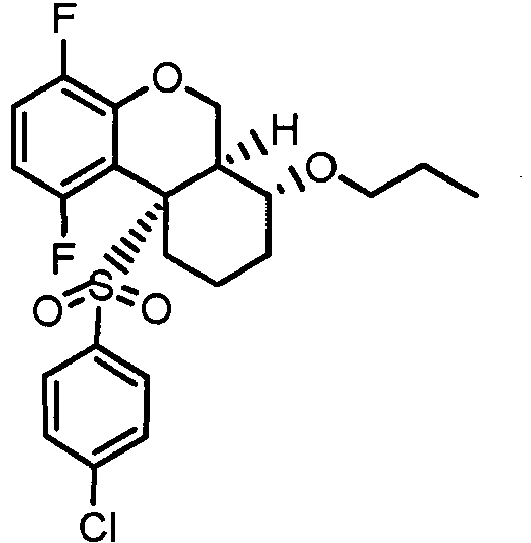
457.3; 5.57 198 
469.3; 5.40 199 
546.3; 4.86 -

- A solution of isomeric mixture A and B from Example 24 Step 2 (400 mg, 1.12 mmol) in DCM (5 mL) was treated with Dess-Martin periodinane (715 mg, 1.68 mmol) and stirred at RT for 1 h before excess sodium thiosulfate was added. The slurry was diluted with AcOEt and half-saturated NaHCO3, washed with sat NaHC03, dried and concentrated. The crude ketone (∼430 mg) was used as such in the next step.
- The crude ketone from Step 1 was subjected to conditions similar to the ones described in Steps 2 and 3 of Example 24 to provide Example HJ1: 1H NMR (CDCl3 400 MHz) δ 7.55 (d, J = 8.6 Hz, 2H), 7.48 (d, J = 8.6 Hz, 2H), 7.18 (m, 1 H), 6.40 (m, 1H), 5.18 (dd, 1H), 4.46 (m, 1H), 3.72 (m, 1H), 3.41 (t, 1H), 2.71 (d, 1H), 2.53 (br d, 1 H), 2.37 (m, 1 H), 1.40 (s, 3H), 0.98 (s, 3H); LCMS (MH+) = 429.2; retention time = 4.83 min.
-
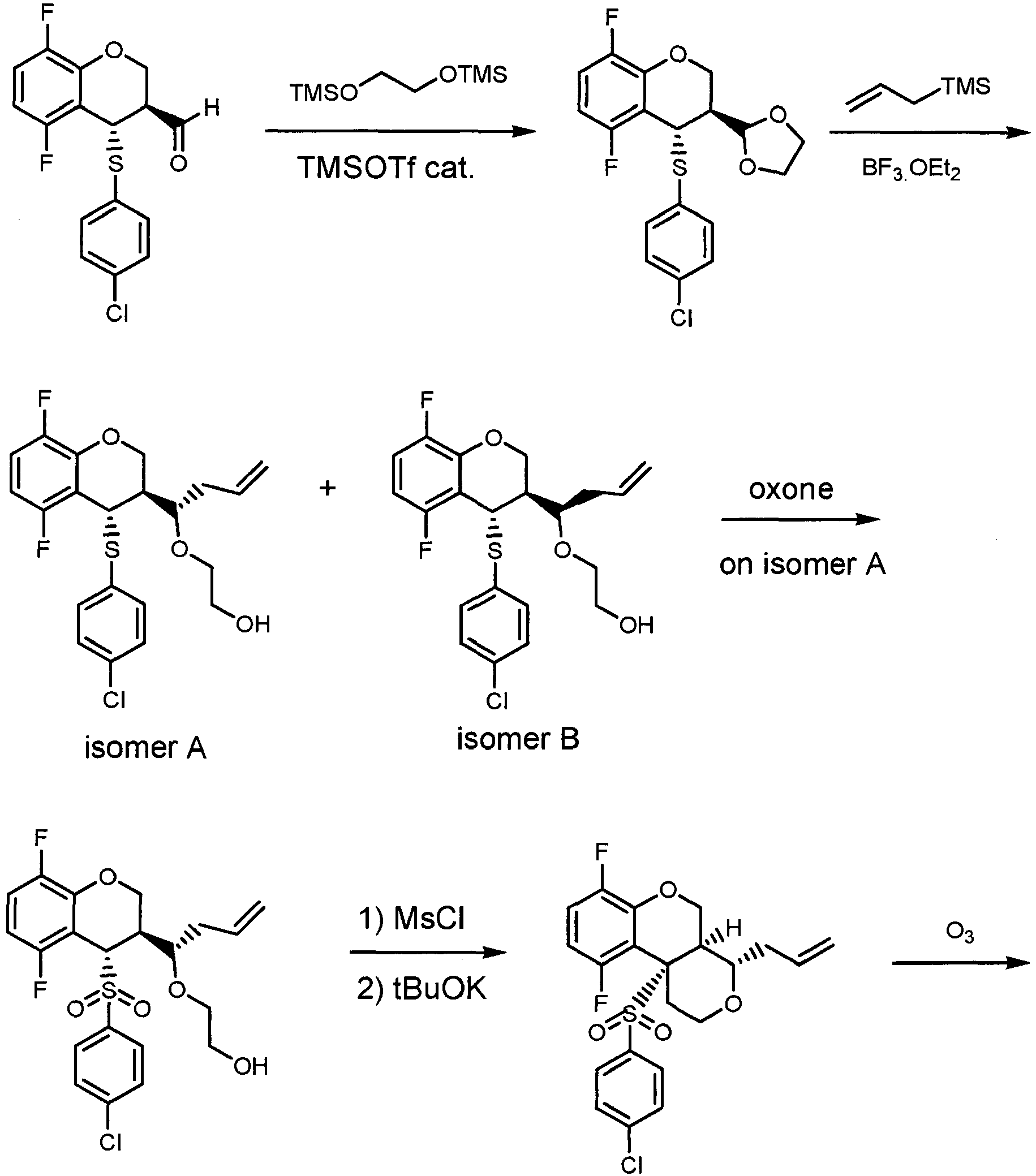

- A solution of the product from Example 16 Step 2 (20.0 g, 58.6 mmol) in DCM (25 mL) at -78 °C was treated with 1,2-bistrimethylsilylglycol (18.7 mL, 76.2 mmol) and trimethylsilyltriflate (0.60 mL, 3.5 mmol) and the reaction was allowed to warm to RT overnight. The final mixture was diluted with sat. NaHCO3, extracted with DCM, dried and concentrated. The residue was purified by flash-chromatography over silica gel (eluted with Hexanes/AcOEt 99:1 to 50:50) to give 15.50 g (70%) of ketal.
- To a solution of ketal from Step 1 (13.72 g, 35.65 mmol) in DCM (200 mL) was added allyltrimethylsilane (28.7 mL, 180 mmol) followed by boron trifluoride etherate (22.6 mL, 180 mmol) and the reaction was stirred at 38 °C overnight then poured into water, extracted with DCM and AcOEt, dried and concentrated. The residue was purified by flash-chromatography over silica gel (eluted with Hexanes/AcOEt 95:5 to 70:30) to provide in order of elution 7.11 g (47%) of allyl alcohol isomer A followed by allyl alcohol isomer B.
- A solution of allyl alcohol isomer A from Step 2 (7.11 g, 16.65 mmol) and oxone (30.75 g, 50.0 mmol) in acetone (100 mL) and water (25 mL) was stirred at RT overnight then filtered, diluted with water and AcOEt, extracted with AcOEt, dried and concentrated. The residue is purified was purified by flash-chromatography over silica gel (eluted with Hexanes/AcOEt 99:1 to 60:40) to provide 5.50 g (72%) of allylsulfone.
- To a solution of allylsulfone from Step 3 (1.78 g, 3.87 mmol) in DCM (40 mL) was added methanesulfonyl chloride (480 uL, 6.20 mmol) followed by triethylamine (730 uL, 5.2 mmol) and the reaction was stirred overnight at RT. Workup with diluted HCl and DCM afforded 2.46 g of mesylate intermediate. This mesylate intermediate (2.46 g) in THF (40 mL) was treated slowly with tBuOK 1N in THF (10 mL, 10 mmol) and the reaction was stirred 35 min at RT then diluted with water, extracted with AcOEt and DCM, dried and concentrated. The residue was purified by flash-chromatography over silica gel (eluted with Hexanes/AcOEt 95:5 to 60:40) to give 1.50 g (88%) of allyl pyrane.
- To a solution of allyl pyrane from Step 4 (2.0 g, 4.35 mmol) in DCM (100 mL) at -78 °C was bubbled ozone until blue color persists. Nitrogen was then bubbled until the solution turns colorless and triphenylphosphine (1.87 g, 7.12 mmol) was added in one portion and the reactions was left to stir to RT for 1 h. The residue obtained after concentration was purified by flash-chromatography over silica gel (eluted with Hexanes/AcOEt 95:5 to 60:40) to provide 2.6 g (100%) of aldehyde.
- To a solution of aldehyde product from Step 5 (75 mg, 0.17 mmol) at -78 °C in THF (1 mL) was added EtMgBr 3N in Et2O (120 uL, 0.36 mmol) then the reaction was allowed to warm to 0 °C over 30 min, quenched into saturated NH4Cl, extracted with DCM and AcOEt, dried and concentrated. The residue was purified over silica gel (eluted with Hexanes/AcOEt 7:3) to provide 65.8 mg of Example 201 as a 1:1 diastereoisomeric mixture: 1H NMR (CDCl3 400 MHz) δ 7.63 (d, J = 8.7 Hz, 2H), 7.52 (d, J = 8.7 Hz, 2H), 7.11 (m, 1 H), 6.46 (m, 1 H), 5.14 (d, 1 H), 4.41 (m, 1 H), 3.92 (m, 1 H), 3.65-3.85 (m, 1 H), 3.45-3.60 (m, 1 H), 3.18 (m, 1 H), 2.62 (m, 1 H), 2.53 (m, 1 H), 2.33 (m, 1 H), 1.85-2.05 (m, 1 H), 1.60-1.80 (m, 1 H), 1.45-1.55 (m, 1 H), 0.95-1.00 (m, 3H); LCMS (MH+) = 473.3; retention time = 4.51 min.
-

- A solution of the product from Example HJ2 Step 4 (433 mg, 0.98 mmol) in THF (3 mL) was treated with borane dimethylsulfide 2N in THF (1.5 mL, 1.50 mmol) and the reaction was stirred overnight at RT then treated at 10 °C slowly with 3N NaOH (9 mL) and 30% H2O2 (9 mL). After 1 h at RT the final mixture was diluted with water and extracted with DCM and AcOEt, dried and concentrated. The residue was purified by flash-chromatography over silica gel (eluted with Hexanes/AcOEt 95:5 to 60:40) to afford 281 mg (63%) of alcohol.
- A solution of alcohol from Step 1 (281 mg, 0.61 mmol) in DCM (5 mL) was treated with Dess-Martin periodinane (320 mg, 0.75 mmol) and the reaction was stirred 45 min at RT then diluted with AcOEt, washed with sat NaHCO3, dried and concentrated. The residue was diluted with DCM then filtered and concentrated to give 391 mg of crude ketone.
- A solution of crude ketone from Step 2 (178 mg) in THF (2 mL) was treated at - 78 °C by MeMgBr 3N in Et2O (350 uL, 1.05 mmol) then the reaction was allowed to warm to 0 C over 45 min and poured into sat NH4Cl. After extraction with DCM and AcOEt followed by drying over Na2SO4 and concentration, the residue purified by flash-chromatography over silica gel (eluted with Hexanes/AcOEt 95:5 to 60:40) to afford 95 mg of alcohol.
- The alcohol from Step 3 (95 mg, 0.20 mmol) was subjected to the conditions described in Step 2 to afford, after purification over silica gel (eluted with Hexanes/AcOEt 8:2), 69 mg of Example 202: 1H NMR (CDCl3 400 MHz) 6 7.62 (d, J = 8.6 Hz, 2H), 7.50 (d, J = 8.6 Hz, 2H), 7.09 (m, 1 H), 6.44 (m, 1 H), 5.14 (m, 1 H), 4.48 (m, 1H), 3.86 (m, 1H), 3.23 (m, 1H), 3.10 (m, 1 H), 2.60-2.70 (m, 1 H), 2.45-2.55 (m, 3H), 2.10-2.35 (m, 2H), 2.12 (s, 3H), 1.78 (m, 1 H); LCMS (MH+) = 471.3; retention time = 4.55 min.
-
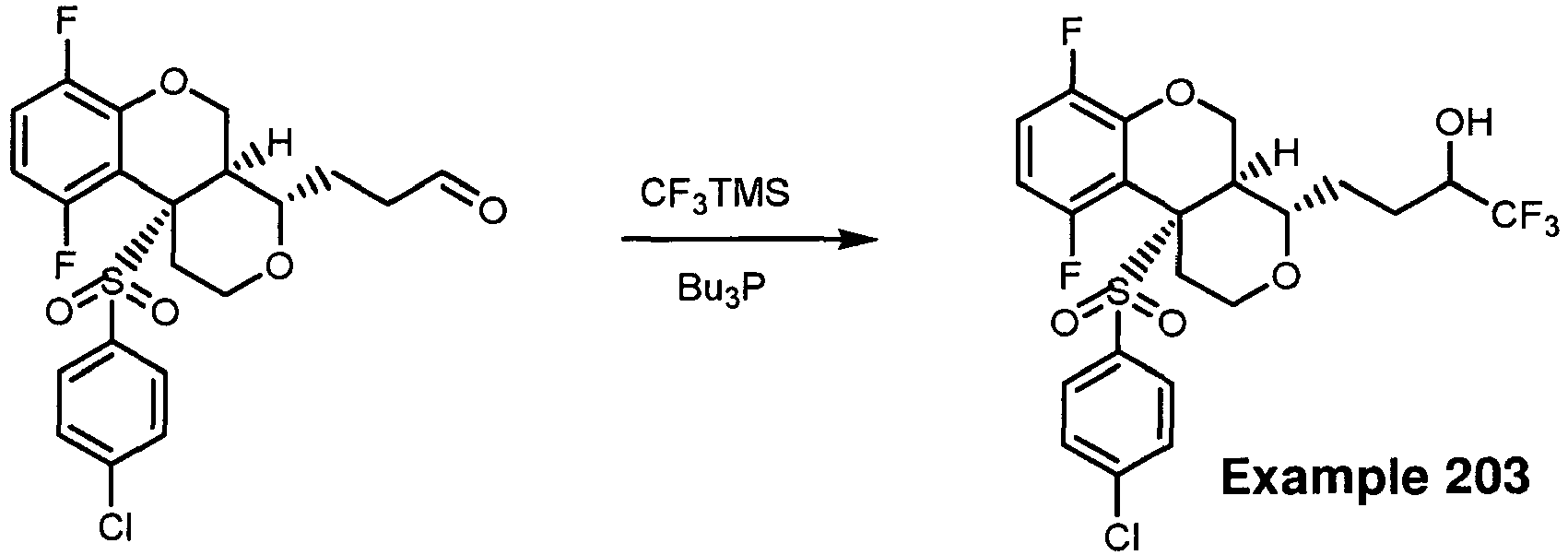
- To a solution of product from Example 202 Step 2 (33.3 mg, 0.072 mmol) and tributylphosphine (20 uL) in DMF (0.6 mL) was added trifluoromethyltrimethylsilane (200 u) followed, slowly in a water bath, by TBAF 1 N (65 uL). The reaction was stirred at RT for 60 hours then worked up with water and DCM then AcOEt. The residue was purified over silica gel (eluted with Hexanes/AcOEt 8:2) to give 11 mg of Example HJ4 as a 1:1 diastereoisomeric mixture: 1H NMR (CDCl3 400 MHz) δ 7.53 (d, J = 8.6 Hz, 2H), 7.26 (d, J = 8.6 Hz, 2H), 7.11 (m, 1H), 6.46 (m, 1H), 5.17 (m, 1H), 4.44 (m, 1 H), 3.83 (m, 2H), 3.31 (m, 1 H), 3.10-3.20 (m, 1 H), 2.50-2.65 (m, 2H), 2.33 (m, 1H), 2.14 (m, 1 H), 1.65-1.95 (m, 3H); LCMS (MH+) = 527.3; retention time = 4.74 min.
-

- The ketone product of Example 202 was purified over Chiracel OD® column using Hexanes/isopropanol (30/70) as the mobile phase to afford, in order of elution, the (-) enantiomer ([α]D 20 = -1.17° (c = 1, DCM)) followed by the (+) enantiomer ([α]D 20 = +0.98° (c = 1, DCM)). To a solution of (-) enantiomer (10 mg, 0.021 mmol) in THF (200 uL) at 0 °C was added (R)-methyl-CBS-oxazaborolidine 1 N in toluene (15 uL, 0.015 mmol) then, 5 min later, borane dimethylsulfide 2N in THF (30 uL, 0.06 mmol) over 5 min. The reaction was stirred 45 min at 0 °C then diluted with DCM, quenched with MeOH (~0.5 mL) and stirred for 5 min, diluted with sat NaHCO3, extracted with DCM and AcOEt. The residue was purified over silica gel (eluted with Hexanes/AcOEt 6:4) to give 8.4 mg of Example 204: 1H NMR (CDCl3 400 MHz) δ 7.63 (d, J = 8.6 Hz, 2H), 7.50 (d, J = 8.6 Hz, 2H), 7.08 (m, 1 H), 6.45 (m, 1 H), 5.17 (m, 1 H), 4.46 (m, 1 H), 3.89 (m, 1 H), 3.77 (m, 1 H), 3.26 (m, 1 H), 3.14 (m, 1H), 2.50-2.60 (m, 2H), 2.30 (m, 1 H), 2.00 (m, 1 H), 1.45-1.70 (m, 3H), 1.19 (d, 3H); LCMS (MH+) = 473.3; retention time = 4.37 min.
- Following procedures similar to the ones described in Examples 200 to 204, the compounds in Table 53 were prepared.
TABLE 53 Ex. No. STRUCTURE Mass Spec (MH+ except otherwise noted); retention time (min) 205 
445.2; 3.92 206 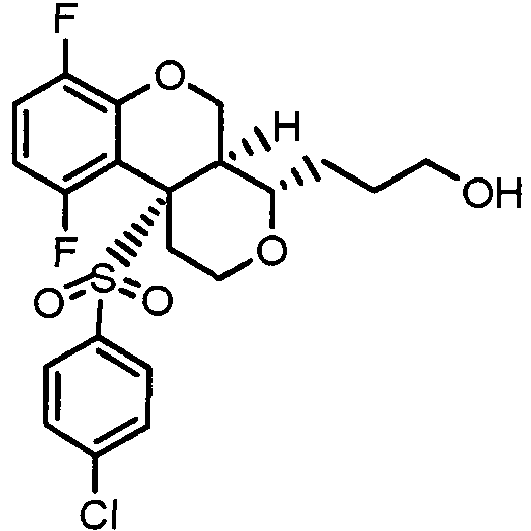
459.3; 3.98 207 
473.3; 4.26 208 
489.3; 3.63 209 
471.3; 4.55 210 
471.3; 4.55 211 
473.3; 4.38 212 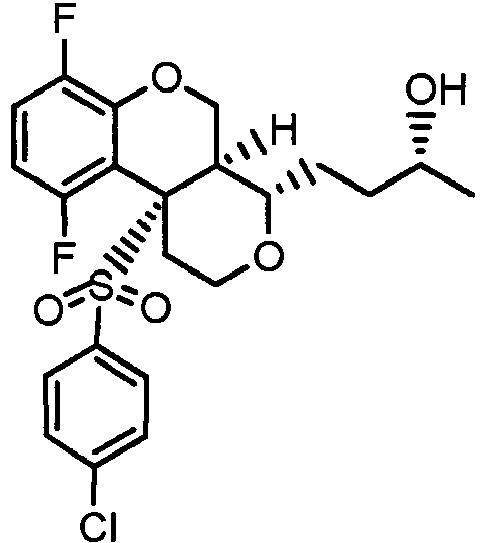
473.3; 4.37 213 
457.3; 4.38 214 
459.3; 4.18 215 
513.3; 4.68 216 
471.3; 4.79 217 
511.3; 4.52 218 
487.3; 4.41 -

- A solution of ketal product from Example 201 Step 1 (15.0 g, 39.0 mmol) in acetone (480 mL) and water (120 mL) was added oxone (51.0 g, 82.0 mmol) and the reaction was stirred at RT 48 h. The final mixture was filtered, rinced with DCM, then diluted with water and extracted with DCM. After drying and concentrating, the residue was purified by flash-chromatography over silica gel (eluted with Hexanes/AcOEt 99:1 to 50:50) to give 13.5 g (70%) of sulfone ketal.
- To a solution of sulfone ketal from Step 1 (5.0 g, 12.0 mmol) in DCM (100 mL) at 0 °C was added trimethylsilylcyanide (2.40 mL, 18.0 mmol) followed by borontrifluoride etherate (1.50 mL, 12.0 mmol) and the reaction was warmed to RT over 1 h. Additional trimethylsilylcyanide (1.20 mL, 9.0 mmol) and borontrifluoride etherate (0.75 mL, 6.0 mmol) were added and the mixture was stirred 1 h. The final mixture was diluted with DCM and water, extracted with DCM, dried and concentrated. The residue was purified by flash-chromatography over silica gel (eluted with a slow gradient of DCM/AcOEt 99:1 to 60:40) to give 2.20 g (41%) of cyano alcohol isomer A (41%) followed by 2.8 g (52%) of cyano alcohol isomer B.
- To a solution of cyano alcohol isomer A from Step 2 (2.70 g, 6.08 mmol) in THF (200 mL) at 0 °C was added lithium aluminum hydride 1 N in THF (12.0 mL, 12.0 mmmol) and the reaction was stirred 1 h at RT. The final mixture was diluted with DCM, quenched slowly with 3 mL of sat. NaHCO3, stirred 15 min at RT then treated with Na2SO4 and filtered over Celite (eluted with DCM/MeOH 9:1). Upon concentration, 2.60 g (96%) of amino alcohol was obtained.
- To a solution of amino alcohol from Step 3 (2.60 g, 5.81 mmol) in DCM (60 mL) was added triethylamine (1.60 mL, 12.0 mmol) followed by tert-butyldicarbonate (1.50 g, 6.88 mmol) and the reaction was stirred overnight at RT. The final mixture was concentrated and purified by flash-chromatography over silica gel (eluted with Hexanes/AcOEt 80:20 to 20:80) to provide 2.80 g (88%) of Boc-amino alcohol.
- To a solution of Boc-amino alcohol from Step 4 (2.80 g, 5.11 mmol) in DCM (60 mL) was added methanesulfonyl chloride (0.60 mL, 7.60 mmol) followed by diisopropylethylamine (1.80 mL, 10.2 mmmol) and the reaction was stirred overnight at RT. The final mixture was concentrated and purified by flash-chromatography over silica gel (eluted with Hexanes/AcOEt 80:20 to AcOEt) to provide 3.0 g (94%) of mesylate intermediate. This mesylate intermediate (3.0 g, 4.80 mmol) in THF (60 mL) was treated at -30 °C with tBuOK 1 N in THF (10 mL, 10 mmol) and the reaction was stirred 30 min then diluted with water, extracted with AcOEt and DCM, dried and concentrated. The residue was purified by flash-chromatography over silica gel (eluted with Hexanes/AcOEt 80:20 to AcOEt) to provide 2.20 g (90%) of Boc-amino pyrane.
- To a solution of Boc-amino pyrane from Step 5 (900 mg, 1.70 mmol) in DCM (60 mL) was added TFA (1 mL) and the reaction was stirred 1 h at RT. Workup by adding 0.5 N NaOH followed by extraction with DCM, drying and concentration afforded 700 mg (95%) of aminopyrane.
- A solution of aminopyrane from Step 6 (25 mg, 0.058 mmol) in DCM (1 mL) was treated with ethanesulfonyl chloride (50 uL) followed by diisopropylethylamine (100 uL) and the reaction was stirred overnight at RT then purified over silica gel (eluted with Hexanes/AcOEt 50:50) to afford 19.0 mg of Example 219: 3H NMR (CDC13 400 MHz) δ 7.64 (d, J = 8.7 Hz, 2H), 7.54 (d, J = 8.7 Hz, 2H), 7.11 (m, 1 H), 6.49 (m, 1 H), 5.17 (m, 1 H), 4.56 (m, 1 H), 4.43 (m, 1 H), 3.90 (m, 1 H), 3.35-3.50 (m, 3H), 3.20 (m, 1 H), 3.00-3.10 (m, 2H), 2.88 (m, 1 H), 2.61 (m, 1 H), 2.15 (m, 1 H), 1.37 (t, 3H); LCMS (MH+) = 522.3; retention time = 4.23 min.
- Following procedures similar to the ones described in Examples 20 and 219 including the use of the same sub sequential procedures of cyano alcohol isomer A from Step 2 on cyano alcohol isomer B from Step 2, the compounds in Table 54 were prepared
TABLE 54 Ex. No. STRUCTURE Mass Spec (MH+ except otherwise noted); retention time (min) 220 
430.2; 3.03 221 
508.3; 3.99 222 
508.3; 4.19 223 
534.1; 4.78 224 
562.3; 4.78 225 
576.3; 4.61 226 
526.3; 4.46 227 
544.3; 4.54 228 
536.3; 4.48 229 
563.3; 4.57 230 
526.3; 4.61 231 
472.3; 3.74 232 
498.3; 4.02 233 
530.3; 4.92 - Example 234:
-

- To a solution of cyano alcohol isomer B product from Example 219 Step 2 (50 mg, 0.11 mmol) in THF (1 mL) at -40 °C was added tBuOK 1 N in THF (0.17 ml, 0.17 mmol) and the reaction was stirred 30 min at this temperature then 2 h at 0 °C. The final mixture was diluted with water, extracted with AcOEt, dried and concentrated. The residue was purified over silica gel (eluted with Hexanes/AcOEt 50:50) to give 5.7 mg of Example 234: H NMR (CDCl3 400 MHz) δ 7.63 (d, J = 8.7 Hz, 2H), 7.53 (d, J = 8.7 Hz, 2H), 7.15 (m, 1 H), 6.52 (m, 1 H), 5.25 (m, 1 H), 4.60 (m, 1 H), 4.15 (m, 1 H), 4.00 (m, 1 H), 3.19 (m, 1 H), 3.03 (m, 1 H), 2.58 (m, 1 H), 2.38 (m, 1 H); LCMS (MH++H2O) = 443.3; retention time = 4.61 min.
- Following procedures similar to the ones described in Example 234 using tBuOK/KOH mixture instead of pure tBuOK, and also including the possible subsequential addition of a N-alkylating agent, the compounds in Table 55 were prepared
TABLE 55 Ex. No. STRUCTURE Mass Spec (MH+ except otherwise noted); retention time (min) 235 
444.2; 3.66 236 
556.3; 5.35 -

- To a solution of aldehyde product from Example 201 Step 5 (1.50 g, 3.39 mmol) in MeOH (50 mL) was slowly added sodium borohydride (160 mg, 4.23 mmmol) and the reaction was stirred 2 h at RT. The mixture was then diluted with brine and DCM, extracted with DCM, dried and concentrated to give 1.54 g (100%) of alcohol.
- The alcohol from Step 1 was subjected to conditions similar to the ones described in Examples 19 and 20 to provide Example 237: 1H NMR (CDCl3 400 MHz) δ 7.63 (d, J = 8.7 Hz, 2H), 7.52 (d, J = 8.7 Hz, 2H), 7.12 (m, 1 H), 6.47 (m, 1H), 5.66 (m, 1 H), 4.84 (m, 1 H), 4.38 (m, 1 H), 3.90 (m, 1 H), 3.10-3.45 (m, 4H), 2.90 (s, 3H), 2.45-2.60 (m, 2H), 2.30 (m, 1 H), 2.17 (m, 1 H), 1.82 (m, 1 H); LCMS (MH+) = 522.3; retention time = 4.02 min.
- Following procedures similar to the ones described in Examples 20 and 237 including similar procedures on the alcohol product from Step 1, the compounds in Table 56 were prepared.
TABLE 56 Ex. No. STRUCTURE Mass Spec (MH+ except otherwise noted); retention time (min) 238 
444.2; 2.99 239 
536.3; 4.16 240 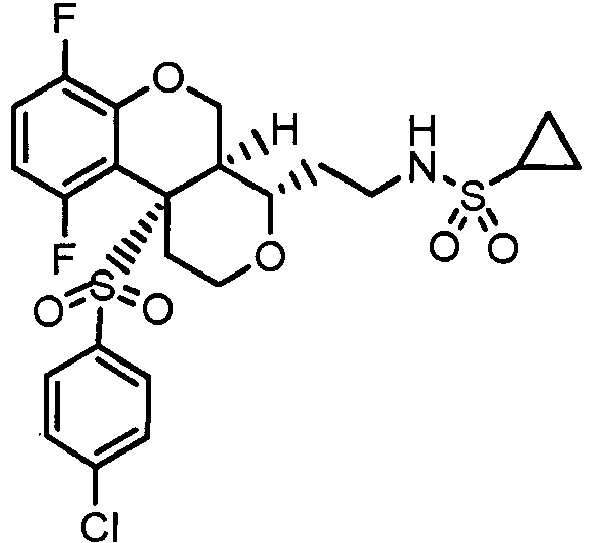
548.3; 4.24 241 
486.3; 3.72 242 
487.3; 4.63 243 
537.3; 4.56 -

- To a solution of aldehyde product from Example 201 Step 5 (250 mg, 0.56 mmol) in EtOH (5 mL) were added hydroxylamine hydrochloride (150 mg) and sodium acetate (300 mg). The reaction was stirred at RT overnight then filtered and concentrated and the residue was purified by flash-chromatography over silica gel (eluted with Hexanes/AcOEt 99:1 to AcOEt) to give 209 mg (82%) of hydroxime.
- To a solution of hydroxime from Step 1 (35 mg, 0.076 mmol) and trimethylsilylacetylene (25 uL) in EtOH (1 mL) and water (0.3 mL) was added chloramines-T trihydrate (28.1 mg, 0.10 mmol) and the reaction was stirred 1 h at RT. It was then diluted with water and extracted with DCM and AcOEt, dried and concentrated. The residue was purified over silica gel (eluted with Hexanes/AcOEt 6:4) to give 15 mg of TMS isoxazole.
- A solution of TMS isoxazole from Step 2 (15 mg) and CsF (40 mg) in acetonitrile (2 mL) and EtOH (0.4 mL) were refluxed for 10 min then concentrated and purified over silica gel (eluted with Hexanes/AcOEt 7:3) to give 8 mg of Example 244: 1H NMR (CDCl3 400 MHz) δ 8.32 (s, 1 H), 7.62 (d, J = 8.7 Hz, 2H), 7.49 (d, J = 8.7 Hz, 2H), 7.11 (m, 1H), 6.48(m, 1H), 6.30(s, 1H), 5.14 (m, 1H), 4.56 (m, 1 H), 3.91 (m, 1 H), 3.52 (m, 1 H), 3.10-3.20 (m, 2H), 2.70-2.85 (m, 1 H), 2.56 (m, 1 H), 2.46 (m, 1 H), 2.21 (m, 1 H); LCMS (MH+) = 482.3; retention time = 4.62 min.
- Following procedures similar to the ones described in Example 244, the compound in Table 57 was prepared.
TABLE 57 Ex. No. STRUCTURE Mass Spec (MH+ except otherwise noted); retention time (min) 245 
512.3; 4.17 - Example 246:
-

- To a solution of aldehyde product from Example 201 Step 5 (35 mg, 0.08 mmol) and 2-aminothiophenol (8 uL, 0.10 mmol) in DCM (0.6 mL) was added DDQ (23 mg, 0.10 mmol) and the reaction was stirred overnight at RT then purified over silica gel (eluted with Hexanes/AcOEt 7:3) to provide 17.9 mg of Example 24612: 1H NMR (CDCl3 400 MHz) δ 7.98 (d, 1 H), 7.83 (d, 1 H), 7.62 (d, J = 8.6 Hz, 2H), 7.48 (t, 1 H), 7.35-7.45 (m, 3H), 7.12 (m, 1 H), 6.49 (m, 1 H), 5.20 (m, 1 H), 4.65 (m, 1 H), 3.96 (m, 1 H), 3.77 (m, 1 H), 3.45-3.65 (m, 2H), 3.21 (m, 1 H), 2.55-2.65 (m, 2H), 2.23 (m, 1 H); LCMS (MH+) = 548.3; retention time = 5.16 min.
- Following procedures similar to the ones described in Example 246 including the use or not of oxidant such as air, the compounds in Table 58 were prepared.
TABLE 58 Ex. No. STRUCTURE Mass Spec (MH+ except otherwise noted); retention time (min) 247 
502.3; 3.07 248 
531.3; 3.38 -

- To a solution of alcohol product from Example 237 Step 1 (50 mg) in DCM (3 mL) was added methanesulfonyl chloride (10 uL) followed by triethylamine (30 uL) then the reaction was stirred 30 min at RT, filtered over a pad of silica gel and concentrated. The residue was taken up in DMF (0.5 mL), Na2CO3 ( 24 mg) followed by imidazole (12 mg) were added and the mixture was heated at 60 C for 48 h. The reaction was diluted with water, extracted with AcOEt, dried and concentrated then purified over silica gel (eluted with Hexanes/AcOEt 60:40) to give 6 mg of Example 249: 1H NMR (CDCl3 400 MHz) δ 7.64 (d, J = 8.7 Hz, 2H), 7.52 (d, J = 8.7 Hz, 2H), 7.40 (br s, 1 H), 7.12 (m, 1 H), 7.03 (br s, 1 H), 6.89 (br s, 1 H), 6.47 (m, 1 H), 5.17 (m, 1H), 4.38 (br d, 1 H), 4.00-4.15 (m,, 2H), 3.93 (m, 1 H), 3.05-3.15 (m, 2H), 2.50-2.60 (m, 2H), 2.25-2.40 (m, 2H), 1.97 (m, 1 H); LCMS (MH+) = 495.3; retention time = 3.04 min.
- Following procedures similar to the ones described in Example 249, the compound in Table 59 was prepared.
TABLE 59 Ex. No. STRUCTURE Mass Spec (MH+ except otherwise noted); retention time (min) 250 
495.3; 4.54 -
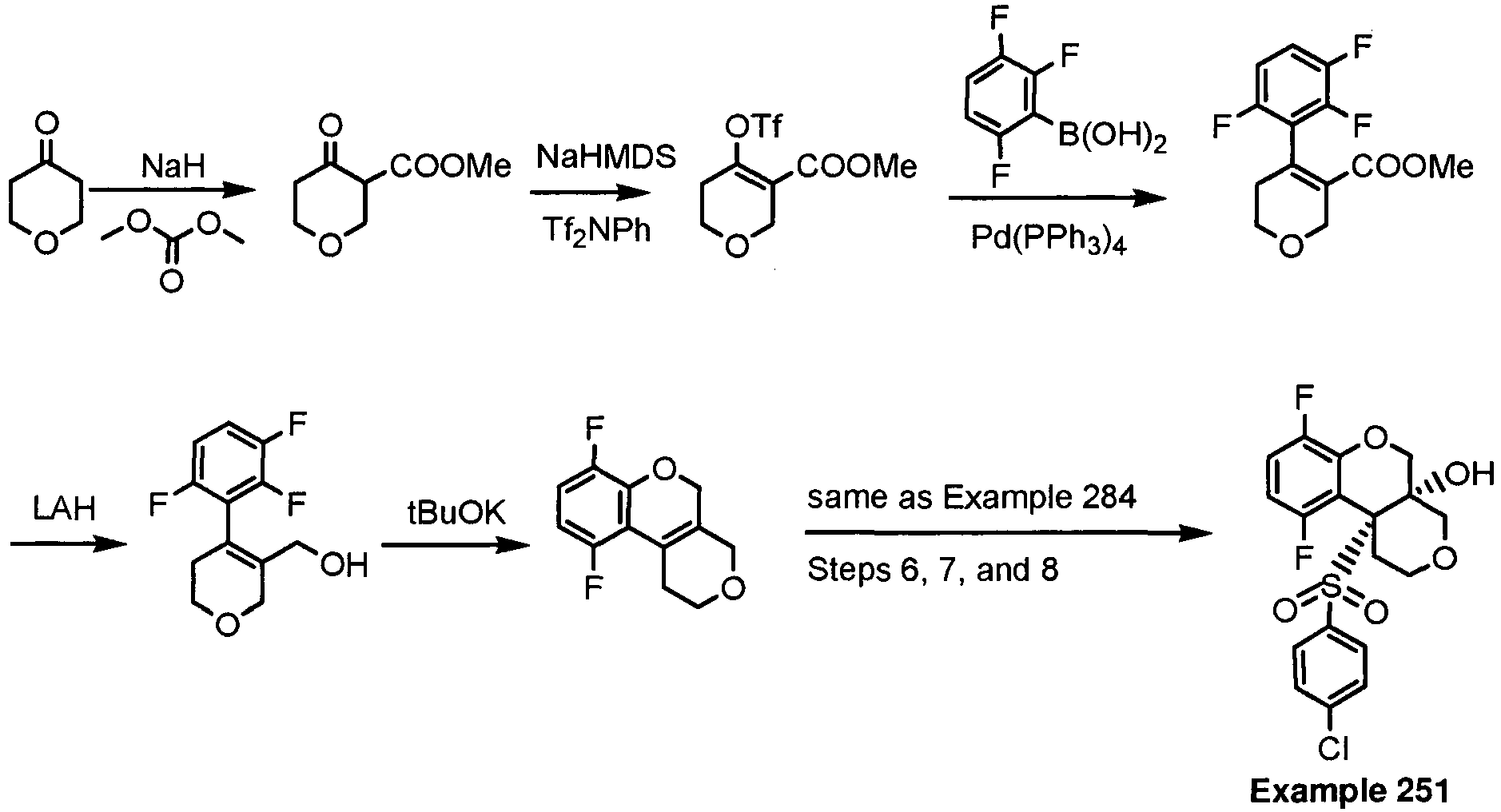
- To a mixture of NaH 60% in hexanes (10.0 g, 250 mmol) in THF (300 mmL) at RT was added tetrahydro-4H-pyran-4-one (10.0 g, 100 mmol) followed, 30 min later by dimethylcarbonate (21.0 mL, 250 mmol) then the mixture was heated at 45 °C overnight. The final mixture was poured into 0.01 N HCl and Et2O, filtered over Celite, diluted with AcOEt, washed with brine and concentrated. The lower liquid was purified over silica gel (eluted with Hexanes/AcOEt 99:1 to 60:40) to give 1.30 g of ketoester.
- To a solution of ketoester product from Step 1 (2.22 g, 14.0 mmol) in THF (60 mL) at -78 °C was added NaHMDS 1 N in THF (15.4 mL, 15.4 mmmol) followed, 10 min later by N-phenylbis(trifluoromethanesulfonimide) (5.50 g, 15.4 mmol) in THF (20 mL). The reaction was allowed to warm to RT overnight, poured into 1 N HCl, extracted with DCM and AcOEt, dried and concentrated. The residue was purified over silica gel (eluted with Hexanes/AcOEt 99:1 to 60:40) to give 6.76 g of enol triflate.
- A mixture of enol triflate from Step 2 (5.65 g, 19.5 mmol), 2,3,6-trifluorophenylboronic acid (4.46 g, 25.4 mmol), sodium acetate (6.00 g, 73 mmol) and tetrakistriphenylphosphine palladium (0) (1.75 g, 1.50 mmol) in dioxane (75 mL) was stirred overnight at 50 °C then at 85 °C for 3 h then cooled down, diluted with AcOEt, washed with brine, dried and concentrated. The residue was purified over silica gel (eluted with Hexanes/DCM 80:20 to DCM) to give 4.80 g of aryl unsaturated ester.
- To a solution of aryl unsaturated ester from Step 3 (4.40 g, 16.2 mmol) in THF (40 mL) at -78 °C was slowly added LAH 1 N in THF (16.2 mL, 16.2 mmol) and the reaction was allowed to warm to RT over 45 min. It was then quenched with sat. NaHCO3, diluted with AcOEt, Na2SO4 was added and the mixture was filtered over Celite and concentrated. The residue was purified over silica gel (eluted with Hexanes/AcOEt 99:1 to AcOEt) to afford 2.42 g of unsaturated alcohol.
- To a solution of unsaturated alcohol from Step 4 (2.42 g, 9.90 mmol) in THF (20 mL) at -20 °C was added t-BuOK 1 N in THF (10.0 mL, 10.0 mmol) and the reaction was allowed to warm to RT over 30 min. It was then quenched with sat. NH4Cl, extracted with DCM, dried and concentrated then purified over silica gel (eluted with Hexanes/AcOEt 99:1 to 60:40) to give 1.03 g of unsaturated pyrane.
- The unsaturated pyrane from Step 5 was subjected to conditions described in Example 284 Steps 6 to 8 to afford Example 251:1H NMR (CDCl3 400 MHz) δ 7.61 (d, J = 8.7 Hz, 2H), 7.49 (d, J = 8.7 Hz, 2H), 7.12 (m, 1 H), 6.45 (m, 1 H), 5.13 (d, 1 H), 4.23 (br s, 1 H), 4.04 (d, 1 H), 3.98 (m, 1 H), 3.62 (m, 1 H), 3.50 (m, 1 H), 3.25 (m, 1 H), 2.84 (m, 1 H), 2.57 (m, 1 H); LCMS (MH+) = 417.2; retention time = 3.94 min.
- Following procedures similar to the ones described in Example 251, the compound of Example 252 in Table 60 was prepared.
TABLE 60 Ex. No. STRUCTURE Mass Spec (MH+ except otherwise noted); retention time (min) 252 
451.2; 4.13 - Following procedures similar to those described in Schemes 1-A, 1-B and 2-A, the compounds in Table 61 were prepared.
TABLE 61 Example No. STRUCTURE Mass Spec (M+ except otherwise noted); retention time (min) 253 
481, 483; 4.49 254 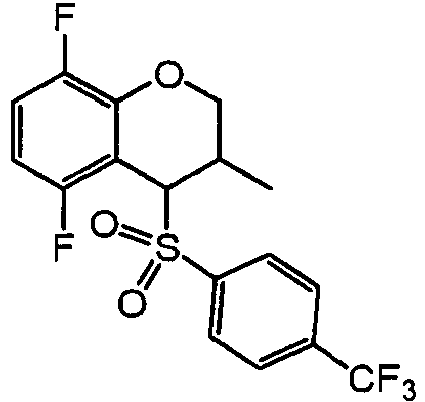
393.2; 4.57 255 
355.2; 4.21 - Following procedures similar to those described for preparing Example 8, the compounds in Table 62 were prepared.
Table 62 Ex. No STRUCTURE LCMS (Min. MS) 256 
4.57 Min. 745.4 (2M+1) 257 
4.45 Min. 373.2 (M+1) 258 
3.39 Min. 379.2 (M+1) 259 
4.70 Min. 813.4 (2M+1) 260 
4.82 Min. 813.4 (2M+1) 261 
4.95Min. 845.5 (2M+1) 262 
4.53 Min. 408.2 (M+1) 263 
3.91 Min. 340.2 (M+1) - Following procedures of Example 16 the following compound was prepared.
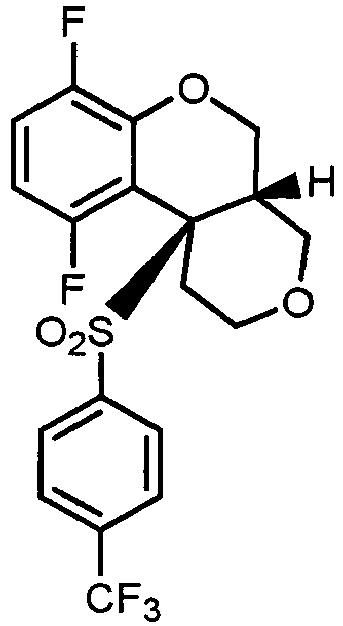
- Using methods similar to those in Example 20 (i.e., methods similar to those used for the preparation of compound 20A) and substituting an appropriate acyl or sulfonyl halide, the compounds in Table 63 were prepared.
Table 63 Ex. No. Structure LCMS (M+1, retention time) 265* 
528.3, 4.69 Min. 266* 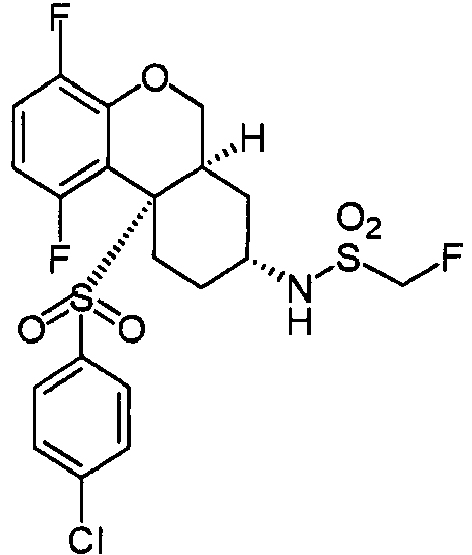
510.3, 4.38 Min. 267 
596.3; 4.71 Min 268 
560.3; 5.09 Min 269* 
549.1 (M+NH3), 3.67 Min. 270 
520.3; 4.44 Min 271 
602.3; 5.13 Min 272 
574.3; 4.32 Min 273 
618.3; 5.30 Min 274 
590.3; 4.47 Min 275 
572.3; 5.32 Min 276 
572.3; 4.59 Min 277 
574.3; 4.70 Min 278 
562.3; 5.31 Min 279 
472.3; 4.84 Min 280 
513.3; 5.06 Min 281 
482.3; 4.86 Min 282 
486.3; 4.75 Min * The corresponding sulfonyl chloride was synthesized according to: Moore, G. J. Org. Chem., 1979, 44, 1708 -

- To a vial containing 18 mg (0.043mmol) of the amine from Example 19 were added 3.5 mg (0.018mmol) of tris(dibenzylidineacetone)palladium(0), 5.4 mg (0.004mmol) of 2-(di-t-butylphosphine)diphenyl, 0.5 mL of anhydrous THF, 2-bromopyridine (0.11mmol), and lithium hexamethyldisilazide (0.11mmol). The mixture was purged with nitrogen and heated to 65°C for 14 h. The crude was directly purified by prep TLC plate using 3% MeOH in DCM with 1 % NH3. 1H NMR (CDCl3 400 MHz) δ 1.40 (m, 1 H) 1.80 (m, 2 H) 2.00 (m, 2 H) 2.40 (m, 1 H) 3.00 (m, 1 H) 3.90 (m, 1 H) 4.15 (d, J = 11.9 Hz, 1 H) 5.24 (d, J = 11.9 Hz, 1 H) 6.41 (m, 2 H) 6.66 (m, 1 H) 7.10 (m, 1 H) 7.50-7.62 (m, 4 H) 8.10 (m, 1 H).
-

- NaH (60% oil dispersion, 24.36 g, 2 eq) was washed with hexane three times. A solution of ketone (47.51 g, 304.6 mmol) in THF (1.2 L) was added to NaH under nitrogen at rt and the resulting solution was stirred for 30 minutes followed by addition of dimethyl carbonate (54.82 g, 2 eq). The mixture was stirred for 60 h at rt. The reaction was quenched by water. 0.6 L of EtOAc, 0.6 L of hexane was added. The crude was washed with 1.75 N HCl (350 mL, 2.01 eq). After drying over Na2SO4, evaporation of the solvent resulted in 60 g of the keto ester as white solid in 89% yield. 1H NMR (CDCl3 400 MHz) δ 1.80 (m, 2 H) 2.50 (m, 4 H) 3.70 (s, 3 H) 4.00 (s, 4 H) 12.15 (s, 1H).
- NaH (60% oil dispersion, 5 g, 1.1 eq) was added to the keto ester from Step 1 (24.28 g; 113.5 mmol) in THF (1 L) at 0 °C under nitrogen. 10 min later, N-phenyl-bis(trifluoromethanesulfonimide) (44.59 g, 1.1 eq) was added. The resulting red solution was stirred at rt for 24 h. At this point, another 0.5 g of NaH and 2.4 g of N-phenyl-bis(trifluoromethanesulfonimide) was added and the mixture was further stirred for 24 h. Saturated NH4Cl (100 mL) was added. After most of THF solvent was evaporated, 800 mL of EtOAc was added. The organic layer was washed with 1 N HCl, saturated NaHCO3, water and brine and dried over Na2SO4. Flash chromatography (hexane/EtOAc 90 : 10) afforded the triflate (35.3 g) in 90% yield. 1H NMR (CDCl3 400 MHz) δ 1.90 (m, 2 H) 2.60-2.70 (m, 4 H) 3.80 (s, 3 H) 4.00 (m, 4 H).
- To a solution of the product from Step 2 (10.0 g, 28.9 mmol) in Toluene (160 mL) and EtOH (50 mL) was added 2,3,6-trifluorophenylboronic acid (6.1 g, 1.2 eq), tetrakistriphenylphosphinepalladium (1.2 g, 0.05 eq), 2 M Na2CO3 (28.9 mL, 2 eq). The mixture was purged with argon and heated to 48 °C for 14 h. The mixture was cooled to rt and filtered through celite. Upon removal of the solvent, EtOAc was added. After washing with water, brine, dried over Na2SO4 and concentration, the crude was purified by flash chromatography (hexane/EtOAc 70 : 30) to provide 6.4 g of the Suzuki coupling product in 68% yield. 1H NMR (CDCl3 400 MHz) δ 1.90 (m, 2 H) 2.60 (m, 2 H) 2.75 (br s, 2 H) 2.60-2.70 (m, 4 H) 3.58 (s, 3 H) 4.00 (m, 4 H) 6.80 (m, 1 H) 7.00 (m, 1 H).
- The product from Step 3 (10.0 g, 30.49 mmol)/300 mL THF was treated with LiAlH4 (2.3 N in THF, 13.25 mL, 0.9 eq) at -78 °C under nitrogen. After warming up to 0 °C in 2 h, the reaction was quenched by water (1.2 mL), 15% NaOH (3.6 mL), water (1.2 mL) and the mixture was stirred for 10 min and filtered through celite. Upon removal of the solvent, EtOAc was added. After washing with water, brine, dried over Na2SO4 and concentration, the crude was was obtained as the desired product (8.7 g, 95% yield) without further purification. 1H NMR (CDCl3 400 MHz) δ 1.90 (m, 2 H) 2.42 (m, 2 H) 2.60 (br s, 2 H) 3.84 (d, J = 5.9 Hz, 2 H) 4.06 (m, 4 H) 6.83 (m, 1 H) 7.10 (m, 1 H).
- The product from Step 4 (11.8 g, 39.33 mmol)/400 mL THF was treated with KOtBu (1 N in THF, 1 eq) at 0 °C. After 1.5 h, EtOAc was added and the organic layer was washed with water, brine and dried over Na2SO4. Upon removal of solvent, the crude was washed with cold ethyl ether and white solid was collected as the desired cyclized product (5.8 g, 53% yield). 1H NMR (CDCl3 400 MHz) δ 1.90 (m, 2 H) 2.30 (br s, 2 H) 2.80 (m, 2 H) 4.00 (br s, 4 H) 4.55 (br s, 2 H) 6.55 (m, 1 H) 6.84 (m, 1 H).
- The product from Step 5 (0.16 g, 0.57 mmol)/5 mL DCM was treated with MCPBA (70% pure, 0.28 g, 2 eq) at rt. After 40 min, 10 mL of 10% Na2S2O3 was added. The organic layer was washed with 1 N NaOH, saturated Na2HCO3, water, brine and dried over Na2SO4,. Upon removal of solvent, 0.18 g of the crude was obtained and was used for the next step. 1H NMR (CDCl3 400 MHz) δ 1.60 (m, 1 H) 1.80 (m, 1 H) 1.92 (d, J = 14.1 Hz, 1 H) 2.17 (d, J = 15.2 Hz, 1 H) 2.56 (m, 1 H) 2.82 (m, 1 H) 3.90 (m, 4 H) 4.05 (d, J = 12.1 Hz, 1 H) 4.35 (d, J = 12.1 Hz, 1 H) 6.59 (m, 1 H) 6.90 (m, 1 H).
- To a solution of the epoxide product from Step 6 (1.0 g, 3.4 mmol)/15 mL DCM was added 4-chlorothiophenol (1.03 g, 2 eq), indium trichloride (80 mg, 0.1 eq) at 0 °C. The mixture was stirred at rt for 14 h and quenched by saturated Na2CO3 After washing with water, brine, dried over Na2SO4 and concentration, the crude was purified by flash chromatography (hexane/EtOAc 5 : 1) to provide 0.32 g of the cis adduct (first eluent, 21 % yield) and 1.14 g of the trans adduct (second eluent, 76% yield). Cis adduct: 1H NMR (CDCl3 400 MHz) δ 1.43 (dt, J = 2.6, 13.8 Hz, 1 H) 1.70 (m, 1 H) 1.83 (dd, J = 3.1, 14.2 Hz, 1 H) 2.06 (d, J = 14.4 Hz, 1 H) 2.38 (m, 1 H) 2.95 (br d, J = 14.7 Hz, 1 H) 3.90 (m, 5 H) 4.40 (s, 1 H) 4.80 (d, J = 11.1 Hz, 1 H) 6.21 (m, 1 H) 6.82 (m, 1 H) 7.13 (d, J = 7.9 Hz, 2 H) 7.24 (d, J = 7.9 Hz, 2 H).
- Trans adduct: 1H NMR (CDCl3 400 MHz) δ 1.84 (m, 2 H) 2.20-2.40 (m, 2 H) 2.58 (m, 1 H) 2.65 (m, 1 H) 4.00 (s, 4 H) 4.06 (d, J = 10.9 Hz, 1 H) 4.75 (d, J = 11.0 Hz, 1 H) 5.00 (s, 1 H) 6.19 (m, 1 H) 6.80 (m, 1 H) 7.13 (d, J = 7.9 Hz, 2 H) 7.24 (d, J = 7.9 Hz, 2 H).
- To a solution of the cis adduct from Step 7 (0.32 g, 0.73 mmol)/6 mL DCM was added 0.36 g MCPBA (70% pure, 2 eq) at rt and the mixture was stirred for 1 h. 5 mL of 10% Na2S2O3 was added. The organic layer was washed with 1 N NaOH, saturated Na2HCO3 water, brine and dried over Na2SO4,. Upon removal of solvent, 0.35 g of the crude was obtained and was used for the next step. 1H NMR (CDCl3 400 MHz) δ 1.46 (dt, J = 3.8, 14.0 Hz, 1 H) 1.60 (dd, J = 2.9, 14.6 Hz, 1 H) 1.80 (m, 1 H) 1.95 (d, J = 14.6 Hz, 1 H) 2.40 (m, 1 H) 2.99 (br d, J = 15.2 Hz, 1 H) 3.90 (m, 5 H) 4.38 (s, 1 H) 5.28 (d, J = 11.0 Hz, 1 H) 6.41 (m, 1 H) 7.05 (m, 1 H) 7.42 (d, J = 8.0 Hz, 2 H) 7.70 (d, J = 8.0 Hz, 2 H).
- To a solution of the product from Step 8 (0.35 g, 0.73 mmol)/20 mL acetone, 5 mL of water was added 0.12 g p-toluenesulfonic acid at rt and the mixture was stirred at 70 °C for 14 h. Additional p-toluenesulfonic acid (60 mg) was added and the mixture was stirred at 70 °C for 5 h. The solvent was removed and EtOAc added. The organic layer was washed with saturated NaHCO3, water, brine and dried over Na2SO4. Upon removal of solvent, the crude was purified by flash chromatography (hexane/EtOAc 65 : 35) to provide the desired ketone product (0.21 g, 66% yield). 1H NMR (CDCl3 400 MHz) δ 2.10 (m, 1 H) 2.40-2.60 (m, 4 H) 3.01 (m, 1 H) 4.10 (d, J = 11.0 Hz) 4.60 (d, J = 2.8 Hz, 1 H) 5.15 (d, J = 11.0 Hz, 1 H) 6.45 (m, 1 H) 7.10 (m, 1 H) 7.50 (m, 4 H).
- To a solution of the product from Step 9 (70 mg, 0.16 mmol)/0.6 mL THF/0.3 mL EtOH was added 7.3 mg of NaBH4. After stirring at rt for 3 h, the reaction was quenched by MeOH. Upon removal of the solvent, the crude was purified by Prep TLC (hexane/EtOAc 2 : 1) to provide the desired cis diol (16 mg, 23% yield) and trans diol (40 mg, 57% yield). Cis diol: 1H NMR (CDCl3 400 MHz) δ 1.43 (m, 1 H) 1.80-1.99 (m, 3 H) 2.50 (m, 1 H) 2.82 (m, 1 H) 3.40 (m, 1 H) 4.00 (br s, 1 H) 4.06 (d, J = 11.1 Hz, 1 H) 5.10 (m, 1 H) 5.12 (d, J = 11.1 Hz, 1 H) 6.43 (m, 1 H) 7.10 (m, 1 H) 7.50 (d, J = 8.6 Hz, 2 H). 7.62 (d, J = 8.6 Hz, 2 H).
- Trans diol: 1H NMR (CDCl3 400 MHz) δ 1.18 (m, 1 H) 1.60 (m, 2 H) 2.00 (m, 2 H) 2.42 (m, 1 H) 2.70 (m, 1 H) 4.07 (d, J = 11.0 Hz, 1 H) 4.10 (m, 1 H) 4.60 (s, 1 H) 5.10 (d, J = 11.0 Hz, 1 H) 6.40 (m, 1H) 7.10 (m, 1 H) 7.50 (m, 4 H).
- Following similar procedures to that of Example 284 , the compounds in Table 64 were prepared.
TABLE 64 Example No. (not of the invention) STRUCTURE Mass Spec (M+ except as otherwise noted); retention time (min) 285 
431.2 (M+1); 3.58 286 
463.3 (M+1); 4.10 287 
465.3 (M+1); 4.16 288 
465.3 (M+1); 3.78 -

- The compound of Example 289, and the compounds of Examples 290 to 296 (Table 65), were prepared following similar procedures to that of Examples 19 and 20.
TABLE 65 Example No. STRUCTURE Mass Spec (M+ except as otherwise noted); retention time (min) 289 
562.3 (M+1); 4.81 290 
596.3 (M+1); 4.67 291 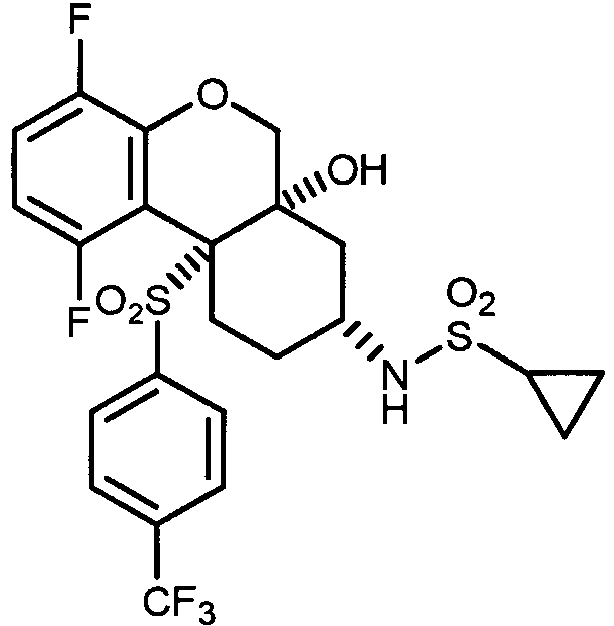
568.3 (M+1); 4.45 292 
534.3 (M+1); 4.41 293 
544.3 (M+1); 4.61 294 
526.3 (M+1); 4.11 295 
548.3 (M+1); 4.27 296 
508.3 (M+1); 3.85 - Using methods similar to those in Example 20 (i.e., methods similar to those used for the preparation of compound 20A) and substituting an appropriate acyl or sulfonyl halide, the compound in Table 66 was prepared.
Table 66 Example No. STRUCTURE Mass Spec (M+ except as otherwise noted); retention time (min) 297 
458.3; 4.20 Min -


- The cis adduct from Example 284 step 7 (1.19 g, 2.70 mmol)/20 mL THF was treated with 0.13 g of NaH (60% oil dispersion, 1.2 eq) under nitrogen at rt. 30 min later, 0.83 g of methyl bromoacetate (0.83 g, 2 eq) was added and the mixture was heated to 80 °C for 16 h. Upon removal of the solvent, EtOAc was added and the organic layer was washed with water, brine and dried over Na2SO4,. Flash chromatography (hexane/EtOAc 5 : 1) afforded the recovered starting alcohol (0.6 g) and the desired product (0.61 g) as white solid in 44% yield. 1H NMR (CDCl3 400 MHz) δ 1.40 (m, 1 H) 1.70 (m, 1 H) 1.94 (d, J = 15.9 Hz, 1 H) 2.13 (m, 1 H) 2.56 (m, 1 H) 2.67 (m, 1 H) 3.79 (s, 3 H) 3.83 (m, 2 H) 3.93 (m, 2 H) 4.01 (d, J = 11.2 Hz, 1 H) 4.13 (d, J = 15.3 Hz, 1 H) 4.36 (d, J = 15.3 Hz, 1 H) 4.85 (d, J = 1011.2 Hz, 1 H) 6.35 (m, 1 H) 6.84 (m, 1 H) 7.12 (d, J = 9.0 Hz, 2 H) 7.37 (d, J = 9.0 Hz, 2 H).
- The product from step 1 (0.45 g, 0.88 mmol)/30 mL THF was treated with LiAlH4 (2.3 M in THF, 0.38 mL, 1 eq) under nitrogen at -78 °C. The reaction was slowly warmed up to rt overnight. After quenching with 5 drops of brine, EtOAc was added and the crude was filtered through celite. Flash chromatography (hexane/EtOAc 1 : 1) afforded the desired product (0.23 g) as white solid in 54% yield. 1H NMR (CDCl3 400 MHz) δ 1.36 (dt, J = 2.9, 13.9 Hz, 1 H) 1.70 (m, 1 H) 1.92 (d, J = 15.3 Hz, 1 H) 2.23 (dt, J = 2.9, 15.4 Hz, 1 H) 2.60 (m, 1 H) 2.80 (m, 1 H) 3.60-4.04 (m, 8 H) 4.16 (d, J = 10.1 Hz, 1 H) 4.94 (d, J = 10.9 Hz, 1 H) 6.24 (m, 1 H) 6.84 (m, 1H) 7.12 (d, J = 8.7 Hz, 2 H) 7.22 (d, J = 8.7 Hz, 2 H).
- Following similar procedures in Examples 19 and 20, the desired product was obtained. 1H NMR (CDCl3 400 MHz) δ 1.31 (m, 1 H) 1.75 (m, 2 H) 2.10 (m, 1 H) 2.60 (m, 1 H) 2.80 (m, 2 H) 3.18 (m, 1 H) 3.35 (m, 1 H) 3.58 (m, 1 H) 3.70 (m, 1 H) 3.80 (m, 2 H) 3.90-4.03 (m, 2 H) 4.15 (d, J = 12.2 Hz, 1 H) 5.36 (d, J = 12.2 Hz, 1 H) 6.35 (m, 1 H) 7.08 (m, 1 H) 7.36 (d, J = 7.8 Hz, 2 H) 7.54 (d, J = 8.0 Hz, 2 H).
- Similar procedures to that of Step 9 of Example 284 were followed.
- 1H NMR (CDCl3 400 MHz) δ 2.14 (m, 1 H) 2.42-2.60 (m, 2 H) 2.68 (m, 1 H) 2.95 (m, 1 H) 3.20 (m, 1 H) 3.42-3.60 (m, 2 H) 3.66 (m, 1 H) 3.78 (m, 1 H) 4.26 (d, J = 10.3 Hz, 1 H) 5.60 (d, J = 11.0 Hz, 1 H) 6.30 (m, 1 H) 6.70 (m, 1 H) 7.10 (m, 1 H) 7.40 (m, 4 H).
- Following similar procedures to that of Example 298 the following compound was was synthesized.
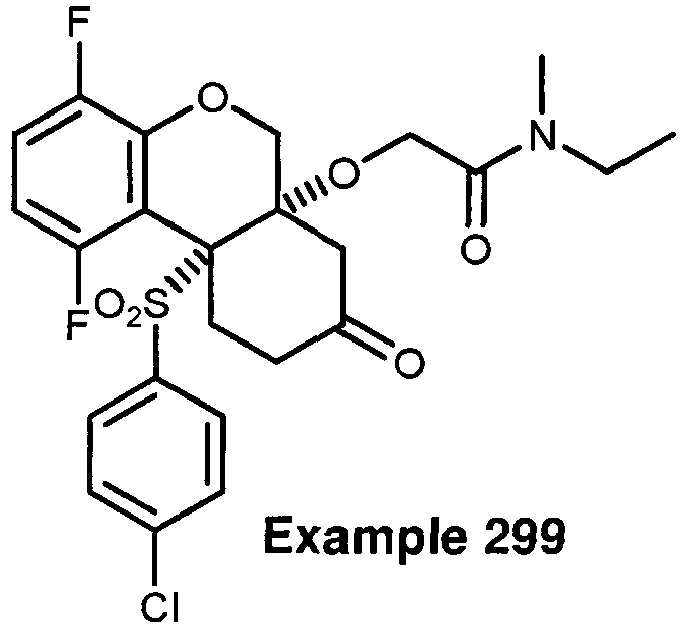
- 1H NMR (CDCl3 400 MHz, 1 : 1 rotamers) δ 0.97 (t, J = 7.4 Hz, 1.5 H, rotamer 1) 1.02 (t, J = 7.4 Hz, 1.5 H, rotamer 2) 2.30 (m, 1 H) 2.40-2.60 (m, 2 H) 2.65-2.90 (m, 5 H) 2.90-3.10 (m, 1 H) 3.20-3.39 (m, 2 H) 3.95 (m, 1 H) 4.13 (dt, J = 3.6, 13.1 Hz, 1 H) 4.26 (dd, J = 5.8, 10.9 Hz, 1 H) 5.50 (d, J = 11.0 Hz, 1 H) 6.60 (m, 1 H) 7.18 (m, 1 H) 7.40 (m, 2 H) 7770 (m, 2 H).
-

- To a solution of Ph3PCH2OCH3 +Cl- (17.62 g, 0.051 mol) in THF (100 mL) at-78°C was added LiHMDS (50.4 mL, 1.0M in THF) dropwise under nitrogen. After addition, the reaction was raised to room temperature and left for stir for 1 hour. The reaction solution turned orange. This mixture was cooled to -78°C and treated with trans-10A-[(4-chlorophenyl)sulfonyl]-1,4-difluoro-6A,9,10,10A-tetrahydro-6h-dibenzo[B,D]pyran-8(7h)-one (racemic) (5.2 g, 0.0126mol) in THF (100 mL) dropwise. The reaction mixture was left stir for 2 hours at -78°C, then raise to room temperature and quenched with saturated ammonia chloride solution. The mixture was then extracted with ethyl acetate (200 mL). The aqueous layer was extracted again with ethyl acetate (200 mL). The combined organic layer was washed with brine (200 mL), dried over sodium sulfate and concentrated. The product was purified by column (EtOAc/hexane from 0/100 to 30/70). Yield 4.74g, 85%. 1H NMR (CDCl3 400 MHz) δ 7.60 (d, 2H), 7.49 (d, 2H), 7.08 (m, 1 H), 6.44 (m, 1 H), 5.80 (s, 1 H), 5.24 (d, 1 H), 4.22 (m, 1H), 3.53 (s, 1 H), 2.64-2.84 (m, 1 H), 2.58-2.63 (m, 2H), 1.62-2.10 (m, 4H).
- To a solution of the vinyl ether product from Step 1 (2.0g, 0.0045 mol) was added trichloroacetic acid and stirred at room temperature for 30 Min. The reaction was quenched with saturated sodium bicarbonate solution and extracted with dichloromethane (100mLX2). The combined organic layer was washed with brine (100 mL), dried over sodium sulfate and concentrated. The residue was dissolved in THF and treated with NaBH4 at 0°C. The reaction mixture was raised to room temperature and left for stir for 30 Min, then was quenched with water. It was then extracted with ethyl acetate (100 mL X2). The combined organic layer was washed with brine, dried over sodium sulfate and concentrated.The product was purified by column (EtOAc/hexane from 0/100 to 50/50). Yield 1.65g, 84.8%. 1H NMR (CDCl3 400 MHz ) δ 7.58 (d, 2H), 7.49 (d, 2H), 7.07 (m, 1 H), 6.39 (m, 1 H), 5.22 (m, 1 H), 4.17 (m, 1 H), 3.75 (m, 1 H), 3.38 (t, 1 H), 2.63-2.72 (m, 2H), 1.74-1.89 (m, 3H), 1.35-1.47 (m, 1 H), 0.65-1.17 (m, 1 H).
- To a solution of the alcohol product from Step 2 (1.65 g, 0.0038 mol) in DCM (100 mL) was added triethylamine (1.1 ml, 0.0079 mol), p-toluenesulfonyl chloride (1.1 g, 0.0058 mol), left it for stir over night. The reaction mixture was washed with saturated sodium bicarbonate solution, then extracted with DCM (50 mL X2). The combined organic layer was washed with brine, dried over sodium sulfate and concentrated. The product was purified by column (EtOAc/hexane from 0/100 to 40/60). Yield: combination of cis and trans isomer is 1.82g, 82.1 %. The desired cis-isomer Example 300 0.82 g, yield 37%.
- Example 300:1H NMR (CDCl3 400 MHz) δ 7.82 (d, 2H), 7.42-7.52 (m, 6H), 7.09 (m, 1 H), 6.39 (m, 1 H), 5.09 (dd, 1 H), 4.12 (d, 1 H), 3.96 (d, 1 H), 2.49 (m, 4H), 2.33 (d, 1 H), 2.06 (m, 1 H), 1.92 (t, 1 H), 1.67 (m, 2H), 1.58 (m, 1 H). LCMS (MH+) = 583.3; retention time = 5.10 min.
-

- To a solution of Example 300 (0.25 g, 0.43 mmol) in DMF (4 mL) was added potassium thioacetate and heated this suspension to 120°C for 2 hours. The reaction mixture was added brine and extracted with ethyl acetate (50 mL X2). The combined organic layer was washed with brine, dried over sodium sulfate and evaporated. The residue was redissolved in methanol (20 mL), treated with aqueous 1 N NaOH solution and left for stir at room temperature for 2 hours. The reaction mixture was added brine and extracted with ethyl acetate (50 mL X3). The combined organic layer was washed with brine, dried over sodium sulfate and evaporated. The product Example 301 was purified by reverse-phase HPLC using water and acetonitrile as eluent. 1H NMR (CDCl3 400 MHz) δ 7.58 (dd, 2H), 7.49 (d, 2H), 7.08 (m, 1 H), 6.43 (m, 1 H), 5.24 (d, 1H), 4.13 (dd, 1 H), 2.86 (d, 2H), 2.77 (d, 1H), 2.40 (d, 1H), 2.08 (m, 2H), 1.68-1.84 (m, 3H), 1.26-1.34 (m, 2H).
- To a solution of Example 301 (0.22 g, 0.49 mmol) in acetonitrile (20 mL) at 0°C was added KNO3 and SO2Cl2 and left for stir at 0°C for 3 hours. The reaction mixture was quenched with saturated sodium bicarbonate solution and extracted with ethyl acetate. The organic layer was washed again with saturated sodium bicarbonate solution and brine, dried over sodium sulfate and evaporated to give an oil. This sufonyl chloride was used as is in the next step.
- To a DCM solution of the crude sulfonyl chloride (0.02g, 0.039 mmol) from Step 2 was added 2N methyl amine in THF (0.098 mL, 0.196 mmol), left it for stir over night. Solvent of the reaction mixture was evaporated and the products were purified by reverse-phase HPLC using water and acetonitrile as eluent. Two product were isolated from this reaction mixture. Example 302: 1H NMR (CDCl3 400 MHz) δ 7.56 (d, 2H), 7.50 (d, 2H), 7.11 (m, 1 H), 6.41 (m, 1 H), 5.25 (dd, 1 H), 4.16 (m, 2H), 3.19 (d, 2H), 2.86 (d, 3H), 2.79 (d, 1 H), 2.47 (m, 2H), 2.10 (t, 1 H), 1.70-1.94 (m, 3H), 1.36 (m, 1 H). LCMS (MH+) = 506.3; retention time = 4.28 min. Example 303: 1H NMR (CDCl3 400 MHz) δ 7.57 (m, 4H), 7.25 (m, 1H), 5.24(dd, 1H), 4.17 (m, 2H), 3.19 (m, 2H), 2.86 (d, 3H), 2.68 (d, 1 H), 2.40-2.46 (m, 2H), 1.62-2.06 (m, 4H), 1.38 (m, 1 H). LCMS (MH+) = 542.3; retention time = 4.55 min.
- Following procedures similar to those described for Examples 301 to 303, the compounds of Examples 304 to 320 in Table 67 were prepared.
Table 67 Ex. No. Structure LCMS (M+1, retention time) or NMR 301 
1H NMR (CDCl3 400 MHz) δ7.58 (dd, 2H), 7.49 (d, 2H), 7.08 (m, 1H), 6.43 (m, 1H), 5.24 (d, 1 H), 4.13 (dd, 1H), 2.86 (d, 2H), 2.77 (d, 1H), 2.40 (d, 1H), 2.08 (m, 2H), 1.68-1.84 (m, 3H), 1.26-1.34 (m, 2H) 302 
506.3, 4.28 Min. 303 
542.3, 4.55 Min 304 
575.3, 3.48 Min. 305 
609.3, 3.74 Min. 306 
520.3, 4.56 Min 307 
554.3, 4.83 Min 308 
556.3, 4.69 Min 309 
532.3, 4.61 Min 310 
566.3, 4.94 Min 311 
546.3, 4.68 Min 312 
580.3, 4.93 Min 313 
532.3, 4.46 Min 314 
568.3, 4.72 Min 315 
546.3, 4.63 Min 316 
582.3, 4.88 Min 317 
574.3, 4.91 Min 318 
608.3, 5.15 Min 319 
568.3, 4.75 Min 320 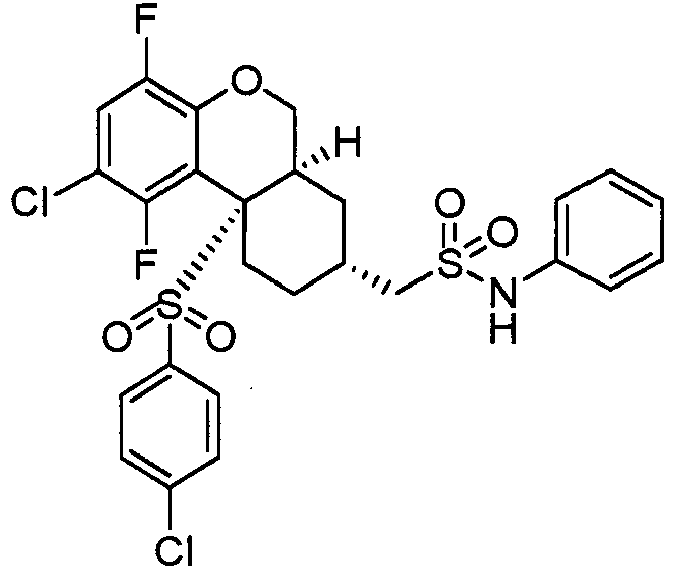
602.3, 4.98 Min -


- Following procedures similar to those described in Example 337, the compounds in Table 68 were prepared.
TABLE 68 Ex. No. Structure LCMS (M+1, retention time) 321 
553.3, 4.71 Min. 322 
553.3, 4.64 Min. 323 
554.3, 4.38 Min 324 
583.3, 4.67 Min 325 
557.3, 4.47 Min 326 
583.3, 4.76 Min -

- To a solution of Example 300 (0.016g, 0.027 mmol) in 2 mL acetone was added Nal (0.02g, 0.13mmol), heated to reflux for 12 hours. All solvent was removed in vacuo. The material was subjected to preparative TLC over silica gel (eluted with ethyl acetate/hexane 30/70) to give 0.013g product Example 327 1H NMR (CDCl3 400 MHz) δ 7.57 (d, 2H), 7.50 (d, 2H), 7.10 (m, 1 H), 6.43 (m, 1H), 5.25 (dd, 1 H), 4.12 (d, 1 H), 3.40 (d, 2H), 2.79 (d, 1 H), 2.35 (d, 1H), 2.12 (m, 2H), 1.93 (m, 2H), 1.77 (m, 1 H), 1.35 (m, 1H).
- Example 328 (Table 69) was prepared following similar procedures described in Example 327.
TABLE 69 Ex. No. Structure LCMS (M+1, retention time) 327 
5.34 Min. 328 
539.3, 5.39 Min. - Following procedures similar to those described in Examples 301-303 Step-1 except using potassium acetate as the reagent the compound of Example 329 was prepared.
- Following procedures similar to those described in Examples 301-303 Step-1 except using potassium acetate as the reagent the compound of Example 329 was prepared.
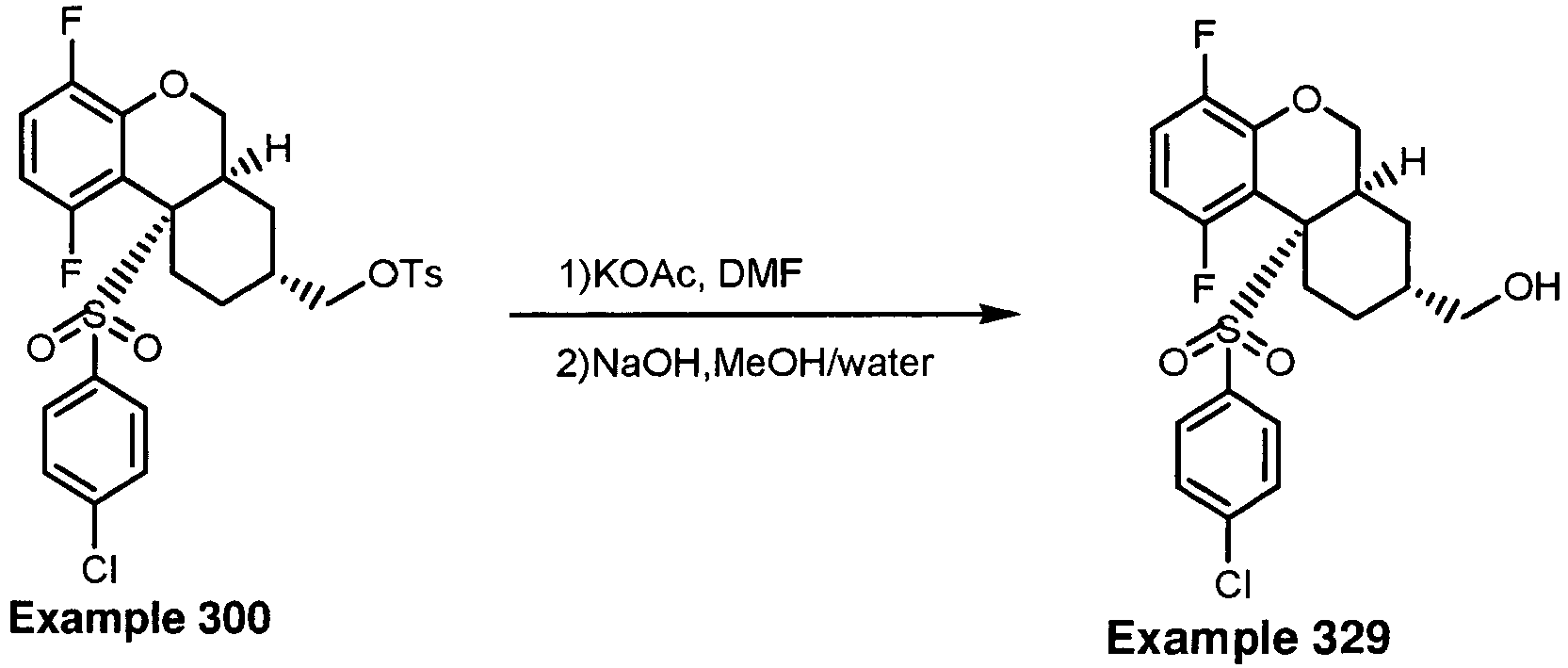
- Example 329. 1H NMR (CDCl3 400 MHz) δ 7.57 (d, 2H), 7.49 (d, 2H), 7.08 (m, 1H), 6.41 (m, 1 H), 5.19 (d, 1 H), 4.12 (d, 1 H), 3.75 (d, 2H), 2.79 (d, 1 H), 2.38 (d, 1 H), 2.11 (m, 1 H), 1.58-1.88 (m, 3H), 1.24-1.37 (m, 3H), LCMS (MH+) = 429.2; retention time = 4.15 min.
- Following procedures similar to those described in Scheme 1-B Step 3. Example LQ-31 /LQ-Scheme-6 was prepared.
- Following procedures similar to those described in Scheme 1-B Step 3. Example 330 was prepared

- Example 330 was made following procedures similar to those described in Scehme 1-B Step 3. 1H NMR (CDCl3 400 MHz) δ 7.57 (d, 2H), 7.49 (d, 2H), 7.10 (m, 1H), 6.43 (m, 1H), 5.20 (d, 1 H), 4.70 (m, 1H), 4.19-4.21 (m, 2H), 4.12 (d, 1H), 2.83 (d, 3H), 2.38 (m, 1 H), 2.19 (m, 1 H), 1.99 (m, 1 H), 1.66-1.73 (m, 2H), 1.25 (m, 2H), LCMS (MH+) = 486.3; retention time = 4.44 min.
-


- A stream of O3 was bubbled through a stirring solution of the alkene (1,57g, 3.56 mmol) in DCM (120 mls) at -78°C. When the blue color persisted, the O3 addition was stopped. Continued stirring at -78°C for 10 min. A stream of N2 was bubbled through the reaction until it became colorless. The PPh3 (1.40g, 5.34 mmol) was added in portions. The reaction was then stirred at room temperature for 2.5 hrs. This solution was dried over anhydrous Na2SO4. Filtration followed by evaporation to give an oil (~1.58g of the aldehyde). This aldehyde was used as is in the next step.
- The crude aldehyde (~1.58g, 3.56 mmol) was dissolved in EtOH (50 mls) and cooled to 0°C. The NaBH4 (135 mg, 3,56 mmol) was added in portions. The reaction was continued to be stirred at 0°C for 15 min and then at room temperature for 1 hr. The NaBH4 was quenched with the dropwise addition of H2O (2 mls). The EtOH was evaporated under vacuum. The residue was partitioned between DCM (150 mls) and H2O (2 x 75 mls). The DCM was washed with brine (75 mls) and dried over anhydrous Na2SO4. The DCM was evaporated to give a solid residue. This material was purified by flash-chromatography on silica gel (eluted with hexane/EtOAc 95:5 to 50:50) to give the expected product as a solid (1.58g, 100%).
-

- A solution of the alcohol (10 mg, 0.0224 mmol) and ethyl isocyanate (1.6 mg, 0.0224 mmol) in 1,2-dichloroethane (0.50 mls) containing 1 m HCl /ether (1 drop) was stirred at room temperature. After 2 hrs, the solvent was evaporated. The residue was purified by preparative tlc (50% EtOAc/hexane, 1000 micron silica gel GF) to give a solid (9.7 mg, 84%).
- A solution of the alcohol (10 mg, 0.0224 mmol), 4-nitrophenylchloroformate (6.8 mg, 0.0337 mmol) and pyridine (2.7 mg, 0.0337 mmol) in THF (0.50 mls) was stirred at room temperature. The resulting mixture was stirred at room temperature for 1 hr. The 1 M MeNH2 in THF (1.4 mg, 0.0448 mmol) was added and the reaction was stirred overnight at room temperature. The solvent was removed under vacuum and the crude product was purified by preparative tlc (50% EtOAc/hexane, 1000 micron silica gel GF) to afford a solid (11 mg, 98%).
- Using the general procedure of Steps 1A and 1B, the compounds in Table 70 were prepared
Table 70 Example No. STRUCTURE Mass Spec (M+ except as otherwise noted); retention time (min) 332 
516.3: 4.32 333 
502.3: 4.27 334 
530.3: 4.63 335 
528.3: 4.48 -

- The alcohol (1.06g, 2.38 mmol) and TosCl (907 mg, 4.76 mmol) were dissolved in DCM (20 mls) at room temperature. The Et3N (482 mg, 4.76 mmol) was added dropwise to the stirring solution. The reaction was stirred overnight. It was diluted with DCM (100 mls) and was extracted with saturated NaHCO3 (50 mls) and H2O (2 x 50 mls). The DCM solution was dried over anhydrous Na2SO4 and was evaporated to an oil. The crude product was purified by flash-chromatography on silica gel (eluted with EtOAc/ hexane 5:95 to 50:50) to yield a solid (1.34g, 94%).
- A stirring solution of the tosylate (100mg, 0.167 mmol) and NaCN (25mg, 0.501 mmol) in DMF (2 mls) was heated to 110-120°C for 3 hrs. The reaction was diluted with an EtOAc(2mls)/hexane(2 mls) mixture and was partitioned with H2O (2 x 3 mls). The organic phase was dried over anhydrous Na2SO4 and was evaporated. The residue was purified by flash-chromatography on silica gel (eluted with EtOAc/hexane 5:95 to 100:0) to give a solid (62mg, 82%).
Table 71 Example No. STRUCTURE Mass Spec (M+ except as otherwise noted); retention time (min) 336 
454.2: 4.49 -

- A stirring mixture of the tosylate (96mg, 0.160 mmol), isopropyl mercaptan (24mg, 0.32 mmol) and 1M KOH in EtOH (13.5mg, 24 mmol) in EtOH (3 mls) was heated to 70-75°C for 30 min. The reaction mixture was evaporated. The residue was taken up with DCM (15 mls) and was washed with H2O (2 x 5 mls). The DCM was dried over anhydrous Na2SO4 and was evaporated to a solid (79mg).This product was used as is in the subsequent reaction.
- A stirring solution of the sulfide (73mg, 0.145 mmol) in DCM (3 mls) at room temperature was treated with mCPBA (75mg, 0.435 mmol). After 1 hr, the reaction was diluted with DCM (10 mls) and was extracted with saturated NaHCO3 (2 x 5 mls) and H2O (5 mls). The DCM was dried over anhydrous Na2SO4 and was concentrated. The residue was purified by flash-chromatography on silica gel (eluted with EtOAc/hexane 5:95 to 80: 20) to yield a the expected product as a solid (57mg, 73%).
Table 72 Example No. STRUCTURE Mass Spec (M+ except as otherwise noted); retention time (min) 337 
535.3: 4.59 - Using the general procedure of Example 337, the compound in Table 73 was prepared.
Table 73 Example No. STRUCTURE Mass Spec (M+ except as otherwise noted); retention time (min) 338 
521.3: 4.30 - The compounds in Table 74 were prepared according to Example 24.
Table 74 Example No. STRUCTURE Mass Spec (M+ except as otherwise noted); retention time (min) 339 
441.2: 4.90 340 
457.3: 5.58 -

- A solution of 2,5-difluoroaniline (5.0 g, 38.7 mmol) in ether (50 mL) was treated with a solution of HCl (1 M in Et2O, 39 mL) and concentrated in vacuo. The resulting powder was dissolved in EtOH (30 mL) and cooled to 0 °C. Acetaldehyde (2.2 mL, 39 mmol) was added dropwise and the solution warmed to ambient temperature. After 30 min, the reaction mixture was diluted with H2O (6 mL) and 4-chlorophenyl sodium sulfinate (3.5 g, 17.7 mmol) was added quickly. After 4h, the reaction mixture was concentrated in vacuo. The residue was diluted with saturated aqueous NaHCO3 and extracted with CH2Cl2 (2x). The combined organic extracts were dried over MgSO4 and concentrated. Flash chromatography (5→10% EtOAc/Hex) afforded Example 341 (1.23 g, 19%): 1H NMR (CDCl3 400 MHz) δ 7.70 (dd, J = 8.8, 2.2 Hz, 2H), 7.49 (dd, J = 8.8, 2.2 Hz, 2H), 6.84 (m, 1H), 6.00 (m, 1 H), 4.53 (dd, J = 5.1, 2.2 Hz, 1 H), 4.35 (br s, 1H), 4.18 (m, 1H), 2.76 (m, 1H), 1.68 (ddd, J = 14.6, 12.4, 5.1 Hz, 1H), 1.33 (d, J = 6.6 Hz, 3H).
-
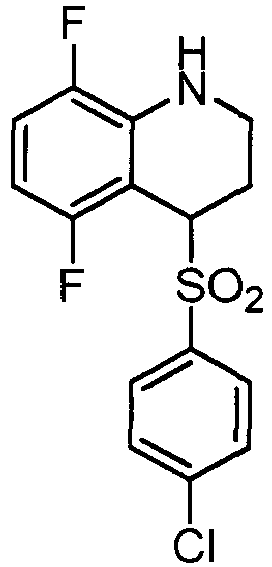
-

- A solution of 2-(4-chloro-benzenesulfonylmethyl)-1,3,4-trifluoro-benzene (5.6 g, 17.5 mmol) in THF/TMEDA (5:1, 180 mL) at -78 °C was treated with n-BuLi (12 mL, 17.5 mmol, 1.5 M in hexanes). After 15 min, a solution of N-p-toluenesulfonyl aziridine (3.5 g, 17.5 mmol, prepared as described in Eur. J. Org. Chem 2002, 3004) in THF (10 mL) was added, and the reaction mixture warmed slowly to ambient temperature. After 4h, the reaction mixture was quenched with 1 N HCl and extracted with EtOAc (2x). The combined organic extracts were washed with saturated aqueous NaHCO3, brine, dried over MgSO4 and concentrated in vacuo. Flash chromatography (25→50% EtOAc/Hex) provided the title compound (4.9 g, 54%): 1H NMR (CDCl3 400 MHz) δ 7.64 (d, J = 8.1 Hz, 2H), 7.57 (d, J = 8.1 Hz, 2H), 7.43 (d, J = 8.1 Hz, 2H), 7.28 (d, J = 8.1 Hz, 2H), 7.14 (m, 1 H), 6.75 (m, 1 H), 4.81 (m, 1H), 3.17 (ddd, J = 7.1, 7.1, 5.6 Hz, 1H), 2.96 (m, 1 H), 2.64 (m, 1 H), 2.47 (m, 1 H), 2.41 (s, 3H).
-

- A solution of 2N-[3-(4-chloro-benzenesulfonyl)-3-(2,3,6-trifluoro-phenyl)-propyl]-4-methyl-benzenesulfonamide (500 mg , 0.97 mmol) was in 48% HBr/H2O (4 mL) was treated with phenol (282 mg, 3.0 mmol) was heated to reflux. After 7 h, another portion of 48% HBr/H2O(3 mL) was added. After an additional 36 h, the reaction mixture was cooled to ambient temperature and quenched dropwise with 1 N NaOH. The reaction mixture was extracted with CH2Cl2 (4x) and the combined organic layers were dried over MgSO4, filtered and concentrated in vacuo. Flash chromatography [1% MeOH/CH2Cl2→5% NH4OH/MeOH (1:9)/CH2Cl2) provided the title compound (240 mg, 68%): 1H NMR (CDCl3 400 MHz) δ 7.64 (d, J = 8.1 Hz, 2H), 7.43 (d, J = 8.1 Hz, 2H), 7.14 (m, 1H), 6.78 (m, 1H), 4.89 (dd, J = 9.5, 5.1 Hz, 1H), 2.87 (m, 1H), 2.56-2.40 (m, 3H), 1.22 (s, 2H).
-

- A solution of 3-(4-chloro-benzenesulfonyl)-3-(2,3,6-trifluoro-phenyl)-propylamine (100 mg, 0.27 mmol) in DMF (3 mL) was heated to 80 °C. After 4 h, the reaction mixture was cooled to ambient temperature, diluted with saturated aqueous NaHCO3, and extracted with EtOAc (2x). The combined organic layers were washed with water (2x), brine, dried over MgSO4 and concentrated in vacuo. Flash chromatography (20% EtOAc/Hex) provided Example 342 (78 mg, 84%): 1H NMR (CDCl3 400 MHz) δ 7.69 (dd, J = 8.1, 2.2 Hz, 2H), 7.49 (dd, J = 8.1, 2.2 Hz, 2H), 6.84 (m, 1H), 6.03 (m, 1H), 4.52 (d, J = 51 Hz, 1H), 4.50 (brs, 1 H), 3.95 (ddd, J = 12.4, 12.4, 4.4 Hz, 1H), 3.48 (m, 1H), 2.81 (m, 1 H), 2.00 (m, 1H).
-

- A solution of 4-(4-chloro-benzenesulfonyl)-5,8-difluoro-1,2,3,4-tetrahydro-quinoline (50 mg, 0.145 mmol) in CH3CN (1 mL) was treated with K2CO3 (4 mg, 0.16 mmol), Mel (10 µL 0.16 mmol) and heated to 50 °C. After 6h, the reaction mixture was treated with Mel (10 µL, 0.16 mmol) and heated to 80 °C. After 12h, the reaction mixture was transferred to a sealed tube and diluted with propionitrile (2 mL). Potassium carbonate (20 mg) and Mel (50 µL) were added and the reaction mixture was heated to 80 °C After 48 h, the reaction mixture was cooled to ambient temperature, diluted with saturated aqueous NH4Cl and extracted with EtOAc (2x). The combined organic layers were with saturated aqueous NaHCO3, brine, dried over MgSO4 and concentrated in vacuo. Preparative thin layer chromatography (20% EtOAc/Hex) provided Example 343 (25.6 mg, 49%): 1H NMR (CDCl3 400 MHz) δ 7.67 (dd, J = 8.8, 2.2 Hz, 2H), 7.48 (dd, J = 8.8, 2.2 Hz, 2H), 6.87 (m, 1 H), 6.12 (m, 1H), 4.53 (d, J = 5.1 Hz, 1H), 3.69 (ddd, J = 13.9, 11.7, 4.4 Hz, 1 H), 3.32 (m, 1H), 3.13 (d, J = 4.4 Hz, 3H), 2.82 (m, 1H), 2.07 (m, 1H).
-

-

- A solution of the product from Example 27 Step 5 (2.7 g, 6.94 mmol) in CH3CN/tol (1:2, 70 mL) at 0 °C was treated with Ph3P (2.2 g, 8.3 mmol), imidazole (0.61 g, 9.0 mmol), iodine (2.1 g, 8.3 mmol) and warmed to ambient temperature. After 1 h, the reaction mixture was diluted with saturated aqueous NaHCO3/Na2S2O3 (1:1 and extracted with Et2O (2x). The combined organic extracts were washed with 1N HCl, saturated aqueous NaHCO3, brine, dried over MgSO4 and concentrated in vacuo. Flash chromatography (2→10% EtOAc/Hex) provided the title compound (3.47 g, 99%): 1H NMR (CDCl3 400 MHz) δ 7.77 (dd, J = 8.1, 1.5 Hz, 2H), 7.55 (dd, J = 8.1, 1.5 Hz, 2H), 7.04 (m, 1H), 6.46 (m, 1 H), 4.92 (dd, J = 11.7, 2.9 Hz, 1H), 4.31 (dd, J = 11.7, 1.5 Hz, 1H), 4.28 (s, 1 H), 3.17-3.10 (m, 2H), 2.97(t, J = 6.6 Hz, 1H), 1.89 (m, 1 H), 1.74 (m, 1H).
-

- A solution of 4-(4-chloro-benzenesulfonyl)-5,8-difluoro-3-(2-iodo-ethyl)-chroman (3.47 g, 6.94 mmol) in CH3CN (70 mL) was treated with n-Bu4NCN (2.2 g, 8.0 mmol). After 12 h, the reaction mixture was diluted with 1 N HCl and extracted with Et2O (3x). The combined organic extracts were washed with 1 N HCl (2x), saturated aqueous NaHCO3, brine, dried over MgSO4 and concentrated in vacuo to afford the title compound (2.6 g, 94%): 1H NMR (CDCl3 400 MHz) δ7.74 (dd, J = 8.8, 2.2 Hz, 2H), 7.55 (dd, J = 8.8, 2.2 Hz, 2H), 7.07 (m, 1 H), 6.46 (m, 1H), 4.99 (dd, J = 12.4, 2.9 Hz, 1H), 4.34 (dd, J = 12.4, 2.2 Hz, 1 H), 4.32 (s, 1 H), 2.99 (t, J = 6.6 Hz, 1 H), 2.47 (t, J = 7.3 Hz, 2H), 1.76 (m, 1 H), 1.65 (m, 1 H).
-

- A solution of 3-[4-(4-chloro-benzenesulfonyl)-5,8-difluoro-chroman-3-yl]-propionitrile (500 mg, 1.26 mmol) in CH2Cl2 (15 mL) at -78 °C was treated with DIABAL (1 M in hexanes, 1.5 mL, 1.5 mmol) and warmed to 0 °C over 1 h. After 1 h further, the reaction mixture was quenched with 1 N HCl, stirred vigorously for 30 min, and extracted with CH2Cl2 (3x). The combined organic extracts were washed with H2O, dried over MgSO4 and concentrated in vacuo. Flash chromatography (8→60% EtOAc/Hex) afforded the title compound (455 mg, 90%): 1H NMR (CDCl3 400 MHz) δ 9.75 (s, 1H), 7.73 (dd, J = 8.8, 2.2 Hz, 2H), 7.51 (dd, J = 8.8, 2.2 Hz, 2H), 7.04 (m, 1 H), 6.43 (m, 1H), 4.90 (dd, J = 12.4, 2.2 Hz, 1H), 4.32 (dd, J = 12.4, 2.2 Hz, 1H), 4.31 (s, 1H), 2.83 (t, J = 6.6 Hz, 1 H), 2.56 (m, 1H), 1.76-1.54 (m, 3H).
-

-

- A solution of 1-[4-(4-chloro-benzenesulfonyl)-5,8-difluoro-chroman-3-yl]-hex-5-en-3-ol (1.30 g, 2.93 mmol) in DMF (29 mL) 0 °C was treated with imidazole (0.41 g, 6.0 mmol), TBSCl (0.66 g, 4.4 mmol) and warmed to ambient temperature. After 36 h, the reaction mixture was quenched with saturated aqueous NH4Cl and extracted with EtOAc (2x). The combined organic extracts were washed H2O (3x), saturated aqueous NaHCO3, brine, dried over MgSO4 and concentrated in vacuo. Flash chromatography (1→0% EtOAc/Hex) afforded the title compound (1.45 g, 89%): 1H NMR (CDCl3 400 MHz) δ 7.71 (dd, J = 8.1, 1.5 Hz, 2H), 7.52 (dd, J = 8.1, 1.5 Hz, 2H), 7.03 (m, 1H), 6.42 (m, 1H), 5.72 (m, 1 H), 5.01-4.89 (m, 3H), 4.33 (dd, J = 11.0, 2.2 Hz, 1H), 4.27 (s, 1H), 3.62 (m, 1H), 2.74 (m, 1 H), 2.12-2.10 (m, 2H), 1.55-1.24 (m, 4H), 0.78 (s, 4.5H), 0.76 (s, 4.5H), -0.01 (s, 3H), -0.08 (s, 3H).
-

- A solution of tert-butyl-(1-{2-[4-(4-chloro-benzenesulfonyl)-5,8-difluoro-chroman-3-yl]-ethyl}-but-3-enyloxy)-dimethyl-silane (1.45 g, 2.60 mmol) in 1:1 MeOH/CH2Cl2 (25 mL) at -78 °C was purged with ozone until the blue color persisted. The reaction mixture was then purged with N2 for 5 min, treated with NaBH4 (300 mg, 7.8 mmol) portionwise and slowly warmed to ambient temperature. Over the next 4.5 h, 2 additional portions of NaBH4 (500 mg each) were added, and the reaction mixture was quenched with saturated aqueous NH4Cl and concentrated in vacuo. The residue was extracted with CH2Cl2 (3x). The combined organic extracts were washed saturated aqueous NaHCO3, dried over MgSO4 and concentrated in vacuo. Flash chromatography (5→40% EtOAc/Hex) afforded the title compound (730 mg, 50%): 1H NMR (CDCl3 400 MHz) δ 7.72 (dd, J = 8.8, 1.5 Hz, 2H), 7.52 (dd, J = 8.8, 1.5 Hz, 2H), 7.02 (m, 1H), 6.38 (m, 1H), 4.90 (dd, J = 11.7, 2.2 Hz, 1 H), 4.33 (d, J = 12.4 Hz, 1H), 4.28 (s, 1H), 3.85 (m, 1H), 3.73-3.64 (m, 2H), 2.76 (m, 1 H), 1.91 (br s, 1H), 1.71-1.22 (m, 6H), 0.80 (s, 4.5H), 0.79 (s, 4.5H), 0.03 (s, 3H), -0.04 (s, 3H).
-

- A solution of 3-(tert-butyl-dimethyl-silanyloxy)-5-[4-(4-chloro-benzenesulfonyl)-5,8-difluoro-chroman-3-yl]-pentan-1-ol (730 mg, 1.30 mmol) in CH2Cl2 (10 mL) at 0 °C was treated with Et3N (360 µL, 2.6 mmol) followed by MsCl (150 µL, 1.95 mmol). After 30 min, the reaction mixture was quenched with saturated aqueous NH4Cl and extracted with CH2Cl2 (2x). The combined organic extracts were washed with saturated aqueous NaHCO3, dried over MgSO4 and concentrated in vacuo to provide the crude product. The residue was dissolved in THF (13 mL), cooled to 0 °C and treated with KOt-Bu (1 M in THF, 3.0 mL, 3.0 mmol). After 1 h, the reaction mixture was quenched with saturated aqueous NH4Cl and extracted with EtOAc (2x). The combined organic extracts were washed with saturated aqueous NaHCO3, brine, dried over MgSO4 and concentrated in vacuo to give the title compound (700 mg, 99% over 2 steps): 1H NMR (CDCl3 400 MHz) → 7.63 (dd, J = 8.8, 1.5 Hz, 2H), 7.49 (dd, J = 8.8, 1.5 Hz, 2H), 7.04 (m, 1H), 6.43 (m, 1 H), 5.07 (dd, J = 10.9, 2.2 Hz, 1 H), 4.23 (m,1H), 4.04 (m, 0.5H), 3.58 (m, 0.5H), 2.97 (m, 1H), 2.71-2.26 (m, 2H), 2.10 (m, 1H), 1.83-1.43 (m, 5H), 0.90 (s, 4.5H), 0.77 (s, 4.5H), 0.03 (s, 3H), -0.01 (s, 3H).
-
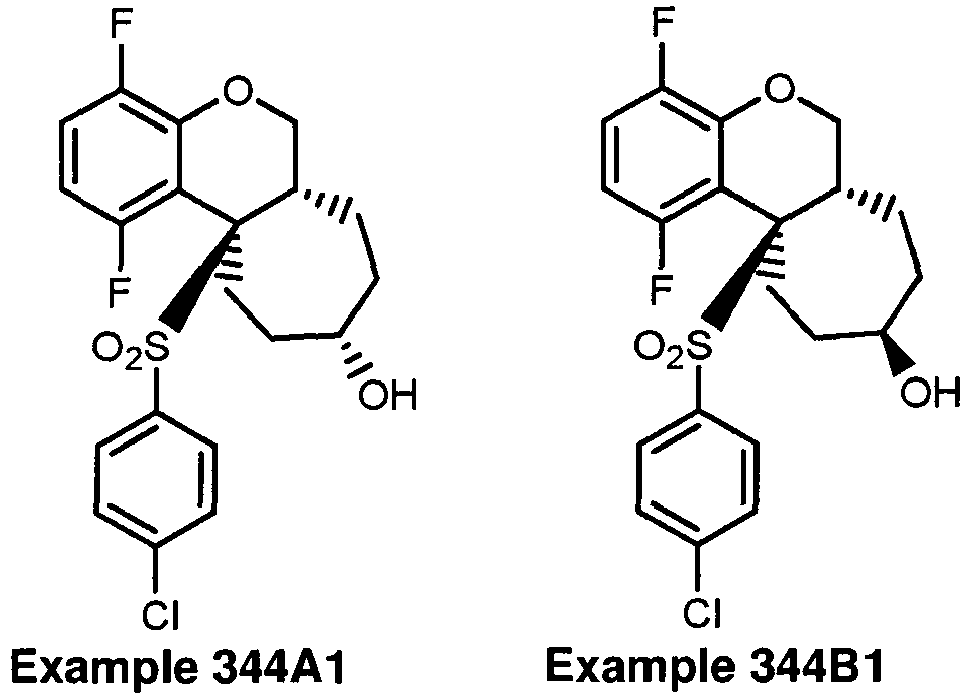
- A solution of tert-butyl-[11a-(4-chloro-benzenesulfonyl)-1,4-difluoro-6,6a,7,8,9,10,11,11a-octahydro-cyclohepta[c]chromen-9-yloxy]-dimethyl-silane (700 mg, 1.30 mmol) in THF (10 mL) at 0 °C was treated with TBAF (1 M in THF, 2.6 mL, 2.6 mmol) and warmed to ambient temperature. After 12 h, the reaction mixture was quenched with saturated aqueous NH4Cl and extracted with EtOAc (2x). The combined organic extracts were washed with saturated aqueous NaHCO3, brine, dried over MgSO4 and concentrated in vacuo. Flash chromatography (2→20% EtOAc/CH2Cl2) afforded Example 344A1 (200 mg, Rf = 0.49, 10% EtOAc/CH2Cl2): 1H NMR (CDCl3 400 MHz) δ 7.61 (d, J = 8.7 Hz, 2H), 7.49 (d, J = 8.7 Hz, 2H), 7.04 (m, 1H), 6.40 (m, 1H), 5.13 (dd, J = 11.7, 2.2 Hz, 1H), 4.26 (dd, J = 11.0, 2.2 Hz, 1H), 4.14 (m, 1H), 2.85 (d, J = 6.6 Hz, 1 H), 2.52 (ddd, J = 14.6, 10.3, 2.2 Hz, 1 H), 2.34 (m, 1 H), 2.22 (m, 1H), 1.87-1.62 (m, 5H); followed by Example 344B1 (130 mg, Rf = 0.33, 10% EtOAc/CH2Cl2): 1H NMR (CDCl3 400 MHz) δ 7.64 (d, J = 8.8 Hz, 2H), 7.50 (d, J = 8.8 Hz, 2H), 7.04 (m, 1 H), 6.40 (m, 1H), 5.13 (dd, J = 11.0, 2.2 Hz, 1 H), 4.26 (dd, J = 11.7, 2.2 Hz, 1 H), 3.67 (m, 1 H), 2.96 (m, 1H), 2.75 (m, 1 H), 2.19 (m, 1H), 2.02 (m, 1H), 1.81-1.49 (m, 5H).
-

- A solution of Example 344A was subjected to conditions similar to the ones described in Example 20 to provide Example 345A: 1H NMR (CDCl3 400 MHz) δ 7.60 (d, J = 8.8 Hz, 2H), 7.52 (d, J = 8.8 Hz, 2H), 7.04 (m, 1 H), 6.41 (m, 1 H), 5.15 (dt, J = 11.7, 9.5, 2.2 Hz, 1 H), 4.28 (dd, J = 11.7, 1.5 Hz, 1 H), 3.46 (m, 1 H), 2.97 (d, J = 10.2 Hz, 1 H), 2.34-2.28 (m, 2H), 2.09-1.91 (m, 2H), 1.81 (m, 1 H), 1.66-1.52 (m, 2H).
- Using methods similar to those in Example 345 and substituting an appropriate isocyanate, acyl or sulfonyl halide, the compounds in Table 75 were prepared.
Table 75 Ex. No. Structure LCMS (M+1, retention time) 346 
428.2, 2.99 min 347 
506.3, 4.42 min 348 
470.3, 4.19 min 349 
499.3, 4.35 min 350 
456.3, 3.05 min 351 
428.2, 2.95 min 352 
470.3, 4.15 min 353 
560.3, 5.07 min -

-

- A solution of the product from Example 27 Step 5 (268 mg, 0.692 mmol) in THF (7 mL) at 0 °C was treated with 60% NaH (30 mg, 0.76 mmol) and allyl iodide (76 µL, 0.83 mmol) and warmed to ambient temperature. After 12 h, the reaction mixture was heated to 60 °C. After an additional 6 h, the reaction mixture was cooled to ambient temperature, quenched with saturated aqueous NH4Cl and extracted with EtOAc (2x). The combined organic extracts were washed with saturated aqueous NaHCO3, brine, dried over MgSO4 and concentrated in vacuo. Flash chromatography (5→30% EtOAc/Hex) provided the title compound (200 mg, 67%): 1H NMR (CDCl3 400 MHz) δ 7.74 (d, J = 8.8 Hz, 2H), 7.50 (d, J = 8.8 Hz, 2H), 7.02 (m, 1 H), 6.44 (m, 1H), 5.80 (m, 1 H), 5.23-5.18 (m, 2H), 4.94 (dd, J = 11.7, 2.9 Hz, 1H), 4.57 (s, 1 H), 4.33 (d, J = 11.7 Hz, 1H), 4.88-4.83 (m, 2H), 3.50-3.35 (m, 2H), 2.96 (t, J = 6.6 Hz, 1 H), 1.68 (m, 1 H), 1.50 (m, 1 H).
- A solution of 3-(2-allyloxy-ethyl)-4-(4-chloro-benzenesulfonyl)-5,8-difluoro-chroman was subjected to conditions similar to the ones described in Example 345 steps 6 and 7 to provide Example 354: 1H NMR (CDCl3 400 MHz) 7.57 (d, J = 8.8 Hz, 2H), 7.49 (d, J = 8.8 Hz, 2H), 7.06 (m, 1H), 6.44 (m, 1H), 5.15 (dd, J = 11.7, 2.9 Hz, 1 H), 4.25 (dd, J = 11.7, 2.2 Hz, 1H), 3.99-3.90 (m, 2H), 3.82 (dd, J = 13.1, 8.1 Hz, 1 H), 3.66 (m, 1H), 3.21 (m, 1 H), 2.96 (m, 1H), 2.40 (m, 1 H), 1.95-1.85 (m, 2H).
-

- A solution of cis-10a-(4-chloro-benzenesulfonyl)-1,4-difluoro-6a,7,8,9,10,10a-hexahydro-6H-benzo[c]chromen-8-ol (Example 18B) (50 mg, 0.121 mmol) in pyridine (1 mL) was treated with acetyl chloride (40 µL, 0.54 mmol), DMAP (10 mg) and heated to 80 °C. After 12 h, the reaction mixture was cooled to ambient temperature and diluted with EtOAc. The organic layer was washed with 1 N HCl, saturated aqueous NaHSO3, brine, dried over MgSO4 and concentrated in vacuo. Preparative thin layer chromatography (25% EtOAc/Hex) afforded the title compound (Example 355) (24.9 mg, 45%): 1H NMR (CDCl3 400 MHz) δ 7.61 (d, J = 8.1 Hz, 2H), 7.50 (d, J = 8.1 Hz, 2H), 7.05 (m, 1H), 6.41 (m, 1H), 5.28 (dd, J = 11.7, 2.9 Hz, 1 H), 4.96 (m, 1 H), 4.12 (m, 1H), 3.02 (m, 1H), 2.41-2.37 (m, 2H), 2.11 (s, 3H), 1.97-1.85 (m, 2H), 1.67 (m, 1H), 1.31 (m, 1H).
- Using methods similar to those in Example 355 and substituting an appropriate acyl halide, the compounds in Table 76 were prepared.
Table 76 Ex. No. Structure LCMS (M+1, retention time) (+)-isomer 356 
485.3, 4.89 min (-)-isomer 357 
457.3, 4.52 min (-)-isomer 358 
485.3, 4.89 min -

- Using methods similar to those in Example (-)-358 and substituting an appropriate alkyl halide, the compounds in Table 77 were prepared.
Table 77 Ex. No. Structure LCMS (M+1, retention time) (-)- isomer 359 
443.2, 5.13 min (-)-isomer 360 
471.3, 5.65 min (-)- isomer 361 
No M+1, 4.97 min -

-

- A solution of cis-10a-(4-chloro-benzenesulfonyl)-1,4-difluoro-6a,7,8,9,10,10a-hexahydro-6H-benzo[c]chromen-8-ol (Example 18B) (1.00 g, 2.41 mmol) in THF (20 mL) was treated with 15-crown-5 (0.80 mL, 4.00 mmol) and 60% NaH (150 mg, 3.80 mmol). After 20 min, allyl iodide (460 µL, 5.00 mmol) was added and the reaction mixture was heated to reflux. After 18 h, the reaction mixture was cooled to ambient temperature, quenched with 1 N HCl and extracted with EtOAc (2x). The combined organic extracts were washed with saturated aqueous NaHCO3, brine, dried over MgSO4 and concentrated in vacuo. Flash chromatography (2→20% EtOAc/Hex) provided the title compound (990 mg, 90%): 1H NMR (CDCl3 400 MHz) δ 7.61 (d, J = 8.8 Hz, 2H), 7.49 (d, J = 8.8 Hz, 2H), 7.06 (m, 1 H), 6.40 (m, 1 H), 5.90 (m, 1 H), 5.27-5.22 (m, 2H), 5.15 (d, J = 10.2 Hz, 1 H), 4.12 (d, J = 11.0 Hz, 1 H), 3.99-3.92 (m, 2H), 3.55 (m, 1H), 3.01 (m, 1 H), 2.41-2.34 (m, 2H), 1.96-1.86 (m, 2H), 1.50 (m, 1 H), 1.13 (m, 1 H).
-
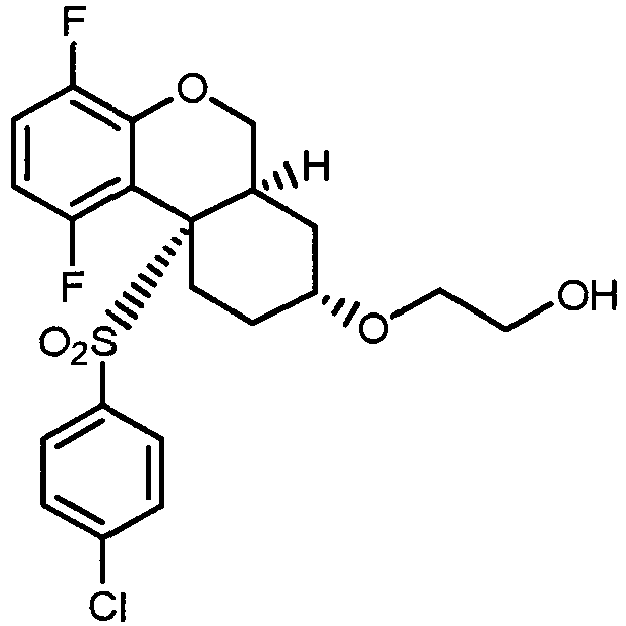
-

- A solution of 2-[10a-(4-chloro-benzenesulfonyl)-1,4-difluoro-6a,7,8,9,10,10a-hexahydro-6H-benzo[c]chromen-8-yloxy]-ethanol (1.09 g, 2.54 mmol) in CH2Cl2 (25 mL) at 0°C was treated with Et3N (0.37 mL) and MsCl (0.65 mL), the reaction mixture was slowly warmed to room temperature. After 14 h, the reaction mixture was quenched with saturated aqueous NH4Cl and extracted with EtOAc (2x). The combined organic extracts were washed with saturated aqueous NaHCO3, dried over MgSO4 and concentrated in vacuo to afford the title compound (1.24 g, 97%): 1H NMR (CDCl3 400 MHz) δ 7.58 (d, J=8.1 Hz, 2H), 7.47 (d, J=8.1 Hz, 2H), 7.07 (m, 1H), 6.40 (m, 1H), 5.23 (dd, J=2.9, 11.7 Hz, 1H), 4.37 (dd, J= 3.7, 4.4 Hz, 2H), 4.11 (d, J= 11.7 Hz, 1H), 3.72 (m, 2H), 3.58 (m, 1H), 3.13 (s, 1 H), 3.01 (m, 1 H), 2.40 (m, 2H), 1.87 (m, 2H), 1.56 (ddd, J= 1.6, 14.7, 14.7 Hz, 1H), 1.14 (m, 1H).
-

- A solution of methanesulfonic acid 2-[10a-(4-chloro-benzene sulfonyl)-1,4-difluoro-6a,7,8,9,10,10a-hexahydro-6H-benzo[c]chromen-8-yloxy]-ethyl ester (180 mg, 0.355 mmol) in DMF (5 mL) was treated with NaN3 (46 mg, 0.707 mmol) and the reaction mixture was heated to 80°C. After 16 h, the reaction mixture was cooled to ambient temperature and diluted with saturated aqueous NH4Cl and extracted with EtOAc (2x). The combined organic extracts were washed with H2O, saturated aqueous NaHCO3, brine, dried over MgSO4, and concentrated in vacuo to afford the title compound (153 mg, 95%): 1H NMR (CDCl3 400 MHz) δ 7.63 (d, J=8.1 Hz, 2H), 7.49 (d, J=7.3 Hz, 2H), 7.07 (m, 1H), 6.42 (m, 1 H), 5.25 (dd, J=2.9, 11.7 Hz, 1 H), 4.12 (d, J=11.7 Hz), 3.60 (m, 2H), 3.36 (m, 2H), 3.02 (m, 1 H), 2.37 (m, 2H), 1.94 (m, 2H), 1.56 (m, 2H), 1.16 (m, 2H).
-

- A solution of 8-(2-azido-ethoxy)-10a-(4-chloro-benzenesulfonyl)-1,4-difluoro-6a,7,8,9,10,10a-hexahydro-6H-benzo[c]chromene (110 mg, 0.242 mmol) in 4:1 THF/H2O (5 mL) was treated with Ph3P (127 mg, 0.484 mmol) and the reaction was heated to 60°C. After 16 h, the reaction mixture was cooled to ambient temperature and concentrated in vacuo to remove the THF. The reaction mixture was diluted with saturated aqueous NH4Cl and extracted with CH2Cl2 (3x). The combined organic extracts were dried over MgSO4 and concentrated in vacuo. Flash chromatography (10% MeOH/CH2Cl2) provided the title compound (52 mg, 52%): 1H NMR (CDCl3 400 MHz) δ 7.62 (d, J=8.8 Hz, 2H), 7.49 (d, J=8.8 Hz, 2H), 7.06 (m, 1 H), 6.43 (m, 1 H), 5.22 (dd, J=10.9, 2.9 Hz, 1 H), 4.11 (d, J=11.7 Hz, 1 H), 3.51 (m,1H), 3.41 (m, 2H), 2.98 (m, 1H), 2.88 (br s, 2H,), 2.39 (m, 2H), 1.94 (m, 2H), 1.49 (m, 3H), 1.13 (m, 1H).
-

- A solution of 2-[10a-(4-chloro-benzene sulfonyl)-1,4-difluoro-6a,7,8,9,10,10a-hexahydro-6H-benzo[c]chromen-8-yloxy]-ethylamine (71 mg, 0.168 mmol) in CH2Cl2 (5 mL) at -78°C was treated with 2,6-lutidine (33 µL, o.284 mmol), Tf2O (45 µL, 0.948 mmol) and warmed slowly to ambient temperature. After 17 h, the reaction mixture was diluted with saturated aqueous NH4Cl and extracted with CH2Cl2 (2x). The combined organic extracts were washed with saturated aqueous NaHCO3, dried over MgSO4, and concentrated in vacuo. The residue was purified by preparative-chromatography over silica gel (eluted in hexanes/EtOAc 1:1) to afford the title compound (29 mg, 30%):1H NMR (CDCl3 400 MHz) δ 7.61 (d, J=8.8 Hz, 2H), 7.48 (d, J=8.8 Hz, 2H), 7.08 (m, 1H), 6.44 (m, 1H), 5.22 (dd, J=11.7, 2.9 Hz, 1H), 4.12 (d, J=11.7 Hz, 1H), 3.57 (m, 3H), 3.01 (m, 1H), 2.56 (m, 1 H), 2.33 (m, 1H), 1.91 (m, 2H), 1.56 (m, 1H), 1.15 (m, 2H).
- Using methods similar to those in Example 362 and substituting an appropriate acyl halide, isocyanate or sulfonyl halide, the compounds in Table 78 were prepared.
Table 78 Ex. No. Structure LCMS (M+1, retention time) 363 
542.3, 4.64 min 364 
529.3, 4.10 min 365 
562.3, 4.51 min 366 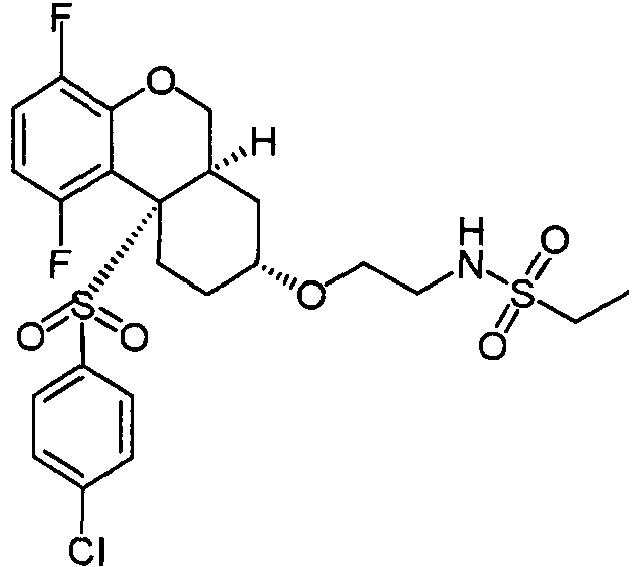
. 550.3, 4.42 min 367 
536.3, 4.29 min -

-

- A solution of trans-10a-(4-chloro-benzenesulfonyl)-1,4-difluoro-6a,7,8,9,10,10a-hexahydro-6H-benzo[c]chromen-8-ol (Example 18A) (750 mg, 1.81 mmol) at 0 °C was treated with Et3N (750 µL, 5.40 mmol), MsCl (560 µL, 7.20 mmol) and warmed to ambient temperature. After 1.5h, the reaction mixture was quenched with saturated aqueous NH4Cl and extracted with EtOAc (2x). The combined organic extracts were washed with saturated aqueous NaHCO3, dried over MgSO4 and concentrated in vacuo to provide the crude product. The residue was dissolved in DMF (15 mL), treated with KSAc (270 mg, 2.30 mmol) and heated to 120 °C. After 3 h, the reaction mixture was cooled to ambient temperature, quenched with saturated aqueous NH4Cl and extracted with EtOAc (2x). The combined organic extracts were washed with H2O (3x), saturated aqueous NaHCO3, brine, dried over MgSO4 and concentrated in vacuo. Flash chromatography (2→20% EtOAc/Hex) gave the title compound (420 mg, 61 % over 2 steps): 1H NMR (CDCl3 400 MHz) δ 7.58 (d, J = 8.1 Hz, 2H), 7.49 (d, J = 8.1 Hz, 2H), 7.07 (m, 1 H), 6.41 (m, 1 H), 5.21 (dd, J = 11.7, 2.9 Hz, 1 H), 4.10 (d, J = 10.3 Hz,1H); 3.88 (m, 1 H), 2.83 (m, 1 H), 2.50 (d, J = 14.6 Hz, 1 H), 2.35 (s, 3H), 2.18 (m, 1 H), 1.92-1.77 (m, 3H), 1.53 (m, 1 H).
-

- A solution of thioacetic acid S-[10a-(4-chloro-benzenesulfonyl)-1,4-difluoro-6a,7,8,9,10,10a-hexahydro-6H-benzo[c]chromen-8-yl] ester (420 mg, 0.888 mmol) in MeOH (8 mL) was treated with 1N NaOH (2 mL) followed by THF (3 mL). After 4h, the reaction mixture was concentrated in vacuo, diluted with 1N HCl and extracted with EtOAc (2x). The combined organic extracts were washed with saturated aqueous NaHCO3, brine, dried over MgSO4 and concentrated in vacuo. Flash chromatography (2→20% EtOAc/Hex) gave the disulfide of the title compound (133 mg, 17%): 1H NMR (CDCl3 400 MHz) δ 7.62 (d, J = 8.8 Hz, 4H), 7.51 (d, J = 8.8 Hz, 4H), 7.07 (m, 2H), 6.41 (m, 2H), 5.24 (dd, J = 11.0, 2.9 Hz, 2H), 4.11 (d, J = 11.0 Hz,2H), 3.48 (m, 2H), 3.14 (d, J = 13.2 Hz, 2H), 2.55 (m, 2H), 2.42 (m, 2H), 1.92-1.52 (m, 8H); followed by the title compound (169 mg, 44%): 1H NMR (CDCl3 400 MHz) δ 7.60 (dd, J = 8.8, 1.5 Hz, 2H), 7.48 (dd, J = 8.8, 1.5 Hz, 2H), 7.08 (m, 1 H), 6.42 (m, 1H), 5.25 (dd, J = 11.7, 2.2 Hz, 1 H), 4.11 (d, J = 11.0 Hz,1H), 3.11 (m, 1 H), 2.95 (d, J = 12.5 Hz, 1H), 2.40-2.38 (m, 2H), 2.04-1.82 (m, 3H), 1.49 (m, 1H).
- The disulfide of the title compound was converted to the title compound by the following method:
- A solution of the disulfide of the title compound (380 mg, 0.44 mmol) in THF (3 mL) was treated with NaBH4 (50 mg, 1.30 mmol) and heated to 60 °C. After 4h, the reaction mixture was cooled to ambient temperature, quenched with 1 N HCl and extracted with Et2O (2x). The combined organic extracts were dried over MgSO4 and concentrated in vacuo. Flash chromatography (2→20% EtOAc/Hex) gave the title compound (370 mg,98%).
-

- A solution of 10a-(4-chloro-benzenesulfonyl)-1,4-difluoro-6a,7,8,9,10,10a-hexahydro-6H-benzo[c]chromene-8-thiol (370 mg, 0.860 mmol) in CH3CN (30 mL) at - 10 °C was treated with KNO3 (191 mg, 1.89 mmol) followed by SO2Cl2 (152 µL, 1.89 mmol) dropwise. After 3h, the reaction mixture was quenched with saturated aqueous NaHCO3 and extracted with EtOAc (2x). The combined organic extracts were washed with saturated aqueous NaHCO3, brine, dried over MgSO4 and concentrated in vacuo to provide the title compound (380 mg, 89%): 1H NMR (CDCl3 400 MHz) δ 7.62 (d, J = 8.8 Hz, 2H), 7.52 (d, J = 8.8 Hz, 2H), 7.11 (m, 1 H), 6.48 (m, 1H), 5.24 (dd, J = 11.7, 2.9 Hz, 1H), 4.22 (d, J = 11.7 Hz, 1H), 3.80 (m, 1 H), 3.17 (d, J = 12.4 Hz, 1H), 2.64-2.48 (m, 5H), 1.67 (m, 1H).
-

- A solution of 10a-(4-chloro-benzenesulfonyl)-1,4-difluoro-6a,7,8,9,10,10a-hexahydro-6H-benzo[c]chromene-8-sulfonyl chloride (50 mg, 0.10 mmol) in CH2Cl2 (1.0 mL) was treated with Et3N (30 µL, 0.20 mmol) followed by pyrrolidine (20 µL, 0.24 mmol). After 12h, the reaction mixture was quenched with saturated aqueous NH4Cl and extracted with CH2Cl2 (2x). The combined organic extracts were dried over MgSO4 and concentrated in vacuo. Preparative thin layer chromatography (33% EtOAc/Hex) afforded Example 368A (7.1 mg, 13%): 1H NMR (CDCl3 400 MHz) δ 7.63 (dd, J = 8.8, 2.2 Hz, 2H), 7.50 (dd, J = 8.8, 2.2 Hz, 2H), 7.10 (m, 1 H), 6.46 (m, 1 H), 5.22 (dd, J = 11.7, 2.9 Hz, 1H), 4.17 (d, J = 11.7 Hz, 1H), 3.39-3.35 (m, 4H), 3.27 (d, J = 12.4 Hz, 1H), 3.12 (m, 1H), 2.71 (m, 1 H), 2.46 (m, 1H), 2.31-2.27 (m, 2H), 1.96-1.93 (m, 4H), 1.82 (m, 1 H), 1.50 (m, 1 H); followed by Example 368B (12.0 mg, 22%): 1H NMR (CDCl3 400 MHz) δ 7.56 (dd, J = 8.8, 2.2 Hz, 2H), 7.50 (dd, J = 8.8, 2.2 Hz, 2H), 7.10 (m, 1H), 6.42 (m, 1H), 5.24 (dd, J = 11.7, 2.9 Hz, 1 H), 4.20 (d, J = 11.7 Hz, 1H), 3.34-3.30 (m, 4H), 3.13 (m, 1 H), 2.78-2.74 (m, 2H), 2.13-2.02 (m, 3H), 1.90-1.87 (m, 4H), 1.78 (m, 1H), 1.38 (m, 1H).
- Using methods similar to those in Example 368 and substituting an appropriate amine, the compounds in Table 79 were prepared.
Table 79 Ex. No. Structure LCMS (M+1, retention time) 369 
508.3, 4.45 min 370 
506.3, 4.39 min 371 
492.3, 4.17 min 372 
492.3, 4.11 min 373 
------ -

- A solution of trans-10a-(4-chloro-benzenesulfonyl)-1,4-difluoro-6a,7,8,9,10,10a-tetrahydro-6H, 7H-benzo[c]chromen-8-one (as described in Example 17, step 7)(2.50 g, 6.06 mmol) in conc NH4OH/MeOH (1:1,40 mL) was treated with KCN (0.51 g, 7.9 mmol) and NH4Cl (0.42 g, 7.9 mmol). After 12 h, the reaction mixture was concentrated in vacuo, diluted with H2O and extracted with CH2Cl2 (4x). The combined organic extracts were dried over MgSO4 and concentrated in vacuo. The crude reaction mixture was dissolved with THF (20 mL) and added dropwise to a suspension of LAH (0.41 g, 10.9 mmol) in THF (40 mL) at 0 °C. After 1 h, the reaction mixture was quenched via sequential addition of H2O (400 µL), 1 N NaOH (800 µL), H2O (800 µL), and stirred for 15 min. The suspension was filtered, rinsed with CH2Cl2, and the filtrate was concentrated in vacuo. Flash chromatography (1 %→15% NH4OH/MeOH(1:9), CH2Cl2) afforded Example 374 (950 mg, 35% over 2 steps): 1H NMR (CDCl3 400 MHz) δ 7.54 (d, J = 8.8 Hz, 2H), 7.44 (d, J = 8.5 Hz, 2H), 7.05 (m, 1H), 6.38 (m, 1 H), 5.17 (dd, J = 11.7, 2.9 Hz, 1 H), 4.10 (d, J = 11.0 Hz, 1 H), 2.80 (d, J = 12.4 Hz, 1H), 2.70 (m, 1H), 2.69 (d, J = 12.4 Hz, 1H), 2.40 (m, 1H), 2.04 (m, 1 H), 1.77-1.68 (m, 2H), 1.34 (dd, J = 13.9, 13.2 Hz, 1 H), 1.13 (br s, 4H), 0.95 (ddd, J = 13.9, 13.9, 2.9 Hz, 1 H).
-

- A solution of 8-aminomethyl-10a-(4-chloro-benzenesulfonyl)-1,4-difluoro-6a,7,8,9,10,10a-hexahydro-6H-benzo[c]chromen-8-ylamine (Example 374) (50 mg, 0.113 mmol) in CH2Cl2 (1 mL) at 0 °C was treated with Et3N (31 µL, 0.22 mmol), cyclopropyl sulfonyl chloride (20 µL, 0.14 mmol), and warmed to ambient temperature. After 12 h, the reaction mixture was diluted with saturated aqueous NaHCO3, and extracted with CH2Cl2 (2x). The combined organic extracts were dried over MgSO4 and concentrated in vacuo. Preparative thin layer chromatography (5% NH4OH/MeOH (1:9), 95% CH2Cl2) afforded Example 375 (8.4 mg, 14%): 1H NMR (CDCl3 400 MHz) δ 7.59 (d, J = 8.1 Hz, 2H), 7.48 (d, J = 8.1 Hz, 2H), 7.09 (m, 1 H), 6.43 (m, 1H), 5.21 (dd, J = 11.7, 2.2 Hz, 1 H), 5.01 (br s, 1 H), 4.12 (d, J = 11.7 Hz, 1 H), 3.19 (d, J = 13.2 Hz, 1 H), 3.15 (d, J = 12.4 Hz, 1 H), 2.78 (d, J = 12.4 Hz, 1H), 2.55 (m, 1H), 2.42 (m, 1H), 2.10 (m, 1 H), 1.86-1.79 (m, 2H), 1.45-1.18 (m, 6H), 1.04-1.00 (m, 2H).
-
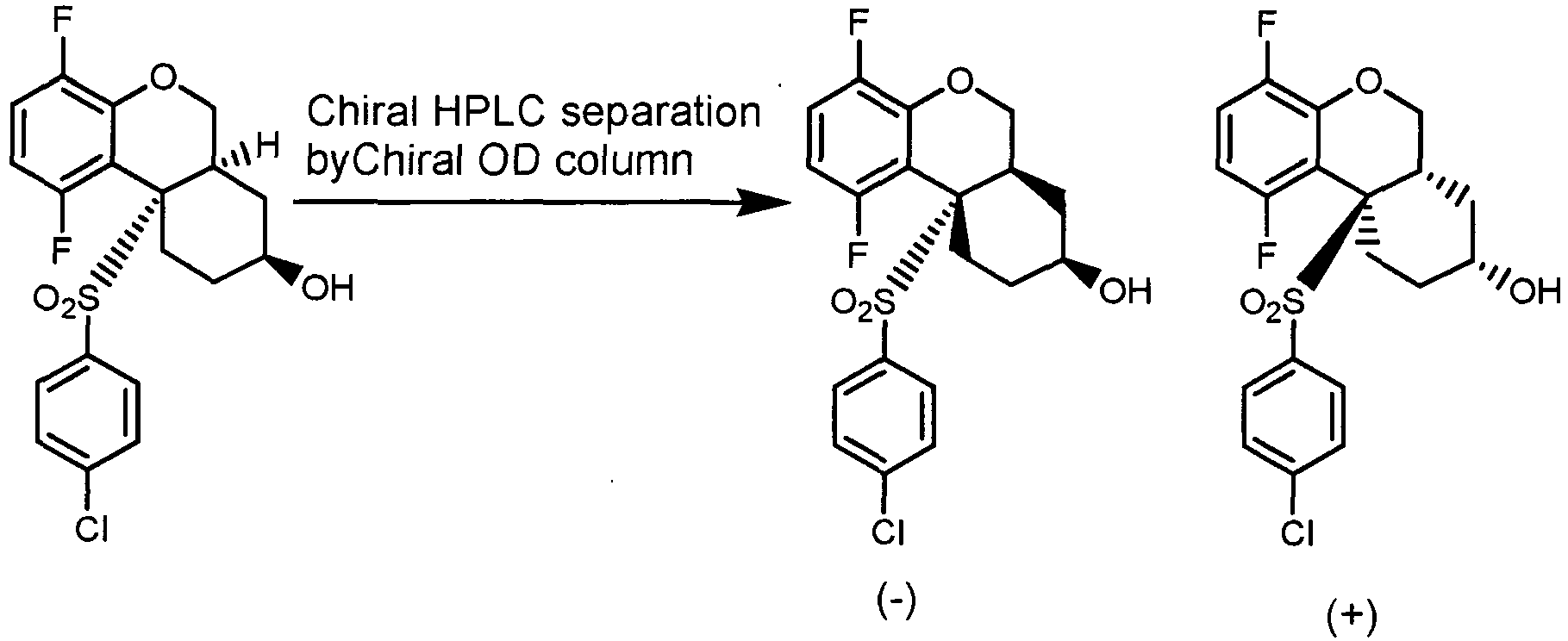
- The racemic mixture, prepared according to the procedure in Example 20 can be separated into two pure enantiomers using Chiral OD column with hexane/isopropanol (75/25) as solvent.
- First fraction ((-)-isomer): [α] = -162.3 deg. (c = 1.095 in DCM).
- Second fraction ((+)-isomer): [α] = 137. deg. (c = 0.95 in DCM).
- Starting with the (-)-isomer of Example 376, and using methods similar to those in Example 20 and substituting an appropriate acyl or sulfonyl halide, the compounds in Table 80 were prepared.
Table 80 Ex. No. Structure LCMS (M+1, retention time) 377 
546.3, 4.96min. 378 
555.3, 4.56min. 379 
340.2 (M-phenylsulfone), 4.24min. -

- 10a-(4-chloro-benzenesulfonyl)-1,4-difluoro-6a,7,8,9,10,10a-hexahydro-6H-benzo[c]chromen-8-ol (0.46g, 1.11 mmole) was dissolved in 30 ml DCM. Phosgene (20% in toluene, 4ml) and pyridine (1ml) were added and the reaction was stirred at room temperature for 10 minutes. 20 ml DCM was added and the reaction was quenched by slowly adding 10 ml water. The organic layer was washed with 50 ml 1N HCl solution, dried over sodium sulfate. After the solvent was removed, the residue was purified by column using EtOAc/Hex. as the solvent (gradient from 0/100 to 25/75 in 25 minutes). Yield: 0.37g, 70%. 1H NMR (CDCl3 400 MHz) δ 7.62 (d, 2H, J=8.8 Hz), 7.50 (d, 2H, J=8.8 Hz), 7.06-7.13 (m, 1 H), 6.40-6.47 (m, 1 H), 5.28 (dd, 1 H, J=11.7 and 2.9 Hz), 5.05 (s, 1H,), 4.14 (d, 1 H, J=11.7 Hz), 3.02 (dt, J=13.2 and 2.9Hz, 1 H), 2.31-2.49 (m, 2H), 2.01-2.16 (m, 2H),1.66-1.75 (m, 1 H), 1.30-1.40 (m, 1 H).
- 10a-(4-chloro-benzenesulfonyl)-1,4-difluoro-6a,7,8,9,10,10a-hexahydro-6H-benzo[c]chromen-8-yl chloroformate (40mg) was dissolved in 5 ml DCM. 2(R)-hydroxypyrroline (40ul) and diisopropylethylamine (50ul) were added and the reaction was stirred at room temperature for 1 hour. 20 ml DCM was added and the reaction was washed with 50 ml saturated sodium carbonate solution, dried over sodium sulfate and concentrated. The residue was purified by column using EtOAc/Hex. as the solvent (gradient from 25/75 to 100/0 in 25 minutes). Yield: 42mg, 95%. 1H NMR (CDCl3 400 MHz) δ 7.60 (m, 2H), 7.49 (m, 2H), 7.03-7.11 (m, 1 H), 6.37-6.46 (m, 1 H), 5.21-5-28 (m, 1 H), 4.87 (s, 1 H,), 4.49 (d, J=15.3 Hz, 1 H), 4.10 (m, 1 H), 3.33-3.55(m, 4H), 2.89 (d J=12.4Hz, 1 H), 2.48 (m, 2H), 2.32 (m, 1 H), 1.95 (m, 3H), 1.61(m, 1 H), 1.26 (m, 1 H).
- Using methods similar to those in Example 380 and substituting appropriate amines, the compounds in Table 81 were prepared.
Table 81 Ex. No. Structure LCMS (M+1, retention time) 381 
528.3, 3.78min. 382 
609.3, 3.51 min. 383 
599.3, 3.28min. 384 
597.3, 3.27min. 385 
597.3, 3.24min. 386 
583.3, 3.48min. -

- (6aR)-10aS-[(4-chlorophenyl)sulfonyl]-1,4-difluoro-6a,7,8,9,10,10a-hexahydro-6h-dibenzo[b,d]pyran-8(R)-carbonitrile (racemic) Trans-10a-(4-chlorobenzenesulfonyl)-1,4-difluoro-6a,7,8,9,10,10a-hexahydro-6H-benzo[c]chromen-8-ol (1.3g, 3.1mmole) was dissolved in 10ml DCM. Mesyl chloride (0.53g, 4.7mmole) and triethylamine (1ml) were added. The reaction was stirred at room temperature for 10 minutes. 100ml brine and 50 ml DCM were added. The organic layer was washed with 1N HCl solution (50ml), water (50 ml), brine (50ml), dried over Na2SO4 and concentrated. The residue was dissolved in 50 ml toluene. Tetrabutylammonium cynide (1.6g, 6.1 mmole) was added. The rection was heated to 80°C overnight. The reaction was cooled to room temperature and 100 ml EtOAc was added. The organic layer was washed with brine (2 x 100 ml), dried over Na2SO4 and concentrated. The residue was purified by column (EtOAc/hexane from 0/100 to 50/50 in 35 minutes). Yield: 0.70g, 53%. 1H NMR (CDCl3 400 MHz δ 7.64 (d, J = 8.8 Hz, 2H), 7.52 (d, J = 8.8 Hz, 2H), 7.06-7.13 (m, 1 H), 6.42-6.49 (m, 1 H), 5.29 (dd, J = 11.7 and 2.9 Hz, 1 H), 4.17 (d, J=11.7 Hz, 1 H), 2.94-3.02 (m, 2H), 2.62 (d, J=13.9Hz, 1H), 2.34 (tt, J = 13.8 and 2.9 Hz, 1 H), 1.94-2.09 (m, 2H), 1.66-1.75 (m, 1 H), 1.30-1.40 (m, 1 H).
- (6aR)-10aS-[(4-chlorophenyl)sulfonyl]-1,4-difluoro-6a,7,8,9,10,10a-hexahydro-6h-dibenzo[b,d]pyran-8(R)-carbonitrile (0.34g, 0.80mmole) was dissolved in 50ml THF and the reaction was cooled to 0 °C. LAH (1 M in ether, 1.6ml) was added and the reaction was stirred at room temperature for 1 hour. 100ml 1N NaOH solution and 100 ml EtOAc were added. The organic layer was washed with brine (2x100ml), dried over sodium sulfate and concentrated. The residue was purified by column (EtOAc/2.5N NH3 in MeOH from 100/0 to 80/20 in 35 minutes). Yield: 0.24g, 70%. 1H NMR (CDCl3 400 MHz δ 7.57 (d, J = 8.8 Hz, 2H), 7.47 (d, J = 8.8 Hz, 2H), 7.02-7.09 (m, 1 H), 6.35-6.43 (m, 1 H), 5.19 (dd, J = 11.7 and 2.9 Hz, 1 H), 4.10 (d, J = 11.7 Hz, 1 H), 2.70-2.85 (m, 3H), 2.33 (tt, J = 13.2 and 2.9 Hz, 1 H), 2.08 (m, 1 H), 1.58-1.80 (m, 4H), 1.20-1.30 (m, 1 H).
- (6aR)-10aS-[(4-chlorophenyl)sulfonyl]-1,4-difluoro-6a,7,8,9,10,10a-hexahydro-6h-dibenzo[b,d]pyran-8(R)-yl-aminomethane (50mg, 0.12mmole) was dissolved in 5 ml DCM, Mesyl chloride (50ul) and triethylamine(30ul) were added. The reaction was stirred at room temperature for two hours. 50ml saturated sodium carbonate solution and 50 ml EtOAc were added. The organic layer was washed with water (50 ml), brine (50ml), dried over Na2SO4 and concentrated. The residue was purified by column (EtOAc/hexane from 0/100 to 100/0 in 35 minutes). Yield:38mg, 64%. 1H NMR (CDCl3 400 MHz δ 7.57 (d, J = 8.8 Hz, 2H), 7.47 (d, J = 8.8 Hz, 2H), 7.03-7.09 (m, 1 H), 6.36-6.43 (m, 1 H), 5.17 (dd, J = 11.0 and 2.9 Hz, 1 H), 4.81 (t, J = 6.6 Hz, 1 H) 4.09 (m, 1 H), 3.22 (t, J = 7.3, 2H), 2.98 (s, 3H), 2.75(d, J = 12.5 Hz, 1 H), 2.36 (d, J = 13.9 Hz, 1 H), 2.08 (t, J= 13.9Hz, 1 H), 1.59-1.90 (m, 4H), 1.20-1.30 (m, 1 H).
- Using methods similar to those in Example 387 and substituting an appropriate acyl or sulfonyl halide, the compounds in Table 82 were prepared.
Table 82 Ex. No. Structure LCMS (M+1, retention time) 388 
470.3, 3.90min. 389 
356.2(M-phenylsulfone), 4.30min. 390 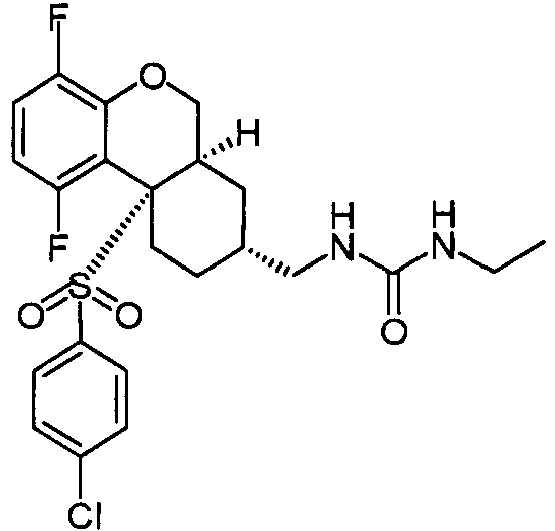
323.2(M-phenylsulfone), 4.02min. 391 
486.3, 4.31min. 387 
330.2(M-phenylsulfone), 4.12min. 392 
594.3, 4.99 min. 393 
566.3, 4.64 min. 394 
540.3, 4.21 min. -

- (3-Benzyloxy-1-hydroxymethyl-propyl)-carbamic acid tert-butyl ester (7.4g, 25mmole) was dissolved in 100ml DCM. Mesyl chloride (4.3g, 37.5mmole) and triethylamine (5.0g, 50mmole) were added. The reaction was stirred at room temperature for 20 minutes. 100ml DCM and 100ml water were added. The organic layer was washed with brine (100ml), dried over sodium sulfate and concentrated. The residue was dissolved in 200ml tolune. Tetraammonium cynide (10g, 37.5mmole) was added and the reaction was stirred at room temperature overnight. The organic layer was washed with water (2x100ml), brine (100ml), dried over sodium sulfate and concentrated. The residue was purified by column (EtOAc/hexane from 100/0 to 30/70 in 45 minutes). Yield, 6.4g, 84%. 1H NMR (CDCl3 400 MHz δ 7.29-7.38 (m, 5H), 5.20 (d, J = 5.9 Hz, 1 H), 4.50(m, 2H), 3.91 (m, 1 H), 3.54-3.66 (m, 2H), 2.60-2.77 (m, 2H), 1.89-1.99(m, 2H), 1.44 (s, 9H).
- [3-Benzyloxy-1 (R)-cyanomethyl-propyl]-carbamic acid tert-butyl ester (6.4g, 21 mmole) was dissolved in 20ml DCM. 4N HCl in dioxane (20ml) was added and the reaction was stirred at room temperature for 1 hour. The solvent was removed and the residue was dissolved in 200ml THF and 4-(4-Chloro-benzenesulfonyl)-5,8-difluoro-2H-chromene was added. Diisopropylethylamine (10 ml) was added and the reaction was stirred at room temperature overnight then refluxed for 5 hours. The reaction was cooled to room temperature and 100 ml EtOAc was added. The organic layer was washed with brine (100 ml), dried over Na2SO4 and concentrated. The residue was purified by column (EtOAc/hexane from 100/0 to 30/70 in 45 minutes). 6.0g, 58%, it is a mixture of two diastereomers.
- 5-Benzyloxy-3(R)-[4-(4-chloro-benzenesulfonyl)-5, 8-difluoro-chroman-3-ylamino]-pentanenitrile (0.9g, 1.64mmole) was dissolved in 20 ml DCM and the reaction was cooled to -78°C. Boron trichloride (1 M in Hexane, 8.2ml) was then added and the reaction was stirred 30 minutes. The reaction was quenched by adding 50 ml Saturated NaHCO3 solution and 100ml DCM was added. The organic layer was washed with brine (100ml), dried over sodium sulfate and concentrated. The residue was purified by column (EtOAc/hexane from 0/100 to 75/25 in 40 minutes). Yield: 0.64g, 88%. It is a mixture of diastereomers.
- 3-[4-(4-Chloro-benzenesulfonyl)-5,8-difluoro-chroman-3-yl-(R)-amino]-5-hydroxy-pentanenitrile (1.7g, 3.7mmole) was dissolved in 50ml DCM. Mesyl chloride (1ml) and triethylamine (2ml) were added. The reaction was stirred at room temperature for 5 minutes. 500ml DCM and 50ml water were added. The organic layer was washed with 1N HCl solution (2x100ml), brine (100ml), dried over sodium sulfate and concentrated. The residue was dissolved in 100ml dry THF and KOt-Bu (1M in t-BuOH, 4.5ml) was added. The reaction was stirred at room temperature for 10 minutes. 100ml EtOAc was added. The organic layer was washed with brine (2x100ml), dried over Na2SO4 and concentrated. The residue was purified by column (EtOAc/hexane from 100/0 to 40/60 in 45 minutes). Yield: 0.72g, 44% (0.51 g trans compound was also isolated from the reaction). 1H NMR (CDCl3 400 MHz δ 7.59 (d, J = 8.8 Hz, 2H), 7.50 (d, J = 8.8 Hz, 2H), 7.06-7.13 (m, 1 H), 6.40-6.47 (m, 1 H), 5.18 (dd, J = 11.7 and 2.9 Hz, 1 H), 4.29(dd, J = 11.7 and 1.5 Hz, 1 H), 3.82 (d, J =7.3 Hz, 1 H), 3.36 (bs, 1 H), 2.62-2.82 (m, 2H), 2.32-2.52(m, 2H), 2.70-2.86 (m, 2H), 1.52 (m, 1 H).
- (4aR)-10bR-[(4-Chlorophenyl)sulfonyl]-7,10-difluoro-1,3,4,4a,5,10b-hexahydro-2H-[1]benzopyran[3,4-b]pyridine-3(S)-ethylamine (pure enantiomer) (4aR)-10bR-[(4-Chlorophenylsulfonyl)-7,10-difluoro-1,3,4,4a,5,10b-hexahydro-2H-[1]benzopyrano[3,4-b]pyridine-3(S)-acetonitrile (0.47g, 1.1 mmole) was dissolved in 100ml THF and boron trichloride (2M in THF, 5.4ml) was added. The reaction was heated to 60°C for three hours. The reaction was cooled to room temperature and 100ml water was added dropwise to quench the reaction. 100ml 2N NaOH solution and 200 ml EtOAc were added. The organic layer was washed with brine (100ml), dried over sodium sulfate and concentrated. The residue was dissolved in 100ml methanol. 10ml 1N HCl in ether was added and the reaction was stirred at room temperature for one hour. Solvent was removed and the residue was partitioned between 100ml 1N NaOH solution and 100 ml EtOAc. The organic layer was washed with brine (100ml), dried over sodium sulfate and concentrated. The product was purified by column (DCM/0.7N NH3 in MeOH from 0/100 to 50/50 in 45 minutes). Yield: 0.40g, 84%.. 1H NMR (CDCl3 400 MHz δ 7.59 (d, J = 8.8 Hz, 2H), 7.47 (d, J = 8.8 Hz, 2H), 7.02-7.10 (m, 1 H), 6.37-6.45 (m, 1 H), 5.15 (dd, J = 11.7 and 2.2 Hz, 1 H), 4.25(dd, J = 11.7 and 1.5 Hz, 1 H), 3.86 (s, 1 H), 2.95-3.03 (m, 1 H), 2.82 (t, J =5.8 Hz, 2H), 2.38-2.45(m, 2H), 1.94-2.05 (m, 1 H), 1.45-2.55 (m, 2H), 1.32-1.44 (m, 1 H).
- Following procedures similar to those of Example 395, the compounds in Table 83 were obtained.
Table 83 Ex. No. Structure LCMS (M+1, retention time) 396 
430.2, 2.89 min. 397 
430.2, 2.92 min. 398 
439.2, 4.21min. 399 
439.2, 4.22min. 400 
443.2, 2.61 min. -


-
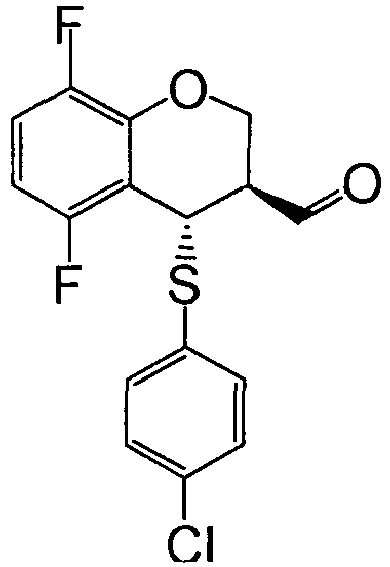
- Trans-[4-(4-chloro-phenylsulfanyl)-5,8-difluoro-chroman-3-yl]-methanol (Example 16 Step 2) (2.8g, 8.8mmole) was dissolved in 15ml DCM and Dess-Martin reagent (4.1 g, 9.7mmole) was then added. The reaction was stirred at room temperature for three hours. 40 ml EtOAc and 30 ml saturated sodium thiosulfate solution were added and the organic layer was washed with saturated sodium bicarbonate solution, dried over sodium sulfate and concentrated. The residue was used in next step without further purification.). Yield: 2.8g, 100%. 1H NMR (CDCl3 400 MHz) δ 9.70 (s, 1 H), 7.45 (d, J = 8.8Hz, 2H), 7.34 (d, J = 8.8Hz, 2H), 6.93-7.00 (m, 1 H), 6.59-6.65 (m, 1 H), 4.92 (dt, J = 11.7 and 2.2 Hz, 1 H), 4.89 (br, 1 H), 4.74 (dd, J = 11.7 and 2.9 Hz, 1 H), 2.83(m, 1 H).
-

- Trans-4-(4-chloro-phenylsulfanyl)-5,8-difluoro-chroman-3-carbaldehyde (2.2g, 5.9mmole) and ethanolamine (1.1g, 18mmole) were dissolved in 20 ml THF. The reaction was stirred at room temperature overnight. 2g Sodium borohydride and 10 ml MeOH were added and the reaction was stirred for three hours. 100 ml water and 100ml EtOAc were added. The organic layer was washed with water, dried over sodium sulfate and concentrated. The product was purified by column chromatography (EtOAc/hexane from 25/75 to 100/0 in 45 minutes). Yield, 0.40g, 17.5%. 1H NMR (CDCl3 400 MHz) δ 7.45 (d, J = 8.1 Hz, 2H), 7.31 (d, J = 8.1 Hz, 2H), 6.92-7.00 (m, 1 H), 6.54-6.60 (m, 1 H), 4.62 (dd, J = 8.8 and 2.2 Hz, 1 H), 4.48 (br, 1 H), 4.38 (dt, J = 11.7 and 2.2 Hz, 1H), 3.55 (t, J=5.1 Hz, 2H), 2.67 (dd, J = 12.4 and 7.3 Hz, 1 H), 2.62 (t, J = 5.1 Hz, 2H), 2.48 (dd, J =12.4 and 8.1 Hz, 1 H), 2.09(m, 1H).
-
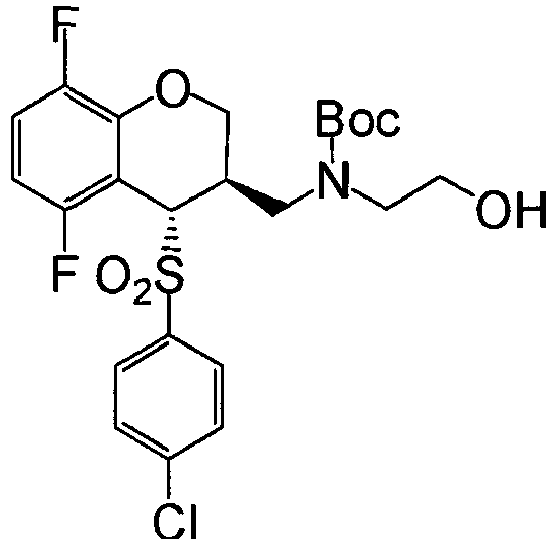
- 2-{[4-(4-Chloro-phenylsulfanyl)-5,8-difluoro-chroman-3-ylmethyl]-amino}-ethanol (0.4g, 1.0mmole) was dissolved in 20 ml DCM and Boc2O (0.24g, 1.2mmole) was added. The reaction was stirred at room temperature for 3 hours. MCPBA (77%, 0.8g, 3.6mmole) was then added and the reaction was stirred at room temperature for two hours. 2g sodium thiosulfate in 50 ml water was added to quench the reaction and 100 ml EtOAc was added to extract the product. The organic layer was washed with 1 N NaOH solution (50ml), brine (50ml), dried over sodium sulfate and concentrated. The product was purified by column chromatography (EtOAc/Heaxane from 0/100 to 50/50 in 45 minutes). Yield: 0.44g, 85%. 1H NMR (CDCl3 400 MHz) δ 7.71 (d, J = 8.1 Hz, 2H), 7.49 (d, J = 8.1 Hz, 2H), 6.98-7.05 (m, 1 H), 6.36-6.44 (m, 1 H), 4.90 (d, J = 11.7 Hz, 1 H), 4.40 (br, 1 H), 4.28 (d, J = 11.7 Hz, 1 H), 3.70 (br, 2H), 3.15-3.40 (m, 5H), 1.26(s, 9H).
-

- [4-(4-Chloro-benzenesulfonyl)-5,8-difluoro-chroman-3-ylmethyl]-(2-hydroxyethyl)-carbamic acid tert-butyl ester (0.44g, 0.85mmole) was dissolved in 5ml DCM. Mesyl chloride (0.11g, 1.0mmole) and triethylamine (0.86g, 8.5mmole) were added. The mixture was stirred at room temperature for two hours. 50 ml water and 50 ml EtOAc were added. The organic layer was washed with water (50 ml), brine (50ml), dried over sodium sulfate and concentrated. The residue was dissolved in 5ml THF and KOt-Bu (1 M inTHF, 2ml) was added. The mixture was stirred at room temperature for two hours. 50 ml water and 50 ml EtOAc were added. The organic layer was washed with brine (50ml), dried over sodium sulfate and concentrated. The product was purified by column (EtOAc/hexane from 0/100 to 25/75 in 45 minutes). Yield: 0.23g, 54%. 1H NMR (CDCl3 400 MHz) δ 7.60 (d, J = 8.8Hz, 2H), 7.50 (d, J = 8.8Hz, 2H), 7.06-7.13 (m, 1 H), 6.40-6.47 (m, 1 H), 5.20 (dd, J = 11.7 and 2.2 Hz, 1 H), 4.23 (d, J = 11.7 Hz, 1 H), 4.10 (br, 2H), 2.76 (br, 2H), 2.57 (d, J =12.7 Hz, 1 H), 2.43 (br, 1 H), 2.11 (m, 1 H), 1.44(s, 9H).
-

- 1, 1-dimethylethyl (4aR)-10bS-[(4-Chloropheny)sulfonyl]-7,10-difluoro-1,4a,5,10b-tetrahydro-2H-[1]benzopyrano[3,4-c]pyridine-3(4H)-carboxylate (0.21 g, 0.42mmole) was dissolved in 20 ml DCM and II 5 ml TFA. The mixture was stirred at room temperature for one hour. 100ml saturated sodium carbonate solution and 100 ml EtOAc were added. The organic layer was washed with saturated sodium carbonate solution (50ml), dried over sodium sulfate and concentrated. The residue was was recrystallized from EtOAc/hexane. Yield: 0.16g, 100%. 1H NMR (CDCl3 400 MHz) δ 7.61 (d, J = 8.8Hz, 2H), 7.49 (d, J = 8.8Hz, 2H), 7.05-7.12 (m, 1 H), 6.39-6.46 (m, 1 H), 5.18 (dd, J = 11.7 and 2.2 Hz, 1 H), 4.26 (d, J = 11.7 Hz, 1 H), 3.08 (d, J = 9.5Hz, 1 H), 301 (dt, J = 13.2 and 2.9 Hz, 1 H), 2.58-2.73 (m, 3H), 2.35 (td, J =12.4 and 1.5 Hz, 1H), 2.09 (dt, J = 12.4 and 2.9Hz, 1 H).
- The product of Step 5 is converted to the compounds in Table 84 using the method described in Example 20.
Table 84 Ex. No. Structure LCMS (M+1, retention time) 403 
500.3, 5.15 Min. 404 
400.2, 3.04 Min. 405 
442.2, 3.90 Min. 406 
478.3, 4.28 Min. 407 
554.3 (M + Na), 4.94 Min. 408 
471.3, 3.96 Min. 409 
No M+1 peak, 4.97 Min. 410 
414.2, 3.11 Min. -

-
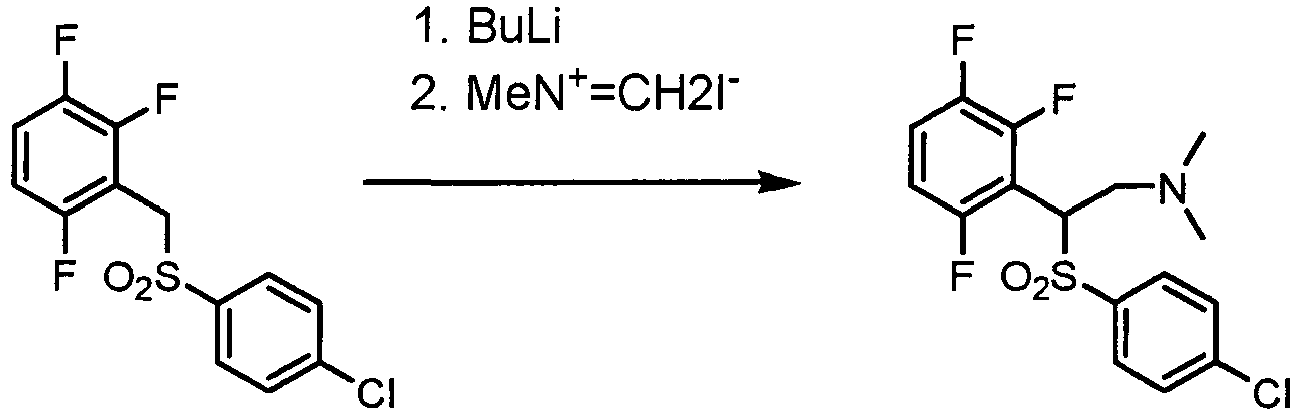
- To a solution of I (2.0 g, 6.2 mmol) in THF (30 mL) was slowly added nBuLi (2.8 mL, 6.9 mmol, 2.5M Hexanes) at -78°C. After stirring for 15 min, Eschenmoser salt (1.3 g, 7.0 mmol) was added at once and the reaction mixture was allowd to warm gradually to room temperature over 16 h period. The reaction mixture was quenched into saturated NH4Cl solution and extracted with EtOAc. The organic phase was washed with brine, dried over Na2SO4, filtered and concentrated. The residue was purified by flash-chromatography over silica gel (eluting with hexanes/EtOAc 75:25) to provide 1.11g of the title compound. 1H NMR (CDCl3 400 MHz) δ 7.68 - 7.65 (m, 2H), 7.48 - 7.44 (m, 2H) 7.21 - 7.09 (m, 1 H), 5.29 (s, 1 H), 4.79 (d, J = 4.2, 4.2 Hz,, 1 H), 3.44 - 3.33 m, 1H), 3.14 - 3.10, m, 1H), 2.19 (s, 6H).
-

- A solution of the amine product from step 1 (4.57g, 12.1 mmol), acetic anhydride (3.6 mL, 38.0 mmol) and toluene (40 mL) was heated at reflux for 2 h. After cooling to room temperature, the reaction mixture was concentrated and the residue purified by flash-chromatography over silica gel (eluting with hexanes/EtOAc 75:25) to provide 2.57g of the title compound as white solid. 1H NMR (CDCl3 400 MHz) δ 7.62 (d, J = 6.6 Hz, 2H), 7.49 (d, J = 6.3 Hz, 2H) 7.10 - 7.04 (m, 1 H), 6.93 (s, 1 H), 6.83 - 6.72 (m, 1H), 6.10 (s, 1 H).
-

- A solution of the alkene product from step 2 (7.8g, 23.8 mmol), (E)-1,4-Bis(tert-butldimethylsiloxy)-2,4-pentadiene [Frey, B.; Schnaubelt, J.; Hans-Ulrich, R .; Eur. J. Org. Chem. 1999, (6), 1377-1384] (3.95g, 11.9 mmol) and o-xylene (10 mL) was heated at reflux in a sealed tube for 16 h. After cooling to room temperature, the solvent was concentrated and the residue was dissolved in ice-cold solution of 1 N HCl in DCM (140 mL). The reaction mixture was kept at 0oC for 1 h, then carefully neutralized to PH 8 with saturated NaHCO3. Separated layers, extracted aqueous ohase with DCM, washed combined organic phase with brine, dried over Na2SO4 and concentrated. The residue purified by flash-chromatography over silica gel (eluting with hexanes/EtOAc 75:25) to provide 1.26 g of Isomer A and 1.08 g Of Isomer B.
- Isomer A: 1H NMR (CDCl3 400 MHz) δ 7.71 - 7.35 (m, 4H), 7.26 - 7.17 (m, 1 H), 7.90 - 6.53 (m, 1 H), 3.94 (s, br, 1 H), 3.77 - 3.75 (m, 1 H), 3.62 - 3.55 (m, 2H), 3.27 - 3.20 (m, 2H), 3.00 - 2.80 (m, 1 H), 2.53 - 2.45 (m, 2H), 0.72 (s, 9H), -1.00 (s, 3H), -1.10 (s, 3H).
- Isomer B: 1H NMR (CDCl3 400 MHz) 7.41 (d, J = 7.2 Hz, 2H), 7.33 (d, J = 8.4 Hz, 2H), 7.22 - 7.14 (m, 1 H), 7.00 - 6.45 (m, 1H), 4.71 (dd J = 2.4, 11.2 Hz, 1 H), 4.10 (dd, J = 4.4, 11.0 Hz, 1 H), 3. 97 (s, br, 1 H), 3.30 -3.26 (m, 1 H), 2.98 - 2.95 (m, 1 H), 2.68 - 2.59 (m, 2H), 2.25 - 2.09 (m, 2H), 0.92 (s, 9H), 0.15 (s, 3H), 0.1. (s, 3H).
-

-

- To a solution of the alcohol product from step 4 (1.19 g, 2.17 mmol) in THF (40 mL) was added TBAF at 0°C. The cooling bath was removed and the reaction mixture was stirred at room temperature for 2h. The solvent was concentrated and the residue purified by flash-chromatography over silica gel (eluting with hexanes/EtOAc 1:1) to provide 403 mg of the title product. 1H NMR (CDCl3 400 MHz) δ 7.63 (d, J = 6.0 Hz, 2H), 7.49 (d, J= 6.0 Hz, 2H), 7.10 - 7.94 (m, 1 H), 6.45 - 6.39 (m, 1H), 5.26 (d, J = 12.9Hz, 1 H), 4.10 (d, J = 8.7 Hz, 1 H), 4.05 (s, br, 1 H), 3.07 (d, J = 9.9 Hz, 1 H), 2.51 - 2.48 (m, 1 H), 2.37 - 2.34 (m, 1 H), 1.85 - 1.26 (m, 5H).
-

- To a solution of vinyl sulfone (50 mg, 0.145 mmol) and dipole precursor (100 mg, 0.42 mmol) in CHCl3 (2 mL) was added TFA (10 mg) at 0oC and stirred at that temperature for 2 h and then worked-up in water and EtOAc. The mixture was subjected to preparative TLC over silica gel (eluted with Hexanes/EtOAc 80:20) to yield 50 mg of Example 412: 1H-NMR (CDCl3 400 MHz) δ 7.47 (d, 2H), 7.38 (d, 2H), 7.21 (m, 5H), 7.03 (m, 1 H), 6.60 (m, 1 H), 4.40 (m, 1 H), 3.67 (m, 4H), 3.41 (m, 2H), 2.95 (m, 1 H), 2.43 (m, 1 H) LCMS (MH+) = 476.3; retention time = 3.29 min.
-

- To a solution of vinyl sulfone (100 mg, 0.29 mmol) and dipole precursor (70 mg, 0.37 mmol) in THF (4 mL) was added dppf (10 mg) followed by Pd(PPh3)4 (20 mg, 0.017 mmol) at room temperature and the reaction mixture was heated at 80oC for 12h. The reaction mixture was passed through a short pad of celite. The mixture was subjected to preparative TLC over silica gel (eluted with Hexanes/EtOAc 80:20) to yield 20 mg of Example 413: 1H-NMR (CDCl3 400 MHz) δ 7.59 (d, 2H), 7.48 (d, 2H), 7.0 (m, 1 H), 6.41 (m, 1 H), 4.90 (s, 1 H), 4.85 (s, 1 H), 4.74 (d, 1 H), 4.14 (d, 1 H), 3.41 (m, 2H), 3.15 (d, 2H),2.76 (m, 1 H), 2.33 (m, 1 H)
- The compounds in Table 85 were prepared following the procedure described in Example 61.
Table 85 Example No. STRUCTURE Mass Spec (M+ except as otherwise noted); retention time (min) 414 
4.96 415 
4.80 416 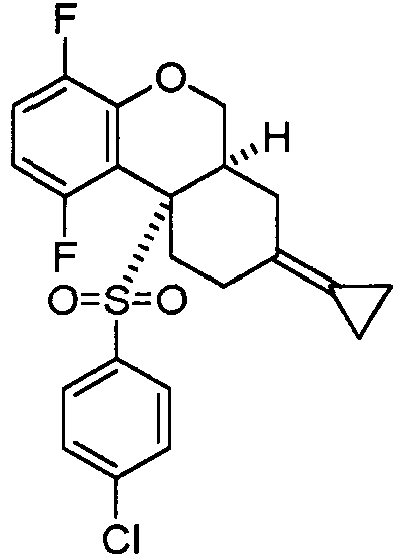
5.62 -

- To a solution of olefin (10 mg, 0.024 mmol) in DCM (2 mL) was added mCPBA (10 mg, 2 eq) at room temperature and stirred for 2h. Sodium thiosulfate (200 mg in 0.5 mL water) was added and extracted with DCM. The solvent was removed in vacuo and redissolved in THF (2 mL) and treated with 2 drops of con. H2SO4 and stirred at room temperature for 30 minutes. Saturated aq. NaHCO3 solution (2 mL) was added and extracted with DCM. The mixture was subjected to preparative TLC over silica gel (eluted with DCM/MeOH 95:5) to yield 4 mg of Example 417 and 4 mg of 418.
- Example 417: 1H-NMR (CDCl3 400 MHz) δ 7.62 (d, 2H), 7.49 (d, 2H), 7.0 (m, 1 H), 6.41 (m, 1 H), 5.30 (d, 1 H), 4.12 (d, 1 H), 3.61 (s, 1 H), 3.44 (m, 3H), 3.05 (m, 2H), 2.48 (m, 2H),1.78 (m, 1H), 1.25 (m, 2H).
Table 86 Example No. STRUCTURE Mass Spec (M+ except as otherwise noted); retention time (min) 418 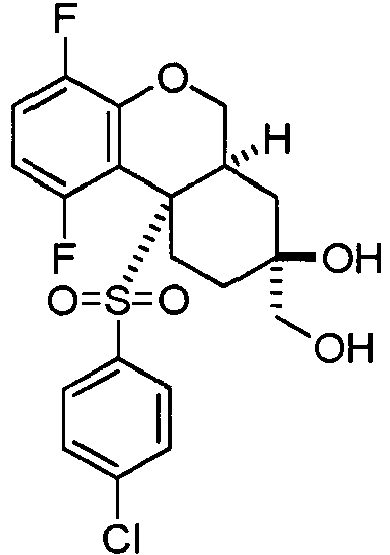
444.2 (MH+) -

- To a solution of tricyclic ketone (5 g, 0.0112 mol) in THF (50 mL) was added LHMDS (1 M in THF, 13.44 mL, 1.2 eq) at -78oC and stirred for 30 minutes. In a separate flask, SEM-CI (2.24 g, 0.0134 mol) and Nal (2 g, 0.0133 mol) were taken in THF (50 mL) and cooled to -78oC. The ketone enolated generated was transferred to the SEM-CI/Nal mixture via cannula and stirred at -78oC for 6h. The reaction mixture was slowly warmed to room temperature and stirred overnight and then poured into saturated NH4Cl and extracted with EtOAc The residue was purified by flash-chromatography over silica gel (eluted with hexanes/EtOAc 0-20% EtOAc) to afford 1.7 g (26%) of product.
- The above product (1.6 g, 0.0027 mol) was dissolved in DCM (50 mL) and treated with BF3:OEt2 (0.3 mL) at 0oC and stirred for 3 h. Aqueous sodium hydroxide (5 mL, 2.5 M) solution was added and extracted with EtOAc. The solvent was removed in vacuo and redissolved in THF (10 mL) and treated with NaBH4 (500 mg) at 0oC. The reaction mixture was stirred at 0oC for 2 h and warmed to room temperature and stirred for another 2h. Aqueous work up followed by EtOAc extraction and silica gel column chromatography afforded the comounds of Examples 419 and 420.
Example No. STRUCTURE Mass Spec (M+ except as otherwise noted); retention time (min) 419 
478.3 (MH+), 4.32 420 
478.3 (MH+), 4.11 - Example 420: 1 H-NMR (CDCl3 400 MHz) δ 7.77 (s, 4H), 7.06 (m, 1 H), 6.39 (m, 1 H), 5.16 (d, 1 H), 4.12 (d, 1 H), 3.74 (m, 1 H), 2.74 (d, 1 H), 2.56 (d, 1 H), 2.01 (m, 6H), 1.36 (m, 1 H), 0.98 (m, 1 H).
-


- To a solution of tricyclic ketone (100 mg, 0.24 mmol) in THF (3 mL) was added LHMDS (1 M in THF, 0.29 mL, 1.2 eq) at -78 °C and stirred for 30 minutes. In a separate flask, SEM-CI (200 mg, 1.1 mol) and Nal (50 mg) were taken in THF (2 mL) and cooled to -78oC. The ketone enolated generated was transferred to the SEM-CI/Nal mixture via cannula and stirred at -78oC for 2h. The reaction mixture was slowly warmed to room temperature and stirred for 4 h and then poured into saturated NH4Cl and extracted with EtOAc The mixture was subjected to preparative TLC over silica gel (eluted with Hexanes/EtOAc 80:20) to yield 18 mg of product. This product was dissolved in isopropanol (1 mL) and treated with NaBH4 (5 mg, 5 eq) at -40oC and stirred for 1 h. The reaction mixture was warmed to room temperature and stirred overnight. Citric acid solution (8% aqueous, 1 mL) was added and extracted with EtOAc. The mixture was subjected to preparative TLC over silica gel (eluted with Hexanes/EtOAc 80:20) to yield 2 mg of productof Example 421. 1H-NMR (CDCl3 400 MHz) δ 7.60 (d, 2H), 7.50 (d, 2H), 7.06 (m, 1 H), 6.43 (m, 1 H), 5.17 (d, 1 H), 4.48 (d, 1 H), 3.89 (d, 1 H), 3.60 (m, 3H), 3.17 (s, 1 H), 2.68 (d, 1 H),2.51 (d, 1 H), 1.97 (m, 2H), 1.15 (m, 1 H), 1.12 (m, 1 H), 0.94 (m, 3H), 0.02 s, 9H). Compound TKS-11 was also isolated.
- The compounds of Examples 423 to 426 in Table 88 were prepared according to the procedure of Examples 421 and 422.
Table 88 Example No. STRUCTURE Mass Spec (M+ except as otherwise noted); retention time (min) 422 
4.51 423 
760.4, 5.38 424 
548.3, 4.46 425 
550.3, 4.31 426 
522.3, 3.81 -

- To a solution of tosylate (20 mg, 0.034 mmol) in DMF (2 mL) was added NaCN (5 mg, 0.102 mmol) and the reaction mixture was heated at 120oC for 2 h and then worked-up in water and EtOAc. The mixture was subjected to preparative TLC over silica gel (eluted with Hexanes/EtOAc 50:50) to yield 11 mg of Example 427. 1H-NMR (CDCl3 400 MHz) δ 7.58 (d, 2H), 7.48 (d, 2H), 7.08 (m, 1 H), 6.43 (m, 1 H), 5.24 (d, 1 H), 4.12 (d, 1 H), 2.76 (m, 1 H), 2.55 (d, 2H), 2.44 (d, 1 H), 2.22 (m, 1H),2.07 (m, 1 H), 1.76 (m, 3H), 1.56 (s, 1 H), 1.41 (m, 1 H) LCMS (MH+) = 83.2; retention time = 4.43 min.
-

- To a solution of tricyclic ketone (115 mg, 0.25 mmol) and phenyl vinyl sulfone (50 mg, 0.29 mmol) in tBuOH/THF (3+1 mL) was added KtBuO solution (1M in THF, 0.025 mL, 10 mol%) at room temperature and stirred for 4 h and then worked-up in water and EtOAc. The mixture was subjected to preparative TLC over silica gel (eluted with Hexanes/EtOAc 80:20) to yield 25 mg of Example 428: 1 H-NMR (CDCl3 400 MHz) δ 7.91 (d, 2H), 7.82-7.59 (m, 7H), 7.19 (m, 1 H), 6.52 (m, 1 H), 5.21 (d, 1 H), 4.40 (d, 1 H), 3.25 (m, 2H), 2.86 (d, 1 H), 2.72 (m, 1 H), 2.44 (m, 3H), 2.11 (m, 3H).
- Using a similar procedure, the compound in Table 89 was prepared.
Table 89 Example No. STRUCTURE Mass Spec (M+ except as otherwise noted); retention time (min) 429 
794.4 (MH+), 5.12 - The compound in Table 90 was made according to the method described for Example 19.
Table 90 Example No. STRUCTURE Mass Spec (M+ except as otherwise noted); retention time (min) 430 
448.2 (MH+); 2.90 - The compounds in Table 91 were made according to the method described for Example 20.
Table 91 Example No. STRUCTURE Mass Spec (M+ except as otherwise noted); retention time (min) 431 
580.3 (MH+); 4.96 432 
526.3 (MH+), 4.14 433 
540.3 (MH+), 4.26 434 
554.3 (MH+), 4.43 435 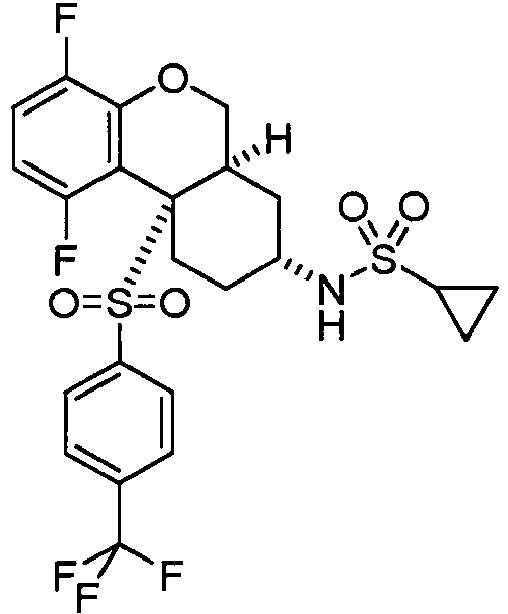
(MH+) 552.3; 4.36 436 
(MH+) 594.3; 4.82 -

-
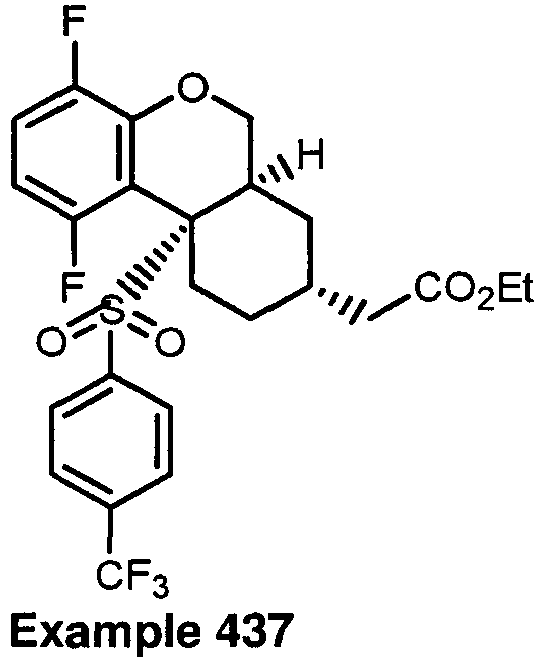
- To a 0 °C mixture of 60% NaH oil dispersion (0.12 g) in tetrahydrofuran (22 mL) was added triethyl phosphonoacetate (0.58 mL). After being stirred for 0.5 h at 0 °C, 1,4-difluoro-10a-(4-trifluoromethyl-benzenesulfonyl)-6a,9,10,10a-tetrahydro-6H,7H-benzo[c]chromen-8-one (1.0 g, 2.24 mmol) was added to the resulting clear and colorless solution. After 0.5 h, saturated aqueous NH4Cl was added to the reaction solution. This mixture was then extracted with ethyl acetate (3x). The combined organic layers were dried over Na2SO4, filtered. and absorbed onto silica gel (5 g). This absorbed crude material was purified by silica gel chromatography with ethyl acetate/hexanes (0/100 to 30/70 over 30 min) to afford 0.89 g of a white foam.
- A portion of this white foam (0.62 g) was dissolved in tetrahydrofuran (22 mL). This solution was cooled to -78 °C, and then 1.0 M L-Selectride in tetrahydrofuran (1.8 mL) was added. The cooling bath was then kept between -55 °C and -25 °C for 4.5 h. After this 4.5 h period, brine(1.8 mL), aqueous 1 M NaOH (1.8 mL), and then aqueous 30% H2O2 (0.7 mL) were added to the reaction. After being stirred another 0.5 h, aqueous 25% Na2SO3 (6 mL) was added. This mixture was extracted with ethyl acetate (3x). The combined organic layers were dried over Na2SO4, filtered. and absorbed onto silica gel (5 g). This absorbed crude material was purified by silica gel chromatography with ethyl acetate/hexanes (0/100 to 40/60 over 40 min) to afford Example 437 (0.236 g) as a white foam.
- Example 437: LCMS: (M+1) = 519.3, retention time = 5.11 min.
-

- A mixture of ethyl 2-((6a,8,10a)-1,4-difluoro-10a-(4-(trifluoromethyl)phenylsulfonyl)-6a,7,8,9,10,10a-hexahydro-6H-benzo[c]chromen-8-yl)acetate (Example 437, 0.23 g), lithium hydroxide (93 mg), water (3 mL), and tetrahydrofuran (9 mL) was placed in a 65 °C oil bath. After being stirred for 2.5 h at 65 °C, the reaction mixture was diluted with water and acidified to pH 1-2. This mixture was then extracted with ethyl acetate (3x). The combined organic layers were dried over Na2SO4, filtered. and concentrated to afford Example 438 (0.202 g, 94%) as a white solid.
- Example 438: LCMS: (M+1) = 491.3, retention time = 4.30 min.
-

- To a room temperature mixture of EDCI (39 mg) in THF was added a 2 M solution of ethylamine in tetrahydrofuran (0.1 mL), followed by HOBT (28 mg). To this resulting mixture was added a solution of 2-((6a,8,10a)-1,4-Difluoro-10a-(4-(trifluoromethyl)phenylsulfonyl)-6a,7,8,9,10,10a-hexahydro-6H-benzo[c]chromen-8-yl)acetic acid (Example 438, 67 mg) in THF (3 mL). After being stirred for 16 h at room temperature, the reaction mixture was absorbed onto silica gel and purified by silica gel chromatography with ethyl acetate/hexanes (45/65 to 100/0 over 20 min) to afford Example 439 (66.5 mg, 94%) as a clear and colorless oil.
- Example 439: LCMS: (M+1) = 518.3, retention time = 4.29 min.
- Following procedures similar to those described for Example 439, the compounds in Table 92 were prepared.
Table 92 Ex. No. Structure LCMS (M+1, retention time) 440 
504.3, 4.10 min. 441 
546.3, 4.85 min. 442 
572.3, 4.74 min. 443 
544.3, 4.71 min. 444 
532.3, 4.65 min. 445 
560.3, 4.45 min. 446 
534.3, 3.96 min. 447 
532.3, 4.67 min. - The pharmacological properties of the compounds of this disclosure, e.g. the compounds of the present invention, may be evaluated by a number of pharmacological assays. The exemplified pharmacological assays, which are described later, have been carried out with the compounds according to the present disclosure, as well as with salts thereof.
- Gamma-secretase activity was determined as described by Zhang et al. (Biochemistry, 40 (16), 5049 -5055, 2001), which is herein incorporated by reference. Activity is expressed either as a percent inhibition or as the concentration of compound producing 50% inhibition of enzyme activity.
- Antibodies W02, G2-10, and G2-11 were obtained from Dr. Konrad Beyreuther (University of Heidelberg, Heidelberg, Germany). W02 recognizes residues 5-8 of Aβ peptide, while G2-10 and G2-11 recognize the specific C-terminal structure of Aβ 40 and Aβ 42, respectively. Biotin-4G8 was purchased from Senetec (St. Louis, MO). All tissue culture reagents used in this work were from Life Technologies, Inc., unless otherwise specified. Pepstatin A was purchased from Roche Molecular Biochemicals; DFK167 was from Enzyme Systems Products (Livermore, CA).
- The construct SPC99-lon, which contains the first 18 residues and the C-terminal 99 amino acids of APP carrying the London mutation, has been described (Zhang, L., Song, L., and Parker, E. (1999) J. Biol. Chem. 274, 8966-8972). Upon insertion into the membrane, the 17 amino acid signal peptide is processed, leaving an additional leucine at the N-terminus of Aβ. SPC99-lon was cloned into the pcDNA4/TO vector (Invitrogen) and transfected into 293 cells stably transfected with pcDNA6/TR, which is provided in the T-REx system (Invitrogen). The transfected cells were selected in Dulbecco's modified Eagle's media (DMEM) supplemented with 10% fetal bovine serum, 100 units/mL penicillin, 100 g/mL streptomycin, 250 g/mL zeocin, and 5 g/mL blasticidin (Invitrogen). Colonies were screened for Aβ production by inducing C99 expression with 0.1 g/mL tetracycline for 16-20 h and analyzing conditioned media with a sandwich immunoassay (see below). One of the clones, designated as pTRE.15, was used in these studies.
- C99 expression in cells was induced with 0.1 g/mL tetracycline for 20 h. The cells were pretreated with 1 M phorbol 12-myristate 13-acetate (PMA) and 1 M brefeldin A (BFA) for 5-6 h at 37 C before harvesting. The cells were washed 3 times with cold phosphate-buffered saline (PBS) and harvested in buffer A containing 20 mM Hepes (pH 7.5), 250 mM sucrose, 50 mM KCl, 2 mM EDTA, 2 mM EGTA, and Complete protease inhibitor tablets (Roche Molecular Biochemicals). The cell pellets were flash-frozen in liquid nitrogen and stored at -70°C before use.
- To make membranes, the cells were resuspended in buffer A and lysed in a nitrogen bomb at 600 psi. The cell lysate was centrifuged at 1500 g for 10 min to remove nuclei and large cell debris. The supernatant was centrifuged at 100000g for 1 h. The membrane pellet was resuspended in buffer A plus 0.5 M NaCl, and the membranes were collected by centrifugation at 200000 g for 1 h. The salt-washed membrane pellet was washed again in buffer A and centrifuged at 100000g for 1 h. The final membrane pellet was resuspended in a small volume of buffer A using a Teflon-glass homogenizer. The protein concentration was determined, and membrane aliquots were flash-frozen in liquid nitrogen and stored at -70°C.
- To measure γ-secretase activity, membranes were incubated at 37°C for 1 h in 50 µL of buffer containing 20 mM Hepes (pH 7.0) and 2 mM EDTA. At the end of the incubation, Aβ 40 and Aβ 42 were measured using an electrochemiluminescence (ECL)-based immunoassay. Aβ 40 was identified with antibody pairs TAG-G2-10 and biotin-W02, while Aβ 42 was identified with TAG-G2-11 and biotin-4G8. The ECL signal was measured using an ECL-M8 instrument (IGEN International, Inc.) according to the manufacturer's instructions. The data presented were the means of the duplicate or triplicate measurements in each experiment. The characteristics of γ-secretase activity described were confirmed using more than five independent membrane preparations.
- The compounds of Examples 1-A, 1-B, 1-C, 1-D, 1-E, 1-I, 1-P, 1-Q, 1-U, 3G, 5-B, 7-A, 7-B, 8-A, 8-I, 8-L, 8-M, 8-P, 8-U, 8-Y, 8-Z, 9-B, and 11-C had an IC50 higher than about 10 µM.
- All other compounds from the other Examples had an IC50 within the range of about 10 nM to about 10 µM.
- The compounds of Examples 1, 2, 1-J, 1-K, 1-O, 1-R, 1-S, 1-T, 3, 4, 3-A, 3-B, 3-C, 3-E, 3-F, 3-H, 5, 6, 6-A, 7, 7-C, 7-E, 8, 8-B, 8-D, 8-J, 8-K, 8-O, 8-T, 8-V, 8-W, 10, 10-A, 10-B, 10-C, 10-D, 11, 11-B, 12, 13, 13A, 15, 15A, 16, 17, 18A, 18B, 19A, 20A-20L,21-23, 24A-C, 25A, 25B, 26, 27A, 27B, and 28 had an IC50 within the range of about 10 nM to about 3000 nM.
- The compounds in Table 93 had a membrane IC50 in the range of 1 nM to 100 nM.
Table 93 Structure Structure 


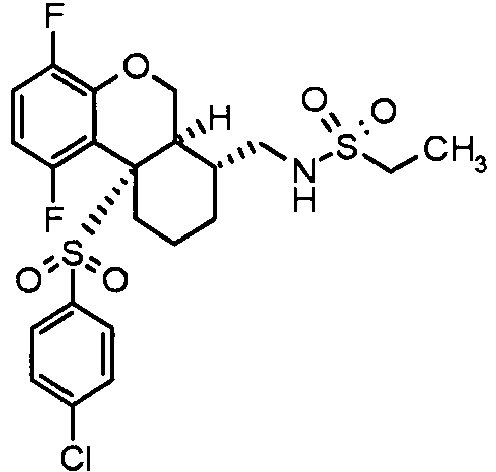


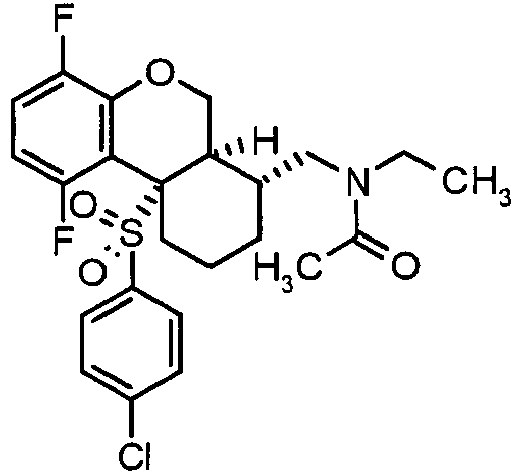


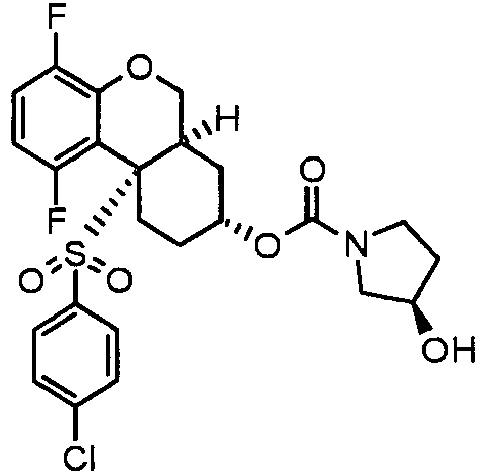


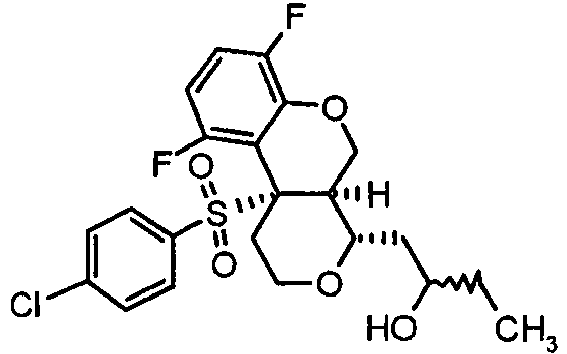


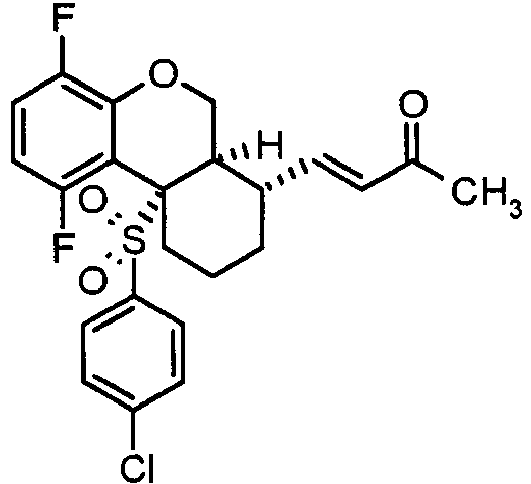


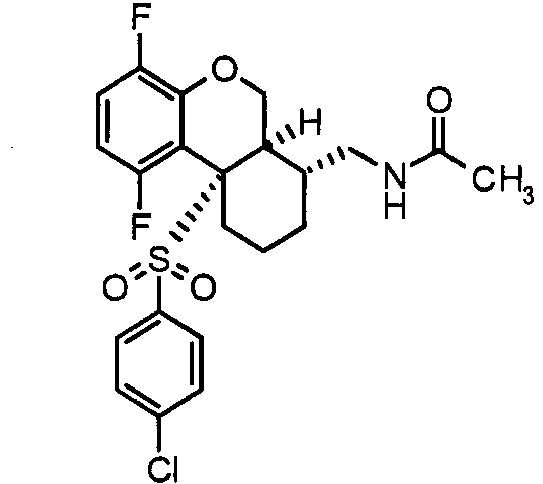


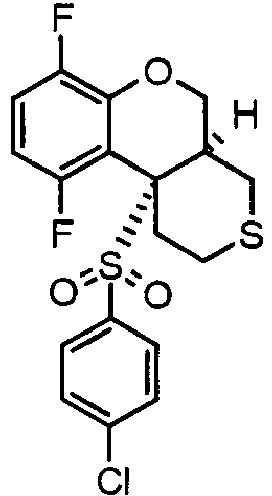


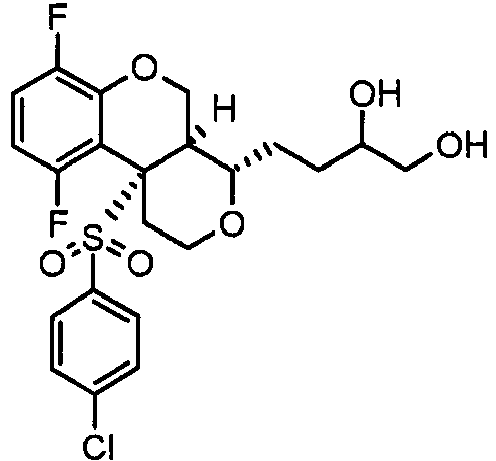


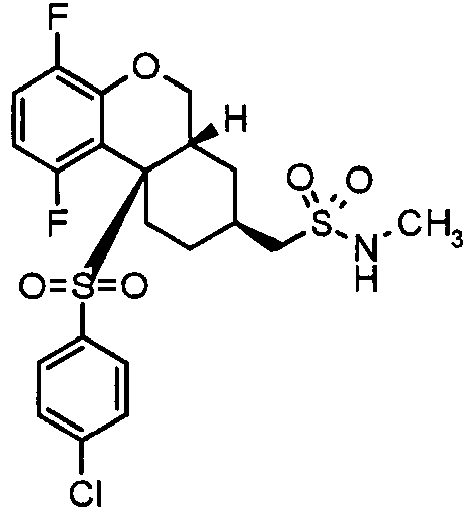


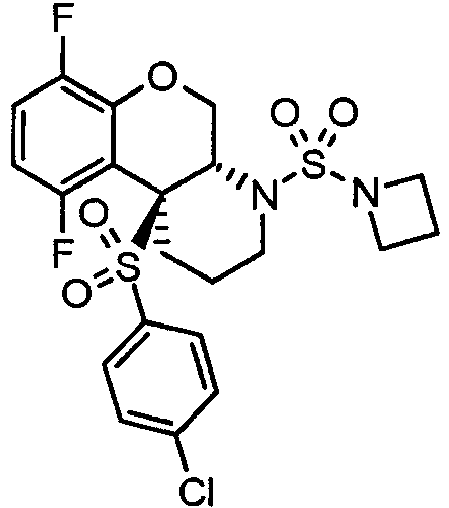


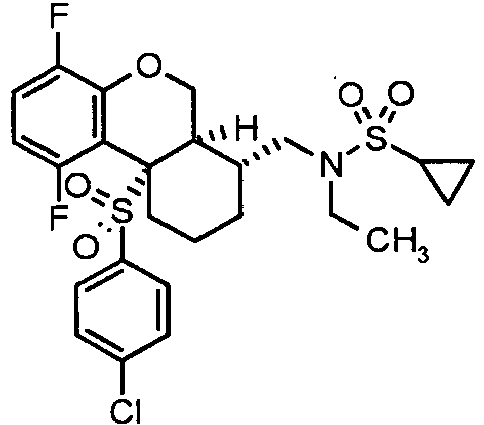


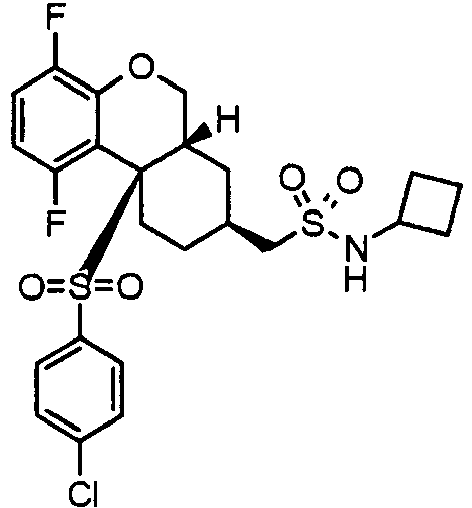


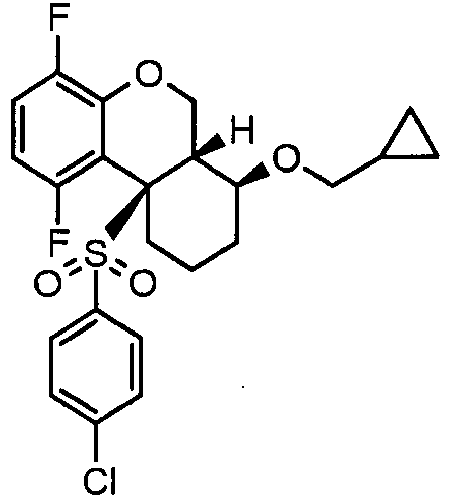


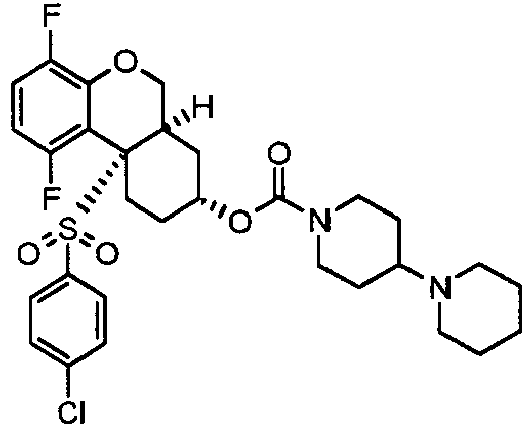


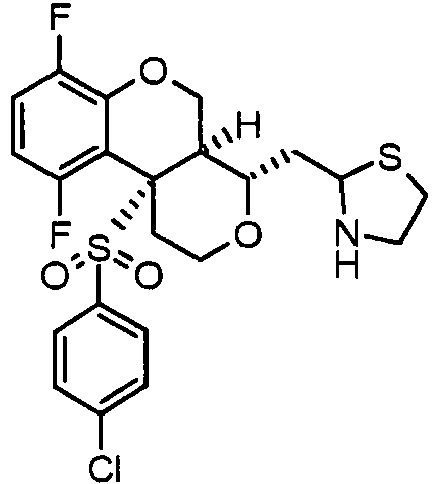


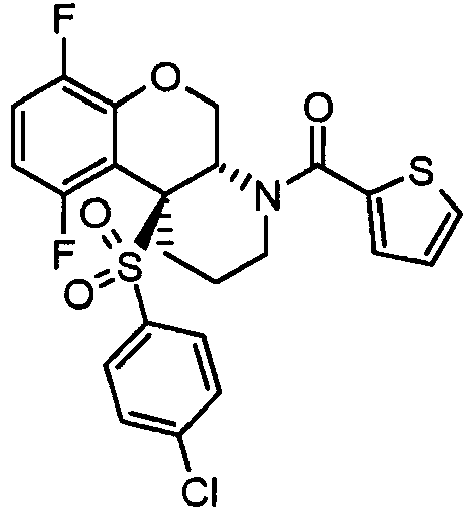


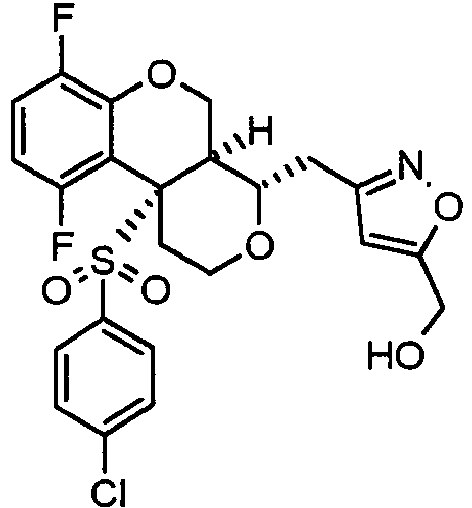


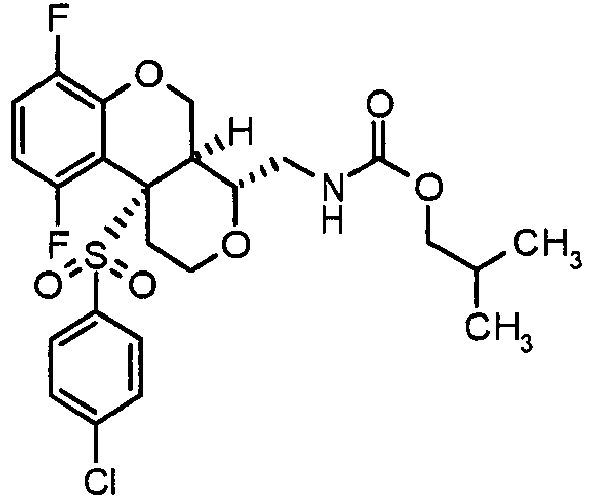


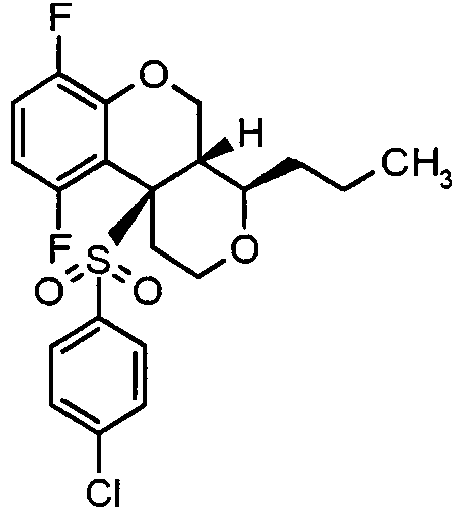


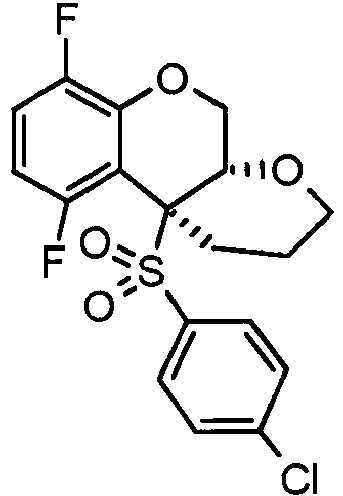


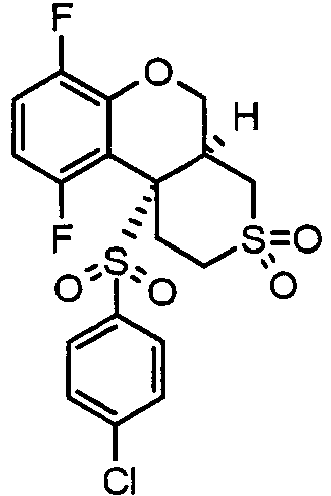


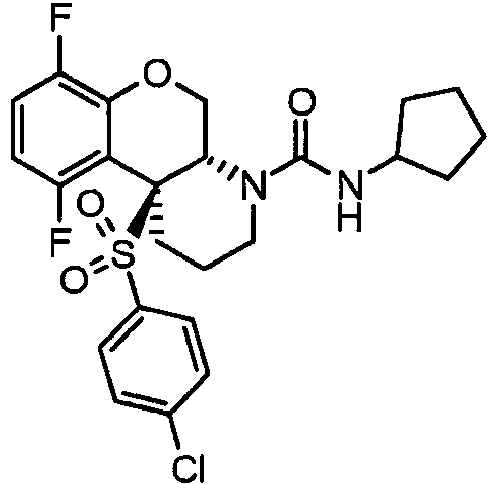
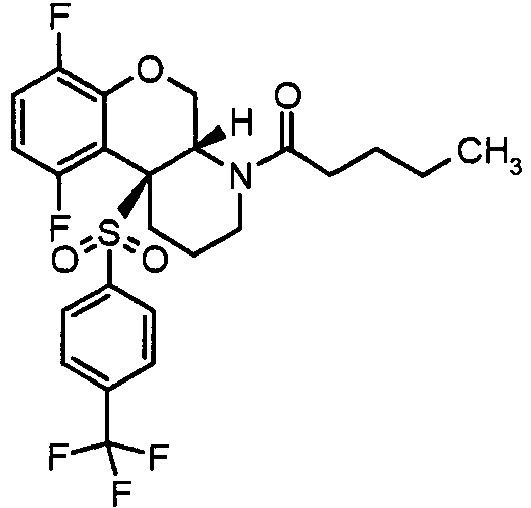


- The IC50 data for the compounds of Examples 20A, 141, 144, 180, 202, 208, 292, 379, 338, and 442, are given in Table 94.
Table 94 Example Structure IC50 (nM) 144 
1 202 
7 379 
8 338 
10 141 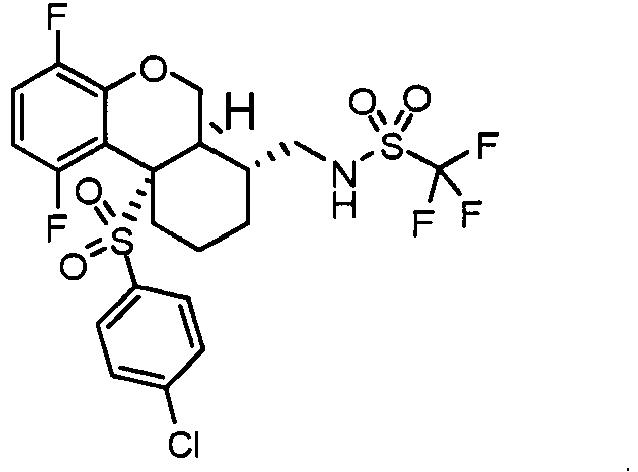
14 208 
15 442 
25 20A (377) 
27 292 
29 180 
54
Claims (73)
- A compound of the formula:

wherein:Q is a fused ring selected from the group consisting of: unsubstituted (C3-C10)cycloalkyl, (C3-C10)cycloalkyl substituted with one or more independently selected L3 groups, unsubstituted (C3-C10)heterocycloalkyl, and (C3-C10)heterocycloalkyl substituted with one or more independently selected L3 groups;X is -O-;R4 is H;each R5 is independently selected from the group consisting of: (1) H, (2) (C1-C6)alkyl, (3) hydroxyl substituted alkyl, (4) R6, (5) R7, (6) -C(O)-(C1-C6)alkyl, (7) -C(O)-(C1-C6)haloalkyl, (8) -C(O)-R6, (9) -C(O)-R7, (10) -C(O)NH-(C1-C6)alkyl, (11) -C(O)N((C1-C6)alkyl)2 wherein each alkyl group is independently selected, (12) -S(O)2-(C1-C6)alkyl, (13) -S(O)2-(C1-C6)haloalkyl, (14) -S(O)2-R6, (15) -S(O)2-R7, (16) -S(O)2-R8, (17) -alkylene-C(O)-(C1-C6)alkyl, (18) -alkylene-C(O)-(C1-C6)haloalkyl, (19) -alkylene-C(O)-R6, (20) -alkylene-C(O)-R7, (21) -alkyleneS(O)2-(C1-C6)alkyl, (22) -alkylene-S(O)2-(C1-C6)haloalkyl, (23) -alkylene-S(O)2-R6, (24) -alkylene-S(O)2-R7, (25) -alkylene-S(O)2-R8, (26) -alkylene-NHC(O)-(C1-C6)alkyl, (27) -alkylene-NHC(O)-(C1-C6)haloalkyl, (28) -alkylene-NHC(O)-R6, (29) -alkylene-NHC(O)-R7, (30) -alkylene-NHS(O)2-(C1-C6)alkyl, (31) -alkylene-NHS(O)2-(C1-C6)haloalkyl, (32) -alkylene-NHS(O)2-R6, (33) -alkylene-NHS(O)2-R7, (34) -alkylene-N(alkyl)C(O)-(C1-C6)alkyl, (35) -alkylene-N(alkyl)C(O)-(C1-C6)haloalkyl, (36) -alkylene-N(alkyl)C(O)-R6, (37) -alkylene-N(alkyl)C(O)-R7, (38) -alkylene-N(alkyl)S(O)2-(C1-C6)alkyl, (39) -alkylene-N(alkyl)S(O)2-(C1-C6)haloalkyl, (40)-alkylene-N(alkyl)S(O)2-R6, (41) -alkylene-N(alkyl)S(O)2-R7, (42) -alkylene-C(O)-NH-(C1-C6)alkyl, (43) -alkylene-C(O)-NHR6, (44) -alkylene-C(O)-NHR7, (45) -alkylene-S(O)2NH-(C1-C6)alkyl, (46) -alkylene-S(O)2NH-R6, (47) -alkylene-S(O)2NH-R7, (48) -alkylene-C(O)-N((C1-C6)alkyl)2 wherein each alkyl group is independently selected, (49) -alkylene-C(O)-N(alkyl)R6, (50) -alkylene-C(O)-N(alkyl)R7, (51) -alkylene-S(O)2N((C1-C6)alkyl)2 wherein each alkyl group is independently selected, (52) -alkylene-S(O)2N(alkyl)-R6, (53) -alkyleneS(O)2N(alkyl)-R7, (54) -alkylene-OH, (55) -alkylene-OC(O)-NH-alkyl, (56) -alkylene-OC(O)NH-R8, (57) -alkylene-CN, (58) -R8, (59) -alkylene-SH, (60) -alkylene-S(O)2-NH-R8, (61) -alkylene-S(O)2-alkylene-R6, (62) halo substituted alkylene, (63) -C(O)OR8, (64) -C(O)O(C1-C6)alkyl, (65) -C(O)R8, (66) -C(O)-alkylene-O-(C1-C6)alkyl, (67) -C(O)NH2, (68) -alkylene-O-(C1-C6)alkyl, (69) -alkylene-R8, (70) -S(O)2-halo(C1-C6)alkyl, (71) hydroxy substituted halo(C1-C6)alkyl, (72) -alkylene-NH2, (73) -alkylene-NH-S(O)2-R8, (74) -alkylene-NH-C(O)-R8, (75) -alkylene-NH-C(O)O-(C1-C6)alkyl, (76) -alkylene-O-C(O)-(C1-C6)alkyl, (77) -alkylene-O-S(O)2-(C1-C6)alkyl, (78) -alkylene-R6, (79) -alkylene-R7, (80) -alkylene-NH-C(O)-NH-(C1-C6)alkyl, (81) -alkylene-N(S(O)2halo(C1-C6)alkyl)2 wherein each -S(O)2halo(C1-C6)alkyl moiety is independently selected, (82) -alkylene-N((C1-C6)alkyl)S(O)2R8, (83) -alkylene-OC(O)-N(alkyl)2 wherein each alkyl is independently selected, (84) -alkylene-NH-(C1-C6)alkyl, (85) -C(O)-alkylene-C(O)O-(C1-C6)alkyl, (86) -C(O)-C(O)-O-(C1-C6)alkyl, (87) -C(O)-alkylene-R6, (88) -C(O)-NH-R8, (89) -C(O)-NH-R6, (90) -C(O)-NH-alkylene-R6, (91) -C(O)-alkylene-NH-S(O)2-halo(C1-C6)alkyl, (92) -C(O)-alkylene-NH-C(O)-O-(C1-C6)alkyl, (93) -C(O)-alkylene-NH2, (94) -C(O)-alkylene-NH-S(O)2-R8, (95) -C(O)-alkylene-NH-S(O)2-(C1-C6)alkyl, (96) -C(O)-alkylene-NH-C(O)-(C1-C6)alkyl, (97) -C(O)-alkylene-N(S(O)2(C1-C6)alkyl)2 wherein each -S(O)2(C1-C6)alkyl moiety is independently selected, (98) -C(O)-alkylene-NH-C(O)-NH-(C1-C6)alkyl, (99) -alkylene-O-R6, (100) -alkylene-R7, (101) -C(O)OH, (102) -alkylene-N(S(O)2(C1-C6)alkyl)2, (103) -alkylene-C(O)-O-(C1-C6)alkyl, (104) haloalkyl, (105) halo, (106) -alkylene-C(O)-NH2, (107) =N-O-(C1-C6)alkyl, (108) =N-O-alkylene-R6, (109) =N-O-alkenyl, (110) =N-O-R6, (111) =N-NH-S(O)2-R6, (112) alkenyl, (113) =R8, (114) -alkylene-O-alkylene-Si((C1-C6)alkyl)3 wherein each alkyl is independently selected, (115) -alkylene-S(O)2-N(alkylene-R6)2 wherein each alkylene-R6 moiety is independently selected, (116) -alkylene-S(O)2-NH2, (117) -O-C(O)-R9, (118) -O-C(O)-(C1-C6)alkyl, (119) -S(O)2NH((C1-C6)alkyl), (120) -S(O)2N((C1-C6)alkyl)2 wherein each alkyl is independently selected, (121) -S(O)2NHR8, (122) -alkylene-C(O)OH, (123) -alkylene-C(O)NH(halo(C1-C6)alkyl), (124) -alkylene-C(O)-NH-alkylene-R8, (125) -alkylene-C(O)-NH-alkylene-OH (e.g., -CH2-C(O)-NH-CH2CH2-OH), (126) -C(O)O(haloC1-C6alkyl), (127) -C(O)OR6, (128) -C(O)OR7, (129) -alkylene-NHSO2N(alkyl)2 wherein each alkyl is independently selected, (130) -alkylene-NHSO2NHalkyl, (131) -alkylene-N(alkyl)-SO2N(alkyl)2 wherein each alkyl is independently selected, (132) -alkylene-N(alkyl)-SO2NHalkyl wherein each alkyl is independently selected, (133) -alkylene-O-SO2-alkyl, (134) -alkylene-NH-C(O)-N(alkyl)2 wherein each alkyl is independently selected, (135) -alkylene-NH-C(O)-NHalkyl, (136) -alkylene-N(alkyl)-C(O)-N-(alkyl)2 wherein each alkyl is independently selected, (137) -alkylene-N(alkyl)-C(O)-NHalkyl, (138) -CN, (139) -alkylene-P(O)(Oalkyl)2 wherein each alkyl is independently selected, (140) -alkylene-CH(OH)-P(O)(Oalkyl)2 (e.g., -alkylene-CH(OH)-P(O)(O(C1-C6)alkyl)2 wherein each alkyl is independently selected, (141) -alkylene-OC(O)N(C1-C6 alkyl)-R8, (142) -alkylene-S(O)2-N(C1-C6 alkyl)-R8, (143) -alkylene-N(C1-C6 alkyl)-S(O)2-R8, (144) -alkylene-N(C1-C6 alkyl)-C(O)-R8, (145) -alkylene-N(C1-C6 alkyl)-C(O)O-(C1-C6)alkyl wherein each alkyl is independently selected, (146) -alkylene-N(C1-C6 alkyl)-C(O)-NH-(C1-C6)alkyl wherein each alkyl is independently selected, (147) -alkylene-NH-C(O)-N(C1-C6 alkyl)2 wherein each alkyl is independently selected, (148) -alkylene-N(C1-C6 alkyl)-C(O)-N(C1-C6 alkyl)2 wherein each alkyl is independently selected, (149) -C(O)-N(C1-C6 alkyl)-R8, (150) -C(O)-N(C1-C6 alkyl)-R6, (151) -C(O)-N(C1-C6 alkyl)-alkylene-R6, (152) -C(O)-alkylene-N(C1-C6 alkyl)-S(O)2-halo(C1-C6)alkyl wherein each alkyl is independently selected, (153) -C(O)-alkylene-N(C1-C6 alkyl)-C(O)-O-(C1-C6)alkyl wherein each alkyl is independently selected, (154) -C(O)-alkylene-NH(C1-C6 alkyl), (155) -C(O)-alkylene-N(C1-C6 alkyl)2 wherein each alkyl is independently selected, (156) -C(O)-alkylene-N(C1-C6 alkyl)-S(O)2-R8, (157) -C(O)-alkylene-N(C1-C6 alkyl)-S(O)2-(C1-C6)alkyl, (158) -C(O)-alkylene-N(C1-C6 alkyl)-C(O)-(C1-C6)alkyl, (159) -C(O)-alkylene-N(C1-C6 alkyl)-C(O)-NH-(C1-C6)alkyl wherein each alkyl is independently selected, (160) -C(O)-alkylene-NH-C(O)-N((C1-C6)alkyl)2 wherein each alkyl is independently selected, (161) -C(O)-alkylene-N(C1-C6 alkyl)-C(O)-N((C1-C6)alkyl)2 wherein each alkyl is independently selected, (162) -alkylene-C(O)-NH(C1-C6 alkyl), (163) -alkylene-C(O)-N(C1-C6 alkyl)2 wherein each alkyl is independently selected, (164) =N-N(C1-C6 alkyl)-S(O)2-R6, (165) -S(O)2N(C1-C6 alkyl)R8, (166) -alkylene-C(O)N(C1-C6 alkyl)(halo(C1-C6)alkyl) wherein each alkyl group is independently selected, (167) -alkylene-C(O)N(halo(C1-C6)alkyl)2 wherein each alkyl group is independently selected, (168) -alkylene-C(O)-N(C1-C6 alkyl)-alkylene-R8, (169) -alkylene-C(O)-N(C1-C6 alkyl)-alkylene-OH, and (170) -O-C(O)-R7;R6 is selected from the group consisting of: unsubstituted (C6-C14)aryl, (C6-C14)aryl substituted with one or more L1 groups, unsubstituted (C5-C14)heteroaryl, and (C5-C14)heteroaryl substituted with one or more L1 groups;R7 is selected from the group consisting of unsubstituted heterocycloalkyl and heterocycloalkyl substituted with one or more L2 groups;R8 is selected from the group consisting of unsubstituted cycloalkyl and cycloalkyl substituted with one or more L3 groups;Ar is selected from the group consisting of: (a) unsubstituted aryl, and (b) aryl substituted with one or more L1 groups;R9 is a bridged multicyclic heterocycloalkyl ring wherein said R9 moiety is unsubstituted or said R9 moiety is substituted with one or more L2 groups;each L1 is independently selected from the group consisting of: halogen, alkyl, -CN, -CF3, -O-(C1-C6)alkyl, -O-(halo(C1-C6)alkyl), -C(O)-O-(C1-C6)alkyl, -alkylene-OH, halo(C1-C6)alkyl, hydroxyalkoxy-, and alkoxyalkoxy-;each L2 is independently selected from the group consisting of: (a) -OH, (b) alkyl, (c) alkyl substituted with one or more -OH groups, (d) halo, (e) haloalkyl, and (f) heterocycloalkyl;each L3 is independently selected from the group consisting of: -CN, =O, R5, -OR5; =N-R5 and -N(R5)2;n is 0, 1, 2 or 3; andm is 1 ; andprovided that for the substituent -OR5, the R5 moiety and the oxygen atom to which it is bound to does not form a -O-O- group; andprovided that for the substituents -OR5, =N-R5 and -NHR5, R5 is not -CH2OH, -CH2NH2, -CH2NHalkyl, -CH2NHaryl or -C(O)OH;wherein, unless otherwise stated:"alkyl" means an aliphatic hydrocarbon group, which may be straight or branched and comprising 1 to 20 carbon atoms in the chain;"alkylene" means a divalent aliphatic hydrocarbon radical derived from an alkyl group, as defined above;"aryl" means an aromatic monocyclic or multicyclic ring system comprising 6 to 14 carbon atoms;"heteroaryl" means an aromatic monocyclic or multicyclic ring system comprising 5 to 14 ring atoms, in which one or more of the ring atoms is an element other than carbon, for example nitrogen, oxygen or sulfur, alone or in combination;"cycloalkyl" means a non-aromatic mono- or multicyclic ring system comprising 3 to 10 carbon atoms;"halogen" or "halo" means fluorine, chlorine, bromine, or iodine;"heterocycloalkyl" means a non-aromatic monocyclic or multicyclic ring system comprising 3 to 10 ring atoms, in which one or more of the atoms in the ring system is an element other than carbon, for example nitrogen, oxygen or sulfur, alone or in combination;"hydroxyalkyl" means an alkyl group substituted with a hydroxyl (-OH) group in which alkyl is as previously defined;"alkoxy" means an -0-alkyl group in which the alkyl group is as previously described wherein the bond to the parent moiety is through the ether oxygen; and"aryloxy" means an -O-aryl group in which the aryl group is as previously described wherein the bond to the parent moiety is through the ether oxygen. - The compound of Claim 1 wherein each L3 is the same or different -NHRS group, and each R5 is independently selected from the group consisting of: -S(O)2-(C1-C6)alkyl, -S(O)2-(C1-C6)haloalkyl, -S(O)2R6, -S(O)2R7 and -S(O)2R8.
- The compound of Claim 1 wherein each L3 is the same or different -OR5 group, and each R5 is independently selected from the group consisting of: H, (C1-C6)alkyl, R6, R7, -C(O)-(C1-C6)alkyl, -C(O)-C1-C6)haloalkyl, -C(O)-R6, and -C(O)-R7.
- The compound of Claim 1 wherein each L3 is the same or different R5 group, and each R5 is independently selected from the group consisting of: H, (C1-C6)alkyl, R6, R7, S(O)2-(C1-C6)alkyl, -S(O)2-(C1-C6)haloalkyl, -S(O)2R6, -S(O)2R7, -S(O)2R8, -C(O)-(C1-C6)alkyl, -C(O)-(C1-C6)haloalkyl, -C(O)-R6, and -C(O)-R7.
- The compound of Claim 1 wherein Q is a fused cycloalkyl ring.
- The compound of Claim 1 wherein L1 is halogen.
- The compound of Claim 6 wherein L1 is halogen wherein each halogen is individually selected from the group consisting of: Cl and F.
- The compound of Claim 1 wherein substituent Ar is an aryl moiety substituted with one or more L1 groups.
- The compound of Claim 1 wherein substituent Ar is phenyl substituted with one or more L1 groups.
- The compound of Claim 1 wherein substituent Ar is phenyl substituted with an L1 group wherein said L1 group is halogen or haloalkyl.
- The compound of Claim 1 wherein substituent Ar is phenyl substituted with an L1 group wherein said L1 group is Cl or -CF3.
- The compound of Claim 1 wherein n is 1 or 2.
- The compound of Claim 1 wherein n is 1.
- The compound of Claim 1 wherein n is 2.
- The compound of Claim 1 wherein L1 is halogen wherein each halogen is independently selected from the group consisting of Cl and Br, and n is 2.
- The compound of Claim 1 wherein L1 is F and n is 2.
- The compound of Claim 1 wherein n is 2 and L1 is selected from the group consisting of Cl and F.
- The compound of Claim 1 wherein n is 2, L1 is selected from the group consisting of Cl and F, and Ar is phenyl substituted with Cl.
- The compound of Claim 1 wherein n is 2 and L1 is F.
- The compound of Claim 1 wherein n is 2, L1 is F, and Ar is phenyl substituted with Cl.
- The compound of Claim 1 wherein the compound of formula (IF) is a compound of formula (IF.1):

- The compound of Claim 21 wherein L1 is F and Ar is phenyl substituted with Cl.
- The compound of any one of Claims 1, 21 or 22 wherein Q is:

- The compound of any one of Claims 1, 21 or 22 wherein Q is

- The compound of any one of Claims 1, 21 or 22 wherein Q is:
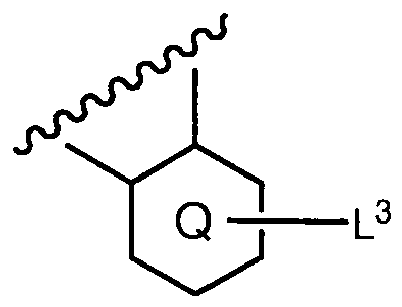
- The compound of Claim 25 wherein L3 is selected from the group consisting of: =O, -OH, -NH2, -NHSO2CF3, -NHC(O)CH3, -NHC(O)NHCH2CH3, -NHSO2CH3, -NHSO2CH2CH3, -NHSO2CH2CH2CH3, -OCH3,


- The compound of Claim 1 or 21 wherein Q is:

- The compound of Claim 1 or 21 wherein Q is:

- The compound of Claim 1 or 21 wherein Q is:
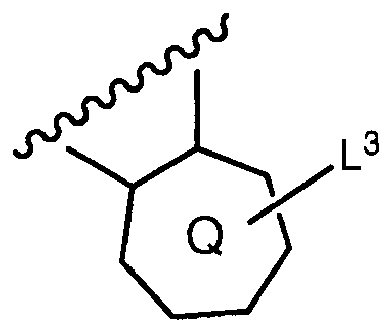
- The compound of Claim 1 or 21 wherein Q is:

- The compound of Claim 1 wherein Q is an unsubstituted heterocycloalkyl ring comprising one heteroatom selected from the group consisting of -O- and -NH-.
- The compound of Claim 1 wherein Q is a heterocycloalkyl ring substituted with one or more L3 groups, said heterocycloalkyl ring comprising at least one heteroatom selected from the group consisting of -O-, -NH- and -N(L3)-.
- The compound of Claim 1 wherein Q is:

- The compound of Claim 1 or 21 wherein Q is:

- The compound of Claim 1 or 21 wherein Q is:
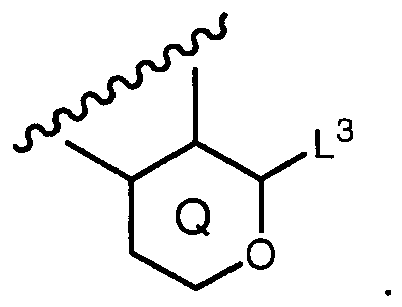
- The compound of Claim 35 wherein L3 is a C1-C6 alkyl group.
- The compound of Claim 1 or 21 wherein Q is:

- The compound of Claim 1 or 21 wherein Q is:

- The compound of Claim 1 or 21 wherein Q is:

- The compound of Claim 1 or 21 wherein Q is:

- The compound of Claim 40 wherein L3 is a -C(O)-alkyl group.
- The compound of Claim 41 wherein L3 is -C(O)CH3.
- The compound of Claim 1 or 21 wherein ring Q is:

- The compound of Claim 1 or 21 wherein ring Q is:

- The compound of Claim 1 or 21 wherein ring Q is a substituted cyclohexyl ring:

- The compound of Claim 45 wherein L3 is selected from the group consisting of: -CH2C(O)NHC2H5, -CH2C(O)NHCH3, and -CH2C(O)NHCH2CF3.
- The compound of Claim 1 or 21 wherein Q is a substituted cyclohexyl ring:

- The compound of Claim 47 wherein L3 is selected from the group consisting of: -CH2C(O)NHC2H5, -CH2C(O)NHCH3 and -CH2C(O)NHCH2CF3.
- The compound of Claim 1 or 21 wherein Q is a substituted cyclohexyl ring:

- The compound of Claim 49 wherein L3 is selected from the group consisting of: -CH2CH(OH)CH2CH3 and -CH2CH2CH(OH)CH2OH).
- The compound of Claim 1 or 21 wherein Q is a substituted cyclohexyl ring:

- The compound of Claim 51 wherein L3 is -CH2CH2SO2CH2CH3 or -CH2CH2SO2CH3.
- The compound of Claim 1 or 21 wherein Q is a substituted cyclohexyl ring:

- The compound of Claim 53 wherein L3 is -CH2CH2-C(O)-CH3.
- The compound of any one of Claims 45, 47, 49, 51, or 53 wherein the compound is a compound of Claim 21 wherein L1 is F and Ar is phenyl substituted with Cl.
- The compound of Claim 1 or 21 wherein Q is the substituted heterocycloalkyl ring:

- The compound of Claim 56 wherein L3 is selected from the group consisting of: -CH2C(O)NHC2H5, -CH2C(O)NHCH3 and -CH2C(O)NHCH2CF3.
- The compound of Claim 1 or 21 wherein Q is the substituted heterocycloalkyl ring:

- The compound of Claim 58 wherein L3 is selected from the group consisting of: -CH2NHS(O)2CH2CH3 and -CH2NHS(O)2CF3.
- The compound of Claim 1 or 21 wherein Q is the substituted heterocycloalkyl ring:

- The compound of Claim 60 wherein L3 is selected from the group consisting of: -CH2CH(OH)CH2CH3 and -CH2CH2CH(OH)CH2OH.
- The compound of Claim 1 or 21 wherein Q is the substituted heterocycloalkyl ring:

- The compound of Claim 62 wherein L3 is -CH2CH2SO2CH2CH3 or -CH2CH2SO2CH3.
- The compound of Claim 1 or 21 wherein Q is the substituted heterocycloalkyl ring:

- The compound of Claim 64 wherein L3 is -CH2CH2-C(O)-CH3.
- The compound of any one of Claims 56, 58, 60, 62, or 64 wherein the compound is a compound of Claim 21 wherein L1 is F and Ar is phenyl substituted with Cl.
- The compound of Claim 1 selected from the group consisting of:


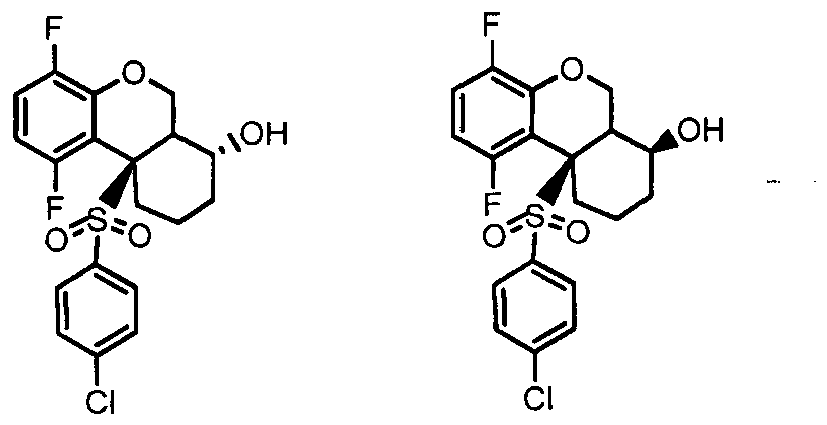


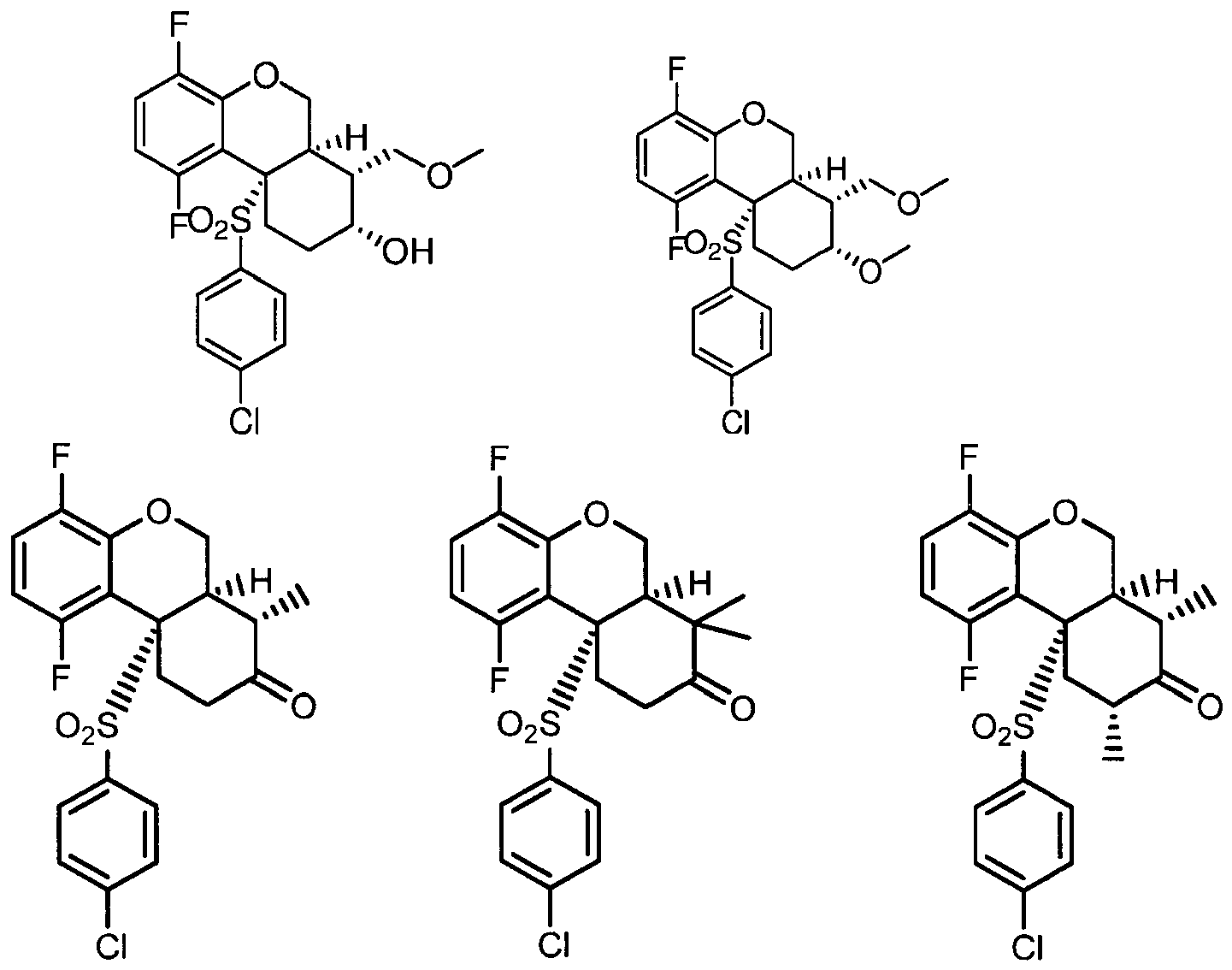


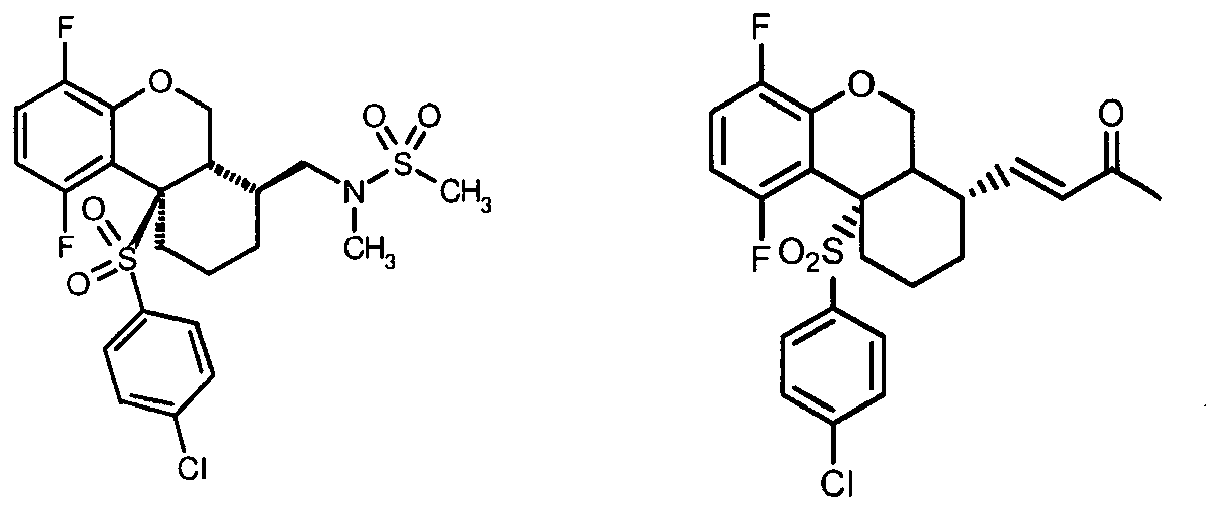
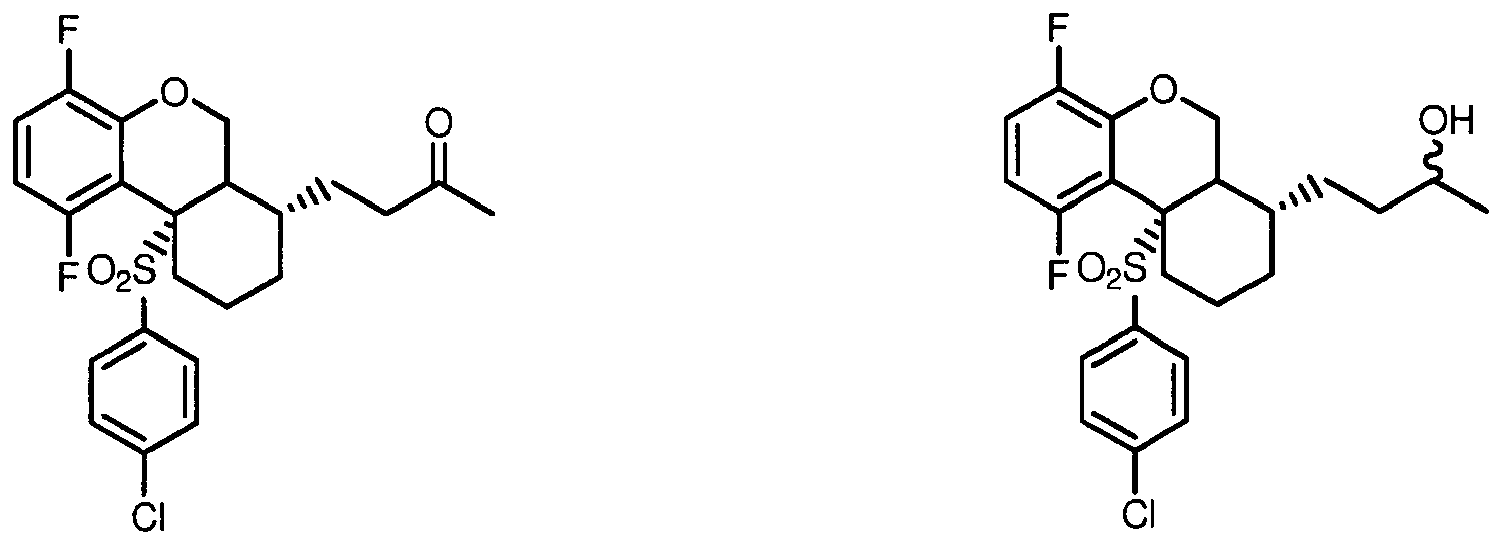


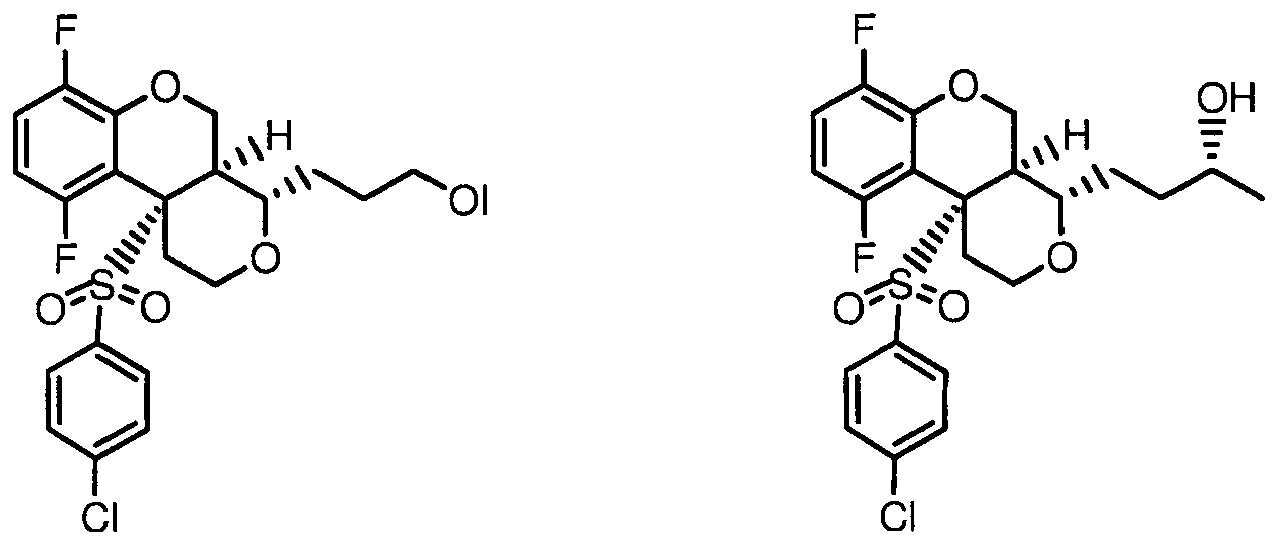


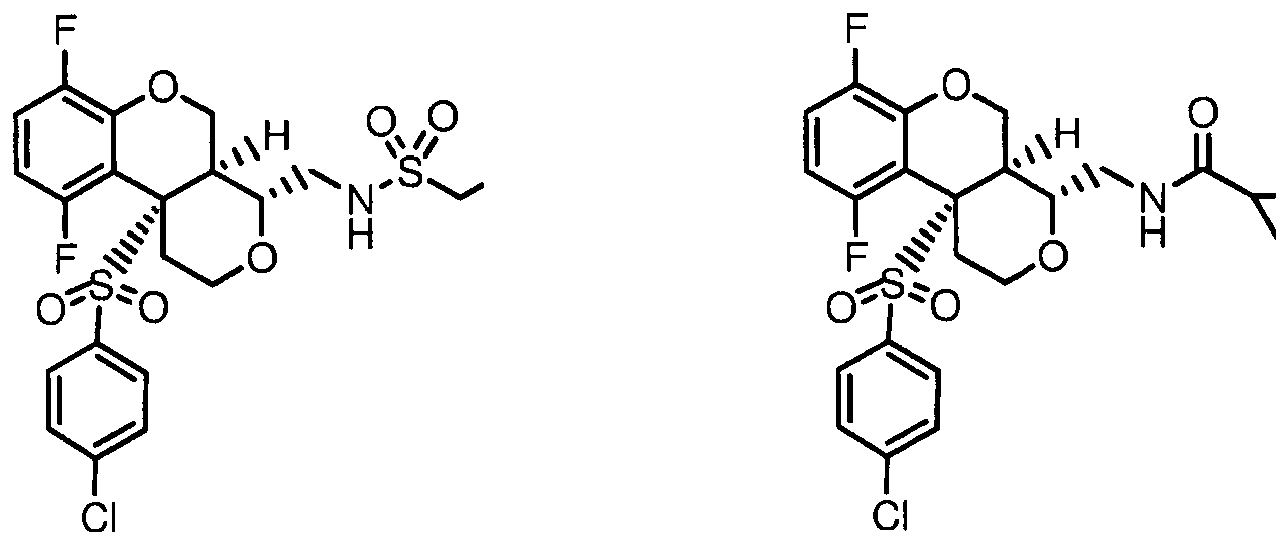


- A pharmaceutical composition comprising at least one compound of any one of Claims 1 to 67 and at least one pharmaceutically acceptable carrier.
- A compound of any one of Claims 1 to 67 for use in inhibiting gamma-secretase.
- A compound of any one of Claims 1 to 67 for use in treating one or more neurodegenerative diseases.
- A compound of any one of Claims 1 to 67 for use in inhibiting the deposition of beta amyloid protein.
- A compound of any one of Claims 1 to 67 for use in treating Alzheimer's disease.
- A compound of any one of Claims 1 to 67 for use in treating one or more neurodegenerative diseases.
Applications Claiming Priority (3)
| Application Number | Priority Date | Filing Date | Title |
|---|---|---|---|
| US76084206P | 2006-01-20 | 2006-01-20 | |
| US81487106P | 2006-06-19 | 2006-06-19 | |
| PCT/US2007/001302 WO2007084595A2 (en) | 2006-01-20 | 2007-01-18 | Carbocyclic and heterocyclic arylsulfones as gamma secretase inhibitors |
Publications (2)
| Publication Number | Publication Date |
|---|---|
| EP1976843A2 EP1976843A2 (en) | 2008-10-08 |
| EP1976843B1 true EP1976843B1 (en) | 2013-09-04 |
Family
ID=38171604
Family Applications (1)
| Application Number | Title | Priority Date | Filing Date |
|---|---|---|---|
| EP07716750.0A Active EP1976843B1 (en) | 2006-01-20 | 2007-01-18 | Carbocyclic and heterocyclic arylsulfones as gamma secretase inhibitors |
Country Status (17)
| Country | Link |
|---|---|
| US (2) | US8067621B2 (en) |
| EP (1) | EP1976843B1 (en) |
| JP (1) | JP5047992B2 (en) |
| KR (1) | KR20080095885A (en) |
| CN (1) | CN102702044A (en) |
| AR (1) | AR059075A1 (en) |
| AU (1) | AU2007207481B2 (en) |
| BR (1) | BRPI0706685A2 (en) |
| CA (1) | CA2637897A1 (en) |
| EC (1) | ECSP088638A (en) |
| IL (1) | IL192906A0 (en) |
| MX (1) | MX2008009414A (en) |
| NO (1) | NO20083598L (en) |
| PE (1) | PE20071321A1 (en) |
| RU (1) | RU2448964C2 (en) |
| TW (1) | TW200738666A (en) |
| WO (1) | WO2007084595A2 (en) |
Families Citing this family (26)
| Publication number | Priority date | Publication date | Assignee | Title |
|---|---|---|---|---|
| KR20070010144A (en) * | 2004-04-05 | 2007-01-22 | 쉐링 코포레이션 | Novel Gamma Secretase Inhibitors |
| CN101602741A (en) * | 2004-06-30 | 2009-12-16 | 先灵公司 | Substituted N-arylsulfonylheterocyclic amines as gamma-secretase inhibitors |
| MX2008009414A (en) | 2006-01-20 | 2008-10-01 | Schering Corp | Carbocyclic and heterocyclic arylsulfones as gamma secretase inhibitors. |
| CN101754960A (en) | 2007-07-05 | 2010-06-23 | 先灵公司 | Tetrahydropyranochromene gamma-secretase inhibitors |
| CA2693216A1 (en) * | 2007-07-17 | 2009-01-22 | Schering Corporation | Benzenesulfonyl-chromane, thiochromane, tetrahydronaphthalene and related gamma secretase inhibitors |
| MX2012002993A (en) | 2009-09-11 | 2012-04-19 | Probiodrug Ag | Heterocylcic derivatives as inhibitors of glutaminyl cyclase. |
| US20110190269A1 (en) * | 2010-02-01 | 2011-08-04 | Karlheinz Baumann | Gamma secretase modulators |
| WO2012131539A1 (en) * | 2011-03-31 | 2012-10-04 | Pfizer Inc. | Novel bicyclic pyridinones |
| EP2693880A1 (en) * | 2011-04-04 | 2014-02-12 | Merck Sharp & Dohme Corp. | Gamma secretase inhibitors |
| US9226927B2 (en) | 2011-09-09 | 2016-01-05 | Merck Sharp & Dohme Corp. | Gamma secretase inhibitors |
| UA110688C2 (en) | 2012-09-21 | 2016-01-25 | Пфайзер Інк. | Bicyclic pirydynony |
| EP2925313A4 (en) * | 2012-11-29 | 2016-05-11 | Merck Sharp & Dohme | SPIROCYCLIC SULFONES AS INHIBITORS OF GAMMA SECRETASE |
| KR20150131224A (en) | 2013-03-14 | 2015-11-24 | 노파르티스 아게 | 3-pyrimidin-4-yl-oxazolidin-2-ones as inhibitors of mutant idh |
| US9643947B2 (en) | 2013-08-28 | 2017-05-09 | Northwestern University | 7-membered fused heterocycles and methods of their synthesis |
| TN2017000342A1 (en) | 2015-02-03 | 2019-01-16 | Pfizer | Novel cyclopropabenzofuranyl pyridopyrazinediones |
| KR102114536B1 (en) * | 2015-05-07 | 2020-05-22 | 브리스톨-마이어스 스큅 컴퍼니 | Tricyclic sulfone as RORγ modulator |
| JP6983661B2 (en) * | 2015-12-24 | 2021-12-17 | 協和キリン株式会社 | α, β unsaturated amide compound |
| KR20190057388A (en) * | 2016-10-10 | 2019-05-28 | 브리스톨-마이어스 스큅 컴퍼니 | Tricyclicsulfone as ROR gamma modifier |
| KR102506326B1 (en) * | 2016-10-13 | 2023-03-03 | 브리스톨-마이어스 스큅 컴퍼니 | Heterocyclic sulfones as ROR gamma modifiers |
| EA201991128A1 (en) * | 2016-11-09 | 2019-10-31 | TRICYCLIC SULPHONS AS RORγ MODULATORS | |
| EP3634978A1 (en) | 2017-06-07 | 2020-04-15 | Adrx, Inc. | Tau aggregation inhibitors |
| WO2018235926A1 (en) * | 2017-06-23 | 2018-12-27 | 協和発酵キリン株式会社 | α, β-UNSATURATED AMIDE COMPOUND |
| EP3668886A2 (en) | 2017-08-18 | 2020-06-24 | Adrx, Inc. | Tau aggregation peptide inhibitors |
| PL3461819T3 (en) | 2017-09-29 | 2020-11-30 | Probiodrug Ag | Inhibitors of glutaminyl cyclase |
| WO2019222438A1 (en) * | 2018-05-17 | 2019-11-21 | Bristol-Myers Squibb Company | Tricyclic sulfone compound as a ror gamma modulator |
| CN120923391B (en) * | 2025-08-01 | 2026-04-17 | 西北大学 | Method for synthesizing alpha-substituted allyl sulfone by cobalt-catalyzed sulfonyl allene and organic boric acid reaction |
Family Cites Families (17)
| Publication number | Priority date | Publication date | Assignee | Title |
|---|---|---|---|---|
| US4826967A (en) * | 1987-06-16 | 1989-05-02 | Naxcor | Psoralen-nucleoside adducts and method for their preparation |
| FR2639349B1 (en) * | 1988-11-23 | 1991-02-22 | Sanofi Sa | NOVEL CHROMANE DERIVATIVES ACTIVE IN THE CENTRAL NERVOUS SYSTEM, THEIR PREPARATION METHOD AND THE PHARMACEUTICAL COMPOSITIONS CONTAINING THE SAME |
| CA2009664A1 (en) * | 1989-02-27 | 1990-08-27 | Philip Thiam Shin Lau | Tetrahydroquinolines and method of preparation |
| AU8854091A (en) * | 1990-10-10 | 1992-05-20 | Schering Corporation | Bis-benzo cyclohepta piperidylidene, piperidine and piperazine compounds, compositions and methods of use |
| EP0741724B1 (en) * | 1994-01-31 | 1999-08-11 | Pfizer Inc. | Neuroprotective chroman compounds |
| DE19533023B4 (en) * | 1994-10-14 | 2007-05-16 | Basf Ag | New carboxylic acid derivatives, their preparation and use |
| JP3810838B2 (en) * | 1994-12-12 | 2006-08-16 | 三共アグロ株式会社 | Herbicidal isoxazoline derivatives |
| WO1999051587A1 (en) * | 1998-04-01 | 1999-10-14 | Ono Pharmaceutical Co., Ltd. | Fused thiophene derivatives and drugs containing the same as the active ingredient |
| MXPA01008606A (en) | 1999-02-26 | 2003-05-05 | Merck & Co Inc | Novel sulfonamide compounds and uses thereof. |
| CN1304390C (en) | 2001-08-03 | 2007-03-14 | 先灵公司 | Novel gamma secretase inhibitors |
| GB0223039D0 (en) * | 2002-10-04 | 2002-11-13 | Merck Sharp & Dohme | Therapeutic compounds |
| KR20060013404A (en) * | 2003-05-16 | 2006-02-09 | 머크 샤프 앤드 돔 리미티드 | Cyclic sulfonamides for inhibiting γ-secretase |
| EP1586561A1 (en) * | 2004-04-13 | 2005-10-19 | Cephalon, Inc. | Bicyclic aromatic sulfinyl derivatives |
| CN101602741A (en) | 2004-06-30 | 2009-12-16 | 先灵公司 | Substituted N-arylsulfonylheterocyclic amines as gamma-secretase inhibitors |
| MX2008009414A (en) | 2006-01-20 | 2008-10-01 | Schering Corp | Carbocyclic and heterocyclic arylsulfones as gamma secretase inhibitors. |
| TW200813054A (en) | 2006-06-02 | 2008-03-16 | Elan Pharm Inc | Fused, tricyclic sulfonamide inhibitors of gamma secretase |
| CN101754960A (en) | 2007-07-05 | 2010-06-23 | 先灵公司 | Tetrahydropyranochromene gamma-secretase inhibitors |
-
2007
- 2007-01-18 MX MX2008009414A patent/MX2008009414A/en active IP Right Grant
- 2007-01-18 AR ARP070100225A patent/AR059075A1/en not_active Application Discontinuation
- 2007-01-18 US US11/654,821 patent/US8067621B2/en active Active
- 2007-01-18 AU AU2007207481A patent/AU2007207481B2/en not_active Ceased
- 2007-01-18 KR KR1020087020378A patent/KR20080095885A/en not_active Withdrawn
- 2007-01-18 CN CN2012101778321A patent/CN102702044A/en active Pending
- 2007-01-18 BR BRPI0706685-6A patent/BRPI0706685A2/en not_active IP Right Cessation
- 2007-01-18 RU RU2008133856/04A patent/RU2448964C2/en not_active IP Right Cessation
- 2007-01-18 JP JP2008551381A patent/JP5047992B2/en not_active Expired - Fee Related
- 2007-01-18 EP EP07716750.0A patent/EP1976843B1/en active Active
- 2007-01-18 PE PE2007000055A patent/PE20071321A1/en not_active Application Discontinuation
- 2007-01-18 CA CA002637897A patent/CA2637897A1/en not_active Abandoned
- 2007-01-18 WO PCT/US2007/001302 patent/WO2007084595A2/en not_active Ceased
- 2007-01-19 TW TW096102137A patent/TW200738666A/en unknown
-
2008
- 2008-07-17 IL IL192906A patent/IL192906A0/en unknown
- 2008-07-18 EC EC2008008638A patent/ECSP088638A/en unknown
- 2008-08-19 NO NO20083598A patent/NO20083598L/en not_active Application Discontinuation
-
2011
- 2011-10-06 US US13/267,324 patent/US8569521B2/en active Active
Also Published As
| Publication number | Publication date |
|---|---|
| NO20083598L (en) | 2008-10-20 |
| RU2448964C2 (en) | 2012-04-27 |
| JP5047992B2 (en) | 2012-10-10 |
| PE20071321A1 (en) | 2007-12-29 |
| MX2008009414A (en) | 2008-10-01 |
| US20070197581A1 (en) | 2007-08-23 |
| WO2007084595A2 (en) | 2007-07-26 |
| EP1976843A2 (en) | 2008-10-08 |
| WO2007084595A3 (en) | 2007-09-07 |
| JP2009528980A (en) | 2009-08-13 |
| KR20080095885A (en) | 2008-10-29 |
| US20120264736A1 (en) | 2012-10-18 |
| US8067621B2 (en) | 2011-11-29 |
| AU2007207481A1 (en) | 2007-07-26 |
| AU2007207481B2 (en) | 2012-08-23 |
| BRPI0706685A2 (en) | 2011-04-05 |
| US8569521B2 (en) | 2013-10-29 |
| ECSP088638A (en) | 2008-08-29 |
| IL192906A0 (en) | 2009-02-11 |
| CN102702044A (en) | 2012-10-03 |
| CA2637897A1 (en) | 2007-07-26 |
| RU2008133856A (en) | 2010-02-27 |
| AR059075A1 (en) | 2008-03-12 |
| TW200738666A (en) | 2007-10-16 |
Similar Documents
| Publication | Publication Date | Title |
|---|---|---|
| US8569521B2 (en) | Benzenesulfonyl-chromane, thiochromane, tetrahydronaphthalene and related gamma secretase inhibitors | |
| EP2435416B1 (en) | Tetrahydropyranochromene gamma secretase inhibitors | |
| EP2675812B1 (en) | Chroman - spirocyclic piperidine amides as modulators of ion channels | |
| EP2686325B1 (en) | Morpholine-spirocyclic piperidine amides as modulators of ion channels | |
| AU2020379796C1 (en) | Tricyclic dihydroimidazopyrimidone derivative, preparation method therefor, pharmaceutical composition and use thereof | |
| SG192248A1 (en) | Pyrrolopyrazine-spirocyclic piperidine amides as modulators of ion channels | |
| JP2004502693A (en) | Glucocorticoid selective anti-inflammatory agent | |
| JP7208137B2 (en) | Compounds, compositions and methods | |
| AU2008276492A2 (en) | Benzenesulfonyl-chromane, thiochromane, tetrahydronaphthalene and related gamma secretase inhibitors | |
| AU2006331676A1 (en) | Nitroimidazole compounds | |
| EP2240467B1 (en) | Amide derivatives as ion-channel ligands and pharmaceutical compositions and methods of using the same | |
| CA2471107A1 (en) | Novel heteroatom containing tetracyclic derivatives as selective estrogen receptor modulators | |
| CN101405280B (en) | Carbocyclic and heterocyclic aryl sulfone compounds as gamma secretase inhibitors | |
| UA112770C2 (en) | Partially saturated tricyclic compounds and methods for their preparation and application | |
| TW201004962A (en) | Novel phosphodiesterase inhibitors | |
| HK1226053A1 (en) | Pyrazole derivatives and uses thereof as inhibitors of dlk |
Legal Events
| Date | Code | Title | Description |
|---|---|---|---|
| PUAI | Public reference made under article 153(3) epc to a published international application that has entered the european phase |
Free format text: ORIGINAL CODE: 0009012 |
|
| 17P | Request for examination filed |
Effective date: 20080329 |
|
| AK | Designated contracting states |
Kind code of ref document: A2 Designated state(s): AT BE BG CH CY CZ DE DK EE ES FI FR GB GR HU IE IS IT LI LT LU LV MC NL PL PT RO SE SI SK TR |
|
| AX | Request for extension of the european patent |
Extension state: AL BA HR MK RS |
|
| REG | Reference to a national code |
Ref country code: HK Ref legal event code: DE Ref document number: 1122015 Country of ref document: HK |
|
| 17Q | First examination report despatched |
Effective date: 20100315 |
|
| RAP1 | Party data changed (applicant data changed or rights of an application transferred) |
Owner name: MERCK SHARP & DOHME CORP. |
|
| GRAP | Despatch of communication of intention to grant a patent |
Free format text: ORIGINAL CODE: EPIDOSNIGR1 |
|
| INTG | Intention to grant announced |
Effective date: 20130325 |
|
| GRAS | Grant fee paid |
Free format text: ORIGINAL CODE: EPIDOSNIGR3 |
|
| GRAA | (expected) grant |
Free format text: ORIGINAL CODE: 0009210 |
|
| AK | Designated contracting states |
Kind code of ref document: B1 Designated state(s): AT BE BG CH CY CZ DE DK EE ES FI FR GB GR HU IE IS IT LI LT LU LV MC NL PL PT RO SE SI SK TR |
|
| AX | Request for extension of the european patent |
Extension state: AL BA HR MK RS |
|
| REG | Reference to a national code |
Ref country code: GB Ref legal event code: FG4D |
|
| REG | Reference to a national code |
Ref country code: CH Ref legal event code: EP |
|
| REG | Reference to a national code |
Ref country code: AT Ref legal event code: REF Ref document number: 630431 Country of ref document: AT Kind code of ref document: T Effective date: 20130915 |
|
| REG | Reference to a national code |
Ref country code: IE Ref legal event code: FG4D |
|
| REG | Reference to a national code |
Ref country code: DE Ref legal event code: R096 Ref document number: 602007032651 Country of ref document: DE Effective date: 20131031 |
|
| REG | Reference to a national code |
Ref country code: AT Ref legal event code: MK05 Ref document number: 630431 Country of ref document: AT Kind code of ref document: T Effective date: 20130904 |
|
| REG | Reference to a national code |
Ref country code: NL Ref legal event code: VDEP Effective date: 20130904 |
|
| PG25 | Lapsed in a contracting state [announced via postgrant information from national office to epo] |
Ref country code: CY Free format text: LAPSE BECAUSE OF FAILURE TO SUBMIT A TRANSLATION OF THE DESCRIPTION OR TO PAY THE FEE WITHIN THE PRESCRIBED TIME-LIMIT Effective date: 20130626 Ref country code: LT Free format text: LAPSE BECAUSE OF FAILURE TO SUBMIT A TRANSLATION OF THE DESCRIPTION OR TO PAY THE FEE WITHIN THE PRESCRIBED TIME-LIMIT Effective date: 20130904 Ref country code: SE Free format text: LAPSE BECAUSE OF FAILURE TO SUBMIT A TRANSLATION OF THE DESCRIPTION OR TO PAY THE FEE WITHIN THE PRESCRIBED TIME-LIMIT Effective date: 20130904 Ref country code: AT Free format text: LAPSE BECAUSE OF FAILURE TO SUBMIT A TRANSLATION OF THE DESCRIPTION OR TO PAY THE FEE WITHIN THE PRESCRIBED TIME-LIMIT Effective date: 20130904 |
|
| REG | Reference to a national code |
Ref country code: NL Ref legal event code: VDEP Effective date: 20130904 |
|
| REG | Reference to a national code |
Ref country code: LT Ref legal event code: MG4D |
|
| PG25 | Lapsed in a contracting state [announced via postgrant information from national office to epo] |
Ref country code: LV Free format text: LAPSE BECAUSE OF FAILURE TO SUBMIT A TRANSLATION OF THE DESCRIPTION OR TO PAY THE FEE WITHIN THE PRESCRIBED TIME-LIMIT Effective date: 20130904 Ref country code: GR Free format text: LAPSE BECAUSE OF FAILURE TO SUBMIT A TRANSLATION OF THE DESCRIPTION OR TO PAY THE FEE WITHIN THE PRESCRIBED TIME-LIMIT Effective date: 20131205 Ref country code: FI Free format text: LAPSE BECAUSE OF FAILURE TO SUBMIT A TRANSLATION OF THE DESCRIPTION OR TO PAY THE FEE WITHIN THE PRESCRIBED TIME-LIMIT Effective date: 20130904 Ref country code: SI Free format text: LAPSE BECAUSE OF FAILURE TO SUBMIT A TRANSLATION OF THE DESCRIPTION OR TO PAY THE FEE WITHIN THE PRESCRIBED TIME-LIMIT Effective date: 20130904 Ref country code: PL Free format text: LAPSE BECAUSE OF FAILURE TO SUBMIT A TRANSLATION OF THE DESCRIPTION OR TO PAY THE FEE WITHIN THE PRESCRIBED TIME-LIMIT Effective date: 20130904 |
|
| PG25 | Lapsed in a contracting state [announced via postgrant information from national office to epo] |
Ref country code: CY Free format text: LAPSE BECAUSE OF FAILURE TO SUBMIT A TRANSLATION OF THE DESCRIPTION OR TO PAY THE FEE WITHIN THE PRESCRIBED TIME-LIMIT Effective date: 20130904 Ref country code: BE Free format text: LAPSE BECAUSE OF FAILURE TO SUBMIT A TRANSLATION OF THE DESCRIPTION OR TO PAY THE FEE WITHIN THE PRESCRIBED TIME-LIMIT Effective date: 20130904 |
|
| PG25 | Lapsed in a contracting state [announced via postgrant information from national office to epo] |
Ref country code: IS Free format text: LAPSE BECAUSE OF FAILURE TO SUBMIT A TRANSLATION OF THE DESCRIPTION OR TO PAY THE FEE WITHIN THE PRESCRIBED TIME-LIMIT Effective date: 20140104 Ref country code: SK Free format text: LAPSE BECAUSE OF FAILURE TO SUBMIT A TRANSLATION OF THE DESCRIPTION OR TO PAY THE FEE WITHIN THE PRESCRIBED TIME-LIMIT Effective date: 20130904 Ref country code: NL Free format text: LAPSE BECAUSE OF FAILURE TO SUBMIT A TRANSLATION OF THE DESCRIPTION OR TO PAY THE FEE WITHIN THE PRESCRIBED TIME-LIMIT Effective date: 20130904 Ref country code: CZ Free format text: LAPSE BECAUSE OF FAILURE TO SUBMIT A TRANSLATION OF THE DESCRIPTION OR TO PAY THE FEE WITHIN THE PRESCRIBED TIME-LIMIT Effective date: 20130904 Ref country code: EE Free format text: LAPSE BECAUSE OF FAILURE TO SUBMIT A TRANSLATION OF THE DESCRIPTION OR TO PAY THE FEE WITHIN THE PRESCRIBED TIME-LIMIT Effective date: 20130904 Ref country code: RO Free format text: LAPSE BECAUSE OF FAILURE TO SUBMIT A TRANSLATION OF THE DESCRIPTION OR TO PAY THE FEE WITHIN THE PRESCRIBED TIME-LIMIT Effective date: 20130904 |
|
| PG25 | Lapsed in a contracting state [announced via postgrant information from national office to epo] |
Ref country code: ES Free format text: LAPSE BECAUSE OF FAILURE TO SUBMIT A TRANSLATION OF THE DESCRIPTION OR TO PAY THE FEE WITHIN THE PRESCRIBED TIME-LIMIT Effective date: 20130904 |
|
| REG | Reference to a national code |
Ref country code: DE Ref legal event code: R097 Ref document number: 602007032651 Country of ref document: DE |
|
| PG25 | Lapsed in a contracting state [announced via postgrant information from national office to epo] |
Ref country code: PT Free format text: LAPSE BECAUSE OF FAILURE TO SUBMIT A TRANSLATION OF THE DESCRIPTION OR TO PAY THE FEE WITHIN THE PRESCRIBED TIME-LIMIT Effective date: 20140106 |
|
| PLBE | No opposition filed within time limit |
Free format text: ORIGINAL CODE: 0009261 |
|
| STAA | Information on the status of an ep patent application or granted ep patent |
Free format text: STATUS: NO OPPOSITION FILED WITHIN TIME LIMIT |
|
| 26N | No opposition filed |
Effective date: 20140605 |
|
| PG25 | Lapsed in a contracting state [announced via postgrant information from national office to epo] |
Ref country code: IT Free format text: LAPSE BECAUSE OF FAILURE TO SUBMIT A TRANSLATION OF THE DESCRIPTION OR TO PAY THE FEE WITHIN THE PRESCRIBED TIME-LIMIT Effective date: 20130904 Ref country code: MC Free format text: LAPSE BECAUSE OF FAILURE TO SUBMIT A TRANSLATION OF THE DESCRIPTION OR TO PAY THE FEE WITHIN THE PRESCRIBED TIME-LIMIT Effective date: 20130904 Ref country code: LU Free format text: LAPSE BECAUSE OF FAILURE TO SUBMIT A TRANSLATION OF THE DESCRIPTION OR TO PAY THE FEE WITHIN THE PRESCRIBED TIME-LIMIT Effective date: 20140118 |
|
| REG | Reference to a national code |
Ref country code: CH Ref legal event code: PL |
|
| REG | Reference to a national code |
Ref country code: DE Ref legal event code: R097 Ref document number: 602007032651 Country of ref document: DE Effective date: 20140605 |
|
| PG25 | Lapsed in a contracting state [announced via postgrant information from national office to epo] |
Ref country code: DK Free format text: LAPSE BECAUSE OF FAILURE TO SUBMIT A TRANSLATION OF THE DESCRIPTION OR TO PAY THE FEE WITHIN THE PRESCRIBED TIME-LIMIT Effective date: 20130904 |
|
| PG25 | Lapsed in a contracting state [announced via postgrant information from national office to epo] |
Ref country code: CH Free format text: LAPSE BECAUSE OF NON-PAYMENT OF DUE FEES Effective date: 20140131 Ref country code: LI Free format text: LAPSE BECAUSE OF NON-PAYMENT OF DUE FEES Effective date: 20140131 |
|
| REG | Reference to a national code |
Ref country code: IE Ref legal event code: MM4A |
|
| PG25 | Lapsed in a contracting state [announced via postgrant information from national office to epo] |
Ref country code: IE Free format text: LAPSE BECAUSE OF NON-PAYMENT OF DUE FEES Effective date: 20140118 |
|
| REG | Reference to a national code |
Ref country code: HK Ref legal event code: WD Ref document number: 1122015 Country of ref document: HK |
|
| REG | Reference to a national code |
Ref country code: FR Ref legal event code: PLFP Year of fee payment: 10 |
|
| PGFP | Annual fee paid to national office [announced via postgrant information from national office to epo] |
Ref country code: GB Payment date: 20151230 Year of fee payment: 10 |
|
| PGFP | Annual fee paid to national office [announced via postgrant information from national office to epo] |
Ref country code: DE Payment date: 20160127 Year of fee payment: 10 |
|
| PG25 | Lapsed in a contracting state [announced via postgrant information from national office to epo] |
Ref country code: BG Free format text: LAPSE BECAUSE OF FAILURE TO SUBMIT A TRANSLATION OF THE DESCRIPTION OR TO PAY THE FEE WITHIN THE PRESCRIBED TIME-LIMIT Effective date: 20130904 |
|
| PGFP | Annual fee paid to national office [announced via postgrant information from national office to epo] |
Ref country code: FR Payment date: 20151230 Year of fee payment: 10 |
|
| PG25 | Lapsed in a contracting state [announced via postgrant information from national office to epo] |
Ref country code: TR Free format text: LAPSE BECAUSE OF FAILURE TO SUBMIT A TRANSLATION OF THE DESCRIPTION OR TO PAY THE FEE WITHIN THE PRESCRIBED TIME-LIMIT Effective date: 20130904 Ref country code: HU Free format text: LAPSE BECAUSE OF FAILURE TO SUBMIT A TRANSLATION OF THE DESCRIPTION OR TO PAY THE FEE WITHIN THE PRESCRIBED TIME-LIMIT; INVALID AB INITIO Effective date: 20070118 |
|
| REG | Reference to a national code |
Ref country code: DE Ref legal event code: R119 Ref document number: 602007032651 Country of ref document: DE |
|
| GBPC | Gb: european patent ceased through non-payment of renewal fee |
Effective date: 20170118 |
|
| REG | Reference to a national code |
Ref country code: FR Ref legal event code: ST Effective date: 20170929 |
|
| PG25 | Lapsed in a contracting state [announced via postgrant information from national office to epo] |
Ref country code: FR Free format text: LAPSE BECAUSE OF NON-PAYMENT OF DUE FEES Effective date: 20170131 |
|
| PG25 | Lapsed in a contracting state [announced via postgrant information from national office to epo] |
Ref country code: GB Free format text: LAPSE BECAUSE OF NON-PAYMENT OF DUE FEES Effective date: 20170118 Ref country code: DE Free format text: LAPSE BECAUSE OF NON-PAYMENT OF DUE FEES Effective date: 20170801 |