EP1976321B1 - Automatisierte Kommunikationsleitungsumschaltung für Voicemail-Zugang - Google Patents
Automatisierte Kommunikationsleitungsumschaltung für Voicemail-Zugang Download PDFInfo
- Publication number
- EP1976321B1 EP1976321B1 EP07105496.9A EP07105496A EP1976321B1 EP 1976321 B1 EP1976321 B1 EP 1976321B1 EP 07105496 A EP07105496 A EP 07105496A EP 1976321 B1 EP1976321 B1 EP 1976321B1
- Authority
- EP
- European Patent Office
- Prior art keywords
- communication line
- voicemail
- voicemail server
- station apparatus
- telephone station
- Prior art date
- Legal status (The legal status is an assumption and is not a legal conclusion. Google has not performed a legal analysis and makes no representation as to the accuracy of the status listed.)
- Active
Links
Images




Classifications
-
- H—ELECTRICITY
- H04—ELECTRIC COMMUNICATION TECHNIQUE
- H04M—TELEPHONIC COMMUNICATION
- H04M3/00—Automatic or semi-automatic exchanges
- H04M3/42—Systems providing special services or facilities to subscribers
- H04M3/50—Centralised arrangements for answering calls; Centralised arrangements for recording messages for absent or busy subscribers ; Centralised arrangements for recording messages
- H04M3/53—Centralised arrangements for recording incoming messages, i.e. mailbox systems
- H04M3/533—Voice mail systems
- H04M3/53333—Message receiving aspects
-
- H—ELECTRICITY
- H04—ELECTRIC COMMUNICATION TECHNIQUE
- H04M—TELEPHONIC COMMUNICATION
- H04M1/00—Substation equipment, e.g. for use by subscribers
- H04M1/72—Mobile telephones; Cordless telephones, i.e. devices for establishing wireless links to base stations without route selection
- H04M1/724—User interfaces specially adapted for cordless or mobile telephones
-
- H—ELECTRICITY
- H04—ELECTRIC COMMUNICATION TECHNIQUE
- H04M—TELEPHONIC COMMUNICATION
- H04M3/00—Automatic or semi-automatic exchanges
- H04M3/42—Systems providing special services or facilities to subscribers
- H04M3/50—Centralised arrangements for answering calls; Centralised arrangements for recording messages for absent or busy subscribers ; Centralised arrangements for recording messages
- H04M3/53—Centralised arrangements for recording incoming messages, i.e. mailbox systems
- H04M3/533—Voice mail systems
- H04M3/53333—Message receiving aspects
- H04M3/5335—Message type or catagory, e.g. priority, indication
-
- H—ELECTRICITY
- H04—ELECTRIC COMMUNICATION TECHNIQUE
- H04M—TELEPHONIC COMMUNICATION
- H04M2250/00—Details of telephonic subscriber devices
- H04M2250/66—Details of telephonic subscriber devices user interface aspects for indicating selection options for a communication line
Definitions
- the present invention relates generally to telephone station apparatus adapted to use more than one telephone communication line and, more specifically, to the selection of a communication line to use to check voicemail messages.
- ALS Global System for Mobile Communications
- GSM Global System for Mobile Communications
- ALS allows a single mobile telephony device to support two different destination numbers. More particularly, since all GSM mobile telephony devices operate in conjunction with a Subscriber Identity Module (SIM), commonly known as a SIM card, ALS allows a single SIM card to support two different destination numbers. Separation of work-related and personal telephone calls is a primary application for ALS.
- SIM Subscriber Identity Module
- CDMA Code Division Multiple Access
- CDMA telephony devices may have a dual-NAM feature or a multi-NAM feature offering users the option of registering the telephony device with a local number in more than one market.
- a NAM is a Number Assignment Module, the electronic memory in the cellular phone that stores the destination number and an electronic serial number.
- a mobile telephony device that supports two, or more, different destination numbers, and, accordingly, is associated with two, or more, communication lines, can only have a single communication line active at one time. Typically, a series of key presses is all that is necessary to switch the active communication line from one communication line to the other.
- voicemail messages are stored by a central voicemail server. Often a caller is connected to the voicemail server responsive to a failure to complete a connection to a mobile telephony device, where the user of the mobile telephony device subscribes to a voicemail messaging service. Under typical (single communication line) circumstances, once a voicemail message has been stored at the voicemail server, the voicemail server sends an indication of the waiting voicemail message to the mobile telephony device. The mobile telephony device may, responsive to receiving such an indication, signal to the user that the voicemail server has at least one voicemail message waiting. For instance, the signal may be a persistent icon on a part of a display screen of the mobile telephony device.
- the user may then use the mobile telephony device to place a call to the voicemail server and review the waiting voicemail message.
- the voicemail server uses Calling Line Identification (CLID) to associate an incoming call with a voicemail box and, once the user is authenticated, presents the waiting voicemail message to the user.
- CLID Calling Line Identification
- the user Under circumstance related to having a voicemail message to retrieve from a telephony device configured to have two, or more, communication lines, the user will first have to determine with which of the communication lines the voicemail message is associated. If the user determines that the voicemail message is associated with the active communication line, the user may simply perform standard actions necessary to contact the voicemail server and review the waiting voicemail message. However, if the user determines that the voicemail message is associated with a communication line that is not active, the user must take the steps to make the communication line active before performing standard actions necessary to contact the voicemail server and review the waiting voicemail message. Upon completion of the call to the voicemail server, the user is required to take the manual steps necessary to switch back the originally active communication line, assuming that the originally active communication line is the preferred line at the time.
- a telephony device that is configured to have two, or more, communication lines may receive an indication that a voicemail message is waiting at a voice mail server and with which of the communication lines the message is associated. Where the communication line with which the message is associated is not the active communication line, and responsive to receiving an instruction to access the voicemail server, the telephony device automatically switches from the active communication line to the communication line with which the message is associated and initiates a call to the voicemail server.
- the user need not manually switch the active communication line to access the voicemail server. Further advantageously, the user need not know which communication line to use to access the voicemail server.
- a method of providing a user interface on a telephone station apparatus the user interface facilitating selection, by a user, of an active communication line for calling a voicemail server, the telephone station apparatus providing access to a first communication line and a second communication line having voicemail message storage associated therewith at the voicemail server.
- the method includes receiving an input from the user, the input including an instruction to access the voicemail server, determining that the first communication line is the active communication line, switching, responsive to the determining, from the first communication line to the second communication line, and initiating a call, on the second communication line, to the voicemail server.
- a telephone station apparatus is provided for carrying out this method and a computer readable medium is provided for containing instructions to allow a processor to carry out this method.
- FIG. 1 illustrates elements of an examplary network environment for a mobile telephone station apparatus and a traditional land-line telephone station apparatus, each of which may be configured to have two, or more, communication lines;
- FIG. 2 schematically illustrates the mobile telephone station apparatus of FIG. 1 according to an examplary embodiment of the invention
- FIG. 3 illustrates steps of an examplary method of placing a call on a second communication line, according to an examplary embodiment of the invention
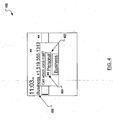
- FIG. 4 illustrates a first dialog box, presented to a user according to an examplary embodiment of the invention
- FIG. 5 illustrates a second dialog box, presented to a user according to an examplary embodiment of the invention
- FIG. 6 illustrates a third dialog box, presented to a user according to an examplary embodiment of the invention.
- FIG. 7 illustrates steps of an examplary method of handling the end of a call to a voicemail server, according to an examplary embodiment of the invention.
- FIG. 1 illustrates elements of an examplary network environment 100 for the operation of a mobile telephone station apparatus 101.
- the elements of the examplary network environment 100 include a wireless carrier network 116 and a telephony and data communication network 108.
- the telephony and data communication network 108 may be considered to represent at least one wide area network, such as the present day Internet and successor networks, as well as, potentially, multiple local area networks and a public switched telephone network (PSTN).
- PSTN public switched telephone network
- the wireless carrier network 116 includes a base station subsystem 104 and a wireless network subsystem 106.
- a base station antenna 102 with which the mobile telephone station apparatus 101 may communicate wirelessly, is provided as part of the base station subsystem 104.
- the base station subsystem 104 connects to a wireless network subsystem 106.
- the wireless network subsystem 106 which may include, in part, a Mobile-services Switching Center (MSC), is connected to the telephony and data communication network 108.
- MSC Mobile-services Switching Center
- a voicemail server 110 for performing voicemail services, such as receiving, storing, and providing voicemail messages.
- a central office 112 allows a traditional land-line telephone station apparatus 114 to connect to and utilize the telephony and data communication network 108. Additionally, the land-line telephone station apparatus 114 can connect to the voicemail server 110. The land-line telephone station apparatus 114 can access the data communication network 108 or voicemail server 110 by an input device such as a keypad (not shown).
- FIG. 2 illustrates the mobile telephone station apparatus 101 including a housing, an input device (such as a keyboard 224 or a navigation tool (not shown)), and an output device (a display 226), which is preferably a full graphic or full color Liquid Crystal Display (LCD). Other types of output devices may alternatively be utilized.
- a processing device (a microprocessor 228) is shown schematically in FIG. 2 as coupled between the keyboard 224 and the display 226. The microprocessor 228 controls the operation of the display 226, as well as the overall operation of the mobile telephone station apparatus 101, in response to actuation of keys on the keyboard 224 by a user.
- the housing may be elongated vertically, or may take on other sizes and shapes (including clamshell housing structures).
- the keyboard may include a mode selection key, or other hardware or software, for switching between text entry and telephony entry.
- FIG. 2 In addition to the microprocessor 228, other parts of the mobile telephone station apparatus 101 are shown schematically in FIG. 2 . These include: a communication subsystem 202; a short-range communication subsystem 204; the keyboard 224 and the display 226, along with other input/output devices including a set of auxiliary input/output devices 206, a serial port 208, a speaker 211 and a microphone 212; as well as memory devices including a flash memory 216 and a Random Access Memory (RAM) 218; and various other device subsystems 220.
- the mobile telephone station apparatus 101 may have a battery 222 to power the active elements of the mobile telephone station apparatus 101.
- the mobile telephone station apparatus 101 is preferably a two-way radio frequency (RF) communication device having voice and data communication capabilities.
- the mobile telephone station apparatus 101 preferably has the capability to communicate with other computer systems via the Internet.
- RF radio frequency
- Operating system software executed by the microprocessor 228 is preferably stored in a computer readable medium, such as the flash memory 216, but may be stored in other types of memory devices, such as a read only memory (ROM) or similar storage element.
- system software, specific device applications, or parts thereof may be temporarily loaded into a volatile store, such as the RAM 218. Communication signals received by the mobile device may also be stored to the RAM 218.
- a predetermined set of software applications that control basic device operations such as a voice communications module 230A and a data communications module 230B, may be installed on the mobile telephone station apparatus 101 during manufacture.
- a line switching module 230C may also be installed on the mobile telephone station apparatus 101 during manufacture, to implement aspects of the invention.
- additional software modules illustrated in FIG. 2 as other software module 230N, which may be, for instance, a personal information manager (PIM) application, may be installed during manufacture.
- the PIM application is preferably capable of organizing and managing data items, such as e-mail messages, calendar events, voice mail messages, appointments, and task items.
- the PIM application is also preferably capable of sending and receiving data items via the wireless carrier network 116.
- the data items managed by the PIM application are seamlessly integrated, synchronized and updated via the wireless carrier network 116 with the device user's corresponding data items stored or associated with a host computer system.
- the communication subsystem 202 includes a receiver 250, a transmitter 252 and one or more antennas, illustrated in FIG. 2 as a receive antenna 254 and a transmit antenna 256.
- the communication subsystem 202 also includes a processing module, such as a digital signal processor (DSP) 258, and local oscillators (LOs) 260.
- DSP digital signal processor
- LOs local oscillators
- the communication subsystem 202 of the mobile telephone station apparatus 101 may be designed to operate with the Mobitex TM , DataTAC TM or General Packet Radio Service (GPRS) mobile data communication networks and may also be designed to operate with any of a variety of voice communication networks, such as Advanced Mobile Phone Service (AMPS), Time Division Multiple Access (TDMA), CDMA, Personal Communications Service (PCS), GSM, etc. Other types of data and voice networks, both separate and integrated, may also be utilized with the mobile telephone station apparatus 101.
- AMPS Advanced Mobile Phone Service
- TDMA Time Division Multiple Access
- CDMA Code Division Multiple Access
- PCS Personal Communications Service
- GSM Global System for Mobile Communications Service
- the mobile telephone station apparatus 101 may send and receive communication signals over the wireless carrier network 116.
- Signals received from the base station antenna 102 by the receive antenna 254 are routed to the receiver 250, which provides for signal amplification, frequency down conversion, filtering, channel selection, etc., and may also provide analog to digital conversion. Analog-to-digital conversion of the received signal allows the DSP 258 to perform more complex communication functions, such as demodulation and decoding.
- signals to be transmitted to the base station antenna 102 are processed (e.g., modulated and encoded) by the DSP 258 and are then provided to the transmitter 252 for digital to analog conversion, frequency up conversion, filtering, amplification and transmission to the base station antenna 102 via the transmit antenna 256.
- the DSP 258 provides for control of the receiver 250 and the transmitter 252. For example, gains applied to communication signals in the receiver 250 and the transmitter 252 may be adaptively controlled through automatic gain control algorithms implemented in the DSP 258.
- a received signal such as an SMS message or web page download
- the communication subsystem 202 is input to the microprocessor 228.
- the received signal is then further processed by the microprocessor 228 in preparation for output to the display 226, or alternatively to some other auxiliary I/O devices 206.
- a device user may also compose data items, such as e-mail messages or SMS messages, using the keyboard 224 and/or some other auxiliary I/O device 206, such as a touchpad, a rocker switch, a thumb-wheel, or some other type of input device.
- the composed data items may then be transmitted to the base station antenna 102 via the communication subsystem 202.
- a voice communication mode In a voice communication mode, overall operation of the device is substantially similar to the data communication mode, except that received signals may be output to the speaker 211, and signals for transmission may be generated by the microphone 212.
- Alternative voice or audio I/O subsystems such as a voice message recording subsystem, may also be implemented on the mobile telephone station apparatus 101.
- the display 226 may also be utilized in voice communication mode, for example, to display the identity of a calling party, the duration of a voice call, or other voice call related information.
- the short-range communication subsystem 204 enables communication between the mobile telephone station apparatus 101 and other proximate systems or devices, which need not necessarily be similar devices.
- the short-range communication subsystem 204 may include an infrared device and associated circuits and components, or a Bluetooth TM communication module, to provide for communication with similarly-enabled systems and devices.
- the conditions for receiving a voicemail message are generally well known.
- an incoming call to a called communication line may be redirected, by the central office 112, to the voicemail server 110 when the called communication line is engaged in another call (i.e., the communication line is busy) or when the called communication line is not answered after a predetermined number of rings.
- these two conditions also apply for the mobile telephone station apparatus 101.
- an incoming call may be redirected to the voicemail server 110 when the mobile telephone station apparatus 101 to which the incoming call is destined is "out of service".
- the mobile telephone station apparatus 101 When out of service, the mobile telephone station apparatus 101 may be turned off or may be in a place that limits the ability for the mobile telephone station apparatus 101 to communicate wirelessly with the base station antenna 102. In both fixed and wireless cases, a voicemail message may be generated within the voicemail server 110 by another user of the voicemail server and then stored in a destination voicemail box on the voicemail server 110.
- the voicemail server 110 When a voicemail message is in a voicemail box and has yet to be reviewed, the voicemail server 110 will typically indicate a "voicemail message waiting" condition to the telephone station apparatus 101 or 114 associated with the voicemail box.
- the dial tone on the communication line is made to stutter.
- the telephone station apparatus 114 Upon recognition of the stuttered dial tone by a telephone station apparatus 114 connected to the communication line, the telephone station apparatus 114 generates an external indication of a voicemail message awaiting consideration by the user. Often, the external indication is a flashing light.
- the mobile telephone station apparatus 101 it is typical that only one mobile telephone station apparatus 101 is associated with a telephone communication line.
- indicating on the communication line means indicating to the mobile telephone station apparatus 101.
- such indicating is typically performed using the Short Messaging Service (SMS). That is, the voicemail server 110 sends an SMS message to the mobile telephone station apparatus 101 indicating that a new voicemail message is available for review.
- SMS Short Messaging Service
- the mobile telephone station apparatus 101 responsive to receiving such a message, can indicate, for example, by way of presenting a voicemail waiting sign on the display 226, that a new voicemail message is waiting.
- the voicemail waiting sign can be specific to the communication line for which the voicemail message has been received.
- a voicemail server 110 can indicate to a mobile telephone station apparatus 101 that a new voicemail message is waiting for the non-active communication line.
- the non-active communication line is invisible to the base stations and, accordingly, a mobile telephone station apparatus 101 with communication line 1 active will not receive notification of a new voicemail message on communication line 2.
- the mobile telephone station apparatus 101 When a mobile telephone station apparatus 101 receives an indication of a new voicemail message, the mobile telephone station apparatus 101 generally presents an indication to the user that a new voicemail message is waiting. It is typical that the indication to the user, say, through the use of an icon on a display, specifies which of the multiple communication lines with which the voicemail message notification is associated.
- a mobile telephone station apparatus 101 may be arranged to initiate a call to the voicemail sever 110 responsive to an extended press on the "1" button.
- a user of a mobile telephone station apparatus 101 may configure a "speed dial" number or a "voice dial” command to quickly initiate a call to the voicemail server 110.
- a user of a mobile telephone station apparatus 101 may actuate an input device such as a keyboard 224 (shown in FIG. 2 ), thereby causing a menu to appear as part of a user interface presented on a display 226 (shown in FIG. 2 ) of the mobile telephone station apparatus 101.
- One of the menu items on the menu may be "Call Voicemail".
- a call to the voicemail server 110 can be initiated by dialing the sequence "* 9 8" on a keypad of the land-line telephone station apparatus 114.
- whichever communication line is active at the time at which the user instructs the telephone station apparatus 101 or 114 to access the voicemail server 110 will be the communication line that is used to place a call to the voicemail server 110 associate with the communication line.
- the CLID of the incoming call to the voicemail server 110 is used by the voicemail server 110 to select a voicemail box the contents of which may be reviewed by the caller.
- a call to the voicemail server 110 will allow the user to review messages in the voicemail box associated with the active communication line. Consequently, the voicemail server will 110 not allow the user to review the new voicemail message associated with the non-active communication line.
- the user Upon determining that a new voicemail message is waiting for user consideration and is associated with the communication line that is not active, the user typically takes the steps necessary to make the other communication line active before performing actions necessary to contact the voicemail server 110 and review the waiting voicemail message. Upon completion of the call to the voicemail server 110, the user is required to take the steps necessary to switch back the originally active communication line, assuming that the originally active communication line is the preferred communication line at the time.
- a user may receive, at a telephone station apparatus 101 or 114, an indication that a new voicemail message is waiting at the voicemail server 110 for review by the user.
- the communication line with which a waiting voicemail message is associated is not the active communication line and responsive to receiving an instruction to access the voicemail server 110, the telephone station apparatus 101 or 114 automatically switches from the active communication line to the communication line with which the message is associated and initiates a call to the voicemail server 110.
- selection of the "Call Voicemail" menu item invokes presentation of a pop-up dialog box showing a graphic button associated with each of the communication lines associated with the telephone station apparatus 101 or 114.
- the user may then employ an input device (such as a keyboard 224, a navigation tool or a keypad) to select one of the graphic buttons, thereby instructing the telephone station apparatus 101 or 114 which communication line to use to access the voicemail server 110.
- an input device such as a keyboard 224, a navigation tool or a keypad
- the telephone station apparatus 101 or 114 switches, if necessary, to the selected communication line and initiates a call to the voicemail server 110.
- each communication line-associated graphic button in the dialog box may include an additional sign, where the sign signifies that a voicemail message waiting indication has been received from the voicemail server 110, which indication is associated with the communication line associated with the graphic button having the additional sign.
- the user can simply press the voicemail speed-dial button and the telephone station apparatus 101 or 114 will change the communication line automatically for the user and dial the number (with any additional tones). After the call has been completed, the telephone station apparatus 101 or 114 can optionally switch back to the original active communication line.
- FIG. 3 illustrates examplary steps in a method of placing a call, on a communication line associated with a voicemail message, to the voicemail server 110 (shown in FIG. 1 ).
- the telephone station apparatus 101 or 114 (shown in FIG. 1 ) that is to perform the examplary steps of FIG. 3 is associated with two examplary communication lines: a Business line; and a Personal line.
- the telephone station apparatus 101 or 114 has been configured so that the Personal line is active and the telephone station apparatus 101 or 114 has received at least one indication from the voicemail server 110 that a voicemail message is awaiting consideration by user.
- the method can be implemented on a telephone station apparatus 101 or 114 having multiple communication lines, with one or more communication lines having voicemail message services associated therewith.
- a user of the telephone station apparatus 101 or 114 may be prompted to call the voicemail server 110.
- the prompting may take the form of the previously discussed stuttering dial tone or an icon presented on the display 226.
- a user of the telephone station apparatus 101 or 114 manipulates a telephone station apparatus input device (such as the keyboard 224 in FIG. 2 or a keypad) to give an instruction to the telephone station apparatus 101 or 114 to place a call to the voicemail server 110.
- the user may, for instance, manipulate the input device to cause a menu to appear on the user interface on the display 226. Subsequently, the user may, through further input device manipulation, select a menu item "Call Voicemail".
- the telephone station apparatus receives the instruction (step 302) and, responsive to receiving the instruction, determines (steps 304, 308) which communication line (or communication lines) is associated with the waiting voicemail message.
- the microprocessor 228 determines (step 308) whether the waiting voicemail message is associated with the active communication line.
- a first examplary dialog 400 is illustrated in FIG. 4 .
- a default selection 402 is provided as the communication line that is associated with the waiting voicemail message.
- the waiting voicemail message is associated with the Personal line, as indicated by a voicemail waiting sign 404 associated with the graphic button 402 that represents the Personal line.
- the graphic button 402 that represents the Personal line is the default selection in the first examplary dialog 400.
- the first examplary dialog 400 illustrated in FIG. 4 , includes an active communication line indicator 406 to remind the user which of the available communication lines is active.
- the microprocessor 228 Upon receiving (step 312) a selection from user of a communication line (in the presently described examplary embodiment the Personal line) to employ to access the voicemail server 110, the microprocessor 228 determines (step 314) whether the selected communication line is the active communication line.
- the microprocessor 228 determines (step 314) that the selected communication line is the not the active communication line, the microprocessor 228 switches communication lines (step 318) such that the selected communication line becomes the active communication line. That is, the microprocessor 228 makes the selected communication line active. The microprocessor 228 then initiates (step 316) a call to the voicemail server 110.
- the incoming call is received and answered.
- the voicemail server 110 presents the incoming call with access to the voicemail box associated with the Personal line.
- the user is likely to be required to successfully complete an authentication procedure before being allowed to review the waiting voicemail message.
- the microprocessor 228 may determine (step 308) that the waiting voicemail message is associated with the active communication line.
- the microprocessor 228 arranges (step 310) the presentation of a dialog that gives the user an opportunity to select which of the two communication lines to employ to access the voicemail server 110.
- a second examplary dialog 500 is illustrated in FIG. 5 .
- a default selection 502 is provided as the communication line that is associated with the waiting voicemail message.
- the waiting voicemail message is associated with the Personal line.
- the graphic button 502 that represents the Personal line is the default selection in the second examplary dialog 500.
- the microprocessor 228 determines (step 314) whether the selected communication line is the active communication line.
- the microprocessor 228 determines (step 314) that the selected communication line is the active communication line, the microprocessor 228 need not switch to the selected communication line. That is, the microprocessor proceeds with the selected communication line active. The microprocessor then initiates (step 316) a call to the voicemail server 110.
- the incoming call is received and answered.
- the voicemail server 110 presents the incoming call with access to the voicemail box associated with the Personal line.
- the user is likely to be required to successfully complete an authentication procedure before being allowed to review the waiting voicemail message.
- the microprocessor 228 need not determine which communication line to associate with the waiting voicemail message. Rather, the microprocessor 228 arranges (step 306) the presentation of a dialog that gives the user an opportunity to select which of the two communication lines to employ to access the voicemail server 110.
- a third examplary dialog 600 is illustrated in FIG. 6 . As illustrated in FIG. 6 , a default selection 602 is the active communication line. For this example, the waiting voicemail message is associated with the both communication lines and the Personal line is active. Accordingly, the graphic button 602 that represents the Personal line is the default selection in the second examplary dialog 600.
- the microprocessor 228 determines (step 314) whether the selected communication line is the active communication line.
- the microprocessor 228 determines (step 314) that the selected communication line is the active communication line, the microprocessor 228 initiates (step 316) a call to the voicemail server 110.
- the incoming call is received and answered.
- the voicemail server 110 presents the incoming call with access to the voicemail box associated with the Personal line.
- the user is likely to be required to successfully complete an authentication procedure before being allowed to review the waiting voicemail message.
- Steps in an examplary method of handling the end of a call to the voicemail server 110 are illustrated in FIG. 7 .
- the microprocessor 228 monitors the call to determine (step 702) whether the call is complete. If it is determined that the call continues, the monitoring (step 702) also continues. If it is determined that the call is complete, the microprocessor 228 then determines (step 704) whether a switch to another communication line has occurred before the call to the voicemail server 110.
- the microprocessor 228 may, as part of step 318 wherein the microprocessor 228 performs a switch such that a selected communication line becomes the active communication line, record at least two items of information.
- the microprocessor 228 may record: (1) that a switch has been performed; and (2) an identity of the formerly active communication line.
- step 704 determines (step 704) that a switch to another communication line did not occur before the call to the voicemail server 110 (i.e., the call to the voicemail server 110 was made on the already active communication line), no switch back to a formerly active communication line is necessary. However, if the microprocessor 228 determines (step 704) that a switch to another communication line has occurred before the call to the voicemail server 110, the microprocessor 228 can use the recorded identity of the formerly active communication line and perform a switch (step 706) back to the identified communication line.
- one of the communication lines is pre-selected as a default communication line. Where only one communication line has one or more voicemail messages waiting, that communication line is pre-selected as the default communication line. Where more than one communication line has one or more voicemail messages waiting and the active communication line has one or more voicemail messages waiting, the microprocessor 228 may pre-select the active communication line as the default communication line. In alternative embodiments, where more than one communication line has one or more voicemail messages waiting, the microprocessor 228 may pre-select the communication line having more voicemail messages waiting than other available communication lines as the default communication line. Further alternatively, where more than one communication line has one or more voicemail messages waiting, the microprocessor 228 may pre-select the communication line having more recent voicemail messages waiting than other available communication lines as the default communication line.
- the mobile telephone station apparatus 101 with the Business line set to be the active communication line may receive a notification that a voicemail message is waiting at the voicemail sever 110.
- the notification may indicate that the voicemail message is associated with either the Business line or the Personal line.
- the mobile telephone station apparatus 101 with the Business line set to be the active communication line may only receive notifications that a voicemail message is waiting at the voicemail sever 110 for the Business line. Any notifications generated at the voicemail sever 110 for the Personal line will not reach the dual-NAM mobile telephone station apparatus 101 until the dual-NAM mobile telephone station apparatus 101 is switched to the Personal line.
Landscapes
- Engineering & Computer Science (AREA)
- Signal Processing (AREA)
- Human Computer Interaction (AREA)
- Computer Networks & Wireless Communication (AREA)
- Telephonic Communication Services (AREA)
- Mobile Radio Communication Systems (AREA)
Claims (14)
- Ein Verfahren zum Bereitstellen einer Benutzerschnittstelle auf einer Fernsprechvorrichtung, wobei die Benutzerschnittstelle eine Auswahl erleichtert, durch einen Benutzer, eines aktiven Kommunikationswegs zum Anrufen eines Voicemailservers, wobei die Fernsprechvorrichtung Zugang zu einem ersten Kommunikationsweg und einem zweiten Kommunikationsweg mit damit assoziierten Voicemailnachrichtenspeicher an dem Voicemailserver bereitstellt, wobei das Verfahren umfasst:Erhalten einer Eingabe, wobei die Eingabe eine Instruktion aufweist, um auf den Voicemailserver zuzugreifen; gekennzeichnet durch,in Reaktion auf das Erhalten, Vorauswählen eines der Kommunikationswege, basierend auf einer Vorauswahlbetrachtung, als ein voreingestellter Kommunikationsweg, der benutzt wird, um den Voicemailserver in der Abwesenheit einer weiteren Benutzereingabe anzurufen;Präsentieren eines Benutzerschnittstellendialogs, der eine Auswahl eines Kommunikationswegs zur Benutzung erlaubt, um den Voicemailserver anzurufen, wobei der Benutzerschnittstellendialog den voreingestellten Kommunikationsweg angibt;Erhalten einer Angabe einer Auswahl des zweiten Kommunikationswegs;Bestimmen, dass der erste Kommunikationsweg der aktive Kommunikationsweg ist;Wechseln, in Reaktion auf das Bestimmen, von dem ersten Kommunikationsweg zu dem zweiten Kommunikationsweg; undInitiieren eines Anrufs, auf dem zweiten Kommunikationsweg, an den Voicemailserver.
- Das Verfahren nach Anspruch 1, ferner umfassend ein Angeben, an den Benutzer, von Verfügbarkeit einer Voicemailnachricht, die mit dem zweiten Kommunikationsweg an dem Voicemailserver assoziiert ist.
- Das Verfahren nach Anspruch 2 ferner umfassend, vor dem Angeben:Erhalten einer Angabe von Verfügbarkeit der Voicemailnachricht an dem Voicemailserver; undDurchführen einer Analyse der Angabe, um zu bestimmen, dass die Voicemailnachricht mit dem zweiten Kommunikationsweg assoziiert ist.
- Das Verfahren nach Anspruch 2, wobei das Angeben ein Präsentieren eines Symbols auf einer Anzeige der Fernsprechvorrichtung umfasst.
- Das Verfahren nach Anspruch 4, wobei das Erhalten der Instruktion ein Erhalten einer Benutzereingabe umfasst, die repräsentativ ist für eine Auswahl des zweiten Kommunikationswegs.
- Das Verfahren nach Anspruch 4, ferner umfassend ein Bereitstellen, während präsentieren des Benutzerschnittstellendialogs, einer Angabe, dass die Voicemailnachricht mit dem zweiten Kommunikationsweg assoziiert ist.
- Das Verfahren nach Anspruch 1, wobei die Vorauswahlbetrachtung ein Identifizieren eines Kommunikationswegs umfasst, bei dem mehr Voicemailnachrichten als bei anderen verfügbaren Kommunikationswegen warten.
- Das Verfahren nach Anspruch 1, wobei die Vorauswahlbetrachtung ein Identifizieren eines Kommunikationswegs umfasst, bei dem eine Voicemailnachricht wartet, die jünger ist als Voicemailnachrichten, die auf andere verfügbare Kommunikationswege warten.
- Das Verfahren nach Anspruch 1, ferner umfassend:Aufzeichnen, dass das Wechseln zu dem zweiten Kommunikationsweg durchgeführt wurde; undAufzeichnen einer Identität des ersten Kommunikationswegs als ein ehemals aktiver Weg.
- Das Verfahren nach Anspruch 9, ferner umfassend:Bestimmen, dass der Anruf an den Voicemailserver abgeschlossen ist;Bestimmen, dass das Wechseln zu dem zweiten Kommunikationsweg vordem Initiieren stattgefunden hat;Bestimmen, dass der erste Kommunikationsweg der ehemals aktive Weg ist; undWechseln von dem zweiten Kommunikationsweg zu dem ersten Kommunikationsweg.
- Eine Fernsprechvorrichtung (101, 114), die ausgebildet ist, um eine Auswahl zu erleichtern, durch einen Benutzer, eines aktiven Kommunikationswegs zum Anrufen eines Voicemailservers (110), wobei die Fernsprechvorrichtung (101, 114) Zugang zu einem ersten Kommunikationsweg und einem zweiten Kommunikationsweg mit damit assoziierten Voicemailnachrichtenspeicher an dem Voicemailserver (110) bereitstellt, wobei die Fernsprechvorrichtung (101, 114) umfasst:eine Eingabevorrichtung (206, 224), die angepasst ist, um eine Eingabe zu erhalten, wobei die Eingabe eine Instruktion aufweist, um auf den Voicemailserver (110) zuzugreifen; gekennzeichnet durch,einen Prozessor (228), der angepasst ist zum:in Reaktion auf das Erhalten, Vorauswählen eines der Kommunikationswege, basierend auf einer Vorauswahlbetrachtung, als ein voreingestellter Kommunikationsweg, der benutzt wird, um den Voicemailserver in der Abwesenheit einer weiteren Benutzereingabe anzurufen;Präsentieren eines Benutzerschnittstellendialogs, der eine Auswahl eines Kommunikationswegs zur Benutzung erlaubt, um den Voicemailserver anzurufen, wobei der Benutzerschnittstellendialog den voreingestellten Kommunikationsweg angibt;Erhalten einer Angabe einer Auswahl des zweiten Kommunikationswegs;Bestimmen, dass der erste Kommunikationsweg der aktive Kommunikationsweg ist;Wechseln, in Reaktion auf das Bestimmen, von dem ersten Kommunikationsweg zu dem zweiten Kommunikationsweg; undInitiieren eines Anrufs, auf dem zweiten Kommunikationsweg, an den Voicemailserver (110).
- Die Fernsprechvorrichtung (101, 114) nach Anspruch 11 ferner umfassend eine Ausgabevorrichtung (226), die angepasst ist, um an den Benutzer Verfügbarkeit einer Voicemailnachricht anzugeben, die mit dem zweiten Kommunikationsweg an dem Voicemailserver (110) assoziiert ist.
- Ein computerlesbares Medium (230C), das computerausführbare Instruktionen aufweist, die, wenn von einem Prozessor (228) in einer Fernsprechvorrichtung (101, 114) durchgeführt, welche Zugang zu einem ersten Kommunikationsweg und einem zweiten Kommunikationsweg mit damit assoziierten Voicemailnachrichtenspeicher an dem Voicemailserver (110) bereitstellt, den Prozessor (228) veranlassen zum:Erhalten einer Eingabe, wobei die Eingabe eine Instruktion aufweist, um auf den Voicemailserver (110) zuzugreifen; gekennzeichnet durch, Vorauswählen, in Reaktion auf das Erhalten, eines der Kommunikationswege, basierend auf einer Vorauswahlbetrachtung, als ein voreingestellter Kommunikationsweg, der benutzt wird, um den Voicemailserver in der Abwesenheit einer weiteren Benutzereingabe anzurufen;Präsentieren eines Benutzerschnittstellendialogs, der eine Auswahl eines Kommunikationswegs zur Benutzung erlaubt, um den Voicemailserver anzurufen, wobei der Benutzerschnittstellendialog den voreingestellten Kommunikationsweg angibt;Erhalten einer Angabe einer Auswahl des zweiten Kommunikationswegs;Bestimmen, dass der erste Kommunikationsweg der aktive Kommunikationsweg ist;Wechseln, in Reaktion auf das Bestimmen, von dem ersten Kommunikationsweg zu dem zweiten Kommunikationsweg; undInitiieren eines Anrufs, auf dem zweiten Kommunikationsweg, an den Voicemailserver (110).
- Das computerlesbare Medium nach Anspruch 13, ferner umfassend Veranlassen des Prozessors (228) eines Angebens, an einen Benutzer, von Verfügbarkeit einer Voicemailnachricht, die mit dem zweiten Kommunikationsweg an dem Voicemailserver (110) assoziiert ist.
Applications Claiming Priority (1)
| Application Number | Priority Date | Filing Date | Title |
|---|---|---|---|
| US11/694,072 US8934873B2 (en) | 2007-03-30 | 2007-03-30 | Automated communication line switching for voicemail access |
Publications (2)
| Publication Number | Publication Date |
|---|---|
| EP1976321A1 EP1976321A1 (de) | 2008-10-01 |
| EP1976321B1 true EP1976321B1 (de) | 2015-06-03 |
Family
ID=39596442
Family Applications (1)
| Application Number | Title | Priority Date | Filing Date |
|---|---|---|---|
| EP07105496.9A Active EP1976321B1 (de) | 2007-03-30 | 2007-04-02 | Automatisierte Kommunikationsleitungsumschaltung für Voicemail-Zugang |
Country Status (3)
| Country | Link |
|---|---|
| US (2) | US8934873B2 (de) |
| EP (1) | EP1976321B1 (de) |
| CA (1) | CA2627797C (de) |
Cited By (1)
| Publication number | Priority date | Publication date | Assignee | Title |
|---|---|---|---|---|
| EP2648397B1 (de) * | 2012-04-05 | 2022-08-31 | BlackBerry Limited | Verfahren, System und Vorrichtung zur Verwaltung personenbasierter Benachrichtigungen auf einer Kommunikationsvorrichtung |
Families Citing this family (7)
| Publication number | Priority date | Publication date | Assignee | Title |
|---|---|---|---|---|
| US8934873B2 (en) | 2007-03-30 | 2015-01-13 | Blackberry Limited | Automated communication line switching for voicemail access |
| US8838075B2 (en) * | 2008-06-19 | 2014-09-16 | Intelligent Mechatronic Systems Inc. | Communication system with voice mail access and call by spelling functionality |
| EP2706727B1 (de) | 2012-09-11 | 2014-09-10 | BlackBerry Limited | Systeme, Vorrichtungen und Verfahren zur Genehmigung von Endpunkten eines Push-Pfads |
| KR102218693B1 (ko) * | 2014-01-02 | 2021-02-22 | 삼성전자주식회사 | 복수의 심 정보 처리 방법 및 그 전자 장치 |
| US10237410B1 (en) * | 2017-04-28 | 2019-03-19 | Pinger, Inc. | Handling declined calls for alternate phone number on mobile device |
| US11012823B1 (en) * | 2019-12-12 | 2021-05-18 | Motorola Mobility Llc | Delivering information to a non-active user of a communication device |
| US11206506B2 (en) | 2019-12-12 | 2021-12-21 | Motorola Mobility Llc | Delivering information to users in proximity to a communication device |
Family Cites Families (10)
| Publication number | Priority date | Publication date | Assignee | Title |
|---|---|---|---|---|
| FI96564C (fi) * | 1991-07-08 | 1996-07-10 | Nokia Mobile Phones Ltd | Yksityispuhelinnumero solukkopuhelinjärjestelmässä |
| US5422936A (en) * | 1992-08-28 | 1995-06-06 | Bell Atlantic Network Services, Inc. | Enhanced message service indication |
| US6707890B1 (en) * | 2002-09-03 | 2004-03-16 | Bell South Intellectual Property Corporation | Voice mail notification using instant messaging |
| GB2373137A (en) * | 2001-03-08 | 2002-09-11 | Nec Technologies | Message selector |
| US7050792B2 (en) * | 2002-12-20 | 2006-05-23 | Avaya Technology Corp. | Voice message notification and retrieval via mobile client devices in a communication system |
| US6865625B2 (en) * | 2003-04-23 | 2005-03-08 | Motorola, Inc. | Communication device with multi-line message memory access and method therefore |
| US7912497B2 (en) * | 2005-03-25 | 2011-03-22 | Isidore Eustace P | Single wireless communication device with multiple, concurrent subscriber number capability |
| US7715535B2 (en) | 2005-09-27 | 2010-05-11 | Research In Motion Limited | Method and apparatus for line selection in a communication device |
| US20070149176A1 (en) * | 2005-12-28 | 2007-06-28 | Motorola, Inc. | Method and system to communicate a voice mail indication in a loosely coupled environment |
| US8934873B2 (en) | 2007-03-30 | 2015-01-13 | Blackberry Limited | Automated communication line switching for voicemail access |
-
2007
- 2007-03-30 US US11/694,072 patent/US8934873B2/en active Active
- 2007-04-02 EP EP07105496.9A patent/EP1976321B1/de active Active
-
2008
- 2008-03-31 CA CA 2627797 patent/CA2627797C/en active Active
-
2015
- 2015-01-12 US US14/594,683 patent/US9485340B2/en active Active
Cited By (1)
| Publication number | Priority date | Publication date | Assignee | Title |
|---|---|---|---|---|
| EP2648397B1 (de) * | 2012-04-05 | 2022-08-31 | BlackBerry Limited | Verfahren, System und Vorrichtung zur Verwaltung personenbasierter Benachrichtigungen auf einer Kommunikationsvorrichtung |
Also Published As
| Publication number | Publication date |
|---|---|
| US20150126163A1 (en) | 2015-05-07 |
| US20080242270A1 (en) | 2008-10-02 |
| US8934873B2 (en) | 2015-01-13 |
| EP1976321A1 (de) | 2008-10-01 |
| CA2627797A1 (en) | 2008-09-30 |
| US9485340B2 (en) | 2016-11-01 |
| CA2627797C (en) | 2014-02-18 |
Similar Documents
| Publication | Publication Date | Title |
|---|---|---|
| US9485340B2 (en) | Automated communication line switching for voicemail access | |
| US8606307B2 (en) | Advanced user interface operations in a dual-mode wireless device | |
| US8498289B2 (en) | System, method and mobile device for remote control of a voice mail system | |
| US7860489B2 (en) | System and method for providing a user interface for managing calls received at a mobile device | |
| US20220086270A1 (en) | Automated messaging | |
| US11336764B2 (en) | Method and communication terminal apparatus for displaying function in communication | |
| EP1802086A2 (de) | Vorrichtung und Verfahren zur Bereitstellung von ein- und ausgehender Anrufinformation in einem mobilen Kommunikationsendgerät | |
| CA2625550C (en) | System and method for providing a user interface for managing calls received at a mobile device | |
| EP1976241B1 (de) | System und Verfahren zur Bereitstellung einer Benutzeroberfläche, die eine Benutzerauswahl einer Kommunikationsleitung für einen ausgehenden Ruf auf einem mobilen Endgerät ermöglicht | |
| US20070093235A1 (en) | Method and apparatus for calendar call functionality | |
| EP3886418B1 (de) | Kommunikationsverfahren und kommunikationssystem für massgeschneiderte mobile kommunikation | |
| EP1694039A1 (de) | Nachrichten und Informationssystem | |
| HK40003392A (en) | Advanced user interface operations in a dual-mode wireless device | |
| HK40003392B (en) | Advanced user interface operations in a dual-mode wireless device |
Legal Events
| Date | Code | Title | Description |
|---|---|---|---|
| PUAI | Public reference made under article 153(3) epc to a published international application that has entered the european phase |
Free format text: ORIGINAL CODE: 0009012 |
|
| 17P | Request for examination filed |
Effective date: 20070418 |
|
| AK | Designated contracting states |
Kind code of ref document: A1 Designated state(s): AT BE BG CH CY CZ DE DK EE ES FI FR GB GR HU IE IS IT LI LT LU LV MC MT NL PL PT RO SE SI SK TR |
|
| AX | Request for extension of the european patent |
Extension state: AL BA HR MK RS |
|
| AKX | Designation fees paid |
Designated state(s): AT BE BG CH CY CZ DE DK EE ES FI FR GB GR HU IE IS IT LI LT LU LV MC MT NL PL PT RO SE SI SK TR |
|
| AXX | Extension fees paid |
Extension state: MK Payment date: 20080722 Extension state: AL Payment date: 20080722 Extension state: BA Payment date: 20080722 Extension state: RS Payment date: 20080722 Extension state: HR Payment date: 20080722 |
|
| RAP1 | Party data changed (applicant data changed or rights of an application transferred) |
Owner name: BLACKBERRY LIMITED |
|
| RAP1 | Party data changed (applicant data changed or rights of an application transferred) |
Owner name: BLACKBERRY LIMITED |
|
| REG | Reference to a national code |
Ref country code: DE Ref legal event code: R079 Ref document number: 602007041633 Country of ref document: DE Free format text: PREVIOUS MAIN CLASS: H04Q0007380000 Ipc: H04M0001725000 |
|
| GRAP | Despatch of communication of intention to grant a patent |
Free format text: ORIGINAL CODE: EPIDOSNIGR1 |
|
| RIC1 | Information provided on ipc code assigned before grant |
Ipc: H04M 1/725 20060101AFI20141110BHEP Ipc: H04M 3/533 20060101ALI20141110BHEP |
|
| INTG | Intention to grant announced |
Effective date: 20141215 |
|
| GRAS | Grant fee paid |
Free format text: ORIGINAL CODE: EPIDOSNIGR3 |
|
| GRAA | (expected) grant |
Free format text: ORIGINAL CODE: 0009210 |
|
| AK | Designated contracting states |
Kind code of ref document: B1 Designated state(s): AT BE BG CH CY CZ DE DK EE ES FI FR GB GR HU IE IS IT LI LT LU LV MC MT NL PL PT RO SE SI SK TR |
|
| AX | Request for extension of the european patent |
Extension state: AL BA HR MK RS |
|
| REG | Reference to a national code |
Ref country code: GB Ref legal event code: FG4D |
|
| REG | Reference to a national code |
Ref country code: CH Ref legal event code: EP |
|
| REG | Reference to a national code |
Ref country code: AT Ref legal event code: REF Ref document number: 730422 Country of ref document: AT Kind code of ref document: T Effective date: 20150715 Ref country code: IE Ref legal event code: FG4D |
|
| REG | Reference to a national code |
Ref country code: DE Ref legal event code: R096 Ref document number: 602007041633 Country of ref document: DE |
|
| REG | Reference to a national code |
Ref country code: NL Ref legal event code: T3 |
|
| REG | Reference to a national code |
Ref country code: AT Ref legal event code: MK05 Ref document number: 730422 Country of ref document: AT Kind code of ref document: T Effective date: 20150603 |
|
| PG25 | Lapsed in a contracting state [announced via postgrant information from national office to epo] |
Ref country code: FI Free format text: LAPSE BECAUSE OF FAILURE TO SUBMIT A TRANSLATION OF THE DESCRIPTION OR TO PAY THE FEE WITHIN THE PRESCRIBED TIME-LIMIT Effective date: 20150603 Ref country code: ES Free format text: LAPSE BECAUSE OF FAILURE TO SUBMIT A TRANSLATION OF THE DESCRIPTION OR TO PAY THE FEE WITHIN THE PRESCRIBED TIME-LIMIT Effective date: 20150603 Ref country code: LT Free format text: LAPSE BECAUSE OF FAILURE TO SUBMIT A TRANSLATION OF THE DESCRIPTION OR TO PAY THE FEE WITHIN THE PRESCRIBED TIME-LIMIT Effective date: 20150603 |
|
| REG | Reference to a national code |
Ref country code: LT Ref legal event code: MG4D |
|
| PG25 | Lapsed in a contracting state [announced via postgrant information from national office to epo] |
Ref country code: GR Free format text: LAPSE BECAUSE OF FAILURE TO SUBMIT A TRANSLATION OF THE DESCRIPTION OR TO PAY THE FEE WITHIN THE PRESCRIBED TIME-LIMIT Effective date: 20150904 Ref country code: AT Free format text: LAPSE BECAUSE OF FAILURE TO SUBMIT A TRANSLATION OF THE DESCRIPTION OR TO PAY THE FEE WITHIN THE PRESCRIBED TIME-LIMIT Effective date: 20150603 Ref country code: BG Free format text: LAPSE BECAUSE OF FAILURE TO SUBMIT A TRANSLATION OF THE DESCRIPTION OR TO PAY THE FEE WITHIN THE PRESCRIBED TIME-LIMIT Effective date: 20150903 Ref country code: LV Free format text: LAPSE BECAUSE OF FAILURE TO SUBMIT A TRANSLATION OF THE DESCRIPTION OR TO PAY THE FEE WITHIN THE PRESCRIBED TIME-LIMIT Effective date: 20150603 |
|
| PG25 | Lapsed in a contracting state [announced via postgrant information from national office to epo] |
Ref country code: EE Free format text: LAPSE BECAUSE OF FAILURE TO SUBMIT A TRANSLATION OF THE DESCRIPTION OR TO PAY THE FEE WITHIN THE PRESCRIBED TIME-LIMIT Effective date: 20150603 |
|
| PG25 | Lapsed in a contracting state [announced via postgrant information from national office to epo] |
Ref country code: CZ Free format text: LAPSE BECAUSE OF FAILURE TO SUBMIT A TRANSLATION OF THE DESCRIPTION OR TO PAY THE FEE WITHIN THE PRESCRIBED TIME-LIMIT Effective date: 20150603 Ref country code: SK Free format text: LAPSE BECAUSE OF FAILURE TO SUBMIT A TRANSLATION OF THE DESCRIPTION OR TO PAY THE FEE WITHIN THE PRESCRIBED TIME-LIMIT Effective date: 20150603 Ref country code: IS Free format text: LAPSE BECAUSE OF FAILURE TO SUBMIT A TRANSLATION OF THE DESCRIPTION OR TO PAY THE FEE WITHIN THE PRESCRIBED TIME-LIMIT Effective date: 20151003 Ref country code: PT Free format text: LAPSE BECAUSE OF FAILURE TO SUBMIT A TRANSLATION OF THE DESCRIPTION OR TO PAY THE FEE WITHIN THE PRESCRIBED TIME-LIMIT Effective date: 20151006 Ref country code: PL Free format text: LAPSE BECAUSE OF FAILURE TO SUBMIT A TRANSLATION OF THE DESCRIPTION OR TO PAY THE FEE WITHIN THE PRESCRIBED TIME-LIMIT Effective date: 20150603 Ref country code: RO Free format text: LAPSE BECAUSE OF NON-PAYMENT OF DUE FEES Effective date: 20150603 |
|
| REG | Reference to a national code |
Ref country code: DE Ref legal event code: R097 Ref document number: 602007041633 Country of ref document: DE |
|
| PLBE | No opposition filed within time limit |
Free format text: ORIGINAL CODE: 0009261 |
|
| STAA | Information on the status of an ep patent application or granted ep patent |
Free format text: STATUS: NO OPPOSITION FILED WITHIN TIME LIMIT |
|
| REG | Reference to a national code |
Ref country code: FR Ref legal event code: PLFP Year of fee payment: 10 |
|
| PG25 | Lapsed in a contracting state [announced via postgrant information from national office to epo] |
Ref country code: IT Free format text: LAPSE BECAUSE OF FAILURE TO SUBMIT A TRANSLATION OF THE DESCRIPTION OR TO PAY THE FEE WITHIN THE PRESCRIBED TIME-LIMIT Effective date: 20150603 Ref country code: DK Free format text: LAPSE BECAUSE OF FAILURE TO SUBMIT A TRANSLATION OF THE DESCRIPTION OR TO PAY THE FEE WITHIN THE PRESCRIBED TIME-LIMIT Effective date: 20150603 |
|
| 26N | No opposition filed |
Effective date: 20160304 |
|
| PG25 | Lapsed in a contracting state [announced via postgrant information from national office to epo] |
Ref country code: SI Free format text: LAPSE BECAUSE OF FAILURE TO SUBMIT A TRANSLATION OF THE DESCRIPTION OR TO PAY THE FEE WITHIN THE PRESCRIBED TIME-LIMIT Effective date: 20150603 |
|
| PG25 | Lapsed in a contracting state [announced via postgrant information from national office to epo] |
Ref country code: BE Free format text: LAPSE BECAUSE OF NON-PAYMENT OF DUE FEES Effective date: 20160430 |
|
| REG | Reference to a national code |
Ref country code: CH Ref legal event code: PL |
|
| PG25 | Lapsed in a contracting state [announced via postgrant information from national office to epo] |
Ref country code: LU Free format text: LAPSE BECAUSE OF FAILURE TO SUBMIT A TRANSLATION OF THE DESCRIPTION OR TO PAY THE FEE WITHIN THE PRESCRIBED TIME-LIMIT Effective date: 20160402 Ref country code: BE Free format text: LAPSE BECAUSE OF FAILURE TO SUBMIT A TRANSLATION OF THE DESCRIPTION OR TO PAY THE FEE WITHIN THE PRESCRIBED TIME-LIMIT Effective date: 20150603 |
|
| REG | Reference to a national code |
Ref country code: IE Ref legal event code: MM4A |
|
| PG25 | Lapsed in a contracting state [announced via postgrant information from national office to epo] |
Ref country code: LI Free format text: LAPSE BECAUSE OF NON-PAYMENT OF DUE FEES Effective date: 20160430 Ref country code: CH Free format text: LAPSE BECAUSE OF NON-PAYMENT OF DUE FEES Effective date: 20160430 |
|
| REG | Reference to a national code |
Ref country code: FR Ref legal event code: PLFP Year of fee payment: 11 |
|
| PG25 | Lapsed in a contracting state [announced via postgrant information from national office to epo] |
Ref country code: IE Free format text: LAPSE BECAUSE OF NON-PAYMENT OF DUE FEES Effective date: 20160402 |
|
| PG25 | Lapsed in a contracting state [announced via postgrant information from national office to epo] |
Ref country code: SE Free format text: LAPSE BECAUSE OF FAILURE TO SUBMIT A TRANSLATION OF THE DESCRIPTION OR TO PAY THE FEE WITHIN THE PRESCRIBED TIME-LIMIT Effective date: 20150603 |
|
| REG | Reference to a national code |
Ref country code: FR Ref legal event code: PLFP Year of fee payment: 12 |
|
| PG25 | Lapsed in a contracting state [announced via postgrant information from national office to epo] |
Ref country code: CY Free format text: LAPSE BECAUSE OF FAILURE TO SUBMIT A TRANSLATION OF THE DESCRIPTION OR TO PAY THE FEE WITHIN THE PRESCRIBED TIME-LIMIT Effective date: 20150603 Ref country code: HU Free format text: LAPSE BECAUSE OF FAILURE TO SUBMIT A TRANSLATION OF THE DESCRIPTION OR TO PAY THE FEE WITHIN THE PRESCRIBED TIME-LIMIT; INVALID AB INITIO Effective date: 20070402 |
|
| PG25 | Lapsed in a contracting state [announced via postgrant information from national office to epo] |
Ref country code: MC Free format text: LAPSE BECAUSE OF FAILURE TO SUBMIT A TRANSLATION OF THE DESCRIPTION OR TO PAY THE FEE WITHIN THE PRESCRIBED TIME-LIMIT Effective date: 20150603 Ref country code: TR Free format text: LAPSE BECAUSE OF FAILURE TO SUBMIT A TRANSLATION OF THE DESCRIPTION OR TO PAY THE FEE WITHIN THE PRESCRIBED TIME-LIMIT Effective date: 20150603 Ref country code: MT Free format text: LAPSE BECAUSE OF NON-PAYMENT OF DUE FEES Effective date: 20160430 |
|
| REG | Reference to a national code |
Ref country code: DE Ref legal event code: R082 Ref document number: 602007041633 Country of ref document: DE Ref country code: DE Ref legal event code: R081 Ref document number: 602007041633 Country of ref document: DE Owner name: MALIKIE INNOVATIONS LTD., IE Free format text: FORMER OWNER: BLACKBERRY LIMITED, WATERLOO, ONTARIO, CA |
|
| PGFP | Annual fee paid to national office [announced via postgrant information from national office to epo] |
Ref country code: NL Payment date: 20250424 Year of fee payment: 19 |
|
| PGFP | Annual fee paid to national office [announced via postgrant information from national office to epo] |
Ref country code: DE Payment date: 20250428 Year of fee payment: 19 |
|
| PGFP | Annual fee paid to national office [announced via postgrant information from national office to epo] |
Ref country code: GB Payment date: 20250422 Year of fee payment: 19 |
|
| PGFP | Annual fee paid to national office [announced via postgrant information from national office to epo] |
Ref country code: FR Payment date: 20250424 Year of fee payment: 19 |