EP1970379B1 - Non-proteolysable oligopeptides that inhibit glycoprotein gp41 of hiv - Google Patents
Non-proteolysable oligopeptides that inhibit glycoprotein gp41 of hiv Download PDFInfo
- Publication number
- EP1970379B1 EP1970379B1 EP06841778A EP06841778A EP1970379B1 EP 1970379 B1 EP1970379 B1 EP 1970379B1 EP 06841778 A EP06841778 A EP 06841778A EP 06841778 A EP06841778 A EP 06841778A EP 1970379 B1 EP1970379 B1 EP 1970379B1
- Authority
- EP
- European Patent Office
- Prior art keywords
- hexapeptides
- hiv
- peptide
- fmoc
- seq
- Prior art date
- Legal status (The legal status is an assumption and is not a legal conclusion. Google has not performed a legal analysis and makes no representation as to the accuracy of the status listed.)
- Active
Links
Images



Classifications
-
- A—HUMAN NECESSITIES
- A61—MEDICAL OR VETERINARY SCIENCE; HYGIENE
- A61K—PREPARATIONS FOR MEDICAL, DENTAL OR TOILETRY PURPOSES
- A61K38/00—Medicinal preparations containing peptides
- A61K38/04—Peptides having up to 20 amino acids in a fully defined sequence; Derivatives thereof
- A61K38/08—Peptides having 5 to 11 amino acids
-
- A—HUMAN NECESSITIES
- A61—MEDICAL OR VETERINARY SCIENCE; HYGIENE
- A61P—SPECIFIC THERAPEUTIC ACTIVITY OF CHEMICAL COMPOUNDS OR MEDICINAL PREPARATIONS
- A61P31/00—Antiinfectives, i.e. antibiotics, antiseptics, chemotherapeutics
- A61P31/12—Antivirals
- A61P31/14—Antivirals for RNA viruses
- A61P31/18—Antivirals for RNA viruses for HIV
-
- C—CHEMISTRY; METALLURGY
- C07—ORGANIC CHEMISTRY
- C07K—PEPTIDES
- C07K7/00—Peptides having 5 to 20 amino acids in a fully defined sequence; Derivatives thereof
- C07K7/04—Linear peptides containing only normal peptide links
- C07K7/06—Linear peptides containing only normal peptide links having 5 to 11 amino acids
Definitions
- This invention may be included within the field of proteomics. It relates to the identification of hexapeptides which inhibit, in vitro , the fusion of a retrovirus with a target cell, providing new therapies against infection by the human immunodeficiency virus (HIV). Furthermore, this invention relates to the use of said hexapeptides, as single components or in complex mixtures, as prophylactic or therapeutic agents for retroviral infections, specially HIV type 1.
- HIV human immunodeficiency virus
- HAART highly-active anti-retroviral therapies
- This compound acts on a key process of the infective cycle: the fusion of viral and cellular membranes promoted by viral coat glycoprotein gp120/41 (4).
- Its active principle is the T-20 peptide, which imitates a helicoidal sequence of gp41 that wraps in the hydrophobic grooves formed in the contact area between the helices of an imperfect trimeric coiled-coil. Wrapping is required in order to close a fork that clamps the membranes and causes the fusion thereof. T-20 competitively inhibits the closing process of the fork and, therefore, inhibits the fusion ( Fig. 2 ).
- fusogenic protein gp41 of HIV-1 is hydrophobic and highly conserved amongst the different strains, variants and clinical isolates (5). This is due to the fact that it is required in order for the protein to perform the fusogenic function (reviewed in 6). In accordance with its function, this sequence is called "fusion peptide" (hereinafter, FP). Its high degree of conservation and its functionality make this sequence a suitable therapeutic target for the development of anti-gp41 inhibitors. Previous data indicate that certain oligopeptides are capable of interfering with the fusogenic activity of gp41 (7), as well as with the interaction of synthetic FP with liposomes (8).
- Patent application WO 03/104262 A2 discloses peptides designed to inhibit the fusion of protein gp41 of HIV with target cells
- patent application WO 2004/047730 A2 discloses a chemical compound with molecular weight between 200 and 1,200 Daltons, and logP between -2.0 to +5.5, which is capable of reciprocally acting with the hydrophobic cavity and blocking fusion formulation with the coiled coil of gp41.
- peptide synthesis methods that are distinguished by the physical state of the phase wherein said synthesis takes place, that is, in the liquid phase or the solid phase (see, for example, patent applications WO 2005/063791 A2 , WO 2005/063792 A2 and WO 2005/063793 A2 ).
- a first amino acid or peptide is bound to an insoluble support, such as a resin.
- Successive groups of amino acids or peptides are added until the desired peptide is obtained. Subsequently, said peptide is separated from the resin, isolated and identified.
- this invention relates to the synthesis and isolation of hexapeptides, not hydrolysable by cellular proteases, which interfere with FP, as potential new "fusion inhibitor” agents for HIV, and operate according to a mechanism that is substantially different from that of "enfuvirtide".
- the hexapeptides of this invention act by blocking the insertion of the FP in the target cell membrane and interfering with the self-assembly processes that take place on the surface thereof.
- "enfuvirtide” acts in a subsequent step, by preventing closing of the fork (see figure 2 ) once the virus and the host cell have come into contact.
- This invention discloses the identification of synthetic hexapeptides (hereinafter, hexapeptides of the invention) that have anti-gp41 activity, which have been developed on the basis of their capacity to block, in vitro, the activity of the fusion peptide, a sequence that is absolutely conserved amongst most HIV strains and clinical isolates.
- This invention comprises the synthesis and identification of hexapeptides as inhibitors of the fusogenic activity of gp41. These hexapeptides have been identified by means of a position tracking process in peptide libraries. The oligopeptide identification process was focused on the characterisation of hexapeptides, since the structure of the latter may be used more effectively, leading to the conclusion that all the D-hexapeptides that result from substituting position 5 with any of the (D) stereoisomers of the known amino acids, had a similar inhibitory activity against HIV.
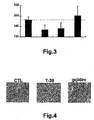
- hexapeptides of the invention have characteristic amino acid sequences, since a related hexapeptide with a similar sequence, such as, for example, the hexapeptide characterised in that it has sequence SEQ ID NO: 3, used as a negative control, with a single chemically non-conservative change of an amino acid residue in position 2, does not exhibit anti-gp41 activity ( figure 3 ).
- FIGURE 1 A first figure.
- LEFT Fusion inhibition by blocking the insertion of the fusion peptide (oligopeptide of the invention) in the cell membrane.
- the hexapeptides of the invention act as blocking agents of the activity of the fusion peptide and inhibit the membrane fusion induced by protein gp41 of the human immunodeficiency virus.
- Y-axis (ordinates): number of nuclei in syncytial plates (fused cells with more than 4 nuclei).
- X-axis (abscissas): from left to right, CTL (untreated cells), gqidev hexapeptide identified by SEQ ID NO: 1), gqidqv (hexapeptide identified by SEQ ID NO: 2) and gpidqv (hexapeptide identified by SEQ ID NO: 3).
- the combinatorial peptide library and the individual peptides were synthesised using the solid-phase multiple peptide synthesis methodology and following the standard procedures with the base-labile N-(9-fluorenyl)methoxycarbonyl (Fmoc) group to protect the ⁇ -amino function.
- the principles of solid-phase synthesis were developed in order to provide a quick, simple and effective way to synthesise peptides and small proteins.
- the methodology used consists of partitioning the polymer resin that acts as solid support into small bags of semi-permeable polypropylene which allow for the flow of solvents, whilst the resin remains inside.
- This methodology makes it possible, within the same synthesis process, to synthesise as many peptides (or, in the case of libraries, peptide mixtures) as bags incorporated into the process.
- the peptides were synthesised on a polystyrene aminomethyl RAM resin (RAPP Polymere). This is a high-substitution resin, of 0.76 meq/g of resin, that is used for peptides. Using this resin, the carboxy-terminal (Ct) end of the peptides obtained is amidated. All the amino acids used (Novabiochem and SENN Chemicals) have the amino group protected by the Fmoc protection group and the lateral chains protected by different protection groups, depending on the chain's functionality.
- the triphenyl (Trt) protection group was used for the cysteine, histidine, asparagine and glutamine amino acids; the terc-butyl (t-Bu) group was used for the aspartic, glutamic, serine, threonine and tyrosine amino acids; the 2,2,5,7,8-Pentamethylchroman-6-sulfonyl (Pmc) was used for arginine; and the tert-butoxycarbonyl (BOC) group was used for lysine and tryptophan (Table 1).
- L-amino acids L stereoisomers
- D-amino acids D stereoisomers
- the hexapeptide synthesis method is outlined in Figure 6 and consists of successive deprotection cycles of the resin's amino group or the last coupled amino acid (by releasing the Fmoc protection group) and coupling of the next amino acid by activation of its carboxyl group (Stewart & Young, 1984; Baldwin et al., 1995).
- the protocol used consists of:
- RP-HPLC reverse-phase high-performance liquid chromatography
- a Waters 717 Plus injector, a Waters 996 photodiode-array detector and a Waters 600 pump system were used.
- the stationary phase consisted of a reverse-phase C18 silica column (RP-18) with a particle size of 5 ⁇ m, 12.5 cm in length and 0.8 cm in diameter (LiChrospher®100, Merck).
- the mobile phase consisted of an H2O:CH3CN mixture. A small quantity of peptide was dissolved in H2O:CH3CN (90:10) and analysed.
- TFA which acts as a disaggregating agent
- MOPS 3(N-morpholin)-propanesulfonic acid
- Production of the peptides obtained on a solid support as described in the preceding section may also be performed by means of biotechnological strategies, with techniques known by those skilled in the art, using recombinant DNA methodology and the genetic transformation of organisms.
- a selective synthesis of a given stereoisomer, for example, the D-hexapeptide may be obtained using a genetically transformed organism that is a large-scale producer of the peptide of interest.
- this invention relates to hexapeptides designed for the treatment of AIDS, which inhibit the fusogenic activity of viral glycoprotein gp41 of HIV.
- oligopeptide refers to peptides formed by ten amino acids or less.
- this invention relates to hexapeptides designed for the treatment of AIDS, which inhibit the fusogenic activity of viral glycoprotein gp41 of HIV, and which comprise the hexapeptides characterised in that they have SEQ ID NO: 1 or SEQ ID NO: 2.
- this invention relates to hexapeptides designed for the treatment of AIDS, which inhibit the fusogenic activity of viral glycoprotein gp41 of HIV, wherein said hexapeptides are characterised in that they consist of SEQ ID NO: 1 or SEQ ID NO: 2.
- a second aspect of this invention relates to the use of the hexapeptides of the invention in the preparation of a pharmaceutical composition designed for the treatment or prevention of AIDS.
- Hexapeptide gqidev (hexapeptide identified by SEQ ID NO: 1) was synthesised as disclosed in the detailed description of the invention. It was added, at a concentration of 5 ⁇ M (micromolar), to the cell culture medium (GMEM-S supplemented with 1 mM sodium pyruvate and 0.4 mM methionine sulfoximine). HIV-1 gp120/41 protein expression cells (effector cells) were incubated with the medium supplemented with hexapeptides of the invention for 1 hour at 37°C. Subsequently, CD4-receptor expression cells, which, moreover, endogenously synthesise co-receptor CXCR4 (target cells), were added.
- hexapeptide gqidev oligopeptide identified by SEQ ID NO: 1
Landscapes
- Health & Medical Sciences (AREA)
- Life Sciences & Earth Sciences (AREA)
- Chemical & Material Sciences (AREA)
- General Health & Medical Sciences (AREA)
- Medicinal Chemistry (AREA)
- Proteomics, Peptides & Aminoacids (AREA)
- Organic Chemistry (AREA)
- Veterinary Medicine (AREA)
- Public Health (AREA)
- Animal Behavior & Ethology (AREA)
- Pharmacology & Pharmacy (AREA)
- Immunology (AREA)
- Bioinformatics & Cheminformatics (AREA)
- Gastroenterology & Hepatology (AREA)
- Epidemiology (AREA)
- Engineering & Computer Science (AREA)
- Molecular Biology (AREA)
- Virology (AREA)
- Genetics & Genomics (AREA)
- Biophysics (AREA)
- Biochemistry (AREA)
- AIDS & HIV (AREA)
- Tropical Medicine & Parasitology (AREA)
- Communicable Diseases (AREA)
- Oncology (AREA)
- Chemical Kinetics & Catalysis (AREA)
- General Chemical & Material Sciences (AREA)
- Nuclear Medicine, Radiotherapy & Molecular Imaging (AREA)
- Peptides Or Proteins (AREA)
- Medicines That Contain Protein Lipid Enzymes And Other Medicines (AREA)
Abstract
Description
- This invention may be included within the field of proteomics. It relates to the identification of hexapeptides which inhibit, in vitro, the fusion of a retrovirus with a target cell, providing new therapies against infection by the human immunodeficiency virus (HIV). Furthermore, this invention relates to the use of said hexapeptides, as single components or in complex mixtures, as prophylactic or therapeutic agents for retroviral infections, specially HIV
type 1. - The AIDS epidemic has experienced a quick growth in the past 25 years (estimated number of patients at the end of 2004: 39.4 million). The use of highly-active anti-retroviral therapies (HAART) has significantly increased the life expectancy of persons infected by HIV. However, long-term treatments have caused the selection of HAART-resistant virus variants. This situation has made it necessary to develop new compounds that may be effective in fighting said variants. The addition of the fusion inhibitor "enfuvirtide" (also known as Fuzeon, T-20 or DP178) to the arsenal of anti-HIV compounds has meant a great advance in the control of multi-resistant viruses (1-3).
- This compound acts on a key process of the infective cycle: the fusion of viral and cellular membranes promoted by viral coat glycoprotein gp120/41 (4). Its active principle is the T-20 peptide, which imitates a helicoidal sequence of gp41 that wraps in the hydrophobic grooves formed in the contact area between the helices of an imperfect trimeric coiled-coil. Wrapping is required in order to close a fork that clamps the membranes and causes the fusion thereof. T-20 competitively inhibits the closing process of the fork and, therefore, inhibits the fusion (
Fig. 2 ). - However, the high production cost of "enfuvirtide" and the appearance of virus variants that are resistant to this compound have called into question its generalised use in anti-HIV therapy. Therefore, it is necessary to work in the development of new alternative compounds which are effective fusion inhibitors, have a lower cost and may be included within integrated strategies to control the disease. If these compounds act through a mechanism different from "enfuvirtide"'s, they could be used concertedly in the elimination of viruses which have developed resistance to HAART treatments. Moreover, they could represent an alternative to standard fusion inhibition therapies in cases of resistance to "enfuvirtide".
- The amino-terminal sequence of fusogenic protein gp41 of HIV-1 is hydrophobic and highly conserved amongst the different strains, variants and clinical isolates (5). This is due to the fact that it is required in order for the protein to perform the fusogenic function (reviewed in 6). In accordance with its function, this sequence is called "fusion peptide" (hereinafter, FP). Its high degree of conservation and its functionality make this sequence a suitable therapeutic target for the development of anti-gp41 inhibitors. Previous data indicate that certain oligopeptides are capable of interfering with the fusogenic activity of gp41 (7), as well as with the interaction of synthetic FP with liposomes (8).
- Patent application
WO 03/104262 A2 WO 2004/047730 A2 discloses a chemical compound with molecular weight between 200 and 1,200 Daltons, and logP between -2.0 to +5.5, which is capable of reciprocally acting with the hydrophobic cavity and blocking fusion formulation with the coiled coil of gp41. - But all these methods designed to prevent HIV infection and cure AIDS are still limited. Consequently, there is still the need to develop new viral inhibitors, specially inhibitors that are non-toxic or have an acceptably low toxicity.
- There are various peptide synthesis methods that are distinguished by the physical state of the phase wherein said synthesis takes place, that is, in the liquid phase or the solid phase (see, for example, patent applications
WO 2005/063791 A2 ,WO 2005/063792 A2 andWO 2005/063793 A2 ). In the solid phase, a first amino acid or peptide is bound to an insoluble support, such as a resin. Successive groups of amino acids or peptides are added until the desired peptide is obtained. Subsequently, said peptide is separated from the resin, isolated and identified. - But this invention relates to the synthesis and isolation of hexapeptides, not hydrolysable by cellular proteases, which interfere with FP, as potential new "fusion inhibitor" agents for HIV, and operate according to a mechanism that is substantially different from that of "enfuvirtide". The hexapeptides of this invention act by blocking the insertion of the FP in the target cell membrane and interfering with the self-assembly processes that take place on the surface thereof. On the contrary, "enfuvirtide" acts in a subsequent step, by preventing closing of the fork (see
figure 2 ) once the virus and the host cell have come into contact. - This invention discloses the identification of synthetic hexapeptides (hereinafter, hexapeptides of the invention) that have anti-gp41 activity, which have been developed on the basis of their capacity to block, in vitro, the activity of the fusion peptide, a sequence that is absolutely conserved amongst most HIV strains and clinical isolates.
- Given the degree of conservation of the FP, the appearance of variants that are resistant to these compounds is expected to be quite remote.
- This invention comprises the synthesis and identification of hexapeptides as inhibitors of the fusogenic activity of gp41. These hexapeptides have been identified by means of a position tracking process in peptide libraries. The oligopeptide identification process was focused on the characterisation of hexapeptides, since the structure of the latter may be used more effectively, leading to the conclusion that all the D-hexapeptides that result from substituting position 5 with any of the (D) stereoisomers of the known amino acids, had a similar inhibitory activity against HIV. The activity of said oligopeptides is manifested in the inhibition of interaction of the FP sequence with membranes and as the inhibition of cell fusion capacity when gp120/41 is expressed on the surface of the cells under culture (
figures 3-5 ). It was demonstrated that the hexapeptides of the invention have characteristic amino acid sequences, since a related hexapeptide with a similar sequence, such as, for example, the hexapeptide characterised in that it has sequence SEQ ID NO: 3, used as a negative control, with a single chemically non-conservative change of an amino acid residue inposition 2, does not exhibit anti-gp41 activity (figure 3 ). The use of the hexapeptides of the invention as fusion inhibitor compounds for HIV-1, which are useful in the fight against virus variants that are resistant to the treatments used as a therapy, is disclosed. - Functional cycle of gp41 and proposed action mechanisms. Activation of the surface protein (1) exposes the Fusion Peptide of gp41, which facilitates the insertion thereof in the cell membrane (2). Subsequently, the co-ordinated collapse of several proteins or closing of the fork (3) causes juxtaposition of the membranes, the mixing thereof and the opening of an aqueous connection between the virus and the cell (4).
- RIGHT: Fusion inhibition by blocking closing of the fork (T-20).
- LEFT: Fusion inhibition by blocking the insertion of the fusion peptide (oligopeptide of the invention) in the cell membrane. The hexapeptides of the invention act as blocking agents of the activity of the fusion peptide and inhibit the membrane fusion induced by protein gp41 of the human immunodeficiency virus.
- Effect of different inhibitory hexapeptides identified by deconvolution of a peptide library (position tracking) on the activity of gp41. The effect has been measured as the inhibition of cell-cell fusion induced by gp41 of HIV-1 expressed in CHO cells, which takes place when they are mixed with CD4 receptor-expressing HeLa cells (BH10 isolate: Gene Bank access number M15654). The hexapeptide concentration was 5 µM and the temperature was 37°C. Incubation in the cell culture medium (GMEM-S supplemented with 1 mM sodium pyruvate and 0.4 mM methionine sulfoximine) was performed for 16 hours. The bars correspond to the number of nuclei in syncytial plates (fused cells with more than 4 nuclei) per field after this time. The means of 4 individual measurements plus the standard deviations are shown.
- Y-axis (ordinates): number of nuclei in syncytial plates (fused cells with more than 4 nuclei).
- X-axis (abscissas): from left to right, CTL (untreated cells), gqidev hexapeptide identified by SEQ ID NO: 1), gqidqv (hexapeptide identified by SEQ ID NO: 2) and gpidqv (hexapeptide identified by SEQ ID NO: 3).
- Inhibitory effect of hexapeptide gqidev, identified by SEQ ID NO: 1 (5 µM micromolar) on the gp41 activity of HIV-1 (BH10 isolate: Gene Bank access number M15654) under the conditions described in the preceding figure. In the untreated cells (CTL), we can observe the formation of syncytia (multi-nucleated cells produced by the activity of gp41). As a positive inhibition control, cells treated with 20 nM of T-20 (enfuvirtide) are shown. The sample, in the sole presence of gqidev, was processed following the protocol described in the preceding figure. These two samples show a comparable inhibition of gp41.
- Quantification of the inhibitory effect of hexapeptides gqidev, identified by SEQ ID NO: 1 (circles and broken line), and gqidqv, identified by SEQ ID NO: 2 (boxes and broken line), on the capacity of gp41 to induce cell fusion (formation of syncytia). The lines represent adjustments to hyperbolic-type functions. The assay, in the presence of increasing quantities of hexapeptides, was performed and quantified in accordance with the description of
figure 3 . 100% inhibition corresponds to the total absence of nuclei in syncytial plates, and 0% to the number of nuclei in said plates in control samples not treated with the hexapeptides. - Y-axis (ordinates): percentage of inhibition.
- X-axis (abscissas): hexapeptide (µM).
- Outline of the multiple hexapeptide synthesis method, which shows the steps performed to this end:
- Step 1 (deprotection): 20% piperidine is introduced in DMF and the result is Fmoc.
- Step 2 (amino acid coupling).
- Step 5 (acetylation of the Nt end): acetic anhydride is introduced in DMF.
- Step 6 (splitting of the resin).
- HPLC chromatograms of an example hexapeptide:
- A. prior to purification.
- B. following purification.
- C. using a linear gradient of CH3CN from 30% to 40% in H20 for 15 min. MALDI-TOF mass spectrum of the purified peptide, with a theoretical molecular mass of 964.1 Da.
- The combinatorial peptide library and the individual peptides were synthesised using the solid-phase multiple peptide synthesis methodology and following the standard procedures with the base-labile N-(9-fluorenyl)methoxycarbonyl (Fmoc) group to protect the α-amino function. The principles of solid-phase synthesis were developed in order to provide a quick, simple and effective way to synthesise peptides and small proteins. The methodology used consists of partitioning the polymer resin that acts as solid support into small bags of semi-permeable polypropylene which allow for the flow of solvents, whilst the resin remains inside. This methodology makes it possible, within the same synthesis process, to synthesise as many peptides (or, in the case of libraries, peptide mixtures) as bags incorporated into the process. The peptides were synthesised on a polystyrene aminomethyl RAM resin (RAPP Polymere). This is a high-substitution resin, of 0.76 meq/g of resin, that is used for peptides. Using this resin, the carboxy-terminal (Ct) end of the peptides obtained is amidated. All the amino acids used (Novabiochem and SENN Chemicals) have the amino group protected by the Fmoc protection group and the lateral chains protected by different protection groups, depending on the chain's functionality. The triphenyl (Trt) protection group was used for the cysteine, histidine, asparagine and glutamine amino acids; the terc-butyl (t-Bu) group was used for the aspartic, glutamic, serine, threonine and tyrosine amino acids; the 2,2,5,7,8-Pentamethylchroman-6-sulfonyl (Pmc) was used for arginine; and the tert-butoxycarbonyl (BOC) group was used for lysine and tryptophan (Table 1).
- In hexapeptide synthesis, both the L stereoisomers (hereinafter, L-amino acids) and the D stereoisomers (hereinafter, D-amino acids) of natural amino acids are used. In this example, D-amino acids were used, and three hexapeptides, represented by sequences SEQ ID NO: 1, SEQ ID NO: 2 and SEQ ID NO: 3), were synthesised. The hexapeptide synthesis method is outlined in
Figure 6 and consists of successive deprotection cycles of the resin's amino group or the last coupled amino acid (by releasing the Fmoc protection group) and coupling of the next amino acid by activation of its carboxyl group (Stewart & Young, 1984; Baldwin et al., 1995). The protocol used consists of: - Deprotection of the amino group. 20% piperidine in dimethylformamide (DMF) was used, which breaks and releases the Fmoc group. It was performed twice, the first time for 5 min, when approximately 80% of the Fmoc group is released, and the second time in order to completely eliminate Fmoc.
- Amino acid coupling. By mathematical calculation, the necessary quantity of amino acid was determined, taking into consideration a synthesis yield of 60%, and a 6-fold excess was used, dissolved in DMF. In order to favour the couplings, diisopropylcarbodiimide (DIC) and anhydrous 1-hydroxybenzotriazole (HOBt) were used. For every equivalent of amino acids, one equivalent of HOBt and two equivalents of DIC were used. DIC acts as a coupling agent, forming a ternary complex with the acid and the amine, and favouring the formation of the peptide bond. HOBt activates the amino acids' carboxyl end in the form of asymmetric esters. The couplings were performed for 1 h 30 min at ambient temperature under stirring.
- 1. Following each of the steps described above, the resin was subject to a series of washes:
- Three washes with DMF, which eliminate the Fmoc residues following the deprotection process or the coupling mixture residues.
- Three washes with isopropanol, which cause contraction of the resin in order to facilitate washing of the resin's interstitial gaps.
- Three washes with dichloromethane (DCM), which causes expansion of the resin, facilitating the following step (either deprotection, coupling or splitting of the peptide from the resin).
- 2. Each deprotection and coupling step was verified by the Kaiser test. This test is based on the reaction of ninhydrin with the free amino groups and is applied to a small aliquot of resin. In this way, the Fmoc group's deprotected amino acid or resin should produce an intense blue colour with the reagent. If the amino acid is proline, a brown colour is obtained. Following the coupling of an amino acid, or in the event of incomplete deprotection, the Kaiser test will be negative, resulting in a yellow colour. The Kaiser test is destructive; for this reason, it should be used with the minimum amount of resin. Furthermore, it is qualitative, such that it does not distinguish amongst different degrees of deprotection. For this reason, the deprotection was additionally confirmed by measuring the absorbance of the free Fmoc group at 290 nm (the molar extinction coefficient (c) is 4,950 M-1cm-1). These first four steps are repeated depending on the number of amino acids of the peptide to be synthesised. In our example, they were repeated six times for each amino acid.
- 3. Acetylation of the amino-terminal group (Nt). Following the last coupling, the Fmoc group of the amino group was eliminated (step 1) and the free Nt end was acetylated with 20% acetic anhydride in DMF. The washes in
step 3 were performed again. - 4. Finally, complete deprotection of the amino acids' lateral chains and splitting of the resin were performed. The resin in each bag was separately extracted and placed in a plastic column. This was performed by treatment with a mixture of 70% trifluoroacetic acid (TFA), 20% dichloromethane (DCM), 5% water, 2.5% ethanedithiol (EDT), 2.5% chlorotriisobutylsilane (CTIBS) at ambient temperature for 4 hours. Water, ethanedithiol and chlorotriisobutylsilane act as trappers of the free radicals obtained in the deprotection of the groups that protect the amino acids' lateral chains.
- 5. Precipitation and lyophilisation of the peptide. Following filtering of the resin and washing with TFA, the split peptides were precipitated in cold t-butylmethylether for at least 12 h at -80°C, centrifuged at 3,000 rpm for 15 min (SANYO MSE centrifuge), dissolved in acetic acid and lyophilised. Following this first lyophilisation, the peptides were reconstituted; to this end, they were dissolved in a water:acetonitrile solution (H2O:CH3CN, 80:20 proportion, respectively) and once again lyophilised.
- 1. Following each of the steps described above, the resin was subject to a series of washes:
- Following the synthesis, a purification and quality analysis process was performed, which is reflected in
Figure 7 with an example. - The chromatographic profile of each peptide was analysed by reverse-phase high-performance liquid chromatography (RP-HPLC). A Waters 717 Plus injector, a Waters 996 photodiode-array detector and a Waters 600 pump system were used. The stationary phase consisted of a reverse-phase C18 silica column (RP-18) with a particle size of 5 µm, 12.5 cm in length and 0.8 cm in diameter (
LiChrospher® 100, Merck). The mobile phase consisted of an H2O:CH3CN mixture. A small quantity of peptide was dissolved in H2O:CH3CN (90:10) and analysed. In the first place, the peptides eluted from the column by a linear gradient of acetonitrile from 10% to 90% in water (both eluents contained 0.1% TFA, which acts as a disaggregating agent) for 30 min at a flow rate of 1 ml/min. In this way, different retention times were observed as a function of the peptides' hydrophobicity. Depending on the chromatographic profile of the peptides to be purified, it was performed isocratically or by linear gradient. In the isocratic mode, the proportion of H2O:CH3CN is fixed and it was determined for each peptide. When a gradient is used, the minimum and maximum necessary amounts of water or acetonitrile for elution of the peptide was determined (Figure 7A ). In either case, the eluted peak corresponding to the peptide was detected by measuring the absorbance at 220 nm (wavelength whereat the peptide bond is detected) and at 280 nm (where aromatic amino acids are detected). Once the chromatographic profile of each synthesised peptide was determined, they were purified by the preparative RP-HPLC technique. The equipment used consisted of a Waters Delta Prep. 3000 injector and pump controller, an L-7400 (Merck) ultraviolet (UV) detector and a LiChrosorb® RP-18 column with a particle size of 7 µm, 27 cm in length and 3.5 cm in diameter (Merck). The purification led to the elimination of the truncated peptides and the potential residual components obtained from synthesis 15. The peak corresponding to the purified peptide was characterised by analytical RP-HPLC (Figure 7B ) and its identity was confirmed by MALDI-TOF (matrix-assisted laser desorption/ionisation time-of-flight) mass spectrometry (Figure 7C ). The peptides were dissolved in 5 mM of 3(N-morpholin)-propanesulfonic acid (MOPS) buffer at pH 7 and the concentration was quantified by spectrophotometry (A280, ξ280=5,600 M-1cm-1). - Production of the peptides obtained on a solid support as described in the preceding section may also be performed by means of biotechnological strategies, with techniques known by those skilled in the art, using recombinant DNA methodology and the genetic transformation of organisms. A selective synthesis of a given stereoisomer, for example, the D-hexapeptide, may be obtained using a genetically transformed organism that is a large-scale producer of the peptide of interest.
- Thus, in a first aspect, this invention relates to hexapeptides designed for the treatment of AIDS, which inhibit the fusogenic activity of viral glycoprotein gp41 of HIV.
- As cited in this invention, the term oligopeptide refers to peptides formed by ten amino acids or less.
- In a preferred embodiment, this invention relates to hexapeptides designed for the treatment of AIDS, which inhibit the fusogenic activity of viral glycoprotein gp41 of HIV, and which comprise the hexapeptides characterised in that they have SEQ ID NO: 1 or SEQ ID NO: 2.
- In another preferred embodiment, this invention relates to hexapeptides designed for the treatment of AIDS, which inhibit the fusogenic activity of viral glycoprotein gp41 of HIV, wherein said hexapeptides are characterised in that they consist of SEQ ID NO: 1 or SEQ ID NO: 2.
- A second aspect of this invention relates to the use of the hexapeptides of the invention in the preparation of a pharmaceutical composition designed for the treatment or prevention of AIDS.
- Below are listed embodiment examples of the invention, which are intended to illustrate the invention.
- Hexapeptide gqidev (hexapeptide identified by SEQ ID NO: 1) was synthesised as disclosed in the detailed description of the invention. It was added, at a concentration of 5 µM (micromolar), to the cell culture medium (GMEM-S supplemented with 1 mM sodium pyruvate and 0.4 mM methionine sulfoximine). HIV-1 gp120/41 protein expression cells (effector cells) were incubated with the medium supplemented with hexapeptides of the invention for 1 hour at 37°C. Subsequently, CD4-receptor expression cells, which, moreover, endogenously synthesise co-receptor CXCR4 (target cells), were added. The plates were developed after 16 hours of co-incubation. The activity of gp41 is detected by the formation of multi-nucleated cells (CTL panel) produced by the fusion of the plasma membranes. It was observed that hexapeptide gqidev (oligopeptide identified by SEQ ID NO: 1) had an inhibitory effect comparable to that of T-20 under these experimental conditions.
Table 1 Amino acid Amino acid Alamine Fmoc-Ala-OH A (a) Methionine Fmoc-Met-OH M (m) Cysteine Fmoc-Cys(Trt)-OH C (c) Asparagine Fmoc-Asn(Trt)-OH N (n) Aspartic Fmoc-Asp(tBu)-OH D (d) Proline Fmoc-Pro-OH P (p) Glutamic Fmoc-Glu(tBu)-OH E (e) Glutamine Fmoc-Glu(Trt)-OH Q (q) Phenylalanine Fmoc-Phe-OH F (f) Arginine Fmoc-Arg(Pmc)-OH R (r) Glycine Fmoc-Gly-OH G (g) Serine Fmoc- Ser(tBu)-OH S (s) Histidine Fmoc-His(Trt)-OH H (h) Threonine Fmoc-Thr(tBu)-OH T (t) Isoleucine Fmoc-Ile-OH I (i) Valine Fmoc-Val-OH V (v) Lysine Fmoc-Lys(BOC)-OH K (k) Tryptophan Fmoc-Trp(BOC)-OH W (w) Leucine Fmoc-Leu-OH L (I) Tyrosine Fmoc-Tyr(tBu)-OH Y (y) * Table 1. Nomenclature of amino acids. The D stereoisomers of natural amino acids are represented with lower-case letters in the one-letter code. -
- 1. Wild, C.T., Shugars, D.C., Greenwell, T.K., McDanal, C.B., and Matthews, D.J. (1994). Peptides corresponding to a predictive alpha-helical domain of human .
- 2. Kilby, J.M., Hopkins, S., Venetta, T.M., et al. (1998). Potent suppression of HIV-1 replication in humans by T-20, a peptide inhibitor of gp41-mediated virus entry. Nature Medicine 4, 1302-1307.
- 3. Schneider, S.E., Bray, B.L., Mader, C.J. et al. (2005). Development of HIV fusion inhibitors. J. Peptide Sci. 11, 744-753.
- 4. Doms, R.W., and Moore, J.P. (2000). HIV-1 membrane fusion: targets of opportunity. J. Cell Biol. 151. F9-F13.
- 5. Gallaher, W.R. (1987). Detection of a fusion peptide sequence in the transmembrane protein of the human immunodeficiency virus. Cell 50, 327-328.
- 6. Nieva, J.L., and Agirre, A. (2003). Are fusion peptides a good model to study viral cell fusion? Biochim. Biophys. Acta 1614, 104-115.
- 7. Owens, R.J., Tanner, C.C., Mulligan, M.J., Srinivas, R., and Compans, R.W. (1990). Oligopeptide inhibitors of HIV-induced syncytium formation. AIDS Res. Hum. .
- 8. Pereira, F.B., Goñi, F.M., and Nieva, J.L. (1997). Membrane fusion induced by the HIV-1 fusion peptide: modulation by factors affecting gp41 activity and potential anti-HIV compounds. AIDS Res. Hum. Retroviruses 13, 1203-1211.
-
- <110> Universidad del Pais Vasco
Universidad de Valencia - <120> NON-PROTEOLYSABLE OLIGOPEPTIDES THAT INHIBIT GLYCOPROTEIN GP41 OF
THE AIDS VIRUS - <130>
EP-02297 - <160> 3
- <170> PatentIn version 3.5
- <210> 1
<211> 6
<212> PRT
<213> Artificial Sequence - <220>
<223> Oligopeptide gqidev - <400> 1

- <210> 2
<211> 6
<212> PRT
<213> Artificial Sequence - <220>
<223> Oligopeptide gqidqv - <400> 2

- <210> 3
<211> 6
<212> PRT
<213> Artificial Sequence - <220>
<223> Oligopeptide gpidqv - <400> 3

Claims (5)
- Hexapeptides characterized by the sequences SEQ ID NO: 1 or SEQ ID NO: 2.
- Hexapeptides characterized by the sequences SEQ ID NO: 1 or SEQ ID NO: 2 for use as medicament.
- Hexapeptides characterized by the sequences SEQ ID NO: 1 or SEQ ID NO: 2 for use in the treatment or prevention of AIDS by inhibiting the fusogenic activity of viral glycoprotein gp41 of HIV.
- Use of hexapeptides characterized by the sequences SEQ ID NO: 1 or SEQ ID NO: 2 for the manufacture of a pharmaceutical composition for treating or preventing AIDS.
- Pharmaceutical composition that comprises hexapeptides characterized by the sequences SEQ ID NO: 1 or SEQ ID NO: 2 for use in the treatment or prevention of AIDS by inhibiting the fusogenic activity of viral glycoprotein gp41 of HIV.
Applications Claiming Priority (2)
| Application Number | Priority Date | Filing Date | Title |
|---|---|---|---|
| ES200503259A ES2325644B1 (en) | 2005-12-30 | 2005-12-30 | NON-PROTEOLIZABLE HEXAPEPTIDES INHIBITORS OF GLICOPROTEIN 41 OF THE VIRUS OF AIDS. |
| PCT/ES2006/000726 WO2007077278A1 (en) | 2005-12-30 | 2006-12-29 | Non-proteolysable oligopeptides that inhibit glycoprotein gp41 of the aids virus |
Publications (2)
| Publication Number | Publication Date |
|---|---|
| EP1970379A1 EP1970379A1 (en) | 2008-09-17 |
| EP1970379B1 true EP1970379B1 (en) | 2011-05-18 |
Family
ID=38227939
Family Applications (1)
| Application Number | Title | Priority Date | Filing Date |
|---|---|---|---|
| EP06841778A Active EP1970379B1 (en) | 2005-12-30 | 2006-12-29 | Non-proteolysable oligopeptides that inhibit glycoprotein gp41 of hiv |
Country Status (5)
| Country | Link |
|---|---|
| US (1) | US8110545B2 (en) |
| EP (1) | EP1970379B1 (en) |
| AT (1) | ATE509942T1 (en) |
| ES (2) | ES2325644B1 (en) |
| WO (1) | WO2007077278A1 (en) |
Families Citing this family (7)
| Publication number | Priority date | Publication date | Assignee | Title |
|---|---|---|---|---|
| US8133733B2 (en) | 2003-10-24 | 2012-03-13 | Gencia Corporation | Nonviral vectors for delivering polynucleotides to target tissues |
| US20090208478A1 (en) * | 2003-10-24 | 2009-08-20 | Gencia Corporation | Transducible polypeptides for modifying metabolism |
| US20090123468A1 (en) | 2003-10-24 | 2009-05-14 | Gencia Corporation | Transducible polypeptides for modifying metabolism |
| US8062891B2 (en) | 2003-10-24 | 2011-11-22 | Gencia Corporation | Nonviral vectors for delivering polynucleotides to plants |
| WO2005056752A2 (en) | 2003-10-24 | 2005-06-23 | Gencia Corporation | Methods and compositions for delivering polynucleotides |
| US8507277B2 (en) | 2003-10-24 | 2013-08-13 | Gencia Corporation | Nonviral vectors for delivering polynucleotides |
| EP3530282A1 (en) * | 2018-02-27 | 2019-08-28 | Diaccurate | Therapeutic methods |
Family Cites Families (9)
| Publication number | Priority date | Publication date | Assignee | Title |
|---|---|---|---|---|
| US4910131A (en) * | 1987-12-23 | 1990-03-20 | Mellman Ira S | Idiotype and anti-idiotype antibodies useful in virus detection |
| WO1989009785A1 (en) * | 1988-04-07 | 1989-10-19 | The Trustees Of The University Of Alabama | Peptides inhibitors of hiv induced cell fusions and syncytia formation |
| FR2767831B1 (en) * | 1997-09-02 | 2001-04-13 | Agronomique Inst Nat Rech | RESISTANCE MECHANISMS FOR R / M BACTERIOPHAGES OF IC TYPE OF LACTIC BACTERIA |
| US7314974B2 (en) * | 2002-02-21 | 2008-01-01 | Monsanto Technology, Llc | Expression of microbial proteins in plants for production of plants with improved properties |
| US20040137426A1 (en) * | 2002-06-10 | 2004-07-15 | Pierre-Francois Serres | Gp41 peptides and methods based thereon for inhibiting HIV fusion to target cells |
| US7241803B2 (en) | 2002-11-21 | 2007-07-10 | New York Blood Center | Compounds for inhibition of HIV infection by blocking HIV entry |
| ATE376556T1 (en) | 2003-12-31 | 2007-11-15 | Hoffmann La Roche | METHOD FOR PEPTIDE SYNTHESIS USING A REDUCED AMOUNT OF DEPROTECTION AGENT |
| EP1701970A2 (en) | 2003-12-31 | 2006-09-20 | F.Hoffmann-La Roche Ag | Methods for recovering cleaved peptide from a support |
| WO2005063793A1 (en) | 2003-12-31 | 2005-07-14 | F. Hoffmann-La Roche Ag | Process and systems for recovery of peptides |
-
2005
- 2005-12-30 ES ES200503259A patent/ES2325644B1/en not_active Expired - Fee Related
-
2006
- 2006-12-29 WO PCT/ES2006/000726 patent/WO2007077278A1/en not_active Ceased
- 2006-12-29 EP EP06841778A patent/EP1970379B1/en active Active
- 2006-12-29 AT AT06841778T patent/ATE509942T1/en not_active IP Right Cessation
- 2006-12-29 ES ES06841778T patent/ES2366579T3/en active Active
- 2006-12-29 US US12/159,645 patent/US8110545B2/en not_active Expired - Fee Related
Also Published As
| Publication number | Publication date |
|---|---|
| WO2007077278A1 (en) | 2007-07-12 |
| ES2366579T3 (en) | 2011-10-21 |
| ES2325644B1 (en) | 2010-06-28 |
| US20100197606A1 (en) | 2010-08-05 |
| ES2325644A1 (en) | 2009-09-10 |
| ATE509942T1 (en) | 2011-06-15 |
| US8110545B2 (en) | 2012-02-07 |
| EP1970379A1 (en) | 2008-09-17 |
Similar Documents
| Publication | Publication Date | Title |
|---|---|---|
| CZ200288A3 (en) | Hybrid polypeptide | |
| Schneider et al. | Development of HIV fusion inhibitors | |
| EP0387231A2 (en) | Novel inhibitors of retroviral protease | |
| CZ2002402A3 (en) | Peptide that block viral infections and method for using thereof | |
| JPWO1992004374A1 (en) | Novel polypeptide and anti-HIV agent using the same | |
| US8110545B2 (en) | Non-proteolysable oligopeptides that inhibit glycoprotein GP41 of the aids virus | |
| WO1992004374A1 (en) | Novel polypeptide and anti-hiv drug prepared therefrom | |
| WO2004020461A1 (en) | A group of novel synthetic antibiotic peptides | |
| Larsen et al. | Sequence‐assisted peptide synthesis (SAPS) | |
| KR20250109218A (en) | Membrane fusion inhibitors for inhibiting AIDS virus and drug-resistant strains thereof, and pharmaceutical uses thereof | |
| US7745390B2 (en) | Antimicrobial peptides | |
| JP4813720B2 (en) | Human circulating virus inhibitory peptide (VIRIP) and uses thereof | |
| WO2005049819A1 (en) | Antibacterial peptide and utilization of the same | |
| WO2013075594A1 (en) | Artificially designed anti-hiv infection polypeptide, composition and use | |
| CN100455594C (en) | Polypeptide for inhibiting HIV virus fusion and use thereof | |
| US6358511B1 (en) | Inhibitors of HIV infection | |
| CN114539358B (en) | A kind of polypeptide and preparation method and application | |
| Andrew | Peptide synthesis: synthesis of the cysteine-containing peptides of biological and pharmaceutical interest, α-h-ANF and h-big endothelin | |
| Bikshapathy et al. | Effect of introducing p-fluorophenylalanine and multiple tryptophan residues in a 13-residue antibacterial peptide | |
| US20200071357A1 (en) | Antimicrobial peptides | |
| JPH0687886A (en) | New oligopeptide, agent for inhibiting angiotensen converting enzyme and hypotensor | |
| US7285621B2 (en) | Multiple branch peptide construction | |
| JP3726106B2 (en) | Angiotensin converting enzyme inhibitor and antihypertensive agent | |
| WO2008050830A1 (en) | Anti-hiv agent | |
| JP3725899B6 (en) | Multi-branched peptide constructs for use against HIV |
Legal Events
| Date | Code | Title | Description |
|---|---|---|---|
| PUAI | Public reference made under article 153(3) epc to a published international application that has entered the european phase |
Free format text: ORIGINAL CODE: 0009012 |
|
| 17P | Request for examination filed |
Effective date: 20080717 |
|
| AK | Designated contracting states |
Kind code of ref document: A1 Designated state(s): AT BE BG CH CY CZ DE DK EE ES FI FR GB GR HU IE IS IT LI LT LU LV MC NL PL PT RO SE SI SK TR |
|
| 17Q | First examination report despatched |
Effective date: 20090622 |
|
| RTI1 | Title (correction) |
Free format text: NON-PROTEOLYSABLE OLIGOPEPTIDES THAT INHIBIT GLYCOPROTEIN GP41 OF HIV |
|
| GRAJ | Information related to disapproval of communication of intention to grant by the applicant or resumption of examination proceedings by the epo deleted |
Free format text: ORIGINAL CODE: EPIDOSDIGR1 |
|
| GRAP | Despatch of communication of intention to grant a patent |
Free format text: ORIGINAL CODE: EPIDOSNIGR1 |
|
| GRAP | Despatch of communication of intention to grant a patent |
Free format text: ORIGINAL CODE: EPIDOSNIGR1 |
|
| DAX | Request for extension of the european patent (deleted) | ||
| GRAS | Grant fee paid |
Free format text: ORIGINAL CODE: EPIDOSNIGR3 |
|
| GRAA | (expected) grant |
Free format text: ORIGINAL CODE: 0009210 |
|
| RAP1 | Party data changed (applicant data changed or rights of an application transferred) |
Owner name: UNIVERSITAT DE VALENCIA Owner name: UNIVERSIDAD DEL PAIS VASCO |
|
| REG | Reference to a national code |
Ref country code: GB Ref legal event code: FG4D |
|
| REG | Reference to a national code |
Ref country code: CH Ref legal event code: EP |
|
| REG | Reference to a national code |
Ref country code: IE Ref legal event code: FG4D |
|
| REG | Reference to a national code |
Ref country code: DE Ref legal event code: R096 Ref document number: 602006022113 Country of ref document: DE Effective date: 20110630 |
|
| REG | Reference to a national code |
Ref country code: NL Ref legal event code: T3 |
|
| REG | Reference to a national code |
Ref country code: ES Ref legal event code: FG2A Ref document number: 2366579 Country of ref document: ES Kind code of ref document: T3 Effective date: 20111021 |
|
| PG25 | Lapsed in a contracting state [announced via postgrant information from national office to epo] |
Ref country code: LT Free format text: LAPSE BECAUSE OF FAILURE TO SUBMIT A TRANSLATION OF THE DESCRIPTION OR TO PAY THE FEE WITHIN THE PRESCRIBED TIME-LIMIT Effective date: 20110518 Ref country code: PT Free format text: LAPSE BECAUSE OF FAILURE TO SUBMIT A TRANSLATION OF THE DESCRIPTION OR TO PAY THE FEE WITHIN THE PRESCRIBED TIME-LIMIT Effective date: 20110919 Ref country code: SE Free format text: LAPSE BECAUSE OF FAILURE TO SUBMIT A TRANSLATION OF THE DESCRIPTION OR TO PAY THE FEE WITHIN THE PRESCRIBED TIME-LIMIT Effective date: 20110518 |
|
| PG25 | Lapsed in a contracting state [announced via postgrant information from national office to epo] |
Ref country code: GR Free format text: LAPSE BECAUSE OF FAILURE TO SUBMIT A TRANSLATION OF THE DESCRIPTION OR TO PAY THE FEE WITHIN THE PRESCRIBED TIME-LIMIT Effective date: 20110819 Ref country code: LV Free format text: LAPSE BECAUSE OF FAILURE TO SUBMIT A TRANSLATION OF THE DESCRIPTION OR TO PAY THE FEE WITHIN THE PRESCRIBED TIME-LIMIT Effective date: 20110518 Ref country code: CY Free format text: LAPSE BECAUSE OF FAILURE TO SUBMIT A TRANSLATION OF THE DESCRIPTION OR TO PAY THE FEE WITHIN THE PRESCRIBED TIME-LIMIT Effective date: 20110518 Ref country code: IS Free format text: LAPSE BECAUSE OF FAILURE TO SUBMIT A TRANSLATION OF THE DESCRIPTION OR TO PAY THE FEE WITHIN THE PRESCRIBED TIME-LIMIT Effective date: 20110918 Ref country code: FI Free format text: LAPSE BECAUSE OF FAILURE TO SUBMIT A TRANSLATION OF THE DESCRIPTION OR TO PAY THE FEE WITHIN THE PRESCRIBED TIME-LIMIT Effective date: 20110518 Ref country code: AT Free format text: LAPSE BECAUSE OF FAILURE TO SUBMIT A TRANSLATION OF THE DESCRIPTION OR TO PAY THE FEE WITHIN THE PRESCRIBED TIME-LIMIT Effective date: 20110518 Ref country code: SI Free format text: LAPSE BECAUSE OF FAILURE TO SUBMIT A TRANSLATION OF THE DESCRIPTION OR TO PAY THE FEE WITHIN THE PRESCRIBED TIME-LIMIT Effective date: 20110518 |
|
| PG25 | Lapsed in a contracting state [announced via postgrant information from national office to epo] |
Ref country code: EE Free format text: LAPSE BECAUSE OF FAILURE TO SUBMIT A TRANSLATION OF THE DESCRIPTION OR TO PAY THE FEE WITHIN THE PRESCRIBED TIME-LIMIT Effective date: 20110518 Ref country code: CZ Free format text: LAPSE BECAUSE OF FAILURE TO SUBMIT A TRANSLATION OF THE DESCRIPTION OR TO PAY THE FEE WITHIN THE PRESCRIBED TIME-LIMIT Effective date: 20110518 |
|
| REG | Reference to a national code |
Ref country code: NL Ref legal event code: SD Effective date: 20120213 |
|
| PG25 | Lapsed in a contracting state [announced via postgrant information from national office to epo] |
Ref country code: SK Free format text: LAPSE BECAUSE OF FAILURE TO SUBMIT A TRANSLATION OF THE DESCRIPTION OR TO PAY THE FEE WITHIN THE PRESCRIBED TIME-LIMIT Effective date: 20110518 Ref country code: PL Free format text: LAPSE BECAUSE OF FAILURE TO SUBMIT A TRANSLATION OF THE DESCRIPTION OR TO PAY THE FEE WITHIN THE PRESCRIBED TIME-LIMIT Effective date: 20110518 Ref country code: DK Free format text: LAPSE BECAUSE OF FAILURE TO SUBMIT A TRANSLATION OF THE DESCRIPTION OR TO PAY THE FEE WITHIN THE PRESCRIBED TIME-LIMIT Effective date: 20110518 Ref country code: RO Free format text: LAPSE BECAUSE OF FAILURE TO SUBMIT A TRANSLATION OF THE DESCRIPTION OR TO PAY THE FEE WITHIN THE PRESCRIBED TIME-LIMIT Effective date: 20110518 |
|
| RAP2 | Party data changed (patent owner data changed or rights of a patent transferred) |
Owner name: UNIVERSIDAD DEL PAIS VASCO |
|
| REG | Reference to a national code |
Ref country code: CH Ref legal event code: PUEA Owner name: UNIVERSIDAD DEL PAIS VASCO Free format text: UNIVERSIDAD DEL PAIS VASCO#OTRI-BARRIO DE SARRIENA, S/N#48940 LEIOA (VIZKAYA) (ES) $ UNIVERSITAT DE VALENCIA#OTRI - AVDA. BLASCO IBSSNEZ 13#46010 VALENCIA (ES) -TRANSFER TO- UNIVERSIDAD DEL PAIS VASCO#OTRI-BARRIO DE SARRIENA, S/N#48940 LEIOA (VIZKAYA) (ES) |
|
| PLBE | No opposition filed within time limit |
Free format text: ORIGINAL CODE: 0009261 |
|
| STAA | Information on the status of an ep patent application or granted ep patent |
Free format text: STATUS: NO OPPOSITION FILED WITHIN TIME LIMIT |
|
| REG | Reference to a national code |
Ref country code: DE Ref legal event code: R081 Ref document number: 602006022113 Country of ref document: DE Owner name: UNIVERSIDAD DEL PAIS VASCO, LEIOA, ES Free format text: FORMER OWNER: UNIVERSIDAD DEL PAIS VASCO, UNIVERSITAT DE VALENCIA, , ES Effective date: 20120214 Ref country code: DE Ref legal event code: R081 Ref document number: 602006022113 Country of ref document: DE Owner name: UNIVERSIDAD DEL PAIS VASCO, LEIOA, ES Free format text: FORMER OWNERS: UNIVERSIDAD DEL PAIS VASCO, LEIOA, VIZCAYA, ES; UNIVERSITAT DE VALENCIA, VALENCIA, ES Effective date: 20120214 |
|
| 26N | No opposition filed |
Effective date: 20120221 |
|
| REG | Reference to a national code |
Ref country code: GB Ref legal event code: 732E Free format text: REGISTERED BETWEEN 20120405 AND 20120411 |
|
| REG | Reference to a national code |
Ref country code: DE Ref legal event code: R097 Ref document number: 602006022113 Country of ref document: DE Effective date: 20120221 |
|
| PG25 | Lapsed in a contracting state [announced via postgrant information from national office to epo] |
Ref country code: MC Free format text: LAPSE BECAUSE OF NON-PAYMENT OF DUE FEES Effective date: 20111231 |
|
| REG | Reference to a national code |
Ref country code: IE Ref legal event code: MM4A |
|
| PG25 | Lapsed in a contracting state [announced via postgrant information from national office to epo] |
Ref country code: IE Free format text: LAPSE BECAUSE OF NON-PAYMENT OF DUE FEES Effective date: 20111229 |
|
| PGFP | Annual fee paid to national office [announced via postgrant information from national office to epo] |
Ref country code: CH Payment date: 20121221 Year of fee payment: 7 |
|
| PGFP | Annual fee paid to national office [announced via postgrant information from national office to epo] |
Ref country code: GB Payment date: 20121220 Year of fee payment: 7 Ref country code: IT Payment date: 20121220 Year of fee payment: 7 |
|
| REG | Reference to a national code |
Ref country code: FR Ref legal event code: TP Owner name: UNIVERSIDAD DEL PAIS VASCO, ES Effective date: 20130207 |
|
| PGFP | Annual fee paid to national office [announced via postgrant information from national office to epo] |
Ref country code: BE Payment date: 20121219 Year of fee payment: 7 Ref country code: DE Payment date: 20121220 Year of fee payment: 7 Ref country code: FR Payment date: 20130130 Year of fee payment: 7 |
|
| PG25 | Lapsed in a contracting state [announced via postgrant information from national office to epo] |
Ref country code: LU Free format text: LAPSE BECAUSE OF NON-PAYMENT OF DUE FEES Effective date: 20111229 |
|
| PGFP | Annual fee paid to national office [announced via postgrant information from national office to epo] |
Ref country code: NL Payment date: 20121220 Year of fee payment: 7 |
|
| PG25 | Lapsed in a contracting state [announced via postgrant information from national office to epo] |
Ref country code: BG Free format text: LAPSE BECAUSE OF FAILURE TO SUBMIT A TRANSLATION OF THE DESCRIPTION OR TO PAY THE FEE WITHIN THE PRESCRIBED TIME-LIMIT Effective date: 20110818 |
|
| PG25 | Lapsed in a contracting state [announced via postgrant information from national office to epo] |
Ref country code: TR Free format text: LAPSE BECAUSE OF FAILURE TO SUBMIT A TRANSLATION OF THE DESCRIPTION OR TO PAY THE FEE WITHIN THE PRESCRIBED TIME-LIMIT Effective date: 20110518 |
|
| PG25 | Lapsed in a contracting state [announced via postgrant information from national office to epo] |
Ref country code: HU Free format text: LAPSE BECAUSE OF FAILURE TO SUBMIT A TRANSLATION OF THE DESCRIPTION OR TO PAY THE FEE WITHIN THE PRESCRIBED TIME-LIMIT Effective date: 20110518 |
|
| BERE | Be: lapsed |
Owner name: UNIVERSIDAD DEL PAIS VASCO Effective date: 20131231 |
|
| REG | Reference to a national code |
Ref country code: DE Ref legal event code: R119 Ref document number: 602006022113 Country of ref document: DE |
|
| REG | Reference to a national code |
Ref country code: NL Ref legal event code: V1 Effective date: 20140701 |
|
| REG | Reference to a national code |
Ref country code: CH Ref legal event code: PL |
|
| GBPC | Gb: european patent ceased through non-payment of renewal fee |
Effective date: 20131229 |
|
| REG | Reference to a national code |
Ref country code: FR Ref legal event code: ST Effective date: 20140829 |
|
| REG | Reference to a national code |
Ref country code: DE Ref legal event code: R119 Ref document number: 602006022113 Country of ref document: DE Effective date: 20140701 |
|
| PG25 | Lapsed in a contracting state [announced via postgrant information from national office to epo] |
Ref country code: BE Free format text: LAPSE BECAUSE OF NON-PAYMENT OF DUE FEES Effective date: 20131231 Ref country code: LI Free format text: LAPSE BECAUSE OF NON-PAYMENT OF DUE FEES Effective date: 20131231 Ref country code: CH Free format text: LAPSE BECAUSE OF NON-PAYMENT OF DUE FEES Effective date: 20131231 Ref country code: NL Free format text: LAPSE BECAUSE OF NON-PAYMENT OF DUE FEES Effective date: 20140701 Ref country code: DE Free format text: LAPSE BECAUSE OF NON-PAYMENT OF DUE FEES Effective date: 20140701 |
|
| PG25 | Lapsed in a contracting state [announced via postgrant information from national office to epo] |
Ref country code: GB Free format text: LAPSE BECAUSE OF NON-PAYMENT OF DUE FEES Effective date: 20131229 Ref country code: FR Free format text: LAPSE BECAUSE OF NON-PAYMENT OF DUE FEES Effective date: 20131231 |
|
| PG25 | Lapsed in a contracting state [announced via postgrant information from national office to epo] |
Ref country code: IT Free format text: LAPSE BECAUSE OF NON-PAYMENT OF DUE FEES Effective date: 20131231 |
|
| PG25 | Lapsed in a contracting state [announced via postgrant information from national office to epo] |
Ref country code: IT Free format text: LAPSE BECAUSE OF NON-PAYMENT OF DUE FEES Effective date: 20131229 |
|
| PGFP | Annual fee paid to national office [announced via postgrant information from national office to epo] |
Ref country code: ES Payment date: 20251231 Year of fee payment: 20 |