EP1970196A2 - Hydrophilic member and process for producing the same - Google Patents
Hydrophilic member and process for producing the same Download PDFInfo
- Publication number
- EP1970196A2 EP1970196A2 EP20080004155 EP08004155A EP1970196A2 EP 1970196 A2 EP1970196 A2 EP 1970196A2 EP 20080004155 EP20080004155 EP 20080004155 EP 08004155 A EP08004155 A EP 08004155A EP 1970196 A2 EP1970196 A2 EP 1970196A2
- Authority
- EP
- European Patent Office
- Prior art keywords
- group
- hydrophilic
- carbon atoms
- composition
- layer
- Prior art date
- Legal status (The legal status is an assumption and is not a legal conclusion. Google has not performed a legal analysis and makes no representation as to the accuracy of the status listed.)
- Withdrawn
Links
- 238000000034 method Methods 0.000 title claims description 43
- 230000008569 process Effects 0.000 title claims description 3
- 239000000203 mixture Substances 0.000 claims abstract description 124
- 239000003054 catalyst Substances 0.000 claims abstract description 92
- 239000000758 substrate Substances 0.000 claims abstract description 77
- 229920001477 hydrophilic polymer Polymers 0.000 claims abstract description 65
- 238000010438 heat treatment Methods 0.000 claims abstract description 20
- -1 alkoxide compound Chemical class 0.000 claims description 144
- 150000001875 compounds Chemical class 0.000 claims description 51
- 125000004432 carbon atom Chemical group C* 0.000 claims description 43
- 229910052726 zirconium Inorganic materials 0.000 claims description 34
- 125000004435 hydrogen atom Chemical group [H]* 0.000 claims description 26
- 229910052751 metal Inorganic materials 0.000 claims description 26
- 229910052782 aluminium Inorganic materials 0.000 claims description 25
- 239000002184 metal Substances 0.000 claims description 23
- 229910052719 titanium Inorganic materials 0.000 claims description 23
- 125000006165 cyclic alkyl group Chemical group 0.000 claims description 21
- VYPSYNLAJGMNEJ-UHFFFAOYSA-N Silicium dioxide Chemical compound O=[Si]=O VYPSYNLAJGMNEJ-UHFFFAOYSA-N 0.000 claims description 20
- 150000002148 esters Chemical class 0.000 claims description 19
- 229910052710 silicon Inorganic materials 0.000 claims description 15
- 150000004696 coordination complex Chemical group 0.000 claims description 13
- 125000005843 halogen group Chemical group 0.000 claims description 8
- 229910052783 alkali metal Inorganic materials 0.000 claims description 6
- BVKZGUZCCUSVTD-UHFFFAOYSA-N carbonic acid Chemical class OC(O)=O BVKZGUZCCUSVTD-UHFFFAOYSA-N 0.000 claims description 6
- 239000008119 colloidal silica Substances 0.000 claims description 6
- 150000001340 alkali metals Chemical class 0.000 claims description 5
- 229910052784 alkaline earth metal Inorganic materials 0.000 claims description 5
- 150000001342 alkaline earth metals Chemical class 0.000 claims description 5
- 150000001414 amino alcohols Chemical class 0.000 claims description 5
- 150000001449 anionic compounds Chemical class 0.000 claims description 5
- 150000002483 hydrogen compounds Chemical class 0.000 claims description 5
- OUUQCZGPVNCOIJ-UHFFFAOYSA-N hydroperoxyl Chemical compound O[O] OUUQCZGPVNCOIJ-UHFFFAOYSA-N 0.000 claims description 5
- 229910001412 inorganic anion Inorganic materials 0.000 claims description 5
- 125000000468 ketone group Chemical group 0.000 claims description 5
- 150000002891 organic anions Chemical class 0.000 claims description 5
- 229910052702 rhenium Inorganic materials 0.000 claims description 5
- 230000000737 periodic effect Effects 0.000 claims description 4
- 125000001183 hydrocarbyl group Chemical group 0.000 claims 4
- 239000010410 layer Substances 0.000 description 163
- 239000010408 film Substances 0.000 description 48
- 238000000576 coating method Methods 0.000 description 46
- 229920005989 resin Polymers 0.000 description 44
- 239000011347 resin Substances 0.000 description 44
- XLYOFNOQVPJJNP-UHFFFAOYSA-N water Substances O XLYOFNOQVPJJNP-UHFFFAOYSA-N 0.000 description 41
- 239000004599 antimicrobial Substances 0.000 description 38
- 239000011248 coating agent Substances 0.000 description 34
- 230000000052 comparative effect Effects 0.000 description 31
- 239000011521 glass Substances 0.000 description 31
- 150000004703 alkoxides Chemical class 0.000 description 30
- YRKCREAYFQTBPV-UHFFFAOYSA-N acetylacetone Chemical compound CC(=O)CC(C)=O YRKCREAYFQTBPV-UHFFFAOYSA-N 0.000 description 29
- 238000001035 drying Methods 0.000 description 27
- 239000000243 solution Substances 0.000 description 25
- 230000003373 anti-fouling effect Effects 0.000 description 24
- 239000002253 acid Substances 0.000 description 23
- 229920000642 polymer Polymers 0.000 description 23
- 150000003839 salts Chemical class 0.000 description 22
- 239000005357 flat glass Substances 0.000 description 21
- 239000010936 titanium Substances 0.000 description 21
- LFQSCWFLJHTTHZ-UHFFFAOYSA-N Ethanol Chemical compound CCO LFQSCWFLJHTTHZ-UHFFFAOYSA-N 0.000 description 19
- 125000000217 alkyl group Chemical group 0.000 description 19
- RTAQQCXQSZGOHL-UHFFFAOYSA-N Titanium Chemical compound [Ti] RTAQQCXQSZGOHL-UHFFFAOYSA-N 0.000 description 18
- 238000006243 chemical reaction Methods 0.000 description 18
- 230000000694 effects Effects 0.000 description 18
- 239000000499 gel Substances 0.000 description 18
- 239000007788 liquid Substances 0.000 description 18
- 239000000178 monomer Substances 0.000 description 17
- 229920003023 plastic Polymers 0.000 description 17
- 125000001424 substituent group Chemical group 0.000 description 17
- 229920003171 Poly (ethylene oxide) Polymers 0.000 description 16
- 150000007513 acids Chemical class 0.000 description 16
- QCWXUUIWCKQGHC-UHFFFAOYSA-N Zirconium Chemical compound [Zr] QCWXUUIWCKQGHC-UHFFFAOYSA-N 0.000 description 15
- 239000007864 aqueous solution Substances 0.000 description 15
- 239000000194 fatty acid Substances 0.000 description 15
- 239000000463 material Substances 0.000 description 15
- 230000003287 optical effect Effects 0.000 description 15
- 239000000853 adhesive Substances 0.000 description 14
- 230000001070 adhesive effect Effects 0.000 description 14
- 238000004132 cross linking Methods 0.000 description 14
- 235000014113 dietary fatty acids Nutrition 0.000 description 14
- 229930195729 fatty acid Natural products 0.000 description 14
- 239000003973 paint Substances 0.000 description 14
- 229920001577 copolymer Polymers 0.000 description 13
- 235000019441 ethanol Nutrition 0.000 description 13
- 150000002430 hydrocarbons Chemical group 0.000 description 13
- 229910010272 inorganic material Inorganic materials 0.000 description 13
- 239000003981 vehicle Substances 0.000 description 13
- OKKJLVBELUTLKV-UHFFFAOYSA-N Methanol Chemical compound OC OKKJLVBELUTLKV-UHFFFAOYSA-N 0.000 description 12
- 238000005299 abrasion Methods 0.000 description 12
- 230000002378 acidificating effect Effects 0.000 description 12
- 125000003118 aryl group Chemical group 0.000 description 12
- 239000003431 cross linking reagent Substances 0.000 description 12
- 239000004033 plastic Substances 0.000 description 12
- 239000000047 product Substances 0.000 description 12
- 239000004094 surface-active agent Substances 0.000 description 12
- 230000015572 biosynthetic process Effects 0.000 description 11
- RTZKZFJDLAIYFH-UHFFFAOYSA-N ether Substances CCOCC RTZKZFJDLAIYFH-UHFFFAOYSA-N 0.000 description 11
- 239000010419 fine particle Substances 0.000 description 11
- 150000002484 inorganic compounds Chemical class 0.000 description 11
- 229920002554 vinyl polymer Polymers 0.000 description 11
- 239000013522 chelant Substances 0.000 description 10
- 239000002904 solvent Substances 0.000 description 10
- 125000000391 vinyl group Chemical group [H]C([*])=C([H])[H] 0.000 description 10
- VEXZGXHMUGYJMC-UHFFFAOYSA-N Hydrochloric acid Chemical compound Cl VEXZGXHMUGYJMC-UHFFFAOYSA-N 0.000 description 9
- 239000002585 base Substances 0.000 description 9
- 150000007514 bases Chemical class 0.000 description 9
- 239000002131 composite material Substances 0.000 description 9
- 238000011156 evaluation Methods 0.000 description 9
- JMXKSZRRTHPKDL-UHFFFAOYSA-N titanium ethoxide Chemical compound [Ti+4].CC[O-].CC[O-].CC[O-].CC[O-] JMXKSZRRTHPKDL-UHFFFAOYSA-N 0.000 description 9
- 239000004372 Polyvinyl alcohol Substances 0.000 description 8
- 239000006087 Silane Coupling Agent Substances 0.000 description 8
- BQCADISMDOOEFD-UHFFFAOYSA-N Silver Chemical compound [Ag] BQCADISMDOOEFD-UHFFFAOYSA-N 0.000 description 8
- PPBRXRYQALVLMV-UHFFFAOYSA-N Styrene Chemical compound C=CC1=CC=CC=C1 PPBRXRYQALVLMV-UHFFFAOYSA-N 0.000 description 8
- XAGFODPZIPBFFR-UHFFFAOYSA-N aluminium Chemical compound [Al] XAGFODPZIPBFFR-UHFFFAOYSA-N 0.000 description 8
- 125000000524 functional group Chemical group 0.000 description 8
- 229920000578 graft copolymer Polymers 0.000 description 8
- 230000007062 hydrolysis Effects 0.000 description 8
- 238000006460 hydrolysis reaction Methods 0.000 description 8
- 238000004519 manufacturing process Methods 0.000 description 8
- 238000006068 polycondensation reaction Methods 0.000 description 8
- 229920002451 polyvinyl alcohol Polymers 0.000 description 8
- 229910052709 silver Inorganic materials 0.000 description 8
- 239000004332 silver Substances 0.000 description 8
- GWEVSGVZZGPLCZ-UHFFFAOYSA-N Titan oxide Chemical compound O=[Ti]=O GWEVSGVZZGPLCZ-UHFFFAOYSA-N 0.000 description 7
- NIXOWILDQLNWCW-UHFFFAOYSA-N acrylic acid group Chemical group C(C=C)(=O)O NIXOWILDQLNWCW-UHFFFAOYSA-N 0.000 description 7
- 125000002947 alkylene group Chemical group 0.000 description 7
- 239000003945 anionic surfactant Substances 0.000 description 7
- 238000005516 engineering process Methods 0.000 description 7
- NBVXSUQYWXRMNV-UHFFFAOYSA-N fluoromethane Chemical compound FC NBVXSUQYWXRMNV-UHFFFAOYSA-N 0.000 description 7
- 229920001296 polysiloxane Polymers 0.000 description 7
- 239000008213 purified water Substances 0.000 description 7
- 229910000077 silane Inorganic materials 0.000 description 7
- 239000007787 solid Substances 0.000 description 7
- ARXJGSRGQADJSQ-UHFFFAOYSA-N 1-methoxypropan-2-ol Chemical compound COCC(C)O ARXJGSRGQADJSQ-UHFFFAOYSA-N 0.000 description 6
- QTBSBXVTEAMEQO-UHFFFAOYSA-N Acetic acid Chemical compound CC(O)=O QTBSBXVTEAMEQO-UHFFFAOYSA-N 0.000 description 6
- BLRPTPMANUNPDV-UHFFFAOYSA-N Silane Chemical compound [SiH4] BLRPTPMANUNPDV-UHFFFAOYSA-N 0.000 description 6
- 125000003178 carboxy group Chemical group [H]OC(*)=O 0.000 description 6
- 239000003795 chemical substances by application Substances 0.000 description 6
- 230000008878 coupling Effects 0.000 description 6
- 238000010168 coupling process Methods 0.000 description 6
- 238000005859 coupling reaction Methods 0.000 description 6
- HNPSIPDUKPIQMN-UHFFFAOYSA-N dioxosilane;oxo(oxoalumanyloxy)alumane Chemical compound O=[Si]=O.O=[Al]O[Al]=O HNPSIPDUKPIQMN-UHFFFAOYSA-N 0.000 description 6
- 230000002708 enhancing effect Effects 0.000 description 6
- 239000004816 latex Substances 0.000 description 6
- 229920000126 latex Polymers 0.000 description 6
- 230000000704 physical effect Effects 0.000 description 6
- 229920001223 polyethylene glycol Polymers 0.000 description 6
- 238000003786 synthesis reaction Methods 0.000 description 6
- WJCNZQLZVWNLKY-UHFFFAOYSA-N thiabendazole Chemical compound S1C=NC(C=2NC3=CC=CC=C3N=2)=C1 WJCNZQLZVWNLKY-UHFFFAOYSA-N 0.000 description 6
- 238000002834 transmittance Methods 0.000 description 6
- 239000002202 Polyethylene glycol Substances 0.000 description 5
- 230000000845 anti-microbial effect Effects 0.000 description 5
- BSDOQSMQCZQLDV-UHFFFAOYSA-N butan-1-olate;zirconium(4+) Chemical compound [Zr+4].CCCC[O-].CCCC[O-].CCCC[O-].CCCC[O-] BSDOQSMQCZQLDV-UHFFFAOYSA-N 0.000 description 5
- 239000000919 ceramic Substances 0.000 description 5
- XYIBRDXRRQCHLP-UHFFFAOYSA-N ethyl acetoacetate Chemical compound CCOC(=O)CC(C)=O XYIBRDXRRQCHLP-UHFFFAOYSA-N 0.000 description 5
- 229940093858 ethyl acetoacetate Drugs 0.000 description 5
- 150000004665 fatty acids Chemical class 0.000 description 5
- 230000005660 hydrophilic surface Effects 0.000 description 5
- 125000002496 methyl group Chemical group [H]C([H])([H])* 0.000 description 5
- 238000002156 mixing Methods 0.000 description 5
- 125000005010 perfluoroalkyl group Chemical group 0.000 description 5
- 238000002360 preparation method Methods 0.000 description 5
- 238000003756 stirring Methods 0.000 description 5
- 239000004575 stone Substances 0.000 description 5
- 239000000126 substance Substances 0.000 description 5
- LFQCEHFDDXELDD-UHFFFAOYSA-N tetramethyl orthosilicate Chemical compound CO[Si](OC)(OC)OC LFQCEHFDDXELDD-UHFFFAOYSA-N 0.000 description 5
- OGIDPMRJRNCKJF-UHFFFAOYSA-N titanium oxide Inorganic materials [Ti]=O OGIDPMRJRNCKJF-UHFFFAOYSA-N 0.000 description 5
- 238000005406 washing Methods 0.000 description 5
- VCRZAKVGPJFABU-UHFFFAOYSA-N 10-phenoxarsinin-10-yloxyphenoxarsinine Chemical compound C12=CC=CC=C2OC2=CC=CC=C2[As]1O[As]1C2=CC=CC=C2OC2=CC=CC=C21 VCRZAKVGPJFABU-UHFFFAOYSA-N 0.000 description 4
- 239000004925 Acrylic resin Substances 0.000 description 4
- 229920000178 Acrylic resin Polymers 0.000 description 4
- IAZDPXIOMUYVGZ-UHFFFAOYSA-N Dimethylsulphoxide Chemical compound CS(C)=O IAZDPXIOMUYVGZ-UHFFFAOYSA-N 0.000 description 4
- CERQOIWHTDAKMF-UHFFFAOYSA-N Methacrylic acid Chemical compound CC(=C)C(O)=O CERQOIWHTDAKMF-UHFFFAOYSA-N 0.000 description 4
- CBENFWSGALASAD-UHFFFAOYSA-N Ozone Chemical compound [O-][O+]=O CBENFWSGALASAD-UHFFFAOYSA-N 0.000 description 4
- 239000004698 Polyethylene Substances 0.000 description 4
- JUJWROOIHBZHMG-UHFFFAOYSA-N Pyridine Chemical compound C1=CC=NC=C1 JUJWROOIHBZHMG-UHFFFAOYSA-N 0.000 description 4
- 229910021536 Zeolite Inorganic materials 0.000 description 4
- XLOMVQKBTHCTTD-UHFFFAOYSA-N Zinc monoxide Chemical compound [Zn]=O XLOMVQKBTHCTTD-UHFFFAOYSA-N 0.000 description 4
- MCMNRKCIXSYSNV-UHFFFAOYSA-N Zirconium dioxide Chemical compound O=[Zr]=O MCMNRKCIXSYSNV-UHFFFAOYSA-N 0.000 description 4
- 239000006096 absorbing agent Substances 0.000 description 4
- 125000002252 acyl group Chemical group 0.000 description 4
- 150000005215 alkyl ethers Chemical class 0.000 description 4
- 150000004645 aluminates Chemical class 0.000 description 4
- MQQXUGFEQSCYIA-OAWHIZORSA-M aluminum;(z)-4-ethoxy-4-oxobut-2-en-2-olate;propan-2-olate Chemical compound [Al+3].CC(C)[O-].CC(C)[O-].CCOC(=O)\C=C(\C)[O-] MQQXUGFEQSCYIA-OAWHIZORSA-M 0.000 description 4
- 239000003963 antioxidant agent Substances 0.000 description 4
- 230000003078 antioxidant effect Effects 0.000 description 4
- 125000003917 carbamoyl group Chemical group [H]N([H])C(*)=O 0.000 description 4
- 230000008859 change Effects 0.000 description 4
- 238000010411 cooking Methods 0.000 description 4
- SWXVUIWOUIDPGS-UHFFFAOYSA-N diacetone alcohol Chemical compound CC(=O)CC(C)(C)O SWXVUIWOUIDPGS-UHFFFAOYSA-N 0.000 description 4
- 239000006185 dispersion Substances 0.000 description 4
- 230000001747 exhibiting effect Effects 0.000 description 4
- 239000012212 insulator Substances 0.000 description 4
- 150000002605 large molecules Chemical class 0.000 description 4
- 238000005259 measurement Methods 0.000 description 4
- 150000002739 metals Chemical class 0.000 description 4
- 239000003921 oil Substances 0.000 description 4
- 230000003647 oxidation Effects 0.000 description 4
- 238000007254 oxidation reaction Methods 0.000 description 4
- 239000002245 particle Substances 0.000 description 4
- 229920000058 polyacrylate Polymers 0.000 description 4
- 229920001451 polypropylene glycol Polymers 0.000 description 4
- 230000001681 protective effect Effects 0.000 description 4
- 239000011241 protective layer Substances 0.000 description 4
- 239000000377 silicon dioxide Substances 0.000 description 4
- 238000009423 ventilation Methods 0.000 description 4
- 239000010457 zeolite Substances 0.000 description 4
- FPFOSIXCIBGKOH-MTOQALJVSA-J (z)-4-oxopent-2-en-2-olate;zirconium(4+) Chemical compound [Zr+4].C\C([O-])=C\C(C)=O.C\C([O-])=C\C(C)=O.C\C([O-])=C\C(C)=O.C\C([O-])=C\C(C)=O FPFOSIXCIBGKOH-MTOQALJVSA-J 0.000 description 3
- JYEUMXHLPRZUAT-UHFFFAOYSA-N 1,2,3-triazine Chemical compound C1=CN=NN=C1 JYEUMXHLPRZUAT-UHFFFAOYSA-N 0.000 description 3
- HRPVXLWXLXDGHG-UHFFFAOYSA-N Acrylamide Chemical compound NC(=O)C=C HRPVXLWXLXDGHG-UHFFFAOYSA-N 0.000 description 3
- 101100188540 Candida albicans (strain SC5314 / ATCC MYA-2876) OBPA gene Proteins 0.000 description 3
- RYGMFSIKBFXOCR-UHFFFAOYSA-N Copper Chemical compound [Cu] RYGMFSIKBFXOCR-UHFFFAOYSA-N 0.000 description 3
- 108010010803 Gelatin Proteins 0.000 description 3
- 239000004793 Polystyrene Substances 0.000 description 3
- DNIAPMSPPWPWGF-UHFFFAOYSA-N Propylene glycol Chemical compound CC(O)CO DNIAPMSPPWPWGF-UHFFFAOYSA-N 0.000 description 3
- 239000007983 Tris buffer Substances 0.000 description 3
- HCHKCACWOHOZIP-UHFFFAOYSA-N Zinc Chemical compound [Zn] HCHKCACWOHOZIP-UHFFFAOYSA-N 0.000 description 3
- 239000000654 additive Substances 0.000 description 3
- 239000012790 adhesive layer Substances 0.000 description 3
- 239000003513 alkali Substances 0.000 description 3
- 125000003342 alkenyl group Chemical group 0.000 description 3
- 125000003545 alkoxy group Chemical group 0.000 description 3
- 125000003277 amino group Chemical group 0.000 description 3
- 239000003242 anti bacterial agent Substances 0.000 description 3
- 229910052788 barium Inorganic materials 0.000 description 3
- 238000009835 boiling Methods 0.000 description 3
- 239000004566 building material Substances 0.000 description 3
- 229910052799 carbon Inorganic materials 0.000 description 3
- 150000001735 carboxylic acids Chemical class 0.000 description 3
- 239000003093 cationic surfactant Substances 0.000 description 3
- 239000004568 cement Substances 0.000 description 3
- 229920006026 co-polymeric resin Polymers 0.000 description 3
- 239000013065 commercial product Substances 0.000 description 3
- 239000004567 concrete Substances 0.000 description 3
- 238000001816 cooling Methods 0.000 description 3
- 229910052802 copper Inorganic materials 0.000 description 3
- 239000010949 copper Substances 0.000 description 3
- VILAVOFMIJHSJA-UHFFFAOYSA-N dicarbon monoxide Chemical compound [C]=C=O VILAVOFMIJHSJA-UHFFFAOYSA-N 0.000 description 3
- 239000000835 fiber Substances 0.000 description 3
- 229920000159 gelatin Polymers 0.000 description 3
- 235000019322 gelatine Nutrition 0.000 description 3
- 235000011852 gelatine desserts Nutrition 0.000 description 3
- 229910052739 hydrogen Inorganic materials 0.000 description 3
- 239000001257 hydrogen Substances 0.000 description 3
- 230000001965 increasing effect Effects 0.000 description 3
- 239000002563 ionic surfactant Substances 0.000 description 3
- 125000000959 isobutyl group Chemical group [H]C([H])([H])C([H])(C([H])([H])[H])C([H])([H])* 0.000 description 3
- NLYAJNPCOHFWQQ-UHFFFAOYSA-N kaolin Chemical compound O.O.O=[Al]O[Si](=O)O[Si](=O)O[Al]=O NLYAJNPCOHFWQQ-UHFFFAOYSA-N 0.000 description 3
- 239000003446 ligand Substances 0.000 description 3
- MQXVYODZCMMZEM-ZYUZMQFOSA-N mannomustine Chemical compound ClCCNC[C@@H](O)[C@@H](O)[C@H](O)[C@H](O)CNCCCl MQXVYODZCMMZEM-ZYUZMQFOSA-N 0.000 description 3
- 125000001570 methylene group Chemical group [H]C([H])([*:1])[*:2] 0.000 description 3
- 150000002823 nitrates Chemical class 0.000 description 3
- 239000002736 nonionic surfactant Substances 0.000 description 3
- 239000000123 paper Substances 0.000 description 3
- 125000001476 phosphono group Chemical group [H]OP(*)(=O)O[H] 0.000 description 3
- 239000011941 photocatalyst Substances 0.000 description 3
- 229920000728 polyester Polymers 0.000 description 3
- 229920000573 polyethylene Polymers 0.000 description 3
- 229920000139 polyethylene terephthalate Polymers 0.000 description 3
- 239000005020 polyethylene terephthalate Substances 0.000 description 3
- 238000006116 polymerization reaction Methods 0.000 description 3
- 230000000379 polymerizing effect Effects 0.000 description 3
- 229920000193 polymethacrylate Polymers 0.000 description 3
- 229920002223 polystyrene Polymers 0.000 description 3
- 231100000241 scar Toxicity 0.000 description 3
- 210000002374 sebum Anatomy 0.000 description 3
- 125000002914 sec-butyl group Chemical group [H]C([H])([H])C([H])([H])C([H])(*)C([H])([H])[H] 0.000 description 3
- 239000002356 single layer Substances 0.000 description 3
- 238000003980 solgel method Methods 0.000 description 3
- 125000000547 substituted alkyl group Chemical group 0.000 description 3
- 150000003460 sulfonic acids Chemical class 0.000 description 3
- 238000001308 synthesis method Methods 0.000 description 3
- 239000004753 textile Substances 0.000 description 3
- 229910052725 zinc Inorganic materials 0.000 description 3
- 239000011701 zinc Substances 0.000 description 3
- OMIGHNLMNHATMP-UHFFFAOYSA-N 2-hydroxyethyl prop-2-enoate Chemical compound OCCOC(=O)C=C OMIGHNLMNHATMP-UHFFFAOYSA-N 0.000 description 2
- 125000003903 2-propenyl group Chemical group [H]C([*])([H])C([H])=C([H])[H] 0.000 description 2
- VHYFNPMBLIVWCW-UHFFFAOYSA-N 4-Dimethylaminopyridine Chemical compound CN(C)C1=CC=NC=C1 VHYFNPMBLIVWCW-UHFFFAOYSA-N 0.000 description 2
- PAYRUJLWNCNPSJ-UHFFFAOYSA-N Aniline Chemical compound NC1=CC=CC=C1 PAYRUJLWNCNPSJ-UHFFFAOYSA-N 0.000 description 2
- LVDKZNITIUWNER-UHFFFAOYSA-N Bronopol Chemical compound OCC(Br)(CO)[N+]([O-])=O LVDKZNITIUWNER-UHFFFAOYSA-N 0.000 description 2
- 0 CC(CC(*)C(C)(C)C)C(C)*CCC(OCC(C**1*(C)C1C(C)(C)C)N=O)=O Chemical compound CC(CC(*)C(C)(C)C)C(C)*CCC(OCC(C**1*(C)C1C(C)(C)C)N=O)=O 0.000 description 2
- 229920002101 Chitin Polymers 0.000 description 2
- 229920001661 Chitosan Polymers 0.000 description 2
- FBPFZTCFMRRESA-FSIIMWSLSA-N D-Glucitol Natural products OC[C@H](O)[C@H](O)[C@@H](O)[C@H](O)CO FBPFZTCFMRRESA-FSIIMWSLSA-N 0.000 description 2
- 241000238557 Decapoda Species 0.000 description 2
- QUSNBJAOOMFDIB-UHFFFAOYSA-N Ethylamine Chemical compound CCN QUSNBJAOOMFDIB-UHFFFAOYSA-N 0.000 description 2
- WSFSSNUMVMOOMR-UHFFFAOYSA-N Formaldehyde Chemical compound O=C WSFSSNUMVMOOMR-UHFFFAOYSA-N 0.000 description 2
- 241000233866 Fungi Species 0.000 description 2
- UFHFLCQGNIYNRP-UHFFFAOYSA-N Hydrogen Chemical compound [H][H] UFHFLCQGNIYNRP-UHFFFAOYSA-N 0.000 description 2
- MHAJPDPJQMAIIY-UHFFFAOYSA-N Hydrogen peroxide Chemical compound OO MHAJPDPJQMAIIY-UHFFFAOYSA-N 0.000 description 2
- 229920000663 Hydroxyethyl cellulose Polymers 0.000 description 2
- 239000004354 Hydroxyethyl cellulose Substances 0.000 description 2
- XEEYBQQBJWHFJM-UHFFFAOYSA-N Iron Chemical compound [Fe] XEEYBQQBJWHFJM-UHFFFAOYSA-N 0.000 description 2
- TWRXJAOTZQYOKJ-UHFFFAOYSA-L Magnesium chloride Chemical compound [Mg+2].[Cl-].[Cl-] TWRXJAOTZQYOKJ-UHFFFAOYSA-L 0.000 description 2
- BAPJBEWLBFYGME-UHFFFAOYSA-N Methyl acrylate Chemical compound COC(=O)C=C BAPJBEWLBFYGME-UHFFFAOYSA-N 0.000 description 2
- 125000005118 N-alkylcarbamoyl group Chemical group 0.000 description 2
- PXHVJJICTQNCMI-UHFFFAOYSA-N Nickel Chemical compound [Ni] PXHVJJICTQNCMI-UHFFFAOYSA-N 0.000 description 2
- BPQQTUXANYXVAA-UHFFFAOYSA-N Orthosilicate Chemical compound [O-][Si]([O-])([O-])[O-] BPQQTUXANYXVAA-UHFFFAOYSA-N 0.000 description 2
- 229910018830 PO3H Inorganic materials 0.000 description 2
- 229910019142 PO4 Inorganic materials 0.000 description 2
- 229920002873 Polyethylenimine Polymers 0.000 description 2
- 239000004642 Polyimide Substances 0.000 description 2
- 241001074085 Scophthalmus aquosus Species 0.000 description 2
- XUIMIQQOPSSXEZ-UHFFFAOYSA-N Silicon Chemical compound [Si] XUIMIQQOPSSXEZ-UHFFFAOYSA-N 0.000 description 2
- 229920002125 Sokalan® Polymers 0.000 description 2
- QAOWNCQODCNURD-UHFFFAOYSA-N Sulfuric acid Chemical compound OS(O)(=O)=O QAOWNCQODCNURD-UHFFFAOYSA-N 0.000 description 2
- BOTDANWDWHJENH-UHFFFAOYSA-N Tetraethyl orthosilicate Chemical compound CCO[Si](OCC)(OCC)OCC BOTDANWDWHJENH-UHFFFAOYSA-N 0.000 description 2
- IUGGRDVCAVUMLN-UHFFFAOYSA-K [Zr+3].CCCC(=O)CC([O-])=O.CCCC(=O)CC([O-])=O.CCCC(=O)CC([O-])=O Chemical compound [Zr+3].CCCC(=O)CC([O-])=O.CCCC(=O)CC([O-])=O.CCCC(=O)CC([O-])=O IUGGRDVCAVUMLN-UHFFFAOYSA-K 0.000 description 2
- 125000005595 acetylacetonate group Chemical group 0.000 description 2
- 238000010306 acid treatment Methods 0.000 description 2
- 125000004442 acylamino group Chemical group 0.000 description 2
- 125000004423 acyloxy group Chemical group 0.000 description 2
- 230000000996 additive effect Effects 0.000 description 2
- 150000001298 alcohols Chemical class 0.000 description 2
- 125000004453 alkoxycarbonyl group Chemical group 0.000 description 2
- 125000005600 alkyl phosphonate group Chemical group 0.000 description 2
- 125000004414 alkyl thio group Chemical group 0.000 description 2
- 125000000304 alkynyl group Chemical group 0.000 description 2
- LEQAOMBKQFMDFZ-UHFFFAOYSA-N alpha-ketodiacetal Natural products O=CC=O LEQAOMBKQFMDFZ-UHFFFAOYSA-N 0.000 description 2
- MQPPCKJJFDNPHJ-UHFFFAOYSA-K aluminum;3-oxohexanoate Chemical compound [Al+3].CCCC(=O)CC([O-])=O.CCCC(=O)CC([O-])=O.CCCC(=O)CC([O-])=O MQPPCKJJFDNPHJ-UHFFFAOYSA-K 0.000 description 2
- 150000001413 amino acids Chemical class 0.000 description 2
- 125000004397 aminosulfonyl group Chemical group NS(=O)(=O)* 0.000 description 2
- 230000001098 anti-algal effect Effects 0.000 description 2
- 230000000843 anti-fungal effect Effects 0.000 description 2
- 125000005161 aryl oxy carbonyl group Chemical group 0.000 description 2
- 125000005110 aryl thio group Chemical group 0.000 description 2
- 125000004104 aryloxy group Chemical group 0.000 description 2
- DMSMPAJRVJJAGA-UHFFFAOYSA-N benzo[d]isothiazol-3-one Chemical compound C1=CC=C2C(=O)NSC2=C1 DMSMPAJRVJJAGA-UHFFFAOYSA-N 0.000 description 2
- 229910052791 calcium Inorganic materials 0.000 description 2
- 239000011575 calcium Substances 0.000 description 2
- 125000004181 carboxyalkyl group Chemical group 0.000 description 2
- 230000003197 catalytic effect Effects 0.000 description 2
- 229920002678 cellulose Polymers 0.000 description 2
- 239000001913 cellulose Substances 0.000 description 2
- 239000012986 chain transfer agent Substances 0.000 description 2
- 238000005229 chemical vapour deposition Methods 0.000 description 2
- 239000000460 chlorine Substances 0.000 description 2
- 150000001805 chlorine compounds Chemical class 0.000 description 2
- KRVSOGSZCMJSLX-UHFFFAOYSA-L chromic acid Substances O[Cr](O)(=O)=O KRVSOGSZCMJSLX-UHFFFAOYSA-L 0.000 description 2
- WBYWAXJHAXSJNI-UHFFFAOYSA-N cinnamic acid Chemical compound OC(=O)C=CC1=CC=CC=C1 WBYWAXJHAXSJNI-UHFFFAOYSA-N 0.000 description 2
- 125000000490 cinnamyl group Chemical group C(C=CC1=CC=CC=C1)* 0.000 description 2
- 238000007334 copolymerization reaction Methods 0.000 description 2
- 238000003851 corona treatment Methods 0.000 description 2
- 239000002537 cosmetic Substances 0.000 description 2
- 125000004122 cyclic group Chemical group 0.000 description 2
- WURGXGVFSMYFCG-UHFFFAOYSA-N dichlofluanid Chemical compound CN(C)S(=O)(=O)N(SC(F)(Cl)Cl)C1=CC=CC=C1 WURGXGVFSMYFCG-UHFFFAOYSA-N 0.000 description 2
- ZZNQQQWFKKTOSD-UHFFFAOYSA-N diethoxy(diphenyl)silane Chemical compound C=1C=CC=CC=1[Si](OCC)(OCC)C1=CC=CC=C1 ZZNQQQWFKKTOSD-UHFFFAOYSA-N 0.000 description 2
- AHUXYBVKTIBBJW-UHFFFAOYSA-N dimethoxy(diphenyl)silane Chemical compound C=1C=CC=CC=1[Si](OC)(OC)C1=CC=CC=C1 AHUXYBVKTIBBJW-UHFFFAOYSA-N 0.000 description 2
- 238000003618 dip coating Methods 0.000 description 2
- 208000028659 discharge Diseases 0.000 description 2
- 229920001971 elastomer Polymers 0.000 description 2
- UARGAUQGVANXCB-UHFFFAOYSA-N ethanol;zirconium Chemical compound [Zr].CCO.CCO.CCO.CCO UARGAUQGVANXCB-UHFFFAOYSA-N 0.000 description 2
- 150000002170 ethers Chemical class 0.000 description 2
- 125000001495 ethyl group Chemical group [H]C([H])([H])C([H])([H])* 0.000 description 2
- SBRXLTRZCJVAPH-UHFFFAOYSA-N ethyl(trimethoxy)silane Chemical compound CC[Si](OC)(OC)OC SBRXLTRZCJVAPH-UHFFFAOYSA-N 0.000 description 2
- LYCAIKOWRPUZTN-UHFFFAOYSA-N ethylene glycol Natural products OCCO LYCAIKOWRPUZTN-UHFFFAOYSA-N 0.000 description 2
- 229910052731 fluorine Inorganic materials 0.000 description 2
- 125000002485 formyl group Chemical group [H]C(*)=O 0.000 description 2
- AWJWCTOOIBYHON-UHFFFAOYSA-N furo[3,4-b]pyrazine-5,7-dione Chemical compound C1=CN=C2C(=O)OC(=O)C2=N1 AWJWCTOOIBYHON-UHFFFAOYSA-N 0.000 description 2
- 229910052733 gallium Inorganic materials 0.000 description 2
- CTHCTLCNUREAJV-UHFFFAOYSA-N heptane-2,4,6-trione Chemical compound CC(=O)CC(=O)CC(C)=O CTHCTLCNUREAJV-UHFFFAOYSA-N 0.000 description 2
- ILPNRWUGFSPGAA-UHFFFAOYSA-N heptane-2,4-dione Chemical compound CCCC(=O)CC(C)=O ILPNRWUGFSPGAA-UHFFFAOYSA-N 0.000 description 2
- 230000003301 hydrolyzing effect Effects 0.000 description 2
- 230000002209 hydrophobic effect Effects 0.000 description 2
- 125000002887 hydroxy group Chemical group [H]O* 0.000 description 2
- 125000002768 hydroxyalkyl group Chemical group 0.000 description 2
- 235000019447 hydroxyethyl cellulose Nutrition 0.000 description 2
- 239000011147 inorganic material Substances 0.000 description 2
- JVTAAEKCZFNVCJ-UHFFFAOYSA-N lactic acid Chemical compound CC(O)C(O)=O JVTAAEKCZFNVCJ-UHFFFAOYSA-N 0.000 description 2
- 239000005340 laminated glass Substances 0.000 description 2
- PQXKHYXIUOZZFA-UHFFFAOYSA-M lithium fluoride Chemical compound [Li+].[F-] PQXKHYXIUOZZFA-UHFFFAOYSA-M 0.000 description 2
- 229910052749 magnesium Inorganic materials 0.000 description 2
- 239000011777 magnesium Substances 0.000 description 2
- ORUIBWPALBXDOA-UHFFFAOYSA-L magnesium fluoride Chemical compound [F-].[F-].[Mg+2] ORUIBWPALBXDOA-UHFFFAOYSA-L 0.000 description 2
- 229910001635 magnesium fluoride Inorganic materials 0.000 description 2
- 239000000395 magnesium oxide Substances 0.000 description 2
- CPLXHLVBOLITMK-UHFFFAOYSA-N magnesium oxide Inorganic materials [Mg]=O CPLXHLVBOLITMK-UHFFFAOYSA-N 0.000 description 2
- AXZKOIWUVFPNLO-UHFFFAOYSA-N magnesium;oxygen(2-) Chemical compound [O-2].[Mg+2] AXZKOIWUVFPNLO-UHFFFAOYSA-N 0.000 description 2
- 230000007246 mechanism Effects 0.000 description 2
- 229910001510 metal chloride Inorganic materials 0.000 description 2
- 229910044991 metal oxide Inorganic materials 0.000 description 2
- 150000004706 metal oxides Chemical class 0.000 description 2
- FQPSGWSUVKBHSU-UHFFFAOYSA-N methacrylamide Chemical compound CC(=C)C(N)=O FQPSGWSUVKBHSU-UHFFFAOYSA-N 0.000 description 2
- BDAGIHXWWSANSR-UHFFFAOYSA-N methanoic acid Natural products OC=O BDAGIHXWWSANSR-UHFFFAOYSA-N 0.000 description 2
- ZQMHJBXHRFJKOT-UHFFFAOYSA-N methyl 2-[(1-methoxy-2-methyl-1-oxopropan-2-yl)diazenyl]-2-methylpropanoate Chemical compound COC(=O)C(C)(C)N=NC(C)(C)C(=O)OC ZQMHJBXHRFJKOT-UHFFFAOYSA-N 0.000 description 2
- 229920000609 methyl cellulose Polymers 0.000 description 2
- 239000001923 methylcellulose Substances 0.000 description 2
- 235000010981 methylcellulose Nutrition 0.000 description 2
- BFXIKLCIZHOAAZ-UHFFFAOYSA-N methyltrimethoxysilane Chemical compound CO[Si](C)(OC)OC BFXIKLCIZHOAAZ-UHFFFAOYSA-N 0.000 description 2
- 230000004048 modification Effects 0.000 description 2
- 238000012986 modification Methods 0.000 description 2
- 125000004108 n-butyl group Chemical group [H]C([H])([H])C([H])([H])C([H])([H])C([H])([H])* 0.000 description 2
- 125000004123 n-propyl group Chemical group [H]C([H])([H])C([H])([H])C([H])([H])* 0.000 description 2
- 230000007935 neutral effect Effects 0.000 description 2
- 229910052758 niobium Inorganic materials 0.000 description 2
- 125000000449 nitro group Chemical group [O-][N+](*)=O 0.000 description 2
- 239000012299 nitrogen atmosphere Substances 0.000 description 2
- 229910052755 nonmetal Inorganic materials 0.000 description 2
- TWNQGVIAIRXVLR-UHFFFAOYSA-N oxo(oxoalumanyloxy)alumane Chemical compound O=[Al]O[Al]=O TWNQGVIAIRXVLR-UHFFFAOYSA-N 0.000 description 2
- CMOAHYOGLLEOGO-UHFFFAOYSA-N oxozirconium;dihydrochloride Chemical compound Cl.Cl.[Zr]=O CMOAHYOGLLEOGO-UHFFFAOYSA-N 0.000 description 2
- 238000010422 painting Methods 0.000 description 2
- RIPZIAOLXVVULW-UHFFFAOYSA-N pentane-2,4-dione Chemical compound CC(=O)CC(C)=O.CC(=O)CC(C)=O RIPZIAOLXVVULW-UHFFFAOYSA-N 0.000 description 2
- VLTRZXGMWDSKGL-UHFFFAOYSA-N perchloric acid Chemical compound OCl(=O)(=O)=O VLTRZXGMWDSKGL-UHFFFAOYSA-N 0.000 description 2
- 239000003208 petroleum Substances 0.000 description 2
- 125000001997 phenyl group Chemical group [H]C1=C([H])C([H])=C(*)C([H])=C1[H] 0.000 description 2
- ZQBAKBUEJOMQEX-UHFFFAOYSA-N phenyl salicylate Chemical compound OC1=CC=CC=C1C(=O)OC1=CC=CC=C1 ZQBAKBUEJOMQEX-UHFFFAOYSA-N 0.000 description 2
- 235000021317 phosphate Nutrition 0.000 description 2
- 238000005240 physical vapour deposition Methods 0.000 description 2
- 238000005498 polishing Methods 0.000 description 2
- 229920002401 polyacrylamide Polymers 0.000 description 2
- 239000004584 polyacrylic acid Substances 0.000 description 2
- 229920002239 polyacrylonitrile Polymers 0.000 description 2
- 229920002647 polyamide Polymers 0.000 description 2
- 239000004417 polycarbonate Substances 0.000 description 2
- 229920000515 polycarbonate Polymers 0.000 description 2
- 229920001721 polyimide Polymers 0.000 description 2
- 229920001228 polyisocyanate Polymers 0.000 description 2
- 239000005056 polyisocyanate Substances 0.000 description 2
- 229920002635 polyurethane Polymers 0.000 description 2
- 239000004814 polyurethane Substances 0.000 description 2
- 229920001289 polyvinyl ether Polymers 0.000 description 2
- 229920000036 polyvinylpyrrolidone Polymers 0.000 description 2
- 239000001267 polyvinylpyrrolidone Substances 0.000 description 2
- 235000013855 polyvinylpyrrolidone Nutrition 0.000 description 2
- UMJSCPRVCHMLSP-UHFFFAOYSA-N pyridine Natural products COC1=CC=CN=C1 UMJSCPRVCHMLSP-UHFFFAOYSA-N 0.000 description 2
- 150000003242 quaternary ammonium salts Chemical class 0.000 description 2
- 230000005855 radiation Effects 0.000 description 2
- 230000009467 reduction Effects 0.000 description 2
- 239000005060 rubber Substances 0.000 description 2
- YGSDEFSMJLZEOE-UHFFFAOYSA-N salicylic acid Chemical compound OC(=O)C1=CC=CC=C1O YGSDEFSMJLZEOE-UHFFFAOYSA-N 0.000 description 2
- 239000004576 sand Substances 0.000 description 2
- 239000000741 silica gel Substances 0.000 description 2
- 229910002027 silica gel Inorganic materials 0.000 description 2
- 235000012239 silicon dioxide Nutrition 0.000 description 2
- 229910052814 silicon oxide Inorganic materials 0.000 description 2
- 239000000600 sorbitol Substances 0.000 description 2
- 238000004528 spin coating Methods 0.000 description 2
- 238000005507 spraying Methods 0.000 description 2
- 229910052712 strontium Inorganic materials 0.000 description 2
- 125000000020 sulfo group Chemical group O=S(=O)([*])O[H] 0.000 description 2
- 125000001273 sulfonato group Chemical group [O-]S(*)(=O)=O 0.000 description 2
- 238000004381 surface treatment Methods 0.000 description 2
- 210000004243 sweat Anatomy 0.000 description 2
- 229910052715 tantalum Inorganic materials 0.000 description 2
- 239000010409 thin film Substances 0.000 description 2
- 125000003396 thiol group Chemical group [H]S* 0.000 description 2
- 239000005341 toughened glass Substances 0.000 description 2
- DENFJSAFJTVPJR-UHFFFAOYSA-N triethoxy(ethyl)silane Chemical compound CCO[Si](CC)(OCC)OCC DENFJSAFJTVPJR-UHFFFAOYSA-N 0.000 description 2
- CPUDPFPXCZDNGI-UHFFFAOYSA-N triethoxy(methyl)silane Chemical compound CCO[Si](C)(OCC)OCC CPUDPFPXCZDNGI-UHFFFAOYSA-N 0.000 description 2
- JCVQKRGIASEUKR-UHFFFAOYSA-N triethoxy(phenyl)silane Chemical compound CCO[Si](OCC)(OCC)C1=CC=CC=C1 JCVQKRGIASEUKR-UHFFFAOYSA-N 0.000 description 2
- ZNOCGWVLWPVKAO-UHFFFAOYSA-N trimethoxy(phenyl)silane Chemical compound CO[Si](OC)(OC)C1=CC=CC=C1 ZNOCGWVLWPVKAO-UHFFFAOYSA-N 0.000 description 2
- 229910052720 vanadium Inorganic materials 0.000 description 2
- 238000007740 vapor deposition Methods 0.000 description 2
- 229920001567 vinyl ester resin Polymers 0.000 description 2
- 239000001993 wax Substances 0.000 description 2
- 239000011787 zinc oxide Substances 0.000 description 2
- GQYQBIVGRVCCGG-UHFFFAOYSA-N (2,2-dihydroxy-2-phenylethyl) 2-methylprop-2-enoate Chemical compound CC(=C)C(=O)OCC(O)(O)C1=CC=CC=C1 GQYQBIVGRVCCGG-UHFFFAOYSA-N 0.000 description 1
- YCGKGGDGSZYZEV-UHFFFAOYSA-N (2,2-dihydroxy-2-phenylethyl) prop-2-enoate Chemical compound C=CC(=O)OCC(O)(O)C1=CC=CC=C1 YCGKGGDGSZYZEV-UHFFFAOYSA-N 0.000 description 1
- YKZMWXJHPKWFLS-UHFFFAOYSA-N (2-chlorophenyl) 2-methylprop-2-enoate Chemical compound CC(=C)C(=O)OC1=CC=CC=C1Cl YKZMWXJHPKWFLS-UHFFFAOYSA-N 0.000 description 1
- GOUZWCLULXUQSR-UHFFFAOYSA-N (2-chlorophenyl) prop-2-enoate Chemical compound ClC1=CC=CC=C1OC(=O)C=C GOUZWCLULXUQSR-UHFFFAOYSA-N 0.000 description 1
- KVVOEGSKSBXLOB-UHFFFAOYSA-N (2-hydroxy-2-phenylethyl) 2-methylprop-2-enoate Chemical compound CC(=C)C(=O)OCC(O)C1=CC=CC=C1 KVVOEGSKSBXLOB-UHFFFAOYSA-N 0.000 description 1
- NSIHCJDYMGWYKW-UHFFFAOYSA-N (2-hydroxy-2-phenylethyl) prop-2-enoate Chemical compound C=CC(=O)OCC(O)C1=CC=CC=C1 NSIHCJDYMGWYKW-UHFFFAOYSA-N 0.000 description 1
- HZBSQYSUONRRMW-UHFFFAOYSA-N (2-hydroxyphenyl) 2-methylprop-2-enoate Chemical compound CC(=C)C(=O)OC1=CC=CC=C1O HZBSQYSUONRRMW-UHFFFAOYSA-N 0.000 description 1
- IUSXXDHQFMPZQX-UHFFFAOYSA-N (2-hydroxyphenyl) prop-2-enoate Chemical compound OC1=CC=CC=C1OC(=O)C=C IUSXXDHQFMPZQX-UHFFFAOYSA-N 0.000 description 1
- RDJHJYJHQKPTKS-UHFFFAOYSA-N (2-sulfamoylphenyl) 2-methylprop-2-enoate Chemical compound CC(=C)C(=O)OC1=CC=CC=C1S(N)(=O)=O RDJHJYJHQKPTKS-UHFFFAOYSA-N 0.000 description 1
- RPCKQZVEAKXDED-UHFFFAOYSA-N (2-sulfamoylphenyl) prop-2-enoate Chemical compound NS(=O)(=O)C1=CC=CC=C1OC(=O)C=C RPCKQZVEAKXDED-UHFFFAOYSA-N 0.000 description 1
- WYTZZXDRDKSJID-UHFFFAOYSA-N (3-aminopropyl)triethoxysilane Chemical compound CCO[Si](OCC)(OCC)CCCN WYTZZXDRDKSJID-UHFFFAOYSA-N 0.000 description 1
- JHPBZFOKBAGZBL-UHFFFAOYSA-N (3-hydroxy-2,2,4-trimethylpentyl) 2-methylprop-2-enoate Chemical compound CC(C)C(O)C(C)(C)COC(=O)C(C)=C JHPBZFOKBAGZBL-UHFFFAOYSA-N 0.000 description 1
- BJEPYKJPYRNKOW-REOHCLBHSA-N (S)-malic acid Chemical compound OC(=O)[C@@H](O)CC(O)=O BJEPYKJPYRNKOW-REOHCLBHSA-N 0.000 description 1
- WBYWAXJHAXSJNI-VOTSOKGWSA-M .beta-Phenylacrylic acid Natural products [O-]C(=O)\C=C\C1=CC=CC=C1 WBYWAXJHAXSJNI-VOTSOKGWSA-M 0.000 description 1
- LBQJUQPIJZPQGB-UHFFFAOYSA-N 1,2,4,5-tetrachlorocyclohexa-3,5-diene-1,3-dicarbonitrile Chemical compound ClC1C(C#N)=C(Cl)C(Cl)=CC1(Cl)C#N LBQJUQPIJZPQGB-UHFFFAOYSA-N 0.000 description 1
- CSNIZNHTOVFARY-UHFFFAOYSA-N 1,2-benzothiazole Chemical compound C1=CC=C2C=NSC2=C1 CSNIZNHTOVFARY-UHFFFAOYSA-N 0.000 description 1
- FKTHNVSLHLHISI-UHFFFAOYSA-N 1,2-bis(isocyanatomethyl)benzene Chemical compound O=C=NCC1=CC=CC=C1CN=C=O FKTHNVSLHLHISI-UHFFFAOYSA-N 0.000 description 1
- BCMCBBGGLRIHSE-UHFFFAOYSA-N 1,3-benzoxazole Chemical compound C1=CC=C2OC=NC2=C1 BCMCBBGGLRIHSE-UHFFFAOYSA-N 0.000 description 1
- LDVVTQMJQSCDMK-UHFFFAOYSA-N 1,3-dihydroxypropan-2-yl formate Chemical compound OCC(CO)OC=O LDVVTQMJQSCDMK-UHFFFAOYSA-N 0.000 description 1
- BDNKZNFMNDZQMI-UHFFFAOYSA-N 1,3-diisopropylcarbodiimide Chemical compound CC(C)N=C=NC(C)C BDNKZNFMNDZQMI-UHFFFAOYSA-N 0.000 description 1
- SBJCUZQNHOLYMD-UHFFFAOYSA-N 1,5-Naphthalene diisocyanate Chemical compound C1=CC=C2C(N=C=O)=CC=CC2=C1N=C=O SBJCUZQNHOLYMD-UHFFFAOYSA-N 0.000 description 1
- 125000004973 1-butenyl group Chemical group C(=CCC)* 0.000 description 1
- 125000004972 1-butynyl group Chemical group [H]C([H])([H])C([H])([H])C#C* 0.000 description 1
- 125000006017 1-propenyl group Chemical group 0.000 description 1
- 125000000530 1-propynyl group Chemical group [H]C([H])([H])C#C* 0.000 description 1
- HGOUNPXIJSDIKV-UHFFFAOYSA-N 2,2-bis(hydroxymethyl)butyl 2-methylprop-2-enoate Chemical compound CCC(CO)(CO)COC(=O)C(C)=C HGOUNPXIJSDIKV-UHFFFAOYSA-N 0.000 description 1
- SYENVBKSVVOOPS-UHFFFAOYSA-N 2,2-bis(hydroxymethyl)butyl prop-2-enoate Chemical compound CCC(CO)(CO)COC(=O)C=C SYENVBKSVVOOPS-UHFFFAOYSA-N 0.000 description 1
- CISIJYCKDJSTMX-UHFFFAOYSA-N 2,2-dichloroethenylbenzene Chemical compound ClC(Cl)=CC1=CC=CC=C1 CISIJYCKDJSTMX-UHFFFAOYSA-N 0.000 description 1
- LTMRRSWNXVJMBA-UHFFFAOYSA-L 2,2-diethylpropanedioate Chemical compound CCC(CC)(C([O-])=O)C([O-])=O LTMRRSWNXVJMBA-UHFFFAOYSA-L 0.000 description 1
- PWESSVUYESFKBH-UHFFFAOYSA-N 2,2-dimethoxyethenylbenzene Chemical compound COC(OC)=CC1=CC=CC=C1 PWESSVUYESFKBH-UHFFFAOYSA-N 0.000 description 1
- SMZOUWXMTYCWNB-UHFFFAOYSA-N 2-(2-methoxy-5-methylphenyl)ethanamine Chemical compound COC1=CC=C(C)C=C1CCN SMZOUWXMTYCWNB-UHFFFAOYSA-N 0.000 description 1
- MHISRJALZKKCNN-UHFFFAOYSA-N 2-(2-methylprop-2-enoyloxy)ethyl 2-hydroxybenzoate Chemical compound CC(=C)C(=O)OCCOC(=O)C1=CC=CC=C1O MHISRJALZKKCNN-UHFFFAOYSA-N 0.000 description 1
- HZAXFHJVJLSVMW-UHFFFAOYSA-N 2-Aminoethan-1-ol Chemical compound NCCO HZAXFHJVJLSVMW-UHFFFAOYSA-N 0.000 description 1
- GOXQRTZXKQZDDN-UHFFFAOYSA-N 2-Ethylhexyl acrylate Chemical compound CCCCC(CC)COC(=O)C=C GOXQRTZXKQZDDN-UHFFFAOYSA-N 0.000 description 1
- HDPLHDGYGLENEI-UHFFFAOYSA-N 2-[1-(oxiran-2-ylmethoxy)propan-2-yloxymethyl]oxirane Chemical compound C1OC1COC(C)COCC1CO1 HDPLHDGYGLENEI-UHFFFAOYSA-N 0.000 description 1
- VSRMIIBCXRHPCC-UHFFFAOYSA-N 2-[2-[2-[2-[2-(oxiran-2-ylmethoxy)ethoxy]ethoxy]ethoxy]ethoxymethyl]oxirane Chemical compound C1OC1COCCOCCOCCOCCOCC1CO1 VSRMIIBCXRHPCC-UHFFFAOYSA-N 0.000 description 1
- WTYYGFLRBWMFRY-UHFFFAOYSA-N 2-[6-(oxiran-2-ylmethoxy)hexoxymethyl]oxirane Chemical compound C1OC1COCCCCCCOCC1CO1 WTYYGFLRBWMFRY-UHFFFAOYSA-N 0.000 description 1
- KUAUJXBLDYVELT-UHFFFAOYSA-N 2-[[2,2-dimethyl-3-(oxiran-2-ylmethoxy)propoxy]methyl]oxirane Chemical compound C1OC1COCC(C)(C)COCC1CO1 KUAUJXBLDYVELT-UHFFFAOYSA-N 0.000 description 1
- 125000004974 2-butenyl group Chemical group C(C=CC)* 0.000 description 1
- 125000000069 2-butynyl group Chemical group [H]C([H])([H])C#CC([H])([H])* 0.000 description 1
- SBYMUDUGTIKLCR-UHFFFAOYSA-N 2-chloroethenylbenzene Chemical compound ClC=CC1=CC=CC=C1 SBYMUDUGTIKLCR-UHFFFAOYSA-N 0.000 description 1
- GPOGMJLHWQHEGF-UHFFFAOYSA-N 2-chloroethyl 2-methylprop-2-enoate Chemical compound CC(=C)C(=O)OCCCl GPOGMJLHWQHEGF-UHFFFAOYSA-N 0.000 description 1
- 125000001340 2-chloroethyl group Chemical group [H]C([H])(Cl)C([H])([H])* 0.000 description 1
- WHBAYNMEIXUTJV-UHFFFAOYSA-N 2-chloroethyl prop-2-enoate Chemical compound ClCCOC(=O)C=C WHBAYNMEIXUTJV-UHFFFAOYSA-N 0.000 description 1
- MENUHMSZHZBYMK-UHFFFAOYSA-N 2-cyclohexylethenylbenzene Chemical compound C1CCCCC1C=CC1=CC=CC=C1 MENUHMSZHZBYMK-UHFFFAOYSA-N 0.000 description 1
- WDQMWEYDKDCEHT-UHFFFAOYSA-N 2-ethylhexyl 2-methylprop-2-enoate Chemical compound CCCCC(CC)COC(=O)C(C)=C WDQMWEYDKDCEHT-UHFFFAOYSA-N 0.000 description 1
- KBKNKFIRGXQLDB-UHFFFAOYSA-N 2-fluoroethenylbenzene Chemical compound FC=CC1=CC=CC=C1 KBKNKFIRGXQLDB-UHFFFAOYSA-N 0.000 description 1
- ZWMJUBVSXUPLKD-UHFFFAOYSA-N 2-hydroxypentyl 2-methylprop-2-enoate Chemical compound CCCC(O)COC(=O)C(C)=C ZWMJUBVSXUPLKD-UHFFFAOYSA-N 0.000 description 1
- FQLZCZIQXBTZGB-UHFFFAOYSA-N 2-hydroxypentyl prop-2-enoate Chemical compound CCCC(O)COC(=O)C=C FQLZCZIQXBTZGB-UHFFFAOYSA-N 0.000 description 1
- VHSHLMUCYSAUQU-UHFFFAOYSA-N 2-hydroxypropyl methacrylate Chemical compound CC(O)COC(=O)C(C)=C VHSHLMUCYSAUQU-UHFFFAOYSA-N 0.000 description 1
- GWZMWHWAWHPNHN-UHFFFAOYSA-N 2-hydroxypropyl prop-2-enoate Chemical compound CC(O)COC(=O)C=C GWZMWHWAWHPNHN-UHFFFAOYSA-N 0.000 description 1
- OZPOYKXYJOHGCW-UHFFFAOYSA-N 2-iodoethenylbenzene Chemical compound IC=CC1=CC=CC=C1 OZPOYKXYJOHGCW-UHFFFAOYSA-N 0.000 description 1
- CTHJQRHPNQEPAB-UHFFFAOYSA-N 2-methoxyethenylbenzene Chemical compound COC=CC1=CC=CC=C1 CTHJQRHPNQEPAB-UHFFFAOYSA-N 0.000 description 1
- PZOGAKOZVSTZSO-UHFFFAOYSA-N 2-methyl-5,6-dihydro-4h-cyclopenta[d][1,2]thiazol-3-one Chemical compound C1CCC2=C1SN(C)C2=O PZOGAKOZVSTZSO-UHFFFAOYSA-N 0.000 description 1
- VXPNHCXCUJEOKI-UHFFFAOYSA-N 2-methyl-n-(2-methylphenyl)sulfonylprop-2-enamide Chemical compound CC(=C)C(=O)NS(=O)(=O)C1=CC=CC=C1C VXPNHCXCUJEOKI-UHFFFAOYSA-N 0.000 description 1
- NGYXHOXRNFKMRL-UHFFFAOYSA-N 2-methyl-n-(2-sulfamoylphenyl)prop-2-enamide Chemical compound CC(=C)C(=O)NC1=CC=CC=C1S(N)(=O)=O NGYXHOXRNFKMRL-UHFFFAOYSA-N 0.000 description 1
- IJSVVICYGLOZHA-UHFFFAOYSA-N 2-methyl-n-phenylprop-2-enamide Chemical compound CC(=C)C(=O)NC1=CC=CC=C1 IJSVVICYGLOZHA-UHFFFAOYSA-N 0.000 description 1
- CCIDRBFZPRURMU-UHFFFAOYSA-N 2-methyl-n-propylprop-2-enamide Chemical compound CCCNC(=O)C(C)=C CCIDRBFZPRURMU-UHFFFAOYSA-N 0.000 description 1
- 125000003229 2-methylhexyl group Chemical group [H]C([H])([H])C([H])([H])C([H])([H])C([H])([H])C([H])(C([H])([H])[H])C([H])([H])* 0.000 description 1
- BTOVVHWKPVSLBI-UHFFFAOYSA-N 2-methylprop-1-enylbenzene Chemical compound CC(C)=CC1=CC=CC=C1 BTOVVHWKPVSLBI-UHFFFAOYSA-N 0.000 description 1
- SDTMFDGELKWGFT-UHFFFAOYSA-N 2-methylpropan-2-olate Chemical compound CC(C)(C)[O-] SDTMFDGELKWGFT-UHFFFAOYSA-N 0.000 description 1
- 125000000094 2-phenylethyl group Chemical group [H]C1=C([H])C([H])=C(C([H])=C1[H])C([H])([H])C([H])([H])* 0.000 description 1
- PHYRSPFFFIPRNC-UHFFFAOYSA-N 2-prop-2-enoyloxyethyl 2-hydroxybenzoate Chemical compound OC1=CC=CC=C1C(=O)OCCOC(=O)C=C PHYRSPFFFIPRNC-UHFFFAOYSA-N 0.000 description 1
- HKADMMFLLPJEAG-UHFFFAOYSA-N 3,3,3-trifluoroprop-1-enylbenzene Chemical compound FC(F)(F)C=CC1=CC=CC=C1 HKADMMFLLPJEAG-UHFFFAOYSA-N 0.000 description 1
- WGKYSFRFMQHMOF-UHFFFAOYSA-N 3-bromo-5-methylpyridine-2-carbonitrile Chemical compound CC1=CN=C(C#N)C(Br)=C1 WGKYSFRFMQHMOF-UHFFFAOYSA-N 0.000 description 1
- 125000000474 3-butynyl group Chemical group [H]C#CC([H])([H])C([H])([H])* 0.000 description 1
- IWTYTFSSTWXZFU-UHFFFAOYSA-N 3-chloroprop-1-enylbenzene Chemical compound ClCC=CC1=CC=CC=C1 IWTYTFSSTWXZFU-UHFFFAOYSA-N 0.000 description 1
- KSCAZPYHLGGNPZ-UHFFFAOYSA-N 3-chloropropyl(triethoxy)silane Chemical compound CCO[Si](OCC)(OCC)CCCCl KSCAZPYHLGGNPZ-UHFFFAOYSA-N 0.000 description 1
- VCYDIDJFXXIUCY-UHFFFAOYSA-N 3-ethoxyprop-1-enylbenzene Chemical compound CCOCC=CC1=CC=CC=C1 VCYDIDJFXXIUCY-UHFFFAOYSA-N 0.000 description 1
- DKIDEFUBRARXTE-UHFFFAOYSA-N 3-mercaptopropanoic acid Chemical compound OC(=O)CCS DKIDEFUBRARXTE-UHFFFAOYSA-N 0.000 description 1
- ZTHJQCDAHYOPIK-UHFFFAOYSA-N 3-methylbut-2-en-2-ylbenzene Chemical compound CC(C)=C(C)C1=CC=CC=C1 ZTHJQCDAHYOPIK-UHFFFAOYSA-N 0.000 description 1
- MECNWXGGNCJFQJ-UHFFFAOYSA-N 3-piperidin-1-ylpropane-1,2-diol Chemical compound OCC(O)CN1CCCCC1 MECNWXGGNCJFQJ-UHFFFAOYSA-N 0.000 description 1
- DCQBZYNUSLHVJC-UHFFFAOYSA-N 3-triethoxysilylpropane-1-thiol Chemical compound CCO[Si](OCC)(OCC)CCCS DCQBZYNUSLHVJC-UHFFFAOYSA-N 0.000 description 1
- UUEWCQRISZBELL-UHFFFAOYSA-N 3-trimethoxysilylpropane-1-thiol Chemical compound CO[Si](OC)(OC)CCCS UUEWCQRISZBELL-UHFFFAOYSA-N 0.000 description 1
- BTXXTMOWISPQSJ-UHFFFAOYSA-N 4,4,4-trifluorobutan-2-one Chemical class CC(=O)CC(F)(F)F BTXXTMOWISPQSJ-UHFFFAOYSA-N 0.000 description 1
- GUUULVAMQJLDSY-UHFFFAOYSA-N 4,5-dihydro-1,2-thiazole Chemical compound C1CC=NS1 GUUULVAMQJLDSY-UHFFFAOYSA-N 0.000 description 1
- WYEPBHZLDUPIOD-UHFFFAOYSA-N 4,6-dioxoheptanoic acid Chemical compound CC(=O)CC(=O)CCC(O)=O WYEPBHZLDUPIOD-UHFFFAOYSA-N 0.000 description 1
- OSWFIVFLDKOXQC-UHFFFAOYSA-N 4-(3-methoxyphenyl)aniline Chemical compound COC1=CC=CC(C=2C=CC(N)=CC=2)=C1 OSWFIVFLDKOXQC-UHFFFAOYSA-N 0.000 description 1
- JLBJTVDPSNHSKJ-UHFFFAOYSA-N 4-Methylstyrene Chemical compound CC1=CC=C(C=C)C=C1 JLBJTVDPSNHSKJ-UHFFFAOYSA-N 0.000 description 1
- OSDLLIBGSJNGJE-UHFFFAOYSA-N 4-chloro-3,5-dimethylphenol Chemical compound CC1=CC(O)=CC(C)=C1Cl OSDLLIBGSJNGJE-UHFFFAOYSA-N 0.000 description 1
- QJRVOJKLQNSNDB-UHFFFAOYSA-N 4-dodecan-3-ylbenzenesulfonic acid Chemical class CCCCCCCCCC(CC)C1=CC=C(S(O)(=O)=O)C=C1 QJRVOJKLQNSNDB-UHFFFAOYSA-N 0.000 description 1
- BMBDLJHNDKMZPG-UHFFFAOYSA-N 4-hydroxy-4-methylheptan-2-one Chemical compound CCCC(C)(O)CC(C)=O BMBDLJHNDKMZPG-UHFFFAOYSA-N 0.000 description 1
- QSJHFVISBQRPRU-UHFFFAOYSA-N 4-hydroxyheptan-2-one Chemical compound CCCC(O)CC(C)=O QSJHFVISBQRPRU-UHFFFAOYSA-N 0.000 description 1
- PCYZZYAEGNVNMH-UHFFFAOYSA-N 4-hydroxypentan-2-one Chemical compound CC(O)CC(C)=O PCYZZYAEGNVNMH-UHFFFAOYSA-N 0.000 description 1
- JOOXCMJARBKPKM-UHFFFAOYSA-N 4-oxopentanoic acid Chemical compound CC(=O)CCC(O)=O JOOXCMJARBKPKM-UHFFFAOYSA-N 0.000 description 1
- JOQHEPMHRUHJFD-UHFFFAOYSA-N 5,7-dioxooctanoic acid Chemical compound CC(=O)CC(=O)CCCC(O)=O JOQHEPMHRUHJFD-UHFFFAOYSA-N 0.000 description 1
- PDGUDBZIXFKFGP-UHFFFAOYSA-N 6-hydroxyhexane-2,4-dione Chemical compound CC(=O)CC(=O)CCO PDGUDBZIXFKFGP-UHFFFAOYSA-N 0.000 description 1
- RQCLKJICDPMGDH-UHFFFAOYSA-N 7-(dichloromethyl)-2-fluoro-3-sulfanylideneisoindol-1-one Chemical compound S=C1N(F)C(=O)C2=C1C=CC=C2C(Cl)Cl RQCLKJICDPMGDH-UHFFFAOYSA-N 0.000 description 1
- PVOGAQUJPPPZRF-UHFFFAOYSA-N 7-hydroxyheptane-2,4-dione Chemical compound CC(=O)CC(=O)CCCO PVOGAQUJPPPZRF-UHFFFAOYSA-N 0.000 description 1
- LPEKGGXMPWTOCB-UHFFFAOYSA-N 8beta-(2,3-epoxy-2-methylbutyryloxy)-14-acetoxytithifolin Natural products COC(=O)C(C)O LPEKGGXMPWTOCB-UHFFFAOYSA-N 0.000 description 1
- RSWGJHLUYNHPMX-UHFFFAOYSA-N Abietic-Saeure Natural products C12CCC(C(C)C)=CC2=CCC2C1(C)CCCC2(C)C(O)=O RSWGJHLUYNHPMX-UHFFFAOYSA-N 0.000 description 1
- WDJHALXBUFZDSR-UHFFFAOYSA-N Acetoacetic acid Natural products CC(=O)CC(O)=O WDJHALXBUFZDSR-UHFFFAOYSA-N 0.000 description 1
- NLHHRLWOUZZQLW-UHFFFAOYSA-N Acrylonitrile Chemical compound C=CC#N NLHHRLWOUZZQLW-UHFFFAOYSA-N 0.000 description 1
- VHUUQVKOLVNVRT-UHFFFAOYSA-N Ammonium hydroxide Chemical compound [NH4+].[OH-] VHUUQVKOLVNVRT-UHFFFAOYSA-N 0.000 description 1
- 241000894006 Bacteria Species 0.000 description 1
- WVDDGKGOMKODPV-UHFFFAOYSA-N Benzyl alcohol Chemical compound OCC1=CC=CC=C1 WVDDGKGOMKODPV-UHFFFAOYSA-N 0.000 description 1
- 235000011960 Brassica ruvo Nutrition 0.000 description 1
- REIYHFWZISXFKU-UHFFFAOYSA-N Butyl acetoacetate Chemical compound CCCCOC(=O)CC(C)=O REIYHFWZISXFKU-UHFFFAOYSA-N 0.000 description 1
- FERIUCNNQQJTOY-UHFFFAOYSA-M Butyrate Chemical compound CCCC([O-])=O FERIUCNNQQJTOY-UHFFFAOYSA-M 0.000 description 1
- FERIUCNNQQJTOY-UHFFFAOYSA-N Butyric acid Natural products CCCC(O)=O FERIUCNNQQJTOY-UHFFFAOYSA-N 0.000 description 1
- PWBBOGDXDQMDHC-UHFFFAOYSA-N C=CCCC=[NH+][O-] Chemical compound C=CCCC=[NH+][O-] PWBBOGDXDQMDHC-UHFFFAOYSA-N 0.000 description 1
- KXDHJXZQYSOELW-UHFFFAOYSA-N Carbamic acid Chemical class NC(O)=O KXDHJXZQYSOELW-UHFFFAOYSA-N 0.000 description 1
- OKTJSMMVPCPJKN-UHFFFAOYSA-N Carbon Chemical compound [C] OKTJSMMVPCPJKN-UHFFFAOYSA-N 0.000 description 1
- CURLTUGMZLYLDI-UHFFFAOYSA-N Carbon dioxide Chemical compound O=C=O CURLTUGMZLYLDI-UHFFFAOYSA-N 0.000 description 1
- 229920002134 Carboxymethyl cellulose Polymers 0.000 description 1
- 229920000298 Cellophane Polymers 0.000 description 1
- 229920002284 Cellulose triacetate Polymers 0.000 description 1
- ZAMOUSCENKQFHK-UHFFFAOYSA-N Chlorine atom Chemical compound [Cl] ZAMOUSCENKQFHK-UHFFFAOYSA-N 0.000 description 1
- 208000032544 Cicatrix Diseases 0.000 description 1
- WBYWAXJHAXSJNI-SREVYHEPSA-N Cinnamic acid Chemical compound OC(=O)\C=C/C1=CC=CC=C1 WBYWAXJHAXSJNI-SREVYHEPSA-N 0.000 description 1
- 241000238424 Crustacea Species 0.000 description 1
- FBPFZTCFMRRESA-JGWLITMVSA-N D-glucitol Chemical compound OC[C@H](O)[C@@H](O)[C@H](O)[C@H](O)CO FBPFZTCFMRRESA-JGWLITMVSA-N 0.000 description 1
- FEWJPZIEWOKRBE-JCYAYHJZSA-N Dextrotartaric acid Chemical compound OC(=O)[C@H](O)[C@@H](O)C(O)=O FEWJPZIEWOKRBE-JCYAYHJZSA-N 0.000 description 1
- RWSOTUBLDIXVET-UHFFFAOYSA-N Dihydrogen sulfide Chemical compound S RWSOTUBLDIXVET-UHFFFAOYSA-N 0.000 description 1
- QXNVGIXVLWOKEQ-UHFFFAOYSA-N Disodium Chemical class [Na][Na] QXNVGIXVLWOKEQ-UHFFFAOYSA-N 0.000 description 1
- 241000588724 Escherichia coli Species 0.000 description 1
- VGGSQFUCUMXWEO-UHFFFAOYSA-N Ethene Chemical compound C=C VGGSQFUCUMXWEO-UHFFFAOYSA-N 0.000 description 1
- IMROMDMJAWUWLK-UHFFFAOYSA-N Ethenol Chemical compound OC=C IMROMDMJAWUWLK-UHFFFAOYSA-N 0.000 description 1
- JIGUQPWFLRLWPJ-UHFFFAOYSA-N Ethyl acrylate Chemical compound CCOC(=O)C=C JIGUQPWFLRLWPJ-UHFFFAOYSA-N 0.000 description 1
- GYCKQBWUSACYIF-UHFFFAOYSA-N Ethyl salicylate Chemical compound CCOC(=O)C1=CC=CC=C1O GYCKQBWUSACYIF-UHFFFAOYSA-N 0.000 description 1
- CAATZEZOJYVCOK-UHFFFAOYSA-N F[C]C(=O)C=C Chemical compound F[C]C(=O)C=C CAATZEZOJYVCOK-UHFFFAOYSA-N 0.000 description 1
- VTLYFUHAOXGGBS-UHFFFAOYSA-N Fe3+ Chemical compound [Fe+3] VTLYFUHAOXGGBS-UHFFFAOYSA-N 0.000 description 1
- 206010016275 Fear Diseases 0.000 description 1
- PXGOKWXKJXAPGV-UHFFFAOYSA-N Fluorine Chemical compound FF PXGOKWXKJXAPGV-UHFFFAOYSA-N 0.000 description 1
- PEDCQBHIVMGVHV-UHFFFAOYSA-N Glycerol Natural products OCC(O)CO PEDCQBHIVMGVHV-UHFFFAOYSA-N 0.000 description 1
- 239000005057 Hexamethylene diisocyanate Substances 0.000 description 1
- 241000454273 Hirashima Species 0.000 description 1
- WOBHKFSMXKNTIM-UHFFFAOYSA-N Hydroxyethyl methacrylate Chemical compound CC(=C)C(=O)OCCO WOBHKFSMXKNTIM-UHFFFAOYSA-N 0.000 description 1
- 229930194542 Keto Natural products 0.000 description 1
- PEEHTFAAVSWFBL-UHFFFAOYSA-N Maleimide Chemical compound O=C1NC(=O)C=C1 PEEHTFAAVSWFBL-UHFFFAOYSA-N 0.000 description 1
- VVQNEPGJFQJSBK-UHFFFAOYSA-N Methyl methacrylate Chemical compound COC(=O)C(C)=C VVQNEPGJFQJSBK-UHFFFAOYSA-N 0.000 description 1
- WRQNANDWMGAFTP-UHFFFAOYSA-N Methylacetoacetic acid Chemical compound COC(=O)CC(C)=O WRQNANDWMGAFTP-UHFFFAOYSA-N 0.000 description 1
- VGGLHLAESQEWCR-UHFFFAOYSA-N N-(hydroxymethyl)urea Chemical compound NC(=O)NCO VGGLHLAESQEWCR-UHFFFAOYSA-N 0.000 description 1
- CNCOEDDPFOAUMB-UHFFFAOYSA-N N-Methylolacrylamide Chemical compound OCNC(=O)C=C CNCOEDDPFOAUMB-UHFFFAOYSA-N 0.000 description 1
- UEEJHVSXFDXPFK-UHFFFAOYSA-N N-dimethylaminoethanol Chemical compound CN(C)CCO UEEJHVSXFDXPFK-UHFFFAOYSA-N 0.000 description 1
- OPKOKAMJFNKNAS-UHFFFAOYSA-N N-methylethanolamine Chemical compound CNCCO OPKOKAMJFNKNAS-UHFFFAOYSA-N 0.000 description 1
- XJLXINKUBYWONI-NNYOXOHSSA-N NADP zwitterion Chemical compound NC(=O)C1=CC=C[N+]([C@H]2[C@@H]([C@H](O)[C@@H](COP([O-])(=O)OP(O)(=O)OC[C@@H]3[C@H]([C@@H](OP(O)(O)=O)[C@@H](O3)N3C4=NC=NC(N)=C4N=C3)O)O2)O)=C1 XJLXINKUBYWONI-NNYOXOHSSA-N 0.000 description 1
- GRYLNZFGIOXLOG-UHFFFAOYSA-N Nitric acid Chemical compound O[N+]([O-])=O GRYLNZFGIOXLOG-UHFFFAOYSA-N 0.000 description 1
- 239000004677 Nylon Substances 0.000 description 1
- 229930040373 Paraformaldehyde Natural products 0.000 description 1
- ABLZXFCXXLZCGV-UHFFFAOYSA-N Phosphorous acid Chemical group OP(O)=O ABLZXFCXXLZCGV-UHFFFAOYSA-N 0.000 description 1
- 229920000538 Poly[(phenyl isocyanate)-co-formaldehyde] Polymers 0.000 description 1
- 229920001744 Polyaldehyde Polymers 0.000 description 1
- 239000004952 Polyamide Substances 0.000 description 1
- 239000004695 Polyether sulfone Substances 0.000 description 1
- 239000004697 Polyetherimide Substances 0.000 description 1
- 239000004743 Polypropylene Substances 0.000 description 1
- 229920001214 Polysorbate 60 Polymers 0.000 description 1
- 229920002396 Polyurea Polymers 0.000 description 1
- 229920001328 Polyvinylidene chloride Polymers 0.000 description 1
- 239000004820 Pressure-sensitive adhesive Substances 0.000 description 1
- OFOBLEOULBTSOW-UHFFFAOYSA-N Propanedioic acid Natural products OC(=O)CC(O)=O OFOBLEOULBTSOW-UHFFFAOYSA-N 0.000 description 1
- KHPCPRHQVVSZAH-HUOMCSJISA-N Rosin Natural products O(C/C=C/c1ccccc1)[C@H]1[C@H](O)[C@@H](O)[C@@H](O)[C@@H](CO)O1 KHPCPRHQVVSZAH-HUOMCSJISA-N 0.000 description 1
- 229910006069 SO3H Inorganic materials 0.000 description 1
- 240000004808 Saccharomyces cerevisiae Species 0.000 description 1
- 229920001800 Shellac Polymers 0.000 description 1
- CDBYLPFSWZWCQE-UHFFFAOYSA-L Sodium Carbonate Chemical compound [Na+].[Na+].[O-]C([O-])=O CDBYLPFSWZWCQE-UHFFFAOYSA-L 0.000 description 1
- 241000191967 Staphylococcus aureus Species 0.000 description 1
- 229920002472 Starch Polymers 0.000 description 1
- PJANXHGTPQOBST-VAWYXSNFSA-N Stilbene Natural products C=1C=CC=CC=1/C=C/C1=CC=CC=C1 PJANXHGTPQOBST-VAWYXSNFSA-N 0.000 description 1
- 229930006000 Sucrose Natural products 0.000 description 1
- LSNNMFCWUKXFEE-UHFFFAOYSA-N Sulfurous acid Chemical compound OS(O)=O LSNNMFCWUKXFEE-UHFFFAOYSA-N 0.000 description 1
- FEWJPZIEWOKRBE-UHFFFAOYSA-N Tartaric acid Natural products [H+].[H+].[O-]C(=O)C(O)C(O)C([O-])=O FEWJPZIEWOKRBE-UHFFFAOYSA-N 0.000 description 1
- LCXXNKZQVOXMEH-UHFFFAOYSA-N Tetrahydrofurfuryl methacrylate Chemical compound CC(=C)C(=O)OCC1CCCO1 LCXXNKZQVOXMEH-UHFFFAOYSA-N 0.000 description 1
- APQHKWPGGHMYKJ-UHFFFAOYSA-N Tributyltin oxide Chemical compound CCCC[Sn](CCCC)(CCCC)O[Sn](CCCC)(CCCC)CCCC APQHKWPGGHMYKJ-UHFFFAOYSA-N 0.000 description 1
- GSEJCLTVZPLZKY-UHFFFAOYSA-N Triethanolamine Chemical compound OCCN(CCO)CCO GSEJCLTVZPLZKY-UHFFFAOYSA-N 0.000 description 1
- XTXRWKRVRITETP-UHFFFAOYSA-N Vinyl acetate Chemical compound CC(=O)OC=C XTXRWKRVRITETP-UHFFFAOYSA-N 0.000 description 1
- QYKIQEUNHZKYBP-UHFFFAOYSA-N Vinyl ether Chemical compound C=COC=C QYKIQEUNHZKYBP-UHFFFAOYSA-N 0.000 description 1
- 235000010724 Wisteria floribunda Nutrition 0.000 description 1
- SMEGJBVQLJJKKX-HOTMZDKISA-N [(2R,3S,4S,5R,6R)-5-acetyloxy-3,4,6-trihydroxyoxan-2-yl]methyl acetate Chemical compound CC(=O)OC[C@@H]1[C@H]([C@@H]([C@H]([C@@H](O1)O)OC(=O)C)O)O SMEGJBVQLJJKKX-HOTMZDKISA-N 0.000 description 1
- NNLVGZFZQQXQNW-ADJNRHBOSA-N [(2r,3r,4s,5r,6s)-4,5-diacetyloxy-3-[(2s,3r,4s,5r,6r)-3,4,5-triacetyloxy-6-(acetyloxymethyl)oxan-2-yl]oxy-6-[(2r,3r,4s,5r,6s)-4,5,6-triacetyloxy-2-(acetyloxymethyl)oxan-3-yl]oxyoxan-2-yl]methyl acetate Chemical compound O([C@@H]1O[C@@H]([C@H]([C@H](OC(C)=O)[C@H]1OC(C)=O)O[C@H]1[C@@H]([C@@H](OC(C)=O)[C@H](OC(C)=O)[C@@H](COC(C)=O)O1)OC(C)=O)COC(=O)C)[C@@H]1[C@@H](COC(C)=O)O[C@@H](OC(C)=O)[C@H](OC(C)=O)[C@H]1OC(C)=O NNLVGZFZQQXQNW-ADJNRHBOSA-N 0.000 description 1
- MBHRHUJRKGNOKX-UHFFFAOYSA-N [(4,6-diamino-1,3,5-triazin-2-yl)amino]methanol Chemical compound NC1=NC(N)=NC(NCO)=N1 MBHRHUJRKGNOKX-UHFFFAOYSA-N 0.000 description 1
- YMOONIIMQBGTDU-VOTSOKGWSA-N [(e)-2-bromoethenyl]benzene Chemical compound Br\C=C\C1=CC=CC=C1 YMOONIIMQBGTDU-VOTSOKGWSA-N 0.000 description 1
- APZPSKFMSWZPKL-UHFFFAOYSA-N [3-hydroxy-2,2-bis(hydroxymethyl)propyl] 2-methylprop-2-enoate Chemical compound CC(=C)C(=O)OCC(CO)(CO)CO APZPSKFMSWZPKL-UHFFFAOYSA-N 0.000 description 1
- ZCZFEIZSYJAXKS-UHFFFAOYSA-N [3-hydroxy-2,2-bis(hydroxymethyl)propyl] prop-2-enoate Chemical compound OCC(CO)(CO)COC(=O)C=C ZCZFEIZSYJAXKS-UHFFFAOYSA-N 0.000 description 1
- SDOHAVVPADTOPX-UHFFFAOYSA-N [Zr].OC(=O)C1=CC=CC=C1.OC(=O)C1=CC=CC=C1.OC(=O)C1=CC=CC=C1 Chemical compound [Zr].OC(=O)C1=CC=CC=C1.OC(=O)C1=CC=CC=C1.OC(=O)C1=CC=CC=C1 SDOHAVVPADTOPX-UHFFFAOYSA-N 0.000 description 1
- USDJGQLNFPZEON-UHFFFAOYSA-N [[4,6-bis(hydroxymethylamino)-1,3,5-triazin-2-yl]amino]methanol Chemical compound OCNC1=NC(NCO)=NC(NCO)=N1 USDJGQLNFPZEON-UHFFFAOYSA-N 0.000 description 1
- DQVUUGHMHQPVSI-UHFFFAOYSA-N [chloro(phenyl)methyl] 2-methylprop-2-enoate Chemical compound CC(=C)C(=O)OC(Cl)C1=CC=CC=C1 DQVUUGHMHQPVSI-UHFFFAOYSA-N 0.000 description 1
- IXJPGVLRLBAGGW-UHFFFAOYSA-N [chloro(phenyl)methyl] prop-2-enoate Chemical compound C=CC(=O)OC(Cl)C1=CC=CC=C1 IXJPGVLRLBAGGW-UHFFFAOYSA-N 0.000 description 1
- HOZQTWFWBVTMHC-UHFFFAOYSA-N [hydroxy(phenyl)methyl] 2-methylprop-2-enoate Chemical compound CC(=C)C(=O)OC(O)C1=CC=CC=C1 HOZQTWFWBVTMHC-UHFFFAOYSA-N 0.000 description 1
- PGRNFDOACBCSDX-UHFFFAOYSA-N [hydroxy(phenyl)methyl] prop-2-enoate Chemical compound C=CC(=O)OC(O)C1=CC=CC=C1 PGRNFDOACBCSDX-UHFFFAOYSA-N 0.000 description 1
- BWLKKFSDKDJGDZ-UHFFFAOYSA-N [isocyanato(phenyl)methyl]benzene Chemical compound C=1C=CC=CC=1C(N=C=O)C1=CC=CC=C1 BWLKKFSDKDJGDZ-UHFFFAOYSA-N 0.000 description 1
- CQKFNTMINDWGKB-UHFFFAOYSA-N [methoxy(phenyl)methyl] 2-methylprop-2-enoate Chemical compound CC(=C)C(=O)OC(OC)C1=CC=CC=C1 CQKFNTMINDWGKB-UHFFFAOYSA-N 0.000 description 1
- CXSXCWXUCMJUGI-UHFFFAOYSA-N [methoxy(phenyl)methyl] prop-2-enoate Chemical compound C=CC(=O)OC(OC)C1=CC=CC=C1 CXSXCWXUCMJUGI-UHFFFAOYSA-N 0.000 description 1
- 229940081735 acetylcellulose Drugs 0.000 description 1
- 239000003377 acid catalyst Substances 0.000 description 1
- 150000003926 acrylamides Chemical class 0.000 description 1
- 125000005035 acylthio group Chemical group 0.000 description 1
- 239000002998 adhesive polymer Substances 0.000 description 1
- 230000002411 adverse Effects 0.000 description 1
- 235000010443 alginic acid Nutrition 0.000 description 1
- 229920000615 alginic acid Polymers 0.000 description 1
- 239000000783 alginic acid Substances 0.000 description 1
- 229960001126 alginic acid Drugs 0.000 description 1
- 125000002723 alicyclic group Chemical group 0.000 description 1
- 150000001336 alkenes Chemical class 0.000 description 1
- 125000004183 alkoxy alkyl group Chemical group 0.000 description 1
- 125000004466 alkoxycarbonylamino group Chemical group 0.000 description 1
- 125000005138 alkoxysulfonyl group Chemical group 0.000 description 1
- 125000005250 alkyl acrylate group Chemical group 0.000 description 1
- 150000003973 alkyl amines Chemical class 0.000 description 1
- 125000004644 alkyl sulfinyl group Chemical group 0.000 description 1
- 125000004390 alkyl sulfonyl group Chemical group 0.000 description 1
- 125000005332 alkyl sulfoxy group Chemical group 0.000 description 1
- BJEPYKJPYRNKOW-UHFFFAOYSA-N alpha-hydroxysuccinic acid Natural products OC(=O)C(O)CC(O)=O BJEPYKJPYRNKOW-UHFFFAOYSA-N 0.000 description 1
- PNEYBMLMFCGWSK-UHFFFAOYSA-N aluminium oxide Inorganic materials [O-2].[O-2].[O-2].[Al+3].[Al+3] PNEYBMLMFCGWSK-UHFFFAOYSA-N 0.000 description 1
- JPUHCPXFQIXLMW-UHFFFAOYSA-N aluminium triethoxide Chemical compound CCO[Al](OCC)OCC JPUHCPXFQIXLMW-UHFFFAOYSA-N 0.000 description 1
- 150000001412 amines Chemical class 0.000 description 1
- 235000011114 ammonium hydroxide Nutrition 0.000 description 1
- 150000003931 anilides Chemical class 0.000 description 1
- 125000000129 anionic group Chemical group 0.000 description 1
- 239000003831 antifriction material Substances 0.000 description 1
- 229910000410 antimony oxide Inorganic materials 0.000 description 1
- 239000003125 aqueous solvent Substances 0.000 description 1
- 125000005162 aryl oxy carbonyl amino group Chemical group 0.000 description 1
- 125000005142 aryl oxy sulfonyl group Chemical group 0.000 description 1
- 125000005135 aryl sulfinyl group Chemical group 0.000 description 1
- 125000004391 aryl sulfonyl group Chemical group 0.000 description 1
- 125000000656 azaniumyl group Chemical group [H][N+]([H])([H])[*] 0.000 description 1
- DSAJWYNOEDNPEQ-UHFFFAOYSA-N barium atom Chemical compound [Ba] DSAJWYNOEDNPEQ-UHFFFAOYSA-N 0.000 description 1
- 239000011324 bead Substances 0.000 description 1
- 235000015278 beef Nutrition 0.000 description 1
- 238000005452 bending Methods 0.000 description 1
- SRSXLGNVWSONIS-UHFFFAOYSA-N benzenesulfonic acid Chemical compound OS(=O)(=O)C1=CC=CC=C1 SRSXLGNVWSONIS-UHFFFAOYSA-N 0.000 description 1
- 229940092714 benzenesulfonic acid Drugs 0.000 description 1
- RWCCWEUUXYIKHB-UHFFFAOYSA-N benzophenone Chemical compound C=1C=CC=CC=1C(=O)C1=CC=CC=C1 RWCCWEUUXYIKHB-UHFFFAOYSA-N 0.000 description 1
- 239000012965 benzophenone Substances 0.000 description 1
- QRUDEWIWKLJBPS-UHFFFAOYSA-N benzotriazole Chemical compound C1=CC=C2N[N][N]C2=C1 QRUDEWIWKLJBPS-UHFFFAOYSA-N 0.000 description 1
- 239000012964 benzotriazole Substances 0.000 description 1
- AOJOEFVRHOZDFN-UHFFFAOYSA-N benzyl 2-methylprop-2-enoate Chemical compound CC(=C)C(=O)OCC1=CC=CC=C1 AOJOEFVRHOZDFN-UHFFFAOYSA-N 0.000 description 1
- 125000001797 benzyl group Chemical group [H]C1=C([H])C([H])=C(C([H])=C1[H])C([H])([H])* 0.000 description 1
- GCTPMLUUWLLESL-UHFFFAOYSA-N benzyl prop-2-enoate Chemical compound C=CC(=O)OCC1=CC=CC=C1 GCTPMLUUWLLESL-UHFFFAOYSA-N 0.000 description 1
- 239000011230 binding agent Substances 0.000 description 1
- 230000005540 biological transmission Effects 0.000 description 1
- 125000006267 biphenyl group Chemical group 0.000 description 1
- 229910052797 bismuth Inorganic materials 0.000 description 1
- JCXGWMGPZLAOME-UHFFFAOYSA-N bismuth atom Chemical compound [Bi] JCXGWMGPZLAOME-UHFFFAOYSA-N 0.000 description 1
- 229910000416 bismuth oxide Inorganic materials 0.000 description 1
- 239000005388 borosilicate glass Substances 0.000 description 1
- 125000005997 bromomethyl group Chemical group 0.000 description 1
- 125000004799 bromophenyl group Chemical group 0.000 description 1
- MPMBRWOOISTHJV-UHFFFAOYSA-N but-1-enylbenzene Chemical compound CCC=CC1=CC=CC=C1 MPMBRWOOISTHJV-UHFFFAOYSA-N 0.000 description 1
- 125000000484 butyl group Chemical group [H]C([*])([H])C([H])([H])C([H])([H])C([H])([H])[H] 0.000 description 1
- QHIWVLPBUQWDMQ-UHFFFAOYSA-N butyl prop-2-enoate;methyl 2-methylprop-2-enoate;prop-2-enoic acid Chemical compound OC(=O)C=C.COC(=O)C(C)=C.CCCCOC(=O)C=C QHIWVLPBUQWDMQ-UHFFFAOYSA-N 0.000 description 1
- 239000000648 calcium alginate Substances 0.000 description 1
- 235000010410 calcium alginate Nutrition 0.000 description 1
- 229960002681 calcium alginate Drugs 0.000 description 1
- WUKWITHWXAAZEY-UHFFFAOYSA-L calcium difluoride Chemical compound [F-].[F-].[Ca+2] WUKWITHWXAAZEY-UHFFFAOYSA-L 0.000 description 1
- 229910001634 calcium fluoride Inorganic materials 0.000 description 1
- 239000001506 calcium phosphate Substances 0.000 description 1
- 229910000389 calcium phosphate Inorganic materials 0.000 description 1
- 235000011010 calcium phosphates Nutrition 0.000 description 1
- 239000000378 calcium silicate Substances 0.000 description 1
- 229910052918 calcium silicate Inorganic materials 0.000 description 1
- OKHHGHGGPDJQHR-YMOPUZKJSA-L calcium;(2s,3s,4s,5s,6r)-6-[(2r,3s,4r,5s,6r)-2-carboxy-6-[(2r,3s,4r,5s,6r)-2-carboxylato-4,5,6-trihydroxyoxan-3-yl]oxy-4,5-dihydroxyoxan-3-yl]oxy-3,4,5-trihydroxyoxane-2-carboxylate Chemical compound [Ca+2].O[C@@H]1[C@H](O)[C@H](O)O[C@@H](C([O-])=O)[C@H]1O[C@H]1[C@@H](O)[C@@H](O)[C@H](O[C@H]2[C@H]([C@@H](O)[C@H](O)[C@H](O2)C([O-])=O)O)[C@H](C(O)=O)O1 OKHHGHGGPDJQHR-YMOPUZKJSA-L 0.000 description 1
- OYACROKNLOSFPA-UHFFFAOYSA-N calcium;dioxido(oxo)silane Chemical compound [Ca+2].[O-][Si]([O-])=O OYACROKNLOSFPA-UHFFFAOYSA-N 0.000 description 1
- 125000001951 carbamoylamino group Chemical group C(N)(=O)N* 0.000 description 1
- TWFZGCMQGLPBSX-UHFFFAOYSA-N carbendazim Chemical compound C1=CC=C2NC(NC(=O)OC)=NC2=C1 TWFZGCMQGLPBSX-UHFFFAOYSA-N 0.000 description 1
- 150000001721 carbon Chemical group 0.000 description 1
- 239000006229 carbon black Substances 0.000 description 1
- 150000001732 carboxylic acid derivatives Chemical class 0.000 description 1
- 239000004359 castor oil Substances 0.000 description 1
- 125000002091 cationic group Chemical group 0.000 description 1
- 238000010538 cationic polymerization reaction Methods 0.000 description 1
- 229920002301 cellulose acetate Polymers 0.000 description 1
- 229910000420 cerium oxide Inorganic materials 0.000 description 1
- QCCDYNYSHILRDG-UHFFFAOYSA-K cerium(3+);trifluoride Chemical compound [F-].[F-].[F-].[Ce+3] QCCDYNYSHILRDG-UHFFFAOYSA-K 0.000 description 1
- 229910052801 chlorine Inorganic materials 0.000 description 1
- VZJJZMXEQNFTLL-UHFFFAOYSA-N chloro hypochlorite;zirconium;octahydrate Chemical compound O.O.O.O.O.O.O.O.[Zr].ClOCl VZJJZMXEQNFTLL-UHFFFAOYSA-N 0.000 description 1
- 125000004218 chloromethyl group Chemical group [H]C([H])(Cl)* 0.000 description 1
- 125000000068 chlorophenyl group Chemical group 0.000 description 1
- 229930016911 cinnamic acid Natural products 0.000 description 1
- 235000013985 cinnamic acid Nutrition 0.000 description 1
- WJSDHUCWMSHDCR-UHFFFAOYSA-N cinnamyl acetate Chemical compound CC(=O)OCC=CC1=CC=CC=C1 WJSDHUCWMSHDCR-UHFFFAOYSA-N 0.000 description 1
- FCSHDIVRCWTZOX-DVTGEIKXSA-N clobetasol Chemical compound C1CC2=CC(=O)C=C[C@]2(C)[C@]2(F)[C@@H]1[C@@H]1C[C@H](C)[C@@](C(=O)CCl)(O)[C@@]1(C)C[C@@H]2O FCSHDIVRCWTZOX-DVTGEIKXSA-N 0.000 description 1
- 239000011247 coating layer Substances 0.000 description 1
- 238000002485 combustion reaction Methods 0.000 description 1
- 238000006482 condensation reaction Methods 0.000 description 1
- 238000007796 conventional method Methods 0.000 description 1
- JXGWDGNWDNGFJB-UHFFFAOYSA-L copper;quinoline-8-carboxylate Chemical compound [Cu+2].C1=CN=C2C(C(=O)[O-])=CC=CC2=C1.C1=CN=C2C(C(=O)[O-])=CC=CC2=C1 JXGWDGNWDNGFJB-UHFFFAOYSA-L 0.000 description 1
- 239000006059 cover glass Substances 0.000 description 1
- 125000002592 cumenyl group Chemical group C1(=C(C=CC=C1)*)C(C)C 0.000 description 1
- 125000004093 cyano group Chemical group *C#N 0.000 description 1
- 125000004802 cyanophenyl group Chemical group 0.000 description 1
- MDRWOAQZCGCEQK-UHFFFAOYSA-N cyclohexane;1,2-diisocyanatobenzene Chemical compound C1CCCCC1.O=C=NC1=CC=CC=C1N=C=O MDRWOAQZCGCEQK-UHFFFAOYSA-N 0.000 description 1
- OIWOHHBRDFKZNC-UHFFFAOYSA-N cyclohexyl 2-methylprop-2-enoate Chemical compound CC(=C)C(=O)OC1CCCCC1 OIWOHHBRDFKZNC-UHFFFAOYSA-N 0.000 description 1
- KBLWLMPSVYBVDK-UHFFFAOYSA-N cyclohexyl prop-2-enoate Chemical compound C=CC(=O)OC1CCCCC1 KBLWLMPSVYBVDK-UHFFFAOYSA-N 0.000 description 1
- 125000001511 cyclopentyl group Chemical group [H]C1([H])C([H])([H])C([H])([H])C([H])(*)C1([H])[H] 0.000 description 1
- 230000007547 defect Effects 0.000 description 1
- 230000018044 dehydration Effects 0.000 description 1
- 238000006297 dehydration reaction Methods 0.000 description 1
- 230000006866 deterioration Effects 0.000 description 1
- 238000011161 development Methods 0.000 description 1
- 238000004031 devitrification Methods 0.000 description 1
- 229920005994 diacetyl cellulose Polymers 0.000 description 1
- WOWBFOBYOAGEEA-UHFFFAOYSA-N diafenthiuron Chemical compound CC(C)C1=C(NC(=S)NC(C)(C)C)C(C(C)C)=CC(OC=2C=CC=CC=2)=C1 WOWBFOBYOAGEEA-UHFFFAOYSA-N 0.000 description 1
- TYIXMATWDRGMPF-UHFFFAOYSA-N dibismuth;oxygen(2-) Chemical compound [O-2].[O-2].[O-2].[Bi+3].[Bi+3] TYIXMATWDRGMPF-UHFFFAOYSA-N 0.000 description 1
- ZBCBWPMODOFKDW-UHFFFAOYSA-N diethanolamine Chemical compound OCCNCCO ZBCBWPMODOFKDW-UHFFFAOYSA-N 0.000 description 1
- ZMAPKOCENOWQRE-UHFFFAOYSA-N diethoxy(diethyl)silane Chemical compound CCO[Si](CC)(CC)OCC ZMAPKOCENOWQRE-UHFFFAOYSA-N 0.000 description 1
- GYZLOYUZLJXAJU-UHFFFAOYSA-N diglycidyl ether Chemical compound C1OC1COCC1CO1 GYZLOYUZLJXAJU-UHFFFAOYSA-N 0.000 description 1
- 150000004683 dihydrates Chemical class 0.000 description 1
- BGRWYRAHAFMIBJ-UHFFFAOYSA-N diisopropylcarbodiimide Natural products CC(C)NC(=O)NC(C)C BGRWYRAHAFMIBJ-UHFFFAOYSA-N 0.000 description 1
- JJQZDUKDJDQPMQ-UHFFFAOYSA-N dimethoxy(dimethyl)silane Chemical compound CO[Si](C)(C)OC JJQZDUKDJDQPMQ-UHFFFAOYSA-N 0.000 description 1
- YYLGKUPAFFKGRQ-UHFFFAOYSA-N dimethyldiethoxysilane Chemical compound CCO[Si](C)(C)OCC YYLGKUPAFFKGRQ-UHFFFAOYSA-N 0.000 description 1
- NJLLQSBAHIKGKF-UHFFFAOYSA-N dipotassium dioxido(oxo)titanium Chemical compound [K+].[K+].[O-][Ti]([O-])=O NJLLQSBAHIKGKF-UHFFFAOYSA-N 0.000 description 1
- 238000007598 dipping method Methods 0.000 description 1
- 230000008034 disappearance Effects 0.000 description 1
- GMSCBRSQMRDRCD-UHFFFAOYSA-N dodecyl 2-methylprop-2-enoate Chemical compound CCCCCCCCCCCCOC(=O)C(C)=C GMSCBRSQMRDRCD-UHFFFAOYSA-N 0.000 description 1
- ODQWQRRAPPTVAG-GZTJUZNOSA-N doxepin Chemical compound C1OC2=CC=CC=C2C(=C/CCN(C)C)/C2=CC=CC=C21 ODQWQRRAPPTVAG-GZTJUZNOSA-N 0.000 description 1
- 239000003792 electrolyte Substances 0.000 description 1
- 239000012776 electronic material Substances 0.000 description 1
- 238000010828 elution Methods 0.000 description 1
- 239000003344 environmental pollutant Substances 0.000 description 1
- 239000003822 epoxy resin Substances 0.000 description 1
- 238000005530 etching Methods 0.000 description 1
- MEGHWIAOTJPCHQ-UHFFFAOYSA-N ethenyl butanoate Chemical compound CCCC(=O)OC=C MEGHWIAOTJPCHQ-UHFFFAOYSA-N 0.000 description 1
- SUPCQIBBMFXVTL-UHFFFAOYSA-N ethyl 2-methylprop-2-enoate Chemical compound CCOC(=O)C(C)=C SUPCQIBBMFXVTL-UHFFFAOYSA-N 0.000 description 1
- 229940005667 ethyl salicylate Drugs 0.000 description 1
- 125000002534 ethynyl group Chemical group [H]C#C* 0.000 description 1
- 239000004744 fabric Substances 0.000 description 1
- 239000003925 fat Substances 0.000 description 1
- 230000002349 favourable effect Effects 0.000 description 1
- 239000005308 flint glass Substances 0.000 description 1
- 239000011737 fluorine Substances 0.000 description 1
- 125000001153 fluoro group Chemical group F* 0.000 description 1
- 235000019253 formic acid Nutrition 0.000 description 1
- 235000013611 frozen food Nutrition 0.000 description 1
- DWXAVNJYFLGAEF-UHFFFAOYSA-N furan-2-ylmethyl 2-methylprop-2-enoate Chemical compound CC(=C)C(=O)OCC1=CC=CO1 DWXAVNJYFLGAEF-UHFFFAOYSA-N 0.000 description 1
- 239000007789 gas Substances 0.000 description 1
- 238000001879 gelation Methods 0.000 description 1
- 235000011187 glycerol Nutrition 0.000 description 1
- 229940015043 glyoxal Drugs 0.000 description 1
- 238000007756 gravure coating Methods 0.000 description 1
- 229910052736 halogen Inorganic materials 0.000 description 1
- LNEPOXFFQSENCJ-UHFFFAOYSA-N haloperidol Chemical compound C1CC(O)(C=2C=CC(Cl)=CC=2)CCN1CCCC(=O)C1=CC=C(F)C=C1 LNEPOXFFQSENCJ-UHFFFAOYSA-N 0.000 description 1
- 125000003187 heptyl group Chemical group [H]C([*])([H])C([H])([H])C([H])([H])C([H])([H])C([H])([H])C([H])([H])C([H])([H])[H] 0.000 description 1
- RRAMGCGOFNQTLD-UHFFFAOYSA-N hexamethylene diisocyanate Chemical compound O=C=NCCCCCCN=C=O RRAMGCGOFNQTLD-UHFFFAOYSA-N 0.000 description 1
- NDOGLIPWGGRQCO-UHFFFAOYSA-N hexane-2,4-dione Chemical compound CCC(=O)CC(C)=O NDOGLIPWGGRQCO-UHFFFAOYSA-N 0.000 description 1
- 125000004051 hexyl group Chemical group [H]C([H])([H])C([H])([H])C([H])([H])C([H])([H])C([H])([H])C([H])([H])* 0.000 description 1
- 239000012943 hotmelt Substances 0.000 description 1
- 229910000037 hydrogen sulfide Inorganic materials 0.000 description 1
- 238000005984 hydrogenation reaction Methods 0.000 description 1
- 125000004464 hydroxyphenyl group Chemical group 0.000 description 1
- 150000002460 imidazoles Chemical class 0.000 description 1
- 150000002462 imidazolines Chemical class 0.000 description 1
- 229910003437 indium oxide Inorganic materials 0.000 description 1
- PJXISJQVUVHSOJ-UHFFFAOYSA-N indium(iii) oxide Chemical compound [O-2].[O-2].[O-2].[In+3].[In+3] PJXISJQVUVHSOJ-UHFFFAOYSA-N 0.000 description 1
- AMGQUBHHOARCQH-UHFFFAOYSA-N indium;oxotin Chemical compound [In].[Sn]=O AMGQUBHHOARCQH-UHFFFAOYSA-N 0.000 description 1
- 229910001410 inorganic ion Inorganic materials 0.000 description 1
- 239000010954 inorganic particle Substances 0.000 description 1
- 229940079865 intestinal antiinfectives imidazole derivative Drugs 0.000 description 1
- 238000007733 ion plating Methods 0.000 description 1
- 238000010884 ion-beam technique Methods 0.000 description 1
- 230000005865 ionizing radiation Effects 0.000 description 1
- 150000002500 ions Chemical class 0.000 description 1
- 229910052742 iron Inorganic materials 0.000 description 1
- 125000004491 isohexyl group Chemical group C(CCC(C)C)* 0.000 description 1
- 125000001972 isopentyl group Chemical group [H]C([H])([H])C([H])(C([H])([H])[H])C([H])([H])C([H])([H])* 0.000 description 1
- 125000001449 isopropyl group Chemical group [H]C([H])([H])C([H])(*)C([H])([H])[H] 0.000 description 1
- 239000004310 lactic acid Substances 0.000 description 1
- 235000014655 lactic acid Nutrition 0.000 description 1
- 229960000448 lactic acid Drugs 0.000 description 1
- PBOSTUDLECTMNL-UHFFFAOYSA-N lauryl acrylate Chemical compound CCCCCCCCCCCCOC(=O)C=C PBOSTUDLECTMNL-UHFFFAOYSA-N 0.000 description 1
- 239000011133 lead Substances 0.000 description 1
- ZLNQQNXFFQJAID-UHFFFAOYSA-L magnesium carbonate Chemical compound [Mg+2].[O-]C([O-])=O ZLNQQNXFFQJAID-UHFFFAOYSA-L 0.000 description 1
- 239000001095 magnesium carbonate Substances 0.000 description 1
- 229910000021 magnesium carbonate Inorganic materials 0.000 description 1
- 229910001629 magnesium chloride Inorganic materials 0.000 description 1
- VZCYOOQTPOCHFL-UPHRSURJSA-N maleic acid Chemical compound OC(=O)\C=C/C(O)=O VZCYOOQTPOCHFL-UPHRSURJSA-N 0.000 description 1
- 239000011976 maleic acid Substances 0.000 description 1
- FPYJFEHAWHCUMM-UHFFFAOYSA-N maleic anhydride Chemical compound O=C1OC(=O)C=C1 FPYJFEHAWHCUMM-UHFFFAOYSA-N 0.000 description 1
- 239000001630 malic acid Substances 0.000 description 1
- 235000011090 malic acid Nutrition 0.000 description 1
- 229940099690 malic acid Drugs 0.000 description 1
- 239000003550 marker Substances 0.000 description 1
- 239000006224 matting agent Substances 0.000 description 1
- 238000000691 measurement method Methods 0.000 description 1
- QSHDDOUJBYECFT-UHFFFAOYSA-N mercury Chemical compound [Hg] QSHDDOUJBYECFT-UHFFFAOYSA-N 0.000 description 1
- 229910052753 mercury Inorganic materials 0.000 description 1
- 150000002734 metacrylic acid derivatives Chemical class 0.000 description 1
- 229910001507 metal halide Inorganic materials 0.000 description 1
- 150000005309 metal halides Chemical class 0.000 description 1
- 229910021645 metal ion Inorganic materials 0.000 description 1
- 239000002923 metal particle Substances 0.000 description 1
- 125000005395 methacrylic acid group Chemical group 0.000 description 1
- 125000005394 methallyl group Chemical group 0.000 description 1
- 125000004184 methoxymethyl group Chemical group [H]C([H])([H])OC([H])([H])* 0.000 description 1
- 229940057867 methyl lactate Drugs 0.000 description 1
- 125000004092 methylthiomethyl group Chemical group [H]C([H])([H])SC([H])([H])* 0.000 description 1
- 125000004573 morpholin-4-yl group Chemical group N1(CCOCC1)* 0.000 description 1
- LGCYBCHJTSUDRE-UHFFFAOYSA-N n,2-dimethyl-n-phenylprop-2-enamide Chemical compound CC(=C)C(=O)N(C)C1=CC=CC=C1 LGCYBCHJTSUDRE-UHFFFAOYSA-N 0.000 description 1
- WFKDPJRCBCBQNT-UHFFFAOYSA-N n,2-dimethylprop-2-enamide Chemical compound CNC(=O)C(C)=C WFKDPJRCBCBQNT-UHFFFAOYSA-N 0.000 description 1
- QRWZCJXEAOZAAW-UHFFFAOYSA-N n,n,2-trimethylprop-2-enamide Chemical compound CN(C)C(=O)C(C)=C QRWZCJXEAOZAAW-UHFFFAOYSA-N 0.000 description 1
- 229940088644 n,n-dimethylacrylamide Drugs 0.000 description 1
- YLGYACDQVQQZSW-UHFFFAOYSA-N n,n-dimethylprop-2-enamide Chemical compound CN(C)C(=O)C=C YLGYACDQVQQZSW-UHFFFAOYSA-N 0.000 description 1
- BSCJIBOZTKGXQP-UHFFFAOYSA-N n-(2-hydroxyethyl)-2-methylprop-2-enamide Chemical compound CC(=C)C(=O)NCCO BSCJIBOZTKGXQP-UHFFFAOYSA-N 0.000 description 1
- KJWDFJXMZXZWTC-UHFFFAOYSA-N n-(2-hydroxyethyl)-n,2-dimethylprop-2-enamide Chemical compound OCCN(C)C(=O)C(C)=C KJWDFJXMZXZWTC-UHFFFAOYSA-N 0.000 description 1
- VYHUMZYFJVMWRC-UHFFFAOYSA-N n-(2-hydroxyethyl)-n-methylprop-2-enamide Chemical compound OCCN(C)C(=O)C=C VYHUMZYFJVMWRC-UHFFFAOYSA-N 0.000 description 1
- UUORTJUPDJJXST-UHFFFAOYSA-N n-(2-hydroxyethyl)prop-2-enamide Chemical compound OCCNC(=O)C=C UUORTJUPDJJXST-UHFFFAOYSA-N 0.000 description 1
- ICWPRFNZEBFLPT-UHFFFAOYSA-N n-(2-hydroxyphenyl)-2-methylprop-2-enamide Chemical compound CC(=C)C(=O)NC1=CC=CC=C1O ICWPRFNZEBFLPT-UHFFFAOYSA-N 0.000 description 1
- KIQBVKPQYARZTK-UHFFFAOYSA-N n-(2-hydroxyphenyl)prop-2-enamide Chemical compound OC1=CC=CC=C1NC(=O)C=C KIQBVKPQYARZTK-UHFFFAOYSA-N 0.000 description 1
- HRYBIIIEFYMJOM-UHFFFAOYSA-N n-(2-methylphenyl)sulfonylprop-2-enamide Chemical compound CC1=CC=CC=C1S(=O)(=O)NC(=O)C=C HRYBIIIEFYMJOM-UHFFFAOYSA-N 0.000 description 1
- KFAUOAKHHDYZPL-UHFFFAOYSA-N n-(2-sulfamoylphenyl)prop-2-enamide Chemical compound NS(=O)(=O)C1=CC=CC=C1NC(=O)C=C KFAUOAKHHDYZPL-UHFFFAOYSA-N 0.000 description 1
- JUGMHUQFSYYJTB-UHFFFAOYSA-N n-(3-triethoxysilylpropyl)prop-2-enamide Chemical compound CCO[Si](OCC)(OCC)CCCNC(=O)C=C JUGMHUQFSYYJTB-UHFFFAOYSA-N 0.000 description 1
- CEBFLGHPYLIZSC-UHFFFAOYSA-N n-benzyl-2-methylprop-2-enamide Chemical compound CC(=C)C(=O)NCC1=CC=CC=C1 CEBFLGHPYLIZSC-UHFFFAOYSA-N 0.000 description 1
- OHLHOLGYGRKZMU-UHFFFAOYSA-N n-benzylprop-2-enamide Chemical compound C=CC(=O)NCC1=CC=CC=C1 OHLHOLGYGRKZMU-UHFFFAOYSA-N 0.000 description 1
- VQGWOOIHSXNRPW-UHFFFAOYSA-N n-butyl-2-methylprop-2-enamide Chemical compound CCCCNC(=O)C(C)=C VQGWOOIHSXNRPW-UHFFFAOYSA-N 0.000 description 1
- YRVUCYWJQFRCOB-UHFFFAOYSA-N n-butylprop-2-enamide Chemical compound CCCCNC(=O)C=C YRVUCYWJQFRCOB-UHFFFAOYSA-N 0.000 description 1
- ZIWDVJPPVMGJGR-UHFFFAOYSA-N n-ethyl-2-methylprop-2-enamide Chemical compound CCNC(=O)C(C)=C ZIWDVJPPVMGJGR-UHFFFAOYSA-N 0.000 description 1
- SWPMNMYLORDLJE-UHFFFAOYSA-N n-ethylprop-2-enamide Chemical compound CCNC(=O)C=C SWPMNMYLORDLJE-UHFFFAOYSA-N 0.000 description 1
- IZXGMKHVTNJFAA-UHFFFAOYSA-N n-methyl-n-phenylprop-2-enamide Chemical compound C=CC(=O)N(C)C1=CC=CC=C1 IZXGMKHVTNJFAA-UHFFFAOYSA-N 0.000 description 1
- YPHQUSNPXDGUHL-UHFFFAOYSA-N n-methylprop-2-enamide Chemical compound CNC(=O)C=C YPHQUSNPXDGUHL-UHFFFAOYSA-N 0.000 description 1
- BPCNEKWROYSOLT-UHFFFAOYSA-N n-phenylprop-2-enamide Chemical compound C=CC(=O)NC1=CC=CC=C1 BPCNEKWROYSOLT-UHFFFAOYSA-N 0.000 description 1
- WDFKEEALECCKTJ-UHFFFAOYSA-N n-propylprop-2-enamide Chemical compound CCCNC(=O)C=C WDFKEEALECCKTJ-UHFFFAOYSA-N 0.000 description 1
- PSZYNBSKGUBXEH-UHFFFAOYSA-N naphthalene-1-sulfonic acid Chemical class C1=CC=C2C(S(=O)(=O)O)=CC=CC2=C1 PSZYNBSKGUBXEH-UHFFFAOYSA-N 0.000 description 1
- 125000001624 naphthyl group Chemical group 0.000 description 1
- 239000000025 natural resin Substances 0.000 description 1
- 125000001971 neopentyl group Chemical group [H]C([*])([H])C(C([H])([H])[H])(C([H])([H])[H])C([H])([H])[H] 0.000 description 1
- 229910052759 nickel Inorganic materials 0.000 description 1
- 229910017604 nitric acid Inorganic materials 0.000 description 1
- UJVRJBAUJYZFIX-UHFFFAOYSA-N nitric acid;oxozirconium Chemical compound [Zr]=O.O[N+]([O-])=O.O[N+]([O-])=O UJVRJBAUJYZFIX-UHFFFAOYSA-N 0.000 description 1
- 125000004433 nitrogen atom Chemical group N* 0.000 description 1
- 150000002843 nonmetals Chemical group 0.000 description 1
- 229920000847 nonoxynol Polymers 0.000 description 1
- 229920001778 nylon Polymers 0.000 description 1
- 125000002347 octyl group Chemical group [H]C([*])([H])C([H])([H])C([H])([H])C([H])([H])C([H])([H])C([H])([H])C([H])([H])C([H])([H])[H] 0.000 description 1
- JRZJOMJEPLMPRA-UHFFFAOYSA-N olefin Natural products CCCCCCCC=C JRZJOMJEPLMPRA-UHFFFAOYSA-N 0.000 description 1
- 239000011146 organic particle Substances 0.000 description 1
- BMMGVYCKOGBVEV-UHFFFAOYSA-N oxo(oxoceriooxy)cerium Chemical compound [Ce]=O.O=[Ce]=O BMMGVYCKOGBVEV-UHFFFAOYSA-N 0.000 description 1
- SIWVEOZUMHYXCS-UHFFFAOYSA-N oxo(oxoyttriooxy)yttrium Chemical compound O=[Y]O[Y]=O SIWVEOZUMHYXCS-UHFFFAOYSA-N 0.000 description 1
- VTRUBDSFZJNXHI-UHFFFAOYSA-N oxoantimony Chemical compound [Sb]=O VTRUBDSFZJNXHI-UHFFFAOYSA-N 0.000 description 1
- 125000004430 oxygen atom Chemical group O* 0.000 description 1
- RVTZCBVAJQQJTK-UHFFFAOYSA-N oxygen(2-);zirconium(4+) Chemical compound [O-2].[O-2].[Zr+4] RVTZCBVAJQQJTK-UHFFFAOYSA-N 0.000 description 1
- NFHFRUOZVGFOOS-UHFFFAOYSA-N palladium;triphenylphosphane Chemical compound [Pd].C1=CC=CC=C1P(C=1C=CC=CC=1)C1=CC=CC=C1.C1=CC=CC=C1P(C=1C=CC=CC=1)C1=CC=CC=C1.C1=CC=CC=C1P(C=1C=CC=CC=1)C1=CC=CC=C1.C1=CC=CC=C1P(C=1C=CC=CC=1)C1=CC=CC=C1 NFHFRUOZVGFOOS-UHFFFAOYSA-N 0.000 description 1
- FJKROLUGYXJWQN-UHFFFAOYSA-N papa-hydroxy-benzoic acid Natural products OC(=O)C1=CC=C(O)C=C1 FJKROLUGYXJWQN-UHFFFAOYSA-N 0.000 description 1
- 238000000059 patterning Methods 0.000 description 1
- KHMYONNPZWOTKW-UHFFFAOYSA-N pent-1-enylbenzene Chemical compound CCCC=CC1=CC=CC=C1 KHMYONNPZWOTKW-UHFFFAOYSA-N 0.000 description 1
- WXZMFSXDPGVJKK-UHFFFAOYSA-N pentaerythritol Chemical compound OCC(CO)(CO)CO WXZMFSXDPGVJKK-UHFFFAOYSA-N 0.000 description 1
- GYDSPAVLTMAXHT-UHFFFAOYSA-N pentyl 2-methylprop-2-enoate Chemical compound CCCCCOC(=O)C(C)=C GYDSPAVLTMAXHT-UHFFFAOYSA-N 0.000 description 1
- 125000001147 pentyl group Chemical group C(CCCC)* 0.000 description 1
- ULDDEWDFUNBUCM-UHFFFAOYSA-N pentyl prop-2-enoate Chemical compound CCCCCOC(=O)C=C ULDDEWDFUNBUCM-UHFFFAOYSA-N 0.000 description 1
- PNJWIWWMYCMZRO-UHFFFAOYSA-N pent‐4‐en‐2‐one Natural products CC(=O)CC=C PNJWIWWMYCMZRO-UHFFFAOYSA-N 0.000 description 1
- 239000012071 phase Substances 0.000 description 1
- 150000008379 phenol ethers Chemical class 0.000 description 1
- 239000005011 phenolic resin Substances 0.000 description 1
- QIWKUEJZZCOPFV-UHFFFAOYSA-N phenyl 2-methylprop-2-enoate Chemical compound CC(=C)C(=O)OC1=CC=CC=C1 QIWKUEJZZCOPFV-UHFFFAOYSA-N 0.000 description 1
- WRAQQYDMVSCOTE-UHFFFAOYSA-N phenyl prop-2-enoate Chemical compound C=CC(=O)OC1=CC=CC=C1 WRAQQYDMVSCOTE-UHFFFAOYSA-N 0.000 description 1
- 229960000969 phenyl salicylate Drugs 0.000 description 1
- FABOKLHQXVRECE-UHFFFAOYSA-N phenyl(tripropoxy)silane Chemical compound CCCO[Si](OCCC)(OCCC)C1=CC=CC=C1 FABOKLHQXVRECE-UHFFFAOYSA-N 0.000 description 1
- NBIIXXVUZAFLBC-UHFFFAOYSA-K phosphate Chemical compound [O-]P([O-])([O-])=O NBIIXXVUZAFLBC-UHFFFAOYSA-K 0.000 description 1
- 239000010452 phosphate Substances 0.000 description 1
- UEZVMMHDMIWARA-UHFFFAOYSA-M phosphonate Chemical group [O-]P(=O)=O UEZVMMHDMIWARA-UHFFFAOYSA-M 0.000 description 1
- 150000003013 phosphoric acid derivatives Chemical class 0.000 description 1
- 238000001020 plasma etching Methods 0.000 description 1
- 238000009832 plasma treatment Methods 0.000 description 1
- 239000002985 plastic film Substances 0.000 description 1
- 231100000719 pollutant Toxicity 0.000 description 1
- 229920001308 poly(aminoacid) Polymers 0.000 description 1
- 229920001643 poly(ether ketone) Polymers 0.000 description 1
- 229920003207 poly(ethylene-2,6-naphthalate) Polymers 0.000 description 1
- 229920002492 poly(sulfone) Polymers 0.000 description 1
- 229920002037 poly(vinyl butyral) polymer Polymers 0.000 description 1
- 229920006122 polyamide resin Polymers 0.000 description 1
- 229920000768 polyamine Polymers 0.000 description 1
- 229920005668 polycarbonate resin Polymers 0.000 description 1
- 239000004431 polycarbonate resin Substances 0.000 description 1
- 229920000647 polyepoxide Polymers 0.000 description 1
- 229920006267 polyester film Polymers 0.000 description 1
- 229920001225 polyester resin Polymers 0.000 description 1
- 239000004645 polyester resin Substances 0.000 description 1
- 229920006393 polyether sulfone Polymers 0.000 description 1
- 229920001601 polyetherimide Polymers 0.000 description 1
- 239000011112 polyethylene naphthalate Substances 0.000 description 1
- 229920000306 polymethylpentene Polymers 0.000 description 1
- 239000011116 polymethylpentene Substances 0.000 description 1
- 229920002503 polyoxyethylene-polyoxypropylene Polymers 0.000 description 1
- 229920006324 polyoxymethylene Polymers 0.000 description 1
- 229920001155 polypropylene Polymers 0.000 description 1
- 229920001282 polysaccharide Polymers 0.000 description 1
- 239000005017 polysaccharide Substances 0.000 description 1
- 150000004804 polysaccharides Chemical class 0.000 description 1
- 229920005749 polyurethane resin Polymers 0.000 description 1
- 239000011118 polyvinyl acetate Substances 0.000 description 1
- 229920002689 polyvinyl acetate Polymers 0.000 description 1
- 239000004800 polyvinyl chloride Substances 0.000 description 1
- 229920000915 polyvinyl chloride Polymers 0.000 description 1
- 239000005033 polyvinylidene chloride Substances 0.000 description 1
- 239000002244 precipitate Substances 0.000 description 1
- 239000002243 precursor Substances 0.000 description 1
- 230000002265 prevention Effects 0.000 description 1
- 125000002924 primary amino group Chemical group [H]N([H])* 0.000 description 1
- FBCQUCJYYPMKRO-UHFFFAOYSA-N prop-2-enyl 2-methylprop-2-enoate Chemical compound CC(=C)C(=O)OCC=C FBCQUCJYYPMKRO-UHFFFAOYSA-N 0.000 description 1
- QTECDUFMBMSHKR-UHFFFAOYSA-N prop-2-enyl prop-2-enoate Chemical compound C=CCOC(=O)C=C QTECDUFMBMSHKR-UHFFFAOYSA-N 0.000 description 1
- HKJYVRJHDIPMQB-UHFFFAOYSA-N propan-1-olate;titanium(4+) Chemical compound CCCO[Ti](OCCC)(OCCC)OCCC HKJYVRJHDIPMQB-UHFFFAOYSA-N 0.000 description 1
- XPGAWFIWCWKDDL-UHFFFAOYSA-N propan-1-olate;zirconium(4+) Chemical compound [Zr+4].CCC[O-].CCC[O-].CCC[O-].CCC[O-] XPGAWFIWCWKDDL-UHFFFAOYSA-N 0.000 description 1
- ZGSOBQAJAUGRBK-UHFFFAOYSA-N propan-2-olate;zirconium(4+) Chemical compound [Zr+4].CC(C)[O-].CC(C)[O-].CC(C)[O-].CC(C)[O-] ZGSOBQAJAUGRBK-UHFFFAOYSA-N 0.000 description 1
- BOQSSGDQNWEFSX-UHFFFAOYSA-N propan-2-yl 2-methylprop-2-enoate Chemical compound CC(C)OC(=O)C(C)=C BOQSSGDQNWEFSX-UHFFFAOYSA-N 0.000 description 1
- LYBIZMNPXTXVMV-UHFFFAOYSA-N propan-2-yl prop-2-enoate Chemical compound CC(C)OC(=O)C=C LYBIZMNPXTXVMV-UHFFFAOYSA-N 0.000 description 1
- KCXFHTAICRTXLI-UHFFFAOYSA-N propane-1-sulfonic acid Chemical class CCCS(O)(=O)=O KCXFHTAICRTXLI-UHFFFAOYSA-N 0.000 description 1
- 125000001436 propyl group Chemical group [H]C([*])([H])C([H])([H])C([H])([H])[H] 0.000 description 1
- 238000005086 pumping Methods 0.000 description 1
- 150000003233 pyrroles Chemical class 0.000 description 1
- 238000010526 radical polymerization reaction Methods 0.000 description 1
- 229920005604 random copolymer Polymers 0.000 description 1
- 239000002994 raw material Substances 0.000 description 1
- 239000000376 reactant Substances 0.000 description 1
- 230000035484 reaction time Effects 0.000 description 1
- 230000009257 reactivity Effects 0.000 description 1
- 238000011160 research Methods 0.000 description 1
- LMHHRCOWPQNFTF-UHFFFAOYSA-N s-propan-2-yl azepane-1-carbothioate Chemical compound CC(C)SC(=O)N1CCCCCC1 LMHHRCOWPQNFTF-UHFFFAOYSA-N 0.000 description 1
- 229960004889 salicylic acid Drugs 0.000 description 1
- 229910052594 sapphire Inorganic materials 0.000 description 1
- 239000010980 sapphire Substances 0.000 description 1
- 230000037387 scars Effects 0.000 description 1
- 238000007650 screen-printing Methods 0.000 description 1
- 239000000565 sealant Substances 0.000 description 1
- 125000003548 sec-pentyl group Chemical group [H]C([H])([H])C([H])([H])C([H])([H])C([H])(*)C([H])([H])[H] 0.000 description 1
- 239000004065 semiconductor Substances 0.000 description 1
- 239000004208 shellac Substances 0.000 description 1
- ZLGIYFNHBLSMPS-ATJNOEHPSA-N shellac Chemical compound OCCCCCC(O)C(O)CCCCCCCC(O)=O.C1C23[C@H](C(O)=O)CCC2[C@](C)(CO)[C@@H]1C(C(O)=O)=C[C@@H]3O ZLGIYFNHBLSMPS-ATJNOEHPSA-N 0.000 description 1
- 229940113147 shellac Drugs 0.000 description 1
- 235000013874 shellac Nutrition 0.000 description 1
- 150000004756 silanes Chemical class 0.000 description 1
- 239000010703 silicon Substances 0.000 description 1
- 239000002210 silicon-based material Substances 0.000 description 1
- 150000003384 small molecules Chemical class 0.000 description 1
- KKCBUQHMOMHUOY-UHFFFAOYSA-N sodium oxide Chemical compound [O-2].[Na+].[Na+] KKCBUQHMOMHUOY-UHFFFAOYSA-N 0.000 description 1
- 229910001948 sodium oxide Inorganic materials 0.000 description 1
- NTHWMYGWWRZVTN-UHFFFAOYSA-N sodium silicate Chemical compound [Na+].[Na+].[O-][Si]([O-])=O NTHWMYGWWRZVTN-UHFFFAOYSA-N 0.000 description 1
- AUPJTDWZPFFCCP-GMFCBQQYSA-M sodium;2-[methyl-[(z)-octadec-9-enyl]amino]ethanesulfonate Chemical class [Na+].CCCCCCCC\C=C/CCCCCCCCN(C)CCS([O-])(=O)=O AUPJTDWZPFFCCP-GMFCBQQYSA-M 0.000 description 1
- 239000004071 soot Substances 0.000 description 1
- 238000004544 sputter deposition Methods 0.000 description 1
- 238000010186 staining Methods 0.000 description 1
- 229910001220 stainless steel Inorganic materials 0.000 description 1
- 239000010935 stainless steel Substances 0.000 description 1
- 239000008107 starch Substances 0.000 description 1
- 235000019698 starch Nutrition 0.000 description 1
- 230000001954 sterilising effect Effects 0.000 description 1
- 238000004659 sterilization and disinfection Methods 0.000 description 1
- PJANXHGTPQOBST-UHFFFAOYSA-N stilbene Chemical compound C=1C=CC=CC=1C=CC1=CC=CC=C1 PJANXHGTPQOBST-UHFFFAOYSA-N 0.000 description 1
- 235000021286 stilbenes Nutrition 0.000 description 1
- 238000003860 storage Methods 0.000 description 1
- 150000003440 styrenes Chemical class 0.000 description 1
- 238000000859 sublimation Methods 0.000 description 1
- 230000008022 sublimation Effects 0.000 description 1
- 239000005720 sucrose Substances 0.000 description 1
- 150000003450 sulfenic acids Chemical class 0.000 description 1
- 150000003455 sulfinic acids Chemical class 0.000 description 1
- 150000003457 sulfones Chemical class 0.000 description 1
- 125000004434 sulfur atom Chemical group 0.000 description 1
- 150000003467 sulfuric acid derivatives Chemical class 0.000 description 1
- 239000003760 tallow Substances 0.000 description 1
- MUTNCGKQJGXKEM-UHFFFAOYSA-N tamibarotene Chemical compound C=1C=C2C(C)(C)CCC(C)(C)C2=CC=1NC(=O)C1=CC=C(C(O)=O)C=C1 MUTNCGKQJGXKEM-UHFFFAOYSA-N 0.000 description 1
- 239000011975 tartaric acid Substances 0.000 description 1
- 235000002906 tartaric acid Nutrition 0.000 description 1
- 229960001367 tartaric acid Drugs 0.000 description 1
- KUCOHFSKRZZVRO-UHFFFAOYSA-N terephthalaldehyde Chemical compound O=CC1=CC=C(C=O)C=C1 KUCOHFSKRZZVRO-UHFFFAOYSA-N 0.000 description 1
- 150000003505 terpenes Chemical class 0.000 description 1
- 235000007586 terpenes Nutrition 0.000 description 1
- SJMYWORNLPSJQO-UHFFFAOYSA-N tert-butyl 2-methylprop-2-enoate Chemical compound CC(=C)C(=O)OC(C)(C)C SJMYWORNLPSJQO-UHFFFAOYSA-N 0.000 description 1
- 125000000999 tert-butyl group Chemical group [H]C([H])([H])C(*)(C([H])([H])[H])C([H])([H])[H] 0.000 description 1
- ISXSCDLOGDJUNJ-UHFFFAOYSA-N tert-butyl prop-2-enoate Chemical compound CC(C)(C)OC(=O)C=C ISXSCDLOGDJUNJ-UHFFFAOYSA-N 0.000 description 1
- 238000012360 testing method Methods 0.000 description 1
- ZQZCOBSUOFHDEE-UHFFFAOYSA-N tetrapropyl silicate Chemical compound CCCO[Si](OCCC)(OCCC)OCCC ZQZCOBSUOFHDEE-UHFFFAOYSA-N 0.000 description 1
- 238000005979 thermal decomposition reaction Methods 0.000 description 1
- MZQZQKZKTGRQCG-UHFFFAOYSA-J thorium tetrafluoride Chemical compound F[Th](F)(F)F MZQZQKZKTGRQCG-UHFFFAOYSA-J 0.000 description 1
- XOLBLPGZBRYERU-UHFFFAOYSA-N tin dioxide Chemical compound O=[Sn]=O XOLBLPGZBRYERU-UHFFFAOYSA-N 0.000 description 1
- 229910001887 tin oxide Inorganic materials 0.000 description 1
- DVKJHBMWWAPEIU-UHFFFAOYSA-N toluene 2,4-diisocyanate Chemical compound CC1=CC=C(N=C=O)C=C1N=C=O DVKJHBMWWAPEIU-UHFFFAOYSA-N 0.000 description 1
- 125000003944 tolyl group Chemical group 0.000 description 1
- 125000005628 tolylene group Chemical group 0.000 description 1
- VZCYOOQTPOCHFL-UHFFFAOYSA-N trans-butenedioic acid Natural products OC(=O)C=CC(O)=O VZCYOOQTPOCHFL-UHFFFAOYSA-N 0.000 description 1
- KHPCPRHQVVSZAH-UHFFFAOYSA-N trans-cinnamyl beta-D-glucopyranoside Natural products OC1C(O)C(O)C(CO)OC1OCC=CC1=CC=CC=C1 KHPCPRHQVVSZAH-UHFFFAOYSA-N 0.000 description 1
- 239000012780 transparent material Substances 0.000 description 1
- 125000005270 trialkylamine group Chemical group 0.000 description 1
- QORWJWZARLRLPR-UHFFFAOYSA-H tricalcium bis(phosphate) Chemical compound [Ca+2].[Ca+2].[Ca+2].[O-]P([O-])([O-])=O.[O-]P([O-])([O-])=O QORWJWZARLRLPR-UHFFFAOYSA-H 0.000 description 1
- NBXZNTLFQLUFES-UHFFFAOYSA-N triethoxy(propyl)silane Chemical compound CCC[Si](OCC)(OCC)OCC NBXZNTLFQLUFES-UHFFFAOYSA-N 0.000 description 1
- QQQSFSZALRVCSZ-UHFFFAOYSA-N triethoxysilane Chemical compound CCO[SiH](OCC)OCC QQQSFSZALRVCSZ-UHFFFAOYSA-N 0.000 description 1
- BYMUNNMMXKDFEZ-UHFFFAOYSA-K trifluorolanthanum Chemical compound F[La](F)F BYMUNNMMXKDFEZ-UHFFFAOYSA-K 0.000 description 1
- 125000002023 trifluoromethyl group Chemical group FC(F)(F)* 0.000 description 1
- HQYALQRYBUJWDH-UHFFFAOYSA-N trimethoxy(propyl)silane Chemical compound CCC[Si](OC)(OC)OC HQYALQRYBUJWDH-UHFFFAOYSA-N 0.000 description 1
- YUYCVXFAYWRXLS-UHFFFAOYSA-N trimethoxysilane Chemical compound CO[SiH](OC)OC YUYCVXFAYWRXLS-UHFFFAOYSA-N 0.000 description 1
- OZWKZRFXJPGDFM-UHFFFAOYSA-N tripropoxysilane Chemical compound CCCO[SiH](OCCC)OCCC OZWKZRFXJPGDFM-UHFFFAOYSA-N 0.000 description 1
- 150000003673 urethanes Chemical class 0.000 description 1
- 239000012808 vapor phase Substances 0.000 description 1
- KOZCZZVUFDCZGG-UHFFFAOYSA-N vinyl benzoate Chemical compound C=COC(=O)C1=CC=CC=C1 KOZCZZVUFDCZGG-UHFFFAOYSA-N 0.000 description 1
- 230000000007 visual effect Effects 0.000 description 1
- 125000005023 xylyl group Chemical group 0.000 description 1
- 150000003755 zirconium compounds Chemical class 0.000 description 1
- 229910001928 zirconium oxide Inorganic materials 0.000 description 1
- 229910000166 zirconium phosphate Inorganic materials 0.000 description 1
- DUNKXUFBGCUVQW-UHFFFAOYSA-J zirconium tetrachloride Chemical compound Cl[Zr](Cl)(Cl)Cl DUNKXUFBGCUVQW-UHFFFAOYSA-J 0.000 description 1
- VPGLGRNSAYHXPY-UHFFFAOYSA-L zirconium(2+);dichloride Chemical compound Cl[Zr]Cl VPGLGRNSAYHXPY-UHFFFAOYSA-L 0.000 description 1
- LEHFSLREWWMLPU-UHFFFAOYSA-B zirconium(4+);tetraphosphate Chemical compound [Zr+4].[Zr+4].[Zr+4].[O-]P([O-])([O-])=O.[O-]P([O-])([O-])=O.[O-]P([O-])([O-])=O.[O-]P([O-])([O-])=O LEHFSLREWWMLPU-UHFFFAOYSA-B 0.000 description 1
Classifications
-
- C—CHEMISTRY; METALLURGY
- C09—DYES; PAINTS; POLISHES; NATURAL RESINS; ADHESIVES; COMPOSITIONS NOT OTHERWISE PROVIDED FOR; APPLICATIONS OF MATERIALS NOT OTHERWISE PROVIDED FOR
- C09D—COATING COMPOSITIONS, e.g. PAINTS, VARNISHES OR LACQUERS; FILLING PASTES; CHEMICAL PAINT OR INK REMOVERS; INKS; CORRECTING FLUIDS; WOODSTAINS; PASTES OR SOLIDS FOR COLOURING OR PRINTING; USE OF MATERIALS THEREFOR
- C09D201/00—Coating compositions based on unspecified macromolecular compounds
- C09D201/02—Coating compositions based on unspecified macromolecular compounds characterised by the presence of specified groups, e.g. terminal or pendant functional groups
- C09D201/10—Coating compositions based on unspecified macromolecular compounds characterised by the presence of specified groups, e.g. terminal or pendant functional groups containing hydrolysable silane groups
-
- C—CHEMISTRY; METALLURGY
- C08—ORGANIC MACROMOLECULAR COMPOUNDS; THEIR PREPARATION OR CHEMICAL WORKING-UP; COMPOSITIONS BASED THEREON
- C08F—MACROMOLECULAR COMPOUNDS OBTAINED BY REACTIONS ONLY INVOLVING CARBON-TO-CARBON UNSATURATED BONDS
- C08F257/00—Macromolecular compounds obtained by polymerising monomers on to polymers of aromatic monomers as defined in group C08F12/00
- C08F257/02—Macromolecular compounds obtained by polymerising monomers on to polymers of aromatic monomers as defined in group C08F12/00 on to polymers of styrene or alkyl-substituted styrenes
-
- C—CHEMISTRY; METALLURGY
- C08—ORGANIC MACROMOLECULAR COMPOUNDS; THEIR PREPARATION OR CHEMICAL WORKING-UP; COMPOSITIONS BASED THEREON
- C08F—MACROMOLECULAR COMPOUNDS OBTAINED BY REACTIONS ONLY INVOLVING CARBON-TO-CARBON UNSATURATED BONDS
- C08F265/00—Macromolecular compounds obtained by polymerising monomers on to polymers of unsaturated monocarboxylic acids or derivatives thereof as defined in group C08F20/00
-
- C—CHEMISTRY; METALLURGY
- C08—ORGANIC MACROMOLECULAR COMPOUNDS; THEIR PREPARATION OR CHEMICAL WORKING-UP; COMPOSITIONS BASED THEREON
- C08F—MACROMOLECULAR COMPOUNDS OBTAINED BY REACTIONS ONLY INVOLVING CARBON-TO-CARBON UNSATURATED BONDS
- C08F265/00—Macromolecular compounds obtained by polymerising monomers on to polymers of unsaturated monocarboxylic acids or derivatives thereof as defined in group C08F20/00
- C08F265/04—Macromolecular compounds obtained by polymerising monomers on to polymers of unsaturated monocarboxylic acids or derivatives thereof as defined in group C08F20/00 on to polymers of esters
-
- C—CHEMISTRY; METALLURGY
- C08—ORGANIC MACROMOLECULAR COMPOUNDS; THEIR PREPARATION OR CHEMICAL WORKING-UP; COMPOSITIONS BASED THEREON
- C08F—MACROMOLECULAR COMPOUNDS OBTAINED BY REACTIONS ONLY INVOLVING CARBON-TO-CARBON UNSATURATED BONDS
- C08F265/00—Macromolecular compounds obtained by polymerising monomers on to polymers of unsaturated monocarboxylic acids or derivatives thereof as defined in group C08F20/00
- C08F265/10—Macromolecular compounds obtained by polymerising monomers on to polymers of unsaturated monocarboxylic acids or derivatives thereof as defined in group C08F20/00 on to polymers of amides or imides
-
- C—CHEMISTRY; METALLURGY
- C08—ORGANIC MACROMOLECULAR COMPOUNDS; THEIR PREPARATION OR CHEMICAL WORKING-UP; COMPOSITIONS BASED THEREON
- C08F—MACROMOLECULAR COMPOUNDS OBTAINED BY REACTIONS ONLY INVOLVING CARBON-TO-CARBON UNSATURATED BONDS
- C08F291/00—Macromolecular compounds obtained by polymerising monomers on to macromolecular compounds according to more than one of the groups C08F251/00 - C08F289/00
-
- C—CHEMISTRY; METALLURGY
- C08—ORGANIC MACROMOLECULAR COMPOUNDS; THEIR PREPARATION OR CHEMICAL WORKING-UP; COMPOSITIONS BASED THEREON
- C08L—COMPOSITIONS OF MACROMOLECULAR COMPOUNDS
- C08L51/00—Compositions of graft polymers in which the grafted component is obtained by reactions only involving carbon-to-carbon unsaturated bonds; Compositions of derivatives of such polymers
- C08L51/003—Compositions of graft polymers in which the grafted component is obtained by reactions only involving carbon-to-carbon unsaturated bonds; Compositions of derivatives of such polymers grafted on to macromolecular compounds obtained by reactions only involving unsaturated carbon-to-carbon bonds
-
- C—CHEMISTRY; METALLURGY
- C09—DYES; PAINTS; POLISHES; NATURAL RESINS; ADHESIVES; COMPOSITIONS NOT OTHERWISE PROVIDED FOR; APPLICATIONS OF MATERIALS NOT OTHERWISE PROVIDED FOR
- C09D—COATING COMPOSITIONS, e.g. PAINTS, VARNISHES OR LACQUERS; FILLING PASTES; CHEMICAL PAINT OR INK REMOVERS; INKS; CORRECTING FLUIDS; WOODSTAINS; PASTES OR SOLIDS FOR COLOURING OR PRINTING; USE OF MATERIALS THEREFOR
- C09D151/00—Coating compositions based on graft polymers in which the grafted component is obtained by reactions only involving carbon-to-carbon unsaturated bonds; Coating compositions based on derivatives of such polymers
- C09D151/003—Coating compositions based on graft polymers in which the grafted component is obtained by reactions only involving carbon-to-carbon unsaturated bonds; Coating compositions based on derivatives of such polymers grafted on to macromolecular compounds obtained by reactions only involving unsaturated carbon-to-carbon bonds
-
- B—PERFORMING OPERATIONS; TRANSPORTING
- B05—SPRAYING OR ATOMISING IN GENERAL; APPLYING FLUENT MATERIALS TO SURFACES, IN GENERAL
- B05D—PROCESSES FOR APPLYING FLUENT MATERIALS TO SURFACES, IN GENERAL
- B05D1/00—Processes for applying liquids or other fluent materials
- B05D1/002—Processes for applying liquids or other fluent materials the substrate being rotated
-
- B—PERFORMING OPERATIONS; TRANSPORTING
- B05—SPRAYING OR ATOMISING IN GENERAL; APPLYING FLUENT MATERIALS TO SURFACES, IN GENERAL
- B05D—PROCESSES FOR APPLYING FLUENT MATERIALS TO SURFACES, IN GENERAL
- B05D1/00—Processes for applying liquids or other fluent materials
- B05D1/28—Processes for applying liquids or other fluent materials performed by transfer from the surfaces of elements carrying the liquid or other fluent material, e.g. brushes, pads, rollers
-
- B—PERFORMING OPERATIONS; TRANSPORTING
- B05—SPRAYING OR ATOMISING IN GENERAL; APPLYING FLUENT MATERIALS TO SURFACES, IN GENERAL
- B05D—PROCESSES FOR APPLYING FLUENT MATERIALS TO SURFACES, IN GENERAL
- B05D2203/00—Other substrates
- B05D2203/30—Other inorganic substrates, e.g. ceramics, silicon
- B05D2203/35—Glass
-
- B—PERFORMING OPERATIONS; TRANSPORTING
- B05—SPRAYING OR ATOMISING IN GENERAL; APPLYING FLUENT MATERIALS TO SURFACES, IN GENERAL
- B05D—PROCESSES FOR APPLYING FLUENT MATERIALS TO SURFACES, IN GENERAL
- B05D3/00—Pretreatment of surfaces to which liquids or other fluent materials are to be applied; After-treatment of applied coatings, e.g. intermediate treating of an applied coating preparatory to subsequent applications of liquids or other fluent materials
- B05D3/02—Pretreatment of surfaces to which liquids or other fluent materials are to be applied; After-treatment of applied coatings, e.g. intermediate treating of an applied coating preparatory to subsequent applications of liquids or other fluent materials by baking
- B05D3/0254—After-treatment
-
- B—PERFORMING OPERATIONS; TRANSPORTING
- B05—SPRAYING OR ATOMISING IN GENERAL; APPLYING FLUENT MATERIALS TO SURFACES, IN GENERAL
- B05D—PROCESSES FOR APPLYING FLUENT MATERIALS TO SURFACES, IN GENERAL
- B05D3/00—Pretreatment of surfaces to which liquids or other fluent materials are to be applied; After-treatment of applied coatings, e.g. intermediate treating of an applied coating preparatory to subsequent applications of liquids or other fluent materials
- B05D3/10—Pretreatment of surfaces to which liquids or other fluent materials are to be applied; After-treatment of applied coatings, e.g. intermediate treating of an applied coating preparatory to subsequent applications of liquids or other fluent materials by other chemical means
- B05D3/104—Pretreatment of other substrates
-
- B—PERFORMING OPERATIONS; TRANSPORTING
- B05—SPRAYING OR ATOMISING IN GENERAL; APPLYING FLUENT MATERIALS TO SURFACES, IN GENERAL
- B05D—PROCESSES FOR APPLYING FLUENT MATERIALS TO SURFACES, IN GENERAL
- B05D5/00—Processes for applying liquids or other fluent materials to surfaces to obtain special surface effects, finishes or structures
-
- B—PERFORMING OPERATIONS; TRANSPORTING
- B05—SPRAYING OR ATOMISING IN GENERAL; APPLYING FLUENT MATERIALS TO SURFACES, IN GENERAL
- B05D—PROCESSES FOR APPLYING FLUENT MATERIALS TO SURFACES, IN GENERAL
- B05D7/00—Processes, other than flocking, specially adapted for applying liquids or other fluent materials to particular surfaces or for applying particular liquids or other fluent materials
- B05D7/50—Multilayers
- B05D7/52—Two layers
- B05D7/54—No clear coat specified
- B05D7/546—No clear coat specified each layer being cured, at least partially, separately
-
- Y—GENERAL TAGGING OF NEW TECHNOLOGICAL DEVELOPMENTS; GENERAL TAGGING OF CROSS-SECTIONAL TECHNOLOGIES SPANNING OVER SEVERAL SECTIONS OF THE IPC; TECHNICAL SUBJECTS COVERED BY FORMER USPC CROSS-REFERENCE ART COLLECTIONS [XRACs] AND DIGESTS
- Y10—TECHNICAL SUBJECTS COVERED BY FORMER USPC
- Y10T—TECHNICAL SUBJECTS COVERED BY FORMER US CLASSIFICATION
- Y10T428/00—Stock material or miscellaneous articles
- Y10T428/31504—Composite [nonstructural laminate]
Definitions
- the present invention relates to a hydrophilic member having excellent antifouling properties, anti-fogging properties and quick-drying properties of water, etc. and having good anti-abrasion properties and scratch resistance provided on a surface of a substrate of every kind.
- an antireflection optical member for example, one obtained by stacking a high refractive index layer and a low refractive index layer each composed of a metal oxide on a surface of a transparent substrate; one obtained by forming a single layer of a low refractive index layer made of an inorganic or organic fluorinated compound, etc. on a surface of a transparent substrate; and one obtained by forming a coating layer containing a transparent fine particle on a surface of a transparent plastic film substrate, thereby making external light irregularly reflect on the uneven surface are known.
- an antifouling function having performance to make a stain hardly adhere onto the surface or to make it easy to remove an adhered stain are proposed.
- an antifouling, anti-friction material having an antireflection film composed mainly of silicon dioxide and treated with an organosilicon substituent-containing compound for example, JP-A-64-86101
- an antifouling, anti-friction CRT filter in which a surface of a substrate is coated with a silanol-terminated organic polysiloxane see, for example, JP-A-4-338901
- an antireflection film containing a silane compound including polyfluoroalkyl group-containing silane compounds see, for example, JP-B-6-29332 ); and a combination of an optical thin film composed mainly of silicon dioxide and a copolymer of a perfluoroalkyl acrylate and an alkoxysilane group-containing monomer (see, for example, JP-A-7-16940 ) are proposed.
- the antifouling layer which is formed by a conventional method is insufficient in antifouling properties, and in particular, it is hard to wipe off a stain such as fingerprints, sebum, sweat and cosmetics.
- a stain such as fingerprints, sebum, sweat and cosmetics.
- a material with low surface energy such as fluorine or silicon materials
- a resin film which is used in many ways for a surface of an optical member, etc. or an inorganic material such as glasses and metals, it is general that its surface is hydrophobic or exhibits weak hydrophilicity.
- an inorganic material or the like is hydrophilized, adhered droplets are uniformly spread on the surface of the substrate to form a homogeneous film. Therefore, the fogging of glass, a lens or a mirror can be effectively prevented, and such is useful for preventing devitrification to be caused due to hygroscopic moisture, securing visibility in the rain or the like.
- urban soot a combustion product contained in exhaust gases from automobiles, etc.
- a hydrophobic pollutant such as fats and oils and sealant elution components hardly adheres thereto, and even when it adheres, it is simply dropped off by rainfall or water washing. Therefore, such a material is useful for various applications.
- a surface treatment method for achieving hydrophilization which has hitherto been proposed, for example, etching treatment and plasma treatment, though the surface is highly hydrophilized, its effect is temporary, and the hydrophilized state cannot be maintained over a long period of time.
- a surface-hydrophilic coating film using a hydrophilic graft polymer as one of hydrophilic resins is also proposed (see, for example, Article of The Chemical Daily News, dated January 30, 1995 ).
- this coating film has hydrophilicity to some extent, it cannot be said that the compatibility with a substrate is sufficient, and high durability is demanded.
- a film using titanium oxide has hitherto been known as a film with excellent surface hydrophilicity.
- a technology for forming a photocatalyst-containing layer on a surface of a substrate to highly hydrophilize the surface corresponding to optical pumping of the photocatalyst is disclosed. It is reported that when this technology is applied to various composite materials such as glasses, lenses, mirrors, exterior materials and wet area materials, excellent antifouling properties can be imparted to such a composite material (see, for example, WO 96/29375 (corresponding to US Patent 6,013,372 )).
- a hydrophilic surface which is provided with a crosslinking structure due to hydrolysis and polycondensation of a hydrophilic polymer and an alkoxide exhibits excellent anti-fogging properties and antifouling properties and has good anti-abrasion properties (see, for example, JP-A-2002-361800 (corresponding to US 2007/0122745A1 )).
- a hydrophilic member having excellent antifouling properties, anti-fogging properties and quick-drying properties of water, etc. and good anti-abrasion properties and scratch resistance is further demanded.
- an object of the invention is to provide a hydrophilic member having excellent antifouling properties, anti-fogging properties and quick-drying properties of water, etc. and having good anti-abrasion properties and scratch resistance on a surface of a substrate of every kind.
- R 1 to R 9 each independently represents a hydrogen atom or a hydrocarbon group having not more than 8 carbon atoms
- L 1 , L 2 and L 3 each independently represents a single bond or a polyvalent organic connecting group
- X represents a partial structure represented by the formula (II), Si(OR 10 ) m R 11 3-m , wherein m represents an integer of from 1 to 3, and R 10 and R 11 each independently represents a hydrogen atom or a hydrocarbon group having not more than 8 carbon atoms
- Y represents -OH, -OR a , -COR a , -CO 2 R e , -CON(R a )(R b ), -N(R a )(R b ), -NH
- a hydrophilic member hydrophilic member comprising a substrate and a hydrophilic layer formed by applying (coating with) a hydrophilic composition containing the foregoing hydrophilic polymer (A) having a structural unit represented by the formula (I-a) and a structural unit represented by the formula (I-b) (this hydrophilic polymer will be hereinafter also referred to as "specified hydrophilic polymer") and the foregoing non-volatile catalyst (C) and preferably further containing the alkoxide compound (B) of an element selected among Si, Ti, Zr and Al (this alkoxide compound will be hereinafter also referred to as "specified alkoxide”) and heating (drying) the hydrophilic composition and further comprising an undercoat layer provided between the substrate and the hydrophilic layer, has excellent antifouling properties and anti-fogging properties and having good anti-abrasion properties and scratch resistance.
- a hydrophilic composition containing the foregoing hydrophilic polymer (A) having a structural
- the hydrophilic layer having a crosslinking structure formed by hydrolysis and polycondensation of a hydrophilic polymer having a hydrophilic group in a polymer chain thereof and an alkoxide of an element selected among Si, Ti, Zr and Al is a film with high strength because an organic/inorganic composite film having a high-density crosslinking structure is formed.
- a reaction site capable of forming crosslinking increases due to the specified alkoxide (B), and an organic/inorganic composite film having a firm crosslinking structure with higher density is formed. Therefore, it is thought that the resulting film of the hydrophilic layer has high strength, reveals excellent anti-abrasion properties and is able to maintain high surface hydrophilicity over a long period of time. Also, in the case where water adheres to a surface having very high hydrophilicity, since the water is spread, a contact area with an air interface increases, and a rate of drying of water becomes very fast, whereby a coating film with excellent quick-drying properties is formed.
- a silane coupling group into an end of a hydrophilic polymer, in forming a hydrophilic layer, the hydrophilic polymer was unevenly distributed in a grafted state on the surface, a degree of freedom of the polymer chain increased, and the compatibility with water was enhanced, thereby revealing high hydrophilicity.
- a silane coupling group into a side chain of a polymer and further forming a hydrophilic graft polymer, a graft polymer chain can be unevenly distributed on a film surface.
- the silane coupling group when introduced into the side chain of the polymer, the affinity between the alkoxide as an inorganic component and the hydrophilic polymer is enhanced, and an organic/inorganic hybrid hydrophilic layer in which the organic component and the inorganic component are uniformly dispersed is obtained. According to this, it is thought that a hydrophilic member having very high hydrophilicity and excellent anti-abrasion properties is obtained.
- the non-volatile catalyst (C) is used as a catalyst. Since even in a drying step in preparing a hydrophilic member, the non-volatile catalyst does not volatilize and exists in the film while keeping its activity, it is possible to further advance a crosslinking reaction with a lapse of time. According to this, a coating film with very high strength is formed. Moreover, since the non-volatile catalyst exists without losing its activity even at an interface with the substrate, the reaction between the substrate and the hydrophilic layer proceeds with a lapse of time so that high adhesion can be realized. According to this, it is thought that a hydrophilic member having excellent anti-abrasion properties can be obtained.
- the adhesion between the substrate and the hydrophilic layer is realized due to a reaction of reactive groups on the substrate surface and the hydrophilic layer each other.
- a reactive group does not exist on the substrate so much, it is possible to bring the substrate into contact intimate contact with the hydrophilic layer via an undercoat layer in which a number of reactive groups exist.
- the non-volatile catalyst (C) into the undercoat layer, too, a coating film with very high strength and high adhesion is formed due to the same effects as described previously, and it is possible to obtain a hydrophilic member having very excellent anti-abrasion properties.
- hydrophilic member having excellent antifouling properties and anti-fogging properties and having good anti-abrasion properties and scratch resistance on a surface of a substrate of every kind.
- the specified hydrophilic polymer (A) which can be used in the invention has structural units represented by the following formulae (I-a) and (I-b).
- R 1 to R 9 each independently represents a hydrogen atom or a hydrocarbon group having not more than 8 carbon atoms
- L 1 , L 2 and L 3 each independently represents a single bond or a polyvalent organic connecting group
- X represents a partial structure represented by the formula (II), Si(OR 10 ) m R 11 3-m , wherein m represents an integer of from 1 to 3, and R 10 and R 11 each independently represents a hydrogen atom or a hydrocarbon group having not more than 8 carbon atoms
- Y represents -OH, -OR a , -COR a , -CO 2 R e , -CON(R a )(R b ), -N(R a )(R b ), -NHCOR
- R 1 to R 9 each represents a hydrocarbon group
- examples of the hydrocarbon group include an alkyl group and an aryl group; and a linear, branched or cyclic alkyl group having from 1 to 8 carbon atoms is preferable. Specific examples thereof include a methyl group, an ethyl group, a propyl group, a butyl group, a pentyl group, a hexyl group, a heptyl group, an octyl group, an isopropyl group, an isobutyl group, an s-butyl group, a t-butyl group, an isopentyl group, a neopentyl group, a 1-methylbutyl group, an isohexyl group, a 2-ethylhexyl group, a 2-methylhexyl group and a cyclopentyl group.
- R 1 to R 9 are each preferably a hydrogen atom, a methyl group or an ethyl group.
- Such a hydrocarbon group may further have a substituent.
- the alkyl group has a substituent
- the substituted alkyl group is constituted of a linkage between a substituent and an alkylene group.
- a monovalent non-metal atomic group exclusive of hydrogen is used as the substituent.
- Preferred examples of the substituent include a halogen atom (for example, -F, -Br, -Cl and -I), a hydroxyl group, an alkoxy group, an aryloxy group, a mercapto group, an alkylthio group, an arylthio group, an alkyldithio group, an aryldithio group, an amino group, an N-alkylamino group, an N,N-diarylamino group, an N-alkyl-N-arylamino group, an acyloxy group, a carbamoyloxy group, an N-alkylcarbamoyloxy group, an N-arylcarbamoyloxy group, an N,N-dialkylcarbamoyloxy group, an N,N-diarylcarbamoyloxy group, an N-alkyl-N-arylcarbamoyloxy group, an alkylsulfoxy group,
- alkyl group examples include the same alkyl groups as those in R 1 to R 9 ; and specific examples of the aryl group include a phenyl group, a biphenyl group, a naphthyl group, a tolyl group, a xylyl group, a mesityl group, a cumenyl group, a chlorophenyl group, a bromophenyl group, a chloromethylphenyl group, a hydroxyphenyl group, a methoxyphenyl group, an ethoxyphenyl group, a phenoxyphenyl group, an acetoxyphenyl group, a benzoyloxyphenyl group, a methylthiophenyl group, a phenylthiophenyl group, a methylaminophenyl group, a dimethylaminophenyl group, an acetylaminophenyl group, a carbxoy
- examples of the alkenyl group include a vinyl group, a 1-propenyl group, a 1-butenyl group, a cinnamyl group and a 2-chloro-1-ethenyl group; and examples of the alkynyl group include an ethynyl group, a 1-propynyl group, a 1-butynyl group and a trimethylsilylethynyl group.
- Examples of G 1 in an acyl group (G 1 CO-) include hydrogen and the foregoing alkyl groups and aryl groups.
- a halogen atom for example, -F, -Br, -Cl and -I
- an alkoxy group for example, -F, -Br, -Cl and -I
- an alkoxy group for example, -F, -Br, -Cl and -I
- an alkoxy group for example, -F, -Br, -Cl and -I
- an alkoxy group for example, -F, -Br, -Cl and -I
- an alkoxy group for example, -F, -Br, -Cl and -I
- an alkoxy group for example, -F, -Br, -Cl and -I
- an alkoxy group for example, -F, -Br, -Cl and -I
- an alkoxy group for example, -F, -Br, -Cl and -I
- an alkoxy group for example,
- alkylene group in the substituted alkyl group an alkylene group obtained by eliminating any one of hydrogen atoms on each of the foregoing alkyl groups to convert the resulting alkyl group into a divalent organic residue can be exemplified.
- Preferred examples thereof include a linear alkylene group having from 1 to 12 carbon atoms, a branched alkylene group having from 3 to 12 carbon atoms and a cyclic alkylene group having from 5 to 10 carbon atoms.
- the preferred substituted alkyl group obtained by combining these substituent and alkylene group include a chloromethyl group, a bromomethyl group, a 2-chloroethyl group, a trifluoromethyl group, a methoxymethyl group, a methoxyethoxyethyl group, an allyloxymethyl group, a phenoxymethyl group, a methylthiomethyl group, a tolylthiomethyl group, an ethylaminoethyl group, a diethylaminopropyl group, a morpholinopropyl group, an acetyloxymethyl group, a benzoyloxymethyl group, an N-cyclohexylcarbamoyloxyethyl group, an N-phenylcarbamoyloxyethyl group, an acetylaminoethyl group, an N-methylbenzoylaminopropyl group, a 2-oxyethyl group,
- L 1 , L 2 and L 3 each independently represents a single bond or a polyvalent organic connecting group.
- the "single bond” as referred to herein means that for example, when L 1 is concerned, the principal chain of the polymer is bonded directly to X without a connecting chain.
- the "organic connecting group” as referred to herein means a connecting group composed of a non-metal atom.
- Specific examples of the connecting group include those composed of from 1 to 200 carbon atoms, from 0 to 150 nitrogen atoms, from 0 to 200 oxygen atoms, from 0 to 400 hydrogen atoms and from 0 to 100 sulfur atoms. More specific examples of the connecting group include the following structural units or those constituted through a combination thereof. -CH 2 - -O- -S-
- L 1 , L 2 and L 3 may be each independently formed from a polymer or an oligomer.
- the polymer or oligomer includes polyacrylates, polymethacrylates, polyacrylonitriles, polyvinyls or polystyrenes each composed of an unsaturated double bond based monomer, or the like.
- Other preferred examples thereof include poly(oxyalkylenes), polyurethanes, polyureas, polyesters, polyamides, polyimides, polycarbonates, polyamino acids and polysiloxanes.
- polyacrylates, polymethacrylates, polyacrylonitriles, polyvinyls and polystyrenes are preferable, with polyacrylates and polymethacrylates being more preferable.
- the structural unit which is used in such a polymer or oligomer may be used singly or in combination of two or more kinds thereof.
- L 1 , L 2 and L 3 are each a polymer or an oligomer
- the number of constitutional elements is not particularly limited, and its molecular weight is preferably from 1, 000 to 1, 000, 000, more preferably from 1,000 to 500, 000, and most preferably from 1,000 to 200,000.
- X represents a partial structure represented by the formula (II), Si(OR 10 ) m R 11 3-m , wherein m represents an integer of from 1 to 3, and R 10 and R 11 each independently represents a hydrogen atom or a hydrocarbon group having not more than 8 carbon atoms.
- the hydrocarbon group having not more than 8 carbon atoms include the same hydrocarbon groups as those in the hydrocarbon group represented by R 1 to R 9 .
- x and y are each a composition ratio of the structural unit represented by the formula (I-a) and the structural formula represented by the formula (I-b)in the specified hydrophilic polymer (A).
- the composition ratio x is preferably in the range of 10 ⁇ x ⁇ 99, and more preferably in the range of 50 ⁇ x ⁇ 99.
- the composition ratio y is preferably in the range of 1 ⁇ y ⁇ 99, and more preferably in the range of 1 ⁇ y ⁇ 50.
- (I-a) and (I-b) which are each a structural unit for constituting the polymer chain may be all the same or may be one containing plural different structural units. In that case, it is preferable that the composition ratios of the structural unit corresponding to the formula (I-a) and the structural unit corresponding to the formula (I-b) fall within the foregoing ranges.
- the synthesis method of the specified hydrophilic polymer (graft polymer) (A) is basically classified into three methods of (1) a method of polymerizing a branched monomer from a trunk polymer, (2) a method of bonding a branched polymer to a trunk polymer and (3) a method of introducing a high-molecular weight polymerization site to achieve polymerization (macromer method).
- the specified hydrophilic polymer (A) which is used in the invention can be synthesized by using any of these three methods, the "macromer method” (3) is especially excellent from the viewpoints of manufacture aptitude and control of the film structure.
- a graft polymer using a macromonomer is described in Shin Kobunshi Jikkengaku (New Polymer Experimentology) 2: Synthesis and Reaction of Polymer, edited by The Society of Polymer Science, Japan and published by Kyoritsu Shuppan Co., Ltd. (1995 ) .
- the synthesis of a graft polymer using a macromonomer (macromer) is also described in detail in Chemistry and Industry of Macromonomer, written by Yuya YAMASHITA, et al. and published by Industrial Publishing & consulting, Inc. (1989 ).
- the specified hydrophilic polymer (A) which is used in the invention can be synthesized by polymerizing a hydrophilic macromonomer synthesized by the foregoing method (corresponding to a precursor of the specified hydrophilic polymer side chain) with a chain transfer agent, preferably a chain transfer agent having a functional group capable of reacting with the specified alkoxide (B).
- a chain transfer agent preferably a chain transfer agent having a functional group capable of reacting with the specified alkoxide (B).
- hydrophilic polymer (A) may be a copolymer with other monomer as described later.
- examples of other monomer to be used include known monomers, for example, acrylic esters, methacrylic esters, acrylamides, methacrylates, vinyl esters, styrenes, acrylic acid, methacrylic acid, acrylonitrile, maleic anhydride and maleic acid imide.
- acrylic ester examples include methyl acrylate, ethyl acrylate, n-propyl or isopropyl acrylate, n-butyl, isobutyl, sec-butyl or t-butyl acrylate, amyl acrylate, 2-ethylhexyl acrylate, dodecyl acrylate, chloroethyl acrylate, 2-hydroxyethyl acrylate, 2-hydroxypropyl acrylate, 2-hydroxypentyl acrylate, cyclohexyl acrylate, allyl acrylate, trimethylolpropane monoacrylate, pentaerythritol monoacrylate, benzyl acrylate, methoxybenzyl acrylate, chlorobenzyl acrylate, hydroxybenzyl acrylate, hydroxyphenethyl acrylate, dihydroxyphenethyl acrylate, furfuryl acrylate, tetrahydrofurfuryl
- methacrylic ester examples include methyl methacrylate, ethyl methacrylate, n-propyl or isopropyl methacrylate, n-butyl, isobutyl, sec-butyl or t-butyl methacrylate, amyl methacrylate, 2-ethylhexyl methacrylate, dodecyl methacrylate, chloroethyl methacrylate, 2-hydroxyethyl methacrylate, 2-hydroxypropyl methacrylate, 2-hydroxypentyl methacrylate, cyclohexyl methacrylate, allyl methacrylate, trimethylolpropane monomethacrylate, pentaerythritol monomethacrylate, benzyl methacrylate, methoxybenzyl methacrylate, chlorobenzyl methacrylate, hydroxybenzyl methacrylate, hydroxyphenethyl methacrylate, dihydroxypheneth
- acrylamide examples include acrylamide, N-methylacrylamide, N-ethylacrylamide, N-propylacrylamide, N-butylacrylamide, N-benzylacrylamide, N-hydroxyethylacrylamide, N-phenylacrylamide, N-toltylacrylamide, N-(hydroxyphenyl)acrylamide, N-(sulfamoylphenyl)acrylamide, N-(phenylsulfonyl)acrymaide, N-(tolylsulfonyl)acrylamide, N,N-dimethylacrylamide, N-methyl-N-phenylacrylamide and N-hydroxyethyl-N-methylacrylamide.
- methacrylamide examples include methacrylamide, N-methylmethacrylamide, N-ethylmethacrylamide, N-propylmethacrylamide, N-butylmethacrylamide, N-benzylmethacrylamide, N-hydroxyethylmethacrylamide, N-phenylmethacrylamide, N-toltylmethacrylamide, N-(hydroxyphenyl)methacrylamide, N-(sulfamoylphenyl)methacrylamide, N-(phenylsulfonyl)methacrymaide, N-(tolylsulfonyl)methacrylamide, N,N-dimethylmethacrylamide, N-methyl-N-phenylmethacrylamide and N-hydroxyethyl-N-methylmethacrylamide.
- vinyl ester examples include vinyl acetate, vinyl butyrate and vinyl benzoate.
- styrene examples include styrene, methylstyrene, dimethylstyrene, trimethylstyrene, ethylstyrene, propylstyrene, cyclohexylstyrene, chloromethylstyrene, trifluoromethylstyrene, ethoxymethylstyrene, acetoxymethylstyrene, methoxystyrene, dimethoxystyrene, chlorostyrene, dichlorostyrene, bromostyrene, iodostyrene, fluorostyrene and carboxystyrene.
- a sufficient amount for improving various physical properties is necessary.
- the function as the hydrophilic layer may be sufficient and that advantages to be brought by adding the specified hydrophilic polymer (A) may be sufficiently obtained, it is preferable that the proportion is not excessively high.
- a total proportion of other monomer in the specified hydrophilic polymer (A) is preferably not more than 80 % by mass (% by weight), and more preferably not more than 50 % by mass.
- the specified hydrophilic polymer (A) may be a copolymer with other hydrophilic monomer
- the structural unit represented by the formula (I-b) may be a copolymer with other hydrophilic monomer.
- the proportion of such other hydrophilic monomer a sufficient amount for improving various physical properties is necessary.
- the proportion is not excessively high. Accordingly, a total proportion of such a hydrophilic monomer in the specified hydrophilic polymer (A) is preferably not more than 80 % by mass, and more preferably not more than 50 % by mass.
- a mass average molecular weight of the macromonomer which is the structural unit represented by the formula (I-b) is in the range of from 1,000 to 5,000,000, preferably in the range of from 2,000 to 1,000,000, and more preferably in the range of from 5,000 to 800,000.
- a mass average molecular weight of the specified hydrophilic polymer (A) is in the range of from 1,000 to 10,000,000, preferably in the range of from 5,000 to 5, 000, 000, and more preferably in the range of from 10,000 to 2, 000, 000.
- the specified hydrophilic polymer (A) according to the invention is preferably contained in an amount in the range of from 5 to 95 % by mass, more preferably from 15 to 90 % by mass, and most preferably from 20 to 85 % by mass in terms of a non-volatile component of the hydrophilic composition of the invention.
- the specified hydrophilic polymer (A) may be used singly or in combination of two or more kinds thereof.
- the "non-volatile component" as referred to herein means a component exclusive of a volatile solvent.
- the alkoxide compound of an element selected among Si, Ti, Zr and Al as the specified alkoxide (B) which is preferably used in the invention is a hydrolyzable, polymerizable compound having a polymerizable functional group in a structure thereof and functioning as a crosslinking agent, and when the specified alkoxide (B) is polycondensed with the specified hydrophilic polymer (A), a firm film having a crosslinking structure is formed.
- the specified alkoxide (B) is preferably a compound represented by the following formula (2B), and in order to cure the hydrophilic layer, in forming a crosslinking structure, the foregoing specified hydrophilic polymer (A) and the specified alkoxide (B) represented by the following formula (2B) are mixed, and the mixture is applied on a surface of a substrate, and heated (dried).
- Formula (2B) (R 12 ) k -Y-(OR 13 ) 4-k
- R 12 represents a hydrogen atom, an alkyl group or an aryl group
- R 13 represents an alkyl group or an aryl group
- Y represents Si, Al, Ti or Zr
- k represents an integer of from 0 to 2.
- R 12 and R 13 each represents an alkyl group
- the carbon atom number of the alkyl group is preferably from 1 to 4.
- the alkyl group and the aryl group may each have a substituent, and examples of the substituent which can be introduced include a halogen atom, an amino group and a mercapto group.
- This compound is a low-molecular weight compound and preferably has a molecular weight of not more than 1,000.
- Y represents Si
- examples thereof include trimethoxysilane, triethoxysilane, tripropoxysilane, tetramethoxysilane, tetraethoxysilane, tetrapropoxysilane, methyltrimethoxysilane, ethyltrimethoxysilane, propyltrimethoxysilane, methyltriethoxysilane, ethyltriethoxysilane, propyltriethoxysilane, dimethyldimethoxysilane, diethyldiethoxysilane, ⁇ -chloropropyltriethoxysilane, ⁇ -mercaptopropyltrimethoxysilane, ⁇ -mercaptopropyltrie
- tetramethoxysilane, tetraethoxysilane, methyltrimethoxysilane, ethyltrimethoxysilane, methyltriethoxysilane, ethyltriethoxysilane, dimethyldiethoxysilane, phenyltrimethoxysilane, phenyltriethoxysilane, diphenyldimethoxysilane and diphenyldiethoxysilane are especially preferable.
- Y represents Al
- examples thereof include trimethoxy aluminate, triethoxy aluminate, tripropoxy aluminate and tetraethoxy aluminate.
- examples thereof include trimethoxy titanate, tetramethoxy titanate, triethoxy titanate, tetraethoxy titanate, tetrapropoxy titanate, chlorotrimethoxy titanate, chlorotriethoxy titanate, ethyltrimethoxy titanate, methyltriethoxy titanate, ethyltriethoxy titanate, diethyldiethoxy titanate, phenyltrimethoxy titanate and phenyltriethoxy titanate.
- Y represents Zr, namely zirconium is contained in the specified alkoxide
- examples thereof include zirconates corresponding to the above-exemplified titanium-containing compounds.
- alkoxides wherein Y represents Si are preferable from the viewpoint of film properties.
- the specified alkoxide (B) according to the invention may be used singly or in combination of two or more kinds thereof.
- the specified alkoxide (B) is preferably used in an amount in the range of from 5 to 80 % by mass, and more preferably from 10 to 70 % by mass in terms of a non-volatile component in the hydrophilic composition of the invention.
- the specified alkoxide (B) is easily available as a commercial product and is also obtainable by a known synthesis method, for example, a reaction between each metal chloride and an alcohol.
- hydrophilic composition of the invention by dissolving the specified hydrophilic polymer (A) and preferably further a crosslinking component such as the specified alkoxide (B) in a solvent and well stirring the solution, these components are hydrolyzed and polycondensed to form an organic/inorganic composite sol liquid, and a hydrophilic layer having high hydrophilicity and high film strength is formed by this sol liquid.
- a non-volatile catalyst is contained in the hydrophilic composition according to the invention.
- non-volatile catalyst (C) a catalyst capable of hydrolyzing and polycondensing the foregoing alkoxide compound (B) and accelerating a reaction for forming a linkage with the specified hydrophilic polymer (A) is chosen.
- a catalyst include metal complex catalysts and non-volatile acidic or basic compounds.
- An acidic or basic compound can be used as it is.
- an acidic or basic compound is used in a state that it is dissolved in a solvent such as water and alcohols (these catalysts will be hereinafter also referred to inclusively as “acidic catalyst” and “basic catalyst”, respectively).
- the catalyst is especially preferably a metal complex catalyst.
- the metal complex catalyst is a metal complex constituted of a metal element selected among those belonging to the groups 2A, 3B, 4A and 5A of the periodic table and an oxo or hydroxyl oxygen-containing compound selected among ⁇ -diketones, keto esters, hydroxycarboxylic acids or esters thereof, amino alcohols and enolic active hydrogen compounds.
- elements of the group 2A for example, Mg, Ca, Sr and Ba
- elements of the group 3B for example, Al and Ga
- elements of the group 4A for example, Ti and Zr
- elements of the group 5A for example, V, Nb and Ta
- each of them forms a complex having an excellent catalytic effect.
- complexes obtained from Zr, Al or Ti are excellent and preferable.
- examples of the oxo or hydroxyl oxygen-containing compound which constitutes a ligand of the foregoing metal complex include ⁇ -diketones (for example, acetylacetone, acetylacetone (2,4-pentanedione) and 2,4-heptanedione), keto esters (for example, methyl acetoacetate, ethyl acetoacetate and butyl acetoacetate), hydroxycarboxylic acids and esters thereof (for example, lactic acid, methyl lactate, salicylic acid, ethyl salicylate, phenyl salicylate, malic acid, tartaric acid and methyl tartarate), keto alcohols (for example, 4-hydroxy-4-methyl-2-pentanone, 4-hydroxy-2-pentanone, 4-hydroxy-4-methyl-2-heptanone and 4-hydroxy-2-heptanone), amino alcohols (for example, monoethanolamine, N,N-dimethylethanolamine, N-methyl-mono
- the ligand is preferably an acetylacetone or an acetylacetone derivative.
- the acetylacetone derivative refers to a compound having a substituent on the methyl group, methylene group or carbonyl carbon of acetylacetone.
- Examples of the substituent which is substituted on the methyl group of acetylacetone include a linear or branched alkyl group, a linear or branched acyl group, a linear or branched hydroxyalkyl group, a linear or branched carboxyalkyl group, a linear or branched alkoxy group and a linear or branched alkoxyalkyl group each having from 1 to 3 carbon atoms;
- examples of the substituent which is substituted on the methylene group of acetylacetone include a linear or branched carboxyalkyl group and a linear or branched hydroxyalkyl group each having from 1 to 3 carbon atoms as well as a carboxyl group; and examples of the substituent which is substituted on the carbonyl carbon of acetylacetone include an alkyl group having from 1 to 3 carbon atoms, and in this case, a hydrogen atom is added to the carbonyl oxygen to form a hydroxyl group.
- acetylacetone derivative examples include ethylcarbonylacetone, n-propylcarbonylacetone, i-propylcarbonylacetone, diacetylacetone, 1-acetyl-1-propionyl-acetylacetone, hydroxyethylcarbonylacetone, hydroxypropylcarbonylacetone, acetoacetic acid, acetopropionic acid, diacetoacetic acid, 3,3-diacetopropionic acid, 4,4-diacetobutyric acid, carboxyethylcarbonylacetone, carboxypropylcarbonylacetone and diacetone alcohol.
- acetylacetone and diacetylacetone are especially preferable.
- the complex of the foregoing acetylacetone derivative with the foregoing metal element is a mononuclear complex in which from 1 to 4 acetylacetone derivative molecules are coordinated per metal element.
- the coordination number of the metal element is greater than the total coordination number of the acetylacetone derivative, ligands commonly used in usual complexes such as a water molecule, a halogen ion, a nitro group and an ammonio group may be coordinated on the metal element.
- the metal complexe include a tris(acetylacetonato)aluminum complex salt, a di-(acetylacetonato)aluminum aquocomplex, a mono-(acetylacetonato)aluminum chlorocomplex salt, a di-(diacetylacetonato) aluminum complex salt, ethylacetoacetate aluminum diisopropylate, aluminum tris(ethylacetoacetate), cyclic aluminum oxide isopropylate, a tris(acetylacetonato)barium complex salt, a di(acetylacetonato)titanium complex salt, a tris(acetylacetonato)titanium complex salt, a di-i-propoxy bis(acetylacetonato)titanium complex salt, zirconium tris(ethylacetoacetate) and a zirconium tris(benzoic acid) complex salt
- metal complexes exhibit excellent stability in an aqueous coating solution and are excellent in an effect for accelerating the gelation in a sol-gel reaction at the heat drying.
- ethylacetoacetate aluminum diisopropylate, aluminum tris(ethylacetoacetate), a di(acetylacetonato)titanium complex salt and zirconium tris(ethylacetoacetate) are especially preferable.
- a counter salt of the foregoing metal complex is omitted.
- the kind of the counter salt is arbitrary so far as it is a water-soluble salt which keeps the electric charge as a complex compound neutral. Salts which can be stoichiometrically kept neutral, for example, nitrates, halogenic acid salts, sulfates and phosphates, are useful.
- the behavior of a silica sol-gel reaction of the metal complex is described in detail in J. Sol-Gel. Sci. and Tec., 16, 209 (1999 ). As its reaction mechanism, the following scheme may be presumed.
- the metal complex takes a coordination structure and is stable in a coating solution and in a dehydration condensation reaction starting with a heating (drying) step after coating, accelerates crosslinking according to a mechanism similar to an acid catalyst.
- the use of this metal complex made it possible to improve the stability with time of the coating solution and the surface quality of the film and to attain high hydrophilicity and high durability.
- the non-volatile catalyst (C) according to the invention is preferably used in an amount in the range of from 0.1 to 50 % by mass, and more preferably from 5 to 25 % by mass in terms of a non-volatile component in the hydrophilic composition of the invention. Also, the catalyst (C) may be used singly or in combination of two or more kinds thereof.
- the foregoing metal complex catalyst is easily available as a commercial product and is also obtainable by a known synthesis method, for example, a reaction between each metal chloride and an alcohol.
- hydrophilic composition of the invention in addition to the foregoing (A), (B) and (C) components, various compounds can be used jointly depending upon the purpose so far as the effects of the invention are not hindered.
- the components which can be used jointly are hereunder described.
- a surfactant in order to enhance film surface properties of the foregoing hydrophilic composition, it is preferable to use a surfactant.
- the surfactant include nonionic surfactants, anionic surfactants, cationic surfactants, ampholytic surfactants and fluorocarbon based surfactants.
- the nonionic surfactant which is used in the invention is not particularly limited, and conventionally known nonionic surfactants can be used.
- examples thereof include polyoxyethylene alkyl ethers, polyoxyethylene alkylphenyl ethers, polyoxyethylene polystyrylphenyl ethers, polyoxyethylene polyoxypropylene alkyl ethers, glycerin fatty acid partial esters, sorbitan fatty acid partial esters, pentaerythritol fatty acid partial esters, propylene glycol mono-fatty acid esters, sucrose fatty acid partial esters, polyoxyethylene sorbitan fatty acid partial esters, polyoxyethylene sorbitol fatty acid partial esters, polyethylene glycol fatty acid esters, polyglycerin fatty acid partial esters, polyoxyethylenated castor oils, polyoxyethylene glycerin fatty acid partial esters, fatty acid diethanolamides, N,N-bis-2-hydroxyalkylamines, polyoxyethylene al
- the anionic surfactant which is used in the invention is not particularly limited, and conventionally known anionic surfactants can be used.
- examples thereof include fatty acid salts, abietic acid salts, hydroxyalkanesulfonic acid salts, alkanesulfonic acid salts, dialkylsulfosuccinic acid esters, linear alkylbenzenesulfonic acid salts, branched alkylbenzenesulfonic acid salts, alkylnaphthalenesulfonic acid salts, alkylphenoxypolyoxyethylene propylsulfonic acid salts, polyoxyethylene alkylsulfophenyl ether salts, N-methyl-N-oleyltaurin sodium salts, N-alkylsulfosuccinic acid monoamide disodium salts, petroleum sulfonic acid salts, sulfated beef tallow oil, sulfuric ester salts of a fatty acid alkyl ester, alkyl
- the cationic surfactant which is used in the invention is not particularly limited, and conventionally known cationic surfactants can be used. Examples thereof include alkylamine salts, quaternary ammonium salts, polyoxyethylene alkylamine salts and polyethylene polyamine derivatives.
- ampholytic surfactant which is used in the invention is not particularly limited, and conventionally known ampholytic surfactants can be used. Examples thereof include carboxybetaines, aminocarboxylic acids, sulfobetaines, aminosulfuric esters and imidazolines.
- polyoxyethylene can also be given a different reading as “polyoxyalkylene", for example, polyoxymethylene, polyoxypropylene and polyoxybutylene.
- those surfactants can also be used.
- examples of the preferred surfactant include fluorocarbon based surfactants containing a perfluoroalkyl group in a molecule thereof.
- fluorocarbon based surfactant include anionic types (for example, perfluoroalkylcarboxylic acid salts, perfluoroalkylsulfonic acid salts and perfluoroalkylphosphoric esters); ampholytic types (for example, perfluoroalkylbetaines); cationic types (for example, perfluoroalkyltrimethylammonium salts); and nonionic types (for example, perfluoroalkylamine oxides, perfluoroalkyl ethylene oxide adducts, oligomers containing a perfluoroalkyl group and a hydrophilic group, oligomers containing a perfluoroalkyl group and a lipophilic group, oligomers containing a perfluoroalkyl group, a hydrophilic group and a lip
- the surfactant is preferably used in an amount in the range of from 0.001 to 10 % by mass, and more preferably from 0.01 to 5 % by mass in terms of a non-volatile component in the hydrophilic composition of the invention. Also, the surfactant can be used singly or in combination of two or more kinds thereof.
- an antimicrobial agent can be contained in the hydrophilic coating solution composition.
- a hydrophilic, water-soluble antimicrobial agent it is preferable to contain a hydrophilic, water-soluble antimicrobial agent.
- a compound which does not reduce the hydrophilicity of the hydrophilic member is added as the antimicrobial agent.
- an antimicrobial agent include inorganic antimicrobial agents and water-soluble organic antimicrobial agents.
- the antimicrobial agent ones exhibiting an antimicrobial effect against fungi existing in the surroundings, for example, bacteria represented by Staphylococcus aureus and Escherichia coli and Eumycetes such as fungi and yeasts are useful.
- organic antimicrobial agent examples include phenol ether derivatives, imidazole derivatives, sulfone derivatives, N-haloalkylthio compounds, anilide derivatives, pyrrole derivatives, quaternary ammonium salts, pyridine based compounds, triazine based compounds, benzisothiazoline based compounds and isothiazoline based compounds.
- Such an organic antimicrobial agent can be properly chosen and used while taking into consideration hydrophilicity, water resistance, sublimation properties, safety, etc.
- organic antimicrobial agents 2-bromo-2-nitro-1,3-propanediol, TBZ, BCM, OBPA and ZPT are preferable in view of hydrophilicity, ant-bacterial effect and cost.
- mercury, silver, copper, zinc, iron, lead and bismuth can be exemplified in the order of a high sterilization effect.
- examples thereof include antimicrobial agents obtained by supporting a metal (for example, silver, copper, zinc and nickel) or a metal ion thereof on a silicate based carrier, a phosphate based carrier, an oxide, glass, potassium titanate, an amino acid; etc.
- zeolite based antimicrobial agents calcium silicate based antimicrobial agents, zirconium phosphate based antimicrobial agents, calcium phosphate based antimicrobial agents, zinc oxide based antimicrobial agents, soluble glass based antimicrobial agents, silica gel based antimicrobial agents, active carbon based antimicrobial agents, titanium oxide based antimicrobial agents, titania based antimicrobial agents, organometal based antimicrobial agents, ion exchanger ceramic based antimicrobial agents, stratiform phosphate-quaternary ammonium based antimicrobial agents and antimicrobial stainless steel.
- zeolite based antimicrobial agents calcium silicate based antimicrobial agents, zirconium phosphate based antimicrobial agents, calcium phosphate based antimicrobial agents, zinc oxide based antimicrobial agents, soluble glass based antimicrobial agents, silica gel based antimicrobial agents, active carbon based antimicrobial agents, titanium oxide based antimicrobial agents, titania based antim
- Naturally occurring antimicrobial agents include chitosan which is a basic polysaccharide obtained by hydrolysis of chitin contained in crustaceans such as crabs and shrimps.
- Such an antimicrobial agent is nonvolatile; is easy to mutually act on the polymer or the crosslinking agent component of the hydrophilic layer; and is stably molecularly dispersible or solid dispersible. Also, such an antimicrobial agent is easily exposed effectively on the surface of the hydrophilic layer and when wetted with water, does not elute and is able to hold its effect over a long period of time. Furthermore, it does not affect the human body.
- the antimicrobial agent can be stably dispersed in the hydrophilic layer or the coating solution and does not cause deterioration the hydrophilic layer or the coating solution.
- silver based inorganic antimicrobial agents and water-soluble organic antimicrobial agents are the most preferable in view of the matter that the antimicrobial effect is large.
- a silver zeolite having silver supported on a zeolite as a silicate based carrier, an antimicrobial agent having silver supported on a silica gel, 2-bromo-2-nitro-1,3-propanediol, TPN, TBZ, BCM, OBPA and ZPT are especially preferable.
- a commercially available silver zeolite based antimicrobial agent include ZEOPMIC (available from Shinagawa Fuel Co., Ltd.), SILWELL (available from Fuji Silysia Chemical Ltd.) and BACTENON (available from Japan Electronic Materials Corporation).
- NOVARON available from Toagosei Co., Ltd.
- ATOMY BALL available from Catalysts & Chemicals Ind. Co., Ltd.
- SAN-AI BAC P available from San-Ai Oil Co., Ltd. which is a triazine based antimicrobial agent are also preferable.
- the content of the antibacterial agent is generally from 0.001 to 10 % by mass, preferably from 0.005 to 5 % by mass, more preferably from 0.01 to 3 % by mass, especially preferably from 0.02 to 1.5 % by mass, and most preferably from 0.05 to 1 % by mass in terms of a non-volatile component in the hydrophilic composition.
- an effective antimicrobial agent can be obtained.
- the content of the antibacterial agent is not more than 10 % by mass, the hydrophilicity is not reduced; the properties with time do not become worse; and the antifouling properties and anti-fogging properties are not adversely affected.
- the hydrophilic composition of the invention may contain an inorganic fine particle for the purposes of enhancing the cured film strength and hydrophilicity of the hydrophilic layer to be formed.
- examples of the inorganic fine particle which is favorably used include silica, alumina, magnesium oxide, titanium oxide, magnesium carbonate, calcium alginate and mixtures thereof.
- the inorganic fine particle preferably has an average particle size of from 5 nm to 10 ⁇ m, and more preferably from 0.5 to 3 ⁇ m.
- the foregoing inorganic fine particle is easily available as a commercial product such as a colloidal silica dispersion.
- the inorganic fine particle according to the invention is preferably used in an amount in the range of not more than 20 % by mass, and more preferably not more than 10 % by mass in terms of a non-volatile component in the hydrophilic composition of the invention. Also, the inorganic fine particle can be used singly or in combination of two or more kinds thereof.
- an ultraviolet ray absorber can be used from the viewpoints of an enhancement of the weather resistance and an enhancement of the durability of the hydrophilic member.
- Examples of the ultraviolet ray absorber include benzotriazole based compounds described in JP-A-58-185677 , JP-A-61-190537 , JP-A-2-782 , JP-A-5-197075 and JP-A-9-34057 ; benzophenone based compounds described in JP-A-46-2784 , JP-A-5-194483 and U.S. Patent No.
- the addition amount of the ultraviolet ray absorber is properly chosen depending upon the purpose, and in general, it is preferably from 0.5 to 15 % by mass in terms of a non-volatile component in the hydrophilic composition.
- an antioxidant can be added in the coating solution for forming a hydrophilic layer.
- the antioxidant include those described in EP-A-223739 , EP-A-309401 , EP-A-309402 , EP-A-310551 , EP-A-310552 , EP-A-459416 , DE-A-3435443 , JP-A-54-48535 , JP-A-62-262047 , JP-A-63-113536 , JP-A-63-163351 , JP-A-2-262654 , JP-A-2-71262 , JP-A-3-121449 , JP-A-5-61166 , JP-A-5-119449 and U.S. Patents Nos. 4,814,262 and 4,980,275 .
- the addition amount of the antioxidant is properly chosen depending upon the purpose and is preferably from 0.1 to 8 % by mass in terms of a non-volatile component in the hydrophilic composition.
- various high-molecular weight compounds can be added in the coating solution for forming a hydrophilic layer of the hydrophilic member of the invention within the range where the hydrophilicity is not hindered.
- the high-molecular weight compound which can be used include acrylic polymers, polyvinyl alcohol resins, polyvinyl butyral resins, polyurethane resins, polyamide resins, polyester resins, epoxy resins, phenol resins, polycarbonate resins, polyvinyl formal resins, shellac, vinyl based resins, acrylic resins, rubber based resins, waxes and other natural resins.
- Such a high-molecular weight compound may be used in combination with two or more kinds thereof.
- vinyl based copolymers obtainable by copolymerization with an acrylic monomer are preferable.
- copolymers containing, as a structural unit, a "carboxyl group-containing monomer", an "alkyl methacrylate” or an “alkyl acrylate” are also preferably used.
- a leveling additive for example, a leveling additive, a matting agent, a wax for adjusting film physical properties and a tackifier for improving adhesion to the substrate within the range where the hydrophilicity is not hindered can be contained as the need arises.
- the tackifier include high-molecular weight adhesive polymers described on pages 5 to 6 of JP-A-2001-49200 (for example, copolymers made of an ester of (meth)acrylic acid and an alcohol having an alkyl group having from 1 to 20 carbon atoms, an ester of (meth) acrylic acid and an alicyclic alcohol having from 3 to 14 carbon atoms and an ester of (meth)acrylic acid and an aromatic alcohol having from 6 to 14 carbon atoms); and low-molecular weight tackiness-imparting resins having a polymerizable unsaturated bond.
- high-molecular weight adhesive polymers described on pages 5 to 6 of JP-A-2001-49200 for example, copolymers made of an ester of (meth)acrylic acid and an alcohol having an alkyl group having from 1 to 20 carbon atoms, an ester of (meth) acrylic acid and an alicyclic alcohol having from 3 to 14 carbon atoms and an ester of (meth)acryl
- the addition amount of such an additive is properly chosen depending upon the purpose and is preferably from 0.1 to 5 % by mass relative to the non-volatile components in the hydrophilic composition.
- the coating solution for forming a hydrophilic layer of the hydrophilic member of the invention can contain chlorides, nitrates or alkoxides of zirconia and organic complexes.
- the foregoing zirconium compound is preferably used in an amount in the range of from 0 to 50 % by mass, and more preferably from 5 to 25 % by mass relative to the non-volatile components in the hydrophilic composition.
- the hydrophilic member of the invention has an undercoat layer between the substrate and the hydrophilic layer.
- the undercoat layer may be configured of a single layer or two or more layers.
- hydrophilic resins and water-dispersible latexes can be used as a raw material of the undercoat layer.
- hydrophilic resin examples include polyvinyl alcohol (PVC), cellulose based resins [for example, methyl cellulose (MC), hydroxyethyl cellulose (HEC) and carboxymethyl cellulose (CMC)], chitins, chitosans, starch, ether linkage-containing resins [for example, polyethylene oxide (PEO), polyethylene glycol (PEG) and polyvinyl ether (PVE)] and carbamoyl group-containing resins [for example, polyacrylamide (PAAM) and polyvinylpyrrolidone (PVP)].
- PVC polyvinyl alcohol
- cellulose based resins for example, methyl cellulose (MC), hydroxyethyl cellulose (HEC) and carboxymethyl cellulose (CMC)
- chitins for example, polyethylene oxide (PEO), polyethylene glycol (PEG) and polyvinyl ether (PVE)
- carbamoyl group-containing resins for example, polyacrylamide (PAAM) and
- At least one kind selected among polyvinyl alcohol based resins, cellulose based resins, ether linkage-containing resins, carbamoyl group-containing resins, carboxyl group-containing resins and gelatins is preferable, with polyvinyl alcohol (PVA) based resins and gelatins being especially preferable.
- PVA polyvinyl alcohol
- water-dispersible latex examples include acrylic latexes, polyester based latexes, NBR resins, polyurethane based latexes, polyvinyl acetate based latexes, SBR resins and polyamide based latexes. Of these, acrylic latexes are preferable.
- hydrophilic resin and water-dispersible latex may be used singly or in combination of two or more kinds thereof.
- the hydrophilic resin and the water-dispersible latex may be used jointly.
- crosslinking agent capable of crosslinking the foregoing hydrophilic resin or water-dispersible latex may be used.
- crosslinking agent which can be applied in the invention
- a known crosslinking agent capable of forming crosslinking by heat can be used.
- general thermal crosslinking agents include those as described in Crosslinking Agent Handbook, written by Shinzo YAMASHITA and Tosuke KANEKO and published by Taiseisha Ltd. (1981 ).
- the crosslinking agent which is used in the invention is not particularly limited so far as it has two or more functional groups and is effectively crosslinkable with the hydrophilic resin or water-dispersible latex.
- thermal crosslinking agent examples include polycarboxylic acids (for example, polyacrylic acid); amine compounds (for example, polyethyleneimine); polyepoxy compounds (for example, ethylene or propylene glycol diglycidyl ether, tetraethylene glycol diglycidyl ether, nonaethylene glycol diglycidyl ether, polyethylene or polypropylene glycol glycidyl ether, neopentyl glycol diglycidyl ether, 1,6-hexanediol diglycidyl ether, trimethylolpropane triglycidyl ether and sorbitol polyglycidyl ether); polyaldehyde compounds (for example, glyoxal and terephthalaldehyde); polyisocyanate compounds (for example, tolylene diisocyanate, hexamethylene diisocyanate, diphenylmethane isocyanate, xylylene diisocyanate,
- the total amount of the foregoing hydrophilic resin and/or water-dispersible latex in the undercoat layer is preferably from 0.01 to 20 g/m 2 , and more preferably from 0.1 to 10 g/m 2 .
- the composition for forming an undercoat layer may contain a catalyst, and the catalyst may be a volatile catalyst or a non-volatile catalyst.
- a catalyst such as water and alcohols (these catalysts will be hereinafter also referred to inclusively as “acidic catalyst” and “basic catalyst”, respectively).
- acidic or basic compound can be used as it is or in a state that it is dissolved in a solvent such as water and alcohols (these catalysts will be hereinafter also referred to inclusively as “acidic catalyst” and “basic catalyst”, respectively).
- its concentration is not particularly limited and may be properly chosen depending upon characteristics of the acidic or basic compound to be used, a desired content of the catalyst, etc.
- the concentration of the acidic or basic compound which constitutes the catalyst is high, the rate of hydrolysis and polycondensation tends to become fast.
- the kind of the acidic catalyst or basic catalyst is not particularly limited. When it is required to use a catalyst having a high concentration, a catalyst constituted of an element which does not substantially remain in the coated layer after drying is desirable.
- the acidic catalyst include hydrogen halides (for example, hydrochloric acid), nitric acid, sulfuric acid, sulfurous acid, hydrogen sulfide, perchloric acid, hydrogen peroxide, carbonic acid, carboxylic acids (for example, formic acid and acetic acid) and substituted carboxylic acids in which in a structural formula represented by RCOOH, R is substituted with other element or a substituent and sulfonic acids (for example, benzenesulfonic acid); and examples of the basic compound include ammoniacal bases (for example, ammonia water) and amines (for example, ethylamine and aniline).
- the undercoat layer of the hydrophilic member of the invention contains a non-volatile catalyst.
- the "non-volatile catalyst” as referred to herein is a catalyst other than those having a boiling point of lower than 125 °C.
- the non-volatile catalyst refers to a catalyst having a boiling point of 125 °C or higher, a catalyst which does' not originally have a boiling point (inclusive of those which do not cause phase changes such as thermal decomposition), etc.
- the non-volatile catalyst which is used in the invention is not particularly limited, and examples thereof include metal chelate compounds, silane coupling agents and acidic or basic compounds, all of which are non-volatile.
- metal complex is not particularly limited, and examples thereof include metal complexes constituted of a metal element selected among those belonging to the groups 2A, 3B, 4A and 5A of the periodic table and an oxo or hydroxyl oxygen-containing compound selected among ⁇ -diketones, keto esters, hydroxycarboxylic acids or esters thereof, amino alcohols and enolic active hydrogen compounds.
- elements of the group 2A for example, Mg, Ca, Sr and Ba
- elements of the group 3B for example, Al and Ga
- elements of the group 4A for example, Ti and Zr
- elements of the group 5A for example, V, Nb and Ta
- each of them forms a complex having an excellent catalytic effect.
- complexes obtained from Zr, Al or Ti are excellent and preferable.
- the silane coupling agent which is used as the non-volatile catalyst is not particularly limited, and examples thereof include silane coupling agents having a functional group exhibiting acidity or alkalinity.
- examples of the silane coupling agent include silane coupling agents having a functional group exhibiting acidity (for example, peroxo acids, carboxylic acids, carbohydrazonic acids, carboximidic acids, sulfonic acids, sulfinic acids, sulfenic acids, selenonic acids, seleninic acids, selenenic acids, telluronic acids and the foregoing alkali metal salts) and silane coupling agents having a functional group exhibiting basicity such as an amino group.
- acidity for example, peroxo acids, carboxylic acids, carbohydrazonic acids, carboximidic acids, sulfonic acids, sulfinic acids, sulfenic acids, selenonic acids, seleninic acids, selenenic acids, telluronic acids and the foregoing alkali metal
- the undercoat layer is preferably one obtained by hydrolyzing and polymerizing a composition containing at least an alkoxide compound of an element selected among Si, Ti, Zr and Al and a non-volatile catalyst.
- an alkoxide compound of an element selected among Si, Ti, Zr and Al the same alkoxide compounds as those in the specified alkoxide (B) can be exemplified.
- the non-volatile catalyst (C) according to the invention is preferably used in an amount in the range of from 0 to 50 % by mass, and more preferably from 5 to 25 % by mass in terms of a non-volatile component in the composition for forming a hydrophilic layer according to the invention.
- the non-volatile catalyst (C) may be used singly or in combination of two or more kinds thereof.
- the adhesion at an interface between the undercoat layer and the hydrophilic layer becomes extremely high.
- the reaction of the silane coupling group of the specified hydrophilic polymer (A) and the specified alkoxide (B) in the undercoat layer is advanced due to the non-volatile catalyst, whereby the adhesion is more enhanced.
- the non-volatile catalyst is of a low molecular weight, it is thought that the non-volatile catalyst is present in the vicinity of the surface of the undercoat layer, thereby more accelerating the reaction of the silane coupling agent of the specified hydrophilic polymer (A) and the specified alkoxide in the undercoat layer.
- general silane coupling group-containing polymers are low in hydrophilicity, such a general silane coupling group-containing polymer is unevenly distributed on the surface, and the foregoing effect can be hardly expected.
- the specified hydrophilic polymer (A) of the invention is high in hydrophilicity, it is thought that the specified hydrophilic polymer (A) is uniformly present in the inside of the film, thereby tremendously enhancing the adhesion.
- the undercoat layer of the hydrophilic member of the invention by providing fine irregularities by plasma etching or incorporating a metal particle, it is possible to further enhance the adhesion at an interface between the undercoat layer and the hydrophilic layer.
- the preparation of the hydrophilic composition can be carried out by dissolving the specified hydrophilic polymer (A) and the non-volatile catalyst (C) and further the specified alkoxide (B) in a solvent such as ethanol and stirring the solution.
- the reaction temperature is preferably from room temperature to 80 °C; the reaction time, namely a time for continuing stirring, is preferably in the range of from 1 to 72 hours; and by advancing the hydrolysis and polycondensation of the both components by this stirring, an organic/inorganic composite sol liquid can be obtained.
- the solvent which is used in preparing the foregoing hydrophilic composition containing the specified hydrophilic polymer (A), the specified metal alkoxide (B) and the non-volatile catalyst (C) is not particularly limited so far as it is able to uniformly dissolve and disperse these components therein.
- the solvent is preferably an aqueous solvents, for example, methanol, ethanol and water are preferable.
- the preparation of the organic/inorganic composite sol liquid (hydrophilic composition) for forming a hydrophilic layer from the hydrophilic composition of the invention utilizes a so-gel method.
- the sol-gel method is described in detail in Sumio SAKUHANA, Sol-Gel-Ho No Kagaku (Science of Sol-Gel Process), published by Agune Shofu Sha (1988 ); and Ken HIRASHIMA, Saishin Sol-Gel-Ho Niyoru Kinosei Hakumaku Sakusei Gij utsu (Functional Thin Film Formation Technology according to Newest Sol-Gel Method), published by General Technology Center (1992 ).
- the methods as described in these documents can be applied to the preparation of the hydrophilic composition.
- the hydrophilic member of the invention can be obtained by coating an adequate substrate with a solution containing such a hydrophilic composition of the invention and drying the hydrophilic composition. That is, the hydrophilic member of the invention has a hydrophilic layer formed by coating a substrate with the foregoing hydrophilic composition of the invention and heating (drying) the hydrophilic composition.
- drying is preferably performed at a temperature in the range of from 50 to 200 °C for from about 2 minutes to one hour, and more preferably at a temperature in the range of from 80 to 160 °C for from 5 to 30 minutes.
- a heating measure a known measure, for example, use of a dryer having a temperature-adjusting function is preferably employed.
- the catalyst in the case where the hydrophilic layer and the undercoat layer are coated on the substrate, the catalyst can be mixed immediately before coating on the substrate.
- the hydrophilic composition is applied (coated) immediately after mixing the catalyst or within a time of up to one hour after mixing the catalyst.
- the hydrophilic composition is used for the coating after mixing the catalyst and allowing it to stand for a long period of time, the viscosity of the hydrophilic composition increases, whereby a defect such as coating unevenness may possibly be generated.
- other components are mixed immediately before coating with the hydrophilic composition. In that case, however, the hydrophilic composition may be stored for a long period of time after mixing these other components.
- the substrate which is used in the invention is not particularly limited. Any of glasses, plastics, metals, ceramics, woods, stones, cements, concretes, fibers, textiles, papers, leathers, combinations thereof and stacks thereof can be favorably utilized. Of these, glass substrates and plastic substrates are especially preferable as the substrate.
- the glass substrate examples include glass plates provided with an inorganic compound layer which is formed of a metal oxide (for example, silicon oxide, aluminum oxide, magnesium oxide, titanium oxide, tin oxide, zirconium oxide, sodium oxide, antimony oxide, indium oxide, bismuth oxide, yttrium oxide, cerium oxide, zinc oxide and ITO (indium tin oxide)); a metal halide (for example, magnesium fluoride, calcium fluoride, lanthanum fluoride, cerium fluoride, lithium fluoride and thorium fluoride); or the like.
- a metal oxide for example, silicon oxide, aluminum oxide, magnesium oxide, titanium oxide, tin oxide, zirconium oxide, sodium oxide, antimony oxide, indium oxide, bismuth oxide, yttrium oxide, cerium oxide, zinc oxide and ITO (indium tin oxide)
- a metal halide for example, magnesium fluoride, calcium fluoride, lanthanum fluoride, cerium fluoride, lithium fluoride and
- float sheet glass figured sheet glass, ground sheet glass, wire glass, crosswire glass, tempered glass, laminated glass, multilayered glass, vacuum glass, security glass and high-heat insulating Low-E multilayered glass can be used depending upon the purpose.
- hydrophilic layer can be coated on a raw sheet glass as it is, for the purpose of enhancing the adhesion of the hydrophilic layer, one surface or both surfaces of the sheet glass can be subjected to a surface hydrophilization treatment such as an oxidation method and a roughing method as the need arises.
- Examples of the foregoing oxidation method include a corona discharge treatment, a glow discharge treatment, a chromic acid treatment (wet type), a flame treatment, a hot blast treatment and an ozone or ultraviolet ray irradiation treatment.
- a corona discharge treatment a glow discharge treatment, a chromic acid treatment (wet type), a flame treatment, a hot blast treatment and an ozone or ultraviolet ray irradiation treatment.
- a corona discharge treatment a glow discharge treatment, a chromic acid treatment (wet type), a flame treatment, a hot blast treatment and an ozone or ultraviolet ray irradiation treatment.
- a chromic acid treatment wet type
- the inorganic compound layer can be configured of a single layer or multiple layers.
- the inorganic compound layer is also able to maintain the light transmittance depending upon its thickness.
- the inorganic compound layer can be made to act as an antireflection layer.
- Examples of a method for forming the inorganic compound layer which can be applied include known methods such as coating methods (applying method) (for example, a dip coating method, a spin coating method, a flow coating method, a spray coating method, a roll coating method and a gravure coating method); and vapor phase methods including a physical vapor deposition (PVD) method and a chemical vapor deposition (CVD) method (for example, a vacuum vapor deposition method, a reactive vapor deposition method, an ion beam assist method, a sputtering method and an ion plating method).
- coating methods applying method
- PVD physical vapor deposition
- CVD chemical vapor deposition
- the plastic substrate which is used in the invention is not particularly limited.
- the substrate which is used as an optical member is chosen while taking into consideration optical characteristics such as transparency, refractive index and dispersibility and also chosen while taking into consideration various physical properties, for examples, physical characteristics (inclusive of strengths such as impact resistance and flexibility), heat resistance, weather resistance and durability depending upon the use purpose.
- plastic substrate examples include films or sheets made of a polyester, polyethylene, polypropylene, cellophane, triacetyl cellulose, diacetyl cellulose, acetyl cellulose butyrate, polyvinyl chloride, polyvinylidene chloride, polyvinyl alcohol, polyethylene vinyl alcohol, polystyrene, a polycarbonate, polymethylpentene, polysulfone, polyether ketone, an acrylic resin, a nylon, a fluorocarbon resin, a polyimide, polyether imide, polyether sulfone or the like.
- polyester films of polyethylene terephthalate, polyethylene naphthalate, etc. are preferable.
- the thickness of the plastic substrate varies with a material to be stacked. For example, in a portion where a number of curved surfaces are present, a thin plastic substrate is favorable, and one having a thickness of from about 6 to 50 ⁇ m is useful. When the plastic substrate is used for a flat surface or is required to have strength, one having a thickness of from 50 to 400 ⁇ m is useful.
- one surface or both surfaces of the substrate can be subjected to a surface hydrophilization treatment such as an oxidation method and a roughing method, if desired.
- a surface hydrophilization treatment such as an oxidation method and a roughing method, if desired.
- examples of the foregoing oxidation method include a corona discharge treatment, a glow discharge treatment, a chromic acid treatment (wet type), a flame treatment, a hot blast treatment and an ozone or ultraviolet ray irradiation treatment.
- a surface hydrophilization treatment such as an oxidation method and a roughing method, if desired.
- the foregoing oxidation method include a corona discharge treatment, a glow discharge treatment, a chromic acid treatment (wet type), a flame treatment, a hot blast treatment and an ozone or ultraviolet ray irradiation treatment.
- the roughing method mechanical roughing by sand blast, brush polishing, etc. can be applied.
- the plastic substrate one obtained by forming the inorganic compound layer as described in the glass plate on a plastic plate can also be used.
- the inorganic compound layer can also be made to act as an antireflection layer.
- the same measure as that in the foregoing inorganic substrate can be applied for the formation.
- a hard coat layer may be formed between the both layers.
- the hard coat layer not only the hardness on the surface of the substrate is enhanced, but the surface of the substrate becomes smooth. Therefore, the adhesion between the transparent plastic substrate and the inorganic compound layer is enhanced; an enhancement of the scratch resistance strength can be achieved; and the generation of a crack on the inorganic compound layer to be caused due to bending of the substrate can be inhibited.
- the mechanical strength of the hydrophilic member can be improved.
- the material quality of the hard coat layer is not particularly limited so far as it has transparency, adequate strength and mechanical strength.
- resins which are curable upon irradiation with ionizing radiations or ultraviolet rays and thermo-curable resins can be used.
- ultraviolet ray-curable acrylic reins, organosilicon based resins and thermo-curable polysiloxane resins are especially preferable. It is more preferable that such a resin has a refractive index equal or approximate to a refractive index of the transparent plastic substrate.
- a coating method of such a hard coat layer is not particularly limited, and an arbitrary method is employable so far as it is able to achieve uniform coating.
- a thickness of the hard coat layer is 3 ⁇ m or more, a sufficient strength is obtainable.
- the thickness of the hard coat layer is preferably in the range of from 5 to 7 ⁇ m.
- a light diffusing treatment which is generally called an antiglare treatment.
- Such a particle is not particularly limited so far as it is transparent.
- a low-refractive index material is preferable, and silicon oxide and magnesium fluoride are especially preferable in view of stability, heat resistance and the like.
- the light diffusing treatment can also be achieved by providing irregularities on the surface of the hard coat layer.
- the hydrophilic member of the invention When used while expecting an effect for revealing antifouling properties and/or anti-fogging properties, it can be used upon proper addition of another layer depending upon the purpose, form or use place.
- the layer configuration which is added as the need arises is hereunder described.
- an adhesive which is a pressure-sensitive adhesive is favorably used as an adhesive layer on the back surface of the substrate.
- adhesives which are generally used for an adhesive sheet for example, rubber based adhesives, acrylic adhesives, silicone based adhesives, vinyl ether based adhesives and styrene based adhesives can be used.
- adhesives useful for an optical application are chosen.
- coloration, semi-transparency or a pattern with a mat tone is required, it is possible to bring the effect by adding a dye or an organic or inorganic fine particle to the adhesive in addition to patterning on the substrate.
- a resin for example, tackiness-imparting resins (for example, rosin based resins, terpene based resins, petroleum resins, styrene based resins and hydrogenation products thereof) can be used singly or in admixture.
- tackiness-imparting resins for example, rosin based resins, terpene based resins, petroleum resins, styrene based resins and hydrogenation products thereof
- the adhesive strength of the adhesive which is used in the invention is of generally called strong adhesion and is 200 g/25 mm or more, preferably 300 g/25 mm or more, and more preferably 400 g/25 mm or more.
- the "adhesive strength" as referred to herein is a value as measured by a 180-degree peeling test according to JIS Z0237.
- a release layer can be further added.
- a release agent is contained in the release layer.
- silicone based release agents composed of a polyorganosiloxane, fluorocarbon based compounds, long-chain alkyl-modified products of polyvinyl alcohol, long-chain alkyl-modified production of polyethyleneimine and the like can be used.
- various release agents for example, hot melt type release agents and monomer type release agents capable of curing a releasable monomer by means of radical polymerization, cationic polymerization, polycondensation reaction, etc.
- copolymer based resins for example, acryl-silicone based copolymer resins, acryl-fluorocarbon based copolymer resins and urethane-silicone-fluorocarbon based copolymer resins, resin blends of a silicone based resin and an acrylic resin and resin blends of a fluorocarbon based resin and an acrylic resin are useful.
- a hard coat release layer obtained by curing a curable composition containing any one of a fluorine atom and/or a silicon atom and an active energy ray-polymerizable group-containing compound may be formed.
- a protective layer may be provided on the hydrophilic layer.
- the protective layer has a function for preventing injuring on the hydrophilic surface at the handling, shipment or storage or the like or a reduction of the hydrophilicity to be caused due to the adhesion of a staining substance.
- the hydrophilic polymer layer used in the foregoing release layer can be used as the protective layer.
- the protective layer is peeled away after sticking the hydrophilic member onto an adequate substrate.
- the structure having the hydrophilic layer of the invention may be fed in a sheet-like form, a roll-like form or a ribbon-like form.
- the structure may be fed in a form in which it is previously cut.
- the transparency is important from the viewpoint of securing a field of view.
- the hydrophilic layer of the invention has excellent transparency and even when it is thick, can be made compatible with durability without impairing the degree of transparency.
- the thickness of the hydrophilic layer of the invention is preferably from 0.01 g/m 2 to 100 g/m 2 , more preferably from 0.05 g/m 2 to 50 g/m 2 , and most preferably from 0.1 g/m 2 to 20 g/m 2 in terms of a dry coverage.
- the thickness is 0.01 g/m 2 or more is preferable from the viewpoint that sufficient hydrophilicity and durability are obtainable; and the case where the thickness is not more than 100 g/m 2 is preferable from the viewpoint that a problem is caused in fabrication properties (for example, the non-generation of a crack).
- the thickness of the undercoat layer is preferably from 0.01 g/m 2 to 100 g/m 2 , more preferably from 0.05 g/m 2 to 50 g/m 2 , and most preferably from 0.1 g/m 2 to 20 g/m 2 in terms of a dry coverage.
- the transparency is evaluated by measuring a light transmittance in a visible light region (from 400 nm to 800 nm) by a spectrophotometer.
- the light transmittance is preferably in the range of from 100 % to 70 %, more preferably from 95 % to 75 %, and most preferably from 95 % to 80 %.
- the hydrophilic member having a hydrophilic layer coated thereon can be applied to various applications without disturbing the visibility.
- the hydrophilic member of the invention can be obtained by applying (coating with) a coating solution composition for forming a hydrophilic layer on an adequate substrate and heating (drying) it to form a surface hydrophilic layer.
- the heating temperature and heating time for forming a hydrophilic layer are not particularly limited so far as the solvent in the sol liquid can be removed and a firm film can be formed. In view of manufacture aptitude and the like, the heating temperature is preferably not higher than 150 °C, and the heating time is preferably within one hour.
- the hydrophilic member of the invention can be prepared by a known coating method without particular limitations.
- the coating method which can be applied include a spray coating method, a dip coating method, a flow coating method, a spin coating method, a roll coating method, a film applicator method, a screen printing method, a bar coater method, painting with a brush and painting with a sponge.
- a material to which the hydrophilic member of the invention can be applied is a transparent material.
- a transparent material examples thereof include a transparent glass substrate, a transparent plastic substrate, a lens, a prism and a mirror.
- any of glasses for example, soda glass, flint glass and boro-silicate glass may be used.
- float sheet glass, figured sheet glass, ground sheet glass, wire glass, crosswire glass, tempered glass, laminated glass, multilayered glass, vacuum glass, security glass and high-heat insulating Low-E multilayered glass can be used depending upon the purpose.
- Examples of applications to which the member having an anti-fogging effect can be applied include mirrors (for example, a vehicle rearview mirror, a bathroom mirror, a washroom mirror, a dental mirror and a road mirror); lenses (for example, a spectacle lens, an optical lens, a camera lens, an endoscope lens, a lighting lens, a semiconductor lens and a copier lens); prisms; window glasses of a building or a watchtower; other building material lenses; window glasses of various vehicles, for example, an automobile, a railway vehicle, an aircraft, a boat, a submersible, a snow vehicle, a gondola of ropeway and a gondola of amusement park; windshields of various vehicles, for example, an automobile, a railway vehicle, an aircraft, a boat, a submersible, a snow vehicle, a snowmobile, a motorcycle, a gondola of ropeway and a gondola of amusement park; protective goggles, sporting goggles, shields for protective mask,
- any of metals, ceramics, woods, stones, cements, concretes, fibers, textiles, papers, combinations thereof and stacks thereof can be favorably utilized as the substrate.
- Examples of applications to which the member having an antifouling effect can be applied include building materials, building exteriors such as outer walls and roofs, building interiors, window frames, window glasses, structural members, exteriors and paints of vehicles, for example, automobiles, railway vehicles, aircrafts, boats, bicycles and motorcycles, exteriors of machine apparatus and articles, dustproof covers and paints, traffic signs, various display devices, advertising columns, road noise-blocking walls, railway noise-blocking walls, bridges, exteriors and paints of guardrail, tunnel interiors and paints, insulators, solar battery covers, heat collecting covers of solar water heater, vinyl green houses, covers of vehicular lamp, residential facilities, toilet bowls, bathtubs, washing sinks, luminaires, luminaire covers, kitchen utensils, dishes, dish washers, dish driers, kitchen sinks, cooking microwave ovens, kitchen hoods, ventilation fans and films to be stuck onto surfaces of the foregoing articles.
- building materials such as outer walls and roofs, building interiors, window frames, window glasses, structural members, exterior
- the applications also include signboards, traffic signs, noise-proof walls, vinyl green houses, insulators, vehicle covers, tent materials, reflectors, shutters, screens, solar battery covers, heat collecting covers of solar water heater, etc., outdoor lamps, pavements, outdoor lightings, stones or tiles for artificial fall or artificial fountain, bridges, greenhouses, outer wall materials, wall-to-wall or glass-to-glass sealers, guardrails, verandas, vending machines, outdoor units of air conditioner, outdoor benches, various display apparatus, shutters, tollhouses, charge boxes, roof gutters, protective covers for vehicle lamp, dustproof covers and paints, paints of machine apparatus and articles, exteriors and paints of advertising column, structural members, residential facilities, toilet bowls, bathtubs, washing sinks, luminaires, kitchen utensils, dishes, dish driers, kitchen sinks, cooking microwave ovens, kitchen hoods, ventilation fans, window rails, window frames, tunnel interiors, tunnel lightings, window sashes, heat radiation fans for heat exchanger, pavements, mirror
- the surface hydrophilic member of the invention is also applicable to roof materials for snowy district, antennas, power transmission lines and the like. On that occasion, an excellent characteristic in snow accretion-preventing properties is obtained.
- any of metals, ceramics, woods, stones, cements, concretes, fibers, textiles, papers, combinations thereof and stacks thereof can be favorably utilized as the base material.
- Examples of applications to which the member having quick-drying properties of water, etc. can be applied include building materials, building exteriors such as outer walls and roofs, building interiors, window frames, window glasses, structural members, exteriors and paints of vehicles, for example, automobiles, railway vehicles, aircrafts, boats, bicycles and motorcycles, exteriors of machine apparatus and articles, dustproof covers and paints, traffic signs, various display devices, advertising columns, road noise-blocking walls, railway noise-blocking walls, bridges, exteriors and paints of guardrail, tunnel interiors and paints, insulators, solar battery covers, heat collecting covers of solar water heater, vinyl green houses, covers of vehicular lamp, residential facilities, toilet bowls, bathtubs, washing sinks, luminaires, luminaire covers, kitchen utensils, dishes, dish washers, dish driers, kitchen sinks, cooking microwave ovens, kitchen hoods, ventilation fans and films to be stuck onto surfaces of the foregoing articles.
- building materials such as outer walls and roofs, building interiors, window frames, window glasses,
- the applications also include signboards, traffic signs, noise-proof walls, vinyl green houses, insulators, vehicle covers, tent materials, reflectors, shutters, screens, solar battery covers, heat collecting covers of solar water heater, etc., outdoor lamps, pavements, outdoor lightings, stones or tiles for artificial fall or artificial fountain, bridges, greenhouses, outer wall materials, wall-to-wall or glass-to-glass sealers, guardrails, verandas, vending machines, outdoor units of air conditioner, outdoor benches, various display apparatus, shutters, tollhouses, charge boxes, roof gutters, protective covers for vehicle lamp, dustproof covers and paints, paints of machine apparatus and articles, exteriors and paints of advertising column, structural members, residential facilities, toilet bowls, bathtubs, washing sinks, luminaires, kitchen utensils, dishes, dish driers, kitchen sinks, cooking microwave ovens, kitchen hoods, ventilation fans, window rails, window frames, tunnel interiors, tunnel lightings, window sashes, heat radiation fans for heat exchanger, pavements, mirror
- a yield of the product was 98 g. It was confirmed from the measurement of an acid value that this product was a carboxylic acid-terminated polymer having a degree of polymerization of 20. 50 g of this carboxylic acid-terminated polymer was charged in a one-liter three-necked flask, to which was then added 532 g of dimethyl sulfoxide, and the mixture was heated and dissolved at 60°C. After allowing the solution to cool to room temperature, 45. 5 g of 2-hydroxyethyl acrylate, 24.7 g of diisopropyl carbodiimide and 12.8 g of 4-dimethylaminopyridine were successively added thereto, and the mixture was heated and stirred at 40 °C for 4 hours.
- a yield of the product was 17.6 g. It was confirmed from the measurement of GPC (standard: polyethylene oxide) that this product was a specified hydrophilic polymer (1) having a structure of the foregoing Illustrative Compound (1) having a mass average molecular weight of 200,000.
- hydrophilic composition 2.5 g of a 5 % by mass aqueous solution of the following anionic surfactant was mixed in the foregoing hydrophilic sol-gel liquid to prepare a hydrophilic composition.
- a float sheet glass (thickness: 2 mm) which is the most general transparent sheet glass was prepared; a surface of the sheet glass was hydrophilized by a UV/O 3 treatment for 10 minutes; and the foregoing composition for undercoat layer was spin coated and dried in an oven at 100 °C for 10 minutes to form an undercoat layer at a dry coverage of 0.1 g/m 2 .
- the foregoing hydrophilic composition was spin coated on the undercoat layer and dried in an oven at 100 °C for 10 minutes to form a hydrophilic layer at a dry coverage of 0.1 g/m 2 .
- a hydrophilic member was prepared in the same manner as in Example 1, except for changing the coating method to a method as described below.
- a float sheet glass (thickness: 2 mm) which is the most general transparent sheet glass was prepared; a surface of the sheet glass was hydrophilized by a UV/O 3 treatment for 10 minutes; and the composition for undercoat layer of Example 1 was spin coated and dried in an oven at 100 °C for 10 minutes to form an undercoat layer at a dry coverage of 0.1 g/m 2 . After sufficiently cooling at room temperature, the hydrophilic composition of Example 1 was bar coated on the undercoat layer and dried in an oven at 150 °C for 30 minutes to form a hydrophilic layer at a dry coverage of 3.0 g/m 2
- a hydrophilic member was prepared in the same manner as in Example 2, except for eliminating the non-volatile catalyst (C) of the composition for undercoat layer in Example 2.
- a hydrophilic member was prepared in the same manner as in Example 2, except for changing the non-volatile catalyst (C) of the composition for undercoat layer in Example 2 to 0.05 g of a 1 N hydrochloric acid aqueous solution.
- Hydrophilic members were prepared in the same manner as in Example 2, except for changing the specified hydrophilic polymer (1) as the component (A) to one as described below.
- Example 7 Specified hydrophilic polymer (24)
- Hydrophilic members were prepared in the same manner as in Example 2, except for changing the non-volatile catalyst (C) of the hydrophilic composition in Example 2 to one as described below.
- Example 8 Ethyl acetoacetate aluminum diisopropylate (ALCH, manufactured by Kawaken Fine Chemicals Co., Ltd.), 0.2 g
- Example 9 Zirconium chelate compound, 0.2 g
- Hydrophilic members were prepared in the same manner as in Example 2, except for changing the non-volatile catalyst (C) of the composition for undercoat layer in Example 2 to one as described below.
- Example 10 Ethyl acetoacetate aluminum diisopropylate (ALCH, manufactured by Kawaken Fine Chemicals Co., Ltd.), 0.2 g
- Example 11 Zirconium chelate compound, 0.2 g
- Hydrophilic members were prepared in the same manner as in Example 2, except for changing the substrate to one as described below.
- Example 12 Commercially available mirror washed with UV/ozone
- Example 13 Polyethylene terephthalate substrate (thickness: 50 ⁇ m) whose surface was hydrophilized by a glow treatment
- Example 14 Aluminum substrate (thickness: 100 ⁇ m) degreased with an alkali
- Hydrophilic members were prepared in the same manner as in Example 2, except for coating with the hydrophilic composition of Example 2 at a dry coverage as described below to form a hydrophilic layer.
- Example 15 Dry coverage, 10 g/m 2
- Example 16 Dry coverage, 30 g/m 2
- Hydrophilic members were prepared in the same manner as in Example 2, except for adding 2 g of a compound as described below to the hydrophilic composition of the Example 2.
- Example 17 Zirconium oxychloride
- Hydrophilic members were prepared in the same manner as in Example 8, except for adding 0.5 g of a compound as described below to the hydrophilic composition of the Example 2.
- Example 19 TBZ (manufactured by Chugoku Kogyo Co., Ltd.)
- Example 20 ZEOMIC (manufactured by Sinanen Co., Ltd.)
- a float sheet glass (thickness: 2 mm) which is the most general transparent sheet glass was prepared; a surface of the sheet glass was hydrophilized by a UV/O 3 treatment for 10 minutes; and the foregoing composition for undercoat layer was spin coated and dried in an oven at 100 °C for 10 minutes to form an undercoat layer at a dry coverage of 0.1 g/m 2 .
- the foregoing hydrophilic composition was spin coated on the undercoat layer and dried in an oven at 100 °C for 10 minutes to form a hydrophilic layer at a dry coverage of 0.1 g/m 2 .
- a hydrophilic member was prepared in the same manner as in Example 21, except for eliminating the non-volatile catalyst (C) of the composition for undercoat layer in Example 21.
- a hydrophilic member was prepared in the same manner as in Example 21, except for changing the non-volatile catalyst (C) of the composition for undercoat layer in Example 21 to 0.2 g of a 1 N hydrochloric acid aqueous solution.
- Hydrophilic members were prepared in the same manner as in Example 21, except for changing the specified hydrophilic polymer (1) as the component (A) to one as described below.
- Example 25 Specified hydrophilic polymer (11)
- Example 26 Specified hydrophilic polymer (24)
- Hydrophilic members were prepared in the same manner as in Example 21, except for changing the catalyst (C) of the hydrophilic composition in Example 21 to one as described below.
- Example 27 Ethyl acetoacetate aluminum diisopropylate (ALCH, manufactured by Kawaken Fine Chemicals Co., Ltd.), 2 g
- Example 28 Zirconium chelate compound, 2 g
- Hydrophilic members were prepared in the same manner as in Example 21, except for changing the specified alkoxide (B) of the hydrophilic composition in Example 21 to one as described below.
- Example 29 Aluminum ethoxide
- Hydrophilic members were prepared in the same manner as in Example 21, except for changing the catalyst (C) of the composition for undercoat layer in Example 21 to one as described below.
- Example 32 Ethyl acetoacetate aluminum diisopropylate (ALCH, manufactured by Kawaken Fine Chemicals Co., Ltd.), 2 g
- Example 33 Zirconium chelate compound, 2 g
- Hydrophilic members were prepared in the same manner as in Example 21, except for changing the substrate to one as described below.
- Example 34 Commercially available mirror washed with UV/ozone
- Example 35 Polyethylene terephthalate substrate (thickness: 50 ⁇ m) whose surface was hydrophilized by a glow treatment
- Example 36 Aluminum substrate (thickness: 100 ⁇ m) degreased with an alkali
- Hydrophilic members were prepared in the same manner as in Example 21, except for changing the coating method to a method as described below.
- Example 37 The hydrophilic composition was bar coated and dried in an oven at 100 °C for 10 minutes to form a hydrophilic layer at a dry coverage of 1.0 g/m 2 .
- Example 38 The hydrophilic composition was bar coated and prior to drying, subjected to fabrication while rotating at 200 rpm for 300 seconds by a spinner, to form a hydrophilic layer at a dry coverage of 15 g/m 2
- Hydrophilic members were prepared in the same manner as in Example 21, except for adding 1.0 g of a compound as described below to the hydrophilic composition of the Example 21.
- Example 39 Zirconium oxychloride
- Hydrophilic members were prepared in the same manner as in Example 21, except for adding 0.2 g of a compound as described below to the hydrophilic composition of the Example 21.
- Example 41 TBZ (manufactured by Chugoku Kogyo Co., Ltd.)
- Example 42 ZEOMIC (manufactured by Sinanen Co., Ltd.)
- a hydrophilic member of Comparative Example 1 was prepared in the same manner as in Example 21, except for eliminating the non-volatile catalyst (C) from the hydrophilic composition and not providing an undercoat layer.
- a hydrophilic member of Comparative Example 2 was prepared in the same manner as in Example 21, except for eliminating the non-volatile catalyst (C) from the hydrophilic composition.
- a hydrophilic member of Comparative Example 3 was prepared in the same manner as in Example 21, except for changing the non-volatile catalyst (C) of the hydrophilic composition to 0.2 g of a 1N hydrochloric acid aqueous solution.
- a hydrophilic member of Comparative Example 4 was obtained in the same manner as in Example 21, except for replacing the specific hydrophilic polymer (1) of the invention with a comparative hydrophilic polymer (i) having the following structure and having a mass average molecular weight of 45,000 falling outside the scope of the invention [described as "comparative hydrophilic polymer (i)" in Table 1].
- a hydrophilic member of Comparative Example 5 was obtained in the same manner as in Example 21, except for replacing the specific hydrophilic polymer (1) of the invention with a comparative hydrophilic polymer (ii) having the following structure and having a mass average molecular weight of 7,500 falling outside the scope of the invention [described as "comparative hydrophilic polymer (ii)" in Table 1].
- a surface hydrophilic member of Comparative Example 6 was obtained by sticking a photocatalyst film (HYDROTECT, manufactured by Toto Ltd.) on the surface of the substrate as used in the foregoing Examples in place of the hydrophilic layer according to the invention, to form a hydrophilic surface.
- HYDROTECT photocatalyst film
- the hydrophilic member was dipped in extrapure water for 5 days, taken out and then air dried, and its contact angle was measured by using pure water. The smaller the change of the contact angle, the better the water resistance is.
- the where the change of the contact angle after dipping is not more than 2 degrees is designated as "A"; the case where it is from 2 to 7 degrees is designated as “B”; and the case where it is more than 7 degrees is designated as "C”, respectively.
- the degree of hydrophilicity of the hydrophilic layer surface is in general measured in terms of a droplet contact angle (as measured by using a contact angle meter, DropMaster 500 (manufactured by Kyowa Interface Science Co., Ltd.)).
- a droplet contact angle as measured by using a contact angle meter, DropMaster 500 (manufactured by Kyowa Interface Science Co., Ltd.)
- the droplet contact angle is not more than 10 degrees, and even not more than 5 degrees.
- examples of a method for evaluating the degree of hydrophilicity on a solid surface in detail include a measurement of surface free energy. There are proposed various methods.
- the surface free energy was measured by employing the Zisman plot method as one example.
- the surface tension of water is 72 mN/m, and it may be said that the larger the value of surface free energy, the higher the hydrophilicity is.
- the transparency is important from the viewpoint of securing a field of view.
- the hydrophilic layer of the invention has excellent transparency and even when it is thick, can be made compatible with durability without impairing the degree of transparency.
- the transparency was evaluated by measuring a light transmittance in a visible light region (from 400 nm to 800 nm) by a spectrophotometer (U3000, manufactured by Hitachi, Ltd.).
- the surface of the obtained hydrophilic member was rubbed by a non-woven cloth (BEMCOT, manufactured by Asahi Chemical Fiber Co., Ltd.) in 250 reciprocations while applying a load of 200 g, and the change in texture before and after rubbing was visually observed.
- BEMCOT non-woven cloth
- a sapphire stylus having a diameter of 0.1 mm was scanned on the surface of the hydrophilic layer by applying a load while increasing a weight of every 5 g starting from 5 g, thereby evaluating a load at which the hydrophilic surface was injured (measured by a scratch strength tester, Type 18S, manufactured by Shinto Scientific Co. , Ltd.). Even if the load is large, when the hydrophilic surface is not injured, the durability is good.
- a water vapor was applied to the surface of the above-obtained hydrophilic member daytime in a room under a fluorescent lamp; after keeping apart from the water vapor, the hydrophilic member was disposed under an environment at. 25 °C and 10 % RH; and a state of fogging and its change were organoleptically evaluated under a fluorescent lamp of the same irradiation condition as described above on a scale of three grades according to the following criteria.
- a line was drawn with an oil based ink (oil based marker, manufactured by Mitsubishi Pencil Co., Ltd.) on the surface of the above-obtained hydrophilic member; water was continuously splashed; and whether or not the ink ran down was organoleptically evaluated on a scale of three grades according to the following criteria.
- oil based ink oil based marker, manufactured by Mitsubishi Pencil Co., Ltd.
- Table 1 Evaluation of performance Surface free energy Light transmittance Anti-friction properties Scratch strength Anti-fogging properties Antifouling properties Water resistance Rate of drying of water
- Example 1 90 mNlm 90 % A 155 g A A A 5 minutes
- Example 2 89 mN/m 89 % A 205 g A A A 5 minutes
- Example 3 89 mN/m 94 % A 105 g A A A 5 minutes
- Example 4 88 mN/m 92 % A 140 g A A A 5 minutes
- Example 6 87 mN/m 88 % A 195 g A A A 5 minutes
- Example 7 87 mN/m 86 % A 185 g A A A 5 minutes
- Example 8 90 mN/m 94% A 190 g A A A 5 minutes
- Example 9 91mN/m 90 % A 200 g A A A 5 minutes
- hydrophilic members having a hydrophilic layer formed by coating with a hydrophilic composition containing (A) a specified hydrophilic polymer and (C) a non-volatile catalyst according to the invention and heating (drying) the hydrophilic composition and having an undercoat layer provided between the substrate and the hydrophilic layer results with excellent scratch strength and anti-friction properties were similarly obtained, and hydrophilic members which are excellent in hydrophilicity, anti-fogging properties andantifouling properties were obtained.
Landscapes
- Chemical & Material Sciences (AREA)
- Organic Chemistry (AREA)
- Chemical Kinetics & Catalysis (AREA)
- Health & Medical Sciences (AREA)
- Medicinal Chemistry (AREA)
- Polymers & Plastics (AREA)
- Life Sciences & Earth Sciences (AREA)
- Engineering & Computer Science (AREA)
- Materials Engineering (AREA)
- Wood Science & Technology (AREA)
- Laminated Bodies (AREA)
- Paints Or Removers (AREA)
- Application Of Or Painting With Fluid Materials (AREA)
Abstract
Description
- The present invention relates to a hydrophilic member having excellent antifouling properties, anti-fogging properties and quick-drying properties of water, etc. and having good anti-abrasion properties and scratch resistance provided on a surface of a substrate of every kind.
- Various technologies for preventing the adhesion of an oil stain onto a surface of a member are proposed. In particular, in an optical member including antireflection films, optical filters, optical lenses, spectacle lenses and mirrors, when used by a person, a stain such as fingerprints, sebum, sweat and cosmetics adheres thereto, whereby not only its function is reduced, but the removal of the stain is complicated. Therefore, it is desired to apply an effective stain-preventing treatment.
- Also, in recent years, with the spread of mobiles, a display has been frequently used outdoors. When a mobile is used under an environment where external light is made incident, this incident light is regularly reflected on the display surface, and a problem that the reflected light is mixed with displayed light, whereby a problem that a displayed image is hardly viewed or other problem is caused. For that reason, an antireflection optical member is frequently disposed on the display surface.
- As such an antireflection optical member, for example, one obtained by stacking a high refractive index layer and a low refractive index layer each composed of a metal oxide on a surface of a transparent substrate; one obtained by forming a single layer of a low refractive index layer made of an inorganic or organic fluorinated compound, etc. on a surface of a transparent substrate; and one obtained by forming a coating layer containing a transparent fine particle on a surface of a transparent plastic film substrate, thereby making external light irregularly reflect on the uneven surface are known. Similar to the foregoing optical members, when used by a person, a stain such as fingerprints and sebum is easy to adhere onto the surface of such an antireflection optical member, or only a portion where the stain has adhered becomes high in reflection, thereby causing a problem that the strain is more conspicuous. In addition thereto, there was also encountered a problem that the removal of the stain is difficult because fine irregularities are usually present on the surface of the antireflection film.
- Various technologies for forming on a surface of a solid member an antifouling function having performance to make a stain hardly adhere onto the surface or to make it easy to remove an adhered stain are proposed. In particular, as a combination of an antireflection member and an antifouling member, for example, an antifouling, anti-friction material having an antireflection film composed mainly of silicon dioxide and treated with an organosilicon substituent-containing compound (see, for example,
JP-A-64-86101 JP-A-4-338901 JP-B-6-29332 JP-A-7-16940 - However, the antifouling layer which is formed by a conventional method is insufficient in antifouling properties, and in particular, it is hard to wipe off a stain such as fingerprints, sebum, sweat and cosmetics. Also, in the surface treatment with a material with low surface energy, such as fluorine or silicon materials, there is a cause for fears that the antifouling performance is reduced with a lapse of time. For that reason, the development of an antifouling member with excellent antifouling properties and durability is desired.
- In a resin film which is used in many ways for a surface of an optical member, etc. or an inorganic material such as glasses and metals, it is general that its surface is hydrophobic or exhibits weak hydrophilicity. When a surface of a substrate using a resin film, an inorganic material or the like is hydrophilized, adhered droplets are uniformly spread on the surface of the substrate to form a homogeneous film. Therefore, the fogging of glass, a lens or a mirror can be effectively prevented, and such is useful for preventing devitrification to be caused due to hygroscopic moisture, securing visibility in the rain or the like. Furthermore, urban soot, a combustion product contained in exhaust gases from automobiles, etc. (for example, carbon black) or a hydrophobic pollutant such as fats and oils and sealant elution components hardly adheres thereto, and even when it adheres, it is simply dropped off by rainfall or water washing. Therefore, such a material is useful for various applications.
- According to a surface treatment method for achieving hydrophilization which has hitherto been proposed, for example, etching treatment and plasma treatment, though the surface is highly hydrophilized, its effect is temporary, and the hydrophilized state cannot be maintained over a long period of time. Also a surface-hydrophilic coating film using a hydrophilic graft polymer as one of hydrophilic resins is also proposed (see, for example, Article of The Chemical Daily News, dated January 30, 1995). However, though this coating film has hydrophilicity to some extent, it cannot be said that the compatibility with a substrate is sufficient, and high durability is demanded.
- Also, a film using titanium oxide has hitherto been known as a film with excellent surface hydrophilicity. For example, a technology for forming a photocatalyst-containing layer on a surface of a substrate to highly hydrophilize the surface corresponding to optical pumping of the photocatalyst is disclosed. It is reported that when this technology is applied to various composite materials such as glasses, lenses, mirrors, exterior materials and wet area materials, excellent antifouling properties can be imparted to such a composite material (see, for example,
WO 96/29375 US Patent 6,013,372 )). However, in view of the matters that a hydrophilic layer using titanium oxide does not have sufficient film strength and that a hydrophilizing effect is not revealed unless it is optically pumped, there is involved a problem that a use site is limited. Therefore, an antifouling member having durability and good anti-abrasion properties is demanded. - In order to achieve the foregoing problems, it has been found that while paying attention to a characteristic of a sol-gel organic/inorganic hybrid film, a hydrophilic surface which is provided with a crosslinking structure due to hydrolysis and polycondensation of a hydrophilic polymer and an alkoxide exhibits excellent anti-fogging properties and antifouling properties and has good anti-abrasion properties (see, for example,
JP-A-2002-361800 US 2007/0122745A1 )). However, a hydrophilic member having excellent antifouling properties, anti-fogging properties and quick-drying properties of water, etc. and good anti-abrasion properties and scratch resistance is further demanded. - As a result of further advancing studies regarding a so-gel organic/inorganic hybrid film and developing the foregoing related-art technologies, an object of the invention is to provide a hydrophilic member having excellent antifouling properties, anti-fogging properties and quick-drying properties of water, etc. and having good anti-abrasion properties and scratch resistance on a surface of a substrate of every kind.
- The present inventors have solved the foregoing problems by inventions having the following configurations.
- [1] A hydrophilic member comprising, in the following order, a substrate, an undercoat layer and a hydrophilic layer formed by heating a hydrophilic composition containing
- (A) a hydrophilic polymer having a structural unit represented by the following formula (I-a) and a structural unit represented by the following formula (I-b), and
- (C) a non-volatile catalyst and heating (drying) the hydrophilic composition:


- [2] The hydrophilic member as set forth in [1], wherein the hydrophilic composition further contains (B) an alkoxide compound of an element selected among Si, Ti, Zr and Al.
- [3] The hydrophilic member as set forth in [1] or [2], wherein the undercoat layer contains (C) a non-volatile catalyst.
- [4] The hydrophilic member as set forth in any one of [1] to [3], wherein the non-volatile catalyst (C) is a metal complex constituted of a metal element selected among those belonging to the groups 2A, 3B, 4A and 5A of the periodic table and an oxo or hydroxyl oxygen-containing compound selected among β-diketones, keto esters, hydroxycarboxylic acids or esters thereof, amino alcohols and enolic active hydrogen compounds.
- [5] The hydrophilic member as set forth in any one of [1] to [4], wherein the undercoat layer is a film formed by applying (coating with) a composition containing at least (B) an alkoxide compound of an element selected among Si, Ti, Zr and Al and (C) a non-volatile catalyst on the substrate and heating (drying) the composition.
- [6] The hydrophilic member as set forth in any one of [1] to [5], wherein the hydrophilic composition further contains colloidal silica.
- [7] A process for producing a hydrophilic member comprising forming an undercoat layer on a substrate; and
subsequently applying a hydrophilic composition containing- (A) a hydrophilic polymer having a structural unit represented by the following formula (I-a) and a structural unit represented by the following formula (I-b),
- (B) an alkoxide compound of an element selected among Si, Ti, Zr and Al, and
- (C) a non-volatile catalyst, and heating (drying) the hydrophilic composition to form a hydrophilic layer.


- In the formulae (I-a) and (I-b), R1 to R9 each independently represents a hydrogen atom or a hydrocarbon group having not more than 8 carbon atoms; L1, L2 and L3 each independently represents a single bond or a polyvalent organic connecting group; x and y are each a composition ratio and represents a number satisfied with the relationships of 0 < x < 100, 0 < y < 100 and (x + y) = 100; X represents a partial structure represented by the formula (II), Si(OR10)mR11 3-m, wherein m represents an integer of from 1 to 3, and R10 and R11 each independently represents a hydrogen atom or a hydrocarbon group having not more than 8 carbon atoms; and Y represents -OH, -ORa, -CORa, -CO2Re, -CON(Ra)(Rb), -N(Ra)(Rb), -NHCORd, -NHCO2Ra -OCON (Ra)(Rb), -NHCON(Ra)(Rb), -SO3Re, -OSO3Re, -SO2Rd -NHSO2Rd, -SO2N(Ra)(Rb), -N(Ra)(Rb)(Rc), -N(Ra)(Rb)(Rc)(Rg), -PO3(Re)(Rf), -OPO3(Re)(Rf) Or -PO3(Rd)(Re), wherein Ra, Rb and Rc each independently represents a hydrogen atom or a linear, branched or cyclic alkyl group having from 1 to 8 carbon atoms; Rd represents a linear, branched or cyclic alkyl group having from 1 to 8 carbon atoms; Re and Rf each independently represents a hydrogen atom, a linear, branched or cyclic alkyl group having from 1 to 8 carbon atoms, an alkali metal, an alkaline earth metal or an onium; and Rg represents a linear, branched or cyclic alkyl group having from 1 to 8 carbon atoms, a halogen atom, an inorganic anion or an organic anion.
- A hydrophilic member hydrophilic member comprising a substrate and a hydrophilic layer formed by applying (coating with) a hydrophilic composition containing the foregoing hydrophilic polymer (A) having a structural unit represented by the formula (I-a) and a structural unit represented by the formula (I-b) (this hydrophilic polymer will be hereinafter also referred to as "specified hydrophilic polymer") and the foregoing non-volatile catalyst (C) and preferably further containing the alkoxide compound (B) of an element selected among Si, Ti, Zr and Al (this alkoxide compound will be hereinafter also referred to as "specified alkoxide") and heating (drying) the hydrophilic composition and further comprising an undercoat layer provided between the substrate and the hydrophilic layer, has excellent antifouling properties and anti-fogging properties and having good anti-abrasion properties and scratch resistance.
- The hydrophilic layer having a crosslinking structure formed by hydrolysis and polycondensation of a hydrophilic polymer having a hydrophilic group in a polymer chain thereof and an alkoxide of an element selected among Si, Ti, Zr and Al is a film with high strength because an organic/inorganic composite film having a high-density crosslinking structure is formed. Concretely, by dissolving the specified hydrophilic polymer (A) and the specified alkoxide (B) in an appropriate solvent and stirring the solution, hydrolysis and polycondensation proceed in the system to obtain a hydrophilic composition in a sol state, which is then applied on a substrate (support) and dried, thereby forming an organic/inorganic composite film having a hydrophilic functional group on a surface of the substrate and having a crosslinking structure to be formed through a reaction of the specified alkoxide (B) and a functional group reactive therewith. Furthermore, in the hydrolysis and polycondensation in the system, a reaction site capable of forming crosslinking increases due to the specified alkoxide (B), and an organic/inorganic composite film having a firm crosslinking structure with higher density is formed. Therefore, it is thought that the resulting film of the hydrophilic layer has high strength, reveals excellent anti-abrasion properties and is able to maintain high surface hydrophilicity over a long period of time. Also, in the case where water adheres to a surface having very high hydrophilicity, since the water is spread, a contact area with an air interface increases, and a rate of drying of water becomes very fast, whereby a coating film with excellent quick-drying properties is formed.
- In the related-art technologies, by introducing a silane coupling group into an end of a hydrophilic polymer, in forming a hydrophilic layer, the hydrophilic polymer was unevenly distributed in a grafted state on the surface, a degree of freedom of the polymer chain increased, and the compatibility with water was enhanced, thereby revealing high hydrophilicity. In the invention, by introducing a silane coupling group into a side chain of a polymer and further forming a hydrophilic graft polymer, a graft polymer chain can be unevenly distributed on a film surface. Also, when the silane coupling group is introduced into the side chain of the polymer, the affinity between the alkoxide as an inorganic component and the hydrophilic polymer is enhanced, and an organic/inorganic hybrid hydrophilic layer in which the organic component and the inorganic component are uniformly dispersed is obtained. According to this, it is thought that a hydrophilic member having very high hydrophilicity and excellent anti-abrasion properties is obtained.
- Furthermore, in the invention, the non-volatile catalyst (C) is used as a catalyst. Since even in a drying step in preparing a hydrophilic member, the non-volatile catalyst does not volatilize and exists in the film while keeping its activity, it is possible to further advance a crosslinking reaction with a lapse of time. According to this, a coating film with very high strength is formed. Moreover, since the non-volatile catalyst exists without losing its activity even at an interface with the substrate, the reaction between the substrate and the hydrophilic layer proceeds with a lapse of time so that high adhesion can be realized. According to this, it is thought that a hydrophilic member having excellent anti-abrasion properties can be obtained.
- In the invention, it is effective to further provide an undercoat layer between the substrate (support) and the hydrophilic layer. The adhesion between the substrate and the hydrophilic layer is realized due to a reaction of reactive groups on the substrate surface and the hydrophilic layer each other. Actually, in the case where a reactive group does not exist on the substrate so much, it is possible to bring the substrate into contact intimate contact with the hydrophilic layer via an undercoat layer in which a number of reactive groups exist. By introducing the non-volatile catalyst (C) into the undercoat layer, too, a coating film with very high strength and high adhesion is formed due to the same effects as described previously, and it is possible to obtain a hydrophilic member having very excellent anti-abrasion properties.
- According to the invention, it is possible to provide a hydrophilic member having excellent antifouling properties and anti-fogging properties and having good anti-abrasion properties and scratch resistance on a surface of a substrate of every kind.
- Each of the components which are contained in the hydrophilic composition to be used in forming the hydrophilic member of the invention are hereunder described.
- The specified hydrophilic polymer (A) which can be used in the invention has structural units represented by the following formulae (I-a) and (I-b).


- In the formulae (I-a) and (I-b), R1 to R9 each independently represents a hydrogen atom or a hydrocarbon group having not more than 8 carbon atoms; L1, L2 and L3 each independently represents a single bond or a polyvalent organic connecting group; x and y are each a composition ratio and represents a number satisfied with the relationships of 0 < x < 100, 0 <y<100 and (x + y) = 100; X represents a partial structure represented by the formula (II), Si(OR10)mR11 3-m, wherein m represents an integer of from 1 to 3, and R10 and R11each independently represents a hydrogen atom or a hydrocarbon group having not more than 8 carbon atoms; and Y represents -OH, -ORa, -CORa, -CO2Re, -CON(Ra)(Rb), -N(Ra)(Rb), -NHCORd, -NHCO2Ra, -OCON(Ra)(Rb), -NHCON(Ra)(Rb), -SO3Re, -OSO3Re, -SO2Rd, -NHSO2Rd, -SO2N(Ra)(Rb), -N(Ra)(Rb)(Rc), -N (Ra)(Rb)(Rc)(Rg), -PO3(Re)(Rf), -OPO3(Re)(Rf) or -PO3(Rd)(Re), wherein Ra, Rb and Rc each independently represents a hydrogen atom or a linear, branched or cyclic alkyl group having from 1 to 8 carbon atoms; Rd represents a linear, branched or cyclic alkyl group having from 1 to 8 carbon atoms; Re and Rf each independently represents a hydrogen atom, a linear, branched or cyclic alkyl group having from 1 to 8 carbon atoms, an alkali metal, an alkaline earth metal or an onium; and Rg represents a linear, branched or cyclic alkyl group having from 1 to 8 carbon atoms, a halogen atom, an inorganic anion or an organic anion.
- When R1 to R9 each represents a hydrocarbon group, examples of the hydrocarbon group include an alkyl group and an aryl group; and a linear, branched or cyclic alkyl group having from 1 to 8 carbon atoms is preferable. Specific examples thereof include a methyl group, an ethyl group, a propyl group, a butyl group, a pentyl group, a hexyl group, a heptyl group, an octyl group, an isopropyl group, an isobutyl group, an s-butyl group, a t-butyl group, an isopentyl group, a neopentyl group, a 1-methylbutyl group, an isohexyl group, a 2-ethylhexyl group, a 2-methylhexyl group and a cyclopentyl group.
- From the viewpoints of effects and easiness of availability, R1 to R9 are each preferably a hydrogen atom, a methyl group or an ethyl group.
- Such a hydrocarbon group may further have a substituent. When the alkyl group has a substituent, the substituted alkyl group is constituted of a linkage between a substituent and an alkylene group. Here, a monovalent non-metal atomic group exclusive of hydrogen is used as the substituent. Preferred examples of the substituent include a halogen atom (for example, -F, -Br, -Cl and -I), a hydroxyl group, an alkoxy group, an aryloxy group, a mercapto group, an alkylthio group, an arylthio group, an alkyldithio group, an aryldithio group, an amino group, an N-alkylamino group, an N,N-diarylamino group, an N-alkyl-N-arylamino group, an acyloxy group, a carbamoyloxy group, an N-alkylcarbamoyloxy group, an N-arylcarbamoyloxy group, an N,N-dialkylcarbamoyloxy group, an N,N-diarylcarbamoyloxy group, an N-alkyl-N-arylcarbamoyloxy group, an alkylsulfoxy group, an arylsulfoxy group, an acylthio group, an acylamino group, an N-alkylacylamino group, an N-arylacylamino group, a ureido group, an N'-alkylureido group, an N',N'-dialkylureido group, an N'-arylureido group, an N',N'-diarylureido group, an N'-alkyl-N'-arylureido group, an N-alkylureido group, an N-arylureido group, an N'-alkyl-N-alkylureido group, an N'-alkyl-N-arylureido group, an N',N'-dialkyl-N-alkylureido group, an N',N'-dialkyl-N-arylureido group, an N'-aryl-N-alkylureido group, an N'-aryl-N-arylureido group, an N',N'-diaryl-N-alkylureido group, an N',N'-diaryl-N-arylureido group, an N'-alkyl-N'-aryl-N-alkylureido group, an N'-alkyl-N'-aryl-N-arylureido group, an alkoxycarbonylamino group, an aryloxycarbonylamino group, an N-alkyl-N-alkoxycarbonylamino group, an N-alkyl-N-aryloxycarbonylamino group, an N-aryl-N-alkoxycarbonylamino group, an N-aryl-N-aryloxycarbonylamino group, a formyl group, an acyl group, a carboxyl group, an alkoxycarbonyl group, an aryloxycarbonyl group, a carbamoyl group, an N-alkylcarbamoyl group, an N,N-dialkylcarbamoyl group, an N-arylcarbamoyl group, an N,N-diarylcarbamoyl group, an N-alkyl-N-arylcarbamoyl group, an alkylsulfinyl group, an arylsulfinyl group, an alkylsulfonyl group, an arylsulfonyl group, a sulfo group (-SO3H) or a conjugated base group thereof (hereinafter referred to as "sulfonate group"), an alkoxysulfonyl group, an aryloxysulfonyl group, a sulfinamoyl group, an N-alkylsulfinamoyl group, an N,N-dialkylsulfinamoyl group, an N-arylsulfinamoyl group, an N,N-diarylsulfinamoyl group, an N-alkyl-N-arylsulfinamoyl group, a sulfamoyl group, an N-alkylsulfamoyl group, an N,N-dialkylsulfamoyl group, an N-arylsulfamoyl group, an N,N-diarylsulfamoyl group, an N-alkyl-N-arylsulfamoyl group, a phosphono group (-PO3H2) or a conjugated base group thereof (hereinafter referred to as "phosphonate group"), a dialkylphosphono group (-PO3(alkyl)2), a diarylphosphono group (-PO3(aryl)2), an alkylarylphosphono group (-PO3(alkyl)(aryl)), a monoalkylphosphono group (-PO3H(alkyl)) or a conjugated base group thereof (hereinafter referred to as "alkylphosphonate group"), a monoarylphosphono group (-PO3H(aryl))) or a conjugated base group thereof (hereinafter referred to as "arylphosphonate group"), a phosphonoxy group (-OPO3H2) or a conjugated base group thereof (hereinafter referred to as "phosphonatoxy group"), a dialkylphosphonoxy group (-OPO3(alkyl)2), a diarylphosphonoxy group (-OPO3(aryl)2), an alkylarylphosphonoxy group (-OPO(alkyl)(aryl)), a monoalkylphosphonoxy group (-OPO3H(alkyl)) or a conjugated base group thereof (hereinafter referred to as "alkylphosphonatoxy group"), a monoarylphosphonoxy group (-OPO3H(aryl)) or a conjugated base group thereof (hereinafter referred to as "arylphosphonatoxy group"), a morpholino group, a cyano group, a nitro group, an aryl group, an alkenyl group and an alkynyl group.
- In these substituents, specific examples of the alkyl group include the same alkyl groups as those in R1 to R9; and specific examples of the aryl group include a phenyl group, a biphenyl group, a naphthyl group, a tolyl group, a xylyl group, a mesityl group, a cumenyl group, a chlorophenyl group, a bromophenyl group, a chloromethylphenyl group, a hydroxyphenyl group, a methoxyphenyl group, an ethoxyphenyl group, a phenoxyphenyl group, an acetoxyphenyl group, a benzoyloxyphenyl group, a methylthiophenyl group, a phenylthiophenyl group, a methylaminophenyl group, a dimethylaminophenyl group, an acetylaminophenyl group, a carbxoyphenyl group, a methoxycarbonylphenyl group, an ethoxyphenylcarbonyl group, a phenoxycarbonylphenyl group, an N-phenylcarbamoylphenyl group, a phenyl group, a cyanophenyl group, a sulfophenyl group, a sulfonatophenyl group, a phosphonophenyl group and a phosphonatophenyl group. Also, examples of the alkenyl group include a vinyl group, a 1-propenyl group, a 1-butenyl group, a cinnamyl group and a 2-chloro-1-ethenyl group; and examples of the alkynyl group include an ethynyl group, a 1-propynyl group, a 1-butynyl group and a trimethylsilylethynyl group. Examples of G1 in an acyl group (G1CO-) include hydrogen and the foregoing alkyl groups and aryl groups.
- Of these substituents, a halogen atom (for example, -F, -Br, -Cl and -I), an alkoxy group, an aryloxy group, an alkylthio group, an arylthio group, an N-alkylamino group, an N,N-dialkylamino group, an acyloxy group, an N-alkylcarbamoyloxy group, an N-arylcarbamoyloxy group, an acylamino group, a formyl group, an acyl group, a carboxyl group, an alkoxycarbonyl group, an aryloxycarbonyl group, a carbamoyl group, an N-alkylcarbamoyl group, an N,N-dialkylcarbamoyl group, an N-arylcarbamoyl group, an N-alkyl-N-arylcarbamoyl group, a sulfo group, a sulfonate group, a sulfamoyl group, an N-alkylsulfamoyl group, an N,N-dialkylsulfamoyl group, an N-arylsulfamoyl group, an N-alkyl-N-arylsulfamoyl group, a phosphono group, a phosphonate group, a dialkylphosphono group, a diarylphosphono group, a monoalkylphosphono group, an alkylphosphonate group, a monoarylphosphono group, an arylphosphonate group, a phosphonoxy group, a phosphonatoxy group, an aryl group and an alkenyl group are more preferable.
- On the other hand, as the alkylene group in the substituted alkyl group, an alkylene group obtained by eliminating any one of hydrogen atoms on each of the foregoing alkyl groups to convert the resulting alkyl group into a divalent organic residue can be exemplified. Preferred examples thereof include a linear alkylene group having from 1 to 12 carbon atoms, a branched alkylene group having from 3 to 12 carbon atoms and a cyclic alkylene group having from 5 to 10 carbon atoms. Specific examples of the preferred substituted alkyl group obtained by combining these substituent and alkylene group include a chloromethyl group, a bromomethyl group, a 2-chloroethyl group, a trifluoromethyl group, a methoxymethyl group, a methoxyethoxyethyl group, an allyloxymethyl group, a phenoxymethyl group, a methylthiomethyl group, a tolylthiomethyl group, an ethylaminoethyl group, a diethylaminopropyl group, a morpholinopropyl group, an acetyloxymethyl group, a benzoyloxymethyl group, an N-cyclohexylcarbamoyloxyethyl group, an N-phenylcarbamoyloxyethyl group, an acetylaminoethyl group, an N-methylbenzoylaminopropyl group, a 2-oxyethyl group, a 2-oxypropyl group, a carboxypropyl group, a methoxycarbonylethyl group, an allyloxycarbonylbutyl group, a chlorophenoxycarbonylmethyl group, a carbamoylmethyl group, an N-methylcarbamoylethyl group, an N,N-dipropylcarbamoylmethyl group, an N-(methoxyphenyl)carbamoylethyl group, an N-methyl-N-(sulfophenyl)carbamoylmethyl group, a sulfobutyl group, a sulfonatobutyl group, a sulfamoylbutyl group, an N-ethylsulfamoylmethyl group, an N,N-dipropylsulfamoylpropyl group, an N-tolylsulfamoylpropyl group, an N-methyl-N-(phosphonophenyl)sulfamoyloctyl group, a phosphonobutyl group, a phosphonatohexyl group, a diethylphosphonobutyl group, a diphenylphosphonopropyl group, a methylphosphonobutyl group, a methylphosphonatobutyl group, a tolylphosphonohexyl group, a tolylphosphonatohexyl group, a phosphonoxypropyl group, a phosphonatoxybutyl group, a benzyl group, a phenethyl group, an α-methylbenzyl group, a 1-methyl-1-phenylethyl group, a p-methylbenzyl group, a cinnamyl group, an allyl group, a 1-propenylmethyl group, a 2-butenyl group, a 2-methylallyl group, a 2-methylpropenylmethyl group, a 2-propenyl group, a 2-butynyl group and a 3-butynyl group.
- L1, L2 and L3 each independently represents a single bond or a polyvalent organic connecting group. The "single bond" as referred to herein means that for example, when L1 is concerned, the principal chain of the polymer is bonded directly to X without a connecting chain. Furthermore, the "organic connecting group" as referred to herein means a connecting group composed of a non-metal atom. Specific examples of the connecting group include those composed of from 1 to 200 carbon atoms, from 0 to 150 nitrogen atoms, from 0 to 200 oxygen atoms, from 0 to 400 hydrogen atoms and from 0 to 100 sulfur atoms. More specific examples of the connecting group include the following structural units or those constituted through a combination thereof.
-CH2- -O-

-S-


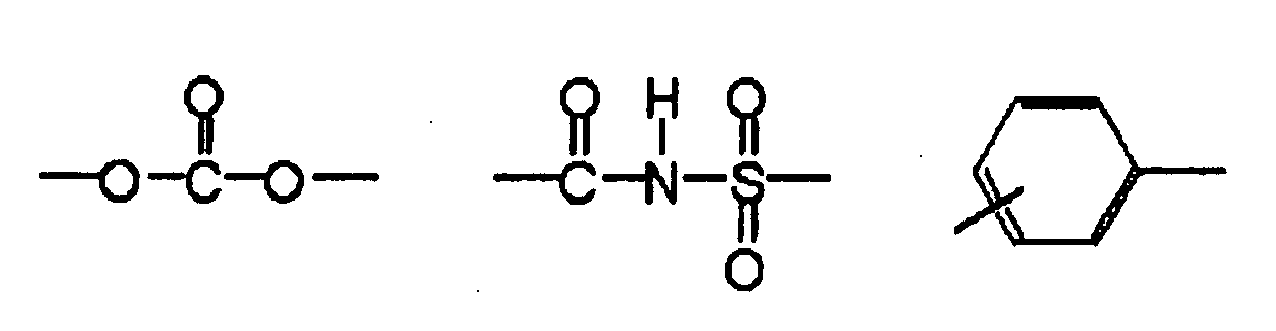

- Also, L1, L2 and L3 may be each independently formed from a polymer or an oligomer. Concretely, it is preferable that the polymer or oligomer includes polyacrylates, polymethacrylates, polyacrylonitriles, polyvinyls or polystyrenes each composed of an unsaturated double bond based monomer, or the like. Other preferred examples thereof include poly(oxyalkylenes), polyurethanes, polyureas, polyesters, polyamides, polyimides, polycarbonates, polyamino acids and polysiloxanes. Of these, polyacrylates, polymethacrylates, polyacrylonitriles, polyvinyls and polystyrenes are preferable, with polyacrylates and polymethacrylates being more preferable.
- The structural unit which is used in such a polymer or oligomer may be used singly or in combination of two or more kinds thereof. In the case where L1, L2 and L3 are each a polymer or an oligomer, the number of constitutional elements is not particularly limited, and its molecular weight is preferably from 1, 000 to 1, 000, 000, more preferably from 1,000 to 500, 000, and most preferably from 1,000 to 200,000.
- X represents a partial structure represented by the formula (II), Si(OR10)mR11 3-m, wherein m represents an integer of from 1 to 3, and R10 and R11 each independently represents a hydrogen atom or a hydrocarbon group having not more than 8 carbon atoms. Examples of the hydrocarbon group having not more than 8 carbon atoms include the same hydrocarbon groups as those in the hydrocarbon group represented by R1 to R9.
- x and y are each a composition ratio of the structural unit represented by the formula (I-a) and the structural formula represented by the formula (I-b)in the specified hydrophilic polymer (A). x and y each represents a number satisfied with the relationships of 0 < x < 100, 0 < y < 100 and (x + y) = 100. The composition ratio x is preferably in the range of 10 < x < 99, and more preferably in the range of 50 < x < 99. The composition ratio y is preferably in the range of 1 < y < 99, and more preferably in the range of 1 <y < 50.
- Here, (I-a) and (I-b) which are each a structural unit for constituting the polymer chain may be all the same or may be one containing plural different structural units. In that case, it is preferable that the composition ratios of the structural unit corresponding to the formula (I-a) and the structural unit corresponding to the formula (I-b) fall within the foregoing ranges.
- The synthesis method of the specified hydrophilic polymer (graft polymer) (A) is basically classified into three methods of (1) a method of polymerizing a branched monomer from a trunk polymer, (2) a method of bonding a branched polymer to a trunk polymer and (3) a method of introducing a high-molecular weight polymerization site to achieve polymerization (macromer method). Though the specified hydrophilic polymer (A) which is used in the invention can be synthesized by using any of these three methods, the "macromer method" (3) is especially excellent from the viewpoints of manufacture aptitude and control of the film structure.
- The synthesis of a graft polymer using a macromonomer (macromer) is described in Shin Kobunshi Jikkengaku (New Polymer Experimentology) 2: Synthesis and Reaction of Polymer, edited by The Society of Polymer Science, Japan and published by Kyoritsu Shuppan Co., Ltd. (1995) . The synthesis of a graft polymer using a macromonomer (macromer) is also described in detail in Chemistry and Industry of Macromonomer, written by Yuya YAMASHITA, et al. and published by Industrial Publishing & Consulting, Inc. (1989). First of all, the specified hydrophilic polymer (A) which is used in the invention can be synthesized by polymerizing a hydrophilic macromonomer synthesized by the foregoing method (corresponding to a precursor of the specified hydrophilic polymer side chain) with a chain transfer agent, preferably a chain transfer agent having a functional group capable of reacting with the specified alkoxide (B).
- Also, the foregoing specified hydrophilic polymer (A) may be a copolymer with other monomer as described later. Examples of other monomer to be used include known monomers, for example, acrylic esters, methacrylic esters, acrylamides, methacrylates, vinyl esters, styrenes, acrylic acid, methacrylic acid, acrylonitrile, maleic anhydride and maleic acid imide. By copolymerizing with such a monomer, various physical properties such as fabrication properties, film strength, hydrophilicity, hydrophobicity, solubility, reactivity and stability can be improved.
- Specific examples of the acrylic ester include methyl acrylate, ethyl acrylate, n-propyl or isopropyl acrylate, n-butyl, isobutyl, sec-butyl or t-butyl acrylate, amyl acrylate, 2-ethylhexyl acrylate, dodecyl acrylate, chloroethyl acrylate, 2-hydroxyethyl acrylate, 2-hydroxypropyl acrylate, 2-hydroxypentyl acrylate, cyclohexyl acrylate, allyl acrylate, trimethylolpropane monoacrylate, pentaerythritol monoacrylate, benzyl acrylate, methoxybenzyl acrylate, chlorobenzyl acrylate, hydroxybenzyl acrylate, hydroxyphenethyl acrylate, dihydroxyphenethyl acrylate, furfuryl acrylate, tetrahydrofurfuryl acrylate, phenyl acrylate, hydroxyphenyl acrylate, chlorophenyl acrylate, sulfamoylphenyl acrylate and 2-(hydroxyphenylcarbonyloxy)ethyl acrylate.
- Specific examples of the methacrylic ester include methyl methacrylate, ethyl methacrylate, n-propyl or isopropyl methacrylate, n-butyl, isobutyl, sec-butyl or t-butyl methacrylate, amyl methacrylate, 2-ethylhexyl methacrylate, dodecyl methacrylate, chloroethyl methacrylate, 2-hydroxyethyl methacrylate, 2-hydroxypropyl methacrylate, 2-hydroxypentyl methacrylate, cyclohexyl methacrylate, allyl methacrylate, trimethylolpropane monomethacrylate, pentaerythritol monomethacrylate, benzyl methacrylate, methoxybenzyl methacrylate, chlorobenzyl methacrylate, hydroxybenzyl methacrylate, hydroxyphenethyl methacrylate, dihydroxyphenethyl methacrylate, furfuryl methacrylate, tetrahydrofurfuryl methacrylate, phenyl methacrylate, hydroxyphenyl methacrylate, chlorophenyl methacrylate, sulfamoylphenyl methacrylate and 2-(hydroxyphenylcarbonyloxy)ethyl methacrylate.
- Specific examples of the acrylamide include acrylamide, N-methylacrylamide, N-ethylacrylamide, N-propylacrylamide, N-butylacrylamide, N-benzylacrylamide, N-hydroxyethylacrylamide, N-phenylacrylamide, N-toltylacrylamide, N-(hydroxyphenyl)acrylamide, N-(sulfamoylphenyl)acrylamide, N-(phenylsulfonyl)acrymaide, N-(tolylsulfonyl)acrylamide, N,N-dimethylacrylamide, N-methyl-N-phenylacrylamide and N-hydroxyethyl-N-methylacrylamide.
- Specific examples of the methacrylamide include methacrylamide, N-methylmethacrylamide, N-ethylmethacrylamide, N-propylmethacrylamide, N-butylmethacrylamide, N-benzylmethacrylamide, N-hydroxyethylmethacrylamide, N-phenylmethacrylamide, N-toltylmethacrylamide, N-(hydroxyphenyl)methacrylamide, N-(sulfamoylphenyl)methacrylamide, N-(phenylsulfonyl)methacrymaide, N-(tolylsulfonyl)methacrylamide, N,N-dimethylmethacrylamide, N-methyl-N-phenylmethacrylamide and N-hydroxyethyl-N-methylmethacrylamide.
- Specific examples of the vinyl ester include vinyl acetate, vinyl butyrate and vinyl benzoate.
- Specific examples of the styrene include styrene, methylstyrene, dimethylstyrene, trimethylstyrene, ethylstyrene, propylstyrene, cyclohexylstyrene, chloromethylstyrene, trifluoromethylstyrene, ethoxymethylstyrene, acetoxymethylstyrene, methoxystyrene, dimethoxystyrene, chlorostyrene, dichlorostyrene, bromostyrene, iodostyrene, fluorostyrene and carboxystyrene.
- With respect to the proportion of such other monomer to be used for the synthesis of a copolymer, a sufficient amount for improving various physical properties is necessary. However, in order that the function as the hydrophilic layer may be sufficient and that advantages to be brought by adding the specified hydrophilic polymer (A) may be sufficiently obtained, it is preferable that the proportion is not excessively high. Accordingly, a total proportion of other monomer in the specified hydrophilic polymer (A) is preferably not more than 80 % by mass (% by weight), and more preferably not more than 50 % by mass.
- Also, the specified hydrophilic polymer (A) may be a copolymer with other hydrophilic monomer, and the structural unit represented by the formula (I-b) may be a copolymer with other hydrophilic monomer. With respect to the proportion of such other hydrophilic monomer, a sufficient amount for improving various physical properties is necessary. However, in order that the function as the graft polymer may be sufficient and that advantages to be brought by adding the specified hydrophilic polymer (A) may be sufficiently obtained, it is preferable that the proportion is not excessively high. Accordingly, a total proportion of such a hydrophilic monomer in the specified hydrophilic polymer (A) is preferably not more than 80 % by mass, and more preferably not more than 50 % by mass.
- A mass average molecular weight of the macromonomer which is the structural unit represented by the formula (I-b) is in the range of from 1,000 to 5,000,000, preferably in the range of from 2,000 to 1,000,000, and more preferably in the range of from 5,000 to 800,000.
- A mass average molecular weight of the specified hydrophilic polymer (A) is in the range of from 1,000 to 10,000,000, preferably in the range of from 5,000 to 5, 000, 000, and more preferably in the range of from 10,000 to 2, 000, 000.
- Specific examples of the specified hydrophilic polymer (A) [Illustrative Compounds (1) to (50)] will be given below along with mass average molecular weights (M.W.) thereof, but it should not be construed that the invention is limited thereto. In the following specific examples, it is meant by numerical values as described by the side of parentheses of respective structural units on the polymer principal chain that the polymer is a random copolymer in which the respective structural units are contained in the designated molar ratio; and it is meant by numerical values as described by the side of parentheses of respective structural units on the graft polymer chain that the respective structural units are randomly repeated in the designated numbers.
















- From the viewpoints of curing properties and hydrophilicity, the specified hydrophilic polymer (A) according to the invention is preferably contained in an amount in the range of from 5 to 95 % by mass, more preferably from 15 to 90 % by mass, and most preferably from 20 to 85 % by mass in terms of a non-volatile component of the hydrophilic composition of the invention. The specified hydrophilic polymer (A) may be used singly or in combination of two or more kinds thereof. The "non-volatile component" as referred to herein means a component exclusive of a volatile solvent. [(B) Alkoxide compound of an element selected among Si, Ti, Zr and Al]
- The alkoxide compound of an element selected among Si, Ti, Zr and Al as the specified alkoxide (B) which is preferably used in the invention is a hydrolyzable, polymerizable compound having a polymerizable functional group in a structure thereof and functioning as a crosslinking agent, and when the specified alkoxide (B) is polycondensed with the specified hydrophilic polymer (A), a firm film having a crosslinking structure is formed.
- The specified alkoxide (B) is preferably a compound represented by the following formula (2B), and in order to cure the hydrophilic layer, in forming a crosslinking structure, the foregoing specified hydrophilic polymer (A) and the specified alkoxide (B) represented by the following formula (2B) are mixed, and the mixture is applied on a surface of a substrate, and heated (dried).
Formula (2B) (R12)k-Y-(OR13)4-k
- In the formula (2B), R12 represents a hydrogen atom, an alkyl group or an aryl group; R13 represents an alkyl group or an aryl group; Y represents Si, Al, Ti or Zr; and k represents an integer of from 0 to 2. When R12 and R13 each represents an alkyl group, the carbon atom number of the alkyl group is preferably from 1 to 4. The alkyl group and the aryl group may each have a substituent, and examples of the substituent which can be introduced include a halogen atom, an amino group and a mercapto group. This compound is a low-molecular weight compound and preferably has a molecular weight of not more than 1,000.
- Specific examples of the specified alkoxide (B) represented by the formula (2B) will be given below, but it should not be construed that the invention is limited thereto. In the case where Y represents Si, namely silicon is contained in the specified alkoxide, examples thereof include trimethoxysilane, triethoxysilane, tripropoxysilane, tetramethoxysilane, tetraethoxysilane, tetrapropoxysilane, methyltrimethoxysilane, ethyltrimethoxysilane, propyltrimethoxysilane, methyltriethoxysilane, ethyltriethoxysilane, propyltriethoxysilane, dimethyldimethoxysilane, diethyldiethoxysilane, γ-chloropropyltriethoxysilane, γ-mercaptopropyltrimethoxysilane, γ-mercaptopropyltriethoxysilane, γ-aminopropyltriethoxysilane, phenyltrimethoxysilane, phenyltriethoxysilane, phenyltripropoxysilane, diphenyldimethoxysilane and diphenyldiethoxysilane. Of these, tetramethoxysilane, tetraethoxysilane, methyltrimethoxysilane, ethyltrimethoxysilane, methyltriethoxysilane, ethyltriethoxysilane, dimethyldiethoxysilane, phenyltrimethoxysilane, phenyltriethoxysilane, diphenyldimethoxysilane and diphenyldiethoxysilane are especially preferable.
- In the case where Y represents Al, namely aluminum is contained in the specified alkoxide, examples thereof include trimethoxy aluminate, triethoxy aluminate, tripropoxy aluminate and tetraethoxy aluminate.
- In the case where Y represents Ti, namely titanium is contained in the specified alkoxide, examples thereof include trimethoxy titanate, tetramethoxy titanate, triethoxy titanate, tetraethoxy titanate, tetrapropoxy titanate, chlorotrimethoxy titanate, chlorotriethoxy titanate, ethyltrimethoxy titanate, methyltriethoxy titanate, ethyltriethoxy titanate, diethyldiethoxy titanate, phenyltrimethoxy titanate and phenyltriethoxy titanate.
- In the case where Y represents Zr, namely zirconium is contained in the specified alkoxide, examples thereof include zirconates corresponding to the above-exemplified titanium-containing compounds.
- Of these, alkoxides wherein Y represents Si are preferable from the viewpoint of film properties.
- The specified alkoxide (B) according to the invention may be used singly or in combination of two or more kinds thereof.
- The specified alkoxide (B) is preferably used in an amount in the range of from 5 to 80 % by mass, and more preferably from 10 to 70 % by mass in terms of a non-volatile component in the hydrophilic composition of the invention.
- The specified alkoxide (B) is easily available as a commercial product and is also obtainable by a known synthesis method, for example, a reaction between each metal chloride and an alcohol.
- In the hydrophilic composition of the invention, by dissolving the specified hydrophilic polymer (A) and preferably further a crosslinking component such as the specified alkoxide (B) in a solvent and well stirring the solution, these components are hydrolyzed and polycondensed to form an organic/inorganic composite sol liquid, and a hydrophilic layer having high hydrophilicity and high film strength is formed by this sol liquid. In preparing the organic/inorganic composite sol liquid, in order to accelerate the hydrolysis and polycondensation reaction, a non-volatile catalyst is contained in the hydrophilic composition according to the invention.
- As the non-volatile catalyst (C) which is used in the invention, a catalyst capable of hydrolyzing and polycondensing the foregoing alkoxide compound (B) and accelerating a reaction for forming a linkage with the specified hydrophilic polymer (A) is chosen. Examples of such a catalyst include metal complex catalysts and non-volatile acidic or basic compounds. An acidic or basic compound can be used as it is. Alternatively, an acidic or basic compound is used in a state that it is dissolved in a solvent such as water and alcohols (these catalysts will be hereinafter also referred to inclusively as "acidic catalyst" and "basic catalyst", respectively).
- The catalyst is especially preferably a metal complex catalyst. The metal complex catalyst is a metal complex constituted of a metal element selected among those belonging to the groups 2A, 3B, 4A and 5A of the periodic table and an oxo or hydroxyl oxygen-containing compound selected among β-diketones, keto esters, hydroxycarboxylic acids or esters thereof, amino alcohols and enolic active hydrogen compounds.
- Of the constitutional metal elements, elements of the group 2A (for example, Mg, Ca, Sr and Ba), elements of the group 3B (for example, Al and Ga), elements of the group 4A (for example, Ti and Zr) and elements of the group 5A (for example, V, Nb and Ta) are preferable, and each of them forms a complex having an excellent catalytic effect. Above all, complexes obtained from Zr, Al or Ti are excellent and preferable.
- In the invention, examples of the oxo or hydroxyl oxygen-containing compound which constitutes a ligand of the foregoing metal complex include β-diketones (for example, acetylacetone, acetylacetone (2,4-pentanedione) and 2,4-heptanedione), keto esters (for example, methyl acetoacetate, ethyl acetoacetate and butyl acetoacetate), hydroxycarboxylic acids and esters thereof (for example, lactic acid, methyl lactate, salicylic acid, ethyl salicylate, phenyl salicylate, malic acid, tartaric acid and methyl tartarate), keto alcohols (for example, 4-hydroxy-4-methyl-2-pentanone, 4-hydroxy-2-pentanone, 4-hydroxy-4-methyl-2-heptanone and 4-hydroxy-2-heptanone), amino alcohols (for example, monoethanolamine, N,N-dimethylethanolamine, N-methyl-monoethanolamine, diethanolamine and triethanolamine), enolic active hydrogen compounds (for example, methylolmelamine, methylolurea, methylolacrylamide and diethyl malonate) and compounds having a substituent on the methyl group, methylene group or carbonyl carbon of acetylacetone (2,4-pentanedione).
- The ligand is preferably an acetylacetone or an acetylacetone derivative. In the invention, the acetylacetone derivative refers to a compound having a substituent on the methyl group, methylene group or carbonyl carbon of acetylacetone. Examples of the substituent which is substituted on the methyl group of acetylacetone include a linear or branched alkyl group, a linear or branched acyl group, a linear or branched hydroxyalkyl group, a linear or branched carboxyalkyl group, a linear or branched alkoxy group and a linear or branched alkoxyalkyl group each having from 1 to 3 carbon atoms; examples of the substituent which is substituted on the methylene group of acetylacetone include a linear or branched carboxyalkyl group and a linear or branched hydroxyalkyl group each having from 1 to 3 carbon atoms as well as a carboxyl group; and examples of the substituent which is substituted on the carbonyl carbon of acetylacetone include an alkyl group having from 1 to 3 carbon atoms, and in this case, a hydrogen atom is added to the carbonyl oxygen to form a hydroxyl group.
- Preferred specific examples of the acetylacetone derivative include ethylcarbonylacetone, n-propylcarbonylacetone, i-propylcarbonylacetone, diacetylacetone, 1-acetyl-1-propionyl-acetylacetone, hydroxyethylcarbonylacetone, hydroxypropylcarbonylacetone, acetoacetic acid, acetopropionic acid, diacetoacetic acid, 3,3-diacetopropionic acid, 4,4-diacetobutyric acid, carboxyethylcarbonylacetone, carboxypropylcarbonylacetone and diacetone alcohol. Of these, acetylacetone and diacetylacetone are especially preferable. The complex of the foregoing acetylacetone derivative with the foregoing metal element is a mononuclear complex in which from 1 to 4 acetylacetone derivative molecules are coordinated per metal element. When the coordination number of the metal element is greater than the total coordination number of the acetylacetone derivative, ligands commonly used in usual complexes such as a water molecule, a halogen ion, a nitro group and an ammonio group may be coordinated on the metal element.
- Preferred examples of the metal complexe include a tris(acetylacetonato)aluminum complex salt, a di-(acetylacetonato)aluminum aquocomplex, a mono-(acetylacetonato)aluminum chlorocomplex salt, a di-(diacetylacetonato) aluminum complex salt, ethylacetoacetate aluminum diisopropylate, aluminum tris(ethylacetoacetate), cyclic aluminum oxide isopropylate, a tris(acetylacetonato)barium complex salt, a di(acetylacetonato)titanium complex salt, a tris(acetylacetonato)titanium complex salt, a di-i-propoxy bis(acetylacetonato)titanium complex salt, zirconium tris(ethylacetoacetate) and a zirconium tris(benzoic acid) complex salt. These metal complexes exhibit excellent stability in an aqueous coating solution and are excellent in an effect for accelerating the gelation in a sol-gel reaction at the heat drying. Above all, ethylacetoacetate aluminum diisopropylate, aluminum tris(ethylacetoacetate), a di(acetylacetonato)titanium complex salt and zirconium tris(ethylacetoacetate) are especially preferable.
- In this specification, the description of a counter salt of the foregoing metal complex is omitted. The kind of the counter salt is arbitrary so far as it is a water-soluble salt which keeps the electric charge as a complex compound neutral. Salts which can be stoichiometrically kept neutral, for example, nitrates, halogenic acid salts, sulfates and phosphates, are useful. The behavior of a silica sol-gel reaction of the metal complex is described in detail in J. Sol-Gel. Sci. and Tec., 16, 209 (1999). As its reaction mechanism, the following scheme may be presumed. That is, it is thought that the metal complex takes a coordination structure and is stable in a coating solution and in a dehydration condensation reaction starting with a heating (drying) step after coating, accelerates crosslinking according to a mechanism similar to an acid catalyst. In any event, the use of this metal complex made it possible to improve the stability with time of the coating solution and the surface quality of the film and to attain high hydrophilicity and high durability.
- The non-volatile catalyst (C) according to the invention is preferably used in an amount in the range of from 0.1 to 50 % by mass, and more preferably from 5 to 25 % by mass in terms of a non-volatile component in the hydrophilic composition of the invention. Also, the catalyst (C) may be used singly or in combination of two or more kinds thereof.
- The foregoing metal complex catalyst is easily available as a commercial product and is also obtainable by a known synthesis method, for example, a reaction between each metal chloride and an alcohol.
- In the hydrophilic composition of the invention, in addition to the foregoing (A), (B) and (C) components, various compounds can be used jointly depending upon the purpose so far as the effects of the invention are not hindered. The components which can be used jointly are hereunder described.
- In the invention, in order to enhance film surface properties of the foregoing hydrophilic composition, it is preferable to use a surfactant. Examples of the surfactant include nonionic surfactants, anionic surfactants, cationic surfactants, ampholytic surfactants and fluorocarbon based surfactants.
- The nonionic surfactant which is used in the invention is not particularly limited, and conventionally known nonionic surfactants can be used. Examples thereof include polyoxyethylene alkyl ethers, polyoxyethylene alkylphenyl ethers, polyoxyethylene polystyrylphenyl ethers, polyoxyethylene polyoxypropylene alkyl ethers, glycerin fatty acid partial esters, sorbitan fatty acid partial esters, pentaerythritol fatty acid partial esters, propylene glycol mono-fatty acid esters, sucrose fatty acid partial esters, polyoxyethylene sorbitan fatty acid partial esters, polyoxyethylene sorbitol fatty acid partial esters, polyethylene glycol fatty acid esters, polyglycerin fatty acid partial esters, polyoxyethylenated castor oils, polyoxyethylene glycerin fatty acid partial esters, fatty acid diethanolamides, N,N-bis-2-hydroxyalkylamines, polyoxyethylene alkylamines, triethanolamine fatty acid esters, trialkylamine oxides, polyethylene glycol and a copolymer of polyethylene glycol and polypropylene glycol.
- The anionic surfactant which is used in the invention is not particularly limited, and conventionally known anionic surfactants can be used. Examples thereof include fatty acid salts, abietic acid salts, hydroxyalkanesulfonic acid salts, alkanesulfonic acid salts, dialkylsulfosuccinic acid esters, linear alkylbenzenesulfonic acid salts, branched alkylbenzenesulfonic acid salts, alkylnaphthalenesulfonic acid salts, alkylphenoxypolyoxyethylene propylsulfonic acid salts, polyoxyethylene alkylsulfophenyl ether salts, N-methyl-N-oleyltaurin sodium salts, N-alkylsulfosuccinic acid monoamide disodium salts, petroleum sulfonic acid salts, sulfated beef tallow oil, sulfuric ester salts of a fatty acid alkyl ester, alkylsulfuric ester salts, polyoxyethylene alkyl ether sulfuric ester salts, fatty acid monoglyceride sulfuric ester salts, polyoxyethylene alkylphenyl ether sulfuric ester salts, polyoxyethylene styrylphenyl ether sulfuric ester salts, alkylphosphoric ester salts, polyoxyethylene alkyl ether phosphoric ester salts, polyoxyethylene alkylphenyl ether phosphoric ester salts, a partially saponified product of a styrene/maleic anhydride copolymer, a partially saponified product of an olefin/maleic anhydride copolymer and naphthalenesulfonic acid salt formalin condensates.
- The cationic surfactant which is used in the invention is not particularly limited, and conventionally known cationic surfactants can be used. Examples thereof include alkylamine salts, quaternary ammonium salts, polyoxyethylene alkylamine salts and polyethylene polyamine derivatives.
- The ampholytic surfactant which is used in the invention is not particularly limited, and conventionally known ampholytic surfactants can be used. Examples thereof include carboxybetaines, aminocarboxylic acids, sulfobetaines, aminosulfuric esters and imidazolines.
- In the foregoing surfactants, the "polyoxyethylene" can also be given a different reading as "polyoxyalkylene", for example, polyoxymethylene, polyoxypropylene and polyoxybutylene. In the invention, those surfactants can also be used.
- Furthermore, examples of the preferred surfactant include fluorocarbon based surfactants containing a perfluoroalkyl group in a molecule thereof. Examples of such a fluorocarbon based surfactant include anionic types (for example, perfluoroalkylcarboxylic acid salts, perfluoroalkylsulfonic acid salts and perfluoroalkylphosphoric esters); ampholytic types (for example, perfluoroalkylbetaines); cationic types (for example, perfluoroalkyltrimethylammonium salts); and nonionic types (for example, perfluoroalkylamine oxides, perfluoroalkyl ethylene oxide adducts, oligomers containing a perfluoroalkyl group and a hydrophilic group, oligomers containing a perfluoroalkyl group and a lipophilic group, oligomers containing a perfluoroalkyl group, a hydrophilic group and a lipophilic group and urethanes containing a perfluoroalkyl group and a lipophilic group). Also, fluorocarbon based surfactants described in
JP-A-62-170950 JP-A-62-226143 JP-A-60-168144 - The surfactant is preferably used in an amount in the range of from 0.001 to 10 % by mass, and more preferably from 0.01 to 5 % by mass in terms of a non-volatile component in the hydrophilic composition of the invention. Also, the surfactant can be used singly or in combination of two or more kinds thereof.
- In order to impart antimicrobial properties, anti-fungal properties and anti-algal properties to the hydrophilic member of the invention, an antimicrobial agent can be contained in the hydrophilic coating solution composition. In the formation of a hydrophilic layer, it is preferable to contain a hydrophilic, water-soluble antimicrobial agent. By containing the hydrophilic, water-soluble antimicrobial agent, a surface-hydrophilic member which is excellent in antimicrobial properties, anti-fungal properties and anti-algal properties is obtainable without impairing the surface hydrophilicity.
- It is preferable that a compound which does not reduce the hydrophilicity of the hydrophilic member is added as the antimicrobial agent. Examples of such an antimicrobial agent include inorganic antimicrobial agents and water-soluble organic antimicrobial agents. As the antimicrobial agent, ones exhibiting an antimicrobial effect against fungi existing in the surroundings, for example, bacteria represented by Staphylococcus aureus and Escherichia coli and Eumycetes such as fungi and yeasts are useful.
- Examples of the organic antimicrobial agent include phenol ether derivatives, imidazole derivatives, sulfone derivatives, N-haloalkylthio compounds, anilide derivatives, pyrrole derivatives, quaternary ammonium salts, pyridine based compounds, triazine based compounds, benzisothiazoline based compounds and isothiazoline based compounds.
- Specific examples thereof 1,2-benzisothiazolin-3-one, N-fluorodichloromethylthiophthalimide, 2,3,5,6-tetrachloroisophthalonitrile, N-trichloromethylthio-4-cyclohexene-1,2-dicarboxyimide, copper 8-quinolinate, bis-(tributyltin) oxide, 2-(4-thiazolyl)benzimidazole (hereinafter referred to as "TBZ"), methyl 2-benzimidazole carbamate (hereinafter referred to as "BCM"), 10,10'-oxybisphenoxy arsine (hereinafter referred to as "OBPA"), 2,3,5,6-tetrachloro-4-(methylsulfone)pyridine, bis(2-pyridylthio-1-oxide)zinc (hereinafter referred to as "ZPT"), N,N-dimethyl-N'-(fluorodichloromethylthio)-N'-phenylsulfamide (dichlorfluanid), poly(hexamethylenebiguanid) hydrochloride, dithiol-2,2'-bis(benzmethylamide), 2-methyl-4,5-trimethylene-4-isothiazolin-3-one, 2-bormo-2-nitro-1,3-propanediol, hexahydro-1,3-tris(2-hydroxyethyl)-s-triazine, p-chloro-m-xylenol and 1,2-benzisothiazolin-3-one. However, it should not be construed that the invention is limited thereto.
- Such an organic antimicrobial agent can be properly chosen and used while taking into consideration hydrophilicity, water resistance, sublimation properties, safety, etc. Of the organic antimicrobial agents, 2-bromo-2-nitro-1,3-propanediol, TBZ, BCM, OBPA and ZPT are preferable in view of hydrophilicity, ant-bacterial effect and cost.
- As the inorganic antimicrobial agent, mercury, silver, copper, zinc, iron, lead and bismuth can be exemplified in the order of a high sterilization effect. Examples thereof include antimicrobial agents obtained by supporting a metal (for example, silver, copper, zinc and nickel) or a metal ion thereof on a silicate based carrier, a phosphate based carrier, an oxide, glass, potassium titanate, an amino acid; etc. Specific examples thereof zeolite based antimicrobial agents, calcium silicate based antimicrobial agents, zirconium phosphate based antimicrobial agents, calcium phosphate based antimicrobial agents, zinc oxide based antimicrobial agents, soluble glass based antimicrobial agents, silica gel based antimicrobial agents, active carbon based antimicrobial agents, titanium oxide based antimicrobial agents, titania based antimicrobial agents, organometal based antimicrobial agents, ion exchanger ceramic based antimicrobial agents, stratiform phosphate-quaternary ammonium based antimicrobial agents and antimicrobial stainless steel. However, it should not be construed that the invention is limited thereto.
- Examples of naturally occurring antimicrobial agents include chitosan which is a basic polysaccharide obtained by hydrolysis of chitin contained in crustaceans such as crabs and shrimps.
- A trade name "HOLON KILLER BEADS CELLER" of Nikko Co., which is composed of an amino metal having a metal compounded on both sides of an amino acid, is preferable in the invention.
- Such an antimicrobial agent is nonvolatile; is easy to mutually act on the polymer or the crosslinking agent component of the hydrophilic layer; and is stably molecularly dispersible or solid dispersible. Also, such an antimicrobial agent is easily exposed effectively on the surface of the hydrophilic layer and when wetted with water, does not elute and is able to hold its effect over a long period of time. Furthermore, it does not affect the human body. The antimicrobial agent can be stably dispersed in the hydrophilic layer or the coating solution and does not cause deterioration the hydrophilic layer or the coating solution.
- Of the foregoing antimicrobial agents, silver based inorganic antimicrobial agents and water-soluble organic antimicrobial agents are the most preferable in view of the matter that the antimicrobial effect is large. A silver zeolite having silver supported on a zeolite as a silicate based carrier, an antimicrobial agent having silver supported on a silica gel, 2-bromo-2-nitro-1,3-propanediol, TPN, TBZ, BCM, OBPA and ZPT are especially preferable. Especially preferred examples of a commercially available silver zeolite based antimicrobial agent include ZEOPMIC (available from Shinagawa Fuel Co., Ltd.), SILWELL (available from Fuji Silysia Chemical Ltd.) and BACTENON (available from Japan Electronic Materials Corporation). Besides, NOVARON (available from Toagosei Co., Ltd.) having silver supported on an inorganic ion exchanger ceramic, ATOMY BALL (available from Catalysts & Chemicals Ind. Co., Ltd.) and SAN-AI BAC P (available from San-Ai Oil Co., Ltd.) which is a triazine based antimicrobial agent are also preferable.
- The content of the antibacterial agent is generally from 0.001 to 10 % by mass, preferably from 0.005 to 5 % by mass, more preferably from 0.01 to 3 % by mass, especially preferably from 0.02 to 1.5 % by mass, and most preferably from 0.05 to 1 % by mass in terms of a non-volatile component in the hydrophilic composition. When the content of the antibacterial agent is 0.001 % by mass or more, an effective antimicrobial agent can be obtained. Also, when the content of the antibacterial agent is not more than 10 % by mass, the hydrophilicity is not reduced; the properties with time do not become worse; and the antifouling properties and anti-fogging properties are not adversely affected.
- The hydrophilic composition of the invention may contain an inorganic fine particle for the purposes of enhancing the cured film strength and hydrophilicity of the hydrophilic layer to be formed. Examples of the inorganic fine particle which is favorably used include silica, alumina, magnesium oxide, titanium oxide, magnesium carbonate, calcium alginate and mixtures thereof.
- The inorganic fine particle preferably has an average particle size of from 5 nm to 10 µm, and more preferably from 0.5 to 3 µm. When the particle size of the inorganic fine particle falls within the foregoing range, it is possible to form a film with excellent hydrophilicity in which the inorganic fine particle is stably dispersed in the hydrophilic layer and the film strength of the hydrophilic layer is sufficiently kept. The foregoing inorganic fine particle is easily available as a commercial product such as a colloidal silica dispersion.
- The inorganic fine particle according to the invention is preferably used in an amount in the range of not more than 20 % by mass, and more preferably not more than 10 % by mass in terms of a non-volatile component in the hydrophilic composition of the invention. Also, the inorganic fine particle can be used singly or in combination of two or more kinds thereof.
- In the invention, an ultraviolet ray absorber can be used from the viewpoints of an enhancement of the weather resistance and an enhancement of the durability of the hydrophilic member.
- Examples of the ultraviolet ray absorber include benzotriazole based compounds described in
JP-A-58-185677 JP-A-61-190537 JP-A-2-782 JP-A-5-197075 JP-A-9-34057 JP-A-46-2784 JP-A-5-194483 U.S. Patent No. 3,214,463 ; cinnamic acid based compounds described inJP-B-48-303492 JP-B-56-21141 JP-A-10-88106 JP-A-4-298503 JP-A-8-53427 JP-A-8-239368 JP-A-10-182621 JP-T-8-501291 - The addition amount of the ultraviolet ray absorber is properly chosen depending upon the purpose, and in general, it is preferably from 0.5 to 15 % by mass in terms of a non-volatile component in the hydrophilic composition.
- For the purpose of enhancing the stability of the hydrophilic member of the invention, an antioxidant can be added in the coating solution for forming a hydrophilic layer. Examples of the antioxidant include those described in
EP-A-223739 EP-A-309401 EP-A-309402 EP-A-310551 EP-A-310552 EP-A-459416 DE-A-3435443 ,JP-A-54-48535 JP-A-62-262047 JP-A-63-113536 JP-A-63-163351 JP-A-2-262654 JP-A-2-71262 JP-A-3-121449 JP-A-5-61166 JP-A-5-119449 U.S. Patents Nos. 4,814,262 and4,980,275 . - The addition amount of the antioxidant is properly chosen depending upon the purpose and is preferably from 0.1 to 8 % by mass in terms of a non-volatile component in the hydrophilic composition.
- For the purpose of adjusting film physical properties of the hydrophilic layer, various high-molecular weight compounds can be added in the coating solution for forming a hydrophilic layer of the hydrophilic member of the invention within the range where the hydrophilicity is not hindered. Examples of the high-molecular weight compound which can be used include acrylic polymers, polyvinyl alcohol resins, polyvinyl butyral resins, polyurethane resins, polyamide resins, polyester resins, epoxy resins, phenol resins, polycarbonate resins, polyvinyl formal resins, shellac, vinyl based resins, acrylic resins, rubber based resins, waxes and other natural resins. Such a high-molecular weight compound may be used in combination with two or more kinds thereof. Of these, vinyl based copolymers obtainable by copolymerization with an acrylic monomer are preferable. In addition, with respect to the copolymerization composition of a high-molecular weight binder, copolymers containing, as a structural unit, a "carboxyl group-containing monomer", an "alkyl methacrylate" or an "alkyl acrylate" are also preferably used.
- Furthermore, in addition to the foregoing, for example, a leveling additive, a matting agent, a wax for adjusting film physical properties and a tackifier for improving adhesion to the substrate within the range where the hydrophilicity is not hindered can be contained as the need arises.
- Specific examples of the tackifier include high-molecular weight adhesive polymers described on pages 5 to 6 of
JP-A-2001-49200 - The addition amount of such an additive is properly chosen depending upon the purpose and is preferably from 0.1 to 5 % by mass relative to the non-volatile components in the hydrophilic composition.
- From the viewpoints of anti-abrasion properties, acid resistance and alkali resistance, the coating solution for forming a hydrophilic layer of the hydrophilic member of the invention can contain chlorides, nitrates or alkoxides of zirconia and organic complexes. Examples of chlorides of zirconia include zirconium chloride, zirconium oxychloride (octahydrate) and chlorine-containing zirconium alkoxides, Zr(OCmH2m+1)xCly (m, x and y: an integer, (x + y) = 4); examples of nitrates of zirconium include zirconium oxynitrate (dihydrate); examples of alkoxides of zirconium include zirconium ethoxide, zirconium propoxide, zirconium isopropoxide, zirconium butoxide and zirconium t-butoxide; and examples of organic complexes include acetylacetone derivatives, and specific examples thereof include tetrakis(acetylacetonato)zirconium, bis(acetylacetonato)-zirconium dibutoxide, bis(acetylacetonato)zirconium dichloride, tetrakis(3,5-heptanedionato)zirconium, tetrakis-(2,2,6,6-tetramethyl-3,5-heptanedionato)zirconium and bis-(2,2,6,6-tetramethyl-3,5-heptanedionato)zirconium diisopropoxide.
- The foregoing zirconium compound is preferably used in an amount in the range of from 0 to 50 % by mass, and more preferably from 5 to 25 % by mass relative to the non-volatile components in the hydrophilic composition.
- The hydrophilic member of the invention has an undercoat layer between the substrate and the hydrophilic layer. The undercoat layer may be configured of a single layer or two or more layers. As a raw material of the undercoat layer, hydrophilic resins and water-dispersible latexes can be used.
- Examples of the hydrophilic resin include polyvinyl alcohol (PVC), cellulose based resins [for example, methyl cellulose (MC), hydroxyethyl cellulose (HEC) and carboxymethyl cellulose (CMC)], chitins, chitosans, starch, ether linkage-containing resins [for example, polyethylene oxide (PEO), polyethylene glycol (PEG) and polyvinyl ether (PVE)] and carbamoyl group-containing resins [for example, polyacrylamide (PAAM) and polyvinylpyrrolidone (PVP)]. Also, carboxyl group-containing polyacrylic acid salts, maleic acid resins, alginic acid salts and gelatins can be exemplified.
- Of these, at least one kind selected among polyvinyl alcohol based resins, cellulose based resins, ether linkage-containing resins, carbamoyl group-containing resins, carboxyl group-containing resins and gelatins is preferable, with polyvinyl alcohol (PVA) based resins and gelatins being especially preferable.
- Examples of the water-dispersible latex include acrylic latexes, polyester based latexes, NBR resins, polyurethane based latexes, polyvinyl acetate based latexes, SBR resins and polyamide based latexes. Of these, acrylic latexes are preferable.
- Each of the foregoing hydrophilic resin and water-dispersible latex may be used singly or in combination of two or more kinds thereof. The hydrophilic resin and the water-dispersible latex may be used jointly.
- Also, a crosslinking agent capable of crosslinking the foregoing hydrophilic resin or water-dispersible latex may be used.
- As the crosslinking agent which can be applied in the invention, a known crosslinking agent capable of forming crosslinking by heat can be used. Examples of general thermal crosslinking agents include those as described in Crosslinking Agent Handbook, written by Shinzo YAMASHITA and Tosuke KANEKO and published by Taiseisha Ltd. (1981). The crosslinking agent which is used in the invention is not particularly limited so far as it has two or more functional groups and is effectively crosslinkable with the hydrophilic resin or water-dispersible latex. Specific examples of the thermal crosslinking agent include polycarboxylic acids (for example, polyacrylic acid); amine compounds (for example, polyethyleneimine); polyepoxy compounds (for example, ethylene or propylene glycol diglycidyl ether, tetraethylene glycol diglycidyl ether, nonaethylene glycol diglycidyl ether, polyethylene or polypropylene glycol glycidyl ether, neopentyl glycol diglycidyl ether, 1,6-hexanediol diglycidyl ether, trimethylolpropane triglycidyl ether and sorbitol polyglycidyl ether); polyaldehyde compounds (for example, glyoxal and terephthalaldehyde); polyisocyanate compounds (for example, tolylene diisocyanate, hexamethylene diisocyanate, diphenylmethane isocyanate, xylylene diisocyanate, polymethylene polyphenyl isocyanate, cyclohexyl diisocyanate, cyclohexane phenylene diisocyanate, naphthalene-1,5-diisocyanate, isopropylbenzene-2,4-diisocyanate and a polypropylene glycol/tolylene diiosyanate addition reactant); block polyisocyanate compounds; silane coupling agents (for example, tetraalkoxysilanes); metal crosslinking agents (for example, acetyl acetonates of aluminum, copper or iron(III)); and polymethylol compounds (for example, trimethylolmelamine and pentaerythritol). Of these thermal crosslinking agents, water-soluble crosslinking agents are preferable from the viewpoints of easiness of the preparation of a coating solution and prevention of a reduction of the hydrophilicity of the prepared hydrophilic layer.
- The total amount of the foregoing hydrophilic resin and/or water-dispersible latex in the undercoat layer is preferably from 0.01 to 20 g/m2, and more preferably from 0.1 to 10 g/m2.
- The composition for forming an undercoat layer may contain a catalyst, and the catalyst may be a volatile catalyst or a non-volatile catalyst. As general catalysts, an acidic or basic compound can be used as it is or in a state that it is dissolved in a solvent such as water and alcohols (these catalysts will be hereinafter also referred to inclusively as "acidic catalyst" and "basic catalyst", respectively). In dissolving the acidic or basic compound in a solvent, its concentration is not particularly limited and may be properly chosen depending upon characteristics of the acidic or basic compound to be used, a desired content of the catalyst, etc. Here, in the case where the concentration of the acidic or basic compound which constitutes the catalyst is high, the rate of hydrolysis and polycondensation tends to become fast. However, when a basic catalyst of a high concentration is used, there may be a possibility that a precipitate is formed in the sol solution. Therefore, when the basic catalyst is used, its concentration is desirably not more than 1 N as calculated in terms of a concentration in the aqueous solution.
- The kind of the acidic catalyst or basic catalyst is not particularly limited. When it is required to use a catalyst having a high concentration, a catalyst constituted of an element which does not substantially remain in the coated layer after drying is desirable. Concretely, examples of the acidic catalyst include hydrogen halides (for example, hydrochloric acid), nitric acid, sulfuric acid, sulfurous acid, hydrogen sulfide, perchloric acid, hydrogen peroxide, carbonic acid, carboxylic acids (for example, formic acid and acetic acid) and substituted carboxylic acids in which in a structural formula represented by RCOOH, R is substituted with other element or a substituent and sulfonic acids (for example, benzenesulfonic acid); and examples of the basic compound include ammoniacal bases (for example, ammonia water) and amines (for example, ethylamine and aniline).
- It is more preferable that the undercoat layer of the hydrophilic member of the invention contains a non-volatile catalyst. The "non-volatile catalyst" as referred to herein is a catalyst other than those having a boiling point of lower than 125 °C. In another word, the non-volatile catalyst refers to a catalyst having a boiling point of 125 °C or higher, a catalyst which does' not originally have a boiling point (inclusive of those which do not cause phase changes such as thermal decomposition), etc.
- The non-volatile catalyst which is used in the invention is not particularly limited, and examples thereof include metal chelate compounds, silane coupling agents and acidic or basic compounds, all of which are non-volatile.
- The foregoing metal chelate compound (hereinafter also referred to as "metal complex") is not particularly limited, and examples thereof include metal complexes constituted of a metal element selected among those belonging to the groups 2A, 3B, 4A and 5A of the periodic table and an oxo or hydroxyl oxygen-containing compound selected among β-diketones, keto esters, hydroxycarboxylic acids or esters thereof, amino alcohols and enolic active hydrogen compounds.
- Of the constitutional metal elements, elements of the group 2A (for example, Mg, Ca, Sr and Ba), elements of the group 3B (for example, Al and Ga), elements of the group 4A (for example, Ti and Zr) and elements of the group 5A (for example, V, Nb and Ta) are preferable, and each of them forms a complex having an excellent catalytic effect. Above all, complexes obtained from Zr, Al or Ti are excellent and preferable.
- Concretely, the same metal complexes as those in the non-volatile catalyst (C) can be exemplified.
- In the invention, the silane coupling agent which is used as the non-volatile catalyst is not particularly limited, and examples thereof include silane coupling agents having a functional group exhibiting acidity or alkalinity. In more detail, examples of the silane coupling agent include silane coupling agents having a functional group exhibiting acidity (for example, peroxo acids, carboxylic acids, carbohydrazonic acids, carboximidic acids, sulfonic acids, sulfinic acids, sulfenic acids, selenonic acids, seleninic acids, selenenic acids, telluronic acids and the foregoing alkali metal salts) and silane coupling agents having a functional group exhibiting basicity such as an amino group.
- The undercoat layer is preferably one obtained by hydrolyzing and polymerizing a composition containing at least an alkoxide compound of an element selected among Si, Ti, Zr and Al and a non-volatile catalyst. As the alkoxide compound of an element selected among Si, Ti, Zr and Al, the same alkoxide compounds as those in the specified alkoxide (B) can be exemplified.
- The non-volatile catalyst (C) according to the invention is preferably used in an amount in the range of from 0 to 50 % by mass, and more preferably from 5 to 25 % by mass in terms of a non-volatile component in the composition for forming a hydrophilic layer according to the invention. The non-volatile catalyst (C) may be used singly or in combination of two or more kinds thereof.
- As to the thus obtained undercoat layer, in the case where the non-volatile catalyst is contained and exists therein without losing its activity, and in particular, it is made to exist on the surface, too, thereby further providing the hydrophilic layer on the undercoat layer, the adhesion at an interface between the undercoat layer and the hydrophilic layer becomes extremely high. In other words, even after the formation of a coated layer, the reaction of the silane coupling group of the specified hydrophilic polymer (A) and the specified alkoxide (B) in the undercoat layer is advanced due to the non-volatile catalyst, whereby the adhesion is more enhanced. Furthermore, since the non-volatile catalyst is of a low molecular weight, it is thought that the non-volatile catalyst is present in the vicinity of the surface of the undercoat layer, thereby more accelerating the reaction of the silane coupling agent of the specified hydrophilic polymer (A) and the specified alkoxide in the undercoat layer. Since general silane coupling group-containing polymers are low in hydrophilicity, such a general silane coupling group-containing polymer is unevenly distributed on the surface, and the foregoing effect can be hardly expected. However, since the specified hydrophilic polymer (A) of the invention is high in hydrophilicity, it is thought that the specified hydrophilic polymer (A) is uniformly present in the inside of the film, thereby tremendously enhancing the adhesion.
- Also, as to the undercoat layer of the hydrophilic member of the invention, by providing fine irregularities by plasma etching or incorporating a metal particle, it is possible to further enhance the adhesion at an interface between the undercoat layer and the hydrophilic layer.
- The preparation of the hydrophilic composition can be carried out by dissolving the specified hydrophilic polymer (A) and the non-volatile catalyst (C) and further the specified alkoxide (B) in a solvent such as ethanol and stirring the solution. The reaction temperature is preferably from room temperature to 80 °C; the reaction time, namely a time for continuing stirring, is preferably in the range of from 1 to 72 hours; and by advancing the hydrolysis and polycondensation of the both components by this stirring, an organic/inorganic composite sol liquid can be obtained.
- The solvent which is used in preparing the foregoing hydrophilic composition containing the specified hydrophilic polymer (A), the specified metal alkoxide (B) and the non-volatile catalyst (C) is not particularly limited so far as it is able to uniformly dissolve and disperse these components therein. The solvent is preferably an aqueous solvents, for example, methanol, ethanol and water are preferable.
- As described previously, the preparation of the organic/inorganic composite sol liquid (hydrophilic composition) for forming a hydrophilic layer from the hydrophilic composition of the invention utilizes a so-gel method. The sol-gel method is described in detail in Sumio SAKUHANA, Sol-Gel-Ho No Kagaku (Science of Sol-Gel Process), published by Agune Shofu Sha (1988); and Ken HIRASHIMA, Saishin Sol-Gel-Ho Niyoru Kinosei Hakumaku Sakusei Gij utsu (Functional Thin Film Formation Technology according to Newest Sol-Gel Method), published by General Technology Center (1992). In the invention, the methods as described in these documents can be applied to the preparation of the hydrophilic composition.
- The hydrophilic member of the invention can be obtained by coating an adequate substrate with a solution containing such a hydrophilic composition of the invention and drying the hydrophilic composition. That is, the hydrophilic member of the invention has a hydrophilic layer formed by coating a substrate with the foregoing hydrophilic composition of the invention and heating (drying) the hydrophilic composition.
- In the formation of the hydrophilic layer, with respect to the heating (drying) condition after applying (coating with) a solution containing the hydrophilic composition, from the viewpoint of efficiently forming a high-density crosslinking structure, drying is preferably performed at a temperature in the range of from 50 to 200 °C for from about 2 minutes to one hour, and more preferably at a temperature in the range of from 80 to 160 °C for from 5 to 30 minutes. Also, as a heating measure, a known measure, for example, use of a dryer having a temperature-adjusting function is preferably employed.
- Also, as to the hydrophilic member of the invention, in the case where the hydrophilic layer and the undercoat layer are coated on the substrate, the catalyst can be mixed immediately before coating on the substrate. Concretely, it is preferable that the hydrophilic composition is applied (coated) immediately after mixing the catalyst or within a time of up to one hour after mixing the catalyst. When the hydrophilic composition is used for the coating after mixing the catalyst and allowing it to stand for a long period of time, the viscosity of the hydrophilic composition increases, whereby a defect such as coating unevenness may possibly be generated. It is also preferable that other components are mixed immediately before coating with the hydrophilic composition. In that case, however, the hydrophilic composition may be stored for a long period of time after mixing these other components.
- The substrate which is used in the invention is not particularly limited. Any of glasses, plastics, metals, ceramics, woods, stones, cements, concretes, fibers, textiles, papers, leathers, combinations thereof and stacks thereof can be favorably utilized. Of these, glass substrates and plastic substrates are especially preferable as the substrate.
- Examples of the glass substrate include glass plates provided with an inorganic compound layer which is formed of a metal oxide (for example, silicon oxide, aluminum oxide, magnesium oxide, titanium oxide, tin oxide, zirconium oxide, sodium oxide, antimony oxide, indium oxide, bismuth oxide, yttrium oxide, cerium oxide, zinc oxide and ITO (indium tin oxide)); a metal halide (for example, magnesium fluoride, calcium fluoride, lanthanum fluoride, cerium fluoride, lithium fluoride and thorium fluoride); or the like. Also, float sheet glass, figured sheet glass, ground sheet glass, wire glass, crosswire glass, tempered glass, laminated glass, multilayered glass, vacuum glass, security glass and high-heat insulating Low-E multilayered glass can be used depending upon the purpose. Though the foregoing hydrophilic layer can be coated on a raw sheet glass as it is, for the purpose of enhancing the adhesion of the hydrophilic layer, one surface or both surfaces of the sheet glass can be subjected to a surface hydrophilization treatment such as an oxidation method and a roughing method as the need arises. Examples of the foregoing oxidation method include a corona discharge treatment, a glow discharge treatment, a chromic acid treatment (wet type), a flame treatment, a hot blast treatment and an ozone or ultraviolet ray irradiation treatment. As the roughing method, mechanical roughing by sand blast, brush polishing, etc. can be applied.
- The inorganic compound layer can be configured of a single layer or multiple layers. The inorganic compound layer is also able to maintain the light transmittance depending upon its thickness. Also, the inorganic compound layer can be made to act as an antireflection layer. Examples of a method for forming the inorganic compound layer which can be applied include known methods such as coating methods (applying method) (for example, a dip coating method, a spin coating method, a flow coating method, a spray coating method, a roll coating method and a gravure coating method); and vapor phase methods including a physical vapor deposition (PVD) method and a chemical vapor deposition (CVD) method (for example, a vacuum vapor deposition method, a reactive vapor deposition method, an ion beam assist method, a sputtering method and an ion plating method).
- The plastic substrate which is used in the invention is not particularly limited. The substrate which is used as an optical member is chosen while taking into consideration optical characteristics such as transparency, refractive index and dispersibility and also chosen while taking into consideration various physical properties, for examples, physical characteristics (inclusive of strengths such as impact resistance and flexibility), heat resistance, weather resistance and durability depending upon the use purpose. Examples of the plastic substrate include films or sheets made of a polyester, polyethylene, polypropylene, cellophane, triacetyl cellulose, diacetyl cellulose, acetyl cellulose butyrate, polyvinyl chloride, polyvinylidene chloride, polyvinyl alcohol, polyethylene vinyl alcohol, polystyrene, a polycarbonate, polymethylpentene, polysulfone, polyether ketone, an acrylic resin, a nylon, a fluorocarbon resin, a polyimide, polyether imide, polyether sulfone or the like. Of these, polyester films of polyethylene terephthalate, polyethylene naphthalate, etc. are preferable. These materials may be used singly or in combination of two or more kinds thereof in a form such as a mixture, a copolymer and a stack depending upon the use purpose. The thickness of the plastic substrate varies with a material to be stacked. For example, in a portion where a number of curved surfaces are present, a thin plastic substrate is favorable, and one having a thickness of from about 6 to 50 µm is useful. When the plastic substrate is used for a flat surface or is required to have strength, one having a thickness of from 50 to 400 µm is useful.
- For the purpose of enhancing the adhesion between the substrate and the undercoat layer, one surface or both surfaces of the substrate can be subjected to a surface hydrophilization treatment such as an oxidation method and a roughing method, if desired. Examples of the foregoing oxidation method include a corona discharge treatment, a glow discharge treatment, a chromic acid treatment (wet type), a flame treatment, a hot blast treatment and an ozone or ultraviolet ray irradiation treatment. As the roughing method, mechanical roughing by sand blast, brush polishing, etc. can be applied.
- As the plastic substrate, one obtained by forming the inorganic compound layer as described in the glass plate on a plastic plate can also be used. In that case, the inorganic compound layer can also be made to act as an antireflection layer. In the case where the inorganic compound layer is formed on the plastic plate, the same measure as that in the foregoing inorganic substrate can be applied for the formation.
- In the case where the inorganic compound layer is formed on the transparent plastic substrate, a hard coat layer may be formed between the both layers. By providing the hard coat layer, not only the hardness on the surface of the substrate is enhanced, but the surface of the substrate becomes smooth. Therefore, the adhesion between the transparent plastic substrate and the inorganic compound layer is enhanced; an enhancement of the scratch resistance strength can be achieved; and the generation of a crack on the inorganic compound layer to be caused due to bending of the substrate can be inhibited. By using such a substrate, the mechanical strength of the hydrophilic member can be improved. The material quality of the hard coat layer is not particularly limited so far as it has transparency, adequate strength and mechanical strength. For example, resins which are curable upon irradiation with ionizing radiations or ultraviolet rays and thermo-curable resins can be used. Above all, ultraviolet ray-curable acrylic reins, organosilicon based resins and thermo-curable polysiloxane resins are especially preferable. It is more preferable that such a resin has a refractive index equal or approximate to a refractive index of the transparent plastic substrate.
- A coating method of such a hard coat layer is not particularly limited, and an arbitrary method is employable so far as it is able to achieve uniform coating. When a thickness of the hard coat layer is 3 µm or more, a sufficient strength is obtainable. However, in view of transparency, coating precision and handling, the thickness of the hard coat layer is preferably in the range of from 5 to 7 µm. Furthermore, by mixing and dispersing an inorganic or organic particle having an average particle size of from 0.01 to 3 µm in the hard coat layer, it is possible to apply a light diffusing treatment which is generally called an antiglare treatment. Such a particle is not particularly limited so far as it is transparent. However, a low-refractive index material is preferable, and silicon oxide and magnesium fluoride are especially preferable in view of stability, heat resistance and the like. The light diffusing treatment can also be achieved by providing irregularities on the surface of the hard coat layer.
- When the hydrophilic member of the invention is used while expecting an effect for revealing antifouling properties and/or anti-fogging properties, it can be used upon proper addition of another layer depending upon the purpose, form or use place. The layer configuration which is added as the need arises is hereunder described.
- When the hydrophilic member of the invention is stuck on another substrate and used, an adhesive which is a pressure-sensitive adhesive is favorably used as an adhesive layer on the back surface of the substrate. As the adhesive, adhesives which are generally used for an adhesive sheet, for example, rubber based adhesives, acrylic adhesives, silicone based adhesives, vinyl ether based adhesives and styrene based adhesives can be used.
- When optical transparency is required, adhesives useful for an optical application are chosen. When coloration, semi-transparency or a pattern with a mat tone is required, it is possible to bring the effect by adding a dye or an organic or inorganic fine particle to the adhesive in addition to patterning on the substrate.
- When a tackifier is required, a resin, for example, tackiness-imparting resins (for example, rosin based resins, terpene based resins, petroleum resins, styrene based resins and hydrogenation products thereof) can be used singly or in admixture.
- The adhesive strength of the adhesive which is used in the invention is of generally called strong adhesion and is 200 g/25 mm or more, preferably 300 g/25 mm or more, and more preferably 400 g/25 mm or more. The "adhesive strength" as referred to herein is a value as measured by a 180-degree peeling test according to JIS Z0237.
- When the hydrophilic member of the invention has the foregoing adhesive layer, a release layer can be further added. In order to bring release properties, it is preferable that a release agent is contained in the release layer. As the release agent, in general, silicone based release agents composed of a polyorganosiloxane, fluorocarbon based compounds, long-chain alkyl-modified products of polyvinyl alcohol, long-chain alkyl-modified production of polyethyleneimine and the like can be used. Also, various release agents, for example, hot melt type release agents and monomer type release agents capable of curing a releasable monomer by means of radical polymerization, cationic polymerization, polycondensation reaction, etc. and besides, copolymer based resins, for example, acryl-silicone based copolymer resins, acryl-fluorocarbon based copolymer resins and urethane-silicone-fluorocarbon based copolymer resins, resin blends of a silicone based resin and an acrylic resin and resin blends of a fluorocarbon based resin and an acrylic resin are useful. Also, a hard coat release layer obtained by curing a curable composition containing any one of a fluorine atom and/or a silicon atom and an active energy ray-polymerizable group-containing compound may be formed.
- A protective layer may be provided on the hydrophilic layer. The protective layer has a function for preventing injuring on the hydrophilic surface at the handling, shipment or storage or the like or a reduction of the hydrophilicity to be caused due to the adhesion of a staining substance. As the protective layer, the hydrophilic polymer layer used in the foregoing release layer can be used. The protective layer is peeled away after sticking the hydrophilic member onto an adequate substrate.
- The structure having the hydrophilic layer of the invention may be fed in a sheet-like form, a roll-like form or a ribbon-like form. For the purpose of sticking onto an adequate substrate, the structure may be fed in a form in which it is previously cut.
- In the case where the hydrophilic member having the hydrophilic layer coated thereon is applied (used or stuck) to a windowpane, etc., the transparency is important from the viewpoint of securing a field of view. The hydrophilic layer of the invention has excellent transparency and even when it is thick, can be made compatible with durability without impairing the degree of transparency. The thickness of the hydrophilic layer of the invention is preferably from 0.01 g/m2 to 100 g/m2, more preferably from 0.05 g/m2 to 50 g/m2, and most preferably from 0.1 g/m2 to 20 g/m2 in terms of a dry coverage. The case where the thickness is 0.01 g/m2 or more is preferable from the viewpoint that sufficient hydrophilicity and durability are obtainable; and the case where the thickness is not more than 100 g/m2 is preferable from the viewpoint that a problem is caused in fabrication properties (for example, the non-generation of a crack).
- From the viewpoints of fabrication properties (for example, the non-generation of a crack) and sufficient durability, the thickness of the undercoat layer is preferably from 0.01 g/m2 to 100 g/m2, more preferably from 0.05 g/m2 to 50 g/m2, and most preferably from 0.1 g/m2 to 20 g/m2 in terms of a dry coverage.
- The transparency is evaluated by measuring a light transmittance in a visible light region (from 400 nm to 800 nm) by a spectrophotometer. The light transmittance is preferably in the range of from 100 % to 70 %, more preferably from 95 % to 75 %, and most preferably from 95 % to 80 %. When the light transmittance falls within this range, the hydrophilic member having a hydrophilic layer coated thereon can be applied to various applications without disturbing the visibility.
- The hydrophilic member of the invention can be obtained by applying (coating with) a coating solution composition for forming a hydrophilic layer on an adequate substrate and heating (drying) it to form a surface hydrophilic layer. The heating temperature and heating time for forming a hydrophilic layer are not particularly limited so far as the solvent in the sol liquid can be removed and a firm film can be formed. In view of manufacture aptitude and the like, the heating temperature is preferably not higher than 150 °C, and the heating time is preferably within one hour.
- The hydrophilic member of the invention can be prepared by a known coating method without particular limitations. Examples of the coating method which can be applied include a spray coating method, a dip coating method, a flow coating method, a spin coating method, a roll coating method, a film applicator method, a screen printing method, a bar coater method, painting with a brush and painting with a sponge.
- For example, in the case where an anti-fogging effect is expected, a material to which the hydrophilic member of the invention can be applied is a transparent material. Examples thereof include a transparent glass substrate, a transparent plastic substrate, a lens, a prism and a mirror.
- As the glass, any of glasses, for example, soda glass, flint glass and boro-silicate glass may be used. Also, float sheet glass, figured sheet glass, ground sheet glass, wire glass, crosswire glass, tempered glass, laminated glass, multilayered glass, vacuum glass, security glass and high-heat insulating Low-E multilayered glass can be used depending upon the purpose.
- Examples of applications to which the member having an anti-fogging effect can be applied include mirrors (for example, a vehicle rearview mirror, a bathroom mirror, a washroom mirror, a dental mirror and a road mirror); lenses (for example, a spectacle lens, an optical lens, a camera lens, an endoscope lens, a lighting lens, a semiconductor lens and a copier lens); prisms; window glasses of a building or a watchtower; other building material lenses; window glasses of various vehicles, for example, an automobile, a railway vehicle, an aircraft, a boat, a submersible, a snow vehicle, a gondola of ropeway and a gondola of amusement park; windshields of various vehicles, for example, an automobile, a railway vehicle, an aircraft, a boat, a submersible, a snow vehicle, a snowmobile, a motorcycle, a gondola of ropeway and a gondola of amusement park; protective goggles, sporting goggles, shields for protective mask, shields for sporting mask, shields of helmet and glasses of display case of frozen foods; cover glasses of measuring instrument; and films to be stuck on the surfaces of the foregoing articles. The most preferable application is an automobile or building glass.
- Also, when the surface hydrophilic member of the invention is expected to have an antifouling effect, for example, in addition to glasses and plastics, any of metals, ceramics, woods, stones, cements, concretes, fibers, textiles, papers, combinations thereof and stacks thereof can be favorably utilized as the substrate.
- Examples of applications to which the member having an antifouling effect can be applied include building materials, building exteriors such as outer walls and roofs, building interiors, window frames, window glasses, structural members, exteriors and paints of vehicles, for example, automobiles, railway vehicles, aircrafts, boats, bicycles and motorcycles, exteriors of machine apparatus and articles, dustproof covers and paints, traffic signs, various display devices, advertising columns, road noise-blocking walls, railway noise-blocking walls, bridges, exteriors and paints of guardrail, tunnel interiors and paints, insulators, solar battery covers, heat collecting covers of solar water heater, vinyl green houses, covers of vehicular lamp, residential facilities, toilet bowls, bathtubs, washing sinks, luminaires, luminaire covers, kitchen utensils, dishes, dish washers, dish driers, kitchen sinks, cooking microwave ovens, kitchen hoods, ventilation fans and films to be stuck onto surfaces of the foregoing articles.
- The applications also include signboards, traffic signs, noise-proof walls, vinyl green houses, insulators, vehicle covers, tent materials, reflectors, shutters, screens, solar battery covers, heat collecting covers of solar water heater, etc., outdoor lamps, pavements, outdoor lightings, stones or tiles for artificial fall or artificial fountain, bridges, greenhouses, outer wall materials, wall-to-wall or glass-to-glass sealers, guardrails, verandas, vending machines, outdoor units of air conditioner, outdoor benches, various display apparatus, shutters, tollhouses, charge boxes, roof gutters, protective covers for vehicle lamp, dustproof covers and paints, paints of machine apparatus and articles, exteriors and paints of advertising column, structural members, residential facilities, toilet bowls, bathtubs, washing sinks, luminaires, kitchen utensils, dishes, dish driers, kitchen sinks, cooking microwave ovens, kitchen hoods, ventilation fans, window rails, window frames, tunnel interiors, tunnel lightings, window sashes, heat radiation fans for heat exchanger, pavements, mirrors for bathroom or washroom, vinyl green house ceilings, washstands, automobile bodies, films to be stuck onto the foregoing articles and stickers.
- The surface hydrophilic member of the invention is also applicable to roof materials for snowy district, antennas, power transmission lines and the like. On that occasion, an excellent characteristic in snow accretion-preventing properties is obtained.
- Also, when the surface hydrophilic member of the invention is expected to have quick-drying properties of water, etc., for example, in addition to glasses and plastics, any of metals, ceramics, woods, stones, cements, concretes, fibers, textiles, papers, combinations thereof and stacks thereof can be favorably utilized as the base material.
- Examples of applications to which the member having quick-drying properties of water, etc. can be applied include building materials, building exteriors such as outer walls and roofs, building interiors, window frames, window glasses, structural members, exteriors and paints of vehicles, for example, automobiles, railway vehicles, aircrafts, boats, bicycles and motorcycles, exteriors of machine apparatus and articles, dustproof covers and paints, traffic signs, various display devices, advertising columns, road noise-blocking walls, railway noise-blocking walls, bridges, exteriors and paints of guardrail, tunnel interiors and paints, insulators, solar battery covers, heat collecting covers of solar water heater, vinyl green houses, covers of vehicular lamp, residential facilities, toilet bowls, bathtubs, washing sinks, luminaires, luminaire covers, kitchen utensils, dishes, dish washers, dish driers, kitchen sinks, cooking microwave ovens, kitchen hoods, ventilation fans and films to be stuck onto surfaces of the foregoing articles.
- The applications also include signboards, traffic signs, noise-proof walls, vinyl green houses, insulators, vehicle covers, tent materials, reflectors, shutters, screens, solar battery covers, heat collecting covers of solar water heater, etc., outdoor lamps, pavements, outdoor lightings, stones or tiles for artificial fall or artificial fountain, bridges, greenhouses, outer wall materials, wall-to-wall or glass-to-glass sealers, guardrails, verandas, vending machines, outdoor units of air conditioner, outdoor benches, various display apparatus, shutters, tollhouses, charge boxes, roof gutters, protective covers for vehicle lamp, dustproof covers and paints, paints of machine apparatus and articles, exteriors and paints of advertising column, structural members, residential facilities, toilet bowls, bathtubs, washing sinks, luminaires, kitchen utensils, dishes, dish driers, kitchen sinks, cooking microwave ovens, kitchen hoods, ventilation fans, window rails, window frames, tunnel interiors, tunnel lightings, window sashes, heat radiation fans for heat exchanger, pavements, mirrors for bathroom or washroom, vinyl green house ceilings, washstands, automobile bodies, films to be stuck onto the foregoing articles and stickers. Also, in the case where the manufacturing process of a product to be used for such an application includes a drying step, the drying time can be shortened so that an effect for enhancing the productivity can also be expected.
- The invention is hereunder described in detail with reference to the following Examples, but it should not be construed that the invention is limited thereto.
- 247 g of 1-methoxy-2-propanol was charged in a one-liter three-necked flask and heated and stirred at 80 °C under a nitrogen atmosphere. A solution of a mixture of 107 g of acrylamide, 16 g of 3-mercaptopropionic acid, 1.0 g of dimethyl 2,2'-azobis(2-methylpropionate) and 247 g of 1-methoxy-2-propanol was dropped therein over 2 hours, and thereafter, the mixture was further heated and stirred at 80 °C for 4 hours. After allowing the reaction solution to cool to room temperature, it was added to 2 liters of methanol, and a deposited white solid was filtered off and then dried in vacuo. A yield of the product was 98 g. It was confirmed from the measurement of an acid value that this product was a carboxylic acid-terminated polymer having a degree of polymerization of 20. 50 g of this carboxylic acid-terminated polymer was charged in a one-liter three-necked flask, to which was then added 532 g of dimethyl sulfoxide, and the mixture was heated and dissolved at 60°C. After allowing the solution to cool to room temperature, 45. 5 g of 2-hydroxyethyl acrylate, 24.7 g of diisopropyl carbodiimide and 12.8 g of 4-dimethylaminopyridine were successively added thereto, and the mixture was heated and stirred at 40 °C for 4 hours. Thereafter, 6.3 mL of acetic acid and 125 mL of ethanol were added thereto, and the mixture was further heated and stirred at 40 °C for 1.5 hours. After allowing the reaction solution to cool to room temperature, it was added to one liter of methanol, and a deposited white solid was filtered off and then dried in vacuo. A yield of the product was 48 g. It was confirmed from disappearance of the carboxylic acid by the measurement of an acid value that this product was a macromonomer having a polymerizable group introduced into an end thereof.
- 163 g of dimethyl sulfoxide was charged in a 500-mL three-necked flask and heated and stirred at 80 °C under a nitrogen atmosphere. A solution of a mixture of 20 g of the foregoing macromonomer, 8.0 g of 3-triethoxysilylpropyl acrylamide, 1.2 g of dimethyl 2,2'-azobis(2-methylpropionate) and 163 g of 1-methoxy-2-propanol was dropped therein over 2 hours, and thereafter, the mixture was further heated and stirred at 80 °C for 4 hours. After allowing the reaction solution to cool to room temperature, it was added to one liter of methanol, and a deposited white solid was filtered off and then dried in vacuo. A yield of the product was 17.6 g. It was confirmed from the measurement of GPC (standard: polyethylene oxide) that this product was a specified hydrophilic polymer (1) having a structure of the foregoing Illustrative Compound (1) having a mass average molecular weight of 200,000.
- Hereafter, specified hydrophilic polymers as used in the Examples were synthesized in the same measure as described above and used for the evaluation.
- 10 g of the specified hydrophilic polymer (1) as the component (A), 0.1 g of acetylacetone as the non-volatile catalyst (C) and 0.1 g of tetraethyl orthotitanate were mixed in 100 g of purified water, and the mixture was stirred at room temperature for 2 hours to prepare a hydrophilic sol-gel liquid.
- 2.5 g of a 5 % by mass aqueous solution of the following anionic surfactant was mixed in the foregoing hydrophilic sol-gel liquid to prepare a hydrophilic composition.

- 8 g of tetramethoxysilane as the component (B) was mixed in 200 g of ethyl alcohol, 10 g of acetylacetone as the non-volatile catalyst (C), 10 g of tetraethyl orthotitanate and 100 g of purified water, and the mixture was stirred at room temperature for 2 hours to prepare a sol-gel liquid for undercoat layer.
- 100 g of a 20 % by mass aqueous solution of a colloidal silica dispersion (SNOWTEX C), 30 g of a 5 % by mass aqueous solution of the foregoing anionic surfactant and 450 g of purified water were mixed in 500 g of the foregoing sol-gel liquid for undercoat layer to prepare a coating solution.
- A float sheet glass (thickness: 2 mm) which is the most general transparent sheet glass was prepared; a surface of the sheet glass was hydrophilized by a UV/O3 treatment for 10 minutes; and the foregoing composition for undercoat layer was spin coated and dried in an oven at 100 °C for 10 minutes to form an undercoat layer at a dry coverage of 0.1 g/m2. After sufficiently cooling at room temperature, the foregoing hydrophilic composition was spin coated on the undercoat layer and dried in an oven at 100 °C for 10 minutes to form a hydrophilic layer at a dry coverage of 0.1 g/m2.
- A hydrophilic member was prepared in the same manner as in Example 1, except for changing the coating method to a method as described below.
- A float sheet glass (thickness: 2 mm) which is the most general transparent sheet glass was prepared; a surface of the sheet glass was hydrophilized by a UV/O3 treatment for 10 minutes; and the composition for undercoat layer of Example 1 was spin coated and dried in an oven at 100 °C for 10 minutes to form an undercoat layer at a dry coverage of 0.1 g/m2. After sufficiently cooling at room temperature, the hydrophilic composition of Example 1 was bar coated on the undercoat layer and dried in an oven at 150 °C for 30 minutes to form a hydrophilic layer at a dry coverage of 3.0 g/m2
- A hydrophilic member was prepared in the same manner as in Example 2, except for eliminating the non-volatile catalyst (C) of the composition for undercoat layer in Example 2.
- A hydrophilic member was prepared in the same manner as in Example 2, except for changing the non-volatile catalyst (C) of the composition for undercoat layer in Example 2 to 0.05 g of a 1 N hydrochloric acid aqueous solution.
- Hydrophilic members were prepared in the same manner as in Example 2, except for changing the specified hydrophilic polymer (1) as the component (A) to one as described below.
- Example 5: Specified hydrophilic polymer (2)
- Example 6: Specified hydrophilic polymer (11)
- Example 7: Specified hydrophilic polymer (24)
- Hydrophilic members were prepared in the same manner as in Example 2, except for changing the non-volatile catalyst (C) of the hydrophilic composition in Example 2 to one as described below.
- Example 8: Ethyl acetoacetate aluminum diisopropylate (ALCH, manufactured by Kawaken Fine Chemicals Co., Ltd.), 0.2 g
- Example 9: Zirconium chelate compound, 0.2 g
- 50 g of tetrabutoxyzirconium and 20 g of ethyl acetoacetate were charged in a reactor equipped with a stirrer, and the mixture was stirred at room temperature for one hour to obtain a zirconium chelate compound.
- Hydrophilic members were prepared in the same manner as in Example 2, except for changing the non-volatile catalyst (C) of the composition for undercoat layer in Example 2 to one as described below.
- Example 10: Ethyl acetoacetate aluminum diisopropylate (ALCH, manufactured by Kawaken Fine Chemicals Co., Ltd.), 0.2 g
- Example 11: Zirconium chelate compound, 0.2 g
- 50 g of tetrabutoxyzirconium and 20 g of ethyl acetoacetate were charged in a reactor equipped with a stirrer, and the mixture was stirred at room temperature for one hour to obtain a zirconium chelate compound.
- Hydrophilic members were prepared in the same manner as in Example 2, except for changing the substrate to one as described below.
- Example 12: Commercially available mirror washed with UV/ozone
- Example 13: Polyethylene terephthalate substrate (thickness: 50 µm) whose surface was hydrophilized by a glow treatment
- Example 14: Aluminum substrate (thickness: 100 µm) degreased with an alkali
- Hydrophilic members were prepared in the same manner as in Example 2, except for coating with the hydrophilic composition of Example 2 at a dry coverage as described below to form a hydrophilic layer.
- Example 15: Dry coverage, 10 g/m2
- Example 16: Dry coverage, 30 g/m2
- Hydrophilic members were prepared in the same manner as in Example 2, except for adding 2 g of a compound as described below to the hydrophilic composition of the Example 2.
- Example 17: Zirconium oxychloride
- Example 18: Tetrakis(acetylacetonato)zirconium
- Hydrophilic members were prepared in the same manner as in Example 8, except for adding 0.5 g of a compound as described below to the hydrophilic composition of the Example 2.
- Example 19: TBZ (manufactured by Chugoku Kogyo Co., Ltd.)
- Example 20: ZEOMIC (manufactured by Sinanen Co., Ltd.)
- 12 g of tetramethoxysilane as the component (B), 4 g of the specified hydrophilic polymer (1) as the component (A), 1.0 g of acetylacetone as the non-volatile catalyst (C) and 1.0 g of tetraethyl orthotitanate were mixed in 20 g of ethyl alcohol and 100 g of purified water, and the mixture was stirred at room temperature for 2 hours to prepare a hydrophilic sol-gel liquid.
- 20 g of a 20 % by mass aqueous solution of a colloidal silica dispersion (SNOWTEX C), 4 g of a 5 % by mass aqueous solution of the anionic surfactant as described in Example 1 and 60 g of purified water were' mixed in the foregoing hydrophilic sol-gel liquid to prepare a hydrophilic composition.
- 8 g of tetramethoxysilane as the component (B) was mixed in 200 g of ethyl alcohol, 10 g of acetylacetone as the non-volatile catalyst (C), 10 g of tetraethyl orthotitanate and 100 g of purified water, and the mixture was stirred at room temperature for 2 hours to prepare a sol-gel liquid for undercoat layer.
- 100 g of a 20 % by mass aqueous solution of a colloidal silica dispersion (SNOWTEX C), 30 g of a 5 % by mass aqueous solution of the foregoing anionic surfactant and 450 g of purified water were mixed in 500 g of the foregoing sol-gel liquid for undercoat layer to prepare a coating solution.
- A float sheet glass (thickness: 2 mm) which is the most general transparent sheet glass was prepared; a surface of the sheet glass was hydrophilized by a UV/O3 treatment for 10 minutes; and the foregoing composition for undercoat layer was spin coated and dried in an oven at 100 °C for 10 minutes to form an undercoat layer at a dry coverage of 0.1 g/m2. After sufficiently cooling at room temperature, the foregoing hydrophilic composition was spin coated on the undercoat layer and dried in an oven at 100 °C for 10 minutes to form a hydrophilic layer at a dry coverage of 0.1 g/m2.
- A hydrophilic member was prepared in the same manner as in Example 21, except for eliminating the non-volatile catalyst (C) of the composition for undercoat layer in Example 21.
- A hydrophilic member was prepared in the same manner as in Example 21, except for changing the non-volatile catalyst (C) of the composition for undercoat layer in Example 21 to 0.2 g of a 1 N hydrochloric acid aqueous solution.
- Hydrophilic members were prepared in the same manner as in Example 21, except for changing the specified hydrophilic polymer (1) as the component (A) to one as described below.
- Example 24: Specified hydrophilic polymer (2)
- Example 25: Specified hydrophilic polymer (11)
- Example 26: Specified hydrophilic polymer (24)
- Hydrophilic members were prepared in the same manner as in Example 21, except for changing the catalyst (C) of the hydrophilic composition in Example 21 to one as described below.
- Example 27: Ethyl acetoacetate aluminum diisopropylate (ALCH, manufactured by Kawaken Fine Chemicals Co., Ltd.), 2 g
- Example 28: Zirconium chelate compound, 2 g
- 50 g of tetrabutoxyzirconium and 20 g of ethyl acetoacetate were charged in a reactor equipped with a stirrer, and the mixture was stirred at room temperature for one hour to obtain a zirconium chelate compound.
- Hydrophilic members were prepared in the same manner as in Example 21, except for changing the specified alkoxide (B) of the hydrophilic composition in Example 21 to one as described below.
- Example 29: Aluminum ethoxide
- Example 30: Zirconium ethoxide
- Example 31: Titanium ethoxide
- Hydrophilic members were prepared in the same manner as in Example 21, except for changing the catalyst (C) of the composition for undercoat layer in Example 21 to one as described below.
- Example 32: Ethyl acetoacetate aluminum diisopropylate (ALCH, manufactured by Kawaken Fine Chemicals Co., Ltd.), 2 g
- Example 33: Zirconium chelate compound, 2 g
- 50 g of tetrabutoxyzirconium and 20 g of ethyl acetoacetate were charged in a reactor equipped with a stirrer, and the mixture was stirred at room temperature for one hour to obtain a zirconium chelate compound.
- Hydrophilic members were prepared in the same manner as in Example 21, except for changing the substrate to one as described below.
- Example 34: Commercially available mirror washed with UV/ozone
- Example 35: Polyethylene terephthalate substrate (thickness: 50 µm) whose surface was hydrophilized by a glow treatment
- Example 36: Aluminum substrate (thickness: 100 µm) degreased with an alkali
- Hydrophilic members were prepared in the same manner as in Example 21, except for changing the coating method to a method as described below.
- Example 37: The hydrophilic composition was bar coated and dried in an oven at 100 °C for 10 minutes to form a hydrophilic layer at a dry coverage of 1.0 g/m2.
- Example 38: The hydrophilic composition was bar coated and prior to drying, subjected to fabrication while rotating at 200 rpm for 300 seconds by a spinner, to form a hydrophilic layer at a dry coverage of 15 g/m2
- Hydrophilic members were prepared in the same manner as in Example 21, except for adding 1.0 g of a compound as described below to the hydrophilic composition of the Example 21.
- Example 39: Zirconium oxychloride
- Example 40: Tetrakis(acetylacetonato)zirconium
- Hydrophilic members were prepared in the same manner as in Example 21, except for adding 0.2 g of a compound as described below to the hydrophilic composition of the Example 21.
- Example 41: TBZ (manufactured by Chugoku Kogyo Co., Ltd.)
- Example 42: ZEOMIC (manufactured by Sinanen Co., Ltd.)
- A hydrophilic member of Comparative Example 1 was prepared in the same manner as in Example 21, except for eliminating the non-volatile catalyst (C) from the hydrophilic composition and not providing an undercoat layer.
- A hydrophilic member of Comparative Example 2 was prepared in the same manner as in Example 21, except for eliminating the non-volatile catalyst (C) from the hydrophilic composition.
- A hydrophilic member of Comparative Example 3 was prepared in the same manner as in Example 21, except for changing the non-volatile catalyst (C) of the hydrophilic composition to 0.2 g of a 1N hydrochloric acid aqueous solution.
- A hydrophilic member of Comparative Example 4 was obtained in the same manner as in Example 21, except for replacing the specific hydrophilic polymer (1) of the invention with a comparative hydrophilic polymer (i) having the following structure and having a mass average molecular weight of 45,000 falling outside the scope of the invention [described as "comparative hydrophilic polymer (i)" in Table 1].

- A hydrophilic member of Comparative Example 5 was obtained in the same manner as in Example 21, except for replacing the specific hydrophilic polymer (1) of the invention with a comparative hydrophilic polymer (ii) having the following structure and having a mass average molecular weight of 7,500 falling outside the scope of the invention [described as "comparative hydrophilic polymer (ii)" in Table 1].

- A surface hydrophilic member of Comparative Example 6 was obtained by sticking a photocatalyst film (HYDROTECT, manufactured by Toto Ltd.) on the surface of the substrate as used in the foregoing Examples in place of the hydrophilic layer according to the invention, to form a hydrophilic surface.
- The hydrophilic member was dipped in extrapure water for 5 days, taken out and then air dried, and its contact angle was measured by using pure water. The smaller the change of the contact angle, the better the water resistance is. The where the change of the contact angle after dipping is not more than 2 degrees is designated as "A"; the case where it is from 2 to 7 degrees is designated as "B"; and the case where it is more than 7 degrees is designated as "C", respectively.
- The degree of hydrophilicity of the hydrophilic layer surface is in general measured in terms of a droplet contact angle (as measured by using a contact angle meter, DropMaster 500 (manufactured by Kyowa Interface Science Co., Ltd.)). However, with respect to a surface with very high hydrophilicity as in the invention, there is a possibility that the droplet contact angle is not more than 10 degrees, and even not more than 5 degrees. Thus, in mutually comparing the degree of hydrophilicity, there is a limit. On the other hand, examples of a method for evaluating the degree of hydrophilicity on a solid surface in detail include a measurement of surface free energy. There are proposed various methods. In the invention, however, the surface free energy was measured by employing the Zisman plot method as one example. Concretely, the Zisman plot method is a measurement method in which by utilizing the properties that in an aqueous solution of an inorganic electrolyte, for example, magnesium chloride, its surface tension becomes large with an increase of the concentration thereof, a contact angle is measured in air under a room temperature condition by using the aqueous solution; a surface tension of the aqueous solution is taken on the abscissa, whereas a value obtained by reducing the contact angle into cos θ is taken on the ordinate; points of the aqueous solution of various concentrations are plotted to obtain a linear relationship; and the surface tension at cos θ = 1, namely at a contact angle = 0° is defined as surface free energy of the solid. The surface tension of water is 72 mN/m, and it may be said that the larger the value of surface free energy, the higher the hydrophilicity is.
- In the case where the hydrophilic member having the hydrophilic layer coated thereon according to the invention is used in a windowpane, etc., the transparency is important from the viewpoint of securing a field of view. The hydrophilic layer of the invention has excellent transparency and even when it is thick, can be made compatible with durability without impairing the degree of transparency.
- The transparency was evaluated by measuring a light transmittance in a visible light region (from 400 nm to 800 nm) by a spectrophotometer (U3000, manufactured by Hitachi, Ltd.).
- The surface of the obtained hydrophilic member was rubbed by a non-woven cloth (BEMCOT, manufactured by Asahi Chemical Fiber Co., Ltd.) in 250 reciprocations while applying a load of 200 g, and the change in texture before and after rubbing was visually observed.
- A: No scar is observed on the surface before and after rubbing.
- B: About one line of scar is observed on the surface before and after rubbing.
- C: A number of scars are observed on the surface before and after rubbing.
- A sapphire stylus having a diameter of 0.1 mm was scanned on the surface of the hydrophilic layer by applying a load while increasing a weight of every 5 g starting from 5 g, thereby evaluating a load at which the hydrophilic surface was injured (measured by a scratch strength tester, Type 18S, manufactured by Shinto Scientific Co. , Ltd.). Even if the load is large, when the hydrophilic surface is not injured, the durability is good.
- A water vapor was applied to the surface of the above-obtained hydrophilic member daytime in a room under a fluorescent lamp; after keeping apart from the water vapor, the hydrophilic member was disposed under an environment at. 25 °C and 10 % RH; and a state of fogging and its change were organoleptically evaluated under a fluorescent lamp of the same irradiation condition as described above on a scale of three grades according to the following criteria.
- A: Fogging is not observed.
- B: Fogging is observed, but the surface is returned to the original state within ten seconds, whereby no fogging is observed.
- C: Fogging is observed, and even after a lapse of 10 seconds, the surface is not returned to the original state.
- A line was drawn with an oil based ink (oil based marker, manufactured by Mitsubishi Pencil Co., Ltd.) on the surface of the above-obtained hydrophilic member; water was continuously splashed; and whether or not the ink ran down was organoleptically evaluated on a scale of three grades according to the following criteria.
- A: The ink comes off within one minute.
- B: After a lapse of one minute, the ink comes off.
- C: Even by performing splashing of water exceeding 2 minutes and over 10 minutes, the ink does not come off.
- About 1 cm3 of pure water was dropped on the surface of the above-obtained hydrophilic member; the hydrophilic member was allowed to stand under an environment at 25 °C and 50 % RH; and a time until the droplet was dried was measured by visual observation at every 5 minutes.
- The evaluation results obtained according to the foregoing evaluation methods are shown in the following Table 1.
Table 1 Evaluation of performance Surface free energy Light transmittance Anti-friction properties Scratch strength Anti-fogging properties Antifouling properties Water resistance Rate of drying of water Example 1 90 mNlm 90 % A 155 g A A A 5 minutes Example 2 89 mN/m 89 % A 205 g A A A 5 minutes Example 3 89 mN/m 94 % A 105 g A A A 5 minutes Example 4 88 mN/m 92 % A 140 g A A A 5 minutes Example 5 89 mN/m 90 % A 200 g A A A 5 minutes Example 6 87 mN/m 88 % A 195 g A A A 5 minutes Example 7 87 mN/m 86 % A 185 g A A A 5 minutes Example 8 90 mN/m 94% A 190 g A A A 5 minutes Example 9 91mN/m 90 % A 200 g A A A 5 minutes Example 10 88 mN/m 89% A 200 g A A A 5 minutes Example 11 89 mN/m 88% A 190 g A A A 5 minutes Example 12 88 mN/m - A 200 g A A A 5 minutes Example 13 87mN/m 91% A 130 g A A A 5 minutes Example 14 87 mN/m - A 150 g A A A 5 minutes Example 15 90 mN/m 90 % A 245 g A A A 5 minutes Example 16 89 mN/m 85 % A 280 g A A A 5 minutes Example 17 90 mN/m 87 % A 230 g A A A 5 minutes Example 18 90 mN/m 86 % A 235 g A A A 5 minutes Example 19 87 mN/m 90 % A 210 g A A A 5 minutes Example 20 89 mN/m 91 % A 195 g A A A 5 minutes Example 21 89 mN/m 92 % A 200 g A A A 5 minutes Example 22 88 mN/m 89 % B 100 g A A A 5 minutes Example 23 88 mN/m 85 % A 130 g A A A 5 minutes Example 24 90 mNlm 92 % A 190 g A A A 5 minutes Example 25 88 mNlm 88 % A 210 g A A A 5 minutes Example 26 89 mN/m 90 % A 210 g A A A 5 minutes Example 27 87 mNlm 89 % A 215 g A A A 5 minutes Example 28 87 mNlm 89 % A 200 g A A A 5 minutes Example 29 88 mNlm 84 % A 190 g A A A 5 minutes Example 30 88 mN/m 89 % A 185 g A A A 5 minutes Example 31 87 mN/m 85 % A 190 g A A A 5 minutes Example 32 86 mN/m 88% A 210 g A A A 5 minutes Example 33 89 mN/m 85% A 205 g A A A 5 minutes Example 34 87 mN/m - A 190 g A A A 5 minutes Example 35 86 mN/m 92 % A 195g A A A 5 minutes Example 36 90 mN/m - A 190 g A A A 5 minutes Example 37 89 mN/m 90 % A 225 g A A A 5 minutes Example 38 89 mN/m 89% A 215 g A A A 5 minutes Example 39 87 mN/m 92 % A 255 g A A A 5 minutes Example 40 90 mN/m 89% A 270g A A A 5 minutes Example 41 87 mN/m 91 % A 195 g A A A 5 minutes Example 42 89 mN/m 88% A 210g A A A 5 minutes Comparative Example 1 88 mN/m 82 % C 5 g A A B 5 minutes Comparative Example 2 87 mN/m 85 % B 55 g A A B 5 minutes Comparative Example 3 89 mN/m 80 % B 65 g A A A 5 minutes Comparative Example 4 70 mN/m 82 % C 5 g C C B 25 minutes Comparative Example 5 82 mN/m 82% B 5 g A A A 5 minutes Comparative Example 6 90 mN/m 90 % C < 5g A A A 5 minutes - It is noted from Table 1 that in the hydrophilic members having a hydrophilic layer formed by applying (coating with) a hydrophilic composition containing (A) a specified hydrophilic polymer, (B) a specified alkoxide compound and (C) a non-volatile catalyst according to the invention and heating (drying) the hydrophilic composition and having an undercoat layer provided between the substrate and the hydrophilic layer (Examples 21 to 42), the scratch strength remarkably increased as compared with that in the case where the undercoat layer is not provided and the hydrophilic composition does not contain the non-volatile catalyst (C) (Comparative Example 1) and the case where though the undercoat layer is provided, the hydrophilic composition does not contain the non-volatile catalyst (C) (Comparative Examples 2 and 3). Especially, in the case where the undercoat layer contains the non-volatile catalyst (Examples 21 and 24 to 42), results with excellent anti-friction properties were obtained as compared with those in Comparative Examples 1 to 3, and results with more excellent water resistance were obtained as compared with those in Comparative Examples 1 and 2.
- Also, in the case where the specified hydrophilic polymer (A) is replaced by the comparative hydrophilic polymers (i) (Comparative Example 4) and (ii) (Comparative Example 5), the scratch strength was remarkably low as compared with that in the Examples. Furthermore, in Comparative Example 4, only results with inferior anti-friction properties, anti-fogging properties and antifouling properties were obtained.
- Furthermore, in the hydrophilic members having a hydrophilic layer formed by coating with a hydrophilic composition containing (A) a specified hydrophilic polymer and (C) a non-volatile catalyst according to the invention and heating (drying) the hydrophilic composition and having an undercoat layer provided between the substrate and the hydrophilic layer (Examples 1 to 20), results with excellent scratch strength and anti-friction properties were similarly obtained, and hydrophilic members which are excellent in hydrophilicity, anti-fogging properties andantifouling properties were obtained.
- Moreover, in the case where a commercially available hydrophilic layer is used in place of the hydrophilic layer and the undercoat film according to the invention (Comparative Example 6), the scratch strength is remarkably low as compared with that in the Examples; and only results with inferior anti-friction properties were obtained.
- This application is based on Japanese Patent application
JP 2007-63715, filed March 13, 2007 JP 2008-21381, filed January 31, 2008 - Although the invention has been described above in relation to preferred embodiments and modifications thereof, it will be understood by those skilled in the art that other variations and modifications can be effected in these preferred embodiments without departing from the scope and spirit of the invention.
Claims (7)
- A hydrophilic member comprising, in the following order:a substrate;an undercoat layer; anda hydrophilic layer formed by heating a hydrophilic composition comprisinga hydrophilic polymer having a structural unit represented by the following formula (I-a) and a structural unit represented by the following formula (I-b), anda non-volatile catalyst:wherein R1 to R9 each independently represents a hydrogen atom or a hydrocarbon group having not more than 8 carbon atoms; L1, L2 and L3 each independently represents a single bond or a polyvalent organic connecting group; x and y are each a composition ratio and represents a number satisfied with the relationships of 0 < x < 100, 0 < y < 100 and (x + y) = 100; X represents a partial structure represented by a formula, Si (OR10)mR11 3-m, wherein m represents an integer of from 1 to 3, and R10 and R11 each independently represents a hydrogen atom or a hydrocarbon group having not more than 8 carbon atoms; and Y represents -OH, -ORa, -CORa, -CO2Re, -CON(Ra)(Rb), -N(Ra)(Rb), -NHCORd, -NHCO2Ra, -OCON(Ra)(Rb), -NHCON(Ra)(Rb), -SO3Re -OSO3Re, -SO2Rd -NHSO2Rd -SO2N(Ra)(Rb), -N(Ra)(Rb)(Rc), -N(Ra)(Rb)(Rc)(Rg), -PO3(Re)(Rf), -OPO3(Re)(Rf) or -PO3(Rd)(Re), wherein Ra, Rb and Rc each independently represents a hydrogen atom or a linear, branched or cyclic alkyl group having from 1 to 8 carbon atoms; Rd represents a linear, branched or cyclic alkyl group having from 1 to 8 carbon atoms; Re and Rf each independently represents a hydrogen atom, a linear, branched or cyclic alkyl group having from 1 to 8 carbon atoms, an alkali metal, an alkaline earth metal or an onium; and Rg represents a linear, branched or cyclic alkyl group having from 1 to 8 carbon atoms, a halogen atom, an inorganic anion or an organic anion.
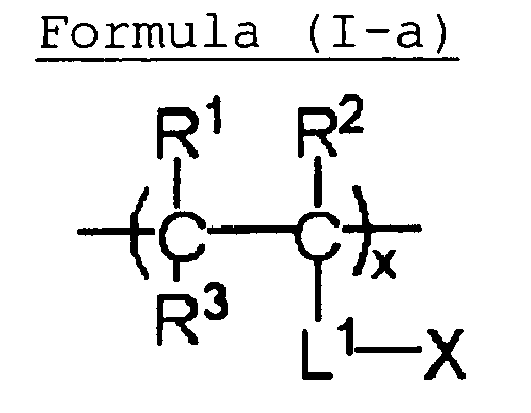

- The hydrophilic member according to claim 1, wherein the hydrophilic composition further comprises an alkoxide compound of an element selected among Si, Ti, Zr and Al.
- The hydrophilic member according to claim 1 or 2, wherein the undercoat layer comprises a non-volatile catalyst.
- The hydrophilic member according to any one of claims 1 to 3, wherein the non-volatile catalyst is a metal complex comprising a metal element selected among metal elements belonging to the groups 2A, 3B, 4A and 5A of the periodic table and an oxo or hydroxyl oxygen-containing compound selected among β-diketones, keto esters, hydroxycarboxylic acids or esters thereof, amino alcohols and enolic active hydrogen compounds.
- The hydrophilic member according to any one of claims 1 to 4, wherein the undercoat layer is formed by applying a composition comprising at least an alkoxide compound of an element selected among Si, Ti, Zr and Al and a non-volatile catalyst on the substrate and heating the applied composition.
- The hydrophilic member according to any one of claims 1 to 5, wherein the hydrophilic composition further comprises colloidal silica.
- A process for producing a hydrophilic member comprising:forming an undercoat layer on a substrate; andsubsequently applying a hydrophilic composition comprisinga hydrophilic polymer having a structural unit represented by the following formula (I-a) and a structural unit represented by the following formula (I-b),an alkoxide compound of an element selected among Si, Ti, Zr and Al, anda non-volatile catalyst,and heating the applied hydrophilic composition to form a hydrophilic layer:


Applications Claiming Priority (2)
| Application Number | Priority Date | Filing Date | Title |
|---|---|---|---|
| JP2007063715 | 2007-03-13 | ||
| JP2008021381A JP2008253985A (en) | 2007-03-13 | 2008-01-31 | Hydrophilic member and method for producing the same |
Publications (2)
| Publication Number | Publication Date |
|---|---|
| EP1970196A2 true EP1970196A2 (en) | 2008-09-17 |
| EP1970196A3 EP1970196A3 (en) | 2010-01-27 |
Family
ID=39682688
Family Applications (1)
| Application Number | Title | Priority Date | Filing Date |
|---|---|---|---|
| EP20080004155 Withdrawn EP1970196A3 (en) | 2007-03-13 | 2008-03-06 | Hydrophilic member and process for producing the same |
Country Status (2)
| Country | Link |
|---|---|
| US (1) | US20080226928A1 (en) |
| EP (1) | EP1970196A3 (en) |
Cited By (1)
| Publication number | Priority date | Publication date | Assignee | Title |
|---|---|---|---|---|
| EP2894201A4 (en) * | 2012-09-03 | 2016-05-11 | Mitsubishi Electric Corp | ANTIFOULING COATING, THERMAL EXCHANGER EQUIPPED WITH SUCH COATING, AND PRODUCTION PROCESS FOR SUCH COATING |
Families Citing this family (16)
| Publication number | Priority date | Publication date | Assignee | Title |
|---|---|---|---|---|
| EP1948750A1 (en) * | 2005-11-16 | 2008-07-30 | FUJIFILM Corporation | Surface-hydrophilic structure |
| JP5094081B2 (en) * | 2005-11-17 | 2012-12-12 | 富士フイルム株式会社 | Hydrophilic member and method for producing the same |
| US8012591B2 (en) * | 2006-09-21 | 2011-09-06 | Fujifilm Corporation | Hydrophilic composition and hydrophilic member |
| JP2008074972A (en) * | 2006-09-21 | 2008-04-03 | Fujifilm Corp | Coating composition, hydrophilic member and method for producing the same |
| US20080177022A1 (en) * | 2006-09-29 | 2008-07-24 | Sumiaki Yamasaki | Hydrophilic film forming composition and hydrophilic member |
| JP2008238711A (en) * | 2007-03-28 | 2008-10-09 | Fujifilm Corp | Hydrophilic member and undercoat composition |
| US20090029179A1 (en) * | 2007-05-14 | 2009-01-29 | Fujifilm Corporation | Two-liquid composition, hydrophilic composition and hydrophilic member |
| JP2009227809A (en) * | 2008-03-21 | 2009-10-08 | Fujifilm Corp | Hydrophilic composition and hydrophilic treating member |
| JP6112866B2 (en) | 2009-12-17 | 2017-04-12 | スリーエム イノベイティブ プロパティズ カンパニー | Sulfonate functional coatings and methods |
| US20150337173A1 (en) * | 2012-10-14 | 2015-11-26 | Iucf-Hyu | Slurry for polishing phase-change materials and method for producing a phase-change device using same |
| US10103331B2 (en) | 2010-02-05 | 2018-10-16 | Industry-University Cooperation Foundation Hanyang University | Slurry for polishing phase-change materials and method for producing a phase-change device using same |
| US8357553B2 (en) | 2010-10-08 | 2013-01-22 | Guardian Industries Corp. | Light source with hybrid coating, device including light source with hybrid coating, and/or methods of making the same |
| US8632860B2 (en) * | 2011-11-02 | 2014-01-21 | Sheila Shahidi | Method of preparation of multifunctional technical textile by plasma-treatment |
| US9963786B2 (en) | 2013-03-15 | 2018-05-08 | Henkel Ag & Co. Kgaa | Inorganic composite coatings comprising novel functionalized acrylics |
| JP6637243B2 (en) * | 2015-03-09 | 2020-01-29 | デクセリアルズ株式会社 | Anti-fogging anti-fouling laminate, its manufacturing method, article, its manufacturing method, and anti-fouling method |
| WO2019004922A1 (en) * | 2017-06-30 | 2019-01-03 | Bona AB | Coating system, method of application and kit for use |
Citations (45)
| Publication number | Priority date | Publication date | Assignee | Title |
|---|---|---|---|---|
| US3214463A (en) | 1960-05-12 | 1965-10-26 | Du Pont | Uv-absorbing sulfonated benzophenone derivatives |
| JPS5448535A (en) | 1977-08-31 | 1979-04-17 | Konishiroku Photo Ind Co Ltd | Color photographic material |
| JPS5621141B2 (en) | 1975-10-16 | 1981-05-18 | ||
| JPS58185677A (en) | 1982-04-22 | 1983-10-29 | Konishiroku Photo Ind Co Ltd | Uv light absorber |
| JPS60168144A (en) | 1984-02-13 | 1985-08-31 | Japan Synthetic Rubber Co Ltd | Peeling soluting composition |
| DE3435443A1 (en) | 1984-09-27 | 1986-04-03 | Agfa-Gevaert Ag, 5090 Leverkusen | PHOTOGRAPHIC RECORDING MATERIAL |
| JPS61190537A (en) | 1985-01-22 | 1986-08-25 | チバーガイギー アクチエンゲゼルシヤフト | 2-(2-hydroxy-3-branched alkyl-5-methylphenyl)- 2h-benzotriazole mixture, manufacture and stabilized composition |
| EP0223739A1 (en) | 1985-11-06 | 1987-05-27 | Ciba-Geigy Ag | Dibenzoxaphosphorine |
| JPS62170950A (en) | 1986-01-23 | 1987-07-28 | Fuji Photo Film Co Ltd | Photosensitive composition |
| JPS62226143A (en) | 1986-03-27 | 1987-10-05 | Fuji Photo Film Co Ltd | Photosensitive composition |
| JPS62262047A (en) | 1986-04-30 | 1987-11-14 | イ−ストマン コダツク カンパニ− | Photographic element |
| JPS63113536A (en) | 1986-10-21 | 1988-05-18 | イーストマン コダック カンパニー | Photographic element containing heterocyclic phosphor compound stabilizing agent |
| JPS63163351A (en) | 1986-12-25 | 1988-07-06 | Konica Corp | Silver halide photographic sensitive material having improved fastness of dye image |
| US4814262A (en) | 1986-10-10 | 1989-03-21 | Megumi Ide | Silver halide photographic light-sensitive material to provide dye-image with improved color-fastness to light |
| EP0309402A1 (en) | 1987-09-21 | 1989-03-29 | Ciba-Geigy Ag | N-substituted hindered amine stabilizers |
| EP0309401A1 (en) | 1987-09-21 | 1989-03-29 | Ciba-Geigy Ag | Stabilization of coatings with N-hydroxy hindered amines |
| JPS6486101A (en) | 1987-06-18 | 1989-03-30 | Toray Industries | Production of antireflecting article |
| EP0310551A2 (en) | 1987-09-30 | 1989-04-05 | Ciba-Geigy Ag | Phenolic thianederivatives |
| EP0310552A1 (en) | 1987-09-30 | 1989-04-05 | Ciba-Geigy Ag | Stabilizers for colour photographic recording materials |
| JPH02782A (en) | 1987-12-28 | 1990-01-05 | Ciba Geigy Ag | New 2-(2-hydroxyphenyl)benzotriazole derivative |
| JPH0271262A (en) | 1987-10-09 | 1990-03-09 | Fuji Photo Film Co Ltd | Silver halide color photographic sensitive material |
| JPH02262654A (en) | 1988-12-06 | 1990-10-25 | Fuji Photo Film Co Ltd | Silver halide color photographic sensitive material |
| US4980275A (en) | 1988-04-13 | 1990-12-25 | Eastman Kodak Company | Photographic material and process comprising a dye stabilizer |
| JPH03121449A (en) | 1989-07-25 | 1991-05-23 | Fuji Photo Film Co Ltd | Silver halide color photographic sensitive material |
| EP0459416A2 (en) | 1990-05-28 | 1991-12-04 | Fuji Photo Film Co., Ltd. | Dye fixing element |
| JPH04298503A (en) | 1990-05-10 | 1992-10-22 | Ciba Geigy Ag | Radiation-curable light-stabilized composition |
| JPH04338901A (en) | 1991-07-15 | 1992-11-26 | Toray Ind Inc | Filter for crt |
| JPH0561166A (en) | 1991-05-28 | 1993-03-12 | Fuji Photo Film Co Ltd | Silver halide color photographic sensitive material |
| JPH05119449A (en) | 1991-10-25 | 1993-05-18 | Fuji Photo Film Co Ltd | Silver halide color photographic sensitive material |
| JPH05194483A (en) | 1991-07-03 | 1993-08-03 | Ciba Geigy Ag | Phenyl thiophenyl ketone |
| JPH05197075A (en) | 1991-09-05 | 1993-08-06 | Ciba Geigy Ag | Photographic film material incorporating ultraviolet-ray absorbent |
| JPH0629332B2 (en) | 1985-04-26 | 1994-04-20 | 旭硝子株式会社 | Antifouling / low-reflective plastic |
| JPH0716940A (en) | 1993-06-23 | 1995-01-20 | Toray Ind Inc | Optical article having antifouling property |
| JPH08501291A (en) | 1992-09-07 | 1996-02-13 | チバ−ガイギー アクチエンゲゼルシャフト | Hydroxyphenyl-s-triazine |
| JPH0853427A (en) | 1994-07-27 | 1996-02-27 | Ciba Geigy Ag | Trisaryl-s-triazine shifted to red side and composition stabilized therewith |
| JPH08239368A (en) | 1994-10-10 | 1996-09-17 | Ciba Geigy Ag | Bisresorcinyltriazine |
| WO1996029375A1 (en) | 1995-03-20 | 1996-09-26 | Toto Ltd. | Method of photocatalytically making the surface of base material ultrahydrophilic, base material having ultrahydrophilic and photocatalytic surface, and process for producing said material |
| JPH0934057A (en) | 1995-06-19 | 1997-02-07 | Eastman Kodak Co | Ultraviolet absorbing polymers based on 2'-hydroxyphenylbenztriazole with specific substituents and photographic elements containing same |
| JPH1088106A (en) | 1996-08-16 | 1998-04-07 | Eastman Kodak Co | Uv-absorbing polymer particle |
| JPH10182621A (en) | 1996-11-20 | 1998-07-07 | Ciba Specialty Chem Holding Inc | Hydroxyphenyl triazine |
| JP2001049200A (en) | 1999-08-11 | 2001-02-20 | Soken Chem & Eng Co Ltd | Acrylic pressure-sensitive adhesive composition, production of pressure-sensitive adhesive tape by using the composition and pressure-sensitive adhesive tape |
| JP2002361800A (en) | 2001-06-11 | 2002-12-18 | Fuji Photo Film Co Ltd | Surface hydrophilic member |
| JP2007063715A (en) | 2005-08-31 | 2007-03-15 | Morizen Gpi:Kk | Stretchable material and stretchable disk-formed or cylindrical article such as hat |
| US20070122745A1 (en) | 2001-06-11 | 2007-05-31 | Fuji Photo Film Co., Ltd. | Planographic printing plate precursor, substrate for the same and surface hydrophilic material |
| JP2008021381A (en) | 2006-07-14 | 2008-01-31 | Kenwood Corp | Loading mechanism for disk device |
Family Cites Families (2)
| Publication number | Priority date | Publication date | Assignee | Title |
|---|---|---|---|---|
| JP3351666B2 (en) * | 1995-10-20 | 2002-12-03 | 株式会社中戸研究所 | Antifogging antireflection film, optical component, and method for producing antifogging antireflection film |
| US20080102286A1 (en) * | 2006-10-30 | 2008-05-01 | Makoto Fukuda | Hydrophilic member and substrate for hydrophilic member |
-
2008
- 2008-03-06 EP EP20080004155 patent/EP1970196A3/en not_active Withdrawn
- 2008-03-12 US US12/047,161 patent/US20080226928A1/en not_active Abandoned
Patent Citations (46)
| Publication number | Priority date | Publication date | Assignee | Title |
|---|---|---|---|---|
| US3214463A (en) | 1960-05-12 | 1965-10-26 | Du Pont | Uv-absorbing sulfonated benzophenone derivatives |
| JPS5621141B2 (en) | 1975-10-16 | 1981-05-18 | ||
| JPS5448535A (en) | 1977-08-31 | 1979-04-17 | Konishiroku Photo Ind Co Ltd | Color photographic material |
| JPS58185677A (en) | 1982-04-22 | 1983-10-29 | Konishiroku Photo Ind Co Ltd | Uv light absorber |
| JPS60168144A (en) | 1984-02-13 | 1985-08-31 | Japan Synthetic Rubber Co Ltd | Peeling soluting composition |
| DE3435443A1 (en) | 1984-09-27 | 1986-04-03 | Agfa-Gevaert Ag, 5090 Leverkusen | PHOTOGRAPHIC RECORDING MATERIAL |
| JPS61190537A (en) | 1985-01-22 | 1986-08-25 | チバーガイギー アクチエンゲゼルシヤフト | 2-(2-hydroxy-3-branched alkyl-5-methylphenyl)- 2h-benzotriazole mixture, manufacture and stabilized composition |
| JPH0629332B2 (en) | 1985-04-26 | 1994-04-20 | 旭硝子株式会社 | Antifouling / low-reflective plastic |
| EP0223739A1 (en) | 1985-11-06 | 1987-05-27 | Ciba-Geigy Ag | Dibenzoxaphosphorine |
| JPS62170950A (en) | 1986-01-23 | 1987-07-28 | Fuji Photo Film Co Ltd | Photosensitive composition |
| JPS62226143A (en) | 1986-03-27 | 1987-10-05 | Fuji Photo Film Co Ltd | Photosensitive composition |
| JPS62262047A (en) | 1986-04-30 | 1987-11-14 | イ−ストマン コダツク カンパニ− | Photographic element |
| US4814262A (en) | 1986-10-10 | 1989-03-21 | Megumi Ide | Silver halide photographic light-sensitive material to provide dye-image with improved color-fastness to light |
| JPS63113536A (en) | 1986-10-21 | 1988-05-18 | イーストマン コダック カンパニー | Photographic element containing heterocyclic phosphor compound stabilizing agent |
| JPS63163351A (en) | 1986-12-25 | 1988-07-06 | Konica Corp | Silver halide photographic sensitive material having improved fastness of dye image |
| JPS6486101A (en) | 1987-06-18 | 1989-03-30 | Toray Industries | Production of antireflecting article |
| EP0309402A1 (en) | 1987-09-21 | 1989-03-29 | Ciba-Geigy Ag | N-substituted hindered amine stabilizers |
| EP0309401A1 (en) | 1987-09-21 | 1989-03-29 | Ciba-Geigy Ag | Stabilization of coatings with N-hydroxy hindered amines |
| EP0310551A2 (en) | 1987-09-30 | 1989-04-05 | Ciba-Geigy Ag | Phenolic thianederivatives |
| EP0310552A1 (en) | 1987-09-30 | 1989-04-05 | Ciba-Geigy Ag | Stabilizers for colour photographic recording materials |
| JPH0271262A (en) | 1987-10-09 | 1990-03-09 | Fuji Photo Film Co Ltd | Silver halide color photographic sensitive material |
| JPH02782A (en) | 1987-12-28 | 1990-01-05 | Ciba Geigy Ag | New 2-(2-hydroxyphenyl)benzotriazole derivative |
| US4980275A (en) | 1988-04-13 | 1990-12-25 | Eastman Kodak Company | Photographic material and process comprising a dye stabilizer |
| JPH02262654A (en) | 1988-12-06 | 1990-10-25 | Fuji Photo Film Co Ltd | Silver halide color photographic sensitive material |
| JPH03121449A (en) | 1989-07-25 | 1991-05-23 | Fuji Photo Film Co Ltd | Silver halide color photographic sensitive material |
| JPH04298503A (en) | 1990-05-10 | 1992-10-22 | Ciba Geigy Ag | Radiation-curable light-stabilized composition |
| EP0459416A2 (en) | 1990-05-28 | 1991-12-04 | Fuji Photo Film Co., Ltd. | Dye fixing element |
| JPH0561166A (en) | 1991-05-28 | 1993-03-12 | Fuji Photo Film Co Ltd | Silver halide color photographic sensitive material |
| JPH05194483A (en) | 1991-07-03 | 1993-08-03 | Ciba Geigy Ag | Phenyl thiophenyl ketone |
| JPH04338901A (en) | 1991-07-15 | 1992-11-26 | Toray Ind Inc | Filter for crt |
| JPH05197075A (en) | 1991-09-05 | 1993-08-06 | Ciba Geigy Ag | Photographic film material incorporating ultraviolet-ray absorbent |
| JPH05119449A (en) | 1991-10-25 | 1993-05-18 | Fuji Photo Film Co Ltd | Silver halide color photographic sensitive material |
| JPH08501291A (en) | 1992-09-07 | 1996-02-13 | チバ−ガイギー アクチエンゲゼルシャフト | Hydroxyphenyl-s-triazine |
| JPH0716940A (en) | 1993-06-23 | 1995-01-20 | Toray Ind Inc | Optical article having antifouling property |
| JPH0853427A (en) | 1994-07-27 | 1996-02-27 | Ciba Geigy Ag | Trisaryl-s-triazine shifted to red side and composition stabilized therewith |
| JPH08239368A (en) | 1994-10-10 | 1996-09-17 | Ciba Geigy Ag | Bisresorcinyltriazine |
| US6013372A (en) | 1995-03-20 | 2000-01-11 | Toto, Ltd. | Method for photocatalytically rendering a surface of a substrate superhydrophilic, a substrate with superhydrophilic photocatalytic surface, and method of making thereof |
| WO1996029375A1 (en) | 1995-03-20 | 1996-09-26 | Toto Ltd. | Method of photocatalytically making the surface of base material ultrahydrophilic, base material having ultrahydrophilic and photocatalytic surface, and process for producing said material |
| JPH0934057A (en) | 1995-06-19 | 1997-02-07 | Eastman Kodak Co | Ultraviolet absorbing polymers based on 2'-hydroxyphenylbenztriazole with specific substituents and photographic elements containing same |
| JPH1088106A (en) | 1996-08-16 | 1998-04-07 | Eastman Kodak Co | Uv-absorbing polymer particle |
| JPH10182621A (en) | 1996-11-20 | 1998-07-07 | Ciba Specialty Chem Holding Inc | Hydroxyphenyl triazine |
| JP2001049200A (en) | 1999-08-11 | 2001-02-20 | Soken Chem & Eng Co Ltd | Acrylic pressure-sensitive adhesive composition, production of pressure-sensitive adhesive tape by using the composition and pressure-sensitive adhesive tape |
| JP2002361800A (en) | 2001-06-11 | 2002-12-18 | Fuji Photo Film Co Ltd | Surface hydrophilic member |
| US20070122745A1 (en) | 2001-06-11 | 2007-05-31 | Fuji Photo Film Co., Ltd. | Planographic printing plate precursor, substrate for the same and surface hydrophilic material |
| JP2007063715A (en) | 2005-08-31 | 2007-03-15 | Morizen Gpi:Kk | Stretchable material and stretchable disk-formed or cylindrical article such as hat |
| JP2008021381A (en) | 2006-07-14 | 2008-01-31 | Kenwood Corp | Loading mechanism for disk device |
Non-Patent Citations (7)
| Title |
|---|
| "The Society of Polymer Science, Japan", 1995, KYORITSU SHUPPAN CO., LTD., article "Synthesis and Reaction of Polymer" |
| ARTICLE OF THE CHEMICAL DAILY NEWS, 30 January 1995 (1995-01-30) |
| J. SOL-GEL. SCI. AND TEC., vol. 16, 1999, pages 209 |
| KEN HIRASHIMA: "Functional Thin Film Formation Technology according to Newest Sol-Gel Method", GENERAL TECHNOLOGY CENTER, 1992 |
| SHINZO YAMASHITA; TOSUKE KANEKO: "Crosslinking Agent Handbook", 1981, TAISEISHA LTD. |
| SUMIO SAKUHANA: "Science of Sol-Gel Process", AGUNE SHOFU SHA, 1988 |
| YUYA YAMASHITA ET AL.: "Chemistry and Industry of Macromonomer", 1989, INDUSTRIAL PUBLISHING & CONSULTING, INC. |
Cited By (2)
| Publication number | Priority date | Publication date | Assignee | Title |
|---|---|---|---|---|
| EP2894201A4 (en) * | 2012-09-03 | 2016-05-11 | Mitsubishi Electric Corp | ANTIFOULING COATING, THERMAL EXCHANGER EQUIPPED WITH SUCH COATING, AND PRODUCTION PROCESS FOR SUCH COATING |
| US10048026B2 (en) | 2012-09-03 | 2018-08-14 | Mitsubishi Electric Corporation | Antifouling coating, heat exchanger provided with same, and method for manufacturing heat exchanger |
Also Published As
| Publication number | Publication date |
|---|---|
| US20080226928A1 (en) | 2008-09-18 |
| EP1970196A3 (en) | 2010-01-27 |
Similar Documents
| Publication | Publication Date | Title |
|---|---|---|
| US7955656B2 (en) | Hydrophilic member and process for producing the same | |
| US20080226928A1 (en) | Hydrophilic member and process for producing the same | |
| US8012591B2 (en) | Hydrophilic composition and hydrophilic member | |
| US20100196724A1 (en) | Hydrophilic film forming composition and hydrophilic member | |
| US20110000658A1 (en) | Hydrophilic member | |
| US20110259571A1 (en) | Hydrophilic composition and hydrophilic member having antifungal property | |
| US20080241557A1 (en) | Hydrophilic member and undercoating composition | |
| US20110108262A1 (en) | Hydrophilic member, fin stock, aluminum-made fin stock, heat exchanger and air conditioner | |
| US20100159256A1 (en) | Composition for forming hydrophic firm, spray composition and hydrophilic member using the same | |
| JP2008279736A (en) | Hydrophilic member and method for producing the same | |
| US20080207849A1 (en) | Hydrophilic film forming composition and hydrophilic member | |
| WO2009093688A1 (en) | Hydrophilic composition having mildewproofing effect and hydrophilic member | |
| JP2008308659A (en) | Hydrophilic film forming composition, hydrophilic member and method for producing hydrophilic member | |
| JP2009079076A (en) | Hydrophilic polymer, hydrophilic film-forming composition and hydrophilic member | |
| JP2008195856A (en) | Hydrophilic member and method for producing the same | |
| JP2010070735A (en) | Hydrophilic composition, hydrophilic member, fin material, heat exchanger, and air conditioner | |
| JP2009235128A (en) | Composition for forming hydrophilic film, and hydrophilic member | |
| JP2008308658A (en) | Hydrophilic film forming composition, hydrophilic member and method for producing hydrophilic member | |
| JP2008222998A (en) | Hydrophilic composition and hydrophilic member | |
| JP2011073359A (en) | Hydrophilic member | |
| WO2009116598A1 (en) | Hydrophilic composition | |
| JP2008285530A (en) | Hydrophilic film forming composition and hydrophilic member | |
| JP2008253985A (en) | Hydrophilic member and method for producing the same | |
| JP2009227869A (en) | Composition for forming hydrophilic film, and hydrophilic member | |
| JP2008248034A (en) | Hydrophilic composition, hydrophilic member and method for producing the same |
Legal Events
| Date | Code | Title | Description |
|---|---|---|---|
| PUAI | Public reference made under article 153(3) epc to a published international application that has entered the european phase |
Free format text: ORIGINAL CODE: 0009012 |
|
| AK | Designated contracting states |
Kind code of ref document: A2 Designated state(s): AT BE BG CH CY CZ DE DK EE ES FI FR GB GR HR HU IE IS IT LI LT LU LV MC MT NL NO PL PT RO SE SI SK TR |
|
| AX | Request for extension of the european patent |
Extension state: AL BA MK RS |
|
| PUAL | Search report despatched |
Free format text: ORIGINAL CODE: 0009013 |
|
| AK | Designated contracting states |
Kind code of ref document: A3 Designated state(s): AT BE BG CH CY CZ DE DK EE ES FI FR GB GR HR HU IE IS IT LI LT LU LV MC MT NL NO PL PT RO SE SI SK TR |
|
| AX | Request for extension of the european patent |
Extension state: AL BA MK RS |
|
| RIC1 | Information provided on ipc code assigned before grant |
Ipc: C08F 299/08 20060101ALI20091223BHEP Ipc: C09D 151/00 20060101ALI20091223BHEP Ipc: C09D 201/10 20060101AFI20091223BHEP |
|
| AKY | No designation fees paid | ||
| STAA | Information on the status of an ep patent application or granted ep patent |
Free format text: STATUS: THE APPLICATION IS DEEMED TO BE WITHDRAWN |
|
| 18D | Application deemed to be withdrawn |
Effective date: 20100728 |
|
| REG | Reference to a national code |
Ref country code: DE Ref legal event code: 8566 |