EP1966930B1 - Verfahren und system zur verwaltung von multicast-ablieferungsinhalt in kommunikationsnetzen - Google Patents
Verfahren und system zur verwaltung von multicast-ablieferungsinhalt in kommunikationsnetzen Download PDFInfo
- Publication number
- EP1966930B1 EP1966930B1 EP05825161A EP05825161A EP1966930B1 EP 1966930 B1 EP1966930 B1 EP 1966930B1 EP 05825161 A EP05825161 A EP 05825161A EP 05825161 A EP05825161 A EP 05825161A EP 1966930 B1 EP1966930 B1 EP 1966930B1
- Authority
- EP
- European Patent Office
- Prior art keywords
- host
- authorization
- content
- hosts
- point
- Prior art date
- Legal status (The legal status is an assumption and is not a legal conclusion. Google has not performed a legal analysis and makes no representation as to the accuracy of the status listed.)
- Expired - Lifetime
Links
Images








Classifications
-
- H—ELECTRICITY
- H04—ELECTRIC COMMUNICATION TECHNIQUE
- H04L—TRANSMISSION OF DIGITAL INFORMATION, e.g. TELEGRAPHIC COMMUNICATION
- H04L12/00—Data switching networks
- H04L12/02—Details
- H04L12/16—Arrangements for providing special services to substations
- H04L12/18—Arrangements for providing special services to substations for broadcast or conference, e.g. multicast
- H04L12/185—Arrangements for providing special services to substations for broadcast or conference, e.g. multicast with management of multicast group membership
-
- H—ELECTRICITY
- H04—ELECTRIC COMMUNICATION TECHNIQUE
- H04L—TRANSMISSION OF DIGITAL INFORMATION, e.g. TELEGRAPHIC COMMUNICATION
- H04L47/00—Traffic control in data switching networks
- H04L47/10—Flow control; Congestion control
- H04L47/15—Flow control; Congestion control in relation to multipoint traffic
Definitions
- the invention relates to a method and system for managing multicast delivery content in communication networks.
- Communications on the Internet are based on the transmission of data packets.
- the data packets can be sent in different modes, including:
- multicast transmission allows greater efficiency to be achieved as the number of copies of the packet in transit across a given network is minimized.
- the multicast transmission is effected by using a so-called Multicast Router that is able to correctly route data packets with an IP multicast address to a set of hosts, which constitute a Multicast Group (MG).
- MG Multicast Group
- Multicast interaction between hosts and routers are defined by protocols that allow hosts to request to join or leave multicast groups.
- IGMP Internet Group Management Protocol
- IETF Internet Group Management Protocol
- IGMPv1 IETF RFC 1112
- IGMPv2 IETF RFC 2236
- IGMPv3 IETF RFC 3376
- the first version of the protocol namely IGMPv1
- IGMPv1 provide only two types of messages:
- the hosts send a membership report specifying the multicast address of the group they are interested in joining.
- a Multicast Router When a Multicast Router receives a membership report for a group, it starts to forward the multicast traffic addressed to that group to the interface from which the membership report arrived.
- Group Membership queries are periodically generated by the routers to check the presence of hosts still interested in receiving packets addressed to a given Multicast Group on the interfaces where the router was forwarding the multicast packets for that group.
- Hosts that receive a membership query should send membership reports for all the groups in which they are interested.
- the router stops forwarding packets related the Multicast Group on the interface.
- the protocol IGMPv1 does not permit a membership query for a specific group.
- a first host that receives a membership query waits for a random time before sending the membership report for the groups in which it is interested. If another host sends a membership report for a group in which it is interested during the waiting period, the first host doesn't send the membership report message for that group.
- IGMPv2 protocol supports the following message types:
- This protocol substantially provides, in addition to the same features of the above described IGMPv1 protocol, the capabilities to allow a host to explicitly notify its intention to leave a Multicast Group (leave message). Moreover, it is possible to send a membership query to a specific Multicast Group. Also, inside an IGMPv2 membership query, the hosts are informed of maximum time in which the router needs to receive the membership group to maintain active the group on a specific interface.
- the IGMPv3 protocol provides the source specific multicast option that allows the host to specify in the membership report message the source(s) for multicast traffic.
- the Multicast Routers store the list of authorized sources to decide whether or not to route a multicast packet on a specific network segment.
- US 2003/0147392 describes a process wherein, in order to make the client host capable of learning an accounting information or an authentication failure information, the accounting information or the authentication failure reason is notified from the routing device to the client host, by adding an information regarding the accounting or an information regarding a reason for the authentication failure of the client host, to a packet of a protocol based on IGMP or MLD which is a multicast control packet between the client host and the router device.
- US 2005/0080901 describes a method and apparatus for authorizing Multicast Group membership based on network policies, such as machine and user identities.
- An end station communicates with a LAN switch over a LAN link.
- the LAN switch inhibits the end station from joining any Multicast Group before the end station or a user on the end station becomes authenticated.
- the LAN switch authorizes the end station to join one or more Multicast Groups in conformance with a Multicast Group authorization specified for the end station or the user.
- the LAN switch enforces the Multicast Group authorization attendant to snooping of IGMP membership reports received from the end station or processing of IGMP join messages received from a router.
- US 2004/240466 A1 discloses to restricte user access to signals transmitted on a local access network so as to improve security in the delivery of services over said local access networks.
- a network access unit comprising: a port for receiving a channel request from a user; a channel request vetting unit for vetting the request with respect to a predetermined list of permitted channels; a transmitter for forwarding the channel request responsive to the vetting.
- multicast control packets sent to an IGMP Vetting function are checked against a Permitted Channels list. If the requesting user is eligible to receive the requested channel, the IGMP Vetting function forwards the request to the head end via a Network Transmit function.
- the IGMP Vetting function may modify the content of the request packet and forward to the network a modified request to connect the end user device to a video stream inviting the user to subscribe to the service he has requested but is not yet eligible to receive.
- the Applicant has tackled the problem of how to guarantee efficiency in terms of network bandwidth savings and in terms of the response times perceived by the end user in the multicast transmission of data packets.
- the present invention has the objective to provide a controlled, efficient and effective multicast delivery of content: controlled because the authorization/revocation is managed by a control entity and based on the identity of the interface or line from which the request arrives; efficient because it minimizes the occupation of network resources; effective because it enhances the user experience through the minimizing of content access times and the presentation of courtesy/alternative content.
- the present invention also relates to a system for managing multicast delivery content in communication networks, wherein a Router comprising a Replication Point supervised by a Replication Manager communicates with a plurality of hosts forming Multicast Groups according to the features of claim 17.
- delivery policy it is meant here a set of rules that guide the treatment of a content request according to specific conditions related to the user (i.e. his/her identity, his/her credit), the connectivity (the available bandwidth), the content (i.e. the necessary bandwidth and other attributes) and/or in general according to parameters that can be acquired in real time analyzing the session. These rules determine the action that will be acted (enforced) on the request i.e. authorizing the original one or modifying it with a different content reference.
- Enforcement Point a functional block, hereinafter referred to as Enforcement Point, can be inserted in the data/control flow and interfaces the service control infrastructure.
- a special module of the Enforcement Point hereinafter referred to as Intercept Point, notifies a Control Plane of user requests regarding the fruition of multicast content and carries out the decisions made by the latter on the basis of its control logic.
- the solution envisages that the Interception Point can block the join requests from the client while waiting for a response ("real-time control") from the Control Plane, or may pass immediately those join requests to the Multicast Router, independently of the response from the Control Plane ("deferred control").
- Control Point CP
- Authorization encompasses e.g. the following situations:
- Control Point sends a response regarding authorization to a module of the Enforcement Point, hereinafter referred to as Activation Point (AP).
- Activation Point a module of the Enforcement Point
- the communication between the Activation Point and the Control Point is asynchronous.
- a request-response communications paradigm is not mandatory (IP->CP, CP->AP): each entity can start communicating with another whenever it becomes necessary: whenever the Intercept Point receives a user request to join or leave a Multicast Group, it notifies this to the Control Point and whenever the Control Point wants to force a control action it will send a message to the Activation Point.
- the CP authorization logic provides an implicit authorization (implied consent).
- the Control Point sends a message to the Activation Point only when an authorization for new access to or ongoing content fruition should be denied, redirecting the user to courtesy/alternative content, according to the reason for denying the authorization (resources not available, user not enabled to access content, insufficient credit, etc.).
- the Activation Point sends messages to the Multicast Router that force the user's leaving the original Multicast Group and simultaneous joining a Multicast Group carrying the courtesy/alternative content.
- the Activation Points opportunely programs the NAT (NETWORK ADDRESS TRANSLATION) functionality, sending redirection commands to the IA module on the client access interface, for replacing the destination address field in the Multicast Courtesy/Alternative Group packets with the IP Multicast Group address expected by the client. In this way, the redirection takes place transparently to the user's application.
- NAT NETWORK ADDRESS TRANSLATION
- the solution enables advanced service features such as time-limited content previews or the real-time handling of credit expiration in case of prepaid billing.
- Figure 1 shows a system performing the method of the present invention.
- numeral 10 indicates a Multicast Router (MR) in a Data Plane (DPL), the Multicast Router 10 including a Replication Point (RP) 13 receiving at its inputs multicast contents S1, S2, ..., Sn, Sc1, ... Sck, and having output ports communicating with a number of hosts 15.
- MR Multicast Router
- DPL Data Plane
- RP Replication Point
- the Multicast Router 10 also comprises a Replication Manager (RM) 17 (of known type and consequently not detailed) supervising the activity of the Replication Point 13.
- RM Replication Manager
- the Replication Point 13 takes care of the physical replication of input data packets, distributing them on the ports to which the users (host 15) are connected.
- the Replication Point 13 may be realized with different techniques, for instance it can consist of a software process, an ASIC, a Network Processor or any other hardware or software component specialized in packet replication.
- the Replication Manager 17 manages a database 13a (Cross-connection Repository - CCR) of associations between inputs and outputs of the Replication Point 13 and generates, based on the contents of the database, the necessary primitives for opportunely programming the Replication Point 13.
- database 13a Cross-connection Repository - CCR
- An Intermediate Agent (IA) 18 is disposed on the line towards hosts 15, between each host 15 and the Replication Point 13; the Intermediate Agent 18 deals with adding an interface (e.g., line) identifier to the IGMP signalling sent by the hosts 15, in order to identify the host in an unequivocal manner and independently of the credentials provided.
- an interface e.g., line
- the Intermediate Agent 18 performs NAT/PAT (Network Address Translation/Port Address Translation) functionality for the multicast content if a content redirection is active at the moment for the host 15 connected to the router 10.
- NAT/PAT Network Address Translation/Port Address Translation
- an Enforcement Block (EF) 20 is provided to be interfaced with the service control infrastructure, in the user's signal flow (according to the example, in the IGMP flow); such Enforcement Block 20 receiving - from one side - user requests (for instance Join request or leave request) integrated with the information added by intermediated Agents 18 (only a link between one Intermediate Agent 18 and Enforcement Block 20 is shown for simplicity in Figure 1 and in other Figures, however each Intermediate Agent 18 is assumed to be linked to Enforcement Block 20 to send user requests thereto) and communicating - from another side - with the Replication Manager 17 in order to implement allowable requests as described in the following.
- EF Enforcement Block
- the system is thus structured to be "transparent" to the Replication Manager.
- Enforcement Block 20 comprises an Intercept Point (IP) 24 receiving user join requests to be a part of a multicast group coming from one host through Intermediate Agents 18 (for example, IGMP join) and forwarding these join requests in a form of notification messages to a Control Point (CP) 28 in a Control Plane (CPL), the Control Point 28 checking each join request to be a part of a multicast group to determine a delivery policy associated to that host and for the requested group.
- IP Intercept Point
- CP Control Point
- CPL Control Plane
- Control Points 28 determines if the request is allowable, thus managing the authorization for fruition of a service requested from a host 15.
- the Intercept Point 24 decodes the input requests in order to notify the Control Point 28 for carrying out the control operations on the requests made by the users.
- the Intercept Point 24 may be provided with a database (not shown) which keeps track, for each group and for each interface, of the membership report messages received against the general-query ones sent.
- the above data base may be also advantageously used for handling particular hosts that leave a group without producing an appropriate message, because if following a query for a specific group no reply is received, the group is considered not existing anymore for that interface. Consequently the data base is updated and a leave command for the above group is sent to the Replication Manager.
- Control Point 28 according to the detected delivery policy for an host requesting to join a particular multicast group, manages the authorization for the fruition of the service.
- Activation Point 30 applies the decisions taken by the Control Point 28, communicating with the Replication Manager 17 and the Intermediate Agents 18.
- the Control Point 28 can be involved in the authorization process in two different manners: Real-time authorization and Deferred authorization.
- the Intercept Point 24 waits for the Control Point 28 authorization, blocking the request coming from host. In this case, the join operation is performed only in presence of the authorization reply outputted by Control Point 28.
- the authorization logic provided by the Control Point 28 is based on implied consent: i.e. the Control Point 28 only takes action on the Activation Point 30 when an authorization, for access to or current fruition of content, should be denied.
- Control Point 28 and Activation Point 30 are, advantageously, asynchronous; however, the dialogue may also be performed by means of a different protocol.
- the Activation Point 30 is forced to act a content redirection, i.e. to provide to the user an alternative content B from an Alternative Content Repository (ACR) 35 instead of the original requested content A.
- the alternative content can be different according to the reason for which authorization has been denied (resources not available, user not enabled to access content, insufficient credit, etc.).
- the alternative content is a courtesy messages used to explain to the user the reason for which authorization has been denied.
- the Activation Point 30 perform the following tasks:
- the Replication Manager 17 updates the Cross-connection Repository, thereby controlling the replication process of the data packets in a manner consistent with the restrictions imposed by the Control Point 28.
- the NAT/PAT functionality carried out by the Intermediate Agent 18, is also activated/deactivated following an explicit request from the Activation Point 30.
- the interface information includes information on the line which connects the host 15 to the network.
- the Intercept Point 24 determines whether a Real-time or Deferred control should be applied for the requested content.
- I 5 Join(S1,IF1) towards the Replication Manager 17, that is exactly the same as the one originally received from the client.
- Control Point 28 Selection of the alternative content to provide the user with is performed by the Control Point 28 based on logic defined by the operator and implemented by a specially provided Content Manager (not shown in Figure 3 ).
- the Intercept Point 28 doesn't block the user signaling waiting for a response from the Control Plane.
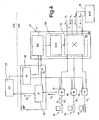
- Control Point 28 establishes if a user is no longer enabled for the fruition of certain content and, in consequence, acts on Replication Manager 17 through Activation Point 30 by redirecting to the user an alternative content Sc1, Sck that may be related to the interruption in fruition.
- two cases are possible, depending from the fact that the user was been previously redirect to an alternative content or not. The management of these two cases differs slightly, as will be described below.
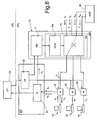
- the Leave from non- alternative content is managed as shown in Figure 6 .
- the leave signal is passed from the Intermediate Agent 18 to the Intercept Point 24.
- the termination of content fruition can also be caused by the expiry of timeouts associated with keep-alive messages, useful to the Multicast Router for determining if a host, towards which it is supplying replicated content, is actually still interested in the content or not. Without these mechanisms, the Multicast Router could risk continuing to replicate content indefinitely, even in the case where nobody is interested anymore in this content (because the host that made the request has encountered a hardware or software problem for example).
- IGMP implements these mechanisms on the basis of membership query messages that the hosts should confirm by sending opportune membership report messages.
- Control Point 28 the logical entity that operates on the Control Plane.
- the Control Point 28 is entrusted with control over the delivery of the service requested or currently being consumed by the user.
- Control Point 28 may be of different kind and may consist in one or more of the following:
- Control Point 28 functions as a coordinator between the various entities involved, each of which operates a specific control.
- the Control Point 28 is characterized by a customization component to meet the operator's needs for service control.
- control entities utilized depends, in fact, on the type of delivery policy that the operator wishes to realize.
- QoS Quality of Service
- the customisation of the Control Point 28 is also to be such as to guarantee interfacing with said control entities, which are not always equipped with standard interfaces.
- access to the QoS Server 42 can take place in various modes: SOAP/XML (with proprietary API interface), http, Diameter, etc.
- Control Point 28 manages at least the authorization for access to content based on the delivery policy determined in each case.
- the delivery policy can be based, in particular, on one or more of the following:
- Control Point 28 acts as outlined above forcing the interruption of content delivery (forced Leave from a Multicast Group) or redirecting the user to an alternative content (Sorry movies for example).
- Control Point 28 also manages other things including:
- the Control 28 makes the above functionalities available to the rest of the framework via a standard interface, through which the Control Point 28 can exercise its function of controller.
- Opportune logics for managing the request are defined for each function that the Control Point 28 is called upon to manage. For example, for the management of a content access authorization request, the Control Point 28 is instructed on which control servers to contact (and through which primitives to do so), how to use the information that is passed to it, how to use the responses of the various control servers that are contacted and, based in these, how to produce the response message to the request.
- Control Point 28 In the following part, some specific operation performed by Control Point 28 shall be detailed.
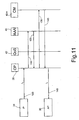
- Figure 11 shows the operation performed by Control Point 28 in case of on-line authorization denied due to lack of authorization for applicant.
- Figure 12 shows the operation performed by Control Point 28 in case of on-line authorization denied due to insufficient credit of a prepaid user.
- Figure 13 shows the operation performed by Control Point 28 in case of on-line authorization denied due to network resource unavailability.
- Figure 14 shows the operation performed by Control Point 28 in case preview concession for un-purchased content of a prepaid user.
- Figure 15 shows the operation performed by Control Point 28 in case of preview denial for un-purchased content of prepaid user.
- Figure 16 shows the operation performed by Control Point 28 in case of a condition of insufficient credit is detected during a content fruition 605 for a prepaid user.
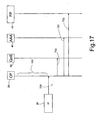
- Figure 17 explains the operations relating to the end of fruition of a content 705, and more particularly:
- the present invention does not envisage any changes to standard protocols. New functional entities are inserted into the information flow that on the passage of standard protocol packets, which can remain unchanged, perform operations of authorization control or redirection to courtesy messages; the innovative elements are circumscribed and only exchanged between the additional functional entities and not between the standard functional end points.
- the invention envisages checking the availability of adequate resources through interaction with opportune control servers and possible redirection to versions of multimedia content suitable for the available capacities of the link to the user, or to courtesy messages.
- the present invention envisages sending messages to the user through NAT/PAT functionality that substitutes, in a completely transparent manner, the content requested by the client with an alternative content (i.e. courtesy message), which is then displayed by the same application with which the content was requested.
- NAT/PAT functionality substitutes, in a completely transparent manner, the content requested by the client with an alternative content (i.e. courtesy message), which is then displayed by the same application with which the content was requested.
- the present invention envisages that upon reception of a message from a control server that indicates insufficient credit, the multicast control entity causes, through NAT/PAT functionality, the redirection of a courtesy message to the client informing of the lack of credit instead of the requested content.
- the invention presents a technology-independent solution.
- three fields of application have been identified by way of example: networks with direct host access to a Multicast Router, networks with host access to the Multicast Router via apparatus with Ethernet level 2 switching functionality, and networks with host access to the Multicast Router via apparatus with ATM level 2 functionality.
Landscapes
- Engineering & Computer Science (AREA)
- Computer Networks & Wireless Communication (AREA)
- Signal Processing (AREA)
- Data Exchanges In Wide-Area Networks (AREA)
- Small-Scale Networks (AREA)
Claims (19)
- Verfahren zum Verwalten von Multicastablieferungsinhalten in Kommunikationsnetzwerken, dadurch gekennzeichnet, dass folgende Schritte umfasst sind:Überprüfen von Anfragen über ein Hinzufügen von zumindest einem Host (15), um ein Teil einer Multicastgruppe zu sein, um eine mit dem Host verknüpfte Ablieferungsrichtlinie für die angefragte Gruppe festzulegen;Verknüpfen des Hostes mit einer Multicastgruppe entsprechend der Ablieferungsrichtlinie, wobei die Multicastgruppe eine Gast-/Ersatz-Gruppe ist, die sich von der angefragten Multicastgruppe unterscheidet, wenn eine Autorisierung entsprechend der Ablieferungsrichtlinie nicht vorliegt; dadurch gekennzeichnet, dass in dem Schritt des Verknüpfens des nicht autorisierten Hostes mit der Gast-/Ersatz-Gruppe folgender Schritt umfasst ist:Ersetzen einer Zieladresse oder einer Zieladresse und eines Zielportes in den Multicastgast-/-ersatz-Gruppenpaketen mit einer Multicastgruppenadresse oder mit einer Multicastgruppenadresse und einem Zielport, der oder die durch den Host für den angefragten Inhalt erwartet wird, indem eine Netzwerkadressübersetzung oder eine Portadressübersetzungsfunktionalität genutzt wird.
- Verfahren nach Anspruch 1, wobei der Schritt des Überprüfens ein Identifizieren unerlaubter Anfragen umfasst.
- Verfahren nach Anspruch 1, wobei in dem Schritt des Überprüfens das Vorliegen einer Autorisierung für die Anfrage zum Hinzufügen überprüft wird.
- Verfahren nach Anspruch 3, wobei im Falle des Vorliegens der Autorisierung der Schritt des Verknüpfens des autorisierten Hostes (15) mit der angefragten Multicastgruppe ausgeführt wird.
- Verfahren nach Anspruch 1, wobei im Falle einer nicht vorliegenden Autorisierung folgender Schritt umfasst ist: Erzeugen und Weiterleiten von zumindest einer Gefälligkeitsnachricht, die sich auf den Grund der Ablehnung der Autorisierung bezieht.
- Verfahren nach Anspruch 1, wobei der Schritt des Überprüfens der Anfrage zum Hinzufügen mit einem Schritt des Hinzufügens eines Verbindungsidentifizierers durch einen Zwischenagenten (18) verbunden wird, der zwischen dem Host (15) und einem Replikationspunkt (13) angeordnet ist, um den Host (15) in eindeutiger Weise und unabhängig von Berechtigungsnachweisen, die durch den Host bereitgestellt werden (15), zu identifizieren.
- Verfahren nach Anspruch 1, wobei der Schritt des Überprüfens der Anfrage zum Hinzufügen mit einem Schritt des Dekodierens von eingehenden Anfragen zum Hinzufügen verbunden wird, die von Hosts (15) an einem Schnittpunkt (24) für ausgehende Benachrichtigungen stammen.
- Verfahren nach Anspruch 1, wobei der Schritt des Überprüfens einen Schritt des Überprüfens des Vorliegens von zumindest einer Autorisierung umfasst; wobei die Autorisierung zumindest in einem aus dem Folgenden enthalten ist:Zugangskontrollautorisierung für Inhalte basierend auf Berechtigungsnachweisen des Hosts (15);Verfügbarkeitstest von Netzwerkressourcen auf die Anfrage zur Ablieferung von Inhalten; undÜberprüfung des Vorliegens eines verbleibenden Kreditrahmens auf die Anfrage für den Inhalt oder während der Bereitstellung des Inhaltes.
- Verfahren nach Anspruch 1, weiter umfassend den Schritt des Sendens von Abweisungsanweisungen (30) an einen Replikationsmanager (17) eines Replikationspunktes (13), wenn eine Anfrage zum Hinzufügen abgelehnt wurde; der Replikationspunkt (13) übernimmt die physikalische Replikation von Eingangsdatenpaketen und die Verteilung derselben an Ports, zu welchen die Hosts (15) verbunden sind.
- Verfahren nach Anspruch 1, wobei der Schritt des Überprüfens der Anfragen zum Hinzufügen einen Schritt des Bestimmens umfasst, ob eine Realzeitsteuerung oder eine verzögerte Steuerung für den angefragten Inhalt von dem Host (15) zu verwenden ist.
- Verfahren nach Anspruch 10, wobei die Realzeitsteuerung den Schritt eines Sendens einer Autorisierungsanfrage an eine Steuereinheit umfasst und ein Warten auf eine Autorisierungsantwort umfasst, bevor eine weitere Prozessierung der Nutzeranfrage zum Hinzufügen durchgeführt wird.
- Verfahren nach Anspruch 10, wobei die verzögerte Steuerung den Schritt eines Bereitstellens einer impliziten Autorisierung und einer Blockierung der Anfrage zum Hinzufügen umfasst, wenn die Autorisierung für die Anfrage entsprechend der Ablieferungsrichtlinie abgelehnt wurde.
- Verfahren nach Anspruch 1, wobei ein Schnittpunkt (24) Nutzeranfragen zum Hinzufügen, die von den Hosts (15) stammen, erhält und diese Anfragen in Form von Benachrichtigungsmitteilungen an einen Steuerpunkt (28) weiterleitet, wobei der Steuerpunkt (28) entscheidet, welche Anfragen zum Hinzufügen erlaubt werden, um dadurch die Autorisierung für das Bereitstellen eines Dienstes, der von den Hosts (15) angefragt wurde, zu verwalten;
das Verfahren umfasst weiter die Schritte:Erzeugen einer Abwesenheitsanfrage (L1) durch einen Host, der ein Abwesenheitssignal erzeugt;Gewähren des Passierens des Abwesenheitssignals über den Schnittpunkt (24), ohne dass Netzwerkadressübersetzungsregeln (NAT) auf das Abwesenheitssignal angewandt werden, um dadurch die Multicastgruppe, auf die sich das Abwesenheitssignal bezieht, nicht zu modifizieren;Weiterleiten des Abwesenheitssignals durch den Schnittpunkt (24) an einen Replikationmanager (17), der die Aktivität an einem Replikationspunkt (13), der sich um die physische Replikation von Eingangsdatenpakten kümmert, überwacht, und Verteilen derselben an Ports, mit welchen die Hosts (15) verbunden sind. - Verfahren nach Anspruch 1, wobei ein Schnittpunkt (24) Nutzeranfragen zum Hinzufügen von Hosts (15) erhält und diese Anfragen in Form von Benachrichtigungsmitteilungen an einen Kontrollpunkt (28) weiterleitet, welcher entscheidet, welche der Anfragen zum Hinzufügen gewährbar sind und damit die Autorisierung zum Bereitstellen eines Dienstes, der von den Hosts (15) angefragt wurde, verwaltet,
wobei das Verfahren weiter die Schritte umfasst:Herausgeben einer Abwesenheitsanfrage (L1) durch einen Client, der ein Abwesenheitssignal erzeugt;wobei der Client den Inhalt einer ursprünglichen Adresse angefragt hat, aber einen Ersatzinhalt nutzt;Übersetzen der Abwesenheitsanfrage (L2) durch eine Netzwerkadressübersetzungsregel und Ersetzen der ursprünglichen Adresse mit der Adresse des Ersatzinhalts, die der Benutzer effektiv nutzt;Weiterleiten des übersetzten Abwesenheitssignals durch den Schnittpunkt (24) an einen Replikationsmanager (17), der die Aktivität eines Replikationspunktes (13) überwacht, und der Replikationspunkt (13) sich um die physikalische Replikation von Eingangsdatenpaketen kümmert, und der dieselben an Ports, mit welchen die Hosts (15) verbunden sind, verteilt. - Verfahren nach Anspruch 1, wobei ein Schnittpunkt (24) Nutzeranfragen von den Hosts (15) zum Hinzufügen empfängt und diese Anfragen in Form von Benachrichtigungsmitteilungen an einen Steuerpunkt (28) weiterleitet, welcher darüber entscheidet, welche der Anfragen zum Hinzufügen erlaubt werden und dadurch die Autorisierung zum Bereitstellen eines von den Hosts (15) angefragten Dienstes übernimmt,
das Verfahren umfasst weiter die Schritte:Abfragen von Hosts (15) durch ein Senden von Anfragenachrichten (Q) an die Hosts (15);Erhalten von Mitgliedsberichtsnachrichten als Antworten R von dem abgefragten Host (15);Weiterleiten von Berichtsnachrichten an einen Replikationsmanager (17), so dass die Ablieferung von Inhalten an die Hosts fortgeführt wird; wobei der Replikationsmanager (17) die Aktivität an einem Replikationspunkt (13), der sich um die physische Replikation von Eingangsdatenpaketen kümmert, überwacht und dieselben an Ports, mit welchen die Hosts (15) verbunden sind, verteilt. - Verfahren nach Anspruch 1, wobei ein Schnittpunkt (24) Nutzeranfragen von Hosts (15) über ein Hinzufügen empfängt und dieser Anfragen in Form von Benachrichtigungsnachrichten an einen Kontrollpunkt (28) weiterleitet, der entscheidet, ob die Anfragen zum Hinzufügen gewährbar sind, um dadurch die Autorisierung zum Bereitstellen eines Dienstes, der von den Hosts (15) angefragt wurde, zu steuern,
das Verfahren umfasst weiter die Schritte:Befragen von Hosts (15) durch ein Senden von Anfragenachrichten (Q) an die Hosts (15);Abwarten von Mitgliedsberichtsnachrichten als Antworten R von den angefragten Hosts (15) innerhalb eines gesetzten Zeitlimits;sofern keine Antwort innerhalb des Zeitlimits erfolgt, umfasst das Verfahren den Schritt des Benachrichtigens (L4) des Kontrollpunktes (28) über das Anhalten der Inhaltsbereitstellung durch die Hosts (15). - System zum Verwalten der Ablieferung von Multicastinhalten in Kommunikationsnetzwerken, wobei ein Router (10) einen Replikationspunkt (13), der durch einen Replikationsmanager (17) überwacht wird, umfasst und konfiguriert ist zum Kommunizieren mit einer Vielzahl von Hosts (15), die Multicastgruppen bilden, wobei das System dadurch gekennzeichnet ist, dass Folgendes umfasst ist:ein Kontrollpunkt (28), der konfiguriert ist zum:Überprüfen von Anfragen von zumindest einem Host zum Hinzufügen, um ein Teil einer Multicastgruppe zu sein, um eine Ablieferungsrichtlinie, die mit dem Host für die angefragte Gruppe verknüpft ist, zu bestimmen; undAnweisen des Replikationsmanagers (17) zum Verknüpfen des Hosts mit einer Multicastgruppe entsprechend seiner Ablieferungsrichtlinie, wobei die Multicastgruppe eine Gast-/Ersatz-Gruppe ist, die sich von der angefragten Multicastgruppe unterscheidet, wenn eine Autorisierung entsprechend der Ablieferungsrichtlinie nicht vorliegt;und dadurch gekennzeichnet ist, dass ein Zwischenagent (18), der zwischen jedem Host (15) und dem Replikationspunkt (13) angeordnet und konfiguriert ist, um die Zieladresse oder die Zieladresse und einen Zielport in Multicastgast-/-ersatz-Gruppenpaketen mit einer Multicastgruppenadresse oder mit einer Multicastgruppenadresse und einem Zielport, der durch den Host für den angefragten Inhalt erwartet wird, zu ersetzten, indem eine Netzwerkadressübersetzung oder eine Portadressübersetzungsfunktionalität genutzt wird.
- System nach Anspruch 17, wobei ein Schnittpunkt (24) ausgebildet ist, um Nutzanfragen zum Hinzufügen zu erhalten und eingehende Anfragen zum Hinzufügen in Form einer Benachrichtigungsmitteilung an den Kontrollpunkt (28) weiterzuleiten.
- System nach Anspruch 17, wobei der Zwischenagent (18) konfiguriert ist, um einen Verbindungsidentifizierer hinzuzufügen, um die Hosts (15) auf eindeutige Weise und unabhängig von dem Berechtigungsnachweis zu identifizieren.
Applications Claiming Priority (1)
| Application Number | Priority Date | Filing Date | Title |
|---|---|---|---|
| PCT/EP2005/014085 WO2007073762A1 (en) | 2005-12-28 | 2005-12-28 | Method and system for managing multicast delivery content in communication networks |
Publications (2)
| Publication Number | Publication Date |
|---|---|
| EP1966930A1 EP1966930A1 (de) | 2008-09-10 |
| EP1966930B1 true EP1966930B1 (de) | 2011-02-16 |
Family
ID=36677197
Family Applications (1)
| Application Number | Title | Priority Date | Filing Date |
|---|---|---|---|
| EP05825161A Expired - Lifetime EP1966930B1 (de) | 2005-12-28 | 2005-12-28 | Verfahren und system zur verwaltung von multicast-ablieferungsinhalt in kommunikationsnetzen |
Country Status (6)
| Country | Link |
|---|---|
| US (1) | US8310973B2 (de) |
| EP (1) | EP1966930B1 (de) |
| CN (1) | CN101371494B (de) |
| AT (1) | ATE498958T1 (de) |
| DE (1) | DE602005026466D1 (de) |
| WO (1) | WO2007073762A1 (de) |
Cited By (1)
| Publication number | Priority date | Publication date | Assignee | Title |
|---|---|---|---|---|
| US8310973B2 (en) * | 2005-12-28 | 2012-11-13 | Telecom Italia S.P.A. | Method and system for managing multicast delivery content in communication networks |
Families Citing this family (11)
| Publication number | Priority date | Publication date | Assignee | Title |
|---|---|---|---|---|
| US20080167888A1 (en) * | 2007-01-09 | 2008-07-10 | I4 Commerce Inc. | Method and system for identification verification between at least a pair of entities |
| US20090323575A1 (en) * | 2008-06-27 | 2009-12-31 | Motorola, Inc. | Method and apparatus for multicasting within a wireless communication network |
| CA2744831C (en) | 2008-11-26 | 2017-01-03 | Telecom Italia S.P.A. | Application data flow management in an ip network |
| US8072977B2 (en) | 2009-03-26 | 2011-12-06 | Verizon Patent And Licensing Inc. | System and method for managing network resources and policies in a multicast environment |
| US9490984B2 (en) * | 2009-09-14 | 2016-11-08 | Interdigital Patent Holdings, Inc. | Method and apparatus for trusted authentication and logon |
| US8630286B2 (en) * | 2011-09-30 | 2014-01-14 | Broadcom Corporation | System and method for improving multicast performance in banked shared memory architectures |
| EP2670083B1 (de) | 2012-05-28 | 2015-05-06 | Itron, Inc. | Effizientes Multicast in einem smarten Gitter |
| US10225094B2 (en) * | 2012-05-29 | 2019-03-05 | Futurewei Technologies, Inc. | SDN facilitated multicast in data center |
| WO2014155673A1 (ja) * | 2013-03-29 | 2014-10-02 | 株式会社日立製作所 | テスト環境管理装置及びテスト環境構築方法 |
| US20240015483A1 (en) * | 2020-11-09 | 2024-01-11 | Nokia Technologies Oy | Procedure to join a multicast session |
| US12368720B2 (en) * | 2022-09-16 | 2025-07-22 | Itron, Inc. | Messaging among message groups in a mesh network |
Family Cites Families (13)
| Publication number | Priority date | Publication date | Assignee | Title |
|---|---|---|---|---|
| US6970461B2 (en) * | 2000-11-29 | 2005-11-29 | Nortel Networks Limited | Access control enhancements for delivery of video and other services |
| US7245614B1 (en) * | 2001-06-27 | 2007-07-17 | Cisco Technology, Inc. | Managing access to internet protocol (IP) multicast traffic |
| US7305010B2 (en) * | 2002-01-11 | 2007-12-04 | Nippon Telegraph And Telephone Corporation | Multicast communication system |
| US7746799B2 (en) * | 2003-06-20 | 2010-06-29 | Juniper Networks, Inc. | Controlling data link layer elements with network layer elements |
| EP1517518B1 (de) * | 2003-09-18 | 2006-04-19 | Sap Ag | Datenpaketfilterung in einer Client-Router-Server Architektur |
| US20050080901A1 (en) | 2003-10-14 | 2005-04-14 | Reader Scot A. | Method and apparatus for controlling access to multicast data streams |
| SE0400825D0 (sv) * | 2004-03-30 | 2004-03-30 | Packetfront Sweden Ab | Anordning och förfarande |
| JP3940135B2 (ja) * | 2004-05-13 | 2007-07-04 | 日本電信電話株式会社 | リソース管理システム及び方法並びにプログラム及びプログラムを記録した記録媒体 |
| JP4403893B2 (ja) * | 2004-06-21 | 2010-01-27 | 株式会社日立製作所 | マルチキャストパケット転送装置 |
| US7904940B1 (en) * | 2004-11-12 | 2011-03-08 | Symantec Corporation | Automated environmental policy awareness |
| US7500269B2 (en) * | 2005-01-07 | 2009-03-03 | Cisco Technology, Inc. | Remote access to local content using transcryption of digital rights management schemes |
| US8675653B2 (en) * | 2005-05-17 | 2014-03-18 | Alcatel Lucent | Co-existing static and dynamic IP multicast |
| EP1966930B1 (de) * | 2005-12-28 | 2011-02-16 | Telecom Italia S.p.A. | Verfahren und system zur verwaltung von multicast-ablieferungsinhalt in kommunikationsnetzen |
-
2005
- 2005-12-28 EP EP05825161A patent/EP1966930B1/de not_active Expired - Lifetime
- 2005-12-28 WO PCT/EP2005/014085 patent/WO2007073762A1/en not_active Ceased
- 2005-12-28 US US12/087,250 patent/US8310973B2/en active Active
- 2005-12-28 AT AT05825161T patent/ATE498958T1/de not_active IP Right Cessation
- 2005-12-28 DE DE602005026466T patent/DE602005026466D1/de not_active Expired - Lifetime
- 2005-12-28 CN CN2005800525456A patent/CN101371494B/zh not_active Expired - Lifetime
Cited By (1)
| Publication number | Priority date | Publication date | Assignee | Title |
|---|---|---|---|---|
| US8310973B2 (en) * | 2005-12-28 | 2012-11-13 | Telecom Italia S.P.A. | Method and system for managing multicast delivery content in communication networks |
Also Published As
| Publication number | Publication date |
|---|---|
| DE602005026466D1 (de) | 2011-03-31 |
| ATE498958T1 (de) | 2011-03-15 |
| CN101371494A (zh) | 2009-02-18 |
| US20100061368A1 (en) | 2010-03-11 |
| CN101371494B (zh) | 2012-08-08 |
| WO2007073762A1 (en) | 2007-07-05 |
| EP1966930A1 (de) | 2008-09-10 |
| US8310973B2 (en) | 2012-11-13 |
Similar Documents
| Publication | Publication Date | Title |
|---|---|---|
| US8321566B2 (en) | System and method to control application to application communication over a network | |
| CN101379757B (zh) | 在通信网络中提供电话服务以及实施策略的方法和系统 | |
| US8239520B2 (en) | Network service operational status monitoring | |
| JP5230622B2 (ja) | プレゼンス属性に基づくプレゼンス通知システム及び方法 | |
| US20040177247A1 (en) | Policy enforcement in dynamic networks | |
| US20030014488A1 (en) | System and method for enabling multimedia conferencing services on a real-time communications platform | |
| US20040131042A1 (en) | Apparatus and method for controlling and managing individual directed sessions in a communications system | |
| US20040131060A1 (en) | Methods for managing a pool of multicast addresses and allocating addresses in a communications system | |
| EP1966930B1 (de) | Verfahren und system zur verwaltung von multicast-ablieferungsinhalt in kommunikationsnetzen | |
| MXPA03004669A (es) | Interfase de control y reporte de mensajes para un sistema de acceso en red distribuida. | |
| CN101374066A (zh) | 一种组播/单播业务接纳控制的方法、装置及系统 | |
| CN1581791B (zh) | 在通信网络中提供可靠的传输服务质量的方法 | |
| EP2285050A1 (de) | Verfahren und system zur ressourcenzulassungskontrolle | |
| CN1643858B (zh) | 服务质量请求关联 | |
| EP1602209B1 (de) | Verfahrensverwaltung während dem weiterreichen | |
| MXPA03004671A (es) | Dispositivo de acceso programable para un sistema de acceso a red distribuida. | |
| JP5583790B2 (ja) | プレゼンス情報の認可のための方法及びシステム | |
| EP1909436A1 (de) | Vorrichtung und Verfahren zum Integrieren eines Knotens in einen virtuellen Ring | |
| US7406045B2 (en) | Modular policy decision point for processing resource-reservation requests within a data network | |
| CN101166194B (zh) | 一种实现分布式接纳控制的系统和方法 | |
| CN102215159B (zh) | 在宽带网络中业务的管理方法和系统 | |
| Han et al. | Secure multicast software delivery | |
| CN106817361A (zh) | 集团上网的控制方法及装置 | |
| JP3500087B2 (ja) | パケット通信方法 | |
| Burlin et al. | Security and group management in IP multicast |
Legal Events
| Date | Code | Title | Description |
|---|---|---|---|
| PUAI | Public reference made under article 153(3) epc to a published international application that has entered the european phase |
Free format text: ORIGINAL CODE: 0009012 |
|
| 17P | Request for examination filed |
Effective date: 20080703 |
|
| AK | Designated contracting states |
Kind code of ref document: A1 Designated state(s): AT BE BG CH CY CZ DE DK EE ES FI FR GB GR HU IE IS IT LI LT LU LV MC NL PL PT RO SE SI SK TR |
|
| 17Q | First examination report despatched |
Effective date: 20081222 |
|
| GRAP | Despatch of communication of intention to grant a patent |
Free format text: ORIGINAL CODE: EPIDOSNIGR1 |
|
| GRAS | Grant fee paid |
Free format text: ORIGINAL CODE: EPIDOSNIGR3 |
|
| GRAA | (expected) grant |
Free format text: ORIGINAL CODE: 0009210 |
|
| DAX | Request for extension of the european patent (deleted) | ||
| AK | Designated contracting states |
Kind code of ref document: B1 Designated state(s): AT BE BG CH CY CZ DE DK EE ES FI FR GB GR HU IE IS IT LI LT LU LV MC NL PL PT RO SE SI SK TR |
|
| REG | Reference to a national code |
Ref country code: GB Ref legal event code: FG4D |
|
| REG | Reference to a national code |
Ref country code: CH Ref legal event code: EP |
|
| REG | Reference to a national code |
Ref country code: IE Ref legal event code: FG4D |
|
| REF | Corresponds to: |
Ref document number: 602005026466 Country of ref document: DE Date of ref document: 20110331 Kind code of ref document: P |
|
| REG | Reference to a national code |
Ref country code: DE Ref legal event code: R096 Ref document number: 602005026466 Country of ref document: DE Effective date: 20110331 |
|
| REG | Reference to a national code |
Ref country code: NL Ref legal event code: VDEP Effective date: 20110216 |
|
| LTIE | Lt: invalidation of european patent or patent extension |
Effective date: 20110216 |
|
| PG25 | Lapsed in a contracting state [announced via postgrant information from national office to epo] |
Ref country code: PT Free format text: LAPSE BECAUSE OF FAILURE TO SUBMIT A TRANSLATION OF THE DESCRIPTION OR TO PAY THE FEE WITHIN THE PRESCRIBED TIME-LIMIT Effective date: 20110616 Ref country code: SE Free format text: LAPSE BECAUSE OF FAILURE TO SUBMIT A TRANSLATION OF THE DESCRIPTION OR TO PAY THE FEE WITHIN THE PRESCRIBED TIME-LIMIT Effective date: 20110216 Ref country code: GR Free format text: LAPSE BECAUSE OF FAILURE TO SUBMIT A TRANSLATION OF THE DESCRIPTION OR TO PAY THE FEE WITHIN THE PRESCRIBED TIME-LIMIT Effective date: 20110517 Ref country code: ES Free format text: LAPSE BECAUSE OF FAILURE TO SUBMIT A TRANSLATION OF THE DESCRIPTION OR TO PAY THE FEE WITHIN THE PRESCRIBED TIME-LIMIT Effective date: 20110527 Ref country code: LT Free format text: LAPSE BECAUSE OF FAILURE TO SUBMIT A TRANSLATION OF THE DESCRIPTION OR TO PAY THE FEE WITHIN THE PRESCRIBED TIME-LIMIT Effective date: 20110216 Ref country code: LV Free format text: LAPSE BECAUSE OF FAILURE TO SUBMIT A TRANSLATION OF THE DESCRIPTION OR TO PAY THE FEE WITHIN THE PRESCRIBED TIME-LIMIT Effective date: 20110216 |
|
| PG25 | Lapsed in a contracting state [announced via postgrant information from national office to epo] |
Ref country code: CY Free format text: LAPSE BECAUSE OF FAILURE TO SUBMIT A TRANSLATION OF THE DESCRIPTION OR TO PAY THE FEE WITHIN THE PRESCRIBED TIME-LIMIT Effective date: 20110216 Ref country code: BG Free format text: LAPSE BECAUSE OF FAILURE TO SUBMIT A TRANSLATION OF THE DESCRIPTION OR TO PAY THE FEE WITHIN THE PRESCRIBED TIME-LIMIT Effective date: 20110516 Ref country code: PL Free format text: LAPSE BECAUSE OF FAILURE TO SUBMIT A TRANSLATION OF THE DESCRIPTION OR TO PAY THE FEE WITHIN THE PRESCRIBED TIME-LIMIT Effective date: 20110216 Ref country code: BE Free format text: LAPSE BECAUSE OF FAILURE TO SUBMIT A TRANSLATION OF THE DESCRIPTION OR TO PAY THE FEE WITHIN THE PRESCRIBED TIME-LIMIT Effective date: 20110216 Ref country code: AT Free format text: LAPSE BECAUSE OF FAILURE TO SUBMIT A TRANSLATION OF THE DESCRIPTION OR TO PAY THE FEE WITHIN THE PRESCRIBED TIME-LIMIT Effective date: 20110216 Ref country code: FI Free format text: LAPSE BECAUSE OF FAILURE TO SUBMIT A TRANSLATION OF THE DESCRIPTION OR TO PAY THE FEE WITHIN THE PRESCRIBED TIME-LIMIT Effective date: 20110216 Ref country code: SI Free format text: LAPSE BECAUSE OF FAILURE TO SUBMIT A TRANSLATION OF THE DESCRIPTION OR TO PAY THE FEE WITHIN THE PRESCRIBED TIME-LIMIT Effective date: 20110216 Ref country code: NL Free format text: LAPSE BECAUSE OF FAILURE TO SUBMIT A TRANSLATION OF THE DESCRIPTION OR TO PAY THE FEE WITHIN THE PRESCRIBED TIME-LIMIT Effective date: 20110216 |
|
| PG25 | Lapsed in a contracting state [announced via postgrant information from national office to epo] |
Ref country code: EE Free format text: LAPSE BECAUSE OF FAILURE TO SUBMIT A TRANSLATION OF THE DESCRIPTION OR TO PAY THE FEE WITHIN THE PRESCRIBED TIME-LIMIT Effective date: 20110216 Ref country code: DK Free format text: LAPSE BECAUSE OF FAILURE TO SUBMIT A TRANSLATION OF THE DESCRIPTION OR TO PAY THE FEE WITHIN THE PRESCRIBED TIME-LIMIT Effective date: 20110216 |
|
| PG25 | Lapsed in a contracting state [announced via postgrant information from national office to epo] |
Ref country code: CZ Free format text: LAPSE BECAUSE OF FAILURE TO SUBMIT A TRANSLATION OF THE DESCRIPTION OR TO PAY THE FEE WITHIN THE PRESCRIBED TIME-LIMIT Effective date: 20110216 Ref country code: RO Free format text: LAPSE BECAUSE OF FAILURE TO SUBMIT A TRANSLATION OF THE DESCRIPTION OR TO PAY THE FEE WITHIN THE PRESCRIBED TIME-LIMIT Effective date: 20110216 Ref country code: SK Free format text: LAPSE BECAUSE OF FAILURE TO SUBMIT A TRANSLATION OF THE DESCRIPTION OR TO PAY THE FEE WITHIN THE PRESCRIBED TIME-LIMIT Effective date: 20110216 |
|
| PLBE | No opposition filed within time limit |
Free format text: ORIGINAL CODE: 0009261 |
|
| STAA | Information on the status of an ep patent application or granted ep patent |
Free format text: STATUS: NO OPPOSITION FILED WITHIN TIME LIMIT |
|
| 26N | No opposition filed |
Effective date: 20111117 |
|
| REG | Reference to a national code |
Ref country code: DE Ref legal event code: R097 Ref document number: 602005026466 Country of ref document: DE Effective date: 20111117 |
|
| PG25 | Lapsed in a contracting state [announced via postgrant information from national office to epo] |
Ref country code: MC Free format text: LAPSE BECAUSE OF NON-PAYMENT OF DUE FEES Effective date: 20111231 |
|
| REG | Reference to a national code |
Ref country code: CH Ref legal event code: PL |
|
| REG | Reference to a national code |
Ref country code: IE Ref legal event code: MM4A |
|
| PG25 | Lapsed in a contracting state [announced via postgrant information from national office to epo] |
Ref country code: LI Free format text: LAPSE BECAUSE OF NON-PAYMENT OF DUE FEES Effective date: 20111231 Ref country code: IE Free format text: LAPSE BECAUSE OF NON-PAYMENT OF DUE FEES Effective date: 20111228 Ref country code: CH Free format text: LAPSE BECAUSE OF NON-PAYMENT OF DUE FEES Effective date: 20111231 |
|
| PG25 | Lapsed in a contracting state [announced via postgrant information from national office to epo] |
Ref country code: LU Free format text: LAPSE BECAUSE OF NON-PAYMENT OF DUE FEES Effective date: 20111228 |
|
| PG25 | Lapsed in a contracting state [announced via postgrant information from national office to epo] |
Ref country code: IS Free format text: LAPSE BECAUSE OF FAILURE TO SUBMIT A TRANSLATION OF THE DESCRIPTION OR TO PAY THE FEE WITHIN THE PRESCRIBED TIME-LIMIT Effective date: 20110216 |
|
| PG25 | Lapsed in a contracting state [announced via postgrant information from national office to epo] |
Ref country code: TR Free format text: LAPSE BECAUSE OF FAILURE TO SUBMIT A TRANSLATION OF THE DESCRIPTION OR TO PAY THE FEE WITHIN THE PRESCRIBED TIME-LIMIT Effective date: 20110216 |
|
| PG25 | Lapsed in a contracting state [announced via postgrant information from national office to epo] |
Ref country code: HU Free format text: LAPSE BECAUSE OF FAILURE TO SUBMIT A TRANSLATION OF THE DESCRIPTION OR TO PAY THE FEE WITHIN THE PRESCRIBED TIME-LIMIT Effective date: 20110216 |
|
| REG | Reference to a national code |
Ref country code: FR Ref legal event code: PLFP Year of fee payment: 11 |
|
| REG | Reference to a national code |
Ref country code: FR Ref legal event code: PLFP Year of fee payment: 12 |
|
| PG25 | Lapsed in a contracting state [announced via postgrant information from national office to epo] |
Ref country code: IT Free format text: LAPSE BECAUSE OF NON-PAYMENT OF DUE FEES Effective date: 20151228 |
|
| PG25 | Lapsed in a contracting state [announced via postgrant information from national office to epo] |
Ref country code: IT Free format text: LAPSE BECAUSE OF NON-PAYMENT OF DUE FEES Effective date: 20151228 |
|
| PGRI | Patent reinstated in contracting state [announced from national office to epo] |
Ref country code: IT Effective date: 20170710 |
|
| REG | Reference to a national code |
Ref country code: FR Ref legal event code: PLFP Year of fee payment: 13 |
|
| P01 | Opt-out of the competence of the unified patent court (upc) registered |
Effective date: 20230529 |
|
| P02 | Opt-out of the competence of the unified patent court (upc) changed |
Effective date: 20230604 |
|
| PGFP | Annual fee paid to national office [announced via postgrant information from national office to epo] |
Ref country code: GB Payment date: 20241227 Year of fee payment: 20 |
|
| PGFP | Annual fee paid to national office [announced via postgrant information from national office to epo] |
Ref country code: FR Payment date: 20241227 Year of fee payment: 20 |
|
| PGFP | Annual fee paid to national office [announced via postgrant information from national office to epo] |
Ref country code: IT Payment date: 20241216 Year of fee payment: 20 |
|
| PGFP | Annual fee paid to national office [announced via postgrant information from national office to epo] |
Ref country code: DE Payment date: 20241219 Year of fee payment: 20 |
|
| REG | Reference to a national code |
Ref country code: DE Ref legal event code: R071 Ref document number: 602005026466 Country of ref document: DE |
|
| REG | Reference to a national code |
Ref country code: GB Ref legal event code: PE20 Expiry date: 20251227 |