EP1963337B1 - THIENO[2,3-b]PYRIDINE DERIVATIVES - Google Patents
THIENO[2,3-b]PYRIDINE DERIVATIVES Download PDFInfo
- Publication number
- EP1963337B1 EP1963337B1 EP06831522A EP06831522A EP1963337B1 EP 1963337 B1 EP1963337 B1 EP 1963337B1 EP 06831522 A EP06831522 A EP 06831522A EP 06831522 A EP06831522 A EP 06831522A EP 1963337 B1 EP1963337 B1 EP 1963337B1
- Authority
- EP
- European Patent Office
- Prior art keywords
- formula
- chloro
- phenyl
- group
- optionally substituted
- Prior art date
- Legal status (The legal status is an assumption and is not a legal conclusion. Google has not performed a legal analysis and makes no representation as to the accuracy of the status listed.)
- Active
Links
- 0 **Nc1c(*)c(C=C*(*)C=N2)c2[s]1 Chemical compound **Nc1c(*)c(C=C*(*)C=N2)c2[s]1 0.000 description 18
- OCBWCYZFSVPEKT-ACFHMISVSA-N C/C(/S(c([s]c1nccc(N(C)C)c11)c1-c(cc1)ccc1Cl)(=O)=O)=C\C=C(/C)\Cl Chemical compound C/C(/S(c([s]c1nccc(N(C)C)c11)c1-c(cc1)ccc1Cl)(=O)=O)=C\C=C(/C)\Cl OCBWCYZFSVPEKT-ACFHMISVSA-N 0.000 description 1
- RDSNKTSMFPTQFM-UHFFFAOYSA-N CC(CC1)CCN1c(c(c([s]1)n2)ccc2Cl)c1S(c(cc1)ccc1Cl)(=O)=O Chemical compound CC(CC1)CCN1c(c(c([s]1)n2)ccc2Cl)c1S(c(cc1)ccc1Cl)(=O)=O RDSNKTSMFPTQFM-UHFFFAOYSA-N 0.000 description 1
- OHTIEZUVDDYQFC-UHFFFAOYSA-N CC(CC1)CCN1c(c1cccnc1[s]1)c1S(c1cc(C#N)cc(F)c1)(=O)=O Chemical compound CC(CC1)CCN1c(c1cccnc1[s]1)c1S(c1cc(C#N)cc(F)c1)(=O)=O OHTIEZUVDDYQFC-UHFFFAOYSA-N 0.000 description 1
- UHNMPHMCHUGRJE-UHFFFAOYSA-N CN(CC1)CCN1C(Nc(c(cccn1)c1[s]1)c1S(c(cc1)ccc1Cl)(=O)=O)=O Chemical compound CN(CC1)CCN1C(Nc(c(cccn1)c1[s]1)c1S(c(cc1)ccc1Cl)(=O)=O)=O UHNMPHMCHUGRJE-UHFFFAOYSA-N 0.000 description 1
- RZXMPPFPUUCRFN-UHFFFAOYSA-N Cc(cc1)ccc1N Chemical compound Cc(cc1)ccc1N RZXMPPFPUUCRFN-UHFFFAOYSA-N 0.000 description 1
- KOFHXDGOJYETIV-UHFFFAOYSA-N Cc(cc1)ccc1S(c([s]c1ncccc11)c1-c(cc1)ccc1F)(=O)=O Chemical compound Cc(cc1)ccc1S(c([s]c1ncccc11)c1-c(cc1)ccc1F)(=O)=O KOFHXDGOJYETIV-UHFFFAOYSA-N 0.000 description 1
- CMFRHVILRJZCPE-UHFFFAOYSA-N Cc(nc(C)[s]1)c1S(c([s]c1ncccc11)c1-c(cc1)ccc1Cl)(=O)=O Chemical compound Cc(nc(C)[s]1)c1S(c([s]c1ncccc11)c1-c(cc1)ccc1Cl)(=O)=O CMFRHVILRJZCPE-UHFFFAOYSA-N 0.000 description 1
- IGDPDDLTRYWOMV-UHFFFAOYSA-N Cc1cc(S(c([s]c2ncccc22)c2-c(cc2)ccc2Cl)(=O)=O)cc(C)c1 Chemical compound Cc1cc(S(c([s]c2ncccc22)c2-c(cc2)ccc2Cl)(=O)=O)cc(C)c1 IGDPDDLTRYWOMV-UHFFFAOYSA-N 0.000 description 1
- CZKQHYFCUAMQJF-MEDLKETBSA-N Cc1cc(S(c2c(/C(/CCl)=C/C=C\C#C)c(cccn3)c3[s]2)(=O)=O)ccc1 Chemical compound Cc1cc(S(c2c(/C(/CCl)=C/C=C\C#C)c(cccn3)c3[s]2)(=O)=O)ccc1 CZKQHYFCUAMQJF-MEDLKETBSA-N 0.000 description 1
- ZPHKDRHFHNGKRH-UHFFFAOYSA-N O=S(c([s]c1c2cccn1)c2-c(cc1)ccc1Cl)c(cc1)ccc1Cl Chemical compound O=S(c([s]c1c2cccn1)c2-c(cc1)ccc1Cl)c(cc1)ccc1Cl ZPHKDRHFHNGKRH-UHFFFAOYSA-N 0.000 description 1
- HRPRRKXOIKANDA-UHFFFAOYSA-N O=S(c([s]c1ncccc11)c1-c1cccc(Cl)c1)(c(cc1)ccc1Cl)=O Chemical compound O=S(c([s]c1ncccc11)c1-c1cccc(Cl)c1)(c(cc1)ccc1Cl)=O HRPRRKXOIKANDA-UHFFFAOYSA-N 0.000 description 1
- MFQOQURIJFVWLW-UHFFFAOYSA-N O=S(c1ccc[s]1)(c([s]c1ncccc11)c1-c(cc1)ccc1Cl)=O Chemical compound O=S(c1ccc[s]1)(c([s]c1ncccc11)c1-c(cc1)ccc1Cl)=O MFQOQURIJFVWLW-UHFFFAOYSA-N 0.000 description 1
Classifications
-
- C—CHEMISTRY; METALLURGY
- C07—ORGANIC CHEMISTRY
- C07D—HETEROCYCLIC COMPOUNDS
- C07D495/00—Heterocyclic compounds containing in the condensed system at least one hetero ring having sulfur atoms as the only ring hetero atoms
- C07D495/02—Heterocyclic compounds containing in the condensed system at least one hetero ring having sulfur atoms as the only ring hetero atoms in which the condensed system contains two hetero rings
- C07D495/04—Ortho-condensed systems
-
- A—HUMAN NECESSITIES
- A61—MEDICAL OR VETERINARY SCIENCE; HYGIENE
- A61K—PREPARATIONS FOR MEDICAL, DENTAL OR TOILETRY PURPOSES
- A61K31/00—Medicinal preparations containing organic active ingredients
- A61K31/33—Heterocyclic compounds
- A61K31/395—Heterocyclic compounds having nitrogen as a ring hetero atom, e.g. guanethidine or rifamycins
- A61K31/435—Heterocyclic compounds having nitrogen as a ring hetero atom, e.g. guanethidine or rifamycins having six-membered rings with one nitrogen as the only ring hetero atom
- A61K31/4353—Heterocyclic compounds having nitrogen as a ring hetero atom, e.g. guanethidine or rifamycins having six-membered rings with one nitrogen as the only ring hetero atom ortho- or peri-condensed with heterocyclic ring systems
- A61K31/4365—Heterocyclic compounds having nitrogen as a ring hetero atom, e.g. guanethidine or rifamycins having six-membered rings with one nitrogen as the only ring hetero atom ortho- or peri-condensed with heterocyclic ring systems the heterocyclic ring system having sulfur as a ring hetero atom, e.g. ticlopidine
-
- A—HUMAN NECESSITIES
- A61—MEDICAL OR VETERINARY SCIENCE; HYGIENE
- A61P—SPECIFIC THERAPEUTIC ACTIVITY OF CHEMICAL COMPOUNDS OR MEDICINAL PREPARATIONS
- A61P1/00—Drugs for disorders of the alimentary tract or the digestive system
- A61P1/04—Drugs for disorders of the alimentary tract or the digestive system for ulcers, gastritis or reflux esophagitis, e.g. antacids, inhibitors of acid secretion, mucosal protectants
-
- A—HUMAN NECESSITIES
- A61—MEDICAL OR VETERINARY SCIENCE; HYGIENE
- A61P—SPECIFIC THERAPEUTIC ACTIVITY OF CHEMICAL COMPOUNDS OR MEDICINAL PREPARATIONS
- A61P13/00—Drugs for disorders of the urinary system
- A61P13/10—Drugs for disorders of the urinary system of the bladder
-
- A—HUMAN NECESSITIES
- A61—MEDICAL OR VETERINARY SCIENCE; HYGIENE
- A61P—SPECIFIC THERAPEUTIC ACTIVITY OF CHEMICAL COMPOUNDS OR MEDICINAL PREPARATIONS
- A61P19/00—Drugs for skeletal disorders
- A61P19/02—Drugs for skeletal disorders for joint disorders, e.g. arthritis, arthrosis
-
- A—HUMAN NECESSITIES
- A61—MEDICAL OR VETERINARY SCIENCE; HYGIENE
- A61P—SPECIFIC THERAPEUTIC ACTIVITY OF CHEMICAL COMPOUNDS OR MEDICINAL PREPARATIONS
- A61P19/00—Drugs for skeletal disorders
- A61P19/06—Antigout agents, e.g. antihyperuricemic or uricosuric agents
-
- A—HUMAN NECESSITIES
- A61—MEDICAL OR VETERINARY SCIENCE; HYGIENE
- A61P—SPECIFIC THERAPEUTIC ACTIVITY OF CHEMICAL COMPOUNDS OR MEDICINAL PREPARATIONS
- A61P21/00—Drugs for disorders of the muscular or neuromuscular system
- A61P21/02—Muscle relaxants, e.g. for tetanus or cramps
-
- A—HUMAN NECESSITIES
- A61—MEDICAL OR VETERINARY SCIENCE; HYGIENE
- A61P—SPECIFIC THERAPEUTIC ACTIVITY OF CHEMICAL COMPOUNDS OR MEDICINAL PREPARATIONS
- A61P25/00—Drugs for disorders of the nervous system
-
- A—HUMAN NECESSITIES
- A61—MEDICAL OR VETERINARY SCIENCE; HYGIENE
- A61P—SPECIFIC THERAPEUTIC ACTIVITY OF CHEMICAL COMPOUNDS OR MEDICINAL PREPARATIONS
- A61P25/00—Drugs for disorders of the nervous system
- A61P25/02—Drugs for disorders of the nervous system for peripheral neuropathies
-
- A—HUMAN NECESSITIES
- A61—MEDICAL OR VETERINARY SCIENCE; HYGIENE
- A61P—SPECIFIC THERAPEUTIC ACTIVITY OF CHEMICAL COMPOUNDS OR MEDICINAL PREPARATIONS
- A61P25/00—Drugs for disorders of the nervous system
- A61P25/04—Centrally acting analgesics, e.g. opioids
-
- A—HUMAN NECESSITIES
- A61—MEDICAL OR VETERINARY SCIENCE; HYGIENE
- A61P—SPECIFIC THERAPEUTIC ACTIVITY OF CHEMICAL COMPOUNDS OR MEDICINAL PREPARATIONS
- A61P25/00—Drugs for disorders of the nervous system
- A61P25/06—Antimigraine agents
-
- A—HUMAN NECESSITIES
- A61—MEDICAL OR VETERINARY SCIENCE; HYGIENE
- A61P—SPECIFIC THERAPEUTIC ACTIVITY OF CHEMICAL COMPOUNDS OR MEDICINAL PREPARATIONS
- A61P25/00—Drugs for disorders of the nervous system
- A61P25/08—Antiepileptics; Anticonvulsants
-
- A—HUMAN NECESSITIES
- A61—MEDICAL OR VETERINARY SCIENCE; HYGIENE
- A61P—SPECIFIC THERAPEUTIC ACTIVITY OF CHEMICAL COMPOUNDS OR MEDICINAL PREPARATIONS
- A61P25/00—Drugs for disorders of the nervous system
- A61P25/18—Antipsychotics, i.e. neuroleptics; Drugs for mania or schizophrenia
-
- A—HUMAN NECESSITIES
- A61—MEDICAL OR VETERINARY SCIENCE; HYGIENE
- A61P—SPECIFIC THERAPEUTIC ACTIVITY OF CHEMICAL COMPOUNDS OR MEDICINAL PREPARATIONS
- A61P25/00—Drugs for disorders of the nervous system
- A61P25/28—Drugs for disorders of the nervous system for treating neurodegenerative disorders of the central nervous system, e.g. nootropic agents, cognition enhancers, drugs for treating Alzheimer's disease or other forms of dementia
-
- A—HUMAN NECESSITIES
- A61—MEDICAL OR VETERINARY SCIENCE; HYGIENE
- A61P—SPECIFIC THERAPEUTIC ACTIVITY OF CHEMICAL COMPOUNDS OR MEDICINAL PREPARATIONS
- A61P27/00—Drugs for disorders of the senses
- A61P27/02—Ophthalmic agents
-
- A—HUMAN NECESSITIES
- A61—MEDICAL OR VETERINARY SCIENCE; HYGIENE
- A61P—SPECIFIC THERAPEUTIC ACTIVITY OF CHEMICAL COMPOUNDS OR MEDICINAL PREPARATIONS
- A61P29/00—Non-central analgesic, antipyretic or antiinflammatory agents, e.g. antirheumatic agents; Non-steroidal antiinflammatory drugs [NSAID]
-
- A—HUMAN NECESSITIES
- A61—MEDICAL OR VETERINARY SCIENCE; HYGIENE
- A61P—SPECIFIC THERAPEUTIC ACTIVITY OF CHEMICAL COMPOUNDS OR MEDICINAL PREPARATIONS
- A61P43/00—Drugs for specific purposes, not provided for in groups A61P1/00-A61P41/00
-
- A—HUMAN NECESSITIES
- A61—MEDICAL OR VETERINARY SCIENCE; HYGIENE
- A61P—SPECIFIC THERAPEUTIC ACTIVITY OF CHEMICAL COMPOUNDS OR MEDICINAL PREPARATIONS
- A61P9/00—Drugs for disorders of the cardiovascular system
- A61P9/10—Drugs for disorders of the cardiovascular system for treating ischaemic or atherosclerotic diseases, e.g. antianginal drugs, coronary vasodilators, drugs for myocardial infarction, retinopathy, cerebrovascula insufficiency, renal arteriosclerosis
Definitions
- the present invention relates to new mGluR1 and mGluR5 receptor subtype preferring ligands of formula (I) and/or salts and/or hydrates and/or solvates thereof, to the processes for their preparation, to pharmaceutical compositions containing these compounds and to their use in therapy and/or prevention of a condition which requires modulation of mGluR1 and mGluR5 receptors.
- a major excitatory neurotransmitter in the mammalian central nervous system is the glutamate molecule, which binds to neurons, thereby activating cell surface receptors.
- These receptors can be divided into two major classes, ionotropic and metabotropic glutamate receptors, based on the structural features of the receptor proteins, the means by which the receptors transduce signals into the cell, and pharmacological profiles.
- the metabotropic glutamate receptors are G protein-coupled receptors that activate a variety of intracellular second messenger systems following the binding of glutamate. Activation of mGluRs in intact mammalian neurons elicits one or more of the following responses: activation of phospholipase C; increases in phosphoinositide (PI) hydrolysis; intracellular calcium release; activation of phospholipase D; activation or inhibition of adenyl cyclase; increases or decreases in the formation of cyclic adenosine monophosphate (cAMP); activation of guanylyl cyclase; increases in the formation of cyclic guanosine monophosphate (cGMP); activation of phospholipase A2; increases in arachidonic acid release; and increases or decreases in the activity of voltage- and ligand-gated ion channels.
- PI phosphoinositide
- cAMP cyclic adenosine monophosphate
- mGluRl Eight distinct mGluR subtypes, termed mGluRl through mGluR8, have been identified by molecular cloning ( Neuron, 1994, 13, 1031 ; Neuropharmacology, 1995, 34, 1 ; J. Med. Chem., 1995, 38, 1417 ). Further receptor diversity occurs via expression of alternatively spliced forms of certain mGluR subtypes ( PNAS, 1992, 89, 10331 ; BBRC, 1994, 199, 1136 ; J. Neurosci., 1995, 15, 3970 ).
- Metabotropic glutamate receptor subtypes may be subdivided into three groups, Group I, Group II, and Group III mGluRs, based on amino acid sequence homology, the second messenger systems utilized by the receptors, and by their pharmacological characteristics.
- Group I mGluR comprises mGluRl, mGluR5 and their alternatively spliced variants.
- Metabotropic glutamate receptors have been implicated in a number of normal processes in the mammalian CNS. Activation of mGluRs has been shown to be required for induction of hippocampal long-term potentiation and cerebellar long-term depression ( Nature, 1993, 363, 347 ; Nature, 1994, 368, 740 ; Cell, 1994, 79, 365 ; Cell, 1994, 79, 377 ). A role for mGluR activation in nociception and analgesia also has been demonstrated ( Neuroreport, 1993, 4, 879 ; Brain Res., 1999, 871, 223 ).
- GSD gastroesophageal reflux disease
- MGluR5-selective compounds such as 2-methyl-6-(phenylethynyl)-pyridine (“MPEP") are effective in animal models of mood disorders, including anxiety and depression ( Spooren et al., J. Pharmacol. Exp. Ther. 2000, 295:1267 ; Tatarczynska et al.. Br. J. Pharmacol. 2001, 132:1423 ; Klodzynska et al., Pol., J. Pharmacol, 2001, 132:1423 ). Much of the pathology in these conditions is thought to be due to excessive glutamate-induced excitation of CNS neurons.
- Group I mGluRs appear to increase glutamate-mediated neuronal excitation via postsynaptic mechanisms and enhanced presynaptic glutamate release, their activation probably contributes to the pathology. Therefore, selective antagonists of Group I mGluR receptors could be therapeutically beneficial, especially as neuroprotective agents, analgesics or anticonvulsants.
- Group I mGluRs mGluR1 and mGluRs5
- mGluR1 and mGluRs5 appear to increase glutamate-mediated neuronal excitation via postsynaptic mechanisms and enhanced presynaptic glutamate release, their activation probably contributes to the pathology.
- selective antagonists of Group I mGluR receptors could be therapeutically beneficial, specifically as neuroprotective agents, analgesics or anticonvulsants.
- Japanese Patent JP 07076586 describes furopyridines and thienopyridines as bone absorption inhibitors for the treatment of osteoporosis.
- Thienopyridine derivatives are useful as hematinics, antitumor agents and immunostimulants, as described in JP 07053562 patent application.
- thienopyridine and thienopyrimidine derivatives were synthesized and their mycotoxin inhibitor activities were evaluated. Some of the compounds inhibit the production of mycotoxins and fungal growth.
- WO 01/32632 discloses thieno[2,3-d]pyrimidine derivatives useful for treating and/or preventing conditions requiring the modulation of mGlu receptors.
- the present invention relates to new mGluRs1 and mGluR5 receptor subtype preferring ligands of formula (I): wherein
- Another aspect of the present invention provides processes for the synthesis of compounds of formula (I).
- a further aspect of the present invention relates to the intermediates of the preparation process.
- a further aspect of the present invention provides pharmaceutical compositions containing a therapeutically effective amount of a compound of formula (I) and/or enantiomers and/or racemates and/or diastereomers and/or salts and/or hydrates or solvates thereof as active ingredient and pharmaceutically acceptable diluents, excipients and/or inert carriers.
- a further aspect of the present invention provides the compounds of formula (I) for the prevention and/or treatment of mgluR5 receptor mediated disorders, particularly neurological disorders, psychiatric disorders, acute and chronic pain and neuromuscular dysfunction of the lower urinary tract and gastrointestinal disorders.
- a further aspect of the present invention provides the use of a compound of formula (I) for the manufacture of a medicament for the prevention and/or treatment of mGluR5 receptor-mediated disorders, particularly neurological disorders, psychiatric disorders, acute and chronic pain and neuromuscular dysfunction of the lower urinary tract and gastrointestinal disorders.
- the present invention relates to new mGluRs1 and mGluR5 receptor subtype preferring ligands of formula (I): wherein
- a more preferred embodiment of the invention is a compound of formula (I) wherein
- alkyl means an alkyl group containing 1 to 4 carbon atom(s) with straight or branched chain, excepting when R 1 represents cycloalkyl, wherein the cyvloalkyl moiety contains 3 to 10 carbon atoms.
- the alkyl group may be optionally substituted with one or more substituent(s) selected from alkoxy, trifluoromethyl, amino, alkylamino, dialkylamino, aminomethyl, alkylaminomethyl, dialkylaminomethyl, acylamino, cyano, fluoro, chloro, bromo.
- substituent(s) selected from alkoxy, trifluoromethyl, amino, alkylamino, dialkylamino, aminomethyl, alkylaminomethyl, dialkylaminomethyl, acylamino, cyano, fluoro, chloro, bromo.
- R 1 represents cycloalkyl
- the cycloalkyl moiety contains 3 to 10 carbon atoms and may be a mono-, bi-, or tricyclic group, such as cyclohexyl or adamantyl, and the cycloalkyl group may be optionally substituted with one or more substituent(s) selected from alkyl, methoxy, trifluoromethyl, amino, alkylamino, dialkylamino, aminomethyl, alkylaminomethyl, dialkylaminomethyl, acylamino, cyano, fluoro, chloro, bromo.
- R 1 and/or R 2 represents phenyl or R 1 represents biphenyl
- the phenyl or biphenyl group may be optionally substituted with one or more substituent(s) selected from alkyl, methoxy, trifluoromethyl, amino, alkylamino, dialkylamino, aminomethyl, alkylaminomethyl, dialkylaminomethyl, acylamino, alkylsulfonyl, alkylsulfonylamino, cyano, fluoro, chloro, bromo.
- the heterocyclic ring may be saturated or unsaturated monocyclic or bicyclic ring containing 1-4 heteroatom(s) selected from O, N or S, such as pyridyl, quinolinyl, thiazolyl, piperidinyl, morpholyl, tetrahydroquinolinyl, oxazolyl, isoxazolyl, furyl thiophen, triazolyl, pyrrolidinyl ring.
- the heteoatom containing ring for R2 has no aromatic character, it must contain at least one basic nitrogen atom by which the heterocyclic group is connected with the thienopyridine moiety.
- the heterocyclyl group may be optionally substituted one or more hydroxy, alkylhydroxy, alkyl, methoxy, trifluoromethyl, amino, alkylamino, dialkylamino, aminomethyl, alkylaminomethyl, dialkylaminomethyl, acylamino, cyano, fluoro, chloro, bromo or oxo group.
- Compounds of formula (I) may form salts with acids.
- the invention relates also to the salts of compounds of formula (I) formed with acids, especially the salts formed with pharmaceutically acceptable acids.
- the meaning of compound of formula (I) is either the free base or the salt even if it is not referred separately.
- Both organic and inorganic acids can be used for the formation of acid addition salts.
- Suitable inorganic acids can be for example hydrochloric acid, sulfuric acid, nitric acid and phosphoric acid.
- Representatives of monovalent organic acids can be for example formic acid, acetic acid, propionic acid, and different butyric acids, valeric acids and capric acids.
- Representatives of bivalent organic acids can be for example oxalic acid, malonic acid, maleic acid, fumaric acid and succinic acid.
- organic acids can also be used, such as hydroxy acids for example citric acid, tartaric acid, or aromatic carboxylic acids for example benzoic acid or salicylic acid, as well as aliphatic and aromatic sulfonic acids for example methanesulfonic acid, naphthalenesulfonic acid and p-toluenesulfonic acid.
- hydroxy acids for example citric acid, tartaric acid, or aromatic carboxylic acids for example benzoic acid or salicylic acid
- aliphatic and aromatic sulfonic acids for example methanesulfonic acid, naphthalenesulfonic acid and p-toluenesulfonic acid.
- acid addition salts are pharmaceutically acceptable acid addition salts.
- the reason why acid addition salts, which do not belong to the pharmaceutically acceptable acid addition salts belong to the present invention is, that in given case they can be advantageous in the purification and isolation of the desired compounds.
- the invention also relates to the pharmaceutical compositions containing the compounds of formula (I) and/or physiologically acceptable salts and/or hydrates and/or solvates thereof as active ingredient and one or more physiologically acceptable carriers.
- the compounds of formula (I) and/or physiologically acceptable salts and/or hydrates and/or solvates thereof may be administered by any convenient method, for example by oral, parenteral (including subcutaneous, intramuscular, and intravenous), buccal, sublingual, nasal, rectal or transdermal administration and the pharmaceutical compositions adapted accordingly.
- the compounds of formula (I) and/or physiologically acceptable salts and/or hydrates and/or solvates thereof which are active when given orally can be formulated as liquids or solids, for example syrups, suspensions or emulsions, tablets, capsules and lozenges.
- a liquid formulation of the compounds of formula (I) and/or physiologically acceptable salts and/or hydrates and/or solvates thereof generally consist of a suspension or solution of the compound of formula (I) and/or physiologically acceptable salts and/or hydrates and/or solvates thereof in a suitable liquid carrier(s) for example an aqueous solvent, such as water and ethanol or glycerine, or a non-aqueous solvent, such as polyethylene glycol or an oil.
- a suitable liquid carrier(s) for example an aqueous solvent, such as water and ethanol or glycerine, or a non-aqueous solvent, such as polyethylene glycol or an oil.
- the formulation may also contain a suspending agent, preservative, flavouring or colouring agent.
- a composition in the solid form of a tablet can be prepared using any suitable pharmaceutical carrier(s) routinely used for preparing solid formulations.
- suitable pharmaceutical carrier(s) include lactose, terra alba, sucrose, talc, gelatine, agar, pectin, acacia, magnesium stearate, stearic acid etc.
- tablets may be coated by standard aqueous or nonaqueous techniques.
- a composition in the solid form of a capsule can be prepared using routine encapsulation procedures.
- pellets containing the active ingredient can be prepared using standard carriers and then these are filled into a hard gelatine capsule; alternatively, a dispersion or suspension can be prepared using any suitable pharmaceutical carrier(s), for example aqueous gums, celluloses, silicates or oils and the dispersion or suspension then is filled into a soft gelatine capsule.
- Typical parenteral compositions consist of a solution or suspension of the compound of formula (I) and/or physiologically acceptable salts and/or hydrates and/or solvates thereof in a sterile aqueous carrier or parenterally acceptable oil, for example polyethylene glycol, polyvinyl pyrrolidone, lecithin, arachis oil or sesame oil.
- a sterile aqueous carrier or parenterally acceptable oil for example polyethylene glycol, polyvinyl pyrrolidone, lecithin, arachis oil or sesame oil.
- the solution can be lyophilised and then reconstituted with a suitable solvent just prior to administration.
- compositions of the present invention for nasal administration containing a compound of formula (I) and/or physiologically acceptable salts and/or hydrates and/or solvates thereof may conveniently be formulated as aerosols, drops, gels and powders.
- Aerosol formulations of the present invention typically comprise a solution or fine suspension of the compound of formula (I) and/or physiologically acceptable salts and/or hydrates and/or solvates in a physiologically acceptable aqueous or non-aqueous solvent and are usually presented in a single or multidose quantities in sterile form in a sealed container, which can take the form of a cartridge or refill for use with an atomizing device.
- the sealed container may be a unitary dispensing device, such as a single dose nasal inhaler or an aerosol dispenser fitted with a metering valve which is intended for disposal once the contents of the container have been exhausted.
- the dosage form comprises an aerosol dispenser, it will contain a propellant which can be a compressed gas, such as compressed air or an organic propellant, such as a fluorochlorohydrocarbon.
- the aerosol dosages form can also take the form of a pump-atomiser.
- compositions of the present invention containing a compound of formula (I) and/or physiologically acceptable salts and/or hydrates and/or solvates are suitable for buccal or sublingual administration including tablets, lozenges and pastilles, wherein the active ingredient is formulated with a carrier, such as sugar and acacia, tragacanth, or gelatine, glycerin etc.
- a carrier such as sugar and acacia, tragacanth, or gelatine, glycerin etc.
- compositions of the present invention containing a compound of formula (I) and/or physiologically acceptable salts and/or hydrates and/or solvates thereof for rectal administration are conveniently in the form of suppositories containing a conventional suppository base, such as cocoa butter and other materials commonly used in the art.
- the suppositories may be conveniently formed by first admixing the composition with the softened or melted carrier(s) followed by chilling and shaping in moulds.
- compositions of the present invention containing a compound of formula (I) and/or physiologically acceptable salts and/or hydrates and/or solvates thereof for transdermal administration include ointments, gels and patches.
- compositions of the present invention containing a compound of formula (I) and/or physiologically acceptable salts and/or hydrates and/or solvates thereof is preferably in the unit dose form, such as tablet, capsule or ampoule.
- Each dosage unit of the present invention for oral administration contains preferably from 0.1 to 500 mg of a compound of formula (I) and/or physiologically acceptable salts and/or hydrates and/or solvates thereof calculated as a free base.
- Each dosage unit of the present invention for parenteral administration contains preferably from 0.1 to 500 mg of a compound of formula (I) and/or physiologically acceptable salts and/or hydrates and/or solvates thereof calculated as a free base.
- the compounds of formula (I) and/or physiologically acceptable salts and/or hydrates and/or solvates thereof can normally be administered in a daily dosage regimen.
- mGluR1 and mGluR5 mediated disorders such as schizophrenia, anxiety, depression, panic, bipolar disorders, and circadian disorders or chronic and acute pain disorders
- the dosage levels from about 0,01 mg/kg to about 140 mg/kg of body weight per day are useful or alternatively about 0.5 mg to about 7 g per patient per day.
- the amount of active ingredient that may be combined with the carrier materials to produce a single dosage form will vary depending upon the host treated and the particular mode of administration.
- a formulation intended for the oral administration to humans may conveniently contain from about 0.5 mg to about 5 g of active agent, compounded with an appropriate and convenient amount of carrier material which may vary from about 5 to about 95 percent of the total composition.
- Unit dosage forms will generally contain between from about 1 mg to about 1000 mg of the active ingredient, typically 25 mg, 50 mg, 100 mg, 200 mg, 250-300 mg, 400 mg, 500 mg, 600 mg, 800 mg or 1000 mg.
- the compounds of formula (I) and/or physiologically acceptable salts and/or hydrates and/or solvates of the present invention have been found to exhibit biological activity at mGluR1 and mGluR5 receptors and are expected to be useful in the treatment of mGluR1 and mGluR5 mediated disorders.
- the compounds according to the present invention or salts thereof exhibit a high degree of potency and selectivity for individual metabotropic glutamate receptor (mGluR) subtypes.
- mGluR metabotropic glutamate receptor
- the compounds according to the present invention that are potent and selective for mGluR1 and mGluR5 receptors.
- the compounds of the present invention are expected to be useful in the prevention and/or treatment of conditions associated with excitatory activation of mGluR1 and mGluR5 receptor and for inhibiting neuronal damage caused by excitatory activation of mGluR1 and mGluR5 receptor.
- the compounds may be used to produce an inhibitory effect of mGluR1 and mGluR5, in mammals, including human.
- the compounds of the invention are well suited for the prevention and/or treatment of mGluR1 and mGluR5 receptor-mediated disorders such as acute and chronic neurological and psychiatric disorders, chronic and acute pain disorders and neuromuscular dysfunction of the lower urinary tract and gastrointestinal disorders.
- the dose required for the therapeutic or preventive treatment of a particular disorder will necessarily be varied depending on the host treated and the route of administration.
- the invention relates to compounds of formula (I) as defined hereinbefore, for use in therapy.
- the invention relates to compounds of formula (I) as defined hereinbefore, for use in prevention and/or treatment of mGluR1 and mGluR5 receptor-mediated disorders.
- the invention relates to compounds of formula (I) as defined hereinbefore, for use in prevention and/or treatment of neurological disorders.
- the invention relates to compounds of formula (I) as defined hereinbefore, for use in prevention and/or treatment of psychiatric disorders.
- the invention relates to compounds of formula (I) as defined hereinbefore, for use in prevention and/or treatment of chronic and acute pain disorders.
- the invention relates to compounds of formula (I) as defined hereinbefore, for use in prevention and/or treatment of neuromuscular dysfunction of the lower urinary tract and gastrointestinal disorders.
- the invention relates to compounds of formula (I) as defined hereinbefore, for use in prevention and/or treatment of pain related to migraine, inflammatory pain, neuropathic pain disorders such as diabetic neuropathies; arthritis and rheumatoid diseases, low back pain, post-operative pain and pain associated with various conditions including angina, in renal or biliary colic, menstruation, migraine and gout.
- the invention relates to compounds of formula (I) as defined hereinbefore, for use in prevention and/or treatment of Alzheimer's disease senile dementia, AIDS-induced dementia Parkinson's disease, amyotrophic lateral sclerosis, Huntington's Chorea, migraine, epilepsy, schizophrenia, depression, anxiety, acute anxiety, obesity, obsessive compulsive disorder, ophthalmological disorders such as retinopathies, diabetic retinopathies, glaucoma, auditory neuropathic disorders such as tinnitus, chemotherapy induced neuropathies, post-herpetic neuralgia and trigeminal neuralgia, tolerance, dependency, Fragile X, autism, mental retardation, schizophrenia and Down's Syndrome.
- the invention relates to compounds of formula (I) as defined hereinbefore, for use in prevention and/or treatment of stroke, head trauma, anoxic and ischemic injuries, hypoglycemia, cardiovascular diseases and epilepsy.
- the compounds are also well suited for the treatment of neuromuscular dysfunction of the lower urinary tract, such as urinary urgency, overactive bladder, greater urinary frequency, reduced urinary compliance, cystitis, incontinence, enuresis and dysuria.
- the compounds are also well suited for the treatment of gastrointestinal disorders, such as transient lower esophageal sphincter relaxation (TLESR), gastrointestinal reflux disease and irritable bowel syndrome.
- TLESR transient lower esophageal sphincter relaxation
- gastrointestinal reflux disease irritable bowel syndrome.
- the present invention relates also to the use of a compound of formula (I) as defined hereinbefore, in the manufacture of a medicament for the prevention and/or treatment of mGluRs1 and mGluR5 receptor-mediated disorders and any disorder listed above.
- the invention also provides a method of treatment and/or prevention of mGluR1 and mGluR5 receptor mediated disorders and any disorder listed above, in a patient suffering from, or at risk of, said condition, which comprises administering to the patient an effective amount of a compound of formula (I), as hereinbefore defined.
- the term “therapy” includes treatment as well as prevention, unless there are specific indications to the contrary.
- the terms “therapeutic” and “therapeutically” should be construed accordingly.
- the term “antagonist” means a compound that by any means, partly or completely blocks the transduction pathway leading to the production of a response by the ligand.
- disorder means any condition and disease associated with metabotropic glutamate receptor activity.
- Acid chloride was prepared from the appropriate 2-chloro-nicotinic acid or 5-nitro-2-chloronicotinic acid by the reaction of thionylchloride with the appropriate 4-monosubstituted benzene derivative in the presence of AlCl 3 .
- the reaction may be carried out by well known methods suitable for Friedel-Crafts reactions using the appropriate benzene derivative as solvent.
- the product (II) was purified by crystallization and reacted with thiourea in a mixture of water and ethanol under reflux according to the method of J. Katritzky (see: J. Chem. Soc., 1958, 3610 ).
- the resulted compounds of formula (III) are in crystalline form.
- halomethylsulfoxide derivatives can be prepared from the appropriate halomethylsulfides with m -chloro-perbenzoic acid by the method of G. Letts et al. (J. Med. Chem., 2003, 465 ).
- halomethylsulfon derivatives are either commercially available or can be synthesized by known methods e.g. Y. Yinfa et al. (Synth. Commum., 2004, 34, 13, 2443 ).
- halomethylsulfonamido derivatives can be prepared e.g. by the method of K. Wojciechowski et al. (Tetrahedron, 2001, 57, 5009 ).
- the obtained amino-thienopyridine derivatives of formula (IV) were converted to the appropriate bromine derivatives of formula (V) by analogous methods described in the literature H.C.Wals (e.g. Tetrahedron, 1988, 44, 5921 ).
- the reaction was carried out in acetonitrile using t-butylnitrite or i-amylnitrite and Cu(II) salt (e.g.CuBr 2 ) between 60-80°C temperature.
- the process for preparing compounds of formula (Id) is transforming in situ an amine of formula (IV) to its isocyanate derivative and reacting the latter with an amine of formula (XIII).
- the above reaction may be carried out by known methods.
- the transformation of amine (IV) to its isocyanate derivative was prepared in situ in an aprotic solvent (e.g. tetrahydrofurane, chlorinated hydrocarbons) by using an appropriate carbonic acid derivate (e.g. phosgene or triphosgene) in the presence of a base (e.g. triethylamine), advantageously between -5°C and room temperature.
- aprotic solvent e.g. tetrahydrofurane, chlorinated hydrocarbons
- carbonic acid derivate e.g. phosgene or triphosgene
- a base e.g. triethylamine
- reaction was carried out with sodium nitrite in conc. hydrochloric acid in the presence of copper(I) iodide or copper(I) chloride or copper(I) bromide advantageously between (-)5-(+5)°C temperature.
- copper(I) iodide or copper(I) chloride or copper(I) bromide advantageously between (-)5-(+5)°C temperature.
- sodium tetrafluoroborate at the same temperature to obtain the aryldiazonium salt, which was decomposed by heating the salt to 160-200°C.
- compound of formula (Ie) (wherein Z is amino; X, Y, n, R 1 and R 2 are as described above for formula (Ie)), was converted to sulfonamide derivatives.
- the reaction was carried out by the use of the corresponding sulfonylchlorides in the presence of an appropriate base (e.g. pyridine or triethylamine) between 0-80°C temperature.
- an appropriate base e.g. pyridine or triethylamine
- molecule of formula (X) was synthesized by the method described in the P0501166 Patent.
- the corresponding bromo derivative was transformed with m-chloroperoxybenzoic acid to the N-oxide of formula (X) in an aprotic solvent (e.g. chlorinated hydrocarbones) advantageously at low temperature, between 0°C - room temperature.
- an aprotic solvent e.g. chlorinated hydrocarbones
- the 6-amino or 6-substituted amino compounds of formula (Ig) wherein Z is amino, or mono- or dialkylamino group was prepared from the compounds of formula (XV) via a two step process using the method of Hisayo I. et. al. (Bioorg. Med. Chem. Lett., 13 ,5, 2003, 913 ).
- First the amide function was converted to a triflate using trifluormethanesulfonic-anhydride in a dry halogenated solvent e.g. dichloromethane or chloroform in the presence of pyridine between 0- 5 °C temperature.
- the crude product was reacted with ammonia in methanol or DMSO or mono- or dialkylamine in DMSO between 0- 25 °C temperature.
- the 4-halogen (chloro or bromo) substituted compounds of formula (Ih) may be be transformed to 4-hydroxyl derivatives with application of the the procedure of Fujimoto etal.(Pharm Bull.; 2, 1954, 131 ) using acetic acid and sodium acetate between 80-100 °C temperature.
- the fluoronation reaction starting from the corresponding chloro or bromo compound of formula (Ih) can be done with potassium fluoride in a suitable solvent e.g. DMF or DMSO between 100-150 °C temperature applied the simplified method of Hochberg R. B.;(J. Med. Chem.; 45, 2002, 5397 ) resulting the 4-fluoro compounds of formula (Ih).
- a suitable solvent e.g. DMF or DMSO between 100-150 °C temperature applied the simplified method of Hochberg R. B.;(J. Med. Chem.; 45, 2002, 5397 ) resulting the 4-fluoro compounds of formula (Ih).
- reaction mixture can be carried out by different methods well known in the synthetic chemistry process.
- the products can be purified by crystallization or by column or flash cromatography.
- MGluR1 receptor binding testes were performed according to modified method of Lavreysen et al. (Mol.Pharm., 2003, 63, 1082 ). Based on the high homology between the human and rat mGluR1 receptors, rat cerebellar membrane preaparation was used to determine the binding characteristics of reference compounds and novel compounds to the rat mGluR1. As radioligand [3H]R214127 (3 nM) was used and the nonspecific binding was determined in the presence of 1 ⁇ M of R214127.
- IC-50 values were determined from displacement curves by nonlinear regression analysis and were converted by equation method of Cheng and Prusoff (Biochem. Pharmacol., 1973, 22, 3099 ) to Ki values.
- MGluR5 receptor binding was determined according to Gasparini et.al. (Bioorg. Med. Chem. Lett. 2000, 12:407-409 ) with modifications. Rat cerebro-cortical membrane preparation was used to determine the binding characteristics of reference compounds and novel compounds to the rat mGluR5. The A18 cell line expressing hmGluR5a (purchased from Euroscreen) was used to determine binding characteristics of the chemical compounds to the human mGluR5a receptor. As radioligand [3H]-M-MPEP (2 nM) was used. The nonspecific binding was determined in the presence of 10 ⁇ M M-MPEP.
- Functional potency at native rat mGluR5 and mGluR1 receptors was estimated using primary neocortical cell cultures derived from 17 day old Charles River rat embryos and primary cerebellar cell cultures derived from 4-day old Wistar rats, respectively (for the details on the preparation of neural cell cultures see Johnson, M.I.; Bunge, R.P. ( 1992 ): Primary cell cultures of peripheral and central neurons and glia. In: Protocols for Neural Cell Culture, eds: Fedoroff, S.; Richardson A., The Humana Press Inc., 51-77). After isolation the cells were plated onto standard 96-well microplates and the cultures were maintained in an atmosphere of 95% air-5% CO 2 at 37 °C. The neocortical and cerebellar cultures were used for the calcium measurements after 5-7 and 3-4 days in vitro, respectively.
- CHO cells stably expressing recombinant human mGluR5a (CHO-mGluR5a, purchased from Euroscreen) receptors were cultured in F12 medium containing 10% FCS, 1% antibiotic antimycotic solution, 400 ⁇ g/ml G418, 250 ⁇ g/ml zeocin, 5 ⁇ g/ml puromycin.
- Cells were kept at 37 °C in a humidified incubator in an atmosphere of 5% CO 2 /95% air and were passaged three times a week.
- Cells were plated at 2.5-3.5 ⁇ 104 cell/well on standard 96-well microplates, receptor expression was induced by adding 600 ng/ml doxycycline on the next day. The calcium measurements were carried out 16-24 hours after the addition of the inducing agent.
- cytosolic calcium concentration [Ca 2+ ] i ) were carried out on primary neocortical and cerebellar cultures, and on CHO-mGluR5a cells stably expressing human mGluR5a receptors.
- the assay buffer also contained TTX (0.5 ⁇ M, to suppress spontaneous oscillations of [Ca2+]i, in the case of cerebellar cultures probenecid was substituted with sulfinpyrazone (0.25 mM).
- EC80-values were derived from daily determined dose-response curves. Fluorescence data were expressed as ⁇ F/F (fluorescence change normalized to baseline).
- the title compound was prepared from N-(4-Chloro-benzyl)-chloromethane-sulfonamide (Intermediate A) and (4-chloro-phenyl)-(2-mercapto-pyridin-1-yl)-methanone hydrochloride (Example 2) according to the method described in Example 4.
- the title compound was prepared from 4-chlorobenzylamine and chloromethanesulfonyl chloride according to the method described in Example 4 for Intermediate A.
- the compound was purified by column chromatography to yield (54%) crystalline product. Melting point: 91-92 °C.
- the title compound was prepared from 1-Chloromethanesulfonyl-4-methylpiperidine (Intermediate A) and (4-chloro-phenyl)-(2-mercapto-pyridin-1-yl)-methanone hydrochloride (Example 2) according to the method described in Example 3.
- Example 19 5-Amino-2-(4-chloro-benzenesulfonyl) -3-(3-fluor-phenyl)-thieno[2,3-b]pyridine (Example 19) was treated as described in Example 15 to give the 5-fluoro compound .
- Example 24 2-(4-Chloro-benzenesulfonyl)-3-(4-chloro-phenyl)-7H-thieno[2,3-b]pyridin-6-one (0.19 mmol) (Example 24) was reacted using the same procedure as for Example 29, but employing dimethylamine hidrochloride as the amine source ( 0.49 mmol) in DMSO (2.0 ml) in the presence of TEA (0.49 mmol) at room temperature for 2 hours. Yield is 73.7%.
- the tablets made according to the method described above were coated by a layer consisting of entero- or gastrosolvent film, or of sugar and talc.
- the dragées were polished by a mixture of beeswax and carnuba wax.
- active ingredient of formula (I) 0.1-2 % of sodium hydroxide, 0.1-3 % of citric acid, 0.05-0.2 % of nipagin (sodium methyl 4-hydroxybenzoate), 0.005-0.02 % of nipasol, 0.01-0.5 % of carbopol (polyacrilic acid), 0.1-5 % of 96 % ethanol, 0.1-1 % of flavoring agent, 20
- a 5 % solution of mannitol or lactose was made with bidistilled water for injection use, and the solution was filtered so as to have sterile solution.
- a 0.01-5 % solution of the active ingredient of formula (I) was also made with bidistilled water for injection use, and this solution was filtered so as to have sterile solution.
- These two solutions were mixed under aseptic conditions, filled in 1 ml portions into ampoules, the content of the ampoules was lyophilized, and the ampoules were sealed under nitrogen. The contents of the ampoules were dissolved in sterile water or 0.9 % (physiological) sterile aqueous sodium chloride solution before administration.
Landscapes
- Health & Medical Sciences (AREA)
- Chemical & Material Sciences (AREA)
- Organic Chemistry (AREA)
- Bioinformatics & Cheminformatics (AREA)
- Engineering & Computer Science (AREA)
- General Health & Medical Sciences (AREA)
- Veterinary Medicine (AREA)
- Medicinal Chemistry (AREA)
- Public Health (AREA)
- Pharmacology & Pharmacy (AREA)
- Life Sciences & Earth Sciences (AREA)
- Animal Behavior & Ethology (AREA)
- General Chemical & Material Sciences (AREA)
- Nuclear Medicine, Radiotherapy & Molecular Imaging (AREA)
- Chemical Kinetics & Catalysis (AREA)
- Neurology (AREA)
- Biomedical Technology (AREA)
- Neurosurgery (AREA)
- Pain & Pain Management (AREA)
- Rheumatology (AREA)
- Physical Education & Sports Medicine (AREA)
- Urology & Nephrology (AREA)
- Orthopedic Medicine & Surgery (AREA)
- Psychiatry (AREA)
- Vascular Medicine (AREA)
- Hospice & Palliative Care (AREA)
- Ophthalmology & Optometry (AREA)
- Heart & Thoracic Surgery (AREA)
- Immunology (AREA)
- Cardiology (AREA)
- Epidemiology (AREA)
- Pharmaceuticals Containing Other Organic And Inorganic Compounds (AREA)
- Heterocyclic Carbon Compounds Containing A Hetero Ring Having Oxygen Or Sulfur (AREA)
- Pyridine Compounds (AREA)
- Low-Molecular Organic Synthesis Reactions Using Catalysts (AREA)
Abstract
Description
- The present invention relates to new mGluR1 and mGluR5 receptor subtype preferring ligands of formula (I) and/or salts and/or hydrates and/or solvates thereof, to the processes for their preparation, to pharmaceutical compositions containing these compounds and to their use in therapy and/or prevention of a condition which requires modulation of mGluR1 and mGluR5 receptors.
- A major excitatory neurotransmitter in the mammalian central nervous system (CNS) is the glutamate molecule, which binds to neurons, thereby activating cell surface receptors. These receptors can be divided into two major classes, ionotropic and metabotropic glutamate receptors, based on the structural features of the receptor proteins, the means by which the receptors transduce signals into the cell, and pharmacological profiles.
- The metabotropic glutamate receptors (mGluRs) are G protein-coupled receptors that activate a variety of intracellular second messenger systems following the binding of glutamate. Activation of mGluRs in intact mammalian neurons elicits one or more of the following responses: activation of phospholipase C; increases in phosphoinositide (PI) hydrolysis; intracellular calcium release; activation of phospholipase D; activation or inhibition of adenyl cyclase; increases or decreases in the formation of cyclic adenosine monophosphate (cAMP); activation of guanylyl cyclase; increases in the formation of cyclic guanosine monophosphate (cGMP); activation of phospholipase A2; increases in arachidonic acid release; and increases or decreases in the activity of voltage- and ligand-gated ion channels. (Trends Pharmacol. Sci., 1993, 14, 13; Neurochem. Int., 1994, 24, 439; Neuropharmacology, 1995, 34, 1; Prog. Neurobiol., 1999, 59, 55; Berl. Psychopharmacology 2005, 179, 4).
- Eight distinct mGluR subtypes, termed mGluRl through mGluR8, have been identified by molecular cloning (Neuron, 1994, 13, 1031; Neuropharmacology, 1995, 34, 1; J. Med. Chem., 1995, 38, 1417). Further receptor diversity occurs via expression of alternatively spliced forms of certain mGluR subtypes (PNAS, 1992, 89, 10331; BBRC, 1994, 199, 1136; J. Neurosci., 1995, 15, 3970).
- Metabotropic glutamate receptor subtypes may be subdivided into three groups, Group I, Group II, and Group III mGluRs, based on amino acid sequence homology, the second messenger systems utilized by the receptors, and by their pharmacological characteristics. Group I mGluR comprises mGluRl, mGluR5 and their alternatively spliced variants.
- Attempts at elucidating the physiological roles of Group I mGluRs suggest that activation of these receptors elicits neuronal excitation. Evidence indicates that this excitation is due to direct activation of postsynaptic mGluRs, but it also has been suggested that activation of presynaptic mGluRs occurs, resulting in increased neurotransmitter release (Trends Pharmacol. Sci., 1992, 15, 92; Neurochem. Int., 1994, 24, 439; Neuropharmacology, 1995, 34, 1; Trends Pharmacol. Sci., 1994, 15, 33).
- Metabotropic glutamate receptors have been implicated in a number of normal processes in the mammalian CNS. Activation of mGluRs has been shown to be required for induction of hippocampal long-term potentiation and cerebellar long-term depression (Nature, 1993, 363, 347; Nature, 1994, 368, 740; Cell, 1994, 79, 365; Cell, 1994, 79, 377). A role for mGluR activation in nociception and analgesia also has been demonstrated (Neuroreport, 1993, 4, 879; Brain Res., 1999, 871, 223).
- Group I metabotropic glutamate receptors and mGluR5 in particular, have been suggested to play roles in a variety of pathophysiological processes and disorders affecting the CNS. These include stroke, head trauma, anoxic and ischemic injuries, hypoglycemia, epilepsy, neurodegenerative disorders such as Alzheimer's disease, acute and chronic pain, substance abuse and withdrawal, obesity and gastroesophageal reflux disease (GERD) ( Schlepp et al., Trends Pharmacol. Sci. 1993, 14:13 ; Cunningham et al., Life Sci. 1994, 54:135 ; Hollman et al., Ann. Rev. Neurosci. 1994, 17:31 ; Pin et al., Neuropharmacology 1995, 34:1 ; Knopfel et al., J. Med. Chem. 1995, 38:1417 ; Spooren et al., Trends Pharmacol. Sci. 2001, 22:331 ; Gasparini et al. Curr. Opin. Pharmacol. 2002, 2:43 ; Neugebauer Pain 2002, 98:1 , Slassi et al., Curr Top Med Chem. 2005; 5(9):897-911 ). MGluR5-selective compounds such as 2-methyl-6-(phenylethynyl)-pyridine ("MPEP") are effective in animal models of mood disorders, including anxiety and depression ( Spooren et al., J. Pharmacol. Exp. Ther. 2000, 295:1267 ; Tatarczynska et al.. Br. J. Pharmacol. 2001, 132:1423 ; Klodzynska et al., Pol., J. Pharmacol, 2001, 132:1423 ). Much of the pathology in these conditions is thought to be due to excessive glutamate-induced excitation of CNS neurons. As Group I mGluRs appear to increase glutamate-mediated neuronal excitation via postsynaptic mechanisms and enhanced presynaptic glutamate release, their activation probably contributes to the pathology. Therefore, selective antagonists of Group I mGluR receptors could be therapeutically beneficial, especially as neuroprotective agents, analgesics or anticonvulsants.
- Much of the pathology in these conditions is thought to be due to excessive glutamate-induced excitation of CNS neurons. As Group I mGluRs (mGluR1 and mGluRs5) appear to increase glutamate-mediated neuronal excitation via postsynaptic mechanisms and enhanced presynaptic glutamate release, their activation probably contributes to the pathology. Accordingly, selective antagonists of Group I mGluR receptors could be therapeutically beneficial, specifically as neuroprotective agents, analgesics or anticonvulsants.
- International Patent Application
WO 9739000 - Japanese Patent
JP 07076586 - Thienopyridine derivatives are useful as hematinics, antitumor agents and immunostimulants, as described in
JP 07053562 - According to E. Zeinab et al. (Arch. Pharm, 1992, 325(5), 301) thienopyridine and thienopyrimidine derivatives were synthesized and their mycotoxin inhibitor activities were evaluated. Some of the compounds inhibit the production of mycotoxins and fungal growth.
- International patent application
WO 02/087584 -
WO 01/32632 - The compounds mentioned in the above publications are not declared or even not suggested having activity on the mGluR receptors.
- The present invention relates to new mGluRs1 and mGluR5 receptor subtype preferring ligands of formula (I):

- X represents a group selected from SO, SO2;
- Y represents a group selected from (CH2)n, NH, NHCH2;
- n is an integer of 0 to 1;
- Z is H or monosubstituted by alkyl, nitro, halogen, alkoxy, trifluoromethyl, cyano, amino, alkylamino, dialkylamino, aminomethyl, alkylaminomethyl, dialkylaminomethyl, hydroxyl, alkylsulfonylamino;
- R1 is an optionally substituted alkyl, cycloalkyl, phenyl, biphenyl, heterocyclyl;
- R2 is an optionally substituted phenyl, heterocyclyl, or
- NR3R4 group wherein R3 and R4 are independently selected from the group of hydrogen and an optionally substituted alkyl, or R3 and R4 together with the N atom to which they are attached form an optionally substituted C5-7 heterocyclyl group, containing one or more heteroatom(s), or
- NH-CO-NR5R6 group, wherein R5 and R6 are independently selected from the group of hydrogen and an optionally substituted alkyl, or R5 and R6 together with the N atom to which they are attached form an optionally substituted C5-7 heterocyclyl group, containing one or more heteroatom(s); and/or hydrates and/or solvates and/or pharmaceutically acceptable salts thereof formed with acids or bases.
- Another aspect of the present invention provides processes for the synthesis of compounds of formula (I).
- A further aspect of the present invention relates to the intermediates of the preparation process.
- A further aspect of the present invention provides pharmaceutical compositions containing a therapeutically effective amount of a compound of formula (I) and/or enantiomers and/or racemates and/or diastereomers and/or salts and/or hydrates or solvates thereof as active ingredient and pharmaceutically acceptable diluents, excipients and/or inert carriers.
- A further aspect of the present invention provides the compounds of formula (I) for the prevention and/or treatment of mgluR5 receptor mediated disorders, particularly neurological disorders, psychiatric disorders, acute and chronic pain and neuromuscular dysfunction of the lower urinary tract and gastrointestinal disorders.
- A further aspect of the present invention provides the use of a compound of formula (I) for the manufacture of a medicament for the prevention and/or treatment of mGluR5 receptor-mediated disorders, particularly neurological disorders, psychiatric disorders, acute and chronic pain and neuromuscular dysfunction of the lower urinary tract and gastrointestinal disorders.
- The present invention relates to new mGluRs1 and mGluR5 receptor subtype preferring ligands of formula (I):

- X represents a group selected from SO, SO2;
- Y represents a group selected from (CH2)n, NH, NHCH2;
- n is an integer of 0 to 1;
- Z is H or monosubstituted by alkyl, nitro, halogen, alkoxy, trifluoromethyl, cyano, amino, alkylamino, dialkylamino, aminomethyl, alkylaminomethyl, dialkylaminomethyl, hydroxyl, alkylsulfonylamino;
- R1 is an optionally substituted alkyl, cycloalkyl, phenyl, biphenyl, heterocyclyl;
- R2 is an optionally substituted phenyl, heterocyclyl, or
- NR3R4 group wherein R3 and R4 are independently selected from the group of hydrogen and an optionally substituted alkyl, or R3 and R4 together with the N atom to which they are attached form an optionally substituted C5-7 heterocyclyl group, containing one or more heteroatom(s), or
- NH-CO-NR5R6 group, wherein R5 and R6 are independently selected from the group of hydrogen and an optionally substituted alkyl, or R5 and R6 together with the N atom to which they are attached form an optionally substituted C5-7 heterocyclyl group, containing one or more heteroatom(s) and/or hydrates and/or solvates and/or pharmaceutically acceptable salts thereof formed with acids or bases.
- A more preferred embodiment of the invention is a compound of formula (I)

- X represents a group selected from SO, SO2;
- Y represents a group selected from (CH2)n, NH, NHCH2;
- n is an integer of 0 to 1;
- Z is H or monosubstituted by alkyl, nitro, halogen, alkoxy, trifluoromethyl, cyano, amino, alkylamino, dialkylamino, aminomethyl, alkylaminomethyl, dialkylaminomethyl, hydroxyl, alkylsulfonylamino;
- R1 is alkyl or C3-10 cycloalkyl group optionally substituted with one or more substituent(s) selected from alkoxy, trifluoromethyl, amino, alkylamino, dialkylamino, aminomethyl, alkylaminomethyl, dialkylaminomethyl, acylamino, cyano, halogen, or
- phenyl or biphenyl optionally substituted with one or more substituent(s) selected from alkyl, methoxy, trifluoromethyl, amino, alkylamino, dialkylamino, aminomethyl, alkylaminomethyl, dialkylaminomethyl, acylamino, alkylsulfonyl, alkylsulfonylamino, cyano, halogen, or
- saturated or unsaturated monocyclic or bicyclic heterocyclyl, containing 1-4 heteroatom(s) selected from O, N or S, such as pyridyl, quinolinyl, thiazolyl, piperidinyl, morpholyl, tetrahydroquinolinyl, oxazolyl, isoxazolyl, furyl thiophen, triazolyl, pyrrolidinyl ring optionally substituted with one or more hydroxy, alkylhydroxy, alkyl, alkoxy, trifluoromethyl, amino, alkylamino, dialkylamino, aminomethyl, alkylaminomethyl, dialkylaminomethyl, acylamino, cyano, halogen or oxo group;
- R2 is phenyl optionally substituted with one or more substituent(s) selected from alkyl, methoxy; trifluoromethyl, amino, alkylamino, dialkylamino, aminomethyl, alkylaminomethyl, dialkylaminomethyl, acylamino, alkylsulfonyl, alkylsulfonylamino, cyano, halogen, or
- saturated or unsaturated monocyclic or bicyclic C5-7 heterocyclyl group, containing 1-4 heteroatom(s) selected from O, N or S, such as pyridyl, quinolinyl, thiazolyl, piperidinyl, morpholyl, tetrahydroquinolinyl, oxazolyl, isoxazolyl, furyl thiophen, triazolyl, pyrrolidinyl ring optionally substituted with one or more hydroxy, alkylhydroxy, alkyl, alkoxy, trifluoromethyl, amino, alkylamino, dialkylamino, aminomethyl, alkylaminomethyl, dialkylaminomethyl, acylamino, cyano, halogen or oxo group, or
- NR3R4 group wherein R3 and R4 are independently selected from the group of hydrogen and alkyl group optionally substituted with one or more substituent(s) selected from alkoxy, trifluoromethyl, amino, alkylamino, dialkylamino, aminomethyl, alkylaminomethyl, dialkylaminomethyl, acylamino, cyano, halogen, or R3 and R4 together with the N atom to which they are attached form a C5-7 heterocyclyl group, containing one or more heteroatom(s), selected from O, N or S, optionally substituted with one or more hydroxy, alkylhydroxy, alkyl, alkoxy, trifluoromethyl, amino, alkylamino, dialkylamino, aminomethyl, alkylaminomethyl, dialkylaminomethyl, acylamino, cyano, halogen or oxo group, or
- NH-CO-NR5R6 group, wherein R5 and R6 are independently selected from the group hydrogen and alkyl group optionally substituted with one or more substituent(s) selected from alkoxy, trifluoromethyl, amino, alkylamino, dialkylamino, aminomethyl, alkylaminomethyl, dialkylaminomethyl, acylamino, cyano, halogen, or R5 and R6 together with the N atom to which they are attached form a C5-7 heterocyclyl group, containing one or more heteroatom(s), selected from O, N or S, optionally substituted with one or more hydroxy, alkylhydroxy, alkyl, alkoxy, trifluoromethyl, amino, alkylamino, dialkylamino, aminomethyl, alkylaminomethyl, dialkylaminomethyl, acylamino, cyano, halogen or oxo group and/or hydrates and/or solvates and/or pharmaceutically acceptable salts thereof formed with acids or bases.
- With respect to Z and the substituents of R1, R2, R3, R4, R5 and R6 the term alkyl means an alkyl group containing 1 to 4 carbon atom(s) with straight or branched chain, excepting when R1 represents cycloalkyl, wherein the cyvloalkyl moiety contains 3 to 10 carbon atoms.
- When R1 and/or R3 and/or R4 and/or R5 and/or R6 the alkyl group may be optionally substituted with one or more substituent(s) selected from alkoxy, trifluoromethyl, amino, alkylamino, dialkylamino, aminomethyl, alkylaminomethyl, dialkylaminomethyl, acylamino, cyano, fluoro, chloro, bromo.
- When R1 represents cycloalkyl, the cycloalkyl moiety contains 3 to 10 carbon atoms and may be a mono-, bi-, or tricyclic group, such as cyclohexyl or adamantyl, and the cycloalkyl group may be optionally substituted with one or more substituent(s) selected from alkyl, methoxy, trifluoromethyl, amino, alkylamino, dialkylamino, aminomethyl, alkylaminomethyl, dialkylaminomethyl, acylamino, cyano, fluoro, chloro, bromo.
- When R1 and/or R2 represents phenyl or R1 represents biphenyl, the phenyl or biphenyl group may be optionally substituted with one or more substituent(s) selected from alkyl, methoxy, trifluoromethyl, amino, alkylamino, dialkylamino, aminomethyl, alkylaminomethyl, dialkylaminomethyl, acylamino, alkylsulfonyl, alkylsulfonylamino, cyano, fluoro, chloro, bromo.
- When R1 and/or R2 represents C5-7 heterocyclyl, the heterocyclic ring may be saturated or unsaturated monocyclic or bicyclic ring containing 1-4 heteroatom(s) selected from O, N or S, such as pyridyl, quinolinyl, thiazolyl, piperidinyl, morpholyl, tetrahydroquinolinyl, oxazolyl, isoxazolyl, furyl thiophen, triazolyl, pyrrolidinyl ring. When the heteoatom containing ring for R2 has no aromatic character, it must contain at least one basic nitrogen atom by which the heterocyclic group is connected with the thienopyridine moiety. The heterocyclyl group may be optionally substituted one or more hydroxy, alkylhydroxy, alkyl, methoxy, trifluoromethyl, amino, alkylamino, dialkylamino, aminomethyl, alkylaminomethyl, dialkylaminomethyl, acylamino, cyano, fluoro, chloro, bromo or oxo group.
- Compounds of formula (I) may form salts with acids. The invention relates also to the salts of compounds of formula (I) formed with acids, especially the salts formed with pharmaceutically acceptable acids. The meaning of compound of formula (I) is either the free base or the salt even if it is not referred separately.
- Both organic and inorganic acids can be used for the formation of acid addition salts. Suitable inorganic acids can be for example hydrochloric acid, sulfuric acid, nitric acid and phosphoric acid. Representatives of monovalent organic acids can be for example formic acid, acetic acid, propionic acid, and different butyric acids, valeric acids and capric acids. Representatives of bivalent organic acids can be for example oxalic acid, malonic acid, maleic acid, fumaric acid and succinic acid. Other organic acids can also be used, such as hydroxy acids for example citric acid, tartaric acid, or aromatic carboxylic acids for example benzoic acid or salicylic acid, as well as aliphatic and aromatic sulfonic acids for example methanesulfonic acid, naphthalenesulfonic acid and p-toluenesulfonic acid. Especially valuable group of the acid addition salts is in which the acid component itself is physiologically acceptable and does not have therapeutical effect in the applied dose or it does not have unfavourable influence on the effect of the active ingredient. These acid addition salts are pharmaceutically acceptable acid addition salts. The reason why acid addition salts, which do not belong to the pharmaceutically acceptable acid addition salts belong to the present invention is, that in given case they can be advantageous in the purification and isolation of the desired compounds.
- Solvates and/or hydrates of compounds of formula (I) are also included within the scope of the invention.
- Especially important compounds of formula (I) of the present invention are the following:
- 2-(4-chloro-benzenesulfonyl)-3-(4-chloro-phenyl)-thieno[2,3-b]pyridine,
- 2-(4-chloro-benzenesulfinyl)-3-(4-chloro-phenyl)-thieno[2,3-b]pyridine,
- 3-(4-chloro-phenyl)-2-(4-fluoro-benzenesulfonyl)-thieno[2,3-b]pyridine,
- 3-(4-chloro-phenyl)-2-(toluene-4-sulfonyl)-thieno[2,3-b]pyridine,
- 4-[3-(4-chloro-phenyl)-thieno[2,3-b]pyridine-2-sulfonyl]-benzonitrile,
- 2-benzenesulfonyl-3-(4-chloro-phenyl)-thieno[2,3-b]pyridine,
- 3-[3-(4-chloro-phenyl)-thieno[2,3-b]pyridine-2-sulfonyl]-benzonitrile,
- 3-(4-chloro-phenyl)-2-(pyridine-3-sulfonyl)-thieno[2,3-b]pyridine,
- 2-(butane-1-sulfonyl)-3-(4-chloro-phenyl)-thieno[2,3-b]pyridine,
- 3-(4-chloro-phenyl)-2-(2,4-dimethyl-thiazole-5-sulfonyl)-thieno[2,3-b]pyridine,
- 3-(4-chloro-phenyl)-2-(thiophene-2-sulfonyl)-thieno[2,3-b]pyridine,
- 3-(4-chloro-phenyl)-thieno[2,3-b]pyridine-2-sulfonic acid (4-chloro-phenyl)-amide,
- 3-(4-chloro-phenyl)-2-phenylmethanesulfonyl-thieno[2,3-b]pyridine,
- 2-(3-chloro-benzenesulfonyl)-3-(4-chloro-phenyl)-thieno[2,3-b]pyridine,
- 2-(4-chloro-benzenesulfonyl)-3-(4-chloro-phenyl)-6-chloro-thieno[2,3-b]pyridin,
- 2-(3-fluoro-benzenesulfonyl)-3-(4-chloro-phenyl)- thieno[2,3-b]pyridin,
- 2-(3-cyano-benzenesulfonyl)-3-(3-fluoro-phenyl)-thieno[2,3-b]pyridine,
- 2-(4-chloro-benzenesulfonyl)-3-(4-chloro-phenyl)-6-fluoro-thieno[2,3-b]pyridin,
- 2-(4-cyano-benzenesulfonyl)-3-(3-chloro-phenyl)-thieno[2,3-b]pyridine,
- 2-(3-cyano-benzenesulfonyl)-3-(3-methyl-piperidinyl)-thieno[2,3-b]pyridine,
- 2-(3-cyano-benzenesulfonyl)-3-(4-methyl-piperidinyl)-thieno[2,3-b]pyridine,
- 2-(3-cyano-benzenesulfonyl)-3-(4-tolyl)-thieno[2,3-b]pyridine,
- 2-(3-cyano-benzenesulfonyl)-3-(3-methoxy-phenyl)-thieno[2,3-b]pyridine,
- 2-(3-methoxy-benzenesulfonyl)-3-(4-chloro-phenyl)-thieno[2,3-b]pyridine,
- 2-(3-cyano-5-fluoro-benzenesulfonyl)-3-(4-chloro-phenyl)-thieno[2,3-b]pyridine,
- 2-(3-fluoro-4-methyl-benzenesulfonyl)-3-(4-chloro-phenyl)-thieno[2,3-b]pyridine,
- 2-(3,4-dimethyl-benzenesulfonyl)-3-(4-fluoro-phenyl)-thieno[2,3-b]pyridine,
- 2-(3-cyano-benzenesulfonyl)-3-(4-fluoro-phenyl)-6-chloro-thieno[2,3-b]pyridine,
- 2-(3-cyano-5-fluoro-benzenesulfonyl)-3-(4-fluoro-phenyl)-thieno[2,3-b]pyridine,
- 2-(3-cyano-benzenesulfonyl)-3-(4-fluoro-phenyl)-6-fluoro-thieno[2,3-b]pyridine,
- 2-(4-bromo-benzenesulfonyl)-3-(4-chloro-phenyl)-thieno[2,3-b]pyridin,
- 5-amino-2-(4-chloro-benzenesulfonyl)-3-(4-chloro-phenyl)-thieno[2,3-b]pyridin,
- 2-(3,4-dichloro-benzenesulfonyl)-3-(4-chloro-phenyl)-thieno[2,3-b]pyridin,
- 2-(3-fluoro-4-methyl-benzenesulfonyl)-3-(4-fluoro-phenyl)-thieno[2,3-b]pyridine,
- 2-(3-cyano-benzenesulfonyl)-3-(2-chloro-phenyl)-thieno[2,3-b]pyridine,
- 2-(3-cyano-5-fluoro-benzenesulfonyl)-3-(4-chloro-phenyl)-6-chloro-thieno[2,3-b]pyridine,
- 2-(3-fluoro-4-methoxy-benzenesulfonyl)-3-(4-chloro-phenyl)-thieno[2,3-b]pyridine,
- 2-(4-chloro-benzenesulfonyl)-3-(4-methyl-piperidinyl)-thieno[2,3-b]pyridine,
- 2-(3-ciano-5-fluoro-benzenesulfonyl)-3-(4-methyl-piperidinyl)-thieno[2,3-b]pyridine,
- 2-(4-chloro-benzenesulfonyl)-3-(4-chloro-phenyl)-5-fluoro-thieno[2,3-b]pyridin,
- 2-(4-chloro-benzenesulfonyl)-3-(4-chloro-phenyl)-5-chloro-thieno[2,3-b]pyridin,
- 2-(4-chloro-benzenesulfonyl)-3-(4-chloro-phenyl)-4-chloro-thieno[2,3-b]pyridin,
- 2-(4-chloro-benzenesulfonyl)-3-(4-chloro-phenyl)-4-fluoro-thieno[2,3-b]pyridin,
- 5-amino-2-(4-chloro-benzenesulfonyl)-3-(4-methyl-piperidinyl)-thieno[2,3-b]pyridin,
- 2-(3-cyano-5-fluoro-benzenesulfonyl)-3-(3-fluoro-phenyl)-thieno[2,3-b]pyridine,
- 5-amino-2-(4-chloro-benzenesulfonyl)-3-(3-fluoro-phenyl)-thieno[2,3-b]pyridin,
- 2-(4-chloro-benzenesulfonyl)-3-(4-methyl-piperidinyl)-6-chloro-thieno[2,3-b]pyridin,
- 2-(3-fluoro-4-methoxy-benzenesulfonyl)-3-(4-fluoro-phenyl)-thieno[2,3-b]pyridine,
- 2-(3-fluoro-4-methoxy-benzenesulfonyl)-3-(3-fluoro-phenyl)-thieno[2,3-b]pyridine,
- 2-(3-cyano-5-fluoro-benzenesulfonyl)-3-(2-fluoro-phenyl)-thieno[2,3-b]pyridine,
- 2-(3-cyano-5-fluoro-benzenesulfonyl)-3-(3-chloro-phenyl)-thieno[2,3-b]pyridine.
- The invention also relates to the pharmaceutical compositions containing the compounds of formula (I) and/or physiologically acceptable salts and/or hydrates and/or solvates thereof as active ingredient and one or more physiologically acceptable carriers.
- The compounds of formula (I) and/or physiologically acceptable salts and/or hydrates and/or solvates thereof may be administered by any convenient method, for example by oral, parenteral (including subcutaneous, intramuscular, and intravenous), buccal, sublingual, nasal, rectal or transdermal administration and the pharmaceutical compositions adapted accordingly.
- The compounds of formula (I) and/or physiologically acceptable salts and/or hydrates and/or solvates thereof which are active when given orally can be formulated as liquids or solids, for example syrups, suspensions or emulsions, tablets, capsules and lozenges.
- A liquid formulation of the compounds of formula (I) and/or physiologically acceptable salts and/or hydrates and/or solvates thereof generally consist of a suspension or solution of the compound of formula (I) and/or physiologically acceptable salts and/or hydrates and/or solvates thereof in a suitable liquid carrier(s) for example an aqueous solvent, such as water and ethanol or glycerine, or a non-aqueous solvent, such as polyethylene glycol or an oil. The formulation may also contain a suspending agent, preservative, flavouring or colouring agent.
- A composition in the solid form of a tablet can be prepared using any suitable pharmaceutical carrier(s) routinely used for preparing solid formulations. Examples of solid carriers include lactose, terra alba, sucrose, talc, gelatine, agar, pectin, acacia, magnesium stearate, stearic acid etc. Optionally, tablets may be coated by standard aqueous or nonaqueous techniques.
- A composition in the solid form of a capsule can be prepared using routine encapsulation procedures. For example, pellets containing the active ingredient can be prepared using standard carriers and then these are filled into a hard gelatine capsule; alternatively, a dispersion or suspension can be prepared using any suitable pharmaceutical carrier(s), for example aqueous gums, celluloses, silicates or oils and the dispersion or suspension then is filled into a soft gelatine capsule.
- Typical parenteral compositions consist of a solution or suspension of the compound of formula (I) and/or physiologically acceptable salts and/or hydrates and/or solvates thereof in a sterile aqueous carrier or parenterally acceptable oil, for example polyethylene glycol, polyvinyl pyrrolidone, lecithin, arachis oil or sesame oil. Alternatively, the solution can be lyophilised and then reconstituted with a suitable solvent just prior to administration.
- Compositions of the present invention for nasal administration containing a compound of formula (I) and/or physiologically acceptable salts and/or hydrates and/or solvates thereof may conveniently be formulated as aerosols, drops, gels and powders. Aerosol formulations of the present invention typically comprise a solution or fine suspension of the compound of formula (I) and/or physiologically acceptable salts and/or hydrates and/or solvates in a physiologically acceptable aqueous or non-aqueous solvent and are usually presented in a single or multidose quantities in sterile form in a sealed container, which can take the form of a cartridge or refill for use with an atomizing device. Alternatively, the sealed container may be a unitary dispensing device, such as a single dose nasal inhaler or an aerosol dispenser fitted with a metering valve which is intended for disposal once the contents of the container have been exhausted. If the dosage form comprises an aerosol dispenser, it will contain a propellant which can be a compressed gas, such as compressed air or an organic propellant, such as a fluorochlorohydrocarbon. The aerosol dosages form can also take the form of a pump-atomiser.
- Compositions of the present invention containing a compound of formula (I) and/or physiologically acceptable salts and/or hydrates and/or solvates are suitable for buccal or sublingual administration including tablets, lozenges and pastilles, wherein the active ingredient is formulated with a carrier, such as sugar and acacia, tragacanth, or gelatine, glycerin etc.
- Compositions of the present invention containing a compound of formula (I) and/or physiologically acceptable salts and/or hydrates and/or solvates thereof for rectal administration are conveniently in the form of suppositories containing a conventional suppository base, such as cocoa butter and other materials commonly used in the art. The suppositories may be conveniently formed by first admixing the composition with the softened or melted carrier(s) followed by chilling and shaping in moulds.
- Compositions of the present invention containing a compound of formula (I) and/or physiologically acceptable salts and/or hydrates and/or solvates thereof for transdermal administration include ointments, gels and patches.
- The compositions of the present invention containing a compound of formula (I) and/or physiologically acceptable salts and/or hydrates and/or solvates thereof is preferably in the unit dose form, such as tablet, capsule or ampoule.
- Each dosage unit of the present invention for oral administration contains preferably from 0.1 to 500 mg of a compound of formula (I) and/or physiologically acceptable salts and/or hydrates and/or solvates thereof calculated as a free base.
- Each dosage unit of the present invention for parenteral administration contains preferably from 0.1 to 500 mg of a compound of formula (I) and/or physiologically acceptable salts and/or hydrates and/or solvates thereof calculated as a free base.
- The compounds of formula (I) and/or physiologically acceptable salts and/or hydrates and/or solvates thereof can normally be administered in a daily dosage regimen. In the treatment of mGluR1 and mGluR5 mediated disorders, such as schizophrenia, anxiety, depression, panic, bipolar disorders, and circadian disorders or chronic and acute pain disorders the dosage levels from about 0,01 mg/kg to about 140 mg/kg of body weight per day are useful or alternatively about 0.5 mg to about 7 g per patient per day.
- The amount of active ingredient that may be combined with the carrier materials to produce a single dosage form will vary depending upon the host treated and the particular mode of administration. For example, a formulation intended for the oral administration to humans may conveniently contain from about 0.5 mg to about 5 g of active agent, compounded with an appropriate and convenient amount of carrier material which may vary from about 5 to about 95 percent of the total composition. Unit dosage forms will generally contain between from about 1 mg to about 1000 mg of the active ingredient, typically 25 mg, 50 mg, 100 mg, 200 mg, 250-300 mg, 400 mg, 500 mg, 600 mg, 800 mg or 1000 mg.
- It is understood, however, that the specific dose level for any particular patient will depend upon a variety of factors including the age, body weight, general health, sex, diet, time of administration, route of administration, rate of excretion, drug combination and the severity of the particular disease undergoing therapy.
- The compounds of formula (I) and/or physiologically acceptable salts and/or hydrates and/or solvates of the present invention have been found to exhibit biological activity at mGluR1 and mGluR5 receptors and are expected to be useful in the treatment of mGluR1 and mGluR5 mediated disorders.
- It has been found that the compounds according to the present invention or salts thereof, exhibit a high degree of potency and selectivity for individual metabotropic glutamate receptor (mGluR) subtypes. In particular there are compounds according to the present invention that are potent and selective for mGluR1 and mGluR5 receptors. Accordingly, the compounds of the present invention are expected to be useful in the prevention and/or treatment of conditions associated with excitatory activation of mGluR1 and mGluR5 receptor and for inhibiting neuronal damage caused by excitatory activation of mGluR1 and mGluR5 receptor. The compounds may be used to produce an inhibitory effect of mGluR1 and mGluR5, in mammals, including human.
- Thus, it is expected that the compounds of the invention are well suited for the prevention and/or treatment of mGluR1 and mGluR5 receptor-mediated disorders such as acute and chronic neurological and psychiatric disorders, chronic and acute pain disorders and neuromuscular dysfunction of the lower urinary tract and gastrointestinal disorders.
- The dose required for the therapeutic or preventive treatment of a particular disorder will necessarily be varied depending on the host treated and the route of administration.
- The invention relates to compounds of formula (I) as defined hereinbefore, for use in therapy.
- The invention relates to compounds of formula (I) as defined hereinbefore, for use in prevention and/or treatment of mGluR1 and mGluR5 receptor-mediated disorders.
- The invention relates to compounds of formula (I) as defined hereinbefore, for use in prevention and/or treatment of neurological disorders.
- The invention relates to compounds of formula (I) as defined hereinbefore, for use in prevention and/or treatment of psychiatric disorders.
- The invention relates to compounds of formula (I) as defined hereinbefore, for use in prevention and/or treatment of chronic and acute pain disorders.
- The invention relates to compounds of formula (I) as defined hereinbefore, for use in prevention and/or treatment of neuromuscular dysfunction of the lower urinary tract and gastrointestinal disorders.
- The invention relates to compounds of formula (I) as defined hereinbefore, for use in prevention and/or treatment of pain related to migraine, inflammatory pain, neuropathic pain disorders such as diabetic neuropathies; arthritis and rheumatoid diseases, low back pain, post-operative pain and pain associated with various conditions including angina, in renal or biliary colic, menstruation, migraine and gout.
- The invention relates to compounds of formula (I) as defined hereinbefore, for use in prevention and/or treatment of Alzheimer's disease senile dementia, AIDS-induced dementia Parkinson's disease, amyotrophic lateral sclerosis, Huntington's Chorea, migraine, epilepsy, schizophrenia, depression, anxiety, acute anxiety, obesity, obsessive compulsive disorder, ophthalmological disorders such as retinopathies, diabetic retinopathies, glaucoma, auditory neuropathic disorders such as tinnitus, chemotherapy induced neuropathies, post-herpetic neuralgia and trigeminal neuralgia, tolerance, dependency, Fragile X, autism, mental retardation, schizophrenia and Down's Syndrome.
- The invention relates to compounds of formula (I) as defined hereinbefore, for use in prevention and/or treatment of stroke, head trauma, anoxic and ischemic injuries, hypoglycemia, cardiovascular diseases and epilepsy.
- The compounds are also well suited for the treatment of neuromuscular dysfunction of the lower urinary tract, such as urinary urgency, overactive bladder, greater urinary frequency, reduced urinary compliance, cystitis, incontinence, enuresis and dysuria.
- Furthermore, the compounds are also well suited for the treatment of gastrointestinal disorders, such as transient lower esophageal sphincter relaxation (TLESR), gastrointestinal reflux disease and irritable bowel syndrome.
- The present invention relates also to the use of a compound of formula (I) as defined hereinbefore, in the manufacture of a medicament for the prevention and/or treatment of mGluRs1 and mGluR5 receptor-mediated disorders and any disorder listed above.
- The invention also provides a method of treatment and/or prevention of mGluR1 and mGluR5 receptor mediated disorders and any disorder listed above, in a patient suffering from, or at risk of, said condition, which comprises administering to the patient an effective amount of a compound of formula (I), as hereinbefore defined.
- In the context of the present specification, the term "therapy" includes treatment as well as prevention, unless there are specific indications to the contrary. The terms "therapeutic" and "therapeutically" should be construed accordingly.
- In this specification, unless stated otherwise, the term "antagonist" means a compound that by any means, partly or completely blocks the transduction pathway leading to the production of a response by the ligand.
- The term "disorder", unless stated otherwise, means any condition and disease associated with metabotropic glutamate receptor activity.
- The abbreviations used herein have the following tabulated meaning. Abbreviations not tabulated below have their meanings as commonly used unless specifically stated otherwise.
DMF N,N-dimethylformamide TEA triethylamine THF tetrahydrofuran DMSO dimethyl sulphoxide - According to the preset invention a process for the preparation of a compound of formula (Ia):wherein

- X represents a group selected from SO, SO2;
- Y represents a group selected from (CH2)n, NH, NHCH2;
- n is an integer of 0 to 1;
- Z is H or monosubstituted by alkyl or nitro group,
- R1 is an optionally substituted alkyl, cycloalkyl, phenyl, biphenyl, heterocyclyl;
- R2 is phenyl, optionally substituted with alkyl or halogen;
- by reacting a compound of formula (III):
- a. SOCl2, Ph-A (compound of formula (VI), wherein A is a substituent as defined R2 in formula (Ia)), catalytic amount of DMF, 80-130 °C, 2-3 hours;
- b. AlCl3, 80-130 °C, 5-8 hours;
- c. thiourea, water/ethanol, reflux, 20-24 hours;
- d. HlgCH2SOYR1 or HlgCH2SO2YR1 (compound of formula (VII) and formula (VIII) respectively, wherein Hlg is chloro or bromo), NaOCH3, DMF, 70-150°C, 2-6 hours.
- Acid chloride was prepared from the appropriate 2-chloro-nicotinic acid or 5-nitro-2-chloronicotinic acid by the reaction of thionylchloride with the appropriate 4-monosubstituted benzene derivative in the presence of AlCl3. The reaction may be carried out by well known methods suitable for Friedel-Crafts reactions using the appropriate benzene derivative as solvent.
- The product (II) was purified by crystallization and reacted with thiourea in a mixture of water and ethanol under reflux according to the method of J. Katritzky (see: J. Chem. Soc., 1958, 3610). The resulted compounds of formula (III) are in crystalline form.
- The S-alkylation and the ring closure were carried out by the method of F.Guerrera (Farmaco Ed. Sci., 1976, 31, 21).
- Compounds of formula (III) were reacted with different halomethylsulfoxid, halomethylsulfone or halomethylsulfonamide derivatives in the presence of a base (e.g. NaOMe, Cs2CO3 or KOH).
- The halomethylsulfoxide derivatives can be prepared from the appropriate halomethylsulfides with m-chloro-perbenzoic acid by the method of G. Letts et al. (J. Med. Chem., 2003, 465).
- The halomethylsulfon derivatives are either commercially available or can be synthesized by known methods e.g. Y. Yinfa et al. (Synth. Commum., 2004, 34, 13, 2443).
- The halomethylsulfonamido derivatives can be prepared e.g. by the method of K. Wojciechowski et al. (Tetrahedron, 2001, 57, 5009).
- According to the present invention a process for the preparation of a compound of formula (Ib):

- X represents SO, SO2;
- Y represents a group selected from (CH2)n, NH, NHCH2;
- n is an integer of 0 to 1;
- Z is H or alkyl group;
- R1 is an optionally substituted alkyl, cycloalkyl, phenyl, biphenyl, heterocyclyl;
- R2 is phenyl, or aromatic heterocyclyl, optionally substituted with one or more substituent(s) selected from alkyl, alkoxy, trifluoromethyl, amino, alkylamino, dialkylamino, aminomethyl, alkylaminomethyl, dialkylaminomethyl, acylamino, cyano, fluoro, chloro, bromo, hydroxyl, methylsulfonyl,
- a. HlgCH2SOYR1 or HlgCH2SO2YR1 (compound of formula (VII) and formula (VIII) respectively, wherein Hlg is chloro or bromo), DMF or butanol, 70-150 °C, 1-3 hours;
- b. CuBr2, tert-butyl nitrite, CH3CN, 60-80 °C, 1-3 hours;
- c. R2-B(OH)2 (compound of formula (IX), wherein R2 is as defined above for formula (Ib), Na2CO3, ethanol-toluene, or dimethoxyethane, Pd(PPh3)4, 1-5 hours, 20-110 °C;
- Compounds of formula (IV) were prepared from 2-mercapto-nicotinonitrile and the corresponding halomethyl-sulfone compound of formula (VIII) by the method of F.Guerrera (Farmaco Ed. Sci., 1976, 31, 21).
- The obtained amino-thienopyridine derivatives of formula (IV) were converted to the appropriate bromine derivatives of formula (V) by analogous methods described in the literature H.C.Wals (e.g. Tetrahedron, 1988, 44, 5921). The reaction was carried out in acetonitrile using t-butylnitrite or i-amylnitrite and Cu(II) salt (e.g.CuBr2) between 60-80°C temperature.
- Compounds of formula (Ib) were synthesized by the well known methods of the Suzuki coupling reactions using the appropriate boronic acid-or boronic ester, base and palladium catalyst as described e.g. A. Suzuki & H. C. Brown: Organic Syntheses via Boranes Vol.1-3.
- According to the present invention a process for the preparation of a compound of formula (Ic)

- X represents SO2;
- Y represents a group selected from (CH2)n, NH, NHCH2;
- n is an integer of 0 to 1;
- Z is H or alkyl group;
- R1 is an optionally substituted alkyl, cycloalkyl, phenyl, biphenyl, heterocyclyl;
- R2 is NR3R4 wherein R3 and R4 are independently selected from the group of hydrogen an optionally substituted alkyl group, or R3 and R4 together with the N atom to which they are attached form an optionally substituted C5-7 heterocyclyl group, containing one or more heteroatom(s),
- a. HNR3R4, 70-200 °C, 1-5 hours, acetonitrile or DMF or microwave assisted reaction.
- The above described reaction was carried out by a simple method after Kirsch.G. (Tetrahedron 55, 21, 1999, 6511). The corresponding bromo compound (V) was heated with an appropriate amine (HNR3R4) in an appropriate solvent (acetonitrile, DMF or water) advantageously between 70-200 °C temperature. In special cases a sailed tube or microwave assisted reaction and higher temperature was used for the preparation.
- According to the present invention a process for the preparation of a compound of formula (Id):

- X represents SO2;
- Y represents a group selected from (CH2)n, NH, NHCH2;
- n is an integer of 0 to 1;
- Z is H or alkyl group;
- R1 is an optionally substituted alkyl, cycloalkyl, phenyl, biphenyl, heterocyclyl;
- R2 is NH-CO-NR3R4 group, wherein R5 and R6 are independently selected from the group of hydrogen or optionally substituted alkyl group, or R3 and R4 together with the N atom to which they are attached form an optionally substituted C5-7 heterocyclyl group, containing one or more heteroatom(s),
- b. phosgene or triphosgene, NHR3R4 (compounds of formula (XIII)), base, (-)5°C-RT
- The process for preparing compounds of formula (Id) is transforming in situ an amine of formula (IV) to its isocyanate derivative and reacting the latter with an amine of formula (XIII). The above reaction may be carried out by known methods. The transformation of amine (IV) to its isocyanate derivative was prepared in situ in an aprotic solvent (e.g. tetrahydrofurane, chlorinated hydrocarbons) by using an appropriate carbonic acid derivate (e.g. phosgene or triphosgene) in the presence of a base (e.g. triethylamine), advantageously between -5°C and room temperature.
- According to the present invention a process for the preparation of a compound of formula (Ie):

- X represents a group selected from SO, SO2;
- Y represents a group selected from (CH2)n, NH, NHCH2;
- n is an integer of 0 to 1;
- Z is amino, alkylsulfonylamino, halogen;
- R1 is an optionally substituted alkyl, cycloalkyl, phenyl, biphenyl, heterocyclyl;
- R2 is phenyl, optionally substituted with alkyl or halogen;
- X represents a group selected from SO, SO2;
- Y represents a group selected from (CH2)n, NH, NHCH2;
- n is an integer of 0 to 1;
- Z is nitro;
- R1 is an optionally substituted alkyl, cycloalkyl, phenyl, biphenyl, heterocyclyl;
- R2 is phenyl, optionally substituted with alkyl or halogen,
- a. optionally reacting the obtained amino derivatives of formula (Ie), wherein Z is amino; X, Y, n, R1 and R2 are as described above for formula (Ie) with sodium nitrite in the presence of hydrochloric acid and copper(I) iodide or copper(I) chloride or copper(I) bromide or sodium tetrafluoroborate to obtain a compound of formula (Ie), ), wherein Z is halogen; X, Y, n, R1 and R2 are as described above for formula (Ie), and optionally thereafter forming salts and/or hydrates and/or solvates of the obtained halogen derivatives of formula Ie or
- b. optionally reacting the obtained amino derivatives of formula (Ie), wherein Z is amino; X, Y, n, R1 and R2 are as described above for formula (Ie) with alkylsulfonyl chloride derivatives to obtain compounds of formula (Ie), wherein Z is alkylsulfonylamino; X, Y, n, R1 and R2 are as described above for formula (Ie), and optionally thereafter forming salts and/or hydrates and/or solvates of the obtained alkylsulfonylamino derivatives of formula (Ie) (Scheme 5).
- a. SnCl2 or Fe powder/ HCl
- b. NaNO2, cc. HCl, Cu(I)I or Cu(I)Cl or Cu(I)Br or NaBF4;
- c. AlkylSO2Cl, base, 0-80°C;
- Compounds of formula (Ia) (wherein Z is nitro; X, Y, n, R1 and R2 are as described above for formula (Ie)) was used as starting material for the preparation of the corresponding 5-substituted thienopyridines of formula (Ie).
- The appropriate nitro compounds as showed in Scheme 5 was selectively reduced e.g. with stannous chloride in ethylacetate under heating using the method of F.D. Bellamy (Tetrahedron Lett., 25, 83, 1984 ) or with iron used in combination with HCl by the method of Org. Synth Coll, 5, 346, 1973 . This reaction gave a compounds of formula (Ie) (wherein Z is amino; X, Y, n, R1 and R2 are as described above for formula (Ie)), which was optionally diazoted by the well known Sandmeyer chemistry techniques after Ito,S. et al. (Bull. Chem. Soc. Jpn., 49, 1920, 1976). The reaction was carried out with sodium nitrite in conc. hydrochloric acid in the presence of copper(I) iodide or copper(I) chloride or copper(I) bromide advantageously between (-)5-(+5)°C temperature. In the case of the preparation of the corresponding fluoro compound we used sodium tetrafluoroborate at the same temperature to obtain the aryldiazonium salt, which was decomposed by heating the salt to 160-200°C.
- By this preparation process halogen derivatives of formula (Ie) (wherein Z is halogen; X, Y, n, R1 and R2 are as described above for formula (Ie)) were obtained.
- Alternatively, compound of formula (Ie) (wherein Z is amino; X, Y, n, R1 and R2 are as described above for formula (Ie)), was converted to sulfonamide derivatives. The reaction was carried out by the use of the corresponding sulfonylchlorides in the presence of an appropriate base (e.g. pyridine or triethylamine) between 0-80°C temperature.
- According to the present invention a process for the preparation of a compound of formula (If):

- X represents SO2;
- Y represents a group selected from (CH2)n, NH, NHCH2;
- n is an integer of 0 to 1;
- Z is amino, alkylsulfonylamino, halogen;
- R1 is an optionally substituted alkyl, cycloalkyl, phenyl, biphenyl, heterocyclyl;
- R2 is optionally substituted phenyl, heterocyclyl, or NR3R4 group wherein R3 and R4 are independently selected from the group of hydrogen or optionally substituted alkyl, or R3 and R4 together with the N atom to which they are attached form an optionally substituted C5-7 heterocyclyl group, containing one or more heteroatom(s),
- a. with a compound of formula (IX):
R2-B(OH)2 (IX)
wherein R2 is optionally substituted phenyl, heterocyclyl, in the presence of base and catalyst in a solvent to obtain a compound of formula (If), wherein Z is amino; R2 is optionally substituted phenyl, heterocyclyl, Y and R1 are as described above for formula (If) and optionally thereafter forming salts and/or hydrates and/or solvates of the obtained amino derivatives of formula (If), and- (i) optionally reacting the obtained amino derivatives of formula (If), wherein Z is amino; R2 is optionally substituted phenyl, heterocyclyl, Y and R1 are as described above for formula (If), with sodium nitrite in the presence of hydrochloric acid and copper(I) iodide or copper(I) chloride or copper(I) bromide or sodium tetrafluoroborate to obtain a compound of formula (If), wherein Z is halogen; R2 is optionally substituted phenyl, heterocyclyl, Y and R1 are as described above for formula (If), and optionally thereafter forming salts and/or hydrates and/or solvates of the obtained halogen derivatives of formula (If), or
- (ii) optionally reacting the obtained amino of formula (If), wherein Z is amino; R2 is optionally substituted phenyl, heterocyclyl, Y and R1 are as described above for formula (If), with alkylsulfonyl chloride derivatives to obtain a compound of formula (If), and optionally thereafter forming salts and/or hydrates and/or solvates of the obtained alkylsulfonylamino derivatives of formula (If), or
- b. with a compound of (XIII):
NHR3R4 (XIII)
wherein R3 and R4 are as described above for formula (If), at 70-200°C to obtain a compound of formula (If), wherein Z is amino; Y, R1 and R2 which is NR3R4 group, are as described above for formula (If) and optionally thereafter forming salts and/or hydrates and/or solvates of the obtained amino derivatives of formula (If), or- (i) optionally reacting the obtained amino derivatives of formula (If), wherein Z is amino; Y, R1 and R2 which is NR3R4 group, are as described above for formula (If) with sodium nitrite in the presence of hydrochloric acid and copper(I) iodide or copper(I) chloride or copper(I) bromide or sodium tetrafluoroborate to obtain a compound of formula (If), wherein Z is halogen Y, R1 and R2 which is NR3R4 group, are as described above for formula (If) and optionally thereafter forming salts and/or hydrates and/or solvates of the obtained halogen derivatives of formula (If), or
- (ii) optionally reacting the obtained amino derivatives wherein Z is amino; Y, R1 and R2 which is NR3R4 group, are as described above for formula (If) with alkylsulfonyl chloride derivatives a compound of formula (If), wherein Z alkylsulfonylamino; Y, R1 and R2 which is NR3R4 group, are as described above for formula (If), and optionally thereafter forming salts and/or hydrates and/or solvates of the obtained alkylsulfonylamino derivatives of formula (If) (Scheme 6).
- a. 3-chloro-peroxybenzoic acid, 0°C - RT, CHCl3, 1-3 days,
- b aq.HNO3-acetic acid, 100-130°C, 2-10 hours,
- c SnCl2 or Fe powder, ethylacetate or cc.HCl,
- d R2-B(OH)2 (compounds of formula (IX), wherein R2 is optionally substituted phenyl, heterocyclyl); Na2CO3, ethanol, toluene or dimethoxyethane, Pd(PPh3)4, 1-5 hours, 20-110°C,
- e. NHR3R4 (compounds of formula (XIII), wherein R3 and R4 are as described above for formula (If)), 70-200 °C, 1-5 hours, acetonitrile or DMF,
- f NaNO2, cc. HCl, Cu(I)I or Cu(I)Cl or Cu(I)Br or NaBF4,
- g AlkylSO2Cl, base, 0-80°C
- Starting from compound of formula (V) molecule of formula (X) was synthesized by the method described in the P0501166 Patent. The corresponding bromo derivative was transformed with m-chloroperoxybenzoic acid to the N-oxide of formula (X) in an aprotic solvent (e.g. chlorinated hydrocarbones) advantageously at low temperature, between 0°C - room temperature.
- Compounds of formula (XI) were prepared from the corresponding N-oxide of formula (X) by a selective nitration reaction using aq. nitric acid. The reaction was carried out in the range of 100-130°C temperature in acetic acid by the method of Klemm,L.H. (J. Heterocycl. Chem., 7, 1970, 81). The conversion is about 20% and the unchanged starting material can be recovered.
- The processes for the next reaction steps (c, d, e, f and g) were carried out as described above (see Scheme 2, 3 and 5).
- According to the present invention a process for the preparation of a compound of formula (Ig):

- X represents SO2;
- Y represents a group selected from (CH2)n, NH, NHCH2;
- n is an integer of 0 to 1;
- Z is amino, bromo, chloro, iodo, methoxy, mono- or dialkyamino;
- R1 is an optionally substituted alkyl, cycloalkyl, phenyl, biphenyl, heterocyclyl;
- R2 is an optionally substituted phenyl, heterocyclyl, or
- NR3R4 group wherein R3 and R4 are independently selected from the group of hydrogen or an optionally substituted alkyl, or R3 and R4 together with the N atom to which they are attached form an optionally substituted C5-7 heterocyclyl group, containing one or more heteroatom(s),
- a. with phosphorous(III) oxybromide to obtain compounds of formula (Ig), wherein Z is bromo, X, Y, n, R1 and R2 are as described above for formula (Ig), and optionally thereafter forming salts and/or hydrates and/or solvates of the obtained bromo derivatives of formula (Ig); or
- (i) reacting the bromo derivatives of formula (Ig), wherein Z is bromo; X, Y, n, R1 and R2 are as described above for formula (Ig)) with potassium fluoride in DMSO to obtain compounds of formula (Ig), wherein Z is fluoro, X, Y, n, R1 and R2 are as described above for formula (Ig), and optionally thereafter forming salts and/or hydrates and/or solvates of the obtained fluoro derivatives of formula (Ig); or
- b. with phosphorous(III) oxychloride to obtain compounds of formula (Ig), wherein Z is chloro, X, Y, n, R1 and R2 are as described above for formula (Ig), and optionally thereafter forming salts and/or hydrates and/or solvates of the obtained chloro deriivatives of formula (Ig); or
- (i) reacting the chloro derivatives of formula (Ig), wherein Z is chloro; X, Y, n, R1 and R2 are as described above for formula (Ig)) with potassium fluoride in DMSO to obtain compounds of formula (Ig), wherein Z is fluoro, X, Y, n, R1 and R2 are as described above for formula (Ig), and optionally thereafter forming salts and/or hydrates and/or solvates of the obtained fluoro derivatives of formula (Ig); or
- c. with iodomethane in the presence of silver carbonate in a solvent to obtain compounds of formula (Ig), wherein Z is methoxy, X, Y, n, R1 and R2 are as described above for formula (Ig), and optionally thereafter forming salts and/or hydrates and/or solvates of the obtained methoxy derivatives of formula (Ig); or
- d. with trifluoromethanesulfonic anhydride in a solvent and then with ammonia or mono- and dialkylamines to obtain compounds of formula (Ig), wherein Z is respectivelly amino or monoalkylamino or dialkylamino, X, Y, n, R1 and R2 are as described above for formula (Ig), and optionally thereafter forming salts and/or hydrates and/or solvates of the obtained methoxy derivatives of formula (Ig).(Scheme 7).
- a. R2-B(OH)2 (compounds of formula (IX), wherein R2 is optionally substituted phenyl, heterocyclyl); Na2CO3, ethanol, toluene or dimethoxyethane, Pd(PPh3)4, 1-5 hours, 20-110 °C;
- b. NHR3R4 (compounds of formula (XIII), wherein R3 and R4 are as described above for formula (If)), 70-200 °C, 1-5 hours, acetonitrile or DMF;
- c. Polonovsky type reaction (CF3CO)2O, DMF, 0°C-RT;
- d. POBr3, DMF, 80-130 °C and then optionally KF, DMSO, 100-150 °C;
- e. POCl3, DMF, 80-130 °C and then optionally KF, DMSO, 100-150 °C;
- f. Iodomethane, AgCO3, dichloromethane-DMF, 0°C-RT;
- g.
- i. (CF3SO2)2O, dichloromethane, pyridine; 0- 5 °C,
- ii. NH3 or mono- or dialkylamine , 0°C-RT.
- Compounds of formula (Ig) containing Z substituents (amino, dialkylamino, metoxy and halogen) are common synthesised by the conversion of a cyclic amide group of formula (XV). Synthesis of compounds of formula (XIV) and (XV) are described in the Hungarian patent Application number
HU/P0501166 - Starting from an N-oxide of formula (X) - which was synthesized by the method shown earlier - compounds of formula (Ig) were obtained by a treating the compounds of formula (XIV) with acetic anhydride or trifluoracetic anhydride in dimethylformamide at 0-25 °C temperature by a Polonovsky type reaction using the method of Hartling, R. (J. Het. Chem., 13, 1976, 1197 ).
- Compounds of formula (Ig) wherein Z is chloro or bromo may be prepared from the corresponding pyridons of formula (XV). Several methods are available in the art, involving a transformation of this reaction. We applied a reaction using phosphoroxychloride or bromide in a suitable solvent, advantageuosly DMF at 80-130 °C temperature using the method by Dennis W. (J. Org. Chem,; 60, 12 ,1995 ,3750 ).
- Compounds of formula (Ig), wherein Z is fluoro may be synthesised from the corresponding chloro or bromo compound of formula (Ig) using the simplified method of Dolle F. (Bioorg. & Med., Chem.; 11, 2003, 5333 ). The reaction was carried out between 100-150°C temperature with potassium fluoride in DMSO.
- In the case wherein Z is a methoxy group of formula (Ig) the corresponding compound of formula (XV) was reacted with iodomethane in a halogenated solvent e.g. dichloromethane or chloroform (sometimes 10-20% DMF was used to improve solubility) in the presence of silver carbonate at room temperature applied the process of Ned A. (J. Org. Chem. 26, 2004, 9215 ).
- The 6-amino or 6-substituted amino compounds of formula (Ig) wherein Z is amino, or mono- or dialkylamino group was prepared from the compounds of formula (XV) via a two step process using the method of Hisayo I. et. al. (Bioorg. Med. Chem. Lett., 13 ,5, 2003, 913). First the amide function was converted to a triflate using trifluormethanesulfonic-anhydride in a dry halogenated solvent e.g. dichloromethane or chloroform in the presence of pyridine between 0- 5 °C temperature. The crude product was reacted with ammonia in methanol or DMSO or mono- or dialkylamine in DMSO between 0- 25 °C temperature.
- According to the present invention a process for the preparation of a compound of formula (Ih):

- X represents SO2;
- Y represents a group selected from (CH2)n, NH, NHCH2;
- n is an integer of 0 to 1;
- Z is amino, hydroxy, bromo, chloro, fluoro, methoxy, mono- or dialkyamino;
- R1 is an optionally substituted alkyl, cycloalkyl, phenyl, biphenyl, heterocyclyl;
- R2 is optionally substituted phenyl, heterocyclyl, or
- NR3R4 group wherein R3 and R4 are independently selected from the group of hydrogen or an optionally substituted alkyl, or R3 and R4 together with the N atom to which they are attached form an optionally substituted C5-7 heterocyclyl group, containing one or more heteroatom(s),
- a. with phosphorous(III) oxychloride or phosphorous pentachloride to obtain compounds of formula (Ih), wherein Z is chloro, X, Y, n, R1 and R2 are as described above for formula (Ih), or
- b. with phosphorous(III) oxybromide to obtain compounds of formula (Ih), wherein Z is chloro, X, Y, n, R1 and R2 are as described above for formula (Ih), and optionally thereafter forming salts and/or hydrates and/or solvates of the obtained chloro or bromo derivatives of formula (Ih), wherein Z is chloro or bromo; X, Y, n, R1 and R2 are as described above for formula (Ih)); or
- (i) reacting the chloro or bromo derivatives of formula (Ih), wherein Z is chloro or bromo; X, Y, n, R1 and R2 are as described above for formula (Ih) with potassium fluoride in DMSO to obtain compounds of formula (Ih), wherein Z is fluoro, X, Y, n, R1 and R2 are as described above for formula (Ih), and optionally thereafter forming salts and/or hydrates and/or solvates of the obtained fluoro derivatives of formula (Ih); or
- (ii) reacting the chloro or bromo derivatives formula (Ih), wherein Z is chloro or bromo; X, Y, n, R1 and R2 are as described above for formula (Ih) with sodium methylate in methanol to obtain compounds of formula (Ih), wherein Z is methoxy, X, Y, n, R1 and R2 are as described above for formula (In), and optionally thereafter forming salts and/or hydrates and/or solvates of the obtained methoxy derivatives of formula (Ih), or
- (iii) reacting the chloro or bromo derivatives of formula (Ih), wherein Z is chloro or bromo; X, Y, n, R1 and R2 are as described above for formula (Ih)) with sodium acetate in acetic acid to obtain compounds of formula (Ih), wherein Z is hydroxy, X, Y, n, R1 and R2 are as described above for formula (Ih), and optionally thereafter forming salts and/or hydrates and/or solvates of the obtained hydroxy derivatives of formula (Ih), or
- (iv) reacting the chloro or bromo derivatives formula (Ih), wherein Z is chloro or bromo; X, Y, n, R1 and R2 are as described above for formula (Ih) with trifluoromethanesulfonic anhydride in a solvent and then with ammonia or mono- and dialkylamines to obtain compounds of formula (Ih), wherein Z is respectivelly amino or monoalkylamino or dialkylamino, X, Y, n, R1 and R2 are as described above for formula (Ih), and optionally thereafter forming salts and/or hydrates and/or solvates of the obtained methoxy derivatives of formula (Ih), wherein Z is respectivelly amino or monoalkylamino or dialkylamino; or
- (v) reacting the chloro or bromo derivatives of formula (Ih), wherein Z is chloro or bromo; X, Y, n, R1 and R2 are as described above for formula (Ih)) with sodium azide in DMF and water to obtain compounds of formula (Ih), wherein Z is azido, X, Y, n, R1 and R2 are as described above for formula (Ih), then reacting the obtained azido derivatives with sodium borohydride in a solvent to obtain compounds of formula (Ih), wherein Z is amino, X, Y, n, R1 and R2 are as described above for formula (Ih), and optionally thereafter forming salts and/or hydrates and/or solvates of the obtained amino derivatives of formula (Ih) (Scheme 8).
- a. POCl3, POBr3, PCl5, 50-150 °C, neat or in DMF;
- b. KF, DMSO or DMF, 100-150 °C
- c. NaOCH3, methanol, 0-60°C
- d. CH3COONa, CH3COOH, 80-100 °C
- e. NH3 or mono- or dialkylamine or DMF, 100-150°C, sealed tube or microwave assisted reaction
- f.
- i. NaN3, DMF-water, 80-100 °C,
- ii. NaBH4, methanol 0-30°C
- Compounds of formula (Ih) wherein Z is chloro or bromo was prepared from a N-oxide derivative of formula (XIV) by the method of Sakamoto et.al. (Chem. Pharm. Bull. 36; 1988; 2244). The reaction was carried out with an appropriate halogen containing phosphorus reagent neat or an suitable solvent e.g. DMF between 50-150 °C temperature. The procedure results two halogen isomers at the 4 and 6 position of the thienopyridin ring, which can be separated by crystallization or chromatography.
- The 4-halogen (chloro or bromo) substituted compounds of formula (Ih) may be be transformed to 4-hydroxyl derivatives with application of the the procedure of Fujimoto etal.(Pharm Bull.; 2, 1954, 131 ) using acetic acid and sodium acetate between 80-100 °C temperature.
- Compounds with 4-amino function of formula (Ih) was prepared via a two step process: first compounds of formula (Ih), wherein Z is chloro or bromo, was reacted with sodium azide producing azido derivatives of compounds of formula (Ih), wherein Z is an azide group, that is reduced to the corresponding amino derivatives with an appropriate borohydride e.g. with sodium borohydride in methanol or ethanol.
- An alternative method - for the preparation of compound wherein Z is amino or momoalkyl, or dialkyl substituted amino of formula (Ih) - was that the corresponding 4-halogen derivatives of compounds of formula (Ih) was treated with ammonia, mono or disubstituted amine or dimethylformamide using the method of Gawley R. E. et.al. (Tetrahedron Lett., 45, 4, 2004, 757) and Prem. M. S. (Synth. Comm. 34, 16, 2004, 2925). The procedure was carried out in few cases in sealed tube or by a microwave assisted reaction between 100-150 oC temperature.
- Compounds of formula (Ih) wherein Z is methoxy group may be prepared by the well known method described by Neumann K. (Chem. Ber.; 48, 1915, 961). Compound of formula (Ih) wherein Z is chloro or bromo was reacted with sodium methoxyde in methanol between 0-60°C temperature.
- The fluoronation reaction starting from the corresponding chloro or bromo compound of formula (Ih) can be done with potassium fluoride in a suitable solvent e.g. DMF or DMSO between 100-150 °C temperature applied the simplified method of Hochberg R. B.;(J. Med. Chem.; 45, 2002, 5397) resulting the 4-fluoro compounds of formula (Ih).
- All work-up of the reaction mixture can be carried out by different methods well known in the synthetic chemistry process. The products can be purified by crystallization or by column or flash cromatography.
- MGluR1 receptor binding testes were performed according to modified method of Lavreysen et al. (Mol.Pharm., 2003, 63, 1082). Based on the high homology between the human and rat mGluR1 receptors, rat cerebellar membrane preaparation was used to determine the binding characteristics of reference compounds and novel compounds to the rat mGluR1. As radioligand [3H]R214127 (3 nM) was used and the nonspecific binding was determined in the presence of 1 µM of R214127.
- IC-50 values were determined from displacement curves by nonlinear regression analysis and were converted by equation method of Cheng and Prusoff (Biochem. Pharmacol., 1973, 22, 3099) to Ki values.
- MGluR5 receptor binding was determined according to Gasparini et.al. (Bioorg. Med. Chem. Lett. 2000, 12:407-409) with modifications. Rat cerebro-cortical membrane preparation was used to determine the binding characteristics of reference compounds and novel compounds to the rat mGluR5. The A18 cell line expressing hmGluR5a (purchased from Euroscreen) was used to determine binding characteristics of the chemical compounds to the human mGluR5a receptor. As radioligand [3H]-M-MPEP (2 nM) was used. The nonspecific binding was determined in the presence of 10 µM M-MPEP.
- Functional potency at native rat mGluR5 and mGluR1 receptors was estimated using primary neocortical cell cultures derived from 17 day old Charles River rat embryos and primary cerebellar cell cultures derived from 4-day old Wistar rats, respectively (for the details on the preparation of neural cell cultures see Johnson, M.I.; Bunge, R.P. (1992): Primary cell cultures of peripheral and central neurons and glia. In: Protocols for Neural Cell Culture, eds: Fedoroff, S.; Richardson A., The Humana Press Inc., 51-77). After isolation the cells were plated onto standard 96-well microplates and the cultures were maintained in an atmosphere of 95% air-5% CO2 at 37 °C. The neocortical and cerebellar cultures were used for the calcium measurements after 5-7 and 3-4 days in vitro, respectively.
- Chinese hamster ovary (CHO) cells stably expressing recombinant human mGluR5a (CHO-mGluR5a, purchased from Euroscreen) receptors were cultured in F12 medium containing 10% FCS, 1% antibiotic antimycotic solution, 400 µg/ml G418, 250 µg/ml zeocin, 5 µg/ml puromycin. Cells were kept at 37 °C in a humidified incubator in an atmosphere of 5% CO2/95% air and were passaged three times a week. Cells were plated at 2.5-3.5×10⁴ cell/well on standard 96-well microplates, receptor expression was induced by adding 600 ng/ml doxycycline on the next day. The calcium measurements were carried out 16-24 hours after the addition of the inducing agent.
- Measurements of cytosolic calcium concentration ([Ca2+]i) were carried out on primary neocortical and cerebellar cultures, and on CHO-mGluR5a cells stably expressing human mGluR5a receptors. Cells were grown in standard 96-well microplates and before the measurement were loaded with a fluorescent Ca2+-sensitive dye, fluo-4/AM (2 µM): the neutral cultures were loaded in their growth medium, CHO-mGluR5a cells were loaded in assay buffer (145 mM NaCl, 5 mM KCl, 2 mM MgCl2, 2 mM CaCl2, 10 mM HEPES, 20 mM D-glucose, 2 mM probenecid, pH=7.4) supplemented with 2 mM Na-pyruvate and 30 µg/ml glutamate-pyruvate transaminase (in case of CHO-mGluR5a cells these supplements were also present during the course of the [Ca2+]i measurements). Loading was done by incubating the cells with 100 µl/well dye solution at 37 °C in a humidified incubator in an atmosphere of 5% CO2/95% air for 40-120 min. To stop dye loading cells were washed twice with assay buffer. After washing, various concentrations of the test compounds (diluted in assay buffer from a DMSO or a dimethylformamide (DMF) stock solution, final DMSO/DMF concentration was <0.1 %) or buffer were added to each well depending on the experimental setup. In the case of neocortical cultures the assay buffer also contained TTX (0.5 µM, to suppress spontaneous oscillations of [Ca2+]i, in the case of cerebellar cultures probenecid was substituted with sulfinpyrazone (0.25 mM).
- After incubation at 37 °C for 10-20 min. baseline and agonist-evoked changes of [Ca2+]i were measured column by column with a plate reader fluorimeter (FlexStation II, Molecular Devices). Excitation and detection of emission was carried out from the bottom of the plate. The whole measurement process was performed at 37 °C and was controlled by custom software. Inhibitory potency of the test compounds was assessed by measuring the reduction in the agonist-evoked [Ca2+]i -elevation in the presence of different concentrations of the compounds. DHPG was used as agonist for all three cultures, the concentration was 20 and 100 µM for neocortical and cerebellar cultures, respectively. In the case of CHO-mGluR5a cells DHPG was applied at an EC80 concentration, the EC80-values were derived from daily determined dose-response curves. Fluorescence data were expressed as ΔF/F (fluorescence change normalized to baseline).
- All treatments on a single plate were measured in multiple wells. Data from all wells with the same treatment were averaged and the average values were used for analysis. Inhibitory potency of a compound at a single concentration point was expressed as percent inhibition of the control agonist response. Sigmoidal concentration-inhibition curves were fitted to the data (derived from at least three independent experiments) and IC50-values were determined as the concentration that produces half of the maximal inhibition caused by the compound. Raw fluorescence data were analyzed using Soft Max Pro (Molecular Devices), curve fitting was done with GraphPad Prism.
- Compounds of formula (I) of the present invention showed affinity for both rat and human mGluR1 and mGluR5 receptors and proved to be functional antagonists that are they inhibited functional responses elicited by stimulation of mGluR5 receptors.
Table Comp. No. Structure (M+H)+ or M+ mGlu 5 Ki (nM) mGlu1 Ki (nM) 1H NMR data 1 
421,2 * *** (300 MHz, DMSO-d6 , 30 °C): 8.82 (dd, J = 4.6, 1.7 Hz, 1H); 7.82 (dd, J = 8.3, 1.7 Hz, 1H); 7.63-7.50 (m, 7H); 7.32-7.23 (m, 2H). 2 
405,1 * * (500 MHz, CDCl3, 30 °C): 8.64 (dd, J = 4.6, 1.6 Hz, 1H); 7.89 (dd, J = 8.2, 1.6 Hz, 1H); 7.59-7.55 (m, 2H); 7.54-7.50 (m, 2H); 7.50-7.43 (m, 4H); 7.35 (dd, J = 8.2, 4.6 Hz, 1H). 3 
404,1 * *** (300 MHz, CDCl3, 30 °C): 8.72 (dd, J = 4.6, 1.7 Hz, 1H); 7.70 (dd, J = 8.3, 1.7 Hz, 1H); 7.59-7.50 (m, 2H); 7.48-7.41 (m, 2H); 7.34 (dd, J = 8.3, 4.6 Hz, 1H); 7.21-7.14 (m, 2H); 7.07-6.97 (m, 2H). 4 
400,2 * ** (300 MHz, DMSO-d6 , 30 °C): 8.79 (dd, J = 4.6, 1.6 Hz, 1H); 7.80 (dd, J = 8.3, 1.6 Hz, 1H): 7.60-7.52 (m, 3H); 7.47-7.41 (m, 2H); 7.36-7.29 (m, 2H); 7.28-7.22 (m, 2H); 2.36 (s, 3H). 5 
445.0 *** *** (300 MHz, DMSO-d6 , 30 °C): 10.39 (s, 1H); 8.79 (dd, J = 4.6, 1.6 Hz, 1H); 7.80 (dd, J = 8.3, 1.6 Hz, 1H); 7.71-7.63 (m, 2H); 7.60-7.50 (m, 3H); 7.50-7.43 (m, 2H); 7.32-7.24 (m, 2H); 2.08 (s, 3H). 6 
421,2 ** (300 MHz, DMSO-d6 , 30 °C): 8.84 (dd, J = 4.6, 1.7 Hz, 1H); 7.84 (dd, J = 8.3, 1.7 Hz, 1H); 7.69-7.61 (m, 1H); 7.60-7.53 (m, 3H); 7.40-7.35 (m, 2H); 7.32 (ddd, J = 8.1, 7.4, 1.3 Hz, 1H); 7.17-7.09 (m, 2H). 7 
411,2 * *** (300 MHz, CDCl3, 30 °C): 8.75 (dd, J = 4.5, 1.6 Hz, 1H); 7.72 (dd, J = 8.2, 1.6 Hz, 1H); 7.67-7.61 (m, 4H); 7.50-7.43 (m, 2H); 7.36 (dd, J = 8.2, 4.5 Hz, 1H); 7.21-7.13 (m, 2H). 8 
386,0 * *** (300 MHz, CDCl3, 30 °C): 8.71 (dd, J = 4.6, 1.7 Hz, 1H); 7.68 (dd, J = 8.2, 1.7 Hz, 1H); 7.58-7.48 (m, 3H); 7.45-7.39 (m, 2H); 7.38-7.29 (m, 3H); 7.18-7.12 (m, 2H). 9 
411,2 * * (300 MHz, CDCl3, 30 °C): 8.75 (dd, J = 4.6, 1.6 Hz, 1H); 7.80-7.75 (m, 2H); 7.72 (dd, J = 8.3, 1.6 Hz, 1H); 7.69-7.66 (m, 1H); 7.55-7.45 (m, 3H); 7.36 (dd, J = 8.3, 4.5 Hz, 1H); 7.20-7.13 (m, 2H). 10 
387,2 * *** (500 MHz, DMSO-d6 , 25 °C): 8.85-8.80 (m, 2H); 8.58 (dd, J = 2.5, 0.6 Hz, 1H); 7.97 (ddd, J = 8.2, 2.5, 1.6 Hz, 1H); 7.83 (dd, J = 8.3, 1.6 Hz, 1H); 7.59-7.52 (m, 4H); 7.30-7.26 (m, 2H). 11 
366,2 ** *** (300 MHz, CDCl3, 30 °C): 8.77 (dd, J = 4.6, 1.7 Hz, 1H); 7.82 (dd, J = 8.3, 1.7 Hz, 1H); 7.56-7.51 (m, 2H); 7.48-7.43 (m, 2H); 7.40 (dd, J = 8.3, 4.6 Hz, 1H); 2.97-2.87 (m, 2H); 1.70-1.57 (m, 2H); 1.38-1.20 (m, 2H); 0.81 (t, J = 7.3 Hz, 3H). 12 
421,2 ** *** (300 MHz, DMSO-d6 , 30 °C): 8.83 (dd, J = 4.6, 1.6 Hz, 1H); 7.83 (dd, J = 8.3, 1.6 Hz, 1H); 7.62-7.53 (m, 3H); 7.38-7.31 (m, 2H); 2.59 (s, 3H); 2.25 (s, 3H). 13 
391,9 ** *** (300 MHz, DMSO-d6 , 30 °C): 8.81 (dd, J = 4.6, 1.6 Hz, 1H); 8.10 (dd, J = 5.0, 1.4 Hz, 1H); 7.84 (dd, J = 8.3, 1.6 Hz, 1H); 7.63-7.58 (m, 2H); 7.56 (dd, J = 8.3, 4.6 Hz, 1H); 7.45 (dd, J = 3.9, 1.4 Hz, 1H); 7.41-7.34 (m, 2H); 7.15 (dd, J = 5.0, 3.9 Hz, 1H). 14 
405,2 *** *** (500 MHz, DMSO-d6 , 25 °C): 8.84 (dd, J = 4.6, 1.6 Hz, 1H); 7.83 (dd, J = 8.3, 1.6 Hz, 1H); 7.64-7.60 (m, 2H); 7.58 (dd, J = 8.3, 4.6 Hz, 1H); 7.40-7.35 (m, 2H); 2.20 (s, 3H); 2.05 (s, 3H). 15 
** *** (300 MHz, DMSO-d6 , 30 °C): 10.74 (s, 1H); 8.76 (dd, J = 4.6, 1.6 Hz, 1H); 7.77 (dd, J = 8.3, 1.6 Hz, 1H); 7.56-7.48 (m, 3H); 7.31-7.21 (m, 4H); 7.01-6.93 (m,2H). 16 
392,2 *** *** (300 MHz, CDCl3, 30 °C): 8.75 (dd, J = 4.5, 1.6 Hz, 1H); 7.80 (dd, J = 8.3, 1.6 Hz, 1H); 7.55-7.48 (m, 2H); 7.46-7.40 (m, 2H); 7.39 (dd, J = 8.3, 4.5 Hz, 1H); 2.68 (tt, J = 12.0, 3.4 Hz, 1H); 1.98-1.72 (m, 4H); 1.70-1.36 (m, 3H); 1.20-0.96 (m, 3H). 17 
** *** (300 MHzDMSO-d6 , 30 °C): 8.81 (dd, J = 4.5, 1.6 Hz, 1H); 7.86 (dd, J = 8.3, 1.6 Hz, 1H); 7.60-7.54 (m, 3H); 7.37-7.26 (m, 5H); 7.16-7.11 (m, 2H); 4.61 (s, 2H). 18 
462,1 *** *** (300 MHz, CDCl3, 30 °C): 8.71 (dd, J = 4.6, 1.7 Hz, 1H); 7.69 (dd, J = 8.3, 1.7 Hz, 1H); 7.63-7.50 (m, 6H); 7.50-7.38 (m, 5H); 7.32 (dd, J = 8.3, 4.6 Hz, 1H); 7.22-7.15 (m, 2H). 19 
421,2 * *** (300 MHz, DMSO-d6 , 30 °C): 8.83 (dd, J = 4.6, 1.6 Hz, 1H); 7.83 (dd, J = 8.3, 1.6 Hz, 1H); 7.75 (dt, J = 7.2, 2.0 Hz, 1H); 7.62-7.51 (m, 5H); 7.29-7.21 (m, 3H). 20 
** (300 MHz, DMSO-d6 , 30 °C): 8.79 (dd, J = 4.6, 1.6 Hz, 1H); 7.84 (dd, J = 8.3, 1.6 Hz, 1H); 7.64-7.50 (m, 5H); 3.42-3.28 (m, 2H); 2.54-2.39 (m, 2H); 1.63-1.49 (m, 2H); 1.44-1.22 (m, 1H); 1.06-0.86 (m, 2H); 0.82 (d, J = 6.6 Hz, 3H). 21 
*** *** (300 MHz, DMSO-d6 , 30 °C): 8.77 (dd, J = 4.6, 1.6 Hz, 1H); 8.72-8.55 (brm, 1H), 7.83 (dd, J = 8.3, 1.6 Hz, 1H); 7.63-7.56 (m, 2H); 7.54 (dd, J = 8.3, 4.6 Hz, 1H); 7.52-7.46 (m, 2H); 7.36-7.28 (m, 2H); 7.23-7.16 (m, 2H); 4.02 (s, 2H). 22 
400,2 * 23 
418,2 * 24 
397,5 * 25 
MS(EI) 463 * 26 
380,2 * 27 
380,2 * 28 
MS(EI) 453 * *** 29 
395,2 * 30 
MS (EI): 412 * (500 MHz, DMSO-d6 , 25 °C): 8.84 (dd, J = 4.5, 1.6 Hz, 1H); 8.23-8.19 (m, 1H); 7.83 (dd, J = 8.3, 1.6 Hz, 1H); 7.64-7.59 (m, 2H); 7.57 (dd, J = 8.3, 4.5 Hz, 1H); 7.37-7.31 (m, 2H); 7.31-7.26 (m, 2H). 31 
404,1 * 32 
MS(EI) 397 * 33 
455,1 ** *** 34 
472,1 * 35 
400,2 * *** 36 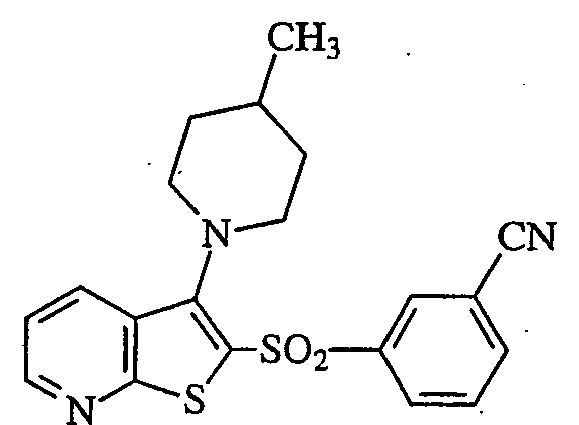
MS(FIB) 398 * * 37 
400,2 * 38 
411,2 * * 39 
418,2 * 40 
429,1 * ** 41 
456,1 * 42 
411,2 * 43 
456,0 * 44 
414,2 * 45 
471,9 * 46 
MS(EI) 394 * 47 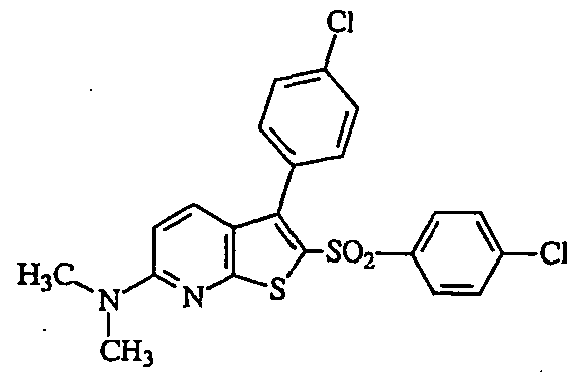
464,1 ** 48 
416,2 * * 49 
436,6 * 50 
435,1 * 51 
446,2 *** 52 
395,2 * * 53 
MS(EI) 390 * ** 54 
404,3 * 55 
384,0 * 56 
428,2 *** 57 
456,0 * 58 
(FAB) 438 * (500 MHz, DMSO-d6 , 25 °C): 7.99 (dd, J = 8.8, 7.5 Hz, 1H); 7.61-7.51 (m, 6H); 7.35 (dd, J = 8.8, 1.4 Hz, 1H); 7.31-7.24 (m, 2H). 59 
MS(FIB) 391 * * 60 
421,1 * 61 
384,0 * 62 
MS(EI) 413 * 63 
MS(EI) 433 * 64 
441,2 * 65 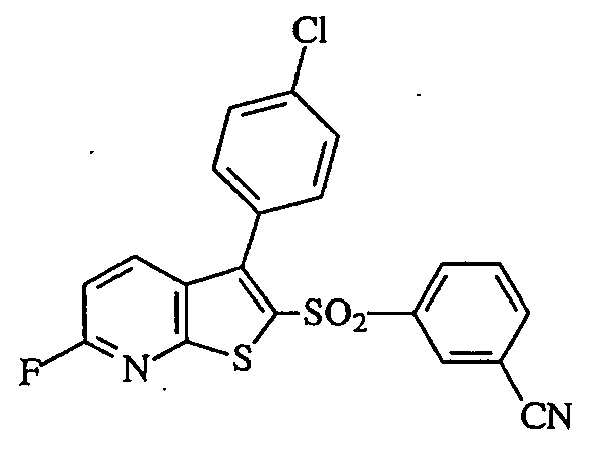
429,2 * (300 MHz, DMSO-d6 , 30 °C): 8.14 (ddd, J = 7.7, 1.5, 1.1 Hz, 1H); 8.00 (dd, J = 8.8, 7.5 Hz, 1H); 7.86 (ddd, J = 8.0, 2.0, 1.1 Hz, 1H); 7.75-7.65 (m, 2H); 7.59-7.51 (m, 2H); 7.36 (dd, J = 8.8, 1.6 Hz, 1H); 7.27-7.19 (m, 2H). 66 
MS(FIB) 402 * 67 
MS(FIB) 407 * * 68 
454,2 * 69 
MS(EI) 401 * 70 
416,2 * 71 
429,2 * 72 
466,1 ** 73 
MS(EI) 377 * 74 
MS(EI) 428 * 75 
MS (EI): 412 * *** (500 MHz, DMSO-d6 , 25 °C): 8.13 (dm, J = 7.9 Hz, 1H); 7.99 (dd, J = 8.8, 7.6 Hz, 1H); 7.82 (dm, J = 8.1 Hz, 1H); 7.72-7.66 (m, 2H); 7.36 (dd, J = 8.8, 1.4 Hz, 1H); 7.36-7.29 (m, 2H); 7.29-7.22 (m, 2H). 76 
MS(EI) 437 ** 77 
MS(EI) 421 * 78 
388,2 * *** 79 
MS (EI) 434 * * (300 MHz, CDCl3, 30 °C): 8.38-8.27 (brm, 1H); 7.50-7.38 (m, 4H); 7.36-7.28 (m, 2H); 7.19-7.09 (m, 2H); 6.96-6.87 (brm, 1H); 2.52 (vbrs, 2H). 80 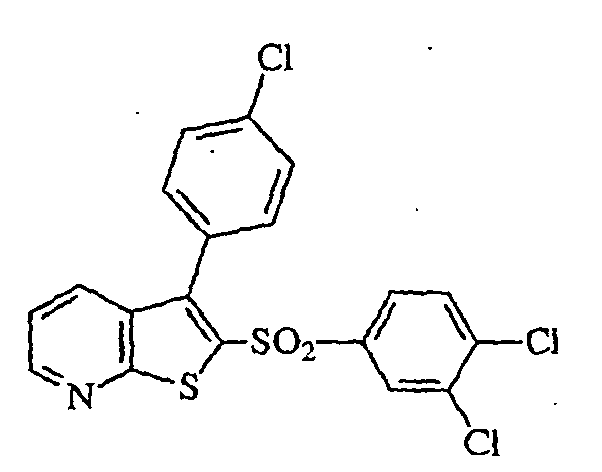
455,9 * ** 81 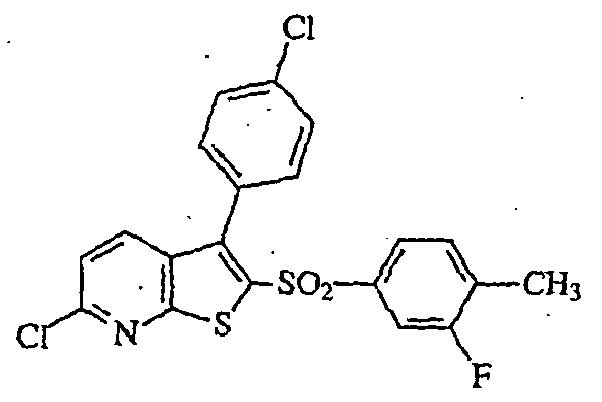
MS(EI) 451 * 82 
*** * *** 83 
411,2 * * 84 
MS(FIB) 407 * 85 
514,2 * 86 
MS (EI): 462 * (500 MHz, DMSO-d6 , 25 °C): 8.22 (ddd, J = 8.4, 2.3, 1.3 Hz, 1H); 7.88 (d, J = 8.7 Hz, 1H); 7.67-7.61 (m, 3H); 7.59-7.54 (m, 2H); 7.27-7.22 (m, 2H). 87 
422,2 * 88 
428,1 * 89 
MS (EI): 435 * *** (500 MHz, DMSO-d6 , 25 °C): 7.99 (dd, J = 8.7, 7.6 Hz, 1H); 7.60-7.55 (m, 2H); 7.45 (t, J = 7.7 Hz, 1H); 7.35 (dd, J = 8.7, 1.3 Hz, 1H); 7.30 (dd, J = 8.0, 1.8 Hz, 1H); 7.29-7.25 (m, 2H); 7.12 (dd, J = 9.0, 1.8 Hz, 1H); 2.27 (d, J = 1.5 Hz, 3H). 90 
MS (EI): 446 * *** (500 MHz, DMSO-d6 , 25 °C): 8.23 (dm, J = 8.4 Hz, 1H); 8.03 (dd, J = 8.8, 7.5 Hz, 1H); 7.67-7.61 (m, 2H); 7.59-7.54 (m, 2H); 7.38 (dd, J = 8.8, 1.4 Hz, 1H); 7.28-7.22 (m, 2H). 91 
MS (EI): 433 * ** (500 MHz, DMSO-d6 , 25 °C): 8.84 (dd, J = 4.5, 1.6 Hz, 1H); 8.23-8.19 (m, 1H); 7.83 (dd, J = 8.3, 1.6 Hz, 1H); 7.64-7.59 (m, 2H); 7.57 (dd, J = 8.3, 4.5 Hz, 1H); 7.37-7.31 (m, 2H); 7.31-7.26 (m, 2H); 3.90 (s, 3H). 92 
MS(EI) 460 * 93 
MS(EI) 417 ** 94 
MS(EI) 406 * 95 
496,2 ** 96 
416,1 * (500 MHz, DMSO-d6 , 25 °C): 8.77 (dd, J = 4.5, 1.5 Hz, 1H); 8.55 (dd, J = 8.4, 1.5 Hz, 1H); 8.36-8.29 (m, 2H); 8.19 (ddd, J = 7.8,' 2.4, 1.6 Hz, 1H); 7.54 (dd, J = 8.4, 4.5 Hz, 1H); 3.27-3.18 (m, 2H); 3.03-2.95 (m, 2H); 1.65-1.49 (m, 3H); 1.10-0.99 (m, 2H); 0.96 (d, J= 6.4 Hz, 3H). 97 
MS 453 * (500 MHz, CDCl3, 25 °C): 8.38 (d, J = 2.3 Hz, 1H); 7.64 (d, J = 2.3 Hz, 1H); 7.50-7.41 (m, 4H); 7.36-7.30 (m, 2H); 7.19-7.13 (m, 2H). 98 
MS(EI) 408 * 99 
MS(EI) 408 ** 100 
353,1 * 101 
451,2 * 102 
- * (500 MHz, DMSO-d6 , 25 °C): 8.83 (dd, J = 7.4, 5.4 Hz, 1H); 7.61-7.55 (m, 2H); 7.52-7.44 (m, 4H); 7.44 (dd, J = 11.2, 5.4 Hz, 1H); 7.28-7.23 (m, 2H). 103 
437,2 ** 104 
422,2 * 105 
MS(FIB) 436 *** 106 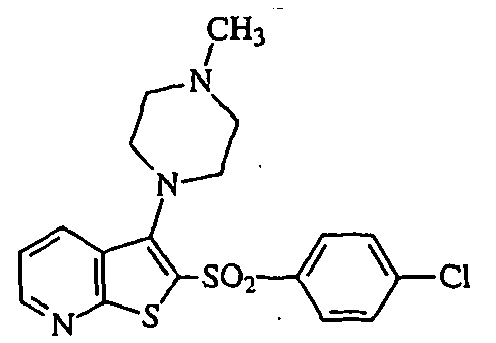
MS(EI) 407 ** 107 
423,2 * 108 
464,1 *** 109 
404,1 * 110 
MS 412 * (400 MHz, DMSO-d6 , 25 °C): 8.85 (dd, J = 4.6, 1.5 Hz, 1H); 8.24 (ddd, J = 8.5, 2.4, 1.3 Hz, 1H); 7.86 (dd, J = 8.3, 1.5 Hz, 1H); 7.69-7.65 (m, 1H); 7.63 (ddd, J = 7.7, 2.4, 1.7 Hz, 1H); 7.60-7.51 (m, 2H); 7.46-7.38 (m, 1H); 7.13-7.05 (m, 2H). 111 
378,2 *** 112 
382,1 *** 113 
421,3 * 114 
404,1 * 115 
419,1 * 116 
MS(EI) 485 *** 117 
MS(EI) 426 *** 118 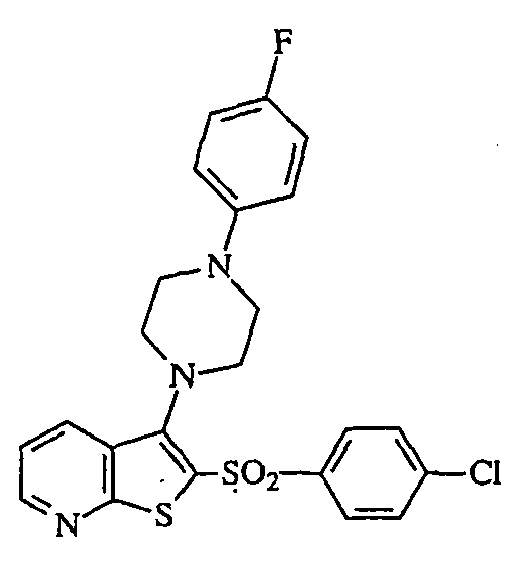
MS(EI) 487 *** 119 
MS (FAB): 440 * (400 MHz, DMSO-d6 , 25 °C): 8.51 (d, J = 8.7 Hz, 1H); 8.02-7.94 (m, 2H); 7.78-7.70 (m, 2H); 7.59 (d, J = 8.7 Hz, 1H); 3.23-3.11 (m, 2H); 3.06-2.96 (m, 2H); 1.63-1.43 (m, 3H); 1.18-1.03 (m, 2H); 0.95 (d, J = 6.3 Hz, 3H). 120 
446,3 *** 121 
436,2 *** 122 
451,2 *** 123 
MS (EI): 437 * 1H NMR (500 MHz, CDCl3, 25 °C): 8.62 (dd, J = 2.8, 0.8 Hz, 1H); 7.49-7.42 (m, 4H); 7.40 (dd, J = 8.4, 2.8 Hz, 1H); 7.35-7.30 (m, 2H); 7.18-7.14 (m, 2H). 124 
472,3 *** 125 
436,1 * 126 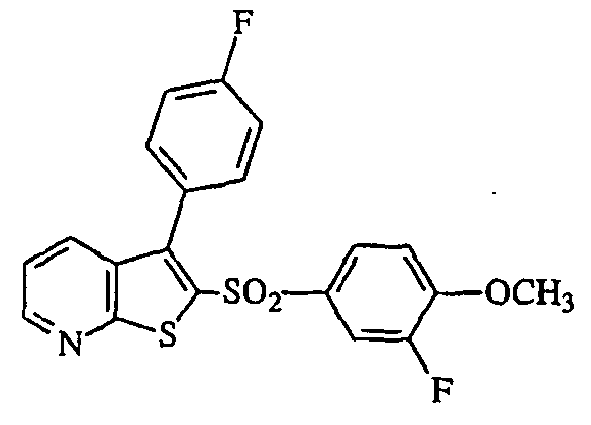
418,2 * 127 
418,2 * 128 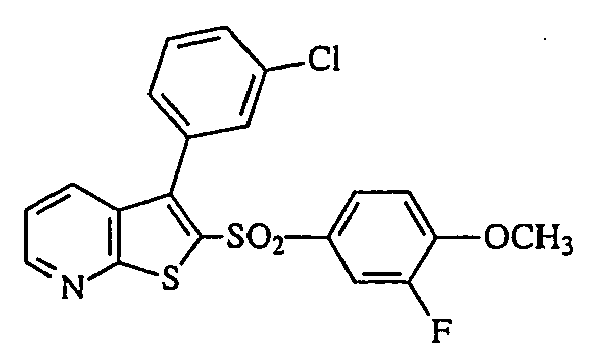
434,2 * 129 
MS(EI) 378 * 130 
422,1 * 131 
419,2 * 132 
413,2 * 133 
MS(EI) 376 ** 134 
MS(EI) 428 * 135 
464,2 ** 136 
429,2 * 137 
422,1 * 138 
447,2 * 139 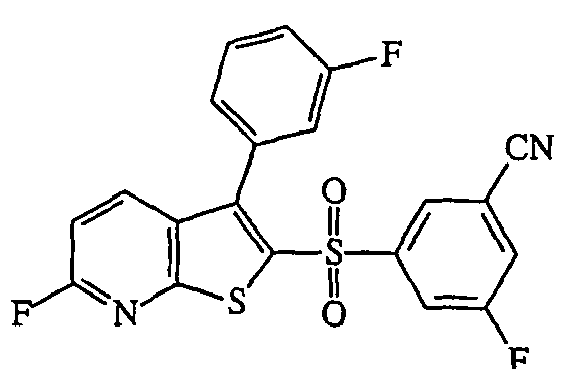
431,1 * 140 
423,4 * 141 
397,4 * * Ki <500nM
** 500nM<Ki < 1500nM
*** Ki >1500nM - The invention is further illustrated by the following non-limiting examples.
- Thionyl chloride (15 ml, 0.2 mol) and DMF (0.5 ml) were added dropwise to the suspension of 2-chloro-nicotinic acid (31.5 g, 0,2 mol) in chlorobenzene (100 ml) and the reaction mixture was stirred at 120 °C for 4 hours.
Aluminium chloride (33 g, 0.25 mol) was added at 0 °C to the reaction mixture, and it was boiled for 6 hours. The reaction mixture was poured onto ice (100 ml) and ethyl acetate (100 ml) was added. The mixture was stirred for half an hour at room temperature. The pH was adjusted to 8 by aqueous sodium hydroxide solution (40%). The emulsion was filtered, the filtrate was separated and extracted by ethyl acetate (2x50 ml). The organic phase was washed with water (100 ml) dried over Na2SO4 and concentrated in vacuo. The crude product was crystallized from isopropanol (20 ml) to yield 19.5 g (34%) of the titled compound.
The reaction is the same when we started from 2-chloro-5-nitro-nicotinic acid (Klunder, J. M. et al. J. Med. Chem. 1992, 35, 1887.) - The solution of thiourea (15.6 g, 0,200 mmol) in water (50 ml) and ethanol (25 ml) was added dropwise to the suspension of (4-chloro-phenyl)-(2-chloro-pyridin-3-yl)-methanone (7.65 g, 30 mmol) in ethanol (20 ml). The reaction mixture was heated for 24 hours, then cooled and stirred at 0 °C for 2-3 hours. The precipitate was filtered off, washed with water and purified by stirring with NaOH solution (2.5 g NaOH in 60 ml water) at room temperature for one hour. The mixture was filtered, and the filtrate was adjusted to pH 1 by 6N aqueous hydrochloric acid. The product was filtered off, washed with water to yield 6.48 g (76 %) of the titled compound.
- To the solution of (4-chloro-phenyl)-(2-mercapto-pyridin-1-yl)-methanone hydrochloride (0.7 g, 2.4 mmol) in DMF (15 ml) (4-chloro-phenyl)-chloromethyl sulfon (0.7 g,3.0 mmol) and NaOMe (0.28 g, 5.0 mmol) were added. The reaction mixture was kept between 120-130 °C temperature for 2 hours, followed evaporation in vacuo. Water (15 ml) was added to the residue and extracted with chloroform (3x20 ml). The organic phase was dried over Na2SO4, filtered and contcentrated in vacuo. The crude product was purified by crystallization from ether containing 10% dichloromethane and yielded 0.71 g of the title compound. Compounds of No.1-14, 16, 17, 18, 19, 22, 23, 24, 26-31, 33-35, 37, 39-41, 44, 45, 48, 54-56, 59, 61-63 ,68, 70, 72, 78, 80, 82 ,87, 88 and 91 were prepared by the same reaction. The different chloromethyl sulfon reagents was commercially available or obtained by the method of Y.Yinfa et.al. (Synth. Communication., 2004, 34, 13, 2443).
- A mixture of N-(4-Chloro-phenyl)chloromethanesulfonamide (0.265 g, 1.1 mmol) (Intermediate A), (4-chloro-phenyl)-(2-mercapto-pyridin-3-yl)-methanone hydrochloride (0.29 g, 1 mmol) (Example 2) and NaOCH3 (0.12 g, 2.2 mmol) in DMF (5 ml) was stirred at 130 °C for 2 hours. Then the solvent was removed in vacuo, water (15 ml) was added to the residue, and the mixture was extracted three times with chloroform (15-15 ml). The organic phase was dried and concentrated. The residue was triturated with n-hexane (10 ml), and after decantation of n-hexane the oily product was purified by column chromatography (Kieselgel 60, eluent: chloroform:methanol = 98:2) to yield 0.225 g (52 %) of the title compound.
- To a stirred solution of 4-chloroaniline (0.65 g; 5.0 mmol) in dichloromethane (10 ml) TEA (1.4 ml, 10 mmol) was added. The solution was cooled to 5 °C and the solution of chloromethanesulfonyl chloride (0.9 ml, 10 mmol) in dichloromethane (5 ml) was added dropwise keeping temperature at 5 °C. After the addition the reaction mixture was stirred for 30 min at 10 °C, and then at ambient temperature for 20 hours. The reaction mixture was evaporated to dryness and 2 N aqueous NaOH (25 ml; 50 mmol) was added, and the mixture was stirred for 2 hours. Then the solution was neutralized with aqueous HCl to pH=7 and extracted three times with ethyl acetate (30-30 ml). The organic phase was dried and concentrated. The crude product was purified by column chromatography (Kieselgel 60, eluent: n-hexane:ethyl acetate = 2: 1) to yield 0.7 g (58 %) of the title compound as crystalline substance. Melting point: 102-104 °C.
- The title compound was prepared from N-(4-Chloro-benzyl)-chloromethane-sulfonamide (Intermediate A) and (4-chloro-phenyl)-(2-mercapto-pyridin-1-yl)-methanone hydrochloride (Example 2) according to the method described in Example 4. The crude product was purified by column chromatography (Kieselgel 60, eluent: n-hexane:ethyl acetate = 2:1) to yield 0.2 g (45 %) of the title compound.
- The title compound was prepared from 4-chlorobenzylamine and chloromethanesulfonyl chloride according to the method described in Example 4 for Intermediate A. The compound was purified by column chromatography to yield (54%) crystalline product.
Melting point: 91-92 °C. - The title compound was prepared from 1-Chloromethanesulfonyl-4-methylpiperidine (Intermediate A) and (4-chloro-phenyl)-(2-mercapto-pyridin-1-yl)-methanone hydrochloride (Example 2) according to the method described in Example 3. The crude product was purified by column chromatography (Kieselgel 60, eluent: n-hexane:ethyl acetate = 1:1) to yield 0.23 g (56 %) of the title compound.
- To a stirred solution of 4-methylpiperidine (0.6 ml; 10 mmol) in dichloromethane (10 ml) TEA (1.4 ml, 10 mmol) was added. The solution was cooled to 5 °C and the solution of chloromethanesulfonyl chloride (0.4 ml, 4.4 mmol) in dichloromethane (5 ml) was added dropwise keeping temperature at 5 °C. After the addition the reaction mixture was stirred for 30 min at 10 °C, and then at ambient temperature for 4 hours. The reaction mixture was diluted with dichloromethane (10 ml) and washed twice with 0.5 N aqueous hydrochloric acid (10-10 ml), then with water. The organic phase was dried and concentrated. The crude product was solidified with n-hexane (5 ml), and then crystallized from n-hexane: ethyl acetate (3:1) mixture (4 ml) to yield 0.45 g (48 %) of the title compound as crystalline substance.
Melting point: 90-92 °C. - A solution of 3-cyanopyridine-2-thiol (6.8 g, 50 mmol), chloromethyl-(4-chloro-phenyl)-sulfone (12.3 g, 55 mmol) and sodium methoxide (3.0 g, 55 mmol) in anhydrous N,N-dimethylformamide (150 ml) was stirred at 120 °C for 2 hours. The reaction mixture was cooled to room temperature and water (150 ml) was dropped into. The solid was filtered, washed (H2O) and dried to yield 13.7 g (84%) of the titled compound.
- To a mixture of anhydrous copper(II) bromide (11.2 g, 50 mmol) and tert-butyl-nitrite (9.0 ml, 75 mmol) in anhydrous acetonitrile (100ml) under argon atmosphere at 2-(4-chloro-benzenesulfonyl)-thieno[2,3-b]pyridin-3-ylamine (10.7 g, 34 mmol) intermediate (IV) was added in portions meanwhile keep the temperature under 70°C. The reaction mixture was kept at 65°C for 1.5 hour, then it was cooled to room temperature. The crystalline pruduct was filtered and washed with acetonitrile to give a pure product (7.7 g, 58.3%).
- 3-Bromo-2-(3-cyano-5-fluoro-benzenesulfonyl)-thieno[2,3-b]pyridine (Example 8) (0.2 g, 0.5 mmol) was dissolved in toluene (4 ml) and ethanol (4.5 ml) under argon atmosphere. To the solution Pd(PPh3)4 (28mg, 0.025 mmol), 3-fluorophenylboronic acid (85 mg, 0.6 mmol) and 2M solution of Na2CO3 (2.3 ml) was added. The reaction mixture was refluxed for 1.5-2 hours, then the organic solvent was evaporated in vacuo. Water (10 ml) was added to the residue and the obtained suspension was extracted three times with chloroform (3x10 ml). The organic phase was washed with water (5.0 ml), dried over Na2SO4, filtered, and contcentrated in vacuo. The crude product was purified by column chromatography (Kieselgel 60, chloroform :methanol = 5:0.05) to yield 0.1 g (25 %) of the title compound.
- Compounds 38, 42, 52, 53, 60, 66, 67, 69, 71, 73, 83, 84, 108-110, 113, 114, 126-128, 130, 132, 136 and137 were prepared according the procedure described above.
- 3-Bromo-2-(3-cyano-benzenesulfonyl)-thieno[2,3-b]pyridine (prepared according to Example 8) ( 2.18 g, 5:75 mmol) and 4-methyl-piperidine (2.0 ml, 17 mmol) was dissolved in DMF (9 ml) and heated to 100°C temperature for one hour under argon. The reaction mixture was cooled and water (60ml) was added and extracted with chloroform (3x20ml). The organic layer was washed with water (2x20ml), dried and evaporated in vacuo. The crude product was purified via chromatography (Kieselgel 60, hexan :ethylacetate = 2:1) yielded 1.64g (72.4%).
Analog prepared compounds were 32, 36, 46, 92-96, 98-100, 106, 116-118, 129, 133, 134, 140 and 141. - 2-(4-Methoxy-benzenesulfonyl)-thieno[2,3-b]pyridin-3-yl-amine (IV)( prepared as see Example 7) (0.48 g, 1.5 mmol) was suspended in dry tetrahydrofurane , triethylamine (0.3 ml, 2 mmol) was added and triphosgene (0.18 g 0.6 mmol) dissolved in tetrahydrofurane was dropped in. After one hour stirring at room temperature 4-methyl-piperidine (0.36 ml, 3 mmol) was added and the stirring continued for 20 hours. The mixture was evaporated in vacuo, the residue dissolved in chloroform, washed with water, dried and evaporated in vacuo. Purifying with flash chromatography gave the title compound (0.43 g, 65 %).
Applying the above procedure the following compounds were prepared: 111, 112, 120-122. - To the solution of 2-(4-chloro-benzenesulfonyl)-3-(4-chloro-phenyl)-5-nitro-thieno[2,3-b]pyridine (Example 3, compound 72) (0.90 g, 1.93 mmol) in ethyl acetate (12 ml) SnCl2 2H2O (2.19 g, 9.71 mmol) was added in one portion. The reaction mixture was stirred at 70 °C for 1 hour. The mixture was poured into a flask charged with ice and neutralized with NaHCO3 solution (10%), than dichloromethane (60 ml) was added and the organic layer separated. The water phase was extracted with dichloromethane (2x30 ml). The organic phases were collected, dried over Na2SO4, filtered and concentrated in vacuo. The residue was subjected to column chromatography (SiO2, cyclohexane : acetone = 7:3) giving 2-(4-chloro-benzenesulfonyl)-3-(4-chloro-phenyl)-thieno[2,3-b]pyridin-5-ylamine (0.46 g, Yield: 55%).
- To the pyridine solution (2 ml) of 2-(4-chloro-benzenesulfonyl)-3-(4-chloro-phenyl)-thieno[2,3-b]pyridin-5-ylamine (0.095 g, 0.22 mmol) (Example 12) methanesulfonyl chloride (0.025 g, 0.22 mmol) was added in one portion. The reaction mixture was refluxed for 3 hours. Than the solvent was evaporated in vacuo, the residue was suspended up in methanol (5 ml) and filtered off. To the filtrate water (10 ml) was added and the formed mixture was extracted with dichloromethane (2x10 ml). The organic phases were collected, dried, filtered and concentrated in vacuo. The crystalls were collected, washed with cold methanol and filtered off, to give(73 mg, Yield: 65%) of title compound.
- A suspension of 2-(4-chloro-benzenesulfonyl)-3-(4-chloro-phenyl)-thieno[2,3-b] pyridin-5-ylamine (Example 12) (0.69 g, 1.58 mmol), concentrated HCl (6 ml) and water (4 ml) was cooled to 0 °C and ice cold water solution of NaNO2 (3 ml, 0.11 g, 1.58 mmol) was added. The mixture was stirred for half an hour at 0 °C. Than cooled, concentrated HCl (4 ml) solution of Cu(I)Cl (0.188 g, 1.9 mmol) was added in one portion. The mixture was let to warm up to room temperature and than immersed in a 60 °C oil bath for one hour. The cooled mixture was poured into ice (10g), neutralized with NaHCO3 solution (10%) and extracted with dichloromethane (3x50 ml). The organic phases were collected, dried over Na2SO4, filtered and concentrated in vacuo. The residue was purified by column chromatography (SiO2, cyclohexane : acetone = 7:3) giving the title compound (0.27 g, 38%).
- A suspension of 2-(4-Chloro-benzenesulfonyl)-3-(4-chloro-phenyl)-thieno[2,3-b] pyridin-5-ylamine (0.50 g, 1.14 mmol) (Example 12), concentrated HCl (8 ml) and water (4 ml) was cooled to 0 °C and than ice cold water solution of NaNO2 (5 ml, 0.084 g, 1.21 mmol) was added. The mixture was stirred for half an hour at 0 °C. Than cooled, water solution of NaBF4 (0.176 g, 1.59 mmol) was added in one portion. The mixture was stirred at 0 °C for half an hour and filtered. The obtained solid was washed with cold water, methanol and dried overnight. The compound was melted at 179-182 °C and stirred for 10 minutes. Than the mixture was cooled to room temperature and subjected to column chromatography (SiO2, cyclohexane : acetone = 9:1) giving the 5-fluoro compound (0.126 g, 25%).
- To the solution of 3-bromo-2-(3-cyano-5-fluoro benzenesulfonyl)- thieno[2,3-b] pyridine (3.51 g, 8.8 mmol) in chloroform (130 ml) m-chloroperoxybenzoic acid (6.08 g, 35 mmol, 77%) was added and the reaction mixture was stirred at room temperature overnight. The solution was washed with NaHCO3 (10%, 3 x 50 ml) then twice with water (25 ml), dried over Na2SO4, filtered, and contcentrated in vacuo. The crude product was purified by a treatment with ether to give 3.06 g (84%) of the title compound.
- 3-Bromo-2-(4-chloro-benzenesulfonyl)- thieno[2,3-b]pyridine-N-oxide (prepared as described in Example 16) (4.95 g, 12.2mmol) was boiled at 120°C with 70% nitric acid (0.75ml, 12 mmol) in acetic acid for 4 hours. The reaction mixture was evaporated and the residue was purified by chromatography (Kieselgel 60, chloroform : methanol = 5:0.1) to yield a yelow solid compound (0.8 g, 15%) and starting material (2.4 g, 49%).
- 3-Bromo-2-(4-chloro- benzenesulfonyl)-5-nitro-thieno[2,3-b]pyridine-N-oxide ( Example 17) (0.8 g, 1,78 mmol) was dissolved in acetic acid (12 ml) and Fe powder was added (0,61 g, 10 mmol). The reactiom mixture was stirred at 70 °C for 30 minutes, followed an evaporation by vacuo, and residue was purified by chromatography (Kieselgel 60, chloroform : methanol = 5:0.1) to yield the title compound (0.51 g, 71 %).
- 5-Amino-3-bromo-2-(4-chloro- benzenesulfonyl) -thieno[2,3-b]pyridine was reacted with 3-fluorophenylboronic acid as described in Example 9. Yield is 20%.
Compound 131 was prepared in accordance with the same method. - 5-Amino-3-bromo-2-(4-chloro- benzenesulfonyl) -thieno[2,3-b]pyridine was reacted with 4-methyl-piperidine as described in Example 10.
- 5-Amino-2-(4-chloro-benzenesulfonyl) -3-(3-fluor-phenyl)-thieno[2,3-b]pyridine (Example 19) was treated as described in Example 15 to give the 5-fluoro compound .
- 3-Bromo-2-(3-cyano-5-fluoro benzenesulfonyl)- thieno[2,3-b]pyridine-N-oxide (Example 16) was reacted with 4-chlorophenylboronic acid using the same procedure as describe in Example 9 to give the title compound (yield 63%).
- 3-Bromo-2-(4-chloro -benzenesulfonyl)- thieno[2,3-b]pyridine-N-oxide (prepared Example 16) was reacted with 4-methyl- piperidine according the procedure Example 10 at 80°C temperature to give the title compound.
- 2-(3-Cyano-5-fluoro-benzenesulfonyl)-3-(4-chloro-phenyl)-thieno[2,3-b]pyridine-N-oxide (1.35 g, 3.0 mmol) was treated in DMF suspension(11 ml) with trifluoroacetic anhydrate (8.6 ml, 61 mmol) at room temperature for 1,5 hours. By the end of the reaction it became a solution, which was concentrated by half of the whole volume in vacuo. Water (8,6 ml) was added, the crystalline product was filtered off and washed with water.The reaction resulted in 0.93 g (68.9%) of the titled compound.
- Starting from 2-(4-chloro -benzenesulfonyl)-3-(4-methyl-piperidinyl)-thieno[2,3-b] pyridine-N-oxide (Example 23) the reaction was prepared using the same procedure as described in Example 24 and as a side product the titled compound (yield 10%) was isolated. The yield of the corresponding 2-(4-chloro-benzenesulfonyl)-3-(4-methyl piperidinyl)-7H-thieno[2,3-b]pyridin-6-one was 60% (intermediate XV)
- 2-(3-Cyano-5-fluoro-benzenesulfonyl)-3-(4-chloro-phenyl)-7H-thieno[2,3-b]pyridin-6-one (0.92 g, 2.1 mmol) was dissolved in DMF (14 ml) and phosphoroxychloride (2.0 ml, 21 mmol) was added, and the reaction mixture was heated at 90-100°C for 2,5 hours. It was then cooled , quenched with ice (10g) and alkalined with ammonium hydroxide (25%, 2.5 ml). The solid product was filtered, washed with water and methanol. It was recrystallized from hot dioxane yielded 0.73 g (75%) the titled compound.
- 2-(3-Cyano-5-fluoro-benzenesulfonyl)-3-(4-chloro-phenyl)-6-chloro-thieno[2,3-b] pyridine (0.83 g, 1.8 mmol) was dissolved in DMSO (10 ml) and potassium fluoride (0.3 g, 5.0 mmol) was added. The reaction mixture was heated to 140°C for 1,5 hours. After cooling water (10 ml) was added and the crystalline product was filtered, washed with water. It was recrystallized from hot methanol to give 0.65 g ( 62.5%) the compound no. 90.
- 2-(3-Cyano-benzenesulfonyl)-3-(4-chloro-phenyl)-7H-thieno[2,3-b]pyridin-6-one ( 0.11 g, 0.25 mmol) (Example 24), silver (I) carbonate (95 mg, 0.35 mmol) and iodomethane (0.15 ml, 2.4 mmol) were suspended in dichloromethane (5 ml) and DMF (0.5 ml). The reaction mixture was stirred at room temperature for 24 hours. It was filtered , washed with dichloromethane (2x10 ml), the filtrate was washed with Na2CO3 solution (10%, 10 ml) and water (10 ml). The organic solvent was dried , evaporated in vacuo and residue was purified by chromatography (Kiselgehl 60, ethylacetate : hexane = 1 : 1) to give the title product ( 47 mg, 43%).
- 2-(4-Chloro-benzenesulfonyl)-3-(4-chloro-phenyl)-7H-thieno[2,3-b]pyridin-6-one (0.30 g, 0.69 mmol) (Example 24), was dissolved in abs. DMF (10 ml), cooled to 0°C and abs. pyridine (0.06 ml, 0.74 mmol) and trifluoromethanesulphonic anhydride (0.026 ml, 0.77 mmol) was added. The reactiom mixture was kept at 0°C for 1 hour, then dimethylchloride (10 ml) and 1N NaHCO3 (10 ml) were added. After separation the organic phase washed with water (10 ml), dried and evaporated in vacuo. The crude triflate was treated with methanol saturated with NH3 (3 ml) at at 0-5°C for 2 hours. The reaction mixture was evaporated in vacuo and the residue purified by cromatography (Kieselgehl-60, chloroform : methanol = 5 : 0.2) to give the title compound (120 mg, 40%).
- 2-(4-Chloro-benzenesulfonyl)-3-(4-chloro-phenyl)-7H-thieno[2,3-b]pyridin-6-one (0.19 mmol) (Example 24) was reacted using the same procedure as for Example 29, but employing dimethylamine hidrochloride as the amine source ( 0.49 mmol) in DMSO (2.0 ml) in the presence of TEA (0.49 mmol) at room temperature for 2 hours. Yield is 73.7%.
- The mixture of 2-(4-chloro-benzenesulfonyl)-3-(4-chloro-phenyl)-thieno[2,3-b] Pyridine N-oxide ( prepared according the procedure described in Example 16)(6.4 g, 14.7 mmol) and phosphorus(III) oxychloride (10.2 ml, 109.4 mmol) was stirred and heated at 60°C for 3 hours. The obtained solution was poured onto ice and was alkalized with 5M sodium hydroxyde solution. After cooling the precipitate was filtered and washed with water. The crude product was purified by column chromatography on silica gel (Kieselgel 60, eluent: dichloromethane) to obtain the 4-chloro compound (3.31 g) and 6-chloro-2-(4-chloro-benzenesulfonyl)-3-(4-chloro-phenyl)-thieno[2,3-b]pyridine (3.03 g) (compound 43).
- 4-Chloro-2-(4-chloro-benzenesulfonyl)-3-(4-chloro-phenyl)-thieno[2,3-b]pyridine (100 mg, 0.22 mmol) in DMF (5 ml) was irradiated in a reactor with 300 W microwave at 210°C for 10 minutes. The solvent was evaporated in vacuo. The crude product was purified by column chromatography on silica gel (Kieselgel 60, eluent: chloroform : methanol = 98:2) to obtain the title compound (36 mg).
- The mixture of 4-chloro-2-(4-chloro-benzenesulfonyl)-3-(4-chloro-phenyl)-thieno[2,3-b] pyridine (454 mg, 1 mmol) and potassium fluoride (174 mg, 3 mmol) in DMF (5 ml) was stirred and heated at 140°C for 48 hours. The solvent was evaporated in vacuo. The crude product was purified by column chromatography on silica gel (Kieselgel 60, eluent: n-hexane: ethyl acetate = 2:1) to obtain the title compound (101 mg).
- The mixture of 4-chloro-2-(4-chloro-benzenesulfonyl)-3-(4-chloro-phenyl)-thieno[2,3-b] pyridine (150 mg, 0.33 mmol) and sodium methoxide (1.5 g, (27.8 mmol) in methanol (150 ml) was stirred and heated at reflux for 4 hours. The solvent was evaporated in vacuo. Water (100 ml) was added, and the obtained mixture was extracted with chloroform (3x20 ml). The combined organic layer was dried over sodium sulfate, filtered, and evaporated in vacuo. The crude residue was purified by crystallization from diethyl ether to obtain the title compound (105 mg).
- The mixture of 4-chloro-2-(4-chloro-benzenesulfonyl)-3-(4-chloro-phenyl)-thieno[2,3-b] pyridine (150 mg, 0.33 mmol) and sodium acetate (280 mg, 3.4 mmol) in acetic acid (7 ml) and water (0.1 ml) was stirred and heated at 100°C for 48 hours. The solution was diluted with water (25 ml). The precipitate was filtered, washed with water (3x10 ml) and dried. The crude product was purified by crystallization from chloroform to obtain the title compound (58 mg).
- The mixture of 4-chloro-2-(4-chloro-benzenesulfonyl)-3-(4-chloro-phenyl)-thieno[2,3-b]pyridine (400mg, 0.88 mmol) and sodium azide (360 mg, 5.54 mmol) in DMF (11 ml) and water (4 ml) was stirred and heated at 105°C for 5 hours. The solution was diluted with water (15 ml). The precipitate was filtered, washed with water (5x10 ml) and dried. The obtained crude 4-azido-2-(4-chloro-benzenesulfonyl)-3-(4-chloro-phenyl)-thieno[2,3-b]pyridine (400 mg, 0.87 mmol) was dissolved in methanol (20 ml). To the solution sodium borohydride (400 mg, 10.6 mmol) was added, and the mixture was stirred at ambient temperature for 24 hours. Water (30 ml) was added, and the obtained mixture was extracted with chloroform (3x60 ml). The combined organic layer was dried over sodium sulfate, filtered, and evaporated in vacuo. The crude residue was purified by crystallization from diethyl ether to obtain the title compound (193 mg).
- 4-Chloro-2-(4-chloro-benzenesulfonyl)-3-(4-chloro-phenyl)-thieno[2,3-b]pyridine (100 mg, 0.22 mmol) in DMF (5 ml) was irradiated in a reactor with 300 W microwave at 250°C for 10 minutes. The solvent was evaporated in vacuo. The crude product was purified by column chromatography on silica gel (Kieselgel 60, eluent: chloroform : methanol = 98:2) to obtain the title compound (26 mg).
- All compounds was analysed by HPLC-MS or MS and 1H-NMR. Purity of compounds of formula (I) was measured by HPLC methods and all compounds have >95% purity.
- 0.01-50 % of active ingredient of formula (I), 15-50 % of lactose, 15-50 % of potato starch, 5-15 % of polyvinyl pyrrolidone, 1-5 % of talc, 0.01-3 % of magnesium stearate, 1-3 % of colloid silicon dioxide and 2-7 % of ultraamylopectin were mixed, then granulated by wet granulation and pressed to tablets.
- The tablets made according to the method described above were coated by a layer consisting of entero- or gastrosolvent film, or of sugar and talc. The dragées were polished by a mixture of beeswax and carnuba wax.
- 0.01-50 % of active ingredient of formula (I), 1-5 % of sodium lauryl sulfate, 15-50 % of starch, 15-50 % of lactose, 1-3 % of colloid silicon dioxide and 0.01-3 % of magnesium stearate were thoroughly mixed, the mixture was passed through a sieve and filled in hard gelatin capsules.
- Ingredients: 0.01-15 % of active ingredient of formula (I), 0.1-2 % of sodium hydroxide, 0.1-3 % of citric acid, 0.05-0.2 % of nipagin (sodium methyl 4-hydroxybenzoate), 0.005-0.02 % of nipasol, 0.01-0.5 % of carbopol (polyacrilic acid), 0.1-5 % of 96 % ethanol, 0.1-1 % of flavoring agent, 20-70 % of sorbitol (70 % aqueous solution) and 30-50 % of distilled water.
- To solution of nipagin and citric acid in 20 ml of distilled water, carbopol was added in small portions under vigorous stirring, and the solution was left to stand for 10-12 h. Then the sodium hydroxide in 1 ml of distilled water, the aqueous solution of sorbitol and finally the ethanolic raspberry flavor were added with stirring. To this carrier the active ingredient was added in small portions and suspended with an immersing homogenizator. Finally the suspension was filled up to the desired final volume with distilled water and the suspension syrup was passed through a colloid milling equipment.
- For each suppository 0.01-15% of active ingredient of, formula (I) and 1-20% of lactose were thoroughly mixed, then 50-95% of adeps pro suppository (for example Witepsol 4) was melted, cooled to 35 °C and the mixture of active ingredient and lactose was mixed in it with homogenizator. The obtained mixture was mould in cooled forms.
- A 5 % solution of mannitol or lactose was made with bidistilled water for injection use, and the solution was filtered so as to have sterile solution. A 0.01-5 % solution of the active ingredient of formula (I) was also made with bidistilled water for injection use, and this solution was filtered so as to have sterile solution. These two solutions were mixed under aseptic conditions, filled in 1 ml portions into ampoules, the content of the ampoules was lyophilized, and the ampoules were sealed under nitrogen. The contents of the ampoules were dissolved in sterile water or 0.9 % (physiological) sterile aqueous sodium chloride solution before administration.

HlgCH2SOYR1 (VII)
wherein Hlg is chloro or bromo, Y and R1 are as described above for the formula (Ia), or with a compound of formula (VIII):
HlgCH2SO2YR1 (VIII)
wherein Hlg is chloro or bromo, Y and R1 are as described above for the formula (Ia), in the presence of sodium methoxide in dimethylformamide as solvent to obtain a compound of formula (Ia), and optionally thereafter forming salts and/or hydrates and/or solvates of compounds of formula (Ia) (Scheme 1).


HlgCH2SOYR1 (VII)
wherein Hlg is chloro or bromo, Y and R1 are as described above for the formula (Ib), or with a compound of formula (VIII):
HlgCH2SO2YR1 (VIII)
wherein Hlg is chloro or bromo, Y and R1 are as described above for the formula (Ib) in the presence of sodium methoxide in dimethylformamide as solvent and
reacting the obtained compound of formula (IV):
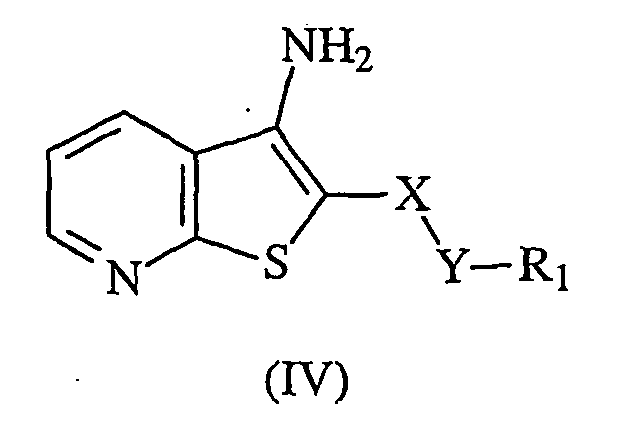
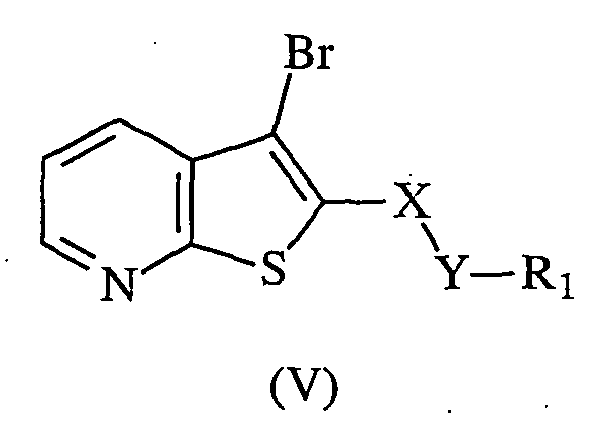
R2-B (OH)2 (IX)
wherein R2 is as defined above for formula (Ib), in the presence of base and catalyst in a solvent to obtain a compound of formula (Ib), and optionally thereafter forming salts and/or hydrates and/or solvates of compounds of formula (Ib) (Scheme 2).


HNR3R4 (XVI)
wherein R3 and R4 are as described above for formula (Ic) to obtain compound of formula (Ic), and optionally thereafter forming salts and/or hydrates and/or solvates of compounds of formula (Ic) (Scheme 3).


HNR3R4 (XIII)
wherein R3 and R4 are as described above for formula (Id), in the presence of phosgene or triphosgene and base to obtain a compound of formula (Id), and optionally thereafter forming salts and/or hydrates and/or solvates of compounds of formula (Id) (Scheme 4).


R2-B (OH)2 (IX)
wherein R2 is optionally substituted phenyl, heterocyclyl, in the presence of base and catalyst in a solvent, to obtain compounds of formula (XIV):
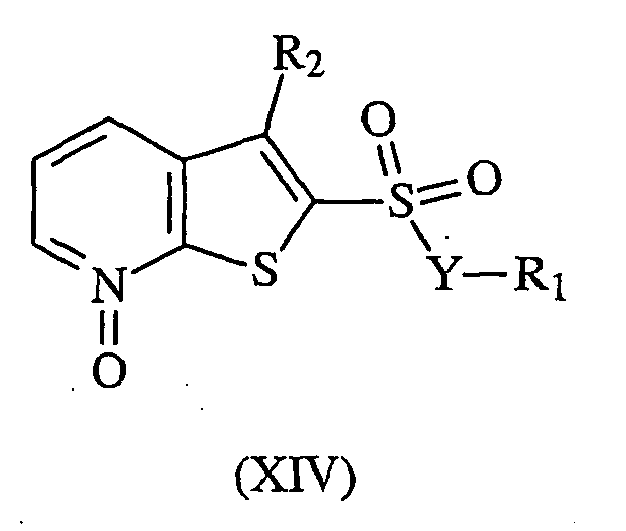
NHR3R4 (XIII)
wherein R3 and P4 are as described above for formula (Ig) to obtain compounds of formula (XIV), wherein R2 is NR3R4 group, wherein R3 and R4 are independently selected from the group of hydrogen or an optionally substituted alkyl, or R3 and R4 together with the N atom to which they are attached form an optionally substituted C5-7 heterocyclyl group, containing one or more heteroatom(s); and
reacting compounds of formula (XIV), wherein R1, R2 and Y are as described above for formula (Ig), with trifluoroacetic anhydride in a solvent to obtain compounds of formula (XV):


Claims (23)
- A compound of formula (I):
 X represents a group selected from SO, SO2;Y represents a group selected from (CH2)n, NH, NHCH2;n is an integer of 0 to 1;Z is H or monosubstituted by alkyl, nitro, halogen, alkoxy, trifluoromethyl, cyano, amino, alkylamino, dialkylamino, aminomethyl, alkylaminomethyl, dialkylaminomethyl, hydroxyl, alkylsulfonylamino;R1 is an optionally substituted alkyl, cycloalkyl, phenyl, biphenyl, heterocyclyl;R2 is an optionally substituted phenyl, heterocyclyl, orNR3R4 group wherein R3 and R4 are independently selected from the group of hydrogen and an optionally substituted alkyl, or R3 and R4 together with the N atom to which they are attached form an optionally substituted C5-7 heterocyclyl group, containing one or more heteroatom(s), orNH-CO-NR5R6 group, wherein R5 and R6 are independently selected from the group of hydrogen and an optionally substituted alkyl, or R5 and R6 together with the N atom to which they are attached form an optionally substituted C5-7 heterocyclyl group, containing one or more heteroatom(s); and/or hydrates and/or solvates and/or pharmaceutically acceptable salts thereof formed with acids or bases.
 - A compound according to claim 1 of formula (I)
 X represents a group selected from SO, SO2;Y represents a group selected from (CH2)n, NH, NHCH2;n is an integer of 0 to 1;Z is H or monosubstituted by alkyl, nitro, halogen, alkoxy, trifluoromethyl, cyano, amino, alkylamino, dialkylamino, aminomethyl, alkylaminomethyl, dialkylaminomethyl, hydroxyl, alkylsulfonylamino;R1 is alkyl or C3-10 cycloalkyl group optionally substituted with one or more substituent(s) selected from alkoxy, trifluoromethyl, amino, alkylamino, dialkylamino, aminomethyl, alkylaminomethyl, dialkylaminomethyl, acylamino, cyano, halogen, orphenyl or biphenyl optionally substituted with one or more substituent(s) selected from alkyl, methoxy, trifluoromethyl, amino, alkylamino, dialkylamino, aminomethyl, alkylaminomethyl, dialkylaminomethyl, acylamino, alkylsulfonyl, alkylsulfonylamino, cyano, halogen, orsaturated or unsaturated monocyclic or bicyclic heterocyclyl, containing 1-4 heteroatom(s) selected from O, N or S, such as pyridyl, quinolinyl, thiazolyl, piperidinyl, morpholyl, tetrahydroquinolinyl, oxazolyl, isoxazolyl, furyl thiophen, triazolyl, pyrrolidinyl ring optionally substituted with one or more hydroxy, alkylhydroxy, alkyl, alkoxy, trifluoromethyl, amino, alkylamino, dialkylamino, aminomethyl, alkylaminomethyl, dialkylaminomethyl, acylamino, cyano, halogen or oxo group;R2 is phenyl optionally substituted with one or more substituent(s) selected from alkyl, methoxy, trifluoromethyl, amino, alkylamino, dialkylamino, aminomethyl, alkylaminomethyl, dialkylaminomethyl, acylamino, alkylsulfonyl, alkylsulfonylamino, cyano, halogen, orsaturated or unsaturated monocyclic or bicyclic C5-7 heterocyclyl group, containing 1-4 heteroatom(s) selected from O, N or S, such as pyridyl, quinolinyl, thiazolyl, piperidinyl, morpholyl, tetrahydroquinolinyl, oxazolyl, isoxazolyl, furyl thiophen, triazolyl, pyrrolidinyl ring optionally substituted with one or more hydroxy, alkylhydroxy, alkyl, alkoxy, trifluoromethyl, amino, alkylamino, dialkylamino, aminomethyl, alkylaminomethyl, dialkylaminomethyl, acylamino, cyano, halogen or oxo group, orNR3R4 group wherein R3 and R4 are independently selected from the group of hydrogen and alkyl group optionally substituted with one or more substituent(s) selected from alkoxy, trifluoromethyl, amino, alkylamino, dialkylamino, aminomethyl, alkylaminomethyl, dialkylaminomethyl, acylamino, cyano, halogen, or R3 and R4 together with the N atom to which they are attached form a C5-7 heterocyclyl group, containing one or more heteroatom(s), selected from O, N or S, optionally substituted with one or more hydroxy, alkylhydroxy, alkyl, alkoxy, trifluoromethyl, amino, alkylamino, dialkylamino, aminomethyl, alkylaminomethyl, dialkylaminomethyl, acylamino, cyano, halogen or oxo group, orNH-CO-NR5R6 group, wherein R5 and R6 are independently selected from the group hydrogen and alkyl group optionally substituted with one or more substituent(s) selected from alkoxy, trifluoromethyl, amino, alkylamino, dialkylamino, aminomethyl, alkylaminomethyl, dialkylaminomethyl, acylamino, cyano, halogen, or R5 and R6 together with the N atom to which they are attached form a C5-7 heterocyclyl group, containing one or more heteroatom(s), selected from O, N or S, optionally substituted with one or more hydroxy, alkylhydroxy, alkyl, alkoxy, trifluoromethyl, amino, alkylamino, dialkylamino, aminomethyl, alkylaminomethyl, dialkylaminomethyl, acylamino, cyano, halogen or oxo group and/or hydrates and/or solvates and/or pharmaceutically acceptable salts thereof formed with acids or bases.
 - A compound according to claim 1 selected from
2-(4-chloro-benzenesulfonyl)-3-(4-chloro-phenyl)-thieno[2,3-b]pyridine,
2-(4-chloro-benzenesulfinyl)-3-(4-chloro-phenyl)-thieno[2,3-b]pyridine,
3-(4-chloro-phenyl)-2-(4-fluoro-benzenesulfonyl)-thieno[2,3-b]pyridine,
3-(4-chloro-phenyl)-2-(toluene-4-sulfonyl)-thieno[2,3-b]pyridine,
4-[3-(4-chloro-phenyl)-thieno[2,3-b]pyridine-2-sulfonyl]-benzonitrile,
2-benzenesulfonyl-3-(4-chloro-phenyl)-thieno[2,3-b]pyridine,
3-[3-(4-chloro-phenyl)-thieno[2,3-b]pyridine-2-sulfonyl]-benzonitrile,
3-(4-chloro-phenyl)-2-(pyridine-3-sulfonyl)-thieno[2,3-b]pyridine,
2-(butane-1-sulfonyl)-3-(4-chloro-phenyl)-thieno[2,3-b]pyridine,
3-(4-chloro-phenyl)-2-(2,4-dimethyl-thiazole-5-sulfonyl)-thieno[2,3-b]pyridine,
3-(4-chloro-phenyl)-2-(thiophene-2-sulfonyl)-thieno[2,3-b]pyridine,
3-(4-chloro-phenyl)-thieno[2,3-b]pyridine-2-sulfonic acid (4-chloro-phenyl)-amide,
3-(4-chloro-phenyl)-2-phenylmethanesulfonyl-thieno[2,3-b]pyridine,
2-(3-chloro-benzenesulfonyl)-3-(4-chloro-phenyl)-thieno[2,3-b]pyridine,
2-(4-chloro-benzenesulfonyl)-3-(4-chloro-phenyl)-6-chloro-thieno[2,3-b]pyridin, 2-(3-fluoro-benzenesulfonyl)-3-(4-chloro-phenyl)- thieno[2,3-b]pyridin, 2-(3-cyano-benzenesulfonyl)-3-(3-fluoro-phenyl)-thieno[2,3-b]pyridine, 2-(4-chloro-benzenesulfonyl)-3-(4-chloro-phenyl)-6-fluoro-thieno[2,3-b]pyridin, 2-(4-cyano-benzenesulfonyl)-3-(3-chloro-phenyl)-thieno[2,3-b]pyridine, 2-(3-cyano-benzenesulfonyl)-3-(3-methyl-piperidinyl)-thieno[2,3-b]pyridine, 2-(3-cyano-benzenesulfonyl)-3-(4-methyl-piperidinyl)-thieno[2,3-b]pyridine, 2-(3-cyano-benzenesulfonyl)-3-(4-tolyl)-thieno[2,3-b]pyridine, 2-(3-cyano-benzenesulfonyl)-3-(3-methoxy-phenyl)-thieno[2,3-b]pyridine, 2-(3-methoxy-benzenesulfonyl)-3-(4-chloro-phenyl)-thieno[2,3-b]pyridine, 2-(3-cyano-5-fluoro-benzenesulfonyl)-3-(4-chloro-phenyl)-thieno[2,3-b]pyridine, 2-(3-fluoro-4-methyl-benzenesulfonyl)-3-(4-chloro-phenyl)-thieno[2,3-b]pyridine, 2-(3,4-dimethyl-benzenesulfonyl)-3-(4-fluoro-phenyl)-thieno[2,3-b]pyridine, 2-(3-cyano-benzenesulfonyl)-3-(4-fluoro-phenyl)-6-chloro-thieno[2,3-b]pyridine, 2-(3-cyano-5-fluoro-benzenesulfonyl)-3-(4-fluoro-phenyl)-thieno[2,3-b]pyridine, 2-(3-cyano-benzenesulfonyl)-3-(4-fluoro-phenyl)-6-fluoro-thieno[2,3-b]pyridine, 2-(4-bromo-benzenesulfonyl)-3-(4-chloro-phenyl)-thieno[2,3-b]pyridin, 5-amino-2-(4-chloro-benzenesulfonyl)-3-(4-chloro-phenyl)-thieno[2,3-b]pyridin, 2-(3,4-dichloro-benzenesulfonyl)-3-(4-chloro-phenyl)-thieno[2,3-b]pyridin, 2-(3-fluoro-4-methyl-benzenesulfonyl)-3-(4-fluoro-phenyl)-thieno[2,3-b]pyridine, 2-(3-cyano-benzenesulfonyl)-3-(2-chloro-phenyl)-thieno[2,3-b]pyridine, 2-(3-cyano-5-fluoro-benzenesulfonyl)-3-(4-chloro-phenyl)-6-chloro-thieno[2,3-b]pyridine, 2-(3-fluoro-4-methoxy-benzenesulfonyl)-3-(4-chloro-phenyl)-thieno[2,3-b]pyridine, 2-(4-chloro-benzenesulfonyl)-3-(4-methyl-piperidinyl)-thieno[2,3-b]pyridine, 2-(3-ciano-5-fluoro-benzenesulfonyl)-3-(4-methyl-piperidinyl)-thieno[2,3-b]pyridine, 2-(4-chloro-benzenesulfonyl)-3-(4-chloro-phenyl)-5-fluoro-thieno[2,3-b]pyridin, 2-(4-chloro-benzenesulfonyl)-3-(4-chloro-phenyl)-5-chloro-thieno[2,3-b]pyridin, 2-(4-chloro-benzenesulfonyl)-3-(4-chloro-phenyl)-4-chloro-thieno[2,3-b]pyridin, 2-(4-chloro-benzenesulfonyl)-3-(4-chloro-phenyl)-4-fluoro-thieno[2,3-b]pyridin, 5-amino-2-(4-chloro-benzenesulfonyl)-3-(4-methyl-piperidinyl)-thieno[2,3-b]pyridin, 2-(3-cyano-5-fluoro-benzenesulfonyl)-3-(3-fluoro-phenyl)-thieno[2,3-b]pyridine, 5-amino-2-(4-chloro-benzenesulfonyl)-3-(3-fluoro-phenyl)-thieno[2,3-b]pyridin, 2-(4-chloro-benzenesulfonyl)-3-(4-methyl-piperidinyl)-6-chloro-thieno[2,3-b]pyridin,
2-(3-fluoro-4-methoxy-benzenesulfonyl)-3-(4-fluoro-phenyl)-thieno[2,3-b]pyridine,
2-(3-fluoro-4-methoxy-benzenesulfonyl)-3-(3-fluoro-phenyl)-thieno[2,3-b]pyridine,
2-(3-cyano-5-fluoro-benzenesulfonyl)-3-(2-fluoro-phenyl)-thieno[2,3-b]pyridine,
2-(3-cyano-5-fluoro-benzenesulfonyl)-3-(3-chloro-phenyl)-thieno[2,3-b]pyridine. - A process for preparing a compound of formula (Ia)
 X represents a group selected from SO, SO2;Y represents a group selected from (CH2)n, NH, NHCH2;n is an integer of 0 to 1;Z is H or monosubstituted by alkyl or nitro, groupR1 is an optionally substituted alkyl, cycloalkyl, phenyl, biphenyl, heterocyclyl;R2 is phenyl, optionally substituted with alkyl or halogen;by reacting a compound of formula (III):
HlgCH2SOYR1 (VII)
wherein Hlg is chloro or bromo, Y and R1 are as described above for the formula (Ia), or with a compound of formula (VIII):
HlgCH2SO2YR1 (VIII)
wherein Hlg is chloro or bromo, Y and R1 are as described above for the formula (Ia) in the presence of sodium methoxide in dimethylformamide as solvent to obtain a compound of formula (Ia), and optionally thereafter forming salts and/or hydrates and/or solvates of compounds of formula (Ia). - A process for preparing a compound of formula (Ib)
 X represents SO, SO2;Y represents a group selected from (CH2)n, NH, NHCH2;n is an integer of 0 to 1;Z is H or alkyl group;R1 is an optionally substituted alkyl, cycloalkyl, phenyl, biphenyl, heterocyclyl;R2 is phenyl, or aromatic heterocyclyl, optionally substituted with one or more substituent(s) selected from alkyl, alkoxy, trifluoromethyl, amino, alkylamino, dialkylamino, aminomethyl, alkylaminomethyl, dialkylaminomethyl, acylamino, cyano, fluoro, chloro, bromo, hydroxyl, methylsulfonyl,by reacting a compound of formula (XI):
HlgCH2SOYR1 (VII)
wherein Hlg is chloro or bromo, Y and R1 are as described above for the formula (Ib), or with a compound of formula (VIII):
HlgCH2SO2YR1 (VIII)
wherein Hlg is chloro or bromo, Y and R1 are as described above for the formula (Ib) in the presence of sodium methoxide in dimethylformamide as solvent and
reacting the obtained compound of formula (IV):

R2-B(OH)2 (IX)
wherein R2 is as defined above for formula (Ib), in the presence of base and catalyst in a solvent to obtain a compound of formula (Ib), and optionally thereafter forming salts and/or hydrates and/or solvates of compounds of formula (Ib). - A process for preparing a compound of formula (Ic):
 X represents SO2;Y represents a group selected from (CH2)n, NH, NHCH2;n is an integer of 0 to 1;Z is H or alkyl group;R1 is an optionally substituted alkyl, cycloalkyl, phenyl, biphenyl, heterocyclyl;R2 is NR3R4 wherein R3 and R4 are independently selected from the group of hydrogen an optionally substituted alkyl group, or R3 and R4 together with the N atom to which they are attached form an optionally substituted C5-7 heterocyclyl group, containing one or more heteroatom(s),by reacting a compound of formula (V):
with a compound of formula (XVI):
HNR3R4 (XVI)
wherein R3 and R4 are as described above for formula (Ic) to obtain compound of formula (Ic), and optionally thereafter forming salts and/or hydrates and/or solvates of compounds of formula (Ic). - A process for preparing a compound of formula (Id):
 X represents SO2;Y represents a group selected from (CH2)n, NH, NHCH2;n is an integer of 0 to 1;Z is H or alkyl group;R1 is an optionally substituted alkyl, cycloalkyl, phenyl, biphenyl, heterocyclyl;R2 is NH-CO-NR3R4 group, wherein R5 and R6 are independently selected from the group of hydrogen or optionally substituted alkyl group, or R3 and R4 together with the N atom to which they are attached form an optionally substituted C5-7 heterocyclyl group, containing one or more heteroatom(s),by reacting a compound of formula (IV):
HNR3R4 (XIII)
wherein R3 and R4 are as described above for formula (Id), in the presence of phosgene or triphosgene and base to obtain a compound of formula (Id), and optionally thereafter forming salts and/or hydrates and/or solvates of compounds of formula (Id). - A process for preparing a compound of formula (Ie):
 X represents a group selected from SO, SO2;Y represents a group selected from (CH2)n, NH, NHCH2;n is an integer of 0 to 1;Z is amino, alkylsulfonylamino, halogen;R1 is an optionally substituted alkyl, cycloalkyl, phenyl, biphenyl, heterocyclyl;R2 is phenyl, optionally substituted with alkyl or halogen;by reacting a compound of formula (Ia):
 X represents a group selected from SO, SO2;Y represents a group selected from (CH2)n, NH, NHCH2;n is an integer of 0 to 1;Z is nitro;R1 is an optionally substituted alkyl, cycloalkyl, phenyl, biphenyl, heterocyclyl;R2 is phenyl, optionally substituted with alkyl or halogen,with an appropriate reducing agent to obtain compound of formula (Ie)
 a. optionally reacting the obtained amino derivatives of formula (Ie), wherein Z is amino; X, Y, n, R1 and R2 are as described above for formula (Ie) with sodium nitrite in the presence of hydrochloric acid and copper(I) iodide or copper(I) chloride or copper(I) bromide or sodium tetrafluoroborate to obtain a compound of formula (Ie), ), wherein Z is halogen; X, Y, n, R1 and R2 are as described above for formula (Ie), and optionally thereafter forming salts and/or hydrates and/or solvates of the obtained halogen derivatives of formula Ie orb. optionally reacting the obtained amino derivatives of formula (Ie), wherein Z is amino; X, Y, n, R1 and R2 are as described above for formula (Ie) with alkylsulfonyl chloride derivatives to obtain compounds of formula (Ie), wherein Z is alkylsulfonylamino; X, Y, n, R1 and R2 are as described above for formula (Ie), and optionally thereafter forming salts and/or hydrates and/or solvates of the obtained alkylsulfonylamino derivatives of formula (Ie).
 - A process for preparing a compound of formula (If):
 X represents SO2;Y represents a group selected from (CH2)n, NH, NHCH2;n is an integer of 0 to 1;Z is amino, alkylsulfonylamino, halogen;R1 is an optionally substituted alkyl, cycloalkyl, phenyl, biphenyl, heterocyclyl;R2 is optionally substituted phenyl, heterocyclyl, or NR3R4 group wherein R3 and R4 are independently selected from the group of hydrogen or optionally substituted alkyl, or R3 and R4 together with the N atom to which they are attached form an optionally substituted C5-7 heterocyclyl group, containing one or more heteroatom(s),by reacting a compound of formula (V):


 a. with a compound of formula (IX):
R2-B(OH)2 (IX)
wherein R2 is optionally substituted phenyl, heterocyclyl, in the presence of base and catalyst in a solvent to obtain a compound of formula (If), wherein Z is amino; R2 is optionally substituted phenyl, heterocyclyl, Y and R1 are as described above for formula (If) and optionally thereafter forming salts and/or hydrates and/or solvates of the obtained amino derivatives of formula (If), and(i) optionally reacting the obtained amino derivatives of formula (If), wherein Z is amino; R2 is optionally substituted phenyl, heterocyclyl, Y and R1 are as described above for formula (If), with sodium nitrite in the presence of hydrochloric acid and copper(I) iodide or copper(I) chloride or copper(I) bromide or sodium tetrafluoroborate to obtain a compound of formula (If), wherein Z is halogen; R2 is optionally substituted phenyl, heterocyclyl, Y and R1 are as described above for formula (If), and optionally thereafter forming salts and/or hydrates and/or solvates of the obtained halogen derivatives of formula (If), or(ii) optionally reacting the obtained amino of formula (If), wherein Z is amino;R2 is optionally substituted phenyl, heterocyclyl, Y and R1 are as described above for formula (If), with alkylsulfonyl chloride derivatives to obtain a compound of formula (If), and optionally thereafter forming salts and/or hydrates and/or solvates of the obtained alkylsulfonylamino derivatives of formula (If), orb. with a compound of (XIII):wherein R3 and R4 are as described above for formula (If), at 70-200°C to obtain a compound of formula (If), wherein Z is amino; Y, R1 and R2 which is NR3R4 group, are as described above for formula (If) and optionally thereafter forming salts and/or hydrates and/or solvates of the obtained amino derivatives of formula (If), or
NHR3R4 (XIII)
(i) optionally reacting the obtained amino derivatives of formula (If), wherein Z is amino; Y, R1 and R2 which is NR3R4 group, are as described above for formula (If) with sodium nitrite in the presence of hydrochloric acid and copper(I) iodide or copper(I) chloride or copper(I) bromide or sodium tetrafluoroborate to obtain a compound of formula (If), wherein Z is halogen Y, R1 and R2 which is NR3R4 group, are as described above for formula (If) and optionally thereafter forming salts and/or hydrates and/or solvates of the obtained halogen derivatives of formula (If), or(ii) optionally reacting the obtained amino derivatives wherein Z is amino; Y, R1 and R2 which is NR3R4 group, are as described above for formula (If) with alkylsulfonyl chloride derivatives a compound of formula (If), wherein Z alkylsulfonylamino; Y, R1 and R2 which is NR3R4 group, are as described above for formula (If), and optionally thereafter forming salts and/or hydrates and/or solvates of the obtained alkylsulfonylamino derivatives of formula (If). - A process for preparing a compound of formula (Ig):
 X represents SO2;Y represents a group selected from (CH2)n, NH, NHCH2;n is an integer of 0 to 1;Z is amino, bromo, chloro, iodo, methoxy, mono- or dialkyamino;R1 is an optionally substituted alkyl, cycloalkyl, phenyl, biphenyl, heterocyclyl;R2 is an optionally substituted phenyl, heterocyclyl, orNR3R4 group wherein R3 and R4 are independently selected from the group of hydrogen or an optionally substituted alkyl, or R3 and R4 together with the N atom to which they are attached form an optionally substituted C5-7 heterocyclyl group, containing one or more heteroatom(s),by reacting a compound of formula (X):
R2-B(OH)2 (IX)
wherein R2 is optionally substituted phenyl, heterocyclyl, in the presence of base and catalyst in a solvent, to obtain compounds of formula (XIV):
with a compound of (XIII):
NHR3R4 (XIII)
wherein R3 and R4 are as described above for formula (Ig) to obtain compounds of formula (XIV), wherein R2 is NR3R4 group, wherein R3 and R4 are independently selected from the group of hydrogen or an optionally substituted alkyl, or R3 and R4 together with the N atom to which they are attached form an optionally substituted C5-7 heterocyclyl group, containing one or more heteroatom(s); and
reacting compounds of formula (XIV), wherein R1, R2 and Y are as described above for formula (Ig), with trifluoroacetic anhydride in a solvent to obtain compounds of formula (XV):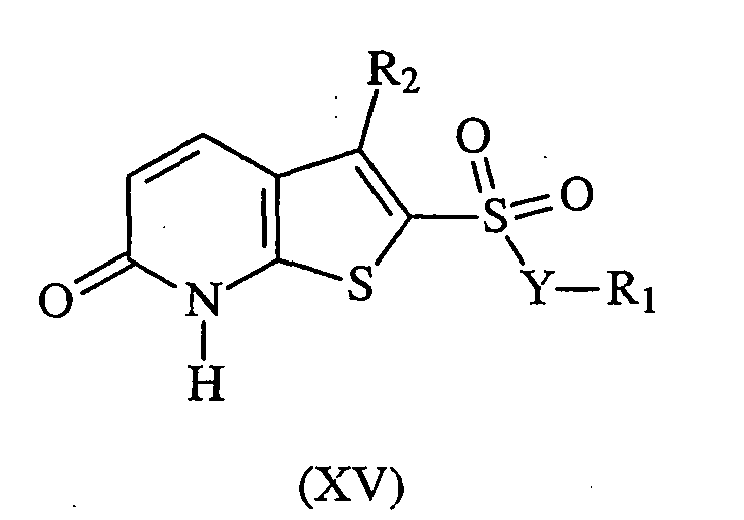 a. with phosphorous(III) oxybromide to obtain compounds of formula (Ig), wherein Z is bromo, X, Y, n, R1 and R2 are as described above for formula (Ig), and optionally thereafter forming salts and/or hydrates and/or solvates of the obtained bromo derivatives of formula (Ig); or(i) reacting the bromo derivatives of formula (Ig), wherein Z is bromo; X, Y, n, R1 and R2 are as described above for formula (Ig)) with potassium fluoride in DMSO to obtain compounds of formula (Ig), wherein Z is fluoro, X, Y, n, R1 and R2 are as described above for formula (Ig), and optionally thereafter forming salts and/or hydrates and/or solvates of the obtained fluoro derivatives of formula (Ig); orb. with phosphorous(III) oxychloride to obtain compounds of formula (Ig), wherein Z is chloro, X, Y, n, R1 and R2 are as described above for formula (Ig), and optionally thereafter forming salts and/or hydrates and/or solvates of the obtained chloro deriivatives of formula (Ig); or(i) reacting the chloro derivatives of formula (Ig), wherein Z is chloro; X, Y, n, R1 and R2 are as described above for formula (Ig)) with potassium fluoride in DMSO to obtain compounds of formula (Ig), wherein Z is fluoro, X, Y, n, R1 and R2 are as described above for formula (Ig), and optionally thereafter forming salts and/or hydrates and/or solvates of the obtained fluoro derivatives of formula (Ig); orc. with iodomethane in the presence of silver carbonate in a solvent to obtain compounds of formula (Ig), wherein Z is methoxy, X, Y, n, R1 and R2 are as described above for formula (Ig), and optionally thereafter forming salts and/or hydrates and/or solvates of the obtained methoxy derivatives of formula (Ig); ord. with trifluoromethanesulfonic anhydride in a solvent and then with ammonia or mono- and dialkylamines to obtain compounds of formula (Ig), wherein Z is respectivelly amino or monoalkylamino or dialkylamino, X, Y, n, R1 and R2 are as described above for formula (Ig), and optionally thereafter forming salts and/or hydrates and/or solvates of the obtained methoxy derivatives of formula (Ig).
 - A process for preparing a compound of formula (Ih):
 X represents SO2;Y represents a group selected from (CH2)n, NH, NHCH2;n is an integer of 0 to 1;Z is amino, hydroxy, bromo, chloro, fluoro, methoxy, mono- or dialkyamino;R1 is an optionally substituted alkyl, cycloalkyl, phenyl, biphenyl, heterocyclyl;R2 is optionally substituted phenyl, heterocyclyl, orNR3R4 group wherein R3 and R4 are independently selected from the group of hydrogen or an optionally substituted alkyl, or R3 and R4 together with the N atom to which they are attached form an optionally substituted C5-7 heterocyclyl group, containing one or more heteroatom(s),by reacting a compound of formula (XIV):
 a. with phosphorous(III) oxychloride or phosphorous pentachloride to obtain compounds of formula (Ih), wherein Z is chloro, X, Y, n, R1 and R2 are as described above for formula (Ih), orb. with phosphorous(III) oxybromide to obtain compounds of formula (Ih), wherein Z is chloro, X, Y, n, R1 and R2 are as described above for formula (Ih), and optionally thereafter forming salts and/or hydrates and/or solvates of the obtained chloro or bromo derivatives of formula (Ih), wherein Z is chloro or bromo; X, Y, n, R1 and R2 are as described above for formula (Ih)); or(i) reacting the chloro or bromo derivatives of formula (Ih), wherein Z is chloro or bromo; X, Y, n, R1 and R2 are as described above for formula (Ih) with potassium fluoride in DMSO to obtain compounds of formula (Ih), wherein Z is fluoro, X, Y, n, R1 and R2 are as described above for formula (Ih), and optionally thereafter forming salts and/or hydrates and/or solvates of the obtained fluoro derivatives of formula (Ih); or(ii) reacting the chloro or bromo derivatives formula (Ih), wherein Z is chloro or bromo; X, Y, n, R1 and R2 are as described above for formula (Ih) with sodium methylate in methanol to obtain compounds of formula (Ih), wherein Z is methoxy, X, Y, n, R1 and R2 are as described above for formula (Ih), and optionally thereafter forming salts and/or hydrates and/or solvates of the obtained methoxy derivatives of formula (Ih), or(iii) reacting the chloro or bromo derivatives of formula (Ih), wherein Z is chloro or bromo; X, Y, n, R1 and R2 are as described above for formula (Ih)) with sodium acetate in acetic acid to obtain compounds of formula (Ih), wherein Z is hydroxy, X, Y, n, R1 and R2 are as described above for formula (Ih), and optionally thereafter forming salts and/or hydrates and/or solvates of the obtained hydroxy derivatives of formula (Ih), or(iv) reacting the chloro or bromo derivatives formula (Ih), wherein Z is chloro or bromo; X, Y, n, R1 and R2 are as described above for formula (Ih) with trifluoromethanesulfonic anhydride in a solvent and then with ammonia or mono- and dialkylamines to obtain compounds of formula (Ih), wherein Z is respectivelly amino or monoalkylamino or dialkylamino, X, Y, n, R1 and R2 are as described above for formula (Ih), and optionally thereafter forming salts and/or hydrates and/or solvates of the obtained methoxy derivatives of formula (Ih), wherein Z is respectivelly amino or monoalkylamino or dialkylamino; or(v) reacting the chloro or bromo derivatives of formula (Ih), wherein Z is chloro or bromo; X, Y, n, R1 and R2 are as described above for formula (Ih)) with sodium azide in DMF and water to obtain compounds of formula (Ih), wherein Z is azido, X, Y, n, R1 and R2 are as described above for formula (Ih), then reacting the obtained azido derivatives with sodium borohydride in a solvent to obtain compounds of formula (Ih), wherein Z is amino, X, Y, n, R1 and R2 are as described above for formula (Ih), and optionally thereafter forming salts and/or hydrates and/or solvates of the obtained amino derivatives of formula (Ih).
 - A pharmaceutical formulation comprising a therapeutically effective amount of a compound of formula (I):
 X represents a group selected from SO, SO2;Y represents a group selected from (CH2)n, NH, N-HCH2;n is an integer of 0 to 1;Z is H or monosubstituted by alkyl, nitro, halogen, alkoxy, trifluoromethyl, cyano, amino, alkylamino, dialkylamino, aminomethyl, alkylaminomethyl, dialkylaminomethyl, hydroxyl, alkylsulfonylamino;R1 is an optionally substituted alkyl, cycloalkyl, phenyl, biphenyl, heterocyclyl;R2 is an optionally substituted phenyl, heterocyclyl, orNR3R4 group wherein R3 and R4 are independently selected from the group of hydrogen and an optionally substituted alkyl, or R3 and R4 together with the N atom to which they are attached form an optionally substituted C5-7 heterocyclyl group, containing one or more heteroatom(s), orNH-CO-NR5R6 group, wherein R5 and R6 are independently selected from the group of hydrogen and an optionally substituted alkyl, or R5 and R6 together with the N atom to which they are attached form an optionally substituted C5-7 heterocyclyl group, containing one or more heteroatom(s); and/or hydrates and/or solvates and/or pharmaceutically acceptable salts thereof formed with acids or bases in association with one or more physiologically acceptable diluents, excipients and/or inert carriers.
 - A pharmaceutical composition according to claim 12. for use in the prevention and/or treatment of mGluR1 and mGluR5 receptor-mediated disorders.
- The use of a compound of formula (I):
 X represents a group selected from SO, SO2Y represents a group selected from (CH2)n, NH, NHCH2;n is an integer of 0 to 1;Z is H or monosubstituted by alkyl, nitro, halogen, alkoxy, trifluoromethyl, cyano, amino, alkylamino, dialkylamino, aminomethyl, alkylaminomethyl, dialkylaminomethyl, hydroxyl, alkylsulfonylamino;R1 is an optionally substituted alkyl, cycloalkyl, phenyl, biphenyl, heterocyclyl;R2 is an optionally substituted phenyl, heterocyclyl, orNR3R4 group wherein R3 and R4 are independently selected from the group of hydrogen and an optionally substituted alkyl, or R3 and R4 together with the N atom to which they are attached form an optionally substituted C5-7 heterocyclyl group, containing one or more heteroatom(s), orNH-CO-NR5R6 group, wherein R5 and R6 are independently selected from the group of hydrogen and an optionally substituted alkyl, or R5 and R6 together with the N atom to which they are attached form an optionally substituted C5-7 heterocyclyl group, containing one or more heteroatom(s); and/or hydrates and/or solvates and/or pharmaceutically acceptable salts thereof formed with acids or bases for the manufacture of a medicament for the treatment and/or prevention of mGluR1 and mGluR5 receptor-mediated disorders.
 - The use of a compound according to claim 14. wherein said mGluR1 and mGluR5 receptor-mediated disorders are psychiatric disorders.
- The use of a compound according to claim 14. wherein said mGluR1 and mGluR5 receptor-mediated disorders are neurological disorders.
- The use of a compound according to claim 14. wherein said mGluR1 and mGluR5 receptor-mediated disorders are chronic and acute pain.
- The use of a compound according to claim 14. wherein said mGluR1 and mGluR5 receptor-mediated disorders are neuromuscular dysfunction of the lower urinary tract and gastrointestinal disorders.
- A compound of formula (I):
 X represents a group selected from SO, SO2;Y represents a group selected from (CH2)n, NH, NHCH2;n is an integer of 0 to 1;Z is H or monosubstituted by alkyl, nitro, halogen, alkoxy, trifluoromethyl, cyano, amino, alkylamino, dialkylamino, aminomethyl, alkylaminomethyl, dialkylaminomethyl, hydroxyl, alkylsulfonylamino;R1 is an optionally substituted alkyl, cycloalkyl, phenyl, biphenyl, heterocyclyl;R2 is an optionally substituted phenyl, heterocyclyl, orNR3R4 group wherein R3 and R4 are independently selected from the group of hydrogen and an optionally substituted alkyl, or R3 and R4 together with the N atom to which they are attached form an optionally substituted C5-7 heterocyclyl group, containing one or more heteroatom(s), orNH-CO-NR5R6 group, wherein R5 and R6 are independently selected from the group of hydrogen and an optionally substituted alkyl, or R5 and R6 together with the N atom to which they are attached form an optionally substituted C5-7 heterocyclyl group, containing one or more heteroatom(s); and/or hydrates and/or solvates and/or pharmaceutically acceptable salts thereof formed with acids or bases,for use in a method of prevention and/or treatment of mGluR1 and mGluR5 receptor-mediated disorders.
 - The compound as claimed in claim 19., wherein said mGluR1 and mGluR5 receptor-mediated disorders are psychiatric disorders.
- The compound as claimed in claim 19., wherein said mGluR1 and mGluR5 receptor-mediated disorders are neurological disorders.
- The compound as claimed in claim 19., wherein said mGluR1 and mGluR5 receptor-mediated disorders are chronic and acute pain disorders.
- The compound as claimed in claim 19., wherein said mGluR1 and mGluR5 receptor-mediated disorders are neuromuscular dysfunction of the lower urinary tract and gastrointestinal disorders.
Applications Claiming Priority (3)
| Application Number | Priority Date | Filing Date | Title |
|---|---|---|---|
| HU0501171A HU0501171D0 (en) | 2005-12-20 | 2005-12-20 | New compounds |
| HU0600920A HUP0600920A3 (en) | 2006-12-18 | 2006-12-18 | Substituted thieno[2,3-b]pyridines, process for their preparation, their use and pharmaceutical compositions containing them |
| PCT/HU2006/000123 WO2007072095A1 (en) | 2005-12-20 | 2006-12-19 | New compounds |
Publications (2)
| Publication Number | Publication Date |
|---|---|
| EP1963337A1 EP1963337A1 (en) | 2008-09-03 |
| EP1963337B1 true EP1963337B1 (en) | 2010-09-01 |
Family
ID=89987203
Family Applications (1)
| Application Number | Title | Priority Date | Filing Date |
|---|---|---|---|
| EP06831522A Active EP1963337B1 (en) | 2005-12-20 | 2006-12-19 | THIENO[2,3-b]PYRIDINE DERIVATIVES |
Country Status (13)
| Country | Link |
|---|---|
| US (1) | US20100022521A1 (en) |
| EP (1) | EP1963337B1 (en) |
| JP (1) | JP2009520016A (en) |
| KR (1) | KR20080087099A (en) |
| AT (1) | ATE479690T1 (en) |
| AU (1) | AU2006327899A1 (en) |
| BR (1) | BRPI0620205A2 (en) |
| CA (1) | CA2630739A1 (en) |
| DE (1) | DE602006016643D1 (en) |
| EA (1) | EA200801536A1 (en) |
| EC (1) | ECSP088572A (en) |
| MA (1) | MA30167B1 (en) |
| WO (1) | WO2007072095A1 (en) |
Families Citing this family (12)
| Publication number | Priority date | Publication date | Assignee | Title |
|---|---|---|---|---|
| US8263773B2 (en) | 2008-06-26 | 2012-09-11 | Richter Gedeon Nyrt. | Thieno [2,3-b] pyridine compounds with mGluR activity |
| HUP0800407A2 (en) * | 2008-06-30 | 2010-03-01 | Richter Gedeon Nyrt | Thieno [2,3-b] pyridine compounds as metalotropic glutamate receptor (mglur) ligands |
| US9801863B2 (en) | 2012-04-16 | 2017-10-31 | Case Western Reserve University | Inhibitors of short-chain dehydrogenase activity for modulating hematopoietic stem cells and hematopoiesis |
| WO2015065716A1 (en) | 2013-10-15 | 2015-05-07 | Case Western Reserve University | Compositions and methods of modulating short-chain dehydrogenase activity |
| JP6203820B2 (en) * | 2012-04-16 | 2017-09-27 | ケース ウエスタン リザーブ ユニバーシティ | Compositions and methods for modulating 15-PGDH activity |
| JP2018511581A (en) | 2015-03-08 | 2018-04-26 | ケース ウエスタン リザーブ ユニバーシティ | Inhibitors of short chain dehydrogenase activity for treating fibrosis |
| AU2017300377B2 (en) * | 2016-07-18 | 2022-04-21 | Case Western Reserve University | Inhibitors of short-chain dehydrogenase activity for promoting neurogenesis and inhibiting nerve cell death |
| EP3548035A4 (en) | 2016-11-30 | 2020-07-22 | Case Western Reserve University | COMBINATIONS OF 15 PGDH INHIBITORS WITH CORTICOSTEROIDS AND / OR TNF INHIBITORS AND USES THEREOF |
| AU2018215678A1 (en) | 2017-02-06 | 2019-08-22 | Board Of Regents Of The University Of Texas System | Compositions and methods of modulating short-chain dehydrogenase activity |
| JP7178360B2 (en) | 2017-04-07 | 2022-11-25 | ケース ウエスタン リザーブ ユニバーシティ | Inhibitors of short-chain dehydrogenase activity for treating coronary artery disorders |
| IL321451A (en) | 2018-11-21 | 2025-08-01 | Univ Case Western Reserve | Compositions and methods for modulating small-chain dehydrogenase activity |
| MX2022010258A (en) | 2020-02-21 | 2023-01-24 | Univ Case Western Reserve | Compositions and methods for treating renal injury. |
Family Cites Families (8)
| Publication number | Priority date | Publication date | Assignee | Title |
|---|---|---|---|---|
| US5656638A (en) * | 1995-04-18 | 1997-08-12 | Geron Corporation | Telomerase inhibitors |
| AU1071301A (en) * | 1999-11-01 | 2001-05-14 | Eli Lilly And Company | Pharmaceutical compounds |
| US6369222B1 (en) * | 2000-07-18 | 2002-04-09 | Hoffmann-La Roche Inc. | mGluR antagonists and a method for their synthesis |
| JP2008507518A (en) * | 2004-07-22 | 2008-03-13 | ピーティーシー セラピューティクス,インコーポレーテッド | Thienopyridine for treating hepatitis C |
| HUP0501170A2 (en) * | 2005-12-20 | 2007-09-28 | Richter Gedeon Nyrt | 2-heteroaryl-3-phenyl-thieno[2,3-b]pyridines, process for their preparation, their use and pharmaceutical compositions containing them |
| EA200801535A1 (en) * | 2005-12-20 | 2008-12-30 | Рихтер Гедеон Нирт. | NEW THYENOPYRIDONE DERIVATIVES |
| HUP0501168A3 (en) * | 2005-12-20 | 2007-10-29 | Richter Gedeon Nyrt | 2-(acyl, oxycarbonyl or aminocarbonyl)-3-phenyl-thieno[2,3-b]pyridines, process for their preparation, their use and pharmaceutical composition containing them |
| US8263773B2 (en) * | 2008-06-26 | 2012-09-11 | Richter Gedeon Nyrt. | Thieno [2,3-b] pyridine compounds with mGluR activity |
-
2006
- 2006-12-19 JP JP2008546651A patent/JP2009520016A/en active Pending
- 2006-12-19 EP EP06831522A patent/EP1963337B1/en active Active
- 2006-12-19 AT AT06831522T patent/ATE479690T1/en not_active IP Right Cessation
- 2006-12-19 KR KR1020087015458A patent/KR20080087099A/en not_active Withdrawn
- 2006-12-19 WO PCT/HU2006/000123 patent/WO2007072095A1/en not_active Ceased
- 2006-12-19 US US12/158,568 patent/US20100022521A1/en not_active Abandoned
- 2006-12-19 EA EA200801536A patent/EA200801536A1/en unknown
- 2006-12-19 CA CA002630739A patent/CA2630739A1/en not_active Abandoned
- 2006-12-19 AU AU2006327899A patent/AU2006327899A1/en not_active Abandoned
- 2006-12-19 DE DE602006016643T patent/DE602006016643D1/en active Active
- 2006-12-19 BR BRPI0620205-5A patent/BRPI0620205A2/en not_active IP Right Cessation
-
2008
- 2008-06-20 EC EC2008008572A patent/ECSP088572A/en unknown
- 2008-07-18 MA MA31130A patent/MA30167B1/en unknown
Also Published As
| Publication number | Publication date |
|---|---|
| AU2006327899A1 (en) | 2007-06-28 |
| DE602006016643D1 (en) | 2010-10-14 |
| CA2630739A1 (en) | 2007-06-28 |
| US20100022521A1 (en) | 2010-01-28 |
| KR20080087099A (en) | 2008-09-30 |
| EP1963337A1 (en) | 2008-09-03 |
| WO2007072095A1 (en) | 2007-06-28 |
| MA30167B1 (en) | 2009-01-02 |
| EA200801536A1 (en) | 2008-12-30 |
| JP2009520016A (en) | 2009-05-21 |
| BRPI0620205A2 (en) | 2011-11-01 |
| ATE479690T1 (en) | 2010-09-15 |
| ECSP088572A (en) | 2008-07-30 |
Similar Documents
| Publication | Publication Date | Title |
|---|---|---|
| EP3568390B1 (en) | Small molecule activators of nicotinamide phosphoribosyltransferase (nampt) and uses thereof | |
| CN100376572C (en) | anti-infective agent | |
| PT1495002E (en) | Benzamide derivatives useful as histone deacetylase inhibitors | |
| EP0637300A1 (en) | Antiproliferative quinazolines | |
| CN115151550B (en) | Ectonucleotide pyrophosphatase/phosphodiesterase 1 (ENPP1) regulators and their uses | |
| JP5201817B2 (en) | Pharmaceutical composition | |
| US20100022521A1 (en) | Compounds | |
| CA2690079C (en) | Sulfonyl-quinoline derivatives | |
| EP1962849B1 (en) | Quinoline derivatives useful in the treatment of mglur5 receptor-mediated disorders | |
| US8063220B2 (en) | Sulfonyl-quinoline derivatives | |
| US20090149495A1 (en) | Compounds | |
| US20110184014A1 (en) | New compounds | |
| CN101341152A (en) | Novel compounds | |
| HUP0600920A2 (en) | Substituted thieno[2,3-b]pyridines, process for their preparation, their use and pharmaceutical compositions containing them | |
| MX2008008202A (en) | New compounds | |
| HK40080347A (en) | Bromodomain inhibitors | |
| OA16730A (en) | Thieno [2,3 -D] Pyrimidine derivatives and their use to treat Arrhythmia. |
Legal Events
| Date | Code | Title | Description |
|---|---|---|---|
| PUAI | Public reference made under article 153(3) epc to a published international application that has entered the european phase |
Free format text: ORIGINAL CODE: 0009012 |
|
| 17P | Request for examination filed |
Effective date: 20080520 |
|
| AK | Designated contracting states |
Kind code of ref document: A1 Designated state(s): AT BE BG CH CY CZ DE DK EE ES FI FR GB GR HU IE IS IT LI LT LU LV MC NL PL PT RO SE SI SK TR |
|
| AX | Request for extension of the european patent |
Extension state: AL BA HR MK RS |
|
| REG | Reference to a national code |
Ref country code: HK Ref legal event code: DE Ref document number: 1123556 Country of ref document: HK |
|
| GRAP | Despatch of communication of intention to grant a patent |
Free format text: ORIGINAL CODE: EPIDOSNIGR1 |
|
| RTI1 | Title (correction) |
Free format text: THIENO(2,3-B)PYRIDINE DERIVATIVES |
|
| GRAS | Grant fee paid |
Free format text: ORIGINAL CODE: EPIDOSNIGR3 |
|
| GRAA | (expected) grant |
Free format text: ORIGINAL CODE: 0009210 |
|
| AK | Designated contracting states |
Kind code of ref document: B1 Designated state(s): AT BE BG CH CY CZ DE DK EE ES FI FR GB GR HU IE IS IT LI LT LU LV MC NL PL PT RO SE SI SK TR |
|
| AX | Request for extension of the european patent |
Extension state: AL BA HR MK RS |
|
| REG | Reference to a national code |
Ref country code: GB Ref legal event code: FG4D |
|
| REG | Reference to a national code |
Ref country code: CH Ref legal event code: EP |
|
| REG | Reference to a national code |
Ref country code: IE Ref legal event code: FG4D |
|
| REF | Corresponds to: |
Ref document number: 602006016643 Country of ref document: DE Date of ref document: 20101014 Kind code of ref document: P |
|
| REG | Reference to a national code |
Ref country code: NL Ref legal event code: VDEP Effective date: 20100901 |
|
| PG25 | Lapsed in a contracting state [announced via postgrant information from national office to epo] |
Ref country code: FI Free format text: LAPSE BECAUSE OF FAILURE TO SUBMIT A TRANSLATION OF THE DESCRIPTION OR TO PAY THE FEE WITHIN THE PRESCRIBED TIME-LIMIT Effective date: 20100901 Ref country code: LT Free format text: LAPSE BECAUSE OF FAILURE TO SUBMIT A TRANSLATION OF THE DESCRIPTION OR TO PAY THE FEE WITHIN THE PRESCRIBED TIME-LIMIT Effective date: 20100901 Ref country code: AT Free format text: LAPSE BECAUSE OF FAILURE TO SUBMIT A TRANSLATION OF THE DESCRIPTION OR TO PAY THE FEE WITHIN THE PRESCRIBED TIME-LIMIT Effective date: 20100901 |
|
| LTIE | Lt: invalidation of european patent or patent extension |
Effective date: 20100901 |
|
| PG25 | Lapsed in a contracting state [announced via postgrant information from national office to epo] |
Ref country code: PL Free format text: LAPSE BECAUSE OF FAILURE TO SUBMIT A TRANSLATION OF THE DESCRIPTION OR TO PAY THE FEE WITHIN THE PRESCRIBED TIME-LIMIT Effective date: 20100901 Ref country code: CY Free format text: LAPSE BECAUSE OF FAILURE TO SUBMIT A TRANSLATION OF THE DESCRIPTION OR TO PAY THE FEE WITHIN THE PRESCRIBED TIME-LIMIT Effective date: 20100901 Ref country code: SI Free format text: LAPSE BECAUSE OF FAILURE TO SUBMIT A TRANSLATION OF THE DESCRIPTION OR TO PAY THE FEE WITHIN THE PRESCRIBED TIME-LIMIT Effective date: 20100901 |
|
| REG | Reference to a national code |
Ref country code: HU Ref legal event code: AG4A Ref document number: E009047 Country of ref document: HU |
|
| PG25 | Lapsed in a contracting state [announced via postgrant information from national office to epo] |
Ref country code: SE Free format text: LAPSE BECAUSE OF FAILURE TO SUBMIT A TRANSLATION OF THE DESCRIPTION OR TO PAY THE FEE WITHIN THE PRESCRIBED TIME-LIMIT Effective date: 20100901 Ref country code: LV Free format text: LAPSE BECAUSE OF FAILURE TO SUBMIT A TRANSLATION OF THE DESCRIPTION OR TO PAY THE FEE WITHIN THE PRESCRIBED TIME-LIMIT Effective date: 20100901 Ref country code: NL Free format text: LAPSE BECAUSE OF FAILURE TO SUBMIT A TRANSLATION OF THE DESCRIPTION OR TO PAY THE FEE WITHIN THE PRESCRIBED TIME-LIMIT Effective date: 20100901 Ref country code: GR Free format text: LAPSE BECAUSE OF FAILURE TO SUBMIT A TRANSLATION OF THE DESCRIPTION OR TO PAY THE FEE WITHIN THE PRESCRIBED TIME-LIMIT Effective date: 20101202 |
|
| PG25 | Lapsed in a contracting state [announced via postgrant information from national office to epo] |
Ref country code: PT Free format text: LAPSE BECAUSE OF FAILURE TO SUBMIT A TRANSLATION OF THE DESCRIPTION OR TO PAY THE FEE WITHIN THE PRESCRIBED TIME-LIMIT Effective date: 20110103 Ref country code: IT Free format text: LAPSE BECAUSE OF FAILURE TO SUBMIT A TRANSLATION OF THE DESCRIPTION OR TO PAY THE FEE WITHIN THE PRESCRIBED TIME-LIMIT Effective date: 20100901 Ref country code: IS Free format text: LAPSE BECAUSE OF FAILURE TO SUBMIT A TRANSLATION OF THE DESCRIPTION OR TO PAY THE FEE WITHIN THE PRESCRIBED TIME-LIMIT Effective date: 20110101 Ref country code: EE Free format text: LAPSE BECAUSE OF FAILURE TO SUBMIT A TRANSLATION OF THE DESCRIPTION OR TO PAY THE FEE WITHIN THE PRESCRIBED TIME-LIMIT Effective date: 20100901 Ref country code: SK Free format text: LAPSE BECAUSE OF FAILURE TO SUBMIT A TRANSLATION OF THE DESCRIPTION OR TO PAY THE FEE WITHIN THE PRESCRIBED TIME-LIMIT Effective date: 20100901 Ref country code: RO Free format text: LAPSE BECAUSE OF FAILURE TO SUBMIT A TRANSLATION OF THE DESCRIPTION OR TO PAY THE FEE WITHIN THE PRESCRIBED TIME-LIMIT Effective date: 20100901 Ref country code: CZ Free format text: LAPSE BECAUSE OF FAILURE TO SUBMIT A TRANSLATION OF THE DESCRIPTION OR TO PAY THE FEE WITHIN THE PRESCRIBED TIME-LIMIT Effective date: 20100901 |
|
| PG25 | Lapsed in a contracting state [announced via postgrant information from national office to epo] |
Ref country code: ES Free format text: LAPSE BECAUSE OF FAILURE TO SUBMIT A TRANSLATION OF THE DESCRIPTION OR TO PAY THE FEE WITHIN THE PRESCRIBED TIME-LIMIT Effective date: 20101212 Ref country code: BE Free format text: LAPSE BECAUSE OF FAILURE TO SUBMIT A TRANSLATION OF THE DESCRIPTION OR TO PAY THE FEE WITHIN THE PRESCRIBED TIME-LIMIT Effective date: 20100901 |
|
| PLBE | No opposition filed within time limit |
Free format text: ORIGINAL CODE: 0009261 |
|
| STAA | Information on the status of an ep patent application or granted ep patent |
Free format text: STATUS: NO OPPOSITION FILED WITHIN TIME LIMIT |
|
| PG25 | Lapsed in a contracting state [announced via postgrant information from national office to epo] |
Ref country code: MC Free format text: LAPSE BECAUSE OF NON-PAYMENT OF DUE FEES Effective date: 20101231 |
|
| REG | Reference to a national code |
Ref country code: CH Ref legal event code: PL |
|
| 26N | No opposition filed |
Effective date: 20110606 |
|
| GBPC | Gb: european patent ceased through non-payment of renewal fee |
Effective date: 20101219 |
|
| PG25 | Lapsed in a contracting state [announced via postgrant information from national office to epo] |
Ref country code: DK Free format text: LAPSE BECAUSE OF FAILURE TO SUBMIT A TRANSLATION OF THE DESCRIPTION OR TO PAY THE FEE WITHIN THE PRESCRIBED TIME-LIMIT Effective date: 20100901 |
|
| REG | Reference to a national code |
Ref country code: FR Ref legal event code: ST Effective date: 20110831 |
|
| REG | Reference to a national code |
Ref country code: DE Ref legal event code: R097 Ref document number: 602006016643 Country of ref document: DE Effective date: 20110606 |
|
| PG25 | Lapsed in a contracting state [announced via postgrant information from national office to epo] |
Ref country code: CH Free format text: LAPSE BECAUSE OF NON-PAYMENT OF DUE FEES Effective date: 20101231 Ref country code: IE Free format text: LAPSE BECAUSE OF NON-PAYMENT OF DUE FEES Effective date: 20101219 Ref country code: FR Free format text: LAPSE BECAUSE OF NON-PAYMENT OF DUE FEES Effective date: 20110103 Ref country code: LI Free format text: LAPSE BECAUSE OF NON-PAYMENT OF DUE FEES Effective date: 20101231 |
|
| PG25 | Lapsed in a contracting state [announced via postgrant information from national office to epo] |
Ref country code: DE Free format text: LAPSE BECAUSE OF NON-PAYMENT OF DUE FEES Effective date: 20110701 Ref country code: GB Free format text: LAPSE BECAUSE OF NON-PAYMENT OF DUE FEES Effective date: 20101219 |
|
| REG | Reference to a national code |
Ref country code: DE Ref legal event code: R119 Ref document number: 602006016643 Country of ref document: DE Effective date: 20110701 |
|
| PG25 | Lapsed in a contracting state [announced via postgrant information from national office to epo] |
Ref country code: LU Free format text: LAPSE BECAUSE OF NON-PAYMENT OF DUE FEES Effective date: 20101219 Ref country code: BG Free format text: LAPSE BECAUSE OF FAILURE TO SUBMIT A TRANSLATION OF THE DESCRIPTION OR TO PAY THE FEE WITHIN THE PRESCRIBED TIME-LIMIT Effective date: 20100901 |
|
| PG25 | Lapsed in a contracting state [announced via postgrant information from national office to epo] |
Ref country code: TR Free format text: LAPSE BECAUSE OF FAILURE TO SUBMIT A TRANSLATION OF THE DESCRIPTION OR TO PAY THE FEE WITHIN THE PRESCRIBED TIME-LIMIT Effective date: 20100901 |
|
| PG25 | Lapsed in a contracting state [announced via postgrant information from national office to epo] |
Ref country code: BG Free format text: LAPSE BECAUSE OF FAILURE TO SUBMIT A TRANSLATION OF THE DESCRIPTION OR TO PAY THE FEE WITHIN THE PRESCRIBED TIME-LIMIT Effective date: 20101201 |
|
| REG | Reference to a national code |
Ref country code: HK Ref legal event code: WD Ref document number: 1123556 Country of ref document: HK |
|
| P01 | Opt-out of the competence of the unified patent court (upc) registered |
Effective date: 20230608 |
|
| PGFP | Annual fee paid to national office [announced via postgrant information from national office to epo] |
Ref country code: HU Payment date: 20251209 Year of fee payment: 20 |