EP1962639B1 - Rotary brush for motor vehicle washing systems - Google Patents
Rotary brush for motor vehicle washing systems Download PDFInfo
- Publication number
- EP1962639B1 EP1962639B1 EP06745320A EP06745320A EP1962639B1 EP 1962639 B1 EP1962639 B1 EP 1962639B1 EP 06745320 A EP06745320 A EP 06745320A EP 06745320 A EP06745320 A EP 06745320A EP 1962639 B1 EP1962639 B1 EP 1962639B1
- Authority
- EP
- European Patent Office
- Prior art keywords
- rotary brush
- washing
- band
- washing rotary
- bar
- Prior art date
- Legal status (The legal status is an assumption and is not a legal conclusion. Google has not performed a legal analysis and makes no representation as to the accuracy of the status listed.)
- Expired - Lifetime
Links
Images






Classifications
-
- A—HUMAN NECESSITIES
- A46—BRUSHWARE
- A46B—BRUSHES
- A46B13/00—Brushes with driven brush bodies or carriers
-
- B—PERFORMING OPERATIONS; TRANSPORTING
- B60—VEHICLES IN GENERAL
- B60S—SERVICING, CLEANING, REPAIRING, SUPPORTING, LIFTING, OR MANOEUVRING OF VEHICLES, NOT OTHERWISE PROVIDED FOR
- B60S3/00—Vehicle cleaning apparatus not integral with vehicles
- B60S3/04—Vehicle cleaning apparatus not integral with vehicles for exteriors of land vehicles
- B60S3/06—Vehicle cleaning apparatus not integral with vehicles for exteriors of land vehicles with rotary bodies contacting the vehicle
-
- A—HUMAN NECESSITIES
- A46—BRUSHWARE
- A46B—BRUSHES
- A46B13/00—Brushes with driven brush bodies or carriers
- A46B13/001—Cylindrical or annular brush bodies
- A46B13/005—Cylindrical or annular brush bodies made up of a series of longitudinal strips or segments
-
- A—HUMAN NECESSITIES
- A46—BRUSHWARE
- A46B—BRUSHES
- A46B3/00—Brushes characterised by the way in which the bristles are fixed or joined in or on the brush body or carrier
- A46B3/16—Brushes characterised by the way in which the bristles are fixed or joined in or on the brush body or carrier by wires or other anchoring means, specially for U-shaped bristle tufts
-
- A—HUMAN NECESSITIES
- A46—BRUSHWARE
- A46B—BRUSHES
- A46B2200/00—Brushes characterized by their functions, uses or applications
- A46B2200/30—Brushes for cleaning or polishing
- A46B2200/3046—Brushes for cleaning cars or parts thereof
Definitions
- the present invention relates to a rotary brush specifically designed for motor vehicle washing systems.
- automatic motor vehicle washing systems conventionally comprise washing brush elements.
- Prior rotary brush elements generally comprise a support, of cylindric configuration, and coupled to a rotary member.
- a plurality of flexible cleaning elements adjoining one another and coupling, at an end portion, to said support element, orthogonally thereto.
- the automatic cleaning and washing of the motor vehicle body are achieved by causing a plurality of brushes of the above disclosed type to properly rotate, to cause their flexible elements, held in a preset configuration under the effect of the centrifugal force generated by the rotary brushes, to impact the motor vehicle body, through the interposition of water and/or suitable washing solutions or emulsions.
- the above mentioned prior cleaning elements are at present made of a polyethylene material, in the form of wires, or they comprise felt materials, in the form of strips or bands.
- each brush forming wire is crushed, with a specifically designed method called "feathering", to increase the width of each said wire, to distribute its impact pressure on a larger surface, while increasing the cleaning surface.
- the removed particles enter the mentioned rough and porous parts, to be crusted therein, thereby forming abrading regions which can scratch the paint of the motor vehicle being washed, and generate minute scorings thereon.
- the washing brush elements made of band elements comprise a plurality of strips or strings, which are formed by partially cutting through the band elements.
- Said strips are arranged perpendicularly to the axis of the entraining shaft, thereby said bands are restrained.
- the washing brushes will have a comparatively large weight, with a large increase of the consumed power, a greater wear of the rotary members and, accordingly, an increasing of the washing system faults.
- prior rotary brushes including a plurality of close arranged bands, can damage the motor vehicle antenna and rear windows.
- band elements are frequently made of a foamed material and are affixed to the supporting shaft by several types of connecting means such as rivets, small bars and so on.
- the number of said band elements can vary from a minimum number to a number which is from one to three times larger and, as stated, the arrangement of the side surface of the shaft can be either too close or too spaced apart.
- the aim of the present invention is to provide such a rotary brush for motor vehicle washing systems overcoming the above mentioned drawbacks.
- a main object of the invention is to provide such a washing rotary brush to which the above mentioned string or band elements can be easily affixed and with a large mechanical strength.
- Another object of the present invention is to provide such a washing rotary brush allowing to better exploit the cleaning strings, with respect to the intensity and covering of the washing operation.
- Yet another object of the present invention is to provide such a washing rotary brush which has a variable geometry, depending on the brush diameter to be achieved.
- the fixed-joint coupling means comprise a plurality of slots which are helically arranged on the central support element.
- the washing rotary brush according to the invention which has been generally indicated by the reference number 1, comprises a plurality of band elements, each indicated by the reference number 2, which can be coupled to a central support 3, through coupling means 4.
- each said band element 2 comprises a plate-like body 5 which can be advantageously made of a closed cell foamed plastic materials or a felt material.
- Said plate-like body 5 has a configuration which is substantially elongated along a band element longitudinal axis and, on said plate-like body 5 a plurality of cuts 6 are formed, so as to provide a plurality of parallel strips 7.
- a main feature of the invention is that the plate-like body 5 can be folded through 180° about its longitudinal axis to define two sectors which are thereby overlapped onto one another.
- the end portions of said plate-like body can be inclined or slanted with a set slanting angle, thereby causing said sectors, as it is clearly shown in figures 7 to 9 , to define a plurality of strips 7 which have respectively counter-directed inclinations.
- the provision of the above disclosed brushes 1 allows to provide, the number of the band elements 2 being smaller, the same washing characteristics, since the mutual inclination or slanting of the strips 7 will provide an increase of the useful washing height thereof.
- a conventional band element 2 of straight-line configuration has a flat width of 15 cm, as it is folded with respect to its middle longitudinal direction, it will be able of washing a strip having a surface of about 8-9 cm.
- the starting width being the same, as it is folded through 180° along a longitudinal direction, because of the mutual inclination, strips 7 will be provided which are adapted to wash through a region having a width from 15 to 20 cm.
- the increase of the useful working or washing surface will allow to use a less number of band elements 2, the washing shaft length being the same, to provide smaller weight brush assemblies, with a consequent power saving, thereby improving the washing evenness, due to the elimination of gaps between adjoining band elements.
- said band element After having folded through 180° the band element 2, said band element is further folded about its middle cross axis to be coupled to the central support element 3.
- an assembly is provided, adapted to operate in a more delicate manner on the surfaces to be washed, thereby reducing vibrations and assuring a longer duration of the bearings supporting the washing elements.
- connection of the band element 2 to the central support element 3 is performed, according to the present invention, by specifically designed couplimg means 4 including an attachment or clamping bar element 8 which is bayonet-like engaged in one of the slots 9 formed along the directrix lines of the central support element 3.
- the coupling means according to the present invention allow to provide the connection without the need of using specifically designed coupling tools, while allowing the physical effort to be reduced to a minimum as necessary.
- the bar element 8 is designed for holding the band element 2 clamped to the cylinder 3.
- said bar element 8 comprises an enlarged end portion 10, the other end portion of said bar element including a tooth element 11.
- the enlarged end portion 10 is engaged in suitable recesses 12, formed in an adjoining relationship with each slot 9 on the support element 3, whereas the tooth 11 can be engaged in a hole 13 formed at the other end portion of each said slot 9.
- the tooth 11 is snap engaged herein on an annular rim 14 encompassing the support element 3.
- the width of the bar element 8 is so designed as to provide a plurality of equally spaced slots 9.
- Figures 19 and 20 show two further embodiments of the washing rotary brush according to the present invention.
- the washing rotary brush according to the invention comprises a plurality of band elements, each identified by the reference number 2, said band elements being adapted to be coupled to a central support element 103 through coupling means 104.
- coupling means 104 comprising a clamping bar element 108 adapted to be engaged, in a bayonet-like manner, in one of the slots 109, helically arranged on the surface of the central support element 103.
- the coupling means according to the present invention permit to perform the coupling without the need of using specifically designed tools, and allow to reduce the physical effort to a minimum, as necessary.
- the bar element 108 is provided for holding the band element 2 clamped to the cylinder 103.
- the bar elements 108 are substantially rectilinear, as well as the corresponding slots 109.
- the bar element 108 cannot slip on the band element to be clamped, thereby preventing overheating phenomenon from occurring, which would reduce the production yield.
- the central support element generally indicated by the reference number 203, comprises helical slots 209 which can be engaged by respective bar elements, not shown, suitably curved so as to prevent any rubbing movement on the respective band element inside the slots 209.
- the width of the bar element 108 is so designed as to provide a plurality of equispaced slots.
- the coupling system according to the present invention provides a lot of different advantages.
- the system can be handled in a much more easy manner.
- any manual operations for obtaining a set position arrangement is greatly reduced, since the operation of clamping or locking the cleaning element is achieved by a slight or small bayonet sliding (of few millimeters) which can be obtained by a low pressing.
- the system is moreover much more reliable.
- the foot portion of the bar element will be engaged in a throughgoing manner and the head will in turn be coupled in an analogous manner.
- the coupling means according to the present invention do not allow any rotary or unthreading movement, both in the assembling operation and in the use proper.
- the subject system furthermore, allows to perform very quick and easy welding operations, owing to the projecting end portions contacting the support body.
- the coupling system according to the present invention can be used in a lot of different applications, for example with foamed materials or felt materials or the like.
- the invention provides a washing brush having a better distribution of the washing strings or elements, which, after having folded the band element to a slanted arrangement, will be arranged not in parallel to one another but so as to form a doctor blade proper toward the surface to be contacted.
- the system according to the present invention affords the possibility of performing a full closure or filling-in of the spaces left empty by the parallel arrangement which, otherwise, would involve the generation of a plurality of not touched regions.
- the system according to the present invention allows to perform a much easier assembling while providing good strength characteristics and a long time duration.
- the system allows to provide a variable type of geometry, depending on the washing brush diameter to be achieved.
- the washing brush according to the present invention allows to optimize the operation results, by changing the slanting or inclination of the strings, by few degrees either upward or downward, and this depending on the diameter of the subject washing brush.
- the inclination of the cuts 6 of the strings 7 defines the distance of the merging point of the end portions.
- the system according to the present invention allows to greatly increase the washing force, since the band elements 2 will touch as a doctor blade the surface to be washed.
- the inclination of the cuts 6 of the strings 7 allows said strings to be better peripherally arranged and allows the strings to better perform.
- the subject washing brush 1 will be accordingly much more efficient with respect to a washing brush including parallel and perpendicular band elements.
- the invention provides to use a specifically cut band element arrangement, to leave an empty region inside the washing brush, like a pouch as is shown in figures 5 and 6 ; thus, two washing cylinders mounted with an opposite relationship, would be able of properly washing a projecting element, while allowing it to pass through with an arch-like arrangement, such as a rear mirror or a TAXI sign.
- the end portions of the band element 2 will be able of properly contacting the regions near the rear mirror, thereby causing the rear mirror to be encompassed by the mentioned pouch.
- the subject washing brush can also be used on a central portion of a horizontal surface, for example for preventing any damaging to TAXI signs or police car blinking lamps as well as rear pulling hook assemblies.
- a further advantage is that the rotary direction of the vertical washing brush is changed near a rear window to prevent the rear window from being folded down.
- clamping bar elements 8, 108 engaged with a bayonet-like engagement arrangement in one of the slots 9, 109 formed in the central body 3 of the rotary brush 1, have respective end portions 11 provided for being hot swaged.
- the projecting end portion 11 of said bar element 8 is so deformed as to cause said bar element 8 to assume, at its end portion 11, the shape of a nail head 11'.
- the end portion 11 of the bar element 8, 108 can be either swaged or it can be molten with the central crown 3 holding the assembly.
- the bar element 108 can be welded to the central body 3, 103 of the brush not only at its end portion 11 but also at other portions of the central support 3, to hold said band element 2 in its engagement slots 9.
- the invention also provides to use, for foamed material cleaning band elements 2, or felt band elements, conventional polyethylene threads, which can be applied and restrained to the central body 3 of the rotary brush 1 by using the same bar elements as those used for clamping or locking the band element 2.
- the used materials, as well as the contingent size and shapes can be any, depending on requirements.
Landscapes
- Engineering & Computer Science (AREA)
- Mechanical Engineering (AREA)
- Brushes (AREA)
- Vehicle Cleaning, Maintenance, Repair, Refitting, And Outriggers (AREA)
- Cleaning In General (AREA)
- Motor Or Generator Current Collectors (AREA)
- Vehicle Body Suspensions (AREA)
- Axle Suspensions And Sidecars For Cycles (AREA)
Abstract
Description
- The present invention relates to a rotary brush specifically designed for motor vehicle washing systems.
- As is known, automatic motor vehicle washing systems conventionally comprise washing brush elements.
- Prior rotary brush elements generally comprise a support, of cylindric configuration, and coupled to a rotary member.
- On the outer surface of the support element are applied a plurality of flexible cleaning elements, adjoining one another and coupling, at an end portion, to said support element, orthogonally thereto.
- The automatic cleaning and washing of the motor vehicle body are achieved by causing a plurality of brushes of the above disclosed type to properly rotate, to cause their flexible elements, held in a preset configuration under the effect of the centrifugal force generated by the rotary brushes, to impact the motor vehicle body, through the interposition of water and/or suitable washing solutions or emulsions.
- The above mentioned prior cleaning elements, in particular, are at present made of a polyethylene material, in the form of wires, or they comprise felt materials, in the form of strips or bands.
- In the first case, the free end portion of each brush forming wire is crushed, with a specifically designed method called "feathering", to increase the width of each said wire, to distribute its impact pressure on a larger surface, while increasing the cleaning surface.
- On this end portion which, after the above mentioned treatment, as a set rough and porosity, minute particles, either of stone or metal nature, are deposited, said particles being collected from the previously cleaned surfaces.
- The removed particles enter the mentioned rough and porous parts, to be crusted therein, thereby forming abrading regions which can scratch the paint of the motor vehicle being washed, and generate minute scorings thereon.
- This same drawback also occurs, in a further enhanced manner, if felt elements are used, which felt material, of spongy nature, is susceptible easily embed the abrading particles therein.
- Moreover, with felt cleaning elements, since the felt materials have a great liquid absorption properties, a further drawback occurs that, at a temperature near to zero, and because of a cooling effect caused by the evaporation generated by the washing brush movement, the elements tend to fully or partially freeze, thereby stiffening and preventing the washing system from properly operating.
- The washing brush elements made of band elements, comprise a plurality of strips or strings, which are formed by partially cutting through the band elements.
- Said strips are arranged perpendicularly to the axis of the entraining shaft, thereby said bands are restrained.
- This constructional solution generates a series of problems.
- In fact, to provide a suitable cleaning surface, it is necessary to perform the assembling of sectors or bristles supporting strips with a close arrangement, to prevent an uneven washing, action from occurring.
- In prior washing brushes, if the bristle supporting sectors or strips are spaced, in the spaced surface portions, the brush bristles will have gaps negatively affecting the cleaning of some regions of the motor vehicle body.
- Moreover, if conventional band elements are arranged at a close spacing from one another, they provide undesired bridgings or overlappings of the strips, with a consequent possibility of an early wear of adjoining band strips.
- Moreover, to provide even washing characteristics, it is necessary to mount on the supporting shaft a plurality of band supporting sectors or strips arranged in a close relationship and, to that end, it is necessary to use a supporting shaft of a suitable size to mechanically resist against the stress induced by the mentioned band elements.
- Thus, because of the above mentioned oversizing, the washing brushes will have a comparatively large weight, with a large increase of the consumed power, a greater wear of the rotary members and, accordingly, an increasing of the washing system faults.
- Moreover, prior rotary brushes, including a plurality of close arranged bands, can damage the motor vehicle antenna and rear windows.
- To the above it is to be added that the above mentioned band elements are frequently made of a foamed material and are affixed to the supporting shaft by several types of connecting means such as rivets, small bars and so on.
- For technical reasons, the number of said band elements can vary from a minimum number to a number which is from one to three times larger and, as stated, the arrangement of the side surface of the shaft can be either too close or too spaced apart.
- Then, as the thus designed washing brush is rotatively driven, the distribution of the strings cut through the band elements will mirror the arrangement of said band elements on the inner cylinder.
- All the tradeoffs related to a lacking of space on the surface of the tube or supporting shaft are reflected mirror-like on the side surface of the thus formed cylindric brush.
- However, as in regions of the washing brush is provided to use a minimum amount of band elements, the latter, which are affixed by conventional insert members, cannot be arranged with a rational arrangement on the washing cylinder. The documents
US6279190 ,US623741 ,US5819357 ,DE 203 12 415WO 2004/052703 all discloses substantially the preamble ofClaim 1. - Accordingly, the aim of the present invention is to provide such a rotary brush for motor vehicle washing systems overcoming the above mentioned drawbacks.
- Within the scope of the above mentioned aim, a main object of the invention is to provide such a washing rotary brush to which the above mentioned string or band elements can be easily affixed and with a large mechanical strength.
- Another object of the present invention is to provide such a washing rotary brush allowing to better exploit the cleaning strings, with respect to the intensity and covering of the washing operation.
- Yet another object of the present invention is to provide such a washing rotary brush which has a variable geometry, depending on the brush diameter to be achieved.
- According to one aspect of the present invention, the above mentioned aim and objects, as well as yet other objects, which will become more apparent hereinafter, are achieved by a washing rotary brush for motor vehicle washing systems, according to
claims 1. - According to a further aspect of the invention, the fixed-joint coupling means comprise a plurality of slots which are helically arranged on the central support element.
- Further characteristics and advantages of the present invention will become more apparent hereinafter from the following detailed disclosure of a preferred, though not exclusive, embodiment of the invention, which is illustrated, by way of an indicative, but not limitative, example in the accompanying drawings, where:
-
Figure 1 is a front elevation view schematically showing the arrangement of a plurality of washing rotary brushes in a motor vehicle washing system; -
Figure 2 is a top plan view of a band element; -
Figure 3 is a perspective view of the band element, shown in a wound or rolled position along a longitudinal axis thereof; -
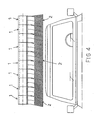
Figure 4 is a further front elevation view schematically showing the arrangement of a plurality of washing rotary brushes in a motor vehicle washing system, in which the washing brushes comprise slanted-axis band elements; -
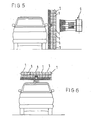
Figure 5 is a further front elevation view, showing yet another arrangement of a plurality of washing rotary brushes in a motor vehicle washing system, in which the washing brushes comprise a plurality of slanted-axis band elements; -
Figure 6 is a further front elevation view, similar to the preceding views, showing the operation of the washing brushes on a motor vehicle including projecting bodies; -
Figure 7 is a further top plan view of an inclined or slanted axis band element; -
Figure 8 is a further plan view of the band element shown infigure 7 , folded on the longitudinal axis thereof; -
Figure 9 is a further schematic view showing the application of the band element to a rotary support therefor; -
Figure 10 is a perspective view of a washing rotary brush according to the present invention; -
Figure 11 is a further exploded perspective view showing in a more detailed manner the application of the band element to its supports; -
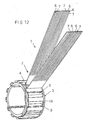
Figure 12 is a further perspective view showing, in a detailed manner, the application of the band element to the support therefor; -
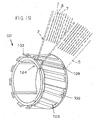
Figure 13 is a further exploded perspective view, on an enlarged scale with respect to the preceding views, showing in a detailed manner the application of a band element to the support therefor; -
Figure 14 is a further exploded perspective view showing the support and insert assembly; -
Figure 15 is a view similar tofigure 14 , showing the insert in an inserted or engaged condition thereof; -
Figure 16 is an exploded perspective view, showing in a detailed manner the application of a band element to the support therefor; -
Figure 17 is a further perspective view, on an enlarged scale, of a detail of the insert and support seat therefor; -
Figure 18 is a further perspective view, on an enlarged scale, of yet another detail of the insert and support seat or recess therefor; -
Figure 19 is a further exploded perspective view showing, in a detailed manner, the application of the band element to the support therefor, according to a further aspect of the present invention; -
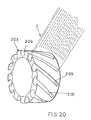
Figure 20 is a further perspective view showing, in a detailed manner, the application of the band element to the support therefor, according to a further aspect of the present invention; -
Figure 21 is a side view showing a washing rotary brush including a plurality of bristle clamping bar elements, as laterally seen and engaged in their housing seats or recesses formed in a support of the central body of the washing rotary bush; -
Figure 22 represents the same view as shown infigure 21 , but with the clamping or fixing bar elements being engaged in slots formed in the brush central body, after a suitable deformation thereof at one of their side end portions, thereby assuming the configuration of a nail head portion. - With reference to the number references of the above mentioned figures, the washing rotary brush according to the invention, which has been generally indicated by the
reference number 1, comprises a plurality of band elements, each indicated by thereference number 2, which can be coupled to acentral support 3, through coupling means 4. - More specifically, each said
band element 2 comprises a plate-like body 5 which can be advantageously made of a closed cell foamed plastic materials or a felt material. - Said plate-
like body 5 has a configuration which is substantially elongated along a band element longitudinal axis and, on said plate-like body 5 a plurality ofcuts 6 are formed, so as to provide a plurality ofparallel strips 7. - A main feature of the invention is that the plate-
like body 5 can be folded through 180° about its longitudinal axis to define two sectors which are thereby overlapped onto one another. - The end portions of said plate-like body can be inclined or slanted with a set slanting angle, thereby causing said sectors, as it is clearly shown in
figures 7 to 9 , to define a plurality ofstrips 7 which have respectively counter-directed inclinations. - Thus, the provision of the above disclosed
brushes 1 allows to provide, the number of theband elements 2 being smaller, the same washing characteristics, since the mutual inclination or slanting of thestrips 7 will provide an increase of the useful washing height thereof. - In other words, if a
conventional band element 2, of straight-line configuration, has a flat width of 15 cm, as it is folded with respect to its middle longitudinal direction, it will be able of washing a strip having a surface of about 8-9 cm. - For the above disclosed
band element 2, the starting width being the same, as it is folded through 180° along a longitudinal direction, because of the mutual inclination, strips 7 will be provided which are adapted to wash through a region having a width from 15 to 20 cm. - Thus, the increase of the useful working or washing surface will allow to use a less number of
band elements 2, the washing shaft length being the same, to provide smaller weight brush assemblies, with a consequent power saving, thereby improving the washing evenness, due to the elimination of gaps between adjoining band elements. - After having folded through 180° the
band element 2, said band element is further folded about its middle cross axis to be coupled to thecentral support element 3. - Thus, an assembly is provided, adapted to operate in a more delicate manner on the surfaces to be washed, thereby reducing vibrations and assuring a longer duration of the bearings supporting the washing elements.
- It is possible to fold the
band element 2 about the middle cross axis, in an asymmetrical manner with respect to the center, thereby providing a plurality ofstrip elements 7 having a differentiated length. - The connection of the
band element 2 to thecentral support element 3 is performed, according to the present invention, by specifically designed couplimg means 4 including an attachment or clampingbar element 8 which is bayonet-like engaged in one of theslots 9 formed along the directrix lines of thecentral support element 3. - After the engagement, the end portion of the
bar element 8 will closely and safely contact thecentral support element 3, thereby making a safety weldment thereof possible. - In this connection, it should be pointed out that the coupling means according to the present invention allow to provide the connection without the need of using specifically designed coupling tools, while allowing the physical effort to be reduced to a minimum as necessary.
- The
bar element 8 is designed for holding theband element 2 clamped to thecylinder 3. - As shown, said
bar element 8 comprises anenlarged end portion 10, the other end portion of said bar element including atooth element 11. - The
enlarged end portion 10 is engaged insuitable recesses 12, formed in an adjoining relationship with eachslot 9 on thesupport element 3, whereas thetooth 11 can be engaged in ahole 13 formed at the other end portion of each saidslot 9. - The
tooth 11 is snap engaged herein on anannular rim 14 encompassing thesupport element 3. - The width of the
bar element 8 is so designed as to provide a plurality of equally spacedslots 9. -
Figures 19 and20 show two further embodiments of the washing rotary brush according to the present invention. - With reference to the number references of
figure 19 , the washing rotary brush according to the invention, generally indicated by thereference number 101, comprises a plurality of band elements, each identified by thereference number 2, said band elements being adapted to be coupled to acentral support element 103 through coupling means 104. - In particular, the coupling of the
band element 2 to thecentral support 103 is performed, according to the embodiment shown infigure 19 , by coupling means 104 comprising a clampingbar element 108 adapted to be engaged, in a bayonet-like manner, in one of theslots 109, helically arranged on the surface of thecentral support element 103. - After having performed this engagement, the end portion of the
bar element 108 will closely and safely contact thesupport element 103, thereby allowing to perform a safety welding operation. - The coupling means according to the present invention permit to perform the coupling without the need of using specifically designed tools, and allow to reduce the physical effort to a minimum, as necessary.
- The
bar element 108 is provided for holding theband element 2 clamped to thecylinder 103. - In the embodiment shown in
figure 19 , thebar elements 108 are substantially rectilinear, as well as the correspondingslots 109. - Thus, the
bar element 108 cannot slip on the band element to be clamped, thereby preventing overheating phenomenon from occurring, which would reduce the production yield. - In the embodiment shown in
figure 20 , the central support element, generally indicated by thereference number 203, compriseshelical slots 209 which can be engaged by respective bar elements, not shown, suitably curved so as to prevent any rubbing movement on the respective band element inside theslots 209. - In both the above disclosed embodiments, the width of the
bar element 108 is so designed as to provide a plurality of equispaced slots. - The coupling system according to the present invention provides a lot of different advantages.
- The system can be handled in a much more easy manner.
- In fact, any manual operations for obtaining a set position arrangement is greatly reduced, since the operation of clamping or locking the cleaning element is achieved by a slight or small bayonet sliding (of few millimeters) which can be obtained by a low pressing.
- The system is moreover much more reliable.
- In fact, upon performing the coupling, the foot portion of the bar element will be engaged in a throughgoing manner and the head will in turn be coupled in an analogous manner.
- Differently from prior systems, the coupling means according to the present invention do not allow any rotary or unthreading movement, both in the assembling operation and in the use proper.
- The subject system, furthermore, allows to perform very quick and easy welding operations, owing to the projecting end portions contacting the support body.
- Moreover, the coupling system according to the present invention can be used in a lot of different applications, for example with foamed materials or felt materials or the like.
- It has been found that the invention fully achieves the intended aim and objects.
- In fact, the invention provides a washing brush having a better distribution of the washing strings or elements, which, after having folded the band element to a slanted arrangement, will be arranged not in parallel to one another but so as to form a doctor blade proper toward the surface to be contacted.
- This provides a better exploiting of the cleaning strings 7 which, if they would be arranged perpendicular to the rotary axis, and accordingly parallel to one another, would tend to "perfectly conceal" one beyond the other, thereby providing an unsatisfactory intensity washing operation (the so called "domino" effect).
- The system according to the present invention, moreover, affords the possibility of performing a full closure or filling-in of the spaces left empty by the parallel arrangement which, otherwise, would involve the generation of a plurality of not touched regions.
- Moreover, the system according to the present invention allows to perform a much easier assembling while providing good strength characteristics and a long time duration.
- Such an optimized distribution will make the washing brush very homogeneous, thereby improving its washing efficiency.
- Moreover, the system allows to provide a variable type of geometry, depending on the washing brush diameter to be achieved.
- Moreover, the washing brush according to the present invention allows to optimize the operation results, by changing the slanting or inclination of the strings, by few degrees either upward or downward, and this depending on the diameter of the subject washing brush.
- Moreover, the inclination of the
cuts 6 of thestrings 7 defines the distance of the merging point of the end portions. - To a larger inclination of the cut will correspond a nearer merging or meeting point.
- Moreover, the system according to the present invention allows to greatly increase the washing force, since the
band elements 2 will touch as a doctor blade the surface to be washed. - In other words, since a
band element 2 can be spread apart up to nearly double the space of its base, its washing force will be greatly improved. - Moreover, the inclination of the
cuts 6 of thestrings 7 allows said strings to be better peripherally arranged and allows the strings to better perform. - The amount of
band elements 2 being the same, thesubject washing brush 1 will be accordingly much more efficient with respect to a washing brush including parallel and perpendicular band elements. - By assembling the sectors starting from either one or the other end portions with
diagonal band elements 2 facing the center, it is possible to obtain a vehicle encompassing effect, thereby greatly improving the washing efficiency at the end contact edges. - In this connection, it should be furthermore pointed out that the invention provides to use a specifically cut band element arrangement, to leave an empty region inside the washing brush, like a pouch as is shown in
figures 5 and 6 ; thus, two washing cylinders mounted with an opposite relationship, would be able of properly washing a projecting element, while allowing it to pass through with an arch-like arrangement, such as a rear mirror or a TAXI sign. - In fact, the end portions of the
band element 2 will be able of properly contacting the regions near the rear mirror, thereby causing the rear mirror to be encompassed by the mentioned pouch. - This will greatly reduce friction of the projecting object, by the washing brush, as the latter is displaced toward the vehicle to provide its washing action and, accordingly, the subject washing brush can also be used on a central portion of a horizontal surface, for example for preventing any damaging to TAXI signs or police car blinking lamps as well as rear pulling hook assemblies.
- A further advantage is that the rotary direction of the vertical washing brush is changed near a rear window to prevent the rear window from being folded down.
- In this connection, it should be moreover pointed out that the clamping
bar elements slots central body 3 of therotary brush 1, haverespective end portions 11 provided for being hot swaged. - In other words, after having located a
bar element 8, operating as a locking element for theband 2, in its recess or housing, the tooth 11' provided at oneend portion 11 of a saidbar element 8 will be arranged under thebridge 13 holding it in a locked condition. - By a suitable instrument, calibrated at a set temperature, the projecting
end portion 11 of saidbar element 8 is so deformed as to cause saidbar element 8 to assume, at itsend portion 11, the shape of a nail head 11'. - As stated, the
end portion 11 of thebar element central crown 3 holding the assembly. - The
bar element 108 can be welded to thecentral body end portion 11 but also at other portions of thecentral support 3, to hold saidband element 2 in itsengagement slots 9. - It is also possible to restrain the
band elements 2 to thecentral body - In this connection, it should be moreover pointed out that the invention also provides to use, for foamed material
cleaning band elements 2, or felt band elements, conventional polyethylene threads, which can be applied and restrained to thecentral body 3 of therotary brush 1 by using the same bar elements as those used for clamping or locking theband element 2. - In practicing the invention, the used materials, as well as the contingent size and shapes, can be any, depending on requirements.
Claims (25)
- A washing rotary brush (1) for motor vehicle washing systems, said washing rotary brush comprises a plurality of band elements (2) to be coupled to a central support (3) through fixed-joint coupling means (21), said coupling means (4) comprise a clamping bar element (8) which is bayonet-like engaged in one of a plurality of slots (9) formed along directrix lines of said central support (3), thereby, after the engagement, the end portion of said bar element (8) closely and safely contacts said support (3), characterized in that said bar element (8) comprises an enlarged end portion (10) and another end portion including a tooth (11), the enlarged end portion (10) being adapted to be engaged in an engagement recess (12) formed adjoining each said slot (9) on said support (3), said tooth (11) being adapted to be engaged in a hole (13) formed at the other end portion of each slot (9), said tooth (11) snap engaging on an annular rim (14) encompassing said support (3).
- A washing rotary brush, according to claim 1, characterized in that said bar element (8) has such a width as to provide a plurality of equispaced slots (9).
- A washing rotary brush, according to claim 1, characterized in that each said band element (2) comprises a plate-like body (5), made either of a closed cell foamed plastic material or a felt material.
- A washing rotary brush, according to claim 3, characterized in that said plate-like body (5) has a substantially elongated configuration, according to a longitudinal axis of said band element (2), and being provided with a plurality of cuts (6) to provide a plurality of parallel extending strips (7).
- A washing rotary brush, according to claim 3, characterized in that said plate-like body (5) can be folded through 180° about said longitudinal axis to form two overlapping sectors.
- A washing rotary brush, according to claim 5, characterized in that said plate-like body has end portions which are slanted through a set angle thereby said sectors will provide a plurality of strips (7) having a mutually opposite inclination.
- A washing rotary brush, according to claim 3, characterized in that, after having folded said band element (2) through 180°, said band element, for coupling to said central support, is further folded about its middle transversal axis.
- A washing rotary brush, according to claim 3, characterized in that said band element (2) is foldable about its middle cross axis, asymmetrically with respect to the center, to provide a plurality of strips having a differentiated length.
- A washing rotary brush, according to claim 3, characterized in that said band element (2) is cut, with respect to adjacent band elements, to leave an empty region inside the brush to allow an object projecting from the vehicle to pass therethrough.
- A washing rotary brush, according to claim 3, characterized in that said band element comprises a plate-like body (5) elongated according to a longitudinal axis and central cuts having an opposite inclination with respect to the middle cross axis, to define separated sectors, where are provided a plurality of cuts substantially parallel to the central cuts thereby providing a plurality of washing strips, said plate-like body bering foldable along its longitudinal axis with a mutual overlapping of the separated sectors, defining washing strips which are inclined with respect to the overlapping sector.
- A washing rotary brush, according to claim 5, characterized in that said separated sectors, after having folded about the longitudinal axis, provide, at the end portions of the strips (7), an increase of the washing useful width.
- A washing rotary brush, according to claim 1, characterized in that it comprises centering windows at a middle portion thereof.
- A washing rotary brush, according to claim 1, characterized in that it can be arranged on a washing brush having a substantially perpendicular longitudinal axis, with respect to the washing brush axis.
- A washing rotary brush, according to claim 1, characterized in that said coupling means (4) comprise a plurality of slots helically arranged on the central support.
- A washing rotary brush, according to claim 1, characterized in that said coupling means (4) comprise a clamping bar element to be bayonet-like engaged in one of said slots helically formed on said central support thereby, after the engagement, said bar element has an end thereof closely and safely contacting said support.
- A washing rotary brush, according to claim 1, characterized in that said bar elements and corresponding slots are substantially rectilinear, said slots being slanted with respect to the directrix lines of the central support.
- A washing rotary brush, according to claim 1, characterized in that said central support comprises a plurality of helical slots to be engaged by respective curved bar elements.
- A washing rotary brush, according to claim 1, characterized in that each said bar element is engaged in its respective slots, so that said bar element cannot slip on its respective band element to be locked, thereby preventing said bar and band elements from being overheated.
- A washing rotary brush, according to claim 1, characterized in that said clamping or locking bar elements are bayonet-like engaged in a respective slot formed in said central body of said rotary brush, and having an end portion thereof to be hot swaged.
- A washing rotary brush, according to claim 1, characterized in that after having arranged each said rod element, operating as a locking member for said band element, in its housing or recess, said tooth arranged at one end of said bar element is located under a bridge element holding said tooth in a locked condition.
- A washing rotary brush, according to claim 1, characterized in that said projecting end portion of said bar element is deformed, by a set-temperature calibrated tool, to cause said bar element to assume, at its end portion, a nail head shape.
- A washing rotary brush, according to claim 1, characterized in that said projecting end portion of said bar element is cast with the central crown element restraining the assembly.
- A washing rotary brush, according to claim 1, characterized in that said bar element is welded to said central body of said rotary brush, not only at said end portion thereof, but also at other portions of said central support, to hold in said slot the respective band element of the respective cleaning material band element.
- A washing rotary brush, according to claim 1, characterized in that said band elements are restrained in said central body by welding a second body to provide a sandwich arrangement, the central shaft being a plastics material tube.
- A washing rotary brush, according to claim 1, characterized in that said rotary brush comprises, in addition to said cleaning band elements of foamed material, felt material or the like, also polyethylene wires, applied to said central body of said rotary brush and restrained by said central body by using the same bar elements as used for locking the band elements.
Priority Applications (1)
| Application Number | Priority Date | Filing Date | Title |
|---|---|---|---|
| SI200630882T SI1962639T1 (en) | 2005-12-22 | 2006-05-04 | Rotary brush for motor vehicle washing systems |
Applications Claiming Priority (2)
| Application Number | Priority Date | Filing Date | Title |
|---|---|---|---|
| IT002467A ITMI20052467A1 (en) | 2005-12-22 | 2005-12-22 | ROTATING BRUSH FOR WASHING SYSTEMS PARTICULARLY FOR VEHICLES |
| PCT/IT2006/000310 WO2007072524A1 (en) | 2005-12-22 | 2006-05-04 | Rotary brush for motor vehicle washing systems |
Publications (2)
| Publication Number | Publication Date |
|---|---|
| EP1962639A1 EP1962639A1 (en) | 2008-09-03 |
| EP1962639B1 true EP1962639B1 (en) | 2010-10-20 |
Family
ID=36649744
Family Applications (1)
| Application Number | Title | Priority Date | Filing Date |
|---|---|---|---|
| EP06745320A Expired - Lifetime EP1962639B1 (en) | 2005-12-22 | 2006-05-04 | Rotary brush for motor vehicle washing systems |
Country Status (14)
| Country | Link |
|---|---|
| US (1) | US8393044B2 (en) |
| EP (1) | EP1962639B1 (en) |
| JP (1) | JP5087008B2 (en) |
| KR (1) | KR101192089B1 (en) |
| CN (1) | CN101360435B (en) |
| AT (1) | ATE484978T1 (en) |
| CA (1) | CA2633359C (en) |
| DE (1) | DE602006017735D1 (en) |
| DK (1) | DK1962639T3 (en) |
| ES (1) | ES2328442T3 (en) |
| IT (1) | ITMI20052467A1 (en) |
| PT (1) | PT1962639E (en) |
| SI (1) | SI1962639T1 (en) |
| WO (1) | WO2007072524A1 (en) |
Cited By (1)
| Publication number | Priority date | Publication date | Assignee | Title |
|---|---|---|---|---|
| EP3797641A1 (en) | 2019-09-30 | 2021-03-31 | René Stegemann | Support element for fixing strip elements of a rotary washing brush and rotary washing brush comprising such support elements |
Families Citing this family (20)
| Publication number | Priority date | Publication date | Assignee | Title |
|---|---|---|---|---|
| JP4586881B2 (en) * | 2008-05-15 | 2010-11-24 | 株式会社ダイフク | Car wash brush |
| JP4824053B2 (en) * | 2008-05-15 | 2011-11-24 | 株式会社ダイフク | Brush for drying |
| ES2356539B1 (en) * | 2009-09-03 | 2012-02-15 | Istobal, S.A. | IMPROVEMENTS INTRODUCED IN THE MAIN PATENT N. P-200803345/7 BY MODULE FOR THE SUPPORT OF ROTATING BRUSHES APPLICABLE TO WASHING AND DRYING MACHINES OF VEHICLES. |
| ES2342354B1 (en) * | 2008-11-25 | 2011-05-17 | Istobal, S.A. | MODULE FOR SUPPORT OF ROTATING BRUSHES APPLICABLE TO WASHING AND DRYING MACHINES OF VEHICLES. |
| ES2572619T3 (en) * | 2008-11-25 | 2016-06-01 | Istobal S.A. | Module for the support of rotating brushes applicable to washing and drying machines of vehicles |
| US8495786B2 (en) | 2010-04-27 | 2013-07-30 | Keystone Plastics, Inc. | Customizable modular brush system and method thereof |
| ES2402809B1 (en) * | 2010-09-16 | 2014-04-14 | Istobal S.A. | MODULE FOR SUPPORT OF ROTATING BRUSHES APPLICABLE TO WASHING AND DRYING MACHINES FOR IMPROVED VEHICLES |
| US9061815B2 (en) * | 2010-09-22 | 2015-06-23 | Signode Industrial Group Llc | Container assembly and methods for making and using same |
| ITMI20131457A1 (en) * | 2013-09-05 | 2015-03-06 | Favagrossa Edoardo Srl | ROTATING BRUSH, PARTICULARLY FOR VEHICLE WASHING SYSTEMS. |
| SE537478C2 (en) * | 2013-09-19 | 2015-05-12 | Svenska Industriborstar I Västerås Ab | Mounting device for a drum in a shaft for a brush roll as well as a drum segment, a drum and a brush roll |
| KR101558382B1 (en) | 2014-06-16 | 2015-10-19 | 현대자동차 주식회사 | Wiping device |
| ES1138658Y (en) * | 2015-04-09 | 2015-07-16 | Antecuir S L | Coupling part for rotating brushes |
| DE102015111023A1 (en) | 2015-07-08 | 2017-01-12 | Alfred Kärcher Gmbh & Co. Kg | Washing device for a vehicle wash and car wash |
| DE102015111042A1 (en) | 2015-07-08 | 2017-01-12 | Alfred Kärcher Gmbh & Co. Kg | Washing device for a vehicle wash and car wash |
| US10549728B1 (en) * | 2016-02-04 | 2020-02-04 | Iwash Technology Llc | Reverse rotation side washer for vehicles including a shaft assembly and retrofit discs |
| JP1567544S (en) * | 2016-07-15 | 2017-01-23 | ||
| JP1567543S (en) * | 2016-07-15 | 2017-01-23 | ||
| JP1567542S (en) * | 2016-07-15 | 2017-01-23 | ||
| JP7220162B2 (en) * | 2017-11-10 | 2023-02-09 | ファヴァグロッサ エドアルド エス.アール.エル. | brush for plant washing |
| BE1032695B1 (en) * | 2024-06-12 | 2026-01-28 | Maris Johan Jozef F | CAR WASH BRUSH SYSTEM |
Family Cites Families (41)
| Publication number | Priority date | Publication date | Assignee | Title |
|---|---|---|---|---|
| US2015171A (en) * | 1933-08-03 | 1935-09-24 | Hoover Co | Suction cleaner |
| US1996544A (en) * | 1934-01-08 | 1935-04-02 | David B Justice | Brush |
| US2767418A (en) * | 1951-07-26 | 1956-10-23 | William A Lombardi | Brush construction |
| US2921329A (en) * | 1955-09-19 | 1960-01-19 | Osborn Mfg Co | Brush assembly utilizing lengths of brush strip |
| US3241172A (en) * | 1964-03-12 | 1966-03-22 | Pittsburgh Plate Glass Co | Brush construction |
| US3324496A (en) * | 1965-12-06 | 1967-06-13 | Edward F Haracz | Rotary brush |
| US3715773A (en) * | 1971-04-07 | 1973-02-13 | A Drumm | Rotary sweeper brush |
| US4018014A (en) * | 1976-05-07 | 1977-04-19 | Belanger, Inc. | Hub structure for rotary finishing wheels |
| US4104756A (en) * | 1976-10-12 | 1978-08-08 | Brite-O-Matic Manufacturing, Inc. | Machine for waxing vehicles |
| US4183183A (en) * | 1978-03-22 | 1980-01-15 | Belanger, Inc. | Pack unit and mounting means therefor |
| US4194260A (en) * | 1979-03-26 | 1980-03-25 | Culp Harry L | Rotary cleaning device |
| US4338698A (en) * | 1980-06-09 | 1982-07-13 | Sherman Industries, Inc. | Vehicle cleaning brush having limited penetration |
| US4567619A (en) * | 1984-04-12 | 1986-02-04 | Clark Gaylord J | Adjustable length cloth pad |
| DE3579535D1 (en) * | 1984-08-06 | 1990-10-11 | Famag Fahrzeug Masch Gmbh | HOLDING PART FOR MACHINE ELEMENTS OF ROLLER BRUSHES. |
| US5045091A (en) * | 1987-06-26 | 1991-09-03 | Minnesota Mining And Manufacturing Company | Method of making rotary brush with removable brush elements |
| US4907378A (en) * | 1988-11-14 | 1990-03-13 | Minnesota Mining And Manufacturing Company | Flap wheel assembly |
| JPH0390080U (en) * | 1989-12-28 | 1991-09-13 | ||
| US5134742A (en) * | 1990-02-08 | 1992-08-04 | N/S Corporation | Vehicle washing apparatus |
| US5093951A (en) * | 1990-05-29 | 1992-03-10 | Ryko Manufacturing Company | Top brush interrupt system for a car wash |
| DE20312415U1 (en) | 2003-08-07 | 2004-12-16 | Btd Barteldrees Gmbh & Co. | Rotating brush, comprising exchangeable unit of bristles and sanding strip joined with clip |
| IT1251808B (en) * | 1991-07-16 | 1995-05-26 | Francesco Favagrossa | BRUSH FOR WASHING ROLLERS, FOR AUTOMATIC VEHICLE WASHING SYSTEMS. |
| CN2137465Y (en) * | 1991-08-15 | 1993-07-07 | 贺志伟 | Electric brush of bristles |
| US5251355A (en) * | 1991-10-17 | 1993-10-12 | Drumm Arthur E | Strip brush for mounting on a rotary drum |
| US5445438A (en) * | 1991-10-17 | 1995-08-29 | Drumm; Arthur E. | Strip brush for mounting on a rotary drum |
| JP3098630B2 (en) * | 1992-09-07 | 2000-10-16 | タケウチテクノ株式会社 | Washing body of vehicle washing device |
| US5396680A (en) * | 1993-07-30 | 1995-03-14 | Belanger, Inc. | Replaceable cloth assembly for a car washing apparatus |
| SE502071C2 (en) * | 1993-11-19 | 1995-07-31 | Filippa I Vaesteraas Hb | Brush roller for sweepers |
| CA2141529A1 (en) * | 1994-10-25 | 1996-04-26 | Frances Gould | Street sweeper brush assembly |
| CN2225178Y (en) * | 1995-06-09 | 1996-04-24 | 赵斌 | Electronic contact rotary blowing double head leather shoe brush |
| US5623741A (en) * | 1995-11-17 | 1997-04-29 | Clark; Gaylord J. | Brush pad with irregular fingers |
| US5813728A (en) * | 1996-03-07 | 1998-09-29 | Nowiteck Establishment | Process for making rotating brushes for automatic car washes |
| US5762404A (en) * | 1996-11-07 | 1998-06-09 | Drumm; Arthur E. | Modification of strip brush |
| US5946761A (en) * | 1997-12-12 | 1999-09-07 | Ennis; G. Thomas | Vehicle cleaning element |
| US6289544B1 (en) * | 1999-08-21 | 2001-09-18 | Kirikian Industries, Llc | Vehicle washing apparatus |
| IT1313639B1 (en) * | 1999-09-28 | 2002-09-09 | Favagrossa Edoardo Srl | FLAG FOR THE MANUFACTURE OF BRUSHES FOR THE WASHING OF VEHICLES AND SIMILAR AND MANUFACTURING METHOD OF THE ABOVE |
| US6279190B1 (en) * | 2000-02-04 | 2001-08-28 | Belanger, Inc. | Contact type vehicle laundry element and attachment system therefor |
| US6592442B2 (en) * | 2001-01-02 | 2003-07-15 | Jason Incorporated | Flap wheel |
| US6795996B2 (en) * | 2002-03-18 | 2004-09-28 | G. Thomas Ennis | Vehicle cleaning element |
| ITMI20022588A1 (en) | 2002-12-06 | 2004-06-07 | Favagrossa Edoardo Srl | WASHING BRUSH APPLICABLE TO BRUSHES OF PLANTS |
| JP4357207B2 (en) * | 2003-03-20 | 2009-11-04 | 株式会社コーワ | Cleaning brush |
| US7805798B2 (en) * | 2006-09-28 | 2010-10-05 | Belanger, Inc. | Thermoformed media for car wash equipment and methods of building and operating car wash equipment using such media |
-
2005
- 2005-12-22 IT IT002467A patent/ITMI20052467A1/en unknown
-
2006
- 2006-05-04 DE DE602006017735T patent/DE602006017735D1/en not_active Expired - Lifetime
- 2006-05-04 KR KR1020087017613A patent/KR101192089B1/en not_active Expired - Lifetime
- 2006-05-04 CN CN2006800515783A patent/CN101360435B/en not_active Expired - Lifetime
- 2006-05-04 US US12/086,655 patent/US8393044B2/en active Active
- 2006-05-04 SI SI200630882T patent/SI1962639T1/en unknown
- 2006-05-04 DK DK06745320.9T patent/DK1962639T3/en active
- 2006-05-04 AT AT06745320T patent/ATE484978T1/en active
- 2006-05-04 CA CA2633359A patent/CA2633359C/en not_active Expired - Lifetime
- 2006-05-04 WO PCT/IT2006/000310 patent/WO2007072524A1/en not_active Ceased
- 2006-05-04 EP EP06745320A patent/EP1962639B1/en not_active Expired - Lifetime
- 2006-05-04 ES ES06745320T patent/ES2328442T3/en not_active Expired - Lifetime
- 2006-05-04 PT PT06745320T patent/PT1962639E/en unknown
- 2006-05-04 JP JP2008546834A patent/JP5087008B2/en not_active Expired - Lifetime
Cited By (1)
| Publication number | Priority date | Publication date | Assignee | Title |
|---|---|---|---|---|
| EP3797641A1 (en) | 2019-09-30 | 2021-03-31 | René Stegemann | Support element for fixing strip elements of a rotary washing brush and rotary washing brush comprising such support elements |
Also Published As
| Publication number | Publication date |
|---|---|
| WO2007072524A1 (en) | 2007-06-28 |
| US20090255072A1 (en) | 2009-10-15 |
| US8393044B2 (en) | 2013-03-12 |
| CN101360435A (en) | 2009-02-04 |
| PT1962639E (en) | 2011-01-25 |
| KR101192089B1 (en) | 2012-10-17 |
| ES2328442T8 (en) | 2011-04-26 |
| ES2328442T3 (en) | 2011-03-16 |
| CA2633359A1 (en) | 2007-06-28 |
| KR20080083673A (en) | 2008-09-18 |
| ITMI20052467A1 (en) | 2007-06-23 |
| DE602006017735D1 (en) | 2010-12-02 |
| ES2328442T1 (en) | 2009-11-13 |
| EP1962639A1 (en) | 2008-09-03 |
| CA2633359C (en) | 2012-07-17 |
| ATE484978T1 (en) | 2010-11-15 |
| JP2009520561A (en) | 2009-05-28 |
| SI1962639T1 (en) | 2011-02-28 |
| JP5087008B2 (en) | 2012-11-28 |
| DK1962639T3 (en) | 2011-02-07 |
| CN101360435B (en) | 2011-07-06 |
Similar Documents
| Publication | Publication Date | Title |
|---|---|---|
| EP1962639B1 (en) | Rotary brush for motor vehicle washing systems | |
| KR101599098B1 (en) | Windshield wiper assembly having an optimized airfoil | |
| CA2818258C (en) | Beam blade wiper assembly having self-locking end cap | |
| BR112014007708B1 (en) | RIGID SHAVING OR SHAVING BLADE FORMED INTEGRALLY AND SHAVING OR SHAVING HEAD | |
| US8356383B2 (en) | Windscreen wiper device | |
| US20080010769A1 (en) | Cleaning band construction for making motor vehicle washing system brushes | |
| US20110232022A1 (en) | Structure and method of manufacturing a unitary double-blade wind shield wiper | |
| US9050945B2 (en) | Rotary brush construction, particularly for vehicle washing systems | |
| MX2014000483A (en) | Semi-rigid windshield wiper blade having an offset spoiler. | |
| ITMI20001532A1 (en) | WIPER DEVICE PARTICULARLY FOR CURVED WINDSHIELDS OF VEHICLES AND SIMILAR. | |
| ES2595081T3 (en) | Scraper, clamping device and scraper assembly | |
| FR2768688A1 (en) | ANTI-SPLASH GUARD FOR ROAD VEHICLES | |
| EP2932869B1 (en) | Brush device for mechanic washing | |
| ES2352062T3 (en) | WINDSHIELD WASHER AND WINDSHIELD BRUSH WITH A SIMILAR WINDSHIELD WASHER. | |
| WO2005039945A1 (en) | Windshield wiper with water supply means | |
| FR2992613A1 (en) | ICE WIPER BLADE DEVICE | |
| CN211392864U (en) | a cleaning blade | |
| CA2822733C (en) | Rotary brush construction, particularly for vehicle washing systems | |
| FR3033537A1 (en) | ICE WIPER ARM FOR ICE SINK SYSTEM AND METHOD OF IMPLEMENTING THE SAME | |
| EP2655135B1 (en) | Fastening assembly for a bumper fascia to a front structure of a motor vehicle | |
| CN119021138A (en) | Deicing brush blade and deicing roller brush system using the deicing brush blade | |
| EP2832259A1 (en) | Rotary brush construction, particularly for vehicle washing system | |
| PL66673Y1 (en) | Car windshield wiper | |
| CN102975096A (en) | wiper repair | |
| KR20100000806U (en) | Car wipers |
Legal Events
| Date | Code | Title | Description |
|---|---|---|---|
| PUAI | Public reference made under article 153(3) epc to a published international application that has entered the european phase |
Free format text: ORIGINAL CODE: 0009012 |
|
| 17P | Request for examination filed |
Effective date: 20080613 |
|
| AK | Designated contracting states |
Kind code of ref document: A1 Designated state(s): AT BE BG CH CY CZ DE DK EE ES FI FR GB GR HU IE IS IT LI LT LU LV MC NL PL PT RO SE SI SK TR |
|
| GRAP | Despatch of communication of intention to grant a patent |
Free format text: ORIGINAL CODE: EPIDOSNIGR1 |
|
| DAX | Request for extension of the european patent (deleted) | ||
| GRAS | Grant fee paid |
Free format text: ORIGINAL CODE: EPIDOSNIGR3 |
|
| GRAA | (expected) grant |
Free format text: ORIGINAL CODE: 0009210 |
|
| AK | Designated contracting states |
Kind code of ref document: B1 Designated state(s): AT BE BG CH CY CZ DE DK EE ES FI FR GB GR HU IE IS IT LI LT LU LV MC NL PL PT RO SE SI SK TR |
|
| REG | Reference to a national code |
Ref country code: GB Ref legal event code: FG4D |
|
| REG | Reference to a national code |
Ref country code: CH Ref legal event code: EP |
|
| REG | Reference to a national code |
Ref country code: IE Ref legal event code: FG4D |
|
| REF | Corresponds to: |
Ref document number: 602006017735 Country of ref document: DE Date of ref document: 20101202 Kind code of ref document: P |
|
| REG | Reference to a national code |
Ref country code: CH Ref legal event code: NV Representative=s name: BOVARD AG PATENTANWAELTE |
|
| REG | Reference to a national code |
Ref country code: PT Ref legal event code: SC4A Free format text: AVAILABILITY OF NATIONAL TRANSLATION Effective date: 20110118 |
|
| REG | Reference to a national code |
Ref country code: SE Ref legal event code: TRGR |
|
| REG | Reference to a national code |
Ref country code: DK Ref legal event code: T3 |
|
| REG | Reference to a national code |
Ref country code: NL Ref legal event code: T3 |
|
| REG | Reference to a national code |
Ref country code: ES Ref legal event code: FG2A Effective date: 20110304 |
|
| LTIE | Lt: invalidation of european patent or patent extension |
Effective date: 20101020 |
|
| REG | Reference to a national code |
Ref country code: CH Ref legal event code: PFA Owner name: FAVAGROSSA EDOARDO S.R.L. Free format text: FAVAGROSSA EDOARDO S.R.L.#VIA LEPANTO, 51#26041 RONCADELLO DI CASALMAGGIORE (CREMONA) (IT) -TRANSFER TO- FAVAGROSSA EDOARDO S.R.L.#VIA LEPANTO, 51#26041 RONCADELLO DI CASALMAGGIORE (CREMONA) (IT) |
|
| PG25 | Lapsed in a contracting state [announced via postgrant information from national office to epo] |
Ref country code: LT Free format text: LAPSE BECAUSE OF FAILURE TO SUBMIT A TRANSLATION OF THE DESCRIPTION OR TO PAY THE FEE WITHIN THE PRESCRIBED TIME-LIMIT Effective date: 20101020 |
|
| REG | Reference to a national code |
Ref country code: SK Ref legal event code: T3 Ref document number: E 8759 Country of ref document: SK |
|
| PG25 | Lapsed in a contracting state [announced via postgrant information from national office to epo] |
Ref country code: LV Free format text: LAPSE BECAUSE OF FAILURE TO SUBMIT A TRANSLATION OF THE DESCRIPTION OR TO PAY THE FEE WITHIN THE PRESCRIBED TIME-LIMIT Effective date: 20101020 Ref country code: BG Free format text: LAPSE BECAUSE OF FAILURE TO SUBMIT A TRANSLATION OF THE DESCRIPTION OR TO PAY THE FEE WITHIN THE PRESCRIBED TIME-LIMIT Effective date: 20110120 Ref country code: IS Free format text: LAPSE BECAUSE OF FAILURE TO SUBMIT A TRANSLATION OF THE DESCRIPTION OR TO PAY THE FEE WITHIN THE PRESCRIBED TIME-LIMIT Effective date: 20110220 |
|
| REG | Reference to a national code |
Ref country code: HU Ref legal event code: AG4A Ref document number: E010415 Country of ref document: HU |
|
| PG25 | Lapsed in a contracting state [announced via postgrant information from national office to epo] |
Ref country code: EE Free format text: LAPSE BECAUSE OF FAILURE TO SUBMIT A TRANSLATION OF THE DESCRIPTION OR TO PAY THE FEE WITHIN THE PRESCRIBED TIME-LIMIT Effective date: 20101020 |
|
| PLBE | No opposition filed within time limit |
Free format text: ORIGINAL CODE: 0009261 |
|
| STAA | Information on the status of an ep patent application or granted ep patent |
Free format text: STATUS: NO OPPOSITION FILED WITHIN TIME LIMIT |
|
| PG25 | Lapsed in a contracting state [announced via postgrant information from national office to epo] |
Ref country code: RO Free format text: LAPSE BECAUSE OF FAILURE TO SUBMIT A TRANSLATION OF THE DESCRIPTION OR TO PAY THE FEE WITHIN THE PRESCRIBED TIME-LIMIT Effective date: 20101020 Ref country code: PL Free format text: LAPSE BECAUSE OF FAILURE TO SUBMIT A TRANSLATION OF THE DESCRIPTION OR TO PAY THE FEE WITHIN THE PRESCRIBED TIME-LIMIT Effective date: 20101020 |
|
| 26N | No opposition filed |
Effective date: 20110721 |
|
| REG | Reference to a national code |
Ref country code: DE Ref legal event code: R097 Ref document number: 602006017735 Country of ref document: DE Effective date: 20110721 |
|
| PG25 | Lapsed in a contracting state [announced via postgrant information from national office to epo] |
Ref country code: MC Free format text: LAPSE BECAUSE OF NON-PAYMENT OF DUE FEES Effective date: 20110531 |
|
| PG25 | Lapsed in a contracting state [announced via postgrant information from national office to epo] |
Ref country code: CY Free format text: LAPSE BECAUSE OF FAILURE TO SUBMIT A TRANSLATION OF THE DESCRIPTION OR TO PAY THE FEE WITHIN THE PRESCRIBED TIME-LIMIT Effective date: 20101020 |
|
| REG | Reference to a national code |
Ref country code: GR Ref legal event code: EP Ref document number: 20110400053 Country of ref document: GR Effective date: 20110218 |
|
| REG | Reference to a national code |
Ref country code: FR Ref legal event code: PLFP Year of fee payment: 11 |
|
| REG | Reference to a national code |
Ref country code: FR Ref legal event code: PLFP Year of fee payment: 12 |
|
| REG | Reference to a national code |
Ref country code: FR Ref legal event code: PLFP Year of fee payment: 13 |
|
| P01 | Opt-out of the competence of the unified patent court (upc) registered |
Effective date: 20230317 |
|
| P02 | Opt-out of the competence of the unified patent court (upc) changed |
Effective date: 20230420 |
|
| PGFP | Annual fee paid to national office [announced via postgrant information from national office to epo] |
Ref country code: NL Payment date: 20250526 Year of fee payment: 20 |
|
| PGFP | Annual fee paid to national office [announced via postgrant information from national office to epo] |
Ref country code: FI Payment date: 20250526 Year of fee payment: 20 |
|
| PGFP | Annual fee paid to national office [announced via postgrant information from national office to epo] |
Ref country code: DE Payment date: 20250528 Year of fee payment: 20 |
|
| PGFP | Annual fee paid to national office [announced via postgrant information from national office to epo] |
Ref country code: GB Payment date: 20250520 Year of fee payment: 20 Ref country code: DK Payment date: 20250526 Year of fee payment: 20 Ref country code: ES Payment date: 20250612 Year of fee payment: 20 |
|
| PGFP | Annual fee paid to national office [announced via postgrant information from national office to epo] |
Ref country code: HU Payment date: 20250507 Year of fee payment: 20 |
|
| PGFP | Annual fee paid to national office [announced via postgrant information from national office to epo] |
Ref country code: LU Payment date: 20250430 Year of fee payment: 20 Ref country code: BE Payment date: 20250526 Year of fee payment: 20 Ref country code: IT Payment date: 20250529 Year of fee payment: 20 |
|
| PGFP | Annual fee paid to national office [announced via postgrant information from national office to epo] |
Ref country code: PT Payment date: 20250430 Year of fee payment: 20 |
|
| PGFP | Annual fee paid to national office [announced via postgrant information from national office to epo] |
Ref country code: FR Payment date: 20250526 Year of fee payment: 20 |
|
| PGFP | Annual fee paid to national office [announced via postgrant information from national office to epo] |
Ref country code: GR Payment date: 20250523 Year of fee payment: 20 |
|
| PGFP | Annual fee paid to national office [announced via postgrant information from national office to epo] |
Ref country code: CH Payment date: 20250601 Year of fee payment: 20 |
|
| PGFP | Annual fee paid to national office [announced via postgrant information from national office to epo] |
Ref country code: AT Payment date: 20250520 Year of fee payment: 20 |
|
| PGFP | Annual fee paid to national office [announced via postgrant information from national office to epo] |
Ref country code: TR Payment date: 20250502 Year of fee payment: 20 Ref country code: SK Payment date: 20250505 Year of fee payment: 20 |
|
| PGFP | Annual fee paid to national office [announced via postgrant information from national office to epo] |
Ref country code: CZ Payment date: 20250502 Year of fee payment: 20 |
|
| PGFP | Annual fee paid to national office [announced via postgrant information from national office to epo] |
Ref country code: IE Payment date: 20250520 Year of fee payment: 20 |
|
| PGFP | Annual fee paid to national office [announced via postgrant information from national office to epo] |
Ref country code: SI Payment date: 20250418 Year of fee payment: 20 Ref country code: SE Payment date: 20250526 Year of fee payment: 20 |