EP1962475A2 - Voice interface to NFC applications - Google Patents
Voice interface to NFC applications Download PDFInfo
- Publication number
- EP1962475A2 EP1962475A2 EP07254998A EP07254998A EP1962475A2 EP 1962475 A2 EP1962475 A2 EP 1962475A2 EP 07254998 A EP07254998 A EP 07254998A EP 07254998 A EP07254998 A EP 07254998A EP 1962475 A2 EP1962475 A2 EP 1962475A2
- Authority
- EP
- European Patent Office
- Prior art keywords
- uri
- user
- portable device
- keywords
- nfc
- Prior art date
- Legal status (The legal status is an assumption and is not a legal conclusion. Google has not performed a legal analysis and makes no representation as to the accuracy of the status listed.)
- Granted
Links
Images
Classifications
-
- G—PHYSICS
- G10—MUSICAL INSTRUMENTS; ACOUSTICS
- G10L—SPEECH ANALYSIS TECHNIQUES OR SPEECH SYNTHESIS; SPEECH RECOGNITION; SPEECH OR VOICE PROCESSING TECHNIQUES; SPEECH OR AUDIO CODING OR DECODING
- G10L21/00—Speech or voice signal processing techniques to produce another audible or non-audible signal, e.g. visual or tactile, in order to modify its quality or its intelligibility
-
- G—PHYSICS
- G06—COMPUTING OR CALCULATING; COUNTING
- G06F—ELECTRIC DIGITAL DATA PROCESSING
- G06F15/00—Digital computers in general; Data processing equipment in general
- G06F15/02—Digital computers in general; Data processing equipment in general manually operated with input through keyboard and computation using a built-in program, e.g. pocket calculators
-
- G—PHYSICS
- G06—COMPUTING OR CALCULATING; COUNTING
- G06F—ELECTRIC DIGITAL DATA PROCESSING
- G06F16/00—Information retrieval; Database structures therefor; File system structures therefor
- G06F16/90—Details of database functions independent of the retrieved data types
- G06F16/95—Retrieval from the web
- G06F16/957—Browsing optimisation, e.g. caching or content distillation
-
- G—PHYSICS
- G10—MUSICAL INSTRUMENTS; ACOUSTICS
- G10L—SPEECH ANALYSIS TECHNIQUES OR SPEECH SYNTHESIS; SPEECH RECOGNITION; SPEECH OR VOICE PROCESSING TECHNIQUES; SPEECH OR AUDIO CODING OR DECODING
- G10L15/00—Speech recognition
-
- G—PHYSICS
- G10—MUSICAL INSTRUMENTS; ACOUSTICS
- G10L—SPEECH ANALYSIS TECHNIQUES OR SPEECH SYNTHESIS; SPEECH RECOGNITION; SPEECH OR VOICE PROCESSING TECHNIQUES; SPEECH OR AUDIO CODING OR DECODING
- G10L15/00—Speech recognition
- G10L15/22—Procedures used during a speech recognition process, e.g. man-machine dialogue
-
- G—PHYSICS
- G10—MUSICAL INSTRUMENTS; ACOUSTICS
- G10L—SPEECH ANALYSIS TECHNIQUES OR SPEECH SYNTHESIS; SPEECH RECOGNITION; SPEECH OR VOICE PROCESSING TECHNIQUES; SPEECH OR AUDIO CODING OR DECODING
- G10L15/00—Speech recognition
- G10L15/26—Speech to text systems
-
- H—ELECTRICITY
- H04—ELECTRIC COMMUNICATION TECHNIQUE
- H04M—TELEPHONIC COMMUNICATION
- H04M1/00—Substation equipment, e.g. for use by subscribers
- H04M1/72—Mobile telephones; Cordless telephones, i.e. devices for establishing wireless links to base stations without route selection
- H04M1/724—User interfaces specially adapted for cordless or mobile telephones
- H04M1/72403—User interfaces specially adapted for cordless or mobile telephones with means for local support of applications that increase the functionality
- H04M1/72409—User interfaces specially adapted for cordless or mobile telephones with means for local support of applications that increase the functionality by interfacing with external accessories
- H04M1/72412—User interfaces specially adapted for cordless or mobile telephones with means for local support of applications that increase the functionality by interfacing with external accessories using two-way short-range wireless interfaces
-
- H—ELECTRICITY
- H04—ELECTRIC COMMUNICATION TECHNIQUE
- H04L—TRANSMISSION OF DIGITAL INFORMATION, e.g. TELEGRAPHIC COMMUNICATION
- H04L67/00—Network arrangements or protocols for supporting network services or applications
- H04L67/01—Protocols
- H04L67/12—Protocols specially adapted for proprietary or special-purpose networking environments, e.g. medical networks, sensor networks, networks in vehicles or remote metering networks
-
- H—ELECTRICITY
- H04—ELECTRIC COMMUNICATION TECHNIQUE
- H04M—TELEPHONIC COMMUNICATION
- H04M1/00—Substation equipment, e.g. for use by subscribers
- H04M1/72—Mobile telephones; Cordless telephones, i.e. devices for establishing wireless links to base stations without route selection
- H04M1/724—User interfaces specially adapted for cordless or mobile telephones
- H04M1/72403—User interfaces specially adapted for cordless or mobile telephones with means for local support of applications that increase the functionality
- H04M1/72445—User interfaces specially adapted for cordless or mobile telephones with means for local support of applications that increase the functionality for supporting Internet browser applications
-
- H—ELECTRICITY
- H04—ELECTRIC COMMUNICATION TECHNIQUE
- H04M—TELEPHONIC COMMUNICATION
- H04M2250/00—Details of telephonic subscriber devices
- H04M2250/04—Details of telephonic subscriber devices including near field communication means, e.g. RFID
-
- H—ELECTRICITY
- H04—ELECTRIC COMMUNICATION TECHNIQUE
- H04M—TELEPHONIC COMMUNICATION
- H04M2250/00—Details of telephonic subscriber devices
- H04M2250/74—Details of telephonic subscriber devices with voice recognition means
Definitions
- the present invention is generally related to near field communications (NFC). More particularly, the present invention is related to a voice interface to NFC applications.
- NFC near field communications
- NFC Near-Field Communications
- RFID Radio Frequency Identification
- URIs Universal Resource Identifiers
- Smart Poster scenarios typically presume that the user intends to immediately use the URI. What is not considered is the problem of retrieving or managing multiple such URIs on the portable device.
- Speech recognition is another possible technology that could be used for entering web addresses on limited user interface devices.
- speech recognition technology will have to become very sophisticated before it can be used for this purpose.
- Accurate speech recognition requires a large number of MIPS (million instructions per second), which is problematic for low power portable devices.
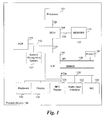
- FIG. 1 is a block diagram illustrating an exemplary platform topology of a portable device according to an embodiment of the present invention.
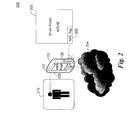
- FIG. 2 is a block diagram illustrating an exemplary system for combining speech recognition and NFC to enable a user to enter and use web addresses on portable devices according to an embodiment of the present invention.
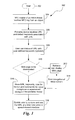
- FIG. 3 is a flow diagram describing an exemplary method for enabling portable devices to navigate and use Internet content according to an embodiment of the present invention.
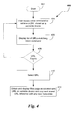
- FIG. 4 is a flow diagram describing an exemplary method for retrieving and using URIs stored on a portable device via a voice input interface according to an embodiment of the present invention.
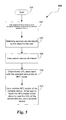
- FIG. 5 is a flow diagram 500 illustrating an exemplary method for transferring information from one NFC reader to another NFC reader according to an embodiment of the present invention.
- Embodiments of the present invention enable a portable device to process URIs (Universal Resource Identifiers), as well as the web content to which the URI (Universal Resource Identifier) refers to, in an efficient manner using NFC and voice recognition technology.
- a portable (i.e, mobile) device that includes a NFC reader, an audio input interface, and a voice recognition system.
- the NFC reader may be used to read URIs from "Smart Posters" and other objects in which NFC tags are located.
- the audio input interface may be used to further annotate the URIs retrieved by the NFC reader with user-defined keywords for managing stored URIs.
- the audio input interface may also be used in conjunction with the voice recognition system as a voice assisted lookup mechanism for retrieving stored URIs.
- Embodiments of the present invention provide a flexible framework for combining voice recognition with NFC. This enables devices with limited user interface (UI) capabilities to more easily navigate and use Internet content. Embodiments of the present invention also extend a portable device's command vocabulary through meta-data associated with the URIs obtained via the NFC reader.
- UI user interface
- Embodiments of the present invention may be implemented using hardware, software, or a combination thereof and may be implemented in one or more multi-core processor platforms or single-core processing systems.
- FIG. 1 illustrates an exemplary platform topology of a portable device 100 according to an embodiment of the present invention. Various embodiments are described in terms of this exemplary platform topology. After reading this description, it will be apparent to a person skilled in the relevant art(s) how to implement the invention using other platform topologies and/or other computer architectures.
- Portable device 100 comprises a processor 102.
- processor 102 may be a single core, a dual core, a quad core, or a multi-core processor.
- Processor 102 may be an Intel® Pentium® M processor manufactured by Intel® Corporation, located in Santa Clara, CA, or any other type of processors capable of carrying out the methods disclosed herein, such as, for example, an Intel® Core TM Solo processor, an Intel® Core TM Duo processor, etc., each manufactured by Intel® Corporation.
- Processor 102 may include multiple threads as well.
- Processor 102 may communicate with a memory controller hub (MCH) 104, also known as a North bridge, via a front side bus 106.
- MCH 104 communicates with system memory 110 via a memory bus 108.
- Memory 110 may be a hard disk, a floppy disk, random access memory (RAM), read only memory (ROM), flash memory, or any other type of medium readable by processor 102.
- Memory 110 may store instructions for performing the execution of method embodiments of the present invention.
- Memory 110 may also store each URI and its associated data that is captured using portable device 100.
- MCH 104 may also communicate with an advanced graphics port (AGP) 114 via a graphics bus 112.
- AGP advanced graphics port
- MCH 104 may communicate with an I/O controller hub (ICH) 118, also known as a South bridge, via a peripheral component interconnect (PCI) bus 116.
- ICH 118 may be coupled to one or more I/O (Input/Output) component devices, such as, but not limited to, a NFC reader 120, an audio input interface 122, a network interface controller (NIC) 124 via a PCI bus 126, a display 128 for displaying web content as well as other information, and a keyboard 130.
- I/O component devices such as, but not limited to, a NFC reader 120, an audio input interface 122, a network interface controller (NIC) 124 via a PCI bus 126, a display 128 for displaying web content as well as other information, and a keyboard 130.
- keyboard 130 may be a limited user interface (UI).
- UI user interface
- Other types of I/O components may also be used as well.
- NFC reader 120 of portable device 100 may be used for URI input.
- NFC reader 120 may be used to obtain information about an object, event, advertisement, etc. from, for example, a Smart Poster or any other object having information attached onto a NFC tag.
- information such as, for example, a URI
- keywords specific to the content of the object for example, the Smart Poster, in which the URI is obtained, may also be read by NFC reader 120 and used as default keywords when storing and retrieving the URI.
- portable device 100 has wireless Internet capabilities
- NFC reader 120 of portable device 100 touches an NFC tag from a Smart Poster or other object having information attached onto the NFC tag
- a web browser window may open on display 128 and portable device 100 may connect to the Internet to download the data associated with the URI read by NFC reader 120.
- Audio input interface 122 may be used for classification and retrieval purposes. For example, after a URI is read by portable device 100 via NFC 120, the user may augment the default keywords that are obtained from the NFC tag through audio input interface 122 by inputting user-defined keywords via audio input interface 122.
- Portable device 100 further comprises a speech recognition system 132 (shown in phantom).
- Speech recognition system 132 may be implemented in hardware, software, or a combination thereof. If speech recognition system 132 is implemented in hardware, speech recognition system 132 may be coupled to MCH 104 via PCI bus 116. If speech recognition system 132 is implemented in software, speech recognition system 132 may be found in memory 110 (not shown). Speech recognition system 132 may be used to search and retrieve URIs based on voice input received from audio input interface 122. Speech recognition accuracy and efficiency improves dramatically when applied to limited-vocabulary domains. In one embodiment of the present invention, speech recognition system 132 may use limited vocabulary domains such as command-driven menus and keyword-based lookup.
- Nonvolatile memory such as a Flash memory 134
- BIOS firmware may reside in Flash memory 134 and at boot up of the platform, instructions stored on Flash memory 134 may be executed.
- Flash memory 134 may also store instructions for performing the execution of method embodiments described herein.
- speech recognition system 132 may be implemented in software stored in Flash memory 134. In this instance, speech recognition system 132 may be initialized during system boot up of the platform when portable device 100 is turned on.
- embodiments of the present invention perform the complex and error-prone task of URI input on a portable device using a NFC interface combined with an audio interface and a speech recognition system. Rather than having a user enter the entire URI via voice, the user may enter the URI via NFC and optionally enter user-defined keywords via the voice input interface that may be used to retrieve and manipulate data associated with the URI.
- FIG. 2 is a block diagram illustrating an exemplary system 200 for combining speech recognition and NFC to enable a user to enter and use web addresses on portable devices according to an embodiment of the present invention.
- System 200 comprises portable device 100, a Smart Poster 202 of a movie presently be shown at the theatre, a network, such as, for example, Internet 204, and a Web page 206.
- Smart Poster 202 includes a NFC tag 208 containing a URI associated with advertised movie.
- portable device 100 includes NFC reader 120, audio input interface 122, and speech recognition system 132 (not explicitly shown).
- a user 210 interested in attending the advertised movie on Smart Poster 202, enables NFC reader 120 of portable device 100 to touch NFC tag 208 to read the URI and associated default keywords into portable device 100.
- Associated keywords read by NFC reader 120 may be the title of the movie, local theatres and times of where and when the movie is playing, and other information about the movie. The time, date, and location of when and where the URI is captured may also be used as an annotation for the URI.
- the URIs may be stored using default keywords and, if desired by the user, user-defined keywords entered by the user via the voice input interface.
- user 210 may verbally annotate the URI with user-defined keywords.
- user 210 verbally annotates the URI by saying the keyword "JoeActor” into audio input interface 122.
- "JoeActor” is user 210's favorite actor in the advertised movie, and therefore, will be easy for user 210 to remember when attempting to retrieve the URI at a later time.
- portable device 100 may load Web page 206 associated with the URI read by NFC reader 120.
- Web page 206 may contain meta-data encoded as an embedded XML (eXtensible Markup Language) data island.
- the meta-data may be used to facilitate subsequent search and selection by the user.
- the meta-data can include a set of content links optimized to different device form factors, a small graphical icon, and a set of keywords (for lookup) that may be verbally entered using audio input interface 122.
- the web content associated with the URIs captured by NFC interface 120 be viewed immediately.
- Simple command-oriented voice recognition processing allows the stored URIs to be retrieved and manipulated.
- the voice recognition system and audio input interface of the portable device together form a speech-based interface that allows the user to perform URI lookup using the default and user-defined keywords.
- FIG. 3 is a flow diagram 300 describing an exemplary method for enabling portable devices to navigate and use Internet content according to an embodiment of the present invention.
- the invention is not limited to the embodiment described herein with respect to flow diagram 300. Rather, it will be apparent to persons skilled in the relevant art(s) after reading the teachings provided herein that other functional flow diagrams are within the scope of the invention.
- the process begins at block 302, where the process immediately proceeds to block 304.
- a NFC reader of a portable device touches a NFC tag found on an object, such as, for example, a Smart Poster. The process then proceeds to block 306.
- the portable device receives a URI and default keywords associated with the URI via the NFC reader. The process then proceeds to block 308.
- a user of the portable device may optionally annotate the URI with user-defined keywords via a voice input interface on the portable device. The process then proceeds to decision block 310.
- decision block 310 it is determined whether a Web page associated with the URI is to be downloaded and displayed on the portable device immediately. If the portable device is configured and able to connect with a server storing the Web page associated with the URI over the Internet, and the user desires to view the Web page at that time, then the portable device may retrieve and display the Web page at block 312. The process then proceeds to block 314, where the user may navigate and use the Internet content as described above with reference to FIG. 2 above. The user may also surf the Internet in a manner well known to those skilled in the relevant art(s). The process then proceeds to block 316.
- the portable device stores the URI, keywords, an icon for lookup, and commands for voice recognition in a persistent storage of the portable device. The process then proceeds to block 316.
- the user may retrieve and use the URI at a later time using the speech-based interface.
- FIG. 4 is a flow diagram 400 describing an exemplary method for retrieving and using URIs stored on a portable device via a voice input interface according to an embodiment of the present invention.
- the invention is not limited to the embodiment described herein with respect to flow diagram 400. Rather, it will be apparent to persons skilled in the relevant art(s) after reading the teachings provided herein that other functional flow diagrams are within the scope of the invention.
- the process begins at block 402, where the process immediately proceeds to block 404.
- a user may issue a voice command to retrieve a URI stored in a persistent store of a portable device. For example, the user may issue the voice command "JoeActor" to retrieve all URIs related to Joe Actor that are stored on the portable device. The process then proceeds to block 406.
- representations of URIs matching the keyword "JoeActor” are displayed to the user. For example, a graphical icon and a short title for each URI matching the keyword "JoeActor” may be displayed. Other information associated with the URIs when they were originally acquired, such as keywords, time/date/location, etc. may also be displayed to aid the user in selecting the desired URI. The process then proceeds to decision block 408.
- decision block 408 it is determined whether the user has found the URI of interest to the user. If the user has found the URI of interest to the user, the process proceeds to block 410.
- the user may select the URI of interest to the user to be displayed. The process then proceeds to block 412.
- the portable device connects to the Internet and loads the web content corresponding to the URI. If the web content contains new meta-data, the portable device may augment the stored URI reference with the new meta-data.
- the portable device may directly connect to the Internet and load the web content corresponding to that URI.
- NFC readers can emulate NFC tags to be read by other NFC readers.
- a user when a user enables its portable device to be automatically loaded with a URI from an NFC tag on an object, that portable device may also transfer the URI to other portable devices having an NFC reader.
- a public kiosk in an airport may include a voice recognition interface coupled with a pre-loaded database of URIs of local hotels, transportation, restaurants, and other services.
- a user may speak the desired service name using the voice input of the kiosk to look up matching services.
- the kiosk can load the URI of that service into its NFC reader.
- the user can then touch the NFC reader of their portable device to the NFC reader of the kiosk to read the data into their portable device.
- associated and up-to-date contact information such as, for example, phone numbers, web sites, directions, etc., can be easily loaded by the portable device via its Internet connection.
- FIG. 5 is a flow diagram 500 illustrating an exemplary method for transferring information from one NFC reader to another NFC reader according to an embodiment of the present invention.
- the invention is not limited to the embodiment described herein with respect to flow diagram 500. Rather, it will be apparent to persons skilled in the relevant art(s) after reading the teachings provided herein that other functional flow diagrams are within the scope of the invention.
- the process begins at block 502, where the process immediately proceeds to block 504.
- a user speaks into an object having a voice recognition interface coupled with a pre-loaded database of URIs.
- the keyword spoken by the user is one of a plurality of desired services that the object has information about that may be retrieved by the user.
- the process proceeds to block 506.
- the user may select the service of interest to the user. The process then proceeds to block 510.
- the object may load the URI of that service into its NFC reader. The process then proceeds to block 512.
- the user may then enable the NFC reader of the portable device of the user to touch the NFC reader of the object to read the URI of the service into the portable device of the user.
- Embodiments of the present invention may be implemented using hardware, software, or a combination thereof and may be implemented in one or more portable computer systems, as shown in FIG. 1 , or other processing systems.
- the techniques described herein may find applicability in any computing, consumer electronics, or processing environment.
- the techniques may be implemented in programs executing on programmable machines such as mobile or stationary computers, personal digital assistants, set top boxes, cellular telephones and pagers, consumer electronics devices (including DVD (Digital Video Disc) players, personal video recorders, personal video players, satellite receivers, stereo receivers, cable TV receivers), and other electronic devices that may include at least one processor, a storage medium accessible by the processor (including volatile and non-volatile memory and/or storage elements), at least one input device, and one or more output devices.
- programmable machines such as mobile or stationary computers, personal digital assistants, set top boxes, cellular telephones and pagers, consumer electronics devices (including DVD (Digital Video Disc) players, personal video recorders, personal video players, satellite receivers, stereo
- Program code is applied to the data entered using the input device to perform the functions described and to generate output information.
- the output information may be applied to one or more output devices.
- One of ordinary skill in the art may appreciate that the invention can be practiced with various system configurations, including multiprocessor systems, minicomputers, mainframe computers, independent consumer electronics devices, and the like.
- the invention can also be practiced in distributed computing environments where tasks or portions thereof may be performed by remote processing devices that are linked through a communications network.
- Each program may be implemented in a high level procedural or object oriented programming language to communicate with a processing system.
- programs may be implemented in assembly or machine language, if desired. In any case, the language may be compiled or interpreted.
- Program instructions may be used to cause a general-purpose or special-purpose processing system that is programmed with the instructions to perform the operations described herein. Alternatively, the operations may be performed by specific hardware components that contain hardwired logic for performing the operations, or by any combination of programmed computer components and custom hardware components.
- the methods described herein may be provided as a computer program product that may include a machine accessible medium having stored thereon instructions that may be used to program a processing system or other electronic device to perform the methods.
- the term "machine accessible medium” used herein shall include any medium that is capable of storing or encoding a sequence of instructions for execution by the machine and that cause the machine to perform any one of the methods described herein.
- machine accessible medium shall accordingly include, but not be limited to, solid-state memories, optical and magnetic disks, and a carrier wave that encodes a data signal.
- machine accessible medium shall accordingly include, but not be limited to, solid-state memories, optical and magnetic disks, and a carrier wave that encodes a data signal.
Landscapes
- Engineering & Computer Science (AREA)
- Physics & Mathematics (AREA)
- Human Computer Interaction (AREA)
- Theoretical Computer Science (AREA)
- Audiology, Speech & Language Pathology (AREA)
- Multimedia (AREA)
- Acoustics & Sound (AREA)
- Computational Linguistics (AREA)
- Health & Medical Sciences (AREA)
- Computer Networks & Wireless Communication (AREA)
- Databases & Information Systems (AREA)
- Signal Processing (AREA)
- General Physics & Mathematics (AREA)
- General Engineering & Computer Science (AREA)
- Data Mining & Analysis (AREA)
- Quality & Reliability (AREA)
- Computing Systems (AREA)
- Computer Hardware Design (AREA)
- Information Transfer Between Computers (AREA)
- Information Retrieval, Db Structures And Fs Structures Therefor (AREA)
- Telephone Function (AREA)
Abstract
Description
- The present invention is generally related to near field communications (NFC). More particularly, the present invention is related to a voice interface to NFC applications.
- Near-Field Communications (NFC) is a very short-range contactless data transfer technology related to RFID (Radio Frequency Identification). NFC has achieved commercial success in Europe and Japan for public transit payment systems and for point-of-sale purchases using cell phones with built-in NFC interfaces.
- Another NFC application that has been proposed and deployed to a limited extent is to store URIs (Universal Resource Identifiers) in NFC tags attached to Smart Posters. Users with NFC-equipped cell phones can scan the NFC tag on a Smart Poster to automatically call up web content associated with the poster on their cell phones. This eliminates the need to manually enter a URI on a device with a limited keypad. However, Smart Poster scenarios typically presume that the user intends to immediately use the URI. What is not considered is the problem of retrieving or managing multiple such URIs on the portable device.
- Speech recognition is another possible technology that could be used for entering web addresses on limited user interface devices. However, considering how awkward it is to verbally communicate most URIs to another person, it is clear that speech recognition technology will have to become very sophisticated before it can be used for this purpose. Accurate speech recognition requires a large number of MIPS (million instructions per second), which is problematic for low power portable devices. Furthermore, even if the recognition engine worked perfectly, insurmountable usability obstacles surround the problem of verbally entering typical URIs such as, for example, http://www!ncbi!nlm!nih!gov/entrez/query!fcgi?cmd=Retrieve&db=PubMed&list uids=9 962543&dopt=Abstract. (It should be noted that periods have been replaced with exclamation marks in the above referenced URI to avoid inadvertent hyperlinks.)
- Thus, what is needed is a technique for combining speech recognition with NFC to enable a user to enter and use web addresses on portable devices.
- The accompanying drawings, which are incorporated herein and form part of the specification, illustrate embodiments of the present invention and, together with the description, further serve to explain the principles of the invention and to enable a person skilled in the pertinent art(s) to make and use the invention. In the drawings, like reference numbers generally indicate identical, functionally similar, and/or structurally similar elements. The drawing in which an element first appears is indicated by the leftmost digit(s) in the corresponding reference number.
-
FIG. 1 is a block diagram illustrating an exemplary platform topology of a portable device according to an embodiment of the present invention. -
FIG. 2 is a block diagram illustrating an exemplary system for combining speech recognition and NFC to enable a user to enter and use web addresses on portable devices according to an embodiment of the present invention. -
FIG. 3 is a flow diagram describing an exemplary method for enabling portable devices to navigate and use Internet content according to an embodiment of the present invention. -
FIG. 4 is a flow diagram describing an exemplary method for retrieving and using URIs stored on a portable device via a voice input interface according to an embodiment of the present invention. -
FIG. 5 is a flow diagram 500 illustrating an exemplary method for transferring information from one NFC reader to another NFC reader according to an embodiment of the present invention. - While the present invention is described herein with reference to illustrative embodiments for particular applications, it should be understood that the invention is not limited thereto. Those skilled in the relevant art(s) with access to the teachings provided herein will recognize additional modifications, applications, and embodiments within the scope thereof and additional fields in which embodiments of the present invention would be of significant utility.
- Reference in the specification to "one embodiment", "an embodiment" or "another embodiment" of the present invention means that a particular feature, structure or characteristic described in connection with the embodiment is included in at least one embodiment of the present invention. Thus, the appearances of the phrase "in one embodiment" or "in an embodiment" appearing in various places throughout the specification are not necessarily all referring to the same embodiment.
- Embodiments of the present invention enable a portable device to process URIs (Universal Resource Identifiers), as well as the web content to which the URI (Universal Resource Identifier) refers to, in an efficient manner using NFC and voice recognition technology. This is accomplished using a portable (i.e, mobile) device that includes a NFC reader, an audio input interface, and a voice recognition system. The NFC reader may be used to read URIs from "Smart Posters" and other objects in which NFC tags are located. The audio input interface may be used to further annotate the URIs retrieved by the NFC reader with user-defined keywords for managing stored URIs. The audio input interface may also be used in conjunction with the voice recognition system as a voice assisted lookup mechanism for retrieving stored URIs.
- Embodiments of the present invention provide a flexible framework for combining voice recognition with NFC. This enables devices with limited user interface (UI) capabilities to more easily navigate and use Internet content. Embodiments of the present invention also extend a portable device's command vocabulary through meta-data associated with the URIs obtained via the NFC reader.
- Embodiments of the present invention may be implemented using hardware, software, or a combination thereof and may be implemented in one or more multi-core processor platforms or single-core processing systems.
FIG. 1 illustrates an exemplary platform topology of aportable device 100 according to an embodiment of the present invention. Various embodiments are described in terms of this exemplary platform topology. After reading this description, it will be apparent to a person skilled in the relevant art(s) how to implement the invention using other platform topologies and/or other computer architectures. -
Portable device 100 comprises aprocessor 102. As previously indicated,processor 102 may be a single core, a dual core, a quad core, or a multi-core processor.Processor 102 may be an Intel® Pentium® M processor manufactured by Intel® Corporation, located in Santa Clara, CA, or any other type of processors capable of carrying out the methods disclosed herein, such as, for example, an Intel® Core™ Solo processor, an Intel® Core™ Duo processor, etc., each manufactured by Intel® Corporation.Processor 102 may include multiple threads as well. -
Processor 102 may communicate with a memory controller hub (MCH) 104, also known as a North bridge, via afront side bus 106. MCH 104 communicates withsystem memory 110 via amemory bus 108.Memory 110 may be a hard disk, a floppy disk, random access memory (RAM), read only memory (ROM), flash memory, or any other type of medium readable byprocessor 102.Memory 110 may store instructions for performing the execution of method embodiments of the present invention.Memory 110 may also store each URI and its associated data that is captured usingportable device 100. MCH 104 may also communicate with an advanced graphics port (AGP) 114 via agraphics bus 112. - MCH 104 may communicate with an I/O controller hub (ICH) 118, also known as a South bridge, via a peripheral component interconnect (PCI)
bus 116. ICH 118 may be coupled to one or more I/O (Input/Output) component devices, such as, but not limited to, aNFC reader 120, anaudio input interface 122, a network interface controller (NIC) 124 via aPCI bus 126, adisplay 128 for displaying web content as well as other information, and akeyboard 130. Inmany instances keyboard 130 may be a limited user interface (UI). Other types of I/O components may also be used as well. -
NFC reader 120 ofportable device 100 may be used for URI input. For example,NFC reader 120 may be used to obtain information about an object, event, advertisement, etc. from, for example, a Smart Poster or any other object having information attached onto a NFC tag. When a user touches the NFC tag withNFC reader 120 ofportable device 100, information, such as, for example, a URI, may be read byNFC reader 120. In one embodiment, keywords specific to the content of the object, for example, the Smart Poster, in which the URI is obtained, may also be read byNFC reader 120 and used as default keywords when storing and retrieving the URI. In an embodiment in whichportable device 100 has wireless Internet capabilities, when NFCreader 120 ofportable device 100 touches an NFC tag from a Smart Poster or other object having information attached onto the NFC tag, a web browser window may open ondisplay 128 andportable device 100 may connect to the Internet to download the data associated with the URI read byNFC reader 120. -
Audio input interface 122 may be used for classification and retrieval purposes. For example, after a URI is read byportable device 100 via NFC 120, the user may augment the default keywords that are obtained from the NFC tag throughaudio input interface 122 by inputting user-defined keywords viaaudio input interface 122. -
Portable device 100 further comprises a speech recognition system 132 (shown in phantom).Speech recognition system 132 may be implemented in hardware, software, or a combination thereof. Ifspeech recognition system 132 is implemented in hardware,speech recognition system 132 may be coupled toMCH 104 viaPCI bus 116. Ifspeech recognition system 132 is implemented in software,speech recognition system 132 may be found in memory 110 (not shown).Speech recognition system 132 may be used to search and retrieve URIs based on voice input received fromaudio input interface 122. Speech recognition accuracy and efficiency improves dramatically when applied to limited-vocabulary domains. In one embodiment of the present invention,speech recognition system 132 may use limited vocabulary domains such as command-driven menus and keyword-based lookup. - Nonvolatile memory, such as a
Flash memory 134, may be coupled toICH 118 via a SPI (System Parallel Interface)bus 136. In embodiments of the present invention, BIOS firmware may reside inFlash memory 134 and at boot up of the platform, instructions stored onFlash memory 134 may be executed. In an embodiment,Flash memory 134 may also store instructions for performing the execution of method embodiments described herein. In one embodiment,speech recognition system 132 may be implemented in software stored inFlash memory 134. In this instance,speech recognition system 132 may be initialized during system boot up of the platform whenportable device 100 is turned on. - As previously indicated, embodiments of the present invention perform the complex and error-prone task of URI input on a portable device using a NFC interface combined with an audio interface and a speech recognition system. Rather than having a user enter the entire URI via voice, the user may enter the URI via NFC and optionally enter user-defined keywords via the voice input interface that may be used to retrieve and manipulate data associated with the URI.
-
FIG. 2 is a block diagram illustrating anexemplary system 200 for combining speech recognition and NFC to enable a user to enter and use web addresses on portable devices according to an embodiment of the present invention.System 200 comprisesportable device 100, aSmart Poster 202 of a movie presently be shown at the theatre, a network, such as, for example,Internet 204, and aWeb page 206.Smart Poster 202 includes aNFC tag 208 containing a URI associated with advertised movie. As indicated above,portable device 100 includesNFC reader 120,audio input interface 122, and speech recognition system 132 (not explicitly shown). - A
user 210, interested in attending the advertised movie onSmart Poster 202, enablesNFC reader 120 ofportable device 100 to touchNFC tag 208 to read the URI and associated default keywords intoportable device 100. Associated keywords read byNFC reader 120 may be the title of the movie, local theatres and times of where and when the movie is playing, and other information about the movie. The time, date, and location of when and where the URI is captured may also be used as an annotation for the URI. - The URIs may be stored using default keywords and, if desired by the user, user-defined keywords entered by the user via the voice input interface. Once the URI is read,
user 210 may verbally annotate the URI with user-defined keywords. In this example,user 210 verbally annotates the URI by saying the keyword "JoeActor" intoaudio input interface 122. "JoeActor" isuser 210's favorite actor in the advertised movie, and therefore, will be easy foruser 210 to remember when attempting to retrieve the URI at a later time. - If
portable device 100 includes wireless Internet connectivity,portable device 100 may loadWeb page 206 associated with the URI read byNFC reader 120. In addition to the primary content onWeb page 206,Web page 206 may contain meta-data encoded as an embedded XML (eXtensible Markup Language) data island. The meta-data may be used to facilitate subsequent search and selection by the user. For example, the meta-data can include a set of content links optimized to different device form factors, a small graphical icon, and a set of keywords (for lookup) that may be verbally entered usingaudio input interface 122. - The meta-data may also include additional voice commands tied to additional related links. These commands can help accelerate navigation of the target website. For example, if the URI includes a nearby restaurant to a theatre in which the movie is playing, voice command meta-data can point to internal links to provide a display of the menu from the nearby restaurant (that is, <Command word="menu"; link=http://www?Restaurant?com/menu/>) or directions to the restaurant (that is, <Command word="restaurantdirections"; link=http://www?Restaurant?com/map/>). The URI may also include a command for directions to the theatre (that is, <Command word="theatredirections"; link=http://www?Theatre?com/map/>). (It should be noted that periods have been replaced with question marks in the above referenced URIs to avoid inadvertent hyperlinks.)
Voice recognition system 132 inportable device 100 may be temporarily augmented with such extended commands when the user selects a URI. - With embodiments of the present invention, it is not mandatory that the web content associated with the URIs captured by
NFC interface 120 be viewed immediately. Simple command-oriented voice recognition processing allows the stored URIs to be retrieved and manipulated. The voice recognition system and audio input interface of the portable device together form a speech-based interface that allows the user to perform URI lookup using the default and user-defined keywords. -
FIG. 3 is a flow diagram 300 describing an exemplary method for enabling portable devices to navigate and use Internet content according to an embodiment of the present invention. The invention is not limited to the embodiment described herein with respect to flow diagram 300. Rather, it will be apparent to persons skilled in the relevant art(s) after reading the teachings provided herein that other functional flow diagrams are within the scope of the invention. The process begins atblock 302, where the process immediately proceeds to block 304. - In
block 304, a NFC reader of a portable device touches a NFC tag found on an object, such as, for example, a Smart Poster. The process then proceeds to block 306. - In
block 306, the portable device receives a URI and default keywords associated with the URI via the NFC reader. The process then proceeds to block 308. - In
block 308, a user of the portable device may optionally annotate the URI with user-defined keywords via a voice input interface on the portable device. The process then proceeds todecision block 310. - In
decision block 310, it is determined whether a Web page associated with the URI is to be downloaded and displayed on the portable device immediately. If the portable device is configured and able to connect with a server storing the Web page associated with the URI over the Internet, and the user desires to view the Web page at that time, then the portable device may retrieve and display the Web page atblock 312. The process then proceeds to block 314, where the user may navigate and use the Internet content as described above with reference toFIG. 2 above. The user may also surf the Internet in a manner well known to those skilled in the relevant art(s). The process then proceeds to block 316. - Returning to decision block 310, if it is determined that the Web page associated with the URI is not to be downloaded and displayed immediately on the portable device, the process then proceeds to block 316.
- In
block 316, the portable device stores the URI, keywords, an icon for lookup, and commands for voice recognition in a persistent storage of the portable device. The process then proceeds to block 316. - In
block 318, the user may retrieve and use the URI at a later time using the speech-based interface. -
FIG. 4 is a flow diagram 400 describing an exemplary method for retrieving and using URIs stored on a portable device via a voice input interface according to an embodiment of the present invention. The invention is not limited to the embodiment described herein with respect to flow diagram 400. Rather, it will be apparent to persons skilled in the relevant art(s) after reading the teachings provided herein that other functional flow diagrams are within the scope of the invention. The process begins atblock 402, where the process immediately proceeds to block 404. - In
block 404, a user may issue a voice command to retrieve a URI stored in a persistent store of a portable device. For example, the user may issue the voice command "JoeActor" to retrieve all URIs related to Joe Actor that are stored on the portable device. The process then proceeds to block 406. - In
block 406, representations of URIs matching the keyword "JoeActor" are displayed to the user. For example, a graphical icon and a short title for each URI matching the keyword "JoeActor" may be displayed. Other information associated with the URIs when they were originally acquired, such as keywords, time/date/location, etc. may also be displayed to aid the user in selecting the desired URI. The process then proceeds todecision block 408. - In
decision block 408, it is determined whether the user has found the URI of interest to the user. If the user has found the URI of interest to the user, the process proceeds to block 410. - In
block 410, the user may select the URI of interest to the user to be displayed. The process then proceeds to block 412. - In
block 412, the portable device connects to the Internet and loads the web content corresponding to the URI. If the web content contains new meta-data, the portable device may augment the stored URI reference with the new meta-data. - Returning to decision block 408, if it is determined that the user has not found the URI of interest to the user, the process proceeds back to block 404, where the user may issue a voice command using a different keyword.
- In an embodiment where the keyword results in only one match, the portable device may directly connect to the Internet and load the web content corresponding to that URI.
- Most NFC readers can emulate NFC tags to be read by other NFC readers. Thus, when a user enables its portable device to be automatically loaded with a URI from an NFC tag on an object, that portable device may also transfer the URI to other portable devices having an NFC reader. For example, a public kiosk in an airport may include a voice recognition interface coupled with a pre-loaded database of URIs of local hotels, transportation, restaurants, and other services. A user may speak the desired service name using the voice input of the kiosk to look up matching services. Once a service is selected by the user, the kiosk can load the URI of that service into its NFC reader. The user can then touch the NFC reader of their portable device to the NFC reader of the kiosk to read the data into their portable device. In this way, associated and up-to-date contact information such as, for example, phone numbers, web sites, directions, etc., can be easily loaded by the portable device via its Internet connection.
-
FIG. 5 is a flow diagram 500 illustrating an exemplary method for transferring information from one NFC reader to another NFC reader according to an embodiment of the present invention. The invention is not limited to the embodiment described herein with respect to flow diagram 500. Rather, it will be apparent to persons skilled in the relevant art(s) after reading the teachings provided herein that other functional flow diagrams are within the scope of the invention. The process begins atblock 502, where the process immediately proceeds to block 504. - In
block 504, a user speaks into an object having a voice recognition interface coupled with a pre-loaded database of URIs. The keyword spoken by the user is one of a plurality of desired services that the object has information about that may be retrieved by the user. The process proceeds to block 506. - In
block 506, matching services are displayed by the object to the user. The process then proceeds to block 508. - In
block 508, the user may select the service of interest to the user. The process then proceeds to block 510. - In
block 510, the object may load the URI of that service into its NFC reader. The process then proceeds to block 512. - In
block 512, the user may then enable the NFC reader of the portable device of the user to touch the NFC reader of the object to read the URI of the service into the portable device of the user. - Embodiments of the present invention may be implemented using hardware, software, or a combination thereof and may be implemented in one or more portable computer systems, as shown in
FIG. 1 , or other processing systems. The techniques described herein may find applicability in any computing, consumer electronics, or processing environment. The techniques may be implemented in programs executing on programmable machines such as mobile or stationary computers, personal digital assistants, set top boxes, cellular telephones and pagers, consumer electronics devices (including DVD (Digital Video Disc) players, personal video recorders, personal video players, satellite receivers, stereo receivers, cable TV receivers), and other electronic devices that may include at least one processor, a storage medium accessible by the processor (including volatile and non-volatile memory and/or storage elements), at least one input device, and one or more output devices. Program code is applied to the data entered using the input device to perform the functions described and to generate output information. The output information may be applied to one or more output devices. One of ordinary skill in the art may appreciate that the invention can be practiced with various system configurations, including multiprocessor systems, minicomputers, mainframe computers, independent consumer electronics devices, and the like. The invention can also be practiced in distributed computing environments where tasks or portions thereof may be performed by remote processing devices that are linked through a communications network. - Each program may be implemented in a high level procedural or object oriented programming language to communicate with a processing system. However, programs may be implemented in assembly or machine language, if desired. In any case, the language may be compiled or interpreted.
- Program instructions may be used to cause a general-purpose or special-purpose processing system that is programmed with the instructions to perform the operations described herein. Alternatively, the operations may be performed by specific hardware components that contain hardwired logic for performing the operations, or by any combination of programmed computer components and custom hardware components. The methods described herein may be provided as a computer program product that may include a machine accessible medium having stored thereon instructions that may be used to program a processing system or other electronic device to perform the methods. The term "machine accessible medium" used herein shall include any medium that is capable of storing or encoding a sequence of instructions for execution by the machine and that cause the machine to perform any one of the methods described herein. The term "machine accessible medium" shall accordingly include, but not be limited to, solid-state memories, optical and magnetic disks, and a carrier wave that encodes a data signal. Furthermore, it is common in the art to speak of software, in one form or another (e.g., program, procedure, process, application, module, logic, and so on) as taking an action or causing a result. Such expressions are merely a shorthand way of stating the execution of the software by a processing system to cause the processor to perform an action or produce a result.
- While various embodiments of the present invention have been described above, it should be understood that they have been presented by way of example only, and not limitation. It will be understood by those skilled in the art that various changes in form and details may be made therein without departing from the spirit and scope of the invention as defined in the appended claims. Thus, the breadth and scope of the present invention should not be limited by any of the above-described exemplary embodiments, but should be defined in accordance with the following claims and their equivalents.
Claims (21)
- A portable device for processing Web content comprising:a processor coupled to an NFC (Near Field Communications) reader, an audio input interface, a speech recognition system, and memory, the NFC reader to read URI (Universal Resource Identifier) input and associated keywords from objects having NFC tags, the memory to store the URI input based on the associated keywords, and the audio input interface and the speech recognition system to enable a user of the portable device to retrieve the URI input from memory verbally using the associated keywords.
- The portable device of claim 1, wherein the audio input interface and the speech recognition system enable the user of the portable device to annotate the URI input with user-defined keywords, the user-defined keywords enable the user to retrieve the URI input from memory verbally.
- The portable device of claim 1, further comprising a display to display Web content associated with the URI input.
- A system for processing Web content comprising:a mobile device having an NFC (Near Field Communications) reader and an audio input interface as Input/Output devices, a speech recognition system, and memory;an object having an NFC tag, the NFC tag comprising at least one URI for obtaining information about the object and associated default keywords;wherein when the NFC reader from the mobile device and the NFC tag touch, the at least one URI and the default keywords from the object are transmitted to the mobile device, wherein the at least one URI is stored in the memory of the mobile device using the default keywords as a reference; and
wherein when a user wishes to retrieve the URI from memory to view a Web page associated with the URI, the user to speak at least one of the default keywords into the audio input interface of the mobile device, wherein upon hearing the at least one of the default keywords, the speech recognition system to retrieve the URI and enable the mobile device to connect with a server via a network to obtain and display the Web page associated with the URI. - The system of claim 4, wherein subsequent to the at least one URI being stored in the memory of the mobile device using the default keywords as a reference, the user to enter user-defined keywords via the voice input interface, the user-defined keywords to be used to reference the URI stored in the memory.
- The system of claim 4, wherein the displayed Web page comprising meta-data, the meta-data to be used to facilitate subsequent search and selection by the user.
- The system of claim 4, wherein the displayed Web page comprising voice commands tied to additional related links to accelerate navigation of the Web page.
- A method for navigating and using Internet content comprising:enabling a NFC (Near Field Communications) reader of a portable device to touch a NFC tag found on an object, the object containing information of interest to a user of the portable device; wherein when the NFC reader and the NFC tag touch, the portable device
receiving a URI and default keywords associated with the URI;
storing the URI in a persistent storage of the portable device based on the default keywords, and date, time, and location of when and where the URI was obtained; andenabling the user to retrieve and use the URI at a later time using a speech-based interface, wherein the user speaks the default keywords to enable the speech-based interface to retrieve the URI. - The method of claim 8, wherein enabling the user to retrieve and use the URI at a later time using the speech-based interface comprises:enabling a user to issue a voice command using the speech-based interface to retrieve the URI, the voice command being one of the default keywords, wherein when the voice command is received by the speech-based interface, the speech-based interface to use the voice command to retrieve a list of URIs associated with the voice command;enabling the list of URIs to be displayed on the portable device;enabling the user to select a URI of the user's choice from the list of URIs;upon selection of the URI, automatically connecting to a server over a network to obtain and display Web content associated with the URI, wherein if the Web content contains meta-data, augmenting the stored URI reference with the meta-data.
- The method of claim 9, wherein if the user is unable to select a URI of the user's choice, enabling the user to provide a new voice command, the new voice command being of a different default keyword to enable the search of the URI of the user's choice.
- The method of claim 9, wherein the meta-data is used to facilitate subsequent search and selection of the selected URI by the user.
- The method of claim 9, wherein the meta-data includes one or more of voice commands, the voice commands tied to additional related Web links to accelerate navigation of the Web content.
- The method of claim 9, wherein the meta-data is encoded as an embedded XML (eXtensible Markup Language) data island.
- The method of claim 8, wherein subsequent to storing the URI in the persistent storage, enabling the user to enter user-defined keywords based on the content of the object, the user-defined keywords to be used for referencing the URI in the persistent storage.
- An article comprising: a storage medium having a plurality of machine accessible instructions, wherein when the instructions are executed by a processor, the instructions provide for
enabling a NFC (Near Field Communications) reader of a portable device to touch a NFC tag found on an object, the object containing information of interest to a user of the portable device; wherein when the NFC reader and the NFC tag touch, the portable device
receiving a URI and default keywords associated with the URI;
storing the URI in a persistent storage of the portable device based on the default keywords, and date, time, and location of when and where the URI was obtained; and
enabling the user to retrieve and use the URI at a later time using a speech-based interface, wherein the user speaks the default keywords to enable the speech-based interface to retrieve the URI. - The article of claim 15, wherein instructions for enabling the user to retrieve and use the URI at a later time using the speech-based interface comprises instructions for:enabling a user to issue a voice command using the speech-based interface to retrieve the URI, the voice command being one of the default keywords, wherein when the voice command is received by the speech-based interface, the speech-based interface to use the voice command to retrieve a list of URIs associated with the voice command;enabling the list of URIs to be displayed on the portable device;enabling the user to select a URI of the user's choice from the list of URIs;upon selection of the URI, automatically connecting to a server over a network to obtain and display Web content associated with the URI, wherein if the Web content contains meta-data, augmenting the stored URI reference with the meta-data.
- The article of claim 16, wherein if the user is unable to select a URI of the user's choice, providing instructions for enabling the user to provide a new voice command, the new voice command being of a different default keyword to enable the search of the URI of the user's choice.
- The article of claim 16, wherein the meta-data is used to facilitate subsequent search and selection of the selected URI by the user.
- The article of claim 16, wherein the meta-data includes one or more of voice commands, the voice commands tied to additional related Web links to accelerate navigation of the Web content.
- The article of claim 16, wherein the meta-data is encoded as an embedded XML (extensible Markup Language) data island.
- The article of claim 15, wherein prior to instructions for storing the URI in the persistent storage, providing instructions for enabling the user to enter user-defined keywords based on the content of the object, the user-defined keywords to be used for referencing the URI in the persistent storage.
Priority Applications (1)
| Application Number | Priority Date | Filing Date | Title |
|---|---|---|---|
| EP12001475.8A EP2490405B1 (en) | 2006-12-28 | 2007-12-20 | Voice interface to NFC applications |
Applications Claiming Priority (1)
| Application Number | Priority Date | Filing Date | Title |
|---|---|---|---|
| US11/647,001 US8386259B2 (en) | 2006-12-28 | 2006-12-28 | Voice interface to NFC applications |
Related Child Applications (1)
| Application Number | Title | Priority Date | Filing Date |
|---|---|---|---|
| EP12001475.8A Division EP2490405B1 (en) | 2006-12-28 | 2007-12-20 | Voice interface to NFC applications |
Publications (3)
| Publication Number | Publication Date |
|---|---|
| EP1962475A2 true EP1962475A2 (en) | 2008-08-27 |
| EP1962475A3 EP1962475A3 (en) | 2010-09-08 |
| EP1962475B1 EP1962475B1 (en) | 2012-03-07 |
Family
ID=39585206
Family Applications (2)
| Application Number | Title | Priority Date | Filing Date |
|---|---|---|---|
| EP07254998A Not-in-force EP1962475B1 (en) | 2006-12-28 | 2007-12-20 | Voice interface to NFC applications |
| EP12001475.8A Not-in-force EP2490405B1 (en) | 2006-12-28 | 2007-12-20 | Voice interface to NFC applications |
Family Applications After (1)
| Application Number | Title | Priority Date | Filing Date |
|---|---|---|---|
| EP12001475.8A Not-in-force EP2490405B1 (en) | 2006-12-28 | 2007-12-20 | Voice interface to NFC applications |
Country Status (7)
| Country | Link |
|---|---|
| US (2) | US8386259B2 (en) |
| EP (2) | EP1962475B1 (en) |
| JP (1) | JP2008165791A (en) |
| KR (1) | KR100958961B1 (en) |
| CN (2) | CN103095910B (en) |
| AT (1) | ATE548845T1 (en) |
| ES (1) | ES2380242T3 (en) |
Families Citing this family (45)
| Publication number | Priority date | Publication date | Assignee | Title |
|---|---|---|---|---|
| US8386259B2 (en) | 2006-12-28 | 2013-02-26 | Intel Corporation | Voice interface to NFC applications |
| US8650030B2 (en) * | 2007-04-02 | 2014-02-11 | Google Inc. | Location based responses to telephone requests |
| US9092772B2 (en) * | 2009-02-16 | 2015-07-28 | Xius Corp. | Integrated system and method for enabling mobile commerce transactions using “contactless identity modules in mobile handsets” |
| US20100332236A1 (en) * | 2009-06-25 | 2010-12-30 | Blueant Wireless Pty Limited | Voice-triggered operation of electronic devices |
| US20100330909A1 (en) * | 2009-06-25 | 2010-12-30 | Blueant Wireless Pty Limited | Voice-enabled walk-through pairing of telecommunications devices |
| KR100926165B1 (en) * | 2009-08-18 | 2009-11-10 | (주)애니쿼터스 | Automatic transmission device and method of mobile terminal with one-shot CAL, one-shot SMS, one-shot Internet connection function through NFC controller |
| CN102103616A (en) * | 2009-12-17 | 2011-06-22 | 中兴通讯股份有限公司 | Method and device for implementing application of NFC (near-field communication) mobile terminal reader |
| EP2337323A1 (en) * | 2009-12-17 | 2011-06-22 | NTT DoCoMo, Inc. | Method and an apparatus for performing interaction between a mobile device and a screen |
| US8891934B2 (en) | 2010-02-22 | 2014-11-18 | Dolby Laboratories Licensing Corporation | Video display control using embedded metadata |
| US8068011B1 (en) | 2010-08-27 | 2011-11-29 | Q Street, LLC | System and method for interactive user-directed interfacing between handheld devices and RFID media |
| EP2617202A4 (en) * | 2010-09-20 | 2015-01-21 | Kopin Corp | Bluetooth or other wireless interface with power management for head mounted display |
| US9189903B2 (en) * | 2011-05-25 | 2015-11-17 | Sony Corporation | Extended user assistance |
| CA2841063C (en) | 2011-07-11 | 2018-04-03 | Blackberry Limited | Data integrity for proximity-based communication |
| EP2732651B1 (en) | 2011-07-11 | 2018-09-05 | BlackBerry Limited | Data integrity for proximity-based communication |
| ITTV20110135A1 (en) * | 2011-10-06 | 2013-04-07 | Blue Sky Srl Ora I M Spa | SYSTEM AND CENTRALIZED MANAGEMENT DEVICE OF MULTIMEDIA ELECTRONIC DEVICES. |
| CA2853102A1 (en) * | 2011-10-24 | 2013-05-02 | Ripple Resort Media Inc. | Wireless tag communication applications for a venue |
| US8954492B1 (en) * | 2011-11-30 | 2015-02-10 | F5 Networks, Inc. | Methods for inlining content externally referenced in a web page prior to providing the web page to a requestor and devices thereof |
| EP2816500A4 (en) * | 2011-12-23 | 2015-01-21 | Yudigar S L U | Uncoupling device and method |
| US8638190B1 (en) | 2012-02-02 | 2014-01-28 | Google Inc. | Gesture detection using an array of short-range communication devices |
| US8515413B1 (en) | 2012-02-02 | 2013-08-20 | Google Inc. | Controlling a target device using short-range communication |
| US8565791B1 (en) | 2012-02-02 | 2013-10-22 | Google Inc. | Computing device interaction with visual media |
| US8504008B1 (en) | 2012-02-02 | 2013-08-06 | Google Inc. | Virtual control panels using short-range communication |
| US8363086B1 (en) | 2012-02-06 | 2013-01-29 | Google Inc. | Initiating communications using short-range wireless communications |
| CN103391278A (en) * | 2012-05-11 | 2013-11-13 | 杨雪 | Method and system for terminals to connect server |
| KR101972955B1 (en) | 2012-07-03 | 2019-04-26 | 삼성전자 주식회사 | Method and apparatus for connecting service between user devices using voice |
| KR102049458B1 (en) | 2012-08-31 | 2019-11-27 | 삼성전자주식회사 | System and method for providing service related to object |
| CN103888946B (en) * | 2012-12-24 | 2018-11-06 | 北大方正集团有限公司 | User authen method and device for outdoor large-size screen monitors |
| US9122453B2 (en) * | 2013-07-16 | 2015-09-01 | Xerox Corporation | Methods and systems for processing crowdsourced tasks |
| CN103559466B (en) * | 2013-11-01 | 2017-07-14 | 中国联合网络通信集团有限公司 | NFC application processing methods, terminal and server |
| CN103686361B (en) * | 2013-12-04 | 2018-11-30 | 康佳集团股份有限公司 | Obtain method, system and the smart television of smart television sharing contents |
| US11838851B1 (en) | 2014-07-15 | 2023-12-05 | F5, Inc. | Methods for managing L7 traffic classification and devices thereof |
| CN105530590A (en) * | 2014-09-29 | 2016-04-27 | 阿里巴巴集团控股有限公司 | Method and electronic equipment for realizing resource sharing between equipment |
| US10182013B1 (en) | 2014-12-01 | 2019-01-15 | F5 Networks, Inc. | Methods for managing progressive image delivery and devices thereof |
| US11895138B1 (en) | 2015-02-02 | 2024-02-06 | F5, Inc. | Methods for improving web scanner accuracy and devices thereof |
| WO2016154129A1 (en) * | 2015-03-20 | 2016-09-29 | Graves Richard C | System for anti-spoofing beacon network and cloud based administration of related content |
| EP4243013B1 (en) | 2016-06-06 | 2026-04-01 | Nureva Inc. | Method, apparatus and computer-readable media for touch and speech interface with audio location |
| DE102016115372B4 (en) | 2016-08-18 | 2022-12-01 | Volkswagen Ag | Process for regenerating a filter element loaded with solids in an exhaust system |
| WO2018077703A1 (en) * | 2016-10-25 | 2018-05-03 | Philip Morris Products S.A. | Device for improving aerosol-generating article environmental conditions |
| KR20180103362A (en) * | 2017-03-09 | 2018-09-19 | 삼성전자주식회사 | Electronic device and method for searching based on beacon |
| ES1203012Y (en) * | 2017-08-14 | 2018-04-11 | Perejon Luis Vila | Multimedia device for presentation and processing of condolences, offerings and publicity in funerals |
| KR102374910B1 (en) * | 2017-08-22 | 2022-03-16 | 삼성전자주식회사 | Voice data processing method and electronic device supporting the same |
| US10938589B2 (en) * | 2018-11-30 | 2021-03-02 | International Business Machines Corporation | Communications analysis and participation recommendation |
| CN110569127B (en) * | 2019-09-10 | 2023-07-04 | 腾讯科技(深圳)有限公司 | Virtual resource transferring, sending and obtaining method and device |
| US20220335698A1 (en) * | 2019-12-17 | 2022-10-20 | Ashley SinHee Kim | System and method for transforming mapping information to an illustrated map |
| US20210406772A1 (en) * | 2020-06-30 | 2021-12-30 | DeepSee.ai Inc. | Rules-based template extraction |
Family Cites Families (32)
| Publication number | Priority date | Publication date | Assignee | Title |
|---|---|---|---|---|
| US5915001A (en) * | 1996-11-14 | 1999-06-22 | Vois Corporation | System and method for providing and using universally accessible voice and speech data files |
| JPH10177468A (en) | 1996-12-16 | 1998-06-30 | Casio Comput Co Ltd | Mobile terminal voice recognition and data base retrieving communication system |
| JP3141833B2 (en) | 1997-12-18 | 2001-03-07 | 日本電気株式会社 | Network access system |
| FI981127A7 (en) * | 1998-05-20 | 1999-12-09 | Nokia Corp | Voice control method and voice-controlled device |
| US6532446B1 (en) * | 1999-11-24 | 2003-03-11 | Openwave Systems Inc. | Server based speech recognition user interface for wireless devices |
| JP2001273226A (en) | 2000-01-19 | 2001-10-05 | Kaoru Watabe | Device and method for linking materiality with network service |
| US20030095525A1 (en) | 2000-04-13 | 2003-05-22 | Daniel Lavin | Navigation control unit for a wireless computer resource access device, such as a wireless web content access device |
| GB0027326D0 (en) | 2000-11-09 | 2000-12-27 | Ncr Int Inc | Accessing information via internet access terminals |
| JP2002183693A (en) | 2000-12-14 | 2002-06-28 | Dainippon Printing Co Ltd | Business card with non-contact IC tag and automatic information transmission system using the same |
| JP2003036403A (en) | 2001-07-23 | 2003-02-07 | Asahi Kasei Corp | Contract violator use prevention system |
| JP3719659B2 (en) | 2001-12-26 | 2005-11-24 | 株式会社日立製作所 | Information receiving system and information receiving terminal |
| KR100488112B1 (en) * | 2001-12-28 | 2005-05-06 | 엘지전자 주식회사 | Apparatus For Converting Document and Searching in Voice Portal System |
| US7143041B2 (en) * | 2002-12-23 | 2006-11-28 | System Application Engineering, Inc. | Method for object selection |
| WO2004114239A2 (en) * | 2003-06-13 | 2004-12-29 | Wildseed Ltd. | Emulated radio frequency identification |
| KR100547858B1 (en) | 2003-07-07 | 2006-01-31 | 삼성전자주식회사 | Mobile terminal and method capable of text input using voice recognition function |
| KR20050040983A (en) * | 2003-10-29 | 2005-05-04 | (주)텔리뷰 | Voice web browsing system and control method thereof |
| US7030761B2 (en) * | 2004-03-16 | 2006-04-18 | Symbol Technologies | Multi-resolution object location system and method |
| US7818178B2 (en) * | 2004-06-09 | 2010-10-19 | Alcatel-Lucent Usa Inc. | Method and apparatus for providing network support for voice-activated mobile web browsing for audio data streams |
| WO2006002308A2 (en) | 2004-06-22 | 2006-01-05 | Voice Signal Technologies, Inc. | Extendable voice commands |
| JP2005004782A (en) | 2004-07-02 | 2005-01-06 | Sony Corp | Information processing system, information processing apparatus, information processing method, and portable information terminal apparatus |
| US7375616B2 (en) * | 2004-09-08 | 2008-05-20 | Nokia Corporation | Electronic near field communication enabled multifunctional device and method of its operation |
| US20060094405A1 (en) * | 2004-10-29 | 2006-05-04 | Dupont Pierre B | Mobile station service applications using service kiosk with transponder |
| US7669149B2 (en) * | 2004-12-30 | 2010-02-23 | Sap Ag | Matching user interface elements to screen reader functions |
| US7519325B2 (en) | 2004-12-30 | 2009-04-14 | Nokia Corporation | Docking of short-range wireless communication tags with mobile terminals |
| US20060229881A1 (en) * | 2005-04-11 | 2006-10-12 | Global Target Enterprise Inc. | Voice recognition gateway apparatus |
| JP2009519652A (en) * | 2005-12-16 | 2009-05-14 | ノキア コーポレイション | Method and device for controlling communication events and providing indications thereof |
| US20070235539A1 (en) * | 2006-04-05 | 2007-10-11 | Jarkko Sevanto | Mobile device with near field communication module and secure chip |
| US20070250707A1 (en) * | 2006-04-21 | 2007-10-25 | Sony Ericsson Mobile Communications Ab | Method and device for accessing data using near field communications |
| US20080081608A1 (en) * | 2006-09-29 | 2008-04-03 | Sony Ericsson Mobile Communications Ab | Near Field Communication Enabled Diagnostic Device |
| US8335493B2 (en) * | 2006-11-10 | 2012-12-18 | Sony Ericsson Mobile Communications Ab | System and method for service selection in a portable device |
| US7756467B2 (en) * | 2006-12-01 | 2010-07-13 | Sony Ericsson Mobile Communications Ab | Multimedia distribution using a near field communication capable wireless communication device |
| US8386259B2 (en) | 2006-12-28 | 2013-02-26 | Intel Corporation | Voice interface to NFC applications |
-
2006
- 2006-12-28 US US11/647,001 patent/US8386259B2/en not_active Expired - Fee Related
-
2007
- 2007-12-20 EP EP07254998A patent/EP1962475B1/en not_active Not-in-force
- 2007-12-20 EP EP12001475.8A patent/EP2490405B1/en not_active Not-in-force
- 2007-12-20 ES ES07254998T patent/ES2380242T3/en active Active
- 2007-12-20 AT AT07254998T patent/ATE548845T1/en active
- 2007-12-25 JP JP2007332573A patent/JP2008165791A/en active Pending
- 2007-12-27 KR KR1020070138646A patent/KR100958961B1/en not_active Expired - Fee Related
- 2007-12-28 CN CN201210531829.5A patent/CN103095910B/en not_active Expired - Fee Related
- 2007-12-28 CN CN200710306289XA patent/CN101241537B/en not_active Expired - Fee Related
-
2013
- 2013-02-01 US US13/756,749 patent/US8849674B2/en not_active Expired - Fee Related
Also Published As
| Publication number | Publication date |
|---|---|
| US8849674B2 (en) | 2014-09-30 |
| ATE548845T1 (en) | 2012-03-15 |
| EP1962475A3 (en) | 2010-09-08 |
| CN103095910A (en) | 2013-05-08 |
| US20130144628A1 (en) | 2013-06-06 |
| EP2490405A1 (en) | 2012-08-22 |
| KR100958961B1 (en) | 2010-05-20 |
| JP2008165791A (en) | 2008-07-17 |
| EP1962475B1 (en) | 2012-03-07 |
| CN101241537B (en) | 2013-01-23 |
| CN101241537A (en) | 2008-08-13 |
| ES2380242T3 (en) | 2012-05-09 |
| US8386259B2 (en) | 2013-02-26 |
| KR20080063147A (en) | 2008-07-03 |
| US20080162141A1 (en) | 2008-07-03 |
| CN103095910B (en) | 2017-07-04 |
| EP2490405B1 (en) | 2015-10-21 |
Similar Documents
| Publication | Publication Date | Title |
|---|---|---|
| US8386259B2 (en) | Voice interface to NFC applications | |
| US8963983B2 (en) | Mobile terminal and method of controlling the same | |
| US11231826B2 (en) | Annotations in software applications for invoking dialog system functions | |
| CN110797022B (en) | Application control method, device, terminal and server | |
| KR100329378B1 (en) | Information processing device that advises information | |
| US10031926B2 (en) | Method and apparatus for providing information about an identified object | |
| US20120027301A1 (en) | Method, device and computer program product for integrating code-based and optical character recognition technologies into a mobile visual search | |
| US20110289015A1 (en) | Mobile device recommendations | |
| CN100576171C (en) | System and method for combined use of step-by-step markup language and object-oriented development tools | |
| JP5870092B2 (en) | Method and apparatus for identifying network function based on user data | |
| KR102211396B1 (en) | Contents sharing service system, apparatus for contents sharing and contents sharing service providing method thereof | |
| US20150254632A1 (en) | Mobile payment service system and device therefor | |
| CN105227778A (en) | The method of event notification, device, terminal and server | |
| JP2013535041A5 (en) | ||
| KR101514039B1 (en) | Method and system for providing information related RF tag | |
| CN108667915B (en) | Information pushing system, method and device | |
| CN116324976A (en) | Systems and methods for providing voice assistant services for text including anaphors | |
| CN111435411B (en) | Nomenclature type identification method and device, and electronic equipment | |
| CN117012194A (en) | A method to improve the visible-to-say recognition rate of in-vehicle network applications | |
| US8626197B1 (en) | Method and system for linking information from a mobile telephony device with an electronic file | |
| KR20240139976A (en) | Method, apparatus and recording medium for providing audio content | |
| TWI252442B (en) | Method for positioning and searching merchant information | |
| EP2849093A1 (en) | Method of displaying data associated with an image of an object, and corresponding device |
Legal Events
| Date | Code | Title | Description |
|---|---|---|---|
| PUAI | Public reference made under article 153(3) epc to a published international application that has entered the european phase |
Free format text: ORIGINAL CODE: 0009012 |
|
| 17P | Request for examination filed |
Effective date: 20080325 |
|
| AK | Designated contracting states |
Kind code of ref document: A2 Designated state(s): AT BE BG CH CY CZ DE DK EE ES FI FR GB GR HU IE IS IT LI LT LU LV MC MT NL PL PT RO SE SI SK TR |
|
| AX | Request for extension of the european patent |
Extension state: AL BA HR MK RS |
|
| PUAL | Search report despatched |
Free format text: ORIGINAL CODE: 0009013 |
|
| AK | Designated contracting states |
Kind code of ref document: A3 Designated state(s): AT BE BG CH CY CZ DE DK EE ES FI FR GB GR HU IE IS IT LI LT LU LV MC MT NL PL PT RO SE SI SK TR |
|
| AX | Request for extension of the european patent |
Extension state: AL BA HR MK RS |
|
| RIC1 | Information provided on ipc code assigned before grant |
Ipc: H04L 29/08 20060101AFI20080718BHEP Ipc: H04L 29/12 20060101ALI20100802BHEP Ipc: G06F 17/30 20060101ALI20100802BHEP |
|
| AKX | Designation fees paid |
Designated state(s): AT BE BG CH CY CZ DE DK EE ES FI FR GB GR HU IE IS IT LI LT LU LV MC MT NL PL PT RO SE SI SK TR |
|
| GRAP | Despatch of communication of intention to grant a patent |
Free format text: ORIGINAL CODE: EPIDOSNIGR1 |
|
| RIC1 | Information provided on ipc code assigned before grant |
Ipc: G06F 17/30 20060101ALI20110729BHEP Ipc: H04L 29/12 20060101ALI20110729BHEP Ipc: H04L 29/08 20060101AFI20110729BHEP |
|
| GRAS | Grant fee paid |
Free format text: ORIGINAL CODE: EPIDOSNIGR3 |
|
| GRAA | (expected) grant |
Free format text: ORIGINAL CODE: 0009210 |
|
| AK | Designated contracting states |
Kind code of ref document: B1 Designated state(s): AT BE BG CH CY CZ DE DK EE ES FI FR GB GR HU IE IS IT LI LT LU LV MC MT NL PL PT RO SE SI SK TR |
|
| REG | Reference to a national code |
Ref country code: GB Ref legal event code: FG4D |
|
| REG | Reference to a national code |
Ref country code: AT Ref legal event code: REF Ref document number: 548845 Country of ref document: AT Kind code of ref document: T Effective date: 20120315 Ref country code: CH Ref legal event code: EP |
|
| REG | Reference to a national code |
Ref country code: IE Ref legal event code: FG4D |
|
| REG | Reference to a national code |
Ref country code: DE Ref legal event code: R096 Ref document number: 602007021124 Country of ref document: DE Effective date: 20120503 |
|
| REG | Reference to a national code |
Ref country code: ES Ref legal event code: FG2A Ref document number: 2380242 Country of ref document: ES Kind code of ref document: T3 Effective date: 20120509 |
|
| REG | Reference to a national code |
Ref country code: NL Ref legal event code: T3 |
|
| PG25 | Lapsed in a contracting state [announced via postgrant information from national office to epo] |
Ref country code: LT Free format text: LAPSE BECAUSE OF FAILURE TO SUBMIT A TRANSLATION OF THE DESCRIPTION OR TO PAY THE FEE WITHIN THE PRESCRIBED TIME-LIMIT Effective date: 20120307 |
|
| LTIE | Lt: invalidation of european patent or patent extension |
Effective date: 20120307 |
|
| PG25 | Lapsed in a contracting state [announced via postgrant information from national office to epo] |
Ref country code: FI Free format text: LAPSE BECAUSE OF FAILURE TO SUBMIT A TRANSLATION OF THE DESCRIPTION OR TO PAY THE FEE WITHIN THE PRESCRIBED TIME-LIMIT Effective date: 20120307 Ref country code: GR Free format text: LAPSE BECAUSE OF FAILURE TO SUBMIT A TRANSLATION OF THE DESCRIPTION OR TO PAY THE FEE WITHIN THE PRESCRIBED TIME-LIMIT Effective date: 20120608 Ref country code: LV Free format text: LAPSE BECAUSE OF FAILURE TO SUBMIT A TRANSLATION OF THE DESCRIPTION OR TO PAY THE FEE WITHIN THE PRESCRIBED TIME-LIMIT Effective date: 20120307 |
|
| REG | Reference to a national code |
Ref country code: AT Ref legal event code: MK05 Ref document number: 548845 Country of ref document: AT Kind code of ref document: T Effective date: 20120307 |
|
| PG25 | Lapsed in a contracting state [announced via postgrant information from national office to epo] |
Ref country code: CY Free format text: LAPSE BECAUSE OF FAILURE TO SUBMIT A TRANSLATION OF THE DESCRIPTION OR TO PAY THE FEE WITHIN THE PRESCRIBED TIME-LIMIT Effective date: 20120307 |
|
| PG25 | Lapsed in a contracting state [announced via postgrant information from national office to epo] |
Ref country code: EE Free format text: LAPSE BECAUSE OF FAILURE TO SUBMIT A TRANSLATION OF THE DESCRIPTION OR TO PAY THE FEE WITHIN THE PRESCRIBED TIME-LIMIT Effective date: 20120307 Ref country code: IS Free format text: LAPSE BECAUSE OF FAILURE TO SUBMIT A TRANSLATION OF THE DESCRIPTION OR TO PAY THE FEE WITHIN THE PRESCRIBED TIME-LIMIT Effective date: 20120707 Ref country code: SE Free format text: LAPSE BECAUSE OF FAILURE TO SUBMIT A TRANSLATION OF THE DESCRIPTION OR TO PAY THE FEE WITHIN THE PRESCRIBED TIME-LIMIT Effective date: 20120307 Ref country code: BE Free format text: LAPSE BECAUSE OF FAILURE TO SUBMIT A TRANSLATION OF THE DESCRIPTION OR TO PAY THE FEE WITHIN THE PRESCRIBED TIME-LIMIT Effective date: 20120307 Ref country code: SI Free format text: LAPSE BECAUSE OF FAILURE TO SUBMIT A TRANSLATION OF THE DESCRIPTION OR TO PAY THE FEE WITHIN THE PRESCRIBED TIME-LIMIT Effective date: 20120307 Ref country code: RO Free format text: LAPSE BECAUSE OF FAILURE TO SUBMIT A TRANSLATION OF THE DESCRIPTION OR TO PAY THE FEE WITHIN THE PRESCRIBED TIME-LIMIT Effective date: 20120307 Ref country code: PL Free format text: LAPSE BECAUSE OF FAILURE TO SUBMIT A TRANSLATION OF THE DESCRIPTION OR TO PAY THE FEE WITHIN THE PRESCRIBED TIME-LIMIT Effective date: 20120307 Ref country code: CZ Free format text: LAPSE BECAUSE OF FAILURE TO SUBMIT A TRANSLATION OF THE DESCRIPTION OR TO PAY THE FEE WITHIN THE PRESCRIBED TIME-LIMIT Effective date: 20120307 |
|
| PG25 | Lapsed in a contracting state [announced via postgrant information from national office to epo] |
Ref country code: SK Free format text: LAPSE BECAUSE OF FAILURE TO SUBMIT A TRANSLATION OF THE DESCRIPTION OR TO PAY THE FEE WITHIN THE PRESCRIBED TIME-LIMIT Effective date: 20120307 Ref country code: PT Free format text: LAPSE BECAUSE OF FAILURE TO SUBMIT A TRANSLATION OF THE DESCRIPTION OR TO PAY THE FEE WITHIN THE PRESCRIBED TIME-LIMIT Effective date: 20120709 |
|
| PLBE | No opposition filed within time limit |
Free format text: ORIGINAL CODE: 0009261 |
|
| STAA | Information on the status of an ep patent application or granted ep patent |
Free format text: STATUS: NO OPPOSITION FILED WITHIN TIME LIMIT |
|
| PG25 | Lapsed in a contracting state [announced via postgrant information from national office to epo] |
Ref country code: AT Free format text: LAPSE BECAUSE OF FAILURE TO SUBMIT A TRANSLATION OF THE DESCRIPTION OR TO PAY THE FEE WITHIN THE PRESCRIBED TIME-LIMIT Effective date: 20120307 Ref country code: DK Free format text: LAPSE BECAUSE OF FAILURE TO SUBMIT A TRANSLATION OF THE DESCRIPTION OR TO PAY THE FEE WITHIN THE PRESCRIBED TIME-LIMIT Effective date: 20120307 |
|
| 26N | No opposition filed |
Effective date: 20121210 |
|
| REG | Reference to a national code |
Ref country code: DE Ref legal event code: R097 Ref document number: 602007021124 Country of ref document: DE Effective date: 20121210 |
|
| PG25 | Lapsed in a contracting state [announced via postgrant information from national office to epo] |
Ref country code: MC Free format text: LAPSE BECAUSE OF NON-PAYMENT OF DUE FEES Effective date: 20121231 Ref country code: BG Free format text: LAPSE BECAUSE OF FAILURE TO SUBMIT A TRANSLATION OF THE DESCRIPTION OR TO PAY THE FEE WITHIN THE PRESCRIBED TIME-LIMIT Effective date: 20120607 |
|
| REG | Reference to a national code |
Ref country code: CH Ref legal event code: PL |
|
| REG | Reference to a national code |
Ref country code: IE Ref legal event code: MM4A |
|
| PG25 | Lapsed in a contracting state [announced via postgrant information from national office to epo] |
Ref country code: IE Free format text: LAPSE BECAUSE OF NON-PAYMENT OF DUE FEES Effective date: 20121220 Ref country code: LI Free format text: LAPSE BECAUSE OF NON-PAYMENT OF DUE FEES Effective date: 20121231 Ref country code: CH Free format text: LAPSE BECAUSE OF NON-PAYMENT OF DUE FEES Effective date: 20121231 |
|
| PG25 | Lapsed in a contracting state [announced via postgrant information from national office to epo] |
Ref country code: MT Free format text: LAPSE BECAUSE OF FAILURE TO SUBMIT A TRANSLATION OF THE DESCRIPTION OR TO PAY THE FEE WITHIN THE PRESCRIBED TIME-LIMIT Effective date: 20120307 |
|
| PG25 | Lapsed in a contracting state [announced via postgrant information from national office to epo] |
Ref country code: TR Free format text: LAPSE BECAUSE OF FAILURE TO SUBMIT A TRANSLATION OF THE DESCRIPTION OR TO PAY THE FEE WITHIN THE PRESCRIBED TIME-LIMIT Effective date: 20120307 |
|
| PG25 | Lapsed in a contracting state [announced via postgrant information from national office to epo] |
Ref country code: LU Free format text: LAPSE BECAUSE OF NON-PAYMENT OF DUE FEES Effective date: 20121220 |
|
| PG25 | Lapsed in a contracting state [announced via postgrant information from national office to epo] |
Ref country code: HU Free format text: LAPSE BECAUSE OF FAILURE TO SUBMIT A TRANSLATION OF THE DESCRIPTION OR TO PAY THE FEE WITHIN THE PRESCRIBED TIME-LIMIT Effective date: 20071220 |
|
| PGFP | Annual fee paid to national office [announced via postgrant information from national office to epo] |
Ref country code: GB Payment date: 20141217 Year of fee payment: 8 Ref country code: ES Payment date: 20141127 Year of fee payment: 8 |
|
| PGFP | Annual fee paid to national office [announced via postgrant information from national office to epo] |
Ref country code: FR Payment date: 20141208 Year of fee payment: 8 Ref country code: NL Payment date: 20141210 Year of fee payment: 8 |
|
| PGFP | Annual fee paid to national office [announced via postgrant information from national office to epo] |
Ref country code: IT Payment date: 20141126 Year of fee payment: 8 |
|
| GBPC | Gb: european patent ceased through non-payment of renewal fee |
Effective date: 20151220 |
|
| REG | Reference to a national code |
Ref country code: NL Ref legal event code: MM Effective date: 20160101 |
|
| REG | Reference to a national code |
Ref country code: FR Ref legal event code: ST Effective date: 20160831 |
|
| PG25 | Lapsed in a contracting state [announced via postgrant information from national office to epo] |
Ref country code: NL Free format text: LAPSE BECAUSE OF NON-PAYMENT OF DUE FEES Effective date: 20160101 Ref country code: GB Free format text: LAPSE BECAUSE OF NON-PAYMENT OF DUE FEES Effective date: 20151220 |
|
| PG25 | Lapsed in a contracting state [announced via postgrant information from national office to epo] |
Ref country code: FR Free format text: LAPSE BECAUSE OF NON-PAYMENT OF DUE FEES Effective date: 20151231 |
|
| PG25 | Lapsed in a contracting state [announced via postgrant information from national office to epo] |
Ref country code: IT Free format text: LAPSE BECAUSE OF NON-PAYMENT OF DUE FEES Effective date: 20151220 |
|
| PG25 | Lapsed in a contracting state [announced via postgrant information from national office to epo] |
Ref country code: ES Free format text: LAPSE BECAUSE OF NON-PAYMENT OF DUE FEES Effective date: 20151221 |
|
| REG | Reference to a national code |
Ref country code: ES Ref legal event code: FD2A Effective date: 20180710 |
|
| PGFP | Annual fee paid to national office [announced via postgrant information from national office to epo] |
Ref country code: DE Payment date: 20181204 Year of fee payment: 12 |
|
| REG | Reference to a national code |
Ref country code: DE Ref legal event code: R119 Ref document number: 602007021124 Country of ref document: DE |
|
| PG25 | Lapsed in a contracting state [announced via postgrant information from national office to epo] |
Ref country code: DE Free format text: LAPSE BECAUSE OF NON-PAYMENT OF DUE FEES Effective date: 20200701 |