EP1962274A2 - Vorrichtung und Programm zur Tonanalyse - Google Patents
Vorrichtung und Programm zur Tonanalyse Download PDFInfo
- Publication number
- EP1962274A2 EP1962274A2 EP08101972A EP08101972A EP1962274A2 EP 1962274 A2 EP1962274 A2 EP 1962274A2 EP 08101972 A EP08101972 A EP 08101972A EP 08101972 A EP08101972 A EP 08101972A EP 1962274 A2 EP1962274 A2 EP 1962274A2
- Authority
- EP
- European Patent Office
- Prior art keywords
- fundamental frequency
- performance sound
- sound
- performance
- frequency
- Prior art date
- Legal status (The legal status is an assumption and is not a legal conclusion. Google has not performed a legal analysis and makes no representation as to the accuracy of the status listed.)
- Granted
Links
- 238000004458 analytical method Methods 0.000 title claims abstract description 15
- 239000000203 mixture Substances 0.000 claims abstract description 47
- 238000009826 distribution Methods 0.000 claims abstract description 36
- 238000000034 method Methods 0.000 claims description 21
- 230000008569 process Effects 0.000 claims description 10
- 238000004590 computer program Methods 0.000 claims 1
- 230000006870 function Effects 0.000 description 54
- 239000011295 pitch Substances 0.000 description 24
- 239000003795 chemical substances by application Substances 0.000 description 21
- 238000005516 engineering process Methods 0.000 description 15
- 238000004422 calculation algorithm Methods 0.000 description 11
- 238000001228 spectrum Methods 0.000 description 10
- 230000000994 depressogenic effect Effects 0.000 description 7
- 238000004364 calculation method Methods 0.000 description 5
- 238000007476 Maximum Likelihood Methods 0.000 description 4
- 230000008859 change Effects 0.000 description 4
- 230000010354 integration Effects 0.000 description 4
- 230000006872 improvement Effects 0.000 description 3
- 238000013507 mapping Methods 0.000 description 3
- 230000002123 temporal effect Effects 0.000 description 3
- 238000001514 detection method Methods 0.000 description 2
- 238000010586 diagram Methods 0.000 description 2
- 238000005315 distribution function Methods 0.000 description 2
- 238000000605 extraction Methods 0.000 description 2
- 230000004807 localization Effects 0.000 description 2
- 230000004044 response Effects 0.000 description 2
- 230000003595 spectral effect Effects 0.000 description 2
- 238000012706 support-vector machine Methods 0.000 description 2
- 101000822695 Clostridium perfringens (strain 13 / Type A) Small, acid-soluble spore protein C1 Proteins 0.000 description 1
- 101000655262 Clostridium perfringens (strain 13 / Type A) Small, acid-soluble spore protein C2 Proteins 0.000 description 1
- 101000655256 Paraclostridium bifermentans Small, acid-soluble spore protein alpha Proteins 0.000 description 1
- 101000655264 Paraclostridium bifermentans Small, acid-soluble spore protein beta Proteins 0.000 description 1
- 230000003213 activating effect Effects 0.000 description 1
- 238000013528 artificial neural network Methods 0.000 description 1
- 239000003086 colorant Substances 0.000 description 1
- 238000004891 communication Methods 0.000 description 1
- 230000008878 coupling Effects 0.000 description 1
- 238000010168 coupling process Methods 0.000 description 1
- 238000005859 coupling reaction Methods 0.000 description 1
- 230000001186 cumulative effect Effects 0.000 description 1
- 238000009795 derivation Methods 0.000 description 1
- 230000010365 information processing Effects 0.000 description 1
- 239000004973 liquid crystal related substance Substances 0.000 description 1
- 238000007620 mathematical function Methods 0.000 description 1
- 230000007246 mechanism Effects 0.000 description 1
- 238000010606 normalization Methods 0.000 description 1
- 238000002360 preparation method Methods 0.000 description 1
- 230000005236 sound signal Effects 0.000 description 1
- 238000009827 uniform distribution Methods 0.000 description 1
Images


Classifications
-
- G—PHYSICS
- G10—MUSICAL INSTRUMENTS; ACOUSTICS
- G10H—ELECTROPHONIC MUSICAL INSTRUMENTS; INSTRUMENTS IN WHICH THE TONES ARE GENERATED BY ELECTROMECHANICAL MEANS OR ELECTRONIC GENERATORS, OR IN WHICH THE TONES ARE SYNTHESISED FROM A DATA STORE
- G10H1/00—Details of electrophonic musical instruments
- G10H1/36—Accompaniment arrangements
- G10H1/361—Recording/reproducing of accompaniment for use with an external source, e.g. karaoke systems
-
- G—PHYSICS
- G10—MUSICAL INSTRUMENTS; ACOUSTICS
- G10H—ELECTROPHONIC MUSICAL INSTRUMENTS; INSTRUMENTS IN WHICH THE TONES ARE GENERATED BY ELECTROMECHANICAL MEANS OR ELECTRONIC GENERATORS, OR IN WHICH THE TONES ARE SYNTHESISED FROM A DATA STORE
- G10H2210/00—Aspects or methods of musical processing having intrinsic musical character, i.e. involving musical theory or musical parameters or relying on musical knowledge, as applied in electrophonic musical tools or instruments
- G10H2210/031—Musical analysis, i.e. isolation, extraction or identification of musical elements or musical parameters from a raw acoustic signal or from an encoded audio signal
- G10H2210/066—Musical analysis, i.e. isolation, extraction or identification of musical elements or musical parameters from a raw acoustic signal or from an encoded audio signal for pitch analysis as part of wider processing for musical purposes, e.g. transcription, musical performance evaluation; Pitch recognition, e.g. in polyphonic sounds; Estimation or use of missing fundamental
Definitions
- the present invention relates to a sound analysis apparatus and a sound analysis program that determine whether a performance sound is generated at a pitch as designated by a musical note or the like.
- the power spectrum of an instrumental sound has overtone components at many frequency positions.
- the ratio of each overtone component is diverse.
- the shapes of their power spectra may resemble. Consequently, according to the technology in the patent document 1, when a performance sound of a certain fundamental frequency is collected, a piano sound whose fundamental frequency is different from the fundamental frequency of the collected performance sound but whose power spectrum resembles in shape with the power spectrum of the collected performance sound might be inadvertently selected. This poses a problem in that the pitch of the collected performance sound may be incorrectly decided.
- since the fundamental frequency of a collected performance sound is not obtained, an error in a musical performance cannot be pointed out in such a manner that a sound which should have a certain pitch is played at another pitch.
- An object of the present invention is to provide a sound analysis apparatus capable of accurately deciding a fundamental frequency of a performance sound.
- the present invention provides a sound analysis apparatus comprising: a performance sound acquisition means for externally acquiring a performance sound of a musical instrument; a target fundamental frequency acquisition means for acquiring a target fundamental frequency to which a fundamental frequency of the performance sound acquired by the performance sound acquisition means should correspond; a fundamental frequency estimation means for employing tone models which are associated with various fundamental frequencies and each of which simulates a harmonic structure of a performance sound generated by a musical instrument, then defining a weighted mixture of the tone models to simulate frequency components of the performance sound, then sequentially updating and optimizing weight values of the respective tone models so that a frequency distribution of the weighted mixture of the tone models corresponds to a distribution of the frequency components of the performance sound acquired by the performance sound acquisition means, and estimating the fundamental frequency of the performance sound acquired by the performance sound acquisition means based on the optimized weight values; and a decision means for making a
- tone models each of which simulates a harmonic structure of a sound generated by a musical instrument are employed.
- Weight values for the respective tone models are sequentially updated and optimized so that the frequency components of the performance sound acquired by the performance sound acquisition means are presented by a mixed distribution obtained by weighting and adding up the tone models associated with various fundamental frequencies.
- the fundamental frequency of the performance sound acquired by the performance sound acquisition means is then estimated. Consequently, the fundamental frequency of the performance sound can be highly precisely estimated, and a decision can be accurately made on the fundamental frequency of the performance sound.
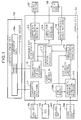
- Fig. 1 is a block diagram showing the configuration of a teaching accompaniment system that contains an embodiment of a sound analysis apparatus in accordance with the present invention.
- the teaching accompaniment system is a system that operates in a musical instrument, for example, a keyboard instrument, and that allows a user to teach himself/herself an instrumental performance.
- a control unit 101 includes a CPU that runs various programs, and a RAM or the like to be used as a work area by the CPU.
- shown in a box expressing the control unit 101 are the contents of pieces of processing to be performed by a program, which realizes a facility that serves as the teaching accompaniment system in accordance with the present embodiment, among programs to be run by the CPU in the control unit 101.
- An operating unit 102 is a device that receives various commands or information from a user, and includes operating pieces such as panel switches arranged on a main body of a musical instrument.
- a hard disk drive (HDD) 103 is a storage device in which various programs and databases are stored. The program for realizing the facility that serves as the teaching accompaniment system in accordance with the present embodiment is also stored in the HDD 103.
- the CPU of the control unit 101 loads the program, which realizes the facility serving as the teaching accompaniment system, into the RAM, and runs the program.
- a sound collection unit 104 includes a microphone that collects a sound of an external source and outputs an analog acoustic signal, and an analog-to-digital (A/D) converter that converts the analog audio signal into a digital acoustic signal.
- the sound collection unit 104 is used as a performance sound acquisition means for externally acquiring a performance sound.
- a composition memory unit 105 is a memory device in which composition data is stored, and formed with, for example, a RAM.
- composition data is a set of performance data items associated with various parts that include a melody part and a bass part and that constitute a composition.
- Performance data associated with one part is time-sequential data including event data that signifies generation of a performance sound, and timing data that signifies the timing of generating the performance sound.
- a data input unit 106 is a means for externally fetching composition data of any of various compositions. For example, a device that reads composition data from a storage medium such as an FD or an IC memory or a communication device that downloads composition data from a server over a network is adopted as the data input unit 106.
- a sound system 107 includes a digital-to-analog (D/A) converter that converts a digital acoustic signal into an analog acoustic signal, and a loudspeaker or the like that outputs the analog acoustic signal as a sound.
- a display unit 108 is, for example, a liquid crystal panel display. In the present embodiment, the display unit 108 is used as a means for displaying a composition to be played, displaying an image of a keyboard so as to inform a user of a key to be depressed, or displaying a result of a decision made on whether a performance given by a user has been appropriate.
- the result of a decision is not limited to the display but may be presented to the user in the form of an alarm sound, vibrations, or the like.
- composition input processing 111 is a process in which the data input unit 106 acquires composition data 105a in response to a command given via the operating unit 102, and stores the composition data in the composition memory unit 105.
- Performance position control processing 112 is a process in which: a position to be played by a user is controlled; performance data associated with the performance position is sampled from the composition data 105a in the composition memory unit 105, and outputted; and a target fundamental frequency that is a fundamental frequency of a sound the user should play is detected based on the sampled performance data, and outputted.
- Control of the performance position in the performance position control processing 112 is available in two modes.
- the first mode is a mode in which: a user plays a certain part on a musical instrument; when a certain performance sound is generated by playing the musical instrument, if the performance sound is a performance sound having a correct pitch specified in performance data of the part in the composition data, the performance position is advanced to the position of a performance sound succeeding the performance sound.
- the second mode is a mode of an automatic performance, that is, a mode in which: event data items are sequentially read at timings specified in timing data associated with each part; and the performance position is advanced interlocked with the reading. In whichever of the modes the performance position is controlled through the performance position control processing 112 is determined with a command given via the operating unit 102. Whichever of parts specified in the composition data 105a a user should play is determined with a command given via the operating unit 102.
- Composition reproduction processing 113 is a process in which: performance data of a part other than a performance part to be played by a user is selected from among performance data items associated with a performance position outputted through the performance position control processing 112; and sample data of a waveform representing a performance sound (that is, a background sound) specified in the performance data is produced and fed to the sound system 107.
- Composition display processing 114 is a process in which pieces of information representing a performance position to be played by a user and a performance sound are displayed on the display unit 108. The composition display processing 114 is available in various modes.
- the composition display processing 114 is such that: a musical note of a composition to be played is displayed on the display unit 108 according to the composition data 105a; and a mark indicating a performance position to be played by a user is displayed in the musical note on the basis of performance data associated with the performance position.
- a musical note of a composition to be played is displayed on the display unit 108 according to the composition data 105a; and a mark indicating a performance position to be played by a user is displayed in the musical note on the basis of performance data associated with the performance position.
- an image of a keyboard is displayed on the display unit 108, and a key to be depressed by a user is displayed based on performance data associated with a performance position.
- Fundamental frequency estimation processing 115 is a process in which: tone models 115M each simulating a harmonic structure of a sound generated by a musical instrument are employed; weight values for the respective tone models 115M are optimized so that the frequency components of a performance sound collected by the sound collection unit 104 will manifest a mixed distribution obtained by weighting and adding up the tone models 115M associated with various fundamental frequencies: and the fundamental frequency of the performance sound collected by the sound collection unit 104 is estimated based on the optimized weight values for the respective tone models 115M.
- a target fundamental frequency outputted from the performance position control processing 112 is used as a preliminary knowledge to estimate the fundamental frequency.
- Similarity assessment processing 116 is a process of calculating a similarity between the fundamental frequency estimated through the fundamental frequency estimation processing 115 and the target fundamental frequency obtained through the performance position control processing 112.
- Correspondence decision processing 117 is a process of deciding based on the similarity obtained through the similarity assessment processing 116 whether the fundamental frequency estimated through the fundamental frequency estimation processing 115 and the target fundamental frequency obtained through the performance position control processing 112 correspond with each other.
- the result of a decision made through the correspondence decision processing 117 is passed to each of result-of-decision display processing 118 and the foregoing performance position control processing 112.
- the result-of-decision display processing 118 is a process of displaying on the display unit 108 the result of a decision made by the correspondence decision processing 117, that is, whether a user has generated a performance sound at a pitch specified in performance data.
- the fundamental frequency estimation processing 115 is based on a technology disclosed in the patent document 2, and completed by applying an improvement disclosed in the non-patent document 1 to the technology.
- a frequency component belonging to a frequency band thought to represent a melody sound and a frequency component belonging to a frequency band thought to represent a bass sound are mutually independently fetched from an input acoustic signal using a BPF. Based on the frequency component of each of the frequency bands, the fundamental frequency of each of the melody sound and bass sound is estimated.
- tone models each of which manifests a probability distribution equivalent to a harmonic structure of a sound are prepared.
- Each frequency component in a frequency band representing a melody sound or each frequency component in a frequency band representing a bass sound is thought to manifest a mixed distribution of tone models that are associated with various fundamental frequencies and are weighted and added up.
- Weight values for the respective tone models are estimated using an expectation maximization (EM) algorithm.
- the EM algorithm is an iterative algorithm for performing maximum likelihood estimation on a probability model including a hidden variable, and can provide a local optimal solution. Since a probability distribution including the largest weight value can be regarded as a harmonic structure that is most dominant at that time instant, the fundamental frequency in the dominant harmonic structure is recognized as a pitch. Since this technique does not depend on the presence of a fundamental frequency component, it can appropriately deal with a missing fundamental phenomenon. The most dominant harmonic structure can be obtained without dependence on the presence of the fundamental frequency component.
- the non-patent document 1 has performed expansions described below on the technology of the patent document 2.
- the ratio of magnitudes of harmonic components in a tone model is fixed (an ideal tone model is tentatively determined). This does not always correspond with a harmonic structure of a mixed sound in a real world. For improvement in precision, there is room for sophistication. Consequently, the ratio of harmonic components in a tone model is added as a model parameter, and estimated at each time instant using the EM algorithm.
- a preliminary knowledge on a weight for a tone model (probability density function of a fundamental frequency) is not tentatively determined.
- the fundamental frequency estimation technology there is a demand for obtaining a fundamental frequency without causing erroneous detection as much as possible even by preliminarily providing to what frequency a fundamental frequency is close.
- a fundamental frequency at each time instant is prepared as a preliminary knowledge by singing a song or playing a musical instrument while hearing a composition through headphones. A more accurate fundamental frequency is requested to be actually detected in the composition.
- a scheme of maximum likelihood estimation for a model parameter (a weight value for a tone model) in the patent document 2 is expanded, and maximum a posteriori probability estimation (MAP estimation) is performed based on the preliminary distribution concerning the model parameter.
- MAP estimation maximum a posteriori probability estimation
- a preliminary distribution concerning the ratio of magnitudes of harmonic components of a tone model that is added as a model parameter in ⁇ expansion 2> is also introduced.
- Fig. 2 shows the contents of the fundamental frequency estimation processing 115 in the present embodiment configured by combining the technology of the patent document 2 with the technology of the non-patent document 1.
- a melody line and a bass line are estimated.
- a melody is a series of single notes heard more distinctly than others, and a bass is a series of the lowest single notes in an ensemble.
- a trajectory of a temporal change in the melody and a trajectory of a temporal change in the bass are referred to as the melody line Dm(t) and bass line Db(t) respectively.
- the fundamental frequency estimation processing 115 includes instantaneous frequency calculation 1, candidate frequency component extraction 2, frequency band limitation 3, melody line estimation 4a, and bass line estimation 4b.
- the pieces of processing of the melody line estimation 4a and bass line estimation 4b each include fundamental frequency probability density function estimation 41 and multi-agent model-based fundamental frequency time-sequential tracking 42.
- the melody line estimation 4a is executed.
- the bass line estimation 4b is executed.
- an input acoustic signal is fed to a filter bank including multiple BPFs, and an instantaneous frequency that is a time derivative of a phase is calculated for each of output signals of the BPFs of the filter bank (refer to "Phase Vocoder” (by Flanagan, J. L. and Golden, R. M. "Phase Vocoder", The BellSystem Technical J., Vol. 45, pp.1493-1509, 1966 ).
- the Flanagan technique is used to interpret an output of short-time Fourier transform (STFT) as a filter bank output so as to efficiently calculate the instantaneous frequency.
- STFT short-time Fourier transform
- h(t) denotes a window function that achieves localization of a time frequency (for example, a time window created by convoluting a second-order cardinal B-spline function to a Gauss function that achieves optimal localization of a time frequency).
- wavelet transform For calculation of the instantaneous frequency, wavelet transform may be adopted.
- STFT is used to decrease an amount of computation.
- a time resolution or a frequency resolution for a certain frequency band is degraded. Therefore, a multi-rate filter bank is constructed (refer to " A Theory of Multirate Filter Banks" (by Vetterli, M. , IEEE Trans. on ASSP, Vol. ASSP-35, No. 3, pp. 356-372, 1987 ) in order to attain a somewhat reasonable time-frequency resolution under the restriction that it can be executed in real time.
- a candidate for a frequency component is extracted based on mapping from a center frequency of a filter to an instantaneous frequency (refer to "Pitch detection using the short-term phase spectrum" (by Charpentier, F. J., Proc. of ICASSP 86, pp.113-116, 1986 ). Mapping from the center frequency ⁇ of a certain STFT filter to the instantaneous frequency ⁇ ( ⁇ ,t) of the output thereof will be discussed. If a frequency component of a frequency ⁇ is found, ⁇ is positioned at a fixed point of the mapping and the value of the neighboring instantaneous frequency is nearly constant. Namely, the instantaneous frequency ⁇ f (t) of every frequency component can be extracted using the equation below.
- ⁇ f t ⁇
- ⁇ ⁇ ⁇ t - ⁇ 0 , ⁇ ⁇ ⁇ ⁇ ⁇ ⁇ t - ⁇ ⁇ 0
- an extracted frequency component is weighted in order to limit a frequency band.
- two kinds of BPFs are prepared for a melody line and a base line respectively.
- the melody line BPF can pass a major fundamental frequency component of a typical melody line and many harmonic components thereof, and blocks a frequency band, in which a frequency overlap frequently takes place, to some extent.
- the bass line BPF can pass a major fundamental frequency component of a typical bass line and many harmonic components thereof, and blocks a frequency band, in which any other performance part dominates over the bass line, to some extent.
- a frequency on a logarithmic scale is expressed in the unit of cent (which originally is a measure expressing a difference between pitches (a musical interval)), and a frequency fHz expressed in the unit of Hz is converted into a frequency fcent expressed in the unit of cent according to the equation below.
- a semitone in the equal temperament is equivalent to 100 cent, and one octave is equivalent to 1200 cent.
- ⁇ ' p (t) (x) denotes a power distribution function of a frequency component
- a frequency component having passed through the BPF can be expressed as BPFi(x) ⁇ ' p (t) (x).
- ⁇ ' p (t) (x) denotes the same function as ⁇ p (t) ( ⁇ ) except that a frequency axis is expressed in cent.
- p ⁇ t x BPFi x ⁇ ⁇ p t Pow t
- Pow (t) denotes a sum total of powers of frequency components having passed through the BPF and is expressed by the equation below.
- Pow t ⁇ - ⁇ + ⁇ ⁇ BPFi x ⁇ ⁇ p t x ⁇ dx
- the fundamental frequency probability density function estimation 41 a probability density function of a fundamental frequency signifying to what extent each harmonic structure is dominant relatively to a candidate for a frequency component having passed through a BPF is obtained.
- the contents of the fundamental frequency probability density function estimation 41 are those having undergone an improvement disclosed in the non-patent document 1.
- F denotes a fundamental frequency
- the type of tone model is the m-th type
- F,m, ⁇ (t) (F,m)) having a model parameter ⁇ (t) (F,m) shall be defined by the equation below.
- This tone model signifies at what frequencies harmonic components appear relative to a fundamental frequency F.
- Hi denotes the number of harmonic components including a fundamental frequency component
- W i 2 denotes a variance of a Gaussian distribution G(x;x0, ⁇ ).
- F,m) expresses the magnitude of a h-th-order harmonic component of an m-th tone model associated with the fundamental frequency F, and satisfies the equation below.
- ⁇ h 1 Hi c t h
- F , m 1
- F,m) for the tone model associated with the fundamental frequency F is a weight pre-defined so that a sum total will be 1.
- a probability density function p ⁇ (t) (x) of a fundamental frequency is considered to be produced from a mixed distribution model p(x
- a preliminary distribution po i ( ⁇ (t) ) of ⁇ (t) is provided as a product of the equations (24) and (25) as expressed by the equation (23) below.
- wo i (t) (F,m) and ⁇ o i (t) (F,m) denote parameters that are most likely to occur
- po i (w (t) ) and po i ( ⁇ (t) ) denote unimodal preliminary distributions that assume maximum values with respect to the parameters.
- Z w and Z ⁇ denote normalization coefficients
- ⁇ wi (t) and ⁇ ⁇ i (t) (F,m) denote parameters that determine to what extent the maximum values are emphasized in the preliminary distributions.
- the preliminary distributions are non-information preliminary distributions (uniform distributions).
- D w (wo i (t) ;w (t) ) and D ⁇ ( ⁇ o i (t) (F,m); ⁇ (t) (F,m)) denote pieces of Kullback-Leibler's (K-L) information as expressed below.
- the EM algorithm is an iterative algorithm that alternately applies an expectation (E) step and a maximization (M) step so as to perform maximum likelihood estimation using incomplete observation data (in this case, the p ⁇ (t) (x)).
- the initial value of ⁇ old (t) the last estimate obtained at an Immediately preceding time instant t-1 is used.
- a probability density function p FO (t) (F) of a fundamental frequency in which a preliminary distribution is taken account is obtained based on w (t) (F,m) according to the equation (23). Further, the ratio c (t) (h
- Fi(t) a frequency that maximizes a probability density function p FO (t) (F) (obtained as a final estimate through repeated calculations of the equations (29) to (32) according to the equation (22)) is obtained as expressed by the equation below.
- Fi t argmax F ⁇ p F ⁇ 0 t F The thus obtained frequency is regarded as a pitch.
- a probability density function of a fundamental frequency when multiple peaks are related to fundamental frequencies of tones being generated simultaneously, the peaks may be sequentially selected as the maximum value of the probability density function. Therefore, a simply obtained result may not remain stable.
- trajectories of multiple peaks are time-sequentially tracked along with a temporal change in the probability density function of a fundamental frequency. From among the trajectories, a trajectory representing a fundamental frequency that is the most dominant and stable is selected.
- a multi-agent model is introduced.
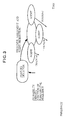
- a multi-agent model is composed of one feature detector and multiple agents (see Fig. 3 ).
- the feature detector picks up conspicuous peaks from a probability density function of a fundamental frequency.
- the agents basically are driven by the respective peaks and track their trajectories.
- the multi-agent model is a general-purpose scheme for temporally tracking conspicuous features of an input. Specifically, processing to be described below is performed at each time instant.
- a position in a composition which a user should play is monitored all the time.
- Performance data associated with the performance position is sampled from the composition data 105a in the composition memory unit 105, and outputted and thus passed to the composition reproduction processing 113 and composition display processing 114 alike.
- a target fundamental frequency of a performance sound of a user's performance part is obtained based on the performance data associated with the performance position, and passed to the fundamental frequency estimation processing 115.
- composition reproduction processing 113 an acoustic signal representing a performance sound of a part other than the user's performance part (that is, a background sound) is produced, and the sound system 107 is instructed to reproduce the sound.
- the composition display processing 114 based on the performance data passed from the performance position control processing 112, an image expressing a performance sound which the user should play (for example, an image expressing a key of a keyboard to be depressed) or an image expressing a performance position which the user should play (an image expressing a performance position in a musical note) is displayed on the display unit 108.
- an input acoustic signal representing the performance sound is passed to the fundamental frequency estimation processing 115.
- tone models 115M each simulating a harmonic structure of a sound generated by a musical instrument are employed, and weight values for the respective tone models 115M are optimized so that the frequency components of the input acoustic signal will manifest a mixed distribution obtained by weighting and adding up the tone models 115M associated with various fundamental frequencies.
- the fundamental frequency or frequencies of one or multiple performance sounds represented by the input acoustic signal are estimated.
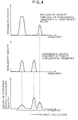
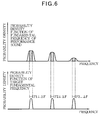
- a preliminary distribution po i ( ⁇ (t) ) is produced so that a weight relating to the target fundamental frequency passed from the performance position control processing 112 is emphasized therein. While the preliminary distribution po i ( ⁇ (t) ) is used and the ratio of magnitudes of harmonic components in each tone model is varied, an EM algorithm is executed in order to estimate the fundamental frequency of the performance sound.
- the similarity between the fundamental frequency estimated through the fundamental frequency estimation processing 115 and the target fundamental frequency obtained through the performance position control processing 112 is calculated.
- various modes are conceivable. For example, a ratio of a fundamental frequency estimated through the fundamental frequency estimation processing 115 to a target fundamental frequency (that is, a value in cent expressing a deviation between the logarithmically expressed frequencies) may be divided by a predetermined value (for example, a value in cent expressing one scale), and the quotient may be adopted as the similarity.
- the correspondence determination processing 117 based on the similarity obtained through the similarity assessment processing 116, a decision is made on whether the fundamental frequency estimated through the fundamental frequency estimation processing 115 and the target fundamental frequency obtained through the performance position control processing 112 correspond with each other.
- the result-of-decision display processing 118 the result of a decision made through the correspondence decision processing 117, that is, whether a user has generated a performance sound at a pitch specified in performance data is displayed on the display unit 108.
- a musical note is displayed on the display unit 108, and a user is appropriately informed of his/her error in a performance through the result-of-decision display processing 118.
- a note of a performance sound designated with the performance data associated with a performance position that is, a note signifying a target fundamental frequency
- a note signifying a fundamental frequency of a performance sound actually generated by a user are displayed in different colors.
- the foregoing processing is repeated while the performance position is advanced.
- tone models each simulating a harmonic structure of a sound generated by a musical instrument are employed.
- Weight values for the respective tone models are optimized so that the frequency components of a performance tone collected by the sound collection unit 104 will manifest a mixed distribution obtained by weighting and adding up the tone models associated with various fundamental frequencies.
- the fundamental frequency of the performance sound is estimated based on the optimized weight values for the respective tone models. Consequently, the fundamental frequency of a performance sound can be high precisely estimated, and a decision can be accurately made on the fundamental frequency of the performance sound.
- the fundamental frequency of a performance sound generated by a user since the fundamental frequency of a performance sound generated by a user is obtained, an error in a performance can be presented to a user in such a manner that a sound which should have a certain pitch has been played at another pitch.
- an EM algorithm is executed in order to estimate the fundamental frequency of a performance sound. Consequently, even in a situation in which the spectral shape of a performance sound generated by a user largely varies depending on the dynamics of a performance or the touch thereof, the ratio of magnitudes of harmonic components of a tone model can be changed along with a change in the spectral shape. Consequently, the fundamental frequency of a performance sound can be highly precisely estimated.
Landscapes
- Physics & Mathematics (AREA)
- Engineering & Computer Science (AREA)
- Acoustics & Sound (AREA)
- Multimedia (AREA)
- Auxiliary Devices For Music (AREA)
- Measurement Of Mechanical Vibrations Or Ultrasonic Waves (AREA)
- Electrophonic Musical Instruments (AREA)
Applications Claiming Priority (1)
| Application Number | Priority Date | Filing Date | Title |
|---|---|---|---|
| JP2007045193A JP4322283B2 (ja) | 2007-02-26 | 2007-02-26 | 演奏判定装置およびプログラム |
Publications (3)
| Publication Number | Publication Date |
|---|---|
| EP1962274A2 true EP1962274A2 (de) | 2008-08-27 |
| EP1962274A3 EP1962274A3 (de) | 2009-10-28 |
| EP1962274B1 EP1962274B1 (de) | 2010-12-22 |
Family
ID=39462408
Family Applications (1)
| Application Number | Title | Priority Date | Filing Date |
|---|---|---|---|
| EP08101972A Not-in-force EP1962274B1 (de) | 2007-02-26 | 2008-02-26 | Vorrichtung und Programm zur Tonanalyse |
Country Status (5)
| Country | Link |
|---|---|
| US (1) | US7858869B2 (de) |
| EP (1) | EP1962274B1 (de) |
| JP (1) | JP4322283B2 (de) |
| AT (1) | ATE492873T1 (de) |
| DE (1) | DE602008003987D1 (de) |
Cited By (2)
| Publication number | Priority date | Publication date | Assignee | Title |
|---|---|---|---|---|
| CN111048110A (zh) * | 2018-10-15 | 2020-04-21 | 杭州网易云音乐科技有限公司 | 乐器识别方法、介质、装置和计算设备 |
| CN113571033A (zh) * | 2021-07-13 | 2021-10-29 | 腾讯音乐娱乐科技(深圳)有限公司 | 一种伴奏回踩检测方法、设备及计算机可读存储介质 |
Families Citing this family (37)
| Publication number | Priority date | Publication date | Assignee | Title |
|---|---|---|---|---|
| WO2006132599A1 (en) * | 2005-06-07 | 2006-12-14 | Matsushita Electric Industrial Co., Ltd. | Segmenting a humming signal into musical notes |
| JP4672474B2 (ja) * | 2005-07-22 | 2011-04-20 | 株式会社河合楽器製作所 | 自動採譜装置及びプログラム |
| US7459624B2 (en) | 2006-03-29 | 2008-12-02 | Harmonix Music Systems, Inc. | Game controller simulating a musical instrument |
| JP4660739B2 (ja) * | 2006-09-01 | 2011-03-30 | 独立行政法人産業技術総合研究所 | 音分析装置およびプログラム |
| US8678896B2 (en) | 2007-06-14 | 2014-03-25 | Harmonix Music Systems, Inc. | Systems and methods for asynchronous band interaction in a rhythm action game |
| US20090075711A1 (en) | 2007-06-14 | 2009-03-19 | Eric Brosius | Systems and methods for providing a vocal experience for a player of a rhythm action game |
| JP5088030B2 (ja) * | 2007-07-26 | 2012-12-05 | ヤマハ株式会社 | 演奏音の類似度を評価する方法、装置およびプログラム |
| WO2009059300A2 (en) * | 2007-11-02 | 2009-05-07 | Melodis Corporation | Pitch selection, voicing detection and vibrato detection modules in a system for automatic transcription of sung or hummed melodies |
| US8407173B2 (en) * | 2008-01-30 | 2013-03-26 | Aptima, Inc. | System and method for comparing system features |
| JP4623124B2 (ja) * | 2008-04-07 | 2011-02-02 | ソニー株式会社 | 楽曲再生装置、楽曲再生方法および楽曲再生プログラム |
| US8026435B2 (en) * | 2009-05-29 | 2011-09-27 | Harmonix Music Systems, Inc. | Selectively displaying song lyrics |
| US7935880B2 (en) * | 2009-05-29 | 2011-05-03 | Harmonix Music Systems, Inc. | Dynamically displaying a pitch range |
| US8080722B2 (en) * | 2009-05-29 | 2011-12-20 | Harmonix Music Systems, Inc. | Preventing an unintentional deploy of a bonus in a video game |
| US8076564B2 (en) * | 2009-05-29 | 2011-12-13 | Harmonix Music Systems, Inc. | Scoring a musical performance after a period of ambiguity |
| US8017854B2 (en) * | 2009-05-29 | 2011-09-13 | Harmonix Music Systems, Inc. | Dynamic musical part determination |
| US7982114B2 (en) * | 2009-05-29 | 2011-07-19 | Harmonix Music Systems, Inc. | Displaying an input at multiple octaves |
| US8465366B2 (en) | 2009-05-29 | 2013-06-18 | Harmonix Music Systems, Inc. | Biasing a musical performance input to a part |
| US8449360B2 (en) | 2009-05-29 | 2013-05-28 | Harmonix Music Systems, Inc. | Displaying song lyrics and vocal cues |
| WO2011056657A2 (en) | 2009-10-27 | 2011-05-12 | Harmonix Music Systems, Inc. | Gesture-based user interface |
| US9981193B2 (en) | 2009-10-27 | 2018-05-29 | Harmonix Music Systems, Inc. | Movement based recognition and evaluation |
| US8550908B2 (en) | 2010-03-16 | 2013-10-08 | Harmonix Music Systems, Inc. | Simulating musical instruments |
| US8309834B2 (en) * | 2010-04-12 | 2012-11-13 | Apple Inc. | Polyphonic note detection |
| WO2011155958A1 (en) | 2010-06-11 | 2011-12-15 | Harmonix Music Systems, Inc. | Dance game and tutorial |
| US8562403B2 (en) | 2010-06-11 | 2013-10-22 | Harmonix Music Systems, Inc. | Prompting a player of a dance game |
| US9358456B1 (en) | 2010-06-11 | 2016-06-07 | Harmonix Music Systems, Inc. | Dance competition game |
| US9024166B2 (en) | 2010-09-09 | 2015-05-05 | Harmonix Music Systems, Inc. | Preventing subtractive track separation |
| JP6035702B2 (ja) * | 2010-10-28 | 2016-11-30 | ヤマハ株式会社 | 音響処理装置および音響処理方法 |
| JP5747562B2 (ja) * | 2010-10-28 | 2015-07-15 | ヤマハ株式会社 | 音響処理装置 |
| JP6179140B2 (ja) | 2013-03-14 | 2017-08-16 | ヤマハ株式会社 | 音響信号分析装置及び音響信号分析プログラム |
| JP6123995B2 (ja) * | 2013-03-14 | 2017-05-10 | ヤマハ株式会社 | 音響信号分析装置及び音響信号分析プログラム |
| JP2014219607A (ja) * | 2013-05-09 | 2014-11-20 | ソニー株式会社 | 音楽信号処理装置および方法、並びに、プログラム |
| JP5807754B2 (ja) * | 2013-06-14 | 2015-11-10 | ブラザー工業株式会社 | 弦楽器演奏評価装置及び弦楽器演奏評価プログラム |
| JP5843074B2 (ja) * | 2013-06-14 | 2016-01-13 | ブラザー工業株式会社 | 弦楽器演奏評価装置及び弦楽器演奏評価プログラム |
| CN109524023A (zh) * | 2016-01-22 | 2019-03-26 | 大连民族大学 | 一种对基频估计实验验证的方法 |
| JP6597903B2 (ja) * | 2016-07-22 | 2019-10-30 | ヤマハ株式会社 | 楽曲データ処理方法およびプログラム |
| JP6724828B2 (ja) * | 2017-03-15 | 2020-07-15 | カシオ計算機株式会社 | フィルタ演算処理装置、フィルタ演算方法、及び効果付与装置 |
| IL253472B (en) * | 2017-07-13 | 2021-07-29 | Melotec Ltd | Method and system for performing melody recognition |
Citations (2)
| Publication number | Priority date | Publication date | Assignee | Title |
|---|---|---|---|---|
| JP3413634B2 (ja) | 1999-10-27 | 2003-06-03 | 独立行政法人産業技術総合研究所 | 音高推定方法及び装置 |
| JP2004341026A (ja) | 2003-05-13 | 2004-12-02 | Kawai Musical Instr Mfg Co Ltd | 自然楽器の楽音判定装置 |
Family Cites Families (9)
| Publication number | Priority date | Publication date | Assignee | Title |
|---|---|---|---|---|
| JP3487950B2 (ja) * | 1995-04-13 | 2004-01-19 | パイオニア株式会社 | 音程評価装置及びカラオケ採点装置 |
| JP4232299B2 (ja) * | 1999-11-08 | 2009-03-04 | ヤマハ株式会社 | 演奏カロリー消費量測定装置 |
| US6856923B2 (en) | 2000-12-05 | 2005-02-15 | Amusetec Co., Ltd. | Method for analyzing music using sounds instruments |
| JP2003256552A (ja) * | 2002-03-05 | 2003-09-12 | Yamaha Corp | 演奏者情報提供方法、サーバ、プログラムおよび記録媒体 |
| JP3823945B2 (ja) * | 2003-06-02 | 2006-09-20 | ヤマハ株式会社 | 音声入力機能付き演奏ガイド装置および演奏ガイド方法 |
| JP4353018B2 (ja) | 2004-07-16 | 2009-10-28 | ヤマハ株式会社 | 楽器演奏教習装置及びそのプログラム |
| PL1849154T3 (pl) | 2005-01-27 | 2011-05-31 | Synchro Arts Ltd | Sposoby i urządzenie do zastosowania w modyfikacji dźwięku |
| JP4517045B2 (ja) * | 2005-04-01 | 2010-08-04 | 独立行政法人産業技術総合研究所 | 音高推定方法及び装置並びに音高推定用プラグラム |
| JP4660739B2 (ja) * | 2006-09-01 | 2011-03-30 | 独立行政法人産業技術総合研究所 | 音分析装置およびプログラム |
-
2007
- 2007-02-26 JP JP2007045193A patent/JP4322283B2/ja not_active Expired - Fee Related
-
2008
- 2008-02-25 US US12/037,036 patent/US7858869B2/en not_active Expired - Fee Related
- 2008-02-26 AT AT08101972T patent/ATE492873T1/de not_active IP Right Cessation
- 2008-02-26 EP EP08101972A patent/EP1962274B1/de not_active Not-in-force
- 2008-02-26 DE DE602008003987T patent/DE602008003987D1/de active Active
Patent Citations (2)
| Publication number | Priority date | Publication date | Assignee | Title |
|---|---|---|---|---|
| JP3413634B2 (ja) | 1999-10-27 | 2003-06-03 | 独立行政法人産業技術総合研究所 | 音高推定方法及び装置 |
| JP2004341026A (ja) | 2003-05-13 | 2004-12-02 | Kawai Musical Instr Mfg Co Ltd | 自然楽器の楽音判定装置 |
Non-Patent Citations (5)
| Title |
|---|
| "Phase Vocoder", THE BELLSYSTEM TECHNICAL J., vol. 45, 1966, pages 1493 - 1509 |
| CHARPENTIER, F. J.: "Pitch detection using the short-term phase spectrum", PROC. OF ICASSP, vol. 86, 1986, pages 113 - 116 |
| FLANAGAN, J. L.; GOLDEN, R. M., PHASE VOCODER |
| MASATAKA GOTO, INFORMATION PROCESSING SOCIETY OF JAPAN, vol. 2000, no. 94, 16 October 2000 (2000-10-16), pages 9 - 16 |
| VETTERLI, M.: "A Theory of Multirate Filter Banks", IEEE TRANS. ON ASSP, vol. 35, no. 3, 1987, pages 356 - 372 |
Cited By (2)
| Publication number | Priority date | Publication date | Assignee | Title |
|---|---|---|---|---|
| CN111048110A (zh) * | 2018-10-15 | 2020-04-21 | 杭州网易云音乐科技有限公司 | 乐器识别方法、介质、装置和计算设备 |
| CN113571033A (zh) * | 2021-07-13 | 2021-10-29 | 腾讯音乐娱乐科技(深圳)有限公司 | 一种伴奏回踩检测方法、设备及计算机可读存储介质 |
Also Published As
| Publication number | Publication date |
|---|---|
| US7858869B2 (en) | 2010-12-28 |
| JP2008209572A (ja) | 2008-09-11 |
| DE602008003987D1 (de) | 2011-02-03 |
| ATE492873T1 (de) | 2011-01-15 |
| US20080202321A1 (en) | 2008-08-28 |
| EP1962274A3 (de) | 2009-10-28 |
| JP4322283B2 (ja) | 2009-08-26 |
| EP1962274B1 (de) | 2010-12-22 |
Similar Documents
| Publication | Publication Date | Title |
|---|---|---|
| EP1962274B1 (de) | Vorrichtung und Programm zur Tonanalyse | |
| EP2019384B1 (de) | Verfahren, Vorrichtung und Programm zur Beurteilung der Ähnlichkeit eines Vorführtons | |
| Klapuri | Automatic music transcription as we know it today | |
| Benetos et al. | A shift-invariant latent variable model for automatic music transcription | |
| CN102610222B (zh) | 音乐转录的方法,系统和装置 | |
| EP1895506B1 (de) | Vorrichtung und Programm zur Schallanalyse | |
| US8618401B2 (en) | Information processing apparatus, melody line extraction method, bass line extraction method, and program | |
| US20120046771A1 (en) | Music audio signal generating system | |
| Scheirer | Extracting expressive performance information from recorded music | |
| Zhang et al. | Melody extraction from polyphonic music using particle filter and dynamic programming | |
| Lerch | Software-based extraction of objective parameters from music performances | |
| Weil et al. | Automatic Generation of Lead Sheets from Polyphonic Music Signals. | |
| JP2008015214A (ja) | 歌唱力評価方法及びカラオケ装置 | |
| Dittmar et al. | A toolbox for automatic transcription of polyphonic music | |
| JP2008015211A (ja) | ピッチ抽出方法、歌唱力評価方法、歌唱訓練プログラム及びカラオケ装置 | |
| JP4625933B2 (ja) | 音分析装置およびプログラム | |
| Wahbi et al. | Transcription of Arabic and Turkish Music Using Convolutional Neural Networks | |
| JP2008015212A (ja) | 音程変化量抽出方法、ピッチの信頼性算出方法、ビブラート検出方法、歌唱訓練プログラム及びカラオケ装置 | |
| Bruno et al. | Automatic music transcription supporting different instruments | |
| Lionello et al. | A machine learning approach to violin vibrato modelling in audio performances and a didactic application for mobile devices | |
| JP4625934B2 (ja) | 音分析装置およびプログラム | |
| JP2008015213A (ja) | ビブラート検出方法、歌唱訓練プログラム及びカラオケ装置 | |
| Oyediran et al. | Development of an Automatic Musical Keys Notes Detection Technique Using Mir Toolbox | |
| Salamon | Chroma-based predominant melody and bass line extraction from music audio signals | |
| Yoshii et al. | Cultivating vocal activity detection for music audio signals in a circulation-type crowdsourcing ecosystem |
Legal Events
| Date | Code | Title | Description |
|---|---|---|---|
| PUAI | Public reference made under article 153(3) epc to a published international application that has entered the european phase |
Free format text: ORIGINAL CODE: 0009012 |
|
| AK | Designated contracting states |
Kind code of ref document: A2 Designated state(s): AT BE BG CH CY CZ DE DK EE ES FI FR GB GR HR HU IE IS IT LI LT LU LV MC MT NL NO PL PT RO SE SI SK TR |
|
| AX | Request for extension of the european patent |
Extension state: AL BA MK RS |
|
| PUAL | Search report despatched |
Free format text: ORIGINAL CODE: 0009013 |
|
| AK | Designated contracting states |
Kind code of ref document: A3 Designated state(s): AT BE BG CH CY CZ DE DK EE ES FI FR GB GR HR HU IE IS IT LI LT LU LV MC MT NL NO PL PT RO SE SI SK TR |
|
| AX | Request for extension of the european patent |
Extension state: AL BA MK RS |
|
| RIC1 | Information provided on ipc code assigned before grant |
Ipc: G10H 1/00 20060101AFI20080612BHEP Ipc: G10H 1/36 20060101ALI20090923BHEP |
|
| 17P | Request for examination filed |
Effective date: 20100427 |
|
| AKX | Designation fees paid |
Designated state(s): AT BE BG CH CY CZ DE DK EE ES FI FR GB GR HR HU IE IS IT LI LT LU LV MC MT NL NO PL PT RO SE SI SK TR |
|
| GRAP | Despatch of communication of intention to grant a patent |
Free format text: ORIGINAL CODE: EPIDOSNIGR1 |
|
| GRAS | Grant fee paid |
Free format text: ORIGINAL CODE: EPIDOSNIGR3 |
|
| GRAA | (expected) grant |
Free format text: ORIGINAL CODE: 0009210 |
|
| AK | Designated contracting states |
Kind code of ref document: B1 Designated state(s): AT BE BG CH CY CZ DE DK EE ES FI FR GB GR HR HU IE IS IT LI LT LU LV MC MT NL NO PL PT RO SE SI SK TR |
|
| REG | Reference to a national code |
Ref country code: GB Ref legal event code: FG4D |
|
| REG | Reference to a national code |
Ref country code: CH Ref legal event code: EP |
|
| REG | Reference to a national code |
Ref country code: IE Ref legal event code: FG4D |
|
| REF | Corresponds to: |
Ref document number: 602008003987 Country of ref document: DE Date of ref document: 20110203 Kind code of ref document: P |
|
| REG | Reference to a national code |
Ref country code: DE Ref legal event code: R096 Ref document number: 602008003987 Country of ref document: DE Effective date: 20110203 |
|
| REG | Reference to a national code |
Ref country code: NL Ref legal event code: VDEP Effective date: 20101222 |
|
| PG25 | Lapsed in a contracting state [announced via postgrant information from national office to epo] |
Ref country code: LT Free format text: LAPSE BECAUSE OF FAILURE TO SUBMIT A TRANSLATION OF THE DESCRIPTION OR TO PAY THE FEE WITHIN THE PRESCRIBED TIME-LIMIT Effective date: 20101222 |
|
| LTIE | Lt: invalidation of european patent or patent extension |
Effective date: 20101222 |
|
| PG25 | Lapsed in a contracting state [announced via postgrant information from national office to epo] |
Ref country code: SE Free format text: LAPSE BECAUSE OF FAILURE TO SUBMIT A TRANSLATION OF THE DESCRIPTION OR TO PAY THE FEE WITHIN THE PRESCRIBED TIME-LIMIT Effective date: 20101222 Ref country code: FI Free format text: LAPSE BECAUSE OF FAILURE TO SUBMIT A TRANSLATION OF THE DESCRIPTION OR TO PAY THE FEE WITHIN THE PRESCRIBED TIME-LIMIT Effective date: 20101222 Ref country code: BG Free format text: LAPSE BECAUSE OF FAILURE TO SUBMIT A TRANSLATION OF THE DESCRIPTION OR TO PAY THE FEE WITHIN THE PRESCRIBED TIME-LIMIT Effective date: 20110322 Ref country code: AT Free format text: LAPSE BECAUSE OF FAILURE TO SUBMIT A TRANSLATION OF THE DESCRIPTION OR TO PAY THE FEE WITHIN THE PRESCRIBED TIME-LIMIT Effective date: 20101222 Ref country code: SI Free format text: LAPSE BECAUSE OF FAILURE TO SUBMIT A TRANSLATION OF THE DESCRIPTION OR TO PAY THE FEE WITHIN THE PRESCRIBED TIME-LIMIT Effective date: 20101222 Ref country code: LV Free format text: LAPSE BECAUSE OF FAILURE TO SUBMIT A TRANSLATION OF THE DESCRIPTION OR TO PAY THE FEE WITHIN THE PRESCRIBED TIME-LIMIT Effective date: 20101222 Ref country code: HR Free format text: LAPSE BECAUSE OF FAILURE TO SUBMIT A TRANSLATION OF THE DESCRIPTION OR TO PAY THE FEE WITHIN THE PRESCRIBED TIME-LIMIT Effective date: 20101222 Ref country code: CY Free format text: LAPSE BECAUSE OF FAILURE TO SUBMIT A TRANSLATION OF THE DESCRIPTION OR TO PAY THE FEE WITHIN THE PRESCRIBED TIME-LIMIT Effective date: 20101222 |
|
| PG25 | Lapsed in a contracting state [announced via postgrant information from national office to epo] |
Ref country code: ES Free format text: LAPSE BECAUSE OF FAILURE TO SUBMIT A TRANSLATION OF THE DESCRIPTION OR TO PAY THE FEE WITHIN THE PRESCRIBED TIME-LIMIT Effective date: 20110402 Ref country code: EE Free format text: LAPSE BECAUSE OF FAILURE TO SUBMIT A TRANSLATION OF THE DESCRIPTION OR TO PAY THE FEE WITHIN THE PRESCRIBED TIME-LIMIT Effective date: 20101222 Ref country code: BE Free format text: LAPSE BECAUSE OF FAILURE TO SUBMIT A TRANSLATION OF THE DESCRIPTION OR TO PAY THE FEE WITHIN THE PRESCRIBED TIME-LIMIT Effective date: 20101222 Ref country code: PT Free format text: LAPSE BECAUSE OF FAILURE TO SUBMIT A TRANSLATION OF THE DESCRIPTION OR TO PAY THE FEE WITHIN THE PRESCRIBED TIME-LIMIT Effective date: 20110422 Ref country code: GR Free format text: LAPSE BECAUSE OF FAILURE TO SUBMIT A TRANSLATION OF THE DESCRIPTION OR TO PAY THE FEE WITHIN THE PRESCRIBED TIME-LIMIT Effective date: 20110323 Ref country code: NO Free format text: LAPSE BECAUSE OF FAILURE TO SUBMIT A TRANSLATION OF THE DESCRIPTION OR TO PAY THE FEE WITHIN THE PRESCRIBED TIME-LIMIT Effective date: 20110322 Ref country code: CZ Free format text: LAPSE BECAUSE OF FAILURE TO SUBMIT A TRANSLATION OF THE DESCRIPTION OR TO PAY THE FEE WITHIN THE PRESCRIBED TIME-LIMIT Effective date: 20101222 Ref country code: IS Free format text: LAPSE BECAUSE OF FAILURE TO SUBMIT A TRANSLATION OF THE DESCRIPTION OR TO PAY THE FEE WITHIN THE PRESCRIBED TIME-LIMIT Effective date: 20110422 |
|
| PG25 | Lapsed in a contracting state [announced via postgrant information from national office to epo] |
Ref country code: RO Free format text: LAPSE BECAUSE OF FAILURE TO SUBMIT A TRANSLATION OF THE DESCRIPTION OR TO PAY THE FEE WITHIN THE PRESCRIBED TIME-LIMIT Effective date: 20101222 Ref country code: NL Free format text: LAPSE BECAUSE OF FAILURE TO SUBMIT A TRANSLATION OF THE DESCRIPTION OR TO PAY THE FEE WITHIN THE PRESCRIBED TIME-LIMIT Effective date: 20101222 Ref country code: SK Free format text: LAPSE BECAUSE OF FAILURE TO SUBMIT A TRANSLATION OF THE DESCRIPTION OR TO PAY THE FEE WITHIN THE PRESCRIBED TIME-LIMIT Effective date: 20101222 Ref country code: PL Free format text: LAPSE BECAUSE OF FAILURE TO SUBMIT A TRANSLATION OF THE DESCRIPTION OR TO PAY THE FEE WITHIN THE PRESCRIBED TIME-LIMIT Effective date: 20101222 |
|
| PG25 | Lapsed in a contracting state [announced via postgrant information from national office to epo] |
Ref country code: MC Free format text: LAPSE BECAUSE OF NON-PAYMENT OF DUE FEES Effective date: 20110228 |
|
| PLBE | No opposition filed within time limit |
Free format text: ORIGINAL CODE: 0009261 |
|
| STAA | Information on the status of an ep patent application or granted ep patent |
Free format text: STATUS: NO OPPOSITION FILED WITHIN TIME LIMIT |
|
| PG25 | Lapsed in a contracting state [announced via postgrant information from national office to epo] |
Ref country code: DK Free format text: LAPSE BECAUSE OF FAILURE TO SUBMIT A TRANSLATION OF THE DESCRIPTION OR TO PAY THE FEE WITHIN THE PRESCRIBED TIME-LIMIT Effective date: 20101222 |
|
| REG | Reference to a national code |
Ref country code: FR Ref legal event code: ST Effective date: 20111102 |
|
| REG | Reference to a national code |
Ref country code: IE Ref legal event code: MM4A |
|
| 26N | No opposition filed |
Effective date: 20110923 |
|
| PG25 | Lapsed in a contracting state [announced via postgrant information from national office to epo] |
Ref country code: MT Free format text: LAPSE BECAUSE OF FAILURE TO SUBMIT A TRANSLATION OF THE DESCRIPTION OR TO PAY THE FEE WITHIN THE PRESCRIBED TIME-LIMIT Effective date: 20101222 Ref country code: IT Free format text: LAPSE BECAUSE OF FAILURE TO SUBMIT A TRANSLATION OF THE DESCRIPTION OR TO PAY THE FEE WITHIN THE PRESCRIBED TIME-LIMIT Effective date: 20101222 |
|
| REG | Reference to a national code |
Ref country code: DE Ref legal event code: R097 Ref document number: 602008003987 Country of ref document: DE Effective date: 20110923 |
|
| PG25 | Lapsed in a contracting state [announced via postgrant information from national office to epo] |
Ref country code: FR Free format text: LAPSE BECAUSE OF NON-PAYMENT OF DUE FEES Effective date: 20110228 Ref country code: IE Free format text: LAPSE BECAUSE OF NON-PAYMENT OF DUE FEES Effective date: 20110226 |
|
| REG | Reference to a national code |
Ref country code: CH Ref legal event code: PL |
|
| PG25 | Lapsed in a contracting state [announced via postgrant information from national office to epo] |
Ref country code: LI Free format text: LAPSE BECAUSE OF NON-PAYMENT OF DUE FEES Effective date: 20120229 Ref country code: CH Free format text: LAPSE BECAUSE OF NON-PAYMENT OF DUE FEES Effective date: 20120229 |
|
| PG25 | Lapsed in a contracting state [announced via postgrant information from national office to epo] |
Ref country code: LU Free format text: LAPSE BECAUSE OF NON-PAYMENT OF DUE FEES Effective date: 20110226 |
|
| PG25 | Lapsed in a contracting state [announced via postgrant information from national office to epo] |
Ref country code: TR Free format text: LAPSE BECAUSE OF FAILURE TO SUBMIT A TRANSLATION OF THE DESCRIPTION OR TO PAY THE FEE WITHIN THE PRESCRIBED TIME-LIMIT Effective date: 20101222 |
|
| PG25 | Lapsed in a contracting state [announced via postgrant information from national office to epo] |
Ref country code: HU Free format text: LAPSE BECAUSE OF FAILURE TO SUBMIT A TRANSLATION OF THE DESCRIPTION OR TO PAY THE FEE WITHIN THE PRESCRIBED TIME-LIMIT Effective date: 20101222 |
|
| PGFP | Annual fee paid to national office [announced via postgrant information from national office to epo] |
Ref country code: DE Payment date: 20210217 Year of fee payment: 14 Ref country code: GB Payment date: 20210219 Year of fee payment: 14 |
|
| REG | Reference to a national code |
Ref country code: DE Ref legal event code: R119 Ref document number: 602008003987 Country of ref document: DE |
|
| GBPC | Gb: european patent ceased through non-payment of renewal fee |
Effective date: 20220226 |
|
| PG25 | Lapsed in a contracting state [announced via postgrant information from national office to epo] |
Ref country code: GB Free format text: LAPSE BECAUSE OF NON-PAYMENT OF DUE FEES Effective date: 20220226 Ref country code: DE Free format text: LAPSE BECAUSE OF NON-PAYMENT OF DUE FEES Effective date: 20220901 |