EP1961742A1 - compounds of formula (I) as serine protease inhibitors - Google Patents
compounds of formula (I) as serine protease inhibitors Download PDFInfo
- Publication number
- EP1961742A1 EP1961742A1 EP07102910A EP07102910A EP1961742A1 EP 1961742 A1 EP1961742 A1 EP 1961742A1 EP 07102910 A EP07102910 A EP 07102910A EP 07102910 A EP07102910 A EP 07102910A EP 1961742 A1 EP1961742 A1 EP 1961742A1
- Authority
- EP
- European Patent Office
- Prior art keywords
- compound
- alkyl
- compounds
- halogen
- trifluoro
- Prior art date
- Legal status (The legal status is an assumption and is not a legal conclusion. Google has not performed a legal analysis and makes no representation as to the accuracy of the status listed.)
- Ceased
Links
- 150000001875 compounds Chemical class 0.000 title claims abstract description 65
- 239000003001 serine protease inhibitor Substances 0.000 title 1
- 239000000203 mixture Substances 0.000 claims abstract description 18
- 108010022999 Serine Proteases Proteins 0.000 claims abstract description 5
- 102000012479 Serine Proteases Human genes 0.000 claims abstract description 5
- 150000003839 salts Chemical class 0.000 claims description 32
- 208000037265 diseases, disorders, signs and symptoms Diseases 0.000 claims description 17
- 125000000217 alkyl group Chemical group 0.000 claims description 15
- -1 COO-alkyl Chemical group 0.000 claims description 14
- 229910052736 halogen Inorganic materials 0.000 claims description 13
- 150000002367 halogens Chemical class 0.000 claims description 13
- 238000000034 method Methods 0.000 claims description 13
- 125000003545 alkoxy group Chemical group 0.000 claims description 11
- 125000004438 haloalkoxy group Chemical group 0.000 claims description 10
- 125000001188 haloalkyl group Chemical group 0.000 claims description 10
- 239000003795 chemical substances by application Substances 0.000 claims description 9
- 201000010099 disease Diseases 0.000 claims description 9
- 208000012902 Nervous system disease Diseases 0.000 claims description 8
- 208000035475 disorder Diseases 0.000 claims description 8
- 239000003814 drug Substances 0.000 claims description 8
- 125000001424 substituent group Chemical group 0.000 claims description 8
- 206010012601 diabetes mellitus Diseases 0.000 claims description 6
- 208000015122 neurodegenerative disease Diseases 0.000 claims description 6
- 239000008194 pharmaceutical composition Substances 0.000 claims description 6
- 125000004104 aryloxy group Chemical group 0.000 claims description 5
- 125000000753 cycloalkyl group Chemical group 0.000 claims description 5
- 229940079593 drug Drugs 0.000 claims description 5
- 150000001204 N-oxides Chemical class 0.000 claims description 4
- 208000020016 psychiatric disease Diseases 0.000 claims description 4
- 208000023275 Autoimmune disease Diseases 0.000 claims description 3
- 208000002193 Pain Diseases 0.000 claims description 3
- MTCFGRXMJLQNBG-UHFFFAOYSA-N Serine Natural products OCC(N)C(O)=O MTCFGRXMJLQNBG-UHFFFAOYSA-N 0.000 claims description 3
- 239000003085 diluting agent Substances 0.000 claims description 3
- 229910052739 hydrogen Inorganic materials 0.000 claims description 3
- 238000004519 manufacturing process Methods 0.000 claims description 3
- 125000003107 substituted aryl group Chemical group 0.000 claims description 3
- 239000000969 carrier Substances 0.000 claims description 2
- 239000001257 hydrogen Substances 0.000 claims description 2
- 125000004435 hydrogen atom Chemical class [H]* 0.000 claims description 2
- 208000026278 immune system disease Diseases 0.000 claims description 2
- 208000027866 inflammatory disease Diseases 0.000 claims description 2
- 230000000626 neurodegenerative effect Effects 0.000 claims description 2
- 208000017520 skin disease Diseases 0.000 claims description 2
- 125000000547 substituted alkyl group Chemical group 0.000 claims description 2
- 239000003112 inhibitor Substances 0.000 abstract description 11
- 239000008177 pharmaceutical agent Substances 0.000 abstract description 2
- 239000004480 active ingredient Substances 0.000 description 21
- YMWUJEATGCHHMB-UHFFFAOYSA-N Dichloromethane Chemical compound ClCCl YMWUJEATGCHHMB-UHFFFAOYSA-N 0.000 description 15
- 238000006243 chemical reaction Methods 0.000 description 14
- 102100025012 Dipeptidyl peptidase 4 Human genes 0.000 description 13
- 230000000694 effects Effects 0.000 description 12
- 125000006239 protecting group Chemical group 0.000 description 10
- 239000000758 substrate Substances 0.000 description 10
- IAZDPXIOMUYVGZ-UHFFFAOYSA-N Dimethylsulphoxide Chemical compound CS(C)=O IAZDPXIOMUYVGZ-UHFFFAOYSA-N 0.000 description 9
- 108010067722 Dipeptidyl Peptidase 4 Proteins 0.000 description 9
- 239000002253 acid Substances 0.000 description 9
- 230000015572 biosynthetic process Effects 0.000 description 9
- 239000000047 product Substances 0.000 description 9
- 239000000243 solution Substances 0.000 description 9
- 101000930822 Giardia intestinalis Dipeptidyl-peptidase 4 Proteins 0.000 description 8
- NQRYJNQNLNOLGT-UHFFFAOYSA-N Piperidine Chemical compound C1CCNCC1 NQRYJNQNLNOLGT-UHFFFAOYSA-N 0.000 description 8
- 125000003118 aryl group Chemical group 0.000 description 8
- 239000004615 ingredient Substances 0.000 description 8
- 125000001997 phenyl group Chemical group [H]C1=C([H])C([H])=C(*)C([H])=C1[H] 0.000 description 8
- XLYOFNOQVPJJNP-UHFFFAOYSA-N water Substances O XLYOFNOQVPJJNP-UHFFFAOYSA-N 0.000 description 8
- WEVYAHXRMPXWCK-UHFFFAOYSA-N Acetonitrile Chemical compound CC#N WEVYAHXRMPXWCK-UHFFFAOYSA-N 0.000 description 6
- XEKOWRVHYACXOJ-UHFFFAOYSA-N Ethyl acetate Chemical compound CCOC(C)=O XEKOWRVHYACXOJ-UHFFFAOYSA-N 0.000 description 6
- 241000282414 Homo sapiens Species 0.000 description 6
- ZMANZCXQSJIPKH-UHFFFAOYSA-N Triethylamine Chemical compound CCN(CC)CC ZMANZCXQSJIPKH-UHFFFAOYSA-N 0.000 description 6
- 238000003556 assay Methods 0.000 description 6
- 238000004587 chromatography analysis Methods 0.000 description 6
- 230000005764 inhibitory process Effects 0.000 description 6
- 102100020751 Dipeptidyl peptidase 2 Human genes 0.000 description 5
- 102000004190 Enzymes Human genes 0.000 description 5
- 108090000790 Enzymes Proteins 0.000 description 5
- VEXZGXHMUGYJMC-UHFFFAOYSA-N Hydrochloric acid Chemical compound Cl VEXZGXHMUGYJMC-UHFFFAOYSA-N 0.000 description 5
- 229940088598 enzyme Drugs 0.000 description 5
- 238000004128 high performance liquid chromatography Methods 0.000 description 5
- 239000007858 starting material Substances 0.000 description 5
- 125000000999 tert-butyl group Chemical group [H]C([H])([H])C(*)(C([H])([H])[H])C([H])([H])[H] 0.000 description 5
- 208000001072 type 2 diabetes mellitus Diseases 0.000 description 5
- 238000005160 1H NMR spectroscopy Methods 0.000 description 4
- IAZDPXIOMUYVGZ-WFGJKAKNSA-N Dimethyl sulfoxide Chemical compound [2H]C([2H])([2H])S(=O)C([2H])([2H])[2H] IAZDPXIOMUYVGZ-WFGJKAKNSA-N 0.000 description 4
- DTQVDTLACAAQTR-UHFFFAOYSA-N Trifluoroacetic acid Chemical compound OC(=O)C(F)(F)F DTQVDTLACAAQTR-UHFFFAOYSA-N 0.000 description 4
- 150000001299 aldehydes Chemical class 0.000 description 4
- 239000002585 base Substances 0.000 description 4
- 239000002775 capsule Substances 0.000 description 4
- 238000002425 crystallisation Methods 0.000 description 4
- 230000008025 crystallization Effects 0.000 description 4
- 125000001153 fluoro group Chemical group F* 0.000 description 4
- 125000000524 functional group Chemical group 0.000 description 4
- 230000004770 neurodegeneration Effects 0.000 description 4
- CTSLXHKWHWQRSH-UHFFFAOYSA-N oxalyl chloride Chemical compound ClC(=O)C(Cl)=O CTSLXHKWHWQRSH-UHFFFAOYSA-N 0.000 description 4
- 238000002360 preparation method Methods 0.000 description 4
- 230000002265 prevention Effects 0.000 description 4
- 108090000765 processed proteins & peptides Proteins 0.000 description 4
- 239000007787 solid Substances 0.000 description 4
- 238000001228 spectrum Methods 0.000 description 4
- 238000003786 synthesis reaction Methods 0.000 description 4
- 239000003826 tablet Substances 0.000 description 4
- VTKMOALELYNCCG-DAFXYXGESA-N (2r)-4-(3-phenylpiperidin-1-yl)-1-(2,4,5-trifluorophenyl)butan-2-amine Chemical compound C([C@H](N)CC=1C(=CC(F)=C(F)C=1)F)CN(C1)CCCC1C1=CC=CC=C1 VTKMOALELYNCCG-DAFXYXGESA-N 0.000 description 3
- 125000000229 (C1-C4)alkoxy group Chemical group 0.000 description 3
- AXTVNRGUZVFZIU-UHFFFAOYSA-N 2-[2,2-dimethyl-4-[3-(trifluoromethyl)phenyl]oxan-4-yl]-n-(pyridin-2-ylmethyl)ethanamine Chemical compound C1COC(C)(C)CC1(C=1C=C(C=CC=1)C(F)(F)F)CCNCC1=CC=CC=N1 AXTVNRGUZVFZIU-UHFFFAOYSA-N 0.000 description 3
- UMCMPZBLKLEWAF-BCTGSCMUSA-N 3-[(3-cholamidopropyl)dimethylammonio]propane-1-sulfonate Chemical compound C([C@H]1C[C@H]2O)[C@H](O)CC[C@]1(C)[C@@H]1[C@@H]2[C@@H]2CC[C@H]([C@@H](CCC(=O)NCCC[N+](C)(C)CCCS([O-])(=O)=O)C)[C@@]2(C)[C@@H](O)C1 UMCMPZBLKLEWAF-BCTGSCMUSA-N 0.000 description 3
- 125000003830 C1- C4 alkylcarbonylamino group Chemical group 0.000 description 3
- 206010012289 Dementia Diseases 0.000 description 3
- 101710087084 Dipeptidyl peptidase 2 Proteins 0.000 description 3
- LFQSCWFLJHTTHZ-UHFFFAOYSA-N Ethanol Chemical compound CCO LFQSCWFLJHTTHZ-UHFFFAOYSA-N 0.000 description 3
- PXGOKWXKJXAPGV-UHFFFAOYSA-N Fluorine Chemical compound FF PXGOKWXKJXAPGV-UHFFFAOYSA-N 0.000 description 3
- 101000908391 Homo sapiens Dipeptidyl peptidase 4 Proteins 0.000 description 3
- 206010022489 Insulin Resistance Diseases 0.000 description 3
- 208000025966 Neurological disease Diseases 0.000 description 3
- 108090000189 Neuropeptides Proteins 0.000 description 3
- 208000008589 Obesity Diseases 0.000 description 3
- 102000035195 Peptidases Human genes 0.000 description 3
- 108091005804 Peptidases Proteins 0.000 description 3
- 239000012131 assay buffer Substances 0.000 description 3
- 125000004432 carbon atom Chemical group C* 0.000 description 3
- 239000002552 dosage form Substances 0.000 description 3
- 239000003937 drug carrier Substances 0.000 description 3
- 229910052731 fluorine Inorganic materials 0.000 description 3
- 239000011737 fluorine Substances 0.000 description 3
- 125000002887 hydroxy group Chemical group [H]O* 0.000 description 3
- 238000010829 isocratic elution Methods 0.000 description 3
- 210000000653 nervous system Anatomy 0.000 description 3
- 235000020824 obesity Nutrition 0.000 description 3
- 230000003647 oxidation Effects 0.000 description 3
- 238000007254 oxidation reaction Methods 0.000 description 3
- 239000000843 powder Substances 0.000 description 3
- 125000002924 primary amino group Chemical group [H]N([H])* 0.000 description 3
- 102000004196 processed proteins & peptides Human genes 0.000 description 3
- 235000019833 protease Nutrition 0.000 description 3
- 230000009467 reduction Effects 0.000 description 3
- 238000006722 reduction reaction Methods 0.000 description 3
- 238000006268 reductive amination reaction Methods 0.000 description 3
- 239000002904 solvent Substances 0.000 description 3
- NHTNRJLWYKSMGX-QWAKEFERSA-N tert-butyl n-[(2r)-4-(3-phenylpiperidin-1-yl)-1-(2,4,5-trifluorophenyl)butan-2-yl]carbamate Chemical compound C([C@H](NC(=O)OC(C)(C)C)CC=1C(=CC(F)=C(F)C=1)F)CN(C1)CCCC1C1=CC=CC=C1 NHTNRJLWYKSMGX-QWAKEFERSA-N 0.000 description 3
- DFBLTURIKUNYHD-JTQLQIEISA-N tert-butyl n-[(2r)-4-hydroxy-1-(2,4,5-trifluorophenyl)butan-2-yl]carbamate Chemical compound CC(C)(C)OC(=O)N[C@@H](CCO)CC1=CC(F)=C(F)C=C1F DFBLTURIKUNYHD-JTQLQIEISA-N 0.000 description 3
- TWKCXXBVVBBNLX-JTQLQIEISA-N tert-butyl n-[(2r)-4-oxo-1-(2,4,5-trifluorophenyl)butan-2-yl]carbamate Chemical compound CC(C)(C)OC(=O)N[C@@H](CC=O)CC1=CC(F)=C(F)C=C1F TWKCXXBVVBBNLX-JTQLQIEISA-N 0.000 description 3
- 238000012360 testing method Methods 0.000 description 3
- 125000002023 trifluoromethyl group Chemical group FC(F)(F)* 0.000 description 3
- CUJPFPXNDSIBPG-UHFFFAOYSA-N 1,3-propanediyl Chemical group [CH2]C[CH2] CUJPFPXNDSIBPG-UHFFFAOYSA-N 0.000 description 2
- OMIVCRYZSXDGAB-UHFFFAOYSA-N 1,4-butanediyl Chemical group [CH2]CC[CH2] OMIVCRYZSXDGAB-UHFFFAOYSA-N 0.000 description 2
- 201000001320 Atherosclerosis Diseases 0.000 description 2
- UPQPGLGZNJLUQT-UHFFFAOYSA-N Clc1ccc(C2C[N-]CC2)cc1 Chemical compound Clc1ccc(C2C[N-]CC2)cc1 UPQPGLGZNJLUQT-UHFFFAOYSA-N 0.000 description 2
- 108090000194 Dipeptidyl-peptidases and tripeptidyl-peptidases Proteins 0.000 description 2
- 102000003779 Dipeptidyl-peptidases and tripeptidyl-peptidases Human genes 0.000 description 2
- WQZGKKKJIJFFOK-GASJEMHNSA-N Glucose Natural products OC[C@H]1OC(O)[C@H](O)[C@@H](O)[C@@H]1O WQZGKKKJIJFFOK-GASJEMHNSA-N 0.000 description 2
- 241000282412 Homo Species 0.000 description 2
- DGAQECJNVWCQMB-PUAWFVPOSA-M Ilexoside XXIX Chemical compound C[C@@H]1CC[C@@]2(CC[C@@]3(C(=CC[C@H]4[C@]3(CC[C@@H]5[C@@]4(CC[C@@H](C5(C)C)OS(=O)(=O)[O-])C)C)[C@@H]2[C@]1(C)O)C)C(=O)O[C@H]6[C@@H]([C@H]([C@@H]([C@H](O6)CO)O)O)O.[Na+] DGAQECJNVWCQMB-PUAWFVPOSA-M 0.000 description 2
- 208000022559 Inflammatory bowel disease Diseases 0.000 description 2
- 241000124008 Mammalia Species 0.000 description 2
- 241001465754 Metazoa Species 0.000 description 2
- 208000019022 Mood disease Diseases 0.000 description 2
- 238000005481 NMR spectroscopy Methods 0.000 description 2
- 208000001132 Osteoporosis Diseases 0.000 description 2
- VYPSYNLAJGMNEJ-UHFFFAOYSA-N Silicium dioxide Chemical compound O=[Si]=O VYPSYNLAJGMNEJ-UHFFFAOYSA-N 0.000 description 2
- UIIMBOGNXHQVGW-UHFFFAOYSA-M Sodium bicarbonate Chemical compound [Na+].OC([O-])=O UIIMBOGNXHQVGW-UHFFFAOYSA-M 0.000 description 2
- FAPWRFPIFSIZLT-UHFFFAOYSA-M Sodium chloride Chemical compound [Na+].[Cl-] FAPWRFPIFSIZLT-UHFFFAOYSA-M 0.000 description 2
- MUMGGOZAMZWBJJ-DYKIIFRCSA-N Testostosterone Chemical compound O=C1CC[C@]2(C)[C@H]3CC[C@](C)([C@H](CC4)O)[C@@H]4[C@@H]3CCC2=C1 MUMGGOZAMZWBJJ-DYKIIFRCSA-N 0.000 description 2
- 230000001154 acute effect Effects 0.000 description 2
- 125000002029 aromatic hydrocarbon group Chemical group 0.000 description 2
- 230000009286 beneficial effect Effects 0.000 description 2
- 210000004556 brain Anatomy 0.000 description 2
- 125000001246 bromo group Chemical group Br* 0.000 description 2
- 125000003178 carboxy group Chemical group [H]OC(*)=O 0.000 description 2
- 125000001309 chloro group Chemical group Cl* 0.000 description 2
- 125000004093 cyano group Chemical group *C#N 0.000 description 2
- 108090000212 dipeptidyl peptidase II Proteins 0.000 description 2
- 230000002255 enzymatic effect Effects 0.000 description 2
- 125000001495 ethyl group Chemical group [H]C([H])([H])C([H])([H])* 0.000 description 2
- 125000000816 ethylene group Chemical group [H]C([H])([*:1])C([H])([H])[*:2] 0.000 description 2
- 238000003818 flash chromatography Methods 0.000 description 2
- 239000012458 free base Substances 0.000 description 2
- 239000008103 glucose Substances 0.000 description 2
- LNEPOXFFQSENCJ-UHFFFAOYSA-N haloperidol Chemical compound C1CC(O)(C=2C=CC(Cl)=CC=2)CCN1CCCC(=O)C1=CC=C(F)C=C1 LNEPOXFFQSENCJ-UHFFFAOYSA-N 0.000 description 2
- 230000001771 impaired effect Effects 0.000 description 2
- 230000002401 inhibitory effect Effects 0.000 description 2
- 125000001449 isopropyl group Chemical group [H]C([H])([H])C([H])(*)C([H])([H])[H] 0.000 description 2
- 239000011159 matrix material Substances 0.000 description 2
- 125000002496 methyl group Chemical group [H]C([H])([H])* 0.000 description 2
- 125000001570 methylene group Chemical group [H]C([H])([*:1])[*:2] 0.000 description 2
- 150000002772 monosaccharides Chemical class 0.000 description 2
- 201000006417 multiple sclerosis Diseases 0.000 description 2
- 125000004123 n-propyl group Chemical group [H]C([H])([H])C([H])([H])C([H])([H])* 0.000 description 2
- 125000001624 naphthyl group Chemical group 0.000 description 2
- 230000003287 optical effect Effects 0.000 description 2
- 239000012044 organic layer Substances 0.000 description 2
- 238000007911 parenteral administration Methods 0.000 description 2
- 239000000825 pharmaceutical preparation Substances 0.000 description 2
- 230000008569 process Effects 0.000 description 2
- 238000000746 purification Methods 0.000 description 2
- 238000000926 separation method Methods 0.000 description 2
- 239000000741 silica gel Substances 0.000 description 2
- 229910002027 silica gel Inorganic materials 0.000 description 2
- 229910052708 sodium Inorganic materials 0.000 description 2
- 239000011734 sodium Substances 0.000 description 2
- 238000003797 solvolysis reaction Methods 0.000 description 2
- 238000010561 standard procedure Methods 0.000 description 2
- PXQLVRUNWNTZOS-UHFFFAOYSA-N sulfanyl Chemical class [SH] PXQLVRUNWNTZOS-UHFFFAOYSA-N 0.000 description 2
- 230000001225 therapeutic effect Effects 0.000 description 2
- VZCYOOQTPOCHFL-UHFFFAOYSA-N trans-butenedioic acid Natural products OC(=O)C=CC(O)=O VZCYOOQTPOCHFL-UHFFFAOYSA-N 0.000 description 2
- 238000010518 undesired secondary reaction Methods 0.000 description 2
- GXUJUTUWAOJYID-YUZLPWPTSA-N (2r)-4-(3-methylpiperidin-1-yl)-1-(2,4,5-trifluorophenyl)butan-2-amine Chemical compound C1C(C)CCCN1CC[C@H](N)CC1=CC(F)=C(F)C=C1F GXUJUTUWAOJYID-YUZLPWPTSA-N 0.000 description 1
- WAWDJXQPYUDSRG-LWKPJOBUSA-N (2r)-4-(3-phenylpyrrolidin-1-yl)-1-(2,4,5-trifluorophenyl)butan-2-amine Chemical compound C([C@H](N)CC=1C(=CC(F)=C(F)C=1)F)CN(C1)CCC1C1=CC=CC=C1 WAWDJXQPYUDSRG-LWKPJOBUSA-N 0.000 description 1
- ONXORLWATRLRHZ-LWKPJOBUSA-N (2r)-4-[3-(1,3-benzodioxol-5-yl)piperidin-1-yl]-1-(2,4,5-trifluorophenyl)butan-2-amine Chemical compound C([C@H](CCN1CC(CCC1)C=1C=C2OCOC2=CC=1)N)C1=CC(F)=C(F)C=C1F ONXORLWATRLRHZ-LWKPJOBUSA-N 0.000 description 1
- JTRIHYSANKOYFZ-WUJWULDRSA-N (2r)-4-[3-(2-chlorophenyl)pyrrolidin-1-yl]-1-(2,4,5-trifluorophenyl)butan-2-amine Chemical compound C([C@H](N)CC=1C(=CC(F)=C(F)C=1)F)CN(C1)CCC1C1=CC=CC=C1Cl JTRIHYSANKOYFZ-WUJWULDRSA-N 0.000 description 1
- OVJQWUMHGAUPEP-WMCAAGNKSA-N (2r)-4-[3-(2-fluorophenyl)piperidin-1-yl]-1-(2,4,5-trifluorophenyl)butan-2-amine Chemical compound C([C@H](N)CC=1C(=CC(F)=C(F)C=1)F)CN(C1)CCCC1C1=CC=CC=C1F OVJQWUMHGAUPEP-WMCAAGNKSA-N 0.000 description 1
- RBVCCUGYGAJLHR-WUJWULDRSA-N (2r)-4-[3-(2-fluorophenyl)pyrrolidin-1-yl]-1-(2,4,5-trifluorophenyl)butan-2-amine Chemical compound C([C@H](N)CC=1C(=CC(F)=C(F)C=1)F)CN(C1)CCC1C1=CC=CC=C1F RBVCCUGYGAJLHR-WUJWULDRSA-N 0.000 description 1
- GPXAYPPGOQTJSZ-LWKPJOBUSA-N (2r)-4-[3-(2-methoxyphenyl)piperidin-1-yl]-1-(2,4,5-trifluorophenyl)butan-2-amine Chemical compound COC1=CC=CC=C1C1CN(CC[C@H](N)CC=2C(=CC(F)=C(F)C=2)F)CCC1 GPXAYPPGOQTJSZ-LWKPJOBUSA-N 0.000 description 1
- ADRCTXQHWCWBON-DAFXYXGESA-N (2r)-4-[3-(2-methylphenyl)piperidin-1-yl]-1-(2,4,5-trifluorophenyl)butan-2-amine Chemical compound CC1=CC=CC=C1C1CN(CC[C@H](N)CC=2C(=CC(F)=C(F)C=2)F)CCC1 ADRCTXQHWCWBON-DAFXYXGESA-N 0.000 description 1
- VCMIYMQZLHIMOY-JRZJBTRGSA-N (2r)-4-[3-(3-chlorophenyl)pyrrolidin-1-yl]-1-(2,4,5-trifluorophenyl)butan-2-amine Chemical compound C([C@H](N)CC=1C(=CC(F)=C(F)C=1)F)CN(C1)CCC1C1=CC=CC(Cl)=C1 VCMIYMQZLHIMOY-JRZJBTRGSA-N 0.000 description 1
- ADFCHWXRCHNWTK-PKHIMPSTSA-N (2r)-4-[3-(3-fluorophenyl)piperidin-1-yl]-1-(2,4,5-trifluorophenyl)butan-2-amine Chemical compound C([C@H](N)CC=1C(=CC(F)=C(F)C=1)F)CN(C1)CCCC1C1=CC=CC(F)=C1 ADFCHWXRCHNWTK-PKHIMPSTSA-N 0.000 description 1
- ATASAPSOMATJAV-JRZJBTRGSA-N (2r)-4-[3-(3-fluorophenyl)pyrrolidin-1-yl]-1-(2,4,5-trifluorophenyl)butan-2-amine Chemical compound C([C@H](N)CC=1C(=CC(F)=C(F)C=1)F)CN(C1)CCC1C1=CC=CC(F)=C1 ATASAPSOMATJAV-JRZJBTRGSA-N 0.000 description 1
- FKLDTBYHDCDWBD-DAFXYXGESA-N (2r)-4-[3-(3-methoxyphenyl)piperidin-1-yl]-1-(2,4,5-trifluorophenyl)butan-2-amine Chemical compound COC1=CC=CC(C2CN(CC[C@H](N)CC=3C(=CC(F)=C(F)C=3)F)CCC2)=C1 FKLDTBYHDCDWBD-DAFXYXGESA-N 0.000 description 1
- ZKEWLMKCVYMMFQ-LWKPJOBUSA-N (2r)-4-[3-(3-methoxyphenyl)pyrrolidin-1-yl]-1-(2,4,5-trifluorophenyl)butan-2-amine Chemical compound COC1=CC=CC(C2CN(CC[C@H](N)CC=3C(=CC(F)=C(F)C=3)F)CC2)=C1 ZKEWLMKCVYMMFQ-LWKPJOBUSA-N 0.000 description 1
- UZTHRWHZOQJIMM-NNBQYGFHSA-N (2r)-4-[3-(3-methylphenyl)piperidin-1-yl]-1-(2,4,5-trifluorophenyl)butan-2-amine Chemical compound CC1=CC=CC(C2CN(CC[C@H](N)CC=3C(=CC(F)=C(F)C=3)F)CCC2)=C1 UZTHRWHZOQJIMM-NNBQYGFHSA-N 0.000 description 1
- OWOXJQRMNWGCDE-PKHIMPSTSA-N (2r)-4-[3-(4-fluorophenyl)piperidin-1-yl]-1-(2,4,5-trifluorophenyl)butan-2-amine Chemical compound C([C@H](N)CC=1C(=CC(F)=C(F)C=1)F)CN(C1)CCCC1C1=CC=C(F)C=C1 OWOXJQRMNWGCDE-PKHIMPSTSA-N 0.000 description 1
- JQAQNSNNXFDCGR-JRZJBTRGSA-N (2r)-4-[3-(4-fluorophenyl)pyrrolidin-1-yl]-1-(2,4,5-trifluorophenyl)butan-2-amine Chemical compound C([C@H](N)CC=1C(=CC(F)=C(F)C=1)F)CN(C1)CCC1C1=CC=C(F)C=C1 JQAQNSNNXFDCGR-JRZJBTRGSA-N 0.000 description 1
- GLIYSOJCYBGTNJ-DAFXYXGESA-N (2r)-4-[3-(4-methoxyphenyl)piperidin-1-yl]-1-(2,4,5-trifluorophenyl)butan-2-amine Chemical compound C1=CC(OC)=CC=C1C1CN(CC[C@H](N)CC=2C(=CC(F)=C(F)C=2)F)CCC1 GLIYSOJCYBGTNJ-DAFXYXGESA-N 0.000 description 1
- OQTFFPOKWUVLLH-LWKPJOBUSA-N (2r)-4-[3-(4-methoxyphenyl)pyrrolidin-1-yl]-1-(2,4,5-trifluorophenyl)butan-2-amine Chemical compound C1=CC(OC)=CC=C1C1CN(CC[C@H](N)CC=2C(=CC(F)=C(F)C=2)F)CC1 OQTFFPOKWUVLLH-LWKPJOBUSA-N 0.000 description 1
- LRPWYOIDFBBKQC-NNBQYGFHSA-N (2r)-4-[3-(4-methylphenyl)piperidin-1-yl]-1-(2,4,5-trifluorophenyl)butan-2-amine Chemical compound C1=CC(C)=CC=C1C1CN(CC[C@H](N)CC=2C(=CC(F)=C(F)C=2)F)CCC1 LRPWYOIDFBBKQC-NNBQYGFHSA-N 0.000 description 1
- ZMBCMHKJBHUIND-PYMCNQPYSA-N (2r)-4-[3-(methoxymethyl)piperidin-1-yl]-1-(2,4,5-trifluorophenyl)butan-2-amine Chemical compound C1C(COC)CCCN1CC[C@H](N)CC1=CC(F)=C(F)C=C1F ZMBCMHKJBHUIND-PYMCNQPYSA-N 0.000 description 1
- PXXARMAVKNWRAZ-WMCAAGNKSA-N (2r)-4-[3-[2-(trifluoromethyl)phenyl]piperidin-1-yl]-1-(2,4,5-trifluorophenyl)butan-2-amine Chemical compound C([C@H](N)CC=1C(=CC(F)=C(F)C=1)F)CN(C1)CCCC1C1=CC=CC=C1C(F)(F)F PXXARMAVKNWRAZ-WMCAAGNKSA-N 0.000 description 1
- HRIUNNVJEGNVDG-PKHIMPSTSA-N (2r)-4-[3-[3-(trifluoromethyl)phenyl]piperidin-1-yl]-1-(2,4,5-trifluorophenyl)butan-2-amine Chemical compound C([C@H](N)CC=1C(=CC(F)=C(F)C=1)F)CN(C1)CCCC1C1=CC=CC(C(F)(F)F)=C1 HRIUNNVJEGNVDG-PKHIMPSTSA-N 0.000 description 1
- AUSNHLNLAYYLLC-PKHIMPSTSA-N (2r)-4-[3-[4-(trifluoromethyl)phenyl]piperidin-1-yl]-1-(2,4,5-trifluorophenyl)butan-2-amine Chemical compound C([C@H](N)CC=1C(=CC(F)=C(F)C=1)F)CN(C1)CCCC1C1=CC=C(C(F)(F)F)C=C1 AUSNHLNLAYYLLC-PKHIMPSTSA-N 0.000 description 1
- NHWQKTQLWOSMDL-JRZJBTRGSA-N (2r)-4-[3-[4-(trifluoromethyl)phenyl]pyrrolidin-1-yl]-1-(2,4,5-trifluorophenyl)butan-2-amine Chemical compound C([C@H](N)CC=1C(=CC(F)=C(F)C=1)F)CN(C1)CCC1C1=CC=C(C(F)(F)F)C=C1 NHWQKTQLWOSMDL-JRZJBTRGSA-N 0.000 description 1
- SNKUZAJUJYNYOT-LBPRGKRZSA-N (2r)-4-piperidin-1-yl-1-(2,4,5-trifluorophenyl)butan-2-amine Chemical compound C([C@H](N)CC=1C(=CC(F)=C(F)C=1)F)CN1CCCCC1 SNKUZAJUJYNYOT-LBPRGKRZSA-N 0.000 description 1
- LJXGULOLBAJWLN-NSHDSACASA-N (2r)-4-pyrrolidin-1-yl-1-(2,4,5-trifluorophenyl)butan-2-amine Chemical compound C([C@H](N)CC=1C(=CC(F)=C(F)C=1)F)CN1CCCC1 LJXGULOLBAJWLN-NSHDSACASA-N 0.000 description 1
- TUAXCHGULMWHIO-SECBINFHSA-N (3r)-3-[(2-methylpropan-2-yl)oxycarbonylamino]-4-(2,4,5-trifluorophenyl)butanoic acid Chemical compound CC(C)(C)OC(=O)N[C@@H](CC(O)=O)CC1=CC(F)=C(F)C=C1F TUAXCHGULMWHIO-SECBINFHSA-N 0.000 description 1
- 125000004178 (C1-C4) alkyl group Chemical group 0.000 description 1
- 125000004767 (C1-C4) haloalkoxy group Chemical group 0.000 description 1
- 125000004765 (C1-C4) haloalkyl group Chemical group 0.000 description 1
- 125000004169 (C1-C6) alkyl group Chemical group 0.000 description 1
- 125000004209 (C1-C8) alkyl group Chemical group 0.000 description 1
- 125000006570 (C5-C6) heteroaryl group Chemical group 0.000 description 1
- WSLDOOZREJYCGB-UHFFFAOYSA-N 1,2-Dichloroethane Chemical group ClCCCl WSLDOOZREJYCGB-UHFFFAOYSA-N 0.000 description 1
- RYHBNJHYFVUHQT-UHFFFAOYSA-N 1,4-Dioxane Chemical compound C1COCCO1 RYHBNJHYFVUHQT-UHFFFAOYSA-N 0.000 description 1
- NZYBILDYPCVNMU-UHFFFAOYSA-N 3-phenylpiperidine Chemical compound C1CCNCC1C1=CC=CC=C1 NZYBILDYPCVNMU-UHFFFAOYSA-N 0.000 description 1
- HBAQYPYDRFILMT-UHFFFAOYSA-N 8-[3-(1-cyclopropylpyrazol-4-yl)-1H-pyrazolo[4,3-d]pyrimidin-5-yl]-3-methyl-3,8-diazabicyclo[3.2.1]octan-2-one Chemical class C1(CC1)N1N=CC(=C1)C1=NNC2=C1N=C(N=C2)N1C2C(N(CC1CC2)C)=O HBAQYPYDRFILMT-UHFFFAOYSA-N 0.000 description 1
- 208000030507 AIDS Diseases 0.000 description 1
- QTBSBXVTEAMEQO-UHFFFAOYSA-M Acetate Chemical compound CC([O-])=O QTBSBXVTEAMEQO-UHFFFAOYSA-M 0.000 description 1
- PQSUYGKTWSAVDQ-ZVIOFETBSA-N Aldosterone Chemical compound C([C@@]1([C@@H](C(=O)CO)CC[C@H]1[C@@H]1CC2)C=O)[C@H](O)[C@@H]1[C@]1(C)C2=CC(=O)CC1 PQSUYGKTWSAVDQ-ZVIOFETBSA-N 0.000 description 1
- PQSUYGKTWSAVDQ-UHFFFAOYSA-N Aldosterone Natural products C1CC2C3CCC(C(=O)CO)C3(C=O)CC(O)C2C2(C)C1=CC(=O)CC2 PQSUYGKTWSAVDQ-UHFFFAOYSA-N 0.000 description 1
- 208000024827 Alzheimer disease Diseases 0.000 description 1
- 208000019901 Anxiety disease Diseases 0.000 description 1
- 102000005666 Apolipoprotein A-I Human genes 0.000 description 1
- 108010059886 Apolipoprotein A-I Proteins 0.000 description 1
- 208000023328 Basedow disease Diseases 0.000 description 1
- 206010004446 Benign prostatic hyperplasia Diseases 0.000 description 1
- 238000009010 Bradford assay Methods 0.000 description 1
- 125000001313 C5-C10 heteroaryl group Chemical group 0.000 description 1
- 206010051290 Central nervous system lesion Diseases 0.000 description 1
- 229910020323 ClF3 Inorganic materials 0.000 description 1
- QNTPLMISYGCIQC-UHFFFAOYSA-N Clc1ccccc1C1C[N-2]CC1 Chemical compound Clc1ccccc1C1C[N-2]CC1 QNTPLMISYGCIQC-UHFFFAOYSA-N 0.000 description 1
- 206010009900 Colitis ulcerative Diseases 0.000 description 1
- 208000011231 Crohn disease Diseases 0.000 description 1
- 208000032928 Dyslipidaemia Diseases 0.000 description 1
- JNCMHMUGTWEVOZ-UHFFFAOYSA-N F[CH]F Chemical compound F[CH]F JNCMHMUGTWEVOZ-UHFFFAOYSA-N 0.000 description 1
- VZCYOOQTPOCHFL-OWOJBTEDSA-N Fumaric acid Chemical compound OC(=O)\C=C\C(O)=O VZCYOOQTPOCHFL-OWOJBTEDSA-N 0.000 description 1
- 230000005526 G1 to G0 transition Effects 0.000 description 1
- 208000002705 Glucose Intolerance Diseases 0.000 description 1
- 208000015023 Graves' disease Diseases 0.000 description 1
- 208000031886 HIV Infections Diseases 0.000 description 1
- 208000037357 HIV infectious disease Diseases 0.000 description 1
- 208000030836 Hashimoto thyroiditis Diseases 0.000 description 1
- 206010019280 Heart failures Diseases 0.000 description 1
- 208000023105 Huntington disease Diseases 0.000 description 1
- CPELXLSAUQHCOX-UHFFFAOYSA-N Hydrogen bromide Chemical compound Br CPELXLSAUQHCOX-UHFFFAOYSA-N 0.000 description 1
- 208000035150 Hypercholesterolemia Diseases 0.000 description 1
- 208000031226 Hyperlipidaemia Diseases 0.000 description 1
- 206010020772 Hypertension Diseases 0.000 description 1
- 208000017170 Lipid metabolism disease Diseases 0.000 description 1
- 102000018697 Membrane Proteins Human genes 0.000 description 1
- 108010052285 Membrane Proteins Proteins 0.000 description 1
- 206010027476 Metastases Diseases 0.000 description 1
- 208000007920 Neurogenic Inflammation Diseases 0.000 description 1
- 208000022873 Ocular disease Diseases 0.000 description 1
- MUBZPKHOEPUJKR-UHFFFAOYSA-N Oxalic acid Chemical compound OC(=O)C(O)=O MUBZPKHOEPUJKR-UHFFFAOYSA-N 0.000 description 1
- 229910019142 PO4 Inorganic materials 0.000 description 1
- 206010033645 Pancreatitis Diseases 0.000 description 1
- 208000018737 Parkinson disease Diseases 0.000 description 1
- 206010036049 Polycystic ovaries Diseases 0.000 description 1
- 208000004403 Prostatic Hyperplasia Diseases 0.000 description 1
- 208000017442 Retinal disease Diseases 0.000 description 1
- 206010038923 Retinopathy Diseases 0.000 description 1
- 229920002472 Starch Polymers 0.000 description 1
- 230000006044 T cell activation Effects 0.000 description 1
- 210000001744 T-lymphocyte Anatomy 0.000 description 1
- 229940122388 Thrombin inhibitor Drugs 0.000 description 1
- 239000007983 Tris buffer Substances 0.000 description 1
- 206010064390 Tumour invasion Diseases 0.000 description 1
- 201000006704 Ulcerative Colitis Diseases 0.000 description 1
- 230000002159 abnormal effect Effects 0.000 description 1
- 230000002378 acidificating effect Effects 0.000 description 1
- 230000004913 activation Effects 0.000 description 1
- 239000013543 active substance Substances 0.000 description 1
- 230000010933 acylation Effects 0.000 description 1
- 238000005917 acylation reaction Methods 0.000 description 1
- 230000000996 additive effect Effects 0.000 description 1
- 230000002776 aggregation Effects 0.000 description 1
- 238000004220 aggregation Methods 0.000 description 1
- 150000001298 alcohols Chemical class 0.000 description 1
- 229960002478 aldosterone Drugs 0.000 description 1
- 125000002723 alicyclic group Chemical group 0.000 description 1
- 125000004183 alkoxy alkyl group Chemical group 0.000 description 1
- 125000004453 alkoxycarbonyl group Chemical group 0.000 description 1
- 125000005078 alkoxycarbonylalkyl group Chemical group 0.000 description 1
- 150000001413 amino acids Chemical class 0.000 description 1
- 125000003277 amino group Chemical group 0.000 description 1
- 206010002026 amyotrophic lateral sclerosis Diseases 0.000 description 1
- 150000008064 anhydrides Chemical class 0.000 description 1
- 238000010171 animal model Methods 0.000 description 1
- 230000002424 anti-apoptotic effect Effects 0.000 description 1
- 230000003579 anti-obesity Effects 0.000 description 1
- 230000003072 anti-pyrogenic effect Effects 0.000 description 1
- 230000002180 anti-stress Effects 0.000 description 1
- 239000001961 anticonvulsive agent Substances 0.000 description 1
- 239000003472 antidiabetic agent Substances 0.000 description 1
- 229940125708 antidiabetic agent Drugs 0.000 description 1
- 239000002220 antihypertensive agent Substances 0.000 description 1
- 229940030600 antihypertensive agent Drugs 0.000 description 1
- 239000003524 antilipemic agent Substances 0.000 description 1
- 239000002246 antineoplastic agent Substances 0.000 description 1
- 239000000164 antipsychotic agent Substances 0.000 description 1
- 230000036506 anxiety Effects 0.000 description 1
- 206010003246 arthritis Diseases 0.000 description 1
- 208000006673 asthma Diseases 0.000 description 1
- 239000003693 atypical antipsychotic agent Substances 0.000 description 1
- 229940127236 atypical antipsychotics Drugs 0.000 description 1
- 125000001743 benzylic group Chemical group 0.000 description 1
- 239000011230 binding agent Substances 0.000 description 1
- 230000008827 biological function Effects 0.000 description 1
- 210000004369 blood Anatomy 0.000 description 1
- 239000008280 blood Substances 0.000 description 1
- 210000001124 body fluid Anatomy 0.000 description 1
- 239000010839 body fluid Substances 0.000 description 1
- 230000037396 body weight Effects 0.000 description 1
- UWTDFICHZKXYAC-UHFFFAOYSA-N boron;oxolane Chemical compound [B].C1CCOC1 UWTDFICHZKXYAC-UHFFFAOYSA-N 0.000 description 1
- 230000009400 cancer invasion Effects 0.000 description 1
- 150000001720 carbohydrates Chemical class 0.000 description 1
- 235000014633 carbohydrates Nutrition 0.000 description 1
- 229910052799 carbon Inorganic materials 0.000 description 1
- 125000005518 carboxamido group Chemical group 0.000 description 1
- 239000001913 cellulose Substances 0.000 description 1
- 229920002678 cellulose Polymers 0.000 description 1
- 210000001175 cerebrospinal fluid Anatomy 0.000 description 1
- 239000007795 chemical reaction product Substances 0.000 description 1
- 230000001906 cholesterol absorption Effects 0.000 description 1
- 230000001684 chronic effect Effects 0.000 description 1
- 238000003776 cleavage reaction Methods 0.000 description 1
- 229960004170 clozapine Drugs 0.000 description 1
- QZUDBNBUXVUHMW-UHFFFAOYSA-N clozapine Chemical compound C1CN(C)CCN1C1=NC2=CC(Cl)=CC=C2NC2=CC=CC=C12 QZUDBNBUXVUHMW-UHFFFAOYSA-N 0.000 description 1
- 230000019771 cognition Effects 0.000 description 1
- 208000010877 cognitive disease Diseases 0.000 description 1
- 238000002648 combination therapy Methods 0.000 description 1
- 238000010668 complexation reaction Methods 0.000 description 1
- 125000001995 cyclobutyl group Chemical group [H]C1([H])C([H])([H])C([H])(*)C1([H])[H] 0.000 description 1
- 125000000113 cyclohexyl group Chemical group [H]C1([H])C([H])([H])C([H])([H])C([H])(*)C([H])([H])C1([H])[H] 0.000 description 1
- 125000001511 cyclopentyl group Chemical group [H]C1([H])C([H])([H])C([H])([H])C([H])(*)C1([H])[H] 0.000 description 1
- 125000001559 cyclopropyl group Chemical group [H]C1([H])C([H])([H])C1([H])* 0.000 description 1
- 229940127089 cytotoxic agent Drugs 0.000 description 1
- 230000007812 deficiency Effects 0.000 description 1
- 230000006735 deficit Effects 0.000 description 1
- 230000002939 deleterious effect Effects 0.000 description 1
- 238000010511 deprotection reaction Methods 0.000 description 1
- 238000001212 derivatisation Methods 0.000 description 1
- 238000001514 detection method Methods 0.000 description 1
- 230000006806 disease prevention Effects 0.000 description 1
- 238000010494 dissociation reaction Methods 0.000 description 1
- 230000005593 dissociations Effects 0.000 description 1
- 238000009826 distribution Methods 0.000 description 1
- 239000008298 dragée Substances 0.000 description 1
- 238000010828 elution Methods 0.000 description 1
- 230000002124 endocrine Effects 0.000 description 1
- 230000002708 enhancing effect Effects 0.000 description 1
- 230000032050 esterification Effects 0.000 description 1
- 238000005886 esterification reaction Methods 0.000 description 1
- 229940011871 estrogen Drugs 0.000 description 1
- 239000000262 estrogen Substances 0.000 description 1
- 238000006266 etherification reaction Methods 0.000 description 1
- OAYLNYINCPYISS-UHFFFAOYSA-N ethyl acetate;hexane Chemical compound CCCCCC.CCOC(C)=O OAYLNYINCPYISS-UHFFFAOYSA-N 0.000 description 1
- RIFGWPKJUGCATF-UHFFFAOYSA-N ethyl chloroformate Chemical compound CCOC(Cl)=O RIFGWPKJUGCATF-UHFFFAOYSA-N 0.000 description 1
- 238000001704 evaporation Methods 0.000 description 1
- 230000008020 evaporation Effects 0.000 description 1
- 238000000605 extraction Methods 0.000 description 1
- 239000007850 fluorescent dye Substances 0.000 description 1
- 125000003709 fluoroalkyl group Chemical group 0.000 description 1
- VUWZPRWSIVNGKG-UHFFFAOYSA-N fluoromethane Chemical compound F[CH2] VUWZPRWSIVNGKG-UHFFFAOYSA-N 0.000 description 1
- 238000009472 formulation Methods 0.000 description 1
- 125000002485 formyl group Chemical group [H]C(*)=O 0.000 description 1
- 108010036598 gastric inhibitory polypeptide receptor Proteins 0.000 description 1
- 208000007565 gingivitis Diseases 0.000 description 1
- 230000002518 glial effect Effects 0.000 description 1
- 150000002334 glycols Chemical class 0.000 description 1
- 239000003979 granulating agent Substances 0.000 description 1
- 239000003102 growth factor Substances 0.000 description 1
- 229960003878 haloperidol Drugs 0.000 description 1
- 230000011132 hemopoiesis Effects 0.000 description 1
- 238000000589 high-performance liquid chromatography-mass spectrometry Methods 0.000 description 1
- 229940088597 hormone Drugs 0.000 description 1
- 239000005556 hormone Substances 0.000 description 1
- 208000033519 human immunodeficiency virus infectious disease Diseases 0.000 description 1
- 150000003840 hydrochlorides Chemical class 0.000 description 1
- 201000010066 hyperandrogenism Diseases 0.000 description 1
- 201000001421 hyperglycemia Diseases 0.000 description 1
- 208000006575 hypertriglyceridemia Diseases 0.000 description 1
- 230000004957 immunoregulator effect Effects 0.000 description 1
- 229960003444 immunosuppressant agent Drugs 0.000 description 1
- 239000003018 immunosuppressive agent Substances 0.000 description 1
- 238000001727 in vivo Methods 0.000 description 1
- 230000004968 inflammatory condition Effects 0.000 description 1
- 230000003993 interaction Effects 0.000 description 1
- 208000037817 intestinal injury Diseases 0.000 description 1
- 125000002346 iodo group Chemical group I* 0.000 description 1
- 208000002551 irritable bowel syndrome Diseases 0.000 description 1
- 125000000959 isobutyl group Chemical group [H]C([H])([H])C([H])(C([H])([H])[H])C([H])([H])* 0.000 description 1
- 238000002955 isolation Methods 0.000 description 1
- 208000017169 kidney disease Diseases 0.000 description 1
- 239000003446 ligand Substances 0.000 description 1
- 238000012417 linear regression Methods 0.000 description 1
- 150000002632 lipids Chemical class 0.000 description 1
- 230000007787 long-term memory Effects 0.000 description 1
- 239000000314 lubricant Substances 0.000 description 1
- 230000014759 maintenance of location Effects 0.000 description 1
- VZCYOOQTPOCHFL-UPHRSURJSA-N maleic acid Chemical compound OC(=O)\C=C/C(O)=O VZCYOOQTPOCHFL-UPHRSURJSA-N 0.000 description 1
- 239000003550 marker Substances 0.000 description 1
- 238000002483 medication Methods 0.000 description 1
- 230000002503 metabolic effect Effects 0.000 description 1
- 230000004060 metabolic process Effects 0.000 description 1
- 230000009401 metastasis Effects 0.000 description 1
- 239000003226 mitogen Substances 0.000 description 1
- 238000002156 mixing Methods 0.000 description 1
- 208000001491 myopia Diseases 0.000 description 1
- 230000004379 myopia Effects 0.000 description 1
- UPSFMJHZUCSEHU-JYGUBCOQSA-N n-[(2s,3r,4r,5s,6r)-2-[(2r,3s,4r,5r,6s)-5-acetamido-4-hydroxy-2-(hydroxymethyl)-6-(4-methyl-2-oxochromen-7-yl)oxyoxan-3-yl]oxy-4,5-dihydroxy-6-(hydroxymethyl)oxan-3-yl]acetamide Chemical compound CC(=O)N[C@@H]1[C@@H](O)[C@H](O)[C@@H](CO)O[C@H]1O[C@H]1[C@H](O)[C@@H](NC(C)=O)[C@H](OC=2C=C3OC(=O)C=C(C)C3=CC=2)O[C@@H]1CO UPSFMJHZUCSEHU-JYGUBCOQSA-N 0.000 description 1
- SYSQUGFVNFXIIT-UHFFFAOYSA-N n-[4-(1,3-benzoxazol-2-yl)phenyl]-4-nitrobenzenesulfonamide Chemical class C1=CC([N+](=O)[O-])=CC=C1S(=O)(=O)NC1=CC=C(C=2OC3=CC=CC=C3N=2)C=C1 SYSQUGFVNFXIIT-UHFFFAOYSA-N 0.000 description 1
- 125000004108 n-butyl group Chemical group [H]C([H])([H])C([H])([H])C([H])([H])C([H])([H])* 0.000 description 1
- 125000003136 n-heptyl group Chemical group [H]C([H])([H])C([H])([H])C([H])([H])C([H])([H])C([H])([H])C([H])([H])C([H])([H])* 0.000 description 1
- 125000001280 n-hexyl group Chemical group C(CCCCC)* 0.000 description 1
- 125000000740 n-pentyl group Chemical group [H]C([H])([H])C([H])([H])C([H])([H])C([H])([H])C([H])([H])* 0.000 description 1
- CDZOGLJOFWFVOZ-UHFFFAOYSA-N n-propylaniline Chemical class CCCNC1=CC=CC=C1 CDZOGLJOFWFVOZ-UHFFFAOYSA-N 0.000 description 1
- 208000004296 neuralgia Diseases 0.000 description 1
- 230000000926 neurological effect Effects 0.000 description 1
- 208000021722 neuropathic pain Diseases 0.000 description 1
- 201000001119 neuropathy Diseases 0.000 description 1
- 230000007823 neuropathy Effects 0.000 description 1
- 239000004090 neuroprotective agent Substances 0.000 description 1
- 125000000449 nitro group Chemical group [O-][N+](*)=O 0.000 description 1
- 239000002664 nootropic agent Substances 0.000 description 1
- 230000001777 nootropic effect Effects 0.000 description 1
- 239000003921 oil Substances 0.000 description 1
- 229960005017 olanzapine Drugs 0.000 description 1
- KVWDHTXUZHCGIO-UHFFFAOYSA-N olanzapine Chemical compound C1CN(C)CCN1C1=NC2=CC=CC=C2NC2=C1C=C(C)S2 KVWDHTXUZHCGIO-UHFFFAOYSA-N 0.000 description 1
- 239000006186 oral dosage form Substances 0.000 description 1
- 150000007524 organic acids Chemical class 0.000 description 1
- 235000005985 organic acids Nutrition 0.000 description 1
- 210000000963 osteoblast Anatomy 0.000 description 1
- 230000002611 ovarian Effects 0.000 description 1
- 239000002245 particle Substances 0.000 description 1
- VLTRZXGMWDSKGL-UHFFFAOYSA-N perchloric acid Chemical class OCl(=O)(=O)=O VLTRZXGMWDSKGL-UHFFFAOYSA-N 0.000 description 1
- 230000035699 permeability Effects 0.000 description 1
- 239000008024 pharmaceutical diluent Substances 0.000 description 1
- 239000000546 pharmaceutical excipient Substances 0.000 description 1
- 239000002831 pharmacologic agent Substances 0.000 description 1
- NBIIXXVUZAFLBC-UHFFFAOYSA-K phosphate Chemical compound [O-]P([O-])([O-])=O NBIIXXVUZAFLBC-UHFFFAOYSA-K 0.000 description 1
- 239000010452 phosphate Substances 0.000 description 1
- 238000006303 photolysis reaction Methods 0.000 description 1
- 230000015843 photosynthesis, light reaction Effects 0.000 description 1
- 230000004962 physiological condition Effects 0.000 description 1
- OXNIZHLAWKMVMX-UHFFFAOYSA-N picric acid Chemical class OC1=C([N+]([O-])=O)C=C([N+]([O-])=O)C=C1[N+]([O-])=O OXNIZHLAWKMVMX-UHFFFAOYSA-N 0.000 description 1
- 150000003053 piperidines Chemical class 0.000 description 1
- 201000010065 polycystic ovary syndrome Diseases 0.000 description 1
- 229920001184 polypeptide Polymers 0.000 description 1
- 238000011533 pre-incubation Methods 0.000 description 1
- 239000002243 precursor Substances 0.000 description 1
- 201000009104 prediabetes syndrome Diseases 0.000 description 1
- 239000003755 preservative agent Substances 0.000 description 1
- 239000000651 prodrug Substances 0.000 description 1
- 229940002612 prodrug Drugs 0.000 description 1
- 102000004169 proteins and genes Human genes 0.000 description 1
- 108090000623 proteins and genes Proteins 0.000 description 1
- 150000003235 pyrrolidines Chemical class 0.000 description 1
- 102000005962 receptors Human genes 0.000 description 1
- 108020003175 receptors Proteins 0.000 description 1
- 208000037803 restenosis Diseases 0.000 description 1
- 206010039073 rheumatoid arthritis Diseases 0.000 description 1
- 229960001534 risperidone Drugs 0.000 description 1
- RAPZEAPATHNIPO-UHFFFAOYSA-N risperidone Chemical compound FC1=CC=C2C(C3CCN(CC3)CCC=3C(=O)N4CCCCC4=NC=3C)=NOC2=C1 RAPZEAPATHNIPO-UHFFFAOYSA-N 0.000 description 1
- 201000000980 schizophrenia Diseases 0.000 description 1
- 230000007017 scission Effects 0.000 description 1
- 238000012216 screening Methods 0.000 description 1
- 125000002914 sec-butyl group Chemical group [H]C([H])([H])C([H])([H])C([H])(*)C([H])([H])[H] 0.000 description 1
- 239000000849 selective androgen receptor modulator Substances 0.000 description 1
- 239000000333 selective estrogen receptor modulator Substances 0.000 description 1
- 229940095743 selective estrogen receptor modulator Drugs 0.000 description 1
- 230000006403 short-term memory Effects 0.000 description 1
- 235000017557 sodium bicarbonate Nutrition 0.000 description 1
- 229910000030 sodium bicarbonate Inorganic materials 0.000 description 1
- WBHQBSYUUJJSRZ-UHFFFAOYSA-M sodium bisulfate Chemical compound [Na+].OS([O-])(=O)=O WBHQBSYUUJJSRZ-UHFFFAOYSA-M 0.000 description 1
- 229910000342 sodium bisulfate Inorganic materials 0.000 description 1
- 239000012279 sodium borohydride Substances 0.000 description 1
- 229910000033 sodium borohydride Inorganic materials 0.000 description 1
- 239000011780 sodium chloride Substances 0.000 description 1
- 239000012321 sodium triacetoxyborohydride Substances 0.000 description 1
- 241000894007 species Species 0.000 description 1
- 230000019100 sperm motility Effects 0.000 description 1
- 208000020431 spinal cord injury Diseases 0.000 description 1
- 208000010110 spontaneous platelet aggregation Diseases 0.000 description 1
- 235000019698 starch Nutrition 0.000 description 1
- 210000000130 stem cell Anatomy 0.000 description 1
- 238000003756 stirring Methods 0.000 description 1
- 238000006467 substitution reaction Methods 0.000 description 1
- KDYFGRWQOYBRFD-UHFFFAOYSA-L succinate(2-) Chemical compound [O-]C(=O)CCC([O-])=O KDYFGRWQOYBRFD-UHFFFAOYSA-L 0.000 description 1
- 235000000346 sugar Nutrition 0.000 description 1
- 239000007940 sugar coated tablet Substances 0.000 description 1
- 238000009495 sugar coating Methods 0.000 description 1
- 150000008163 sugars Chemical class 0.000 description 1
- 239000000829 suppository Substances 0.000 description 1
- 230000004083 survival effect Effects 0.000 description 1
- 239000000725 suspension Substances 0.000 description 1
- 208000011580 syndromic disease Diseases 0.000 description 1
- 230000009885 systemic effect Effects 0.000 description 1
- 238000003419 tautomerization reaction Methods 0.000 description 1
- 229960003604 testosterone Drugs 0.000 description 1
- 238000002560 therapeutic procedure Methods 0.000 description 1
- 239000003868 thrombin inhibitor Substances 0.000 description 1
- 238000002054 transplantation Methods 0.000 description 1
- LENZDBCJOHFCAS-UHFFFAOYSA-N tris Chemical compound OCC(N)(CO)CO LENZDBCJOHFCAS-UHFFFAOYSA-N 0.000 description 1
- 230000002792 vascular Effects 0.000 description 1
- 239000003643 water by type Substances 0.000 description 1
- 238000010626 work up procedure Methods 0.000 description 1
Classifications
-
- C—CHEMISTRY; METALLURGY
- C07—ORGANIC CHEMISTRY
- C07D—HETEROCYCLIC COMPOUNDS
- C07D211/00—Heterocyclic compounds containing hydrogenated pyridine rings, not condensed with other rings
- C07D211/04—Heterocyclic compounds containing hydrogenated pyridine rings, not condensed with other rings with only hydrogen or carbon atoms directly attached to the ring nitrogen atom
- C07D211/06—Heterocyclic compounds containing hydrogenated pyridine rings, not condensed with other rings with only hydrogen or carbon atoms directly attached to the ring nitrogen atom having no double bonds between ring members or between ring members and non-ring members
- C07D211/08—Heterocyclic compounds containing hydrogenated pyridine rings, not condensed with other rings with only hydrogen or carbon atoms directly attached to the ring nitrogen atom having no double bonds between ring members or between ring members and non-ring members with hydrocarbon or substituted hydrocarbon radicals directly attached to ring carbon atoms
- C07D211/18—Heterocyclic compounds containing hydrogenated pyridine rings, not condensed with other rings with only hydrogen or carbon atoms directly attached to the ring nitrogen atom having no double bonds between ring members or between ring members and non-ring members with hydrocarbon or substituted hydrocarbon radicals directly attached to ring carbon atoms with substituted hydrocarbon radicals attached to ring carbon atoms
-
- A—HUMAN NECESSITIES
- A61—MEDICAL OR VETERINARY SCIENCE; HYGIENE
- A61K—PREPARATIONS FOR MEDICAL, DENTAL OR TOILETRY PURPOSES
- A61K31/00—Medicinal preparations containing organic active ingredients
- A61K31/33—Heterocyclic compounds
- A61K31/395—Heterocyclic compounds having nitrogen as a ring hetero atom, e.g. guanethidine or rifamycins
- A61K31/40—Heterocyclic compounds having nitrogen as a ring hetero atom, e.g. guanethidine or rifamycins having five-membered rings with one nitrogen as the only ring hetero atom, e.g. sulpiride, succinimide, tolmetin, buflomedil
-
- A—HUMAN NECESSITIES
- A61—MEDICAL OR VETERINARY SCIENCE; HYGIENE
- A61P—SPECIFIC THERAPEUTIC ACTIVITY OF CHEMICAL COMPOUNDS OR MEDICINAL PREPARATIONS
- A61P17/00—Drugs for dermatological disorders
-
- A—HUMAN NECESSITIES
- A61—MEDICAL OR VETERINARY SCIENCE; HYGIENE
- A61P—SPECIFIC THERAPEUTIC ACTIVITY OF CHEMICAL COMPOUNDS OR MEDICINAL PREPARATIONS
- A61P25/00—Drugs for disorders of the nervous system
-
- A—HUMAN NECESSITIES
- A61—MEDICAL OR VETERINARY SCIENCE; HYGIENE
- A61P—SPECIFIC THERAPEUTIC ACTIVITY OF CHEMICAL COMPOUNDS OR MEDICINAL PREPARATIONS
- A61P25/00—Drugs for disorders of the nervous system
- A61P25/02—Drugs for disorders of the nervous system for peripheral neuropathies
-
- A—HUMAN NECESSITIES
- A61—MEDICAL OR VETERINARY SCIENCE; HYGIENE
- A61P—SPECIFIC THERAPEUTIC ACTIVITY OF CHEMICAL COMPOUNDS OR MEDICINAL PREPARATIONS
- A61P25/00—Drugs for disorders of the nervous system
- A61P25/14—Drugs for disorders of the nervous system for treating abnormal movements, e.g. chorea, dyskinesia
-
- A—HUMAN NECESSITIES
- A61—MEDICAL OR VETERINARY SCIENCE; HYGIENE
- A61P—SPECIFIC THERAPEUTIC ACTIVITY OF CHEMICAL COMPOUNDS OR MEDICINAL PREPARATIONS
- A61P25/00—Drugs for disorders of the nervous system
- A61P25/14—Drugs for disorders of the nervous system for treating abnormal movements, e.g. chorea, dyskinesia
- A61P25/16—Anti-Parkinson drugs
-
- A—HUMAN NECESSITIES
- A61—MEDICAL OR VETERINARY SCIENCE; HYGIENE
- A61P—SPECIFIC THERAPEUTIC ACTIVITY OF CHEMICAL COMPOUNDS OR MEDICINAL PREPARATIONS
- A61P25/00—Drugs for disorders of the nervous system
- A61P25/18—Antipsychotics, i.e. neuroleptics; Drugs for mania or schizophrenia
-
- A—HUMAN NECESSITIES
- A61—MEDICAL OR VETERINARY SCIENCE; HYGIENE
- A61P—SPECIFIC THERAPEUTIC ACTIVITY OF CHEMICAL COMPOUNDS OR MEDICINAL PREPARATIONS
- A61P25/00—Drugs for disorders of the nervous system
- A61P25/22—Anxiolytics
-
- A—HUMAN NECESSITIES
- A61—MEDICAL OR VETERINARY SCIENCE; HYGIENE
- A61P—SPECIFIC THERAPEUTIC ACTIVITY OF CHEMICAL COMPOUNDS OR MEDICINAL PREPARATIONS
- A61P25/00—Drugs for disorders of the nervous system
- A61P25/28—Drugs for disorders of the nervous system for treating neurodegenerative disorders of the central nervous system, e.g. nootropic agents, cognition enhancers, drugs for treating Alzheimer's disease or other forms of dementia
-
- A—HUMAN NECESSITIES
- A61—MEDICAL OR VETERINARY SCIENCE; HYGIENE
- A61P—SPECIFIC THERAPEUTIC ACTIVITY OF CHEMICAL COMPOUNDS OR MEDICINAL PREPARATIONS
- A61P29/00—Non-central analgesic, antipyretic or antiinflammatory agents, e.g. antirheumatic agents; Non-steroidal antiinflammatory drugs [NSAID]
-
- A—HUMAN NECESSITIES
- A61—MEDICAL OR VETERINARY SCIENCE; HYGIENE
- A61P—SPECIFIC THERAPEUTIC ACTIVITY OF CHEMICAL COMPOUNDS OR MEDICINAL PREPARATIONS
- A61P3/00—Drugs for disorders of the metabolism
- A61P3/08—Drugs for disorders of the metabolism for glucose homeostasis
- A61P3/10—Drugs for disorders of the metabolism for glucose homeostasis for hyperglycaemia, e.g. antidiabetics
-
- A—HUMAN NECESSITIES
- A61—MEDICAL OR VETERINARY SCIENCE; HYGIENE
- A61P—SPECIFIC THERAPEUTIC ACTIVITY OF CHEMICAL COMPOUNDS OR MEDICINAL PREPARATIONS
- A61P37/00—Drugs for immunological or allergic disorders
-
- A—HUMAN NECESSITIES
- A61—MEDICAL OR VETERINARY SCIENCE; HYGIENE
- A61P—SPECIFIC THERAPEUTIC ACTIVITY OF CHEMICAL COMPOUNDS OR MEDICINAL PREPARATIONS
- A61P37/00—Drugs for immunological or allergic disorders
- A61P37/02—Immunomodulators
- A61P37/06—Immunosuppressants, e.g. drugs for graft rejection
-
- A—HUMAN NECESSITIES
- A61—MEDICAL OR VETERINARY SCIENCE; HYGIENE
- A61P—SPECIFIC THERAPEUTIC ACTIVITY OF CHEMICAL COMPOUNDS OR MEDICINAL PREPARATIONS
- A61P43/00—Drugs for specific purposes, not provided for in groups A61P1/00-A61P41/00
-
- A—HUMAN NECESSITIES
- A61—MEDICAL OR VETERINARY SCIENCE; HYGIENE
- A61P—SPECIFIC THERAPEUTIC ACTIVITY OF CHEMICAL COMPOUNDS OR MEDICINAL PREPARATIONS
- A61P9/00—Drugs for disorders of the cardiovascular system
- A61P9/10—Drugs for disorders of the cardiovascular system for treating ischaemic or atherosclerotic diseases, e.g. antianginal drugs, coronary vasodilators, drugs for myocardial infarction, retinopathy, cerebrovascula insufficiency, renal arteriosclerosis
-
- C—CHEMISTRY; METALLURGY
- C07—ORGANIC CHEMISTRY
- C07D—HETEROCYCLIC COMPOUNDS
- C07D207/00—Heterocyclic compounds containing five-membered rings not condensed with other rings, with one nitrogen atom as the only ring hetero atom
- C07D207/02—Heterocyclic compounds containing five-membered rings not condensed with other rings, with one nitrogen atom as the only ring hetero atom with only hydrogen or carbon atoms directly attached to the ring nitrogen atom
- C07D207/04—Heterocyclic compounds containing five-membered rings not condensed with other rings, with one nitrogen atom as the only ring hetero atom with only hydrogen or carbon atoms directly attached to the ring nitrogen atom having no double bonds between ring members or between ring members and non-ring members
- C07D207/06—Heterocyclic compounds containing five-membered rings not condensed with other rings, with one nitrogen atom as the only ring hetero atom with only hydrogen or carbon atoms directly attached to the ring nitrogen atom having no double bonds between ring members or between ring members and non-ring members with radicals, containing only hydrogen and carbon atoms, attached to ring carbon atoms
-
- C—CHEMISTRY; METALLURGY
- C07—ORGANIC CHEMISTRY
- C07D—HETEROCYCLIC COMPOUNDS
- C07D211/00—Heterocyclic compounds containing hydrogenated pyridine rings, not condensed with other rings
- C07D211/04—Heterocyclic compounds containing hydrogenated pyridine rings, not condensed with other rings with only hydrogen or carbon atoms directly attached to the ring nitrogen atom
- C07D211/06—Heterocyclic compounds containing hydrogenated pyridine rings, not condensed with other rings with only hydrogen or carbon atoms directly attached to the ring nitrogen atom having no double bonds between ring members or between ring members and non-ring members
- C07D211/08—Heterocyclic compounds containing hydrogenated pyridine rings, not condensed with other rings with only hydrogen or carbon atoms directly attached to the ring nitrogen atom having no double bonds between ring members or between ring members and non-ring members with hydrocarbon or substituted hydrocarbon radicals directly attached to ring carbon atoms
- C07D211/18—Heterocyclic compounds containing hydrogenated pyridine rings, not condensed with other rings with only hydrogen or carbon atoms directly attached to the ring nitrogen atom having no double bonds between ring members or between ring members and non-ring members with hydrocarbon or substituted hydrocarbon radicals directly attached to ring carbon atoms with substituted hydrocarbon radicals attached to ring carbon atoms
- C07D211/20—Heterocyclic compounds containing hydrogenated pyridine rings, not condensed with other rings with only hydrogen or carbon atoms directly attached to the ring nitrogen atom having no double bonds between ring members or between ring members and non-ring members with hydrocarbon or substituted hydrocarbon radicals directly attached to ring carbon atoms with substituted hydrocarbon radicals attached to ring carbon atoms with hydrocarbon radicals, substituted by singly bound oxygen or sulphur atoms
- C07D211/22—Heterocyclic compounds containing hydrogenated pyridine rings, not condensed with other rings with only hydrogen or carbon atoms directly attached to the ring nitrogen atom having no double bonds between ring members or between ring members and non-ring members with hydrocarbon or substituted hydrocarbon radicals directly attached to ring carbon atoms with substituted hydrocarbon radicals attached to ring carbon atoms with hydrocarbon radicals, substituted by singly bound oxygen or sulphur atoms by oxygen atoms
Definitions
- the present invention relates to novel compounds, in particular novel phenyl propylamine derivatives, and to compositions thereof and to their use as pharmaceutical agents.
- the present invention is directed to compounds which are inhibitors of serine proteases, including dipeptidyl peptidases, such as dipeptidyl peptidase-IV and dipeptidyl peptidase-II, for the prevention, delay of progression or the treatment of the human diseases in which serine peptidases are involved.
- dipeptidyl peptidases such as dipeptidyl peptidase-IV and dipeptidyl peptidase-II
- the present invention is, in particular, directed to compounds which are inhibitors of the dipeptidyl peptidase-IV enzyme ("DPP-IV inhibitors") and which are useful in the treatment or prevention of diseases in which the dipeptidyl peptidase-IV enzyme is involved.
- DPP-IV inhibitors compounds which are inhibitors of the dipeptidyl peptidase-IV enzyme
- the invention is also directed to pharmaceutical compositions comprising these compounds and the use of these compounds and compositions in the prevention or treatment of such diseases in which the dipeptidyl peptidase-IV enzyme is involved.
- Alkyl represents a straight-chain or branched-chain alkyl group, preferably represents a straight-chain or branched-chain, C 1-8 alkyl particularly preferably represents a straight-chain or branched-chain C 1-6 alkyl; for example, methyl, ethyl, n- or iso-propyl, n-, iso-, sec- or tert-butyl, n-pentyl, n-hexyl, n-heptyl, n-octyl, n-nonyl, n-decyl, n-undecyl, n-dodecyl, with particular preference given to methyl, ethyl, n-propyl, iso-propyl and tert-butyl.
- alkyl also encompasses "Alkanediyl", which represents a straight-chain or branched-chain alkandiyl group bound by two different carbon atoms to the molecule.
- Alkyl is optionally substituted by one or more substituents, preferably one to three substituents.
- the substituents are preferably fluorine, hydroxyl, cyano, (C 1 -C 4 )-alkoxy, (C 1 -C 4 )-alkoxycarbonyl, amino, (C 1 -C 4 )-alkylamino, di-(C 1 -C 4 )-alkylamino, (C 1 -C 4 )-alkoxycarbonylamino, or (C 1 -C 4 )-alkylcarbonylamino.
- Fluoroalkyl is particularly preferred and is, for example, CF 3 , CHF 2 , CH 2 F, CH 3 CHF-, CH 3 CF 2 -.
- Alkanediyl preferably represents a straight-chain or branched-chain C 1-12 alkandiyl, particularly preferably represents a straight-chain or branched-chain C 1-6 alkanediyl; for example, methanediyl (-CH 2 -), 1,2-ethanediyl (-CH 2 -CH 2 -), 1,1-ethanediyl ((-CH(CH 3 )-), 1,1-, 1,2-, 1,3-propanediyl and 1,1-, 1,2-, 1,3-, 1,4-butanediyl, with particular preference given to methanediyl, 1,1-ethanediyl, 1,2-ethanediyl, 1,3-propanediyl, 1,4-butanediyl.
- Cycloalkyl represents an optionally substituted saturated alicyclic moiety having from three to six carbon atoms.
- the group may be a polycyclic ring system. This term refers to groups such as cyclopropyl, cyclobutyl, cyclopentyl, cyclohexyl and the like.
- the group may be optionally substituted with one or more substituents, the substituents being the same or different and selected from fluorine, hydroxyl, cyano, (C 1 -C 4 )-alkoxy, (C 1 -C 4 )-alkoxycarbonyl, amino, (C 1 -C 4 )-alkylamino, di-(C 1 -C 4 )-alkylamino, (C 1 -C 4 )-alkoxycarbonylamino, or (C 1 -C 4 )-alkylcarbonylamino and the like.
- substituents being the same or different and selected from fluorine, hydroxyl, cyano, (C 1 -C 4 )-alkoxy, (C 1 -C 4 )-alkoxycarbonyl, amino, (C 1 -C 4 )-alkylamino, di-(C 1 -C 4 )-alkylamino, (C 1 -C 4 )-alkoxy
- alkyl part of "alkoxy”, “alkoxyalkyl”, “alkoxycarbonyl”, “alkoxycarbonylalkyl” and “halogenalkyl” and so on shall have the same meaning as described in the above-mentioned definition of "alkyl”, especially regarding linearity, saturation, preferential size, and optional substitution.
- Aryl represents an aromatic hydrocarbon group, preferably a C 6-10 aromatic hydrocarbon group; for example phenyl, naphthyl, especially phenyl.
- Aryl is preferably phenyl, naphthyl or 5- to 10-membered heteroaryl, more preferably phenyl or 5- to 6-membered heteroaryl, Aryl is optionally substituted, preferably un-, mono-, di- or trisubstituted.
- Substituents are preferably halogen, nitro, cyano, formyl, carboxamido, hydroxyl, amino, (C 1 -C 4 )-alkylamino, di-(C 1 -C 4 )-alkylamino, (C 1 -C 4 )-alkyl, (C 1 -C 4 )-haloalkyl, (C 1 -C 4 )-alkoxy, (C 1 -C 4 )-haloalkoxy , (C 1 -C 4 )-alkoxycarbonyl, (C 1 -C 4 )- alkanesulfonyl, (C 1 -C 4 )- alkyl-carbonyl, (C 1 -C 4 )-alkoxycarbonylamino, or (C 1 -C 4 )-alkylcarbonylamino.
- Halogen represents fluoro, chloro, bromo or iodo, preferably represents fluoro, chloro or bromo and particularly preferably represents fluoro.
- Salts are preferably physiologically acceptable salts, formed, as applicable, by the addition of an acid or base.
- m 3.
- n 1, 2 or 3.
- R 1A , R 1B and R 1C are each independently selected from halogen, alkyl, haloalkyl, alkoxy, haloalkyloxy; cycloalky; and R 2 , n and p are as hereinbefore defined. p is preferably 1.
- R 1A , R 1B and R 1C are each independently selected from fluorine, alkyl or haloalkyl.
- R 1A , R 1B and R 1C are all fluoro.
- Compounds of Formulae (I) - (V) may exist in the form of various tautomers.
- the compounds of Formulae (I) - (V) may show keto-enol-tautomerism.
- the drawing of one possible tautomer includes other possible tautomers as well.
- the tautomers of the compounds of Formulae (I) - (V) are also embraced by the invention.
- Compounds of Formulae (I) - (V) may exist in the form of various zwitterions.
- the compounds of Formulae (I) - (V) may show protonated amino-groups and deprotonated carboxy-groups.
- the compounds of Formulae (I) - (V) may exist in optically active form or in form of mixtures of optical isomers, e.g. in form of racemic mixtures or diastereomeric mixtures.
- asymmetrical carbon atom(s) may be present in the compounds of Formulae (I) - (V) and their salts. All optical isomers and their mixtures, including the racemic mixtures, are embraced by the invention.
- One or more functional groups for example carboxy, hydroxy, amino, or mercapto, may need to be protected in the starting materials by protecting groups.
- protecting groups In the reaction steps described above, one or more functional groups, for example carboxy, hydroxy, amino, or mercapto, may need to be protected in the starting materials by protecting groups.
- the protecting groups employed may already be present in precursors and should protect the functional groups concerned against unwanted secondary reactions, such as acylations, etherifications, esterifications, oxidations, solvolysis, and similar reactions. It is a characteristic of protecting groups that they lend themselves readily, i.e. without undesired secondary reactions, to removal, typically by solvolysis, reduction, photolysis or also by enzyme activity, for example under conditions analogous to physiological conditions, and that they are not present in the end-products.
- Acid addition salts may be produced from the free bases in known manner, and vice-versa.
- Compounds of formula I in optically pure form can be obtained from the corresponding racemates according to well-known procedures, e.g. HPLC with chiral matrix or via salt formation with a chiral and optically pure couterion, followed by crystallization or chromatography. Alternatively, optically pure starting materials can be used.
- Compounds of Formulae (I) - (IV) in optically pure form can be obtained from the corresponding racemates according to well-known procedures, e.g. HPLC with chiral matrix or via salt formation with a chiral and optically pure couterion, followed by crystallization or chromatography.
- optically pure starting materials can be used.
- Stereoisomeric mixtures e.g. mixtures of diastereomers, can be separated into their corresponding isomers in a manner known per se by means of suitable separation methods. Diastereomeric mixtures for example may be separated into their individual diastereomers by means of fractionated crystallization, chromatography, solvent distribution, and similar procedures.
- Enantiomers may be separated through the formation of diastereomeric salts, for example by salt formation with an enantiomer-pure chiral acid, or by means of chromatography, for example by HPLC, using chromatographic substrates with chiral ligands.
- the reduction of the acid (a) to the corresponding alcohol (b) can be done using standard methods, e.g. sodium borohydride reduction of activated mixed anhydride, or using borane-THF complex.
- Oxidation of the alcohol to the corresponding aldehyde (c) is typically performed by a Swern-type oxidation procedure using oxalyl chloride and DMSO.
- the aldehyde then undergoes reductive aminations with cyclic secondary amines (piperidines or pyrrolidines).
- Standard conditions for reductive amination can be applied, e.g. sodium triacetoxyborohydride.
- the resulting N-BOC-protected products (d) are deprotected using e.g. acidic conditions. Any salts can be formed, typically HCl, HBr, phosphate or salts of organic acids e.g. oxalate, maleate, fumarate, succinate, acetate or trifouoroacetate etc.
- Racemates can be separated using standard methods (chromatography, diastereomeric salts, or via diastereotopic derivatization) as herein described.
- the reaction may be performed as parallel array.
- Products may be isolated as salts, e.g. dihydrochloride salts.
- Agilent 1100 LC chromatographic system with Micromass ZMD MS detection A binary gradient composed of A (water containing 5 % acetonitrile and 0.05% trifluoroacetic acid) and B (acetonitrile containing 0.045% trifluoroacetic acid) is used as a mobile phase on a Waters X TerraTM C-18 column (30 x 3 mm, 2.5mm particle size) as a stationary phase.
- the following elution profile is applied: a linear gradient of 1.5 minutes at a flow rate of 0.6 ml/min from 10% of B to 95% of B, followed by an isocratic elution of 0.5 minutes at a flow rate of 0.7 ml/min of 95% of B, followed by an isocratic elution of 0.5 minutes at a flow rate of 0.8 ml/min of 95% of B, followed by a linear gradient of 0.2 minutes at a flow rate of 0.8 ml/min from 95% of B to 10% of B, followed by an isocratic elution of 0.2 minutes at a flow rate of 0.7 ml/min of 10% of B.
- the assay employed measures the activity of recombinant human DPP-4 to cleave the synthetic fluorogenic substrate (H-Ala-Pro)2-Rh110.
- the reaction was run in 384- well plates. Compound solutions in assay buffer were pre-incubated with the human recombinant DPP-4 and the reaction was initiated by the addition of the substrate. The product of the reaction was quantified by measuring the fluorescence intensity using Tecan Ultraplate reader. For each compound concentration tested, the percent of inhibition was calculated.
- the assay was performed at room temperature in 384-well plates using a TECAN Ultra plate reader. Total assay volume was 30 ⁇ l. Test compounds were dissolved in 90 % (v/v) DMSO/water and diluted in water containing 0.05 % (w/v) CHAPS to 3-times the desired assay concentration. For the assay, 10 ⁇ l water/CHAPS ( ⁇ test compound) were added per well, followed by the addition of 10 ⁇ l hDPP4 solution (diluted with 1.5x assay buffer, i.e.
- the present invention is directed to the use of the compounds disclosed herein as inhibitors of serine proteases, including dipeptidyl peptidases, such as dipeptidyl peptidase-IV and dipeptidyl peptidase-II, for the prevention, delay of progression or the treatment of the human diseases in which serine peptidases are involved.
- dipeptidyl peptidases such as dipeptidyl peptidase-IV and dipeptidyl peptidase-II
- the present invention is directed to the use of the compounds disclosed herein as inhibitors of dipeptidyl peptidase-IV enzyme activity.
- These compounds may be useful in human diseases including but are not limited to autoimmune diseases such as multiple sclerosis, neurological disorders, dementia, neurodegenerative diseases, mood disorders, other psychiatric conditions, diabetes in particular type II diabetes and related conditions, arthritis, obesity, osteoporosis and conditions of impaired glucose tolerance.
- DPP-IV enzyme exists as both soluble form circulating in body fluids (blood and cerebrospinal fluid) and as a cell surface protein (called T cell activation marker or CD26) and has been implicated in a wide range of biological functions. DPP-IV can cleave a number of immunoregulatory, endocrine, and neuropeptides. This has suggested a potential role for this peptidase in a variety of disease processes in humans or other species.
- Effects of DPP-IV inhibitors may include both direct inhibition of DPP-IV enzymatic activity which has as a consequence to prevent the cleavage of its substrates such neuropeptides and indirect effects through the blockade of activation of T lymphocytes which express CD26/DPP-IV.
- the compounds of the present invention are useful for the prevention or treatment of diseases, disorders and conditions associated with serine proteases, such as DPP, for example.
- the compounds of the present invention are useful for treating disorders such as:
- the subject compounds are useful in a method of inhibiting the dipeptidyl peptidase-IV enzyme in a patient such as a mammal in need of such inhibition comprising the administration of an effective amount of the compound.
- the present invention is further directed to a method for the manufacture of a medicament for inhibiting dipeptidyl peptidase-IV enzyme activity in humans and animals comprising combining a compound of the present invention with a pharmaceutical carrier or diluent.
- the present invention also relates to compositions comprising a compound of formula (I).
- composition as used herein is intended to encompass a product comprising the specified ingredients in the specified amounts, as well as any product which results, directly or indirectly, from combination of the specified ingredients in the specified amounts.
- Such term in relation to pharmaceutical composition is intended to encompass a product comprising the active ingredient (s), and the inert ingredient (s) that make up the carrier, as well as any product which results, directly or indirectly, from combination, complexation or aggregation of any two or more of the ingredients, or from dissociation of one or more of the ingredients, or from other types of reactions or interactions of one or more of the ingredients.
- compositions of the present invention encompass any composition made by admixing a compound of the present invention and a pharmaceutically acceptable carrier.
- pharmaceutically acceptable it is meant the carrier, diluent or excipient must be compatible with the other ingredients of the formulation and not deleterious to the recipient thereof.
- the active agents of the invention may be administered by any conventional route, in particular enterally, preferably orally, e.g. in the form of tablets or capsules, or parenterally, e.g. in the form of injectable solutions or suspensions.
- the compounds of the invention can also be combined with other drugs "combined preparations".
- the compounds of the present invention may be administered alone or in combination with the systemic or localco-administration of one or more additional agents.
- agents include atypical antipsychotic drugs such as clozapine, olanzapine, risperidone, typical antipsychotic drugs such as haloperidol, Anti-epileptic Drugs, nootropics, immunosuppressants, growth factors, preservatives, ventricle wall permeability increasing factors, stem cell mitogens, survival factors, glial lineage preventing agents, anti-apoptotic agents, anti-stress medications, neuroprotectants, and anti-pyrogenics and other drugs suitable for: the treatment of Neurological Disorders, affective and attention disorders, the treatment of neurological / psychiatric disorders, the treatment of ocular disorders, in particular myopia, suitable for the treatment of pain, especially neuropathic pain, the treatment of dementia, treatment of acute brain lesions, anti-diabe
- a combined preparation defines especially a "kit of parts" in the sense that the first and second active ingredient as defined above can be dosed independently or by use of different fixed combinations with distinguished amounts of the ingredients, i.e., simultaneously or at different time points.
- the parts of the kit of parts can then, e.g., be administered simultaneously or chronologically staggered, that is at different time points and with equal or different time intervals for any part of the kit of parts.
- the time intervals are chosen such that the effect on the treated disease in the combined use of the parts is larger than the effect which would be obtained by use of only any one of the active ingredients.
- the ratio of the total amounts of the active ingredient 1 to the active ingredient 2 to be administered in the combined preparation can be varied, e.g., in order to cope with the needs of a patient sub-population to be treated or the needs of the single patient which different needs can be due to age, sex, body weight, etc. of the patients.
- there is at least one beneficial effect e.g., a mutual enhancing of the effect of the first and second active ingredient, in particular a synergism, e.g. a more than additive effect, additional advantageous effects, less side effects, a combined therapeutical effect in a non-effective dosage of one or both of the first and second active ingredient, and especially a strong synergism the first and second active ingredient.
- references to the active ingredients are meant to also include the pharmaceutically acceptable salts. If these active ingredients have, for example, at least one basic center, they can form acid addition salts. Corresponding acid addition salts can also be formed having, if desired, an additionally present basic center.
- the active ingredients having an acid group (for example COOH) can also form salts with bases.
- the active ingredient or a pharmaceutically acceptable salt thereof may also be used in form of a hydrate or include other solvents used for crystallization.
- a therapeutically effective amount of each of the active ingredients of a combination may be administered simultaneously or sequentially and in any order, and the components may be administered separately or as a fixed combination.
- the method of treatment of diseases according to the invention may comprise (i) administration of the first active ingredient in free or pharmaceutically acceptable salt form and (ii) administration of the second active ingredient in free or pharmaceutically acceptable salt form, simultaneously or sequentially in any order, in jointly therapeutically effective amounts, preferably in synergistically effective amounts, e.g. in daily dosages corresponding to the amounts described herein.
- the individual active ingredients of the combination can be administered separately at different times during the course of therapy or concurrently in divided or single combination forms.
- administering also encompasses the use of a prodrug of an active ingredient that convert in vivo to the active ingredient.
- the instant invention is therefore to be understood as embracing all such regimes of simultaneous or alternating treatment and the term "administering" is to be interpreted accordingly.
- compositions according to the invention can be prepared in a manner known per se and are those suitable for enteral, such as oral or rectal, and parenteral administration to mammals (warm-blooded animals), including man, comprising a therapeutically effective amount of at least one pharmacologically active ingredient, alone or in combination with one or more pharmaceutically acceptable carries, especially suitable for enteral or parenteral application.
- enteral such as oral or rectal
- parenteral administration to mammals (warm-blooded animals), including man, comprising a therapeutically effective amount of at least one pharmacologically active ingredient, alone or in combination with one or more pharmaceutically acceptable carries, especially suitable for enteral or parenteral application.
- the preferred route of administration of the dosage forms of the present invention is orally.
- the novel pharmaceutical composition contain, for example, from about 10% to about 100%, preferably from about 20% to about 60%, of the active ingredients.
- Pharmaceutical preparations for the combination therapy for enteral or parenteral administration are, for example, those in unit dosage forms, such as sugar-coated tablets, tablets, capsules or suppositories, and furthermore ampoules. If not indicated otherwise, these are prepared in a manner known per se, for example by means of conventional mixing, granulating, sugar-coating, dissolving or lyophilizing processes. It will be appreciated that the unit content of active ingredient or ingredients contained in an individual dose of each dosage form need not in itself constitute an effective amount since the necessary effective amount can be reached by administration of a plurality of dosage units.
- any of the usual pharmaceutical media may be employed, such as, for example, water, glycols, oils or alcohols; or carriers such as starches, sugars, microcristalline cellulose, diluents, granulating agents, lubricants, binders, disintegrating agents and the like in the case of oral solid preparations such as, for example, powders, capsules and tablets. Because of their ease of administration, tablets and capsules represent the most advantageous oral dosage unit form in which case solid pharmaceutical carriers are obviously employed.
Landscapes
- Health & Medical Sciences (AREA)
- Chemical & Material Sciences (AREA)
- Organic Chemistry (AREA)
- Bioinformatics & Cheminformatics (AREA)
- Engineering & Computer Science (AREA)
- General Health & Medical Sciences (AREA)
- Veterinary Medicine (AREA)
- Medicinal Chemistry (AREA)
- Public Health (AREA)
- Pharmacology & Pharmacy (AREA)
- Life Sciences & Earth Sciences (AREA)
- Animal Behavior & Ethology (AREA)
- General Chemical & Material Sciences (AREA)
- Nuclear Medicine, Radiotherapy & Molecular Imaging (AREA)
- Chemical Kinetics & Catalysis (AREA)
- Neurology (AREA)
- Neurosurgery (AREA)
- Biomedical Technology (AREA)
- Immunology (AREA)
- Diabetes (AREA)
- Psychology (AREA)
- Psychiatry (AREA)
- Heart & Thoracic Surgery (AREA)
- Transplantation (AREA)
- Cardiology (AREA)
- Vascular Medicine (AREA)
- Urology & Nephrology (AREA)
- Emergency Medicine (AREA)
- Endocrinology (AREA)
- Hematology (AREA)
- Obesity (AREA)
- Hospice & Palliative Care (AREA)
- Pain & Pain Management (AREA)
- Rheumatology (AREA)
- Dermatology (AREA)
- Epidemiology (AREA)
- Pharmaceuticals Containing Other Organic And Inorganic Compounds (AREA)
- Enzymes And Modification Thereof (AREA)
- Pyrrole Compounds (AREA)
- Hydrogenated Pyridines (AREA)
Abstract
Compounds of formula (I) and compositions thereof and their use as pharmaceutical agents, in particular as inhibitors of serine proteases.
Description
- The present invention relates to novel compounds, in particular novel phenyl propylamine derivatives, and to compositions thereof and to their use as pharmaceutical agents.
- The present invention is directed to compounds which are inhibitors of serine proteases, including dipeptidyl peptidases, such as dipeptidyl peptidase-IV and dipeptidyl peptidase-II, for the prevention, delay of progression or the treatment of the human diseases in which serine peptidases are involved.
- The present invention is, in particular, directed to compounds which are inhibitors of the dipeptidyl peptidase-IV enzyme ("DPP-IV inhibitors") and which are useful in the treatment or prevention of diseases in which the dipeptidyl peptidase-IV enzyme is involved.
- The invention is also directed to pharmaceutical compositions comprising these compounds and the use of these compounds and compositions in the prevention or treatment of such diseases in which the dipeptidyl peptidase-IV enzyme is involved.
- More particularly, the compounds of the present invention have the general formula (I) below:

- m is 0,1,2,3,4 or 5;
- p is 0 or 1;
- each R1 is independently selected from halogen, alkyl, haloalkyl, alkoxy, haloalkyloxy; cycloalkyl; and
- T is selected from optionally substituted aryl, optionally substituted alkyl, hydrogen, halogen, alkoxy, haloalkyloxy, COO-alkyl, aryloxy;
- "Alkyl" represents a straight-chain or branched-chain alkyl group, preferably represents a straight-chain or branched-chain, C1-8alkyl particularly preferably represents a straight-chain or branched-chain C1-6alkyl; for example, methyl, ethyl, n- or iso-propyl, n-, iso-, sec- or tert-butyl, n-pentyl, n-hexyl, n-heptyl, n-octyl, n-nonyl, n-decyl, n-undecyl, n-dodecyl, with particular preference given to methyl, ethyl, n-propyl, iso-propyl and tert-butyl. The term alkyl also encompasses "Alkanediyl", which represents a straight-chain or branched-chain alkandiyl group bound by two different carbon atoms to the molecule. Alkyl is optionally substituted by one or more substituents, preferably one to three substituents. The substituents are preferably fluorine, hydroxyl, cyano, (C1-C4)-alkoxy, (C1-C4)-alkoxycarbonyl, amino, (C1-C4)-alkylamino, di-(C1-C4)-alkylamino, (C1-C4)-alkoxycarbonylamino, or (C1-C4)-alkylcarbonylamino. Fluoroalkyl is particularly preferred and is, for example, CF3, CHF2, CH2F, CH3CHF-, CH3CF2-.
- "Alkanediyl" preferably represents a straight-chain or branched-chain C1-12 alkandiyl, particularly preferably represents a straight-chain or branched-chain C1-6alkanediyl; for example, methanediyl (-CH2-), 1,2-ethanediyl (-CH2-CH2-), 1,1-ethanediyl ((-CH(CH3)-), 1,1-, 1,2-, 1,3-propanediyl and 1,1-, 1,2-, 1,3-, 1,4-butanediyl, with particular preference given to methanediyl, 1,1-ethanediyl, 1,2-ethanediyl, 1,3-propanediyl, 1,4-butanediyl.
- "Cycloalkyl" represents an optionally substituted saturated alicyclic moiety having from three to six carbon atoms. The group may be a polycyclic ring system. This term refers to groups such as cyclopropyl, cyclobutyl, cyclopentyl, cyclohexyl and the like. The group may be optionally substituted with one or more substituents, the substituents being the same or different and selected from fluorine, hydroxyl, cyano, (C1-C4)-alkoxy, (C1-C4)-alkoxycarbonyl, amino, (C1-C4)-alkylamino, di-(C1-C4)-alkylamino, (C1-C4)-alkoxycarbonylamino, or (C1-C4)-alkylcarbonylamino and the like.
- Each alkyl part of "alkoxy", "alkoxyalkyl", "alkoxycarbonyl", "alkoxycarbonylalkyl" and "halogenalkyl" and so on shall have the same meaning as described in the above-mentioned definition of "alkyl", especially regarding linearity, saturation, preferential size, and optional substitution.
- "Aryl" represents an aromatic hydrocarbon group, preferably a C6-10 aromatic hydrocarbon group; for example phenyl, naphthyl, especially phenyl. Aryl is preferably phenyl, naphthyl or 5- to 10-membered heteroaryl, more preferably phenyl or 5- to 6-membered heteroaryl, Aryl is optionally substituted, preferably un-, mono-, di- or trisubstituted. Substituents are preferably halogen, nitro, cyano, formyl, carboxamido, hydroxyl, amino, (C1-C4)-alkylamino, di-(C1-C4)-alkylamino, (C1-C4)-alkyl, (C1-C4)-haloalkyl, (C1-C4)-alkoxy, (C1-C4)-haloalkoxy , (C1-C4)-alkoxycarbonyl, (C1-C4)- alkanesulfonyl, (C1-C4)- alkyl-carbonyl, (C1-C4)-alkoxycarbonylamino, or (C1-C4)-alkylcarbonylamino.
- "Halogen" represents fluoro, chloro, bromo or iodo, preferably represents fluoro, chloro or bromo and particularly preferably represents fluoro.
- Salts are preferably physiologically acceptable salts, formed, as applicable, by the addition of an acid or base.
- In one embodiment of the present invention, there are provided compounds of formula (II):

- n and m are each independently 0,1,2,3,4 or 5;
- p is 0 or 1;
- each R1 is independently selected from halogen, alkyl, haloalkyl, alkoxy, haloalkyloxy; cycloalkyl; and
- each R2 is independently selected from halogen, alkyl, haloalkyl, alkoxy, haloalkyloxy, COO-alkyl, aryloxy; and
where n is 2 or more, two R2 substituents may together form a 5 or 6 membered ring;
and pharmaceutically acceptable salts and N-oxides thereof. - p is preferably 1.
- R2 is preferably independently selected from halogen, alkyl, haloalkyl, alkoxy, haloalkyloxy, COO-alkyl, aryloxy.
- R2 is preferably independently selected from -CF3 or -O-CF3.
- n is preferably 1 or 2.
- In one embodiment of the present invention, there are provided compounds of formula (III):

where A is selected from


- In one class of compounds, m is 3.
- In another class of compounds n is 1, 2 or 3.
- In a second embodiment of the present invention, there are provided compounds of Formula (IV):

R2, n and p are as hereinbefore defined.
p is preferably 1. - In a third embodiment of the present invention, there are provided compounds of Formula (V):

- Preferably, R1A, R1B and R1C are each independently selected from fluorine, alkyl or haloalkyl.
- Particularly preferably, R1A, R1B and R1C are all fluoro.
- Compounds of Formulae (I) - (V) exist in free form, as a salt or as zwitterion. In this specification, unless otherwise indicated, language such as "compounds of Formulae (I) - (IV)" is to be understood as embracing the compounds in any form, for example free base or acid addition salt form. Salts which are unsuitable for pharmaceutical uses but which can be employed, for example, for the isolation or purification of free compounds of Formulae (I) - (V), such as picrates or perchlorates, are also included. For therapeutic use, only pharmaceutically acceptable salts or free compounds are employed (where applicable in the form of pharmaceutical preparations), and are therefore preferred. Salts are preferably physiologically acceptable salts, formed, as applicable, by the addition of an acid or base.
- Compounds of Formulae (I) - (V) may exist in the form of various tautomers. For example, the compounds of Formulae (I) - (V) may show keto-enol-tautomerism. In this specification, the drawing of one possible tautomer includes other possible tautomers as well. The tautomers of the compounds of Formulae (I) - (V) are also embraced by the invention.
- Compounds of Formulae (I) - (V) may exist in the form of various zwitterions. For example, the compounds of Formulae (I) - (V) may show protonated amino-groups and deprotonated carboxy-groups.
- The compounds of Formulae (I) - (V) may exist in optically active form or in form of mixtures of optical isomers, e.g. in form of racemic mixtures or diastereomeric mixtures. In particular, asymmetrical carbon atom(s) may be present in the compounds of Formulae (I) - (V) and their salts. All optical isomers and their mixtures, including the racemic mixtures, are embraced by the invention.
- One or more functional groups, for example carboxy, hydroxy, amino, or mercapto, may need to be protected in the starting materials by protecting groups.
- With regard to the use of protecting as mentioned herein, the formation of salts, e.g. for the purposes of purification, and the synthesis of isomers the following considerations may apply:
- Protecting groups: In the reaction steps described above, one or more functional groups, for example carboxy, hydroxy, amino, or mercapto, may need to be protected in the starting materials by protecting groups. The protecting groups employed may already be present in precursors and should protect the functional groups concerned against unwanted secondary reactions, such as acylations, etherifications, esterifications, oxidations, solvolysis, and similar reactions. It is a characteristic of protecting groups that they lend themselves readily, i.e. without undesired secondary reactions, to removal, typically by solvolysis, reduction, photolysis or also by enzyme activity, for example under conditions analogous to physiological conditions, and that they are not present in the end-products. The specialist knows, or can easily establish, which protecting groups are suitable with the reactions mentioned hereinabove and hereinafter. The protection of such functional groups by such protecting groups, the protecting groups themselves, and their removal reactions are described for example in standard reference works, such as J. F. W. McOmie, "Protective Groups in Organic Chemistry", Plenum Press, London and New York 1973, in T. W. Greene and P. G. M. Wuts, "Protective Groups in Organic Synthesis", Third edition, Wiley, New York 1999, in "The Peptides"; Volume 3 (editors: E. Gross and J. Meienhofer), Academic Press, London and New York 1981, in "Methoden der organischen Chemie" (Methods of organic chemistry), Houben Weyl, 4th edition, Volume 15/1, Georg Thieme Verlag. Stuttgart 1974, in H.-D. Jakubke and H. Jescheit, "Aminosäuren, Peptide, Proteine" (Amino acids, peptides, proteins), Verlag Chemie, Weinheim, Deerfield Beach, and Basel 1982, and in Jochen Lehmann, "Chemie der Kohlenhydrate: Monosaccharide und Derivate" (Chemistry of carbohydrates: monosaccharides and derivatives), Georg Thieme Verlag, Stuttgart 1974.
- Acid addition salts may be produced from the free bases in known manner, and vice-versa. Compounds of formula I in optically pure form can be obtained from the corresponding racemates according to well-known procedures, e.g. HPLC with chiral matrix or via salt formation with a chiral and optically pure couterion, followed by crystallization or chromatography. Alternatively, optically pure starting materials can be used.
- Compounds of Formulae (I) - (IV) in optically pure form can be obtained from the corresponding racemates according to well-known procedures, e.g. HPLC with chiral matrix or via salt formation with a chiral and optically pure couterion, followed by crystallization or chromatography. Alternatively, optically pure starting materials can be used. Stereoisomeric mixtures, e.g. mixtures of diastereomers, can be separated into their corresponding isomers in a manner known per se by means of suitable separation methods. Diastereomeric mixtures for example may be separated into their individual diastereomers by means of fractionated crystallization, chromatography, solvent distribution, and similar procedures. This separation may take place either at the level of a starting compound or in a compound of formula I itself. Enantiomers may be separated through the formation of diastereomeric salts, for example by salt formation with an enantiomer-pure chiral acid, or by means of chromatography, for example by HPLC, using chromatographic substrates with chiral ligands.
- Compounds of Formula (I) may be synthesised using the following generic scheme:

- Similarly, for the compounds of formula (II), the above reaction scheme also applies:

- A more specific synthesis is given in the reaction scheme below::

- The reduction of the acid (a) to the corresponding alcohol (b) can be done using standard methods, e.g. sodium borohydride reduction of activated mixed anhydride, or using borane-THF complex.
- Oxidation of the alcohol to the corresponding aldehyde (c) is typically performed by a Swern-type oxidation procedure using oxalyl chloride and DMSO.
- The aldehyde then undergoes reductive aminations with cyclic secondary amines (piperidines or pyrrolidines). Standard conditions for reductive amination can be applied, e.g. sodium triacetoxyborohydride.
- The resulting N-BOC-protected products (d) are deprotected using e.g. acidic conditions. Any salts can be formed, typically HCl, HBr, phosphate or salts of organic acids e.g. oxalate, maleate, fumarate, succinate, acetate or trifouoroacetate etc.
- Racemates can be separated using standard methods (chromatography, diastereomeric salts, or via diastereotopic derivatization) as herein described.
- a) [(R)-3-Hydroxy-1-(2,4,5-trifluoro-benzyl)-propyl]-carbamic acid tert-butyl ester
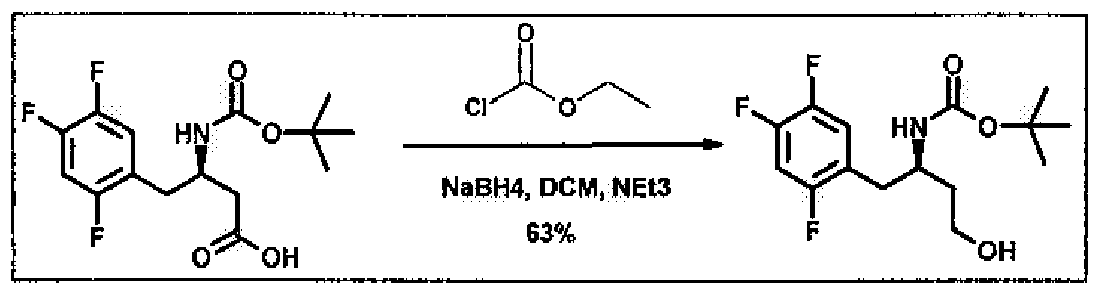
- To a solution of (R)-3-tert-Butoxycarbonylamino-4-(2,4,5-trifluoro-phenyl)-butyric acid (2.5g, 7.5mmol) in dichloromethane (DCM) were added triethylamine (1.1ml) and ethyl chloroformate (0.78ml, 8.2mmol) at 0°C, the solution was stirred at rt during 15min., filtered and added to a solution of sodium borohydrate (424mg, 11.2mmol) in water (3.5ml) at 0°C. The raction mixture is stirred for 30min, then warmed to rt (2h stirring), then acidified with 1M HCl to pH 3 and extracted with ethyl acetate. After a short chromatography (Flashmaster) [(R)-3-Hydroxy-1-(2,4,5-trifluoro-benzyl)-propyl]-carbamic acid tert-butyl ester, (1.5g, 62% yield) was obtained a off-white powder.
- Spectra:
MS (pos): 320 (M+1), 264 (M+1-tBu)
1H-NMR (d6-DMSO): 1.26 (s, 9H, tBu); 1.54 (m, 2H, CH 2 -CH2OH); 2.51 and 2.65-2.84 (m, 2H, CH2-benzylic); 3.39 (m, 2H, CH 2 -OH); 3.71 (m, 1H, CH-N); 4.39 (m, 1H, OH); 6.67 (d, 1H, NH); 7.28 (m, 1H, aromatic HC-ortho); 7.44 (m, 1H, aromatic HC-meta). - b) [(R)-3-Oxo-1-(2,4,5-trifluoro-benzyl)-propyl]-carbamic acid tert-butyl ester

- To a solution of oxalylchloride (0.674ml, 7.06mmol) in DCM (15ml) was added DMSO (0.67ml, 9.4mmol) dropwise at -78°C. After 15min the alcohol [(R)-3-Hydroxy-1-(2,4,5-trifluoro-benzyl)-propyl]-carbamic acid tert-butyl ester, (1.5g, 4.7mmol) was added. After 45min at -78°C triethylamine (3.27ml, 23.5mmol) was added, then stirred at rt for 4h. The reaction was quenched with water, extracted with DCM, washed with aqueous NaHSO4 and NaHCO3 solutions, The organic layers were dried and evaporated. Flash chromatography on silica gel (hexane-AcOEt, 6:4) resulted in [(R)-3-Oxo-1-(2,4,5-trifluoro-benzyl)-propyl]-carbamic acid tert-butyl ester (1.2g, yield: 80%) as yellowish solid.
Spectra:
MS (neg): 316 (M-1)
1H-NMR (d6-DMSO): 1.26 (s, 9H, tBu); 2.50-2.53 and 2.54-2.63 (m, 2H, CH 2 -CHO); 2.54-2.63 and 2.70-2.94 (m, 2H, CH2-benzylic); 4.16 (m, 1H, CH-N); 6.89 (d, 1H, NH); 7.31 (m, 1H, aromatic HC-ortho); 7.47 (m, 1 H, aromatic HC-meta); 9.56 (s, 1H, CHO). - c) [(R)-3-(3-phenyl-piperidin-1-yl)-1-(2,4,5-trifluoro-benzyl)-propyl]-carbamic acid tert-butyl ester

- To [(R)-3-oxo-1-(2,4,5-trifluoro-benzyl)-propyl]-carbamic acid tert-butyl ester (0.6g, 1.89mmol) and commercial 3-phenyl-piperidine (458mg, 2.84mmol) in dichloroethylene (7.5ml) was added sodium triacetoxyborohydrate (1.06g, 4.75mmol) and stirred for 16h at rt.. Workup by extraction with ethyl acetate and water. The organic layers were dried and evaporated and the product purified by flash chromatography on silica gel (DCM). [(R)-3-(3-phenyl-piperidin-1-yl)-1-(2,4,5-trifluoro-benzyl)-propyl]-carbamic acid tert-butyl ester (0.77g, 1.66mmol, 88%) was obtained as white solid.
- Spectra:
MS (pos): 463 (M+1)
1H-NMR (d6-DMSO): 1.25 (s, 9H, tBu); 1.33-1.46 (m, 1H, CH2-piperidine); 1.46-1.56 (m, 1H, CH2-piperidine); 1.58 (m, 2H, N(BOC)-CH 2 CH2-N(piperidine)); 1.64-1.72 (m, 1 H, CH2-piperidine); 1.74-1.82 (m, 1 H, CH2-piperidine); 1:83-1.97 (m, 2H, CH2-piperidine); 2.29 (m, 2H, CH 2 N(piperidine)); 2.50-2.55 (m, 1 H, CH2-benzylic); 2.66 (m, 1H, CH-piperidine-phenyl); 2.72-2.78 (m, 1 H, CH2-benzylic); 2.77-2.85 (m, 2H, CH2-Piperidine); 3.64 (m, 1H, CH-NHBOC); 6.73 (d, 1H, NH-BOC); 7.07-7.37 (m, 6H, aromatic protons at phenyl and HC-ortho in fluoro-aromat); 7.44 (m, 1H, fluoro-aromat HC-meta)). - d) (R)-3-(3-Phenyl-piperidin-1-yl)-1-(2,4,5-trifluoro-benzyl)-propylamine

- [(R)-3-(3-Phenyl-piperidin-1-yl)-1-(2,4,5-trifluoro-benzyl)-propyl]-carbamic acid tert-butyl ester (0.77g, 1.66mmol) was dissolved in dioxane (5ml), and for 5h treated with 4M aqueous hydrochloric acid (5ml). Evaporation of the solvents gives directly the dihydrochloride salt of (R)-3-(3-Phenyl-piperidin-1-yl)-1-(2,4,5-trifluoro-benzyl)-propylamine (730mg, 1.66mmol, 99%) and is lyophilized as white powder.
- Spectra:
MS (pos): 363 (M+1)
1H-NMR (d6-DMSO): (as HCl-salt) 1.64-1.72 (m, 1H, CH2-piperidine); 1.85-1.91 (m, 1H, CH2-piperidine); 1.91-2.02 (m, 2H, CH2-piperidine); 2.02-2.11 (m, 2H, NH-CH 2 CH2-N(piperidine)); 2.88-2.94 (m, 2H, CH2-benzylic); 2.93-2.97 (m, 1H, CH2-piperidine); 3.00-3.11 and 3.16-3.46 (m, 2H, CH2-piperidine); 3.16-3.23 (m, 1 H, CH-piperidine, benzylic); 3.23-3.31 (m, 2H, CH 2 N(piperidine)); 3.47-3.50 (m, 1 H, CH2-piperidine); 3.59 (m, 1H, CH-NH2); 7.26-7.27 (m, 2H, phenyl (ortho)); 7.26-7.29 (m, 1 H, phenyl(para)); 7.36 (m, 2H, phenyl(meta)); 7.56 (m, 1H, fluoro-aromat HC-meta); 7.66 (m, 1 H, fluoro-aromat HC-ortho); 8.36 (s br, 1 H, NH3); 10.76 (s br, 1 H, NH-piperidine). - Using the reaction hereinbefore described, the following derivatives may be prepared by.
- 1. Reductive amination of N-Boc protected aldehyde (i)
- 2. Deprotection to yield final products, see example (ii)

- The reaction may be performed as parallel array.
- Products may be isolated as salts, e.g. dihydrochloride salts.
- The following table represents a library of compounds made by the aforementioned method(s):
Compound Number Compound name Empirical Formula MW free base MS [M+] HPLC PURITY HPLC retention 1 (R)-3-(3-Phenyl-piperidin-1-yl)-1-(2,4,5-trifluorobenzyl)-propylamine C21H25F3N2 362.44 363 99% 1.30 min 2 (R)-3-[3-(4-Methoxyphenyl)-piperidin-1-yl]-1-(2,4,5-trifluorobenzyl)-propylamine C22H27F3N2O 392.47 393 99% 1.22 min 3 (R)-3-[3-(3-Methoxyphenyl)-piperidin-1-yl]-1-(2,4,5-trifluorobenzyl)-propylamine C22H27F3N2O 392.47 393 99% 1.19 min 4 (R)-3-[3-(2-Methoxyphenyl)-piperidin-1-yl]-1-(2,4,5-trifluorobenzyl)-propylamine C22H27F3N2O 392.47 393 99% 1.25 min 5 (R)-1-(2,4,5-Trifluoro-benzyl)-3-[3-(4-trifluoromethylphenyl)-piperidin-1-yl]-propylamine C22H24F6N2 430.44 431 99% 1.41 min 6 (R)-1-(2,4,5-Trifluoro-benzyl)-3-[3-(3-trifluoromethylphenyl)-piperidin-1-yl]-propylamine C22H24F6N2 430.44 431 99% 1.30 min 7 (R)-1-(2,4,5-Trifluoro-benzyl)-3-[3-(2-trifluoromethylphenyl)-piperidin-1-yl]-propylamine C22H24F6N2 430.44 431 99% 1.28 min 8 (R)-3-(3-p-Tolylpiperidin-1-yl)-1-(2,4,5-trifluoro-benzyl)-propylamine C22H27F3N2 376.47 377 99% 1.26 min 9 (R)-3-(3-m-Tolylpiperidin-1-yl)-1-(2,4,5-trifluoro-benzyl)-propylamine C22H27F3N2 376.47 377 99% 1.24 min 10 (R)-3-(3-o-Tolylpiperidin-1-yl)-1-(2,4,5-trifluoro-benzyl)-propylamine C22H27F3N2 376.47 377 99% 1.14 min 11 (R)-3-[3-(4-Fluorophenyl)-piperidin-1-yl]-1-(2,4,5-trifluoro-benzyl)-propylamine C21H24F4N2 380.43 381 99% 1.15 min 12 (R)-3-[3-(3-Fluorophenyl)-piperidin-1-yl]-1-(2,4,5-trifluoro-benzyl)-propylamine C21H24F4N2 380.43 381 99% 1.21 min 13 (R)-3-[3-(2-Fluorophenyl)-piperidin-1-yl]-1-(2,4,5-trifluoro-benzyl)-propylamine C21H24F4N2 380.43 381 99% 1.56 min 14 (R)-3-(3-Phenyl-pyrrolidin-1-yl)-1-(2,4,5-trifluoro-benzyl)-propylamine C20H23F3N2 348.41 349 99% 1.16 min 15 (R)-3-[3-(3-Chlorophenyl)-pyrrolidin-1-yl]-1-(2,4,5-trifluoro-benzyl)-propylamine C20H22ClF3N2 382.86 383 99% 1.24 min 16 (R)-3-[3-(2-Chlorophenyl)-pyrrolidin-1-yl]-1-(2,4,5-trifluoro-benzyl)-propylamine C20H22CIF3N2 382.86 383 99% 1.21 min 17 (R)-3-[3-(4-Methoxyphenyl)-pyrrolidin-1-yl]-1-(2,4,5-trifluoro-benzyl)-propylamine C21H25F3N2O 378.44 379 99% 1.16 min 18 (R)-3-[3-(3-Methoxyphenyl)-pyrrolidin-1-yl]-1-(2,4,5-trifluoro-benzyl)-propylamine C21H25F3N2O 378.44 379 99% 1.18 min 19 (R)-3-[3-(2-Methoxy-phenyl)-pyrrolidin-1-yl]-1-(2,4,5-tifluoro-benzyl)-propylamine C21H25F3N2O 378.44 379 99% 1.19 min 20 (R)-1-(2,4,5-Trifluoro-benzyl)-3-[3-(4-trifluoromethylphenyl)-pyrrolidin-1-yl]-propylamine C21H22F6N2 416.41 417 99% 1.29 min 21 (R)-3-[3-(4-Fluoro-phenyl)-pyrrolidin-1-yl]-1-(2,4,5-trifluoro-benzyl)-propylamine C20H22F4N2 366.41 367 99% 1.19 min 22 (R)-3-[3-(3-Fluorophenyl)-pyrrolidin-1-yl]-1-(2,4,5-trifluoro-benzyl)-propylamine C20H22F4N2 366.41 367 99% 1.19 min 23 (R)-3-[3-(2-Fluorophenyl)-pyrrolidin-1-yl]-1-(2,4,5-trifluoro-benzyl)-propylamine C20H22F4N2 366.41 367 99% 1.17 min 24 (R)-3-Piperidin-1-yl-1-(2,4,5-trifluoro-benzyl)-propylamine C15H21F3N2 286.34 287 >90% by NMR 0.62 min 25 (R)-3-(3-Methyl-piperidin-1-yl)-1-(2,4,5-trifluoro-benzyl)-propylamine C16H23F3N2 300.37 301 99% 0.87 min 26 (R)-3-(3-Methoxymethyl-piperidin-1-yl)-1-(2,4,5-trifluoro-benzyl)-propylamine C17H25F3N2O 330.4 331 99% 0.76 min 27 (R)-3-(3-Benzo[1,3]dioxol-5-yl-piperidin-1-yl)-1-(2,4,5-trifluoro-benzyl)-propylamine C22H25F3N2O2 406.45 407 99% 1.21 min 28 (R)-3-Pyrrolidin-1-yl-1-(2,4,5-trifluoro-benzyl)-propylamine C14H19F3N2 272.32 273 >90% by NMR 0.51 min 29 R)-3-[(R)-3-(4-Fluoro-phenyl)-pyrrolidin-1-yl]-1-(2,4,5-trifluoro-benzyl)-propylamine C20H22F4N2 366.41 367 99% 1.20 min - Agilent 1100 LC chromatographic system with Micromass ZMD MS detection. A binary gradient composed of A (water containing 5 % acetonitrile and 0.05% trifluoroacetic acid) and B (acetonitrile containing 0.045% trifluoroacetic acid) is used as a mobile phase on a Waters X TerraTM C-18 column (30 x 3 mm, 2.5mm particle size) as a stationary phase.
- The following elution profile is applied: a linear gradient of 1.5 minutes at a flow rate of 0.6 ml/min from 10% of B to 95% of B, followed by an isocratic elution of 0.5 minutes at a flow rate of 0.7 ml/min of 95% of B, followed by an isocratic elution of 0.5 minutes at a flow rate of 0.8 ml/min of 95% of B, followed by a linear gradient of 0.2 minutes at a flow rate of 0.8 ml/min from 95% of B to 10% of B, followed by an isocratic elution of 0.2 minutes at a flow rate of 0.7 ml/min of 10% of B.
- For compound screening, the assay employed measures the activity of recombinant human DPP-4 to cleave the synthetic fluorogenic substrate (H-Ala-Pro)2-Rh110. The reaction was run in 384- well plates. Compound solutions in assay buffer were pre-incubated with the human recombinant DPP-4 and the reaction was initiated by the addition of the substrate. The product of the reaction was quantified by measuring the fluorescence intensity using Tecan Ultraplate reader. For each compound concentration tested, the percent of inhibition was calculated.
- For the determination of IC50 and/or % of inhibition values, the assay was performed at room temperature in 384-well plates using a TECAN Ultra plate reader. Total assay volume was 30 µl. Test compounds were dissolved in 90 % (v/v) DMSO/water and diluted in water containing 0.05 % (w/v) CHAPS to 3-times the desired assay concentration. For the assay, 10 µl water/CHAPS (± test compound) were added per well, followed by the addition of 10 µl hDPP4 solution (diluted with 1.5x assay buffer, i.e. 37.5 mM Tris/HCl, pH 7.4, 210 mM NaCl, 15 mM KCl, and 0.05 % (w/v) CHAPS). The final assay concentrations were 10 pM for hDPP4 according to the enzyme concentrations determined by the Bradford method. After 1 hour of pre-incubation at room temperature, the reaction was started by the addition of 10 µl substrate solution (substrate dilutes in 1.5x assay buffer, final substrate concentration was 10 µM). The effect of the compound on the enzymatic activity was obtained from the linear progression curves and determined from two readings, the first one taken directly after the addition of substrate (t = 0 min) and the second one after 1 hour (t = 60 min). The apparent inhibition constant, IC50, was calculated from the plot of percentage of inhibition vs. inhibitor concentration using non-linear regression analysis software (XLfit, Vers. 4.0; ID Business Solution Ltd., Guildford, Surrey, UK).


- The present invention is directed to the use of the compounds disclosed herein as inhibitors of serine proteases, including dipeptidyl peptidases, such as dipeptidyl peptidase-IV and dipeptidyl peptidase-II, for the prevention, delay of progression or the treatment of the human diseases in which serine peptidases are involved.
- In particular, the present invention is directed to the use of the compounds disclosed herein as inhibitors of dipeptidyl peptidase-IV enzyme activity. These compounds may be useful in human diseases including but are not limited to autoimmune diseases such as multiple sclerosis, neurological disorders, dementia, neurodegenerative diseases, mood disorders, other psychiatric conditions, diabetes in particular type II diabetes and related conditions, arthritis, obesity, osteoporosis and conditions of impaired glucose tolerance.
- DPP-IV enzyme exists as both soluble form circulating in body fluids (blood and cerebrospinal fluid) and as a cell surface protein (called T cell activation marker or CD26) and has been implicated in a wide range of biological functions. DPP-IV can cleave a number of immunoregulatory, endocrine, and neuropeptides. This has suggested a potential role for this peptidase in a variety of disease processes in humans or other species.
- Effects of DPP-IV inhibitors may include both direct inhibition of DPP-IV enzymatic activity which has as a consequence to prevent the cleavage of its substrates such neuropeptides and indirect effects through the blockade of activation of T lymphocytes which express CD26/DPP-IV.
- Accordingly, the compounds of the present invention are useful for the prevention or treatment of diseases, disorders and conditions associated with serine proteases, such as DPP, for example.
- The compounds of the present invention are useful for treating disorders such as:
- o Nervous system (NS) and non-NS autoimmune diseases, immunological disorders and/or inflammatory diseases, such as multiple sclerosis, inflammatory bowel disease and rheumatoid arthritis, Graves' disease, Hashimoto's thyroiditis, transplantation.
- o Neurodegenerative and neurologic disorders, such as dementia, cognitive disorders such as cognition and/or learning impairment, impaired short- or long-term memory conditions, and impaired learning conditions, other nervous system diseases characterized by brain insulin resistance, brain abnormal glucose utilization and/or metabolism and/or by changes in the level of polypeptides substrates of DPP-IV and/or DPP-II enzymes. Further examples are chronic neurodegenerative diseases, including Alzheimer's disease, Parkinson's disease, Huntington's disease, amyotrophic lateral sclerosis, and acute neurodegenerative diseases, such as stroke and spinal cord injuries.
- o Psychiatric diseases, such as anxiety, depression, schizophrenia, other mood disorders, and other nervous system diseases where DPP-II and/or DPP-4/CD26 are implicated and/or where changes in the levels of substrates of these enzymes, including neuropeptides, hormones may occur.
- o Diabetes including Type II diabetes (where a number of DPP-IV inhibitors showed beneficial effects both in animal models of diabetes and in clinical studies in patients with diabetes) and metabolic and other conditions linked directly or indirectly to diabetes including hyperglycemia, low glucose tolerance, insulin resistance, obesity, lipid disorders, dyslipidemia, hyperlipidemia, hypertriglyceridemia, hypercholesterolemia, low HDL levels, high LDL levels, atherosclerosis and its sequelae, vascular restenosis, irritable bowel syndrome, inflammatory bowel disease, including Crohn's disease and ulcerative colitis, other inflammatory conditions, pancreatitis, obesity, neuropathies, neurologic disorders, neurodegenerative diseases, psychiatric diseases, retinopathy, nephropathy, Syndrome X, ovarian hyperandrogenism (polycystic ovarian syndrome), and other disorders where insulin resistance is a component and/or endogenous substrates of DPP-IV and/or DPP-II enzymes are degraded.
- o Other indications
- o Benign Prostatic Hypertrophy
- o Sperm motility/male contraception
- o Gingivitis
- o Osteoporosis: GIP receptors are present in osteoblasts.
- o Pain
- o Asthma
- o Obeisety
- o Growth Hormaone Deficiency
- o Intestinal Injury
- o HIV infection or AIDS
- o Hematopoiesis
- o Tumor Invasion and Metastasis
- o Skin disorders
- o Neurogenic inflammation
- o Heart failure
- o Atherosclerosis
- o Hypertension
- The subject compounds are useful in a method of inhibiting the dipeptidyl peptidase-IV enzyme in a patient such as a mammal in need of such inhibition comprising the administration of an effective amount of the compound.
- The present invention is further directed to a method for the manufacture of a medicament for inhibiting dipeptidyl peptidase-IV enzyme activity in humans and animals comprising combining a compound of the present invention with a pharmaceutical carrier or diluent.
- The present invention also relates to compositions comprising a compound of formula (I).
- The term "composition" as used herein is intended to encompass a product comprising the specified ingredients in the specified amounts, as well as any product which results, directly or indirectly, from combination of the specified ingredients in the specified amounts. Such term in relation to pharmaceutical composition, is intended to encompass a product comprising the active ingredient (s), and the inert ingredient (s) that make up the carrier, as well as any product which results, directly or indirectly, from combination, complexation or aggregation of any two or more of the ingredients, or from dissociation of one or more of the ingredients, or from other types of reactions or interactions of one or more of the ingredients.
- Accordingly, the pharmaceutical compositions of the present invention encompass any composition made by admixing a compound of the present invention and a pharmaceutically acceptable carrier. By "pharmaceutically acceptable" it is meant the carrier, diluent or excipient must be compatible with the other ingredients of the formulation and not deleterious to the recipient thereof.
- The active agents of the invention may be administered by any conventional route, in particular enterally, preferably orally, e.g. in the form of tablets or capsules, or parenterally, e.g. in the form of injectable solutions or suspensions.
- The compounds of the invention can also be combined with other drugs "combined preparations". The compounds of the present invention may be administered alone or in combination with the systemic or localco-administration of one or more additional agents. Such agents include atypical antipsychotic drugs such as clozapine, olanzapine, risperidone, typical antipsychotic drugs such as haloperidol, Anti-epileptic Drugs, nootropics, immunosuppressants, growth factors, preservatives, ventricle wall permeability increasing factors, stem cell mitogens, survival factors, glial lineage preventing agents, anti-apoptotic agents, anti-stress medications, neuroprotectants, and anti-pyrogenics and other drugs suitable for: the treatment of Neurological Disorders, affective and attention disorders, the treatment of neurological / psychiatric disorders, the treatment of ocular disorders, in particular myopia, suitable for the treatment of pain, especially neuropathic pain, the treatment of dementia, treatment of acute brain lesions, anti-diabetic agents, hypolipidemic agents, anti-obesity or appetite-regulating agents, anti-hypertensive agents, HDL-increasing agents, cholesterol absorption modulators, Apo-A1 analogues and mimetics, thrombin inhibitors, aldosterone inhibitors, inhibitors of platelet aggregation, estrogen, testosterone, selective estrogen receptor modulators, selective androgen receptor modulators, chemotherapeutic agents, and 5-HT3 or 5-HT4 receptor modulators.
- The term "a combined preparation", as used herein defines especially a "kit of parts" in the sense that the first and second active ingredient as defined above can be dosed independently or by use of different fixed combinations with distinguished amounts of the ingredients, i.e., simultaneously or at different time points. The parts of the kit of parts can then, e.g., be administered simultaneously or chronologically staggered, that is at different time points and with equal or different time intervals for any part of the kit of parts. Very preferably, the time intervals are chosen such that the effect on the treated disease in the combined use of the parts is larger than the effect which would be obtained by use of only any one of the active ingredients. The ratio of the total amounts of the active ingredient 1 to the active ingredient 2 to be administered in the combined preparation can be varied, e.g., in order to cope with the needs of a patient sub-population to be treated or the needs of the single patient which different needs can be due to age, sex, body weight, etc. of the patients. Preferably, there is at least one beneficial effect, e.g., a mutual enhancing of the effect of the first and second active ingredient, in particular a synergism, e.g. a more than additive effect, additional advantageous effects, less side effects, a combined therapeutical effect in a non-effective dosage of one or both of the first and second active ingredient, and especially a strong synergism the first and second active ingredient.
- It will be understood that in the discussion of methods, references to the active ingredients are meant to also include the pharmaceutically acceptable salts. If these active ingredients have, for example, at least one basic center, they can form acid addition salts. Corresponding acid addition salts can also be formed having, if desired, an additionally present basic center. The active ingredients having an acid group (for example COOH) can also form salts with bases. The active ingredient or a pharmaceutically acceptable salt thereof may also be used in form of a hydrate or include other solvents used for crystallization.
- In particular, a therapeutically effective amount of each of the active ingredients of a combination may be administered simultaneously or sequentially and in any order, and the components may be administered separately or as a fixed combination. For example, the method of treatment of diseases according to the invention may comprise (i) administration of the first active ingredient in free or pharmaceutically acceptable salt form and (ii) administration of the second active ingredient in free or pharmaceutically acceptable salt form, simultaneously or sequentially in any order, in jointly therapeutically effective amounts, preferably in synergistically effective amounts, e.g. in daily dosages corresponding to the amounts described herein. The individual active ingredients of the combination can be administered separately at different times during the course of therapy or concurrently in divided or single combination forms. Furthermore, the term administering also encompasses the use of a prodrug of an active ingredient that convert in vivo to the active ingredient. The instant invention is therefore to be understood as embracing all such regimes of simultaneous or alternating treatment and the term "administering" is to be interpreted accordingly.
- The pharmaceutical compositions according to the invention can be prepared in a manner known per se and are those suitable for enteral, such as oral or rectal, and parenteral administration to mammals (warm-blooded animals), including man, comprising a therapeutically effective amount of at least one pharmacologically active ingredient, alone or in combination with one or more pharmaceutically acceptable carries, especially suitable for enteral or parenteral application. The preferred route of administration of the dosage forms of the present invention is orally.
- The novel pharmaceutical composition contain, for example, from about 10% to about 100%, preferably from about 20% to about 60%, of the active ingredients. Pharmaceutical preparations for the combination therapy for enteral or parenteral administration are, for example, those in unit dosage forms, such as sugar-coated tablets, tablets, capsules or suppositories, and furthermore ampoules. If not indicated otherwise, these are prepared in a manner known per se, for example by means of conventional mixing, granulating, sugar-coating, dissolving or lyophilizing processes. It will be appreciated that the unit content of active ingredient or ingredients contained in an individual dose of each dosage form need not in itself constitute an effective amount since the necessary effective amount can be reached by administration of a plurality of dosage units.
- In, preparing the compositions for oral dosage form, any of the usual pharmaceutical media may be employed, such as, for example, water, glycols, oils or alcohols; or carriers such as starches, sugars, microcristalline cellulose, diluents, granulating agents, lubricants, binders, disintegrating agents and the like in the case of oral solid preparations such as, for example, powders, capsules and tablets. Because of their ease of administration, tablets and capsules represent the most advantageous oral dosage unit form in which case solid pharmaceutical carriers are obviously employed.
Claims (14)
- A compound of the general formula (I):
 m is 0,1,2,3,4 or 5;p is 0 or 1;each R1 is independently selected from halogen, alkyl, haloalkyl, alkoxy, haloalkyloxy; cycloalkyl; andT is selected from optionally substituted aryl, optionally substituted alkyl, hydrogen, halogen, alkoxy, haloalkyloxy, COO-alkyl, aryloxy;and pharmaceutically acceptable salts and N-oxides thereof.
 - The compound of claim 1, wherein T is substituted aryl.
- The compound of any one of claims 1 or 2 wherein p is 1.
- The compound of any preceding claim having the formula (II):
 n and m are each independently 0,1,2,3,4 or 5;p is 0 or 1;each R1 is independently selected from halogen, alkyl, haloalkyl, alkoxy, haloalkyloxy; cycloalkyl; andeach R2 is independently selected from halogen, alkyl, haloalkyl, alkoxy, haloalkyloxy, COO-alkyl, aryloxy; andwhere n is 2 or more, two R2 substituents may together form a 5 or 6 membered ring;and pharmaceutically acceptable salts and N-oxides thereof.
 - A compound of claim 1, having the formula (III)


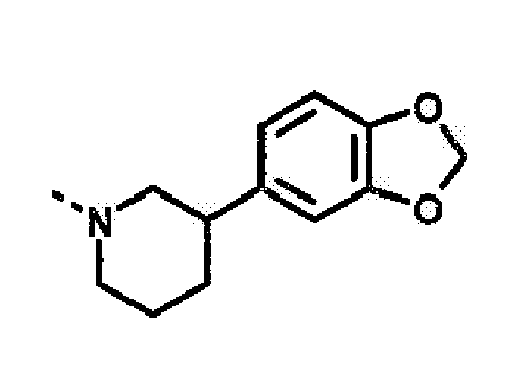
- The compound of any preceding claim, wherein R1 is halogen.
- The compound of any preceding claim, wherein m is 3.
- The use of a compound of any preceding claim as a pharmaceutical.
- A pharmaceutical composition comprising a compound of any one of claims 1 to 7 and one or more pharmaceutically acceptable diluents or carriers.
- A pharmaceutical combination comprising a compound of any one of claims 1 to 7 and one or more co-agents, e.g. a second drug agent.
- The use of a compound of any preceding claim in the manufacture of a medicament for treating a serine protease disorder.
- The use of claim 11, wherein the disorder is a DPP-related disorder.
- The use of a compound of any preceding claim in the manufacture of a medicament for treating autoimmune diseases, immunological disorders, inflammatory diseases, Neurodegenerative and neurologic disorders, Psychiatric diseases, Diabetes, Pain or a skin disorder.
- A method for modulating a serine protease- related disease in a subject comprising administering a composition comprising a compound of any one of claims 1 to 7 in an a therapeutically effective amount.
Priority Applications (12)
| Application Number | Priority Date | Filing Date | Title |
|---|---|---|---|
| EP07102910A EP1961742A1 (en) | 2007-02-22 | 2007-02-22 | compounds of formula (I) as serine protease inhibitors |
| MX2009008925A MX2009008925A (en) | 2007-02-22 | 2008-02-20 | Compounds of formula (i) as serine protease inhibitors. |
| US12/527,590 US20100076024A1 (en) | 2007-02-22 | 2008-02-20 | Novel Compounds as Serine Protease Inhibitors |
| EP08709133A EP2125725A1 (en) | 2007-02-22 | 2008-02-20 | Compounds of formula (i) as serine protease inhibitors |
| PCT/EP2008/052058 WO2008101953A1 (en) | 2007-02-22 | 2008-02-20 | Compounds of formula (i) as serine protease inhibitors |
| KR1020097017449A KR20090113862A (en) | 2007-02-22 | 2008-02-20 | Compounds of formula (i) as serine protease inhibitors |
| CA002678146A CA2678146A1 (en) | 2007-02-22 | 2008-02-20 | Compounds of formula (i) as serine protease inhibitors |
| AU2008219271A AU2008219271A1 (en) | 2007-02-22 | 2008-02-20 | Compounds of formula (I) as serine protease inhibitors |
| JP2009550702A JP2010519275A (en) | 2007-02-22 | 2008-02-20 | Compounds of formula (I) as serine protease inhibitors |
| BRPI0807680-4A BRPI0807680A2 (en) | 2007-02-22 | 2008-02-20 | COMPOUND FORMULA (I) AS SERINE PROTEASE INHIBITORS |
| EA200901124A EA200901124A1 (en) | 2007-02-22 | 2008-02-20 | COMPOUNDS OF FORMULA (I) AS SERINPROTEASE INHIBITORS |
| CN200880005656A CN101616894A (en) | 2007-02-22 | 2008-02-20 | Compounds of formula (I) as serine protease inhibitors |
Applications Claiming Priority (1)
| Application Number | Priority Date | Filing Date | Title |
|---|---|---|---|
| EP07102910A EP1961742A1 (en) | 2007-02-22 | 2007-02-22 | compounds of formula (I) as serine protease inhibitors |
Publications (1)
| Publication Number | Publication Date |
|---|---|
| EP1961742A1 true EP1961742A1 (en) | 2008-08-27 |
Family
ID=38309976
Family Applications (2)
| Application Number | Title | Priority Date | Filing Date |
|---|---|---|---|
| EP07102910A Ceased EP1961742A1 (en) | 2007-02-22 | 2007-02-22 | compounds of formula (I) as serine protease inhibitors |
| EP08709133A Withdrawn EP2125725A1 (en) | 2007-02-22 | 2008-02-20 | Compounds of formula (i) as serine protease inhibitors |
Family Applications After (1)
| Application Number | Title | Priority Date | Filing Date |
|---|---|---|---|
| EP08709133A Withdrawn EP2125725A1 (en) | 2007-02-22 | 2008-02-20 | Compounds of formula (i) as serine protease inhibitors |
Country Status (11)
| Country | Link |
|---|---|
| US (1) | US20100076024A1 (en) |
| EP (2) | EP1961742A1 (en) |
| JP (1) | JP2010519275A (en) |
| KR (1) | KR20090113862A (en) |
| CN (1) | CN101616894A (en) |
| AU (1) | AU2008219271A1 (en) |
| BR (1) | BRPI0807680A2 (en) |
| CA (1) | CA2678146A1 (en) |
| EA (1) | EA200901124A1 (en) |
| MX (1) | MX2009008925A (en) |
| WO (1) | WO2008101953A1 (en) |
Cited By (1)
| Publication number | Priority date | Publication date | Assignee | Title |
|---|---|---|---|---|
| EP2647624A4 (en) * | 2010-12-03 | 2014-04-23 | Zhejiang Hisoar Pharmaceutical Co Ltd | SITAGLIPTIN INTERMEDIATES AND PROCESS FOR PREPARING THEM |
Families Citing this family (17)
| Publication number | Priority date | Publication date | Assignee | Title |
|---|---|---|---|---|
| WO2011107494A1 (en) | 2010-03-03 | 2011-09-09 | Sanofi | Novel aromatic glycoside derivatives, medicaments containing said compounds, and the use thereof |
| US8933024B2 (en) | 2010-06-18 | 2015-01-13 | Sanofi | Azolopyridin-3-one derivatives as inhibitors of lipases and phospholipases |
| US8530413B2 (en) | 2010-06-21 | 2013-09-10 | Sanofi | Heterocyclically substituted methoxyphenyl derivatives with an oxo group, processes for preparation thereof and use thereof as medicaments |
| TW201215388A (en) | 2010-07-05 | 2012-04-16 | Sanofi Sa | (2-aryloxyacetylamino)phenylpropionic acid derivatives, processes for preparation thereof and use thereof as medicaments |
| TW201221505A (en) | 2010-07-05 | 2012-06-01 | Sanofi Sa | Aryloxyalkylene-substituted hydroxyphenylhexynoic acids, process for preparation thereof and use thereof as a medicament |
| TW201215387A (en) | 2010-07-05 | 2012-04-16 | Sanofi Aventis | Spirocyclically substituted 1,3-propane dioxide derivatives, processes for preparation thereof and use thereof as a medicament |
| CN103201260B (en) * | 2010-11-11 | 2015-05-27 | 莱德克斯制药有限公司 | Drug derivatives |
| WO2013037390A1 (en) | 2011-09-12 | 2013-03-21 | Sanofi | 6-(4-hydroxy-phenyl)-3-styryl-1h-pyrazolo[3,4-b]pyridine-4-carboxylic acid amide derivatives as kinase inhibitors |
| WO2013045413A1 (en) | 2011-09-27 | 2013-04-04 | Sanofi | 6-(4-hydroxy-phenyl)-3-alkyl-1h-pyrazolo[3,4-b]pyridine-4-carboxylic acid amide derivatives as kinase inhibitors |
| MX347209B (en) | 2011-12-08 | 2017-04-19 | Teva Pharmaceuticals Int Gmbh | The hydrobromide salt of pridopidine. |
| AU2013243461A1 (en) | 2012-04-04 | 2014-11-06 | Teva Pharmaceuticals International Gmbh | Pharmaceutical compositions for combination therapy |
| WO2014064215A1 (en) | 2012-10-24 | 2014-05-01 | INSERM (Institut National de la Santé et de la Recherche Médicale) | TPL2 KINASE INHIBITORS FOR PREVENTING OR TREATING DIABETES AND FOR PROMOTING β-CELL SURVIVAL |
| TW201613859A (en) | 2014-06-30 | 2016-04-16 | Teva Pharma | Analogs of PRIDOPIDINE, their preparation and use |
| CA2970799A1 (en) | 2014-12-22 | 2016-06-30 | Teva Pharmaceuticals International Gmbh | L-tartrate salt of pridopidine |
| WO2016151018A1 (en) | 2015-03-24 | 2016-09-29 | INSERM (Institut National de la Santé et de la Recherche Médicale) | Method and pharmaceutical composition for use in the treatment of diabetes |
| BR112019015000A2 (en) | 2017-01-20 | 2020-04-07 | Prilenia Neurotherapeutics Ltd. | use of pridopidine for the treatment of fragile x syndrome |
| CN116042683B (en) * | 2023-01-10 | 2024-04-19 | 山西医科大学 | Preparation method and application of recombinant Trichinella spiralis serine protease inhibitor |
Citations (4)
| Publication number | Priority date | Publication date | Assignee | Title |
|---|---|---|---|---|
| WO2002100848A1 (en) * | 2001-06-12 | 2002-12-19 | Sk Corporation | Novel phenylalkyl diamine and amide analogs |
| WO2003000181A2 (en) * | 2001-06-20 | 2003-01-03 | Merck & Co., Inc. | Dipeptidyl peptidase inhibitors for the treatment of diabetes |
| EP1702916A1 (en) * | 2005-03-18 | 2006-09-20 | Santhera Pharmaceuticals (Schweiz) GmbH | DPP-IV inhibitors |
| WO2007015805A1 (en) * | 2005-07-20 | 2007-02-08 | Eli Lilly And Company | 1-amino linked compounds |
-
2007
- 2007-02-22 EP EP07102910A patent/EP1961742A1/en not_active Ceased
-
2008
- 2008-02-20 CA CA002678146A patent/CA2678146A1/en not_active Abandoned
- 2008-02-20 WO PCT/EP2008/052058 patent/WO2008101953A1/en not_active Ceased
- 2008-02-20 EA EA200901124A patent/EA200901124A1/en unknown
- 2008-02-20 JP JP2009550702A patent/JP2010519275A/en active Pending
- 2008-02-20 US US12/527,590 patent/US20100076024A1/en not_active Abandoned
- 2008-02-20 KR KR1020097017449A patent/KR20090113862A/en not_active Withdrawn
- 2008-02-20 CN CN200880005656A patent/CN101616894A/en active Pending
- 2008-02-20 AU AU2008219271A patent/AU2008219271A1/en not_active Abandoned
- 2008-02-20 EP EP08709133A patent/EP2125725A1/en not_active Withdrawn
- 2008-02-20 BR BRPI0807680-4A patent/BRPI0807680A2/en not_active IP Right Cessation
- 2008-02-20 MX MX2009008925A patent/MX2009008925A/en not_active Application Discontinuation
Patent Citations (4)
| Publication number | Priority date | Publication date | Assignee | Title |
|---|---|---|---|---|
| WO2002100848A1 (en) * | 2001-06-12 | 2002-12-19 | Sk Corporation | Novel phenylalkyl diamine and amide analogs |
| WO2003000181A2 (en) * | 2001-06-20 | 2003-01-03 | Merck & Co., Inc. | Dipeptidyl peptidase inhibitors for the treatment of diabetes |
| EP1702916A1 (en) * | 2005-03-18 | 2006-09-20 | Santhera Pharmaceuticals (Schweiz) GmbH | DPP-IV inhibitors |
| WO2007015805A1 (en) * | 2005-07-20 | 2007-02-08 | Eli Lilly And Company | 1-amino linked compounds |
Non-Patent Citations (2)
| Title |
|---|
| ACHMATOWICZ ET AL: "Structure-driven design and synthesis of chiral dioxocyclam derivatives", TETRAHEDRON, ELSEVIER SCIENCE PUBLISHERS, AMSTERDAM, NL, vol. 61, no. 38, 19 September 2005 (2005-09-19), pages 9031 - 9041, XP005038688, ISSN: 0040-4020 * |
| COUMAR ET AL: "3-[2-((2S)-2-Cyano-pyrrolidin-1-yl)-2-oxo-ethylamino]-3-methyl-butyr amide analogues as selective DPP-IV inhibitors for the treatment of type-II diabetes", BIOORGANIC & MEDICINAL CHEMISTRY LETTERS, OXFORD, GB, vol. 17, no. 5, 14 February 2007 (2007-02-14), pages 1274 - 1279, XP005888463, ISSN: 0960-894X * |
Cited By (1)
| Publication number | Priority date | Publication date | Assignee | Title |
|---|---|---|---|---|
| EP2647624A4 (en) * | 2010-12-03 | 2014-04-23 | Zhejiang Hisoar Pharmaceutical Co Ltd | SITAGLIPTIN INTERMEDIATES AND PROCESS FOR PREPARING THEM |
Also Published As
| Publication number | Publication date |
|---|---|
| US20100076024A1 (en) | 2010-03-25 |
| KR20090113862A (en) | 2009-11-02 |
| AU2008219271A1 (en) | 2008-08-28 |
| CA2678146A1 (en) | 2008-08-28 |
| JP2010519275A (en) | 2010-06-03 |
| MX2009008925A (en) | 2009-08-28 |
| EA200901124A1 (en) | 2010-04-30 |
| CN101616894A (en) | 2009-12-30 |
| BRPI0807680A2 (en) | 2014-05-20 |
| EP2125725A1 (en) | 2009-12-02 |
| WO2008101953A1 (en) | 2008-08-28 |
Similar Documents
| Publication | Publication Date | Title |
|---|---|---|
| US20100076024A1 (en) | Novel Compounds as Serine Protease Inhibitors | |
| JP4559737B2 (en) | N-aminoacetyl-pyrrolidine-2-carbonitrile and its use as a DDP-IV inhibitor | |
| KR101839137B1 (en) | Oxadiazole Amine Derivative Compounds as Histone Deacetylase 6 Inhibitor, and the Pharmaceutical Composition Comprising the same | |
| CN112898196B (en) | Potent soluble epoxide hydrolase inhibitor | |
| CN102015635B (en) | Azetidine derivatives | |
| JP2843921B2 (en) | Benzyloxyquinuclidine as substance P antagonist | |
| AU2020408107B2 (en) | Compounds active towards nuclear receptors | |
| US10584103B2 (en) | Small molecule agonists of neurotensin receptor 1 | |
| US20190389865A1 (en) | SUBSTITUTED PYRROLO[1,2-a]TRIAZINES AND RELATED COMPOUNDS AND THEIR USE IN THE TREATMENT OF MEDICAL DISORDERS | |
| US8669252B2 (en) | Prolylcarboxypeptidase inhibitors | |
| US20190092789A1 (en) | Heterobicyclic pyrimidinone compounds and their use in the treatment of medical disorders | |
| CN102264710A (en) | Cysteine protease inhibitors | |
| CN111518020A (en) | MAGL inhibitor and preparation method and application thereof | |
| WO2019079609A1 (en) | Orally available seh/pde4 dual inhibitors | |
| JP2005522489A (en) | Cyanamide useful as a reversible inhibitor of cysteine protease | |
| EP2308847A1 (en) | Substituted pyridines as inhibitors of dipeptidyl peptidase IV and their application for the treatment of diabetes and related diseases | |
| US6878706B1 (en) | Cyanamides useful as reversible inhibitors of cysteine proteases |
Legal Events
| Date | Code | Title | Description |
|---|---|---|---|
| PUAI | Public reference made under article 153(3) epc to a published international application that has entered the european phase |
Free format text: ORIGINAL CODE: 0009012 |
|
| AK | Designated contracting states |
Kind code of ref document: A1 Designated state(s): AT BE BG CH CY CZ DE DK EE ES FI FR GB GR HU IE IS IT LI LT LU LV MC NL PL PT RO SE SI SK TR |
|
| AX | Request for extension of the european patent |
Extension state: AL BA HR MK RS |
|
| AKX | Designation fees paid | ||
| REG | Reference to a national code |
Ref country code: DE Ref legal event code: 8566 |
|
| STAA | Information on the status of an ep patent application or granted ep patent |
Free format text: STATUS: THE APPLICATION HAS BEEN REFUSED |
|
| 18R | Application refused |
Effective date: 20090508 |