EP1960509B1 - Method of culturing unicellular organisms - Google Patents
Method of culturing unicellular organisms Download PDFInfo
- Publication number
- EP1960509B1 EP1960509B1 EP06808702.2A EP06808702A EP1960509B1 EP 1960509 B1 EP1960509 B1 EP 1960509B1 EP 06808702 A EP06808702 A EP 06808702A EP 1960509 B1 EP1960509 B1 EP 1960509B1
- Authority
- EP
- European Patent Office
- Prior art keywords
- sample
- reservoir
- pressure
- microorganisms
- fluid
- Prior art date
- Legal status (The legal status is an assumption and is not a legal conclusion. Google has not performed a legal analysis and makes no representation as to the accuracy of the status listed.)
- Active
Links
Images



Classifications
-
- C—CHEMISTRY; METALLURGY
- C12—BIOCHEMISTRY; BEER; SPIRITS; WINE; VINEGAR; MICROBIOLOGY; ENZYMOLOGY; MUTATION OR GENETIC ENGINEERING
- C12M—APPARATUS FOR ENZYMOLOGY OR MICROBIOLOGY; APPARATUS FOR CULTURING MICROORGANISMS FOR PRODUCING BIOMASS, FOR GROWING CELLS OR FOR OBTAINING FERMENTATION OR METABOLIC PRODUCTS, i.e. BIOREACTORS OR FERMENTERS
- C12M35/00—Means for application of stress for stimulating the growth of microorganisms or the generation of fermentation or metabolic products; Means for electroporation or cell fusion
- C12M35/04—Mechanical means, e.g. sonic waves, stretching forces, pressure or shear stimuli
-
- C—CHEMISTRY; METALLURGY
- C09—DYES; PAINTS; POLISHES; NATURAL RESINS; ADHESIVES; COMPOSITIONS NOT OTHERWISE PROVIDED FOR; APPLICATIONS OF MATERIALS NOT OTHERWISE PROVIDED FOR
- C09K—MATERIALS FOR MISCELLANEOUS APPLICATIONS, NOT PROVIDED FOR ELSEWHERE
- C09K8/00—Compositions for drilling of boreholes or wells; Compositions for treating boreholes or wells, e.g. for completion or for remedial operations
- C09K8/58—Compositions for enhanced recovery methods for obtaining hydrocarbons, i.e. for improving the mobility of the oil, e.g. displacing fluids
- C09K8/582—Compositions for enhanced recovery methods for obtaining hydrocarbons, i.e. for improving the mobility of the oil, e.g. displacing fluids characterised by the use of bacteria
-
- C—CHEMISTRY; METALLURGY
- C12—BIOCHEMISTRY; BEER; SPIRITS; WINE; VINEGAR; MICROBIOLOGY; ENZYMOLOGY; MUTATION OR GENETIC ENGINEERING
- C12N—MICROORGANISMS OR ENZYMES; COMPOSITIONS THEREOF; PROPAGATING, PRESERVING, OR MAINTAINING MICROORGANISMS; MUTATION OR GENETIC ENGINEERING; CULTURE MEDIA
- C12N1/00—Microorganisms; Compositions thereof; Processes of propagating, maintaining or preserving microorganisms or compositions thereof; Processes of preparing or isolating a composition containing a microorganism; Culture media therefor
-
- C—CHEMISTRY; METALLURGY
- C12—BIOCHEMISTRY; BEER; SPIRITS; WINE; VINEGAR; MICROBIOLOGY; ENZYMOLOGY; MUTATION OR GENETIC ENGINEERING
- C12N—MICROORGANISMS OR ENZYMES; COMPOSITIONS THEREOF; PROPAGATING, PRESERVING, OR MAINTAINING MICROORGANISMS; MUTATION OR GENETIC ENGINEERING; CULTURE MEDIA
- C12N1/00—Microorganisms; Compositions thereof; Processes of propagating, maintaining or preserving microorganisms or compositions thereof; Processes of preparing or isolating a composition containing a microorganism; Culture media therefor
- C12N1/26—Processes using, or culture media containing, hydrocarbons
Definitions
- This invention relates to a method of culturing unicellular organisms, in particular prokaryotes, e.g. eubacteria and archaea.
- prokaryotes e.g. eubacteria and archaea.
- apparatus therefor uses and inhibition of such organisms in subterranean applications, to novel such organisms, and to compositions and libraries containing them.
- Natural subterranean hydrocarbon reservoirs provide a finite source of oil and gas. It is thus important to optimize hydrocarbon recovery from such reservoirs. Many techniques are used for this purpose but there is a continuing need for new techniques. To many people's surprise, the rock which is impregnated with the hydrocarbon in such reservoirs, even though it maybe thousands of metres below the surface and thus at very high temperatures and pressures, is not sterile.
- WO 01/68904 describes a process for stimulating the activity of microbial consortia in a hydrocarbon-bearing subterranean formation to convert the hydrocarbons to methane, the method comprising analysing and detecting the presence of microbial consortia in the subterranean formation, determining the characteristics of one or more microorganisms of the consortia, using that information to determine an ecological environment and modifying the formation environment.
- a bacterium in a liquid culture medium is essentially a liquid filled membrane within a surrounding liquid with negligible, if any, pressure differential across the membrane. It would therefore be expected that bacterial growth would be essentially unaffected by the pressure of the culture medium. This turns out not to be the case however as we have found that culturing hydrocarbon samples under high pressure and under ambient pressure results in growth of quite different organisms and in particular some organisms growing under high pressure conditions simply do not grow at ambient (i.e. earth surface) pressure. Moreover, certain of the enzymes used by these piezophilic organisms do not seem to function at ambient pressure, presumably due to differences in tertiary structure.
- Vance & Richmond (1985) describe a sampling technique for bacterial cultures subjected to high hydrostatic pressure.
- Vance & Richmond describe a sample-receiving vessel with a motor driven interface. By precisely matching the pressure in the bulk culture and the sample-receiving vessel none of the sample is subjected to the high shear forces common to other designs of high pressure samplers.
- the invention provides a method of producing a culture of subterranean microorganisms, said method comprising:
- the incubation temperature will typically be 60 to 160°C, preferably 80 to 100°C, especially preferably within 20°C of that of the reservoir from which the sample was taken or that of the formation which the cultured microorganism is intended to treat, especially within 10°C.
- Incubation is preferably effected by mixing the sample, before, during or after transfer to the fermentation reactor, with a nutrient.
- the nutrient may comprise minerals and/or vitamins but preferably comprises at least pulverulent rock, especially preferably of rock from the reservoir from which the sample was taken or from the formation that the cultured microorganism is intended to treat, or rock geologically comparable to such reservoir rock. If desired the nutrient will also comprise fluid from the reservoir from which the sample is taken.
- the reservoir fluid will provide the carbon source for microorganism growth.
- different nutrients or inhibitors may be added to determine their effects on microbial growth.
- Incubation in the method of the invention will typically be for from 7 to 360 days, especially 180 to 240 days. If desired incubation may be monitored and controlled so as to be terminated if microorganism growth has not occurred or if it has reached a pre-set acceptable level. Monitoring may be done in situ or on material extracted from the fermentation reactor and may be effected in any suitable fashion. Thus, for example, sample turbidity, uptake of radioactive tracers in nutrient material, organic solids content, etc. may typically be used as parameters to be monitored. Monitoring may typically be effected by drawing off aliquots of the culture medium and subjecting these to analysis by GC, LC-MS, MS, etc., e.g. to show gas generation or consumption or lipid profiles.
- microorganisms that have proliferated in the culture. This can readily be done by cell lysis followed by nucleic acid fragmentation (e.g. using DNAses or RNAses), fragment replication (e.g. using PCR with primers universal to prokaryotes or groups thereof); and fragment separation (e.g. using gel electrophoresis).
- the fragment "signature" may then be compared against databases of prokaryote nucleic acid fragments in order to determine which microorganisms are present in the culture and whether any of these are novel. Where novel microorganisms are found, it will generally be desirable to isolate and possibly also sequence them. Isolation may typically be effected by dilution followed by incubation, i.e. using conventional techniques but still incubating under elevated pressure. Sequencing may be effected by conventional techniques.
- a viable sample of an individual microorganism or the combination of microorganisms is desired, this maybe achieved by bringing the culture to ambient pressure and temperature very slowly, e.g. over at least 10 hours, preferably at least 24 hours. If desired, during the depressurization, the culture may be exposed to bursts of electrical field to cause electroporosis and hence relieve the pressure difference across the cellular membrane.
- microorganisms may then be separated from the culture by conventional means, e.g. centrifugation, resuspension in a sterile fluid, re-centrifugation, etc.
- the resulting material may then if desired be lyophilized for storage and/or transport.
- the fluids used will typically be mineral oil or glycerol.
- samples of the culture maybe stored in pressurized containers, e.g. at the pressure under which incubation took place.
- a pressurized container e.g. having an internal pressure of 100 to 900 bar, especially 200 to 350 bar, containing therein a microorganism, optionally in a hydrocarbyl fluid (e.g. glycerol or mineral oil), and preferably provided with a valved sampling port.
- a microorganism library comprising a plurality of such pressurized containers, e.g. at least 10, preferably at least 100. Storing the culture under pressure but at ambient or sub-ambient temperature (e.g. down to liquid nitrogen temperature) is viable since subterranean microorganisms, under such conditions, may be essentially dormant.
- the content of the mixture being incubated may be varied to mimic different subterranean conditions.
- sulphate, salt, water, methane, nitrogen, and carbon dioxide contents may be varied to imitate conditions encountered as water penetration into the hydrocarbon bearing strata occurs, or those conditions when water, natural gas, nitrogen or carbon dioxide are injected into the reservoir to enhance hydrocarbon recovery, or those conditions encountered when a squeeze is applied to a producer well to effect a down-hole well treatment (e.g. to administer a scale inhibitor).
- a down-hole well treatment e.g. to administer a scale inhibitor
- the invention provides a process for subterranean reservoir treatment, e.g. a process for treatment of a hydrocarbon well, which process comprises injecting a culture of a microorganism into said reservoir, optionally together with nutrients for said microorganism, said culture having been produced by elevated pressure incubation.
- the driving fluid used in this regard will typically be water, nitrogen, methane or carbon dioxide, preferably carbon dioxide.
- the composition of the fluid may be selected for example to include nutrients which cause the endogenous microorganisms to proliferate under aqueous conditions, i.e. so that biomass buildup will occur in aqueous zones of the reservoir causing the pores in the rock to clog and so reduce water flow to the producer well(s).
- Such nutrients may typically include water-soluble mineral salts.
- compositions containing them may be dried (e.g. hydrophilized, optionally with a cryoprotective agent, e.g. a sugar) or may be liquid and may be under pressure or at ambient pressure.
- a cryoprotective agent e.g. a sugar
- the solvent is preferably an organic solvent other than the native hydrocarbon in which the microorganism was found, e.g. a mineral oil or glycerol.
- the method of the invention is typically effected in a fermentation reactor capable of operating under down-hole pressures.
- a fermentation reactor capable of operating under down-hole pressures.
- This is quite different from conventional fermentation reactors which are generally glass vessels or thin metal-skinned vessels.
- Such high pressure reactors are also described herein.
- a microorganism fermentation reactor comprising an incubation chamber having an inlet port, and preferably also a sample removal port, the walls of said chamber being of a material sufficiently strong to withstand a pressure differential of at least 180 bar, more preferably at least 200 bar, especially at least 300 bar, more particularly up to 900 bar.
- the reactor described herein is preferably provided with a fermentation monitor and a heat source, as well as with valves capable of operation to reduce the pressure in the chamber slowly, e.g. at a rate of less than 50 bar/hour, preferably less than 10 bar/hour, more preferably less than 1 bar/hour.
- the heat source may typically be integral to the incubation chamber; however on
- the down-hole sample may be collected at or near the point within the well at which the hydrocarbon enters. Devices capable of sampling in this way are known already. Preferably however the sample is taken from the pressurized fluid flow after it leaves the ground using a pressurized displacement cell. The pressurized displacement cell is then preferably insulated or place in a heated container to maintain the elevated temperature of the fluid sample before it is transferred to the fermentation reactor. The samples may if desired be taken from different flow-lines from the reservoir before they converge so that different microbial flora from different reservoir zones maybe detected.
- Maintaining sample pressure from sample taking to transfer into the fermentation reactor is important as otherwise pressure-drop sensitive microorganisms will fragment and will not be grown in the reactor. Moreover maintaining pressure and temperature ensures the growth medium approximates to down-hole conditions in terms of dissolved gas content, etc.
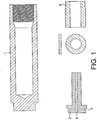
- FIG. 1 there is shown a horizontal cross-section of an open-ended cylinder 1. This is machined from 316 steel or Hastelloy C and is capable of withstanding pressures of 350 bar.
- the open end of cylinder 1 may be closed with a tapered plug 2 which incorporates an O-ring in groove 3 and has a central vent 4 for fluid addition or removal.
- Plug 2 is held in place by a hollow threaded bolt 5 which engages with the internal threading at the mouth of cylinder 1.
- a washer (not shown) is placed between plug 2 and bolt 5 to minimize rotation of plug 2 while bolt 5 is tightened or loosened.
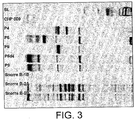
- FIG. 2 and 3 there are shown DGGE patterns for 21 cultures. Those designated CHP were of samples taken and cultured under reservoir conditions, except where the designation includes the letter K which is a control sample cultured at 1 bar. It will be seen that bacteria in CHP samples grew that did not grow in the CHP-K sample.
- Figure 2 relates to test samples amplified using primers universal for eubacteria.
- Figure 3 relates to test samples amplified using primers universal for Achaea.
- Figure 4 shows the number of clones produced culturing four different samples taken from reservoirs either at high pressure (Pressure cells) or at ambient pressure (Controls), and then carrying out PCR amplification on the resultant cultures.
- Figures 5 and 6 are, respectively, exploded and assembled schematics showing a cylinder 21 of 316 steel, a bolt 22 of JM7 (an aluminium bronze), a Teflon® plunger 23, a disk 24 of JM7, a plug 25 of 316 steel and Viton® O-rings 26.
- JM7 an aluminium bronze
- Teflon® plunger 23 a disk 24 of JM7
- plug 25 a plug 25 of 316 steel
- Viton® O-rings 26 are, respectively, exploded and assembled schematics showing a cylinder 21 of 316 steel, a bolt 22 of JM7 (an aluminium bronze), a Teflon® plunger 23, a disk 24 of JM7, a plug 25 of 316 steel and Viton® O-rings 26.
Landscapes
- Chemical & Material Sciences (AREA)
- Engineering & Computer Science (AREA)
- Life Sciences & Earth Sciences (AREA)
- Health & Medical Sciences (AREA)
- Organic Chemistry (AREA)
- Bioinformatics & Cheminformatics (AREA)
- Wood Science & Technology (AREA)
- Zoology (AREA)
- Genetics & Genomics (AREA)
- Biotechnology (AREA)
- Biochemistry (AREA)
- Oil, Petroleum & Natural Gas (AREA)
- Biomedical Technology (AREA)
- Microbiology (AREA)
- General Health & Medical Sciences (AREA)
- General Engineering & Computer Science (AREA)
- General Life Sciences & Earth Sciences (AREA)
- Materials Engineering (AREA)
- Virology (AREA)
- Medicinal Chemistry (AREA)
- Tropical Medicine & Parasitology (AREA)
- Mechanical Engineering (AREA)
- Cell Biology (AREA)
- Sustainable Development (AREA)
- Apparatus Associated With Microorganisms And Enzymes (AREA)
- Micro-Organisms Or Cultivation Processes Thereof (AREA)
- Preparation Of Compounds By Using Micro-Organisms (AREA)
Description
- This invention relates to a method of culturing unicellular organisms, in particular prokaryotes, e.g. eubacteria and archaea. We additionally describe apparatus therefor, uses and inhibition of such organisms in subterranean applications, to novel such organisms, and to compositions and libraries containing them.
Natural subterranean hydrocarbon reservoirs provide a finite source of oil and gas. It is thus important to optimize hydrocarbon recovery from such reservoirs. Many techniques are used for this purpose but there is a continuing need for new techniques.
To many people's surprise, the rock which is impregnated with the hydrocarbon in such reservoirs, even though it maybe thousands of metres below the surface and thus at very high temperatures and pressures, is not sterile. Unicellular organisms, in particular prokaryotes such as eubacteria and archaea, are present. It has even been proposed that such microorganisms may have been involved in the production of the hydrocarbon.WO 01/68904
We have realised that promoting or inhibiting the growth of such endogenous microorganisms, or introducing cultures of microorganisms isolated from subterranean rock formations, provides a means of improving reservoir management. In order to do this however such microorganisms must be collected and cultured, and if appropriate challenged so that means for growth inhibition may be found.
While some microorganisms retrieved from subterranean rock formations have been cultured at ambient surface conditions, we have surprisingly found that the range of microorganisms that may be isolated and tested is significantly greater if culturing is effected under physicochemical conditions resembling those of the reservoir itself, and in particular if samples taken from a reservoir are maintained at elevated pressure before and during culturing. - This is particularly surprising since liquids, unlike gases, are only very poorly compressible. Thus a bacterium in a liquid culture medium is essentially a liquid filled membrane within a surrounding liquid with negligible, if any, pressure differential across the membrane. It would therefore be expected that bacterial growth would be essentially unaffected by the pressure of the culture medium. This turns out not to be the case however as we have found that culturing hydrocarbon samples under high pressure and under ambient pressure results in growth of quite different organisms and in particular some organisms growing under high pressure conditions simply do not grow at ambient (i.e. earth surface) pressure. Moreover, certain of the enzymes used by these piezophilic organisms do not seem to function at ambient pressure, presumably due to differences in tertiary structure. Vance & Richmond (1985) describe a sampling technique for bacterial cultures subjected to high hydrostatic pressure. Vance & Richmond describe a sample-receiving vessel with a motor driven interface. By precisely matching the pressure in the bulk culture and the sample-receiving vessel none of the sample is subjected to the high shear forces common to other designs of high pressure samplers.
- Thus while it has been known to culture individual subterranean microorganisms, it has not previously been known to culture a subterranean ecosystem consisting of a multiplicity of microorganisms some of which do not thrive under surface conditions. If the effects of a down-hole treatment are to be reproduced in laboratory conditions, then it is necessary to use the new method of this invention.
- Thus viewed from one aspect the invention provides a method of producing a culture of subterranean microorganisms, said method comprising:
- (i) obtaining a flow of hydrocarbon fluid containing microorganisms from a subterranean reservoir and taking a sample of said fluid after the flow has left the ground, wherein the pressure of the fluid flow at the point of sampling exceeds ambient pressure; and
- (ii) while maintaining said sample at the pressure of the fluid flow at the point of sampling, transferring it into a fermentation reactor;
- (iii) incubating said sample in said reactor at a pressure of 50-150% of that of the reservoir from which the sample was taken,
- The incubation temperature will typically be 60 to 160°C, preferably 80 to 100°C, especially preferably within 20°C of that of the reservoir from which the sample was taken or that of the formation which the cultured microorganism is intended to treat, especially within 10°C. Incubation is preferably effected by mixing the sample, before, during or after transfer to the fermentation reactor, with a nutrient. The nutrient may comprise minerals and/or vitamins but preferably comprises at least pulverulent rock, especially preferably of rock from the reservoir from which the sample was taken or from the formation that the cultured microorganism is intended to treat, or rock geologically comparable to such reservoir rock. If desired the nutrient will also comprise fluid from the reservoir from which the sample is taken. In general, the reservoir fluid will provide the carbon source for microorganism growth. Generally, as fermentation progresses, different nutrients or inhibitors may be added to determine their effects on microbial growth.
Incubation in the method of the invention will typically be for from 7 to 360 days, especially 180 to 240 days. If desired incubation may be monitored and controlled so as to be terminated if microorganism growth has not occurred or if it has reached a pre-set acceptable level. Monitoring may be done in situ or on material extracted from the fermentation reactor and may be effected in any suitable fashion. Thus, for example, sample turbidity, uptake of radioactive tracers in nutrient material, organic solids content, etc. may typically be used as parameters to be monitored. Monitoring may typically be effected by drawing off aliquots of the culture medium and subjecting these to analysis by GC, LC-MS, MS, etc., e.g. to show gas generation or consumption or lipid profiles. - Once sufficient microorganism growth has taken place, it will generally be desirable to identify the microorganisms that have proliferated in the culture. This can readily be done by cell lysis followed by nucleic acid fragmentation (e.g. using DNAses or RNAses), fragment replication (e.g. using PCR with primers universal to prokaryotes or groups thereof); and fragment separation (e.g. using gel electrophoresis). The fragment "signature" may then be compared against databases of prokaryote nucleic acid fragments in order to determine which microorganisms are present in the culture and whether any of these are novel. Where novel microorganisms are found, it will generally be desirable to isolate and possibly also sequence them. Isolation may typically be effected by dilution followed by incubation, i.e. using conventional techniques but still incubating under elevated pressure. Sequencing may be effected by conventional techniques.
- Where a viable sample of an individual microorganism or the combination of microorganisms is desired, this maybe achieved by bringing the culture to ambient pressure and temperature very slowly, e.g. over at least 10 hours, preferably at least 24 hours. If desired, during the depressurization, the culture may be exposed to bursts of electrical field to cause electroporosis and hence relieve the pressure difference across the cellular membrane.
- The microorganisms may then be separated from the culture by conventional means, e.g. centrifugation, resuspension in a sterile fluid, re-centrifugation, etc. The resulting material may then if desired be lyophilized for storage and/or transport. The fluids used will typically be mineral oil or glycerol.
- More preferably, however, samples of the culture maybe stored in pressurized containers, e.g. at the pressure under which incubation took place.
- We also describe a pressurized container, e.g. having an internal pressure of 100 to 900 bar, especially 200 to 350 bar, containing therein a microorganism, optionally in a hydrocarbyl fluid (e.g. glycerol or mineral oil), and preferably provided with a valved sampling port. We further describe a microorganism library comprising a plurality of such pressurized containers, e.g. at least 10, preferably at least 100. Storing the culture under pressure but at ambient or sub-ambient temperature (e.g. down to liquid nitrogen temperature) is viable since subterranean microorganisms, under such conditions, may be essentially dormant.
- The content of the mixture being incubated may be varied to mimic different subterranean conditions. Thus for example sulphate, salt, water, methane, nitrogen, and carbon dioxide contents may be varied to imitate conditions encountered as water penetration into the hydrocarbon bearing strata occurs, or those conditions when water, natural gas, nitrogen or carbon dioxide are injected into the reservoir to enhance hydrocarbon recovery, or those conditions encountered when a squeeze is applied to a producer well to effect a down-hole well treatment (e.g. to administer a scale inhibitor). In this way, from the culture proliferation during incubation, it is possible to determine conditions suited to microorganism growth; conditions suitable for suppression of microorganism growth; appropriate microorganisms for injection down-hole to produce biomass (e.g. to hinder water flow); etc. With such factors determined, it is then possible to effect a down-hole treatment designed to enhance or suppress microorganism growth.
Viewed from a further aspect therefore the invention provides a process for subterranean reservoir treatment, e.g. a process for treatment of a hydrocarbon well, which process comprises injecting a culture of a microorganism into said reservoir, optionally together with nutrients for said microorganism, said culture having been produced by elevated pressure incubation.
We also describe a process for enhancing hydrocarbon recovery from a subterranean hydrocarbon reservoir which process involves injecting a fluid into said reservoir to drive the hydrocarbon to a producer well, wherein the composition of said fluid is preselected so as to inhibit or promote growth of microorganisms endogenous to said reservoir, e.g. on the basis of performance of the method of the invention.
The driving fluid used in this regard will typically be water, nitrogen, methane or carbon dioxide, preferably carbon dioxide. The composition of the fluid may be selected for example to include nutrients which cause the endogenous microorganisms to proliferate under aqueous conditions, i.e. so that biomass buildup will occur in aqueous zones of the reservoir causing the pores in the rock to clog and so reduce water flow to the producer well(s). Such nutrients may typically include water-soluble mineral salts. - Such processes will typically involve the injection conditions conventional for squeezes to effect well treatment and for fluid injection to enhance hydrocarbon recovery and thus need not be described in further detail.
- Where the method of the invention yields novel, i.e. previously unknown, microorganisms, these also described herein as are rock-free compositions containing them. Such compositions may be dried (e.g. hydrophilized, optionally with a cryoprotective agent, e.g. a sugar) or may be liquid and may be under pressure or at ambient pressure. Where liquid, the solvent is preferably an organic solvent other than the native hydrocarbon in which the microorganism was found, e.g. a mineral oil or glycerol.
- The method of the invention is typically effected in a fermentation reactor capable of operating under down-hole pressures. This is quite different from conventional fermentation reactors which are generally glass vessels or thin metal-skinned vessels. Such high pressure reactors are also described herein. We therefore also describe a microorganism fermentation reactor comprising an incubation chamber having an inlet port, and preferably also a sample removal port, the walls of said chamber being of a material sufficiently strong to withstand a pressure differential of at least 180 bar, more preferably at least 200 bar, especially at least 300 bar, more particularly up to 900 bar. The reactor described herein is preferably provided with a fermentation monitor and a heat source, as well as with valves capable of operation to reduce the pressure in the chamber slowly, e.g. at a rate of less than 50 bar/hour, preferably less than 10 bar/hour, more preferably less than 1 bar/hour. The heat source may typically be integral to the incubation chamber; however on a laboratory scale the reactor may simply be placed in an oven.
- The down-hole sample may be collected at or near the point within the well at which the hydrocarbon enters. Devices capable of sampling in this way are known already. Preferably however the sample is taken from the pressurized fluid flow after it leaves the ground using a pressurized displacement cell. The pressurized displacement cell is then preferably insulated or place in a heated container to maintain the elevated temperature of the fluid sample before it is transferred to the fermentation reactor. The samples may if desired be taken from different flow-lines from the reservoir before they converge so that different microbial flora from different reservoir zones maybe detected.
- Maintaining sample pressure from sample taking to transfer into the fermentation reactor is important as otherwise pressure-drop sensitive microorganisms will fragment and will not be grown in the reactor. Moreover maintaining pressure and temperature ensures the growth medium approximates to down-hole conditions in terms of dissolved gas content, etc.
- The invention will now be described with reference to the accompanying drawings in which:
-
Figures 1 ,5 and6 are schematic drawings of reactors described herein; -
Figures 2 and3 are gel electrophoresis patterns for samples cultured using the reactor ofFigure 1 and under control conditions; and -
Figure 4 is a bar chart showing the numbers and types of microorganisms in cultures produced according to the method of the invention and in a control run.. - Referring to
Figure 1 there is shown a horizontal cross-section of an open-ended cylinder 1. This is machined from 316 steel or Hastelloy C and is capable of withstanding pressures of 350 bar. - The open end of cylinder 1 may be closed with a
tapered plug 2 which incorporates an O-ring in groove 3 and has a central vent 4 for fluid addition or removal.Plug 2 is held in place by a hollow threadedbolt 5 which engages with the internal threading at the mouth of cylinder 1. Preferably a washer (not shown) is placed betweenplug 2 andbolt 5 to minimize rotation ofplug 2 whilebolt 5 is tightened or loosened. - Referring to
Figures 2 and3 there are shown DGGE patterns for 21 cultures. Those designated CHP were of samples taken and cultured under reservoir conditions, except where the designation includes the letter K which is a control sample cultured at 1 bar. It will be seen that bacteria in CHP samples grew that did not grow in the CHP-K sample. -
Figure 2 relates to test samples amplified using primers universal for eubacteria.Figure 3 relates to test samples amplified using primers universal for Achaea. -
Figure 4 shows the number of clones produced culturing four different samples taken from reservoirs either at high pressure (Pressure cells) or at ambient pressure (Controls), and then carrying out PCR amplification on the resultant cultures. -
Figures 5 and6 are, respectively, exploded and assembled schematics showing acylinder 21 of 316 steel, abolt 22 of JM7 (an aluminium bronze), aTeflon® plunger 23, adisk 24 of JM7, aplug 25 of 316 steel and Viton® O-rings 26.
The sample will typically be incubated at a pressure of 100 to 900 bar, preferably 230 to 280 bar. The pressure should correspond to a pressure of 50 to 150% of that of the reservoir from which it was taken or of that of the formation which the cultured microorganism is intended to treat, more especially 80% to 120%, particularly 90 to 110%.
The sample is preferably a liquid hydrocarbon sample; however aqueous samples may also be used. Samples taken from reservoirs generally include gases, lipids, organic acids, etc.
Claims (10)
- A method of producing a culture of subterranean microorganisms, said method comprising:(i) obtaining a flow of hydrocarbon fluid containing microorganisms from a subterranean reservoir and taking a sample of said fluid after the flow has left the ground, wherein the pressure of the fluid flow at the point of sampling exceeds ambient pressure; and(ii) while maintaining said sample at the pressure of the fluid flow at the point of sampling, transferring it into a fermentation reactor;(iii) incubating said sample in said reactor at a pressure of 50-150% of that of the reservoir from which the sample was taken,such that the conditions in the fermentation reactor promote culturing of the microorganisms contained within the hydrocarbon fluid sample.
- The method of claim 1 wherein said sample is incubated in said reactor at a temperature of 60 to 160°C.
- The method of claim 2, wherein the sample is incubated at a temperature of 80 to 100°C.
- The method of any preceding claim wherein the sample is incubated at a pressure of 100 to 900 bar, preferably 230 to 280 bar.
- The method of any preceding claim wherein incubation is effected by mixing the sample with a nutrient comprising at least pulverulent rock.
- The method of any preceding claim wherein incubation is for from 7 to 360 days.
- The method of any preceding claim further comprising bringing the culture to ambient pressure and temperature over at least 10 hours.
- A process for subterranean reservoir treatment, which process comprises injecting a culture of a microorganism into said reservoir, optionally together with nutrients for said microorganism, said culture having been produced by elevated pressure incubation as defined in any one of claims 1 to 7.
- The process of claim 8 wherein said subterranean reservoir is a hydrocarbon well.
- A process for enhancing hydrocarbon recovery from a subterranean hydrocarbon reservoir which process involves injecting a fluid into said reservoir to drive the hydrocarbon to a producer well, wherein the composition of said fluid is preselected so as to inhibit or promote growth of microorganisms endogenous to said reservoir, said microorganisms having been identified on the basis of the method as defined in any one of claims 1 to 7.
Applications Claiming Priority (2)
| Application Number | Priority Date | Filing Date | Title |
|---|---|---|---|
| GB0524193A GB2432587A (en) | 2005-11-28 | 2005-11-28 | Method of culturing microorganisms from subterranean wells |
| PCT/GB2006/004443 WO2007060473A1 (en) | 2005-11-28 | 2006-11-28 | Method of culturing unicellular organisms |
Publications (2)
| Publication Number | Publication Date |
|---|---|
| EP1960509A1 EP1960509A1 (en) | 2008-08-27 |
| EP1960509B1 true EP1960509B1 (en) | 2018-10-24 |
Family
ID=35601354
Family Applications (1)
| Application Number | Title | Priority Date | Filing Date |
|---|---|---|---|
| EP06808702.2A Active EP1960509B1 (en) | 2005-11-28 | 2006-11-28 | Method of culturing unicellular organisms |
Country Status (7)
| Country | Link |
|---|---|
| US (1) | US20090069201A1 (en) |
| EP (1) | EP1960509B1 (en) |
| JP (1) | JP2009517068A (en) |
| CN (1) | CN101336289B (en) |
| CA (1) | CA2630658C (en) |
| GB (1) | GB2432587A (en) |
| WO (1) | WO2007060473A1 (en) |
Families Citing this family (2)
| Publication number | Priority date | Publication date | Assignee | Title |
|---|---|---|---|---|
| CA2823750A1 (en) * | 2011-02-08 | 2012-08-16 | Wintershall Holding GmbH | Multistage process for producing mineral oil using microorganisms |
| US8826976B2 (en) | 2011-02-08 | 2014-09-09 | Wintershall Holding GmbH | Multistage process for producing mineral oil using microorganisms |
Family Cites Families (10)
| Publication number | Priority date | Publication date | Assignee | Title |
|---|---|---|---|---|
| US3892130A (en) * | 1974-02-11 | 1975-07-01 | Us Navy | Deep sea microbiological sampling and culturing apparatus and method |
| JPS62244377A (en) * | 1986-04-15 | 1987-10-24 | Agency Of Ind Science & Technol | Apparatus for isolating and culturing microorganisms under high pressure |
| JPH078227B2 (en) * | 1987-04-25 | 1995-02-01 | 株式会社丸菱バイオエンジ | Deep-sea microbial culture device |
| US4971151A (en) * | 1988-04-19 | 1990-11-20 | B.W.N. Live-Oil Pty. Ltd. | Recovery of oil from oil reservoirs |
| US5297625A (en) * | 1990-08-24 | 1994-03-29 | Associated Universities, Inc. | Biochemically enhanced oil recovery and oil treatment |
| US5377755A (en) * | 1992-11-16 | 1995-01-03 | Western Atlas International, Inc. | Method and apparatus for acquiring and processing subsurface samples of connate fluid |
| JPH06213147A (en) * | 1993-01-20 | 1994-08-02 | Shokuhin Sangyo Chokoatsu Riyou Gijutsu Kenkyu Kumiai | Method and apparatus for liquid pressure treatment |
| US6543535B2 (en) * | 2000-03-15 | 2003-04-08 | Exxonmobil Upstream Research Company | Process for stimulating microbial activity in a hydrocarbon-bearing, subterranean formation |
| GB0112343D0 (en) * | 2001-05-21 | 2001-07-11 | Norske Stats Oljeselskap | Well treatment |
| GB0412059D0 (en) * | 2004-05-28 | 2004-06-30 | Univ Newcastle | Process for stimulating production of hydrogen from petroleum in subterranean formations |
-
2005
- 2005-11-28 GB GB0524193A patent/GB2432587A/en not_active Withdrawn
-
2006
- 2006-11-28 CA CA2630658A patent/CA2630658C/en active Active
- 2006-11-28 US US12/094,939 patent/US20090069201A1/en not_active Abandoned
- 2006-11-28 CN CN2006800518067A patent/CN101336289B/en not_active Expired - Fee Related
- 2006-11-28 JP JP2008542824A patent/JP2009517068A/en active Pending
- 2006-11-28 WO PCT/GB2006/004443 patent/WO2007060473A1/en not_active Ceased
- 2006-11-28 EP EP06808702.2A patent/EP1960509B1/en active Active
Non-Patent Citations (1)
| Title |
|---|
| VANCE I ET AL: "An improved sampling technique for bacterial cultures under high hydrostatic pressure", JOURNAL OF MICROBIOLOGICAL METHODS, ELSEVIER, AMSTERDAM, NL, vol. 4, no. 1, 1 June 1985 (1985-06-01), pages 37 - 43, XP023699192, ISSN: 0167-7012, [retrieved on 19850601], DOI: 10.1016/0167-7012(85)90006-5 * |
Also Published As
| Publication number | Publication date |
|---|---|
| GB0524193D0 (en) | 2006-01-04 |
| US20090069201A1 (en) | 2009-03-12 |
| CN101336289A (en) | 2008-12-31 |
| CA2630658A1 (en) | 2007-05-31 |
| CN101336289B (en) | 2012-07-04 |
| CA2630658C (en) | 2016-03-15 |
| WO2007060473A1 (en) | 2007-05-31 |
| GB2432587A (en) | 2007-05-30 |
| JP2009517068A (en) | 2009-04-30 |
| EP1960509A1 (en) | 2008-08-27 |
Similar Documents
| Publication | Publication Date | Title |
|---|---|---|
| US6543535B2 (en) | Process for stimulating microbial activity in a hydrocarbon-bearing, subterranean formation | |
| CA2724074C (en) | Methods to stimulate biogenic methane production from hydrocarbon-bearing formations | |
| RU2067662C1 (en) | Method for extracting petroleum from petroleum tank (options) | |
| Siegert et al. | Starting up microbial enhanced oil recovery | |
| US20240344090A1 (en) | Process and plant | |
| Chen et al. | Kinetic analysis of microbial sulfate reduction by Desulfovibrio desulfuricans in an anaerobic upflow porous media biofilm reactor | |
| CA2630658C (en) | Method of culturing unicellular organisms | |
| GB2611124A (en) | Method | |
| US20230099645A1 (en) | Method | |
| Sanchez et al. | Isolation of thermophilic bacteria from a Venezuelan oil field | |
| Macdonald | Prokaryotes at High Pressure in the Oceans and Deep Biosphere | |
| GB2629486A (en) | Process and plant | |
| Arinkoola et al. | A Novel Acinetobacter sp. Isolated from Oil-contaminated Soil for Microbial Enhanced Oil Recovery | |
| WO2024206528A2 (en) | Process and plant | |
| Jang et al. | Bacterial migration through nutrient-enriched sandpack columns for in-situ recovery of oil | |
| McInerney et al. | Development of More Effective Biosurfactants for Enhanced Oil Recovery/Advanced Recovery Concepts Awards | |
| Sanchez et al. | Apdo. 76343, Caracas 1070A, Venezuela |
Legal Events
| Date | Code | Title | Description |
|---|---|---|---|
| PUAI | Public reference made under article 153(3) epc to a published international application that has entered the european phase |
Free format text: ORIGINAL CODE: 0009012 |
|
| 17P | Request for examination filed |
Effective date: 20080627 |
|
| AK | Designated contracting states |
Kind code of ref document: A1 Designated state(s): AT BE BG CH CY CZ DE DK EE ES FI FR GB GR HU IE IS IT LI LT LU LV MC NL PL PT RO SE SI SK TR |
|
| AX | Request for extension of the european patent |
Extension state: AL BA HR MK RS |
|
| RAP1 | Party data changed (applicant data changed or rights of an application transferred) |
Owner name: STATOILHYDRO ASA |
|
| 17Q | First examination report despatched |
Effective date: 20081203 |
|
| RAP1 | Party data changed (applicant data changed or rights of an application transferred) |
Owner name: STATOIL ASA |
|
| RAP1 | Party data changed (applicant data changed or rights of an application transferred) |
Owner name: STATOIL PETROLEUM AS |
|
| GRAP | Despatch of communication of intention to grant a patent |
Free format text: ORIGINAL CODE: EPIDOSNIGR1 |
|
| INTG | Intention to grant announced |
Effective date: 20180712 |
|
| GRAS | Grant fee paid |
Free format text: ORIGINAL CODE: EPIDOSNIGR3 |
|
| GRAA | (expected) grant |
Free format text: ORIGINAL CODE: 0009210 |
|
| AK | Designated contracting states |
Kind code of ref document: B1 Designated state(s): AT BE BG CH CY CZ DE DK EE ES FI FR GB GR HU IE IS IT LI LT LU LV MC NL PL PT RO SE SI SK TR |
|
| AX | Request for extension of the european patent |
Extension state: AL BA HR MK RS |
|
| REG | Reference to a national code |
Ref country code: GB Ref legal event code: FG4D |
|
| REG | Reference to a national code |
Ref country code: CH Ref legal event code: EP |
|
| REG | Reference to a national code |
Ref country code: IE Ref legal event code: FG4D |
|
| REG | Reference to a national code |
Ref country code: AT Ref legal event code: REF Ref document number: 1056682 Country of ref document: AT Kind code of ref document: T Effective date: 20181115 |
|
| REG | Reference to a national code |
Ref country code: DE Ref legal event code: R096 Ref document number: 602006056680 Country of ref document: DE |
|
| REG | Reference to a national code |
Ref country code: NL Ref legal event code: MP Effective date: 20181024 |
|
| REG | Reference to a national code |
Ref country code: LT Ref legal event code: MG4D |
|
| REG | Reference to a national code |
Ref country code: AT Ref legal event code: MK05 Ref document number: 1056682 Country of ref document: AT Kind code of ref document: T Effective date: 20181024 |
|
| PG25 | Lapsed in a contracting state [announced via postgrant information from national office to epo] |
Ref country code: NL Free format text: LAPSE BECAUSE OF FAILURE TO SUBMIT A TRANSLATION OF THE DESCRIPTION OR TO PAY THE FEE WITHIN THE PRESCRIBED TIME-LIMIT Effective date: 20181024 |
|
| PG25 | Lapsed in a contracting state [announced via postgrant information from national office to epo] |
Ref country code: ES Free format text: LAPSE BECAUSE OF FAILURE TO SUBMIT A TRANSLATION OF THE DESCRIPTION OR TO PAY THE FEE WITHIN THE PRESCRIBED TIME-LIMIT Effective date: 20181024 Ref country code: LV Free format text: LAPSE BECAUSE OF FAILURE TO SUBMIT A TRANSLATION OF THE DESCRIPTION OR TO PAY THE FEE WITHIN THE PRESCRIBED TIME-LIMIT Effective date: 20181024 Ref country code: AT Free format text: LAPSE BECAUSE OF FAILURE TO SUBMIT A TRANSLATION OF THE DESCRIPTION OR TO PAY THE FEE WITHIN THE PRESCRIBED TIME-LIMIT Effective date: 20181024 Ref country code: FI Free format text: LAPSE BECAUSE OF FAILURE TO SUBMIT A TRANSLATION OF THE DESCRIPTION OR TO PAY THE FEE WITHIN THE PRESCRIBED TIME-LIMIT Effective date: 20181024 Ref country code: IS Free format text: LAPSE BECAUSE OF FAILURE TO SUBMIT A TRANSLATION OF THE DESCRIPTION OR TO PAY THE FEE WITHIN THE PRESCRIBED TIME-LIMIT Effective date: 20190224 Ref country code: LT Free format text: LAPSE BECAUSE OF FAILURE TO SUBMIT A TRANSLATION OF THE DESCRIPTION OR TO PAY THE FEE WITHIN THE PRESCRIBED TIME-LIMIT Effective date: 20181024 Ref country code: PL Free format text: LAPSE BECAUSE OF FAILURE TO SUBMIT A TRANSLATION OF THE DESCRIPTION OR TO PAY THE FEE WITHIN THE PRESCRIBED TIME-LIMIT Effective date: 20181024 Ref country code: BG Free format text: LAPSE BECAUSE OF FAILURE TO SUBMIT A TRANSLATION OF THE DESCRIPTION OR TO PAY THE FEE WITHIN THE PRESCRIBED TIME-LIMIT Effective date: 20190124 |
|
| PG25 | Lapsed in a contracting state [announced via postgrant information from national office to epo] |
Ref country code: GR Free format text: LAPSE BECAUSE OF FAILURE TO SUBMIT A TRANSLATION OF THE DESCRIPTION OR TO PAY THE FEE WITHIN THE PRESCRIBED TIME-LIMIT Effective date: 20190125 Ref country code: SE Free format text: LAPSE BECAUSE OF FAILURE TO SUBMIT A TRANSLATION OF THE DESCRIPTION OR TO PAY THE FEE WITHIN THE PRESCRIBED TIME-LIMIT Effective date: 20181024 Ref country code: PT Free format text: LAPSE BECAUSE OF FAILURE TO SUBMIT A TRANSLATION OF THE DESCRIPTION OR TO PAY THE FEE WITHIN THE PRESCRIBED TIME-LIMIT Effective date: 20190224 |
|
| REG | Reference to a national code |
Ref country code: DE Ref legal event code: R119 Ref document number: 602006056680 Country of ref document: DE |
|
| REG | Reference to a national code |
Ref country code: CH Ref legal event code: PL |
|
| PG25 | Lapsed in a contracting state [announced via postgrant information from national office to epo] |
Ref country code: CZ Free format text: LAPSE BECAUSE OF FAILURE TO SUBMIT A TRANSLATION OF THE DESCRIPTION OR TO PAY THE FEE WITHIN THE PRESCRIBED TIME-LIMIT Effective date: 20181024 Ref country code: LU Free format text: LAPSE BECAUSE OF NON-PAYMENT OF DUE FEES Effective date: 20181128 Ref country code: IT Free format text: LAPSE BECAUSE OF FAILURE TO SUBMIT A TRANSLATION OF THE DESCRIPTION OR TO PAY THE FEE WITHIN THE PRESCRIBED TIME-LIMIT Effective date: 20181024 Ref country code: DK Free format text: LAPSE BECAUSE OF FAILURE TO SUBMIT A TRANSLATION OF THE DESCRIPTION OR TO PAY THE FEE WITHIN THE PRESCRIBED TIME-LIMIT Effective date: 20181024 |
|
| REG | Reference to a national code |
Ref country code: BE Ref legal event code: MM Effective date: 20181130 |
|
| REG | Reference to a national code |
Ref country code: IE Ref legal event code: MM4A |
|
| PG25 | Lapsed in a contracting state [announced via postgrant information from national office to epo] |
Ref country code: SK Free format text: LAPSE BECAUSE OF FAILURE TO SUBMIT A TRANSLATION OF THE DESCRIPTION OR TO PAY THE FEE WITHIN THE PRESCRIBED TIME-LIMIT Effective date: 20181024 Ref country code: RO Free format text: LAPSE BECAUSE OF FAILURE TO SUBMIT A TRANSLATION OF THE DESCRIPTION OR TO PAY THE FEE WITHIN THE PRESCRIBED TIME-LIMIT Effective date: 20181024 Ref country code: EE Free format text: LAPSE BECAUSE OF FAILURE TO SUBMIT A TRANSLATION OF THE DESCRIPTION OR TO PAY THE FEE WITHIN THE PRESCRIBED TIME-LIMIT Effective date: 20181024 Ref country code: LI Free format text: LAPSE BECAUSE OF NON-PAYMENT OF DUE FEES Effective date: 20181130 Ref country code: MC Free format text: LAPSE BECAUSE OF FAILURE TO SUBMIT A TRANSLATION OF THE DESCRIPTION OR TO PAY THE FEE WITHIN THE PRESCRIBED TIME-LIMIT Effective date: 20181024 Ref country code: CH Free format text: LAPSE BECAUSE OF NON-PAYMENT OF DUE FEES Effective date: 20181130 |
|
| PLBE | No opposition filed within time limit |
Free format text: ORIGINAL CODE: 0009261 |
|
| STAA | Information on the status of an ep patent application or granted ep patent |
Free format text: STATUS: NO OPPOSITION FILED WITHIN TIME LIMIT |
|
| GBPC | Gb: european patent ceased through non-payment of renewal fee |
Effective date: 20190124 |
|
| 26N | No opposition filed |
Effective date: 20190725 |
|
| PG25 | Lapsed in a contracting state [announced via postgrant information from national office to epo] |
Ref country code: SI Free format text: LAPSE BECAUSE OF FAILURE TO SUBMIT A TRANSLATION OF THE DESCRIPTION OR TO PAY THE FEE WITHIN THE PRESCRIBED TIME-LIMIT Effective date: 20181024 Ref country code: FR Free format text: LAPSE BECAUSE OF NON-PAYMENT OF DUE FEES Effective date: 20181224 Ref country code: DE Free format text: LAPSE BECAUSE OF NON-PAYMENT OF DUE FEES Effective date: 20190601 Ref country code: IE Free format text: LAPSE BECAUSE OF NON-PAYMENT OF DUE FEES Effective date: 20181128 |
|
| PG25 | Lapsed in a contracting state [announced via postgrant information from national office to epo] |
Ref country code: BE Free format text: LAPSE BECAUSE OF NON-PAYMENT OF DUE FEES Effective date: 20181130 |
|
| PG25 | Lapsed in a contracting state [announced via postgrant information from national office to epo] |
Ref country code: GB Free format text: LAPSE BECAUSE OF NON-PAYMENT OF DUE FEES Effective date: 20190124 |
|
| PG25 | Lapsed in a contracting state [announced via postgrant information from national office to epo] |
Ref country code: TR Free format text: LAPSE BECAUSE OF FAILURE TO SUBMIT A TRANSLATION OF THE DESCRIPTION OR TO PAY THE FEE WITHIN THE PRESCRIBED TIME-LIMIT Effective date: 20181024 |
|
| PG25 | Lapsed in a contracting state [announced via postgrant information from national office to epo] |
Ref country code: HU Free format text: LAPSE BECAUSE OF FAILURE TO SUBMIT A TRANSLATION OF THE DESCRIPTION OR TO PAY THE FEE WITHIN THE PRESCRIBED TIME-LIMIT; INVALID AB INITIO Effective date: 20061128 Ref country code: CY Free format text: LAPSE BECAUSE OF FAILURE TO SUBMIT A TRANSLATION OF THE DESCRIPTION OR TO PAY THE FEE WITHIN THE PRESCRIBED TIME-LIMIT Effective date: 20181024 |