EP1950985B1 - Verfahren und server und client-einrichtung zum verarbeiten von media-burst-anforderungen - Google Patents
Verfahren und server und client-einrichtung zum verarbeiten von media-burst-anforderungen Download PDFInfo
- Publication number
- EP1950985B1 EP1950985B1 EP06804985A EP06804985A EP1950985B1 EP 1950985 B1 EP1950985 B1 EP 1950985B1 EP 06804985 A EP06804985 A EP 06804985A EP 06804985 A EP06804985 A EP 06804985A EP 1950985 B1 EP1950985 B1 EP 1950985B1
- Authority
- EP
- European Patent Office
- Prior art keywords
- request
- media burst
- burst request
- server
- media
- Prior art date
- Legal status (The legal status is an assumption and is not a legal conclusion. Google has not performed a legal analysis and makes no representation as to the accuracy of the status listed.)
- Not-in-force
Links
Images
Classifications
-
- H—ELECTRICITY
- H04—ELECTRIC COMMUNICATION TECHNIQUE
- H04L—TRANSMISSION OF DIGITAL INFORMATION, e.g. TELEGRAPHIC COMMUNICATION
- H04L65/00—Network arrangements, protocols or services for supporting real-time applications in data packet communication
- H04L65/10—Architectures or entities
- H04L65/1016—IP multimedia subsystem [IMS]
-
- H—ELECTRICITY
- H04—ELECTRIC COMMUNICATION TECHNIQUE
- H04L—TRANSMISSION OF DIGITAL INFORMATION, e.g. TELEGRAPHIC COMMUNICATION
- H04L65/00—Network arrangements, protocols or services for supporting real-time applications in data packet communication
- H04L65/40—Support for services or applications
- H04L65/4061—Push-to services, e.g. push-to-talk or push-to-video
Definitions
- the present invention relates to the technical field of network communication, and particularly relates to a method, server and client device for processing a Media Burst request.
- PoC PTT over cellular
- the PoC service is similar to the interphone in a use mode which is a half-duplex communication system as well as simple and fast for user experience.
- the user may transmit his voice to all the others in the group simultaneously by pressing a special button.
- Push-to-Talk makes the process of calling and talking implemented instantly.
- the receiver may receive and listen without any responding.
- a process of talking adopts a half-duplex mode in which others only can listen but can't speak when one side speaks.
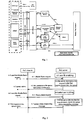
- FIG 1 Currently, a schematic diagram illustrating a PoC network is shown in FIG 1 .
- the PoC network is based on an IMS (IP Multimedia Subsystem).
- the IMS is a "SIP/IP core" in FIG 1 .
- the main entities of PoC network are as follows:
- a PoC Server is a primary calling controlling device of the PoC service.
- the PoC Server is a kind of application server of the IMS network.
- a PoC XDMS is a server which stores data including group information demanded by the PoC service.
- a PoC Client which is used by a user may initiate a call to the PoC Server, receive a PoC call, apply for a floor, and talk.
- the user may apply for the floor to the PoC Server via TBCP (Talk Burst Control Protocol) after establishing a PoC Group Talk.
- TBCP Talk Burst Control Protocol
- the user is permitted to talk only by obtaining the floor.
- a talk burst generated by the user who is talking is forwarded to others of the group by the PoC Server.
- a PoC system may support talk burst request queue function.
- the PoC . Server is responsible for arbitration to authorize a floor to one user when more than one user apply for the floor simultaneously.
- the applications for the floors of other users are rejected or inserted into a talk burst request queue, that is, a TBCP Talk Burst Request Queue.
- the PoC Server selects a floor applicator from the talk burst request queue according to a certain strategy, and authorizes the floor to the applicator.
- One same Media Burst request already exists in a queue of the Media Burst request before a server receives a Media Burst request of a user during processing procedure of the Media Burst request of the user, that is, the server receives the Media Burst request which has been sent by the user.
- the server doesn't perform special processing procedure to the Media Burst request which already exists and it is obviously unreasonable.
- the international application WO 2004/066649 relates to methods and devices that enable to request more than one service during call set-up.
- a new indicator is introduced into a request message sent to a database storing subscriber data, for indicating that at least one further request message is sent and a response indicator that a database is adapted to handle said indicator. It differs from this present invention which is to avoid to a certain extent a phenomenon that the user sends again the Media Burst request and to provide a method for processing a Media Burst request sent by a client after establishing a PoC Group Talk.
- the US Patent Application US 2004/0224710 relates to a system, apparatus, and method for introducing services into a Push to Talk (PTT) environment.
- Requests for services are generated and transmitted via requesting PTT clients.
- the request is received at a PTT server, which forwards the request to a PTT application server recognized by the PTT server as another PTT client.
- the requested service is performed at a PTT application server, and a result is generated in response. It differs from this present invention which is to avoid to a certain extent a phenomenon that the user sends again the Media Burst request.
- the present invention is to provide a method, server and client device for processing a Media Burst request, which makes the processing procedure of a correlative Media Burst request by the server definitely.
- a phenomenon that the user sends again the Media Burst request which has been sent is avoided to a certain extent. Therefore, it realizes to perfect the processing procedure of the Media Burst request by the server.
- a system load is reduced and a user experience to a PoC service is improved.
- the present invention provides a method for processing Media Burst request, may including: sending, by a client, a Media Burst request to a server; receiving, by the server, the Media Burst request sent by the client.
- the method further includes:
- the correlative request is the Media Burst request having a same media transmitter identification and/or a same request content.
- the request content includes a media type, and/or a priority type, and/or authorized user information.
- the request responding information is transmitted via a queue status responding message, or via a request rejecting message, or via a new message set for the request responding information.
- the performing the processing procedure of the correlative request to the Media Burst request and returning the request responding information to the client sending the Media Burst request by the server specifically includes:
- the performing the processing procedure of the correlative request to the Media Burst request, and returning the request responding information to the client sending the Media Burst request by the server specifically includes:
- the performing the processing procedure of the correlative request to the Media Burst request, and returning the request responding information to the client sending the Media Burst request by the server specifically includes:
- the request responding information includes a position of the Media Burst request in the queue of the Media Burst request, a media type and a request priority; or the request responding information includes a position of the Media Burst request in the queue of the Media Burst request, a media type, a request priority and a rejection reason.
- the method further includes:
- the predetermined status is a status of waiting for the server responding the Media Burst request, or a status of waiting for the server responding to release the Media Burst request, or a status that the Media Burst request is in queue.
- the method further includes: displaying, by the client, reason information of rejecting sending according to the current status of the client.
- the displaying, by the client, the reason information of rejecting sending according to the current status of the client specifically includes:
- the present invention further provides a method for processing a Media Burst request, including: sending, by a client, a Media Burst request to a server.
- the method includes:
- the predetermined status is a status of waiting for the server responding the Media Burst request, or a status of waiting for the server responding to release the Media Burst request, or a status that the Media Burst request is in queue.
- the method further includes: displaying, by the client, reason information of rejecting sending according to the current status of the client.
- the displaying, by the client, the reason information of rejecting sending according to the current status of the client specifically includes:
- the present invention further provides a server.
- the server includes:
- the correlative request processing module removes the correlative Media Burst request existing in a queue of the Media Burst request and waiting for being processed, queues the Media Burst request received by the receiving module into the queue of the Media Burst request according to a predetermined strategy, and returns the request responding information to the client sending the Media Burst request according to the Media Burst request in the queue of the Media Burst request; or
- the correlative request processing module updates the correlative Media Burst request existing in a queue of the Media Burst request and waiting for being processed according to the Media Burst request received by the receiving module, adjusts the position of the Media Burst request updated in the queue of the Media Burst request according to a predetermined strategy, and returns the request responding information to the client sending the Media Burst request according to the Media Burst request updated in the queue of the Media Burst request; or
- the correlative request processing module obtains status information of the correlative request in a queue of the Media Burst request directly, and returns the request responding information to the client sending the Media Burst request according to the status information.
- the present invention further provides a client device.
- the client device includes:
- the server of the present invention may process the Media Burst request received properly when receiving the new Media Burst request in correlation with a request existing currently. For example, the original request in the queue of the Media Burst request is removed, the new Media Burst request is inserted into the queue, and the request responding information is sent; or the position of the original request isn't changed in the queue of the Media Burst request, and the request responding information is sent directly; or the original Media Burst request is updated in the queue of the Media Burst request according to the new Media Burst request, and the request responding information is sent.
- the present invention makes the user obtain information including the position of the Media Burst request in the queue according to the request responding information when the server determines the processing procedure to the Media Burst request by the server at the same time.
- the phenomenon that the client sends again the Media Burst request which has been sent is avoided to a certain extent.
- the system load is reduced and the user experience to the PoC service is improved.
- the client of the present invention may reject sending the Media Burst request to the server according to the current status.
- the probability that the client sends again the Media Burst request existing and waiting for being processed is decreased effectively.
- the client further improves the user experience to the PoC service via displaying the reason of rejecting sending. Therefore the technical solution provided by the present invention may realize to perfect the processing procedure of the Media Burst request by the server, optimize the system resource and improve the degree of user satisfaction.
- FIG 1 is a schematic diagram illustrating a PoC network.
- FIG. 2 is a flow chart illustrating a process of the Media Burst request of the user according to an embodiment of the present invention.
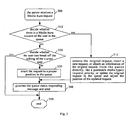
- FIG. 3 is a flow chart illustrating a process to the Media Burst request of the user by a server according to an embodiment of the present invention.
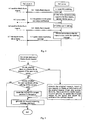
- FIG. 4 is a flow chart illustrating a process of the Media Burst request of the user according to an embodiment of the present invention.
- FIG.5 is a flow chart illustrating a process to the Media Burst request of the user by the server according to an embodiment of the present invention.
- the server of embodiments of the present invention may properly process a Media Burst request received currently when the server receives the Media Burst request sent by a client and finds that the Media Burst request received is in correlation with an existing Media Burst request.
- the processing procedure to the Media Burst request received currently by the server is a processing procedure of a correlative request.
- the Media Burst request received by the server is a new Media Burst request.
- the correlative Media Burst request existing currently is an original Media Burst request.
- the process of the correlative request and the procedure of returning a request responding information to the client which sends the Media Burst request are that, for example, the original Media Burst request in a queue of the Media Burst request is removed, the new Media Burst request is inserted into the queue, and the request responding information is sent according to the position of the new Media Burst request in the queue; or the position of the original Media Burst request isn't changed in the queue of the Media Burst request, and the request responding information is sent directly according to the position of the original Media Burst request in the queue; or the original Media Burst request is updated in the queue of the Media Burst request according to the new Media Burst request, the position of the Media Burst request updated is adjusted in the queue, and the request responding information is sent according to the Media Burst request of which the position has been adjusted.
- the present invention makes the user obtain information including the position of the Media Burst request in the queue according to the request responding information when the server determines the processing procedure to the Media Burst request which has been sent at the same time.
- the phenomenon that the client sends again the Media Burst request which has been sent is avoided to a certain extent.
- the system load is reduced and the user experience to the PoC service is improved.
- FIG 2 A process flow of the Media Burst request of the user according to an embodiment of the present invention is shown in FIG 2 .
- a user 'a' sends a Media Burst request to a server via a client A and a user B being talking is set at the moment in step 4-1.
- the server determines that the Media Burst request received by the server currently is a Media Burst request which is sent by the client A for the first time and the server begins to process the Media Burst request received currently when the server determines that information carried in the Media Burst request isn't the same as information of a Media Burst request in the queue of the Media Burst request.
- the processing procedure may be the process flow to a Media Burst request in the prior art. Specific implementing modes of the process flow aren't limited by embodiments of the present invention.
- the server obtains request priority of the information from the Media Burst request received currently.
- the server queues the Media Burst request received currently into the queue of the Media Burst request according to a predetermined strategy when the server determines that the request priority of the information isn't higher than the request priority of a current talking user.
- a user C and a user D lining in front of the user 'a' in the queue of the Media Burst request are set.
- the server generates a queue status responding message, and sends the queue status responding message to the client A.
- the client A displays the information carried in the queue status responding message received to the user 'a'.
- the information carried in the queue status responding message includes: a position of the Media Burst request of the user 'a' in the queue, a media type of the Media Burst request of the user 'a', a priority of the Media Burst request of the user 'a'.
- step 4-4 the server selects another user, for example the user C, from the queue of the Media Burst request and permits another user to talk after the use B finishes talking.
- the user 'a' doesn't obtain a media transmitting prompt and sends again the Media Burst request which has been sent in the duration time when another user is talking.
- the process goes to step 4-5.
- the user 'a' sends again the Media Burst request which has been sent to the server via the client A.
- the server receives the Media Burst request of the client A.
- the server compares the Media Burst request received currently with the Media Burst request in the queue of the Media Burst request.
- the server determines that the client A which sends the new Media Burst request has sent the Media Burst request. That is, the Media Burst request received currently is in correlation with the Media Burst request in the queue of the Media Burst request.
- the server generates the queue status responding message according to the Media Burst request of the client A in the queue of the Media Burst request.
- the Media Burst request of the client A in the queue of the Media Burst request may be the original Media Burst request or the new Media Burst request received currently by the server.
- the server decides whether the Media Burst request in the queue of the Media Burst request is the original Media Burst request or the new Media Burst request by controlling and processing.
- the special procedure is illustrated in the following FIG.5 .
- the server transmits the queue status responding message to the client A.
- the client A displays the information in the queue status responding message received to the user 'a'.
- the client A may display information that the Media Burst request already exists when the client A receives the queue status responding message corresponding to the Media Burst request sent by the client A again.
- the server determines whether the Media Burst request received currently is in correlation with the original Media Burst request which already exists and waits for being processed according to media transmitter identification and/or a request content of the Media Burst request. That is, the server decides whether the media transmitter identifications and/or the request contents are the same in the new Media Burst request received and the original Media Burst request. Both of the new Media Burst request received and the original Media Burst request are correlative if the media transmitter identifications and/or the request contents are the same in the two requests.
- Both of the new Media Burst request received and the original Media Burst request aren't correlative if the media transmitter identification and/or the request content aren't same in the two requests.
- the request content may be one or more of a media type, a priority type, and authorized user information.
- the server may determine whether the Media Burst request received currently is in correlation with the Media Burst request which already exists and waits for being processed only according to the media transmitter identification or the request content; the server may determine whether the Media Burst request received currently is in correlation with the Media Burst request which already exists and waits for being processed according to the media transmitter identification and the media type in the Media Burst request; the server also may determine whether the Media Burst request received currently is in correlation with the Media Burst request which already exists and waits for being processed according to the media transmitter identification, the media type and the request priority in the Media Burst request.
- the server may also determine whether the Media Burst request received currently is in correlation with the Media Burst request which already exists and waits for being processed only according to the media transmitter identification of the Media Burst request when only one media type exists, for example, the media type is only a voice media type in the early PoC standard; similarly, the server may also determine whether the Media Burst request received currently is in correlation with the Media Burst request which already exists and waits for being processed according to the media transmitter identification of the Media Burst request and the request priority.
- the request content of the embodiments of the present invention may be other key information except for information such as a sending timestamp.
- the request priority carried in the Media Burst request which is sent by the client A for the first time may be the same as the request priority carried in the Media Burst request which is sent by the client A for the second time.
- the request priority carried in the Media Burst request which is sent by the client A for the first time may also be different with the request priority carried in the Media Burst request which is sent by the client A for the second time.
- the server may carry a rejecting reason that the Media Burst request has been sent in the queue status responding message, in order to inform the client A a fact that the Media Burst request sent by the client A already exists.
- FIG 3 A server's process flow to the Media Burst request of the user by the server is shown in FIG 3 .
- the server receives a Media Burst request sent by a client in step 500.
- the server decides whether the Media Burst request received currently is the same as a Media Burst request in the queue of the Media Burst request according to media transmitter identification and a media type in the Media Burst request. If the Media Burst request received currently isn't the same as the Media Burst request in the queue of the Media Burst request, it indicates that the Media Burst request received currently is the Media Burst request which is sent by the client A for the first time. The process goes to step 520. The server decides whether a talking of a current talking user has a demand to be broken off according to the request priority of the information carried in the Media Burst request. If the talking of the current talking user has a demand to be broken off, the process goes to step 550. The procedure that the server processes a new Media Burst request sent again by the client is ended.
- step 520 if the talking of the current talking user hasn't a demand to be broken off, the process goes to step 530.
- the server queues the Media Burst request received currently into the queue of the Media Burst request according to a predetermined strategy.
- the server generates a queue status responding message according to the Media Burst request of the client in the queue of the Media Burst request.
- step 510 if the Media Burst request received currently is the same as the Media Burst request which already exists in the queue of the Media Burst request and waits for being processed, the process goes to step 511.
- the server may adopt the following three process modes to process the Media Burst request received currently:
- the server removes the original Media Burst request which is in correlation with the new Media Burst request in the queue of the Media Burst request.
- the Media Burst request received currently is inserted into the queue of the Media Burst request according to the predetermined strategy.
- the server doesn't make any change to the original Media Burst request in the queue of the Media Burst request.
- the server obtains information including a position in the queue of the Media Burst request, a media type and a request priority of the original Media Burst request directly.
- the server updates the correlative original Media Burst request in the queue of the Media Burst request according to the Media Burst request received currently. For example, some attribute values of the original Media Burst request are updated.
- the attribute values include the request priority, the media type, and the media transmitter identification.
- the server adjusts the position of the Media Burst request updated in the queue of the Media Burst request.
- the server determines whether the position of the Media Burst request updated in the queue of the Media Burst request is demanded to be adjusted according to the result whether the priority of the Media Burst request before being updated is the same as the priority of the Media Burst request after being updated; that is, the server doesn't adjust the position of the Media Burst request after being updated in the queue of the Media Burst request when the priorities of the two requests are consistent, the server adjusts the position of the Media Burst request after being updated in the queue of the Media Burst request according to the predetermined strategy when the priorities of the two requests aren't consistent.
- the predetermined strategy may be that the Media Burst request with high priority is arranged in front, the Media Burst requests with the same priority is arranged together, and the one in the Media Burst requests with the same priority which arrives earlier is arranged in front.
- step 540 the server generates the queue status responding message.
- the server of the embodiment of the present invention may transmit the request responding information to the client which sends the existing Media Burst request again via a request rejecting message as shown in FIG 4 and FIG. 5 .
- FIG.4 and FIG.5 A specific implement procedure in FIG.4 and FIG.5 is substantially the same as the implement procedure in FIG.2 and FIG.3 .
- the message carrying the request responding information is just the request rejecting message. It isn't described in detail here.
- a new message may be set for the request responding information in an embodiment of the present invention specially.
- the message is for carrying the request responding information specially.
- the specific implement procedure is substantially the same as the implement procedure in FIG.2 and FIG.3 .
- the message carrying the request responding information is just the new message being set. It isn't described in detail here.
- An embodiment of the present invention also provides a method for effectively reducing times that the client sends again the Media Burst request which has been sent.
- the method is specifically as follows. A status of a state machine of a current client is decided before a user sends the Media Burst request via a Media Burst request module of the client or another logical module of the client instructs the Media Burst request module to send the Media Burst request.
- the Media Burst request module is forbidden to send the Media Burst request when the client is in some status.
- the status of forbidding the Media Burst request module to send the Media Burst request specifically includes: the status of waiting for the server responding the Media Burst request, the status of waiting for the server responding to release the Media Burst request, and the status of the Media Burst request being in queue.
- the client may prompt information of being requesting a media transmitting permission to the user when the current status of the client is waiting for the server responding the Media Burst request.
- the client may prompt information of being releasing the media transmitting permission to the user when the current status of the client is waiting for the server responding to release the Media Burst request.
- the client may prompt information that a correlative Media Burst request already exists when the current status of the client is that the Media Burst request is in queue.
- the client supporting a queue receives a responding message of the queue status of the server, the client stores queue information which is in the responding message of the queue status. For example, the client stores the information of a position of the Media Burst request in the queue, a request priority of the Media Burst request, and a request media type of the Media Burst request.
- the client may display information of the position of the Media Burst request in the queue, the request priority of the Media Burst request, the request media type of the Media Burst request to the user.
- an embodiment of the present invention also provides a server based on the method for processing the Media Burst request.
- the server provided by the embodiment of the present invention installs a receiving module, a deciding module and a correlative request processing module.
- the receiving module is mainly used for receiving a Media Burst request transmitted by a client.
- the deciding module is mainly used for deciding whether a request exists in correlation with the Media Burst request received by the receiving module in a queue of the Media Burst request of the current server.
- the deciding module may decide a correlation of the Media Burst request according to media transmitter identification and/or a request content.
- the deciding module outputs a deciding result if the deciding module decides that the request in correlation with the Media Burst request doesn't exist.
- the deciding module notifies the correlative request processing module via a notification if the deciding module decides that the request exists in correlation with the Media Burst request.
- the server begins to process the Media Burst request received currently when the deciding module outputs the deciding result that the correlative request doesn't exist.
- the processing procedure may be the processing procedure to the Media Burst request in the prior art. For example, the server obtains the request priority of the information from the Media Burst request received currently.
- the Media Burst request received currently is queue into the queue of the Media Burst request according to the predetermined strategy when the server determines that the request priority of the information isn't higher than the request priority of the current talking user.
- the specific implement mode of the processing procedure isn't limited by the embodiment of the present invention.
- the correlative request processing module After the correlative request processing module receives the notification of the deciding module, the correlative request processing module performs a processing procedure of the correlative request to the Media Burst request received by the receiving module, and returns the request responding information to the client sending the Media Burst request.
- the correlative request processing module may adopt three modes as follows to realize the procedure for processing the correlative request and returning the request responding information.
- the correlative request processing module removes the correlative Media Burst request which already exists in the queue of the Media Burst request and waits for being processed.
- the correlative request processing module queues the Media Burst request received by the receiving module currently into the queue of the Media Burst request according to the predetermined strategy.
- the correlative request processing module returns the request responding information to the client sending the Media Burst request according to the Media Burst request in the queue of the Media Burst request.
- the correlative request processing module updates the correlative Media Burst request which already exists in the queue of the Media Burst request and waits for being processed according to the Media Burst request received by the receiving module.
- the correlative request processing module adjusts the position of the Media Burst request updated in the queue of the Media Burst request according to the predetermined strategy.
- the correlative request processing module returns the request responding information to the client sending the Media Burst request according to the Media Burst request updated in the queue of the Media Burst request.
- the correlative request processing module obtains status information of the correlative request in the queue of the Media Burst request directly, and returns the request responding information to the client sending the Media Burst request according to the status information obtained.
- a content which is specifically included by the request responding information, a specific content of the predetermined strategy, and the specific message carrying the request responding information are described the above methods.
- a client device provided by an embodiment of the present invention installs a Media Burst request module and a status deciding module.
- the Media Burst request module is mainly used for sending a Media Burst request to a server.
- the procedure of the Media Burst request module sending the Media Burst request is controlled by the status deciding module.
- the status deciding module is mainly used for obtaining a current status of the client and deciding the current status when the Media Burst request module has a demand to send the Media Burst request.
- the status deciding module forbids sending the Media Burst request from the Media Burst request module to the server if the current status is a predetermined status.
- the status deciding module permits the Media Burst request module to send the Media Burst request to the server if the current status isn't the predetermined status.
- the predetermined status is, for example, a status of waiting for the server responding the Media Burst request, or a status of waiting for the server responding to release the Media Burst request, or a status of the Media Burst request being in queue.
- the status deciding module also has a demand to display different information to the user according to the current different status. The specification is described in the above methods.
Landscapes
- Engineering & Computer Science (AREA)
- Multimedia (AREA)
- Computer Networks & Wireless Communication (AREA)
- Signal Processing (AREA)
- Computer And Data Communications (AREA)
- Information Transfer Between Computers (AREA)
- Reverberation, Karaoke And Other Acoustics (AREA)
Claims (13)
- Verfahren zum Verarbeiten einer Media-Burst-Anforderung, das Folgendes umfasst:Senden durch einen Client einer Media-Burst-Anforderung zu einem Server (4-5);Empfangen durch den Server der Media-Burst-Anforderung, dadurch gekennzeichnet, dass das Verfahren ferner Folgendes umfasst:Ausführen durch den Server einer Verarbeitungsprozedur einer korrelierenden Anforderung an der Media-Burst-Anforderung und Zurückleiten von Anforderungsantwortinformationen (4-7) zu dem Client, der die Media-Burst-Anforderung gesendet hat, wenn der Server bestimmt, dass die Media-Burst-Anforderung mit einer vorhandenen Media-Burst-Anforderung (4-1) korreliert ist;wobei die korrelierende Media-Burst-Anforderung die Anforderung mit derselben Media-Senderkennung und/oder mit demselben Anforderungsinhalt (4-6) ist.
- Verfahren nach Anspruch 1, wobei der Anforderungsinhalt einen Media-Typ und/oder einen Prioritätstyp und/oder Informationen über einen autorisierten Anwender umfasst.
- Verfahren nach Anspruch 1, wobei die Anforderungsantwortinformationen über eine Warteschlangenstatus-Antwortnachricht (4-7) oder über eine Anforderungszurückweisungsnachricht oder über eine neue Nachricht, die für die Anforderungsantwortinformationen eingestellt wird, gesendet werden.
- Verfahren nach Anspruch 1, wobei
das Ausführen der Verarbeitungsprozedur der korrelierenden Anforderung an der Media-Burst-Anforderung und das Zurückleiten der Anforderungsantwortinformationen zu dem Client, der die Media-Burst-Anforderung zu dem Server sendet, insbesondere Folgendes umfassen:Entfernen durch den Server einer korrelierenden Media-Burst-Anforderung, die in einer Warteschlange der Media-Burst-Anforderung vorhanden ist und auf die Verarbeitung wartet, und Einreihen der Media-Burst-Anforderung, die in der Warteschlange der Media-Burst-Anforderung empfangen wird, in Übereinstimmung mit einer vorgegebenen Strategie; undZurückleiten durch den Server der Anforderungsantwortinformationen zu dem Client,der die Media-Burst-Anforderung sendet, in Übereinstimmung mit der Media-Burst-Anforderung in der Warteschlange der Media-Burst-Anforderung;oder wobei das Ausführen der Verarbeitungsprozedur der korrelierenden Anforderung zu der Media-Burst-Anforderung und das Zurückleiten der Anforderungsantwortinformationen zu dem Client, der die Media-Burst-Anforderung sendet, durch den Server insbesondere Folgendes umfassen:Aktualisieren durch den Server einer korrelierenden Media-Burst-Anforderung, die in einer Warteschlange der Media-Burst-Anforderung vorhanden ist und auf die Verarbeitung in Übereinstimmung mit der empfangenen Media-Burst-Anforderung wartet, und Einstellen einer Position der aktualisierten Media-Burst-Anforderung in der Warteschlange der Media-Burst-Anforderung in Übereinstimmung mit einer vorgegebenen Strategie; undZurückleiten durch den Server der Anforderungsantwortinformationen zu dem Client, der die Media-Burst-Anforderung gesendet hat, in Übereinstimmung mit der Media-Burst-Anforderung in der Warteschlange der Media-Burst-Anforderung; oder wobeidas Ausführen der Verarbeitungsprozedur der korrelierenden Anforderung zu der Media-Burst-Anforderung und das Zurückleiten der Anforderungsantwortinformationen zu dem Client, der die Media-Burst-Anforderung sendet, durch den Server insbesondere Folgendes umfassen:direktes Erhalten durch den Server von Statusinformationen einer korrelierenden Anforderung in einer Warteschlange der Media-Burst-Anforderung und Zurückleiten der Anforderungsantwortinformationen zu dem Client, der die Media-Burst-Anforderung gesendet hat, in Übereinstimmung mit den Statusinformationen. - Verfahren nach einem der Ansprüche 1-4, wobei die Anforderungsantwortinformationen eine Position der Media-Burst-Anforderung in der Warteschlange der Media-Burst-Anforderung, einen Media-Typ und eine Anforderungspriorität umfassen; oder die Anforderungsantwortinformationen eine Position der Media-Burst-Anforderung in der Warteschlange der Media-Burst-Anforderung, einen Media-Typ, eine Anforderungspriorität und einen Zurückweisungsgrund umfassen.
- Verfahren nach einem der Ansprüche 1-4, wobei das Verfahren ferner Folgendes umfasst:Erhalten eines momentanen Status des Client, wenn der Client die Media-Burst-Anforderung zu dem Server sendet;Entscheiden durch den Client des momentanen Status des Client; Zurückweisen des Sendens der Media-Burst-Anforderung zu dem Server, falls der momentane Status ein vorgegebener Status ist; Senden der Media-Burst-Anforderung zu dem Server,falls der momentane Status nicht der vorgegebene Status ist.
- Verfahren nach Anspruch 6, wobei das Verfahren ferner Folgendes umfasst:Anzeigen durch den Client von Informationen bezüglich des Grundes der Zurückweisung des Sendens in Übereinstimmung mit dem momentanen Status des Client.
- Verfahren zum Verarbeiten einer Media-Burst-Anforderung, das Folgendes umfasst:Senden durch einen Client einer Media-Burst-Anforderung zu einem Server, dadurch gekennzeichnet, dass das Verfahren ferner Folgendes umfasst:Erhalten eines momentanen Status des Client;Entscheiden durch den Client, ob der momentane Status des Client ein vorgegebener Status ist;Zurückweisen des Sendens der Media-Burst-Anforderung zu dem Server, falls der momentane Status ein vorgegebener Status ist; undSenden der Media-Burst-Anforderung zu dem Server, falls der momentane Status nicht der vorgegebene Status ist;wobei der vorgegebene Status ein Status des Wartens auf den Server, der auf die Media-Burst-Anforderung antwortet, oder ein Status des Wartens auf den Server, der auf die Freigabe der Media-Burst-Anforderung antwortet, oder ein Status, dass sich die Media-Burst-Anforderung in einer Warteschlange befindet, ist;wobei der momentane Status des Client über eine Antwortnachricht des Servers empfangen wird.
- Verfahren nach Anspruch 8, wobei das Verfahren ferner Folgendes umfasst:Anzeigen durch den Client von Informationen bezüglich des Grundes der Zurückweisung des Sendens in Übereinstimmung mit dem momentanen Status des Client.
- Verfahren nach Anspruch 9, wobei das Anzeigen durch den Client der Informationen bezüglich des Grundes der Zurückweisung des Sendens in Übereinstimmung mit dem momentanen Status des Client insbesondere Folgendes umfasst:Anzeigen durch den Client von Informationen bezüglich des Anforderns einer Media-Sendeerlaubnis, wenn der momentane Status der Status des Wartens auf die Beantwortung der Media-Burst-Anforderung durch den Server ist;Anzeigen durch den Client von Informationen bezüglich der Freigabe der Media-Sendeerlaubnis, wenn der momentane Status der Status des Wartens auf die Antwort zur Freigabe der Media-Burst-Anforderung durch den Server ist;Anzeigen durch den Client von Informationen, die in der Warteschlangenstatus-Antwortnachricht geführt werden, die empfangen wird, wenn der momentane Status der Status ist, dass sich die Media-Burst-Anforderung in einer Warteschlange befindet.
- Server, dadurch gekennzeichnet, dass der Server Folgendes umfasst:ein Empfangsmodul, das konfiguriert ist, um eine von einem Client gesendete Media-Burst-Anforderung zu empfangen;ein Entscheidungsmodul, das konfiguriert ist, um zu entscheiden, ob eine Anforderung, die mit der Media-Burst-Anforderung korreliert ist, die von dem Empfangsmodul empfangen wird, in einem momentanen Server vorhanden ist, und um einem Modul zur Verarbeitung einer korrelierenden Anforderung über eine Meldung nach dem Bestimmen mitzuteilen, dass die Anforderung, die mit der Media-Burst-Anforderung korreliert ist, vorhanden ist; wobei die korrelierende Media-Burst-Anforderung die Anforderung mit derselben Media-Senderkennung und/oder mit demselben Anforderungsinhalt ist; unddas Modul zum Verarbeiten einer korrelierenden Anforderung konfiguriert ist, um eine Verarbeitungsprozedur einer korrelierenden Anforderung an der von dem Empfangsmodul empfangenen Media-Burst-Anforderung in Übereinstimmung mit der Mitteilung des Entscheidungsmoduls auszuführen und Anforderungsantwortinformationen zu dem Client, der die Media-Burst-Anforderung gesendet hat, zurückzuleiten.
- Server nach Anspruch 11, wobei
das Modul zur Verarbeitung einer korrelierenden Anforderung die in einer Warteschlange der Media-Burst-Anforderung vorhandene und auf die Verarbeitung wartende korrelierende Media-Burst-Anforderung entfernt, die von dem Empfangsmodul empfangene Media-Burst-Anforderung in die Warteschlange der Media-Burst-Anforderung in Übereinstimmung mit einer vorgegebenen Strategie einreiht und die Anforderungsantwortinformationen zu dem Client, der die Media-Burst-Anforderung gesendet hat, in Übereinstimmung mit der Media-Burst-Anforderung in der Warteschlange der Media-Burst-Anforderung zurückleitet; oder
das Modul zum Verarbeiten einer korrelierenden Anforderung die korrelierende Media-Burst-Anforderung, die in einer Warteschlange der Media-Burst-Anforderung vorhanden ist und auf die Verarbeitung wartet, in Übereinstimmung mit der von dem Empfangsmodul empfangenen Media-Burst-Anforderung aktualisiert, die Position der aktualisierten Media-Burst-Anforderung in der Warteschlange der Media-Burst-Anforderung in Übereinstimmung mit einer vorgegebenen Strategie einstellt und die Anforderungsantwortinformationen zu dem Client, der die Media-Burst-Anforderung gesendet hat, in Übereinstimmung mit der aktualisierten Media-Burst-Anforderung in der Warteschlange der Media-Burst-Anforderung zurückleitet; oder
das Modul zum Verarbeiten der korrelierenden Anforderung Statusinformationen der korrelierenden Anforderung in einer Warteschlange der Media-Burst-Anforderung direkt erhält und die Anforderungsantwortinformationen zu dem Client, der die Media-Burst-Anforderung gesendet hat, in Übereinstimmung mit den Statusinformationen zurückleitet. - Client-Vorrichtung, dadurch gekennzeichnet, dass die Client-Vorrichtung Folgendes umfasst:ein Media-Burst-Anforderungs-Modul, das konfiguriert ist, um eine Media-Burst-Anforderung zu einem Server zu senden;ein Statusentscheidungsmodul, das konfiguriert ist, um einen momentanen Status eines Client durch Empfangen einer Anforderungsantwortnachricht von dem Server zu erhalten und zu bestimmen, wenn das Media-Burst-Anforderungs-Modul einen Bedarf hat, die Media-Burst-Anforderung zu senden;das Statusentscheidungsmodul außerdem konfiguriert ist, um das Senden der Media-Burst-Anforderung von dem Media-Burst-Anforderungs-Modul zu dem Server zu verbieten, falls der momentane Status ein vorgegebener Status ist, oder das Senden der Media-Burst-Anforderung von dem Media-Burst-Anforderungs-Modul zu dem Server zu erlauben, falls der momentane Status nicht der vorgegebene Status ist;wobei der vorgegebene Status ein Status des Wartens auf den Server, der auf die Media-Burst-Anforderung antwortet, oder ein Status des Wartens auf den Server, der auf die Freigabe der Media-Burst-Anforderung antwortet, oder ein Status, dass sich die Media-Burst-Anforderung in einer Warteschlange befindet, ist.
Applications Claiming Priority (2)
| Application Number | Priority Date | Filing Date | Title |
|---|---|---|---|
| CN200510109281.5A CN1801728B (zh) | 2005-10-20 | 2005-10-20 | 一种对媒体发送请求的处理方法 |
| PCT/CN2006/002769 WO2007045175A1 (en) | 2005-10-20 | 2006-10-19 | A method and server and client device for processing request of media transimtting |
Publications (3)
| Publication Number | Publication Date |
|---|---|
| EP1950985A1 EP1950985A1 (de) | 2008-07-30 |
| EP1950985A4 EP1950985A4 (de) | 2009-06-03 |
| EP1950985B1 true EP1950985B1 (de) | 2012-05-02 |
Family
ID=36811508
Family Applications (1)
| Application Number | Title | Priority Date | Filing Date |
|---|---|---|---|
| EP06804985A Not-in-force EP1950985B1 (de) | 2005-10-20 | 2006-10-19 | Verfahren und server und client-einrichtung zum verarbeiten von media-burst-anforderungen |
Country Status (4)
| Country | Link |
|---|---|
| EP (1) | EP1950985B1 (de) |
| CN (2) | CN1801728B (de) |
| AT (1) | ATE556523T1 (de) |
| WO (1) | WO2007045175A1 (de) |
Families Citing this family (4)
| Publication number | Priority date | Publication date | Assignee | Title |
|---|---|---|---|---|
| CN104935612A (zh) * | 2014-03-17 | 2015-09-23 | 深圳市金蝶友商电子商务服务有限公司 | 一种数据处理方法及服务器 |
| CN105847059B (zh) * | 2016-04-12 | 2018-12-18 | 平安科技(深圳)有限公司 | 信息发送管理方法和装置 |
| CN113691604B (zh) * | 2021-08-18 | 2024-09-24 | 深圳鼎盛电脑科技有限公司 | 一种网络请求的自适应限流方法、装置、设备及介质 |
| CN115344231B (zh) * | 2022-08-18 | 2025-12-09 | 中国工商银行股份有限公司 | 会议数据处理方法、装置、系统、计算机设备和存储介质 |
Family Cites Families (4)
| Publication number | Priority date | Publication date | Assignee | Title |
|---|---|---|---|---|
| EP1584208B1 (de) * | 2003-01-18 | 2006-09-27 | Telefonaktiebolaget LM Ericsson (publ) | Zweistufige datenbankabfrage zur unterstützung der einrichtung einer rückzugslösung beim anruf aufbau |
| US7107017B2 (en) * | 2003-05-07 | 2006-09-12 | Nokia Corporation | System and method for providing support services in push to talk communication platforms |
| KR100595585B1 (ko) * | 2003-05-13 | 2006-07-03 | 엘지전자 주식회사 | 이동통신시스템에서의 멀티미디어 방송 및 멀티캐스트서비스를 위한 무선자원관리방법 |
| CN1298182C (zh) * | 2004-06-04 | 2007-01-31 | 中兴通讯股份有限公司 | 数字集群系统通话权调度方法 |
-
2005
- 2005-10-20 CN CN200510109281.5A patent/CN1801728B/zh not_active Expired - Fee Related
-
2006
- 2006-10-19 WO PCT/CN2006/002769 patent/WO2007045175A1/zh not_active Ceased
- 2006-10-19 CN CN200680014021.2A patent/CN101167386A/zh active Pending
- 2006-10-19 AT AT06804985T patent/ATE556523T1/de active
- 2006-10-19 EP EP06804985A patent/EP1950985B1/de not_active Not-in-force
Also Published As
| Publication number | Publication date |
|---|---|
| EP1950985A4 (de) | 2009-06-03 |
| ATE556523T1 (de) | 2012-05-15 |
| EP1950985A1 (de) | 2008-07-30 |
| CN1801728A (zh) | 2006-07-12 |
| CN1801728B (zh) | 2010-10-13 |
| WO2007045175A1 (en) | 2007-04-26 |
| CN101167386A (zh) | 2008-04-23 |
Similar Documents
| Publication | Publication Date | Title |
|---|---|---|
| EP1622407B1 (de) | Handhabung von Sprechburstabweisungen in einem den PTT Dienst unterstützenden Gruppenkommunikationssystem | |
| CN1941816B (zh) | 生成电信会议控制消息或控制电信会议的方法及相关装置 | |
| EP2171945B1 (de) | System und verfahren zur gemeinsamen benutzung von medien bei einer gruppenkommunikation über drahtlose kommunikationsgeräte | |
| EP2603036B1 (de) | Verfahren und System zur Verarbeitung von ad-hoc-POC-Gruppensitzungsinformationen mittels RTCP-Verbindungsmeldungen | |
| US7925287B2 (en) | Method and system for requesting and granting PoC user media transmission right | |
| EP2063652B1 (de) | Verfahren, system und poc-server zur bereitstellung von sprech-burst für endgeräte | |
| EP1911303B1 (de) | Steuerung des floors eines benutzers | |
| US20070233802A1 (en) | Methods and arrangements for implementing whisper mode conversations during a multiparty telecommunication session | |
| US8437791B2 (en) | Method and system for controlling talk time for PoC user | |
| WO2007124480A2 (en) | System and method for enabling conversational-style in simplex based sessions | |
| CN101371463B (zh) | PoC系统中提供媒体发送时间信息的终端设备和方法以及使用该设备和方法的PoC系统 | |
| EP1622406B1 (de) | Bereitstellen von Sprechburstautorität in einem den PTT Dienst unterstützenden Gruppenkommunikationssystem | |
| EP1950985B1 (de) | Verfahren und server und client-einrichtung zum verarbeiten von media-burst-anforderungen | |
| EP1886420B1 (de) | Verfahren und system zur wiederherstellung einer unterbrochenen sprecherlaubnis bei push-to-talk über ein mobilnetz | |
| US8351969B2 (en) | Method and system for transmitting and receiving media according to importance of media burst | |
| KR100808083B1 (ko) | 반이중 음성 통신 시스템을 위한 송신 채널 요청 메시징 | |
| KR101085704B1 (ko) | 푸쉬투토크 오버 셀룰러 시스템의 발언권 관리 방법 및 장치 | |
| KR100677427B1 (ko) | 이동 통신 단말기의 발언권 요청 처리 방법 | |
| HK1127458B (en) | A method, system and poc server for granting talk burst to terminals | |
| KR20080064068A (ko) | 통신 시스템에서 서비스 제공 방법 및 시스템 |
Legal Events
| Date | Code | Title | Description |
|---|---|---|---|
| PUAI | Public reference made under article 153(3) epc to a published international application that has entered the european phase |
Free format text: ORIGINAL CODE: 0009012 |
|
| 17P | Request for examination filed |
Effective date: 20080520 |
|
| AK | Designated contracting states |
Kind code of ref document: A1 Designated state(s): AT BE BG CH CY CZ DE DK EE ES FI FR GB GR HU IE IS IT LI LT LU LV MC NL PL PT RO SE SI SK TR |
|
| A4 | Supplementary search report drawn up and despatched |
Effective date: 20090508 |
|
| 17Q | First examination report despatched |
Effective date: 20090520 |
|
| REG | Reference to a national code |
Ref country code: DE Ref legal event code: R079 Ref document number: 602006029291 Country of ref document: DE Free format text: PREVIOUS MAIN CLASS: H04Q0007280000 Ipc: H04L0029060000 |
|
| GRAP | Despatch of communication of intention to grant a patent |
Free format text: ORIGINAL CODE: EPIDOSNIGR1 |
|
| RIC1 | Information provided on ipc code assigned before grant |
Ipc: H04L 29/06 20060101AFI20111025BHEP |
|
| RTI1 | Title (correction) |
Free format text: A METHOD AND SERVER AND CLIENT DEVICE FOR PROCESSING A MEDIA BURST REQUEST |
|
| DAX | Request for extension of the european patent (deleted) | ||
| GRAS | Grant fee paid |
Free format text: ORIGINAL CODE: EPIDOSNIGR3 |
|
| GRAA | (expected) grant |
Free format text: ORIGINAL CODE: 0009210 |
|
| AK | Designated contracting states |
Kind code of ref document: B1 Designated state(s): AT BE BG CH CY CZ DE DK EE ES FI FR GB GR HU IE IS IT LI LT LU LV MC NL PL PT RO SE SI SK TR |
|
| REG | Reference to a national code |
Ref country code: GB Ref legal event code: FG4D |
|
| REG | Reference to a national code |
Ref country code: CH Ref legal event code: EP Ref country code: AT Ref legal event code: REF Ref document number: 556523 Country of ref document: AT Kind code of ref document: T Effective date: 20120515 |
|
| REG | Reference to a national code |
Ref country code: IE Ref legal event code: FG4D |
|
| REG | Reference to a national code |
Ref country code: DE Ref legal event code: R096 Ref document number: 602006029291 Country of ref document: DE Effective date: 20120705 |
|
| REG | Reference to a national code |
Ref country code: NL Ref legal event code: VDEP Effective date: 20120502 |
|
| REG | Reference to a national code |
Ref country code: LT Ref legal event code: MG4D Effective date: 20120502 |
|
| PG25 | Lapsed in a contracting state [announced via postgrant information from national office to epo] |
Ref country code: LT Free format text: LAPSE BECAUSE OF FAILURE TO SUBMIT A TRANSLATION OF THE DESCRIPTION OR TO PAY THE FEE WITHIN THE PRESCRIBED TIME-LIMIT Effective date: 20120502 Ref country code: PL Free format text: LAPSE BECAUSE OF FAILURE TO SUBMIT A TRANSLATION OF THE DESCRIPTION OR TO PAY THE FEE WITHIN THE PRESCRIBED TIME-LIMIT Effective date: 20120502 Ref country code: IS Free format text: LAPSE BECAUSE OF FAILURE TO SUBMIT A TRANSLATION OF THE DESCRIPTION OR TO PAY THE FEE WITHIN THE PRESCRIBED TIME-LIMIT Effective date: 20120902 Ref country code: SE Free format text: LAPSE BECAUSE OF FAILURE TO SUBMIT A TRANSLATION OF THE DESCRIPTION OR TO PAY THE FEE WITHIN THE PRESCRIBED TIME-LIMIT Effective date: 20120502 Ref country code: CY Free format text: LAPSE BECAUSE OF FAILURE TO SUBMIT A TRANSLATION OF THE DESCRIPTION OR TO PAY THE FEE WITHIN THE PRESCRIBED TIME-LIMIT Effective date: 20120502 |
|
| REG | Reference to a national code |
Ref country code: AT Ref legal event code: MK05 Ref document number: 556523 Country of ref document: AT Kind code of ref document: T Effective date: 20120502 |
|
| PG25 | Lapsed in a contracting state [announced via postgrant information from national office to epo] |
Ref country code: PT Free format text: LAPSE BECAUSE OF FAILURE TO SUBMIT A TRANSLATION OF THE DESCRIPTION OR TO PAY THE FEE WITHIN THE PRESCRIBED TIME-LIMIT Effective date: 20120903 Ref country code: SI Free format text: LAPSE BECAUSE OF FAILURE TO SUBMIT A TRANSLATION OF THE DESCRIPTION OR TO PAY THE FEE WITHIN THE PRESCRIBED TIME-LIMIT Effective date: 20120502 Ref country code: LV Free format text: LAPSE BECAUSE OF FAILURE TO SUBMIT A TRANSLATION OF THE DESCRIPTION OR TO PAY THE FEE WITHIN THE PRESCRIBED TIME-LIMIT Effective date: 20120502 Ref country code: GR Free format text: LAPSE BECAUSE OF FAILURE TO SUBMIT A TRANSLATION OF THE DESCRIPTION OR TO PAY THE FEE WITHIN THE PRESCRIBED TIME-LIMIT Effective date: 20120803 |
|
| PG25 | Lapsed in a contracting state [announced via postgrant information from national office to epo] |
Ref country code: BE Free format text: LAPSE BECAUSE OF FAILURE TO SUBMIT A TRANSLATION OF THE DESCRIPTION OR TO PAY THE FEE WITHIN THE PRESCRIBED TIME-LIMIT Effective date: 20120502 |
|
| PG25 | Lapsed in a contracting state [announced via postgrant information from national office to epo] |
Ref country code: SK Free format text: LAPSE BECAUSE OF FAILURE TO SUBMIT A TRANSLATION OF THE DESCRIPTION OR TO PAY THE FEE WITHIN THE PRESCRIBED TIME-LIMIT Effective date: 20120502 Ref country code: DK Free format text: LAPSE BECAUSE OF FAILURE TO SUBMIT A TRANSLATION OF THE DESCRIPTION OR TO PAY THE FEE WITHIN THE PRESCRIBED TIME-LIMIT Effective date: 20120502 Ref country code: CZ Free format text: LAPSE BECAUSE OF FAILURE TO SUBMIT A TRANSLATION OF THE DESCRIPTION OR TO PAY THE FEE WITHIN THE PRESCRIBED TIME-LIMIT Effective date: 20120502 Ref country code: RO Free format text: LAPSE BECAUSE OF FAILURE TO SUBMIT A TRANSLATION OF THE DESCRIPTION OR TO PAY THE FEE WITHIN THE PRESCRIBED TIME-LIMIT Effective date: 20120502 Ref country code: NL Free format text: LAPSE BECAUSE OF FAILURE TO SUBMIT A TRANSLATION OF THE DESCRIPTION OR TO PAY THE FEE WITHIN THE PRESCRIBED TIME-LIMIT Effective date: 20120502 Ref country code: AT Free format text: LAPSE BECAUSE OF FAILURE TO SUBMIT A TRANSLATION OF THE DESCRIPTION OR TO PAY THE FEE WITHIN THE PRESCRIBED TIME-LIMIT Effective date: 20120502 Ref country code: EE Free format text: LAPSE BECAUSE OF FAILURE TO SUBMIT A TRANSLATION OF THE DESCRIPTION OR TO PAY THE FEE WITHIN THE PRESCRIBED TIME-LIMIT Effective date: 20120502 |
|
| PLBE | No opposition filed within time limit |
Free format text: ORIGINAL CODE: 0009261 |
|
| STAA | Information on the status of an ep patent application or granted ep patent |
Free format text: STATUS: NO OPPOSITION FILED WITHIN TIME LIMIT |
|
| 26N | No opposition filed |
Effective date: 20130205 |
|
| PG25 | Lapsed in a contracting state [announced via postgrant information from national office to epo] |
Ref country code: ES Free format text: LAPSE BECAUSE OF FAILURE TO SUBMIT A TRANSLATION OF THE DESCRIPTION OR TO PAY THE FEE WITHIN THE PRESCRIBED TIME-LIMIT Effective date: 20120813 |
|
| REG | Reference to a national code |
Ref country code: DE Ref legal event code: R097 Ref document number: 602006029291 Country of ref document: DE Effective date: 20130205 |
|
| PG25 | Lapsed in a contracting state [announced via postgrant information from national office to epo] |
Ref country code: MC Free format text: LAPSE BECAUSE OF NON-PAYMENT OF DUE FEES Effective date: 20121031 |
|
| REG | Reference to a national code |
Ref country code: CH Ref legal event code: PL |
|
| REG | Reference to a national code |
Ref country code: IE Ref legal event code: MM4A |
|
| PG25 | Lapsed in a contracting state [announced via postgrant information from national office to epo] |
Ref country code: IE Free format text: LAPSE BECAUSE OF NON-PAYMENT OF DUE FEES Effective date: 20121019 Ref country code: LI Free format text: LAPSE BECAUSE OF NON-PAYMENT OF DUE FEES Effective date: 20121031 Ref country code: BG Free format text: LAPSE BECAUSE OF FAILURE TO SUBMIT A TRANSLATION OF THE DESCRIPTION OR TO PAY THE FEE WITHIN THE PRESCRIBED TIME-LIMIT Effective date: 20120802 Ref country code: CH Free format text: LAPSE BECAUSE OF NON-PAYMENT OF DUE FEES Effective date: 20121031 |
|
| PG25 | Lapsed in a contracting state [announced via postgrant information from national office to epo] |
Ref country code: TR Free format text: LAPSE BECAUSE OF FAILURE TO SUBMIT A TRANSLATION OF THE DESCRIPTION OR TO PAY THE FEE WITHIN THE PRESCRIBED TIME-LIMIT Effective date: 20120502 |
|
| PG25 | Lapsed in a contracting state [announced via postgrant information from national office to epo] |
Ref country code: LU Free format text: LAPSE BECAUSE OF NON-PAYMENT OF DUE FEES Effective date: 20121019 |
|
| PG25 | Lapsed in a contracting state [announced via postgrant information from national office to epo] |
Ref country code: HU Free format text: LAPSE BECAUSE OF FAILURE TO SUBMIT A TRANSLATION OF THE DESCRIPTION OR TO PAY THE FEE WITHIN THE PRESCRIBED TIME-LIMIT Effective date: 20061019 |
|
| REG | Reference to a national code |
Ref country code: FR Ref legal event code: PLFP Year of fee payment: 11 |
|
| REG | Reference to a national code |
Ref country code: FR Ref legal event code: PLFP Year of fee payment: 12 |
|
| REG | Reference to a national code |
Ref country code: FR Ref legal event code: PLFP Year of fee payment: 13 |
|
| REG | Reference to a national code |
Ref country code: DE Ref legal event code: R079 Ref document number: 602006029291 Country of ref document: DE Free format text: PREVIOUS MAIN CLASS: H04L0029060000 Ipc: H04L0065000000 |
|
| PGFP | Annual fee paid to national office [announced via postgrant information from national office to epo] |
Ref country code: IT Payment date: 20230913 Year of fee payment: 18 Ref country code: GB Payment date: 20230831 Year of fee payment: 18 |
|
| PGFP | Annual fee paid to national office [announced via postgrant information from national office to epo] |
Ref country code: FR Payment date: 20230911 Year of fee payment: 18 |
|
| PGFP | Annual fee paid to national office [announced via postgrant information from national office to epo] |
Ref country code: FI Payment date: 20231011 Year of fee payment: 18 Ref country code: DE Payment date: 20230830 Year of fee payment: 18 |
|
| REG | Reference to a national code |
Ref country code: DE Ref legal event code: R119 Ref document number: 602006029291 Country of ref document: DE |
|
| GBPC | Gb: european patent ceased through non-payment of renewal fee |
Effective date: 20241019 |
|
| PG25 | Lapsed in a contracting state [announced via postgrant information from national office to epo] |
Ref country code: FI Free format text: LAPSE BECAUSE OF NON-PAYMENT OF DUE FEES Effective date: 20241019 |
|
| PG25 | Lapsed in a contracting state [announced via postgrant information from national office to epo] |
Ref country code: DE Free format text: LAPSE BECAUSE OF NON-PAYMENT OF DUE FEES Effective date: 20250501 |
|
| PG25 | Lapsed in a contracting state [announced via postgrant information from national office to epo] |
Ref country code: GB Free format text: LAPSE BECAUSE OF NON-PAYMENT OF DUE FEES Effective date: 20241019 |
|
| PG25 | Lapsed in a contracting state [announced via postgrant information from national office to epo] |
Ref country code: FR Free format text: LAPSE BECAUSE OF NON-PAYMENT OF DUE FEES Effective date: 20241031 |
|
| PG25 | Lapsed in a contracting state [announced via postgrant information from national office to epo] |
Ref country code: IT Free format text: LAPSE BECAUSE OF NON-PAYMENT OF DUE FEES Effective date: 20241019 |