EP1947885A1 - Registration of mobile stations in a wireless communication system - Google Patents
Registration of mobile stations in a wireless communication system Download PDFInfo
- Publication number
- EP1947885A1 EP1947885A1 EP07123618A EP07123618A EP1947885A1 EP 1947885 A1 EP1947885 A1 EP 1947885A1 EP 07123618 A EP07123618 A EP 07123618A EP 07123618 A EP07123618 A EP 07123618A EP 1947885 A1 EP1947885 A1 EP 1947885A1
- Authority
- EP
- European Patent Office
- Prior art keywords
- location
- registration
- cell
- mobile station
- vlr
- Prior art date
- Legal status (The legal status is an assumption and is not a legal conclusion. Google has not performed a legal analysis and makes no representation as to the accuracy of the status listed.)
- Granted
Links
Images










Classifications
-
- H—ELECTRICITY
- H04—ELECTRIC COMMUNICATION TECHNIQUE
- H04W—WIRELESS COMMUNICATION NETWORKS
- H04W8/00—Network data management
- H04W8/02—Processing of mobility data, e.g. registration information at HLR [Home Location Register] or VLR [Visitor Location Register]; Transfer of mobility data, e.g. between HLR, VLR or external networks
- H04W8/06—Registration at serving network Location Register, VLR or user mobility server
-
- H—ELECTRICITY
- H04—ELECTRIC COMMUNICATION TECHNIQUE
- H04W—WIRELESS COMMUNICATION NETWORKS
- H04W48/00—Access restriction; Network selection; Access point selection
- H04W48/02—Access restriction performed under specific conditions
- H04W48/04—Access restriction performed under specific conditions based on user or terminal location or mobility data, e.g. moving direction, speed
-
- H—ELECTRICITY
- H04—ELECTRIC COMMUNICATION TECHNIQUE
- H04W—WIRELESS COMMUNICATION NETWORKS
- H04W8/00—Network data management
- H04W8/18—Processing of user or subscriber data, e.g. subscribed services, user preferences or user profiles; Transfer of user or subscriber data
Definitions
- the present invention relates to a method of registering subscriber stations in a cellular wireless communication system and a device therefor, and for example relates to registering the location of a mobile station in such a communication system or network.
- Fig. 1 shows example operation sequences of a registration method used for a known mobile communication system.
- a registration request also called a location-registration request
- a mobile station 1 arrives at a visitor-location register (VLR) 4 via a radio-network controller (RNC) 2 and a mobile-switching center (MSC) 3.
- RNC radio-network controller
- MSC mobile-switching center
- the VLR 4 determines whether or not the above-described registration can be performed, in other words, whether the MS making the request can be served by the area of the network controlled by the VLR. If yes, the VLR 4 performs the registration and notifies the mobile station 1 that the registration is finished (that the "location" of the MS is now known to the network). If not, the VLR 4 notifies the mobile station 1 that it is unable to join the network at this time.
- the number of in-area subscribers registering the locations of mobile stations depends on the capacity of the VLR functioning as a visited-network-location-registration database, and regulation synchronized with call processing is not performed when the location registration is performed.
- regulation processing is performed for each of relating exchanges (related MSCs, RNCs etc) based on the result of a comparison of the total of accesses to a home memory (home database) storing information about the location and communication status of a mover (mobile station) and traffic information relating to the call-processing capability of the home memory.
- home memory home database
- the in-area location of a subscriber basically depends on the intensity of a transmitted radio wave and the movement of a person, and subscribers are often concentrated in a predetermined area. In that case, the capacity of a base-transceiver station (BTS) and/or the RNC is exceeded, so that it becomes impossible to make an originating call (place a new call).
- BTS base-transceiver station
- RNC Radio Network Controller
- cell information managed by an exchange including the known MSC, RNC, etc. is not managed by the VLR which is a higher-order step due to an insufficient memory capacity.
- the present invention provides a method for registering mobile stations (MS) in a mobile communication system which includes a base-transceiver station (BTS), a visitor-location register (VLR), and controllers for controlling the mobile stations (MS), the controllers including at least one mobile-switching center (MSC) each controlling at least one radio-network controller (RNC).
- BTS base-transceiver station
- VLR visitor-location register
- RNC radio-network controller
- a method comprising providing the visitor-location register (VLR) with an in-area-subscriber-registration table including a location-registration number of the controllers, a location-registration-allowable number of the controllers, and cell information of the mobile station (MS), the location-registration number being the number of mobile stations which the controllers are currently controlling, the location-registration-allowable number being the number of mobile stations allowable for the controllers to control, the cell information of the mobile station (MS) including a cell number of a cell in which the mobile station (MS) is located, transmitting, by the mobile station (MS), to the visitor-location register (VLR), a location-registration request including cell information received from a radio wave transmitted from the base-transceiver station (BTS), determining, by the visitor-location register (VLR), whether or not the mobile station (MS) is allowed to be located in a controlled area of the controllers, on the basis of the location-registration number of the controller, the location
- the above method may further comprise transmitting, by the mobile station (MS), to the visitor-location register (VLR), a location-registration request including a forced flag and cell information of a cell corresponding an arbitrary base-transceiver station (BTS) from which the mobile station (MS) is able to receive a radio wave, when the next-selection cell does not exist, the forced flag indicating to the visitor-location register (VLR) that location registration of the mobile station (MS) should be done by force, updating, by the visitor-location register (VLR), the location-registration number of the controllers and cell information of the mobile station (MS) upon receiving the location-registration request including the forced flag with ON value, transmitting, by the visitor-location register (VLR), a paging request indicating new registration to the mobile station (MS), selecting, by the mobile station (MS), an arbitrary cell other than a cell for which location registration is currently done, from among cells for which location registration can be done, upon receiving the paging request indicating new registration from the visitor-location register
- location registration includes registration performed to enable a MS to join a network by being placed in communication with a BTS serving a cell in the network. This may serve to "locate” the MS as belonging to a particular cell. It may also "locate” the MS in a more literal sense by recording its current position. Also, the term “area” relates primarily to a part of a network topology and does not necessarily imply a distinct geographical area from other parts of the network. Cells in the network may be overlapping, potentially allowing the same MS to communicate with the BTS of more than one cell.
- a mobile station for use in a wireless communication system, comprising: means for deriving cell information from signals transmitted from a base-transceiver station of the system, the cell information including a cell identifier; and registration-request means for transmitting a registration request including the cell identifier so derived to a visitor-location register of the system.
- Fig. 2 shows the configuration of a mobile communication system (cellular wireless communication system) according to an embodiment of the present invention.
- Fig. 2 schematically shows the mobile communication system including mobile stations (MS) 10a and 10b, and base-transceiver stations (BTS) 11a, 11b, 11c, 11d, and 11e, and radio-network controllers (RNC) 12a, 12b, and 12c that generate (constitute) a wireless-access network.
- the system further includes mobile-switching centers (MSC) 13a and 13b, and a visitor-location register (VLR) 14 that generate a core network.
- MSC mobile-switching centers
- VLR visitor-location register
- the BTSs 11a to 11e of the wireless-access network are wirelessly connected to the MSs 10a and 10b.
- the BTSs 11a to 11e are connected to the MSCs 13a and 13b of the core network via the RNCs 12a to 12c.
- the BTSs serve corresponding cells (in this example, two cells per BTS) of the system.
- the MSCs 13a and 13b perform originating-call processing, incoming-call processing, processing to allow mobile stations to record themselves in the network (subsequently called location-registration processing), routing-control processing, etc.
- the VLR 14 stores information about the location-registration-allowable number (number of mobile stations capable of being handled) and location-registration number (number of mobile stations currently recorded) of each of the MSCs 13a and 13b, and the RNCs 12a to 12c, and cell information of each of the MSs 10a and 10b in an in-area-subscriber-registration table so that in-area subscribers (that is, mobile stations in an area supervised by the VLR) are controlled.
- Fig. 3 shows the functional configuration of a mobile station (MS) according to an embodiment of the present invention.
- the MS 10 includes a location-registration-cell-setting function 20 provided to perform location-registration-cell-setting processing, a re-location-registration-request function 21 provided to perform re-location-registration-request processing, a forced-location-registration-cell-setting function 22 provided to perform location-registration-new-information-setting processing, and a new-paging function 23, as new functions.
- Fig. 4 shows the functional configuration of an mobile-switching center (MSC) according to an embodiment of the present invention.
- the MSC 13 includes a location-registration-new-information-setting function 25 provided to perform location-registration-new-information-setting processing, as a new function.
- Fig. 5 shows the functional configuration of a visitor-location register (VLR) according to an embodiment of the present invention.
- the VLR 14 includes a VLR-capability-determination function 30 provided to perform VLR-capability-determination processing, a node-capability-determination function 31 provided to perform node-capability-determination processing, an in-area-subscriber-thinning-out function 32 provided to perform in-area-subscriber-thinning-out processing, an in-area-subscriber-setting function 33 provided to perform in-area-subscriber-setting processing, an in-area-subscriber-registration table 34, and a cell-to-RNC-conversion table 35, and an RNC-to-MSC-conversion table 36, as new functions.
- VLR-capability-determination function 30 provided to perform VLR-capability-determination processing
- a node-capability-determination function 31 provided to perform node-capability-determination processing
- Fig. 6 shows the configuration of the in-area-subscriber-registration table 34 according to an embodiment of the present invention, where the in-area-subscriber-registration table 34 is included in the VLR 14.
- the in-area-subscriber-registration table 34 has a hierarchical structure including a MSC table 20a, an RNC table 20b, and an MS table 20c.
- the MSC table 20a is searched based on (indexed using) the exchange numbers (MSC numbers), and the RNC-table address of each of the RNCs, the location-registration-allowable number of each of the RNCs (the capacity or fixed value of each of the RNCs), and the location-registration number (number of MS currently served, a variable value) of each of the RNCs are registered.
- MSC numbers exchange numbers
- RNC-table address of each of the RNCs the location-registration-allowable number of each of the RNCs
- the location-registration-allowable number of each of the RNCs the capacity or fixed value of each of the RNCs
- the location-registration number number of MS currently served, a variable value
- the RNC table 20b is searched based on the RNC numbers (e.g. an ID number of each RNC), and the MS-table address of each of the BTSs, the location-registration-allowable number of each of the BTSs (the fixed value of each of the BTSs), and the location-registration number (a variable value) of each of the BTSs are registered.
- the RNC numbers e.g. an ID number of each RNC
- the MS-table address of each of the BTSs the MS-table address of each of the BTSs
- the location-registration-allowable number of each of the BTSs the fixed value of each of the BTSs
- the location-registration number a variable value
- the MS table 20c is searched based on the MS number (e.g. an identifier such as an MSID), and the number of a cell where the MS corresponding to the MS number is located is registered.
- the MS number e.g. an identifier such as an MSID
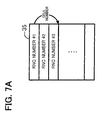
- Fig. 7A shows the configuration of the cell-to-RNC-conversion table 35 according to an embodiment of the present invention, where the cell-to-RNC-conversion table 35 is included in the VLR 14. Cells in the network are assigned respective cell numbers to identify them. In Fig. 7A , the cell-to-RNC-conversion table 35 is searched based on the cell numbers, and the number of an RNC taking charge of cells (RNC number) is registered with the cell-to-RNC-conversion table 35.
- RNC number the number of an RNC taking charge of cells
- Fig. 7B shows the configuration of the RNC-to-MSC-conversion table 36 according to an embodiment of the present invention, where the RNC-to-MSC-conversion table 36 is included in the VLR 14.
- the RNC-to-MSC-conversion table 36 is searched based on the RNC numbers, and the number of an MSC taking charge of the RNCs (MSC number) is registered with the RNC-to-MSC-conversion table 36.
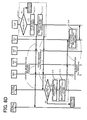
- FIG. 8A to 8D shows operation sequences of a registration method according to an embodiment of the present invention.
- new parts of the embodiment are surrounded by broken lines.
- the location-registration-cell-setting function 20 of the MS 10a performs the location-registration-cell-setting processing.
- Fig. 9 is a flowchart of location-registration-cell-setting processing of a mobile station (MS) according to the embodiment of the present invention.
- Fig. 9 it is determined whether the MS requires to register itself, i.e. whether or not the location registration is performed based on the processing type, at step S40. If it is determined that registration is required, data on the cell number of a received radio wave (for example, a cell ID decoded by the MS from BTS transmissions it has intercepted) is set in a location-registration request, as cell information, and transmitted, at step S41. If the processing type does not indicate the location registration, existing processing including originating-call processing, incoming-call processing, etc. is performed, at step S42.
- data on the cell number of a received radio wave for example, a cell ID decoded by the MS from BTS transmissions it has intercepted
- the processing type does not indicate the location registration, existing processing including originating-call processing, incoming-call processing, etc. is performed, at step S42.
- the cell information is set in the location-registration request transmitted, at step S1 shown in Fig. 8A , and transmitted to the MSC 13a via the BTS 11c and the RNC 12b.
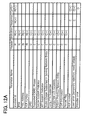
- parameter information set in a location-registration request of radio-resource-control (RRC) protocol is shown in Fig. 10A , where RRC protocol is equivalent to MM protocol.
- RRC protocol radio-resource-control
- cell information and a forced flag are provided, as parameters, in addition to existing information from a protocol discriminator to a PDP context status, and a received cell number is set, as the cell information.
- the location-registration-new-information-setting function 25 performs the location-registration-new-information-setting processing, at step S2 shown in Fig. 8A .
- Fig. 11 is a flowchart of location-registration-new-information-setting processing of a mobile-switching center (MSC) according to the embodiment of the present invention.
- Fig. 11 it is determined whether or not the location-registration request is made based on the processing type of a reception signal, at step S45. If the location-registration request is made, it is determined whether or not the cell information and/or the forced flag is set in the transmitted location-registration request, at step S46. If the cell information and/or the forced flag is set in the location-registration request shown in Fig. 10A , the cell information and/or the forced flag is set in a location-registration request of a MAP protocol shown in Fig. 12A and transmitted to the VLR 14, at step S47. If the processing type does not indicate the location registration, existing processing including the originating-call processing, the in-coming-call processing, etc. is performed, at step S48. Here, the cell information, the forced flag, and data on a user error (temporary rejection) are provided in the location-registration request of the MAP protocol shown in Fig. 12A , as parameters.
- the cell information and/or the forced flag is reconfigured in the location-registration request transmitted from an MSC#1 to the VLR 14, and the location-registration request is transmitted to the VLR 14, at step S2 shown in Fig. 8A .
- the VLR-capability-determination function 30 of the VLR 14 Upon receiving the above-described location-registration request, the VLR-capability-determination function 30 of the VLR 14 performs the VLR-capability-determination processing, so as to determine whether or not it can register the MS, in other words whether the own device has the capability of performing the location registration, at step S3 shown in Fig. 8A . Namely, the VLR-capability-determination function 30 determines whether or not the in-area-subscriber-registration table shown in Fig. 6 has a vacancy. If the VLR does not have the capability of performing the location registration, the VLR-capability-determination function 30 responds that it cannot register the MS. Otherwise, the VLR-capability-determination function 30 advances to step S4 shown in Fig. 8B .
- the VLR 14 retrieves the cell information from the transmitted location-registration request and advances to step S5, and the node-capability-determination function 31 of the VLR 14 performs the node-capability-determination processing.
- Fig. 13 is a flowchart of node-capability-determination processing of a visitor-location register (VLR) according to the embodiment of the present invention.
- VLR visitor-location register
- the cell-to-RNC-conversion table 35 is searched based on the cell number of the cell information retrieved from the location-registration request, at step S50, so as to obtain the RNC number corresponding to the cell number. Further, at step S51, the RNC-to-MSC-conversion table 36 is searched based on the RNC number, and the MSC number corresponding to the RNC number is acquired.
- the in-area-subscriber-registration table 34 is searched based on the MSC number acquired by searching the above-described RNC-to-MSC-conversion table 36, at step S52. Further, at step S53, it is determined whether or not the location-registration number of the RNC table corresponding to the MSC number is smaller than the location-registration-allowable number thereof. Namely, it is determined whether or not being located in a controlled area (in other words, an additional registration within a defined area such as all the cells served by that MS) is allowed.
- the in-area-subscriber-registration table 34 is searched based on the RNC number and the MSC number that are acquired by searching the above-described cell-to-RNC-conversion table 35 and RNC-to-MSC-conversion table 36, at step S55. Then, it is determined whether or not the location-registration number of the MS table corresponding to the RNC number is smaller than the location-registration-allowable number, at step S56. Namely, it is determined whether or not being located in a controlled area (e.g. the area formed by the cells served by that RNC) is allowed.
- a controlled area e.g. the area formed by the cells served by that RNC
- the location registration is performed according to the transmitted location-registration request, and a location-registration response is transmitted to the MS 10a, at step S57. Further, the location-registration number of each of the MSC table 20a and the RNC table 20b that are included in the in-area-subscriber-registration table 34 is updated, and the MS table 20c is updated, at step S58, and the processing is terminated.
- step S53 and/or step S56 "temporary rejection" is set in cause information of the location registration, at step S59, and a location-registration response including "temporary rejection” as cause information thereof, which means rejecting the transmitted location-registration request, is transmitted to the MS 10a, at step S60, and the processing is finished.
- Figs. 8A to 8D when the above-described location-registration response is transmitted from the VLR 14 to the MS 10a, the location-registration response is subjected to protocol conversion in the MSC 13a provided between the VLR 14 and the MS 10a.
- the location-registration response transmitted and/or received between the VLR and the MSC is equivalent to the location-registration request shown in Fig. 12A .
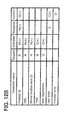
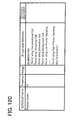
- Fig. 10B shows the cause information set in the location-registration response transmitted and/or received between the MSC and the MS.
- the above-described "temporary rejection" is newly set according to an embodiment of the present invention.
- Fig. 8B when the location-registration response including the cause information indicating "temporary rejection" is transmitted to the MS 10a, the re-location-registration-request function 21 and the forced-location-registration-cell-setting function 22 perform location-registration-new-information-setting processing, at step S6 shown in Fig. 8C .
- Fig. 14 is a flowchart of re-location-registration-request processing and location-registration-cell-setting processing of a mobile station (MS) according to the embodiment of the present invention.
- the re-location-registration-request function 21 determines whether or not the cause information of the received location-registration response indicates "temporary rejection", at step S70. If the cause information does not indicate "temporary rejection", the re-location-registration-request function 21 performs normal processing, that is, the location-registration processing, at step S71.
- step S72 it is determined whether the MS can be registered to another cell. That is, it is determined whether or not a next selection cell (a cell whose BTS signal strength at the MS is second in reception-radio-wave intensity after the cell for which the MS was temporarily rejected, and which is not itself temporarily rejected) exists, at step S72. If the next selection cell exists, the cell number of the next selection cell is set in the location-registration request, as cell information, at step S73, and the location-registration request is transmitted, at step S74.
- step S73 corresponds to step S7 shown in Fig. 8C .
- the forced-location-registration-cell-setting function 22 sets a forced flag, which is information indicating to the visitor-location register (VLR) that location registration of the mobile station (MS) should be done by force, at step S75, sets the cell number of an arbitrary cell that can receive a radio wave in the location-registration request, as the cell information, at step S76, and transmits the location-registration request, at step S77.
- VLR visitor-location register
- S76 sets the cell number of an arbitrary cell that can receive a radio wave in the location-registration request, as the cell information, at step S76, and transmits the location-registration request, at step S77.
- the above-described steps S75 and S76 correspond to step S8 shown in Fig. 8C .
- the location-registration-new-information-setting function 25 of the MSC 13a performs the location-registration-new-information-setting processing, at step S9 shown in Fig. 8C .
- the location-registration-new-information-setting processing is illustrated in Fig. 11 .
- the VLR 14 Upon receiving the location-registration request transmitted from the MSC 13a, the VLR 14 determines whether or not the location-registration request includes the forced flag, which means forcing location registration, at step S10 shown in Fig. 8D . If the location-registration request includes the forced flag, the in-area-subscriber-setting function 33 performs the in-area-subscriber-setting processing, at step S11 in Fig. 8D , and the in-area-subscriber-thinning-out function 32 performs the in-area-subscriber-thinning-out processing, at step S12 in Fig. 8D .
- the forced flag which means forcing location registration
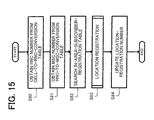
- Fig. 15 is a flowchart of in-area-subscriber-setting processing of a visitor-location register (VLR) according to the embodiment of the present invention.
- VLR visitor-location register
- the cell-to-RNC-conversion table 35 is searched based on the cell number of cell information retrieved from the location-registration request and the RNC number corresponding to the cell number is acquired, at step S80. Further, the RNC-to-MSC-conversion table 36 is searched based on the RNC number and the MSC number corresponding to the RNC number is acquired, at step S81.
- the in-area-subscriber-registration table 34 is searched based on the RNC number and the MSC number that are acquired by searching the above-described cell-to-RNC-conversion table 35 and RNC-to-MSC-conversion table 36, at step S82, location registration is performed according to the transmitted location-registration request and the location-registration response is transmitted to the MS 10a, at step S83, the location-registration number of each of the MSC table 20a and the RNC table 20b of the in-area-subscriber-registration table 34 is updated, and the MS table 20c is updated, at step S84, to finish the processing.
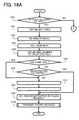
- Figs. 16A to 16B are a flowchart of in-area-subscriber-thinning-out processing of a visitor-location register (VLR) according to the embodiment of the present invention.
- Thinning out means ejecting one or more subscribers from a controlled area of the network in order to permit a new subscriber to register.
- the in-area-subscriber-registration table 34 is searched based on the MSC number acquired by performing the processing shown in Fig. 15 , and it is determined whether or not the location-registration number of the MSC corresponding to the MSC number acquired is smaller than the location-registration-allowable number. Namely, it is determined whether the MSC has capacity to register any more MSs (whether or not being located in a controlled area of the MSC is allowed).
- step S91 If being located in a controlled area is allowed in the MSC, the processing advances to step S91, so as to search for an RNC which can thin out in-area subscribers of the MSC (or in other words, de-register one or more MSs whose locations have already been registered to the MSC).
- the in-area-subscriber-registration table 34 is searched based on the RNC number and MSC number corresponding to an MS that made a request for the forced-location registration, where the RNC number and the MSC number are acquired through the processing shown in Fig. 15 , and the applicable MS table 20c is acquired.
- Fig. 2 shows the MS 10a that is located in cells #4, #5, #6, and #7 which are controlled by the RNC 12b, and that performs the forced-location registration, as a model.
- the loop of steps S92, S93, S94, S95, S96, S97, and S98 is performed for each of MSs located in a controlled area of the RNC 12b, and the loop of steps S93 to S97 is performed for each of MSs located in the cells #4, #5, #6, and #7.
- step S94 one of cell numbers of the cells #4, #5, #6, and #7 where the MS 10a that performed the forced-location registration is located is selected, and the RNC number is read by searching the cell-to-RNC-conversion table 35 shown in Fig. 7A based on the selected cell number.
- step S95 it is determined whether or not the read RNC number is equivalent to the RNC number (#2) corresponding to the MS that made a request for the forced-location registration.
- step S95 the answer to the processing performed at step S95 is NO. If the RNC number is #2, the answer to the processing performed at step S95 is YES. If the read RNC number is equivalent to the RNC number (#2), the processing advances to step S97.
- the RNC table 20b shown in Fig. 6 is searched based on the RNC numbers (#1 and #3) acquired by searching the cell-to-RNC-conversion table 35 shown in Fig. 7A , and it is determined whether or not being located in a controlled area is allowed based on the location-registration-allowable number and the location-registration number of the corresponding RNC, at step S96.
- the location-registration-allowable number is larger than the location-registration number, being located in a controlled area is allowed. If being located in a controlled area is not allowed, the processing advances to step S97, and if being located in a controlled area is allowed, the processing advances to step S99.
- step S99 one of MSs located in the cell corresponding to the selected cell number (other than the MS 10a that made the request for the forced-location registration) is selected, and "new registration" is set in cause information of a paging request, so as to thin out the selected MS.
- step S100 the paging request including the cause information of "new registration” is transmitted to the selected MS.
- the above-described paging request is transmitted from the VLR 14 to the MS 10a, and subjected to protocol conversion in the MSC 13a provided between the VLR 14 and the MS 10a, though not shown in Fig. 8D .
- Fig. 12B shows the cause information of the paging request transmitted and/or received between the VLR and the MSC
- Fig. 12C shows the cause information of the paging request transmitted and/or received between the MSC and the MS.
- the above-described "new registration" is newly set according to an embodiment of the present invention.
- step S90 the processing advances to step S101, so as to search for an MSC which can thin out the in-area subscriber of an MSC other than the above-described MSC.
- step S101 the in-area-subscriber-registration table 34 is searched based on the MSC number corresponding to the MS that made the request for the forced-location registration, where the MSC number is acquired through the processing shown in Fig. 15 , and an applicable RNC table is obtained.
- Fig. 2 shows the MS 10b that is located in cells #1, #2, #3, #4, #5, #6, and #7 which are controlled by the MSCs 13a and 13b, and that performs the forced-location registration, as a model.
- the loop of steps S102, S103, S104, S105, S106, S107, S108, S109, and S110 is performed for each of RNCs 12a, 12b, and 12c that are placed under the control of the MSCs 13a and 13b, the loop of steps S103 to S109 is performed for each of MSs located in a controlled area of the RNCs 12a to 12c, and the loop of steps S104 to S108 is performed for each of the cells #1 to #7.
- step S105 one of the cell numbers of the cells #1 to #7 where the MS 10b that performed the forced-location registration is located is selected, and the cell-to-RNC-conversion table 35 shown in Fig. 7A and the RNC-to-MSC-conversion table 36 shown in Fig. 7B are searched based on the selected cell number, so as to obtain the MSC number. Further, at step S106, it is determined whether or not the obtained MSC number is equivalent to the MSC number (#1) of the MS 10b that made the request for the forced-location registration.
- the processing advances to step S108.
- the MSC table 20a shown in Fig. 6 is searched based on the MSC number (#2) acquired by searching the cell-to-RNC-conversion table 35 shown in Fig. 7A and the RNC-to-MSC-conversion table 36 shown in Fig. 7B , and it is determined whether or not being located in the MSC is allowed based on the location-registration-allowable number and the location-registration number of the corresponding MSC, at step S107.
- the location-registration-allowable number is larger than the location-registration number, being located in a controlled area of the MSC is allowed. If being located in a controlled area of the MSC is not allowed, the processing advances to step S108, and if being located in a controlled area of the MSC is allowed, the processing advances to step S111.
- step S111 one of MSs located in the cell corresponding to the selected cell number selected at step S104, (other than the MS 10b that made the request for the forced-location registration) is selected, and "new registration" is set in the cause information of a paging request, so as to thin out the selected MS.
- the cause information is transmitted to the MS selected above.
- Fig. 13B shows the cause information of the paging request transmitted and/or received between the VLR and the MSC
- Fig. 13C shows the cause information of the paging request transmitted and/or received between the MSC and the MS.
- the MS Upon receiving the above-described paging request transmitted from the VLR 14, the MS determines whether or not the cause information of the paging request indicates "new registration", at step S13 shown in Fig. 8D . If the cause information indicates "new registration", a new-paging function 23 performs new-paging-request processing, at step S14, and the location-registration-cell-setting function 20 performs the location-registration-cell-setting processing, at step S15.
- Fig. 17 is a flowchart of new-paging-request processing of a mobile station (MS) according to the embodiment of the present invention.
- Fig. 17 it is determined whether or not the cause information of the received paging request indicates "new registration", at step S120. If the cause information does not indicate "new registration", existing processing, that is, paging processing is performed, at step S121.
- the cause information indicates "new registration”
- an arbitrary cell other than a cell for which location registration is currently done is selected from among cells for which location registration can be done, and the number of the selected cell is set in a location-registration request, as the cell information, at step S122. Then, the location-registration request is transmitted, at step S123.
- the location-registration-cell-setting processing performed at step S15 in Fig. 8D is illustrated in Fig. 9 .
- the MS 10b that received the above-described paging request transmitted from the VLR 14 selects the cell #7
- cell information (cell number #7) is set in a location-registration request transmitted, at step S15 in Fig. 8D
- the location-registration request is transmitted to the MSC 13b via the BTS 11d and the RNC 12c.
- the MSC 13b performs the location-registration-new-information-setting processing shown in Fig. 11 , at step S16 in Fig. 8D .
- a registration request is transmitted from a MS, it is determined whether or not registration in a controlled area is allowed for each of the MSCs and the RNCs. If registration is not allowed, re-location registration is attempted for a cell placed under control of another RNC. Further, if registration to a controlled area of one of the MSCs is not allowed, re-location registration is performed for a cell placed under control of another MSC. If it is not possible to perform such re-location registration, forced-location registration is performed to re-register a different MS with another cell. Subsequently, it becomes possible to decrease the state where originating calls are made with difficulty (the proportion of failed calls) when subscribers are concentrated in a predetermined area.
- in-area subscribers are distributed more evenly over neighbouring cells so that the concentration of originating calls in a predetermined area is avoided. Further, when investing in an RNC and exchanges including an MSC, etc., a large-scale facility ready for the concentration of accesses from subscribers in a predetermined area is not required. Therefore, the amount of hardware resources required to implement a wireless communication system can be decreased.
Landscapes
- Engineering & Computer Science (AREA)
- Databases & Information Systems (AREA)
- Computer Networks & Wireless Communication (AREA)
- Signal Processing (AREA)
- Mobile Radio Communication Systems (AREA)
Abstract
Description
- The present invention relates to a method of registering subscriber stations in a cellular wireless communication system and a device therefor, and for example relates to registering the location of a mobile station in such a communication system or network.
-
Fig. 1 shows example operation sequences of a registration method used for a known mobile communication system. InFig. 1 , a registration request (also called a location-registration request) transmitted from amobile station 1 arrives at a visitor-location register (VLR) 4 via a radio-network controller (RNC) 2 and a mobile-switching center (MSC) 3. Hereinafter, the term "visitor" indicates an in-area subscriber. - The
VLR 4 determines whether or not the above-described registration can be performed, in other words, whether the MS making the request can be served by the area of the network controlled by the VLR. If yes, the VLR 4 performs the registration and notifies themobile station 1 that the registration is finished (that the "location" of the MS is now known to the network). If not, the VLR 4 notifies themobile station 1 that it is unable to join the network at this time. - In the known mobile-communication system, the number of in-area subscribers registering the locations of mobile stations (capable of receiving service in that area of the network) depends on the capacity of the VLR functioning as a visited-network-location-registration database, and regulation synchronized with call processing is not performed when the location registration is performed.
- Further, according to
Japanese Unexamined Patent Application Publication No. 10-285276 - When registrations performed for originating calls and/or incoming calls made by in-area subscribers are concentrated within a given time period, the capacity of an exchange including the MSC, the RNC, etc. is exceeded, so that it may become impossible to make another originating call and/or exchange failure may occur.
- Further, the in-area location of a subscriber basically depends on the intensity of a transmitted radio wave and the movement of a person, and subscribers are often concentrated in a predetermined area. In that case, the capacity of a base-transceiver station (BTS) and/or the RNC is exceeded, so that it becomes impossible to make an originating call (place a new call).
- Further, cell information managed by an exchange including the known MSC, RNC, etc. is not managed by the VLR which is a higher-order step due to an insufficient memory capacity.
- Accordingly, the present invention provides a method for registering mobile stations (MS) in a mobile communication system which includes a base-transceiver station (BTS), a visitor-location register (VLR), and controllers for controlling the mobile stations (MS), the controllers including at least one mobile-switching center (MSC) each controlling at least one radio-network controller (RNC).
- According to one aspect of the present invention, there is provided a method comprising providing the visitor-location register (VLR) with an in-area-subscriber-registration table including a location-registration number of the controllers, a location-registration-allowable number of the controllers, and cell information of the mobile station (MS), the location-registration number being the number of mobile stations which the controllers are currently controlling, the location-registration-allowable number being the number of mobile stations allowable for the controllers to control, the cell information of the mobile station (MS) including a cell number of a cell in which the mobile station (MS) is located, transmitting, by the mobile station (MS), to the visitor-location register (VLR), a location-registration request including cell information received from a radio wave transmitted from the base-transceiver station (BTS), determining, by the visitor-location register (VLR), whether or not the mobile station (MS) is allowed to be located in a controlled area of the controllers, on the basis of the location-registration number of the controller, the location-registration-allowable number of the controller, and the cell information of the mobile station (MS), updating, by the visitor-location register (VLR), the location-registration number of the controllers and the cell information of the mobile station (MS) when the mobile station (MS) is allowed to be located in a controlled area of the controllers, transmitting, by the visitor-location register (VLR), to the mobile station (MS), a location registration response indicating temporary rejection of a cell indicated by the cell information included in the location-registration request, when the mobile station (MS) is not allowed to be located in a controlled area of the controllers, and transmitting, by the mobile station (MS), to the visitor-location register (VLR), a location-registration request including cell information of a next-selection cell which is a cell that is not temporarily rejected by the visitor-location register (VLR) and has a reception radio wave with high intensity second to the temporarily rejected cell.
- The above method may further comprise transmitting, by the mobile station (MS), to the visitor-location register (VLR), a location-registration request including a forced flag and cell information of a cell corresponding an arbitrary base-transceiver station (BTS) from which the mobile station (MS) is able to receive a radio wave, when the next-selection cell does not exist, the forced flag indicating to the visitor-location register (VLR) that location registration of the mobile station (MS) should be done by force, updating, by the visitor-location register (VLR), the location-registration number of the controllers and cell information of the mobile station (MS) upon receiving the location-registration request including the forced flag with ON value, transmitting, by the visitor-location register (VLR), a paging request indicating new registration to the mobile station (MS), selecting, by the mobile station (MS), an arbitrary cell other than a cell for which location registration is currently done, from among cells for which location registration can be done, upon receiving the paging request indicating new registration from the visitor-location register (VLR), and transmitting, by the mobile station, a location-registration request including cell information of the selected arbitrary cell to the visitor-location register (VLR).
- In the above summary, "location registration" includes registration performed to enable a MS to join a network by being placed in communication with a BTS serving a cell in the network. This may serve to "locate" the MS as belonging to a particular cell. It may also "locate" the MS in a more literal sense by recording its current position. Also, the term "area" relates primarily to a part of a network topology and does not necessarily imply a distinct geographical area from other parts of the network. Cells in the network may be overlapping, potentially allowing the same MS to communicate with the BTS of more than one cell.
- Another aspect of the invention provides a mobile station for use in a wireless communication system, comprising: means for deriving cell information from signals transmitted from a base-transceiver station of the system, the cell information including a cell identifier; and registration-request means for transmitting a registration request including the cell identifier so derived to a visitor-location register of the system.
- According to the present invention, it becomes possible to increase the ability to make originating calls when subscribers are concentrated in a predetermined area.
- Reference is made, by way of example only, to the accompanying drawings in which:
-
Fig. 1 shows example operation sequences of a known location-registration method; -
Fig. 2 shows the configuration of a mobile communication system according to an embodiment of the present invention; -
Fig. 3 shows the functional configuration of a mobile station (MS) according to the embodiment of the present invention; -
Fig. 4 shows the functional configuration of a mobile-switching center (MSC) according to the embodiment of the present invention; -
Fig. 5 shows the functional configuration of a visitor-location register (VLR) according to the embodiment of the present invention; -
Fig. 6 shows an in-area-subscriber-registration table of a visitor-location register (VLR) according to the embodiment of the present invention; -
Fig. 7A shows a cell-to-RNC-conversion table according to the embodiment of the present invention; -
Fig. 7B shows an RNC-to-MSC-conversion table according to the embodiment of the present invention; -
Figs. 8A to 8D show operation sequences of a location-registration method according to the embodiment of the present invention; -
Fig. 9 is a flowchart of location-registration-cell-setting processing of a mobile station (MS) according to the embodiment of the present invention; -
Fig. 10A shows parameter information according to the embodiment of the present invention; -
Fig. 10B shows cause information according to the embodiment of the present invention; -
Fig. 11 is a flowchart of location-registration-new-information-setting processing of a mobile-switching center (MSC) according to the embodiment of the present invention; -
Fig. 12A shows parameter information according to the embodiment of the present invention; -
Fig. 12B shows other parameter information according to the embodiment of the present invention; -
Fig. 12C shows cause information according to the embodiment of the present invention; -
Fig. 13 is a flowchart of node-capability-determination processing of a visitor-location register (VLR) according to the embodiment of the present invention; -
Fig. 14 is a flowchart of re-location-registration-request processing and location-registration-cell-setting processing of a mobile station (MS) according to the embodiment of the present invention; -
Fig. 15 is a flowchart of in-area-subscriber-setting processing of a visitor-location register (VLR) according to the embodiment of the present invention; -
Figs. 16A to 16B are flowcharts of in-area-subscriber-thinning-out processing of a visitor-location register (VLR) according to the embodiment of the present invention; and -
Fig. 17 is a flowchart of new-paging-request processing of a mobile station (MS) according to the embodiment of the present invention. - Hereinafter, embodiments of the present invention will be described with reference to the attached drawings.
-
Fig. 2 shows the configuration of a mobile communication system (cellular wireless communication system) according to an embodiment of the present invention.Fig. 2 schematically shows the mobile communication system including mobile stations (MS) 10a and 10b, and base-transceiver stations (BTS) 11a, 11b, 11c, 11d, and 11e, and radio-network controllers (RNC) 12a, 12b, and 12c that generate (constitute) a wireless-access network. The system further includes mobile-switching centers (MSC) 13a and 13b, and a visitor-location register (VLR) 14 that generate a core network. - The BTSs 11a to 11e of the wireless-access network are wirelessly connected to the MSs 10a and 10b. The BTSs 11a to 11e are connected to the MSCs 13a and 13b of the core network via the
RNCs 12a to 12c. The BTSs serve corresponding cells (in this example, two cells per BTS) of the system. - The
MSCs VLR 14 stores information about the location-registration-allowable number (number of mobile stations capable of being handled) and location-registration number (number of mobile stations currently recorded) of each of theMSCs RNCs 12a to 12c, and cell information of each of theMSs -
Fig. 3 shows the functional configuration of a mobile station (MS) according to an embodiment of the present invention. InFig. 3 , theMS 10 includes a location-registration-cell-settingfunction 20 provided to perform location-registration-cell-setting processing, a re-location-registration-request function 21 provided to perform re-location-registration-request processing, a forced-location-registration-cell-settingfunction 22 provided to perform location-registration-new-information-setting processing, and a new-paging function 23, as new functions. -
Fig. 4 shows the functional configuration of an mobile-switching center (MSC) according to an embodiment of the present invention. InFig. 4 , theMSC 13 includes a location-registration-new-information-setting function 25 provided to perform location-registration-new-information-setting processing, as a new function. -
Fig. 5 shows the functional configuration of a visitor-location register (VLR) according to an embodiment of the present invention. InFig. 5 , theVLR 14 includes a VLR-capability-determination function 30 provided to perform VLR-capability-determination processing, a node-capability-determination function 31 provided to perform node-capability-determination processing, an in-area-subscriber-thinning-out function 32 provided to perform in-area-subscriber-thinning-out processing, an in-area-subscriber-settingfunction 33 provided to perform in-area-subscriber-setting processing, an in-area-subscriber-registration table 34, and a cell-to-RNC-conversion table 35, and an RNC-to-MSC-conversion table 36, as new functions. -
Fig. 6 shows the configuration of the in-area-subscriber-registration table 34 according to an embodiment of the present invention, where the in-area-subscriber-registration table 34 is included in theVLR 14. InFig. 6 , the in-area-subscriber-registration table 34 has a hierarchical structure including a MSC table 20a, an RNC table 20b, and an MS table 20c. - The MSC table 20a is searched based on (indexed using) the exchange numbers (MSC numbers), and the RNC-table address of each of the RNCs, the location-registration-allowable number of each of the RNCs (the capacity or fixed value of each of the RNCs), and the location-registration number (number of MS currently served, a variable value) of each of the RNCs are registered.
- The RNC table 20b is searched based on the RNC numbers (e.g. an ID number of each RNC), and the MS-table address of each of the BTSs, the location-registration-allowable number of each of the BTSs (the fixed value of each of the BTSs), and the location-registration number (a variable value) of each of the BTSs are registered.
- The MS table 20c is searched based on the MS number (e.g. an identifier such as an MSID), and the number of a cell where the MS corresponding to the MS number is located is registered.
-
Fig. 7A shows the configuration of the cell-to-RNC-conversion table 35 according to an embodiment of the present invention, where the cell-to-RNC-conversion table 35 is included in theVLR 14. Cells in the network are assigned respective cell numbers to identify them. InFig. 7A , the cell-to-RNC-conversion table 35 is searched based on the cell numbers, and the number of an RNC taking charge of cells (RNC number) is registered with the cell-to-RNC-conversion table 35. -
Fig. 7B shows the configuration of the RNC-to-MSC-conversion table 36 according to an embodiment of the present invention, where the RNC-to-MSC-conversion table 36 is included in theVLR 14. InFig. 7B , the RNC-to-MSC-conversion table 36 is searched based on the RNC numbers, and the number of an MSC taking charge of the RNCs (MSC number) is registered with the RNC-to-MSC-conversion table 36. - Each of
Figs. 8A to 8D shows operation sequences of a registration method according to an embodiment of the present invention. In each ofFigs. 8 and9 , new parts of the embodiment are surrounded by broken lines. At step S1 shown inFig. 8A , the location-registration-cell-settingfunction 20 of theMS 10a performs the location-registration-cell-setting processing. -
Fig. 9 is a flowchart of location-registration-cell-setting processing of a mobile station (MS) according to the embodiment of the present invention. - In
Fig. 9 , it is determined whether the MS requires to register itself, i.e. whether or not the location registration is performed based on the processing type, at step S40. If it is determined that registration is required, data on the cell number of a received radio wave (for example, a cell ID decoded by the MS from BTS transmissions it has intercepted) is set in a location-registration request, as cell information, and transmitted, at step S41. If the processing type does not indicate the location registration, existing processing including originating-call processing, incoming-call processing, etc. is performed, at step S42. - Subsequently, the cell information is set in the location-registration request transmitted, at step S1 shown in
Fig. 8A , and transmitted to theMSC 13a via theBTS 11c and theRNC 12b. Here, parameter information set in a location-registration request of radio-resource-control (RRC) protocol is shown inFig. 10A , where RRC protocol is equivalent to MM protocol. In the location-registration request, cell information and a forced flag are provided, as parameters, in addition to existing information from a protocol discriminator to a PDP context status, and a received cell number is set, as the cell information. - When the location-registration request is transmitted to the
MSC 13a, the location-registration-new-information-setting function 25 performs the location-registration-new-information-setting processing, at step S2 shown inFig. 8A . -
Fig. 11 is a flowchart of location-registration-new-information-setting processing of a mobile-switching center (MSC) according to the embodiment of the present invention. - In
Fig. 11 , it is determined whether or not the location-registration request is made based on the processing type of a reception signal, at step S45. If the location-registration request is made, it is determined whether or not the cell information and/or the forced flag is set in the transmitted location-registration request, at step S46. If the cell information and/or the forced flag is set in the location-registration request shown inFig. 10A , the cell information and/or the forced flag is set in a location-registration request of a MAP protocol shown inFig. 12A and transmitted to theVLR 14, at step S47. If the processing type does not indicate the location registration, existing processing including the originating-call processing, the in-coming-call processing, etc. is performed, at step S48. Here, the cell information, the forced flag, and data on a user error (temporary rejection) are provided in the location-registration request of the MAP protocol shown inFig. 12A , as parameters. - Subsequently, the cell information and/or the forced flag is reconfigured in the location-registration request transmitted from an
MSC# 1 to theVLR 14, and the location-registration request is transmitted to theVLR 14, at step S2 shown inFig. 8A . - Upon receiving the above-described location-registration request, the VLR-capability-
determination function 30 of theVLR 14 performs the VLR-capability-determination processing, so as to determine whether or not it can register the MS, in other words whether the own device has the capability of performing the location registration, at step S3 shown inFig. 8A . Namely, the VLR-capability-determination function 30 determines whether or not the in-area-subscriber-registration table shown inFig. 6 has a vacancy. If the VLR does not have the capability of performing the location registration, the VLR-capability-determination function 30 responds that it cannot register the MS. Otherwise, the VLR-capability-determination function 30 advances to step S4 shown inFig. 8B . - At step S4 shown in
Fig. 8B , theVLR 14 retrieves the cell information from the transmitted location-registration request and advances to step S5, and the node-capability-determination function 31 of theVLR 14 performs the node-capability-determination processing. -
Fig. 13 is a flowchart of node-capability-determination processing of a visitor-location register (VLR) according to the embodiment of the present invention. - In
Fig. 13 , the cell-to-RNC-conversion table 35 is searched based on the cell number of the cell information retrieved from the location-registration request, at step S50, so as to obtain the RNC number corresponding to the cell number. Further, at step S51, the RNC-to-MSC-conversion table 36 is searched based on the RNC number, and the MSC number corresponding to the RNC number is acquired. - Further, the in-area-subscriber-registration table 34 is searched based on the MSC number acquired by searching the above-described RNC-to-MSC-conversion table 36, at step S52. Further, at step S53, it is determined whether or not the location-registration number of the RNC table corresponding to the MSC number is smaller than the location-registration-allowable number thereof. Namely, it is determined whether or not being located in a controlled area (in other words, an additional registration within a defined area such as all the cells served by that MS) is allowed.
- If being located in a controlled area is allowed, the in-area-subscriber-registration table 34 is searched based on the RNC number and the MSC number that are acquired by searching the above-described cell-to-RNC-conversion table 35 and RNC-to-MSC-conversion table 36, at step S55. Then, it is determined whether or not the location-registration number of the MS table corresponding to the RNC number is smaller than the location-registration-allowable number, at step S56. Namely, it is determined whether or not being located in a controlled area (e.g. the area formed by the cells served by that RNC) is allowed.
- If being located in a controlled area is allowed (if there is capacity for a further registration), the location registration is performed according to the transmitted location-registration request, and a location-registration response is transmitted to the
MS 10a, at step S57. Further, the location-registration number of each of the MSC table 20a and the RNC table 20b that are included in the in-area-subscriber-registration table 34 is updated, and the MS table 20c is updated, at step S58, and the processing is terminated. - On the other hand, if being located in an controlled area is not allowed, at step S53 and/or step S56, "temporary rejection" is set in cause information of the location registration, at step S59, and a location-registration response including "temporary rejection" as cause information thereof, which means rejecting the transmitted location-registration request, is transmitted to the
MS 10a, at step S60, and the processing is finished. - Although not shown in
Figs. 8A to 8D , when the above-described location-registration response is transmitted from theVLR 14 to theMS 10a, the location-registration response is subjected to protocol conversion in theMSC 13a provided between theVLR 14 and theMS 10a. Here, the location-registration response transmitted and/or received between the VLR and the MSC is equivalent to the location-registration request shown inFig. 12A .Fig. 10B shows the cause information set in the location-registration response transmitted and/or received between the MSC and the MS. The above-described "temporary rejection" is newly set according to an embodiment of the present invention. - In
Fig. 8B , when the location-registration response including the cause information indicating "temporary rejection" is transmitted to theMS 10a, the re-location-registration-request function 21 and the forced-location-registration-cell-settingfunction 22 perform location-registration-new-information-setting processing, at step S6 shown inFig. 8C . -
Fig. 14 is a flowchart of re-location-registration-request processing and location-registration-cell-setting processing of a mobile station (MS) according to the embodiment of the present invention. - In
Fig. 14 , the re-location-registration-request function 21 determines whether or not the cause information of the received location-registration response indicates "temporary rejection", at step S70. If the cause information does not indicate "temporary rejection", the re-location-registration-request function 21 performs normal processing, that is, the location-registration processing, at step S71. - If the cause information indicates "temporary rejection", it is determined whether the MS can be registered to another cell. That is, it is determined whether or not a next selection cell (a cell whose BTS signal strength at the MS is second in reception-radio-wave intensity after the cell for which the MS was temporarily rejected, and which is not itself temporarily rejected) exists, at step S72. If the next selection cell exists, the cell number of the next selection cell is set in the location-registration request, as cell information, at step S73, and the location-registration request is transmitted, at step S74. The above-described step S73 corresponds to step S7 shown in
Fig. 8C . - If no next selection cell exists, the forced-location-registration-cell-setting
function 22 sets a forced flag, which is information indicating to the visitor-location register (VLR) that location registration of the mobile station (MS) should be done by force, at step S75, sets the cell number of an arbitrary cell that can receive a radio wave in the location-registration request, as the cell information, at step S76, and transmits the location-registration request, at step S77. The above-described steps S75 and S76 correspond to step S8 shown inFig. 8C . - When the location-registration request is transmitted to the
MSC 13a, the location-registration-new-information-setting function 25 of theMSC 13a performs the location-registration-new-information-setting processing, at step S9 shown inFig. 8C . The location-registration-new-information-setting processing is illustrated inFig. 11 . - Upon receiving the location-registration request transmitted from the
MSC 13a, theVLR 14 determines whether or not the location-registration request includes the forced flag, which means forcing location registration, at step S10 shown inFig. 8D . If the location-registration request includes the forced flag, the in-area-subscriber-settingfunction 33 performs the in-area-subscriber-setting processing, at step S11 inFig. 8D , and the in-area-subscriber-thinning-out function 32 performs the in-area-subscriber-thinning-out processing, at step S12 inFig. 8D . -
Fig. 15 is a flowchart of in-area-subscriber-setting processing of a visitor-location register (VLR) according to the embodiment of the present invention. - In
Fig. 15 , the cell-to-RNC-conversion table 35 is searched based on the cell number of cell information retrieved from the location-registration request and the RNC number corresponding to the cell number is acquired, at step S80. Further, the RNC-to-MSC-conversion table 36 is searched based on the RNC number and the MSC number corresponding to the RNC number is acquired, at step S81. - Further, the in-area-subscriber-registration table 34 is searched based on the RNC number and the MSC number that are acquired by searching the above-described cell-to-RNC-conversion table 35 and RNC-to-MSC-conversion table 36, at step S82, location registration is performed according to the transmitted location-registration request and the location-registration response is transmitted to the
MS 10a, at step S83, the location-registration number of each of the MSC table 20a and the RNC table 20b of the in-area-subscriber-registration table 34 is updated, and the MS table 20c is updated, at step S84, to finish the processing. -
Figs. 16A to 16B are a flowchart of in-area-subscriber-thinning-out processing of a visitor-location register (VLR) according to the embodiment of the present invention. Thinning out means ejecting one or more subscribers from a controlled area of the network in order to permit a new subscriber to register. - In
Fig. 16A , at step S90, the in-area-subscriber-registration table 34 is searched based on the MSC number acquired by performing the processing shown inFig. 15 , and it is determined whether or not the location-registration number of the MSC corresponding to the MSC number acquired is smaller than the location-registration-allowable number. Namely, it is determined whether the MSC has capacity to register any more MSs (whether or not being located in a controlled area of the MSC is allowed). - If being located in a controlled area is allowed in the MSC, the processing advances to step S91, so as to search for an RNC which can thin out in-area subscribers of the MSC (or in other words, de-register one or more MSs whose locations have already been registered to the MSC). At step S91, the in-area-subscriber-registration table 34 is searched based on the RNC number and MSC number corresponding to an MS that made a request for the forced-location registration, where the RNC number and the MSC number are acquired through the processing shown in
Fig. 15 , and the applicable MS table 20c is acquired. - Here,
Fig. 2 shows theMS 10a that is located incells # 4, #5, #6, and #7 which are controlled by theRNC 12b, and that performs the forced-location registration, as a model. - The loop of steps S92, S93, S94, S95, S96, S97, and S98 is performed for each of MSs located in a controlled area of the
RNC 12b, and the loop of steps S93 to S97 is performed for each of MSs located in thecells # 4, #5, #6, and #7. - At step S94, one of cell numbers of the
cells # 4, #5, #6, and #7 where theMS 10a that performed the forced-location registration is located is selected, and the RNC number is read by searching the cell-to-RNC-conversion table 35 shown inFig. 7A based on the selected cell number. At step S95, it is determined whether or not the read RNC number is equivalent to the RNC number (#2) corresponding to the MS that made a request for the forced-location registration. - Here, if the RNC number acquired by searching the cell-to-RNC-conversion table 35 shown in
Fig. 7A based on the cell numbers is #1 and #3, the answer to the processing performed at step S95 is NO. If the RNC number is #2, the answer to the processing performed at step S95 is YES. If the read RNC number is equivalent to the RNC number (#2), the processing advances to step S97. - If the read RNC number is not equivalent to the RNC number (#2), the RNC table 20b shown in
Fig. 6 is searched based on the RNC numbers (#1 and #3) acquired by searching the cell-to-RNC-conversion table 35 shown inFig. 7A , and it is determined whether or not being located in a controlled area is allowed based on the location-registration-allowable number and the location-registration number of the corresponding RNC, at step S96. Here, if the location-registration-allowable number is larger than the location-registration number, being located in a controlled area is allowed. If being located in a controlled area is not allowed, the processing advances to step S97, and if being located in a controlled area is allowed, the processing advances to step S99. - At step S99, one of MSs located in the cell corresponding to the selected cell number (other than the
MS 10a that made the request for the forced-location registration) is selected, and "new registration" is set in cause information of a paging request, so as to thin out the selected MS. At step S100, the paging request including the cause information of "new registration" is transmitted to the selected MS. - Here, the above-described paging request is transmitted from the
VLR 14 to theMS 10a, and subjected to protocol conversion in theMSC 13a provided between theVLR 14 and theMS 10a, though not shown inFig. 8D .Fig. 12B shows the cause information of the paging request transmitted and/or received between the VLR and the MSC, andFig. 12C shows the cause information of the paging request transmitted and/or received between the MSC and the MS. The above-described "new registration" is newly set according to an embodiment of the present invention. - On the other hand, if the MSC cannot accept the registration, or in other words if being located in a controlled area is not allowed in the MSC, at step S90, the processing advances to step S101, so as to search for an MSC which can thin out the in-area subscriber of an MSC other than the above-described MSC. At step S101, the in-area-subscriber-registration table 34 is searched based on the MSC number corresponding to the MS that made the request for the forced-location registration, where the MSC number is acquired through the processing shown in
Fig. 15 , and an applicable RNC table is obtained. - Here,
Fig. 2 shows theMS 10b that is located incells # 1, #2, #3, #4, #5, #6, and #7 which are controlled by theMSCs - The loop of steps S102, S103, S104, S105, S106, S107, S108, S109, and S110 is performed for each of
RNCs MSCs RNCs 12a to 12c, and the loop of steps S104 to S108 is performed for each of thecells # 1 to #7. - At step S105, one of the cell numbers of the
cells # 1 to #7 where theMS 10b that performed the forced-location registration is located is selected, and the cell-to-RNC-conversion table 35 shown inFig. 7A and the RNC-to-MSC-conversion table 36 shown inFig. 7B are searched based on the selected cell number, so as to obtain the MSC number. Further, at step S106, it is determined whether or not the obtained MSC number is equivalent to the MSC number (#1) of theMS 10b that made the request for the forced-location registration. - Here, if the MSC number acquired by searching the cell-to-RNC-conversion table 35 shown in
Fig. 7A and the RNC-to-MSC-conversion table 36 shown inFig. 7B based on the cell numbers is #1, the answer is YES. If the MSC number is #2, the answer is NO. If the MSC number is equivalent to the MSC number (#1), the processing advances to step S108. - If the MSC number is not equivalent to the MSC number (#1), the MSC table 20a shown in
Fig. 6 is searched based on the MSC number (#2) acquired by searching the cell-to-RNC-conversion table 35 shown inFig. 7A and the RNC-to-MSC-conversion table 36 shown inFig. 7B , and it is determined whether or not being located in the MSC is allowed based on the location-registration-allowable number and the location-registration number of the corresponding MSC, at step S107. Here, if the location-registration-allowable number is larger than the location-registration number, being located in a controlled area of the MSC is allowed. If being located in a controlled area of the MSC is not allowed, the processing advances to step S108, and if being located in a controlled area of the MSC is allowed, the processing advances to step S111. - At step S111, one of MSs located in the cell corresponding to the selected cell number selected at step S104, (other than the
MS 10b that made the request for the forced-location registration) is selected, and "new registration" is set in the cause information of a paging request, so as to thin out the selected MS. At step S112, the cause information is transmitted to the MS selected above. - Here, the above-described paging request is transmitted from the
VLR 14 to theMS 10a, and subjected to protocol conversion in theMSC 13a provided between theVLR 14 and theMS 10a, though not shown inFig. 8D .Fig. 13B shows the cause information of the paging request transmitted and/or received between the VLR and the MSC, andFig. 13C shows the cause information of the paging request transmitted and/or received between the MSC and the MS. - Upon receiving the above-described paging request transmitted from the
VLR 14, the MS determines whether or not the cause information of the paging request indicates "new registration", at step S13 shown inFig. 8D . If the cause information indicates "new registration", a new-paging function 23 performs new-paging-request processing, at step S14, and the location-registration-cell-settingfunction 20 performs the location-registration-cell-setting processing, at step S15. -
Fig. 17 is a flowchart of new-paging-request processing of a mobile station (MS) according to the embodiment of the present invention. - In
Fig. 17 , it is determined whether or not the cause information of the received paging request indicates "new registration", at step S120. If the cause information does not indicate "new registration", existing processing, that is, paging processing is performed, at step S121. - If the cause information indicates "new registration", by receiving cell information from a BTS, an arbitrary cell other than a cell for which location registration is currently done is selected from among cells for which location registration can be done, and the number of the selected cell is set in a location-registration request, as the cell information, at step S122. Then, the location-registration request is transmitted, at step S123.
- The location-registration-cell-setting processing performed at step S15 in
Fig. 8D is illustrated inFig. 9 . For example, if theMS 10b that received the above-described paging request transmitted from theVLR 14 selects thecell # 7, cell information (cell number #7) is set in a location-registration request transmitted, at step S15 inFig. 8D , and the location-registration request is transmitted to theMSC 13b via theBTS 11d and theRNC 12c. TheMSC 13b performs the location-registration-new-information-setting processing shown inFig. 11 , at step S16 inFig. 8D . - Thus, when a registration request is transmitted from a MS, it is determined whether or not registration in a controlled area is allowed for each of the MSCs and the RNCs. If registration is not allowed, re-location registration is attempted for a cell placed under control of another RNC. Further, if registration to a controlled area of one of the MSCs is not allowed, re-location registration is performed for a cell placed under control of another MSC. If it is not possible to perform such re-location registration, forced-location registration is performed to re-register a different MS with another cell. Subsequently, it becomes possible to decrease the state where originating calls are made with difficulty (the proportion of failed calls) when subscribers are concentrated in a predetermined area.
- Accordingly, in-area subscribers are distributed more evenly over neighbouring cells so that the concentration of originating calls in a predetermined area is avoided. Further, when investing in an RNC and exchanges including an MSC, etc., a large-scale facility ready for the concentration of accesses from subscribers in a predetermined area is not required. Therefore, the amount of hardware resources required to implement a wireless communication system can be decreased.
Claims (7)
- A method for registering a location of a mobile station (MS) in a mobile-communication system including a base-transceiver station (BTS), a visitor-location register (VLR), and controllers for controlling the mobile station (MS), the controllers including at least one mobile-switching center (MSC) each controlling at least one radio-network controller (RNC), the method comprising:providing the visitor-location register (VLR) with an in-area-subscriber-registration table including a location-registration number of the controllers, a location-registration-allowable number of the controllers, and cell information of the mobile station (MS), the location-registration number being the number of mobile stations which the controllers are currently controlling, the location-registration-allowable number being the number of mobile stations allowable for the controllers to control, the cell information of the mobile station (MS) including a cell number of a cell in which the mobile station (MS) is located;transmitting, by the mobile station (MS), to the visitor-location register (VLR), a location-registration request including cell information received from a radio wave transmitted from the base-transceiver station (BTS);determining, by the visitor-location register (VLR), whether or not the mobile station (MS) is allowed to be located in a controlled area of the controllers, on the basis of the location-registration number of the controller, the location-registration-allowable number of the controller, and the cell information of the mobile station (MS);updating, by the visitor-location register (VLR), the location-registration number of the controllers and the cell information of the mobile station (MS) when the mobile station (MS) is allowed to be located in a controlled area of the controllers;transmitting, by the visitor-location register (VLR), to the mobile station (MS), a location registration response indicating temporary rejection of a cell indicated by the cell information included in the location-registration request, when the mobile station (MS) is not allowed to be located in a controlled area of the controllers; andtransmitting, by the mobile station (MS), to the visitor-location register (VLR), a location-registration request including cell information of a next-selection cell which is a cell that is not temporarily rejected by the visitor-location register (VLR) and has a reception radio wave with high intensity second to the temporarily rejected cell.
- The method of claim 1, further comprising:transmitting, by the mobile station (MS), to the visitor-location register (VLR), a location-registration request including a forced flag and cell information of a cell corresponding an arbitrary base-transceiver station (BTS) from which the mobile station (MS) is able to receive a radio wave, when the next-selection cell does not exist, the forced flag indicating to the visitor-location register (VLR) that location registration of the mobile station (MS) should be done by force;updating, by the visitor-location register (VLR), the location-registration number of the controllers and cell information of the mobile station (MS) upon receiving the location-registration request including the forced flag with ON value;transmitting, by the visitor-location register (VLR), a paging request indicating new registration to the mobile station (MS);selecting, by the mobile station (MS), an arbitrary cell other than a cell for which location registration is currently done, from among cells for which location registration can be done, upon receiving the paging request indicating new registration from the visitor-location register (VLR); andtransmitting, by the mobile station, a location-registration request including cell information of the selected arbitrary cell to the visitor-location register (VLR).
- A mobile station (MS) arranged in a mobile-communication system, comprising:means for receiving cell information from a radio wave transmitted from a base-transceiver station (BTS) arranged in the mobile-communication system, the cell information including a cell number of the radio wave; andlocation-registration-request means for transmitting a location-registration request including the cell information received from the radio wave transmitted from the base-transceiver station (BTS) to a visitor-location register (VLR) arranged in the mobile-communication system.
- The mobile station of claim 3, further comprising:re-location-registration-request means for transmitting a location-registration request including cell information received from a next-selection cell which is a cell that is not temporarily rejected by the visitor-location register (VLR) and has a reception radio wave with high intensity second to the temporarily rejected cell;forced-location-registration-cell-setting means for transmitting a location-registration request including a forced flag with ON value and cell information of an arbitrary cell from which the mobile station (MS) is able to receive a radio wave, when the next-selection cell does not exist.
- The mobile station of claim 4, further comprising:new-paging means for transmitting a location-registration request including cell information of the arbitrary cell to the visitor-location register (VLR), upon receiving the paging request indicating new registration from the visitor-location register (VLR).
- A mobile-communication system, comprising:a mobile station (MS);controllers for controlling the mobile station (MS), the controllers including at least one mobile-switching center (MSC) each controlling at least one radio-network controller (RNC); anda visitor-location register (VLR) for registering a location of the mobile station (MS), whereinthe visitor-location register (VLR) comprises:wherein the mobile-switching center (MSC) receives the location-registration request including cell information and/or the forced flag from the mobile station (MS), reconfigures the cell information and/or the forced flag included in the location-registration request, and transmits, to the visitor-location register (VLR), the location-registration request including the reconfigured cell information and/or the reconfigured forced flag.an in-area-subscriber-registration table including a location-registration number of the controllers, a location-registration-allowable number of the controllers, and cell information of the mobile station (MS), the location-registration number being the number of mobile stations which the controllers are currently controlling, the location-registration-allowable number being the number of mobile stations allowable for the controllers to control, the cell information of the mobile station (MS) including a cell number of a cell in which the mobile station (MS) is located;node-capability-determination means for determining whether or not the mobile station is allowed to be located in a controlled area of the controllers, on the basis of the location-registration number of the controllers, the location-registration-allowable number of the controllers, and the cell information of the mobile station (MS);updating means for updating the location-registration number of the controller and cell information of the mobile station (MS) upon receiving the location-registration request including a forced flag with ON value indicating that a location registration of the mobile station (MS) should be done by force; andmeans for transmitting, to the mobile station (MS), a location registration response indicating temporary rejection of a cell indicated by the cell information included in the location-registration request, when the mobile station (MS) is not allowed to be located in a controlled area of the controllers,
- The system of claim 6, wherein the visitor-location register (VLR) further comprising:means for updating the location-registration number of the controllers and cell information of the mobile station (MS) upon receiving the location-registration request including the forced flag; andmeans for transmitting a paging request indicating new registration to other mobile station locating in the same cell as the mobile station (MS) which has transmitted the location-registration request including the forced flag.
Applications Claiming Priority (1)
| Application Number | Priority Date | Filing Date | Title |
|---|---|---|---|
| JP2007007921A JP4884240B2 (en) | 2007-01-17 | 2007-01-17 | Location registration method and apparatus for mobile communication system |
Publications (2)
| Publication Number | Publication Date |
|---|---|
| EP1947885A1 true EP1947885A1 (en) | 2008-07-23 |
| EP1947885B1 EP1947885B1 (en) | 2015-04-22 |
Family
ID=39387192
Family Applications (1)
| Application Number | Title | Priority Date | Filing Date |
|---|---|---|---|
| EP20070123618 Not-in-force EP1947885B1 (en) | 2007-01-17 | 2007-12-19 | Registration of mobile stations in a wireless communication system |
Country Status (4)
| Country | Link |
|---|---|
| US (1) | US8000703B2 (en) |
| EP (1) | EP1947885B1 (en) |
| JP (1) | JP4884240B2 (en) |
| CN (1) | CN101227718B (en) |
Families Citing this family (4)
| Publication number | Priority date | Publication date | Assignee | Title |
|---|---|---|---|---|
| KR101398908B1 (en) * | 2007-05-22 | 2014-05-26 | 삼성전자주식회사 | Method and system for managing mobility in mobile telecommunication system using mobile ip |
| WO2009123235A1 (en) | 2008-03-31 | 2009-10-08 | 株式会社エヌ・ティ・ティ・ドコモ | Mobile communication method, mobile communication system, program, exchange station and specific radio base station |
| JP5052583B2 (en) * | 2009-04-10 | 2012-10-17 | 株式会社エヌ・ティ・ティ・ドコモ | Mobile communication method and mobile station |
| JP6901528B2 (en) * | 2016-08-26 | 2021-07-14 | Kddi株式会社 | Management server and management method |
Citations (4)
| Publication number | Priority date | Publication date | Assignee | Title |
|---|---|---|---|---|
| GB2297457A (en) | 1995-01-19 | 1996-07-31 | Motorola Israel Ltd | Radio system and method of control for efficient site load distribution |
| US6324399B1 (en) | 1996-09-17 | 2001-11-27 | Nokia Telecommunications Oy | Method and arrangement for controlling subscriber registrations in a mobile communication system |
| WO2001097548A1 (en) | 2000-06-14 | 2001-12-20 | Nokia Corporation | Method and system for performing a location registration |
| US20050255846A1 (en) | 1998-07-02 | 2005-11-17 | Takateru Shimbori | Method of subscriber data control in a mobile communication network |
Family Cites Families (8)
| Publication number | Priority date | Publication date | Assignee | Title |
|---|---|---|---|---|
| JP2833551B2 (en) * | 1995-11-10 | 1998-12-09 | 日本電気株式会社 | Forced handover method for mobile communication systems |
| JPH10257548A (en) * | 1997-03-11 | 1998-09-25 | Kokusai Electric Co Ltd | Wireless telephone system |
| JP3227103B2 (en) | 1997-03-31 | 2001-11-12 | 株式会社エヌ・ティ・ティ・ドコモ | Traffic control system for mobile communication |
| JP2000308116A (en) * | 1999-04-20 | 2000-11-02 | Sanyo Electric Co Ltd | Device and method for controlling communication |
| JP2001251683A (en) * | 2000-03-07 | 2001-09-14 | Hitachi Telecom Technol Ltd | High-speed data channel setting method by handover control |
| CN100558059C (en) * | 2003-09-22 | 2009-11-04 | 华为技术有限公司 | A method for controlling user service authority |
| JP4318520B2 (en) * | 2003-09-26 | 2009-08-26 | 富士通株式会社 | Terminal status control system |
| KR100651458B1 (en) | 2004-11-09 | 2006-11-29 | 삼성전자주식회사 | Method of Providing Time Information in Asynchronous Mobile Communication System |
-
2007
- 2007-01-17 JP JP2007007921A patent/JP4884240B2/en not_active Expired - Fee Related
- 2007-12-19 EP EP20070123618 patent/EP1947885B1/en not_active Not-in-force
-
2008
- 2008-01-07 US US12/007,094 patent/US8000703B2/en not_active Expired - Fee Related
- 2008-01-16 CN CN2008100013773A patent/CN101227718B/en not_active Expired - Fee Related
Patent Citations (4)
| Publication number | Priority date | Publication date | Assignee | Title |
|---|---|---|---|---|
| GB2297457A (en) | 1995-01-19 | 1996-07-31 | Motorola Israel Ltd | Radio system and method of control for efficient site load distribution |
| US6324399B1 (en) | 1996-09-17 | 2001-11-27 | Nokia Telecommunications Oy | Method and arrangement for controlling subscriber registrations in a mobile communication system |
| US20050255846A1 (en) | 1998-07-02 | 2005-11-17 | Takateru Shimbori | Method of subscriber data control in a mobile communication network |
| WO2001097548A1 (en) | 2000-06-14 | 2001-12-20 | Nokia Corporation | Method and system for performing a location registration |
Also Published As
| Publication number | Publication date |
|---|---|
| US20080171545A1 (en) | 2008-07-17 |
| EP1947885B1 (en) | 2015-04-22 |
| CN101227718B (en) | 2012-10-10 |
| JP2008177743A (en) | 2008-07-31 |
| JP4884240B2 (en) | 2012-02-29 |
| CN101227718A (en) | 2008-07-23 |
| US8000703B2 (en) | 2011-08-16 |
Similar Documents
| Publication | Publication Date | Title |
|---|---|---|
| US6119012A (en) | Method and system for dynamically and periodically updating mobile station location data in a telecommunications network | |
| EP0976271B1 (en) | Data packet radio service with enhanced mobility management | |
| EP3136800B1 (en) | Method for updating rplmn information, and user equipment | |
| US6104929A (en) | Data packet radio service with enhanced mobility management | |
| FI109638B (en) | Procedure for recording traffic data in a telecommunications system | |
| EP0888025B1 (en) | Method and apparatus for providing partitioned telecommunication service | |
| EP1153520B1 (en) | Method and apparatus in a telecommunications network comprising localised service areas, lsa | |
| CN106162777B (en) | Relay node switching method and system | |
| JP2002503932A (en) | Changing the service profile of a mobile subscriber | |
| US7069007B2 (en) | Radio switching system providing service restraining move of mobile subscriber, and mobile switching center adapted therefor | |
| WO2009128656A2 (en) | Method and system supporting handover from macro node b to home node b | |
| EP1947885B1 (en) | Registration of mobile stations in a wireless communication system | |
| EP2874420A1 (en) | Selecting imsi and provider operator based on preferences stored in a sim | |
| US20050227687A1 (en) | Method of controlling access rights in a cellular mobile radio communication system | |
| CN112822791B (en) | Information reporting and processing method, terminal, network side equipment and core network equipment | |
| JP3419386B2 (en) | Paging system and paging method | |
| JP7168746B1 (en) | Communication controller, method and system | |
| JP2007134841A (en) | Mobile communication system, radio network controller, and method of attaining caller positional information report function used therefor | |
| JP4705208B2 (en) | System and method for handling dropped calls | |
| KR20230165298A (en) | Wireless communication system, wireless communication method, wireless communication program | |
| US20120142326A1 (en) | Method and Apparatus for Triggering Group Intelligence Service of Mobile Access Hunting | |
| CN117320152B (en) | Paging device and method between 5G stations | |
| KR100292443B1 (en) | Method for registering a paging area in a wireless communication system and using the same | |
| WO2000045611A2 (en) | Handling of a digital wireless office system user profile | |
| JP5971094B2 (en) | MEASUREMENT SYSTEM, MEASUREMENT CONTROL DEVICE, AND MEASUREMENT METHOD |
Legal Events
| Date | Code | Title | Description |
|---|---|---|---|
| PUAI | Public reference made under article 153(3) epc to a published international application that has entered the european phase |
Free format text: ORIGINAL CODE: 0009012 |
|
| AK | Designated contracting states |
Kind code of ref document: A1 Designated state(s): AT BE BG CH CY CZ DE DK EE ES FI FR GB GR HU IE IS IT LI LT LU LV MC MT NL PL PT RO SE SI SK TR |
|
| AX | Request for extension of the european patent |
Extension state: AL BA HR MK RS |
|
| 17P | Request for examination filed |
Effective date: 20090119 |
|
| AKX | Designation fees paid |
Designated state(s): DE FR GB |
|
| REG | Reference to a national code |
Ref country code: DE Ref legal event code: R079 Ref document number: 602007041133 Country of ref document: DE Free format text: PREVIOUS MAIN CLASS: H04Q0007380000 Ipc: H04W0008060000 |
|
| RIC1 | Information provided on ipc code assigned before grant |
Ipc: H04W 48/04 20090101ALN20141110BHEP Ipc: H04W 8/18 20090101ALN20141110BHEP Ipc: H04W 8/06 20090101AFI20141110BHEP |
|
| GRAP | Despatch of communication of intention to grant a patent |
Free format text: ORIGINAL CODE: EPIDOSNIGR1 |
|
| INTG | Intention to grant announced |
Effective date: 20141219 |
|
| GRAS | Grant fee paid |
Free format text: ORIGINAL CODE: EPIDOSNIGR3 |
|
| GRAA | (expected) grant |
Free format text: ORIGINAL CODE: 0009210 |
|
| AK | Designated contracting states |
Kind code of ref document: B1 Designated state(s): DE FR GB |
|
| REG | Reference to a national code |
Ref country code: GB Ref legal event code: FG4D |
|
| REG | Reference to a national code |
Ref country code: DE Ref legal event code: R096 Ref document number: 602007041133 Country of ref document: DE Effective date: 20150603 |
|
| REG | Reference to a national code |
Ref country code: FR Ref legal event code: PLFP Year of fee payment: 9 |
|
| REG | Reference to a national code |
Ref country code: DE Ref legal event code: R097 Ref document number: 602007041133 Country of ref document: DE |
|
| PLBE | No opposition filed within time limit |
Free format text: ORIGINAL CODE: 0009261 |
|
| STAA | Information on the status of an ep patent application or granted ep patent |
Free format text: STATUS: NO OPPOSITION FILED WITHIN TIME LIMIT |
|
| 26N | No opposition filed |
Effective date: 20160125 |
|
| REG | Reference to a national code |
Ref country code: FR Ref legal event code: PLFP Year of fee payment: 10 |
|
| PGFP | Annual fee paid to national office [announced via postgrant information from national office to epo] |
Ref country code: FR Payment date: 20161111 Year of fee payment: 10 Ref country code: GB Payment date: 20161214 Year of fee payment: 10 Ref country code: DE Payment date: 20161213 Year of fee payment: 10 |
|
| REG | Reference to a national code |
Ref country code: DE Ref legal event code: R119 Ref document number: 602007041133 Country of ref document: DE |
|
| GBPC | Gb: european patent ceased through non-payment of renewal fee |
Effective date: 20171219 |
|
| REG | Reference to a national code |
Ref country code: FR Ref legal event code: ST Effective date: 20180831 |
|
| PG25 | Lapsed in a contracting state [announced via postgrant information from national office to epo] |
Ref country code: DE Free format text: LAPSE BECAUSE OF NON-PAYMENT OF DUE FEES Effective date: 20180703 Ref country code: FR Free format text: LAPSE BECAUSE OF NON-PAYMENT OF DUE FEES Effective date: 20180102 |
|
| PG25 | Lapsed in a contracting state [announced via postgrant information from national office to epo] |
Ref country code: GB Free format text: LAPSE BECAUSE OF NON-PAYMENT OF DUE FEES Effective date: 20171219 |