EP1945235B1 - Probiotics to influence fat metabolism and obesity - Google Patents
Probiotics to influence fat metabolism and obesity Download PDFInfo
- Publication number
- EP1945235B1 EP1945235B1 EP06799717A EP06799717A EP1945235B1 EP 1945235 B1 EP1945235 B1 EP 1945235B1 EP 06799717 A EP06799717 A EP 06799717A EP 06799717 A EP06799717 A EP 06799717A EP 1945235 B1 EP1945235 B1 EP 1945235B1
- Authority
- EP
- European Patent Office
- Prior art keywords
- probiotic
- product
- probiotic bacteria
- group
- lmg
- Prior art date
- Legal status (The legal status is an assumption and is not a legal conclusion. Google has not performed a legal analysis and makes no representation as to the accuracy of the status listed.)
- Active
Links
Images

Classifications
-
- A—HUMAN NECESSITIES
- A61—MEDICAL OR VETERINARY SCIENCE; HYGIENE
- A61K—PREPARATIONS FOR MEDICAL, DENTAL OR TOILETRY PURPOSES
- A61K35/00—Medicinal preparations containing materials or reaction products thereof with undetermined constitution
- A61K35/66—Microorganisms or materials therefrom
- A61K35/74—Bacteria
- A61K35/741—Probiotics
- A61K35/744—Lactic acid bacteria, e.g. enterococci, pediococci, lactococci, streptococci or leuconostocs
- A61K35/745—Bifidobacteria
-
- A—HUMAN NECESSITIES
- A61—MEDICAL OR VETERINARY SCIENCE; HYGIENE
- A61K—PREPARATIONS FOR MEDICAL, DENTAL OR TOILETRY PURPOSES
- A61K35/00—Medicinal preparations containing materials or reaction products thereof with undetermined constitution
- A61K35/66—Microorganisms or materials therefrom
- A61K35/74—Bacteria
-
- A—HUMAN NECESSITIES
- A23—FOODS OR FOODSTUFFS; TREATMENT THEREOF, NOT COVERED BY OTHER CLASSES
- A23L—FOODS, FOODSTUFFS OR NON-ALCOHOLIC BEVERAGES, NOT OTHERWISE PROVIDED FOR; PREPARATION OR TREATMENT THEREOF
- A23L33/00—Modifying nutritive qualities of foods; Dietetic products; Preparation or treatment thereof
- A23L33/10—Modifying nutritive qualities of foods; Dietetic products; Preparation or treatment thereof using additives
- A23L33/135—Bacteria or derivatives thereof, e.g. probiotics
-
- A—HUMAN NECESSITIES
- A61—MEDICAL OR VETERINARY SCIENCE; HYGIENE
- A61K—PREPARATIONS FOR MEDICAL, DENTAL OR TOILETRY PURPOSES
- A61K35/00—Medicinal preparations containing materials or reaction products thereof with undetermined constitution
- A61K35/66—Microorganisms or materials therefrom
- A61K35/74—Bacteria
- A61K35/741—Probiotics
- A61K35/744—Lactic acid bacteria, e.g. enterococci, pediococci, lactococci, streptococci or leuconostocs
- A61K35/747—Lactobacilli, e.g. L. acidophilus or L. brevis
-
- A—HUMAN NECESSITIES
- A61—MEDICAL OR VETERINARY SCIENCE; HYGIENE
- A61P—SPECIFIC THERAPEUTIC ACTIVITY OF CHEMICAL COMPOUNDS OR MEDICINAL PREPARATIONS
- A61P3/00—Drugs for disorders of the metabolism
-
- A—HUMAN NECESSITIES
- A61—MEDICAL OR VETERINARY SCIENCE; HYGIENE
- A61P—SPECIFIC THERAPEUTIC ACTIVITY OF CHEMICAL COMPOUNDS OR MEDICINAL PREPARATIONS
- A61P3/00—Drugs for disorders of the metabolism
- A61P3/04—Anorexiants; Antiobesity agents
-
- A—HUMAN NECESSITIES
- A61—MEDICAL OR VETERINARY SCIENCE; HYGIENE
- A61P—SPECIFIC THERAPEUTIC ACTIVITY OF CHEMICAL COMPOUNDS OR MEDICINAL PREPARATIONS
- A61P3/00—Drugs for disorders of the metabolism
- A61P3/06—Antihyperlipidemics
-
- A—HUMAN NECESSITIES
- A61—MEDICAL OR VETERINARY SCIENCE; HYGIENE
- A61P—SPECIFIC THERAPEUTIC ACTIVITY OF CHEMICAL COMPOUNDS OR MEDICINAL PREPARATIONS
- A61P3/00—Drugs for disorders of the metabolism
- A61P3/08—Drugs for disorders of the metabolism for glucose homeostasis
- A61P3/10—Drugs for disorders of the metabolism for glucose homeostasis for hyperglycaemia, e.g. antidiabetics
-
- C—CHEMISTRY; METALLURGY
- C12—BIOCHEMISTRY; BEER; SPIRITS; WINE; VINEGAR; MICROBIOLOGY; ENZYMOLOGY; MUTATION OR GENETIC ENGINEERING
- C12N—MICROORGANISMS OR ENZYMES; COMPOSITIONS THEREOF; PROPAGATING, PRESERVING, OR MAINTAINING MICROORGANISMS; MUTATION OR GENETIC ENGINEERING; CULTURE MEDIA
- C12N1/00—Microorganisms; Compositions thereof; Processes of propagating, maintaining or preserving microorganisms or compositions thereof; Processes of preparing or isolating a composition containing a microorganism; Culture media therefor
- C12N1/20—Bacteria; Culture media therefor
- C12N1/205—Bacterial isolates
-
- A—HUMAN NECESSITIES
- A61—MEDICAL OR VETERINARY SCIENCE; HYGIENE
- A61K—PREPARATIONS FOR MEDICAL, DENTAL OR TOILETRY PURPOSES
- A61K35/00—Medicinal preparations containing materials or reaction products thereof with undetermined constitution
- A61K2035/11—Medicinal preparations comprising living procariotic cells
- A61K2035/115—Probiotics
-
- C—CHEMISTRY; METALLURGY
- C12—BIOCHEMISTRY; BEER; SPIRITS; WINE; VINEGAR; MICROBIOLOGY; ENZYMOLOGY; MUTATION OR GENETIC ENGINEERING
- C12R—INDEXING SCHEME ASSOCIATED WITH SUBCLASSES C12C - C12Q, RELATING TO MICROORGANISMS
- C12R2001/00—Microorganisms ; Processes using microorganisms
- C12R2001/01—Bacteria or Actinomycetales ; using bacteria or Actinomycetales
-
- C—CHEMISTRY; METALLURGY
- C12—BIOCHEMISTRY; BEER; SPIRITS; WINE; VINEGAR; MICROBIOLOGY; ENZYMOLOGY; MUTATION OR GENETIC ENGINEERING
- C12R—INDEXING SCHEME ASSOCIATED WITH SUBCLASSES C12C - C12Q, RELATING TO MICROORGANISMS
- C12R2001/00—Microorganisms ; Processes using microorganisms
- C12R2001/01—Bacteria or Actinomycetales ; using bacteria or Actinomycetales
- C12R2001/225—Lactobacillus
- C12R2001/23—Lactobacillus acidophilus
-
- C—CHEMISTRY; METALLURGY
- C12—BIOCHEMISTRY; BEER; SPIRITS; WINE; VINEGAR; MICROBIOLOGY; ENZYMOLOGY; MUTATION OR GENETIC ENGINEERING
- C12R—INDEXING SCHEME ASSOCIATED WITH SUBCLASSES C12C - C12Q, RELATING TO MICROORGANISMS
- C12R2001/00—Microorganisms ; Processes using microorganisms
- C12R2001/01—Bacteria or Actinomycetales ; using bacteria or Actinomycetales
- C12R2001/225—Lactobacillus
- C12R2001/245—Lactobacillus casei
-
- Y—GENERAL TAGGING OF NEW TECHNOLOGICAL DEVELOPMENTS; GENERAL TAGGING OF CROSS-SECTIONAL TECHNOLOGIES SPANNING OVER SEVERAL SECTIONS OF THE IPC; TECHNICAL SUBJECTS COVERED BY FORMER USPC CROSS-REFERENCE ART COLLECTIONS [XRACs] AND DIGESTS
- Y02—TECHNOLOGIES OR APPLICATIONS FOR MITIGATION OR ADAPTATION AGAINST CLIMATE CHANGE
- Y02P—CLIMATE CHANGE MITIGATION TECHNOLOGIES IN THE PRODUCTION OR PROCESSING OF GOODS
- Y02P60/00—Technologies relating to agriculture, livestock or agroalimentary industries
- Y02P60/80—Food processing, e.g. use of renewable energies or variable speed drives in handling, conveying or stacking
- Y02P60/87—Re-use of by-products of food processing for fodder production
Definitions
- the invention relates to use of probiotic bacteria for the manufacture of a food product, feed product, dietary supplement, nutritional product, natural remedy, pharmaceutical active formulation and medicinal product to be used for controlling weight gain, preventing obesity, increasing satiety, prolonging satiation, reducing food intake, reducing fat deposition, improving energy metabolism, enhancing insulin sensitivity, treating obesity and treating insulin insensitivity.
- Probiotics are defined by ILSE (International life science institute) as added "microorganisms with a beneficial effect on health”. Probiotics are commonly used in foods, feed products and dietary supplements for their influence on gut health, infection and the immunsystem. Some probiotic strains, but not all studied, have also been shown to influence blood cholesterol level and recently the possibility to lower blood pressure by the use of milk products fermented by proteolytic lactic acid bacteria has been found. Thus, the interest in probiotics is wide and the central role of the gut flora for gut health and well-being and the immune system is strongly established.
- ILSE International life science institute
- Metabolic functions contributing to overweight, the metabolic syndrome and risk of diabetes type II have been described and also the link between general nutrition and those diseases is well known.
- diet based intervention studies to establish the role of individual foods and food group in diminishing the risk to develop those diseases.
- energy density, fat and carbohydrates there has been a focus on energy density, fat and carbohydrates.
- glucose metabolism An important factor in the metabolic syndrome is the glucose metabolism including the insulin sensitivity. There is a link between body fat deposition, insulin insensitivity and overweight. There is also a link to satiety and satiation. The interactions and relationships between all those functions are complex and it is difficult to identify the exact sequence of events leading to health or disease.
- Adipose tissue synthesizes a number of proteins with structural resemblance to cytokines and therefore these proteins are named adipokines. Some of those are also synthesised in the gut or the synthesis is regulated from the gut.
- the nuclear receptor PPAR-gamma is involved in the synthesis of e.g. adiponectine and the synthesis is associated with calorie intake and leptin signalling. Increased synthesis of adiponectine improves insulin sensitivity by increasing fatty-acid transport, oxidation and dissipation in skeletal muscle and by increasing the sensitivity of the hepatocyte to insulin.
- resistin Another nutritionally regulated adipocyte-derivied factor influencing insulin sensitivity is resistin. Circulating resistin levels are increased in obesity while treatment of mice with resistin resulted in increased glucose production and impaired insulin action. Thus, resistin has a function in glucose homeostasis, and acts as an antagonist to insulin action, giving rise to insulin resistance. Resistin-like proteins are also expressed in the gastrointestinal tract (14). The protein apolipoprotein A-IV is secreted by the small intestine in humans and in rodents. The synthesis is stimulated by fat intake and the protein is probably involved in inhibiting food intake after ingestion of fat. Studies have shown that apolipoprotein A-IV probably is involved both in the short-time and long-time regulation of food intake.
- Tabuchi et al. (17) describes that Lactobacillus GG cells improve the glucose tolerance in diabetic rats. This antidiabetic effect of the GG cells might be due to prevention of a decrease in insulin secretion.
- Kalavathy et al (18) demonstrates that supplemention of a mixture of 12 Lactobacillus strains to the diet of proiler chickens improved the body weight gain and feed conversion rate and was effective in reducing abdominal fat deposition, serum total cholesterol, low density lipoprotein (LDL) cholesterol and triglycerides.
- LDL low density lipoprotein
- Matsuzaki et al (19) describes that oral feeding of Lactobacillus casei to an insulin-dependent diabetes mellitus model, NOD mice inhibited the occurrence of diabetes and regulated the host immune response.
- Sullivan et al (21) studied the effect of clindamycin on the intestinal micro flora in subjects ingesting yogurt with added probiotic microorganisms. They found that Lactobacillus acidophilus, Bifidobacterium lactis and Lactobacillus F19 prevent antibiotic-associated ecological disturbances of Bacteroides fragilis in the intestine.
- An object of the invention is use of probiotic bacteria for the manufacture of a food product, feed product, dietary supplement, nutritional product, natural remedy, pharmaceutical active formulation and medicinal products to be used for controlling weight gain, preventing obesity, increasing satiety, prolonging satiation, reducing food intake, reducing fat deposition, improving energy metabolism, enhancing insulin sensitivity, treating obesity and treating insulin insensitivity.
- the probiotic bacteria being selected from the group consistion of lactic acid bacteria specially Lactobacillus casei, Lactobacillus acidophilus, and Bifidobacterium lactis, and more preferably Lactobacillus casei F19 (LMG P-17806), Lactobacillus acidophilus NCFB 1748, and Bifidobacterium lactis Bb12 (DSM 15954) (the bacteria are deponated at LMG culture collection in Gent, available from the NCFB culture collection and from Chr. Hansen Company DK, respectively).
- the strains will be referred to as LMG P-17806, NCFB 1748 and Bb12 (DSM 15954) below.
- Lactobacillus casei F19 (LMG P-17806), Lactobacillus acidophilus NCFB 1748, and Bifidobacterium lactis Bb12 (DSM 15954) are well characterised and the LMG P-17806 strain and its use is previously patented ( WO 99/29833 ). The three strains survive well in food products and during the passage through the gut.
- Type II diabetes is caused by a low sensitivity to insulin or insulin resistance. This threat to human health increases continuously in all age groups all over the world. Lactobacilli as probiotics are accepted as a food product and feed product, natural product, dietary supplements, and in natural remedies, pharmaceutical active formulations and medicinal products. They are easy to use in those delivery systems and can easily be consumed on a daily basis.
- the regular consumption of those bacteria will help to control weight gain, prevent obesity, increase satiety, prolong satiation, reduce food intake, reduce fat deposition, improve energy metabolism, enhance insulin sensitivity, treat obesity and treat insulin insensitivity and thereby the risk for diseases included in the metabolic syndrome.
- mice of Swiss Webster strain were given acidified milk containing either LMG P-17806 or NCFB 1748 or a placebo product with the same composition but without probiotics for 10 days. The mice were between 6 and 8 weeks when the administration was started.
- the groups given probiotics contained 7 mice in each group and the placebo group consisted of 5 animals.
- the probiotic microrganisms were added to the products in a final concentration of 1x10E8 CFU/ml and the number of bacteria was stable in the product during the feeding period.
- the mice were given two standard daily dosages of the products, one by oral gavage feeding of 1 ml and one by sublingual injection. Both probiotic bacteria survived the passage in the gut and were present in significant numbers in the small and large intestine of the mice.
- mice had ad libitum access to purified ingredient diet (D12450B from Research Diets Inc., New Jersey, USA).
- the daily food intake was compared between the two groups of mice receiving Lactobacillus strains versus the placebo group of mice. The products were well tolerated by the mice.
- mice Normal flora mice were given either an acidified milk probiotic product containing LMG P-17806 or a placebo product with the same composition but without probiotics or kept as a control group given the same feed as the two other groups but without the acidified milk.
- the mice strain chosen was C57B16 (Charles River) which is sensitive to diet induced obesity.
- the number of animals included in the different groups was 15 in each of the groups given acidified milk and 3 in the control group. The mice were introduced into the study when they were 9 weeks old.
- the number of probiotic bacteria in the product was 1x10E8 CFU/ml and the mice were allowed to eat the product ad libitum, 5 days a week, for a total number of 12 weeks.
- mice were fed with a high fat diet (D 12309 from Research Diets Inc. New Jersey, USA containing 36% fat for the first 5 weeks and then D 12492 (35% fat) from the same company for the remaining weeks of the trial). After 12 weeks the mice were sacrificed and the data on weight gain, food consumption and amount of abdominal fat was analysed. The mice given acidified milk product gained less weight than the control mice not receiving any acidified milk. The mice given acidified milk with probiotics also had a lower storage of abdominal fat compared to the group receiving acidified milk without probiotics and the control group not receiving any acidified milk at all.
- a high fat diet D 12309 from Research Diets Inc. New Jersey, USA containing 36% fat for the first 5 weeks and then D 12492 (35% fat) from the same company for the remaining weeks of the trial. After 12 weeks the mice were sacrificed and the data on weight gain, food consumption and amount of abdominal fat was analysed. The mice given acidified milk product gained less weight than the control mice not receiving any acidified milk. The mice given acid
- mice of Swiss Webster strain were given acidified milk containing either LMG P-17806 or NCFB 1748 or a placebo product with the same composition but without probiotics for 10 days.
- the mice were between 6 and 8 weeks of age when the administration was started.
- the groups given probiotics contained 6 mice in each group and the placebo group consisted of 4 animals.
- the probiotic microrganisms were added to the products in final concentration of 1x10E8 CFU/ml and the number of bacteria was stable in the product during the feeding period.
- the mice were given the product daily by oral gavage feeding. During the study the mice had ad libitum access to purified ingredient diet (D12450B from Research Diets Inc., New Jersey, USA).
- the total dosage of the individual strains of probiotic bacteria in the different experiments described above was 1x10E8-1x10E9 CFU (mice experiments) and 2,5x10E8-2,5x10E10 (human experiments).
- This dosage needs to be administrated in a portion or as a daily dose meaning that e.g. a drink for human use that is consumed in amounts 200-500 ml need to contain 0,5x10E6-1,25x10E8 CFU/ml of the individual strain for efficacy and a capsule need to contain the total amount of bacteria in approximately 1 g of the content in the capsule i.e 1x10E8-2,5x10E10.
- the bacteria need to be concentrated by freeze drying or spray drying.
- the probiotic bacteria have to be added to products based on milk, cereals or fruits.
- the bacteria were added as a concentrate e.g. lyophilized and the survival has been analysed in all tree matrixes.
- the survival was very good in milk based and cereal based products.
- the survival is influenced by the fruit type.
- the probiotic bacteria can also be added to milk based products together with other lactic acid bacteria for the production of different kinds of cultured products. In this environment the probiotic bacteria can multiply and will be well adjusted to the acid environment giving a good survival also at the low final pH in those products.
- the results from product production can be seen in table 1.
- Table 1 Survival of probiotic bacteria in different product matrixes measured as million CFU/g. The products were stored at 8°C.
Landscapes
- Health & Medical Sciences (AREA)
- Life Sciences & Earth Sciences (AREA)
- Chemical & Material Sciences (AREA)
- Engineering & Computer Science (AREA)
- Microbiology (AREA)
- Medicinal Chemistry (AREA)
- General Health & Medical Sciences (AREA)
- Mycology (AREA)
- Veterinary Medicine (AREA)
- Public Health (AREA)
- Pharmacology & Pharmacy (AREA)
- Animal Behavior & Ethology (AREA)
- Bioinformatics & Cheminformatics (AREA)
- Organic Chemistry (AREA)
- Diabetes (AREA)
- Epidemiology (AREA)
- Molecular Biology (AREA)
- Hematology (AREA)
- Nuclear Medicine, Radiotherapy & Molecular Imaging (AREA)
- General Chemical & Material Sciences (AREA)
- Genetics & Genomics (AREA)
- Chemical Kinetics & Catalysis (AREA)
- Obesity (AREA)
- Biotechnology (AREA)
- Wood Science & Technology (AREA)
- Zoology (AREA)
- Virology (AREA)
- General Engineering & Computer Science (AREA)
- Food Science & Technology (AREA)
- Tropical Medicine & Parasitology (AREA)
- Nutrition Science (AREA)
- Biomedical Technology (AREA)
- Polymers & Plastics (AREA)
- Biochemistry (AREA)
- Emergency Medicine (AREA)
- Endocrinology (AREA)
- Child & Adolescent Psychology (AREA)
- Medicines Containing Material From Animals Or Micro-Organisms (AREA)
- Coloring Foods And Improving Nutritive Qualities (AREA)
- Pharmaceuticals Containing Other Organic And Inorganic Compounds (AREA)
Description
- The invention relates to use of probiotic bacteria for the manufacture of a food product, feed product, dietary supplement, nutritional product, natural remedy, pharmaceutical active formulation and medicinal product to be used for controlling weight gain, preventing obesity, increasing satiety, prolonging satiation, reducing food intake, reducing fat deposition, improving energy metabolism, enhancing insulin sensitivity, treating obesity and treating insulin insensitivity.
- The interest in the use of food to influence health is rapidly increasing among researchers, health professionals and in the food industry. The metabolic syndrome including obesity, abdominal fat storage and type II diabetes is one of the main threats to human health and well-being. Today, more people are dying from eating too much than the number of people dying from eating too little. Thus, the possibility to lower the risk of obesity and body fat storage is of great value in a worldwide health perspective and the possibility to develop food products in this area is of great interest to the food industry.
- The food industry has already responded to this demand by developing products with low energy density, e.g. low fat and low carbohydrate products. The possibilities to find bioactive components, naturally occurring in food or possible to add, that influence the risk of obesity, fat metabolism, glucose metabolism and satiety opens new possibilities for the industry to develop i.e. functional foods with documented health effects. Recently, studies showing a correlation between the consumption of high levels of calcium in milk and a low body mass index (BMI) have been published. Today, the conclusion that calcium in milk, and milk products, lowers the risk for obesity, body fat storage and insulin resistance has been drawn in a number of review articles. Calcium by itself does not seem to have those properties and it has been speculated that in addition to calcium there is a need for bioactive components present in the milk.
- Probiotics are defined by ILSE (International life science institute) as added "microorganisms with a beneficial effect on health". Probiotics are commonly used in foods, feed products and dietary supplements for their influence on gut health, infection and the immunsystem. Some probiotic strains, but not all studied, have also been shown to influence blood cholesterol level and recently the possibility to lower blood pressure by the use of milk products fermented by proteolytic lactic acid bacteria has been found. Thus, the interest in probiotics is wide and the central role of the gut flora for gut health and well-being and the immune system is strongly established.
- During the last years techniques, often referred to as genomics and nutrigenomics, have been developed. Those techniques allow new unique possibilities to study the influence of foods, nutritional components and probiotics on health and well-being. The techniques allow the study on gene-expression of thousands of genes simultaneously. Thus, new and unexpected areas for health effects can be found and the mechanism behind a health effect can be suggested.
- The basis for this application is studies on man and mice interestingly showing that a probiotic product influences satiety, decreases fat storage and the risk of obesity. Possible mechanisms behind the observed effect were explained from gene-expression studies after consumption of the probiotic products.
- Metabolic functions contributing to overweight, the metabolic syndrome and risk of diabetes type II have been described and also the link between general nutrition and those diseases is well known. However, there is a need for diet based intervention studies to establish the role of individual foods and food group in diminishing the risk to develop those diseases. In studies in this area there has been a focus on energy density, fat and carbohydrates.
- An important factor in the metabolic syndrome is the glucose metabolism including the insulin sensitivity. There is a link between body fat deposition, insulin insensitivity and overweight. There is also a link to satiety and satiation. The interactions and relationships between all those functions are complex and it is difficult to identify the exact sequence of events leading to health or disease.
- A number of genes and their corresponding proteins that are involved in energy homeostasis have been described. Adipose tissue synthesizes a number of proteins with structural resemblance to cytokines and therefore these proteins are named adipokines. Some of those are also synthesised in the gut or the synthesis is regulated from the gut. The nuclear receptor PPAR-gamma is involved in the synthesis of e.g. adiponectine and the synthesis is associated with calorie intake and leptin signalling. Increased synthesis of adiponectine improves insulin sensitivity by increasing fatty-acid transport, oxidation and dissipation in skeletal muscle and by increasing the sensitivity of the hepatocyte to insulin. Another nutritionally regulated adipocyte-derivied factor influencing insulin sensitivity is resistin. Circulating resistin levels are increased in obesity while treatment of mice with resistin resulted in increased glucose production and impaired insulin action. Thus, resistin has a function in glucose homeostasis, and acts as an antagonist to insulin action, giving rise to insulin resistance. Resistin-like proteins are also expressed in the gastrointestinal tract (14). The protein apolipoprotein A-IV is secreted by the small intestine in humans and in rodents. The synthesis is stimulated by fat intake and the protein is probably involved in inhibiting food intake after ingestion of fat. Studies have shown that apolipoprotein A-IV probably is involved both in the short-time and long-time regulation of food intake.
- Hooper et al (11) studied the gene expression in the gut of mice exposed to Bacteroides thetraiotaomicron. They concluded that the experiments show the essential role for the interaction between gut microflora and the host. No effects on energy metabolism or obesity were reported. The influence of probiotics on the gene expression in the small bowel mucosa has been studied for Lactobacillus rhamnosus GG (8). Their conclusion is that the administration of Lactobacillus GG is associated with a complex genetic response. The main responses seen are effects on the immune system, inflammation, apoptosis, cellgrowth and differentiation, cell adhesion and signal transcription and transduction. No effects on energy, fat, glucose or insulin metabolism are reported. In an oral presentation by W. de Vos, at the 4th NIZO Dairy conference in 2005, the influence of lactobacilli e.g. L. plantarum 299v on gene expression in the gut was presented and the conclusion was that the effect on gene expression from different strains varies considerably. No effect on energy or fat metabolism was reported.
- A few articles linking gut flora to weight gain and fat storage have been published. Bäckhed et al (7) studied the importance of the normal gut flora for weight gain and body fat storage. It was shown that gnotobiotic mice conventionalized with a normal microbiota increased their body fat with 60% and increased insulin resistance during a 14 day feeding period despite a reduced food intake. A suggestion for how the microbiota can influence triglyceride storage is presented. Thus, it is known that the normal gut microbiota influences fat metabolism, however, prior to this investigation it was not known whether the normal flora could be modified concerning fat metabolism.
- Tabuchi et al. (17) describes that Lactobacillus GG cells improve the glucose tolerance in diabetic rats. This antidiabetic effect of the GG cells might be due to prevention of a decrease in insulin secretion.
- Kalavathy et al (18) demonstrates that supplemention of a mixture of 12 Lactobacillus strains to the diet of proiler chickens improved the body weight gain and feed conversion rate and was effective in reducing abdominal fat deposition, serum total cholesterol, low density lipoprotein (LDL) cholesterol and triglycerides.
- Matsuzaki et al (19) describes that oral feeding of Lactobacillus casei to an insulin-dependent diabetes mellitus model, NOD mice inhibited the occurrence of diabetes and regulated the host immune response.
- Ohlson et al (20) reviews studies of the strain Lactobacillus F 19 and discusses how suitable it would be for consumer products.
- Sullivan et al (21) studied the effect of clindamycin on the intestinal micro flora in subjects ingesting yogurt with added probiotic microorganisms. They found that Lactobacillus acidophilus, Bifidobacterium lactis and Lactobacillus F19 prevent antibiotic-associated ecological disturbances of Bacteroides fragilis in the intestine.
- Ali et al (2, 3) has studied the influence of soybean isoflavones with or without probiotics to influence the cholesterol metabolism and fat deposition and find that the probiotics used had no influence on cholesterol or fat deposition. Other investigations ref. have shown that some probiotic strains may influence the level of blood cholesterol (1, 13). This and other studies where probiotic strains are compared shows that different probiotic strains have different characters and it is important to choose the right strains for specific health effects.
- In the
PCT patent application WO 04/014403 US patent no. 6 696 057, Bojrab (4) has patented a composition of yoghurt bacteria e.g. Lactobacillus bulgaricus and Streptococcus thermophilus for the treatment of gastrointestinal disorders, hyperlipidemia and autoimmune diseases, and in theUS patent 6 641 808 Bojrab (5) describes the use of the same composition also for the treatment of obesity. This invention is also described in aEuropean patent application 1 177 794 (6). These patents/applications have a long description on the influence of probiotics on gut health, infection and immunity but the only experiment presented that confirms the influence on obesity is a single feeding trial on one person. The use of green tea or green tea extracts in combination with a number of bioactive components and probiotics for weight loss has been patented byGorsek in US patents 6 383 482 (9) and6 565 847 (10). In both patents, the main active components are the green tea and the bioactive components, while probiotics are added as part of the basic composition. In theUS patent 6 808 703 and the Japanese patent application2001-292728 - An object of the invention is use of probiotic bacteria for the manufacture of a food product, feed product, dietary supplement, nutritional product, natural remedy, pharmaceutical active formulation and medicinal products to be used for controlling weight gain, preventing obesity, increasing satiety, prolonging satiation, reducing food intake, reducing fat deposition, improving energy metabolism, enhancing insulin sensitivity, treating obesity and treating insulin insensitivity.
- This object is achieved in that the probiotic bacteria being selected from the group consistion of lactic acid bacteria specially Lactobacillus casei, Lactobacillus acidophilus, and Bifidobacterium lactis, and more preferably Lactobacillus casei F19 (LMG P-17806),
Lactobacillus acidophilus NCFB 1748, and Bifidobacterium lactis Bb12 (DSM 15954) (the bacteria are deponated at LMG culture collection in Gent, available from the NCFB culture collection and from Chr. Hansen Company DK, respectively). The strains will be referred to as LMG P-17806,NCFB 1748 and Bb12 (DSM 15954) below. - Lactobacillus casei F19 (LMG P-17806),
Lactobacillus acidophilus NCFB 1748, and Bifidobacterium lactis Bb12 (DSM 15954) are well characterised and the LMG P-17806 strain and its use is previously patented (WO 99/29833 - The impact of the invention is of considerable importance since the common lifestyle of today often means excess food intake leading to increased risk for the metabolic syndrome including obesity, abdominal fat deposition and type II diabetes. Type II diabetes is caused by a low sensitivity to insulin or insulin resistance. This threat to human health increases continuously in all age groups all over the world. Lactobacilli as probiotics are accepted as a food product and feed product, natural product, dietary supplements, and in natural remedies, pharmaceutical active formulations and medicinal products. They are easy to use in those delivery systems and can easily be consumed on a daily basis. The regular consumption of those bacteria will help to control weight gain, prevent obesity, increase satiety, prolong satiation, reduce food intake, reduce fat deposition, improve energy metabolism, enhance insulin sensitivity, treat obesity and treat insulin insensitivity and thereby the risk for diseases included in the metabolic syndrome.
- Included in the invention are the following studies:
- A study has promisingly shown that a probiotic product can lower the weight gain in humans. Further studies have shown that a man given probiotics reported a higher satiety and had a longer satiation than individuals given the same acidified milk without probiotics or placebo. Mice given probiotics had a lower total energy intake, less fat deposition in adipose tissue, and a lower total weight gain than individuals not given probiotics. Gene expression studies confirm that the probable mechanism behind the observed effects is an influence on a cluster of genes involved in energy, fat, sugar and insulin metabolism and on satiation.
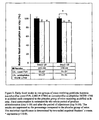
- In a double blind placebo controlled study, humans were given either an acidified milk containing probiotics (LMG P-17806 and NCFB 1748) or the same acidified milk without probiotics or a calcium tablet. The groups consisted of 15, 14 and 10 persons respectively. The probiotic bacteria were added to the product in final concentration 5x10E7 CFU/ml and the number of bacteria was stable in the product during the experimental time. The participants were eating 2x2.5 dl of the product each day. The persons included were slightly overweight (BMI 25-30). The aim of the trial was to study effects of probiotics on cholesterol metabolism and weight gain was measured as a control measure. No advice concerning weight control was given but all the participants were offered a weight reduction treatment after the trial. The bacteria survived the passage in the gut and increased the number of lactobacilli found in faeces from the participants by a factor 5. After 4 weeks there was a surprising but significant difference in weight gain between the three groups. The main figure for weight gain was 0,25 kg in the group receiving the probiotic product, 0,75 kg in the group receiving the acidified milk without probiotics and 1,4 kg in the group receiving the tablet. See
Figure 1 . - In a double blind placebo controlled study, humans were given either an acidified milk containing probiotics in two different dosages or a placebo no 1 consisting of the same acidified milk without probiotics or a placebo no 2 consisting of acidified milk without any lactic acid bacteria at all. The probiotic microorganisms, LMG P 17806,
NCFB 1748, and Bb12 (DSM15954), were added to the product in final concentration 1x10E6 CFU/ml and 5x10E7 CFU/ml of each strain. After a controlled standard breakfast, including 3 dl of any of the four products, the participants were asked to indicate satiety and hunger on a VAS-scale (Visual Analogue Scale) directly after the meal and continuously every half hour for 4 hours. A total of 10 persons were included in the study and every participant was given all four products but at different occasions and the relative differences were calculated. Directly after the meal there was a slight difference in the satiety scores between the products. The acidified milk with probiotics in concentration 5x 10E7 CFU/ml and 1x10E6 giving the highest scores (relative VAS-score 6.6 and 6.4 respectively), and placebo no 1 had an intermediate score (relative VAS-score 6.2) and placebo no 2 the lowest (relative VAS-score 5.9). The satiety scores dropped after the 3.5 hours to 3.1, 3.0, 2.5 and 2.2 respectively. The difference was small but the difference between the products persisted and an influence on satiation was noted for the probiotic product with two different concentrations of bacteria. Concerning hunger the opposite situation could be seen, i.e. the probiotic products giving a lower hunger score than the two placebo products. Directly after the meal the two probiotic product resulted in hunger scores 0.4 for both products on the VAS scale, placebo no 1 was intermediate (VAS score 0.9) and placebo no 2 gave a VAS score on hunger at 1.1. After 4 hours the figures were 6.0, 6.2, 7.0 and 6.9, respectively. - After the standard breakfast above and the four hours when data on satiety and hunger were noticed the participants were offered to eat a standard lunch meal. The participants were asked to eat until they were pleasantly satisfied and to try to get the same level of fullness after each different breakfast. After eating the probiotic products the energy intake at lunch was 3690 KJ for the product with high level of probiotics, it was 3810 for the low level probiotic. For placebo no 1 it was 3850 and for placebo no 2 it vas 3995. This shows that the probiotic products can reduce the energy intake in a postprandial meal after eating the probiotic products as part of the breakfast.
- Normal flora mice of Swiss Webster strain were given acidified milk containing either LMG P-17806 or
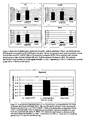
NCFB 1748 or a placebo product with the same composition but without probiotics for 10 days. The mice were between 6 and 8 weeks when the administration was started. The groups given probiotics contained 7 mice in each group and the placebo group consisted of 5 animals. The probiotic microrganisms were added to the products in a final concentration of 1x10E8 CFU/ml and the number of bacteria was stable in the product during the feeding period. The mice were given two standard daily dosages of the products, one by oral gavage feeding of 1 ml and one by sublingual injection. Both probiotic bacteria survived the passage in the gut and were present in significant numbers in the small and large intestine of the mice. Apart from the probiotic products and the placebo product the mice had ad libitum access to purified ingredient diet (D12450B from Research Diets Inc., New Jersey, USA). The daily food intake was compared between the two groups of mice receiving Lactobacillus strains versus the placebo group of mice. The products were well tolerated by the mice. - During the second part of the feeding period the food intake was significantly reduced in the groups of animals given probiotics compared to the group receiving the placebo product. See
Figure 2 . - Normal flora mice were given either an acidified milk probiotic product containing LMG P-17806 or a placebo product with the same composition but without probiotics or kept as a control group given the same feed as the two other groups but without the acidified milk. The mice strain chosen was C57B16 (Charles River) which is sensitive to diet induced obesity. The number of animals included in the different groups was 15 in each of the groups given acidified milk and 3 in the control group. The mice were introduced into the study when they were 9 weeks old. The number of probiotic bacteria in the product was 1x10E8 CFU/ml and the mice were allowed to eat the product ad libitum, 5 days a week, for a total number of 12 weeks. For rapid weight gain the mice were fed with a high fat diet (D 12309 from Research Diets Inc. New Jersey, USA containing 36% fat for the first 5 weeks and then D 12492 (35% fat) from the same company for the remaining weeks of the trial). After 12 weeks the mice were sacrificed and the data on weight gain, food consumption and amount of abdominal fat was analysed. The mice given acidified milk product gained less weight than the control mice not receiving any acidified milk. The mice given acidified milk with probiotics also had a lower storage of abdominal fat compared to the group receiving acidified milk without probiotics and the control group not receiving any acidified milk at all.
- Germ free and normal flora mice of Swiss Webster strain were given acidified milk containing either LMG P-17806 or
NCFB 1748 or a placebo product with the same composition but without probiotics for 10 days. The mice were between 6 and 8 weeks of age when the administration was started. The groups given probiotics contained 6 mice in each group and the placebo group consisted of 4 animals. The probiotic microrganisms were added to the products in final concentration of 1x10E8 CFU/ml and the number of bacteria was stable in the product during the feeding period. The mice were given the product daily by oral gavage feeding. During the study the mice had ad libitum access to purified ingredient diet (D12450B from Research Diets Inc., New Jersey, USA). Both probiotic bacteria survived the passage in the gut and were present in significant numbers in the small and large intestine of the mice. The mice were sacrificed and the gene-expression in the small intestine was analysed by oligonucleotid micro array technology. Apart from expected effects on the immune system, unexpected effects on the expression of a number of genes involved in energy metabolism and homeostasis were found to be different in the placebo group compared to the two probiotic groups. Among the genes showing a significant change in expression were Scd1, Acrp30, Adn, Thrsp, Car3, and Apoa-4, all of which were up regulated in the probiotic groups and Retnlb which was down regulated in the probiotic groups, compared to the placebo group. The pattern of differential gen-expression was very similar for the probiotic strains used. Differential expression of adipsin (Adn), adiponectin (Acrp 30), carbonic anhydrase 3 (Car3) and resistin like beta (Retnlb) genes in germ free mice was confirmed by quantitative Real- Time PCR technique, seeFigure 3. Figure 4 shows the expression levels of apolipoprotein A-IV (Apoa4) in normal flora colonised mice as verified by quantitative Real-Time PCR approach. - The total dosage of the individual strains of probiotic bacteria in the different experiments described above was 1x10E8-1x10E9 CFU (mice experiments) and 2,5x10E8-2,5x10E10 (human experiments). This dosage needs to be administrated in a portion or as a daily dose meaning that e.g. a drink for human use that is consumed in amounts 200-500 ml need to contain 0,5x10E6-1,25x10E8 CFU/ml of the individual strain for efficacy and a capsule need to contain the total amount of bacteria in approximately 1 g of the content in the capsule i.e 1x10E8-2,5x10E10. For the highest concentrations of bacteria the bacteria need to be concentrated by freeze drying or spray drying.
- The probiotic bacteria have to be added to products based on milk, cereals or fruits. The bacteria were added as a concentrate e.g. lyophilized and the survival has been analysed in all tree matrixes. The survival was very good in milk based and cereal based products. In fruit based products, the survival is influenced by the fruit type. As a lyophilised powder care needs to be taken concerning the water activity and exposure to oxygen. The results from product production can be seen in table 1.
- The probiotic bacteria can also be added to milk based products together with other lactic acid bacteria for the production of different kinds of cultured products. In this environment the probiotic bacteria can multiply and will be well adjusted to the acid environment giving a good survival also at the low final pH in those products. The results from product production can be seen in table 1.
Table 1. Survival of probiotic bacteria in different product matrixes measured as million CFU/g. The products were stored at 8°C. Bacteria Milk Smoothie Milk/fruit Cereal drink Lyophilized powder in cereal mix Fruit juice Black currant Fruit juice Apple Yoghurt drink Yoghurt Sour milk LMG P-17806, day 153 56 50 45 46 53 67 70 74 LMG P-17806, day 21 55 51 52 39 13 35 55 75 63 NCFB 1748,day 150 53 56 43 50 55 57 56 60 NCFB 1748, day 2142 43 43 37 3 30 32 42 44 Bb12, day 159 60 65 65 62 67 62 73 68 Bb 12, day 21 49 47 60 31 14 49 51 68 60 -
- 1) Agerholm, 1., M.I. Bell, G.k. Grunwald and A. Astrup. 2000. The effect of a probiotic milk product on plasma cholesterol: a meta-analysis of short-term intervention studies. Eur. J. clin. Nutr. 54:856-860.
- 2) Ali A. A., I. A. Mohamed, C. T. Hansen, T. Wang, M. T. Velasquez and S. J. Bhathena. 2002. Effect of probiotics and isoflavones on metabolic parameters in a genetic model of obesity and diabetes. FASEB J. 16:p A1014.
- 3) Ali. A. A., M. T. Velasquez, C. T. Hansen, A. I. Mohamed, and S. J. Bhathena. 2004. Effect of soybean isoflavones, probiotics and their interactions on the metabolism and endocrine system in an animal model of obesity and diabetes. J. Nutritional Bioch. 15:583-590.
- 4) Bojrab G.. 2000. Composition and method for treatment of gastrointestinal disorders and hyperlipedemia.
US patent 6 696 057 - 5) Bojrab G.. 2000. Composition for treatment of obesity.
US patent 6 641 808 . - 6) Bojrab G.. 2001. Composition, of L. bulgaricus and S. thermophilus, for the treatment of gastrointestinal disorders, hyperlipidemia, autoimmune diseases, and obesity.
European patent application 1 177 794 . - 7) Bäckhed F., H Ding, T. Wang, L. V. Hooper, G. Y. Koh, A. Nagy, C. F. Semenkovich and J. I. Gordon. 2004. The gut microbiota as an environmental factor that regulates fat storage. PNAS 101:15718-15723.
- 8) Di Caro S., H. Tao, A. Grillo, C. Elia, G. Gasbarrini, A. R. Sepulveda, and A. Gasbarrini. 2005. Effects of Lactobacillus GG on genes expression pattern in small bowel mucosa. Digestive and Liver Disease 37:320-329.
- 9) Gorsek W. F. 2000. Weight loss composition containing green tea, hydroxycitric acid, 5-hydroxytryptophane, glucomannan, picolinate and Lactobacillus.
US patent 6 383 482 . - 10) Gorsek W. F.. 2002. Thermogenic weight management composition.
US patent 6 565 847 . - 11) Hooper L. V., M Wong, A. Thelin, L. Hansson, P.G. Falk and J.I. Gordon. 2001. Molecular analysis of commensal host-microbial relationship in the intestine. Science 291 (5505):881-884.
- 12) Park H. O., Y. B. Bang, H. J. Joung, B. C. Kim and H. R. Kim. 2004. Lactobacillus KTCK 0774BP and acetobacter KCTC 0773BP for treatment or prevention of obesity and diabetes mellitus.
US patent 6 808 703 . - 13) Pereira D. I. and G. R. Gibson. 2002. Effects of consumption of probiotics and prebiotics on serum lipid levels in humans. Crit. Rev. Biochem Mol Biol. 37:259-281.
- 14) Steppan C. M., S. T. Balley, S. Bath, E. J. Brown, R. R. Banerjee, C. M. Wright, H. R. Patel, R. S. Ahlma, and M. A. Lazar. 2001. The hormone resistine links obesity to diabetes. Nature 409:307.
- 15) Song S.H., S. K. Kang, j. H. Kim, y. H. Park, and H. O. Park 2002. Microorganisms for ihibiting obesity and diabetes mellitus.
PCT patent application WO 04/014403 - 16) Yanagida F., and K. Sano. 2000. Obesity preventative food. Japanese patent application
2001-292728 - 17) Tabuchi M., Ozaki M., Tamura A., Yamada N., Ishida T., Hosoda M., Hosono A. 2003. Antidiabetic effect of Lactobacillus GG in streptozotocin-induced diabetic rats. Biosci Biotechnol Biochem. Jun;67(6):1421-4.
- 18) Kalavathy R., Abdullah N., Jalaludin S., Ho Y.W. 2003. Effects of Lactobacillus cultures on growth performance, abdominal fat deposition, serum lipids and weight of organs of broiler chickens. Br Poult Sci. Mar;44(1):139-44.
- 19) Matsuzaki T., Nagata Y., Kado S., Uchida K., Kato I., Hashimoto S, Yokokura T. 1997. Prevention of onset in an insulin-dependent diabetes mellitus model, NOD mice, by oral feeding of Lactobacillus casei. APMIS. Aug;105(8):643-920)
- 20) Ohlson K., Björneholm S., Fonden R., Svensson U., 2002. Lactobacillus F19: A probiotic strain suitable for consumer products. Microbial ecology in health and disease. Vol 14, supplement 3:27-32.
- 21) Sullivan A., Barkholt L., Nord C.E. 2003. Lactobacillus acidophilus, Bifidobacterium lactis and Lactobacillus F19 prevent antibiotic-associated ecological disturbances of Bacteroides fragilis in the intestine.J Antimicrob Chemother Aug;52(2):308-11.
Claims (17)
- Use of at least one probiotic bacteria for the manufacture of a probiotic product for lowering weight gain, wherein the at least one probiotic bacteria is selected from the group consisting of Lactobacillus casei F19 (LMG P-17806), Lactobacillus acidophilus (NCFB1748) and Bifidobacterium lactis Bb12 (DSM 15954).
- Use of at least one probiotic bacteria for the manufacture of a probiotic product for increasing satiety, wherein the at least one probiotic bacteria is selected from the group consisting of Lactobacillus casei F19 (LMG P-17806), Lactobacillus acidophilus (NCFB 1748), Bifidobacterium lactis Bb12 (DSM 15954).
- Use of at least one probiotic bacteria for the manufacture of a probiotic product for prolonging satiation, wherein the at least one probiotic bacteria is selected from the group consisting of Lactobacillus casei F19 (LMG P-17806), Lactobacillus acidophilus (NCFB 1748), Bifidobacterium lactis Bb12 (DSM 15954).
- Use of at least one probiotic bacteria for the manufacture of a probiotic product for reducing food intake, wherein the at least one probiotic bacteria is selected from the group consisting of Lactobacillus casei F19 (LMG P-17806), Lactobacillus acidophilus (NCFB 1748), Bifidobacterium lactis Bb12 (DSM 15954).
- Use of at least one probiotic bacteria for the manufacture of a probiotic product for the up-regulation of the expression of a gene selected from the group consisting of Scd1, adiponectin (Acrp 30), adipsin (Adn), Thrsp, carbonic anhydrase 3 (Car3) and apolipoprotein A-IV (Apoa4), wherein the at least one probiotic bacteria is selected from the group consisting of Lactobacillus casei F19 (LMG P-17806), Lactobacillus acidophilus (NCFB 1748), Bifidobacterium lactis Bb12 (DSM 15954).
- Use of at least one probiotic bacteria for the manufacture of a probiotic product for enhancing insulin sensitivity or treating insulin insensitivity, wherein the enhanced insulin sensitivity is due to a down-regulation of the expression of resistin like beta (Retnlb), wherein the at least one probiotic bacteria is selected from the group consisting of Lactobacillus casei F19 (LMG P-17806), Lactobacillus acidophilus (NCFB 1748), Bifidobacterium lactis Bb12 (DSM 15954).
- Use of a at least one probiotic bacteria for the manufacture of a probiotic product for decreasing the risk for developing a metabolic syndrome including obesity, abdominal fat deposition and type II diabetes, wherein the at least one probiotic bacteria is selected from the group consisting of Lactobacillus casei F19 (LMG P-17806), Lactobacillus acidophilus (NCFB 1748), Bifidobacterium lactis Bb12 (DSM 15954).
- Use of at least one probiotic bacteria for the manufacture of a probiotic product for lowering storage of abdominal fat, wherein the at least one probiotic bacteria is selected from the group consisting of Lactobacillus casei F19 (LMG P-17806), Lactobacillus acidophilus (NCFB1748) and Bifidobacterium lactis Bb12 (DSM 15954).
- Use according to any of claims 1-8, characterized in that the probiotic bacteria is used for manufacturing of a product selected from the group consisting of a product based on milk, a product based on cereal and a product based on fruit or compositions derived thereof.
- Use according to any of claims 1-9, characterized in that the probiotic bacteria is used as a concentrate e.g. lyophilized.
- Use according to any of claims 1-10, characterized in that the probiotic bacteria is comprised in a capsule.
- Use according to claim 11, characterized in that the capsule contains a dosage of probiotic bacteria between 1x10⁸ CFU to 2.5x10⁸ CFU.
- Use according to any of claims 1-12, wherein the probiotic product is selected from the group consisting of a food product, feed product, dietary supplement, natural remedy and pharmaceutical active formulation.
- A probiotic product comprising at least one probiotic bacteria selected from the group consisting of Lactobacillus casei F19 (LMG P-17806), Lactobacillus acidophilus (NCFB 1748) and Bifidobacterium lactis Bb12 (DSM 15954) for use in lowering weight gain, increasing satiety, prolonging satiation, reducing food intake or lowering storage of abdominal fat.
- A probiotic product comprising at least one probiotic bacteria selected from the group consisting of Lactobacillus casei F19 (LMG P-17806), Lactobacillus acidophilus (NCFB 1748) and Bifidobacterium lactis Bb12 (DSM 15954) for use in up-regulation of the expression of a gene selected from the group consisting of Scd1, adiponectin (Acrp 30), adipsin (Adn), Thrsp, carbonic anhydrase 3 (Car3) and apolipoprotein A-IV (Apoa4).
- A probiotic product comprising at least one probiotic bacteria selected from the group consisting of Lactobacillus casei F19 (LMG P-17806), Lactobacillus acidophilus (NCFB 1748) and Bifidobacterium lactis Bb12 (DSM 15954) for use in enhancing insulin sensitivity or treating insulin insensitivity, wherein the enhanced insulin sensitivity is due to a down-regulation of the expression of resistin like beta (Retnlb).
- A probiotic product comprising at least one probiotic bacteria selected from the group consisting of Lactobacillus casei F19 (LMG P-17806), Lactobacillus acidophilus (NCFB 1748) and Bifidobacterium lactis Bb12 (DSM 15954) for use in decreasing the risk for developing a metabolic syndrome including obesity, abdominal fat deposition and type II diabetes.
Priority Applications (5)
| Application Number | Priority Date | Filing Date | Title |
|---|---|---|---|
| SI200631495T SI1945235T1 (en) | 2005-10-07 | 2006-10-02 | Probiotics to influence fat metabolism and obesity |
| EP11191774.6A EP2431044B1 (en) | 2005-10-07 | 2006-10-02 | Probiotics to influence fat metabolism and obesity |
| DK11191774.6T DK2431044T3 (en) | 2005-10-07 | 2006-10-02 | Probiotics to affect fat metabolism and obesity |
| PL06799717T PL1945235T3 (en) | 2005-10-07 | 2006-10-02 | Probiotics to influence fat metabolism and obesity |
| CY20121101262T CY1113704T1 (en) | 2005-10-07 | 2012-12-27 | Probiotics that affect fat metabolism and obesity |
Applications Claiming Priority (2)
| Application Number | Priority Date | Filing Date | Title |
|---|---|---|---|
| SE0502214A SE529185C2 (en) | 2005-10-07 | 2005-10-07 | Use of probiotic bacteria for the manufacture of food or drugs for the prevention of obesity |
| PCT/SE2006/001117 WO2007043933A1 (en) | 2005-10-07 | 2006-10-02 | Probiotics to influence fat metabolism and obesity |
Related Child Applications (2)
| Application Number | Title | Priority Date | Filing Date |
|---|---|---|---|
| EP11191774.6A Division EP2431044B1 (en) | 2005-10-07 | 2006-10-02 | Probiotics to influence fat metabolism and obesity |
| EP11191774.6A Division-Into EP2431044B1 (en) | 2005-10-07 | 2006-10-02 | Probiotics to influence fat metabolism and obesity |
Publications (3)
| Publication Number | Publication Date |
|---|---|
| EP1945235A1 EP1945235A1 (en) | 2008-07-23 |
| EP1945235A4 EP1945235A4 (en) | 2009-11-11 |
| EP1945235B1 true EP1945235B1 (en) | 2012-09-26 |
Family
ID=37943064
Family Applications (2)
| Application Number | Title | Priority Date | Filing Date |
|---|---|---|---|
| EP11191774.6A Revoked EP2431044B1 (en) | 2005-10-07 | 2006-10-02 | Probiotics to influence fat metabolism and obesity |
| EP06799717A Active EP1945235B1 (en) | 2005-10-07 | 2006-10-02 | Probiotics to influence fat metabolism and obesity |
Family Applications Before (1)
| Application Number | Title | Priority Date | Filing Date |
|---|---|---|---|
| EP11191774.6A Revoked EP2431044B1 (en) | 2005-10-07 | 2006-10-02 | Probiotics to influence fat metabolism and obesity |
Country Status (16)
| Country | Link |
|---|---|
| US (1) | US20080267933A1 (en) |
| EP (2) | EP2431044B1 (en) |
| JP (1) | JP2009511469A (en) |
| CN (1) | CN101287478B (en) |
| AU (1) | AU2006299956B2 (en) |
| BR (1) | BRPI0616993A2 (en) |
| CA (1) | CA2624890A1 (en) |
| CY (1) | CY1113704T1 (en) |
| DK (2) | DK1945235T3 (en) |
| EA (1) | EA015461B1 (en) |
| ES (2) | ES2567404T3 (en) |
| PL (1) | PL1945235T3 (en) |
| PT (1) | PT1945235E (en) |
| SE (1) | SE529185C2 (en) |
| SI (1) | SI1945235T1 (en) |
| WO (1) | WO2007043933A1 (en) |
Cited By (2)
| Publication number | Priority date | Publication date | Assignee | Title |
|---|---|---|---|---|
| FR3095761A1 (en) | 2019-05-06 | 2020-11-13 | Lab Attitude | Nutraceutical composition to induce weight loss and reduce abdominal fat |
| WO2023012433A1 (en) | 2021-08-03 | 2023-02-09 | Setalg | Composition for protecting a microorganism in an acidic environment |
Families Citing this family (83)
| Publication number | Priority date | Publication date | Assignee | Title |
|---|---|---|---|---|
| EP1981516B1 (en) * | 2006-01-27 | 2018-08-08 | DuPont Nutrition Biosciences ApS | Use of probiotic microorganisms for the treatment and prevention of obesity and related disorders |
| JP5229977B2 (en) * | 2006-09-08 | 2013-07-03 | 雪印メグミルク株式会社 | Blood adiponectin concentration increase promoting and / or decreasing inhibitor |
| US9084434B2 (en) | 2006-09-27 | 2015-07-21 | Little Calumet Holdings Llc | Probiotic oral dosage forms |
| EP2011506A1 (en) * | 2007-07-05 | 2009-01-07 | Nestec S.A. | Supplementation of maternal diet |
| US20100203026A1 (en) * | 2007-07-25 | 2010-08-12 | Campina Nederland Holding B.V. | Probiotics for inducing satiety and/or satiation |
| EP2030623A1 (en) * | 2007-08-17 | 2009-03-04 | Nestec S.A. | Preventing and/or treating metabolic disorders by modulating the amount of enterobacteria |
| JP5225652B2 (en) * | 2007-10-29 | 2013-07-03 | 雪印メグミルク株式会社 | Adiponectin secretion promoter and / or suppressor |
| CA2707656C (en) * | 2007-12-06 | 2018-05-22 | Arla Foods Amba | Probiotic bacteria and regulation of fat storage |
| FR2930264B1 (en) * | 2008-04-18 | 2013-02-22 | Gervais Danone Sa | NEW STRAIN OF LACTOBACILLUS PARACASEI SUBSP. PARACASEI WITH ANTIMICROBIAL AND IMMUNOMODULATORY PROPERTIES |
| EP2123168B1 (en) * | 2008-05-16 | 2011-12-21 | Nestec S.A. | Lactobacillus paracasei and weight control |
| US20110165198A1 (en) * | 2008-05-19 | 2011-07-07 | Delphine Tissot-Favre | Method for reducing lipid absorption by an animal |
| AU2009282482B2 (en) * | 2008-08-15 | 2015-11-26 | Société des Produits Nestlé S.A. | Methods for enhancing energy metabolism |
| FR2942719B1 (en) | 2009-03-04 | 2011-08-19 | Oreal | USE OF PROBIOTIC MICROORGANISMS TO LIMIT SKIN IRRITATION |
| JP2012519659A (en) * | 2009-03-06 | 2012-08-30 | フェデラシオン デ プロダクテュール アセリコール デュ ケベック | Compositions and methods for producing symbiotic maple |
| BRPI0924418A2 (en) * | 2009-03-10 | 2018-10-16 | Jinis Biopharmaceuticals Co. | compositions and methods for the prevention and treatment of obesity and obesity-related metabolic syndrome |
| WO2010108865A1 (en) | 2009-03-25 | 2010-09-30 | Chr. Hansen A/S | Use of probiotics to ameliorate diet-induced insulin resistance |
| PL2411027T3 (en) * | 2009-03-25 | 2015-04-30 | Chr Hansen As | Use of a probiotic to regulate body weight |
| WO2010114864A1 (en) * | 2009-04-01 | 2010-10-07 | Little Calumet Holdings, Llc | Probiotic oral dosage forms |
| FI123157B (en) * | 2009-05-12 | 2012-11-30 | Valio Oy | New use of probiotics |
| ES2763137T3 (en) | 2009-06-19 | 2020-05-27 | Dupont Nutrition Biosci Aps | Bifidobacteria for the treatment of diabetes and related conditions |
| JP5436991B2 (en) * | 2009-09-10 | 2014-03-05 | 国立大学法人北海道大学 | Insulin resistance improving agent comprising Lactobacillus plantarum cells or culture as an active ingredient |
| EP2308499A1 (en) * | 2009-09-30 | 2011-04-13 | Nestec S.A. | Bifidobacterium longum ATCC BAA-999 (BL999) and weight control |
| RU2546251C2 (en) | 2009-11-11 | 2015-04-10 | Алиментари Хелс Лимитед | Probiotic strain of bifidus bacteria |
| FR2955774A1 (en) | 2010-02-02 | 2011-08-05 | Aragan | PREPARATION FOR TREATING PONDERAL EXCES AND ASSOCIATED DISORDERS AND APPLICATIONS THEREOF |
| NL2004200C2 (en) | 2010-02-05 | 2011-08-08 | Friesland Brands Bv | Use of sialyl oligosaccharides in weight management. |
| EP2581092B2 (en) * | 2010-06-08 | 2020-03-11 | Asahi Group Holdings, Ltd. | Agent for improving lipid metabolism |
| ES2389547B1 (en) * | 2010-12-07 | 2013-08-08 | Consejo Superior De Investigaciones Científicas (Csic) | BIFIDOBACTERIUM CECT 7765 AND ITS USE IN THE PREVENTION AND / OR TREATMENT OF OVERWEIGHT, OBESITY AND ASSOCIATED PATHOLOGIES. |
| US9987224B2 (en) | 2011-02-04 | 2018-06-05 | Joseph E. Kovarik | Method and system for preventing migraine headaches, cluster headaches and dizziness |
| US11419903B2 (en) | 2015-11-30 | 2022-08-23 | Seed Health, Inc. | Method and system for reducing the likelihood of osteoporosis |
| US10687975B2 (en) | 2011-02-04 | 2020-06-23 | Joseph E. Kovarik | Method and system to facilitate the growth of desired bacteria in a human's mouth |
| US10245288B2 (en) | 2011-02-04 | 2019-04-02 | Joseph E. Kovarik | Method and system for reducing the likelihood of developing NASH in an individual diagnosed with non-alcoholic fatty liver disease |
| US11523934B2 (en) | 2011-02-04 | 2022-12-13 | Seed Health, Inc. | Method and system to facilitate the growth of desired bacteria in a human's mouth |
| US11844720B2 (en) | 2011-02-04 | 2023-12-19 | Seed Health, Inc. | Method and system to reduce the likelihood of dental caries and halitosis |
| US12279989B2 (en) | 2011-02-04 | 2025-04-22 | Seed Health, Inc. | Method and system for increasing beneficial bacteria and decreasing pathogenic bacteria in the oral cavity |
| US10086018B2 (en) | 2011-02-04 | 2018-10-02 | Joseph E. Kovarik | Method and system for reducing the likelihood of colorectal cancer in a human being |
| US11998479B2 (en) | 2011-02-04 | 2024-06-04 | Seed Health, Inc. | Method and system for addressing adverse effects on the oral microbiome and restoring gingival health caused by sodium lauryl sulphate exposure |
| US10512661B2 (en) | 2011-02-04 | 2019-12-24 | Joseph E. Kovarik | Method and system for reducing the likelihood of developing liver cancer in an individual diagnosed with non-alcoholic fatty liver disease |
| US11951140B2 (en) | 2011-02-04 | 2024-04-09 | Seed Health, Inc. | Modulation of an individual's gut microbiome to address osteoporosis and bone disease |
| US11273187B2 (en) | 2015-11-30 | 2022-03-15 | Joseph E. Kovarik | Method and system for reducing the likelihood of developing depression in an individual |
| US10842834B2 (en) | 2016-01-06 | 2020-11-24 | Joseph E. Kovarik | Method and system for reducing the likelihood of developing liver cancer in an individual diagnosed with non-alcoholic fatty liver disease |
| US12257272B2 (en) | 2015-12-24 | 2025-03-25 | Seed Health, Inc. | Method and system for reducing the likelihood of developing depression in an individual |
| US12533312B2 (en) | 2011-02-04 | 2026-01-27 | Seed Health, Inc. | Method and system for preventing sore throat in humans |
| US10548761B2 (en) | 2011-02-04 | 2020-02-04 | Joseph E. Kovarik | Method and system for reducing the likelihood of colorectal cancer in a human being |
| US11951139B2 (en) | 2015-11-30 | 2024-04-09 | Seed Health, Inc. | Method and system for reducing the likelihood of osteoporosis |
| ITMI20111488A1 (en) | 2011-08-03 | 2013-02-04 | Gnosis Spa | FORMULATIONS INCLUDING SACCHAROMYCES BOULARDII AND SUPEROXIDE DISMUTASIS (SOD) TO CONTROL OBESITY |
| US9636367B2 (en) * | 2011-10-18 | 2017-05-02 | Nestec S.A. | Composition for use in increasing insulin sensitivity and/or reducing insulin resistance |
| RU2015122728A (en) | 2012-11-12 | 2017-01-10 | Компани Жервэ Данон | STRAW LACTOBACILLUS RHAMNOSUS TO REDUCE FAT accumulation in the body |
| AU2014254813B2 (en) | 2013-04-17 | 2019-08-01 | Suntory Holdings Limited | Composition containing bacterium belonging to genus Lactobacillus |
| ES2526986B1 (en) | 2013-07-18 | 2015-11-02 | Biopolis, S.L. | New strain of Bifidobacterium animalis subsp. lactis CECT 8145 and its use for the treatment and / or prevention of overweight and obesity and associated diseases |
| KR101535077B1 (en) * | 2013-09-13 | 2015-07-08 | 주식회사한국야쿠르트 | The products containing probiotic Bifidobacterium lactis HY8101 having activity preventing from insulin resistance, which caused type 2 diabetes mellitus |
| KR101545551B1 (en) | 2013-12-12 | 2015-08-19 | 주식회사한국야쿠르트 | The composition containing combination of 7 probiotics which have efficacy preventing from insulin resistance which cause type 2 diabetes mellitus as a effector component |
| US11969445B2 (en) | 2013-12-20 | 2024-04-30 | Seed Health, Inc. | Probiotic composition and method for controlling excess weight, obesity, NAFLD and NASH |
| US11998574B2 (en) | 2013-12-20 | 2024-06-04 | Seed Health, Inc. | Method and system for modulating an individual's skin microbiome |
| US11839632B2 (en) | 2013-12-20 | 2023-12-12 | Seed Health, Inc. | Topical application of CRISPR-modified bacteria to treat acne vulgaris |
| US11826388B2 (en) | 2013-12-20 | 2023-11-28 | Seed Health, Inc. | Topical application of Lactobacillus crispatus to ameliorate barrier damage and inflammation |
| US11980643B2 (en) | 2013-12-20 | 2024-05-14 | Seed Health, Inc. | Method and system to modify an individual's gut-brain axis to provide neurocognitive protection |
| US12246043B2 (en) | 2013-12-20 | 2025-03-11 | Seed Health, Inc. | Topical application to treat acne vulgaris |
| US11833177B2 (en) | 2013-12-20 | 2023-12-05 | Seed Health, Inc. | Probiotic to enhance an individual's skin microbiome |
| US12005085B2 (en) | 2013-12-20 | 2024-06-11 | Seed Health, Inc. | Probiotic method and composition for maintaining a healthy vaginal microbiome |
| US12329783B2 (en) | 2013-12-20 | 2025-06-17 | Seed Health, Inc. | Method and system to improve the health of a person's skin microbiome |
| RU2673341C2 (en) * | 2014-02-14 | 2018-11-26 | Везаль Фарма Са | Use of compositions containing bifidobacterium animalis ssp. lactis lmg p-28149 |
| WO2015121455A1 (en) * | 2014-02-14 | 2015-08-20 | Vesale Pharma Sa | Composition comprising at least one probiotic |
| WO2015121458A2 (en) * | 2014-02-14 | 2015-08-20 | Vesale Pharma Sa | Composition comprising bifidobacterium animalis ssp. lactis |
| BE1000016B1 (en) * | 2014-04-25 | 2016-02-01 | Vesale Pharma Nv | COMPOSITION COMPRISING BIFIDOBACTERIUM ANIMALIS SSP. LACTIS. |
| BE1000017B1 (en) * | 2014-04-25 | 2016-01-21 | Vesale Pharma Nv | COMPOSITION COMPRISING AT LEAST ONE PROBIOTIC |
| BR112017000978A2 (en) * | 2014-08-08 | 2017-11-21 | Nestec Sa | myoinositol and probiotics and uses |
| CN104186655B (en) * | 2014-08-27 | 2016-06-29 | 内蒙古伊利实业集团股份有限公司 | There is low-fat yogurt of blood fat reducing and anti-oxidation function and preparation method thereof |
| KR101604212B1 (en) * | 2015-07-17 | 2016-03-17 | 울산대학교 산학협력단 | Composition for the prevention and treatment of obesity or impaired glucose tolerance containing NAD |
| US12239706B2 (en) | 2015-11-30 | 2025-03-04 | Seed Health, Inc. | Method and system for protecting monarch butterflies from pesticides |
| DK3387156T3 (en) * | 2015-12-11 | 2020-08-03 | Prec Group Limited | LACTOBACILLUS CASEI FOR THE TREATMENT OF OBESITY AND ASSOCIATED METABOLIC DISEASES |
| WO2017178316A1 (en) * | 2016-04-14 | 2017-10-19 | Dupont Nutrition Biosciences Aps | Bifidobacteria for reducing food, energy and/or fat intake |
| EP3580326A4 (en) | 2017-02-10 | 2020-02-12 | Perfect (China) Co. Ltd | NEW STRAINS OF PROBIOTIC BIFIDOBACTERIA |
| US10695386B2 (en) | 2017-05-11 | 2020-06-30 | Shayne K. Morris | Skin microbiome colonizer formulations and methods for use |
| TWI640313B (en) * | 2017-08-18 | 2018-11-11 | 長庚生物科技股份有限公司 | Anti-obesity properties of parabacteroides goldsteinii |
| US11291696B2 (en) | 2018-04-11 | 2022-04-05 | Shayne Morris | Pairing probiotics and prebiotics, methods for growth and use, separately and in combination |
| US11168299B2 (en) | 2018-04-11 | 2021-11-09 | Shayne Morris | Pairing probiotics and prebiotics, methods for growth and use, separately and in combination |
| US12150967B2 (en) | 2018-08-18 | 2024-11-26 | Seed Health, Inc. | Methods and compositions for honey bee health |
| EP4081225A1 (en) | 2019-12-27 | 2022-11-02 | Biopolis, S.L. | Uses of lipoteichoic acid from bifidobacteria |
| CN111587952A (en) * | 2020-05-27 | 2020-08-28 | 佛山科学技术学院 | A probiotic additive for reducing body fat deposition in domestic dogs |
| JP7718672B2 (en) * | 2020-12-25 | 2025-08-05 | 日清食品株式会社 | Enteric-coated tablets |
| KR102616412B1 (en) * | 2021-07-30 | 2023-12-21 | 주식회사 메디오젠 | COMPOSITION FOR PREVENTING OR TREATING OBESITY OR NON-ALCOHOLIC FATTY LIVER COMPRISING Bifidobacterium animalis lactis MG741 |
| KR102445708B1 (en) | 2021-12-02 | 2022-09-23 | 일동바이오사이언스(주) | Composition for reducing body fat comprising Bifidobacterium lactis IDCC 4301 |
| CN118716406A (en) * | 2024-04-30 | 2024-10-01 | 卡士乳业(深圳)有限公司 | Application of fermented milk containing active Bifidobacterium lactis in regulating the state of sub-healthy people |
Family Cites Families (21)
| Publication number | Priority date | Publication date | Assignee | Title |
|---|---|---|---|---|
| JPS61109729A (en) * | 1984-11-05 | 1986-05-28 | Advance Res & Dev Co Ltd | Cholesterol lowering agent |
| JPS61271223A (en) * | 1985-05-24 | 1986-12-01 | Biofuerumin Seiyaku Kk | Blood lipid improving agent |
| JPH0696537B2 (en) * | 1986-05-02 | 1994-11-30 | 雪印乳業株式会社 | Serum cholesterol elevation inhibitor |
| JP2992945B2 (en) * | 1994-03-11 | 1999-12-20 | カルピス株式会社 | Lactobacillus acidophilus lactic acid bacteria |
| JPH107577A (en) * | 1996-06-17 | 1998-01-13 | Yakult Honsha Co Ltd | Hypoglycemic agent |
| SE510813C2 (en) | 1997-12-08 | 1999-06-28 | Arla Ekonomisk Foerening | Bacterial strain of the species Lactobacillus Paracasei subsp. paracasei, its composition for use in food, and product containing the strain |
| US6641808B1 (en) * | 1999-09-22 | 2003-11-04 | Lacpro Industries, Llc | Composition for treatment of obesity |
| US6696057B1 (en) * | 1999-09-22 | 2004-02-24 | Lacpro Industries, Inc. | Composition and method for treatment of gastrointestinal disorders and hyperlipidemia |
| JP2001097870A (en) * | 1999-09-30 | 2001-04-10 | Snow Brand Milk Prod Co Ltd | Bile acid adsorption method using lactic acid bacteria |
| JP2001292728A (en) | 2000-04-13 | 2001-10-23 | Enajikku Kk | Obesity-preventive food |
| JP4580542B2 (en) * | 2000-05-17 | 2010-11-17 | 株式會社バイオニア | Microorganism for treating obesity or diabetes and pharmaceutical composition containing the microorganism |
| US6383482B1 (en) * | 2000-08-24 | 2002-05-07 | Vitacost.Com, Inc. | Weight loss composition containing green tea, hydroxycitric acid, 5-hydroxytryptophan, glucomannan, picolinate and lactobacillus |
| US6963306B2 (en) * | 2001-02-02 | 2005-11-08 | Rosum Corp. | Position location and data transmission using pseudo digital television transmitters |
| EP1344458A1 (en) * | 2002-03-12 | 2003-09-17 | Société des Produits Nestlé S.A. | Probiotic delivery system |
| US6565847B1 (en) * | 2002-07-03 | 2003-05-20 | Vitacost.Com, Inc. | Thermogenic weight management composition |
| US20040014403A1 (en) * | 2002-07-16 | 2004-01-22 | Oberkampf Brandon L. | CMP point of use filtration |
| US6942857B2 (en) * | 2002-08-09 | 2005-09-13 | Bioneer Corporation | Microorganisms for preventing and/or treating obesity or diabetes mellitus |
| EP1624762B1 (en) * | 2003-05-22 | 2007-02-28 | Synbiotics AB | A probiotic composition comprising at least two lactic acid bacterial strains which are able to colonise the gastrointestinal tracts in combination with having intestinal survival property, intestinal binding property, an infection protection property and a fiber fermenting property |
| SE0400355D0 (en) * | 2004-02-17 | 2004-02-17 | Synbiotics Ab | New synbiotec use |
| US20060093592A1 (en) | 2004-10-04 | 2006-05-04 | Nutracea | Synbiotics |
| CA2707656C (en) * | 2007-12-06 | 2018-05-22 | Arla Foods Amba | Probiotic bacteria and regulation of fat storage |
-
2005
- 2005-10-07 SE SE0502214A patent/SE529185C2/en not_active IP Right Cessation
-
2006
- 2006-10-02 BR BRPI0616993-7A patent/BRPI0616993A2/en not_active IP Right Cessation
- 2006-10-02 DK DK06799717.1T patent/DK1945235T3/en active
- 2006-10-02 CN CN2006800368040A patent/CN101287478B/en active Active
- 2006-10-02 ES ES11191774.6T patent/ES2567404T3/en active Active
- 2006-10-02 ES ES06799717T patent/ES2396865T3/en active Active
- 2006-10-02 DK DK11191774.6T patent/DK2431044T3/en active
- 2006-10-02 SI SI200631495T patent/SI1945235T1/en unknown
- 2006-10-02 AU AU2006299956A patent/AU2006299956B2/en not_active Ceased
- 2006-10-02 JP JP2008534487A patent/JP2009511469A/en active Pending
- 2006-10-02 CA CA002624890A patent/CA2624890A1/en not_active Abandoned
- 2006-10-02 EA EA200800913A patent/EA015461B1/en not_active IP Right Cessation
- 2006-10-02 EP EP11191774.6A patent/EP2431044B1/en not_active Revoked
- 2006-10-02 EP EP06799717A patent/EP1945235B1/en active Active
- 2006-10-02 PT PT67997171T patent/PT1945235E/en unknown
- 2006-10-02 US US12/089,433 patent/US20080267933A1/en not_active Abandoned
- 2006-10-02 WO PCT/SE2006/001117 patent/WO2007043933A1/en not_active Ceased
- 2006-10-02 PL PL06799717T patent/PL1945235T3/en unknown
-
2012
- 2012-12-27 CY CY20121101262T patent/CY1113704T1/en unknown
Cited By (4)
| Publication number | Priority date | Publication date | Assignee | Title |
|---|---|---|---|---|
| FR3095761A1 (en) | 2019-05-06 | 2020-11-13 | Lab Attitude | Nutraceutical composition to induce weight loss and reduce abdominal fat |
| WO2023012433A1 (en) | 2021-08-03 | 2023-02-09 | Setalg | Composition for protecting a microorganism in an acidic environment |
| FR3125945A1 (en) | 2021-08-03 | 2023-02-10 | Setalg | Composition for protecting a microorganism in an acidic environment. |
| FR3147690A1 (en) | 2021-08-03 | 2024-10-18 | Setalg | Composition for protecting a microorganism in an acidic environment. |
Also Published As
| Publication number | Publication date |
|---|---|
| SE529185C2 (en) | 2007-05-22 |
| ES2396865T3 (en) | 2013-02-28 |
| EP1945235A1 (en) | 2008-07-23 |
| BRPI0616993A2 (en) | 2011-07-05 |
| EA200800913A1 (en) | 2008-10-30 |
| US20080267933A1 (en) | 2008-10-30 |
| EP2431044B1 (en) | 2016-01-13 |
| DK1945235T3 (en) | 2013-01-14 |
| ES2567404T3 (en) | 2016-04-22 |
| EA015461B1 (en) | 2011-08-30 |
| AU2006299956A1 (en) | 2007-04-19 |
| SI1945235T1 (en) | 2013-02-28 |
| CY1113704T1 (en) | 2016-06-22 |
| EP1945235A4 (en) | 2009-11-11 |
| DK2431044T3 (en) | 2016-04-11 |
| EP2431044A1 (en) | 2012-03-21 |
| JP2009511469A (en) | 2009-03-19 |
| WO2007043933A1 (en) | 2007-04-19 |
| SE0502214L (en) | 2007-04-08 |
| CA2624890A1 (en) | 2007-04-19 |
| CN101287478A (en) | 2008-10-15 |
| PT1945235E (en) | 2013-01-14 |
| PL1945235T3 (en) | 2013-03-29 |
| AU2006299956B2 (en) | 2012-03-15 |
| CN101287478B (en) | 2012-10-03 |
Similar Documents
| Publication | Publication Date | Title |
|---|---|---|
| EP2431044B1 (en) | Probiotics to influence fat metabolism and obesity | |
| EP2442814B1 (en) | Bifidobacteria for treating diabetes and related conditions | |
| EP4364583A1 (en) | Composition comprising three lactobacillus sp. strains, and use thereof | |
| US10543239B2 (en) | Lactic acid bacteria and bifidobacteria for treating endotoxemia | |
| EP2546330B1 (en) | Lactic acid bacterium-containing preparation | |
| TWI594758B (en) | Composition comprising bifidobacteria,processes for the preparation thereof and uses thereof | |
| US20120027737A1 (en) | Use of probiotics to ameliorate diet-induced insulin resistance | |
| AU2022302837B2 (en) | Composition comprising three lactobacillus sp. strains, and use thereof | |
| EP3909589B1 (en) | Liquid probiotic-herbal preparation | |
| JP2025537795A (en) | Limosilactobacillus mucosae and disorders requiring increased GLP-1 | |
| CN117731007A (en) | Pumpkin seed protein composition and application thereof | |
| KR20190068075A (en) | Lactobacillus pentosus AO21-1 strain with Anti-Obesity Ability and Composition for treatment or improvement or preventing of obesity comprising the same | |
| Singhal et al. | Therapeutic Effects of Gut Microbiota on Metabolic Syndrome: A Patent Review | |
| KR102264188B1 (en) | Lactobacillus sakei MBEL1397 (KCTC14037BP) from danggui kimchi and composition with hypoglycemic effects thereof | |
| MX2008004578A (en) | Probiotics to influence fat metabolism and obesity | |
| WO2025264757A1 (en) | Use of gram positive anaerobic bacteria for lipid and insulin regulation | |
| Sharma et al. | 13 Probiotics and Its Efficacy Assessment in Diabetic Intervention | |
| Workouts et al. | Probiotic Roundup | |
| HK1146914B (en) | Pharmaceutical compositions comprising l. acidophilus and bifidobacterium lactis for use in the treatment of functional bowel disorder | |
| HK1146914A1 (en) | Pharmaceutical compositions comprising l. acidophilus and bifidobacterium lactis for use in the treatment of functional bowel disorder |
Legal Events
| Date | Code | Title | Description |
|---|---|---|---|
| PUAI | Public reference made under article 153(3) epc to a published international application that has entered the european phase |
Free format text: ORIGINAL CODE: 0009012 |
|
| 17P | Request for examination filed |
Effective date: 20080506 |
|
| AK | Designated contracting states |
Kind code of ref document: A1 Designated state(s): AT BE BG CH CY CZ DE DK EE ES FI FR GB GR HU IE IS IT LI LT LU LV MC NL PL PT RO SE SI SK TR |
|
| DA4 | Supplementary search report drawn up and despatched (deleted) | ||
| A4 | Supplementary search report drawn up and despatched |
Effective date: 20090914 |
|
| 17Q | First examination report despatched |
Effective date: 20091125 |
|
| RAP1 | Party data changed (applicant data changed or rights of an application transferred) |
Owner name: ARLA FOODS AMBA |
|
| GRAP | Despatch of communication of intention to grant a patent |
Free format text: ORIGINAL CODE: EPIDOSNIGR1 |
|
| DAX | Request for extension of the european patent (deleted) | ||
| GRAS | Grant fee paid |
Free format text: ORIGINAL CODE: EPIDOSNIGR3 |
|
| GRAA | (expected) grant |
Free format text: ORIGINAL CODE: 0009210 |
|
| AK | Designated contracting states |
Kind code of ref document: B1 Designated state(s): AT BE BG CH CY CZ DE DK EE ES FI FR GB GR HU IE IS IT LI LT LU LV MC NL PL PT RO SE SI SK TR |
|
| REG | Reference to a national code |
Ref country code: GB Ref legal event code: FG4D |
|
| REG | Reference to a national code |
Ref country code: CH Ref legal event code: EP |
|
| REG | Reference to a national code |
Ref country code: AT Ref legal event code: REF Ref document number: 576695 Country of ref document: AT Kind code of ref document: T Effective date: 20121015 |
|
| REG | Reference to a national code |
Ref country code: IE Ref legal event code: FG4D |
|
| REG | Reference to a national code |
Ref country code: DE Ref legal event code: R096 Ref document number: 602006032182 Country of ref document: DE Effective date: 20121122 |
|
| REG | Reference to a national code |
Ref country code: RO Ref legal event code: EPE |
|
| REG | Reference to a national code |
Ref country code: SE Ref legal event code: TRGR |
|
| REG | Reference to a national code |
Ref country code: DK Ref legal event code: T3 Ref country code: PT Ref legal event code: SC4A Free format text: AVAILABILITY OF NATIONAL TRANSLATION Effective date: 20121221 |
|
| REG | Reference to a national code |
Ref country code: CH Ref legal event code: NV Representative=s name: FIAMMENGHI-FIAMMENGHI, CH |
|
| REG | Reference to a national code |
Ref country code: NL Ref legal event code: T3 |
|
| REG | Reference to a national code |
Ref country code: EE Ref legal event code: FG4A Ref document number: E007312 Country of ref document: EE Effective date: 20121221 |
|
| REG | Reference to a national code |
Ref country code: ES Ref legal event code: FG2A Ref document number: 2396865 Country of ref document: ES Kind code of ref document: T3 Effective date: 20130228 |
|
| REG | Reference to a national code |
Ref country code: PL Ref legal event code: T3 Ref country code: GR Ref legal event code: EP Ref document number: 20120402983 Country of ref document: GR Effective date: 20130205 |
|
| REG | Reference to a national code |
Ref country code: SK Ref legal event code: T3 Ref document number: E 13306 Country of ref document: SK |
|
| PLBE | No opposition filed within time limit |
Free format text: ORIGINAL CODE: 0009261 |
|
| STAA | Information on the status of an ep patent application or granted ep patent |
Free format text: STATUS: NO OPPOSITION FILED WITHIN TIME LIMIT |
|
| 26N | No opposition filed |
Effective date: 20130627 |
|
| REG | Reference to a national code |
Ref country code: DE Ref legal event code: R097 Ref document number: 602006032182 Country of ref document: DE Effective date: 20130627 |
|
| REG | Reference to a national code |
Ref country code: HU Ref legal event code: AG4A Ref document number: E017110 Country of ref document: HU |
|
| REG | Reference to a national code |
Ref country code: FR Ref legal event code: PLFP Year of fee payment: 10 |
|
| REG | Reference to a national code |
Ref country code: FR Ref legal event code: PLFP Year of fee payment: 11 |
|
| REG | Reference to a national code |
Ref country code: FR Ref legal event code: PLFP Year of fee payment: 12 |
|
| REG | Reference to a national code |
Ref country code: FR Ref legal event code: PLFP Year of fee payment: 13 |
|
| PGFP | Annual fee paid to national office [announced via postgrant information from national office to epo] |
Ref country code: LT Payment date: 20210924 Year of fee payment: 16 |
|
| PGFP | Annual fee paid to national office [announced via postgrant information from national office to epo] |
Ref country code: PL Payment date: 20210927 Year of fee payment: 16 Ref country code: RO Payment date: 20210923 Year of fee payment: 16 Ref country code: TR Payment date: 20210929 Year of fee payment: 16 |
|
| PGFP | Annual fee paid to national office [announced via postgrant information from national office to epo] |
Ref country code: PT Payment date: 20210923 Year of fee payment: 16 Ref country code: NL Payment date: 20211020 Year of fee payment: 16 |
|
| PGFP | Annual fee paid to national office [announced via postgrant information from national office to epo] |
Ref country code: EE Payment date: 20211019 Year of fee payment: 16 Ref country code: FI Payment date: 20211021 Year of fee payment: 16 Ref country code: ES Payment date: 20211223 Year of fee payment: 16 Ref country code: DK Payment date: 20211022 Year of fee payment: 16 Ref country code: LU Payment date: 20211020 Year of fee payment: 16 Ref country code: IE Payment date: 20211020 Year of fee payment: 16 Ref country code: MC Payment date: 20211025 Year of fee payment: 16 Ref country code: GB Payment date: 20211022 Year of fee payment: 16 Ref country code: SE Payment date: 20211020 Year of fee payment: 16 Ref country code: SK Payment date: 20211007 Year of fee payment: 16 Ref country code: CY Payment date: 20210921 Year of fee payment: 16 Ref country code: BG Payment date: 20211021 Year of fee payment: 16 Ref country code: CZ Payment date: 20211004 Year of fee payment: 16 Ref country code: DE Payment date: 20211020 Year of fee payment: 16 Ref country code: AT Payment date: 20211021 Year of fee payment: 16 |
|
| PGFP | Annual fee paid to national office [announced via postgrant information from national office to epo] |
Ref country code: SI Payment date: 20210923 Year of fee payment: 16 Ref country code: LV Payment date: 20211020 Year of fee payment: 16 Ref country code: IT Payment date: 20211028 Year of fee payment: 16 Ref country code: IS Payment date: 20211012 Year of fee payment: 16 Ref country code: HU Payment date: 20211020 Year of fee payment: 16 Ref country code: GR Payment date: 20211025 Year of fee payment: 16 Ref country code: FR Payment date: 20211021 Year of fee payment: 16 Ref country code: CH Payment date: 20211020 Year of fee payment: 16 Ref country code: BE Payment date: 20211020 Year of fee payment: 16 |
|
| REG | Reference to a national code |
Ref country code: LT Ref legal event code: MM4D Effective date: 20221002 |
|
| PG25 | Lapsed in a contracting state [announced via postgrant information from national office to epo] |
Ref country code: CZ Free format text: LAPSE BECAUSE OF NON-PAYMENT OF DUE FEES Effective date: 20221002 |
|
| REG | Reference to a national code |
Ref country code: DE Ref legal event code: R119 Ref document number: 602006032182 Country of ref document: DE |
|
| REG | Reference to a national code |
Ref country code: EE Ref legal event code: MM4A Ref document number: E007312 Country of ref document: EE Effective date: 20221031 |
|
| REG | Reference to a national code |
Ref country code: SK Ref legal event code: MM4A Ref document number: E 13306 Country of ref document: SK Effective date: 20221002 |
|
| REG | Reference to a national code |
Ref country code: DK Ref legal event code: EBP Effective date: 20221031 |
|
| REG | Reference to a national code |
Ref country code: SE Ref legal event code: EUG |
|
| PG25 | Lapsed in a contracting state [announced via postgrant information from national office to epo] |
Ref country code: MC Free format text: LAPSE BECAUSE OF NON-PAYMENT OF DUE FEES Effective date: 20221031 |
|
| REG | Reference to a national code |
Ref country code: CH Ref legal event code: PL |
|
| REG | Reference to a national code |
Ref country code: NL Ref legal event code: MM Effective date: 20221101 |
|
| REG | Reference to a national code |
Ref country code: AT Ref legal event code: MM01 Ref document number: 576695 Country of ref document: AT Kind code of ref document: T Effective date: 20221002 |
|
| REG | Reference to a national code |
Ref country code: BE Ref legal event code: MM Effective date: 20221031 |
|
| GBPC | Gb: european patent ceased through non-payment of renewal fee |
Effective date: 20221002 |
|
| PG25 | Lapsed in a contracting state [announced via postgrant information from national office to epo] |
Ref country code: LU Free format text: LAPSE BECAUSE OF NON-PAYMENT OF DUE FEES Effective date: 20221002 |
|
| REG | Reference to a national code |
Ref country code: SI Ref legal event code: KO00 Effective date: 20230519 |
|
| PG25 | Lapsed in a contracting state [announced via postgrant information from national office to epo] |
Ref country code: RO Free format text: LAPSE BECAUSE OF NON-PAYMENT OF DUE FEES Effective date: 20221002 Ref country code: PT Free format text: LAPSE BECAUSE OF NON-PAYMENT OF DUE FEES Effective date: 20230403 Ref country code: NL Free format text: LAPSE BECAUSE OF NON-PAYMENT OF DUE FEES Effective date: 20221101 Ref country code: LV Free format text: LAPSE BECAUSE OF NON-PAYMENT OF DUE FEES Effective date: 20221002 Ref country code: LT Free format text: LAPSE BECAUSE OF NON-PAYMENT OF DUE FEES Effective date: 20221002 Ref country code: LI Free format text: LAPSE BECAUSE OF NON-PAYMENT OF DUE FEES Effective date: 20221031 Ref country code: HU Free format text: LAPSE BECAUSE OF NON-PAYMENT OF DUE FEES Effective date: 20221003 Ref country code: FR Free format text: LAPSE BECAUSE OF NON-PAYMENT OF DUE FEES Effective date: 20221031 Ref country code: EE Free format text: LAPSE BECAUSE OF NON-PAYMENT OF DUE FEES Effective date: 20221031 Ref country code: DE Free format text: LAPSE BECAUSE OF NON-PAYMENT OF DUE FEES Effective date: 20230503 Ref country code: CY Free format text: LAPSE BECAUSE OF NON-PAYMENT OF DUE FEES Effective date: 20221002 Ref country code: CH Free format text: LAPSE BECAUSE OF NON-PAYMENT OF DUE FEES Effective date: 20221031 Ref country code: AT Free format text: LAPSE BECAUSE OF NON-PAYMENT OF DUE FEES Effective date: 20221002 |
|
| PG25 | Lapsed in a contracting state [announced via postgrant information from national office to epo] |
Ref country code: SK Free format text: LAPSE BECAUSE OF NON-PAYMENT OF DUE FEES Effective date: 20221002 Ref country code: SI Free format text: LAPSE BECAUSE OF NON-PAYMENT OF DUE FEES Effective date: 20221003 Ref country code: SE Free format text: LAPSE BECAUSE OF NON-PAYMENT OF DUE FEES Effective date: 20221003 Ref country code: GR Free format text: LAPSE BECAUSE OF NON-PAYMENT OF DUE FEES Effective date: 20230508 |
|
| PG25 | Lapsed in a contracting state [announced via postgrant information from national office to epo] |
Ref country code: BE Free format text: LAPSE BECAUSE OF NON-PAYMENT OF DUE FEES Effective date: 20221031 |
|
| PG25 | Lapsed in a contracting state [announced via postgrant information from national office to epo] |
Ref country code: IT Free format text: LAPSE BECAUSE OF NON-PAYMENT OF DUE FEES Effective date: 20221002 Ref country code: IE Free format text: LAPSE BECAUSE OF NON-PAYMENT OF DUE FEES Effective date: 20221002 Ref country code: GB Free format text: LAPSE BECAUSE OF NON-PAYMENT OF DUE FEES Effective date: 20221002 Ref country code: DK Free format text: LAPSE BECAUSE OF NON-PAYMENT OF DUE FEES Effective date: 20221031 |
|
| REG | Reference to a national code |
Ref country code: ES Ref legal event code: FD2A Effective date: 20231124 |
|
| PG25 | Lapsed in a contracting state [announced via postgrant information from national office to epo] |
Ref country code: PL Free format text: LAPSE BECAUSE OF NON-PAYMENT OF DUE FEES Effective date: 20221002 |
|
| PG25 | Lapsed in a contracting state [announced via postgrant information from national office to epo] |
Ref country code: ES Free format text: LAPSE BECAUSE OF NON-PAYMENT OF DUE FEES Effective date: 20221003 |
|
| PG25 | Lapsed in a contracting state [announced via postgrant information from national office to epo] |
Ref country code: ES Free format text: LAPSE BECAUSE OF NON-PAYMENT OF DUE FEES Effective date: 20221003 |
|
| PG25 | Lapsed in a contracting state [announced via postgrant information from national office to epo] |
Ref country code: FI Free format text: LAPSE BECAUSE OF NON-PAYMENT OF DUE FEES Effective date: 20221002 |
|
| PG25 | Lapsed in a contracting state [announced via postgrant information from national office to epo] |
Ref country code: BG Free format text: LAPSE BECAUSE OF NON-PAYMENT OF DUE FEES Effective date: 20221002 |
|
| PG25 | Lapsed in a contracting state [announced via postgrant information from national office to epo] |
Ref country code: IS Free format text: LAPSE BECAUSE OF NON-PAYMENT OF DUE FEES Effective date: 20230504 |