EP1942919B1 - Method for lowering blood pressure in pre-hypertensive individuals and/or individuals with metabolic syndrome - Google Patents
Method for lowering blood pressure in pre-hypertensive individuals and/or individuals with metabolic syndrome Download PDFInfo
- Publication number
- EP1942919B1 EP1942919B1 EP06815967.2A EP06815967A EP1942919B1 EP 1942919 B1 EP1942919 B1 EP 1942919B1 EP 06815967 A EP06815967 A EP 06815967A EP 1942919 B1 EP1942919 B1 EP 1942919B1
- Authority
- EP
- European Patent Office
- Prior art keywords
- composition
- weight
- extract
- individuals
- use according
- Prior art date
- Legal status (The legal status is an assumption and is not a legal conclusion. Google has not performed a legal analysis and makes no representation as to the accuracy of the status listed.)
- Active
Links
Images

Classifications
-
- A—HUMAN NECESSITIES
- A61—MEDICAL OR VETERINARY SCIENCE; HYGIENE
- A61K—PREPARATIONS FOR MEDICAL, DENTAL OR TOILETRY PURPOSES
- A61K36/00—Medicinal preparations of undetermined constitution containing material from algae, lichens, fungi or plants, or derivatives thereof, e.g. traditional herbal medicines
- A61K36/18—Magnoliophyta (angiosperms)
- A61K36/185—Magnoliopsida (dicotyledons)
- A61K36/87—Vitaceae or Ampelidaceae (Vine or Grape family), e.g. wine grapes, muscadine or peppervine
-
- A—HUMAN NECESSITIES
- A23—FOODS OR FOODSTUFFS; TREATMENT THEREOF, NOT COVERED BY OTHER CLASSES
- A23L—FOODS, FOODSTUFFS OR NON-ALCOHOLIC BEVERAGES, NOT OTHERWISE PROVIDED FOR; PREPARATION OR TREATMENT THEREOF
- A23L19/00—Products from fruits or vegetables; Preparation or treatment thereof
- A23L19/09—Mashed or comminuted products, e.g. pulp, purée, sauce, or products made therefrom, e.g. snacks
-
- A—HUMAN NECESSITIES
- A23—FOODS OR FOODSTUFFS; TREATMENT THEREOF, NOT COVERED BY OTHER CLASSES
- A23L—FOODS, FOODSTUFFS OR NON-ALCOHOLIC BEVERAGES, NOT OTHERWISE PROVIDED FOR; PREPARATION OR TREATMENT THEREOF
- A23L2/00—Non-alcoholic beverages; Dry compositions or concentrates therefor; Preparation or treatment thereof
- A23L2/385—Concentrates of non-alcoholic beverages
- A23L2/39—Dry compositions
-
- A—HUMAN NECESSITIES
- A23—FOODS OR FOODSTUFFS; TREATMENT THEREOF, NOT COVERED BY OTHER CLASSES
- A23L—FOODS, FOODSTUFFS OR NON-ALCOHOLIC BEVERAGES, NOT OTHERWISE PROVIDED FOR; PREPARATION OR TREATMENT THEREOF
- A23L33/00—Modifying nutritive qualities of foods; Dietetic products; Preparation or treatment thereof
- A23L33/10—Modifying nutritive qualities of foods; Dietetic products; Preparation or treatment thereof using additives
- A23L33/105—Plant extracts, their artificial duplicates or their derivatives
-
- A—HUMAN NECESSITIES
- A23—FOODS OR FOODSTUFFS; TREATMENT THEREOF, NOT COVERED BY OTHER CLASSES
- A23L—FOODS, FOODSTUFFS OR NON-ALCOHOLIC BEVERAGES, NOT OTHERWISE PROVIDED FOR; PREPARATION OR TREATMENT THEREOF
- A23L33/00—Modifying nutritive qualities of foods; Dietetic products; Preparation or treatment thereof
- A23L33/10—Modifying nutritive qualities of foods; Dietetic products; Preparation or treatment thereof using additives
- A23L33/15—Vitamins
-
- A—HUMAN NECESSITIES
- A23—FOODS OR FOODSTUFFS; TREATMENT THEREOF, NOT COVERED BY OTHER CLASSES
- A23L—FOODS, FOODSTUFFS OR NON-ALCOHOLIC BEVERAGES, NOT OTHERWISE PROVIDED FOR; PREPARATION OR TREATMENT THEREOF
- A23L33/00—Modifying nutritive qualities of foods; Dietetic products; Preparation or treatment thereof
- A23L33/10—Modifying nutritive qualities of foods; Dietetic products; Preparation or treatment thereof using additives
- A23L33/16—Inorganic salts, minerals or trace elements
-
- A—HUMAN NECESSITIES
- A61—MEDICAL OR VETERINARY SCIENCE; HYGIENE
- A61K—PREPARATIONS FOR MEDICAL, DENTAL OR TOILETRY PURPOSES
- A61K9/00—Medicinal preparations characterised by special physical form
- A61K9/0087—Galenical forms not covered by A61K9/02 - A61K9/7023
- A61K9/0095—Drinks; Beverages; Syrups; Compositions for reconstitution thereof, e.g. powders or tablets to be dispersed in a glass of water; Veterinary drenches
-
- A—HUMAN NECESSITIES
- A61—MEDICAL OR VETERINARY SCIENCE; HYGIENE
- A61P—SPECIFIC THERAPEUTIC ACTIVITY OF CHEMICAL COMPOUNDS OR MEDICINAL PREPARATIONS
- A61P3/00—Drugs for disorders of the metabolism
-
- A—HUMAN NECESSITIES
- A61—MEDICAL OR VETERINARY SCIENCE; HYGIENE
- A61P—SPECIFIC THERAPEUTIC ACTIVITY OF CHEMICAL COMPOUNDS OR MEDICINAL PREPARATIONS
- A61P3/00—Drugs for disorders of the metabolism
- A61P3/04—Anorexiants; Antiobesity agents
-
- A—HUMAN NECESSITIES
- A61—MEDICAL OR VETERINARY SCIENCE; HYGIENE
- A61P—SPECIFIC THERAPEUTIC ACTIVITY OF CHEMICAL COMPOUNDS OR MEDICINAL PREPARATIONS
- A61P3/00—Drugs for disorders of the metabolism
- A61P3/06—Antihyperlipidemics
-
- A—HUMAN NECESSITIES
- A61—MEDICAL OR VETERINARY SCIENCE; HYGIENE
- A61P—SPECIFIC THERAPEUTIC ACTIVITY OF CHEMICAL COMPOUNDS OR MEDICINAL PREPARATIONS
- A61P3/00—Drugs for disorders of the metabolism
- A61P3/08—Drugs for disorders of the metabolism for glucose homeostasis
- A61P3/10—Drugs for disorders of the metabolism for glucose homeostasis for hyperglycaemia, e.g. antidiabetics
-
- A—HUMAN NECESSITIES
- A61—MEDICAL OR VETERINARY SCIENCE; HYGIENE
- A61P—SPECIFIC THERAPEUTIC ACTIVITY OF CHEMICAL COMPOUNDS OR MEDICINAL PREPARATIONS
- A61P5/00—Drugs for disorders of the endocrine system
- A61P5/48—Drugs for disorders of the endocrine system of the pancreatic hormones
- A61P5/50—Drugs for disorders of the endocrine system of the pancreatic hormones for increasing or potentiating the activity of insulin
-
- A—HUMAN NECESSITIES
- A61—MEDICAL OR VETERINARY SCIENCE; HYGIENE
- A61P—SPECIFIC THERAPEUTIC ACTIVITY OF CHEMICAL COMPOUNDS OR MEDICINAL PREPARATIONS
- A61P9/00—Drugs for disorders of the cardiovascular system
- A61P9/10—Drugs for disorders of the cardiovascular system for treating ischaemic or atherosclerotic diseases, e.g. antianginal drugs, coronary vasodilators, drugs for myocardial infarction, retinopathy, cerebrovascula insufficiency, renal arteriosclerosis
-
- A—HUMAN NECESSITIES
- A61—MEDICAL OR VETERINARY SCIENCE; HYGIENE
- A61P—SPECIFIC THERAPEUTIC ACTIVITY OF CHEMICAL COMPOUNDS OR MEDICINAL PREPARATIONS
- A61P9/00—Drugs for disorders of the cardiovascular system
- A61P9/12—Antihypertensives
-
- A—HUMAN NECESSITIES
- A23—FOODS OR FOODSTUFFS; TREATMENT THEREOF, NOT COVERED BY OTHER CLASSES
- A23V—INDEXING SCHEME RELATING TO FOODS, FOODSTUFFS OR NON-ALCOHOLIC BEVERAGES AND LACTIC OR PROPIONIC ACID BACTERIA USED IN FOODSTUFFS OR FOOD PREPARATION
- A23V2002/00—Food compositions, function of food ingredients or processes for food or foodstuffs
-
- A—HUMAN NECESSITIES
- A61—MEDICAL OR VETERINARY SCIENCE; HYGIENE
- A61K—PREPARATIONS FOR MEDICAL, DENTAL OR TOILETRY PURPOSES
- A61K9/00—Medicinal preparations characterised by special physical form
- A61K9/14—Particulate form, e.g. powders, Processes for size reducing of pure drugs or the resulting products, Pure drug nanoparticles
- A61K9/141—Intimate drug-carrier mixtures characterised by the carrier, e.g. ordered mixtures, adsorbates, solid solutions, eutectica, co-dried, co-solubilised, co-kneaded, co-milled, co-ground products, co-precipitates, co-evaporates, co-extrudates, co-melts; Drug nanoparticles with adsorbed surface modifiers
- A61K9/143—Intimate drug-carrier mixtures characterised by the carrier, e.g. ordered mixtures, adsorbates, solid solutions, eutectica, co-dried, co-solubilised, co-kneaded, co-milled, co-ground products, co-precipitates, co-evaporates, co-extrudates, co-melts; Drug nanoparticles with adsorbed surface modifiers with inorganic compounds
Definitions
- This invention relates to a method of preventing and/or treating Metabolic Syndrome and/or the conditions that comprise Metabolic Syndrome.
- This invention also relates to a method of treating and/or preventing pre-hypertension. These methods involve administering to a mammal, including a human, a dietary supplement comprising grape extract effective for treating pre-hypertensive individuals, or individuals with Metabolic Syndrome, and/or the conditions that comprise Metabolic Syndrome.
- Blood pressure is the force exerted by the bloodstream on the artery walls.
- Normal blood pressure is considered to be 120 systolic and 80 diastolic.
- Hypertension refers to a disorder that is characterized by an elevation of the systolic blood pressure to 140 and above and/or an elevation of the diastolic blood pressure to 90 and above. With hypertension, there is either an increase in the total peripheral vascular resistance such as is due to vasoconstriction, or an increase in cardiac output, or both. These conditions produce an elevation in blood pressure because blood pressure is equal to flow times resistance. There are many factors that can contribute to high blood pressure including stress, diet and lifestyle, as well as kidney complaints, hormonal disturbances and circulatory disorders.
- hypertensive patients are at great risk of developing left ventricular failure, myocardial infarction, cerebral hemorrhage or renal failure. Hypertension is also a risk factor for stroke and coronary atherosclerosis.
- drug therapy includes the use of diuretics, beta-blockers, ACE inhibitors, angiotensin antagonists, calcium channel blockers, alpha-blockers, alpha-beta-blockers, nervous system inhibitors, and vasodilators.
- Pre-hypertensive individuals are classified as individuals that have systolic pressure between 120 and 139 mmHg or have diastolic pressure between 81 and 89 mmHG. This classification is based on the Seventh Report of the Joint National Committee on Prevention, Detection, Evaluation, and Treatment of High Blood Pressure (JNC 7), page 87, NIH Publication No. 04-5230 .
- Pre-hypertensive individuals are not typically treated with drug therapy, but rather are given suggestions for a healthy lifestyle. These suggestions include maintaining a healthy weight; being physically active; following a healthy eating plan that emphasizes fruits, vegetables, and low fat dairy foods; choosing and preparing foods with less sodium; and drinking alcoholic beverages in moderation if at all.
- Adopting healthy lifestyle habits is usually an effective first step in both preventing and controlling abnormal blood pressure.
- Insulin stimulates glucose uptake into tissues, and its ability to do so varies greatly among individuals. With insulin resistance, tissues have a diminished ability to respond to the action of insulin. To compensate for resistance, the pancreas secretes more insulin. Insulin-resistant individuals, therefore, have high plasma insulin levels. There is evidence that abnormal blood pressure is linked to the degree of insulin resistance. The precise way in which insulin resistance develops is unclear, although genetics, diet and level of physical activity are believed to play a role.
- Metabolic Syndrome also called “Syndrome X,” the “Insulin Resistance Syndrome,” or the “Deadly quartet,” is characterized by an accumulation of risk factors for cardiovascular disease, stroke and/or diabetes mellitus type II. Metabolic Syndrome may be caused by an overproduction of cortisol, a stress hormone, which causes an accumulation of fat inside the abdominal cavity and insulin resistance. Drug therapy is not currently recommended for individuals with Metabolic Syndrome.
- the risk factors that characterize Metabolic Syndrome include an increased amount of adipose tissue inside the abdominal cavity (abdominal obesity), insulin resistance with increased risk of developing diabetes, hyperinsulinemia, high levels of blood fats, increased blood pressure, and elevated serum lipids.
- the National Cholesterol Education Adult Treatment Panel defined Metabolic Syndrome as individuals having at least three of the following risk factors: Risk Factor Defining Level Abdominal obesity, given as waist circumference* ⁇ Men >102 cm (>40 in) Women >88 cm (>35 in) Triglycerides ⁇ 150 mg/dL HDL cholesterol Men ⁇ 40 mg/DI Women ⁇ 50 mg/dL Blood pressure ⁇ 130/ ⁇ 85 mm Hg Fasting glucose ⁇ 110 mg/dL ⁇ *Overweight and obesity are associated with insulin resistance and Metabolic Syndrome. The presence of abdominal obesity, however, is more highly correlated with the metabolic risk factors than is an elevated BMI. Therefore, the simple measure of waist circumference is recommended to identify the body weight component of Metabolic Syndrome.
- Metabolic Syndrome as individuals with diabetes/insulin resistance and at least two of the following risk factors: high waist-to-hip ratio; high triglycerides or low HDL cholesterol; high blood pressure; and a high urinary albumin excretion rate.
- Conditions related to Metabolic Syndrome include diabetes mellitus type II, dyslipoproteinemia, myocardial infarction, stroke and other arteriosclerotic diseases, as well as the risk factors for these diseases, including insulin resistance in general, abdominal obesity caused by accumulation of intra-abdominal fat, elevated blood serum lipids and glucose, raised diastolic and/or systolic blood pressure, and hypertension.
- Grape seeds contain about 5-8% by weight flavonoids. Flavonoids constitute an important group of dietary polyphenolic compounds that are widely distributed in plants. More than 4000 chemically unique flavonoids have been identified in plant sources, such as fruits, vegetables, legumes, nuts, seeds, herbs, spices, flowers, as well as in beverages such as tea, cocoa, beer, wine, and grape juice.
- flavonoids with respect to grape seeds refers to monomeric flavan-3-ols, specifically (+)-catechin, (-)-epicatechin, and (-)-epicatechin 3-gallate.
- Two or more flavan-3-ol monomers chemically linked are called proanthocyanidins or oligomeric proanthocyanidins ("OPCs"), which includes procyanidins and prodelphinidins.
- OPCs containing two monomers are called dimers, three monomers are called trimers, four monomers are called tetramers, five monomers are called pentamers, etc.
- the oligomers have chain lengths of 2 to 7 (dimers to heptamers); whereas polymers represent components with chain lengths greater than 7.
- OPCs all proanthocyanidins containing two or more monomers, including polymers or condensed tannins.
- oligomers in grape extracts include, for instance, dimers and trimers, and there is evidence that the polymers can have as many as sixteen units.
- the extension units are represented, for instance, by the epicatechin (2) and epigallocatechin (3) linking groups.
- a terminal unit is represented by the epicatechin gallate (4) group.
- polyphenolic compounds In order for polyphenolic compounds to be used commercially as a grape extract, these compounds have to be separated from grapes in a more concentrated form.
- the general process in which the polyphenolic compounds are extracted, purified and concentrated from whole grapes, grape pomace and grape seeds is disclosed in U.S. Patent No. 6,544,581 .
- the present invention provides a method of preventing and/or treating Metabolic Syndrome and/or the conditions that comprise Metabolic Syndrome.
- This method includes administering to a mammal, including a human, in need of such treatment a dietary supplement comprising an effective amount of grape extract.
- the grape extract used in the present method is effective to lower blood pressure and reduce oxidized LDL cholesterol in individual with Metabolic Syndrome.
- the present invention also provides a method of treating and/or preventing Metabolic Syndrome in a mammal, comprising administering a dietary supplement comprising grape extract having about 5-15% monomers, about 5-20% dimers, about 3-10% trimers, about 2-10% tetramers, and about 2-10% pentamers by weight.
- the total amount of low molecular weight phenolic compounds including monomers, dimers, trimers, tetramers, and pentamers is between about 25-50% by weight, preferably between about 25-40% by weight, more preferably between about 30-40% by weight, and more preferably between about 25-35% by weight.
- the total amount of phenolic compounds is about 80% by weight or more, and preferably about 90% by weight or more.
- the present invention also provides a method of preventing and/or treating prehypertension.
- This method includes administering to a mammal, including a human, in need of such treatment a dietary supplement comprising an effective amount of grape extract.
- the grape extract used in the present method is effective to lower blood pressure in pre-hypertensive individuals.
- the present invention also provides a method of treating and/or preventing prehypertension in a mammal, comprising administering a dietary supplement comprising grape extract having about 5-15% monomers, about 5-20% dimers, about 3-10% trimers, about 2-10% tetramers, and about 2-10% pentamers by weight.
- the total amount of low molecular weight phenolic compounds including monomers, dimers, trimers, tetramers, and pentamers is between about 25-50% by weight, preferably between about 25-40% by weight, more preferably between about 30-40% by weight, and more preferably between about 25-35% by weight.
- the total amount of phenolic compounds is about 80% by weight or more, and preferably about 90% by weight or more.
- the term "effective amount” means an amount of grape extract sufficient to decrease either or both systolic and/or diastolic blood pressure in pre-hypertensive individuals or those with Metabolic Syndrome by at least about 2%, preferably by at least about 5%, and more preferably by at least about 8%, without having adverse effects such as increasing insulin resistance in the individual.
- An appropriate clinical end-point is a systolic blood pressure below 120 mmHG in pre-hypertensive individuals or those with Metabolic Syndrome.
- the grape extract used in the present invention will, in addition to lowering blood pressure, reduce oxidized LDL cholesterol in individuals with Metabolic Syndrome. Increased LDL cholesterol is a recognized risk factor for atherosclerosis.
- oxidatively modified LDL initiates the development of this pathological process.
- decreasing the concentration of oxidized LDL may reduce and/or prevent atherosclerosis in individuals with Metabolic Syndrome.
- the grape extract to be used with the present invention, has a phenolic profile, as determined by normal-phase high-performance liquid chromatography HPLC", of about 5-15% monomers, about 5-20% dimers, about 4-10% trimers, about 2-10% tetramers, and about 2-10% pentamers by weight.
- the grape extract used in the present invention also comprises about 80% by weight or more total phenolic compounds, and preferably about 90% by weight or more, as determined by the Folin Ciocalteu method.
- the grape extract used in the present invention also comprises about 2% by weight or less epicatechin-gallate terminal units, more preferably about 1% by weight or less, as determined by reverse-phase HPLC after thiolysis reaction.
- the grape extract used in the present invention also comprises about 12% by weight or less epicatechin-gallate extension units, preferably about 8% by weight or less, and more preferably about 5% by weight or less, as determined by reverse-phase HPLC after thiolysis reaction.
- the grape extract used in the present invention may be produced by modifying the hot water extraction process disclosed in U.S. Patent No. 6,544,581 as described below.
- the hot water extraction process involves the following steps.
- step (1) grape seeds, dry or fresh, may be heated with hot water for a time sufficient to extract most of the polyphenols. Temperatures of 140-212°F may be employed, preferably 160-212°F, more preferably 180-212°F, yet more preferably 190-212°F, for a period of about 1-6 hours. The time of heating may be varied in relation to the temperature used. Generally, lower temperatures require longer extraction times.
- the crude grape seed-water extract may be separated from spent seeds by draining over metal screens.
- the extract may then be cooled and treated with any suitable commercially available pectolytic enzyme, such as Pectinex ® Ultra SP-L manufactured by Novo Nordisk, at a concentration of about 50-200 ppm to break down cell wall constituents.
- the seed water extract may be enzyme-treated for a period of two hours at a temperature of 80-120°F.
- the seed-water extract may be enzyme-treated for 7-14 days or longer at about 40-50°F.
- the resulting turbid seed extract may be acidified with an acid, preferably a mineral acid, more preferably with sulfuric acid, to a pH of approximately 1.5-2.5 and allowed to react from about one hour to about two days.
- the acidified extract may be cooled for up to several weeks to allow for macromolecules, including proteins and other polysaccharides, to settle.
- the cooled acidified extract may then be filtered using diatomaceous earth to yield a clarified seed extract.
- Other filter aids, such as perlite, may also be used.
- Step (2) of the '581 patent may be modified by enzyme-treating the seed-water extract for a period of four to five days at a temperature of about 80-120°F in order to produce the grape extract used in the present invention. While not intending to be bound to any theory, it is believed that the longer duration than used in the '581 patent at the specified temperature range of this step accounts for the resulting novel grape extract.
- the time of the enzyme treatment may be varied in relation to the temperature used. Generally, lower temperatures require longer treatment times.
- the seed-water extract may be enzyme-treated for up to two weeks or longer at temperatures of about 60-80°F.
- the grape extract used in the present invention may be produced by the following steps. After the extraction of step (1) or after the pectinase treatment in step (2) of the '581 patent, the extract may be smeared on a bacteriological agar plate. Upon incubation, plural species of yeast, bacteria, and/or fungi may be present depending upon the starting material.
- the live culture may be isolated as a cocktail. Once isolated, the cocktail may be used in subsequent extraction and/or pectinase enzyme treatment steps. For instance, a seed-water extract may be enzyme treated with any suitable commercially available pectolytic enzyme and combined with the isolated cocktail of yeast, bacteria, and/or fungi.
- the combined mixture may be allowed to stand for a period ot about one to ten days, preferably about two to five days, at a temperature of about 70-100°F.
- the time of the enzyme treatment may be varied in relation to the temperature used and the inoculum count.
- the resulting turbid seed extract may be acidified with a suitable acid as discussed above to a pH of 1.5-2.5 and allowed to react for about one hour to about two days.
- the acidified extract may be cooled and stored for several days to allow for flocculation of proteins and polysaccharides.
- the cool acidified extract may then be filtered using diatomaceous earth to yield a clarified seed extract, which may be further processed according to the '581 patent to produce a purified grape extract suitable for blood pressure reduction and reduction of oxidized LDL.
- the amount of gallic acid in grape extracts produced by the ⁇ 581 process as compared with grape extracts produced by the process involving a cocktail of yeast, bacteria, and/or fungi was analyzed by HPLC. Such analysis showed an increase from a value of between about 50-150 ppm of gallic acid in the grape extracts of the '581 process to a value of between about 400-1500 ppm of gallic acid in the grape extracts used in the present invention using the cocktail.
- the increase in gallic acid indicates that the epicatechin-gallate terminal and extension units are de-esterfied from procyanidins.
- the cocktail of yeast, bacteria, and/or fungi use the grape extract as a substrate for growth and produce tannase enzymatic activity, which results in de-esterification of procyanidins and release of gallic acid.
- using a cocktail of live yeast, bacteria, and/or fungi produces the grape extract used in the present invention having about 2% by weight or less epicatechin-gallate terminal units, more preferably about 1% by weight or less, and about 12% by weight or less epicatechin-gallate extension units, preferably about 8% by weight or less, and more preferably about 5% by weight or less.
- the grape extract of the present invention may be produced by the following steps. After the extraction of step (1) or after the pectinase treatment in step (2) of the '581 patent, any suitable commercial fungal tannase enzyme, such as tannin acylhydrolase, E.C3.1.1.20, may be added at a concentration of between about 5-1000 ppm. Depending on the concentration of the tannase enzyme used, the mixture may be reacted for about one hour to about two days, preferably one to two days, or until the terminal units are reduced to about 2% or less, preferably 1% or less, and the extension units are reduced to about 8% or less, preferably about 5% or less.
- any suitable commercial fungal tannase enzyme such as tannin acylhydrolase, E.C3.1.1.20
- the mixture may be reacted for about one hour to about two days, preferably one to two days, or until the terminal units are reduced to about 2% or less, preferably 1% or less, and the extension units are reduced to about
- the extract may be acidified to a pH of 1.5 to 2.5, which allows flocculation of proteins and polysaccharides on cooler storage from 40-60°F.
- the extract may be filtered to clarify and processed further according to the '581 patent to produce a grape extract with characteristics for blood pressure reduction.
- the grape extract used in the present invention may be formulated into dietary supplements, including capsules, tablets, powders, solutions, gels, suspensions, creams, pastes, gels, suppositories, transdermal patches, and the like.
- dietary supplements in, for instance, powder or solution form, may be added to nutraceuticals, foods and/or beverages to form functional nutraceutical, food, and/or beverage products.
- the dietary supplements may be formulated as powders, for example, for mixing with consumable liquids such as milk, juice, water or consumable gels or syrups for mixing into other dietary liquids or foods.
- the dietary supplements of this invention may be formulated with other foods or liquids to provide premeasured supplemental foods, such as single serving bars.
- Typical food products that may incorporate the grape extract used in the present invention include dairy foods such as yogurt, cereals, breads, snack food products, fruit juices and other soft drinks. Flavorings, binders, protein, complex carbohydrates, vitamins, minerals and the like may be added as needed.
- the grape extract is formulated for oral administration.
- the dietary supplements used in the present invention are intended for daily administration or as needed.
- the magnitude of a prophylactic or therapeutic dose of the dietary supplement in pre-hypertensive individuals or those with Metabolic Syndrome will vary with the severity of the condition being treated and the route of administration.
- the dose, and perhaps the dose frequency will also vary according to the age, body weight, and response of the individual.
- the total daily dose range for the conditions described herein, is from about 50 mg to about 1,000 mg by weight of grape extract administered in single or divided doses orally, topically, or transdermally, preferably orally.
- a preferred oral daily dose range is from about 50 mg to about 500 mg by weight of the grape extract (i.e., excluding excipients and carriers), more preferably about 150 mg to about 300 mg.
- capsules or tablets may be formulated in either 150 mg or 300 mg doses, whereas beverages can be formulated with 50 mg grape extract.
- Such a regimen of administration is preferably maintained for at least one month, more preferably six months or longer.
- the dietary supplements used in the present invention may be formulated in a conventional manner (e.g., wet or dry granulation), in admixture with pharmaceutically acceptable carriers, excipients, vitamins, minerals and/or other nutrients.
- Representative carriers and excipients include, but are not limited to, starches, sugars, microcrystalline cellulose, diluents, granulating agents, lubricants, binders, disintegrating agents, and the like, in the case of oral solid preparations (such as powders, capsules, and tablets).
- Any suitable route of administration may be employed to administer the dietary supplements of the invention to an individual. Suitable routes include, for example, oral, rectal, parenteral, intravenous, topical, transdermal, subcutaneous, and intramuscular. Although any suitable route of administration may be employed for providing the individual with an effective amount of the grape extract according to the methods of the present invention, oral administration is preferred, including solid dosage forms such as tablets, capsules, or powders. It is also preferred that the grape extract is formulated for use in functional nutraceutical, food, or beverage products.
- the grape extract used in the present invention can also be combined with other active agents including but not limited to diuretics, beta-blockers, ACE inhibitors, angiotensin antagonists, calcium channel blockers, alpha-blockers, alpha-beta-blockers, nervous system inhibitors, vasodilators, antioxidants.
- active agents including but not limited to diuretics, beta-blockers, ACE inhibitors, angiotensin antagonists, calcium channel blockers, alpha-blockers, alpha-beta-blockers, nervous system inhibitors, vasodilators, antioxidants.
- the grape extract evaluated in the Ward study was Vinlife ® , which has a phenolic profile of 50.6% total phenolic compounds, as determined by Folin Ciocalteu method, 11.2% epicatechin-gallate terminal units, and 11.8% epicatechin-gallate extension units, as determined by reverse-phase HPLC after thiolysis reaction, and 7.3% monomers, 4.4% dimers, 2.0% trimers, 1.9% tetramers, and 1.1 % pentamers, with a total monomers to pentamers of 16.7%, as determined by normal-phase HPLC.
- Grape extracts of grape seed contain a variety of monomers and proanthocyanidins.
- the phenolic profile of some commercially available extracts, as determined by reverse-phase HPLC, is described in Table 1, and as determined by normal-phase HPLC, is described in Table 2. From these analyses, the grape extract used in the present invention (currently manufactured by Polyphenolics, Inc. as MegaNatural ® -BP) has three differentiating factors that distinguish it from other grape extracts:
- the phenolic profile of grape extracts is important to their effectiveness in treating or preventing pre-hypertension or Metabolic Syndrome in individuals.
- the absence of epicatechin-gallate in terminal units and the small amount of epicatechin-gallate in extension units of the grape extract used in the present invention along with the presence of a higher amount of low molecular weight compounds is responsible for increased vasodilatation, which is believed to be responsible for the drop of blood pressure in the clinical studies of individuals with Metabolic Syndrome and pre-hypertension described below.
- Reverse-phase HPLC analysis of grape extract can be used to determine the proportion of monomers, oligomers and polymers based on peak area at 280 nm.
- Sample preparation Accurately weigh 0.1 g grape extract into a 100 mL volumetric flask. Dissolve the sample in a small amount of methanol ( ⁇ 5 mL), sonicate if necessary. Fill to volume with 18 Megaohm water. Centrifuge the sample (14, 000 rpm, 10 min) or filter through 0.45 ⁇ M glass filter prior to injection. Determination for percent by weight monomers, oligomers and polymers is based on the peak area and concentration of the standards.
- Thiolysis is a method to determine average molecular size (degree of polymerization) and basic structure of proanthocyanidins in grape extracts.
- the information provided may indicate biological quality of grape extract for nutritional absorption in the body.
- Thiolysis reagent 5% phenyl methanethiol (benzyl mercaptan) in methanol containing 0.2 N HCl.
- the grape extracts to be analyzed were dissolved in methanol, mixed with an equal volume of thiolytic reagent and heated for 2 min at 90°C.
- the released units were identified by mass spectrometry and quantitatively determined by HPLC under the conditions above.
- the average degree of polymerization was measured by calculating the molar ratio of all flavan-3-ol units (thioether adducts plus terminal units) to catechin, epicatechin and epicatechin-gallate corresponding to terminal units.
- the percentage of epicatechin gallate terminal units were determined based on molar ratio of epicatechin gallate in the sum of total moles of terminal units, which includes catechin, epicatechin and epicatechin gallate.
- the percentage of epicatechin-gallate extension units were determined based on molar ratio of epicatechin gallate thioether adducts in the sum of total moles of thioether adducts of extension units, which include catechin, epicatechin and epicatechin-gallate thioether adducts.
- the total amount of phenolic compounds was quantified in terms of grams Gallic Acid Equivalents (GAE) by the Folin Ciocalteu method.
- HPLC analysis of proanthocyanidins Chromatographic analyses were performed on an HP 1100 series HPLC equipped with an autosample/injector, binary pump, column heater, diode array detector, fluorescence detector, and HP ChemStation for data collection and manipulation. Normal phase separations of proanthocyanidin oligomers were performed on a Phenomenex Luna Silica (2) column.
- the effects of grape extract used in the present invention on blood pressure were studied in twenty-four individuals diagnosed with Metabolic Syndrome.
- the study included an equal number of men and women between the ages of 20 and 50 years.
- Metabolic Syndrome was diagnosed on the basis of the criteria defined by the National Cholesterol Education Program Adult Treatment Panel III.
- Each subject exhibited at least three of the following features: 1) Fasting blood sugar >110 mg/dL, 2) HDL ( ⁇ 40 mg/dL in men and ⁇ 45 mg/dL in women), 3) blood pressure >130/85, and 4) abdominal obesity (>102 cm for men and >88 cm for women).
- Individuals were excluded if they were current smokers or ex-smokers ( ⁇ 3 years); taking anti-inflammatory or hypertensive drugs; or consumed over-the-counter anti-oxidant compounds.
- the individuals were block randomized into three groups of eight and they were given one of the following capsules depending on their group assignment.
- Table 3 shows the blood pressure data for the three groups of individuals with Metabolic Syndrome. In those receiving 300 mg and 150 mg daily of the grape extract used in the present invention, there were significant reductions in both systolic and diastolic pressure. There were no significant changes in the group given placebo. Table 3.
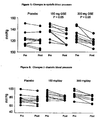
- FIGs 1 and 2 The relationship between the baseline blood pressure and the fall in both systolic and diastolic pressures are shown in FIGs 1 and 2 .
- Blood pressure is quoted as mmHg. Since the diagnosis of Metabolic Syndrome is based on the presence of three of the listed risk factors (one of which is blood pressure), the study did not block randomize the individuals for blood pressure. As such, the average pressures in the three groups were not similar (but varied within a narrow range).
- oxidized LDL The effects of grape extract used in the present invention on oxidized LDL were studied in the same twenty-four individuals diagnosed with Metabolic Syndrome as discussed above.
- the concentration of oxidized LDL was measured at the commencement of the study and again after four weeks of treatment.
- a blood sample was taken from each individual and analyzed.
- Figure 3 shows a slight drop in oxidized LDL for placebo, a trend drop in oxidized LDL for individuals taking 150 mg of the grape extract used in the present invention, and a statistically significant drop (p ⁇ 0.05) in oxidized LDL for individuals taking 300 mg of the grape extract used in the present invention.
- Figure 4 shows a greater drop in oxidized LDL concentration in individuals who started with higher levels of oxidized LDL to begin with.
- grape extract used in the present invention were studied on twenty-four individuals diagnosed with pre-hypertension.
- Individuals were excluded if they were current smokers or ex-smokers ( ⁇ 3 years); taking anti-inflammatory or hypertensive drugs; or consumed over-the-counter anti-oxidant compounds.
- the individuals were block randomized for gender into two groups of twelve and they were given one of the following capsules depending on their group assignment.
- Table 4 shows the blood pressure data for the two groups of individuals with pre-hypertension.
- the baseline pressures between the two groups were not significantly different.
- the average drop in systolic blood pressure in the group treated with MegaNatural ® -BP was 7.2 ⁇ 2.5 mmHg, whereas the systolic blood pressure in the placebo group increased by 0.03 ⁇ 1.5 mmHg.
- the data is summarized below. The values are given in mmHg (mean ⁇ SEM). Table 4.
- the invention is further defined by reference to the following examples describing a process for making the grape extract and preparing the dietary supplements.
- the examples are representative, and they should not be construed to limit the scope of the invention.
- Example 1 Process for Making the Grape Extract
- Dried grape seeds were extracted with water at a temperature of 200°F for two hours and the extract was separated from the seeds on metal screens.
- the extract was cooled to 90-100°F and pectinase was added at a concentration of 200 ppm.
- the extract was divided into two portions. To one portion, commercial fungal tannase enzyme (tannin acylhydrolase, E.C3.1.1.20) was added at a concentration of 1000 ppm. To the second portion, the tannase was added at a concentration of 50 ppm.
- the residual concentration of gallic acid in the original extract was 117 ppm with 18.9% terminal units and 11.1 % extension units.
- the gallic acid concentration rose to 904 ppm with 0% terminal units and about 5.5% extension units. It took about thirty-four hours of treatment with 50 ppm tannase enzyme for the gallic acid to reach 810 ppm with less than 1% terminal units and less than 6% extension units.
- both the extracts were acidified to a pH of 1.5 to 2.5, which allowed flocculation of proteins and polysaccharides on cooler storage from 40-60°F.
- the extract was filtered and processed further according to the '581 patent to produce a grape extract with characteristics for blood pressure reduction and reduction of oxidized LDL concentrations.
- MegaNatural ® -BP grape extract (150 mg or 300 mg) was dry mixed with magnesium stearate (3 mg or 6 mg respectively) and loaded into hard shell gelatin capsules (made of gelatin and water).
- the grape extract has a minimum of 90% phenols or 135 mg of phenols per 150 mg of grape extract.
- the grape extract In the 300 mg formulation, the grape extract has a minimum of 90% phenols or 270 mg of phenols per 300 mg of grape extract.
- the daily dosage is one capsule per day.
- MegaNatural ® -BP grape extract was formulated into a dry mix with the excipients as shown in Table 4 to be used in a beverage, wherein the ingredients were dry blended.
- To prepare the final beverage 9.47 g of the dry mix is combined with 500 mL of cold water and stirred. A 500 mL serving contains 16 calories.
- the final beverage contains 100 mg MegaNatural ® -BP grape extract and 120 mg vitamin C per 1 L serving, which will have an ORAC value of 2200 TE.
- ORAC measured in mmoles Trolox (a noncommercial, water-soluble derivative of tocopherol) equivalents (TE) per gram, stands for "Oxygen Radical Absorbance Capacity.” This is the standard by which scientists measure antioxidant activity in foods and supplements. A single servings of fresh or freshly cooked fruits and vegetables supply an average of 600 to 800 ORAC units. It has been suggested that increasing intake of foods or supplements that provide 2,000 to 5,000 ORAC units per day may have health benefits.
- MegaNatural ® -BP grape extract was formulated into a beverage with the excipients as shown in Table 5.
- the following beverage contains 50 mg MegaNatural ® -BP grape extract and 60 mg vitamin C (100% RDI) per 8 fl oz serving.
- the beverage contains 0 calories and 0.15 g total carbohydrates.
- a 16 fl oz serving would have an ORAC value of 2200 TE.
- MegaNatural ® -BP grape extract was formulated into a beverage with the excipients as shown in Table 6.
- the following beverage contains 50 mg MegaNatural ® -BP grape extract and 60 mg vitamin C (100% RDI) per 8 fl oz serving.
- the beverage contains 15 calories and 4 g total carbohydrates.
- a 16 fl oz serving would have an ORAC value of 2200 TE.
- MegaNatural ® -BP grape extract 150 mg was dry mixed with the following excipients listed in Table 7 and pressed into a tablet to form a multi-vitamin/mineral supplement.
- the daily dosage is one tablet per day, preferably taken with food.
- MegaNatural ® -BP grape extract 150 mg was blended with the following ingredients and excipients listed in Table 8 in V blender until uniform. The blend was pressed into tablets that reach a specified weight of 775 mg ⁇ 2% to form a multi-vitamin/mineral supplement. The tablets were spray coated with a clear coating of a water soluble gum such as hydroxypropyl methylcellulose and dried. The daily dosage is one tablet per day. The batch size for the formulation in Table 8 is 500,000 Tablets.
Landscapes
- Health & Medical Sciences (AREA)
- Life Sciences & Earth Sciences (AREA)
- Chemical & Material Sciences (AREA)
- Engineering & Computer Science (AREA)
- Animal Behavior & Ethology (AREA)
- Public Health (AREA)
- Veterinary Medicine (AREA)
- General Health & Medical Sciences (AREA)
- Pharmacology & Pharmacy (AREA)
- Medicinal Chemistry (AREA)
- Polymers & Plastics (AREA)
- Food Science & Technology (AREA)
- Nutrition Science (AREA)
- Bioinformatics & Cheminformatics (AREA)
- Mycology (AREA)
- Natural Medicines & Medicinal Plants (AREA)
- Diabetes (AREA)
- General Chemical & Material Sciences (AREA)
- Nuclear Medicine, Radiotherapy & Molecular Imaging (AREA)
- Organic Chemistry (AREA)
- Chemical Kinetics & Catalysis (AREA)
- Botany (AREA)
- Hematology (AREA)
- Epidemiology (AREA)
- Obesity (AREA)
- Medical Informatics (AREA)
- Alternative & Traditional Medicine (AREA)
- Endocrinology (AREA)
- Heart & Thoracic Surgery (AREA)
- Cardiology (AREA)
- Microbiology (AREA)
- Biotechnology (AREA)
- Inorganic Chemistry (AREA)
- Urology & Nephrology (AREA)
- Child & Adolescent Psychology (AREA)
- Vascular Medicine (AREA)
- Emergency Medicine (AREA)
- Medicines Containing Plant Substances (AREA)
- Pharmaceuticals Containing Other Organic And Inorganic Compounds (AREA)
- Coloring Foods And Improving Nutritive Qualities (AREA)
Description
- This invention relates to a method of preventing and/or treating Metabolic Syndrome and/or the conditions that comprise Metabolic Syndrome. This invention also relates to a method of treating and/or preventing pre-hypertension. These methods involve administering to a mammal, including a human, a dietary supplement comprising grape extract effective for treating pre-hypertensive individuals, or individuals with Metabolic Syndrome, and/or the conditions that comprise Metabolic Syndrome.
- Blood pressure is the force exerted by the bloodstream on the artery walls. Normal blood pressure is considered to be 120 systolic and 80 diastolic. Hypertension refers to a disorder that is characterized by an elevation of the systolic blood pressure to 140 and above and/or an elevation of the diastolic blood pressure to 90 and above. With hypertension, there is either an increase in the total peripheral vascular resistance such as is due to vasoconstriction, or an increase in cardiac output, or both. These conditions produce an elevation in blood pressure because blood pressure is equal to flow times resistance. There are many factors that can contribute to high blood pressure including stress, diet and lifestyle, as well as kidney complaints, hormonal disturbances and circulatory disorders. An untreated hypertensive patient is at great risk of developing left ventricular failure, myocardial infarction, cerebral hemorrhage or renal failure. Hypertension is also a risk factor for stroke and coronary atherosclerosis. Presently, hypertensive patients are treated with drug therapy that includes the use of diuretics, beta-blockers, ACE inhibitors, angiotensin antagonists, calcium channel blockers, alpha-blockers, alpha-beta-blockers, nervous system inhibitors, and vasodilators.
- Pre-hypertensive individuals are classified as individuals that have systolic pressure between 120 and 139 mmHg or have diastolic pressure between 81 and 89 mmHG. This classification is based on the Seventh Report of the Joint National Committee on Prevention, Detection, Evaluation, and Treatment of High Blood Pressure (JNC 7), page 87, NIH Publication No. 04-5230. Pre-hypertensive individuals are not typically treated with drug therapy, but rather are given suggestions for a healthy lifestyle. These suggestions include maintaining a healthy weight; being physically active; following a healthy eating plan that emphasizes fruits, vegetables, and low fat dairy foods; choosing and preparing foods with less sodium; and drinking alcoholic beverages in moderation if at all. Adopting healthy lifestyle habits is usually an effective first step in both preventing and controlling abnormal blood pressure.
- Many patients with hypertension are insulin resistant. Insulin stimulates glucose uptake into tissues, and its ability to do so varies greatly among individuals. With insulin resistance, tissues have a diminished ability to respond to the action of insulin. To compensate for resistance, the pancreas secretes more insulin. Insulin-resistant individuals, therefore, have high plasma insulin levels. There is evidence that abnormal blood pressure is linked to the degree of insulin resistance. The precise way in which insulin resistance develops is unclear, although genetics, diet and level of physical activity are believed to play a role.
- "Metabolic Syndrome," also called "Syndrome X," the "Insulin Resistance Syndrome," or the "Deadly Quartet," is characterized by an accumulation of risk factors for cardiovascular disease, stroke and/or diabetes mellitus type II. Metabolic Syndrome may be caused by an overproduction of cortisol, a stress hormone, which causes an accumulation of fat inside the abdominal cavity and insulin resistance. Drug therapy is not currently recommended for individuals with Metabolic Syndrome. The risk factors that characterize Metabolic Syndrome include an increased amount of adipose tissue inside the abdominal cavity (abdominal obesity), insulin resistance with increased risk of developing diabetes, hyperinsulinemia, high levels of blood fats, increased blood pressure, and elevated serum lipids. The National Cholesterol Education Adult Treatment Panel (ATP III) defined Metabolic Syndrome as individuals having at least three of the following risk factors:
Risk Factor Defining Level Abdominal obesity, given as waist circumference*† Men >102 cm (>40 in) Women >88 cm (>35 in) Triglycerides ≥150 mg/dL HDL cholesterol Men <40 mg/DI Women <50 mg/dL Blood pressure ≥130/≥85 mm Hg Fasting glucose ≥110 mg/dL‡ *Overweight and obesity are associated with insulin resistance and Metabolic Syndrome. The presence of abdominal obesity, however, is more highly correlated with the metabolic risk factors than is an elevated BMI. Therefore, the simple measure of waist circumference is recommended to identify the body weight component of Metabolic Syndrome.
†Some male patients can develop multiple metabolic risk factors when the waist circumference is only marginally increased, e.g., 94 to 102 cm (37 to 39 in). Such patients may have a strong genetic contribution to insulin resistance. They should benefit from changes in life habits, similarly to men with categorical increases in waist circumference.
‡The American Diabetes Association has recently established a cut-off point of ≥100 mg/dL, above which individuals have either pre-diabetes (impaired fasting glucose) or diabetes. This new cut-off point should be applicable for identifying the lower boundary to define an elevated glucose as one criterion for Metabolic Syndrome. - The World Health Organization, however, defines Metabolic Syndrome as individuals with diabetes/insulin resistance and at least two of the following risk factors: high waist-to-hip ratio; high triglycerides or low HDL cholesterol; high blood pressure; and a high urinary albumin excretion rate.
- Conditions related to Metabolic Syndrome include diabetes mellitus type II, dyslipoproteinemia, myocardial infarction, stroke and other arteriosclerotic diseases, as well as the risk factors for these diseases, including insulin resistance in general, abdominal obesity caused by accumulation of intra-abdominal fat, elevated blood serum lipids and glucose, raised diastolic and/or systolic blood pressure, and hypertension.
- Treatment of pre-hypertensive individuals and individuals with Metabolic Syndrome are encouraged to adopt a healthy lifestyle, which includes maintaining a healthy weight; being physically active; and following a healthy eating plan. Given that drug therapy is not recommended to these individuals, there is a need for a dietary supplement comprising grape extract that these individuals can use as adjunctive therapy, which is effective in lowering blood pressure and does not increase insulin resistance.
- Grape seeds contain about 5-8% by weight flavonoids. Flavonoids constitute an important group of dietary polyphenolic compounds that are widely distributed in plants. More than 4000 chemically unique flavonoids have been identified in plant sources, such as fruits, vegetables, legumes, nuts, seeds, herbs, spices, flowers, as well as in beverages such as tea, cocoa, beer, wine, and grape juice.
- The terminology of flavonoids with respect to grape seeds refers to monomeric flavan-3-ols, specifically (+)-catechin, (-)-epicatechin, and (-)-epicatechin 3-gallate. Two or more flavan-3-ol monomers chemically linked are called proanthocyanidins or oligomeric proanthocyanidins ("OPCs"), which includes procyanidins and prodelphinidins. OPCs containing two monomers are called dimers, three monomers are called trimers, four monomers are called tetramers, five monomers are called pentamers, etc. Operationally, the oligomers have chain lengths of 2 to 7 (dimers to heptamers); whereas polymers represent components with chain lengths greater than 7. After considerable discussion, it was the consensus of the Grape Seed Method Evaluation Committee (through the National Nutritional Foods Association) to define OPCs as all proanthocyanidins containing two or more monomers, including polymers or condensed tannins. Thus, oligomers in grape extracts include, for instance, dimers and trimers, and there is evidence that the polymers can have as many as sixteen units.
- Below is a typical structure of a proanthocyanidin, showing epicatechin-gallate extension units and terminal units. The extension units are represented, for instance, by the epicatechin (2) and epigallocatechin (3) linking groups. Whereas, a terminal unit is represented by the epicatechin gallate (4) group.

- In order for polyphenolic compounds to be used commercially as a grape extract, these compounds have to be separated from grapes in a more concentrated form. The general process in which the polyphenolic compounds are extracted, purified and concentrated from whole grapes, grape pomace and grape seeds is disclosed in
U.S. Patent No. 6,544,581 . -
-
Figure 1 shows the relationship between the baseline blood pressure and the decrease in systolic pressure for individual with Metabolic Syndrome being treated with the grape extract used in the present invention. -
Figure 2 shows the relationship between the baseline blood pressure and the decrease in diastolic pressure for individual with Metabolic Syndrome being treated with the grape extract used in the present invention. -
Figure 3 shows the change in oxidized LDL concentration in individuals with Metabolic Syndrome being treated with the grape extract used in the present invention. -
Figure 4 shows the relationship between the change in oxidized LDL concentration and the baseline concentration of oxidized LDL in individuals given 300 mg of the grape extract used in the present invention. - The present invention provides a method of preventing and/or treating Metabolic Syndrome and/or the conditions that comprise Metabolic Syndrome. This method includes administering to a mammal, including a human, in need of such treatment a dietary supplement comprising an effective amount of grape extract. In particular, the grape extract used in the present method is effective to lower blood pressure and reduce oxidized LDL cholesterol in individual with Metabolic Syndrome.
- The present invention also provides a method of treating and/or preventing Metabolic Syndrome in a mammal, comprising administering a dietary supplement comprising grape extract having about 5-15% monomers, about 5-20% dimers, about 3-10% trimers, about 2-10% tetramers, and about 2-10% pentamers by weight. The total amount of low molecular weight phenolic compounds including monomers, dimers, trimers, tetramers, and pentamers is between about 25-50% by weight, preferably between about 25-40% by weight, more preferably between about 30-40% by weight, and more preferably between about 25-35% by weight. The total amount of phenolic compounds is about 80% by weight or more, and preferably about 90% by weight or more.
- The present invention also provides a method of preventing and/or treating prehypertension. This method includes administering to a mammal, including a human, in need of such treatment a dietary supplement comprising an effective amount of grape extract. In particular, the grape extract used in the present method is effective to lower blood pressure in pre-hypertensive individuals.
- The present invention also provides a method of treating and/or preventing prehypertension in a mammal, comprising administering a dietary supplement comprising grape extract having about 5-15% monomers, about 5-20% dimers, about 3-10% trimers, about 2-10% tetramers, and about 2-10% pentamers by weight. The total amount of low molecular weight phenolic compounds including monomers, dimers, trimers, tetramers, and pentamers is between about 25-50% by weight, preferably between about 25-40% by weight, more preferably between about 30-40% by weight, and more preferably between about 25-35% by weight. The total amount of phenolic compounds is about 80% by weight or more, and preferably about 90% by weight or more.
- The term "effective amount" means an amount of grape extract sufficient to decrease either or both systolic and/or diastolic blood pressure in pre-hypertensive individuals or those with Metabolic Syndrome by at least about 2%, preferably by at least about 5%, and more preferably by at least about 8%, without having adverse effects such as increasing insulin resistance in the individual. An appropriate clinical end-point, however, is a systolic blood pressure below 120 mmHG in pre-hypertensive individuals or those with Metabolic Syndrome. It has also been suggested that the grape extract used in the present invention will, in addition to lowering blood pressure, reduce oxidized LDL cholesterol in individuals with Metabolic Syndrome. Increased LDL cholesterol is a recognized risk factor for atherosclerosis. There is strong evidence that oxidatively modified LDL initiates the development of this pathological process. Thus, decreasing the concentration of oxidized LDL may reduce and/or prevent atherosclerosis in individuals with Metabolic Syndrome.
- The grape extract, to be used with the present invention, has a phenolic profile, as determined by normal-phase high-performance liquid chromatography HPLC"), of about 5-15% monomers, about 5-20% dimers, about 4-10% trimers, about 2-10% tetramers, and about 2-10% pentamers by weight. The grape extract used in the present invention also comprises about 80% by weight or more total phenolic compounds, and preferably about 90% by weight or more, as determined by the Folin Ciocalteu method. The grape extract used in the present invention also comprises about 2% by weight or less epicatechin-gallate terminal units, more preferably about 1% by weight or less, as determined by reverse-phase HPLC after thiolysis reaction. The grape extract used in the present invention also comprises about 12% by weight or less epicatechin-gallate extension units, preferably about 8% by weight or less, and more preferably about 5% by weight or less, as determined by reverse-phase HPLC after thiolysis reaction.
- The grape extract used in the present invention may be produced by modifying the hot water extraction process disclosed in
U.S. Patent No. 6,544,581 as described below. In general, the hot water extraction process, as disclosed in the '581 patent, involves the following steps. In step (1), grape seeds, dry or fresh, may be heated with hot water for a time sufficient to extract most of the polyphenols. Temperatures of 140-212°F may be employed, preferably 160-212°F, more preferably 180-212°F, yet more preferably 190-212°F, for a period of about 1-6 hours. The time of heating may be varied in relation to the temperature used. Generally, lower temperatures require longer extraction times. In step (2), the crude grape seed-water extract may be separated from spent seeds by draining over metal screens. The extract may then be cooled and treated with any suitable commercially available pectolytic enzyme, such as Pectinex® Ultra SP-L manufactured by Novo Nordisk, at a concentration of about 50-200 ppm to break down cell wall constituents. Preferably, the seed water extract may be enzyme-treated for a period of two hours at a temperature of 80-120°F. Alternatively, the seed-water extract may be enzyme-treated for 7-14 days or longer at about 40-50°F. In step (3), the resulting turbid seed extract may be acidified with an acid, preferably a mineral acid, more preferably with sulfuric acid, to a pH of approximately 1.5-2.5 and allowed to react from about one hour to about two days. The acidified extract may be cooled for up to several weeks to allow for macromolecules, including proteins and other polysaccharides, to settle. The cooled acidified extract may then be filtered using diatomaceous earth to yield a clarified seed extract. Other filter aids, such as perlite, may also be used. - Step (2) of the '581 patent may be modified by enzyme-treating the seed-water extract for a period of four to five days at a temperature of about 80-120°F in order to produce the grape extract used in the present invention. While not intending to be bound to any theory, it is believed that the longer duration than used in the '581 patent at the specified temperature range of this step accounts for the resulting novel grape extract. The time of the enzyme treatment may be varied in relation to the temperature used. Generally, lower temperatures require longer treatment times. Thus, the seed-water extract may be enzyme-treated for up to two weeks or longer at temperatures of about 60-80°F.
- Alternatively, the grape extract used in the present invention may be produced by the following steps. After the extraction of step (1) or after the pectinase treatment in step (2) of the '581 patent, the extract may be smeared on a bacteriological agar plate. Upon incubation, plural species of yeast, bacteria, and/or fungi may be present depending upon the starting material. The live culture may be isolated as a cocktail. Once isolated, the cocktail may be used in subsequent extraction and/or pectinase enzyme treatment steps. For instance, a seed-water extract may be enzyme treated with any suitable commercially available pectolytic enzyme and combined with the isolated cocktail of yeast, bacteria, and/or fungi. The combined mixture may be allowed to stand for a period ot about one to ten days, preferably about two to five days, at a temperature of about 70-100°F. The time of the enzyme treatment may be varied in relation to the temperature used and the inoculum count. The resulting turbid seed extract may be acidified with a suitable acid as discussed above to a pH of 1.5-2.5 and allowed to react for about one hour to about two days. The acidified extract may be cooled and stored for several days to allow for flocculation of proteins and polysaccharides. The cool acidified extract may then be filtered using diatomaceous earth to yield a clarified seed extract, which may be further processed according to the '581 patent to produce a purified grape extract suitable for blood pressure reduction and reduction of oxidized LDL.
- The amount of gallic acid in grape extracts produced by the `581 process as compared with grape extracts produced by the process involving a cocktail of yeast, bacteria, and/or fungi was analyzed by HPLC. Such analysis showed an increase from a value of between about 50-150 ppm of gallic acid in the grape extracts of the '581 process to a value of between about 400-1500 ppm of gallic acid in the grape extracts used in the present invention using the cocktail. The increase in gallic acid indicates that the epicatechin-gallate terminal and extension units are de-esterfied from procyanidins. While not intending to be bound to any theory, it is believed that the cocktail of yeast, bacteria, and/or fungi use the grape extract as a substrate for growth and produce tannase enzymatic activity, which results in de-esterification of procyanidins and release of gallic acid. As such, using a cocktail of live yeast, bacteria, and/or fungi produces the grape extract used in the present invention having about 2% by weight or less epicatechin-gallate terminal units, more preferably about 1% by weight or less, and about 12% by weight or less epicatechin-gallate extension units, preferably about 8% by weight or less, and more preferably about 5% by weight or less.
- In one embodiment, the grape extract of the present invention may be produced by the following steps. After the extraction of step (1) or after the pectinase treatment in step (2) of the '581 patent, any suitable commercial fungal tannase enzyme, such as tannin acylhydrolase, E.C3.1.1.20, may be added at a concentration of between about 5-1000 ppm. Depending on the concentration of the tannase enzyme used, the mixture may be reacted for about one hour to about two days, preferably one to two days, or until the terminal units are reduced to about 2% or less, preferably 1% or less, and the extension units are reduced to about 8% or less, preferably about 5% or less. After a sufficient reaction time, the extract may be acidified to a pH of 1.5 to 2.5, which allows flocculation of proteins and polysaccharides on cooler storage from 40-60°F. The extract may be filtered to clarify and processed further according to the '581 patent to produce a grape extract with characteristics for blood pressure reduction.
- The grape extract used in the present invention may be formulated into dietary supplements, including capsules, tablets, powders, solutions, gels, suspensions, creams, pastes, gels, suppositories, transdermal patches, and the like. These dietary supplements in, for instance, powder or solution form, may be added to nutraceuticals, foods and/or beverages to form functional nutraceutical, food, and/or beverage products. The dietary supplements may be formulated as powders, for example, for mixing with consumable liquids such as milk, juice, water or consumable gels or syrups for mixing into other dietary liquids or foods. The dietary supplements of this invention may be formulated with other foods or liquids to provide premeasured supplemental foods, such as single serving bars. Typical food products that may incorporate the grape extract used in the present invention include dairy foods such as yogurt, cereals, breads, snack food products, fruit juices and other soft drinks. Flavorings, binders, protein, complex carbohydrates, vitamins, minerals and the like may be added as needed. Preferably, the grape extract is formulated for oral administration.
- The dietary supplements used in the present invention are intended for daily administration or as needed. The magnitude of a prophylactic or therapeutic dose of the dietary supplement in pre-hypertensive individuals or those with Metabolic Syndrome will vary with the severity of the condition being treated and the route of administration. The dose, and perhaps the dose frequency, will also vary according to the age, body weight, and response of the individual. In general, the total daily dose range, for the conditions described herein, is from about 50 mg to about 1,000 mg by weight of grape extract administered in single or divided doses orally, topically, or transdermally, preferably orally. A preferred oral daily dose range is from about 50 mg to about 500 mg by weight of the grape extract (i.e., excluding excipients and carriers), more preferably about 150 mg to about 300 mg. For example, capsules or tablets may be formulated in either 150 mg or 300 mg doses, whereas beverages can be formulated with 50 mg grape extract. Such a regimen of administration is preferably maintained for at least one month, more preferably six months or longer.
- The dietary supplements used in the present invention may be formulated in a conventional manner (e.g., wet or dry granulation), in admixture with pharmaceutically acceptable carriers, excipients, vitamins, minerals and/or other nutrients. Representative carriers and excipients include, but are not limited to, starches, sugars, microcrystalline cellulose, diluents, granulating agents, lubricants, binders, disintegrating agents, and the like, in the case of oral solid preparations (such as powders, capsules, and tablets).
- Any suitable route of administration may be employed to administer the dietary supplements of the invention to an individual. Suitable routes include, for example, oral, rectal, parenteral, intravenous, topical, transdermal, subcutaneous, and intramuscular. Although any suitable route of administration may be employed for providing the individual with an effective amount of the grape extract according to the methods of the present invention, oral administration is preferred, including solid dosage forms such as tablets, capsules, or powders. It is also preferred that the grape extract is formulated for use in functional nutraceutical, food, or beverage products.
- The grape extract used in the present invention can also be combined with other active agents including but not limited to diuretics, beta-blockers, ACE inhibitors, angiotensin antagonists, calcium channel blockers, alpha-blockers, alpha-beta-blockers, nervous system inhibitors, vasodilators, antioxidants.
- Recently, it was reported that the use of grape seed polyphenols does not reduce systolic blood pressure and actually increases systolic blood pressure when combined with the use of vitamin C in hypertensive individuals. See Ward et al. "The combination of vitamin C and grape-seed polyphenols increases blood pressure: a randomized, double-blind, placebo-controlled trial," Journal of Hypertension 2005; 23:427-434. While not intending to be bound to any theory, it is believed that the phenolic profile of grape extracts is important to their effectiveness in reducing blood pressure. The grape extract evaluated in the Ward study was Vinlife®, which has a phenolic profile of 50.6% total phenolic compounds, as determined by Folin Ciocalteu method, 11.2% epicatechin-gallate terminal units, and 11.8% epicatechin-gallate extension units, as determined by reverse-phase HPLC after thiolysis reaction, and 7.3% monomers, 4.4% dimers, 2.0% trimers, 1.9% tetramers, and 1.1 % pentamers, with a total monomers to pentamers of 16.7%, as determined by normal-phase HPLC.
- Commercially available extracts of grape seed contain a variety of monomers and proanthocyanidins. The phenolic profile of some commercially available extracts, as determined by reverse-phase HPLC, is described in Table 1, and as determined by normal-phase HPLC, is described in Table 2. From these analyses, the grape extract used in the present invention (currently manufactured by Polyphenolics, Inc. as MegaNatural®-BP) has three differentiating factors that distinguish it from other grape extracts:
- 1. High degree of purity as determined by having an amount of the total phenolic compound greater than about 80% by weight, and more preferably greater than about 90% by weight, as determined by the Folin Ciocalteu method;
- 2. High amount, e.g. between about 25-50% by weight, of low molecular weight phenolic compounds, wherein low molecular weight phenolic compounds are monomers, dimers, trimers, tetramers, and pentamers; and,
- 3. Little to no amount, e.g. less than about 2%, preferably less than about 1 %, of epicatechin-gallate in terminal units and a small amount, e.g. less than about 12%, preferably less than about 5%, of epicatechin-gallate in extension units.
- Again, while not intending to be bound by any theory, it is believed that the phenolic profile of grape extracts is important to their effectiveness in treating or preventing pre-hypertension or Metabolic Syndrome in individuals. In particular, it is believed that the absence of epicatechin-gallate in terminal units and the small amount of epicatechin-gallate in extension units of the grape extract used in the present invention along with the presence of a higher amount of low molecular weight compounds is responsible for increased vasodilatation, which is believed to be responsible for the drop of blood pressure in the clinical studies of individuals with Metabolic Syndrome and pre-hypertension described below.
- Reverse-phase HPLC analysis of grape extract can be used to determine the proportion of monomers, oligomers and polymers based on peak area at 280 nm.
-
Mobile Phase: A: 2% glacial acetic acid B: 80% acetonitrile, 0.4% acetic acid Gradient: Time (min) %A %B Curve 0.00 100 0 - 3.00 100 0 6 6.00 96 4 6 15.00 90 10 6 30.00 85 15 6 50.00 77 23 6 60.00 75 25 6 66.00 70 30 6 80.00 50 50 6 83.00 20 80 6 85.00 100 0 6 105.00 100 0 6 110.00 100 0 6 Column: 250 mm x 4.6 mm, Prodigy 5µ ODS (3) 100A (Phenomenex, Torrance, CA) Flow rate: 1.0 mL/min Detection wavelength: 280 nm Temperature: 30°C Injection: 25 µL - Sample preparation: Accurately weigh 0.1 g grape extract into a 100 mL volumetric flask. Dissolve the sample in a small amount of methanol (≤5 mL), sonicate if necessary. Fill to volume with 18 Megaohm water. Centrifuge the sample (14, 000 rpm, 10 min) or filter through 0.45 µM glass filter prior to injection. Determination for percent by weight monomers, oligomers and polymers is based on the peak area and concentration of the standards.
- Thiolysis is a method to determine average molecular size (degree of polymerization) and basic structure of proanthocyanidins in grape extracts. The information provided may indicate biological quality of grape extract for nutritional absorption in the body.
- Thiolysis reagent: 5% phenyl methanethiol (benzyl mercaptan) in methanol containing 0.2 N HCl.
- Condition: 0.1% Grape extract methanol solution was mixed with an equal volume of thiolysis reagent, stirred, and heated at 90°C for 2 min. Water was added to stop the reaction. The reactant was then centrifuged at 14000 rpm for 2 min. The supernatant was analyzed directly by HPLC.
-
Mobile Phase: A: 10% acetic acid/0.1% TFA/5% acetonitrile/84.9%water (v/v/v/v) B: acetonitrile Gradient: 0-30 min 0-50% B 30-35 min 50-100% B Column: 150 cm x 2.0 mm i.d., 4 µm Synergi hydro-RP 80 A (Phenomenex, Torrance, CA) Flow rate: 0.3 mL/min Detection wavelength: HP 1100 FLD with excitation @ 276 nm and emission @ 316 nm and HP DAD at 280 nm Temperature: 30°C Injection: 1-3 µL - The grape extracts to be analyzed were dissolved in methanol, mixed with an equal volume of thiolytic reagent and heated for 2 min at 90°C. The released units were identified by mass spectrometry and quantitatively determined by HPLC under the conditions above. The average degree of polymerization was measured by calculating the molar ratio of all flavan-3-ol units (thioether adducts plus terminal units) to catechin, epicatechin and epicatechin-gallate corresponding to terminal units. The percentage of epicatechin gallate terminal units were determined based on molar ratio of epicatechin gallate in the sum of total moles of terminal units, which includes catechin, epicatechin and epicatechin gallate. The percentage of epicatechin-gallate extension units were determined based on molar ratio of epicatechin gallate thioether adducts in the sum of total moles of thioether adducts of extension units, which include catechin, epicatechin and epicatechin-gallate thioether adducts. The total amount of phenolic compounds was quantified in terms of grams Gallic Acid Equivalents (GAE) by the Folin Ciocalteu method. For more details on the Folin Ciocalteu analysis procedure, see: Waterhouse, A.L., Determination of Total Phenolics, in Current Protocols in Food Analytical Chemistry, I1.1.1-I1.1.8, Wrolstad, R.E., Wiley, 2001, or Singleton, V. L.; Orthofer, R.; Lamuela-Raventos, R. M. "Analysis of total phenols and other oxidation substrates and antioxidants by means of Folin-Ciocalteu Reagent," Methods in Enzymology 1999, 299, 152-178 .
TABLE 1: Comparative Characteristics of MegaNatural®-BP and Other Grape Extracts in the Market as Determined by Reverse-Phase HPLC Total Phenol Epicatechin -gallate Epicatechin -gallate Determined by reverse-phase HPLC using peak area Origin Product Name g GAE/100 g (as is) Terminal (%) Extension (%) Monomers (%) Oligomers (%) Polymers (%) USA MegaNatural®-BP 93.8 0.0 6.8 12.8 62.6 24.6 USA MegaNatural®-SP 91.0 0.0 5.4 9.2 69.6 21.2 USA MegaNatural®-BP 95.2 0.0 6.9 13.8 64.7 21.5 USA MegaNatural®-BP 98.6 0.0 8.2 11.3 68.0 20.7 USA MegaNatural®-BP 91.1 0.0 5.4 5.4 71.5 23.2 USA MegaNatural®-BP 95.5 0.0 5.1 6.5 73.3 20.3 USA MegaNatural®-BP 92.7 0.0 3.0 8.5 69.8 21.7 USA MegaNatural®-BP 93.5 0.0 4.8 5.4 69.9 24.7 USA MegaNatural Gold® 93.0 10.5 11.7 7.8 74.7 17.6 USA MegaNatural Gold® 91.9 4.3 14.6 12.3 76.7 11.0 USA MegaNatural Gold® 92.4 11.0 11.9 10.2 77.7 12.1 USA MegaNatural Gold® 89.1 5.2 12.9 9.9 73.7 16.4 USA MegaNatural Gold® 90.1 3.6 14.5 11.1 73.4 15.6 USA MegaNatural Gold® 90.3 2.8 8.8 13.2 65.5 21.3 USA MegaNatural Gold® 89.6 8.7 11.8 10.0 65.2 24.8 Australia Vinlife® 50.6 11.2 11.8 6.3 60.6 33.1 Europe Masquelier OPC® 98.0 8.5 7.5 12.1 68.4 19.5 Europe Naturex® 78.5 8.3 6.2 6.3 64.2 29.5 Europe Indena® 93.0 10.5 8.8 10.1 64.4 25.5 China Lycome® 88.5 10.6 7.5 5.3 63.1 31.7 China Recovery® 95.8 3.9 5.4 9.1 58.4 32.5 China Grape P E® 92.6 9.8 6.8 3.6 51.9 44.4 China MA® 70.1 8.7 10.5 4.6 55.3 40.1 USA ME® 68.9 12.1 6.3 1.9 52.6 45.4 USA San Joaquin® 74.9 17.7 6.7 2.2 56.1 41.8 USA Activin® 84.3 14.8 11.1 3.0 55.9 41.1 Japan KIKKOMAN® 44.5 5.2 13.1 8.1 52.9 38.9 - HPLC analysis of proanthocyanidins: Chromatographic analyses were performed on an HP 1100 series HPLC equipped with an autosample/injector, binary pump, column heater, diode array detector, fluorescence detector, and HP ChemStation for data collection and manipulation. Normal phase separations of proanthocyanidin oligomers were performed on a Phenomenex Luna Silica (2) column.
Mobile Phase: A: dichloromethane, methanol, water, and acetic acid (83:13:2:2 (v/v)) B: methanol, water, and acetic acid (96:2:2 (v/v)) Gradient: 0-30 min linear 0-17.6% B 30-45 min linear 17.6-30.7% B 45-50 min linear 30.7-87.8% B 50-60 min linear 87.8% B Column: Phenomenex LUNA Silica (3.0 × 150 mm; 3.0 µm) Flow rate: 0.5 mL/min Detection: HP 1100 FLD with excitation @ 276 nm and emission @ 316 nm Temperature: 25°C Injection: 3 µL - In all cases, the column was re-equilibrated between injections with equivalent of 5 mL of the initial mobile phase. Catechin standards were prepared and analyzed to establish a response calibration curve from which to calculate the concentration of proanthocyanidins in the samples. Relative response factors of dimers, trimers, tetramers and pentamers to monomers with fluorescence detection were reported by R. L. Prior and L. Gu, "Occurrence and biological significance of proanthocyanidins in American diet," Phytochemistry 2005, 66(18) 2264-2280, using standards isolated and purified from cocoa bean. These response factors were used to calculate dimers, trimers, tetramers and pentamers relative to monomers.
TABLE 2: Comparative Characteristics of MegaNatural®-BP and Other Grape Extracts in the Market as Determined by Normal-Phase HPLC Determined by Normal-phase HPLC Using Catechin and Epicatechin Equivalent (% by weight) Origin Product Name Monomers Dimers Trimers Tetramers Pentamers Monomers to pentamers Others USA MegaNatural®-BP 6.3 8.7 4.0 4.4 2.8 26.2 73.8 USA MegaNatural®-BP 9.1 13.6 5.6 6.2 3.5 38.1 61.9 USA MegaNatural®-BP 9.2 14.8 5.2 5.4 2.7 37.3 62.7 USA MegaNatural®-BP 10.0 14.2 5.4 5.2 2.8 37.6 62.4 USA MegaNatural®-BP 7.5 11.9 5.2 5.5 3.4 33.4 66.6 USA MegaNatural°-BP 8.2 12.1 5.4 5.7 3.5 34.9 65.1 USA MegaNatural®-BP 9.0 11.3 5.4 4.7 2.5 32.9 67.1 USA MegaNatural®-BP 5.2 9.8 4.1 4.8 2.6 26.4 73.6 Australia Vinilife® 7.3 4.4 2.0 1.9 1.1 16.7 83.3 Europe Masquelier OPC® 15.5 14.2 6.2 4.8 2.9 43.6 56.4 Europe Naturex® 8.3 6.4 3.6 3.0 2.0 23.2 76.8 Europe Indena® 16.6 12.4 6.2 4.8 3.3 43.3 56.7 China Lycome® 7.6 6.2 3.4 2.8 1.9 22.0 78.0 China Recovery® 17.5 8.1 4.4 2.8 2.0 34.8 65.2 China Grape P E® 3.9 3.2 1.9 1.5 1.1 11.6 88.4 China MA® 4.1 3.8 1.9 1.7 0.8 12.3 87.7 USA ME® 1.8 1.8 0.9 0.8 0.5 5.8 94.2 USA San Joaquin® 5.3 5.8 2.6 1.8 1.3 16.8 83.2 USA Activin® 5.5 4.8 2.1 1.3 1.3 15.1 84.9 Japan KiKKOMAN® 0.9 1.1 0.7 0.7 0.4 3.7 96.3 - The results as set forth in Tables 1 and 2 were obtained using different methods, which account for the different ranges of, for example, the percent of monomers. For instance, reverse-phase HPLC was used to determine percentage of monomers, oligomers and polymers based on peak areas of these three groups of compounds. Gallaic acid is included as monomers. In the normal phase HPLC, catechin and epicatechin were used as standards to determine the amount of monomers, dimers, trimers, tetramers and pentamers in the grape extract by weight. The relative response factors of dimers, trimers, tetramers and pentamers related to monomers reported by R. L. Prior and L. Gu were used to calculate dimers, trimers, tetramers and pentamers.
- The effects of grape extract used in the present invention on blood pressure were studied in twenty-four individuals diagnosed with Metabolic Syndrome. The study included an equal number of men and women between the ages of 20 and 50 years. Metabolic Syndrome was diagnosed on the basis of the criteria defined by the National Cholesterol Education Program Adult Treatment Panel III. Each subject exhibited at least three of the following features: 1) Fasting blood sugar >110 mg/dL, 2) HDL (<40 mg/dL in men and <45 mg/dL in women), 3) blood pressure >130/85, and 4) abdominal obesity (>102 cm for men and >88 cm for women). Individuals were excluded if they were current smokers or ex-smokers (<3 years); taking anti-inflammatory or hypertensive drugs; or consumed over-the-counter anti-oxidant compounds.
- The individuals were block randomized into three groups of eight and they were given one of the following capsules depending on their group assignment.
-
Group 1 was given a placebo capsule -
Group 2 was given a capsule containing 150 mg Grape Extract -
Group 3 was given a capsule containing 300 mg Grape Extract - The individuals were given sufficient capsules to take the same dose once daily for the next twenty-eight days. At the end of this period, blood pressure measurements were obtained. Ambulatory blood pressures were recorded over a 12 hr period at the commencement of the study and again after four weeks. The procedure was non-invasive and involved placing a blood pressure cuff in the upper arm. The cuff was connected to an automated FDA-approved inflating device, which was worn on a belt.
- Table 3 shows the blood pressure data for the three groups of individuals with Metabolic Syndrome. In those receiving 300 mg and 150 mg daily of the grape extract used in the present invention, there were significant reductions in both systolic and diastolic pressure. There were no significant changes in the group given placebo.
Table 3. Results of Grape Extract Used in the Present Invention on Blood Pressure of Individual with Metabolic Syndrome 300 mg daily 150 mg daily Placebo Systolic Diastolic Systolic Diastolic Systolic Diastolic Start 129±4 79±3 137±4 84 ± 3.3 124 ± 4 74 ± 4 4 weeks 117 ± 3 71 ±3 125 ± 4 78 ± 1.9 123 ± 4 71 ±4 p* 0.007 0.006 0.003 0.009 ns ns *p is the probability that the start and end values are the same. A p of 0.05 or less (5%) is generally considered significant. - The relationship between the baseline blood pressure and the fall in both systolic and diastolic pressures are shown in
FIGs 1 and 2 . Blood pressure is quoted as mmHg. Since the diagnosis of Metabolic Syndrome is based on the presence of three of the listed risk factors (one of which is blood pressure), the study did not block randomize the individuals for blood pressure. As such, the average pressures in the three groups were not similar (but varied within a narrow range). - This study demonstrates that the grape extract of the present invention in daily dosage of 150 mg and 300 mg lowers both systolic and diastolic blood pressure in individuals with Metabolic Syndrome. The fall in blood pressure is statistically significant for both doses of extract used. In fact, the changes in blood pressure observed with using grape extract were comparable to those observed in major clinical trials using pharmaceutical agents.
- The effects of grape extract used in the present invention on oxidized LDL were studied in the same twenty-four individuals diagnosed with Metabolic Syndrome as discussed above. The concentration of oxidized LDL was measured at the commencement of the study and again after four weeks of treatment. In order to measure the concentration of oxidized LDL, a blood sample was taken from each individual and analyzed.
- The changes in concentration of oxidized LDL for the three groups are summarized in
Figure 3. Figure 3 shows a slight drop in oxidized LDL for placebo, a trend drop in oxidized LDL for individuals taking 150 mg of the grape extract used in the present invention, and a statistically significant drop (p<0.05) in oxidized LDL for individuals taking 300 mg of the grape extract used in the present invention.Figure 4 depicts the relationship between the change in oxidized LDL and the baseline concentration of oxidized LDL in individuals given 300 mg of the grape extract used in the study. The regression coefficient, R2, = 0.52.Figure 4 shows a greater drop in oxidized LDL concentration in individuals who started with higher levels of oxidized LDL to begin with. - This study demonstrates that the grape extract of the present invention in daily dosage of 150 mg and 300 mg reduces oxidized LDL concentration in plasma in individuals with Metabolic Syndrome. Further, there was a statistically significant decrease in oxidized LDL concentration for those individuals given 300 mg of the grape extract used in the present invention.
- The effects of grape extract used in the present invention were studied on twenty-four individuals diagnosed with pre-hypertension. The study included an equal number of men and women between the ages of 30 and 60 years. Pre-hypertension was diagnosed on the basis of the criteria defined by the Seventh Report of the Joint National Committee on Prevention, Detection, Evaluation, and Treatment of High Blood Pressure. Each subject had systolic pressure between 120 and 139 mmHg and/or diastolic pressure between 81 and 89 mmHG. Individuals were excluded if they were current smokers or ex-smokers (<3 years); taking anti-inflammatory or hypertensive drugs; or consumed over-the-counter anti-oxidant compounds.
- The individuals were block randomized for gender into two groups of twelve and they were given one of the following capsules depending on their group assignment.
-
Group 1 was given a placebo capsule -
Group 2 was given a capsule containing 300 mg MegaNatural®-BP - The individuals were given sufficient capsules to take the same dose once daily for the next eight weeks. At the end of this period, blood pressure measurements were obtained. Ambulatory blood pressures were recorded over a 12 hr period at the commencement of the study and again after eight weeks. The procedure was non-invasive and involved placing a blood pressure cuff in the upper arm. The cuff was connected to an automated FDA-approved inflating device, which was worn on a belt.
- Table 4 shows the blood pressure data for the two groups of individuals with pre-hypertension. The baseline pressures between the two groups were not significantly different. In those receiving 300 mg daily of the grape extract used in the present invention, there were significant reductions in both systolic and diastolic pressure; however, there were no significant changes in the group given placebo. For instance, the average drop in systolic blood pressure in the group treated with MegaNatural®-BP was 7.2 ± 2.5 mmHg, whereas the systolic blood pressure in the placebo group increased by 0.03 ± 1.5 mmHg. The data is summarized below. The values are given in mmHg (mean ± SEM).
Table 4. Results of MegaNatural®-BP on Blood Pressure of Individual with Pre-Hypertension 300 mg MegaNatural®-BP daily Placebo Systolic Diastolic Systolic Diastolic Start 133±2 80±2 134±2 79±2 8 weeks 126±2 73±2 134±2 80±2 p* 0.021 0.042 ns ns *p is the probability that the start and end values are the same. A p of 0.05 or less (5%) is generally considered significant. - This study demonstrates that the grape extract of the present invention in daily dosage of 300 mg lowers both systolic and diastolic blood pressure in individuals with pre-hypertension. The fall in blood pressure is statistically significant. In fact, the changes in blood pressure observed with using grape extract were comparable to those observed in major clinical trials using pharmaceutical agents.
- The invention is further defined by reference to the following examples describing a process for making the grape extract and preparing the dietary supplements. The examples are representative, and they should not be construed to limit the scope of the invention.
- Dried grape seeds were extracted with water at a temperature of 200°F for two hours and the extract was separated from the seeds on metal screens. The extract was cooled to 90-100°F and pectinase was added at a concentration of 200 ppm. The extract was divided into two portions. To one portion, commercial fungal tannase enzyme (tannin acylhydrolase, E.C3.1.1.20) was added at a concentration of 1000 ppm. To the second portion, the tannase was added at a concentration of 50 ppm. The residual concentration of gallic acid in the original extract was 117 ppm with 18.9% terminal units and 11.1 % extension units. Within about two hours of treatment with 1000 ppm tannase enzyme, the gallic acid concentration rose to 904 ppm with 0% terminal units and about 5.5% extension units. It took about thirty-four hours of treatment with 50 ppm tannase enzyme for the gallic acid to reach 810 ppm with less than 1% terminal units and less than 6% extension units. After about two days, both the extracts were acidified to a pH of 1.5 to 2.5, which allowed flocculation of proteins and polysaccharides on cooler storage from 40-60°F. The extract was filtered and processed further according to the '581 patent to produce a grape extract with characteristics for blood pressure reduction and reduction of oxidized LDL concentrations.
- MegaNatural®-BP grape extract (150 mg or 300 mg) was dry mixed with magnesium stearate (3 mg or 6 mg respectively) and loaded into hard shell gelatin capsules (made of gelatin and water). In the 150 mg formulation, the grape extract has a minimum of 90% phenols or 135 mg of phenols per 150 mg of grape extract. In the 300 mg formulation, the grape extract has a minimum of 90% phenols or 270 mg of phenols per 300 mg of grape extract. The daily dosage is one capsule per day.
- MegaNatural®-BP grape extract was formulated into a dry mix with the excipients as shown in Table 4 to be used in a beverage, wherein the ingredients were dry blended. To prepare the final beverage, 9.47 g of the dry mix is combined with 500 mL of cold water and stirred. A 500 mL serving contains 16 calories. The final beverage contains 100 mg MegaNatural®-BP grape extract and 120 mg vitamin C per 1 L serving, which will have an ORAC value of 2200 TE.
- ORAC, measured in mmoles Trolox (a noncommercial, water-soluble derivative of tocopherol) equivalents (TE) per gram, stands for "Oxygen Radical Absorbance Capacity." This is the standard by which scientists measure antioxidant activity in foods and supplements. A single servings of fresh or freshly cooked fruits and vegetables supply an average of 600 to 800 ORAC units. It has been suggested that increasing intake of foods or supplements that provide 2,000 to 5,000 ORAC units per day may have health benefits.
TABLE 4 Ingredients % Dry Mix (g) Maltodextrin 37.48 Citric Acid 29.99 Clouding Agent (Purity Gum 2000)* 5.25 Aspartame 3.85 Sodium Citrate, FCC Grade 3.75 Ultra Guar** 3.75 N&A Orange Flavor (SN313897)*** 7.5 Nat FF Passion Fruit Flavor (SN 313898)*** 4.27 FD&C Yellow #6(20:1 in Maltodextrin) 2.24 FD&C Yellow #5(20:1 in Maltodextrin) 0.75 Ascorbic Acid 0.64 MegaNatural®-BP Grape Extract (Polyphenolics, Inc.) 0.53 TOTAL 100 *Available from National Starch & Chemical Corporation, Bridgewater, NJ
**Available From P.L. Thomas & Co., Inc. Morristown, NJ
***Available from International Flavors & Fragrances, Dayton, NJ - MegaNatural®-BP grape extract was formulated into a beverage with the excipients as shown in Table 5. The following beverage contains 50 mg MegaNatural®-BP grape extract and 60 mg vitamin C (100% RDI) per 8 fl oz serving. In an 8 fl oz serving, the beverage contains 0 calories and 0.15 g total carbohydrates. A 16 fl oz serving would have an ORAC value of 2200 TE.
TABLE 5 Ingredients % by weight Water 99.4373 Citric Acid 0.2640 MegaNatural Purple Color (Canandaigua Conc.) 0.0528 Sethness - Greenleaf Flavor System 0.0867 Sodium Benzoate 0.0448 Potassium Sorbate 0.0448 Ascorbic Acid 0.0338 MegaNatural®-BP Grape Extract (Polyphenolics, Inc.) 0.0211 Asparatame 0.0147 TOTAL 100.0000% - MegaNatural®-BP grape extract was formulated into a beverage with the excipients as shown in Table 6. The following beverage contains 50 mg MegaNatural®-BP grape extract and 60 mg vitamin C (100% RDI) per 8 fl oz serving. In an 8 fl oz serving, the beverage contains 15 calories and 4 g total carbohydrates. A 16 fl oz serving would have an ORAC value of 2200 TE.
TABLE 6 Ingredients % by weight Water 95.8778 Orange Juice Concentrate 65 1.3973 Cranberry Juice Concentrate 500.8691 MegaNatural Purple Color (Canandaigua Conc.) 0.5032 Sethness - Greenleaf Flavor System 1.1074 Sodium Benzoate 0.0444 Potassium Sorbate 0.0444 Ascorbic Acid 0.0357 MegaNatural®-BP Grape Extract (Polyphenolics, Inc.) 0.0210 Neotame (The NutraSweet Co.) 0.0997 TOTAL 100.0000% - MegaNatural®-BP grape extract (150 mg) was dry mixed with the following excipients listed in Table 7 and pressed into a tablet to form a multi-vitamin/mineral supplement. The daily dosage is one tablet per day, preferably taken with food.
TABLE 7 Ingredients % Daily Value Vitamin A 3500 IU (29% as Beta Carotene) 70 Vitamin C 60mg 100 Vitamin D 400 IU 100 Vitamin E 45 IU 150 Vitamin K 10 mcg13 Thiamin 1.5 mg 100 Riboflavin 1.7 mg 100 Niacin 20 mg 100 Vitamin B6 3mg 150 Folic Acid 400 mcg 100 Vitamin B12 25 mcg417 Biotin 30 mcg 10 Pantothenic Acid 10mg 100 Calcium 299 mg 20 Phosphorus 48 mg 5 Iodine 150mcg 100 Magnesium 100mg 25 Zinc 15mg 100 Selenium 20 mg29 Copper 2mg 100 Manganese 2mg 100 Chromium 150 mcg125 Molydenum 75 mcg 100 Chloride 72 mg 2 Potassium 80mg 2 MegaNatural®-BP Grape Extract 150 mg * Boron 150 mcg* Nickel 5 mcg* Silicon 2 mg* Vanadium 10 mcg* Lutein 250 mcg * Lycopene 300 mcg* *Daily Value (%DV) not established - MegaNatural®-BP grape extract (150 mg) was blended with the following ingredients and excipients listed in Table 8 in V blender until uniform. The blend was pressed into tablets that reach a specified weight of 775 mg ± 2% to form a multi-vitamin/mineral supplement. The tablets were spray coated with a clear coating of a water soluble gum such as hydroxypropyl methylcellulose and dried. The daily dosage is one tablet per day. The batch size for the formulation in Table 8 is 500,000 Tablets.
TABLE 8 Ingredients (Units of Measure) Label Claim Overage (%)* Amount/ Tablet (mg) Amount/ Batch (Kg) Vitamin A Palmitate @ 500K IU/gm (IU) 5000 IU 30 13.000 6.500 Vitamin D3 @ 850K IU/g (IU) 400 IU 30 0.612 0.306 Vitamin E succinate (D-α) @ 1210 IU/g (IU) 15 IU 5 13.017 6.508 Vitamin C (mg) 30 mg 2 30.600 15.300 Thiamine HCl @ 89.2% (mg) 1.5 mg 2 1.715 0.858 Riboflavin (mg) 1.7 mg 2 1.734 0.867 Niacinamide (mg) 10 mg 2 10.200 5.100 Pyridoxine HCl 82.3% (mg) 2 mg 5 2.552 1.276 Folic Acid Trituration 1.0% (mcg) 400 mcg 25 50.000 25.000 Vitamin B-12 Trituration 1.0% (mcg) 6 mcg 20 0.720 0.360 Pantothenic Acid (Cal Pan.) (mg) 10 mg 5 10.500 5.250 Biotin Trituration 1.0% (mcg) 30 mcg 20 3.600 1.800 Calcium (Dicalcium Phosphate) 29.46% (mg) 100 mg 0 344.119 172.060 Phosphorus (Dicalcium Phosphate) 22.77% (mg) 75 mg 0 0.000 0.000 Magnesium (MgO) 60.32% (mg) 20 mg 0 33.156 16.578 Zinc (ZnO) 80.34 (mg) 5 mg 0 6.224 3.112 Iodine (KI) 76.45% (mcg) 150 mcg 0 0.196 0.098 Copper (Gluconate) 14.00% (mg) 2 mg 0 14.286 7.143 Manganese (Gluconate) 12.34% (mg) 2 mg 0 16.207 8.104 MegaNatural®-BP Grape Extract 150 mg 150.000 25.000 Microcrystalline cellulose 33.750 16.875 Croscarmellose Sodium 20.250 10.125 Stearic Acid 13.500 6.750 Magnesium Stearate 5.063 2.531 TOTAL 775.000 337.500 *Percent amount of ingredient over label claim used to reach the label claim amount.
Claims (15)
- A composition comprising a polyphenol extract from grapes for use in treating and/or preventing Metabolic Syndrome or pre-hypertension in a mammal in need thereof, wherein the extract comprises about 2% by weight or less epicatechin-gallate terminal units and wherein an adult individual suffering from pre-hypertension has a systolic pressure between 120 and 139 mmHg or a diastolic pressure between 81 and 89 mmHg.
- The composition for use according to claim 1 wherein the polyphenol extract from grapes is in an amount effective to lower blood pressure and/or to reduce oxidized LDL cholesterol.
- The composition for use according to any one of the preceding claims, wherein the polyphenol extract comprises between about 5-15% monomers, about 5-20% dimers, about 3-10% trimers, about 2-10% tetramers, and about 2-10% pentamers by weight.
- The composition for use according to any one of the preceding claims, wherein the total amount of monomers, dimers, trimers, tetramers and pentamers is between about 25-50% by weight.
- The composition for use according to any one of the preceding claims, wherein the extract comprises about 80% by weight or more total phenolic compounds.
- The composition for use according to any one of the preceding claims, wherein the extract comprises about 12% by weight or less epicatechin-gallate extension units.
- The composition for use according to any one of the preceding claims, wherein the amount of extract in the composition is between about 50-1000 mg.
- The composition for use according to any one of the preceding claims, wherein the polyphenol extract contains 400-1500 ppm of gallic acid.
- The composition for use according to any one of the preceding claims, wherein the composition is formulated for oral administration.
- The composition for use according to any one of the preceding claims, wherein the composition is administered in a form selected from the group consisting of tablets, powders, liquids, capsules and gels.
- The composition for use according to claim 10, wherein the composition is used in a nutraceutical, a food or in a beverage product.
- Use of a composition comprising a polyphenol extract from grapes for the preparation of a medicament for treating and/or preventing Metabolic Syndrome or prehypertension in a mammal in need thereof, wherein the extract comprises about 2% by weight or less epicatechin-gallate terminal units and wherein an adult individual suffering from pre-hypertension has a systolic pressure between 120 and 139 mmHg or a diastolic pressure between 81 and 89 mmHg.
- A composition comprising a polyphenol extract from grapes having about 5-15% monomers, about 5-20% dimers, about 3-10% trimers, about 2-10% tetramers, and about 2-10% pentamers by weight for use in treating and/or preventing Metabolic Syndrome or pre-hypertension in a mammal in need thereof, wherein the extract comprises about 2% by weight or less epicatechin-gallate terminal units and wherein an adult individual suffering from pre-hypertension has a systolic pressure between 120 and 139 mmHg or a diastolic pressure between 81 and 89 mmHg.
- Use of a composition comprising a polyphenol extract from grapes having about 5-15% monomers, about 5-20% dimers, about 3-10% trimers, about 2-10% tetramers, and about 2-10% pentamers by weight for the preparation of a medicament for treating and/or preventing Metabolic Syndrome or pre-hypertension in a mammal in need thereof, wherein the extract comprises about 2% by weight or less epicatechin-gallate terminal units and wherein an adult individual suffering from pre-hypertension has a systolic pressure between 120 and 139 mmHg or a diastolic pressure between 81 and 89 mmHg.
- The composition for use according to any one of the preceding claims, wherein the mammal is a human.
Priority Applications (1)
| Application Number | Priority Date | Filing Date | Title |
|---|---|---|---|
| PL06815967T PL1942919T3 (en) | 2005-09-28 | 2006-09-26 | Method for lowering blood pressure in pre-hypertensive individuals and/or individuals with metabolic syndrome |
Applications Claiming Priority (2)
| Application Number | Priority Date | Filing Date | Title |
|---|---|---|---|
| US72172005P | 2005-09-28 | 2005-09-28 | |
| PCT/US2006/038344 WO2007038768A2 (en) | 2005-09-28 | 2006-09-26 | Method for lowering blood pressure in pre-hypertensive individuals and/or individuals with metabolic syndrome |
Publications (3)
| Publication Number | Publication Date |
|---|---|
| EP1942919A2 EP1942919A2 (en) | 2008-07-16 |
| EP1942919A4 EP1942919A4 (en) | 2010-09-15 |
| EP1942919B1 true EP1942919B1 (en) | 2014-08-27 |
Family
ID=37900505
Family Applications (1)
| Application Number | Title | Priority Date | Filing Date |
|---|---|---|---|
| EP06815967.2A Active EP1942919B1 (en) | 2005-09-28 | 2006-09-26 | Method for lowering blood pressure in pre-hypertensive individuals and/or individuals with metabolic syndrome |
Country Status (14)
| Country | Link |
|---|---|
| US (1) | US7651707B2 (en) |
| EP (1) | EP1942919B1 (en) |
| JP (1) | JP5230431B2 (en) |
| CN (1) | CN101511208B (en) |
| AU (1) | AU2006294491B2 (en) |
| CA (1) | CA2623418C (en) |
| DK (1) | DK1942919T3 (en) |
| ES (1) | ES2520017T3 (en) |
| IL (1) | IL190206A (en) |
| NZ (1) | NZ567332A (en) |
| PL (1) | PL1942919T3 (en) |
| PT (1) | PT1942919E (en) |
| RU (1) | RU2427382C2 (en) |
| WO (1) | WO2007038768A2 (en) |
Families Citing this family (16)
| Publication number | Priority date | Publication date | Assignee | Title |
|---|---|---|---|---|
| WO2007141026A1 (en) * | 2006-06-07 | 2007-12-13 | Imagination Unlimited B.V. | Use of a polyphenol in the treatment of the metabolic syndrome and endothelial dysfunction or other vascular sequellae. |
| EP1925311A1 (en) * | 2006-11-15 | 2008-05-28 | Melbrosin International Produktions und Vertriebs GmbH & Co KG | Use of a plant extract or plant juice |
| WO2009137859A1 (en) | 2008-05-15 | 2009-11-19 | Alois Jungbauer | Compounds for the treatment of metabolic syndrome and insulin resistance |
| EA019809B9 (en) * | 2008-11-11 | 2014-08-29 | Юнилевер Нв | Black tea composition |
| EP2210504A1 (en) * | 2009-01-27 | 2010-07-28 | Nestec S.A. | Composition comprising chicoric acid and/or derivatives thereof |
| US20140023737A1 (en) * | 2012-04-10 | 2014-01-23 | The Regents Of The University Of California | Modulation of Oxidative Stress, Inflammation, and Impaired Insulin Sensitivity with Grape seed Extract |
| US9592265B2 (en) * | 2012-04-10 | 2017-03-14 | The Regents Of The University Of California | Modulation of oxidative stress, inflammation, and impaired insulin sensitivity with grape seed extract |
| WO2014062165A1 (en) * | 2012-10-16 | 2014-04-24 | Biotics Research Corporation | Blood pressure reduction with dietary supplements |
| US20150305393A1 (en) * | 2012-11-27 | 2015-10-29 | Tata Global Beverages Limited | Beverage with heart aid functional ingredients and process thereof |
| FR3002453B1 (en) * | 2013-02-28 | 2015-08-07 | Univ Bordeaux Segalen | NOVEL COMBINATIONS COMPRISING A POLYPHENOLIC EXTRACT FROM GRAPE MARC WITH AN ANTIHYPERTENESS AND USES THEREOF |
| FR3013979A1 (en) * | 2013-12-02 | 2015-06-05 | Maximaliste Ltd | COMPOSITION COMPRISING TANNED OR CANNONEAU GRAPE EXTRACTS, EXTRACTION METHOD AND USES |
| TWI723952B (en) | 2014-05-30 | 2021-04-11 | 美商嘉康利公司 | Chardonnay grape seed extract |
| US10709751B2 (en) | 2014-05-30 | 2020-07-14 | Shaklee Corporation | Chardonnay grape seed extract |
| CN105520930A (en) * | 2014-09-28 | 2016-04-27 | 中国医学科学院药物研究所 | Applications of a class of flavane compounds in prevention or treatment of melanoma |
| EP3231421A1 (en) * | 2016-04-11 | 2017-10-18 | Greenaltech, S.L. | Uses of a carotenoid in the treatment or prevention of stress induced conditions |
| EP3946286A4 (en) * | 2019-03-25 | 2022-12-21 | E. & J. Gallo Winery | METHODS FOR THE CONTINUOUS EXTRACTION AND PURIFICATION OF A SINGLE EXTRACT OF FLAVAN-3-OL FROM WHOLE IMMATURE GRAPE BUNCHES AND COMPOSITIONS THEREOF |
Family Cites Families (11)
| Publication number | Priority date | Publication date | Assignee | Title |
|---|---|---|---|---|
| ATE199118T1 (en) | 1995-09-04 | 2001-02-15 | Unilever Nv | METHOD FOR INTENSE COLOR IN TEA-BASED FOODS |
| US6544581B1 (en) * | 1999-06-22 | 2003-04-08 | Canandaigua Wine Company, Inc. | Process for extraction, purification and enrichment of polyphenolic substances from whole grapes, grape seeds and grape pomace |
| US20020192314A1 (en) * | 2001-03-06 | 2002-12-19 | Cho Suk H. | Dietary supplement compositions |
| JP3592681B2 (en) * | 2001-05-16 | 2004-11-24 | 花王株式会社 | Packaged beverage |
| US7119110B2 (en) * | 2001-10-05 | 2006-10-10 | Interhealth Nutraceuticals Incorporated | Method and composition for preventing or reducing the symptoms of insulin resistance syndrome |
| JP4921681B2 (en) * | 2001-11-14 | 2012-04-25 | 川澄化学工業株式会社 | Preventive drugs |
| US6706756B1 (en) * | 2001-11-16 | 2004-03-16 | University Of South Florida | Vasodilating compound and method of use |
| US20040247714A1 (en) * | 2002-10-23 | 2004-12-09 | Suzanne Roe | Method and composition for enhancing vascular function |
| RU2229303C1 (en) * | 2003-04-25 | 2004-05-27 | Мясников Дмитрий Николаевич | Agent eliciting alcohol-protecting effect |
| WO2005122793A1 (en) * | 2004-06-18 | 2005-12-29 | Unilever N.V. | Food composition with wine extract and grape juice extract |
| DE602004031985D1 (en) * | 2004-08-12 | 2011-05-05 | Re Na Co S A S Di Ravanello F & C | NATURAL COMPOSITION |
-
2006
- 2006-09-26 CA CA2623418A patent/CA2623418C/en active Active
- 2006-09-26 DK DK06815967.2T patent/DK1942919T3/en active
- 2006-09-26 EP EP06815967.2A patent/EP1942919B1/en active Active
- 2006-09-26 PT PT68159672T patent/PT1942919E/en unknown
- 2006-09-26 RU RU2008116611/15A patent/RU2427382C2/en active
- 2006-09-26 ES ES06815967.2T patent/ES2520017T3/en active Active
- 2006-09-26 PL PL06815967T patent/PL1942919T3/en unknown
- 2006-09-26 AU AU2006294491A patent/AU2006294491B2/en active Active
- 2006-09-26 WO PCT/US2006/038344 patent/WO2007038768A2/en not_active Ceased
- 2006-09-26 NZ NZ567332A patent/NZ567332A/en unknown
- 2006-09-26 CN CN2006800355712A patent/CN101511208B/en active Active
- 2006-09-26 JP JP2008533734A patent/JP5230431B2/en active Active
- 2006-09-27 US US11/528,937 patent/US7651707B2/en active Active
-
2008
- 2008-03-17 IL IL190206A patent/IL190206A/en active IP Right Grant
Also Published As
| Publication number | Publication date |
|---|---|
| PT1942919E (en) | 2014-10-31 |
| WO2007038768A3 (en) | 2009-04-16 |
| JP2009510118A (en) | 2009-03-12 |
| AU2006294491A1 (en) | 2007-04-05 |
| EP1942919A2 (en) | 2008-07-16 |
| NZ567332A (en) | 2011-05-27 |
| CN101511208B (en) | 2013-08-07 |
| RU2427382C2 (en) | 2011-08-27 |
| US20070071841A1 (en) | 2007-03-29 |
| EP1942919A4 (en) | 2010-09-15 |
| AU2006294491B2 (en) | 2012-08-23 |
| DK1942919T3 (en) | 2014-12-01 |
| IL190206A0 (en) | 2009-02-11 |
| IL190206A (en) | 2012-03-29 |
| US7651707B2 (en) | 2010-01-26 |
| WO2007038768A2 (en) | 2007-04-05 |
| CA2623418A1 (en) | 2007-04-05 |
| CA2623418C (en) | 2015-11-03 |
| RU2008116611A (en) | 2009-11-10 |
| PL1942919T3 (en) | 2015-03-31 |
| CN101511208A (en) | 2009-08-19 |
| JP5230431B2 (en) | 2013-07-10 |
| ES2520017T3 (en) | 2014-11-11 |
Similar Documents
| Publication | Publication Date | Title |
|---|---|---|
| EP1937091B1 (en) | Grape extract, dietary supplement thereof, and processes therefor | |
| IL190206A (en) | Use of a composition comprising a polyphenol extract from grapes in the manufacture of a medicament for treating metabolic syndrome and hypertension | |
| US20180042862A1 (en) | Antioxidant dietary supplement compositions and methods for maintaining healthy skin | |
| WO2012080982A2 (en) | Functional food preparation and use thereof | |
| US20150259315A1 (en) | Grape extract, dietary supplement thereof, and processes therefor | |
| AU2012244182B2 (en) | Grape extract, dietary supplement thereof, and processes therefor | |
| JP2012082172A (en) | Dipeptidyl peptidase iv inhibitor containing schizandra chinensis water extract as active ingredient |
Legal Events
| Date | Code | Title | Description |
|---|---|---|---|
| PUAI | Public reference made under article 153(3) epc to a published international application that has entered the european phase |
Free format text: ORIGINAL CODE: 0009012 |
|
| 17P | Request for examination filed |
Effective date: 20080424 |
|
| AK | Designated contracting states |
Kind code of ref document: A2 Designated state(s): AT BE BG CH CY CZ DE DK EE ES FI FR GB GR HU IE IS IT LI LT LU LV MC NL PL PT RO SE SI SK TR |
|
| AX | Request for extension of the european patent |
Extension state: AL BA HR MK RS |
|
| RAP1 | Party data changed (applicant data changed or rights of an application transferred) |
Owner name: THE REGENTS OF THE UNIVERSITY OF CALIFORNIA |
|
| R17D | Deferred search report published (corrected) |
Effective date: 20090416 |
|
| RIC1 | Information provided on ipc code assigned before grant |
Ipc: A01N 65/00 20090101ALI20090417BHEP Ipc: A23L 1/28 20060101AFI20090417BHEP |
|
| REG | Reference to a national code |
Ref country code: HK Ref legal event code: DE Ref document number: 1123974 Country of ref document: HK |
|
| TPAC | Observations filed by third parties |
Free format text: ORIGINAL CODE: EPIDOSNTIPA |
|
| RIC1 | Information provided on ipc code assigned before grant |
Ipc: A23L 1/28 20060101ALI20100802BHEP Ipc: A61K 36/87 20060101AFI20100802BHEP |
|
| A4 | Supplementary search report drawn up and despatched |
Effective date: 20100812 |
|
| 17Q | First examination report despatched |
Effective date: 20120720 |
|
| GRAP | Despatch of communication of intention to grant a patent |
Free format text: ORIGINAL CODE: EPIDOSNIGR1 |
|
| RIC1 | Information provided on ipc code assigned before grant |
Ipc: A61P 9/12 20060101ALI20140314BHEP Ipc: A61K 36/87 20060101AFI20140314BHEP Ipc: A61P 9/10 20060101ALI20140314BHEP |
|
| INTG | Intention to grant announced |
Effective date: 20140410 |
|
| GRAS | Grant fee paid |
Free format text: ORIGINAL CODE: EPIDOSNIGR3 |
|
| GRAA | (expected) grant |
Free format text: ORIGINAL CODE: 0009210 |
|
| AK | Designated contracting states |
Kind code of ref document: B1 Designated state(s): AT BE BG CH CY CZ DE DK EE ES FI FR GB GR HU IE IS IT LI LT LU LV MC NL PL PT RO SE SI SK TR |
|
| AX | Request for extension of the european patent |
Extension state: AL BA HR MK RS |
|
| REG | Reference to a national code |
Ref country code: GB Ref legal event code: FG4D |
|
| REG | Reference to a national code |
Ref country code: CH Ref legal event code: EP |
|
| REG | Reference to a national code |
Ref country code: AT Ref legal event code: REF Ref document number: 684180 Country of ref document: AT Kind code of ref document: T Effective date: 20140915 |
|
| REG | Reference to a national code |
Ref country code: IE Ref legal event code: FG4D |
|
| REG | Reference to a national code |
Ref country code: CH Ref legal event code: NV Representative=s name: SCHMAUDER AND PARTNER AG PATENT- UND MARKENANW, CH |
|
| REG | Reference to a national code |
Ref country code: DE Ref legal event code: R096 Ref document number: 602006042872 Country of ref document: DE Effective date: 20141009 |
|
| REG | Reference to a national code |
Ref country code: PT Ref legal event code: SC4A Free format text: AVAILABILITY OF NATIONAL TRANSLATION Effective date: 20141023 |
|
| REG | Reference to a national code |
Ref country code: ES Ref legal event code: FG2A Ref document number: 2520017 Country of ref document: ES Kind code of ref document: T3 Effective date: 20141111 |
|
| REG | Reference to a national code |
Ref country code: NL Ref legal event code: T3 |
|
| REG | Reference to a national code |
Ref country code: DK Ref legal event code: T3 Effective date: 20141126 |
|
| REG | Reference to a national code |
Ref country code: SE Ref legal event code: TRGR |
|
| REG | Reference to a national code |
Ref country code: LT Ref legal event code: MG4D |
|
| PG25 | Lapsed in a contracting state [announced via postgrant information from national office to epo] |
Ref country code: BG Free format text: LAPSE BECAUSE OF FAILURE TO SUBMIT A TRANSLATION OF THE DESCRIPTION OR TO PAY THE FEE WITHIN THE PRESCRIBED TIME-LIMIT Effective date: 20141127 Ref country code: LT Free format text: LAPSE BECAUSE OF FAILURE TO SUBMIT A TRANSLATION OF THE DESCRIPTION OR TO PAY THE FEE WITHIN THE PRESCRIBED TIME-LIMIT Effective date: 20140827 Ref country code: GR Free format text: LAPSE BECAUSE OF FAILURE TO SUBMIT A TRANSLATION OF THE DESCRIPTION OR TO PAY THE FEE WITHIN THE PRESCRIBED TIME-LIMIT Effective date: 20141128 Ref country code: FI Free format text: LAPSE BECAUSE OF FAILURE TO SUBMIT A TRANSLATION OF THE DESCRIPTION OR TO PAY THE FEE WITHIN THE PRESCRIBED TIME-LIMIT Effective date: 20140827 |
|
| PG25 | Lapsed in a contracting state [announced via postgrant information from national office to epo] |
Ref country code: CY Free format text: LAPSE BECAUSE OF FAILURE TO SUBMIT A TRANSLATION OF THE DESCRIPTION OR TO PAY THE FEE WITHIN THE PRESCRIBED TIME-LIMIT Effective date: 20140827 Ref country code: LV Free format text: LAPSE BECAUSE OF FAILURE TO SUBMIT A TRANSLATION OF THE DESCRIPTION OR TO PAY THE FEE WITHIN THE PRESCRIBED TIME-LIMIT Effective date: 20140827 |
|
| REG | Reference to a national code |
Ref country code: PL Ref legal event code: T3 |
|
| PG25 | Lapsed in a contracting state [announced via postgrant information from national office to epo] |
Ref country code: EE Free format text: LAPSE BECAUSE OF FAILURE TO SUBMIT A TRANSLATION OF THE DESCRIPTION OR TO PAY THE FEE WITHIN THE PRESCRIBED TIME-LIMIT Effective date: 20140827 Ref country code: RO Free format text: LAPSE BECAUSE OF FAILURE TO SUBMIT A TRANSLATION OF THE DESCRIPTION OR TO PAY THE FEE WITHIN THE PRESCRIBED TIME-LIMIT Effective date: 20140827 Ref country code: SK Free format text: LAPSE BECAUSE OF FAILURE TO SUBMIT A TRANSLATION OF THE DESCRIPTION OR TO PAY THE FEE WITHIN THE PRESCRIBED TIME-LIMIT Effective date: 20140827 Ref country code: CZ Free format text: LAPSE BECAUSE OF FAILURE TO SUBMIT A TRANSLATION OF THE DESCRIPTION OR TO PAY THE FEE WITHIN THE PRESCRIBED TIME-LIMIT Effective date: 20140827 |
|
| REG | Reference to a national code |
Ref country code: DE Ref legal event code: R097 Ref document number: 602006042872 Country of ref document: DE |
|
| PG25 | Lapsed in a contracting state [announced via postgrant information from national office to epo] |
Ref country code: MC Free format text: LAPSE BECAUSE OF FAILURE TO SUBMIT A TRANSLATION OF THE DESCRIPTION OR TO PAY THE FEE WITHIN THE PRESCRIBED TIME-LIMIT Effective date: 20140827 |
|
| PLBE | No opposition filed within time limit |
Free format text: ORIGINAL CODE: 0009261 |
|
| STAA | Information on the status of an ep patent application or granted ep patent |
Free format text: STATUS: NO OPPOSITION FILED WITHIN TIME LIMIT |
|
| 26N | No opposition filed |
Effective date: 20150528 |
|
| REG | Reference to a national code |
Ref country code: HU Ref legal event code: AG4A Ref document number: E023735 Country of ref document: HU |
|
| PG25 | Lapsed in a contracting state [announced via postgrant information from national office to epo] |
Ref country code: SI Free format text: LAPSE BECAUSE OF FAILURE TO SUBMIT A TRANSLATION OF THE DESCRIPTION OR TO PAY THE FEE WITHIN THE PRESCRIBED TIME-LIMIT Effective date: 20140827 |
|
| REG | Reference to a national code |
Ref country code: HK Ref legal event code: WD Ref document number: 1123974 Country of ref document: HK |
|
| PG25 | Lapsed in a contracting state [announced via postgrant information from national office to epo] |
Ref country code: LU Free format text: LAPSE BECAUSE OF NON-PAYMENT OF DUE FEES Effective date: 20140926 |
|
| REG | Reference to a national code |
Ref country code: FR Ref legal event code: PLFP Year of fee payment: 11 |
|
| REG | Reference to a national code |
Ref country code: FR Ref legal event code: PLFP Year of fee payment: 12 |
|
| PGFP | Annual fee paid to national office [announced via postgrant information from national office to epo] |
Ref country code: TR Payment date: 20170908 Year of fee payment: 12 |
|
| REG | Reference to a national code |
Ref country code: FR Ref legal event code: PLFP Year of fee payment: 13 |
|
| PG25 | Lapsed in a contracting state [announced via postgrant information from national office to epo] |
Ref country code: TR Free format text: LAPSE BECAUSE OF NON-PAYMENT OF DUE FEES Effective date: 20180926 |
|
| P01 | Opt-out of the competence of the unified patent court (upc) registered |
Effective date: 20230516 |
|
| REG | Reference to a national code |
Ref country code: CH Ref legal event code: U11 Free format text: ST27 STATUS EVENT CODE: U-0-0-U10-U11 (AS PROVIDED BY THE NATIONAL OFFICE) Effective date: 20251001 |
|
| PGFP | Annual fee paid to national office [announced via postgrant information from national office to epo] |
Ref country code: PT Payment date: 20250904 Year of fee payment: 20 |
|
| PGFP | Annual fee paid to national office [announced via postgrant information from national office to epo] |
Ref country code: DK Payment date: 20250925 Year of fee payment: 20 Ref country code: DE Payment date: 20250929 Year of fee payment: 20 |
|
| PGFP | Annual fee paid to national office [announced via postgrant information from national office to epo] |
Ref country code: NL Payment date: 20250926 Year of fee payment: 20 Ref country code: IT Payment date: 20250919 Year of fee payment: 20 Ref country code: PL Payment date: 20250904 Year of fee payment: 20 |
|
| PGFP | Annual fee paid to national office [announced via postgrant information from national office to epo] |
Ref country code: BE Payment date: 20250929 Year of fee payment: 20 Ref country code: HU Payment date: 20250910 Year of fee payment: 20 Ref country code: GB Payment date: 20250929 Year of fee payment: 20 |
|
| PGFP | Annual fee paid to national office [announced via postgrant information from national office to epo] |
Ref country code: FR Payment date: 20250925 Year of fee payment: 20 Ref country code: AT Payment date: 20250929 Year of fee payment: 20 |
|
| PGFP | Annual fee paid to national office [announced via postgrant information from national office to epo] |
Ref country code: SE Payment date: 20250927 Year of fee payment: 20 |
|
| PGFP | Annual fee paid to national office [announced via postgrant information from national office to epo] |
Ref country code: IE Payment date: 20250929 Year of fee payment: 20 |
|
| PGFP | Annual fee paid to national office [announced via postgrant information from national office to epo] |
Ref country code: IS Payment date: 20250918 Year of fee payment: 20 |
|
| PGFP | Annual fee paid to national office [announced via postgrant information from national office to epo] |
Ref country code: CH Payment date: 20251001 Year of fee payment: 20 |
|
| PGFP | Annual fee paid to national office [announced via postgrant information from national office to epo] |
Ref country code: ES Payment date: 20251001 Year of fee payment: 20 |