EP1942507A1 - Proton conductive hybrid material, and catalyst layer for fuel cell using the same - Google Patents
Proton conductive hybrid material, and catalyst layer for fuel cell using the same Download PDFInfo
- Publication number
- EP1942507A1 EP1942507A1 EP05788083A EP05788083A EP1942507A1 EP 1942507 A1 EP1942507 A1 EP 1942507A1 EP 05788083 A EP05788083 A EP 05788083A EP 05788083 A EP05788083 A EP 05788083A EP 1942507 A1 EP1942507 A1 EP 1942507A1
- Authority
- EP
- European Patent Office
- Prior art keywords
- proton
- conductive
- group
- compounds
- inorganic nanoparticle
- Prior art date
- Legal status (The legal status is an assumption and is not a legal conclusion. Google has not performed a legal analysis and makes no representation as to the accuracy of the status listed.)
- Withdrawn
Links
Images



Classifications
-
- H—ELECTRICITY
- H01—ELECTRIC ELEMENTS
- H01B—CABLES; CONDUCTORS; INSULATORS; SELECTION OF MATERIALS FOR THEIR CONDUCTIVE, INSULATING OR DIELECTRIC PROPERTIES
- H01B1/00—Conductors or conductive bodies characterised by the conductive materials; Selection of materials as conductors
- H01B1/06—Conductors or conductive bodies characterised by the conductive materials; Selection of materials as conductors mainly consisting of other non-metallic substances
- H01B1/12—Conductors or conductive bodies characterised by the conductive materials; Selection of materials as conductors mainly consisting of other non-metallic substances organic substances
- H01B1/122—Ionic conductors
-
- H—ELECTRICITY
- H01—ELECTRIC ELEMENTS
- H01M—PROCESSES OR MEANS, e.g. BATTERIES, FOR THE DIRECT CONVERSION OF CHEMICAL ENERGY INTO ELECTRICAL ENERGY
- H01M4/00—Electrodes
- H01M4/86—Inert electrodes with catalytic activity, e.g. for fuel cells
-
- H—ELECTRICITY
- H01—ELECTRIC ELEMENTS
- H01M—PROCESSES OR MEANS, e.g. BATTERIES, FOR THE DIRECT CONVERSION OF CHEMICAL ENERGY INTO ELECTRICAL ENERGY
- H01M8/00—Fuel cells; Manufacture thereof
- H01M8/02—Details
- H01M8/0289—Means for holding the electrolyte
-
- H—ELECTRICITY
- H01—ELECTRIC ELEMENTS
- H01M—PROCESSES OR MEANS, e.g. BATTERIES, FOR THE DIRECT CONVERSION OF CHEMICAL ENERGY INTO ELECTRICAL ENERGY
- H01M8/00—Fuel cells; Manufacture thereof
- H01M8/10—Fuel cells with solid electrolytes
- H01M8/1016—Fuel cells with solid electrolytes characterised by the electrolyte material
- H01M8/1018—Polymeric electrolyte materials
- H01M8/102—Polymeric electrolyte materials characterised by the chemical structure of the main chain of the ion-conducting polymer
- H01M8/1023—Polymeric electrolyte materials characterised by the chemical structure of the main chain of the ion-conducting polymer having only carbon, e.g. polyarylenes, polystyrenes or polybutadiene-styrenes
-
- H—ELECTRICITY
- H01—ELECTRIC ELEMENTS
- H01M—PROCESSES OR MEANS, e.g. BATTERIES, FOR THE DIRECT CONVERSION OF CHEMICAL ENERGY INTO ELECTRICAL ENERGY
- H01M8/00—Fuel cells; Manufacture thereof
- H01M8/10—Fuel cells with solid electrolytes
- H01M8/1016—Fuel cells with solid electrolytes characterised by the electrolyte material
- H01M8/1018—Polymeric electrolyte materials
- H01M8/1041—Polymer electrolyte composites, mixtures or blends
- H01M8/1046—Mixtures of at least one polymer and at least one additive
- H01M8/1048—Ion-conducting additives, e.g. ion-conducting particles, heteropolyacids, metal phosphate or polybenzimidazole with phosphoric acid
-
- H—ELECTRICITY
- H01—ELECTRIC ELEMENTS
- H01M—PROCESSES OR MEANS, e.g. BATTERIES, FOR THE DIRECT CONVERSION OF CHEMICAL ENERGY INTO ELECTRICAL ENERGY
- H01M8/00—Fuel cells; Manufacture thereof
- H01M8/10—Fuel cells with solid electrolytes
- H01M8/1016—Fuel cells with solid electrolytes characterised by the electrolyte material
- H01M8/1018—Polymeric electrolyte materials
- H01M8/1041—Polymer electrolyte composites, mixtures or blends
- H01M8/1046—Mixtures of at least one polymer and at least one additive
- H01M8/1051—Non-ion-conducting additives, e.g. stabilisers, SiO2 or ZrO2
-
- H—ELECTRICITY
- H01—ELECTRIC ELEMENTS
- H01M—PROCESSES OR MEANS, e.g. BATTERIES, FOR THE DIRECT CONVERSION OF CHEMICAL ENERGY INTO ELECTRICAL ENERGY
- H01M2300/00—Electrolytes
- H01M2300/0088—Composites
- H01M2300/0091—Composites in the form of mixtures
-
- Y—GENERAL TAGGING OF NEW TECHNOLOGICAL DEVELOPMENTS; GENERAL TAGGING OF CROSS-SECTIONAL TECHNOLOGIES SPANNING OVER SEVERAL SECTIONS OF THE IPC; TECHNICAL SUBJECTS COVERED BY FORMER USPC CROSS-REFERENCE ART COLLECTIONS [XRACs] AND DIGESTS
- Y02—TECHNOLOGIES OR APPLICATIONS FOR MITIGATION OR ADAPTATION AGAINST CLIMATE CHANGE
- Y02E—REDUCTION OF GREENHOUSE GAS [GHG] EMISSIONS, RELATED TO ENERGY GENERATION, TRANSMISSION OR DISTRIBUTION
- Y02E60/00—Enabling technologies; Technologies with a potential or indirect contribution to GHG emissions mitigation
- Y02E60/30—Hydrogen technology
- Y02E60/50—Fuel cells
Definitions
- the present invention relates to a proton conductive hybrid material which comprises a proton-conductive inorganic nanoparticle and a proton-conductive polymer, and which has small-regulated particle diameter.
- the present invention relates to a catalyst layer for use of a fuel cell, wherein the proton conductive hybrid material, which has small-regulated particle diameter, is included in primary pores of the catalyst layer, and to a method for producing the material and the catalyst layer.
- PEFC for automobiles requires continuous operation from -25°C at initial motion to 120°C during operation.
- Fluorine-based ionomers a major example of which is Nafion (registered Mark) show favorable proton conductivity at low temperatures, but cannot be used at high temperatures because of the sudden decrease in proton conductivity and poor heat resistance.
- fluorine-based ionomers require high production cost, and place a heavy load to the environment because of the fluorine component.
- An alternative material, SPES which is a hydrocarbon-based ionomer, is inexpensive and provides a high structure controllability, oxidation resistance, and heat resistance, but it requires water activity to show high proton conductivity (see Non Patent Document 1).
- the hydrocarbon-based ionomer cannot maintain proton conductivity at high temperatures and under normal pressure.
- Development of proton conductivity in a wide temperature range requires structuring a hybrid structure material.
- Many studies have been made on modification of hybridmaterials with inorganic materials which can maintain proton conductivity at high temperatures (heteropoly acid, hydrogen sulfate, and inorganic solid proton conductors) (see Non Patent Document 2).
- Hydrated zirconia and a tetravalent metal described herein can maintain proton conductivity at high temperatures.
- hydrated zirconia is a precursor of ZrS and ZrP which show high proton conductivity.
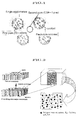
- a catalyst layer composed of carbon as the electron transfer pathway, an ionomer as the gas or proton transfer pathway, and a platinum catalyst as the electric power generation site has, as shown in Fig. 1 , a complicated structure including primary pores (20 nm to 40 nm) and secondary pores (40 nm) of agglomerate size.
- the primary pores have a small diameter and thus inhibit the entrance of a polymeric ionomer, which hinders the formation of proton pathways extending to the inside catalyst. Therefore, the total utilization of the catalyst is on the order of only 20%. Therefore, the size of the ionomer in the electrode is important.
- the structure analysis of electrodes composed of ionomers, or the performance evaluation of fuel cells including such electrodes have not been conducted.
- Non Patent Document 1 Cotter, C. J. Engineering Plastics: A Handbook of Polyaryleters; Gordon & Breach: London, 1965 .
- Non Patent Document 2 Li, Q. He, R. Jensen, J.O.Bjerrum, N.J. Chemistry of Material 15(2003), 4896-4915 .
- PEFC polymer electrolyte fuel cell
- a high-activity catalyst is readily initiated at ordinary temperatures, generates higher power in spite of its small body, shows a higher conversion efficiency, and generates no toxic gas such as NOx or SOx. Therefore, PEFC has been receiving attention as a next-generation energy source.
- PEFC has various problems in its practical application, and the PEFC system must be optimized considering its properties according to applications .
- PEFC can be used as an energy source for transfer applications, stationary applications, and mobile applications.
- transfer applications as in automobiles require the development of a novel electrolyte ionomer which can maintain high proton conductivity in a wide temperature range from -25 to 120°C and at low humidities.
- an object of the present invention is to solve the above-described problems.
- An object of the present invention is to provide an organic-inorganic hybrid material which can show higher proton conductivity in a wide temperature range from low temperatures to high temperatures.
- Another object of the present invention is, in addition to the above-described object, to provide an organic-inorganic hybrid material which can show higher proton conductivity in a wide temperature range and at low humidities.
- Another object of the present invention is, other than or in addition to the above-described objects, to provide a proton-conductive material whose particle diameter has been controlled so that the material can reach small pores, for example, the pores of primary particles of carbon powder.
- Another object of the present invention is to provide a catalyst layer for fuel cell and an electrolyte membrane for fuel cell including the above-described material, and a fuel cell including the catalyst layer and electrolyte membrane.
- Another object of the present invention is to provide methods for producing the above-described material, catalyst layer, electrolyte membrane, and fuel cell.
- the inventors intend to develop an electrode which allows operation of PEFC in a wide temperature range, the electrode including a hybrid ionomer containing an organic material or SPES (sulfonated polyarylene ether sulfone), incorporating an inorganic material, or Zr(OH) 2 (hydrated zirconia).
- the hybrid electrode having an ionomer structure is subjected to structure analysis and fuel cell performance test.
- the present invention can provide an organic-inorganic hybrid material which can show higher proton conductivity in a wide temperature range from low temperatures to high temperatures.
- the present invention can provide an organic-inorganic hybrid material which can show higher proton conductivity in a wide temperature range and at low humidities.
- the present invention can provide a proton-conductive material whose particle diameter has been controlled so that the material can reach small pores, for example, the pores of primary particles of carbon powder.
- the present invention can provide a catalyst layer for fuel cell and an electrolyte membrane for fuel cell including the above-describedmaterial, and a fuel cell including the catalyst layer and electrolyte membrane.
- the present invention can provide methods for producing the above-described material, catalyst layer, electrolyte membrane, and fuel cell.
- the present invention provides a proton conductive hybrid material which comprises a proton-conductive inorganic nanoparticle and a proton-conductive polymer.
- the proton conductive hybrid material according to the present invention is characterized in that a Stokes particle diameter of the material determined by Dynamic Light Scattering method is 20 nm or less, preferably 10 nm or less, more preferably 5 nm or less.
- the proton conductive hybrid material may have a proton conductivity of 10 -3 S/cm to 1 S/cm at temperature of -20 to 150 °C under low and high humidity conditions.
- the proton-conductive polymer may be chemically bound to the proton-conductive inorganic nanoparticle.
- the material according to the present invention is an organic-inorganic hybrid material, and may provide higher proton conductivity in a wide temperature range from low temperatures to high temperatures.
- the material according to the present invention may provide higher proton conductivity in a wide temperature range and at low humidities.
- the material according to the present invention since the material according to the present invention has a sufficiently small Stokes particle diameter, and thus can reach the pores of primary particles of, for example, carbon powder, the material may be readily used for, for example, the catalyst layer for fuel cell as described below.
- the proton-conductive polymer may be located in the vicinity of the proton-conductive inorganic nanoparticle, and more preferably, the proton-conductive inorganic nanoparticle may be surrounded by the proton-conductive polymer.
- the proton-conductive inorganic nanoparticle of the material according to the present invention may be at least one selected from the group consisting of zirconium compounds, titanium compounds, cerium compounds, uranium compounds, tin compounds, vanadium compounds, antimony compounds, and calcium hydroxyapatite and hydrated calcium hydroxyapatites, preferably zirconium compounds.
- the zirconium compound may be at least one selected from the group consisting of ZrO 2 , ZrO 2 ⁇ nH 2 O, Zr(HPO 4 ) 2 , Zr(HPO 4 ) 2 ⁇ nH 2 O, Zr(HSO 3 ) 2 , Zr(HSO 3 ) 2 ⁇ nH 2 O, Zr(O 3 P-R 1 -SO 3 H) 2 , Zr(O 3 P-R 1 -SO 3 H) 2 ⁇ nH 2 O, Zr (O 3 P-R 2 -SO 3 H) 2-x (O 3 P-R 3 -COOH) x , and Zr(O 3 P-R 2 -SO 3 H) 2-x (O 3 P-R 3 -COOH) x ⁇ nH 2 O, wherein R 1 , R 2 , and R 3 each independently represents a bivalent group, preferably R 1 and R 2 each independently represents a bivalent aromatic group, and R 3 represents an
- the titaniumcompound maybe at least one selected from the group consisting of TiO 2 , TiO 2 ⁇ nH 2 O, Ti(HPO 4 ) 2 , Ti(HPO 4 ) 2 ⁇ nH 2 O, Ti(HSO 3 ) 2 and Ti(HSO 3 ) 2 ⁇ nH 2 O.
- the cerium compound may be at least one selected from the group consisting of CeO 2 , CeO 2 ⁇ nH 2 O, Ce(HPO 4 ) 2 and Ce (HPO 4 ) 2 ⁇ nH 2 O.
- the uranium compound may be at least one selected from the group consisting of H 3 OUO 4 PO 4 , H 3 OUO 4 PO 4 ⁇ nH 2 O, H 3 OUO 2 AsO 4 and H 3 OUO 2 AsO 4 ⁇ nH 2 O.
- the tin compound may be SnO 2 or SnO 2 ⁇ nH 2 O.
- the vanadium compound may be V 2 O 5 or V 2 O 5 ⁇ nH 2 O.
- the antimony compound may be at least one selected from the group consisting of Sb 2 O 5 , Sb 2 O 5 ⁇ nH 2 O, HSbO 3 , HSbO 3 ⁇ nH 2 O, H 2 SbO 11 , H 2 SbO 11 ⁇ nH 2 O, H x Sb x P 2 O 3 and H x Sb x P 2 O 3 ⁇ nH 2 O, wherein x represents 1, 3 or 5 and n is 2-10.
- the calcium hydroxyapatite and hydrated calcium hydroxyapatites may be at least one selected from the group consisting of Ca 10 (PO 4 )X 2 and Ca 10 (PO 4 )X 2 ⁇ nH 2 O, wherein X represents -OH and/or -F.
- the proton-conductive inorganic nanoparticle according to the present invention may have a Stokes particle diameter, determined by Dynamic Light Scattering method, of 20 nm or less, preferably 10 nm or less, more preferably 5 nm or less.
- the proton-conductive inorganic nanoparticle may have a proton conductivity of the order of 1 x 10 -5 S/cm, preferably of the order of 1 x 10 -3 S/cm, more preferably of the order of 1 x 10 -2 S/cm at temperature of 20-150 °C.
- the proton-conductive inorganic nanoparticle may be prepared by the following process [1] or [2]:
- the conductivity is dominated by surface transport. Namely, due to steric effects, the diffusion or reorientation of protonic species on the surface should be easier than in the bulk; in addition the surface ionogenic groups can be more hydrated than the inner ones, thus facilitating the water protonation.
- the pendant R group of alpha-Zr(RPO 3 ) 2 contains a polar group with exchangeable protons such as -COOH, -SO 3 H, etc
- the compound is an organic ion exchanger possessing an inorganic backbone, are known as phosphonates.
- phosphonates These materials are of interest due to the thermal vibrations of the long chains, the terminal acid group could approach each other at a distance shorter than those between adjacent PO 3 sites (0.53nm). Thus, proton jumps from one acid group to another with a mechanism
- zirconium phosphate with -SO 3 H groups and on mixed phosphate with -SO 3 H and -COOH groups attached to long aliphatic chains will be synthesized. Such materials will show 2-3 fold increase in proton conductivity compared to the normal ZrP.
- Nanosized hexagonal mesoporous zirconia will be synthesized by self assembly technique and the inner walls will be functionalized using aromatic sulfonic acid groups. Homogeneous nanocomposites will be made and applied for pore filling membranes.
- proton conducting materials developed will be the derivatives of hydrated zirconia, sulfated and phosphated zirconia doped with other oxides such as titania and alumina.
- the proton-conductive polymer of the material according to the present invention may be one or more of hydrocarbon-based polymers, preferably heat-resistant hydrocarbon-based polymers, which can be dissolved in polar organic solvent.
- the polar organic solvent may be selected from the group consisting of N,N-dimethylformamide, dimethyl sulfoxide, 1-metylpyrrolidone and N-methyl acetamide, preferably the group consisting of N,N-dimethylformamide, dimethyl sulfoxide and 1-metylpyrrolidone.
- hydrocarbon-based polymer may include polyether ketone,polysulfide,polyphosphazene,polyphenylene, polybenzoimidazole, polyether sulfone, polyphenylene oxide, polycarbonate, polyurethane, polyamide, polyimide, polyurea, polysulfone, polysulfonate, polybenzoxazole, polybenzothiazole, polythiazole, polyphenyl quinoxaline, polyquinoline, polysiloxane, polytriazine, polydiene, polypyridine, polypyrimidine, polyoxathiazole, polytetraxabilen, polyoxazole, polyvinylpyridine, polyvinyl imidazole, polypyrrolidone, polyacrylate derivatives, polymethacrylate derivatives, polystyrene derivatives and the like.
- the proton-conductive polymer may have a protonic acid group.
- the protonic acid group may include, but not limited to, a sulfonic acid group, a carboxylic acid group, a phosphonic acid group, an alkyl sulfonic acid group, an alkyl carboxyl acid group, an alkyl phosphonic acid group, a phosphate group, and a phenolic hydroxy group.
- the proton-conductive polymer may have an ion exchange volume of 0.1 to 4.5 meq/g, preferably 0.2 to 4.0 meq/g, and more preferably 0.25 to 4.5 meq/g.
- the ion exchange volume represents milliequivalent per 1 g of the polymer (meq/g).
- the proton-conductive polymer may be one or more of sulfonated hydrocarbon-based polymers.
- the proton-conductive polymer may be a sulfonic acid group-containing polyether sulfone, a sulfonic acid group-containing polyether ketone, a sulfonic acid group-containing polyether ether ketone, a sulfonic acid group-containing polyimide or the like.
- Examples of the proton-conductive polymer may include the following sulfonated polymer: i.e., SPEEK: sulfonated polyetheretherketone, SPEK: sulfonated polyetherketone, SPES: polyethersulfone, SP3O:poly(2,6-diphenyl-4-phenyleneoxide), SPPBP: sulfonatedpoly(4-phenoxybenzoyl-1,4-phenylene), SPPO: sulfonated polyphenyleneoxide or poly(2,6-dimethyl--1,4-phenyleneoxide), SPPQ: poly(phenylquinoxalines), SPS: sulfonated polystyrene, SPSF: sulfonated polysulfone, SPSU: sulfonated polysulfone Udel.
- SPEEK sulfonated polyetheretherketone
- SPEK sulfonated polyetherketone
- SPES poly
- the present invention provides a dispersion comprising a proton-conductive hybrid material and polar organic solvent.
- the proton-conductive hybrid material is evenly dispersed in the polar organic solvent selected from the group consisting of N,N-dimethylformamide, dimethyl sulfoxide, 1-metylpyrrolidone and N-methyl acetamide.
- the proton-conductive hybrid material comprises a proton-conductive inorganic nanoparticle and a proton-conductive polymer as described above.
- a Stokes particle diameter of the proton-conductive hybrid material determined by Dynamic Light Scattering method may be 20 nm or less, preferably 10 nm or less, more preferably 5 nm or less.
- the proton-conductive polymer may preferably be located in the vicinity of the proton-conductive inorganic nanoparticle, and more preferably, the proton-conductive inorganic nanoparticle may be surrounded by the proton-conductive polymer.
- the properties of the proton-conductive inorganic nanoparticle and the proton-conductive polymer is the same as described above.
- the dispersion described above can be prepared by, for example, the following method:
- the method comprises the steps of:
- the method may further comprise a step of adding a poor organic solvent for the proton-conductive polymer into the resultant dispersion, to obtain dispersion having the proton-conductive hybrid material with smaller Stokes particle diameter.
- the poor organic solvent may be selected from the group consisting of methanol, ethanol, isopropanol, butanol and hexane, preferably isopropanol.
- the first and/or second polar organic solvent may be selected from the group consisting of N,N-dimethylformamide, dimethyl sulfoxide and 1-metylpyrrolidone.
- the proton-conductive polymer may react with the proton-conductive inorganic nanoparticle, and one end of a part or all of the proton-conductive polymer may be chemically bound to the proton-conductive inorganic nanoparticle.
- the proton-conductive hybrid material described above can be prepared by the following method:
- the method may comprise the steps of:
- the first and/or second polar organic solvent may be selected from the group consisting of N,N-dimethylformamide, dimethyl sulfoxide and 1-metylpyrrolidone.
- the method may further comprise a step of adding a poor organic solvent for the proton-conductive polymer into the dispersion, to obtain dispersion having the proton-conductive hybrid material with smaller Stokes particle diameter.
- the poor organic solvent may be the same as described in the method of preparing the dispersion.
- the proton-conductive polymer may react with the proton-conductive inorganic nanoparticle, and one end of a part or all of the proton-conductive polymer may be chemically bound to the proton-conductive inorganic nanoparticle.
- the proton conductive hybrid material may be prepared by using the above-described method of preparing the dispersion.
- the present invention provides a catalyst layer used for a fuel cell, which comprises the above-described proton-conductive hybrid material.
- the present invention provides a catalyst layer used for a fuel cell, which comprises an electron-conductor, a catalyst and a proton-conductive hybrid material.
- the catalyst layer comprises an electron-conductor, a catalyst and a proton-conductive hybrid material.
- the proton-conductive hybridmaterial the material described above, which has various properties, may be used.
- the catalyst layer may be constructed such that the catalyst maybe carried at the surface of the electron-conductor, and such that the proton-conductive hybrid material may be located near the position where the catalyst is located.
- the proton-conductive hybrid material may be physically and/or chemically bound to the electron-conductor.
- the electron-conductor may be a carbon-based porous electron-conductor or metal-based porous electron-conductor, preferably carbon-based porous electron-conductor.
- the carbon-based porous electron-conductor may be selected from the group consisting of carbon black, acetylene black, graphite, carbon fiber, carbon nanotube, fullerene, activated carbon, and glass carbon.
- the electron-conductor may have a particle diameter of 300 nm or less, preferably 100 nm or less, more preferably 30 nm or less.
- the catalyst may be selected from the group of noble metal based catalysts and organic catalysts.
- the noble metal based catalysts may include, but are not limited to, Pt, Pt-Ru and the like.
- the catalyst may have a particle diameter of 30 nm or less, preferably 10 nm or less, more preferably 3 nm or less.
- the above-described catalyst layer used for a fuel cell may be prepared by the following method:
- the method comprises the steps of:
- the catalyst the electron-conductor, the proton-conductive hybrid material, and the polar organic solvent, which are the same as described above, may be used.
- the above-described method of preparing the dispersion may be used.
- the method may further comprise a step of mixing a binder with the mixture, during the step c), or after the step c) and prior to the step d) . Further, the method may further comprise a step of removing solvent in the mixture, to adjust viscosity of the mixture.
- the proton-conductive polymer may react with the proton-conductive inorganic nanoparticle, and one end of a part or all of the proton-conductive polymer maybe chemically bound to the proton-conductive inorganic nanoparticle.
- the present invention provides an electrolyte membrane comprising the above-described proton-conductive hybrid material.
- the electrolyte membrane used for fuel cell may have a proton conductivity of 10 -2 S/cm to 5 S/cm at temperature of -20 to 150 °C under low and high humidity conditions. Furthermore, the proton-conductive hybrid material, which has the above-described properties, may be used.
- the electrolyte membrane may have a substrate, and the proton-conductive hybrid material may be chemically and/or physicallyboundto the substrate.
- the substrate maybe selected from the group consisting of porous polymers and porous ceramics.
- porous polymers may include polyimide, polyethylene and the like.
- porous ceramics may include alumina, silica, zirconia, titania and the like.
- the proton-conductive hybrid material may be chemically and/or physically bound to the surface (including the surface of pores) of the porous polymer or porous ceramics.
- the proton-conductive hybrid material may be filled, fixed, and retained in pores of the substrate, specifically the porous substrate, thereby to obtain an electrolyte membrane.
- the substrate preferably has a membrane thickness of 0.01 to 300 ⁇ m, preferably 0.1 to 100 ⁇ m, a porosity of 10 to 95%, more preferably 40 to 90%, a breaking strength of 1.961 ⁇ 10 4 kPa (200 kg/cm 2 ) or more, and an average through hole diameter of 0.001 to 100 ⁇ m.
- the fluorine-based resin may be a known one having many carbon-fluorine bonds within one molecule thereof.
- the fluorine-based resin usually has a structure wherein all or most of hydrogen atoms, suitably 50 mol% or more of hydrogen atoms of polyolefin are substituted with fluorine atoms. It is particularly preferable that all the hydrogen atoms be substituted with fluorine atoms.
- fluorine-based resin may include polytetrafluoroethylene (PTFE), polychlorotrifluoroethylene (CTFE), polyvinylidene fluoride (PVdF), tetrafluoroethylene-hexafluoropropylene copolymer (FEP), tetrafluoroethylene-perfluoroalkylvinylether copolymer(PFA), tetrafluoroethylene-ethylene copolymer (ETFE), chlorotrifluoroethylene-ethylene copolymer (ECTFE) and the like.
- PTFE polytetrafluoroethylene
- CTFE polychlorotrifluoroethylene
- PVdF polyvinylidene fluoride
- PVdF polyvinylidene fluoride
- FEP tetrafluoroethylene-hexafluoropropylene copolymer
- PFA tetrafluoroethylene-perfluoroalkylvinylether copolymer
- ETFE
- examples of the resin may include polyethylene, polypropylene, polycarbonate, polyimide, polyester, polyether sulfone, polyether ketone, polyether ether ketone, polysulfone, polysulfide, polyamide, polyamide imide, polyphenylene, polyether, polyether imide, polyether amide and the like.
- preferable examples may include, but are not limited to, polycarbonate, polyimide, polyester, polyether sulfone, polyether ketone, polyether ether ketone, polysulfone, polysulfide, polyamide, polyamide imide, polyphenylene, polyether, polyether imide, and polyether amide.
- the porous substrate may be composed of a plural kinds of materials.
- two or more kinds of the above-described fluorine-based resins and hydrocarbon-based resins may be used.
- the above-described electrolyte membrane used for a fuel cell may be prepared by the following method:
- the method comprises the steps of:
- the above-described method of preparing the dispersion may be used.
- the above-described pro ton-conductive hybrid material, the above-described polar organic solvent, and the above-described substrate may be used, respectively.
- the present invention provides a dispersion comprising a proton-conductive inorganic nanoparticle or proton-conductive inorganic nanoparticle precursor and the above-described polar organic solvent.
- the proton-conductive inorganic nanoparticle or proton-conductive inorganic nanoparticle precursor may be evenly dispersed in the polar organic solvent, and a Stokes particle diameter of the proton-conductive nanoparticle or precursor therefor determined by Dynamic Light Scattering method may be 20 nm or less, preferably 10 nm or less, more preferably 5 nm or less, most preferably 2 nm or less.
- the proton-conductive inorganic nanoparticle or proton-conductive inorganic nanoparticle precursor is the same as the above-described proton-conductive inorganic nanoparticle or precursor therefor.
- the above-described dispersion which comprises the above-described proton-conductive inorganic nanoparticle or proton-conductive inorganic nanoparticle precursor and the above-described polar organic solvent, may be prepared by the following method:
- the method comprises the steps of:
- the step of preparing the proton-conductive inorganic nanoparticle or precursor therefor may comprise the steps of:
- An alkoxide of the metal alkoxide represents a linear or branched alkyl group, having preferably 1 to 24 carbons, more preferably 1 to 10 carbons.
- Examples of the alkyl group may include a methyl group, an ethyl group, a propyl group, a butyl group, an i-propyl group, an i-butyl group, a pentyl group, a hexyl group, an octyl group, a 2-ethylhexyl group, a t-octyl group, a decyl group, a dodecyl group, a tetradecyl group, a 2-hexyldecyl group, a hexadecyl group, an octadecy group, a cyclohexylmethyl group, an octylcyclohexyl group and the like.
- the organic solvent used for the sol-gel reaction is not particularly limited as long as it dissolves a metal alkoxide.
- the organic solvent may include carbonate compounds (for example, ethylene carbonate and propylene carbonate), heterocyclic compounds (for example, 3-methyl-2-oxazolidinone and N-methylpyrrolidone), cyclic ethers (for example, dioxane and tetrahydrofuran), linear ethers (for example, diethyl ether, ethylene glycol dialkyl ether, propylene glycol dialkyl ether, polyethylene glycol dialkyl ether, and polypropylene dialkyl ether), alcohols (for example, methanol, ethanol, isopropanol, ethylene glycol monoalkyl ether, propylene glycol monoalkyl ether, polyethylene glycol monoalkyl ether, and polypropylene glycol monoalkyl ether), polyhydric alcohols (for example, ethylene glycol, propylene glycol, polyethylene glyco
- alcohols such as ethanol and isopropanol
- nitrile compounds such as acetonitrile, glutarodinitrile, methoxyacetonitrile, propionitrile and benzonitrile
- cyclic ethers such as dioxane and tetrahydrofuran are preferable. They may be used alone or in combination of two or more of them.
- a chemical modifier may be used for chelating the metal atoms.
- the chemical modifier may include acetoacetic esters (for example, ethyl acetoacetate), 1,3-diketone (for example, acetylacetone), and acetoacetamides (for example, N,N-dimethylamino acetoacetamide).
- the catalyst for the hydrolysis and dehydration polycondensation in the gel reaction may be an acid or alkali.
- the alkali is generally an alkali metal hydroxide such as sodium hydroxide, or ammonia.
- the acid catalyst may be an inorganic or organic protonic acid.
- the inorganic protonic acid may include hydrochloric acid, nitric acid, sulfuric acid, boric acid, perchloric acid, tetrafluoroboric acid, hexafluoroarsenic acid, and hydrobromic acid.
- Examples of the organic protonic acid may include acetic acid, oxalic acid, and methanesulfonic acid.
- a complex oxide may be prepared by adding a solution containing, for example, one of the above-described metal nitrate, ammonium salt, chloride, or sulfate to a sol solution of a metal alkoxide, and then carrying out sol-gel reaction.
- the salt may include, but are not limited to, aluminum nitrate, iron nitrate, zirconiumoxynitrate,titanium chloride,aluminum chloride, zirconium oxychloride, titanium sulfate, and aluminum sulfate.
- the solvent for the salt is not particularly limited as long as it dissolves the salt.
- the solvent may include carbonate compounds (for example, ethylene carbonate and propylene carbonate), heterocyclic compounds (for example, 3-methyl-2-oxazolidinone and N-methylpyrrolidone), cyclic ethers (for example, dioxane and tetrahydrofuran), linear ethers (for example, diethyl ether, ethylene glycol dialkyl ether, propylene glycol dialkyl ether, polyethylene glycol dialkyl ether, and polypropylene dialkyl ether), alcohols (for example, methanol, ethanol, isopropanol, ethylene glycol monoalkyl ether, propylene glycol monoalkyl ether, polyethylene glycol monoalkyl ether, and polypropylene glycol monoalkyl ether), polyhydric alcohols (for example, ethylene glycol, propylene glycol, polyethylene glycol, polypropylene glycol, and glycerin), nitrile compounds (for example, acetonit
- the present invention provides a proton-conductive hybrid material comprising a proton-conductive inorganic mesoporous material and a proton-conductive polymer.
- a pore diameter of the proton-conductive inorganic mesoporous material may be 20 nm or less, preferably 10 nm or less, more preferably 5 nm or less, most preferably 2 nm or less.
- the proton-conductive polymer may be located in the vicinity of a pore of the proton-conductive inorganic mesoporous material, and more preferably, the proton-conductive polymer may be surrounded by the proton-conductive inorganic mesoporous material.
- the above-described proton-conductive polymer may be used for the proton-conductive polymer.
- the proton-conductive polymer may be chemically bound to the proton-conductive inorganic mesoporous material.
- the proton-conductive hybrid material may have a proton conductivity of 10 -3 S/cm to 1 S/cm at temperature of -20 to 150 °C under low and high humidity conditions.
- the proton-conductive inorganic mesoporous material may be at least one selected from the group consisting of mesoporous zirconium compounds, mesoporous titanium compounds, mesoporous cerium compounds, mesoporous uranium compounds, mesoporous tin compounds, mesoporous vanadium compounds, mesoporous antimony compounds,and mesoporouscalcium hydroxyapatite and mesoporous hydrated calcium hydroxyapatites, preferably mesoporous zirconium compounds.
- mesoporous compounds may have a functional group. Examples of the functional group may include, but are not limited to, -SO 3 H, -PO 4 , and the like.
- the mesoporous zirconium compound may be at least one selected from the group consisting of mesoporous ZrO 2 , mesoporous ZrO 2 ⁇ nH 2 O, mesoporous Zr(HPO 4 ) 2 , mesoporous Zr(HPO 4 ) 2 ⁇ nH 2 O, mesoporous Zr(HSO 3 ) 2 , mesoporous Zr(HSO 3 ) 2 ⁇ nH 2 O, mesoporous Zr(O 3 P-R 1 -SO 3 H) 2 , mesoporous Zr(O 3 P-R 1 -SO 3 H) 2 ⁇ nH 2 O, mesoporous Zr(O 3 P-R 2 -SO 3 H) 2-x (O 3 P-R 3 -COOH) x , and mesoporous Zr (O 3 P-R 2 -SO 3 H) 2-x (O 3 P-R 3
- the titanium compound may be at least one selected from the group consisting of mesoporous TiO 2 , mesoporous TiO 2 ⁇ nH 2 O, mesoporous Ti(HPO 4 ) 2 , mesoporous Ti(HPO 4 ) 2 ⁇ nH 2 O, mesoporous Ti(HSO 3 ) 2 and mesoporous Ti(HSO 3 ) 2 ⁇ nH 2 O.
- the cerium compound may be at least one selected from the group consisting of mesoporous CeO 2 , mesoporous CeO 2 ⁇ nH 2 O, mesoporous Ce(HPO 4 ) 2 and mesoporous Ce(HPO 4 ) 2 ⁇ nH 2 O.
- the uranium compound may be at least one selected from the group consisting of mesoporous H 3 OUO 4 PO 4 , mesoporous H 3 OUO 4 PO 4 ⁇ nH 2 O, mesoporous H 3 OUO 2 AsO 4 and mesoporous H 3 OUO 2 AsO 4 ⁇ nH 2 O.
- the tin compound may be mesoporous SnO 2 or mesoporous SnO 2 ⁇ nH 2 O.
- the vanadium compound may be mesoporous V 2 O 5 or mesoporous V 2 O 5 ⁇ nH 2 O.
- the antimony compound may be at least one selected from the group consisting of mesoporous Sb 2 O 5 , mesoporous Sb 2 O 5 ⁇ nH 2 O, mesoporous HSbO 3 , mesoporous HSbO 3 ⁇ nH 2 O, mesoporous H 2 SbO 11 , mesoporous H 2 SbO 11 ⁇ nH 2 O, mesoporous H x Sb x P 2 O 3 and mesoporous H x Sb x P 2 O 3 ⁇ nH 2 O, wherein x represents 1,3 or 5 and n is 2-10.
- the calcium hydroxyapatite and hydrated calcium hydroxyapatites may be at least one selected from the group consisting of mesoporous Ca 10 (PO 4 )X 2 and mesoporous Ca 10 (PO 4 )X 2 ⁇ nH 2 O, wherein X represents -OH and/or -F.
- each of the above-described mesoporous compounds may have a functional group.
- the functional group may include, but are not limited to, -SO 3 H, -PO 4 , and the like.
- the proton-conductive inorganic mesoporous material may have a proton conductivity of the order of 1 x 10 -5 S/cm, preferably of the order of 1 x 10 -3 S/cm, more preferably of the order of 1 x 10 -2 S/cm at temperature of 20-150 °C.
- the proton-conductive hybrid material according to the present invention may be used for a fuel cell, in particular, a catalyst layer used for a fuel cell, and an electrolyte membrane used for a fuel cell. Therefore, the present invention can provide a fuel cell comprising the proton-conductive hybrid material according to the present invention, in particular, a catalyst layer used for a fuel cell, and/or an electrolyte membrane used for a fuel cell, each of which comprises the proton-conductive hybrid material according to the present invention.
- the pore filling membrane consists of a porous polymer substrate and a filling polymer electrolyte, which fills the pores of the substrate.
- the problem associated with seems to be the water retention at higher temperatures.
- Inorganic particles are known to retain water even at higher temperatures, and therefore the above problem can be solved by employing a polymer along with inorganic particles homogeneously embedded in the polymeric matrix. The homogeneous distribution depends on the size, nature and surface structure of the inorganic particles. Considering the inorganic particle, silica is the most widely studied system.
- S-PES Sulfonated Polyether Sulfone
- FIG. 2 A schematic representation of the Concept for the pore filling electrolyte membrane is represented in Figure 2 as below:
- Nanohybrid consisting of Zr(HPO) 4 ⁇ nH 2 O and SPES:
- inorganic -organic hybrid One of the major and important criteria in the synthesis of inorganic -organic hybrid is the dispersion characteristics of the inorganic oxide/ hydroxide in the polar organic solvents.
- Highly re-dispersible nanozirconia precursor powder is prepared by controlling the hydrolysis and condensation of zirconium alkoxide in presence of a surface modifier such as acetyl acetone. The amount of water and drying temperature decide the dispersion properties.
- the synthesized powder showed high level dispersion in polar organic solvents.
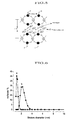
- the dynamic light scattering analysis was carried out using Zetasizer NanoZS (Malvern Instruments, UK) of the powder in organic solvent 1-methyl pyrrolidone (NMP) and after mixing with the polymer solution is shown in Figure 6 .
- ZrP Zirconium hydrogen phosphate
- SPES polymer matrix In-situ generation of Zirconium hydrogen phosphate (ZrP) in SPES polymer matrix was carried out by blending the inorganic and polymer solutions followed by film casting. The film was further treated with phosphoric acid to convert the homogeneously distributed Zr + into ZrP. The films were treated in boiling water to remove any excess of acid present. The as made films were transparent indicating the high homogeneity of the nanoparticle inclusions in the polymeric matrix. Considering the zirconium hydrogen phosphate, the advantages include as follow:
- the Zr (HPO 4 ) 2 ⁇ nH 2 O can interact with the sulfonic acid groups of SPES and dissociates protons. It may also bridge proton exchange sites of SPES, thereby shortening the distance of proton hopping.
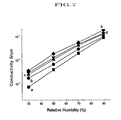
- the Figure 7 shows the proton conductivity values of the hybrid electrolyte at 90°C under various humidity conditions. High Conductivity values of the order of 10 -1 was achieved in Zr/ZrP-SPES system at 90°C.
- Zirconia sol was prepared from zirconium alkoxide (Zirconium butoxide): A dilute solution (0.05M) of zirconium alkoxide was first made in isopropyl alcohol. During the sol preparation, a surface modifier (such as Acetyl acetone) was added dropwise to the zirconium alkoxide solution under stirring, and continued stirring for 2 hrs. The metal (M) to surface modifier (L) ratio was 1:2. 1M nitric acid solution was used as the hydrolyzing catalyst, and added to the above system under vigorous stirring, to obtain a clear, transparent, stable zirconiasol. This was further stirred for overnight.
- a surface modifier such as Acetyl acetone
- Zirconia gel was obtained by evaporating the solvent at 90°C, and was further dried at 90/100°C for one day in an air oven. The dried powder was tested for its dispersion characteristics in organic solvents used for the polymer. The dynamic light scattering experiments for stokes particle size determination were carried out using the dynamic light scattering instrument (MELVERN, Nano-2004, UK).
- Syntheses of proton conducting hybrid electrolytes were prepared by incorporating the above inorganic nanoparticles into the sulfonated polyether sulfone (SPES).
- SPES sulfonated polyether sulfone
- a 20 wt% solution of the S-PES was made by dissolving the appropriate quantity of the polymer in an organic polar solvent (N-methyl pyrrolidone (NMP)).
- NMP N-methyl pyrrolidone
- a 30 wt% solution of the zirconia powder was prepared by dissolving the required amount of the powder in the organic polar solvent (NMP).
- NMP organic polar solvent
- Various amounts of zirconia containing solutions in polar organic solvent were further blended with the SPES solution in order to get various weight percentage zirconia incorporated SPES hybrid electrolytes.
- Self standing hybrid electrolyte films were made by casting method without porous substrate at 120°C, followed by vacuum drying at 80°C for overnight.
- the Zr-SPES hybrid films obtained were further treated with a dilute solution (2 M) of phosphoric acid at 80°C for 6 hrs, in order to convert the homogeneously distributed zirconia nanoparticle in the SPES polymer matrix into zirconium hydrogen phosphate (ZrP-SPES).
- ZrP-SPES zirconium hydrogen phosphate
- the ZrP-SPES film obtained was treated in boiling water in order to remove any excess of phosphoric acid present in the hybrid.
- the proton conductivities of the hybrid films were measured using impedance method.
- Figure 6 represents the dynamic light scattering (DLS) graph of zirconia precursor powder re-dispersed in solvent NMP and SPES/NMP. After re-dispersion, stokes diameter of the particles indicated as less than 2 nm, similar to that of its parent sol, showing the high dispersible nature of the precursor powder. After mixing with the polymer solution, it showed the diameter in the range 2-3.5 nm, the slight increase may be due to the very fine agglomeration of the particles in the polymer matrix.
- the proton conducting values of the hybrid films under various relative humidity (RH) conditions (30%-90% RH) were measured using impedance method at 90°C (see Figure 7 ) and 55°C (see Figure 8 ).
- the proton dissociation energy is primarily determined by the hydrogen bonding strength of the hydroxyl bonds.
- the cations bound to hydroxyl with strong hydrogen bonding are favorable to increase the conductivity.
- Phosphorus ions were one candidate for the strong H- bonding ions.
- the hydrogen in P-OH is more strongly hydrogen bonded with water molecules, resulting in an increase in the temperature necessary to remove the water from P-OH.
- the Zr(HPO 4 ) 2 can interact with the sulfonic acid groups of SPES and dissociates protons, it may also can bridge proton exchange sites of SPES, thereby shortening the distance of proton hopping, resulting an enhanced conductivity as reported in the case of Nafion (Registered Mark) modified with ZrP.
- a nano-sized particle has a high surface energy, and it can form agglomerate easily with near particle. It is important that high surface area and particle to particle distance for a proton conductivity network in inorganic solid proton conductors materials. There are necessary to stabilization of particle surface.
- SPES ionomer is used as a capping agent to nano-hydrated zirconia. They attract each other because of an absorption and/or coordination force as shown in Figure 10 . And the strength of nano-hydrated zirconia and SPES is enhanced by using a reduction agent like alcohol. Because of alcohol is a poor solvent for SPES.
- the procedure of particle size control is as follows:
- the change of a particle size distribution was detected by DLS (dynamic light scattering).
- the mercuryporosimetry technique is one of the most useful methods to investigate the porous structure of solid samples in a quantitative way.
- the result of bubble point test shows the secondary pore structure of the electrode.
- Q H can be determined as the value of the cyclic voltammogram area.
- FIG. 11 represents an each pore size distribution by DLS.
- the particle size of hydrated zirconia is almost 1.2nm at the peak position and the particle size distribution of nano-hydrated zirconia changed to a broad shape by water. It means that nano-hydrated zirconia forms an agglomerate and in unstable state.
- the size distribution peak of SPES shift the left direction by incorporated with nano-hydrated zirconia and indicate a smaller size by adding a reduction agent in figure 12 .
- each of figures 13 and 14 shows a pore size distribution by a mercury porosimetry and bubble point test, respectively.
- the primary pore size peak of the hybrid electrode composed of SPES 3 and hydrated zirconia is located more left side than an SPES 3 electrode. It means that the hybrid ionomer can intrude a primary pore easily than SPES 3 ionomer because of a smaller hybrid ionomer size.
- the secondary pore distribution of each electrode is located almost the same region from 0.3 ⁇ m to 0.5 ⁇ m.
- Figures 15 and 16 are the results of cyclic voltammetry.
- the utilization of SPES electrode is the area surrounded by dotted base line and black peak line. So, the catalyst utilization of the hybrid electrode is bigger than the SPES electrode. And the catalyst utilization of the modified hybrid electrode is the biggest as shown figures 15 and 16 .
- the hybrid ionomer by a nano-hydrated zirconia incorporated by SPES we can get two effects. One is the stabilization of nano-particle's surface. And the other is the size change of SPES from the size like a radius of gyration in proportion to its molecular weight to the smaller size according to a base matrix like nano-hydrated zirconia in this case. All of smaller size ionomer is related to the pore structure like a primary pore in an electrode.
- the nano-sized hybrid particle capped with a high molecular weight polymer can intrude easily a primary pore depending on hybrid particle size and they can cover the inner surface area of the primary pore in catalyst layer. And the utilization of catalyst can be increased.
- Hybrid electrolyte particles are subjected to reduction treatment (alcohol treatment) for controlling the particle diameter, and then subjected to fuel cell test at a high temperature.
- reduction treatment alcohol treatment
- fuel cell test at a high temperature.
- CV cyclic voltammogram
- the treatment shown in Fig. 17 was conducted to improve water retentivity which is important for proton conductivity.
- SPES is dispersed in the zirconia solution, and then mixed with a solution containing water and an alcohol at predetermined ratios.
- the mixed solution was stirred for one day.
- the particle diameter distribution of the mixed solution was measured by DLS.
- MEA Membrane Electrode Assembly
- zirconia phosphate having a layer structure When hydrated zirconia is treated with phosphoric acid, it readily turns into zirconia phosphate having a layer structure. ZrP is known to show high proton conductivity. Then, a pore filling membrane and an electrode were made using the hybrid particles prepared in Experiment 1.1, and then treated with phosphoric acid.
- the pore filling membrane made as described above was immersed in water to be sufficiently swelled.
- the resulting membrane was immersed in 2 M phosphoric acid at 80°C for 6 hours.
- the membrane was immersed in pure water to remove excess phosphoric acid.
- the electrode made as described above was immersed in 2 M phosphoric acid at 80°C for 6 hours.
- the electrode was immersed in pure water to remove excess phosphoric acid.
- the electrode was dried with a vacuum dryer.
- Fig. 18 shows the result of DLS.
- the hybrid particles subjected to the moisture content control exhibited a peak at about 3.2 nm, and the hybrid particles subjected to the reduction treatment alone exhibited a peak at about 2.8 nm.
- the particles subjected to the moisture content treatment have a larger particle diameter, which indicates that water hadbeen introduced into the particles.
- Fig. 19 shows the result of cyclic voltammetry, which indicates that the catalyst utilization of the hybrid electrode is higher than that of the SPES electrode. This is due to that the nanosized hybrid particles have a smaller particle diameter and thus easily penetrate into the primary pores.
- Fig. 20 shows a hybrid pore filling membrane.
- the top picture of Fig. 20 shows a PI substrate (membrane thickness: 30 ⁇ m, UPILEX-PT), wherein the letters of "Substrate” written below the substrate cannot be seen.
- the bottom picture indicates that the substrate has become transparent by the hybridparticles filling the pores.
- Fig. 21 shows the fuel cell performance of the MEAs at 100°C, and indicates that the hybrid MEA composed of the hybrid particles having an increased moisture content has higher IV property than other MEAs. This is due to that the introduced water forms hydrogen bonds with the OH groups on the surface of the zirconia particles or sulfonic acid groups of SPES to increase the overall water retentivity, which allows for the maintenance of proton-conductive pathways at high temperatures.
- Fig. 21 shows the IV property of a hybrid MEA (Membrane Electrode Assembly) composed of an electrode and a pore filling membrane filled with hybrid particles composed of hydrated zirconia capped with SPES, a hybrid MEA composed of an electrode and a pore filling membrane filled with zirconia phosphate obtained through phosphorylation, and a SPES MEA composed of an Nafion 112 membrane and an SPES electrode, and the IV property of the IR loss free excluding the IR loss of the membrane.
- a hybrid MEA Membrane Electrode Assembly
- the hybrid MEA (hydrated zirconia and zirconia phosphate) showed higher performance than the MEA composed of Nafion 112 and SPES electrode.
- the MEA composed of ZrP showed higher performance than that composed of hydrated zirconia. This is probably due to the high proton conductivity of the layer structure of ZrP.
- the IV property of the pore filling membrane was higher than that of the Nafion 112 membrane. This is probably due to that the pore filling membrane is hard to be swelled, so that it is less prone to cause fuel cross over than the Nafion membrane.
Landscapes
- Chemical & Material Sciences (AREA)
- General Chemical & Material Sciences (AREA)
- Electrochemistry (AREA)
- Chemical Kinetics & Catalysis (AREA)
- Manufacturing & Machinery (AREA)
- Sustainable Development (AREA)
- Sustainable Energy (AREA)
- Engineering & Computer Science (AREA)
- Life Sciences & Earth Sciences (AREA)
- Composite Materials (AREA)
- Spectroscopy & Molecular Physics (AREA)
- Physics & Mathematics (AREA)
- Crystallography & Structural Chemistry (AREA)
- Conductive Materials (AREA)
- Inert Electrodes (AREA)
- Compositions Of Macromolecular Compounds (AREA)
- Catalysts (AREA)
- Fuel Cell (AREA)
Abstract
Description
- The present invention relates to a proton conductive hybrid material which comprises a proton-conductive inorganic nanoparticle and a proton-conductive polymer, and which has small-regulated particle diameter. In particular, the present invention relates to a catalyst layer for use of a fuel cell, wherein the proton conductive hybrid material, which has small-regulated particle diameter, is included in primary pores of the catalyst layer, and to a method for producing the material and the catalyst layer.
- In recent years, much attention has been paid on the development and use of novel organic-inorganic nanocomposite materials as proton conductors, especially because of its possible commercial application in polymer electrolyte membrane fuel cells (PEMFC), since these materials can show high conductivity and can form thermally stable membranes at elevated temperatures.
- Considering the properties of proton conductive materials, in general, polymeric materials show a desirable conductivity under humidified condition; however, the disadvantages are its degradation at higher temperatures and its high resistance when it is not humidified properly. On the other hand, inorganic conductors are thermally and mechanically more stable, but they are brittle and the pure oxides do not show high proton conductivity. However, its ability to retain water even at high temperatures makes it attractive as far as the proton conductivity is concerned. Hence, Proper methods should be made to enhance the proton conductivity of these materials.
- There is a general agreement in the scientific community that there is a need for a novel proton conducting material which can show appreciable conductivity at elevated temperatures along with other properties. Synthesis of proton conducting inorganic-polymer hybrid material seems to be an option in order to overcome the difficulties of Nafion (Registered Mark), and therefore can be used in PEMFC operating at higher temperature. In hybrids, the thermal stability is provided by the inorganic back bone, while the polymer part confers the required specific properties such as flexibility and processibility.
- PEFC for automobiles requires continuous operation from -25°C at initial motion to 120°C during operation. Fluorine-based ionomers, a major example of which is Nafion (registered Mark), show favorable proton conductivity at low temperatures, but cannot be used at high temperatures because of the sudden decrease in proton conductivity and poor heat resistance. In addition, fluorine-based ionomers require high production cost, and place a heavy load to the environment because of the fluorine component. An alternative material, SPES, which is a hydrocarbon-based ionomer, is inexpensive and provides a high structure controllability, oxidation resistance, and heat resistance, but it requires water activity to show high proton conductivity (see Non Patent Document 1). Therefore, the hydrocarbon-based ionomer cannot maintain proton conductivity at high temperatures and under normal pressure. Development of proton conductivity in a wide temperature range requires structuring a hybrid structure material. Many studies have been made on modification of hybridmaterials with inorganic materials which can maintain proton conductivity at high temperatures (heteropoly acid, hydrogen sulfate, and inorganic solid proton conductors) (see Non Patent Document 2). Hydrated zirconia and a tetravalent metal described herein can maintain proton conductivity at high temperatures. In addition, hydrated zirconia is a precursor of ZrS and ZrP which show high proton conductivity. These studies are mainly focused on ionomers as electrolyte membranes, and few studies discuss about ionomers as electrodes. In an electrode, a catalyst layer composed of carbon as the electron transfer pathway, an ionomer as the gas or proton transfer pathway, and a platinum catalyst as the electric power generation site has, as shown in
Fig. 1 , a complicated structure including primary pores (20 nm to 40 nm) and secondary pores (40 nm) of agglomerate size. The primary pores have a small diameter and thus inhibit the entrance of a polymeric ionomer, which hinders the formation of proton pathways extending to the inside catalyst. Therefore, the total utilization of the catalyst is on the order of only 20%. Therefore, the size of the ionomer in the electrode is important. In spite of the background of the electrode structure, the structure analysis of electrodes composed of ionomers, or the performance evaluation of fuel cells including such electrodes have not been conducted. - Non Patent Document 1: Cotter, C. J. Engineering Plastics: A Handbook of Polyaryleters; Gordon & Breach: London, 1965.
- Non Patent Document 2: Li, Q. He, R. Jensen, J.O.Bjerrum, N.J. Chemistry of Material 15(2003), 4896-4915.
- A polymer electrolyte fuel cell (PEFC) using a high-activity catalyst is readily initiated at ordinary temperatures, generates higher power in spite of its small body, shows a higher conversion efficiency, and generates no toxic gas such as NOx or SOx. Therefore, PEFC has been receiving attention as a next-generation energy source. However, PEFC has various problems in its practical application, and the PEFC system must be optimized considering its properties according to applications . PEFC can be used as an energy source for transfer applications, stationary applications, and mobile applications. In particular, transfer applications as in automobiles require the development of a novel electrolyte ionomer which can maintain high proton conductivity in a wide temperature range from -25 to 120°C and at low humidities.
- When an electrolyte ionomer is included in a membrane and an electrode to play an important role in generation of electrical energy, it is difficult to deliver such properties with a single material. Therefore, it is necessary to structure a hybrid material in which materials having novel properties, which cannot be provided by a single material, are directly connected.
- Accordingly, an object of the present invention is to solve the above-described problems.
- An object of the present invention is to provide an organic-inorganic hybrid material which can show higher proton conductivity in a wide temperature range from low temperatures to high temperatures.
- Another object of the present invention is, in addition to the above-described object, to provide an organic-inorganic hybrid material which can show higher proton conductivity in a wide temperature range and at low humidities.
- Another object of the present invention is, other than or in addition to the above-described objects, to provide a proton-conductive material whose particle diameter has been controlled so that the material can reach small pores, for example, the pores of primary particles of carbon powder.
- Another object of the present invention is to provide a catalyst layer for fuel cell and an electrolyte membrane for fuel cell including the above-described material, and a fuel cell including the catalyst layer and electrolyte membrane.
- Another object of the present invention is to provide methods for producing the above-described material, catalyst layer, electrolyte membrane, and fuel cell.
- More specifically, in the present invention, the inventors intend to develop an electrode which allows operation of PEFC in a wide temperature range, the electrode including a hybrid ionomer containing an organic material or SPES (sulfonated polyarylene ether sulfone), incorporating an inorganic material, or Zr(OH)2 (hydrated zirconia). The hybrid electrode having an ionomer structure is subjected to structure analysis and fuel cell performance test.
- The present inventors have found that the following inventions can solve the above-described problems:
- <1> A proton-conductive hybrid material comprising a proton-conductive inorganic nanoparticle and a proton-conductive polymer, wherein a Stokes particle diameter of said proton-conductive hybrid materialdeterminedby Dynamic Light Scattering method is 20 nm or less, preferably 10 nm or less, more preferably 5 nm or less. Preferably, said proton-conductive polymer may be located in the vicinity of said proton-conductive inorganic nanoparticle, and more preferably, said proton-conductiveinorganic nanoparticle may be surrounded by said proton-conductive polymer.
- <2> In the above item <1>, said proton-conductive inorganic nanoparticle may be at least one selected from the group consisting of zirconium compounds, titanium compounds, cerium compounds, uranium compounds, tin compounds, vanadium compounds, antimony compounds, and calcium hydroxyapatite and hydrated calcium hydroxyapatites, preferably zirconium compounds.
- <3> In the above item <2>, said zirconium compound may be at least one selected from the group consisting of ZrO2, ZrO2·nH2O, Zr(HPO4)2, Zr(HPO4)2·nH2O, Zr(HSO3)2, Zr(HSO3)2·nH2O, Zr(O3P-R1-SO3H)2, Zr(O3P-R1-SO3H)2·H2O, Zr(O3P-R2-SO3H)2-x(O3P-R3-COOH)x, and Zr(O3P-R2-SO3H)2-x(O3P-R3-COOH)x·nH2O, wherein R1, R2, and R3 each independently represents a bivalent group, preferably R1 and R2 each independently represents a bivalent aromatic group, and R3 represents an alkylene group.
- <4> In the above item <2>, said titanium compound may be at least one selected from the group consisting of TiO2, TiO2·nH2O, Ti(HPO4)2, Ti(HPO4)2·nH2O, Ti(HSO3)2 and Ti(HSO3)2·nH2O. In the above item <2>, said cerium compound may be at least one selected from the group consisting of CeO2, CeO2·nH2O, Ce(HPO4)2 and Ce(HPO4)2·nH2O. In the above item <2>, said uranium compound may be at least one selected from the group consisting of H3OUO4PO4, H3OUO4PO4·nH2O, H3OUO2AsO4 and H3OUO2AsO4·nH2O. In the above item <2>, said tin compound may be SnO2 or SnO2·nH2O. In the above item <2>, said vanadium compound may be V2O5 or V2O5·nH2O. In the above item <2>, said antimony compound may be at least one selected from the group consisting of Sb2O5, Sb2O5·nH2O, HSbO3, HSbO3·nH2O, H2SbO11, H2SbO11·nH2O, HxSbxP2O3 and HxSbxP2O3·nH2O, wherein x represents 1,3 or 5 and n is 2-10. In the above item <2>, said calcium hydroxyapatite and hydrated calcium hydroxyapatites may be at least one selected from the group consisting of Ca10(PO4)X2 and Ca10(PO4)X2·nH2O, wherein X represents -OH and/or -F.
- <5> In any one of the above items <1> to <4>, said proton-conductive inorganic nanoparticle may have a Stokes particle diameter, determined by Dynamic Light Scattering method, of 20 nm or less, preferably 10 nm or less, more preferably 5 nm or less.
- <6> In any one of the above items <1> to <5>, said proton-conductive inorganic nanoparticle may have a proton conductivity of the order of 1 x 10⁻⁵ S/cm, preferably of the order of 1 x 10⁻³ S/cm, more preferably of the order of 1 x 10⁻² S/cm at temperature of 20-150 °C.
- <7> In any one of the above items <1> to <6>, said proton-conductive polymer maybe one or more of hydrocarbon-based polymers, preferably heat-resistant hydrocarbon-based polymers, which can be dissolved in polar organic solvent.
- <8> In the above item <7>, said polar organic solvent may be selected from the group consisting of N,N-dimethylformamide, dimethylsulfoxide, 1-metylpyrrolidone and N -methyl acetamide, preferably the group consisting of N,N-dimethylformamide, dimethyl sulfoxide and 1-metylpyrrolidone.
- <9> In any one of the above items <1> to <8>, said proton-conductive polymer may be one or more of sulfonated hydrocarbon-based polymers.
- <10> In any one of the above items <1> to <9>, said proton-conductive polymer may be chemically bound to said proton-conductive inorganic nanoparticle.
- <11> In any one of the above items <1> to <10>, said proton-conductive hybrid materialmay have a proton conductivity of 10-3 S/cm to 1 S/cm at temperature of -20 to 150 °C under low and high humidity conditions.
- <12> A dispersion comprising a proton-conductive hybrid material and polar organic solvent,
wherein said proton-conductive hybrid material is evenly dispersed in said polar organic solvent selected from the group consisting of N,N-dimethylformamide, dimethyl sulfoxide, 1-metylpyrrolidone and N-methyl acetamide,
said proton-conductive hybrid material comprises a proton-conductive inorganic nanoparticle and a proton-conductive polymer, and
a Stokes particle diameter of said proton-conductive hybrid material determined by Dynamic Light Scattering method is 20 nm or less, preferably 10 nm or less, more preferably 5 nmorless. Preferably, saidproton-conductivepolymer is located in the vicinity of said proton-conductiveinorganic nanoparticle, and more preferably, said proton-conductive inorganic nanoparticle is surrounded by said proton-conductive polymer. - <13> In the above item <12>,said proton-conductive inorganic nanoparticle may be at least one selected from the group consisting of zirconium compounds, titanium compounds, cerium compounds, uranium compounds, tin compounds, vanadium compounds, antimony compounds, and calcium hydroxyapatite and hydrated calcium hydroxyapatites, preferably zirconium compounds.
- <14> In the above item <13>, said zirconium compound may be at least one selected from the group consisting of ZrO2, ZrO2·nH2O, Zr(HPO4)2, Zr(HPO4)2·nH2O, Zr(HSO3)2, Zr(HSO3)2·nH2O, Zr (O3P-R1-SO3H)2, Zr (O3P-R1-SO3H)2·nH2O, Zr (O3P-R2-SO3H)2-x(O3P-R3-COOH)x, and Zr (O3P-R2-SO3H)2-x(O3P-R3-COOH)x ·nH2O, wherein R1, R2, and R3 each independently represents a bivalent group, preferably R1 and R2 each independently represents a bivalent aromatic group, and R3 represents an alkylene group.
- <15> In the above item <13>, said titanium compound may be at least one selected from the group consisting of TiO2, TiO2·nH2O, Ti(HPO4)2, Ti(HPO4)2·nH2O, Ti(HSO3)2 and Ti(HSO3)2·nH2O. In the above item <13>, said cerium compound may be at least one selected from the group consisting of CeO2, CeO2·nH2O, Ce (HPO4)2 and Ce(HPO4)2·nH2O. In the above item <13>, said uranium compound maybe at least one selected from the group consisting of H3OUO4PO4, H3OUO4PO4·nH2O, H3OUO2AsO4 and H3OUO2AsO4·nH2O. In the above item <13>, said tin compound may be SnO2 or SnO2·nH2O. In the above item <13>, said vanadium compound may be V2O5 or V2O5·nH2O. In the above item <13>, said antimony compound may be at least one selected from the group consisting of Sb2O5, Sb2O5·nH2O, HSbO3, HSbO3·nH2O, H2SbO11, H2SbO11·nH2O, HxSbxP2O3 and HxSbxP2O3·nH2O, wherein x represents 1,3 or 5 and n is 2-10. In the above item <13>, said calcium hydroxyapatite and hydrated calcium hydroxyapatites may be at least one selected from the group consisting of Ca10(PO4)X2 and Ca10(PO4)X2·nH2O, wherein X represents -OH and/or -F.
- <16> In any one of the above items <12> to <15>, said proton-conductive inorganic nanoparticle may have a Stokes particle diameter, determined by Dynamic Light Scattering method, of 20 nm or less, preferably 10 nm or less, more preferably 5 nm or less.
- <17> In any one of the above items <12> to <16>, said proton-conductive inorganic nanoparticle may have a proton conductivity of the order of 1 x 10⁻⁵ S/cm, preferably of the order of 1 x 10⁻³ S/cm, more preferably of the order of 1 x 10⁻² S/cm at temperature of 20-150 °C.
- <18> In any one of the above items <12> to <17>, said proton-conductive polymer maybe one or more of hydrocarbon-based polymers, preferably heat-resistant hydrocarbon-based polymers, which can be dissolved in said polar organic solvent.
- <19> In any one of the above items <12> to <18>, said polar organic solvent may be selected from the group consisting of N,N-dimethylformamide, dimethyl sulfoxide and 1-metylpyrrolidone.
- <20> In any one of the above items <12> to <19>, said proton-conductive polymer may be one or more of sulfonated hydrocarbon-based polymers.
- <21> In any one of the above items <12> to <20>, said proton-conductive polymer may be chemically bound to said proton-conductive inorganic nanoparticle.
- <22> A method of preparing a dispersion which comprises a proton-conductive hybrid material and polar organic solvent, comprising the steps of:
- dissolving a proton-conductive polymer in a first polar organic solvent selected from the group of consisting of N,N-dimethylformamide, dimethylsulfoxide, 1-metylpyrrolidone and N-methyl acetamide, to obtain a polymer solution;
- dispersing a proton-conductive nanoparticle in a second polar organic solvent, which is the same as or different from said first polar organic solvent, selected from the group of consisting of N,N-dimethylformamide, dimethyl sulfoxide, 1-metylpyrrolidone and N-methyl acetamide, to obtain a nanoparticle dispersion; and
- pouring said polymer solution into said nanoparticle dispersion or vice versa, to obtain said dispersion which comprises said polar organic solvent and said a proton-conductive hybrid material,
a Stokes particle diameter of said proton-conductive hybrid material determined by Dynamic Light Scattering method is 20 nm or less, preferably 10 nm or less, more preferably 5 nmorless. Preferably, saidproton-conductivepolymer is located in the vicinity of said proton-conductiveinorganic nanoparticle, and more preferably, said proton-conductive inorganic nanoparticle is surrounded by said proton-conductive polymer. - <23> In the above item <22>, the method may further comprise a step of adding a poor organic solvent for said proton-conductive polymer into the resultant dispersion, to obtain dispersion having said proton-conductive hybrid material with smaller Stokes particle diameter.
- <24> In the above item <23>, said poor organic solvent may be selected from the group consisting of methanol, ethanol, isopropanol, butanol and hexane, preferably isopropanol.
- <25> In any one of the above items <22> to <24>, said proton-conductive inorganic nanoparticle may be at least one selected from the group consisting of zirconium compounds, titanium compounds, cerium compounds, uranium compounds, tin compounds, vanadium compounds, antimony compounds, and calcium hydroxyapatite and hydrated calcium hydroxyapatites, preferably zirconium compounds.
- <26> In the above item <25>, said zirconium compound may be at least one selected from the group consisting of ZrO2, ZrO2·nH2O, Zr(HPO4)2, Zr(HPO4)2·nH2O, Zr(HSO3)2, Zr(HSO3)2·nH2O, Zr (O3P-R1-SO3H)2, Zr (O3P-R1-SO3H)2·H2O, Zr (O3P-R2-SO3H)2-x(O3P-R3-COOH)x, and Zr (O3P-R2-SO3H)2-x(O3P-R3-COOH)x ·nH2O, wherein R1, R2, and R3 each independently represents a bivalent group, preferably R1 and R2 each independently represents a bivalent aromatic group, and R3 represents an alkylene group.
- <27> In the above item <25>, said titanium compound may be at least one selected from the group consisting of TiO2, TiO2·nH2O, Ti (HPO4)2, Ti(HPO4)2·nH2O, Ti (HSO3)2 and Ti (HSO3)2·nH2O. In the above item <25>, said cerium compound may be at least one selected from the group consisting of CeO2, CeO2·nH2O, Ce(HPO4)2 and Ce(HPO4)2·nH2O. In the above item <25>, said uranium compound maybe at least one selected from the group consisting of H3OUO4PO4, H3OUO4PO4·nH2O, H3OUO2AsO4 and H3OUO2AsO4·nH2O. In the above item <25>, said tin compound may be SnO2 or SnO2·nH2O. In the above item <25>, said vanadium compound may be V2O5 or V2O5·nH2O. In the above item <25>, said antimony compound may be at least one selected from the group consisting of Sb2O5, Sb2O5·nH2O, HSbO3, HSbO3·nH2O, H2SbO11, H2SbO11·nH2O, HxSbxP2O3 and HxSbxP2O3·nH2O, wherein x represents 1,3 or 5 and n is 2-10. In the above item <25>, said calcium hydroxyapatite and hydrated calcium hydroxyapatites may be at least one selected from the group consisting of Ca10(PO4)X2 and Ca10(PO4)X2·nH2O, wherein X represents -OH and/or -F.
- <28> In any one of the above items <22> to <27>, said proton-conductive inorganic nanoparticle may have a Stokes particle diameter, determined by Dynamic Light Scattering method, of 20 nm or less, preferably 10 nm or less, more preferably 5 nm or less.
- <29> In any one of the above items <22> to <28>, said proton-conductive inorganic nanoparticle may have a proton conductivity of the order of 1 x 10⁻⁵ S/cm, preferably of the order of 1 x 10⁻³ S/cm, more preferably of the order of 1 x 10⁻² S/cm at temperature of 20-150 °C.
- <30> In any one of the above items <22> to <29>, said proton-conductive polymer maybe one or more of hydrocarbon-based polymers, preferably heat-resistant hydrocarbon-based polymers, which can be dissolved in polar organic solvent.
- <31> In any one of the above items <22> to <30>, said first and/or second polar organic solvent may be selected from the group consisting of N,N-dimethylformamide, dimethyl sulfoxide, and 1-metylpyrrolidone.
- <32> In any one of the above items <22> to <31>, said proton-conductive polymer may be one or more of sulfonated hydrocarbon-based polymers.
- <33> In the step of pouring said polymer solution into said nanoparticle dispersion of any one of the above items <22> to <32>, said proton-conductive polymer may react with said proton-conductive inorganic nanoparticle, and one end of a part or all of said proton-conductive polymer may be chemically bound to said proton-conductive inorganic nanoparticle.
- <34> A method of preparing a proton-conductive hybrid material which comprises a proton-conductive polymer and a proton-conductive inorganic nanoparticle, comprising the steps of:
- dissolving a proton-conductive polymer in a first polar organic solvent selected from the group of consisting of N,N-dimethylformamide, dimethylsulfoxide, 1-metylpyrrolidone and N-methyl acetamide, to obtain a polymer solution;
- dispersing a proton-conductive nanoparticle in a second polar organic solvent, which is the same as or different from said first polar organic solvent, selected from the group of consisting of N,N-dimethylformamide, dimethyl sulfoxide, 1-metylpyrrolidone and N-methyl acetamide, to obtain a nanoparticle dispersion;
- pouring said polymer solution into said nanoparticle dispersion or vice versa, to obtain said dispersion which comprises said polar organic solvent and said a proton-conductive hybrid material; and
- removing said first and second polar organic solvent from the resulting dispersion, to obtain said proton-conductive hybrid material,
a Stokes particle diameter of said proton-conductive hybrid material determined by Dynamic Light Scattering method is 20 nm or less, preferably 10 nm or less, more preferably 5 nm or less. Preferably, said proton-conductive polymer is located in the vicinity of said proton-conductiveinorganic nanoparticle, and more preferably, said proton-conductive inorganic nanoparticle is surrounded by said proton-conductive polymer. - <35> In the above item <34>, the method may further comprise a step of adding a poor organic solvent for said proton-conductive polymer into the resultant dispersion, to obtain dispersion having said proton-conductive hybrid material with smaller Stokes particle diameter.
- <36> In the above item <35>, said poor organic solvent may be selected from the group consisting of methanol, ethanol, isopropanol, butanol and hexane, preferably isopropanol.
- <37> In any one of the above items <33> to <36>, said proton-conductive inorganic nanoparticle may be at least one selected from the group consisting of zirconium compounds, titanium compounds, cerium compounds, uranium compounds, tin compounds, vanadium compounds, antimony compounds, and calcium hydroxyapatite and hydrated calcium hydroxyapatites, preferably zirconium compounds.
- <38> In the above item <37>, said zirconium compound may be at least one selected from the group consisting of ZrO2, ZrO2·nH2O, Zr(HPO4)2, Zr(HPO4)2·nH2O, Zr(HSO3)2, Zr(HSO3)2·nH2O, Zr (O3P-R1-SO3H)2, Zr(O3P-R1-SO3H)2·H2O, Zr(O3P-R2-SO3H)2-x(O3P-R3-COOH)x, and Zr (O3P-R2-SO3H)2-x(O3P-R3-COOH)x ·nH2O, wherein R1, R2, and R3 each independently represents a bivalent group, preferably R1 and R2 each independently represents a bivalent aromatic group, and R3 represents an alkylene group.
- <39> In the above item <37>, said titanium compound may be at least one selected from the group consisting of TiO2, TiO2·nH2O, Ti(HPO4)2, Ti(HPO4)2·nH2O, Ti(HSO3)2 and Ti(HSO3)2·nH2O. In the above item <37>, said cerium compound may be at least one selected from the group consisting of CeO2, CeO2·nH2O, Ce (HPO4)2 and Ce(HPO4)2·nH2O. In the above item <37>, said uranium compound maybe at least one selected from the group consisting of H3OUO4PO4, H3OUO4PO4·nH2O, H3OUO2AsO4 and H3OUO2AsO4·nH2O. In the above item <37>, said tin compound may be SnO2 or SnO2·nH2O. In the above item <37>, said vanadium compound may be V2O5 or V2O5·nH2O. In the above item <37>, said antimony compound may be at least one selected from the group consisting of Sb2O5, Sb2O5·nH2O, HSbO3, HSbO3·nH2O, H2SbO11, H2SbO11·nH2O, HxSbxP2O3 and HxSbxP2O3·nH2O, wherein x represents 1,3 or 5 and n is 2-10. In the above item <37>, said calcium hydroxyapatite and hydrated calcium hydroxyapatites may be at least one selected from the group consisting of Ca10(PO4)X2 and Ca10(PO4)X2·nH2O, wherein X represents -OH and/or -F.
- <40> In any one of the above items <34> to <39>, said proton-conductive inorganic nanoparticle may have a Stokes particle diameter, determined by Dynamic Light Scattering method, of 20 nm or less, preferably 10 nm or less, more preferably 5 nm or less.
- <41> In any one of the above items <34> to <40>, said proton-conductive inorganic nanoparticle may have a proton conductivity of the order of 1 x 10⁻⁵ S/cm, preferably of the order of 1 x 10⁻³ S/cm, more preferably of the order of 1 x 10⁻² S/cm at temperature of 20-150 °C.
- <42> In any one of the above items <34> to <41>, said proton-conductive polymer maybe one or more of hydrocarbon-based polymers, preferably heat-resistant hydrocarbon-based polymers, which can be dissolved in polar organic solvent.
- <43> In any one of the above items <34> to <42>, said first and/or second polar organic solvent may be selected from the group consisting of N,N-dimethylformamide, dimethyl sulfoxide, 1-metylpyrrolidone and N-acetamide.
- <44> In any one of the above items <34> to <43>, said proton-conductive polymer may be one or more of sulfonated hydrocarbon-based polymers.
- <45> In the step of pouring said polymer solution into said nanoparticle dispersion of any one of the above items <34> to <44>, said proton-conductive polymer may react with said proton-conductive inorganic nanoparticle, and one end of a part or all of said proton-conductive polymer may be chemically bound to said proton-conductive inorganic nanoparticle.
- <46> A catalyst layer used for a fuel cell, comprising an electron-conductor, a catalyst and a proton-conductive hybrid material,
whereinsaid proton-conductive hybrid materialcomprises a proton-conductive inorganic nanoparticle and proton-conductive polymer, and
a Stokes particle diameter of said proton-conductive hybrid material determined by Dynamic Light Scattering method is 20 nm or less, preferably 10 nm or less, more preferably 5 nmorless. Preferably, saidproton-conductivepolymer is located in the vicinityofsaid proton-conductiveinorganic nanoparticle, and more preferably, said proton-conductive inorganic nanoparticle is surrounded by said proton-conductive polymer. - <47> In the above item <46>, said catalyst layer used for a fuel cell may be constructed such that said catalyst may be carried at the surface of said electron-conductor, and that said proton-conductive hybrid material may be located near the position where said catalyst is located.
- <48> In the above item <46> or <47>, said proton-conductive hybrid material may be physically and/or chemically bound to said electron-conductor.
- <49> In any one of the above items <46> to <48>, said electron-conductor may be a carbon-based porous electron-conductor or metal-based porous electron-conductor, preferably carbon-based porous electron-conductor.
- <50> In the above item <49>, the carbon-based porous electron-conductor may be selected from the group consisting of carbon black, acetylene black, graphite, carbon fiber, carbon nanotube, fullerene, activated carbon, and glass carbon.
- <51> In any one of the above items <46> to <50>, said electron-conductor may have a particle diameter of 300 nm or less, preferably 100 nm or less, more preferably 30 nm or less.
- <52> In any one of the above items <46> to <51>, said catalyst may be selected from the group of noble metal based catalysts and organic catalysts. Examples of said noble metal based catalysts may include, but are not limited to, Pt, Pt-Ru and the like.
- <53> In any one of the above items <46> to <52>, said catalyst may have a particle diameter of 30 nm or less, preferably 10 nm or less, more preferably 3 nm or less.
- <54> In any one of the above items <46> to <53>, said proton-conductive inorganic nanoparticle may be at least one selected from the group consisting of zirconium compounds, titanium compounds, cerium compounds, uranium compounds, tin compounds, vanadium compounds, antimony compounds, and calcium hydroxyapatite and hydrated calcium hydroxyapatites, preferably zirconium compounds.
- <55> In the above item <54>, said zirconium compound may be at least one selected from the group consisting of ZrO2, ZrO2·nH2O, Zr(HPO4)2, Zr(HPO4)2·nH2O, Zr(HSO3)2, Zr(HSO3)2·nH2O, Zr(O3P-R1-SO3H)2, Zr (O3P-R1-SO3H)2·H2O, Zr (O3P-R2-SO3H)2-x(O3P-R3-COOH)x, and Zr (O3P-R2-SO3H)2-x(O3P-R3-COOH)x·nH2O, wherein R1, R2, and R3 each independently represents a bivalent group, preferably R1 and R2 each independently represents a bivalent aromatic group, and R3 represents an alkylene group.
- <56> In the above item <54>, said titanium compound may be at least one selected from the group consisting of TiO2, TiO2·nH2O, Ti(HPO4)2, Ti (HPO4)2·nH2O, Ti (HSO3)2 and Ti (HSO3)2·nH2O. In the above item <54>, said cerium compound may be at least one selected from the group consisting of CeO2, CeO2·nH2O, Ce (HPO4)2 and Ce (HPO4)2·nH2O. In the above item <54>, said uranium compound maybe at least one selected from the group consisting of H3OUO4PO4, H3OUO4PO4·nH2O, H3OUO2AsO4 and H3OUO2AsO4·nH2O. In the above item <54>, said tin compound may be SnO2 or SnO2·nH2O. In the above item <54>, said vanadium compound may be V2O5 or V2O5·nH2O. In the above item <54>, said antimony compound may be at least one selected from the group consisting of Sb2O5, Sb2O5·nH2O, HSbO3, HSbO3·nH2O, H2SbO11, H2SbO11·nH2O, HxSbxP2O3 and HxSbxP2O3·nH2O, wherein x represents 1,3 or 5 and n is 2-10. In the above item <54>, said calcium hydroxyapatite and hydrated calcium hydroxyapatites may be at least one selected from the group consisting of Ca10(PO4)X2 and Ca10(PO4)X2·nH2O, wherein X represents -OH and/or -F.
- <57> In any one of the above items <46> to <56>, said proton-conductive inorganic nanoparticle may have a Stokes particle diameter, determined by Dynamic Light Scattering method, of 20 nm or less, preferably 10 nm or less, more preferably 5 nm or less.
- <58> In any one of the above items <46> to <57>, said proton-conductive inorganic nanoparticle may have a proton conductivity of the order of 1 x 10⁻⁵ S/cm, preferably of the order of 1 x 10⁻³ S/cm, more preferably of the order of 1 x 10⁻² S/cm at temperature of 20-150 °C.
- <59> In any one of the above items <46> to <58>, said proton-conductive polymer maybe one or more of hydrocarbon-based polymers, preferably heat-resistant hydrocarbon-based polymers, which can be dissolved in polar organic solvent.
- <60> In the above item <59>, said polar organic solvent may be selected from the group consisting of N,N-dimethylformamide, dimethylsulfoxide, 1-metylpyrrolidone and N-acetamide.
- <61> In any one of the above items <46> to <60>, said proton-conductive polymer may be one or more of sulfonated hydrocarbon-based polymers.
- <62> In any one of the above items <46> to <61>, said proton-conductive polymer may be chemically bound to said proton-conductive inorganic nanoparticle.
- <63> A method of preparing a catalyst layer used for a fuel cell, which comprises a electron-conductor, a catalyst and a proton-conductive hybrid material, comprising the steps of:
- a) carrying said catalyst with said electron-conductor;
- b) preparing a proton-conductive hybrid material dispersion in which said proton-conductive hybrid material is dispersed in a polar organic solvent;
- c) mixing said dispersion with said electron-conductor carried with said catalyst, to obtain a mixture; and
- d) applying said mixture to a diffusion layer used for a fuel cell, to obtain said catalyst layer used for a fuel cell;
a Stokes particle diameter of said proton-conductive hybrid material determined by Dynamic Light Scattering method is 20 nm or less, preferably 10 nm or less, more preferably 5 nm or less. Preferably, said proton-conductive polymer is located in the vicinity of said proton-conductive inorganic nanoparticle, and more preferably, said proton-conductive inorganic nanoparticle is surrounded by said proton-conductive polymer. - <64> In the above item <63>, the method may further comprise a step of mixing a binder with said mixture, during the step c), or after the step c) and prior to the step d).
- <65> In the above item <63> or <64>, the method may further comprise a step of removing solvent in said mixture, to adjust viscosity of said mixture.
- <66> In any one of the above items <63> to <65>, the step b) may comprise the steps of:
- dissolving said proton-conductive polymer in a first polar organic solvent selected from the group of consisting of N,N-dimethylformamide, dimethyl sulfoxide, 1-metylpyrrolidone and N-methyl acetamide, to obtain a polymer solution;
- dispersing said proton-conductive nanoparticle in a second polar organic solvent, which is the same as or different from said first polar organic solvent, selected from the group of consisting of N,N-dimethylformamide, dimethyl sulfoxide, 1-metylpyrrolidone and N-methyl acetamide, to obtain a nanoparticle dispersion;
- pouring said polymer solution into said nanoparticle dispersion or vice versa.
- <67> In the above item <66>, the step b) may further comprise a step of adding a poor organic solvent for said proton-conductive polymer into the resultant dispersion, to obtain said proton-conductive hybrid material with smaller Stokes particle diameter.
- <68> In the above item <67>, said poor organic solvent may be selected from the group consisting of methanol, ethanol, isopropanol, butanol and hexane, preferably isopropanol.
- <69> In the step b) of any one of the above items <63> to <68>, said proton-conductive polymer may react with said proton-conductive inorganic nanoparticle, and one end of a part or all of said proton-conductive polymer may be chemically bound to said proton-conductive inorganic nanoparticle.
- <70> In any one of the above items <63> to <69>, said catalyst layer used for a fuel cell may be constructed such that said catalyst may be carried at the surface of said electron-conductor, and that said proton-conductive hybrid material may be located near the position where said catalyst is located.
- <71> In any one of the above items <63> to <70>, said proton-conductive hybrid material may be chemically and/or physically bound to said electron-conductor.
- <72> In any one of the above items <63> to <71>, said electron-conductor may be a carbon-based porous electron-conductor or metal-based porous electron-conductor, preferably carbon-based porous electron-conductor.
- <73> In the above item <72>, the carbon-based porous electron-conductor may be selected from the group consisting of carbon black, acetylene black, graphite, carbon fiber, carbon nanotube, fullerene, activated carbon, and glass carbon.
- <74> In any one of the above items <63> to <73>, said electron-conductor may have a particle diameter of 300 nm or less, preferably 100 nm or less, more preferably 30 nm or less.
- <75> In any one of the above items <63> to <74>, said catalyst may be selected from the group of noble metal based catalysts and organic catalysts. Examples of said noble metal based catalysts may include, but are not limited to, Pt, Pt-Ru and the like.
- <76> In any one of the above items <63> to <75>, said catalyst may have a particle diameter of 30 nm or less, preferably 10 nm or less, more preferably 3 nm or less.
- <77> In any one of the above items <63> to <76>, said proton-conductive inorganic nanoparticle may be at least one selected from the group consisting of zirconium compounds, titanium compounds, cerium compounds, uranium compounds, tin compounds, vanadium compounds, antimony compounds, and calcium hydroxyapatite and hydrated calcium hydroxyapatites, preferably zirconium compounds.
- <78> In the above item <77>, said zirconium compound may be at least one selected from the group consisting of ZrO2, ZrO2·nH2O, Zr(HPO4)2, Zr(HPO4)2·nH2O, Zr(HSO3)2, Zr(HSO3)2·nH2O, Zr (O3P-R1-SO3H)2, Zr (O3P-R1-SO3H)2·nH2O, Zr (O3P-R2-SO3H)2-x(O3P-R3-COOH)x, and Zr (O3P-R2-SO3H)2-x(O3P-R3-COOH)x·nH2O, wherein R1, R2, and R3 each independently represents a bivalent group, preferably R1 and R2 each independently represents a bivalent aromatic group, and R3 represents an alkylene group.
- <79> In the above item <77>, said titanium compound may be at least one selected from the group consisting of TiO2, TiO2·nH2O, Ti(HPO4)2, Ti(HPO4)2·nH2O, Ti(HSO3)2 and Ti(HSO3)2·nH2O. In the above item <77>, said cerium compound may be at least one selected from the group consisting of CeO2, CeO2·nH2O, Ce (HPO4)2 and Ce(HPO4)2·nH2O. In the above item <77>, said uranium compound maybe at least one selected from the group consisting of H3OUO4PO4, H3OUO4PO4·nH2O, H3OUO2AsO4 and H3OUO2AsO4·nH2O. In the above item <77>, said tin compound may be SnO2 or SnO2·nH2O. In the above item <77>, said vanadium compound may be V2O5 or V2O5·nH2O. In the above item <77>, said antimony compound may be at least one selected from the group consisting of Sb2O5, Sb2O5·nH2O, HSbO3, HSbO3·nH2O, H2SbO11, H2SbO11·nH2O, HxSbxP2O3 and HxSbxP2O3·nH2O, wherein x represents 1,3 or 5 and n is 2-10. In the above item <77>, said calcium hydroxyapatite and hydrated calcium hydroxyapatites may be at least one selected from the group consisting of Ca10(PO4)X2 and Ca10(PO4)X2·nH2O, wherein X represents -OH and/or -F.
- <80> In any one of the above items <63> to <79>, said proton-conductive inorganic nanoparticle may have a Stokes particle diameter, determined by Dynamic Light Scattering method, of 20 nm or less, preferably 10 nm or less, more preferably 5 nm or less.
- <81> In any one of the above items <63> to <80>, said proton-conductive inorganic nanoparticle may have a proton conductivity of the order of 1 x 10⁻⁵ S/cm, preferably of the order of 1 x 10⁻³ S/cm, more preferably of the order of 1 x 10⁻² S/cm at temperature of 20-150 °C.
- <82> In any one of the above items <63> to <81>, said proton-conductive polymer may be one or more of hydrocarbon-based polymers, preferably heat-resistant hydrocarbon-based polymers, which can be dissolved in polar organic solvent.
- <83> In any one of the above items <66> to <82>, said polar organic solvent may be selected from the group consisting of N,N-dimethylformamide, dimethyl sulfoxide, 1-metylpyrrolidone and N-acetamide.
- <84> In any one of the above items <66> to <83>, said proton-conductive polymer may be one or more of sulfonated hydrocarbon-based polymers.
- <85> An electrolyte membrane used for a fuel cell, comprising a proton-conductive hybrid material,
wherein said proton-conductive hybrid material comprises a proton-conductive nanoparticle and proton-conductive polymer, and
a Stokes particle diameter of said proton-conductive hybrid material determined by Dynamic Light Scattering method is 20 nm or less, preferably 10 nm or less, more preferably 5 nm or less. Preferably, said proton-conductive polymer is located in the vicinity of said proton-conductive inorganic nanoparticle, and more preferably, said proton-conductive inorganic nanoparticle is surrounded by said proton-conductive polymer. - <86> In the above item <85>, said electrolyte membrane may have a substrate, and said proton-conductive hybrid material may be chemically and/or physically bound to said substrate.
- <87> In the above item <86>, said substrate may be selected from the group consisting of porous polymers and porous ceramics. Examples of porous polymers may include polyimide, polyethylene and the like. Examples of porous ceramics may include alumina, silica, zirconia, titania and the like.
- <88> In any one of the above items <85> to <87>, said proton-conductive inorganic nanoparticle may be at least one selected from the group consisting of zirconium compounds, titanium compounds, cerium compounds, uranium compounds, tin compounds, vanadium compounds, antimony compounds, and calcium hydroxyapatite and hydrated calcium hydroxyapatites, preferably zirconium compounds.
- <89> In the above item <88>, said zirconium compound may be at least one selected from the group consisting of ZrO2, ZrO2·nH2O, Zr(HPO4)2, Zr(HPO4)2·nH2O, Zr(HSO3)2, Zr(HSO3)2·nH2O, Zr(O3P-R1-SO3H)2, Zr (O3P-R1-SO3H)2·nH2O, Zr (O3P-R2-SO3H)2-x(O3P-R3-COOH)x, and Zr(O3P-R2-SO3H)2-x(O3P-R3-COOH)x·nH2O, wherein R1, R2, and R3 each independently represents a bivalent group, preferably R1 and R2 each independently represents a bivalent aromatic group, and R3 represents an alkylene group.
- <90> In the above item <88>, said titanium compound may be at least one selected from the group consisting of TiO2, TiO2·nH2O, Ti(HPO4)2, Ti(HPO4)2·nH2O, Ti(HSO3)2 and Ti(HSO3)2·nH2O. In the above item <88>, said cerium compound may be at least one selected from the group consisting of CeO2, CeO2·nH2O, Ce (HPO4)2 and Ce(HPO4)2·nH2O. In the above item <88>, said uranium compound maybe at least one selected from the group consisting of H3OUO4PO4, H3OUO4PO4·nH2O, H3OUO2AsO4 and H3OUO2AsO4·nH2O. In the above item <88>, said tin compound may be SnO2 or SnO2·nH2O. In the above item <88>, said vanadium compound may be V2O5 or V2O5·nH2O. In the above item <88>, said antimony compound may be at least one selected from the group consisting of Sub2O5, Sb2O5·nH2O, HSbO3, HSbO3·nH2O, H2SbO11, H2SbO11·nH2O, HxSbxP2O3 and HxSbxP2O3·nH2O, wherein x represents 1,3 or 5 and n is 2-10. In the above item <88>, said calcium hydroxyapatite and hydrated calcium hydroxyapatites may be at least one selected from the group consisting of Ca10(PO4)X2 and Ca10(PO4)X2·nH2O, wherein X represents -OH and/or -F.
- <91> In any one of the above items <85> to <90>, said proton-conductive inorganic nanoparticle may have a Stokes particle diameter, determined by Dynamic Light Scattering method, of 20 nm or less, preferably 10 nm or less, more preferably 5 nm or less.
- <92> In any one of the above items <85> to <91>, said proton-conductive inorganic nanoparticle may have a proton conductivity of the order of 1 x 10⁻⁵ S/cm, preferably of the order of 1 x 10⁻³ S/cm, more preferably of the order of 1 x 10⁻² S/cm at temperature of 20-150 °C.
- <93> In any one of the above items <85> to <92>, said proton-conductive polymer maybe one or more of hydrocarbon-based polymers, preferably heat-resistant hydrocarbon-based polymers, which can be dissolved in polar organic solvent.
- <94> In the above item <93>, said polar organic solvent may be selected from the group consisting of N,N-dimethylformamide, dimethylsulfoxide, 1-metylpyrrolidone and N-acetamide.
- <95> In any one of the above items <85> to <94>, said proton-conductive polymer may be one or more of sulfonated hydrocarbon-based polymers.
- <96> In any one of the above items <85> to <95>, said proton-conductive polymer may be chemically bound to said proton-conductive inorganic nanoparticle.
- <97> In any one of the above items <85> to <96>, said electrolyte membrane used for a fuel cell may have a proton conductivity of 10-2 S/cm to 5 S/cm at temperature of -20 to 150 °C under low and high humidity conditions.
- <98> A method of preparing an electrolyte membrane used for a fuel cell, which comprises a porous substrate and a proton-conductive hybrid material, comprising the steps of:
- x) preparing a proton-conductive hybrid material dispersion in which said proton-conductive hybrid material is dispersed in a polar organic solvent; and
- y) applying said dispersion to pores of said electrolyte membrane or pores and surface of said electrolyte membrane, to obtain said electrolyte membrane used for a fuel cell;
a Stokes particle diameter of said proton-conductive hybrid material determined by Dynamic Light Scattering method is 20 nm or less, preferably 10 nm or less, more preferably 5 nm or less. Preferably, said proton-conductive polymer is located in the vicinity of said proton-conductive inorganic nanoparticle, and more preferably, said proton-conductive inorganic nanoparticle is surrounded by said proton-conductive polymer. - <99> In the above item <98>, the step x) may comprise the steps of:
- dissolving said proton-conductive polymer in a first polar organic solvent selected from the group of consisting of N,N-dimethylformamide, dimethylsulfoxide, 1-metylpyrrolidone and N-methyl acetamide, to obtain a polymer solution;
- dispersing said proton-conductive nanoparticle in a second polar organic solvent, which is the same as or different from said first polar organic solvent, selected from the group of consisting of N,N-dimethylformamide, dimethyl sulfoxide, 1-metylpyrrolidone and N-methyl acetamide, to obtain a nanoparticle dispersion;
- pouring said polymer solution into said nanoparticle dispersion or vice versa.
- <100> In the above item <99>, the step b) may further comprise a step of adding a poor organic solvent for said proton-conductive polymer into the resultant dispersion, to obtain said proton-conductive hybrid material with smaller Stokes particle diameter.
- <101> In the above item <100>, said poor organic solvent may be selected from the group consisting of methanol, ethanol, isopropanol, butanol and hexane, preferably isopropanol.
- <102> In the step x) of any one of the above items <98> to <101>, said proton-conductive polymer may react with said proton-conductive inorganic nanoparticle, and one end of a part or all of said proton-conductive polymer may be chemically bound to said proton-conductive inorganic nanoparticle.
- <103> In the step y) of any one of the above items <98> to <102>, said proton-conductive polymer may react with said pores and/or said surface of said substrate, and one end of a part or all of said proton-conductive polymer may be chemically bound to said substrate.
- <104> In any one of the above items <98> to <103>, said substrate may be selected from the group consisting of porous polymers and porous ceramics. Examples of porous polymers may include polyimide, polyethylene and the like. Examples of porous ceramics may include alumina, silica, zirconia, titania and the like.
- <105> In any one of the above items <98> to <104>, said proton-conductive inorganic nanoparticle may be at least one selected from the group consisting of zirconium compounds, titanium compounds, cerium compounds, uranium compounds, tin compounds, vanadium compounds, antimony compounds, and calcium hydroxyapatite and hydrated calcium hydroxyapatites, preferably zirconium compounds.
- <106> In the above item <105>, said zirconium compound may be at least one selected from the group consisting of ZrO2, ZrO2·nH2O, Zr(HPO4)2, Zr(HPO4)2·H2O, Zr(HSO3)2, Zr(HSO3)2·H2O, Zr (O3P-R1-SO3H)2, Zr (O3P-R1-SO3H)2·nH2O, Zr (O3P-R2-SO3H)2-x(O3P-R3-COOH)x, and Zr (O3P-R2-SO3H)2-x(O3P-R3-COOH)x·nH2O, wherein R1, R2, and R3 each independently represents a bivalent group, preferably R1 and R2 each independently represents a bivalent aromatic group, and R3 represents an alkylene group.
- <107> In the above item <105>, said titanium compound may be at least one selected from the group consisting of TiO2, TiO2·nH2O, Ti (HPO4)2, Ti (HPO4)2·nH2O, Ti (HSP3)2 and Ti (HSO3)2·nH2O. In the above item <105>, said cerium compound may be at least one selected from the group consisting of CeO2, CeO2·nH2O, Ce (HPO4)2 and Ce(HPO4)2·nH2O. In the above item <105>, saiduraniumcompound maybe at least one selected from the group consisting of H3OUO4PO4, H3OUO4PO4·nH2O, H3OUO2AsO4 and H3OUO2AsO4·nH2O. In the above item <105>, said tin compound may be SnO2 or SnO2·nH2O. In the above item <105>, said vanadium compound may be V2O5 or V2O5·nH2O. In the above item <105>, said antimony compound may be at least one selected from the group consisting of Sb2O5, Sb2O5·nH2O, HSbO3, HSbO3·nH2O, H2SbO11, H2SbO11·nH2O, HxSbxP2O3 and HxSbxP2O3·nH2O, wherein x represents 1,3 or 5 and n is 2-10. In the above item <105>, said calcium hydroxyapatite and hydrated calcium hydroxyapatites may be at least one selected from the group consisting of Ca10(PO4)X2 and Ca10(PO4)X2·nH2O, wherein X represents -OH and/or -F.
- <108> In any one of the above items <98> to <107>, said proton-conductive inorganic nanoparticle may have a Stokes particle diameter, determined by Dynamic Light Scattering method, of 20 nm or less, preferably 10 nm or less, more preferably 5 nm or less.
- <109> In any one of the above items <98> to <108>, said proton-conductive inorganic nanoparticle may have a proton conductivity of the order of 1 x 10⁻⁵ S/cm, preferably of the order of 1 x 10⁻³ S/cm, more preferably of the order of 1 x 10⁻² S/cm at temperature of 20-150 °C.
- <110> In any one of the above items <98> to <109>, said proton-conductive polymer maybe one or more of hydrocarbon-based polymers, preferably heat-resistant hydrocarbon-based polymers, which can be dissolved in polar organic solvent.
- <111> In any one of the above items <99> to <110>, said polar organic solvent may be selected from the group consisting of N,N-dimethylformamide, dimethyl sulfoxide, and 1-metylpyrrolidone.
- <112> In any one of the above items <98> to <111>, said proton-conductive polymer may be one or more of sulfonated hydrocarbon-based polymers.
- <113> A dispersion comprising a proton-conductive inorganic nanoparticle or precursor for said proton-conductive inorganic nanoparticle and polar organic solvent,
wherein said proton-conductive inorganic nanoparticle or precursor therefor is evenly dispersed in said polar organic solvent, and
a Stokes particle diameter of said proton-conductive nanoparticle or precursor therefor determined by Dynamic Light Scattering method is 20 nm or less, preferably 10 nm or less, more preferably 5 nm or less, most preferably 2 nm or less. - <114> In the above item <113>, said polar organic solvent is selected from the group consisting of N,N-dimethylformamide, dimethyl sulfoxide, 1-metylpyrrolidone and N-methyl acetamide.
- <115> In the above item <113> or <114>, said proton-conductive inorganic nanoparticle or precursor therefor maybe at least one selected from the group consisting of zirconium compounds, titanium compounds, cerium compounds, uranium compounds, tin compounds, vanadium compounds, antimony compounds, and calcium hydroxyapatite and hydrated calcium hydroxyapatites, preferably zirconium compounds.
- <116> In the above item <115>, said zirconium compound may be at least one selected from the group consisting of ZrO2, ZrO2·nH2O, Zr(HPO4)2, Zr(HPO4)2·nH2O, Zr(HSO3)2, Zr(HSO3)2·nH2O, Zr(O3P-R1-SO3H)2, Zr (O3P-R1-SO3H)2·nH2O, Zr (O3P-R2-SO3H)2-x(O3P-R3-COOH)x, and Zr (O3P-R2-SO3H)2-x(O3P-R3-COOH)x·nH2O, wherein R1, R2, and R3 each independently represents a bivalent group, preferably R1 and R2 each independently represents a bivalent aromatic group, and R3 represents an alkylene group.
- <117> In the above item <115>, said titanium compound may be at least one selected from the group consisting of TiO2, TiO2·nH2O, Ti(HPO4)2, Ti(HPO4)2·nH2O, Ti(HSO3)2 and Ti(HSO3)2·nH2O. In the above item <115>, said cerium compound may be at least one selected from the group consisting of CeO2, CeO2·nH2O, Ce (HPO4)2 and Ce(HPO4)2·nH2O. In the above item <115>, saiduraniumcompound maybe at least one selected from the group consisting of H3OUO4PO4, H3OUO4PO4·nH2O, H3OUO2AsO4 and H3OUO2AsO4·nH2O. In the above item <115>, said tin compound may be SnO2 or SnO2·nH2O. In the above item <115>, said vanadium compound may be V2O5 or V2O5·nH2O. In the above item <115>, said antimony compound may be at least one selected from the group consisting of Sb2O5, Sb2O5·nH2O, HSbO3, HSbO3·nH2O, H2SbO11, H2SbO11·nH2O, HxSbxP2O3 and HxSbxP2O3·nH2O, wherein x represents 1, 3 or 5 and n is 2-10. In the above item <115>, said calcium hydroxyapatite and hydrated calcium hydroxyapatites may be at least one selected from the group consisting of Ca10(PO4)X2 and Ca10(PO4)X2·nH2O, wherein X represents -OH and/or -F.
- <118> In any one of the above items <113> to <117>, said proton-conductive inorganic nanoparticle may have a proton conductivity of the order of 1 x 10⁻⁵ S/cm, preferably of the order of 1 x 10⁻³ S/cm, more preferably of the order of 1 x 10⁻² S/cm at temperature of 20-150 °C.
- <119> A method of preparing a dispersion, which comprises a proton-conductiveinorganic nanoparticle or precursor for said proton-conductive inorganic nanoparticle and polar organic solvent, comprising the steps of:
- i) preparing said proton-conductive inorganic nanoparticle or precursor therefor; and
- ii) evenly dispersing said proton-conductive inorganic nanoparticle or precursor therefor in said polar organic solvent;
- <120> In the above item <119>, the step of preparing said proton-conductive inorganic nanoparticle or precursor therefor may comprise the steps of:
- preparing a solution of metal alkoxide, in which metal represents one selected from the group consisting of zirconium, titanium, cerium, uranium, tin, vanadium, antimony and calcium, preferably zirconium, in organic solvent ; and
- hydrolyzing said solution, to obtain said proton-conductive inorganic nanoparticle or precursor therefor.
- <121> In the above item <119> or <120>, said polar organic solvent is selected from the group consisting of N,N-dimethylformamide, dimethyl sulfoxide, 1-metylpyrrolidone and N-methyl acetamide.
- <122> In the above item <119> to <121>, said proton-conductive inorganic nanoparticle or precursor therefor maybe at least one selected from the group consisting of zirconium compounds, titanium compounds, cerium compounds, uranium compounds, tin compounds, vanadium compounds, antimony compounds, and calcium hydroxyapatite and hydrated calcium hydroxyapatites, preferably zirconium compounds.
- <123> In the above item <122>, said zirconium compound may be at least one selected from the group consisting of ZrO2, ZrO2·nH2O, Zr(HPO4)2, Zr(HPO4)2·nH2O, Zr(HSO3)2, Zr(HSO3)2·nH2O, Zr (O3P-R1-SO3H)2, Zr(O3P-R1-SO3H)2·H2O, Zr (O3P-R2-SO3H)2-x(O3P-R3-COOH)x, and Zr (O3P-R2-SO3H)2-x(O3P-R3-COOH)x ·nH2O, wherein R1, R2, and R3 each independently represents a bivalent group, preferably R1 and R2 each independently represents a bivalent aromatic group, and R3 represents an alkylene group.
- <124> In the above item <122>, said titanium compound may be at least one selected from the group consisting of TiO2, TiO2·nH2O, Ti (HPO4)2, Ti (HPO4)2·nH2O, Ti(HSO3)2 and Ti(HSO3)2·nH2O. In the above item <122>, said cerium compound may be at least one selected from the group consisting of CeO2, CeO2·nH2O, Ce (HPO4)2 and Ce(HPO4)2·nH2O. In the above item <122>, saiduraniumcompound maybe at least one selected from the group consisting of H3OUO4PO4, H3OUO4PO4·nH2O, H3OUO2AsO4 and H3OUO2AsO4·nH2O. In the above item <122>, said tin compound may be SnO2 or SnO2·nH2O. In the above item <122>, said vanadium compound may be V2O5 or V2O5·nH2O. In the above item <122>, said antimony compound may be at least one selected from the group consisting of Sb2O5, Sb2O5·nH2O, HSbO3, HSbO3·nH2O, H2SbO11, H2SbO11·nH2O, HxSbxP2O3 and HxSbxP2O3·nH2O, wherein x represents 1,3 or 5 and n is 2-10. In the above item <122>, said calcium hydroxyapatite and hydrated calcium hydroxyapatites may be at least one selected from the group consisting of Ca10(PO4)X2 and Ca10(PO4)X2·nH2O, wherein X represents -OH and/or -F.
- <125> In any one of the above items <119> to <124>, said proton-conductive inorganic nanoparticle may have a proton conductivity of the order of 1 x 10⁻⁵ S/cm, preferably of the order of 1 x 10⁻³ S/cm, more preferably of the order of 1 x 10⁻² S/cm at temperature of 20-150 °C.
- <126> A proton-conductive hybrid material comprising a proton-conductive inorganic mesoporous material and a proton-conductive polymer, wherein a pore diameter of said proton-conductive inorganic mesoporous material is 20 nm or less, preferably 10 nm or less, more preferably 5 nm or less, most preferably 2 nm or less. Preferably, said proton-conductive polymer is located in the vicinity of a pore of said proton-conductive inorganic mesoporous material, and more preferably, said proton-conductive polymer is surrounded by said proton-conductive inorganic mesoporous material.
- <127> In the above item <126>, said proton-conductive inorganic mesoporous material may be at least one selected from the group consisting of mesoporous zirconium compounds, mesoporous titanium compounds, mesoporous cerium compounds, mesoporous uranium compounds, mesoporous tin compounds, mesoporous vanadium compounds, mesoporous antimony compounds, and mesoporous calcium hydroxyapatite and mesoporous hydrated calcium hydroxyapatites, preferably mesoporous zirconium compounds. In particular, mesoporous compounds may have a functional group. Examples of the functional group may include, but are not limited to, -SO3H, -PO4, and the like.
- <128> In the above item <127>, saidmesoporous zirconium compound may be at least one selected from the group consisting of mesoporous ZrO2, mesoporous ZrO2·nH2O, mesoporous Zr(HPO4)2, mesoporous Zr(HPO4)2·nH2O, mesoporous Zr(HSO3)2, mesoporous Zr(HSO3)2·nH2O, mesoporous Zr(O3P-R1-SO3H)2, mesoporous Zr(O3P-R1-SO3H)2·nH2O, mesoporous Zr (O3P-R2-SO3H)2-x(O3P-R3-COOH)x, and mesoporous Zr (O3P-R2-SO3H)2-x(O3P-R3-COOH)x·nH2O, wherein R1, R2, and R3 each independently represents a bivalent group, preferably R1 and R2 each independently represents a bivalent aromaticgroup, and R3 represents an alkylene group. Inparticular, mesoporous zirconium compounds may have a functional group. Examples of the functional group may include, but are not limited to, -SO3H, -PO4, and the like.
- <129> In the above item <127>, said titanium compound may be at least one selected from the group consisting of mesoporous TiO2, mesoporous TiO2·nH2O, mesoporous Ti(HPO4)2, mesoporous Ti(HPO4)2·nH2O, mesoporous Ti(HSO3)2 and mesoporous Ti(HSO3)2·nH2O. In the above item <127>, said cerium compound may be at least one selected from the group consisting of mesoporous CeO2, mesoporous CeO2·nH2O, mesoporous Ce(HPO4)2 and mesoporous Ce (HPO4)2·nH2O. In the above item <127>, said uranium compound may be at least one selected from the group consisting of mesoporous H3OUO4PO4, mesoporous H3OUO4PO4·nH2O, mesoporous H3OUO2AsO4 and mesoporous H3OUO2AsO4·nH2O. In the above item <127>, said tin compound may be mesoporous SnO2 or mesoporous SnO2·nH2O. In the above item <127>, said vanadium compound may be mesoporous V2O5 or mesoporous V2O5·nH2O. In the above item <127>, said antimony compound may be at least one selected from the group consisting of mesoporous Sb2O5, mesoporous Sb2O5·nH2O, mesoporous HSbO3, mesoporous HSbO3·nH2O, mesoporous H2SbO11, mesoporous H2SbO11·nH2O, mesoporous HxSbxP2O3 and mesoporous HxSbxP2O3·nH2O, wherein x represents 1,3 or 5 and n is 2-10. In the above item <127>, said calcium hydroxyapatite and hydrated calcium hydroxyapatites may be at least one selected from the group consisting of mesoporous Ca10(PO4)X2 and mesoporous Ca10(PO4)X2·nH2O, wherein X represents -OH and/or -F. In particular, each of mesoporous compounds may have a functional group. Examples of the functional group may include, but are not limited to, -SO3H, -PO4, and the like.
- <130> In any one of the above items <126> to <129>, said proton-conductive inorganic mesoporous material may have a proton conductivity of the order of 1 x 10⁻⁵ S/cm, preferably of the order of 1 x 10⁻³ S/cm, more preferably of the order of 1 x 10⁻² S/cm at temperature of 20-150 °C.
- <131> In any one of the above items <126> to <130>, said proton-conductive polymer maybe one or more of hydrocarbon-based polymers, preferably heat-resistant hydrocarbon-based polymers, which can be dissolved in polar organic solvent.
- <132> In the above item<131>, saidpolar organic solvent may be selected from the group consisting of N,N-dimethylformamide, dimethylsulfoxide, 1-metylpyrrolidone and N -methyl acetamide, preferably the group consisting of N,N-dimethylformamide, dimethyl sulfoxide and 1-metylpyrrolidone.
- <133> In any one of the above items <126> to <132>, said proton-conductive polymer may be one or more of sulfonated hydrocarbon-based polymers.
- <134> In any one of the above items <126> to <133>, said proton-conductive polymer may be chemically bound to said proton-conductive inorganic mesoporous material.
- <135> In any one of the above items <126> to <134>, said proton-conductive hybrid material may have a proton conductivity of 10-3 S/cm to 1 S/cm at temperature of -20 to 150 °C under low and high humidity conditions.
- <136> A fuel cell comprising a proton-conductive hybrid material in any one of the above items <1> to <11>.
- <137> A fuel cell comprising a catalyst layer in any one of the above items <46> to <62>.
- <138> A fuel cell comprising an electrolyte membrane in any one of the above items <85> to <97>.
- <139> A fuel cell comprising a proton-conductive hybrid material in any one of the above items <126> to <135>.
- <140> A catalyst layer used for a fuel cell comprising a proton-conductive hybrid material in any one of the above items <126> to <135>.
- <141> A fuel cell comprising a catalyst layer in the above item <140>.
- <142> An electrolyte membrane used for a fuel cell comprising a proton-conductive hybrid material in any one of the above items <126> to <135>.
- <143> A fuel cell comprising an electrolyte membrane in the above item <142>.
- The present invention can provide an organic-inorganic hybrid material which can show higher proton conductivity in a wide temperature range from low temperatures to high temperatures.
- Further, in addition to the above-described effect, the present invention can provide an organic-inorganic hybrid material which can show higher proton conductivity in a wide temperature range and at low humidities.
- More, in addition to, or other than the above-described effects, the present invention can provide a proton-conductive material whose particle diameter has been controlled so that the material can reach small pores, for example, the pores of primary particles of carbon powder.
- Further, the present invention can provide a catalyst layer for fuel cell and an electrolyte membrane for fuel cell including the above-describedmaterial, and a fuel cell including the catalyst layer and electrolyte membrane.
- More, the present invention can provide methods for producing the above-described material, catalyst layer, electrolyte membrane, and fuel cell.
- The present invention will be described in detail hereinafter.
- The present invention provides a proton conductive hybrid material which comprises a proton-conductive inorganic nanoparticle and a proton-conductive polymer. In particular, the proton conductive hybrid material according to the present invention is characterized in that a Stokes particle diameter of the material determined by Dynamic Light Scattering method is 20 nm or less, preferably 10 nm or less, more preferably 5 nm or less.
- Further, the proton conductive hybrid material may have a proton conductivity of 10-3 S/cm to 1 S/cm at temperature of -20 to 150 °C under low and high humidity conditions.
- More, in the material according to the present invention, the proton-conductive polymer may be chemically bound to the proton-conductive inorganic nanoparticle.
- The material according to the present invention is an organic-inorganic hybrid material, and may provide higher proton conductivity in a wide temperature range from low temperatures to high temperatures. In addition, the material according to the present invention may provide higher proton conductivity in a wide temperature range and at low humidities. Further, since the material according to the present invention has a sufficiently small Stokes particle diameter, and thus can reach the pores of primary particles of, for example, carbon powder, the material may be readily used for, for example, the catalyst layer for fuel cell as described below.
- In the material according to the present invention, the proton-conductive polymer may be located in the vicinity of the proton-conductive inorganic nanoparticle, and more preferably, the proton-conductive inorganic nanoparticle may be surrounded by the proton-conductive polymer.
- The proton-conductive inorganic nanoparticle of the material according to the present invention may be at least one selected from the group consisting of zirconium compounds, titanium compounds, cerium compounds, uranium compounds, tin compounds, vanadium compounds, antimony compounds, and calcium hydroxyapatite and hydrated calcium hydroxyapatites, preferably zirconium compounds.
- Among the above-described compounds, the zirconium compound may be at least one selected from the group consisting of ZrO2, ZrO2·nH2O, Zr(HPO4)2, Zr(HPO4)2·nH2O, Zr(HSO3)2, Zr(HSO3)2·nH2O, Zr(O3P-R1-SO3H)2, Zr(O3P-R1-SO3H)2·nH2O, Zr (O3P-R2-SO3H)2-x(O3P-R3-COOH)x, and Zr(O3P-R2-SO3H)2-x(O3P-R3-COOH)x·nH2O, wherein R1, R2, and R3 each independently represents a bivalent group, preferably R1 and R2 each independently represents a bivalent aromatic group, and R3 represents an alkylene group.
- Further, the titaniumcompoundmaybe at least one selected from the group consisting of TiO2, TiO2·nH2O, Ti(HPO4)2, Ti(HPO4)2·nH2O, Ti(HSO3)2 and Ti(HSO3)2·nH2O.
- The cerium compound may be at least one selected from the group consisting of CeO2, CeO2·nH2O, Ce(HPO4)2 and Ce (HPO4)2·nH2O.
- The uranium compound may be at least one selected from the group consisting of H3OUO4PO4, H3OUO4PO4·nH2O, H3OUO2AsO4 and H3OUO2AsO4·nH2O.
- The tin compound may be SnO2 or SnO2·nH2O.
- The vanadium compound may be V2O5 or V2O5·nH2O.
- The antimony compound may be at least one selected from the group consisting of Sb2O5, Sb2O5·nH2O, HSbO3, HSbO3·nH2O, H2SbO11, H2SbO11·nH2O, HxSbxP2O3 and HxSbxP2O3·nH2O, wherein x represents 1, 3 or 5 and n is 2-10.
- The calcium hydroxyapatite and hydrated calcium hydroxyapatites may be at least one selected from the group consisting of Ca10(PO4)X2 and Ca10(PO4)X2·nH2O, wherein X represents -OH and/or -F.
- The proton-conductive inorganic nanoparticle according to the present invention may have a Stokes particle diameter, determined by Dynamic Light Scattering method, of 20 nm or less, preferably 10 nm or less, more preferably 5 nm or less.
- Further, the proton-conductive inorganic nanoparticle may have a proton conductivity of the order of 1 x 10⁻⁵ S/cm, preferably of the order of 1 x 10⁻³ S/cm, more preferably of the order of 1 x 10⁻² S/cm at temperature of 20-150 °C.
- More, the proton-conductive inorganic nanoparticle may be prepared by the following process [1] or [2]:
- In phosphated Zirconia, the conductivity is dominated by surface transport. Namely, due to steric effects, the diffusion or reorientation of protonic species on the surface should be easier than in the bulk; in addition the surface ionogenic groups can be more hydrated than the inner ones, thus facilitating the water protonation.
- The distance between neighbouring phosphate groups (0.53nm) (see
Figure 5 ) is too large to permit proton diffusion in the absence of water molecules forming bridges between the P-OH groups. Consequently, the number and arrangement of these molecules determine the conduction characteristics. - When the pendant R group of alpha-Zr(RPO3)2 contains a polar group with exchangeable protons such as -COOH, -SO3H, etc, the compound is an organic ion exchanger possessing an inorganic backbone, are known as phosphonates. These materials are of interest due to the thermal vibrations of the long chains, the terminal acid group could approach each other at a distance shorter than those between adjacent PO3 sites (0.53nm). Thus, proton jumps from one acid group to another with a mechanism
- Therefore, zirconium phosphate with -SO3H groups and on mixed phosphate with -SO3H and -COOH groups attached to long aliphatic chains (zirconium phosphonates) will be synthesized. Such materials will show 2-3 fold increase in proton conductivity compared to the normal ZrP.
- Nanosized hexagonal mesoporous zirconia will be synthesized by self assembly technique and the inner walls will be functionalized using aromatic sulfonic acid groups. Homogeneous nanocomposites will be made and applied for pore filling membranes.
- Further, proton conducting materials developed will be the derivatives of hydrated zirconia, sulfated and phosphated zirconia doped with other oxides such as titania and alumina.
- The proton-conductive polymer of the material according to the present invention may be one or more of hydrocarbon-based polymers, preferably heat-resistant hydrocarbon-based polymers, which can be dissolved in polar organic solvent.
- The polar organic solvent may be selected from the group consisting of N,N-dimethylformamide, dimethyl sulfoxide, 1-metylpyrrolidone and N-methyl acetamide, preferably the group consisting of N,N-dimethylformamide, dimethyl sulfoxide and 1-metylpyrrolidone.
- Examples of the hydrocarbon-based polymer may include polyether ketone,polysulfide,polyphosphazene,polyphenylene, polybenzoimidazole, polyether sulfone, polyphenylene oxide, polycarbonate, polyurethane, polyamide, polyimide, polyurea, polysulfone, polysulfonate, polybenzoxazole, polybenzothiazole, polythiazole, polyphenyl quinoxaline, polyquinoline, polysiloxane, polytriazine, polydiene, polypyridine, polypyrimidine, polyoxathiazole, polytetraxabilen, polyoxazole, polyvinylpyridine, polyvinyl imidazole, polypyrrolidone, polyacrylate derivatives, polymethacrylate derivatives, polystyrene derivatives and the like. Among them, polyether ketone, polysulfide, polyphosphazene, polyphenylene, polybenzoimidazole, polyether sulfone, polyphenylene oxide, polycarbonate, polyurethane, polyamide, polyimide, polyurea, polysulfone, polysulfonate, polybenzoxazole, polybenzothiazole, polyphenyl quinoxaline, polyquinoline, polytriazine, polydiene, polypyridine, polyoxathiazole, polyacrylate derivatives, polymethacrylate derivatives, and polystyrene derivatives are preferable. And, polyether ketone,polysulfide,polyphosphazene,polyphenylene, polybenzoimidazole, polyether sulfone, polyphenylene oxide, polycarbonate, polyamide, polyimide, polyurea, polysulfone, polysulfonate, polybenzoxazole, polybenzothiazole, polyphenyl quinoxaline, polyquinoline, polytriazine, polydiene, polyacrylate derivatives, polymethacrylate derivatives, polystyrene derivatives are more preferable.
- The proton-conductive polymer may have a protonic acid group. Examples of the protonic acid group may include, but not limited to, a sulfonic acid group, a carboxylic acid group, a phosphonic acid group, an alkyl sulfonic acid group, an alkyl carboxyl acid group, an alkyl phosphonic acid group, a phosphate group, and a phenolic hydroxy group.
- The proton-conductive polymer may have an ion exchange volume of 0.1 to 4.5 meq/g, preferably 0.2 to 4.0 meq/g, and more preferably 0.25 to 4.5 meq/g. The ion exchange volume represents milliequivalent per 1 g of the polymer (meq/g).
- The proton-conductive polymer may be one or more of sulfonated hydrocarbon-based polymers.
- The proton-conductive polymer may be a sulfonic acid group-containing polyether sulfone, a sulfonic acid group-containing polyether ketone, a sulfonic acid group-containing polyether ether ketone, a sulfonic acid group-containing polyimide or the like.
- Examples of the proton-conductive polymer may include the following sulfonated polymer: i.e., SPEEK: sulfonated polyetheretherketone, SPEK: sulfonated polyetherketone, SPES: polyethersulfone, SP3O:poly(2,6-diphenyl-4-phenyleneoxide), SPPBP: sulfonatedpoly(4-phenoxybenzoyl-1,4-phenylene), SPPO: sulfonated polyphenyleneoxide or poly(2,6-dimethyl--1,4-phenyleneoxide), SPPQ: poly(phenylquinoxalines), SPS: sulfonated polystyrene, SPSF: sulfonated polysulfone, SPSU: sulfonated polysulfone Udel.
- The present invention provides a dispersion comprising a proton-conductive hybrid material and polar organic solvent.
- In the dispersion according to the present invention, the proton-conductive hybrid material is evenly dispersed in the polar organic solvent selected from the group consisting of N,N-dimethylformamide, dimethyl sulfoxide, 1-metylpyrrolidone and N-methyl acetamide. The proton-conductive hybrid material comprises a proton-conductive inorganic nanoparticle and a proton-conductive polymer as described above.
- In the dispersion according to the present invention, a Stokes particle diameter of the proton-conductive hybrid material determined by Dynamic Light Scattering method may be 20 nm or less, preferably 10 nm or less, more preferably 5 nm or less. Further, the proton-conductive polymer may preferably be located in the vicinity of the proton-conductive inorganic nanoparticle, and more preferably, the proton-conductive inorganic nanoparticle may be surrounded by the proton-conductive polymer.
- Furthermore, the properties of the proton-conductive inorganic nanoparticle and the proton-conductive polymer is the same as described above.
- The dispersion described above can be prepared by, for example, the following method:
- The method comprises the steps of:
- dissolving a proton-conductive polymer in a first polar organic solvent selected from the group of consisting of N,N-dimethylformamide, dimethylsulfoxide, 1-metylpyrrolidone and N-methyl acetamide, to obtain a polymer solution;
- dispersing a proton-conductive nanoparticle in a second polar organic solvent, which is the same as or different from the first polar organic solvent, selected from the group of consisting of N,N-dimethylformamide, dimethyl sulfoxide, 1-metylpyrrolidone and N-methyl acetamide, to obtain a nanoparticle dispersion; and
- pouring the polymer solution into the nanoparticle dispersion or vice versa, to obtain the dispersion which comprises the polar organic solvent and the proton-conductive hybrid material.
- The method may further comprise a step of adding a poor organic solvent for the proton-conductive polymer into the resultant dispersion, to obtain dispersion having the proton-conductive hybrid material with smaller Stokes particle diameter. The poor organic solvent may be selected from the group consisting of methanol, ethanol, isopropanol, butanol and hexane, preferably isopropanol.
- The first and/or second polar organic solvent may be selected from the group consisting of N,N-dimethylformamide, dimethyl sulfoxide and 1-metylpyrrolidone.
- In the step of pouring the polymer solution into the nanoparticle dispersion or the step of pouring the nanoparticle dispersion into the polymer solution, the proton-conductive polymer may react with the proton-conductive inorganic nanoparticle, and one end of a part or all of the proton-conductive polymer may be chemically bound to the proton-conductive inorganic nanoparticle.
- Further, the proton-conductive hybrid material described above can be prepared by the following method:
- The method may comprise the steps of:
- dissolving a proton-conductive polymer in a first polar organic solvent selected from the group of consisting of N,N-dimethylformamide, dimethylsulfoxide, 1-metylpyrrolidone and N-methyl acetamide, to obtain a polymer solution;
- dispersing a proton-conductive nanoparticle in a second polar organic solvent, which is the same as or different from the first polar organic solvent, selected from the group of consisting of N,N-dimethylformamide, dimethyl sulfoxide, 1-metylpyrrolidone and N-methyl acetamide, to obtain a nanoparticle dispersion;
- pouring the polymer solution into the nanoparticle dispersion or vice versa, to obtain the dispersion which comprises the polar organic solvent and the a proton-conductive hybrid material; and
- removing the first and second polar organic solvent from the resulting dispersion, to obtain the proton-conductive hybrid material.
- The first and/or second polar organic solvent may be selected from the group consisting of N,N-dimethylformamide, dimethyl sulfoxide and 1-metylpyrrolidone.
- After obtaining the dispersion, the method may further comprise a step of adding a poor organic solvent for the proton-conductive polymer into the dispersion, to obtain dispersion having the proton-conductive hybrid material with smaller Stokes particle diameter. The poor organic solvent may be the same as described in the method of preparing the dispersion.
- Further, in the step of pouring the polymer solution into the nanoparticle dispersion or the step of pouring the nanoparticle dispersion into the polymer solution, the proton-conductive polymer may react with the proton-conductive inorganic nanoparticle, and one end of a part or all of the proton-conductive polymer may be chemically bound to the proton-conductive inorganic nanoparticle.
- As described above, the proton conductive hybrid material may be prepared by using the above-described method of preparing the dispersion.
- The present invention provides a catalyst layer used for a fuel cell, which comprises the above-described proton-conductive hybrid material. In particular, the present invention provides a catalyst layer used for a fuel cell, which comprises an electron-conductor, a catalyst and a proton-conductive hybrid material.
- The catalyst layer comprises an electron-conductor, a catalyst and a proton-conductive hybrid material. For the proton-conductive hybridmaterial, the material described above, which has various properties, may be used.
- The catalyst layer may be constructed such that the catalyst maybe carried at the surface of the electron-conductor, and such that the proton-conductive hybrid material may be located near the position where the catalyst is located.
- The proton-conductive hybrid material may be physically and/or chemically bound to the electron-conductor.
- The electron-conductor may be a carbon-based porous electron-conductor or metal-based porous electron-conductor, preferably carbon-based porous electron-conductor.
- The carbon-based porous electron-conductor may be selected from the group consisting of carbon black, acetylene black, graphite, carbon fiber, carbon nanotube, fullerene, activated carbon, and glass carbon.
- The electron-conductor may have a particle diameter of 300 nm or less, preferably 100 nm or less, more preferably 30 nm or less.
- The catalyst may be selected from the group of noble metal based catalysts and organic catalysts. Examples of the noble metal based catalysts may include, but are not limited to, Pt, Pt-Ru and the like.
- The catalyst may have a particle diameter of 30 nm or less, preferably 10 nm or less, more preferably 3 nm or less.
- The above-described catalyst layer used for a fuel cell may be prepared by the following method:
- The method comprises the steps of:
- a) carrying the catalyst with an electron-conductor;
- b) preparing a proton-conductive hybrid material dispersion in which the proton-conductive hybrid material is dispersed in a polar organic solvent;
- c) mixing the dispersion with the electron-conductor carried with the catalyst, to obtain a mixture; and
- d) applying the mixture to a diffusion layer used for a fuel cell, to obtain the catalyst layer used for a fuel cell.
- Furthermore, the catalyst, the electron-conductor, the proton-conductive hybrid material, and the polar organic solvent, which are the same as described above, may be used.
- Further, for the step b), the above-described method of preparing the dispersion may be used.
- The method may further comprise a step of mixing a binder with the mixture, during the step c), or after the step c) and prior to the step d) . Further, the method may further comprise a step of removing solvent in the mixture, to adjust viscosity of the mixture.
- In the step b), the proton-conductive polymer may react with the proton-conductive inorganic nanoparticle, and one end of a part or all of the proton-conductive polymer maybe chemically bound to the proton-conductive inorganic nanoparticle.
- The present invention provides an electrolyte membrane comprising the above-described proton-conductive hybrid material.
- The electrolyte membrane used for fuel cell may have a proton conductivity of 10-2 S/cm to 5 S/cm at temperature of -20 to 150 °C under low and high humidity conditions. Furthermore, the proton-conductive hybrid material, which has the above-described properties, may be used.
- The electrolyte membrane may have a substrate, and the proton-conductive hybrid material may be chemically and/or physicallyboundto the substrate. The substrate maybe selected from the group consisting of porous polymers and porous ceramics. Examples of porous polymers may include polyimide, polyethylene and the like. Examples of porous ceramics may include alumina, silica, zirconia, titania and the like.
- The proton-conductive hybrid material may be chemically and/or physically bound to the surface (including the surface of pores) of the porous polymer or porous ceramics.
- The proton-conductive hybrid material may be filled, fixed, and retained in pores of the substrate, specifically the porous substrate, thereby to obtain an electrolyte membrane.
- The substrate preferably has a membrane thickness of 0.01 to 300 µm, preferably 0.1 to 100 µm, a porosity of 10 to 95%, more preferably 40 to 90%, a breaking strength of 1.961 × 10⁴ kPa (200 kg/cm2) or more, and an average through hole diameter of 0.001 to 100 µm.
- In cases where the porous substrate is composed of a fluorine-based resin, the fluorine-based resin may be a known one having many carbon-fluorine bonds within one molecule thereof. The fluorine-based resin usually has a structure wherein all or most of hydrogen atoms, suitably 50 mol% or more of hydrogen atoms of polyolefin are substituted with fluorine atoms. It is particularly preferable that all the hydrogen atoms be substituted with fluorine atoms. With the use of the fluorine-based resin as the substrate, an electrolyte membrane having excellent mechanical strength, chemical stability, and heat resistance is provided.
- Examples of the fluorine-based resin may include polytetrafluoroethylene (PTFE), polychlorotrifluoroethylene (CTFE), polyvinylidene fluoride (PVdF), tetrafluoroethylene-hexafluoropropylene copolymer (FEP), tetrafluoroethylene-perfluoroalkylvinylether copolymer(PFA), tetrafluoroethylene-ethylene copolymer (ETFE), chlorotrifluoroethylene-ethylene copolymer (ECTFE) and the like. Among them, polytetrafluoroethylene (PTFE) and tetrafluoroethylene-hexafluoro propylene copolymer (FEP) are preferable, and PTFE is more preferable.
- In cases where the substrate is composed of a hydrocarbon-based resin, examples of the resin may include polyethylene, polypropylene, polycarbonate, polyimide, polyester, polyether sulfone, polyether ketone, polyether ether ketone, polysulfone, polysulfide, polyamide, polyamide imide, polyphenylene, polyether, polyether imide, polyether amide and the like. Among them, from the viewpoint of heat stability, preferable examples may include, but are not limited to, polycarbonate, polyimide, polyester, polyether sulfone, polyether ketone, polyether ether ketone, polysulfone, polysulfide, polyamide, polyamide imide, polyphenylene, polyether, polyether imide, and polyether amide.
- Furthermore, the porous substrate may be composed of a plural kinds of materials. For example, two or more kinds of the above-described fluorine-based resins and hydrocarbon-based resins may be used.
- The above-described electrolyte membrane used for a fuel cell may be prepared by the following method:
- The method comprises the steps of:
- x) preparing a proton-conductive hybrid material dispersion in which the above-described proton-conductive hybrid material is dispersed in a polar organic solvent; and
- y) applying the dispersion to pores of a substrate or pores and surface of the substrate, to obtain the electrolyte membrane used for a fuel cell.
- For the above-described step x), the above-described method of preparing the dispersion may be used. Further, for the proton-conductive hybrid material, the polar organic solvent, and the substrate, the above-described pro ton-conductive hybrid material, the above-described polar organic solvent, and the above-described substrate may be used, respectively.
- The present invention provides a dispersion comprising a proton-conductive inorganic nanoparticle or proton-conductive inorganic nanoparticle precursor and the above-described polar organic solvent. The proton-conductive inorganic nanoparticle or proton-conductive inorganic nanoparticle precursor may be evenly dispersed in the polar organic solvent, and a Stokes particle diameter of the proton-conductive nanoparticle or precursor therefor determined by Dynamic Light Scattering method may be 20 nm or less, preferably 10 nm or less, more preferably 5 nm or less, most preferably 2 nm or less.
- The proton-conductive inorganic nanoparticle or proton-conductive inorganic nanoparticle precursor is the same as the above-described proton-conductive inorganic nanoparticle or precursor therefor.
- The above-described dispersion, which comprises the above-described proton-conductive inorganic nanoparticle or proton-conductive inorganic nanoparticle precursor and the above-described polar organic solvent, may be prepared by the following method:
- The method comprises the steps of:
- i) preparing the proton-conductive inorganic nanoparticle or precursor therefor; and
- ii) evenly dispersing the proton-conductive inorganic nanoparticle or precursor therefor in the polar organic solvent.
- The step of preparing the proton-conductive inorganic nanoparticle or precursor therefor may comprise the steps of:
- preparing a solution of metal alkoxide, in which metal represents one selected from the group consisting of zirconium, titanium, cerium, uranium, tin, vanadium, antimony and calcium, in organic solvent ; and
- hydrolyzing the solution, to obtain the proton-conductive inorganic nanoparticle or precursor therefor.
- An alkoxide of the metal alkoxide represents a linear or branched alkyl group, having preferably 1 to 24 carbons, more preferably 1 to 10 carbons. Examples of the alkyl group may include a methyl group, an ethyl group, a propyl group, a butyl group, an i-propyl group, an i-butyl group, a pentyl group, a hexyl group, an octyl group, a 2-ethylhexyl group, a t-octyl group, a decyl group, a dodecyl group, a tetradecyl group, a 2-hexyldecyl group, a hexadecyl group, an octadecy group, a cyclohexylmethyl group, an octylcyclohexyl group and the like.
- The organic solvent used for the sol-gel reaction is not particularly limited as long as it dissolves a metal alkoxide. Preferable examples of the organic solvent may include carbonate compounds (for example, ethylene carbonate and propylene carbonate), heterocyclic compounds (for example, 3-methyl-2-oxazolidinone and N-methylpyrrolidone), cyclic ethers (for example, dioxane and tetrahydrofuran), linear ethers (for example, diethyl ether, ethylene glycol dialkyl ether, propylene glycol dialkyl ether, polyethylene glycol dialkyl ether, and polypropylene dialkyl ether), alcohols (for example, methanol, ethanol, isopropanol, ethylene glycol monoalkyl ether, propylene glycol monoalkyl ether, polyethylene glycol monoalkyl ether, and polypropylene glycol monoalkyl ether), polyhydric alcohols (for example, ethylene glycol, propylene glycol, polyethylene glycol, polypropylene glycol, and glycerol), nitrile compounds (for example, acetonitrile, glutarodinitrile, methoxyacetonitrile, propionitrile, and benzonitrile), esters (for example, carboxylic acid ester, phosphoric acid ester, and phosphonic acid ester), aprotonic polar substances (for example, dimethylsulfoxide, sulfolane, dimethylformamide, and dimethylacetamide),nonpolarsolvents (for example, toluene and xylene), chlorine-based solvents (for example, methylene chloride and ethylene chloride), and water.
- Among them, alcohols such as ethanol and isopropanol; nitrile compounds such as acetonitrile, glutarodinitrile, methoxyacetonitrile, propionitrile and benzonitrile; and cyclic ethers such as dioxane and tetrahydrofuran are preferable. They may be used alone or in combination of two or more of them.
- In the sol-gel reaction, a chemical modifier may be used for chelating the metal atoms. Examples of the chemical modifier may include acetoacetic esters (for example, ethyl acetoacetate), 1,3-diketone (for example, acetylacetone), and acetoacetamides (for example, N,N-dimethylamino acetoacetamide).
- The catalyst for the hydrolysis and dehydration polycondensation in the gel reaction may be an acid or alkali. The alkali is generally an alkali metal hydroxide such as sodium hydroxide, or ammonia. The acid catalyst may be an inorganic or organic protonic acid. Examples of the inorganic protonic acid may include hydrochloric acid, nitric acid, sulfuric acid, boric acid, perchloric acid, tetrafluoroboric acid, hexafluoroarsenic acid, and hydrobromic acid. Examples of the organic protonic acid may include acetic acid, oxalic acid, and methanesulfonic acid.
- A complex oxide may be prepared by adding a solution containing, for example, one of the above-described metal nitrate, ammonium salt, chloride, or sulfate to a sol solution of a metal alkoxide, and then carrying out sol-gel reaction. Examples of the salt may include, but are not limited to, aluminum nitrate, iron nitrate, zirconiumoxynitrate,titanium chloride,aluminum chloride, zirconium oxychloride, titanium sulfate, and aluminum sulfate. The solvent for the salt is not particularly limited as long as it dissolves the salt. Examples of the solvent may include carbonate compounds (for example, ethylene carbonate and propylene carbonate), heterocyclic compounds (for example, 3-methyl-2-oxazolidinone and N-methylpyrrolidone), cyclic ethers (for example, dioxane and tetrahydrofuran), linear ethers (for example, diethyl ether, ethylene glycol dialkyl ether, propylene glycol dialkyl ether, polyethylene glycol dialkyl ether, and polypropylene dialkyl ether), alcohols (for example, methanol, ethanol, isopropanol, ethylene glycol monoalkyl ether, propylene glycol monoalkyl ether, polyethylene glycol monoalkyl ether, and polypropylene glycol monoalkyl ether), polyhydric alcohols (for example, ethylene glycol, propylene glycol, polyethylene glycol, polypropylene glycol, and glycerin), nitrile compounds (for example, acetonitrile, glutarodinitrile, methoxyacetonitrile, propionitrile, and benzonitrile), esters (for example, carboxylic acid ester, phosphoric acid ester, and phosphonic acid ester), aprotonic polar substances (for example, dimethylsulfoxide, sulfolane, dimethylformamide, and dimethylacetamide),nonpolarsolvents (for example, toluene and xylene), chlorine-based solvents (for example, methylene chloride and ethylene chloride), and water.
- The present invention provides a proton-conductive hybrid material comprising a proton-conductive inorganic mesoporous material and a proton-conductive polymer. A pore diameter of the proton-conductive inorganic mesoporous material may be 20 nm or less, preferably 10 nm or less, more preferably 5 nm or less, most preferably 2 nm or less. Preferably, the proton-conductive polymer may be located in the vicinity of a pore of the proton-conductive inorganic mesoporous material, and more preferably, the proton-conductive polymer may be surrounded by the proton-conductive inorganic mesoporous material.
- Furthermore, the above-described proton-conductive polymer may be used for the proton-conductive polymer.
- The proton-conductive polymer may be chemically bound to the proton-conductive inorganic mesoporous material.
- The proton-conductive hybrid material may have a proton conductivity of 10-3 S/cm to 1 S/cm at temperature of -20 to 150 °C under low and high humidity conditions.
- The proton-conductive inorganic mesoporous material may be at least one selected from the group consisting of mesoporous zirconium compounds, mesoporous titanium compounds, mesoporous cerium compounds, mesoporous uranium compounds, mesoporous tin compounds, mesoporous vanadium compounds, mesoporous antimony compounds,and mesoporouscalcium hydroxyapatite and mesoporous hydrated calcium hydroxyapatites, preferably mesoporous zirconium compounds. In particular, mesoporous compounds may have a functional group. Examples of the functional group may include, but are not limited to, -SO3H, -PO4, and the like.
- The mesoporous zirconium compound may be at least one selected from the group consisting of mesoporous ZrO2, mesoporous ZrO2·nH2O, mesoporous Zr(HPO4)2, mesoporous Zr(HPO4)2·nH2O, mesoporous Zr(HSO3)2, mesoporous Zr(HSO3)2·nH2O, mesoporous Zr(O3P-R1-SO3H)2, mesoporous Zr(O3P-R1-SO3H)2·nH2O, mesoporous Zr(O3P-R2-SO3H)2-x(O3P-R3-COOH)x, and mesoporous Zr (O3P-R2-SO3H)2-x(O3P-R3-COOH)x·nH2O, wherein R1, R2, and R3 each independently represents a bivalent group, preferably R1 and R2 each independently represents a bivalent aromatic group, and R3 represents an alkylene group. In particular, mesoporous zirconium compounds may have a functional group. Examples of the functional group may include, but are not limited to, -SO3H, -PO4, and the like.
- The titanium compound may be at least one selected from the group consisting of mesoporous TiO2, mesoporous TiO2·nH2O, mesoporous Ti(HPO4)2, mesoporous Ti(HPO4)2·nH2O, mesoporous Ti(HSO3)2 and mesoporous Ti(HSO3)2·nH2O.
- The cerium compound may be at least one selected from the group consisting of mesoporous CeO2, mesoporous CeO2·nH2O, mesoporous Ce(HPO4)2 and mesoporous Ce(HPO4)2·nH2O.
- The uranium compound may be at least one selected from the group consisting of mesoporous H3OUO4PO4, mesoporous H3OUO4PO4·nH2O, mesoporous H3OUO2AsO4 and mesoporous H3OUO2AsO4·nH2O.
- The tin compound may be mesoporous SnO2 or mesoporous SnO2·nH2O.
- The vanadium compound may be mesoporous V2O5 or mesoporous V2O5·nH2O.
- The antimony compound may be at least one selected from the group consisting of mesoporous Sb2O5, mesoporous Sb2O5·nH2O, mesoporous HSbO3, mesoporous HSbO3·nH2O, mesoporous H2SbO11, mesoporous H2SbO11·nH2O, mesoporous HxSbxP2O3 and mesoporous HxSbxP2O3·nH2O, wherein x represents 1,3 or 5 and n is 2-10.
- The calcium hydroxyapatite and hydrated calcium hydroxyapatites may be at least one selected from the group consisting of mesoporous Ca10(PO4)X2 and mesoporous Ca10(PO4)X2·nH2O, wherein X represents -OH and/or -F.
- In particular, each of the above-described mesoporous compounds may have a functional group. Examples of the functional group may include, but are not limited to, -SO3H, -PO4, and the like.
- The proton-conductive inorganic mesoporous material may have a proton conductivity of the order of 1 x 10⁻⁵ S/cm, preferably of the order of 1 x 10⁻³ S/cm, more preferably of the order of 1 x 10⁻² S/cm at temperature of 20-150 °C.
- The proton-conductive hybrid material according to the present invention may be used for a fuel cell, in particular, a catalyst layer used for a fuel cell, and an electrolyte membrane used for a fuel cell. Therefore, the present invention can provide a fuel cell comprising the proton-conductive hybrid material according to the present invention, in particular, a catalyst layer used for a fuel cell, and/or an electrolyte membrane used for a fuel cell, each of which comprises the proton-conductive hybrid material according to the present invention.
- The present invention will be illustrated by way of the following Examples, but is not limited thereto.
- A novel membrane concept of pore filling membrane having superior properties compared to Nafion (Registered Mark) have been demonstrated. The pore filling membrane consists of a porous polymer substrate and a filling polymer electrolyte, which fills the pores of the substrate. However, in addition to its excellent properties, the problem associated with seems to be the water retention at higher temperatures. Inorganic particles are known to retain water even at higher temperatures, and therefore the above problem can be solved by employing a polymer along with inorganic particles homogeneously embedded in the polymeric matrix. The homogeneous distribution depends on the size, nature and surface structure of the inorganic particles. Considering the inorganic particle, silica is the most widely studied system. Since the tailoring of the silica particle using the silicon alkoxide is easier. On the other hand, Zirconia based systems seem to be more ideal, since it's a hard material as well as it can withstand harsh chemical environments. Sulfonated hydrocarbon based polymer such as Sulfonated Polyether Sulfone (S-PES) seems to be attractive as a proton conductor especially because of its low cost, commercial availability, thermal and chemical stability, and also reasonable proton conductivity when its properly humidified.
-
- 1. Synthesis of fully re-dispersible zirconia nanoparticles in polar organic solvents by controlling the hydrolysis and condensation of zirconia alkoxide in presence of a surface modifier.
- 2. Synthesis of Sulfonated polyether sulfone.
- 3. Nanohybrid synthesis - homogeneous distribution of inorganic nanoparticle in the polymer matrix.
- 4. In situ synthesis of phosphated zirconia in the polymer matrix.
- 5. Proton conductivity of hybrid electrolytes.
- 6. Fabrication of Pore Filling Membranes-by impregnation of the nanohybrid electrolyte into the pores of the porous polymer substrate.
- 7. Proton conductivity and Fuel Cell testing.
- A schematic representation of the Concept for the pore filling electrolyte membrane is represented in
Figure 2 as below: - Advantages of Nanohybrid Pore filled Membranes.
- 1. Higher conductivity at elevated temperatures (20-120°C) and low humidity conditions (∼50% Relative humidity).
- 2. High Mechanical and Chemical stability.
- 3. Fuel cross over is controlled.
- 4. Polymer swelling is suppressed due to the nanosized inorganic and the pore walls of the membrane.
-
- 1. At low temperature and high humidity conditions, the proton conduction is due to a combined effect of the so called "Vehicle mechanism" (where the solvent water acts as vehicle for the proton transport) and "Grotthuss" mechanism (proton transfer due to the presence of hydrogen bonding).
The different types of water associated with the polymer system are represented inFigure 4 . - 2. At high temperatures, the free water associated with the system evaporates, however, the inorganic can retain water, for example, material such as layered zirconium phosphate possesses interlayer water, and require very high temperature (∼300 - 400°C) to remove.
- 3. At high temperatures, the proton conductivity is dominated by the presence of water associated with the zirconium hydrogen phosphate, which are linked through hydrogen bonding with P-OH groups of ZrP. "Grotthuss" mechanism predominates for proton conductivity.
- The chemical structure of zirconium hydrogen phosphate is represented in
Figure 5 . - One of the major and important criteria in the synthesis of inorganic -organic hybrid is the dispersion characteristics of the inorganic oxide/ hydroxide in the polar organic solvents. Highly re-dispersible nanozirconia precursor powder is prepared by controlling the hydrolysis and condensation of zirconium alkoxide in presence of a surface modifier such as acetyl acetone. The amount of water and drying temperature decide the dispersion properties. The synthesized powder showed high level dispersion in polar organic solvents. The dynamic light scattering analysis was carried out using Zetasizer NanoZS (Malvern Instruments, UK) of the powder in organic solvent 1-methyl pyrrolidone (NMP) and after mixing with the polymer solution is shown in
Figure 6 . - Highly redispersible nanozirconia precursor powder in polar organic solvent was synthesized through surface modification.
- In-situ generation of Zirconium hydrogen phosphate (ZrP) in SPES polymer matrix was carried out by blending the inorganic and polymer solutions followed by film casting. The film was further treated with phosphoric acid to convert the homogeneously distributed Zr+ into ZrP. The films were treated in boiling water to remove any excess of acid present. The as made films were transparent indicating the high homogeneity of the nanoparticle inclusions in the polymeric matrix. Considering the zirconium hydrogen phosphate, the advantages include as follow:
- Higher conductivity than solids such as SiO2, TiO2 and zeolites.
- Not soluble in acids, alcohols.
- No leaching out from the membrane.
- Thermal and chemical stability.
- Higher conductivity at higher temperature when inside the membrane.
- In addition to this, the Zr (HPO4)2·nH2O can interact with the sulfonic acid groups of SPES and dissociates protons. It may also bridge proton exchange sites of SPES, thereby shortening the distance of proton hopping.
- The
Figure 7 shows the proton conductivity values of the hybrid electrolyte at 90°C under various humidity conditions. High Conductivity values of the order of 10-1 was achieved in Zr/ZrP-SPES system at 90°C. - Zirconia sol was prepared from zirconium alkoxide (Zirconium butoxide): A dilute solution (0.05M) of zirconium alkoxide was first made in isopropyl alcohol. During the sol preparation, a surface modifier (such as Acetyl acetone) was added dropwise to the zirconium alkoxide solution under stirring, and continued stirring for 2 hrs. The metal (M) to surface modifier (L) ratio was 1:2. 1M nitric acid solution was used as the hydrolyzing catalyst, and added to the above system under vigorous stirring, to obtain a clear, transparent, stable zirconiasol. This was further stirred for overnight. Zirconia gel was obtained by evaporating the solvent at 90°C, and was further dried at 90/100°C for one day in an air oven. The dried powder was tested for its dispersion characteristics in organic solvents used for the polymer. The dynamic light scattering experiments for stokes particle size determination were carried out using the dynamic light scattering instrument (MELVERN, Nano-2004, UK).
- Syntheses of proton conducting hybrid electrolytes were prepared by incorporating the above inorganic nanoparticles into the sulfonated polyether sulfone (SPES). A 20 wt% solution of the S-PES was made by dissolving the appropriate quantity of the polymer in an organic polar solvent (N-methyl pyrrolidone (NMP)). A 30 wt% solution of the zirconia powder was prepared by dissolving the required amount of the powder in the organic polar solvent (NMP). Various amounts of zirconia containing solutions in polar organic solvent were further blended with the SPES solution in order to get various weight percentage zirconia incorporated SPES hybrid electrolytes. Self standing hybrid electrolyte films (Zr-SPES) were made by casting method without porous substrate at 120°C, followed by vacuum drying at 80°C for overnight.
- The Zr-SPES hybrid films obtained were further treated with a dilute solution (2 M) of phosphoric acid at 80°C for 6 hrs, in order to convert the homogeneously distributed zirconia nanoparticle in the SPES polymer matrix into zirconium hydrogen phosphate (ZrP-SPES). After phosphoric acid treatment, the ZrP-SPES film obtained was treated in boiling water in order to remove any excess of phosphoric acid present in the hybrid. The proton conductivities of the hybrid films were measured using impedance method.
-
Figure 6 represents the dynamic light scattering (DLS) graph of zirconia precursor powder re-dispersed in solvent NMP and SPES/NMP. After re-dispersion, stokes diameter of the particles indicated as less than 2 nm, similar to that of its parent sol, showing the high dispersible nature of the precursor powder. After mixing with the polymer solution, it showed the diameter in the range 2-3.5 nm, the slight increase may be due to the very fine agglomeration of the particles in the polymer matrix. The proton conducting values of the hybrid films under various relative humidity (RH) conditions (30%-90% RH) were measured using impedance method at 90°C (seeFigure 7 ) and 55°C (seeFigure 8 ). - There is considerable increase in the conductivity after inorganic modification and also with respect to the increaser in amount of inorganic, compared to pure SPES. The proton conductivity is promoted by the dissociation of protons from hydroxyl bonds and the proton hopping between the hydroxyl groups and water molecules. As the inorganic content increases, the number of hydroxyl groups increases, since it can retain water even at higher temperatures finally resulting a higher conductivity. The proton conductivity values of zirconium hydrogen phosphate incorporated S-PES showed higher conductivity compared to its counter part. The ionogenic -P OH of the surface were easier to be hydrated rather than the inner one, thus resulting an enhanced dissociation and water protonation. The proton dissociation energy is primarily determined by the hydrogen bonding strength of the hydroxyl bonds. The cations bound to hydroxyl with strong hydrogen bonding are favorable to increase the conductivity. Phosphorus ions were one candidate for the strong H- bonding ions. The hydrogen in P-OH is more strongly hydrogen bonded with water molecules, resulting in an increase in the temperature necessary to remove the water from P-OH. Further, the Zr(HPO4)2 can interact with the sulfonic acid groups of SPES and dissociates protons, it may also can bridge proton exchange sites of SPES, thereby shortening the distance of proton hopping, resulting an enhanced conductivity as reported in the case of Nafion (Registered Mark) modified with ZrP.
- It is reasonable to except an increase in conductivity with rise in temperature. The presence of inorganic material increases both water uptake and water retention at high temperatures. The ratio of free water to bond water is high in SPES compared to the one containing the inorganic. At higher temperature, the proton conduction is due to the presence of bond water associated with the inorganic. However, considering the two proton conducting mechanisms, it can be suggested that in such systems, at low temperatures, the vehicle mechanism is predominated due to the existence of free water. On the other hand, at higher temperatures, the proton conduction is mainly through Grotthhus mechanism.
- A nano-sized particle has a high surface energy, and it can form agglomerate easily with near particle. It is important that high surface area and particle to particle distance for a proton conductivity network in inorganic solid proton conductors materials. There are necessary to stabilization of particle surface. For this purpose, SPES ionomer is used as a capping agent to nano-hydrated zirconia. They attract each other because of an absorption and/or coordination force as shown in
Figure 10 . And the strength of nano-hydrated zirconia and SPES is enhanced by using a reduction agent like alcohol. Because of alcohol is a poor solvent for SPES. The procedure of particle size control is as follows: -
- Hydrated zirconia;
- SPES ion-exchanged resin;
- DMF (dimethylformamide);
- Alcohol.
-
- 1. Weigh out 0.1375 g of 10 wt% hydrated zirconia solution dissolved in DMF in a vial container with a stirring bar.
- 2. Stir the solution with a magnetic stirrer.
- 3. Add 0.1375g of 5 wt% SPES solution dissolved in DMF slowly.
- 4. Stir the solution with a magnetic stirrer for 2h at sealed-up state.
- 5. Add 0.15g of the mixed solution (0.05 g of DMF and 0.1g of alcohol) slowly.
- 6. Stir the solution with a magnetic stirrer for 30min at open state.
- 7. Stir the solution with a magnetic stirrer for 6h at sealed-up state.
- The change of a particle size distribution was detected by DLS (dynamic light scattering).
-
- Teflonized carbon paper (EC-TP1-060T);
- Carbon supported platinum: 46.5 wt. % Pt/Ketjenblack (TEC10E50E);
- SPES50 ion-exchanged resin;
- PTFE dispersions: 60 wt. % dispersed in water.
-
- 1. Weigh out 0.375 g of hybrid ionomer controlled of particle size in a vial container with a stirring bar.
- 2. Add 0.066 g of carbon supported platinum.
- 3. Add 0.0068g of SPES.
- 4. Stir the paste with a magnetic stirrer and ultrasonic wave alternately to vaporize the solvent until it has a proper viscosity.
- 5. Add 0.0275g of PTFE dispersions using a Pasteur pipette and stir for 1min.
- 6. Coat the paste on a diffusion layer by screen-print.
- The mercuryporosimetry technique is one of the most useful methods to investigate the porous structure of solid samples in a quantitative way.
- The result of bubble point test shows the secondary pore structure of the electrode.
- In cyclic voltammetry, the measured current is due to hydrogen adsorption and desorption on/from vacant Pt sites. Electric charges by hydrogen adsorption/desorption QH [C] can be obtained by cyclic voltammograms. Total Pt surface area SPt can be estimated by following equations:

- Assuming that the atomic density of Pt surface is 1.31 ×10¹⁵ [/cm2], QH can be determined as the value of the cyclic voltammogram area.
- Each of
Figures 11 and 12 represents an each pore size distribution by DLS. Infigure 11 , the particle size of hydrated zirconia is almost 1.2nm at the peak position and the particle size distribution of nano-hydrated zirconia changed to a broad shape by water. It means that nano-hydrated zirconia forms an agglomerate and in unstable state. The size distribution peak of SPES shift the left direction by incorporated with nano-hydrated zirconia and indicate a smaller size by adding a reduction agent infigure 12 . - Each of
figures 13 and 14 shows a pore size distribution by a mercury porosimetry and bubble point test, respectively. Infigure 13 , the primary pore size peak of the hybrid electrode composed ofSPES 3 and hydrated zirconia is located more left side than anSPES 3 electrode. It means that the hybrid ionomer can intrude a primary pore easily thanSPES 3 ionomer because of a smaller hybrid ionomer size. Infigure 14 , the secondary pore distribution of each electrode is located almost the same region from 0.3 µm to 0.5µm. -
Figures 15 and 16 are the results of cyclic voltammetry. Infigure 15 , the utilization of SPES electrode is the area surrounded by dotted base line and black peak line. So, the catalyst utilization of the hybrid electrode is bigger than the SPES electrode. And the catalyst utilization of the modified hybrid electrode is the biggest as shownfigures 15 and 16 . - In the hybrid ionomer by a nano-hydrated zirconia incorporated by SPES, we can get two effects. One is the stabilization of nano-particle's surface. And the other is the size change of SPES from the size like a radius of gyration in proportion to its molecular weight to the smaller size according to a base matrix like nano-hydrated zirconia in this case. All of smaller size ionomer is related to the pore structure like a primary pore in an electrode. By extension, the nano-sized hybrid particle capped with a high molecular weight polymer can intrude easily a primary pore depending on hybrid particle size and they can cover the inner surface area of the primary pore in catalyst layer. And the utilization of catalyst can be increased.
- Hybrid electrolyte particles are subjected to reduction treatment (alcohol treatment) for controlling the particle diameter, and then subjected to fuel cell test at a high temperature. In the measurement of cyclic voltammogram (CV), it was confirmed that the reduced hybrid particles easily penetrated into primary pores to improve the catalyst utilization. However, in the I-V measurement, the variation in the fuel cell performance at high temperatures was not confirmed. Then, the treatment shown in
Fig. 17 was conducted to improve water retentivity which is important for proton conductivity. - Hydrated zirconia was dissolved in a polar solvent (DMF).
- SPES is dispersed in the zirconia solution, and then mixed with a solution containing water and an alcohol at predetermined ratios.
- The mixed solution was stirred for one day.
- The particle diameter distribution of the mixed solution was measured by DLS.
- Thereafter, a pore filling membrane and an electrode were made using the hybrid particles. The assembly of the hybrid membrane and the electrode (MEA: Membrane Electrode Assembly) was subjected to fuel cell test.
- When hydrated zirconia is treated with phosphoric acid, it readily turns into zirconia phosphate having a layer structure. ZrP is known to show high proton conductivity. Then, a pore filling membrane and an electrode were made using the hybrid particles prepared in Experiment 1.1, and then treated with phosphoric acid.
- The pore filling membrane made as described above was immersed in water to be sufficiently swelled.
- The resulting membrane was immersed in 2 M phosphoric acid at 80°C for 6 hours.
- Thereafter, the membrane was immersed in pure water to remove excess phosphoric acid.
- The electrode made as described above was immersed in 2 M phosphoric acid at 80°C for 6 hours.
- Thereafter, the electrode was immersed in pure water to remove excess phosphoric acid.
- Then, the electrode was dried with a vacuum dryer.
- Subsequently, a hybrid MEA was made by hot pressing, and subjected to fuel cell test.
-
Fig. 18 shows the result of DLS. The hybrid particles subjected to the moisture content control exhibited a peak at about 3.2 nm, and the hybrid particles subjected to the reduction treatment alone exhibited a peak at about 2.8 nm. The particles subjected to the moisture content treatment have a larger particle diameter, which indicates that water hadbeen introduced into the particles. -
Fig. 19 shows the result of cyclic voltammetry, which indicates that the catalyst utilization of the hybrid electrode is higher than that of the SPES electrode. This is due to that the nanosized hybrid particles have a smaller particle diameter and thus easily penetrate into the primary pores. -
Fig. 20 shows a hybrid pore filling membrane. The top picture ofFig. 20 shows a PI substrate (membrane thickness: 30 µm, UPILEX-PT), wherein the letters of "Substrate" written below the substrate cannot be seen. The bottom picture indicates that the substrate has become transparent by the hybridparticles filling the pores. -
Fig. 21 shows the fuel cell performance of the MEAs at 100°C, and indicates that the hybrid MEA composed of the hybrid particles having an increased moisture content has higher IV property than other MEAs. This is due to that the introduced water forms hydrogen bonds with the OH groups on the surface of the zirconia particles or sulfonic acid groups of SPES to increase the overall water retentivity, which allows for the maintenance of proton-conductive pathways at high temperatures. -
Fig. 21 shows the IV property of a hybrid MEA (Membrane Electrode Assembly) composed of an electrode and a pore filling membrane filled with hybrid particles composed of hydrated zirconia capped with SPES, a hybrid MEA composed of an electrode and a pore filling membrane filled with zirconia phosphate obtained through phosphorylation, and a SPES MEA composed of an Nafion 112 membrane and an SPES electrode, and the IV property of the IR loss free excluding the IR loss of the membrane. At high temperatures (100°C), the moisture content necessary for proton conductivity between the membrane and the electrode decreases, so that the power generation performance deteriorates. The hybrid particles having an increased moisture content shows their effect at high temperatures. Therefore, the hybrid MEA (hydrated zirconia and zirconia phosphate) showed higher performance than the MEA composed of Nafion 112 and SPES electrode. Among the hybrid MEAs, the MEA composed of ZrP showed higher performance than that composed of hydrated zirconia. This is probably due to the high proton conductivity of the layer structure of ZrP. With an open electromotive force, the IV property of the pore filling membrane was higher than that of the Nafion 112 membrane. This is probably due to that the pore filling membrane is hard to be swelled, so that it is less prone to cause fuel cross over than the Nafion membrane. -
-
Fig. 1 is a schematic diagram of a catalyst layer composed of carbon as the electron transfer pathway, an ionomer as the gas or proton transfer pathway, and a platinum catalyst as the electric power generation site. (The layer has a complicated structure composed of primary (1st) pores (20 nm to 40 nm) and secondary (2nd) pores (40 nm) of agglomerate size.) -
Fig. 2 is a schematic diagram of a pore filling electrolyte membrane. -
Fig. 3 shows the mechanism of proton conductivity by a nanohybrid composed of Zr(HPO4)2·nH2O and SPES. (Proton conductivities at low temperatures (the effects of free water and water between layers), and at high temperatures (the effect of water between ZrP layers)) -
Fig. 4 is a schematic diagram of free water, bound water, and unfree water. -
Fig. 5 shows the chemical structure of zirconium hydrogenphosphate. -
Fig. 6 is a graph showing the result of dynamic light scattering (DLS) analysis on: a) zirconia precursor powder in an NMP solvent; and b) zirconia precursor powder in SPES/NMP. -
Fig. 7 is a graph of the conductivity of: a) SPES; b) Zr(10%)-SPES; c) Zr(30%)-SPES; d) Zr(50%)-SPES; and e) ZrP-SPES at 90°C. -
Fig. 8 is a graph of electrical conductivity of SPES, Zr-SPES, and ZrP-SPES at 55°C. -
Fig. 9 is a schematic diagram of proton conductivity of the ZrP-SPES system at low temperatures (the effects of free water and water between layers), and at high temperatures (the effect of water between ZrP layers). -
Fig. 10 shows inorganic nanoparticles capped with SPES (hybrid particles), and hybrid particles whose particle diameters are controlled by adding a reducing agent (alcohol). -
Fig. 11 shows the particle diameter distribution of zirconia particles in DMF and a mixture of DMF and water. -
Fig. 12 shows the particle diameter distribution of Zr particles in DMF, SPES3 in DMF, Zr particles + SPES3 in DMF, and Zr particles + SPES3 after particle diameter control with a reducing agent (alcohol). -
Fig. 13 shows the distribution of the primary pores in each electrode determined by mercury pore analysis. -
Fig. 14 shows the distribution of the secondary pores in each electrode determined by bubble point test. -
Fig. 15 shows the cyclic voltammograms of the hybrid electrode and SPES3 electrode. -
Fig. 16 shows the cyclic voltammograms of the hybrid and modified hybrid whose particle diameter has been controlled with a reducing agent (alcohol). -
Fig. 17 is a schematic diagram of the hybrid particles. -
Fig. 18 is a graph showing the Stokes diameter distribution of the hybrid particles determined by dynamic light scattering analysis. -
Fig. 19 shows the result of cyclic voltammetry on the hybrid electrode and SPES electrode. -
Fig. 20 shows transparency of the substrate before and after filling of the pores with the hybrid. -
Fig. 21 is a graph showing the IV property of the hybrid MEA (ZrP), hybrid MEA (Zr), and Nafion 112 + SPES electrode).
Claims (143)
- A proton-conductive hybrid material comprising a proton-conductive inorganic nanoparticle and a proton-conductive polymer, wherein a Stokes particle diameter of said proton-conductive hybrid material determined by Dynamic Light Scattering method is 20 nm or less.
- The material according to claim 1, wherein said proton-conductive inorganic nanoparticle is at least one selected from the group consisting of zirconium compounds, titanium compounds, cerium compounds, uranium compounds, tin compounds, vanadium compounds, antimony compounds, and calcium hydroxyapatite and hydrated calcium hydroxyapatites.
- The material according to claim 1 or 2, wherein said proton-conductive inorganic nanoparticle is zirconium compound, and said zirconium compound is at least one selected from the group consisting of ZrO2, ZrO2·nH2O, Zr(HPO4)2, Zr(HPO4)2·nH2O, Zr(HSO3)2, Zr(HSO3)2·nH2O, Zr(O3P-R1-SO3H)2, Zr(O3P-R1-SO3H)2·nH2O, Zr(O3P-R2-SO3H)2-x(O3P-R3-COOH)x, and
Zr (O3P-R2-SO3H)2-x(O3P-R3-COOH)x·nH2O, wherein R1, R2, and R3 each independently represents a bivalent group. - The material according to claim 1 or 2, wherein said proton-conductive inorganic nanoparticle is titanium compound, and said titanium compound is at least one selected from the group consisting of TiO2, TiO2·nH2O, Ti(HPO4)2, Ti(HPO4)2·nH2O, Ti(HSO3)2 and Ti(HSO3)2·nH2O.
- The material according to any one of claims 1 to 4, wherein said proton-conductive inorganic nanoparticle has a Stokes particle diameter, determined by Dynamic Light Scattering method, of 20 nm or less.
- The material according to any one of claims 1 to 5, wherein said proton-conductive inorganic nanoparticle has a proton conductivity of the order of 1 x 10⁻⁵ S/cm at temperature of 20-150 °C.
- The material according to any one of claims 1 to 6, wherein said proton-conductive polymer is one or more of hydrocarbon-based polymers, which can be dissolved in polar organic solvent.
- The material according to claim 7, wherein said polar organic solvent is selected from the group consisting of N,N-dimethylformamide, dimethylsulfoxide, 1-metylpyrrolidone and N-methyl acetamide.
- The material according to any one of claims 1 to 8, wherein said proton-conductive polymer is one or more of sulfonated hydrocarbon-based polymers.
- The material according to any one of claims 1 to 9, wherein said proton-conductive polymer is chemically bound to said proton-conductive inorganic nanoparticle.
- The material according to any one of claims 1 to 10, wherein said proton-conductive hybrid materialhasa proton conductivity of 10-3 S/cm to 1 S/cm at temperature of -20 to 150 °C under low and high humidity conditions.
- A dispersion comprising a proton-conductive hybrid material and polar organic solvent,
wherein said proton-conductive hybrid material is evenly dispersed in said polar organic solvent selected from the group consisting of N,N-dimethylformamide, dimethyl sulfoxide, 1-metylpyrrolidone and N-methyl acetamide,
said proton-conductive hybrid material comprises a proton-conductive inorganic nanoparticle and a proton-conductive polymer, and
a Stokes particle diameter of said proton-conductive hybrid material determined by Dynamic Light Scattering method is 20 nm or less. - The dispersion according to claim 12, wherein said proton-conductive inorganic nanoparticle is at least one selected from the group consisting of zirconium compounds, titanium compounds, cerium compounds, uranium compounds, tin compounds, vanadium compounds, antimony compounds, and calcium hydroxyapatite and hydrated calcium hydroxyapatites.
- The dispersion according to claim 12 or 13, wherein said proton-conductive inorganic nanoparticle is zirconium compound, and said zirconium compound is at least one selected from the group consisting of ZrO2, ZrO2·nH2O, Zr(HPO4)2, Zr(HPO4)2·nH2O, Zr(HSO3)2, Zr(HSO3)2·nH2O, Zr(O3P-R1-SO3H)2, Zr(O3P-R1-SO3H)2·nH2O, Zr(O3P-R2-SO3H)2-x (O3P-R3-COOH)x, and Zr(O3P-R2-SO3H)2-x(O3P-R3-COOH)x·nH2O, wherein R1, R2, and R3 each independently represents a bivalent group.
- The dispersion according to claim 12 or 13, wherein said proton-conductive inorganic nanoparticle is titanium compound, and said titanium compound is at least one selected from the group consisting of TiO2, TiO2·nH2O, Ti(HPO4)2, Ti(HPO4)2·nH2O, Ti(HSO3)2 and Ti(HSO3)2·nH2O.
- The dispersion according to any one of claims 12 to 15, wherein said proton-conductive inorganic nanoparticle has a Stokes particle diameter, determined by Dynamic Light Scattering method, of 20 nm or less.
- The dispersion according to any one of claims 12 to 16, wherein said proton-conductive inorganic nanoparticle has a proton conductivity of the order of 1 x 10⁻⁵ S/cm at temperature of 20-150 °C.
- The dispersion according to any one of claims 12 to 17, wherein said proton-conductive polymer is one or more of hydrocarbon-based polymers which can be dissolved in said polar organic solvent.
- The dispersion according to any one of claims 12 to 18, wherein said polar organic solvent is selected from the group consisting of N,N-dimethylformamide, dimethyl sulfoxide and 1-metylpyrrolidone.
- The dispersion according to any one of claims 12 to 19, wherein said proton-conductive polymer is one or more of sulfonated hydrocarbon-based polymers.
- The dispersion according to any one of claims 12 to 20, wherein said proton-conductive polymer is chemically bound to said proton-conductive inorganic nanoparticle.
- A method of preparing a dispersion which comprises a proton-conductive hybrid material and polar organic solvent, comprising the steps of:dissolving a proton-conductive polymer in a first polar organic solvent selected from the group of consisting of N,N-dimethylformamide, dimethylsulfoxide, 1-metylpyrrolidone and N-methyl acetamide, to obtain a polymer solution;dispersing a proton-conductive nanoparticle in a second polar organic solvent, which is the same as or different from said first polar organic solvent, selected from the group of consisting of N,N-dimethylformamide, dimethyl sulfoxide, 1-metylpyrrolidone and N-methyl acetamide, to obtain a nanoparticle dispersion; andpouring said polymer solution into said nanoparticle dispersion or vice versa, to obtain said dispersion which comprisessaidpolarorganicsolventandsaidaproton-conductive hybrid material,wherein said material comprises said proton-conductive nanoparticle and said proton-conductive polymer, and
a Stokes particle diameter of said proton-conductive hybrid material determined by Dynamic Light Scattering method is 20 nm or less. - The method according to claim 22 further comprising a step of adding a poor organic solvent for said proton-conductive polymer into the resultant dispersion, to obtain dispersion having said proton-conductive hybrid material with smaller Stokes particle diameter.
- The method according to claim 23, wherein said poor organic solvent is selected from the group consisting of methanol, ethanol, isopropanol, butanol and hexane.
- The method according to any one of claims 22 to 24, wherein said proton-conductive inorganic nanoparticle is at least one selected from the group consisting of zirconium compounds, titanium compounds, cerium compounds, uranium compounds, tin compounds, vanadium compounds, antimony compounds, and calcium hydroxyapatite and hydrated calcium hydroxyapatites.
- The method according to any one of claims 22 to 25, wherein said proton-conductive inorganic nanoparticle is zirconium compound, and said zirconium compound is at least one selected from the group consisting of ZrO2, ZrO2·nH2O, Zr(HPO4)2, Zr(HPO4)2·nH2O, Zr(HSO3)2, Zr(HSO3)2·nH2O, Zr(O3P-R1-SO3H)2, Zr(O3P-R1-SO3H)2·nH2O, Zr(O3P-R2-SO3H)2-x(O3P-R3-COOH)x, and Zr(O3P-R2-SO3H)2-x(O3P-R3-COOH)x·nH2O, wherein R1, R2, and R3 each independently represents a bivalent group.
- The method according to any one of claims 22 to 25, wherein said proton-conductive inorganic nanoparticle is titanium compound, and said titanium compound is at least one selected from the group consisting of TiO2, TiO2·nH2O, Ti(HPO4)2, Ti(HPO4)2·nH2O, Ti(HSO3)2 and Ti(HSO3)2·nH2O.
- The method according to any one of claims 22 to 27, wherein said proton-conductive inorganic nanoparticle has a Stokes particle diameter, determined by Dynamic Light Scattering method, of 20 nm or less.
- The method according to any one of claims 22 to 28, wherein said proton-conductive inorganic nanoparticle has a proton conductivity of the order of 1 x 10⁻⁵ S/cm at temperature of 20-150 °C.
- The method according to any one of claims 22 to 29, wherein said proton-conductive polymer is one or more of hydrocarbon-based polymers which can be dissolved in polar organic solvent.
- The method according to any one of claims 22 to 30, wherein said first and/or second polar organic solvent is selected from the group consisting of N,N-dimethylformamide, dimethyl sulfoxide, and 1-metylpyrrolidone.
- The method according to any one of claims 22 to 31, wherein said proton-conductive polymer is one or more of sulfonated hydrocarbon-based polymers.
- The method according to any one of claims 22 to 32, wherein in the step of pouring said polymer solution into said nanoparticle dispersion, said proton-conductive polymer reacts with said proton-conductive inorganic nanoparticle, and one end of a part or all of said proton-conductive polymer is chemically bound to said proton-conductive inorganic nanoparticle.
- A method of preparing a proton-conductive hybrid material which comprises a proton-conductive polymer and a proton-conductive inorganic nanoparticle, comprising the steps of:dissolving a proton-conductive polymer in a first polar organic solvent selected from the group of consisting of N,N-dimethylformamide, dimethylsulfoxide, 1-metylpyrrolidone and N-methyl acetamide, to obtain a polymer solution;dispersing a proton-conductive nanoparticle in a second polar organic solvent, which is the same as or different from said first polar organic solvent, selected from the group of consisting of N,N-dimethylformamide, dimethyl sulfoxide, 1-metylpyrrolidone and N-methyl acetamide, to obtain a nanoparticle dispersion;pouring said polymer solution into said nanoparticle dispersion or vice versa, to obtain said dispersion which comprisessaidpolarorganicsolventandsaidaproton-conductive hybrid material; andremoving said first and second polar organic solvent from the resulting dispersion, to obtain said proton-conductive hybrid material,wherein said material comprises said proton-conductive nanoparticle and said proton-conductive polymer, and
a Stokes particle diameter of said proton-conductive hybrid material determined by Dynamic Light Scattering method is 20 nm or less. - The method according to claim 34 further comprising a step of adding a poor organic solvent for said proton-conductive polymer into the resultant dispersion, to obtain dispersion having said proton-conductive hybrid material with smaller Stokes particle diameter.
- The method according to claim 35, wherein saidpoor organic solvent is selected from the group consisting of methanol, ethanol, isopropanol, butanol and hexane.
- The method according to any one of claims 33 to 36, wherein said proton-conductive inorganic nanoparticle is at least one selected from the group consisting of zirconium compounds, titanium compounds, cerium compounds, uranium compounds, tin compounds, vanadium compounds, antimony compounds, and calcium hydroxyapatite and hydrated calcium hydroxyapatites.
- The method according to any one of claims 34 to 37, wherein said proton-conductive inorganic nanoparticle is zirconium compound, and said zirconium compoundmaybe at least one selected from the group consisting of ZrO2, ZrO2·nH2O, Zr(HPO4)2, Zr(HPO4)2·nH2O, Zr(HSO3)2, Zr(HSO3)2·nH2O, Zr(O3P-R1-SO3H)2, Zr(O3P-R1-SO3H)2·nH2O, Zr(O3P-R2-SO3H)2-x(O3P-R3-COOH)x, and Zr (O3P-R2-SO3H)2-x(O3P-R3-COOH)x·nH2O, wherein R1, R2, and R3 each independently represents a bivalent group.
- The method according to any one of claims 34 to 37, wherein said proton-conductive inorganic nanoparticle is titanium compound, and said titanium compound may be at least one selected from the group consisting of TiO2, TiO2·nH2O, Ti(HPO4)2, Ti(HPO4)2·nH2O, Ti(HSO3)2 and Ti(HSO3)2·nH2O.
- The method according to any one of claims 34 to 39, wherein said proton-conductive inorganic nanoparticle has a Stokes particle diameter, determined by Dynamic Light Scattering method, of 20 nm or less.
- The method according to any one of claims 34 to 40, wherein said proton-conductive inorganic nanoparticle has a proton conductivity of the order of 1 x 10⁻⁵ S/cm at temperature of 20-150 °C.
- The method according to any one of claims 34 to 41, wherein said proton-conductive polymer is one or more of hydrocarbon-based polymers which can be dissolved in polar organic solvent.
- The method according to any one of claims 34 to 42, wherein said first and/or second polar organic solvent is selected from the group consisting of N,N-dimethylformamide, dimethyl sulfoxide, 1-metylpyrrolidone and N-acetamide.
- The method according to any one of claims 34 to 43, wherein said proton-conductive polymer is one or more of sulfonated hydrocarbon-based polymers.
- The method according to any one of claims 34 to 44, wherein in the step of pouring said polymer solution into said nanoparticle dispersion, said proton-conductive polymer reacts with said proton-conductive inorganic nanoparticle, and one end of a part or all of said proton-conductive polymer is chemically bound to said proton-conductive inorganic nanoparticle.
- A catalyst layer used for a fuel cell, comprising a electron-conductor, a catalyst and a proton-conductive hybrid material,
wherein said proton-conductive hybrid material comprises a proton-conductive inorganic nanoparticle and proton-conductive polymer, and
a Stokes particle diameter of said proton-conductive hybrid material determined by Dynamic Light Scattering method is 20 nm or less. - The catalyst layer according to claim 46, wherein said catalyst layer used for a fuel cell is constructed such that said catalyst is carried at the surface of said electron-conductor, and that said proton-conductive hybrid material is located near the position where said catalyst is located.
- The catalyst layer according to claim 46 or 47, wherein said proton-conductive hybrid material is physically and/or chemically bound to said electron-conductor.
- The catalyst layer according to any one of claims 46 to 48, wherein said electron-conductor is a carbon-based porous electron-conductor or metal-based porous electron-conductor.
- The catalyst layer according to any one of claims 46 to 49, wherein said electron-conductor is a carbon-based porous electron-conductor, and said carbon-based porous electron-conductor is selected from the group consisting of carbon black, acetylene black, graphite, carbon fiber, carbon nanotube, fullerene, activated carbon, and glass carbon.
- The catalyst layer according to any one of claims 46 to 50, wherein said electron-conductor has a particle diameter of 300 nm or less.
- The catalyst layer according to any one of claims 46 to 51, wherein said catalyst is selected from the group of noble metal based catalysts and organic catalysts.
- The catalyst layer according to any one of claims 46 to 52, wherein said catalyst has a particle diameter of 30 nm or less.
- The catalyst layer according to any one of claims 46 to 53, wherein said proton-conductive inorganic nanoparticle is at least one selected from the group consisting of zirconium compounds, titanium compounds, cerium compounds, uranium compounds, tin compounds, vanadium compounds, antimony compounds, and calcium hydroxyapatite and hydrated calcium hydroxyapatites.
- The catalyst layer according to any one of claims 46 to 54, wherein said proton-conductive inorganic nanoparticle is zirconium compound, and said zirconium compound is at least one selected from the group consisting of ZrO2, ZrO2·nH2O, Zr(HPO4)2, Zr(HPO4)2·nH2O, Zr(HSO3)2, Zr(HSO3)2·nH2O, Zr(O3P-R1-SO3H)2, Zr(O3P-R1-SO3H)2·nH2O, Zr(O3P-R2-SO3H)2-x(O3P-R3-COOH)x, and Zr(O3P-R2-SO3H)2-x(O3P-R3-COOH)x·nH2O, wherein R1, R2, and R3 each independently represents a bivalent group.
- The catalyst layer according to any one of claims 46 to 54, wherein said proton-conductive inorganic nanoparticle is titanium compound, and said titanium compound may be at least one selected from the group consisting of TiO2, TiO2·nH2O, Ti(HPO4)2, Ti (HPO4)2·nH2O, Ti (HSO3)2 and Ti (HSO3)2·nH2O.
- The catalyst layer according to any one of claims 46 to 56, wherein said proton-conductive inorganic nanoparticle has a Stokes particle diameter, determined by Dynamic Light Scattering method, of 20 nm or less.
- The catalyst layer according to any one of claims 46 to 57, wherein said proton-conductive inorganic nanoparticle has a proton conductivity of the order of 1 x 10⁻⁵ S/cm at temperature of 20-150 °C.
- The catalyst layer according to any one of claims 46 to 58, wherein said proton-conductive polymer is one or more of hydrocarbon-based polymers which can be dissolved in polar organic solvent.
- The catalyst layer according to claims 59, wherein said polar organic solvent is selected from the group consisting of N,N-dimethylformamide, dimethylsulfoxide, 1-metylpyrrolidone and N-acetamide.
- The catalyst layer according to any one of claims 46 to 60, wherein said proton-conductive polymer is one or more of sulfonated hydrocarbon-based polymers.
- The catalyst layer according to any one of claims 46 to 61, wherein said proton-conductive polymer is chemically bound to said proton-conductive inorganic nanoparticle.
- A method of preparing a catalyst layer used for a fuel cell, which comprises a electron-conductor, a catalyst and a proton-conductive hybrid material, comprising the steps of:a) carrying said catalyst with said electron-conductor;b) preparing a proton-conductive hybrid material dispersion in which said proton-conductive hybrid material is dispersed in a polar organic solvent;c) mixing said dispersion with said electron-conductor carried with said catalyst, to obtain a mixture; andd) applying said mixture to a diffusion layer used for a fuel cell, to obtain said catalyst layer used for a fuel cell;wherein said proton-conductive hybrid material comprises a proton-conductive inorganic nanoparticle and proton-conductive polymer, and
a Stokes particle diameter of said proton-conductive hybrid material determined by Dynamic Light Scattering method is 20 nm or less. - The method according to claim 63 further comprising a step of mixing a binder with said mixture, during the step c), or after the step c) and prior to the step d).
- The method according to claim 63 or 64 further comprising a step of removing solvent in said mixture, to adjust viscosity of said mixture.
- The method according to any one of claims 63 to 65, wherein the step b) comprises the steps of:dissolving said proton-conductive polymer in a first polar organic solvent selected from the group of consisting of N,N-dimethylformamide, dimethylsulfoxide, 1-metylpyrrolidone and N-methyl acetamide, to obtain a polymer solution;dispersing said proton-conductive nanoparticle in a second polar organic solvent, which is the same as or different from said first polar organic solvent, selected from the group of consisting of N,N-dimethylformamide, dimethyl sulfoxide, 1-metylpyrrolidone and N-methyl acetamide, to obtain a nanoparticle dispersion;pouring said polymer solution into said nanoparticle dispersion or vice versa.
- The method according to claim 66, wherein the step b) further comprises a step of adding a poor organic solvent for said proton-conductive polymer into the resultant dispersion, to obtain said proton-conductive hybrid material with smaller Stokes particle diameter.
- The method according to claim 67, wherein saidpoor organic solvent is selected from the group consisting of methanol, ethanol, isopropanol, butanol and hexane.
- The method according to any one of claims 63 to 68, wherein said proton-conductive polymer reacts with said proton-conductive inorganic nanoparticle, and one end of a part or all of said proton-conductive polymer is chemically bound to said proton-conductive inorganic nanoparticle.
- The method according to any one of claims 63 to 69, wherein said catalyst layer used for a fuel cell is constructed such that said catalyst is carried at the surface of said electron-conductor, and that said proton-conductive hybrid material is located near the position where said catalyst is located.
- The method according to any one of claims 63 to 70, wherein said proton-conductive hybrid material is chemically and/or physically bound to said electron-conductor.
- The method according to any one of claims 63 to 71, wherein said electron-conductor is a carbon-based porous electron-conductor or metal-based porous electron-conductor.
- The method according to any one of claims 63 to 72, wherein said electron-conductor is a carbon-based porous electron-conductor, and the carbon-based porous electron-conductor is selected from the group consisting of carbon black, acetylene black, graphite, carbon fiber, carbon nanotube, fullerene, activated carbon, and glass carbon.
- The method according to any one of claims 63 to 73, wherein said electron-conductor has a particle diameter of 300 nm or less.
- The method according to any one of claims 63 to 74, wherein said catalyst is selected from the group of noble metal based catalysts and organic catalysts.
- The method according to any one of claims 63 to 75, wherein said catalyst has a particle diameter of 30 nm or less.
- The method according to any one of claims 63 to 76, wherein said proton-conductive inorganic nanoparticle is at least one selected from the group consisting of zirconium compounds, titanium compounds, cerium compounds, uranium compounds, tin compounds, vanadium compounds, antimony compounds, and calcium hydroxyapatite and hydrated calcium hydroxyapatites.
- The method according to any one of claims 63 to 77, wherein said proton-conductive inorganic nanoparticle is zirconium compound, and said zirconium compound is at least one selected from the group consisting of ZrO2, ZrO2·nH2O, Zr(HPO4)2, Zr(HPO4)2·nH2O, Zr(HSO3)2, Zr(HSO3)2·nH2O, Zr(O3P-R1-SO3H)2, Zr(O3P-R1-SO3H)2·nH2O, Zr(O3P-R2-SO3H)2-x(O3P-R3-COOH)x, and Zr(O3P-R2-SO3H)2-x(O3P-R3-COOH)x·nH2O, wherein R1, R2, and R3 each independently represents a bivalent group.
- The method according to any one of claims 63 to 77, wherein said proton-conductive inorganic nanoparticle is titanium compound, and said titanium compound is at least one selected from the group consisting of TiO2, TiO2·nH2O, Ti(HPO4)2, Ti(HPO4)2·nH2O, Ti(HSO3)2 and Ti(HSO3)2·nH2O.
- The method according to any one of claims 63 to 79, wherein said proton-conductive inorganic nanoparticle has a Stokes particle diameter, determined by Dynamic Light Scattering method, of 20 nm or less.
- The method according to any one of claims 63 to 80, wherein said proton-conductive inorganic nanoparticle has a proton conductivity of the order of 1 x 10⁻⁵ S/cm at temperature of 20-150 °C.
- The method according to any one of claims 63 to 81, wherein said proton-conductive polymer is one or more of hydrocarbon-based polymers which can be dissolved in polar organic solvent.
- The method according to any one of claims 66 to 82, wherein said polar organic solvent is selected from the group consisting of N,N-dimethylformamide, dimethyl sulfoxide, 1-metylpyrrolidone and N-acetamide.
- The method according to any one of claims 63 to 83, wherein said proton-conductive polymer is one or more of sulfonated hydrocarbon-based polymers.
- An electrolyte membrane used for a fuel cell, comprising a proton-conductive hybrid material,
wherein said proton-conductive hybrid material comprises a proton-conductive nanoparticle and proton-conductive polymer, and
a Stokes particle diameter of said proton-conductive hybrid material determined by Dynamic Light Scattering method is 20 nm or less. - The electrolyte membrane according to claim 85, wherein said electrolyte membrane has a substrate, and said proton-conductive hybrid material is chemically and/or physically bound to said substrate.
- The electrolyte membrane according to claim 86, wherein said substrate is selected from the group consisting of porous polymers and porous ceramics.
- The electrolyte membrane according to any one of claims 85 to 87, wherein said proton-conductive inorganic nanoparticle is at least one selected from the group consisting of zirconium compounds, titanium compounds, cerium compounds, uranium compounds, tin compounds, vanadium compounds, antimony compounds, and calcium hydroxyapatite and hydrated calcium hydroxyapatites.
- The electrolyte membrane according to any one of claims 85 to 88, wherein said proton-conductive inorganic nanoparticle is zirconium compound, and said zirconium compound is at least one selected from the group consisting of ZrO2, ZrO2·nH2O, Zr(HPO4)2, Zr(HPO4)2·nH2O, Zr(HSO3)2, Zr(HSO3)2·nH2O, Zr(O3P-R1-SO3H)2, Zr(O3P-R1-SO3H)2·nH2O, Zr(O3P-R2-SO3H)2-x(O3P-R3-COOH)x, and Zr(O3P-R2-SO3H)2-x(O3P-R3-COOH)x·nH2O, wherein R1, R2, and R3 each independently represents a bivalent group.
- The electrolyte membrane according to any one of claims 85 to 88, wherein said proton-conductive inorganic nanoparticle is titanium compound, and said titanium compound is at least one selected from the group consisting of TiO2, TiO2·nH2O, Ti(HPO4)2, Ti(HPO4)2·nH2O, Ti(HSO3)2 and Ti (HSO3)2·nH2O.
- The electrolyte membrane according to any one of claims 85 to 90, wherein said proton-conductive inorganic nanoparticle has a Stokes particle diameter, determined by Dynamic Light Scattering method, of 20 nm or less.
- The electrolyte membrane according to any one of claims 85 to 91, wherein said proton-conductive inorganic nanoparticle has a proton conductivity of the order of 1 x 10⁻⁵ S/cm at temperature of 20-150 °C.
- The electrolyte membrane according to any one of claims 85 to 92, wherein said proton-conductive polymer is one or more of hydrocarbon-based polymers which can be dissolved in polar organic solvent.
- The electrolyte membrane according to claim 93, wherein said polar organic solvent is selected from the group consisting of N,N-dimethylformamide, dimethyl sulfoxide, 1-metylpyrrolidone and N-acetamide.
- The electrolyte membrane according to any one of claims 85 to 94, wherein said proton-conductive polymer is one or more of sulfonated hydrocarbon-based polymers.
- The electrolyte membrane according to any one of claims 85 to 95, wherein said proton-conductive polymer is chemically bound to said proton-conductive inorganic nanoparticle.
- The electrolyte membrane according to any one of claims 85 to 96, wherein said electrolyte membrane used for a fuel cell has a proton conductivity of 10-2 S/cm to 5 S/cm at temperature of -20 to 150 °C under low and high humidity conditions.
- A method of preparing an electrolyte membrane used for a fuel cell, which comprises a porous substrate and a proton-conductive hybrid material, comprising the steps of:x) preparing a proton-conductive hybrid material dispersion in which said proton-conductive hybrid material is dispersed in a polar organic solvent; andy) applying said dispersion to pores of said electrolyte membrane or pores and surface of said electrolyte membrane, to obtain said electrolyte membrane used for a fuel cell;wherein said proton-conductive hybrid material comprises a proton-conductive inorganic nanoparticle and proton-conductive polymer, and
a Stokes particle diameter of said proton-conductive hybrid material determined by Dynamic Light Scattering method is 20 nm or less. - The method according to claim 98, wherein the step x) comprises the steps of:dissolving said proton-conductive polymer in a first polar organic solvent selected from the group of consisting of N,N-dimethylformamide, dimethyl sulfoxide, 1-metylpyrrolidone and N-methyl acetamide, to obtain a polymer solution;dispersing said proton-conductive nanoparticle in a second polar organic solvent, which is the same as or different from said first polar organic solvent, selected from the group of consisting of N,N-dimethylformamide, dimethyl sulfoxide, 1-metylpyrrolidone and N-methyl acetamide, to obtain a nanoparticle dispersion; andpouring said polymer solution into said nanoparticle dispersion or vice versa.
- The method according to claim 99, wherein the step b) further comprises a step of adding a poor organic solvent for said proton-conductive polymer into the resultant dispersion, to obtain said proton-conductive hybrid material with smaller Stokes particle diameter.
- The method according to claim 100, wherein said poor organic solvent is selected from the group consisting of methanol, ethanol, isopropanol, butanol and hexane.
- The method according to any one of claims 98 to 101, wherein said proton-conductive polymer reacts with said proton-conductive inorganic nanoparticle, and one end of a part or all of said proton-conductive polymer is chemically bound to said proton-conductive inorganic nanoparticle.
- The method according to any one of claims 98 to 102, wherein said proton-conductive polymer reacts with said pores and/or said surface of said substrate, and one end of a part or all of said proton-conductive polymer is chemically bound to said substrate.
- The method according to any one of claims 98 to 103, wherein said substrate is selected from the group consisting of porous polymers and porous ceramics.
- The method according to any one of claims 98 to 104, wherein said proton-conductive inorganic nanoparticle is at least one selected from the group consisting of zirconium compounds, titanium compounds, cerium compounds, uranium compounds, tin compounds, vanadium compounds, antimony compounds, and calcium hydroxyapatite and hydrated calcium hydroxyapatites.
- The method according to any one of claims 98 to 105, wherein said proton-conductive inorganic nanoparticle is zirconium compound, and said zirconiumcompoundmaybe at least one selected from the group consisting of ZrO2, ZrO2·nH2O, Zr(HPO4)2, Zr(HPO4)2·nH2O, Zr(HSO3)2, Zr(HSO3)2·nH2O, Zr(O3P-R1-SO3H)2, Zr(O3P-R1-SO3H)2·nH2O, Zr(O3P-R2-SO3H)2-x(O3P-R3-COOH)x, and Zr (O3P-R2-SO3H)2-x (O3P-R3-COOH)x ·nH2O, wherein R1, R2, and R3 each independently represents a bivalent group.
- The method according to any one of claims 98 to 105, wherein said proton-conductive inorganic nanoparticle is titanium compound, and said titanium compound may be at least one selected from the group consisting of TiO2, TiO2·nH2O, Ti(HPO4)2, Ti(HPO4)2·nH2O, Ti(HSO3)2 and Ti(HSO3)2·nH2O.
- The method according to any one of claims 98 to 107, wherein said proton-conductive inorganic nanoparticle has a Stokes particle diameter,determined by Dynamic LightScattering method, of 20 nm or less.
- The method according to any one of claims 98 to 108, wherein said proton-conductive inorganic nanoparticle has a proton conductivity of the order of 1 x 10⁻⁵ S/cm at temperature of 20-150 °C.
- The method according to any one of claims 98 to 109, wherein said proton-conductive polymer is one or more of hydrocarbon-based polymers which can be dissolved in polar organic solvent.
- The method according to any one of claims 99 to 110, wherein said polar organic solvent is selected from the group consisting of N,N-dimethylformamide, dimethyl sulfoxide, and 1-metylpyrrolidone.
- The method according to any one of claims 98 to 111, wherein said proton-conductive polymer is one or more of sulfonated hydrocarbon-based polymers.
- A dispersion comprising a proton-conductive inorganic nanoparticle or precursor for said proton-conductive inorganic nanoparticle and polar organic solvent,
wherein said proton-conductive inorganic nanoparticle or precursor therefor is evenly dispersed in said polar organic solvent, and
a Stokes particle diameter of said proton-conductive nanoparticle or precursor therefor determined by Dynamic Light Scattering method is 20 nm or less. - The dispersion according to claim 113, wherein said polar organic solvent is selected from the group consisting of N,N-dimethylformamide, dimethylsulfoxide, 1-metylpyrrolidone and N-methyl acetamide.
- The dispersion according to claim 113 or 114, wherein said proton-conductive inorganic nanoparticle or precursor therefor is at least one selected from the group consisting of zirconium compounds, titanium compounds, cerium compounds, uranium compounds, tin compounds, vanadium compounds, antimony compounds, and calcium hydroxyapatite and hydrated calcium hydroxyapatites.
- The dispersion according to any one of claims 113 to 115, wherein said proton-conductive inorganic nanoparticle or precursor therefor is zirconium compound, and said zirconium compound may be at least one selected from the group consisting of ZrO2, ZrO2·nH2O, Zr(HPO4)2, Zr(HPO4)2·nH2O, Zr(HSO3)2, Zr(HSO3)2·nH2O, Zr(O3P-R1-SO3H)2, Zr(O3P-R1-SO3H)2·nH2O, Zr(O3P-R2-SO3H)2-x(O3P-R3-COOH)x, and Zr(O3P-R2-SO3H)2-x(O3P-R3-COOH)x ·nH2O, wherein R1, R2, and R3 each independently represents a bivalent group.
- The dispersion according to any one of claims 113 to 115, wherein said proton-conductive inorganic nanoparticle or precursor therefor is titanium compound, and said titanium compound is at least one selected from the group consisting of TiO2, TiO2·nH2O, Ti(HPO4)2, Ti(HPO4)2·nH2O, Ti(HSO3)2 and Ti (HSO3)2·nH2O.
- The dispersion according to any one of claims 113 to 117, wherein said proton-conductive inorganic nanoparticle has a proton conductivity of the order of 1 x 10⁻⁵ S/cm at temperature of 20-150 °C.
- A method of preparing a dispersion, which comprises a proton-conductive inorganic nanoparticle or precursor for said proton-conductive inorganic nanoparticle and polar organic solvent, comprising the steps of:i) preparing said proton-conductive inorganic nanoparticle or precursor therefor; andii) evenly dispersing said proton-conductive inorganic nanoparticle or precursor therefor in said polar organic solvent;wherein a Stokes particle diameter of said proton-conductive nanoparticle or said precursor therefor determined by Dynamic Light Scattering method is 20 nm or less.
- The method according to claim 119, wherein the step of preparing said proton-conductive inorganic nanoparticle or precursor therefor comprises the steps of:preparing a solution of metal alkoxide, in which metal represents one selected from the group consisting of zirconium, titanium, cerium, uranium, tin, vanadium, antimony and calcium, preferably zirconium, in organic solvent ; andhydrolyzing said solution, to obtain said proton-conductive inorganic nanoparticle or precursor therefor.
- The method according to claim 119 or 120, wherein said polar organic solvent is selected from the group consisting of N,N-dimethylformamide, dimethylsulfoxide, 1-metylpyrrolidone and N-methyl acetamide.
- The method according to any one of claims 119 to 121, wherein said proton-conductive inorganic nanoparticle or precursor therefor is at least one selected from the group consisting of zirconium compounds, titanium compounds, cerium compounds,uranium compounds,tin compounds, vanadium compounds, antimony compounds, and calcium hydroxyapatite and hydrated calcium hydroxyapatites.
- The method according to any one of claims 119 to 122,
wherein said proton-conductive inorganic nanoparticle or precursor therefor is zirconium compound, and said zirconium compound is at least one selected from the group consisting of ZrO2, ZrO2·nH2O, Zr(HPO4)2, Zr(HPO4)2·nH2O, Zr(HSO3)2, Zr(HSO3)2·nH2O, Zr(O3P-R1-SO3H)2, Zr (O3P-R1-SO3H)2·nH2O, Zr(O3P-R2-SO3H)2-x(O3P-R3-COOH)x, and Zr(O3P-R2-SO3H)2-x(O3P-R3-COOH)x ·nH2O, wherein R1, R2, and R3 each independently represents a bivalent group. - The method according to any one of claims 119 to 122, wherein said proton-conductive inorganic nanoparticle or precursor therefor is titanium compound, and said titanium compound is at least one selected from the group consisting of TiO2 TiO2·nH2O, Ti(HPO4)2, Ti(HPO4)2·nH2O, Ti(HSO3)2 and Ti(HSO3)2·nH2O.
- The method according to any one of claims 119 to 124, wherein said proton-conductive inorganic nanoparticle has a proton conductivity of the order of 1 x 10⁻⁵ S/cm at temperature of 20-150 °C.
- A proton-conductive hybrid material comprising a proton-conductive inorganic mesoporous material and a proton-conductive polymer, wherein a pore diameter of said proton-conductive inorganic mesoporous material is 20 nm or less.
- The material according to claim 126, wherein said proton-conductive inorganic mesoporous material is at least one selected from the group consisting of mesoporous zirconium compounds, mesoporous titanium compounds, mesoporous cerium compounds, mesoporous uranium compounds, mesoporous tin compounds, mesoporous vanadium compounds, mesoporous antimony compounds,and mesoporouscalcium hydroxyapatite and mesoporous hydrated calcium hydroxyapatites.
- The material according to claim 126 or 127, wherein said proton-conductive inorganic mesoporous material is mesoporous zirconium compound, and said mesoporous zirconium compound is at least one selected from the group consisting of mesoporous ZrO2, mesoporous ZrO2·nH2O, mesoporous Zr(HPO4)2, mesoporous Zr(HPO4)2·nH2O, mesoporous Zr(HSO3)2, mesoporous Zr(HSO3)2·nH2O, mesoporous Zr(O3P-R1-SO3H)2, mesoporous Zr(O3P-R1-SO3H)2·nH2O, mesoporous Zr(O3P-R2-SO3H)2-x(O3P-R3-COOH)x, and mesoporous Zr (O3P-R2-SO3H)2-x(O3P-R3-COOH)x ·nH2O, wherein R1, R2, and R3 each independently represents a bivalent group.
- The material according to claim 126 or 127, wherein said proton-conductive inorganic mesoporous material is mesoporous titanium compound, and said mesoporous titanium compound is at least one selected from the group consisting of mesoporous TiO2, mesoporous TiO2·nH2O, mesoporous Ti(HPO4)2, mesoporous Ti(HPO4)2·nH2O, mesoporous Ti(HSO3)2 and mesoporous Ti(HSO3)2·nH2O.
- The material according to any one of claims 126 to 129, wherein said proton-conductive inorganic mesoporous material has a proton conductivity of the order of 1 x 10⁻⁵ S/cm at temperature of 20-150 °C.
- The material according to any one of claims 126 to 130, wherein said proton-conductive polymer is one or more of hydrocarbon-based polymers which can be dissolved in polar organic solvent.
- The material according to claim 131, wherein said polar organic solvent is selected from the group consisting of N,N-dimethylformamide, dimethylsulfoxide, 1-metylpyrrolidone and N -methyl acetamide.
- The material according to any one of claims 126 to 132,
wherein said proton-conductive polymer is one or more of sulfonated hydrocarbon-based polymers. - The material according to any one of claims 126 to 133, wherein said proton-conductive polymer is chemically bound to said proton-conductive inorganic mesoporous material.
- The material according to any one of claims 126 to 134, wherein said proton-conductive hybrid material has a proton conductivity of 10-3 S/cm to 1 S/cm at temperature of -20 to 150 °C under low and high humidity conditions.
- A fuel cell comprising a proton-conductive hybrid material according to any one of claims 1 to 11.
- A fuel cell comprising a catalyst layer according to any one of claims 46 to 62.
- A fuel cell comprising an electrolyte membrane according to any one of claims 85 to 97.
- A fuel cell comprising a proton-conductive hybrid material according to any one of claims 126 to 135.
- A catalyst layer used for a fuel cell comprising a proton-conductive hybrid material according to any one of claims 126 to 135.
- A fuel cell comprising a catalyst layer according to claim 140.
- An electrolyte membrane used for a fuel cell comprising a proton-conductive hybrid material according to any one of claims 126 to 135.
- A fuel cell comprising an electrolyte membrane according to claim 142.
Applications Claiming Priority (2)
| Application Number | Priority Date | Filing Date | Title |
|---|---|---|---|
| US70947605P | 2005-08-19 | 2005-08-19 | |
| PCT/JP2005/018271 WO2007029346A1 (en) | 2005-08-19 | 2005-10-03 | Proton conductive hybrid material, and catalyst layer for fuel cell using the same |
Publications (2)
| Publication Number | Publication Date |
|---|---|
| EP1942507A1 true EP1942507A1 (en) | 2008-07-09 |
| EP1942507A4 EP1942507A4 (en) | 2012-02-29 |
Family
ID=37835483
Family Applications (1)
| Application Number | Title | Priority Date | Filing Date |
|---|---|---|---|
| EP05788083A Withdrawn EP1942507A4 (en) | 2005-08-19 | 2005-10-03 | PROTON CONDUCTIVE HYBRID MATERIAL AND CATALYTIC LAYER FOR L-FUEL CELL USING THE SAME |
Country Status (5)
| Country | Link |
|---|---|
| US (1) | US8632701B2 (en) |
| EP (1) | EP1942507A4 (en) |
| JP (1) | JP5109130B2 (en) |
| CN (1) | CN101297377A (en) |
| WO (1) | WO2007029346A1 (en) |
Cited By (4)
| Publication number | Priority date | Publication date | Assignee | Title |
|---|---|---|---|---|
| EP2194537A4 (en) * | 2007-09-28 | 2012-12-26 | Riken | PROTON CONDUCTIVE MEMBRANE AND METHOD FOR MANUFACTURING PROTON CONDUCTIVE MEMBRANE |
| US9202688B2 (en) | 2010-04-23 | 2015-12-01 | Pixelligent Technologies, Llc | Synthesis, capping and dispersion of nanocrystals |
| US9359689B2 (en) | 2011-10-26 | 2016-06-07 | Pixelligent Technologies, Llc | Synthesis, capping and dispersion of nanocrystals |
| US10753012B2 (en) | 2010-10-27 | 2020-08-25 | Pixelligent Technologies, Llc | Synthesis, capping and dispersion of nanocrystals |
Families Citing this family (29)
| Publication number | Priority date | Publication date | Assignee | Title |
|---|---|---|---|---|
| JP5322145B2 (en) * | 2007-05-30 | 2013-10-23 | 株式会社日立製作所 | Composite electrolyte membrane for fuel cell and production method thereof, membrane electrode assembly and fuel cell |
| US8268490B2 (en) * | 2007-07-31 | 2012-09-18 | Showa Denko K.K. | Catalyst layer, membrane electrode assembly and fuel cell |
| DE102008028552A1 (en) * | 2008-06-16 | 2009-12-17 | Elcomax Membranes Gmbh | Gas diffusion electrodes with functionalized nanoparticles |
| JP2010129397A (en) * | 2008-11-27 | 2010-06-10 | Nissan Motor Co Ltd | Electrode for fuel cell |
| JP5603582B2 (en) * | 2009-06-16 | 2014-10-08 | Hoya株式会社 | Surface-modified zirconia nanocrystal particles and method for producing the same |
| WO2011018905A1 (en) * | 2009-08-13 | 2011-02-17 | 国立大学法人 東京工業大学 | Method for producing strongly acidic zirconium particles, method for producing proton conducting material and proton conducting film, and proton conducting film |
| JP5223849B2 (en) | 2009-11-27 | 2013-06-26 | トヨタ自動車株式会社 | Fuel cell |
| JP5716677B2 (en) * | 2009-12-25 | 2015-05-13 | Jsr株式会社 | Hydrogen fuel cell |
| CN102844273B (en) * | 2010-04-12 | 2016-03-02 | 日东电工株式会社 | Ion-conductive organic-inorganic composite particles, particle-containing resin composition, and ion-conductive molded article |
| JP5612953B2 (en) | 2010-04-12 | 2014-10-22 | 日東電工株式会社 | Particle, particle dispersion, particle-dispersed resin composition, and resin molded body |
| WO2011136119A1 (en) * | 2010-04-30 | 2011-11-03 | 国立大学法人名古屋工業大学 | Proton conductor |
| JP5952540B2 (en) * | 2010-09-02 | 2016-07-13 | 株式会社神戸製鋼所 | Solid electrolyte material and metal-air all-solid secondary battery using the same |
| US20120164319A1 (en) * | 2010-12-21 | 2012-06-28 | Lang Christopher M | Method of Forming a Metal Phosphate Coated Cathode for Improved Cathode Material Safety |
| US9136516B2 (en) | 2010-12-29 | 2015-09-15 | Industrial Technology Research Institute | Hybrid materials using ionic particles |
| KR101767370B1 (en) | 2011-07-29 | 2017-08-24 | 코오롱인더스트리 주식회사 | Polymer Electrolyte Membrane for Fuel Cell and Method for Manufacturing The Same |
| TWI492445B (en) * | 2012-11-15 | 2015-07-11 | Nat Univ Chung Hsing | An electrode catalyst suitable for a fuel cell and a method for manufacturing the catalyst |
| KR102163726B1 (en) | 2013-11-22 | 2020-10-08 | 삼성전자주식회사 | Redox flow battery |
| JP2016064987A (en) * | 2014-09-22 | 2016-04-28 | 国立大学法人東京工業大学 | PROTON CONDUCTIVE MATERIAL, PROCESS FOR PRODUCING THE SAME, AND ELECTROLYTE MEMBRANE FOR FUEL CELL |
| KR20180005854A (en) * | 2016-07-07 | 2018-01-17 | 현대자동차주식회사 | fuel cell catalyst with non-humidified conditions and method for manufacturing the same |
| CN111432921B (en) * | 2017-12-15 | 2023-05-23 | 东亚合成株式会社 | Ion scavenger, separator for lithium ion battery, and lithium ion secondary battery |
| US11043678B2 (en) * | 2018-07-09 | 2021-06-22 | Toyota Motor Engineering & Manufacturing North America, Inc. | Composite made of ionic liquid and octahedral Pt—Ni—Cu alloy nanoparticles for oxygen reduction catalysis |
| US12199290B2 (en) * | 2018-12-21 | 2025-01-14 | 3M Innovative Properties Company | Fluoropolymer ionomers with reduced catalyst poisoning and articles therefrom |
| CN110071313B (en) * | 2019-05-05 | 2022-04-01 | 吉林大学 | Polybenzimidazole multi-component nano high-temperature proton exchange composite membrane, preparation method and application thereof |
| WO2021052919A1 (en) | 2019-09-17 | 2021-03-25 | Merck Patent Gmbh | Laser additive |
| KR20210072986A (en) * | 2019-12-10 | 2021-06-18 | 현대자동차주식회사 | Manufacturing method of catalyst slurry for fuel cell and manufacturing method of electrode for fuel cell by using the catalyst slurry |
| CN111082112B (en) * | 2019-12-25 | 2021-01-12 | 深圳氢时代新能源科技有限公司 | Proton exchange membrane, preparation method thereof and fuel cell |
| CN113937303B (en) * | 2021-10-14 | 2023-07-21 | 中汽创智科技有限公司 | Catalytic layer electrode composition, catalytic layer electrode containing same and membrane electrode |
| WO2023248993A1 (en) * | 2022-06-20 | 2023-12-28 | 帝人株式会社 | Composite membrane |
| WO2023248992A1 (en) * | 2022-06-20 | 2023-12-28 | 帝人株式会社 | Composite membrane |
Family Cites Families (16)
| Publication number | Priority date | Publication date | Assignee | Title |
|---|---|---|---|---|
| WO1996029752A1 (en) * | 1995-03-20 | 1996-09-26 | E.I. Du Pont De Nemours And Company | Membranes containing inorganic fillers and membrane and electrode assemblies and electrochemical cells employing same |
| US5919583A (en) | 1995-03-20 | 1999-07-06 | E. I. Du Pont De Nemours And Company | Membranes containing inorganic fillers and membrane and electrode assemblies and electrochemical cells employing same |
| AU4500500A (en) | 1999-04-30 | 2000-11-17 | University Of Connecticut, The | Membranes, membrane electrode assemblies and fuel cells employing same, and process for preparing |
| FR2811323B1 (en) * | 2000-07-07 | 2006-10-06 | Fuma Tech Gmbh | HYBRID MATERIAL, USE OF SAID HYBRID MATERIAL, AND METHOD OF MANUFACTURING THE SAME |
| CN1137192C (en) | 2001-05-11 | 2004-02-04 | 崔蔚 | Organic compound material containing inorganic nano material, its preparation method and use |
| US20030170521A1 (en) | 2001-11-16 | 2003-09-11 | Zhengming Zhang | Proton exchange membrane (PEM) for a fuel cell |
| ITPG20020015A1 (en) * | 2002-03-22 | 2003-09-22 | Giulio Alberti | AN INNOVATIVE METHOD FOR THE PREPARATION OF PROTONIC NANOPOLYMER MEMBRANES FOR USE IN FUEL CELLS OR IN AC REACTORS |
| AU2003212171A1 (en) * | 2002-03-28 | 2003-10-13 | Sim Composites Inc. | Ion exchange composite material based on proton conductive silica particles dispersed in a polymer matrix |
| US6630265B1 (en) * | 2002-08-13 | 2003-10-07 | Hoku Scientific, Inc. | Composite electrolyte for fuel cells |
| FR2850301B1 (en) | 2003-01-23 | 2007-10-19 | Commissariat Energie Atomique | ORGANIC-INORGANIC HYBRID MATERIAL COMPRISING A MESOPOROUS MINERAL PHASE AND AN ORGANIC PHASE, MEMBRANE AND FUEL CELL |
| FR2850300B1 (en) | 2003-01-23 | 2006-06-02 | Commissariat Energie Atomique | CONDUCTIVE ORGANIC-INORGANIC HYBRID MATERIAL COMPRISING A MESOPOROUS PHASE, MEMBRANE, ELECTRODE, AND FUEL CELL |
| JP4106617B2 (en) * | 2003-04-09 | 2008-06-25 | 住友金属鉱山株式会社 | Proton conductive fine particle manufacturing method, proton conductive fine particle coating liquid, proton conductive resin manufacturing coating liquid, proton conductive resin, solid fuel cell, and electrochromic device |
| JP2004311301A (en) * | 2003-04-09 | 2004-11-04 | Mitsui Chemicals Inc | Proton conductive material, proton conductive membrane and crosslinked product |
| KR100590967B1 (en) * | 2003-12-30 | 2006-06-19 | 현대자동차주식회사 | High Temperature Conductive Polymer Nanocomposite Membrane, Manufacturing Method Thereof and Membrane-electrode Assembly Using the Same, and Polymer Electrolyte Fuel Cell Comprising The Same |
| JP2006024558A (en) * | 2004-06-10 | 2006-01-26 | Toray Ind Inc | Proton conducting membrane |
| KR100708646B1 (en) | 2004-06-17 | 2007-04-18 | 삼성에스디아이 주식회사 | Modified inorganic material having a cation exchange capacity, a composite electrolyte membrane comprising the same, and a fuel cell employing the same |
-
2005
- 2005-10-03 EP EP05788083A patent/EP1942507A4/en not_active Withdrawn
- 2005-10-03 CN CNA2005800519050A patent/CN101297377A/en active Pending
- 2005-10-03 US US12/064,224 patent/US8632701B2/en not_active Expired - Fee Related
- 2005-10-03 JP JP2007534241A patent/JP5109130B2/en not_active Expired - Lifetime
- 2005-10-03 WO PCT/JP2005/018271 patent/WO2007029346A1/en not_active Ceased
Cited By (8)
| Publication number | Priority date | Publication date | Assignee | Title |
|---|---|---|---|---|
| EP2194537A4 (en) * | 2007-09-28 | 2012-12-26 | Riken | PROTON CONDUCTIVE MEMBRANE AND METHOD FOR MANUFACTURING PROTON CONDUCTIVE MEMBRANE |
| US8398754B2 (en) | 2007-09-28 | 2013-03-19 | Riken | Proton conducting membrane and method for producing proton conducting membrane |
| US9202688B2 (en) | 2010-04-23 | 2015-12-01 | Pixelligent Technologies, Llc | Synthesis, capping and dispersion of nanocrystals |
| US9328432B2 (en) | 2010-04-23 | 2016-05-03 | Pixelligent Technologies, Llc | Synthesis, capping and dispersion of nanocrystals |
| US9617657B2 (en) | 2010-04-23 | 2017-04-11 | Pixelligent Technologies, Llc | Synthesis, capping and dispersion of nanocrystals |
| US9856581B2 (en) | 2010-04-23 | 2018-01-02 | Pixelligent Technologies, Llc | Synthesis, capping and dispersion of nanocrystals |
| US10753012B2 (en) | 2010-10-27 | 2020-08-25 | Pixelligent Technologies, Llc | Synthesis, capping and dispersion of nanocrystals |
| US9359689B2 (en) | 2011-10-26 | 2016-06-07 | Pixelligent Technologies, Llc | Synthesis, capping and dispersion of nanocrystals |
Also Published As
| Publication number | Publication date |
|---|---|
| EP1942507A4 (en) | 2012-02-29 |
| CN101297377A (en) | 2008-10-29 |
| US20090220840A1 (en) | 2009-09-03 |
| JPWO2007029346A1 (en) | 2009-03-12 |
| JP5109130B2 (en) | 2012-12-26 |
| WO2007029346A1 (en) | 2007-03-15 |
| US8632701B2 (en) | 2014-01-21 |
Similar Documents
| Publication | Publication Date | Title |
|---|---|---|
| US8632701B2 (en) | Proton conductive hybrid material, and catalyst layer for fuel cell using the same | |
| Steffy et al. | Uncovering Nafion-multiwalled carbon nanotube hybrid membrane for prospective polymer electrolyte membrane fuel cell under low humidity | |
| Shabanikia et al. | Polybenzimidazole/strontium cerate nanocomposites with enhanced proton conductivity for proton exchange membrane fuel cells operating at high temperature | |
| KR100978609B1 (en) | Hydrogen-ion conductive polymer membrane surface-treated by direct fluorination using fluorine gas, membrane-electrode assembly and fuel cell comprising the same | |
| Mohammadi et al. | Fabrication and evaluation of Nafion nanocomposite membrane based on ZrO2–TiO2 binary nanoparticles as fuel cell MEA | |
| Oh et al. | Polyoxometalate decorated graphene oxide/sulfonated poly (arylene ether ketone) block copolymer composite membrane for proton exchange membrane fuel cell operating under low relative humidity | |
| US20110123900A1 (en) | Ion conductive composite membrane using inorganic conductor | |
| Tohidian et al. | Surface modified multi‐walled carbon nanotubes and Nafion nanocomposite membranes for use in fuel cell applications | |
| WO2011018905A1 (en) | Method for producing strongly acidic zirconium particles, method for producing proton conducting material and proton conducting film, and proton conducting film | |
| KR100978553B1 (en) | Fluorine-based polymer electrolyte membrane containing a fluorine-based or partially fluorine-based dispersant and a fuel cell comprising the same | |
| Liyanage et al. | Nafion-sulfonated dendrimer composite membranes for fuel cell applications | |
| Hussin et al. | Development and performance analysis of polybenzimidazole/boron nitride composite membranes for high‐temperature PEM fuel cells | |
| KR20100087061A (en) | Fluorinated polymer electrolyte membrane comprising fully or partially fluorinated surfactant and fuel cell comprising the same | |
| Vinothkannan et al. | Toward extended durability and power output of high temperature proton exchange membrane fuel cells with Gd2Zr2O7-C3N4 composite membrane | |
| Dönmez et al. | A comparative study on sulfonated PEEK and PVDF blend membranes for direct methanol fuel cells | |
| JP2006179448A (en) | Electrolyte membrane and membrane-electrode joining element, and fuel cell using this the same | |
| US8932782B2 (en) | Process for the preparation of sol-gel modified alternative Nafion-Silica composite membrane useful for polymer electrolyte fuel cell | |
| KR100975357B1 (en) | Customized non-fluorine catalyst binders, membrane-electrode assemblies, and fuel cells containing them | |
| CN102473932A (en) | Ion-conductive composite electrolyte and membrane-electrode assembly using the same, electrochemical apparatus using the membrane-electrode assembly, and method for producing ion-conductive composite electrolyte membrane | |
| JP5328446B2 (en) | Catalyst for fuel cell, method for producing the same, and fuel cell | |
| Raduwan et al. | A review on preparation, modification and fundamental properties of speek nanocomposite PEM for direct methanol fuel cell applications | |
| KR100600150B1 (en) | Composite electrolyte membrane impregnated with nano-sized dendrimer and method for preparing same | |
| JP5077658B2 (en) | ELECTROLYTE MEMBRANE FOR SOLID POLYMER FUEL CELL, ELECTROLYTE MEMBRANE-CATALYST LAYER ASSEMBLY AND ELECTROLYTE MEMBRANE-ELECTRODE ASSEMBLY USING THE SAME, AND FUEL CELL | |
| Tamaki et al. | Issues of using inorganic proton conductor in the electrodes of polymer electrolyte fuel cells | |
| KR102956896B1 (en) | Composite film and its manufacturing and usage methods |
Legal Events
| Date | Code | Title | Description |
|---|---|---|---|
| PUAI | Public reference made under article 153(3) epc to a published international application that has entered the european phase |
Free format text: ORIGINAL CODE: 0009012 |
|
| 17P | Request for examination filed |
Effective date: 20080318 |
|
| AK | Designated contracting states |
Kind code of ref document: A1 Designated state(s): AT BE BG CH CY CZ DE DK EE ES FI FR GB GR HU IE IS IT LI LT LU LV MC NL PL PT RO SE SI SK TR |
|
| A4 | Supplementary search report drawn up and despatched |
Effective date: 20120126 |
|
| RIC1 | Information provided on ipc code assigned before grant |
Ipc: H01M 4/86 20060101ALI20120120BHEP Ipc: H01M 4/96 20060101ALI20120120BHEP Ipc: H01B 1/12 20060101ALI20120120BHEP Ipc: H01M 8/02 20060101ALI20120120BHEP Ipc: H01M 8/10 20060101ALI20120120BHEP Ipc: H01B 1/06 20060101AFI20120120BHEP |
|
| DAX | Request for extension of the european patent (deleted) | ||
| STAA | Information on the status of an ep patent application or granted ep patent |
Free format text: STATUS: THE APPLICATION IS DEEMED TO BE WITHDRAWN |
|
| 18D | Application deemed to be withdrawn |
Effective date: 20150501 |