EP1939779A2 - Systeme und Verfahren zur Herstellung von Biopolymeren - Google Patents
Systeme und Verfahren zur Herstellung von Biopolymeren Download PDFInfo
- Publication number
- EP1939779A2 EP1939779A2 EP08003668A EP08003668A EP1939779A2 EP 1939779 A2 EP1939779 A2 EP 1939779A2 EP 08003668 A EP08003668 A EP 08003668A EP 08003668 A EP08003668 A EP 08003668A EP 1939779 A2 EP1939779 A2 EP 1939779A2
- Authority
- EP
- European Patent Office
- Prior art keywords
- biopolymer
- substitutions
- variant
- sequence
- variants
- Prior art date
- Legal status (The legal status is an assumption and is not a legal conclusion. Google has not performed a legal analysis and makes no representation as to the accuracy of the status listed.)
- Withdrawn
Links
Images








Classifications
-
- C—CHEMISTRY; METALLURGY
- C07—ORGANIC CHEMISTRY
- C07K—PEPTIDES
- C07K16/00—Immunoglobulins [IGs], e.g. monoclonal or polyclonal antibodies
- C07K16/08—Immunoglobulins [IGs], e.g. monoclonal or polyclonal antibodies against material from viruses
- C07K16/10—Immunoglobulins [IGs], e.g. monoclonal or polyclonal antibodies against material from viruses from RNA viruses
- C07K16/1027—Paramyxoviridae, e.g. respiratory syncytial virus
-
- G—PHYSICS
- G16—INFORMATION AND COMMUNICATION TECHNOLOGY [ICT] SPECIALLY ADAPTED FOR SPECIFIC APPLICATION FIELDS
- G16B—BIOINFORMATICS, i.e. INFORMATION AND COMMUNICATION TECHNOLOGY [ICT] SPECIALLY ADAPTED FOR GENETIC OR PROTEIN-RELATED DATA PROCESSING IN COMPUTATIONAL MOLECULAR BIOLOGY
- G16B40/00—ICT specially adapted for biostatistics; ICT specially adapted for bioinformatics-related machine learning or data mining, e.g. knowledge discovery or pattern finding
- G16B40/20—Supervised data analysis
-
- C—CHEMISTRY; METALLURGY
- C07—ORGANIC CHEMISTRY
- C07K—PEPTIDES
- C07K16/00—Immunoglobulins [IGs], e.g. monoclonal or polyclonal antibodies
- C07K16/46—Hybrid immunoglobulins
- C07K16/461—Igs containing Ig-regions, -domains or -residues form different species
-
- G—PHYSICS
- G16—INFORMATION AND COMMUNICATION TECHNOLOGY [ICT] SPECIALLY ADAPTED FOR SPECIFIC APPLICATION FIELDS
- G16B—BIOINFORMATICS, i.e. INFORMATION AND COMMUNICATION TECHNOLOGY [ICT] SPECIALLY ADAPTED FOR GENETIC OR PROTEIN-RELATED DATA PROCESSING IN COMPUTATIONAL MOLECULAR BIOLOGY
- G16B15/00—ICT specially adapted for analysing two-dimensional or three-dimensional molecular structures, e.g. structural or functional relations or structure alignment
-
- G—PHYSICS
- G16—INFORMATION AND COMMUNICATION TECHNOLOGY [ICT] SPECIALLY ADAPTED FOR SPECIFIC APPLICATION FIELDS
- G16B—BIOINFORMATICS, i.e. INFORMATION AND COMMUNICATION TECHNOLOGY [ICT] SPECIALLY ADAPTED FOR GENETIC OR PROTEIN-RELATED DATA PROCESSING IN COMPUTATIONAL MOLECULAR BIOLOGY
- G16B20/00—ICT specially adapted for functional genomics or proteomics, e.g. genotype-phenotype associations
- G16B20/20—Allele or variant detection, e.g. single nucleotide polymorphism [SNP] detection
-
- G—PHYSICS
- G16—INFORMATION AND COMMUNICATION TECHNOLOGY [ICT] SPECIALLY ADAPTED FOR SPECIFIC APPLICATION FIELDS
- G16B—BIOINFORMATICS, i.e. INFORMATION AND COMMUNICATION TECHNOLOGY [ICT] SPECIALLY ADAPTED FOR GENETIC OR PROTEIN-RELATED DATA PROCESSING IN COMPUTATIONAL MOLECULAR BIOLOGY
- G16B20/00—ICT specially adapted for functional genomics or proteomics, e.g. genotype-phenotype associations
- G16B20/30—Detection of binding sites or motifs
-
- G—PHYSICS
- G16—INFORMATION AND COMMUNICATION TECHNOLOGY [ICT] SPECIALLY ADAPTED FOR SPECIFIC APPLICATION FIELDS
- G16B—BIOINFORMATICS, i.e. INFORMATION AND COMMUNICATION TECHNOLOGY [ICT] SPECIALLY ADAPTED FOR GENETIC OR PROTEIN-RELATED DATA PROCESSING IN COMPUTATIONAL MOLECULAR BIOLOGY
- G16B20/00—ICT specially adapted for functional genomics or proteomics, e.g. genotype-phenotype associations
- G16B20/50—Mutagenesis
-
- G—PHYSICS
- G16—INFORMATION AND COMMUNICATION TECHNOLOGY [ICT] SPECIALLY ADAPTED FOR SPECIFIC APPLICATION FIELDS
- G16B—BIOINFORMATICS, i.e. INFORMATION AND COMMUNICATION TECHNOLOGY [ICT] SPECIALLY ADAPTED FOR GENETIC OR PROTEIN-RELATED DATA PROCESSING IN COMPUTATIONAL MOLECULAR BIOLOGY
- G16B40/00—ICT specially adapted for biostatistics; ICT specially adapted for bioinformatics-related machine learning or data mining, e.g. knowledge discovery or pattern finding
- G16B40/30—Unsupervised data analysis
-
- G—PHYSICS
- G16—INFORMATION AND COMMUNICATION TECHNOLOGY [ICT] SPECIALLY ADAPTED FOR SPECIFIC APPLICATION FIELDS
- G16B—BIOINFORMATICS, i.e. INFORMATION AND COMMUNICATION TECHNOLOGY [ICT] SPECIALLY ADAPTED FOR GENETIC OR PROTEIN-RELATED DATA PROCESSING IN COMPUTATIONAL MOLECULAR BIOLOGY
- G16B20/00—ICT specially adapted for functional genomics or proteomics, e.g. genotype-phenotype associations
-
- G—PHYSICS
- G16—INFORMATION AND COMMUNICATION TECHNOLOGY [ICT] SPECIALLY ADAPTED FOR SPECIFIC APPLICATION FIELDS
- G16B—BIOINFORMATICS, i.e. INFORMATION AND COMMUNICATION TECHNOLOGY [ICT] SPECIALLY ADAPTED FOR GENETIC OR PROTEIN-RELATED DATA PROCESSING IN COMPUTATIONAL MOLECULAR BIOLOGY
- G16B40/00—ICT specially adapted for biostatistics; ICT specially adapted for bioinformatics-related machine learning or data mining, e.g. knowledge discovery or pattern finding
Definitions
- the field of this invention relates to computer systems and methods for designing sets of biopolymer variants and tools for relating the functional properties of such biopolymers to their sequences. These relationships can then be used to determine the relationship between a biopolymer's sequence and commercially relevant properties of that biopolymer. Such sequence-activity relationships may be used to design and synthesize commercially useful biopolymer compositions.
- High throughput screens are widely used to provide surrogate measurements of the properties of interest, but these are often inadequate: binding of a protein to a receptor in a phage display assay may have little bearing on its ultimate usefulness as a therapeutic protein, the activity of an enzyme in a microtitre plate may be unrelated to its activity in a biocatalytic reactor.
- Empirical engineering of nucleic acids, proteins and other biopolymers relies upon creating and testing sets of variants, then using this information to design and synthesize subsequent sets of variants that are enriched for components that contribute to the desired activity.
- a key limitation for any empirical biopolymer engineering is in developing a good assay for biopolymer function.
- the assay must measure biopolymer properties that are relevant to the final application, but must also be capable of testing a sufficient number of variants to identify what may be only a small fraction that are actually improved.
- the difficulty of creating such an assay is particularly relevant when optimizing biopolymers for complex functions that are difficult to measure in high throughput. Examples include proteins or nucleic acids for therapeutic purposes and catalysts for the synthesis or degradation of polymers or chiral molecules.
- binding of a protein to a receptor in a phage display assay can have little bearing on its ultimate usefulness as a therapeutic protein and the activity of an enzyme in a microtitre plate can be unrelated to its activity in a biocatalytic reactor.
- Limitations in current methods for searching through biopolymer sequences for specific commercially relevant functionalities creates a need in the art for methods that can design and synthesize small numbers of variants for functional testing and that can use the resulting sequence and functional information to design and synthesize small numbers of variants improved for a desired commercially useful activity.
- Limitations in current methods for choosing surrogate screens appropriate for empirical biopolymer engineering creates a need in the art for methods that can design and create small numbers of variants that can then be tested for specific commercially relevant functionalities.
- each biopolymer is also designed to maximize the information that the set of biopolymers contains regarding the contribution of substitutions to the desired biopolymer properties and to the contributions resulting from interactions between substitutions. This in essence is a map of the sequence space that can also be used to design perturbations to modify the functionality of the biopolymer as desired.
- the information used to create the substitutions that define the sequence space can be derived from one or more of (i) multiple sequence alignments, (ii) phylogenetic reconstructions of ancestral sequences, (iii) analysis of families or superfamilies of biopolymers related by sequence, function or partial function, (iv) analysis of monomer substitution probabilities within classes of biopolymer, (v) three dimensional structures (e.g.
- this process is automated by use of an expert system that acquires domain knowledge and captures it as a knowledge database. This process can provide a score or rank order of substitutions to be incorporated, and a reasoning based on user specified constraints and domain specific data.
- the first step in the design and manufacture of the statistically representative sequence sets of this invention is the definition of the initial sequence space to be searched. This involves defining one or more reference sequences, identifying positions that are likely to tolerate alteration, and identifying substitutions at these positions that are likely to be acceptable or to produce desired changes in the properties of the biopolymer. All possible combinatorial strings of polymeric biological molecules define the total defined sequence space to be searched. Each substitution at each position is typically enumerated in silico and the acceptability defined computationally. Desirability or acceptability of each possible substitution is calculated according to one or more criteria. Such calculations can be performed by a computational system using the knowledge database, user specified constraints, and/or domain and biopolymer specific data.
- the present invention also provides a more formal systematic method for selecting substitution positions.
- the use of a formal system involves quantitative scores and/or filters for assessing the favorability of substitution positions and the substitutions possible at those positions.
- Formalizing the system for substitution selection allows for the development of an automated system for biopolymer optimization.
- the parameters, filters and scores can be adjusted based on data from the scientific literature and data from experiments designed or interpreted by the automated system.
- substitutions that are predicted to be favorable can be aligned with those found experimentally to be favorable.
- Continuous refinement of these scores and filters based on experimental or computational data provides a way for the biopolymer optimization system to learn and improve. This formalization and learning capability are an aspect of the invention.
- the second step in the design and manufacture of the statistically representative sequence sets of this invention is to define a subspace of the total sequence space to be searched in each iteration of the synthesis testing and correlating process.
- the total allowed space matrix contains 10 5 -10 50 biopolymers, many orders of magnitude larger than can be synthesized and measured under commercially relevant conditions. Such commercially relevant conditions are presently limited to numbers in the range of 10 1 -10 3 .
- the number of biopolymer variants that can be synthesized and tested under appropriate conditions is defined by the availability of resources.
- the number of variant positions and the number of substitutions that can be tested at each of those positions is then calculated, such that each substitution will be present in a statistically representative fraction of the set of biopolymers to be synthesized.
- search methods like Tabu, Ant optimization or similar techniques, the space can be searched on a sequence by sequence basis by using a memory of the space that has been visited previously and the properties encountered.
- Typical experimental design methods can introduce more changes in a biopolymer than the biopolymer can tolerate to remain functional.
- Adaptations of these methods for example by using covering algorithms to reduce the total number of substitutions in each biopolymer variant, while maximizing the number of different combinations of pairs of substitutions is another aspect of the invention.
- the third step in the design and manufacture of the statistically representative sequence sets (or sequence sets relevant for specific optimzation techniques) of this invention is to create a set of variant biopolymers. This can be performed by synthesizing the biopolymer sequences defined and designed in the first two steps.
- the systematic design of such variants is one aspect of the present invention.
- the biopolymers can be synthesized individually, or in a multiplexed set that is subsequently deconvoluted by sequencing or some other appropriate method. Alternatively, the biopolymers can be created as a library of variants. Many methods have been described in the art for creating such libraries.
- biopolymers can be synthesized individually. See, for example, Norinder et al., 1997, J Pept Res 49: 155-62 .; Bucht et al., 1999, Biochim Biophys Acta 1431: 471-82 .
- the designed set(s) of biopolymers are characterized functionally to measure the properties of interest. This requires the development of an assay or surrogate assay faithful to the property or properties of ultimate interest and to test some members of the set of variants for more than one property, including the property of ultimate interest. Data mining techniques are then employed to characterize the functions of the variants and to derive a relationship between biopolymer sequences and properties.
- the characterization data can be used to provide information in a subsequent iteration of the method, aiding in the design of a subsequent set of statistically representative variants that can be synthesized and tested to obtain a molecule with even more desirable properties.
- the data from additional iterations of this process can also be used to refine the data mining algorithms and models produced from the first set of data.
- the knowledge created about the sequence space can in turn be incorporated into the knowledge database for evaluating the substitutions in the light of this data and recalculating the scores or rank order of the substitutions.
- combinations of the methods described herein can be made with other techniques such as directed evolution, DNA shuffling, family shuffling and/or systematic scanning approaches. These can be performed in any order and for any number of iterations to produce the products described herein. All such combinations are within the scope of the invention.
- An embodiment of the present invention provides a method for constructing a variant set for a biopolymer of interest.
- a plurality of positions in the biopolymer of interest is identified, using a plurality of rules.
- For each respective position in the plurality of positions one or more substitutions for the respective position are identified.
- the plurality of positions and the one or more substitutions for each respective position in the plurality of positions collectively define a biopolymer sequence space.
- a variant set is selected from the biopolymer sequence space. That is, the variant set comprises a plurality of variants of the biopolymer of interest such that the variant set is a subset of the biopolymer sequence space.
- a property is measured for all or a portion of the variants in the variant set.
- a sequence-activity relationship is modeled between (i) one or more substitutions at one or more positions of the biopolymer of interest represented by the variant set and (ii) the property measured for all or the portion of the variants in the variant set.
- the variant set is then redefined to comprise variants that include substitutions in the plurality of positions that are selected based on a function of the sequence-activity relationship.
- the method further comprises repeating the measuring, modeling, and, optionally, the redefining, until a variant in the variant set exhibits a value for the property that exceeds a predetermined value.
- this predetermined value is a value that is greater than the value for the property that is exhibited by the biopolymer of interest.
- the method further comprises repeating the measuring, modeling, and, optionally, the redefining, until a variant in the variant set exhibits a value for the property that is less than a predetermined value.
- this predetermined value is a value that is less than the value for the property that is exhibited by the biopolymer of interest.
- the method further comprises repeating the measuring, modeling, and, optionally, the redefining, a predetermined number of times (e.g. , two, three, four, or five times).
- the sequence-activity relationship comprises a plurality of values and each value in the plurality of values describes a relationship between (i) a substitution at a position in the plurality of positions represented by all or the portion of the variants in the variant set and the property, (ii) a plurality of substitutions at a position in the plurality of positions represented by all or the portion of the variants in the variant set and the property, or (iii) one or more substitutions in one or more positions in the plurality of positions represented by all or the portion of the variants in the variant set and the property.
- the modeling comprises computation of a neural network, computation of a bayesian model, a generalized additive model, a support vector machine, or classification using a regression tree.
- the modeling comprises boosting or adaptive boosting (See, for example, Hastie, The Elements of Statistical Learning, Springer, New York, 2003 ).
- the redefining further comprises (i) computing a predicted score for a population of variants of the biopolymer of interest using the sequence-activity relationship, wherein each variant in the population of variants includes a substitution at one or more positions in the plurality of positions in the biopolymer of interest and (ii) selecting the variant set from among the population of variants as a function of the predicted score received by each variant in the set of variants.
- the method further comprises ranking the population of variants, wherein each variant in the population of variants is ranked based on the predicted score received by the variant based upon the sequence-activity relationship, wherein the selecting comprises accepting a predetermined percentage of the top ranked variants in the population of variants for the variant set ( e.g. , top 5 percent, top 10 percent, top 20 percent, between top 1 percent and top 20 percent, etc.).
- a respective variant in the population of variants is selected for the variant set when the predicted score of the respective variant exceeds a predetermined value.
- the redefining step further comprises redefining the variant set to comprise one or more variants each having a substitution in a position in the plurality of positions not present in any variant in the variant set selected by the selecting step.
- the modeling of a sequence-activity relationship further comprises modeling a plurality of sequence-activity relationships.
- Each respective sequence-activity relationship in the plurality of sequence-activity relationships describes the relationship between (i) one or more substitutions at one or more positions of the biopolymer of interest represented by the variant set and (ii) the property measured for all or the portion of the variants in the variant set.
- the step of redefining the variant set (e) comprises redefining the variant set to comprise variants that include substitutions in the plurality of positions that are selected based on a combination of the plurality of sequence-activity relationships.
- the method further comprises (i) repeating the measuring based upon the redefined variant set, wherein a property of all or a portion of the variants in the redefined variant set is measured and (ii) weighting each respective sequence-activity relationship in the plurality of sequence activity relationships based on an agreement between (1) measured values for the property of variants in the redefined variant set and (2) values for the property of variants in the redefined variant set that were predicted by the respective sequence-activity relationship, wherein a first sequence-activity relationship that achieves better agreement between measured and predicted values than a second sequence-activity relationship receives a higher weight than the second sequence-activity relationship.
- the redefining step further comprises redefining the variant set to comprise one or more variants each having a substitution in a position in the plurality of positions not present in any variant in the variant set selected by the selecting step. In some embodiments, the redefining step further comprises redefining the variant set to comprise one or more variants each having a substitution in a position in the plurality of positions not present in any variant in the variant set selected by the selecting step.
- the contribution of each respective rule in the plurality of rules to the biopolymer sequence space is independently weighted by a rule weight in a plurality of rule weights corresponding to the respective rule.
- the method further comprises, prior to the redefining step, the steps of (a) adjusting one or more rule weights in the plurality of rule weights based on a comparison, for each respective variant in the variant set, (1) a value assigned to the respective variant by said sequence-activity relationship, and (2) a score assigned by the plurality of rules to the respective variant, and (b) repeating the identifying step using the rule weights, thereby redefining the plurality of positions and, for each respective position in the plurality of positions, redefining the one or more substitutions for the respective position.
- the redefining step further comprises redefining the variant set to comprise one or more variants each having a substitution in a position in the redefined plurality of positions not present in any variant in the variant set selected by the initial selecting step.
- the modeling of a sequence-activity relationship further comprises modeling a plurality of sequence-activity relationships.
- Each respective sequence-activity relationship in the plurality of sequence-activity relationships in such exemplary embodiments describes the relationship between (i) one or more substitutions at one or more positions of the biopolymer of interest represented by the variant set and (ii) the property measured for all or the portion of the variants in the variant set.
- the redefining the variant set step comprises redefining the variant set to comprise variants that include substitutions in the plurality of positions that are selected based on a combination function of the plurality of sequence-activity relationships.
- the exemplary embodiment further comprise the step of repeating the measuring based upon the redefined variant set, such that a property of all or a portion of the variants in the redefined variant set is measured.
- each respective sequence-activity relationship in the plurality of sequence activity relationships is weighted based on an agreement between (i) measured values for the property of variants in the redefined variant set and (ii) values for the property of variants in the redefined variant set that were predicted by the respective sequence-activity relationship such that a first sequence-activity relationship that achieves better agreement between measured and predicted values than a second sequence-activity relationship receives a higher weight than the second sequence-activity relationship.
- the biopolymer of interest is a polypeptide, a polynucleotide, a small inhibitory RNA molecule (siRNA), or a polyketide.
- the plurality of positions comprises five or more positions, ten or more positions, between five and thirty positions.
- the plurality of rules comprises (i) two or more rules or (ii) five or more rules.
- a rule in the plurality of rules assigns a score to a variant of the biopolymer of interest by considering a lineup of a plurality of sequences that are homologous to the biopolymer of interest.
- a rule in the plurality of rules assigns a score to a variant of the biopolymer of interest by considering structural variations in one or more three dimensional structures of biopolymers that are homologous to the biopolymer of interest.
- a rule in the plurality of rules assigns a score to a variant of the biopolymer of interest by considering variations in a substitution matrix (e.g. , a universal substitution matrix) for the biopolymer of interest.
- a first rule in the plurality of rules assigns a score to a variant of the biopolymer of interest based upon a binding pocket analysis of a structural model of the biopolymer of interest or a structural model of a homolog of the biopolymer of interest.
- the identifying step combines a score from each rule in the plurality of rules for a variant of a biopolymer of interest.
- This combining can comprise adding (i) a first score from a first rule in the plurality rules and (ii) a second score from a second rule in the plurality rules for the variant of a biopolymer of interest.
- this combining can comprise multiplying (i) a first score from a first rule in the plurality rules and (ii) a second score from a second rule in the plurality rules for the variant of a biopolymer of interest.
- the variant set consists of between 5 and 200 variants of the biopolymer of interest or between 15 and 50 variants of the biopolymer of interest.
- selection of the variant set comprises applying a covering algorithm to the biopolymer sequence space.
- selection of the variant set comprises applying applying complete factorial design, a 2 k factorial design, a 2 k fractional factorial design, a latin squares approach, a Titano-latin squares approach, a Plackett-Burmann design, a Taguchi design, a monte carlo algorithm, a genetic algorithm, or combinations thereof, to the biopolymer sequence space.
- the measuring comprises synthesizing all or the portion of the variations in said variant set such that the property of a variant in the variant set is an antigenicity of the variant, an immunogenicity of the variant, an immunomodulatory activity of the variant, a catalysis of a chemical reaction by the variant, a specificity of catalysis of one chemical reaction over another chemical reaction by the variant, a catalysis of polymer synthesis by the variant, a catalysis of polymer degradation by the variant, a catalysis of a reaction by the variant that separates or resolves two or more chiral compounds, a specific activity of the variant, a thermostability of the variant, a stimulation or agonism of a signaling pathway by the variant, a specificity of agonism of one signaling pathway over another signaling pathway by the variant, an inhibition or antagonism of a signaling pathway by the variant, a specificity of agonism of one signaling pathway over another signaling pathway by the variant, an expression of the variant in a homologous
- a second aspect of the present invention provides a method of weighting a plurality of selection rules for use in selecting a plurality of positions in a biopolymer of interest and, for each respective position in the plurality of positions, one or more substitutions for the respective positions.
- the plurality of selection rules is used to identify a plurality of positions in a biopolymer of interest and, for each respective position in the plurality of positions, one or more substitutions for the respective position such that (i) the plurality of positions and the one or more substitutions for each respective position in the plurality of positions collectively define a biopolymer sequence space and (ii) the contribution of each respective rule in the plurality of rules to the biopolymer sequence space is independently weighted by a rule weight in a plurality of rule weights corresponding to the respective rule.
- the variant set comprises a plurality of variants of the biopolymer of interest that is a subset of the biopolymer sequence space.
- a property of all or a portion of the variants in the variant set is measured. These measurements are used to model a sequence-activity relationship between (i) one or more substitutions at one or more positions of the biopolymer of interest represented by the variant set and (ii) the property measured for all or the portion of the variants in the variant set.
- one or more rule weights in the plurality of rule weights is adjusted based on a comparison, for each respective variant in the variant set, (i) a value assigned to the respective variant by the sequence-activity relationship, and (ii) a score assigned by the plurality of rules to the respective variant.
- the method further comprises the steps of (i) modeling a sequence-activity relationship between (a) one or more substitutions at one or more positions of the biopolymer of interest represented by the variant set and (b) the property measured for all or the portion of the variants in the variants in the variant set, and (ii) redefining the variant set to comprise variants that include substitutions in the plurality of positions that are selected based on a function of the sequence-activity relationship.
- the modeling a sequence-activity relationship further comprises modeling a plurality of sequence-activity relationships such that each respective sequence-activity relationship in the plurality of sequence-activity relationships describes the relationship between (i) one or more substitutions at one or more positions of the biopolymer of interest represented by the variant set and (ii) the property measured for all or the portion of the variants in the variant set.
- the redefining the variant set comprises redefining the variant set to comprise variants that include substitutions in the plurality of positions that are selected based on a combination function of the plurality of sequence-activity relationships.
- Some such embodiments further comprise repeating the measuring using the redefined variant set such that a property of all or a portion of the variants in the redefined variant set is measured and then weighting each respective sequence-activity relationship in the plurality of sequence activity relationships based on an agreement between (i) measured values for the property of variants in the redefined variant set and (ii) values for the property of variants in the redefined variant set that were predicted by the respective sequence-activity relationship, wherein a first sequence-activity relationship that achieves better agreement between measured and predicted values than a second sequence-activity relationship receives a higher weight than said second sequence-activity relationship.
- the redefining further comprises redefining the variant set to comprise one or more variants each having a substitution in a position in the plurality of positions not present in any variant in the variant set selected by the selecting step.
- the plurality of biopolymers of interest represent a biopolymer class (e.g. , protein, deoxyribose nucleic acid (DNA), ribsose nucleic acid (RNA), or polyketide, etc.).
- the plurality of biopolymers of interest represents a biopolymer subclass (e.g.
- kinases kinases, proteases, transcription factors, receptors, growth factors, PDGFs, EGFs, FGFs, SCF, HGF, TGFs, TNFs, insulin, IGFs, LIFs, oncostatins, CSFs, immunomodulators, cytokines, integrins, interleukins, adhesion molecules, thrombomodulatory molecules, thrombopoietin, erythropoietin, tissue plasminogen activator, protease inhibitors, angiostatins, defensins, interferons, chemokines, antigens from infectious pathogens, oncogene products, polymerases, depolymerases, phosphatases, cyclins, cyclin-dependent kinases, glycosidases, transferases, glycosyl transferases, methylases, methyl transferases, polyketide synthases, non-ribosomal peptide synthases
- the plurality of biopolymers of interest represents a biopolymer class and the property is cell-surface receptor surface density, cell surface receptor internalization rates, cell surface receptor post-translational modifications, binding of cellular growth factor receptors, binding of receptors or mediators of tumor-driven angiogenesis, binding of B cell surface antigens and proteins synthesized by or in response to pathogens, induction of antibody-mediated cell killing, antibody-dependent macrophage activity, histamine release, induction of or cross-reaction with anti-idiotype antibodies, immunogenicity viral titer, level of expression of the biopolymer in a heterologous host, expression within a plant, susceptibility of the biopolymer to be modified inside a living cell, composition of a complex mixture of compounds whose composition has been altered by the action of the biopolymer, localization of a biopolymer within a cell or a part of a cell, pH optimum, synthesis of a polymer resulting from the action of a biopolymer, degradation
- the computer program mechanism comprises (i) a knowledge base comprising a plurality of rules, (ii) an expert module for constructing a variant set for a biopolymer of interest.
- the expert module comprises instructions for identifying, using the plurality of rules, a plurality of positions in the biopolymer of interest and, for each respective position in the plurality of positions, one or more substitutions for the respective position, wherein the plurality of positions and the one or more substitutions for each respective position in the plurality of positions collectively define a biopolymer sequence space.
- the expert module further comprises instructions for selecting a variant set, wherein the variant set comprises a plurality of variants of the biopolymer of interest and wherein the variant set is a subset of the biopolymer sequence space.
- the expert module further comprises instructions for measuring or receiving a measurement a property of all or a portion of the variants in the variant set.
- the expert module further comprises instructions for modeling a sequence-activity relationship between (i) one or more substitutions at one or more positions of the biopolymer of interest represented by the variant set and (ii) the property measured for all or the portion of the variants in the variant set.
- the expert module further comprises instructions for redefining the variant set to comprise variants that include substitutions in the plurality of positions that are selected based on a function of the sequence-activity relationship.
- Still another aspect of the present invention provides a computer system comprising a central processing unit and a memory, coupled to the central processing unit.
- the memory stores a knowledge base and an expert module.
- the knowledge base comprises a plurality of rules.
- the expert module is for constructing a variant set for a biopolymer of interest and comprises instructions for identifying, using the plurality of rules, a plurality of positions in the biopolymer of interest and, for each respective position in the plurality of positions, one or more substitutions for the respective position, wherein the plurality of positions the the one or more substitutions for each respective position in the plurality of positions collectively define a biopolymer sequence space.
- the expert module further comprises instructions for selecting a variant set.
- This variant set comprises a plurality of variants of the biopolymer of interest and represents a subset of the biopolymer sequence space.
- the expert module further comprises instructions for measuring or receiving a measurement a property of all or a portion of the variants in the variant set and instructions for modeling a sequence-activity relationship between (i) one or more substitutions at one or more positions of the biopolymer of interest represented by the variant set and (ii) the property measured for all or the portion of the variants in the variant set.
- the expert module further comprises instructions for redefining the variant set to comprise variants that include substitutions in the plurality of positions that are selected based on a function of the sequence-activity relationship.
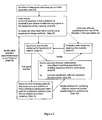
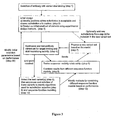
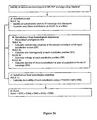
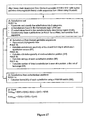
- FIG. 2 A general biopolymer optimization scheme is shown in Figure 2 , in Figure 3 this general scheme is shown specifically for optimizing the function of an antibody, which is one class of biopolymers. The steps found in Figure 2 will be briefly introduced here and described in more detail below.
- Step 01. A biopolymer or a plurality of biopolymers that partially achieves the desired property (e.g. , function) is used as a starting point (step 01).
- Step 02. Substitutions to a sequence of step 01 are identified using a combination of changes to the sequence. Such changes are either in monomer identity or in monomer physico-chemical properties. For example, consider the case in which the biopolymer is a 20-mer peptide.
- step 02 a determination can be made that the 2 nd and 4 th positions can be changed. Moreover, in some embodiments, a determination is made as to which substitutions can be made at such positions in step 02. For instance, step 02 may not only determine that the 2 nd position of the 20-mer can be changed, but may also determine that this position should be changed to a glycine, alanine, or leucine.
- rules are used to determine which positions of the biopolymer of step 01 can be changed. Each such rule scores or ranks individual substitutions based on a different technique.
- Representative rules include, but are not limited to, rules based on (i) changes found in functional, structural or sequence homologs, (ii) changes predicted to be favorable using substitution matrices, (iii) changes predicted using evolutionary analysis of the homologs, (iv) changes seen in random mutagenesis screening, (v) changes predicted by structural modeling, (vi) changes proposed by an expert on the protein and (vii) changes predicted to be favorable using structural information. Any number of rules can be applied to the one or more biopolymers of step 01.
- each independent rule assigns a score for each possible substitution position (e.g. residue) in the biopolymer of step 01.
- the scores generated by each of the rules are then combined by methods and/or filters to determine the positions in the biopolymer that are suitable for change.
- Step 02 identified a set of candidate substitution positions in the biopolymer of step 01.
- step 03 a variant set incorporating such candidate substitutions is designed such that each candidate substitution is tested in combination with many different other candidate substitutions in order to cover the possible search space as evenly as possible (step 03).
- step 01 the biopolymer of step 01 is a 20-mer peptide and the 2 nd , 5 th , and 15 th residue in the 20-mer has been identified as candidate substitution positions in step 03. Assuming that each of these three positions can be independently substituted and considering only the twenty naturally occurring amino acids, there are 20 3 -1 different variant biopolymers that could be constructed. In some instances, step 02 will constrain the types of amino acids that can be substituted at these positions based on the rules described above. Nevertheless, the full biopolymer sequence space proposed in step 02 even after filtering can be large. Step 03 seeks to minimize the number of variants that are constructed in order to evenly search this large sequence space.
- Variant biopolymers selected in step 03 are individually synthesized and tested for one or more functions (one or more properties) of interest in step 04.
- the variant biopolymers are synthesized individually it is easier to keep the number of changes and the number of variants synthesized and tested in each iteration of the process relatively small. In some embodiments, between 5 and 200, more preferably between 10 and 100, and even more preferably between 15 and 50 variants are synthesized and tested in step 04. By minimizing the number of variants synthesized and tested, relatively inaccurate high throughput assay screens can be avoided in step 04.
- the property measured in step 04 is said property of a variant in said variant set is an antigenicity of said variant, an immunogenicity of said variant, an immunomodulatory activity of said variant, a catalysis of a chemical reaction by said variant, a specificity of catalysis of one chemical reaction over another chemical reaction by the variant, a catalysis of polymer synthesis by the variant, a catalysis of polymer degradation by the variant, a catalysis of a reaction by the variant that separates or resolves two or more chiral compounds, a specific activity of the variant, a thermostability of the variant, a stimulation or agonism of a signaling pathway by the variant, a specificity of agonism of one signaling pathway over another signaling pathway by the variant, an inhibition or antagonism of a signaling pathway by the variant, a specificity of agonism of one signaling pathway over another signaling pathway by the variant, an expression of the variant in a homologous host, an expression of the variant in a heterologous host, an
- Step 05 Various machine-learning methods or other data-mining techniques are used to model the relationship between the sequences and activities of the variant biopolymer in step 05.
- Step 06 The assessments of the affect of each substitution upon the properties (functions) of the biopolymer by each model tested in step 05 are combined in step 06.
- Step 07 The assessments of the affect of each substitution upon the properties (functions) of the biopolymers by each tested model that was made in step 06 is used in step 07 to design a new set of variant biopolymers for synthesis and testing
- Steps 04 through 07 are repeated a number of times.
- Each iteration of steps 04-07 seeks to design a set of high scoring and diverse biopolymers (e.g. , proteins, peptides, oligonucleotides) for synthesis and functional testing.
- Each new set of measurements from an iteration of step 04 is used to refine the sequence-activity model until an end point is reach, at which point the method progresses to step 08.
- Step 08 The performance of the methods used to select substitution positions in step 02 and to model the sequence-activity relationships in instances of step 05 are assessed by analyzing the sequences of the best performing variants.
- the best performing variants are any variants in any iteration of the cycle defined by steps 04-07 that score best in one or more functional assays for the target biopolymer.
- Step 08 provides a method for tuning the adjustable parameters of the system. Once these parameters have been adjusted, steps 02 through 07, including multiple iterations of the cycle defined by steps 04-07, are repeated.
- one of the adjustable parameters of the system is the individual weights for each of the methods applied in step 02.
- step 02 method that were good at identifying substitution positions associated with high scoring biopolymer variants are up-weighted in the next instance of steps 02 through 07.
- the modification of weights applied to methods in step 02 based on the results of cycles of steps 04-07 allows the system to learn from previous results thereby improving the accuracy with which the system can identify beneficial substitutions (in step 02) and assess the contribution of substitutions to biopolymer activity (in steps 05 and 06).
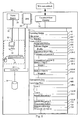
- Fig. 1 details an exemplary system that supports the functionality described above.
- the system is preferably a computer system 10 having:
- Operating system 40 can be stored in system memory 36.
- system memory 36 includes:
- case-specific data 110 and knowledge base 108 each independently comprise any form of data storage system including, but not limited to, a flat file, a relational database (SQL), and an on-line analytical processing (OLAP) database (MDX and/or variants thereof).
- case-specific data 110 and/or knowledge base 108 is a hierarchical OLAP cube.
- case-specific data 110 and/or knowledge base 108 comprises a star schema that is not stored as a cube but has dimension tables that define hierarchy.
- case-specific data 110 and/or knowledge base 108 is respectively a single database.
- case-specific data 110 and/or knowledge base 108 in fact comprises a plurality of databases that may or may not all be hosted by the same computer 10.
- some component databases of case-specific data 110 and/or knowledge base 108 are stored on one or more computer systems that are not illustrated by Fig. 1 but that are addressable by wide area network 34.
- Fig. 1 can be located on one or more remote computers.
- some embodiments of the present application are accessible in web service-type implementations.
- user interface module 104 and other modules can reside on a client computer that is in communication with computer 10 via network 34.
- user interface 104 can be an interactive web page.
- the case-specific data 110 and/or knowledge base 108 and modules e.g. modules 100, 104, 112, 106, 116, 114, 118, 130, 132) illustrated in Fig. 1 are on a single computer (computer 10) and in other embodiments such data is hosted by several computers (not shown). Any arrangement of case-specific data 110 and knowledge base 108 and the modules illustrated in Fig. 1 on one or more computers is within the scope of the present invention so long as these components are addressable with respect to each other across network 34 or by other electronic means. Thus, the present invention fully encompasses a broad array of computer systems.
- Expert system 100 is a software module that includes stored knowledge and solves problems in a specific field (for example biopolymer engineering) by emulating some of the decision processes of a human expert(s).
- the first set of algorithms that chooses the substitutions and the sequence space to explore for biopolymer engineering may require expertise in the domains of polynucleotide structure and function, polyketide structure and function, terpene structure and function, protein science, protein structural analysis and interpretation, protein structure and function, protein and nucleic acid phylogeny and evolution, chemical and enzymatic mechanisms, bioinformatics and related fields.
- Expert system 100 applies the knowledge to problems specified by a user who is not necessarily an expert in the domain(s). This invention describes the construction and use of expert system 100 for selecting substitutions useful for mapping and engineering biopolymer functions.
- Two functions expert system 100 provides in order to define a sequence space to search are (i) the identification of one or more positions in the biopolymer at which substitution is likely to be accepted and where at least some substitutions, insertions, deletions or modifications are likely to result in a functional biolpolymer and (ii) the identification of residues or modifications that are likely to result in a functional biopolymer when used to substitute or insert at each of the one or more positions identified in (i).
- An additional or alternative purpose of expert system 100 is the identification of residues or modifications that are likely to affect the desired properties or functions of the biopolymer. These functions are represented as step 02 in both Figures 2 and 3 .
- a user can interact with expert system 100 using user interface 104.
- user interface 104 comprises menus, natural language or any other style of interaction.
- Expert system 100 uses inference engine 106 to reason using the expert knowledge stored in knowledge database 108 together with case-specific data 110 relating to the specific biopolymer or class of biopolymers to be mapped and / or engineered.
- Case-specific data 110 can be acquired as input from the user of expert system 100, presented in knowledge base 108, or acquired from case-specific knowledge generated by the results of experimentation and the analysis facilitated by sequence-activity correlating methods of this invention described in further detail below. These sequence-activity correlating methods are performed in step 05 of Fig. 2 , for example. The data from these sequence-activity correlating methods can additionally be used to add to or alter the information contained within knowledge base 108.
- Expert knowledge will typically be stored in knowledge base 108 in the form of a set of rules 120.
- An exemplary rule 120 is:
- Case-specific data 110 can be precompiled by experts. It can also be obtained as user response to questions contained in a component of expert system 100, for example user interface 104, knowledge base 108 or inference engine 106.
- rules 120 of expert system 100 can also be obtained, in part, by a set of automatic actions executed using one or more computational processes 118.
- An example of a computational process 118 is:
- Computational processes 118 can be stored in knowledge base 108 as illustrated in Fig. 1 , in expert system 100, or in any data structure that is accessible by expert system 100.
- Some embodiments of expert system 100 include explanation subsystem 112. Explanation subsystem 112 provides reasons to the user for why particular substitutions are selected by rules 120.
- Some embodiments of expert system 100 include knowledge base editor 114 to allow an administrator to add, delete, or modify components of knowledge base 108 including, but not limited to, rules 120.
- expert system 100 provides scores for each substitution enumerated along with the contribution to that score from various methods 130 used to evaluate the desirability of each substitution.
- the weights 132 for the various methods 130 are derived from knowledge base 108 and can be updated by an expert using knowledge base editor 108 and can also be updated automatically using rules in knowledge base 108.
- Inference engine 106 is a software module that reasons using information stored in knowledge base 108.
- One embodiment of inference engine 106 is a rule-based system. Rule-based systems typically implement forward or backward chaining strategies. Inference engine 106 can be goal driven using backward chaining to test whether some hypothesis is true, or data driven, using forward chaining to draw new conclusions from existing data.
- Various embodiments of expert system 100 can use either or both strategies.
- some topics that can be posed by expert system 100 in a goal driven/backward chaining strategy can include: (i) how conservative should an approach be, (ii) how many iterations of the process are likely to achieve the activity of interest, (iii) by what factor should the desired activity increase, and (iv) descriptions of any prior experiments that have failed and why they have failed. Answers to these topics allows expert system 100 to access information from experiments and data from the scientific literature or from personal communications that can be relevant for the design of the sequence space of interest.
- the biopolymer can be a peptide, a protein, a polynucleotide having its own activity of interest, a polynucleotide that encodes a polypeptide having an activity of interest, or a polynucleotide that encodes a polypeptide that is responsible for synthesis of a biopolymer having an activity of interest.
- Biopolymers can further include polynucleotides exhibiting catalytic activity (e.g. , ribozymes), polynucleotides exhibiting binding activity (e.g.
- Biopolymers can also include polysaccharides, polyketides, non-ribosomally synthesized polypeptides and/or the polypeptides involved in the synthesis of polysaccharides, polyketides orf non-ribosomally synthesized polypeptides.
- a profile 116 can be created by inference engine 106 based on probability scores and weighting factors.
- inference engine 106 calculates the probability that defined substitutions will result in a biopolymer having the desired function, for any variant of the reference biopolymer.
- knowledge base 108 can contain information describing residue positions in the reference sequence that exhibit a high degree of variance in homologs. Inference engine 106 may thus give a high probability that substitutions at such positions will be active.
- One method of calculating the degree of amino acid variance is described by Gribskov, 1987, Proc Natl Acad Sci USA 84, 4355 .
- a sequence alignment can be available in knowledge base 108 to serve as the basis of a Hidden Markov model that can be used to calculate the probability that one specific residue will be followed by a second specific residue.
- Hidden Markov models also include probabilities for gaps and insertions. See, Krogh, "An introduction to Hidden Markov models for biological sequences," in Computational Methods in Molecular Biology, Salzberg et al., eds, Elsevier, Amsterd am. Such models can be used by inference engine 106 to calculate the probability that a particular substitution will possess a desired function.
- substitution matrix 122 stored in knowledge base 108 can be used by expert system 100 to identify suitable replacement residues for positions likely to accept substitutions.
- the availability of a replacement residue that is likely to be functional can itself determine whether or not a position is likely to accept substitutions.
- Substitution matrix 122 choices will impact the probability calculated for likely functionality of a variant.
- a substitution matrix 122 derived from the set of sequences should be chosen.
- a substitution matrix 122 reflecting this need should be chosen.
- Substitution matrices 122 can be calculated based on the environment of a residue, e.g. , inside or accessible, in alpha-helix or in beta-sheet. See, for example, Overington et al., 1992, Protein Sci 1:216 .
- Conservation indices 124 stored in knowledge base 108 can be also be used by inference engine 106 to calculate probabilities that a substitution will result in a biopolymer with desired properties. In this capacity, one can avoid mutating residues that are highly conserved, or conversely, focus mutations on conserved regions of the biopolymer. Algorithms for calculating conservation indices 124 at each position in a multiple sequence alignment are known in the art. See, for example, Novere et al., 1999 Biophys. Journal 76:2329-2345 .
- Inference engine 106 can also use knowledge of the effects of single mutations as a factor in calculating the probability that a substitution will possess a desired function when mutation effect data 126 is stored in knowledge base 108.
- Mutation effect data 126 can originate, for example, from mutagenesis scans or from those substitutions found in naturally occurring variants that affect the function of interest.
- Inference engine 106 can also use structural information 128 (e.g. , crystal structure, homology model of biopolymer, de novo modeled biopolymer, etc.) stored in knowledge base 108. For example, inference engine 106 can assign higher probabilities that amino acid residues in a polypeptide that are close to the active site of an enzyme will affect enzyme activity and/or specificity than more distant residues. Similarly, proximity to an epitope, proximity to an area of structural conflict, proximity to a conserved sequence, proximity to a binding site, proximity to a cleft in the protein, proximity to a modification site, etc. can be calculated from structural information 128 and used to calculate the probability that a substitution will result in a functional biopolymer.
- structural information 128 e.g. , crystal structure, homology model of biopolymer, de novo modeled biopolymer, etc.
- the distance of a residue from a region of functional interest physical distances obtained using a known crystal structure of the reference sequence can be used.
- molecular modeling approaches can be used.
- the structure of the reference sequence can be predicted based on its homology to a known structure, and then used to calculate distances.
- the entire structure of the reference sequence can be predicted and distances then calculated from the predicted structure.
- structural information 128 is energy minimized.
- the behavior of a biopolymer can be modeled using molecular dynamic simulations.
- a crystal structure or a predicted structure can be subjected to molecular dynamic simulation in order to model the effect of various external conditions such as the presence of solvent, the effect of temperature and ionic strength, upon the determined or predicted structure.
- biopolymer knowledge base 108 that can then be used by inference engine 106 of an expert system 100 to calculate the probability that a substitution will possess a desired function
- sequence comparisons including structure-based sequence alignments, homology-based sequence alignments, phylogenetic comparisons based on multiple pairwise comparisons, phylogenetic comparisons based on principal component analysis of sequence alignments, Hidden Markov models), evolutionary molecular analysis, structural analysis (including those using X-ray crystallographic data, nuclear magnetic resonance studies, structure threading algorithms, molecular dynamic simulations, active site geometry, determination of surface, internal and active site residues), known or predicted data relating sequence or structure to functional mechanisms, chemical and biophysical properties of functional groups, known or predicted functional effects of changes (for example information derived from the Protein Mut
- knowledge base 108 is optionally preprocessed for information by knowledge base editor 114.
- knowledge base 108 can contain many protein or polynucleotide sequences.
- sequences can be, for example, (i) aligned and distributed on a phylogenetic tree, (ii) grouped by principal component analysis (PCA), (iii) grouped by nonlinear component analysis (NLCA) (iv) grouped by independent component analysis (ICA), used to create sequence profiles (see, for example Gribskov, 1987, Proc Natl Acad Sci USA 84, 4355 ), (v) used to create Hidden Markov models or (vi) used to calculate structures prior to interrogation by the user.
- PCA, NLCA, and ICA is described in, for example, Duda et al., Pattern Classification, Second Edition, John Wiley & Sons, Section 10.13 , which is hereby incorporated by reference.
- the output from an expert system 100 will describe the various substitutions recommended by methods 130 based on assignment of scores, confidences, ranks, or probabilities (hereinafter "scores") using rules 120 in knowledge base 108.
- these scores are cumulative. That is, every rule 120 used by a method 130 will assign a score to the substitution under consideration and these scores can be higher if more rules are satisfied.
- proline endopeptidase (genbank A38086) there are many homologs and structures of homologs available.
- a detailed evaluation of various substitutions using three different methods 130 identified substitution F416Y as favorable.
- the scores from the various methods 30 are (i) the scores derived from favororability based on natural occurring substitutions using the PAM100 matrix is 5.29 (rank 1), (ii) the scores based on substitution found in a homolog expressed in the evolutionary distance of the homologs from the reference is 0.25 (rank 2), (iii) scores from positional variability of the sequence expressed in number of different types of amino acids found in that location is 3 (rank 7).
- Figure 5 shows a series of steps that can be executed by expert system 100 in order to identify substitutions that are likely to increase the ability of an antibody to bind to a specific target antigen.
- Five independent methods 130 are shown for assessing the suitability of a substitution: (i) substitutions from homologous sequences in frameworks and complementarity determining regions (CDR), (ii) substitutions from homologous structures, (iii) substitutions from substitution matrices, (iv) substitutions from principal component analysis (PCA) and (v) substitutions from binding pocket analysis.
- CDR complementarity determining regions
- substitutions from homologous structures substitutions from substitution matrices
- substitutions from principal component analysis (PCA) substitutions from binding pocket analysis.
- PCA principal component analysis
- substitutions from binding pocket analysis For each method 130, one or more rules (filters) 120 defined in knowledge base 108 are used.
- method (ii) substitutions from homologous structures, uses two rules 120.
- the first rule 120 is an estimate of the mean root mean square deviation (RMSD) from the target structure for every five residue window of the homolog structure, and select framework sites that deviate from the target structure by more than three A.
- the second rule 120 identifies amino acid substitutions that are found in homologous sequences and select framework sites that are within five ⁇ of the complementarity determining region.
- rules 120 are applied as filters: a substitution that satisfies one of the rules is considered to have passed through that filter and receives a score. For example, in Figure 5 , this score is 1.
- the rules 120 used (applied) by the four other methods 130 for assessing the suitability of substitutions shown in Figure 5 are also applied as filters. The score for each method can then be combined, for example by summing them.
- a component of step 02 of Fig. 2 uses the following algorithm in order to identify suitable substitutions: Those substitutions that have satisfied more of the rules will have been assigned higher cumulative scores (score m ), and those with the highest scores will be selected for incorporation into a set of biopolymer variants.
- Rules 120 can also be combined on a case by case basis, using expert knowledge. These rules 120 can be stored in a knowledge base 108 and can be executed by inference engine 106 using user input acquired by questioning the user for requirements and knowledge via the user interface 104.
- each rule 120 produces a reproducible quantitative value that can be used as a measure of the suitability of a substitution.
- a rule 120 can be used to produce an absolute quantitative score. This absolute quantitative score can be used directly, or it can be used to create a rank order list or a filter.
- Rule 1b of Figure 4 calculates the difference in free energy between a target biopolymer and a biopolymer containing a substitution. This value can then be used in several different ways to compare the favorability of different substitutions.
- the absolute value of the free energy difference (caused by the substitution) can be used, (ii) the free energy differences of all possible substitutions can be ranked in order of favorability, then a subset of substitutions that are predicted to be the most favorable can be selected and assigned a score, (iii) the score can be a single value assigned to all of the substitutions belonging to the subset of the most favorable, (iv) the score can be a measure of the rank order of the substitution, so that the most favorable substitutions receive a higher score than those that are calculated to be less favorable, (v) a rule can also be used to rank all possible substitutions in order of predicted favorability and then eliminate a subset of these substitutions that are predicted to be the least favorable. In option (v), substitutions that were eliminated would receive a score of zero.
- the scores produced by individual rules can be combined in a variety of ways. In some embodiments they are added together in the manner illustrated in the algorithm illustrated in Section 5.1 above. In some embodiments, the scores are multiplied together.
- one or more rules 120 can be used as a filter, so that only substitutions passing the one or more filter are used, regardless of their scores from the other rules.
- a cumulative score can be produced by any mathematical function of the scores produced by two or more individual rules.
- weight n is some rule 120 specific weight that is independently assigned to a rule. Such weights can be stored in knowledge base 108 and adjusted by an expert using knowledge-base editor 114 ( Fig. 1 ).
- scores produced by individual rules can be scaled or normalized to facilitate their combination.
- the mutation F416Y was identified as the most favorable substitution by combining the scores from three methods 130. The distance, expressed in fraction of amino acid differences, was transformed and a Poisson correction (-log[1-fraction]) applied and multiplied by the product of the absolute scores obtained from the other two methods 130. The resulting scores for all substitutions were ranked and F416Y(combination score 126) was ranked 1.
- Rules (and weights) can be (i) specific for a substitution of monomer x at a specific location, (ii) specific for position for any and/or a group of monomer substitution(s), (iii) specific for any and/or a group of positions for a specific monomer x, (iv) specific for any substitutions derived from a particular and/or a group of homologs, (v) or specific for any position derived from a particular and/or a group of homologs.
- the use of weights to modify scores obtained using different rules 120 allows different rules 120 to have different degrees of influence over the final score for a substitution. For example if Rule 4 is the most important in determining the suitability of a substitution in a particular biopolymer, then this rule can be made to dominate the total score for the substitutions by making W 4 much higher than the other weights.
- weights to modify scores obtained using different rules 120 allows different rules 120 to have different degrees of influence over the final score for a substitution depending upon the class or subclass of biopolymers being considered. For example a rule 120 considering the structural effect of a substitution can be most important for engineering an antibody, while a rule 120 considering the statistical likelihood of a substitution using a substitution matrix can be most important for engineering a protease.
- expert system 100 can then be used to assign weights to the scores from different rules 120 that will result in the most accurate assessment of the favorability of substitutions.
- expert system 100 can assign different weights to different methods, to produce more control over how substitutions scores are computed.
- weights to modify scores obtained using different rules 120 allows expert system 100 to incorporate information obtained from previous experiments.
- another aspect of the invention involves the use of sequence-activity relationships to empirically measure the contribution of substitutions to one or more activity of a biopolymer. This aspect of the invention is described more fully in Section 5.5.
- This sequence-activity determination effectively creates a feedback loop by which weights assigned to the scores from different rules 120 applied by expert system 100 can be adjusted.
- 20 substitutions within a biopolymer represented by S 1 -S 20
- a set of biopolymers that contain these substitutions are synthesized, and a sequence-activity relationships derived using wet lab assays.
- the sequence-activity relationships are used to determine actual scores that measure the fitness of each substitution for the desired activity of the biopolymer (F 1 -F2 0 ).
- the weights applied to each rule 120 and/or method 130 can then be adjusted so that the observed fitness of each substitution, F 1 -F 20 , correlate more closely with scores C 1 -C 20 produced by expert system 100.
- this correlation is the correlation between the absolute values of the scores for each substitution from expert system and the observed fitness of each substitution derived from the sequence-activity relationship.
- the correlation can be a correlation between the rank order of effect of substitutions predicted by expert system 100 and the rank order of substitutions observed or derived from the sequence-activity relationship.
- the weights applied to each rule 120 can also be adjusted so that the correlation between the observed fitness of substitutions and the scores produced by expert system 100 is maximized for more than one set of substitutions, in one or more different target biopolymers.
- biopolymers can optionally be used to provide different sets of substitutions for comparing observed fitness and scores produced by expert system 100. This allows different weights to be calculated to apply to the scores produced by different rules 120 as a function of biopolymer class.
- One skilled in the art will appreciate that there are many possible variations of using experimental results to adjust weights applied to rule 120 scores. All such variants, whose predictive scoring functions can be adjusted based upon experimental data, are within the scope of the expert systems 100 of the present invention and can thus be considered systems capable of learning.
- the score for a substitution based on two or more rules can be calculated independently or using conditional probabilities.
- An expert system 100 can produce scores for at least 2, 3, 4, 5, 6, 7,8,9,10,11,12,13,14,15,16,17,18,19,20,25,30, 35, 40, 45, 50, 60, 70, 80, 90 or 100 positions in the reference sequence up to the entire sequence, and can include contiguous residues or noncontiguous residues or mixtures thereof.
- the expert system 100 can include at least 2, 3, 4, 5, 6, 7, 8, 9, 10, 11, 12, 13, 14, 15, 16, 17, 18, 19, 20, 25, 30, 35, 40, 45 or 50 different residues. Naturally occurring residues can be included in the expert system, as well as unnatural residues for synthetic methods, and combinations thereof.
- the above calculations can be performed by an expert with access to the relevant knowledge base 108, for example, by using user interface 104.
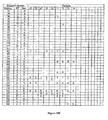
- Figure 4 shows a series of independent rules 120, each of which can be used to produce a score for any possible amino acid substitution in a protein.
- all possible single substitutions can be enumerated computationally and then scored according to one or more of the rules executed by expert system 100.
- One source of information that can be used to construct rules 120 that assess the likely effect of amino acid substitutions upon one or more activities of a protein is the sequence of one or more homologous proteins. See, for example, Figure 4 , rule 3a.
- Homologous sequences are generally analogous functionally and structurally, although having been subjected separately to different selective pressures they are also likely to be optimized differently. Amino acids that differ between homologous sequences thus provide a guide to substitutions that are likely to yield functional though different proteins. Alignment of homologous sequences can therefore be used to identify candidate substitution positions thus:
- homologous protein sequences are aligned ( e.g. , by using using clustalw; Thompson et al., 1994, Nucleic Acids Res 22: 4673-80 ) and then a phylogenetic tree is reconstructed.
- Conservation indices can then be calculated for each site ( e.g., Dopazo, 1997, Comput Appl Biosci 13: 313-7 ) and the information content calculated for each site ( e.g. , Zhang, 2002, J Comput Biol 9: 487-503 ).
- These scores can be exhaustively calculated for every position in the protein. The scores reflect the extent of tolerance to substitutions in the protein at each position.
- Scores for a given alignment can also be normalized to have an average value of 0.0 and a standard deviation of 1.0, or other standard procedures can be used to compare and combine scores from multiple methods. These values can then be used directly as a score, as outlined above and in Equation (1) or Equation (2). In some embodiments, all sites with a score above a certain threshold value can be selected. For example, a cutoff (threshold) of 0.0 can be chosen (which is set to be the average score).
- the most variable (e.g. , least conserved) sites can be selected by ranking the sites in order of these scores. For example the most highly scoring site can be selected, or the 2, 3, 4, 5, 6, 7, 8, 9, 10, 11, 12, 13, 14, 15, 16, 17, 18, 19, 20, 21, 22, 23, 24, 25, 26, 27, 28, 29, 30, 31, 32, 33, 34, 35, 36, 37, 38, 39, 40, 50, 60, 70, 80, 90 or 100 most highly scoring sites can be selected. In some embodiments the least variable (e.g. , most conserved) sites can be eliminated by ranking the sites in order of these scores.
- the least highly scoring site can be eliminated, or the 10, 20, 30, 40, 50, 60, 70, 80, 90, 100, 110, 120, 130, 140, 150, 160, 170, 180, 190, 200, 210, 220, 230, 240, 250, 260, 270, 280, 290, 300, 310, 320, 330, 340, 350, 360, 370, 380, 390, 400, 500, 600, 700, 800, 900 or 1000 least highly scoring sites can be eliminated ( Figure 4 , Rule 1a).
- Amino acid diversity and tolerance at each site can be measured as a fitness property of each amino acid at every location.
- the most fit residue for that position carries a higher value( e.g. , Koshi et al., 2001, Pac Symp Biocomput 191-202 ; O. Soyer, M.W. Dimmic, R.R. Neubig, and R.A. Goldstein; Pacific Symposium on Biocomputing 7:625-636 (2002 ).
- Sites can be grouped into site-classes or treated independently. Sites and site classes most fit to change based on the substitution rate and the substitutions most favorable based on the fitness can be selected ( Figure 4 , Rule 2a).
- these values of fitness can then be used directly as a score, as outlined above and in Equation (1) or Equation (2).
- all sites with a score above a certain threshold value can be selected. For example, a cutoff (threshold) of 0.0 can be chosen (when the normalization of scores sets the wild type residue found in the reference to be 0.0.
- all sites with a score below a certain threshold value can be eliminated. Threshold values of 0.0 or below can be eliminated, thereby only including amino changes that have a higher fitness value that the reference wild type amino acid found in that position.
- the sites most tolerant to change can be selected by ranking the sites in order of these scores.
- the most highly scoring site can be selected, or the 2, 3, 4, 5, 6, 7, 8, 9, 10 , 11, 12, 13, 14, 15, 16, 17, 18, 19, 20, 21, 22, 23, 24, 25, 26, 27, 28, 29, 30, 31, 32, 33, 34, 35, 36, 37, 38, 39, 40, 50, 60, 70, 80, 90 or 100 most highly scoring sites may be selected.
- the sites least tolerant to change can be eliminated by ranking the sites in order of these scores.
- the least highly scoring site can be eliminated, or the 10, 20, 30, 40, 50, 60, 70, 80, 90, 100, 110, 120, 130, 140, 150, 160, 170, 180, 190, 200, 210, 220, 230, 240, 250, 260, 270, 280, 290, 300, 310, 320, 330, 340, 350, 360, 370, 380, 390, 400, 500, 600, 700, 800, 900 or 1000 least highly scoring sites can be eliminated.
- evolutionary relationships between homologous sequences can be derived in the form of phylogenetic trees.
- ancestral sequences can probabilistically reconstruced. See, for example, Koshi and Goldstein, 1996, Mol. Evol. 42, 313-320 .
- evolutionary analysis will also identify amino acid changes that occur in functionally distinct groups. See, for example, Zhang and Rosenberg, 2002, PNAS 99, 5486-5491 .
- Comparison of the rates of synonymous (K s ) versus non-synonymous substitutions (K a ) can also be used to quantify ( e . g. , using K a /K s ratio) the type and degree of evolutionary constraint on substitutions.
- K a /K s >1 means adaptive evolution and K a /K s ⁇ 0.1 is observed for purifying selection.
- Methods to detect positive selection at single amino sites in order to infer residues critical for adaptation to new functions can also be applied. See, for example, Suzuki and Gojobori, 1999, Mol. Biol. Evol. 16, 1315-1328 . Together these analyses allow for the identification of functionally important conservations and changes, even those distant from an active site. See, for example, Figure 4 , rule 2c.
- the ratio of frequency with which a site is replaced by a synonymous codon to the frequency with which it is replaced by a non-synonymous codon in a reconstructed phylogenetic tree provides a measure of the selective pressure (on the function of the protein) acting to conserve the identity of the amino acid at that position. Often these ratios are calculated as averages for entire sequences. However, such ratios can also be limited to specific sites or groups of positions. These ratios can also be used to weight substitutions identified by other methods from a specific homolog. These values can then be used directly as a score, as outlined above and in Equation (1) or Equation (2).
- all sites with a tolerance for change above a certain threshold value can be selected.
- the threshold value can be determined by the user or knowledge base 114. For example, for identifying changes that do affect the specific function of the protein, only the substitutions present in positions where the ratio Ka/Ks>0.5 along any or a particular branch of the tree are accepted (and/or substitutions from homologs under any branch of the tree whose average Ka/Ks ⁇ 0.5 are identified and eliminated). In other embodiments, all sites with a tolerance for change below a certain threshold value can be eliminated.
- the threshold value can be determined by the user or knowledge base 114.
- the sites at which changes that are most adaptive can be selected by ranking the sites in order of these scores.
- the most highly scoring site can be selected, or the 2, 3, 4, 5, 6, 7, 8, 9, 10, 11, 12, 13, 14, 15, 16, 17, 18, 19, 20, 21, 22, 23, 24, 25, 26, 27, 28, 29, 30, 31, 32, 33, 34, 35, 36, 37, 38, 39, 40, 50, 60, 70, 80, 90 or 100 most highly scoring sites can be selected.
- the sites that have low Ka/Ks are important to retain function and therefore changes that have high Ka/Ks can be eliminated by ranking the sites in order of these scores.
- the highly scoring site can be eliminated, or the 10, 20, 30, 40, 50, 60, 70, 80, 90, 100, 110, 120, 130, 140, 150, 160, 170, 180, 190, 200, 210, 220, 230, 240, 250, 260, 270, 280, 290, 300, 310, 320, 330, 340, 350, 360, 370, 380, 390, 400, 500, 600, 700, 800, 900 or 1000 highly scoring sites can be eliminated.
- Another source of information that can be used to construct rules 120 that assess the likely effect of amino acid substitutions upon one or more activities of a protein is the structure that protein or the structures of one or more homologous proteins. See, for example, Figure 4 , Rule3b.
- the structures of many proteins and their variants are also available in the RCSB protein data bank (( 2002) Acta Cryst. D 58 (6:1), pp. 899-907 ); and Structural Bioinformatics(2003); P. E. Bourne and H. Weissig, Hoboken, NJ, John Wiley & Sons, Inc. pp. 181-198 .
- the availability of structures can help identify amino acid changes that affect protein function.
- all changes can be selected that increase the free energy of the protein by less than a certain value. For example, all changes that would increase the free energy by less than 1kCal/mol can be selected, all changes that would increase the free energy by less than 1.5 kCal/mol can be selected, all changes that would increase the free energy by less than 2kCal/mol can be selected, or all changes that would increase the free energy by less than 2.5kCal/mol can be selected. In some embodiments, all changes can be eliminated that increase the free energy of the protein by more than a certain value.
- the best tolerated substitutions can be selected by ranking the sites in order of the predicted increase in free energy.
- substitution with the lowest increase in free energy can be selected, or the 2, 3, 4, 5, 6, 7, 8, 9, 10, 11,12,13,14,15,16,17, 18, 19, 20, 21, 22, 23, 24, 25, 26, 27, 28, 29, 30, 31, 32, 33, 34, 35, 36, 37, 38, 39, 40, 50, 60, 70, 80, 90 or 100 substitution with the lowest increase in free energy may be selected.
- the substitutions with the greatest increases in free energy can be eliminated by ranking the sites in order of these scores.
- multiple changes can be modeled into the structure(s) computationally and changes in the free energies resulting from the substitutions computed. These free energy values can be used to identify changes that are "valid" independently, but not together. Amino acid changes that are independent can be selected preferentially. Amino acid clashes that yield a higher free energy when compared to the free energies produced by modeling changes separately can be eliminated.
- Regions of the protein that differ structurally between homologs are more likely to tolerate change, while those regions that are structurally conserved are likely to be less tolerant.
- Structures can be directly obtained from the database or predicted using various structure modeling software packages. Structures of homologs and mutants can be superposed on the wild type structure. See, for example, May et al., 1994, Protein Eng 7: 475-85 ; and Ochagavia et al., 2002, Bioinformatics 18: 637-40 ). Structural conservation can be calculated as the root mean squared (RMS) deviations of the backbones of the superposed chains.
- RMS root mean squared
- RMS deviations can be computed as the deviations of individual residues, or more preferably as the deviations of a running average over a between two and ten residue stretch of the backbone between the target protein and one or more homologous proteins.
- These computationally calculated RMS deviations for every position between homologous structures can then be used directly as a score, as outlined above and in Equation (1) or Equation (2).
- RMS deviations between the alpha carbons (or backbone atoms) in the structure of the target protein and one or more homologous proteins that are greater than a threshold value can be considered structurally labile and these sites can be selected.
- This threshold RMS deviation between homologous structures can be greater than 2 ⁇ , 2.5 ⁇ , 3 ⁇ , 3.5 ⁇ , 4 ⁇ , 4.5 ⁇ , 5 ⁇ .
- RMS deviations between the alpha carbons in the structure of the target protein and one or more homologous proteins that are less than a threshold value can be considered structurally conserved and these sites can be eliminated.
- This threshold RMS deviation between homologous structures can be less than 2 ⁇ , 2.5 ⁇ , 3A, 3.5 ⁇ , 4 ⁇ , 4.5 ⁇ , or 5 ⁇ .
- sites can be ranked in order of the calculated RMS deviations between the alpha carbons in the structure of the target protein and one or more homologous proteins and those with the highest calculated RMS deviations selected.
- the site with the highest calculated RMS deviations between homologous structure can be selected, or the 2, 3, 4, 5, 6, 7, 8, 9, 10, 11, 12, 13, 14, 15, 16, 17, 18, 19, 20, 21, 22, 23, 24, 25, 26, 27, 28, 29, 30, 31, 32, 33, 34, 35, 36, 37, 38, 39, 40, 50, 60, 70, 80, 90 or 100 sites with the highest calculated RMS deviations between homologous structure may be selected.
- sites can be ranked in order of the calculated RMS deviations between the alpha carbons in the structure of the target protein and one or more homologous proteins and those with the lowest calculated RMS deviations eliminated.
- the site with the lowest calculated RMS deviations between homologous structures can be eliminated or the 2,3,4,5,6, 7, 8, 9, 10, 11, 12, 13, 14, 15,16,17, 18, 19, 20, 21, 22, 23, 24, 25, 26, 27, 28, 29, 30, 31, 32, 33, 34, 35, 36, 37, 38, 39, 40, 50, 60, 70, 80, 90 or 100 sites with the lowest calculated RMS deviations between homologous structure can be eliminated ( Figure 4 , Rule 2b).
- All amino acid substitutions that are found in one or more homologs can be tested for proximity to a binding or catalytic or regulatory site of the protein.
- the distance between an amino acid substitution that is found in one or more homologs from a binding or catalytic or regulatory site can be used directly as a score, as outlined above and in Equation (1) or Equation (2).
- all amino acid substitutions that are found in one or more homologs and that are within a threshold distance of a binding or catalytic or regulatory site in the protein can be selected.
- This threshold distance can be less than 2 ⁇ , 2.5 ⁇ , 3 ⁇ , 3.5 ⁇ , 4 ⁇ , 4.5 ⁇ , 5 ⁇ , 5.5 ⁇ , 6 ⁇ , 6.5 ⁇ , 7 ⁇ . In still other embodiments, all amino acid substitutions that are found in one or more homologs and that are beyond a threshold distance of a binding or catalytic or regulatory site in the protein can be eliminated. This threshold distance can be more than 2 ⁇ , 2.5 ⁇ , 3 ⁇ , 3.5 ⁇ , 4 ⁇ , 4.5 ⁇ , 5 ⁇ , 5.5 ⁇ , 6 ⁇ , 6.5 ⁇ , or 7 ⁇ .
- all amino acid substitutions that are found in one or more homologs can be ranked in order of proximity to a binding or catalytic or regulatory site in the protein and those that are closest to the binding or catalytic or regulatory site selected by a rule 120.
- the substitution closest to the binding or catalytic or regulatory site can be selected, or between 2 and 20, between 10 and 100, or the top 200 substitutions closest to the binding or catalytic or regulatory site can be selected.
- all amino acid substitutions that are found in one or more homologs can be ranked in order of proximity to a binding or catalytic or regulatory site in the protein and those that are farthest from the binding or catalytic or regulatory site eliminated.
- the substitution farthest from the binding or catalytic or regulatory site can be eliminated.
- between 2 and 20, between 10 and 100, or the top 200 substitutions farthest from the binding or catalytic or regulatory site can be eliminated.
- Another source of information that can be used to construct rules 120 that assess the likely effect of amino acid substitutions upon one or more activities of a protein is the frequency with which one amino acid is observed to substitute for another amino acid in different proteins.
- the matrix can be expressed in terms of probabilities or values derived from probabilities by mathematical transformation involving probabilities of transitions or substitutions (Pij) and observed frequencies of amino acids(Fi). Matrices using such transformation include scoring matrices like PAM100, PAM250, and BLOSUUM etc. See, for example, Figure 4 , rule 1c.
- Substitution matrices are derived from pairwise alignments of protein homologs from sequence databases. They constitute estimates of the probability that one amino acid will be changed to another while conserving function.
- Different substitution matrices are calculated from different sets of sequences. For example, they can be based on the structural environment of a residue ( Overington, 1992, Genet Eng (N Y) 14: 231-49 .; and Overington et al., 1992, Protein Sci 1: 216-26 .) or on additional factors including secondary structure, solvent accessibility, and residue chemistry ( Luthy et al., 1992, Nature 356: 83-5 .
- a substitution matrix that best captures the observed sequences in the protein family of interest can be calculated using the Bayesian method developed by Goldstein et al. ( Koshi et al., 1995, Protein Eng 8: 641-645 ) and used to score all candidate substitutions.
- these values can then be used directly as a score, as outlined above and in Equation (1) or Equation (2).
- the scores can expressed as Pij: the probability of substituting residue i with j. Any transformations of Pij can also be used. Pij can be computed for a specified evolutionary distance. In alternative embodiments, all substitutions with a probability above a certain threshold value may be selected. Threshold values of 0.00001,0.00001,0.0001,0.01 or 0.1 can be used for probabilities and/or threshold values of -5,-4,-3,-2,-1,0,1,2,3,4,5 for any PAM matrix. In still other embodiments, all substitutions with a probability below a certain threshold value may be eliminated.
- Threshold values of 0.00001,0.00001,0.0001,0.01 or 0.1 can be used for probabilities and/or threshold values of -5,-4,-3,-2,-1,0,1,2,3,4,5 for any PAM matrix
- the most favorable substitutions can be selected by ranking substitutions in order of their substitution matrix probability scores.
- the most highly scoring substitution can be selected, or the top 2, 3, 4, 5, 6, 7, 8, 9, 10, 11, 12, 13, 14, 15, 16, 17, 18, 19, 20, 21, 22, 23, 24, 25, 26, 27, 28, 29, 30, 31, 32, 33, 34, 35, 36, 37, 38, 39, 40, up to 50, up to 60, up to 70, up to 80, up to 90, up to 100, up to 110, up to 120, up to 130, up to 140, up to 150, up to 160, up to 170, up to 180, up to 190, up to 200, up to 210, up to 220, up to 230, up to 240, up to 250, up to 260, up to 270, up to 280, up to 290, up to 300, up to 310, up to 320, up to 330, up to 340, up to 350, up to 360, up to 370, up to 380, up to 390, up to 400, up to 500, up to 600, up to 700, up to 800, up to 900, up to 1000, up to 2000, up to
- the least favorable substitutions can be eliminated by ranking substitutions in order of their substitution matrix probability scores.
- the least substitution with the lowest substitution matrix probability may be eliminated, or the 2, 3, 4, 5, 6, 7, 8, 9, 10, 11, 12 ,13, 14, 15, 16, 17, 18, 19, 20, 21, 22, 23, 24, 25, 26, 27, 28, 29, 30, 31, 32, 33, 34, 35, 36, 37, 38, 39, 40, up to 50, up to 60, up to 70, up to 80, up to 90, up to 100, up to 110, up to 120, up to 130, up to 140, up to 150, up to 160, up to 170, up to 180, up to 190, up to 200, up to 210, up to 220, up to 230, up to 240, up to 250, up to 260, up to 270, up to 280, up to 290, up to 300, up to 310, up to 320, up to 330, up to 340, up to 350, up to 360, up to 370, up to 380, up to 390, up to
- a substitution or a scoring matrix can be calculated by considering homologous proteins from many different protein families ( e.g. , Benner et al., 1994, Protein Eng 7: 1323-1332 ; and Tomii et al., 1996, Protein Eng 9: 27-36 ) can be used to score all candidate substitutions.
- Matrices derived from a variety of protein are often used to evaluate and confirm homology of protein sequences and represent an approximation of protein evolution in general. In some embodiments, these values can then be used directly as a score, as outlined above and in Equation (1) or Equation (2). In some embodiments, all substitutions with a probability above a certain threshold value can be selected.
- Threshold values of 0.00001,0.00001,0.0001,0.01 or 0.1 can be used for probabilities and/or threshold values of -5, -4, -3, -2, -1, 0, 1, 2, 3, 4, 5 for any PAM matrix can be used. In still other embodiments, all substitutions with a probability below a certain threshold value can be eliminated. Threshold values of 0.00001,0.00001,0.0001,0.01 or 0.1 can be used for probabilities and/or threshold values of -5, -4, -3, -2, -1, 0, 1, 2, 3, 4, 5 can be used for any PAM matrix. In still other embodiments, the most favorable substitutions can be selected by ranking substitutions in order of their substitution matrix probability scores.
- the most highly scoring substitution may be selected, or the 2, 3, 4, 5, 6, 7, 8, 9, 10, 11, 12, 13, 14, 15, 16, 17, 18, 19, 20, 21, 22, 23, 24, 25, 26, 27, 28, 29, 30, 31, 32, 33, 34, 35, 36, 37, 38, 39, 40, up to 50, up to 60, up to 70, up to 80, up to 90, up to 100, up to 110, up to 120, up to 130, up to 140, up to 150, up to 160, up to 170, up to 180, up to 190, up to 200, up to 210, up to 220, up to 230, up to 240, up to 250, up to 260, up to 270, up to 280, up to 290, up to 300, up to 310, up to 320, up to 330, up to 340, up to 350, up to 360, up to 370, up to 380, up to 390, up to 400, up to 500, up to 600, up to 700, up to 800, up to 900, up to 1000, up to 2000, up to 3000
- the least favorable substitutions can be eliminated by ranking substitutions in order of their substitution matrix probability scores.
- the least substitution with the lowest substitution matrix probability may be eliminated, or the 2, 3, 4, 5, 6, 7, 8, 9, 10, 11, 12, 13, 14, 15, 16, 17, 18, 19, 20, 21, 22, 23, 24, 25, 26, 27, 28, 29, 30, 31, 32, 33, 34, 35, 36, 37, 38, 39, 40, up to 50, up to 60, up to 70, up to 80, up to 90, up to 100, up to 110, up to 120, up to 130, up to 140, up to 150, up to 160, up to 170, up to 180, up to 190, up to 200, up to 210, up to 220, up to 230, up to 240, up to 250, up to 260, up to 270, up to 280, up to 290, up to 300, up to 310, up to 320, up to 330, up to 340, up to 350, up to 360, up to 370, up to 380, up to 390, up to 400, up to
- proline endopeptidase (genbank A38086) there are many homologs and structures of homologs available. Every possible substitution enumerated was assigned a score based on the PAM100 matrix. For example, substitutions for position 416: F416Y ranks number 1 and has a score of 5.24, F416L ranks 565 with a score of 1.2 and F416I ranks 1765 with a score of -0.83.
- Protein sequences can be mathematically represented in terms many variables, each variable representing the type of amino acid at a specific location.
- the sequence AGWRY can be represented by 5 variables, where variable 1 assumes a value of "A" corresponding to position 1, variable 2 is "G" corresponding to position 2 and so on.
- Each variable can assume 1 of 20 possibilities.
- each position can assume a value corresponding to a physico-chemical property of the amino acid instead of amino acid identity.
- each variable can be a combination of variables representing properties of amino acids.
- each variable can be represented in a binary form corresponding to presence or absence of a particular amino acid.
- each variable can be represented in a binary form corresponding to presence or absence of a defined group of amino acids.
- Typical proteins contain many hundred variables.
- a set of proteins are various points in the variables space and relationship between various proteins can be represented in terms of the values of the variables corresponding to those proteins.
- proteins can be clustered and classified using statistical techniques like the principal components analysis, k-means clustering, SVM etc.
- PCA Principal Component Analysis
- Biopolymer sequence can be represented in terms of the principal components of that sequence. Principal components can then be identified in which biopolymers are grouped functionally. The loads of those principal components can then be used to identify the monomers that are most responsible for the grouping of the biopolymers within sequence space. These monomers are thus good candidates for substitutions likely to affect function.
- amino acid substitutions that are most important in differentiating and grouping sequences are often also those that functionally differentiate the proteins.
- Identification of such amino acids using dimension-reducing techniques such as principal component analysis has been described (e.g., Casari et al., 1995, Nat Struct Biol 2: 171-178 ; Gogos et al., 2000, Proteins 40: 98-105 ; and del Sol Mesa et al., 2003, J Mol Biol 326: 1289-1302 ).
- PCA can identify sequence features and substitutions corresponding to the desired phenotype of the protein and scores "loads" for these features in the direction of desired phenotype are used as absolute scores or as filters to identify substitutions.
- Figure 10 shows the 49 proteases whose sequences are homologous to proteinase K.
- a property of interest in this example is activity during or after exposure of the protein to heat.
- the 49 sequences were subjected to principal component analysis, and the distribution of the sequences in the first two principal components is shown in Figure 11 .
- Proteases 46, 47, 48 and 49 were all obtained from thermostable organisms and can thus be expected to possess desirable thermostability properties.
- these four proteases are grouped together in the first two principal components of the sequence space, characterized by strongly negative scores in both principal components 1 and 2.
- Figure 12 shows the contributions (the "loads") of all amino acid differences within the alignment of the 49 proteases, to the new dimensions principal components 1 and 2.
- Figure 13 shows an expanded detail of the lower left corner of Figure 12 in which the identities of each amino acid contributing to the principal components are now shown. These amino acids are those most responsible for giving a protein sequence a strong negative score in principal component 1 and principal component 2. These contributions are quantitated in Figure 14 . Because these scores are also those seen for proteases from thermophilic organsisms, the amino acids that are primarily responsible for conferring these scores upon proteins are very good candidates for amino acids that may confer desirable properties, in this case thermostability.
- any sequence principal component can be used that contributes to differentiating between two sets of biopolymers and that is likely to reflect some functional differences of interest.
- the "load" contributed by a substitution to one or more such principal component of sequence can be used directly as a score, as outlined above and in Equation (1) or Equation (2). These scores assume a range of values and a distribution profile can be calculated.
- all substitutions with a "load" above a certain threshold value for one or more principal components can be selected. Threshold values can be determined from the distribution profile and can be set to value based on the distribution of scores. For example, the threshold value can be set such that top 10% of the loads in a particular principal component are above the threshold.
- all substitutions with a "load" below a certain threshold value can be eliminated.
- the threshold value can be set such that bottom 10% of the loads in a particular principal component are below the threshold.
- the substitutions with the highest loads can be selected by ranking substitutions in order of their loads.
- the substitution with the highest "load” can be selected, or the 2, 3, 4, 5, 6, 7, 8, 9, 10, 11, 12, 13, 14, 15, 16, 17, 18, 19, 20, 21, 22, 23, 24, 25, 26, 27, 28, 29, 30, 31, 32, 33, 34, 35, 36, 37, 38, 39, 40, 50, 60, 70, 80, 90 or 100 substitutions with the highest "loads" can be selected.
- the substitutions with the lowest loads can be eliminated by ranking substitutions in order of their loads.
- the substitution with the lowest "load” can be eliminated, or the 2, 3, 4, 5, 6, 7, 8, 9,10,11,12, 13, 14, 15,16,17,18, 19, 20, 21, 22, 23, 24, 25, 26, 27, 28, 29, 30, 31, 32, 33, 34, 35, 36, 37, 38, 39, 40,, up to 50, up to 60, up to 70, up to 80, up to 90, up to 100, up to 110, up to 120, up to 130, up to 140, up to 150, up to 160, up to 170, up to 180, up to 190, up to 200, up to 210, up to 220, up to 230, up to 240, up to 250, up to 260, up to 270, up to 280, up to 290, up to 300, up to 310, up to 320, up to 330, up to 340, up to 350, up to 360, up to 370, up to 380, up to 390,
- a set of substitutions can be identified for testing. These may be the substitutions with the highest aggregate scores, they may be the substitutions with the highest score for each individual rule 120, or they may be derived in some other way using the scores produced by the rules 120 used by methods 130 of expert system 100.
- the number of substitutions selected by step 03 of Fig. 2 in one cycle of the optimization process is less than 1000 substitutions, more preferably less than 250 substitutions, more preferably less than 100 substitutions and more preferably less than 50 substitutions.
- the rules discussed in Section 5.1 above and shown in Figure 4 are one example of the way in which an initial sequence space can be defined.
- the sequence space is defined in terms of an initial target biopolymer sequence, and substitutions to be made in that target sequence. Each substitution is defined in terms of a position in the target biopolymer, and the identity of a monomer with which the monomer at that position in the target biopolymer is to be replaced.
- Selection of the target biopolymer corresponds to step 01 in Figure 2 .
- Definition of the sequence space corresponds to step 02 in Figure 2 . This section is directed to step 03 of Figure 2 .
- this designed biopolymer variant set includes only a subset of the total number of possible variants that could be generated.
- the total number of possible variant proteins in a sequence space defined by a target protein containing all possible combinations of 24 substitutions is 2 24 > 16,000,000.
- the methods of the present invention allow the interrogation of this sequence space by designing and synthesizing only a very small fraction of the total number of biopolymers that are included in the sequence space defined by the initial target biopolymer and the substitutions.
- the number of variants in the designed biopolymer variant set is less than 1000 variants, more preferably less than 250 variants and more preferably less than 100 variants. This is possible because, although the designed biopolymer variant set includes only a subset of the total number of possible variants ( e.g. the possible combinations of substitutions), care is taken to test all biopolymer substitutions in many different sequence contexts.
- An example is shown in Fig. 16 , where a set of 24 variants were designed to interrogate the sequence space defined by a target protein sequence and 24 substitutions illustrated in Fig. 15 .
- each variant contains six substitutions, each substitution occurs six times within the designed biopolymer variant set, and each occurrence of each substitution takes place within a quite different context, that is it is combined with a different set of other substitutions each time.
- the aim when designing a set of biopolymer variants to interrogate a sequence space defined by a target biopolymer sequence and a set of substitutions is to obtain a designed biopolymer variant set where the substitutions are distributed in such a way that a large amount of information can subsequently be extracted from sequence-activity relationships.
- the design of biopolymer variant sets has common elements with the design of experimental datasets from a diverse range of other disciplines including agriculture and engineering. Methods to optimize experimental datasets (experimental design or design of experiment: DOE) are described by Sir R. A. Fisher in 1920 ( Fisher, The Design of Experiments, MacMillan Publishing Company; 9th edition, 1971 ).
- Taguchi 1986, Introduction to Quality Engineering, Asian Productivity Organization, Distributed by American Supplier Institute Inc., Dearborn, MI .
- An example of the application of a Taguchi orthogonal matrix to the design of eight variants that capture all pairwise combinations of seven amino acid substitutions is shown in Figure 25 .
- any number of experimental design techniques can be used to maximize the information content of the designed biopolymer variant set including, but not limited to, complete factorial design, 2 k factorial design, 2 k fractional factorial design, central composite, latin squares, Inco-latin squares, Plackett-Burmann designs, Taguchi design, and combinations thereof. See, for example, Box et al., 1978, Statistics for Experimenters. New York, Wiley , for examples of such techniques that can be used to construct a designed biopolymer variant set from the initial set of biopolymer substitutions selected in accordance with Section 5.1 that tests a maximum number of combinations in a minimal number of biopolymer variants.
- the number of previously untested substitutions present in each variant is 10, 9, 8, 7, 6, 5, 4 or 3.
- a variant references to a biopolymer that has a sequence that is identical to the sequence of the biopolymer selected in step 01 of Figure 2 with the exception that there are one or more substitutions in the sequence.
- a substitution refers to a mutation at a particular position in the biopolymer from the residue found at that position in the biopolymer selected in step 01 of Figure 2 to some other residue.
- any method can be appropriate provided that the number of substitutions in each variant set is relatively small so that the majority of biopolymers are active.
- the number of previously untested substitutions present in each variant is preferably 9, 8, 7, 6, 5, 4, 3 or 2.
- each selected substitution be tried an approximately equal number of times in the designed biopolymer variant set.
- each substitution be tested in many different sequence contexts. In other words each substitution appears in a number of different biopolymer variants, in each case being combined with a different set of other substitutions.
- the substitution L180I appears in variant 3 with P97S, E138A, Y194S, A236V, V267I and in variant 18 with N95C, S107D, V167I, G293A, I310K.
- a variation of the above method is to require (i) that each substitution identified be tried an approximately equal number of times in the designed biopolymer variant set, and (ii) that as many different combinations of two substitutions (e.g. substitution pairs) as possible be tested.
- substitution pairs For example, to test forty substitutions in a biopolymer it may be desirable to incorporate a maximum of five changes per variant. For forty substitutions there are (40 x 39/2) 780 possible pairs of substitutions. In one variant with five substitutions there are ten pairs of substitutions. So in forty variants there will be a maximum of 400 substitution pairs. The aim is then to maximize the number of different substitution pairs that are tested and to try to represent each substitution five times. The substitution pairs can be scored with the initial selection algorithm, and the top scoring 400 substitution pairs tested.
- the solution to such a problem of finding variants with the constraints mentioned here is known as a coverage problem.
- the coverage problem is NP-hard. Therefore greedy and other forms of approximate solutions are used to solve the NP-hard problems in the present invention. For instance, in some embodiments, the algorithms described in Khan et al., 2001, Lecture Notes in Computer Science 2076: 225 are used.
- the desired set of sequences can be evolved using monte carlo algorithms and genetic algorithms to maximize the number of pairs in the variant set. Genetic algorithms are described in Section 7.5.1 of Duda et al., 2001, Pattern Classification, Second Edition, John Wiley & Sons, Inc., New York , which is hereby incorporated by reference. Further, similar algorithms can be used to expand the coverage problem to maximize the number of triplets, quadruplets and so on.
- n the number of identified substitutions
- n the number of variants to be synthesized
- k the number of substitutions per variant.
- the set of substitutions can be divided into two or more groups.
- groups can be used to design variants in which each variant contains substitutions from a particular group.
- the substitutions in such variants can be subjected to the coverage algorithms using the constraints described above.
- Each group can also be combined with other groups of substitutions in order to design initial variants. Then a coverage algorithm can be applied to combinations of substitution groups.
- Groups of substitutions can be arrived at using knowledge of protein domain and /or functional and structural properties of amino acid residues in the protein. For example, in a multi-domain protein, all substitutions based on the techniques described in Section 5.1 can be identified, top scoring variants can be selected, and such top scoring variants can then be classified into groups of substitutions based on which domain of the protein the substitutions are presented.
- substitutions can be classified based on their location in the protein structure (e.g surface position versus interior positions). Substitution locations can be determined using experimentally determined structures or structure prediction algorithms. Alternatively, substitutions can be classified based on their proximity to the active sites (e.g residues ⁇ 5 ⁇ from active site belong to one class and residues > 5 ⁇ from active site to another). Constraints on the number of substitutions from each substitution group can be imposed on the variant set. For example, two substitutions from the group close to the active site and three substitutions from the group representing the surface of the protein can be chosen.
- DOE experimental design or design of experiment
- a biopolymer variant set can be created stochastically by library synthesis methods such as parallel site-directed mutagenesis, DNA shuffling or other methods for incorporating defined substitutions into a biopolymer such as those described in Section 5.8.
- the variant set contains substitutions distributed at random, so precisely defined variants are not synthesized. Instead, the introduction of substitutions is controlled so that the average number of substitutions incorporated into each variant is between 1 and 10, more preferably the average number of substitutions incorporated into each variant is between 1 and 5. Variants can then be selected at random and the distribution of substitutions can be determined by determining the sequence of the biopolymer.
- less than 1000 variants created by library synthesis methods are synthesized and sequenced, preferably less than 500 variants created by library synthesis methods are synthesized and sequenced, more preferably less than 250 variants created by library synthesis methods are synthesized and sequenced, even more preferably less than 100 variants created by library synthesis methods are synthesized and sequenced.
- the creation of a library can be simulated using computational modeling of shuffling and other methods. See, for example, Moore, 2001, Proc Natl Acad Sci USA 13, 3226-3231 ; Moore and Maranas, 2000, J Theor Biol. 205, pp. 483-503 .
- the variants are synthesized using methods known in the art. Representative, but nonlimiting synthetic methods are described in Section 5.8, below. Then the biopolymers are tested for relevant biological properties. Such relevant biological properties include, but are not limited to biopolymer solubility and activity. Nonlimiting examples of how such biopolymer activity can be tested are described in Section 5.9 below. Together the synthesis and testing of the biopolymer variants represent step 04 in Figure 2 .
- step 04 substitutions have been selected using expert system 100 ( Fig. 2 , step 04), and variants have been designed, synthesized and tested for one or more activity or function, it is desirable to use the sequence and activity information from the designed biopolymer variant set to assess the contributions of substitutions to the one or more biopolymer activity or function.
- This process is represented as step 05 in Figure 2 .
- the functional form f() correlates descriptors of a protein sequence (x i ) to its activity.
- a set of descriptors (x i ) that can describe all of the substitutions within the biopolymer variant set is identified.
- Values of Y for each member of the biopolymer variant set are measured.
- Values for each weight (w i ) are then calculated such that the differences between values predicted for each value of Y by Equation 3 and those observed experimentally are minimized for the biopolymer variants set, or for a selected subset of such biopolymer variants.
- the minimization step above can also use weights for different activity predictions and, in general, can use a loss function.
- this loss function can be squared error loss, where weights that minimize the sum of squares of the differences between predicted and measured values for the dataset are computed.
- statistical regression methods are used to identify relationships between dependent (x i ) and independent variables (Y).
- Such techniques include, but are not limited to, linear regression, non-linear regression, logistic regression, multivariate data analysis, and partial least squares regression. See, for example, Hastie, The Elements of Statistical Learning, 2001, Springer, New York ; Smith, Statistical Reasoning, 1985, Allyn and Bacon, Bost on.
- regression techniques like the PLS (Partial Least Square) can be used to solve for the weights (w i ) in the equation X.
- Partial Least Squares PLS is a tool for modeling linear relationships between descriptors.
- the method is used to compress the data matrix composed of descriptors(variables) of variant sequences being modeled into a set of latent variable called factors.
- the number of latent variable is much smaller than the number of variables (descriptors) in the input sequence data. For example, if the number of input variable is 100, the number of latent variables can be less than 10.
- the factors are determined using the nonlinear iterative partial least squares algorithm.
- the orthogonal factor scores are used to fit a set of activities to the dependent variables. Even when the predictors are highly collinear or linearly dependent, the method finds a good model.
- Alternative PLS algorithms like the SIMPLS can also be used for regression. In such methods, the contribution to the activities from every variable can be deconvoluted to study the effect of sequence on the function of the protein.
- modeling techniques are used to derive sequence-activity relationships.
- Such modeling techniques include linear and non-linear approaches. Linear and non-linear approaches are differentiated from each other based on the algebraic relationships used between variables and responses in such approaches.
- the input data e.g. , variables that serve as descriptors of the biopolymer sequence
- the input data can be linearly related to the variables provided or non-linear combinations of the variables. It is therefore possible to perform different combinations of models and data-types: linear input variables can be incorporated into a linear model, non-linear input variables can be incorporated into a linear model and non-linear variables can be incorporated into a non-linear models.
- Function f() can assume non-linear form.
- Non-linear functions can also be derived using modeling techniques such as machine learning methods.
- the sequence(x i )-activity(Y) data to predict the activities of any sequence given the descriptors for a sequence can be determined using neural networks, bayesian models, generalized additive models, support vector machines, classification using regression trees.
- the data describing variants of the initial biopolymer can be represented in many forms.
- all or a portion of the data is represented in a binary format. For example, representing the presence or absence of a specified residue at a particular position by a "1" or a "0" constitutes a linear binary variable. In another example, representing the presence of a specified residue at one position AND a second specified residue at a second position by a "1" constitutes a non-linear binary variable.
- all or a portion of the data is represented as Boolean operators.
- all or a portion of the data is represented as principal component descriptors derived from a set of properties.
- Biopolymer input sequence data can also use descriptors based on comparison with a sequence profile (e.g. , a hidden Markov model, or principal component analysis of a set of sequences).
- a sequence profile e.g. , a hidden Markov model, or principal component analysis of a set of sequences.
- PC1 and PC2 values of the sequences can be used as descriptors for the sequences in that figure.
- any number of principle components can be used as descriptors. See, for example, Casari et al., 1995, Nat Struct Biol. 2:171-8 ; and Gogos et al., 2000, Proteins 40:98-105 .
- step 05 the biopolymer sequence data in the designed set and the results of the assays performed on the designed set are converted to a form that can be used in pattern classification and/or statistical techniques in order to identify relationships between the results of the assays and the substitutions present in the designed set.
- conversion involves a step in which independent variables and dependent variables are enumerated.
- the independent variables are the various substitutions (mutations) that are present in the designed set.
- the dependent variables are the results of assays, such as those described in Section 5.9.
- Each substitution can be considered independently.
- the presence or absence of a substitution or residue at a specific position can be used to describe one or more of the independent variables.
- the presence or absence of two or more substitutions or residues at two or more specific positions can be used to describe one or more of the independent variables.
- One or more physico-chemical descriptors of a substitution or residue at a specific position can be used to describe one or more of the independent variables.
- One or more physico-chemical descriptors of two or more substitutions or residues at two or more specific positions can be used to describe one or more of the independent variables. Then, pattern classification and/or statistical techniques are used to identify relationships between particular substitutions, or combinations of substitutions, and the assay data.
- supervised learning techniques are used to identify relationships between mutations in the designed set and biopolymer properties identified in assays results such as assays performed in Section 5.9.
- Such supervised learning techniques include, but are not limited to, Bayesian modeling, nonparametric techniques (e.g. , Parzen windows, k n -Nearest-Neighbor algorithms, and fuzzy classification), neural networks (e.g. , hopfield network, multilayer neural networks and support vector machines), and machine learning algorithms (e.g. , algorithm-independent machine learning). See, for example, Duda et al., Pattern Classification, 2nd edition, 2001, John Wiley & Sons, Inc.
- sequence (x i ) - activity (Y) data can be sed to predict the activities of any sequence given the descriptors for a sequence using a neural network.
- the input for the network is the descriptors and the output is the predicted value of Y.
- the weights and the activation function can be trained using supervised decision based learning rules. The learning is performed on a subset of variants called the training set and performance of the network is evaluated on a test set.
- unsupervised learning techniques are used to identify relationships between mutations in the designed set and biopolymer properties identified in assays results such as assays performed in Section 5.9.
- Such unsupervised learning techniques include, but are not limited to stochastic searches (e.g. , simulated annealing, Boltzmann learning, evolutionary methods, principal component analysis, and clustering methods). See, for example, Duda et al., Pattern Classification, 2nd edition, 2001, John Wiley & Sons, Inc. New York .
- the weights in equation 5 can be adjusted by using monte carlo and genetic algorithms.
- the optimization of weights for non-linear functions can be complicated and no simple analytical method can provide a good solution in closed form. Genetic algorithms have been successfully used in search spaces of such magnitude. Genetic algorithms and genetic programming techniques can also be used to optimize the function form to best fit the data. For instance, many recombinations of functional forms applied on descriptors of the sequence variants can be applied.
- boosting techniques are used to construct and/or improve models developed using any of the other techniques described herein.
- a model of the sequence-activity relationship can be described as a functional form whose parameters have been trained for the input data (Y and x i ).
- Many algorithms /techniques to build models have been described. Algorithms applied on a specific dataset can be weak in that the predictions can be less accurate or "weak" (yielding poor models). Models can be improved using boosting techniques. See, for example, Hastie et al., The Elements of Statistical Learning, 2001, Springer, New York .
- boosting is to combine the outputs of many "weak” predictors into a powerful “committee.”
- boosting is applied using the AdaBoost algorithm.
- the prediction algorithm is sequentially applied to repeatedly modified versions of the data thereby producing a sequence of models. The predictions from all of these models are combined through a weighted majority vote to produce the final prediction.
- the data modification at each step consists of applying weights (W b i ) to each of the i training observations. Initially weights are set to 1/N, where N is the number of training observation (sequence-activity data). The weights are modified individually in each successive iteration.
- Training observations that were predicted poorly by a particular model have their weights increased and training observations that were predicted more accurately have their weights decreased. This forces each successive model to concentrate on those training observations that are issued by the previous model.
- the step of combining the models to produce a "committee" assigns a weight to each model based on the overall prediction error of that model.
- modeling techniques and algorithms described herein can be adapted to derive relationships between one or more desired properties or functions of a biopolymer and therefore to make multiple predictions from the same model.
- Modeling techniques that have been adapted to derive sequence-activity relationships for biopolymers are within the scope of the present invention. Some of these methods derive linear relationships (for example partial least squares projection to latent structures) and others derive non-linear relationships (for example neural networks). Algorithms that are specialized for mining associations in the data are also useful for designing sequences to be used in the next iteration of sequence space exploration.
- These modeling techniques can robustly deal with experimental noise in the activity measured for each variant. Often experiments are performed in replicates and for each variant there will be multiple measurement of the same activity.
- multiple measurements can be averaged and treated as a single number for every variant while modeling the sequence-activity relationship.
- the average can be a simple mean or another form of an average such as a geometric or a harmonic mean.
- outliers can be eliminated.
- the error estimation for a model derived using any algorithm can incorporate the multiple measurements through calculating the standard deviation of the measurement and comparing the predicted activity from the model with the average and estimate the confidence interval within which the prediction lies. Weights for observations to be used in models can also be derived from the accuracy of measurement, for example, through estimating standard deviation and confidence intervals. This procedure can put less emphasis on variants whose measurements are not accurate. Alternatively, theses replicate value can be treated independently.
- sequence variant i represented by descriptor values ⁇ x j ⁇ i1 has been measured in triplicates(Y i1 , Y i2 , Y i3 )
- a representative modeling routine in accordance with one embodiment of the invention comprises the following steps.
- Step 302. Relevant descriptors of the monomeric variables are identified. These descriptors can convey physico-chemical properties relevant to the interaction between biomolecules or classify the monomers (residues) as discreet entities represented in binary form as described earlier. The former is preferred for residue positions in the protein sequence where the number of different amino acid substitutions is four or more or where the variables can assume one of four possible values for those positions and the physico-chemical properties values are well distributed ( e.g. ) different from each other. The latter is preferred for positions that have four or less possible values for the relevant variable, and/or the values are clustered ( e.g. ) are not very different from each other. To create non-linear variables, new variables are formed that are combination of monomeric variables.
- variable for position 2 assumes a value of "1" if G is present at that position and "0" if it is absent.
- a non-linear variable can be created in addition to the linear variables describing each position.
- a new non-linear variable representing position "2" and “3” can assume four values in numeric form.
- the variable can assume a value of 11 for "GW", 10 for "GY", 01 for "KW” and 00 for "KY".
- variable one assumes a value of "1” if the sequence at position 2 and 3 is "GW” and "0” otherwise and the second variable takes the values of "1” or "0” if the sequence is "GY” or otherwise and so on.
- Step 304 the parameters for the functional form of the sequence-activity relationship are optimized to obtain a model by minimizing the difference between the predicted values and real values of the activity of the biopolymer.
- Such optimization adjusts the individual weights for each descriptors identified in preceding steps using a refinement algorithm such as least squares regression techniques.
- Other methods that use alternative loss functions for minimization can be used to analyze any particular dataset. For example, in some biopolymer sequence-activity data sets, the activities may not be distributed evenly throughout the measured range. This will skew the model towards data points in the activity space that are clustered.
- This skewed distribution can be compensated for by modeling using a probability factor or a cost function based on expert knowledge.
- This function can be modeled for the activity value or can be used to assign weights to data points based on their activity. As an example, for a set of activities in the range of 0 to 10, transforming the data with a sigmoidal function centered at five will give more weight to sequences with activity above five.
- Such a function can optionally also be altered with subsequent iterations, thereby focusing the modeling on the part of the dataset with the most desired functional characteristics.
- This approach can also be coupled with exploring techniques like a Tabu search, where undesired space is explored with lower probabilities.
- algorithms that optimizes the sequence-activity model for the dataset by randomly starting with a solution (e.g. , randomly assigning weights w i ) and using methods like hill-descent and/or monte-carlo and/or genetic algorithm approaches to identify optimal solutions.
- robustness of the models used is a significant criterion.
- obtaining several sub-optimal solutions from various initial conditions and looking at all the models for common features can be a desirable methodology for ensuring the robustness of the solution.
- Another way to obtain robust solutions is to create bootstrap data sets based on the input data, than estimate a p-value or confidence on the various coefficients of the model.
- boosting techniques like AdaBoost can be used to obtain a "committee" based solution.
- Step 306 Many mathematical modeling techniques for deriving a sequence-activity correlation are evaluated.
- Preferred mathematical modeling techniques used to identify and capture the sequence-activity correlation handle (i) very large numbers of variables (e.g 20 or more) and correlations between variables, (ii) linear and non-linear interactions between variables, and (iii) are able to extract the variables responsible for a given functional perturbation for subsequent testing of the mathematical model (e.g. , models should be easily de-convoluted to assign the effect of variables describing the amino acids substitution with activities).
- Step 308 the coefficients (parameters) of the model(s) are deconvoluted to see which amino acid substitutions (variables/descriptors of the variants) influence the activity of the biopolymer. It can be important to identify which descriptor of the biopolymer are important for the activity of interest.
- Some of the techniques, such as partial least squares regression (SIMPLS) that uses projection to latent structures (compression of data matrix into orthogonal factors) may be good at directly addressing this point because contributions of variables to any particular latent factors can be directly calculated. See, for example, Bucht et al., 1999, Biochim Biophys Acta.
- Step 310 the models developed using various algorithms and methods in the previous step can be evaluated by cross validation methods. For example, by randomly leaving data out to build a model and making predictions of data not incorporated into the model is a standard technique for cross validation. In some instances of biopolymer engineering, data may be generated over a period of months. The data can be added incrementally to the modeling procedure as and when such data becomes available. This can allow for validation of the model with partial or additional datasets, as well as predictions for the properties of biopolymer sequences for which activities are still not available. This information may then be used to validate the model.
- average values for weight functions can be obtained by omitting a part of the available data. Either individual sequences and their associated activities or individual substitution positions can be left out. A sequence-activity relationship can then be constructed from this partial data. This process can be repeated many times, each time the data to leave out is selected randomly. Finally an average and range of values for each weight function is calculated. The weight functions can then also be ranked in order of their importance to activity.
- Step 312 new biopolymer sequences that are predicted to possess one or more desired property are derived. Alternatively it can be desirable to rank order the input variables for detailed sequence-activity correlation measures.
- the model can be used to propose sequences that have high probabilities of being improved. Such sequences can then be synthesized and tested. In one embodiment, this can be achieved if the effects of various sequence features of the biopolymers on their functions are known based on the modeling. Alternatively, for methods like neural networks, 10 3 or 10 6 or 10 9 or 10 12 or 10 15 or 10 18 or as many as 10 80 sequences can be evaluated in silico. Then those predicted by the model to possess one or more desired properties are selected.
- Step 314. The statistical quality of the model fit to the input data is evaluated in step 314.
- Validation of sequence-activity correlation can be internal, using cross-validation of the data, or preferably external, by forecasting the functional perturbation of a set of new sequences derived from the model. Sequences with predicted values of their functional perturbations are then physically made and tested in the same experimental system used to quantify the training set. If the sequence-activity relationship of the dataset is satisfactory quantified using internal and external validation, the model can be applied to a) predict the functional value of other related sequences not present in the training set, and b) design new sequences within the described space that are likely to have a function value that is outside or within the range of function given by the training set.
- the initial set of data can be small, so models built from it can be inaccurate. Initial models may not contain terms to account for amino acid interactions. Others have found that amino acid changes within a protein are approximately additive and few interaction terms are required to describe the effects of mutations on protein function. See, for example, Aita et al. (2000) Biopolymers 54: 64-79 .; Aita et al. (2001) Protein Eng 14: 633-8 .; Choulier et al. (2002) Protein Eng 15: 373-82 .; and Prusis et al. (2002) Protein Eng 15: 305-11 .
- the output from each method for modeling a sequence-activity relationship can be one or more of: (i) a regression coefficient, weight or other value describing the relative or absolute contribution of each substitution or combination of substitutions to one or more activity of the biopolymer, (ii) a standard deviation, variance or other measure of the confidence with which the value describing the contribution of the substitution or combination of substitutions to one or more activity of the biopolymer can be assigned, (iii) a rank order of preferred substitutions, (iv) the additive & non-additive components of each substitution or combination of substitutions, (v) a mathematical model that can be used for analysis and prediction of the functions of in silico generated sequences, (vi) a modification of one or more inputs or weights used by an expert system 100 to select substitutions or (vii) a modification of the methods used by expert system 100 to design a biopolymer variant set.
- each different method for deriving relationships between biopolymer sequences and activities can differ in the precise values of their outputs. In some embodiments of the invention it is therefore desirable to combine the outputs from two or more such methods for subsequent uses. This corresponds to step 06 in Figure 2 . There are a variety of ways in which such outputs can be combined. In some embodiments, each output can be independently applied to the subsequent design of biopolymer variants ( Figure 2 , step 07) or the modification of parameters or weights used by expert system 100 for the selection of substitutions ( Figure 2 step 02) or the design of biopolymer variant sets ( Figure 2 step 03).
- average values can be calculated for the regression coefficient, weight or other value describing the relative or absolute contribution of each substitution or combination of substitutions to one or more activity of the biopolymer (e.g. , as defined in Equation 4 below).
- the standard deviation, variance or other measure of the confidence with which the value describing the contribution of the substitution or combination of substitutions to one or more activity of the biopolymer can be assigned (e.g. , as defined in Equation 4 below).
- the rank order of preferred substitutions is used to combine the methods.
- V ix f M 1 i x , M 2 ( i x ) , ... M j i x
- f() can be a linear combination of contribution of i x from many models.
- independent values can be obtained for the functional values of in silico generated sequences derived from two or more mathematical models by using the model generated in the prior steps to predict/calculate the value of the new sequence represented in terms of the same variables that are used to build the model.
- average values (or some other mathematical function of two or more values derived by two or more sequence-activity models) can be obtained for the functional values of in silico generated sequences derived from two or more mathematical models.
- sequence-activity relationships can be chosen or modified such that they better predict the performance of individual substitutions within a combination of other substitutions in a biopolymer, as described in more detail in Subsection 5.4.4.
- step 07 of Figure 2 This corresponds to step 07 of Figure 2 .
- this step is similar to the processes corresponding to steps 02 and 03 in Figure 2 . It involves defining a sequence space in terms of a biopolymer sequence and a set of substitutions, then designing a set of biopolymer variants that incorporate those substitutions in different combinations.
- sequence space can be defined in terms of the original target biopolymer sequence and substitutions that have already been tested.
- this method for defining the sequence space is used if the desired degree of further increase in one or more activity of the biopolymer is less than 10-fold, preferably less than 5-fold, more preferably less than 2-fold.
- sequence space can be defined in terms of the original target biopolymer sequence and a combination of substitutions that have already been tested and those that have not yet been tested.
- this method for defining the sequence space is used if the desired degree of further increase in one or more activity of the biopolymer is greater than 2-fold, preferably greater than 5-fold, and more preferably greater than 10-fold.
- sequence space can be defined purely in terms of the original target biopolymer sequence and substitutions that have not yet been tested. This method for defining the sequence space is generally most appropriate for the initial variant set as represented in Figure 2 step 02.
- substitution can also mean a pair or larger group of substitutions (for example, when the descriptors of proteins are represented in non-linear form as described in section 5.3), since sequence-activity relationships can produce regression coefficients, weights or other measurements of contribution to function and confidences for these measurements that apply not to individual substitutions but to specific combinations of these substitutions.
- Biopolymer variants that combine or eliminate previously tested substitutions can serve at least two purposes. First, they can be used to obtain biopolymer variants that are improved for one or more property, activity or function of interest. Generally, though not exclusively, substitutions selected according to criteria (i) - (viii) in subsection 5.4.2 are most likely to be appropriate for this purpose. Second, they can be used to obtain additional information relating the sequence to the activity of a biopolymer, thereby improving the accuracy with which predictions can be made concerning the effect of substitutions upon one or more property, activity or function of a biopolymer. Generally, though not exclusively, substitutions selected according to criteria (i) - (xi) in subsection 5.4.2 are most likely to be appropriate for this purpose.
- Method 1 A biopolymer that has previously been tested for the one or more property, activity or function of interest is selected.
- the selected biopolymer has one of the 100 highest experimentally measured scores for the property, activity or function of interest, more preferably one of the 50 highest experimentally measured scores, even more preferably one of the 25 highest experimentally measured scores, even more preferably one of the 10 highest experimentally measured scores.
- substitutions in the selected biopolymer are combined with one or more substitutions selected by one or more of the methods described in subsection 5.4.2. In preferred embodiments less than 10 selected substitutions are used, more preferably less than 5 selected substitutions are used, even more preferably less than 3 selected substitutions are used.
- Method 2 A biopolymer that has previously been tested for the one or more property, activity or function of interest is selected.
- the selected biopolymer has one of the 100 highest experimentally measured scores for the property, activity or function of interest, more preferably one of the 50 highest experimentally measured scores, even more preferably one of the 25 highest experimentally measured scores, even more preferably one of the 10 highest experimentally measured scores.
- substitutions in the selected biopolymer are combined with one or more substitutions selected by one or more of the methods described in subsection 5.4.2.
- less than 10 selected substitutions are used, more preferably less than 5 selected substitutions are used, even more preferably less than 3 selected substitutions are used.
- these substitutions are combined with one or more substitutions selected by one or more method described in Section 5.1 (i.e., by the methods used in step 03 of Figure 2 ).
- less than 10 of these last selected substitutions are used, more preferably less than 5 of these last selected substitutions are used, even more preferably less than 3 of these last selected substitutions are used.
- Method 3 Two or more substitutions identified by one or more of the methods described in subsection 5.4.2 are selected. In preferred embodiments less than 100 selected substitutions, more preferably less than 50, and even more preferably less than 25 are used. One or more biopolymer variants containing these substitutions are designed using the methods described in Section 5.2.
- Method 4 One or more substitutions selected by one or more of the methods described in subsection 5.4.2 are selected. In preferred embodiments less than 100 selected substitutions, more preferably less than 50, and even more preferably less than 25 are used. One or more substitutions are selected using one or more of the methods described in Section 5.1. In preferred embodiments, less than 100, and more preferably less than 50 of these selected substitutions are used. Then, one or more biopolymer variants are designed using the methods described in Section 5.2.
- Method 5 One or more substitutions selected by one or more of the methods described in subsection 5.4.2 that contribute most positively to the property (e.g. , function, activity of interest) are selected. In preferred embodiments, between 1 and 20 most positive substitutions are selected. One or more biopolymer variant that has already been tested for the property is selected. In preferred embodiments, the between 1 and 20 most active biopolymers are selected. One or more of the selected substitutions is added to each of the one or more selected biopolymers. In preferred embodiments, the number of substitution positions to be added to each biopolymer variant sequence is between 1 and 10, more preferably between 1 and 6, and even more preferably between 1 and 3.
- Substitutions are ranked in the order in which confidences can be assigned to regression coefficients, weights or other values describing the relative or absolute contribution to one or more activity of the biopolymer.
- the substitutions with lowest confidence scores are selected. From the sequences of biopolymer variants whose activities have already been measured, those that have high values for the property of interest are selected. In preferred embodiments, between 1 and 20 tested biopolymer variant sequences with highest activities are selected.
- One or more of the selected substitutions is added to each selected variant. In preferred embodiments, the number of substitutions to be added to each biopolymer variant sequence is between 1 and 10, more preferably between 1 and 6, and even more preferably between 1 and 3.
- Method 8 One or more biopolymer variants that have already been tested for the property of interest are selected. In preferred embodiments, between 1 and 20 most active biopolymers are selected. One or more substitutions for which a contribution to the property has been calculated are selected. For each of the one or more selected biopolymers, the following process is performed. One of the selected substitutions is added or removed and the predicted activity of the resultant biopolymer is calculated using one or more models for sequence-activity relationship as described in the section 5.3.
- Exemplary models include, but are not limited to (i) regression techniques that provide regression coefficients for the descriptors, (ii) models that generate weights or other value describing the relative or absolute contribution of each substitution or combination of substitutions to one or more activity of the biopolymer, (iii) models that provide standard deviation, variance or other measures of the confidence with which the value describing the contribution of the substitution or combination of substitutions to one or more activity of the biopolymer can be assigned, (iv) models that rank order preferred substitutions, (v) models that provide additive and non-additive components of each substitution or combination of substitutions, (vi) analytical mathematical models that can be used for analysis and prediction of the functions of in silico generated sequences (vii) supervised and unsupervised machine learning techniques like neural networks that can predict the activity of new biopolymer sequences expressed in terms of the descriptors that are used in modeling.
- the process reverts to the sequence of the biopolymer before the change. This process continues for a certain number of steps (preferably more than 10 steps, more preferably more than 100 steps, even more preferably more than 1000 steps) or until the predicted activity of the biopolymer converges to a value. Either the final biopolymer sequence in the series of iterations of the method, or the biopolymer sequence in the series with the highest predicted activity is selected. This process can optionally be performed more than once starting from each initial biopolymer sequence.
- Method 9 As an optional addition to any of the design methods including methods 1, 2, 5, and 7, one or more substitutions determined to be detrimental to the desired property (e.g. , by any of the criteria described in subsection 5.4.2 including criteria (xii) - (xv)) are eliminated.
- Method 10 As an optional addition to any design method, newly designed variants that can be reached by making a certain number of substitutions to a biopolymer sequence whose activity has already been measured are discarded and not synthesized. In preferred embodiments newly designed variants that can be reached by making 10 or fewer substitutions to a biopolymer sequence whose activity has already been measured are not synthesized. More preferably, newly designed variants that can be reached by making 5 or fewer substitutions to a biopolymer sequence whose activity has already been measured are not synthesized. More preferably, newly designed variants that can be reached by making 3 or fewer substitutions to a biopolymer sequence whose activity has already been measured are not synthesized.
- newly designed variants that can be reached by making 2 or fewer substitutions to a biopolymer sequence whose activity has already been measured are not synthesized.
- newly designed variants that can be reached by making 1 to a biopolymer sequence whose activity has already been measured are not synthesized.
- sequence-activity modeling methods can be quantitatively compared. Such comparisons can be used to modify variable parameters within each method, or to select methods of combining the results of two or more sequence-activity correlating methods as outlined in Subsection 5.3.1.
- the outputs of methods that determine sequence-activity relationship are outlined in Section 5.3. These outputs can be combined to calculate the predicted activity of a biopolymer and the confidence with which that activity can be predicted. These predictions can be compared with activity values obtained experimentally for newly designed and synthesized biopolymer variants, and the method or methods of deriving sequence-activity relationships may be chosen or modified in one or more of the following ways.
- the endpoint of a process of biopolymer optimization is reached when one or more biopolymers are obtained with one or more properties at the levels defined by a user, these activity levels being appropriate to allow the use of the biopolymer in performing a specific task. This corresponds to Figure 2 step 08.
- information from sequence-activity relationships can be used to provide information to improve the initial selection of substitutions, for example by modifying the weights applied to the scores produced by the expert system 100 as described in Section 5.1.
- the weights can be modified according to the following process.
- predictions made by expert system 100 can be improved so that preferences (e.g. higher weights) are given to selection methods 130 that have performed well in previous iterations.
- preferences e.g. higher weights
- Different algorithms and methods for identifying productive substitutions and for deriving sequence activity relationships may be better suited to different types of biopolymer, including different protein families, different nucleic acid regulatory motifs or functional molecules and different polyketide classes.
- biopolymer optimization By using feedback loops of this nature, where quantitative scoring or ranking protocols are developed, a learning, automated computational system for biopolymer optimization can be developed. This system could include generic information applicable to all biopolymer classes and specific information applicable to a more limited subset of biopolymers.
- Such a computational system could be made available directly, via the internet and / or on a subscription basis.
- biopolymers incorporating substitutions identified through construction and characterizing sets of variant biopolymers.
- biopolymer is a polynucleotide this also includes vectors (including expression vectors) comprising such polynucleotides, host cells comprising such polynucleotides and/or vectors, and libraries of biological polymers, and libraries of host cells comprising and/or expressing such libraries of biological polymers.
- the variants will be particularly useful in preparation of polynucleotides, polyketides, proteins including antibodies, immunoconjugates, transcription factors, receptors, growth factors (any of the PDGFs, EGFs, FGFs, SCF, HGF, TGFs, TNFs, insulin, IGFs, LIFs, oncostatins, and CSFs), immunomodulators, peptide hormones, cytokines, integrins, interleukins, adhesion molecules, thrombomodulatory molecules, protease inhibitors, angiostatins, defensins, cluster of differentiation antigens, interferons, chemokines, antigens including those from infectious viruses and organisms, oncogene products, thrombopoietin, erythropoietin, tissue plasminogen activator, proteases, polymerases, depolymerases, kinases,
- nucleic acids are written left to right in 5' to 3' orientation; amino acid sequences are written left to right in amino to carboxy orientation, respectively.
- the headings provided herein are not limitations on the invention, but exemplify the various aspects of the invention. Accordingly, the terms defined immediately below are more fully defined by reference to the specification as a whole.
- polynucleotide oligonucleotide
- nucleic acid and “nucleic acid molecule” and “gene” are used interchangeably herein to refer to a polymeric form of nucleotides of any length, and may comprise ribonucleotides, deoxyribonucleotides, analogs thereof, or mixtures thereof. This term refers only to the primary structure of the molecule. Thus, the term includes triple-, double- and single-stranded deoxyribonucleic acid (“DNA”), as well as triple-, double- and single-stranded ribonucleic acid (“RNA”).
- DNA triple-, double- and single-stranded deoxyribonucleic acid
- RNA triple-, double- and single-stranded ribonucleic acid
- polynucleotide oligonucleotide
- nucleic acid oligonucleotide
- nucleic acid molecule include polydeoxyribonucleotides (containing 2-deoxy-D-ribose), polyribonucleotides (containing D-ribose), including tRNA, rRNA, hRNA, siRNA and mRNA, whether spliced or unspliced, any other type of polynucleotide which is an N- or C-glycoside of a purine or pyrimidine base, and other polymers containing nonnucleotidic backbones, for example, polyamide ( e.g.
- PNAs peptide nucleic acids
- polymorpholino commercially available from the Anti-Virals, Inc., Corvallis, Oreg., as Neugene
- other synthetic sequence-specific nucleic acid polymers providing that the polymers contain nucleobases in a configuration which allows for base pairing and base stacking, such as is found in DNA and RNA.
- these terms include, for example, 3'-deoxy-2', 5'-DNA, oligodeoxyribonucleotide N3' P5' phosphoramidates, 2'-O-alkyl-substituted RNA, double- and single-stranded DNA, as well as double- and single-stranded RNA, and hybrids thereof including for example hybrids between DNA and RNA or between PNAs and DNA or RNA, and also include known types of modifications, for example, labels, alkylation, "caps," substitution of one or more of the nucleotides with an analog, internucleotide modifications such as, for example, those with uncharged linkages (e.g.
- methyl phosphonates, phosphotriesters, phosphoramidates, carbamates, etc. with negatively charged linkages (e.g. , phosphorothioates, phosphorodithioates, etc.), and with positively charged linkages (e.g. , aminoalkylphosphoramidates, aminoalkylphosphotriesters), those containing pendant moieties, such as, for example, proteins (including enzymes ( e.g. nucleases), toxins, antibodies, signal peptides, poly-L-lysine, etc.), those with intercalators (e.g. , acridine, psoralen, etc.), those containing chelates (of, e.g.
- nucleotides which can perform that function or which can be modified (e.g. , reverse transcribed) to perform that function are used.
- nucleotides are to be used in a scheme which requires that a complementary strand be formed to a given polynucleotide, nucleotides are used which permit such formation.
- nucleoside and nucleotide will include those moieties which contain not only the known purine and pyrimidine bases, but also other heterocyclic bases which have been modified. Such modifications include methylated purines or pyrimidines, acylated purines or pyrimidines, or other heterocycles. Modified nucleosides or nucleotides can also include modifications on the sugar moiety, e.g. , wherein one or more of the hydroxyl groups are replaced with halogen, aliphatic groups, or are functionalized as ethers, amines, or the like.
- the term “nucleotidic unit” is intended to encompass nucleosides and nucleotides.
- modifications to nucleotidic units include rearranging, appending, substituting for or otherwise altering functional groups on the purine or pyrimidine base which form hydrogen bonds to a respective complementary pyrimidine or purine.
- the resultant modified nucleotidic unit optionally may form a base pair with other such modified nucleotidic units but not with A, T, C, G or U. Abasic sites may be incorporated which do not prevent the function of the polynucleotide. Some or all of the residues in the polynucleotide can optionally be modified in one or more ways.
- Standard A-T and G-C base pairs form under conditions which allow the formation of hydrogen bonds between the N3--H and C4-oxy of thymidine and the N1 and C6--NH2, respectively, of adenosine and between the C2-oxy, N3 and C4--NH2, of cytidine and the C2--NH2, N'--H and C6-oxy, respectively, of guanosine.
- guanosine (2-amino-6-oxy-9-.beta.-D-ribofuranosyl-purine) may be modified to form isoguanosine (2-oxy-6-amino-9-.beta.-D-ribofuranosyl-purine).
- isocytidine may be prepared by the method described by Switzer et al. (1993) Biochemistry 32:10489-10496 and references cited therein; 2'-deoxy-5-methyl-isocytidine may be prepared by the method of Tor et al. (1993) J. Am. Chem. Soc. 115:4461-4467 and references cited therein; and isoguanine nucleotides may be prepared using the method described by Switzer et al. (1993), supra, and Mantsch et al. (1993) Biochem. 14:5593-5601 , or by the method described in U.S. Pat. No. 5,780,610 to Collins et al.
- Nonnatural base pairs may be synthesized by the method described in Piccirilli et al. (1990) Nature 343:33-37 for the synthesis of 2,6-diaminopyrimidine and its complement (1-methylpyrazolo-[4,3]pyrimidine-5,7-(4H,6H)-dione.
- Other such modified nucleotidic units which form unique base pairs are known, such as those described in Leach et al. (1992) J. Am. Chem. Soc. 114:3675-3683 and Switzer et al., supra.
- DNA sequence refers to a contiguous nucleic acid sequence.
- the sequence can be either single stranded or double stranded, DNA or RNA, but double stranded DNA sequences are preferable.
- the sequence can be an oligonucleotide of 6 to 20 nucleotides in length to a full length genomic sequence of thousands of base pairs.
- proteins refers to contiguous “amino acids” or amino acid “residues.” Typically, proteins have a function. However, for purposes of this invention, proteins also encompasses polypeptides and smaller contiguous amino acid sequences that do not have a functional activity.
- the functional proteins of this invention include, but are not limited to, esterases, dehydrogenases, hydrolases, oxidoreductases, transferases, lyases, ligases, receptors, receptor ligands, cytokines, antibodies, immunomodulatory molecules, signalling molecules, fluorescent proteins and proteins with insecticidal or biocidal activities.
- Useful general classes of enzymes include, but are not limited to, proteases, cellulases, lipases, hemicellulases, laccases, amylases, glucoamylases, esterases, lactases, polygalacturonases, galactosidases, ligninases, oxidases, peroxidases, glucose isomerases, nitrilases, hydroxylases, polymerases and depolymerases.
- the encoded proteins which can be used in this invention include, but are not limited to, transcription factors, antibodies, receptors, growth factors (any of the PDGFs, EGFs, FGFs, SCF, HGF, TGFs, TNFs, insulin, IGFs, LIFs, oncostatins, and CSFs), immunomodulators, peptide hormones, cytokines, integrins, interleukins, adhesion molecules, thrombomodulatory molecules, protease inhibitors, angiostatins, defensins, cluster of differentiation antigens, interferons, chemokines, antigens including those from infectious viruses and organisms, oncogene products, thrombopoietin, erythropoietin, tissue plasminogen activator, and any other biologically active protein which is desired for use in a clinical, diagnostic or veterinary setting.
- growth factors any of the PDGFs, EGFs, FGFs, SCF, HGF, TGFs,
- Polypeptide and “protein” are used interchangeably herein and include a molecular chain of amino acids linked through peptide bonds. The terms do not refer to a specific length of the product. Thus, “peptides,” “oligopeptides,” and “proteins” are included within the definition of polypeptide. The terms include polypeptides containing in co- and/or post-translational modifications of the polypeptide made in vivo or in vitro, for example, glycosylations, acetylations, phosphorylations, PEGylations and sulphations. In addition, protein fragments, analogs (including amino acids not encoded by the genetic code, e.g.
- homocysteine ornithine, p-acetylphenylalanine, D-amino acids, and creatine
- natural or artificial mutants or variants or combinations thereof fusion proteins, derivatized residues (e.g. alkylation of amine groups, acetylations or esterifications of carboxyl groups) and the like are included within the meaning of polypeptide.
- amino acids or “amino acid residues” may be referred to herein by either their commonly known three letter symbols or by the one-letter symbols recommended by the IUPAC-IUB Biochemical Nomenclature Commission. Nucleotides, likewise, may be referred to by their commonly accepted single-letter codes.
- Sequence variants refers to variants of discrete biolpolymers (that is biopolymers whose sequence can be uniquely defined) including polynucleotide and polypeptide and variants. Sequence variants are sequences that are related to one another or to a common nucleic acid or amino acid "reference sequence” but contain some differences in nucleotide or amino acid sequence from each other. These changes can be transitions, transversions, conservative substitutions, non-conservative substitutions, deletions, insertions or substitutions with non-naturally occurring nucleotides or amino acids (mimetics).
- optimizing a sequence refers to the process of creating nucleic acid or protein variants so that the desired functionality and or properties of the protein or nucleic acid are improved.
- optimizing a protein or nucleic acid could involve selecting a variant with lower functionality than the parental protein if that is desired.
- antibody as used herein includes antibodies obtained from both polyclonal and monoclonal preparations, as well as: hybrid (chimeric) antibody molecules (see, for example, Winter et al. (1991) Nature 349:293-299 ; and U.S. Pat. No. 4,816,567 ); F(ab')2 and F(ab) fragments; Fv molecules (noncovalent heterodimers, see, for example, Inbar et al. (1972) Proc Natl Acad Sci USA 69:2659-2662 ; and Ehrlich et al. (1980) Biochem 19:4091-4096 ); single-chain Fv molecules (sFv) (see, for example, Huston et al.
- sequence alignment refers to the result when at least two biopolymer sequences are compared for maximum correspondence, as measured using a sequence comparison algorithms.
- Optimal alignment of sequences for comparison can be conducted by any technique known or developed in the art, and the invention is not intended to be limited in the alignment technique used.
- Exemplary alignment methods include the local homology algorithm of Smith & Waterman, Adv. Appl. Math. 2:482 (1981 ), the homology alignment algorithm of Needleman & Wunsch, J. Mol. Biol. 48:443 (1970 ), the search for similarity method of Pearson & Lipman, Proc. Nat'l. Acad. Sci.
- the "three dimensional structure" of a protein is also termed the "tertiary structure” or the structure of the protein in three dimensional space.
- the three dimensional structure of a protein is determined through X-ray crystallography and the coordinates of the atoms of the amino acids determined. The coordinates are then converted through an algorithm into a visual representation of the protein in three dimensional space. From this model, the local "environment” of each residue can be determined and the “solvent accessibility” or exposure of a residue to the extraprotein space can be determined.
- the "proximity of a residue to a site of functionality" or active site and more specifically, the “distance of the ⁇ or ⁇ carbons of the residue to the site of functionality” can be determined.
- the ⁇ carbon can be substituted.
- residues that "contact with residues of interest" can be determined. These would be residues that are close in three dimensional space and would be expected to form bonds or interactions with the residues of interest. And because of the electron interactions across bonds, residues that contact residues in contact with residues of interest can be investigated for possible mutability.
- nuclear magnetic resonance spectroscopy can be used to determine the structure.
- molecular modeling can be used to determine the structure, and can be based on an homologous structure or ab initio. Energy minimization techniques can also be employed.
- Residue chemistry refers to characteristics that a residue possesses in the context of a protein or by itself. These characteristics include, but are not limited to, polarity, hydrophobicity, net charge, molecular weight, propensity to form a particular secondary structure, and space filling size.
- carrier refers to a diluent, adjuvant, excipient, or vehicle.
- Carriers can be liquids, such as water and oils, including those of petroleum, animal, vegetable or synthetic origin, such as peanut oil, soybean oil, mineral oil, sesame oil and the like.
- the vehicles e.g. , pharmaceutical vehicles
- auxiliary, stabilizing, thickening, lubricating and coloring agents can be used.
- the carriers When administered to a patient, the carriers are preferably sterile. Water can be the carrier when composition is administered intravenously.
- Saline solutions and aqueous dextrose and glycerol solutions can also be employed as liquid vehicles, particularly for injectable solutions.
- Suitable vehicles also include excipients such as starch, glucose, lactose, sucrose, gelatin, malt, rice, flour, chalk, silica gel, sodium stearate, glycerol monostearate, talc, sodium chloride, dried skim milk, glycerol, propyleneglycol, water, ethanol and the like.
- Compositions if desired, can also contain minor amounts of wetting or emulsifying agents, or pH buffering agents.
- An expert system 100 is computer program that represents and reasons with the knowledge of some specialist subject (biopolymers) with a view to solving problems or giving advice (via rank ordering of substitutions with reasoning)
- Knowledge acquisition is the transfer and transformation of potential problem-solving expertise (e.g. knowledge of analysing nucleotide or protein structure, nucleotide or protein phylogeny) from the knowledge source to a program.
- potential problem-solving expertise e.g. knowledge of analysing nucleotide or protein structure, nucleotide or protein phylogeny
- Knowledge base 108 is the encoded knowledge for an expert system 100.
- a knowledge base 108 typically incorporates definitions of attributes and rules along with control information.
- An inference engine 106 is software that provides the reasoning mechanism in expert system 100. In a rule based expert system 100, it typically implements forward chaining and backward chaining strategies.
- a biopolymer is a molecule formed by the covalent linkage of repeating units of similar structures. Examples include, but are not limited to, polynucleotides, polypeptides, polysaccharides, lipids, polyketides and terpenes. Following their initial synthesis, a biopolymer can be additionally modified for example by glycosylation, PEGylation, methylation, hydroxylation, dehydration, oxidation and cyclization. Such modifications are included within the scope of the present invention.
- the sequence of a biopolymer is a linear description of the composition of that biopolymer.
- sequence may optionally also include a description of residues that are modified subsequent to their incorporation into the biopolymer, for example modifications of tRNA bases such as methylation of uracil, modifications of protein amino acids such as glycosylation, modifications of polyketide residues such as methylation or glycosylation and so on.
- a substitution in a biopolymer is the replacement of one monomer with a different monomer.
- a virtual surrogate screen is a measure of the activity of a biopolymer in dimensions that are mathematically constructed from physical measurements of biopolymer properties in two or more assays.
- screen, assay, test and measurement are used interchangeably to mean a method of determining one or more property of a biopolymer.
- a high throughput screen, assay, test or measurement is used to describe any method for determining one or more property of a plurality of biopolymers either sequentially of simultaneously.
- the actual number of biopolymer variants whose properties can be determined by a test that is considered a high throughput screen varies from as few as 84 samples per day ( Decker et al., 2003, Appl Biochem Biotechnol 105: 689-703 .) to many millions.
- a high throughput screen as an assay that can measure one or more biopolymer property for 400 biopolymer variants in 1 week, preferably a test that can measure one or more biopolymer property for 1,000 biopolymer variants in 1 week, more preferably a test that can measure one or more biopolymer properties for 10,000 biopolymer variants in one week.
- the term "functional domain” means a segment of a protein that has one or more of the following properties (i)a structurally independent section of a protein, (ii) a section of a protein that is homologous to a section of another protein, (iii) a segment of protein involved in one or more specific functions, (iv) an independently evolving unit in a protein, (v) a segment of protein containing a particular sequence motif, (vi) a section of the protein containing an active site, a binding site or a regulatory site.
- substitution means a substitution of a residue in a polymer from one residue type to another residue type. For instance, a change from alanine to phenylalanine at position 100 in a biopolymer of interest is a substitution. A change from guanine to cytosine at position 10 in an oligomer is a substitution.
- Biopolymer variants can be synthesized by methods for constructing or obtaining specific nucleic acid or polypeptide or polyketide sequences described in the art. Biopolymer variants are designed, for example, in step 03 of Fig. 2 , as described in Section 5.2, above.
- Oligonucleotides and polyucleotides may be synthesized using a variety of chemistries including phosphoramidite chemistry; optionally this synthesis may be performed using a commercially available DNA synthesizer. Oligonucleotides and polynucleotides may also be purchased from a commercial supplier of synthetic DNA.
- Chemically synthesized oligonucleotides may be incorporated into larger polynucleotides to create one or more of the designed sequence variants using site-directed mutagenesis.
- Suitable site-directed techniques include those in which a template strand is used to prime the synthesis of a complementary strand lacking a modification in the parent strand, such as methylation or incorporation of uracil residues; introduction of the resulting hybrid molecules into a suitable host strain results in degradation of the template strand and replication of the desired mutated strand. See ( Kunkel, 1985, Proc Natl Acad Sci U S A 82: 488-92 .); QuikChangeTM kits available from Stratagene, Inc., La Jolla, Calif.
- PCR methods for introducing site-directed changes can also be employed.
- Site-directed mutagenesis using a single stranded DNA template and mutagenic oligos is well known in the art ( Ling & Robinson 1997, Anal Biochem 254:157 1997 ). It has also been shown that several oligos can be incorporated at the same time using these methods ( Zoller 1992, Curr Opin Biotechnol 3: 348 ).
- Single stranded DNA templates are synthesized by degrading double stranded DNA (Strandase TM by Novagen). The resulting product after strain digestion can be heated and then directly used for sequencing.
- the template can be constructed as a phagemid or M13 vector. Other techniques of incorporating mutations into DNA are known and can be found in, e.g., Deng et al. 1992, Anal Biochem 200:81 .
- Oligonucleotides may together be assembled into larger polynucleotides to create one or more of the designed sequence variants.
- Oligonucleotides may be assembled into larger single- or double-stranded polynucleotides in vivo or in vitro by a variety of methods including but not limited to annealing, restriction enzyme digestion and ligation, particularly using restriction enzymes whose cleavage site is distinct from their recognition sites (see for example Pierce 1994, Biotechniques 16:708-15 ; Mandecki & Bolling 1988, Gene 68:101-7 ), ligation (see for example Edge at al 1981, Nature 292:756-62 ; Jayaraman & Puccini 1992 Biotechniques 12:392-8 ), ligation followed by polymerase chain reaction amplification (see for example Jayaraman et al 1991, Proc Natl Acad Sci USA.
- thermostable nucleotide polymerases and / or ligases see for example Ye et al 1992, Biochem Biophys Res Commun. 186:143-9 ; Horton et al 1989 Gene. 77:61-8 ; Stemmer et al 1995 Gene. 164:49-53 ), dual asymmetric PCR (see for example Sandhu et al 1992, Biotechniques 12:14-6 ) stepwise elongation of sequences (see for example Majumder 1992, Gene. 110:89-94 ), the ligase chain reaction (see for example Au et al 1998, Biochem Biophys Res Commun.
- oligonucleotides sequential ligation of one or more oligonucleotides to an anchored oligonucleotide (for example a biotinylated oligonucleotide immobilized on streptavidin resin), cotransformation into an appropriate host cell such as mammalian, yeast or bacterial cells capable of joining polynucleotides (see for example Raymond et al 1999, BioTechniques 26: 134-141 ), or any combination of steps involving the activity of one or more of a polymerase, a ligase, a restriction enzyme, and a recombinase.
- an appropriate host cell such as mammalian, yeast or bacterial cells capable of joining polynucleotides
- Oligonucleotides may optionally be designed to improve their assembly into larger polynucleotides and subsequent processing, for example by optimizing annealing properties and eliminating restriction sites (see for example Hoover & Lubkowski 2002, Nucleic Acids Res. 30:e43 ).
- Synthesis of polynucleotide sequence variants can also be multiplexed. Individual variants can subsequently be identified, for example by picking and sequencing single clones. Other methods of deconvolution include testing for an easily measured phenotype (examples include but are not limited to colorigenic, fluorigenic or turbidity-altering reactions that can be visualized on agar plates), then grouping clones according to activity and selecting one or more clone from each group. Optionally the one or more clone from each group may be sequenced.
- multiplexed variant synthesis is to incorporate one or more oligonucleotides containing one or more alternative nucleotide substitutions into one or more polynucleotide reference sequences simultaneously.
- Oligonucleotides synthesized from mixtures of nucleotides can be used. The synthesis of oligonucleotide libraries is well known in the art.
- degenerate oligos from trinucleotides can be used ( Gaytan et al., 1998, Chem Biol 5:519 ; Lyttle et al. 1995, Biotechniques 19:274 ; Virnekas et al., 1994, Nucl.
- degenerate oligos can be synthesized by resin splitting ( Lahr et al., 1999, Proc. Natl Acad. Sci. USA 96:14860 ; Chatellier et al., 1995, Anal. Biochem. 229:282 ; and Haaparanta & Huse, 1995, Mol Divers 1:39 ). Mixtures of individual primers for the substitutions to be introduced by site directed mutagenesis can be simultaneously employed in a single reaction to produce the desired combinations of mutations.
- Simultaneous mutation of adjacent residues can be accomplished by preparing a plurality of oligonucleotides representing the desired combinations.
- sequences are assembled using PCR to link synthetic oligos ( Horton et al., 1989, Gene 77:61 ; Shi et al. 1993, PCR Methods Appl. 3:46 ; and Cao, 1990, Technique 2:109 ).
- PCR with a mixture of mutagenic oligos can be used to create a multiplexed set of sequence variants that can subsequently be deconvoluted.
- Cassette mutagenesis can also be used in creating multiple polynucleotide sequence variants.
- a set of sequences can be generated by ligating fragments obtained by oligonucleotide synthesis, PCR or combinations thereof. Segments for ligation can, for example, be generated by PCR and subsequent digestion with type II restriction enzymes. This enables introduction of mutations via the PCR primers. Furthermore, type II restriction enzymes generate non-palindromic cohesive ends which significantly reduce the likelihood of ligating fragments in the wrong order. Techniques for ligating many fragments can be found in Berger et al., Anal Biochem 214:571 (1993 ).
- Protein variants can be synthesized as nucleic acid sequence variants according to any of the processes described here, followed by expression either in vivo or in an in vitro cell-free system. They may also be made directly using commercial peptide synthesizers. Protein variants may additionally be synthesized by chemically ligating one or more synthetic peptides to one or more polypeptide segments created by expression of a polynucleotide (see for example Pal et al. 2003 Protein Expr Purif. 29:185-92 ).
- Protein variants may optionally include non-natural amino acids, incorporated at specific positions in the protein sequence by a variety of methods (see for example Hyun Bae et al 2003, J Mol Biol. 328:1071-81 ; Hohsaka & Sisido 2002, Curr Opin Chem Biol. 6:809-15 ; Li and Roberts 2003, Chem. Biol 10:233-9 ).
- polyketide synthase subunits for example type 1 modular polyketide synthase subunits
- polyketide synthase subunits for example type 1 modular polyketide synthase subunits
- polynucleotides encoding different polyketide synthase subunits may be provided to a host cell in compatible vectors (see for example Que et al (1999) Proc Natl Acad Sci U S A. 96:11740-5 ).
- polynucleotide(s) encoding one or more tailoring enzymes may optionally be included to effect further sequence modifications of the polyketide.
- biopolymer sequence variants are not critical; any method(s) which provide the desired sequence variants can be used.
- Section 5.2 described how a designed set of biopolymer variants was designed. This set of biopolymers is then synthesized using, for example, the techniques described in Section 5.8. Then the biopolymers are tested for relevant biological activity and/or biopolymer properties. A consideration of what a relevant biopolymer property is a case specific exercise.
- biopolymer properties that can be relevant in some embodiments of the present invention include, but are not limited, to antigenicity, immunogenicity, immunomodulatory activity, catalysis of a chemical reaction, catalysis of polymer synthesis, catalysis of polymer degradation, catalysis of a reaction that separates or resolves two or more chiral compounds, specific activity, thermostability, pH optimum, reduction of viral titer, stimulation or agonism of a signaling pathway, inhibition or antagonism of a signaling pathway, expression of the biopolymer in a homologous host, expression of the biopolymer in a heterologous host, expression of the biopolymer in a plant cell, susceptibility of the biopolymer to in vitro post-translational modifications and susceptibility of the biopolymer to in vivo post-translational modifications.
- biopolymer properties whose measurements are intensive in their use of such resources as time, space, equipment and experimental animals. Such characterizations can be rate limiting for empirical-based protein engineering approaches such as those methods applying directed evolution or screening libraries produced by other methods.
- a common solution to this limitation is to develop a high-throughput screen. See, for example, Olsen et al., 2000, Curr Opin Biotechnol 11:331-7 .
- High throughput screens typically do not measure the complex combination of functions that are desired in the final engineered biopolymer.
- High throughput screens can be used to measure some properties of the biopolymer, and the method of this invention allows the properties measured in two or more of these high throughput screens to be combined and used to create a virtual surrogate screen for the properties of interest.
- High throughput screens that may be used to measure potentially relevant biopolymer properties include but are not limited to: enzyme complementation technology ( Graham et al., 2001, J Biomol Screen 6: 401-11 .), fluorogenic or chromogenic reactions which may be visualized spectrophotometrically ( Schwaneberg et al., 2001, J Biomol Screen 6: 111-7 .; Schmidt et al., 2003, Appl Environ Microbiol 69: 297-303 ; Waslidge et al., 1995, Anal Biochem 231: 354-8 .; Kassack et al., 2002, J Biomol Screen 7: 233-46 .), by flow cytometry ( Daugherty et al., 2000, J Immunol Methods 243: 211-27 .; Georgiou, 2000, Adv Protein Chem 55: 293-315 .; Olsen et al., 2000, Curr Opin Biotechnol 11: 331-7 .) and by
- Screens for lipase or esterase activities may be performed using colorimetric or chromogenic substrates. Protein variants can be tested for hydrolysis of several different substrates intended to provide a preliminary map of the sequence-activity relationship. Two properties may be of particular interest: the effect of substrate chain length and substrate stereochemistry upon rate of hydrolysis. Commercially available substrates have been used in previous studies of cutinases or other lipases or esterases. Colorimetric screens using p-nitrophenyl acetate ( Moore et al. (1996) Nat Biotechnol 14: 458-67 .), p-nitrophenyl butyrate, p-nitrophenylcaprylate and p-nitrophenyl palmitate ( Yang et al.
- hydrolysis is detected by a decrease in the pH of the medium ( Griswold (2003) Methods Mol Biol 230: 203-11 .).
- a set of at least 6 substrates including at least 1 enantiomeric pair will be selected from the substrates listed for which hydrolysis by the wild-type cutinase can be detected.
- the cutinase variant set will then be tested for activity against these same substrates using standard colorimetric or fluorimetric assays.
- Other properties can be easily measured in high throughput screens and are of particular relevance to therapeutic proteins including antibodies, immunoconjugates, transcription factors, antibodies, receptors, growth factors (any of the PDGFs, EGFs, FGFs, SCF, HGF, TGFs, TNFs, insulin, IGFs, LIFs, oncostatins, and CSFs), immunomodulators, peptide hormones, cytokines, integrins, interleukins, adhesion molecules, thrombomodulatory molecules, protease inhibitors, angiostatins, defensins, cluster of differentiation antigens, interferons, chemokines, antigens including those from infectious viruses and organisms, oncogene products, thrombopoietin, erythropoietin, tissue plasminogen activator, and any other biologically active protein which is desired for use in a clinical, diagnostic or veterinary setting., although they may also have application to other protein applications.
- growth factors any of the PD
- These screens include measurements of cell lines and primary cell cultures for cell-surface receptor surface density, measurements of cell surface receptor internalization rates, cell surface receptor post-translational modifications including phosphorylation, [Carthanan], binding of antigens including but not limited to cellular growth factor receptors, receptors or mediators of tumor-driven angiogenesis, B cell surface antigens and proteins synthesized by or in response to pathogens, induction of antibody-mediated cell killing, antibody-dependent macrophage activity, histamine release, induction of or cross-reaction with anti-idiotype antibodies,
- biopolymer properties or activities whose measurement may be resource, time or cost-limited and that therefore cannot be accurately measured in high throughput are tests for the immunogenicity of a biopolymer, in vivo or cell-culture based viral titer measurements, any experiment in which an experimental animal or human being is used as a part of the measurement of one or more properties of the biopolymer, the level of expression of the biopolymer in a host, any experiment in which the biopolymer is produced within a plant particularly when the plant must be transformed with a polynucleotide encoding the biopolymer and the biopolymer be expressed within the plant, susceptibility of the biopolymer to be modified inside a living cell, susceptibility of the biopolymer to be modified not inside a living cell, measurement of the chirality of one or more compounds produced as a result of the activity of the biopolymer, measurement of the composition of a complex mixture of compounds whose composition has been altered by the action of the biopolymer, measurement of the
- kits comprising a set of variant or a single variant in a set of variants that have been refined by the apparatus and methods describe herein.
- the invention also provides a pharmaceutical pack or kit comprising one or more containers filled with a variant of set of variants of the present invention.
- the pharmaceutical pack or kit may further comprise one or more other prophylactic or therapeutic agents useful for the treatment of a particular disease.
- the invention also provides a pharmaceutical pack or kit comprising one or more containers filled with one or more of the ingredients of the pharmaceutical compositions of the invention.
- Optionally associated with such container(s) can be a notice in the form prescribed by a governmental agency regulating the manufacture, use or sale of pharmaceuticals or biological products, which notice reflects approval by the agency of manufacture, use or sale for human administration.
- the present invention also encompasses a finished packaged and labeled pharmaceutical product.
- This article of manufacture includes the appropriate unit dosage form in an appropriate vessel or container such as a glass vial or other container that is hermetically sealed.
- the active ingredient is sterile and suitable for administration as a particulate free solution.
- the invention encompasses both parenteral solutions and lyophilized powders, each being sterile, and the latter being suitable for reconstitution prior to injection.
- the unit dosage form may be a solid suitable for oral, transdermal, topical or mucosal delivery.
- the unit dosage form is suitable for intravenous, intramuscular or subcutaneous delivery.
- the invention encompasses solutions, preferably sterile, suitable for each delivery route.
- the packaging material and container are designed to protect the stability of the product during storage and shipment.
- the products of the invention include instructions for use or other informational material that advise the physician, technician or patient on how to appropriately prevent or treat the disease or disorder in question.
- the article of manufacture includes instruction means indicating or suggesting a dosing regimen including, but not limited to, actual doses, monitoring procedures (such as methods for monitoring mean absolute lymphocyte counts, tumor cell counts, and tumor size) and other monitoring information.
- the invention provides an article of manufacture comprising packaging material, such as a box, bottle, tube, vial, container, sprayer, insufflator, intravenous (i.v.) bag, envelope and the like; and at least one unit dosage form of a pharmaceutical agent contained within said packaging material.
- packaging material such as a box, bottle, tube, vial, container, sprayer, insufflator, intravenous (i.v.) bag, envelope and the like
- at least one unit dosage form of a pharmaceutical agent contained within said packaging material such as a box, bottle, tube, vial, container, sprayer, insufflator, intravenous (i.v.) bag, envelope and the like; and at least one unit dosage form of each pharmaceutical agent contained within said packaging material.
- an article of manufacture comprises packaging material and a pharmaceutical agent and instructions contained within said packaging material, wherein said pharmaceutical agent is a humanized antibody and a pharmaceutically acceptable carrier, and said instructions indicate a dosing regimen for preventing, treating or managing a subject with a particular disease.
- an article of manufacture comprises packaging material and a pharmaceutical agent and instructions contained within said packaging material, wherein said pharmaceutical agent is a humanized antibody, a prophylactic or therapeutic agent other than the humanized antibody and a pharmaceutically acceptable carrier, and said instructions indicate a dosing regimen for preventing, treating or managing a subject with a particular disease.
- an article of manufacture comprises packaging material and two pharmaceutical agents and instructions contained within said packaging material, wherein said first pharmaceutical agent is a humanized antibody and a pharmaceutically acceptable carrier and said second pharmaceutical agent is a prophylactic or therapeutic agent other than the humanized antibody, and said instructions indicate a dosing regimen for preventing, treating or managing a subject with a particular disease.
- the present invention provides that the adverse effects that may be reduced or avoided by the methods of the invention are indicated in informational material enclosed in an article of manufacture for use in preventing, treating or ameliorating one or more symptoms associated with a disease.
- Adverse effects that may be reduced or avoided by the methods of the invention include but are not limited to vital sign abnormalities (e.g. , fever, tachycardia, bardycardia, hypertension, hypotension), hematological events (e.g. , anemia, lymphopenia, leukopenia, thrombocytopenia), headache, chills, dizziness, nausea, asthenia, back pain, chest pain (e.g.
- the therapies may be immunosuppressive, prolonged immunosuppression may increase the risk of infection, including opportunistic infections. Prolonged and sustained immunosuppression may also result in an increased risk of developing certain types of cancer.
- the information material enclosed in an article of manufacture can indicate that foreign proteins may also result in allergic reactions, including anaphylaxis, or cytosine release syndrome.
- the information material should indicate that allergic reactions may exhibit only as mild pruritic rashes or they may be severe such as erythroderma, Stevens Johnson syndrome, vasculitis, or anaphylaxis.
- the information material should also indicate that anaphylactic reactions (anaphylaxis) are serious and occasionally fatal hypersensitivity reactions.
- Allergic reactions including anaphylaxis may occur when any foreign protein is injected into the body. They may range from mild manifestations such as urticaria or rash to lethal systemic reactions. Anaphylactic reactions occur soon after exposure, usually within 10 minutes.
- Patients may experience paresthesia, hypotension, laryngeal edema, mental status changes, facial or pharyngeal angioedema, airway obstruction, bronchospasm, urticaria and pruritus, serum sickness, arthritis, allergic nephritis, glomerulonephritis, temporal arthritis, or eosinophilia.
- the invention is summarized by the following items.:
- sequence variants of proteinase K is described here as an example of the use of sequence-activity relationships to engineer desired properties into a protein. Also described is the analysis of these variants using six different functional tests, and methods for determining components of a virtual screen.
- Figure 8 shows the amino acid sequence of proteinase K that occurs naturally in the fungus Tritirachium album Limber ( Gunkel et al. (1989) Eur J Biochem 179: 185-194 ) (SEQ ID NO.: 2) together with an E. coli leader peptide (SEQ ID NO.: 1).
- Figure 9 shows a nucleotide sequence designed to encode proteinase K (SEQ ID NO.: 3). The sequence has been modified from the original Tritirachium album sequence by removing an intron, adding an E. coli leader peptide and altering the codons used to resemble the distribution found in the highly expressed genes of E coli. The gene was synthesized for the natural proteinase K from oligonucleotides.
- the proteinase K gene was used as probe against GenBank using BLAST based algorithms.
- a BLAST score was chosen as a cut-off that identified more than ten but less than one hundred related sequences. This search identified the 49 sequences identified in Figure 10 .
- the sequences (49 rows x 728 variables) were represented in a Free-Wilson method of qualitative binary description of monomers ( Kubinyi, 3D QSAR in drug design theory methods and applications. Pergamon Press, Oxford, 1990, pp 589-638 ), and distributed in a maximally compressed space using principal component analysis so that the first principal component (PC) captured 10.8 percent of all variance information (eigenvalue of 79), the second principal component (PC) captured 7.8 percent of all variance information (eigenvalue of 57), the third principal component (PC) captured 6.9 percent of all variance information (eigenvalue of 50), the fourth principal component (PC) captured 6.2 percent of all variance information (eigenvalue of 45), the fifth principal component (PC) captured 5.4 percent of all variance information (eigenvalue of 39) and so on until 728 th principal component (PC) captured 0 percent of all variance information (Eigenvalue 0).
- PC principal component
- Sequences 46, 47, 48, 49 are all derived from thermophilic organisms and are all well separated from the proteinase K homologs 1-45 in both of the first two principal components, as shown in Figure 11 .
- a corresponding plot of all loads describes the influence of each variable on the sample distribution in the various PC's.
- the correlation between loads (influence of variables - in this case amino acid residues) and score (distribution of samples - here proteinase K homologs) illustrates graphically which residues are unique in determining the phylogenetic separation of genes 46-49 from genes 1-45. This is shown in Figure 12 .
- Variables here can be amino acids as depicted in this example, or any type of feature.
- Features include, but are not limited to, physico-chemical properties of one or more amino acid residues.
- the residues can be a block or modulated within the gene, or it can be a combination of residues not genetically linked such as in the example above of residues 15D, 18D, 19Q, 22L, 23P, 65Y, 66D, 110R, 137P, 164D, 189C, 198R.
- thermophilic proteinase K homologs The loads for the amino acids most responsible for the clustering of thermophilic proteinase K homologs are shown in Figure 14 . This information was then incorporated into knowledge base 108. This is an example of pre-processing information.
- thermostable enzymes known to be thermostable. These enzymes were aligned positions that were conserved between the thermostable homologs but not found in non-thermostable homologs were identified. This information was then incorporated into the knowledge base 108. This is an example of pre-processing information.
- variants with six changes per clone were designed. In this example all of the 24 top-scoring changes were equally represented. In other embodiments, a set of variants that represent each change with a frequency reflecting its actual score could have been designed. In this case, 24 clones were designed that cover the sequence space uniformly. One way to measure the uniformity of the space covered is by counting the number of instances a particular substitution (e.g. , N95C) is seen in the 24 clones. This number was set at six for all the variations identified. This means, that in the set of variations synthesized, each of the identified mutations occurs six times. For example, the mutation N95C is found in six of the variants, the mutation P97S is found in six of the variants, and so forth.
- N95C is found in six of the variants
- the mutation P97S is found in six of the variants, and so forth.
- each proteinase K variant defined in Figure 16 was synthesized by PCR-based assembly of synthetic oligonucleotides. The sequence of each variant was confirmed using an ABI sequencer. The ability of each of these variant proteins to hydrolyze casein was then measured simply to determine whether the proteinase K variants had any protease activity. This is the first step in exploring the sequence space. ( Figure 2 , step 04).
- This data can be used to analyze the data using sequence-activity correlating methods to evaluate the substitutions (steps 05 and 06 of Figure 2 ).
- this information can be used to update knowledge base 108 and to perform additional iterations of the method to thus further explore the sequence space for improvements in desired properties.
- expert system 100 in conjunction with the sequence-activity correlating methods inferred that the proline to serine change (seen at positions 97 and 265) for flexibility and structural perturbation twice resulted in disadvantageous changes.
- This information was coded into the knowledge base 108 for future experiments. This is one illustration of updating knowledge base 108.
- each constructed variant is shown in Figure 18 .
- Variant activity towards a modified tetrapeptide, N-succinyl-Ala-Ala-Pro-Leu- p -nitroanilide (AAPL- p -NA) which undergoes a colorimetric change upon protease-mediated hydrolysis ( Sroga et al. (2002) Biotechnol Bioeng 78: 761-9 ), was also measured.
- the activity of the variants at three different pH values (7, 5.5 and 4:5) was measured.
- the activity of variants following a five minute heat treatment at 65°C was also measured.
- the activities observed for each property measured are shown in Figure 19 .
- PLSR partial least squares regression
- the PLSR-based sequence activity model was used to assign a regression coefficient to each varied amino acid.
- the predicted activity for a proteinase K variant was calculated by summing the regression coefficients for amino acid substitutions that are present in that variant. In this case, terms to account for interactions between the varied amino acids were not included, although this can also be done. See, for example, Aita et al., 2002, Biopolymers 64: 95-105 .
- Figure 20 shows a correlation between the predictions of the sequence-activity model and the measured ability of heat-treated proteinase K variants to hydrolyze AAPL-p-NA.
- sequence-activity model was tested for its ability to predict the activity of variants that have not been measured, or to identify amino acid substitutions that contribute positively to a specific protein property and that can then be experimentally combined.
- sequence activity model for heat-tolerant hydrolyzers of AAPL-p-NA, the regression coefficients from the model were tested, as shown in Figure 21 .
- testing AAPL-p-NA hydrolysis at lowered pH (5.5 or 4.5) might be considered an appropriate surrogate for the low pH tolerance that will be required by an enzyme that is producing lactic acid from polylactide.
- testing AAPL-p-NA hydrolysis following heat treatment may measure the stability that will be required for an enzyme that must resist the thermal stresses of incorporation into a plastic. Thermostability was expressed in three ways: (i) as the absolute level of activity remaining following heat treatment, (ii) as the activity remaining relative to the activity prior to heat treatment, and (iii) as the product of these two values. Having obtained values for each of these proteinase properties, the correlation between the properties was examine, and the amino acid substitutions that would be selected by each screen were compared.
- Figure 23 shows the distribution of seven proteinase K properties following calculation of the principal components of the activity data ( O'Connel (1974) Comp. Phys. Comm. 8: 49 ). Eighty two percent of the substitution in the data could be captured in just two dimensions. The activities of variants towards AAPL- p -NA at different pHs was highly correlated, as were the different methods of measuring heat tolerance. Thermostability was defined primarily in principal component two (vertical), while substrate preference was differentiated primarily in principal component 1 (horizontal).
- Amino acid residues 3-53 of the H. influenzae TrmA protein provide an example for the design of a minimal set of variants that can be used to construct a search that captures a maximal amount of information for subsequent use in exploring sequence-activity correlations.
- TrmA gene SEQ ID NO.: 4
- the amino acid at position seven can be either Q or N, the amino acid at position 15 can be either E or K and so on.
- FIG. 25 illustrates a Taguchi array for orthogonal distribution of seven variables, each of which can exist in two different states. Each state for each variable is present in half of the dataset (four proteins), and consequently gets measured four times in different contexts.
- every possible pairwise combination of variable states is represented at least once in the dataset so that all two-variable interaction effects on the function of the protein are measured at least once. The contribution from each variable and each two-variable interaction can subsequently be derived using one or more of the sequence-activity correlating methods of this invention.
- the Taguchi matrix distribution thus allows the design of eight genes to efficiently search through a 128 protein sequence space.
- Celiac Sprue affects as many as one percent of the population of the United States and Europe ( Fasano et al., 2003, Arch Intern Med 163: 286-92 ).
- the disease causes damage to the villi (microscopic structures of the small intestine), which is associated with severely reduced intestinal absorption of essential nutrients.
- patients present with a range of symptoms, including diahhrea, iron and vitamin deficiencies, and reduced bone density.
- Celiac Sprue can lead to severe problems such as malabsorption of essential nutrients (such as folic acid, iron, calcium and fat-soluble vitamins) and stunted growth ( Green et al., 2003, Lancet 362: 383-91 ).
- essential nutrients such as folic acid, iron, calcium and fat-soluble vitamins
- stunted growth Green et al., 2003, Lancet 362: 383-91 .
- the consequences range from fatigue, anemia and osteoporosis to increased risks of intestinal cancer and lymphomas.
- FM PEP Flavobacterium meningosepticum
- FM PEP does not meet all of the criteria required for a useful gluten detoxification agent.
- FM PEP has a preference for cleaving bonds between proline and glutamine but does not cleave proline-tyrosine bonds well ( Shan et al., 2004, Biochem. J., in press ).
- the products of FM PEP cleavage thus contain a significant fraction of peptides that are 10-20 amino acids in length, and that frequently contain proline-tyrosine dipeptides, a motif which is also present in many T-cell epitopes.
- FM PEP As well as failing to cleave all of the potent T cell epitopes, the pH profile of FM PEP is not optimal for the mildly acidic conditions found in upper small intestine (pH range from 6.0 to 6.6 where a potential Celiac Cprue drug should be active ( Shan et al., 2004, Biochem. J., in press ). Finally, FM PEP does not express well in E. coli cells, which would increase the cost of production of drug based on this enzyme ( Shan et al., 2004, Biochem. J., in press ).
- MX PEP Myxococcus xanthus
- the MX PEP is still not an ideal candidate gluten-detoxifying Celiac Sprue drug. While it is capable of cleaving many small ( ⁇ 10 amino acids) and medium-sized (10-20 amino acids) T-cell epitopes, it has a lower specific activity against larger gluten-derived peptides such as the 33mer. In addition, the specific activity of this enzyme is approximately 2-fold lower at pH 6.0 (the pH of upper intestine), as compared to pH 7.5.
- the desired properties for a prolyl-endopeptidase are well understood and the enzyme is a candidate for optimization by protein engineering.
- the assay to be used is HPLC analysis of degradation of gluten and gluten-derived immunotoxic peptides. It is feasible to use such screening methods for a small number ( ⁇ 500, preferably ⁇ 250, more preferably ⁇ 50 per cycle) but not an overly large number of variants. Methods for identifying useful substitutions and then designing a set of variants representing this sequence space is thus an object of the example.
- the Myxococcus xanthus prolyl endopeptidase sequence used was the one defined by genetic identifier [gi:4838465] in Genbank, and accessed by searching for this identifier using the NCBI browser.
- the following homologs were identified: gi
- Rule 1b Reconstruct a phylogenetic tree using Clustal W. For each substitution, calculate the evolutionary proximity of the closest homolog in which that substitution occurs.
- Rule 2b For each position calculate the site heterogeneity, that is a measure of the number of different amino acids present at that position.
- the site heterogeneity is calculated as the number of different amino acids seen at a position in the set of homologs (SH).
- f() is a mathematical function.
- the function is multiplication by 1, but in principle the use of functions allows different weights to be applied in subsequent cycles.
- the optimization procedures of the present invention are illustrated for an antibody that binds and neutralizes Respiratory Syncytial Virus (RSV).
- RSV Respiratory Syncytial Virus
- the sequence of one such antibody is publicly available (Genbank accession # AAF21612).
- a significant benefit of the computational antibody design system using the methods described in this invention is that only relatively small numbers of variants need to be synthesized and tested. This allows the use of functional tests that are more comprehensive than binding assays. Viral neutralization for example, is an important antibody function but the sequence and structural determinants are poorly understood.
- Methods used to identify substitutions in the framework and CDR regions of the heavy chain of the Im-1 antibody sequence are as follows.
- the sequence of the heavy chain of the Im-1 antibody was aligned using the kabat numbering system with germline human ig heavy chain sequences retrieved from the VBase database. A total of 49 sequences were aligned. This alignment may not limited to germline human sequences.
- all sequences that are in the same structural class as AAF21612 as defined by Chothia and Lesk Chothia and Lesk, 1986, EMBO Journal 5, 823-826 ) can be used.
- Rule 1a Align the sequences using kabat numbering and select all substitutions found in any of the germline sequences. Classify the substitutions into two categories: (i) substitutions found in the framework region and (ii) substitutions found in the CDR.
- Rule 1b Reconstruct a phylogenetic tree using the Clustal W software based on the amino acid alignment in the framework region. For each substitution, calculate the evolutionary proximity of the closest germline in which that substitution occurs. The evolutionary proximity (EP) is calculated as described in Section 6.3.
- Rule 2b For each position, calculate the site heterogeneity, that is a measure of the number of different amino acids present at that position.
- the site heterogeneity is calculated as the number of different amino acids seen at a position in the set of homologs (SH).
- Score FW f ( EP ) ⁇ f ( SH ) ⁇ f ( SE ) ⁇ f ( SN ) ⁇ f SM , where f() is a mathematical function. In this case the function was the parameter in the parentheses multiplied by 1, but the use of functions allows different weights to be applied in subsequent cycles.
- Score CDR f(SE) x f' (SN) x f' (SM), where f' () is a mathematical function.
- f() was the parameter in the parentheses multiplied by 1, but the use of functions f' () allows different weights to be applied in subsequent cycles.
- the relative number of framework versus CDR substitution can be modulated.
- a maximum number of framework and/or CDR substitutions in a variant is set.
- the methods used to identify substitutions in the framework and CDR regions of the heavy chain of the RSV-19 antibody sequence are as follows.
- the sequence of the heavy chain of the RSV-19 antibody was aligned using the kabat numbering system with germline human ig heavy chain sequences retrieved from VBase database This alignment may not limited to germline human sequences.
- all human antibody sequences that are in the same structural class as Im-1 as defined by Chothia and Lesk can be used. A total of 45 sequences were aligned.
- Rule 1a Align sequences using kabat numbering and select all substitutions found in any of the germline sequences. Classify the substitutions into two categories: (i) substitutions found in the framework region and (ii) substitutions found in the CDR. Select only these substitutions and consider them separately.
- Rule 1b Reconstruct a phylogenetic tree using the Clustal W software based on the amino acid alignment in the framework region. For each substitution, calculate the evolutionary proximity of the closest germline in which that substitution occurs. The evolutionary proximity (EP) is calculated, where EP is as defined in Section 6.3.
- Rule 2b For each position calculate the site heterogeneity, that is a measure of the number of different amino acids present at that position.
- the site heterogeneity is calculated as the number of different amino acids seen at a position in the set of homologs (SH).
- Score FW f ( EP ) ⁇ f ( SH ) ⁇ f ( SE ) ⁇ f ( SN ) ⁇ f SM , where f() is a mathematical function. In this case the function was the parameter in the parentheses multiplied by 1, but the use of functions allows different weights to be applied in subsequent cycles.
- Score CDR f ⁇ ( SE ) ⁇ f ⁇ ( SN ) ⁇ f ⁇ SM , where f' () is a mathematical function. In this case the function was the parameter in the parentheses multiplied by 1, but the use of functions allows different weights to be applied in subsequent cycles.
- the relative number of framework versus CDR substitution can be modulated.
- a maximum number of framework and/or CDR substitutions in a variant can be set.
- substitutions of human residues in framework regions are preferred.
- substitutions in the CDR are designed to retain the activity while changing the amino acid in framework region more biased towards human sequences.
- One embodiment of the present invention provides the following method.
- One embodiment of the present invention provides the following method.
- One embodiment of the present invention provides the following method.
- One embodiment of the present invention provides the following method.
- One embodiment of the present invention provides the following method.
- One embodiment of the present invention provides the following method.
- One embodiment of the present invention provides the following method.
- One embodiment of the present invention provides the following method.
- aspects of the present invention can be implemented as a computer program product that comprises a computer program mechanism embedded in a computer readable storage medium.
- the computer program product could contain the program modules and/or data structures shown in Fig. 1 .
- These program modules may be stored on a CD-ROM, magnetic disk storage product, digital video disk (DVD) or any other computer readable data or program storage product.
- the software modules in the computer program product may also be distributed electronically, via the Internet or otherwise, by transmission of a computer data signal (in which the software modules are embedded) on a carrier wave.
Landscapes
- Health & Medical Sciences (AREA)
- Life Sciences & Earth Sciences (AREA)
- Engineering & Computer Science (AREA)
- Physics & Mathematics (AREA)
- Bioinformatics & Cheminformatics (AREA)
- Medical Informatics (AREA)
- Spectroscopy & Molecular Physics (AREA)
- Biophysics (AREA)
- Chemical & Material Sciences (AREA)
- General Health & Medical Sciences (AREA)
- Evolutionary Biology (AREA)
- Biotechnology (AREA)
- Bioinformatics & Computational Biology (AREA)
- Theoretical Computer Science (AREA)
- Proteomics, Peptides & Aminoacids (AREA)
- Data Mining & Analysis (AREA)
- Molecular Biology (AREA)
- Genetics & Genomics (AREA)
- Analytical Chemistry (AREA)
- Databases & Information Systems (AREA)
- Public Health (AREA)
- Evolutionary Computation (AREA)
- Epidemiology (AREA)
- Computer Vision & Pattern Recognition (AREA)
- Bioethics (AREA)
- Artificial Intelligence (AREA)
- Organic Chemistry (AREA)
- Software Systems (AREA)
- Immunology (AREA)
- Medicinal Chemistry (AREA)
- Virology (AREA)
- Biochemistry (AREA)
- Crystallography & Structural Chemistry (AREA)
- Pulmonology (AREA)
- Measuring Or Testing Involving Enzymes Or Micro-Organisms (AREA)
- Information Retrieval, Db Structures And Fs Structures Therefor (AREA)
- Management, Administration, Business Operations System, And Electronic Commerce (AREA)
Priority Applications (1)
| Application Number | Priority Date | Filing Date | Title |
|---|---|---|---|
| EP11161151A EP2434420A3 (de) | 2003-08-01 | 2004-07-30 | Systeme und Verfahren zur Herstellung von Biopolymeren |
Applications Claiming Priority (4)
| Application Number | Priority Date | Filing Date | Title |
|---|---|---|---|
| US49181503P | 2003-08-01 | 2003-08-01 | |
| US53635704P | 2004-01-14 | 2004-01-14 | |
| US53686204P | 2004-01-15 | 2004-01-15 | |
| EP04779720A EP1660970A4 (de) | 2003-08-01 | 2004-07-30 | Systeme und verfahren für biopolymertechnik |
Related Parent Applications (1)
| Application Number | Title | Priority Date | Filing Date |
|---|---|---|---|
| EP04779720A Division EP1660970A4 (de) | 2003-08-01 | 2004-07-30 | Systeme und verfahren für biopolymertechnik |
Publications (2)
| Publication Number | Publication Date |
|---|---|
| EP1939779A2 true EP1939779A2 (de) | 2008-07-02 |
| EP1939779A3 EP1939779A3 (de) | 2009-04-01 |
Family
ID=39446407
Family Applications (1)
| Application Number | Title | Priority Date | Filing Date |
|---|---|---|---|
| EP08003668A Withdrawn EP1939779A3 (de) | 2003-08-01 | 2004-07-30 | Systeme und Verfahren zur Herstellung von Biopolymeren |
Country Status (1)
| Country | Link |
|---|---|
| EP (1) | EP1939779A3 (de) |
Cited By (4)
| Publication number | Priority date | Publication date | Assignee | Title |
|---|---|---|---|---|
| WO2013138923A1 (en) * | 2012-03-21 | 2013-09-26 | Zymeworks Inc. | Systems and methods for making two dimensional graphs of complex molecules |
| US10168885B2 (en) | 2012-03-21 | 2019-01-01 | Zymeworks Inc. | Systems and methods for making two dimensional graphs of complex molecules |
| WO2019028273A1 (en) * | 2017-08-02 | 2019-02-07 | Dna2.0, Inc. Dba Atum | DNA VECTORS AND ELEMENTS FOR SUSTAINED GENE EXPRESSION IN EUKARYOTIC CELLS |
| CN112768002A (zh) * | 2019-10-21 | 2021-05-07 | 富士通株式会社 | 用于搜索肽分子的修饰位点的方法、设备以及记录介质 |
Citations (3)
| Publication number | Priority date | Publication date | Assignee | Title |
|---|---|---|---|---|
| US4816567A (en) | 1983-04-08 | 1989-03-28 | Genentech, Inc. | Recombinant immunoglobin preparations |
| GB2276169A (en) | 1990-07-05 | 1994-09-21 | Celltech Ltd | Antibodies specific for carcinoembryonic antigen |
| US5681702A (en) | 1994-08-30 | 1997-10-28 | Chiron Corporation | Reduction of nonspecific hybridization by using novel base-pairing schemes |
Family Cites Families (1)
| Publication number | Priority date | Publication date | Assignee | Title |
|---|---|---|---|---|
| US20020048772A1 (en) * | 2000-02-10 | 2002-04-25 | Dahiyat Bassil I. | Protein design automation for protein libraries |
-
2004
- 2004-07-30 EP EP08003668A patent/EP1939779A3/de not_active Withdrawn
Patent Citations (4)
| Publication number | Priority date | Publication date | Assignee | Title |
|---|---|---|---|---|
| US4816567A (en) | 1983-04-08 | 1989-03-28 | Genentech, Inc. | Recombinant immunoglobin preparations |
| GB2276169A (en) | 1990-07-05 | 1994-09-21 | Celltech Ltd | Antibodies specific for carcinoembryonic antigen |
| US5681702A (en) | 1994-08-30 | 1997-10-28 | Chiron Corporation | Reduction of nonspecific hybridization by using novel base-pairing schemes |
| US5780610A (en) | 1994-08-30 | 1998-07-14 | Collins; Mark L. | Reduction of nonspecific hybridization by using novel base-pairing schemes |
Non-Patent Citations (204)
| Title |
|---|
| ACTA CRYST. D, vol. 58, no. 6:1, 2002, pages 899 - 907 |
| AGUINALDO ET AL., METHODS MOL BIOL, vol. 231, 2003, pages 105 - 10 |
| AITA ET AL., BIOPOLYMERS, vol. 54, 2000, pages 64 - 79 |
| AITA ET AL., BIOPOLYMERS, vol. 64, 2002, pages 95 - 105 |
| AITA ET AL., PROTEIN ENG, vol. 14, 2001, pages 633 - 8 |
| ALLEN ET AL., J BIOMOL SCREEN, vol. 7, 2002, pages 35 - 44 |
| AU ET AL., BIOCHEM BIOPHYS RES COMMUN, vol. 248, 1998, pages 200 - 3 |
| BAKER ET AL., PROC NATL ACAD SCI USA, vol. 99, 2002, pages 16537 - 42 |
| BENNER ET AL., PROTEIN ENG, vol. 7, 1994, pages 1323 - 1332 |
| BENNER ET AL., RES MICROBIOL, vol. 151, 2000, pages 97 - 106 |
| BERGER ET AL., ANAL BIOCHEM, vol. 214, 1993, pages 571 |
| BOWIE; EISENBERG, NATURE, vol. 356, 1992, pages 83 |
| BOX ET AL.: "Statistics for Experimenters", 1978, WILEY |
| BRYAN, BIOCHIM BIOPHYS ACTA, vol. 1543, 2000, pages 203 - 222 |
| BUCHT ET AL., BIOCHIM BIOPHYS ACTA, vol. 1431, 1999, pages 471 - 82 |
| CAO, TECHNIQUE, vol. 2, 1990, pages 109 |
| CASARI ET AL., NAT STRUCT BIOL, vol. 2, 1995, pages 171 - 8 |
| CASARI ET AL., NAT STRUCT BIOL., vol. 2, 1995, pages 171 - 8 |
| CASARI, NAT STRUCT BIOL, vol. 2, 1995, pages 171 - 178 |
| CHAHINIAN ET AL., LIPIDS, vol. 37, 2002, pages 653 - 62 |
| CHALMERS; CURNOW, BIOTECHNIQUES, vol. 30, 2001, pages 249 - 52 |
| CHATELLIER ET AL., ANAL. BIOCHEM., vol. 229, 1995, pages 282 |
| CHOTHIA; LESK, EMBO JOURNAL, vol. 5, 1986, pages 823 - 826 |
| CHOULIER ET AL., PROTEIN ENG, vol. 15, 2002, pages 373 - 82 |
| CICCARELLI ET AL., NUCLEIC ACIDS RES., vol. 18, 1990, pages 1243 - 8 |
| COCO ET AL., NAT BIOTECHNOL, vol. 19, 2001, pages 354 - 9 |
| COCO ET AL., NAT BIOTECHNOL, vol. 20, 2002, pages 1246 - 50 |
| COCO, METHODS MOL BIOL, vol. 231, 2003, pages 111 - 27 |
| COLLIN ET AL., ALIMENT PHARMACOL THER, vol. 19, 2004, pages 1277 - 83 |
| CRAMERI ET AL., NAT MED, vol. 2, 1996, pages 100 - 2 |
| CRAMERI ET AL., NATURE, vol. 391, 1998, pages 288 - 291 |
| CUMBER ET AL., J IMMUNOLOGY, vol. 149B, 1992, pages 120 - 126 |
| DAUGHERTY ET AL., J IMMUNOL METHODS, vol. 243, 2000, pages 211 - 27 |
| DECKER ET AL., APPL BIOCHEM BIOTECHNOL, vol. 105, 2003, pages 689 - 703 |
| DECKER, APPL BIOCHEM BIOTECHNOL, vol. 105, 2003, pages 689 - 703 |
| DEL SOL MESA ET AL., J MOL BIOL, vol. 326, 2003, pages 1289 - 1302 |
| DEL SOL MESA ET AL., J MOL BIOL, vol. 326, 2003, pages 1289 - 302 |
| DENG ET AL., ANAL BIOCHEM, vol. 200, 1992, pages 81 |
| DIEFENTHAL ET AL., APPL. MICROBIOL. BIOTECHNOL, vol. 40, 1993, pages 90 - 97 |
| DOPAZO, COMPUT APPL BIOSCI, vol. 13, 1997, pages 313 - 7 |
| DUDA ET AL.: "Pattern Classification", 2001, JOHN WILEY & SONS, INC |
| DUDA ET AL.: "Pattern Classification", JOHN WILEY & SONS |
| DUDA: "Pattern Classification", 2001, JOHN WILEY & SONS, INC |
| DUDA: "Pattern Classification", 2001, JOHN WILEY & SONS, INC. |
| DUQUE, J LIPID RES, vol. 37, 1996, pages 868 - 76 |
| EDGE, NATURE, vol. 292, 1981, pages 756 - 62 |
| EHRLICH ET AL., BIOCHEM, vol. 19, 1980, pages 4091 - 4096 |
| ERIKSSON ET AL., ACTA CHEM SCAND, vol. 44, 1990, pages 50 - 55 |
| FAHEY ET AL., ANAL BIOCHEM, vol. 290, 2001, pages 272 - 6 |
| FASANO ET AL., ARCH INTERN MED, vol. 163, 2003, pages 286 - 92 |
| FISHER: "The Design of Experiments, MacMillan Publishing Company", 1971 |
| FREIRE, METHODS MOL BIOL, vol. 168, 2001, pages 37 - 68 |
| GAYTAN ET AL., CHEM BIOL, vol. 5, 1998, pages 519 |
| GELADI ET AL., ANALYTICA CHIMICA ACTA, vol. 186, 1986, pages 1 - 17 |
| GEORGIOU, ADV PROTEIN CHEM, vol. 55, 2000, pages 293 - 315 |
| GIBBS ET AL., GENE, vol. 271, 2001, pages 13 - 20 |
| GLICK ET AL., BIOTECHNIQUES, vol. 33, 2002, pages 1136 - 42 |
| GOGOS ET AL., PROTEINS, vol. 40, 2000, pages 98 - 105 |
| GOGOS, PROTEINS, vol. 40, 2000, pages 98 - 105 |
| GRAHAM ET AL., J BIOMOL SCREEN, vol. 6, 2001, pages 401 - 11 |
| GREEN ET AL., LANCET, vol. 362, 2003, pages 383 - 91 |
| GRIBSKOV, PROC NATL ACAD SCI USA, vol. 84, 1987, pages 4355 |
| GRISWOLD, METHODS MOL BIOL, vol. 230, 2003, pages 203 - 11 |
| GUEROIS ET AL., J MOL BIOL, vol. 320, 2002, pages 369 - 87 |
| GUNKEL ET AL., EUR J BIOCHEM, vol. 179, 1989, pages 185 - 194 |
| HAAPARANTA; HUSE, MOL DIVERS, vol. 1, 1995, pages 39 |
| HALE; MARHAM: "The Harper Collins Dictionary Of Biology", 1991 |
| HASTIE ET AL.: "The Elements of Statistical Learning", 2001, SPRINGER |
| HASTIE: "The Elements ofStatistical Learning", 2001, SPRINGER |
| HASTIE: "The Elements ofstatistical Learning", 2003, SPRINGER |
| HELLBERG ET AL., INT J PEPT PROTEIN RES, vol. 37, 1991, pages 414 - 424 |
| HELLBERG ET AL., J MED CHEM, vol. 30, 1987, pages 1126 - 35 |
| HENKE ET AL., BIOL CHEM, vol. 380, 1999, pages 1029 - 33 |
| HERMETTER, METHODS MOL BIOL, vol. 109, 1999, pages 19 - 29 |
| HOHSAKA; SISIDO, CURR OPIN CHEM BIOL., vol. 6, 2002, pages 809 - 15 |
| HOOVER; LUBKOWSKI, NUCLEIC ACIDS RES., vol. 30, 2002, pages E43 |
| HORTON ET AL., GENE, vol. 77, 1989, pages 61 |
| HORTON ET AL., GENE, vol. 77, 1989, pages 61 - 8 |
| HUSTON ET AL., PROC NATL ACAD SCI USA, vol. 85, 1988, pages 5879 - 5883 |
| HYUN BAE ET AL., J MOL BIOL., vol. 328, 2003, pages 1071 - 81 |
| INBAR ET AL., PROC NATL ACAD SCI USA, vol. 69, 1972, pages 2659 - 2662 |
| JACKSON: "Introduction To Expert Systems", 1999 |
| JANKOWSKI ET AL., ANAL BIOCHEM, vol. 290, 2001, pages 324 - 9 |
| JAYARAMAN ET AL., PROC NATL ACAD SCI USA., vol. 88, 1991, pages 4084 - 8 |
| JAYARAMAN; PUCCINI, BIOTECHNIQUES, vol. 12, 1992, pages 392 - 8 |
| JENH ET AL., ANAL BIOCHEM, vol. 256, 1998, pages 47 - 55 |
| JOERN ET AL., J BIOMOL SCREEN, vol. 6, 2001, pages 219 - 23 |
| JONSSON ET AL., NUCLEIC ACIDS RES., vol. 21, 1993, pages 733 - 739 |
| JOO ET AL., CHEM BIOL, vol. 6, 1999, pages 699 - 706 |
| KACZMARCZYK ET AL., NUCLEIC ACIDS RES, vol. 31, 2003, pages E86 |
| KASSACK ET AL., J BIOMOL SCREEN, vol. 7, 2002, pages 233 - 46 |
| KHUDYAKOV ET AL., NUCLEIC ACIDS RES., vol. 21, 1993, pages 2747 - 54 |
| KIM ET AL., APPL ENVIRON MICROBIOL, vol. 66, 2000, pages 788 - 93 |
| KOGA ET AL., J MOL BIOL, vol. 331, 2003, pages 585 - 92 |
| KOSHI ET AL., PAC SYMP BIOCOMPUT, 2001, pages 191 - 202 |
| KOSHI, PROTEIN ENG, vol. 8, 1995, pages 641 - 645 |
| KOSHI; GOLDSTEIN, MOL. EVOL, vol. 42, 1996, pages 313 - 320 |
| KRISTJANSDOTTIR ET AL., ANAL BIOCHEM, vol. 316, 2003, pages 41 - 9 |
| KROGH ET AL.: "Computational Methods in Molecular Biology", ELSEVIER, article "An introduction to Hidden Markov models for biological sequences" |
| KUBINYI H (EDS): "3D-QSAR in Drug Design, Theory, Methods, and Applications", 1993, ESCOM SCIENCE PUBLISHERS, Leiden, article WOLD S ET AL: "Partial Least Squares projections to latent structures", pages: 523 - 550 * |
| KUBINYI; 3D QSAR: "drug design theory methods and applications", 1990, PERGAMON PRESS, pages: 589 - 638 |
| KUNKEL, PROC NATL ACAD SCI U S A, vol. 82, 1985, pages 488 - 92 |
| LAHR ET AL., PROC. NATL ACAD. SCI. USA, vol. 96, 1999, pages 14860 |
| LEACH ET AL., J. AM. CHEM. SOC., vol. 114, 1992, pages 3675 - 3683 |
| LEADLEY, CURR OPIN CHEM BIOL., vol. 1, 1997, pages 162 - 8 |
| LEE, PROTEIN SCI, vol. 2, 1993, pages 733 - 8 |
| LI; ROBERTS, CHEM. BIOL, vol. 10, 2003, pages 233 - 9 |
| LIEBETON ET AL., CHEM BIOL, vol. 7, 2000, pages 709 - 18 |
| LIN ET AL., ANGEW CHEM INT ED ENGL, vol. 41, 2002, pages 4402 - 25 |
| LING; ROBINSON, ANAL BIOCHEM, vol. 254, 1997, pages 157 |
| LUTHI ET AL., BIOCHIM BIOPHYS ACTA, vol. 1620, 2003, pages 167 - 78 |
| LUTHY ET AL., NATURE, vol. 356, 1992, pages 83 - 5 |
| LYTTLE ET AL., BIOTECHNIQUES, vol. 19, 1995, pages 274 |
| MAJUMDER, GENE, vol. 110, 1992, pages 89 - 94 |
| MALLON ET AL., ANAL BIOCHEM, vol. 294, 2001, pages 48 - 54 |
| MANDECKI; BOLLING, GENE, vol. 68, 1988, pages 101 - 7 |
| MANTSCH ET AL., BIOCHEM., vol. 14, 1993, pages 5593 - 5601 |
| MAY ET AL., PROTEIN ENG, vol. 7, 1994, pages 475 - 85 |
| MCMAHON ET AL., J BIOMOL SCREEN, vol. 5, 2000, pages 169 - 76 |
| MOORE ET AL., NAT BIOTECHNOL, vol. 14, 1996, pages 458 - 67 |
| MOORE, PROC NATL ACAD SCI USA, vol. 13, 2001, pages 3226 - 3231 |
| MOORE; MARANAS, J THEOR BIOL., vol. 205, 2000, pages 483 - 503 |
| MURRAY ET AL., AM J CLIN NUTR, vol. 79, 2004, pages 669 - 73 |
| NEEDLEMAN; WUNSCH, J. MOL. BIOL., vol. 48, 1970, pages 443 |
| NESS ET AL., ADV PROTEIN CHEM, vol. 55, 2000, pages 261 - 292 |
| NESS ET AL., NAT BIOTECHNOL, vol. 17, 1999, pages 893 - 896 |
| NESS ET AL., NAT BIOTECHNOL, vol. 20, 2002, pages 1251 - 5 |
| NINKOVIC ET AL., BIOTECHNIQUES, vol. 30, no. 536, 2001, pages 530 - 4 |
| NORINDER ET AL., J PEPT RES, vol. 49, 1997, pages 155 - 62 |
| NOVERE ET AL., BIOPHYS. JOURNAL, vol. 76, 1999, pages 2329 - 2345 |
| O. SOYER ET AL., PACIFIC SYMPOSIUM ON BIOCOMPUTING, vol. 7, 2002, pages 625 - 636 |
| OCHAGAVIA ET AL., BIOINFORMATICS, vol. 18, 2002, pages 637 - 40 |
| OLSEN ET AL., CURR OPIN BIOTECHNOL, vol. 11, 2000, pages 331 - 7 |
| ORENGO ET AL.: "CATH- A Hierarchic Classification of Protein Domain Structures", STRUCTURE, vol. 5, 1997, pages 1093 - 1108 |
| OVERINGTON ET AL., PROTEIN SCI, vol. 1, 1992, pages 216 |
| OVERINGTON ET AL., PROTEIN SCI, vol. 1, 1992, pages 216 - 26 |
| OVERINGTON, GENET ENG (N Y, vol. 14, 1992, pages 231 - 49 |
| P. E. BOURNE; H. WEISSIG; HOBOKEN, NJ: "Structural Bioinformatics", 2003, JOHN WILEY & SONS, INC., pages: 181 - 198 |
| PACK ET AL., BIOCHEM, vol. 31, 1992, pages 1579 - 1584 |
| PAL ET AL., PROTEIN EXPR PURIF, vol. 29, 2003, pages 185 - 92 |
| PARKER ET AL., J BIOMOL SCREEN, vol. 5, 2000, pages 77 - 88 |
| PEARL: "Assigning genomic sequences to CATH", NUCLEIC ACIDS RESEARCH, vol. 28, 2000, pages 277 - 282 |
| PEARL: "Probabilistic Reasoning in Intelligent Systems: Networks of Plausible Inference", 1988, MORGAN KAUFMANN |
| PEARSON; LIPMAN, PROC. NAT'L. ACAD. SCI. USA, vol. 85, 1988, pages 2444 |
| PICCIRILLI ET AL., NATURE, vol. 343, 1990, pages 33 - 37 |
| PIERCE, BIOTECHNIQUES, vol. 16, 1994, pages 708 - 15 |
| PLACKETT ET AL., BIOMETRIKA, vol. 33, 1946, pages 305 - 325 |
| PRIVALOV ET AL., ADV PROTEIN CHEM, vol. 39, 1988, pages 191 - 234 |
| PRUSIS ET AL., PROTEIN ENG, vol. 15, 2002, pages 305 - 11 |
| QUE ET AL., PROC NATL ACAD SCI U S A., vol. 96, 1999, pages 11740 - 5 |
| RAILLARD ET AL., CHEM BIOL, vol. 8, 2001, pages 891 - 8 |
| RAYMOND ET AL., BIOTECHNIQUES, vol. 26, 1999, pages 134 - 141 |
| RIECHMANN ET AL., NATURE, vol. 332, 1988, pages 323 - 327 |
| SANDBERG ET AL., J MED CHEM., vol. 41, 1998, pages 2481 - 91 |
| SANDHU ET AL., BIOTECHNIQUES, vol. 12, 1992, pages 14 - 6 |
| SCHMIDT ET AL., APPL ENVIRON MICROBIOL, vol. 69, 2003, pages 297 - 303 |
| SCHWANEBERG ET AL., J BIOMOL SCREEN, vol. 6, 2001, pages 111 - 7 |
| SHAN ET AL.: "Biochem. J.", 2004 |
| SHI ET AL., PCR METHODS APPL, vol. 3, 1993, pages 46 |
| SINGLETON ET AL.: "Dictionary Of Microbiology And Molecular Biology", 1994, JOHN WILEY AND SONS |
| SKOREY ET AL., ANAL BIOCHEM, vol. 291, 2001, pages 269 - 78 |
| SMITH, STATISTICAL REASONING, 1985 |
| SMITH; WATERMAN, ADV. APPL. MATH., vol. 2, 1981, pages 482 |
| SOLLID, DIGESTIVE DISEASES, vol. 16, 1998, pages 345 - 7 |
| SONDEK; SHORTLE, PROC. NATL. ACAD. SCI. USA, vol. 89, 1992, pages 3581 |
| SOTTILE ET AL., ANAL BIOCHEM, vol. 293, 2001, pages 124 - 8 |
| SOYER ET AL., PACIFIC SYMPOSIUM ON BIOCOMPUTING, vol. 7, 2002, pages 625 - 636 |
| SROGA ET AL., BIOTECHNOL BIOENG, vol. 78, 2002, pages 761 - 9 |
| STEMMER ET AL., GENE, vol. 164, 1995, pages 49 - 53 |
| STEMMER, NATURE, vol. 370, 1994, pages 389 - 91 |
| STEMMER, PROC NATL ACAD SCI U S A, vol. 91, 1994, pages 10747 - 51 |
| SUHAIL A ISLAM; JINGCHU LUO; MICHAEL J E STERNBERG: "Identification and analysis of domains in proteins", PROTEIN ENGINEERING, vol. 8, 1995, pages 513 - 525 |
| SUN ET AL., BIOTECHNIQUES, vol. 34, 2003, pages 278 - 80 |
| SUZUKI; GOJOBORI, MOL. BIOL. EVOL, vol. 16, 1999, pages 1315 - 1328 |
| SWITZER ET AL., BIOCHEMISTRY, vol. 32, 1993, pages 10489 - 10496 |
| TAGUCHI, INTRODUCTION TO QUALITY ENGINEERING, ASIAN PRODUCTIVITY ORGANIZATION, 1986 |
| TANG; MCDANIEL, CHEM BIOL., vol. 8, 2001, pages 547 - 55 |
| TANGRI ET AL., CURR MED CHEM, vol. 9, 2002, pages 2191 - 9 |
| THOMPSON ET AL., NUCLEIC ACIDS RES, vol. 22, 1994, pages 4673 - 80 |
| THOMPSON ET AL., TOXICOL SCI, vol. 57, 2000, pages 43 - 53 |
| TOMIC ET AL., J MOL GRAPH MODEL, vol. 21, 2002, pages 241 - 52 |
| TOMII ET AL., PROTEIN ENG, vol. 9, 1996, pages 27 - 36 |
| TOR ET AL., J. AM. CHEM. SOC., vol. 115, 1993, pages 4461 - 4467 |
| TURCONI ET AL., J BIOMOL SCREEN, vol. 6, 2001, pages 275 - 90 |
| VERHOEYAN ET AL., SCIENCE, vol. 239, 1988, pages 1534 - 1536 |
| VIRNEKAS ET AL., NUCL. ACIDS RES, vol. 22, 1994, pages 5600 |
| VOLKOV ET AL., METHODS ENZYMOL, vol. 328, 2000, pages 447 - 56 |
| VOLKOV ET AL., METHODS ENZYMOL, vol. 328, 2000, pages 456 - 63 |
| VOLKOV ET AL., NUCLEIC ACIDS RES, vol. 27, 1999, pages E18 |
| WARRIOR ET AL., J BIOMOL SCREEN, vol. 4, 1999, pages 129 - 135 |
| WASLIDGE ET AL., ANAL BIOCHEM, vol. 231, 1995, pages 354 - 8 |
| WINTER ET AL., NATURE, vol. 349, 1991, pages 293 - 299 |
| YANG ET AL., PROTEIN ENG, vol. 15, 2002, pages 147 - 52 |
| YANO ET AL., J ORG CHEM, vol. 68, 2003, pages 1314 - 8 |
| YE ET AL., BIOCHEM BIOPHYS RES COMMUN, vol. 186, 1992, pages 143 - 9 |
| YEO ET AL., J GEN APPL MICROBIOL, vol. 44, 1998, pages 147 - 152 |
| YEUNG ET AL., BIOTECHNOL PROG, vol. 18, 2002, pages 212 - 20 |
| YOUNG ET AL., NAT BIOTECHNOL, vol. 16, 1998, pages 946 - 50 |
| ZANDONELLA ET AL., CHIRALITY, vol. 8, 1996, pages 481 - 89 |
| ZANDONELLA ET AL., EUR J BIOCHEM, vol. 231, 1995, pages 50 - 5 |
| ZHANG ET AL., ANAL BIOCHEM, vol. 281, 2000, pages 182 - 6 |
| ZHANG, J COMPUT BIOL, vol. 9, 2002, pages 487 - 503 |
| ZHANG; ROSENBERG, PNAS, vol. 99, 2002, pages 5486 - 5491 |
| ZOLLER, CURR OPIN BIOTECHNOL, vol. 3, 1992, pages 348 |
Cited By (7)
| Publication number | Priority date | Publication date | Assignee | Title |
|---|---|---|---|---|
| WO2013138923A1 (en) * | 2012-03-21 | 2013-09-26 | Zymeworks Inc. | Systems and methods for making two dimensional graphs of complex molecules |
| US10168885B2 (en) | 2012-03-21 | 2019-01-01 | Zymeworks Inc. | Systems and methods for making two dimensional graphs of complex molecules |
| US10254944B2 (en) | 2012-03-21 | 2019-04-09 | Zymeworks Inc. | Systems and methods for making two dimensional graphs of complex molecules |
| WO2019028273A1 (en) * | 2017-08-02 | 2019-02-07 | Dna2.0, Inc. Dba Atum | DNA VECTORS AND ELEMENTS FOR SUSTAINED GENE EXPRESSION IN EUKARYOTIC CELLS |
| US11713468B2 (en) | 2017-08-02 | 2023-08-01 | Dna Twopointo Inc. | DNA vectors and elements for sustained gene expression in eukaryotic cells |
| CN112768002A (zh) * | 2019-10-21 | 2021-05-07 | 富士通株式会社 | 用于搜索肽分子的修饰位点的方法、设备以及记录介质 |
| CN112768002B (zh) * | 2019-10-21 | 2024-02-23 | 富士通株式会社 | 用于搜索肽分子的修饰位点的方法、设备以及记录介质 |
Also Published As
| Publication number | Publication date |
|---|---|
| EP1939779A3 (de) | 2009-04-01 |
Similar Documents
| Publication | Publication Date | Title |
|---|---|---|
| US8005620B2 (en) | Systems and methods for biopolymer engineering | |
| EP2434420A2 (de) | Systeme und Verfahren zur Herstellung von Biopolymeren | |
| AU2003248548B2 (en) | Generation and selection of protein library in silico | |
| EP3167395B1 (de) | Berechnungsverfahren für das design von proteinen | |
| US7117096B2 (en) | Structure-based selection and affinity maturation of antibody library | |
| Halperin et al. | Principles of docking: An overview of search algorithms and a guide to scoring functions | |
| EP1390741B1 (de) | Auf strukturen beruhende konstruktion einer bibliothek menschlicher antikörper | |
| Lapidoth et al. | Abdesign: A n algorithm for combinatorial backbone design guided by natural conformations and sequences | |
| US20110124528A1 (en) | Generation and affinity maturation of antibody library in silico | |
| EP3224753B1 (de) | Computer gestützte modifizierung von antikörper-epitopen | |
| AU2004261198A1 (en) | Altered antibodies having improved antigen-binding affinity | |
| Benner et al. | Bona fide predictions of protein secondary structure using transparent analyses of multiple sequence alignments | |
| Jordan et al. | Structural understanding of stabilization patterns in engineered bispecific Ig‐like antibody molecules | |
| EP1939779A2 (de) | Systeme und Verfahren zur Herstellung von Biopolymeren | |
| EP2422000A1 (de) | Rotamerbibliotheken und verfahren zu ihrer verwendung | |
| Chellapandi | Structural-functional integrity of hypothetical proteins identical to ADPribosylation superfamily upon point mutations | |
| SG177012A1 (en) | Generation and selection of protein library in silico | |
| Suhai | MODELLING OF PROTEIN STRUCTURES ON THE BASIS OF SEQUENCE DATA | |
| Petersen | Commonality in Natural Antibody Fitness Landscapes | |
| Parkinson et al. | RESP2: An uncertainty aware multi-target multi-property optimization AI pipeline for antibody discovery | |
| Sobha et al. | Is protein structure prediction still an enigma? | |
| Regep | Using structural fragments to design antibody binding sites | |
| Ye | Experiment planning for protein structure elucidation and site-directed protein recombination | |
| Peng et al. | A profile entropy dependent scoring function for protein threading |
Legal Events
| Date | Code | Title | Description |
|---|---|---|---|
| PUAI | Public reference made under article 153(3) epc to a published international application that has entered the european phase |
Free format text: ORIGINAL CODE: 0009012 |
|
| 17P | Request for examination filed |
Effective date: 20080228 |
|
| AC | Divisional application: reference to earlier application |
Ref document number: 1660970 Country of ref document: EP Kind code of ref document: P |
|
| AK | Designated contracting states |
Kind code of ref document: A2 Designated state(s): AT BE BG CH CY CZ DE DK EE ES FI FR GB GR HU IE IT LI LU MC NL PL PT RO SE SI SK TR |
|
| PUAL | Search report despatched |
Free format text: ORIGINAL CODE: 0009013 |
|
| AK | Designated contracting states |
Kind code of ref document: A3 Designated state(s): AT BE BG CH CY CZ DE DK EE ES FI FR GB GR HU IE IT LI LU MC NL PL PT RO SE SI SK TR |
|
| 17Q | First examination report despatched |
Effective date: 20090818 |
|
| AKX | Designation fees paid |
Designated state(s): AT BE BG CH CY CZ DE DK EE ES FI FR GB GR HU IE IT LI LU MC NL PL PT RO SE SI SK TR |
|
| RAP1 | Party data changed (applicant data changed or rights of an application transferred) |
Owner name: DNA TWOPOINTO INC. |
|
| STAA | Information on the status of an ep patent application or granted ep patent |
Free format text: STATUS: THE APPLICATION HAS BEEN WITHDRAWN |
|
| 18W | Application withdrawn |
Effective date: 20110411 |