EP1939749A2 - Rahmen zur Beurteilung von Softwaretestfähigkeit - Google Patents
Rahmen zur Beurteilung von Softwaretestfähigkeit Download PDFInfo
- Publication number
- EP1939749A2 EP1939749A2 EP07022056A EP07022056A EP1939749A2 EP 1939749 A2 EP1939749 A2 EP 1939749A2 EP 07022056 A EP07022056 A EP 07022056A EP 07022056 A EP07022056 A EP 07022056A EP 1939749 A2 EP1939749 A2 EP 1939749A2
- Authority
- EP
- European Patent Office
- Prior art keywords
- testing
- maturity
- assessment
- computer
- test
- Prior art date
- Legal status (The legal status is an assumption and is not a legal conclusion. Google has not performed a legal analysis and makes no representation as to the accuracy of the status listed.)
- Ceased
Links
Images




Classifications
-
- G—PHYSICS
- G06—COMPUTING OR CALCULATING; COUNTING
- G06F—ELECTRIC DIGITAL DATA PROCESSING
- G06F11/00—Error detection; Error correction; Monitoring
- G06F11/36—Prevention of errors by analysis, debugging or testing of software
- G06F11/3698—Environments for analysis, debugging or testing of software
-
- G—PHYSICS
- G06—COMPUTING OR CALCULATING; COUNTING
- G06F—ELECTRIC DIGITAL DATA PROCESSING
- G06F11/00—Error detection; Error correction; Monitoring
- G06F11/36—Prevention of errors by analysis, debugging or testing of software
- G06F11/3668—Testing of software
- G06F11/3672—Test management
-
- G—PHYSICS
- G06—COMPUTING OR CALCULATING; COUNTING
- G06F—ELECTRIC DIGITAL DATA PROCESSING
- G06F11/00—Error detection; Error correction; Monitoring
- G06F11/30—Monitoring
- G06F11/34—Recording or statistical evaluation of computer activity, e.g. of down time, of input/output operation ; Recording or statistical evaluation of user activity, e.g. usability assessment
- G06F11/3409—Recording or statistical evaluation of computer activity, e.g. of down time, of input/output operation ; Recording or statistical evaluation of user activity, e.g. usability assessment for performance assessment
-
- G—PHYSICS
- G06—COMPUTING OR CALCULATING; COUNTING
- G06F—ELECTRIC DIGITAL DATA PROCESSING
- G06F11/00—Error detection; Error correction; Monitoring
- G06F11/36—Prevention of errors by analysis, debugging or testing of software
- G06F11/3668—Testing of software
- G06F11/3672—Test management
- G06F11/3692—Test management for test results analysis
-
- G—PHYSICS
- G06—COMPUTING OR CALCULATING; COUNTING
- G06F—ELECTRIC DIGITAL DATA PROCESSING
- G06F11/00—Error detection; Error correction; Monitoring
- G06F11/36—Prevention of errors by analysis, debugging or testing of software
- G06F11/3604—Analysis of software for verifying properties of programs
- G06F11/3616—Analysis of software for verifying properties of programs using software metrics
-
- G—PHYSICS
- G06—COMPUTING OR CALCULATING; COUNTING
- G06F—ELECTRIC DIGITAL DATA PROCESSING
- G06F11/00—Error detection; Error correction; Monitoring
- G06F11/36—Prevention of errors by analysis, debugging or testing of software
- G06F11/3668—Testing of software
- G06F11/3696—Methods or tools to render software testable
Definitions
- the present invention provides an automated method and system for evaluating an organization's testing maturity capabilities.
- TMM Testing Maturity Model SM
- the TMM is a compliment to the Capability Maturity Model, and is based on the historical evolution of the testing process and on best industry practices. While a complete understanding of the TMM is beyond the scope of the present discussion, a quick overarea of the TMM is now provided. For more detail on the TMM, please refer to the website http://www.cs.iit.edu/research/tmm.html and to Practical Software Testing: A Process-Oriented Approach by Ilene Burnstein (Springer Press, New York, 1 st Edition, 2003).
- the TMM has two major components, (1) a TMM hierarchy 100 with a set of five levels 110-150 that define testing capability; and (2) An Assessment Model.
- Each of the TMM levels 110-150 is composed of Maturity Goals, Maturity Subgoals Activities, and Tasks and Responsibilities.
- the Assessment Model consists of a Maturity Questionnaire with a web-based component, an Assessment Procedure, and Team Selection and Training Guidelines.
- the TMM hierarchy 100 takes a 5-staged approach (like the CMM and the CMMI) to testing maturity for organizations, where the TMM maturity goals make up the five TMM Test Maturity Levels 110-150.
- the TMM structure hierarchy 100 has Maturity Differentiators between the five levels 110-150, and the test maturity differences help to understand test practices of organizations.
- the differences in the five stages 110 -150 of the TMM hierarchy 100 are now summarized below in TABLE 1. TABLE 1 'Initial level 1' vs.
- the TMM concepts are intellectually strong with a sound and comprehensive academic structure. Furthermore, the TMM is aligned with other maturity models such as CMMI, but the TMM improves testing gaps in CMMI and other process models and further provides a basis for evaluating an organization's process testing capabilities (in contrast to the CMMI's focus on evaluating the organization's software creation process.
- an organization may be evaluated using the TMM (or other maturity model) by a skilled individual trained in the maturity model. Specifically, this evaluator reareas the organization according to a series of standards (or requirements) associated with each of the five maturity levels. When an organization satisfies each and every of the requirements for a maturity level, the organization is said to have achieved that particular maturity level.
- the levels are cumulative in that all of requirements of a lower level must be achieved in order to satisfy the requirements of a higher level. For example, an organization cannot achieve TMM level 3 130 without previously achieving the requirements of TMM level 2 120. In this way, the TMM requires stage-by-stage testing such that an organization needs to show compliance with a lower TMM level before testing can begin to show compliance with a higher level.
- the resulting document is generally quite extensive, including detailed analysis of the each of the criteria for each of the stages, along with documentation to verify the ratings.
- the response for each of the criteria may generally include an explanation for the finding along with supporting documentation for the finding , such as organizational documents showing the existence of various procedures or equipment, as necessitated by the stage requirement.
- this staged testing methodology limits the practicality of the TMM because it encourages a stage-by-stage compliance, rather than holistic approach to maximize overall testing maturity.
- an organization would attempt to satisfy the requirements of one level before proceeding the next higher level even though it is possible to concurrently address the requirements for several levels, even where the requirements from different levels are closely related and could be efficiently addressed together.
- the TMM also does not help an organization to target specific test improvement opportunities, such as improving testing strategy, test automation, performance testing, requirements management, etc. For these and other reasons, the TMM currently has no large-scale, practical implementation.
- the TMM does not serve as a useful measure of an organization's testing capabilities since it merely provides criteria for completion of a level with no indication of the organization's performance in other levels. For example, if an organization having very mature testing capabilities fails one of the requirements of TMM level 2 120, than that organization would only be TMM level 1 110, even if that organization could otherwise satisfy most requirements for the other TMM levels 2-5 120-150.
- the present invention provides an improved computer-implemented testing assessment solution through a test assessment tool and methodology.
- the present invention addresses the deficiencies in the TMM test Assessment Framework by mapping the TMM structure to individual test areas, thereby enabling comprehensive and targeted improvement and value creation. In this way, the present invention uses the five TMM maturity levels from the TMM structure 100 to assess individual areas, rather than merely assigning a single maturity level to the entire organization.
- the maturity levels can be provided manually and/or automatically via the computer-implemented system and/or method.
- the mapping can be obtained at different levels of granularity using a automatic computer-implemented method/system which can also allow manual interference of a user. This approach enables improved assessment of the entire organization, assessment of the entire testing scope, and a comprehensive and targeted value creation.
- Embodiments of the present invention provide a testing maturity assessment system comprising a server connected to a test assessment system for accessing a stored testing capability questionnaire, wherein the testing capability questionnaire comprises at least one question for each of a plurality of testing capability areas, wherein said server provides said stored testing capability questionnaire over a network; a computer connected to the network for receiving and displaying the testing capability questionnaire, wherein said computer accepts a response to each of said questions in said testing capability questionnaire and returns said responses to the server; and a test assessment tool connected to the server for (e.g. automatically) processing the received questionnaire responses, wherein said a test assessment tool calculates a testing maturity score for each of the testing capability areas.
- an improved network is provided, particularly having an improved network traffic and advancing the performance of the method by an e.g. automated access to a database comprising a questionnaire and/or stored results of an already (at least partly) carried out question session and/or comprising additional data.
- the database is not directly accessed. Rather, pointers, such as files location pointers can be provided. Thereby, the network traffic can be improved.
- each of responses comprises a maturity score rating, as a preferred evaluation variable, to each of the questions
- the test assessment tool calculates the testing maturity score, as a preferred output variable, for each of the testing capability areas using a weighted average of the maturity score rating for each of the questions associated with that testing capability area.
- one or more output variables can be generated, depending on the granularity of the system/method.
- each of the responses may comprise a true and false answer(s), i.e. a binary answer, for each of the questions
- the test assessment tool comprises predefined logic to calculate the testing maturity score for each of the testing capability areas, wherein said predefined logic comprises tallying the number of true and false answers to the questions associated with each testing capability area.
- Different logics can be used, in particular taking into account series of identical answers in one area/domain.
- the server optionally accesses and provides first and second stored testing capability questionnaires, wherein each of responses to the first questionnaire comprises a maturity score rating to each of the questions of the first questionnaire, and wherein the test assessment tool calculates a first testing maturity score for each of the testing capability areas using a weighted average of the maturity score rating for each of the questions from the first questionnaire associated with that testing capability area, and each of the responses to the second questionnaire comprises a true and false answers for each of the questions to the second questionnaire, and wherein the test assessment tool comprises predefined logic to calculate a second testing maturity score for each of the testing capability areas, wherein said predefined logic comprises tallying the number of true and false answers to the questions associated with each testing capability area.
- a very flexible system/method which can be adapted to the specific needs of the user, by manual interaction of the user, who may chose different questionnaires and/or automatic choice of subsequent questionnaires.
- the level of granularity of the system/method i.e. the number of domains, areas (sub-areas which represent further areas of the domains), can be chosen manually by the user and/or automatically (e.g. by the system/method).
- the user an e.g. chose two domains, wherein the first domain comprises 3 areas and the second domain comprises 5 areas (further details see below).
- the system/method can automatically chose e.g. one further area to the first domain, if said area is necessary for a representative evaluation.
- the tool may further include stored testing assessment data to assist the organization to complete the questionnaire, said data comprising questionnaire instructions and definitions of testing assessment terms.
- stored testing assessment data to assist the organization to complete the questionnaire, said data comprising questionnaire instructions and definitions of testing assessment terms.
- the test assessment tool may produce a graphical display of the testing maturity score for each of the testing capability areas. Following that, an improved data provision and/or communication of the system/method with the user is given.
- the testing maturity score for each of the testing capability areas is a real number between 1 and 5, corresponding to the test maturity levels of the testing maturity model (TMM).
- the questionnaire further includes a comment input field for each of the questions. Accordingly, said embodiment allows an improved communication with a user.
- the questionnaire may further comprise an application to automatically calculate a response to one or more of said questions.
- the application may search stored data connected to the computer. Accordingly, the questionnaire further includes a comment input field for each of the questions, wherein the application identifies in the comment section the location of any relevant data connected to the computer. Accordingly, said embodiment allows an improved communication with a user.
- testing maturity assessment method comprising the steps of: defining a plurality of testing capability areas; defining at least one question for each of the testing capability areas; collecting data to answer each of the questions; and analyzing the collected answer data to assign a testing maturity score for each of the testing capability areas.
- the collected data may comprises a maturity score rating for each of the questions, and wherein the testing maturity score for each of the testing capability areas either (1) comprises a weighted average of the maturity score rating for each of the questions associated with that testing capability area or (2) is calculated by predefined logic that comprises tallying the number of true and false answers to the questions associated with each testing capability area.
- testing maturity capabilities areas comprise test strategy, test lifecycle, and test disciplines.
- the invention is a computer-readable medium having computer-executable instructions for a testing maturity assessment system stored thereon for defining a plurality of testing capability areas; defining at least one question for each of the testing capability areas; collecting data to answer each of the questions; and analyzing the collected answer data to assign a testing maturity score for each of the testing capability areas.
- the present invention provides an improved method and system for evaluating an organization's testing maturity capabilities.
- the testing maturity assessment method 200 begins with a planning and preparing for assessment step 210 which generally includes developing an assessment plan, selecting and preparing an assessing individual or team, and then obtaining and rearea relevant evidence, such as conducting interareas. As described in greater detail below, these sub-processes may be performed manually or using automated tools.
- the testing maturity assessment method 200 continues with conducting a testing assessment in step 220 using the data collected in step 210. Specifically, the conducting of a testing assessment in step 220 generally includes verifying and validating the evidence, and then examining the evidence, generating results, and documenting any findings.
- test assessment step 220 The results from the test assessment step 220 are reported in step 230 to deliver the assessment results to the organization.
- step 240 improvements are recommended based upon an evaluation of the assessment results to identify and prioritize improvement suggestions to develop an improvement plan to achieve the organization's desired testing maturity.
- the testing assessment step 220 generally includes defining various testing maturity areas in step 221, collecting responses to questions associated with each of the testing maturity areas in step 222, and then scoring the organization in each of the test maturity areas in step 223.
- the testing maturity areas may be defined in step 221 as needed according to various known techniques and methodologies. For example, several testing capability areas may be defined, and for each of the testing capability areas, further testing capability sub-areas may be further defined. In this way, the present invention may be adapted for various maturity and process models for various industries.
- the testing maturity areas defined in step 221 may correspond to the various testing maturity criteria used in the TMM. The definition of the testing maturity areas in step 221 is described in greater detail below.
- the Test Assessment methodology 200 may further allow a user to select among multiple test capability tests in the testing assessment step 220.
- a preferred implementation of the present invention supports different assessment types, a high-level, short-term assessment for a Quick Assessment (QA) and an in-depth, long-term assessment for a Full Assessment (FA).
- the Quick assessment allows a user to subjectively answer a smaller set of questions in the test assessment 220 (for example, approximately ten questions per area over each of the fifteen test areas described below in FIG. 3), where the user decides on a rating, and thus, and a test maturity level for each of the questions or testing areas.
- the rating is subjective, driven by the assessor's interpretation of evidence.
- the ratings for each of the questions correspond to the maturity levels of the TMM, or may include other options such as "Not applicable" or "unknown.”
- the user may use the following considerations for assigning ratings to the Quick Assessment questions:
- a full assessment asks the user to answer a larger set of questions (for example, 1500 discrete questions over the fifteen test areas described below in FIG. 3) to produce an accurate testing assessment.
- the full assessment questions tend to be more objective, in the form of "yes / no" questions.
- a user may use the following considerations for assigning ratings to the Full Assessment questions:
- the testing capability questions formed in step 221 should be organized such that questions related to criteria for particular TMM maturity level are group together.
- the user may receive a rough testing capability maturity estimate through examination of the testing responses. For example, a positive answers to a series questions may strongly indicate the organization's satisfaction of an associated testing maturity level.
- each assessment from step 220 in one embodiment preferably contain three Test Domains related to Strategy 310, Lifecycle 320, and Disciplines 330.
- Each of the Test Domains 310, 320, and 330 further contains various test areas and each test area may be divided into various test topics.
- the strategy test domain 310 may be further divided into a test strategy methodology area 311, a test strategy environment and tools area 312, and a test strategy organization & communication area 313.
- the test lifecycle domain 320 may include a test lifecycle approach & planning area 321, a test lifecycle design & preparation area 322, and a test lifecycle execution & reporting area 323.
- testing disciplines domain 330 may include a performance testing area 331, an estimation area 332, a test metrics area 333, a project management area 334, a defect management & prevention area 335, a test automation area 336, a test data management area 337, a requirements management area 338, and a configuration management area 339. Again, it should be appreciated that the test domains may be divided into various testing areas as needed.
- Test areas e.g., areas 311-313, 321-323, and 331-339 as depicted in FIG. 3 and described in detail below
- Test areas are groupings of similar testing activities for measuring maturity. These groupings are made according to three criteria: people, processes, and technology.
- Test domains are logical groupings of the test areas according to scope. Thus, referring first to the testing disciplines test domain 330 of FIG. 3, the activities grouped into the Performance Testing area 331 are distinguishable, for example, from the activities grouped into the Test Automation area 336 when the people, processes, and technologies used for those activities are compared.
- Performance Testing area 331 the people (i.e., personnel) managing or conducting the activities in that test area would usually be focused on or specialize in load or speed testing (i.e., test activities), and those people would use different processes and technology (e.g., best practices and software tools) for conducting those test activities than would the different people who focus the activities in the Test Automation area 336.
- a similar analysis would apply to other activities grouped via the people, processes, and technology criteria into the remaining test areas.
- test Methodology area 311 groups testing activities focused on processes
- Environment & Tools area 312 groups testing activities focused on technology
- Organization & Communication area 313 groups testing activities focused on people.
- the various test domains 310, 320, and 330 group like testing areas together according to purpose based upon the three criteria.
- the Test Methodology area 311 relates to the overall approach used to verify the assumptions around how to approach, plan, and perform testing; e.g. the V-model can be used as a model in an applied test methodology.
- the Environment & Tools area 312 relates to the entire set of artifacts used to support the overall testing effort; e.g. all infrastructure and facilities such as tables, chairs, office supplies, computing infrastructure, and software applications.
- the Organization & Communication area 313 relates to the organizational structure in terms of people and the way they communicate in order to perform all test-related activities and fulfill expectations.
- the Approach and Planning area 321 relates to the first step in any test stage which contains more detailed information than for example a test strategy.
- a test approach addresses all major aspects of the test stage that may affect the success of testing.
- the Design & Preparation area 322 takes the test approach as a basis and creates all test-related artifacts required for successful test execution; e.g. test scripts, test scenarios, testing software and hardware to support test execution, etc.
- the Execution & Reporting area 323 takes the test artifacts created during test design and preparation, executes or runs the tests as defined, and reports test execution progress.
- the Performance Testing area 331 relates identifies and fixes system performance issues before the system goes live. This generally includes load testing, stress testing, stability testing, throughput testing, and ongoing performance monitoring.
- the Estimation area 332 is the activity that drives the planning of all test activities in terms of effort, scope, and budget.
- the Test Metrics area 333 is the measurement of attributes that allows comparison or prediction of a test-related process or product.
- the Project Management area 334 is the discipline of organizing and managing resources in such a way that these resources deliver all the work required to complete a project within defined scope, time, and cost constraints.
- the Defect Management & Prevention area 335 the discipline of organizing, managing, and preventing problems discovered in a work product or deliverable during a later stage of a project.
- the Test Automation area 336 relates to the use of software to control the execution of tests, the comparison of actual outcomes to predicted outcomes, the setting up of test preconditions, and other test control and test reporting functions.
- the Test Data Management area 337 relates to a process for test data requisition, acquisition, population, and conditioning required for test execution.
- the test data management process occurs during the test planning, design & preparation, and execution phases of the testing process.
- the Requirements Management area 338 relates to the science and art of gathering and managing user, business, technical, and functional requirements within a product development project.
- the Configuration Management area 339 relates to configuration management, which enables the controlled and repeatable management of information technology components as they evolve in all stages of development and maintenance.
- Configuration Management implements a process for the project teams and stakeholders to identify, communicate, implement, document, and manage changes. When properly implemented, Configuration Management ensures the integrity of the items placed under its control.
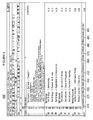
- a Test Assessment Tool 400 has been developed with modules to implement the test assessment method 200. Specifically, the depicted the Test Assessment Tool 400 contains tabs to allow a user to access the following sections:
- the notes sections 440, 480 may be used to allow a user to explain an answer to a question and/or to identify the location of documentation to support the finding.
- the notes sections 440, 480 may indicate name and the electronic location for the relevant supporting documentation.
- a testing maturity report 500 is automatically produced by the testing assessment tool 400, for example, following the user's selection of reports sections 430, 470.
- the answers to the various testing questions may be analyzed and converted to a composite real number score for each testing area or domain, or a similar aggregate score for the organization.
- the testing maturity report 500 includes a separate score 510 for each of the test areas 520.
- the score may be graphically displayed to visually depict the organization's performance in one of the test areas.
- each maturity level may be further divided into three sublevels ('Low', 'Medium', and 'High') to give more granularity to the graphical structure.
- Test assessment tool 610 in accordance with embodiments of the present invention may be integrated into a test assessment network 600 as depicted in FIG. 6.
- the test assessment tool 610 may be accessed locally or to a remote organization over a network 601.
- the test assessment network 600 generally includes a server 620 that provides a webpage 621 over the network 601 to provide the remote access to the test assessment tool 610 as described in greater detail below.
- the webpage 621 may provide a graphical display similar to the screenshot of the test assessment tool 400 presented above in FIG. 4.
- the test assessment tool 610 in this particular embodiment may access testing maturity assessment data 611 contains logic that dynamically directs the creation of the webpage 621 in response to a user request received from a application (such as a browser) operating the remote organization 650.
- the testing maturity assessment data 611 may further contain additional information, such as definitions of key terms.
- the webpage 621 may provide by default the screenshot of the test assessment tool 400 presented above in FIG. 4. The user may select one of the tabs 410-495, and in response, the test assessment tool 610 directs the creation of an appropriate webpage 621 to be sent to the remote location 450 in the form of digital data 602 transmitted over the network 600.
- the test assessment tool 610 may access one of its stored testing maturity assessment questionnaires 630a, 630b (corresponding, for example, to the above-described quick and full assessments).
- the accessed questionnaire may then be incorporated into the webpage 621 and forwarded to the remote location 650 as the digital data 602 that includes data or an application to instruct a computer at the remote location 650 to form the transmitted webpage 621 including various data input fields.
- the user at the remote location 650 may collect organizational data 660 to complete the questionnaire.
- the digital data 602 may further include executable code, such as data collection and analysis programming to automatically seek out, identify and collect relevant data 660 related to the organization's testing maturity.
- testing maturity assessment response data 640 is collected and stored for analysis according to predefined logic in the test assessment tool 610.
- test assessment tool 610 may use the testing maturity assessment response data 640 to form a remotely accessible webpage 621 containing the testing maturity report 500 described above in FIG. 5.
- the system 600 allows for the testing results 602 to be transmitted in a more efficient manner since the answers to the questions can be represented in an efficient form.
- the Boolean answers to the true/false full assessment questions may be answered in a single bit, and the rating answers (ranking the organization on a scale of 1-5 in a variety of categories) to the quick assessment question may be represented with 3 bits.
- the location of supporting documentation may accompany the question answers in the form of short stored files location pointer. In this way, responses to a questionnaire may be returned in an extremely compressed format as needed preserve bandwidth and to expedite transmissions. This can be contrasted to the extensive current TMM reports described in the background section that would require much larger transmissions.
- the depicted test assessment network allows for the automated presentation and related data collection for a testing assessment.
- the particular type of testing assessment e.g., quick or full
- the questionnaire results are then scored automatically to produce testing maturity scoring various testing domains and events, and these results may be displayed to the organization.
- the organization may then use the results to identify areas of need, such as identify testing areas of relatively low score that may otherwise prevent the organization from achieving desired testing maturity levels.
- Stored suggestions in the testing maturity assessment data 611 may also be forwarded to the user, in response to the scores produced in response to the collected testing maturity assessment response data 640.
Landscapes
- Engineering & Computer Science (AREA)
- Theoretical Computer Science (AREA)
- General Engineering & Computer Science (AREA)
- Computer Hardware Design (AREA)
- Quality & Reliability (AREA)
- Physics & Mathematics (AREA)
- General Physics & Mathematics (AREA)
- Management, Administration, Business Operations System, And Electronic Commerce (AREA)
Applications Claiming Priority (1)
| Application Number | Priority Date | Filing Date | Title |
|---|---|---|---|
| US11/598,197 US8869116B2 (en) | 2006-11-13 | 2006-11-13 | Software testing capability assessment framework |
Publications (2)
| Publication Number | Publication Date |
|---|---|
| EP1939749A2 true EP1939749A2 (de) | 2008-07-02 |
| EP1939749A3 EP1939749A3 (de) | 2009-04-15 |
Family
ID=39365819
Family Applications (1)
| Application Number | Title | Priority Date | Filing Date |
|---|---|---|---|
| EP07022056A Ceased EP1939749A3 (de) | 2006-11-13 | 2007-11-13 | Rahmen zur Beurteilung von Softwaretestfähigkeit |
Country Status (2)
| Country | Link |
|---|---|
| US (2) | US8869116B2 (de) |
| EP (1) | EP1939749A3 (de) |
Cited By (3)
| Publication number | Priority date | Publication date | Assignee | Title |
|---|---|---|---|---|
| EP2642444A1 (de) * | 2012-03-23 | 2013-09-25 | Tata Consultancy Services Limited | Beurteilung der Reife einer Benutzererfahrung mit einer Software |
| US9946433B2 (en) | 2014-06-11 | 2018-04-17 | Tata Consultancy Services Limited | User interface designing |
| CN109271314A (zh) * | 2018-08-21 | 2019-01-25 | 郑州云海信息技术有限公司 | 一种软件测试人员绩效评估系统及其使用方法 |
Families Citing this family (40)
| Publication number | Priority date | Publication date | Assignee | Title |
|---|---|---|---|---|
| EP1808803A1 (de) * | 2005-12-15 | 2007-07-18 | International Business Machines Corporation | System und Verfahren zur automatischen Auswahl von einem oder mehren Maßen zur Durchführung einer CMMI-Beurteilung |
| US9489290B1 (en) * | 2005-12-30 | 2016-11-08 | The Mathworks, Inc. | Scheduling tests based on a valuation system |
| US20090192836A1 (en) * | 2008-01-24 | 2009-07-30 | Patrick Kelly | Automated test system project management |
| US8266592B2 (en) * | 2008-04-21 | 2012-09-11 | Microsoft Corporation | Ranking and optimizing automated test scripts |
| DE102011006215A1 (de) * | 2010-11-09 | 2012-05-10 | Siemens Aktiengesellschaft | Verfahren und Vorrichtung zum Ermitteln einer Qualitätsbewertung eines Softwarecodes mit Ermittlung der Bewertungsabdeckung |
| US8584079B2 (en) * | 2010-12-16 | 2013-11-12 | Sap Portals Israel Ltd | Quality on submit process |
| US8782784B1 (en) * | 2012-09-25 | 2014-07-15 | Emc Corporation | Framework for implementing security incident and event management in an enterprise |
| US9158663B2 (en) * | 2013-01-11 | 2015-10-13 | Tata Consultancy Services Limited | Evaluating performance maturity level of an application |
| US10483081B2 (en) * | 2014-10-22 | 2019-11-19 | Kla-Tencor Corp. | Self directed metrology and pattern classification |
| US10776736B2 (en) * | 2015-03-05 | 2020-09-15 | Tata Consultancy Services Limited | System and method for managing digital maturity of an organization |
| US20160267600A1 (en) * | 2015-03-09 | 2016-09-15 | Wipro Limited | Methods and systems for information technology (it) portfolio transformation |
| IN2015CH02404A (de) * | 2015-05-11 | 2015-05-22 | Wipro Ltd | |
| US9710364B2 (en) | 2015-09-04 | 2017-07-18 | Micron Technology Licensing, Llc | Method of detecting false test alarms using test step failure analysis |
| US9619363B1 (en) * | 2015-09-25 | 2017-04-11 | International Business Machines Corporation | Predicting software product quality |
| US10025698B2 (en) * | 2015-11-16 | 2018-07-17 | Cognizant Technology Solutions India Pvt. Ltd | System and method for efficiently predicting testing schedule and stability of applications |
| US9804954B2 (en) * | 2016-01-07 | 2017-10-31 | International Business Machines Corporation | Automatic cognitive adaptation of development assets according to requirement changes |
| US9558098B1 (en) * | 2016-03-02 | 2017-01-31 | King Fahd University Of Petroleum And Minerals | Method, apparatus, and non-transitory computer readable media for the assessment of software products |
| US10387393B1 (en) * | 2016-06-28 | 2019-08-20 | Amdocs Development Limited | System, method, and computer program for generating a maturity assessment of a document management system |
| CN107783876A (zh) * | 2016-08-29 | 2018-03-09 | 博彦科技股份有限公司 | 跨执行端的业务测试方法和装置 |
| US10586242B2 (en) | 2016-09-08 | 2020-03-10 | International Business Machines Corporation | Using customer profiling and analytics to understand customer workload complexity and characteristics by customer geography, country and culture |
| US10643168B2 (en) | 2016-09-08 | 2020-05-05 | International Business Machines Corporation | Using customer and workload profiling and analytics to determine, score, and report portability of customer and test environments and workloads |
| US10664786B2 (en) | 2016-09-08 | 2020-05-26 | International Business Machines Corporation | Using run time and historical customer profiling and analytics to determine customer test vs. production differences, and to enhance customer test effectiveness |
| US10684939B2 (en) | 2016-09-08 | 2020-06-16 | International Business Machines Corporation | Using workload profiling and analytics to understand and score complexity of test environments and workloads |
| US10592911B2 (en) | 2016-09-08 | 2020-03-17 | International Business Machines Corporation | Determining if customer characteristics by customer geography, country, culture or industry may be further applicable to a wider customer set |
| US10628840B2 (en) | 2016-09-14 | 2020-04-21 | International Business Machines Corporation | Using run-time and historical customer profiling and analytics to determine and score customer adoption levels of platform technologies |
| US10643228B2 (en) | 2016-09-14 | 2020-05-05 | International Business Machines Corporation | Standardizing customer and test data and information collection for run time and historical profiling environments and workload comparisons |
| US10621072B2 (en) | 2016-09-14 | 2020-04-14 | International Business Machines Corporation | Using customer profiling and analytics to more accurately estimate and generate an agile bill of requirements and sprints for customer or test workload port |
| US10255173B2 (en) | 2016-12-27 | 2019-04-09 | Optimizely, Inc. | Experimentation in internet-connected applications and devices |
| EP3401849A1 (de) * | 2017-05-09 | 2018-11-14 | dSPACE digital signal processing and control engineering GmbH | Produktreifebestimmung eines technischen systems |
| CN109840101A (zh) * | 2017-11-24 | 2019-06-04 | 广西简约科技有限公司 | 一种软件升级的设计方法 |
| CN108681877A (zh) * | 2018-05-14 | 2018-10-19 | 链家网(北京)科技有限公司 | 一种项目各阶段审批执行情况分析方法及装置 |
| US12027069B2 (en) * | 2019-01-14 | 2024-07-02 | Pearson Education, Inc. | Method and system for automated multidimensional content selection and presentation |
| CN109885504B (zh) * | 2019-03-15 | 2022-09-30 | 网易(杭州)网络有限公司 | 推荐系统的测试方法、装置、介质及电子设备 |
| CN110765600A (zh) * | 2019-10-11 | 2020-02-07 | 中国航发沈阳发动机研究所 | 一种航空发动机计算分析软件能力测评方法及系统 |
| US11451575B2 (en) * | 2020-07-30 | 2022-09-20 | Saudi Arabian Oil Company | Method and system for determining cybersecurity maturity |
| US11783001B2 (en) | 2021-07-08 | 2023-10-10 | Bank Of America Corporation | System and method for splitting a video stream using breakpoints based on recognizing workflow patterns |
| US11977858B2 (en) | 2022-02-07 | 2024-05-07 | T-Mobile Usa, Inc. | Centralized intake and capacity assessment platform for project processes, such as with product development in telecommunications |
| US12566689B2 (en) * | 2023-03-31 | 2026-03-03 | Infosys Limited | Method and system for calculation of test automation feasibility indices |
| US12561231B2 (en) * | 2023-03-31 | 2026-02-24 | Infosys Limited | Method and system for calculation of network test automation feasibility and maturity indices |
| US12585464B2 (en) * | 2023-04-17 | 2026-03-24 | Accenture Global Solutions Limited | Application maturity data processing for software development |
Family Cites Families (9)
| Publication number | Priority date | Publication date | Assignee | Title |
|---|---|---|---|---|
| US7406430B2 (en) * | 2001-03-30 | 2008-07-29 | International Business Machines Corporation | Method and system for assessing information technology service delivery |
| US7136792B2 (en) * | 2001-07-20 | 2006-11-14 | International Business Machines Corporation | Computerized method and system for maturity assessment of business processes |
| US20040039631A1 (en) * | 2002-08-22 | 2004-02-26 | Crockett Brian K. | Assessment of an organization's customer relationship management capabilities |
| US20050171831A1 (en) | 2004-01-31 | 2005-08-04 | Johnson Gary G. | Testing practices assessment toolkit |
| US8041647B2 (en) * | 2004-12-30 | 2011-10-18 | Computer Aid Inc. | System and method for an automated project office and automatic risk assessment and reporting |
| US7885841B2 (en) * | 2006-01-05 | 2011-02-08 | Oracle International Corporation | Audit planning |
| US7865388B2 (en) * | 2006-02-06 | 2011-01-04 | Tasc, Inc. | Apparatus and method for providing program protection engineering, security management, and report preparation for sensitive and classified projects |
| US20120124559A1 (en) * | 2007-08-21 | 2012-05-17 | Shankar Narayana Kondur | Performance Evaluation System |
| US9026394B2 (en) * | 2007-10-08 | 2015-05-05 | Wurldtech Security Technologies | Testing and mitigation framework for networked devices |
-
2006
- 2006-11-13 US US11/598,197 patent/US8869116B2/en active Active
-
2007
- 2007-11-13 EP EP07022056A patent/EP1939749A3/de not_active Ceased
-
2014
- 2014-09-29 US US14/500,252 patent/US9665470B2/en active Active
Non-Patent Citations (1)
| Title |
|---|
| "A Process-Oriented Approach by Ilene Burnstein", 2003, SPRINGER PRESS |
Cited By (3)
| Publication number | Priority date | Publication date | Assignee | Title |
|---|---|---|---|---|
| EP2642444A1 (de) * | 2012-03-23 | 2013-09-25 | Tata Consultancy Services Limited | Beurteilung der Reife einer Benutzererfahrung mit einer Software |
| US9946433B2 (en) | 2014-06-11 | 2018-04-17 | Tata Consultancy Services Limited | User interface designing |
| CN109271314A (zh) * | 2018-08-21 | 2019-01-25 | 郑州云海信息技术有限公司 | 一种软件测试人员绩效评估系统及其使用方法 |
Also Published As
| Publication number | Publication date |
|---|---|
| US20160055076A1 (en) | 2016-02-25 |
| US9665470B2 (en) | 2017-05-30 |
| US8869116B2 (en) | 2014-10-21 |
| EP1939749A3 (de) | 2009-04-15 |
| US20080115110A1 (en) | 2008-05-15 |
Similar Documents
| Publication | Publication Date | Title |
|---|---|---|
| US8869116B2 (en) | Software testing capability assessment framework | |
| Jespersen et al. | Measurement of food safety culture using survey and maturity profiling tools | |
| Garousi et al. | Usage and usefulness of technical software documentation: An industrial case study | |
| Dao et al. | Project complexity assessment and management tool | |
| Jennex et al. | A knowledge management success model: An extension of Delone and Mclean's is success model | |
| Clarke et al. | Exploring the relationship between software process adaptive capability and organisational performance | |
| Bagheri et al. | Improving the conduct of systematic reviews: a process mining perspective | |
| Maciel-Monteon et al. | Measuring critical success factors for six sigma in higher education institutions: Development and validation of a surveying instrument | |
| Hibadullah et al. | Critical success factors of lean manufacturing practices for the Malaysian automotive manufacturers | |
| Kassie et al. | A study on software quality factors and metrics to enhance software quality assurance | |
| Oesterreich et al. | Why one big picture is worth a thousand numbers: measuring intangible benefits of investments in augmented reality based assistive technology using utility effect chains and system dynamics | |
| McEntire et al. | Innovations in job analysis: Development and application of metrics to analyze job data | |
| Rababah et al. | Towards developing successful e-government websites | |
| Halling et al. | An economic approach for improving requirements negotiation models with inspection | |
| Simão Filho et al. | Analysis of task allocation in distributed software development through a hybrid methodology of verbal decision analysis | |
| US20070150293A1 (en) | Method and system for cmmi diagnosis and analysis | |
| US20040191743A1 (en) | System and method for software development self-assessment | |
| Feldmann et al. | A survey of software engineering techniques in medical device development | |
| Goulão et al. | Modeling the experimental software engineering process | |
| Maramis | Quality Measurement of Mobile Based Academic Information System at Vocational High School | |
| Schots et al. | A Body of Knowledge for Executing Performance Analysis of Software Processes. | |
| Ailenei | Process mining tools: A comparative analysis | |
| Al-Allaf | The usage of capability maturity model integration and web engineering practices in large web development enterprises: An empirical study in Jordan | |
| Tang | A survey study of size factor impact on TQM success and sustainability | |
| Pigoski | SWEBOK Knowledge Area Description for Software Evolution and Maintenance (version 0.5) |
Legal Events
| Date | Code | Title | Description |
|---|---|---|---|
| PUAI | Public reference made under article 153(3) epc to a published international application that has entered the european phase |
Free format text: ORIGINAL CODE: 0009012 |
|
| AK | Designated contracting states |
Kind code of ref document: A2 Designated state(s): AT BE BG CH CY CZ DE DK EE ES FI FR GB GR HU IE IS IT LI LT LU LV MC MT NL PL PT RO SE SI SK TR |
|
| AX | Request for extension of the european patent |
Extension state: AL BA HR MK RS |
|
| RIN1 | Information on inventor provided before grant (corrected) |
Inventor name: CHRISTENSEN, SCOTT Inventor name: FLIEK, HENDRIK |
|
| PUAL | Search report despatched |
Free format text: ORIGINAL CODE: 0009013 |
|
| AK | Designated contracting states |
Kind code of ref document: A3 Designated state(s): AT BE BG CH CY CZ DE DK EE ES FI FR GB GR HU IE IS IT LI LT LU LV MC MT NL PL PT RO SE SI SK TR |
|
| AX | Request for extension of the european patent |
Extension state: AL BA HR MK RS |
|
| 17P | Request for examination filed |
Effective date: 20090702 |
|
| AKX | Designation fees paid |
Designated state(s): AT BE BG CH CY CZ DE DK EE ES FI FR GB GR HU IE IS IT LI LT LU LV MC MT NL PL PT RO SE SI SK TR |
|
| 17Q | First examination report despatched |
Effective date: 20100219 |
|
| RAP1 | Party data changed (applicant data changed or rights of an application transferred) |
Owner name: ACCENTURE GLOBAL SERVICES LIMITED |
|
| STAA | Information on the status of an ep patent application or granted ep patent |
Free format text: STATUS: THE APPLICATION HAS BEEN REFUSED |
|
| 18R | Application refused |
Effective date: 20120912 |