EP1939187A1 - Substituted heteroaryl pyridopyrimidone derivatives - Google Patents
Substituted heteroaryl pyridopyrimidone derivatives Download PDFInfo
- Publication number
- EP1939187A1 EP1939187A1 EP06291995A EP06291995A EP1939187A1 EP 1939187 A1 EP1939187 A1 EP 1939187A1 EP 06291995 A EP06291995 A EP 06291995A EP 06291995 A EP06291995 A EP 06291995A EP 1939187 A1 EP1939187 A1 EP 1939187A1
- Authority
- EP
- European Patent Office
- Prior art keywords
- pyrimidin
- oxo
- amide
- carboxylic acid
- tetrahydro
- Prior art date
- Legal status (The legal status is an assumption and is not a legal conclusion. Google has not performed a legal analysis and makes no representation as to the accuracy of the status listed.)
- Withdrawn
Links
- LVILGAOSPDLNRM-UHFFFAOYSA-N Cc1ncncc1 Chemical compound Cc1ncncc1 LVILGAOSPDLNRM-UHFFFAOYSA-N 0.000 description 7
- 0 CC(C1)=C(*)I[N+]C1OC Chemical compound CC(C1)=C(*)I[N+]C1OC 0.000 description 5
- MZHFMGOLDDSXFM-UHFFFAOYSA-N Cc1cccc(-c(cccc2)c2F)n1 Chemical compound Cc1cccc(-c(cccc2)c2F)n1 MZHFMGOLDDSXFM-UHFFFAOYSA-N 0.000 description 2
- GFIOQHUPQWZXJI-DZQWHNKDSA-N CC(/C=C(/c1ccccc1)\NN)=N Chemical compound CC(/C=C(/c1ccccc1)\NN)=N GFIOQHUPQWZXJI-DZQWHNKDSA-N 0.000 description 1
- HNXOMNGIKSLZDR-UHFFFAOYSA-N CC1=NCNC=C1 Chemical compound CC1=NCNC=C1 HNXOMNGIKSLZDR-UHFFFAOYSA-N 0.000 description 1
- CFOHWVICEQOSOZ-UHFFFAOYSA-N Cc(cc1)cc2c1[n](C)nn2 Chemical compound Cc(cc1)cc2c1[n](C)nn2 CFOHWVICEQOSOZ-UHFFFAOYSA-N 0.000 description 1
- MVKDNXIKAWKCCS-UHFFFAOYSA-N Cc(cccn1)c1O Chemical compound Cc(cccn1)c1O MVKDNXIKAWKCCS-UHFFFAOYSA-N 0.000 description 1
- OSRARURJYPOUOV-UHFFFAOYSA-N Cc1cc2nccnc2cc1 Chemical compound Cc1cc2nccnc2cc1 OSRARURJYPOUOV-UHFFFAOYSA-N 0.000 description 1
- AWSJTORENNBJDK-UHFFFAOYSA-N Cc1cccnc1Sc(cc1)ccc1Cl Chemical compound Cc1cccnc1Sc(cc1)ccc1Cl AWSJTORENNBJDK-UHFFFAOYSA-N 0.000 description 1
- TWGNOYAGHYUFFR-UHFFFAOYSA-N Cc1cncnc1 Chemical compound Cc1cncnc1 TWGNOYAGHYUFFR-UHFFFAOYSA-N 0.000 description 1
Classifications
-
- A—HUMAN NECESSITIES
- A01—AGRICULTURE; FORESTRY; ANIMAL HUSBANDRY; HUNTING; TRAPPING; FISHING
- A01N—PRESERVATION OF BODIES OF HUMANS OR ANIMALS OR PLANTS OR PARTS THEREOF; BIOCIDES, e.g. AS DISINFECTANTS, AS PESTICIDES OR AS HERBICIDES; PEST REPELLANTS OR ATTRACTANTS; PLANT GROWTH REGULATORS
- A01N43/00—Biocides, pest repellants or attractants, or plant growth regulators containing heterocyclic compounds
- A01N43/90—Biocides, pest repellants or attractants, or plant growth regulators containing heterocyclic compounds having two or more relevant hetero rings, condensed among themselves or with a common carbocyclic ring system
-
- A—HUMAN NECESSITIES
- A61—MEDICAL OR VETERINARY SCIENCE; HYGIENE
- A61P—SPECIFIC THERAPEUTIC ACTIVITY OF CHEMICAL COMPOUNDS OR MEDICINAL PREPARATIONS
- A61P3/00—Drugs for disorders of the metabolism
- A61P3/04—Anorexiants; Antiobesity agents
-
- A—HUMAN NECESSITIES
- A61—MEDICAL OR VETERINARY SCIENCE; HYGIENE
- A61K—PREPARATIONS FOR MEDICAL, DENTAL OR TOILETRY PURPOSES
- A61K31/00—Medicinal preparations containing organic active ingredients
- A61K31/33—Heterocyclic compounds
- A61K31/395—Heterocyclic compounds having nitrogen as a ring hetero atom, e.g. guanethidine or rifamycins
- A61K31/495—Heterocyclic compounds having nitrogen as a ring hetero atom, e.g. guanethidine or rifamycins having six-membered rings with two or more nitrogen atoms as the only ring heteroatoms, e.g. piperazine or tetrazines
- A61K31/505—Pyrimidines; Hydrogenated pyrimidines, e.g. trimethoprim
- A61K31/517—Pyrimidines; Hydrogenated pyrimidines, e.g. trimethoprim ortho- or peri-condensed with carbocyclic ring systems, e.g. quinazoline, perimidine
-
- A—HUMAN NECESSITIES
- A61—MEDICAL OR VETERINARY SCIENCE; HYGIENE
- A61P—SPECIFIC THERAPEUTIC ACTIVITY OF CHEMICAL COMPOUNDS OR MEDICINAL PREPARATIONS
- A61P17/00—Drugs for dermatological disorders
-
- A—HUMAN NECESSITIES
- A61—MEDICAL OR VETERINARY SCIENCE; HYGIENE
- A61P—SPECIFIC THERAPEUTIC ACTIVITY OF CHEMICAL COMPOUNDS OR MEDICINAL PREPARATIONS
- A61P17/00—Drugs for dermatological disorders
- A61P17/02—Drugs for dermatological disorders for treating wounds, ulcers, burns, scars, keloids, or the like
-
- A—HUMAN NECESSITIES
- A61—MEDICAL OR VETERINARY SCIENCE; HYGIENE
- A61P—SPECIFIC THERAPEUTIC ACTIVITY OF CHEMICAL COMPOUNDS OR MEDICINAL PREPARATIONS
- A61P17/00—Drugs for dermatological disorders
- A61P17/14—Drugs for dermatological disorders for baldness or alopecia
-
- A—HUMAN NECESSITIES
- A61—MEDICAL OR VETERINARY SCIENCE; HYGIENE
- A61P—SPECIFIC THERAPEUTIC ACTIVITY OF CHEMICAL COMPOUNDS OR MEDICINAL PREPARATIONS
- A61P19/00—Drugs for skeletal disorders
- A61P19/08—Drugs for skeletal disorders for bone diseases, e.g. rachitism, Paget's disease
-
- A—HUMAN NECESSITIES
- A61—MEDICAL OR VETERINARY SCIENCE; HYGIENE
- A61P—SPECIFIC THERAPEUTIC ACTIVITY OF CHEMICAL COMPOUNDS OR MEDICINAL PREPARATIONS
- A61P25/00—Drugs for disorders of the nervous system
-
- A—HUMAN NECESSITIES
- A61—MEDICAL OR VETERINARY SCIENCE; HYGIENE
- A61P—SPECIFIC THERAPEUTIC ACTIVITY OF CHEMICAL COMPOUNDS OR MEDICINAL PREPARATIONS
- A61P25/00—Drugs for disorders of the nervous system
- A61P25/02—Drugs for disorders of the nervous system for peripheral neuropathies
-
- A—HUMAN NECESSITIES
- A61—MEDICAL OR VETERINARY SCIENCE; HYGIENE
- A61P—SPECIFIC THERAPEUTIC ACTIVITY OF CHEMICAL COMPOUNDS OR MEDICINAL PREPARATIONS
- A61P25/00—Drugs for disorders of the nervous system
- A61P25/14—Drugs for disorders of the nervous system for treating abnormal movements, e.g. chorea, dyskinesia
- A61P25/16—Anti-Parkinson drugs
-
- A—HUMAN NECESSITIES
- A61—MEDICAL OR VETERINARY SCIENCE; HYGIENE
- A61P—SPECIFIC THERAPEUTIC ACTIVITY OF CHEMICAL COMPOUNDS OR MEDICINAL PREPARATIONS
- A61P25/00—Drugs for disorders of the nervous system
- A61P25/18—Antipsychotics, i.e. neuroleptics; Drugs for mania or schizophrenia
-
- A—HUMAN NECESSITIES
- A61—MEDICAL OR VETERINARY SCIENCE; HYGIENE
- A61P—SPECIFIC THERAPEUTIC ACTIVITY OF CHEMICAL COMPOUNDS OR MEDICINAL PREPARATIONS
- A61P25/00—Drugs for disorders of the nervous system
- A61P25/28—Drugs for disorders of the nervous system for treating neurodegenerative disorders of the central nervous system, e.g. nootropic agents, cognition enhancers, drugs for treating Alzheimer's disease or other forms of dementia
-
- A—HUMAN NECESSITIES
- A61—MEDICAL OR VETERINARY SCIENCE; HYGIENE
- A61P—SPECIFIC THERAPEUTIC ACTIVITY OF CHEMICAL COMPOUNDS OR MEDICINAL PREPARATIONS
- A61P27/00—Drugs for disorders of the senses
-
- A—HUMAN NECESSITIES
- A61—MEDICAL OR VETERINARY SCIENCE; HYGIENE
- A61P—SPECIFIC THERAPEUTIC ACTIVITY OF CHEMICAL COMPOUNDS OR MEDICINAL PREPARATIONS
- A61P27/00—Drugs for disorders of the senses
- A61P27/02—Ophthalmic agents
- A61P27/06—Antiglaucoma agents or miotics
-
- A—HUMAN NECESSITIES
- A61—MEDICAL OR VETERINARY SCIENCE; HYGIENE
- A61P—SPECIFIC THERAPEUTIC ACTIVITY OF CHEMICAL COMPOUNDS OR MEDICINAL PREPARATIONS
- A61P3/00—Drugs for disorders of the metabolism
- A61P3/08—Drugs for disorders of the metabolism for glucose homeostasis
- A61P3/10—Drugs for disorders of the metabolism for glucose homeostasis for hyperglycaemia, e.g. antidiabetics
-
- A—HUMAN NECESSITIES
- A61—MEDICAL OR VETERINARY SCIENCE; HYGIENE
- A61P—SPECIFIC THERAPEUTIC ACTIVITY OF CHEMICAL COMPOUNDS OR MEDICINAL PREPARATIONS
- A61P33/00—Antiparasitic agents
- A61P33/02—Antiprotozoals, e.g. for leishmaniasis, trichomoniasis, toxoplasmosis
- A61P33/06—Antimalarials
-
- A—HUMAN NECESSITIES
- A61—MEDICAL OR VETERINARY SCIENCE; HYGIENE
- A61P—SPECIFIC THERAPEUTIC ACTIVITY OF CHEMICAL COMPOUNDS OR MEDICINAL PREPARATIONS
- A61P35/00—Antineoplastic agents
-
- A—HUMAN NECESSITIES
- A61—MEDICAL OR VETERINARY SCIENCE; HYGIENE
- A61P—SPECIFIC THERAPEUTIC ACTIVITY OF CHEMICAL COMPOUNDS OR MEDICINAL PREPARATIONS
- A61P35/00—Antineoplastic agents
- A61P35/02—Antineoplastic agents specific for leukemia
-
- A—HUMAN NECESSITIES
- A61—MEDICAL OR VETERINARY SCIENCE; HYGIENE
- A61P—SPECIFIC THERAPEUTIC ACTIVITY OF CHEMICAL COMPOUNDS OR MEDICINAL PREPARATIONS
- A61P43/00—Drugs for specific purposes, not provided for in groups A61P1/00-A61P41/00
-
- A—HUMAN NECESSITIES
- A61—MEDICAL OR VETERINARY SCIENCE; HYGIENE
- A61P—SPECIFIC THERAPEUTIC ACTIVITY OF CHEMICAL COMPOUNDS OR MEDICINAL PREPARATIONS
- A61P9/00—Drugs for disorders of the cardiovascular system
-
- C—CHEMISTRY; METALLURGY
- C07—ORGANIC CHEMISTRY
- C07D—HETEROCYCLIC COMPOUNDS
- C07D239/00—Heterocyclic compounds containing 1,3-diazine or hydrogenated 1,3-diazine rings
- C07D239/70—Heterocyclic compounds containing 1,3-diazine or hydrogenated 1,3-diazine rings condensed with carbocyclic rings or ring systems
Definitions
- the present invention relates to compounds that are useful as an active ingredient of a medicament for preventive and/or therapeutic treatment of neurodegenerative diseases caused by abnormal activity of GSK3 ⁇ .
- GSK3 ⁇ (glycogen synthase kinase 3 ⁇ ) is a proline directed serine, threonine kinase that plays an important role in the control of metabolism, differentiation and survival. It was initially identified as an enzyme able to phosphorylate and hence inhibit glycogen synthase. It was later recognized that GSK3 ⁇ was identical to tau protein kinase 1 (TPK1), an enzyme that phosphorylates tau protein in epitopes that are also found to be hyperphosphorylated in Alzheimer's disease and in several taupathies.
- TPK1 tau protein kinase 1
- GSK3 ⁇ protein kinase B phosphorylation results in a loss of its kinase activity, and it has been hypothesized that this inhibition may mediate some of the effects of neurotrophic factors.
- inhibition of GSK3 ⁇ activity may result in neurotrophic activity.
- GSK3 ⁇ may be the link between the two major pathological processes in Alzheimer's disease: abnormal APP (Amyloid Precursor Protein) processing and tau protein hyperphosphorylation.
- tau hyperphosphorylation results in a destabilization of the neuronal cytoskeleton
- the pathological consequences of abnormal GSK3 ⁇ activity are, most likely, not only due to a pathological phosphorylation of tau protein because, as mentioned above, an excessive activity of this kinase may affect survival through the modulation of the expression of apoptotic and antiapoptotic factors.
- ⁇ -amyioid-induced increase in GSK3 ⁇ activity results in the phosphorylation and, hence the inhibition of pyruvate dehydrogenase, a pivotal enzyme in energy production and acetylcholine synthesis.
- GSK3 ⁇ may find application in the treatment of the neuropathological consequences and the cognitive and attention deficits associated with Alzheimer's disease, as well as other acute and chronic neurodegenerative diseases and other pathologies where GSK3 ⁇ is deregulated ( Nature reviews Vol.3, June 2004, p.479-487 ; Trends in Pharmacological Sciences Vol. 25 No. 9, Sept. 2004, p. 471-480 ; Journal of neurochemistry 2004, 89, 1313-1317 ; Medicinal Research Reviews, Vol. 22, No. 4, 373-384, 2002 ).
- the neurodegenerative diseases include, in a non-limiting manner, Parkinson's disease, tauopathies (e.g. Fronto temporal dementia, corticobasal degeneration, Pick's disease, progressive supranuclear palsy), Wilson's disease, Huntington's disease (The Journal of biological chemistry Vol. 277, No. 37, Issue of September 13, pp. 33791-33798, 2002 ), Prion disease (Biochem. J. 372, p.129-136, 2003 ) and other dementia including vascular dementia; acute stroke and others traumatic injuries; cerebrovascular accidents (e.g. age related macular degeneration); brain and spinal cord trauma; amyotrophic lateral sclerosis ( European Journal of Neuroscience, Vol. 22, pp.
- tauopathies e.g. Fronto temporal dementia, corticobasal degeneration, Pick's disease, progressive supranuclear palsy
- Wilson's disease Huntington's disease (The Journal of biological chemistry Vol. 277, No. 37, Issue of September 13, pp. 33
- Inhibitors of GSK3 ⁇ may also find application in the treatment of other nervous system disorders, such as bipolar disorders (manic-depressive illness).
- bipolar disorders manic-depressive illness
- lithium has been used for more than 50 years as a mood stabiliser and the primary treatment for bipolar disorder.
- the therapeutic actions of lithium are observed at doses (1-2 mM) where it is a direct inhibitor of GSK3 ⁇ .
- inhibitors of GSK3 ⁇ could be used to mimic the mood stabilising effects of lithium.
- Alterations in Akt-GSK3 ⁇ signaling have also been implicated in the pathogenesis of schizophrenia.
- GSK3 ⁇ could be useful in treating cancers, such as colorectal, prostate, breast, non-small lung carcinoma, thyroid cancer, T or B-cell leukaemia and several virus-induced tumours.
- cancers such as colorectal, prostate, breast, non-small lung carcinoma, thyroid cancer, T or B-cell leukaemia and several virus-induced tumours.
- the active form of GSK3 ⁇ has been shown to be elevated in the tumors of colorectal cancer patients and inhibition of GSK3 ⁇ in colorectal cancer cells activates p53-dependent apoptosis and antagonises tumor growth. Inhibition of GSK3 ⁇ also enhances TRAIL-induced apoptosis in prostate cancer cell lines.
- GSK3 ⁇ also plays a role in the dynamics of the mitototic spindle and inhibitors of GSK3 ⁇ prevent chromosome movement and lead to a stabilisation of microtubules and a prometaphase-like arrest that is similar to that observed with low doses of Taxol.
- Other possible applications for GSK3 ⁇ inhibitors include therapy for non-insulin dependent diabetes (such as diabetes type II), obesity and alopecia.
- Inhibitors of human GSK3 ⁇ may also inhibit pfGSK3, an ortholog of this enzyme found in Plasmodium falciparum, as a consequence they could be used for the treatment of malaria ( Biochimica et Biophysica Acta 1697, 181- 196, 2004 ).
- pfGSK3 an ortholog of this enzyme found in Plasmodium falciparum
- Wnt/LPR5 pathway As a consequence they could be used for the treatment of malaria ( Biochimica et Biophysica Acta 1697, 181- 196, 2004 ).
- Wnt/LPR5 pathway As a major regulator of bone mass accrual.
- Inhibition of GSK3 ⁇ leads to the consequent activation of canonical Wnt signalling.
- GSK3 ⁇ inhibitors may also be used for treating disorders of reduced bone mass, bone-related pathologies, osteoporosis.
- GSK3 ⁇ inhibitors might be used in the treatment or prevention of Pemphigus vulgaris.
- Recent studies show that GSK3beta inhibitor treatment improves neutrophil and megakaryocyte recovery. Therefore, GSK3beta inhibitors will be useful for the treatment of neutropenia induced by cancer chemotherapy.
- An object of the present invention is to provide compounds useful as an active ingredient of a medicament for preventive and/or therapeutic treatment of a disease caused by abnormal GSK3 ⁇ activity, more particularly of neurodegenerative diseases. More specifically, the object is to provide novel compounds useful as an active ingredient of a medicament that enables prevention and/or treatment of neurodegenerative diseases such as Alzheimer's disease.
- the inventors of the present invention have identified compounds possessing inhibitory activity against GSK3 ⁇ . As a result, they found that compounds represented by the following formula (I) had the desired activity and were useful as an active ingredient of a medicament for preventive and/or therapeutic treatment of the aforementioned diseases.
- the present invention thus provides as an object of the invention the pyrimidone derivatives represented by formula (I) or salts thereof, solvates thereof or hydrates thereof: wherein:
- a medicament comprising as an active ingredient a substance selected from the group consisting of the pyrimidone derivatives represented by formula (I) and the physiologically acceptable salts thereof, and the solvates thereof and the hydrates thereof.
- the aforementioned medicament which is used for preventive and/or therapeutic treatment of diseases caused by abnormal GSK3 ⁇ activity
- the aforementioned medicament which is used for preventive and/or therapeutic treatment of neurodegenerative diseases and in addition other diseases such as: Non-insulin dependent diabetes (such as diabetes type II) and obesity; malaria, bipolar disorders (manic depressive illness); schizophrenia; alopecia or cancers such as colorectal, prostate, breast cancer, non-small cell lung carcinoma, thyroid cancer, T or B-cell leukaemia, several virus-induced tumours.
- the medicament could also find an application in regenerative medicine, Pemphigus vulgaris, neutropenia and bone diseases.
- the aforementioned medicament wherein the diseases are neurodegenerative diseases and are selected from the group consisting of Alzheimer's disease, Parkinson's disease, tauopathies (e.g. Fronto temporal dementia, corticobasal degeneration, Pick's disease, progressive supranuclear palsy), Wilson's disease, Huntington's disease, Prion disease and other dementia including vascular dementia; acute stroke and others traumatic injuries; cerebrovascular accidents (e.g. age related macular degeneration); brain and spinal cord trauma; amyotrophic lateral sclerosis; peripheral neuropathies; retinopathies and glaucoma, and the aforementioned medicament in the form of pharmaceutical composition containing the above substance as an active ingredient together with one or more pharmaceutical additives.
- the bones diseases are osteoporosis.
- the present invention further provides an inhibitor of GSK3 ⁇ activity comprising as an active ingredient a substance selected from the group consisting of the pyrimidone derivatives of formula (I) and the salts thereof, and the solvates thereof and the hydrates thereof.
- a method for preventive and/or therapeutic treatment of neurodegenerative diseases caused by abnormal GSK3 ⁇ activity which comprises the step of administering to a patient a preventively and/or therapeutically effective amount of a substance selected from the group consisting of pyrimidone derivatives of formula (I) and the physiologically acceptable salts thereof, and the solvates thereof and the hydrates thereof; and a use of a substance selected from the group consisting of the pyrimidone derivatives of formula (I) and the physiologically acceptable salts thereof, and the solvates thereof and the hydrates thereof for the manufacture of the aforementioned medicament.
- the C 1-6 alkyl group represents a straight or branched or cyclo alkyl group having 1 to 6 carbon atoms, for example, methyl group, ethyl group, n-propyl group, isopropyl group, n-butyl group, isobutyl group, sec-butyl group, tert-butyl group, n-pentyl group, isopentyl group, neopentyl group, 1,1-dimethylpropyl group, n-hexyl group, isohexyl group, and the like.
- the 4-15 membered heterocyclic group represents an unsaturated, fully saturated or partially saturated mono- or polycyclic group (for example 4 to 10 members) containing carbons atoms one to seven heteroatoms chosen from N, O, and S.
- heterocyclic groups include pyridine, pyrindine, pyrimidine, pyrazine, pyridazine, triazine, pyrrole, furane, thiophene, pyrazole, imidazole, triazole, tetrazole, oxazole, isoxazole, oxadiazole, thiazole, isothiazole, thiadiazole pyrrole, furane, thiophene, pyrazole, imidazole, triazole, tetrazole, oxazole, pyrrolopyrrole, pyrroloimidazole, pyrrolopyrazole, pyrrolotriazole, imidazoimidazole, imi
- the C 1-6 alkoxy group represents an alkyloxy group having 1 to 4 carbon atoms for example, methoxy group, ethoxy group, propoxy group, isopropoxy group, butoxy group, isobutoxy group, sec-butoxy group, tert-butoxy group, and the like;
- the halogen atom represents a fluorine, chlorine, bromine or iodine atom;
- the C 1-2 perhalogenated alkyl or alkoxy group represents an alkyl or alkoxy group wherein all the hydrogen atoms have been substituted by a halogeno, for example a CF 3 or C 2 F 5; O-CF 3 or O-C 2 F 5;
- the C 1-6 halogenated alkyl group represents an alkyl group wherein at least one hydrogen has not been substituted by an halogen atom;
- the C 1-6 halogenated alkyl group represents an alkyl group wherein at least one hydrogen has not been substituted by an halogen atom;
- the compounds represented by the aforementioned formula (I) may form a salt.
- the salt include, when an acidic group exists, salts of alkali metals and alkaline earth metals such as lithium, sodium, potassium, magnesium, and calcium; salts of ammonia and amines such as methylamine, dimethylamine, trimethylamine, dicyclohexylamine, tris(hydroxymethyl)aminomethane, N,N- bis(hydroxyethyl)piperazine, 2-amino-2-methyl-l-propanol, ethanolamine, N-methylglucamine, and L-glucamine; or salts with basic amino acids such as lysine, ⁇ -hydroxylysine, and arginine.
- the base-addition salts of acidic compounds are prepared by standard procedures well known in the art.
- examples include salts with mineral acids such as hydrochloric acid, hydrobromic acid, sulfuric acid, nitric acid, phosphoric acid; salts with organic acids such as methanesulfonic acid, benzenesulfonic acid, p-toluenesulfonic acid, acetic acid, propionic acid, tartaric acid, fumaric acid, maleic acid, malic acid, oxalic acid, succinic acid, citric acid, benzoic acid, mandelic acid, cinnamic acid, lactic acid, glycolic acid, glucuronic acid, ascorbic acid, nicotinic acid, and salicylic acid; or salts with acidic amino acids such as aspartic acid, and glutamic acid.
- mineral acids such as hydrochloric acid, hydrobromic acid, sulfuric acid, nitric acid, phosphoric acid
- organic acids such as methanesulfonic acid, benzenesulfonic acid, p-toluen
- the acid-addition salts of the basic compounds are prepared by standard procedures well known in the art which include, but are not limited thereto, dissolving the free base in an aqueous alcohol solution containing the appropriate acid and isolating the salt by evaporating the solution, or by reacting the free base and an acid in an organic solvent, in which case the salt separates directly, or is precipitated with a second organic solvent, or can be obtained by concentration of the solution.
- the acids which can be used to prepare the acid-addition salts include preferably those which produce, when combined with the free base, pharmaceutically-acceptable salts, that is, salts whose anions are relatively innocuous to the animal organism in pharmaceutical doses of the salts, so that the beneficial properties inherent in the free base are not compromised by side effects ascribable to the anions.
- pharmaceutically-acceptable salts that is, salts whose anions are relatively innocuous to the animal organism in pharmaceutical doses of the salts, so that the beneficial properties inherent in the free base are not compromised by side effects ascribable to the anions.
- the pyrimidone derivatives represented by the aforementioned formula (I) may have one or more asymmetric carbon atoms. As for the stereochemistry of such asymmetric carbon atoms, they may independently be in either (R) and (S) configuration, and the derivative may exist as stereoisomers such as optical isomers, or diastereoisomers. Any stereoisomers in pure form, any mixtures of stereoisomers, racemates and the like fall within the scope of the present invention.
- a further object of the present invention includes the group of compounds of table 1 of formula as defined hereunder:
- a further object of the present invention includes the group of compounds of table 2 of formula as defined hereunder:
- a further object of the present invention includes the group of compounds of table 3 of formula as defined hereunder:
- the present invention concerns also methods for preparing the pyrimidone compounds represented by the aforementioned formula (I).
- Pyrimidone compounds represented by the aforementioned formula (I) may be prepared according to the method described in the scheme 1. (In the above scheme the definition of R1, R2, R3, R4,R5, R6,R7, m, n, o, Y and Z are the same as those already described for compound of formula (I)).
- a base such as triethylamine, sodium carbonate or potassium carbonate
- a solvent such as tetrahydrofurane, N -methylpyrrolidone, N,N -dimethylacetamide or
- Compound of formula (III) may be prepared according to the method defined in scheme 2. (In the above scheme the definition of R1, R2, R3, R4, R5, R6, m and o are the same as already described.)
- the reaction may be carried out in the presence of a base such as potassium carbonate, in an alcoholic solvent such as methanol, ethanol and the like or without, at a suitable temperature ranging from 25° to 140°C under ordinary air.
- compound of formula (III) wherein R3 represents a hydrogen atom may be halogenated in order to give compounds of formula (III) wherein R3 is a halogen atom such as a bromine atom or a chlorine atom.
- the reaction may be carried out in an acidic medium such as acetic acid or propionic acid, in presence of bromosuccinimide or chlorosuccimide, or bromine.
- the present invention concerns also the compounds of formula (III) as intermediates of compounds of formula (I).
- Compound of formula (IV) is commercially available or may be synthesized according to well-known methods to one skilled in the art.
- compounds of formula (IV), wherein R1 represent a pyridine ring or a pyrimidine ring, optionally substituted by a C 1-6 alkyl group, C 1-6 alkoxy group or a halogen atom can be prepared by reacting respectively an isonicotinic acid or a pyrimidine-carboxylic acid, optionally substituted by a C 1-6 alkyl group, C 1-6 alkoxy group or a halogen, with the corresponding malonic acid monoester.
- reaction can be carried out using methods well known to one skilled in the art, such as for example in presence of a coupling agent such as 1,1'-carbonylbis-1 H- imidazole in a solvent such as tetrahydrofuran at a temperature ranging from 20 to 70°C.
- a coupling agent such as 1,1'-carbonylbis-1 H- imidazole
- a solvent such as tetrahydrofuran
- Compound of formula (V) may be synthesized according to well-known methods of one skilled in the art.
- compound of formula (V) wherein m, o, R4, R5 and R6 are as defined for compound of formula (I) and a suitable protecting group Pg such as for example a phthalimido group, may be prepared according to the method defined in scheme 3, starting from compound of formula (VI).
- a suitable protecting group Pg such as for example a phthalimido group
- the conditions which may be used are given in the chemical examples.
- Compound of formula (VI) may be synthesized by analogy to the method described in Heterocycles (1996), 42(2), 537-42 , Enantiomer (2001), 6(5), 275-279 , Synthesis (1991), (5), 417-20 .
- a suitable protecting group Pg can be chosen depending on the type of the functional group, and a method described in the literature may be applied. Examples of protecting groups, of protection and deprotection methods are given for example in Protective groups in Organic Synthesis Greene et al., 3rd Ed. (John Wiley & Sons, Inc., New York) 1999 .
- the compounds of the present invention have inhibitory activity against GSK3 ⁇ . Accordingly, the compounds of the present invention are useful as an active ingredient for the preparation of a medicament, which enables preventive and/or therapeutic treatment of a disease caused by abnormal GSK3 ⁇ activity and more particularly of neurodegenerative diseases such as Alzheimer's disease. In addition, the compounds of the present invention are also useful as an active ingredient for the preparation of a medicament for preventive and/or therapeutic treatment of neurodegenerative diseases such as Parkinson's disease, tauopathies (e.g. frontotemporoparietal dementia, corticobasal degeneration, Pick's disease, progressive supranuclear palsy) and other dementia including vascular dementia; acute stroke and others traumatic injuries; cerebrovascular accidents (e.g.
- Parkinson's disease tauopathies (e.g. frontotemporoparietal dementia, corticobasal degeneration, Pick's disease, progressive supranuclear palsy) and other dementia including vascular dementia; acute stroke and others traumatic injuries; cerebrovascular accidents (e.g.
- age related macular degeneration brain and spinal cord trauma; peripheral neuropathies; retinopathies and glaucoma; and other diseases such as non-insulin dependent diabetes (such as diabetes type II) and obesity; manic depressive illness; schizophrenia; alopecia; cancers such as breast cancer, non-small cell lung carcinoma, thyroid cancer, T or B-cell leukemia and several virus-induced tumors.
- diseases such as non-insulin dependent diabetes (such as diabetes type II) and obesity; manic depressive illness; schizophrenia; alopecia; cancers such as breast cancer, non-small cell lung carcinoma, thyroid cancer, T or B-cell leukemia and several virus-induced tumors.
- the present invention further relates to a method for treating neurodegenerative diseases caused by abnormal activity of GSK3 ⁇ and of the aforementioned diseases which comprises administering to a mammalian organism in need thereof an effective amount of a compound of the formula (I).
- a substance may be used which is selected from the group consisting of the compound represented by the aforementioned formula (I) and pharmacologically acceptable salts thereof, and solvates thereof and hydrates thereof.
- the substance, per se, may be administered as the medicament of the present invention, however, it is desirable to administer the medicament in a form of a pharmaceutical composition which comprises the aforementioned substance as an active ingredient and one or more pharmaceutical additives.
- a pharmaceutical composition which comprises the aforementioned substance as an active ingredient and one or more pharmaceutical additives.
- two or more of the aforementioned substances may be used in combination.
- the above pharmaceutical composition may be supplemented with an active ingredient of another medicament for the treatment of the above mentioned diseases.
- the type of pharmaceutical composition is not particularly limited, and the composition may be provided as any formulation for oral or parenteral administration.
- the pharmaceutical composition may be formulated, for example, in the form of pharmaceutical compositions for oral administration such as granules, fine granules, powders, hard capsules, soft capsules, syrups, emulsions, suspensions, solutions and the like, or in the form of pharmaceutical compositions for parenteral administrations such as injections for intravenous, intramuscular, or subcutaneous administration, drip infusions, transdermal preparations, transmucosal preparations, nasal drops, inhalants, suppositories and the like.
- Injections or drip infusions may be prepared as powdery preparations such as in the form of lyophilized preparations, and may be used by dissolving just before use in an appropriate aqueous medium such as physiological saline. Sustained-release preparations such as those coated with a polymer may be directly administered intracerebrally.
- Types of pharmaceutical additives used for the manufacture of the pharmaceutical composition, content ratios of the pharmaceutical additives relative to the active ingredient, and methods for preparing the pharmaceutical composition may be appropriately chosen by those skilled in the art.
- Inorganic or organic substances, or solid or liquid substances may be used as pharmaceutical additives.
- the pharmaceutical additives may be incorporated in a ratio ranging from 1% by weight to 90% by weight based on the weight of an active ingredient.
- excipients used for the preparation of solid pharmaceutical compositions include, for example, lactose, sucrose, starch, talc, cellulose, dextrin, kaolin, calcium carbonate and the like.
- a conventional inert diluent such as water or a vegetable oil may be used.
- the liquid composition may contain, in addition to the inert diluent, auxiliaries such as moistening agents, suspension aids, sweeteners, aromatics, colorants, and preservatives.
- the liquid composition may be filled in capsules made of an absorbable material such as gelatin. Examples of solvents or suspension mediums used for the preparation of compositions for parenteral administration, e.g.
- injections, suppositories include water, propylene glycol, polyethylene glycol, benzyl alcohol, ethyl oleate, lecithin and the like.
- base materials used for suppositories include, for example, cacao butter, emulsified cacao butter, lauric lipid, witepsol.
- the dose and frequency of administration of the medicament of the present invention are not particularly limited, and they may be appropriately chosen depending on conditions such as a purpose of preventive and/or therapeutic treatment, a type of a disease, the body weight or age of a patient, severity of a disease and the like.
- a daily dose for oral administration to an adult may be 0.01 to 1,000 mg (the weight of an active ingredient), and the dose may be administered once a day or several times a day as divided portions, or once in several days.
- administrations may preferably be performed continuously or intermittently in a daily dose of 0.001 to 100 mg (the weight of an active ingredient) to an adult.
- step 1.3 By analogy with the method described in example 1 (step 1.3), using ethyl 3-(4-pyrimidinyl)-3-oxopropionate (prepared by analogy to the method described in patent DE 2705582 ) in place of ethyl 3-(pyridin-4-yl)-3-oxopropionate, the compound was obtained as a white powder. Mp. : 279.9-280.9°C.
- step 1.4 By analogy with the method described in example 1 (step 1.4), using (+/-) 2-(4-oxo-2-pyrimidin-4-yl-6,7,8,9-tetrahydro-4H-pyrido[1,2-a]pyrimidin-9-yl)-1H-isoindole-1,3(2H)-dione in place of (+/-) 2-(4-oxo-2-pyridin-4-yl-6,7,8,9-tetrahydro-4H-pyrido[1,2-a]pyrimidin-9-yl)-1H-isoindole-1,3(2H)-dione, the compound was obtained as a brown powder. Mp. : 111-113°C.
- step 1.5 By analogy with the method described in example 1 (step 1.5), using (+/-) 9-amino-2-pyrimidin-4-yl-6,7,8,9-tetrahydro-4H-pyrido[1,2-a]pyrimidin-4-one in place of (+/-) 9-amino-2-pyridin-4-yl-6,7,8,9-tetrahydro-4H-pyrido[1,2-a]pyrimidin-4-one, the compound was obtained as a white powder. Mp : 294-296°C.
- RMN 1 H (DMSO-d 6 ; 200MHz) ⁇ (ppm) : 9.30 (s, 1H) ; 9.10 (d, 1H) ; 8.90 (d, 1H) ; 8.25 (d, 1H) ; 7.55 (d, 1H) ; 7.40 (d, 1H) ; 7.25 (s, 1H) ; 6.90 (t, 1H) ; 5.10 (m, 1H) ; 4.75 (m, 2H) ; 4.20 (m, 1H) ; 3.75 (m, 1H) ; 3.25 (m, 2H) ; 2.55(m, 1H) ; 2.10-1.80 (m, 2H) ; 1.60 (m, 1H).
- step 1.1 By analogy with the method described in example 1 (step 1.1), using ⁇ -amino- ⁇ -caprolactam monohydrochloride (commercially available) in place of 3-phthalimidopiperidin-2-one, the compound was obtained as a yellow oil.
- RMN 1 H ((CDCl3 ; 200MHz) ⁇ (ppm) : 7.92-7.66 (m, 4H) ; 5.10 (d, 1H) ; 3.90-3.70 (m, 1H) ; 3.50 (s, 3H) ; 3.40-3.30 (m, 1H) ; 2.70-2.50 (m, 1H) ; 2.10 (m, 1H) 1.90-1.20 (m, 4H).
- step 1.2 By analogy with the method described in example 1 (step 1.2), using 2-(7-methoxy-3,4,5,6-tetrahydro-2 H -azepin-6-yl)-1 H -isoindole-1,3(2 H )-dione in place of 2-(2-methoxy-3,4,5,6-tetrahydropyridin-3-yl)-1H-isoindole-1,3(2H)-dione, the compound was obtained as a white powder. Mp. : 120-122°C.
- step 1.3 By analogy with the method described in example 1 (step 1.3), using ethyl 3-(4-pyrimidinyl)-3-oxopropionate (prepared by analogy to the method described in patent DE 2705582 ) in place of ethyl 3-(pyridin-4-yl)-3-oxopropionate and using 2-(2-iminoazepan-3-yl)-1 H -isoindole-1,3(2 H )-dione hydrochloride (1:1), the compound was obtained as a white powder. Mp. : 250-252°C °C.
- RMN 1 H (DMSO-d 6 ; 200MHz) ⁇ (ppm) : 9.30 (s, 1H) ; 8.60 (d, 1H) ; 8.00 (m, 3H) ; 7.40 (m, 1H) ; 7.20 (m, 2H) ; 4.70 (d, 2H) ; 3.50 (m, 2H) ; 2.00-1.50 (m, 4H) ; 1.30 (m, 1H).
- step 1.4 using (+/-) 2-(4-oxo-2-pyrimidin-4-yl-4,6,7,8,9,10-hexahydropyrimido[1,2-a]azepin-10-yl)-1 H- isoindole-1,3(2 H )-dione in place of (+/-) 2-(4-oxo-2-pyridin-4-yl-6,7,8,9-tetrahydro-4H-pyrido[1,2-a]pyrimidin-9-yl)-1H-isoindole-1,3(2H)-dione, the compound was obtained as a brown powder. Mp. : 157-159 °C.
- RMN 1 H (DMSO-d 6 ; 200MHz) ⁇ (ppm) : 9.40 (d, 1H) ; 9.30 (s, 1H) ; 9.10 (d, 1H) ; 8.40-8.20 (m, 3H) ; 7.30-7.15 (m, 2H) ; 5.40 (dd, 1H) ; 5.00 (dd, 1H) ; 4.10 (s, 3H) ; 3.70 (dd, 1H) ; 2.25-2.10 (m, 1H) ; 2.09-1.80 (m, 3H) ; 1.80-1.60 (m, 1H) ; 1.40-1.20 (m, 1H).
- step 3.7 using (-) 10-amino-2-pyrimidin-4-yl-7,8,9,10-tetrahydropyrimido[1,2- a ]azepin-4(6 H )-one (step 3.6) in place of (+) 10-amino-2-pyrimidin-4-yl-7,8,9,10-tetrahydropyrimido[1,2- a ]azepin-4(6 H )-one, the compound, 3.22g (60%), was obtained as a white powder.
- step 1.1 By analogy with the method described in example 1 (step 1.1), using 2-(2-Oxopyrrolidin-3-yl)-isoindole-1,3-dione (prepared by analogy to the method described in ( Heterocycles (1996), 42(2), 537-42 , Enantiomer (2001), 6(5), 275-279 , Synthesis (1991), (5), 417-20 )) in place of 3-phtalimidopiperidin-2-one, the compound was obtained as a white powder. Mp. : 139-141 °C.
- step 1.2 By analogy with the method described in example 1 (step 1.2), using 2-(2-methoxy-4,5-dihydro-3 H -pyrrol-3-yl)-isoindole-1,3-dione in place of 2-(2-methoxy-3,4,5,6-tetrahydropyridin-3-yl)-1H-isoindole-1,3(2H)-dione, the compound was obtained as a white powder. Mp. : 121-123°C.
- step 1.3 By analogy with the method described in example 1 (step 1.3), using ethyl 3-(4-pyridinyl)-3-oxopropionate (prepared by analogy to the method described in patent DE 2705582 ) and using 2-(2-amino-4,5-dihydro-3 H -pyrrol-3-yl)-isoindole-1,3-dione, the compound was obtained as a white powder. Mp. : 224-226°C.
- step 1.4 using 2-(4-oxo-2-pyridin-4-yl-4,6,7,8-tetrahydro-pyrrolo[1,2-a]pyrimidin-8-yl)-isoindole-1,3-dione in place of (+/-) 2-(4-oxo-2-pyridin-4-yl-6,7,8,9-tetrahydro-4H-pyrido[1,2- a ]pyrimidin-9-yl)-1H-isoindole-1,3(2H)-dione, the compound was obtained as a brown powder. Mp. : 187-189°C.
- step 1.5 By analogy with the method described in example 1 (step 1.5), using (+/-) 8-amino-2-pyrimidin-4-yl-7,8-dihydro-6 H -pyrrolo[1,2- a ]pyrimidin-4-one in place of (+/-) 9-amino-2-pyridin-4-yl-6,7,8,9-tetrahydro-4H-pyrido[1,2-a]pyrimidin-4-one, the compound was obtained as a white powder. Mp : 393-395°C.
- step 1.1 By analogy with the method described in example 1 (step 1.1), using 2-(3-methyl-2-oxopiperidin-3-yl)-1 H -isoindole-1,3(2 H )-dione (prepared by analogy to the method described in Liebigs Annalen der Chemie (1987), (7), 647-8 . Archiv der Pharmazie (Weinheim, Germany) (1989), 322(8), 499-505 , ( Heterocycles (1996), 42(2), 537-42 , Enantiomer (2001), 6(5), 275-279 , Synthesis (1991), (5), 417-20 )) in place of 3-phthalimidopiperidin-2-one, the compound was obtained as a yellow oil.
- step 1.2 By analogy with the method described in example 1 (step 1.2), using (+/-) 2-(2-methoxy-3-methyl-3,4,5,6-tetrahydropyridin-3-yl)-1 H -isoindole-1,3(2 H )-dione in place of 2-(2-methoxy-3,4,5,6-tetrahydropyridin-3-yl)-1H-isoindole-1,3(2H)-dione, the compound was obtained as a white powder. Mp. : 165-167°C.
- step 1.3 By analogy with the method described in example 1 (step 1.3), using ethyl 3-(4-pyrimidinyl)-3-oxopropionate (prepared by analogy to the method described in patent DE 2705582 ) in place of ethyl 3-(pyridin-4-yl)-3-oxopropionate and using 2-(2-amino-3-methyl-3,4,5,6-tetrahydropyridin-3-yl)-1 H -isoindole-1,3(2 H )-dione hydrochloride (1:1) the compound was obtained as a white powder. Mp. : 184-186°C.
- RMN 1 H (DMSO-d 6 ; 200MHz) ⁇ (ppm) : 9.25 (s, 1H) ; 8.80 (d, 1H) ; 8.00 (d, 2H) ; 7.80 (m, 4H) ; 7.20 (s, 1H) ; 4.30-4.10 (dt, 1H) ; 3.80 -3.60(m, 1H) ; 2.50 (m, 1H) ; 2.15 (s, 3H), 2.10-1.80 (m, 2H).
- step 1.4 By analogy with the method described in example 1 (step 1.4), using (+/-) 2-(1-methyl-5-oxo-7-pyrimidin-4-yl-1,2,3,4,4a,5-hexahydronaphthalen-1-yl)-1 H- isoindole-1,3(2 H )-dione in place of (+/-) 2-(4-oxo-2-pyridin-4-yl-6,7,8,9-tetrahydro-4H-pyrido[1,2-a]pyrimidin-9-yl)-1 H-isoindole-1,3(2H)-dione, the compound was obtained as a brown powder. Mp. : 138-140°C.
- step 1.5 By analogy with the method described in example 1 (step 1.5), using (+/-) 5-amino-5-methyl-3-pyrimidin-4-yl-6,7,8,8a-tetrahydronaphthalen-1 (5 H )-one in place of (+/-) 9-amino-2-pyridin-4-yl-6,7,8,9-tetrahydro-4H-pyrido[1,2-a]pyrimidin-4-one, the compound was obtained as a white powder. Mp: 193-195°C.
- RMN 1 H (DMSO-d 6 ; 200MHz) ⁇ (ppm) : 9.25 (s, 1H) ; 8.80 (s, 1H) ; 8.75 (d, 1H) ; 8.40-8.25 (m, 2H) ; 8.10 (dd, 1H) ; 7.50 (s, 1H) ; 7.15 (t, 1H) ; 4.55 (dd, 1H) ; 4.15 (s, 3H) ; 3.90-3.70 (m, 1H) ; 2.80-2.60 (m, 1H) ; 2.40-2.15 (m, 2H) ; 2.14-1.90 (m, 1H) ; 1.85 (s, 3H).
- RMN 1 H (DMSO-d 6 ; 200MHz) ⁇ (ppm) : 9.45 (d, 1H) ; 9.35 (s, 1H) ; 8.6 (d, 1H) ; 8.20-7.90 (m, 5H) ; 7.60-7.10 (m, 4H); 5.30-5.10 (m, 1H) ; 4.00 (t, 2H) ; 2.40-2.20 (m, 1H) ; 2.10-1.80 (m, 3H).
- Example 8 (Compound No. 59 of table 1)
- RMN 1 H (DMSO-d 6 ; 200MHz) ⁇ (ppm) : 9.45 (d, 1H) ; 9.35 (s, 1H) ; 8.6 (d, 1H) ; 8.20-7.90 (m, 5H) ; 7.60-7.10 (m, 4H); 5.30-5.10 (m, 1H) ; 4.00 (t, 2H) ; 2.40-2.20 (m, 1H) ; 2.10-1.80 (m, 3H).
- RMN 1 H (DMSO-d 6 ; 200MHz) ⁇ (ppm) : 9.25 (s, 1H) ; 8.80 (s, 1H) ; 8.75 (d, 1H) ; 8.40-8.25 (m, 2H) ; 8.10 (dd, 1H) ; 7.50 (s, 1H) ; 7.15 (t, 1H) ; 4.55 (dd, 1H) ; 4.15 (s, 3H) ; 3.90-3.70 (m, 1H) ; 2.80-2.60 (m, 1H); 2.40-2.15 (m, 2H) ; 2.14-1.90 (m, 1H) ; 1.85 (s, 3H).
- RMN 1 H (DMSO-d 6 ; 200MHz) ⁇ (ppm) : 9.25 (s, 1H) ; 8.80 (s, 1H) ; 8.75 (d, 1H) ; 8.40-8.25 (m, 2H) ; 8.10 (dd, 1H) ; 7.50 (s, 1H) ; 7.15 (t, 1H) ; 4.55 (dd, 1H) ; 4.15 (s, 3H) ; 3.90-3.70 (m, 1H) ; 2.80-2.60 (m, 1H); 2.40-2.15 (m, 2H) ; 2.14-1.90 (m, 1H) ; 1.85 (s, 3H).
- RMN 1 H (DMSO-d 6 ; 200MHz) ⁇ (ppm) : 9.60 (d, 1H) ; 9.30 (s, 1H) ; 9.10 (s, 1H) ; 8.90 (d, 1H) ; 8.60 (d, 1H); 8.50-8.40 (m, 2H) ; 8.10 (d, 1H) ; 7.90 (m, 1H) ; 7.25 (s, 1H) ; 5.25 (m, 1H) ; 4.00 (t, 2H) ; 2.40 (m, 1H) ; 2.10 (m, 3H).
- Example 12 (Compound No. 63 of table 1)
- RMN 1 H (DMSO-d 6 ; 200MHz) ⁇ (ppm) : 9.60 (d, 1H) ; 9.30 (s, 1H) ; 9.10 (s, 1H) ; 8.90 (d, 1H) ; 8.60 (d, 1H); 8.50-8.40 (m, 2H) ; 8.10 (d, 1H) ; 7.90 (m, 1H) ; 7.25 (s, 1H) ; 5.25 (m, 1H) ; 4.00 (t, 2H) ; 2.40 (m, 1H); 2.10 (m, 3H).
- Test Example Inhibitory activity of the medicament of the present invention against GSK3 ⁇ :
- a first protocol 7.5 ⁇ M of prephosphorylated GS1 peptide and 10 ⁇ M ATP (containing 300,000 cpm of 33P-ATP) were incubated in 25 mM Tris-HCl, pH 7.5, 0.6 mM DTT, 6 mM MgCl 2 , 0.6 mM EGTA, 0.05 mg/ml BSA buffer for 1 hour at room temperature in the presence of GSK3beta (total reaction volume : 100 microliters).
- the reaction was stopped with 100 microliters of a solution made of 25 g polyphosphoric acid (85% P 2 O 5 ), 126 ml 85% H 3 PO 4 , H 2 O to 500 ml and then diluted to 1:100 before use. An aliquot of the reaction mixture was then transferred to Whatman P81 cation exchange filters and rinsed with the solution described above. Incorporated 33P radioactivity was determined by liquid scintillation spectrometry.
- the phosphorylated GS-1 peptide had the following sequence : NH2-YRRAAVPPSPSLSRHSSPHQS(P)EDEE-COOH. ( Woodgett, J. R. (1989) Analytical Biochemistry 180, 237-241 ).
- the GSK3 ⁇ inhibitory activity of the compounds of the present invention are expressed in IC 50 , and as an illustration the range of IC 50 's of the compounds in table 1 is between 0,01 nanomolar to 3 micromolar concentrations.
- IC 50 IC 50 of 0.014 ⁇ M
- compound 14 of table 2 shows an IC50 of 0.004 ⁇ M
- compound 53 of table 3 shows an IC50 of 0.005 ⁇ M.
- the compounds of the present invention have GSK3 ⁇ inhibitory activity and are useful as an active ingredient of a medicament for preventive and/or therapeutic treatment of diseases caused by abnormal activity of GSK3 ⁇ and more particularly of neurodegenerative diseases.
Landscapes
- Health & Medical Sciences (AREA)
- Chemical & Material Sciences (AREA)
- Organic Chemistry (AREA)
- Life Sciences & Earth Sciences (AREA)
- General Health & Medical Sciences (AREA)
- Veterinary Medicine (AREA)
- Animal Behavior & Ethology (AREA)
- Medicinal Chemistry (AREA)
- Engineering & Computer Science (AREA)
- Pharmacology & Pharmacy (AREA)
- Public Health (AREA)
- General Chemical & Material Sciences (AREA)
- Nuclear Medicine, Radiotherapy & Molecular Imaging (AREA)
- Chemical Kinetics & Catalysis (AREA)
- Bioinformatics & Cheminformatics (AREA)
- Neurology (AREA)
- Biomedical Technology (AREA)
- Neurosurgery (AREA)
- Diabetes (AREA)
- Hematology (AREA)
- Dermatology (AREA)
- Obesity (AREA)
- Psychiatry (AREA)
- Physical Education & Sports Medicine (AREA)
- Ophthalmology & Optometry (AREA)
- Tropical Medicine & Parasitology (AREA)
- Cardiology (AREA)
- Plant Pathology (AREA)
- Endocrinology (AREA)
- Hospice & Palliative Care (AREA)
- Psychology (AREA)
- Orthopedic Medicine & Surgery (AREA)
- Oncology (AREA)
- Rheumatology (AREA)
- Heart & Thoracic Surgery (AREA)
- Agronomy & Crop Science (AREA)
- Pest Control & Pesticides (AREA)
- Emergency Medicine (AREA)
- Dentistry (AREA)
- Wood Science & Technology (AREA)
Abstract

Y represents two hydrogen atoms, a sulfur atom, an oxygen atom or a C1-2 alkyl group and a hydrogen atom;
Z represents a bond, an oxygen atom, a nitrogen atom, a sulphur atom, a methylene group optionally substituted by one or two groups chosen from a C1-6 alkyl group, a hydroxyl group, a C1-6 alkoxy group, a C1-2 perhalogenated alkyl group or an amino group;
R1 represents a 2, 3 or 4-pyridine ring or a 2, 4 or 5-pyrimidine ring;
R2 represents a 4-15 membered heterocyclic group , R3 represents a hydrogen atom, a C1-6 alkyl group or a halogen atom; R4 and R5 represent, each independently, a hydrogen atom, a C1-6 alkyl group, optionally substituted by 1 to 4 substituents selected from a halogen atom, a phenyl group, a hydroxyl group or a C1-6 alkoxy group; R6 represents a hydrogen atom, a C1-6 alkyl group ; a cycloalkyl group, or a halogen atom; R7 represents a hydrogen atom or a C1-6 alkyl group;
n represents 0 to 3; m represents 0 to 1; o represents 0 to 2; in the form of a free base or of an addition salt with an acid.
Description
- The present invention relates to compounds that are useful as an active ingredient of a medicament for preventive and/or therapeutic treatment of neurodegenerative diseases caused by abnormal activity of GSK3β.
- GSK3β (glycogen synthase kinase 3β) is a proline directed serine, threonine kinase that plays an important role in the control of metabolism, differentiation and survival. It was initially identified as an enzyme able to phosphorylate and hence inhibit glycogen synthase. It was later recognized that GSK3β was identical to tau protein kinase 1 (TPK1), an enzyme that phosphorylates tau protein in epitopes that are also found to be hyperphosphorylated in Alzheimer's disease and in several taupathies.
Interestingly, protein kinase B (AKT) phosphorylation of GSK3β results in a loss of its kinase activity, and it has been hypothesized that this inhibition may mediate some of the effects of neurotrophic factors. Moreover, phosphorylation by GSK3β of β-catenin, a protein involved in cell survival, results in its degradation by an ubiquitinilation dependent proteasome pathway.
Thus, it appears that inhibition of GSK3β activity may result in neurotrophic activity. Indeed there is evidence that lithium, an uncompetitive inhibitor of GSK3β, enhances neuritogenesis in some models and also increases neuronal survival, through the induction of survival factors such as Bcl-2 and the inhibition of the expression of proapoptotic factors such as P53 and Bax.
Recent studies have demonstrated that β-amyloid increases the GSK3β activity and tau protein phosphorylation. Moreover, this hyperphosphorylation as well as the neurotoxic effects of β-amyloid are blocked by lithium chloride and by a GSK3β antisense mRNA. These observations strongly suggest that GSK3β may be the link between the two major pathological processes in Alzheimer's disease: abnormal APP (Amyloid Precursor Protein) processing and tau protein hyperphosphorylation. - Although tau hyperphosphorylation results in a destabilization of the neuronal cytoskeleton, the pathological consequences of abnormal GSK3β activity are, most likely, not only due to a pathological phosphorylation of tau protein because, as mentioned above, an excessive activity of this kinase may affect survival through the modulation of the expression of apoptotic and antiapoptotic factors. Moreover, it has been shown that β-amyioid-induced increase in GSK3β activity results in the phosphorylation and, hence the inhibition of pyruvate dehydrogenase, a pivotal enzyme in energy production and acetylcholine synthesis.
- Altogether these experimental observations indicate that GSK3β may find application in the treatment of the neuropathological consequences and the cognitive and attention deficits associated with Alzheimer's disease, as well as other acute and chronic neurodegenerative diseases and other pathologies where GSK3β is deregulated (Nature reviews Vol.3, June 2004, p.479-487; Trends in Pharmacological Sciences Vol. 25 No. 9, Sept. 2004, p. 471-480; Journal of neurochemistry 2004, 89, 1313-1317; Medicinal Research Reviews, Vol. 22, No. 4, 373-384, 2002).
- The neurodegenerative diseases include, in a non-limiting manner, Parkinson's disease, tauopathies (e.g. Fronto temporal dementia, corticobasal degeneration, Pick's disease, progressive supranuclear palsy), Wilson's disease, Huntington's disease (The Journal of biological chemistry Vol. 277, No. 37, Issue of September 13, pp. 33791-33798, 2002), Prion disease (Biochem. J. 372, p.129-136, 2003) and other dementia including vascular dementia; acute stroke and others traumatic injuries; cerebrovascular accidents (e.g. age related macular degeneration); brain and spinal cord trauma; amyotrophic lateral sclerosis (European Journal of Neuroscience, Vol. 22, pp. 301-309, 2005) peripheral neuropathies; retinopathies and glaucoma. Recent studies have also shown that inhibition of GSK3β results in neuronal differentiation of embryonic stem cells (ESC) and support the renewal of human and mouse ESCs and the maintenance of their pluripotency. This suggests that inhibitors of GSK3β could have applications in regenerative medicine (Nature Medicine 10, p. 55 - 63, 2004).
- Inhibitors of GSK3β may also find application in the treatment of other nervous system disorders, such as bipolar disorders (manic-depressive illness). For example lithium has been used for more than 50 years as a mood stabiliser and the primary treatment for bipolar disorder. The therapeutic actions of lithium are observed at doses (1-2 mM) where it is a direct inhibitor of GSK3β. Although the mechanism of action of lithium is unclear, inhibitors of GSK3β could be used to mimic the mood stabilising effects of lithium. Alterations in Akt-GSK3β signaling have also been implicated in the pathogenesis of schizophrenia.
- In addition, inhibition of GSK3β could be useful in treating cancers, such as colorectal, prostate, breast, non-small lung carcinoma, thyroid cancer, T or B-cell leukaemia and several virus-induced tumours. For example, the active form of GSK3β has been shown to be elevated in the tumors of colorectal cancer patients and inhibition of GSK3β in colorectal cancer cells activates p53-dependent apoptosis and antagonises tumor growth. Inhibition of GSK3β also enhances TRAIL-induced apoptosis in prostate cancer cell lines. GSK3β also plays a role in the dynamics of the mitototic spindle and inhibitors of GSK3β prevent chromosome movement and lead to a stabilisation of microtubules and a prometaphase-like arrest that is similar to that observed with low doses of Taxol. Other possible applications for GSK3β inhibitors include therapy for non-insulin dependent diabetes (such as diabetes type II), obesity and alopecia.
- Inhibitors of human GSK3β may also inhibit pfGSK3, an ortholog of this enzyme found in Plasmodium falciparum, as a consequence they could be used for the treatment of malaria (Biochimica et Biophysica Acta 1697, 181- 196, 2004).
Recently, both human genetics and animal studies have pointed out the role of Wnt/LPR5 pathway as a major regulator of bone mass accrual. Inhibition of GSK3β leads to the consequent activation of canonical Wnt signalling. Because deficient Wnt signalling has been implicated in disorders of reduced bone mass, GSK3β inhibitors may also be used for treating disorders of reduced bone mass, bone-related pathologies, osteoporosis.
According to recent data, GSK3β inhibitors might be used in the treatment or prevention of Pemphigus vulgaris.
Recent studies show that GSK3beta inhibitor treatment improves neutrophil and megakaryocyte recovery. Therefore, GSK3beta inhibitors will be useful for the treatment of neutropenia induced by cancer chemotherapy. - An object of the present invention is to provide compounds useful as an active ingredient of a medicament for preventive and/or therapeutic treatment of a disease caused by abnormal GSK3β activity, more particularly of neurodegenerative diseases. More specifically, the object is to provide novel compounds useful as an active ingredient of a medicament that enables prevention and/or treatment of neurodegenerative diseases such as Alzheimer's disease.
- Thus, the inventors of the present invention have identified compounds possessing inhibitory activity against GSK3β. As a result, they found that compounds represented by the following formula (I) had the desired activity and were useful as an active ingredient of a medicament for preventive and/or therapeutic treatment of the aforementioned diseases.
- The present invention thus provides as an object of the invention the pyrimidone derivatives represented by formula (I) or salts thereof, solvates thereof or hydrates thereof:

- Y represents two hydrogen atoms, a sulfur atom, an oxygen atom or a C1-2 alkyl group and a hydrogen atom;
- Z represents a bond, an oxygen atom, a nitrogen atom, a sulphur atom, a methylene group optionally substituted by one or two groups chosen from a C1-6 alkyl group, a hydroxyl group, a C1-6 alkoxy group, a C1-2 perhalogenated alkyl group or an amino group;
- R1 represents a 2, 3 or 4-pyridine ring or a 2, 4 or 5-pyrimidine ring, the ring being optionally substituted by a C1-6 alkyl group, a C1-6 alkoxy group or a halogen atom; R2 represents a 4-15 membered heterocyclic group , this group being optionally substituted by 1 to 4 substituents selected from a C1-6 alkyl group, a halogen atom, a C1-2 perhalogenated alkyl group, a C1-6 halogenated alkyl group, a hydroxyl group, a C1-6 alkoxy group, a C1-2 perhalogenated alkoxy group, a C1-6 halogenated alkoxy group, a nitro, a cyano, an amino, a C1-6 monoalkylamino group, a C2-12 dialkylamino group, a S-(C1-6-alkyl) group, an heterocyclic group, an aryl group, an heteroaryl group, a O-aryl group or a S-aryl group, the above-mentioned groups being optionally substituted by 1 to 4 substituents selected from a C1-6alkyl group, a halogen atom, a (C1-6) alcoxy group, a C(O)O (C1-6-alkyl) or a C(O)O (aryl) group;
- R3 represents a hydrogen atom, a C1-6 alkyl group or a halogen atom;
- R4 and R5 represent, each independently, a hydrogen atom, a C1-6 alkyl group, optionally substituted by 1 to 4 substituents selected from a halogen atom, a phenyl group, a hydroxyl group or a C1-6 alkoxy group;
- R6 represents a hydrogen atom, a C1-6 alkyl group optionally substituted by a halogen atom or a cycloalkyl group, or a halogen atom;
- R7 represents a hydrogen atom or a C1-6 alkyl group;
- n represents 0 to 3; m represents 0 to 1; o represents 0 to 2; in the form of a free base or of an addition salt with an acid.
- According to another aspect of the present invention, there is provided a medicament comprising as an active ingredient a substance selected from the group consisting of the pyrimidone derivatives represented by formula (I) and the physiologically acceptable salts thereof, and the solvates thereof and the hydrates thereof. As preferred embodiments of the medicament, there are provided the aforementioned medicament which is used for preventive and/or therapeutic treatment of diseases caused by abnormal GSK3β activity, and the aforementioned medicament which is used for preventive and/or therapeutic treatment of neurodegenerative diseases and in addition other diseases such as: Non-insulin dependent diabetes (such as diabetes type II) and obesity; malaria, bipolar disorders (manic depressive illness); schizophrenia; alopecia or cancers such as colorectal, prostate, breast cancer, non-small cell lung carcinoma, thyroid cancer, T or B-cell leukaemia, several virus-induced tumours. The medicament could also find an application in regenerative medicine, Pemphigus vulgaris, neutropenia and bone diseases.
- As further embodiments of the present invention, there are provided the aforementioned medicament wherein the diseases are neurodegenerative diseases and are selected from the group consisting of Alzheimer's disease, Parkinson's disease, tauopathies (e.g. Fronto temporal dementia, corticobasal degeneration, Pick's disease, progressive supranuclear palsy), Wilson's disease, Huntington's disease, Prion disease and other dementia including vascular dementia; acute stroke and others traumatic injuries; cerebrovascular accidents (e.g. age related macular degeneration); brain and spinal cord trauma; amyotrophic lateral sclerosis; peripheral neuropathies; retinopathies and glaucoma, and the aforementioned medicament in the form of pharmaceutical composition containing the above substance as an active ingredient together with one or more pharmaceutical additives.
As further embodiments of the present invention, there are provided the aforementioned medicament wherein the bones diseases are osteoporosis. - The present invention further provides an inhibitor of GSK3β activity comprising as an active ingredient a substance selected from the group consisting of the pyrimidone derivatives of formula (I) and the salts thereof, and the solvates thereof and the hydrates thereof.
- According to further aspects of the present invention, there is provided a method for preventive and/or therapeutic treatment of neurodegenerative diseases caused by abnormal GSK3β activity, which comprises the step of administering to a patient a preventively and/or therapeutically effective amount of a substance selected from the group consisting of pyrimidone derivatives of formula (I) and the physiologically acceptable salts thereof, and the solvates thereof and the hydrates thereof; and a use of a substance selected from the group consisting of the pyrimidone derivatives of formula (I) and the physiologically acceptable salts thereof, and the solvates thereof and the hydrates thereof for the manufacture of the aforementioned medicament.
As used herein, the C1-6 alkyl group represents a straight or branched or cyclo alkyl group having 1 to 6 carbon atoms, for example, methyl group, ethyl group, n-propyl group, isopropyl group, n-butyl group, isobutyl group, sec-butyl group, tert-butyl group, n-pentyl group, isopentyl group, neopentyl group, 1,1-dimethylpropyl group, n-hexyl group, isohexyl group, and the like.
The 4-15 membered heterocyclic group represents an unsaturated, fully saturated or partially saturated mono- or polycyclic group (for example 4 to 10 members) containing carbons atoms one to seven heteroatoms chosen from N, O, and S. Examples of heterocyclic groups include pyridine, pyrindine, pyrimidine, pyrazine, pyridazine, triazine, pyrrole, furane, thiophene, pyrazole, imidazole, triazole, tetrazole, oxazole, isoxazole, oxadiazole, thiazole, isothiazole, thiadiazole pyrrole, furane, thiophene, pyrazole, imidazole, triazole, tetrazole, oxazole, pyrrolopyrrole, pyrroloimidazole, pyrrolopyrazole, pyrrolotriazole, imidazoimidazole, imidazopyrazole, imidazotriazole, isoxazole, oxadiazole, thiazole, isothiazole, thiadiazole, quinoline, isoquinoline, cinnoline, phthalazine, quinoxaline, quinazoline, naphthyridine, benzotriazine, pyridopyrimidine, pyridopyrazine, pyridopyridazine, pyridotriazine, pyrimidopyrimidine, pyrimidopyrazine, pyrimidopyridazine, pyrimidotriazine, pyrazinopyrazine, pyrazinopyridazine, pyrazinotriazine, pyridazinopyridazine, pyridazinotriazine, indole, isoindole, benzimidazole, indazole, indolizine, benzofuran, isobenzofuran, benzothiophene, benzo[c]thiophen, pyrrolopyridine" imidazopyridine, pyrazolopyridine, triazolopyridine, tetrazolopyridine, pyrrolopyrimidine, imidazopyrimidine, pyrazolopyrimidine, triazolopyrimidine, tetrazolopyrimidine, pyrrolopyrazine, imidazopyrazine, pyrazolopyrazine, triazolopyrazine, tetrazolopyrazine, pyrrolopyridazine, imidazopyridazine, pyrazolopyridazine, triazolopyridazine, tetrazolopyridazine, pyrrolotriazine, imidazotriazine, pyrazolotriazine, triazolotriazine, tetrazolotriazine, furopyridine, furopyrimidine, furopyrazine, furopyridazine, furotriazine, oxazolopyridine, oxazolopyrimidine, oxazolopyrazine, oxazolopyridazine, oxazolotriazine, isoxazolopyridine, isoxazolopyrimidine, isoxazolopyrazine, isoxazolopyridazine, isoxazolotriazine, oxadiazolopyridine, oxadiazolopyrimidine, oxadiazolopyrazine, oxadiazolopyridazine, oxadiazolotriazine, benzoxazole, benzisoxazole, benzoxadiazole, thienopyridine, thienopyrimidine, thienopyrazine, thienopyridazine, thienotriazine, thiazolopyridine, thiazolopyrimidine, thiazolopyrazine, thiazolopyridazine, thiazolotriazine, isothiazolopyridine, isothiazolopyrimidine, isothiazolopyrazine, isothiazolopyridazine, isothiazolotriazine, thiadiazolopyridine, thiadiazolopyrimidine, thiadiazolopyrazine, thiadiazolopyridazine, thiadiazolotriazine, benzothiazole, benzoisothiazole, benzothiadiazole, benzotriazole, benzodioxepine, benzodioxane, benzodioxine, diazepane. These heterocycles can exist also in a partially or fully saturated form, for example as an illustration dihydrobenzofuran, tetrahydroquinoline etc...
The C1-6 alkoxy group represents an alkyloxy group having 1 to 4 carbon atoms for example, methoxy group, ethoxy group, propoxy group, isopropoxy group, butoxy group, isobutoxy group, sec-butoxy group, tert-butoxy group, and the like;
The halogen atom represents a fluorine, chlorine, bromine or iodine atom;
The C1-2 perhalogenated alkyl or alkoxy group represents an alkyl or alkoxy group wherein all the hydrogen atoms have been substituted by a halogeno, for example a CF3 or C2F5; O-CF3 or O-C2F5;
The C1-6 halogenated alkyl group represents an alkyl group wherein at least one hydrogen has not been substituted by an halogen atom;
The C1-6 halogenated alkoxy group represents an alkyl group wherein at least one hydrogen has not been substituted by an halogen atom;
The C1-6 monoalkylamino group represents an amino group substituted by one C1-6 alkyl group, for example, methylamino group, ethylamino group, propylamino group, isopropylamino group, butylamino group, isobutylamino group, tert-butylamino group, pentylamino group, isopentylamino group and the like;
The C2-12 dialkylamino group represents an amino group substituted by two C1-6 alkyl groups, for example, dimethylamino group, ethylmethylamino group, diethylamino group, methylpropylamino group and diisopropylamino group and the like;
The aryl group represents an aromatic mono or bicyclic ring (for example 6 to 10 members) such as phenyl, naphthyl, pentalene, azulene, heptalene, indacene, acenaphthylene, benzocyclooctatretraene, bicyclo[4.2.0]octa-1,3,5,7-tetraene, bicyclo[5.1.0]octa-1,3,5,7-tetraene, bicyclo[6.2.0]deca-1,3,5,7,9-pentaene.
A leaving group L represents a group which could be easily cleaved and substituted, such a group may be for example a tosyl, a mesyl, a bromide and the like. - The compounds represented by the aforementioned formula (I) may form a salt. Examples of the salt include, when an acidic group exists, salts of alkali metals and alkaline earth metals such as lithium, sodium, potassium, magnesium, and calcium; salts of ammonia and amines such as methylamine, dimethylamine, trimethylamine, dicyclohexylamine, tris(hydroxymethyl)aminomethane, N,N-bis(hydroxyethyl)piperazine, 2-amino-2-methyl-l-propanol, ethanolamine, N-methylglucamine, and L-glucamine; or salts with basic amino acids such as lysine, δ-hydroxylysine, and arginine. The base-addition salts of acidic compounds are prepared by standard procedures well known in the art.
- When a basic group exists, examples include salts with mineral acids such as hydrochloric acid, hydrobromic acid, sulfuric acid, nitric acid, phosphoric acid; salts with organic acids such as methanesulfonic acid, benzenesulfonic acid, p-toluenesulfonic acid, acetic acid, propionic acid, tartaric acid, fumaric acid, maleic acid, malic acid, oxalic acid, succinic acid, citric acid, benzoic acid, mandelic acid, cinnamic acid, lactic acid, glycolic acid, glucuronic acid, ascorbic acid, nicotinic acid, and salicylic acid; or salts with acidic amino acids such as aspartic acid, and glutamic acid.
- The acid-addition salts of the basic compounds are prepared by standard procedures well known in the art which include, but are not limited thereto, dissolving the free base in an aqueous alcohol solution containing the appropriate acid and isolating the salt by evaporating the solution, or by reacting the free base and an acid in an organic solvent, in which case the salt separates directly, or is precipitated with a second organic solvent, or can be obtained by concentration of the solution. The acids which can be used to prepare the acid-addition salts include preferably those which produce, when combined with the free base, pharmaceutically-acceptable salts, that is, salts whose anions are relatively innocuous to the animal organism in pharmaceutical doses of the salts, so that the beneficial properties inherent in the free base are not compromised by side effects ascribable to the anions. Although medicinally acceptable salts of the basic compounds are preferred, all acid-addition salts are within the scope of the present invention.
- In addition to the pyrimidone derivatives represented by the aforementioned formula (I) and salts thereof, their solvates and hydrates also fall within the scope of the present invention.
- The pyrimidone derivatives represented by the aforementioned formula (I) may have one or more asymmetric carbon atoms. As for the stereochemistry of such asymmetric carbon atoms, they may independently be in either (R) and (S) configuration, and the derivative may exist as stereoisomers such as optical isomers, or diastereoisomers. Any stereoisomers in pure form, any mixtures of stereoisomers, racemates and the like fall within the scope of the present invention.
- Examples of compounds of the present invention are shown in table 1, table 2 and table 3 hereinafter. However, the scope of the present invention is not limited by these compounds. The nomenclature is given according to IUPAC rules.
- A further object of the present invention includes the group of compounds of table 1 of formula as defined hereunder:
- 1. (+/-) 2,2-Dimethyl-2,3-dihydro-benzofuran-7-carboxylic acid (4-oxo-2-pyridin-4-yl-6,7,8,9-tetrahydro-4H-pyrido[1,2-a]pyrimidin-9-yl)-amide
- 2. (+/-)1-Methyl-1H-benzotriazole-5-carboxylic acid (4-oxo-2-pyridin-4-yl-6,7,8,9-tetrahydro-4H-pyrido[1,2-a]pyrimidin-9-yl)-amide
- 3. (+/-) Quinoxaline-6-carboxylic acid (4-oxo-2-pyridin-4-yl-6,7,8,9-tetrahydro-4H-pyrido[1,2-a]pyrimidin-9-yl)-amide
- 4. (+/-) 2,3-Dihydro-benzofuran-7-carboxylic acid (4-oxo-2-pyrimidin-4-yl-6,7,8,9-tetrahydro-4H-pyrido[1,2-a]pyrimidin-9-yl)-amide
- 5. (+/-)2,2-Difluoro-benzo[1,3]dioxole-4-carboxylic acid (4-oxo-2-pyridin-4-yl-6,7,8,9-tetrahydro-4H-pyrido[1,2-a]pyrimidin-9-yl)-amide
- 6. (+/-) 3,4-Dihydro-2H-benzo[b][1,4]dioxepine-6-carboxylic acid (4-oxo-2-pyridin-4-yl-6,7,8,9-tetrahydro-4H-pyrido[1,2-a]pyrimidin-9-yl)-amide
- 7. (+/-) Benzofuran-2-carboxylic acid (4-oxo-2-pyridin-4-yl-6,7,8,9-tetrahydro-4H-pyrido[1,2-a]pyrimidin-9-yl)-amide
- 8. (+/-) 2,2-Dimethyl-2,3-dihydro-benzofuran-7-carboxylic acid (4-oxo-2-pyrimidin-4-yl-6,7,8,9-tetrahydro-4H-pyrido[1,2-a]pyrimidin-9-yl)-amide
- 9. (+/-) 8-Amino-7-chloro-2,3-dihydro-benzo[1,4]dioxine-5-carboxylic acid (4-oxo-2-pyrimidin-4-yl-6,7,8,9-tetrahydro-4H-pyrido[1,2-a]pyrimidin-9-yl)-amide
- 10. (+/-) 6-Fluoro-4H-benzo[1,3]dioxine-8-carboxylic acid (4-oxo-2-pyrimidin-4-yl-6,7,8,9-tetrahydro-4H-pyrido[1,2-a]pyrimidin-9-yl)-amide
- 11. (+/-) 6-Fluoro-4H-benzo[1,3]dioxine-8-carboxylic acid (4-oxo-2-pyridin-4-yl-6,7,8,9-tetrahydro-4H-pyrido[1,2-a]pyrimidin-9-yl)-amide
- 12. (+/-) 2,3-Dihydro-benzofuran-5-carboxylic acid (4-oxo-2-pyridin-4-yl-6,7,8,9-tetrahydro-4H-pyrido[1,2-a]pyrimidin-9-yl)-amide
- 13. (+/-) 8-Amino-7-chloro-2,3-dihydro-benzo[1,4]dioxine-5-carboxylic acid (4-oxo-2-pyridin-4-yl-6,7,8,9-tetrahydro-4H-pyrido[1,2-a]pyrimidin-9-yl)-amide
- 14. (+/-) 1-Methyl-1 H-indole-3-carboxylic acid (4-oxo-2-pyridin-4-yl-6,7,8,9-tetrahydro-4H-pyrido[1,2-a]pyrimidin-9-yl)-amide
- 15. (+/-) 2-Methoxy-N-(4-oxo-2-pyridin-4-yl-6,7,8,9-tetrahydro-4H-pyrido[1,2-a]pyrimidin-9-yl)-nicotinamide
- 16. (+/-) 6,7-Dihydro-5H-[1]pyrindine-6-carboxylic acid (4-oxo-2-pyridin-4-yl-6,7,8,9-tetrahydro-4H-pyrido[1,2-a]pyrimidin-9-yl)-amide
- 17. (+/-) 2-Methoxy-N-(4-oxo-2-pyrimidin-4-yl-6,7,8,9-tetrahydro-4H-pyrido[1,2-a]pyrimidin-9-yl)-nicotinamide
- 18. (+/-) 2,6-Dimethoxy-N-(4-oxo-2-pyrimidin-4-yl-6,7,8,9-tetrahydro-4H-pyrido[1,2-a]pyrimidin-9-yl)-nicotinamide
- 19. (+/-) N-(4-Oxo-2-pyrimidin-4-yl-6,7,8,9-tetrahydro-4H-pyrido[1,2-a]pyrimidin-9-yl)-6-(2,2,2-trifluoro-ethoxy)-nicotinamide
- 20. (+/-) 2-Fluoro-N-(4-oxo-2-pyrimidin-4-yl-6,7,8,9-tetrahydro-4H-pyrido[1,2-a]pyrimidin-9-yl)-nicotinamide
- 21. (+/-) N-(4-Oxo-2-pyrimidin-4-yl-6,7,8,9-tetrahydro-4H-pyrido[1,2-a]pyrimidin-9-yl)-2-p-tolyloxy-nicotinamide
- 22. (+/-) 2-(4-Chloro-phenoxy)-N-(4-oxo-2-pyrimidin-4-yl-6,7,8,9-tetrahydro-4H-pyrido[1,2-a]pyrimidin-9-yl)-nicotinamide
- 23. (+/-) 2-Methylsulfanyl-N-(4-oxo-2-pyrimidin-4-yl-6,7,8,9-tetrahydro-4H-pyrido[1,2-a]pyrimidin-9-yl)-nicotinamide
- 24. (+/-) 5-Furan-2-yl-N-(4-oxo-2-pyrimidin-4-yl-6,7,8,9-tetrahydro-4H-pyrido[1,2-a]pyrimidin-9-yl)-nicotinamide
- 25. (+/-) 5-(2-Methoxy-phenyl)-N-(4-oxo-2-pyrimidin-4-yl-6,7,8,9-tetrahydro-4H-pyrido[1,2-a]pyrimidin-9-yl)-nicotinamide
- 26. (+/-) 5-(3,4-Dimethoxy-phenyl)-N-(4-oxo-2-pyrimidin-4-yl-6,7,8,9-tetrahydro-4H-pyrido[1,2-a]pyrimidin-9-yl)-nicotinamide
- 27. (+/-) Quinoline-3-carboxylic acid (4-oxo-2-pyrimidin-4-yl-6,7,8,9-tetrahydro-4H-pyrido[1,2-a]pyrimidin-9-yl)-amide
- 28. (+/-) N-(4-Oxo-2-pyrimidin-4-yl-6,7,8,9-tetrahydro-4H-pyrido[1,2-a]pyrimidin-9-yl)-6-thiophen-2-yl-nicotinamide
- 29. (+/-) 4-[5-(4-Oxo-2-pyrimidin-4-yl-6,7,8,9-tetrahydro-4H-pyrido[1,2-a]pyrimidin-9-ylcarbamoyl)-pyridin-2-yl]-[1,4]diazepane-1-carboxylic acid tert-butyl ester
- 30. (+/-) 6-Methyl-N-(4-oxo-2-pyrimidin-4-yl-6,7,8,9-tetrahydro-4H-pyrido[1,2-a]pyrimidin-9-yl)-nicotinamide
- 31. (+/-) N-(4-Oxo-2-pyrimidin-4-yl-6,7,8,9-tetrahydro-4H-pyrido[1,2-a]pyrimidin-9-yl)-2-propylsulfanyl-nicotinamide
- 32. (+/-) N-(4-Oxo-2-pyrimidin-4-yl-6,7,8,9-tetrahydro-4H-pyrido[1,2-a]pyrimidin-9-yl)-nicotinamide
- 33. (+/-) 6-Chloro-N-(4-oxo-2-pyrimidin-4-yl-6,7,8,9-tetrahydro-4H-pyrido[1,2-a]pyrimidin-9-yl)-nicotinamide
- 34. (+/-) 2-Methoxy-N-(9-methyl-4-oxo-2-pyrimidin-4-yl-6,7,8,9-tetrahydro-4H-pyrido[1,2-a]pyrimidin-9-yl)-nicotinamide
- 35. (+/-) 4-Methoxy-pyridine-2-carboxylic acid (4-oxo-2-pyrimidin-4-yl-6,7,8,9-tetrahydro-4H-pyrido[1,2-a]pyrimidin-9-yl)-amide
- 36. (+/-) 3,6-Dimethoxy-pyridazine-4-carboxylic acid (4-oxo-2-pyrimidin-4-yl-6,7,8,9-tetrahydro-4H-pyrido[1,2-a]pyrimidin-9-yl)-amide
- 37. (+/-) Pyridine-2-carboxylic acid (4-oxo-2-pyrimidin-4-yl-6,7,8,9-tetrahydro-4H-pyrido[1,2-a]pyrimidin-9-yl)-amide
- 38. (+/-) 6-Methoxy-pyridine-2-carboxylic acid (4-oxo-2-pyrimidin-4-yl-6,7,8,9-tetrahydro-4H-pyrido[1,2-a]pyrimidin-9-yl)-amide
- 39. (+/-) 4-Methoxy-quinoline-2-carboxylic acid (4-oxo-2-pyrimidin-4-yl-6,7,8,9-tetrahydro-4H-pyrido[1,2-a]pyrimidin-9-yl)-amide
- 40. (+/-) Isoquinoline-1-carboxylic acid (4-oxo-2-pyrimidin-4-yl-6,7,8,9-tetrahydro-4H-pyrido[1,2-a]pyrimidin-9-yl)-amide
- 41. (+/-) 5-Chloro-2-methylsulfanyl-pyrimidine-4-carboxylic acid (9-methyl-4-oxo-2-pyrimidin-4-yl-6,7,8,9-tetrahydro-4H-pyrido[1,2-a]pyrimidin-9-yl)-amide
- 42. (+/-) [1,6]Naphthyridine-5-carboxylic acid (4-oxo-2-pyrimidin-4-yl-6,7,8,9-tetrahydro-4H-pyrido[1,2-a]pyrimidin-9-yl)-amide
- 43. (+/-) 6-Chloro-pyridine-2-carboxylic acid (4-oxo-2-pyrimidin-4-yl-6,7,8,9-tetrahydro-4H-pyrido[1,2-a]pyrimidin-9-yl)-amide
- 44. (+/-) [1,5]Naphthyridine-2-carboxylic acid (4-oxo-2-pyrimidin-4-yl-6,7,8,9-tetrahydro-4H-pyrido[1,2-a]pyrimidin-9-yl)-amide
- 45. (+/-) 6-(2,6-Dimethoxy-phenyl)-pyridine-2-carboxylic acid (4-oxo-2-pyrimidin-4-yl-6,7,8,9-tetrahydro-4H-pyrido[1,2-a]pyrimidin-9-yl)-amide
- 46. (+/-) 6-(2-Fluoro-phenyl)-pyridine-2-carboxylic acid (4-oxo-2-pyrimidin-4-yl-6,7,8,9-tetrahydro-4H-pyrido[1,2-a]pyrimidin-9-yl)-amide
- 47. (+/-) 8-Amino-7-chloro-2,3-dihydro-benzo[1,4]dioxine-5-carboxylic acid (9-methyl-4-oxo-2-pyrimidin-4-yl-6,7,8,9-tetrahydro-4H-pyrido[1,2-a]pyrimidin-9-yl)-amide
- 48. (+/-) 3,6-Dimethoxy-pyridazine-4-carboxylic acid (9-methyl-4-oxo-2-pyrimidin-4-yl-6,7,8,9-tetrahydro-4H-pyrido[1,2-a]pyrimidin-9-yl)-amide
- 49. (+/-) 2,2-Dimethyl-2,3-dihydro-benzofuran-7-carboxylic acid (9-methyl-4-oxo-2-pyrimidin-4-yl-6,7,8,9-tetrahydro-4H-pyrido[1,2-a]pyrimidin-9-yl)-amide
- 50. (+/-) 6-Fluoro-4H-benzo[1,3]dioxine-8-carboxylic acid (9-methyl-4-oxo-2-pyrimidin-4-yl-6,7,8,9-tetrahydro-4H-pyrido[1,2-a]pyrimidin-9-yl)-amide
- 51. (+/-) [1,5]Naphthyridine-2-carboxylic acid (9-methyl-4-oxo-2-pyrimidin-4-yl-6,7,8,9-tetrahydro-4H-pyrido[1,2-a]pyrimidin-9-yl)-amide
- 52. (+/-) 2,3-Dihydro-benzofuran-7-carboxylic acid (9-methyl-4-oxo-2-pyrimidin-4-yl-6,7,8,9-tetrahydro-4H-pyrido[1,2-a]pyrimidin-9-yl)-amide
- 53. (+/-) Pyridine-2-carboxylic acid (9-methyl-4-oxo-2-pyrimidin-4-yl-6,7,8,9-tetrahydro-4H-pyrido[1,2-a]pyrimidin-9-yl)-amide
- 54. (+/-) 6-Chloro-pyridine-2-carboxylic acid (9-methyl-4-oxo-2-pyrimidin-4-yl-6,7,8,9-tetrahydro-4H-pyrido[1,2-a]pyrimidin-9-yl)-amide
- 55. (+/-) [1,6]Naphthyridine-5-carboxylic acid (9-methyl-4-oxo-2-pyrimidin-4-yl-6,7,8,9-tetrahydro-4H-pyrido[1,2-a]pyrimidin-9-yl)-amide
- 56. (+/-) N-(9-Methyl-4-oxo-2-pyrimidin-4-yl-6,7,8,9-tetrahydro-4H-pyrido[1,2-a]pyrimidin-9-yl)-nicotinamide
- 57. (+/-) 5-Bromo-benzofuran-2-carboxylic acid (9-methyl-4-oxo-2-pyrimidin-4-yl-6,7,8,9-tetrahydro-4H-pyrido[1,2-a]pyrimidin-9-yl)-amide
- 58. (+) 6-(2-Fluoro-phenyl)-pyridine-2-carboxylic acid (4-oxo-2-pyrimidin-4-yl-6,7,8,9-tetrahydro-4H-pyrido[1,2-a]pyrimidin-9-yl)-amide
- 59. (-) 6-(2-Fluoro-phenyl)-pyridine-2-carboxylic acid (4-oxo-2-pyrimidin-4-yl-6,7,8,9-tetrahydro-4H-pyrido[1,2-a]pyrimidin-9-yl)-amide
- 60. (+) 2-Methoxy-N-(9-methyl-4-oxo-2-pyrimidin-4-yl-6,7,8,9-tetrahydro-4H-pyrido[1,2-a]pyrimidin-9-yl)-nicotinamide
- 61. (-) 2-Methoxy-N-(9-methyl-4-oxo-2-pyrimidin-4-yl-6,7,8,9-tetrahydro-4H-pyrido[1,2-a]pyrimidin-9-yl)-nicotinamide
- 62. (+) [1,5]Naphthyridine-2-carboxylic acid (4-oxo-2-pyrimidin-4-yl-6,7,8,9-tetrahydro-4H-pyrido[1,2-a]pyrimidin-9-yl)-amide
- 63. (-) [1,5]Naphthyridine-2-carboxylic acid (4-oxo-2-pyrimidin-4-yl-6,7,8,9-tetrahydro-4H-pyrido[1,2-a]pyrimidin-9-yl)-amide
- A further object of the present invention includes the group of compounds of table 2 of formula as defined hereunder:
- 1. (+/-) 2,2-Dimethyl-2,3-dihydro-benzofuran-7-carboxylic acid (4-oxo-2-pyridin-4-yl-4,6,7,8-tetrahydro-pyrrolo[1,2-a]pyrimidin-8-yl)-amide
- 2. (+/-) 1-Methyl-1 H-benzotriazole-5-carboxylic acid (4-oxo-2-pyridin-4-yl-4,6,7,8-tetrahydro-pyrrolo[1,2-a]pyrimidin-8-yl)-amide
- 3. (+/-) 8-Amino-7-chloro-2,3-dihydro-benzo[1,4]dioxine-5-carboxylic acid (4-oxo-2-pyridin-4-yl-4,6,7,8-tetrahydro-pyrrolo[1,2-a]pyrimidin-8-yl)-amide
- 4. (+/-) 6-Fluoro-4H-benzo[1,3]dioxine-8-carboxylic acid (4-oxo-2-pyridin-4-yl-4,6,7,8-tetrahydro-pyrrolo[1,2-a]pyrimidin-8-yl)-amide
- 5. (+/-) Quinoxaline-6-carboxylic acid (4-oxo-2-pyridin-4-yl-4,6,7,8-tetrahydro-pyrrolo[1,2-a]pyrimidin-8-yl)-amide
- 6. (+/-) 2,3-Dihydro-benzofuran-5-carboxylic acid (4-oxo-2-pyridin-4-yl-4,6,7,8-tetrahydro-pyrrolo[1,2-a]pyrimidin-8-yl)-amide
- 7. (+/-) 1-Methyl-1H-indole-3-carboxylic acid (4-oxo-2-pyridin-4-yl-4,6,7,8-tetrahydro-pyrrolo[1,2-a]pyrimidin-8-yl)-amide
- 8. (+/-) 5-Bromo-2,3-dihydro-benzofuran-7-carboxylic acid (4-oxo-2-pyridin-4-yl-4,6,7,8-tetrahydro-pyrrolo[1,2-a]pyrimidin-8-yl)-amide
- 9. (+/-) -2,3-Dihydro-benzofuran-2-carboxylic acid (4-oxo-2-pyridin-4-yl-4,6,7,8-tetrahydro-pyrrolo[1,2-a]pyrimidin-8-yl)-amide
- 10. (+/-) 6,7-Dihydro-5H-[1]pyrindine-6-carboxylic acid (4-oxo-2-pyridin-4-yl-4,6,7,8-tetrahydro-pyrrolo[1,2-a]pyrimidin-8-yl)-amide
- 11. (+/-) Benzofuran-2-carboxylic acid (4-oxo-2-pyridin-4-yl-4,6,7,8-tetrahydro-pyrrolo[1,2-a]pyrimidin-8-yl)-amide
- 12. (+/-) [1,5]Naphthyridine-2-carboxylic acid (4-oxo-2-pyrimidin-4-yl-4,6,7,8-tetrahydro-pyrrolo[1,2-a]pyrimidin-8-yl)-amide
- 13. (+/-) 2-Methoxy-N-(4-oxo-2-pyrimidin-4-yl-4,6,7,8-tetrahydro-pyrrolo[1,2-a]pyrimidin-8-yl)-nicotinamide
- 14. (+/-) 5-Chloro-2-methylsulfanyl-pyrimidine-4-carboxylic acid (4-oxo-2-pyrimidin-4-yl-4,6,7,8-tetrahydro-pyrrolo[1,2-a]pyrimidin-8-yl)-amide
- 15. (+/-) Isoquinoline-1-carboxylic acid (4-oxo-2-pyrimidin-4-yl-4,6,7,8-tetrahydro-pyrrolo[1,2-a]pyrimidin-8-yl)-amide
- 16. (+/-) 2-Methoxy-N-(4-oxo-2-pyridin-4-yl-4,6,7,8-tetrahydro-pyrrolo[1,2-a]pyrimidin-8-yl)-nicotinamide
- 17. (+/-) 5-Chloro-2-methylsulfanyl-pyrimidine-4-carboxylic acid (4-oxo-2-pyridin-4-yl-4,6,7,8-tetrahydro-pyrrolo[1,2-a]pyrimidin-8-yl)-amide
- 18. (+/-) Isoquinoline-1-carboxylic acid (4-oxo-2-pyridin-4-yl-4,6,7,8-tetrahydro-pyrrolo[1,2-a]pyrimidin-8-yl)-amide
- 19. (+/-) Pyridine-2-carboxylic acid (4-oxo-2-pyrimidin-4-yl-4,6,7,8-tetrahydro-pyrrolo[1,2-a]pyrimidin-8-yl)-amide
- 20. (+/-) 6-Chloro-pyridine-2-carboxylic acid (4-oxo-2-pyridin-4-yl-4,6,7,8-tetrahydro-pyrrolo[1,2-a]pyrimidin-8-yl)-amide
- 21. (+/-) [1,5]Naphthyridine-2-carboxylic acid (4-oxo-2-pyridin-4-yl-4,6,7,8-tetrahydro-pyrrolo[1,2-a]pyrimidin-8-yl)-amide
- A further object of the present invention includes the group of compounds of table 3 of formula as defined hereunder:
- 1. (+/-) 8-Amino-7-chloro-2,3-dihydro-benzo[1,4]dioxine-5-carboxylic acid (4-oxo-2-pyrimidin-4-yl-4,6,7,8,9,10-hexahydro-pyrimido[1,2-a]azepin-10-yl)-amide
- 2. (+/-) 2-Methoxy-N-(4-oxo-2-pyrimidin-4-yl-4,6,7,8,9,10-hexahydro-pyrimido[1,2-a]azepin-10-yl)-nicotinamide
- 3. (+/-) 5-Bromo-2,3-dihydro-benzofuran-7-carboxylic acid (4-oxo-2-pyrimidin-4-yl-4,6,7,8,9,10-hexahydro-pyrimido[1,2-a]azepin-10-yl)-amide
- 4. (+/-) 6-Fluoro-4H-benzo[1,3]dioxine-8-carboxylic acid (4-oxo-2-pyrimidin-4-yl-4,6,7,8,9,10-hexahydro-pyrimido[1,2-a]azepin-10-yl)-amide
- 5. (+/-) 5-Chloro-2,3-dihydro-benzofuran-7-carboxylic acid (4-oxo-2-pyrimidin-4-yl-4,6,7,8,9,10-hexahydro-pyrimido[1,2-a]azepin-10-yl)-amide
- 6. (+/-) 2,3-Dihydro-benzofuran-7-carboxylic acid (4-oxo-2-pyrimidin-4-yl-4,6,7,8,9,10-hexahydro-pyrimido[1,2-a]azepin-10-yl)-amide
- 7. (+/-) 2,2-Dimethyl-2,3-dihydro-benzofuran-7-carboxylic acid (4-oxo-2-pyrimidin-4-yl-4,6,7,8,9,10-hexahydro-pyrimido[1,2-a]azepin-10-yl)-amide
- 8. (+/-) 2,2-Dimethyl-2,3-dihydro-benzofuran-7-carboxylic acid (4-oxo-2-pyridin-4-yl-4,6,7,8,9,1 0-hexahydro-pyrimido[1,2-a]azepin-1 0-yl)-amide
- 9. (+/-) 6-Fluoro-4H-benzo[1,3]dioxine-8-carboxylic acid (4-oxo-2-pyridin-4-yl-4,6,7,8,9,10-hexahydro-pyrimido[1,2-a]azepin-10-yl)-amide
- 10. (+/-) 5-Chloro-2,3-dihydro-benzofuran-7-carboxylic acid (4-oxo-2-pyridin-4-yl-4,6,7,8,9,10-hexahydro-pyrimido[1,2-a]azepin-10-yl)-amide
- 11. (+/-) 2,3-Dihydro-benzofuran-7-carboxylic acid (4-oxo-2-pyridin-4-yl-4,6,7,8,9,10-hexahydro-pyrimido[1,2-a]azepin-10-yl)-amide
- 12. (+/-) 8-Amino-7-chloro-2,3-dihydro-benzo[1,4]dioxine-5-carboxylic acid (4-oxo-2-pyridin-4-yl-4,6,7,8,9,10-hexahydro-pyrimido[1,2-a]azepin-10-yl)-amide
- 13. (+/-) 2-Methoxy-N-(4-oxo-2-pyridin-4-yl-4,6,7,8,9,10-hexahydro-pyrimido[1,2-a]azepin-10-yl)-nicotinamide
- 14. (+) 2-Methoxy-N-(4-oxo-2-pyrimidin-4-yl-4,6,7,8,9,10-hexahydro-pyrimido[1,2-a]azepin-10-yl)-nicotinamide
- 15. (-) 2-Methoxy-N-(4-oxo-2-pyrimidin-4-yl-4,6,7,8,9,10-hexahydro-pyrimido[1,2-a]azepin-10-yl)-nicotinamide
- 16. (+/-) 2,6-Dimethoxy-N-(4-oxo-2-pyridin-4-yl-4,6,7,8,9,10-hexahydro-pyrimido[1,2-a]azepin-10-yl)-nicotinamide
- 17. (+/-) N-(4-Oxo-2-pyridin-4-yl-4,6,7,8,9,10-hexahydro-pyrimido[1,2-a]azepin-10-yl)-6-(2,2,2-trifluoro-ethoxy)-nicotinamide
- 18. (+/-) 2-Fluoro-N-(4-oxo-2-pyridin-4-yl-4,6,7,8,9,10-hexahydro-pyrimido[1,2-a]azepin-10-yl)-nicotinamide
- 19. (+/-) 2-Methylsulfanyl-N-(4-oxo-2-pyridin-4-yl-4,6,7,8,9,10-hexahydro-pyrimido[1,2-a]azepin-10-yl)-nicotinamide
- 20. (+/-) N-(4-Oxo-2-pyridin-4-yl-4,6,7,8,9,10-hexahydro-pyrimido[1,2-a]azepin-10-yl)-2-p-tolyloxy-nicotinamide
- 21. (+/-) 2-(4-Chloro-phenoxy)-N-(4-oxo-2-pyridin-4-yl-4,6,7,8,9,10-hexahydro-pyrimido[1,2-a]azepin-10-yl)-nicotinamide
- 22. (+/-) 3H-Imidazo[4,5-b]pyridine-6-carboxylic acid (4-oxo-2-pyridin-4-yl-4,6,7,8,9,10-hexahydro-pyrimido[1,2-a]azepin-10-yl)-amide
- 23. (+/-) N-(4-Oxo-2-pyridin-4-yl-4,6,7,8,9,10-hexahydro-pyrimido[1,2-a]azepin-10-yl)-6-thiophen-2-yl-nicotinamide
- 24. (+/-) 6-Methyl-N-(4-oxo-2-pyridin-4-yl-4,6,7,8,9,10-hexahydro-pyrimido[1,2-a]azepin-10-yl)-nicotinamide
- 25. (+/-) 5-Furan-2-yl-N-(4-oxo-2-pyridin-4-yl-4,6,7,8,9,10-hexahydro-pyrimido[1,2-a]azepin-10-yl)-nicotinamide
- 26. (+/-) 5-(2-Methoxy-phenyl)-N-(4-oxo-2-pyridin-4-yl-4,6,7,8,9,10-hexahydro-pyrimido[1,2-a]azepin-10-yl)-nicotinamide
- 27. (+/-) 5-(3,4-Dimethoxy-phenyl)-N-(4-oxo-2-pyridin-4-yl-4,6,7,8,9,10-hexahydro-pyrimido[1,2-a]azepin-10-yl)-nicotinamide
- 28. (+/-) Quinoline-3-carboxylic acid (4-oxo-2-pyridin-4-yl-4,6,7,8,9,10-hexahydro-pyrimido[1,2-a]azepin-10-yl)-amide
- 29. (+/-) 4-[5-(4-Oxo-2-pyridin-4-yl-4,6,7,8,9,10-hexahydro-pyrimido[1,2-a]azepin-10-ylcarbamoyl)-pyridin-2-yl]-[1,4]diazepane-1-carboxylic acid tert-butyl ester
- 30. (+/-) 5-(4-Bromo-phenyl)-N-(4-oxo-2-pyridin-4-yl-4,6,7,8,9,10-hexahydro-pyrimido[1,2-a]azepin-10-yl)-nicotinamide
- 31. (+/-) N-(4-Oxo-2-pyridin-4-yl-4,6,7,8,9,10-hexahydro-pyrimido[1,2-a]azepin-10-yl)-nicotinamide
- 32. (+/-) 6-Chloro-N-(4-oxo-2-pyridin-4-yl-4,6,7,8,9,10-hexahydro-pyrimido[1,2-a]azepin-10-yl)-nicotinamide
- 33. (+/-) 2-Chloro-N-(4-oxo-2-pyridin-4-yl-4,6,7,8,9,10-hexahydro-pyrimido[1,2-a]azepin-10-yl)-nicotinamide
- 34. (+/-) N-(4-Oxo-2-pyridin-4-yl-4,6,7,8,9,10-hexahydro-pyrimido[1,2-a]azepin-10-yl)-2-phenylsulfanyl-nicotinamide
- 35. (+/-) N-(4-Oxo-2-pyridin-4-yl-4,6,7,8,9,10-hexahydro-pyrimido[1,2-a]azepin-10-yl)-2-propylsulfanyl-nicotinamide
- 36. (+/-) 2-(4-Chloro-phenylsulfanyl)-N-(4-oxo-2-pyridin-4-yl-4,6,7,8,9,10-hexahydro-pyrimido[1,2-a]azepin-10-yl)-nicotinamide
- 37. (+/-) 4-Methyl-2-phenyl-pyrimidine-5-carboxylic acid (4-oxo-2-pyrimidin-4-yl-4,6,7,8,9,10-hexahydro-pyrimido[1,2-a]azepin-10-yl)-amide
- 38. (+/-) Pyrimidine-5-carboxylic acid (4-oxo-2-pyrimidin-4-yl-4,6,7,8,9,10-hexahydro-pyrimido[1,2-a]azepin-10-yl)-amide
- 39. (+/-) 5-Chloro-2-methylsulfanyl-pyrimidine-4-carboxylic acid (4-oxo-2-pyrimidin-4-yl-4,6,7,8,9,10-hexahydro-pyrimido[1,2-a]azepin-10-yl)-amide
- 40. (+/-) Pyridazine-4-carboxylic acid (4-oxo-2-pyrimidin-4-yl-4,6,7,8,9,10-hexahydro-pyrimido[1,2-a]azepin-10-yl)-amide
- 41. (+/-) 6-Phenyl-pyrimidine-4-carboxylic acid (4-oxo-2-pyrimidin-4-yl-4,6,7,8,9,10-hexahydro-pyrimido[1,2-a]azepin-10-yl)-amide
- 42. (+/-) Cinnoline-4-carboxylic acid (4-oxo-2-pyrimidin-4-yl-4,6,7,8,9,10-hexahydro-pyrimido[1,2-a]azepin-10-yl)-amide
- 43. (+/-) 3,6-Dimethoxy-pyridazine-4-carboxylic acid (4-oxo-2-pyrimidin-4-yl-4,6,7,8,9,10-hexahydro-pyrimido[1,2-a]azepin-10-yl)-amide
- 44. (+/-) Isoquinoline-1-carboxylic acid (4-oxo-2-pyridin-4-yl-4,6,7,8,9,1 0-hexahydro-pyrimido[1,2-a]azepin-10-yl)-amide
- 45. (+/-) 3-Phenyl-cinnoline-4-carboxylic acid (4-oxo-2-pyrimidin-4-yl-4,6,7,8,9,10-hexahydro-pyrimido[1,2-a]azepin-10-yl)-amide
- 46. (+/-) [1,6]Naphthyridine-5-carboxylic acid (4-oxo-2-pyridin-4-yl-4,6,7,8,9,10-hexahydro-pyrimido[1,2-a]azepin-10-yl)-amide
- 47. (+/-) [1,5]Naphthyridine-2-carboxylic acid (4-oxo-2-pyridin-4-yl-4,6,7,8,9,10-hexahydro-pyrimido[1,2-a]azepin-10-yl)-amide
- 48. (+/-) [1,6]Naphthyridine-5-carboxylic acid (4-oxo-2-pyrimidin-4-yl-4,6,7,8,9,10-hexahydro-pyrimido[1,2-a]azepin-10-yl)-amide
- 49. (+/-) [1,5]Naphthyridine-2-carboxylic acid (4-oxo-2-pyrimidin-4-yl-4,6,7,8,9,10-hexahydro-pyrimido[1,2-a]azepin-10-yl)-amide
- 50. (+/-) 4-Methoxy-quinoline-2-carboxylic acid (4-oxo-2-pyrimidin-4-yl-4,6,7,8,9,10-hexahydro-pyrimido[1,2-a]azepin-10-yl)-amide
- 51. (+/-) Isoquinoline-1-carboxylic acid (4-oxo-2-pyrimidin-4-yl-4,6,7,8,9,10-hexahydro-pyrimido[1,2-a]azepin-10-yl)-amide
- 52. (+/-) Pyridine-2-carboxylic acid (4-oxo-2-pyrimidin-4-yl-4,6,7,8,9,10-hexahydro-pyrimido[1,2-a]azepin-10-yl)-amide
- 53. (+/-) 6-Chloro-pyridine-2-carboxylic acid (4-oxo-2-pyrimidin-4-yl-4,6,7,8,9,10-hexahydro-pyrimido[1,2-a]azepin-10-yl)-amide
- 54. (+/-) 4-Methoxy-pyridine-2-carboxylic acid (4-oxo-2-pyrimidin-4-yl-4,6,7,8,9,1 0-hexahydro-pyrimido[1,2-a]azepin-10-yl)-amide
- 55. (+/-) 3,5-Difluoro-pyridine-2-carboxylic acid (4-oxo-2-pyrimidin-4-yl-4,6,7,8,9,10-hexahydro-pyrimido[1,2-a]azepin-10-yl)-amide
- 56. (+/-) 6-(2,6-Dimethoxy-phenyl)-pyridine-2-carboxylic acid (4-oxo-2-pyrimidin-4-yl-4,6,7,8,9,10-hexahydro-pyrimido[1,2-a]azepin-10-yl)-amide
- 57. (+/-) 4-Methyl-2-phenyl-pyrimidine-5-carboxylic acid (4-oxo-2-pyridin-4-yl-4,6,7,8,9,10-hexahydro-pyrimido[1,2-a]azepin-10-yl)-amide
- 58. (+/-) 3-Phenyl-cinnoline-4-carboxylic acid (4-oxo-2-pyridin-4-yl-4,6,7,8,9,10-hexahydro-pyrimido[1,2-a]azepin-10-yl)-amide
- 59. (+/-) 3,6-Dimethoxy-pyridazine-4-carboxylic acid (4-oxo-2-pyridin-4-yl-4,6,7,8,9,10-hexahydro-pyrimido[1,2-a]azepin-10-yl)-amide
- 60. (+/-) 2-Methyl-4-phenyl-pyrimidine-5-carboxylic acid (4-oxo-2-pyridin-4-yl-4,6,7,8,9,10-hexahydro-pyrimido[1,2-a]azepin-10-yl)-amide
- 61. (+/-) 6-Phenyl-pyrimidine-4-carboxylic acid (4-oxo-2-pyridin-4-yl-4,6,7,8,9,10-hexahydro-pyrimido[1,2-a]azepin-10-yl)-amide
- 62. (+/-) 6-(2-Fluoro-phenyl)-pyridine-2-carboxylic acid (4-oxo-2-pyrimidin-4-yl-4,6,7,8,9,10-hexahydro-pyrimido[1,2-a]azepin-10-yl)-amide
- 63. (+/-) 2,6-Dimethoxy-N-(4-oxo-2-pyrimidin-4-yl-4,6,7,8,9,10-hexahydro-pyrimido[1,2-a]azepin-10-yl)-nicotinamide
- 64. (+/-) N-(4-Oxo-2-pyrimidin-4-yl-4,6,7,8,9,10-hexahydro-pyrimido[1,2-a]azepin-10-yl)-6-(2,2,2-trifluoro-ethoxy)-nicotinamide
- 65. (+/-) 2-Fluoro-N-(4-oxo-2-pyrimidin-4-yl-4,6,7,8,9,10-hexahydro-pyrimido[1,2-a]azepin-10-yl)-nicotinamide
- 66. (+/-) 5-Furan-2-yl-N-(4-oxo-2-pyrimidin-4-yl-4,6,7,8,9,10-hexahydro-pyrimido[1,2-a]azepin-10-yl)-nicotinamide
- 67. (+/-) 6-Methoxy-pyridine-2-carboxylic acid (4-oxo-2-pyrimidin-4-yl-4,6,7,8,9,10-hexahydro-pyrimido[1,2-a]azepin-10-yl)-amide
- 68. (+/-) Quinoline-3-carboxylic acid (4-oxo-2-pyrimidin-4-yl-4,6,7,8,9,1 0-hexahydro-pyrimido[1,2-a]azepin-10-yl)-amide
- 69. (+/-) 4-[5-(4-Oxo-2-pyrimidin-4-yl-4,6,7,8,9,10-hexahydro-pyrimido[1,2-a]azepin-10-ylcarbamoyl)-pyridin-2-yl]-[1,4]diazepane-1-carboxylic acid tert-butyl ester
- 70. (+/-) 5-(2-Methoxy-phenyl)-N-(4-oxo-2-pyrimidin-4-yl-4,6,7,8,9,10-hexahydro-pyrimido[1,2-a]azepin-10-yl)-nicotinamide
- 71. (+/-) 5-(3,4-Dimethoxy-phenyl)-N-(4-oxo-2-pyrimidin-4-yl-4,6,7,8,9,10-hexahydro-pyrimido[1,2-a]azepin-10-yl)-nicotinamide
- 72. (+/-) 2,6-Dimethoxy-pyrimidine-4-carboxylic acid (4-oxo-2-pyrimidin-4-yl-4,6,7,8,9,10-hexahydro-pyrimido[1,2-a]azepin-10-yl)-amide
- 73. (+/-) 5-Bromo-2-methylsulfanyl-pyrimidine-4-carboxylic acid (4-oxo-2-pyrimidin-4-yl-4,6,7,8,9,10-hexahydro-pyrimido[1,2-a]azepin-10-yl)-amide
- As a further object, the present invention concerns also methods for preparing the pyrimidone compounds represented by the aforementioned formula (I).
- These compounds can be prepared, for example, according to methods explained below.
- Pyrimidone compounds represented by the aforementioned formula (I), may be prepared according to the method described in the scheme 1.

- Following this method, the pyrimidone derivative represented by the above formula (111), wherein R1, R3, R4, R5, R6, R7, m and o are as defined for compound of formula (I), is allowed to react with a base such as triethylamine, sodium carbonate or potassium carbonate in a solvent such as tetrahydrofurane, N-methylpyrrolidone, N,N-dimethylacetamide or chloroform at a suitable temperature ranging from 0 to 130°C under ordinary air, then with a compound of formula (II), wherein R2, X, Y and n are as defined for compound of formula (I) and L represents a leaving group preferably chlorine, bromide or mesyl group, to obtain the compound of the aforementioned formula (I).
- Alternatively compounds of formula (I) wherein Y represents two hydrogen atoms may be prepared by reductive amination of a compound of formula (II) wherein Y represents an oxygen atom and L represents a hydrogen atom according to well known methods to one skilled in the art.
- Compound of formula (II) is commercially available or may be synthesized according to well-known methods to one skilled in the art.
- Compound of formula (III) may be prepared according to the method defined in scheme 2.

- According to this method, the 3-ketoester of formula (IV), wherein R1 and R3 are as defined for compound of formula (I), R is an alkyl group such as for example methyl or ethyl and a suitable protecting group Pg such as for example a phtalimido group, is allowed to react with a compound of formula (V) wherein R4, q and p are as defined for compound of formula (!). The reaction may be carried out in the presence of a base such as potassium carbonate, in an alcoholic solvent such as methanol, ethanol and the like or without, at a suitable temperature ranging from 25° to 140°C under ordinary air.
- Additionally compound of formula (III) wherein R3 represents a hydrogen atom may be halogenated in order to give compounds of formula (III) wherein R3 is a halogen atom such as a bromine atom or a chlorine atom. The reaction may be carried out in an acidic medium such as acetic acid or propionic acid, in presence of bromosuccinimide or chlorosuccimide, or bromine.
- In addition, compounds of formula (IV) wherein R3 represents a fluorine atom may be obtained by analogy to the method described in Tetrahedron Letters, Vol.30,No.45, pp 6113-6116, 1989.
- In addition, compounds of formula (IV) wherein R3 represents a hydrogen atom may be obtained by analogy to the method described in patent
DE 2705582 . - As a further object, the present invention concerns also the compounds of formula (III) as intermediates of compounds of formula (I).
Compound of formula (IV) is commercially available or may be synthesized according to well-known methods to one skilled in the art. - For example compounds of formula (IV), wherein R1 represent a pyridine ring or a pyrimidine ring, optionally substituted by a C1-6 alkyl group, C1-6 alkoxy group or a halogen atom, can be prepared by reacting respectively an isonicotinic acid or a pyrimidine-carboxylic acid, optionally substituted by a C1-6 alkyl group, C1-6 alkoxy group or a halogen, with the corresponding malonic acid monoester. The reaction can be carried out using methods well known to one skilled in the art, such as for example in presence of a coupling agent such as 1,1'-carbonylbis-1H-imidazole in a solvent such as tetrahydrofuran at a temperature ranging from 20 to 70°C.
- Compound of formula (V) may be synthesized according to well-known methods of one skilled in the art.
- For example compound of formula (V), wherein m, o, R4, R5 and R6 are as defined for compound of formula (I) and a suitable protecting group Pg such as for example a phthalimido group, may be prepared according to the method defined in scheme 3, starting from compound of formula (VI). The conditions which may be used are given in the chemical examples.

- Compound of formula (VII) and formula (V) may be synthesized according to the method described in
W09614844 - In the above reactions protection or deprotection of a functional group may sometimes be necessary. A suitable protecting group Pg can be chosen depending on the type of the functional group, and a method described in the literature may be applied. Examples of protecting groups, of protection and deprotection methods are given for example in Protective groups in Organic Synthesis Greene et al., 3rd Ed. (John Wiley & Sons, Inc., New York) 1999.
- The compounds of the present invention have inhibitory activity against GSK3β. Accordingly, the compounds of the present invention are useful as an active ingredient for the preparation of a medicament, which enables preventive and/or therapeutic treatment of a disease caused by abnormal GSK3β activity and more particularly of neurodegenerative diseases such as Alzheimer's disease. In addition, the compounds of the present invention are also useful as an active ingredient for the preparation of a medicament for preventive and/or therapeutic treatment of neurodegenerative diseases such as Parkinson's disease, tauopathies (e.g. frontotemporoparietal dementia, corticobasal degeneration, Pick's disease, progressive supranuclear palsy) and other dementia including vascular dementia; acute stroke and others traumatic injuries; cerebrovascular accidents (e.g. age related macular degeneration); brain and spinal cord trauma; peripheral neuropathies; retinopathies and glaucoma; and other diseases such as non-insulin dependent diabetes (such as diabetes type II) and obesity; manic depressive illness; schizophrenia; alopecia; cancers such as breast cancer, non-small cell lung carcinoma, thyroid cancer, T or B-cell leukemia and several virus-induced tumors.
- The present invention further relates to a method for treating neurodegenerative diseases caused by abnormal activity of GSK3β and of the aforementioned diseases which comprises administering to a mammalian organism in need thereof an effective amount of a compound of the formula (I).
- As the active ingredient of the medicament of the present invention, a substance may be used which is selected from the group consisting of the compound represented by the aforementioned formula (I) and pharmacologically acceptable salts thereof, and solvates thereof and hydrates thereof. The substance, per se, may be administered as the medicament of the present invention, however, it is desirable to administer the medicament in a form of a pharmaceutical composition which comprises the aforementioned substance as an active ingredient and one or more pharmaceutical additives. As the active ingredient of the medicament of the present invention, two or more of the aforementioned substances may be used in combination. The above pharmaceutical composition may be supplemented with an active ingredient of another medicament for the treatment of the above mentioned diseases. The type of pharmaceutical composition is not particularly limited, and the composition may be provided as any formulation for oral or parenteral administration. For example, the pharmaceutical composition may be formulated, for example, in the form of pharmaceutical compositions for oral administration such as granules, fine granules, powders, hard capsules, soft capsules, syrups, emulsions, suspensions, solutions and the like, or in the form of pharmaceutical compositions for parenteral administrations such as injections for intravenous, intramuscular, or subcutaneous administration, drip infusions, transdermal preparations, transmucosal preparations, nasal drops, inhalants, suppositories and the like. Injections or drip infusions may be prepared as powdery preparations such as in the form of lyophilized preparations, and may be used by dissolving just before use in an appropriate aqueous medium such as physiological saline. Sustained-release preparations such as those coated with a polymer may be directly administered intracerebrally.
- Types of pharmaceutical additives used for the manufacture of the pharmaceutical composition, content ratios of the pharmaceutical additives relative to the active ingredient, and methods for preparing the pharmaceutical composition may be appropriately chosen by those skilled in the art. Inorganic or organic substances, or solid or liquid substances may be used as pharmaceutical additives. Generally, the pharmaceutical additives may be incorporated in a ratio ranging from 1% by weight to 90% by weight based on the weight of an active ingredient.
- Examples of excipients used for the preparation of solid pharmaceutical compositions include, for example, lactose, sucrose, starch, talc, cellulose, dextrin, kaolin, calcium carbonate and the like. For the preparation of liquid compositions for oral administration, a conventional inert diluent such as water or a vegetable oil may be used. The liquid composition may contain, in addition to the inert diluent, auxiliaries such as moistening agents, suspension aids, sweeteners, aromatics, colorants, and preservatives. The liquid composition may be filled in capsules made of an absorbable material such as gelatin. Examples of solvents or suspension mediums used for the preparation of compositions for parenteral administration, e.g. injections, suppositories, include water, propylene glycol, polyethylene glycol, benzyl alcohol, ethyl oleate, lecithin and the like. Examples of base materials used for suppositories include, for example, cacao butter, emulsified cacao butter, lauric lipid, witepsol.
- The dose and frequency of administration of the medicament of the present invention are not particularly limited, and they may be appropriately chosen depending on conditions such as a purpose of preventive and/or therapeutic treatment, a type of a disease, the body weight or age of a patient, severity of a disease and the like. Generally, a daily dose for oral administration to an adult may be 0.01 to 1,000 mg (the weight of an active ingredient), and the dose may be administered once a day or several times a day as divided portions, or once in several days. When the medicament is used as an injection, administrations may preferably be performed continuously or intermittently in a daily dose of 0.001 to 100 mg (the weight of an active ingredient) to an adult.
- To a solution of 13.474 g (91.1 mmol) of trimethyloxonium tetrafluoroborate in 294 mL of anhydrous dichloromethane was added 22.25 g (91.1 mmol) of (+/-)-3-phtalimidopiperidin-2-one (Heterocycles (1996), 42(2), 537-42, Enantiomer (2001), 6(5), 275-279, Synthesis (1991), (5), 417-20) and the resulting mixture was stirred at room temperature for 12h. The mixture was hydrolyzed with a saturated aqueous solution of sodium hydrogen carbonate, extracted with dichloromethane, dried over sodium sulfate and the solvent was evaporated to afford 23.22g (99%) of pure product as a yellow oil. The compound was used as such in the next step.
RMN 1H (CDCl3 ; 200 MHz)
δ (ppm) : 7.66-7.92 (m, 4H) ; 4.69-4.87 (m, 1 H) ; 3.60-3.74 (m, 2H) ; 3.56 (s, 3H) ; 1.62-2.40 (m, 4H). - To a solution of 23.224g (89.92 mMol) of (+/-)2-(2-methoxy-3,4,5,6-tetrahydropyridin-3-yl)-1H-isoindole-1,3(2H)-dione dissolved in 409 mL of methanol was added at room temperature 4.81 g (89.92 mMol) of ammonium chloride. The resulting mixture was stirred under reflux for 12h. The cooled solution was evaporated to remove solvent. The residue was triturated with diethyl ether and filtered to afford 23.8g (95%) of the pure product as a white powder.
Mp : 242-244°C.
RMN 1H (DMSO-d6; 200 MHz)
δ (ppm) : 8.92 (br s, 2H) ; 7.85-8.02 (m, 4H) ; 5.28 (t, 1H) ; 3.12-3.58 (m, 2H) ; 1.78-2.15 (m, 4H). - To a suspension of 9.166g (32.77 mmol) of (+/-) 2-(2-Amino-3,4,5,6-tetrahydropyridin-3-yl)-1H-isoindole-1,3(2H)-dione hydrochloride (1:1) in 50 mL of toluene was added sodium methanolate (freshly prepared from 0.754 g (32.77 mmol) of sodium in 10 mL of methanol and the reaction mixture was stirred at room temperature for 1 h. The mixture was evaporated to dryness, dissolved in 50 mL of toluene and 4.87g (25.21 mmol) of ethyl 3-(pyridin-4-yl)-3-oxopropionate was added. The resulting solution was stirred under reflux for 12h. The cooled solution was evaporated to remove solvent. The mixture was dissolved in dichloromethane, washed with a saturated aqueous solution of ammonium chloride, saturated aqueous sodium chloride, dried over sodium sulfate and evaporated to dryness. The residue was chromatographed on silica gel eluting with a mixture of dichloromethane/methanol/aqueous ammonia solution (29%) in the proportions 97/3/0.3 led to afford 3.2g (34%) of the desired compound as a white powder.
Mp : 211-213°C.
RMN 1H (DMSO-d6; 200 MHz)
δ (ppm) : 8.50 (d, 2H) ; 7.78-8.09 (m, 4H) ; 7.60 (d, 2H) ; 7.08 (s, 1H) ; 5.39-5.60 (m, 1H) ; 4.06-4.28 (m, 1H) ; 3.65-3.3.88 (m, 1H) ; 2.08-2.55 (m, 4H). - To a solution of 3.2g (8.59 mmol) of (+/-) 2-(4-oxo-2-pyridin-4-yl-6,7,8,9-tetrahydro-4H-pyrido[1,2-a]pyrimidin-9-yl)-1H-isoindole-1,3(2H)-dione dissolved in 24 mL of ethanol was added 2.09 mL (43 mmol) of hydrazine hydrate and the resulting mixture was stirred under reflux for 2 hours. The mixture was filtered and the solid obtained was triturated with dichloromethane for 24h, filtered, and the resulting filtrates were evaporated to dryness. The resulting residue was purified on silica gel eluting with a mixture of dichloromethane/methanol in the proportions 98/2 to 96/4 to give 1.37g (66%) of the desired compound as a brown powder.
Mp : 144-146°C.
RMN 1H (CDCl3 ; 200 MHz)
δ (ppm) : 8.77 (d, 2H) ; 7.85 (d, 2H) ; 6.89 (s, 1H) ; 3.91-4.26 (m, 3H) ; 1.61-2.48 (m, 6H). - To a solution of 0.050g (0.21 mmol) of (+/-) 9-amino-2-pyridin-4-yl-6,7,8,9-tetrahydro-4H-pyrido[1,2-a]pyrimidin-4-one dissolved in 2.2 mL of tetrahydrofuran was added 30 µl (0.25 mmol) of triethylamine and 0.0484g (0.25 mmol) of 1-methyl-1H-1,2,3-benzotriazole-5-carbonyl chloride. The resulting mixture was stirred at room temperature for 16h.
Water was added and the mixture extracted with ethyl acetate. The extracts were washed with a saturated aqueous solution of ammonium chloride, dried and evaporated. The residue was purified by silica gel chromatography, eluting with dichloromethane/methanol/ammonia in the proportions 95/5/0.5 to give 0.041 g of pure product obtained in the form of free base.
Mp : 267-2697°C.
RMN 1H (DMSO-d6; 200 MHz)
δ (ppm) : 9.15 (d, 1H) ; 8.55 (m, 3H) ; 8.20-7.80 (m, 4H) ; 7.10 (s, 1H) ; 5.20 (m, 1H) ; 4.45 (s, 3H) ; 3.90 (m, 2H) ; 2.20-1.80 (m, 4H). - By analogy with the method described in example 1 (step 1.3), using ethyl 3-(4-pyrimidinyl)-3-oxopropionate (prepared by analogy to the method described in patent
DE 2705582 ) in place of ethyl 3-(pyridin-4-yl)-3-oxopropionate, the compound was obtained as a white powder.
Mp. : 279.9-280.9°C.
RMN 1H (DMSO-d6; 200MHz)
δ (ppm) : 9.21 (s, 1H) ; 8.75 (d, 1H) ; 8.01-7.81 (m, 4H) ; 7.52 (d, 1H) ; 7.19 (s, 1H) ; 5.58-5.40 (m, 1H) ; 4.26-4.09 (m, 1H) ; 3.89-3.68 (m, 1H) ; 2.48-2.02 (m, 4H.). - By analogy with the method described in example 1 (step 1.4), using (+/-) 2-(4-oxo-2-pyrimidin-4-yl-6,7,8,9-tetrahydro-4H-pyrido[1,2-a]pyrimidin-9-yl)-1H-isoindole-1,3(2H)-dione in place of (+/-) 2-(4-oxo-2-pyridin-4-yl-6,7,8,9-tetrahydro-4H-pyrido[1,2-a]pyrimidin-9-yl)-1H-isoindole-1,3(2H)-dione, the compound was obtained as a brown powder.
Mp. : 111-113°C.
RMN 1H (DMSO-d6; 200MHz)
δ (ppm) : 9.29 (s, 1H) ; 8.99 (d, 1H) ; 8.43 (d, 1H) ; 7.18 (s, 1H) ; 4.02-3.75(m, 3H) ; 2.25 (br s ; 2H) ; 2.23-1.75 (m, 3H) ; 1.74-1.48 (m, 1H). - By analogy with the method described in example 1 (step 1.5), using (+/-) 9-amino-2-pyrimidin-4-yl-6,7,8,9-tetrahydro-4H-pyrido[1,2-a]pyrimidin-4-one in place of (+/-) 9-amino-2-pyridin-4-yl-6,7,8,9-tetrahydro-4H-pyrido[1,2-a]pyrimidin-4-one, the compound was obtained as a white powder.
Mp : 294-296°C.
RMN 1H (DMSO-d6; 200MHz)
δ (ppm) : 9.30 (s, 1H) ; 9.10 (d, 1H) ; 8.90 (d, 1H) ; 8.25 (d, 1H) ; 7.55 (d, 1H) ; 7.40 (d, 1H) ; 7.25 (s, 1H) ; 6.90 (t, 1H) ; 5.10 (m, 1H) ; 4.75 (m, 2H) ; 4.20 (m, 1H) ; 3.75 (m, 1H) ; 3.25 (m, 2H) ; 2.55(m, 1H) ; 2.10-1.80 (m, 2H) ; 1.60 (m, 1H). - By analogy with the method described in example 1 (step 1.1), using α-amino-ε-caprolactam monohydrochloride (commercially available) in place of 3-phthalimidopiperidin-2-one, the compound was obtained as a yellow oil.
RMN 1H ((CDCl3 ; 200MHz)
δ (ppm) : 7.92-7.66 (m, 4H) ; 5.10 (d, 1H) ; 3.90-3.70 (m, 1H) ; 3.50 (s, 3H) ; 3.40-3.30 (m, 1H) ; 2.70-2.50 (m, 1H) ; 2.10 (m, 1H) 1.90-1.20 (m, 4H). - By analogy with the method described in example 1 (step 1.2), using 2-(7-methoxy-3,4,5,6-tetrahydro-2H-azepin-6-yl)-1H-isoindole-1,3(2H)-dione in place of 2-(2-methoxy-3,4,5,6-tetrahydropyridin-3-yl)-1H-isoindole-1,3(2H)-dione, the compound was obtained as a white powder.
Mp. : 120-122°C.
RMN 1H(CDCl3; 200MHz)
δ (ppm) : 9.40 (br s, 1H) ; 8.70 (br s, 1H) ; 8.20-7.60 (m, 4H) ; 5.28 (br t, 1H) ; 3.90-3.40 (m, 3H) ; 2.30-1.30 (m, 5H). - By analogy with the method described in example 1 (step 1.3), using ethyl 3-(4-pyrimidinyl)-3-oxopropionate (prepared by analogy to the method described in patent
DE 2705582 ) in place of ethyl 3-(pyridin-4-yl)-3-oxopropionate and using 2-(2-iminoazepan-3-yl)-1H-isoindole-1,3(2H)-dione hydrochloride (1:1), the compound was obtained as a white powder.
Mp. : 250-252°C °C.
RMN 1H (DMSO-d6; 200MHz)
δ (ppm) : 9.30 (s, 1H) ; 8.60 (d, 1H) ; 8.00 (m, 3H) ; 7.40 (m, 1H) ; 7.20 (m, 2H) ; 4.70 (d, 2H) ; 3.50 (m, 2H) ; 2.00-1.50 (m, 4H) ; 1.30 (m, 1H). - By analogy with the method described in example 1 (step 1.4), using (+/-) 2-(4-oxo-2-pyrimidin-4-yl-4,6,7,8,9,10-hexahydropyrimido[1,2-a]azepin-10-yl)-1H-isoindole-1,3(2H)-dione in place of (+/-) 2-(4-oxo-2-pyridin-4-yl-6,7,8,9-tetrahydro-4H-pyrido[1,2-a]pyrimidin-9-yl)-1H-isoindole-1,3(2H)-dione, the compound was obtained as a brown powder.
Mp. : 157-159 °C.
RMN 1H (DMSO-d6; 200MHz)
δ (ppm) : 9.30 (s, 1H) ; 9.00 (d, 1H) ; 8.40 (d, 1H) ; 7.20 (s, 1H) ; 5.00-4.80 (m, 1H) ; 4.25 (d, 1H) ; 3.80-3.60 (dd, 1H) ; 2.00-1.20 (m, 6H). - 20g (77.73 mmol) of (+/-) 10-amino-2-pyrimidin-4-yl-7,8,9,10-tetrahydropyrimido[1,2-a]azepin-4(6H)-one was separated by chirale preparative HPLC (Daicel CHIRALPACK AD 20µm 50x220) eluting with ethanol to give 9.17g of pure product obtained in the form of free base. t R : 12.0 min.
Mp. : 118°C. [α]D 20 = + 59.97° (c=0.691, DMSO).
RMN 1H (DMSO-d6; 200MHz)
δ (ppm) : 9.30 (s, 1H) ; 9.0 (d, 1H);8.4(d, 1H) ; 7.2 (s, 1H) ; 5.0-4.8 (m, 1H) ; 4.25 (d, 1H) ; 3.8-3.6 (dd, 1H) ; 2.0-1.2 (m, 6H). - 20g (77.73 mmol) of (+/-) 10-amino-2-pyrimidin-4-yl-7,8,9,10-tetrahydropyrimido[1,2-a]azepin-4(6H)-one was separated by chirale preparative HPLC (Daicel CHIRALPACK AD 20µm 50x220) eluting with ethanol to give 9.05g of pure product obtained in the form of free base. t R : 41.0 min.
Mp. : 117.8 °C. [α]D 20 = - 59.76° (c=0.619, DMSO).
RMN 1H (DMSO-d6; 200MHz)
δ (ppm) : 9.30 (s, 1H) ; 9.00 (d, 1H) ; 8.40 (d, 1H) ; 7.20 (s, 1H) ; 5.00-4.80 (m, 1H) ; 4.25 (d, 1H) ; 3.80-3.60 (dd, 1H) ; 2.00-1.20 (m, 6H). - To a solution of 3.50g (13.60 mmol) of (+) 10-amino-2-pyrimidin-4-yl-7,8,9,10-tetrahydropyrimido[1,2-a]azepin-4(6H)-one dissolved in 113 mL of dimethylformamide were added at 0°C 2.083g (13.60 mmol) of 2-methoxy nicotinic acid, 2.86g (13.60 mmol) of diethylcyanophosphonate and 1.9ml (13.60 mmol) of triethylamine. The resulting mixture was stirred at room temperature for 16h.
Water and ethyl acetate were added and the mixture stirred for 8 h. The precipitate was filtered and refluxed with isopropanol. The residue was triturated with diisopropylether to give 3.745g (70%) of pure product obtained in the form of free base.
Mp : 214-216°C. [α]D 20 = +5.04° (c=0.963, DMSO).
RMN 1H (DMSO-d6; 200MHz)
δ (ppm) : 9.40 (d, 1H) ; 9.30 (s, 1H) ; 9.10 (d, 1H) ; 8.40-8.20 (m, 3H) ; 7.30-7.15 (m, 2H) ; 5.40 (dd, 1H) ; 5.00 (dd, 1H) ; 4.10 (s, 3H) ; 3.70 (dd, 1H) ; 2.25-2.10 (m, 1H) ; 2.09-1.80 (m, 3H) ; 1.80-1.60 (m, 1H) ; 1.40-1.20 (m, 1H). - By analogy with the method described in example 3 (step 3.7), using (-) 10-amino-2-pyrimidin-4-yl-7,8,9,10-tetrahydropyrimido[1,2-a]azepin-4(6H)-one (step 3.6) in place of (+) 10-amino-2-pyrimidin-4-yl-7,8,9,10-tetrahydropyrimido[1,2-a]azepin-4(6H)-one, the compound, 3.22g (60%), was obtained as a white powder.
Mp : 212-214°C. [α]D 20 = -6.41° (c=0.751, DMSO).
RMN 1H (DMSO-d6; 200MHz)
δ (ppm) : δ (ppm) : 9.40 (d, 1H) ; 9.30 (s, 1H) ; 9.10 (d, 1H) ; 8.40-8.20 (m, 3H) ; 7.30-7.15 (m, 2H) ; 5.40 (dd, 1H) ; 5.00 (dd, 1H) ; 4.10 (s, 3H) ; 3.70 (dd, 1H) ; 2.25-2.10 (m, 1H) ; 2.09-1.80 (m, 3H) ; 1.80-1.60 (m, 1H) ; 1.40-1.20 (m, 1H). - By analogy with the method described in example 1 (step 1.1), using 2-(2-Oxopyrrolidin-3-yl)-isoindole-1,3-dione (prepared by analogy to the method described in (Heterocycles (1996), 42(2), 537-42, Enantiomer (2001), 6(5), 275-279, Synthesis (1991), (5), 417-20)) in place of 3-phtalimidopiperidin-2-one, the compound was obtained as a white powder.
Mp. : 139-141 °C.
RMN 1H (DMSO-d6; 200MHz)
δ (ppm) : 7.95-7.70 (m, 4H) ; 5.20 (dd, 1H) ; 3.90-3.50 (m, 5H) ; 2.50-2.10 (m, 2H). - By analogy with the method described in example 1 (step 1.2), using 2-(2-methoxy-4,5-dihydro-3H-pyrrol-3-yl)-isoindole-1,3-dione in place of 2-(2-methoxy-3,4,5,6-tetrahydropyridin-3-yl)-1H-isoindole-1,3(2H)-dione, the compound was obtained as a white powder.
Mp. : 121-123°C.
RMN 1H (DMSO-d6; 200MHz)
δ (ppm) : 9.25-8.80 (br s, 3H) ; 7.95-7.70 (m, 4H) ; 5.65 (dd, 1H) ; 3.90-3.50 (m, 2H) ; 2.50-2.20 (m, 2H). - By analogy with the method described in example 1 (step 1.3), using ethyl 3-(4-pyridinyl)-3-oxopropionate (prepared by analogy to the method described in patent
DE 2705582 ) and using 2-(2-amino-4,5-dihydro-3H-pyrrol-3-yl)-isoindole-1,3-dione, the compound was obtained as a white powder.
Mp. : 224-226°C.
RMN 1H (DMSO-d6; 200MHz)
δ (ppm) : 8.60 (d, 2H) ; 8.00-7.70 (m, 6H) ; 7.05 (s, 1H) ; 5.90 (t, 1H) ; 4.40-4.20 (m, 1H) ; 3.80-4.10 (m, 1H) ; 2.70-2.40 (m, 2H). - By analogy with the method described in example 1 (step 1.4), using 2-(4-oxo-2-pyridin-4-yl-4,6,7,8-tetrahydro-pyrrolo[1,2-a]pyrimidin-8-yl)-isoindole-1,3-dione in place of (+/-) 2-(4-oxo-2-pyridin-4-yl-6,7,8,9-tetrahydro-4H-pyrido[1,2-a]pyrimidin-9-yl)-1H-isoindole-1,3(2H)-dione, the compound was obtained as a brown powder. Mp. : 187-189°C.
RMN 1H (DMSO-d6; 200MHz)
δ (ppm) : 9.40 (s, 1H) ; 9.10 (d, 1H) ; 8.40 (d, 1H) ; 7.30 (s, 1H) ; 4.30(dd, 1H) ; 4.20-3.70 (m, 2H) ; 2.00-1.70 (m, 2H). - By analogy with the method described in example 1 (step 1.5), using (+/-) 8-amino-2-pyrimidin-4-yl-7,8-dihydro-6H-pyrrolo[1,2-a]pyrimidin-4-one in place of (+/-) 9-amino-2-pyridin-4-yl-6,7,8,9-tetrahydro-4H-pyrido[1,2-a]pyrimidin-4-one, the compound was obtained as a white powder.
Mp : 393-395°C.
RMN 1H (DMSO-d6; 200MHz)
δ (ppm) : 9.35 (d, 1H) ; 8.70-8.50 (m, 3H) ; 8.15-8.00 (m, 1H) ; 7.95-7.85 (m, 3H) ; 7.05 (s, 1H) ; 5.50 (dd, 1H) ; 4.35 (s, 3H) ; 4.30-4.10 (m, 1H) ; 4.05-3.85 (m, 1H) ; 2.75-2.50 (m, 1H) ; 2.35-2.10 (m, 1H). - By analogy with the method described in example 1 (step 1.1), using 2-(3-methyl-2-oxopiperidin-3-yl)-1H-isoindole-1,3(2H)-dione (prepared by analogy to the method described in Liebigs Annalen der Chemie (1987), (7), 647-8. Archiv der Pharmazie (Weinheim, Germany) (1989), 322(8), 499-505, (Heterocycles (1996), 42(2), 537-42, Enantiomer (2001), 6(5), 275-279, Synthesis (1991), (5), 417-20)) in place of 3-phthalimidopiperidin-2-one, the compound was obtained as a yellow oil.
RMN 1H (DMSO-d6; 200MHz)
δ (ppm) : 7.80 (m, 4H) ; 3.40 (m, 4H) ; 2.30-2.10 (m, 1H) ; 1.90-1.70 (m, 5H) 1.65-1.40 (m, 2H). - By analogy with the method described in example 1 (step 1.2), using (+/-) 2-(2-methoxy-3-methyl-3,4,5,6-tetrahydropyridin-3-yl)-1H-isoindole-1,3(2H)-dione in place of 2-(2-methoxy-3,4,5,6-tetrahydropyridin-3-yl)-1H-isoindole-1,3(2H)-dione, the compound was obtained as a white powder.
Mp. : 165-167°C.
RMN 1H (DMSO-d6; 200MHz)
δ (ppm) : 7.70-7.10 (m, 4H) ; 3.20-3.00 (m, 2H) ; 2.40-2.20 (m, 1H) ; 1.80-1.60 (m, 3H), 1.20 (s, 3H). - By analogy with the method described in example 1 (step 1.3), using ethyl 3-(4-pyrimidinyl)-3-oxopropionate (prepared by analogy to the method described in patent
DE 2705582 ) in place of ethyl 3-(pyridin-4-yl)-3-oxopropionate and using 2-(2-amino-3-methyl-3,4,5,6-tetrahydropyridin-3-yl)-1H-isoindole-1,3(2H)-dione hydrochloride (1:1) the compound was obtained as a white powder.
Mp. : 184-186°C.
RMN 1H (DMSO-d6; 200MHz)
δ (ppm) : 9.25 (s, 1H) ; 8.80 (d, 1H) ; 8.00 (d, 2H) ; 7.80 (m, 4H) ; 7.20 (s, 1H) ; 4.30-4.10 (dt, 1H) ; 3.80 -3.60(m, 1H) ; 2.50 (m, 1H) ; 2.15 (s, 3H), 2.10-1.80 (m, 2H). - By analogy with the method described in example 1 (step 1.4), using (+/-) 2-(1-methyl-5-oxo-7-pyrimidin-4-yl-1,2,3,4,4a,5-hexahydronaphthalen-1-yl)-1H-isoindole-1,3(2H)-dione in place of (+/-) 2-(4-oxo-2-pyridin-4-yl-6,7,8,9-tetrahydro-4H-pyrido[1,2-a]pyrimidin-9-yl)-1 H-isoindole-1,3(2H)-dione, the compound was obtained as a brown powder.
Mp. : 138-140°C.
RMN 1H (DMSO-d6; 200MHz)
δ (ppm) : 9.25 (s, 1H) ; 9.00 (d, 1H) ; 8.40 (d, 2H) ; 7.15 (s, 1H) ; 4.00-3.70 (m, 2H) ; 2.30 (br s, 2H) ; 2.10-1.70 (m, 3H) ; 1.45 (s, 3H). - By analogy with the method described in example 1 (step 1.5), using (+/-) 5-amino-5-methyl-3-pyrimidin-4-yl-6,7,8,8a-tetrahydronaphthalen-1 (5H)-one in place of (+/-) 9-amino-2-pyridin-4-yl-6,7,8,9-tetrahydro-4H-pyrido[1,2-a]pyrimidin-4-one, the compound was obtained as a white powder.
Mp: 193-195°C.
RMN 1H (DMSO-d6; 200MHz)
δ (ppm) : 9.25 (s, 1H) ; 8.80 (s, 1H) ; 8.75 (d, 1H) ; 8.40-8.25 (m, 2H) ; 8.10 (dd, 1H) ; 7.50 (s, 1H) ; 7.15 (t, 1H) ; 4.55 (dd, 1H) ; 4.15 (s, 3H) ; 3.90-3.70 (m, 1H) ; 2.80-2.60 (m, 1H) ; 2.40-2.15 (m, 2H) ; 2.14-1.90 (m, 1H) ; 1.85 (s, 3H). - 0.115g (0.26 mmol) of (+/-) 6-(2-Fluoro-phenyl)-pyridine-2-carboxylic acid (4-oxo-2-pyrimidin-4-yl-6,7,8,9-tetrahydro-4H-pyrido[1,2-a]pyrimidin-9-yl)-amide (compound 46 of table1) was separated by chirale preparative HPLC (Daicel CHIRALCELL OD-H 20µm 50x220) eluting with ethanol to give 0.046g of pure product obtained in the form of free base. t R : 12.7 min.
Mp. : 200-202°C. [α]D 20 = + 94.25° (c=0.257, DMSO).
RMN 1H (DMSO-d6; 200MHz)
δ (ppm) : 9.45 (d, 1H) ; 9.35 (s, 1H) ; 8.6 (d, 1H) ; 8.20-7.90 (m, 5H) ; 7.60-7.10 (m, 4H); 5.30-5.10 (m, 1H) ; 4.00 (t, 2H) ; 2.40-2.20 (m, 1H) ; 2.10-1.80 (m, 3H). - 0.115g (0.26 mmol) of (+/-) 6-(2-Fluoro-phenyl)-pyridine-2-carboxylic acid (4-oxo-2-pyrimidin-4-yl-6,7,8,9-tetrahydro-4H-pyrido[1,2-a]pyrimidin-9-yl)-amide (compound 46 of table1) was separated by chirale preparative HPLC (Daicel CHIRALCELL OD-H 20µm 50x220) eluting with ethanol to give 0.042g of pure product obtained in the form of free base. t R : 10.9 min.
Mp. : 199-200°C. [α]D 20 = - 105.3° (c=0.243, DMSO).
RMN 1H (DMSO-d6; 200MHz)
δ (ppm) : 9.45 (d, 1H) ; 9.35 (s, 1H) ; 8.6 (d, 1H) ; 8.20-7.90 (m, 5H) ; 7.60-7.10 (m, 4H); 5.30-5.10 (m, 1H) ; 4.00 (t, 2H) ; 2.40-2.20 (m, 1H) ; 2.10-1.80 (m, 3H). - 9.05g (35.17 mmol) of (+/-) 5-amino-5-methyl-3-pyrimidin-4-yl-6,7,8,8a-tetrahydronaphthalen-1(5H)-one (compound 6.4 of example 6) was separated by chiral preparative HPLC (Daicel CHIRALCELL OD-1 20µm 50x220) eluting with a mixture of heptane/dichlomethane/methanol/diisopropylamine in the proportion 65/30/5/3 to give 3.64g of pure product obtained in the form of free base. t R : 22.0 min.
Mp. : 162-163°C. [α]D 20 = + 63.66° (c=0.386, DMSO).
RMN 1H (DMSO-d6; 200MHz)
δ (ppm) : 9.25 (s, 1H) ; 9.00 (d, 1H) ; 8.40 (d, 2H) ; 7.15 (s, 1H) ; 4.00-3.70 (m, 2H) ; 2.30 (br s, 2H) ; 2.10-1.70 (m, 3H) ; 1.45 (s, 3H). - By analogy with the method described in example 3 (step 3.7), using (+) 5-amino-5-methyl-3-pyrimidin-4-yl-6,7,8,8a-tetrahydronaphthalen-1 (5H)-one (step 9.1) and 2-methoxynicotinic acid, the compound, 0.167g (55%), was obtained as a white powder.
Mp. : 150-152°C. [α]D 20 = +102.5 ° (c=0.727, DMSO).
RMN 1H (DMSO-d6; 200MHz)
δ (ppm) : 9.25 (s, 1H) ; 8.80 (s, 1H) ; 8.75 (d, 1H) ; 8.40-8.25 (m, 2H) ; 8.10 (dd, 1H) ; 7.50 (s, 1H) ; 7.15 (t, 1H) ; 4.55 (dd, 1H) ; 4.15 (s, 3H) ; 3.90-3.70 (m, 1H) ; 2.80-2.60 (m, 1H); 2.40-2.15 (m, 2H) ; 2.14-1.90 (m, 1H) ; 1.85 (s, 3H). - 9.05g (35.17 mmol) of (+/-) 5-amino-5-methyl-3-pyrimidin-4-yl-6,7,8,8a-tetrahydronaphthalen-1(5H)-one (compound 6.4 of example 6) was separated by chirale preparative HPLC (Daicel CHIRALCELL OD-I 20µm 50x220) eluting with a mixture of heptane/dichlomethane/methanol/diisopropylamine in the proportion 65/30/5/3 to give 4.18g of pure product obtained in the form of free base. t R : 8.0 min.
Mp. : 150-151 °C. [α]D 20 = -57.71 ° (c=0.322, DMSO).
RMN 1H (DMSO-d6; 200MHz)
δ (ppm) : 9.25 (s, 1H) ; 9.00 (d, 1H) ; 8.40 (d, 2H) ; 7.15 (s, 1H) ; 4.00-3.70 (m, 2H); 2.30 (br s, 2H): 2.10-1.70 (m, 3H); 1.45 (s, 3H). - By analogy with the method described in example 3 (step 3.7), using (-) 5-amino-5-methyl-3-pyrimidin-4-yl-6,7,8,8a-tetrahydronaphthalen-1(5H)-one (step 10.1) and 2-methoxynicotinic acid, the compound, 0.130g (43%), was obtained as a white powder.
Mp. : 139-141°C. [α]D 20 = - 102.7° (c=0.823, DMSO).
RMN 1H (DMSO-d6; 200MHz)
δ (ppm) : 9.25 (s, 1H) ; 8.80 (s, 1H) ; 8.75 (d, 1H) ; 8.40-8.25 (m, 2H) ; 8.10 (dd, 1H) ; 7.50 (s, 1H) ; 7.15 (t, 1H) ; 4.55 (dd, 1H) ; 4.15 (s, 3H) ; 3.90-3.70 (m, 1H) ; 2.80-2.60 (m, 1H); 2.40-2.15 (m, 2H) ; 2.14-1.90 (m, 1H) ; 1.85 (s, 3H). - 0.098g (0.25 mmol) of (+/-) [1,5]Naphthyridine-2-carboxylic acid (4-oxo-2-pyrimidin-4-yl-6,7,8,9-tetrahydro-4H-pyrido[1,2-a]pyrimidin-9-yl)-amide (compound 44 of table 1) was separated by chirale preparative HPLC (Daicel CHIRALCELL OD-H 20µm 50x220) eluting with ethanol to give 0.025g of pure product obtained in the form of free base. t R : 14.35 min.
Mp. : 282-284°C. [α]D 20 = + 33.13° (c=0.154, DMSO).
RMN 1H (DMSO-d6; 200MHz)
δ (ppm) : 9.60 (d, 1H) ; 9.30 (s, 1H) ; 9.10 (s, 1H) ; 8.90 (d, 1H) ; 8.60 (d, 1H); 8.50-8.40 (m, 2H) ; 8.10 (d, 1H) ; 7.90 (m, 1H) ; 7.25 (s, 1H) ; 5.25 (m, 1H) ; 4.00 (t, 2H) ; 2.40 (m, 1H) ; 2.10 (m, 3H). - 0.098g (0.25 mmol) of (+/-) [1,5]Naphthyridine-2-carboxylic acid (4-oxo-2-pyrimidin-4-yl-6,7,8,9-tetrahydro-4H-pyrido[1,2-a]pyrimidin-9-yl)-amide (compound 44 of table1) was separated by chirale preparative HPLC (Daicel CHIRALCELL OD-H 20µm 50x220) eluting with ethanol to give 0.023g of pure product obtained in the form of free base. t R : 12.52 min.
Mp. : 272-274°C. [α]D 20 = 26.84° (c=0.211, DMSO).
RMN 1H (DMSO-d6; 200MHz)
δ (ppm) : 9.60 (d, 1H) ; 9.30 (s, 1H) ; 9.10 (s, 1H) ; 8.90 (d, 1H) ; 8.60 (d, 1H); 8.50-8.40 (m, 2H) ; 8.10 (d, 1H) ; 7.90 (m, 1H) ; 7.25 (s, 1H) ; 5.25 (m, 1H) ; 4.00 (t, 2H) ; 2.40 (m, 1H); 2.10 (m, 3H). - A list of chemical structures and physical data for compounds of the aforementioned formula (I), illustrating the present invention, is given in table 1. The compounds have been prepared according to the methods of the examples.
In the table, m and o represent 1, Ph represents a phenyl group, (dec.) indicates the decomposition of the compound, (Rot.) indicates the levorotatory or dextrorotatory properties of the enantiomeric compound.
The nomenclature is given according to IUPAC recommendations.
Table 1 No. Rot R2 Z R1 R4 R5 R6 R7 Y R3 n Mp °C salt 1 (+/-) 
bond 
H H H H O H 0 200-202 Free base 2 (+/-) 
bond 
H H H H O H 0 267-269 Free base 3 (+/-) 
bond 
H H H H O H 0 253-255 Free base 4 (+/-) 
bond 
H H H H O H 0 294-296 Free base 5 (+/-) 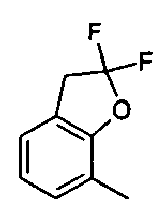
bond 
H H H H O H 0 228-230 Free base 6 (+/-) 
bond 
H H H H O H 0 194-196 Free base 7 (+/-) 
bond 
H H H H O H 0 260-262 Free base 8 (+/-) 
bond 
H H H H O H 0 216-218 Free base 9 (+/-) 
bond 
H H H H O H 0 263-265 Free base 10 (+/-) 
bond 
H H H H O H 0 253-255 Free base 11 (+/-) 
bond 
H H H H O H 0 240-242 Free base 12 (+/-) 
bond 
H H H H O H 0 112-114 Free base 13 (+/-) 
bond 
H H H H O H 0 293-295 Free base 14 (+/-) 
bond 
H H H H O H 0 225-227 Free base 15 (+/-) 
bond 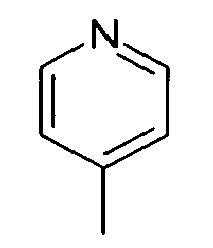
H H H H O H 0 177-179 Free base 16 (+/-) 
bond 
H H H H O H 0 196-198 Free base 17 (+/-) 
bond 
H H H H O H 0 264-266 Free base 18 (+/-) 
bond 
H H H H O H 0 262-264 Free base 19 (+/-) 
bond 
H H H H O H 0 251-254 Free base 20 (+/-) 
bond 
H H H H O H 0 259-262 Free base 21 (+/-) 
bond 
H H H H O H 0 220-223 Free base 22 (+/-) 
bond 
H H H H O H 0 217-220 Free base 23 (+/-) 
bond 
H H H H O H 0 225-228 Free base 24 (+/-) 
bond 
H H H H O H 0 210-213 Free base 25 (+/-) 
bond 
H H H H O H 0 126-129 Free base 26 (+/-) 
bond 
H H H H O H 0 251-253 Free base 27 (+/-) 
bond 
H H H H O H 0 207-210 Free base 28 (+/-) 
bond 
H H H H O H 0 256-259 Free base 29 (+/-) 
bond 
H H H H O H 0 168-172 Free base 30 (+/-) 
bond 
H H H H O H 0 226-228 Free base 31 (+/-) 
bond 
H H H H O H 0 203-205 Free base 32 (+/-) 
bond 
H H H H O H 0 207-209 Free base 33 (+/-) 
bond 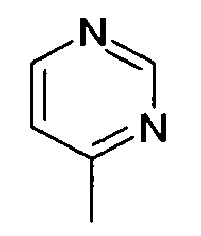
H H H H O H 0 256-259 Free base 34 (+/-) 
bond 
H H CH3 H O H 0 193-195 Free base 35 (+/-) 
bond 
H H H H O H 0 237-239 Free base 36 (+/-) 
bond 
H H H H O H 0 244-246 Free base 37 (+/-) 
bond 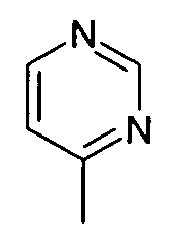
H H H H O H 0 260-262 Free base 38 (+/-) 
bond 
H H H H O H 0 262 (dec.) Free base 39 (+/-) 
bond 
H H H H O H 0 288-290 Free base 40 (+/-) 
bond 
H H H H O H 0 266-268 Free base 41 (+/-) 
bond 
H H CH3 H O H 0 238-240 Free base 42 (+/-) 
bond 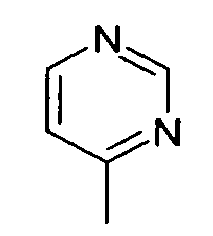
H H H H O H 0 283-285 Free base 43 (+/-) 
bond 
H H H H O H 0 300 (dec.) Free base 44 (+/-) 
bond 
H H H H O H 0 287 (dec.) Free base 45 (+/-) 
bond 
H H H H O H 0 279 (dec.) Free base 46 (+/-) 
bond 
H H H H O H 0 210-212 Free base 47 (+/-) 
bond 
H H CH3 H O H 0 283-285 Free base 48 (+/-) 
bond 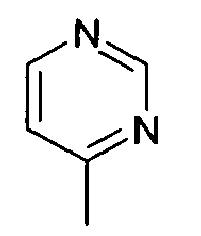
H H CH3 H O H 0 218-220 Free base 49 (+/-) 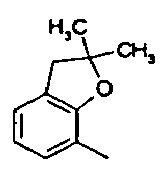
bond 
H H CH3 H O H 0 191-193 Free base 50 (+/-) 
bond 
H H CH3 H O H 0 198-200 Free base 51 (+/-) 
bond 
H H CH3 H O H 0 289-291 Free base 52 (+/-) 
bond 
H H CH3 H O H 0 276-278 Free base 53 (+/-) 
bond 
H H CH3 H O H 0 251-253 Free base 54 (+/-) 
bond 
H H CH3 H O H 0 270-272 Free base 55 (+/-) 
bond 
H H CH3 H O H 0 235-237 Free base 56 (+/-) 
bond 
H H CH3 H O H 0 236-238 Free base 57 (+/-) 
bond 
H H CH3 H O H 0 278-280 Free base 58 (+) 
bond 
H H H H O H 0 200-202 Free base 59 (-) 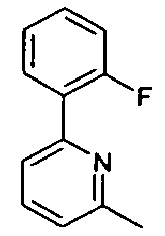
bond 
H H H H O H 0 199-200 Free base 60 (+) 
bond 
H H CH3 H O H 0 150-152 Free base 61 (-) 
bond 
H H CH3 H O H 0 139-141 Free base 62 (+) 
bond 
H H H H O H 0 282-284 Free base 63 (-) 
bond 
H H H H O H 0 272-274 Free base - A list of chemical structures and physical data for compounds of the aforementioned formula (I), illustrating the present invention, is given in table 2. The compounds have been prepared according to the methods of the examples. In the table, m represents 0 and o represents 1, (Rot.) indicates the levorotatory or dextrorotatory properties of the enantiomeric compound.

Table 2 No. Rot R2 Z R1 R4 R5 R6 R7 Y R3 n Mp °C salt 1 (+/-) 
bond 
H H H H O H 0 206-208 Free base 2 (+/-) 
bond 
H H H H O H 0 393-395 Free base 3 (+/-) 
bond 
H H H H O H 0 291-293 Free base 4 (+/-) 
bond 
H H H H O H 0 183-185 Free base 5 (+/-) 
bond 
H H H H O H 0 238-240 Free base 6 (+/-) 
bond 
H H H H O H 0 149-151 Free base 7 (+/-) 
bond 
H H H H O H 0 170-172 Free base 8 (+/-) 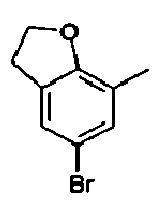
bond 
H H H H O H 0 240-242 Free base 9 (+/-) 
bond 
H H H H O H 0 110-112 Free base 10 (+/-) 
bond 
H H H H O H 0 101-103 Free base 11 (+/-) 
bond 
H H H H O H 0 233-235 Free base 12 (+/-) 
bond 
H H H H O H 0 283 (dec.) Free base 13 (+/-) 
bond 
H H H H O H 0 264-266 Free base 14 (+/-) 
bond 
H H H H O H 0 232-234 Free base 15 (+/-) 
bond 
H H H H O H 0 226-228 Free base 16 (+/-) 
bond 
H H H H O H 0 244 (dec.) Free base 17 (+/-) 
bond 
H H H H O H 0 260-263 Free base 18 (+/-) 
bond 
H H H H O H 0 230-232 Free base 19 (+/-) 
bond 
H H H H O H 0 187-190 Free base 20 (+/-) 
bond 
H H H H O H 0 201 (dec.) Free base 21 (+/-) 
bond 
H H H H O H 0 242-244 Free base - A list of chemical structures and physical data for compounds of the aforementioned formula (I), illustrating the present invention, is given in table 3. The compounds have been prepared according to the methods of the examples. In the table 3, m represents 1 and o represents 2, (Rot.) indicates the levorotatory or dextrorotatory properties of the enantiomeric compound.

Table 3 No. Rot R2 Z R1 R4 R5 R6 R7 Y R3 n Mp °C salt 1 (+/-) 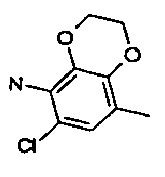
bond 
H H H H O H 0 286-288 Free base 2 (+/-) 
bond 
H H H H O H 0 202-204 Free base 3 (+/-) 
bond 
H H H H O H 0 287-289 Free base 4 (+/-) 
bond 
H H H H O H 0 269-271 Free base 5 (+/-) 
bond 
H H H H O H 0 259-261 Free base 6 (+/-) 
bond 
H H H H O H 0 260-262 Free base 7 (+/-) 
bond 
H H H H O H 0 230-232 Free base 8 (+/-) 
bond 
H H H H O H 0 193-195 Free base 9 (+/-) 
bond 
H H H H O H 0 213-215 Free base 10 (+/-) 
bond 
H H H H O H 0 284-285 Free base 11 (+/-) 
bond 
H H H H O H 0 250-252 Free base 12 (+/-) 
bond 
H H H H O H 0 309-311 Free base 13 (+/-) 
bond 
H H H H O H 0 198-200 Free base 14 (+) 
bond 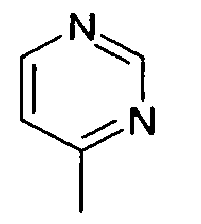
H H H H O H 0 214-216 Free base 15 (-) 
bond 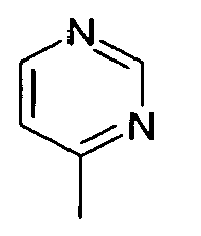
H H H H O H 0 212-214 Free base 16 (+/-) 
bond 
H H H H O H 0 216-218 Free base 17 (+/-) 
bond 
H H H H O H 0 248-250 Free base 18 (+/-) 
bond 
H H H H O H 0 258-260 Free base 19 (+/-) 
bond 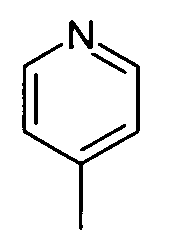
H H H H O H 0 217-219 Free base 20 (+/-) 
bond 
H H H H O H 0 256-258 Free base 21 (+/-) 
bond 
H H H H O H 0 243-245 Free base 22 (+/-) 
bond 
H H H H O H 0 300-302 Free base 23 (+/-) 
bond 
H H H H O H 0 276-278 Free base 24 (+/-) 
bond 
H H H H O H 0 212-214 Free base 25 (+/-) 
bond 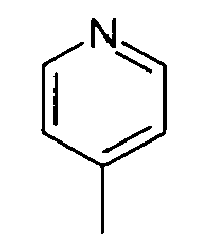
H H H H O H 0 >210 (dec.) Free base 26 (+/-) 
bond 
H H H H O H 0 >125 Free base 27 (+/-) 
bond 
H H H H O H 0 215-217 Free base 28 (+/-) 
bond 
H H H H O H 0 253-255 Free base 29 (+/-) 
bond 
H H H H O H 0 247-249 Free base 30 (+/-) 
bond 
H H H H O H 0 242-244 Free base 31 (+/-) 
bond 
H H H H O H 0 301-303 Free base 32 (+/-) 
bond 
H H H H O H 0 265-267 Free base 33 (+/-) 
bond 
H H H H O H 0 238-240 Free base 34 (+/-) 
bond 
H H H H O H 0 >233 (dec.) Free base 35 (+/-) 
bond 
H H H H O H 0 159-161 Free base 36 (+/-) 
bond 
H H H H O H 0 244-246 Free base 37 (+/-) 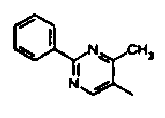
bond 
H H H H O H 0 258-260 Free base 38 (+/-) 
bond 
H H H H O H 0 279-282 Free base 39 (+/-) 
bond 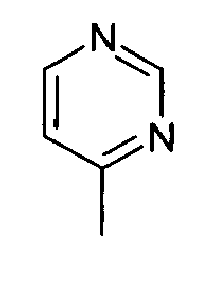
H H H H O H 0 250-253 Free base 40 (+/-) 
bond 
H H H H O H 0 255-258 Free base 41 (+/-) 
bond 
H H H H O H 0 264-267 Free base 42 (+/-) 
bond 
H H H H O H 0 277-281 Free base 43 (+/-) 
bond 
H H H H O H 0 250-254 Free base 44 (+/-) 
bond 
H H H H O H 0 265-267 Free base 45 (+/-) 
bond 
H H H H O H 0 252-254 Free base 46 (+/-) 
bond 
H H H H O H 0 >270 (dec.) Free base 47 (+/-) 
bond 
H H H H O H 0 297-299 Free base 48 (+/-) 
bond 
H H H H O H 0 301-304 Free base 49 (+/-) 
bond 
H H H H O H 0 298-301 Free base 50 (+/-) 
bond 
H H H H O H 0 300-302 Free base 51 (+/-) 
bond 
H H H H O H 0 287-290 Free base 52 (+/-) 
bond 
H H H H O H 0 282-285 Free base 53 (+/-) 
bond 
H H H H O H 0 303-305 Free base 54 (+/-) 
bond 
H H H H O H 0 282-286 Free base 55 (+/-) 
bond 
H H H H O H 0 271-274 Free base 56 (+/-) 
bond 
H H H H O H 0 293-296 Free base 57 (+/-) 
bond 
H H H H O H 0 125-127 Free base 58 (+/-) 
bond 
H H H H O H 0 >288 (dec.) Free base 59 (+/-) 
bond 
H H H H O H 0 277-279 Free base 60 (+/-) 
bond 
H H H H O H 0 232-234 Free base 61 (+/-) 
bond 
H H H H O H 0 >247 (dec.) Free base 62 (+/-) 
bond 
H H H H O H 0 250-253 Free base 63 (+/-) 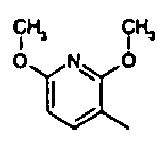
bond 
H H H H O H 0 246-249 Free base 64 (+/-) 
bond 
H H H H O H 0 270-273 Free base 65 (+/-) 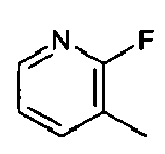
bond 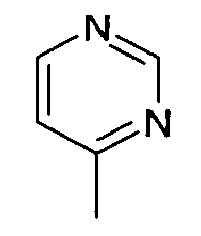
H H H H O H 0 275-279 Free base 66 (+/-) 
bond 
H H H H O H 0 265-268 Free base 67 (+/-) 
bond 
H H H H O H 0 251-254 Free base 68 (+/-) 
bond 
H H H H O H 0 260-263 Free base 69 (+/-) 
bond 
H H H H O H 0 234-236 Free base 70 (+/-) 
bond 
H H H H O H 0 188-190 Free base 71 (+/-) 
bond 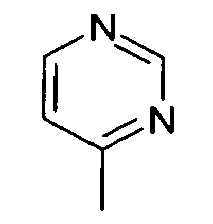
H H H H O H 0 234-237 Free base 72 (+/-) 
bond 
H H H H O H 0 259-261 Free base 73 (+/-) 
bond 
H H H H O H 0 260-262 Free base - Two different protocols can be used.
In a first protocol : 7.5 µM of prephosphorylated GS1 peptide and 10 µM ATP (containing 300,000 cpm of 33P-ATP) were incubated in 25 mM Tris-HCl, pH 7.5, 0.6 mM DTT, 6 mM MgCl2, 0.6 mM EGTA, 0.05 mg/ml BSA buffer for 1 hour at room temperature in the presence of GSK3beta (total reaction volume : 100 microliters). - In a second protocol : 4.1 µM of prephosphorylated GS1 peptide and 42 µM ATP (containing 260,000 cpm 33P-ATP) were incubated in 80 mM Mes-NaOH, pH 6.5, 1 mM Mg acetate, 0.5 mM EGTA, 5 mM 2-mercaptoethanol, 0.02% Tween 20, 10% glycerol buffer for 2 hours at room temperature in the presence of GSK3beta. Inhibitors were solubilised in DMSO (final solvent concentration in the reaction medium, 1%).
- The reaction was stopped with 100 microliters of a solution made of 25 g polyphosphoric acid (85% P2O5), 126 ml 85% H3PO4, H2O to 500 ml and then diluted to 1:100 before use. An aliquot of the reaction mixture was then transferred to Whatman P81 cation exchange filters and rinsed with the solution described above. Incorporated 33P radioactivity was determined by liquid scintillation spectrometry.
The phosphorylated GS-1 peptide had the following sequence :
NH2-YRRAAVPPSPSLSRHSSPHQS(P)EDEE-COOH. (Woodgett, J. R. (1989) Analytical Biochemistry 180, 237-241). - The GSK3β inhibitory activity of the compounds of the present invention are expressed in IC50, and as an illustration the range of IC50's of the compounds in table 1 is between 0,01 nanomolar to 3 micromolar concentrations.
For example compound No. 13 of table 1 shows an IC50 of 0.014 µM, compound 14 of table 2 shows an IC50 of 0.004 µM and compound 53 of table 3 shows an IC50 of 0.005 µM. - The ingredients below were mixed by an ordinary method and compressed by using a conventional apparatus.
Compound of Example 1 30 mg Crystalline cellulose 60 mg Corn starch 100 mg Lactose 200 mg Magnesium stearate 4 mg - The ingredients below were mixed by an ordinary method and filled in soft capsules.
Compound of Example 1 30 mg Olive oil 300 mg Lecithin 20 mg - The ingredients below were mixed by an ordinary method to prepare injections contained in a 1 ml ampoule.
Compound of Example 1 3 mg Sodium chloride 4 mg Distilled water for injection 1 ml - The compounds of the present invention have GSK3β inhibitory activity and are useful as an active ingredient of a medicament for preventive and/or therapeutic treatment of diseases caused by abnormal activity of GSK3β and more particularly of neurodegenerative diseases.
Claims (15)
- A pyrimidone derivative represented by formula (I) or a salt thereof, or a solvate thereof or a hydrate thereof :
 Y represents two hydrogen atoms, a sulfur atom, an oxygen atom or a C1-2 alkyl group and a hydrogen atom;Z represents a bond, an oxygen atom, a nitrogen atom, a sulphur atom, a methylene group optionally substituted by one or two groups chosen from a C1-6 alkyl group, a hydroxyl group, a C1-6 alkoxy group, a C1-2 perhalogenated alkyl group or an amino group;R1 represents a 2, 3 or 4-pyridine ring or a 2, 4 or 5-pyrimidine ring, the ring being optionally substituted by a C1-6 alkyl group, a C1-6 alkoxy group or a halogen atom;R2 represents a 4-15 membered heterocyclic group , this group being optionally substituted by 1 to 4 substituents selected from a C1-6 alkyl group, a halogen atom, a C1-2 perhalogenated alkyl group, a C1-6 halogenated alkyl group, a hydroxyl group, a C1-6 alkoxy group, a C1-2 perhalogenated alkoxy group, a C1-6 halogenated alkoxy group, a nitro, a cyano, an amino, a C1-6 monoalkylamino group, a C2-12 dialkylamino group, a S-(C1-6-alkyl) group, an heterocyclic group, an aryl group, an heteroaryl group, a O-aryl group or a S-aryl group, the above-mentioned groups being optionally substituted by 1 to 4 substituents selected from a C1-6alkyl group, a halogen atom, a (C1-6) alcoxy group, a C(O)O (C1-6-alkyl) or a C(O)O (aryl) group;R3 represents a hydrogen atom, a C1-6 alkyl group or a halogen atom;R4 and R5 represent, each independently, a hydrogen atom, a C1-6 alkyl group, optionally substituted by 1 to 4 substituents selected from a halogen atom, a phenyl group, a hydroxyl group or a C1-6 alkoxy group;R6 represents a hydrogen atom, a C1-6 alkyl group optionally substituted by a halogen atom or a cycloalkyl group, or a halogen atom;R7 represents a hydrogen atom or a C1-6 alkyl group;n represents 0 to 3; m represents 0 to 1; o represents 0 to 2; in the form of a free base or of an addition salt with an acid.
 - A pyrimidone derivative or a salt thereof, or a solvate thereof or a hydrate thereof according to claim 1, wherein R1 represents an unsubstituted 4-pyridine ring or unsubstituted 4-pyrimidine ring, in the form of a free base or of an addition salt with an acid.
- A pyrimidone derivative which is selected from the group consisting of:• (+/-) 2,2-Dimethyl-2,3-dihydro-benzofuran-7-carboxylic acid (4-oxo-2-pyridin-4-yl-6,7,8,9-tetrahydro-4H-pyrido[1,2-a]pyrimidin-9-yl)-amide• (+/-)1-Methyl-1 H-benzotriazole-5-carboxylic acid (4-oxo-2-pyridin-4-yl-6,7,8,9-tetrahydro-4H-pyrido[1,2-a]pyrimidin-9-yl)-amide• (+/-) Quinoxaline-6-carboxylic acid (4-oxo-2-pyridin-4-yl-6,7,8,9-tetrahydro-4H-pyrido[1,2-a]pyrimidin-9-yl)-amide• (+/-) 2,3-Dihydro-benzofuran-7-carboxylic acid (4-oxo-2-pyrimidin-4-yl-6,7,8,9-tetrahydro-4H-pyrido[1,2-a]pyrimidin-9-yl)-amide• (+/-)2,2-Difluoro-benzo[1,3]dioxole-4-carboxylic acid (4-oxo-2-pyridin-4-yl-6,7,8,9-tetrahydro-4H-pyrido[1,2-a]pyrimidin-9-yl)-amide• (+/-) 3,4-Dihydro-2H-benzo[b][1,4]dioxepine-6-carboxylic acid (4-oxo-2-pyridin-4-yl-6,7,8,9-tetrahydro-4H-pyrido[1,2-a]pyrimidin-9-yl)-amide• (+/-) Benzofuran-2-carboxylic acid (4-oxo-2-pyridin-4-yl-6,7,8,9-tetrahydro-4H-pyrido[1,2-a]pyrimidin-9-yl)-amide• (+/-) 2,2-Dimethyl-2,3-dihydro-benzofuran-7-carboxylic acid (4-oxo-2-pyrimidin-4-yl-6,7,8,9-tetrahydro-4H-pyrido[1,2-a]pyrimidin-9-yl)-amide• (+/-) 8-Amino-7-chloro-2,3-dihydro-benzo[1,4]dioxine-5-carboxylic acid (4-oxo-2-pyrimidin-4-yl-6,7,8,9-tetrahydro-4H-pyrido[1,2-a]pyrimidin-9-yl)-amide• (+/-) 6-Fluoro-4H-benzo[1,3]dioxine-8-carboxylic acid (4-oxo-2-pyrimidin-4-yl-6,7,8,9-tetrahydro-4H-pyrido[1,2-a]pyrimidin-9-yl)-amide• (+/-) 6-Fluoro-4H-benzo[1,3]dioxine-8-carboxylic acid (4-oxo-2-pyridin-4-yl-6,7,8,9-tetrahydro-4H-pyrido[1,2-a]pyrimidin-9-yl)-amide• (+/-) 2,3-Dihydro-benzofuran-5-carboxylic acid (4-oxo-2-pyridin-4-yl-6,7,8,9-tetrahydro-4H-pyrido[1,2-a]pyrimidin-9-yl)-amide• (+/-) 8-Amino-7-chloro-2,3-dihydro-benzo[1,4]dioxine-5-carboxylic acid (4-oxo-2-pyridin-4-yl-6,7,8,9-tetrahydro-4H-pyrido[1,2-a]pyrimidin-9-yl)-amide• (+/-) 1-Methyl-1H-indole-3-carboxylic acid (4-oxo-2-pyridin-4-yl-6,7,8,9-tetrahydro-4H-pyrido[1,2-a]pyrimidin-9-yl)-amide• (+/-) 2-Methoxy-N-(4-oxo-2-pyridin-4-yl-6,7,8,9-tetrahydro-4H-pyrido[1,2-a]pyrimidin-9-yl)-nicotinamide• (+/-) 6,7-Dihydro-5H-[1]pyrindine-6-carboxylic acid (4-oxo-2-pyridin-4-yl-6,7,8,9-tetrahydro-4H-pyrido[1,2-a]pyrimidin-9-yl)-amide• (+/-) 2-Methoxy-N-(4-oxo-2-pyrimidin-4-yl-6,7,8,9-tetrahydro-4H-pyrido[1,2-a]pyrimidin-9-yl)-nicotinamide• (+/-) 2,6-Dimethoxy-N-(4-oxo-2-pyrimidin-4-yl-6,7,8,9-tetrahydro-4H-pyrido[1,2-a]pyrimidin-9-yl)-nicotinamide• (+/-) N-(4-Oxo-2-pyrimidin-4-yl-6,7,8,9-tetrahydro-4H-pyrido[1,2-a]pyrimidin-9-yl)-6-(2,2,2-trifluoro-ethoxy)-nicotinamide• (+/-) 2-Fluoro-N-(4-oxo-2-pyrimidin-4-yl-6,7,8,9-tetrahydro-4H-pyrido[1,2-a]pyrimidin-9-yl)-nicotinamide• (+/-) N-(4-Oxo-2-pyrimidin-4-yl-6,7,8,9-tetrahydro-4H-pyrido[1,2-a]pyrimidin-9-yl)-2-p-tolyloxy-nicotinamide• (+/-) 2-(4-Chloro-phenoxy)-N-(4-oxo-2-pyrimidin-4-yl-6,7,8,9-tetrahydro-4H-pyrido[1,2-a]pyrimidin-9-yl)-nicotinamide• (+/-) 2-Methylsulfanyl-N-(4-oxo-2-pyrimidin-4-yl-6,7,8,9-tetrahydro-4H-pyrido[1,2-a]pyrimidin-9-yl)-nicotinamide• (+/-) 5-Furan-2-yl-N-(4-oxo-2-pyrimidin-4-yl-6,7,8,9-tetrahydro-4H-pyrido[1,2-a]pyrimidin-9-yl)-nicotinamide• (+/-) 5-(2-Methoxy-phenyl)-N-(4-oxo-2-pyrimidin-4-yl-6,7,8,9-tetrahydro-4H-pyrido[1,2-a]pyrimidin-9-yl)-nicotinamide• (+/-) 5-(3,4-Dimethoxy-phenyl)-N-(4-oxo-2-pyrimidin-4-yl-6,7,8,9-tetrahydro-4H-pyrido[1,2-a]pyrimidin-9-yl)-nicotinamide• (+/-) Quinoline-3-carboxylic acid (4-oxo-2-pyrimidin-4-yl-6,7,8,9-tetrahydro-4H-pyrido[1,2-a]pyrimidin-9-yl)-amide• (+/-) N-(4-Oxo-2-pyrimidin-4-yl-6,7,8,9-tetrahydro-4H-pyrido[1,2-a]pyrimidin-9-yl)-6-thiophen-2-yl-nicotinamide• (+/-) 4-[5-(4-Oxo-2-pyrimidin-4-yl-6,7,8,9-tetrahydro-4H-pyrido[1,2-a]pyrimidin-9-ylcarbamoyl)-pyridin-2-yl]-[1,4]diazepane-1-carboxylic acid tert-butyl ester• (+/-) 6-Methyl-N-(4-oxo-2-pyrimidin-4-yl-6,7,8,9-tetrahydro-4H-pyrido[1,2-a]pyrimidin-9-yl)-nicotinamide• (+/-) N-(4-Oxo-2-pyrimidin-4-yl-6,7,8,9-tetrahydro-4H-pyrido[1,2-a]pyrimidin-9-yl)-2-propylsulfanyl-nicotinamide• (+/-) N-(4-Oxo-2-pyrimidin-4-yl-6,7,8,9-tetrahydro-4H-pyrido[1,2-a]pyrimidin-9-yl)-nicotinamide• (+/-) 6-Chloro-N-(4-oxo-2-pyrimidin-4-yl-6,7,8,9-tetrahydro-4H-pyrido[1,2-a]pyrimidin-9-yl)-nicotinamide• (+/-) 2-Methoxy-N-(9-methyl-4-oxo-2-pyrimidin-4-yl-6,7,8,9-tetrahydro-4H-pyrido[1,2-a]pyrimidin-9-yl)-nicotinamide• (+/-) 4-Methoxy-pyridine-2-carboxylic acid (4-oxo-2-pyrimidin-4-yl-6,7,8,9-tetrahydro-4H-pyrido[1,2-a]pyrimidin-9-yl)-amide• (+/-) 3,6-Dimethoxy-pyridazine-4-carboxylic acid (4-oxo-2-pyrimidin-4-yl-6,7,8,9-tetrahydro-4H-pyrido[1,2-a]pyrimidin-9-yl)-amide• (+/-) Pyridine-2-carboxylic acid (4-oxo-2-pyrimidin-4-yl-6,7,8,9-tetrahydro-4H-pyrido[1,2-a]pyrimidin-9-yl)-amide• (+/-) 6-Methoxy-pyridine-2-carboxylic acid (4-oxo-2-pyrimidin-4-yl-6,7,8,9-tetrahydro-4H-pyrido[1,2-a]pyrimidin-9-yl)-amide• (+/-) 4-Methoxy-quinoline-2-carboxylic acid (4-oxo-2-pyrimidin-4-yl-6,7,8,9-tetrahydro-4H-pyrido[1,2-a]pyrimidin-9-yl)-amide• (+/-) Isoquinoline-1-carboxylic acid (4-oxo-2-pyrimidin-4-yl-6,7,8,9-tetrahydro-4H-pyrido[1,2-a]pyrimidin-9-yl)-amide• (+/-) 5-Chloro-2-methylsulfanyl-pyrimidine-4-carboxylic acid (9-methyl-4-oxo-2-pyrimidin-4-yl-6,7,8,9-tetrahydro-4H-pyrido[1,2-a]pyrimidin-9-yl)-amide• (+/-) [1,6]Naphthyridine-5-carboxylic acid (4-oxo-2-pyrimidin-4-yl-6,7,8,9-tetrahydro-4H-pyrido[1,2-a]pyrimidin-9-yl)-amide• (+/-) 6-Chloro-pyridine-2-carboxylic acid (4-oxo-2-pyrimidin-4-yl-6,7,8,9-tetrahydro-4H-pyrido[1,2-a]pyrimidin-9-yl)-amide• (+/-) [1,5]Naphthyridine-2-carboxylic acid (4-oxo-2-pyrimidin-4-yl-6,7,8,9-tetrahydro-4H-pyrido[1,2-a]pyrimidin-9-yl)-amide• (+/-) 6-(2,6-Dimethoxy-phenyl)-pyridine-2-carboxylic acid (4-oxo-2-pyrimidin-4-yl-6,7,8,9-tetrahydro-4H-pyrido[1,2-a]pyrimidin-9-yl)-amide• (+/-) 6-(2-Fluoro-phenyl)-pyridine-2-carboxylic acid (4-oxo-2-pyrimidin-4-yl-6,7,8,9-tetrahydro-4H-pyrido[1,2-a]pyrimidin-9-yl)-amide• (+/-) 8-Amino-7-chloro-2,3-dihydro-benzo[1,4]dioxine-5-carboxylic acid (9-methyl-4-oxo-2-pyrimidin-4-yl-6,7,8,9-tetrahydro-4H-pyrido[1,2-a]pyrimidin-9-yl)-amide• (+/-) 3,6-Dimethoxy-pyridazine-4-carboxylic acid (9-methyl-4-oxo-2-pyrimidin-4-yl-6,7,8,9-tetrahydro-4H-pyrido[1,2-a]pyrimidin-9-yl)-amide• (+/-) 2,2-Dimethyl-2,3-dihydro-benzofuran-7-carboxylic acid (9-methyl-4-oxo-2-pyrimidin-4-yl-6,7,8,9-tetrahydro-4H-pyrido[1,2-a]pyrimidin-9-yl)-amide• (+/-) 6-Fluoro-4H-benzo[1,3]dioxine-8-carboxylic acid (9-methyl-4-oxo-2-pyrimidin-4-yl-6,7,8,9-tetrahydro-4H-pyrido[1,2-a]pyrimidin-9-yl)-amide• (+/-) [1,5]Naphthyridine-2-carboxylic acid (9-methyl-4-oxo-2-pyrimidin-4-yl-6,7,8,9-tetrahydro-4H-pyrido[1,2-a]pyrimidin-9-yl)-amide• (+/-) 2,3-Dihydro-benzofuran-7-carboxylic acid (9-methyl-4-oxo-2-pyrimidin-4-yl-6,7,8,9-tetrahydro-4H-pyrido[1,2-a]pyrimidin-9-yl)-amide• (+/-) Pyridine-2-carboxylic acid (9-methyl-4-oxo-2-pyrimidin-4-yl-6,7,8,9-tetrahydro-4H-pyrido[1,2-a]pyrimidin-9-yl)-amide• (+/-) 6-Chloro-pyridine-2-carboxylic acid (9-methyl-4-oxo-2-pyrimidin-4-yl-6,7,8,9-tetrahydro-4H-pyrido[1,2-a]pyrimidin-9-yl)-amide• (+/-) [1,6]Naphthyridine-5-carboxylic acid (9-methyl-4-oxo-2-pyrimidin-4-yl-6,7,8,9-tetrahydro-4H-pyrido[1,2-a]pyrimidin-9-yl)-amide• (+/-) N-(9-Methyl-4-oxo-2-pyrimidin-4-yl-6,7,8,9-tetrahydro-4H-pyrido[1,2-a]pyrimidin-9-yl)-nicotinamide• (+/-) 5-Bromo-benzofuran-2-carboxylic acid (9-methyl-4-oxo-2-pyrimidin-4-yl-6,7,8,9-tetrahydro-4H-pyrido[1,2-a]pyrimidin-9-yl)-amide• (+) 6-(2-Fluoro-phenyl)-pyridine-2-carboxylic acid (4-oxo-2-pyrimidin-4-yl-6,7,8,9-tetrahydro-4H-pyrido[1,2-a]pyrimidin-9-yl)-amide• (-) 6-(2-Fluoro-phenyl)-pyridine-2-carboxylic acid (4-oxo-2-pyrimidin-4-yl-6,7,8,9-tetrahydro-4H-pyrido[1,2-a]pyrimidin-9-yl)-amide• (+) 2-Methoxy-N-(9-methyl-4-oxo-2-pyrimidin-4-yl-6,7,8,9-tetrahydro-4H-pyrido[1,2-a]pyrimidin-9-yl)-nicotinamide• (-) 2-Methoxy-N-(9-methyl-4-oxo-2-pyrimidin-4-yl-6,7,8,9-tetrahydro-4H-pyrido[1,2-a]pyrimidin-9-yl)-nicotinamide• (+) [1,5]Naphthyridine-2-carboxylic acid (4-oxo-2-pyrimidin-4-yl-6,7,8,9-tetrahydro-4H-pyrido[1,2-a]pyrimidin-9-yl)-amide• (-) [1,5]Naphthyridine-2-carboxylic acid (4-oxo-2-pyrimidin-4-yl-6,7,8,9-tetrahydro-4H-pyrido[1,2-a]pyrimidin-9-yl)-amide• (+/-) 2,2-Dimethyl-2,3-dihydro-benzofuran-7-carboxylic acid (4-oxo-2-pyridin-4-yl-4,6,7,8-tetrahydro-pyrrolo[1,2-a]pyrimidin-8-yl)-amide• (+/-) 1-Methyl-1H-benzotriazole-5-carboxylic acid (4-oxo-2-pyridin-4-yl-4,6,7,8-tetrahydro-pyrrolo[1,2-a]pyrimidin-8-yl)-amide• (+/-) 8-Amino-7-chloro-2,3-dihydro-benzo[1,4]dioxine-5-carboxylic acid (4-oxo-2-pyridin-4-yl-4,6,7,8-tetrahydro-pyrrolo[1,2-a]pyrimidin-8-yl)-amide• (+/-) 6-Fluoro-4H-benzo[1,3]dioxine-8-carboxylic acid (4-oxo-2-pyridin-4-yl-4,6,7,8-tetrahydro-pyrrolo[1,2-a]pyrimidin-8-yl)-amide• (+/-) Quinoxaline-6-carboxylic acid (4-oxo-2-pyridin-4-yl-4,6,7,8-tetrahydro-pyrrolo[1,2-a]pyrimidin-8-yl)-amide• (+/-) 2,3-Dihydro-benzofuran-5-carboxylic acid (4-oxo-2-pyridin-4-yl-4,6,7,8-tetrahydro-pyrrolo[1,2-a]pyrimidin-8-yl)-amide• (+/-) 1-Methyl-1 H-indole-3-carboxylic acid (4-oxo-2-pyridin-4-yl-4,6,7,8-tetrahydro-pyrrolo[1,2-a]pyrimidin-8-yl)-amide• (+/-) 5-Bromo-2,3-dihydro-benzofuran-7-carboxylic acid (4-oxo-2-pyridin-4-yl-4,6,7,8-tetrahydro-pyrrolo[1,2-a]pyrimidin-8-yl)-amide• (+/-) -2,3-Dihydro-benzofuran-2-carboxylic acid (4-oxo-2-pyridin-4-yl-4,6,7,8-tetrahydro-pyrrolo[1,2-a]pyrimidin-8-yl)-amide• (+/-) 6,7-Dihydro-5H-[1]pyrindine-6-carboxylic acid (4-oxo-2-pyridin-4-yl-4,6,7,8-tetrahydro-pyrrolo[1,2-a]pyrimidin-8-yl)-amide• (+/-) Benzofuran-2-carboxylic acid (4-oxo-2-pyridin-4-yl-4,6,7,8-tetrahydro-pyrrolo[1,2-a]pyrimidin-8-yl)-amide• (+/-) [1,5]Naphthyridine-2-carboxylic acid (4-oxo-2-pyrimidin-4-yl-4,6,7,8-tetrahydro-pyrrolo[1,2-a]pyrimidin-8-yl)-amide• (+/-) 2-Methoxy-N-(4-oxo-2-pyrimidin-4-yl-4,6,7,8-tetrahydro-pyrrolo[1,2-a]pyrimidin-8-yl)-nicotinamide• (+/-) 5-Chloro-2-methylsulfanyl-pyrimidine-4-carboxylic acid (4-oxo-2-pyrimidin-4-yl-4,6,7,8-tetrahydro-pyrrolo[1,2-a]pyrimidin-8-yl)-amide• (+/-) Isoquinoline-1-carboxylic acid (4-oxo-2-pyrimidin-4-yl-4,6,7,8-tetrahydro-pyrrolo[1,2-a]pyrimidin-8-yl)-amide• (+/-) 2-Methoxy-N-(4-oxo-2-pyridin-4-yl-4,6,7,8-tetrahydro-pyrrolo[1,2-a]pyrimidin-8-yl)-nicotinamide• (+/-) 5-Chloro-2-methylsulfanyl-pyrimidine-4-carboxylic acid (4-oxo-2-pyridin-4-yl-4,6,7,8-tetrahydro-pyrrolo[1,2-a]pyrimidin-8-yl)-amide• (+/-) Isoquinoline-1-carboxylic acid (4-oxo-2-pyridin-4-yl-4,6,7,8-tetrahydro-pyrrolo[1,2-a]pyrimidin-8-yl)-amide• (+/-) Pyridine-2-carboxylic acid (4-oxo-2-pyrimidin-4-yl-4,6,7,8-tetrahydro-pyrrolo[1,2-a]pyrimidin-8-yl)-amide• (+/-) 6-Chloro-pyridine-2-carboxylic acid (4-oxo-2-pyridin-4-yl-4,6,7,8-tetrahydro-pyrrolo[1,2-a]pyrimidin-8-yl)-amide• (+/-) [1,5]Naphthyridine-2-carboxylic acid (4-oxo-2-pyridin-4-yl-4,6,7,8-tetrahydro-pyrrolo[1,2-a]pyrimidin-8-yl)-amide• (+/-) 8-Amino-7-chloro-2,3-dihydro-benzo[1,4]dioxine-5-carboxylic acid (4-oxo-2-pyrimidin-4-yl-4,6,7,8,9,10-hexahydro-pyrimido[1,2-a]azepin-10-yl)-amide• (+/-) 2-Methoxy-N-(4-oxo-2-pyrimidin-4-yl-4,6,7,8,9,10-hexahydro-pyrimido[1,2-a]azepin-10-yl)-nicotinamide• (+/-) 5-Bromo-2,3-dihydro-benzofuran-7-carboxylic acid (4-oxo-2-pyrimidin-4-yl-4,6,7,8,9,10-hexahydro-pyrimido[1,2-a]azepin-10-yl)-amide• (+/-) 6-Fluoro-4H-benzo[1,3]dioxine-8-carboxylic acid (4-oxo-2-pyrimidin-4-yl-4,6,7,8,9,10-hexahydro-pyrimido[1,2-a]azepin-10-yl)-amide• (+/-) 5-Chloro-2,3-dihydro-benzofuran-7-carboxylic acid (4-oxo-2-pyrimidin-4-yl-4,6,7,8,9,10-hexahydro-pyrimido[1,2-a]azepin-10-yl)-amide• (+/-) 2,3-Dihydro-benzofuran-7-carboxylic acid (4-oxo-2-pyrimidin-4-yl-4,6,7,8,9,10-hexahydro-pyrimido[1,2-a]azepin-10-yl)-amide• (+/-) 2,2-Dimethyl-2,3-dihydro-benzofuran-7-carboxylic acid (4-oxo-2-pyrimidin-4-yl-4,6,7,8,9,10-hexahydro-pyrimido[1,2-a]azepin-10-yl)-amide• (+/-) 2,2-Dimethyl-2,3-dihydro-benzofuran-7-carboxylic acid (4-oxo-2-pyridin-4-yl-4,6,7,8,9,10-hexahydro-pyrimido[1,2-a]azepin-10-yl)-amide• (+/-) 6-Fluoro-4H-benzo[1,3]dioxine-8-carboxylic acid (4-oxo-2-pyridin-4-yl-4,6,7,8,9,10-hexahydro-pyrimido[1,2-a]azepin-10-yl)-amide• (+/-) 5-Chloro-2,3-dihydro-benzofuran-7-carboxylic acid (4-oxo-2-pyridin-4-yl-4,6,7,8,9,10-hexahydro-pyrimido[1,2-a]azepin-10-yl)-amide• (+/-) 2,3-Dihydro-benzofuran-7-carboxylic acid (4-oxo-2-pyridin-4-yl-4,6,7,8,9,10-hexahydro-pyrimido[1,2-a]azepin-10-yl)-amide• (+/-) 8-Amino-7-chloro-2,3-dihydro-benzo[1,4]dioxine-5-carboxylic acid (4-oxo-2-pyridin-4-yl-4,6,7,8,9,10-hexahydro-pyrimido[1,2-a]azepin-10-yl)-amide• (+/-) 2-Methoxy-N-(4-oxo-2-pyridin-4-yl-4,6,7,8,9,10-hexahydro-pyrimido[1,2-a]azepin-10-yl)-nicotinamide• (+) 2-Methoxy-N-(4-oxo-2-pyrimidin-4-yl-4,6,7,8,9,10-hexahydro-pyrimido[1,2-a]azepin-10-yl)-nicotinamide• (-) 2-Methoxy-N-(4-oxo-2-pyrimidin-4-yl-4,6,7,8,9,10-hexahydro-pyrimido[1,2-a]azepin-10-yl)-nicotinamide• (+/-) 2,6-Dimethoxy-N-(4-oxo-2-pyridin-4-yl-4,6,7,8,9,10-hexahydro-pyrimido[1,2-a]azepin-10-yl)-nicotinamide• (+/-) N-(4-Oxo-2-pyridin-4-yl-4,6,7,8,9,10-hexahydro-pyrimido[1,2-a]azepin-10-yl)-6-(2,2,2-trifluoro-ethoxy)-nicotinamide• (+/-) 2-Fluoro-N-(4-oxo-2-pyridin-4-yl-4,6,7,8,9,10-hexahydro-pyrimido[1,2-a]azepin-10-yl)-nicotinamide• (+/-) 2-Methylsulfanyl-N-(4-oxo-2-pyridin-4-yl-4,6,7,8,9,10-hexahydro-pyrimido[1,2-a]azepin-10-yl)-nicotinamide• (+/-) N-(4-Oxo-2-pyridin-4-yl-4,6,7,8,9,10-hexahydro-pyrimido[1,2-a]azepin-10-yl)-2-p-tolyloxy-nicotinamide• (+/-) 2-(4-Chloro-phenoxy)-N-(4-oxo-2-pyridin-4-yl-4,6,7,8,9,10-hexahydro-pyrimido[1,2-a]azepin-10-yl)-nicotinamide• (+/-) 3H-Imidazo[4,5-b]pyridine-6-carboxylic acid (4-oxo-2-pyridin-4-yl-4,6,7,8,9,10-hexahydro-pyrimido[1,2-a]azepin-10-yl)-amide• (+/-) N-(4-Oxo-2-pyridin-4-yl-4,6,7,8,9,10-hexahydro-pyrimido[1,2-a]azepin-10-yl)-6-thiophen-2-yl-nicotinamide• (+/-) 6-Methyl-N-(4-oxo-2-pyridin-4-yl-4,6,7,8,9,10-hexahydro-pyrimido[1,2-a]azepin-10-yl)-nicotinamide• (+/-) 5-Furan-2-yl-N-(4-oxo-2-pyridin-4-yl-4,6,7,8,9,10-hexahydro-pyrimido[1,2-a]azepin-10-yl)-nicotinamide• (+/-) 5-(2-Methoxy-phenyl)-N-(4-oxo-2-pyridin-4-yl-4,6,7,8,9,10-hexahydro-pyrimido[1,2-a]azepin-10-yl)-nicotinamide• (+/-) 5-(3,4-Dimethoxy-phenyl)-N-(4-oxo-2-pyridin-4-yl-4,6,7,8,9,10-hexahydro-pyrimido[1,2-a]azepin-10-yl)-nicotinamide• (+/-) Quinoline-3-carboxylic acid (4-oxo-2-pyridin-4-yl-4,6,7,8,9,10-hexahydro-pyrimido[1,2-a]azepin-10-yl)-amide• (+/-) 4-[5-(4-Oxo-2-pyridin-4-yl-4,6,7,8,9,10-hexahydro-pyrimido[1,2-a]azepin-10-ylcarbamoyl)-pyridin-2-yl]-[1,4]diazepane-1-carboxylic acid tert-butyl ester• (+/-) 5-(4-Bromo-phenyl)-N-(4-oxo-2-pyridin-4-yl-4,6,7,8,9,10-hexahydro-pyrimido[1,2-a]azepin-10-yl)-nicotinamide• (+/-) N-(4-Oxo-2-pyridin-4-yl-4,6,7,8,9,10-hexahydro-pyrimido[1,2-a]azepin-10-yl)-nicotinamide• (+/-) 6-Chloro-N-(4-oxo-2-pyridin-4-yl-4,6,7,8,9,10-hexahydro-pyrimido[1,2-a]azepin-10-yl)-nicotinamide• (+/-) 2-Chloro-N-(4-oxo-2-pyridin-4-yl-4,6,7,8,9,10-hexahydro-pyrimido[1,2-a]azepin-10-yl)-nicotinamide• (+/-) N-(4-Oxo-2-pyridin-4-yl-4,6,7,8,9,10-hexahydro-pyrimido[1,2-a]azepin-10-yl)-2-phenylsulfanyl-nicotinamide• (+/-) N-(4-Oxo-2-pyridin-4-yl-4,6,7,8,9,10-hexahydro-pyrimido[1,2-a]azepin-10-yl)-2-propylsulfanyl-nicotinamide• (+/-) 2-(4-Chloro-phenylsulfanyl)-N-(4-oxo-2-pyridin-4-yl-4,6,7,8,9,10-hexahydro-pyrimido[1,2-a]azepin-10-yl)-nicotinamide• (+/-) 4-Methyl-2-phenyl-pyrimidine-5-carboxylic acid (4-oxo-2-pyrimidin-4-yl-4,6,7,8,9,10-hexahydro-pyrimido[1,2-a]azepin-10-yl)-amide• (+/-) Pyrimidine-5-carboxylic acid (4-oxo-2-pyrimidin-4-yl-4,6,7,8,9,10-hexahydro-pyrimido[1,2-a]azepin-10-yl)-amide• (+/-) 5-Chloro-2-methylsulfanyl-pyrimidine-4-carboxylic acid (4-oxo-2-pyrimidin-4-yl-4,6,7,8,9,10-hexahydro-pyrimido[1,2-a]azepin-10-yl)-amide• (+/-) Pyridazine-4-carboxylic acid (4-oxo-2-pyrimidin-4-yl-4,6,7,8,9,10-hexahydro-pyrimido[1,2-a]azepin-10-yl)-amide• (+/-) 6-Phenyl-pyrimidine-4-carboxylic acid (4-oxo-2-pyrimidin-4-yl-4,6,7,8,9,10-hexahydro-pyrimido[1,2-a]azepin-10-yl)-amide• (+/-) Cinnoline-4-carboxylic acid (4-oxo-2-pyrimidin-4-yl-4,6,7,8,9,10-hexahydro-pyrimido[1,2-a]azepin-10-yl)-amide• (+/-) 3,6-Dimethoxy-pyridazine-4-carboxylic acid (4-oxo-2-pyrimidin-4-yl-4,6,7,8,9,10-hexahydro-pyrimido[1,2-a]azepin-10-yl)-amide• (+/-) Isoquinoline-1-carboxylic acid (4-oxo-2-pyridin-4-yl-4,6,7,8,9,10-hexahydro-pyrimido[1,2-a]azepin-10-yl)-amide• (+/-) 3-Phenyl-cinnoline-4-carboxylic acid (4-oxo-2-pyrimidin-4-yl-4,6,7,8,9,10-hexahydro-pyrimido[1,2-a]azepin-10-yl)-amide• (+/-) [1,6]Naphthyridine-5-carboxylic acid (4-oxo-2-pyridin-4-yl-4,6,7,8,9,10-hexahydro-pyrimido[1,2-a]azepin-10-yl)-amide• (+/-) [1,5]Naphthyridine-2-carboxylic acid (4-oxo-2-pyridin-4-yl-4,6,7,8,9,10-hexahydro-pyrimido[1,2-a]azepin-10-yl)-amide• (+/-) [1,6]Naphthyridine-5-carboxylic acid (4-oxo-2-pyrimidin-4-yl-4,6,7,8,9,10-hexahydro-pyrimido[1,2-a]azepin-10-yl)-amide• (+/-) [1,5]Naphthyridine-2-carboxylic acid (4-oxo-2-pyrimidin-4-yl-4,6,7,8,9,10-hexahydro-pyrimido[1,2-a]azepin-10-yl)-amide• (+/-) 4-Methoxy-quinoline-2-carboxylic acid (4-oxo-2-pyrimidin-4-yl-4,6,7,8,9,10-hexahydro-pyrimido[1,2-a]azepin-10-yl)-amide• (+/-) Isoquinoline-1-carboxylic acid (4-oxo-2-pyrimidin-4-yl-4,6,7,8,9,10-hexahydro-pyrimido[1,2-a]azepin-10-yl)-amide• (+/-) Pyridine-2-carboxylic acid (4-oxo-2-pyrimidin-4-yl-4,6,7,8,9,10-hexahydro-pyrimido[1,2-a]azepin-10-yl)-amide• (+/-) 6-Chloro-pyridine-2-carboxylic acid (4-oxo-2-pyrimidin-4-yl-4,6,7,8,9,10-hexahydro-pyrimido[1,2-a]azepin-10-yl)-amide• (+/-) 4-Methoxy-pyridine-2-carboxylic acid (4-oxo-2-pyrimidin-4-yl-4,6,7,8,9,10-hexahydro-pyrimido[1,2-a]azepin-10-yl)-amide• (+/-) 3,5-Difluoro-pyridine-2-carboxylic acid (4-oxo-2-pyrimidin-4-yl-4,6,7,8,9,10-hexahydro-pyrimido[1,2-a]azepin-10-yl)-amide• (+/-) 6-(2,6-Dimethoxy-phenyl)-pyridine-2-carboxylic acid (4-oxo-2-pyrimidin-4-yl-4,6,7,8,9,10-hexahydro-pyrimido[1,2-a]azepin-10-yl)-amide• (+/-) 4-Methyl-2-phenyl-pyrimidine-5-carboxylic acid (4-oxo-2-pyridin-4-yl-4,6,7,8,9,10-hexahydro-pyrimido[1,2-a]azepin-10-yl)-amide• (+/-) 3-Phenyl-cinnoline-4-carboxylic acid (4-oxo-2-pyridin-4-yl-4,6,7,8,9,10-hexahydro-pyrimido[1,2-a]azepin-10-yl)-amide• (+/-) 3,6-Dimethoxy-pyridazine-4-carboxylic acid (4-oxo-2-pyridin-4-yl-4,6,7,8,9,10-hexahydro-pyrimido[1,2-a]azepin-10-yl)-amide• (+/-) 2-Methyl-4-phenyl-pyrimidine-5-carboxylic acid (4-oxo-2-pyridin-4-yl-4,6,7,8,9,10-hexahydro-pyrimido[1,2-a]azepin-10-yl)-amide• (+/-) 6-Phenyl-pyrimidine-4-carboxylic acid (4-oxo-2-pyridin-4-yl-4,6,7,8,9,10-hexahydro-pyrimido[1,2-a]azepin-10-yl)-amide• (+/-) 6-(2-Fluoro-phenyl)-pyridine-2-carboxylic acid (4-oxo-2-pyrimidin-4-yl-4,6,7,8,9,10-hexahydro-pyrimido[1,2-a]azepin-10-yl)-amide• (+/-) 2,6-Dimethoxy-N-(4-oxo-2-pyrimidin-4-yl-4,6,7,8,9,10-hexahydro-pyrimido[1,2-a]azepin-10-yl)-nicotinamide• (+/-) N-(4-Oxo-2-pyrimidin-4-yl-4,6,7,8,9,10-hexahydro-pyrimido[1,2-a]azepin-10-yl)-6-(2,2,2-trifluoro-ethoxy)-nicotinamide• (+/-) 2-Fluoro-N-(4-oxo-2-pyrimidin-4-yl-4,6,7,8,9,10-hexahydro-pyrimido[1,2-a]azepin-10-yl)-nicotinamide• (+/-) 5-Furan-2-yl-N-(4-oxo-2-pyrimidin-4-yl-4,6,7,8,9,10-hexahydro-pyrimido[1,2-a]azepin-10-yl)-nicotinamide• (+/-) 6-Methoxy-pyridine-2-carboxylic acid (4-oxo-2-pyrimidin-4-yl-4,6,7,8,9,10-hexahydro-pyrimido[1,2-a]azepin-10-yl)-amide• (+/-) Quinoline-3-carboxylic acid (4-oxo-2-pyrimidin-4-yl-4,6,7,8,9,10-hexahydro-pyrimido[1,2-a]azepin-10-yl)-amide• (+/-) 4-[5-(4-Oxo-2-pyrimidin-4-yl-4,6,7,8,9,10-hexahydro-pyrimido[1,2-a]azepin-10-y!carbamoy!)-pyrid!n-2-y!]-[1,4]diazepane-1 -carboxylic acid tert-butyl ester• (+/-) 5-(2-Methoxy-phenyl)-N-(4-oxo-2-pyrimidin-4-yl-4,6,7,8,9,10-hexahydro-pyrimido[1,2-a]azepin-10-yl)-nicotinamide• (+/-) 5-(3,4-Dimethoxy-phenyl)-N-(4-oxo-2-pyrimidin-4-yl-4,6,7,8,9,10-hexahydro-pyrimido[1,2-a]azepin-10-yl)-nicotinamide• (+/-) 2,6-Dimethoxy-pyrimidine-4-carboxylic acid (4-oxo-2-pyrimidin-4-yl-4,6,7,8,9,10-hexahydro-pyrimido[1,2-a]azepin-10-yl)-amide• (+/-) 5-Bromo-2-methylsulfanyl-pyrimidine-4-carboxylic acid (4-oxo-2-pyrimidin-4-yl-4,6,7,8,9,10-hexahydro-pyrimido[1,2-a]azepin-10-yl)-amidein the form of a free base or of an addition salt with an acid.
- A medicament comprising as an active ingredient a substance selected from the group consisting of pyrimidone derivative represented by formula (I) or salts thereof, or a solvate thereof or a hydrate thereof according to claim 1.
- A GSK3β inhibitor selected from the group of a pyrimidone derivative represented by formula (I) or salts thereof, or a solvate thereof or a hydrate thereof according to claim 1.
- Use of a compound according to claims 1 to 3 for the preparation of a medicament for preventive and/or therapeutic treatment of a disease caused by abnormal GSK3β activity.
- Use of a compound according to claims 1 to 3 for the preparation of a medicament for preventive and/or therapeutic treatment of a neurodegenerative disease.
- Use of a compound according to claim 7, wherein the neurodegenerative disease is selected from the group consisting of Alzheimer's disease, Parkinson's disease, tauopathies, vascular dementia; acute stroke, traumatic injuries; cerebrovascular accidents, brain cord trauma, spinal cord trauma; peripheral neuropathies; retinopathies or glaucoma.
- Use of a compound according to claims 1 to 3 for the preparation of a medicament for preventive and/or therapeutic treatment of non-insulin dependent diabetes; obesity; manic depressive illness; schizophrenia; alopecia; or cancers.
- Use according to claim 9 wherein cancer is breast cancer, non-small cell lung carcinoma, thyroid cancer, T or B-cell leukemia or virus-induced tumors.
- Use of a compound according to claims 1 to 3 for the preparation of a medicament for preventive and/or therapeutic treatment of malaria.
- Use of a compound according to claims 1 to 3 for the preparation of a medicament for preventive and/or therapeutic treatment of bone diseases.
- Use of a compound according to claims 1 to 3 for the preparation of a medicament for preventive and/or therapeutic treatment of Pemphigus vulgaris.
- Use of a compound according to claims 1 to 3 for the preparation of a medicament for preventive and/or therapeutic treatment of neutropenia induced by cancer chemotherapy.
- A pyrimidone derivative represented by formula (III), or a salt thereof, or a solvate thereof or a hydrate thereof as an intermediate for the preparation of compound of formula (I) according to claim 1, wherein :

R3 represents a hydrogen atom, a C1-6 alkyl group or a halogen atom;
R4 and R5 represent, each independently, a hydrogen atom, a C1-6 alkyl group, optionally substituted by 1 to 4 substituents selected from a halogen atom, a phenyl group, a hydroxyl group or a C1-6 alkoxy group;
R6 represents a hydrogen atom, a C1-6 alkyl group substituted by a halogen atom or a cycloalkyle group, or a halogen atom;
R7 represents a hydrogen atom or a C1-6 alkyl group;
m represents 0 to 1; o represents 0 to 2.
Priority Applications (17)
| Application Number | Priority Date | Filing Date | Title |
|---|---|---|---|
| EP06291995A EP1939187A1 (en) | 2006-12-20 | 2006-12-20 | Substituted heteroaryl pyridopyrimidone derivatives |
| TW096148482A TW200831099A (en) | 2006-12-20 | 2007-12-18 | Substituted heteroaryl pyridopyrimidone derivatives |
| KR1020097012761A KR20090102756A (en) | 2006-12-20 | 2007-12-20 | Substituted heteroaryl pyridopyrimidone derivatives |
| ZA200903237A ZA200903237B (en) | 2006-12-20 | 2007-12-20 | Substituted heteroaryl pyridopyrimidone derivatives |
| CA002672564A CA2672564A1 (en) | 2006-12-20 | 2007-12-20 | Substituted heteroaryl pyridopyrimidone derivatives |
| CN2007800468908A CN101563328B (en) | 2006-12-20 | 2007-12-20 | Substituted Heteroarylpyridopyrimidinone Derivatives |
| EP07870445A EP2121635A2 (en) | 2006-12-20 | 2007-12-20 | Substituted heteroaryl pyridopyrimidone derivatives |
| JP2009542272A JP2010513463A (en) | 2006-12-20 | 2007-12-20 | Substituted heteroaryl pyridopyrimidone derivatives |
| BRPI0721058-2A BRPI0721058A2 (en) | 2006-12-20 | 2007-12-20 | REPLACED HYDEROYL PYRIDYPYRIMIDONE DERIVATIVES |
| MX2009006024A MX2009006024A (en) | 2006-12-20 | 2007-12-20 | Substituted heteroaryl pyridopyrimidone derivatives. |
| EA200970598A EA200970598A1 (en) | 2006-12-20 | 2007-12-20 | SUBSTITUTED DERIVATIVES OF HETEROYARYL-PYRIDOPYRIMIDONE |
| PCT/IB2007/004409 WO2008078196A2 (en) | 2006-12-20 | 2007-12-20 | Substituted heteroaryl pyridopyrimidone derivatives |
| NZ576894A NZ576894A (en) | 2006-12-20 | 2007-12-20 | Substituted heteroaryl pyridopyrimidone derivatives as GSK3-beta inhibitors |
| AU2007337826A AU2007337826A1 (en) | 2006-12-20 | 2007-12-20 | Substituted heteroaryl pyridopyrimidone derivatives |
| IL198524A IL198524A (en) | 2006-12-20 | 2009-05-03 | Substituted heteroaryl fused pyrimidone derivatives, medicaments comprising them and use thereof in the preparation of medicaments |
| US12/487,270 US8198287B2 (en) | 2006-12-20 | 2009-06-18 | Substituted heteroaryl pyridopyrimidone derivatives |
| NO20092373A NO20092373L (en) | 2006-12-20 | 2009-06-22 | Substituted heteroarylpyridopyrimidone derivatives |
Applications Claiming Priority (1)
| Application Number | Priority Date | Filing Date | Title |
|---|---|---|---|
| EP06291995A EP1939187A1 (en) | 2006-12-20 | 2006-12-20 | Substituted heteroaryl pyridopyrimidone derivatives |
Publications (1)
| Publication Number | Publication Date |
|---|---|
| EP1939187A1 true EP1939187A1 (en) | 2008-07-02 |
Family
ID=38002236
Family Applications (2)
| Application Number | Title | Priority Date | Filing Date |
|---|---|---|---|
| EP06291995A Withdrawn EP1939187A1 (en) | 2006-12-20 | 2006-12-20 | Substituted heteroaryl pyridopyrimidone derivatives |
| EP07870445A Withdrawn EP2121635A2 (en) | 2006-12-20 | 2007-12-20 | Substituted heteroaryl pyridopyrimidone derivatives |
Family Applications After (1)
| Application Number | Title | Priority Date | Filing Date |
|---|---|---|---|
| EP07870445A Withdrawn EP2121635A2 (en) | 2006-12-20 | 2007-12-20 | Substituted heteroaryl pyridopyrimidone derivatives |
Country Status (16)
| Country | Link |
|---|---|
| US (1) | US8198287B2 (en) |
| EP (2) | EP1939187A1 (en) |
| JP (1) | JP2010513463A (en) |
| KR (1) | KR20090102756A (en) |
| CN (1) | CN101563328B (en) |
| AU (1) | AU2007337826A1 (en) |
| BR (1) | BRPI0721058A2 (en) |
| CA (1) | CA2672564A1 (en) |
| EA (1) | EA200970598A1 (en) |
| IL (1) | IL198524A (en) |
| MX (1) | MX2009006024A (en) |
| NO (1) | NO20092373L (en) |
| NZ (1) | NZ576894A (en) |
| TW (1) | TW200831099A (en) |
| WO (1) | WO2008078196A2 (en) |
| ZA (1) | ZA200903237B (en) |
Cited By (3)
| Publication number | Priority date | Publication date | Assignee | Title |
|---|---|---|---|---|
| WO2017136727A3 (en) * | 2016-02-05 | 2017-09-08 | Denali Therapeutics Inc. | Inhibitors of receptor-interacting protein kinase 1 |
| US11072618B2 (en) | 2016-12-09 | 2021-07-27 | Denali Therapeutics Inc. | Compounds, compositions and methods |
| US11999750B2 (en) | 2022-01-12 | 2024-06-04 | Denali Therapeutics Inc. | Crystalline forms of (S)-5-benzyl-N-(5-methyl-4-oxo-2,3,4,5-tetrahydropyrido [3,2-B][1,4]oxazepin-3-yl)-4H-1,2,4-triazole-3-carboxamide |
Families Citing this family (20)
| Publication number | Priority date | Publication date | Assignee | Title |
|---|---|---|---|---|
| EP2138492A1 (en) * | 2008-06-26 | 2009-12-30 | Sanofi-Aventis | Substituted pyrimidin-4-one derivatives |
| EP2138494A1 (en) * | 2008-06-26 | 2009-12-30 | Sanofi-Aventis | Substituted alkyl pyrimidin-4-one derivatives |
| DE102008038221A1 (en) | 2008-08-18 | 2010-02-25 | Merck Patent Gmbh | 7-azaindole derivatives |
| DE102008038220A1 (en) | 2008-08-18 | 2010-02-25 | Merck Patent Gmbh | oxadiazole |
| WO2011107494A1 (en) | 2010-03-03 | 2011-09-09 | Sanofi | Novel aromatic glycoside derivatives, medicaments containing said compounds, and the use thereof |
| AU2011261164A1 (en) * | 2010-06-01 | 2012-12-13 | The University Of Queensland | Haematopoietic-prostaglandin D2 synthase inhibitors |
| EP2582709B1 (en) | 2010-06-18 | 2018-01-24 | Sanofi | Azolopyridin-3-one derivatives as inhibitors of lipases and phospholipases |
| US8530413B2 (en) | 2010-06-21 | 2013-09-10 | Sanofi | Heterocyclically substituted methoxyphenyl derivatives with an oxo group, processes for preparation thereof and use thereof as medicaments |
| TW201215387A (en) | 2010-07-05 | 2012-04-16 | Sanofi Aventis | Spirocyclically substituted 1,3-propane dioxide derivatives, processes for preparation thereof and use thereof as a medicament |
| TW201215388A (en) | 2010-07-05 | 2012-04-16 | Sanofi Sa | (2-aryloxyacetylamino)phenylpropionic acid derivatives, processes for preparation thereof and use thereof as medicaments |
| TW201221505A (en) | 2010-07-05 | 2012-06-01 | Sanofi Sa | Aryloxyalkylene-substituted hydroxyphenylhexynoic acids, process for preparation thereof and use thereof as a medicament |
| WO2013037390A1 (en) | 2011-09-12 | 2013-03-21 | Sanofi | 6-(4-hydroxy-phenyl)-3-styryl-1h-pyrazolo[3,4-b]pyridine-4-carboxylic acid amide derivatives as kinase inhibitors |
| EP2760862B1 (en) | 2011-09-27 | 2015-10-21 | Sanofi | 6-(4-hydroxy-phenyl)-3-alkyl-1h-pyrazolo[3,4-b]pyridine-4-carboxylic acid amide derivatives as kinase inhibitors |
| FR2992316A1 (en) * | 2012-06-22 | 2013-12-27 | Sanofi Sa | PYRIMIDINONE DERIVATIVES, THEIR PREPARATION AND THEIR THERAPEUTIC APPLICATION |
| ES2821010T3 (en) | 2015-12-09 | 2021-04-23 | Cadent Therapeutics Inc | Heteroaromatic modulators of the NMDA receptor and their uses |
| AU2017314083B2 (en) | 2016-08-15 | 2020-12-10 | Bayer Aktiengesellschaft | Condensed bicyclic heterocycle derivatives as pest control agents |
| AU2017382339B2 (en) * | 2016-12-22 | 2024-02-15 | Novartis Ag | NMDA receptor modulators and uses thereof |
| MA49014A (en) * | 2017-03-21 | 2020-02-05 | Arbutus Biopharma Corp | DIHYDROINDENE-4-CARBOXAMIDES SUBSTITUTED, THEIR ANALOGUES AND PROCESSES FOR THEIR CORRESPONDING USE |
| PT3830092T (en) | 2018-08-03 | 2023-07-25 | Novartis Ag | Heteroaromatic nmda receptor modulators and uses thereof |
| CN109748914B (en) * | 2018-12-29 | 2021-05-25 | 上海珂臻医药科技有限公司 | Pyridopyrimidine compound and application thereof |
Citations (3)
| Publication number | Priority date | Publication date | Assignee | Title |
|---|---|---|---|---|
| WO2003027115A1 (en) * | 2001-09-21 | 2003-04-03 | Sanofi-Synthelabo | Substituted 2-pyrimidinyl-6,7,8,9-tetrahydropyrimido[1,2-a]pyrimidin-4-one and 7-pyrimidinyl-2,3-dihydroimidazo[1,2-a]pyrimidin-5(1h)one derivatives for neurodegenerative disorders |
| WO2004083210A1 (en) * | 2003-03-21 | 2004-09-30 | Sanofi-Aventis | SUBSTITUTED 8-PERFLUOROALKYL-6,7,8,9-TETRAHYDROPYRIMIDO[1,2-a] PYRIMIDIN-4-ONE DERIVATIVES |
| WO2004082577A2 (en) * | 2003-03-21 | 2004-09-30 | Sanofi-Aventis | 8-SUBSTITUTED-6, 7, 8, 9-TETRAHYDROPYRIMIDO[1,2-a] PYRIMIDIN-4-ONE DERIVATIVES |
Family Cites Families (2)
| Publication number | Priority date | Publication date | Assignee | Title |
|---|---|---|---|---|
| EG13192A (en) | 1976-02-10 | 1982-12-31 | Rhone Poulenc Ind | Nouveaux derives du dithiole-1,2 leur preparation et les compositions qui les contiennent |
| US5629322A (en) | 1994-11-15 | 1997-05-13 | Merck & Co., Inc. | Cyclic amidine analogs as inhibitors of nitric oxide synthase |
-
2006
- 2006-12-20 EP EP06291995A patent/EP1939187A1/en not_active Withdrawn
-
2007
- 2007-12-18 TW TW096148482A patent/TW200831099A/en unknown
- 2007-12-20 NZ NZ576894A patent/NZ576894A/en not_active IP Right Cessation
- 2007-12-20 CN CN2007800468908A patent/CN101563328B/en not_active Expired - Fee Related
- 2007-12-20 EP EP07870445A patent/EP2121635A2/en not_active Withdrawn
- 2007-12-20 AU AU2007337826A patent/AU2007337826A1/en not_active Abandoned
- 2007-12-20 EA EA200970598A patent/EA200970598A1/en unknown
- 2007-12-20 MX MX2009006024A patent/MX2009006024A/en active IP Right Grant
- 2007-12-20 WO PCT/IB2007/004409 patent/WO2008078196A2/en not_active Ceased
- 2007-12-20 ZA ZA200903237A patent/ZA200903237B/en unknown
- 2007-12-20 CA CA002672564A patent/CA2672564A1/en not_active Abandoned
- 2007-12-20 BR BRPI0721058-2A patent/BRPI0721058A2/en not_active IP Right Cessation
- 2007-12-20 KR KR1020097012761A patent/KR20090102756A/en not_active Withdrawn
- 2007-12-20 JP JP2009542272A patent/JP2010513463A/en not_active Withdrawn
-
2009
- 2009-05-03 IL IL198524A patent/IL198524A/en not_active IP Right Cessation
- 2009-06-18 US US12/487,270 patent/US8198287B2/en active Active
- 2009-06-22 NO NO20092373A patent/NO20092373L/en not_active Application Discontinuation
Patent Citations (3)
| Publication number | Priority date | Publication date | Assignee | Title |
|---|---|---|---|---|
| WO2003027115A1 (en) * | 2001-09-21 | 2003-04-03 | Sanofi-Synthelabo | Substituted 2-pyrimidinyl-6,7,8,9-tetrahydropyrimido[1,2-a]pyrimidin-4-one and 7-pyrimidinyl-2,3-dihydroimidazo[1,2-a]pyrimidin-5(1h)one derivatives for neurodegenerative disorders |
| WO2004083210A1 (en) * | 2003-03-21 | 2004-09-30 | Sanofi-Aventis | SUBSTITUTED 8-PERFLUOROALKYL-6,7,8,9-TETRAHYDROPYRIMIDO[1,2-a] PYRIMIDIN-4-ONE DERIVATIVES |
| WO2004082577A2 (en) * | 2003-03-21 | 2004-09-30 | Sanofi-Aventis | 8-SUBSTITUTED-6, 7, 8, 9-TETRAHYDROPYRIMIDO[1,2-a] PYRIMIDIN-4-ONE DERIVATIVES |
Cited By (10)
| Publication number | Priority date | Publication date | Assignee | Title |
|---|---|---|---|---|
| WO2017136727A3 (en) * | 2016-02-05 | 2017-09-08 | Denali Therapeutics Inc. | Inhibitors of receptor-interacting protein kinase 1 |
| US9815850B2 (en) | 2016-02-05 | 2017-11-14 | Denali Therapeutics Inc. | Compounds, compositions and methods |
| US9896458B2 (en) | 2016-02-05 | 2018-02-20 | Denali Therapeutics Inc. | Compounds, compositions and methods |
| US10131676B2 (en) | 2016-02-05 | 2018-11-20 | Denali Therapeutics Inc. | Compounds, compositions and methods |
| US10604535B2 (en) | 2016-02-05 | 2020-03-31 | Denali Therapeutics Inc. | Compounds, compositions and methods |
| AU2017213628B2 (en) * | 2016-02-05 | 2021-07-29 | Denali Therapeutics Inc. | Inhibitors of receptor-interacting protein kinase 1 |
| US12358928B2 (en) | 2016-02-05 | 2025-07-15 | Denali Therapeutics Inc. | Compounds, compositions and methods |
| US11072618B2 (en) | 2016-12-09 | 2021-07-27 | Denali Therapeutics Inc. | Compounds, compositions and methods |
| US12180211B2 (en) | 2016-12-09 | 2024-12-31 | Denali Therapeutics Inc. | Compounds, compositions and methods |
| US11999750B2 (en) | 2022-01-12 | 2024-06-04 | Denali Therapeutics Inc. | Crystalline forms of (S)-5-benzyl-N-(5-methyl-4-oxo-2,3,4,5-tetrahydropyrido [3,2-B][1,4]oxazepin-3-yl)-4H-1,2,4-triazole-3-carboxamide |
Also Published As
| Publication number | Publication date |
|---|---|
| EP2121635A2 (en) | 2009-11-25 |
| IL198524A0 (en) | 2010-02-17 |
| US8198287B2 (en) | 2012-06-12 |
| ZA200903237B (en) | 2010-08-25 |
| TW200831099A (en) | 2008-08-01 |
| AU2007337826A1 (en) | 2008-07-03 |
| EA200970598A1 (en) | 2009-12-30 |
| NZ576894A (en) | 2011-09-30 |
| US20090306088A1 (en) | 2009-12-10 |
| CN101563328B (en) | 2012-03-14 |
| WO2008078196A3 (en) | 2008-11-06 |
| JP2010513463A (en) | 2010-04-30 |
| IL198524A (en) | 2013-03-24 |
| KR20090102756A (en) | 2009-09-30 |
| MX2009006024A (en) | 2009-06-30 |
| NO20092373L (en) | 2009-08-28 |
| CN101563328A (en) | 2009-10-21 |
| WO2008078196A2 (en) | 2008-07-03 |
| CA2672564A1 (en) | 2008-07-03 |
| BRPI0721058A2 (en) | 2014-02-25 |
Similar Documents
| Publication | Publication Date | Title |
|---|---|---|
| US8198287B2 (en) | Substituted heteroaryl pyridopyrimidone derivatives | |
| EP2160387B1 (en) | Heteroarylamide pyrimidone compounds | |
| EP2238140B1 (en) | Substituted heteroarylamide diazepinopyrimidone derivatives | |
| EP2162443B1 (en) | Heteroarylamide-substituted pyrimidone derivatives for the treatment of neurodegenerative diseases | |
| EP2138492A1 (en) | Substituted pyrimidin-4-one derivatives | |
| EP1957492B1 (en) | Substituted bicyclic pyrimidone derivatives | |
| EP2085400A1 (en) | Substituted heteroarylamide oxazepinopyrimidone derivatives | |
| EP1921080B1 (en) | Subsitituted 8-piperidinyl-2-pyridinyl-pyrimido(1,2-a)pyrimidin-6-one and 8-piperidinyl-2-pyrimidinyl-pyrimido(1,2-a)pyrimidin-6-one derivatives | |
| HK1138267A (en) | Substituted heteroaryl pyridopyrimidone derivatives | |
| NZ581165A (en) | Heteroarylamide pyrimidone compounds | |
| HK1142074A (en) | Heteroarylamide-substituted pyrimidone derivatives for the treatment of neurodegenerative diseases |
Legal Events
| Date | Code | Title | Description |
|---|---|---|---|
| PUAI | Public reference made under article 153(3) epc to a published international application that has entered the european phase |
Free format text: ORIGINAL CODE: 0009012 |
|
| AK | Designated contracting states |
Kind code of ref document: A1 Designated state(s): AT BE BG CH CY CZ DE DK EE ES FI FR GB GR HU IE IS IT LI LT LU LV MC NL PL PT RO SE SI SK TR |
|
| AX | Request for extension of the european patent |
Extension state: AL BA HR MK RS |
|
| 17P | Request for examination filed |
Effective date: 20090105 |
|
| AKX | Designation fees paid |
Designated state(s): FR |
|
| 17Q | First examination report despatched |
Effective date: 20090213 |
|
| RAP1 | Party data changed (applicant data changed or rights of an application transferred) |
Owner name: MITSUBISHI TANABE PHARMA CORPORATION Owner name: SANOFI-AVENTIS |
|
| REG | Reference to a national code |
Ref country code: DE Ref legal event code: 8566 |
|
| RAP1 | Party data changed (applicant data changed or rights of an application transferred) |
Owner name: MITSUBISHI TANABE PHARMA CORPORATION Owner name: SANOFI-AVENTIS |
|
| GRAP | Despatch of communication of intention to grant a patent |
Free format text: ORIGINAL CODE: EPIDOSNIGR1 |
|
| GRAS | Grant fee paid |
Free format text: ORIGINAL CODE: EPIDOSNIGR3 |
|
| STAA | Information on the status of an ep patent application or granted ep patent |
Free format text: STATUS: THE APPLICATION IS DEEMED TO BE WITHDRAWN |
|
| 18D | Application deemed to be withdrawn |
Effective date: 20100803 |