EP1938842A1 - Method for preparation of pharmaceutical composition having improved disintegradability - Google Patents
Method for preparation of pharmaceutical composition having improved disintegradability Download PDFInfo
- Publication number
- EP1938842A1 EP1938842A1 EP06797249A EP06797249A EP1938842A1 EP 1938842 A1 EP1938842 A1 EP 1938842A1 EP 06797249 A EP06797249 A EP 06797249A EP 06797249 A EP06797249 A EP 06797249A EP 1938842 A1 EP1938842 A1 EP 1938842A1
- Authority
- EP
- European Patent Office
- Prior art keywords
- active ingredient
- water
- disintegrant
- tablets
- pharmaceutical composition
- Prior art date
- Legal status (The legal status is an assumption and is not a legal conclusion. Google has not performed a legal analysis and makes no representation as to the accuracy of the status listed.)
- Withdrawn
Links
Images


Classifications
-
- A—HUMAN NECESSITIES
- A61—MEDICAL OR VETERINARY SCIENCE; HYGIENE
- A61K—PREPARATIONS FOR MEDICAL, DENTAL OR TOILETRY PURPOSES
- A61K47/00—Medicinal preparations characterised by the non-active ingredients used, e.g. carriers or inert additives; Targeting or modifying agents chemically bound to the active ingredient
- A61K47/02—Inorganic compounds
-
- A—HUMAN NECESSITIES
- A61—MEDICAL OR VETERINARY SCIENCE; HYGIENE
- A61K—PREPARATIONS FOR MEDICAL, DENTAL OR TOILETRY PURPOSES
- A61K9/00—Medicinal preparations characterised by special physical form
- A61K9/20—Pills, tablets, discs, rods
- A61K9/2004—Excipients; Inactive ingredients
- A61K9/2022—Organic macromolecular compounds
- A61K9/205—Polysaccharides, e.g. alginate, gums; Cyclodextrin
- A61K9/2054—Cellulose; Cellulose derivatives, e.g. hydroxypropyl methylcellulose
-
- A—HUMAN NECESSITIES
- A61—MEDICAL OR VETERINARY SCIENCE; HYGIENE
- A61K—PREPARATIONS FOR MEDICAL, DENTAL OR TOILETRY PURPOSES
- A61K47/00—Medicinal preparations characterised by the non-active ingredients used, e.g. carriers or inert additives; Targeting or modifying agents chemically bound to the active ingredient
- A61K47/30—Macromolecular organic or inorganic compounds, e.g. inorganic polyphosphates
- A61K47/32—Macromolecular compounds obtained by reactions only involving carbon-to-carbon unsaturated bonds, e.g. carbomers, poly(meth)acrylates, or polyvinyl pyrrolidone
-
- A—HUMAN NECESSITIES
- A61—MEDICAL OR VETERINARY SCIENCE; HYGIENE
- A61K—PREPARATIONS FOR MEDICAL, DENTAL OR TOILETRY PURPOSES
- A61K47/00—Medicinal preparations characterised by the non-active ingredients used, e.g. carriers or inert additives; Targeting or modifying agents chemically bound to the active ingredient
- A61K47/30—Macromolecular organic or inorganic compounds, e.g. inorganic polyphosphates
- A61K47/36—Polysaccharides; Derivatives thereof, e.g. gums, starch, alginate, dextrin, hyaluronic acid, chitosan, inulin, agar or pectin
-
- A—HUMAN NECESSITIES
- A61—MEDICAL OR VETERINARY SCIENCE; HYGIENE
- A61K—PREPARATIONS FOR MEDICAL, DENTAL OR TOILETRY PURPOSES
- A61K9/00—Medicinal preparations characterised by special physical form
- A61K9/20—Pills, tablets, discs, rods
-
- A—HUMAN NECESSITIES
- A61—MEDICAL OR VETERINARY SCIENCE; HYGIENE
- A61K—PREPARATIONS FOR MEDICAL, DENTAL OR TOILETRY PURPOSES
- A61K9/00—Medicinal preparations characterised by special physical form
- A61K9/20—Pills, tablets, discs, rods
- A61K9/2004—Excipients; Inactive ingredients
- A61K9/2009—Inorganic compounds
-
- A—HUMAN NECESSITIES
- A61—MEDICAL OR VETERINARY SCIENCE; HYGIENE
- A61K—PREPARATIONS FOR MEDICAL, DENTAL OR TOILETRY PURPOSES
- A61K9/00—Medicinal preparations characterised by special physical form
- A61K9/20—Pills, tablets, discs, rods
- A61K9/2004—Excipients; Inactive ingredients
- A61K9/2013—Organic compounds, e.g. phospholipids, fats
-
- A—HUMAN NECESSITIES
- A61—MEDICAL OR VETERINARY SCIENCE; HYGIENE
- A61K—PREPARATIONS FOR MEDICAL, DENTAL OR TOILETRY PURPOSES
- A61K9/00—Medicinal preparations characterised by special physical form
- A61K9/20—Pills, tablets, discs, rods
- A61K9/2072—Pills, tablets, discs, rods characterised by shape, structure or size; Tablets with holes, special break lines or identification marks; Partially coated tablets; Disintegrating flat shaped forms
- A61K9/2077—Tablets comprising drug-containing microparticles in a substantial amount of supporting matrix; Multiparticulate tablets
-
- A—HUMAN NECESSITIES
- A61—MEDICAL OR VETERINARY SCIENCE; HYGIENE
- A61P—SPECIFIC THERAPEUTIC ACTIVITY OF CHEMICAL COMPOUNDS OR MEDICINAL PREPARATIONS
- A61P3/00—Drugs for disorders of the metabolism
- A61P3/08—Drugs for disorders of the metabolism for glucose homeostasis
- A61P3/10—Drugs for disorders of the metabolism for glucose homeostasis for hyperglycaemia, e.g. antidiabetics
-
- A—HUMAN NECESSITIES
- A61—MEDICAL OR VETERINARY SCIENCE; HYGIENE
- A61P—SPECIFIC THERAPEUTIC ACTIVITY OF CHEMICAL COMPOUNDS OR MEDICINAL PREPARATIONS
- A61P43/00—Drugs for specific purposes, not provided for in groups A61P1/00-A61P41/00
Definitions
- the present invention relates to a method for improving disintegratability of drug products and producing pharmaceutical compositions having a rapid disintegration time by blending therein both a disintegrant and a water-soluble salt, and more specifically by blending therein both a disintegrant and a water-soluble inorganic salt having a pH being from 3 to 9 in an aqueous solution of 2.5% concentration.
- the invention relates to a method for improving the disintegratability of drug products by blending therein low-substituted hydroxypropyl cellulose and a water-soluble salt.
- the invention relates to a premix composition obtained by the preliminary mixture of a disintegrant with a water-soluble inorganic salt having a pH being from 3 to 9 in an aqueous solution of 2.5% concentration.
- the pharmaceutically active ingredient included to the pharmaceutical composition must be absorbed into the body.
- Orally administered pharmaceutical compositions are generally absorbed in the body by passing through three stages: (1) disintegration of the pharmaceutical composition, (2) dissolution of the pharmaceutically active ingredient, and (3) absorption of the pharmaceutically active ingredient from the digestive tract.
- the pharmaceutical composition must disintegrate for the pharmacological effects to appear.
- a pharmaceutical composition such as a tablet does not rapidly disintegrate within the digestive tract following oral administration, the dissolution rate and the absorption rate of the pharmaceutically active ingredient decrease, leading to problems such as the following.
- a first problem is that a rapid pharmacological effect cannot be expected to appear following administration.
- analgesics e.g., opioid drugs
- quick-acting hypoglycemic drugs e.g., nateglinide
- a second problem is the decline in pharmacological effects and the uncertainty of those effects (increased variability of pharmacological effects) owing to the decreased bioavailability of the drug. This latter concern is important in preparations which have a high drug content, preparations which contain a poorly soluble drug, and preparations which contain a poorly absorbed drug.
- One general approach for improving the disintegratability of the pharmaceutical composition is a method that involves adding a disintegrant to the pharmaceutical composition.
- a disintegrant to the pharmaceutical composition.
- a number of problems arise: (1) compliance decreases as the size of the dosage form becomes larger, (2) productivity decreases as the size of the dosage form increases, and (3) the cost of the bulk materials for the drug product rises. Because increasing the drug content in the preparation is generally accompanied by an increase in the size of the dosage form and prolongation of the disintegration time, the foregoing problems are especially acute in preparations having a high drug content.
- Patent Document 1 discloses rapidly disintegrating tablets which contain a water-insoluble inorganic excipient and a disintegrant
- Patent Document 2 discloses solid preparations containing a neutral or basic water-insoluble silicate, a water-insoluble phosphate, a water-insoluble metal oxide and a disintegrant
- Patent Document 3 discloses an improvement in the disintegratability of chitosan-containing tablets using sodium chloride alone.
- Patent Document 4 discloses a blowing agent containing citric acid and an alkaline earth metal carbonate, and relates to tablets having an improved disintegratability due to the generation of carbon dioxide within the digestive juices.
- Patent Document 5 discloses tablets of improved disintegratability which are obtained by incorporating a volatile excipient such as ammonium bicarbonate or ammonium carbonate, and sublimating the volatile salt by drying under applied heat and a vacuum so as to form porous tablets.
- Patent Document 6 discloses a method for improving the disintegratability of pressed compacts in which sodium chloride or potassium chloride has been added to a pharmaceutical composition; and
- Patent Document 7 discloses a composition containing a solid dispersion of a poorly soluble drug, in which composition the disintegratability has been improved with a substance such as sodium chloride which has an endothermic heat of dissolution.
- Patent Document 1 Japanese Patent Application (Published Japanese Translation of PCT International Publication) No. 2002-505269
- Patent Document 2 Japanese Patent Application Laid-open No. H10-114655
- Patent Document 3 Japanese Patent Application Laid-open No. H10-316576
- Patent Document 4 Japanese Patent Application (Published Japanese Translation of PCT International Publication) No. 2002-509872
- Patent Document 5 Japanese Patent Application (Published Japanese Translation of PCT International Publication) No. 2004-517859
- Patent Document 6 Swiss Patent No. CH 656535
- Patent Document 7 International Publication WO 98/29137
- an object of the present invention is to provide a method for preparing pharmaceutical compositions of improved disintegratability without an increase in the size of the dosage form due to the addition of disintegrant and without a decline in quality due to interactions between the active pharmaceutical ingredient and the disintegrant.
- Another object of the invention is to provide premixed disintegrant compositions which are capable of improving disintegratability without an increase in the size of the dosage form due to the addition of disintegrant and without a decline in quality due to interactions between the pharmaceutically active ingredient and the disintegrant.
- the inventors have conducted extensive studies in order to resolve the above problems. As a result, they have discovered that by employing a water-soluble salt, especially a water-soluble inorganic salt commonly used as a drug additive, such as sodium chloride or potassium chloride, together with a disintegrant such as low-substituted hydroxypropyl cellulose, the disintegratability of pharmaceutical preparations can be markedly improved. Moreover, the inventors have found that combinations of various water-soluble salts with various disintegrants improve pharmaceutical preparation disintegratability. These discoveries ultimately led to the present invention.
- a water-soluble salt especially a water-soluble inorganic salt commonly used as a drug additive, such as sodium chloride or potassium chloride
- a disintegrant such as low-substituted hydroxypropyl cellulose
- compositions with excellent disintegratability can be prepared without an increase in the size of the dosage form or a decrease in quality on account of interactions between the pharmaceutically active ingredient and the disintegrant.
- a method for preparing pharmaceutical compositions which method includes the step of blending, in a pharmaceutical composition containing a pharmaceutically active ingredient, at least one disintegrant and at least one water-soluble salt having a pH being from 3 to 9 in an aqueous solution of 2.5% concentration.
- the invention also provides a method for improving the disintegration time of a pharmaceutical composition by blending, in a pharmaceutical composition containing a pharmaceutically active ingredient, at least one disintegrant and at least one water-soluble salt having a pH being from 3 to 9 in an aqueous solution of 2.5% concentration.
- the invention provides a premix composition lacking a pharmaceutically active ingredient, which composition includes at least one disintegrant and at least one water-soluble salt having a pH being from 3 to 9 in an aqueous solution of 2.5% concentration.
- the present invention improves the disintegratability of the pharmaceutical compositions without increasing the size of the dosage form and without a decline in quality due to interactions between the pharmaceutically active ingredient and the disintegrant, and thereby enables the preparation of the pharmaceutical compositions having a rapid disintegration time.
- a premix composition lacking a pharmaceutically active ingredient which composition includes at least one disintegrant and at least one water-soluble salt having a pH being from 3 to 9 in an aqueous solution of 2.5% concentration, the pharmaceutical composition having an improved disintegratability can be easily prepared by merely adding the premix composition to the formulation.
- the first aspect of the invention provides a method for preparing pharmaceutical compositions having a rapid disintegration time by blending, in the pharmaceutical composition containing a pharmaceutically active ingredient, at least one disintegrant and at least one water-soluble salt having a pH being from 3 to 9 in an aqueous solution of 2.5% concentration.
- the respective ingredients used in the inventive method of preparation are described.
- water-soluble salt refers to a salt which is defined both by their pH in an aqueous solution of 2.5% concentration and by their solubility in purified water.
- the pH of an aqueous solution obtained by suspending or dissolving a water-soluble salt used in the present invention in water to a concentration of 2.5% is generally from 3 to 9, preferably from 4 to 8.5, and more preferably from 4.5 to 8.
- the salt is even more preferably a neutral salt (normal salt) (pH 5 to 8) of a strong acid and a strong base which has substantially no buffering ability.
- the water-soluble salt refers to a salt having a solubility in purified water of generally from 0.1 to 300 g/100 g of purified water, preferably from 0.5 to 200 g/100 g of purified water, more preferably from 1 to 100 g/100 g of purified water, and even more preferably from 2 to 50 g/100 g of purified water.
- the term “salt” refers to a salt formed by the complete or partial neutralization of "an organic acid or an inorganic acid” with "an organic base or an inorganic base”.
- bases which have not been neutralized such as sodium hydroxide, aluminum hydroxide and magnesium oxide, are not encompassed by the salt used in the present invention.
- acidic salts such as sodium dihydrogen phosphate, which is a partially neutralized salt
- normal salts such as sodium chloride, which is a completely neutralized salt
- water-soluble salt used in the invention is exemplified by water-soluble inorganic salts and water-soluble organic salts.
- water-soluble inorganic salt refers to a salt composed of a water-soluble inorganic acid and a water-soluble inorganic base.
- water-soluble organic salt refers to other salts; that is, to salts which include at least a water-soluble organic acid or a water-soluble organic base.
- water-soluble inorganic salts examples include, but are not limited to, sodium chloride, sodium bromide, potassium chloride, potassium bromide, lithium chloride, disodium hydrogen phosphate, sodium dihydrogen phosphate, dipotassium hydrogen phosphate, potassium dihydrogen phosphate, ammonium chloride, ammonium bromide, aluminum chloride, calcium chloride, calcium bromide, magnesium chloride, magnesium bromide, barium chloride, barium bromide, sodium sulfate, magnesium sulfate, sodium bicarbonate, potassium bicarbonate, ammonium carbonate and the like.
- water-soluble organic salts examples include, but are not limited to, organic salts such as sodium acetate, sodium oxalate, potassium acetate, sodium citrate, sodium dihydrogen citrate, disodium citrate, sodium succinate, monosodium succinate, sodium benzoate, disodium edetate, sodium erythorbate, sodium ascorbate, calcium acetate, potassium bitartrate, sodium tartrate, calcium lactate, sodium lactate, monosodium fumarate and the like; and amino acids such as glycine, aminoethanesulfonic acid, alanine, lysine hydrochloride, arginine hydrochloride, aspartic acid, glutamic acid and the like.
- organic salts such as sodium acetate, sodium oxalate, potassium acetate, sodium citrate, sodium dihydrogen citrate, disodium citrate, sodium succinate, monosodium succinate, sodium benzoate, disodium edetate, sodium erythorbate,
- the water-soluble salt used in the invention encompasses water-soluble inorganic salts and water-soluble organic salts, although water-soluble inorganic salts are preferred. Of these, sodium chloride, magnesium chloride, calcium chloride, sodium bicarbonate, ammonium chloride and potassium chloride are more preferred; sodium chloride, magnesium chloride, sodium bicarbonate, potassium chloride and ammonium chloride are even more preferred; and sodium chloride is most preferred.
- the amount of the water-soluble salt used in the invention that is added to the pharmaceutical composition is generally from 0.05 to 40 % by weight, preferably from 0.1 to 20 % by weight, more preferably from 0.2 to 10 % by weight, and even more preferably from 0.5 to 5 % by weight. At least one type of water-soluble salt used in the invention is added to the pharmaceutical composition, although two or more water-soluble salts may be added.
- disintegrant used in the present invention there are no particular limitations on the disintegrant used in the present invention, so long as it promotes the disintegration of the pharmaceutical composition owing to such properties as swelling in an aqueous solvent or the formation of water channels.
- disintegrants having a relatively weak swellability such as cornstarch
- specific examples of the disintegrant used in the present invention include sodium carboxymethyl starch, carboxymethylcellulose, carboxymethylcellulose calcium, low-substituted sodium carboxymethyl starch, low-substituted hydroxypropyl cellulose, hydroxypropyl starch, partly pregelatinized starch, croscarmellose sodium, crospovidone and the like.
- croscarmellose sodium, crospovidone, carboxymethylcellulose calcium, low-substituted hydroxypropyl cellulose and sodium carboxymethyl starch are preferred; croscarmellose sodium, carboxymethylcellulose calcium, low-substituted hydroxypropyl cellulose and sodium carboxymethyl starch are more preferred; and low-substituted hydroxypropyl cellulose is even more preferred.
- the amount of disintegrant included in the pharmaceutical composition according to the invention is generally from 0.1 to 50 % by weight, preferably from 0.5 to 30 % by weight, more preferably from 1 to 20 % by weight, and even more preferably from 2 to 15 % by weight. At least one type of the disintegrant used in the invention may be included in the pharmaceutical composition, although it is possible to include two or more disintegrants.
- the combination of the disintegrant with the water-soluble salt in the pharmaceutical composition according to the invention is preferably a combination of low-substituted hydroxypropyl cellulose with sodium chloride, a combination of low-substituted hydroxypropyl cellulose with potassium chloride, or a combination of low-substituted hydroxypropyl cellulose with sodium bicarbonate.
- a combination of low-substituted hydroxypropyl cellulose with sodium chloride is more preferred.
- the amount of water-soluble salt included based on the disintegrant is generally from 0.01 to10 parts by weight, preferably from 0.02 to 3 parts by weight, more preferably from 0.05 to 2 parts by weight, even more preferably from 0.10 to 1 part by weight, and most preferably from 0.15 to 0.5 part by weight, based on one part by weight of the disintegrant.
- the pharmaceutically active ingredient used in the present invention exhibits a therapeutic effect when absorbed in the body.
- An acidic active ingredient in a free form or an acidic salt of a basic active ingredient is more preferred.
- An acidic salt of a basic active ingredient is even more preferred.
- hydrohalides e.g., hydrofluorides, hydrochlorides, hydrobromides, hydroiodides
- inorganic acid salts e.g., sulfates, nitrates, perchlorates, phosphates, carbonates, bicarbonates
- organic carboxylates e.g., acetates, oxalates, maleates, tartrates, fumarates, citrates
- organic sulfonates e.g., mesylates, trifluoromethanesulfonates, ethanesulfonates, benzenesulfonates, tosylates, camphorsulfonates
- acidic amino acid salts e.g., aspartates, glutaminates
- hydrochlorides or tosylates of the pharmaceutically active ingredient are preferred, and tosylates of the active ingredient are more preferred.
- the acidic salts of basic active ingredients used in the invention also encompass cases in which the free form of a basic active ingredient and an acid (organic acid or inorganic acid) that have been separately included in the preparation elicit a neutralization reaction, and result in the formation of acid salt of the basic active ingredient within the pharmaceutical preparation.
- antidementia agents such as donepezil hydrochloride, galantamine hydrobromide, rivastigmine tartrate, memantine hydrochloride and tacrine
- drugs for treating diabetes such as nateglinide, metformin, ⁇ -glycosidase inhibitors (e.g., voglibose), sulfonylureas (e.g., glibenclamide, glimepiride), insulin resistance-enhancing agents (e.g., pioglitazone), dipeptidyl peptidase IV inhibitors (e.g., 3- but-2-ynyl-5-methyl-2-piperazin-1-yl-3,5-dihydro-4 H -imidazo[4,5-d]pyridazin-4-one tosylate prepared by the method described in International Publication WO 03/104229 ); anti-anxiety drugs such as N-cyclopropylmethyl-7-(
- the basic active ingredient is preferably a hydrochloride or tosylate of an antidementia agent or a drug for treating diabetes, and more preferably memantine chloride, donepezil hydrochloride, glibenclamide, 3-but-2-ynyl-5-methyl-2-piperazin-1-yl-3,5-dihydro-4 H -imidazo[4,5-d]pyridazin-4-one tosylate, or N-cyclopropylmethyl-7-(2,6-dimethoxy-4-methoxoymethylphenyl)-2-ethyl-N-(tetrahydro-2 H -pyran-4-ylmethyl)pyrazolo[1,5-a]pyridine-3-amine tosylate.
- memantine chloride donepezil hydrochloride
- glibenclamide 3-but-2-ynyl-5-methyl-2-piperazin-1-yl-3,5-dihydro-4 H -imidazo[4,5-d
- the amount in which the pharmaceutically active ingredient having a pharmacological effect is included in the pharmaceutical composition according to the invention is generally from 10 to 99 % by weight, preferably from 20 to 97 % by weight, more preferably from 30 to 95 % by weight, and even more preferably from 40 to 95 % by weight, based on 100 % by weight of the overall pharmaceutical composition.
- the pharmaceutical composition according to the present invention so long as it contains at least one type of the pharmaceutically active ingredient having a pharmacological effect which is intended to be rapidly released from the pharmaceutical composition.
- the pharmaceutical composition according to the present invention there are no particular limitations on the pharmaceutical composition according to the present invention, provided it is a pharmaceutical composition having an improved disintegratability and a rapid disintegration time owing to the addition of at least one disintegrant and at least one water-soluble salt having a pH being from 3 to 9 in an aqueous solution of 2.5% concentration.
- the term "rapid disintegration time" means that the disintegration time is shortened relative to the addition of only a disintegrant or only a water-soluble salt to the pharmaceutical composition.
- the degree of shortening in the disintegration time is generally at least 10%, preferably at least 15%, more preferably at least 20%, and even more preferably at least 25%.
- the dosage form of the pharmaceutical composition according to the present invention No particular limitation is imposed on the dosage form of the pharmaceutical composition according to the present invention.
- Preferred examples include dosage forms suitable for oral administration, such as tablets, capsules, granules and the like. Tablets are more preferred.
- the pharmaceutical composition according to the present invention is not subject to any particular limitation, so long as it includes at least one pharmaceutically active ingredient intended for rapid release from the pharmaceutical composition. Therefore, the pharmaceutical compositions which include only one type of pharmaceutically active ingredient having pharmacological effects and from which release of the active ingredient having pharmacological effects is slowed by a release-controlled coat, a release-controlled matrix and the like are not encompassed by the present invention.
- the pharmaceutically active ingredient, the disintegrant, and the water-soluble salt having a pH being from 3 to 9 in an aqueous solution of 2.5% concentration within the pharmaceutical composition according to the invention, so long as these components are included in the pharmaceutical composition.
- the pharmaceutical composition according to the present invention may comprises various pharmacologically acceptable carriers, such as excipients, lubricants, binders, disintegrants and the like, if necessary, may also comprises such additives as preservatives, colorants, sweeteners, plasticizers, film coating agents and the like.
- excipients include sugars, sugar alcohols, starch, gelatinized starch, microcrystalline cellulose, light anhydrous silicic acid, synthetic aluminum silicate, magnesium aluminometasilicate and the like.
- sugars include, but are not limited to, monosaccharides such as glucose, fructose and the like, and disaccharides such as maltose, lactose, sucrose, trehalose and the like.
- sugar alcohols include, but are not limited to, mannitol, erythritol, inositol, sorbitol and the like.
- lubricants include, but are not limited to, magnesium stearate, calcium stearate, talc, sodium stearyl fumarate and the like.
- binders include, but are not limited to, hydroxypropyl cellulose, methylcellulose, carboxymethyl cellulose sodium, hydroxypropyl methylcellulose, polyvinylpyrrolidone and the like.
- disintegrants examples include, but are not limited to, carboxymethyl cellulose, carboxymethylcellulose calcium, croscarmellose sodium, sodium carboxymethyl starch, low-substituted hydroxypropyl cellulose and the like.
- preservatives include, but are not limited to, p-oxybenzoic acid esters, chlorobutanol, benzyl alcohol, phenethyl alcohol, dehydroacetic acid, sorbic acid and the like.
- colorants include, but are not limited to, water-insoluble lakes, natural colorants (e.g., ⁇ -carotene, chlorophyll and red iron oxide), yellow ferric oxide, red ferric oxide, black iron oxide and the like.
- sweeteners include, but are not limited to, saccharin sodium, dipotassium glycyrrhizinate, aspartame, stevia and the like.
- plasticizers include, but are not limited to, glycerol esters of fatty acids, triethyl citrate, propylene glycol, polyethylene glycol and the like.
- film coating agents include, but are not limited to, hydroxypropyl methylcellulose, hydroxypropyl cellulose and the like. Film coatings are not limited to water-soluble film coatings. If necessary, a gastric coating or an enteric coating may be applied so as to give a pharmaceutical composition which is intended to rapidly release the pharmaceutically active ingredient following dissolution of the coating film. Alternatively, it is also acceptable not to apply a film coating.
- the method of preparing a pharmaceutical composition comprises the step of blending, in the pharmaceutical composition containing a pharmaceutically active ingredient, at least one disintegrant and at least one water-soluble salt having a pH being from 3 to 9 in an aqueous solution of 2.5% concentration.
- the blending of the disintegrant or the water-soluble salt having a pH being from 3 to 9 in an aqueous solution of 2.5% concentration in the pharmaceutical composition according to the invention may be carried out in any one step or plurality of steps in the conventional preparation of the pharmaceutical composition.
- the water-soluble salt and the disintegrant may be added in the same step or may each be added in separate steps.
- granules containing the pharmaceutically active ingredient may be formed by wet-granulating or dry-granulating powders containing the pharmaceutically active ingredient, the excipients etc. in a granulator.
- the granules thus obtained may, for example, be formed into tablets using a conventional tabletting machine.
- wet granulation is carried out, the granulated granules obtained may be dried and, if necessary, rendered to a uniform size.
- the pharmaceutical composition in the form of tablets or the like may be produced by, for example, addition of the water-soluble salt before the granulation step, addition after the granulation step, or addition both before and after the granulation step.
- the disintegrant may be added in the same way as the water-soluble salt.
- the water-soluble salt may be added in the form of a powder, or as a solution or a suspension. When added as a powder, it is preferable to crush the salt into fine powders before addition.
- the method for improving the disintegratability of the pharmaceutical compositions according to the present invention comprises blending, in the pharmaceutical composition containing a pharmaceutically active ingredient, at least one disintegrant and at least one water-soluble salt having a pH being from 3 to 9 in an aqueous solution of 2.5% concentration in the same manner as explained in the above-described method of preparation according to the present invention, thereby improving the disintegratability of the pharmaceutical composition, as compared to cases where only the disintegrant or the water-soluble salt alone is included in the pharmaceutical composition.
- a premix composition which lacks a pharmaceutically active ingredient, and which comprises at least one type of disintegrant and at least one type of water-soluble salt having a pH being from 3 to 9 in an aqueous solution of 2.5% concentration.
- the water-soluble salt having a pH being from 3 to 9 in an aqueous solution of 2.5% concentration and the disintegrant are uniformly distributed, even in cases where a powder is added as a preparation additive, there is no need for the powder to be finely milled.
- uniformity refers herein not to uniformity at the molecular level. Rather, it may refer to, for example, a physical mixture of the finely milled water-soluble salt and disintegrant (dry mixture), a form obtained by layering the water-soluble salt onto the surface of the disintegrant, or a form obtained by spray drying a suspension or solution of the disintegrant and the water-soluble salt.
- the disintegrant there are no particular limitations on the combination of the disintegrant and the water-soluble salt having a pH being from 3 to 9 in an aqueous solution of 2.5% concentration according to the present invention.
- the disintegrant include croscarmellose sodium, crospovidone, carboxymethylcellulose calcium, low-substituted hydroxypropyl cellulose or sodium carboxymethyl starch; more preferably croscarmellose sodium, carboxymethylcellulose calcium, low-substituted hydroxypropyl cellulose or sodium carboxymethyl starch; and even more preferably low-substituted hydroxypropyl cellulose.
- the water-soluble salt include a water-soluble inorganic salt; more preferably sodium chloride, magnesium chloride, calcium chloride, sodium bicarbonate, ammonium chloride or potassium chloride; even more preferably sodium chloride, magnesium chloride, sodium bicarbonate, potassium chloride or ammonium chloride; and most preferably sodium chloride.
- Preferred combinations of the disintegrant with the water-soluble salt having a pH being from 3 to 9 in an aqueous solution of 2.5% concentration include a combination of low-substituted hydroxypropyl cellulose with sodium chloride, a combination of low-substituted hydroxypropyl cellulose with potassium chloride, and a combination of low-substituted hydroxypropyl cellulose with sodium bicarbonate. A combination of low-substituted hydroxypropyl cellulose with sodium chloride is most preferred.
- the average particle size of the premix composition which comprises at least one water-soluble salt having a pH being from 3 to 9 in an aqueous solution of 2.5% concentration and at least one disintegrant but lacks a pharmaceutically active ingredient
- the average particle size is generally from 1 to 1,000 ⁇ m, preferably from 5 to 500 ⁇ m, and more preferably from 10 to 250 ⁇ m.
- the ratio of the water-soluble salt to the disintegrant in the premix composition which comprises at least one water-soluble salt having a pH being from 3 to 9 in an aqueous solution of 2.5% concentration and at least one disintegrant but lacks a pharmaceutically active ingredient is generally from 0.01 to 10 parts by weight, preferably from 0.02 to 3 parts by weight, more preferably from 0.05 to 2 parts by weight, even more preferably from 0.10 to 1 part by weight, and most preferably from 0.15 to 0.5 part by weight, based on one part by weight of the disintegrant.
- the premix composition which comprises at least one water-soluble salt having a pH being from 3 to 9 in an aqueous solution of 2.5% concentration and at least one disintegrant but lacks the pharmaceutically active ingredient may be used by blending them alone into the pharmaceutical composition, although disintegrants, water-soluble salts, excipients and other ingredients may also be added where necessary.
- the pharmaceutical composition according to the present invention may be produced by, for example, the following method.
- a suitable amount of purified water is added to 77.8 g of 3-but-2-ynyl-5-methyl-2-piperazin-1-yl-3,5-dihydro-4 H -imidazo[4,5-d]pyridazin-4-one tosylate, which is a dipeptidylpeptitase IV inhibitor, prepared by the method described in International Publication WO 03/104229, 8.92 g of mannitol, 14.10 g of cornstarch, 21.15 g of low-substituted hydroxypropyl cellulose (Shin-Etsu Chemical) and 3.53 g of hydroxypropyl cellulose (Nippon Soda), and granulation is carried out in a stirring granulator.
- the granulated granules are subsequently dried by heating in a thermostatic chamber, then rendered to a uniform size.
- 10 g of microcrystalline cellulose, 2 g of sodium chloride and 1 g of magnesium stearate are added per 89 g of the sized granules and mixed, following which the mixture is formed into tablets using a single-punch tabletting machine, enabling tablets having a weight of 239.7 mg and a diameter of 8.5 mm to be obtained.
- a water-soluble film composed primarily of hydroxypropyl methyl-cellulose or the like may be applied to the tablets using a coating machine.
- the pharmaceutical composition according to the present invention may be prepared by, for example, the following method.
- a solution obtained by dissolving 3.53 g of hydroxypropyl cellulose (Nippon Soda) and 2 g of sodium chloride in a suitable amount of purified water is added to 77.8 g of 3-but-2-ynyl-5-methyl-2-piperazin-1-yl-3,5-dihydro-4 H -imidazo[4,5-d]pyridazin-4-one tosylate, 8.92 g of mannitol, 14.10 g of cornstarch and 21.15 g of low-substituted hydroxypropyl cellulose (Shin-Etsu Chemical), and granulation is carried out in a stirring granulator.
- the granulated granules are subsequently dried by heating in a thermostatic chamber, then rendered to a uniform size.
- 10 g of microcrystalline cellulose and 1 g of magnesium stearate are added per 91 g of the sized granules and mixed, following which the mixture is formed into tablets using a single-punch tabletting machine, enabling tablets having a weight of 239.7 mg and a diameter of 8.5 mm to be obtained.
- a water-soluble film composed primarily of hydroxypropyl methyl-cellulose or the like may be applied to the tablets using a coating machine.
- Active Ingredient-Containing Granules 1 Active Ingredient-Containing Granules 2 Active Ingredient-Containing Granules 3 Active Ingredient-Containing Granules 4 Dipeptidyl peptidase IV inhibitor* 10.00g 77.80g 2.593g 2.593g Mannitol 5.00g 8.92g 0.509g 0.415g Cornstarch - 14.10g 0.470g 0.470g L-HPC - 21.15g 0.705g 0.705g NaCl - - - 0.094g HPC-L 0.50g 3.53g 0.141g 0.141g Active Ingredient-Containing Granules 5 Active Ingredient-Containing Granules 6 Active Ingredient-Containing Granules 7 Active Ingredient-Containing Granules 8 Active Ingredient-Containing Granules 9 Anti-anxiety drug** 2.00g - - - - Ascorbic acid - 3.00g - -
- Example 7 Comp. Ex. 9 Active Ingredient-Containing Granules 3 - 220.9 Active ingredient-Containing Granules 4 220.9 - Microcrystalline cellulose 11.8 11.8 NaCl - - L-HPC - - St-Mg 2.4 2.4 Weight per one tablet (mg) 235.0 235.0 Disintegration time (min) 9.2 21.2
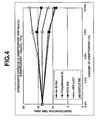
- Examples 8 to 15 which were pharmaceutical compositions containing croscarmellose sodium (sometimes indicated below as “Ac-di-sol”), crospovidone (sometimes indicated below as “polyplasdone XL”), carboxymethylcellulose calcium (sometimes indicated below as “ECG-505") or sodium carboxymethyl starch (sometimes indicated below as “EXPLOTAB”) and containing also sodium chloride, as compared to cases where sodium chloride or one of the respective disintegrants was added alone.
- croscarmellose sodium sometimes indicated below as "Ac-di-sol”
- crospovidone sometimes indicated below as “polyplasdone XL”
- carboxymethylcellulose calcium sometimes indicated below as “ECG-505"
- EXPLOTAB sodium carboxymethyl starch
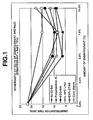
- FIG. 2 shows the relationship between the pH values of the above 2.5% aqueous solutions and the disintegration time of tablets obtained by adding L-HPC/salt in a ratio of 7.5%/2.5% to the pharmaceutically active ingredient-containing granules (Comparative Example 16, and Examples 1, 16, 18 and 20 to 25).
- the disintegratability improving effect weakens as the pH of the 2.5 wt % aqueous solution of the respective water-soluble salts rises.
- the aqueous solutions prepared by suspending or dissolving the water-soluble salts used in the present invention to a concentration of 2.5% in water have a pH being generally from 3 to 9, preferably from 4 to 8.5, more preferably from 4.5 to 8.
- the water-soluble salt used in the present invention is most preferably a neutral salt (normal salt) of a strong acid and a strong base which has substantially no buffering ability (pH 5 to 8).
- the additives mentioned in the Examples below are either substances that conform to official compendia, such as the Pharmacopoeia of Japan, Japanese Pharmaceutical Excipients 2003 and the Japanese Pharmaceutical Codex 1997 , or reagents.
- the water-soluble salt was used after being finely ground in a mortar.
- a suitable amount of purified water was added to 10 g of a dipeptidyl peptidase IV inhibitor (3-but-2-ynyl-5-methyl-2-piperazin-1-yl-3,5-dihydro-4H-imidazo[4,5-d]pyridazin-4-one tosylate; Eisai Inc.), 5 g of mannitol and 0.5 g of hydroxypropyl cellulose (HPC-L; Nippon Soda), and the ingredients were mixed in a mortar, then dried under heating in a thermostatic chamber, thereby giving Active Ingredient-Containing Granules 1.
- a dipeptidyl peptidase IV inhibitor 3-but-2-ynyl-5-methyl-2-piperazin-1-yl-3,5-dihydro-4H-imidazo[4,5-d]pyridazin-4-one tosylate
- Eisai Inc. a suitable amount of purified water was added to 10 g of a dipeptidyl peptid
- a suitable amount of purified water was added to 77.80 g of a dipeptidyl peptidase IV inhibitor (3-but-2-ynyl-5-methyl-2-piperazin-1-yl-3,5-dihydro-4 H- imidazo[4,5-d]pyridazin-4-one tosylate; Eisai Inc.), 8.92 g of mannitol, 14.10 g of cornstarch, 21.15 g of low-substituted hydroxypropyl cellulose (L-HPC LH21; Shin-Etsu Chemical) and 3.53 g of hydroxypropyl cellulose (HPC-L; Nippon Soda), and the mixture was granulated in a stirring granulator.
- a dipeptidyl peptidase IV inhibitor 3-but-2-ynyl-5-methyl-2-piperazin-1-yl-3,5-dihydro-4 H- imidazo[4,5-d]pyridazin-4-one tosy
- the resulting granulated granules were dried under heating in a thermostatic chamber, then rendered to a uniform size, thereby giving Active Ingredient-Containing Granules 2.
- 23.5 mg of microcrystalline cellulose, 1.2 mg of sodium chloride and 2.4 mg of magnesium stearate were added per 209.2 mg of the Active Ingredient-Containing Granules 2 and mixed therewith.
- An Autograph AG5000A (Shimadzu Corporation) was then used to compress the mixture into tablets under 1,200 kg of pressure, thereby giving tablets having an individual weight of 236.2 mg and a diameter of 8.5 mm.
- Microcrystalline cellulose (23.5 mg), 2.4 mg of sodium chloride and 2.4 mg of magnesium stearate were added per 209.2 mg of the Active Ingredient-Containing Granules 2 prepared in Example 3 and mixed therewith.
- An Autograph AG5000A (Shimadzu Corporation) was then used to compress the mixture into tablets under 1,200 kg of pressure, thereby giving tablets having an individual weight of 237.4 mg and a diameter of 8.5 mm.
- Microcrystalline cellulose (23.5 mg), 4.7 mg of sodium chloride and 2.4 mg of magnesium stearate were added per 209.2 mg of the Active Ingredient-Containing Granules 2 prepared in Example 3 and mixed therewith.
- An Autograph AG5000A (Shimadzu Corporation) was then used to compress the mixture into tablets under 1,200 kg of pressure, thereby giving tablets having an individual weight of 239.7 mg and a diameter of 8.5 mm.
- Microcrystalline cellulose (23.5 mg), 11.8 mg of sodium chloride and 2.4 mg of magnesium stearate were added per 209.2 mg of the Active Ingredient-Containing Granules 2 prepared in Example 3 and mixed therewith.
- An Autograph AG5000A (Shimadzu Corporation) was then used to compress the mixture into tablets under 1,200 kg of pressure, thereby giving tablets having an individual weight of 246.8 mg and a diameter of 8.5 mm.
- a suitable amount of purified water was added to 2.593 g of a dipeptidyl peptidase IV inhibitor (3-but-2-ynyl-5-methyl-2-piperazin-1-yl-3,5-dihydro-4 H- imidazo[4,5-d]pyridazin-4-one tosylate; Eisai Inc.), 0.415 g of mannitol, 0.470 g of cornstarch, 0.705 g of low-substituted hydroxypropyl cellulose (L-HPC LH21; Shin-Etsu Chemical), 0.094 g of sodium chloride and 0.141 g of hydroxypropyl cellulose (HPC-L; Nippon Soda).
- a dipeptidyl peptidase IV inhibitor 3-but-2-ynyl-5-methyl-2-piperazin-1-yl-3,5-dihydro-4 H- imidazo[4,5-d]pyridazin-4-one tosylate; Eisai Inc.
- Comparative Examples 1 to 7 are provided below so as to illustrate the remarkable effects of the pharmaceutical compositions obtained in the above Examples 1 to 7.
- Microcrystalline cellulose (23.5 mg) and 2.4 mg of magnesium stearate were added per 209.2 mg of the Active Ingredient-Containing Granules 2 prepared in Example 3 and mixed therewith, an Autograph AG5000A (Shimadzu Corporation) was then used to compress the mixture into tablets under 1,200 kg of pressure, thereby giving tablets having an individual weight of 235.0 mg and a diameter of 8.5 mm.
- Microcrystalline cellulose (23.5 mg), 11.8 mg of low-substituted hydroxypropyl cellulose (L-HPC LH21; Shin-Etsu Chemical) and 2.4 mg of magnesium stearate were added per 209.2 mg of the Active Ingredient-Containing Granules 2 prepared in Example 3 and mixed therewith, an Autograph AG5000A (Shimadzu Corporation) was then used to compress the mixture into tablets under 1,200 kg of pressure, thereby giving tablets having an individual weight of 246.8 mg and a diameter of 8.5 mm.
- a suitable amount of purified water was added to 2.593 g of a dipeptidyl peptidase IV inhibitor (3-but-2-ynyl-5-methyl-2-piperazin-1-yl-3,5-dihydro-4 H- imidazo[4,5-d]pyridazin-4-one tosylate; Eisai Inc.), 0.509 g of mannitol, 0.470 g of cornstarch, 0.705 g of low-substituted hydroxypropyl cellulose (L-HPC LH21; Shin-Etsu Chemical) and 0.141 g of hydroxypropyl cellulose (HPC-L; Nippon Soda).
- a dipeptidyl peptidase IV inhibitor 3-but-2-ynyl-5-methyl-2-piperazin-1-yl-3,5-dihydro-4 H- imidazo[4,5-d]pyridazin-4-one tosylate; Eisai Inc.
- Comparative Examples 10 to 15 are provided below so as to illustrate the remarkable effects of the pharmaceutical compositions obtained in the above Examples 8 to 15.
- Comparative Examples 16 to 26 are provided below so as to illustrate the remarkable effects of the pharmaceutical compositions obtained in the above Examples 16 to 25.
- Comparative Examples 27 to 30 are provided below so as to illustrate the remarkable effects of the pharmaceutical compositions obtained in the above Examples 26 to 29.
- a suitable amount of purified water was added to 2 g of the anti-anxiety drug E2508 prepared by the method described in International Publication WO 02/088121 (N-cyclopropylmethyl-7- (2,6-dimethoxy-4-methoxymethylphenyl) -2-ethyl-N-(tetrahydro-2H-pyran-4-ylmethyl)pyrazolo[1,5-a]pyridine-3-amine tosylate; Eisai Inc.), 2 g of mannitol and 0.12 g of hydroxypropyl cellulose (HPC-L; Nippon Soda), and the ingredients were mixed in a mortar, then dried under heating in a thermostatic chamber, thereby giving Active Ingredient-Containing Granules 5.
- HPC-L hydroxypropyl cellulose
- a suitable amount of purified water was added to 3 g of ascorbic acid (Daiichi Pharmaceutical), which is a type of water-soluble vitamin, 1 g of mannitol and 0.12 g of hydroxypropyl cellulose (HPC-L; Nippon Soda), and the ingredients were mixed in a mortar, then dried under heating in a thermostatic chamber, thereby giving Active Ingredient-Containing Granules 6.
- ascorbic acid Daiichi Pharmaceutical
- HPC-L hydroxypropyl cellulose
- glibenclamide (Wako Pure Chemical Industries), which is a sulfonylurea drug for treating diabetes, 2 g of mannitol and 0.12 g of hydroxypropyl cellulose (HPC-L; Nippon Soda), and the ingredients were mixed in a mortar, then dried under heating in a thermostatic chamber, thereby giving Active Ingredient-Containing Granules 7.
- a suitable amount of purified water was added to 1 g of donepezil hydrochloride (Eisai Inc.), which is an antidementia agent, 1 g of mannitol and 0.06 g of hydroxypropyl cellulose (HPC-L; Nippon Soda), and the ingredients were mixed in a mortar, then dried under heating in a thermostatic chamber, thereby giving Active Ingredient-Containing Granules 8.
- donepezil hydrochloride Esai Inc.
- HPC-L hydroxypropyl cellulose
- a suitable amount of purified water was added to 1 g of memantine hydrochloride (Lachema s.r.o.), which is an antidementia agent, 1 g of mannitol and 0.06 g of hydroxypropyl cellulose (HPC-L; Nippon Soda), and the ingredients were mixed in a mortar, then dried under heating in a thermostatic chamber, thereby giving Active Ingredient-Containing Granules 9.
- memantine hydrochloride Lachema s.r.o.
- HPC-L hydroxypropyl cellulose
- Comparative Examples 31 to 42 are provided below so as to illustrate the remarkable effects of the pharmaceutical compositions obtained in the above Examples 30 to 34.
- the present invention improves the disintegratability of the pharmaceutical compositions without increasing the size of the dosage form and without a decline in quality due to interactions between the pharmaceutically active ingredient and the disintegrator, and thus enables the production of the pharmaceutical compositions having a rapid disintegration time.
- a premix composition which lacks a pharmaceutically active ingredient, and which comprises at least one disintegrant and at least one water-soluble salt having a pH being from 3 to 9 in an aqueous solution of 2.5% concentration
- the pharmaceutical compositions of improved disintegratability can be easily produced by merely adding the premix composition to the formulation. Because improvements in disintegratability can thus be achieved without a loss in the quality of the drug product, the present invention has enormous potential in industry.
Landscapes
- Health & Medical Sciences (AREA)
- Chemical & Material Sciences (AREA)
- Life Sciences & Earth Sciences (AREA)
- General Health & Medical Sciences (AREA)
- Veterinary Medicine (AREA)
- Public Health (AREA)
- Medicinal Chemistry (AREA)
- Animal Behavior & Ethology (AREA)
- Pharmacology & Pharmacy (AREA)
- Epidemiology (AREA)
- Inorganic Chemistry (AREA)
- Bioinformatics & Cheminformatics (AREA)
- Engineering & Computer Science (AREA)
- Diabetes (AREA)
- Molecular Biology (AREA)
- Chemical Kinetics & Catalysis (AREA)
- Biophysics (AREA)
- Organic Chemistry (AREA)
- General Chemical & Material Sciences (AREA)
- Nuclear Medicine, Radiotherapy & Molecular Imaging (AREA)
- Emergency Medicine (AREA)
- Endocrinology (AREA)
- Hematology (AREA)
- Obesity (AREA)
- Medicinal Preparation (AREA)
- Pharmaceuticals Containing Other Organic And Inorganic Compounds (AREA)
Abstract
Description
- The present invention relates to a method for improving disintegratability of drug products and producing pharmaceutical compositions having a rapid disintegration time by blending therein both a disintegrant and a water-soluble salt, and more specifically by blending therein both a disintegrant and a water-soluble inorganic salt having a pH being from 3 to 9 in an aqueous solution of 2.5% concentration. In particular, the invention relates to a method for improving the disintegratability of drug products by blending therein low-substituted hydroxypropyl cellulose and a water-soluble salt. Also, the invention relates to a premix composition obtained by the preliminary mixture of a disintegrant with a water-soluble inorganic salt having a pH being from 3 to 9 in an aqueous solution of 2.5% concentration.
- In order for a pharmaceutical composition to exhibit pharmacological effects, the pharmaceutically active ingredient included to the pharmaceutical composition must be absorbed into the body. Orally administered pharmaceutical compositions are generally absorbed in the body by passing through three stages: (1) disintegration of the pharmaceutical composition, (2) dissolution of the pharmaceutically active ingredient, and (3) absorption of the pharmaceutically active ingredient from the digestive tract. Hence, the pharmaceutical composition must disintegrate for the pharmacological effects to appear. For example, when a pharmaceutical composition such as a tablet does not rapidly disintegrate within the digestive tract following oral administration, the dissolution rate and the absorption rate of the pharmaceutically active ingredient decrease, leading to problems such as the following. A first problem is that a rapid pharmacological effect cannot be expected to appear following administration. This is an especially important concern in drugs that are required to manifest rapid pharmacological effects, such as analgesics (e.g., opioid drugs) and quick-acting hypoglycemic drugs (e.g., nateglinide). A second problem is the decline in pharmacological effects and the uncertainty of those effects (increased variability of pharmacological effects) owing to the decreased bioavailability of the drug. This latter concern is important in preparations which have a high drug content, preparations which contain a poorly soluble drug, and preparations which contain a poorly absorbed drug.
- One general approach for improving the disintegratability of the pharmaceutical composition is a method that involves adding a disintegrant to the pharmaceutical composition. However, to achieve rapid disintegratability of the pharmaceutical composition, it is often necessary to add a large amount of disintegrant. In such cases, a number of problems arise: (1) compliance decreases as the size of the dosage form becomes larger, (2) productivity decreases as the size of the dosage form increases, and (3) the cost of the bulk materials for the drug product rises. Because increasing the drug content in the preparation is generally accompanied by an increase in the size of the dosage form and prolongation of the disintegration time, the foregoing problems are especially acute in preparations having a high drug content. In the case of drugs which, when formulated together with a disintegrant, undergo a decrease in chemical stability or experience a decline in release from the preparation, these problems appear due to limitations on the types of disintegrants that can be formulated in the pharmaceutical preparation. Examples of interactions between drugs and the disintegrant include oxidative decomposition of the drug due to the peroxide present in crospovidone, and electrostatic interactions between polyanionic disintegrants such as croscarmellose sodium and cations such as the acidic salt of basic drugs. Moreover, in preparations containing two or more different drugs, not only are there many instances where the particular disintegrants that may be used are limited by interactions between the drug and the preparation, because the drug content in the preparation is higher than in preparations containing only one drug, resolving the above problems often becomes even more difficult.
- One way to overcome these problems is to develop novel disintegrants having a high disintegratability. However, the vast amounts of safety data that must be collected in order to employ such compounds in pharmaceutical and food products represents a very high barrier in terms of both time and cost. By contrast, if it were possible to find additives that, when employed together with disintegrants currently in common use, could enhance the disintegratability, improvements in disintegratability would be achievable without any accompanying drawbacks in terms of time and cost, which would be industrially beneficial. In particular, because improvements in the disintegratability would be achievable without a loss in the quality of the pharmaceutical product even in cases where drug-disintegrant interactions limit the disintegrants that can be used, such a development would have a very high industrial utility.
- Examples of prior art relating to improvements in the disintegratability of pharmaceutical preparations using inorganic salts are given below. For example, Patent Document 1 discloses rapidly disintegrating tablets which contain a water-insoluble inorganic excipient and a disintegrant; Patent Document 2 discloses solid preparations containing a neutral or basic water-insoluble silicate, a water-insoluble phosphate, a water-insoluble metal oxide and a disintegrant; and Patent Document 3 discloses an improvement in the disintegratability of chitosan-containing tablets using sodium chloride alone. Patent Document 4 discloses a blowing agent containing citric acid and an alkaline earth metal carbonate, and relates to tablets having an improved disintegratability due to the generation of carbon dioxide within the digestive juices.
Patent Document 5 discloses tablets of improved disintegratability which are obtained by incorporating a volatile excipient such as ammonium bicarbonate or ammonium carbonate, and sublimating the volatile salt by drying under applied heat and a vacuum so as to form porous tablets. In addition, Patent Document 6 discloses a method for improving the disintegratability of pressed compacts in which sodium chloride or potassium chloride has been added to a pharmaceutical composition; and Patent Document 7 discloses a composition containing a solid dispersion of a poorly soluble drug, in which composition the disintegratability has been improved with a substance such as sodium chloride which has an endothermic heat of dissolution. However, improvements in disintegratability achieved through the concomitant use of disintegrants and water-soluble inorganic salts such as sodium chloride have not been disclosed in these prior documents.
Patent Document 1: Japanese Patent Application (Published Japanese Translation ofPCT International Publication) No. 2002-505269
Patent Document 2: Japanese Patent Application Laid-open No.H10-114655
Patent Document 3: Japanese Patent Application Laid-open No.H10-316576
Patent Document 4: Japanese Patent Application (Published Japanese Translation ofPCT International Publication) No. 2002-509872
Patent Document 5: Japanese Patent Application (Published Japanese Translation ofPCT International Publication) No. 2004-517859
Patent Document 6: Swiss Patent No.CH 656535
Patent Document 7: International PublicationWO 98/29137 - Accordingly, there exists a strong desire both for pharmaceutical compositions which rapidly exhibit pharmacological effects without an increase in the size of the dosage form due to a larger amount of disintegrant or a decline in quality due to interactions between the pharmaceutically active ingredient and the disintegrant, and also for a method of preparing such pharmaceutical compositions. Such a desire is especially acute with regard to preparations which contain a drug such as an analgesic or a quick-acting hypoglycemic drug that requires the rapid appearance of pharmacological effects following administration, preparations which have a high content of the pharmaceutically active ingredient, and preparations which contain two or more different pharmaceutically active ingredients.
- It is therefore an object of the present invention is to provide a method for preparing pharmaceutical compositions of improved disintegratability without an increase in the size of the dosage form due to the addition of disintegrant and without a decline in quality due to interactions between the active pharmaceutical ingredient and the disintegrant. Another object of the invention is to provide premixed disintegrant compositions which are capable of improving disintegratability without an increase in the size of the dosage form due to the addition of disintegrant and without a decline in quality due to interactions between the pharmaceutically active ingredient and the disintegrant.
- The inventors have conducted extensive studies in order to resolve the above problems. As a result, they have discovered that by employing a water-soluble salt, especially a water-soluble inorganic salt commonly used as a drug additive, such as sodium chloride or potassium chloride, together with a disintegrant such as low-substituted hydroxypropyl cellulose, the disintegratability of pharmaceutical preparations can be markedly improved. Moreover, the inventors have found that combinations of various water-soluble salts with various disintegrants improve pharmaceutical preparation disintegratability. These discoveries ultimately led to the present invention. With the inventive method of preparation, even when the disintegrants that may be used are limited owing to such reasons as interactions between the pharmaceutically active ingredient and the disintegrant, pharmaceutical compositions with excellent disintegratability can be prepared without an increase in the size of the dosage form or a decrease in quality on account of interactions between the pharmaceutically active ingredient and the disintegrant.
- According to one aspect of the invention, there is provided a method for preparing pharmaceutical compositions, which method includes the step of blending, in a pharmaceutical composition containing a pharmaceutically active ingredient, at least one disintegrant and at least one water-soluble salt having a pH being from 3 to 9 in an aqueous solution of 2.5% concentration. By including both the disintegrant and the water-soluble salt, it is possible to achieve more rapid disintegration of the pharmaceutical composition than when either of these ingredients is included by itself.
- The invention also provides a method for improving the disintegration time of a pharmaceutical composition by blending, in a pharmaceutical composition containing a pharmaceutically active ingredient, at least one disintegrant and at least one water-soluble salt having a pH being from 3 to 9 in an aqueous solution of 2.5% concentration.
- According to a second aspect, the invention provides a premix composition lacking a pharmaceutically active ingredient, which composition includes at least one disintegrant and at least one water-soluble salt having a pH being from 3 to 9 in an aqueous solution of 2.5% concentration.
- The present invention improves the disintegratability of the pharmaceutical compositions without increasing the size of the dosage form and without a decline in quality due to interactions between the pharmaceutically active ingredient and the disintegrant, and thereby enables the preparation of the pharmaceutical compositions having a rapid disintegration time. Moreover, in the present invention, by using a premix composition lacking a pharmaceutically active ingredient, which composition includes at least one disintegrant and at least one water-soluble salt having a pH being from 3 to 9 in an aqueous solution of 2.5% concentration, the pharmaceutical composition having an improved disintegratability can be easily prepared by merely adding the premix composition to the formulation.
- The embodiments presented below are to be considered in all respects as illustrative of the invention and not limitative. Various modifications and changes may be made thereto without departing from the spirit and scope of the invention.
- The first aspect of the invention provides a method for preparing pharmaceutical compositions having a rapid disintegration time by blending, in the pharmaceutical composition containing a pharmaceutically active ingredient, at least one disintegrant and at least one water-soluble salt having a pH being from 3 to 9 in an aqueous solution of 2.5% concentration. First, the respective ingredients used in the inventive method of preparation are described.
- In the present invention, the term "water-soluble salt" refers to a salt which is defined both by their pH in an aqueous solution of 2.5% concentration and by their solubility in purified water. The pH of an aqueous solution obtained by suspending or dissolving a water-soluble salt used in the present invention in water to a concentration of 2.5% is generally from 3 to 9, preferably from 4 to 8.5, and more preferably from 4.5 to 8. The salt is even more preferably a neutral salt (normal salt) (
pH 5 to 8) of a strong acid and a strong base which has substantially no buffering ability. In the present invention, the water-soluble salt refers to a salt having a solubility in purified water of generally from 0.1 to 300 g/100 g of purified water, preferably from 0.5 to 200 g/100 g of purified water, more preferably from 1 to 100 g/100 g of purified water, and even more preferably from 2 to 50 g/100 g of purified water. In the water-soluble salt, the term "salt" refers to a salt formed by the complete or partial neutralization of "an organic acid or an inorganic acid" with "an organic base or an inorganic base". For example, bases which have not been neutralized (metal oxides, metal hydroxides), such as sodium hydroxide, aluminum hydroxide and magnesium oxide, are not encompassed by the salt used in the present invention. However, acidic salts such as sodium dihydrogen phosphate, which is a partially neutralized salt, and normal salts such as sodium chloride, which is a completely neutralized salt, are encompassed by the water-soluble salt used in the invention. - The water-soluble salt used in the invention is exemplified by water-soluble inorganic salts and water-soluble organic salts. In the present invention, the term "water-soluble inorganic salt" refers to a salt composed of a water-soluble inorganic acid and a water-soluble inorganic base. The term "water-soluble organic salt" refers to other salts; that is, to salts which include at least a water-soluble organic acid or a water-soluble organic base.
- Examples of the water-soluble inorganic salts that may be used in the present invention include, but are not limited to, sodium chloride, sodium bromide, potassium chloride, potassium bromide, lithium chloride, disodium hydrogen phosphate, sodium dihydrogen phosphate, dipotassium hydrogen phosphate, potassium dihydrogen phosphate, ammonium chloride, ammonium bromide, aluminum chloride, calcium chloride, calcium bromide, magnesium chloride, magnesium bromide, barium chloride, barium bromide, sodium sulfate, magnesium sulfate, sodium bicarbonate, potassium bicarbonate, ammonium carbonate and the like. Examples of the water-soluble organic salts that may be used in the invention include, but are not limited to, organic salts such as sodium acetate, sodium oxalate, potassium acetate, sodium citrate, sodium dihydrogen citrate, disodium citrate, sodium succinate, monosodium succinate, sodium benzoate, disodium edetate, sodium erythorbate, sodium ascorbate, calcium acetate, potassium bitartrate, sodium tartrate, calcium lactate, sodium lactate, monosodium fumarate and the like; and amino acids such as glycine, aminoethanesulfonic acid, alanine, lysine hydrochloride, arginine hydrochloride, aspartic acid, glutamic acid and the like.
- The water-soluble salt used in the invention encompasses water-soluble inorganic salts and water-soluble organic salts, although water-soluble inorganic salts are preferred. Of these, sodium chloride, magnesium chloride, calcium chloride, sodium bicarbonate, ammonium chloride and potassium chloride are more preferred; sodium chloride, magnesium chloride, sodium bicarbonate, potassium chloride and ammonium chloride are even more preferred; and sodium chloride is most preferred.
- The amount of the water-soluble salt used in the invention that is added to the pharmaceutical composition is generally from 0.05 to 40 % by weight, preferably from 0.1 to 20 % by weight, more preferably from 0.2 to 10 % by weight, and even more preferably from 0.5 to 5 % by weight. At least one type of water-soluble salt used in the invention is added to the pharmaceutical composition, although two or more water-soluble salts may be added.
- There are no particular limitations on the disintegrant used in the present invention, so long as it promotes the disintegration of the pharmaceutical composition owing to such properties as swelling in an aqueous solvent or the formation of water channels. However, disintegrants having a relatively weak swellability, such as cornstarch, are not included in the disintegrant used in the present invention. Specific examples of the disintegrant used in the present invention include sodium carboxymethyl starch, carboxymethylcellulose, carboxymethylcellulose calcium, low-substituted sodium carboxymethyl starch, low-substituted hydroxypropyl cellulose, hydroxypropyl starch, partly pregelatinized starch, croscarmellose sodium, crospovidone and the like. Of these, croscarmellose sodium, crospovidone, carboxymethylcellulose calcium, low-substituted hydroxypropyl cellulose and sodium carboxymethyl starch are preferred; croscarmellose sodium, carboxymethylcellulose calcium, low-substituted hydroxypropyl cellulose and sodium carboxymethyl starch are more preferred; and low-substituted hydroxypropyl cellulose is even more preferred.
- Although there are no particular limitations on the amount of disintegrant included in the pharmaceutical composition according to the invention, the amount of the disintegrant is generally from 0.1 to 50 % by weight, preferably from 0.5 to 30 % by weight, more preferably from 1 to 20 % by weight, and even more preferably from 2 to 15 % by weight. At least one type of the disintegrant used in the invention may be included in the pharmaceutical composition, although it is possible to include two or more disintegrants.
- In addition, there are no particular limitations on the combination of the disintegrant with the water-soluble salt in the pharmaceutical composition according to the invention, the combination of the disintegrant with the water-soluble salt is preferably a combination of low-substituted hydroxypropyl cellulose with sodium chloride, a combination of low-substituted hydroxypropyl cellulose with potassium chloride, or a combination of low-substituted hydroxypropyl cellulose with sodium bicarbonate. A combination of low-substituted hydroxypropyl cellulose with sodium chloride is more preferred.
- Moreover, in the pharmaceutical composition according to the invention, there are no particular limitations on the amount of water-soluble salt included based on the disintegrant, the amount of the water-soluble salt is generally from 0.01 to10 parts by weight, preferably from 0.02 to 3 parts by weight, more preferably from 0.05 to 2 parts by weight, even more preferably from 0.10 to 1 part by weight, and most preferably from 0.15 to 0.5 part by weight, based on one part by weight of the disintegrant.
- There are no particular limitations on the pharmaceutically active ingredient used in the present invention, provided it exhibits a therapeutic effect when absorbed in the body. However, it is preferable for the pharmaceutically active ingredient to be electrically neutral or positively charged within the pharmaceutical preparation. An acidic active ingredient in a free form or an acidic salt of a basic active ingredient is more preferred. An acidic salt of a basic active ingredient is even more preferred. There are no particular limitations on the type of acidic salt of a basic active ingredient, provided it forms a pharmacologically acceptable salt with the pharmaceutically active ingredient. Examples thereof include hydrohalides (e.g., hydrofluorides, hydrochlorides, hydrobromides, hydroiodides), inorganic acid salts (e.g., sulfates, nitrates, perchlorates, phosphates, carbonates, bicarbonates), organic carboxylates (e.g., acetates, oxalates, maleates, tartrates, fumarates, citrates), organic sulfonates (e.g., mesylates, trifluoromethanesulfonates, ethanesulfonates, benzenesulfonates, tosylates, camphorsulfonates) and acidic amino acid salts (e.g., aspartates, glutaminates). Of these, hydrochlorides or tosylates of the pharmaceutically active ingredient are preferred, and tosylates of the active ingredient are more preferred. The acidic salts of basic active ingredients used in the invention also encompass cases in which the free form of a basic active ingredient and an acid (organic acid or inorganic acid) that have been separately included in the preparation elicit a neutralization reaction, and result in the formation of acid salt of the basic active ingredient within the pharmaceutical preparation.
- Specific examples of the pharmaceutically active ingredient used in the present invention include antidementia agents such as donepezil hydrochloride, galantamine hydrobromide, rivastigmine tartrate, memantine hydrochloride and tacrine; drugs for treating diabetes such as nateglinide, metformin, α-glycosidase inhibitors (e.g., voglibose), sulfonylureas (e.g., glibenclamide, glimepiride), insulin resistance-enhancing agents (e.g., pioglitazone), dipeptidyl peptidase IV inhibitors (e.g., 3- but-2-ynyl-5-methyl-2-piperazin-1-yl-3,5-dihydro-4H-imidazo[4,5-d]pyridazin-4-one tosylate prepared by the method described in International Publication
WO 03/104229 WO 02/088121 - There are no particular limitations on the amount in which the pharmaceutically active ingredient having a pharmacological effect is included in the pharmaceutical composition according to the invention, the amount of the pharmaceutically active ingredient is generally from 10 to 99 % by weight, preferably from 20 to 97 % by weight, more preferably from 30 to 95 % by weight, and even more preferably from 40 to 95 % by weight, based on 100 % by weight of the overall pharmaceutical composition. Moreover, there are no particular limitations on the pharmaceutical composition according to the present invention, so long as it contains at least one type of the pharmaceutically active ingredient having a pharmacological effect which is intended to be rapidly released from the pharmaceutical composition.
- There are no particular limitations on the pharmaceutical composition according to the present invention, provided it is a pharmaceutical composition having an improved disintegratability and a rapid disintegration time owing to the addition of at least one disintegrant and at least one water-soluble salt having a pH being from 3 to 9 in an aqueous solution of 2.5% concentration. As used herein, the term "rapid disintegration time" means that the disintegration time is shortened relative to the addition of only a disintegrant or only a water-soluble salt to the pharmaceutical composition. The degree of shortening in the disintegration time is generally at least 10%, preferably at least 15%, more preferably at least 20%, and even more preferably at least 25%.
- No particular limitation is imposed on the dosage form of the pharmaceutical composition according to the present invention. Preferred examples include dosage forms suitable for oral administration, such as tablets, capsules, granules and the like. Tablets are more preferred. The pharmaceutical composition according to the present invention is not subject to any particular limitation, so long as it includes at least one pharmaceutically active ingredient intended for rapid release from the pharmaceutical composition. Therefore, the pharmaceutical compositions which include only one type of pharmaceutically active ingredient having pharmacological effects and from which release of the active ingredient having pharmacological effects is slowed by a release-controlled coat, a release-controlled matrix and the like are not encompassed by the present invention.
- There are no particular limitations on the distribution of the pharmaceutically active ingredient, the disintegrant, and the water-soluble salt having a pH being from 3 to 9 in an aqueous solution of 2.5% concentration within the pharmaceutical composition according to the invention, so long as these components are included in the pharmaceutical composition. However, it is preferable for each of the pharmaceutically active ingredient, the disintegrant and the water-soluble salt having a pH being from 3 to 9 in an aqueous solution of 2.5% concentration to be uniformly distributed within the pharmaceutical composition.
- The pharmaceutical composition according to the present invention may comprises various pharmacologically acceptable carriers, such as excipients, lubricants, binders, disintegrants and the like, if necessary, may also comprises such additives as preservatives, colorants, sweeteners, plasticizers, film coating agents and the like. Examples of the excipients include sugars, sugar alcohols, starch, gelatinized starch, microcrystalline cellulose, light anhydrous silicic acid, synthetic aluminum silicate, magnesium aluminometasilicate and the like. Examples of the sugars include, but are not limited to, monosaccharides such as glucose, fructose and the like, and disaccharides such as maltose, lactose, sucrose, trehalose and the like. Examples of the sugar alcohols include, but are not limited to, mannitol, erythritol, inositol, sorbitol and the like. Examples of lubricants include, but are not limited to, magnesium stearate, calcium stearate, talc, sodium stearyl fumarate and the like. Examples of the binders include, but are not limited to, hydroxypropyl cellulose, methylcellulose, carboxymethyl cellulose sodium, hydroxypropyl methylcellulose, polyvinylpyrrolidone and the like. Examples of the disintegrants include, but are not limited to, carboxymethyl cellulose, carboxymethylcellulose calcium, croscarmellose sodium, sodium carboxymethyl starch, low-substituted hydroxypropyl cellulose and the like. Examples of the preservatives include, but are not limited to, p-oxybenzoic acid esters, chlorobutanol, benzyl alcohol, phenethyl alcohol, dehydroacetic acid, sorbic acid and the like. Examples of the colorants include, but are not limited to, water-insoluble lakes, natural colorants (e.g., β-carotene, chlorophyll and red iron oxide), yellow ferric oxide, red ferric oxide, black iron oxide and the like. Examples of the sweeteners include, but are not limited to, saccharin sodium, dipotassium glycyrrhizinate, aspartame, stevia and the like. Examples of the plasticizers include, but are not limited to, glycerol esters of fatty acids, triethyl citrate, propylene glycol, polyethylene glycol and the like. Examples of the film coating agents include, but are not limited to, hydroxypropyl methylcellulose, hydroxypropyl cellulose and the like. Film coatings are not limited to water-soluble film coatings. If necessary, a gastric coating or an enteric coating may be applied so as to give a pharmaceutical composition which is intended to rapidly release the pharmaceutically active ingredient following dissolution of the coating film. Alternatively, it is also acceptable not to apply a film coating.
- Next, the method for preparation according to the present invention is described. The method of preparing a pharmaceutical composition comprises the step of blending, in the pharmaceutical composition containing a pharmaceutically active ingredient, at least one disintegrant and at least one water-soluble salt having a pH being from 3 to 9 in an aqueous solution of 2.5% concentration. The blending of the disintegrant or the water-soluble salt having a pH being from 3 to 9 in an aqueous solution of 2.5% concentration in the pharmaceutical composition according to the invention may be carried out in any one step or plurality of steps in the conventional preparation of the pharmaceutical composition. Moreover, the water-soluble salt and the disintegrant may be added in the same step or may each be added in separate steps.
- There are no particular limitations on the method of preparation used in the present invention. For example, granules containing the pharmaceutically active ingredient may be formed by wet-granulating or dry-granulating powders containing the pharmaceutically active ingredient, the excipients etc. in a granulator. The granules thus obtained may, for example, be formed into tablets using a conventional tabletting machine. When wet granulation is carried out, the granulated granules obtained may be dried and, if necessary, rendered to a uniform size. In the method of preparation according to the present invention, the pharmaceutical composition in the form of tablets or the like may be produced by, for example, addition of the water-soluble salt before the granulation step, addition after the granulation step, or addition both before and after the granulation step. The disintegrant may be added in the same way as the water-soluble salt. The water-soluble salt may be added in the form of a powder, or as a solution or a suspension. When added as a powder, it is preferable to crush the salt into fine powders before addition.
- In addition, the method for improving the disintegratability of the pharmaceutical compositions according to the present invention comprises blending, in the pharmaceutical composition containing a pharmaceutically active ingredient, at least one disintegrant and at least one water-soluble salt having a pH being from 3 to 9 in an aqueous solution of 2.5% concentration in the same manner as explained in the above-described method of preparation according to the present invention, thereby improving the disintegratability of the pharmaceutical composition, as compared to cases where only the disintegrant or the water-soluble salt alone is included in the pharmaceutical composition.
- In another aspect of the present invention, there is provided a premix composition which lacks a pharmaceutically active ingredient, and which comprises at least one type of disintegrant and at least one type of water-soluble salt having a pH being from 3 to 9 in an aqueous solution of 2.5% concentration. By adding the premix composition according to the present invention to a composition containing a pharmaceutically active ingredient, the disintegratability of the pharmaceutical composition can easily be improved. That is, because the premix composition according to the present invention contains a water-soluble salt and a disintegrant that have been uniformly pre-mixed, the pharmaceutical compositions of improved disintegratability can be more conveniently obtained than when each of these ingredients is separately added, which is highly useful. Moreover, because the water-soluble salt having a pH being from 3 to 9 in an aqueous solution of 2.5% concentration and the disintegrant are uniformly distributed, even in cases where a powder is added as a preparation additive, there is no need for the powder to be finely milled. The term "uniformity" refers herein not to uniformity at the molecular level. Rather, it may refer to, for example, a physical mixture of the finely milled water-soluble salt and disintegrant (dry mixture), a form obtained by layering the water-soluble salt onto the surface of the disintegrant, or a form obtained by spray drying a suspension or solution of the disintegrant and the water-soluble salt.
- There are no particular limitations on the combination of the disintegrant and the water-soluble salt having a pH being from 3 to 9 in an aqueous solution of 2.5% concentration according to the present invention. Preferable examples of the disintegrant include croscarmellose sodium, crospovidone, carboxymethylcellulose calcium, low-substituted hydroxypropyl cellulose or sodium carboxymethyl starch; more preferably croscarmellose sodium, carboxymethylcellulose calcium, low-substituted hydroxypropyl cellulose or sodium carboxymethyl starch; and even more preferably low-substituted hydroxypropyl cellulose. Preferable examples of the water-soluble salt include a water-soluble inorganic salt; more preferably sodium chloride, magnesium chloride, calcium chloride, sodium bicarbonate, ammonium chloride or potassium chloride; even more preferably sodium chloride, magnesium chloride, sodium bicarbonate, potassium chloride or ammonium chloride; and most preferably sodium chloride. Preferred combinations of the disintegrant with the water-soluble salt having a pH being from 3 to 9 in an aqueous solution of 2.5% concentration include a combination of low-substituted hydroxypropyl cellulose with sodium chloride, a combination of low-substituted hydroxypropyl cellulose with potassium chloride, and a combination of low-substituted hydroxypropyl cellulose with sodium bicarbonate. A combination of low-substituted hydroxypropyl cellulose with sodium chloride is most preferred.
- In the present invention, although there are no particular limitations on the average particle size of the premix composition which comprises at least one water-soluble salt having a pH being from 3 to 9 in an aqueous solution of 2.5% concentration and at least one disintegrant but lacks a pharmaceutically active ingredient, the average particle size is generally from 1 to 1,000 µm, preferably from 5 to 500 µm, and more preferably from 10 to 250 µm. In the present invention, the ratio of the water-soluble salt to the disintegrant in the premix composition which comprises at least one water-soluble salt having a pH being from 3 to 9 in an aqueous solution of 2.5% concentration and at least one disintegrant but lacks a pharmaceutically active ingredient is generally from 0.01 to 10 parts by weight, preferably from 0.02 to 3 parts by weight, more preferably from 0.05 to 2 parts by weight, even more preferably from 0.10 to 1 part by weight, and most preferably from 0.15 to 0.5 part by weight, based on one part by weight of the disintegrant. Moreover, in the present invention, the premix composition which comprises at least one water-soluble salt having a pH being from 3 to 9 in an aqueous solution of 2.5% concentration and at least one disintegrant but lacks the pharmaceutically active ingredient may be used by blending them alone into the pharmaceutical composition, although disintegrants, water-soluble salts, excipients and other ingredients may also be added where necessary.
- The pharmaceutical composition according to the present invention may be produced by, for example, the following method.
- A suitable amount of purified water is added to 77.8 g of 3-but-2-ynyl-5-methyl-2-piperazin-1-yl-3,5-dihydro-4H-imidazo[4,5-d]pyridazin-4-one tosylate, which is a dipeptidylpeptitase IV inhibitor, prepared by the method described in International Publication
WO 03/104229, 8.92 - Alternatively, the pharmaceutical composition according to the present invention may be prepared by, for example, the following method.
- A solution obtained by dissolving 3.53 g of hydroxypropyl cellulose (Nippon Soda) and 2 g of sodium chloride in a suitable amount of purified water is added to 77.8 g of 3-but-2-ynyl-5-methyl-2-piperazin-1-yl-3,5-dihydro-4H-imidazo[4,5-d]pyridazin-4-one tosylate, 8.92 g of mannitol, 14.10 g of cornstarch and 21.15 g of low-substituted hydroxypropyl cellulose (Shin-Etsu Chemical), and granulation is carried out in a stirring granulator. The granulated granules are subsequently dried by heating in a thermostatic chamber, then rendered to a uniform size. Next, 10 g of microcrystalline cellulose and 1 g of magnesium stearate are added per 91 g of the sized granules and mixed, following which the mixture is formed into tablets using a single-punch tabletting machine, enabling tablets having a weight of 239.7 mg and a diameter of 8.5 mm to be obtained. In addition, a water-soluble film composed primarily of hydroxypropyl methyl-cellulose or the like may be applied to the tablets using a coating machine.
- Examples are given below to more fully illustrate the present invention, but are not intended to limit the scope of the invention.
- Using the dipeptidyl peptidase IV inhibitor-containing tablets prepared in Examples 1 to 2 and Comparative Examples 1 to 6, the disintegration times were measured in accordance with the disintegration test method described in the Pharmacopoeia of Japan (test fluid: water; auxiliary disk not used). The results are shown in Tables 1 and 2.
- The disintegration time in Comparative Example 1, where neither sodium chloride nor L-HPC was included, was 23.9 minutes; the disintegration times in Comparative Examples 2 to 4, where 5%, 10% or 20% of sodium chloride was added, were from 20.6 to 21.7 minutes; and the disintegration times in Comparative Examples 5 and 6, where 10% or 20% of L-HPC was added to Comparative Example 1, were from 17.8 to 18.3 minutes. Hence, even when sodium chloride or L-HPC was added in a high concentration of 20%, a sufficient disintegratability improving effect was not obtained. By contrast, the disintegration times in Examples 1 and 2, where sodium chloride and L-HPC were added in a combined amount of 10% at a proportion of 1:3 or 2:2, were respectively 8.2 minutes and 11.6 minutes. These results showed a distinct improvement in the disintegration time, as compared to the results obtained in Comparative Examples 1 to 6. Such improvement effects were even more striking than when 20% of the respective ingredients were added. Hence, the inclusion of both L-HPC and sodium chloride clearly had a synergistic disintegratability improving effect. In the tables, "St-Mg" refers to magnesium stearate.
-
Table 1 Active Ingredient-Containing Granules 1 Active Ingredient-Containing Granules 2 Active Ingredient-Containing Granules 3 Active Ingredient-Containing Granules 4 Dipeptidyl peptidase IV inhibitor* 10.00g 77.80g 2.593g 2.593g Mannitol 5.00g 8.92g 0.509g 0.415g Cornstarch - 14.10g 0.470g 0.470g L-HPC - 21.15g 0.705g 0.705g NaCl - - - 0.094g HPC-L 0.50g 3.53g 0.141g 0.141g Active Ingredient-Containing Granules 5Active Ingredient-Containing Granules 6 Active Ingredient-Containing Granules 7 Active Ingredient-Containing Granules 8 Active Ingredient-Containing Granules 9 Anti-anxiety drug** 2.00g - - - - Ascorbic acid - 3.00g - - - Glibenclamide - - 2.00g - - Donepezii hydrochloride - - - 1.00g - Memantine hydrochloride - - - - 1.00g Mannitol 2.00g 1.00g 2.00g 1.00g 1.00g HPC-L 0.12g 0.12g 0.12g 0.06g 0.06g * 3-But-2-ynyl-5-methyl-2-piperazin-1-yl-3,5-dihydro-4H-imidazo[4,5-d]pyridazin-4-one tosylate
** N-Cyclopropylmethyl-7-(2,6-dimethoxy-4-methoxymethylphenyl)-2-ethyl-N-(tetrahydro-2H-pyran-4-ylmethyl) pyrazolo[1,5-a]pyridine-3-amine tosylate -

- A test was conducted on the effects of the sodium chloride content on the disintegration time.
- Using the dipeptidyl peptidase IV inhibitor-containing tablets prepared in Examples 3 to 6 and Comparative Examples 7 and 8, the disintegration times were measured in accordance with the disintegration test method described in the Pharmacopoeia of Japan (test fluid: water; auxiliary disk not used) (see Table 2). As a result, as compared to a disintegration time in Comparative Example 7 which included L-HPC being 15.5 minutes, the disintegration times in Examples 3 to 6 which included 0.5%, 1%, 2% or 5% of sodium chloride were respectively 13.2 minutes, 8.5 minutes, 6.2 minutes and 6.7 minutes. Hence, the disintegration time improved as the amount of sodium chloride added was increased. In Comparative Example 8, where 5% of L-HPC was added to Comparative Example 7, the disintegration time was 14.5 minutes; hence, disintegration time improving effects were not observed in these examples. These results demonstrated that the synergistic disintegratability-enhancing effects of sodium chloride and L-HPC can be achieved with the addition of a small amount of sodium chloride.
- A test was conducted on the effects of the manner of sodium chloride blending on the disintegration time.
- Using the dipeptidyl peptidase IV inhibitor-containing tablets prepared in Example 7 and Comparative Example 9, the disintegration times were measured in accordance with the disintegration test method described in the Pharmacopoeia of Japan (test fluid: water; auxiliary disk not used) (see Table 3). As a result, the disintegration times for Comparative Example 9 in which the granulated granules did not contain sodium chloride (Active Ingredient-Containing Granules 3 were used) and for Example 7 in which the granulated granules contained 2% of sodium chloride (Active Ingredient-Containing Granules 4 were used) were respectively 21.2 minutes and 9.2 minutes, demonstrating a disintegratability improving effect from the addition of sodium chloride. Regardless of the method of blending sodium chloride, i.e., regardless of whether sodium chloride is included into the granulated granules (intra-granularly) or as an external additive outside of the granulated granules (extra-granularly) (Test Examples 1 and 2), the results demonstrated that the synergistic disintegratability improving effects can be achieved with sodium chloride and L-HPC.
-
Table 3 Example 7 Comp. Ex. 9 Active Ingredient-Containing Granules 3 - 220.9 Active ingredient-Containing Granules 4 220.9 - Microcrystalline cellulose 11.8 11.8 NaCl - - L-HPC - - St-Mg 2.4 2.4 Weight per one tablet (mg) 235.0 235.0 Disintegration time (min) 9.2 21.2 - Using the dipeptidyl peptidase IV inhibitor-containing tablets prepared in Examples 8 to 15 and Comparative Examples 3 and 10 to 15, the disintegration times were measured in accordance with the disintegration test method described in the Pharmacopoeia of Japan (test fluid: water; auxiliary disk not used). The results are shown in Tables 4 and 5, and
FIG. 1 . It was found that the disintegration time improved markedly in Examples 8 to 15, which were pharmaceutical compositions containing croscarmellose sodium (sometimes indicated below as "Ac-di-sol"), crospovidone (sometimes indicated below as "polyplasdone XL"), carboxymethylcellulose calcium (sometimes indicated below as "ECG-505") or sodium carboxymethyl starch (sometimes indicated below as "EXPLOTAB") and containing also sodium chloride, as compared to cases where sodium chloride or one of the respective disintegrants was added alone. However, in Comparative Examples 14 and 15, where cornstarch, which has a weak swellability, was used as the disintegrant, the disintegration time remained about the same; that is, a synergistic effect owing to use together with sodium chloride was not confirmed. The synergistic effects on the disintegration time by croscarmellose sodium, crospovidone, carboxymethylcellulose calcium and sodium carboxymethyl starch when used together with sodium chloride were thus apparent. -

-

- Using the dipeptidyl peptidase IV inhibitor-containing tablets prepared in Examples 16 to 25 and Comparative Examples 5 and 16 to 26, the disintegration times were measured in accordance with the disintegration test method described in the Pharmacopoeia of Japan (test fluid: water; auxiliary disk not used) (see Table 6). As a result, it was confirmed that, in each of Examples 16 to 25, which were pharmaceutical compositions containing a water-soluble salt other than anhydrous sodium carbonate, i.e., a water-soluble salt having a pH being from 3 to 9 in an aqueous solution of 2.5% concentration, the disintegration time improved markedly, as compared to cases in which L-HPC or one of the respective water-soluble salts was added alone. Moreover, this disintegratability improving effect was also confirmed for anhydrous calcium chloride, which has a heat of dissolution that is exothermic (Examples 18 and 19), demonstrating that the disintegratability improving effect does not depend on the absorption or generation of heat during dissolution of the water-soluble salt.
-

- The influence on the disintegratability improving effect by the pH of various water-soluble salts which exhibit synergistic effects together with L-HPC was evaluated.
- The pH values of 2.5 wt % aqueous solutions of the ten types of salts used in Test Examples 1 and 5 dissolved in purified water were measured. Those results are shown in Table 7.
FIG. 2 shows the relationship between the pH values of the above 2.5% aqueous solutions and the disintegration time of tablets obtained by adding L-HPC/salt in a ratio of 7.5%/2.5% to the pharmaceutically active ingredient-containing granules (Comparative Example 16, and Examples 1, 16, 18 and 20 to 25). - It became apparent from the above results that the disintegratability improving effect weakens as the pH of the 2.5 wt % aqueous solution of the respective water-soluble salts rises. These results showed that the aqueous solutions prepared by suspending or dissolving the water-soluble salts used in the present invention to a concentration of 2.5% in water have a pH being generally from 3 to 9, preferably from 4 to 8.5, more preferably from 4.5 to 8. It became apparent that the water-soluble salt used in the present invention is most preferably a neutral salt (normal salt) of a strong acid and a strong base which has substantially no buffering ability (
pH 5 to 8). -
Table 7 Salt added pH of 2.5% salt solution Disintegration time (min) Comparative Example 16 Na2CO3(anhydrous) 11.31 16.9 Example 1 NaCl 5.69 8.2 Example 16 MgCl2·6H2O 5.50 9.9 Example 18 CaCl2(anhydrous) 8.40 13.1 Example 20 NaHCO3(anhydrous) 8.09 9.9 Example 21 Na2HPO4(anhydrous) 8.90 15.5 Example 22 KCI 6.05 8.6 Example 23 NH4Cl 4.97 8.3 Example 24 CH3CO2Na(anhydrous) 8.25 9.7 Example 25 Glycine 6.12 7.2 - The disintegratability improving effects in combinations of various disintegrators with various water-soluble salts were evaluated.
- Using the dipeptidyl peptidase IV inhibitor-containing tablets prepared in Examples 26 to 29 and Comparative Examples 10 to 13, 18, 24 and 27 to 30, the disintegration times were measured in accordance with the disintegration test method described in the Pharmacopoeia of Japan (test fluid: water; auxiliary disk not used). The results are shown in Table 8 and
FIGS. 3 and4 . As a result, when ammonium chloride, which is a salt that exhibits acidity in an aqueous solution, was used as the water-soluble salt, synergistic disintegratability improving effects owing to concomitant use with a disintegrator were confirmed in the respective tablets obtained in Examples 26 to 29. However, when anhydrous sodium carbonate, which is a salt that exhibits basicity in an aqueous solution, was used as the water-soluble salt, synergistic disintegratability improving effects owing to concomitant use with a disintegrator were not confirmed in the respective tablets obtained in Comparative Examples 27 to 30. From Test Examples 4 to 6 and the foregoing results, it was apparent that, even for disintegrators other than L-HPC, concomitant use together with a water-soluble salt that forms an aqueous solution which exhibits a pH in a range from weakly acidic to close to neutral results in a synergistic improvement in the disintegratability. -

- The disintegratability improving effects of a disintegrator and a water-soluble inorganic salt on various pharmaceutically active ingredients were evaluated.
- Using the various pharmaceutically active ingredient-containing tablets prepared in Examples 30 to 34 and Comparative Examples 31 to 42, the disintegration times were measured in accordance with the disintegration test method described in the Pharmacopoeia of Japan (test fluid: water; auxiliary disk not used). The results are shown in Table 9. As a result, synergistic disintegratability improving effects due to the concomitant use of sodium chloride and L-HPC were observed in each of the tablets of Examples 30 to 34 which contained various pharmaceutically active ingredients (N-cyclopropylmethyl-7-(2,6-dimethoxy-4-methoxymethylphenyl)-2-ethyl-N-(tetrahydro-2H-pyran-4-ylmethyl)pyrazolo[1,5-a]pyridine-3-amine tosylate prepared by the method described in International Publication
WO 02/088121 -

- The additives mentioned in the Examples below are either substances that conform to official compendia, such as the Pharmacopoeia of Japan, Japanese Pharmaceutical Excipients 2003 and the Japanese Pharmaceutical Codex 1997, or reagents. In the following, Examples of the present invention and the Comparative Examples, in those case where the water-soluble salt was to be added in powder form to the formulation during or subsequent to the granulating step, the water-soluble salt was used after being finely ground in a mortar.
- A suitable amount of purified water was added to 10 g of a dipeptidyl peptidase IV inhibitor (3-but-2-ynyl-5-methyl-2-piperazin-1-yl-3,5-dihydro-4H-imidazo[4,5-d]pyridazin-4-one tosylate; Eisai Inc.), 5 g of mannitol and 0.5 g of hydroxypropyl cellulose (HPC-L; Nippon Soda), and the ingredients were mixed in a mortar, then dried under heating in a thermostatic chamber, thereby giving Active Ingredient-Containing Granules 1. Next, 5 mg of sodium chloride, 15 mg of low-substituted hydroxypropyl cellulose (L-HPC LH21; Shin-Etsu Chemical) and 2 mg of magnesium stearate were added per 200 mg of the Active Ingredient-Containing Granules 1 and mixed. An Autograph AG5000A (Shimadzu Corporation) was then used to compress the mixture into tablets under 1,200 kg of pressure, thereby giving tablets having an individual weight of 222 mg and a diameter of 8.5 mm.
- 10 mg of sodium chloride, 10 mg of low-substituted hydroxypropyl cellulose (L-HPC LH21; Shin-Etsu Chemical) and 2 mg of magnesium stearate were added per 200 mg of the Active Ingredient-Containing Granules 1 prepared in Example 1 and mixed therewith. An Autograph AG5000A (Shimadzu Corporation) was then used to compress the mixture into tablets under 1,200 kg of pressure, thereby giving tablets having an individual weight of 222 mg and a diameter of 8.5 mm.
- A suitable amount of purified water was added to 77.80 g of a dipeptidyl peptidase IV inhibitor (3-but-2-ynyl-5-methyl-2-piperazin-1-yl-3,5-dihydro-4H-imidazo[4,5-d]pyridazin-4-one tosylate; Eisai Inc.), 8.92 g of mannitol, 14.10 g of cornstarch, 21.15 g of low-substituted hydroxypropyl cellulose (L-HPC LH21; Shin-Etsu Chemical) and 3.53 g of hydroxypropyl cellulose (HPC-L; Nippon Soda), and the mixture was granulated in a stirring granulator. The resulting granulated granules were dried under heating in a thermostatic chamber, then rendered to a uniform size, thereby giving Active Ingredient-Containing Granules 2. Next, 23.5 mg of microcrystalline cellulose, 1.2 mg of sodium chloride and 2.4 mg of magnesium stearate were added per 209.2 mg of the Active Ingredient-Containing Granules 2 and mixed therewith. An Autograph AG5000A (Shimadzu Corporation) was then used to compress the mixture into tablets under 1,200 kg of pressure, thereby giving tablets having an individual weight of 236.2 mg and a diameter of 8.5 mm.
- Microcrystalline cellulose (23.5 mg), 2.4 mg of sodium chloride and 2.4 mg of magnesium stearate were added per 209.2 mg of the Active Ingredient-Containing Granules 2 prepared in Example 3 and mixed therewith. An Autograph AG5000A (Shimadzu Corporation) was then used to compress the mixture into tablets under 1,200 kg of pressure, thereby giving tablets having an individual weight of 237.4 mg and a diameter of 8.5 mm.
- Microcrystalline cellulose (23.5 mg), 4.7 mg of sodium chloride and 2.4 mg of magnesium stearate were added per 209.2 mg of the Active Ingredient-Containing Granules 2 prepared in Example 3 and mixed therewith. An Autograph AG5000A (Shimadzu Corporation) was then used to compress the mixture into tablets under 1,200 kg of pressure, thereby giving tablets having an individual weight of 239.7 mg and a diameter of 8.5 mm.
- Microcrystalline cellulose (23.5 mg), 11.8 mg of sodium chloride and 2.4 mg of magnesium stearate were added per 209.2 mg of the Active Ingredient-Containing Granules 2 prepared in Example 3 and mixed therewith. An Autograph AG5000A (Shimadzu Corporation) was then used to compress the mixture into tablets under 1,200 kg of pressure, thereby giving tablets having an individual weight of 246.8 mg and a diameter of 8.5 mm.
- A suitable amount of purified water was added to 2.593 g of a dipeptidyl peptidase IV inhibitor (3-but-2-ynyl-5-methyl-2-piperazin-1-yl-3,5-dihydro-4H-imidazo[4,5-d]pyridazin-4-one tosylate; Eisai Inc.), 0.415 g of mannitol, 0.470 g of cornstarch, 0.705 g of low-substituted hydroxypropyl cellulose (L-HPC LH21; Shin-Etsu Chemical), 0.094 g of sodium chloride and 0.141 g of hydroxypropyl cellulose (HPC-L; Nippon Soda). The ingredients were mixed in a mortar, the mixture was then dried under heating in a thermostatic chamber, thereby giving Active Ingredient-Containing Granules 4. Next, 11.8 mg of microcrystalline cellulose and 2.4 mg of magnesium stearate were added per 220.9 mg of the Active Ingredient-Containing Granules 4 and mixed therewith. An Autograph AG-5000A (Shimadzu Corporation) was then used to compress the mixture into tablets under 1,200 kg of pressure, thereby giving tablets having an individual weight of 235.0 mg and a diameter of 8.5 mm.
- Comparative Examples 1 to 7 are provided below so as to illustrate the remarkable effects of the pharmaceutical compositions obtained in the above Examples 1 to 7.
- 2 mg of magnesium stearate was added per 200 mg of the Active Ingredient-Containing Granules 1 prepared in Example 1 and mixed therewith, an Autograph AG5000A (Shimadzu Corporation) was then used to compress the mixture into tablets under 1,200 kg of pressure, thereby giving tablets having an individual weight of 202 mg and a diameter of 8.5 mm.
- 10 mg of sodium chloride and 2 mg of magnesium stearate were added per 200 mg of the Active Ingredient-Containing Granules 1 prepared in Example 1 and mixed therewith, an Autograph AG5000A (Shimadzu Corporation) was then used to compress the mixture into tablets under 1,200 kg of pressure, thereby giving tablets having an individual weight of 212 mg and a diameter of 8.5 mm.
- 20 mg of sodium chloride and 2 mg of magnesium stearate were added per 200 mg of the Active Ingredient-Containing Granules 1 prepared in Example 1 and mixed therewith, an Autograph AG5000A (Shimadzu Corporation) was then used to compress the mixture into tablets under 1,200 kg of pressure, thereby giving tablets having an individual weight of 222 mg and a diameter of 8.5 mm.
- 40 mg of sodium chloride and 2 mg of magnesium stearate were added per 200 mg of the Active Ingredient-Containing Granules 1 prepared in Example 1 and mixed therewith, an Autograph AG5000A (Shimadzu Corporation) was then used to compress the mixture into tablets under 1,200 kg of pressure, thereby giving tablets having an individual weight of 242 mg and a diameter of 8.5 mm.
- 20 mg of low-substituted hydroxypropyl cellulose (L-HPC LH21; Shin-Etsu Chemical) and 2 mg of magnesium stearate were added per 200 mg of the Active Ingredient-Containing Granules 1 prepared in Example 1 and mixed therewith, an Autograph AG5000A (Shimadzu Corporation) was then used to compress the mixture into tablets under 1,200 kg of pressure, thereby giving tablets having an individual weight of 222 mg and a diameter of 8.5 mm.
- 40 mg of low-substituted hydroxypropyl cellulose (L-HPC LH21; Shin-Etsu Chemical) and 2 mg of magnesium stearate were added per 200 mg of the Active Ingredient-Containing Granules 1 prepared in Example 1 and mixed therewith, an Autograph AG5000A (Shimadzu Corporation) was then used to compress the mixture into tablets under 1,200 kg of pressure, thereby giving tablets having an individual weight of 242 mg and a diameter of 8.5 mm.
- Microcrystalline cellulose (23.5 mg) and 2.4 mg of magnesium stearate were added per 209.2 mg of the Active Ingredient-Containing Granules 2 prepared in Example 3 and mixed therewith, an Autograph AG5000A (Shimadzu Corporation) was then used to compress the mixture into tablets under 1,200 kg of pressure, thereby giving tablets having an individual weight of 235.0 mg and a diameter of 8.5 mm.
- Microcrystalline cellulose (23.5 mg), 11.8 mg of low-substituted hydroxypropyl cellulose (L-HPC LH21; Shin-Etsu Chemical) and 2.4 mg of magnesium stearate were added per 209.2 mg of the Active Ingredient-Containing Granules 2 prepared in Example 3 and mixed therewith, an Autograph AG5000A (Shimadzu Corporation) was then used to compress the mixture into tablets under 1,200 kg of pressure, thereby giving tablets having an individual weight of 246.8 mg and a diameter of 8.5 mm.
- A suitable amount of purified water was added to 2.593 g of a dipeptidyl peptidase IV inhibitor (3-but-2-ynyl-5-methyl-2-piperazin-1-yl-3,5-dihydro-4H-imidazo[4,5-d]pyridazin-4-one tosylate; Eisai Inc.), 0.509 g of mannitol, 0.470 g of cornstarch, 0.705 g of low-substituted hydroxypropyl cellulose (L-HPC LH21; Shin-Etsu Chemical) and 0.141 g of hydroxypropyl cellulose (HPC-L; Nippon Soda). The ingredients were mixed in a mortar, the mixture was then dried under heating in a thermostatic chamber, thereby giving Active Ingredient-Containing Granules 3. Next, 11.8 mg of microcrystalline cellulose and 2.4 mg of magnesium stearate were added per 220.9 mg of the Active Ingredient-Containing Granules 3 and mixed therewith, an Autograph AG5000A (Shimadzu Corporation) was then used to compress the mixture into tablets under 1,200 kg of pressure, thereby giving tablets having an individual weight of 235.0 mg and a diameter of 8.5 mm.
- 10 mg of croscarmellose sodium (Ac-di-sol; FMC International), 10 mg of sodium chloride and 2 mg of magnesium stearate were added per 200 mg of the Active Ingredient-Containing Granules 1 prepared in Example 1 and mixed therewith, an Autograph AG5000A (Shimadzu Corporation) was then used to compress the mixture into tablets under 1,200 kg of pressure, thereby giving tablets having an individual weight of 222 mg and a diameter of 8.5 mm.
- 15 mg of croscarmellose sodium (Ac-di-sol; FMC International), 5 mg of sodium chloride and 2 mg of magnesium stearate were added per 200 mg of the Active Ingredient-Containing Granules 1 prepared in Example 1 and mixed therewith, an Autograph AG5000A (Shimadzu Corporation) was then used to compress the mixture into tablets under 1,200 kg of pressure, thereby giving tablets having an individual weight of 222 mg and a diameter of 8.5 mm.
- 10 mg of crospovidone (polyplasdone XL; ISP), 10 mg of sodium chloride and 2 mg of magnesium stearate were added per 200 mg of the Active Ingredient-Containing Granules 1 prepared in Example 1 and mixed therewith, an Autograph AG5000A (Shimadzu Corporation) was then used to compress the mixture into tablets under 1,200 kg of pressure, thereby giving tablets having an individual weight of 222 mg and a diameter of 8.5 mm.
- 15 mg of crospovidone (polyplasdone XL; ISP), 5 mg of sodium chloride and 2 mg of magnesium stearate were added per 200 mg of the Active Ingredient-Containing Granules 1 prepared in Example 1 and mixed therewith, an Autograph AG5000A (Shimadzu Corporation) was then used to compress the mixture into tablets under 1,200 kg of pressure, thereby giving tablets having an individual weight of 222 mg and a diameter of 8.5 mm.
- 10 mg of carboxymethylcellulose calcium (ECG-505; Nichirin Kagaku Kogyo), 10 mg of sodium chloride and 2 mg of magnesium stearate were added per 200 mg of the Active Ingredient-Containing Granules 1 prepared in Example 1 and mixed therewith, an Autograph AG5000A (Shimadzu Corporation) was then used to compress the mixture into tablets under 1,200 kg of pressure, thereby giving tablets having an individual weight of 222 mg and a diameter of 8.5 mm.
- 15 mg of carboxymethylcellulose calcium (ECG-505; Nichirin Kagaku Kogyo), 5 mg of sodium chloride and 2 mg of magnesium stearate were added per 200 mg of the Active Ingredient-Containing Granules 1 prepared in Example 1 and mixed therewith, an Autograph AG5000A (Shimadzu Corporation) was then used to compress the mixture into tablets under 1,200 kg of pressure, thereby giving tablets having an individual weight of 222 mg and a diameter of 8.5 mm.
- 10 mg of sodium carboxymethyl starch (EXPLOTAB; Kimura Sangyo), 10 mg of sodium chloride and 2 mg of magnesium stearate were added per 200 mg of the Active Ingredient-Containing Granules 1 prepared in Example 1 and mixed therewith, an Autograph AG5000A (Shimadzu Corporation) was then used to compress the mixture into tablets under 1,200 kg of pressure, thereby giving tablets having an individual weight of 222 mg and a diameter of 8.5 mm.
- 15 mg of sodium carboxymethyl starch (EXPLOTAB; Kimura Sangyo), 5 mg of sodium chloride and 2 mg of magnesium stearate were added per 200 mg of the Active Ingredient-Containing Granules 1 prepared in Example 1 and mixed therewith, an Autograph AG5000A (Shimadzu Corporation) was then used to compress the mixture into tablets under 1,200 kg of pressure, thereby giving tablets having an individual weight of 222 mg and a diameter of 8.5 mm.
- Comparative Examples 10 to 15 are provided below so as to illustrate the remarkable effects of the pharmaceutical compositions obtained in the above Examples 8 to 15.
- 20 mg of croscarmellose sodium (Ac-di-sol; FMC International) and 2 mg of magnesium stearate were added per 200 mg of the Active Ingredient-Containing Granules 1 prepared in Example 1 and mixed therewith, an Autograph AG5000A (Shimadzu Corporation) was then used to compress the mixture into tablets under 1,200 kg of pressure, thereby giving tablets having an individual weight of 222 mg and a diameter of 8.5 mm.
- 20 mg of crospovidone (polyplasdone XL; ISP) and 2 mg of magnesium stearate were added per 200 mg of the Active Ingredient-Containing Granules 1 prepared in Example 1 and mixed therewith, an Autograph AG5000A (Shimadzu Corporation) was then used to compress the mixture into tablets under 1,200 kg of pressure, thereby giving tablets having an individual weight of 222 mg and a diameter of 8.5 mm.
- 20 mg of carboxymethylcellulose calcium (ECG-505; Nichirin Kagaku Kogyo) and 2 mg of magnesium stearate were added per 200 mg of the Active Ingredient-Containing Granules 1 prepared in Example 1 and mixed therewith, an Autograph AG5000A (Shimadzu Corporation) was then used to compress the mixture into tablets under 1,200 kg of pressure, thereby giving tablets having an individual weight of 222 mg and a diameter of 8.5 mm.
- 20 mg of sodium carboxymethyl starch (EXPLOTAB; Kimura Sangyo) and 2 mg of magnesium stearate were added per 200 mg of the Active Ingredient-Containing Granules 1 prepared in Example 1 and mixed therewith, an Autograph AG5000A (Shimadzu Corporation) was then used to compress the mixture into tablets under 1,200 kg of pressure, thereby giving tablets having an individual weight of 222 mg and a diameter of 8.5 mm.
- 15 mg of cornstarch, 5 mg of sodium chloride and 2 mg of magnesium stearate were added per 200 mg of the Active Ingredient-Containing Granules 1 prepared in Example 1 and mixed therewith, an Autograph AG5000A (Shimadzu Corporation) was then used to compress the mixture into tablets under 1,200 kg of pressure, thereby giving tablets having an individual weight of 222 mg and a diameter of 8.5 mm.
- 20 mg of cornstarch and 2 mg of magnesium stearate were added per 200 mg of the Active Ingredient-Containing Granules 1 prepared in Example 1 and mixed therewith, an Autograph AG5000A (Shimadzu Corporation) was then used to compress the mixture into tablets under 1,200 kg of pressure, thereby giving tablets having an individual weight of 222 mg and a diameter of 8.5 mm.
- 5 mg of magnesium chloride hexahydrate, 15 mg of low-substituted hydroxypropyl cellulose (L-HPC LH21; Shin-Etsu Chemical) and 2 mg of magnesium stearate were added per 200 mg of the Active Ingredient-Containing Granules 1 prepared in Example 1 and mixed therewith, an Autograph AG5000A (Shimadzu Corporation) was then used to compress the mixture into tablets under 1,200 kg of pressure, thereby giving tablets having an individual weight of 222 mg and a diameter of 8.5 mm.
- 10 mg of magnesium chloride hexahydrate, 10 mg of low-substituted hydroxypropyl cellulose (L-HPC LH21; Shin-Etsu Chemical) and 2 mg of magnesium stearate were added per 200 mg of the Active Ingredient-Containing Granules 1 prepared in Example 1 and mixed therewith, an Autograph AG5000A (Shimadzu Corporation) was then used to compress the mixture into tablets under 1,200 kg of pressure, thereby giving tablets having an individual weight of 222 mg and a diameter of 8.5 mm.
- 5 mg of anhydrous calcium chloride, 15 mg of low-substituted hydroxypropyl cellulose (L-HPC LH21; Shin-Etsu Chemical) and 2 mg of magnesium stearate were added per 200 mg of the Active Ingredient-Containing Granules 1 prepared in Example 1 and mixed therewith, an Autograph AG5000A (Shimadzu Corporation) was then used to compress the mixture into tablets under 1,200 kg of pressure, thereby giving tablets having an individual weight of 222 mg and a diameter of 8.5 mm.
- 10 mg of anhydrous calcium chloride, 10 mg of low-substituted hydroxypropyl cellulose (L-HPC LH21; Shin-Etsu Chemical) and 2 mg of magnesium stearate were added per 200 mg of the Active Ingredient-Containing Granules 1 prepared in Example 1 and mixed therewith, an Autograph AG5000A (Shimadzu Corporation) was then used to compress the mixture into tablets under 1,200 kg of pressure, thereby giving tablets having an individual weight of 222 mg and a diameter of 8.5 mm.
- 5 mg of anhydrous sodium bicarbonate, 15 mg of low-substituted hydroxypropyl cellulose (L-HPC LH21; Shin-Etsu Chemical) and 2 mg of magnesium stearate were added per 200 mg of the Active Ingredient-Containing Granules 1 prepared in Example 1 and mixed therewith, an Autograph AG5000A (Shimadzu Corporation) was then used to compress the mixture into tablets under 1,200 kg of pressure, thereby giving tablets having an individual weight of 222 mg and a diameter of 8.5 mm.
- 5 mg of anhydrous disodium hydrogen phosphate, 15 mg of low-substituted hydroxypropyl cellulose (L-HPC LH21; Shin-Etsu Chemical) and 2 mg of magnesium stearate were added per 200 mg of the Active Ingredient-Containing Granules 1 prepared in Example 1 and mixed therewith, an Autograph AG5000A (Shimadzu Corporation) was then used to compress the mixture into tablets under 1,200 kg of pressure, thereby giving tablets having an individual weight of 222 mg and a diameter of 8.5 mm.
- 5 mg of potassium chloride, 15 mg of low-substituted hydroxypropyl cellulose (L-HPC LH21; Shin-Etsu Chemical) and 2 mg of magnesium stearate were added per 200 mg of the Active Ingredient-Containing Granules 1 prepared in Example 1 and mixed therewith, an Autograph AG5000A (Shimadzu Corporation) was then used to compress the mixture into tablets under 1,200 kg of pressure, thereby giving tablets having an individual weight of 222 mg and a diameter of 8.5 mm.
- 5 mg of ammonium chloride, 15 mg of low-substituted hydroxypropyl cellulose (L-HPC LH21; Shin-Etsu Chemical) and 2 mg of magnesium stearate were added per 200 mg of the Active Ingredient-Containing Granules 1 prepared in Example 1 and mixed therewith, an Autograph AG5000A (Shimadzu Corporation) was then used to compress the mixture into tablets under 1,200 kg of pressure, thereby giving tablets having an individual weight of 222 mg and a diameter of 8.5 mm.
- 5 mg of anhydrous sodium acetate, 15 mg of low-substituted hydroxypropyl cellulose (L-HPC LH21; Shin-Etsu Chemical) and 2 mg of magnesium stearate were added per 200 mg of the Active Ingredient-Containing Granules 1 prepared in Example 1 and mixed therewith, an Autograph AG5000A (Shimadzu Corporation) was then used to compress the mixture into tablets under 1,200 kg of pressure, thereby giving tablets having an individual weight of 222 mg and a diameter of 8.5 mm.
- 5 mg of glycine, 15 mg of low-substituted hydroxypropyl cellulose (L-HPC LH21; Shin-Etsu Chemical) and 2 mg of magnesium stearate were added per 200 mg of the Active Ingredient-Containing Granules 1 prepared in Example 1 and mixed therewith, an Autograph AG5000A (Shimadzu Corporation) was then used to compress the mixture into tablets under 1,200 kg of pressure, thereby giving tablets having an individual weight of 222 mg and a diameter of 8.5 mm.
- Comparative Examples 16 to 26 are provided below so as to illustrate the remarkable effects of the pharmaceutical compositions obtained in the above Examples 16 to 25.
- 5 mg of anhydrous sodium carbonate, 15 mg of low-substituted hydroxypropyl cellulose (L-HPC LH21; Shin-Etsu Chemical) and 2 mg of magnesium stearate were added per 200 mg of the Active Ingredient-Containing Granules 1 prepared in Example 1 and mixed therewith, an Autograph AG5000A (Shimadzu Corporation) was then used to compress the mixture into tablets under 1,200 kg of pressure, thereby giving tablets having an individual weight of 222 mg and a diameter of 8.5 mm.
- 10 mg of anhydrous sodium carbonate, 10 mg of low-substituted hydroxypropyl cellulose (L-HPC LH21; Shin-Etsu Chemical) and 2 mg of magnesium stearate were added per 200 mg of the Active Ingredient-Containing Granules 1 prepared in Example 1 and mixed therewith, an Autograph AG5000A (Shimadzu Corporation) was then used to compress the mixture into tablets under 1,200 kg of pressure, thereby giving tablets having an individual weight of 222 mg and a diameter of 8.5 mm.
- 20 mg of anhydrous sodium carbonate and 2 mg of magnesium stearate were added per 200 mg of the Active Ingredient-Containing Granules 1 prepared in Example 1 and mixed therewith, an Autograph AG5000A (Shimadzu Corporation) was then used to compress the mixture into tablets under 1,200 kg of pressure, thereby giving tablets having an individual weight of 222 mg and a diameter of 8.5 mm.
- 20 mg of magnesium chloride hexahydrate and 2 mg of magnesium stearate were added per 200 mg of the Active Ingredient-Containing Granules 1 prepared in Example 1 and mixed therewith, an Autograph AG5000A (Shimadzu Corporation) was then used to compress the mixture into tablets under 1,200 kg of pressure, thereby giving tablets having an individual weight of 222 mg and a diameter of 8.5 mm.
- 20 mg of anhydrous calcium chloride and 2 mg of magnesium stearate were added per 200 mg of the Active Ingredient-Containing Granules 1 prepared in Example 1 and mixed therewith, an Autograph AG-5000A (Shimadzu Corporation) was then used to compress the mixture into tablets under 1,200 kg of pressure, thereby giving tablets having an individual weight of 222 mg and a diameter of 8.5 mm.
- 20 mg of anhydrous sodium bicarbonate and 2 mg of magnesium stearate were added per 200 mg of the Active Ingredient-Containing Granules 1 prepared in Example 1 and mixed therewith, an Autograph AG5000A (Shimadzu Corporation) was then used to compress the mixture into tablets under 1,200 kg of pressure, thereby giving tablets having an individual weight of 222 mg and a diameter of 8.5 mm.
- 20 mg of anhydrous disodium hydrogen phosphate and 2 mg of magnesium stearate were added per 200 mg of the Active Ingredient-Containing Granules 1 prepared in Example 1 and mixed therewith, an Autograph AG5000A (Shimadzu Corporation) was then used to compress the mixture into tablets under 1,200 kg of pressure, thereby giving tablets having an individual weight of 222 mg and a diameter of 8.5 mm.
- 20 mg of potassium chloride and 2 mg of magnesium stearate were added per 200 mg of the Active Ingredient-Containing Granules 1 prepared in Example 1 and mixed therewith, an Autograph AG5000A (Shimadzu Corporation) was then used to compress the mixture into tablets under 1,200 kg of pressure, thereby giving tablets having an individual weight of 222 mg and a diameter of 8.5 mm.
- 20 mg of ammonium chloride and 2 mg of magnesium stearate were added per 200 mg of the Active Ingredient-Containing Granules 1 prepared in Example 1 and mixed therewith, an Autograph AG5000A (Shimadzu Corporation) was then used to compress the mixture into tablets under 1,200 kg of pressure, thereby giving tablets having an individual weight of 222 mg and a diameter of 8.5 mm.
- 20 mg of anhydrous sodium acetate and 2 mg of magnesium stearate were added per 200 mg of the Active Ingredient-Containing Granules 1 prepared in Example 1 and mixed therewith, an Autograph AG5000A (Shimadzu Corporation) was then used to compress the mixture into tablets under 1,200 kg of pressure, thereby giving tablets having an individual weight of 222 mg and a diameter of 8.5 mm.
- 20 mg of glycine and 2 mg of magnesium stearate were added per 200 mg of the Active Ingredient-Containing Granules 1 prepared in Example 1 and mixed therewith, an Autograph AG5000A (Shimadzu Corporation) was then used to compress the mixture into tablets under 1,200 kg of pressure, thereby giving tablets having an individual weight of 222 mg and a diameter of 8.5 mm.
- 15 mg of croscarmellose sodium (Ac-di-sol; FMC International), 5 mg of ammonium chloride and 2 mg of magnesium stearate were added per 200 mg of the Active Ingredient-Containing Granules 1 prepared in Example 1 and mixed therewith, an Autograph AG5000A (Shimadzu Corporation) was then used to compress the mixture into tablets under 1,200 kg of pressure, thereby giving tablets having an individual weight of 222 mg and a diameter of 8.5 mm.
- 15 mg of crospovidone (polyplasdone XL; ISP), 5 mg of ammonium chloride and 2 mg of magnesium stearate were added per 200 mg of the Active Ingredient-Containing Granules 1 prepared in Example 1 and mixed therewith, an Autograph AG5000A (Shimadzu Corporation) was then used to compress the mixture into tablets under 1,200 kg of pressure, thereby giving tablets having an individual weight of 222 mg and a diameter of 8.5 mm.
- 15 mg of carboxymethylcellulose calcium (ECG-505; Nichirin Kagaku Kogyo), 5 mg of ammonium chloride and 2 mg of magnesium stearate were added per 200 mg of the Active Ingredient-Containing Granules 1 prepared in Example 1 and mixed therewith, an Autograph AG5000A (Shimadzu Corporation) was then used to compress the mixture into tablets under 1,200 kg of pressure, thereby giving tablets having an individual weight of 222 mg and a diameter of 8.5 mm.
- 15 mg of sodium carboxymethyl starch (EXPLOTAB; Kimura Sangyo), 5 mg of ammonium chloride and 2 mg of magnesium stearate were added per 200 mg of the Active Ingredient-Containing Granules 1 prepared in Example 1 and mixed therewith, an Autograph AG5000A (Shimadzu Corporation) was then used to compress the mixture into tablets under 1,200 kg of pressure, thereby giving tablets having an individual weight of 222 mg and a diameter of 8.5 mm.
- Comparative Examples 27 to 30 are provided below so as to illustrate the remarkable effects of the pharmaceutical compositions obtained in the above Examples 26 to 29.
- 15 mg of croscarmellose sodium (Ac-di-sol; FMC International), 5 mg of anhydrous sodium carbonate and 2 mg of magnesium stearate were added per 200 mg of the Active Ingredient-Containing Granules 1 prepared in Example 1 and mixed therewith, an Autograph AG5000A (Shimadzu Corporation) was then used to compress the mixture into tablets under 1,200 kg of pressure, thereby giving tablets having an individual weight of 222 mg and a diameter of 8.5 mm.
- 15 mg of crospovidone (polyplasdone XL; ISP), 5 mg of anhydrous sodium carbonate and 2 mg of magnesium stearate were added per 200 mg of the Active Ingredient-Containing Granules 1 prepared in Example 1 and mixed therewith, an Autograph AG5000A (Shimadzu Corporation) was then used to compress the mixture into tablets under 1,200 kg of pressure, thereby giving tablets having an individual weight of 222 mg and a diameter of 8.5 mm.
- 15 mg of carboxymethylcellulose calcium (ECG-505; Nichirin Kagaku Kogyo), 5 mg of anhydrous sodium carbonate and 2 mg of magnesium stearate were added per 200 mg of the Active Ingredient-Containing Granules 1 prepared in Example 1 and mixed therewith, an Autograph AG5000A (Shimadzu Corporation) was then used to compress the mixture into tablets under 1,200 kg of pressure, thereby giving tablets having an individual weight of 222 mg and a diameter of 8.5 mm.
- 15 mg of sodium carboxymethyl starch (EXPLOTAB; Kimura Sangyo), 5 mg of anhydrous sodium carbonate and 2 mg of magnesium stearate were added per 200 mg of the Active Ingredient-Containing Granules 1 prepared in Example 1 and mixed therewith, an Autograph AG5000A (Shimadzu Corporation) was then used to compress the mixture into tablets under 1,200 kg of pressure, thereby giving tablets having an individual weight of 222 mg and a diameter of 8.5 mm.
- A suitable amount of purified water was added to 2 g of the anti-anxiety drug E2508 prepared by the method described in International Publication
WO 02/088121 Granules 5. Next, 5 mg of sodium chloride, 15 mg of low-substituted hydroxypropyl cellulose (L-HPC LH21; Shin-Etsu Chemical) and 2 mg of magnesium stearate were added per 200 mg of the Active Ingredient-ContainingGranules 5 and mixed therewith, an Autograph AG5000A (Shimadzu Corporation) was then used to compress the mixture into tablets under 1,200 kg of pressure, thereby giving tablets having an individual weight of 222 mg and a diameter of 8.5 mm. - A suitable amount of purified water was added to 3 g of ascorbic acid (Daiichi Pharmaceutical), which is a type of water-soluble vitamin, 1 g of mannitol and 0.12 g of hydroxypropyl cellulose (HPC-L; Nippon Soda), and the ingredients were mixed in a mortar, then dried under heating in a thermostatic chamber, thereby giving Active Ingredient-Containing Granules 6. Next, 5 mg of sodium chloride, 15 mg of low-substituted hydroxypropyl cellulose (L-HPC LH21; Shin-Etsu Chemical) and 2 mg of magnesium stearate were added per 200 mg of the Active Ingredient-Containing Granules 6 and mixed therewith, an Autograph AG5000A (Shimadzu Corporation) was then used to compress the mixture into tablets under 1,200 kg of pressure, thereby giving tablets having an individual weight of 222 mg and a diameter of 8.5 mm.
- A suitable amount of purified water was added to 2 g of glibenclamide (Wako Pure Chemical Industries), which is a sulfonylurea drug for treating diabetes, 2 g of mannitol and 0.12 g of hydroxypropyl cellulose (HPC-L; Nippon Soda), and the ingredients were mixed in a mortar, then dried under heating in a thermostatic chamber, thereby giving Active Ingredient-Containing Granules 7. Next, 5 mg of sodium chloride, 15 mg of low-substituted hydroxypropyl cellulose (L-HPC LH21; Shin-Etsu Chemical) and 2 mg of magnesium stearate were added per 200 mg of the Active Ingredient-Containing Granules 7 and mixed therewith, an Autograph AG5000A (Shimadzu Corporation) was then used to compress the mixture into tablets under 1,200 kg of pressure, thereby giving tablets having an individual weight of 222 mg and a diameter of 8.5 mm.
- A suitable amount of purified water was added to 1 g of donepezil hydrochloride (Eisai Inc.), which is an antidementia agent, 1 g of mannitol and 0.06 g of hydroxypropyl cellulose (HPC-L; Nippon Soda), and the ingredients were mixed in a mortar, then dried under heating in a thermostatic chamber, thereby giving Active Ingredient-Containing Granules 8. Next, 5 mg of sodium chloride, 15 mg of low-substituted hydroxypropyl cellulose (L-HPC LH21; Shin-Etsu Chemical) and 2 mg of magnesium stearate were added per 200 mg of the Active Ingredient-Containing Granules 8 and mixed therewith, an Autograph AG5000A (Shimadzu Corporation) was then used to compress the mixture into tablets under 1,200 kg of pressure, thereby giving tablets having an individual weight of 222 mg and a diameter of 8.5 mm.
- A suitable amount of purified water was added to 1 g of memantine hydrochloride (Lachema s.r.o.), which is an antidementia agent, 1 g of mannitol and 0.06 g of hydroxypropyl cellulose (HPC-L; Nippon Soda), and the ingredients were mixed in a mortar, then dried under heating in a thermostatic chamber, thereby giving Active Ingredient-Containing Granules 9. Next, 5 mg of sodium chloride, 15 mg of low-substituted hydroxypropyl cellulose (L-HPC LH21; Shin-Etsu Chemical) and 2 mg of magnesium stearate were added per 200 mg of the Active Ingredient-Containing Granules 9 and mixed therewith, an Autograph AG5000A (Shimadzu Corporation) was then used to compress the mixture into tablets under 1,200 kg of pressure, thereby giving tablets having an individual weight of 222 mg and a diameter of 8.5 mm.
- Comparative Examples 31 to 42 are provided below so as to illustrate the remarkable effects of the pharmaceutical compositions obtained in the above Examples 30 to 34.
- 20 mg of low-substituted hydroxypropyl cellulose (L-HPC LH21; Shin-Etsu Chemical) and 2 mg of magnesium stearate were added per 200 mg of the Active Ingredient-Containing
Granules 5 prepared in Example 30 and mixed therewith, an Autograph AG5000A (Shimadzu Corporation) was then used to compress the mixture into tablets under 1,200 kg of pressure, thereby giving tablets having an individual weight of 222 mg and a diameter of 8.5 mm. - 20 mg of sodium chloride and 2 mg of magnesium stearate were added per 200 mg of the Active Ingredient-Containing
Granules 5 prepared in Example 30 and mixed therewith, an Autograph AG5000A (Shimadzu Corporation) was then used to compress the mixture into tablets under 1,200 kg of pressure, thereby giving tablets having an individual weight of 222 mg and a diameter of 8.5 mm. - 20 mg of low-substituted hydroxypropyl cellulose (L-HPC LH21; Shin-Etsu Chemical) and 2 mg of magnesium stearate were added per 200 mg of the Active Ingredient-Containing Granules 6 prepared in Example 31 and mixed therewith, an Autograph AG5000A (Shimadzu Corporation) was then used to compress the mixture into tablets under 1,200 kg of pressure, thereby giving tablets having an individual weight of 222 mg and a diameter of 8.5 mm.
- 20 mg of sodium chloride and 2 mg of magnesium stearate were added per 200 mg of the Active Ingredient-Containing Granules 6 prepared in Example 31 and mixed therewith, an Autograph AG5000A (Shimadzu Corporation) was then used to compress the mixture into tablets under 1,200 kg of pressure, thereby giving tablets having an individual weight of 222 mg and a diameter of 8.5 mm.
- 20 mg of low-substituted hydroxypropyl cellulose (L-HPC LH21; Shin-Etsu Chemical) and 2 mg of magnesium stearate were added per 200 mg of the Active Ingredient-Containing Granules 7 prepared in Example 32 and mixed therewith, an Autograph AG5000A (Shimadzu Corporation) was then used to compress the mixture into tablets under 1,200 kg of pressure, thereby giving tablets having an individual weight of 222 mg and a diameter of 8.5 mm.
- 20 mg of sodium chloride and 2 mg of magnesium stearate were added per 200 mg of the Active Ingredient-Containing Granules 7 prepared in Example 32 and mixed therewith, an Autograph AG5000A (Shimadzu Corporation) was then used to compress the mixture into tablets under 1,200 kg of pressure, thereby giving tablets having an individual weight of 222 mg and a diameter of 8.5 mm.
- 15 mg of low-substituted hydroxypropyl cellulose (L-HPC LH21; Shin-Etsu Chemical), 5 mg of anhydrous sodium carbonate and 2 mg of magnesium stearate were added per 200 mg of the Active Ingredient-Containing Granules 7 prepared in Example 32 and mixed therewith, an Autograph AG5000A (Shimadzu Corporation) was then used to compress the mixture into tablets under 1,200 kg of pressure, thereby giving tablets having an individual weight of 222 mg and a diameter of 8.5 mm.
- 20 mg of anhydrous sodium carbonate and 2 mg of magnesium stearate were added per 200 mg of the Active Ingredient-Containing Granules 7 prepared in Example 32 and mixed therewith, an Autograph AG5000A (Shimadzu Corporation) was then used to compress the mixture into tablets under 1,200 kg of pressure, thereby giving tablets having an individual weight of 222 mg and a diameter of 8.5 mm.
- 20 mg of low-substituted hydroxypropyl cellulose (L-HPC LH21; Shin-Etsu Chemical) and 2 mg of magnesium stearate were added per 200 mg of the Active Ingredient-Containing Granules 8 prepared in Example 33 and mixed therewith, an Autograph AG5000A (Shimadzu Corporation) was then used to compress the mixture into tablets under 1,200 kg of pressure, thereby giving tablets having an individual weight of 222 mg and a diameter of 8.5 mm.
- 20 mg of sodium chloride and 2 mg of magnesium stearate were added per 200 mg of the Active Ingredient-Containing Granules 8 prepared in Example 33 and mixed therewith, an Autograph AG5000A (Shimadzu Corporation) was then used to compress the mixture into tablets under 1,200 kg of pressure, thereby giving tablets having an individual weight of 222 mg and a diameter of 8.5 mm.
- 20 mg of low-substituted hydroxypropyl cellulose (L-HPC LH21; Shin-Etsu Chemical) and 2 mg of magnesium stearate were added per 200 mg of the Active Ingredient-Containing Granules 9 prepared in Example 34 and mixed therewith, an Autograph AG5000A (Shimadzu Corporation) was then used to compress the mixture into tablets under 1,200 kg of pressure, thereby giving tablets having an individual weight of 222 mg and a diameter of 8.5 mm.
- 20 mg of sodium chloride and 2 mg of magnesium stearate were added per 200 mg of the Active Ingredient-Containing Granules 9 prepared in Example 34 and mixed therewith, an Autograph AG5000A (Shimadzu Corporation) was then used to compress the mixture into tablets under 1,200 kg of pressure, thereby giving tablets having an individual weight of 222 mg and a diameter of 8.5 mm.
- The present invention improves the disintegratability of the pharmaceutical compositions without increasing the size of the dosage form and without a decline in quality due to interactions between the pharmaceutically active ingredient and the disintegrator, and thus enables the production of the pharmaceutical compositions having a rapid disintegration time. Moreover, in the present invention, by using a premix composition which lacks a pharmaceutically active ingredient, and which comprises at least one disintegrant and at least one water-soluble salt having a pH being from 3 to 9 in an aqueous solution of 2.5% concentration, the pharmaceutical compositions of improved disintegratability can be easily produced by merely adding the premix composition to the formulation. Because improvements in disintegratability can thus be achieved without a loss in the quality of the drug product, the present invention has enormous potential in industry.
-
-
FIG. 1 shows the synergistic effects of the combined use of various disintegrants with sodium chloride on improving the disintegratability of tablets. -
FIG. 2 shows the relationship between "the pH of 2.5 wt % aqueous solutions of various water-soluble salts" and "the disintegration time for tablets containing both those salts and L-HPC". -
FIG. 3 shows the synergistic effects of the combined use of various disintegrants with ammonium chloride on improving the disintegratability of tablets. -
FIG. 4 shows the absence of synergistic improvements in the disintegratability of tablets even with the combined use of various disintegrants with anhydrous sodium carbonate.
Claims (19)
- A method for preparing a pharmaceutical composition, comprising:blending, in the pharmaceutical composition containing a pharmaceutically active ingredient, at least one disintegrant and at least one water-soluble salt having a pH being from 3 to 9 in an aqueous solution of 2.5% concentration.
- The method according to Claim 1, wherein the water-soluble salt is a water-soluble inorganic salt.
- The method according to Claim 2, wherein the water-soluble inorganic salt is selected from the group consisting of sodium chloride, magnesium chloride, sodium bicarbonate, potassium chloride and ammonium chloride.
- The method according to Claim 2, wherein the water-soluble inorganic salt is sodium chloride.
- The method according to any one of Claims 1 to 4, wherein the disintegrant is selected from the group consisting of croscarmellose sodium, crospovidone, carboxymethylcellulose calcium, low-substituted hydroxypropyl cellulose, and sodium carboxymethyl starch.
- The method according to any one of Claims 1 to 4, wherein the disintegrant is low-substituted hydroxypropyl cellulose.
- The method according to any one of Claims 1 to 6, wherein the disintegrant is blended in the pharmaceutical composition in an amount of from 2 to 15 % by weight.
- The method according to any one of Claims 1 to 7, wherein the water-soluble salt is blended in an amount of from 0.05 to 2 parts by weight based on one part by weight of the disintegrant.
- The method according to any one of Claims 1 to 8, wherein the pharmaceutically active ingredient is blended in the pharmaceutical composition in an amount of from 20 to 97 % by weight.
- A method for preparing a pharmaceutical composition, comprising:blending, in the pharmaceutical composition containing a pharmaceutically active ingredient, at least low-substituted hydroxypropyl cellulose and sodium chloride.
- A premix composition, comprising:at least one disintegrant; andat least one water-soluble salt having a pH being from 3 to 9 in an aqueous solution of 2.5% concentration;wherein the premix composition lacks a pharmaceutically active ingredient.
- The premix composition according to Claim 11, wherein the water-soluble salt is a water-soluble inorganic salt.
- The premix composition according to Claim 12, wherein the water-soluble inorganic salt is selected from the group consisting of sodium chloride, magnesium chloride, sodium bicarbonate, potassium chloride and ammonium chloride.
- The premix composition according to Claim 12, wherein the water-soluble inorganic salt is sodium chloride.
- The premix composition according to any one of Claims 11 to 14, wherein the disintegrant is selected from the group consisting of croscarmellose sodium, crospovidone, carboxymethylcellulose calcium, low-substituted hydroxypropyl cellulose, and sodium carboxymethyl starch.
- The premix composition according to any one of Claims 11 to 14, wherein the disintegrant is low-substituted hydroxypropyl cellulose.
- The premix composition according to any one of Claims 11 to 16, wherein the water-soluble salt is included in an amount of from 0.05 and 2 parts by weight based on one part by weight of the disintegrant.
- A premix composition, comprising:at least low-substituted hydroxypropyl cellulose; andsodium chloride,wherein the premix composition lacks a pharmaceutically active ingredient.
- A method for improving disintegratability of a pharmaceutical composition, comprising:blending, in the pharmaceutical composition containing a pharmaceutically active ingredient, at least one disintegrant and at least one water-soluble salt having a pH being from 3 to 9 in an aqueous solution of 2.5% concentration.
Applications Claiming Priority (2)
| Application Number | Priority Date | Filing Date | Title |
|---|---|---|---|
| JP2005253305 | 2005-09-01 | ||
| PCT/JP2006/317307 WO2007026864A1 (en) | 2005-09-01 | 2006-09-01 | Method for preparation of pharmaceutical composition having improved disintegradability |
Publications (2)
| Publication Number | Publication Date |
|---|---|
| EP1938842A1 true EP1938842A1 (en) | 2008-07-02 |
| EP1938842A4 EP1938842A4 (en) | 2013-01-09 |
Family
ID=37808947
Family Applications (1)
| Application Number | Title | Priority Date | Filing Date |
|---|---|---|---|
| EP06797249A Withdrawn EP1938842A4 (en) | 2005-09-01 | 2006-09-01 | Method for preparation of pharmaceutical composition having improved disintegradability |
Country Status (9)
| Country | Link |
|---|---|
| US (1) | US20080214557A1 (en) |
| EP (1) | EP1938842A4 (en) |
| JP (1) | JP5209966B2 (en) |
| KR (1) | KR100990590B1 (en) |
| CN (2) | CN102716490A (en) |
| AU (1) | AU2006285673B2 (en) |
| CA (1) | CA2620594C (en) |
| IL (1) | IL189589A0 (en) |
| WO (1) | WO2007026864A1 (en) |
Cited By (6)
| Publication number | Priority date | Publication date | Assignee | Title |
|---|---|---|---|---|
| EP2198857A1 (en) | 2008-12-19 | 2010-06-23 | Ratiopharm GmbH | Oral dispersible tablet |
| US9757338B2 (en) | 2010-03-01 | 2017-09-12 | Dexcel Pharma Technologies Ltd. | Sustained-release donepezil formulation |
| EP3102210A4 (en) * | 2014-02-05 | 2017-10-11 | Merck Sharp & Dohme Corp. | Pharmaceutical composition of selective hcv ns3/4a inhibitors |
| EP3632436A1 (en) * | 2018-10-04 | 2020-04-08 | Synthon B.V. | Pharmaceutical composition comprising lenvatinib salts |
| WO2020070144A1 (en) * | 2018-10-04 | 2020-04-09 | Synthon B.V. | Crystalline forms and processes of lenvatinib besylate |
| EP3606511B1 (en) | 2017-04-04 | 2022-04-20 | Synthon B.V. | Pharmaceutical composition comprising lenvatinib mesylate |
Families Citing this family (18)
| Publication number | Priority date | Publication date | Assignee | Title |
|---|---|---|---|---|
| EP2101739A2 (en) * | 2006-12-21 | 2009-09-23 | Mallinckrodt Inc. | Composition of and method for preparing orally disintegrating tablets containing a high dose of pharmaceutically active ingredients |
| IS8660A (en) * | 2007-07-02 | 2009-01-03 | Actavis Group Ptc Ehf. | Glycoside pharmaceutical composition |
| BR112012003592B8 (en) | 2009-08-19 | 2021-05-25 | Eisai R&D Man Co Ltd | pharmaceutical composition containing quinoline derivative |
| JP5563841B2 (en) * | 2010-02-05 | 2014-07-30 | 沢井製薬株式会社 | Oral pharmaceutical composition masking unpleasant taste of drug |
| JP5793466B2 (en) * | 2012-05-24 | 2015-10-14 | ライオン株式会社 | tablet |
| JP6062693B2 (en) * | 2012-09-14 | 2017-01-18 | 沢井製薬株式会社 | Olanzapine-containing preparation |
| CN105264380B (en) | 2013-05-14 | 2017-09-05 | 卫材R&D管理有限公司 | Biomarkers for predicting and evaluating responsiveness of endometrial cancer subjects to lenvatinib compounds |
| US20160346198A1 (en) * | 2014-02-05 | 2016-12-01 | Merck Sharp & Dohme Corp. | Novel disintegration systems for pharmaceutical dosage forms |
| CA2957005C (en) | 2014-08-28 | 2021-10-12 | Eisai R&D Management Co., Ltd. | High-purity quinoline derivative and method for manufacturing same |
| SG11201706630UA (en) | 2015-02-25 | 2017-09-28 | Eisai R&D Man Co Ltd | Method for suppressing bitterness of quinoline derivative |
| WO2016140717A1 (en) | 2015-03-04 | 2016-09-09 | Merck Sharp & Dohme Corp. | Combination of a pd-1 antagonist and a vegfr/fgfr/ret tyrosine kinase inhibitor for treating cancer |
| BR112017027227B1 (en) | 2015-06-16 | 2023-12-12 | Eisai R&D Management Co., Ltd | ANTI-CANCER AGENT |
| JP6553726B2 (en) | 2015-08-20 | 2019-07-31 | エーザイ・アール・アンド・ディー・マネジメント株式会社 | Tumor therapeutic agent |
| CN108368351A (en) * | 2015-12-01 | 2018-08-03 | 株式会社理光 | Water-destructible property resin combination and use its three-dimensional modeling material group and three-D moulding object manufacturing method |
| US12303505B2 (en) | 2017-02-08 | 2025-05-20 | Eisai R&D Management Co., Ltd. | Tumor-treating pharmaceutical composition |
| BR112019023064A2 (en) | 2017-05-16 | 2020-06-09 | Eisai R&D Man Co Ltd | treatment of hepatocellular carcinoma |
| EA202191372A1 (en) * | 2018-12-14 | 2021-09-16 | Фуджифилм Корпорэйшн | TABLET AND METHOD FOR OBTAINING TABLETS |
| CN109776432B (en) * | 2019-03-21 | 2020-07-24 | 广州六顺生物科技股份有限公司 | A kind of multi-target kinase inhibitor, pharmaceutical composition and preparation method and application of multi-target kinase inhibitor |
Family Cites Families (90)
| Publication number | Priority date | Publication date | Assignee | Title |
|---|---|---|---|---|
| CU22545A1 (en) * | 1994-11-18 | 1999-03-31 | Centro Inmunologia Molecular | OBTAINING A CHEMICAL AND HUMANIZED ANTIBODY AGAINST THE RECEPTOR OF THE EPIDERMAL GROWTH FACTOR FOR DIAGNOSTIC AND THERAPEUTIC USE |
| US4526988A (en) * | 1983-03-10 | 1985-07-02 | Eli Lilly And Company | Difluoro antivirals and intermediate therefor |
| EP0154434B1 (en) * | 1984-02-17 | 1993-01-27 | Genentech, Inc. | Human transforming growth factor and precursor or fragment thereof, cells, dna, vectors and methods for their production, compositions and products containing them, and related antibodies and diagnostic methods |
| US4582789A (en) * | 1984-03-21 | 1986-04-15 | Cetus Corporation | Process for labeling nucleic acids using psoralen derivatives |
| US4563417A (en) * | 1984-08-31 | 1986-01-07 | Miles Laboratories, Inc. | Nucleic acid hybridization assay employing antibodies to intercalation complexes |
| JPS61148115A (en) * | 1984-12-21 | 1986-07-05 | Tooa Eiyoo Kk | Sustained-release preparations for poorly soluble drugs and their manufacturing method |
| JPS62168137A (en) * | 1985-12-20 | 1987-07-24 | Fuji Photo Film Co Ltd | Silver halide color photographic sensitive material and its processing method |
| CH656535A5 (en) * | 1986-01-24 | 1986-07-15 | Spirig Ag | Process for the production of stable pharmaceutical tablets which disintegrate rapidly in water |
| AU4128089A (en) * | 1988-09-15 | 1990-03-22 | Rorer International (Overseas) Inc. | Monoclonal antibodies specific to human epidermal growth factor receptor and therapeutic methods employing same |
| US5143854A (en) * | 1989-06-07 | 1992-09-01 | Affymax Technologies N.V. | Large scale photolithographic solid phase synthesis of polypeptides and receptor binding screening thereof |
| EP0408496A3 (en) * | 1989-07-12 | 1992-07-01 | Ciba-Geigy Ag | Solid dosage form for pharmaceutical substances |
| US5120548A (en) * | 1989-11-07 | 1992-06-09 | Merck & Co., Inc. | Swelling modulated polymeric drug delivery device |
| US5180818A (en) * | 1990-03-21 | 1993-01-19 | The University Of Colorado Foundation, Inc. | Site specific cleavage of single-stranded dna |
| WO1992010588A1 (en) * | 1990-12-06 | 1992-06-25 | Affymax Technologies N.V. | Sequencing by hybridization of a target nucleic acid to a matrix of defined oligonucleotides |
| US5367057A (en) * | 1991-04-02 | 1994-11-22 | The Trustees Of Princeton University | Tyrosine kinase receptor flk-2 and fragments thereof |
| US5750376A (en) * | 1991-07-08 | 1998-05-12 | Neurospheres Holdings Ltd. | In vitro growth and proliferation of genetically modified multipotent neural stem cells and their progeny |
| US5211951A (en) * | 1991-07-24 | 1993-05-18 | Merck & Co., Inc. | Process for the manufacture of bioerodible poly (orthoester)s and polyacetals |
| US5200194A (en) * | 1991-12-18 | 1993-04-06 | Alza Corporation | Oral osmotic device |
| WO1993024627A1 (en) * | 1992-06-03 | 1993-12-09 | Case Western Reserve University | Bandage for continuous application of biologicals |
| US6027880A (en) * | 1995-08-02 | 2000-02-22 | Affymetrix, Inc. | Arrays of nucleic acid probes and methods of using the same for detecting cystic fibrosis |
| US5656454A (en) * | 1994-10-04 | 1997-08-12 | President And Fellows Of Harvard College | Endothelial cell-specific enhancer |
| JP3207058B2 (en) * | 1994-11-07 | 2001-09-10 | 財団法人国際超電導産業技術研究センター | Superconductor thin film and method of manufacturing the same |
| IL115256A0 (en) * | 1994-11-14 | 1995-12-31 | Warner Lambert Co | 6-Aryl pyrido (2,3-d) pyrimidines and naphthyridines and their use |
| US5658374A (en) * | 1995-02-28 | 1997-08-19 | Buckman Laboratories International, Inc. | Aqueous lecithin-based release aids and methods of using the same |
| US5624937A (en) * | 1995-03-02 | 1997-04-29 | Eli Lilly And Company | Chemical compounds as inhibitors of amyloid beta protein production |
| GB9508538D0 (en) * | 1995-04-27 | 1995-06-14 | Zeneca Ltd | Quinazoline derivatives |
| US5880141A (en) * | 1995-06-07 | 1999-03-09 | Sugen, Inc. | Benzylidene-Z-indoline compounds for the treatment of disease |
| US5654005A (en) * | 1995-06-07 | 1997-08-05 | Andrx Pharmaceuticals, Inc. | Controlled release formulation having a preformed passageway |
| US6346398B1 (en) * | 1995-10-26 | 2002-02-12 | Ribozyme Pharmaceuticals, Inc. | Method and reagent for the treatment of diseases or conditions related to levels of vascular endothelial growth factor receptor |
| AU3568897A (en) * | 1996-06-07 | 1998-01-05 | Eos Biotechnology, Inc. | Immobilised linear oligonucleotide arrays |
| JPH10147524A (en) * | 1996-09-20 | 1998-06-02 | Nippon Kayaku Co Ltd | Preparation of oral and pharmaceutical preparations containing forskolin derivatives |
| TW486370B (en) * | 1996-12-25 | 2002-05-11 | Yamanouchi Pharma Co Ltd | Rapidly disintegrable pharmaceutical composition |
| JPH10316576A (en) * | 1997-05-13 | 1998-12-02 | Nissui Pharm Co Ltd | Chitosan-containing tablet |
| JP3765918B2 (en) * | 1997-11-10 | 2006-04-12 | パイオニア株式会社 | Light emitting display and driving method thereof |
| DE69901938T3 (en) * | 1998-03-06 | 2012-08-02 | Aptalis Pharma S.R.L. | FAST CRUMPING TABLET |
| DE19814257A1 (en) * | 1998-03-31 | 1999-10-07 | Asta Medica Ag | effervescent formulations |
| CN1406126A (en) * | 1998-10-01 | 2003-03-26 | 诺瓦提斯公司 | New sustained release oral formulations |
| CA2361057C (en) * | 1999-01-22 | 2010-04-06 | Kazuo Kubo | Quinoline derivatives and quinazoline derivatives |
| BRPI0017548B8 (en) * | 1999-02-10 | 2023-05-02 | Astrazeneca Ab | COMPOUND |
| IL145941A (en) * | 1999-04-28 | 2007-08-19 | Univ Texas | Compositions and methods for cancer treatment by selectively inhibiting vegf |
| US6534535B1 (en) * | 1999-08-12 | 2003-03-18 | Millennium Pharmaceuticals, Inc. | Inhibitors of factor Xa |
| US6762180B1 (en) * | 1999-10-13 | 2004-07-13 | Boehringer Ingelheim Pharma Kg | Substituted indolines which inhibit receptor tyrosine kinases |
| JP5004392B2 (en) * | 1999-12-22 | 2012-08-22 | スージェン, インク. | Method for regulating c-kit tyrosine protein kinase function using indolinone compounds |
| US7135466B2 (en) * | 1999-12-24 | 2006-11-14 | Kirin Beer Kabushiki Kaisha | Quinoline and quinazoline derivatives and drugs containing the same |
| ES2238335T3 (en) * | 1999-12-24 | 2005-09-01 | Kyowa Hakko Kogyo Co., Ltd. | CONDENSED PURINE DERIVATIVES. |
| WO2001096390A2 (en) * | 2000-06-09 | 2001-12-20 | Corixa Corporation | Compositions and methods for the therapy and diagnosis of colon cancer |
| EP1415987B1 (en) * | 2000-10-20 | 2007-02-28 | Eisai R&D Management Co., Ltd. | Nitrogenous aromatic ring compounds as anti cancer agents |
| TWI283575B (en) * | 2000-10-31 | 2007-07-11 | Eisai Co Ltd | Medicinal compositions for concomitant use as anticancer agent |
| AU2002223684A1 (en) * | 2000-11-22 | 2002-06-03 | Novartis Pharma Gmbh | Combination comprising an agent decreasing vegf activity and an agent decreasing egf activity |
| US6544552B2 (en) * | 2001-01-11 | 2003-04-08 | Particle And Coating Technologies, Inc. | Method of producing porous tablets with improved dissolution properties |
| DE60208364T2 (en) * | 2001-04-27 | 2006-09-28 | Kirin Beer K.K. | CHINOLINE DERIVATIVES WITH AN AZOLYL GROUP AND CHINAZOLINE DERIVATIVES |
| US20030013208A1 (en) * | 2001-07-13 | 2003-01-16 | Milagen, Inc. | Information enhanced antibody arrays |
| US7063946B2 (en) * | 2001-09-10 | 2006-06-20 | Meso Scale Technologies, Llc. | Methods, reagents, kits and apparatus for protein function analysis |
| WO2003033472A1 (en) * | 2001-10-17 | 2003-04-24 | Kirin Beer Kabushiki Kaisha | Quinoline or quinazoline derivatives inhibiting auto- phosphorylation of fibroblast growth factor receptors |
| JP2003252737A (en) * | 2002-03-04 | 2003-09-10 | Shin Etsu Chem Co Ltd | Oral composition |
| JP4542783B2 (en) * | 2002-03-05 | 2010-09-15 | エーザイ・アール・アンド・ディー・マネジメント株式会社 | Antitumor agent comprising a combination of a sulfonamide-containing heterocyclic compound and an angiogenesis inhibitor |
| UA77303C2 (en) * | 2002-06-14 | 2006-11-15 | Pfizer | Derivatives of thienopyridines substituted by benzocondensed heteroarylamide useful as therapeutic agents, pharmaceutical compositions and methods for their use |
| EP1523512B1 (en) * | 2002-07-22 | 2019-12-25 | Aspen Aerogels Inc. | Polyimide aerogels, carbon aerogels, and metal carbide aerogels and methods of making same |
| US7169936B2 (en) * | 2002-07-23 | 2007-01-30 | Boehringer Ingelheim Pharma Gmbh & Co. Kg | Indolinone derivatives substituted in the 6-position, their preparation and their use as medicaments |
| US7252976B2 (en) * | 2002-08-28 | 2007-08-07 | Board Of Regents The University Of Texas System | Quantitative RT-PCR to AC133 to diagnose cancer and monitor angiogenic activity in a cell sample |
| WO2004020434A1 (en) * | 2002-08-30 | 2004-03-11 | Eisai Co., Ltd. | Azaarene derivatives |
| EP1552833B1 (en) * | 2002-10-16 | 2016-12-28 | Takeda Pharmaceutical Company Limited | Process for producing an amorphous optically active isomer of lansoprazole |
| ITSV20020056A1 (en) * | 2002-11-14 | 2004-05-15 | Alstom Transp Spa | DEVICE AND METHOD OF VERIFICATION OF LOGIC SOFTWARE MOTORS TO COMMAND RAILWAY SYSTEMS, IN PARTICULAR OF STATION SYSTEMS |
| AR042042A1 (en) * | 2002-11-15 | 2005-06-08 | Sugen Inc | COMBINED ADMINISTRATION OF AN INDOLINONE WITH A CHEMOTHERAPEUTIC AGENT FOR CELL PROLIFERATION DISORDERS |
| CA2514875A1 (en) * | 2003-02-19 | 2004-09-02 | Biovail Laboratories International Srl | Rapid absorption selective 5-ht agonist formulations |
| BRPI0408005A (en) * | 2003-03-05 | 2006-02-14 | Celgene Corp | compound, pharmaceutical composition, methods for inhibiting angiogenesis, pde4 activity in a cell and cancer cell proliferation, for inhibiting or reducing tubulin polymerization or tubulin stability in a cell, to treat or ameliorate an inflammatory disorder, a cancer and a central nervous system disorder and to target, block or destroy tumor vasculature function and tumor vessel endothelium |
| WO2004101526A1 (en) * | 2003-04-22 | 2004-11-25 | Eisai Co., Ltd. | Polymorphous crystal of 4-(3-chloro-4-(cyclopropylaminocarbonyl)aminophenoxy)-7-methoxy-6-qunolinecarboxamide and method for preparation thereof |
| CA2535242A1 (en) * | 2003-08-15 | 2005-02-24 | Ab Science | Use of c-kit inhibitors for treating type ii diabetes |
| US7485658B2 (en) * | 2003-08-21 | 2009-02-03 | Osi Pharmaceuticals, Inc. | N-substituted pyrazolyl-amidyl-benzimidazolyl c-Kit inhibitors |
| WO2005044788A1 (en) * | 2003-11-11 | 2005-05-19 | Eisai Co., Ltd. | Urea derivative and process for producing the same |
| KR100839554B1 (en) * | 2003-12-25 | 2008-06-20 | 에자이 알앤드디 매니지먼트 가부시키가이샤 | Determination of salts of 4- (3-chloro-4- (cyclopropylaminocarbonyl) aminophenoxy) -7-methoxy-6-quinolinecarboxamide or solvates thereof and preparation method thereof |
| US8772269B2 (en) * | 2004-09-13 | 2014-07-08 | Eisai R&D Management Co., Ltd. | Use of sulfonamide-including compounds in combination with angiogenesis inhibitors |
| US20060079494A1 (en) * | 2004-09-27 | 2006-04-13 | Santi Daniel V | Specific kinase inhibitors |
| EP1806129A1 (en) * | 2004-10-01 | 2007-07-11 | Eisai R&D Management Co., Ltd. | Composition containing fine particles and process for producing the same |
| JPWO2006090930A1 (en) * | 2005-02-28 | 2008-07-24 | エーザイ・アール・アンド・ディー・マネジメント株式会社 | New combination of sulfonamide compounds |
| WO2006090931A1 (en) * | 2005-02-28 | 2006-08-31 | Eisai R & D Management Co., Ltd. | Novel concomitant use of sulfonamide compound with anti-cancer agent |
| CA2608733A1 (en) * | 2005-05-17 | 2007-02-01 | Plexxikon, Inc. | Pyrrol (2,3-b) pyridine derivatives protein kinase inhibitors |
| DK2395004T3 (en) * | 2005-06-22 | 2016-03-21 | Plexxikon Inc | Pyrrolo [2,3-b] pyridine derivatives as protein kinase inhibitors |
| US7550483B2 (en) * | 2005-06-23 | 2009-06-23 | Eisai R&D Management Co., Ltd. | Amorphous salt of 4-(3-chloro-4-(cyclopropylaminocarbonyl)aminophenoxy)-7-methoxy-6-quinolinecarboxamide and process for preparing the same |
| US8101799B2 (en) * | 2005-07-21 | 2012-01-24 | Ardea Biosciences | Derivatives of N-(arylamino) sulfonamides as inhibitors of MEK |
| WO2007015569A1 (en) * | 2005-08-01 | 2007-02-08 | Eisai R & D Management Co., Ltd. | Method for prediction of the efficacy of vascularization inhibitor |
| EP1925676A4 (en) * | 2005-08-02 | 2010-11-10 | Eisai R&D Man Co Ltd | METHOD FOR ANALYZING THE EFFECT OF A VASCULARIZATION INHIBITOR |
| CN101316590B (en) * | 2005-11-07 | 2011-08-03 | 卫材R&D管理有限公司 | combined use of angiogenesis inhibitor and c-kit kinase inhibitor |
| CN101454311B (en) * | 2006-08-23 | 2013-03-27 | 卫材R&D管理有限公司 | Salts of phenoxypyridine derivatives and their crystals and their preparation methods |
| KR20090108086A (en) * | 2007-01-19 | 2009-10-14 | 에자이 알앤드디 매니지먼트 가부시키가이샤 | Pancreatic cancer treatment composition |
| EP2119707B1 (en) * | 2007-01-29 | 2015-01-14 | Eisai R&D Management Co., Ltd. | Composition for treatment of undifferentiated-type of gastric cancer |
| CA2924418A1 (en) * | 2007-07-30 | 2009-02-05 | Jean-Michel Vernier | Derivatives of n-(arylamino) sulfonamides including polymorphs as inhibitors of mek as well as compositions, methods of use and methods for preparing the same |
| EP2259844A4 (en) * | 2008-03-05 | 2012-02-01 | Vicus Therapeutics Llc | COMPOSITIONS AND METHODS FOR MUCOSITIS AND ONCOLOGY THERAPIES |
| BR112012003592B8 (en) * | 2009-08-19 | 2021-05-25 | Eisai R&D Man Co Ltd | pharmaceutical composition containing quinoline derivative |
| CA2802644C (en) * | 2010-06-25 | 2017-02-21 | Eisai R & D Management Co., Ltd. | Antitumor agent using compounds having kinase inhibitory effect in combination |
-
2006
- 2006-09-01 EP EP06797249A patent/EP1938842A4/en not_active Withdrawn
- 2006-09-01 AU AU2006285673A patent/AU2006285673B2/en not_active Ceased
- 2006-09-01 CA CA2620594A patent/CA2620594C/en not_active Expired - Fee Related
- 2006-09-01 KR KR1020087005195A patent/KR100990590B1/en not_active Expired - Fee Related
- 2006-09-01 CN CN2012101810613A patent/CN102716490A/en not_active Withdrawn
- 2006-09-01 CN CNA2006800365926A patent/CN101277720A/en not_active Withdrawn
- 2006-09-01 JP JP2007533350A patent/JP5209966B2/en not_active Expired - Fee Related
- 2006-09-01 WO PCT/JP2006/317307 patent/WO2007026864A1/en not_active Ceased
-
2008
- 2008-02-18 IL IL189589A patent/IL189589A0/en unknown
- 2008-02-28 US US12/039,381 patent/US20080214557A1/en not_active Abandoned
Cited By (9)
| Publication number | Priority date | Publication date | Assignee | Title |
|---|---|---|---|---|
| EP2198857A1 (en) | 2008-12-19 | 2010-06-23 | Ratiopharm GmbH | Oral dispersible tablet |
| WO2010070091A1 (en) | 2008-12-19 | 2010-06-24 | Ratiopharm Gmbh | Oral dispersible tablet |
| US9757338B2 (en) | 2010-03-01 | 2017-09-12 | Dexcel Pharma Technologies Ltd. | Sustained-release donepezil formulation |
| EP3102210A4 (en) * | 2014-02-05 | 2017-10-11 | Merck Sharp & Dohme Corp. | Pharmaceutical composition of selective hcv ns3/4a inhibitors |
| EP3606511B1 (en) | 2017-04-04 | 2022-04-20 | Synthon B.V. | Pharmaceutical composition comprising lenvatinib mesylate |
| EP3632436A1 (en) * | 2018-10-04 | 2020-04-08 | Synthon B.V. | Pharmaceutical composition comprising lenvatinib salts |
| WO2020070144A1 (en) * | 2018-10-04 | 2020-04-09 | Synthon B.V. | Crystalline forms and processes of lenvatinib besylate |
| WO2020070147A1 (en) * | 2018-10-04 | 2020-04-09 | Synthon B.V. | Pharmaceutical composition comprising lenvatinib esylate or tosylate |
| US12102630B2 (en) | 2018-10-04 | 2024-10-01 | Synthon B.V. | Crystalline forms and processes of lenvatinib besylate |
Also Published As
| Publication number | Publication date |
|---|---|
| IL189589A0 (en) | 2011-08-01 |
| CN101277720A (en) | 2008-10-01 |
| KR20080047546A (en) | 2008-05-29 |
| CA2620594A1 (en) | 2007-03-08 |
| AU2006285673B2 (en) | 2010-12-02 |
| EP1938842A4 (en) | 2013-01-09 |
| CN102716490A (en) | 2012-10-10 |
| JP5209966B2 (en) | 2013-06-12 |
| AU2006285673A1 (en) | 2007-03-08 |
| CA2620594C (en) | 2012-08-21 |
| KR100990590B1 (en) | 2010-10-29 |
| JPWO2007026864A1 (en) | 2009-03-12 |
| US20080214557A1 (en) | 2008-09-04 |
| WO2007026864A1 (en) | 2007-03-08 |
Similar Documents
| Publication | Publication Date | Title |
|---|---|---|
| US20080214557A1 (en) | Method for preparation of pharmaceutical composition having improved disintegratability and pharmaceutical composition manufactured by same method | |
| KR101208430B1 (en) | Solid oral dosage forms of valsartan | |
| AU722991B2 (en) | Dosage form of ibuprofen | |
| US20100093786A1 (en) | Pharmaceutical composition containing low-substituted hydroxypropyl cellulose | |
| US20100280064A1 (en) | Pharmaceutical composition having improved storage stability | |
| CZ296221B6 (en) | Pharmaceutical composition in the form of effervescent tablet comprising active component and effervescent acid-base couple | |
| JP7377943B2 (en) | Method for manufacturing solid preparations | |
| CA2874779A1 (en) | Pharmaceutical composition of entecavir and process of manufacturing | |
| WO2014145285A1 (en) | Manufacturing process for effervescent dosage forms | |
| TR201901792T4 (en) | New (trimethoxyphenylamino) pyrimidinyl formulations. | |
| EP2934494B1 (en) | Pharmaceutical formulation of n- [5- [2-(3,5-dimethoxyphenyl) ethyl]-2h-pyrazol-3-yl]-4-[(3r,5s)-3,5-dimethylpiperazin-1-yl]benzamide | |
| JP7425560B2 (en) | Method for manufacturing solid preparations | |
| AU2010270976B2 (en) | Sodium ibuprofen tablets and methods of manufacturing pharmaceutical compositions including sodium ibuprofen | |
| WO2021186471A1 (en) | Solid dosage forms for oral co-administration of polyphenols and transition metal ions | |
| US20040105886A1 (en) | Divalproex sodium tablets | |
| HK1212229B (en) | Pharmaceutical formulation of n- [5- [2-(3,5-dimethoxyphenyl) ethyl]-2h-pyrazol-3-yl]-4-[(3r,5s)-3,5-dimethylpiperazin-1-yl]benzamide | |
| EA040745B1 (en) | PHARMACEUTICAL COMPOSITION CONTAINING TWO DIFFERENT ACTIVE INGREDIENTS AND METHOD FOR ITS PRODUCTION | |
| HK1131899A (en) | Pharmaceutical composition containing low-substituted hydroxypropylcellulose | |
| KR20090021222A (en) | Stable formulations comprising a combination of a moisture sensitive drug and a second drug and a method for preparing the same | |
| HK1198741B (en) | New (trimethoxyphenylamino)pyrimidinyl formulations | |
| HK1131900A (en) | Pharmaceutical composition having improved storage stability |
Legal Events
| Date | Code | Title | Description |
|---|---|---|---|
| PUAI | Public reference made under article 153(3) epc to a published international application that has entered the european phase |
Free format text: ORIGINAL CODE: 0009012 |
|
| 17P | Request for examination filed |
Effective date: 20080228 |
|
| AK | Designated contracting states |
Kind code of ref document: A1 Designated state(s): AT BE BG CH CY CZ DE DK EE ES FI FR GB GR HU IE IS IT LI LT LU LV MC NL PL PT RO SE SI SK TR |
|
| AX | Request for extension of the european patent |
Extension state: AL BA HR MK RS |
|
| A4 | Supplementary search report drawn up and despatched |
Effective date: 20121207 |
|
| RIC1 | Information provided on ipc code assigned before grant |
Ipc: A61K 9/20 20060101ALI20121203BHEP Ipc: A61K 47/32 20060101ALI20121203BHEP Ipc: A61K 47/04 20060101AFI20121203BHEP Ipc: A61K 47/38 20060101ALI20121203BHEP Ipc: A61K 47/36 20060101ALI20121203BHEP |
|
| STAA | Information on the status of an ep patent application or granted ep patent |
Free format text: STATUS: THE APPLICATION IS DEEMED TO BE WITHDRAWN |
|
| 18D | Application deemed to be withdrawn |
Effective date: 20130713 |