EP1938829A2 - Method of enriching glucoraphanin in radish seed preparations - Google Patents
Method of enriching glucoraphanin in radish seed preparations Download PDFInfo
- Publication number
- EP1938829A2 EP1938829A2 EP07116686A EP07116686A EP1938829A2 EP 1938829 A2 EP1938829 A2 EP 1938829A2 EP 07116686 A EP07116686 A EP 07116686A EP 07116686 A EP07116686 A EP 07116686A EP 1938829 A2 EP1938829 A2 EP 1938829A2
- Authority
- EP
- European Patent Office
- Prior art keywords
- extract
- chemoprotectant precursor
- glucosinolate
- chemoprotectant
- enriched
- Prior art date
- Legal status (The legal status is an assumption and is not a legal conclusion. Google has not performed a legal analysis and makes no representation as to the accuracy of the status listed.)
- Withdrawn
Links
- GMMLNKINDDUDCF-JRWRFYLSSA-N [(2s,3r,4s,5s,6r)-3,4,5-trihydroxy-6-(hydroxymethyl)oxan-2-yl] (1e)-5-[(r)-methylsulfinyl]-n-sulfooxypentanimidothioate Chemical compound C[S@@](=O)CCCC\C(=N/OS(O)(=O)=O)S[C@@H]1O[C@H](CO)[C@@H](O)[C@H](O)[C@H]1O GMMLNKINDDUDCF-JRWRFYLSSA-N 0.000 title claims abstract description 50
- RUQCCAGSFPUGSZ-OBWQKADXSA-N Glucoraphanin Natural products C[S@](=O)CCCCC(=NS(=O)(=O)O)S[C@@H]1O[C@H](CO)[C@@H](O)[C@H](O)[C@H]1O RUQCCAGSFPUGSZ-OBWQKADXSA-N 0.000 title claims abstract description 49
- 238000000034 method Methods 0.000 title claims abstract description 47
- 241000220259 Raphanus Species 0.000 title claims abstract description 26
- 235000006140 Raphanus sativus var sativus Nutrition 0.000 title claims abstract description 26
- 238000002360 preparation method Methods 0.000 title claims description 4
- 239000000284 extract Substances 0.000 claims abstract description 93
- 239000002243 precursor Substances 0.000 claims abstract description 63
- 125000004383 glucosinolate group Chemical group 0.000 claims abstract description 47
- ZFLXCZJBYSPSKU-YYSSDTNZSA-N glucoraphenin Natural products C[S@](=O)C=CCCC(=NOS(=O)(=O)O)S[C@@H]1O[C@H](CO)[C@@H](O)[C@H](O)[C@H]1O ZFLXCZJBYSPSKU-YYSSDTNZSA-N 0.000 claims abstract description 44
- 239000003463 adsorbent Substances 0.000 claims abstract description 28
- 239000003054 catalyst Substances 0.000 claims abstract description 27
- 235000013305 food Nutrition 0.000 claims abstract description 23
- 239000006286 aqueous extract Substances 0.000 claims abstract description 21
- 239000000725 suspension Substances 0.000 claims abstract description 15
- UFHFLCQGNIYNRP-UHFFFAOYSA-N Hydrogen Chemical compound [H][H] UFHFLCQGNIYNRP-UHFFFAOYSA-N 0.000 claims abstract description 11
- 239000001257 hydrogen Substances 0.000 claims abstract description 11
- 229910052739 hydrogen Inorganic materials 0.000 claims abstract description 11
- 239000002904 solvent Substances 0.000 claims abstract description 11
- 238000002156 mixing Methods 0.000 claims abstract description 3
- ZFLXCZJBYSPSKU-CRHREIPCSA-N [(2s,3r,4s,5s,6r)-3,4,5-trihydroxy-6-(hydroxymethyl)oxan-2-yl] (e,1e)-5-methylsulfinyl-n-sulfooxypent-4-enimidothioate Chemical compound CS(=O)\C=C\CC\C(=N/OS(O)(=O)=O)S[C@@H]1O[C@H](CO)[C@@H](O)[C@H](O)[C@H]1O ZFLXCZJBYSPSKU-CRHREIPCSA-N 0.000 claims abstract 5
- 238000001035 drying Methods 0.000 claims abstract 3
- 238000005984 hydrogenation reaction Methods 0.000 claims description 63
- OKTJSMMVPCPJKN-UHFFFAOYSA-N Carbon Chemical compound [C] OKTJSMMVPCPJKN-UHFFFAOYSA-N 0.000 claims description 18
- LFQSCWFLJHTTHZ-UHFFFAOYSA-N Ethanol Chemical group CCO LFQSCWFLJHTTHZ-UHFFFAOYSA-N 0.000 claims description 16
- 239000000203 mixture Substances 0.000 claims description 12
- 238000004128 high performance liquid chromatography Methods 0.000 claims description 11
- VYPSYNLAJGMNEJ-UHFFFAOYSA-N Silicium dioxide Chemical compound O=[Si]=O VYPSYNLAJGMNEJ-UHFFFAOYSA-N 0.000 claims description 10
- 238000001914 filtration Methods 0.000 claims description 10
- BASFCYQUMIYNBI-UHFFFAOYSA-N platinum Chemical compound [Pt] BASFCYQUMIYNBI-UHFFFAOYSA-N 0.000 claims description 8
- XLYOFNOQVPJJNP-UHFFFAOYSA-N water Substances O XLYOFNOQVPJJNP-UHFFFAOYSA-N 0.000 claims description 7
- PXHVJJICTQNCMI-UHFFFAOYSA-N Nickel Chemical compound [Ni] PXHVJJICTQNCMI-UHFFFAOYSA-N 0.000 claims description 6
- KDLHZDBZIXYQEI-UHFFFAOYSA-N Palladium Chemical compound [Pd] KDLHZDBZIXYQEI-UHFFFAOYSA-N 0.000 claims description 6
- 239000008194 pharmaceutical composition Substances 0.000 claims description 6
- -1 derivatives thereof Substances 0.000 claims description 5
- 230000008569 process Effects 0.000 claims description 5
- 239000000377 silicon dioxide Substances 0.000 claims description 5
- 229910052697 platinum Inorganic materials 0.000 claims description 4
- 238000004061 bleaching Methods 0.000 claims description 3
- 239000004927 clay Substances 0.000 claims description 3
- 229910052759 nickel Inorganic materials 0.000 claims description 3
- 229910052763 palladium Inorganic materials 0.000 claims description 3
- 239000002198 insoluble material Substances 0.000 claims 1
- 150000001875 compounds Chemical class 0.000 abstract description 16
- 239000003814 drug Substances 0.000 abstract description 5
- 238000004519 manufacturing process Methods 0.000 abstract description 5
- 230000001767 chemoprotection Effects 0.000 abstract description 4
- 238000007429 general method Methods 0.000 abstract 1
- 238000010348 incorporation Methods 0.000 abstract 1
- HWABDHHTQMTFMW-OOLORDSESA-N glucoraphenin Chemical compound CS(=O)C=CCC\C(S[C@@H]1O[C@H](CO)[C@@H](O)[C@H](O)[C@H]1O)=N\S(O)(=O)=O HWABDHHTQMTFMW-OOLORDSESA-N 0.000 description 39
- 239000000463 material Substances 0.000 description 10
- SUVMJBTUFCVSAD-UHFFFAOYSA-N sulforaphane Chemical compound CS(=O)CCCCN=C=S SUVMJBTUFCVSAD-UHFFFAOYSA-N 0.000 description 10
- 238000006243 chemical reaction Methods 0.000 description 9
- 235000015872 dietary supplement Nutrition 0.000 description 9
- 239000000047 product Substances 0.000 description 9
- 238000005119 centrifugation Methods 0.000 description 8
- 239000000706 filtrate Substances 0.000 description 8
- 239000003125 aqueous solvent Substances 0.000 description 7
- OKKJLVBELUTLKV-UHFFFAOYSA-N Methanol Chemical compound OC OKKJLVBELUTLKV-UHFFFAOYSA-N 0.000 description 6
- 238000000108 ultra-filtration Methods 0.000 description 6
- SUVMJBTUFCVSAD-JTQLQIEISA-N 4-Methylsulfinylbutyl isothiocyanate Natural products C[S@](=O)CCCCN=C=S SUVMJBTUFCVSAD-JTQLQIEISA-N 0.000 description 5
- 241000196324 Embryophyta Species 0.000 description 5
- 206010028980 Neoplasm Diseases 0.000 description 5
- 239000004677 Nylon Substances 0.000 description 5
- 239000007795 chemical reaction product Substances 0.000 description 5
- 235000019441 ethanol Nutrition 0.000 description 5
- DNDNWOWHUWNBCK-NMIPTCLMSA-N indolylmethylglucosinolate Chemical class O[C@@H]1[C@@H](O)[C@H](O)[C@@H](CO)O[C@H]1S\C(=N\OS(O)(=O)=O)CC1=CNC2=CC=CC=C12 DNDNWOWHUWNBCK-NMIPTCLMSA-N 0.000 description 5
- 229920001778 nylon Polymers 0.000 description 5
- 239000003960 organic solvent Substances 0.000 description 5
- 235000015487 sulforaphane Nutrition 0.000 description 5
- 229960005559 sulforaphane Drugs 0.000 description 5
- 235000011299 Brassica oleracea var botrytis Nutrition 0.000 description 4
- 235000012905 Brassica oleracea var viridis Nutrition 0.000 description 4
- 240000003259 Brassica oleracea var. botrytis Species 0.000 description 4
- YKIOKAURTKXMSB-UHFFFAOYSA-N adams's catalyst Chemical compound O=[Pt]=O YKIOKAURTKXMSB-UHFFFAOYSA-N 0.000 description 4
- 239000000654 additive Substances 0.000 description 4
- 239000000126 substance Substances 0.000 description 4
- 235000003899 Brassica oleracea var acephala Nutrition 0.000 description 3
- 235000017647 Brassica oleracea var italica Nutrition 0.000 description 3
- 240000004073 Brassica oleracea var. viridis Species 0.000 description 3
- 241000219193 Brassicaceae Species 0.000 description 3
- 201000011510 cancer Diseases 0.000 description 3
- 231100000357 carcinogen Toxicity 0.000 description 3
- 239000003183 carcinogenic agent Substances 0.000 description 3
- 239000003795 chemical substances by application Substances 0.000 description 3
- 239000003086 colorant Substances 0.000 description 3
- 239000000796 flavoring agent Substances 0.000 description 3
- 235000019634 flavors Nutrition 0.000 description 3
- 230000036541 health Effects 0.000 description 3
- 239000004615 ingredient Substances 0.000 description 3
- VLKZOEOYAKHREP-UHFFFAOYSA-N n-Hexane Chemical compound CCCCCC VLKZOEOYAKHREP-UHFFFAOYSA-N 0.000 description 3
- 239000011541 reaction mixture Substances 0.000 description 3
- 235000013311 vegetables Nutrition 0.000 description 3
- XKRFYHLGVUSROY-UHFFFAOYSA-N Argon Chemical compound [Ar] XKRFYHLGVUSROY-UHFFFAOYSA-N 0.000 description 2
- 240000002129 Malva sylvestris Species 0.000 description 2
- 235000006770 Malva sylvestris Nutrition 0.000 description 2
- 244000128884 Zier Kohl Species 0.000 description 2
- 230000000996 additive effect Effects 0.000 description 2
- 230000002411 adverse Effects 0.000 description 2
- 235000015173 baked goods and baking mixes Nutrition 0.000 description 2
- 238000009835 boiling Methods 0.000 description 2
- 230000000711 cancerogenic effect Effects 0.000 description 2
- 235000013339 cereals Nutrition 0.000 description 2
- 235000013351 cheese Nutrition 0.000 description 2
- 235000016213 coffee Nutrition 0.000 description 2
- 235000013353 coffee beverage Nutrition 0.000 description 2
- 238000007796 conventional method Methods 0.000 description 2
- 239000012084 conversion product Substances 0.000 description 2
- 238000001784 detoxification Methods 0.000 description 2
- 238000002474 experimental method Methods 0.000 description 2
- 238000000605 extraction Methods 0.000 description 2
- 235000020650 eye health related herbal supplements Nutrition 0.000 description 2
- 238000004108 freeze drying Methods 0.000 description 2
- 230000036449 good health Effects 0.000 description 2
- 230000007407 health benefit Effects 0.000 description 2
- 150000002540 isothiocyanates Chemical class 0.000 description 2
- 210000004962 mammalian cell Anatomy 0.000 description 2
- 230000007246 mechanism Effects 0.000 description 2
- 239000012528 membrane Substances 0.000 description 2
- 150000002825 nitriles Chemical class 0.000 description 2
- 235000019645 odor Nutrition 0.000 description 2
- 235000017807 phytochemicals Nutrition 0.000 description 2
- 239000006187 pill Substances 0.000 description 2
- 229930000223 plant secondary metabolite Natural products 0.000 description 2
- 239000011148 porous material Substances 0.000 description 2
- 238000012545 processing Methods 0.000 description 2
- 230000008707 rearrangement Effects 0.000 description 2
- 235000014438 salad dressings Nutrition 0.000 description 2
- 235000015067 sauces Nutrition 0.000 description 2
- 235000014347 soups Nutrition 0.000 description 2
- 230000002269 spontaneous effect Effects 0.000 description 2
- 238000001694 spray drying Methods 0.000 description 2
- 239000013589 supplement Substances 0.000 description 2
- 235000013616 tea Nutrition 0.000 description 2
- 150000003567 thiocyanates Chemical class 0.000 description 2
- 238000001291 vacuum drying Methods 0.000 description 2
- 235000013618 yogurt Nutrition 0.000 description 2
- WKDRWPTXVNSBKA-RVYUCBLQSA-N 4-Methylthio-3-butenyl glucosinolate Natural products S(=O)(=O)(O/N=C(\S[C@@H]1[C@H](O)[C@H](O)[C@@H](O)[C@H](CO)O1)/CC/C=C/SC)O WKDRWPTXVNSBKA-RVYUCBLQSA-N 0.000 description 1
- 235000011303 Brassica alboglabra Nutrition 0.000 description 1
- 235000004221 Brassica oleracea var gemmifera Nutrition 0.000 description 1
- 235000004219 Brassica oleracea var medullosa Nutrition 0.000 description 1
- 235000004222 Brassica oleracea var ramosa Nutrition 0.000 description 1
- 244000064816 Brassica oleracea var. acephala Species 0.000 description 1
- 241000220240 Brassica oleracea var. alboglabra Species 0.000 description 1
- 244000308368 Brassica oleracea var. gemmifera Species 0.000 description 1
- 244000304217 Brassica oleracea var. gongylodes Species 0.000 description 1
- 244000308366 Brassica oleracea var. medullosa Species 0.000 description 1
- 235000001138 Brassica oleracea var. palmifolia Nutrition 0.000 description 1
- 240000002000 Brassica oleracea var. ramosa Species 0.000 description 1
- 235000004214 Brassica oleracea var. sabauda Nutrition 0.000 description 1
- 241001332183 Brassica oleracea var. sabauda Species 0.000 description 1
- 208000024172 Cardiovascular disease Diseases 0.000 description 1
- 229920005331 Diakon® Polymers 0.000 description 1
- 240000008415 Lactuca sativa Species 0.000 description 1
- 241000124008 Mammalia Species 0.000 description 1
- VVQNEPGJFQJSBK-UHFFFAOYSA-N Methyl methacrylate Chemical compound COC(=O)C(C)=C VVQNEPGJFQJSBK-UHFFFAOYSA-N 0.000 description 1
- 208000022873 Ocular disease Diseases 0.000 description 1
- 238000000944 Soxhlet extraction Methods 0.000 description 1
- 208000007107 Stomach Ulcer Diseases 0.000 description 1
- NINIDFKCEFEMDL-UHFFFAOYSA-N Sulfur Chemical compound [S] NINIDFKCEFEMDL-UHFFFAOYSA-N 0.000 description 1
- SWJBBJAXMGWLFJ-PMJTYKONSA-N [[(e)-5-methylsulfanyl-2-[(2s,3r,4s,5s,6r)-3,4,5-trihydroxy-6-(hydroxymethyl)-2-sulfanyloxan-2-yl]pent-4-enoyl]amino] hydrogen sulfate Chemical compound CS\C=C\CC(C(=O)NOS(O)(=O)=O)[C@@]1(S)O[C@H](CO)[C@@H](O)[C@H](O)[C@H]1O SWJBBJAXMGWLFJ-PMJTYKONSA-N 0.000 description 1
- 150000001413 amino acids Chemical class 0.000 description 1
- 239000003963 antioxidant agent Substances 0.000 description 1
- 238000013459 approach Methods 0.000 description 1
- 229910052786 argon Inorganic materials 0.000 description 1
- 238000010923 batch production Methods 0.000 description 1
- 230000008901 benefit Effects 0.000 description 1
- 230000000975 bioactive effect Effects 0.000 description 1
- 229910052799 carbon Inorganic materials 0.000 description 1
- 239000006229 carbon black Substances 0.000 description 1
- 230000001413 cellular effect Effects 0.000 description 1
- 239000003610 charcoal Substances 0.000 description 1
- 238000004587 chromatography analysis Methods 0.000 description 1
- 238000001816 cooling Methods 0.000 description 1
- 238000000502 dialysis Methods 0.000 description 1
- 235000005911 diet Nutrition 0.000 description 1
- 230000037213 diet Effects 0.000 description 1
- 230000002526 effect on cardiovascular system Effects 0.000 description 1
- 230000000694 effects Effects 0.000 description 1
- 230000002255 enzymatic effect Effects 0.000 description 1
- 239000012467 final product Substances 0.000 description 1
- 238000007710 freezing Methods 0.000 description 1
- 230000008014 freezing Effects 0.000 description 1
- 235000012055 fruits and vegetables Nutrition 0.000 description 1
- 230000008570 general process Effects 0.000 description 1
- 244000048394 giant Jersey kale Species 0.000 description 1
- 150000004676 glycans Chemical class 0.000 description 1
- 244000005709 gut microbiome Species 0.000 description 1
- 238000010438 heat treatment Methods 0.000 description 1
- 239000013029 homogenous suspension Substances 0.000 description 1
- 238000001727 in vivo Methods 0.000 description 1
- 239000000411 inducer Substances 0.000 description 1
- 150000002605 large molecules Chemical class 0.000 description 1
- 150000002632 lipids Chemical class 0.000 description 1
- 230000004048 modification Effects 0.000 description 1
- 238000012986 modification Methods 0.000 description 1
- 230000001613 neoplastic effect Effects 0.000 description 1
- 239000002417 nutraceutical Substances 0.000 description 1
- 235000021436 nutraceutical agent Nutrition 0.000 description 1
- 235000015097 nutrients Nutrition 0.000 description 1
- 150000002923 oximes Chemical class 0.000 description 1
- 239000002245 particle Substances 0.000 description 1
- 229920001282 polysaccharide Polymers 0.000 description 1
- 239000005017 polysaccharide Substances 0.000 description 1
- 230000003389 potentiating effect Effects 0.000 description 1
- 239000006041 probiotic Substances 0.000 description 1
- 235000018291 probiotics Nutrition 0.000 description 1
- 231100000586 procarcinogen Toxicity 0.000 description 1
- 230000001737 promoting effect Effects 0.000 description 1
- 230000004224 protection Effects 0.000 description 1
- 102000004169 proteins and genes Human genes 0.000 description 1
- 108090000623 proteins and genes Proteins 0.000 description 1
- 239000012264 purified product Substances 0.000 description 1
- 230000035484 reaction time Effects 0.000 description 1
- 239000013557 residual solvent Substances 0.000 description 1
- 235000012045 salad Nutrition 0.000 description 1
- 238000007086 side reaction Methods 0.000 description 1
- 238000000527 sonication Methods 0.000 description 1
- 238000012358 sourcing Methods 0.000 description 1
- 239000007858 starting material Substances 0.000 description 1
- 229910052717 sulfur Inorganic materials 0.000 description 1
- 239000011593 sulfur Substances 0.000 description 1
- 239000006228 supernatant Substances 0.000 description 1
- 231100000331 toxic Toxicity 0.000 description 1
- 230000002588 toxic effect Effects 0.000 description 1
- 239000011782 vitamin Substances 0.000 description 1
- 235000013343 vitamin Nutrition 0.000 description 1
- 229940088594 vitamin Drugs 0.000 description 1
- 229930003231 vitamin Natural products 0.000 description 1
Images

Classifications
-
- A—HUMAN NECESSITIES
- A61—MEDICAL OR VETERINARY SCIENCE; HYGIENE
- A61K—PREPARATIONS FOR MEDICAL, DENTAL OR TOILETRY PURPOSES
- A61K36/00—Medicinal preparations of undetermined constitution containing material from algae, lichens, fungi or plants, or derivatives thereof, e.g. traditional herbal medicines
- A61K36/18—Magnoliophyta (angiosperms)
- A61K36/185—Magnoliopsida (dicotyledons)
- A61K36/31—Brassicaceae or Cruciferae (Mustard family), e.g. broccoli, cabbage or kohlrabi
-
- A—HUMAN NECESSITIES
- A61—MEDICAL OR VETERINARY SCIENCE; HYGIENE
- A61P—SPECIFIC THERAPEUTIC ACTIVITY OF CHEMICAL COMPOUNDS OR MEDICINAL PREPARATIONS
- A61P31/00—Antiinfectives, i.e. antibiotics, antiseptics, chemotherapeutics
-
- A—HUMAN NECESSITIES
- A61—MEDICAL OR VETERINARY SCIENCE; HYGIENE
- A61P—SPECIFIC THERAPEUTIC ACTIVITY OF CHEMICAL COMPOUNDS OR MEDICINAL PREPARATIONS
- A61P35/00—Antineoplastic agents
-
- A—HUMAN NECESSITIES
- A61—MEDICAL OR VETERINARY SCIENCE; HYGIENE
- A61P—SPECIFIC THERAPEUTIC ACTIVITY OF CHEMICAL COMPOUNDS OR MEDICINAL PREPARATIONS
- A61P43/00—Drugs for specific purposes, not provided for in groups A61P1/00-A61P41/00
Definitions
- the present invention relates to chemoprotective precursor compounds and a method for producing crucifer seed extracts enriched with chemoprotective precursor compounds which may be incorporated into a variety of food products, pharmaceuticals, and health supplements. More specifically, a hydrogenation method is provided that is effective for providing an extract having increased ratio of glucoraphanin to glucoraphenin in radish seed extracts.
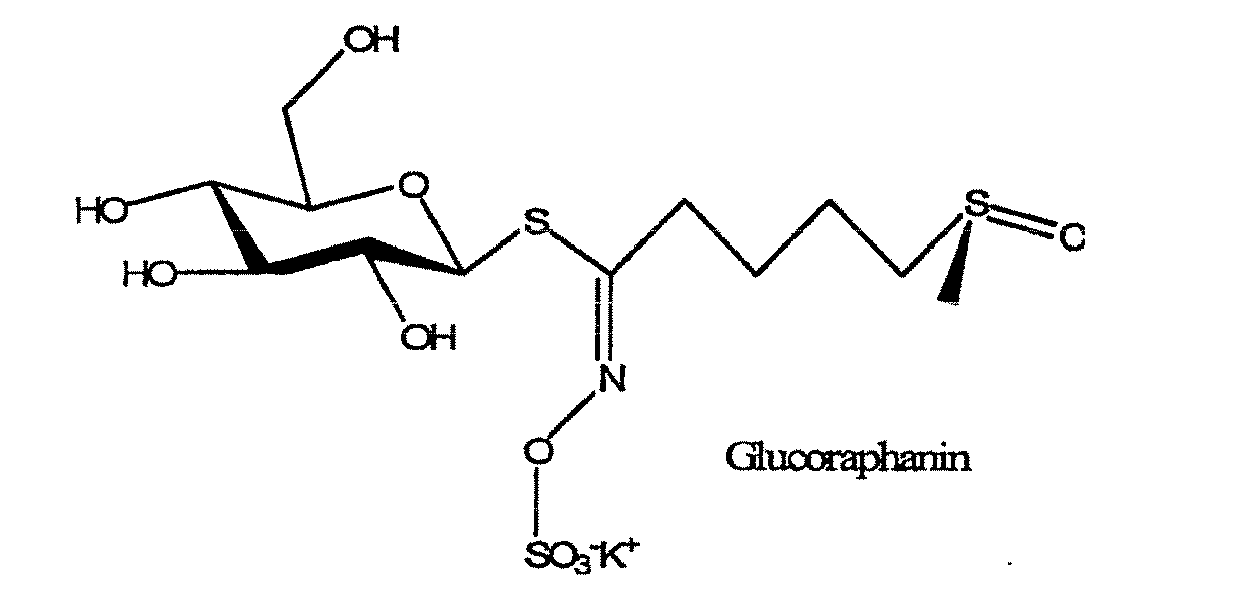
- Cruciferous vegetables contain phytochemical precursors to potent chemoprotectants, especially glucoraphanin (which is also known as sulforaphane glucosinolate or 4-methylsulfinylbutyl glucosinolate) and its associated conversion product sulforaphane, that appear to trigger carcinogen detoxification mechanisms when delivered to mammalian cells.
- glucoraphanin which is also known as sulforaphane glucosinolate or 4-methylsulfinylbutyl glucosinolate
- Glucosinolates are found in dicotyledenous plants and most commonly in the Brassicaceae (Cruciferae) families.
- Glucosinolates are sulfur-containing compounds of the general structure: Glucosinolates include an R-group derived from amino acids and a thioglucosidic link to the carbon of a sulphonated oxime. The thioglucosidic bonds of the glucosinolates are hydrolyzed by beta-thioglucosidases into unstable glucosinolate aglycones, which undergo spontaneous rearrangement into chemoprotectant isothiocyanates, such as sulforaphane, and other compounds, such as nitriles and thiocyanates.
- glucoraphanin In addition to reducing the risk of certain cancers, glucoraphanin, through its bioactive conversion product sulforaphane, has recently been shown effective in destroying organisms responsible for causing the majority of stomach ulcers and may provide novel approaches for reducing the risk of developing cardiovascular and ocular diseases. Efforts are being undertaken to gain approval for making label claims on food products either naturally high in these agents or for foods containing added crucifer chemoprotectants. Products containing chemoprotectant additives, although without such label claims, are already on the market.
- Cruciferous vegetables also contain other compounds, such as indole glucosinolates (for example, 4-hydroxyglucobrassican), which may be problematic for maintaining good health. Not only are these compounds weak inducers of the carcinogen detoxification system, but they can also induce systems which may bioactivate certain pro-carcinogens. Therefore, it is advantageous to produce glucoraphanin-containing preparations containing as little residual indole glucosinolates, or other adverse compounds, as possible.
- indole glucosinolates for example, 4-hydroxyglucobrassican
- glucosinolates particularly glucoraphanin
- the production of glucosinolates, particularly glucoraphanin is problematic because of their high cost.
- the best production source of glucoraphanin was expensive specialty broccoli cultivars.
- the considerable health potential of glucosinolates has not been realized due to the high cost of sourcing glucoraphanin.
- the present process which is both technically straightforward and attractive from a production cost standpoint, provides such improvements. Indeed, the present process makes it possible to prepare extracts enriched with chemoprotectant precursor compounds, particularly glucoraphanin, from relatively inexpensive radish seeds while offering the health benefits of extracts prepared from substantially more expensive broccoli cultivars.
- chemoprotectant precursor compounds particularly glucoraphanin
- the present invention is directed to crucifer seed extracts, particularly radish seed extracts, enriched with chemoprotectant precursor compositions, and methods for their preparation.
- the method provides a crucifer seed extract enriched with chemoprotectant precursors by converting glucoraphenin, a compound found in radish seeds, to glucoraphanin.
- Glucoraphenin although it has a similar chemical structure to that of glucoraphanin, is not believed to have similar health promoting activities.
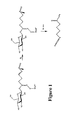
- the structures of glucoraphanin and glucoraphenin are shown below:
- the method of the invention converts glucoraphenin to glucoraphanin via hydrogenation reactions (generally including one, two, or three hydrogenation steps, although additional hydrogenation steps may be used if needed).
- the crucifer seed extract produced by the method of the invention has a ratio of glucoraphanin to glucoraphenin of at least about 1:1, preferably at least about 5:1, even more preferably at least about 100:1, and most preferably glucoraphenin is no longer detectable by HPLC.
- the resulting extract may be dried or used directly as an additive in a variety of foodstuffs, health supplements, or pharmaceutical compositions.
- a method for enriching chemoprotectant precursors from crucifer seeds, such as radish seeds is provided. Seeds from crucifer vegetables have been identified as a good source of chemoprotectant precursor phytochemicals. Members of the crucifer family which are especially useful include broccoli, kale, collard, curly kale, marrowstem kale, thousand head kale, Chinese kale, cauliflower, Portuguese kale, brussel sprouts, kohlrabi, Jersey kale, savoy cabbage, collards, borecole, radish, and the like, as well as mixtures thereof. In a preferred aspect, radish seeds are utilized.
- radish sprouts are not a useful source of chemoprotectant precursors because, as the seeds sprout, glucoraphenin in converted to 4-methylthio-3-butenyl glucosinolate, which is not a chemoprotectant precursor.
- the method includes preparing an aqueous extract of crucifer seeds.
- the aqueous extract may be separated from cellular materials.
- the aqueous extract is contacted with adsorbents to remove certain compounds that are problematic for good health, namely certain indole glucosinolates as well as undesirable flavors, odors, and colors.
- Adsorbents which may be utilized include activated carbon, silica, a variety of chemically-modified silicas (such as C18 silica), bleaching clay, and the like, as well as mixtures thereof.
- the adsorbent is activated carbon.
- aqueous extract about 1 to about 20 percent by weight adsorbent based on dry weight of seed material is mixed with the aqueous extract. In a preferred aspect, about 8 to about 12 weight percent by weight adsorbent based on dry weight of seed material is mixed with the aqueous extract. In another aspect, the aqueous extract may be run through a column containing adsorbent.
- the aqueous extract is separated from the adsorbent to provide a glucosinolate-containing extract using conventional techniques (e.g., filtration, decanting, centrifugation, and the like).
- the glucosinolate-containing extract is then dried to form a dried glucosinolate-containing extract.
- the dried glucosinolate-containing extract is then suspended in a solvent to form a glucosinolate-containing suspension.
- the suspension may be clarified before hydrogenation if desired.
- Low pressure or high pressure hydrogenation may be used to convert glucoraphenin to glucoraphanin.
- a catalyst is added to the glucosinolate-containing suspension and the hydrogenation reaction is generally conducted in a one, two, or three step hydrogenation reaction (although additional hydrogenation steps may be used if needed), depending on the desired ratio of glucoraphanin to glucoraphenin in the resulting product.
- Suitable catalysts include palladium, platinum, nickel, any derivatives thereof, and the like.
- hydrogenation is conducted at a temperature of about 25°C to about 450°C and hydrogen is introduced at a pressure of about 50 to about 10,000 psi.
- the reaction product is filtered between hydrogenation reactions to remove spent catalyst and additional catalyst is added before each reaction.
- the method is effective for providing a chemoprotectant precursor-enriched extract having a ratio of glucoraphanin to glucoraphenin of about 1:1, preferably about 5:1, even more preferably at least about 100:1, and most preferably glucoraphenin is undetectable by HPLC.
- food products and pharmaceuticals include the chemoprotectant precursor-enriched crucifer seed extract.
- the chemoprotectant precursor-enriched crucifer seed extract may be incorporated directly into food products or dried, cooled, frozen, or freeze-dried and then incorporated into the food products.
- Food product into which the chemoprotectant precursor-enriched extract may be incorporated include food supplements, drinks, shakes, baked goods, teas, soups, cereals, pills, tablets, salads, sandwiches, granolas, salad dressings, sauces, coffee, cheeses, yogurts, energy bars, and the like as well as mixtures thereof.
- Supplements include dietary supplements, nutritional supplements, herbal supplements, and the like.
- the food product may contain an effective amount of chemoprotectant precursor-enriched extract, such as about 1 to about 100 mg per single serving of the food product.
- An effective amount of the chemoprotectant precursor-enriched extract may also be incorporated into pharmaceutical compositions, such as about 10 to about 50 mg per single dosage.
- FIG. 1 provides the principal reactions for conversion of glucoraphenin to sulforaphane.
- FIG. 2 provides a flowchart illustrating the general process of this invention.
- the method of the present invention provides for cost effective enrichment of chemoprotectant precursors in crucifer seed extracts. More specifically, the present invention provides a method for converting glucoraphenin, a compound present in crucifer seeds, especially radish seeds, to the chemoprotectant precursor glucoraphanin.
- chemoprotectants and “chemoprotective compounds” refer to agents of plant origin that are effective for reducing the susceptibility of mammals to the toxic and neoplastic effects of carcinogens.
- Chemoprotectant “precursors” refer to agents which give rise to chemoprotectants by enzymatic and/or chemical means. Talalay, P. et al., J. Nutr., 131 (11 Supp.): 30275-30335 (2001 ). Examples of such chemoprotectant precursors include alkyl glucosinolates, such as glucoraphanin.
- the principal reactions are illustrated in FIG. 1 .
- the methods of the invention convert glucoraphenin to glucoraphanin via hydrogenation reactions. Then in vivo, the thioglucosidic bonds of glucoraphanin are hydrolyzed by gut microflora into unstable glucosinolate aglycones, which undergo spontaneous rearrangement into isothiocyanates, such as sulforaphane, and other compounds, such as nitriles and thiocyanates.
- aqueous extract means extracts prepared with 100 percent water or up to 25 percent addition of an organic solvent, such as ethyl alcohol.
- effective amount is an amount of additive which provides the desired effect or benefit upon consumption. Generally, about 1 to about 100 mg of the chemoprotectant enriched extract of the invention per single serving of the food product or about 1 to about 50 mg per single dosage of a pharmaceutical composition.
- Crucifer seeds are useful starting materials.
- radish seeds contain greater amounts of glucoraphenin than other crucifer seeds. Radish seeds naturally contain a greater amount of glucoraphenin than glucoraphanin (generally with a ratio of glucoraphanin to glucoraphenin ranging from about 1:50 to about 1:150). Radish seeds naturally contain greater amounts of glucoraphenin than radish sprouts, which makes radish seeds more useful in the present invention. Barillari, J. et al., J. Agric. Food Chem., 53: 9890-9896 (2005) . Seeds are also easier to process and less expensive than mature plants.
- Seeds suitable as sources of cancer chemoprotectants are generally cruciferous seeds from the family Brassicaceae.
- the seeds are radish seeds.
- Particularly useful radish cultivars to be used in the claimed method are Cherry Belle and Champion. However, many other radish cultivars are suitable.
- the method is carried out by treating crucifer seeds to produce an aqueous extract.
- the treated seeds are pulverized and defatted crucifer seeds.
- the crucifer seeds may be defatted prior to forming an aqueous extract using known defatting procedures, such as described in West, L., J. Agric. Food Chem., 52: 916-926 (2004) , which is incorporated herein by reference.
- crucifer seeds may be ground, pulverized, or blended prior to addition of an aqueous solvent or simultaneously with the addition of an aqueous solvent.
- the aqueous extract may be produced by any method known in the art. Generally, about 1 to about 5 parts of crucifer seeds, preferably radish seeds, are combined with about 5 to about 50 parts aqueous solvent and are maintained at about 90°C to about 110°C, for about 5 to about 15 minutes, to form an aqueous crucifer seed extract.
- the aqueous solvent is preferably water but the aqueous solvent may also be an aqueous solvent containing an organic solvent, such as ethyl alcohol.
- residual seed material is removed from the aqueous crucifer seed extract, such as by filtration, centrifugation, decanting, or the like.
- adsorbent may be added in conjunction with the extraction of the seeds, it is preferred that the aqueous extract is treated with adsorbent in a separate step with heat treatment, preferably following removal of residual seed material.
- about 1 to about 20 percent by weight adsorbent based on dry weight of seed material is mixed with the aqueous crucifer seed extract, and heated to a temperature of about 90°C to about 110°C for about 5 to about 15 minutes.
- about 8 to about 12 percent by weight adsorbent based on dry weight of seed material is mixed with the crucifer seed extract.
- the aqueous seed extract may be passed through a column containing an adsorbent, such as graphitized carbon black, to produce a glucosinolate-containing extract.
- an adsorbent such as graphitized carbon black
- the aqueous crucifer seed extract may be mixed directly with adsorbent in batch, semi-batch, semi-continuous, or continuous mode (e.g., using an adsorbent column).
- adsorbents refer to compounds that are effective for preferentially adsorbing indole glucosinolates over alkyl glucosinolates.
- Treatment of the aqueous seed extract with adsorbents also serves to remove unwanted colors, odors, and flavors, and, importantly, removes significant amounts of indole glucosinolates.
- Useful adsorbents include activated carbon, silica, a variety of chemically-modified silicas (such as C18 silica), bleaching clay, and the like.
- the adsorbent is activated carbon.
- the aqueous extract may be centrifuged and/or filtered to remove spent adsorbent to form a clarified glucosinolate-containing extract.
- the adsorbent may be separated from the glucosinolate-containing extract by any means known in the art, such as by filtration, ultrafiltration, centrifugation, decanting, or the like.
- the glucosinolate-containing extract is then dried for a time sufficient to reduce the water content of the glucosinolate-containing extract to less than about 10 percent, preferable to less than about 5 percent, to form a dried glucosinolate-containing extract.
- the glucosinolate-containing extract may be dried using any known method, such as, but not limited to, freeze drying, spray drying, vacuum drying, and the like.
- the clarified glucosinolate-containing extract may then be additionally treated with ultrafiltration, if desired.
- Suitable solvents include, for example, ethanol, methanol, water, or mixtures thereof.
- the solvent should contain organic solvent, such as ethanol, methanol, or a mixture thereof, generally requiring at least about 50 percent organic solvent.
- the solvent is ethanol.
- an aqueous solvent alone can be used (although organic solvent could be included if desired).
- the amount of solvent added to the dried glucosinolate-containing extract is not critical as long as enough solvent is added to form a homogenous suspension.
- the solvent may be mixed or blended with the dried extract by any means known in the art, such as by sonication, shaking, microwaving, or the like, to form a substantially homogenous glucosinolate-containing suspension.
- the insolubles can be separated from the glucosinolate-containing suspension by any conventional technique, including, for example, filtration, centrifugation, decanting, or the like, to form a clarified glucosinolate solution.
- the insolubles are separated by filtration using a 0.45 micron pore size filter.
- hydrogenation may be carried out at a temperature of about 25°C to about 450°C and using relatively low hydrogenation pressures, such as about 10 to about 100 psi, or under relatively high hydrogenation pressures, such as 1000 to about 10,000 psi.
- the hydrogenation reaction may be carried out in a continuous, semi-continuous, batch, or semi-batch process.
- a hydrogenation vessel such as a low pressure hydrogenation apparatus (Parr Hydrogenator Series 3916, Parr Instrument Co., Moline, IL)
- the glucosinolate-containing suspension is contacted with a catalyst and hydrogen is introduced at a pressure of about 10 to about 100 psi, preferably about 50 to about 80 psi, and at a temperature in the range of from about 25°C to about 100°C, preferably about 25°C to about 50°C, for a time sufficient to obtain a chemoprotectant precursor-enriched extract having a ratio of glucoraphanin to glucoraphenin of at least about 1:1.
- Hydrogenation is generally carried out for about 10 to about 24 hours under mild shaking, although high pressure hydrogenation may be carried out for less time, such as for about 5 to about 12 hours.
- the catalyst is a platinum catalyst, such as platinum (IV) oxide from Sigma-Aldrich Corp. (Milwaukee, WI).
- the catalyst is generally used in an amount in the range of about 1 to about 25 percent and preferably in the range of about 5 to about 20 percent.
- the reaction product is clarified to remove spent catalyst, such as by filtration, ultrafiltration, decanting, centrifugation, or the like.
- the reaction product has a ratio of glucoraphanin to glucoraphenin of at least about 1 to 1, although one of skill in the art will recognize that the ratio of glucoraphanin to glucoraphenin after hydrogenation is impacted by the ratio of glucoraphanin to glucoraphenin in the starting crucifer seeds.
- the product from the first hydrogenation step may be optionally subjected to further hydrogenation in a second hydrogenation step to increase the ratio of glucoraphanin to glucoraphenin.
- the second hydrogenation step is carried out by adding catalyst, generally about 1 to about 25 percent, preferably about 5 to about 20 percent, to the filtered product from the first hydrogenation step.
- the second hydrogenation step is carried out for an additional 10 to about 24 hours under shaking at a temperature of about 25 to about 100° C.
- the reaction occurs for a time sufficient to obtain a chemoprotectant precursor-enriched extract having a ratio of glucoraphanin to glucoraphenin of at least about 5 to 1, preferably 10 to 1.
- the reaction product is clarified to remove spent catalyst, such as by filtration, ultrafiltration, decanting, centrifugation, or the like.
- the product from the second hydrogenation reaction may be optionally subjected to a third hydrogenation step to further increase the ratio of glucoraphanin to glucoraphenin.
- the second hydrogenation step is carried out by adding catalyst, generally about 1 to about 25 percent, preferably about 5 to about 20 percent, to the product from the first hydrogenation reaction.
- the second hydrogenation step is carried out for an additional 10 hours to about 24 hours under shaking at a temperature of about 25 to about 100°C.
- the reaction occurs for a time sufficient to obtain a chemoprotectant precursor-enriched extract having a ratio of glucoraphanin to glucoraphenin of at least about 100 to 1, preferably such that glucoraphenin is no longer detectable by HPLC.
- the reaction product may be clarified, such as by filtration, ultrafiltration, decanting, centrifugation, or the like, to remove spent catalyst and to obtain the chemoprotectant precursor-enriched extract.
- ultrafiltration using a 0.45 micrometer pore size filter is used and the chemoprotectant precursor-enriched extract is collected as the filtrate.
- the at least one step hydrogenation process can be run in a batch, semi-batch, semi-continuous, or continuous mode. Preferably, the process is carried out in continuous mode.
- the chemoprotectant precursor-enriched extracts of the invention may be further processed into a variety of forms.
- the chemoprotectant precursor-enriched extract may be dried, such as by spray drying, freeze drying, vacuum drying, or the like, to form a dried chemoprotectant precursor-enriched extract.
- the chemoprotectant precursor-enriched extract may also be further processed by cooling or freezing, or may be subjected to membrane processing, chromatographic processing, or dialysis to remove high molecular weight compounds such as proteins and polysaccharides, or the like, such as to form a chemoprotectant precursor isolate or purified product.
- the chemoprotectant precursor-enriched extract may also have introduced optional ingredients or components, such as, for example, flavorants, nutrients, vitamins, colorants, nutraceutical additives, antioxidants, probiotics, and the like, so long as the optional ingredients do not adversely affect the stability in a significant manner.
- optional ingredients or components such as, for example, flavorants, nutrients, vitamins, colorants, nutraceutical additives, antioxidants, probiotics, and the like, so long as the optional ingredients do not adversely affect the stability in a significant manner.
- the presence and amount of such optional ingredients can, of course, vary considerably depending on the product in which the extract is incorporated.
- the chemoprotectant precursor-enriched extract of the invention may be included in a variety of products, including food products and pharmaceuticals.
- the chemoprotectant precursor-enriched crucifer seed extract may also be used as a food fortificant.
- Food product into which the extract may be incorporated include food supplements, drinks, shakes, baked goods, teas, soups, cereals, pills, tablets, saiads, sandwiches, granolas, salad dressings, sauces, coffee, cheeses, yogurts, energy bars, and the like as well as mixtures thereof.
- Supplements include dietary supplements, nutritional supplements, herbal supplements, or the like.
- the food product may contain an effective amount of chemoprotectant precursor-enriched extract, such as about 1 to about 100 mg per single serving of the food product.
- An effective amount of the chemoprotectant precursor-enriched extract may also be incorporated into pharmaceutical compositions, such as about 10 to about 50 mg.
- Radish seeds (Diakon) (obtained from New England Seed Co., Hartford, CT) were pulverized in argon using a high-speed blender (Model 500, Vita-Mix Corp., Cleveland, OH). Hexane-extractable lipids were removed via Soxhlet extraction using hexane (Sigma-Aldrich, Milwaukee, WI) and residual solvent was minimized under high vacuum. The seed material was stirred into boiling water (100 g seed material per liter of water) and held for 10 minutes. The mixture was filtered hot through Whatman #2 filter paper. Activated charcoal (DARCO® G-60 from Sigma-Aldrich, Milwaukee, WI) was added at 10 g activated charcoal per 100 g seed material), and the mixture was brought just to boiling.
- DARCO® G-60 from Sigma-Aldrich, Milwaukee, WI
- the charcoal When cooled to room temperature, the charcoal was removed by centrifugation (about 7000 xG for 30 minutes) and the supernatant was filtered through Nylon membranes (0.45 micron followed by 0.2 micron) to obtain a clarified extract.
- the clarified extract was ultrafiltered using a 3000 MWCO tangential flow device (Ultrasette TM , Pall Corp., East Hills, NY) operated at filtrate and recirculation flow rates of about 2 ml/min and about 200 ml/min, respectively.
- Example 1 The experiment of Example 1 was repeated except that after the initial reaction step, an additional 100 mg of platinum (IV) oxide was added to the filtered reaction mixture of Example 1 and the hydrogenation reaction continued for approximately 24 hours.
- the reaction bottle was disconnected and the solution was filtered using a 0.45 micron nylon filter to remove spent catalyst.
- the filtrate was collected and analyzed by HPLC, which revealed another increase in the ratio of glucoraphanin to glucoraphenin to about 10:1.
- Example 2 The experiment of Example 2 was repeated. 100 mg of platinum (IV) oxide was added to the filtered reaction mixture of Example 2 and the hydrogenation reaction was continued for approximately eighteen hours. The reaction bottle was disconnected and the solution was filtered using a 0.45 micron nylon filter to remove spent catalyst. The filtrate was collected and analyzed by HPLC, which revealed another substantial increase in glucoraphanin content such that glucoraphenin was no longer detectable by HPLC, which indicates that the hydrogenation reaction had proceeded essentially to completion.
Landscapes
- Health & Medical Sciences (AREA)
- Natural Medicines & Medicinal Plants (AREA)
- Life Sciences & Earth Sciences (AREA)
- Medicinal Chemistry (AREA)
- Pharmacology & Pharmacy (AREA)
- Chemical & Material Sciences (AREA)
- Animal Behavior & Ethology (AREA)
- General Health & Medical Sciences (AREA)
- Public Health (AREA)
- Veterinary Medicine (AREA)
- Chemical Kinetics & Catalysis (AREA)
- General Chemical & Material Sciences (AREA)
- Engineering & Computer Science (AREA)
- Nuclear Medicine, Radiotherapy & Molecular Imaging (AREA)
- Organic Chemistry (AREA)
- Epidemiology (AREA)
- Microbiology (AREA)
- Mycology (AREA)
- Alternative & Traditional Medicine (AREA)
- Biotechnology (AREA)
- Botany (AREA)
- Medical Informatics (AREA)
- Communicable Diseases (AREA)
- Oncology (AREA)
- Bioinformatics & Cheminformatics (AREA)
- Pharmaceuticals Containing Other Organic And Inorganic Compounds (AREA)
- Coloring Foods And Improving Nutritive Qualities (AREA)
- Organic Low-Molecular-Weight Compounds And Preparation Thereof (AREA)
- Medicinal Preparation (AREA)
- Medicines Containing Plant Substances (AREA)
- Low-Molecular Organic Synthesis Reactions Using Catalysts (AREA)
- Saccharide Compounds (AREA)
- Extraction Or Liquid Replacement (AREA)
Abstract
Description
- The present invention relates to chemoprotective precursor compounds and a method for producing crucifer seed extracts enriched with chemoprotective precursor compounds which may be incorporated into a variety of food products, pharmaceuticals, and health supplements. More specifically, a hydrogenation method is provided that is effective for providing an extract having increased ratio of glucoraphanin to glucoraphenin in radish seed extracts.
- It is generally agreed that diet plays a large role in controlling the risk of developing cancers and that increased consumption of fruits and vegetables may reduce cancer incidences in humans. The presence of certain minor chemical components in plants may provide a major protection mechanism when delivered to mammalian cells. Moreover, providing pharmaceuticals, nutritional supplements, or foods fortified or supplemented with cancer-fighting chemical components derived from plants may provide additional health benefits. An important trend in the U.S. food industry is to promote health conscious food products.
- Cruciferous vegetables contain phytochemical precursors to potent chemoprotectants, especially glucoraphanin (which is also known as sulforaphane glucosinolate or 4-methylsulfinylbutyl glucosinolate) and its associated conversion product sulforaphane, that appear to trigger carcinogen detoxification mechanisms when delivered to mammalian cells. Glucosinolates are found in dicotyledenous plants and most commonly in the Brassicaceae (Cruciferae) families. Glucosinolates are sulfur-containing compounds of the general structure:

- In addition to reducing the risk of certain cancers, glucoraphanin, through its bioactive conversion product sulforaphane, has recently been shown effective in destroying organisms responsible for causing the majority of stomach ulcers and may provide novel approaches for reducing the risk of developing cardiovascular and ocular diseases. Efforts are being undertaken to gain approval for making label claims on food products either naturally high in these agents or for foods containing added crucifer chemoprotectants. Products containing chemoprotectant additives, although without such label claims, are already on the market.
- Cruciferous vegetables also contain other compounds, such as indole glucosinolates (for example, 4-hydroxyglucobrassican), which may be problematic for maintaining good health. Not only are these compounds weak inducers of the carcinogen detoxification system, but they can also induce systems which may bioactivate certain pro-carcinogens. Therefore, it is advantageous to produce glucoraphanin-containing preparations containing as little residual indole glucosinolates, or other adverse compounds, as possible.
- The production of glucosinolates, particularly glucoraphanin, is problematic because of their high cost. Until the present invention, the best production source of glucoraphanin was expensive specialty broccoli cultivars. The considerable health potential of glucosinolates has not been realized due to the high cost of sourcing glucoraphanin. Hence, there is a need to provide alternative methods for producing high yields of glucosinolates, particularly glucoraphanin.
- The present process, which is both technically straightforward and attractive from a production cost standpoint, provides such improvements. Indeed, the present process makes it possible to prepare extracts enriched with chemoprotectant precursor compounds, particularly glucoraphanin, from relatively inexpensive radish seeds while offering the health benefits of extracts prepared from substantially more expensive broccoli cultivars.
- The present invention is directed to crucifer seed extracts, particularly radish seed extracts, enriched with chemoprotectant precursor compositions, and methods for their preparation. Treatment of aqueous extracts from crucifer seeds, preferably radish seeds, with the method of the invention substantially increases the amount of certain chemoprotectant precursor compounds (alkyl glucosinolates), such as glucoraphanin. The method provides a crucifer seed extract enriched with chemoprotectant precursors by converting glucoraphenin, a compound found in radish seeds, to glucoraphanin. Glucoraphenin, although it has a similar chemical structure to that of glucoraphanin, is not believed to have similar health promoting activities. The structures of glucoraphanin and glucoraphenin are shown below:

- The method of the invention converts glucoraphenin to glucoraphanin via hydrogenation reactions (generally including one, two, or three hydrogenation steps, although additional hydrogenation steps may be used if needed). Generally, the crucifer seed extract produced by the method of the invention has a ratio of glucoraphanin to glucoraphenin of at least about 1:1, preferably at least about 5:1, even more preferably at least about 100:1, and most preferably glucoraphenin is no longer detectable by HPLC. The resulting extract may be dried or used directly as an additive in a variety of foodstuffs, health supplements, or pharmaceutical compositions.
- A method is provided for enriching chemoprotectant precursors from crucifer seeds, such as radish seeds. Seeds from crucifer vegetables have been identified as a good source of chemoprotectant precursor phytochemicals. Members of the crucifer family which are especially useful include broccoli, kale, collard, curly kale, marrowstem kale, thousand head kale, Chinese kale, cauliflower, Portuguese kale, brussel sprouts, kohlrabi, Jersey kale, savoy cabbage, collards, borecole, radish, and the like, as well as mixtures thereof. In a preferred aspect, radish seeds are utilized. Generally, radish sprouts are not a useful source of chemoprotectant precursors because, as the seeds sprout, glucoraphenin in converted to 4-methylthio-3-butenyl glucosinolate, which is not a chemoprotectant precursor.
- Generally, the method includes preparing an aqueous extract of crucifer seeds. Optionally, the aqueous extract may be separated from cellular materials. The aqueous extract is contacted with adsorbents to remove certain compounds that are problematic for good health, namely certain indole glucosinolates as well as undesirable flavors, odors, and colors. Adsorbents which may be utilized include activated carbon, silica, a variety of chemically-modified silicas (such as C18 silica), bleaching clay, and the like, as well as mixtures thereof. Preferably, the adsorbent is activated carbon. Generally, about 1 to about 20 percent by weight adsorbent based on dry weight of seed material is mixed with the aqueous extract. In a preferred aspect, about 8 to about 12 weight percent by weight adsorbent based on dry weight of seed material is mixed with the aqueous extract. In another aspect, the aqueous extract may be run through a column containing adsorbent.
- The aqueous extract is separated from the adsorbent to provide a glucosinolate-containing extract using conventional techniques (e.g., filtration, decanting, centrifugation, and the like). The glucosinolate-containing extract is then dried to form a dried glucosinolate-containing extract. The dried glucosinolate-containing extract is then suspended in a solvent to form a glucosinolate-containing suspension.
- The suspension may be clarified before hydrogenation if desired. Low pressure or high pressure hydrogenation may be used to convert glucoraphenin to glucoraphanin. A catalyst is added to the glucosinolate-containing suspension and the hydrogenation reaction is generally conducted in a one, two, or three step hydrogenation reaction (although additional hydrogenation steps may be used if needed), depending on the desired ratio of glucoraphanin to glucoraphenin in the resulting product. Suitable catalysts include palladium, platinum, nickel, any derivatives thereof, and the like. Generally, hydrogenation is conducted at a temperature of about 25°C to about 450°C and hydrogen is introduced at a pressure of about 50 to about 10,000 psi. The reaction product is filtered between hydrogenation reactions to remove spent catalyst and additional catalyst is added before each reaction. Generally, the method is effective for providing a chemoprotectant precursor-enriched extract having a ratio of glucoraphanin to glucoraphenin of about 1:1, preferably about 5:1, even more preferably at least about 100:1, and most preferably glucoraphenin is undetectable by HPLC.
- in another aspect, food products and pharmaceuticals are provided that include the chemoprotectant precursor-enriched crucifer seed extract. The chemoprotectant precursor-enriched crucifer seed extract may be incorporated directly into food products or dried, cooled, frozen, or freeze-dried and then incorporated into the food products. Food product into which the chemoprotectant precursor-enriched extract may be incorporated include food supplements, drinks, shakes, baked goods, teas, soups, cereals, pills, tablets, salads, sandwiches, granolas, salad dressings, sauces, coffee, cheeses, yogurts, energy bars, and the like as well as mixtures thereof. Supplements include dietary supplements, nutritional supplements, herbal supplements, and the like. In this aspect, the food product may contain an effective amount of chemoprotectant precursor-enriched extract, such as about 1 to about 100 mg per single serving of the food product. An effective amount of the chemoprotectant precursor-enriched extract may also be incorporated into pharmaceutical compositions, such as about 10 to about 50 mg per single dosage.
-
FIG. 1 provides the principal reactions for conversion of glucoraphenin to sulforaphane. -
FIG. 2 provides a flowchart illustrating the general process of this invention. - The method of the present invention provides for cost effective enrichment of chemoprotectant precursors in crucifer seed extracts. More specifically, the present invention provides a method for converting glucoraphenin, a compound present in crucifer seeds, especially radish seeds, to the chemoprotectant precursor glucoraphanin.
- As used herein, "chemoprotectants" and "chemoprotective compounds" refer to agents of plant origin that are effective for reducing the susceptibility of mammals to the toxic and neoplastic effects of carcinogens. Chemoprotectant "precursors" refer to agents which give rise to chemoprotectants by enzymatic and/or chemical means. Talalay, P. et al., J. Nutr., 131 (11 Supp.): 30275-30335 (2001). Examples of such chemoprotectant precursors include alkyl glucosinolates, such as glucoraphanin.
- The principal reactions are illustrated in
FIG. 1 . The methods of the invention convert glucoraphenin to glucoraphanin via hydrogenation reactions. Then in vivo, the thioglucosidic bonds of glucoraphanin are hydrolyzed by gut microflora into unstable glucosinolate aglycones, which undergo spontaneous rearrangement into isothiocyanates, such as sulforaphane, and other compounds, such as nitriles and thiocyanates. - As used herein, "aqueous extract" means extracts prepared with 100 percent water or up to 25 percent addition of an organic solvent, such as ethyl alcohol.
- As used herein, "effective amount" is an amount of additive which provides the desired effect or benefit upon consumption. Generally, about 1 to about 100 mg of the chemoprotectant enriched extract of the invention per single serving of the food product or about 1 to about 50 mg per single dosage of a pharmaceutical composition.
- Crucifer seeds, particularly radish seeds, are useful starting materials. Generally, radish seeds contain greater amounts of glucoraphenin than other crucifer seeds. Radish seeds naturally contain a greater amount of glucoraphenin than glucoraphanin (generally with a ratio of glucoraphanin to glucoraphenin ranging from about 1:50 to about 1:150). Radish seeds naturally contain greater amounts of glucoraphenin than radish sprouts, which makes radish seeds more useful in the present invention. Barillari, J. et al., J. Agric. Food Chem., 53: 9890-9896 (2005). Seeds are also easier to process and less expensive than mature plants.
- Seeds suitable as sources of cancer chemoprotectants are generally cruciferous seeds from the family Brassicaceae. Preferably, the seeds are radish seeds. Particularly useful radish cultivars to be used in the claimed method are Cherry Belle and Champion. However, many other radish cultivars are suitable.
- One embodiment of the present invention is illustrated in
FIG. 2 . Generally, the method is carried out by treating crucifer seeds to produce an aqueous extract. Preferably, the treated seeds are pulverized and defatted crucifer seeds. In one aspect, the crucifer seeds may be defatted prior to forming an aqueous extract using known defatting procedures, such as described in West, L., J. Agric. Food Chem., 52: 916-926 (2004), which is incorporated herein by reference. In another aspect, crucifer seeds may be ground, pulverized, or blended prior to addition of an aqueous solvent or simultaneously with the addition of an aqueous solvent. - The aqueous extract may be produced by any method known in the art. Generally, about 1 to about 5 parts of crucifer seeds, preferably radish seeds, are combined with about 5 to about 50 parts aqueous solvent and are maintained at about 90°C to about 110°C, for about 5 to about 15 minutes, to form an aqueous crucifer seed extract. The aqueous solvent is preferably water but the aqueous solvent may also be an aqueous solvent containing an organic solvent, such as ethyl alcohol. Preferably, following extraction, residual seed material is removed from the aqueous crucifer seed extract, such as by filtration, centrifugation, decanting, or the like.
- While adsorbent may be added in conjunction with the extraction of the seeds, it is preferred that the aqueous extract is treated with adsorbent in a separate step with heat treatment, preferably following removal of residual seed material. Generally, about 1 to about 20 percent by weight adsorbent based on dry weight of seed material is mixed with the aqueous crucifer seed extract, and heated to a temperature of about 90°C to about 110°C for about 5 to about 15 minutes. In a preferred aspect, about 8 to about 12 percent by weight adsorbent based on dry weight of seed material is mixed with the crucifer seed extract. In another aspect, the aqueous seed extract may be passed through a column containing an adsorbent, such as graphitized carbon black, to produce a glucosinolate-containing extract. Generally, the aqueous crucifer seed extract may be mixed directly with adsorbent in batch, semi-batch, semi-continuous, or continuous mode (e.g., using an adsorbent column). As used herein, adsorbents refer to compounds that are effective for preferentially adsorbing indole glucosinolates over alkyl glucosinolates. Treatment of the aqueous seed extract with adsorbents also serves to remove unwanted colors, odors, and flavors, and, importantly, removes significant amounts of indole glucosinolates. Useful adsorbents include activated carbon, silica, a variety of chemically-modified silicas (such as C18 silica), bleaching clay, and the like. Preferably, the adsorbent is activated carbon.
- The aqueous extract may be centrifuged and/or filtered to remove spent adsorbent to form a clarified glucosinolate-containing extract. The adsorbent may be separated from the glucosinolate-containing extract by any means known in the art, such as by filtration, ultrafiltration, centrifugation, decanting, or the like. Following removal of the spent adsorbent, the glucosinolate-containing extract is then dried for a time sufficient to reduce the water content of the glucosinolate-containing extract to less than about 10 percent, preferable to less than about 5 percent, to form a dried glucosinolate-containing extract. Generally, the glucosinolate-containing extract may be dried using any known method, such as, but not limited to, freeze drying, spray drying, vacuum drying, and the like. The clarified glucosinolate-containing extract may then be additionally treated with ultrafiltration, if desired.
- At least a portion of the dried glucosinolate-containing extract is then mixed with a solvent to form a glucosinolate-containing suspension. Suitable solvents include, for example, ethanol, methanol, water, or mixtures thereof. Generally, when low pressure hydrogenation conditions are used, the solvent should contain organic solvent, such as ethanol, methanol, or a mixture thereof, generally requiring at least about 50 percent organic solvent. Preferably, the solvent is ethanol. When high pressure hydrogenation conditions are used, an aqueous solvent alone can be used (although organic solvent could be included if desired). Generally, the amount of solvent added to the dried glucosinolate-containing extract is not critical as long as enough solvent is added to form a homogenous suspension. The solvent may be mixed or blended with the dried extract by any means known in the art, such as by sonication, shaking, microwaving, or the like, to form a substantially homogenous glucosinolate-containing suspension.
- Although optional, it is preferable to remove insolubles in the glucosinolate-containing suspension following the mixing step. The insolubles can be separated from the glucosinolate-containing suspension by any conventional technique, including, for example, filtration, centrifugation, decanting, or the like, to form a clarified glucosinolate solution. Preferably, the insolubles are separated by filtration using a 0.45 micron pore size filter.
- Generally, hydrogenation may be carried out at a temperature of about 25°C to about 450°C and using relatively low hydrogenation pressures, such as about 10 to about 100 psi, or under relatively high hydrogenation pressures, such as 1000 to about 10,000 psi. The hydrogenation reaction may be carried out in a continuous, semi-continuous, batch, or semi-batch process. In a hydrogenation vessel, such as a low pressure hydrogenation apparatus (Parr Hydrogenator Series 3916, Parr Instrument Co., Moline, IL), the glucosinolate-containing suspension is contacted with a catalyst and hydrogen is introduced at a pressure of about 10 to about 100 psi, preferably about 50 to about 80 psi, and at a temperature in the range of from about 25°C to about 100°C, preferably about 25°C to about 50°C, for a time sufficient to obtain a chemoprotectant precursor-enriched extract having a ratio of glucoraphanin to glucoraphenin of at least about 1:1. Hydrogenation is generally carried out for about 10 to about 24 hours under mild shaking, although high pressure hydrogenation may be carried out for less time, such as for about 5 to about 12 hours.
- A variety of conventional catalysts may be employed, such as, but not limited to, nickel, palladium, or platinum catalysts. Preferably, the catalyst is a platinum catalyst, such as platinum (IV) oxide from Sigma-Aldrich Corp. (Milwaukee, WI). The catalyst is generally used in an amount in the range of about 1 to about 25 percent and preferably in the range of about 5 to about 20 percent.
- Following hydrogenation, the reaction product is clarified to remove spent catalyst, such as by filtration, ultrafiltration, decanting, centrifugation, or the like. Generally, the reaction product has a ratio of glucoraphanin to glucoraphenin of at least about 1 to 1, although one of skill in the art will recognize that the ratio of glucoraphanin to glucoraphenin after hydrogenation is impacted by the ratio of glucoraphanin to glucoraphenin in the starting crucifer seeds.
- Depending on the desired ratio of glucoraphanin to glucoraphenin in the final product, the product from the first hydrogenation step may be optionally subjected to further hydrogenation in a second hydrogenation step to increase the ratio of glucoraphanin to glucoraphenin. The second hydrogenation step is carried out by adding catalyst, generally about 1 to about 25 percent, preferably about 5 to about 20 percent, to the filtered product from the first hydrogenation step. The second hydrogenation step is carried out for an additional 10 to about 24 hours under shaking at a temperature of about 25 to about 100° C. Generally, the reaction occurs for a time sufficient to obtain a chemoprotectant precursor-enriched extract having a ratio of glucoraphanin to glucoraphenin of at least about 5 to 1, preferably 10 to 1. Following the second hydrogenation reaction, the reaction product is clarified to remove spent catalyst, such as by filtration, ultrafiltration, decanting, centrifugation, or the like.
- Again, depending on the desired ratio of glucoraphanin to glucoraphenin, the product from the second hydrogenation reaction may be optionally subjected to a third hydrogenation step to further increase the ratio of glucoraphanin to glucoraphenin. The second hydrogenation step is carried out by adding catalyst, generally about 1 to about 25 percent, preferably about 5 to about 20 percent, to the product from the first hydrogenation reaction. The second hydrogenation step is carried out for an additional 10 hours to about 24 hours under shaking at a temperature of about 25 to about 100°C. Generally, the reaction occurs for a time sufficient to obtain a chemoprotectant precursor-enriched extract having a ratio of glucoraphanin to glucoraphenin of at least about 100 to 1, preferably such that glucoraphenin is no longer detectable by HPLC.
- Generally, only three hydrogenation steps using a low pressure hydrogenation apparatus are necessary to convert substantially all of the glucoraphenin to glucoraphanin, such that glucoraphanin is no longer detectable by HPLC, although additional hydrogenation steps may be used if desired. When using low pressure hydrogenation, it is preferred to use at least two hydrogenation steps with the conditions described above instead of increasing the amount of catalyst in a single hydrogenation step. Generally, more undesired side reactions occur when greater amounts of catalyst are added. Also, increasing the reaction time in a single hydrogenation step generally does not substantially increase the ratio of glucoraphanin to glucoraphenin in the product because the catalyst becomes poisoned. When using high pressure hydrogenation, generally fewer hydrogenation steps are required to obtain the desired ratio of glucoraphanin to glucoraphenin, although of course additional hydrogenation steps may be used if necessary.
- Following the third hydrogenation reaction, the reaction product may be clarified, such as by filtration, ultrafiltration, decanting, centrifugation, or the like, to remove spent catalyst and to obtain the chemoprotectant precursor-enriched extract. Preferably, ultrafiltration using a 0.45 micrometer pore size filter is used and the chemoprotectant precursor-enriched extract is collected as the filtrate.
- The at least one step hydrogenation process can be run in a batch, semi-batch, semi-continuous, or continuous mode. Preferably, the process is carried out in continuous mode.
- The chemoprotectant precursor-enriched extracts of the invention may be further processed into a variety of forms. For example, the chemoprotectant precursor-enriched extract may be dried, such as by spray drying, freeze drying, vacuum drying, or the like, to form a dried chemoprotectant precursor-enriched extract. The chemoprotectant precursor-enriched extract may also be further processed by cooling or freezing, or may be subjected to membrane processing, chromatographic processing, or dialysis to remove high molecular weight compounds such as proteins and polysaccharides, or the like, such as to form a chemoprotectant precursor isolate or purified product.
- The chemoprotectant precursor-enriched extract may also have introduced optional ingredients or components, such as, for example, flavorants, nutrients, vitamins, colorants, nutraceutical additives, antioxidants, probiotics, and the like, so long as the optional ingredients do not adversely affect the stability in a significant manner. In particular, the presence and amount of such optional ingredients can, of course, vary considerably depending on the product in which the extract is incorporated.
- The chemoprotectant precursor-enriched extract of the invention may be included in a variety of products, including food products and pharmaceuticals. The chemoprotectant precursor-enriched crucifer seed extract may also be used as a food fortificant. Food product into which the extract may be incorporated include food supplements, drinks, shakes, baked goods, teas, soups, cereals, pills, tablets, saiads, sandwiches, granolas, salad dressings, sauces, coffee, cheeses, yogurts, energy bars, and the like as well as mixtures thereof. Supplements include dietary supplements, nutritional supplements, herbal supplements, or the like. In this aspect, the food product may contain an effective amount of chemoprotectant precursor-enriched extract, such as about 1 to about 100 mg per single serving of the food product. An effective amount of the chemoprotectant precursor-enriched extract may also be incorporated into pharmaceutical compositions, such as about 10 to about 50 mg.
- The following examples are intended to illustrate the invention and not to limit it. Unless otherwise stated, all percentages, parts, and ratios are by weight. All references (including publications, patents, patent applications, patent publications, and the like) cited in the present specification are hereby incorporated by reference.
- Radish seeds (Diakon) (obtained from New England Seed Co., Hartford, CT) were pulverized in argon using a high-speed blender (Model 500, Vita-Mix Corp., Cleveland, OH). Hexane-extractable lipids were removed via Soxhlet extraction using hexane (Sigma-Aldrich, Milwaukee, WI) and residual solvent was minimized under high vacuum. The seed material was stirred into boiling water (100 g seed material per liter of water) and held for 10 minutes. The mixture was filtered hot through Whatman #2 filter paper. Activated charcoal (DARCO® G-60 from Sigma-Aldrich, Milwaukee, WI) was added at 10 g activated charcoal per 100 g seed material), and the mixture was brought just to boiling. When cooled to room temperature, the charcoal was removed by centrifugation (about 7000 xG for 30 minutes) and the supernatant was filtered through Nylon membranes (0.45 micron followed by 0.2 micron) to obtain a clarified extract. The clarified extract was ultrafiltered using a 3000 MWCO tangential flow device (Ultrasette™, Pall Corp., East Hills, NY) operated at filtrate and recirculation flow rates of about 2 ml/min and about 200 ml/min, respectively.
- Filtrates were freeze-dried and analyzed for glucoraphenin using HPLC as described in West et al., J. Chromatography A, 966: 227-232 (2002), which is incorporated herein by reference, using a YMC ODS-A C18 column (150 x 4.6 mm i.d., 5 micrometer particle size from Waters Co., Milford, M.A.). Typically, 200 g of seeds were processed at one time yielding >20 g of semi-purified extract containing >25 percent glucoraphenin. The starting ratio of glucoraphanin to glucoraphenin was found to be about 1:90 using HPLC.
- One-half gram of the dried glucosinolate-containing extract was suspended in 150 ml absolute ethanol and sonicated for ten minutes. Insolubles were separated by filtration using a 0.45 micron Nylon filter and the filtrate collected. The filtrate was transferred to a 250 mi hydrogenation reaction bottle and 100 mg of platinum (IV) oxide from Sigma-Aldrich, Milwaukee, Wl, was added. The reaction mixture was connected to a low-pressure hydrogenation apparatus (Parr Hydrogenator Series 3916, Parr Instrument Company, Moline, Illinois) and hydrogen was introduced at a pressure of 60 psi. After 18 hours of continuous mild shaking at room temperature, the reaction bottle was disconnected and the solution was filtered using a 0.45 micron Nylon filter to remove spent catalyst. The filtrate was collected and analyzed by HPLC, which revealed a significant increase in the ratio of giucoraphanin to glucoraphenin from the initial ratio of 1:90 in the initial crucifier seed extract to a ratio of about 2:1 after hydrogenation.
- The experiment of Example 1 was repeated except that after the initial reaction step, an additional 100 mg of platinum (IV) oxide was added to the filtered reaction mixture of Example 1 and the hydrogenation reaction continued for approximately 24 hours. The reaction bottle was disconnected and the solution was filtered using a 0.45 micron nylon filter to remove spent catalyst. The filtrate was collected and analyzed by HPLC, which revealed another increase in the ratio of glucoraphanin to glucoraphenin to about 10:1.
- The experiment of Example 2 was repeated. 100 mg of platinum (IV) oxide was added to the filtered reaction mixture of Example 2 and the hydrogenation reaction was continued for approximately eighteen hours. The reaction bottle was disconnected and the solution was filtered using a 0.45 micron nylon filter to remove spent catalyst. The filtrate was collected and analyzed by HPLC, which revealed another substantial increase in glucoraphanin content such that glucoraphenin was no longer detectable by HPLC, which indicates that the hydrogenation reaction had proceeded essentially to completion.
- While the invention has been described in terms of preferred embodiments, those skilled in the art will recognize that the invention can be practiced with modification within the spirit and scope of the appended claims.
Claims (27)
- A method for enriching chemoprotectant precursors in crucifer seed preparations:(i) preparing an aqueous extract of crucifer seed;(ii) contacting the aqueous extract with an adsorbent;(iii) removing the adsorbent from the aqueous extract to obtain a glucosinolate-containing extract;(iv) drying the glucosinolate-containing extract to obtain a dried glucosinolate-containing extract;(v) mixing at least a portion of the dried glucosinolate-containing extract with a solvent to form a glucosinolate-containing suspension;(vi) optionally removing insoluble materials to form a clarified glucosinolate-containing suspension;(vii) contacting the glucosinolate-containing suspension from either (v) or (vi) with a catalyst;(viii) introducing hydrogen at a temperature of about 25°C to about 450°C and a pressure of about 10 to about 10,000 psi for a time sufficient to obtain a chemoprotectant precursor-enriched extract.
- The method of claim 1, further comprising filtering the chemoprotectant precursor-enriched extract of (viii) to form a clarified chemoprotectant precursor-enriched extract.
- The method of Claim 2, further comprising drying the clarified chemoprotectant precursor-enriched extract to form a dried chemoprotectant precursor-enriched extract.
- The method of any one of Claims 1 to 3, wherein hydrogen is introduced at a temperature of about 25 to about 100°C and a pressure of about 10 to about 100 psi for a time sufficient to obtain a chemoprotectant precursor-enriched extract.
- The method of any one of Claims 1 to 4, wherein the chemoprotectant precursor is glucoraphanin.
- The method of any one of Claims 1 to 5, wherein the chemoprotectant precursor-enriched extract has a ratio of glucoraphanin to glucoraphenin of at least about 1 to 1.
- The method of any one of Claims 1 to 6, wherein the glucosinolate-containing suspension is contacted with a catalyst in an amount of about 1 to about 25 weight percent.
- The method of any one of Claims 1 to 7, wherein the catalyst is selected from the group consisting of platinum, palladium, nickel, derivatives thereof, and mixtures thereof.
- The method of any one of Claims 1 to 8, wherein the aqueous extract of crucifer seed is formed by contacting the crucifer seeds with water having a temperature of about 90°C to about 110°C for at least about 10 minutes.
- The method of any one of Claims 1 to 9, wherein the crucifer seed is radish seed.
- The method of any one of Claims 1 to 10, wherein the adsorbent is selected from the group consisting of activated carbon, silica, various chemically-modified silicas, bleaching clay, and mixtures thereof.
- The method of claim 11, wherein the adsorbent is activated carbon.
- The method of any one of Claims 1 to 12, wherein about 1 to about 20 percent adsorbent is mixed with the aqueous extract.
- The method of any one of Claims 1 to 13, wherein the solvent is ethanol.
- The method of any one of Claims 1 to 14, wherein hydrogen is introduced for about 1 to about 24 hours.
- The method of any one of Claims 1 to 15, further comprising a second hydrogenation step, wherein the chemoprotectant precursor-enriched extract of the first hydrogenation step is contacted with a catalyst in an amount of about 1 to about 25 percent and hydrogen is introduced at a temperature of about 25°C to about 450°C and a pressure of about 10 to about 10,000 psi for a time sufficient to obtain a chemoprotectant precursor-enriched extract.
- The method of claim 16, wherein hydrogen is introduced at a temperature of about 25 to about 100°C and a pressure of about 10 to about 100 psi for a time sufficient to obtain a chemoprotectant precursor-enriched extract.
- The method of Claim 16 or 17, wherein the chemoprotectant precursor-enriched extract of the second hydrogenation step has a ratio of glucoraphanin to glucoraphenin of at least about 5 to 1.
- The method of any one of Claims 16 to 18, further comprising a third hydrogenation step, wherein the chemoprotectant precursor-enriched extract of the second hydrogenation step is contacted with a catalyst in an amount of about 1 to about 25 percent and hydrogen is introduced at a temperature of about 25°C to about 450°C and a pressure of about 10 to about 10,000 psi for a time sufficient to obtain a chemoprotectant precursor-enriched extract.
- The method of claim 19, wherein hydrogen is introduced at a temperature of about 25 to about 100°C and a pressure of about 10 to about 100 psi for a time sufficient to obtain a chemoprotectant precursor-enriched extract.
- The method of Claim 19 or 20, wherein the chemoprotectant precursor-enriched extract of the third hydrogenation step has a ratio of glucoraphanin to glucoraphenin of at least about 100 to 1.
- The method of any one of Claims 19 to 21, wherein glucoraphenin is not detectable by HPLC in the chemoprotectant precursor-enriched extract.
- A chemoprotectant precursor-enriched extract formed by a process according to any one of Claims 1 to 22.
- A food product comprising an effective amount of the chemoprotectant precursor-enriched extract of claim 23.
- The food product of claim 24 wherein the crucifer seed is radish seed and wherein the chemoprotectant precursor is glucoraphanin.
- A pharmaceutical composition comprising an effective amount of the chemoprotectant precursor-enriched extract of claim 23.
- The pharmaceutical composition of claim 26, wherein the crucifer seed is radish seed and wherein the chemoprotectant precursor is glucoraphanin.
Applications Claiming Priority (1)
| Application Number | Priority Date | Filing Date | Title |
|---|---|---|---|
| US11/617,934 US7371419B1 (en) | 2006-12-29 | 2006-12-29 | Method of enriching glucoraphanin in radish seed preparations |
Publications (2)
| Publication Number | Publication Date |
|---|---|
| EP1938829A2 true EP1938829A2 (en) | 2008-07-02 |
| EP1938829A3 EP1938829A3 (en) | 2010-03-24 |
Family
ID=39361580
Family Applications (1)
| Application Number | Title | Priority Date | Filing Date |
|---|---|---|---|
| EP07116686A Withdrawn EP1938829A3 (en) | 2006-12-29 | 2007-09-18 | Method of enriching glucoraphanin in radish seed preparations |
Country Status (8)
| Country | Link |
|---|---|
| US (1) | US7371419B1 (en) |
| EP (1) | EP1938829A3 (en) |
| JP (1) | JP5390085B2 (en) |
| CN (1) | CN101397314B (en) |
| AR (1) | AR063035A1 (en) |
| BR (1) | BRPI0704109A (en) |
| CA (1) | CA2601963A1 (en) |
| MX (1) | MX2007012013A (en) |
Cited By (1)
| Publication number | Priority date | Publication date | Assignee | Title |
|---|---|---|---|---|
| CN106053706A (en) * | 2016-06-24 | 2016-10-26 | 广西灵峰药业有限公司 | Production quality control method of three-snake-gall fritillariae cirrhosae bulbus syrup |
Families Citing this family (10)
| Publication number | Priority date | Publication date | Assignee | Title |
|---|---|---|---|---|
| US7744937B2 (en) * | 2005-08-09 | 2010-06-29 | Kraft Foods Global Brands Llc | Chemoprotectants from crucifer seeds and sprouts |
| US20080311192A1 (en) | 2007-06-12 | 2008-12-18 | Kraft Foods Holdings, Inc. | Enteric-Coated Glucosinolates And Beta-Thioglucosidases |
| US20080311276A1 (en) | 2007-06-12 | 2008-12-18 | Kraft Foods Holdings, Inc. | Production of Glucosinolates from Agricultural By-Products & Waste |
| CN102137678B (en) * | 2008-08-27 | 2013-07-03 | 帝斯曼知识产权资产管理有限公司 | Process for extraction of glucosinolates from broccoli seeds |
| JP2012110238A (en) * | 2010-11-19 | 2012-06-14 | National Agriculture & Food Research Organization | Method for producing glucoraphanin-rich radish line |
| CN103458921B (en) | 2011-02-22 | 2016-05-11 | 考迪尔种子公司 | Spray-dired myrosin and for the production of the purposes of isothiocyanates |
| CN106501419B (en) * | 2017-01-13 | 2019-04-26 | 临沂大学 | Simultaneous quantitative detection method of oxidized and reduced glucoraphanin in radish extract |
| JP6869070B2 (en) * | 2017-03-24 | 2021-05-12 | 三栄源エフ・エフ・アイ株式会社 | Method for determining glucosinolate-containing / deleted trait in plants and its use |
| KR102061082B1 (en) * | 2019-04-29 | 2019-12-31 | 중앙대학교 산학협력단 | Method for manufacturing Kimchi using extracts of radish seed |
| JP7672964B2 (en) * | 2021-12-24 | 2025-05-08 | カゴメ株式会社 | Method for producing glucosinolate-containing composition, method for inhibiting emulsification of glucosinolate-containing composition |
Family Cites Families (6)
| Publication number | Priority date | Publication date | Assignee | Title |
|---|---|---|---|---|
| US5725895B1 (en) * | 1995-09-15 | 2000-10-10 | Hopkins J School Of Medicine | Method of preparing food product from cruciferous seeds |
| US6242018B1 (en) * | 1997-04-11 | 2001-06-05 | Johns Hopkins School Of Medicine | Cancer Chemoprotective food products |
| US20030091518A1 (en) * | 1999-12-20 | 2003-05-15 | Gilles Pauly | Cosmetic and/or pharmaceutical preparations |
| JP2005206495A (en) * | 2004-01-21 | 2005-08-04 | Univ Nihon | HEALTH FOOD AND PHARMACEUTICAL COMPOSITION FOR CANCER PREVENTION |
| US7744937B2 (en) * | 2005-08-09 | 2010-06-29 | Kraft Foods Global Brands Llc | Chemoprotectants from crucifer seeds and sprouts |
| DE102006004829A1 (en) * | 2006-01-31 | 2007-08-09 | Institut für Gemüse- und Zierpflanzenbau e.V. | Obtaining Glucosinolates from Capparales Exudates |
-
2006
- 2006-12-29 US US11/617,934 patent/US7371419B1/en not_active Expired - Fee Related
-
2007
- 2007-09-17 CA CA002601963A patent/CA2601963A1/en not_active Abandoned
- 2007-09-18 EP EP07116686A patent/EP1938829A3/en not_active Withdrawn
- 2007-09-26 JP JP2007249445A patent/JP5390085B2/en not_active Expired - Fee Related
- 2007-09-27 AR ARP070104292A patent/AR063035A1/en unknown
- 2007-09-27 BR BRPI0704109-8A patent/BRPI0704109A/en not_active IP Right Cessation
- 2007-09-28 MX MX2007012013A patent/MX2007012013A/en active IP Right Grant
- 2007-09-29 CN CN2007101857341A patent/CN101397314B/en not_active Expired - Fee Related
Non-Patent Citations (1)
| Title |
|---|
| FAHEY J W ET AL: "The chemical diversity and distribution of glucosinolates and isothiocyanates among plants", PHYTOCHEMISTRY, PERGAMON PRESS, GB, vol. 56, no. 1, 1 January 2001 (2001-01-01), pages 5 - 51, XP004291754, ISSN: 0031-9422, DOI: 10.1016/S0031-9422(00)00316-2 * |
Cited By (1)
| Publication number | Priority date | Publication date | Assignee | Title |
|---|---|---|---|---|
| CN106053706A (en) * | 2016-06-24 | 2016-10-26 | 广西灵峰药业有限公司 | Production quality control method of three-snake-gall fritillariae cirrhosae bulbus syrup |
Also Published As
| Publication number | Publication date |
|---|---|
| BRPI0704109A (en) | 2008-08-19 |
| US7371419B1 (en) | 2008-05-13 |
| CA2601963A1 (en) | 2008-06-29 |
| AR063035A1 (en) | 2008-12-23 |
| MX2007012013A (en) | 2009-01-13 |
| JP2008189652A (en) | 2008-08-21 |
| EP1938829A3 (en) | 2010-03-24 |
| CN101397314B (en) | 2012-11-07 |
| CN101397314A (en) | 2009-04-01 |
| JP5390085B2 (en) | 2014-01-15 |
Similar Documents
| Publication | Publication Date | Title |
|---|---|---|
| JP5390085B2 (en) | Method for enriching glucoraphanin in radish seed preparations | |
| AU2006203321B2 (en) | Chemoprotectants from crucifer seeds and sprouts | |
| AU2008202575B2 (en) | Production of glucosinolates from agricultural by-products and waste | |
| KR101437814B1 (en) | Food Composition Comprising Fucoxanthin Derived from Microalgae and The Preparation Method thereof | |
| Razi et al. | Bioactive compounds: Chemistry, structure, and functionality | |
| US20100040758A1 (en) | Integrated production of phytochemical rich plant products or isolates from green vegetation | |
| WO2004080995A1 (en) | Process for producing proanthocyanin-rich material | |
| KR20020075870A (en) | Water-soluble bean-based extracts | |
| CN1227245C (en) | food and production methods | |
| EP2178396B1 (en) | Method of removal of bitter taste from olive juice extract | |
| JPWO2012115026A1 (en) | Tomatoside A-containing composition | |
| KR101082938B1 (en) | Vitamin composition of which water-soluble vitamin is enriched and preparation method thereof | |
| JP2000095792A (en) | Method for obtaining isoflavone composition comprising genistin | |
| JP7629287B2 (en) | Vitamin C absorption enhancer and vitamin C supplement composition | |
| CN116439305A (en) | Preparation method of coffee drink for healthy weight loss and metabolism promotion | |
| JPH0631208B2 (en) | Method for producing proanthocyanidins | |
| KR20170072055A (en) | An antioxidant composition comprising the pachyrhizus erosus root bark extract | |
| WO2007062206A2 (en) | Chocolate formulations with functional properties | |
| KR101898397B1 (en) | Soybean isoflavone extracts using a Column Extraction Technology and preparation method of the same | |
| WO2025182107A1 (en) | Method for producing equol and 5-hydroxyequol, and fermented product | |
| KR20030065139A (en) | The preparing method of the ingin-mugwort extract in which the components of bitter taste were selectively removed, and the functional liquid food of using it | |
| Shahidi et al. | Physiological Effects of Sesame | |
| CN121196064A (en) | A method for preparing a plant protein enriched with flavonoids, the plant protein and its applications. | |
| WO2021200275A1 (en) | Oral composition and method for ameliorating harsh taste | |
| MXPA06009031A (en) | Chemoprotectants from crucifer seeds and sprouts |
Legal Events
| Date | Code | Title | Description |
|---|---|---|---|
| PUAI | Public reference made under article 153(3) epc to a published international application that has entered the european phase |
Free format text: ORIGINAL CODE: 0009012 |
|
| AK | Designated contracting states |
Kind code of ref document: A2 Designated state(s): AT BE BG CH CY CZ DE DK EE ES FI FR GB GR HU IE IS IT LI LT LU LV MC MT NL PL PT RO SE SI SK TR |
|
| AX | Request for extension of the european patent |
Extension state: AL BA HR MK RS |
|
| 17P | Request for examination filed |
Effective date: 20081111 |
|
| RAP1 | Party data changed (applicant data changed or rights of an application transferred) |
Owner name: KRAFT FOODS GLOBAL BRANDS LLC |
|
| PUAL | Search report despatched |
Free format text: ORIGINAL CODE: 0009013 |
|
| AK | Designated contracting states |
Kind code of ref document: A3 Designated state(s): AT BE BG CH CY CZ DE DK EE ES FI FR GB GR HU IE IS IT LI LT LU LV MC MT NL PL PT RO SE SI SK TR |
|
| AX | Request for extension of the european patent |
Extension state: AL BA HR MK RS |
|
| 17Q | First examination report despatched |
Effective date: 20100830 |
|
| AKX | Designation fees paid |
Designated state(s): AT BE BG CH CY CZ DE DK EE ES FI FR GB GR HU IE IS IT LI LT LU LV MC MT NL PL PT RO SE SI SK TR |
|
| RAP1 | Party data changed (applicant data changed or rights of an application transferred) |
Owner name: KRAFT FOODS GROUP BRANDS LLC |
|
| RAP1 | Party data changed (applicant data changed or rights of an application transferred) |
Owner name: INTERCONTINENTAL GREAT BRANDS LLC |
|
| STAA | Information on the status of an ep patent application or granted ep patent |
Free format text: STATUS: THE APPLICATION IS DEEMED TO BE WITHDRAWN |
|
| 18D | Application deemed to be withdrawn |
Effective date: 20160401 |