EP1933945B1 - A pharmaceutical composition comprising mahanine useful for the treatment of prostate cancer - Google Patents
A pharmaceutical composition comprising mahanine useful for the treatment of prostate cancer Download PDFInfo
- Publication number
- EP1933945B1 EP1933945B1 EP06795331A EP06795331A EP1933945B1 EP 1933945 B1 EP1933945 B1 EP 1933945B1 EP 06795331 A EP06795331 A EP 06795331A EP 06795331 A EP06795331 A EP 06795331A EP 1933945 B1 EP1933945 B1 EP 1933945B1
- Authority
- EP
- European Patent Office
- Prior art keywords
- mahanine
- use according
- prostate cancer
- cells
- composition
- Prior art date
- Legal status (The legal status is an assumption and is not a legal conclusion. Google has not performed a legal analysis and makes no representation as to the accuracy of the status listed.)
- Ceased
Links
Images



Classifications
-
- A—HUMAN NECESSITIES
- A61—MEDICAL OR VETERINARY SCIENCE; HYGIENE
- A61K—PREPARATIONS FOR MEDICAL, DENTAL OR TOILETRY PURPOSES
- A61K31/00—Medicinal preparations containing organic active ingredients
- A61K31/33—Heterocyclic compounds
- A61K31/395—Heterocyclic compounds having nitrogen as a ring hetero atom, e.g. guanethidine or rifamycins
- A61K31/40—Heterocyclic compounds having nitrogen as a ring hetero atom, e.g. guanethidine or rifamycins having five-membered rings with one nitrogen as the only ring hetero atom, e.g. sulpiride, succinimide, tolmetin, buflomedil
- A61K31/407—Heterocyclic compounds having nitrogen as a ring hetero atom, e.g. guanethidine or rifamycins having five-membered rings with one nitrogen as the only ring hetero atom, e.g. sulpiride, succinimide, tolmetin, buflomedil condensed with other heterocyclic ring systems, e.g. ketorolac, physostigmine
-
- A—HUMAN NECESSITIES
- A61—MEDICAL OR VETERINARY SCIENCE; HYGIENE
- A61K—PREPARATIONS FOR MEDICAL, DENTAL OR TOILETRY PURPOSES
- A61K36/00—Medicinal preparations of undetermined constitution containing material from algae, lichens, fungi or plants, or derivatives thereof, e.g. traditional herbal medicines
- A61K36/18—Magnoliophyta (angiosperms)
- A61K36/185—Magnoliopsida (dicotyledons)
- A61K36/75—Rutaceae (Rue family)
-
- A—HUMAN NECESSITIES
- A61—MEDICAL OR VETERINARY SCIENCE; HYGIENE
- A61P—SPECIFIC THERAPEUTIC ACTIVITY OF CHEMICAL COMPOUNDS OR MEDICINAL PREPARATIONS
- A61P35/00—Antineoplastic agents
Definitions
- the present invention relates to an herbal extract obtained from the leaves or any other plant part of Murrya koenigii useful for the treatment of prostate cancer in a subject.
- the present invention also relates to a process for the preparation of a pharmaceutical composition comprising an extract obtained from the leaves or any other plant part of Murraya koenigii useful for treatment of prostate cancer wherein the said process comprises of homogenizing the dried leaves or any other plant part of Murraya koenigii with water wherein the ratio used is 1:1 followed by freeze dried.
- Prostate cancer One of the prevalent forms of neoplasia afflicting men above the age of 65 years is prostate cancer. Mortality from Prostate cancer results from metastasis to bones and lymph nodes. Early detection through serum testing of Prostate Specific Antigen (PSA), improved surgical intervention, radiation therapy, androgen ablation have yielded no answer to the patients who suffer from recurrent or residual cancer ( Chinni SR, Li Y, et.al. Indole 3 carbinol(I3C) induced cell growth inhibition , G1 cell cycle arrest and Apoptosis in prostate cancer cells.Oncogene;20:2927-2936(2001 ).
- PSA Prostate Specific Antigen
- Akt related serine-threonine in signaling cascade that regulates cell survival are important in the pathogenesis of cancer ( Chinni SR, Sarkar FH. Akt inactivation is a key event in Inole 3 carbinol induced apoptosis in PC-3 cells. Clin. Cancer Res; 8: 1228-1236(2002 ). It inactivates a range of pro apoptotic proteins like Bad, forkhead transcription factor, caspase 9 ( Green DR, Reed JC. Mitochondria and Apoptosis. Science; 281: 1309-1312(1998 ); Thornberry NA, Lazebnik Y. Caspases: enemies within.
- the leaf extract from M. koenigii and the purified molecule, mahanine induced apoptosis of androgn independent and androgen dependent prostate cancer cells in a time and dose dependent manner.
- Leaf extract caused significant apoptosis of all these cell lines (75% cell death in 96 h) with 200 ⁇ g/ml dosage.
- the leaf extract from M koenigii induced apoptosis of androgen independent and androgen dependent prostate cancer cells in a time and dose dependent manner. Effect of the extract and purified compound on other cells i.e neonatal skeletal muscle cell, cardiomyocyte, hepatocyte have been examined as control cells. This suggests the specificity of the extract and mahanine for inducing apoptosis in prostate cancer cells.
- the main object of the present invention is to provide a pharmaceutical composition useful for the treatment of prostate cancer in a subject.
- Another object of the present invention is to provide a new use of the compound mahanine in the treatment of prostate cancer.
- Another object of the present invention is to provide a method of treating prostrate cancer in a subject.
- Yet another object of the present invention is to provide a process for the preparation of said pharmaceutical composition comprising an extract obtained from the leaves or any other plant part of Murraya koenigii useful for treatment of prostate cancer wherein the said process comprises of homogenizing the dried leaves or any other plant part of Murraya koenigii with water wherein the ratio used is 1:1 followed by freeze dried.
- Still another object of the present invention is to provide a process for isolation of mahanine from Murraya koenigii.
- Still another objective of the present invention is to determine cell death, release of cytochrome c, activation caspase cascade, cleavage of PARP DNA repair enzyme, along with the down regulation of Bcl-xl and pAkt, with the extract and the compound mahanine obtained from Murraya koenigii.
- the present invention provides use of a composition comprising a therapeutically effective amount of compound mahanine or pharmaceutically acceptable salt thereof optionally along with one or more pharmaceutically acceptable carriers in the manufacture of a medicament for the treatment of prostate cancer, Also provided is Mahanine for use in the treatment of prostate cancer.
- compositions useful for the treatment of prostate cancer in a subject comprising the therapeutically effective amount of an extract obtained from any plant parts Murrya koenigii or therapeutically effective amount of compound mahanine or its derivatives or analogues or pharmaceutically acceptable salt thereof optionally along with one or more pharmaceutically acceptable carriers. It also relates to a new use of a compound mahanine in the treatment of prostate cancer. Further, described is a process for the preparation of extract and therefore a molecule, mahanine, from the leaf extract or any other plant parts of Murrya koenigii, which efficiently kills androgen dependent and independent Prostate cancer cells.
- compositions useful for the treatment of prostate cancer in a subject comprising the therapeutically effective amount of an extract obtained from any plant parts of Murrya koenigii or therapeutically effective amount of compound mahanine or its derivatives or analogues or pharmaceutically acceptable salt thereof optionally along with one or more pharmaceutically acceptable carriers.
- the said composition comprises the therapeutically effective amount of an extract obtained from any plant parts of Murrya koenigii optionally along with one or more pharmaceutically acceptable carriers.
- the dosage of the said composition is administered at a unit dose of at least 10-15mg/kg body weight.
- composition further comprises the therapeutically effective amount of compound mahanine or its derivatives or analogues or pharmaceutically acceptable salt thereof optionally along with one or more pharmaceutically acceptable carriers.
- the present invention provides use of a composition comprising a therapeutically effective amount of compound mahanine or pharmaceutically acceptable salt thereof optionally along with one or more pharmaceutically acceptable carriers in the manufacture of a medicament for the treatment of prostate cancer.
- the mahanine used is obtained from the extract Murrya Koenigii or synthetically made.
- the dosage of the said composition is administered at a unit dose of at least 0.1-5mg /kg body weight. In still another embodiment of the present invention, the dosage of the said composition is administered preferably in water-soluble form.
- the said carriers are selected in such a manner that it does not interfere with the activity of traction of Murrya koenigii extract.
- the said carriers is selected from the group consisting of proteins, carbohydrates, sugar, talc, magnesium stearate, cellulose, calcium carbonate, and starch-gelatin paste and pharmaceutical acceptable carriers, excipient, diluent or solvent
- the administration route is selected from the group consisting of oral, intravenous, intramuscular or subcutaneous route.
- the said form for oral route is selected from the group consisting of capsule, syrup, concentrate, powder and granule
- the androgen independent cell line PC 3 and androgen dependent cell line LNCaP is killed by the said composition in a dose and time dependent manner.
- other cells such as hepatocytes, cardiomayocytes, and skeletal muscle are not killed by the said composition.
- a process for the preparation of an pharmaceutical compostion comprising an extract obtained from the leaves or any other plant part of Murraya koenigii useful for treatment of prostate cancer wherein the said process comprises of homogenizing the dried leaves or any other plant part of Murraya koenigii with water wherein the ratio used is 1:1 followed by freeze dried.
- the plant parts are selected from the group consisting of leaves, sterns, fruits, or any other part of the Murrya Koenigii
- the leaves of Murraya koenigii is collected from different areas of West Bengal, India.
- the leaves used are taken from fresh or/ and sun shade dried leaves of Murrya Koenigii
- the anti-carcinogenic activity of the said extract is confirmed by in-vivo experiments.
- the structure of the said compound may be confirmed by comparing its physical data as well as its infrared, NMR and mass spectral data with those of an authentic sample.
- the anti-carcinogenic activity of the said compound may be confirmed by in-vivo experiments.
- the use of the compound mahanine may be in the treatment of prostate cancer.
- Example 1 to 15 relates the extract obtained from Murraya koenigii (Rutaceae) and its biological activity thereof.
- the fresh leaves and all other plant parts of Murraya koenigii (1.2Kg) was homogenized with water (1.5lit) in a mixture-blender and freeze dried. Activity of the freeze-dried material was examined on prostate cancer cell line.
- PC-3 Human prostate cancer cell line, PC-3 (PTEN -ve, androgen independent) from American Type Culture Collection, Manassas,VA,USA. Cells were grown in Dulbecco's Modified Eagle Medium supplemented with 10% fetal bovine serum and 1% antibiotic-antimycotic. Cells were cultured in 37°C in an atmosphere of 5% CO 2 .
- the cardiomyocytes from 2-day-old neonatal rat were isolated by the method previously described by Yoshihiro Kimura (1994) with modifications. Briefly, heart was excised and minced in pre warmed (37°C) Ads buffer (1.2M NaCl, 198mM HEPES, 54mM KCl, 8.3mM MgSO 4 , 55.4mM glucose, 95mM NaH 2 PO 4 ), digested in typeII Collagenase 0.05% and Pancreatin in 3-succesive digestions of 15 minutes each. Supernatant was pooled and cells palleted at 2000g, 10minutes. Cells were resuspended and plated in collagen coated T-25 flaks in Medium-199 enriched with 10% Fetal Bovine Serum and 1% antibiotic-antimycotic.
- Ads buffer 1.2M NaCl, 198mM HEPES, 54mM KCl, 8.3mM MgSO 4 , 55.4mM glucose, 95mM NaH 2 PO
- the hepatocytes from 2-day-old neonatal rat were isolated by method described previously by William E Russell (1997) with modifications. Briefly, the livers were perfused through the portal vein with a calcium-free solution consisting of 150 mM NaCl, 2.8 mM KCl, 5.5 mM glucose, and 25 mM HEPES (pH 7.6) for 10 min, followed by mincing and digestion in DMEM containing 0.05% collagenase type IV for 30 minutes. The cells were centrifuged (2000g, 10minutes) and dispersed in DMEM enriched with 10% fetal Bovine Serum, 1% antibiotic-antimycotic.
- the skeletal muscles from 2-day-old neonatal rat were isolated by method described previously by William E Russell (1997) with modifications. Briefly, Soleus muscle were dissected, minced and digested with 0.2% Type II Collagenase and 0.05% trypsin in Phosphate buffered Saline (PBS) pH 7.4,0.15M NaCl. The dispersed skeletal muscle cells were centrifuged (1000g, 10minutes) washed and resuspended in Phosphate buffered Saline (PBS) with 1% antibiotic-antimycotic. Cells were preincubated for 30 minutes at 37°C, 95%air/5%CO2. The floating muscle cells were plated on collagen coated T-25 flaks in Dulbecco's modified Eagle Medium enriched with 10% Fetal Bovine Serum and 1% antibiotic-antimycotic
- Viability of PC-3 after treatment as at the indicated times was determined by MTT assay -Cell titre 96 AQ oueus One solution Cell Proliferation Assay (Promega,Corp.Madison,WI) as per manufacturer's protocol. Briefly, 10,000 cells were plated in triplicate in 96 well plates and incubated for 12 hours in complete media. Compound MK-3 was added as indicated on replacing them to fresh complete media and incubated upto 96hours for varied time periods. 20 ⁇ l per well of cell titre 96 AQ oueus One solution reagent. Incubate the plate for 1-4 hours at 37°C and humidified 5%CO 2 atmosphere. Absorbance was recorded at 490nm with 96 well plate readers. Reference wavelength of 630nm was used to reduce background contributed by nonspecific absorbance due to cell debris.
- PC-3 cells (1X10 6 cells) were incubated with complete medium. Cells were detached using cell dissociation reagent from Sigma Chemical company St Louis,MO,USA. They were collected by centrifugation at 1500g for 10 mins and boiled for 5-7 minutes in sodium dodecyl sulphate(SDS) buffer (pH 6.8). Aliquots containing 60 ⁇ g total cellular protein were separated by 10%SDS-PAGE and transferred to PVDF membrane (MILIPORE, Bedford, MA, USA). Membrane was blocked with blocking buffer for 1hour at room temperature and probed with desired primary antibody caspase-9, Bcl-xl, pAkt1/2/3(ser 473), anti PARP, Cytochrome C (Santa-Cruz Biotechnology, Inc. USA).
- Extract of M.koenigii reduces PC-3 cell viability by inducing Apoptosis
- Extracts did not show any toxic effects on neonatal skeletal muscle cell, cardiomyocyte, hepatocyte with the same dose i.e 100 ⁇ g/ml M. koenigii total amounting to of 200 ⁇ g/ml of culture media suggesting the specificity of the combined extracts for inducing apoptosis in prostate cancer cells.
- mice mice were divided into 2 groups 8 animals were received the dosage of @2gm/kg body weight of combined extract. Equal volume of the vehicle (DMSO) were given to 8 animals wherein dose administered orally once and then animals sacrificed and haematological parameters checked 15 days after treatment.
- Table 1 Haematological tests for crude extract: RBC WBC Hb(gm/dl) Control 1029 92 10.69 Treated 1032 89 10.713 There was no indication of any toxicity in treated mice (table 1)
- Akt kinase plays an important role by inhibiting apoptotic processes. Akt phosphorylates downstream effector molecules such as pro-apoptotic protein bad effecting its inactivation. This does not permit its dimerisation with Bcl-xl that result in the inhibition of apoptotic process.
- the bi-herbal extract inhibited phosphorylation of Akt in a dose and time dependent manner. It showed no effect on the steady state levels of Akt protein but its serine 473 phosphorylation was inhibited at 24 h and by 36 h its activation was totally blocked. The basal level of phosphorylation at serine 473 is predominant in PC-3 cell line. The inactivation of Akt phosphorylation could be attributed to the inactivation of cell survival pathways resulting subsequent induction of apoptosis in treated PC-3 cells.
- Bcl-xl is a mitochondrial membrane protein that maintains mitochondrial membrane integrity in survival signal pathway.
- the bi-herbal extract significantly decreased Bcl-xl expression at 36 h.
- the leaves of Murraya koenigii were collected from different areas of West Bengal, India. A voucher specimen has been deposited at the Department of Medicinal Chemistry, Indian Institute of Chemical Biology, Marie.
- the fresh leaves of Murraya koenigii (3Kg) were extracted with methanol in a mixture blender. The methanol extract was concentrated to dryness to give a residue (188g), which was suspended in water and successively extracted with ethyl acetate and n-butanol. The ethyl acetate layer was concentrated to residue (70g). The ethyl acetate extract was tested for bioactivity.
- the fresh leaves and all other plant parts of Murrava koenigii (1.2Kg) was homogenized with chloroform (1.5lit) in a mixture-blender and then sonicated in an ultrasonic bath with 3 burst each for 15 min and allow it for extraction over night. Filtering through Whatman No. 1 filter paper separated the chloroform-extracted material. This process of extraction was repeated three times. The combined extract was evaporated to dryness in a flash evaporator under reduced pressure at 40°C. The residual substance was then dried under high vacuum. The chloroform extract (14g) was chromatographed on silica gel column as described in example-9. Mahanine was isolated as pure crystals (0.12g) and was tested for bioactivity.
- PC-3 Human prostate cancer cell line, PC-3 (PTEN -ve, androgen independent) from American Type Culture Collection, Manassas,VA,USA. Cells were grown in Dulbecco's Modified Eagle Medium supplemented with 10% fetal bovine serum and 1% antibiotic-antimycotic. Cells were cultured in 37°C in an atmosphere of 5% CO 2 .
- the cardiomyocytes from 2-day-old neonatal rat were isolated by the method previously described by Yoshihiro Kimura (1994) with modifications. Briefly, heart was excised and minced in pre warmed (37 degree C) Ads buffer (1.2M NaCl, 198mM HEPES, 54mM KCl, 8.3mM MgSO 4 , 55.4mM glucose, 95mM NaH 2 PO 4 ), digested in typeII Collagenase 0.05% and Pancreatin in 3-succesive digestions of 15 minutes each. Supernatant was pooled and cells palleted at 2000g, 10minutes. Cells were resuspended and plated in collagen coated T-25 flaks in Medium-199 enriched with 10% Fetal Bovine Serum and 1% antibiotic-antimycotic.
- Ads buffer 1.2M NaCl, 198mM HEPES, 54mM KCl, 8.3mM MgSO 4 , 55.4mM glucose, 95mM NaH 2 PO
- the hepatocytes from 2-day-old neonatal rat were isolated by method described previously by William E Russell (1997) with modifications. Briefly, the livers were perfused through the portal vein with a calcium-free solution consisting of 150 mM NaCl, 2.8 mM KCl, 5.5 mM glucose, and 25 mM HEPES (pH 7.6) for 10 min, followed by mincing and digestion in DMEM containing 0.05% collagenase type IV for 30 minutes. The cells were centrifuged (2000g, 10minutes) and dispersed in DMEM enriched with 10% fetal Bovine Serum, 1% antibiotic-antimycotic.
- the skeletal muscles from 2-day-old neonatal rat were isolated by method described previously by William E Russell (1997) with modifications. Briefly, Soleus muscles were dissected, minced and digested with 0.2% Type II Collagenase and 0.05% trypsin in Phosphate buffered Saline (PBS) pH 7.4, 0.15M NaCl. The dispersed skeletal muscle cells were centrifuged (1000g, 10minutes) washed and resuspended in Phosphate buffered Saline (PBS) with 1% antibiotic-antimycotic. Cells were preincubated for 30 minutes at 37°C, 95%air/5%CO2. The floating muscle cells were plated on collagen coated T-25 flaks in Dulbecco's modified Eagle Medium enriched with 10% Fetal Bovine Serum and 1% antibiotic-antimycotic.
- Viability of PC-3 after treatment as at the indicated times was determined by MTT assay -Cell titre 96 AQ oueus One solution Cell Proliferation Assay (Promega,Corp.Madison,WI) as per manufacturer's protocol. Briefly, 10,000 cells were plated in triplicate in 96 well plates and incubated for 12 hours in complete media. Compound MK-3 was added as indicated on replacing them to fresh complete media and incubated upto 72hours for varied time periods. 20 ⁇ l per well of cell titre 96 AQ oueus One solution reagent. Incubate the plate for 1-4 hours at 37°C and humidified 5%CO 2 atmosphere. Absorbance was recorded at 490nm with 96 well plate readers. Reference wavelength of 630nm was used to reduce background contributed by nonspecific absorbance due to cell debris.
- PC-3 cells (1X10 6 cells) were incubated with complete medium alone or with 3 ⁇ g/ml of Mahanine (MK-3) as indicated.
- Cells were detached using cell dissociation reagent from Sigma Chemical company St Louis,MO,USA. They were collected by centrifugation at 1500g for 10 mins and boiled for 5-7 minutes in sodium dodecyl sulphate(SDS) buffer (pH 6.8). Aliquots containing 60 ⁇ g total cellular protein were separated by 10%SDS-PAGE and transferred to PVDF membrane (MILIPORE, Bedford, MA, USA).
- Membrane was blocked with blocking buffer for 1hour at room temperature and probed with desired primary antibody caspase-9, Bcl-xl, pAkt1/2/3(ser 473), anti PARP, Cytochrome C (Santa-Cruz Biotechnology, Inc. USA).
- Anti Caspase -3 that recognizes procaspse-3 (32 kDa) and the active cleaved caspase-3 (17 kDa) (BD Biosciences, Mountainview, CA).
- Akt cleaved caspase-9 (Cell Signaling technology, Beverly,MA) overnight at 4° C followed by alkaline phosphatase conjugated secondary antibody and detection.
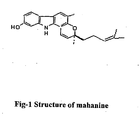
- Mahanine purified from HPLC fraction of Murraya koenigii extract, induced death of PC-3 cells. Chemical structure was then determined by using 2D NMR and Mass Spectra and found it to be a mahanine, whose structure was, reported earlier (TianshungWu, 1991 Phytochemistry)( fig 1 ).
- hepatocytes hepatocytes
- cardiomyoctye hepatocytes
- skeletal muscle hepatocytes
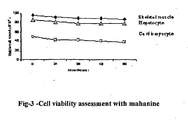
- Fig 3 shows that, mahanine did not kill other cells thereby suggesting its specificity for Prostate cancer cells.
- mice mice were divided into 2 groups 8 animals were received the compound @2gm/kg body weight. Equal volume of the vehicle (DMSO) were given to 8 animals wherein dose administered orally once and then animals sacrificed and haematological and biochemical parameters checked 15 days after treatment.
- Biochemical parameters were assessed for the pure molecule mahanine. Since it is a pure molecule there is a need to see the biochemical profile, therefore we concentrated on the biochemical parameters only. The experimental procedure followed was same as that for combined extract.. Table 2(b): Biochemical tests SGOT(units/ml) SGPT(units/ml) Urea(mg/dl) Creatinine(mgldl) Control 147.5 32.0 35.4 3.82 Treated 174.0 30.7 48.6 3.72
- Akt kinase plays an important role by inhibiting apoptotic processes. Akt phosphorylates downstream effector molecules such as pro-apoptotic protein Bad effecting its inactivation. This does not permit its dimerisation with Bcl-XL that result in the inhibition of apoptotic process. Mahanine inhibited phosphorylation of Akt in a dose and time dependent manner. Mahanine showed no effect on the steady state levels of Akt protein but its serine 473 phosphorylation was inhibited at 24 h and by 36 h its activation was totally blocked ( Fig 4 ).
- the basal level of phosphorylation at serine 473 is predominant in PC-3 cell line
- the inactivation of Akt phosphorylation could be attributed to the inactivation of cell survival pathways resulting subsequent induction of apoptosis in PC-3 cell treated with mahanine.
- Bcl-xl is a mitochondrial membrane protein that maintains mitochondrial membrane integrity in survival signal pathway. Mahanine significantly decreased Bcl-xl expression at 36 h ( Fig 5 ).
- Mahanine effect on caspase 9 and Caspase 3 indicates the activation of death pathway and time of activation of caspase 9 synchronized with caspase 3 which is further downstream in the apoptotic pathway.
- PARP Poly ADP ribosyl Polymerase
Landscapes
- Health & Medical Sciences (AREA)
- Natural Medicines & Medicinal Plants (AREA)
- Life Sciences & Earth Sciences (AREA)
- Chemical & Material Sciences (AREA)
- Medicinal Chemistry (AREA)
- Pharmacology & Pharmacy (AREA)
- Animal Behavior & Ethology (AREA)
- General Health & Medical Sciences (AREA)
- Public Health (AREA)
- Veterinary Medicine (AREA)
- Epidemiology (AREA)
- Botany (AREA)
- Engineering & Computer Science (AREA)
- Alternative & Traditional Medicine (AREA)
- Biotechnology (AREA)
- Medical Informatics (AREA)
- Microbiology (AREA)
- Mycology (AREA)
- Nuclear Medicine, Radiotherapy & Molecular Imaging (AREA)
- Organic Chemistry (AREA)
- General Chemical & Material Sciences (AREA)
- Chemical Kinetics & Catalysis (AREA)
- Medicines Containing Plant Substances (AREA)
- Pharmaceuticals Containing Other Organic And Inorganic Compounds (AREA)
Description
- The present invention relates to an herbal extract obtained from the leaves or any other plant part of Murrya koenigii useful for the treatment of prostate cancer in a subject.
- The present invention also relates to a process for the preparation of a pharmaceutical composition comprising an extract obtained from the leaves or any other plant part of Murraya koenigii useful for treatment of prostate cancer wherein the said process comprises of homogenizing the dried leaves or any other plant part of Murraya koenigii with water wherein the ratio used is 1:1 followed by freeze dried.
- More particularly, it relates to a process for isolation of mahanine from Murraya koenigii.
- It also relates to a new use of the compound mahanine as well as extract obtained from Murraya koenigii in the treatment of prostate cancer.
- One of the prevalent forms of neoplasia afflicting men above the age of 65 years is prostate cancer. Mortality from Prostate cancer results from metastasis to bones and lymph nodes. Early detection through serum testing of Prostate Specific Antigen (PSA), improved surgical intervention, radiation therapy, androgen ablation have yielded no answer to the patients who suffer from recurrent or residual cancer (Chinni SR, Li Y, et.al. Indole 3 carbinol(I3C) induced cell growth inhibition , G1 cell cycle arrest and Apoptosis in prostate cancer cells.Oncogene;20:2927-2936(2001). Popular, current therapy of Androgen ablation almost invariably leads to aberrant expression and interaction of Tyrosine kinase and associated ligands. Several recent studies have shown constitutively active mitogenic and cell survival signaling in Prostate cancer. The delicate link between cellular proliferation and apoptosis is challenged by such cellular aberrations. The primary mechanism i.e. prostate carcinoma by-pass apoptosis is by the up regulation of PI3Kinase/Akt survival pathway (Li Y, Sarkar FH. Inhibition of nuclear factor κB activation in PC-3 cells by genistin is mediated via Akt signaling pathway. Clin. Cancer. Res;8: 2369-2377(2002). Akt related serine-threonine in signaling cascade that regulates cell survival are important in the pathogenesis of cancer (Chinni SR, Sarkar FH. Akt inactivation is a key event in ). It inactivates a range of pro apoptotic proteins like Bad, forkhead transcription factor, caspase 9 (Green DR, Reed JC. Mitochondria and Apoptosis. Science; 281: 1309-1312(1998); Thornberry NA, Lazebnik Y. Caspases: enemies within. Science; 281: 1312-1316(1998) while activating Bcl-2 (Adams JM,Cory S. The Bcl-2 protein family Arbiters of cell survival. Science; 281: 1322-1326(1998), NFγB like anti-apoptotic proteins (Datta SR, Brunet A, Greenberg ME. Cellular survival: A play in three Akts. Genes and Dev; 13: 2905-2927(1999). In our endeavour, we isolated, purified mahanine; the active fraction from the leaves of plant M. koenigii(family rutaceae). Both leaf extracted fraction from M.Koenigii and the purified compound mahanine, a carbazole alkaloid shows considerable activity in the induction of apoptosis in two androgen independent Prostate cancer cell lines PC-3 and androgen dependent Prostate cancer cell line LNCaP.
- The leaf extract from M. koenigii and the purified molecule, mahanine induced apoptosis of androgn independent and androgen dependent prostate cancer cells in a time and dose dependent manner. Leaf extract caused significant apoptosis of all these cell lines (75% cell death in 96 h) with 200µg/ml dosage. The leaf extract from M koenigii induced apoptosis of androgen independent and androgen dependent prostate cancer cells in a time and dose dependent manner. Effect of the extract and purified compound on other cells i.e neonatal skeletal muscle cell, cardiomyocyte, hepatocyte have been examined as control cells. This suggests the specificity of the extract and mahanine for inducing apoptosis in prostate cancer cells. In in vivo experiment, there was no indication of any toxicity in mahanine treated mice (table 2a, b). Animals were examined for acute toxicity of mahanine; however there was no change in this data till 1 month. Based on this activity the single compound mahanine was purified. It also induced the caspase cascade and down regulation of pAkt as well as Bcl-xl expression, the most important survival signals in cancer cells.
- The main object of the present invention is to provide a pharmaceutical composition useful for the treatment of prostate cancer in a subject.
- Another object of the present invention is to provide a new use of the compound mahanine in the treatment of prostate cancer.
- Further another object of the present invention is to provide a method of treating prostrate cancer in a subject.
- Yet another object of the present invention is to provide a process for the preparation of said pharmaceutical composition comprising an extract obtained from the leaves or any other plant part of Murraya koenigii useful for treatment of prostate cancer wherein the said process comprises of homogenizing the dried leaves or any other plant part of Murraya koenigii with water wherein the ratio used is 1:1 followed by freeze dried.
- Still another object of the present invention is to provide a process for isolation of mahanine from Murraya koenigii.
- Still another objective of the present invention is to determine cell death, release of cytochrome c, activation caspase cascade, cleavage of PARP DNA repair enzyme, along with the down regulation of Bcl-xl and pAkt, with the extract and the compound mahanine obtained from Murraya koenigii.
- The present invention provides use of a composition comprising a therapeutically effective amount of compound mahanine or pharmaceutically acceptable salt thereof optionally along with one or more pharmaceutically acceptable carriers in the manufacture of a medicament for the treatment of prostate cancer, Also provided is Mahanine for use in the treatment of prostate cancer.
- Also described is a pharmaceutical composition useful for the treatment of prostate cancer in a subject wherein the said composition comprising the therapeutically effective amount of an extract obtained from any plant parts Murrya koenigii or therapeutically effective amount of compound mahanine or its derivatives or analogues or pharmaceutically acceptable salt thereof optionally along with one or more pharmaceutically acceptable carriers. It also relates to a new use of a compound mahanine in the treatment of prostate cancer. Further, described is a process for the preparation of extract and therefore a molecule, mahanine, from the leaf extract or any other plant parts of Murrya koenigii, which efficiently kills androgen dependent and independent Prostate cancer cells.
-
-
Figure 1 represents structure of Mahanine. -
Figure 2 represents dose Response of PC-3 and LNCaP cell line to mahanine. Mahanine killed androgen independent cell line PC-3 and androgen dependent cell line LNCaP cells in a dose and time dependent manner. The dose used was 1,2,3 µg/ml in comparison to control untreared cells (0) in both the cell lines. -
Figure 3 represents cell viability assessment with mahanine. To evaluate the specificity of mahanine, its effect on other cells in primary culture, such as, hepatocytes, cardiomyoctye and skeletal muscle was examined with 9 µg/ml. Mahanine did not kill other cells thereby suggesting its specificity for Prostate cancer cells. -
Figure 4 represents mahanine inhibited Akt phosphorylation. Mahanine inhibited phosphorylation of Akt in a dose and time dependent manner. Mahanine showed no effect on the steady state levels of Akt protein but its serine 473 phosphorylation was inhibited at 24 h and by 36 h its activation was totally blocked. -
Figure 5 represents inhibition of Bcl-xl expression by mahanine. Mahanine induced apoptosis of PC-3 cells is affected through Bcl-xl. It is an antiapoptotic mitochondrial membrane protein that prevents the release of cytochrome c.Bcl-xl is considerably downregulated by 36 hr thereby inducing apoptosis. -
Figure 6(a) represents induction of caspase-9 activation by mahanine.Caspase 9 activation was determined in the same time points with the same dose (3µg/ml) of mahanine.Cleaved caspase 9 could be detected as early as 6h which steadily increased at 12h and 24h and declined at 36h. -
Figure 6(b) represents induction of caspase-3 activation by mahanine. The activation ofcaspase 3 considerably increased at 48h and peak of the activity could be detected at 60h. -
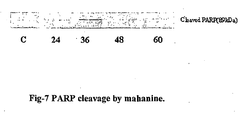
Figure 7 represents PARP cleavage by mahanine. Poly ADP ribosyl Polymerase (PARP) is a DNA repair enzyme responsible for nick detection and repair. It is one of the target proteins ofcaspase 3.Active caspase 3 causes cleavage of PARP into an 89kDa fragment in PC-3 cells due to mahanine. The maximum cleavage of PARP was observed at 36h. - Presently described a pharmaceutical composition useful for the treatment of prostate cancer in a subject wherein the said composition comprising the therapeutically effective amount of an extract obtained from any plant parts of Murrya koenigii or therapeutically effective amount of compound mahanine or its derivatives or analogues or pharmaceutically acceptable salt thereof optionally along with one or more pharmaceutically acceptable carriers.
- It is also described ' that the said composition comprises the therapeutically effective amount of an extract obtained from any plant parts of Murrya koenigii optionally along with one or more pharmaceutically acceptable carriers.
- It is also described that the dosage of the said composition is administered at a unit dose of at least 10-15mg/kg body weight.
- It is also described that the said composition further comprises the therapeutically effective amount of compound mahanine or its derivatives or analogues or pharmaceutically acceptable salt thereof optionally along with one or more pharmaceutically acceptable carriers.
- The present invention provides use of a composition comprising a therapeutically effective amount of compound mahanine or pharmaceutically acceptable salt thereof optionally along with one or more pharmaceutically acceptable carriers in the manufacture of a medicament for the treatment of prostate cancer.
- In another embodiment of the present invention, the mahanine used is obtained from the extract Murrya Koenigii or synthetically made.
- In still another embodiment of the present invention, the dosage of the said composition is administered at a unit dose of at least 0.1-5mg /kg body weight. In still another embodiment of the present invention, the dosage of the said composition is administered preferably in water-soluble form.
- In still another embodiment of the present invention, the said carriers are selected in such a manner that it does not interfere with the activity of traction of Murrya koenigii extract.
- In still another embodiment of the present invention, wherein the said carriers is selected from the group consisting of proteins, carbohydrates, sugar, talc, magnesium stearate, cellulose, calcium carbonate, and starch-gelatin paste and pharmaceutical acceptable carriers, excipient, diluent or solvent
- In still another embodiment of the present invention, the administration route is selected from the group consisting of oral, intravenous, intramuscular or subcutaneous route.
- In still another embodiment of the present invention, the said form for oral route is selected from the group consisting of capsule, syrup, concentrate, powder and granule
- In still another embodiment of the present invention, the androgen independent
cell line PC 3 and androgen dependent cell line LNCaP is killed by the said composition in a dose and time dependent manner. - Also described is a method of treating prostrate cancer in a subject, wherein the said method comprising the step of administering to the subject a pharmaceutical composition comprising the therapeutically effective amount of an extract obtained from any plant parts of Murrya koenigii or therapeutically effective amount of compound mahanine or its derivatives or analogues or pharmaceutically acceptable salt thereof optionally along with one or more pharmaceutically acceptable carriers.
- In still another embodiment of the present invention, other cells such as hepatocytes, cardiomayocytes, and skeletal muscle are not killed by the said composition. Also described but not claimed is a process for the preparation of an pharmaceutical compostion comprising an extract obtained from the leaves or any other plant part of Murraya koenigii useful for treatment of prostate cancer wherein the said process comprises of homogenizing the dried leaves or any other plant part of Murraya koenigii with water wherein the ratio used is 1:1 followed by freeze dried.
- Also described is that the plant parts are selected from the group consisting of leaves, sterns, fruits, or any other part of the Murrya Koenigii In another embodiment of the present invention, the leaves of Murraya koenigii is collected from different areas of West Bengal, India.
- Also described is that the leaves used are taken from fresh or/ and sun shade dried leaves of Murrya Koenigii In still another embodiment of the present invention, the anti-carcinogenic activity of the said extract is confirmed by in-vivo experiments.
- Also described is that the use of the said extract is in the treatment of prostate cancer.
- Also described is a process for the isolation of compound mahanine from Murraya koenigii, wherein the said process comprising the steps of:
- a) extracting the fresh leaves of Murraya koenigii with methanol;
- b) concentrating the methanol extract obtained from step (a) to obtain a residue I;
- c) suspending the residue I obtained from step (b) in water followed by extraction with ethyl acetate and n-butanol.
- d) concentrating the ethyl acetate layer obtained from step (c) to get a residue II;
- e) chromatograph the ethyl acetate fraction obtained from step (d) on silica gel using petroleum ether-chloroform (100:00 → 00:100) as an eluent to give four fraction;
- f) subjecting the fraction 4 obtained from step (e) to chromatograpby on silica gel followed by crystallization in petrol to get a desired product.
- The structure of the said compound may be
confirmed by comparing its physical data as well as its infrared, NMR and mass spectral data with those of an authentic sample. - The anti-carcinogenic activity of the said compound may be confirmed by in-vivo experiments.
- The use of the compound mahanine may be in the treatment of prostate cancer.
- Example 1 to 15 relates the extract obtained from Murraya koenigii (Rutaceae) and its biological activity thereof.
- The leaves of Murraya koenigii (Rutaceae) was collected from different areas of West Bengal, India. A voucher specimen has been deposited at the Department of Medicinal Chemistry, Indian Institute of Chemical Biology, Kolkata, India.
- The fresh leaves and all other plant parts of Murraya koenigii (1.2Kg) was homogenized with water (1.5lit) in a mixture-blender and freeze dried. Activity of the freeze-dried material was examined on prostate cancer cell line.
- Human prostate cancer cell line, PC-3 (PTEN -ve, androgen independent) from American Type Culture Collection, Manassas,VA,USA. Cells were grown in Dulbecco's Modified Eagle Medium supplemented with 10% fetal bovine serum and 1% antibiotic-antimycotic. Cells were cultured in 37°C in an atmosphere of 5% CO2.
- The cardiomyocytes from 2-day-old neonatal rat were isolated by the method previously described by Yoshihiro Kimura (1994) with modifications. Briefly, heart was excised and minced in pre warmed (37°C) Ads buffer (1.2M NaCl, 198mM HEPES, 54mM KCl, 8.3mM MgSO4, 55.4mM glucose, 95mM NaH2PO4), digested in typeII Collagenase 0.05% and Pancreatin in 3-succesive digestions of 15 minutes each. Supernatant was pooled and cells palleted at 2000g, 10minutes. Cells were resuspended and plated in collagen coated T-25 flaks in Medium-199 enriched with 10% Fetal Bovine Serum and 1% antibiotic-antimycotic.
- The hepatocytes from 2-day-old neonatal rat were isolated by method described previously by William E Russell (1997) with modifications. Briefly, the livers were perfused through the portal vein with a calcium-free solution consisting of 150 mM NaCl, 2.8 mM KCl, 5.5 mM glucose, and 25 mM HEPES (pH 7.6) for 10 min, followed by mincing and digestion in DMEM containing 0.05% collagenase type IV for 30 minutes. The cells were centrifuged (2000g, 10minutes) and dispersed in DMEM enriched with 10% fetal Bovine Serum, 1% antibiotic-antimycotic.
- The skeletal muscles from 2-day-old neonatal rat were isolated by method described previously by William E Russell (1997) with modifications. Briefly, Soleus muscle were dissected, minced and digested with 0.2% Type II Collagenase and 0.05% trypsin in Phosphate buffered Saline (PBS) pH 7.4,0.15M NaCl. The dispersed skeletal muscle cells were centrifuged (1000g, 10minutes) washed and resuspended in Phosphate buffered Saline (PBS) with 1% antibiotic-antimycotic. Cells were preincubated for 30 minutes at 37°C, 95%air/5%CO2. The floating muscle cells were plated on collagen coated T-25 flaks in Dulbecco's modified Eagle Medium enriched with 10% Fetal Bovine Serum and 1% antibiotic-antimycotic
- Viability of PC-3 after treatment as at the indicated times was determined by MTT assay -Cell titre 96 AQoueus One solution Cell Proliferation Assay (Promega,Corp.Madison,WI) as per manufacturer's protocol. Briefly, 10,000 cells were plated in triplicate in 96 well plates and incubated for 12 hours in complete media. Compound MK-3 was added as indicated on replacing them to fresh complete media and incubated upto 96hours for varied time periods. 20µl per well of cell titre 96 AQoueus One solution reagent. Incubate the plate for 1-4 hours at 37°C and humidified 5%CO2 atmosphere. Absorbance was recorded at 490nm with 96 well plate readers. Reference wavelength of 630nm was used to reduce background contributed by nonspecific absorbance due to cell debris.
- PC-3 cells (1X10⁶ cells) were incubated with complete medium. Cells were detached using cell dissociation reagent from Sigma Chemical company St Louis,MO,USA. They were collected by centrifugation at 1500g for 10 mins and boiled for 5-7 minutes in sodium dodecyl sulphate(SDS) buffer (pH 6.8). Aliquots containing 60µg total cellular protein were separated by 10%SDS-PAGE and transferred to PVDF membrane (MILIPORE, Bedford, MA, USA). Membrane was blocked with blocking buffer for 1hour at room temperature and probed with desired primary antibody caspase-9, Bcl-xl, pAkt1/2/3(ser 473), anti PARP, Cytochrome C (Santa-Cruz Biotechnology, Inc. USA). Anti Caspase -3 that recognizes procaspse-3 (32 kDa) and the active cleaved caspase-3 (17 kDa) (BD Biosciences, Mountainview, CA). Akt, cleaved caspase-9 (Cell Signaling technology, Beverly,MA) overnight at 4° C followed by alkaline phosphatase conjugated secondary antibody and detection.
- To search anti-carcinogenic activity from medicinal plants of India, we selected Murraya koenigii leaves extract and observed efficient killing of androgen independent prostate cancer cell line PC-3. It shows the data of PC-3 cell line.
- Extracts did not show any toxic effects on neonatal skeletal muscle cell, cardiomyocyte, hepatocyte with the same dose i.e 100µg/ml M. koenigii total amounting to of 200µg/ml of culture media suggesting the specificity of the combined extracts for inducing apoptosis in prostate cancer cells.
- Experiments for acute toxicity are performed as per the guidelines of WHO. Experimental subject: Mice, Balb/C Male, female. 25gms body weight (approx) 16 mice were divided into 2
groups 8 animals were received the dosage of @2gm/kg body weight of combined extract. Equal volume of the vehicle (DMSO) were given to 8 animals wherein dose administered orally once and then animals sacrificed and haematological parameters checked 15 days after treatment.Table 1: Haematological tests for crude extract: RBC WBC Hb(gm/dl) Control 1029 92 10.69 Treated 1032 89 10.713 - In cell survival pathway, Akt kinase plays an important role by inhibiting apoptotic processes. Akt phosphorylates downstream effector molecules such as pro-apoptotic protein bad effecting its inactivation. This does not permit its dimerisation with Bcl-xl that result in the inhibition of apoptotic process. The bi-herbal extract inhibited phosphorylation of Akt in a dose and time dependent manner. It showed no effect on the steady state levels of Akt protein but its serine 473 phosphorylation was inhibited at 24 h and by 36 h its activation was totally blocked. The basal level of phosphorylation at serine 473 is predominant in PC-3 cell line. The inactivation of Akt phosphorylation could be attributed to the inactivation of cell survival pathways resulting subsequent induction of apoptosis in treated PC-3 cells.
- It has been then investigated whether mahanine bi-herbal extract obtained from M.koenigii) induced apoptosis of PC-3 cells is effected through Bcl-xl. Bcl-xl is a mitochondrial membrane protein that maintains mitochondrial membrane integrity in survival signal pathway. The bi-herbal extract significantly decreased Bcl-xl expression at 36 h.
- This indicates initiation of apoptotic pathway as down regulation of Bcl-xl permits disintegration of mitochondrial outer membrane that causes leakage of cytochrome c initiating the caspase cascade. The activation of
caspase 3 was detected at 48h and peak of the activity could be detected at 60h. - Therapeutic Evaluation of the preparation developed by combination of M.koenigii leaves extract for the treatment of prostate cancer (Conducted by registered Auyrvedic practioner). 3 capsules per day (each containing 330mg) were administered orally.
Patient weight of prostate before treatment weight of prostate after 2 months of treatment A 39gm 21gm B 46gm 25gm C 34 gm 18 gm D 42gm 27 gm E 29gm 16gm F 41gm 19gm - All the above patients reported easy flow of urine during both day and night after taking capsules for 2 months
- The leaves of Murraya koenigii (Rutaceae) were collected from different areas of West Bengal, India. A voucher specimen has been deposited at the Department of Medicinal Chemistry, Indian Institute of Chemical Biology, Kolkata. The fresh leaves of Murraya koenigii (3Kg) were extracted with methanol in a mixture blender. The methanol extract was concentrated to dryness to give a residue (188g), which was suspended in water and successively extracted with ethyl acetate and n-butanol. The ethyl acetate layer was concentrated to residue (70g). The ethyl acetate extract was tested for bioactivity. A part of ethyl acetate fraction (16g) was chromatographed on silica gel (250g) using petroleum ether-chloroform (100:00 → 00:100) as an eluent to give four fractions, fr.1 -4, in order of elution. Fraction 4 (1.5g) was subjected to repeated chromatography on silica gel and finally crystallization in petrol afforded a compound (0.15g), m.p. 94 -95°C, [α]D +31 (chloroform) identical to the structure of mahanine (
Fig. 1 ). Its identity was confirmed by comparing its physical data as well as its infrared (IR), 1H NMR, 13C NMR and mass spectral data with those of an authentic sample (Tian-shung Wu, Murrayamine A,B,C and (+) mahanine, carbazole alkaloid from Murraya euchrestifolia, Phytochemistry, 30, 1048 (1991).The mahanine was tested for bioactivity. - The fresh leaves and all other plant parts of Murrava koenigii (1.2Kg) was homogenized with chloroform (1.5lit) in a mixture-blender and then sonicated in an ultrasonic bath with 3 burst each for 15 min and allow it for extraction over night. Filtering through Whatman No. 1 filter paper separated the chloroform-extracted material. This process of extraction was repeated three times. The combined extract was evaporated to dryness in a flash evaporator under reduced pressure at 40°C. The residual substance was then dried under high vacuum. The chloroform extract (14g) was chromatographed on silica gel column as described in example-9. Mahanine was isolated as pure crystals (0.12g) and was tested for bioactivity.
- Human prostate cancer cell line, PC-3 (PTEN -ve, androgen independent) from American Type Culture Collection, Manassas,VA,USA. Cells were grown in Dulbecco's Modified Eagle Medium supplemented with 10% fetal bovine serum and 1% antibiotic-antimycotic. Cells were cultured in 37°C in an atmosphere of 5% CO2.
- The cardiomyocytes from 2-day-old neonatal rat were isolated by the method previously described by Yoshihiro Kimura (1994) with modifications. Briefly, heart was excised and minced in pre warmed (37 degree C) Ads buffer (1.2M NaCl, 198mM HEPES, 54mM KCl, 8.3mM MgSO4, 55.4mM glucose, 95mM NaH2PO4), digested in typeII Collagenase 0.05% and Pancreatin in 3-succesive digestions of 15 minutes each. Supernatant was pooled and cells palleted at 2000g, 10minutes. Cells were resuspended and plated in collagen coated T-25 flaks in Medium-199 enriched with 10% Fetal Bovine Serum and 1% antibiotic-antimycotic.
- The hepatocytes from 2-day-old neonatal rat were isolated by method described previously by William E Russell (1997) with modifications. Briefly, the livers were perfused through the portal vein with a calcium-free solution consisting of 150 mM NaCl, 2.8 mM KCl, 5.5 mM glucose, and 25 mM HEPES (pH 7.6) for 10 min, followed by mincing and digestion in DMEM containing 0.05% collagenase type IV for 30 minutes. The cells were centrifuged (2000g, 10minutes) and dispersed in DMEM enriched with 10% fetal Bovine Serum, 1% antibiotic-antimycotic.
- The skeletal muscles from 2-day-old neonatal rat were isolated by method described previously by William E Russell (1997) with modifications. Briefly, Soleus muscles were dissected, minced and digested with 0.2% Type II Collagenase and 0.05% trypsin in Phosphate buffered Saline (PBS) pH 7.4, 0.15M NaCl. The dispersed skeletal muscle cells were centrifuged (1000g, 10minutes) washed and resuspended in Phosphate buffered Saline (PBS) with 1% antibiotic-antimycotic. Cells were preincubated for 30 minutes at 37°C, 95%air/5%CO2. The floating muscle cells were plated on collagen coated T-25 flaks in Dulbecco's modified Eagle Medium enriched with 10% Fetal Bovine Serum and 1% antibiotic-antimycotic.
- Viability of PC-3 after treatment as at the indicated times was determined by MTT assay -Cell titre 96 AQoueus One solution Cell Proliferation Assay (Promega,Corp.Madison,WI) as per manufacturer's protocol. Briefly, 10,000 cells were plated in triplicate in 96 well plates and incubated for 12 hours in complete media. Compound MK-3 was added as indicated on replacing them to fresh complete media and incubated upto 72hours for varied time periods. 20µl per well of cell titre 96 AQoueus One solution reagent. Incubate the plate for 1-4 hours at 37°C and humidified 5%CO2 atmosphere. Absorbance was recorded at 490nm with 96 well plate readers. Reference wavelength of 630nm was used to reduce background contributed by nonspecific absorbance due to cell debris.
- PC-3 cells (1X10⁶ cells) were incubated with complete medium alone or with 3µg/ml of Mahanine (MK-3) as indicated. Cells were detached using cell dissociation reagent from Sigma Chemical company St Louis,MO,USA. They were collected by centrifugation at 1500g for 10 mins and boiled for 5-7 minutes in sodium dodecyl sulphate(SDS) buffer (pH 6.8). Aliquots containing 60µg total cellular protein were separated by 10%SDS-PAGE and transferred to PVDF membrane (MILIPORE, Bedford, MA, USA). Membrane was blocked with blocking buffer for 1hour at room temperature and probed with desired primary antibody caspase-9, Bcl-xl, pAkt1/2/3(ser 473), anti PARP, Cytochrome C (Santa-Cruz Biotechnology, Inc. USA). Anti Caspase -3 that recognizes procaspse-3 (32 kDa) and the active cleaved caspase-3 (17 kDa) (BD Biosciences, Mountainview, CA). Akt, cleaved caspase-9 (Cell Signaling technology, Beverly,MA) overnight at 4° C followed by alkaline phosphatase conjugated secondary antibody and detection.
- Cells were cultured on glass cover slips. Both control and treated cells were fixed with PBS containing 4% paraformaldehyde for 2h at 4° C. The cells were permiabilized with 0.1% Triton X-100 in PBS and then incubated with rabbit polyclonal anti-cytochrome c antibody (Santa cruz, USA, dil 1:50) for 3 h followed by incubation with FITC-conjugated secondary antibody (goat anti rabbit, Santa Cruz, 1:50) for another 1h with rigorous washing in all the above steps with PBS. 1µg/ml DAPI was also added in each set. The stained cells were observed under fluorescence microscope (Olympus BX51 microscope, Tokyo, Japan) and the images were captured with cool Snap Pro camera.
- Mahanine, purified from HPLC fraction of Murraya koenigii extract, induced death of PC-3 cells. Chemical structure was then determined by using 2D NMR and Mass Spectra and found it to be a mahanine, whose structure was, reported earlier (TianshungWu, 1991 Phytochemistry)(
fig 1 ). - Mahanine killed androgen independent cell line PC-3 and androgen dependent cell line LNCaP cells in a dose and time dependent manner. (
Fig 2 ). - To evaluate the specificity of mahanine, its effect on other cells in primary culture, such as, hepatocytes, cardiomyoctye and skeletal muscle was examined.
Fig 3 shows that, mahanine did not kill other cells thereby suggesting its specificity for Prostate cancer cells. - Experiments for acute toxicity are performed as per the guidelines of WHO. Experimental subject: Mice, Balb/C Male, female. 25gms body weight (approx) 16 mice were divided into 2
groups 8 animals were received the compound @2gm/kg body weight. Equal volume of the vehicle (DMSO) were given to 8 animals wherein dose administered orally once and then animals sacrificed and haematological and biochemical parameters checked 15 days after treatment.Table 2(a): Haematological tests for Compound mahanine: RBC WBC Hb(gm%dl) Control 1029 92 10.69 Treated 1032 89 10.713 - Biochemical parameters were assessed for the pure molecule mahanine. Since it is a pure molecule there is a need to see the biochemical profile, therefore we concentrated on the biochemical parameters only. The experimental procedure followed was same as that for combined extract..
Table 2(b): Biochemical tests SGOT(units/ml) SGPT(units/ml) Urea(mg/dl) Creatinine(mgldl) Control 147.5 32.0 35.4 3.82 Treated 174.0 30.7 48.6 3.72 - Moreover there was no indication of any toxicity in mahanine treated mice (table 2(a),(b).
- In cell survival pathway, Akt kinase plays an important role by inhibiting apoptotic processes. Akt phosphorylates downstream effector molecules such as pro-apoptotic protein Bad effecting its inactivation. This does not permit its dimerisation with Bcl-XL that result in the inhibition of apoptotic process. Mahanine inhibited phosphorylation of Akt in a dose and time dependent manner. Mahanine showed no effect on the steady state levels of Akt protein but its serine 473 phosphorylation was inhibited at 24 h and by 36 h its activation was totally blocked (
Fig 4 ). - The basal level of phosphorylation at serine 473 is predominant in PC-3 cell line The inactivation of Akt phosphorylation could be attributed to the inactivation of cell survival pathways resulting subsequent induction of apoptosis in PC-3 cell treated with mahanine.
- We then investigated whether mahanine induced apoptosis of PC-3 cells is effected through Bcl-xl. Bcl-xl is a mitochondrial membrane protein that maintains mitochondrial membrane integrity in survival signal pathway. Mahanine significantly decreased Bcl-xl expression at 36 h (
Fig 5 ). - This indicates initiation of apoptotic pathway as down regulation of Bcl-xl permits disintegration of mitochondrial outer membrane that causes leakage of cytochrome c initiating the caspase cascade. Mahanine causes leakage of cytochrome c from the mitochondria in PC-3 cells Caspase 9 activation was determined in the same time points with the same dose (3 µg/ml of culture media) of mahanine.
Cleaved caspase 9 could be detected as early as 6h which steadily increased at 12h and 24h and declined at 36h (Fig 6a ). The activation ofcaspase 3 considerably increased at 48h and peak of the activity could be detected at 60h (Fig 6b ). - Mahanine effect on
caspase 9 andCaspase 3 indicates the activation of death pathway and time of activation ofcaspase 9 synchronized withcaspase 3 which is further downstream in the apoptotic pathway. - Poly ADP ribosyl Polymerase (PARP) is a DNA repair enzyme responsible for nick detection and repair .It is one of the target proteins of
caspase 3.Active caspase 3 causes cleavage of PARP into an 89kDa fragment in PC-3 cells due to mahanine. The maximum cleavage of PARP was observed at 36h (fig 7 ). - In the light of the above results it may be concluded that mahanine effectively induces apoptosis of both androgen dependent and androgen independent) prostate cancer cells,
-
- 1. A simplified method of bioactive extraction and a simplified fast and inexpensive process for the preparation of fraction mahanine possessing significantly high biological activities relevant to treatment, relief and remedy of prostate cancer.
- 2. A pharmaceutical composition which is highly compatible for human consumption and capable for being used for the treatment, relief and remedy of prostate cancer.
Claims (10)
- Use of a composition comprising a therapeutically effective amount of compound mahanine or pharmaceutically acceptable salt thereof optionally along with one or more pharmaceutically acceptable carriers in the manufacture of a medicament for the treatment of prostate cancer.
- Use according to claim 1, wherein the mahanine used is obtained from the extract of Murrya Koenigii or synthetically made.
- Use according to claim 1, wherein the dosage of the said composition is administered in water-soluble form at a unit dose of at least 0.1-5.0mg/kg body weight.
- Use according to claim 1, wherein the dosage of the said composition is administered preferably in water-soluble form.
- Use according to claim 1, wherein the said carriers is selected from the group consisting of proteins, carbohydrates, sugar, magnesium stearate, cellulose, calcium carbonate, and starch-gelatin paste and pharmaceutical acceptable carriers, excipient, diluent or solvent.
- Use according to claim 1, wherein the administration route is selected from the group consisting of, oral, intravenous, intramuscular or subcutaneous route.
- Use according to claim 6, wherein the said form for oral route is selected from the group consisting of capsule, syrup, concentrate, powder and granules.
- Use according to claim 1, wherein the androgen independent cell line PC 3 and androgen dependent cell line LNCaP is killed by the said composition in a dose and time dependent manner.
- Use according to claim 8, wherein the phosphorylation of Akt is inhibited by the said composition in a dose and time dependent manner.
- Mahanine for use in the treatment of prostate cancer.
Applications Claiming Priority (2)
| Application Number | Priority Date | Filing Date | Title |
|---|---|---|---|
| IN2335DE2005 | 2005-09-01 | ||
| PCT/IB2006/002317 WO2007026203A1 (en) | 2005-09-01 | 2006-08-25 | A pharmaceutical composition comprising mahanine useful for the treatment of prostate cancer |
Publications (2)
| Publication Number | Publication Date |
|---|---|
| EP1933945A1 EP1933945A1 (en) | 2008-06-25 |
| EP1933945B1 true EP1933945B1 (en) | 2010-03-17 |
Family
ID=37507756
Family Applications (1)
| Application Number | Title | Priority Date | Filing Date |
|---|---|---|---|
| EP06795331A Ceased EP1933945B1 (en) | 2005-09-01 | 2006-08-25 | A pharmaceutical composition comprising mahanine useful for the treatment of prostate cancer |
Country Status (6)
| Country | Link |
|---|---|
| US (3) | US20070072931A1 (en) |
| EP (1) | EP1933945B1 (en) |
| CN (2) | CN101252945A (en) |
| DE (2) | DE112006002340T5 (en) |
| GB (1) | GB2443588B (en) |
| WO (2) | WO2007026201A1 (en) |
Families Citing this family (7)
| Publication number | Priority date | Publication date | Assignee | Title |
|---|---|---|---|---|
| WO2009066303A2 (en) | 2007-11-22 | 2009-05-28 | Ganga Raju Gokaraju | New synergistic phytochemical composition for the treatment of obesity |
| AU2009282451B2 (en) | 2008-08-15 | 2014-02-13 | Georgetown University | Fluorescent regulators of RASSF1A expression and human cancer cell proliferation |
| US8637679B2 (en) | 2011-03-11 | 2014-01-28 | Council Of Scientific And Industrial Research | Process for the isolation of organic compounds useful for the treatment of cancer |
| CN102634480B (en) * | 2012-03-27 | 2013-12-18 | 中国农业大学 | Method for isolating and culturing liver primary cells |
| CN102935130B (en) * | 2012-12-08 | 2014-03-19 | 新乡医学院 | Traditional Chinese medicine composition for improving anoxia endurance as well as preparation method and application thereof |
| US11053255B2 (en) | 2015-06-22 | 2021-07-06 | Georgetown University | Synthesis of mahanine and related compounds |
| CN118108727B (en) * | 2024-04-29 | 2024-06-28 | 昆明医科大学 | A carbazole alkaloid compound and its preparation method and application |
Family Cites Families (7)
| Publication number | Priority date | Publication date | Assignee | Title |
|---|---|---|---|---|
| JP3346083B2 (en) * | 1995-02-24 | 2002-11-18 | ライオン株式会社 | Antibacterial agent and oral composition |
| JP3497655B2 (en) * | 1996-03-07 | 2004-02-16 | 稲畑香料株式会社 | Foods for preventing and eliminating bad breath, and agents for preventing and removing bad breath |
| US6746694B1 (en) * | 2000-10-02 | 2004-06-08 | Council Of Scientific And Industrial Research | Herbal composition for treating asthma |
| US20030096020A1 (en) * | 2001-06-04 | 2003-05-22 | Brindavanam Narasimha Baba | Novel herbal composition for the management of bronchial asthma and a process of manufacturing the same |
| US6818231B2 (en) * | 2001-12-12 | 2004-11-16 | Brian Alexis | Treatment of vulvovaginitis with spirostanol enriched extract from Tribulus terrestris |
| BG106434A (en) * | 2002-02-25 | 2003-09-30 | АЛЕКСИЕВ Благой | PHARMACOLOGICAL SUBSTANCE |
| BG106435A (en) * | 2002-02-25 | 2003-09-30 | АЛЕКСИЕВ Благой | PHARMACOLOGICAL COMPOSITION |
-
2006
- 2006-08-22 GB GB0803521A patent/GB2443588B/en not_active Expired - Fee Related
- 2006-08-22 WO PCT/IB2006/002270 patent/WO2007026201A1/en not_active Ceased
- 2006-08-22 DE DE112006002340T patent/DE112006002340T5/en not_active Withdrawn
- 2006-08-22 CN CNA2006800318889A patent/CN101252945A/en active Pending
- 2006-08-25 DE DE602006013009T patent/DE602006013009D1/en active Active
- 2006-08-25 CN CN2006800321928A patent/CN101267859B/en not_active Expired - Fee Related
- 2006-08-25 EP EP06795331A patent/EP1933945B1/en not_active Ceased
- 2006-08-25 WO PCT/IB2006/002317 patent/WO2007026203A1/en not_active Ceased
- 2006-08-29 US US11/511,882 patent/US20070072931A1/en not_active Abandoned
- 2006-08-29 US US11/511,874 patent/US20070104811A1/en not_active Abandoned
-
2010
- 2010-02-26 US US12/714,016 patent/US20100297760A1/en not_active Abandoned
Also Published As
| Publication number | Publication date |
|---|---|
| WO2007026201A1 (en) | 2007-03-08 |
| CN101267859B (en) | 2013-01-02 |
| CN101252945A (en) | 2008-08-27 |
| GB0803521D0 (en) | 2008-04-02 |
| US20100297760A1 (en) | 2010-11-25 |
| DE602006013009D1 (en) | 2010-04-29 |
| EP1933945A1 (en) | 2008-06-25 |
| CN101267859A (en) | 2008-09-17 |
| GB2443588A (en) | 2008-05-07 |
| US20070104811A1 (en) | 2007-05-10 |
| GB2443588B (en) | 2010-04-21 |
| WO2007026203A1 (en) | 2007-03-08 |
| US20070072931A1 (en) | 2007-03-29 |
| DE112006002340T5 (en) | 2008-07-17 |
Similar Documents
| Publication | Publication Date | Title |
|---|---|---|
| US20100297760A1 (en) | Pharmaceutical composition and a method for treatment of prostate cancer | |
| KR100364383B1 (en) | Extract of Scutellariae Radix having neuroprotective effects and pharmaceutical preparations containing the same | |
| US20100009017A1 (en) | Anticancer Methods Using Extracts of Anemarrhena asphodeloides Bunge | |
| CN104547104A (en) | Wild jujube stem and leaf extract, as well as preparation method and application thereof | |
| Oh et al. | Inhibitory effects of Dianthi Herba ethanolic extract on inflammatory and nociceptive responses in murine macrophages and mouse models of abdominal writhing and ear edema | |
| JP7317309B2 (en) | Autophagic cell death inducer | |
| US7731994B2 (en) | Pharmaceutical composition for protecting neurons comprising extract of lithospermum erythrothizon SIEB. ET. Zucc or acetylshikonin isolated therefrom as an effective ingredient | |
| JP2000503686A (en) | Pharmaceutical composition for the treatment of hepatitis C, comprising a mixed extract of yellow bamboo skin and Ominaeushi plant | |
| WO2009062374A1 (en) | The pharmaceutical use of liquiritigenin for preparing medicine for treating neurodegenerative diseases | |
| AU2015352042B2 (en) | Titled extracts of Cynara scolymus for use in the treatment of mesothelioma | |
| KR101051076B1 (en) | Composition for the treatment of allergy comprising peach and manufacturing method thereof | |
| CN103118688B (en) | New use of Cynomorium chemical constituents as phytoestrogens | |
| KR20170068029A (en) | A pharmaceutical composition with treating malignant melanoma comprising the extract from pueraria thunbergiana | |
| KR20010103341A (en) | Extract of Uncariae Ramulus having neuroprotective effects and pharmaceutical preparations containing the same | |
| CN111297849B (en) | Pharmaceutical composition for treating laryngeal cancer, preparation method and application thereof | |
| CN101407456B (en) | Effective ingredient having beta-secretase inhibition effect in Homalonema occulta | |
| CN110156784B (en) | Indole alkaloid 11-MT and preparation method and application thereof | |
| CN102188477A (en) | Preparation method and application of active component of radix gentianae extractive | |
| CA2721087A1 (en) | Anticancer methods using extracts of anemarrhena asphodeloides bunge | |
| WO2016065994A1 (en) | Method for extracting high-purity asarinin by supercritical carbon dioxide extraction method and use thereof | |
| CN104447783A (en) | Ganoderma cochlear phenols A and B, pharmaceutical compositions of ganoderma cochlear phenols A and B and applications of ganoderma cochlear phenols A and B and pharmaceutical compositions in preparation of medicines and food | |
| CN104095844A (en) | Application of arctigenin in preparation of drug for treatment of hepatic fibrosis or liver cirrhosis | |
| KR101201866B1 (en) | A Pharmaceutical Composition Comprising the Compound Gomisin-A for Treating or Preventing Cancer | |
| CN110090216A (en) | The application of indole alkaloids compound and its derivative or salt in prevention and treatment diabetic nephropathy product | |
| TWI634894B (en) | Extraction process for glossogyne tenuifolia and pharmaceutical composition containing glossogyne tenuifolia extract for inhibiting growth of prostate cancer cells |
Legal Events
| Date | Code | Title | Description |
|---|---|---|---|
| PUAI | Public reference made under article 153(3) epc to a published international application that has entered the european phase |
Free format text: ORIGINAL CODE: 0009012 |
|
| 17P | Request for examination filed |
Effective date: 20080326 |
|
| AK | Designated contracting states |
Kind code of ref document: A1 Designated state(s): DE GB |
|
| 17Q | First examination report despatched |
Effective date: 20080708 |
|
| RBV | Designated contracting states (corrected) |
Designated state(s): DE GB |
|
| GRAP | Despatch of communication of intention to grant a patent |
Free format text: ORIGINAL CODE: EPIDOSNIGR1 |
|
| DAX | Request for extension of the european patent (deleted) | ||
| GRAS | Grant fee paid |
Free format text: ORIGINAL CODE: EPIDOSNIGR3 |
|
| GRAA | (expected) grant |
Free format text: ORIGINAL CODE: 0009210 |
|
| AK | Designated contracting states |
Kind code of ref document: B1 Designated state(s): DE GB |
|
| REG | Reference to a national code |
Ref country code: GB Ref legal event code: FG4D |
|
| REF | Corresponds to: |
Ref document number: 602006013009 Country of ref document: DE Date of ref document: 20100429 Kind code of ref document: P |
|
| PLBE | No opposition filed within time limit |
Free format text: ORIGINAL CODE: 0009261 |
|
| STAA | Information on the status of an ep patent application or granted ep patent |
Free format text: STATUS: NO OPPOSITION FILED WITHIN TIME LIMIT |
|
| 26N | No opposition filed |
Effective date: 20101220 |
|
| PGFP | Annual fee paid to national office [announced via postgrant information from national office to epo] |
Ref country code: DE Payment date: 20210830 Year of fee payment: 16 Ref country code: GB Payment date: 20210823 Year of fee payment: 16 |
|
| REG | Reference to a national code |
Ref country code: DE Ref legal event code: R119 Ref document number: 602006013009 Country of ref document: DE |
|
| GBPC | Gb: european patent ceased through non-payment of renewal fee |
Effective date: 20220825 |
|
| PG25 | Lapsed in a contracting state [announced via postgrant information from national office to epo] |
Ref country code: DE Free format text: LAPSE BECAUSE OF NON-PAYMENT OF DUE FEES Effective date: 20230301 |
|
| PG25 | Lapsed in a contracting state [announced via postgrant information from national office to epo] |
Ref country code: GB Free format text: LAPSE BECAUSE OF NON-PAYMENT OF DUE FEES Effective date: 20220825 |